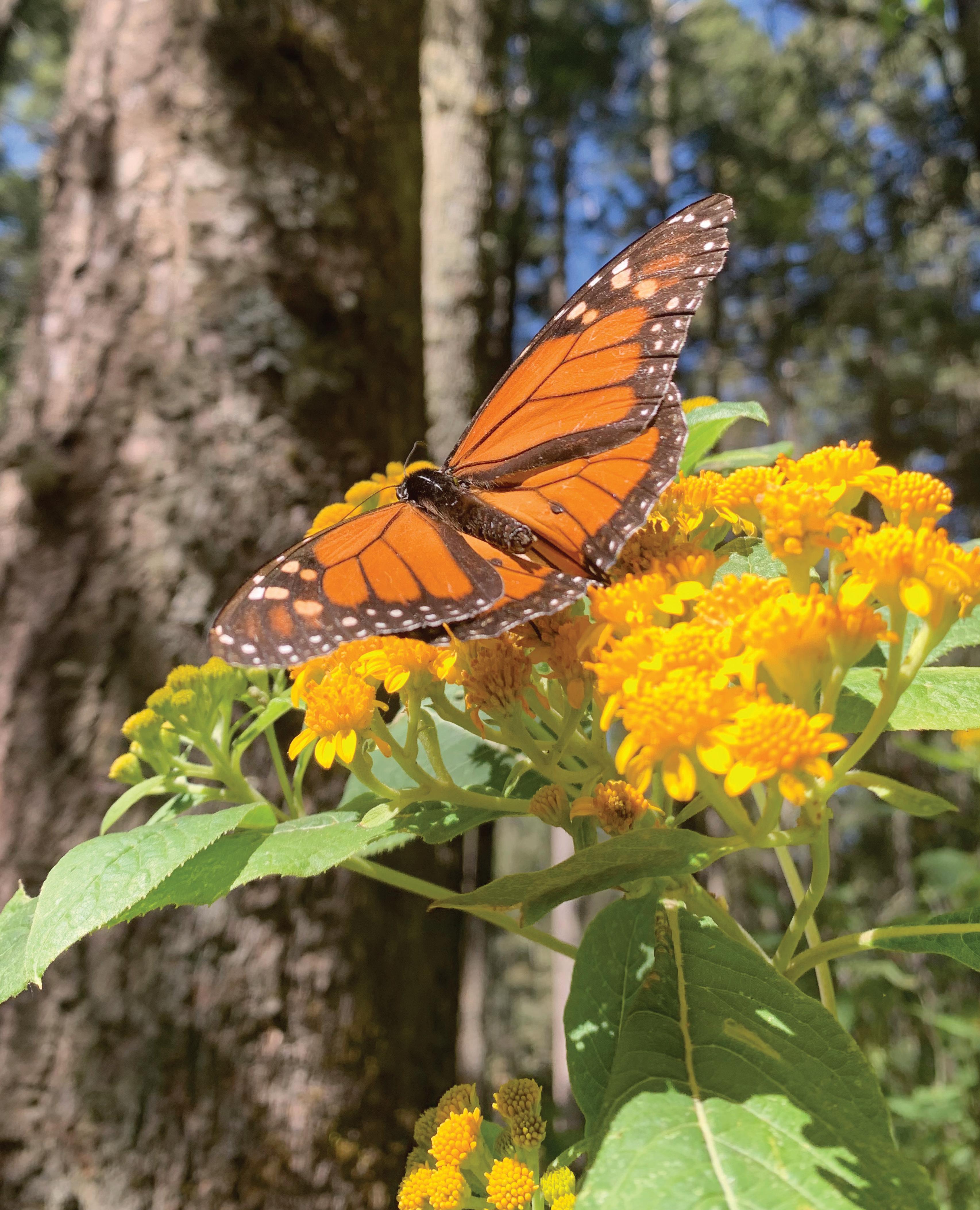
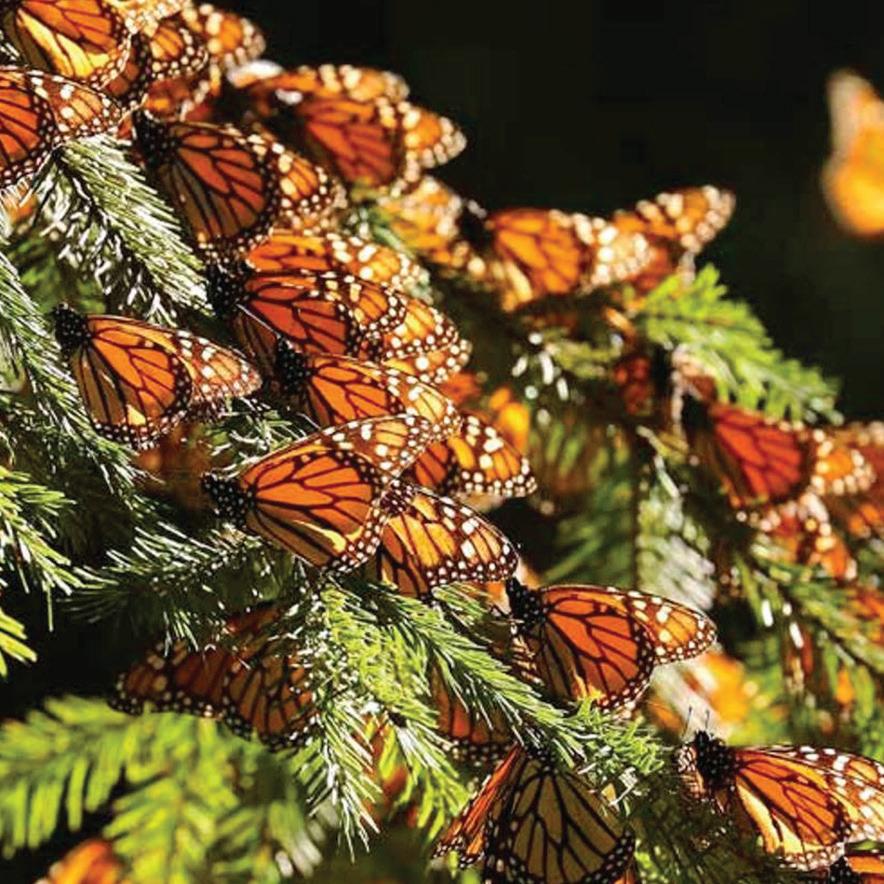
One of the world’s most astounding wildlife events occurs each year in Mexico’s Central Highlands. Experience this moving phenomenon with expert interpretation from Mexico’s premier naturalist guides.
MAY & JUNE 2025
MANAGING EDITOR Peggy Scott
STAFF WRITERS
Eston Ellis
Mike Hausberg
Aubrey Lloyd
Ellie McMillan
Elyan Shor, Ph.D.
COPY EDITOR Sara Maher
DESIGNER Kaitlyn Lara
PHOTOGRAPHERS
Ken Bohn
Tammy Spratt
DESIGN AND PRODUCTION
Kim Turner
Lisa Bissi
Jennifer MacEwen
PREPRESS AND PRINTING
Rediscovering Hope
Thanks to years of research and collaborative effort, the tiny-yet-vital Pacific pocket mouse has a big chance at a brighter future.
FEATURES
Quad Graphics Let's Stay Connected
Share your #SanDiegoZoo & #SDZSafariPark memories on social media.
The Zoological Society of San Diego was founded in October 1916 by Harry M. Wegeforth, M.D., as a private, nonprofit corporation, which does business as San Diego Zoo Wildlife Alliance. The printed San Diego Zoo Wildlife Alliance Journal (ISSN 2767-7680) (Vol. 5, No. 3) is published bimonthly, in January, March, May, July, September, and November. Publisher is San Diego Zoo Wildlife Alliance, located at 2920 Zoo Drive, San Diego, CA 92101-1646. Periodicals postage paid at San Diego, California, USA, and at additional mailing offices. POSTMASTER: Send address changes to San Diego Zoo Wildlife Alliance, PO Box 120271, San Diego, CA 92112-0271.
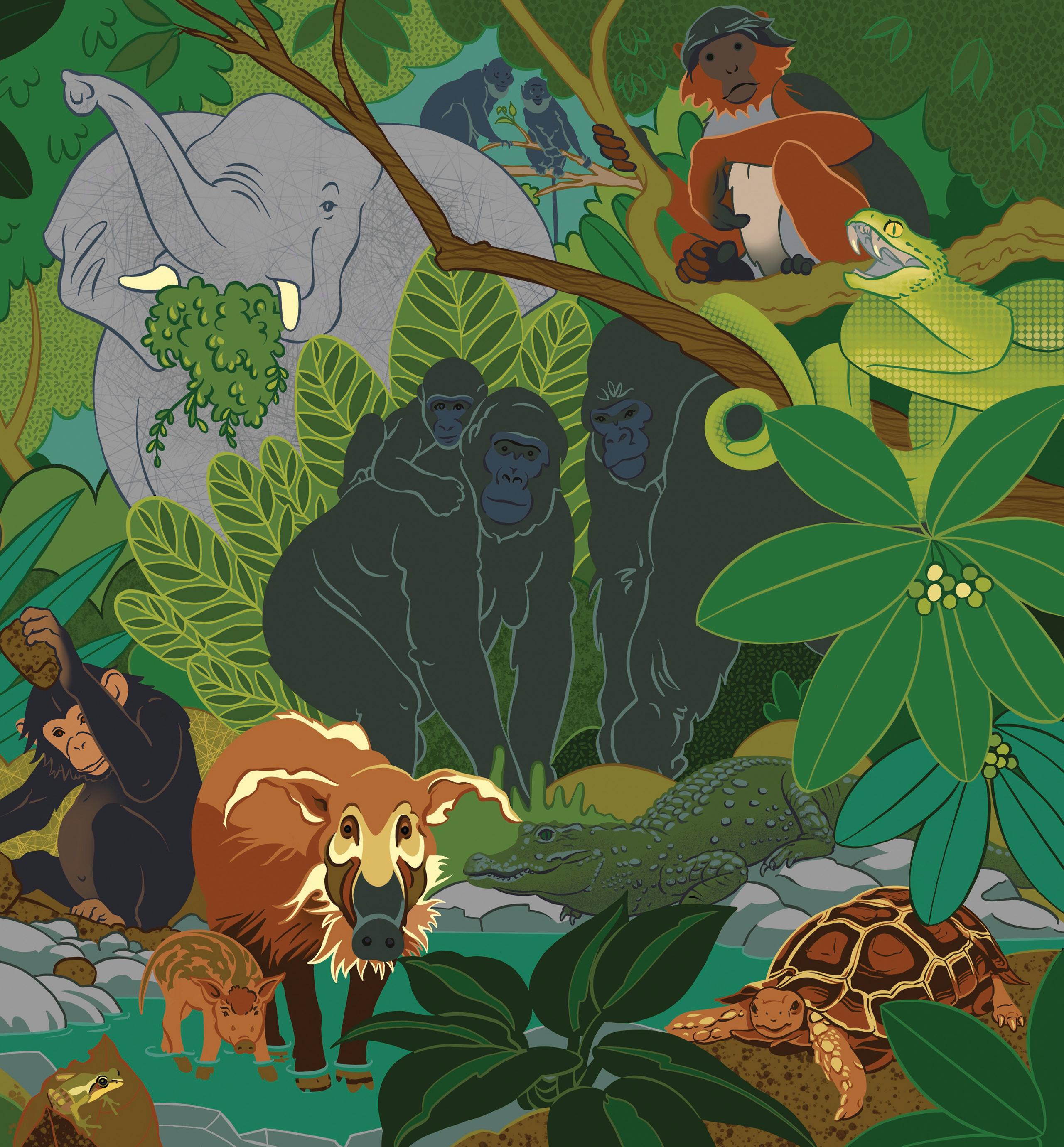
Explore the intricate, multilayered ecosystem that makes Cameroon’s Ebo forest a biodiversity hotspot like no other.
18
Ho'i ke Kāhea
Returning the ' alalā to the forests of Hawaii is an important environmental— and cultural—milestone for the islands and the people that call them home.
22
Speak for the Trees
A deeply rooted dedication to global tree conservation has propagated the designation as an official arboretum for the San Diego Zoo and San Diego Zoo Safari Park.
As part of San Diego Zoo Wildlife Alliance’s commitment to conservation, This product is made of material from wellmanaged FSC ® -certified forests, recycled materials, and other controlled sources, chlorine free, and is Forest Stewardship Council ® (FSC ®) (COC) certified. FSC ® is not responsible for any calculations on saving resources by choosing this paper.
If your mailing address has changed: Please contact the Membership Department by mail at PO Box 120271, San Diego, CA 92112, or by phone at (619) 231-0251 or 1-877-3MEMBER
For information about becoming a member of San Diego Zoo Wildlife Alliance, please visit our website at ZooMember.org for a complete list of membership levels, offers, and benefits.
Paid subscriptions to San Diego Zoo Wildlife Alliance Journal are available. Contact the Membership Department for subscription information.
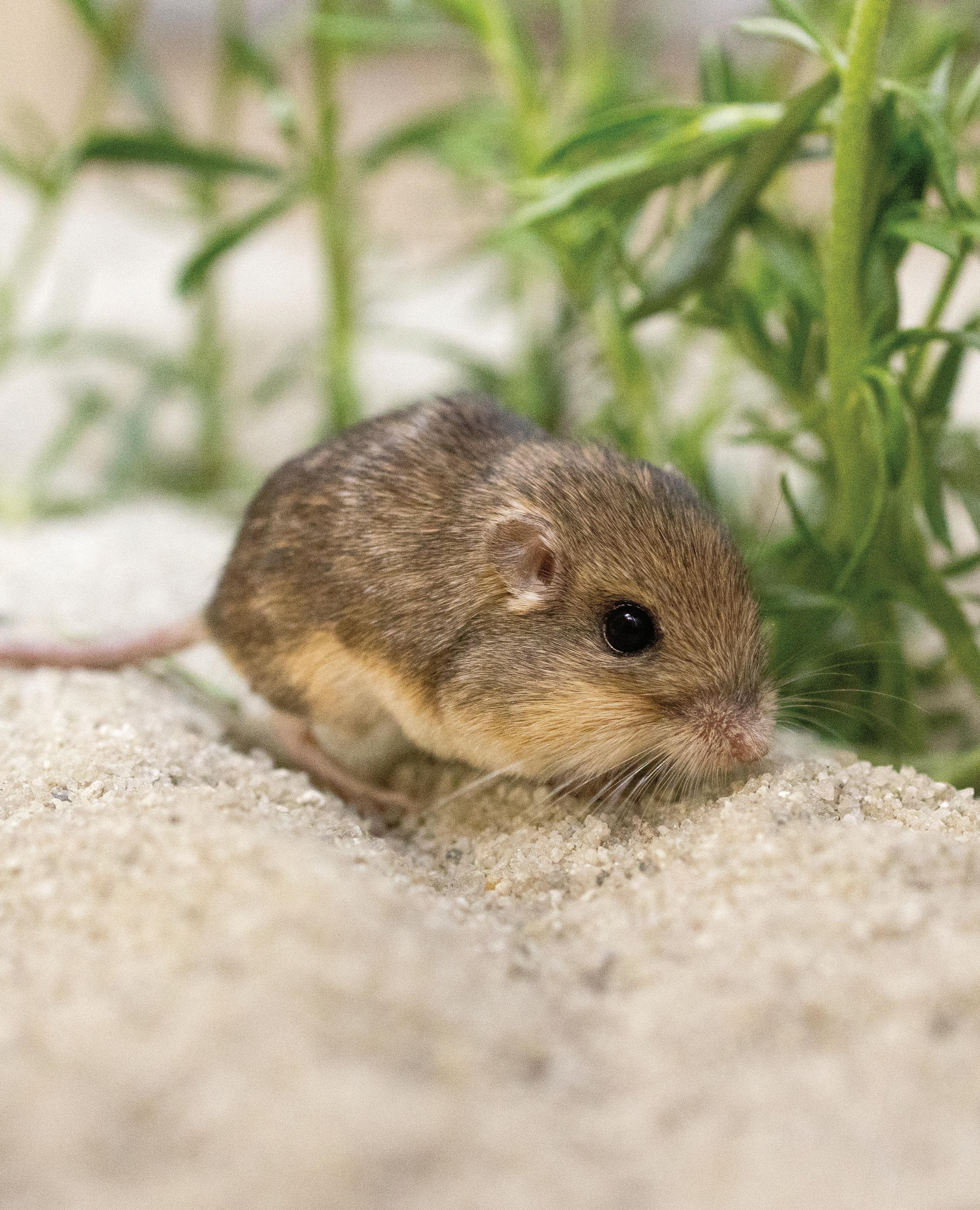
On the Cover: Pacific pocket mouse Perognathus longimembris pacificus Photo by: Ken Bohn, SDZWA photographer
Hope and Conservation Come Together
As a global leader in conservation, San Diego Zoo Wildlife Alliance continuously innovates and uses cutting-edge technology to educate guests and ensure wildlife thrive for generations to come.
But there’s also a driving force behind all our efforts: hope. It can’t be measured or quantified, but our work wouldn’t be possible without it.
As the planet faces challenges that threaten the future of wildlife around the world, we firmly believe that one day, we can peacefully coexist with nature.
In this issue of the Journal, we explore how hope drives conservation at San Diego Zoo Wildlife Alliance. Our Alliance works to ensure all species can have a chance to flourish in the future, from the tiny Pacific pocket mouse of Southern California to the majestic Sumatran tiger to the towering trees that sustain life around the world.
An optimistic look at conservation starts with people and the future we want to build together. We’re proud to inspire the next generation of scientists and innovators—helping young minds pursue careers in STEM (science,
technology, engineering, mathematics) that could lead to future breakthroughs in conservation. We want all people to understand how they can act to protect nature in their everyday lives.
By working together with local communities, researchers, and other conservation organizations across the globe, we create a stronger network of support for wildlife and ecosystems.
Thank you for believing in the power of hope to create a better tomorrow.
Together for wildlife,
2025 Board of Trustees
Officers
Steven S. Simpson, Chair
Rolf Benirschke, Vice Chair
Adam Day, Treasurer
Gary E. Knell, Secretary
Trustees
Tom Chapman
E. Jane Finley
Clifford W. Hague
Bryan B. Min
Kenji Price
Corinne Verdery ‘Aulani Wilhelm
Trustees Emeriti
Javade Chaudhri
Berit N. Durler
Thompson Fetter
Richard B. Gulley
Robert B. Horsman
Steven G. Tappan
John M. Thornton
Executive Team
Shawn Dixon
Interim President and Chief Executive Officer
David Franco
Chief Financial Officer
Erika Kohler
Senior Vice President and Executive Director, San Diego Zoo
Lisa Peterson
Senior Vice President and Executive Director, San Diego Zoo Safari Park
Nadine Lamberski, DVM, DACZM, DECZM (ZHM)
Chief Conservation and Wildlife Health Officer
Wendy Bulger
General Counsel
Shawn Dixon Interim President and Chief Executive Officer
David Gillig
Chief Philanthropy Officer
Aida Rosa
Chief Human Resources Officer
David Miller
Chief Marketing Officer
BY THE NUMBERS
Many Happy Returns
A key component of our conservation efforts is reintroducing wildlife to their native habitats. As endangered populations increase, so does their ability to thrive, and we’ve been honored to reintroduce 44 species across the globe—a win for wildlife and the ecosystems we all share.
20
Pacific pocket mice were thought to be extinct for 20 years until they were rediscovered. We’re now increasing populations through a conservation breeding and reintroduction program in Southern California.
29,000
At a newly dedicated 29,000-acre sanctuary, critically endangered black rhinos are being restored to an area of Kenya from which they’d previously disappeared.
Once extinct outside of managed care, today California condors soar over local coastlines and deserts—and hatch up to 15 chicks in native habitat every year, keeping the population growing.
2
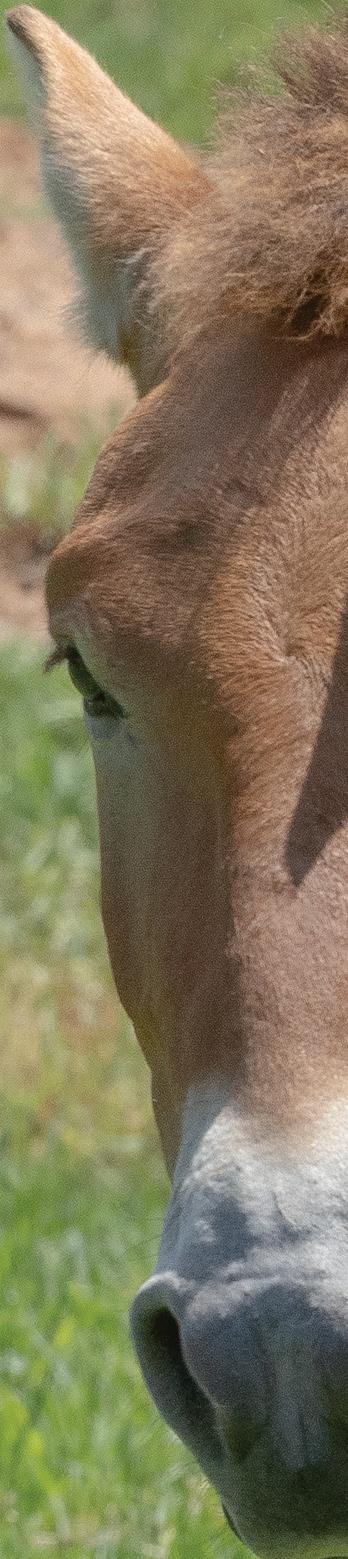
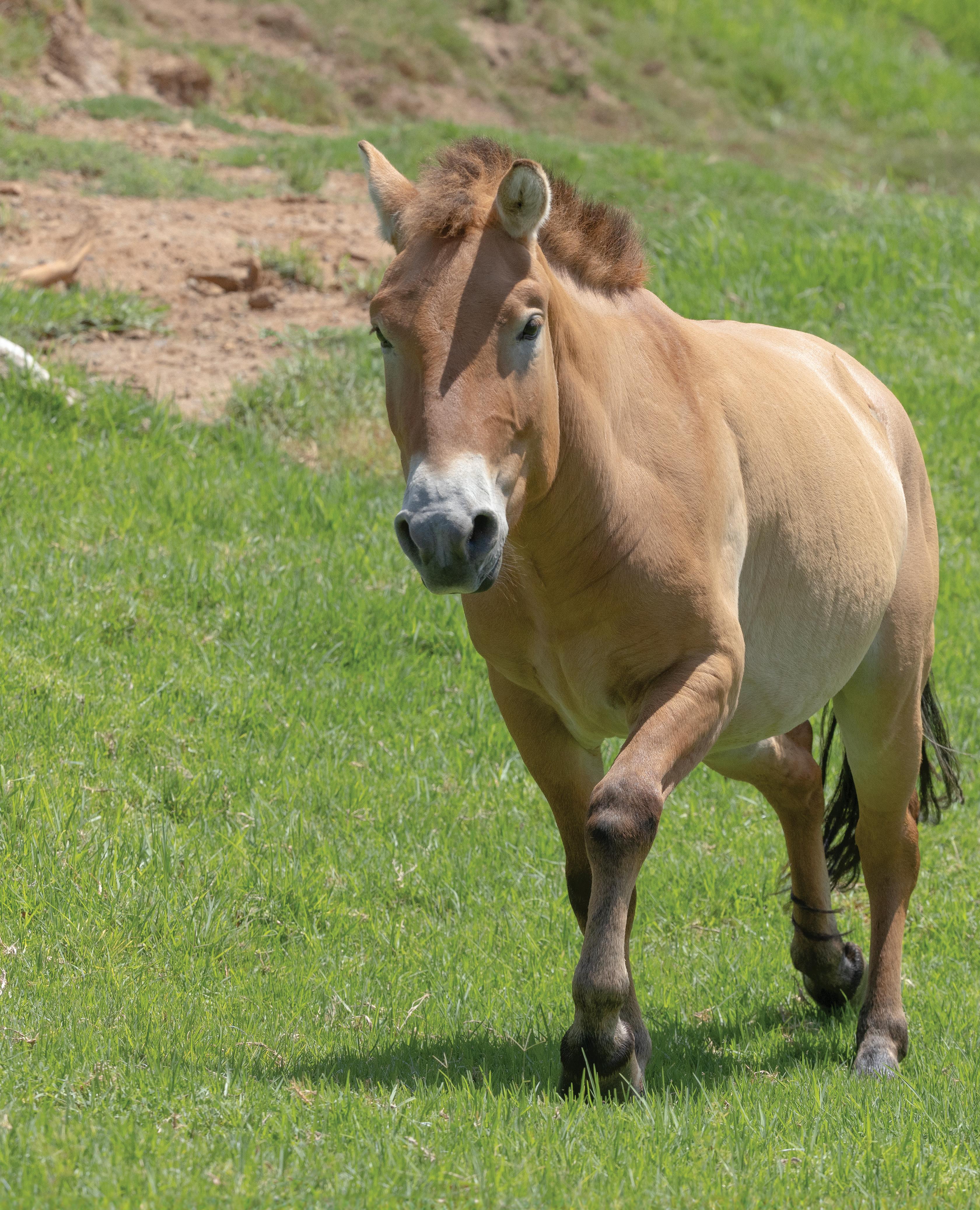
15 For the first time, an endangered species has been cloned twice, restoring crucial genetic diversity to the global population of Przewalski’s horses.
10
Critically endangered Torrey pines, hundreds of which were reintroduced in Southern California, produce cones that release seeds over a 10-year span, helping ensure the future of the species.
SAN DIEGO ZOO WILDLIFE ALLIANCE / SDZWA.ORG
San Diego Zoo Wildlife Alliance protects and restores nature in eight Conservation Hubs on five continents. Below are recent discoveries and progress reports from around the world.
COLLABORATING FOR SEA ICE ECOSYSTEMS
San Diego Zoo Wildlife Alliance and several Canadian partners, including Indigenous organizations, government agencies, and universities, are part of a project focused on evaluating sea ice ecosystem biodiversity in Canada’s southern Hudson Bay and James Bay. These evaluations center around areas that will hopefully be established as national marine conservation areas. This program is led by the Mushkegowuk Council, which represents the interests of seven local First Nations groups. San Diego Zoo Wildlife Alliance is the only non-Canadian organization to be invited into the project, reflecting the strength of our partnerships and our conservation expertise.
CONSERVATION POND RESTORATION
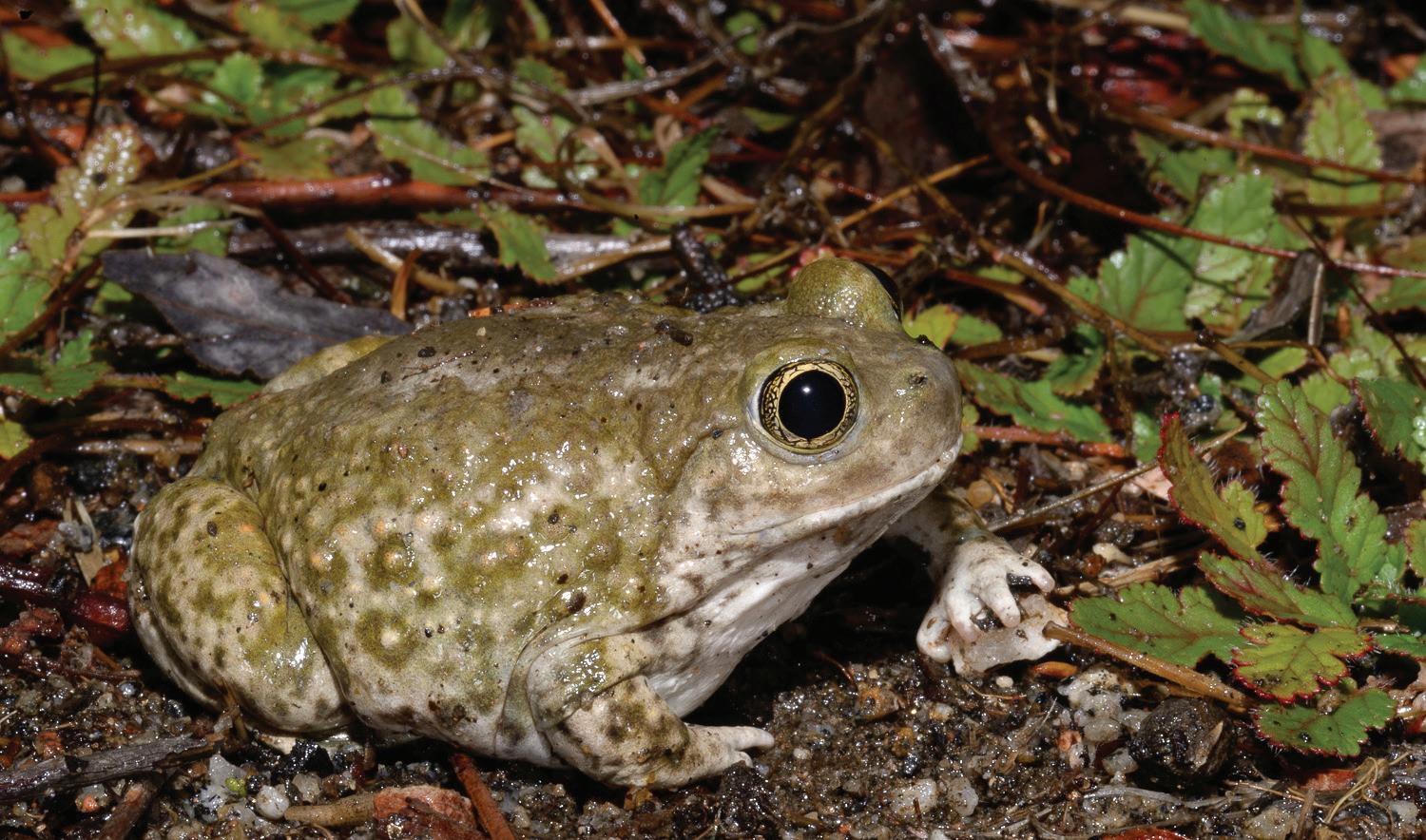
Our team and volunteers removed invasive species and sediment in and around two Western spadefoot conservation ponds in the Safari Park’s Biodiversity Reserve. Western spadefoots are native to California and northern Baja California, Mexico, but they have lost about 80% of their native range due to urban and agricultural development and are now proposed for listing under the Endangered Species Act. These toads depend on vernal ponds (pools that are filled by seasonal rains and disappear during dry seasons), like the two in the Biodiversity Reserve, to be able to breed and develop. Removing invasive plants and sediment will improve habitat quality and hopefully help the ponds retain water for longer. Last year 300 spadefoots morphed from our ponds, and we hope to grow on this success in 2025.
FIN WHALE CELLS BANKED
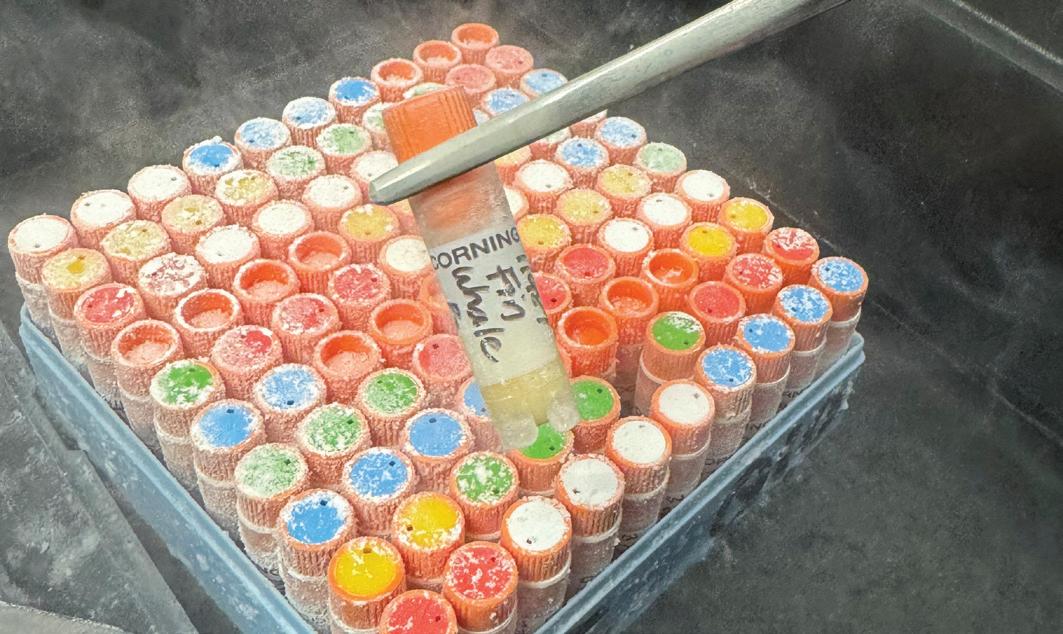
A rare fin whale cell line was recently added to San Diego Zoo Wildlife Alliance’s Frozen Zoo® Fin whales are the second-largest whale in the world (blue whales are the largest) and are therefore the second-largest mammals on Earth. These whales are endangered and elusive, but they can be spotted off the coast of San Diego in the late spring and summer. Using a sample sent to us by our partners at NOAA Fisheries, our team succeeded in establishing cells and banking them to preserve the precious genetic diversity they represent. This is only the second fin whale cell line in the Frozen Zoo and among very few fin whale cells banked in the United States.
OCEANS
OCEANS
SOUTHWEST
A LOOK BACK
In celebration of 50 years of conservation science, San Diego Zoo Wildlife Alliance is commemorating significant milestones in our history of saving species—and glancing forward to plans for the future.
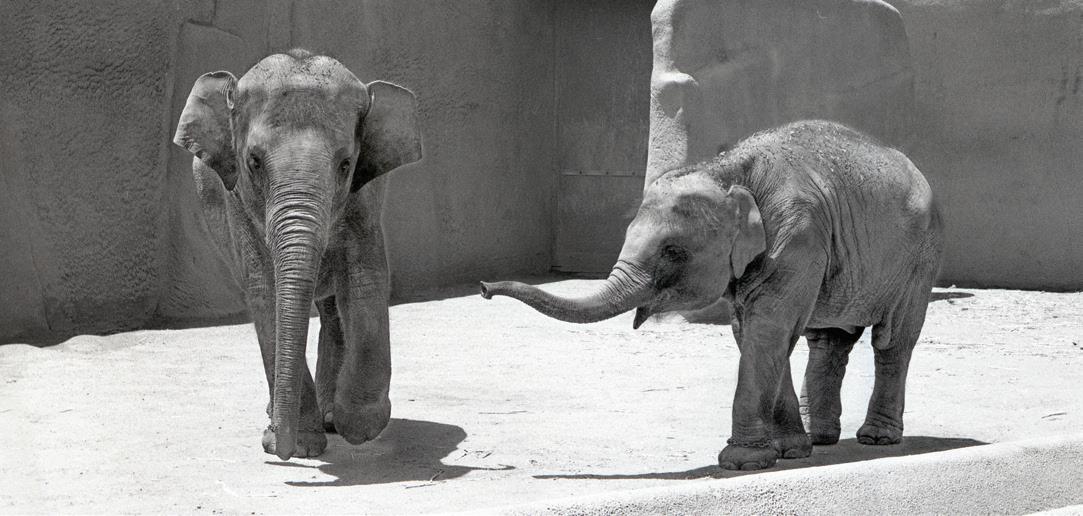
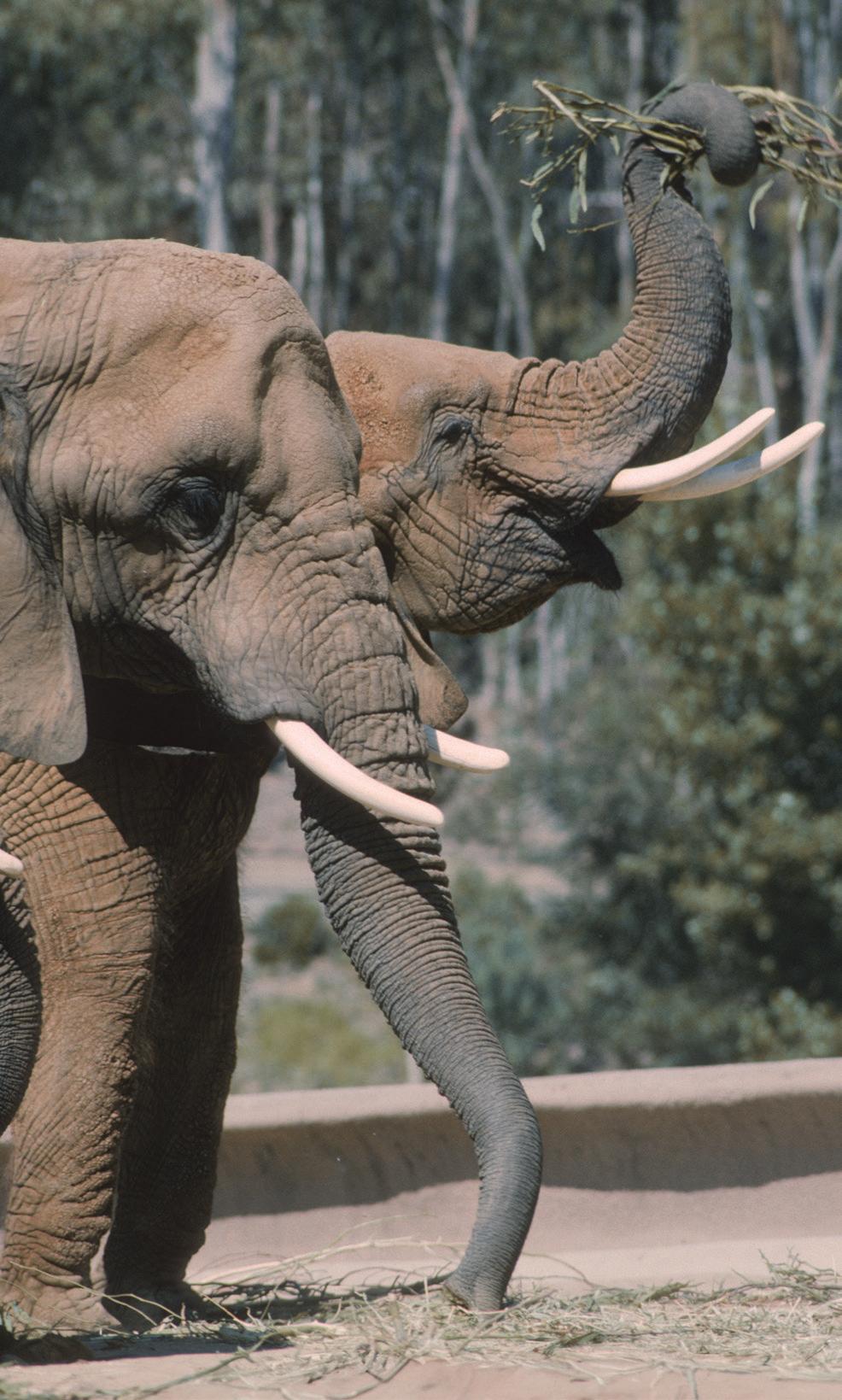
In October 1978, the future of elephant conservation got a big start. The first African elephant cell line in San Diego Zoo Wildlife Alliance’s Frozen Zoo was established with material from a female named Medundamella (nicknamed M’dunda or Dunda). An Indian elephant named Snooks was also immortalized that month, marking the first time her subspecies was added to the Frozen Zoo.
A LOOK AHEAD
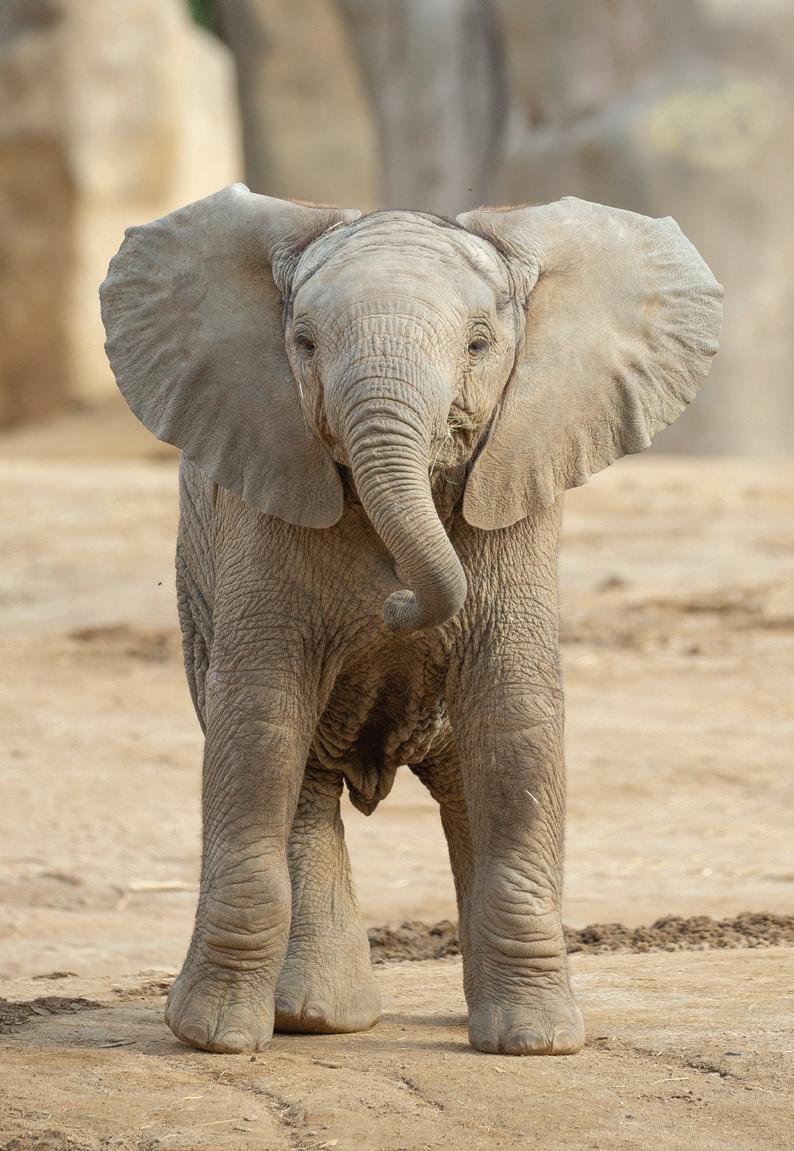
Where are our efforts on behalf of elephants taking us next? Find out in the upcoming July issue of San Diego Zoo Wildlife Alliance Journal, where population sustainability scientists share the story of working with local communities in Africa to support a more harmonious relationship between people and the wildlife that live around them.
THINKING AHEAD
Lisa Biasillo, vice president of education for San Diego Zoo Wildlife Alliance, offers a primer on making sure the future of wildlife is in good hands.
Inspiring the next generation of conservationists is a responsibility we embrace at San Diego Zoo Wildlife Alliance. In a world facing unprecedented environmental challenges, it is crucial to help children and youths connect with wildlife and understand their role in protecting it. Our goal is not just to teach about species and ecosystems, but to foster empathy, instill a sense of wonder, and inspire action.
Our mission is to cultivate curiosity for wildlife, demonstrate the interconnectedness of all life, and inspire conservation action. We aim to create experiences that go beyond knowledge, encouraging young people to see themselves as active participants in conservation and sustainability. This
hands-on approach is key to building lasting emotional connections that motivate action.
The journey begins when youths experience wildlife firsthand. When they interact with plants and animals and understand the importance of ecosystems, they form emotional bonds. This connection sparks hope—a powerful antidote to the often overwhelming reality of environmental challenges.
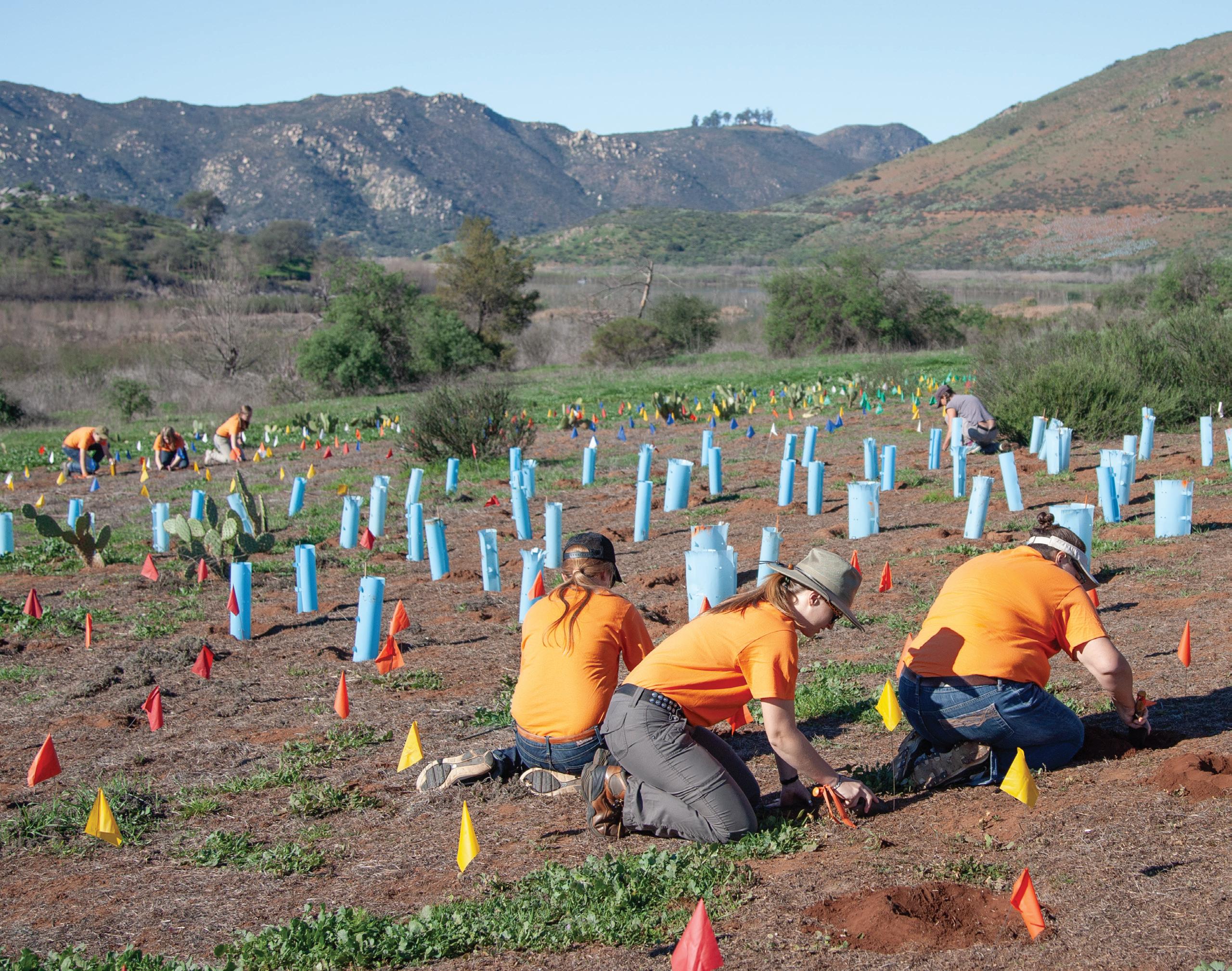
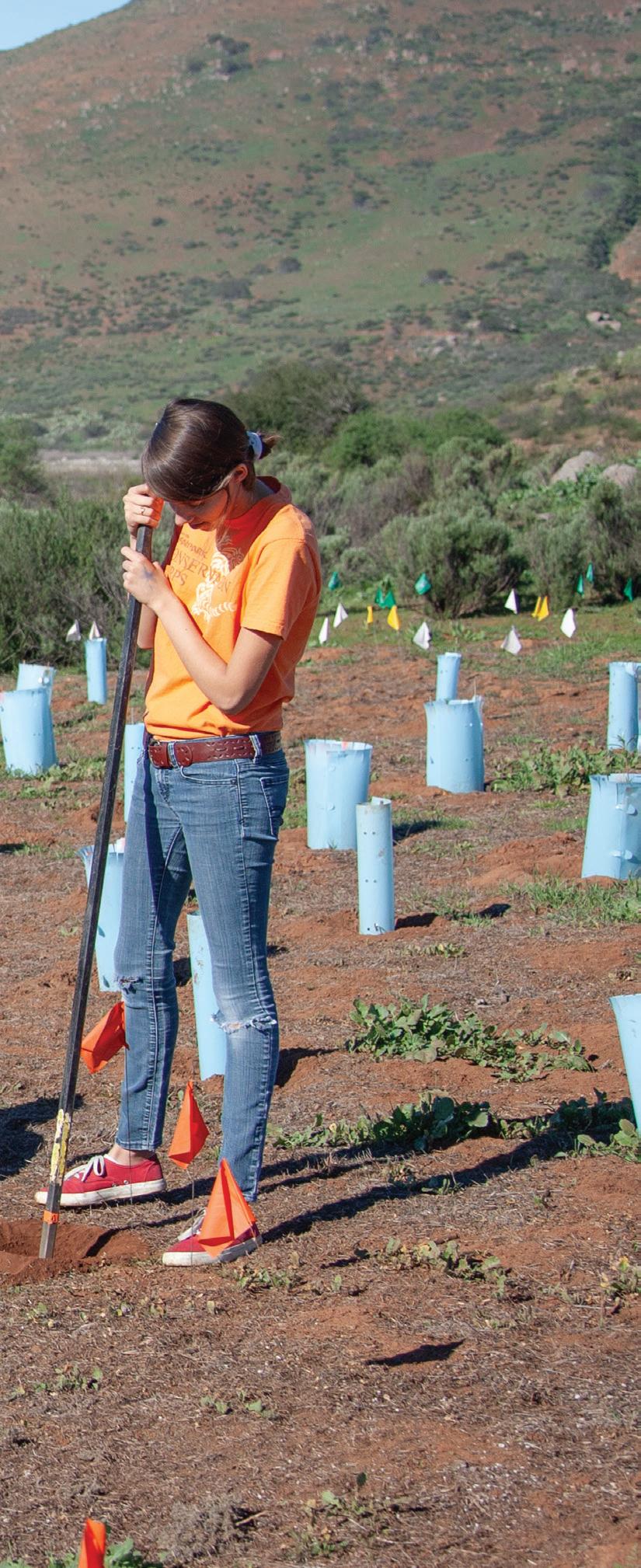
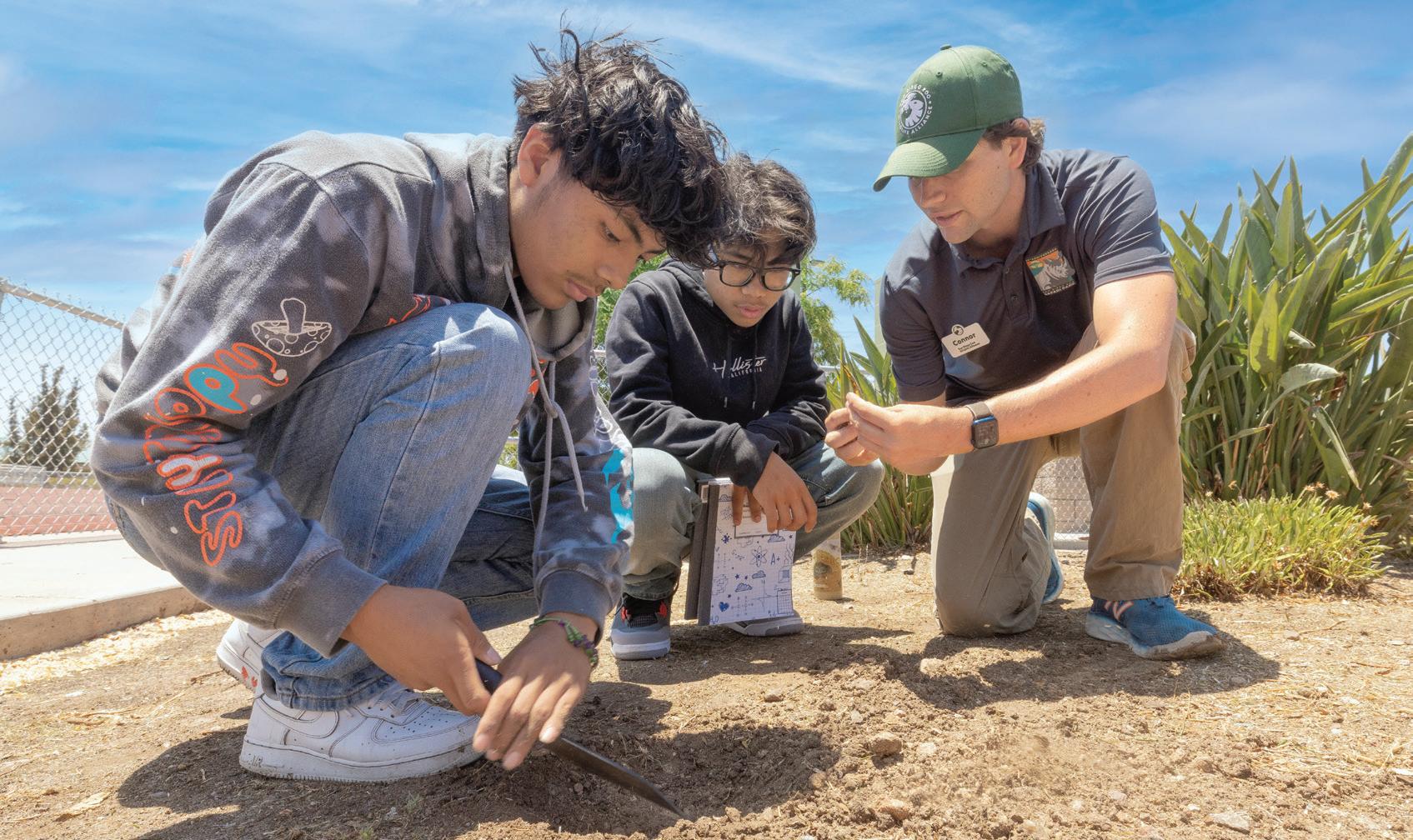
Among our more than 30 educational programs, one of our standout experiences is Conservation Corps at the San Diego Zoo Safari Park, under which high school students from across San Diego County immerse themselves in the human side of conservation. They tackle real-world challenges like
urbanization, environmental sustainability, and species and ecosystem variety while developing leadership and advocacy skills. It’s not just about learning facts; it’s about understanding the need for coexistence with wildlife.
Each semester, students present final projects to their peers and families. This year, they will also showcase their work to Safari Park guests, broadening their impact. The program’s success is clear: 100 percent of eligible students chose to reenroll in the program this year, underscoring the deep connection they’ve developed with conservation issues.
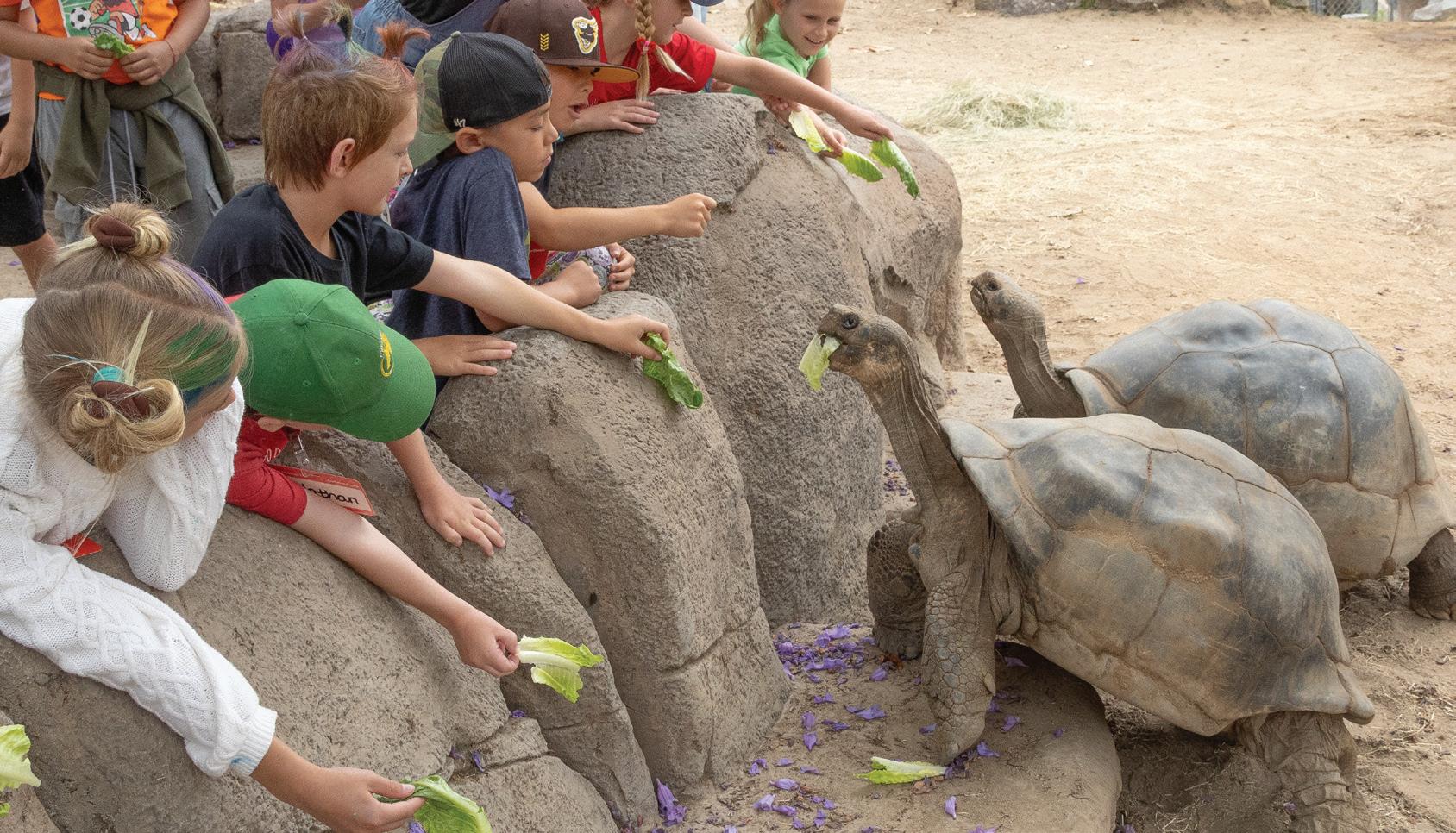
For younger students, the WE CARE program (Wildlife Education, Conservation
Action Reaching Everyone) offers a unique opportunity to engage with nature. Partnering with San Pasqual Union school, this pre-K through 8th grade program provides wildlife-focused lessons aligned with state educational standards. Through hands-on learning, student-led discussions, and field trips to the San Diego Zoo and Safari Park, students learn about species and conservation actions relevant to their age. They explore both local and global conservation issues, empowering them to see how their choices impact the natural world.
One person who embodies the success of our educational programs is John Preciado, whose journey began visiting the Zoo as a child. At 13, he joined Zoo Corps, where he
learned about topics like endangered species and backyard conservation. The experience helped him develop public speaking skills and engage Zoo guests in meaningful conversations about wildlife. After his Zoo Corps journey ended near the end of high school, John returned to the Zoo, this time as a seasonal staff member, supporting summer camp as a program aide. Now, at 27, John works as an educator at the Zoo. In his role, John makes meaningful connections with guests and learners, sharing his love for wildlife and seeing the positive impact these interactions have on people. Watching individuals leave with a deeper understanding of conservation is the most rewarding part of his job.
John’s story illustrates the lasting impact of early conservation education. His path from a curious youth to a passionate educator highlights how our education programs can shape not only careers, but also futures. Through his work, he helps us fulfill our mission of inspiring conservation action. Our programs, like Conservation Corps and WE CARE, are more than just educational—they are empowering the next generation of conservation advocates. By fostering curiosity and empathy in young people, we are planting the seeds of hope for a future where wildlife and nature are valued and protected by all.
Rediscovering Hope
A Journey to Save the Pacific Pocket Mouse
BY DEBRA M. SHIER, PH.D. PHOTOGRAPHY BY TAMMY SPRATT
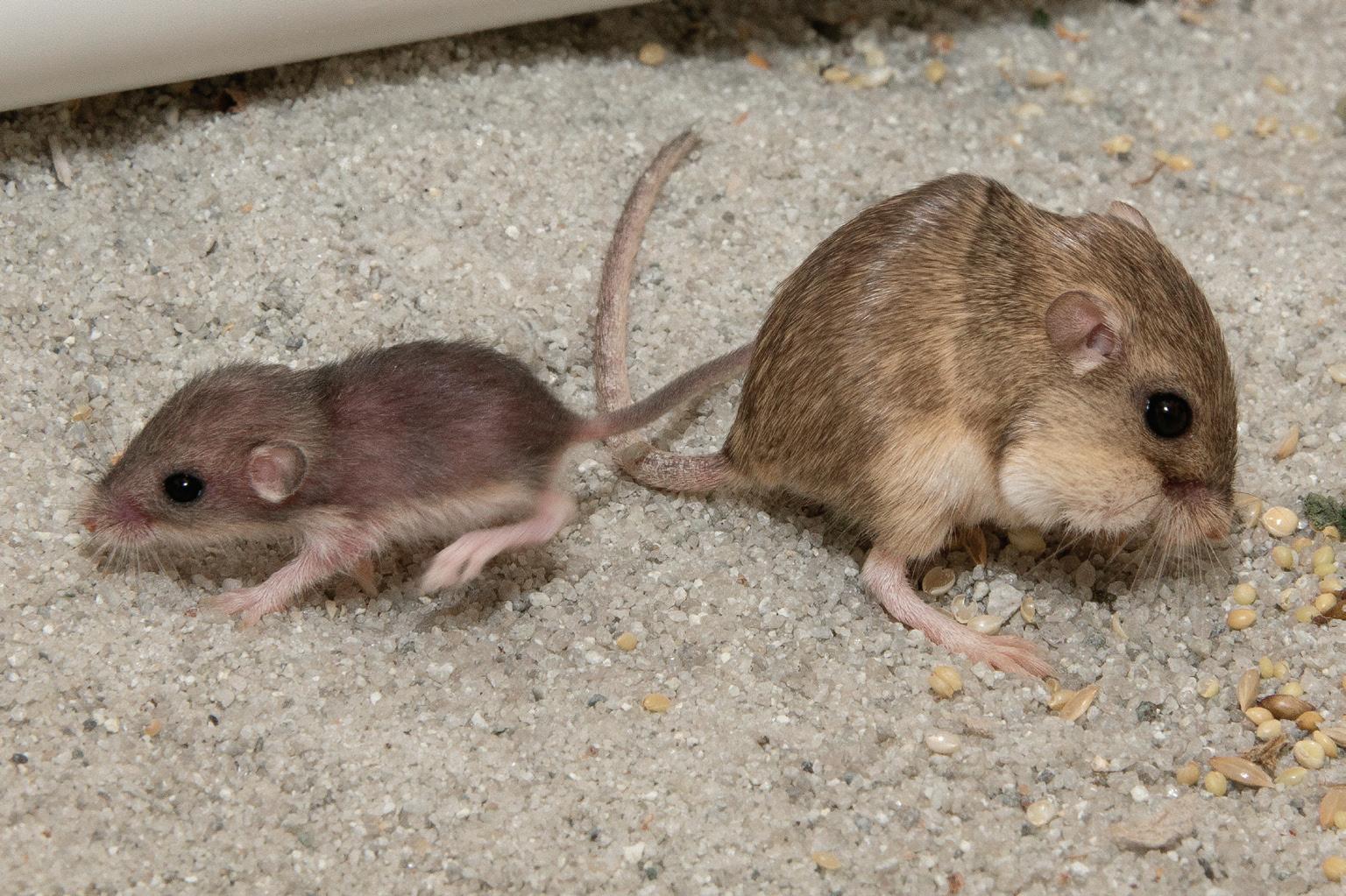
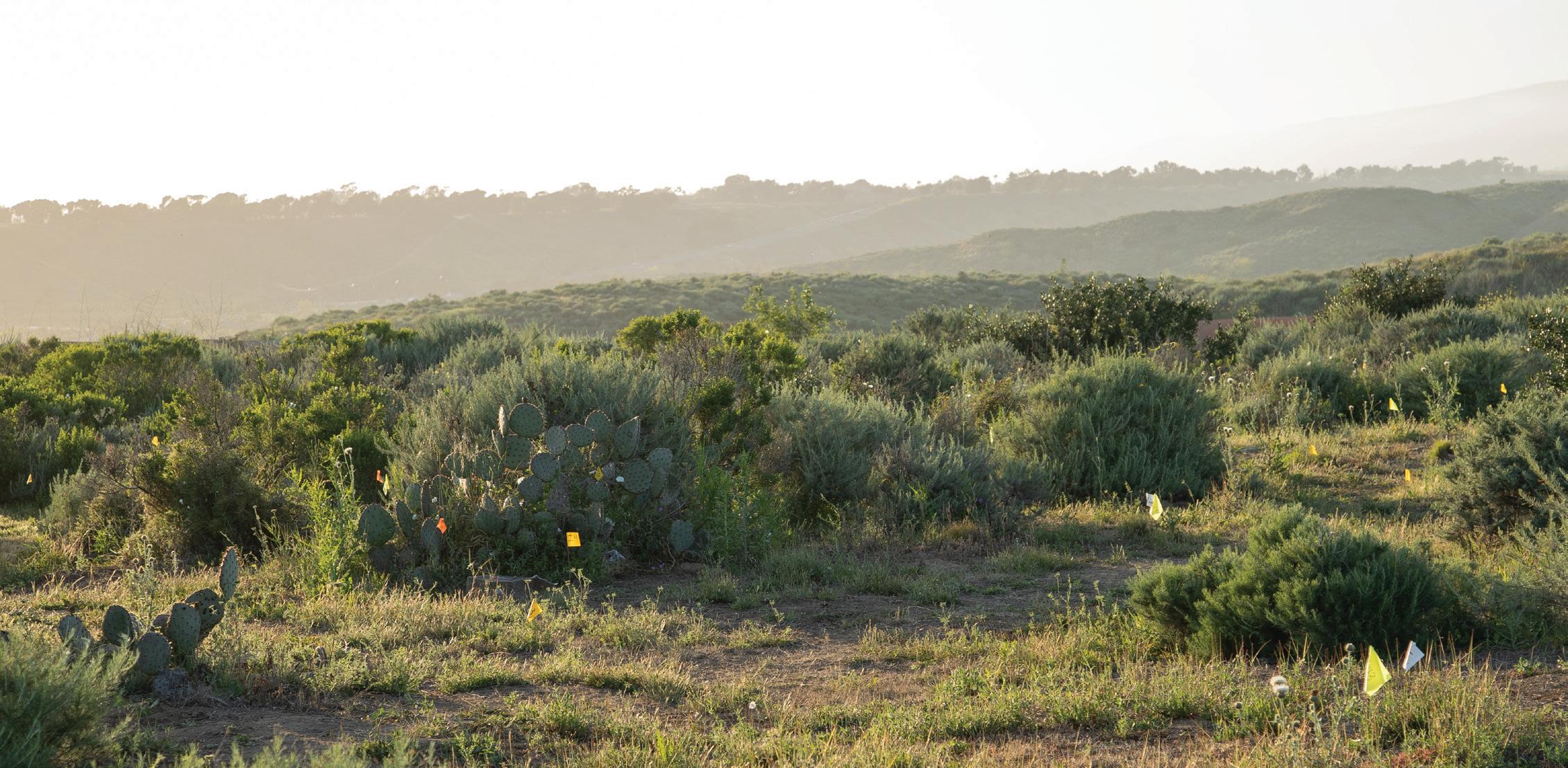
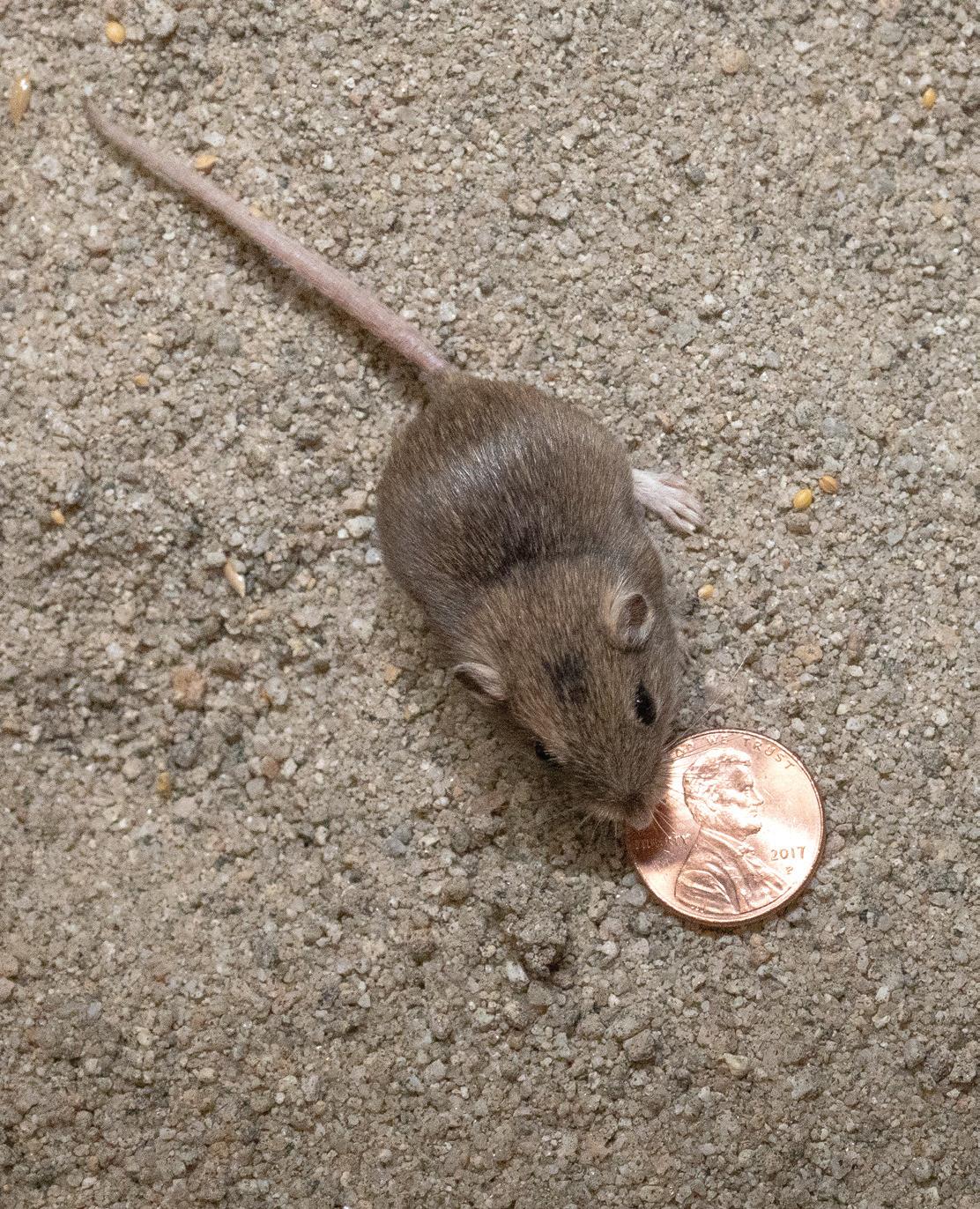
In the quiet, sandy soils of Southern California’s coastal sage scrub, a tiny creature carries a monumental legacy. The Pacific pocket mouse Perognathus longimembris pacificus, one of the smallest mammals in North America, is also one of the most critically endangered. Weighing less than a nickel, this mouse has endured decades of habitat loss and degradation, invasive predators, and loss of genetic diversity, all of which have pushed it to the brink of extinction. Yet 2024 marked a year of unparalleled hope and discovery, as efforts to recover this species reached historic milestones.
From Extinction to Rediscovery
The Pacific pocket mouse once roamed an approximately 124-mile expanse of coastal Southern California, thriving in 30 documented localities during the 1930s. It played a vital ecological role, dispersing native seeds, aerating soil, and cycling nutrients within its habitat. However, urbanization and other human-driven activities caused devastating habitat loss, leading to widespread population declines, and by the mid-20th century, the species was thought to be extinct.
For two decades, the Pacific pocket mouse went undetected—until 1993, when it was rediscovered in a stroke of serendipity. Recognizing the urgency of its plight, it was emergency listed as endangered under the United States’ Endangered Species Act, sparking a collaborative effort to ensure its survival.
A Legacy of Decline but Resilience
Today the species persists in just three small, isolated populations: in Dana Point, Santa Margarita, and South San Mateo. Habitat destruction, high fire frequency, invasive species, extended drought, and predation by nonnative animals have pushed the species to the brink, leaving fewer than approximately 90 breeding individuals across its remaining range. Low genetic diversity and inbreeding have further compounded the species’ plight. Genetic studies reveal a loss of diversity with the Dana Point population having roughly half of the diversity of mice in the 1990s. Inbreeding and low genetic diversity further threaten population persistence. These challenges underscore the urgency of the U.S. Fish and Wildlife Service’s recovery plan, which focuses on stabilizing and growing existing populations and establishing new ones to rebuild genetic diversity and resilience.
A Bold Vision Takes Shape
San Diego Zoo Wildlife Alliance’s Pacific Pocket Mouse Conservation Breeding and Reintroduction Program was launched in 2012 as an ambitious response to the crisis. Over the past decade, we have made remarkable strides, including developing specialized husbandry protocols and breeding techniques; learning about species behavior, ecology, physiology, and genetics to prepare mice for life in native habitats; and selecting, restoring, and managing reintroduction sites to ensure suitable habitat. These efforts have culminated in the release of over 500 conservation program-bred mice.
In 2016, the first reintroduced population was initiated at Laguna Coast Wilderness Park, where careful monitoring and research has provided invaluable insights into the factors that affect reintroduction success. This success set the stage for the program’s next challenge: establishing a second population.
A New Chapter at Wire Mountain
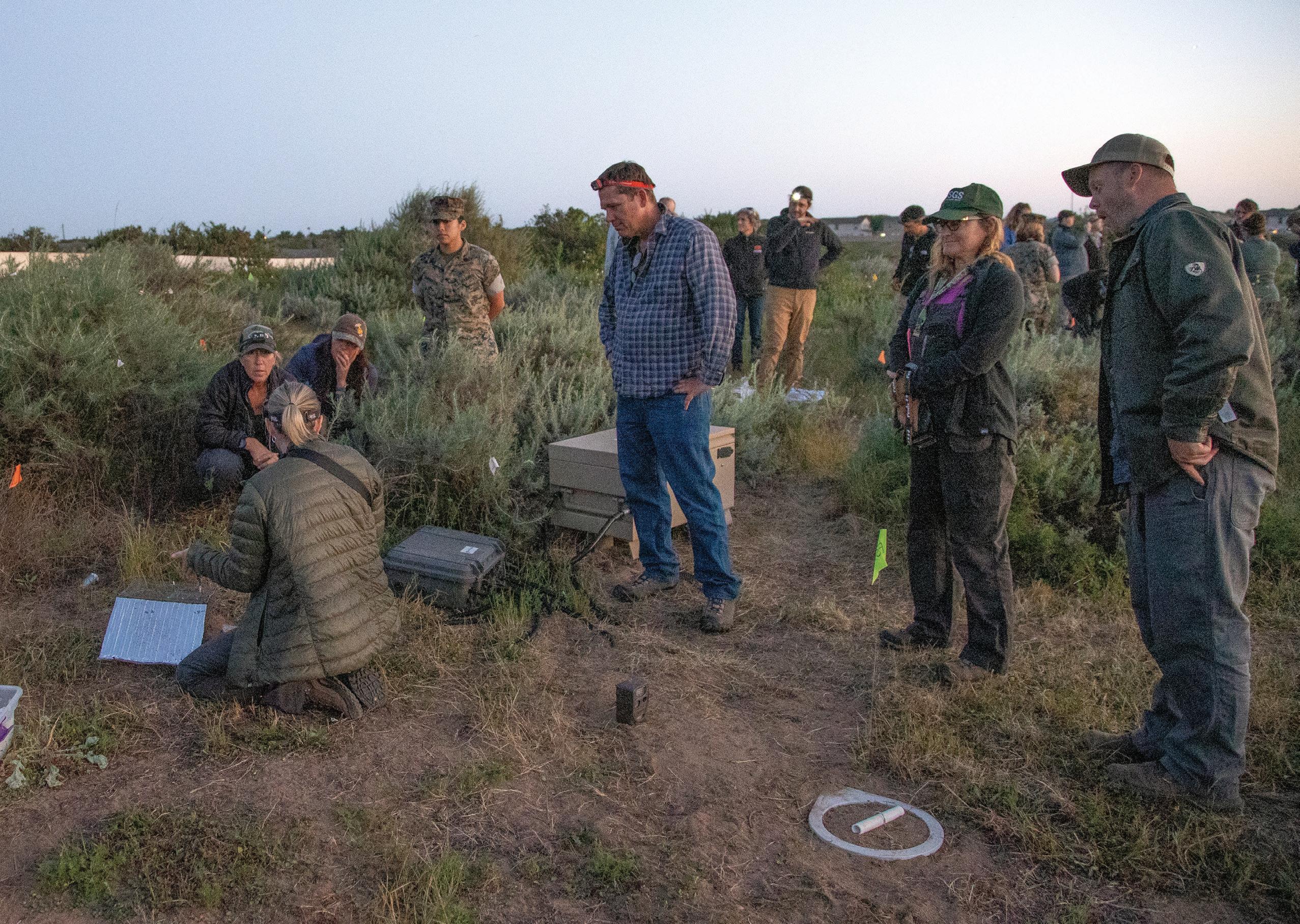
In 2024, the program partnered with Marine Corps Base Camp Pendleton to release 90 Pacific pocket mice at Wire Mountain, a step that represents the largest single-year release in the program’s history. This site, carefully selected for its suitable habitat and strategic location within the mouse’s historical range, offers the species a fresh start.
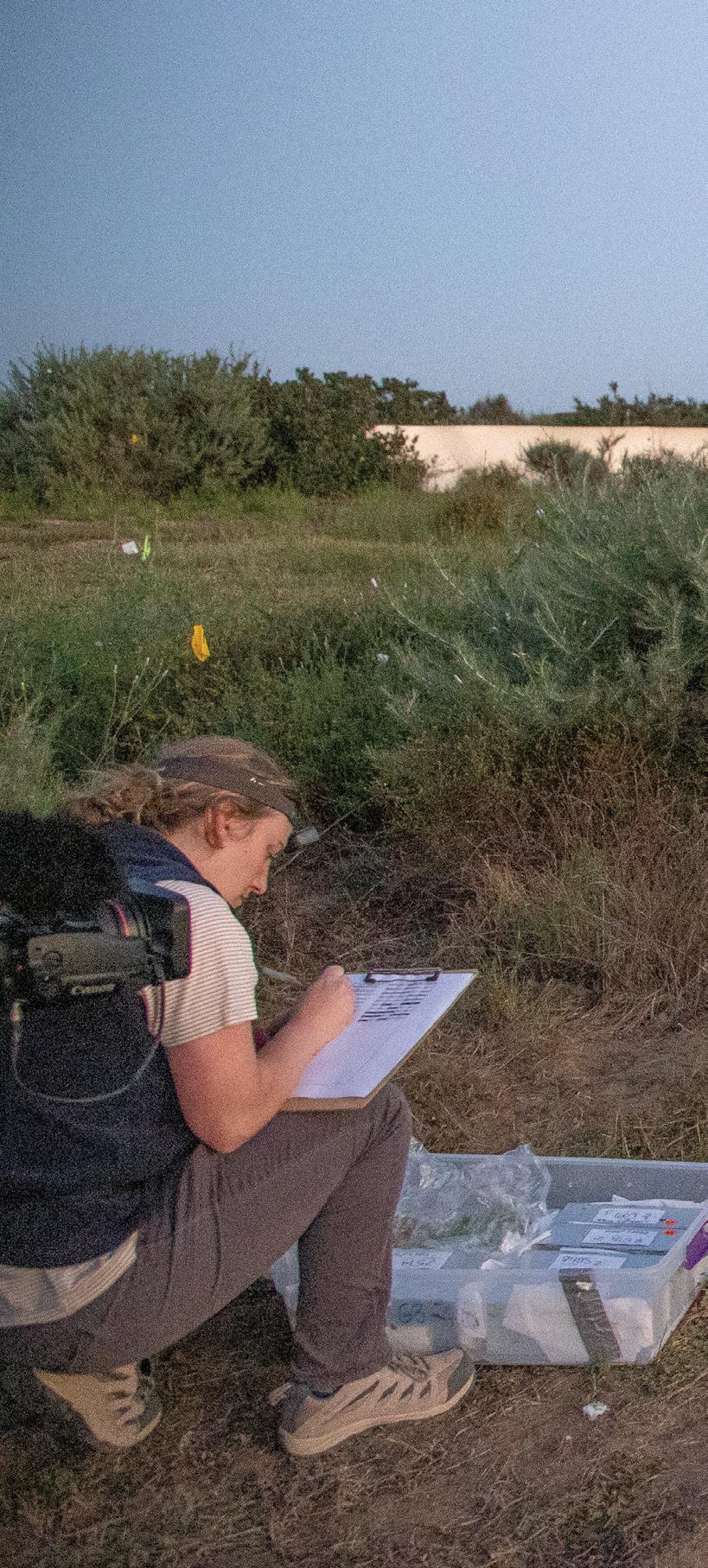
The results have been exciting. By the end of the summer, our monitoring revealed high short-term survival, and most mice were reproducing. One hundred wild-born offspring—key indicators of reintroduction success—were documented at the site, marking a pivotal achievement in the species’ recovery journey.
Tiny mouse, big plans
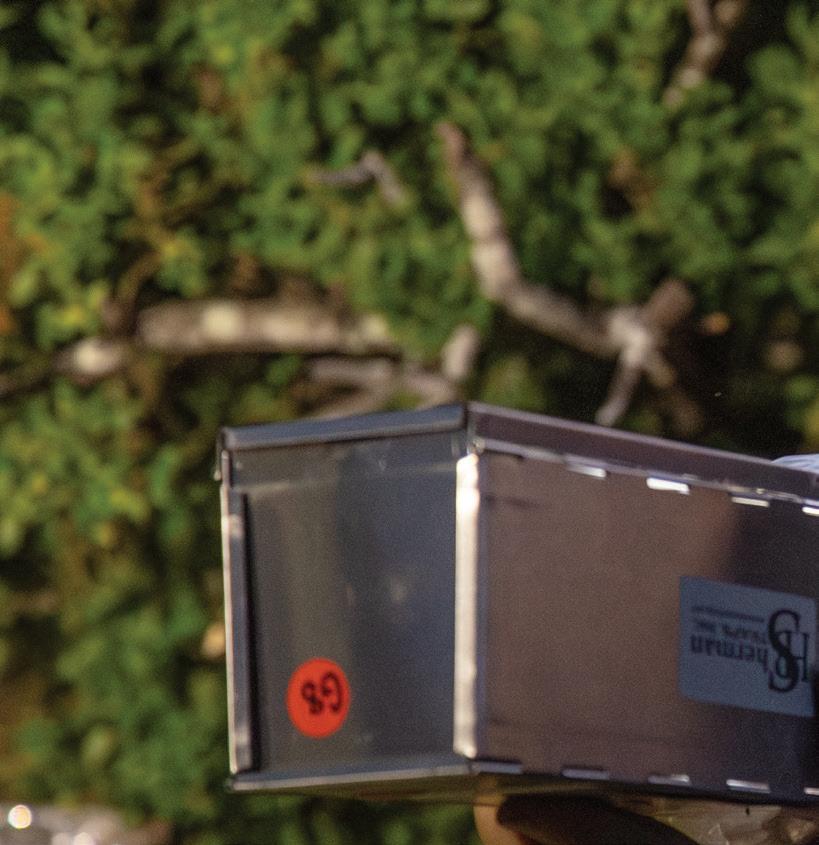
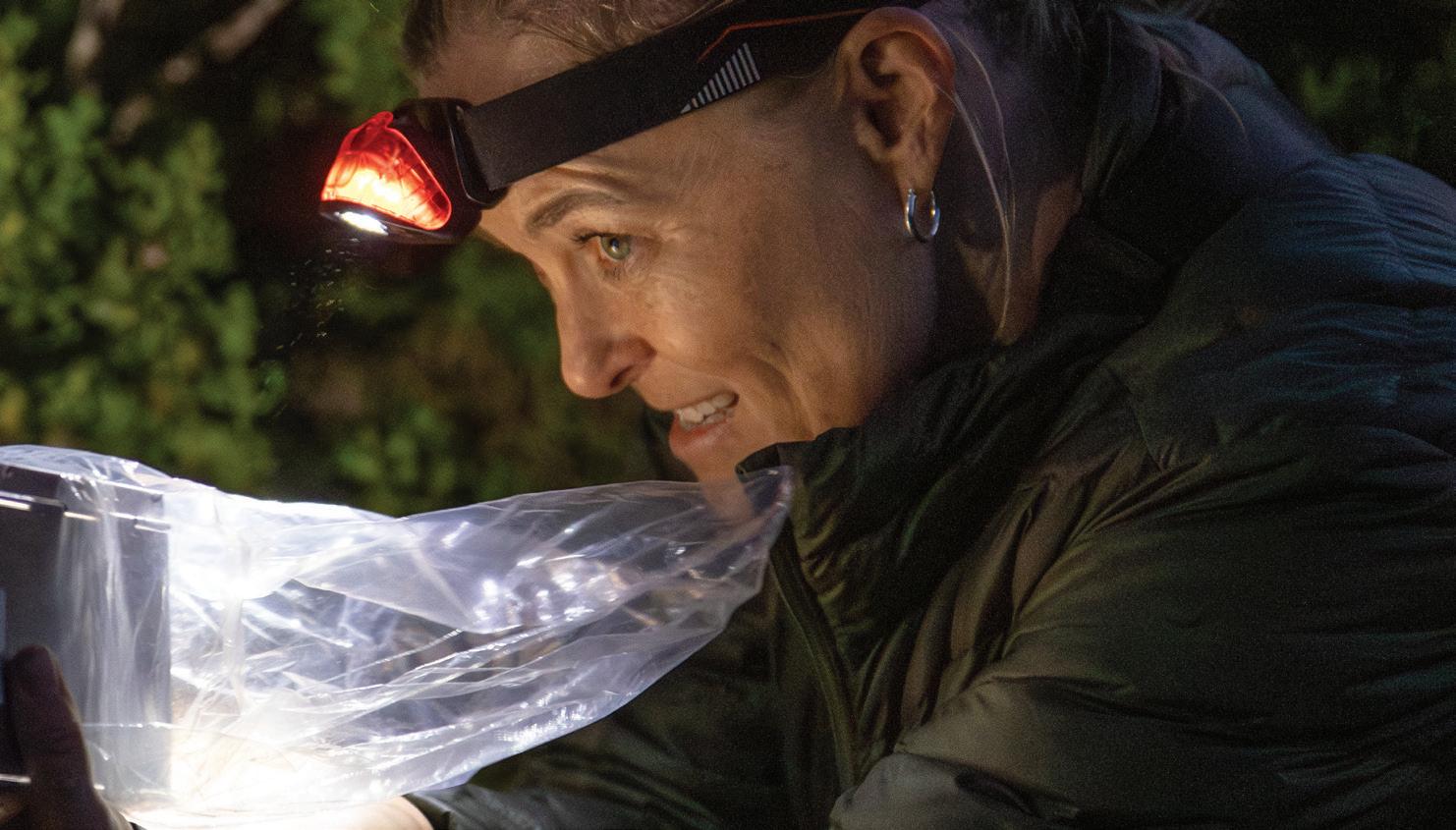
(Clockwise from top) San Diego Zoo Wildlife Alliance is partnering with Marine Corps Base Camp Pendleton for the newest Pacific pocket mouse reintroduction project. A U.S. penny (shown actual size) offers size perspective for an adult Pacific pocket mouse. Author Dr. Debra Shier transfers a pocket mouse from the conservation breeding program to an acclimation chamber at the Wire Mountain reintroduction site.
Collaboration: The Heart of Recovery
The Pacific Pocket Mouse Working Group, an interagency coalition, has been instrumental in the species’ recovery. Members include federal agencies like the U.S. Fish and Wildlife Service, U.S. Marine Corps, U.S. Geological Survey, state and county organizations such as California Fish and Wildlife, University of California, Los Angeles, and Orange County parks, and nonprofits like San Diego Zoo Wildlife Alliance and San Diego Natural History Museum. Within the existing populations, conservation measures such as prescribed burns and invasive grass removal have improved habitat conditions while balancing human needs. This partnership demonstrates that wildlife conservation and human multiuse areas can coexist, paving the way for sustainable stewardship of shared landscapes.
Lessons from the Past, Hope for the Future
Through years of research, we have honed our approach to breeding, reintroducing, and monitoring Pacific pocket mice. For instance, understanding the narrow reproductive window of females has allowed us to synchronize breeding efforts, maximizing success. Additionally, behavioral studies have helped prepare conservation program-bred mice for life in their native range, ensuring they can evade predators, forage effectively, and successfully integrate into the existing rodent community.
Each release is more than a moment; it’s a culmination of lessons learned and a leap toward the program’s ultimate goal: creating three independent populations.
A Future Worth Fighting For
The year 2024 was our program’s most productive yet, with successes at Wire Mountain and persistence at Laguna Coast Wilderness Park demonstrating the resilience of the Pacific pocket mouse and the dedication of those fighting to save it.
But the journey is far from over. As we continue to refine our techniques and expand our efforts, there will be new challenges ahead, but each step brings new hope—not just for the Pacific pocket mouse, but for the ecosystem it helps sustain and the collaborative spirit of conservation it inspires.
This is a story of discovery and determination, of tiny creatures with immense ecological significance, and of the people committed to ensuring their survival. Together we’re proving that no species is too small to save.
Debra Shier, Ph.D., is the Brown Endowed Associate Director of Recovery Ecology for San Diego Zoo Wildlife Alliance.
Bamboo-zling Finds in Full Bloom
Feel good about booking with us!
Couples looking for adventure, romance, and a one-of-a-kind wedding day can continue their love story at the San Diego Zoo and the San Diego Zoo Safari Park. From sweeping savanna views to lush green hideaways, we have the wild wedding venue of your dreams!
Into Ebo Forest
Dense tropical foliage, rolling mountain peaks, and lush, sweeping river valleys: this is Cameroon’s Ebo forest. It’s a crucial yet threatened biodiversity hotspot, and home to some of the world’s most endangered primates, fascinating flora, and countless other vulnerable species. We work hand-in-hand with local communities to protect wildlife and promote coexistence so all who share this delicately balanced ecosystem can thrive.
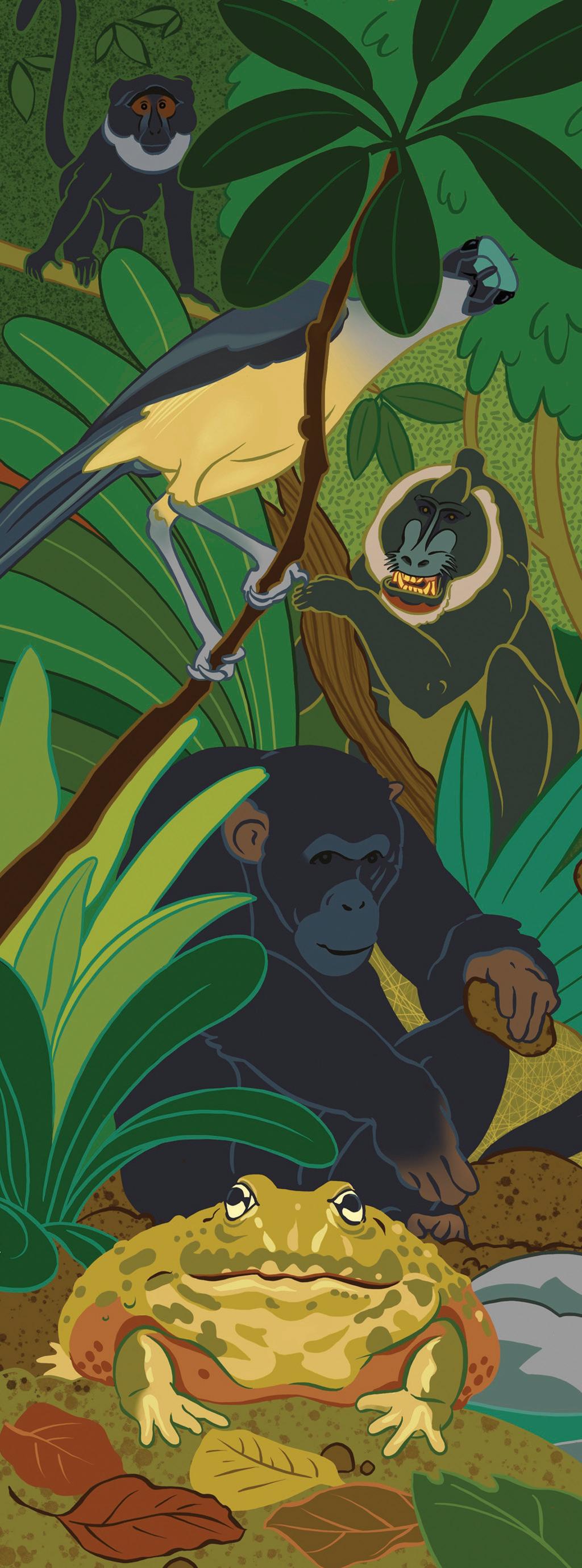
Look high, look low, and explore what’s hidden in plain sight.
BY ELLIE MCMILLAN ILLUSTRATION BY AMY BLANDFORD
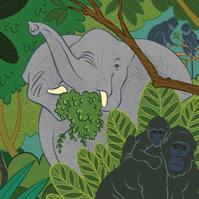
Western Lowland Gorillas Critically Endangered
Troops rarely use the same nest twice. These primates use more than 281 plant species to create elaborate resting and eating places.
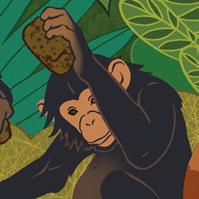
Nigeria-Cameroon Chimpanzees Endangered
The remarkable Ebo forest population of this subspecies has a unique tool use repertoire. They use hammering tools like rocks to crack open nuts and dip branches into termite mounds to retrieve and munch on their next meal.
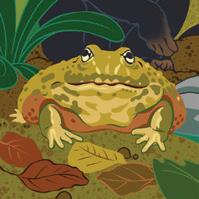
Goliath Frog Endangered
Weighing in at 7 pounds and measuring up to 29.5 inches from toes to nose, these colossal amphibians are the world’s largest frog.
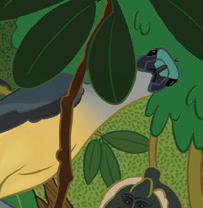
Gray-Necked Rockfowl Near Threatened
With a gray back and yellow underside, these birds expertly blend into dense tree canopies.
Forest Elephants Critically Endangered
These gentle giants aren’t only found on the savanna. This subspecies specializes in foraging through the thick forest for tasty vegetation.
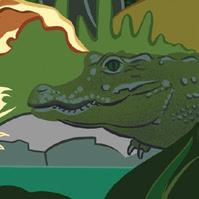
Dwarf Crocodile Vulnerable
Nocturnal and elusive, the world’s smallest crocodilian is typically found in marshy areas and shallow waters.
Botanical Findings
Botanical surveys in the forest have identified 17 plant species new to science, from herbs and shrubs to canopy trees in a vibrant array of colors.
People are at the heart of protecting Ebo forest, and we support community-led initiatives to foster local engagement and on-the-ground conservation efforts. Because of allies like you, we’re safeguarding the future for Ebo’s dynamic species through our African Forest Conservation Hub.
SAN DIEGO ZOO WILDLIFE ALLIANCE
BARBARA DURRANT,
PH.D.
Henshaw Endowed Director of Reproductive Sciences
San Diego Zoo Wildlife Alliance
Barbara Durrant, Ph.D., leads research that covers biobanking, gametes, endocrinology, and physiology. Her team works to understand reproduction in a wide variety of animals—at levels ranging from species to tissues to cells, and down to genes and their expression—to enhance reproduction and genetic diversity in endangered species.
What is reproductive science?
Reproductive science encompasses all the systems and pathways involved in producing healthy offspring. Because so many animal and plant species are currently experiencing threats to their survival, understanding reproductive processes is essential to their conservation. Our team concentrates on developing or improving assisted reproduction, including artificial insemination and in vitro embryo production; measuring hormones to monitor reproductive cycles and pregnancy; and preserving living cells in our Frozen Zoo® for future use in DNA studies and assisted reproduction.
What drew you to a career in this field?
From a very early age I was fascinated by animals. Growing up in upstate New York, our family lived, camped, and hiked in areas inhabited by moose, black bears, otters, frogs, turtles, and many more native species. We visited zoos or wildlife sanctuaries everywhere we traveled, and I loved learning about wildlife, boring my siblings with what I thought were fascinating facts. Learning about animal physiology, reproduction, and behavior as an undergrad solidified my intent to pursue a career in wildlife and conservation.
How does your team innovate solutions to reproductive science challenges?
When faced with a new challenge, we pore over the literature and contact scientists who are doing similar work, regardless of the species. Without exception, the scientists we’ve contacted have responded with enthusiasm for a chance to contribute to conservation science. We also draw on the expertise of our Wildlife Care and Wildlife Health teams for species-specific knowledge. Our team then discusses, decides what may be applicable, and designs protocols based on what we know of the species in question or related species with which we’ve had success. There’s also a healthy dose of intuition, or what geneticist Dr. Barbara McClintock’s biographer, Evelyn Fox Keller, described as “a feeling for the organism.”
Where do you find hope for the future of conservation?
In our institution and in the scientific community, we are surrounded by hope that our work will contribute to conservation initiatives that will save species. I see hope in the excitement of our guests at the San Diego Zoo and San Diego Zoo Safari Park, in the multidisciplinary collaborations throughout San Diego Zoo Wildlife Alliance, in the enthusiasm of our partners worldwide, in each birth that moves a species further from extinction, in my coworkers and teams, and in every successful study.
What is your favorite animal? Why?
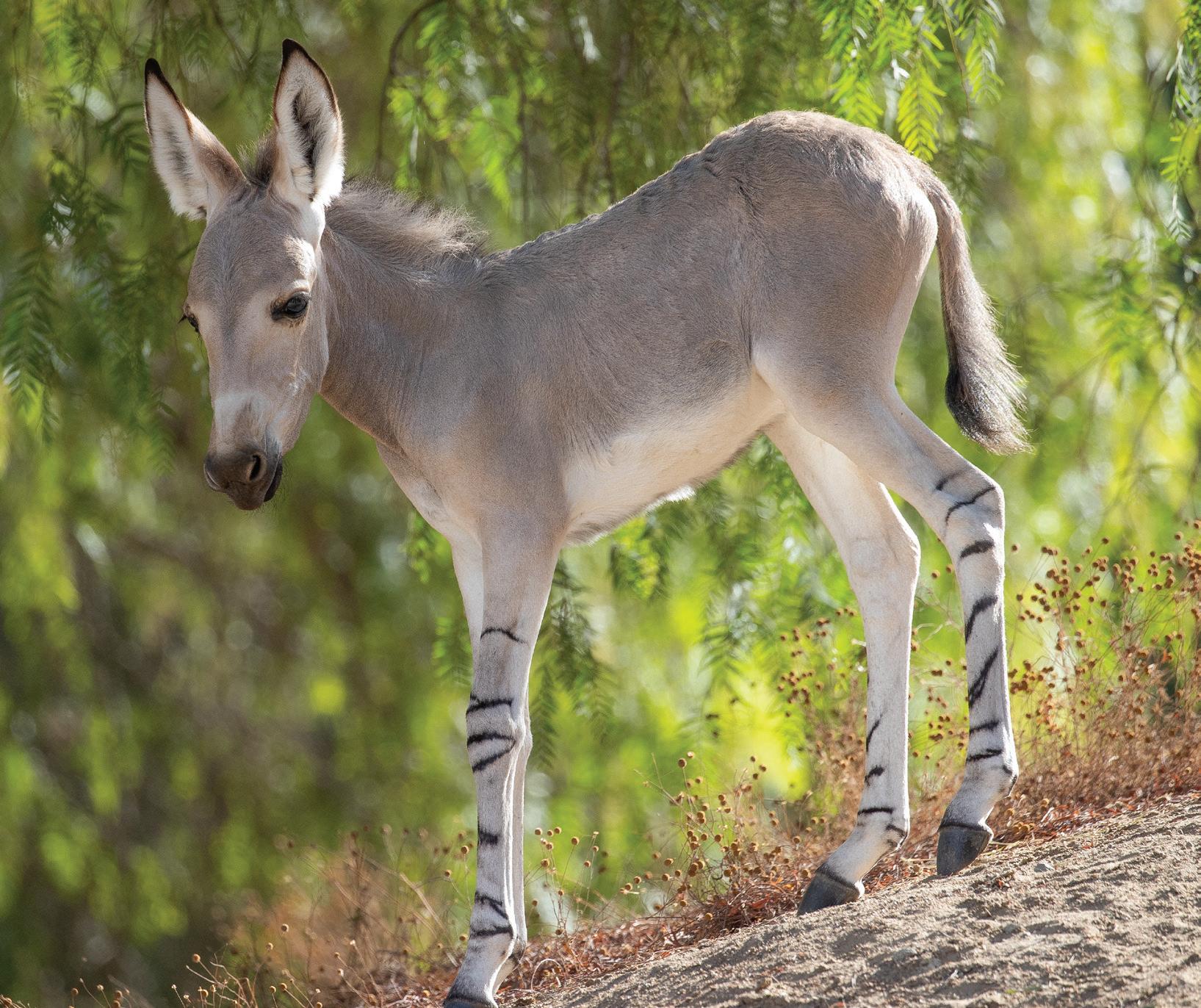
For sheer beauty and elegance, I favor the Somali wild ass. For companionship and mutual devotion—my dog.
PHOTO BY: (TOP) TAMMY SPRATT/SDZWA
Hoʹi ke Kāhea Returning the Call
BY BRISSA CHRISTOPHERSEN AND BRYCE MASUDA
The inextricable relationship between people and their environment has lasted for millennia, and here in Hawai ' i, this connection is no different. The people of Hawai ' i have long understood what it means to live in reciprocity; however, the effects of colonization and the influx of foreign, invasive species have resulted in a staggering decline in overall health of both people and wildlife. As one of the most isolated island archipelagoes in the world with a large human population, Hawai ' i is not only home to the many people that live here, but to some of the world’s rarest species.
Remembering Relationships
The word “home” carries with it a deep and powerful meaning that we can all relate to—a place where we feel safe, where we find comfort in the familiar, and where we are surrounded by loved ones. It’s where we’re from, where we belong. It is the foundation of our identity, rooted in the land, the sea, the mountains, and the skies that we’ve been linked to for generations. For us, home is not just a place, but a connection to 'āina, which translates to “land” or “that which feeds.”
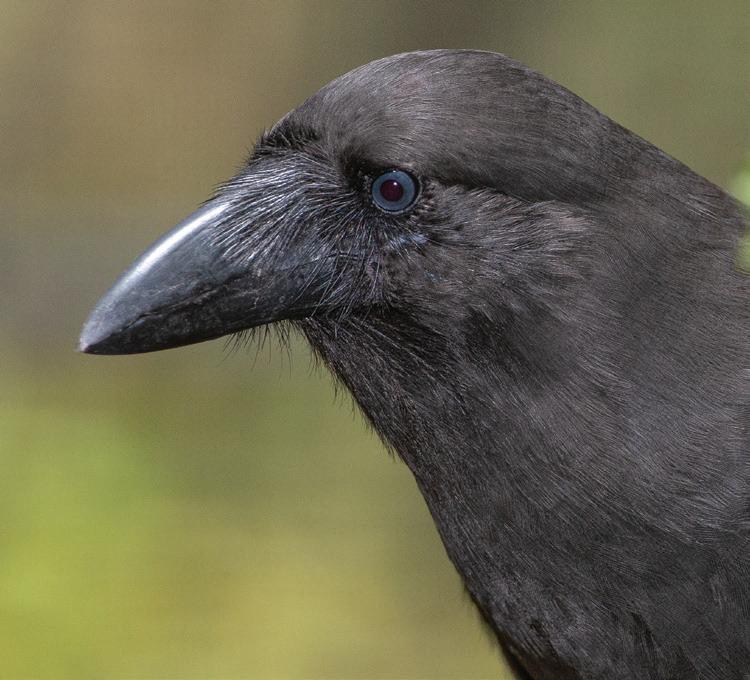
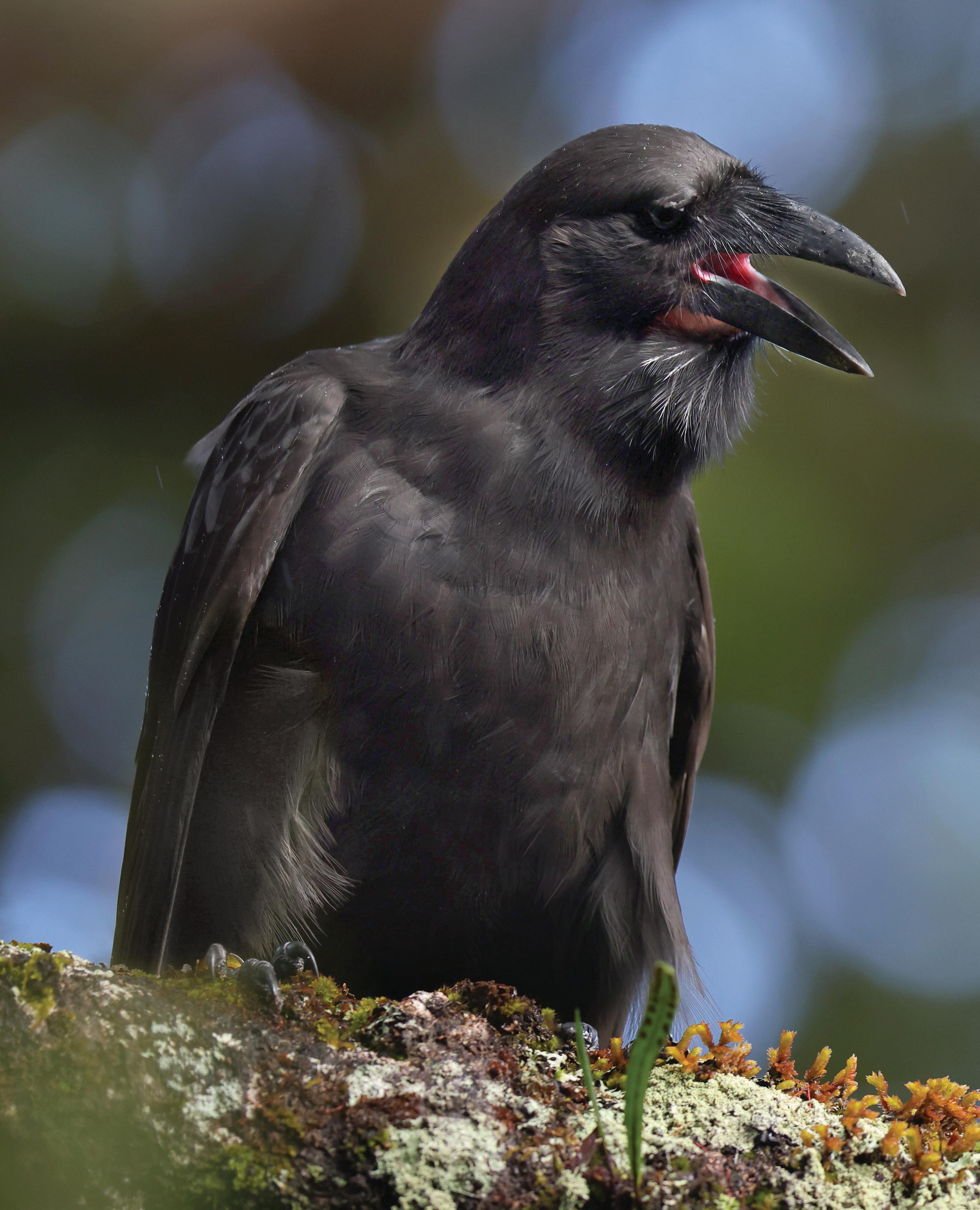
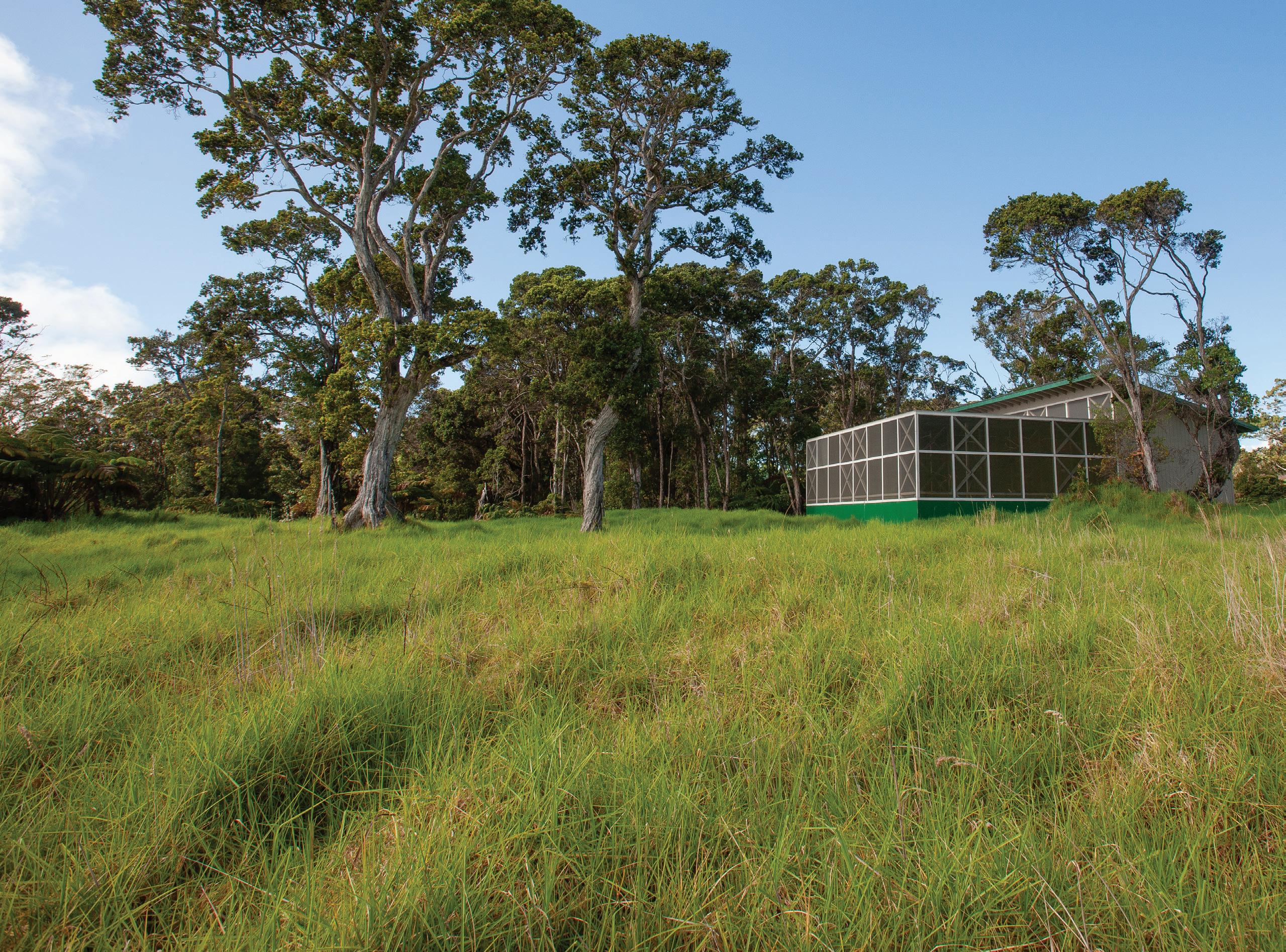
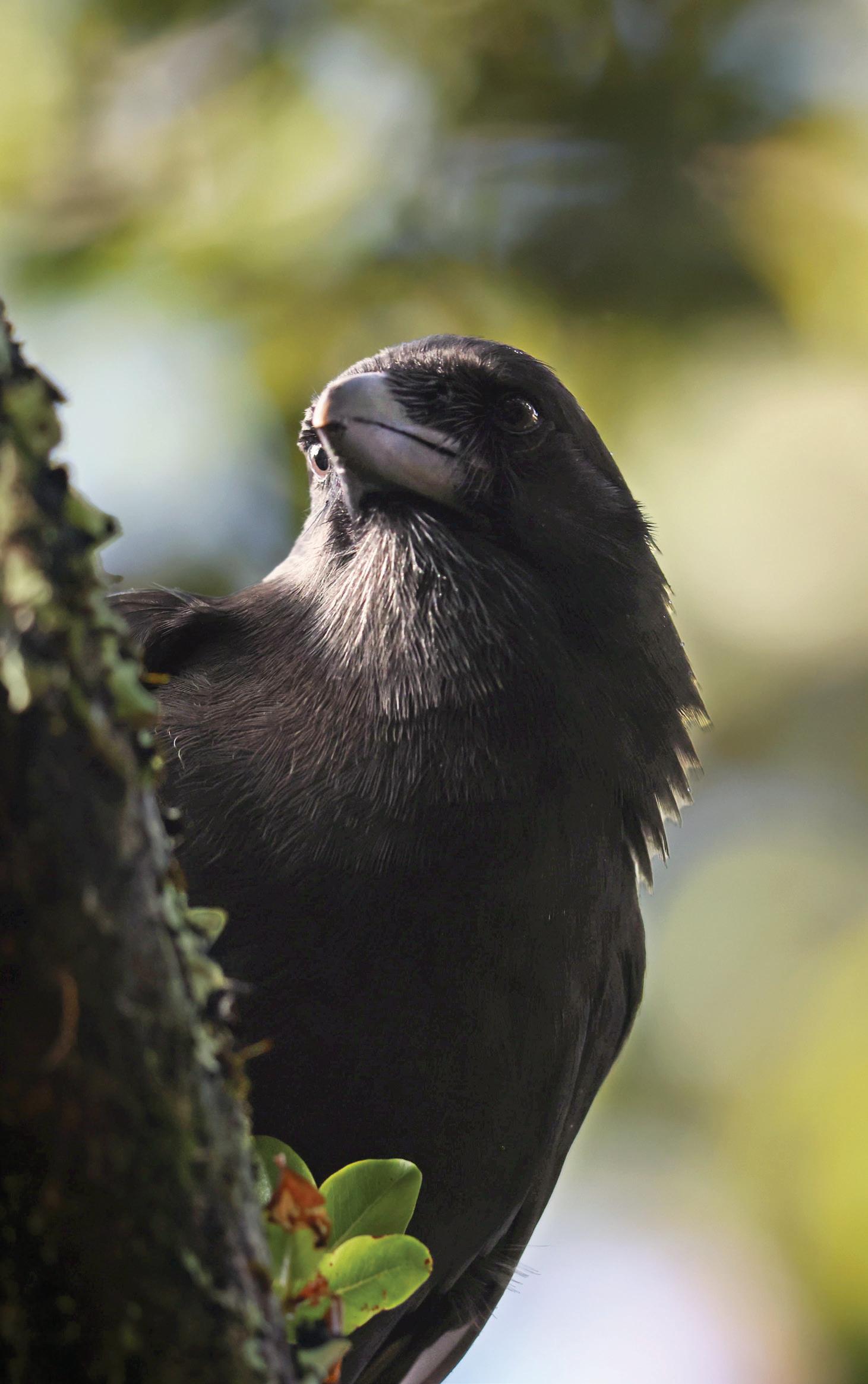
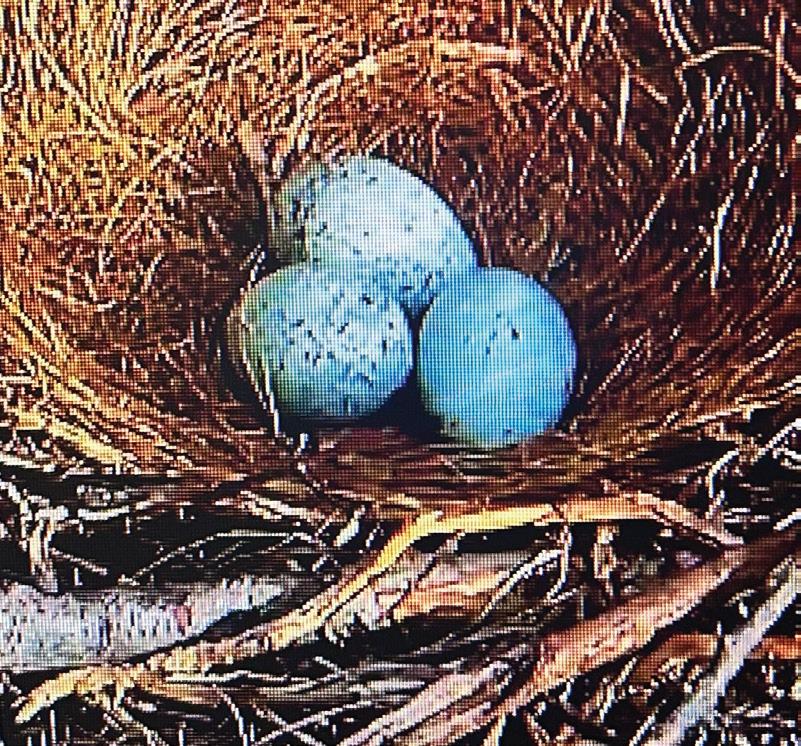
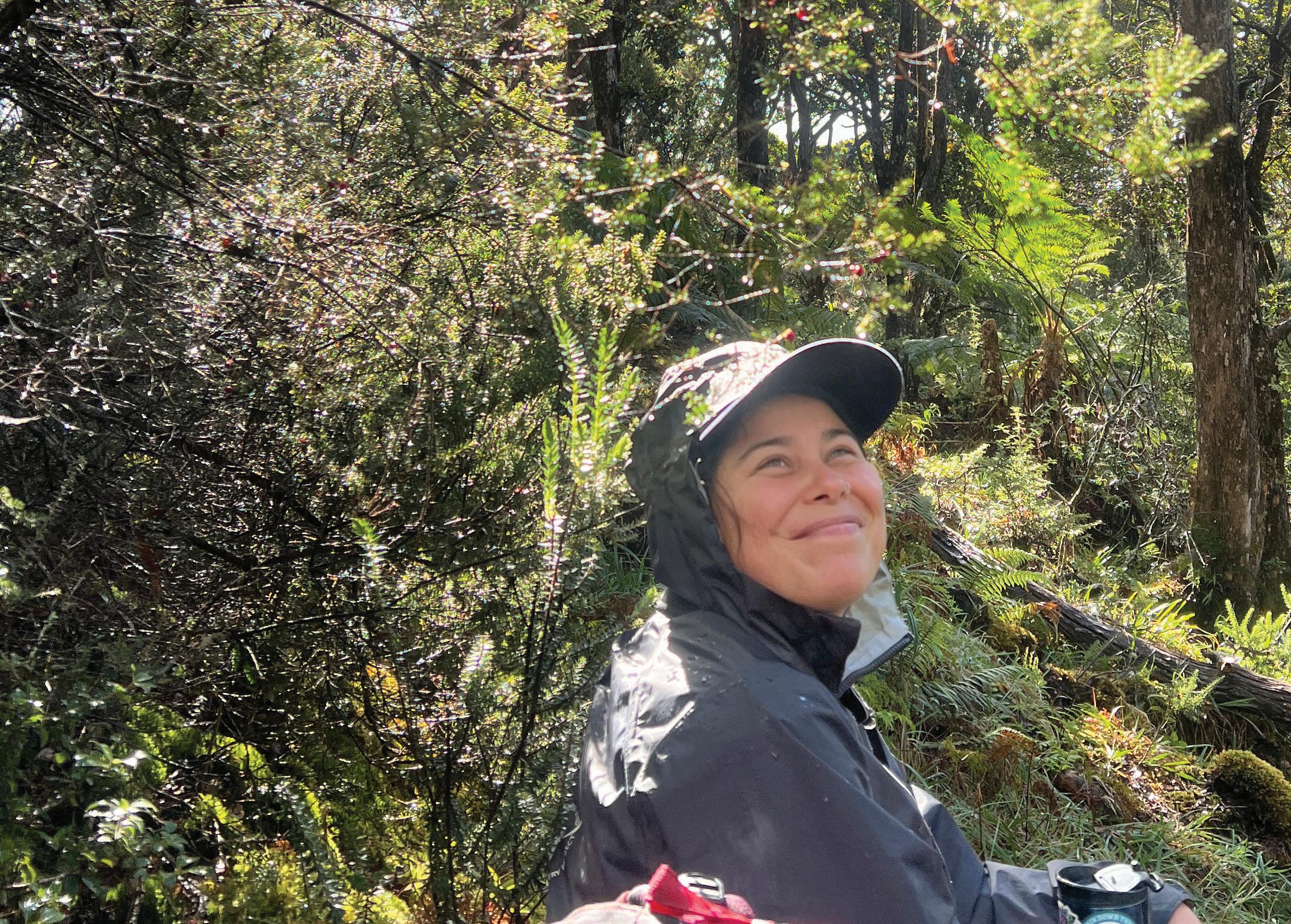
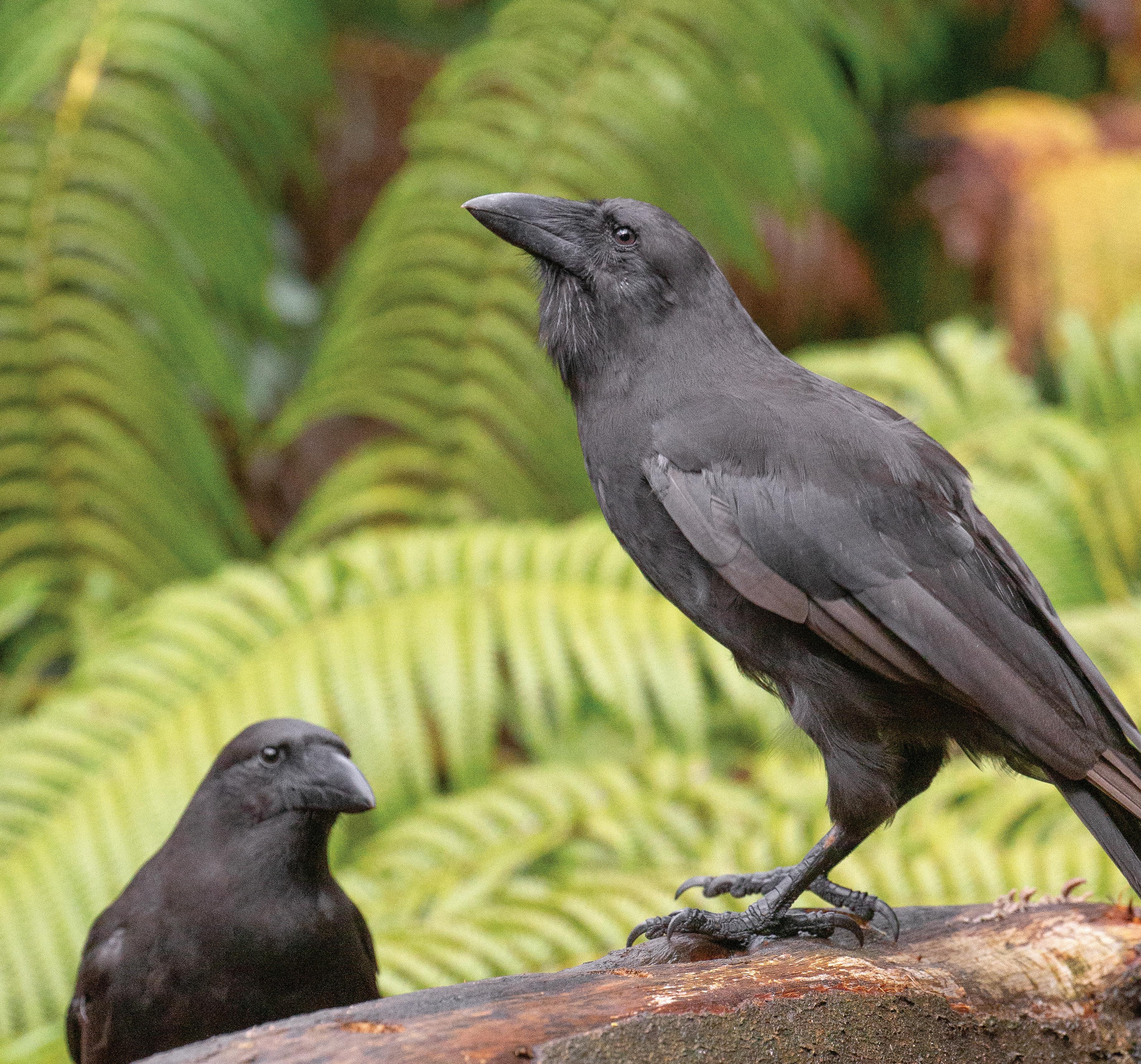
From Aviary to Forest (Above) 'Alalā are cared for in aviary buildings like this one at two care facilities in Hawai'i. (Facing page, clockwise from top) 'Alalā are the last remaining corvid species endemic to Hawai'i. Author Brissa Christophersen enjoying the sight of ‘alalā in their forest home. 'Alalā typically lay about three eggs per clutch.
crow, plays a key role in a forest’s health. Once abundant across the landscape, the 'alalā population dwindled down to fewer than 20 individuals in the 1990s due to the aformentioned threats. As a result, 'alalā were brought into our care facilities in efforts to increase the population, yet the goal was always clear—to return them to their forest home, where they belong.
To revitalize 'alalā, it was not enough to simply care for them in our centers, the Keauhou Bird Conservation Center on Hawai'i Island and the Maui Bird Conservation Center on the slopes of Haleakalā. Our community had to address the root causes of their decline: habitat restoration, predator control, and the mitigation of disease. Over the years, many hands came together and this work paid off, and the population grew to over 140 individuals. Through collaborative efforts, the forests were restored and protected, and in 2016, a new chapter began.
Ho'iho'i
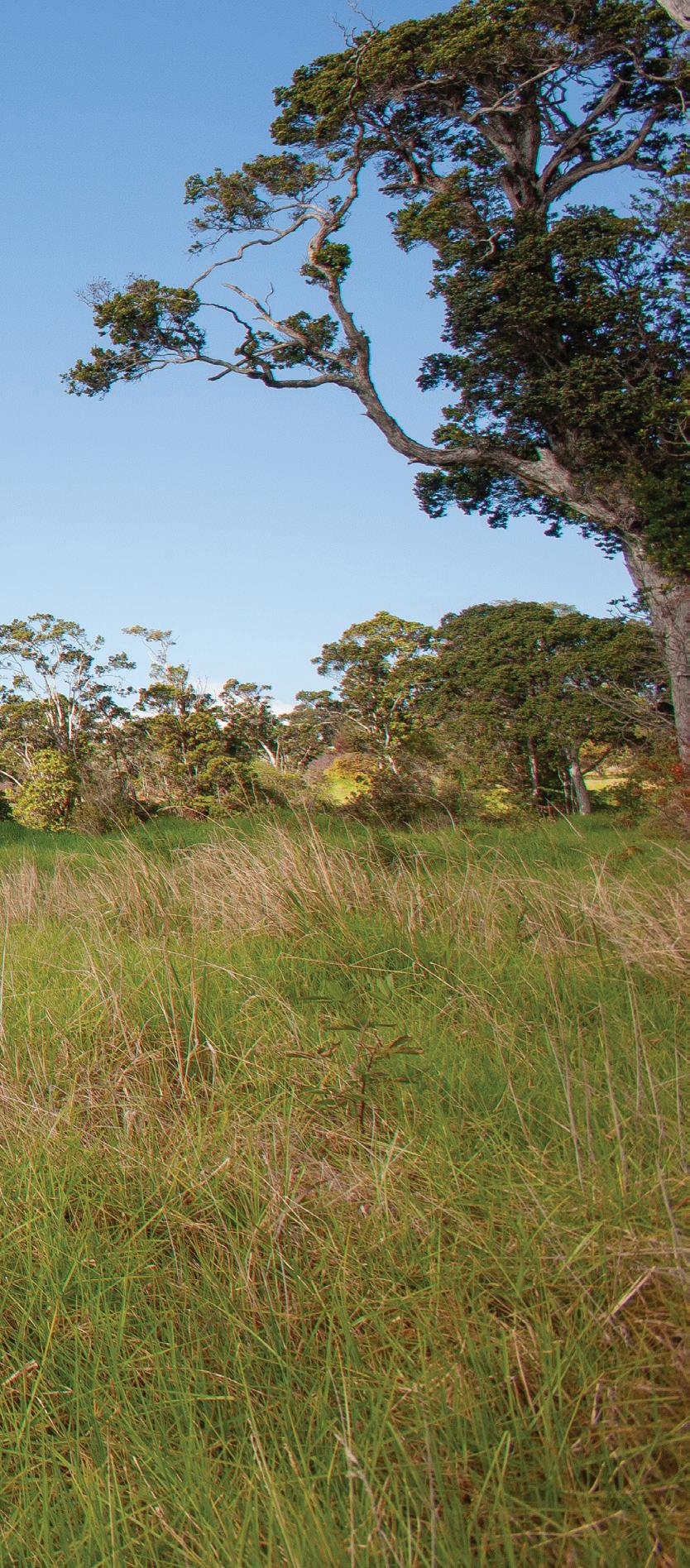
Between 2016 and 2020, 30 'alalā were returned to their forest home on Hawai'i Island, where they could once again soar through the canopy, calling back and forth to one another from the treetops. They were finally among their family in the forest—back to the 'āina where they belonged. It was a moment of joy, of hope, of homecoming.
forward to today, and the hope for the 'alalā continues to grow. In November 2024, we were able to return five more 'alalā to their forest home on the island of Maui, a significant milestone in the ongoing effort to restore this iconic species. This return marks another step forward in ensuring the ʻalalā’s voices will once again fill the skies of Hawai'i, and that they will thrive in the forests that are their true home.
What does this process look like? Some people call it conservation breeding, or captive propagation. It may sound like a technical term, but this refers to producing offspring to increase the population from fewer than 20 'alalā to a peak of over 140. Some call it a sanctuary—a place of care and protection. We call it ho'iho'i, which translates as “to return, send back, or restore,” and represents what a joyous feeling it evokes.
Perseverance and Patience
For us, the work of conservation is about returning the 'alalā home to restore these familial ties to 'āina. Every step taken in the care facilities here in Hawai'i is purposeful, done with the intention of returning them home in a timely and righteous way. But this is not an easy task. It requires patience, attention to detail, and careful observation.
When we care for the 'alalā, we do not simply keep them in an enclosure or a sterile environment. We closely observe their behaviors
and needs. We learn what makes them feel comfortable, what makes them feel safe. 'Alalā are part of 'āina, and as a result, part of what feeds us and allows us as people to thrive. In turn, it’s our reciprocal responsibility to provide the utmost care to 'alalā, as we would to our extended family. To help ensure 'alalā are as comfortable as possible, we replicate their forest environment as closely as we can, with aviaries filled with the same native foliage to mimic the natural layers of the forest and curating optimal humidity and rain conditions.
Here we also ensure the infrastructure needed to care for them is in good working condition. The team monitors the birds for any signs of stress or potential health concerns. Every aspect of what we do is attended to with intention and care, so that when the time comes to return ʻalalā to their forest home, they are as ready as possible.
E Ola Mau (May They Live on)
As we all know, the field of conservation is not easy, but it is essential. It is a labor of love, of hope, and of responsibility. The 'alalā are not just birds—they are interwoven threads that make up the fabric of Hawai'i lifeways. They are part of Hawai'i’s story, part of the rich cultural and ecological heritage that has shaped this land. And just as we care for our own, we care for them, so they can thrive once again.
This effort is not just about saving a bird—it is about saving a piece of ourselves, a piece of our home. When the 'alalā return to the forest, it is a reminder of what is possible when we work together. It’s a reminder that no matter how challenging the road may be, we can always return home, and that home will always be there, waiting for us.
In this way, we are not just conserving birds—we are building a better tomorrow for Hawai'i. A tomorrow where the land is filled with life, where the skies are once again filled with the songs of native birds, and where the land is cared for as it has been for generations. There is hope in this work, and hope for the future of the native species of Hawai'i. We are not just returning the 'alalā home—we are ensuring the land, the forests, and the animals who call it home can live and thrive, as they always should.
Brissa Christophersen is a research associate and Bryce Masuda is a senior conservation program manager with San Diego Zoo Wildlife Alliance’s Conservation Science Wildlife Health team.
Walking under the shade of towering thorn trees, you crest a hill and see a rhino lounging near an oasis dotted with slender palms and robust fig trees. A gentle breeze rustles through the canopy, carrying the sweet scent of blooming gardenias. The rhino lazily rises, tempted by a nearby acacia branch that looks too delicious to resist. Now, imagine this same scene—without the trees. Pretty different, right? Trees do more than simply beautify the landscape; they are essential pillars that provide habitat, food, and shelter while contributing to a vibrant, biodiverse environment.
Speak for the Trees
BY RAJ BROWN AND ADAM GRAVES PHOTOGRAPHY BY KEN BOHN
Cultivating Excellence
The San Diego Zoo and San Diego Zoo Safari Park have a long history of cultivating trees and plants that are authentic to the natural habitats of our wildlife. Whether we’re bringing the African savanna to life for the new Denny Sanford Elephant Valley or creating a lush Asian forest canopy at the Zoo—with towering ficus trees and their dangling aerial roots—trees help us immerse visitors in new, exciting environments. What you might not know is how deeply involved San Diego Zoo Wildlife Alliance is in global tree conservation. While the Zoo and Safari Park are well-known for unparalleled work with threatened animal species, our robust work with tree conservation and
research is less well-known. San Diego Zoo Wildlife Alliance recently earned accreditation as an official arboretum through the Arboretum Accreditation Program, highlighting our commitment to tree conservation. It’s just another way we’re branching out to protect the planet.
Managed by the internationally renowned Morton Arboretum, the program has several levels of accreditation, and the level achieved by San Diego Zoo Wildlife Alliance (Level IV) is both the highest and most complex. Level IV accreditation highlights the care and energy that we put into managing our landscape, as well as our ongoing commitment to tree-related education, scientific research, collection diversity, and
meticulous recordkeeping. Interdisciplinary collaboration between the Zoo, Safari Park, and Conservation Science teams dynamically leverages decades of experience caring for rare and endangered plants to effectively conserve wild tree populations worldwide.
Great Oaks from Little Acorns Grow
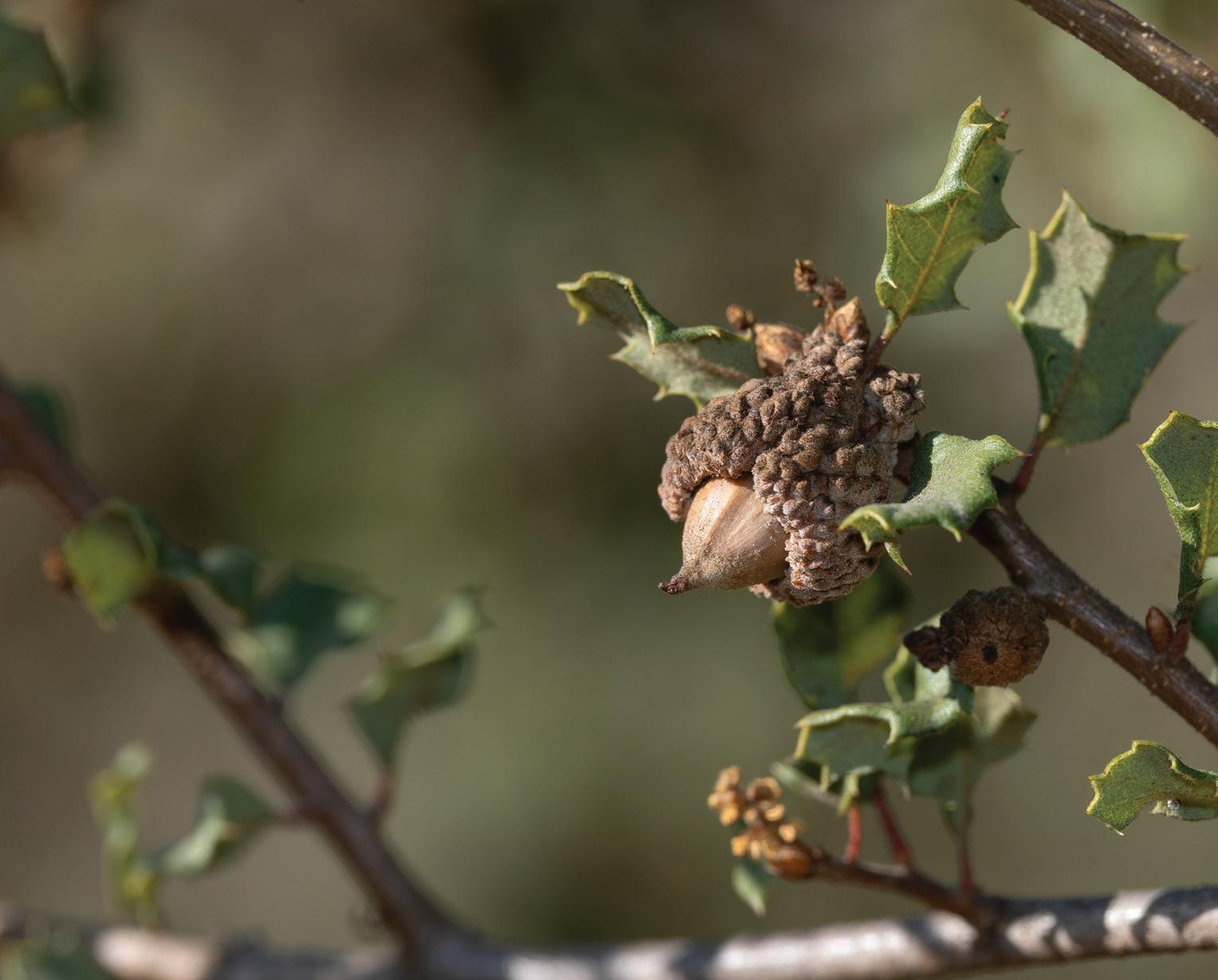
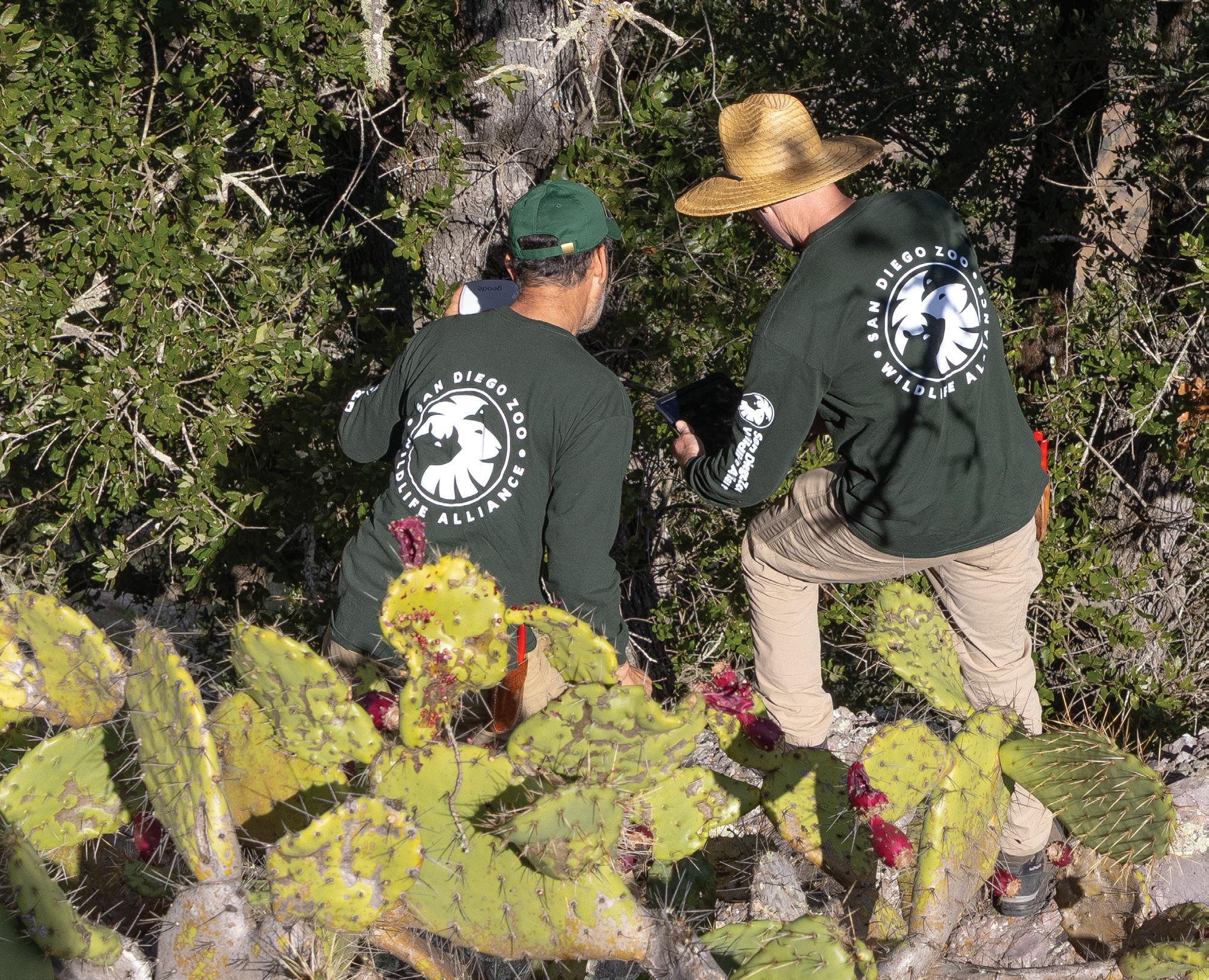
San Diego Zoo Wildlife Alliance’s work with California oak species is a perfect example of this collaboration. Through Botanic Gardens Conservation International (BGCI), our staff act as regional conservation coordinators for several oak species that are endemic to California—all of which are threatened in their native environment. This involves
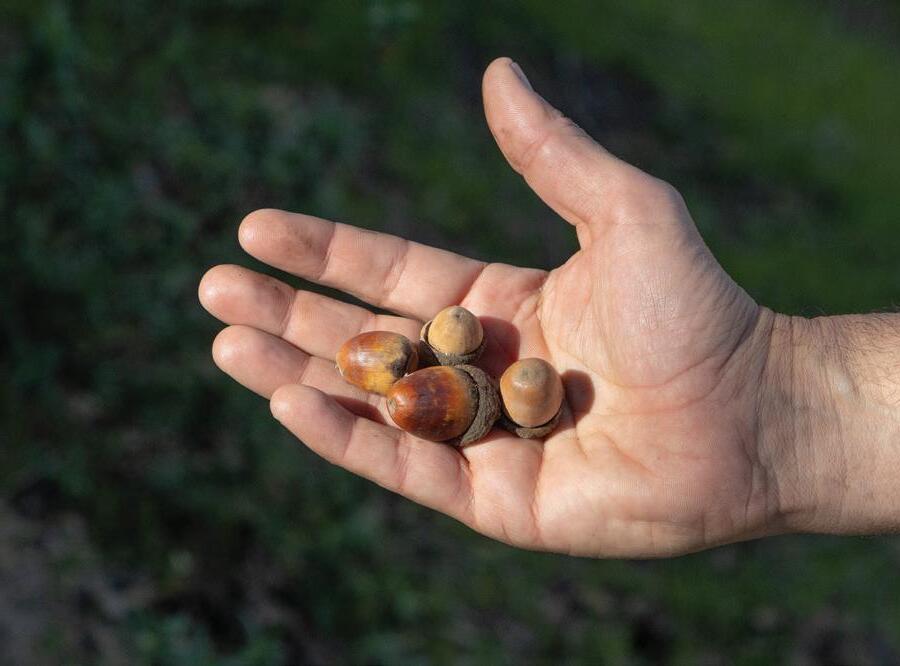
working with regional partners to coordinate and communicate conservation work and conservation needs. Our team also engages in in situ conservation work with oak populations throughout San Diego County and beyond—often in Baja California and the Channel Islands, where these oaks have incredibly restricted and sensitive populations. Through the collection of acorns, we can propagate new oak seedlings to help replenish and safeguard these populations. These oaks can be planted at either the Zoo or the Safari Park’s Biodiversity Reserve as meta-collection populations, or be shared with local habitat restoration efforts.
We also collect living tissue from the trees themselves and push cutting-edge
cryopreservation. Through micropropagation we can grow living oak tissue in the lab and hold a grove of endangered trees in the palm of our hand. And with cryopreservation, the same technology that supports San Diego Zoo Wildlife Alliance’s Frozen Zoo® now can also be applied to plants. As this research moves forward, it will help preserve genetic material for generations of conservation work to come.
Between Every Two Pines Is a Doorway to Another World
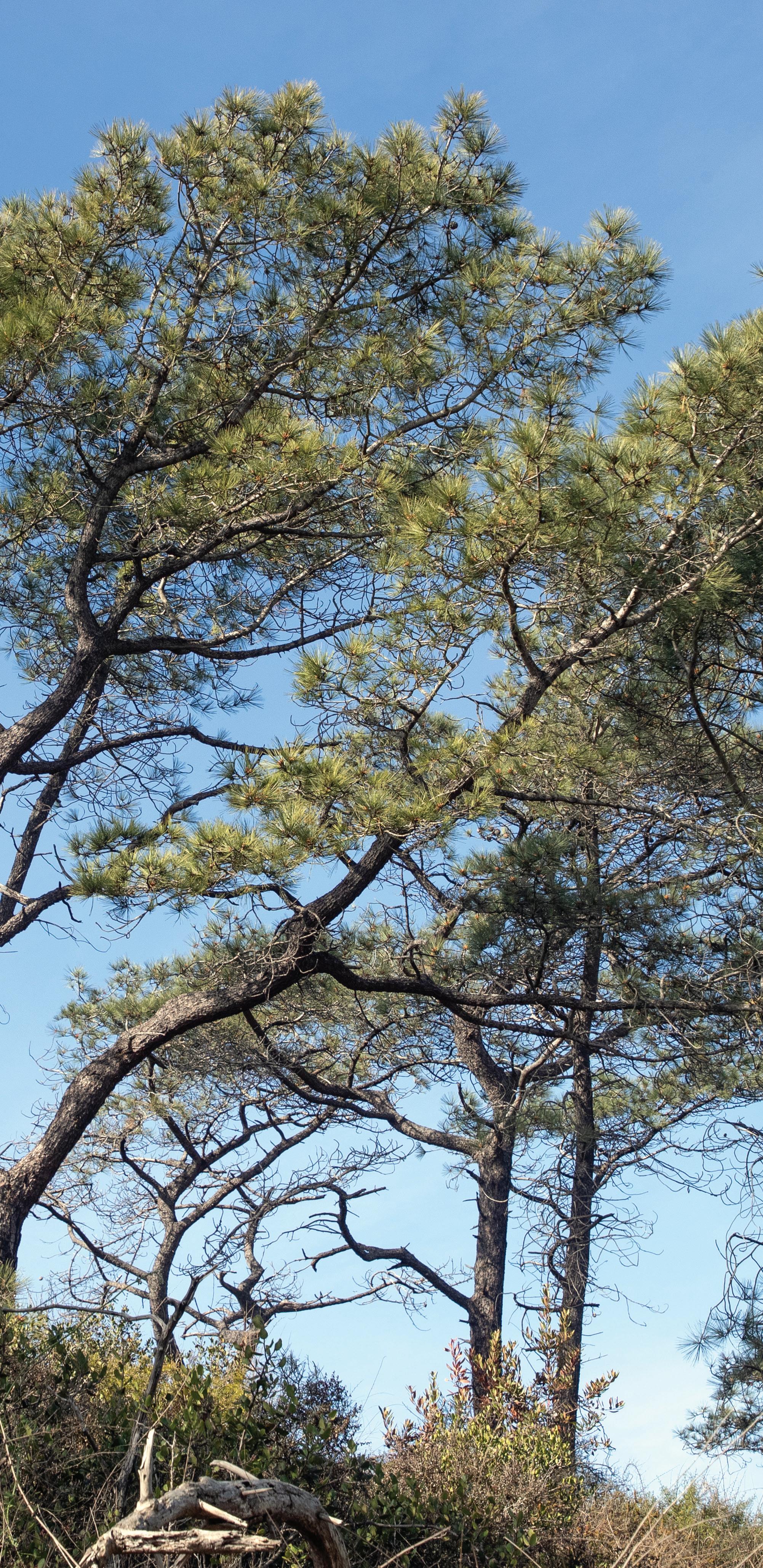
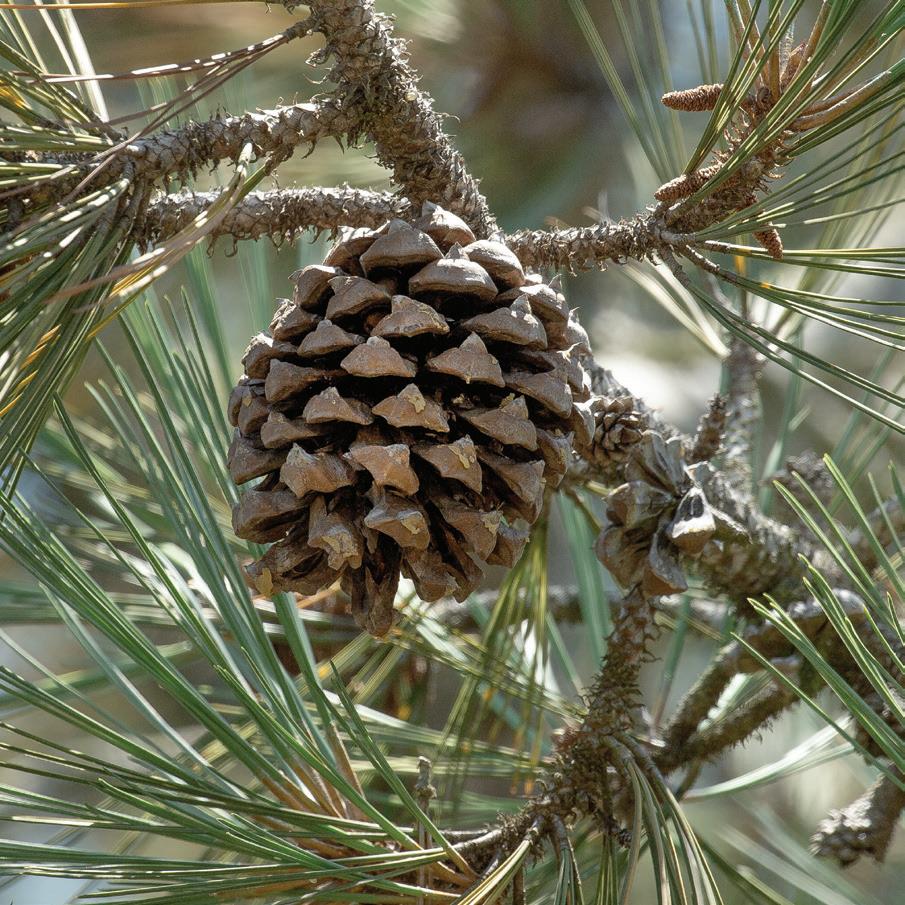
Del Mar and La Jolla, California, are famous for their stunning beaches and the iconic Torrey pines that tower above the rugged sandstone bluffs. These majestic trees are the rarest pine species in North America, found only along the central coast of San Diego County and on Santa Rosa Island, 173 miles off Santa Barbara. Sadly, drought and bark beetle outbreaks are threatening the last native Torrey pines on mainland California, and challenges to environmental sustainability are only making things worse.
For decades, the Zoo and Safari Park have been leaders in Torrey pine conservation. Our team has been carefully growing and studying Torrey pines to support ongoing conservation efforts. For over 50 years, our horticulturists and arborists have honed their skills to help these trees thrive from seed to maturity. Safari Park arborists, working alongside Plant Conservation scientists, collect germplasm samples from Torrey Pines State Natural Reserve, contributing to vital genetic research. By studying both the ex situ trees at the Safari Park and native Torreys, we’re working to understand how to protect and manage Torrey pines. This research will help ensure the long-term survival of this unique species.
Growth Potential
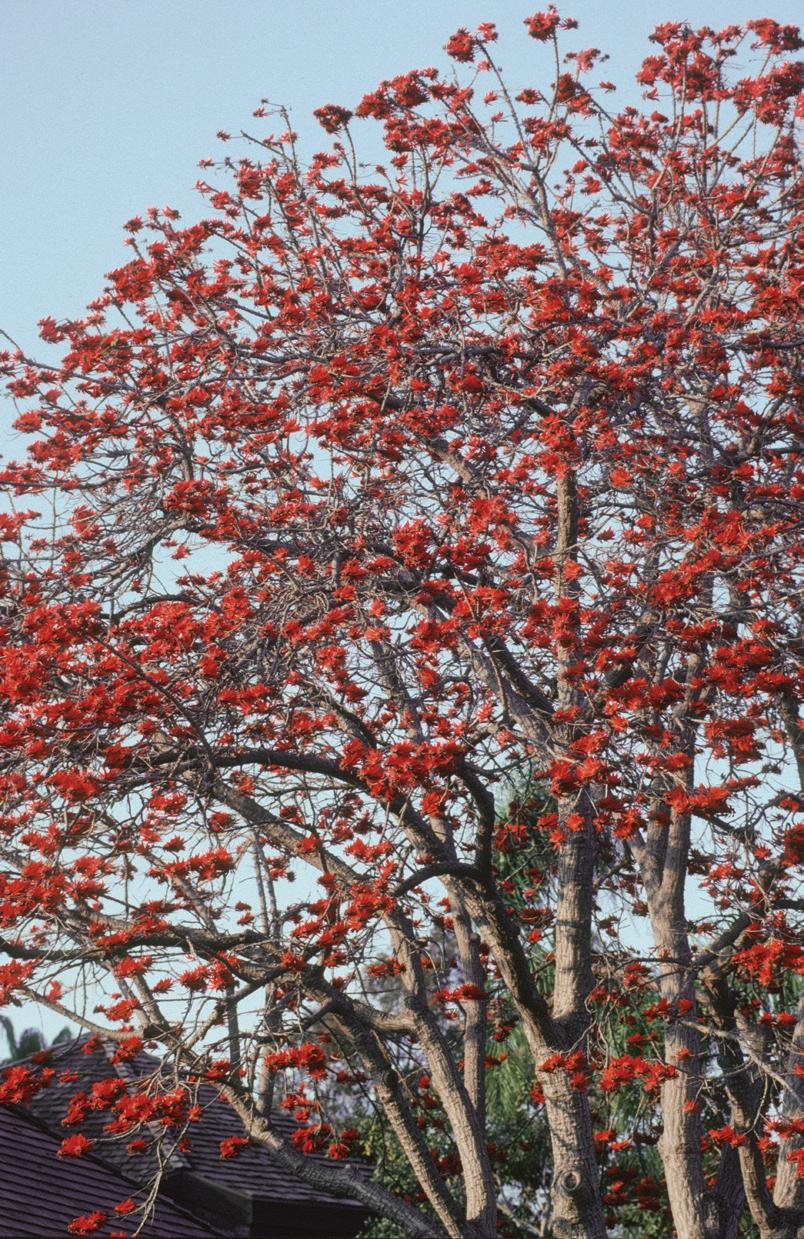
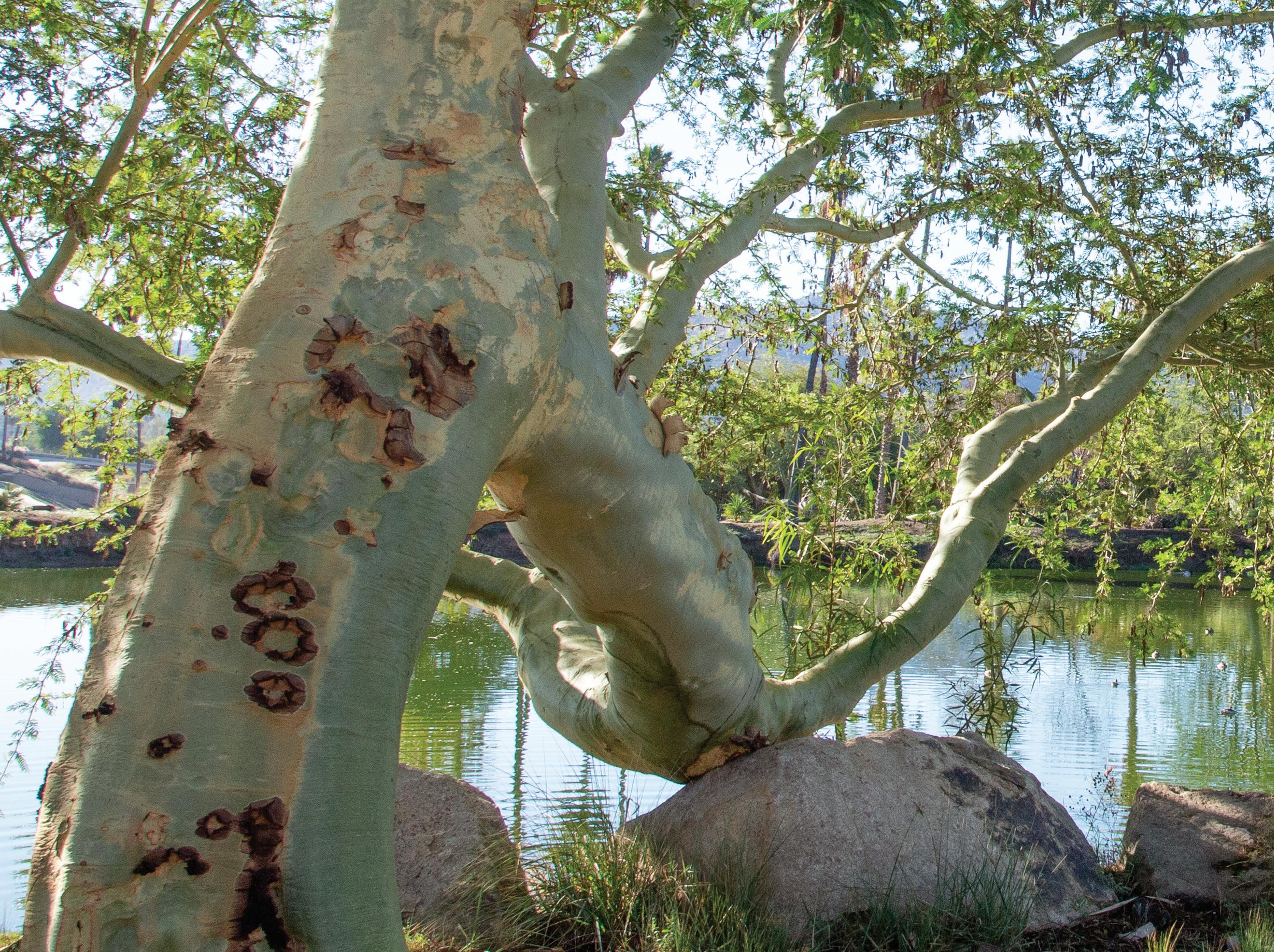
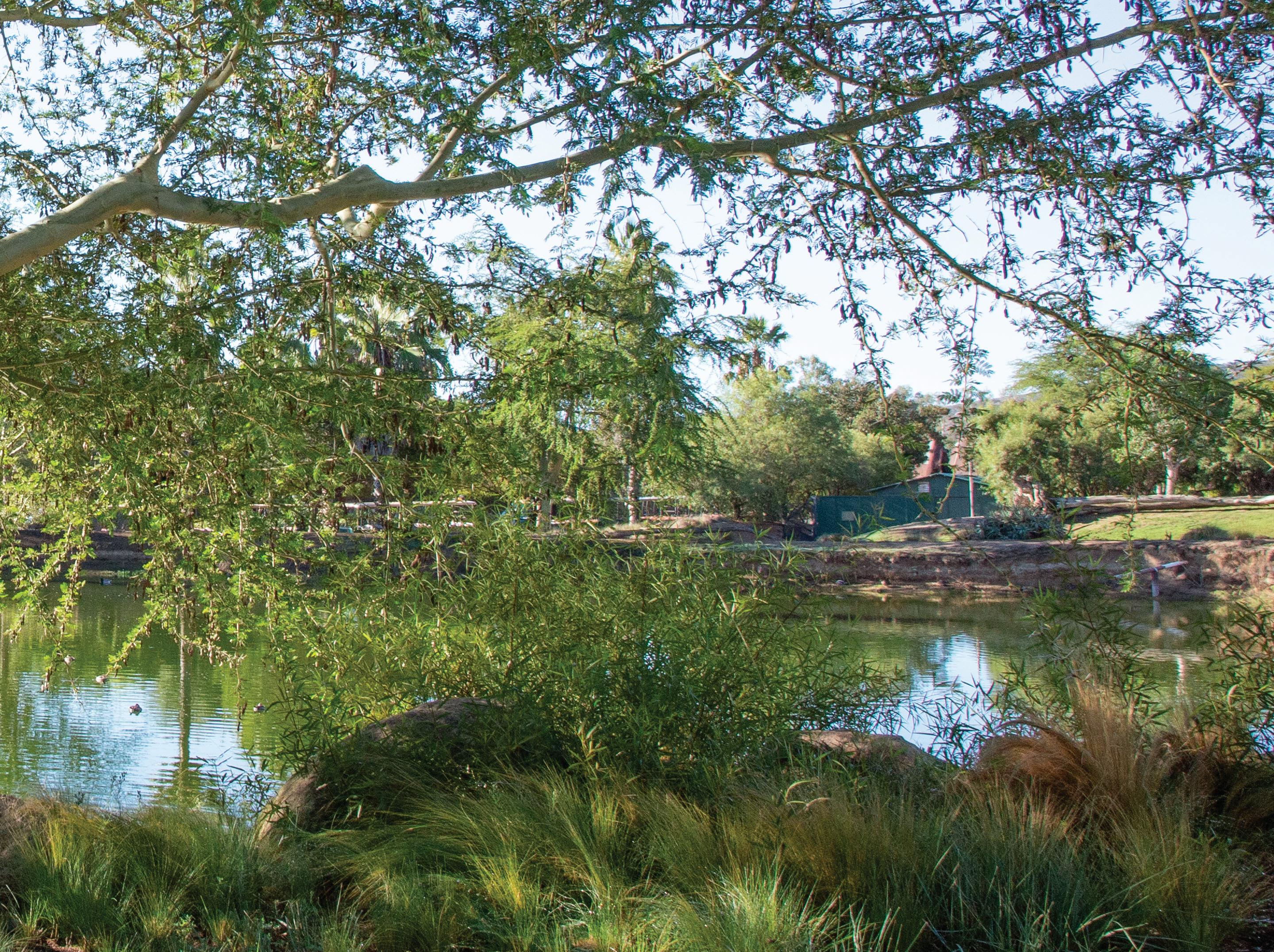
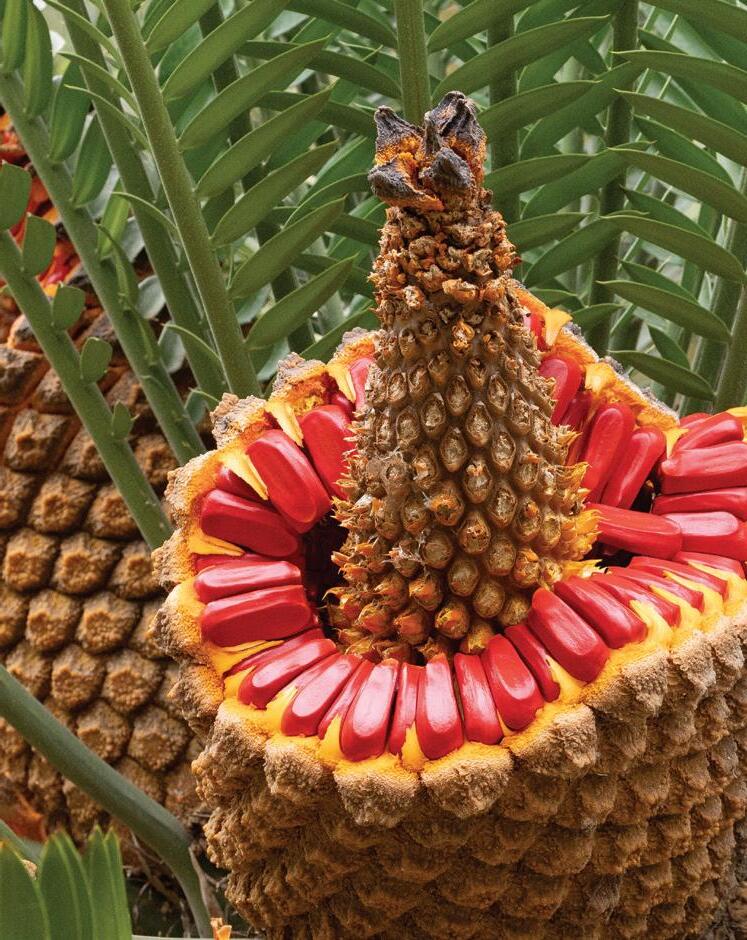
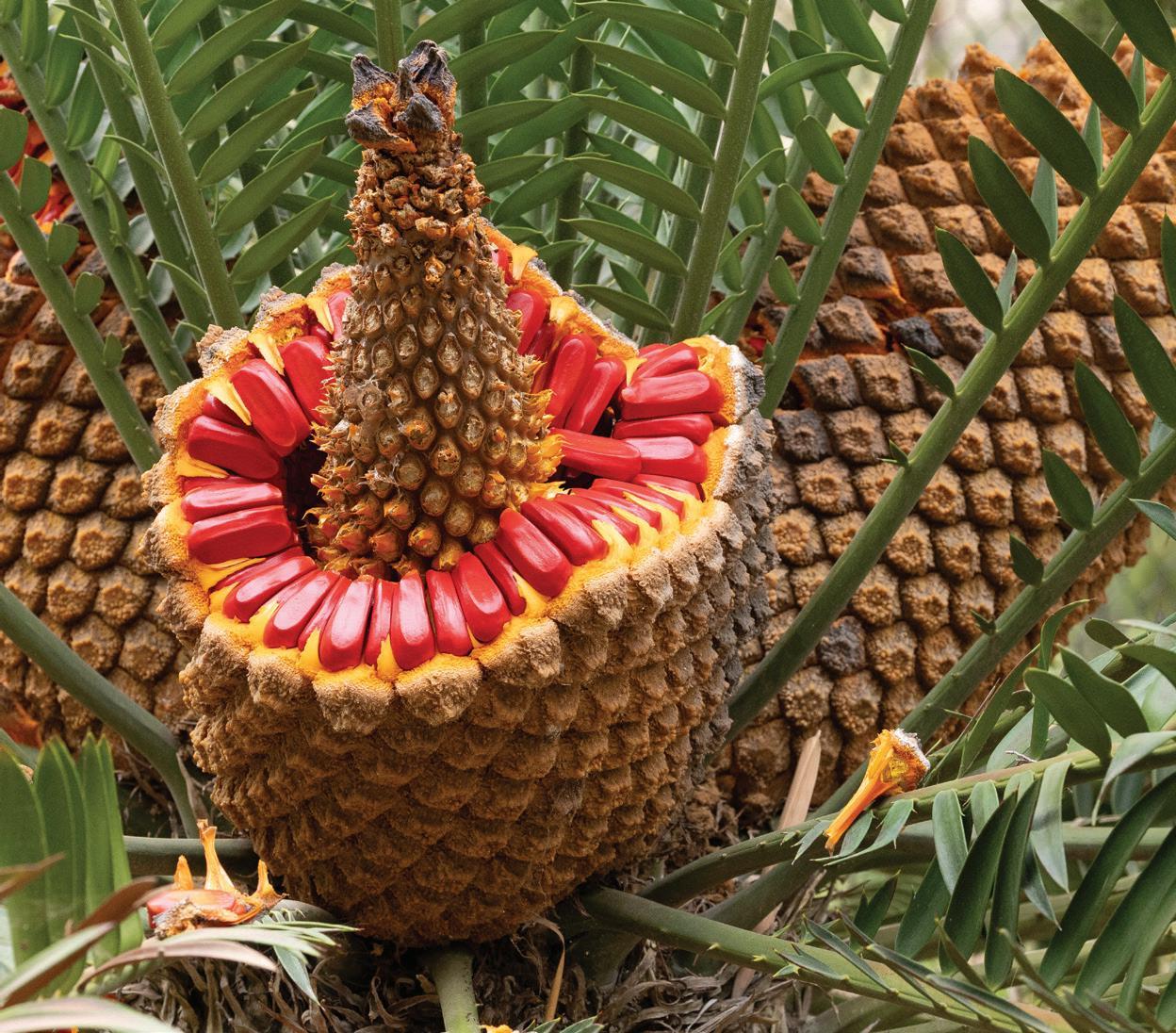
(Pages 22 and 23) The majestic fevertree at the Safari Park’s reclamation pond. (Inset) Fevertree cone. (Page 24) Torrey pine. (Inset) Torrey pine cone. (Page 25) San Diego Zoo horticulturists Dario Berrini and Greg Bluffin collect acorns for propagation. (Inset) Eastern Cape giant cycad cone.
Plants That Outlived the Dinosaurs
Cycads are some of the planet’s oldest survivors—ancient seed plants that have stood the test of time, outliving the dinosaurs and surviving three mass extinctions over millions of years. But today these remarkable plants face an uncertain future. Caught in the crosshairs of wildlife trafficking, habitat loss, and challenges to environmental sustainability, many cycad species are now among the most threatened plants on Earth, with some teetering on the edge of extinction due to human impact.
San Diego Zoo Wildlife Alliance is stepping up to protect these living fossils. With extensive cycad collections at both the Zoo and Safari Park, we’re using our horticultural expertise and global partnerships to ensure the survival of these ancient plants. As part of the
Global Conservation Consortium for Cycads, San Diego Zoo Wildlife Alliance is leading efforts to save cycad species from disappearing forever. One exciting development is our newly created Cycad Species Stewardship Garden at the Safari Park, which focuses on South Africa’s rare Encephalartos species. Located along the Africa Tram, this garden not only showcases these incredible plants, but also supports critical propagation efforts and offers a chance to share the story of cycad conservation with visitors.
We’re also funding research on native cycad populations in South Africa, collaborating with organizations like Botanic Gardens Conservation International and the Wild Cycad Conservancy. Together, our goal is clear: ensure that no wild cycad species becomes extinct. Through education, conservation, and collaboration, San Diego Zoo Wildlife Alliance is helping secure a future for these ancient plants that have already defied the odds for millions of years.
Beyond San Diego
This is just the beginning of our tree and plant conservation efforts! Through projects like the Native Seed Bank at the Safari Park and our work in places like Palau, Hawai'i, South Africa, and beyond, we’re making a real difference in protecting trees and plants worldwide. If you’d like to know more about all our plant conservation efforts, please consider visiting the Zoo during the third Friday of every month for our Plant Day event. The Safari Park now offers a Botanical Tram tour on Saturdays and Sundays at noon, where guests can enjoy a unique, plant-focused tour that highlights plant conservation and zoological horticulture. The seeds we plant today—both horticultural and educational— will help propagate a brighter future for all.
Raj Brown is director of horticulture for the San Diego Zoo Safari Park. Adam Graves is director of horticulture for the San Diego Zoo.
EVENTS & MAY JUNE
MAY 23–AUGUST 10
Nighttime Zoo
As the day winds down, your wild adventure is only just beginning! The Zoo is open until 8 p.m. and an exciting new energy takes over during Nighttime Zoo. Join us for live music, spectacular entertainment, one-of-a-kind moments with your favorite wildlife, and more unforgettable fun that’s perfect for the whole family. Member preview May 23. (Z)
SAN DIEGO ZOO
MEMBER PREVIEW: MAY
23
Kick off your summer with an exciting sneak peek into Nighttime Zoo— exclusively for members.
MAY 16 AND JUNE 20
Plant Day and Orchid Odyssey
On these special days, guests can take a rare look inside the Zoo’s Orchid House (and visit the plant sale) from 10 a.m. to 2 p.m. Discover more about the 700,000 plants we care for when you hop on the Botanical Bus Tour at 11 a.m. and noon, and check out the Carnivorous Plant Greenhouse from 10 a.m. to 1 p.m. Free with admission; no reservations needed. A variety of plants grown by Horticulture staff will be available at the Plant Sale, happening in front of the Orchid Greenhouse entrance from 10 a.m. to 2 p.m. (Z)
FOR MEMBERS
MAY 11 AND JUNE 8
Member Exclusive Early Hours Rise and shine with the sights and sounds of the San Diego Zoo. One Sunday each month, qualifying members* can enter the Zoo one hour before the general public. To join us, simply present your qualifying membership card at the main entrance beginning at 8 a.m. *Excludes memberships with blockout dates. (Z)
EVERY DAY
Wild PerksSM
San Diego Zoo Wildlife Alliance members are eligible for Wild PerksSM. Show your membership card each time you make a purchase and save up to 20%, depending on your membership level. Some exclusions apply; for details, visit sdzwa.org /membership/wild-perks. (Z)
SAFARI PARK
MAY 21 AND 31; JUNE 12 AND 21
Wildlife Awareness Days
While every day is a good day to celebrate the amazing wildlife with which we share the planet, there are a number of upcoming dates that offer the chance honor some special species. Join us at the Safari Park to experience wonderous wildlife.
MAY 21
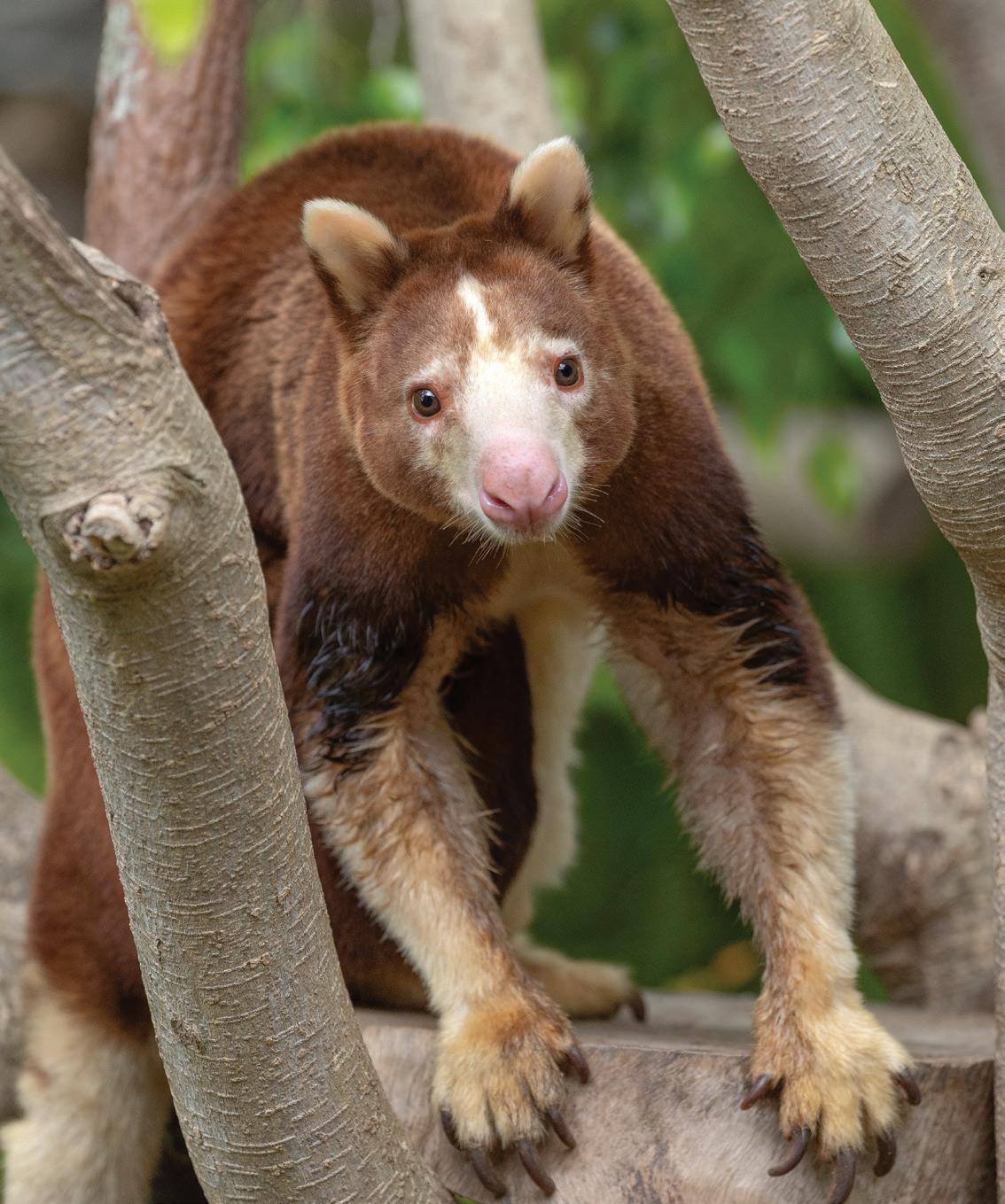
Climb on up for World Tree Kangaroo Day to discover more about these elusive marsupials.
MAY 31
Take flight for World Parrot Day to meet our experts and engage with these colorful birds at various locations throughout the Safari Park.
JUNE 12
No (mountain) “lion”—June 12 is National Cougar Day, so stalk on over for some felid-focused fun.
JUNE 21
Long story short: On the longest day of the year, the longest-necked mammal in the world stands tall for World Giraffe Day. (P)
OFFERED DAILY
Now Departing:
Safari Excursions
Your safari adventures and special experiences begin at this brand-new depot located in the heart of the Safari Park. Here you’ll be immersed in the world of wildlife before you even step onto your safari vehicle. Register and relax before your journey, then get whisked away to wild places from across the globe—all from this central location. (P)
OFFERED DAILY
Journey into the Wild
May and June Hours*
Join our wildlife care specialist team as they introduce you to wildlife ambassadors representing San Diego Zoo Wildlife Alliance’s conservation work in our Amazonia and Savanna Conservation Hubs and right here in our own backyard in the Southwest. This compelling conservation presentation takes place daily at Benbough Amphitheater. (P) sdzwa.org (619) 231-1515
FOR MEMBERS
MAY 11 AND 15; JUNE 8
Member Exclusive Early Hours
Rise and shine with the sights and sounds of the Safari Park. On select days, qualifying members* can enter the Safari Park one hour before the general public. To join us, simply present your qualifying membership card at the main entrance beginning at 8 a.m. *Excludes memberships with blockout dates. (P)
EVERY DAY
Wild PerksSM
San Diego Zoo Wildlife Alliance members are eligible for Wild PerksSM. Show your membership card each time you make a purchase and save up to 20%, depending on your membership level. Some exclusions apply; for details, visit sdzwa.org /membership/wild-perks. (P)
For San Diego Zoo and Safari Park operating hours, visit sdzwa.org
*Programs and dates are subject to change—please check our website for the latest information.
(Z) = San Diego Zoo (P) = Safari Park
Ready to Explore?
Every visit to the San Diego Zoo’s Denny Sanford Wildlife Explorers Basecamp is an adventure. There’s so much to see and do. But before you head to Basecamp’s four nature play areas—Desert Dunes, Wild Woods, Marsh Meadows, and Rainforest— let’s make sure you have everything you need for a day full of fun and adventure.
A hat will help protect your face from the sun as you climb, splash, play, and visit wildlife.
A backpack can keep all your gear organized and ready to use.
Sunburns are no fun. Remember to put on sunscreen more than once.
A San Diego Zoo map can guide you through Basecamp—you don’t want to miss anything!
Keep your water bottle filled and ready. Thirst can sneak up on you.
After a splash session in the water play area, a towel can come in handy to dry off.
Binoculars can give you an up-close look at wildlife throughout Basecamp, whether you want to peer at prairie dogs, look at
ants, or check out
Write down a few questions you may have for our wildlife care specialists about the species in Wildlife Explorers Basecamp. They will be happy to answer them!
Visit the San Diego Zoo Wildlife Explorers website to find out about these and other animals, plus videos, crafts, stories, games, and more!
SDZWildlifeExplorers.org
Let’s go! Don’t forget the most important thing you can take with you on your visit: a sense of wonder! Be ready to enjoy all the amazing experiences that await in Wildlife Explorers Basecamp.
LAST LOOK
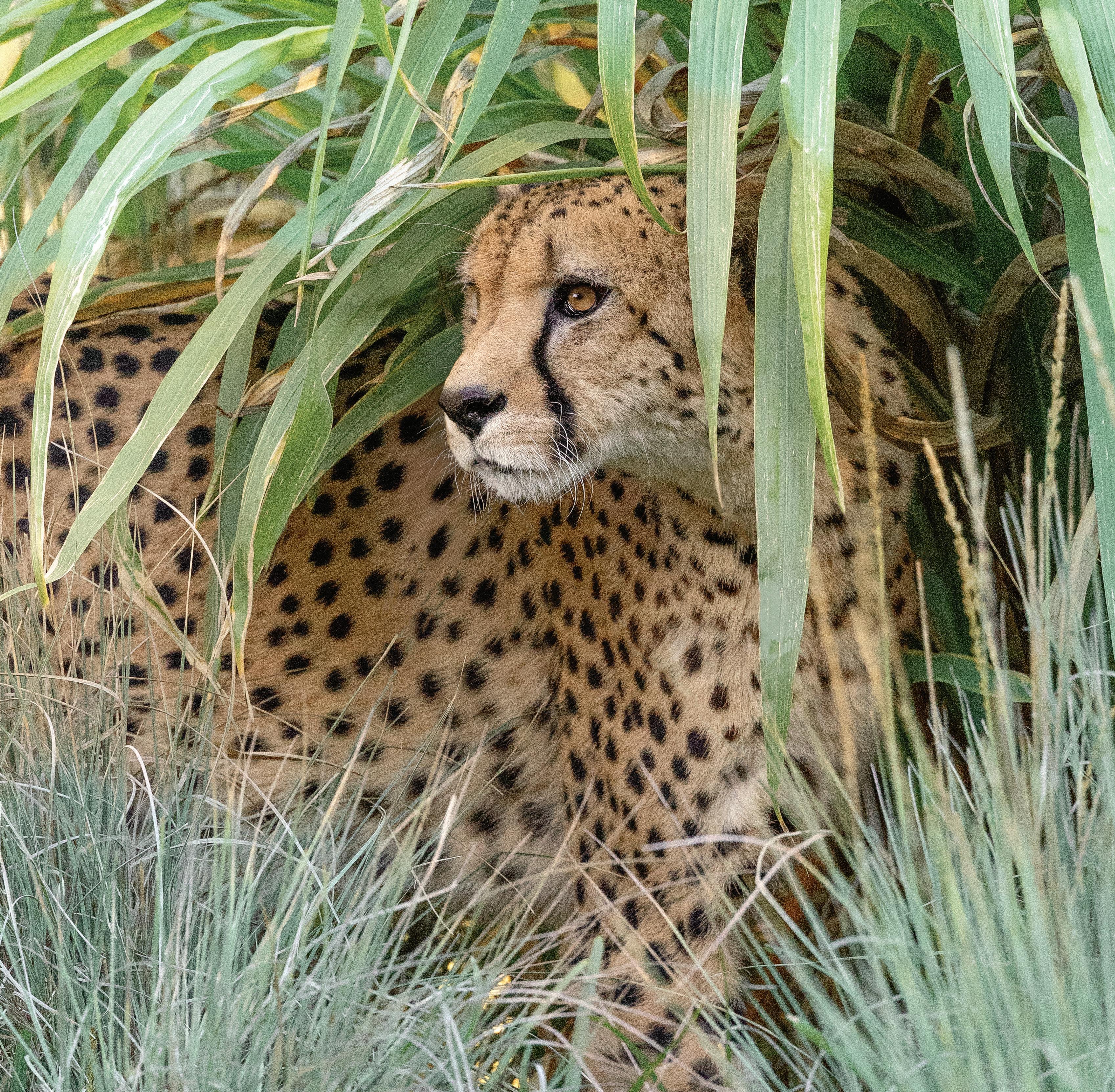
The national Cheetah Breeding Center Coalition’s nine member facilities are working toward the goal of creating a sustainable cheetah population. The San Diego Zoo Safari Park is a member of the Coalition, and is currently home to 15 of the speedy, spotted big cats.
Photo by Ken Bohn, SDZWA photographer.
San Diego Zoo Wildlife Alliance PO Box 120551, San Diego, CA 92112
You are our greatest ally as we work together to help protect and save wildlife. When you become a monthly donor, your recurring gift fuels critical conservation efforts around the globe. Our monthly donors are the heartbeat of everything we do at San Diego Zoo Wildlife Alliance, and every sustaining gift adds up to make lasting impact for wildlife in need.
You can inspire hope for wildlife worldwide and make a brighter future possible.