
MARCH/APRIL 2026
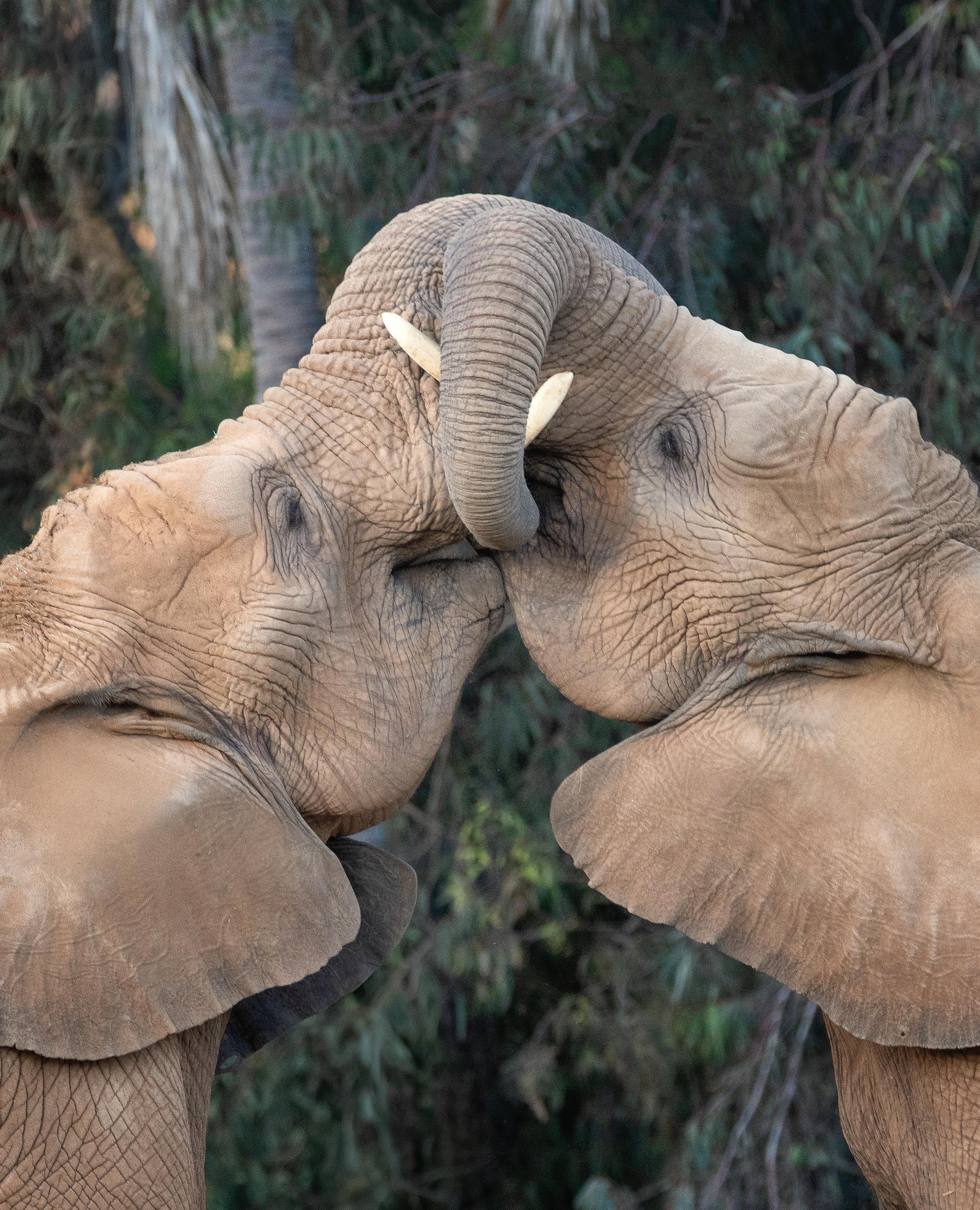
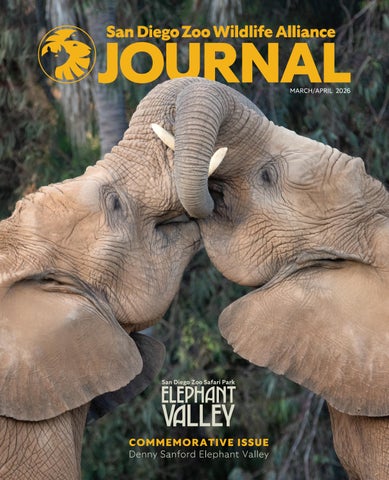
Denny Sanford Elephant Valley
MARCH/APRIL 2026
MANAGING EDITOR
Peggy Scott
STAFF WRITERS
Mike Hausberg
Aubrey Lloyd
Sara Maher
Ellie McMillan
Elyan Shor, Ph.D.
CONTRIBUTING EDITOR
Justin Weber
DESIGNER
Christine Yetman
PHOTOGRAPHERS
Ken Bohn
Tammy Spratt
DESIGN AND PRODUCTION
Lisa Bissi
Jennifer MacEwen
PREPRESS AND PRINTING
Quad Graphics
Follow @sandiegozoo & @sdzsafaripark Share your #SanDiegoZoo & #SDZSafariPark memories on social media.
The Zoological Society of San Diego was founded in October 1916 by Harry M. Wegeforth, M.D., as a private, nonprofit corporation, which does business as San Diego Zoo Wildlife Alliance.
The printed San Diego Zoo Wildlife Alliance Journal (ISSN 2767-7680) (Vol. 6, No. 2) is published bimonthly, in January, March, May, July, September, and November. Publisher is San Diego Zoo Wildlife Alliance, located at 2920 Zoo Drive, San Diego, CA 92101-1646. Periodicals postage paid at San Diego, California, USA, and at additional mailing offices. POSTMASTER: Send address changes to San Diego Zoo Wildlife Alliance, PO Box 120271, San Diego, CA 92112-0271.
Copyright © 2026 San Diego Zoo Wildlife Alliance. All rights reserved. All column and program titles are trademarks of San Diego Zoo Wildlife Alliance.
Sharing Common Ground
Introducing Denny Sanford Elephant Valley at the San Diego Zoo Safari Park, where you can experience what it feels like to coexist with the largest land mammals on Earth.
14
Visualize It
Listen down? Elephants can “hear” with their feet as they pick up ground-borne seismic information. Find out how their feet do the talking.
18
Trunks Together
Get to know the herd at Elephant Valley and explore the intricate social hierarchy that guides everyday life.
22
Welcome to the Gathering Place
The Safari Park’s new Mkutano House is the perfect dining spot to make memories that will last a lifetime.
As part of San Diego Zoo Wildlife Alliance’s commitment to conservation, This product is made of material from wellmanaged FSC ® -certified forests, recycled materials, and other controlled sources, chlorine free, and is Forest Stewardship Council® (FSC ®) (COC) certified. FSC ® is not responsible for any calculations on saving resources by choosing this paper.
If your mailing address has changed: Please contact the Membership Department by mail at PO Box 120271, San Diego, CA 92112, or by phone at (619) 231-0251 or 1-877-3MEMBER
For information about becoming a member of San Diego Zoo Wildlife Alliance, please visit our website at ZooMember.org for a complete list of membership levels, offers, and benefits.
Paid subscriptions to San Diego Zoo Wildlife Alliance Journal are available. Contact the Membership Department for subscription information.


It’s with immense pride that we celebrate a historic milestone for San Diego Zoo Wildlife Alliance: the opening of Denny Sanford Elephant Valley. Teams across our Alliance began working on this experience long before we broke ground or construction started. Their expertise and contributions have resulted in a newly redesigned home for the elephant herd and an unparalleled experience for our guests.
We also want to take a moment to recognize the incredible response to the last issue of the Journal, published under its former name, ZOONOOZ. That special edition was a testament to the deep connection our readers feel to our mission. We’re excited to continue building on this foundation through the Journal, to reflect our forward-looking vision for wildlife conservation.
Elephant Valley offers an intimate look into the lives of eight incredible elephants, inviting guests to observe their tightly-knit family dynamics and unique personalities up close. More than just a habitat, Elephant Valley serves as a powerful connection to our conservation work, both here in San Diego and
across our global Conservation Hubs.
In this issue of the Journal, we explore the world of Elephant Valley in detail. You will learn about the elephant herd’s special traits, our work with communities in Kenya to help foster coexistence between people and elephants, and the heart of this new experience for guests, Mkutano House.
Elephant Valley would not be possible without the generosity of our visionary donor, Denny Sanford, whose commitment ensures this place will inspire and educate guests for generations to come. Thanks to the dedication of our teams and the support of our community, this dream has become a reality. We look forward to sharing this incredible achievement with you!
Together for wildlife,
Shawn Dixon President and Chief Executive Officer
2026 Board of Trustees
Officers
Rolf Benirschke, Chair
Steven S. Simpson, Vice Chair
Adam Day, Treasurer
Gary E. Knell, Secretary
Trustees
Tom Chapman
E. Jane Finley
Clifford W. Hague
Bryan B. Min
Kenji Price
Corinne Verdery ‘Aulani Wilhelm
Trustees Emeriti
Javade Chaudhri
Berit N. Durler
Thompson Fetter
Richard B. Gulley
Robert B. Horsman
Steven G. Tappan
John M. Thornton
Executive Team
Shawn Dixon
President and
Chief Executive Officer
David Franco
Chief Financial Officer
Erika Kohler
Senior Vice President and Executive Director, San Diego Zoo
Pat McTigue
Interim Executive Director, San Diego Zoo Safari Park
Nadine Lamberski, DVM, DACZM, DECZM (ZHM)
Chief Conservation and Wildlife Health Officer
Wendy Bulger
General Counsel
David Gillig
Chief Philanthropy Officer
Aida Rosa
Chief Human Resources Officer
David Miller
Chief Marketing Officer
One hundred years ago, 10 million elephants thrived across Africa’s savannas, forests, and grasslands. In 2023, there were around 500,000. Creating connections between people and elephants is key for igniting conservation allies worldwide, whether they are part of a local community working together to live alongside elephants in their native habitats or a child experiencing their first awe-inspiring encounter at the San Diego Zoo Safari Park’s Denny Sanford Elephant Valley.
48
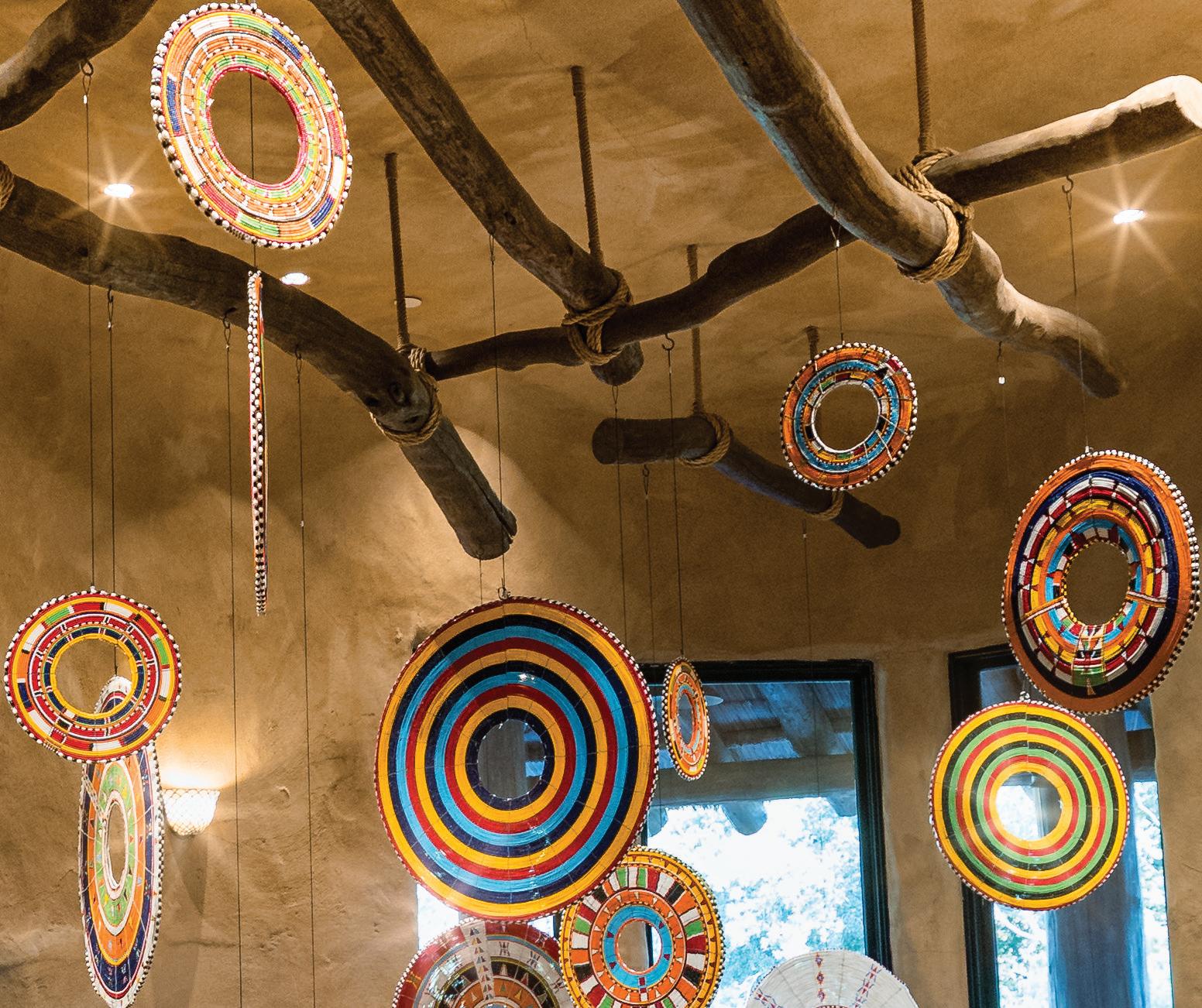
Kenyan women hand-beaded 48 stunning necklaces and light fixtures to decorate Mkutano House through BeadWORKS, which helps Kenyan communities generate income while supporting conservation efforts.
50,000
During Kids Free October, more than 50,000 San Diego children will have the life-changing experience of walking alongside elephants.
2,500 3,500
More than 3,500 exceptional donors helped bring Elephant Valley to life. The 2,500 school and education groups that visit the Safari Park annually can now enjoy engaging activities in Mkutano Park, an outdoor classroom.
350
Our expert horticulturists and arborists cultivated more than 350 individual plants so guests can immerse themselves in Africa’s diverse ecosystems.
MARCH 21 THROUGH APRIL 12
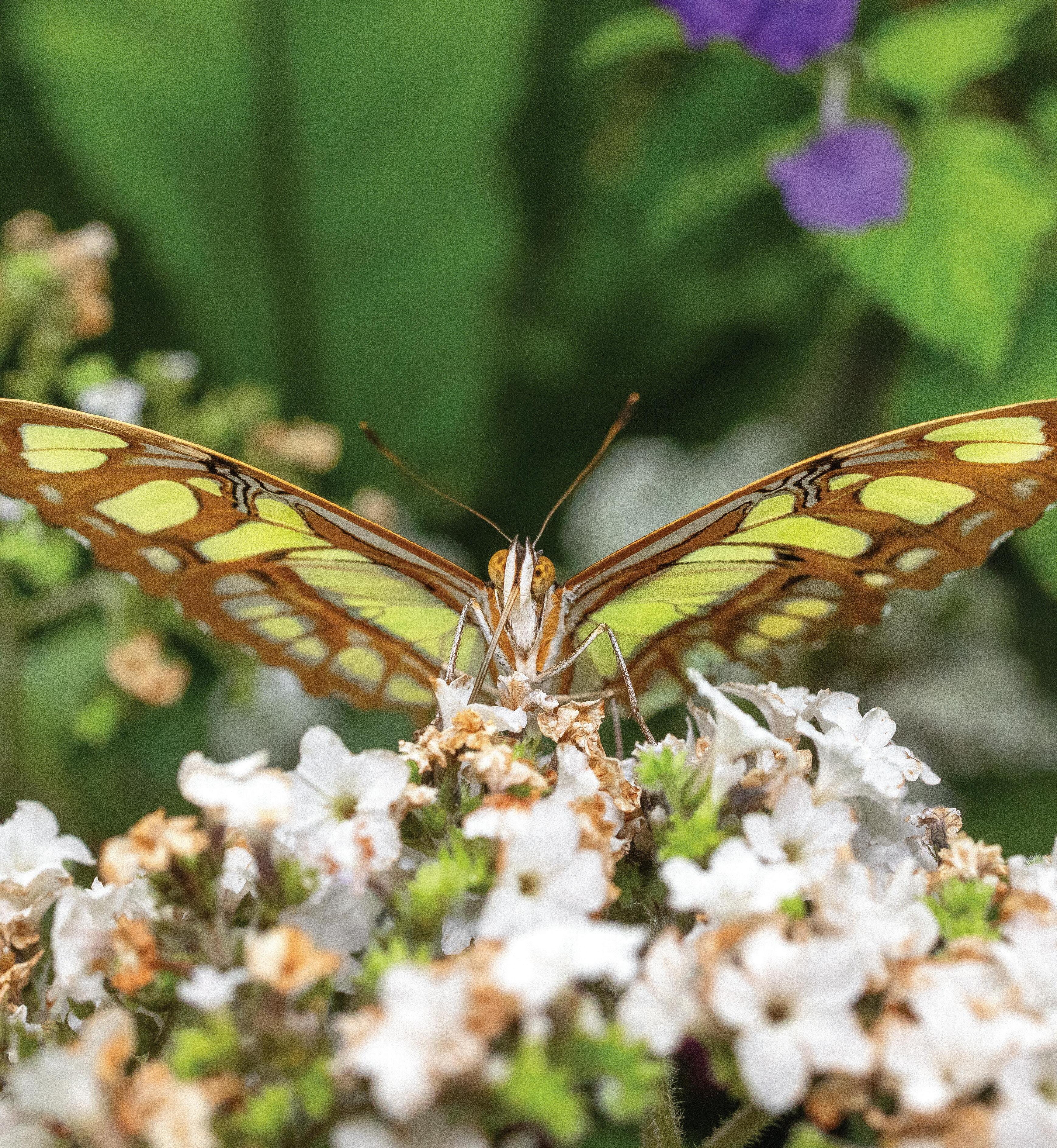
Join us as the Hidden Jungle aviary at the Safari Park transforms into Butterfly Jungle Safari, an immersive celebration of color, nature, and conservation. Guests step into a vibrant world of pollinators, offering a one-of-a-kind opportunity to connect with nature up close. Additional ticket required. For full details, visit sdzsafaripark.org.
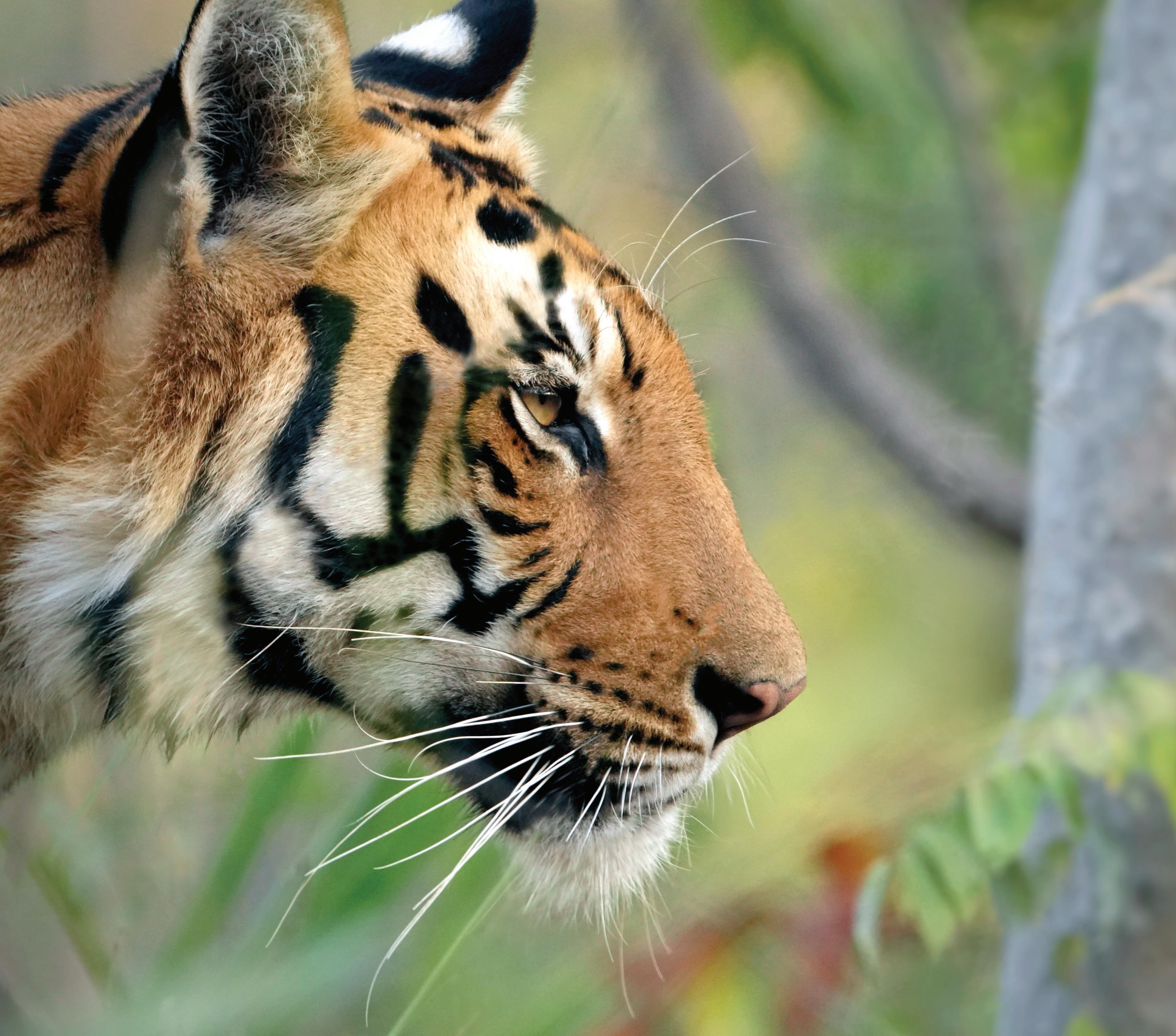
for nature lovers, the Grand India Wildlife Adventure will engage all your senses. The country’s powerful rivers and fabled jungles host a multitude of wildlife, from elusive Bengal tigers and greater one-horned rhinos to Asian elephants, water buffalo, countless bird species, and so much more. You’ll explore three diverse national parks and stay at secluded ecolodges as part of this unforgettable excursion.
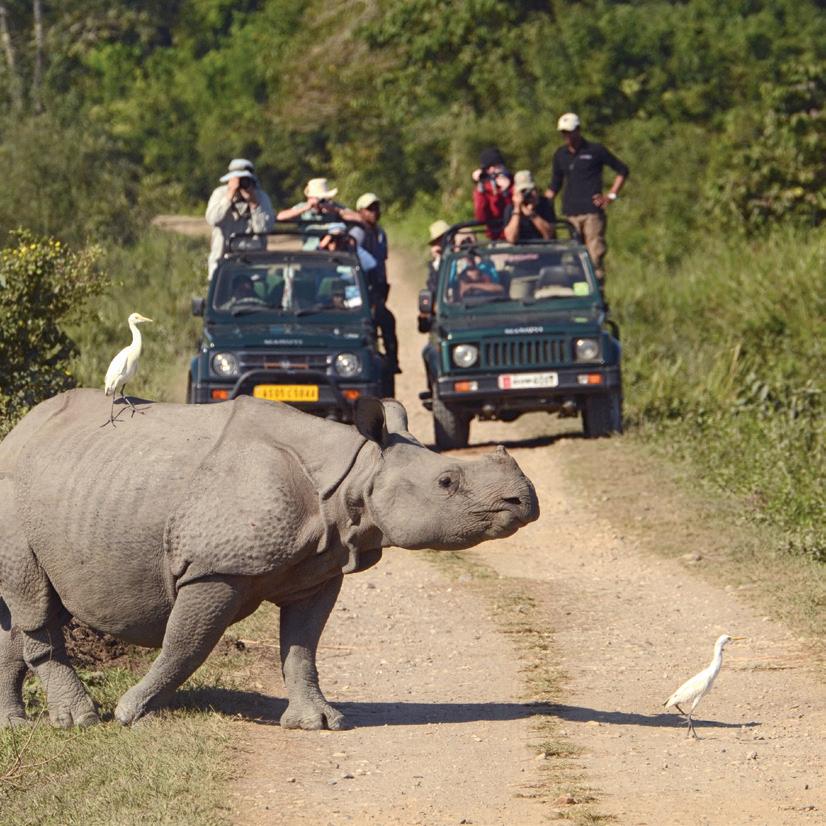
Book now! For details about this trip and all our Adventures, visit adventures.sdzwa.org .
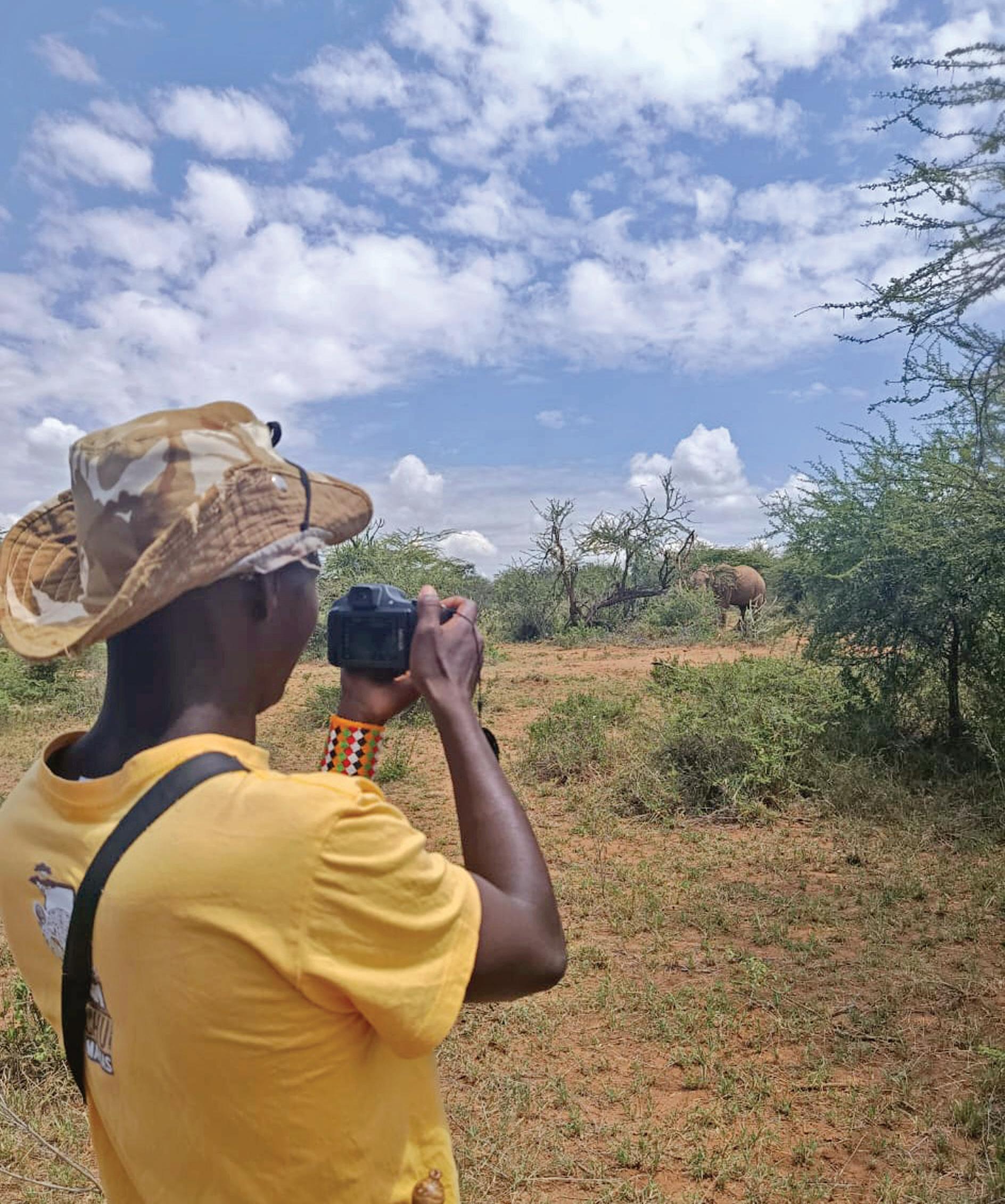
Shifra Goldenberg, Ph.D., a San Diego Zoo Wildlife Alliance scientist, outlines the vital role our relationships with community groups play in promoting coexistence.
Over recent years, San Diego Zoo Wildlife Alliance has been devoting more energy toward a rising and significant threat to African savanna elephants: humanelephant conflict (HEC). HEC is a catch-all term referring to a collection of interactions resulting in negative outcomes. These can include elephants raiding crops, destroying property, knocking down trees important to people, or harming people they encounter along walking paths. Such interactions can result in retaliation against and intolerance toward elephants. These challenges are immense and complex: interactions between humans and elephants vary seasonally and spatially, elephants habituate to mitigation methods when the risk is low and the reward is high, and different experiences and circumstances of local people shape what approaches may be palatable or successful. Since 2022, we have been delving into these complexities with members of the Naibunga Lower Community Conservancy (NLCC) in northern Kenya, a conservancy that supports a pastoralist community and is situated as an important connecting habitat for wildlife. The people in this region experience high rates of HEC and other wildlife conflict. Given the dynamic nature of conflict and coexistence, our approach has been to build adaptive capacity within the community while leveraging existing networks on the wider elephant conservation landscape. Three years into the project, we are proud to support a diverse constellation of coexistence contributors, who all play integral roles in our efforts. Steering all of our efforts is Mr. Ambrose Letoluai (pictured below), Loisaba Conservancy’s coexistence coordinator and

longtime Alliance collaborator. While Ambrose wears many hats within NLCC, his HEC role has been to communicate between different segments of society, plan for effective interventions, and identify people and approaches with potential for impact. He provides vital context and understanding, connecting people with a wide range of experiences and roles. Ambrose supervises a group of 12 early career conservationists from the clusters within the conservancy, who comprise the Community Conservation Assistants (CCAs). The CCAs monitor interventions and act as resources for their communities on HEC following trainings on elephant conflict mitigation tools.
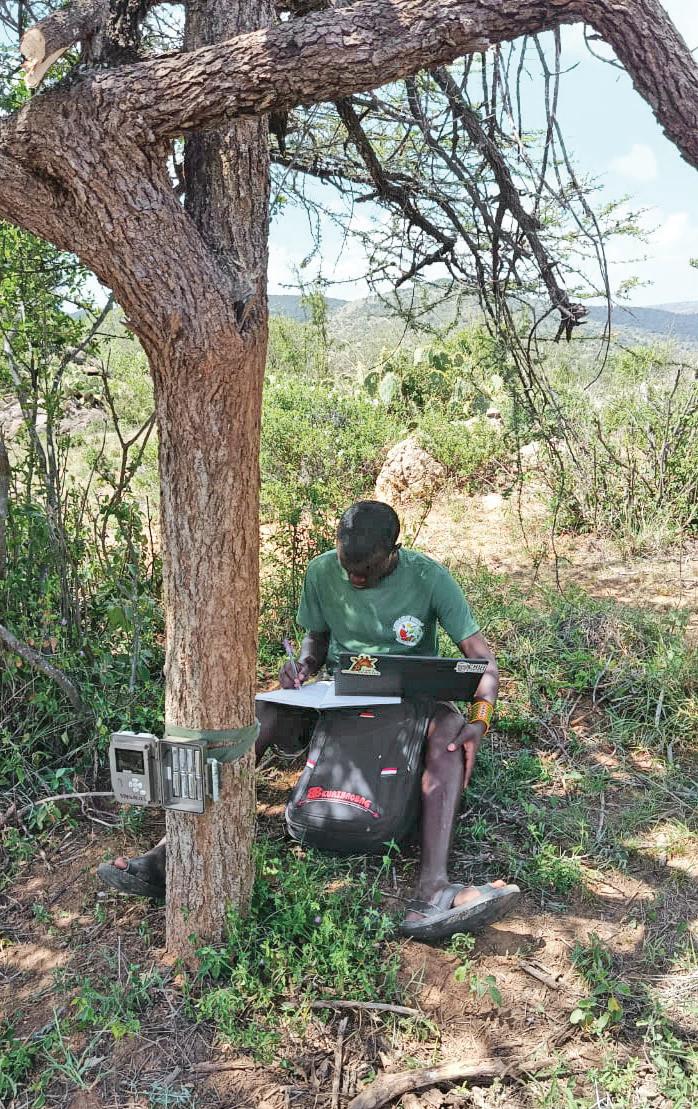
Among the roles of the CCAs is to liaise with 32 coexistence ambassadors, volunteers who have been nominated by their community to accompany children on walking routes to and from four primary schools. These ambassadors assemble with students at set meeting points, communicating with their networks about recent signs of elephants in the area, modifying routes as needed, and ensuring children arrive safely.
Within NLCC and other pastoralist communities throughout northern Kenya, young male warriors (“warani”) play a unique societal role. They are entrusted protectors, often accompanying livestock herds to remote areas for long stretches while keeping themselves and their animals safe. Recently, our program has developed a Human-Wildlife Conflict Rapid Response Team (HWCRRT), which includes six warani. These warriors will monitor the presence of elephants, respond to reports of HEC, and limit escalation. The recently established Chui Mamas Centre, a women’s livelihood organization located within NLCC, also contributes to coexistence in their plans to sell conflict mitigation supplies to community members and to support their implementation through demonstration sites. Finally, there are people outside of the community who contribute to the larger goals of human-elephant coexistence within NLCC. Loisaba Conservancy research and conservation staff drive education and
outreach, hosting discussions on safe behavior around elephants. Scientists work to document the context and efficacy of our approaches and to place our work within a larger discourse on conflict prevention and community-based conservation.
Living alongside elephants presents many challenges and benefits, and there are many roles to fill. We look forward to growing the efforts of these teams over the coming years.
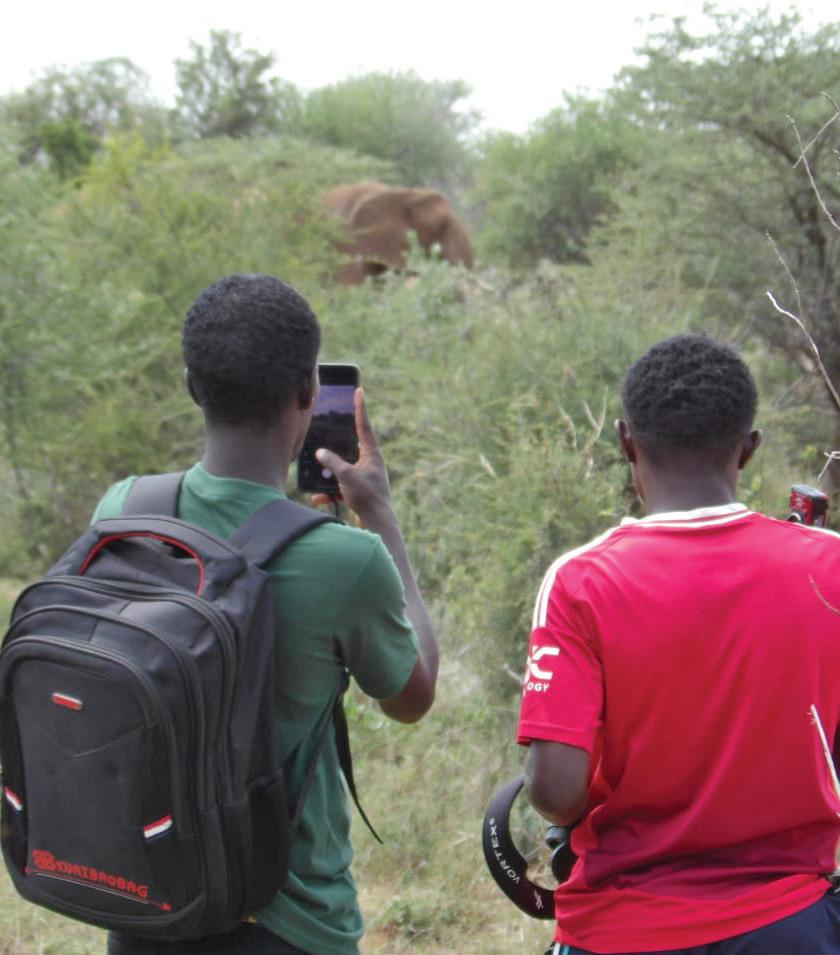
Three years into the project, we are proud to support a diverse constellation of coexistence contributors, who all play integral roles in our efforts.

The heart of the San Diego Zoo Safari Park and our
global conservation efforts for elephants worldwide.
BY JUSTIN WEBER PHOTOGRAPHY
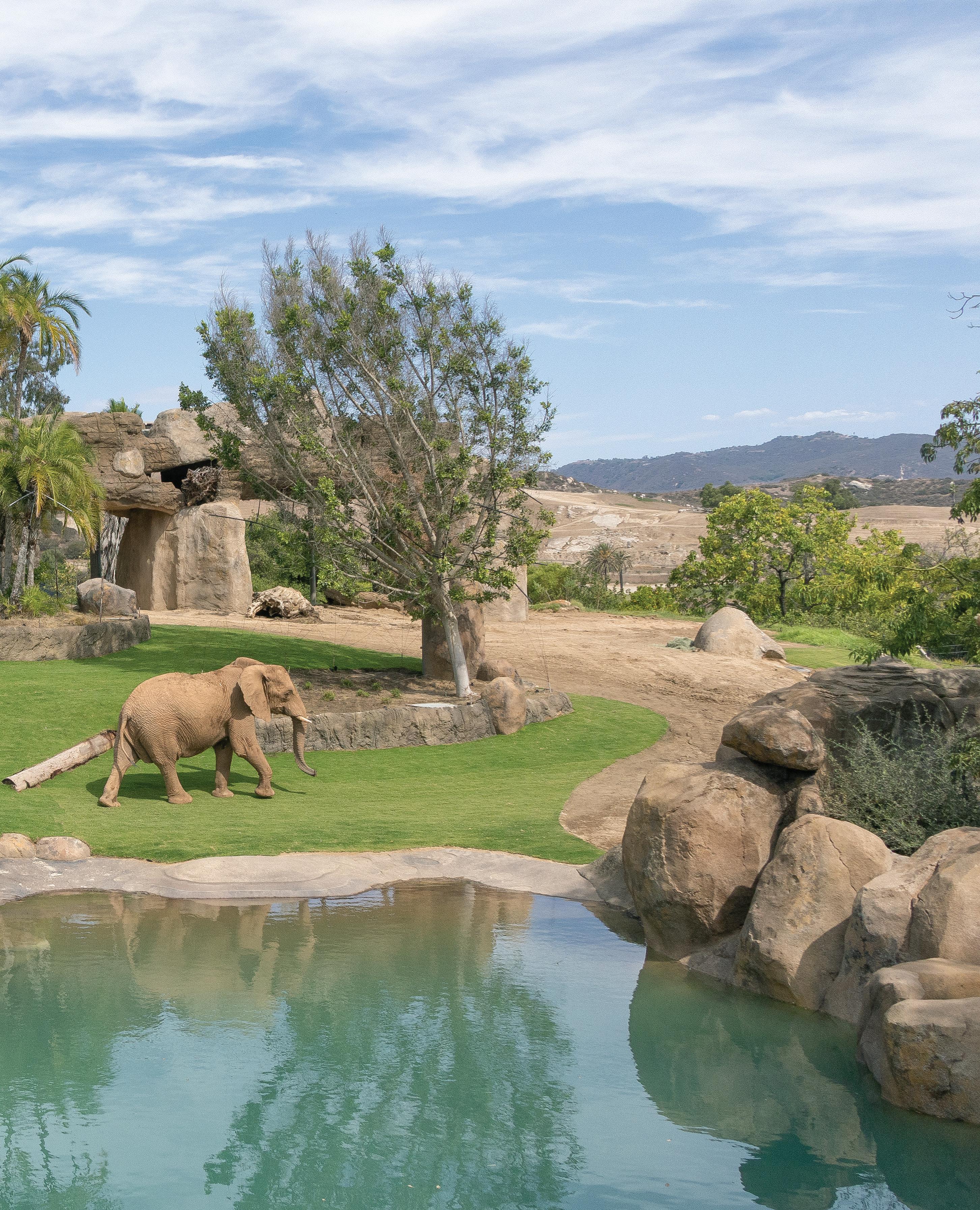
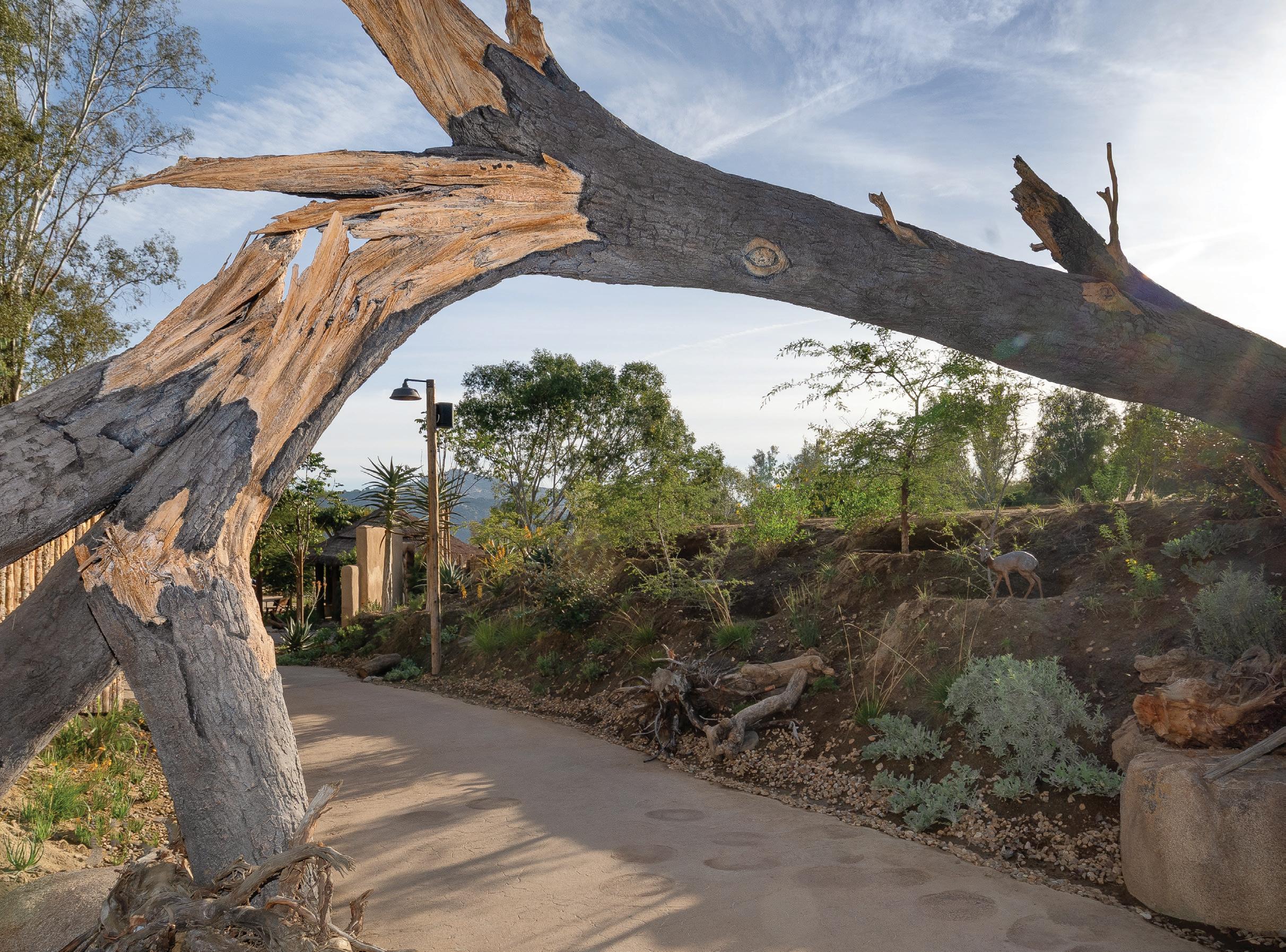
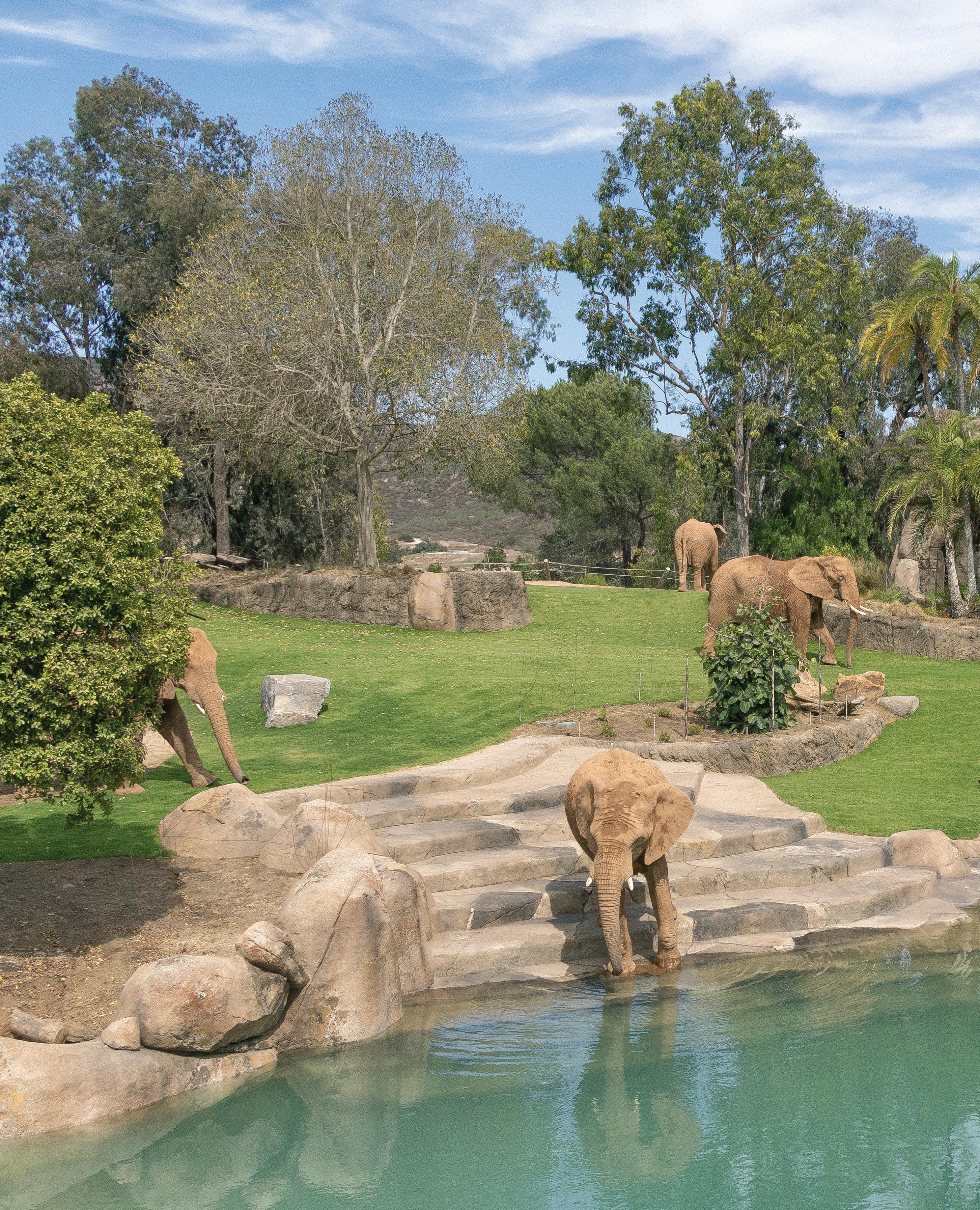
Imagine a place you’ve never been. Stepping into a world you’ve never known. A world where you can roam with the largest land animals on Earth. Here you will experience what it feels like to coexist in harmony with them. What it feels like to be welcomed by them as one of their own. Where you walk beside them, together on common ground, in awe of their magnitude and inspired by the bonds they share with each other. Becoming part of a global movement to protect them for generations to come. This is an experience that brings us together like never before. This is the all-new Elephant Valley.
Your journey begins meandering down a lush pathway lined with thorny acacia. Crossing over a bridge, you notice footprints much larger than your own, each imprint creating microecosystems vital to this verdant environment. Sounds of snapping branches, falling trees, and cracking tree trunks echo in the distance. A herd of African savanna elephants created this unique passageway. Browsing and consuming immense amounts of vegetation, they have altered the terrain. Elephants are the architects of the earth, moving trees and carving corridors that are then
used by people and other wildlife across the savanna. It’s a beautiful balance between all who inhabit this dynamic landscape.
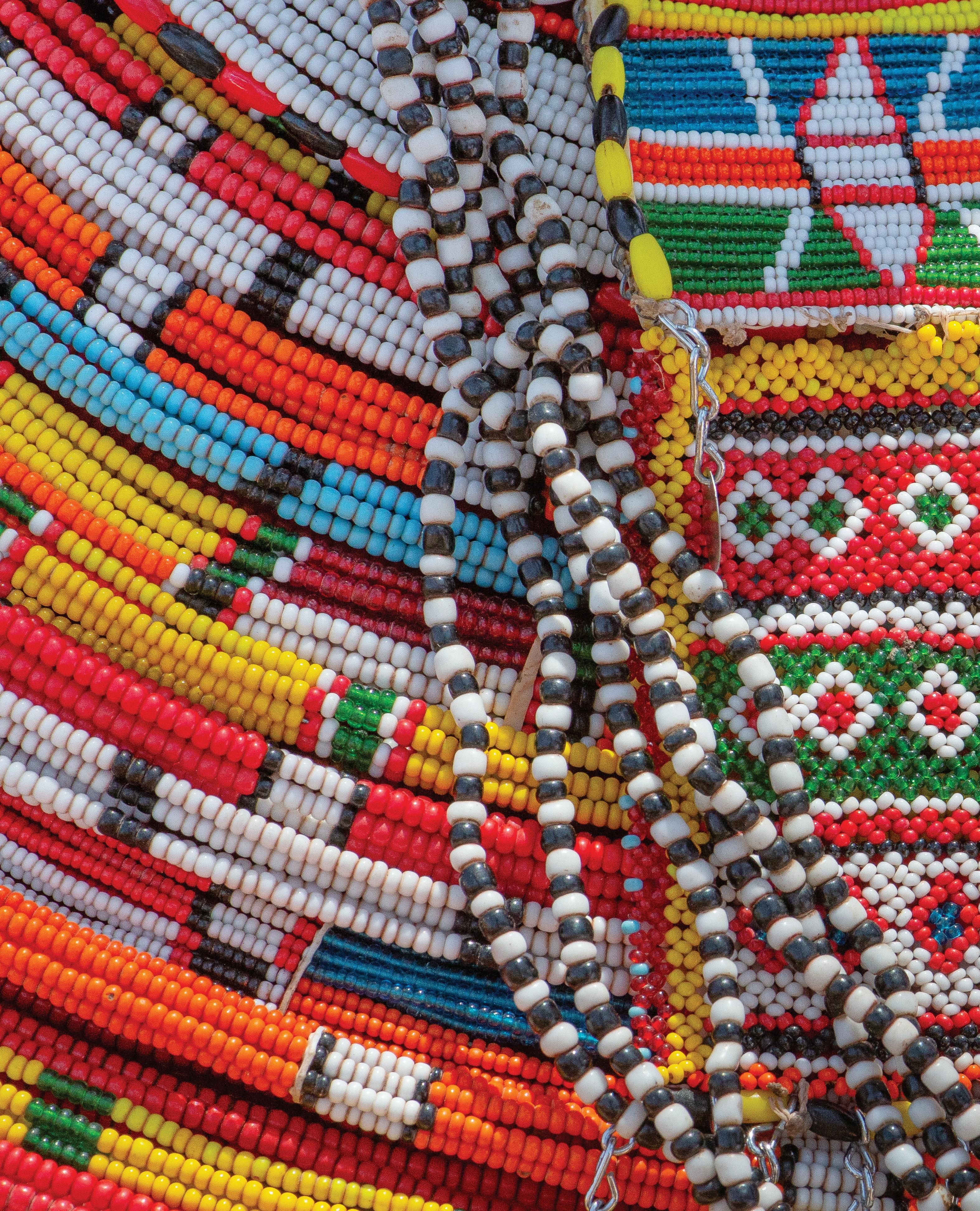
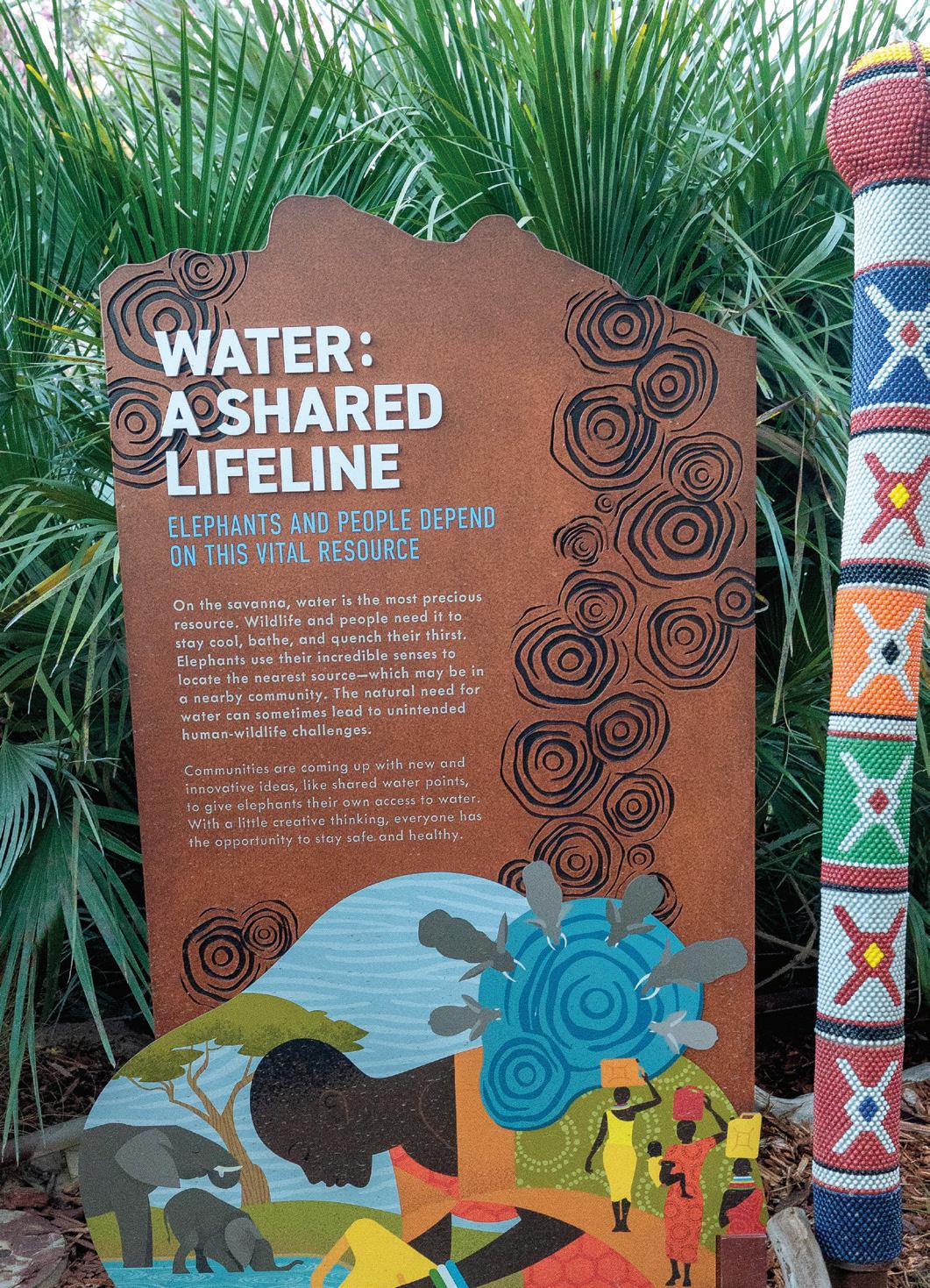
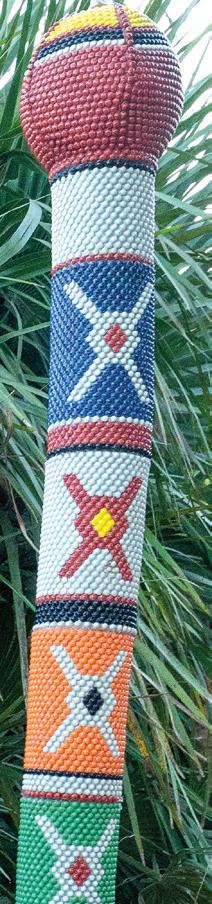
You come upon a location marker adorned with thousands of colorful beads and intricate patterns that reflect traditional Samburu artistry. At each of these stopping points throughout Elephant Valley, larger-than-life moments await, amplifying the delicate balance between wildlife, people, and the planet we all share.
Past broken tree lines, a three-part rock formation featuring elephant-sized illustrations celebrates thriving generations of these gentle giants at the Safari Park and San Diego Zoo Wildlife Alliance’s ongoing commitment to elephant conservation worldwide.
Voices from local community members can be heard as you approach The Baraza, a Swahili word for council or meeting place. This is a traditional space where communities living among wildlife across the savanna gather, and where generational wisdom is often exchanged.
Following in the footsteps of elephants, people, and other wildlife, you witness your first glimpse of the grandeur ahead, a breathtaking panoramic view of Elephant Valley. But this is just the beginning of what’s to come, elephants are on the horizon!
Vibrantly beaded talking sticks representing traditional Samburu artistry are unique location markers and storytelling stopping points throughout Elephant Valley.
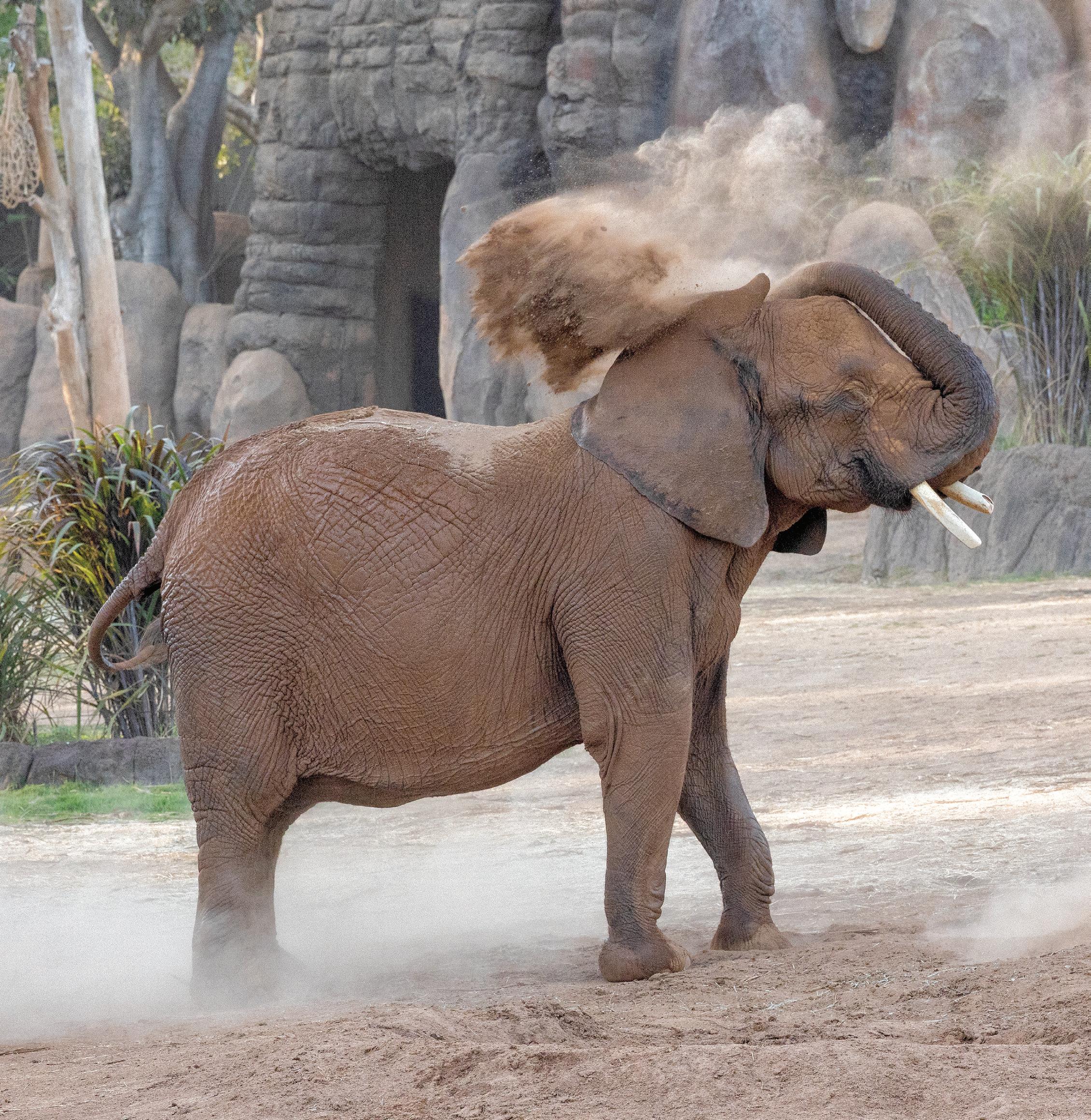
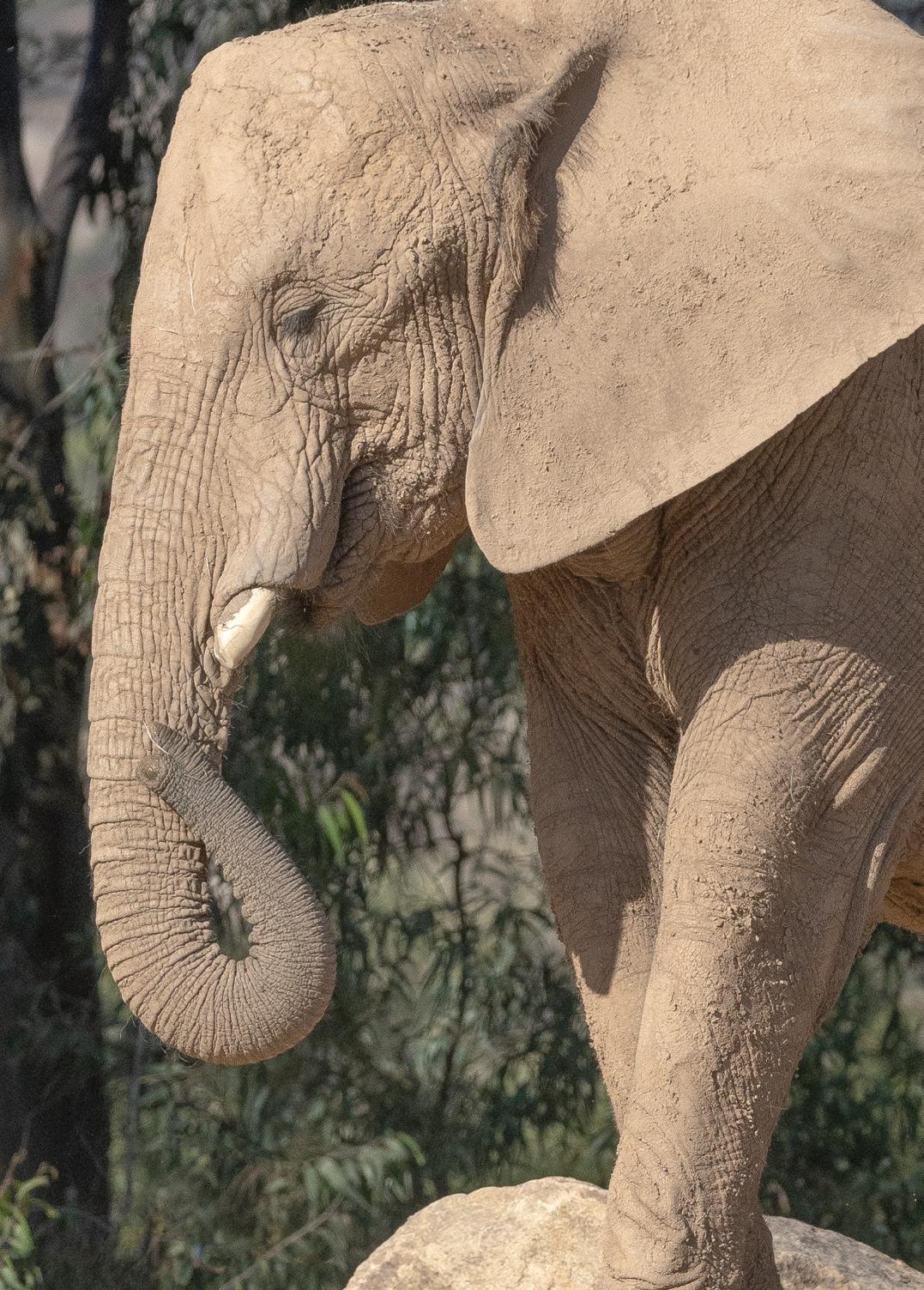
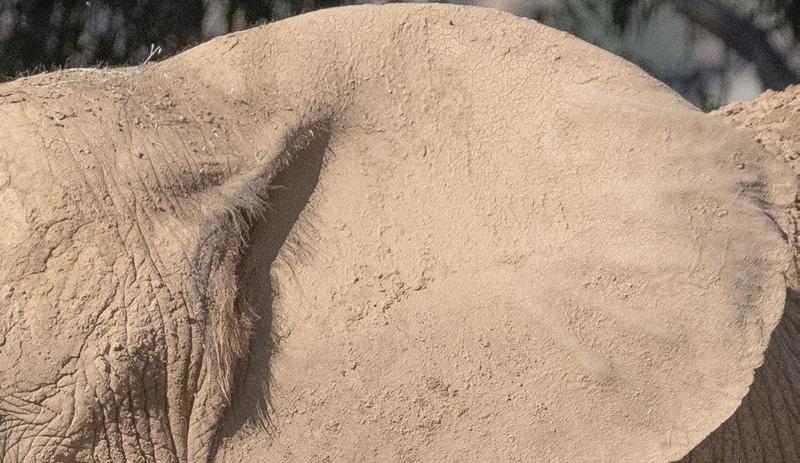
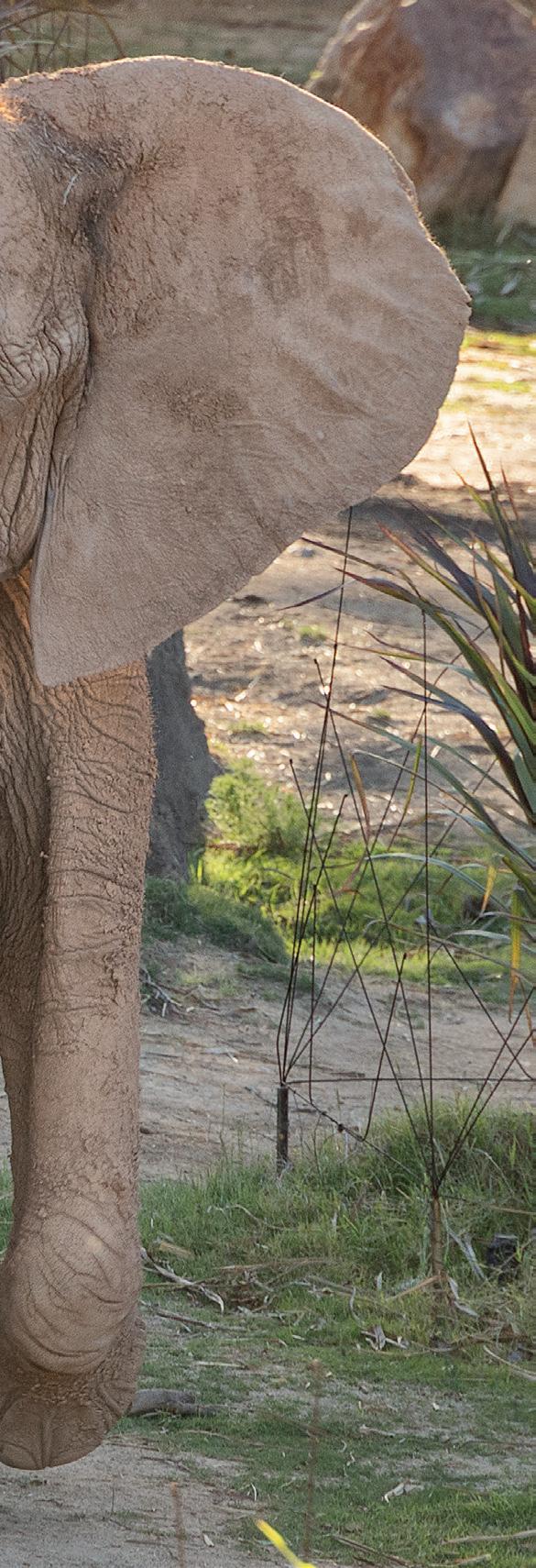
As you quietly approach, two massive ears—each almost the size of a dining table and weighing up to 100 pounds— flare open to listen intently. A six-foot trunk, with 40,000 individual muscles and the ability to lift more than 700 pounds, delicately reaches toward you. Walking beside one another, you notice intricacies of wrinkled dust-laden skin; sensitive, soft feet; and long, black eyelashes. Just inches away, dark brown eyes gaze intently into yours, offering a window into their world. This breathtaking moment together changes you forever.
Closer than ever before, transformative opportunities like these await you at every turn. Tucked alongside the pathway, and standing face-to-face on common ground, you feel the awe and wonder of being so near—and the magnificent honor of becoming part of their herd.
After getting lost in the awe, and walking alongside each other, you find yourself immersed in the heart of Elephant Valley. With generations of elephants on both sides of you, you hear sounds of rumbling and trumpeting as they navigate their multidimensional ecosystem, browsing on broad varieties of vegetation. In the distance, several members of the herd begin to saunter across the valley toward vibrant watering holes.
At the top of an elevated bridge, you’re surrounded by sweeping views of Elephant Valley, while rolling hillsides teeming with giraffes, rhinos, and Cape buffalo are just on the horizon.
Walking over the bridge to reach the other side of the valley, you notice two elephants crossing through a passageway directly beneath you! This ele-underpass is similar to wildlife corridors in native habitats. Critical to human-elephant coexistence, they offer continued access to vital resources like food and water, while ensuring safe thoroughfares for both people and wildlife across the savanna.
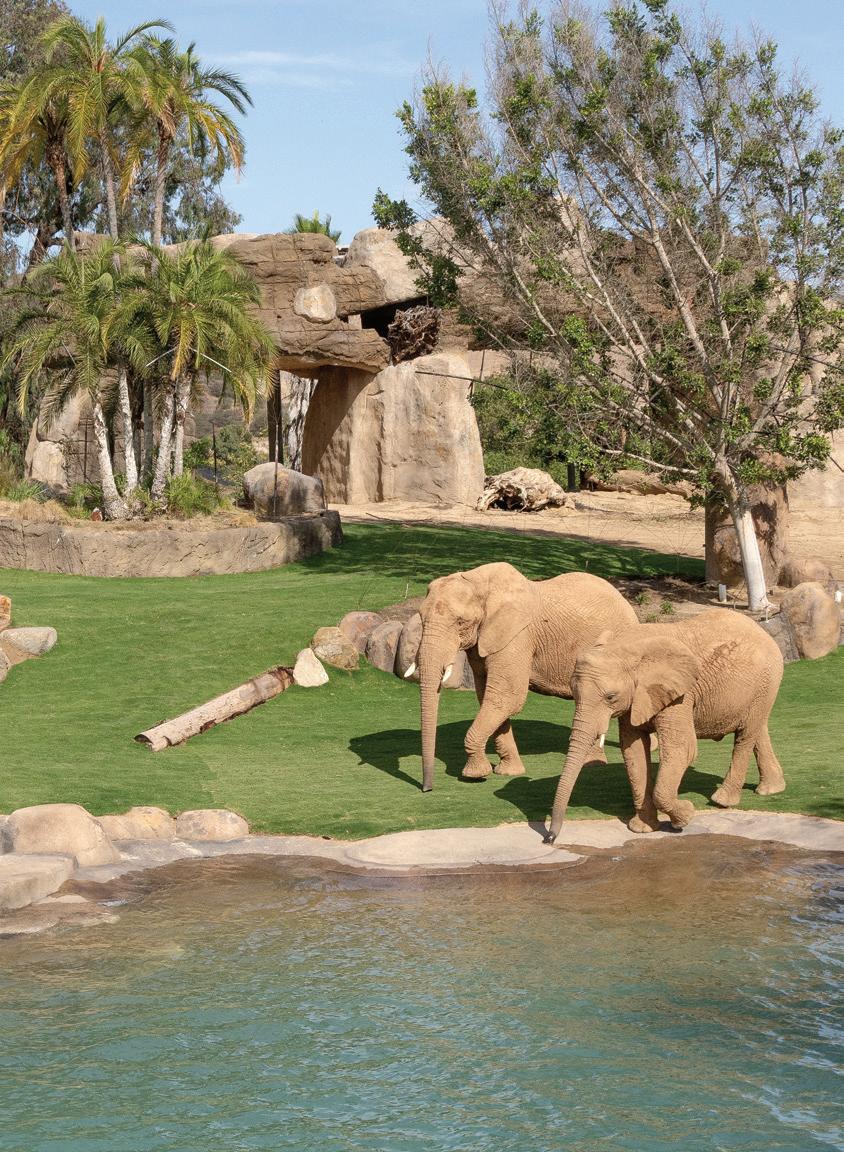
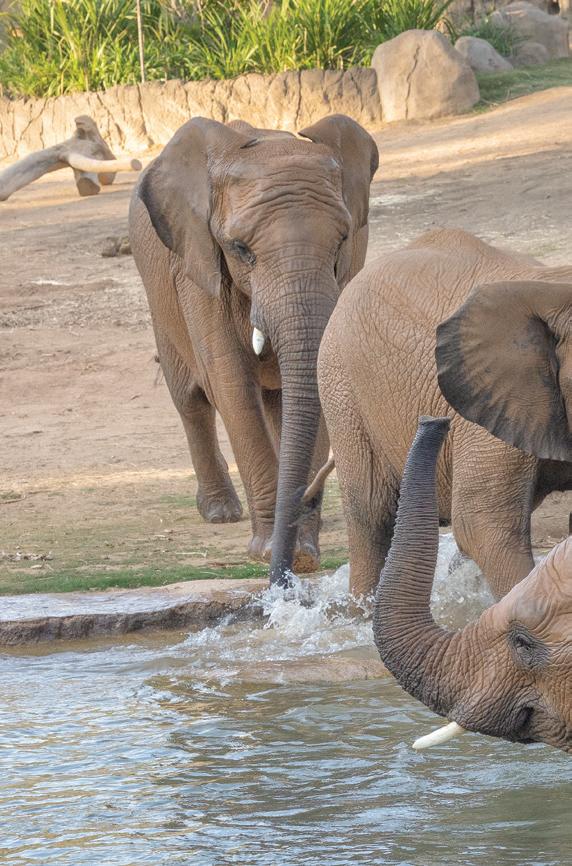
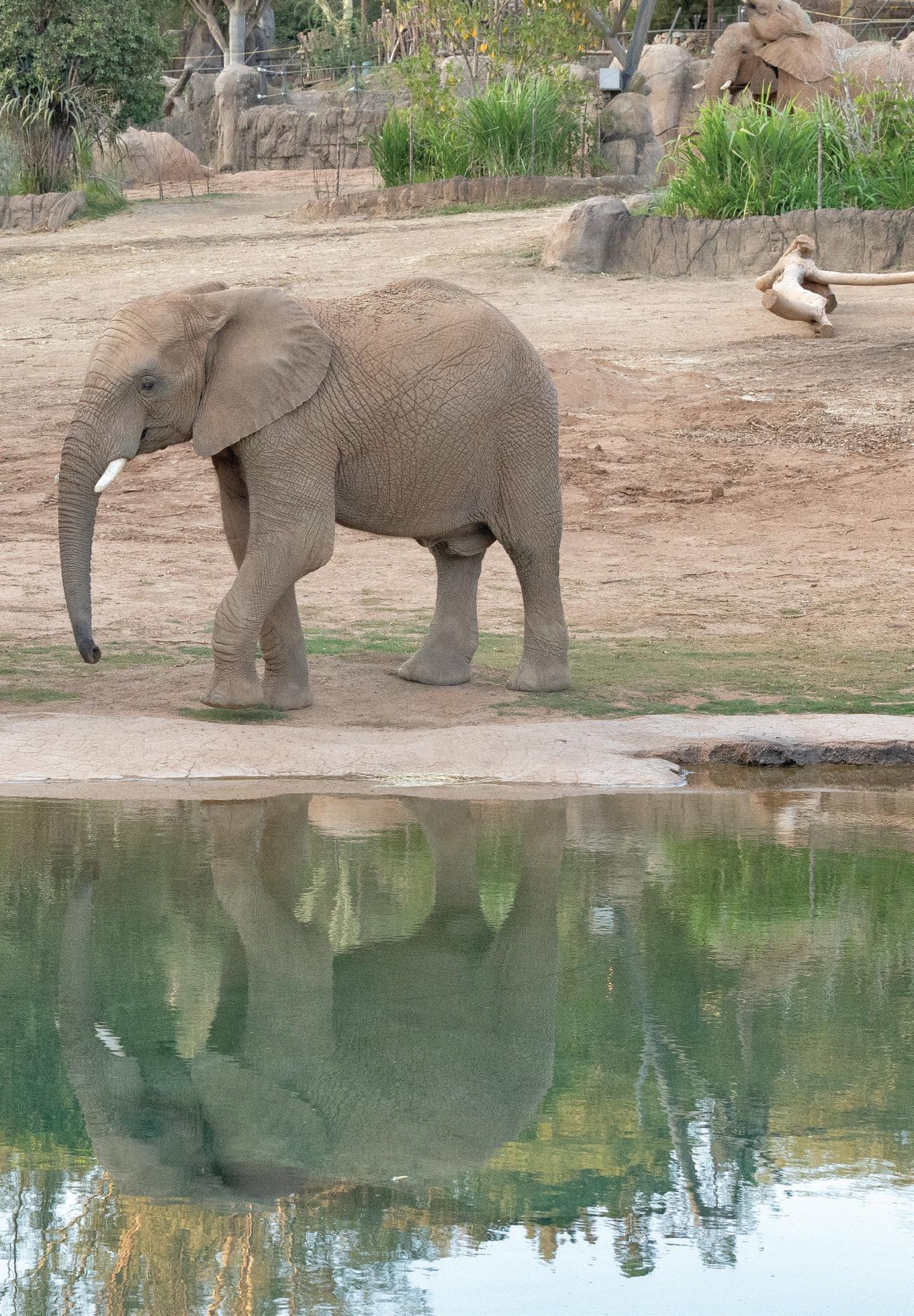
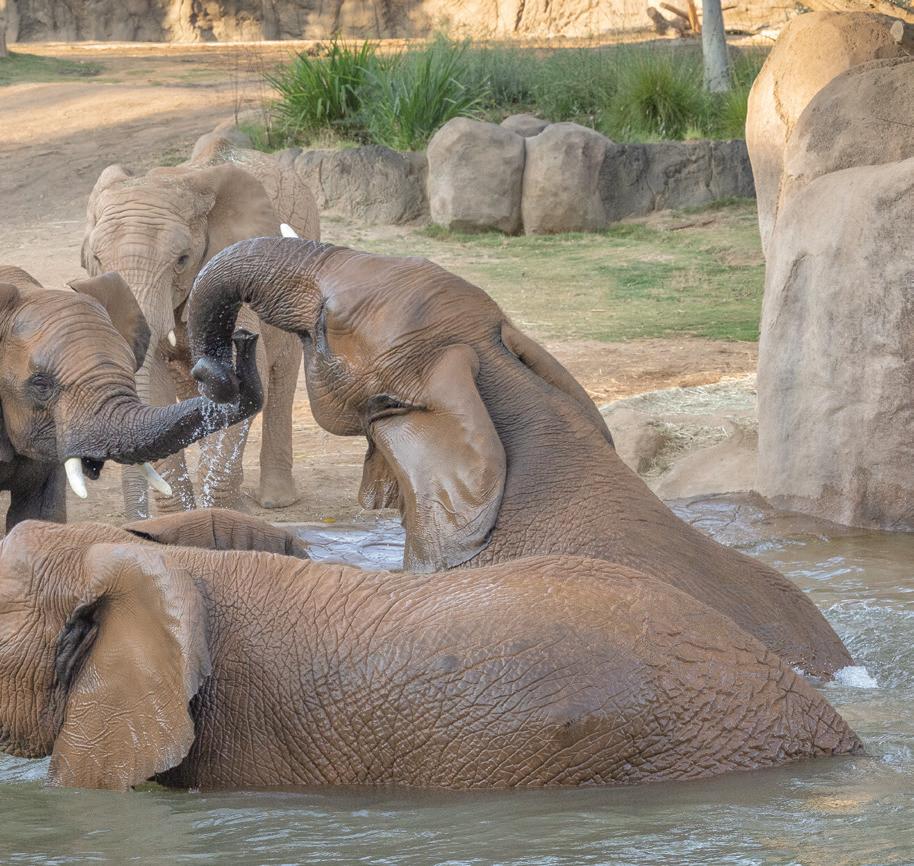
Wandering along a winding path, you find yourself standing at the edge of a watering hole, as reflections of the elephants who just passed beneath you glisten in the sunlight. Looking up from the base of the valley, you watch as each of them begins to submerge their 8,000-pound bodies underwater. Shortly after, other members of the herd join in the fun—drinking, splashing, and cooling off from their afternoon of foraging in the sun.
Right before you, the largest land animals on Earth are buoyant, seemingly almost weightless. The social bonds they share and express between one another, so familiar to our own. And despite their mammoth size, the sensitivities of each individual as they engage with the others and their environment reminds us of their vulnerability— true gentle giants.
Stepping away from the watering hole, you reflect on your journey through Elephant Valley. You have made a lifelong connection with one of the most powerful, sensitive, and complex animals on the planet. Meandering through the grass of Mkutano Park, you realize that in this moment, you have been changed.
As you depart Elephant Valley, zigzagging down the path at Tembo Trail, you hear sounds of elephants, people, and other wildlife in the distance. Every footprint along the way is a transcendent reminder that coexistence is the key to sustainable conservation.
From decades-long care and cutting-edge science at the San Diego Zoo Safari Park, to transformative conservation partnerships around the world, San Diego Zoo Wildlife Alliance is committed to saving, protecting, and caring for elephants worldwide.
Conservation is the beating heart of Elephant Valley—woven into every path, every story, and every moment. Here we have the honor and unique opportunity to experience nature at its very best, creating life-changing connections between people and wildlife that spark change and offer hope for generations to come.
To learn more about the immersive experiences that await you at the all-new Elephant Valley and our global conservation for elephants worldwide, please visit sdzsafaripark.org/elephantvalley.
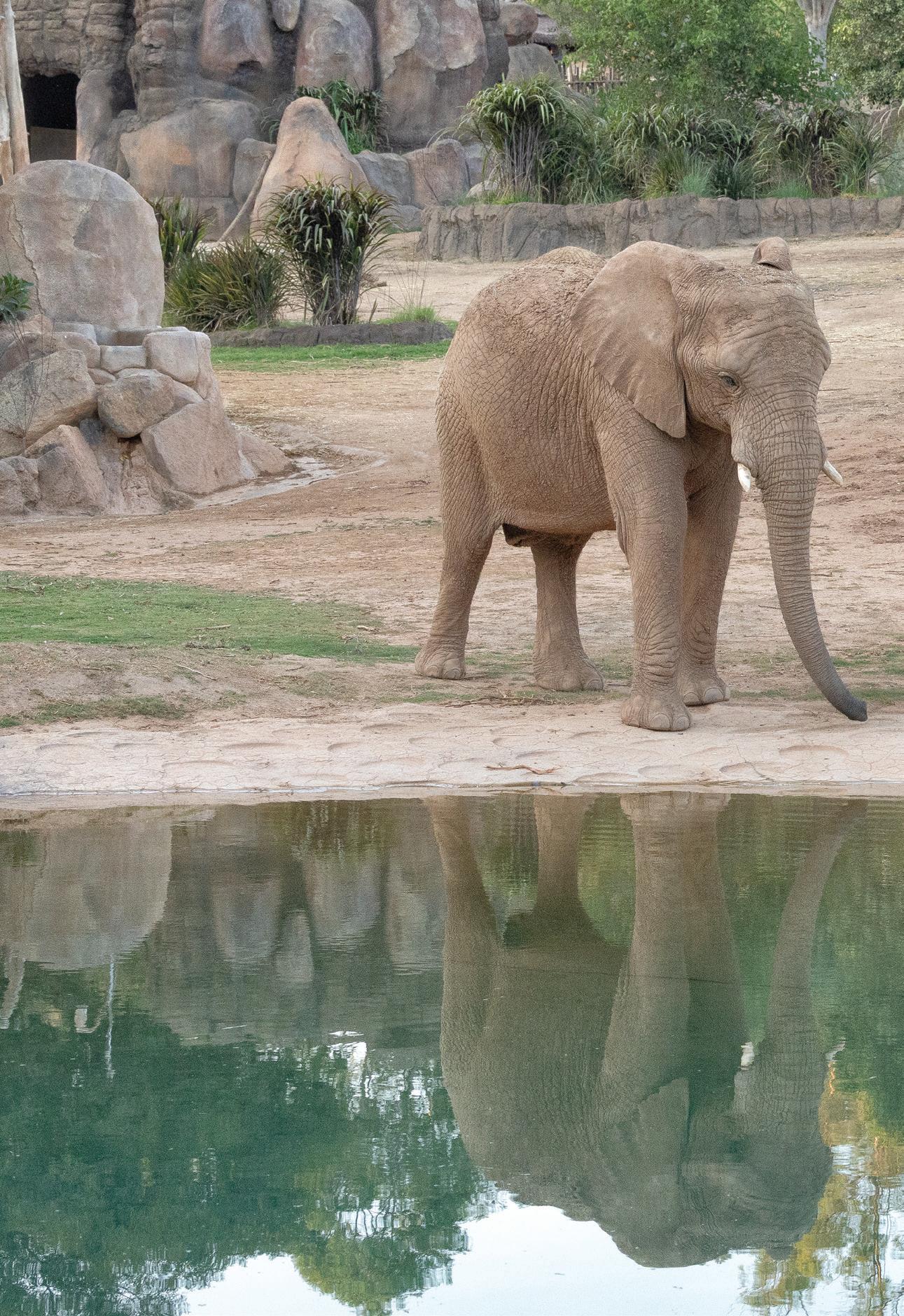
Elephants are excellent natural swimmers that can cross deep rivers and lakes to travel, play, and cool off.
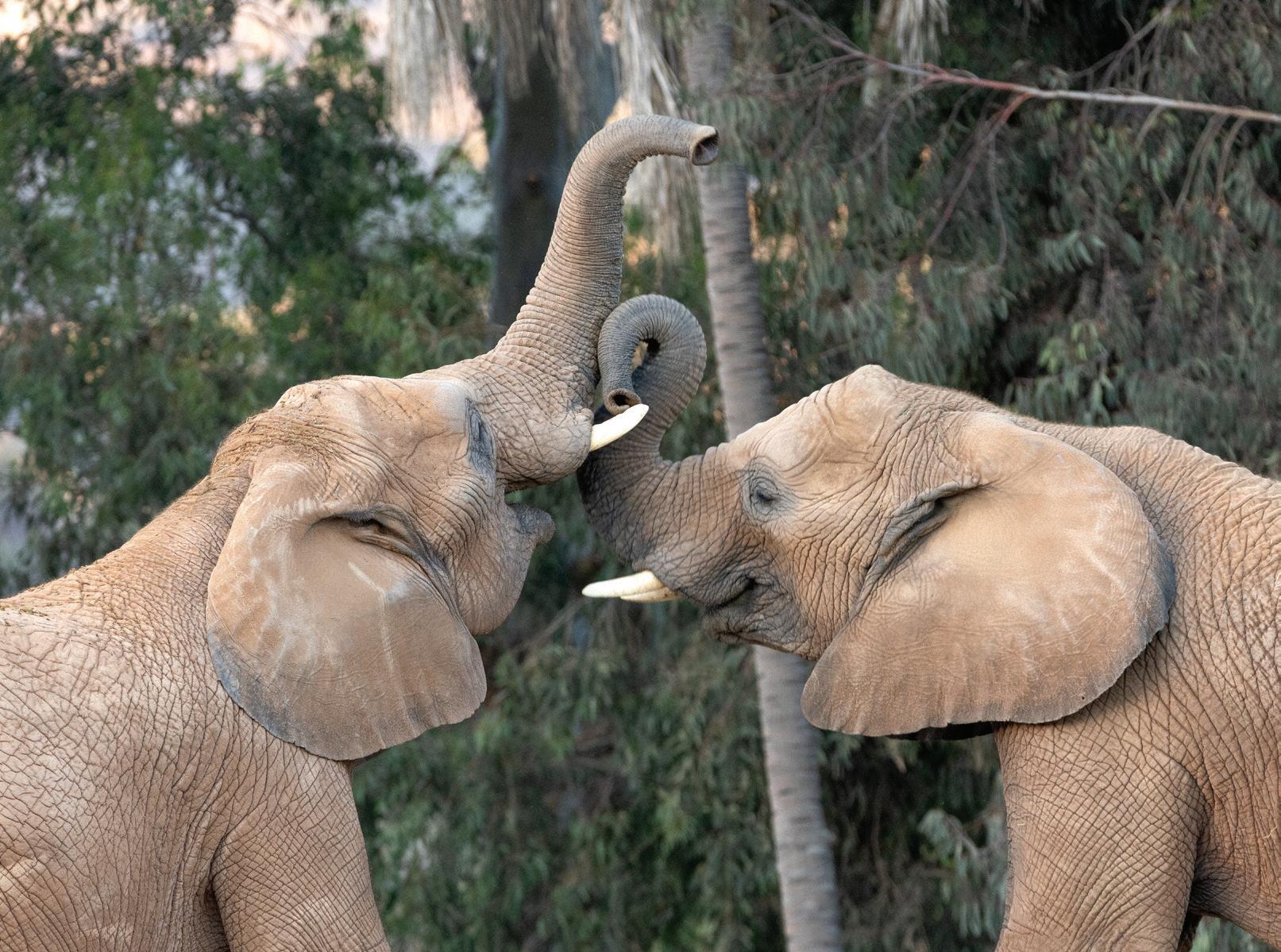
African savanna elephants have a sophisticated communication system, featuring a rich language with dozens of calls. Some calls travel both through the air and as seismic signals: vibrations that move through the ground. Elephants can hear with their ears and “hear” with their feet, as they pick up ground-borne seismic information. This dual system helps them detect short- and long-distance signals, triangulate locations, and even sense vibrations from far-off cues like footsteps and rainstorms.
BY ELYAN SHOR, PH.D. ILLUSTRATION BY AMY BLANDFORD

Elephants produce rumbles at frequencies under 20 Hertz. These low-pitched calls are infrasonic—below the human hearing range.
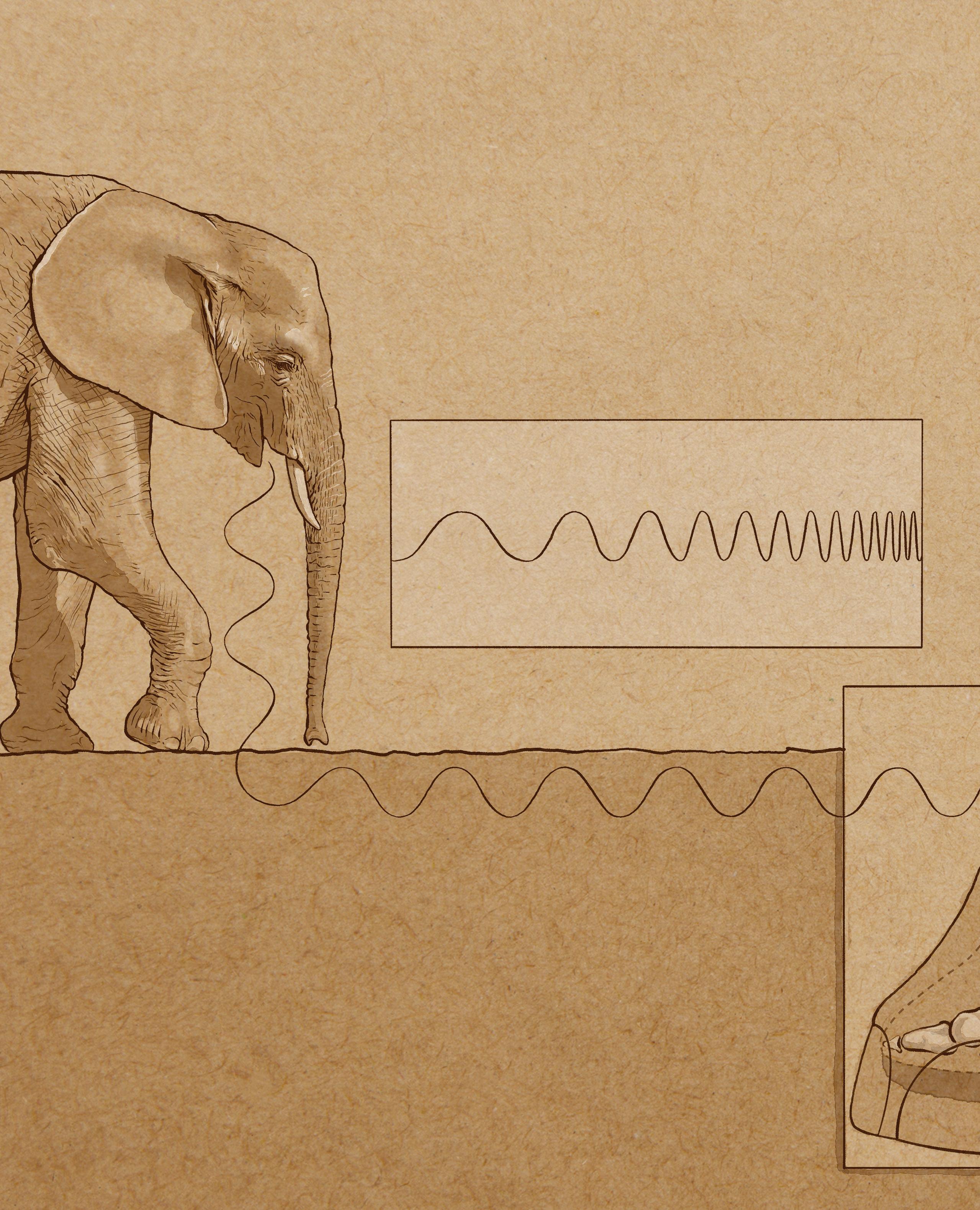
Elephant forefeet and human hands have the same number of carpal (wrist) and metacarpal (palm) bones. However, elephants have 13 phalanges (finger bones), while people have 14.
Elephants walk on tiptoes: the forefeet are digitigrade, meaning only their toes touch the ground.
Touch receptors in the feet detect seismic vibrations and send that information to the brain through a network of nerves.
Each foot contains five digits, but the forefeet have four toenails, and the hindfeet have three.
Instead of a hollow marrow cavity, limb bones are packed with a spongy tissue that makes bones denser and better able to support the massive body.
Greeting rumbles: reinforce social bonds after time spent apart.
Contact calls: back-and-forth calls to check in with each other over large distances.
Roars: draw attention or rally support from others, like when fending off a predator.
Let’s Go rumbles: signal that it’s time to move, paired with callers pointing their bodies directionally.
Trumpets: exclaim excitement, such as playtime, a new birth, or a social gathering.
Cadenced rumbles: conversation within a family for decision-making, including where to go next.
Vocal labels: distinctive rumbles that uniquely label and identify individuals, just like names.
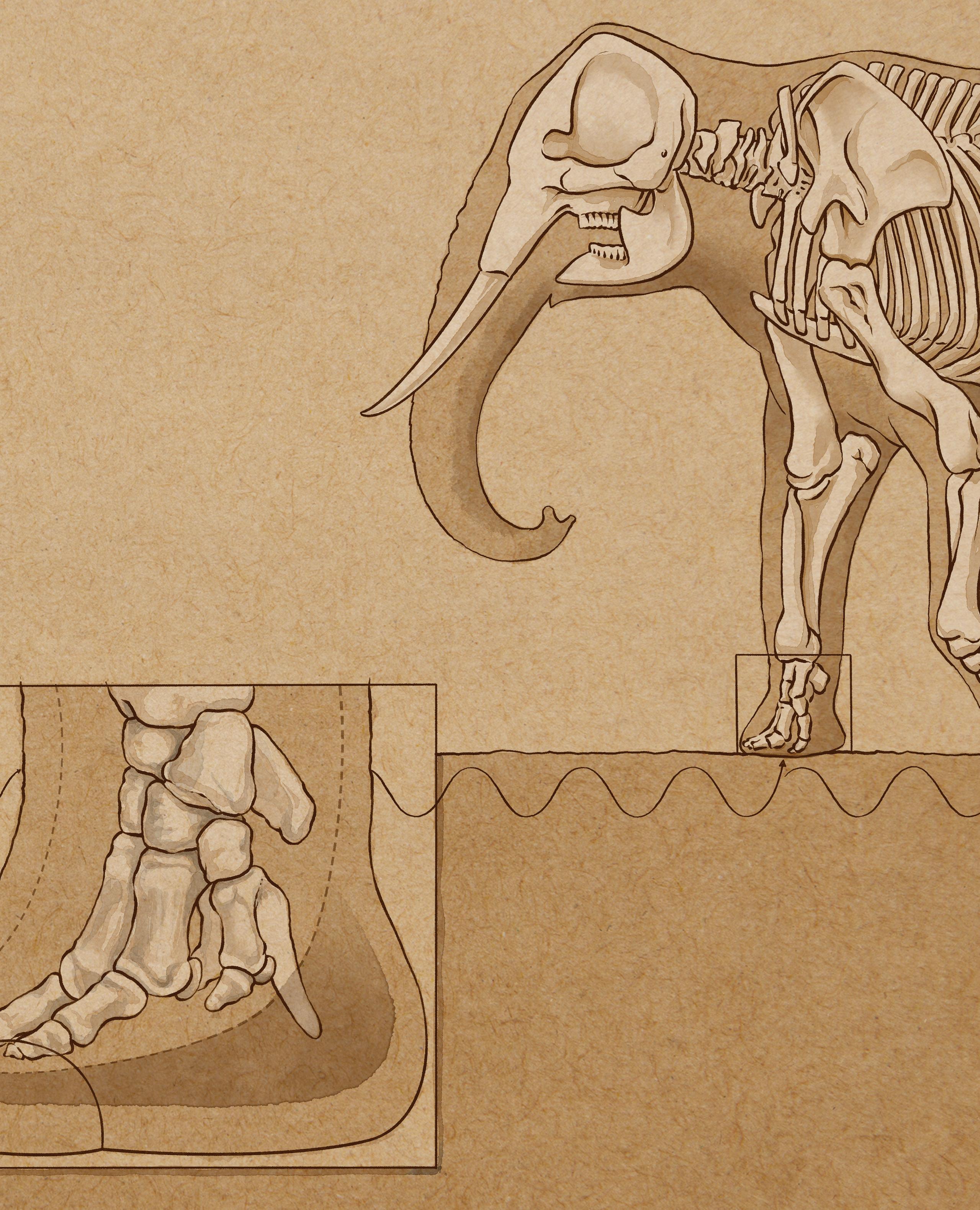
In a process called bone conduction, seismic signals vibrate their way through the foot bones and up the skeleton to the middle ear, another way elephants “listen” to the ground.
The digital cushion— made of connective tissue and fat—provides strength and flexibility. It functions as a shockabsorbing pad beneath the elephant’s weight.
As elephants walk and shift their weight, the digital cushion compresses and acts like a pump, pushing blood up the legs against gravity to return toward the heart.
A sixth “pseudo-toe” in the heel helps brace the foot, preventing the digital cushion from collapsing.
Your Support Brings Hope for




We’d like to thank our 2025 partners for collaborating with us to save, protect, and care for wildlife across the globe. Interested




.
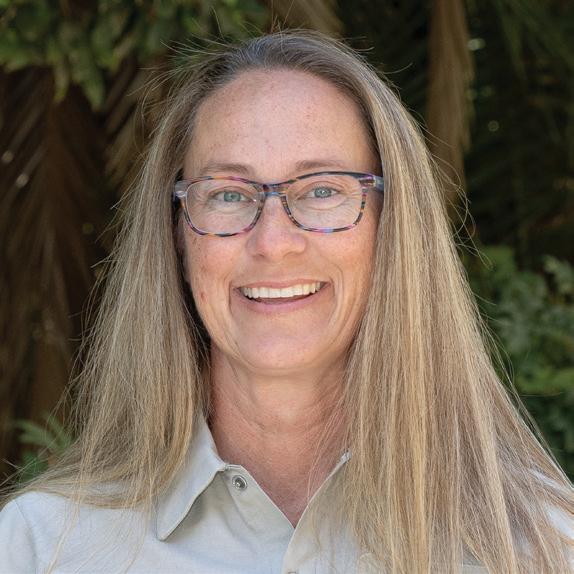
Curator of Mammals, Ambassadors, and Applied Behavior
San Diego Zoo Safari Park
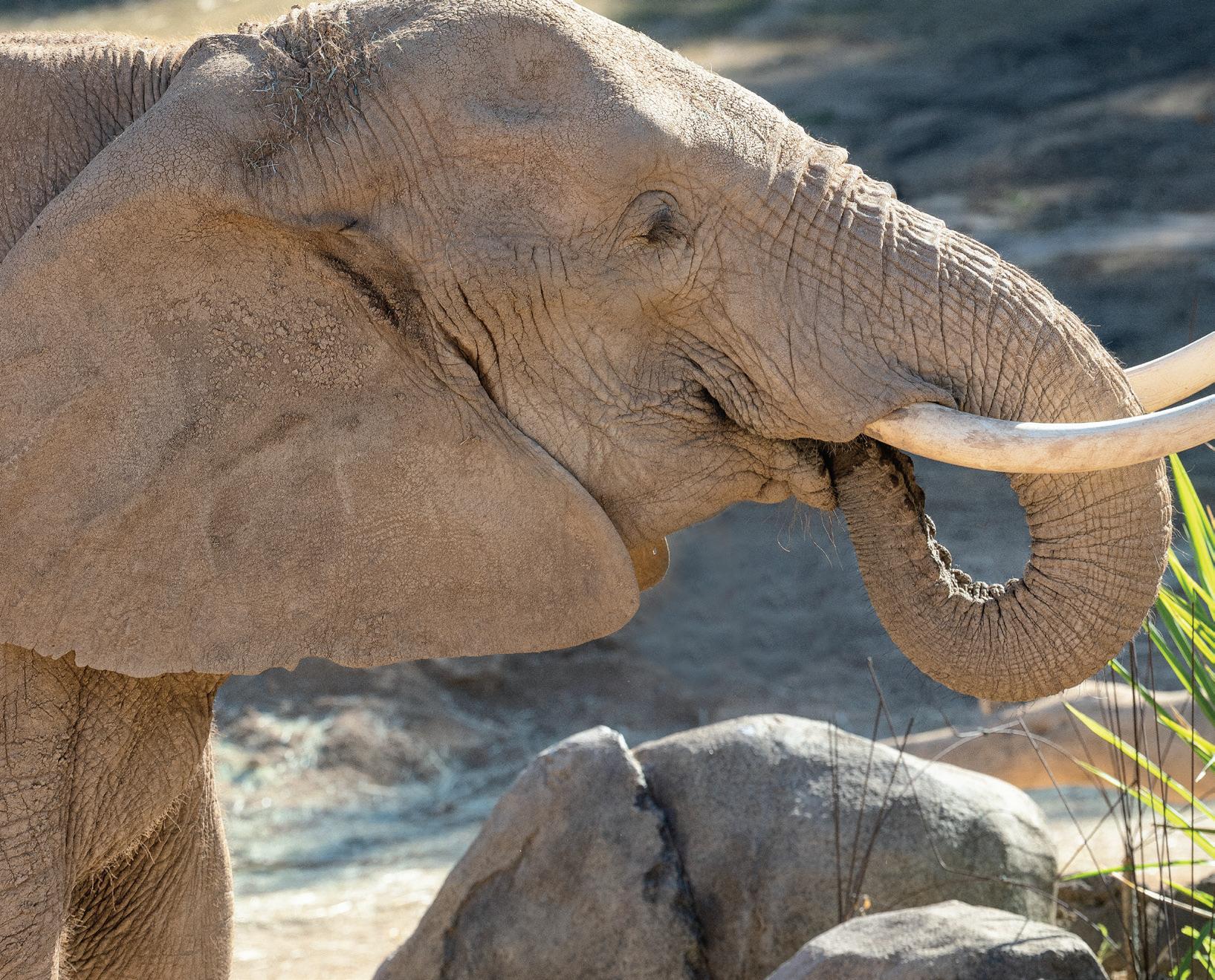
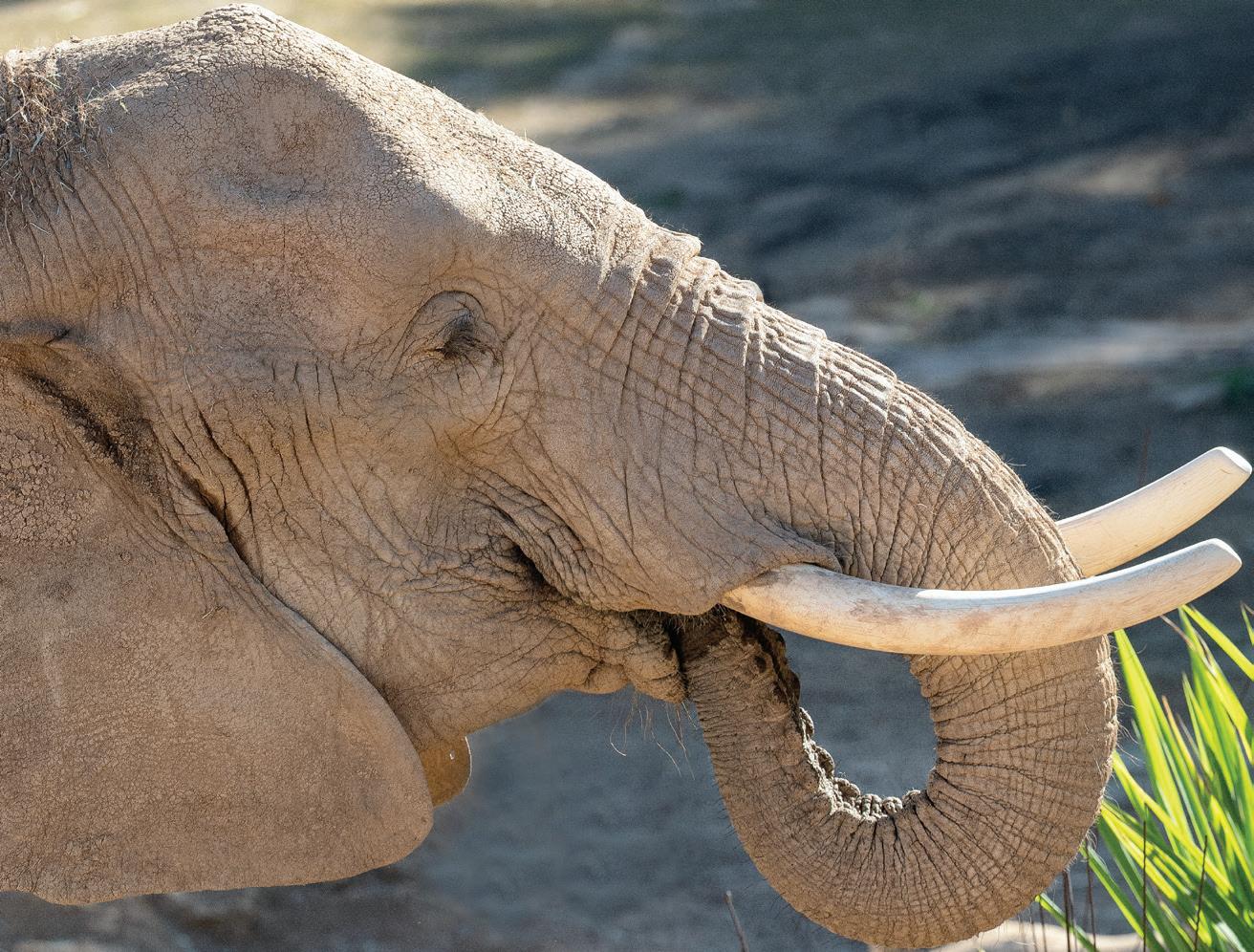
Mindy Albright has worked at the San Diego Zoo Safari Park for over 20 years. In her current role, she oversees the elephant, ambassador, and coexistence teams. Focusing on population sustainability, operant conditioning, habitat design, and developing programs and teams to advance wildlife care and conservation in San Diego and around the world.
Did you always want to work with elephants?
I’ve always been in awe of wildlife and would have been thrilled to join any wildlife care team at the Safari Park. After working as a tour guide and spending time with the elephant team, I discovered my deep passion for wildlife behavior and care.
Is there anything from the elephant program’s development that you’re especially proud of?
I’m incredibly proud of the vital role our elephant herd has played in advancing scientific understanding and conservation efforts, helping to shape a better future for their species. The resilient elephant herd has welcomed 14 calves and raised them all in a dynamic family unit. Our care and management strategy enhances their well-being and allows us to learn from them, which is knowledge we share to support elephant conservation worldwide.
What’s the most memorable moment you’ve witnessed with the African elephant herd?
There are so many unforgettable moments, and what stands out the most is observing the herd’s social
dynamics evolve over time. When a calf is born, every member of the herd plays a role in protecting them. Young females mimic the adults and become vigilant babysitters, or allomothers. On the other hand, young males socialize differently to prepare for the day they’ll leave the maternal herd. These moments are deeply relatable to many of our guests.
Do you have a favorite elephant in the herd?
Phakamile (Kami) and Umngani are my favorites. I was part of each of their care teams, which gave me the chance to create strong, trusting relationships with them. They have very different learning styles, but both are eager learners and taught me so much about working together, behavior, and patience.
Do you have a favorite elephant fact?
Elephants are pregnant for 22 months. It’s one of those facts that creates empathy from guests, especially parents.
What are you most excited about with the opening of Denny Sanford Elephant Valley?
I’m excited for guests to get closer to the herd and witness their complex social interactions. It’s truly an intimate experience—there’s nothing quite like being in the presence of elephants.
Is there anything else you’d like to add?
Elephant Valley is a huge accomplishment for both our team and the herd. No other project has been designed and implemented around a herd of elephants like this. I’m incredibly grateful to the wildlife care team for their creativity, resilience, and unwavering commitment to prioritizing the elephants at every stage.
Collaboration is key to Mindy and her team’s success. Learn more about her work on our Story Hub at www.sdzwa.org/storyhub
BY
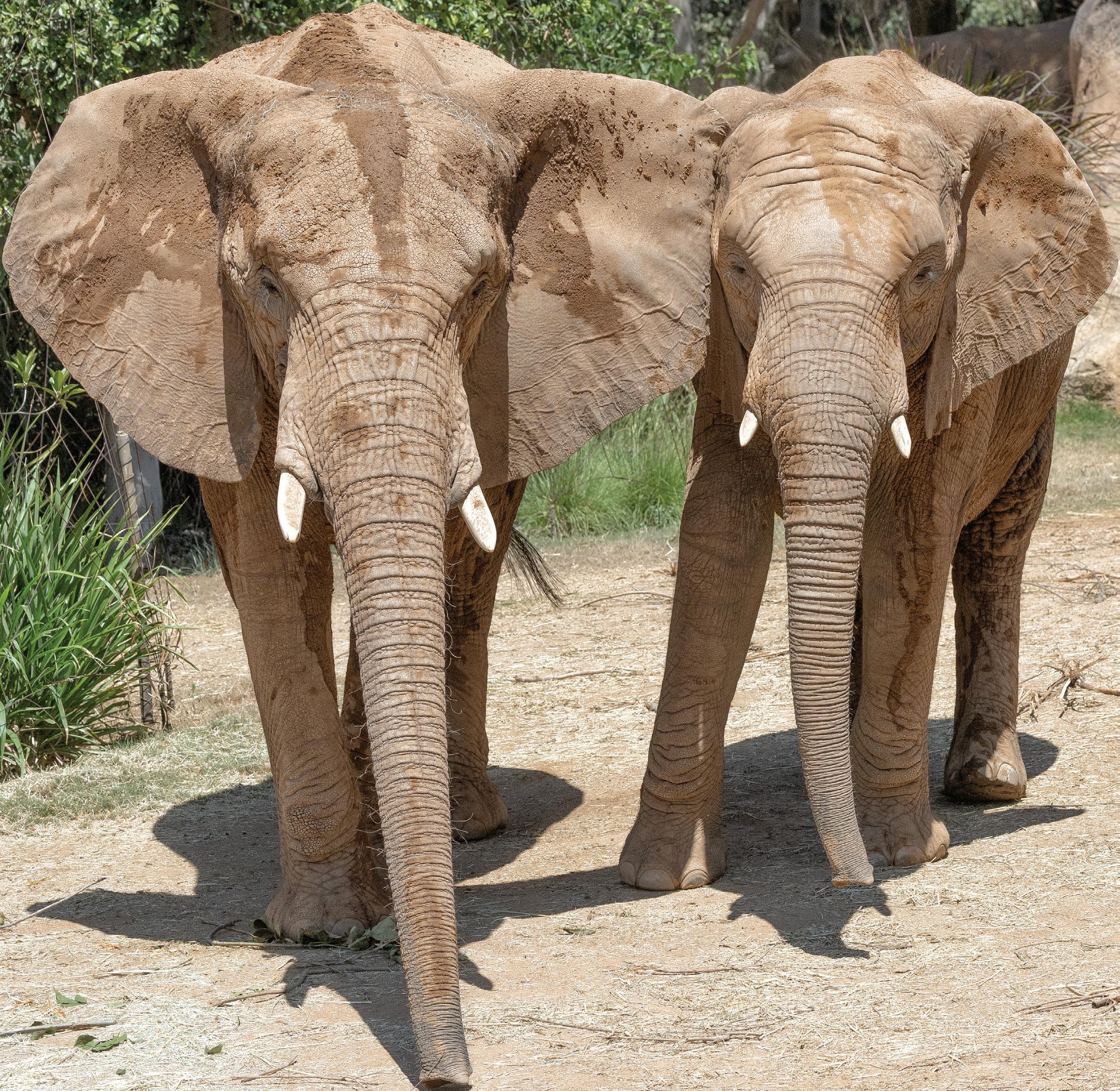
Swazi (below) is the matriarch of the tight-knit herd of eight elephants at the Safari Park.
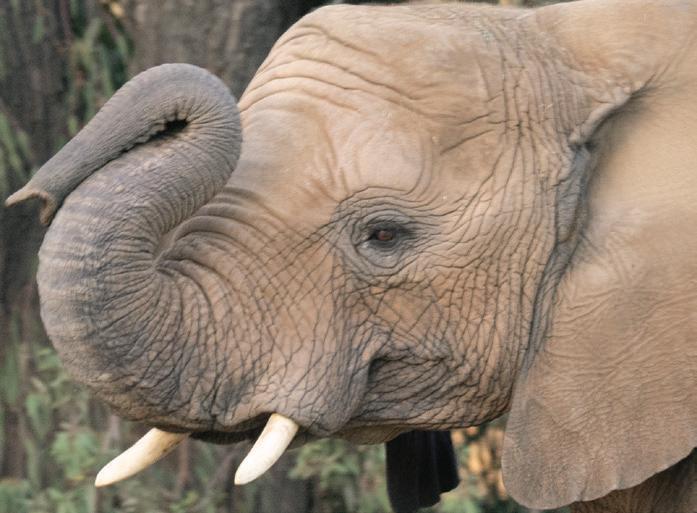
As the sun rises over the rolling hills of the San Diego Zoo Safari Park, a herd of elephants is already on the move.
The matriarch, Swazi, gets first choice of the abundant resources across her lush and dynamic habitats. Tagging along is her daughter Qinisa (Nisa), eager to enjoy the perks of mom being in the top spot. Next is second-in-command Ndlulamitsi (Ndlula), who keeps an eye on the others as she and her young son Umzula-Zuli (Zuli) head for a different tree of browse. The third-ranking female, Umngani, calmly follows along with her daughter Mkhaya, happy to take whatever the others leave behind. Umngani’s older daughter, Khosi, wants to hang out with Nisa, so she heads over to see if Swazi will let her join them for breakfast. Phakamile (Kami) eats by herself for a bit before deciding to join Nisa and Khosi. These interactions are the first of hundreds the eight elephants will experience as they spend their day together at Denny Sanford Elephant Valley.
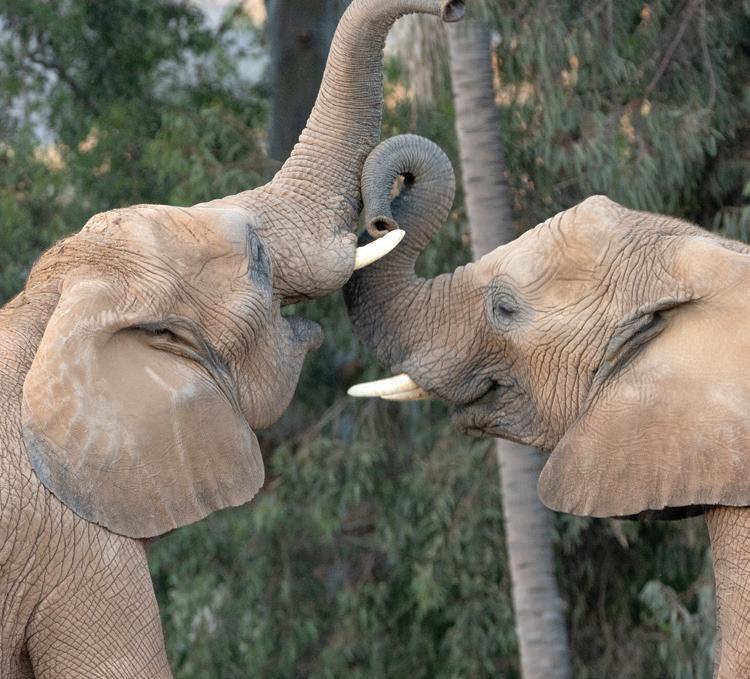
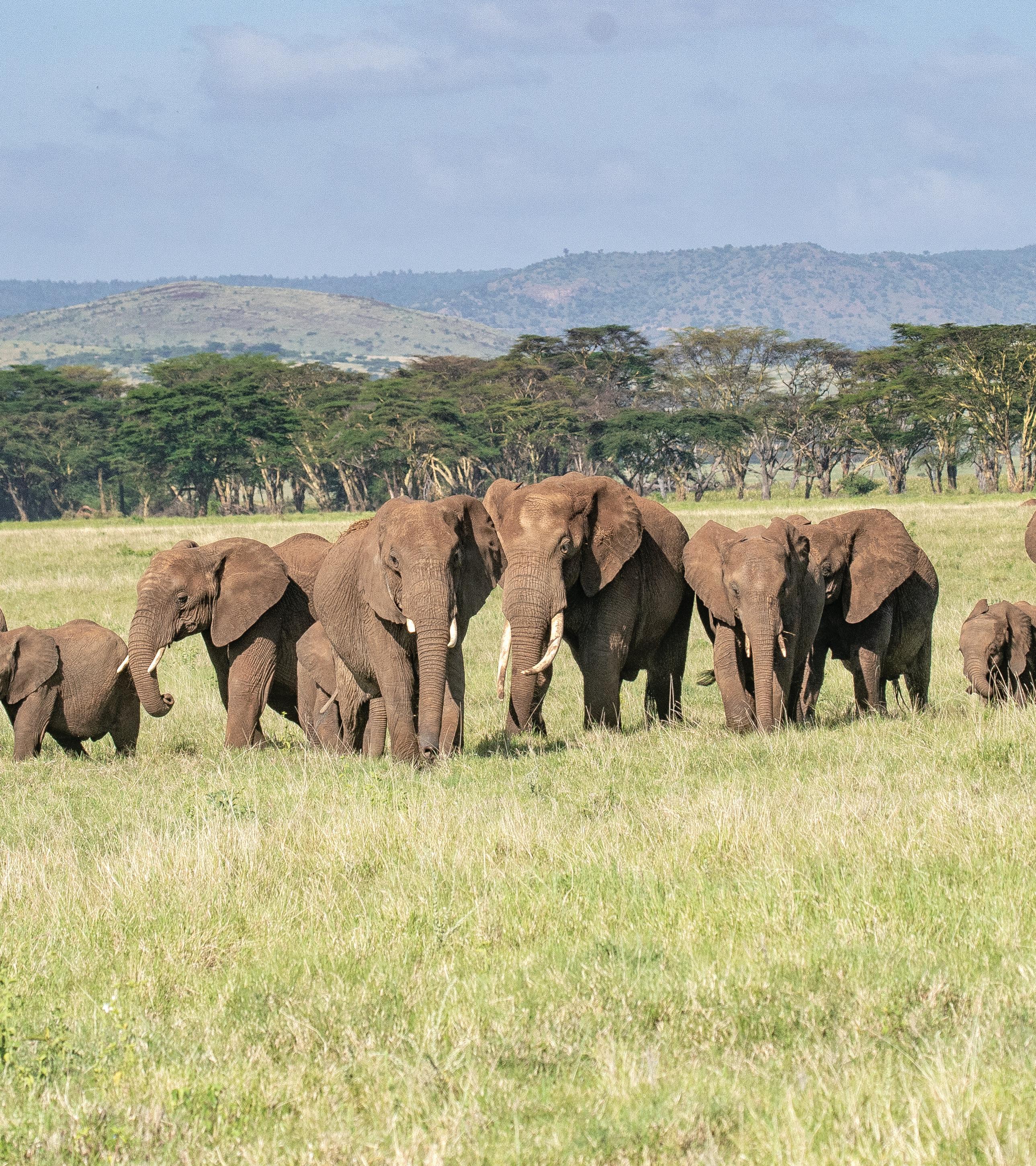
Elephants are highly social and often live in multigenerational family groups made up of a matriarch and her sisters, aunts, and cousins, plus their female calves and young male calves who haven’t reached maturity. As with any complicated family, it helps if they can choose who they spend time with, and when. There are days they want to be together, and others where they prefer some alone time; they may go from sharing a resting space to trying to steal a snack. Even with the occasional disagreement, group members across native habitats depend on one another for resources, protection, and survival in their challenging African
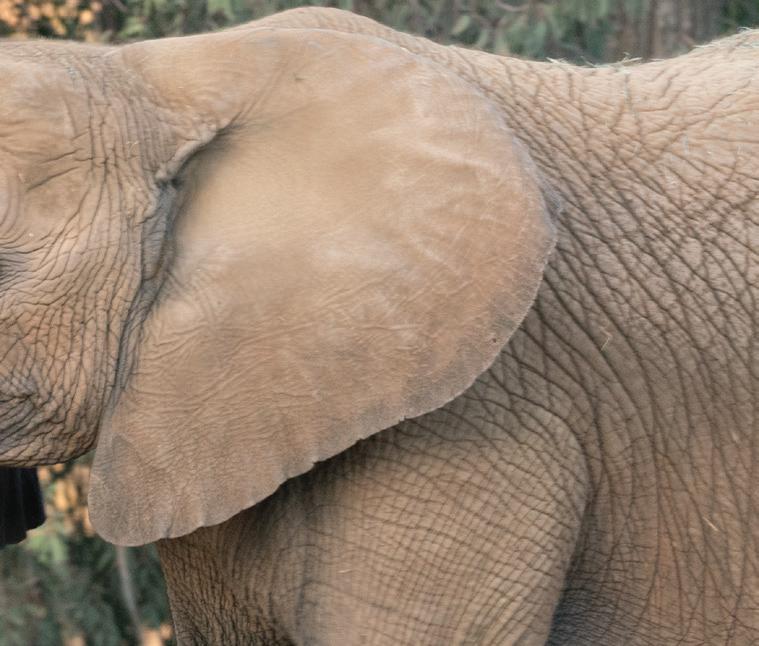
savanna environment. It takes a reliable leader to keep such a vibrant herd on track, which is where the matriarch comes in.
Matriarchs are the experts at finding resources. In a group where every enormous member can eat up to 7% of their body weight daily, they have to continuously engage with their environment to seek out what they need to thrive. Just as in native habitats, matriarchs like Swazi spend most of their lives investigating, and use their incredible long-term experiences to recall all the best and safest spots for food, water, and shelter. Swazi uses these skills to guide her herd through their dynamic lives at Elephant Valley. They have to maneuver around clusters of plants, large boulders, and hidden water features as they search for food and other resources, and the other elephants know Swazi has her eye on the best spots.
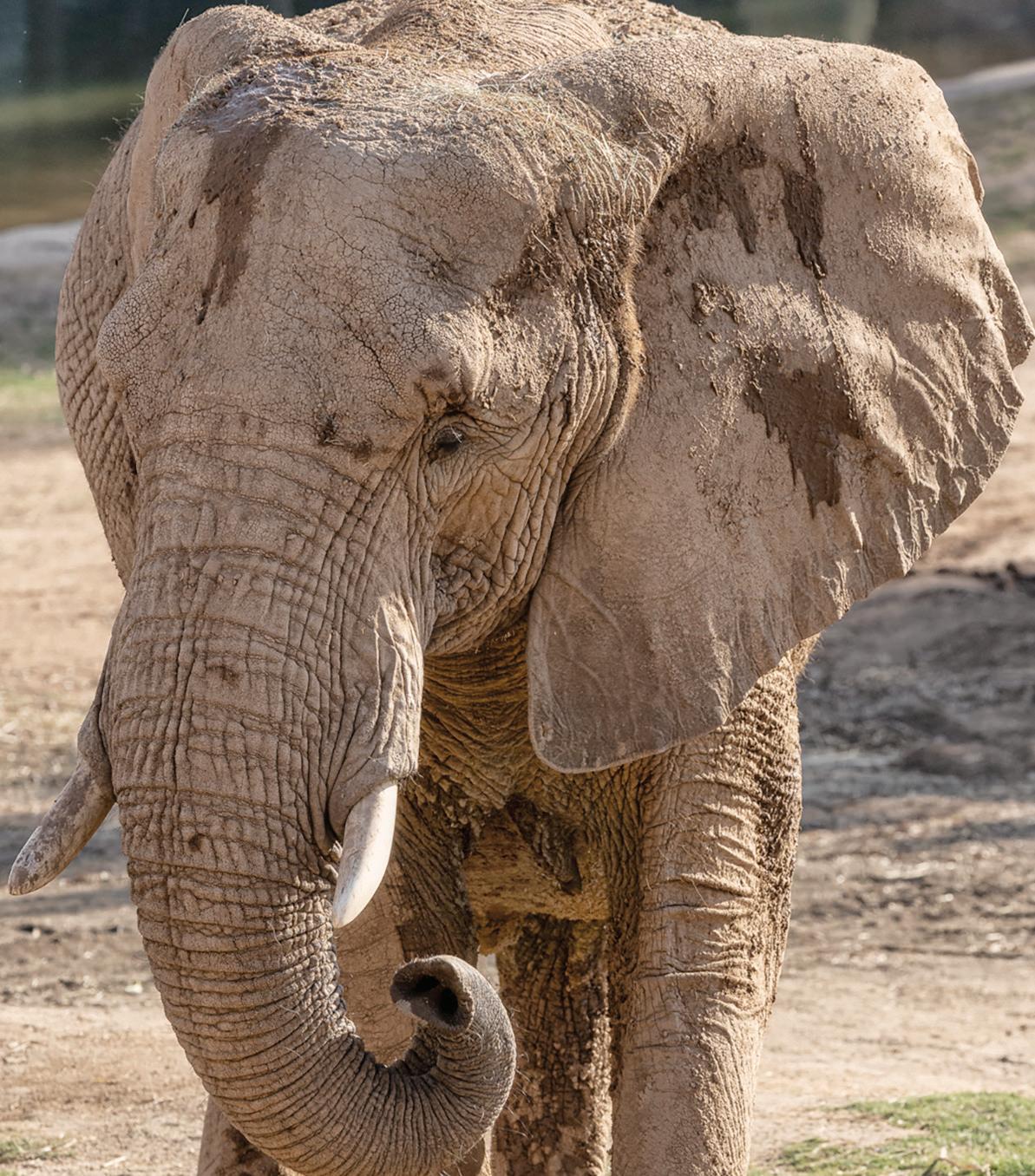
The foundation of this close-knit herd is the bond between the three oldest females: Swazi, Ndlula, and Umngani. They were rescued and welcomed to the Safari Park at the same time, so they have a respectful and trusting relationship, like sisters. As Kami, Khosi, Mkhaya, and Nisa grow and mature, they will become older aunties themselves, passing along their
z i
knowledge and guidance to another generation. These strong intergenerational relationships help the herd work together, adapt to changes, and always have each other’s backs.
The herd’s matriarch is typically the largest, strongest, or oldest female, but that is not the case with Swazi. Though she is one of the oldest and largest elephants in the group, she is also one of the kindest. She uses her quiet confidence to lead and support the herd. Just her presence, and a subtle flare of her ears, is enough to keep potential disagreements at bay. When Swazi isn’t busy keeping the peace, she loves to swim, and will often bond with the younger ones by joining them in one of the watering holes.
Swazi’s daughter, Nisa, is a bit of a princess. She knows mom is in the top spot, and that means she doesn’t have to be concerned about finding all the best snacks and opportunities throughout the day. The group responds to Swazi’s movements and defers to her wishes, so all Nisa has to do is follow along. Nisa also has a lot of friends, as the other elephants know they may also benefit if she favors them. Lower-ranking Kami thought she could improve her standing in the herd by building a better relationship with Swazi’s family, so when Nisa was born, she started babysitting her. Now she can sometimes enjoy the same browse and opportunities as Swazi if she comes over when Nisa is there.
Kami is also closely bonded with Swazi. She has very high social intelligence and knows that as the lowest-ranking female, she will benefit from a tight relationship with the highest-ranking female. She loves being around the younger calves, but if she notices stricter Ndlula nearby, she might not go over to play with them until Ndlula has moved farther away.
Powerful Ndlula is second-in-command and makes sure no one forgets it. She subtly tests Swazi
by pushing her to follow through with her requests, but she also knows her place is subordinate to Swazi, and will yield prime resources if Swazi shows she’s interested. Ndlula has only ever had male calves, who are typically more feisty and pushy than females, so their mothers tend to be a bit stricter to help guide and teach them as they grow older. This, along with her appreciation for consistency in her environment, makes her more of a rule-follower than the other mothers.
Ndlula keeps all the little ones in line, especially her own. Her youngest son, Zuli, has learned from watching his mother and gets along well with the younger females. He loves to go swimming with them in the watering holes.
The lady with the longest tusks is the lovely Umngani. As the least dominant of the three adult females, she has to be the most alert, so her ears are usually perked. Umngani is very comfortable with her position in the group and doesn’t challenge the others; instead, she uses her resourcefulness and intelligence to cruise the area and pick up things others have left behind. Her calm contentedness has allowed her daughters, Khosi and Mkhaya, to become very confident members of the herd, even though their mom has the lowest rank. Umngani’s oldest daughter, Khosi, is easy to spot because she’s the unicorn—the only elephant with one tusk! Along with Swazi, Khosi is the first to discover something going on in the habitats. When an underground pipe was leaking, she smelled it, dug it up, and turned the resulting geyser into a hollow
Strong intergenerational relationships help the herd work together and adapt to change.
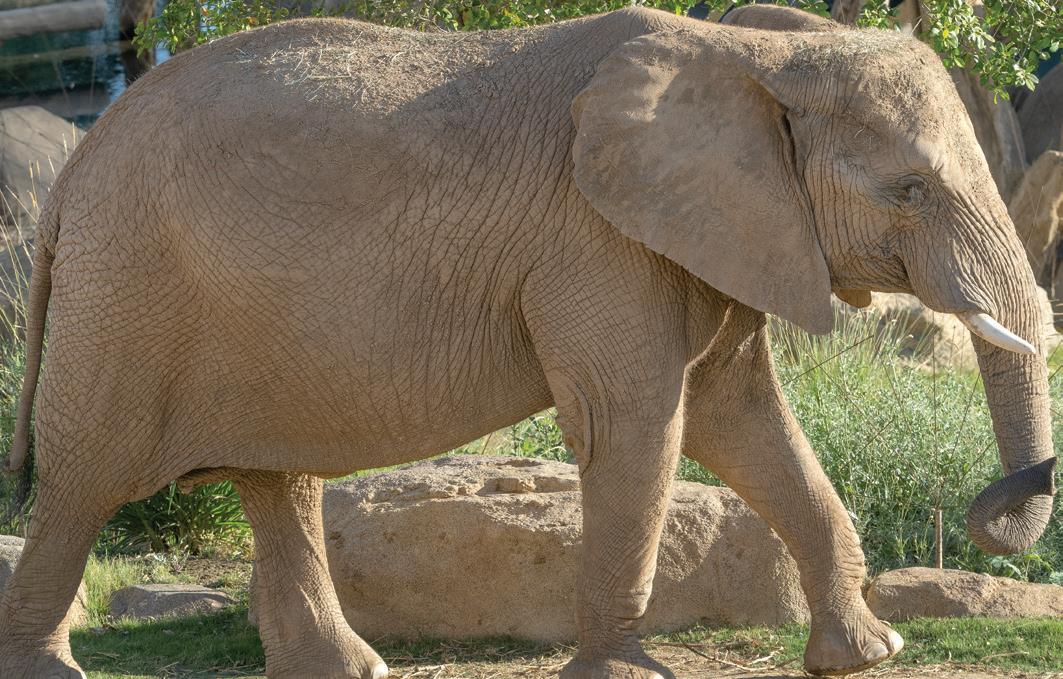
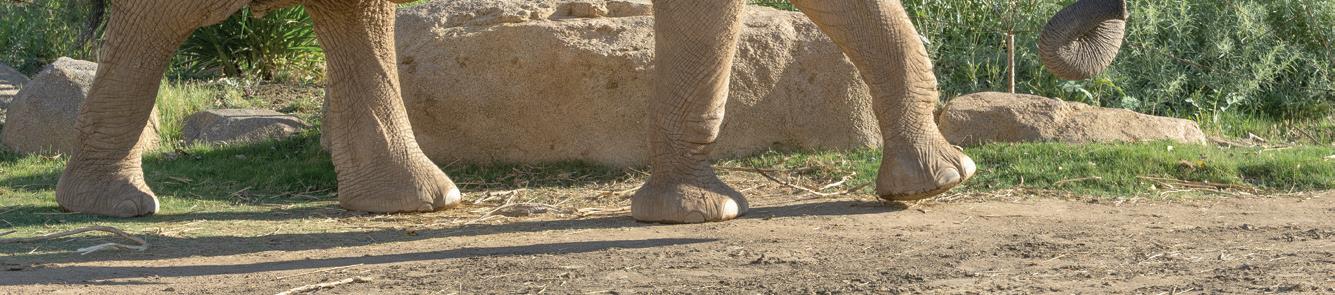
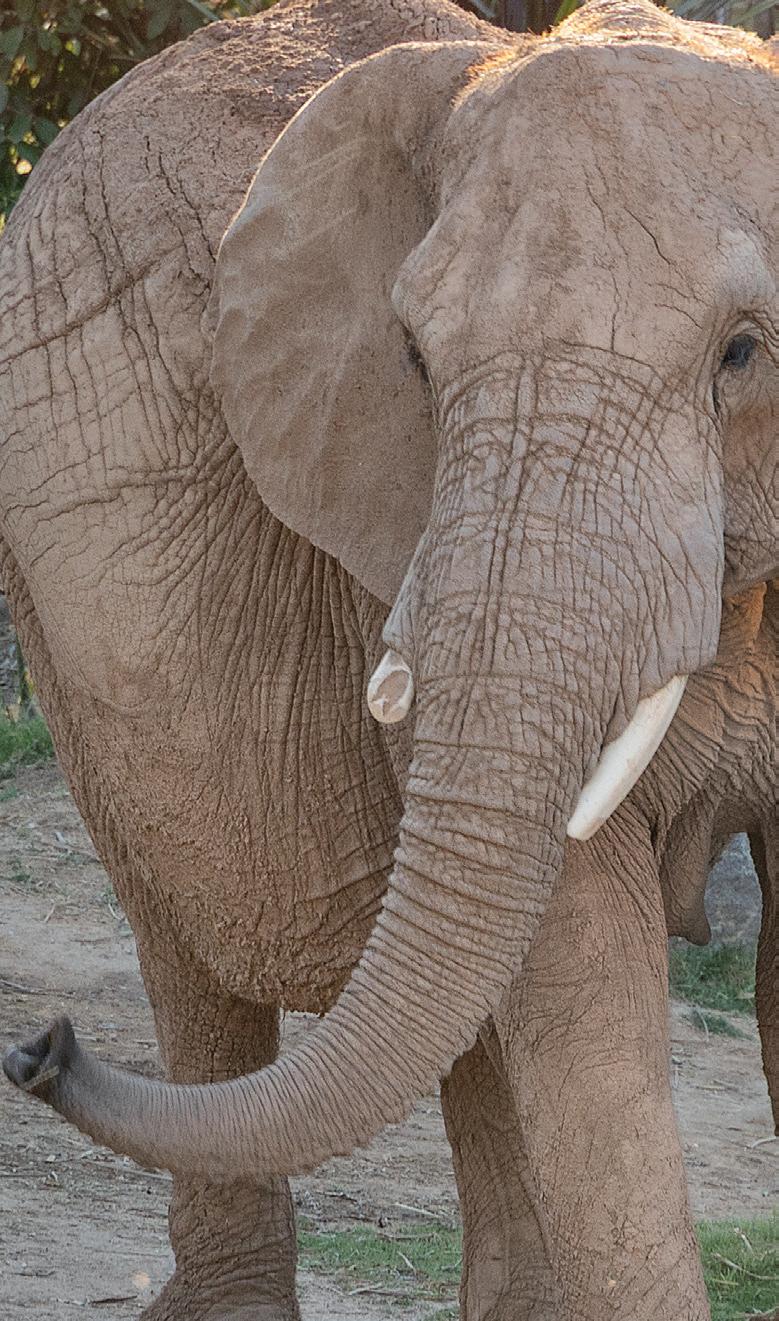
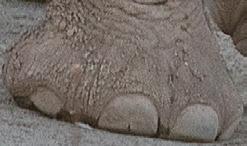
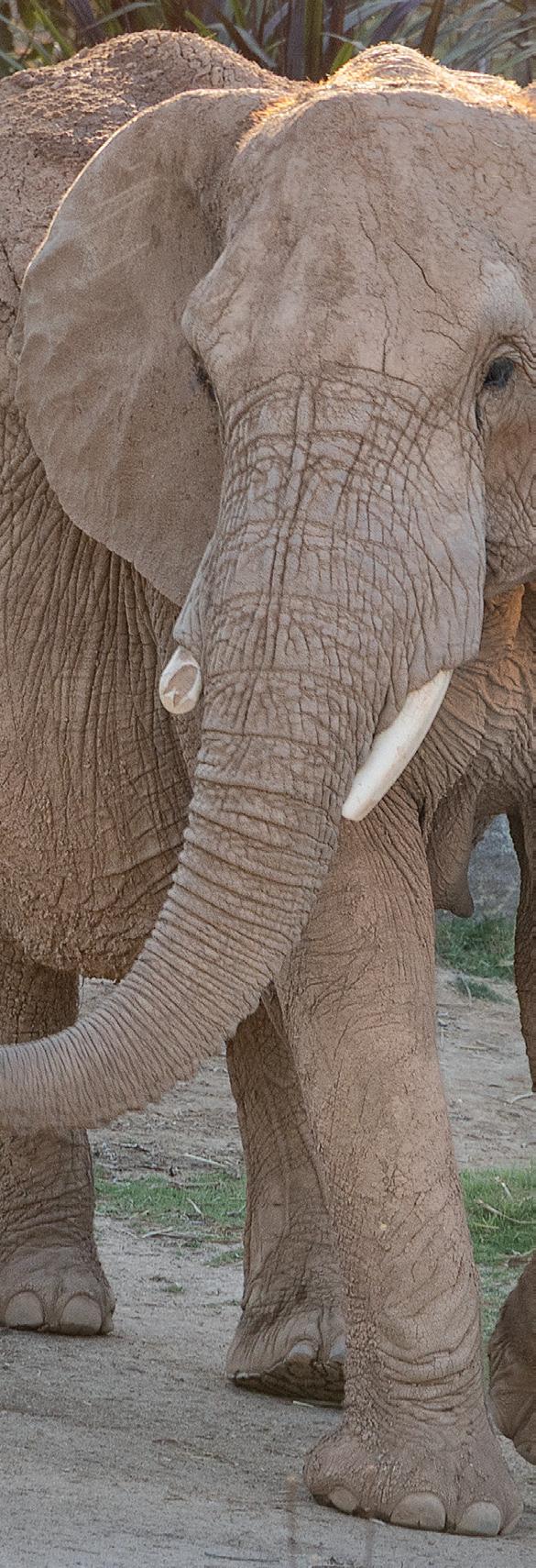
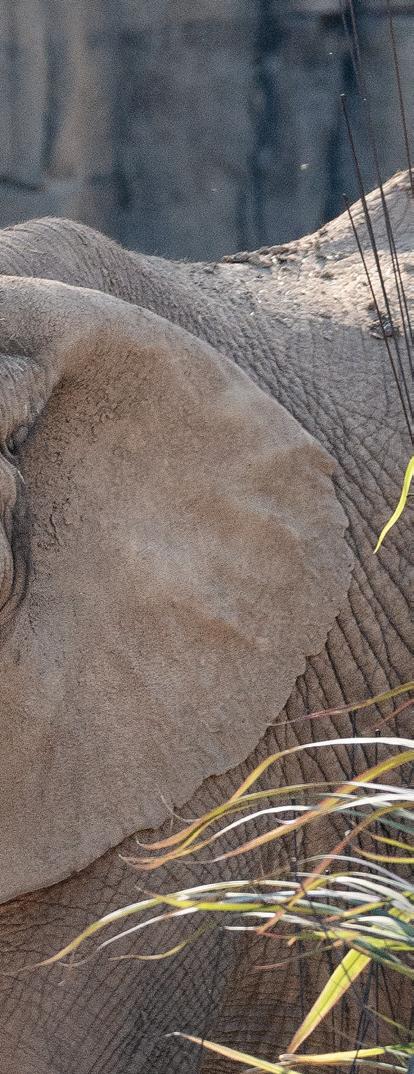
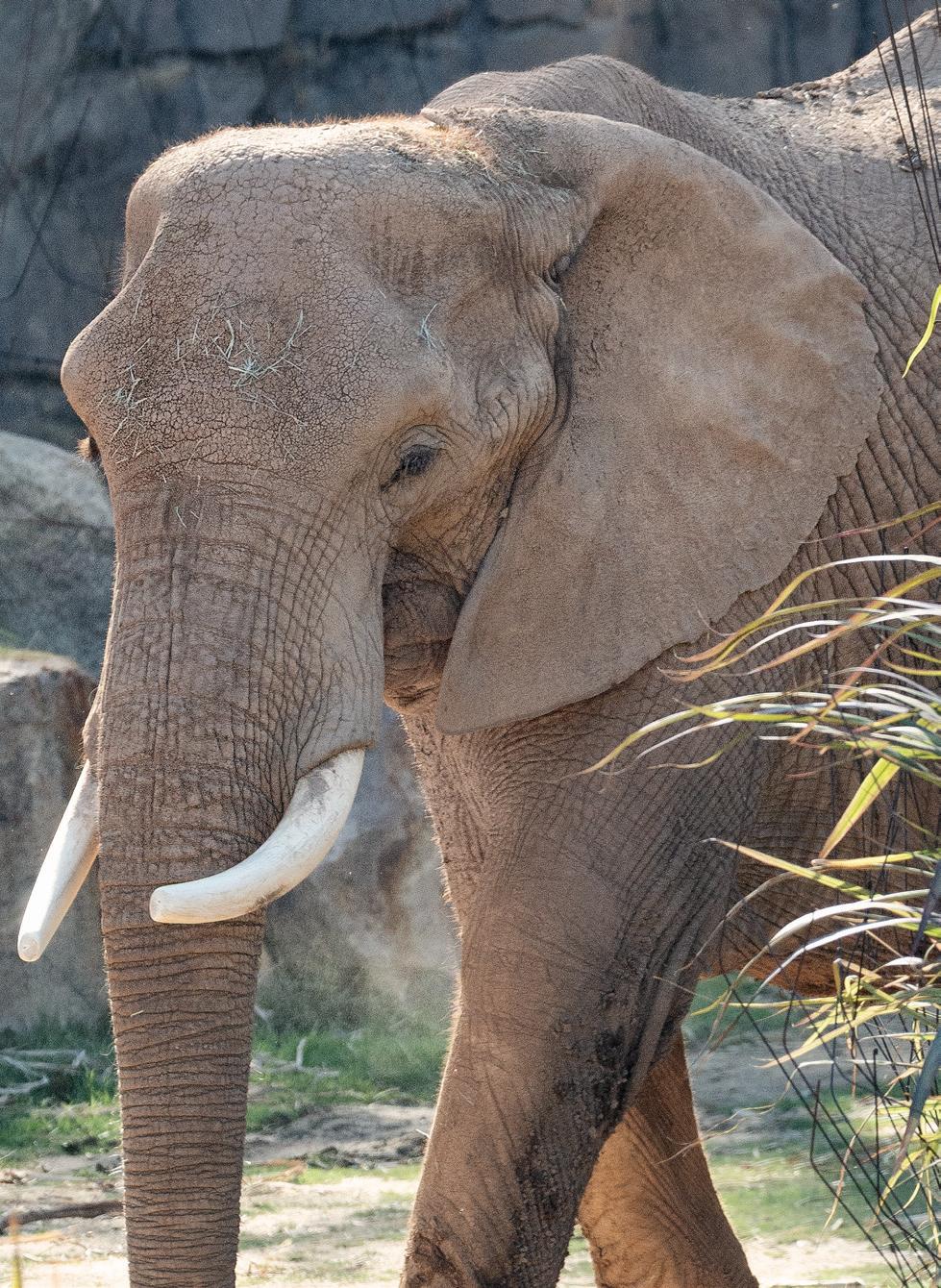
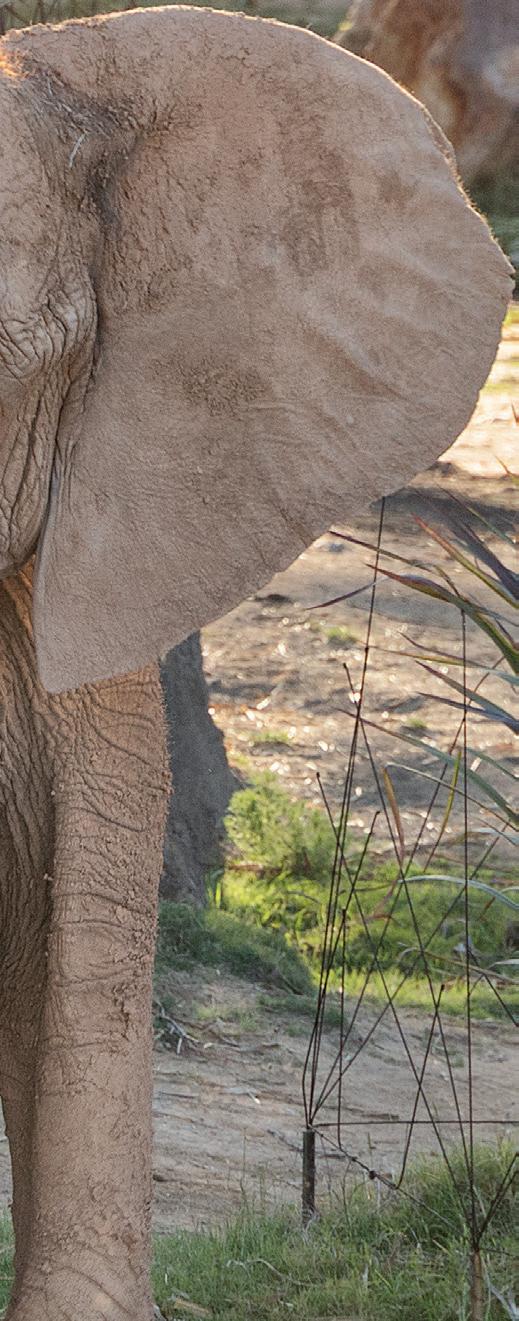
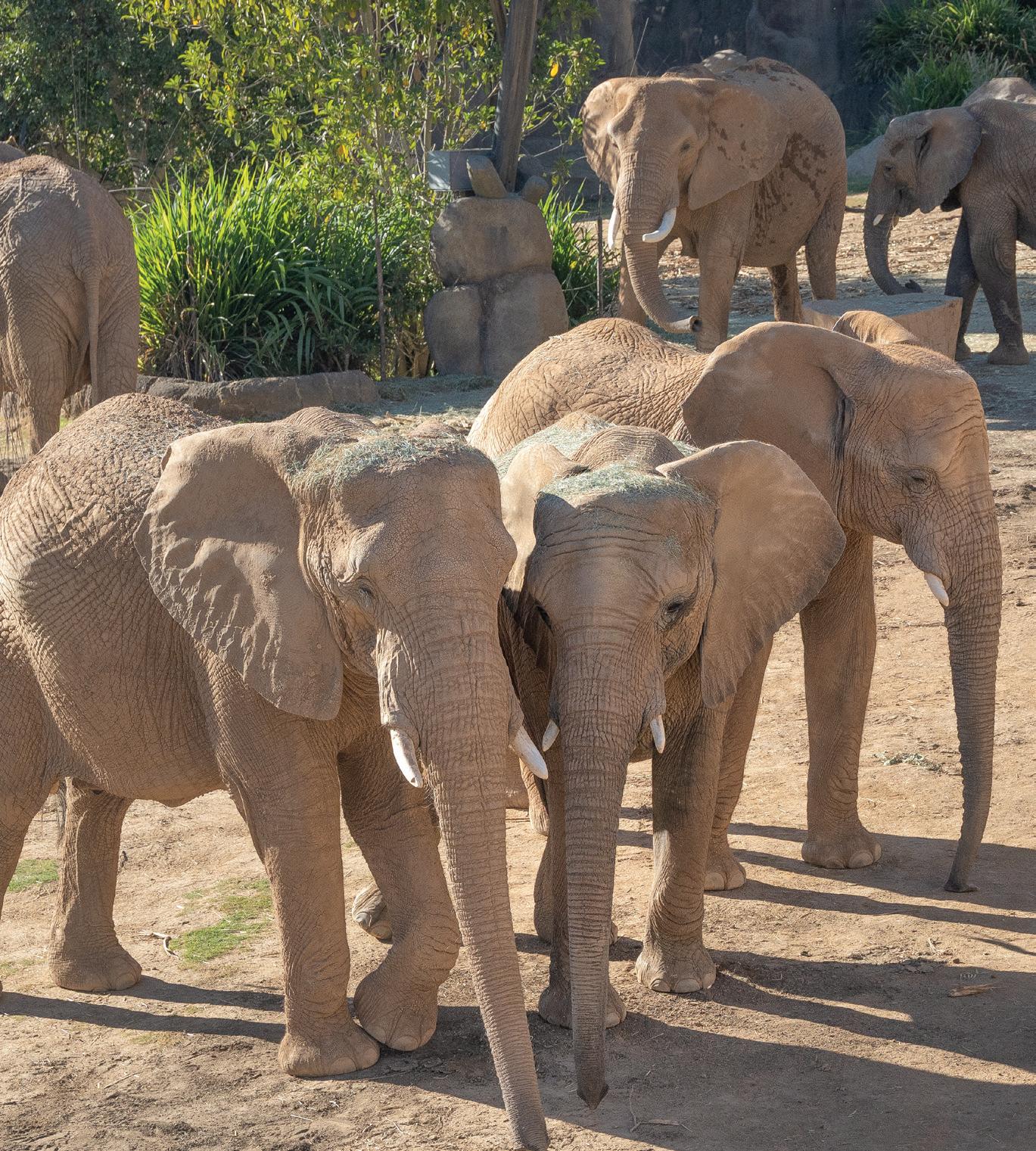







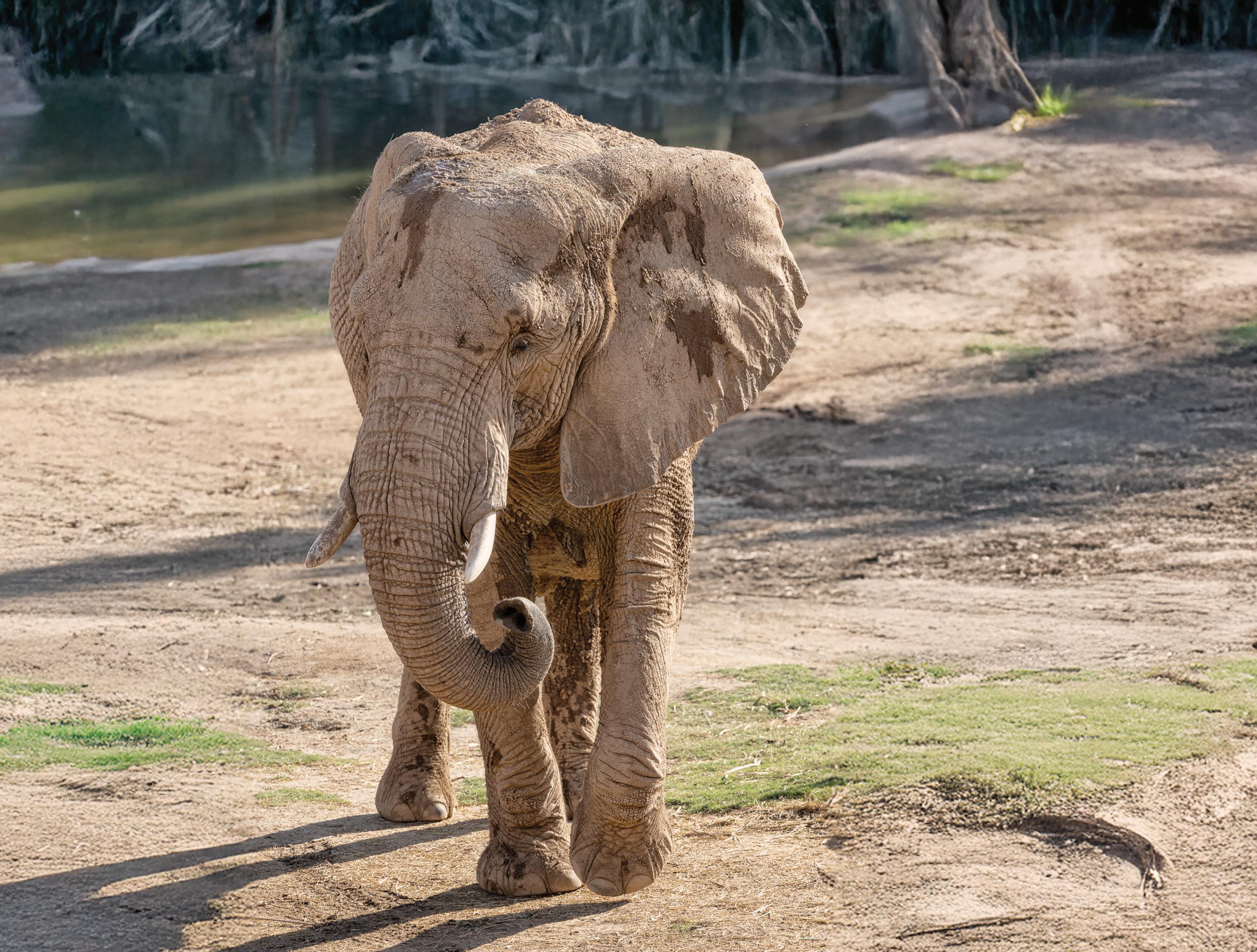
The dynamic elephant herd at the Safari Park is always on the move.
filled with muddy fun for everyone. She’s first into the watering holes for an evening splash, and gets the other little ones to join her for an elephant pool party. It’s no surprise she’s also the best babysitter. Khosi’s little sister, Mkhaya, is the youngest in the herd. She’s still nursing and a few years away from maturity, but she’s already a little spitfire who’s not afraid of anything. She’s very social and well-established within the group; everyone accepts her and lets her hang around them to eat.
Every day is different for this dynamic herd as they explore Elephant Valley. Whether sticking together through an unfamiliar experience or discovering a new way to play, this herd’s resilience and ability to adapt to new situations comes from feeling safe together and taking care of each other. And a life-changing moment walking alongside this magnificent herd is as easy as a visit to the Safari Park.
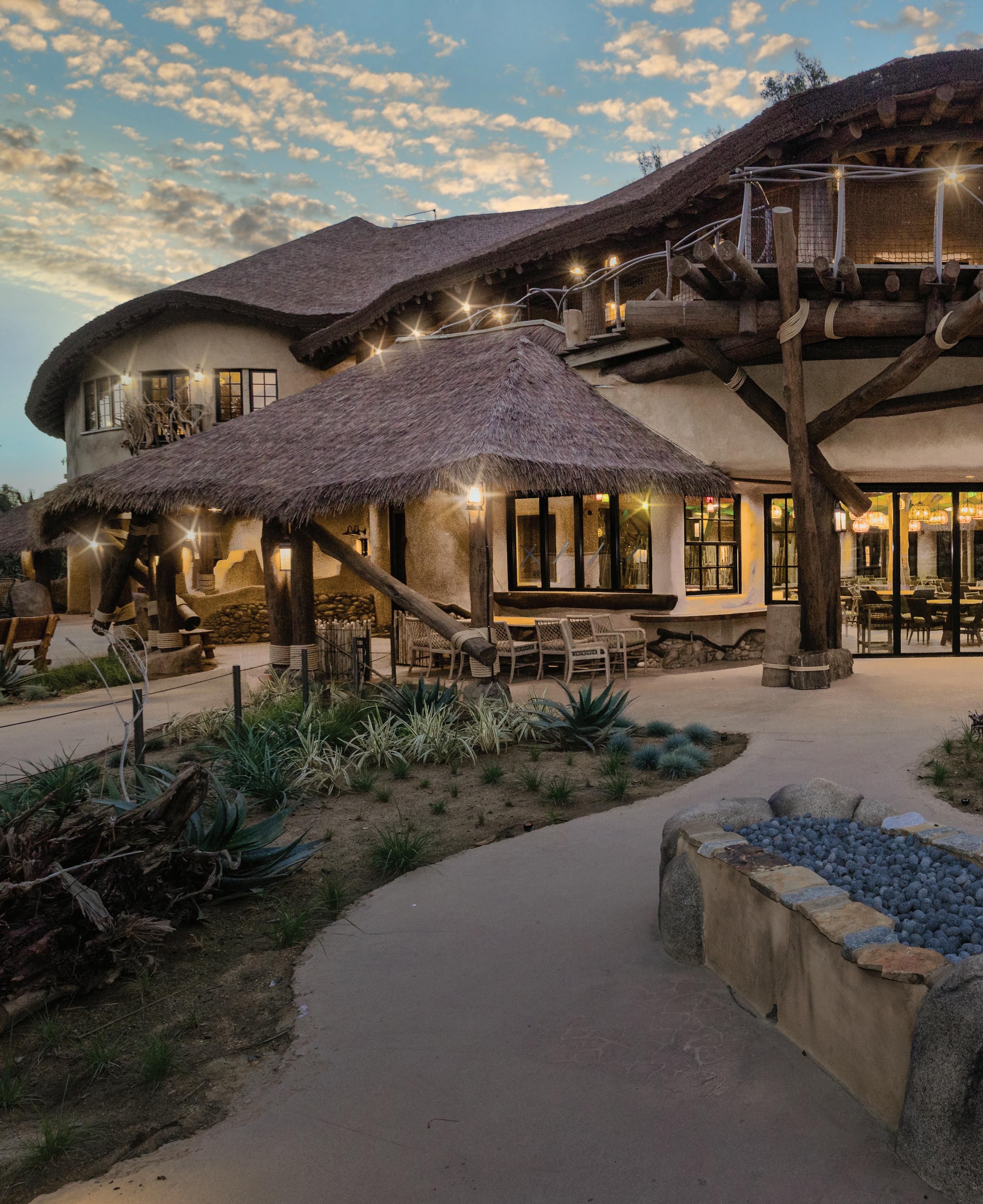


The spirit of Mkutano House is inspired by the tradition of meals as moments of community. Across Africa, dining is about connection—laughter, shared stories, and the joy of savoring dishes together. That sense of togetherness is at the core of our menu. While many dishes feature the bold, vibrant notes of African cuisine, our culinary team has also drawn inspiration from the diverse regions tied to our conservation mission. Guests will discover touches of the American Southwest, refreshing hints of Asia, and the comfort of classic continental flavors for those who crave a more traditional repast.
Leading this vision is Executive Chef Grant Toraason, who believes food is one of the most powerful ways to connect people across cultures. His inspiration comes from the idea that a shared table can break down barriers and spark conversations—much like the conservation work happening throughout the San Diego Zoo, Safari Park, and in our Conservation Hubs. With
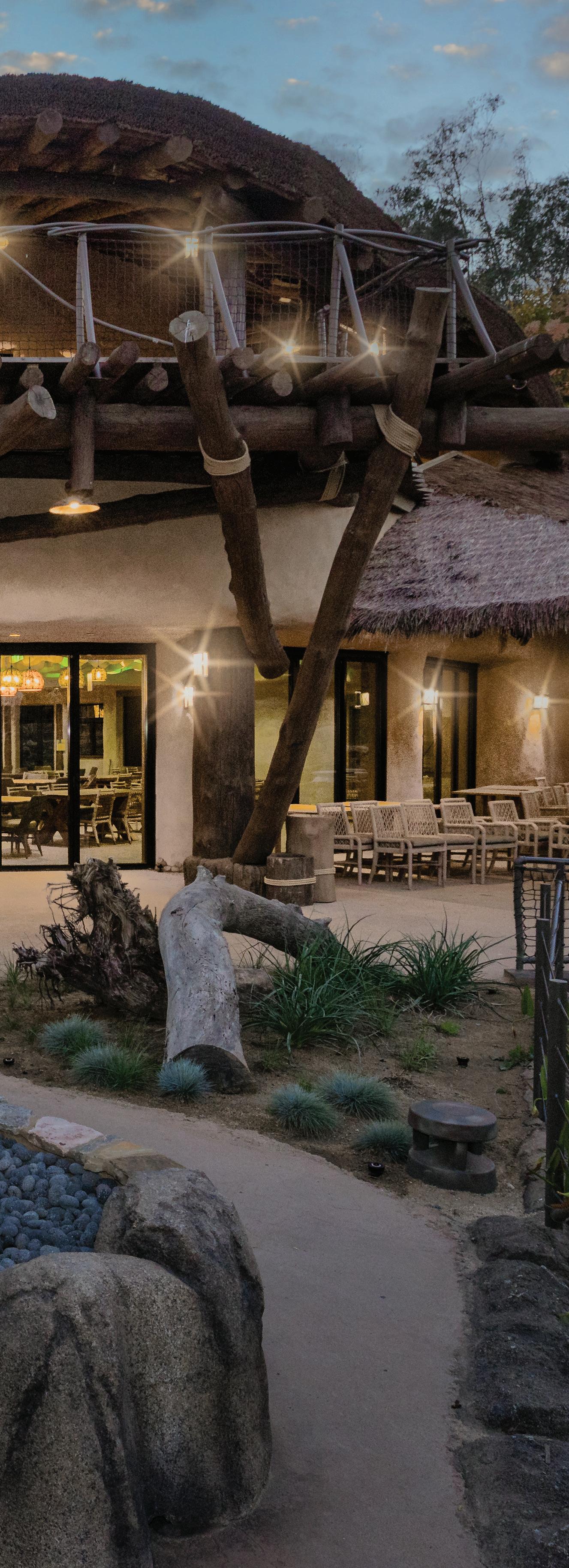
he San Diego Zoo Safari Park is ready to be your special place. Imagine gathering with friends and family around the table, savoring bold flavors from across the globe, while just outside the window a majestic elephant herd roams their expansive habitat. This one-of-a-kind view will be the heart of your culinary experience at the Safari Park’s newest dining experience, Mkutano House.
Just as its name suggests (Mkutano means “Gathering Place”), Mkutano House will be more than a restaurant. At the heart of Denny Sanford Elephant Valley, it will be a destination where people come together, share a meal, and create lasting memories surrounded by the beauty of wildlife.





IMMERSIVE EXPERIENCE
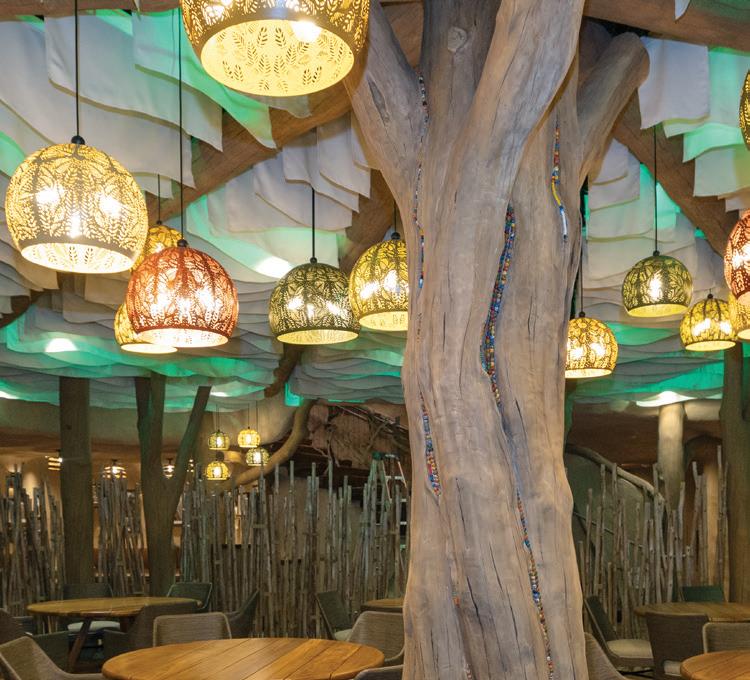
(Above) The Andro and Stephanie Petersen Veranda located off the Ona Lounge on Mkutano House’s second floor offers spectacular views. (Left) A vibrant display of beautiful “Wedding Necklaces” created by the Alliance’s BeadWORKS partner in Kenya adorns the dramatic staircase.
Mkutano House, Chef Grant invites guests to taste, share, and discover together while enjoying a view as remarkable as the flavors on their plates.
The menu itself is designed around community. Appetizers will be available both individually and for sharing, while entrées will focus on beautifully prepared features—such as chicken, beef, or fish—paired with garnish and sauce. Sides will be served family-style, encouraging guests to pass, share, and explore together.
On the top floor of Mkutano House, guests will find the Nelson M. Millsberg Ona Lounge, where creativity shines in every sip. Signature African-inspired cocktails will highlight unique ingredients like baobab, hibiscus, tamarind, and rooibos, paired with spirits such as Amarula and palm wine infusions. The bar will also highlight San Diego’s thriving craft beer scene alongside international standouts like Pliny the Elder and Delirium Tremens, a Belgian favorite recognized by its elephant logo—a perfect nod to the herd nearby.
Wine enthusiasts can enjoy a curated selection of
CAPTIVATING CANOPY
The centerpiece of Mkutano House’s restaurant is the fanciful illumination provided by our
South African Chenin Blancs and Pinotages, alongside sustainable producers from California and beyond. Non-alcoholic offerings such as African-style ginger beer, hibiscus iced tea, and spiced fruit punches will ensure every guest has something refreshing and culturally rich to enjoy.
For those seeking something quick yet full of flavor, Tu Grill will offer seasonal skewers with bold marinades and vibrant sides. From Beef Suya with peri peri sauce to Chicken Digaag
Qumbe with coconut-banana gastrique, as well as grilled vegetables with chimichurri, there will be something for every appetite. Traditional sides like kachumbari salad, fried plantains, rice, and berbere-seasoned fries will round out the menu, making Tu Grill the perfect stop for a casual bite.
Our vision for Mkutano House is simple: to create a dining destination where community comes first. Whether you’re stopping by for a meal after exploring the Safari Park, celebrating
a special occasion, or simply enjoying time with friends, this will be a space where every meal feels like a shared adventure—made unforgettable by the sight of elephants nearby. We cannot wait to welcome you to Mkutano House. Until then, thank you for being part of the Alliance. Your membership makes experiences like this possible and supports our mission of conservation, education, and inspiring connections with wildlife.
Bradley Burkett is director of retail operations at the San Diego Zoo Safari Park.
MARCH 14–APRIL 5
Extend your adventure! Enjoy even more time to discover amazing wildlife and explore everything there is to see and do at the Zoo with expanded springtime hours, 9 a.m. to 7 p.m. Albert’s Restaurant has special spring break hours, too—visit zoo.sandiegozoo.org/alberts for more information (Z)
MARCH 20 AND APRIL 17
Plant Day
On these special days, you can take a rare look inside the Zoo’s Orchid House from 10 a.m. to 2 p.m., learn about the Zoo’s botanical collection from horticulture staff on the Botanical Bus Tour at 11 a.m. and noon, and check out the Carnivorous Plant Greenhouse from 11 a.m. to 1 p.m. A variety of plants grown by Horticulture staff will be available at the Plant Sale, happening in front of the Orchid Greenhouse from 10 a.m. to 2 p.m. (Z)
APRIL 18–19
Wild Weekend: Amazonia
Learn more about the Amazonia Conservation Hub and wildlife of the world’s largest tropical rainforest, with special activities, wildlife care specialist talks, and more. (Z)
At the Zoo’s Wegeforth Bowl amphitheater, wildlife care specialists will introduce you to wildlife ambassadors representing San Diego Zoo Wildlife Alliance’s conservation work around the world in Wildlife Wonders, presented daily at 2 p.m. Learn about amazing wildlife—from the Amazon to right here in our own backyard in San Diego—and find out what everyone can do to help conserve wildlife and the world we all share. Presentation runs 15 to 20 minutes. (Z)
MARCH 8 & APRIL 12
Member Exclusive Early Hours
Rise and shine with the sights and sounds of the San Diego Zoo. One Sunday each month, qualifying members* can enter the Zoo one hour before the general public. To join us, simply present your membership card at the main entrance beginning at 8 a.m. *Excludes memberships with blockout dates. (Z)
EVERY DAY
Wild PerksSM
San Diego Zoo Wildlife Alliance members are eligible for Wild PerksSM. Show your membership card each time you make a purchase and save up to 20%, depending on your membership level. Some exclusions apply; for details, visit sdzwa.org /membership/wild-perks. (Z)
MARCH 21–APRIL 12
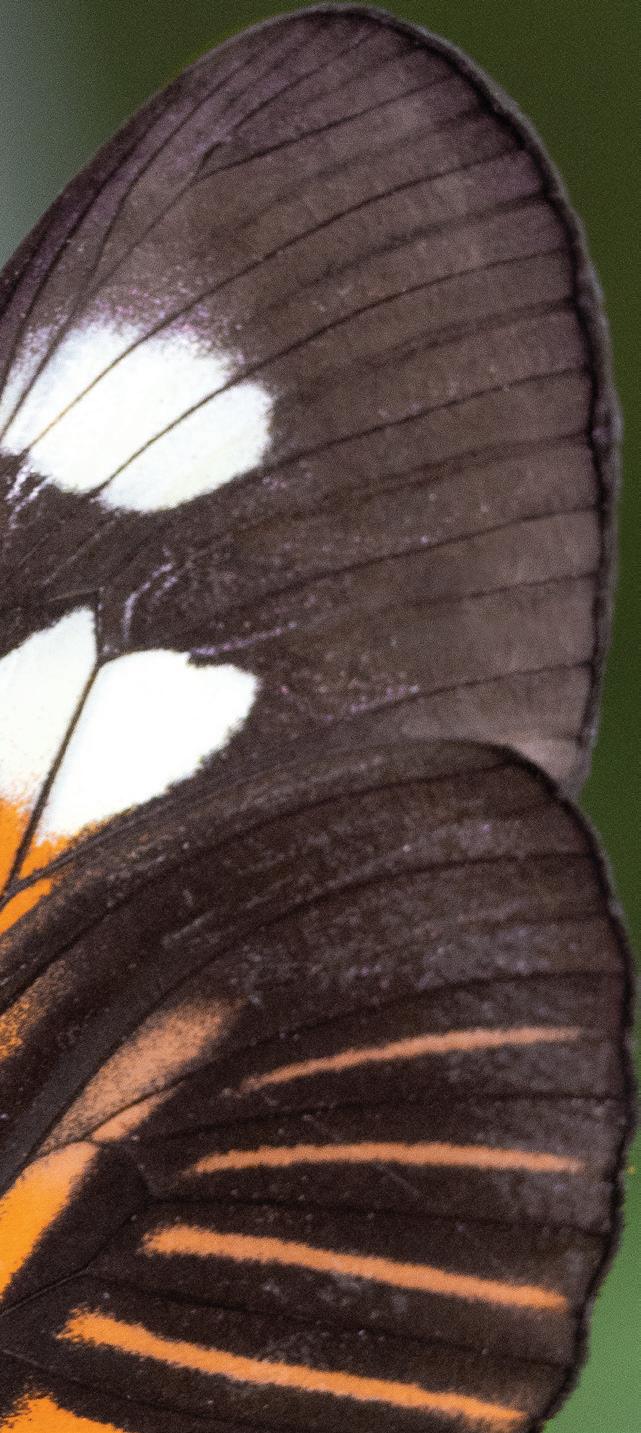
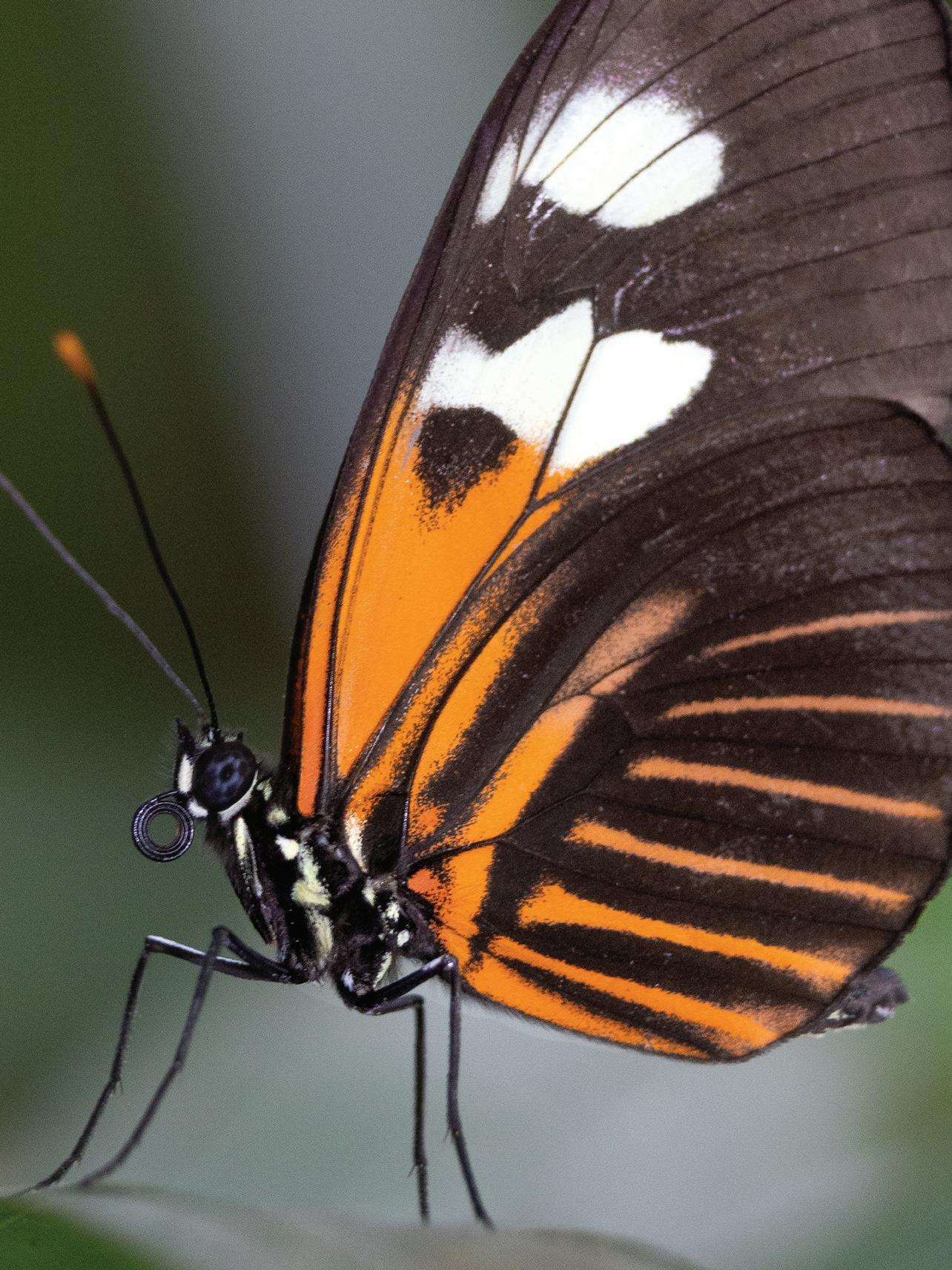
Join us as the Hidden Jungle aviary at the Safari Park transforms into Butterfly Jungle Safari, an immersive celebration of color, nature and conservation. Guests step into a vibrant world of pollinators, offering a one-of-a-kind opportunity to connect with nature up close. Additional ticket required. For full details, visit sdzsafaripark.org. (P)
MARCH 7; APRIL 17 AND 26
Wildlife Awareness Days
While every day is a good day to celebrate the amazing wildlife with which we share the planet, there are a number of upcoming dates that offer the chance to honor some special species. Join us at the Safari Park to experience wonderous wildlife.
MARCH 7
First on the “bill” is a celebration of the semiaquatic, egg-laying mammal on World Platypus Day. APRIL 17
Flap on over to the Safari Park and find out about some flying winged mammals on International Bat Appreciation Day.
APRIL 26
You’ll be tickled pink to learn all about everyone’s favorite long-legged avian wonder on International Flamingo Day. (P)
MARCH 8 & APRIL 12
Member Exclusive Early Hours Rise and shine with the sights and sounds of the Safari Park. On select days, qualifying members* can enter the Safari Park one hour before the general public. To join us, simply present your membership card at the main entrance beginning at 8 a.m. *Excludes memberships with blockout dates. (P)
EVERY DAY
Wild PerksSM
San Diego Zoo Wildlife Alliance members are eligible for Wild PerksSM. Show your membership card each time you make a purchase and save up to 20%, depending on your membership level. Some exclusions apply; for details, visit sdzwa.org /membership/wild-perks. (P)
March and April Hours
For San Diego Zoo and Safari Park operating hours, visit sdzwa.org
sdzwa.org
(619) 231-1515
Programs and dates are subject to change—please check our website for the latest information.
(Z) = San Diego Zoo (P) = Safari Park
For a delicious and nutritious snack
Elephants have an impressive sense of smell, and they use their trunks to sniff out resources that can help them thrive. In the Safari Park’s new Denny Sanford Elephant Valley, resources are dynamic and always changing, just like they are across African savanna ecosystems. A member of the herd has picked up some intriguing scents. Can you follow the winding paths to discover what she may find?
Watering Hole
For drinking, bathing, and cooling off
Dirt and Mud
To protect their skin from sun and insects
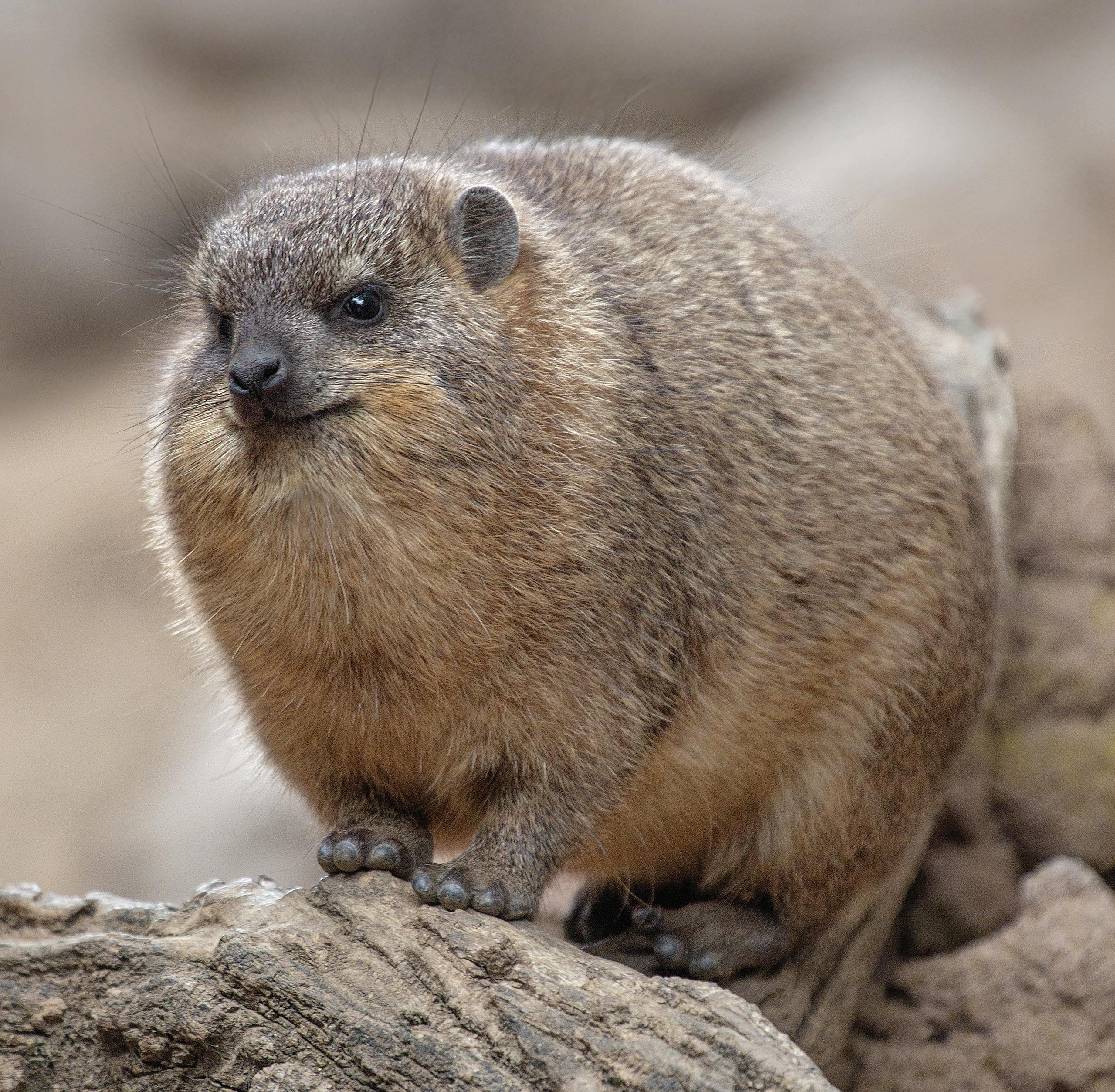
Standing up to 12 inches tall, and weighing between 4 and 13 pounds, it’s hard to imagine the rock hyrax (pictured) as one of the closest living relatives to elephants. Similar toe, skull, and teeth structures, however, connect the species to each other. In fact, a rock hyrax’s incisors grow out to resemble two tiny tusks, which it uses to defend itself. Photographed by Ken Bohn, SDZWA photographer.
San Diego Zoo Wildlife Alliance PO Box 120551, San Diego, CA 92112
San Diego Zoo Wildlife Alliance proudly presents R·I·T·Z 2026
Saturday, June 13 • 6:30 p.m. at the San Diego Zoo
Make your reservations today at sdzwa.org/ritz or contact Karl and Leslie Bunker: 619-426-3817 • RITZ@sdzwa.org