ZOONOOZ®
WALKABOUT
EVAS ROOMFORDESSERT
CELEBRATE T HANKSGIVING WITHUS
SAN DIEGO ZOO ALBER T S THANKSGIVING DINNER
CONTINUOUS SEATING
11 A.M. TO 3:30 P.M.
Join us at Albert’s Restaurant and enjoy a three-course Thanksgiving feast with all the trimmings. The menu boasts free-range turkey, slow-roasted prime rib, and vegetarian options with traditional side dishes, salads, and decadent desserts.
Cost is $40.95 for adults and $14.95 for children ages 3 to 11, plus tax and gratuity. Zoo admission is required for nonmembers.
For reservations, please call 619-557-3964 between 10 a.m. and 4 p.m. daily and ask for Thanksgiving Day Dinner. Secure your reservation with a credit card. For complete menus and details, please visit zoo. sandiegozoo.org/dining-events.

SAN DIEGO ZOO TREETOPS THANKSGIVING BUFFET
CONTINUOUS SEATING
11 A.M. TO 4 P.M.
At the Zoo’s Treetops Banquet Room, a lavish buffet offers Thanksgiving favorites along with traditional side dishes, salads, artisan breads, and a dessert bar.
Cost is $47.95 for adults and $18.95 for children ages 3 to 11, plus tax and gratuity. Zoo admission is required for nonmembers.
For reservations, please call 619-557-3964 between 10 a.m. and 4 p.m. daily and ask for Thanksgiving Day Buffet. Secure your reservation with a credit card. For complete menus and details, please visit zoo. sandiegozoo.org/dining-events.
SAN DIEGO ZOO SAFARI PARK THANKSGIVING DAY BUFFET
SEATINGS AT 11:30 A.M. AND 3 P.M.
Celebrate Thanksgiving Day at the San Diego Zoo Safari Park’s Hunte Nairobi Pavilion, where you can enjoy a lavish buffet with Thanksgiving favorites and chef’s specialties, as well as a special selection just for the kids.
Guests will be seated at their own reserved table, set for the number in your party. Cost is $47.95 for adults; $18.95 for children ages 3 to 11, plus tax and parking. Nonmembers add Safari Park admission.
For reservations, call 619-718-3000. For complete menus and details, please visit sdzsafaripark.org/dining.
Get right to the point about one of the Animal Kingdom’s most captivating subjects: the short-beaked echidna, an egg-laying mammal.
DONNA PARHAM
Opening in summer 2018, Walkabout Australia will bring the wonders from Down Under to the Safari Park. A stroll among kangaroos, anyone? BY
KAREN E. WORLEY
Our 2018 calendar highlights the fascinating Aussie species that will make their homes in the Safari Park’s Walkabout Australia.

Wild Holiday Gift Guide

GADGETS GALORE

ECO-FRIENDLY
ON THE GO Penguin plush, $24.95; 9-inch, rhino cotton backpack, $34.95; panda neck pillow, $24.99.

ROCKIN’ DECOR 2017 penguin ornament, rhodium, $24.95.

CHAIRMAN’S NOTE
ROBERT B. HORSMAN
Cheers to a Wonderful Year
IGreen Toys block set, $32.95; toy recycling truck, $36.95.

FOR THE WELL-DRESSED PENGUIN FAN
Youth-size plush penguin costume, sizes 4-10, $34.95.

t’s hard to believe that we are at the end of another year, but here we are in November, with the holidays just around the corner. As we enjoy this festive season and anticipate a new year, I look back at all that San Diego Zoo Global has accomplished in 2017, and we have much to celebrate. Significant conservation advances were achieved for species like rhinos, giraffes, Tasmanian devils, African penguins, Hawaiian forest birds, and mountain yellow-legged frogs. San Diego Zoo Global was one of the partners honored with the North American Conservation Award from the Association of Zoos and Aquariums (AZA) this year, for the long-term project to save the California condor and reestablish the species in the wild. Changes at our facilities included the opening of the Conrad Prebys Africa Rocks habitats and the new bridge at the Zoo, as well as beginning construction for Walkabout Australia at the Safari Park. We are grateful to everyone who contributed to San Diego Zoo Global’s work this year and appreciate your enthusiasm for making a difference for wildlife. In December, we’ll be ringing in the holiday season with the Zoo’s festive Jungle Bells presented by California Coast Credit Union, with holiday lights, music, entertainment, family activities, and encounters with our animal ambassadors. I hope you will have a chance to enjoy this wonderful time of year with us. I especially want to thank all our members, donors, volunteers, and employees for your dedication, generosity, and support. You are the core of San Diego Zoo Global and what makes our conservation, animal care, and education efforts possible. I’m looking forward to what 2018 brings, and I wish you happy holidays and all the best in the New Year.
Save the Date
What’s happening at the Zoo and Park this month and next (Z) Zoo events (P) Park events
NOVEMBER 4
Albert’s Late Harvest Winemaker Dinner
Enjoy a four-course gourmet meal accompanied by exceptional wines from Duckhorn Vineyards. Call 619-718-3000, or book online at zoo.sandiegozoo.org/alberts. (Z)
NOVEMBER 4, 18
Photo Workshop: Beginning Wildlife Photography
Join our professional photographers at this two-session class, open to guests 16 or older. Call 619-718-3000 or visit sandiegozoo.org. (Z)
NOVEMBER 4; DECEMBER 9, 16
Kids’ Wild Night Out
Leave your kids at the Zoo for a wild night out with Dr. Zoolittle and animal friends. Sorry, no grown-ups allowed! For reservations, call 619718-3000, or book online at sandiegozoo.org. (Z)
NOVEMBER 10, 11; DECEMBER 15, 16
KinderNights
Animal interaction and fun for children ages 3 to 6, with an adult. To make reservations, call 619-557-3962 or visit sandiegozoo.org. (Z)
NOVEMBER 11, 18; DECEMBER 9, 16
KinderTots
Learning fun for the little ones! Children ages 18 months to 3 years, with an adult companion, discover animals—and meet some up close. For reservations, call 619-557-3962 or visit sandiegozoo.org. (Z)
NOVEMBER 23
Thanksgiving Dinner
Enjoy a delicious Thanksgiving dinner with all the trimmings at the Zoo or Safari Park. For full details, see the information inside the front cover of this issue. (Z) (P)
NOVEMBER 25
Breakfast with Tigers
Be there when our tigers start their day—and then enjoy a buffet breakfast. For reservations, call 619-718-3000 or visit sdzsafaripark.org. (P)
NOVEMBER 25
Holly Jolly Jungle Roar & Snore
This all-ages holidaythemed sleepover at the Safari Park offers activities and fun for the whole family. Call 619-718-3000. (P)
Time for Giving Thanks
HNOVEMBER 4, 5, 25; DECEMBER 2, 3, 30
Sunrise Surprise Stroll
Enjoy the Zoo before it opens, walk the grounds with experienced Zoo educators, learn “inside secrets,” and hear stories about special animals. Call 619-718-3000 or visit sandiegozoo.org. (Z)
NOVEMBER 18–JANUARY 1
Peruvian Art Demonstrations
Watch Rodolfo Garcia Velasquez from Huancayo, Peru as he intricately carves gourds to create works of art. See him in action at the Zoo Store! (Z)
DECEMBER 8–23; DECEMBER 25–JANUARY 1
Jungle Bells presented by California Coast Credit Union Visits with Santa, festive
PRESIDENT/CEO’S NOTE
DOUGLAS G. MYERS
decorations, and spectacular entertainment are just some of the delights, as Jungle Bells fills the Zoo with holiday cheer. (Z)
DECEMBER 9, 10
Breakfast with Santa Santa Claus is coming— to the Safari Park! For details, see page 43. (P)
DECEMBER 31
Albert’s Mildly Wild New Year’s Eve Dinner
Join us to celebrate another fantastic year at the Zoo. For event information, see page 5. (Z)
Let’s Talk
ere we are in November, enjoying fall and looking forward to our Late Harvest Winemaker Dinner at the Zoo’s Albert’s Restaurant and our annual Thanksgiving feasts at the Zoo and the Safari Park—with festive holiday fun just around the corner. It’s been quite a year, and we have much to be thankful for, particularly thriving animals and conservation successes helping in our fight to end extinction. The opening of Conrad Prebys Africa Rocks at the Zoo has been a predominant focus for us this year—we did have setbacks and delays due to weather and construction hurdles, but we were able to adapt and open in phases. The areas have added vibrancy to our Zoo, especially with the return of penguins in a permanent exhibit. For the long term, Conrad Prebys Africa Rocks is a magnificent addition and provides new and different ways to get around the Zoo, with the new bridge and elevator, as well. Now, as we head into 2018, we’re excited about a new exhibit at the Safari Park: Walkabout Australia. Construction is underway at the Safari Park for an anticipated opening next summer, and this calendar issue of ZOONOOZ gives you a preview of all it will offer. I’d like to say thank you to all of you, our members and supporters, for your help and enthusiasm this year. We couldn’t do this without you! I wish you a very happy holiday season.

Follow @sandiegozoo & @sdzsafaripark.
Share your #SanDiegoZoo & #SDZSafariPark memories on Twitter & Instagram.
IT’S HOLIDAY TIME AT ALBERT’S
LATE HARVEST WINEMAKER DINNER
FEATURING DUCKHORN VINEYARDS
November 4, 2017
6 p.m. Reception with Animal Ambassadors in Treetops Banquet Room 7 p.m. Dinner at Albert’s Restaurant
Executive Chef Chris Mirguet and Albert’s Chef Charles Boukas have designed a four-course meal paired with the distinctive Bordeaux varietals of Duckhorn Vineyards, Napa Valley.

FOR RESERVATIONS, BOOK ONLINE OR CALL 619-718-3000.
Price is $92 per person, plus tax and gratuity. Must be 21 years or older to attend. Menu substitutions are not available for this event.
HAPPY HOLIDAYS HAPPENS
December 8 through January 1 (dark December 24)
RESERVATIONS ARE NOT REQUIRED, BUT ARE RECOMMENDED. CALL 619-685-3200 TO RESERVE YOUR TABLE. FOR RESERVATIONS, CALL 619-685-3200 BETWEEN 11 A.M. AND 3:30 P.M. DAILY, OR BOOK ONLINE.
Daily from 3 to 5 p.m.
Happy Holidays Happens again at Albert’s Restaurant! Enjoy select specialty cocktails, glasses of wine or beer for $6, and $7 appetizers. Stay for dinner and make it a special occasion.
ALBERT’S MILDLY WILD NEW YEAR’S
EVE DINNER
Sunday, December 31, 2017
Seating begins at 5 p.m.
Join us to celebrate another fantastic year at the San Diego Zoo, and enjoy a gourmet dinner prepared by Executive Chef Chris Mirguet and Albert’s Chef Charles Boukas.
Cost is $65 per person, plus tax and gratuity. Admission required for nonmembers. Wine pairing is available for an additional $15. For complete menu and details, visit zoo.sandiegozoo.org/dining-events.
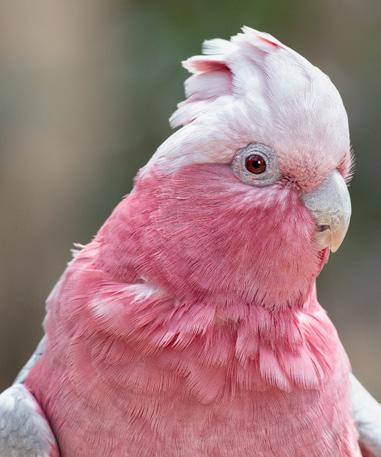
Australia is home to 828 endemic bird species, including the beautiful and bold galah, or rose-breasted cockatoo.
It’s only a number
Australia is the smallest continent, but it looms large in the realm of habitat diversity, beautiful landscapes, and unique species—some that will be presented at the Safari Park’s new Walkabout Australia, opening in 2018.
ZOONOOZ ®
PUBLISHED SINCE 1926 NOVEMBER 2017 | VOL. XC–NO. 06
MANAGING EDITOR
KAREN E. WORLEY
ASSOCIATE EDITOR
PEGGY SCOTT
STAFF WRITERS
WENDY PERKINS
KARYL CARMIGNANI
DONNA PARHAM
COPY EDITOR
ESTON ELLIS
DESIGNER
KERRI ABRAMS
SAN DIEGO ZOO GLOBAL
PHOTOGRAPHERS
KEN BOHN
TAMMY SPRATT
DIGITAL IMAGING TECHNICIAN
TAMMY SPRATT
DESIGN AND PRODUCTION
KAMBIZ MEHRAFSHANI
KIM TURNER
AMY BLANDFORD
HEIDI SCHMID-ROMERO
LISA BISSI
JENNIFER MACEWEN
PREPRESS AND PRINTING
QUAD GRAPHICS
The Zoological Society of San Diego was founded in October 1916 by Harry M. Wegeforth, M.D., as a private, nonprofit corporation that now does business as San Diego Zoo Global.
The printed ZOONOOZ® magazine (ISSN 0044-5282) is currently published bimonthly, in January, March, May, July, September, and November. Publisher is San Diego Zoo Global, at 2920 Zoo Drive, San Diego, CA 92103, 619-231-1515. Periodicals postage paid at San Diego, California, USA, and at additional mailing offices.
ADDRESS CHANGES: Please send to Membership Department, P.O. Box 120271, San Diego, CA 92112.
Copyright© 2017 San Diego Zoo Global. All rights reserved. “ZOONOOZ” Reg. U.S. Pat. Office. All column and program titles are trademarks of San Diego Zoo Global.
Annual Memberships: Two adults in same household
$166.50, new; $135, renewal. One adult $111, new; $101, renewal. Each membership includes unlimited entrance to the San Diego Zoo and the San Diego Zoo Safari Park.
Subscription to ZOONOOZ magazine: $25 per year, $65 for 3 years. Foreign, including Canada and Mexico, $30 per year, $81 for 3 years. Contact Membership Department, P.O. Box 120271, San Diego, CA 92112, for subscription information.
As part of San Diego Zoo Global’s commitment to conservation, ZOONOOZ is printed on recycled paper that is at least 10% post-consumer waste, chlorine free, and is Forest Stewardship Council ® (FSC®) certified.
93
Percentage of reptiles in Australia that occur nowhere else. Australia also has more endemic mammals than any other country: 87 percent.
18.3
Inches of average annual rainfall, making Australia the driest inhabitated continent.
89
Distinct bioregions that make up a tapestry of grasslands, rain forests, eucalpyt forests, alpine regions, deserts, plains, and mountains.
12
Percentage of rainfall that drains to the sea. Much of the rest is taken up by plants—or it evaporates.
SAN DIEGO ZOO HOURS
November 1–4: 9 a.m. to 6 p.m.
November 5–December 7: 9 a.m. to 5 p.m.
December 8–23: 9 a.m. to 8 p.m.
December 24: 9 a.m. to 5 p.m.
December 25–31: 9 a.m. to 8 p.m.
SAFARI PARK HOURS
November 1–23: 9 a.m. to 5 p.m.
November 24–25: 9 a.m. to 6 p.m.
November 26–December 31: 9 a.m. to 5 p.m.
WEBSITE sandiegozoo.org
PHONE
619-231-1515
ZOONOOZ® ONLINE
Find ourweb publication at zoonooz.sandiegozoo.org
FSC® is not responsible for any calculations on saving resources by choosing this paper.
SAN DIEGO ZOO GLOBAL
OFFICERS
Robert B. Horsman, Chairman
Steven G. Tappan, Vice Chairman
Linda Lowenstine, DVM, Ph.D., Secretary
Richard B. Gulley, Treasurer
BOARD OF TRUSTEES
Rolf Benirschke
Sandra A. Brue
Javade Chaudhri
Clifford W. Hague
Patricia L. Roscoe
Steven S. Simpson
Judith A. Wheatley
TRUSTEES EMERITI
Frank C. Alexander
Kurt Benirschke, M.D. Berit N. Durler
Thompson Fetter
Bill L. Fox
Frederick A. Frye, M.D.
George L. Gildred
Yvonne W. Larsen
John M. Thornton
A. Eugene Trepte
Betty Jo F. Williams
James Lauth, General Counsel
Douglas G. Myers, President/CEO
Charles L. Bieler, Executive Director Emeritus
THE FOUNDATION OF SAN DIEGO ZOO GLOBAL
OFFICERS
Richard M. Hills, Chair
Judith C. Harris, Vice Chair
Susan B. Major, Secretary
Susan N. McClellan, Treasurer
Mark A. Stuart, President
Amy B. Parrott, Vice President
Robert B. Horsman, Ex officio
Douglas G. Myers, Ex officio
BOARD OF DIRECTORS
Christine L. Andrews
Joye D. Blount
Rick Bregman
Douglas Dawson
Berit N. Durler, Ex officio
Chris L. Eddy
Arthur E. Engel
Valerie A. Ewell, DVM
Susan Guinn
Michael N. Hammes
Murray H. Hutchison
Nikita Kahn
Joshua A. Pack
Philip C. Seeger
Elizabeth W. Shoemaker
Ryan Sullivan
Ed Wilson


Looking Sharp
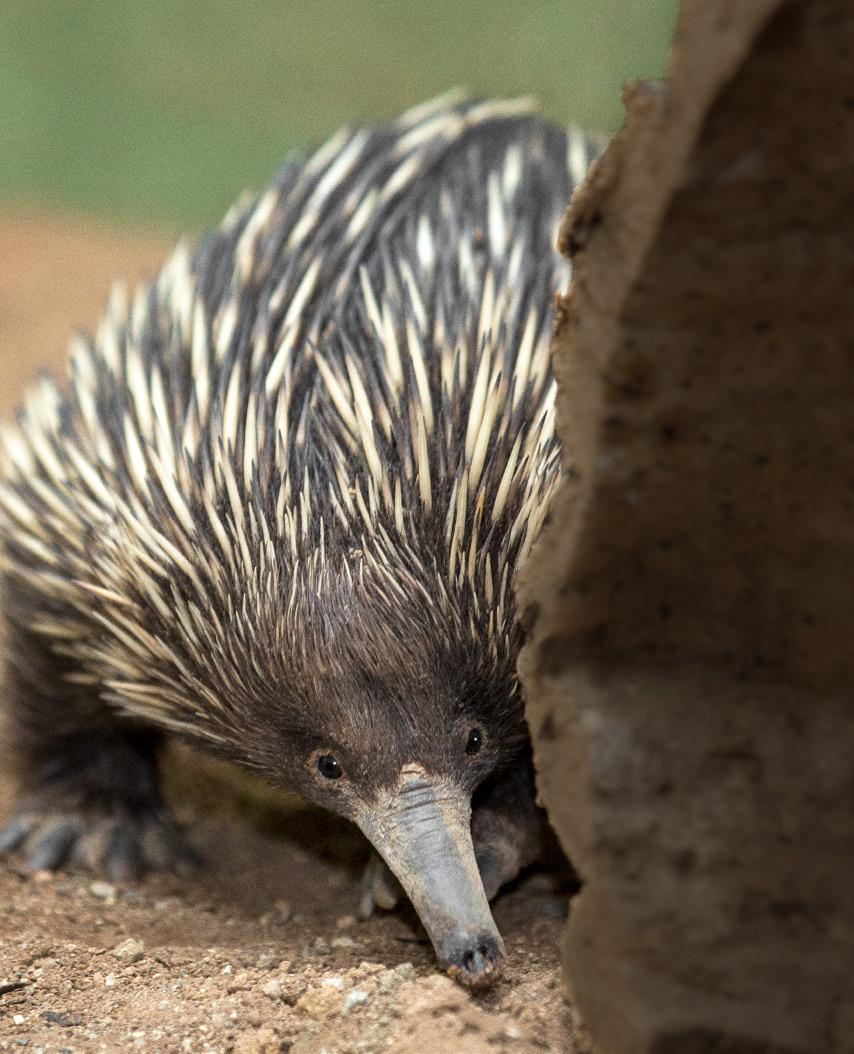
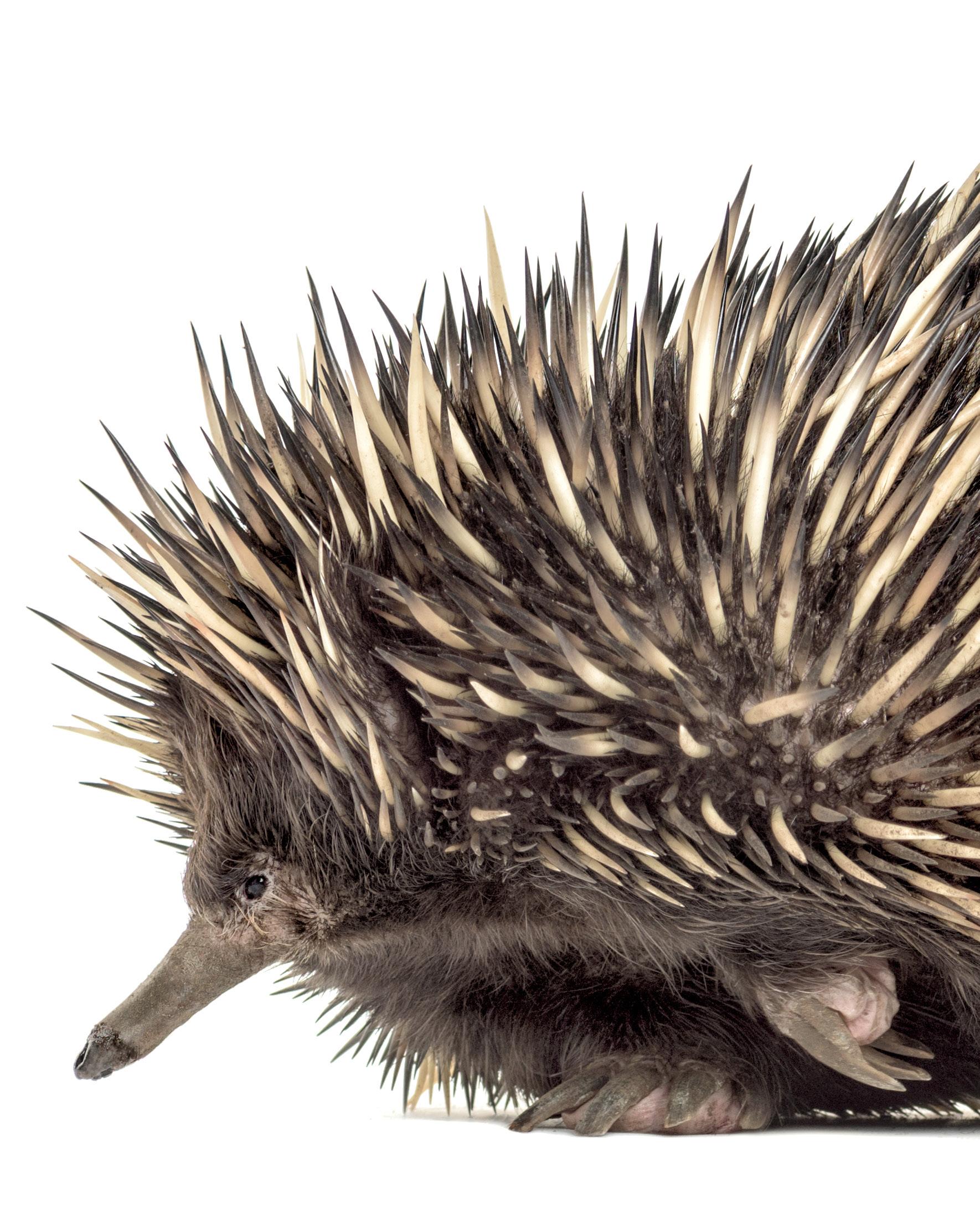
Meet the fascinating short-beaked echidna (ee-KID-nuh). There are four species of echidnas, which are found in Australia and New Guinea and are related to the platypus. These are the only five mammals— called monotremes— in the world that lay eggs. In reference to their combination of traits, echidnas were named after the Greek goddess Ekhidna, who was half reptile (snake) and half mammal (woman).
BY DONNA PARHAM STAFF WRITER
NOSTRILS
With a keen sense of smell, an echidna sniffs out its next meal with the help of nostrils near the tip of its beak.



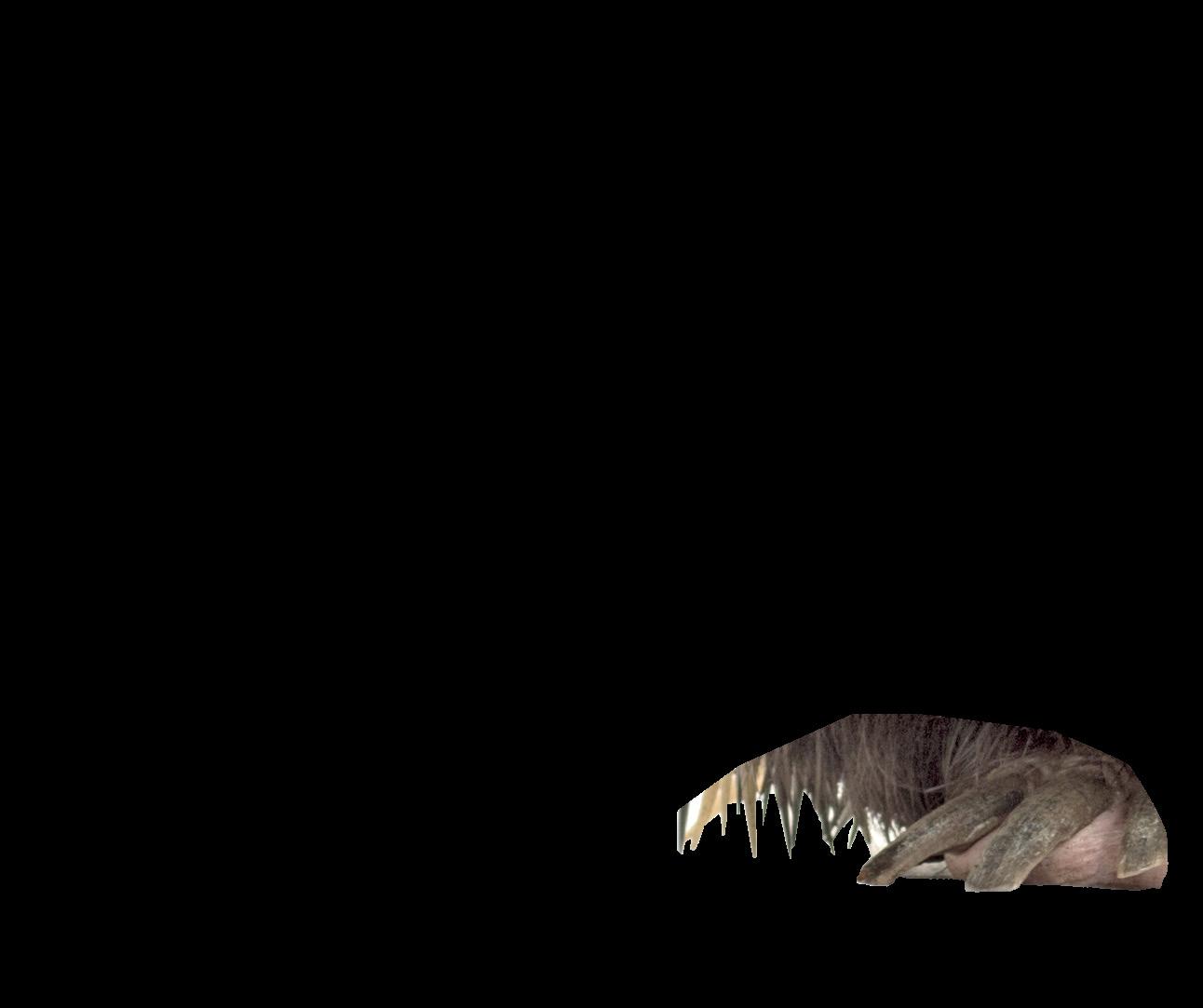
strong enough to poke into soil, hollow logs, and termite mounds in search of insects.
Sensitive electroreceptors on the beak detect very weak electrical fields, such as those produced by the small invertebrates that echidnas eat.
echidna is a versatile power tool. The sticky tongue catches ants, termites, and grubs and quickly pulls them in. Echidnas don't have teeth, so hard pads at the base of the tongue and on the roof of the mouth grind food into a paste for swallowing.
FRONT LIMBS
With its sturdy claws, short legs, and broad, powerful feet, an echidna can tear apart a termite mound or rotting log. It can also dig straight down into dirt until only a spiny rear end can be seen.
Hatching a Puggle

Soft and leathery, an echidna egg is about the size of a dime—this one is actual size. As she lays her single egg, a female nudges it into her pouch, where she incubates it for about 10 days. A newly hatched echidna weighs only about half as much as a miniature marshmallow. The baby, called a puggle, remains in the pouch for another 40 days or so. Fortunately for the mother, it does not yet have spines!
BACK FEET
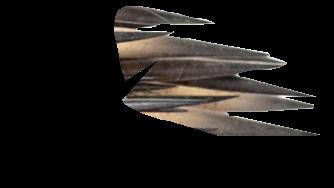
An echidna’s hind feet point backward. The extra-long claw—called a grooming claw—on an echidna’s second toe can “comb” or scratch out dirt and bugs that get wedged between the echidna’s spines.
Hidden Pouch
Mother echidnas don’t have teats, but they do make milk. During breeding season, a female’s mammary glands grow, forming a pocket-like pouch. Milk is secreted from numerous pores on milk patches inside the pouch, and the developing offspring suckles milk from hairs over these pores.
HAIRS AND SPINES
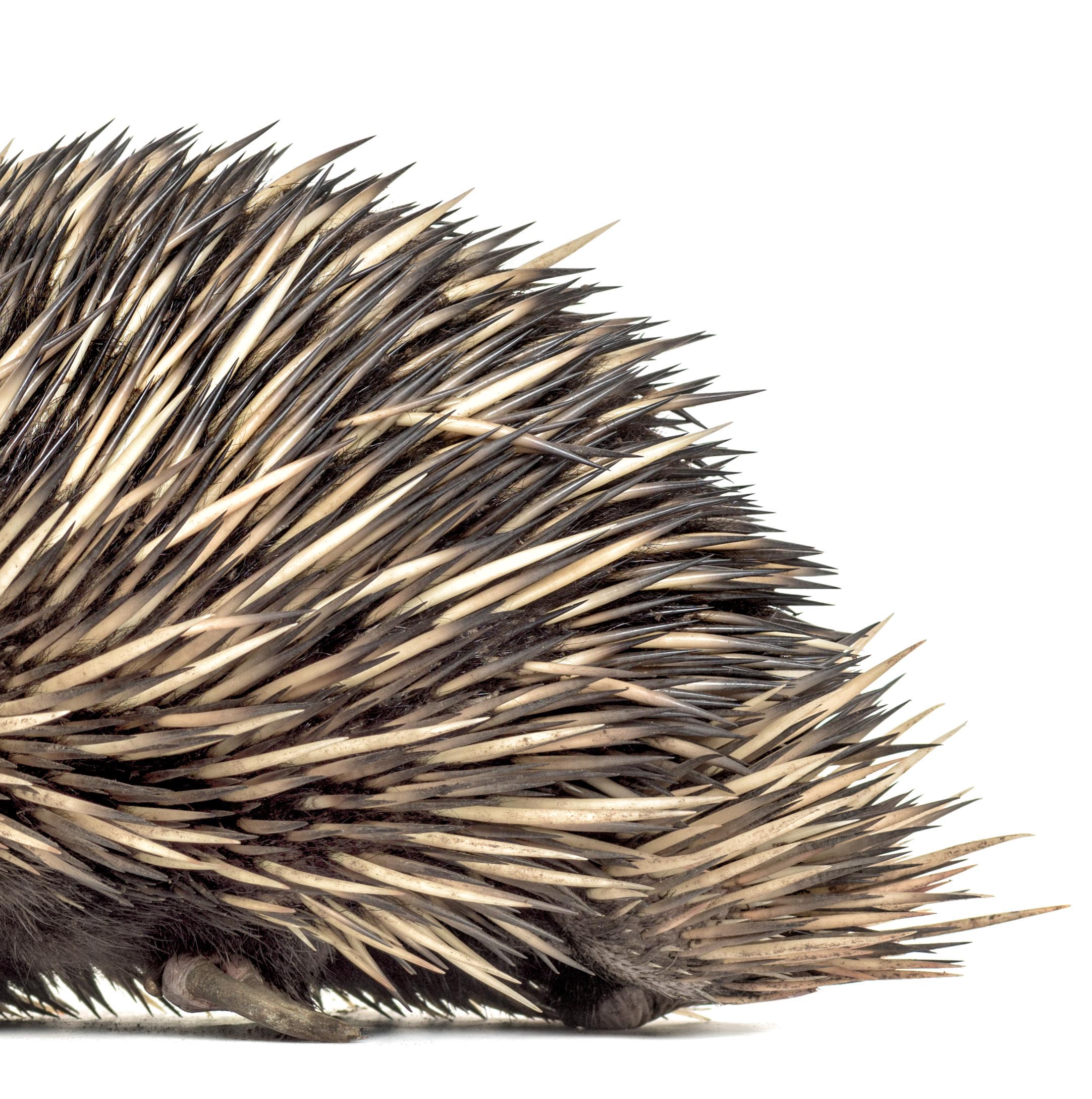
Like other mammals, echidnas have hair. In fact, they’re nearly covered with it. Among the hair, sharp, twoinch spines provide some protection from predators. If an alarmed echidna can’t run away or hide, it curls into a prickly ball.
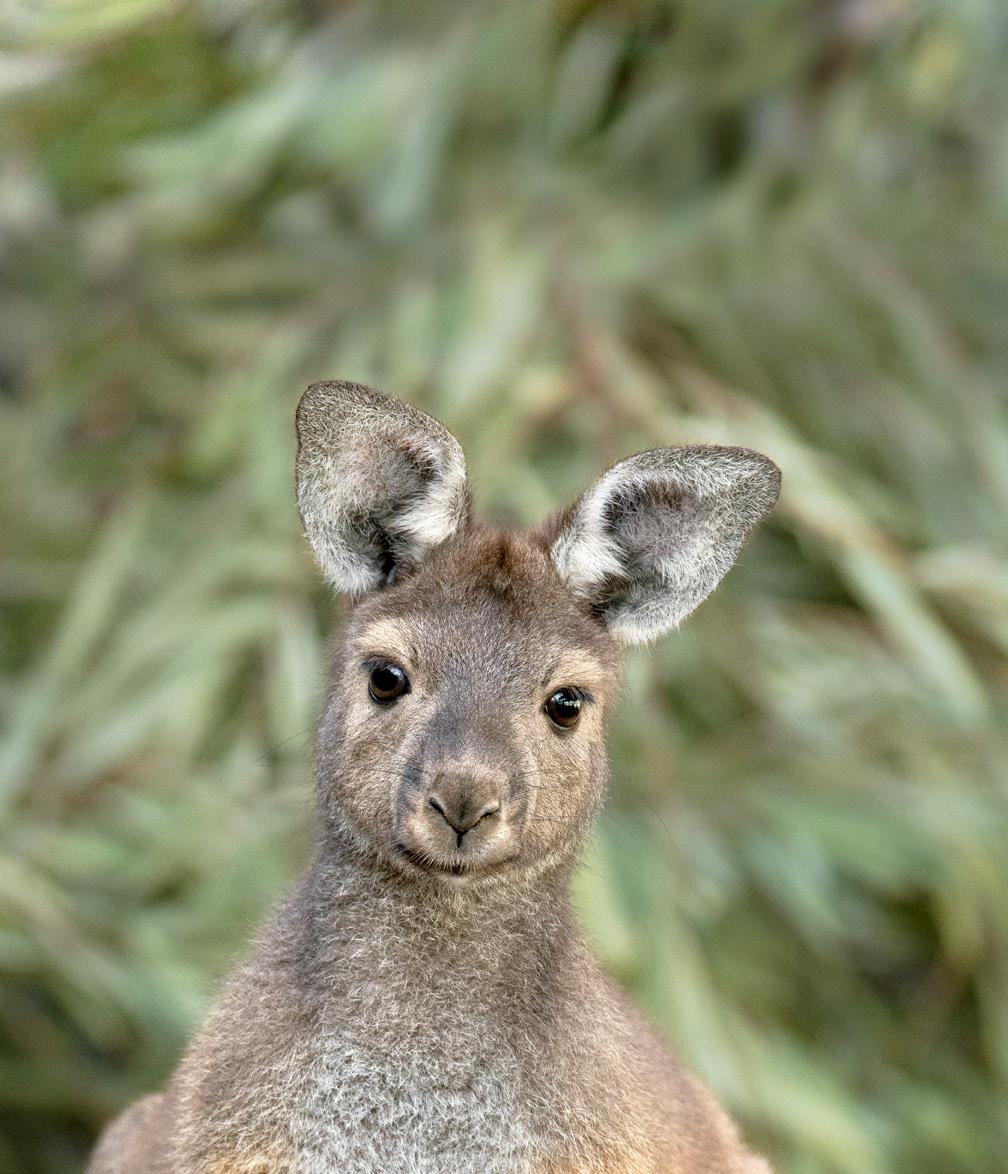
2018 will be the year to “go on walkabout,” at the Safari Park’s new Australian adventure
Animal ambassador experience
BY KAREN E. WORLEY | MANAGING EDITOR PHOTOS BY KEN BOHN | SDZG PHOTOGRAPHER
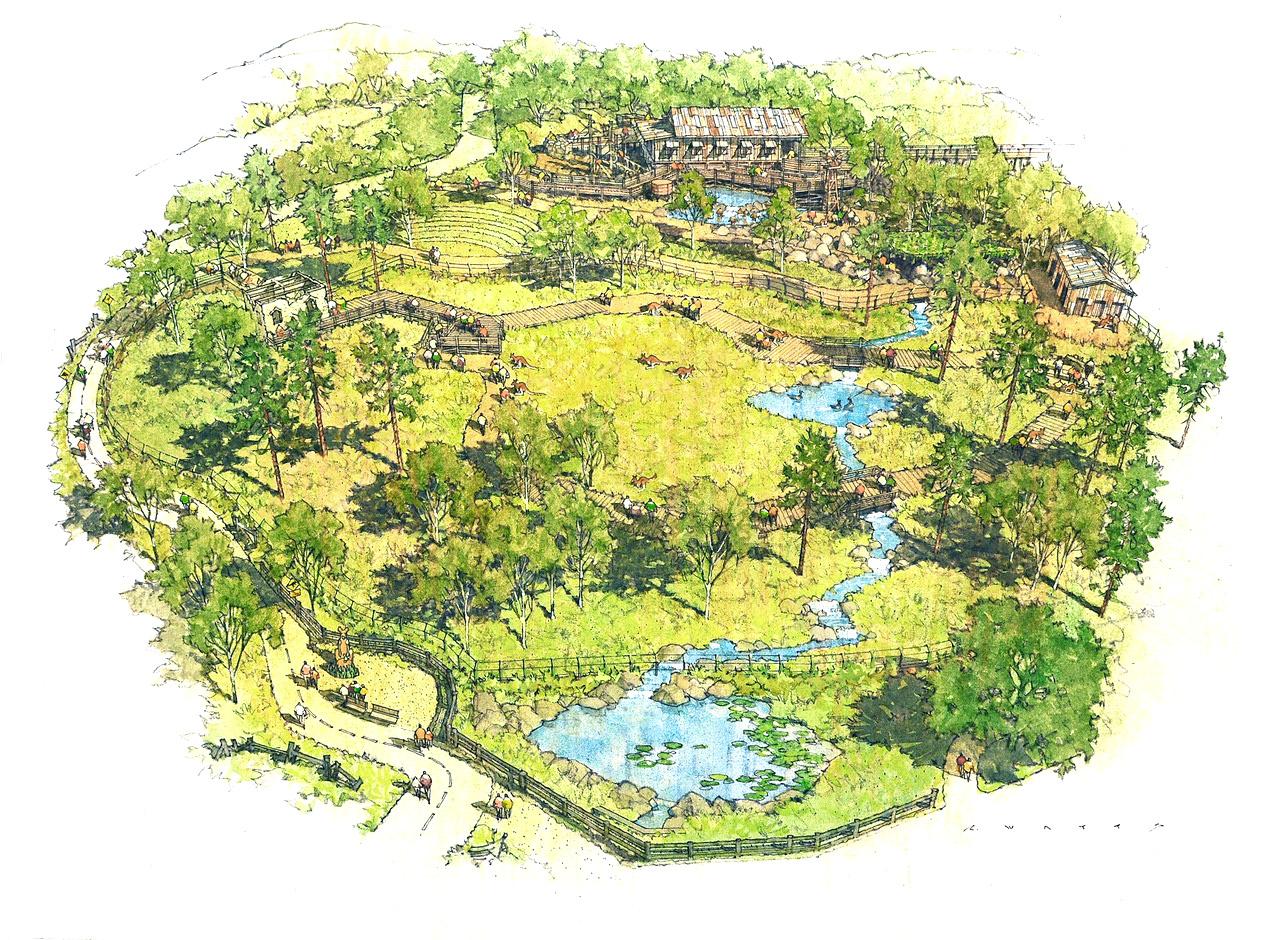
wirls of red earth stir as you stroll down the country road, long grasses rippling with the breeze on either side. Welcoming eucalyptus and pine trees cast shade on the road ahead, where a bright yellow sign announces “Caution: Kangaroo Crossing.” The native, brightly colored bottlebrush ushers you around the bend, and you come upon a savanna meadow, where kangaroos and wallabies wander, munching on the grasses, hopping to and fro, and stretching out on their sides to nap in the sun. You’ve been transported Down Under—this is Walkabout Australia!
THE SAFARI PARK’S NEWEST LAND OF DISCOVERY
Walkabout Australia, opening in summer 2018, will add a new dimension to the Safari Park’s adventures. Designed to represent Australia’s rural landscapes and the animals, plants, and habitats encountered along backcountry roads, Walkabout Australia explores the unique species that call this place home, how they interact with the humans that share their world, and the challenges they face in finding water, food, and shelter in a changing environment. The journey—or “walkabout,” as the Australians say—will take you through four different types of habitat, as you also encounter aspects of the rural life and traditions
of the people who live there, and discover what makes this place so extraordinary.
SUNNY SAVANNA
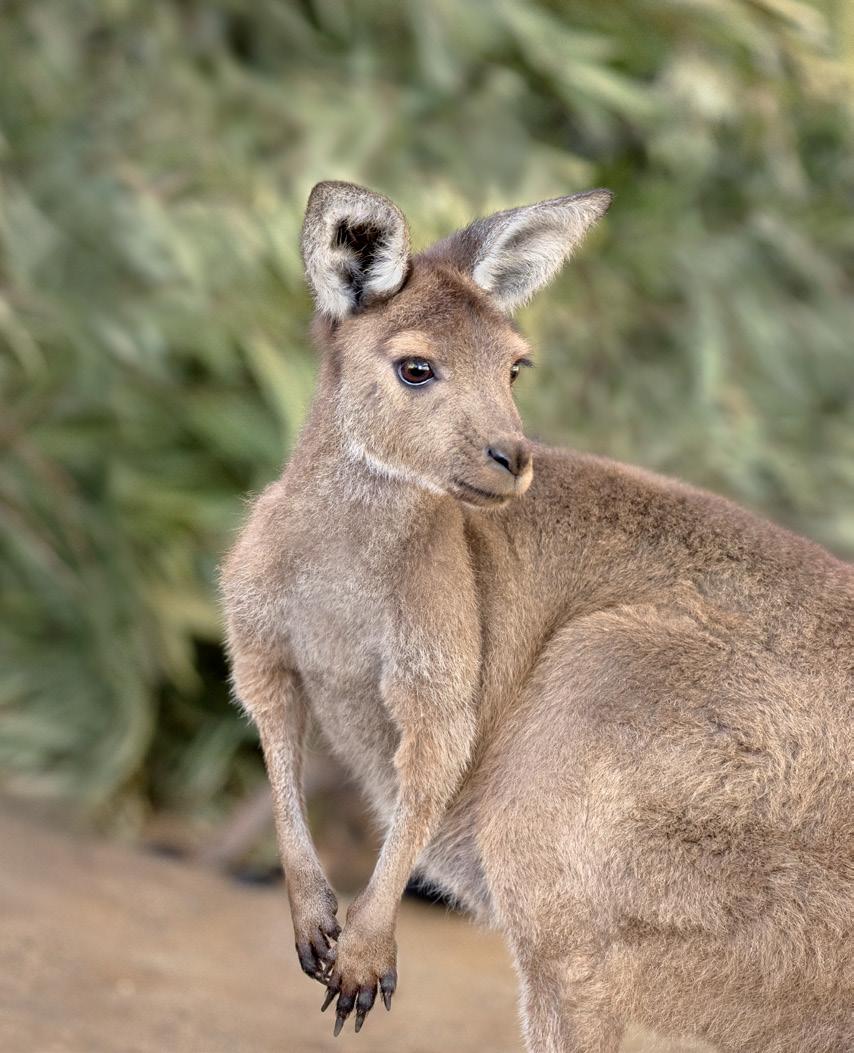
The wide-open grasslands of Australia are home to one of its iconic species: the kangaroo. These hopping marsupials—along with their scientific family members, wallaroos and wallabies—are grazers, adapted to feed on various types of grasses and other low-growing plants. They fill the same habitat role in Australia that hoofed herbivores do in other parts of the world.
At Walkabout Australia, you’ll encounter an expanse of grassland that is home to a large group of western gray kangaroos and red-necked wallabies. A pathway leads you into their world, meandering through the
grasses and allowing close viewing of the bouncy inhabitants. There are no barriers, so the animals may even come right up to interact with you! Interpretive volunteers will be on hand to answer questions and to point out the unique characteristics and behaviors of these macropod species. There is also an animal interaction area at the far side of the grasslands, where you’ll have the opportunity to meet other Australian animal ambassadors, from an echidna or wombat to a blue-tongued skink or sugar glider.
In addition to the kangaroos and wallabies, you may see the Australian brush turkeys that wander freely throughout Walkabout Australia. They’re hard to miss, with their red heads and yellow wattles. From September to March, you
Tree kangaroos
Australian country road
Wetlands pond, ducks, and geese
Zeust Family Station
Cassowaries
Bridge to Devil's Marbles and waterwise garden
Billabong
Entrance
Kangaroos, wallabies, and brush turkeys
may even see them constructing their big mound nests, where their eggs incubate from the warmth of the surrounding leaves and soil—no egg sitting required!
LIFE-GIVING WATER
In this era of changing climate conditions, Australia—like California—is experiencing longer and more widespread periods of drought, along with an increase in wildfires. As a result, water is a more precious resource than ever. Walkabout Australia explores the vital connection between water and the animals and people that depend on it. A stream runs through the grassland area, pooling in a pond—called a billabong by Australians—where animals gather to drink, and waterfowl like radjah shelducks, freckled ducks, and magpie geese paddle. The size and depth of billabongs varies with the seasons and conditions. In some areas, they may only appear and spring to life briefly with the rains, then dry up again, similar to California’s vernal pools.
Past the grassland habitat of Walkabout Australia, you’ll come upon the source of the stream: a larger pond with more waterfowl and the signs of human habitation. A water conservation tank, like one that might be used by local farmers or ranchers, demon-
strates how collecting water during the rains can be a valuable source during dry times, and provides suggestions for how to collect and save water at your own home. A children’s area allows kids (and adults) to take a break and play in shallow, lapping water at the pond’s edge while watching the birds.
The pond is at the foot of Walkabout Australia’s central gathering place: the Zeust Family Station, a building representing the wool shearing sheds found on Australia’s many sheep ranches, which are called “stations.” Here, you can stop for a bite to eat and a cool drink—including a beer—then take a look around the themed building to learn about the various techniques and traditions of sheep ranching and wool production practiced in Australia for more than 200 years.
DELVE INTO THE RAIN FOREST
On the other side of the Zeust Family Station, Walkabout Australia takes you into rain forest habitat to meet two more amazing animals: the tree kangaroo and cassowary. Tree kangaroos have evolved differently from their other kangaroo cousins, with adaptations that allow them to spend their lives in the trees rather than
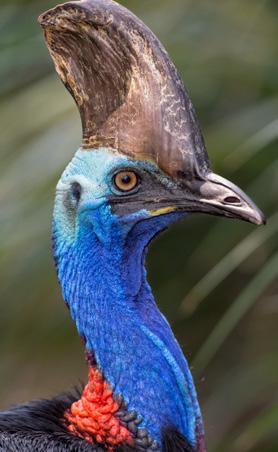
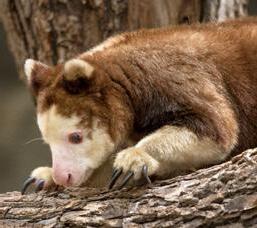
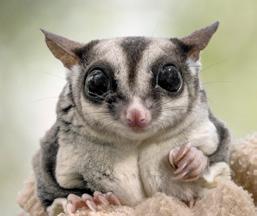
Clockwise from left: Southern cassowaries are set to impress; Matschie's tree kangaroos love the arboreal life; a sugar glider will be one of the animal ambassadors to meet guests.
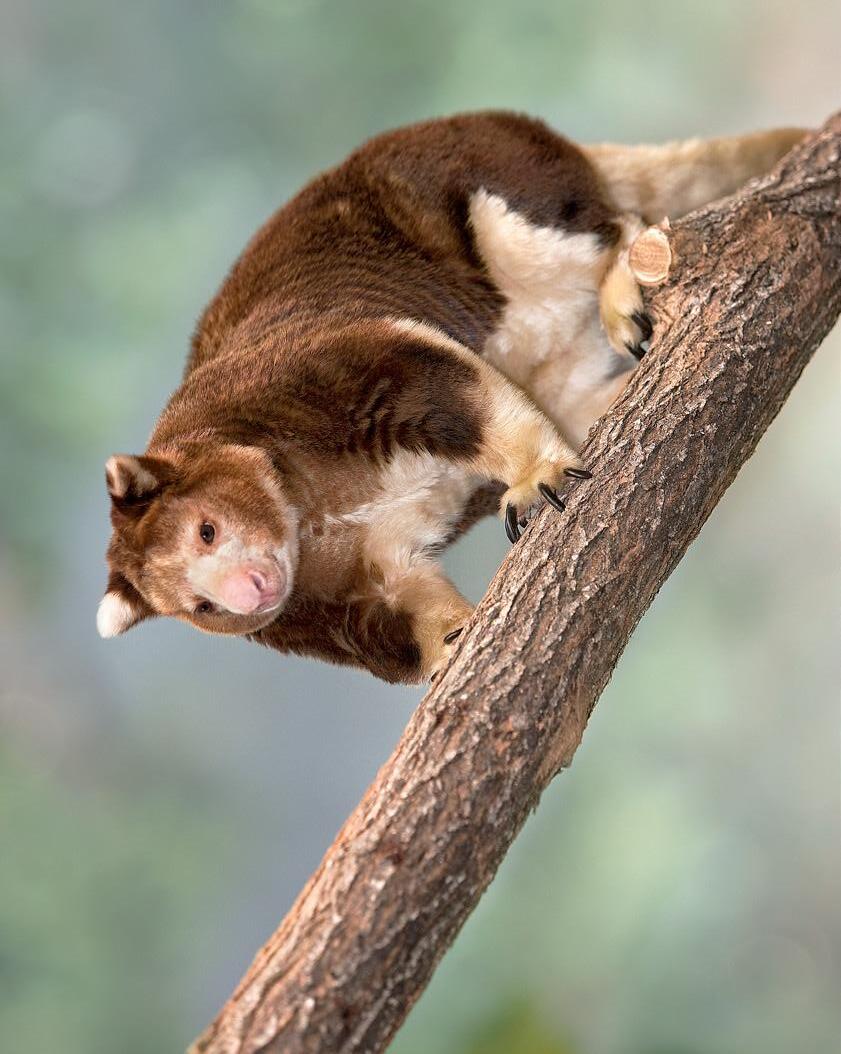
on the ground. They have long, sharp claws on all four feet for climbing, and instead of hopping, their strong legs and tail help them leap and balance in the treetops. Some tree kangaroos live in Australia, but Walkabout Australia’s Matschie’s tree kangaroos are native to Papua New Guinea, where they are an endangered species.
Three lush exhibits in Walkabout Australia are home to a bird that is elusive and mysterious, yet also famous for its ferocity: the southern, or double-wattled, cassowary. Tall, crested, and prehistoric looking, flightless cassowaries stalk through the forest underbrush looking for fruit and fungi. With a specialized digestive system, they can eat things that would be poisonous to other animals. Cassowaries are shaped just right to crash through brush in a hurry— but if cornered, the cassowary can display the characteristic that gives it the nickname “most dangerous bird in the world.” The cassowary has an elongated and razorsharp claw on each foot that can slice an impressive gash in any potential predator, including a human!
DESERT SENTINELS
After leaving the forest of Walkabout Australia, a new path beckons, taking you into more arid habitat. Looming against the sky are enormous, rounded rocks similar to those found in the Australian desert, known as Devil’s Marbles. They usher you into a garden of water-wise and droughttolerant plants, some native to Australia and some found in California, but all masters at making the most of what little moisture is available. From here, Walkabout Australia has opened up new routes that can take you to World Gardens, or to Condor Ridge, making it easier than ever to explore all the Safari Park has to offer. Mark your calendar for next summer—it’s time to go on walkabout!
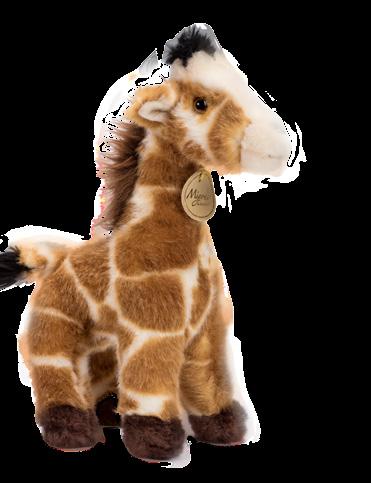
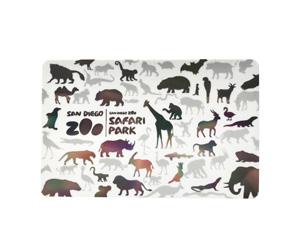
Wondering what to get for those hardto-shop-for people? Give them an animal adventure! This year’s stunning gift card features our festive, multi-animal design and can be used toward any purchases at the San Diego Zoo or Safari Park. Purchase a gift card of $50 or more and receive a FREE plush animal, which can be shipped to any domestic street address you specify (shipping and handling charges will apply). What could
special someone a visit with their favorite Zoo or Park animals?

MATSCHIE’S
TREE KANGAROO
Adapted to spend most of their time in trees, these marsupials live in misty cloud forests at elevations of up to 11,000 feet.
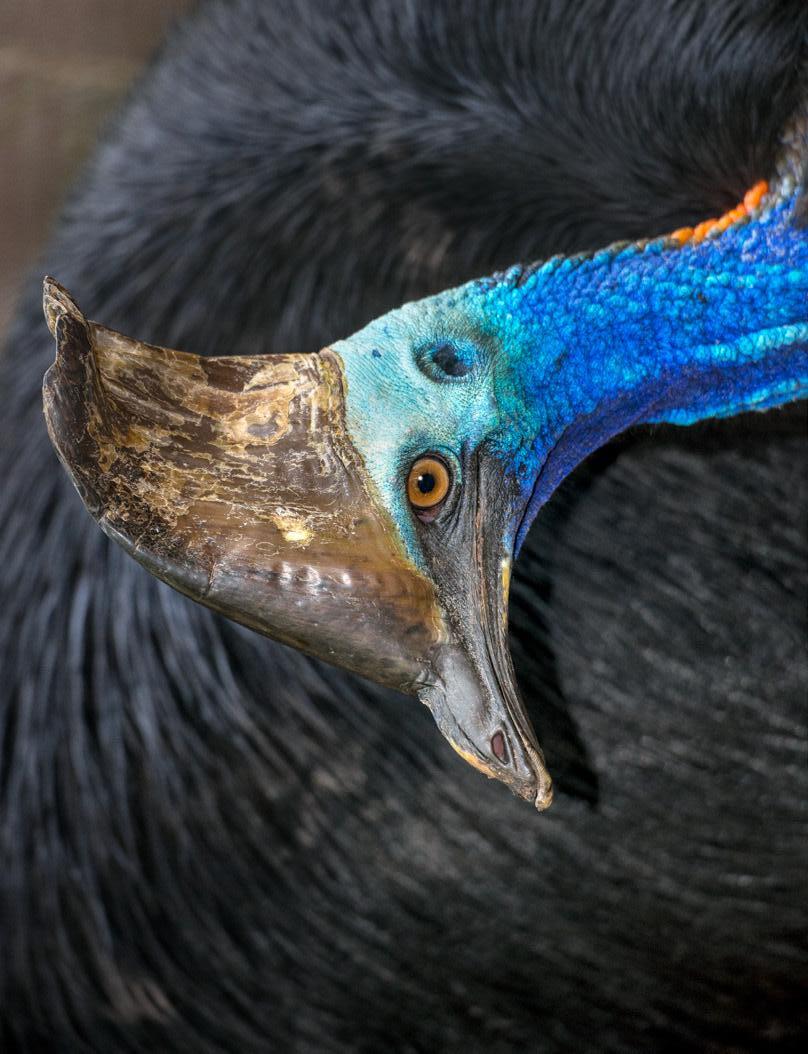
SOUTHERN CASSOWARY
If a cassowary is approached, it usually stands its ground. Equipped with an elongated and sharp innermost claw on each foot, the bird uses it to strike and slash at an intruder .
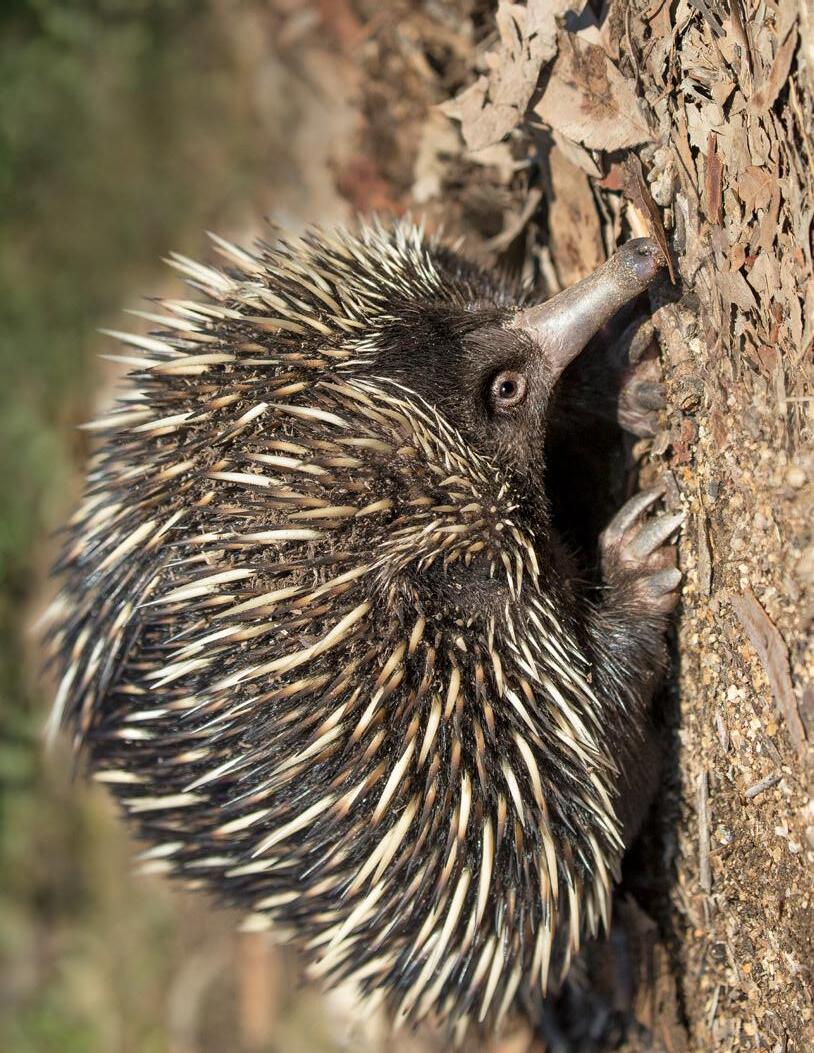
SHORT-BEAKED ECHIDNA
An echidna’s snout can sense electrical signals from insects. Once located, the echidna uses its sharp claws and sturdy limbs to dig them up, and then eats them with its long, sticky tongue.
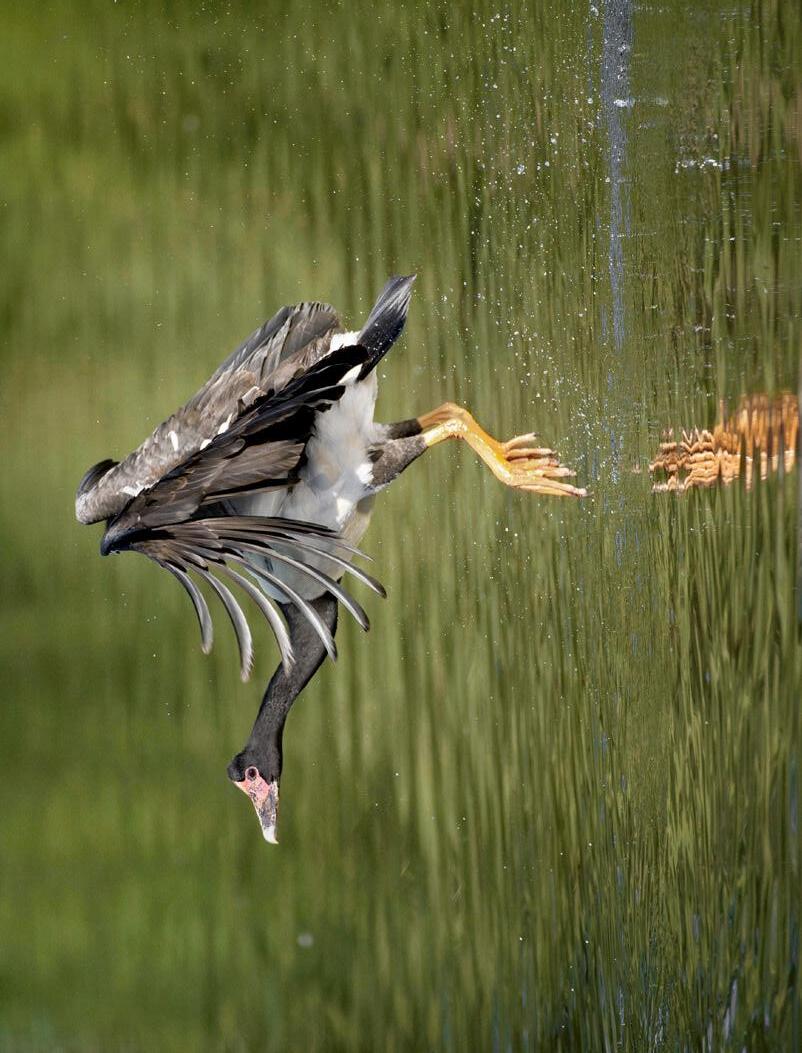
MAGPIE GOOSE
These geese congregate in huge flocks, often made up of thousands of birds. They differ from most waterfowl species in having only partially webbed feet and strong claws.
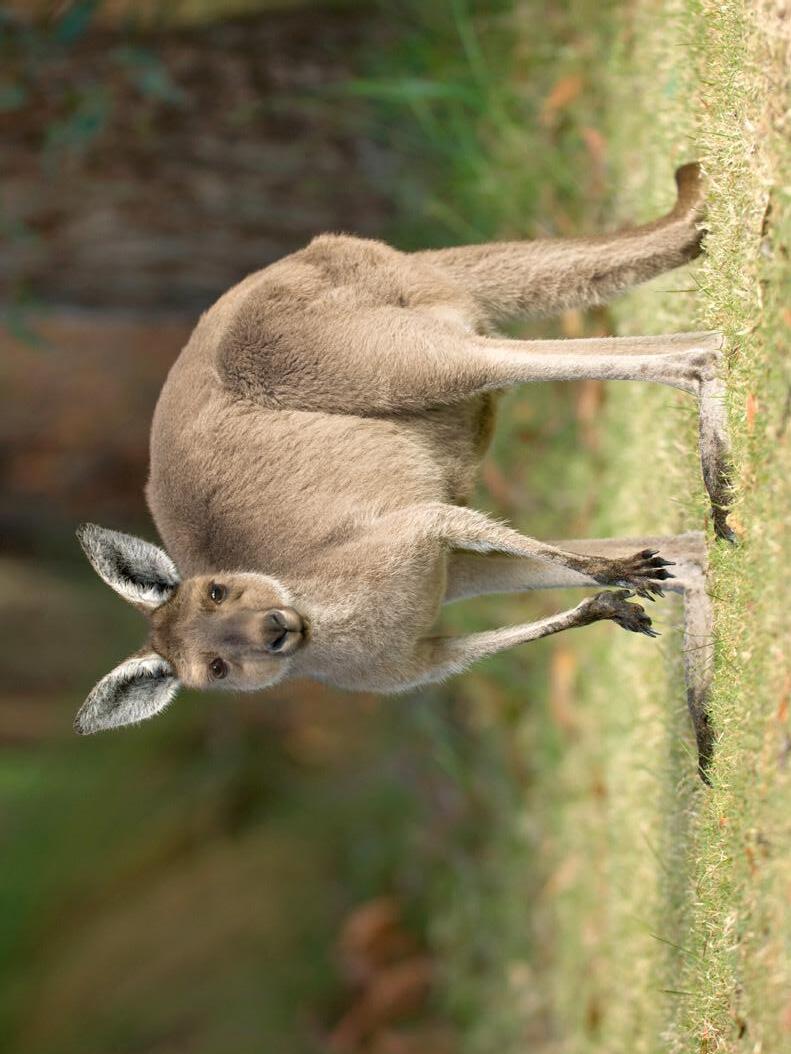
WESTERN GRAY KANGAROO
These kangaroos can reach speeds of over 35 miles an hour. Their bounding gait and powerful back legs allow them to cover 25 feet in a single leap and to jump 6 feet high.
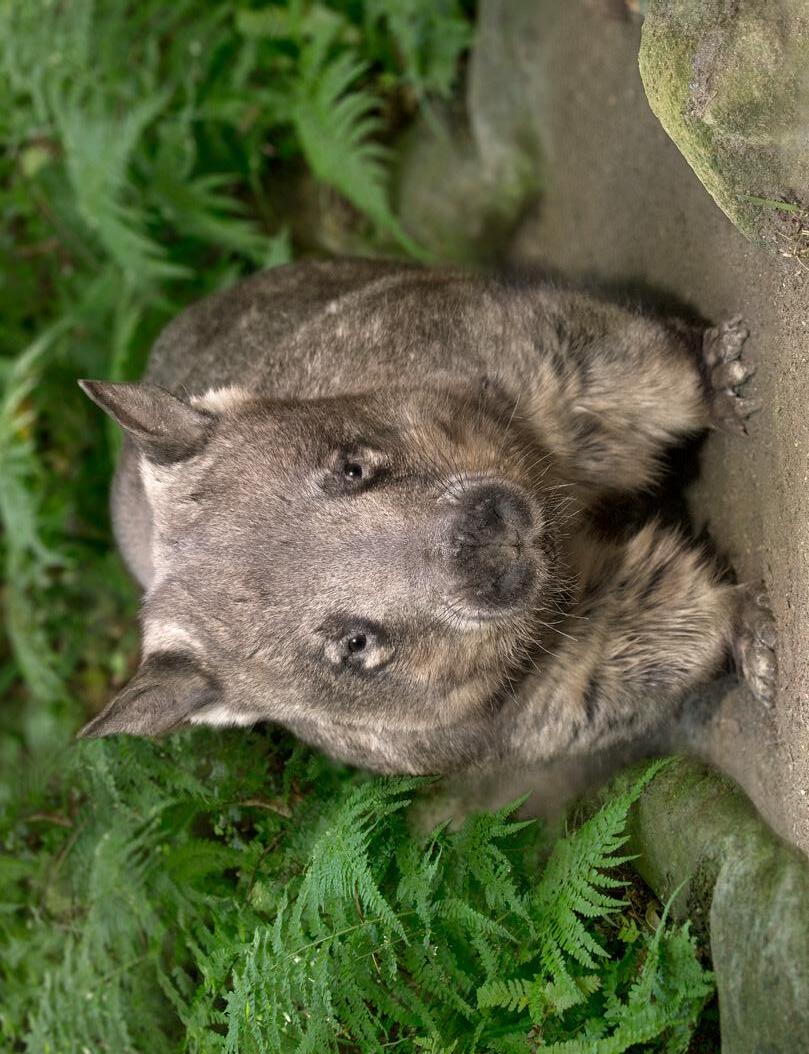
SOUTHERN HAIRY-NOSED WOMBAT
Wombats are built for digging. Their barrel-shaped bodies and wide feet with long claws enable them to excavate extensive tunnels and chambers, moving up to three feet of dirt in a single day.
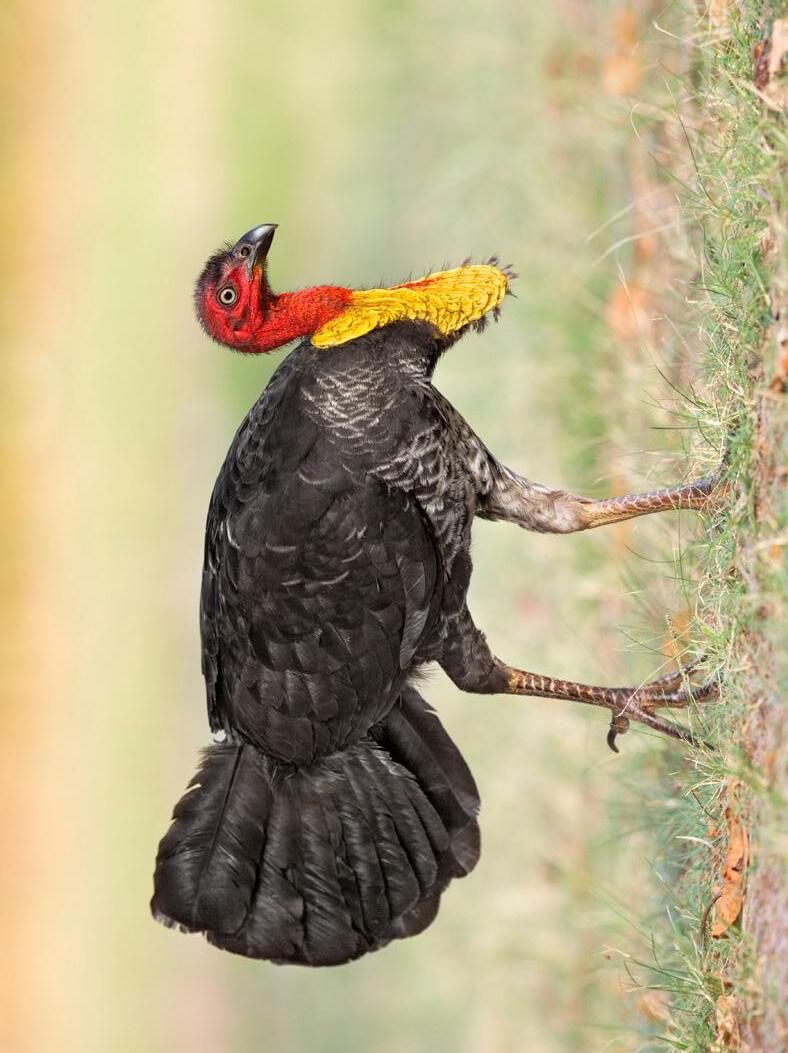
AUSTRALIAN BRUSH TURKEY
Brush turkeys are the most ancient member of a family that dates back 30 million years. Their habit of laying eggs within a mound and abandoning them is closer to a crocodile’s strategy than a bird’s.
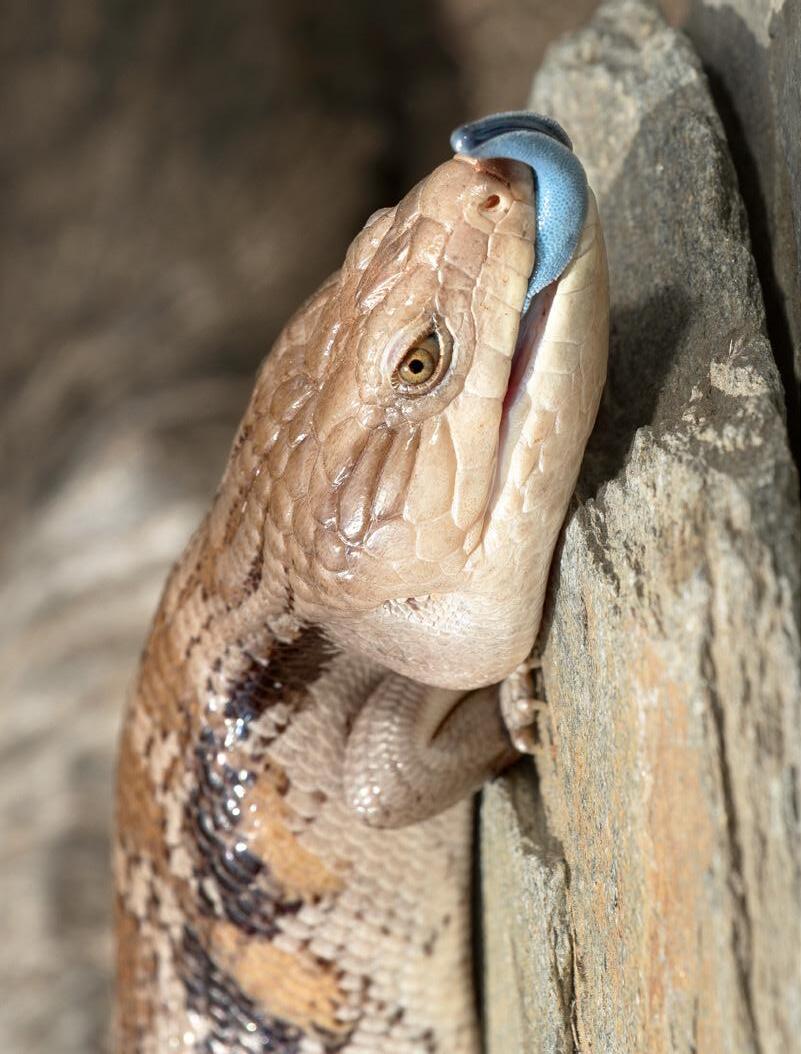
BLUE-TONGUED SKINK
This lizard’s main defense is to bluff: it faces a threat and opens its mouth to reveal its vivid and unexpected blue tongue, hoping to startle and confuse a would-be attacker.
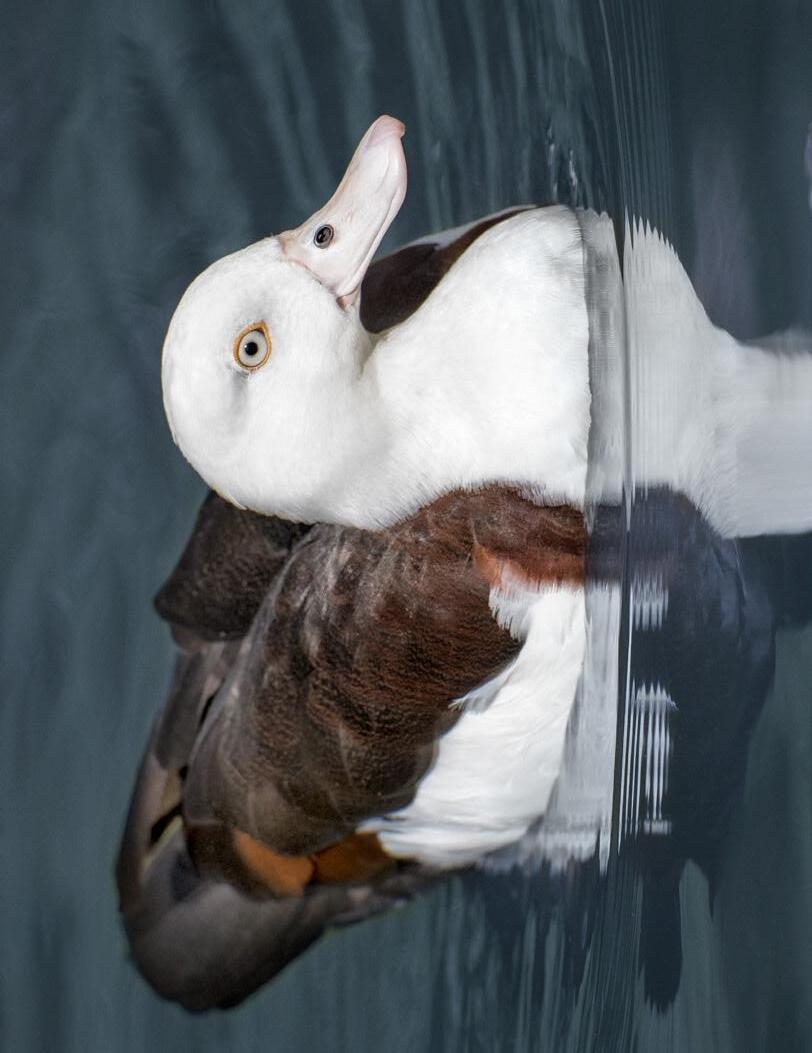
RADJAH SHELDUCK
Living mostly in the brackish waters of mangrove flats and paperbark tree swamps, these ducks use their beak to filter water and eat mollusks, insects, algae, and sedges.
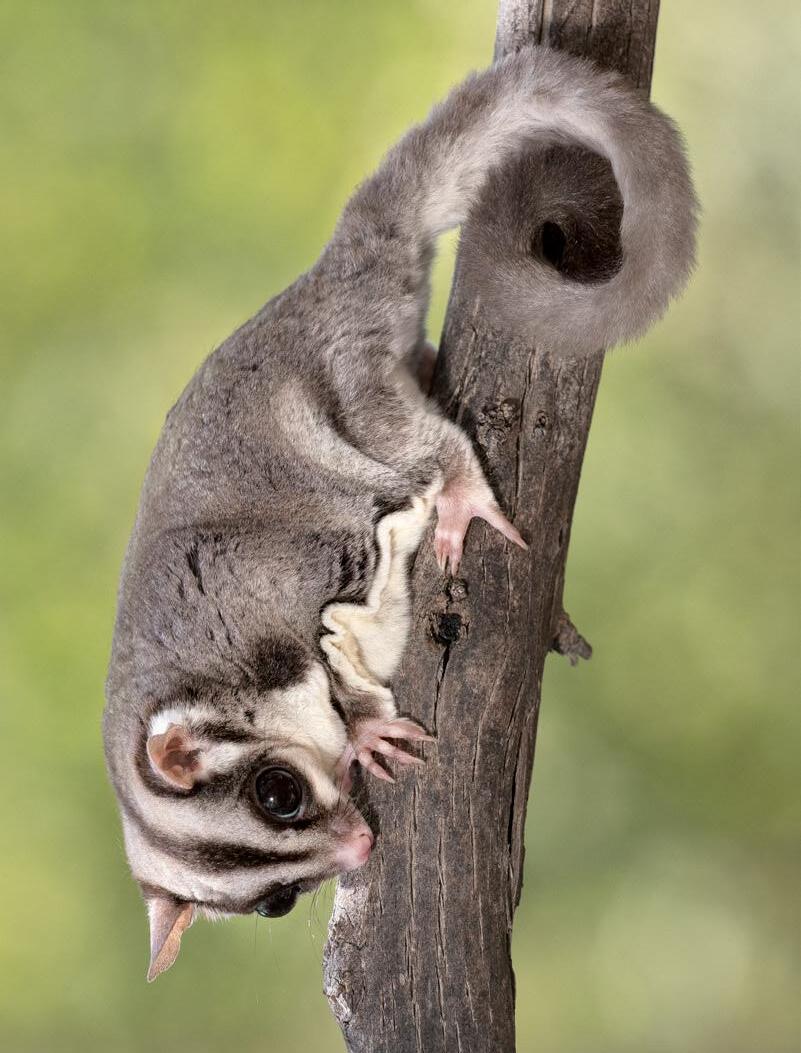
SUGAR GLIDER
These petite marsupials live in trees, and rarely touch the ground. Flaps or membranes of loose skin extend between their hands and feet, which they use like a parachute to glide up to 150 feet.
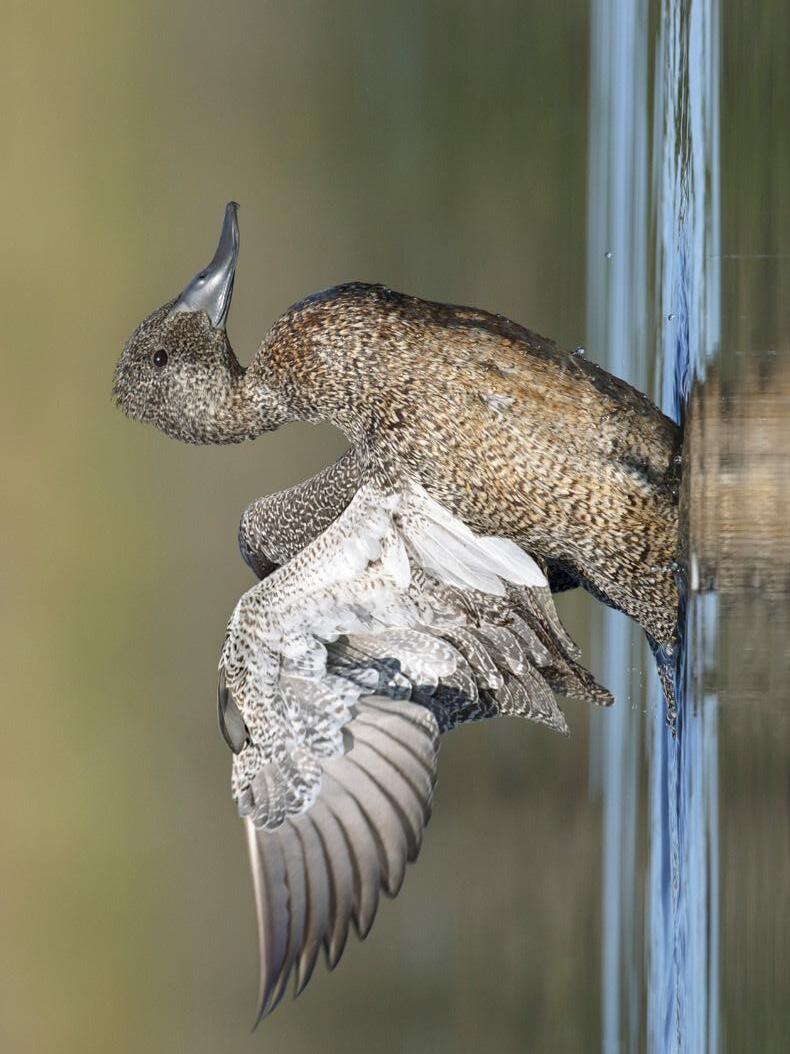
FRECKLED DUCK
This waterfowl species prefers freshwater swamps and creeks. It is crepuscular, feeding mainly at dawn and dusk, on algae, seeds, aquatic grasses, and small invertebrates.
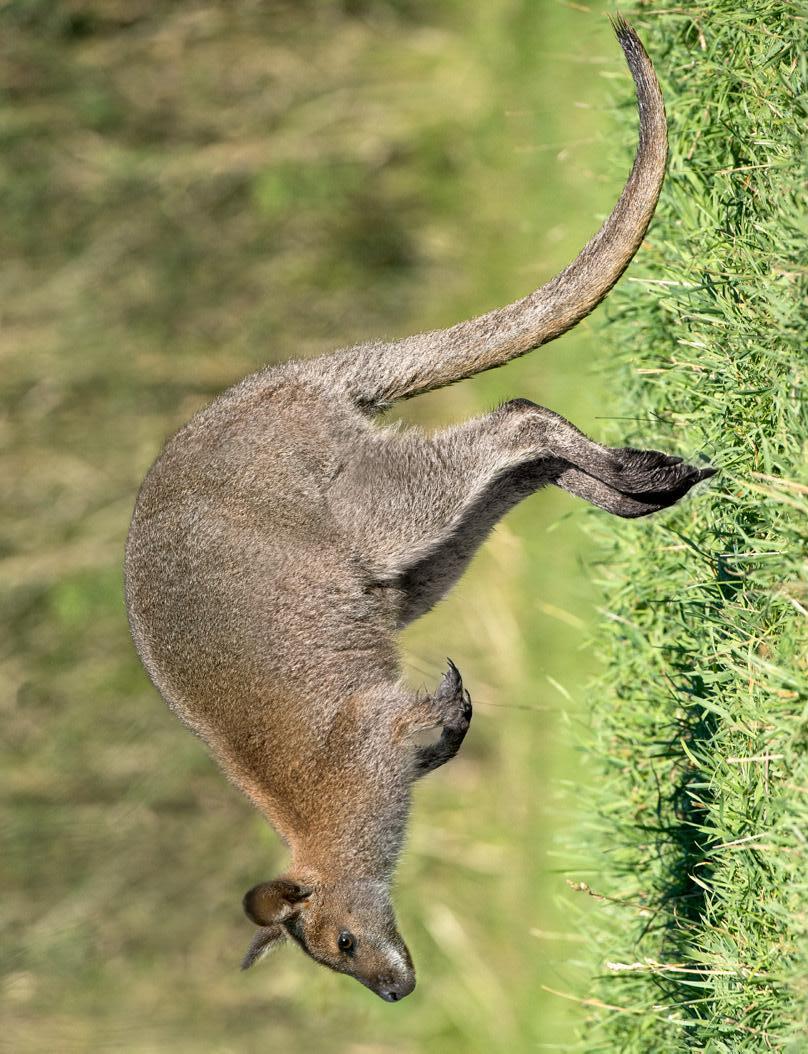
RED-NECKED WALLABY
Mostly solitary, these small marsupials can also be seen grazing in groups from late afternoon to dawn in grassy areas. They travel by hopping, but are also surprisingly good swimmers.
TRAVEL THE WORLD WITH THE SAN DIEGO ZOO
Experience the beauty of wildlife in its natural habitat. We craft our WorldWild Tour itineraries to include exhilarating encounters with nature and the animal expertise that you can only get from the San Diego Zoo. For more information, visit sandiegozoo.org/travel or call Julia Altieri at 619-685-3205.
MADAGASCAR
SEPTEMBER 6–23, 2018
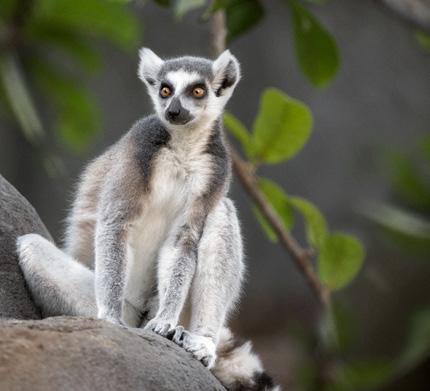
Explore the land of lemurs and its unique landscapes, culture, and wildlife—90 percent of which can be found only in Madagascar. $7,795 plus airfare (per person, double occupancy).
INDIA
OCTOBER 30– NOVEMBER 14, 2018
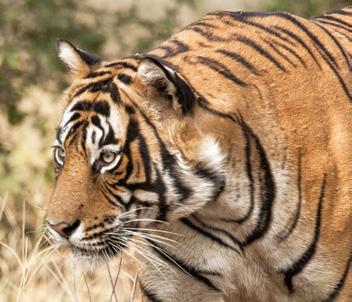
Immerse yourself in exotic India, seeking out magnificent wild tigers in their native habitat. $6,995 plus airfare (per person, double occupancy).
BOTSWANA
MAY 2019
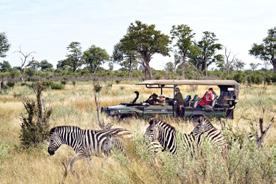
Adventure is wrapped in luxury in Botswana, where you’ll encounter Africa’s exceptional birds and mammals on safari while staying in exquisite tented camps.
CHINA AND ITS GIANT PANDAS
MAY 2019
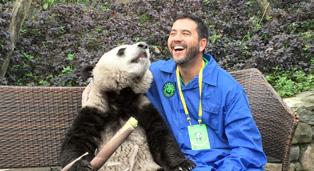
Come face to face with giant pandas, climb the Great Wall, visit the Terra-cotta Warriors, and cruise down the Yangzi River.
Coming Soon
BORNEO MAY 2019
wild world
a of fun!
BY CAITLIN HANNAH | COPYWRITER, DEVELOPMENT DEPARTMENT
PHOTOGRAPH BY
KEN BOHN | SDZG PHOTOGRAPHER
A brand-new club just for kids is winging its way to our San Diego Zoo Global family! Beginning December 5, 2017, Koala Club will become San Diego Zoo Kids Club. This is more than just a name change—it’s a whole new world! San Diego Zoo Kids Club offers endless fun, adventure, and exciting new experiences for all the wild ones in your life—24/7, wherever they are.
adventure awaits
Just like Koala Club, San Diego Zoo Kids Club offers unlimited admission to the San Diego Zoo and San Diego Zoo Safari Park all year long. And when you can’t make it to the Zoo or the Safari Park in person, you can have an adventure wherever you are, at sandiegozookids.org. Kids will love watching live animal cams and videos with keep-
ers, trying new crafts, learning about their favorite animals, and so much more. And for just $10 more than a one-day child’s ticket, an annual Kids Club membership makes the perfect gift!
san diego zoo kids channel
When kids are too ill to come to the San Diego Zoo, the San Diego Zoo Kids channel
brings the Zoo to them! Broadcasting in children’s hospitals and Ronald McDonald houses around the world, the San Diego Zoo Kids channel offers a chance for pediatric patients to learn more about animals, connect with wildlife, and “escape” from their hospital rooms when they need it the most. We are thrilled to share that this innovative closedcircuit television channel is now streaming in more than 110 locations, in 5 different countries—with more soon to come.
shows to go
Some of the content featured on the San Diego Zoo Kids television channel is now available on San Diego Zoo Kids YouTube as well. Offering inside looks, sneak peeks, behind-the-scenes secrets, quizzes about animals and their habitats, and plenty of wildlife encounters of all stripes, these videos have something for everyone. Hop on over to sandiegozookids.org/youtube to check it out!



HAVE BREAKFAST WITH SANTA!
SAN DIEGO ZOO SAFARI PARK
SATURDAY, DECEMBER 9 & SUNDAY, DECEMBER 10, 2017, 9 TO 11 A.M.
Santa Claus is coming—to the Safari Park! He’ll be here for breakfast and would love to see you and your family. Gather at the Park’s scenic Kilima Point for a bountiful breakfast buffet with the jolly ol’ elf himself.
Cost is $26.95 for adults, $16.95 for children ages 3 through 11, plus tax and Safari Park parking. Nonmembers add Safari Park admission.
CALL 619-718-3000 TO RESERVE YOUR SPOT.
FOR MORE INFORMATION AND THE MENU.

SHOP ONLINE AT www . weegallery. com

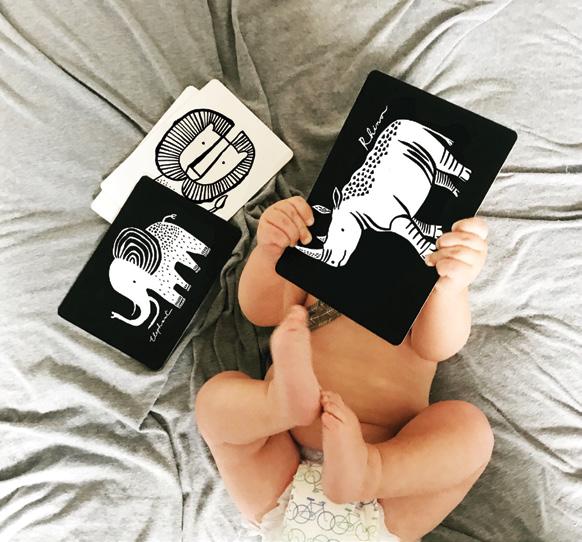




Baby’s visual learning develops first in black and white . Today’s contrast and shapes will quickly become tomorrow’s research papers.
Wee Galler y is proud to suppor t the San Diego Zoo Global Wildlife Conser vanc y 20% of the purc hase pr ice of
San Diego Zoo Global’s mission to end extinction takes place not just at the Zoo, Safari Park, and Institute for Conservation Research, but also through field projects benefiting more than 125 species around the world. Each issue, we will share an update on one of these projects.
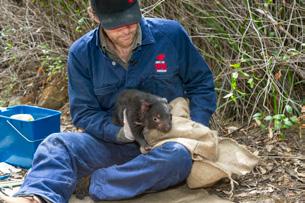
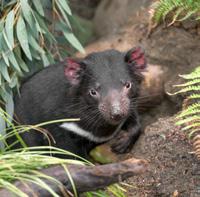
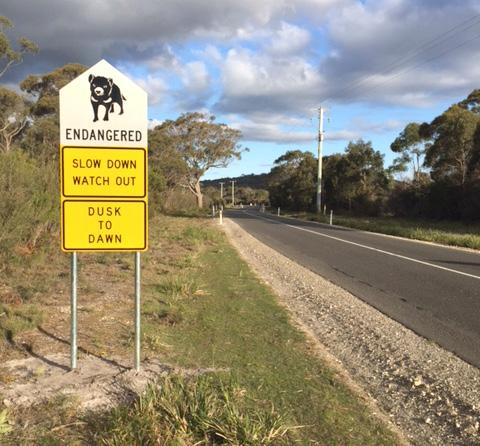
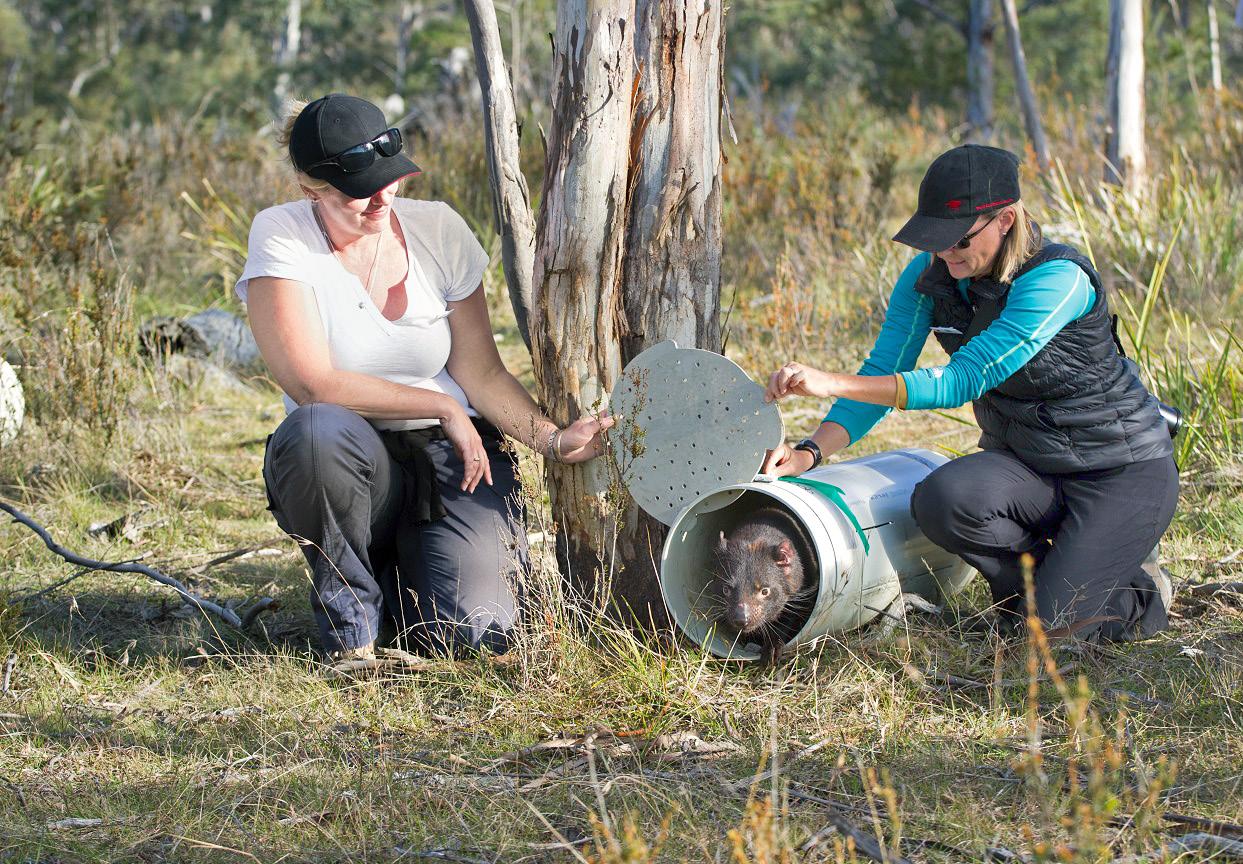
San Diego Zoo Global is working with the Australian government to help save the Tasmanian devil. Reintroducing them successfully is challenging, but utilizing their scent ecology and developing effective ways to enhance the animals’ aversion to roads and cars has greatly improved the outlook for this keystone species.
DEVILS IN THE DETAILS
BY KARYL CARMIGNANI | STAFF WRITER
They are not the whirling dervishes of cartoons, but their haunting nocturnal cries (often around a carcass) will give you pause, and likely earned them the “devil” name. As the largest carnivorous marsupial in the world, you’d think the Tasmanian devil would be secure. But this pouch-packing powerhouse was hunted to near extinction until protections were implemented in the 1940s. Even as the species rallied through the decades, a new insidious threat was unfolding: devil facial tumor disease (DFTD), a highly contagious and lethal cancer that struck with a vengeance in the 1990s. Research and collaboration among organizations has led to assurance populations of disease-free devils, with the goal of bolstering wild populations. San Diego Zoo Global’s expertise in animal reintroductions will help this species recover.
Using scent ecology, researchers are finding ways to “dampen the initial spike of mortality” on newly released devils, said Debra Shier, Ph.D., associate director, Recovery Ecology, Institute for Conservation Research. Areas with roads, people, domestic dogs, and existing devils are challenging for releases. Creating virtual latrines, which the animals use as a “guest book” to know who has visited, by adding scat of the introduced animals in advance, has helped to ease tensions, and reduce the transmission of DFTD through aggressive biting. “Anchoring” strategies to keep the animals away from traffic are being tried. As scavengers, the devils help clear decaying carcasses and reduce disease. By consuming feral cats, the devils help conserve native bird populations. The devils are truly angels in disguise!
PHOTOS BY (CLOCKWISE FROM TOP, LEFT): KEN BOHN,
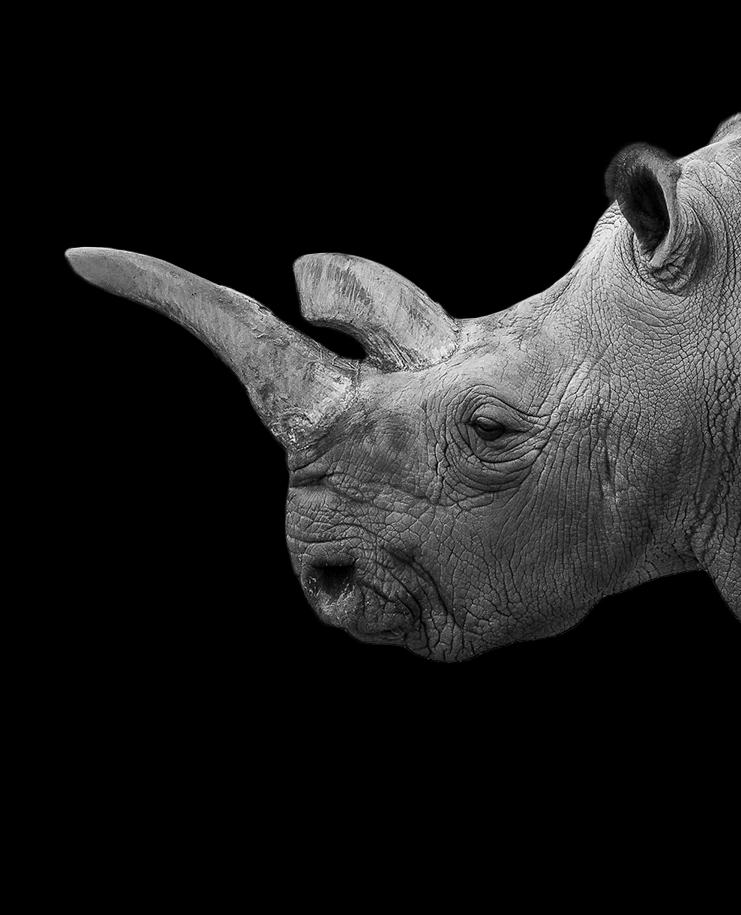
Decades of rampant poaching have decimated this species to the brink of extinction. But there’s hope.
San Diego Zoo Global is leading the fight to save these gentle giants. And your support to the San Diego Zoo Global Wildlife Conservancy creates action and impact. Will you join us? Together, we
RING IN THE HOLIDAYS!
JUNGLE BELLS AT THE ZOO, DECEMBER 8—JANUARY 1
SAN DIEGO ZOO GLOBAL Box 120551, San Diego, CA 92112 Give a year of adventure, animals, and fun!
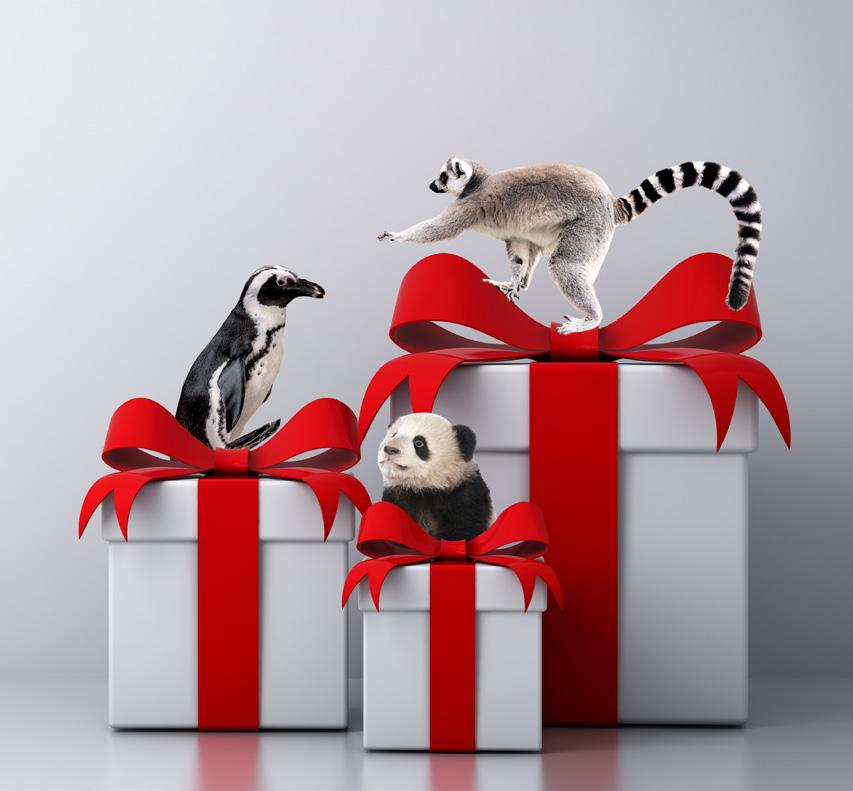
The holidays are just around the corner. Check everyone off your list with a membership to the San Diego Zoo and Safari Park—they’ll go bananas!
Best of all, your gift gives back, supporting the animals in our care and our conservation efforts worldwide.

Centennial Campaign for San Diego Zoo Global
NOVEMBER 2017 | VOLUME 3
SAN DIEGO ZOO:
SHAPING THE FUTURE
Ending extinction is a bighearted vision that needs a blueprint for success, a plan to keep moving forward. Innovative techniques in animal care and new technologies for conservation science bring San Diego Zoo Global’s vision to life. And many of you our wildlife philanthropists are contributing through monthly and annual giving or legacy gifts, which help us strengthen the Zoo, Safari Park, and Institute for Conservation Research for generations to come.
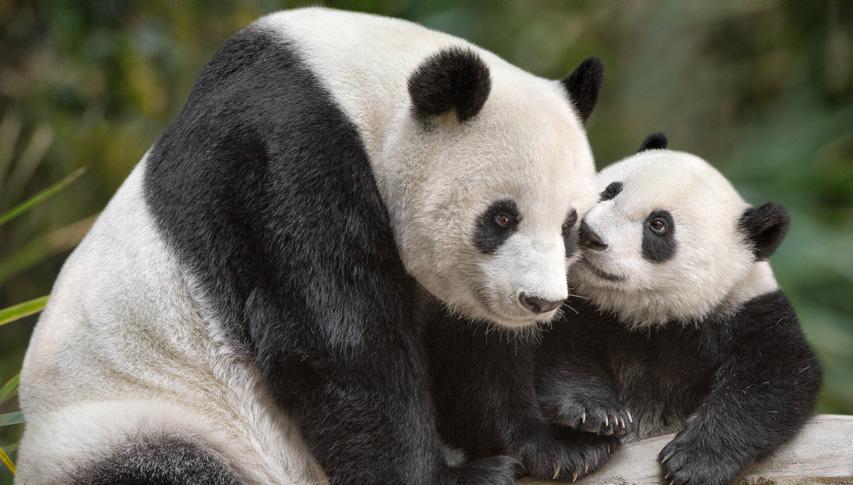
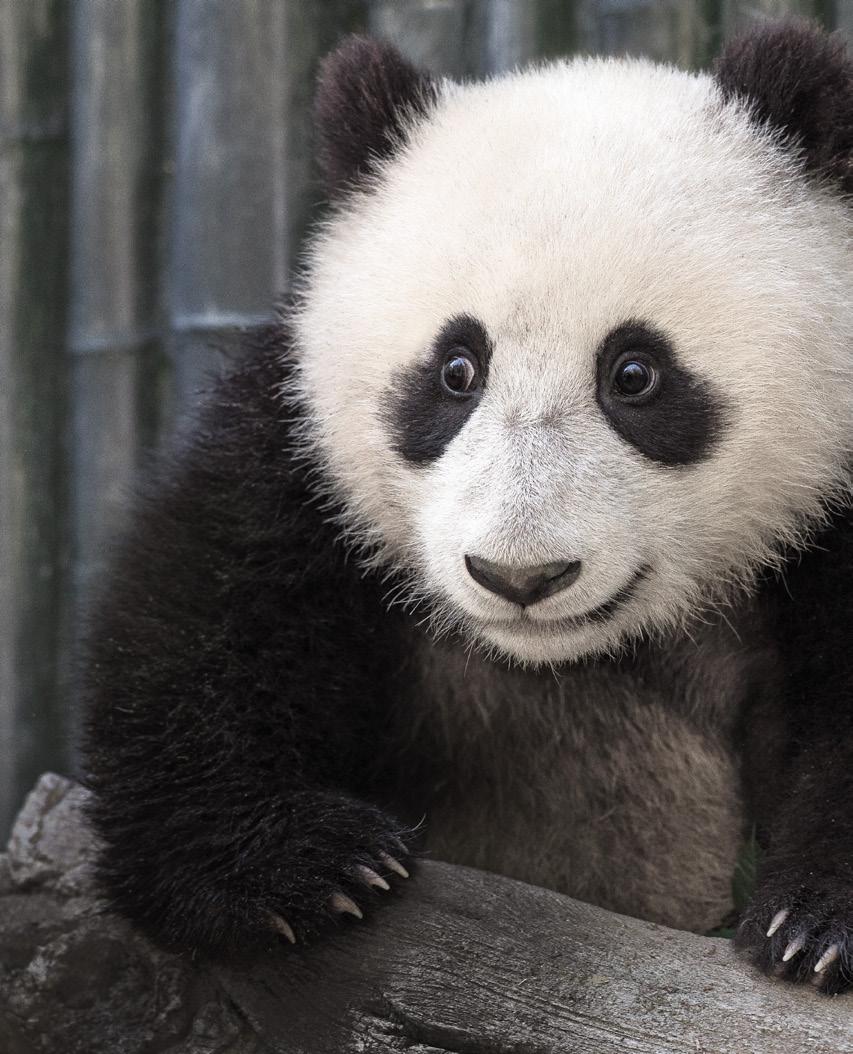
Reaching a big goal that transforms an organization or saves an endangered species often begins with small steps. Just imagine if giant pandas became extinct in the 1980s, when many scientists said they couldn’t be saved. Our focus on developing a special milk formula for hand-raised cubs, new ultrasound technology, and successful breeding programs all helped pandas thrive. One of our proudest moments was when giant pandas were declared “no longer endangered” in 2016! It is just one example where small steps led to a major conservation success for one of the world’s wildlife treasures.
“The
quality of our life on Earth is dependent upon how we treat the rest of life on Earth, the future of which now lies in our hands.”
–SIR DAVID ATTENBOROUGH, 1986 SAN DIEGO ZOO CONSERVATION MEDAL RECIPIENT

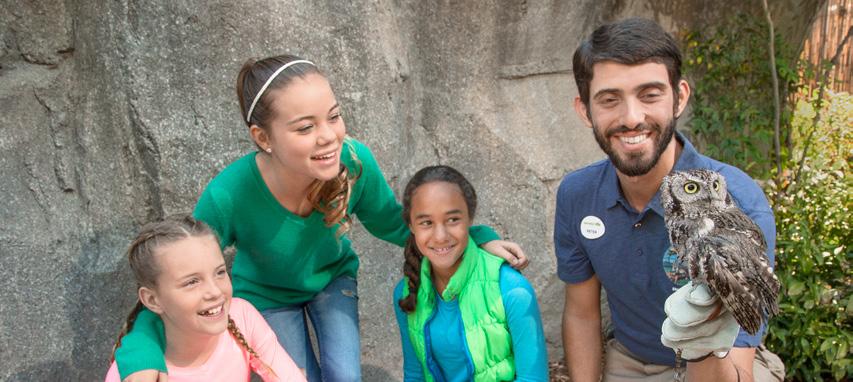
IGNITE a passion for wildlife in every child:
Price Education Center: Offers enriching classes at the Zoo and assembly programs for 65 Title I schools and 53,000+ students.
San Diego Zoo Kids: Launched through the generosity of Denny Sanford, this heartwarming TV wildlife channel brings healing and smiles to children in pediatric hospitals in the U.S. and overseas.
The Leslie Miller Healing Animal Arts Program: This therapeutic program offers hands-on wildlife art lessons and animal encounters to 5,000 young patients and their families, either at the Kaiser Zion Hospital or the Zoo.

We need
Champions!
GROW our worldwide leadership in animal and plant care, as well as inspirational experiences:
Tull Family Tiger Trail: Provides an intimate view into the world of tigers and supports breeding for endangered Sumatran tigers at the Safari Park.
Asian Leopards: Maryanne and Irwin Pfister led the effort to build new habitat for critically endangered Amur and snow leopards at the Zoo.

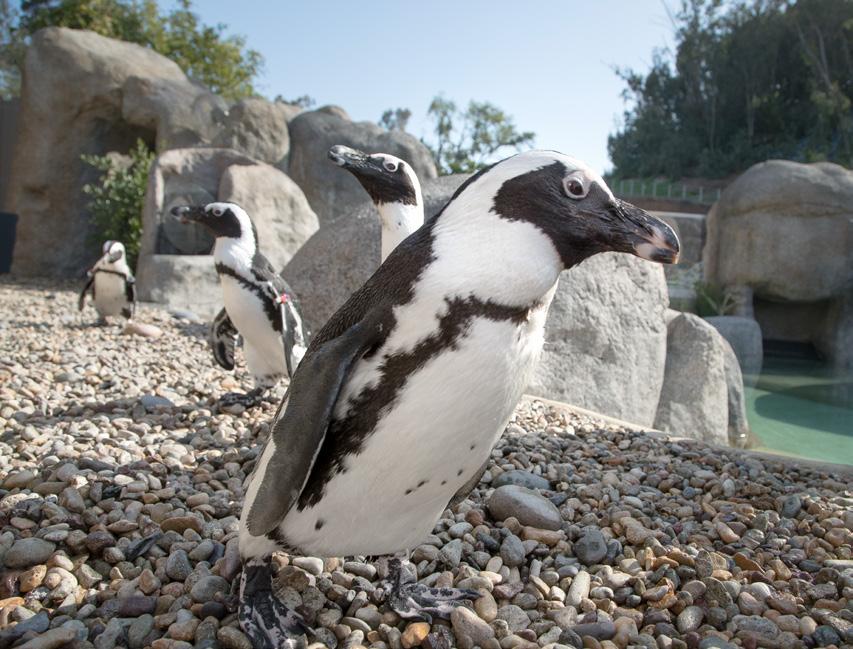
Conrad Prebys Africa Rocks: Highlights species from the African shore to the highlands, featuring Ernest and Evelyn Rady Falls and Madagascar Habitat, and Dan and Vi McKinney Penguin Habitat.
SAVE critically endangered species for future generations while working with local and global partners:
Nikita Kahn Rhino Rescue Center: A unique initiative to save the critically endangered northern white rhino from extinction through assisted-reproduction efforts.
Cocha Cashu Biological Station: Endowed by Cathy Stiefel and Keith Behner, this research station hosts international conservationists working to protect species in Peru’s Amazon region.
Wildlife Conservancy: More than 5,000 monthly donors help support 140+ research programs and projects on 6 continents.


Here ’s How You’ve Already Helped
Transforming Dog & Cat Canyon into spectacular Conrad Prebys Africa Rocks took time, effort, and most of all, donations from nearly 5,000 dedicated donors. Innovation and philanthropy go together for every new habitat we pioneer at the Zoo and Safari Park—and your support makes it all possible!
Because of you...
SET We set a global standard for animal welfare, and then meet or exceed that standard by consistently raising the bar on design for awardwinning exhibits that provide for the special needs of animals in our care.
ENGAGE
San Diego Global Wildlife Conservancy engages with a national and international audience to support our vision to end extinction our No. 1 priority for both animals and plants.
BUILD
Build up our network of field sites, where we work with global partners on community conservation initiatives to ensure wildlife can thrive.

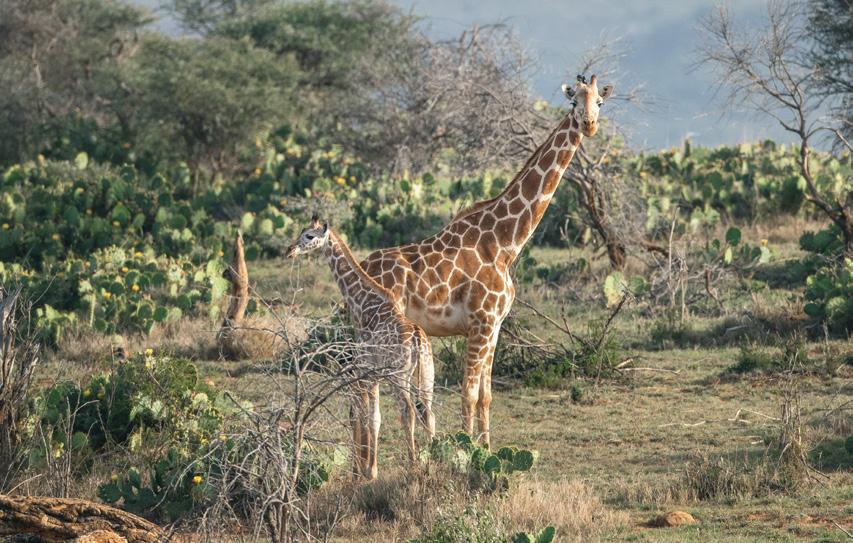


There’s an exciting new project for volunteers, called citizen scientists, to help save reticulated giraffes in Kenya population has dropped 40 percent in 20 years! You can join others from around the world on the Zooniverse website and help count giraffes in thousands of photos taken by 100 trail cameras set up by TwigaWalinzi, or giraffe guards.
endextinction.org/wildwatch mobile device. There, you can examine photos and note where giraffes roam, their home range size, and if other wildlife is present. Each day, you and researchers will make discoveries together. While giraffes are a much-loved species, there are still many things we do not know about them do know they are now listed as “Vulnerable” to extinction. Habitat loss and poaching are the main threats, and these photos will contribute valuable details about giraffes’ daily lives. So help us sort through photos