

By Matt Brown ASSOCIATED PRESS
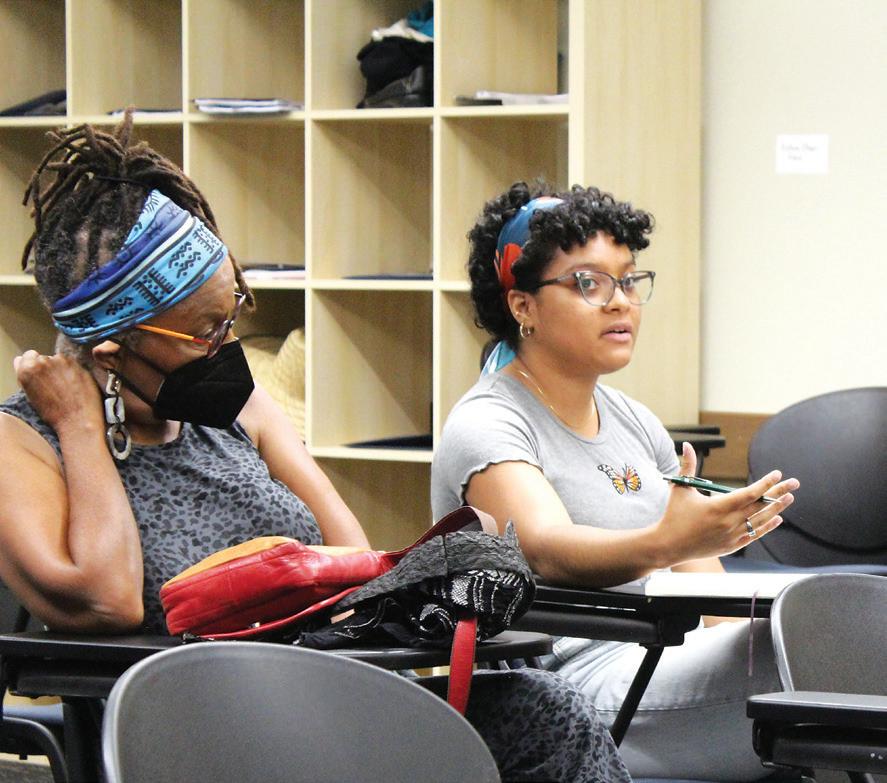
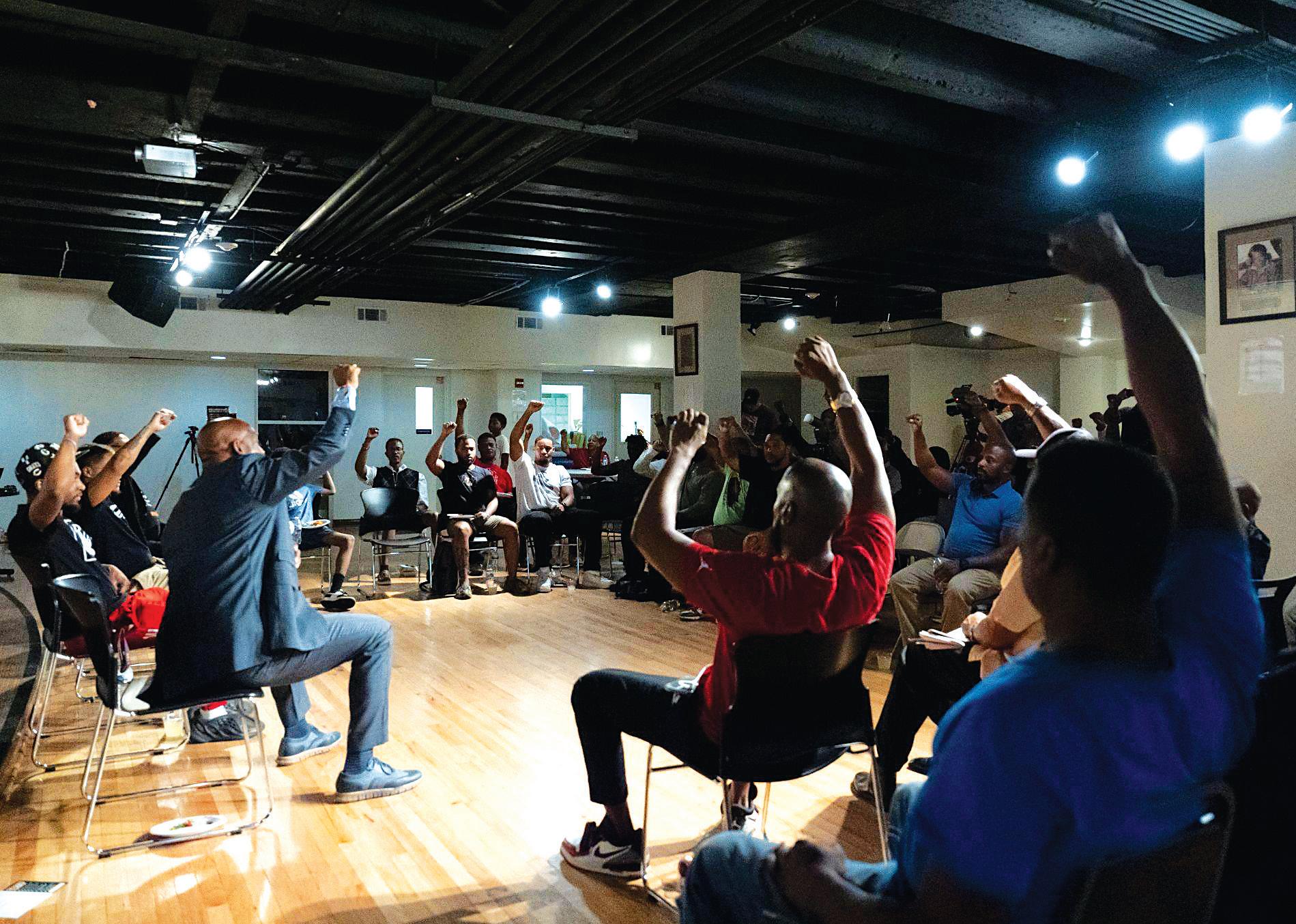
Every Monday evening, the Andrew and Walter Young Family YMCA basement becomes a sanctuary for men who, local leaders say, have too often been denied one.
get resources. The networking is always a good thing. It’s a fellowship, of sorts.”
Vice President Kamala Harris officially accepted the Democratic party’s nomination for President of the United States on Aug. 22, the fourth and final night of the Democratic National Convention (DNC) in Chicago. Harris, a former California U.S. Senator and Attorney General, needed the votes of 1,976 Democratic delegates to secure the nomination but exceeded that mark with 4,567 nods.
By Emily Kim Jenkins CONTRIBUTING WRITER
California’s reputation precedes it. Ask anyone from a different region of the country and they’re likely to have an opinion about its government, its industries or its citizens, whether or not they have ever set foot in the Golden State. Even internally, split down an imaginary line, Southern and Northern Californians have lots of ideas about their neighbors on the opposite side.
One of the more discordant characteris-
If elected, Harris, an Oakland native, would become the first Black, first Asian, and first woman President.
SEE PAGE 8-9
tics that comes alongside being the most populous state in the country—prejudice. Even with the flourishing diversity California is known for, hate continues to be a thorn in its side.
A rise in hate crimes across the country has been recorded, and San Diego is no exception. Although hate events certainly do fluctuate as culture evolves, one reason for this increase may be that more efforts are being made to reach protected classes that may be targeted to encourage them to report hate acts, such as the CA vs. Hate initiative.
The Black Man Lab, which for nearly a decade has sought weekly to create a “safe, sacred and healing space” for Black men in metropolitan Atlanta, regularly gathers more than 100 men to pray, meditate and talk through challenges and triumphs they are facing and learn from peers and elders.
“It’s almost a communion,” said Carttrell Coleman, a visual artist from South Fulton, Georgia, who has attended the weekly meetings for seven years. “It’s an opportunity for us to share our voices and
This summer, Attorney General Rob Bonta’s office published the annual California Hate Crime report for 2023, documenting patterns the Department of Justice (DOJ) has seen in hate crimes. The Voice & Viewpoint analyzed the state report as well as data from San Diego County’s law enforcement agencies to see how San Diego compared. These comparisons, unless otherwise noted, are between 2022 and 2023.
See HATE page 2
One recent meeting in the immediate aftermath of President Joe Biden’s suspension of his reelection campaign took on special weight as attendees considered the prospect of a Black woman winning the presidency. The candidacy of Vice President Kamala Harris has refocused attention on Black men, a demographic that Democrats and Republicans view as persuadable but whose multifaceted experiences and political preferences often go unaddressed in public debate.
Harris’ campaign has also reignited discussions amongst Black men about their influence in this election.
See RACE page 2

By Ben Finley ASSOCIATED PRESS
Archaeologists in Virginia are uncovering one of colonial America’s most lavish displays of opulence: An ornamental garden where a wealthy politician and enslaved gardeners grew exotic plants from around the world.

The garden in Williamsburg belonged to John Custis IV, a tobacco plantation owner who served in Virginia’s colonial legislature. He is perhaps best known as the first father-in-law of Martha Washington. She married future U.S. President George Washington after Custis’ son Daniel died.
“The garden may have been
Custis’ vision, but he wasn’t the one doing the work,” said Jack Gary, executive director of archaeology at Colonial Williamsburg, a living history museum that now owns the property. “Everything we see in the ground that’s related to the garden is the work of enslaved gardeners, many of whom must have been very skilled.”




overwhelming support for Democrats.
“Black men are the target, and we hold the keys to the kingdom. This is our moment,” said Lance Robertson, executive director of the Black City Councilmen of Georgia, during the meeting. “The Black man has built America. Now it’s time for the Black man to save America.”
Black male voters are traditionally one of the most consistently Democratic leaning demographics in the nation. This year, however, both major parties view Black men, especially those under the age of 40, as attainable voters. Whether Black men turn out in high numbers and to what degree they maintain traditional support for Democratic candidates may prove decisive in November.
“To be frank, I think early on in this process a lot of Black men viewed this election with much skepticism and dread,” said Bishop Reginald Jackson, who presides over all 534 African Methodist Episcopal churches in Georgia. “But since the change in the Democratic ticket, there has been a turnaround. I think they feel they have something that they can support. I think a lot of issues which made a lot of them skeptical are being addressed.”
At the Black Man Lab event, the men present came from all walks of life. Attendees’ ages ranged from 8 to 86, with multiple pairings of fathers, grandfathers and grandsons telling the group about the unique circumstances each generation faces as Black men in America.
Black voters have historically prioritized policies on civil rights and economic mobility, leading to
Reports of anti-Black crimes in California decreased by 20.6 percent. In San Diego County, they decreased by 11.6 percent.
Anti-Black hate crimes continue to be the highest reported bias-motivated crime across the board in America. Making up roughly one quarter of
But how those concerns translate into political preferences has shifted as traditional ties to institutions like the Black church have frayed for some younger Black Americans. “The Black church, in a lot of respects, has been a turnoff for the Black man, and we’re only now working to address the need and correct it,” Jackson said.
For many younger Black men, advocates stressed, issues like wealth creation, entrepreneurship, police reform and anti-discrimination policies in the workplace are top of mind.
“We want to see jobs and opportunity for Black men, especially,” said Andre Greenwood, chair of the YMCA that hosts the Black Man Lab event. Greenwood, who supports Harris, said economic messages will be most important to Black male voters.
Harris’ entrance into the presidential race has unleashed a flurry of organizing among her Black male allies. A day after Biden dropped out of the race and endorsed Harris, a virtual conference tailored for Black men garnered more than 53,000 attendees and raised more than $1.3 million. The event, organized by Win With Black Men, a collective of Black male-led groups, has hosted regular meetings every week since then to engage organizers targeting Black men.
“Up until this point, these folks were not really engaged with this campaign season, let alone volunteering for outside organizations. I think what we’re seeing now is a massive level of organic energy that you can’t deny,” said Quentin James, founder of the Collective PAC, a Democratic polit-
all 2023 hate reports across the state and county, these are still the largest bias type represented. However, these numbers do represent a worthwhile change.
In the state, racially-motivated hate crimes decreased roughly 20 percent. They decreased in the county, too, but only by about twelve percent.
The biggest bias type increase across the state was anti-religious, with reports increasing by
Crude oil, gasoline, diesel fuel, and other petroleum products can expose you to chemicals including toluene and benzene, which are known to the State of California to cause cancer and birth defects or other reproductive harm. These exposures can occur in and around oil fields, refineries, chemical plants, transport and storage operations, such as pipelines, marine terminals, tank trucks, and other facilities and equipment. For more information go to: www.P65Warnings.ca.gov/petroleum.
The foregoing warning is provided pursuant to Proposition 65. This law requires the Governor of California to publish a list of chemicals “known to the State to cause cancer or reproductive toxicity.” This list is compiled in accordance with a procedure established by the Proposition, and can be obtained from the California Environmental Protection Agency. Proposition 65 requires that clear and reasonable warnings be given to persons exposed to the listed chemicals in certain situations.
SHELL OIL PRODUCTS US
PBF Energy Western Region LLC its affiliates and subsidiaries
PHILLIPS 66, including its divisions and subsidiaries (and under the trademarks 76)
ical action committee that supports Black candidates.
Win With Black Men said it would direct the raised funds to organizations nationwide for Black male engagement. More than 150 groups have applied for support. James stressed that while the recent fundraising windfall is notable, the Harris campaign’s own engagement effort with Black men may not be enough unless it is paired with robustly funded outside groups that have longstanding trust in local communities.
Harris has also revamped her outreach to Black men. The campaign believes it has a winning message for Black men’s priorities.
“It’s wealth and it’s health,” Democratic strategist Antjuan Seawright said of the message.
Seawright leads the Democratic National Committee’s “Chop It Up” town halls for Black men at barbershops and other venues in battleground states this year. He noted that Black men “aren’t monolithic” and added that it is a mistake for campaigns to assume “we only care about criminal justice reform.”
The culminating effort also aims to address longstanding skepticism among many Black men about the political system, which is seen as discriminatory and unresponsive to their interests. Others have tackled potential hesitancy among men about electing a woman to the nation’s highest office.
Republicans, too, see an opportunity to make inroads with Black men precisely because of those longstanding frustrations. Donald Trump often speaks of his interest in garnering greater
30 percent. They jumped significantly in San Diego, too.
In a particularly tense year marked by the beginning of the war in Israel, hate crimes against Jewish and Muslim people increased. By quantity, Anti-Jewish reports were far more heavily reported. Across the state these nearly doubled, rising from 189 to 289. In San Diego County, there were 13 reports, a 116 percent increase from the year before.
“There is pre-October 7, and there is post-October 7,” Matt Goldberg of the Jewish Federation of San Diego said when describing how he tries to categorize and address antisemitic hate. The concerns for the safety of the Jewish community, he says, have changed significantly since then.
Although an anti-Protestant hate crime hasn’t been reported in San Diego County since 2018, the state’s report makes a special note that these events fell from 12 reports in 2022 to only one in 2023.
Sexual orientation crimes increased slightly in the state. They jumped dramatically in the county.
2023 was the first year that the FBI has directed law enforcement agencies to record sexual orientation-based hate crimes as “anti-LGBTQ” rather than the previously used “anti-homosexual.” This term is more inclusive of a spectrum of sexual orientation, but the crimes recorded under the new title are the same. It can also refer to crimes committed with a group bias against non-heterosexual people.
Previously, anti-gay (specifically referring to males) crimes were by far the most reported sexual orientation-based hate crime. At a Voice & Viewpoint Town Hall, Matt Brown of the Anti-
Continued from cover
AERA ENERGY LLC
EXXON MOBIL CORPORATION its affiliates and subsidiaries
VALERO Refining and Marketing Company, Ultramar Inc., and their affiliates and subsidiaries
Tesoro Refining & Marketing Company LLC (a subsidiary of Marathon Petroleum Corporation) and its affiliates (and under the trademarks ARCO, Shell, Thrifty, Exxon and Mobil)
For more information, please call: 1-800-523-3157
8-24
Archaeologists have pulled up fence posts that were 3 feet (1 meter) thick and carved from red cedar. Gravel paths were uncovered, including a large central walkway. Stains in the soil show where plants grew in rows.
The dig also has unearthed a pierced coin that was typically worn as a good-luck charm by young African Americans. Another find is the shards of an earthenware chamber pot, which was a portable toilet, that likely was used by people who were enslaved.
“We have to wonder if we’re seeing traditions that are non-European,” Gary said. “Are they West African traditions? We need to do more research. But it’s features like those that make us continue to try and understand the enslaved people who were in this space.”
The museum tells the story of Virginia’s colonial capital through interpreters and restored buildings on 300 acres (120 hectares), which include parts of the original city. Founded in 1926, the museum did not start telling stories about Black Americans until 1979, even though more than half
Black voter support. Black Republicans, including Reps. Byron Donalds of Florida and Wesley Hunt of Texas, have hosted a “Congress, Cognac, and Cigars” event series in cities including Atlanta, Philadelphia and Milwaukee.
“Black men have been taken for granted by the Democratic Party for years, but President Trump’s message is resonating at historic levels because he is doing the work,” said Janiyah Thomas, Black media director for the Trump campaign.
Marcus Robinson, a senior spokesperson for the Democratic National Committee, called Republican outreach strategy “hot air, racially charged rhetoric and offensive stereotypes, from questioning Vice President Harris’s identity to claiming Black voters should relate to Trump because he is a convicted felon.”
For many attendees at the Black Man Lab event, the reinvigorated presidential race is an opportunity to make sure their interests are addressed at the highest levels of government.
“I was in the street doing wild stuff and this saved my life,” said Damon Bod, an exterior house technician from Atlanta, of his experience with the Black Man Lab event. Bod said he lost his entire immediate family to violence and that the event provided him counsel and a community.
He said he would support Harris in the election because the men who supported him felt she would advance Black men’s interests.
“I’ve been looking at it and hopefully she’ll do a bit of good. My brothers have said she will, people who know me. But only God knows,” Bod said.
Defamation League noted that of all the protected classes, Black gay men were the most likely to be the victims of a hate crime.
While the anti-gay crimes in California dipped 14.8 percent, they increased 44 percent in San Diego County, from nine to 15 reports last year. The most dramatic rise for both regions was in anti-LGBTQ+ crime reports—with 86.4 percent increase in the state, and a whopping 700 percent in the county.
Hate decreased across the state. In San Diego County, it saw a sharp upward trend.
In California, all reported hate crimes saw an 8.9 percent decrease. In San Diego County, hate crime reports increased 19 percent.
This pattern of increasing reports may make a repulsive trend public, but they also bring a silver lining. With more reports being made, the likelihood of both supporting a victim and holding a perpetrator accountable increases significantly.
San Diego is not alone—and neither are you. If you have experienced or witnessed anything that you think could even possibly be hate-motivated, you can report it. You can call 833-8-NO-HATE or visit CAvsHate.org to discuss what happened with a trained operator. Operators speak over 200 languages and you can report anonymously, if you would prefer.
This resource is supported in whole or in part by funding provided by the State of California, administered by the California State Library in partnership with the California Department of Social Services and the California Commission on Asian and Pacific Islander American Affairs as part of the Stop the Hate program. To report a hate incident or hate crime and get support, go to https:// www.cavshate.org/.
of the 2,000 people who lived there were Black, the majority enslaved.
In recent years, the museum has boosted efforts to tell a more complete story, while trying to attract more Black visitors. It plans to reconstruct one of the nation’s oldest Black churches and is restoring what is believed to be the country’s oldest surviving schoolhouse for Black children.
The museum is still trying to learn more about the people who worked in the garden.
Crystal Castleberry, Colonial Williamsburg’s public archaeologist, has met with descendants of the more than 200 people who were enslaved by the Custis family on his various plantations. But there is too little information in surviving documents to determine if an ancestor lived and worked at Custis Square.
Two people, named Cornelia and Beck, were listed as property with the Williamsburg estate after Daniel Custis died in 1757. But their names prompt only more questions about who they were and what happened to them.
“Are they related to one another?” Castleberry asked. “Do they fear being split up or sold? Or are they going to be reunited with loved ones on other properties?”
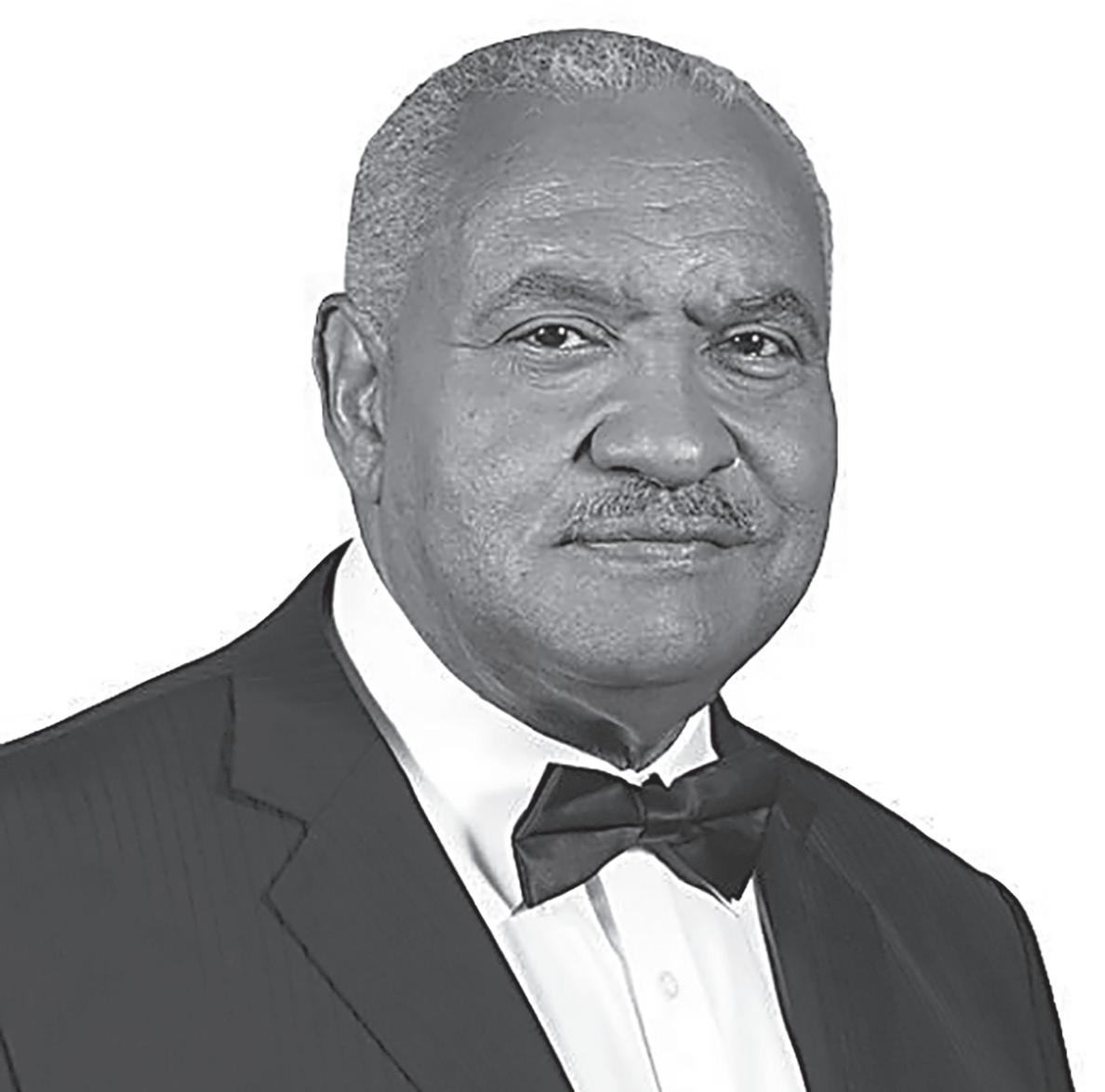
By Dr. John E. Warren PUBLISHER, THE SAN DIEGO VOICE & VIEWPOINT
In less than 70 days, each of us will have an opportunity to either cast a vote or help someone vote who would not otherwise do so. The stakes are bigger than the race for the Presidency between Vice President Harris and Donald Trump. All 435 seats in the U.S. House of Representatives are on the ballot; a third of the U.S. Senate, including a seat from the State of California are on the ballot; local races for Mayor, City Council seats and County Supervisors, or Commissioners as they are called in some areas, are on the ballot. Propositions are on the ballot, such as Rent Control to name one in the State of California. These issues will determine our quality of life for the next two to four years. Each of us has a say, whether or not we think we are important.
Every Black person in America does not want Kamala Harris as President any more than all White people want Donald Trump re-elected. This means that the obligation each of us have to vote is bigger than the battle for the Presidency. It’s about each of us taking responsibility for our own future. If you have not registered to vote, there is still time to do so regardless of where you live. Don’t let your future be determined by people who neither know you nor personally care about you when you can participate in shaping your future.
Remember, if those running for office didn’t ask you for your vote, then they probably think either you won’t vote, so why bother, or they have decided that they don’t really need your vote. By voting, you can send a message. Find someone to vote for. It’s not too late to register and vote, even if you are homeless.
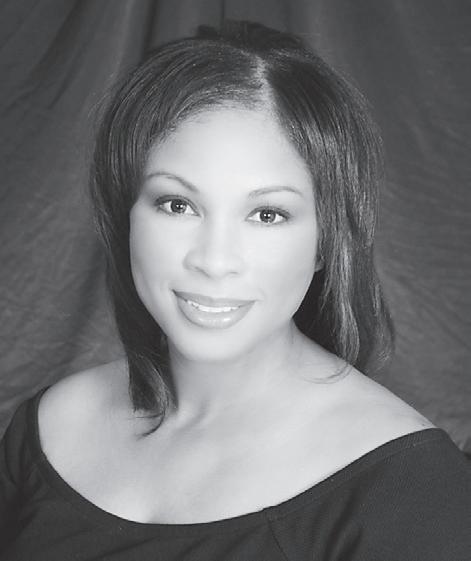
By Regina Wilson CALIFORNIA BLACK MEDIA
Last week, California arrived at a turning point in the decades-long quest to find a solution to the news crisis in our state.
Assemblymember Buffy Wicks (D-Oakland) brokered a deal that promises to change the future of news in our state. This isn’t just another plan — it’s a unique collaboration that brings together the State of California, news publishers, and tech companies, to give our newsrooms the financial support they desperately need.
It also includes the launching of a new National AI Accelerator to explore how artificial intelligence can help journalism thrive in today’s digital world.
This partnership couldn’t come at a more critical time. Local journalism is on life support across our state. Across the country, news outlets are shrinking or shutting down at an alarming rate, leaving communities without vital information. A recent study from Northwestern University found that two and a half newspa-
pers in the U.S. close every week. Since 2005, we’ve lost two-thirds of our newspaper journalists. In California alone, over 100 newspapers have disappeared in the last decade.
Assemblymember Wicks, along with the state and other key players, have come up with a pragmatic way to address this crisis. They’ve created an agreement to revive local journalism in California by using tech industry and public resources — without raising taxes on Californians.
Over the next five years, more than $250 million in public and private funding will go to California’s newsrooms, especially small, local, and community-focused outlets. The plan is to invest $100 million in the first year to get things started. This money will help hire hundreds of new journalists, strengthen existing newsrooms, and rebuild a strong press corps across our state. This isn’t just about saving what’s left. It’s about creating a future where journalism can be strengthened enough to resume its critical roles as interpreter of current events; watchdog of developments in business and public policy; and reliable source of news and information.
At the center of this initiative is the News Transformation Fund that will be managed by the UC Berkeley School of Journalism. This fund will provide financial support to California-based
journalism, with help from both the tech sector and the state. The focus is on helping news organizations fill the gaps in local news deserts, serve underrepresented communities, and prioritize California coverage. Small, independent publishers — the ones closest to their communities and most in need.
As the Executive Director of California Black Media, I can’t stress enough how important this initiative is for ethnic and community media outlets. We’ve always been the trusted voices for historically underrepresented communities, providing news and information that larger outlets often overlook or under-explore. But many of our outlets are struggling to survive, often relying on just a few dedicated people to keep going.
This new partnership recognizes the crucial role of ethnic media in California’s diverse landscape. It offers immediate and much-needed help, allowing our newsrooms to adapt to a changing media world, embrace new technologies, and continue our important work. For many of us, this funding could mean the difference between staying open and closing down.
Gov. Gavin Newsom’s support for this initiative, along with his backing of AB 1511, authored by Assemblymember Miguel Santiago (D-Los Angeles), demonstrates the administration’s strong
proof of ownership/registration and the officer said okay and walked away. There are many more incidents!
commitment to local and underrepresented media. AB 1511 seeks to increase the state’s investment in marketing, advertising, and outreach dollars directed specifically to our local community news providers.
It’s important to note that this partnership is just the beginning. As Assemblymember Wicks said, this effort is about laying the foundation for a free and vibrant press in California. The National AI Accelerator will provide even more resources to explore how AI can help solve some of the toughest challenges facing journalism and society.
This isn’t just about money. It’s about reaffirming the essential role that journalism plays in our democracy. It’s about making sure all Californians have access to reliable and trustworthy news, no matter where they live or what language they speak. It’s about empowering local news outlets to keep telling the stories that matter most to their communities.
As we move forward, I encourage all stakeholders — publishers, journalists, community leaders, and policymakers — to come together and make the most of this opportunity. The future of California’s media landscape is at a crossroads, and with the right support, we can ensure it is incrementally funded to become more diverse, dynamic, and democratic.
My view is unless there is clearly a reason to stop anyone, not just a pretext because of the citizen's gender and race, pretext stops should not occur. These stops have gone on for years and I believe the majority of people of color can attest to having been wrongfully stopped. I personally have had multiple incidents of wrongful stops in my 73 years in SD, pulled over when me and my nonethnic co-worker blew our horns at each other as we approached our freeway entrances going home after work. She headed north and I headed south. I got pulled over and asked in an abrupt way, “What’s the deal with the horn?” We both blew, but I got pulled over. My husband & I got pulled over in our T-Top Trans Am as we headed to the gas station and asked “Whose car is this?” We had to show our

My thoughts are: just because we want unfair and unconstitutional practices to stop, does not mean we want the police defunded, nor does it mean we want crime to be allowed to continue unchecked. Most everyone understands there is a need for law enforcement, but get this, there are just as many minor infractions happening north of I-8 as there are south of I-8.
Our constitution says all are created equal. All we want is equal treatment under the law. It’s amazing how across the country most white suspects can be apprehended alive but most suspects of color cannot. That speaks to the overall perception of criminality in the country in general and our city specifically.
It’s time for a change. Will it happen? I’m doubtful, but I will continue to wait and see.
Gwen Howell
The San Diego Voice & Viewpoint welcomes your opinions on issues in letters to the editor. Include your name, signature, address and a phone number we can use to verify your letter. Keep it short and email news@sdvoice.info or mail it to:
Letters to the Editor
The San Diego Voice & Viewpoint P.O. Box 120095 • San Diego, CA 92112



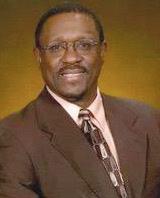
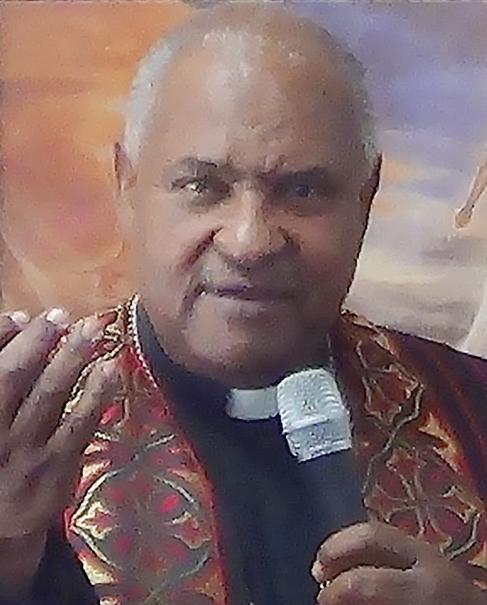
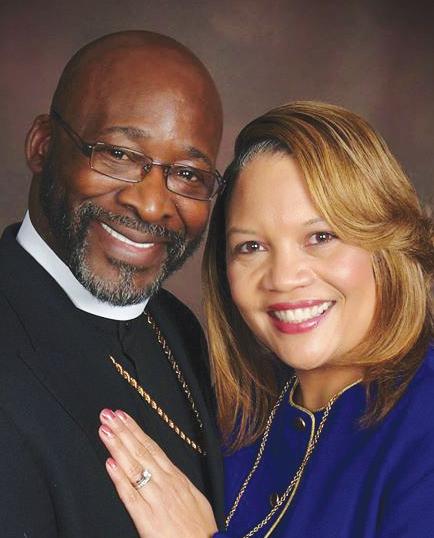

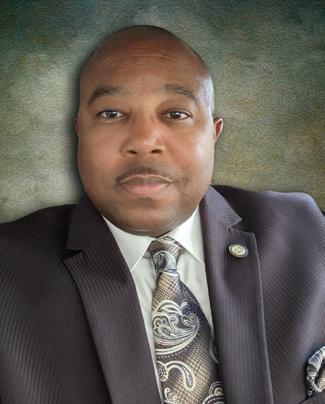

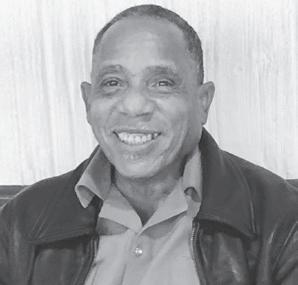
SUNRISE 01/22/1962
SUNSET 08/05/2024
ARRANGEMENTS BY PREFERRED CREMATION & BURIAL
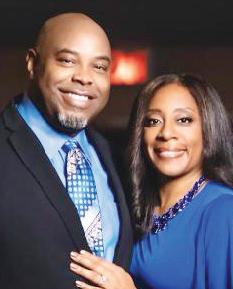
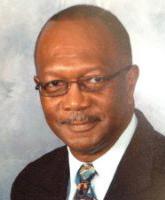
Emory Dwayne Gallegos-Landry was born on January 22, 1962, in Mercy Hospital, to Estelle ‘Pat’ Landry and Tony Gallegos. The Lord called Dwayne home on the afternoon of August 5, 2024. He was found unresponsive in his downtown San Diego apartment at 1:32 p.m. He was pronounced deceased at 1:58 p.m.
As a youth, Dwayne lived with and spent a lot of time with his beloved maternal grandmother, everyone affectionately called ‘Nana’. Nana meant everything to Dwayne, and Nana was the only person who was always there for him no matter what. He expressed that after her death, he thought of her every single day and missed her tremendously. He and his oldest brother Melvyn played Little League Baseball at Southcrest Park as kids. He loved swimming, fishing, basketball, and raising pigeons. As a teenager, Dwayne lived and grew up in ‘the Hood’. When he was 18 years old, he and his high school sweetheart, Katrina Dawkins (17), became the proud young parents of his only child, Emory Marquis.
Over the years, Dwayne never took a wife, but he dated. At one point, he lived with and lost his girlfriend Rita when she suddenly passed away due to an illness. He remained unmarried until the end of his life. In his later years, he became closer to his son and grandchildren and loved the time he spent with them. His grandchildren brought him a lot of pride and joy. He became a great-grandfather at the age of 61 and he had several ailments during this time, but stayed on the move. Dwayne enjoyed his solitude.
He was preceded in death by his father Tony Gallegos, youngest sibling Jeffrey Bedford, beloved grandmother Edna ‘Nana’ Lewis, mother Estelle Lewis, best friend Donald ‘Zink’ Richardson, and numerous other relatives.
He is survived by his only son Marquis Landry, grandchildren; Emmanuel (25), Moses (23), Semaj (21), Emari (7), Drew (5), Emon (5), and Prince (3), first great-grandchild Jeremiah (1), older sister Melvyna Landry, his eldest sibling Melvyn Landry, younger brother Paul Glen Robinson, as well as a host of nieces, nephews, cousins and other relatives.
Dwayne was always laughing, talking, and on the move in his life. Although he could be quite reserved, he could also be the loudest person in the room. He will be missed by us all. Rest in peace Dwayne, and may God bless your soul.
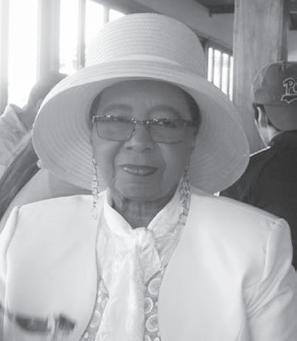
SUNRISE 03/08/1936
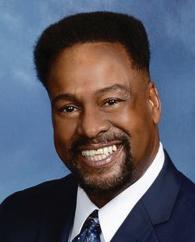
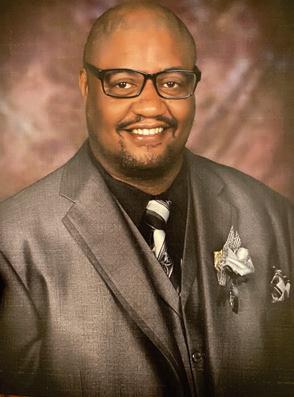
Robbie Lee Hill was born March 8, 1936, in Bolton, Mississippi, to Robert and Willie Mae Graham. Robbie Lee was the oldest of 11 children. Robbie was dedicated to her family, displayed by her unwavering drive to help. Robbie helped her parents care for her younger siblings and even took a job while in high school to help the family. Robbie Lee was a visionary and a self-starter.
One day in 1951, while working at Miss Hattie’s Cafe, Robbie noticed George Hill, who was captivated by her beauty and would often stop by as he worked at the Booker T. Theater across the street. Upon relentless bombardment of compliments and ordered meals, Robbie became George’s answer to prayer and helpmate on April 4, 1955. George joined the Navy, and they were off to start a new adventure together. The journey began in Jackson, Mississippi, where Robbie Lee gave birth to Marian Hill (Foster) and Dorene Hill (Smith). They then moved to Baltimore, Maryland, Oakland, California, where Judy Renea Hill (Flenoid) was born, and in 1965, they settled in San Diego, CA, where she gave birth to George L. Hill Jr. and Robert Lemont Hill. George retired as a Master Chief in 1985. She held down the home and faithfully served 34 years along with him as a Navy wife.
She lived her life according to scripture. She was a helper to her husband, a mother to her children, and a keeper of her house. Robbie was instrumental in rearing her grandchildren and great-grandchildren. She would host weekly Bible study for the family where Pastor Foster would teach. It was her joy to cook and bake for every holiday and watch her family enjoy her food. Robbie Lee always made herself available to guide, talk, teach, listen and was extremely trustworthy. Her house was full of laughter and joy when the family got together. Her goal was to ensure that her family knew our Lord and Savior Jesus Christ and stayed close together.
Robbie Lee served the Lord with gladness. She served as a Deacon’s Wife, Choir coordinator, motherboard member and never missed an opportunity to serve. Robbie Lee’s wisdom was unrivaled. She would always tell us to, “Get mad and get glad”, instructing us to always move forward through the difficult times that life will throw at us. In 1996, Robbie Lee became a business owner. She came up with the idea to open a music business in her community that would serve the youth. Robbie Lee loved to be at S.D.Y.A.M.A and serve the kids. She loved to see the children develop in their music and arts.
God called Robbie Lee home on August 13, 2024.
Robbie Lee Hill is survived by her siblings; Robert Graham, Annie Mae Kellum, Albertha McDavid, Lillian Morris, Hubbard Graham, Bettye Graham, and Authurine Graham, 5 children, 10 grandchildren, 18 great-grandchildren, extended family, and a host of others that she loved and cared for.
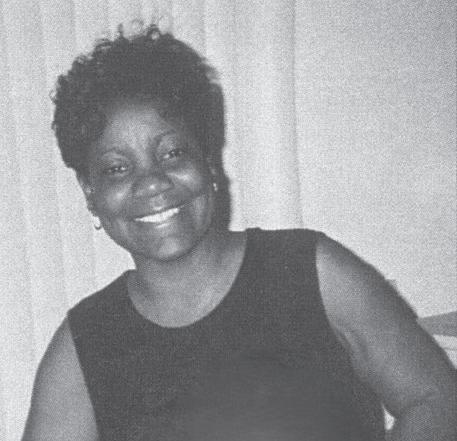
ARRANGEMENTS BY ANDERSON RAGSDALE MORTUARY
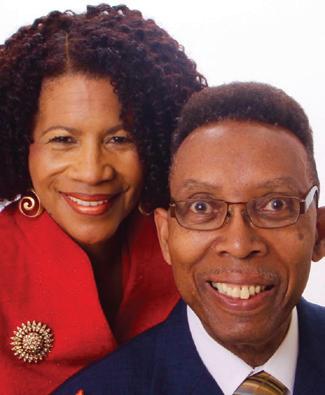
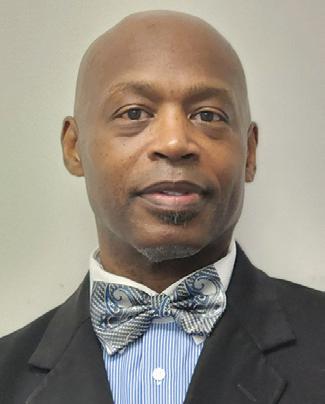
Rosemarie (Rose) Wilson was born on August 20, 1954, in Norfolk, Virginia, to Seavens Holder and Marie O'Neil. She was the middle of eight children and grew up in a loving household that valued kindness and hard work. At an early age, Rose accepted Christ as her Lord and Savior and was a devoted Christian.
Rose attended and graduated from Point Loma High School. Her passion for learning and commitment to pursuing knowledge led her to continue her educational endeavors at San Diego State University. Rose graduated from San Diego State University with a Bachelor's in Science and again, with a Masters in Psychology. She later attended National University's PhD program.
Rose was driven by a deep passion for mental health awareness. As an active member of National Alliance for Mental Illness (NAMI), Rose used her own experiences to advocate tirelessly for those in need through her powerful public speaking and writing. Rose organized countless workshops, support groups and awareness campaigns. Her words resonated with many, offering hope and understanding to those struggling in silence. Rose combined her love for mental health with her passion for education and began working in the social service field, having worked for the Department of Rehabilitation and Corrections, State of California Employment Development Department, Community Research Foundation and San Diego States Research Foundation.
Rose was a woman of extraordinary strength and resilience, who single-handedly raised her four children with unwavering love. She faced life challenges head-on with determination and grace. She worked tirelessly, often holding down a job and attending school, to ensure her children never went without. Every sacrifice she made was done out of love and dedication to providing a better life for her family. Her children were her world, and she poured all her energy into giving them the best possible start to life. She taught them values of hard work, love, and the importance of education and always putting their needs above her own. Her legacy lives on in the strength and success of her children, who were shaped by her untiring love and courage.
Rose, a beloved mother, sister, aunt, grandmother, great-grandmother and friend, passed on July 9, 2024 at the age of 69 in Chula Vista, CA. Rose is survived by her brothers; Donald Ray and Marcus, sister Deborah Selena Holder, children; Donald Robinson (Terra), Marcus Wilson (Candace) Marquitta Barnes (Elmo) and Marissa Adams (Anthony), grandchildren; Jordan, Marcel, Donald, Mikayla, Tiana, Leilani, Elijah, Daron, Jalen, Jadah, Eugene, Mackenzie, MaryAnn, Zaiden, Deshawn, Kayliegh, Makisig, and Rosella, great-grandchildren; Levi, Zaiden, D'Angelo, and Kario, and a host of nieces, nephews, relatives and friends.

Those we love are never really lost to us we feel them in so many special ways through friends they always cared about and dreams they left behind, in beauty that they added to our days… in words of wisdom we still carry with us and memories that never will be gone… Those we love are never really lost to us For everywhere their special love lives on.
By Lianne Kolirin CNN
Connie Chiume, the veteran South African actress who starred in the 2018 Marvel movie “Black Panther,” has died aged 72.
Her family confirmed her death at a Johannesburg hospital in a short statement published on social media.
In a brief announcement on Instagram on Tuesday, August 6th, they said: “The Chiume family regrets to inform you of the passing of the International Acclaimed award winning actress Connie Chiume.
Chiume, who played tribal leader Zawavari in both “Black Panther” and its 2022 sequel, “Black Panther: Wakanda Forever,” was a household name in her native South Africa.
Paying tribute to her on X, the South African government posted: “Our heartfelt condolences to the family,

friends, and colleagues of multiaward winning and legendary actress Connie Chiume. Her outstanding work will always be remembered. #RIPConnieChiume.”
Chiume was born in South Africa in 1952 to a Malawian father and a Zulu mother, according to her profile on the website of her agency, MLA. Before embarking on a career in showbiz that spanned more than 45 years, she trained as a nurse and worked as a teacher.
Her first foray into the world of entertainment came in 1977 when she joined a musical show called “Sola Sola,” which toured Israel and Greece. She went on to rack up a host of credits on both stage and screen, including in the popular South African TV drama “Gomora.”
In a tribute on Instagram, MLA wrote: “We are all shocked and devastated at the passing of our beloved Connie. As the sun sets on this deeply sad day we will share more about Connie, her wonderful life and her incredible success in the industry in the weeks to come.We were all blessed to have known her. Connie’s family have asked for privacy during this difficult time.”
She was predeceased by her parents; Seavens and Marie Holder, and brothers; Seavens, Willaim Roger, Danny Eugene, and Micheal James.
Her love, warmth and selflessness will be deeply missed by all who had the privilege of knowing her, though she is no longer with us, her spirit will live on in our hearts forever. LOVING Mother ~ Grandmother ~Sister ~ Aunt ~ Friend.

County Fire/CAL FIRE are enhancing wildfire protection in Dulzura under the California Wildfire Mitigation Program. This program, funded by FEMA and Cal OES, offers free home retrofits and defensible space to protect against wildfires, especially for low- and moderate-income households. Recent work included clearing brush and upgrading vulnerable home materials. To apply, visit our website.
The Exchange Pavilion in Plaza de Panama, Balboa Park, held its grand opening on August 17th. It features a curving yellow wall supported by a white metal frame. Designed to resemble the San Diego-Tijuana border wall but with a welcoming gap, it symbolizes community unity.
As part of the World Design Capital 2024, this
pavilion highlights binational collaboration and features lectures and learning opportunities. It includes an electronic ticker displaying poems instead of stock prices. Visit the World Design Capital website for more details.

On their first day of class, students in Southwestern College’s Vocational Nursing Program were met with an unexpected and generous surprise. The Guy and Olive Lookabaugh Foundation announced that it would fully cover the tuition for all 30 students, amounting to $2,400 per student, for the entirety of their three-semester program. Additionally, each student received a monogrammed stethoscope as part of this substantial gift.
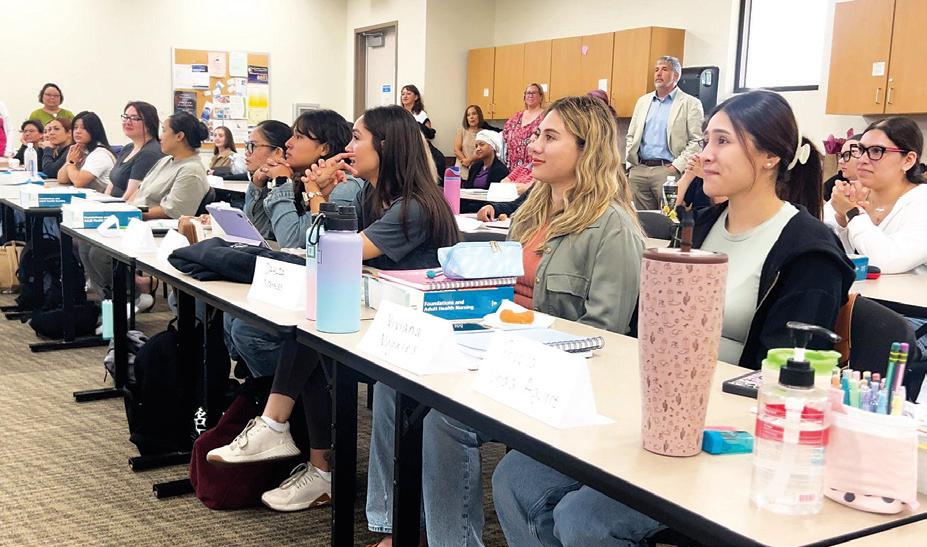
This donation not only alleviates the financial burden for the students but also supports their training in local assisted living facilities, aligning with the Lookabaugh Foundation’s commitment to enhancing California’s healthcare system. The foundation has also expressed its intention to extend this support to future cohorts of the nursing program.
The County has introduced a new tool to assist people in finding affordable housing. An interactive website and map now show affordable housing developments funded by the County, including both existing and under-construction projects.
Users can search by location and access details such as income limits, eligible populations (e.g., veterans, families), unit sizes, and available bedrooms. Listings include direct links to developers’ websites and contact information, featuring waiting list links.
The map aligns with the County’s Housing
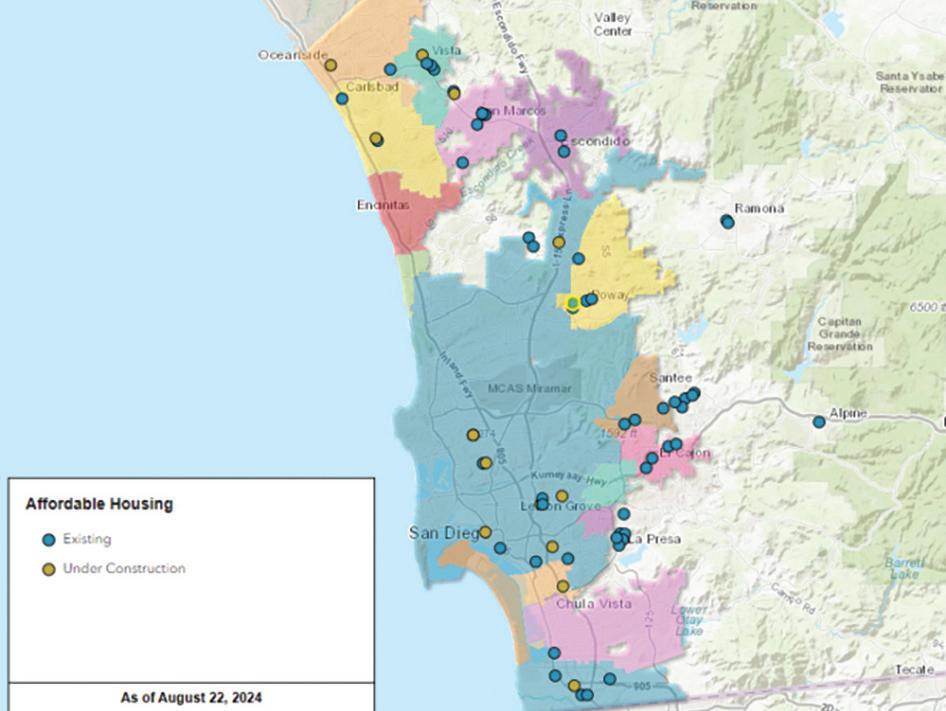
Blueprint, addressing the regional housing crisis. Since 2017, the County has invested $310 million in affordable housing, resulting in 2,100 units opened and 3,300 more in development. Visit the County News Center website to view the interactive affordable housing map.
A New PATH and Moms United to End the War on Drugs are highlighting accidental overdoses with vigils on International Overdose Awareness Day (August 31). The campaign promotes naloxone and medication-assisted treatment, providing education and naloxone kits nationwide.
In San Diego, a vigil at Crown Point Park on August 31 at 6:15 pm will feature a Tree of Remembrance, decorated tombstones, and naloxone distribution. Speakers include Gretchen Bergman and April Ella.
Since 2014, A New PATH has reported 3,202 overdose reversals. International Overdose Awareness Day, started by the Salvation Army in 2001, honors lost lives and advocates for overdose prevention.
Events:
• San Diego, CA: Aug. 31, 6:15-8:15 pm, vigil at Crown Point Park. Info: april@anewpath.org
• San Diego, CA: Sept. 5, 6:30 pm, grief support meeting. Info: 720-822-2932
• Los Angeles, CA: Aug. 29, event with training. Info: alex@center4living.org
• Pittsburgh, PA: Aug. 30, prayer service at Trinity Episcopal Cathedral. Info: 412-281-8362
• National Tour: 2024 Trail of Truth, memorializing those lost to substance use. Info: www.trailoftruth.org

By Tihut Tamrat Contributing Writer
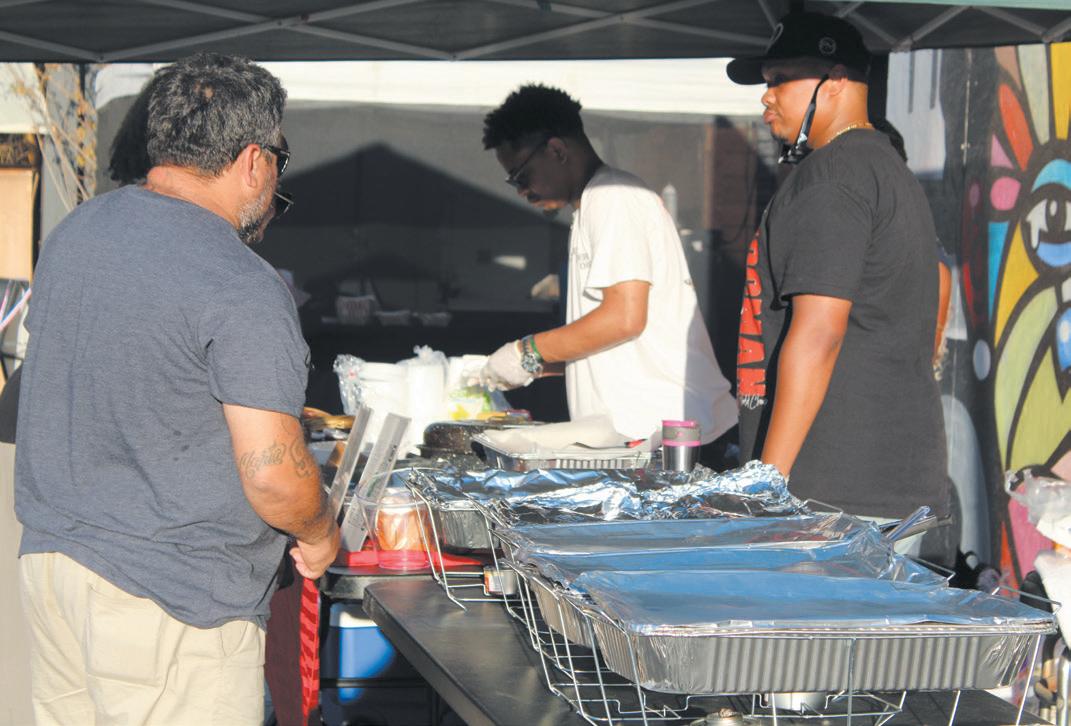
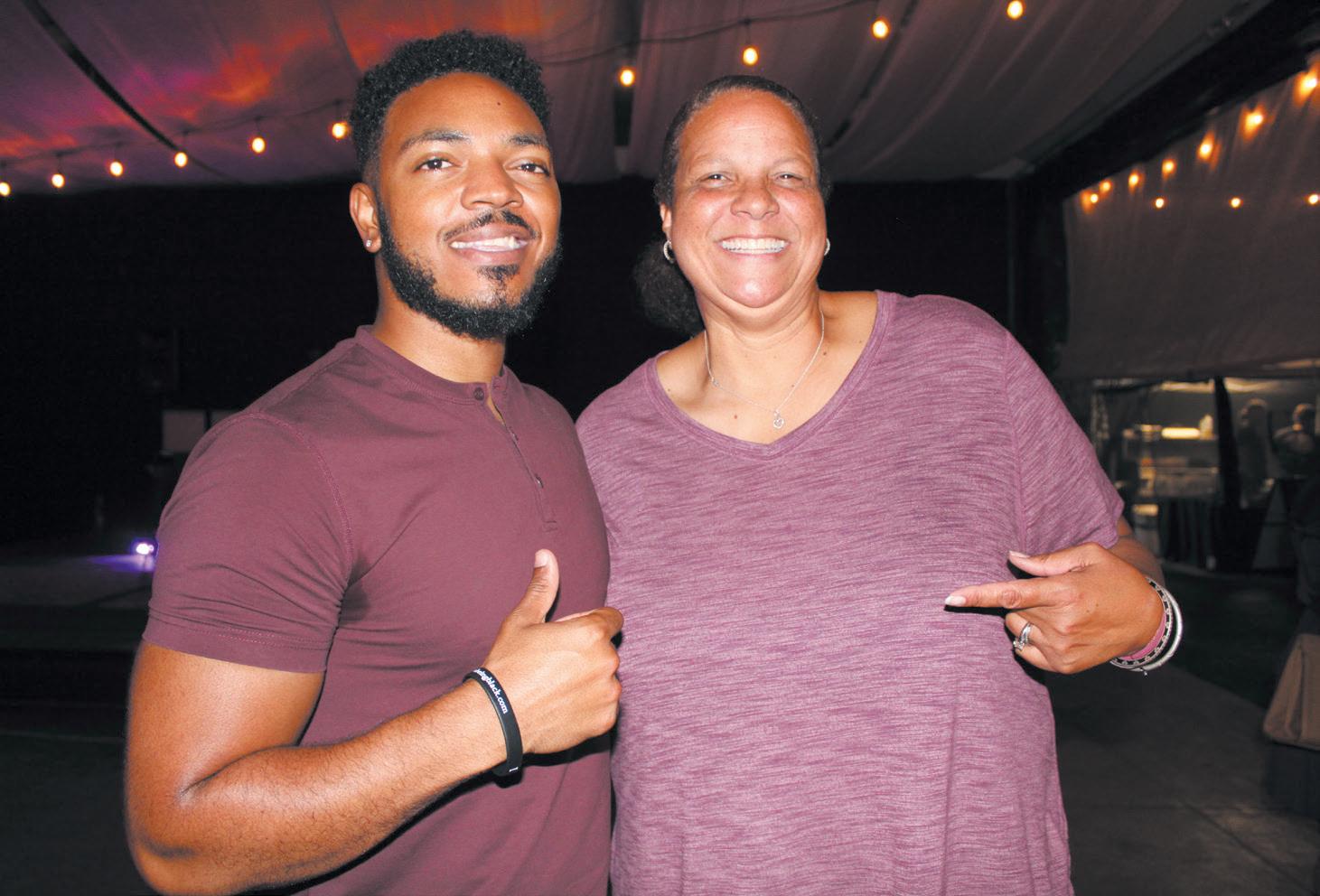
Sm all business owner Imani T. Robinson, and Commissioner for City of San Diego Arts and Culture Commission, hosted the Soul Food Comedy Fest at the SoapFactory on Thursday, August 15th, from 5-9pm. A night filled with lots of love, laughter, and great food, entertained the Southeastern community and those who stopped by to check out where the noise was coming from.
Imani by Faith Production provided the soulfood that had everyone coming back for seconds. This event was put on in commemoration of the survivors of the floods that happened in January, to celebrate and recognize the community for their outstanding response. Guests of honor Robert and Judi Banks, members of the Southeastern community, were amongst the survivors of the January 22nd floods and were highlighted throughout the fest.
“It starts with us coming together because Superman is not coming to save us. I wanted us to come together with two things that

working class of San Diego delving into race, identity, heritage, and the passage of time that reflected personal and collective experiences amidst change.
Stand up acts Geoff Grooms, and longtime supporter of Voice & Viewpoint , Lisa

Blacks Arts and Culture District Plans
By Tihut Tamrat
Contributing Writer
The San Diego Black Arts and Culture District (SDBACD), a complement to the existing Black culturally significant institutions throughout the city, serves to unify the various elements that make up the Black experience. In this instance, mural installations to Black-ify the city.
On August 20th, the SDBACD committee, along with interested community members, met to decide what they would like to see reflected in their community starting with a mural installation. Plans to have a mural installed on the gymnasium wall of the Encanto Recreation Center facing the Marie Widman Park has been a topic of conversation for the committee as permits, funds, and artists are required for it to happen.

Gilbert, had everyone holding their stomachs in laughter with their hilarious and quick-witted bits. From an overzealous tandem paraglide to elf on the shelf, Christmas Chucky, Gilbert's tales of motherhood.
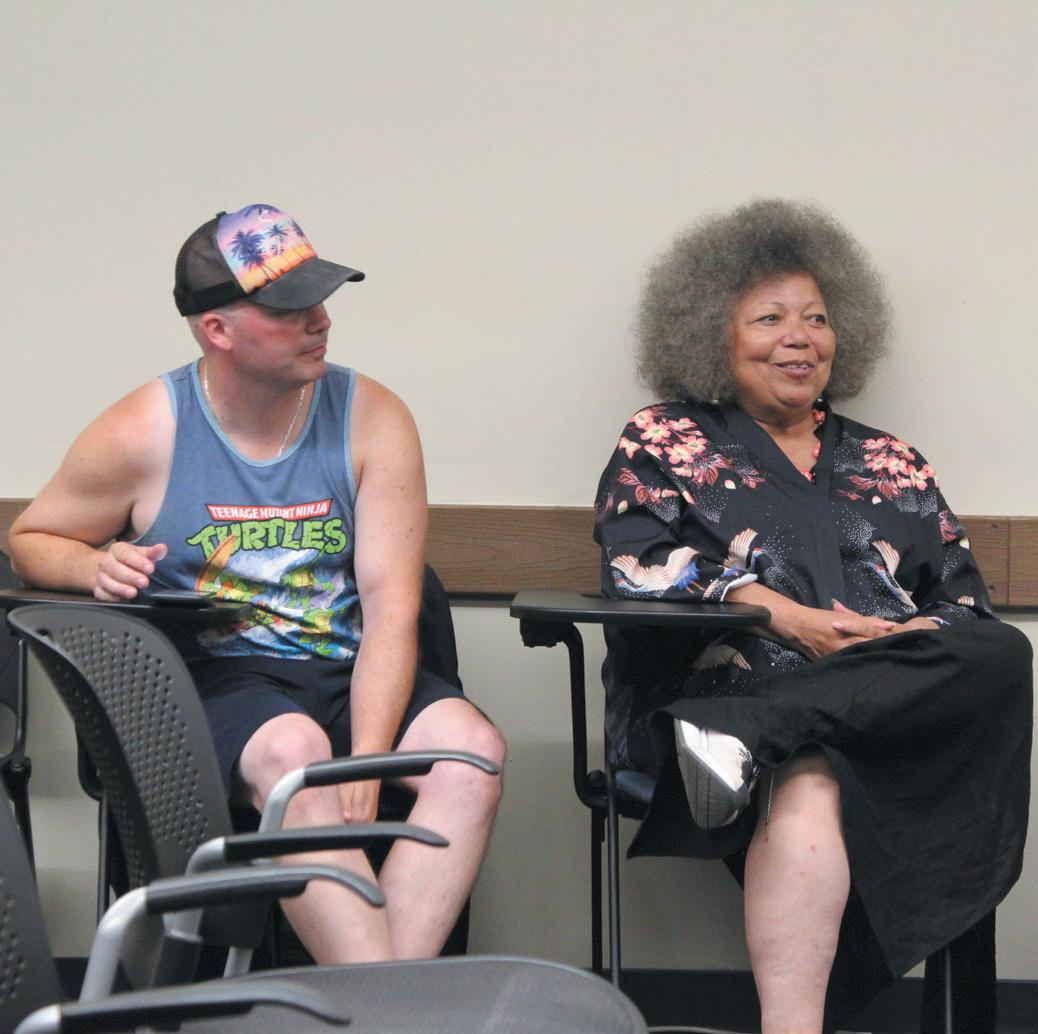
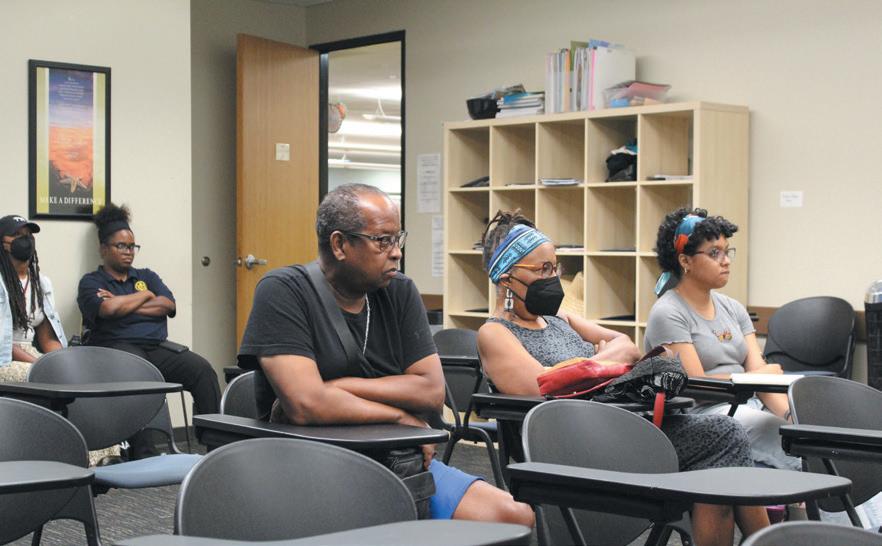
Dr. Denise Rodgers, President of the Committee and Professor of Art History at San Diego Mesa College, shared a powerpoint presentation on the significance of murals and art in cities to get community participants minds to turn in thinking about what they would like to see represented in the Encanto mural.
“When you’re walking through the neighborhood you’re learning about your history, you’re learning about significant people that have transformed your life or the life of someone that is part of your nationality. So I’ve gathered a few thematically so we can think about how we want to transform our neighborhood and the message we want to represent San Diego and the Black Arts and Culture District,” motions Dr. Rodgers to examples of mural installations that had significance to other ethnically diverse neighborhoods.

Ideas surrounding the implementation of San Diegan sports legends, and multiple generations got tossed around, along with who the community would like to do the mural, including costs and what needs to be done in preparation for the mural to come alive.
“There are so many talented artists here in this city. To find an artist that is here from this community and feel their spirit and what comes out of it is totally different than you get from anybody anywhere else,” a native Southeastern San Diegan resident passionately shared.
This event brought good people together and smiles to faces as everyone enjoyed each other’s company for a night of comedy and great soul food, regretting to attend work the next day.

Deputy Sheriff-Lateral

Licensed Mental Health Clinician, Sheriff's Detentions
Stock Clerk
Veterinarian
Wastewater Plant Operator III
Road Maintenance Worker
Assistant Surveyor
Civil Engineer-Wastewater
Program Coordinator-Department of Public Works
Librarian I
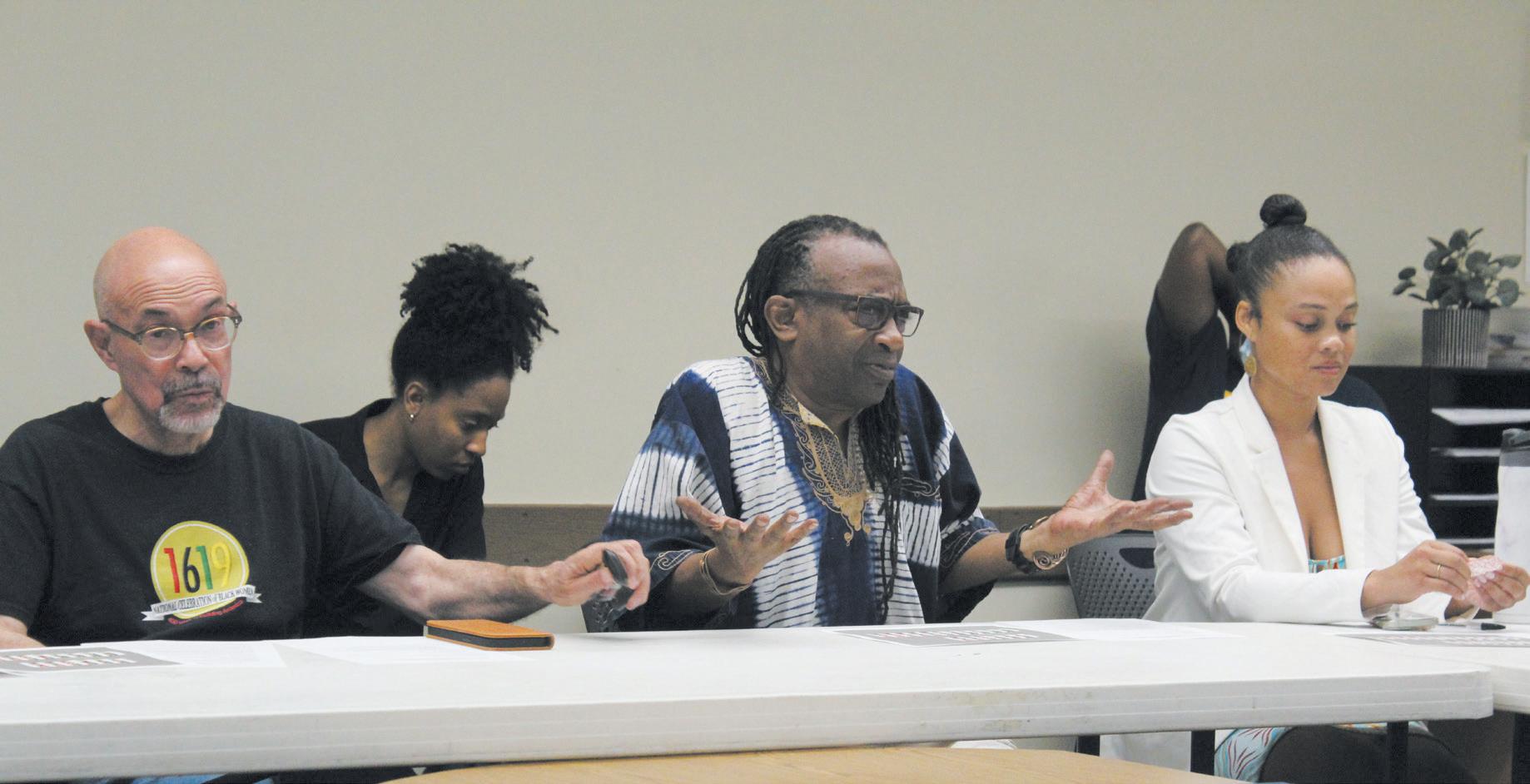
If you’d like to be a part of the process, join the Black Arts and Culture District in their next committee meeting on the third Tuesday of every month. Let your voice be heard.
Sheriff's Emergency Services Dispatcher Trainee






By Maxim Elramsisy and Antonio Ray Harvey
“On behalf of the people, on behalf of every American regardless of party, race gender, or the language your grandmother speaks, on behalf of my mother and everyone who has ever set out on their own unlikely journey, on behalf of Americans like the people I grew with, people who work hard, chase their dreams and look out for one another, on behalf of everyone whose stories can only be written in the greatest nation on Earth, I accept your nominations to be President
of the United States,” Harris told the DNC delegates, officials and guests gathered at the United Center in Chicago.
Among Democratic leaders on hand to witness Harris’s historic nomination were a number of California state officials, the Golden State’s DNC delegates, members of the California Legislative Black Caucus (CLBC) and Gov. Gavin Newsom, who officially delivered California’s 482 delegate votes for Harris on the floor of the convention.
“Kamala Harris has always done the right thing — a champion for voting rights, civil rights,
LGBTQ rights, the rights for women and girls,” said Newsom, who was flanked by House Speaker Emerita Nancy Pelosi (D-CA-11) and Congressmember Maxine Waters (D-CA-43).
Pelosi, whose district includes San Francisco where Harris served as District Attorney, endorsed the Vice President and thanked President Biden for his leadership and “vision for a fairer America.”
During her address on the first night of the convention, Waters mentioned Fannie Lou Hamer, the revered civil rights, voting rights and women’s right’s activist who spoke at the DNC in 1964.
“When the dust settles in November, Americans of all stripes have elected her President of the United States, I know (Harris) will be thinking about Fannie Lou Hamer who I happen to know is one of Kamala’s heroes,” Waters said.
Congressmember Barbara Lee (D-CA-12), who served as official timekeeper of the convention, said she was humbled to have a front row seat to history “as we nominate my friend and a child of the East Bay.”
Other California state leaders at the convention were state constitutional officers Malia Cohen, Controller; Shirley Weber, Secretary of


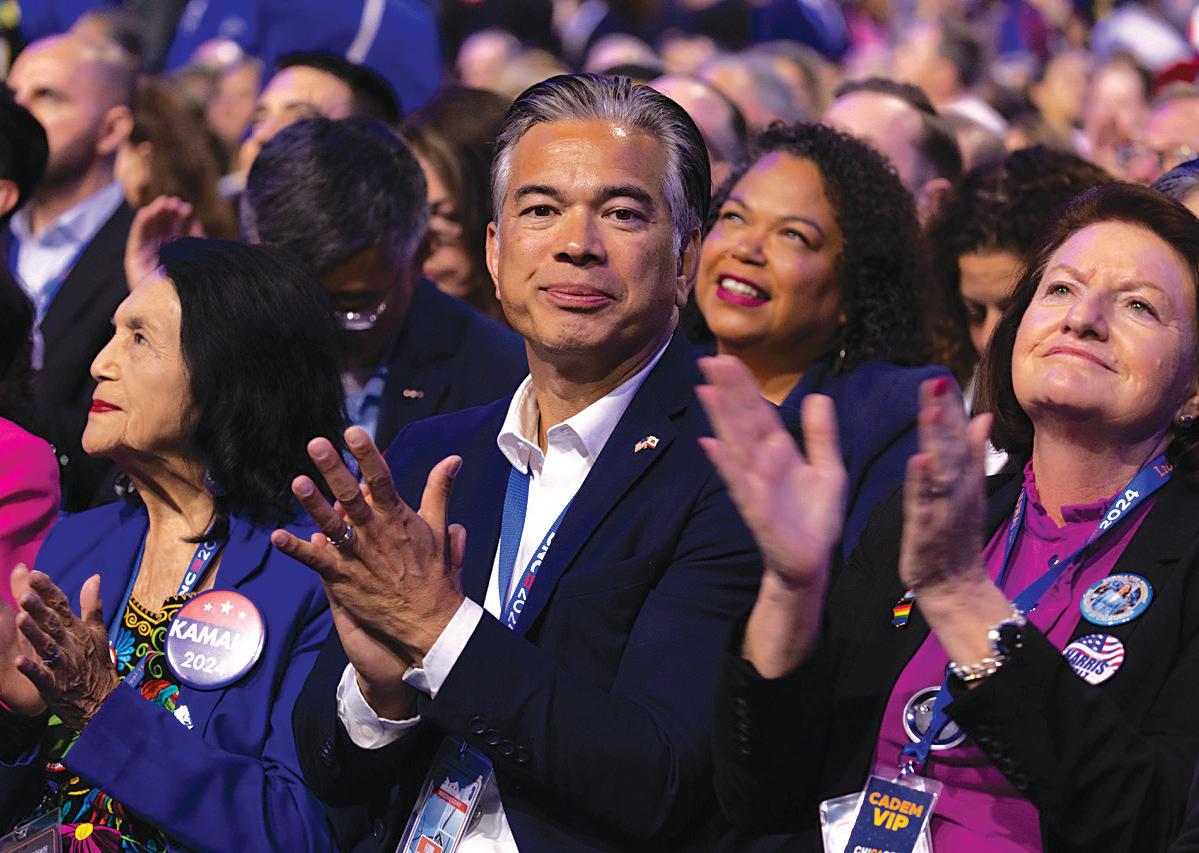
State; and Tony Thurmond, Secretary of Public Instruction.
Thurmond spoke to California Black Media on the floor of the convention after Minnesota Gov. Tim Walz, a former teacher and high school football coach, accepted the Democratic Party’s vice-presidential nomination on Aug. 21.
“If you want to get something done, you want a teacher, you want an educator,” Thurmond told CBM, referring to Walz.
of coalitions required, we can do hard things when we choose to do them together.”
Attorney General Rob Bonta contrasted Harris’ speech with Trump’s at the Republican National Convention last month in Milwaukee.
“You could really see the authenticity, the decency, goodness, the fairness, and we need a big dose of that, given the alternative,” said the Attorney General.
According to several polls, the economy and good-paying jobs are among the most important issues for voters this election year.
“In this election, one thing is clear: Workers are going to stand with candidates who have stood with us and will continue to stand with us,” said SIEU Local 221 President Crystal Irving, who is a Los Angeles native.
Los Angeles Mayor Karen Bass, who spoke the first night of the convention, praised Harris for creating the California Bureau of Children’s Justice when she was Attorney General.


“Teachers have to do everything, they have to pull things together, they have to find resources and he talked about running for congress being the underdog and finding ways to overcome those odds,” he added.
California U.S. Sen. Laphonza Butler also spoke to CBM.
“This is the leader built for this moment,” said Butler. “This is a leader who knows how to do hard things. She knows that if we build the kind
Lateefah Simon, who is currently running to succeed Lee in a U.S. Congressional district that includes Oakland, spoke on the third night of the convention.
“I saw Kamala Harris holding the hands of sexual assault survivors,” said Simon, who worked for Harris for four years when she was District Attorney. “I saw scores of mothers who lost their babies to gun violence lining up day after day at the courthouse waiting to talk to Kamala because they knew that she would hear them.”
After Harris’ acceptance speech, Congressmember Sydney Kamlager-Dove (D-CA-37) said,
“Tonight, my friend and mentor Kamala Harris made history. She will make history yet again when she wins in November.”
Two days after returning home to California, Assemblymember Tina McKinnor (D-Inglewood) said she was “inspired” by her experience serving as a delegate.
Praising Harris’ record, Mckinnor posted on X, “Her work on transformative justice, particularly ensuring people have the resources they need after being released from prison, is crucial in our fight against recidivism in California.”
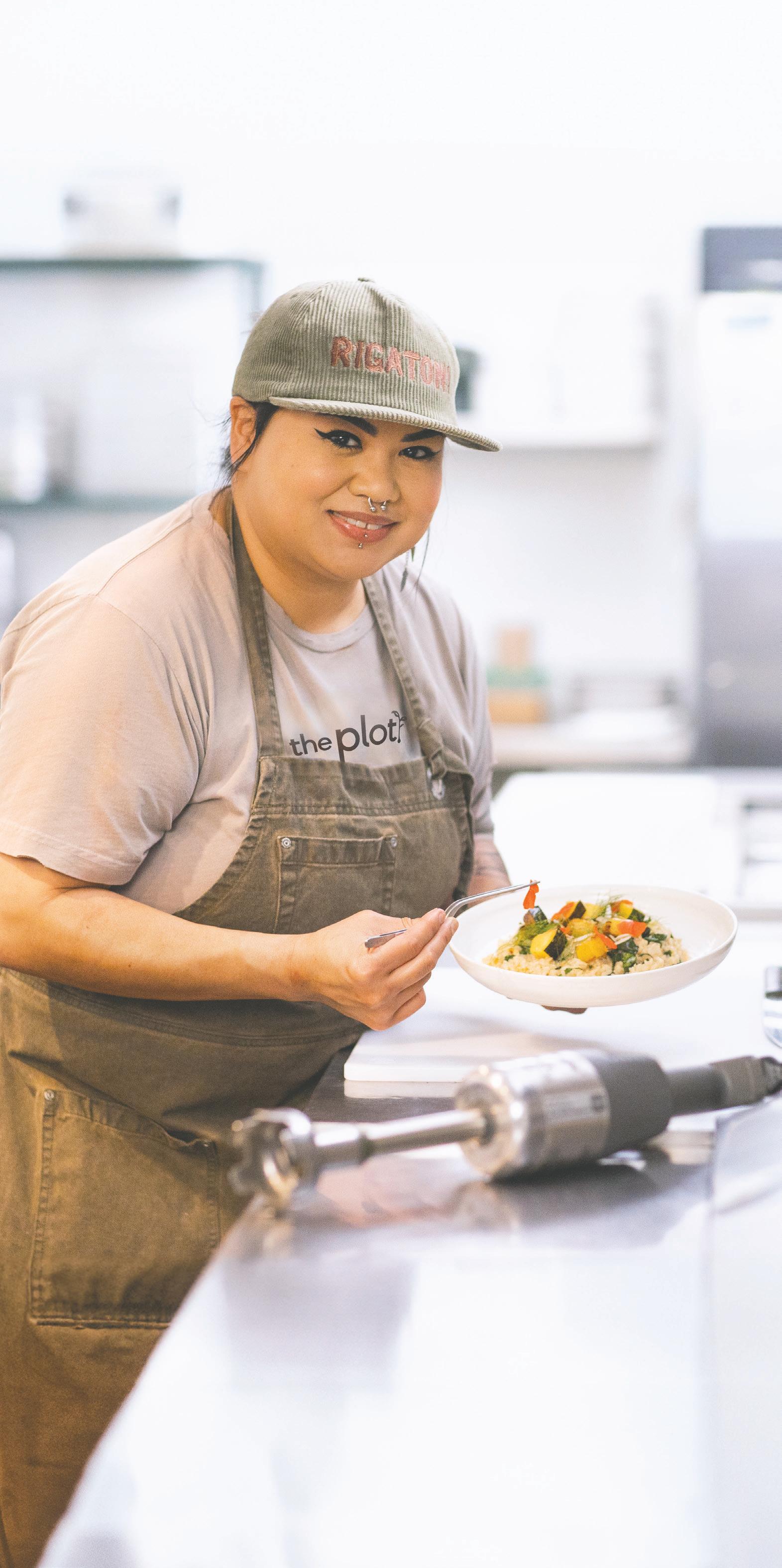
SDG&E is proud to support The Plot, in Oceanside, where sustainability is always on the menu. Their zero-waste approach and our net-zero initiatives are serving up a healthier environment for our communities every day. Learn more at SDGEtoday.com
We Bring Good Energy.

















FICTITIOUS BUSINESS NAME STATEMENT
Tutuli Mexican Eatery Located at:
10425 Tierrasanta Blvd. Suite 107 San Diego, CA 92124
County of San Diego
This business is A Married Couple Registrant has not yet begun to transact business under the name(s) above
This business is hereby registered by the following:
Alejandro Ochoa
10425 Tierrasanta Blvd. Suite 107 San Diego, CA 92124
Isabel Ochoa
10425 Tierrasanta Blvd. Suite 107 San Diego, CA 92124
This statement was filed with the Recorder/County Clerk of San Diego County on August 26, 2024
This fictitious business name will expire on August 26, 2029 8/29, 9/05, 9/12, 9/19
FICTITIOUS BUSINESS
NAME STATEMENT 2024-9017244
Fictitious business name(s): Libra Lashes and More Cosmic Care
Intuitive Path Massage Located at: 4240 Kearny Mesa Rd. San Diego, CA 92111 County of San Diego
10820 Macouba Place San Diego, CA 92124 County of San Diego
This business is A General Partnership Registrant has not yet begun to transact business under the name(s) above
This business is hereby registered by the following: Ciara Garcia 10820 Macouba Place San Diego, CA 92124 State of Incorporation/ Organization: California
Melody Killebrew
10820 Macouba Place San Diego, CA 92124
This statement was filed with the Recorder/County Clerk of San Diego County on August 23, 2024
FICTITIOUS BUSINESS NAME STATEMENT 2024-9017179
Fictitious business name(s): Little Dribbler
Q's Drone Zone
at: 1447 South 41st San Diego, CA 92113 County of San Diego This business is An Individual Registrant has not yet begun to transact business under the name(s)
This fictitious business name will expire on August 23, 2029 8/29, 9/05, 9/12, 9/19
FICTITIOUS BUSINESS NAME STATEMENT 2024-9017243
Fictitious business name(s): Mission Hills Therapy Located at: 4240 Kearny Mesa Rd. San Diego, CA 92111 County of San Diego
This business is An Individual
The first day of business was: 07/31/2007
This business is hereby registered by the following: Nancy Auvil
3911 Cleveland Ave. 33400 San Diego, CA 92163 State of Incorporation/ Organization: California
This statement was filed with the Recorder/County Clerk of San Diego County on August 23, 2024
This fictitious business name will expire on August 23, 2029 8/29, 9/05, 9/12, 9/19
FICTITIOUS BUSINESS NAME STATEMENT 2024-9015631
Fictitious business name(s): Dulce Motivos LLC Located at:
325 W. Washington St. San Diego, CA 92103 County of San Diego
This business is A Limited Liability Company
The first day of business was: 07/31/2024
This business is hereby registered by the following: Dulce Motivos LLC
325 W. Washington St. San Diego, CA 92103 State of Incorporation/ Organization: California
This statement was filed with the Recorder/County Clerk of San Diego County on July 31, 2024
This fictitious business name will expire on July 31, 2029 8/29, 9/05, 9/12, 9/19
FICTITIOUS BUSINESS NAME STATEMENT 2024-9016962
Fictitious business name(s): Loafing Around Located at: 5008 Cimarron Way San Diego, CA 92154 County of San Diego
This business is Co-Partners
The first day of business was: 05/10/2024
This business is hereby registered by the following:
Julia Savannah Hollis
5008 Cimarron Way San Diego, CA 92154
Yesenia Hollis
5008 Cimarron Way San Diego, CA 92154
This statement was filed with the Recorder/County Clerk of San Diego County on August 20, 2024
This fictitious business name will expire on August 20, 2029 8/29, 9/05, 9/12, 9/19
FICTITIOUS BUSINESS NAME STATEMENT 2024-9017193
Fictitious business name(s): Doll Face Gear
Game Related Apparel Located at:
1286 University Ave. Ste. 1108 San Diego, CA 92103 County of San Diego
This business is A Limited Liability Company
The first day of business was: 07/17/2024
This business is hereby registered by the following: MSZP LLC 1286 University Ave. Ste. 1108 San Diego, CA 92103 State of Incorporation/ Organization: California
This statement was filed with the Recorder/County Clerk of San Diego County on August 22, 2024
This fictitious business name will expire on August 22, 2029 8/29, 9/05, 9/12, 9/19
FICTITIOUS BUSINESS NAME STATEMENT 2024-9016964
Fictitious business name(s): Flora Spa
Ivy Massage Located at: 7034 El Cajon Blvd. San Diego, CA 92115 County of San Diego 3685 Merrimac Ave. San Diego, CA 92117 County of San Diego
This business is An Individual
The first day of business was: 08/20/2024
This business is hereby registered by the following: Haiping Xin 7034 El Cajon Blvd. San Diego, CA 92115
This statement was filed with the Recorder/County Clerk of San Diego County on August 20, 2024 This fictitious business name will expire on August 20, 2029 8/29, 9/05, 9/12,
2024-9016485
Fictitious business name(s):
Eyemazing Beauty Bar Located at: 6602 El Cajon Blvd. Suite F San Diego, CA 92115 County of San Diego
7367 Waite Drive La Mesa, CA 91941 County of San Diego
This business is An Individual
The first day of business was: 09/19/2019 This business is hereby registered by the following: Kyrra Lashay Key 7367 Waite Drive La Mesa, CA 91941
This statement was filed with the Recorder/County Clerk of San Diego County on August 13, 2024
This fictitious business name will expire on August 13, 2029 8/29, 9/05, 9/12, 9/19
FICTITIOUS BUSINESS NAME STATEMENT
2024-9014588
Fictitious business name(s): Philosophical and Cognitive Therapy PACT Located at:
2535 Camino Del Rio South Suite 145 San Diego, CA 92108 County of San Diego
This business is An Individual Registrant has not yet begun to transact business under the name(s) above
This business is hereby registered by the following: Julia Elizabeth Baum 2535 Camino Del Rio South Suite 145 San Diego, CA 92108
This statement was filed with the Recorder/County Clerk of San Diego County on July 16, 2024
This fictitious business name will expire on July 16, 2029 8/22, 8/29, 9/05, 9/12
FICTITIOUS BUSINESS NAME STATEMENT 2024-9016853
Fictitious business name(s): Paragon Acquisitions International
Located at:
600 W. Broadway #700 San Diego, CA 92101 County of San Diego
This business is An Individual
The first day of business was: 08/14/2024
This business is hereby registered by the following: Sean Michael Linch
600 W. Broadway #700 San Diego, CA 92101
This statement was filed with the Recorder/County Clerk of San Diego County on August 16, 2024
This fictitious business name will expire on August 16, 2029 8/22, 8/29, 9/05, 9/12
FICTITIOUS BUSINESS NAME STATEMENT 2024-9015762
Fictitious business name(s): Pacific VA Solutions
Located at:
340 Oxford St. #6101
San Diego, CA 91911
County of San Diego
This business is An Individual
Registrant has not yet begun to transact business under the name(s) above
This business is hereby registered by the following: Anthony Jacob Montanez
340 Oxford St. #6101 San Diego, CA 91911
This statement was filed with the Recorder/County Clerk of San Diego County on August 01, 2024
This fictitious business name will expire on August 01, 2029 8/22, 8/29, 9/05, 9/12
FICTITIOUS BUSINESS NAME STATEMENT 2024-9014909
Fictitious business name(s): SillyTs And Things Located at: 9045 Judicial Dr. (1509) San Diego, CA 92122 County of San Diego This business is An Individual
The first day of business was: 06/12/2024
This business is hereby registered by the following: Oren. N. Barforough 9045 Judicial Dr. (1509) San Diego, CA 92122
This statement was filed with the Recorder/County Clerk of San Diego County on July 19, 2024
This fictitious business name will expire on July 19, 2029 8/22, 8/29, 9/05, 9/12
FICTITIOUS BUSINESS
NAME STATEMENT 2024-9016489
Fictitious business name(s): Loea Wellness
Loea Herbals Located at: 509 S. Cedros Ave. Suite D Solana Beach, CA 92075 County of San Diego
3290 Luna Ave. San Diego, CA 92117 County of San Diego
This business is An Individual
The first day of business was: 08/01/2023
This business is hereby registered by the following: Brandi Shanae Holmes 3290 Luna Ave. San Diego, CA 92117 State of Incorporation/ Organization: California
This statement was filed with the Recorder/County Clerk of San Diego County on August 13, 2024
This fictitious business name will expire on August 13, 2029 8/22, 8/29, 9/05, 9/12
FICTITIOUS BUSINESS NAME STATEMENT
2024-9016023
Fictitious business name(s): Brio Ventures
Brio Consulting Brio Oasis Located at: 1636 Fuerte Knolls Lane
El Cajon, CA 92020 County of San Diego
This business is A Married Couple
The first day of business was: 07/01/2024
This business is hereby registered by the following: Melissa Burton 1636 Fuerte Knolls Lane El Cajon, CA 92020
Frank Burton 1636 Fuerte Knolls Lane El Cajon, CA 92020
This statement was filed with the Recorder/County Clerk of San Diego County on August 06, 2024
This fictitious business name will expire on August 06, 2029 8/22, 8/29, 9/05, 9/12
FICTITIOUS BUSINESS
NAME STATEMENT
2024-9015144
Fictitious business name(s): Wat Sovann Kiry Cambodian Buddhist Society Located at: 3864 52nd Street San Diego, CA 92105
County of San Diego
This business is A Corporation
The first day of business was: 08/23/1985
This business is hereby registered by the following: Sovann Kiry Cambodian Buddhist Society Inc. 3864 52nd Street San Diego, CA 92105 State of Incorporation/ Organization: California
This statement was filed with the Recorder/County Clerk of San Diego County on July 24, 2024
This fictitious business name will expire on July 24, 2029 8/22, 8/29, 9/05, 9/12
FICTITIOUS BUSINESS NAME STATEMENT
2024-9016486
Fictitious business name(s): Holistic Woods
Holistic Woods Herbalism



2024-9016269
Fictitious business name(s): Muxlowmakes Located at: 7219 Mohawk St. San Diego, CA 92115
County of San Diego This business is An Individual
Go Namaste Yourself Located at: 859 Britain St. San Diego, CA 92114 County of San Diego
P.O. Box 910887
San Diego, CA 92191
County of San Diego
This business is An Individual The first day of business was: 06/29/2013
This business is hereby registered by the following: Morgan Melissa Woods P.O. Box 910887 San Diego, CA 92191
This statement was filed with the Recorder/County Clerk of San Diego County on August 13, 2024
This fictitious business name will expire on August 13, 2029 8/22, 8/29, 9/05, 9/12
FICTITIOUS BUSINESS NAME STATEMENT 2024-9014311
Fictitious business name(s): Nae Nae's Mac And Cheese With A Twist
Black Queen Luxury Car Service Located at: 8234 University Ave. La Mesa, CA 91942
County of San Diego
This business is An Individual Registrant has not yet begun to transact business under the name(s) above
This business is hereby registered by the following: Jenea Nevokia Mckenzie 8234 University Ave. Apt 4 La Mesa, CA 91942
This statement was filed with the Recorder/County Clerk of San Diego County on July 31, 2024
This fictitious business name will expire on July 31, 2029 8/22, 8/29, 9/05, 9/12
FICTITIOUS BUSINESS NAME STATEMENT 2024-9016075
Fictitious business name(s): Santafevalley Located at: 11425 Palabra Cir. San Diego, CA 92124 County of San Diego
This business is An Individual Registrant has not yet begun to transact business under the name(s) above
This business is hereby registered by the following: Xuanmai Thi Phung 11425 Palabra Cir. San Diego, CA 92124
This statement was filed with the Recorder/County Clerk of San Diego County on August 07, 2024
This fictitious business name will expire on August 07, 2029 8/22, 8/29, 9/05, 9/12
FICTITIOUS BUSINESS NAME STATEMENT 2024-9016448
Fictitious business name(s): Jim Dandy Services Located at: 2945 Baily Ave. San Diego, CA 92105 County of San Diego
This business is An Individual
The first day of business was: 08/01/2024
This business is hereby registered by the following: James T. Scobba 2945 Baily Ave. San Diego, CA 92105
This statement was filed with the Recorder/County Clerk of San Diego County on August 13, 2024
This fictitious business name will expire on August 13, 2029 8/22, 8/29, 9/05, 9/12
FICTITIOUS BUSINESS NAME STATEMENT
The first day of business was: 05/01/2023 This business is hereby registered by the following: Samuel Muxlow 7219 Larwood Rd. San Diego, CA 92115 State of Incorporation/ Organization: California
This statement was filed with the Recorder/County Clerk of San Diego County on August 09, 2024 This fictitious business name will expire on August 09, 2029 8/22, 8/29, 9/05, 9/12
FICTITIOUS BUSINESS NAME STATEMENT 2024-9015602
Fictitious business name(s): Sakata Mini Mart Located at: 6181 University Ave. San Diego, CA 92115 County of San Diego
This business is An Individual
The first day of business was: 07/01/2024
This business is hereby registered by the following: Mohamed Said 6181 University Ave. San Diego, CA 92115
This statement was filed with the Recorder/County Clerk of San Diego County on July 31, 2024
This fictitious business name will expire on July 31, 2029 8/15, 8/22, 8/29, 9/05
FICTITIOUS BUSINESS NAME STATEMENT 2024-9016384
Fictitious business name(s): Clementina's Sweet Located at: 1650 Myrtle Ave. Apt. 1 San Diego, CA 92103 County of San Diego This business is conducted by: An Individual The first day of business was: 02/26/2019
This business is hereby registered by the following: Esmeralda Jimenez 1650 Myrtle Ave. Apt. 1 San Diego, CA 92103
This statement was filed with the Recorder/County Clerk of San Diego County on August 12, 2024
This fictitious business name will expire on August 12, 2029 8/15, 8/22, 8/29, 9/05
FICTITIOUS BUSINESS NAME STATEMENT 2024-9015876
Fictitious business name(s): Tarragon Located at: 2752 B St. Unit 210 San Diego, CA 92102 County of San Diego
This business is conducted
Invitations for Bids (IFB)
North Park/Mid-City Bikeways: University Bikeway
Solicitation No.: 4250092 CIP 1223081 Federal Aid Project No.: ATPL-6066(151)
The San Diego Association of Governments (SANDAG) is seeking contractors to deliver the North Park/Mid-City Bikeways: University Bikeway project. This project is constructing approximately 2.8 miles of Class II and Class IV bikeway along University Avenue between Estrella Avenue and 69th Street within the City of San Diego and approximately 0.25 miles of Bike Boulevard improvements on Estrella Avenue between Orange Avenue and University Avenue. Roadway improvements are required to accommodate the bikeway. Features include raised concrete medians, concrete curb and gutter, asphalt, concrete dike, bus islands, a protected intersection, street lighting, traffic
traffic signal modifications. Additive alternate A consists of pavement rehabilitation and associated curb ramps, traffic signal modifications and other appurtenant work associated with rehabilitating the roadway along University Avenue. The work will also include the procurement of all materials and performing all other work necessary to complete the work in accordance with the project plans and specifications. This project is federally funded and has a DBE goal of 23%. The Engineer’s Estimate is $23,896,800.75. This project is subject to the Community Benefits Agreement (CBA).
The Optional Pre-Bid Meeting will be held virtually via Microsoft Teams on August 27, 2024, from 2:00 to 4:00 PM PST/PDT. The deadline for Bid submittal is October 3, 2024 by 2:00 PM PST/PDT unless otherwise stated in an addendum. A copy of the solicitation documents and any communications or addenda can be accessed via www.bidnetdirect.com/sandag.
Notice of PUBLIC HEARING DRAFT 2025 REGIONAL TRANSPORTATION IMPROVEMENT PROGRAM (RTIP) AND AIR QUALITY CONFORMITY ANALYSIS
The San Diego Association of Governments (SANDAG) will hold a public hearing on September 20, 2024, to receive testimony on the draft 2025 Regional Transportation Improvement Program (RTIP), including its draft Air Quality Conformity Analysis and the 2021 Regional Transportation Plan (2021 Regional Plan) conformity redetermination.
The draft 2025 RTIP is a multi-year program of proposed major highway, arterial, transit, and non-motorized transportation projects being developed in the San Diego region from FY 2024/25 to FY 2028/29.
This public hearing also will serve to satisfy the public participation process pertaining to the development of the Program of Projects for the Federal Transit Administration Section 5307 Urbanized Area Formula Program and FTA Section 5339 Bus and Bus Facilities Formula Program, including the provision for public notice and the time established for public review and comment. A complete list of the Program of Projects is included in Chapter 3 of the draft 2025 RTIP.
The draft Conformity Analysis for the 2025 RTIP and draft conformity redetermination for the 2021 Regional Plan were released for a 35-day review and comment period on July 26, 2024. The deadline for comments is August 31, 2024.
The public hearing for the draft 2025 RTIP will be held at the SANDAG Transportation Committee meeting beginning at 9 a.m. on Friday, September 20, 2024. To participate in the meeting, please visit sandag.org . Comments should be submitted via email to clerk@sandag.org or mailed to: SANDAG, 401 B Street, Suite 800, San Diego, CA 92101. View the draft 2025 RTIP document or obtain a copy by calling (619) 699-1900. For more information visit sandag.org/RTIP
NAME STATEMENT 2024-9015445
Fictitious
The first day of business was: 11/01/2023 This business is hereby registered by the following: Pediatric Therapy Works: Speech-Language & Development Corporation 1415 Ridgeback Rd. Ste 21 Chula Vista, CA 91910 State of Incorporation/ Organization: California
This statement was filed with the Recorder/County Clerk of San Diego County on August 01, 2024
This fictitious business name will expire on August 01, 2029 8/08, 8/15, 8/22, 8/29
FICTITIOUS BUSINESS NAME STATEMENT 2024-9015653
Fictitious business name(s):
Immanuel & AnG's Financial Services LLC Located at: 7317 El Cajon Blvd #206 La Mesa, CA 91942
County of San Diego
This business is conducted by: A Limited Liability Company
The first day of business was: 03/16/2020
This business is hereby registered by the following: Immanuel & AnG's Financial Services LLC 7317 El Cajon Blvd #206 La Mesa, CA 91942 State of Incorporation/ Organization: California
This statement was filed with the Recorder/County Clerk of San Diego County on July 31, 2024
This fictitious business name will expire on July 31, 2029 8/08, 8/15, 8/22, 8/29
FICTITIOUS BUSINESS
This statement was filed with the Recorder/County Clerk of San Diego County on July 30, 2024
This fictitious business name will expire on July 30, 2029 8/08, 8/15, 8/22, 8/29
STATEMENT OF ABANDONMENT OF USE OF FICTITIOUS BUSINESS NAME 2024-9015519
Fictitious business name(s) to be abandoned: San Diego Snorkeling Located at: 3939 Mission Boulevard, Apt. H San Diego, CA 92109 County of San Diego Mailing Address: 864 Grand Avenue, #472 San Diego, CA 92109
This business is conducted by:
A Corporation
The Fictitious business name referred to above was filed in San Diego County on: 04/06/2021 and assigned File no. 2021-9006337
The fictitious business name is being abandoned by: March V Adventures 3939 Mission Boulevard, Apt. H San Diego, CA 92109 State of Incorporation/ Organization: California
This statement was filed with the Recorder/County Clerk of San Diego County July 30, 2024 8/08, 8/15, 8/22, 8/29
SUPERIOR COURT OF CALIFORNIA 330 West Broadway San Diego, CA 92101 Hall of Justice Courthouse 24CU007353C
Petitioner or Attorney: Alireza Aghamahmoudi
To All Interested Persons: Petitioner Alireza Aghamahmoudi filed a petition with this court for a decree changing names as follows:
PRESENT NAME: Alireza Aghamahmoudi
Fictitious business name(s): RTA Travels Located at: 2302 Blackton Dr. San Diego, CA 92105 County of San Diego
This business is conducted by:
An Individual
The first day of business was: 07/29/2024
This business is hereby registered by the following: Rhonda T. Adams 2302 Blackton Dr. San Diego, CA 92105
This statement was filed with the Recorder/County Clerk of San Diego County on July 29, 2024
This fictitious business name will expire on July 29, 2029 8/08, 8/15, 8/22, 8/29
FICTITIOUS BUSINESS NAME STATEMENT 2024-9015448
Fictitious business name(s): Toni Renas Getaways Located at: 2716 Isham Springs Ct. Spring Valley, CA 91977
County of San Diego
This business is conducted by: An Individual
The first day of business was: 06/11/2024
This business is hereby registered by the following: Primera Motors LLC 2220 Otay Lakes Rd. 502-245 Chula Vista, CA 91915 State of Incorporation/ Organization: California
This statement was filed with the Recorder/County Clerk of San Diego County on July 29, 2024
This fictitious business name will expire on July 29, 2029 8/08, 8/15, 8/22, 8/29
FICTITIOUS BUSINESS NAME STATEMENT 2024-9015553
Fictitious business name(s): Bright Star Academy Located at: 5430 Lenox Drive San Diego, CA 92114 County of San Diego
This business is conducted by:
An Individual The first day of business was: 07/25/2024
This business is hereby registered by the following: Febe Ester Portillo 5430 Lenox Drive San Diego, CA 92114
Gender and for Issuance
of New Birth Certificate (JC Form #NC-230) may be required. Contact the agency(ies) who issue the legal document that needs to be changed, to determine if a certified copy is required.
A certified copy of Decree Changing Name (JC Form #NC-130) or Decree Changing Name and Order Recognizing Change of Gender and for Issuance of New Birth Certificate (JC Form #NC-230) may be obtained from the Civil Business Office for a fee. Petitioners who are seeking a change of name under the Safe at Home program may contact the assigned department for the information on obtaining certified copies.
If all the requirements have not been met as of the date specified, the court will mail the petitioner a written order with further directions.
If a timely objection is filed, the court will set a hearing date and contact the parties by mail with further directions.
A RESPONDENT
OBJECTING TO THE NAME CHANGE MUST FILE A WRITTEN OBJECTION AT LEAST TWO COURT DAYS (excluding weekends and holidays) BEFORE THE DATE SPECIFIED. Do not come to court on the specified date. The court will notify the parties by mail of a future hearing date
Any Petition for the name change of a minor that is signed by only one parent must have this Attachment served along with the Petition and Order to Show Cause, on the other nonsigning parent, and proof of service must be filed with the court.
The address of the court is:
330 West Broadway San Diego, CA 92101 8/29, 9/05, 9/12, 9/19
SUPERIOR COURT OF CALIFORNIA
330 West Broadway San Diego, CA 92101 24CU007208C
PROPOSED NAME: Alex Arthur
THE COURT ORDERS that all persons interested in this matter appear before this court at the hearing indicated below to show cause, if any, why the petition for change of name should not be granted. Any person objecting to the name changes described above must file a written objection that includes the reasons for the objection at least two court days before the matter is scheduled to be heard and must appear at the hearing to show cause why the petition should not be granted. If no written objection is timely filed, the court may grant the petition without a hearing.
NOTICE OF HEARING
Date: October 08, 2024 Time: 8:30 A.M. Dept. 61
(To appear remotely, check in advance of the hearing for information about how to do so on the court's website. To find your court's website go to www.courts.ca.gov/find-mycourt.htm)
NO HEARING WILL OCCUR ON THE DATE SPECIFIED IN THE ORDER TO SHOW CAUSE.
The court will review the documents filed as of the date specified on the Order to Show Cause for Change of Name (JC Form #NC-120).
If all requirements for a name change have been met as of the date specified, and no timely written objection has been received (required at least two court days before the date specified), the Petition for Change of Name (JC Form #NC-100) will be granted without a hearing. One copy of the Order Granting the Petition will be mailed to the petitioner.
To change a name on a legal document, including a birth certificate, social security card, driver license, passport, and other identification, a certified copy of Decree Changing Name (JC Form #NC-130) or Decree Changing Name and Order Recognizing Change of
Petition will be mailed to the petitioner.
To change a name on a legal document, including a birth certificate, social security card, driver license, passport, and other identification, a certified copy of Decree
Changing Name (JC Form #NC-130) or Decree
Changing Name and Order
Recognizing Change of Gender and for Issuance of New Birth Certificate (JC Form #NC-230) may be required. Contact the agency(ies) who issue the legal document that needs to be changed, to determine if a certified copy is required.
A certified copy of Decree
Changing Name (JC Form #NC-130) or Decree
Changing Name and Order Recognizing Change of Gender and for Issuance of New Birth Certificate (JC Form #NC-230) may be obtained from the Civil Business Office for a fee. Petitioners who are seeking a change of name under the Safe at Home program may contact the assigned department for the information on obtaining certified copies.
If all the requirements have not been met as of the date specified, the court will mail the petitioner a written order with further directions.
If a timely objection is filed, the court will set a hearing date and contact the parties by mail with further directions.
A RESPONDENT
OBJECTING TO THE NAME CHANGE MUST FILE A WRITTEN OBJECTION AT LEAST TWO COURT DAYS (excluding weekends and holidays) BEFORE THE DATE SPECIFIED. Do not come to court on the specified date. The court will notify the parties by mail of a future hearing date
specified on the Order to Show Cause for Change of Name (JC Form #NC-120).
If all requirements for a name change have been met as of the date specified, and no timely written objection has been received (required at least two court days before the date specified), the Petition for Change of Name (JC Form #NC-100) will be granted without a hearing. One copy of the Order Granting the Petition will be mailed to the petitioner.
To change a name on a legal document, including a birth certificate, social security card, driver license, passport, and other identification, a certified copy of Decree Changing Name (JC Form #NC-130) or Decree
Changing Name and Order Recognizing Change of Gender and for Issuance of New Birth Certificate (JC Form #NC-230) may be required. Contact the agency(ies) who issue the legal document that needs to be changed, to determine if a certified copy is required.
A certified copy of Decree Changing Name (JC Form #NC-130) or Decree
Changing Name and Order
Recognizing Change of Gender and for Issuance of New Birth Certificate (JC Form #NC-230) may be obtained from the Civil Business Office for a fee. Petitioners who are seeking a change of name under the Safe at Home program may contact the assigned department for the information on obtaining certified copies.
If all the requirements have not been met as of the date specified, the court will mail the petitioner a written order with further directions.
If a timely objection is filed, the court will set a hearing date and contact the parties by mail with further directions.
Petitioner or Attorney: Phung Kim Thong & Wong
To All Interested Persons: Petitioner Phung Kim Thong & Wong Trinh On Behalf of Minor filed a petition with this court for a decree changing names as follows:
PRESENT NAME: My Gia Thong
PROPOSED NAME: Amy Trinh
THE COURT ORDERS that all persons interested in this matter appear before this court at the hearing indicated below to show cause, if any, why the petition for change of name should not be granted. Any person objecting to the name changes described above must file a written objection that includes the reasons for the objection at least two court days before the matter is scheduled to be heard and must appear at the hearing to show cause why the petition should not be granted. If no written objection is timely filed, the court may grant the petition without a hearing.
NOTICE OF HEARING
Date: October 09, 2024 Time: 8:30 A.M. Dept. 61
(To appear remotely, check in advance of the hearing for information about how to do so on the court's website. To find your court's website go to www.courts.ca.gov/find-mycourt.htm)
NO HEARING WILL OCCUR ON THE DATE SPECIFIED IN THE ORDER TO SHOW CAUSE.
The court will review the documents filed as of the date specified on the Order to Show Cause for Change of Name (JC Form #NC-120).
If all requirements for a name change have been met as of the date specified, and no timely written objection has been received (required at least two court days before the date specified), the Petition for Change of Name (JC Form #NC-100) will be granted without a hearing. One copy of the Order Granting the
Any Petition for the name change of a minor that is signed by only one parent must have this Attachment served along with the Petition and Order to Show Cause, on the other nonsigning parent, and proof of service must be filed with the court.
The address of the court is: 330 West Broadway San Diego, CA 92101 8/29, 9/05, 9/12, 9/19
SUPERIOR COURT OF CALIFORNIA 330 W. Broadway San Diego, CA 92101 Hall of Justice 24CU006836C
Petitioner or Attorney: Eduardo Chavez AKA Jorge Chavez
To All Interested Persons: Petitioner Eduardo Chavez AKA Jorge Chavez filed a petition with this court for a decree changing names as follows:
PRESENT NAME: Eduardo Chavez AKA Jorge Chavez
PROPOSED NAME: Jorge Edward Macias Chavez
THE COURT ORDERS that all persons interested in this matter appear before this court at the hearing indicated below to show cause, if any, why the petition for change of name should not be granted. Any person objecting to the name changes described above must file a written objection that includes the reasons for the objection at least two court days before the matter is scheduled to be heard and must appear at the hearing to show cause why the petition should not be granted. If no written objection is timely filed, the court may grant the petition without a hearing.
NOTICE OF HEARING
Date: October 07, 2024 Time: 8:30 A.M. Dept. C-61
(To appear remotely, check in advance of the hearing for information about how to do so on the court's website. To find your court's website go to www.courts.ca.gov/find-mycourt.htm)
NO HEARING WILL OCCUR ON THE DATE SPECIFIED IN THE ORDER TO SHOW CAUSE.
The court will review the documents filed as of the date
so on the court's website. To find your court's website go to www.courts.ca.gov/find-mycourt.htm)
NO HEARING WILL OCCUR ON THE DATE SPECIFIED IN THE ORDER TO SHOW CAUSE.
The court will review the documents filed as of the date specified on the Order to Show Cause for Change of Name (JC Form #NC-120).
If all requirements for a name change have been met as of the date specified, and no timely written objection has been received (required at least two court days before the date specified), the Petition for Change of Name (JC Form #NC-100) will be granted without a hearing. One copy of the Order Granting the Petition will be mailed to the petitioner.
To change a name on a legal document, including a birth certificate, social security card, driver license, passport, and other identification, a certified copy of Decree Changing Name (JC Form #NC-130) or Decree Changing Name and Order Recognizing Change of Gender and for Issuance of New Birth Certificate (JC Form #NC-230) may be required. Contact the agency(ies)
A RESPONDENT OBJECTING TO THE NAME CHANGE MUST FILE A WRITTEN OBJECTION AT LEAST TWO COURT DAYS (excluding weekends and holidays) BEFORE THE DATE SPECIFIED. Do not come to court on the specified date. The court will notify the parties by mail of a future hearing date
Any Petition for the name change of a minor that is signed by only one parent must have this Attachment served along with the Petition and Order to Show Cause, on the other nonsigning parent, and proof of service must be filed with the court.
The address of the court is:
330 W. Broadway San Diego, CA 92101 8/29, 9/05, 9/12, 9/19
SUPERIOR COURT OF CALIFORNIA 330 W. Broadway San Diego, CA 92101 24CU006217C
Petitioner or Attorney: Shayna Carli Amster
To All Interested Persons: Petitioner
Shayna Carli Amster filed a petition with this court for a decree changing names as follows:
PRESENT NAME: Shayna Carli Amster
PROPOSED NAME: Reagan Wexler
THE COURT ORDERS that all persons interested in this matter appear before this court at the hearing indicated below to show cause, if any, why the petition for change of name should not be granted. Any person objecting to the name changes described above must file a written objection that includes the reasons for the objection at least two court days before the matter is scheduled to be heard and must appear at the hearing to show cause why the petition should not be granted. If no written objection is timely filed, the court may grant the petition without a hearing.
NOTICE OF HEARING Date: October 03, 2024 Time: 8:30 A.M. Dept. 61
(To appear remotely, check in advance of the hearing for information about how to do
why the petition should not be granted. If no written objection is timely filed, the court may grant the petition without a hearing.
NOTICE OF HEARING
Date: September 26, 2024
Time: 8:30 A.M.
Dept. C-61
(To appear remotely, check in advance of the hearing for information about how to do so on the court's website. To find your court's website go to www.courts.ca.gov/find-mycourt.htm)
NO HEARING WILL OCCUR ON THE DATE
SPECIFIED IN THE ORDER TO SHOW CAUSE.
The court will review the documents filed as of the date specified on the Order to Show Cause for Change of Name (JC Form #NC-120).
If all requirements for a name change have been met as of the date specified, and no timely written objection has been received (required at least two court days before the date specified), the Petition for Change of Name (JC Form #NC-100) will be granted without a hearing. One copy of the Order Granting the Petition will be mailed to the petitioner.
To change a name on a legal document, including a birth certificate, social security card, driver license, passport, and other identification, a certified copy of Decree
Changing Name (JC Form #NC-130) or Decree
Changing Name and Order
Recognizing Change of Gender and for Issuance of New Birth Certificate (JC Form #NC-230) may be required. Contact the agency(ies) who issue the legal document that needs to be changed, to determine if a certified copy is required.
A certified copy of Decree
Changing Name (JC Form #NC-130) or Decree
Changing Name and Order
Recognizing Change of Gender and for Issuance of New Birth Certificate (JC Form #NC-230) may be obtained from the Civil Business Office for a fee. Petitioners who are seeking a change of name under the Safe at Home program may contact the assigned department for the information on obtaining certified copies.
If all the requirements have not been met as of the date specified, the court will mail the petitioner a written order with further directions.
If a timely objection is filed, the court will set a hearing date and contact the parties by mail with further directions.
A RESPONDENT OBJECTING TO THE NAME CHANGE MUST FILE A WRITTEN
OBJECTION AT LEAST TWO COURT DAYS (excluding weekends and holidays) BEFORE THE DATE SPECIFIED. Do not come to court on the specified date. The court will notify the parties by mail of a future hearing date
Any Petition for the name change of a
and
matter appear before this court at the hearing indicated below to show cause, if any, why the petition for change of name should not be granted. Any person objecting to the name changes described above must file a written objection that includes the reasons for the objection at least two court days before the matter is scheduled to be heard and must appear at the hearing to show cause why the petition should not be granted. If no written objection is timely filed, the court may grant the petition without a hearing.
NOTICE OF HEARING
Date: September 26, 2024
Time: 8:30 A.M. Dept. C-61
(To appear remotely, check in advance of the hearing for information about how to do so on the court's website. To find your court's website go to www.courts.ca.gov/find-mycourt.htm)
NO HEARING WILL OCCUR ON THE DATE SPECIFIED IN THE ORDER TO SHOW CAUSE.
The court will review the documents filed as of the date specified on the Order to Show Cause for Change of Name (JC Form #NC-120).
If all requirements for a name change have been met as of the date specified, and no timely written objection has been received (required at least two court days before the date specified), the Petition for Change of Name (JC Form #NC-100) will be granted without a hearing. One copy of the Order Granting the Petition will be mailed to the petitioner.
To change a name on a legal document, including a birth certificate, social security card, driver license, passport, and other identification, a certified copy of Decree Changing Name (JC Form #NC-130) or Decree
Changing Name and Order
Recognizing Change of Gender and for Issuance of New Birth Certificate (JC Form #NC-230) may be required. Contact the agency(ies) who issue the legal document that needs to be changed, to determine if a certified copy is required.
A certified copy of Decree
Changing Name (JC Form #NC-130) or Decree
Changing Name and Order Recognizing Change of Gender and for Issuance of New Birth Certificate (JC Form #NC-230) may be obtained from the Civil Business Office for a fee. Petitioners who are seeking a change of name under the Safe at Home program may contact the assigned department for the information on obtaining certified copies.
If all the requirements have not been met as of the date specified, the court will mail the petitioner a written order with further directions.
If a timely objection is filed, the court will set a hearing date and contact the parties by mail with further directions.
A RESPONDENT OBJECTING TO THE NAME CHANGE MUST FILE A WRITTEN OBJECTION AT LEAST TWO COURT DAYS (excluding weekends and holidays) BEFORE THE DATE SPECIFIED. Do not come to court on the specified date. The court will notify the parties by mail of a future hearing date
Any Petition for the name change of a minor that is signed by only one parent must have this Attachment served along with the Petition and Order to Show Cause, on the other nonsigning parent, and proof of service must be filed with the court.
The address of the court is: 330 W. Broadway San Diego, CA 92101 8/15, 8/22, 8/29, 9/05
NOTICE OF PETITION TO ADMINISTER ESTATE OF Karen Renee Willet
Case Number: 24PE002030C
To all heirs, beneficiaries, creditors, contingent
creditors, and persons who may otherwise be interested in the will or estate, or both, of Karen Renee Willet
A Petition for Probate has been filed by Cheri R. White in the Superior Court of California, County of San Diego
The Petition for Probate requests that Cheri R. White be appointed as personal representative to administer the estate of the decedent.
A hearing on the petition will be held in this court as follows: on September 17 2024, at 10:00 AM in Dept. 504 located at the Superior Court of California County of San Diego 1100 Union Street San Diego, CA 92101 Probate Division
If you object to the granting of the petition, you should appear at the hearing and state your objections or file written objections with the court before the hearing. Your appearance may be in person or by your attorney.
If you are a creditor or a contingent creditor of the decedent, you must file your claim with the court and mail a copy to the personal representative appointed by the court within the later of either (1) four months from the date of first issuance of letters to a general personal representative, as defined in section 58(b) of the California Probate Code, or (2) 60 days from the date of mailing or personal delivery to you of a notice under section 9052 of the California Probate Code. Other California statutes and legal authority may affect your rights as a creditor. You may want to consult with an attorney knowledgeable in California law.
You may examine the file kept by the court.
If you are a person interested in the estate, you may file with the court a REQUEST FOR SPECIAL NOTICE (form DE-154) of the filing of an inventory and appraisal of estate assets or of any petition or account as provided in Probate Code section 1250.
A REQUEST FOR SPECIAL NOTICE form is available from the court clerk.
Attorney for petitioner: K. Mazwell Nuyen
500 La Terraza Boulevard, Suite 150 Escondido, CA 92025
(619)-273-3397 8/22, 8/29, 9/05
The County of San Diego is inviting business owners to complete a survey to help improve its contracting outreach. The survey, open until Sept. 30, seeks feedback on bidding experiences and suggestions for enhancing the procurement process. This will help the County better support diverse local small businesses and non-profits that successfully bid or propose for County contracts. The County regularly holds free workshops to inform small businesses about how to do business with the County. The survey takes about 10 minutes and can be accessed on the County's Engage San Diego County site.
1920
‘BIRD’ PARKER IS BORN
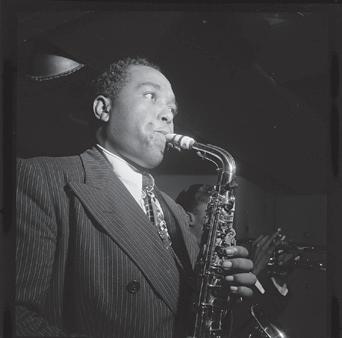

Charlie ‘Bird’ Parker, born August 29, 1920, in Kansas City, Missouri, was a revolutionary jazz musician whose bebop style redefined jazz as an intellectual pursuit. Initially struggling, Parker practiced intensely, guided by Buster Smith and inspired by Lester Young. Moving to New York in 1938, he discovered a new approach to chords that reshaped his music. His early recordings with Jay McShann and later work with Dizzy Gillespie established him as a leading figure in jazz. Despite battling addiction and erratic behavior, Parker's innovative fusion of blues, Kansas City style, and harmonic complexity left a lasting legacy. He died on March 12, 1955, at age 34.
DINAH WASHINGTON IS BORN
YOUR FILING DATE TO PUBLISH YOUR FICTICIOUS BUSINESS NAME WITH US!
WE LOOK FORWARD TO DOING BUSINESS WITH YOU!
Dinah Washington, born Ruth Lee Jones on August 29, 1924, in Tuscaloosa, Alabama, was a legendary singer known as the ‘Queen of the Blues.’ Moving to Chicago as a child, she began singing gospel and playing piano at her church. Influenced by blues and jazz, Washington joined Lionel Hampton’s band at 18 and recorded her first hit, “Evil Gal Blues,” under her new stage name. Her powerful voice led to R&B hits like “Baby Get Lost” and the Grammy-winning “What a Diff’rence a Day Makes.” Despite later struggles, she influenced many and was honored with a street named after her. Washington died on December 14, 1963, from a prescription overdose at age 39.
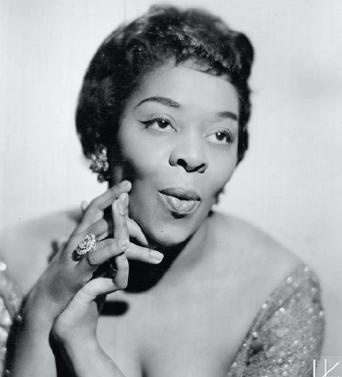


CHARLES R. STITH IS BORN
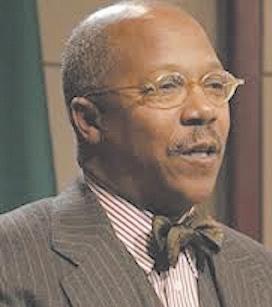
Born August 29, 1949, in St. Louis, Missouri, Stith earned degrees from Baker University, the Interdenominational Theological Center, and Harvard Divinity School. He began his ministry at Union United Methodist Church in Boston, where he became senior minister at 30 and led anti-apartheid protests. In 1987, Stith founded the Organization for the New Equality (ONE), securing $500 million for community reinvestment and influencing the Community Reinvestment Act. Appointed U.S. Ambassador to Tanzania by President Clinton in 1994, he helped stabilize U.S.-Tanzanian relations and support economic reforms. Now retired, Stith continues urban reform work in Boston and teaches at Boston University.
MICHAEL JACKSON IS BORN
Despite personal and legal troubles, Michael Jackson remains one of the most successful pop stars ever.

Born August 29, 1958, in Gary, Indiana, Jackson's early talent with The Jackson Five led to hits like “I Want You Back.” He achieved solo success with the albums Off The Wall and Thriller, the latter becoming the highest-selling album globally with over 100 million copies. Jackson’s impact included sweeping the 1984 Grammys, iconic moves like the moonwalk, and co-writing “We Are the World.” He won thirteen Grammys and was twice inducted into the Rock and Roll Hall of Fame. Jackson died on June 25, 2009.

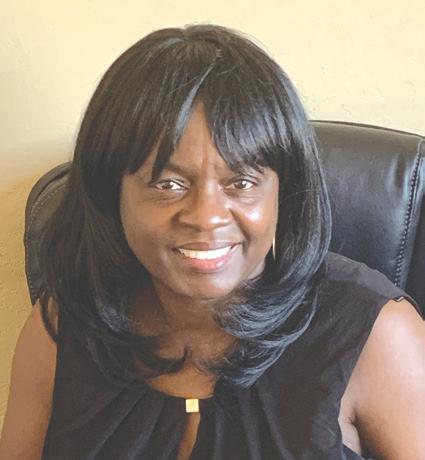

By Isobel Williams Zenger News
Women may struggle more to cope with a “gray divorce” after the age of 50 than older men, according to a new study. Researchers found that not only do older men find it easier to hop into a new relationship after a marriage breaks down later in life but they are less likely to use anti-depressants than women of the same age.
While both sexes increased their antidepressant use in the run up to and immediate aftermath of a divorce, break-up, or bereavement, women’s use of these drugs was greater than men’s.
The Chinese research team noted that due to population aging, “gray divorce” – from the age of 50 onwards – is on the rise in high-income countries, and consequently, so is repartnering.
They also noted that later life depression is relatively common, with an estimated 10 to 15 per cent of over-55s experiencing clinically significant depressive symptoms.
To get their results the team studied antidepressant use of 228,644 older people aged 50 to 70 who had gone through divorce, relationship break-up, or bereavement, and the impact of subsequent re-partnering in those who had done so.
Subsequently, 53,460 people entered into a new relationship within two to three years.
The findings, published in the BMJ Journal of Epidemiology and Community Health, showed that more men than women re-partnered after bereavement or a relationship break-up.
Both men and women whose partners died, increased their use of antidepressants – with a steep increase in the three months before and the three months afterwards, by just under 5.5 percent in men and by nearly seven percent in women. However, men managed to drop their usage back within a year to what it was 12 months prior to their breakup, whereas women began increasing their dosage again from the first year onwards.
The researchers believe that women struggle more with the dissolution of relationships as the costs fall more heavily on them and the emotional support in another relationship is stronger for men.
Professor Yaoyue Hu, of Chongqing Medical University in China, said: “The greater increases in antidepressant use associated with union dissolution among women in our study may indeed relate to the fact that the costs of union dissolution on mental health fall more heavily on women than men.
“In addition, women may take greater responsibilities to manage interpersonal relationships between the blended families, such as those with the partner’s children, which could undermine their mental health.”
Prof Hu added: “Our findings underscore the challenges of adapting to union dissolution in later life and the associated need for support.”
By Charlene Crowell Center for Responsible Lending
As consumers struggle to cope with mounting debt, a new economic report from the Federal Reserve Bank of New York includes an unprec edentd glimmer of hope. Although debt for mort gages, credit cards, auto loans and more increased by billions of dollars in the s econd quarter of 2024, stu dent loan debt decreased by $10 billion.
According to the New York Fed, borrowers ages 40-49 and ages 18-29 benefitted the most from the reduction in student loan debt.
In a separate and recent independent find ing, 57% of Black Americans hold more than $25,000 in student loan debt compared to 47% of Americans overall, according to The Motley Fool’s analysis of student debt by geography, age and race. Black women have an average of $41,466 in undergraduate student loan debt one year after graduation, more than any other group and $10,000 more than men.

ed application or actions would be required from eligible borrowers — so long as they did not opt out of the relief by the Aug. 30 deadline.
This same analysis found that Washington, D.C., residents carried the highest average federal student loan debt balance, with $54,146 outstanding per borrower. Americans holding high levels of student debt lived in many of the nation’s most populous states — including California, Texas and Florida.
If approved as drafted, the new rules would benefit over 30 million borrowers, including those who have already been approved for debt cancellation over the past three years.
The draft rules would benefit borrowers with either partial or full forgiveness in the following categories:
• Borrowers owing more now than at repayment start, benefiting nearly 23 million, mostly Pell Grant recipients
• Borrowers in repayment for decades, starting on or before July 1, 2000
• Borrowers eligible for forgiveness but not yet applied, including those not enrolled in IDR plans
• B orrowers from low-value programs or institutions failing accountability standards
“The Center for American Progress estimates the interest waiver provisions would deliver relief to roughly 6 million Black borrowers, or 23 percent of the estimated number of borrowers receiving relief, as well as 4 million Hispanic or Latino borrowers (16 percent) and 13.5 million white borrowers (53 percent),” stated the Center for American Progress in an Aug. 7 web article.
These pending regulations would further expand the $168.5 billion in financial relief that the Biden administration has already provided to borrowers:
• $ 69.2 billion for 946,000 borrowers via Public Service Loan Forgiveness (PSLF) fixes
• $ 51 billion for over 1 million borrowers with IDR payment count adjustments
• $ 28.7 billion for 1.6 million borrowers affected by school issues or court settlements
• $ 14.1 billion for 548,000 borrowers with total and permanent disabilities
• $5.5 billion for 414,000 borrowers through the SAVE Plan
More information for borrowers about this debt relief is available at StudentAid.gov/ debt-relief.
By Lauran Neergaard Associated Press
On Thursday, August 22nd, U.S. regulators approved updated COVID-19 vaccines shots designed to more closely target recent virus strains -- and hopefully whatever variants cause trouble this winter, too.
“We strongly encourage those who are eligible to consider receiving an updated COVID-19 vaccine to provide better protection against currently circulating variants.”
–Dr. Peter Mark
With the Food and Drug Administration’s clearance, Pfizer and Moderna are set to begin shipping millions of doses. A third U.S. manufacturer, Novavax, expects its modified vaccine version to be available a little later.
“We strongly encourage those who

are eligible to consider receiving an updated COVID-19 vaccine to provide better protection against currently circulating variants,” said FDA vaccine chief Dr. Peter Marks.
The agency’s decision came a bit earlier than last year’s rollout of updated COVID-19 vaccines, as a summer wave of the virus continues in most of the country. The Centers for Disease Control and Prevention already has recommended this fall’s shot for everyone age 6 months and older. Vaccinations could be available within days.
While most Americans have some
degree of immunity from prior infections or vaccinations or both, that protection wanes. Last fall’s shots targeted a different part of the coronavirus family tree, a strain that’s no longer circulating -- and CDC data shows only about 22.5% of adults and 14% of children received it.
Skipping the new shot is “a hazardous way to go,” because even if your last infection was mild, your next might be worse or leave you with long COVID symptoms, said Dr. Robert Hopkins Jr. of the National Foundation for Infectious Diseases.
This fall’s vaccine recipe is tai -
lored to a newer branch of omicron descendants. The Pfizer and Moderna shots target a subtype called KP.2 that was common earlier this year. While additional offshoots, particularly KP.3.1.1, now are spreading, they’re closely enough related that the vaccines promise cross-protection. A Pfizer spokesman said the company submitted data to FDA showing its updated vaccine “generates a sub stantially improved response” against multiple virus subtypes compared to last fall’s vaccine.
The big question: How soon to get vaccinated? This summer’s wave of COVID-19 isn’t over but the inevitable winter surges tend to be worse. And while COVID-19 vaccines do a good job preventing severe disease, hospitalization and death, protection against mild infection lasts only a few months.
People who are at high risk from the virus shouldn’t wait but instead schedule vaccinations once shots are available in their area, Hopkins advised. That includes older adults, people with weak immune systems or other serious medical problems, nursing home residents and pregnant women. Healthy younger adults and children “can get vac -
cinated anytime,” Hopkins said –although it’s OK to seek the shots in the fall, when plenty of doses will have arrived at pharmacies and doctor’s offices.
The exception: The CDC says anyone who recently had COVID-19 can wait three months after they recover before getting vaccinated, until immunity from that infection begins to wane.
Health authorities say it’s fine to get a COVID-19 and flu vaccination at the same time. The prime time for that vaccination tends to be late September through October, just before flu typically starts its cold weather climb.

By Mark Banchereau and Babacar Dione Associated Press
Media organizations in Senegal staged a blackout day on Tuesday, August 13th to protest a government crackdown they say targets them directly and is aimed at curtailing press freedoms in the West African country.
The Senegalese Council of Press Distributors and Publishers, an organization representing both private and public media companies, claimed that the government had frozen banks accounts belonging to the media outlets, allegedly for owing back taxes, “seized production equipment” and “unilaterally and illegally terminated advertising contracts.”

Television screens went blank on the main TV stations TFM, ITV and 7 TV, and radio outlets such as RFM and iradio were silent. Most of the daily newspapers did not publish August 13th’s editions, except for the government-owned Le soleil and the private pro-government WalfQuotidien and Yoor Yoor Bi.
The move comes as tensions have been rising between media organizations and the government, triggering international concerns over press freedoms in one of Africa’s most stable democracies. Separately, Senegal’s main media companies have accumulated massive debt over the years, threatening the sector’s economic survival.
By Gerald Imray Associated Press
Congo reported more than 1,000 new mpox cases in the last week up to Tuesday, August 20 as African health authorities asked for desperately needed vaccines to help fight its “growing” threat on the continent.
The World Health Organization has declared the outbreaks in Africa a global emergency.
Mpox belongs to the same family of viruses as smallpox but causes milder symptoms like fever, chills and body aches, and mostly spreads through close skin-to-skin contact, including sexual intercourse. People with more serious cases can develop lesions on the face, hands, chest and genitals.
While mpox has been reported in 12 of Africa’s 54 countries during these outbreaks, the vast central
The claims, published in an editorial in Le Quotidien on Monday, could not be independently verified. Government officials were not immediately available for comment.
“For nearly three months, the Senegalese press has experienced one of the darkest phases of its history,” the organization wrote in the editorial.
In June, Senegal’s Prime Minister Ousmane Sonko, who took office earlier this year, denounced what he described as a “misappropriation of public funds” in the media industry.
Cases of police brutality against journalists and arrests of government critics have also increased in Senegal over the past few years, according to the international watchdog Reporters Without Borders, which has urged Senegalese authorities to safeguard press freedoms.
The group, known by its French acronym RSF, says Senegal fell from the 49th to 94th place on its World Press Freedom Index, an annual ranking of countries that assesses multiple factors, including a reporter’s ability to work and security, in the last three years.
“Journalists are not sufficiently protected when doing their job and politicians are not playing their role in the matter,” Sadibou Marong, the West Africa chief at RSF, told The Associated Press. “Even worse, the political forces have jeopardized the right to inform and be informed.”

African nation of Congo has recorded by far the most cases this year. Out of a total of 18,910 cases in 2024, 94% — or 17,794 — were in Congo, the Africa Centers for Disease Control and Prevention said, with 535 of the 541 deaths reported.
The figures are likely an underestimate, as only about one in five suspected cases in Congo are being tested for mpox. Africa CDC director-general Dr. Jean Kaseya said many affected African coun -
By Mark Banchereau Associated Press
Children in West and Central Africa are increasingly exposed to extreme heat, which further endangers their health, according to a new report by UNICEF published Wednesday, August 21st.
The frequency of heatwaves in the region has more than quadrupled since the 1960s, according to the report. West Africa experienced an unprecedented heat wave earlier this year that led to a surge in deaths.
One hospital in Mali reported 102 deaths in the first four days of April, compared to 130 deaths in

“They are growing up in countries that have contributed almost nothing to climate change but are facing some of the toughest consequences,”
–David Knaute
the entire month of April last year. It’s unknown how many of the fatalities were due to the extreme weather as such data cannot be made public under the regulations imposed by the country’s military rulers.
The extreme heat is creating health concerns for children and pregnant women as it is linked to higher chances of stillbirths, low birth weight and preterm births, according to the report.
“Exposure to high levels of heat also leaves
tries had limited testing and surveillance capabilities.
Over the past week, Congo recorded 1,030 of the 1,405 new cases in Africa according to statistics provided late Tuesday, August 20 by the Africa CDC. Only 16% of the cases have been confirmed by virus tests, but the infections meet the agency’s definition of the disease.
The rising mpox case count in Africa and a new form of the virus identified in Congo that might be more easily transmitted led the WHO to declare it a global health emergency last week. Some hope this will encourage donors to share vaccines and other help to curtail the outbreaks in Africa before cases spread internationally as Sweden recorded a case of the new
children more vulnerable to developing chronic diseases and contracting infectious ones that spread in high temperatures, such as malaria and dengue,” David Knaute, a regional climate specialist for the U.N.’s children agency, told The Associated Press.
Central Africa is currently battling an outbreak of mpox, previously known as monkeypox, an infectious disease that disproportionally affects children. Officials at the Africa Centers for Disease Control and Prevention said nearly 70% of mpox cases in Congo are in children younger than 15, who also accounted for 85% of deaths. On Wednesday, the World Health Organization declared the outbreak a global emergency.
The UNICEF report called on governments to reduce carbon emissions to get rising temperatures under control and protect children.
“They are growing up in countries that have contributed almost nothing to climate change but are facing some of the toughest consequences,” Knaute said.
mpox variant first seen in eastern Congo.
Africa CDC’s Kaseya said that his organization had received a pledge of 215,000 mpox vaccines from the European Union and the vaccine maker, Bavarian Nordic, which were due to arrive next week. The United States’ aid agency said it had donated 50,000 other doses of the same vaccine to Congo. Japan has also donated some doses to Congo.
But Africa likely needs much more. Congo’s health minister said his country alone needed 3 million vaccine doses to end the outbreaks there, which have spilled into at least four nearby African countries.
The European Centre for Disease Prevention and Control recommended two weeks ago that travelers to mpox-affected areas see if
they might be eligible to get vaccinated, in a move that could increase pressure to secure mpox shots.
Kaseya said mpox was now “growing and spreading” while countries waited for doses. While Congo was clearly the country causing the most concern, he said it was noticeable that cases in nearby Burundi had more than doubled to 572 in a week.
Kaseya also asked for “solidarity” from the international community in dealing with mpox and specifically urged against any COVID-like travel bans being placed on African countries that would isolate them as the disease is not as easily transmissible.
“Don’t punish Africa,” he said. “We need you to provide appropriate support. This vaccine is expensive.”
By Michael West Contributing Writer
Dreyden Garner is poised to post another outstanding season as he embarks on his Senior season campaign as the leading Wide Receiver for the University City Centurions.

The elusive pass catcher just transferred back to the Centurions after performing very well as one of the leading receivers for Akili Smith Jr’s Lincoln High Hornets.
Max Preps posted his opening season stats from Saturday’s gamea simple, yet dominant 4 catches for 103 yards and 2 touchdowns.
Unsurprisingly, the fleet-footed receiver caught one pass that netted 55 yards. Garner accounted for nearly half of University City’s
passing yards as the Centurions stomped the Clairmont Chieftans 63-12.
Local sportswriters and journalists wax high praise on the athletic lead man. Cal Sports even wrote a noteworthy piece on Garnerhighlighting his illustrious statistics (2,506 all-purpose yards in two years-1,879 receiving yards; 543 kick return yards, 84 rush yards, 18 touchdowns, 85 tackles, and 5 interceptions). They described the 6-foot, 180-pound standout as “one of the nation's top returning Wide Receivers” with “reliable hands, exceptional separation skills, and downfield speed”.
He caught 36 passes for 812 yards and 9 touchdowns his Sophomore year at University City, then transferred to Lincoln and caught 38 passes for 896 yards and 7 touchdowns last year. The multi-talented Garner is listed as an Athlete by all the major recruiting services, who all note his kickoff return, wide receiver, and defensive back skills.
Ranked as a Four-Star wide receiver as recently as April by On3, and in December by Rivals, local experts are stunned Garner is cur-
rently ranked a Three-Star. Garner is usually so wide open that when he catches passes, his blazing speed usually nets him at least another 10-20 yards.
He is exciting to watch and is an effective player after he catches the ball. Take a look for yourself, I am sure you will agree.
Garner currently lists Oklahoma State, Arkansas, Arizona, Colorado, and San Diego State as his top five colleges to attend.