


The family of Elisa Serna has settled, but all eyes will be on the sheriffs office to see if they actually uphold their promise at addressing alarming in-custody death rates
By Macy Meinhardt
VOICE & VIEWPOINT STAFF WRITER
The County of San Diego will pay $15 million to the family of Elisa Serna over her wrongful in-custody death in 2019, the largest payout ever made from an inmate death within the San Diego Sheriff’s Department.
“Yes, we have settled, but it is with a hard and heavy heart,” said Elisa’s father, Michael Serna in a statement on their settlement.
San Diego is notoriously known for having one of the deadliest jail systems in the country.
Since 2006, 260 people have died while in San Diego custody, resulting in the county paying out $75 million in wrongful death suits over the years.
The five year litigation in trying to find answers and justice for Elisa managed to shine a light on broader systemic changes that need to be made within the San Diego jail system. Included in the settlement is a list of six conditions the family notably fought hard for, creating an impact Elisa’s loved ones hope will help save future in-custody lives.
Elisa Beatrice Serna grew up within the states


of Nevada and Southern California with her parents and five siblings. Her mom, Paloma Serna, describes a normal childhood for Elisa, with swim lessons, comic books, and learning how to ride a bike; noting her nurturing spirit and close bond with family.
“She was like my partner for a long time,” Paloma says.
See CASES page 2


Six months out, city, county, and community groups focus on long term remedies for San Diegans affected by the January floods
By Macy Meinhardt VOICE & VIEWPOINT STAFF WRITER
At its height, the Emergency Temporary Lodging Program, a patchwork effort by city, county, and community groups to support displaced flood victims, had sheltered and fed more than 2,200 San Diegans in nearly 900 households. The program expired on June 21st, raising the question—what happens now?
It’s been six months since the Southeastern region in San Diego was slammed with an
atmospheric river that flooded and damaged more than a thousand homes and businesses in District 4 and beyond.
The amount of rain and flooding was unprecedented for the region, and the storm water infrastructure in these areas had failed to have proper maintenance, leading to the disaster.
On Jan. 22 states of emergency were called in the City of San Diego, County of San Diego, and the State of California.
By Edward Henderson CALIFORNIA BLACK MEDIA
California Attorney General Rob Bonta released the 2023 Hate Crime in California Report on June 29, providing data and resources to support ongoing efforts across the state to combat violence motivated by racial or other biases.
Overall, reported hate crime events in California decreased by 7.1% from 2,120 in 2022 to 1,970 in 2023.
Despite that general downward trend, anti-Black bias incidents in the state remained the most prevalent. Year after year, this disturbing statistic holds true despite a 20.6% decrease from 652 in 2022
to 518 in 2023. The next highest reporting of bias events was 199 Anti-Hispanic or Latino instances.
“The California Department of Justice has a zero-tolerance policy when it comes to hate, and will continue working with law enforcement, elected leaders, and community organizations across the state to keep our communities safe through education, prevention, and enforcement,” said Attorney General Robert Bonta in a statement after releasing the report.
“We won’t let bigots and bad actors win. We will not let hate prevail,” said Bonta.
The report also found that prosecutions inched up by 5% (about 32 percentage points).
By Bo Tefu
According to the Attorney General’s report, from 2022 to 2023, the number of hate crimes referred for prosecution increased from 647 in 2022 to 679 in 2023. Of the 679 hate crimes that were referred for prosecution, 463 cases were filed by district attorneys and elected city attorneys for prosecution. Of the 463 cases that were filed for prosecution, 322 were filed as hate crimes and 141 were filed as non-bias motivated crimes.
The immediate response by agencies such as the San Diego Housing Commission was to establish incident command structures, implement programs for emergency hotel placements until funding from the county kicked in.
On February 12, The Emergency Temporary Lodging Program (ETL) was launched by the county to provide a series of hotel vouchers and meal delivery services to displaced victims. This program was set to expire May 11, however, with many homes still not repaired, and an outstanding need still remaining, the San Diego County Board of Supervisors voted at the end of April to extend the program for another six weeks.
See FLOOD page 2

Under California law, a hate crime is a criminal act committed in whole or in part because of a victim’s actual or perceived disability, gen-
Gov. Newsom to Michigan Voters: Support President Biden
Gov. Gavin Newsom urged Michigan Democrats to back President Joe Biden, despite wavering support in the key swing state.
Newsom asked voters in Michigan to push back on negative information about President
der, nationality, race or ethnicity, religion, sexual orientation, or association with someone with one or more of these characteristics.
See VICTIMS page 2
Biden’s debate performance against former President Donald Trump debate on June 27 in Atlanta.
Since the debate, Democrats, including some influential party leaders, have raised questions about the Biden-Harris 2024 presidential ticket based on the President’s slow responses to questions and what appeared to be memory gaps during his match-up with Trump.




Continued from cover
Elisa had been quite reserved from a young age, her mom describes, speculating that drugs eventually helped Elisa escape “her shell” when she became a teenager. Elisa battled with drug and alcohol addiction on and off beginning at the age of 17, according to Paloma.
In the years leading up to her death, Serna had been in and out of the San Diego jail system on multiple occasions for minor charges. Ultimately, on Nov. 6, 2019 Serna was arrested for alcohol theft charges and was booked into the Las Colinas Detention Facility in Santee. Upon booking, Serna admitted to the usage of alcohol, heroin and Xanax in the hours prior.
The twenty-four year old was also “pregnant, suffering from acute pneumonia and exhibiting signs of withdrawal and dehydration, including nausea, vomiting, and dry skin,” court records state.
Medical staff including Nurse Danalee Pascua and Dr. Von Lintig, were tried for manslaughter in criminal court this February, but were later acquitted of charges.
Court records also show that during this time period Deputy Reishone Foster dragged Serna by her wrists while she was unconscious across her cell and onto the bed.

The last point of contact Elisa had with jail staff was when Pascua and Deputy Lovisa went to Serna’s cell and observed as she had a seizure, struck her head and fell unconscious onto the floor of her cell. Rather than providing help and completing a vital check, they closed the door on Serna and left her slumped on the floor. Serna died in the same position approximately six minutes later.
As the Deputy District Attorney who argued this case said, ‘you would not treat a dog the way they treated Elisa Serna.’ In the finest city of the country, it is one of the worst jails in the country,” said Elisa’s family attorney, Eugene Iredale, at a press conference announcing her settlement.
the sheriff’s department in this process. Elisa did not die of an overdose as there was no evidence uncovered to suggest she had access to drugs during her stay at Las Colinas. Rather, Elisa’s death was “a result of lack of care, deliberate indifference of doctors, nurses, and correctional officers. More importantly, as a result of institutional culture, which denigrates the need of inmates and patients,” Iredale maintains.
Suffering from extreme withdrawal, Elisa was supposed to be put on a withdrawal protocol known as COWS and SIWAS, which is the national protocol standard for inmates who enter custody with an addiction to alcohol or opiates.

ment detention personnel, including medical personnel.
Serna was eventually put into the Medical Isolation unit No. 5, which is when her condition attributed to withdrawal dramatically plummeted. In the hours before her death she vomited a total of 64 separate times, suffered 11 tonic (Grand Mal) seizures, and fell 18 times while in her cell. Despite witnessing four of these seizures, medical staff declined to intervene or check her vital signs. Elisa had also asked to be taken to a hospital and given an IV before her death. Both requests were denied.
Continued from cover
With the extension expired, as of now, all households have exited the county’s ETL program, either moving back to what is left of their homes or having made other arrangements. Moving forward, community based organizations such as the Harvey Family Foundation are teaming up with other resources at the Southeastern Disaster Response Team to expedite the renovation process to make homes liveable again.
Currently the Harvey Family Foundation is sending a call out to the community for volunteers to assist with home renovations, appliance installation, plumbing, electrical services and more. These services will be free of charge and are aimed towards families who did not receive FEMA assistance.
“Many have already hit the streets, homeless and scared, while others cling to what they have left inside their hotel rooms praying for an answer. This flood wasn’t their fault yet they have to deal with the consequences of lack of maintenance to the infrastructure around our
Continued from cover
Aside from the information related to AntiBlack hate crimes, other key findings in the 2023 Hate Crime in California Report include:
• Hate crimes fell by 7.1% to 1,970 events.
• Hate crime offenses dropped by 8.9% to 2,359.
• Victims of hate crimes decreased by 6.9% to 2,303.
• Hate crimes due to racial bias went down by 21.6% to 1,017.
• Hate crimes due to religious bias rose by 30% to 394.
• Anti-Islamic bias events increased from 25 to 40.
• Hate crimes due to sexual orientation bias went up by 4.1% to 405.
Continued from cover
Newsom reassured voters in Michigan, stating that, although Biden’s debate performance had a slow start, he presented a better vision for America than his opponent. He made the statement while addressing a group of voters at the Van Buren Dems BBQ for Biden-Harris in
Residing in Montana, Elisa’s parents got the phone call the next day around 6 a.m. alerting them of their daughter’s passing.
“I remember dropping to my knees crying, screaming. My husband had to grab the phone. I was running all over the place in the house,” said Paloma as she recounted that day.
Law enforcement told Paloma and Michael that Elisa had died of an overdose–marking the start of a series of mishaps and false statements made by
community. We ask ALL OF SAN DIEGO to stand up with us to help rebuild our communities and get these families back home… Let’s not turn a blind eye because it’s not your family. Let's put ourselves in their shoes and help find a solution. we’re calling all service workers, plumbers, electricians, carpenters— all the help we can get to rebuild. It takes a village,” said Armon Harvey, in a June 24 post on Instagram.
As a part of their Flood Recovery Program For Displaced Residents, The San Diego Housing Commission entered into a contract on June 12 with the Harvey Family Foundation for $660,000 to help administer restoration services for homes on behalf of the City. The contract will run till July 2025.
Family financial assistance, and housing search assistance are also services the SDHC’s program is providing, but only for residents who were eligible to be in the original county emergency lodging program. Many residents have since complained about this eligibility gap, citing instances where SDHC officials have told them to instead start looking at homeless shelter options.
• Anti-transgender bias events rose by 10.2% to 65.
• Anti-LGBTQ+ bias events surged by 86.4%.
The disproportionate number of hate incidents recorded in the Attorney General’s report lines up with data released by the California Civil Rights Department (CRD).
Responding to a surge in hate crimes and hate incidents, in 2023, Gov. Gavin Newsom’s administration launched the “California vs. Hate” initiative, which includes a hotline and online reporting platform for victims.
“CA vs Hate is about recognizing and protecting the incredible diversity of our state and sending a clear message that hate will never be tolerated,” said Newsom.
“When California was confronted by an alarming increase in hate, we didn’t just sit back and hope it got better,” said CRD Director Kevin Kish, celebrating the one-year anniversary of the initiative in May.
South Haven, Michigan, on the Fourth of July.
“I had a lot of talking points in mind, you may have noticed if you saw me, I didn’t bring them with me. And that's to make the obvious point — things did not go as well as the campaign had hoped, and obviously did not go as well as President Biden had hoped,” said Newsom.
Newsom denied claims that he was running a
“But of course, the sheriff’s department did not do it and in Nov. 2019, Elisa died because she did not receive treatment,” said Julia Yoo, another one of the family's lawyers.
When asked why staff did not intervene, nurses and deputies believed at the time that Elisa was “faking” her symptoms and “malingering” because she wanted to stay in the medical isolation unit. This narrative proved to be crucial in the defense’ ability to highlight an overall lack of empathy and compassion that is woven into institutional culture.
As non-monetary agreements to the settlement, the sheriff’s department has agreed to enact six conditions related to changes in training, policy and practice.
1. Provide training on compassion to sheriff’s department detention personnel, including medical personnel.
2. Provide training on falls to sheriff’s depart-

During the June 24 flood relief meeting held at Jackie Robinson YMCA, SDHC president Lisa Jones confirmed this. Despite the commission “working around the clock”, Jones admits that
“We came together and launched an array of nation-leading programs to ensure all our communities feel welcome and protected. I’m incredibly proud of our state’s resilience and commitment to a California for all,” added Kish. “This work is only just beginning, but it would not be possible without the advocacy of our community partners and the foresight of our state’s Administration and Legislature.”
To combat hate crime offenses and events, Bonta urges local partners and law enforcement to review the resources highlighted in the report and to recommit themselves to leveraging them.
“Everyone has a part to play as we continue to fight prejudice and create safer communities in California,” said Bonta.
“I urge everyone to review the data and resources available and recommit to standing united against hate,” he continued. “The California Department of Justice has a zerotolerance policy when it comes to hate, and will continue working with law enforcement, elected leaders, and community organizations across
“shadow campaign” in preparation for replacing Biden as the Democratic presidential nominee.
The governor’s recent visit comes at a critical time as Michigan is a battleground state whose vote will be determinant in the outcome of this year’s presidential election.
“What I need to convince you of is not to be fatalistic, not to fall prey to all this negativity,”
3. Provide training on handoff and endorsement practices to sheriff department medical staff upon switching shifts.
4. Update current policy of checking vitals of incarcerated persons in the medical isolation unit once per shift.
5. Evaluate the feasibility of providing medical staff access to existing video monitors to further monitor patients care and condition.
6. Provide information on usage of COW and CIWA withdrawal protocols.
The family and attorneys believe that Elisa would still be alive today had this list been enacted while she was in custody.
“These changes we hope will bring compassion, accountability, and consequences to the system that the Sheriff’s Department has grievously failed in its administration of,” said Elisa's father, Michael, in a statement related to her settlement.
there is currently more need than there is funding available.
“We have a duty of care to do everything we can, just like you all do. I understand shelter isn't ideal. We’re trying to come up with anything we can to bridge the gap while we try to find longer term housing solutions for folks. We don't have vouchers sitting on the shelves. I don’t have units sitting empty in our own portfolio and even those have waiting lists too,” said Jones. With $7 million to work with, Jones states that it will stretch to have about 25-26 homes or units repaired, and provide rental assistance for six months, to include about 200 households.
“The devastation, the impact that people have had has been extraordinarily painful, and I can tell you that our case managers and my team feel that. It is truly, heart wrenching every day that there isn’t more that we can do. We’re doing everything we can to help folks,” said Jones. Applications for assistance will be taken until September. To apply and receive more information visit floodassitance.sdhc.org or call 619578-7791, and email recovery@sdhc.org.
the state to keep our communities safe through education, prevention, and enforcement.”
If you believe you or someone you know has been the victim of a hate crime, notify local law enforcement and consider taking the following steps:
* How To Report A Hate Crime: CA vs Hate is a non-emergency, multilingual hate crime and incident reporting hotline and online portal. Reports can be made anonymously by calling (833) 866-4283, or 833-8-NO-HATE, Monday to Friday from 9 a.m. to 6 p.m. PT or online at any time.
Hate acts can be reported in 15 different languages through the online portal and in over 200 languages when calling the hotline. For individuals who want to report a hate crime to law enforcement immediately or who are in imminent danger, please call 911.
For more information on CA vs Hate, please visit CAvsHate.org.
Newsom said to supporters at a Democratic campaign event. “I believe in this man. I believe in his character. I believe that he has been one of the most transformative presidents in our collective lifetime.”
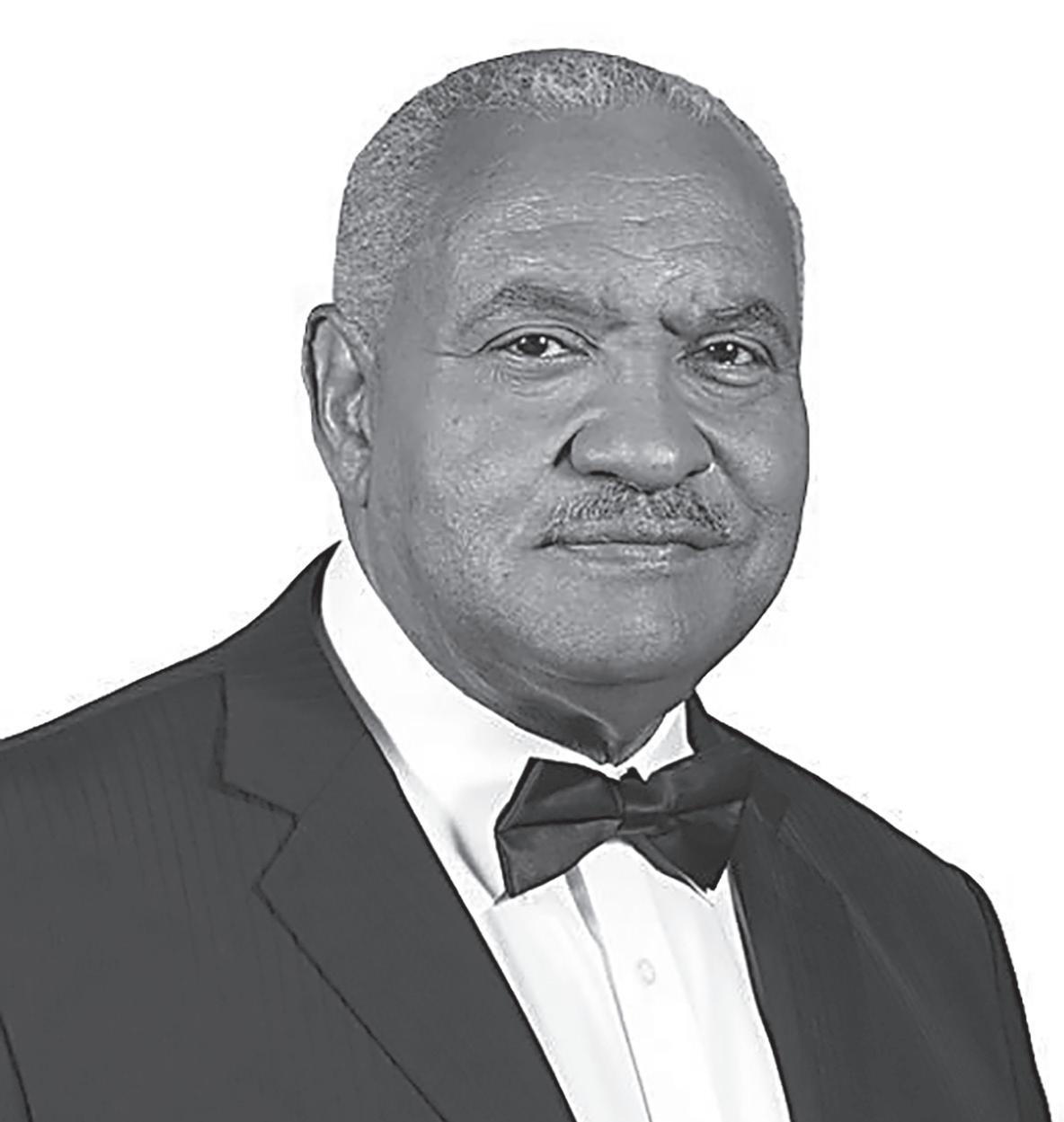
By Dr. John E. Warren
The Democratic Party needs to pause and reflect on the real issue which is race and not an aging President. Once again we see the Kool-Aid of division being swallowed, not by the MAGA Right, but by Democrats who know better and openly profess a love for democracy and the Constitution of the United States. So the question is how can one love the Constitution and at the same time only obey those sections that agree with our way of thinking?
When President Biden wins re-election, his age or any other issue only becomes a problem when there are signs he is unable to fulfill the duties of the Office. The 25th Amendment to the Constitution handles the succession process setting out how the Vice President assumes the Office of the Presidency and how the Office of the Vice Presidency is to be filled. The elephant in the room is Vice President Kamala Harris, who happens to not only be a woman, but also Black.
This is the same Black woman who was Attorney General of the largest state in the Union. She was an elected U.S. Senator from that same state, which gave us the U.S. Supreme Court Justice Earl Warren and President Ronald Reagan. Since she has been elected by the Democratic Party’s primary process which made Joe Biden the Presidential Candidate, and Harris the Vice Presidential Candidate. Is the real issue the age of a man who in the last four years rescued this nation from the brink of destruction? Is it the Democrats opposing the President staying in the race who have Alzheimer’s and memory loss, rather than the President who remembers what he has done and how he rescued a struggling nation? Is it the Democrats complaining about the President and know that Trump has a better chance at winning against a last minute replacement than running against a President who has already beaten him before? With knowing all these facts, especially the presence of the 25th Amendment, the only card left in the deck is race.
It appears that some White Liberal Democrats just don’t want a Black woman in the orbit of really becoming President and they would rather disgrace and destroy a good man because of a bad debate than take a chance on a Black woman running the White House.
Let’s not get it twisted. It was a Black Congressman from South Carolina, James Clydburn, who motivated Black America to vote for Joe Biden when it appeared that he was out of the race for the Presidency. It is the Black Vote that put him in office and it is the Black Vote of the Congressional Black Caucus who, in this race for the White House, is standing in unity with the Democratic leadership of the House of Representatives in a Republican-controlled Congress against whimpering calls from a few democrats for the President to “step aside”.
Once again, the clarion call is to stand with the Constitution and not be like the Supreme Court who is now stomping upon all it stands for in an effort to protect and insulate the very convicted felon that we, the people, would keep out of the White House. A move to oust President Biden would surely guarantee an election victory for Trump.
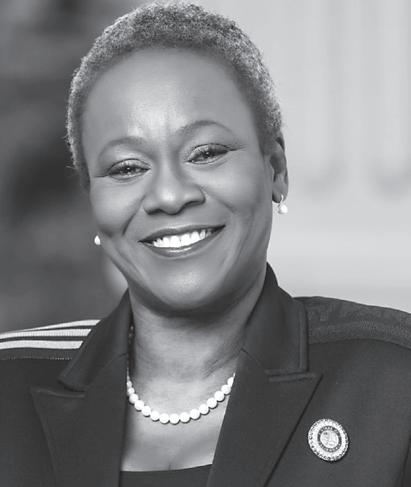
Before being elected to the State Assembly, I spent nearly three decades of my career as a public employee, serving the Los Angeles County Department of Social Services and the Los Angeles County Office of Education. For almost 30 years, I faithfully contributed a portion of my hard-earned salary to the California Public Employee Retirement System (CalPERS) knowing that someday my investments would be there for me. Today, I am a CalPERS retiree and rely upon my retirement benefits — just like millions of CalPERS and California State Teachers Retirement System (CalSTRS) retirees. CalPERS and CalSTRS know that their fiduciary responsibility is to their

members, beneficiaries and survivors.
I trust CalSTRS and CalPERS to make sound investment decisions that prioritize stable, dignified retirement benefits for California teachers and public employees. I also believe that the climate crisis is a real, existential threat to our state, nation and world. California can and must act to reverse this crisis and preserve our fragile environment for generations to come. That is why California has led our nation by phasing out the sale of new internal combustion vehicles by 2035 and becoming carbon netzero by 2045.
As Chair of the Assembly Committee on Public Employment and Retirement, I am committed to protecting the retirement funds of teachers and other public employ-
ees. My record is clear. I also represent a coastal district, home to some of California’s most famous beaches along with majority Black and Brown communities that are working to achieve the environmental justice that they and all communities deserve. My record is clear here too: I have, and will continue, to be a champion for protecting the environment.
Last year, SB 252, by Sen. Lena Gonzalez (D-Long Beach), came before my committee, which would require CalPERS and CalSTRS to divest from its fossil fuel investments by 2031. At the time, I expressed concern that teachers and other public employees were largely absent from the conversation — after all, it is their money — and asked that the Author and the bill’s supporters work with public sector labor unions to take a position on this legislation.
See ENVIRONMENT page 7
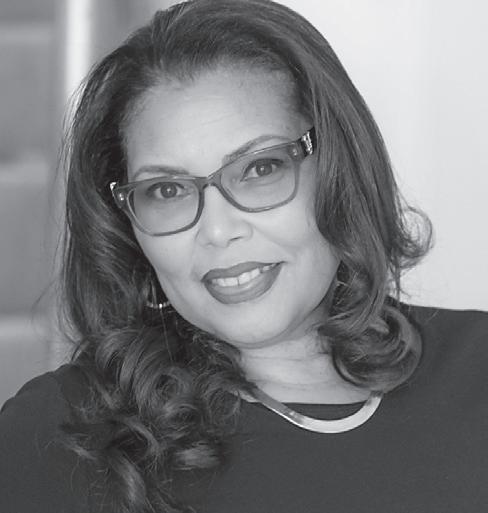
By Sarah R. Harris
The upcoming 2026 Men’s FIFA World Cup and the 2028 Summer Olympics and Summer Paralympic Games present Los Angeles with remarkable opportunities.
These world sports events are not only a celebration of athletic excellence, but also a unique opportunity to stimulate economic growth, cultivate cultural pride, and advance social equity. To fully capitalize on the economic boom these opportunities could bring to our state and communities, it is imperative that we ensure the inclusion of Black businesses in every facet of the preparations and operations.
Reflecting on history, we must acknowledge the significant legacy of former Los Angeles Mayor Tom Bradley. His tireless efforts, in collaboration with Peter Ueberroth, the chairman of the Los Angeles Olympic Organizing Committee, and businessman, Dr. William (Bill) Burke, were instrumental in bringing the 1984 Summer Olympics to our state. Bradley’s determination and vision transformed Los Angeles, and its surrounding areas, into an international hub of economic dynamism. The 1984 Olympics demonstrated the power of inclusive leadership and strategic planning. Bradley's commitment to inclusivity and economic empowerment remains a guiding light for us today. His success in the 1984 Games was not just a personal triumph but a victory for the community. The economic uplift and international recognition that Los Angeles received were a direct result of his unwavering dedication and strategic alliances with key leaders. Bradley, Ueberroth, and their team embodied what was called the “Dream Business Team,” a model of collaboration and innovative thinking that we must aspire to replicate.
As we approach the 2026 FIFA Men’s World Cup and the 2028 Summer Olympics, we must build on Bradley’s legacy. The inclusion of Black businesses in these global events is not just a matter of equity; it is an economic imperative. Studies consistently show that diverse and inclusive business practices drive innovation and economic growth. By actively including Black businesses, we ensure that the economic benefits of these events are broadly shared, fostering a more robust and resilient local economy.
Currently, we are witnessing a promising continuation of this legacy with Mayor Karen Bass leading the way. Recently, she led an LA delegation to Paris, the host city for the 2024 Summer Olympic games. Bass was accompanied by Council President Paul Krekorian, Metro CEO Stephanie Wiggins, LA84 Foundation President and CEO Renata Simril and others, to engage with international stakeholders and learn best practices for major event planning. Upon returning, she convened a Business Roundtable with leaders of local business chambers and associations to discuss small business growth and economic development as top priorities.
The Black Business Association (BBA), the oldest ethnic business support organization in California, has long championed the cause of economic empowerment for Black businesses. Under the visionary leadership of Earl “Skip” Cooper, II, the BBA has made significant strides in supporting Black entrepreneurs and advocating for their inclusion in major economic opportunities. Now, as the President and CEO, I am committed to continuing this vital work and ensuring that Black businesses are front and center in the preparations for these upcoming events.
Together, we can create a legacy of inclusion, equity, and economic empowerment that will endure long after the final whistle of the World Cup and the closing ceremony of the Olympics. Let’s honor the spirit of Tom Bradley by working diligently to ensure that the 2026 and 2028 games are a testament to our commitment to diversity and inclusion.
Sarah R. Harris is President and CEO, Black Business Association and the Los Angeles County Small Business Commission, 2nd District Commissioner.






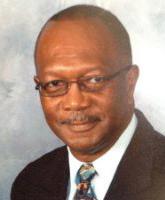
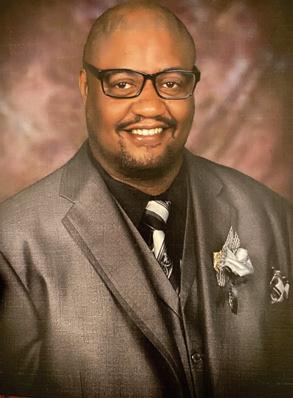
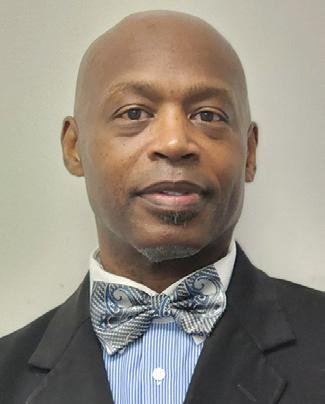
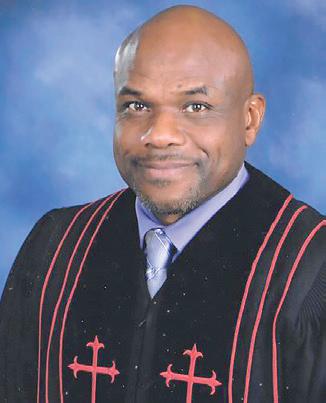
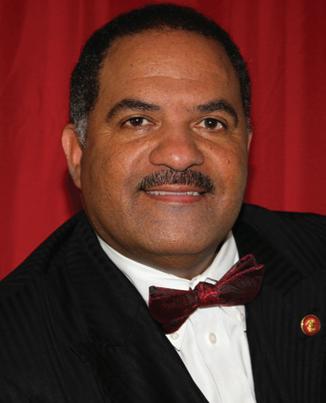


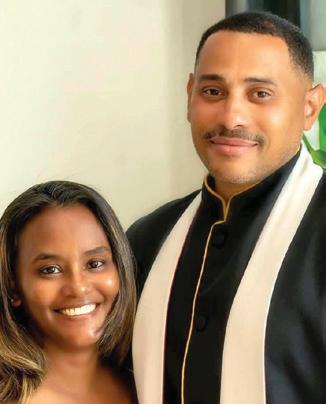



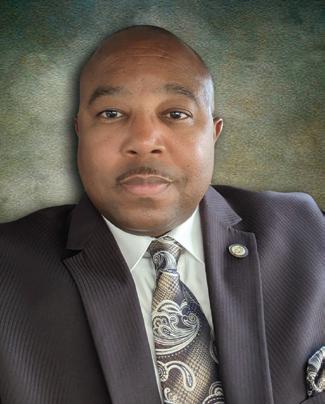



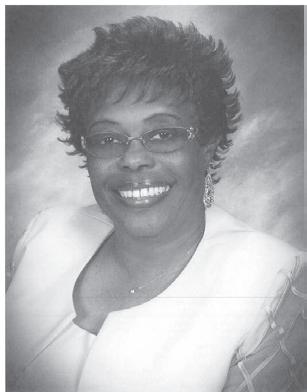
SUNRISE 06/30/1995
SUNSET 06/18/2024
ARRANGEMENTS BY PREFERRED CREMATION & BURIAL
Antoinette Nicole Robinson (Anny) was born on June 30, 1995, in Stockton, California, to Dawn Monday and Anthony Robinson. She was the youngest of three brothers. The family moved to Stockton, California, then El Cajon, and finally settled in San Diego, where Anny spent her elementary and middle school years.
Anny confessed Jesus Christ as her Lord and Savior at God’s Throne Baptist Church in Stockton during the family’s membership from 1995 to 2000.
After completing her GED in 2014, she was blessed with a beautiful son, Mellikai Lamont Elliot. To support her family, Anny worked in various hospitality industries, but her favorite job was at a pet store.
Anny was an active member of New Creation Church of San Diego, where she was baptized in 2013 under the leadership of Pastor Reginald Gary. She volunteered in the daycare every Sunday and loved working with children. All of her nieces and nephews loving called her “Auntinette.” Her love for people and her desire to bring joy to their lives was evident in all she did. While she could be determined and unwavering in her decisions, her love and kindness touched many hearts.
Antoinette passed away on June 18, 2024. She will be deeply missed, but her memory and spirit will live on through her family, friends, and all those whose lives she touched.
Anny was preceded in death by her grandparents; Andrew & Frances Robinson, aunt Patricia Roger, uncle Isaac Johnson, and her second cousin Shaquira Anthony.
Anny’s memories will be cherished by her son and heartbeat Mellikai Lamont Elliott, her loving parents; Dawn Monday and Anthony Robinson, Sr., brothers; Earnest Ashwood, III, Anthony Robinson, Jr., and Daylin Jordan, nieces; Aniyah Robinson, Aylana Robinson, and Keinnna Robinson, nephews; Anthony Robinson III, Akeel Robinson, and Ayden Jordan; maternal grandparents; Veronica White and Samuel Monday; maternal great grandmother Josephine Jones, aunts; Narida Norwood, Kimberly Monday, Kenia Macklin and Linda Gant, uncles; Justine Monday and Andrew Robinson Jr, GodParents; Barbara Taylor-Gray and Guy Owens, first cousins; Aylana Crosby, Jyneice Sosa, Juan Sosa, Carlos Sosa, Kalia Macklin, Kaleb Macklin, and Kendl Macklin, second cousins; Alfred Earl Murphy, Lashana Murphy, Syrenthia Oliphant, Robert Oliphant, Corrina Oliphant, Secret Singleton, Ayana Oliphant, Aqila Oliphant, Keyana Oliphant, Delvina Harvey, Delvin Barnett, and Raymond Mitchell, her best friend Alexis Roberts, and a host of family and good friends.

SUNRISE 12/11/1936
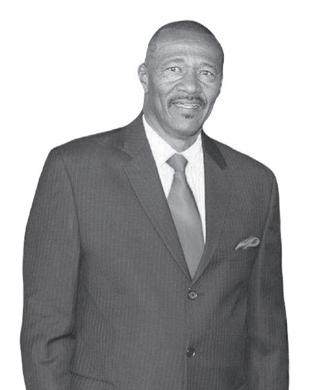
SUNSET 06/25/2024 Scott
BY PREFERRED CREMATION & BURIAL
George Lawrence Hill devoted his life to serving the Lord Jesus Christ. He was born December 11, 1936 in Jackson, Mississippi. As the eighth of eleven children born to Jim and Judy Hill, he grew up with a strong sense of purpose.
After high school, George joined the Navy, where he faithfully served for over 34 years. His dedication earned him multiple prestigious awards and commendations, including the National Defense Service Medal and the Vietnam Service Medal with 3 bronze stars. As a dedicated U.S. Navy Master Chief, he exemplified honor, duty, and sacrifice throughout his 34-year career. George studied Computer Science and Business Administration and graduated in 1992.
Throughout this remarkable service, George’s Beautiful Bride, Robbie Lee Hill, stood by his side. On April 4th, they celebrated 69 years of faithful marriage. Robbie Lee played an instrumental role in helping George achieve success and in raising their five children; Marian Foster, Dorene Smith, Judy Renea Flenoid, George Lawrence Hill Jr., and Lemont Hill, 10 grandchildren, and 18 great- grandchildren.
George’s legacy of service extended beyond his professional and military achievements. Deacon Hill served actively at Community Baptist Church, Mesa View Church, Bayview Church and Lakeview Church. He served as Chairman, Deacon, Teacher, Mentor, Administrative Assistant, and Trustee. George also served his community. George and Robbie Lee created the San Diego Young Artist Music Academy in 1996, helping to deter over 10,000 youth from gang involvement and violence through music and arts training. George also served as a Director of The San Diego Lions Club.
George was called home on June 25, 2024.
George Lawrence Hill’s life was defined by unwavering service to God, his country, community, and his family. His commitment and selflessness continue to inspire those who knew him. He was a blessing to all and left a lasting impact on his family, community and country.
SUNRISE 01/21/1937
SUNSET 06/23/2024

Elnora Watson, affectionately known as “Nora” was born on January 21, 1937, in Doyline, Louisiana, to Jesse and Mary Watson. Elnora was the baby child of six children.
Elnora received her formal education and graduated from Booker T. Washington High School in Shreveport, Louisiana. While attending Booker T., she met her childhood sweetheart, Welton Bell. They were united in holy matrimony on August 5, 1952. In 1955, Welton enlisted into the United States Navy, and he was transferred to San Diego, California in 1962.
Although Elnora gave birth to eight children, she provided day care for many other children, including her own grandchildren. The children under her care grew up to be productive citizens of society and stayed in communication with her. She was stern in raising her children, as well as the others in her care. She strongly believed in children respecting adults, themselves, and was determined to bring out the best in them by any means necessary.
You did not have to wonder where she stood. She spoke her mind, although sometimes it was raw and direct. She was humorous and had a beautiful contagious smile. Some of her favorite sayings were, “Shut your mouth”, “I’m telling you direct, and in plain English”, “bless your heart”, and lastly, “I see you coming." She was such a nurturer and loving daughter, mother, sister, auntie, cousin, and friend to many. She always exhibited strength, class, grace, and elegance, while maintaining her sweet, sincere and plain-spoken personality. She loved to shop and was known as a fashionista. She ensured that she was presentable, from head to toe, on every occasion.
Nora united with Pilgrim Progressive Baptist Church in 1976, under the leadership of the late Dr. Marvin C. Hines, the late Rev. Joseph Foxworth and Rev. Donnell Townsend. She remained a faithful member until her health began to fail. She never complained but displayed courage and vigor.
On June 23, 2024, at 1:11AM., God called his angel home. Her heart was full of love, but not strong enough to continue this journey. Nora took her last breath on earth, and her first breath in heaven.
She was preceded in death by her husband, mother, father, sisters, brother, and daughter, Sheila Bell.
She leaves to cherish her memory daughters; Sandra Lynn Scully (Butch Scully) of Memphis, TN, Sharon Douglas of Dallas, TX, Mary Donald (James Martin), Janet Rene Henderson (James Henderson), and Danny Bell (Jenna Bell) of San Diego, CA, Charlotte Williams of Surprise, AZ, and Shanda Bell-Smith (Ralph Smith) of Ramona, CA, sister Omeria Coleman of Shreveport, Louisiana, fourteen grandchildren, 28 great grandchildren and 3 great-great grandchildren, and a host of nieces, nephews, and friends who will mourn her passing, yet celebrate her life.
FULL OBITUARY IS AVAILABLE ON ANDERSON - RAGSDALE MORTUARY WEBSITE


SUNRISE 09/09/1949
SUNSET 06/04/2024
ARRANGEMENTS BY PREFERRED CREMATION & BURIAL
Thomas Lee Scott, second eldest of ten children, was born to Tom and Lois Scott on September 9, 1949. He attended John Muir Jr. High and Manuel Arts High School in Los Angeles, CA. The family relocated to the city of Compton, CA, due to employment, resulting with Thomas graduating from Compton Sr. High School in the year of 1967.
Upon completing high school, Thomas furthered his education as a Certified Skilled Welder. Between the years of 1976 and 1977, Thomas was invited to attend church services at the Apostolic Faith Garden of Prayer Church, founded by the late Dr. Andrew J. and Carbadyna Cross, located at 3244 40th Street, San Diego, CA, 92105.
It was customary that after the Friday Night Young People’s service, the young people would go bowling. However, on one particular Friday night, the cousins of one young lady, who was named Lauretta, suggested that she invite Thomas to “go along.” To further enhance this story, every year the church sponsored an Annual Labor Day Weekend Camping trip in the Laguna Mountains (East of San Diego, CA). One year, while the majority of the young people were already on the camping trip in the mountains, Lauretta’s father, Dr. Cross, remained at the church and at the conclusion of that Sunday morning service, Dr. Cross invited Thomas and another young man named Louis, to ride up to the mountains with him. It was during that time in the mountains that the Lord spoke to Thomas and said, “This will be your life.” Thomas then glanced at Lauretta and the Lord spoke again and said to Thomas, “She will be your wife.” It was the month of December in the year 1977, while at Shelter Island, Thomas asked Lauretta, “Would you marry a guy like me?” On May 20, 1978, Thomas and Lauretta wed, resulting in the very first couple to be married at the church’s new location at, 6520 Brooklyn Ave. San Deigo, CA 92114. Thomas passed away on June 4, 2024.
Thomas was preceded in death by his parents; Tom and Lois Scott, older sister Janet Scott- Williams, and younger brother Carveth Scott.
He leaves, to cherish him, his beloved wife of 46 years, Lauretta M. Cross-Scott, three sisters; Linda Scott-Huff, Jo Ann Scott-Mitchell (James), and Deborah ScottCotton, four brothers; Douglas Scott, Frederick Scott, Michael Scott (Cynthia), and Pascal Scott, sister in-law Celia Hanley-Scott, nieces and nephews; Patricia Williams-Carter, Charles Williams, Maurice Williams, Terral Mitchell, Yevette M. Scott, Evan L. Scott, Andrew Z. Scott, Floyd A. Cole II, and Taji Scott, and a host of family, relatives, and friends.
T
he Lord is close to the brokenhearted and saves those who are crushed in spirit.

Psalm 34:18


The City of San Diego has a variety of boards and commissions that offer an excellent opportunity for individ -
Free online cyber security resources to help public and private organizations
The City of San Diego’s Cyber Lab now offers a new web-based resource that employs artificial intelligence (AI) technology to help public and private organizations bolster their cyber security protection. Called “My eCISO” (CISO stands for Chief Information Security Officer), this AI-powered chatbot provides potential users, such as small business owners, a starting point to learn about and create a cyber security program to protect them from cyber-attacks and data breaches.
bot will use a question-and-answer format to evaluate the organization’s current cyber security situation and advise on actionable steps for improvement. The user’s responses provide the chatbot with information to generate a PDF “report card” that grades the organization’s current cyber security measures and offers recommendations based

uals to volunteer their services on significant matters such as policy-setting, advisory, regulatory, and/or fiduciary topics. Contributions would be invaluable to the Mayor, City Council, and the City.
If Interested in Serving on City of San Diego Boards and Commissions:
Join Chida Warren-Darby, Director of Appointments/ Boards + Commissions, for a lunch-hour webinar detailing what it takes to serve!
When: Wednesday July 24th, 2024 from 12-1pm. Where: Virtual Meeting (will be recorded) To register, visit: https://lnkd.in/gCPCcxfN.
Traditionally, an organization’s Chief Information Security Officer (CISO) is responsible for monitoring and maintaining the security of an organization’s applications, databases, computers and websites. However, as the technological landscape rapidly evolves, organizations without a CISO on staff also need assistance evaluating their existing cybersecurity infrastructure and installing the necessary safeguards to protect their customers and users from potentially devastating impacts of cyber crime.
To address this need, the City of San Diego, through its regional Cyber Lab, has partnered with California Polytechnic State University and Amazon Web Services to create My eCISO. This generative AI-based application can assist public and private organizations with identifying areas of their cyber defenses that need the most immediate attention.
After signing up for an account, users of My eCISO can start a natural language interview with the program’s AI chatbot. The chat -
Is your ZIP included?
By Levi Sumagaysay Calmatters
California Insurance Commissioner Ricardo Lara unveiled on June 27 an effort to force insurers to resume writing policies in highfire-risk areas — part of an overall plan to address the state’s insurance crisis.
The Insurance Department proposed three different pathways for insurers to meet minimum requirements for writing policies in areas deemed “high risk” or “very high risk” by Cal Fire. Regulators said this hybrid approach takes into account the state’s complex geography as well as the different levels of risk big and small insurers can afford to assume. Lara said this should help homeowners who have lost coverage or been forced to turn to the last-resort FAIR Plan.
Insurance companies will have these options:
• W rite 85% of their statewide market share in high-risk areas. The department explains it this way: “If a company writes 20 out of 100 homes statewide, it must write 17 out of 100 homes in a distressed area.”
• Achieve one-time 5% growth in the number of policies they write in high-risk areas.
• Expand their number of policies 5% by taking people out of the FAIR Plan, which has been growing exponentially.
The department also released a

map that shows where wildfire risk and FAIR Plan policies are concentrated, as well as a list of counties and ZIP codes of high-risk areas, that correspond with the requirements. Regulators will update these areas at least once a year.
The proposed options aren’t technically requirements, because the state cannot legally require insurers to write either homeowner or commercial property policies. But the state expects insurers to comply because failure to do so would mean insurers would not be able to take advantage of something they’ve lobbied for long and hard: catastrophe modeling.
Lara unveiled the first part of his plan to allow for catastrophe modeling in March; this is the second part of that plan. Catastrophe modeling takes into account historical data and combines that with projected risk and losses — something insurers have been able to do in every other U.S. state but California. Insurers will be able to use it here once Lara’s overall plan takes effect as promised at the end
of the year.
This announcement made clear what the companies will have to do in return.
“Insurance companies need to commit to writing more policies and my department will need to verify those commitments and hold them accountable,” Lara told reporters this morning. When they submit rate reviews, insurers will state which of the pathways they choose. If they don’t fulfill the requirements of that pathway, “my department will use its law enforcement authority and reconsider rate reviews,” the commissioner said.
Lara’s staff said they established the requirements for minimum coverage in distressed areas after talking with different stakeholders, including insurance companies that said the requirements were achievable.
Insurance industry representatives and Consumer Watchdog said they were still looking over the details of the Insurance Department’s draft regulations.
on National Institute of Standards and Technology (NIST) guidance.
For security purposes, My eCISO allows users to include only the level of detail they are comfortable sharing. The more details that are shared, the more sophisticated the reports. This helps users to shape a report that fits their organization’s needs.
Considering the highly sensitive nature of organizational cybersecurity data, security and trust were heavily prioritized in My eCISO’s design and implementation. Only the user who originally submitted their data can access it. Additionally, any user conversation is automatically removed after 30 days or may be removed at any time by the user.
To get started on using the My eCISO tool, visit myeciso.com.
San Diego College of Continuing Education (SDCCE) is partnering
ments in the spring of 2025. In all, 12% of students enrolled at SDCCE are Black or African American, more than 70% of stu-

A key goal in creating the Black Honors College is boosting Black graduation rates, Black enrollment and Black student success. The college will offer high-achieving students of all backgrounds and majors a comprehensive curriculum and distinctive research opportunities focusing on the Black and African American experience. The college is accepting applications for incoming first-year students this fall and to transfer students and Sacramento State students who have completed their general education require-
various minority groups. Sacramento State enrolls more Black and African American students than any other university in the CSU system and the California State Assembly recognized Sacramento State as California’s first Black-serving institution, acknowledging the university’s efforts to increase Black student enrollment and graduation rates. The Wall Street Journal last December ranked the university as the second most diverse college in the western United States.

By Darrel Wheeler Contributing Writer
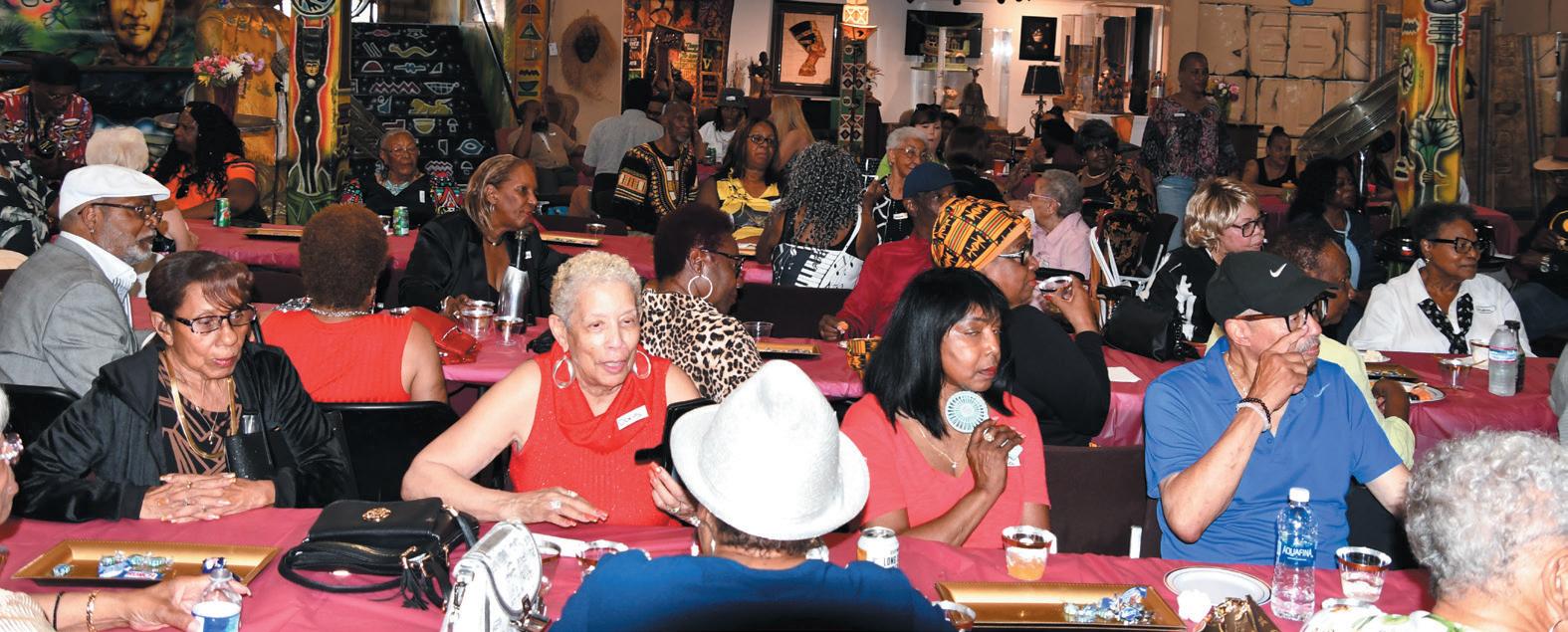
efore the United States of America celebrated its 248th birthday, a community treasure by the name of Jerome King celebrated his 85th birthday with a big party at the World Beat Center in Balboa Park.
Close friends and relatives from San Diego and beyond made the trip to the Park to party with the birthday boy on his very special occasion.


"I had to come and hang out with and support Jerome. If you know him, you know he's “Mr. Cool”. We go way back and he deserves this kind of turnout. There’s a lot of people here,” said friend Charles Dozell.
Jerome made a name for himself as a dancer, and later on, as a popular DJ. However, for his big day, he left the musical responsibilities to Mr. DJ Bounce and the dancing to his guests of rump-shakers. There was more than enough food and birthday cake for the milestone achiever and his comrades.
Mr. King was treated to birthday wishes, accolades, money, gifts, hugs, jokes, and songs dedicated to him.
"This really means a lot to me seeing everybody here that came out to support me and celebrate with me. I enjoyed myself and I hope everyone here did too," Mr. King shared.
Jerome King, the kind man with the heart of gold, was actually treated like a king on his 85th birthday celebration.



Continued from page 3

- today. Together, CalPERS and CalSTRS have committed over $100 billion in investments to sustainable energy and using the power of their investment portfolios to hold fossil fuel companies accountable. More can and must be done to not just green our economy, but green our public pension systems.


To be clear, if CalPERS and CalSTRS wanted to divest from fossil fuel companies they could
A year later, although a few public sector labor unions expressed their support for SB 252, many others did not. In fact, a number of police, fire, and other public employee unions oppose the bill. As a compromise, I offered the Author amendments that would align CalPERS and CalSTRS divestment from fossil fuels with California’s goal of becoming carbon neutral by 2045. It was a real path to divestment that still allowed CalPERS and CalSTRS to take early divestment action if they decided to do so. The Author declined to accept the amendments, which was followed by her decision to cancel the bill being heard in my committee. Unfortunately, this was a missed opportunity to protect public employee pensions and show global leadership by divesting from fossil fuel companies once and for all.
I encourage the author and the supporters of SB 252 to reintroduce the measure next legislative session with my proposed amendments
and work closely with our public sector labor partners to find greater consensus with the environmental community on this issue. We do not have to choose between protecting public employee pensions and protecting the environment - we can do both. But we cannot risk the solvency of current and future public employee retirement benefits without consensus from our public workers. It is their money after all.





WEDNESDAY, JULY 17
9:00 AM - 1:00 PM • University City High School 6949 Genesee Avenue, San Diego, CA 92122
WHO YOU WILL MEET
us for San Diego’s
● District Design, PM, CM, Maintenance, and Contracts sta
● Top Prime contractors and consultants
● Regional public agencies with construction programs
● Professional, trade, and community organizations
● Industry professionals and other small business owners
By Tihut Tamrat CONTRIBUTING WRITER
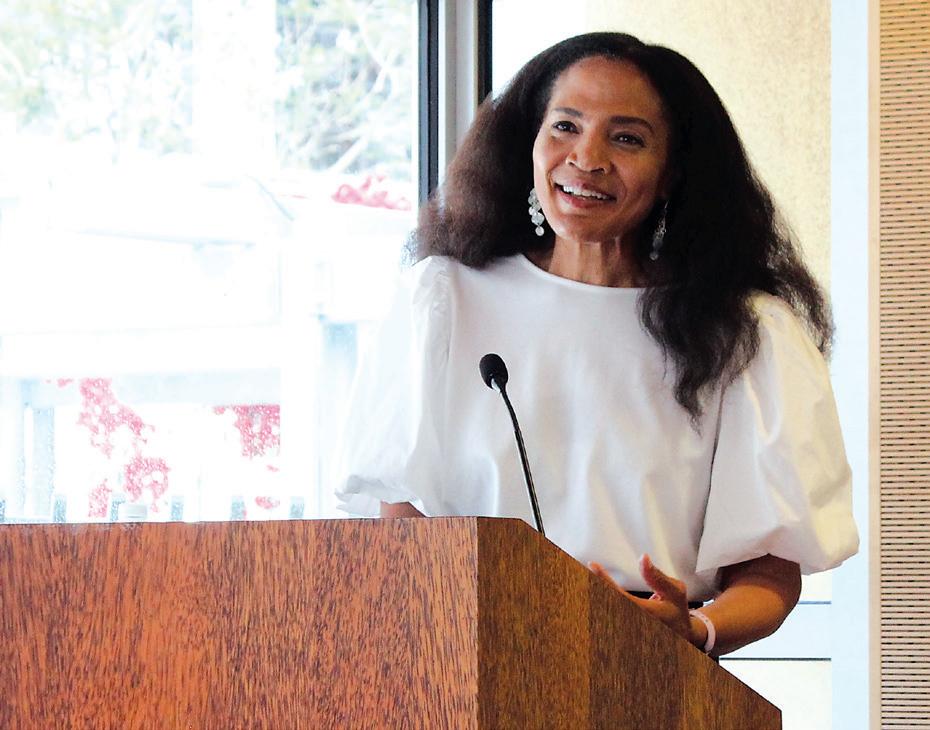
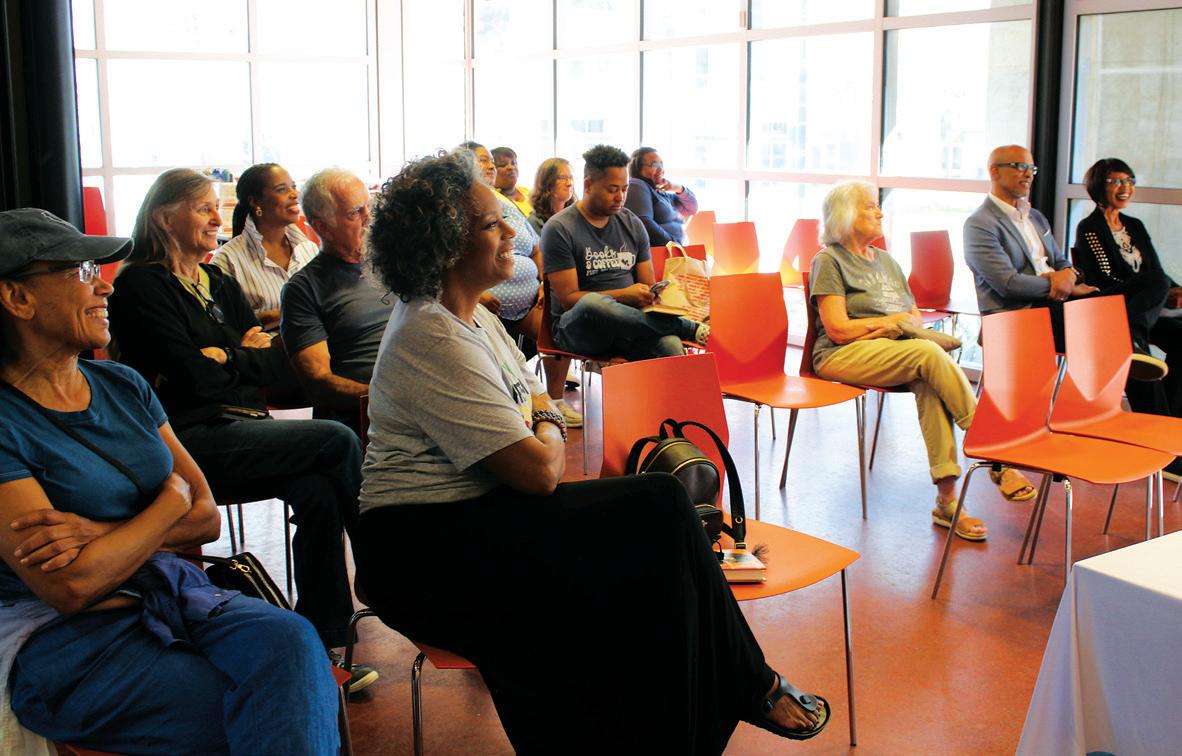
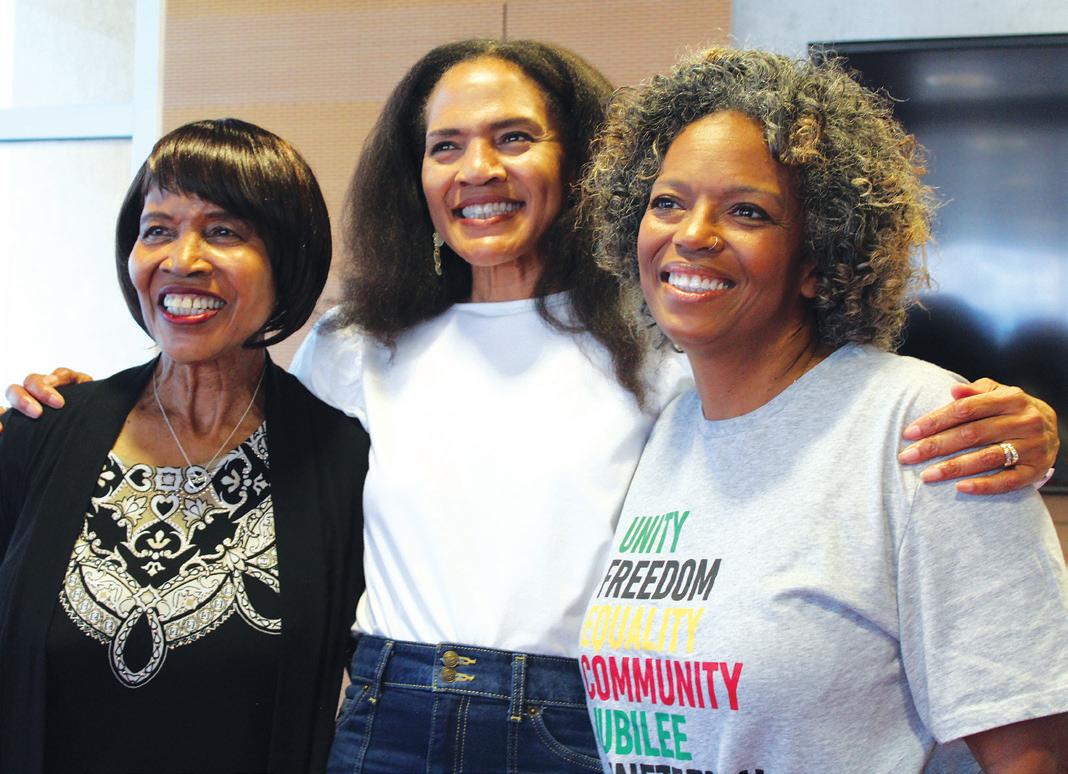
On Saturday, June 15th, the San Diego Central Public Library held a book signing event on the first floor, across from the bookstore, for author Trisha R. Thomas of the Netflix Nappily Ever After series and film! Hailing from Riverside, CA, Thomas debuted her newest novel The Secret Keeper of Main Street to a curious audience that delivered a masterful tale of scandal and intuition.
To start off the event, Thomas, who went to Samuel Morse High School and graduated from USC, first told the audience about her background and how it influenced her novel. “When I was growing up I was a dressmaker from the age of 6. I could sew before I could probably read. My father taught me to sew, he was a dressmaker and a tailor, I learned from him. I decided to start my own company,” said Thomas.
The novel, set during a time of Thomas’ life when she used to own a bridal salon at 21 years of age, spoke of her adventures as a wedding dress designer to the audience. “These brides used to tell me their stories all the time, I was that person, I had that face where everybody tells me everything,” states Thomas.
Subsequently, Thomas recounts one of her best stories working as a dressmaker from a bride she serviced years ago who was a nurse of a couple that became widowed. When the wife died in her care, she married the widowed husband. “While I’m pinning her dress and getting it done she tells me the son and daughter of this woman who died [in her care] are having her investigated because they think [their mother] died under strange circumstances,” mentioned Thomas.
“A year later she came back [a second time] and said she was getting married again and she wanted me to make her dress! To a new husband! The wife had also died in her care. Same circumstances. [Two years later]she came back a third time, under different circumstances this time, no one died, but [she] still met him the same way”, exclaims Thomas.
Following her anecdote, Thomas tells us a little bit about what the novel is about and what we can look forward to. “It’s a mystery, thriller, romance, drama, everything you love.”
The novel, “Set in Oklahoma, where [Thomas’] family is from, a dressmaker has the gift of sight, so when she grazes the skin of one of the brides she’s pinning she can get a feel for if she is marrying her true love or if there is someone else out there that she should be with instead,” described Thomas.
The book is undeniably captivating and mysterious with unexpected twists and turns, truly a page-turner from start to finish! The nov-

el takes you on an adventure following dressmaker Bailey Dowery and her socialite clients, specifically, the least jubilant bride she’s ever encountered, Elsa Grimes, revealing the most shocking twist of all, murder.

After Thomas read excerpts from her book for the awe-inspired audience and answered many inquisitive yet insightful questions, she signed copies of the books and shared kind words and wisdom that would last a lifetime.
By Tihut Tamrat CONTRIBUTING WRITER
On Thursday June 13th, the California History Section of the California State Library hosted an event titled, Words of Liberation: The Exploration of Blackness Through Poetry, via zoom in hopes of bringing a wide and diverse audience from all across the world to discuss how words can be used to liberate and unshackle black people from the societal idea of blackness.


as navigating motherhood, intimacy, and freedom.



Simple steps can help control your summer bills.
Avoid peak hours between 4 p.m. and 9 p.m. when demand and pricing for energy can be higher. Choose a crockpot or toaster oven over a regular oven and crank up your fans over the A/C.
Find more ways to stay cool and spend less at sdge.com/MyEnergy.
Moderated by Kim Mc Millon, editor of Black Fire–This Time, along with co-hosts Devorah Major, author of Califa’s Daughter, and Robin Coste Lewis, author of “To the Realization of Perfect Helplessness”, converse amongst themselves, with questions posed from participants, to clear the cloudy lenses and outdated images of Blackness that Black women have had to navigate in America.
As they read their poetry and bounced off of one another, participants saw how the power of their poetry acknowledges a history of Blackness that needs to be celebrated and told and how that can start to generate change in American society.
In this two hour discussion, many questions were asked, most were answered, and deep beautiful poetry was read that used words of liberation, showing the relevance and importance of poetry as it only just begun to scratch the surface of blackness and how rich it can be!

To begin answering questions posed, Robin Coste Lewis, Poet Laureate of Los Angeles (2017-2021), and Devorah Major, Poet Laureate of San Francisco (2002-2006), discussed how their poetry has used words of liberation to empower and heal by reading excerpts from their acclaimed poetry library that pinpoints the reality of Black women’s lives such
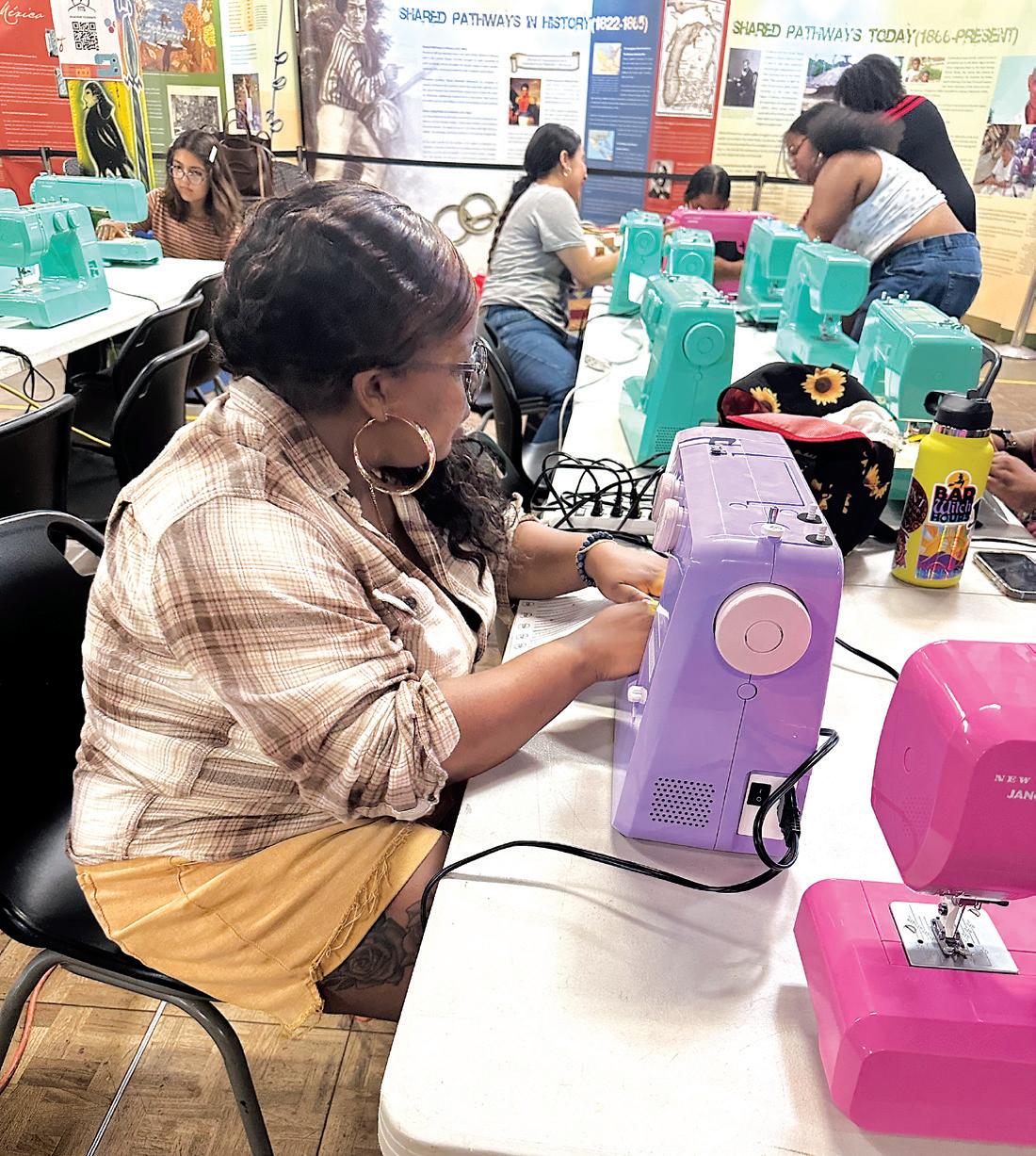
On June 23rd from 12-4pm, Makeda Cheatom, owner of the WorldBeat Cultural Center, hosted threads of freedom in which youth learned basic sewing skills and explored the Underground Railroad quilt codes.
Children were able to use their creativity and made pillows and tote bags with all supplies provided for them. Community activists were honored and Freedom Day celebrated while preserving textile arts.
Special Guest Kim Ballentine Lane came out to share her quilt and knowledge of how the Underground Railroad used quilts to communicate through the symbols on the quilt blocks. Volunteers also helped out and imparted what they knew, teaching children the valu able skill of sewing!









































When you switch off, California stays on.



























When you get a Flex Alert, reduce your power use to help ease the grid and avoid statewide outages. The more people that save their energy for later, the more likely we keep the lights on.














Eritrea's Biniam Girmay became the first Black rider to win a Tour de France stage on Monday, July 1.
Girmay said his sprint win in the mostly flat third leg was “for all Africans.”
“We must be proud now. We are really part of the big races,” he said. “Now it’s our moment. It’s our time.”
Before the podium celebration, Girmay went over and greeted Eritrean fans waving their country’s green, red and blue flag.
“There is a whole continent that has been waiting for this," said Aike Visbeek, the performance director for Girmay’s IntermarcheWanty team. "It’s been done now, and I hope it will open the floodgates for more riders from Africa. He’s an ambassador in every way.”
Meanwhile, Mark Cavendish’s pursuit of a record-breaking 35th stage win was postponed by a crash ahead of him in the finale, and Olympic champion Richard Carapaz took the yellow jer -
sey from Tadej Pogacar, making him the first Ecuadorian to lead cycling's biggest race.
Girmay also made history in Italy two years ago when he won a stage at the Giro d’Italia to become the first Black African to take a victory in a Grand Tour. But Girmay’s Giro victory was marred when he was rushed to a hospital after getting hit in the left eye by a prosecco cork he popped open during the podium celebration — forcing him to abandon the race.
Also in 2022, Girmay became the first rider from a sub-Saharan country to win a single-day classic at the Gent-Wevelgem race.
Riders from only one other African country — South Africa — have won Tour stages: Robert Hunter (2007) and Daryl Impey (2019). Four-time Tour champion Chris Froome was born and raised in Kenya but represented Britain.
The 231-kilometer (144-mile) leg from Piacenza to Turin — the longest stage of this Tour — provided the first chance for a mass sprint. There will be at least a handful of other opportunities for sprinters as
the race prepares to cross back into France following the first four stages in Italy.
With time to start raising his arms before he crossed the line, Girmay finished just ahead of Fernando Gaviria and Arnaud De Lie.
Cavendish has been tied with Eddy Merckx on 34 wins for three years and put off retirement to try again this year to break the record.
Members of the Israel-Premier Tech team fell ahead of Cavendish, who crossed 113th but was given the same finishing time as Girmay as per rules that neutralize the times in case of crashes in the final five kilometers.
“I was just looking to stay up. I’m too little to see what’s going on but I could hear it,” Cavendish said. "Someone skidded and I was just waiting for someone to hit from behind. Luckily they didn’t and we kind of got through, but we were way off it and with 2.5K to go we were out of it. I don’t think anybody was seriously hurt and that’s the main thing.”
Cavendish complimented Girmay,
By Ahmed Mohamed Associated Press
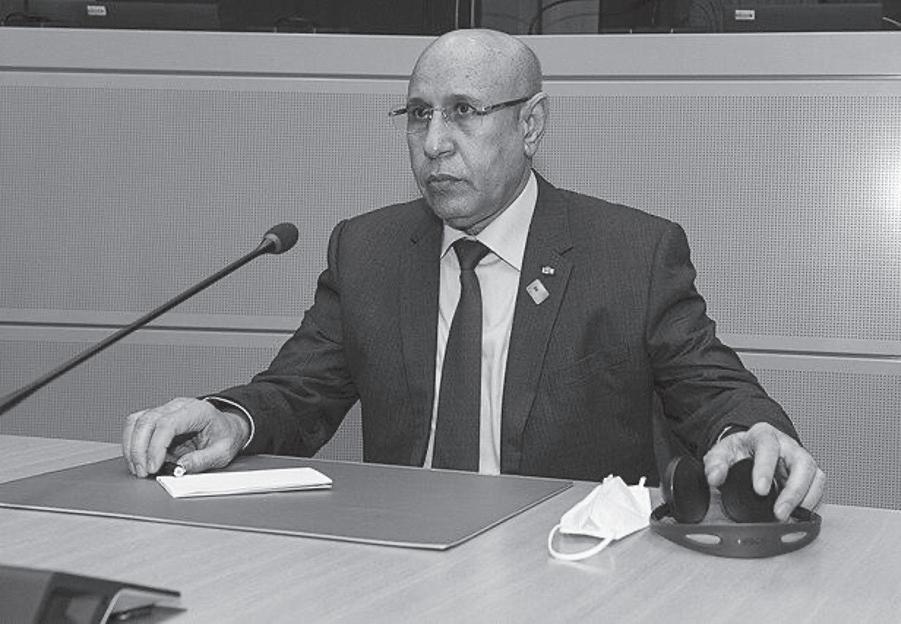
Mauritania’s President
Mohamed Ould Ghazouani has been reelected for a second term, the country's electoral commission said on July 1st, after positioning the country as a strategic ally of the West in a region swept by coups and violence.
Ghazouani, who campaigned on a pledge of providing security and economic growth, obtained 56.1% of votes, the country’s independent electoral commission said on Monday, July 1. His main rival Biram Dah Abeid, an anti-slavery activist, received 22.1% of the votes. He rejected the partial results announced Sunday and called them a fraud.
— a poor suburb of the Mauritania capital — he called for civil disobedience against the government and appealed to the military and security forces not to “accept being used by the government against the people.”

who won a reduced sprint.
“That’s just massive. Cycling is massive in Eritrea. It’s super good for him and for African cycling," Cavendish said. "He’s a legend, isn’t he?”
Pogacar dropped to second overall, with the same time as Carapaz.
Remco Evenepoel — the 2022 world champion and Spanish Vuelta winner — is third overall; and two-time defending champion Jonas Vingegaard is fourth, both also with the same time as Carapaz.
Danish rider Casper Pedersen
‘Africa
The turnout was 55% of the two million eligible voters, the commission said.
The country's constitutional court will now review the vote numbers and announce the final results, though it remains unclear when that will happen.
June 29’s vote unfolded peacefully, according to observers.
“Nothing has been detected so far and the CENI has not received any complaints,” said Taghioullah Ledhem, the spokesman for CENI, the country’s independent electoral commission.
But some opposition candidates held a different view. The commission is made up of representatives of political parties and its president is appointed by the government, and some accused it of colliding with Ghazouani’s regime.
Abeid claimed that he was the real winner. The provisional results were an “electoral coup d’état" to help Ghazouani, he told a news conference Sunday, June 30. He accused the electoral commission of fraudulently giving Ghazouni thousands of votes “out of nowhere.”
Speaking hours later from his home in Riadh
“The battle is not over, we are not defeated,” he said. “The people are not defeated and will not be defeated, we are there to defend the people until the last drop of blood.”
Although his opponents accused him of corruption and mismanagement, Ghazouani, a former army chief, remains popular among Mauritanians who see him as a beacon of stability. The vote took place in a tense regional climate, with Mauritania’s neighbors shaken by military coups and jihadi violence.
Mauritania is rich in natural resources including iron ore, copper, zinc, phosphate, gold, oil and natural gas. It is poised to become a gas producer by the end of the year, with the planned launch of the BP-operated Greater Tortue Ahmeyin offshore gas project on the border with Senegal.
Yet almost 60% of the population lives in poverty, according to the United Nations, working as farmers or employed informally. With few economic opportunities for young people at home, many are attempting to reach Europe, and some are even trying to get to the United States through Mexico.
The African Union sent an observation mission to June 29’s vote but have yet to release their statement.
had to abandon the race after falling with 15 kilometers to go and breaking his collarbone.
The race crosses back into France on Tuesday during Stage 4, the first big mountain leg going up to Sestriere and over the Col du Galibier — one of the Tour’s classic climbs — in the 140-kilometer (87-mile) route from Pinerolo to Valloire.
Pogacar, who won the Tour in 2020 and 2021, and Vingegaard will be favored to take the yellow jersey from Carapaz, who won the Giro in 2019 before taking gold in Tokyo three years ago.
The photographer showcasing its artistry
By Kamayah Scruggs
South African photographer, visual artist and fashion icon Trevor Stuurman has become one of the country’s most sought-after creatives by unapologetically challenging the global perception of African cultures through his powerful visual storytelling.
Reporter award, and was voted among GQ’s Best Dressed in 2015.
Six years later, Stuurman was selected as one of TIME Magazine’s Next Generation Leaders, and was the photographer behind the “Coming to America 2” Black Is Magic beauty collection, which he says highlighted the decadence of Black beauty in its authentic form.

“My style is, I’d say Afrocentric, I’d say contemporary, I’d say cool,” he said.
This narrative shift was fully on display with his work on Beyoncé’s Grammy-nominated visual album “Black is King,” in 2020, which Stuurman knew would reach a massive audience.
“You have to be so intentional with every color you choose and how you frame things and what things could possibly mean to other people outside of their understanding,” Stuurman, 31, told CNN in a recent video interview.
His modern takes on diverse styling, photography and visuals have garnered him acclaim in South Africa and beyond. In 2012, at the age of 19, he won Elle Magazine’s Style
Now, he hopes to light the way for other creatives to dismantle African stereotypes with his latest endeavor, called “The Manor” – a multifaceted platform consisting of an online site, art events, and a quarterly publication featuring diverse voices.
In the welcome issue, which debuted last year, Stuurman documented the production of the successful South African TV show “Shaka iLembe.” The latest photography edition, titled “Reflecting B(l)ack,” showcased a special Pan-African publication curated by Stuurman.
“Africa is the cradle of mankind, but also the cradle of creativity,” he said. “[My work is] basically my way of honoring our stories and protecting them.”
Reaching the “truest potential”
Through his visual storytelling and partnerships with everyone from international fashion icons such as Naomi Campbell, Gigi and Bella Hadid, and Kendall Jenner, to former US president Barack Obama, the United Nations, and the Gates Foundation, Stuurman is unveiling new narratives with a wider appeal.
“I think it’s not for Africans to bring anything to a global audience, I think for us it’s to create and exist to our truest potential,” he said. “The world will always meet us where we’re at.”
“Everyone has the artistic ability, but not everyone has the professional tool set to execute and build a long-lasting career,” Stuurman said.
By Vivian Lam
In the U.S., a large percentage of the population suffers from poor sleep quality and sleep disorders like insomnia and obstructive sleep apnea, a condition in which the upper airway becomes blocked and breathing stops during sleep. At the same time, most Americans eat far too much fatty and processed food, too little fiber and too few fruits and vegetables.
How diet and sleep quality can be intertwined
Using a nationally representative dataset of surveys collected from 2011 to 2016, we found that people who did not adhere to dietary recommendations such as consuming enough servings of fruits, vegetables, legumes and whole grains had shorter sleep duration.
In a separate study, we followed more than 1,000 young adults ages 21 to 30 who increased their fruit and vegetable consumption over a three-month period and reported better sleep quality and reductions in insomnia symptoms.
Parsing the foods and nutrients
Within overall healthy diet patterns, there are numerous individual foods and nutrients that may be linked to quality of sleep, with varying degrees of evidence.
One of the common pathways through which these foods may affect sleep is by providing melatonin, an important modulator of sleep
and wake cycles in the brain.
Foods to avoid for sleep health
Aiming for higher intake of sleep-promoting foods isn’t necessarily enough to get better sleep. It’s also important to avoid certain foods that could be bad for sleep. Here are some of the main culprits:
• Saturated fats, such as that in burgers and fries and processed foods, could lead to less slow-wave sleep, which is considered the most restorative sleep.
• Refined carbohydrates, such as those in white bread and pasta, are metabolized quickly. If you eat these foods for dinner, they can result in waking up from hunger.
• Alcohol disrupts sleep quality by shortening the amount of REM, or rapid eye movement, sleep in the first part of the night and leads to more night awakenings.
• Caffeine consumed even six hours before bed can make it difficult to fall asleep because it blocks the hormone adenosine, which promotes sleepiness.
The consistent overconsumption of calories can lead to weight gain, one of the strongest predictors of obstructive sleep apnea.
Interestingly, our group has recently shown that toxicants in food or food packaging, like pesticides, mercury and phthalates – chemicals used to manufacture plastics – can affect sleep.
Timing of meals and gender considerations
The timing and consistency of eating, known as “chrononutrition” in the sleep research field, also very likely help to explain associa -

tions between healthy diets and good sleep.
A final and very interesting piece of this puzzle is that associations between diet and sleep often differ by gender. For example, it appears that the associations between healthy diet patterns and insomnia symptoms could be stronger among women. In particular, women are more likely than men to suffer from insomnia.
Keys to a good night’s sleep
tion of calories consumed earlier in the day.
And, in addition to avoiding caffeine, alcohol and heavy meals in the two to three hours before bed, the last few hours of the day should include other good sleep hygiene practices.
These include disengaging from technology, reducing light exposure and creating a comfortable and relaxing environment for sleep. Moreover, allowing enough time to sleep and maintaining a consistent

Overall, there is not one magic food or drink that will improve your sleep. It’s better to focus on overall healthy dietary patterns throughout the day, with a higher propor-
bedtime and wake time is essential.
This article originally appeared on The Conversation.
By Devna Bose Associated Press
For kids, summer can revolve around playgrounds, pools, bikes and just being outside. For parents, it can mean a litany of ouchies to take care of — including scrapes, sunburns and dehydration, pediatricians say.
Here are the top things pediatricians say you should keep an eye on. What To Do When Your Child is Overheated
It’s important to take precautions in warmer weather, especially with younger kids, who are more susceptible to heat illness. That means keeping a water bottle with them when they’re outside, wearing
sun-protective clothing and mineral sunscreen and not staying in the sun too long.
Parents also should monitor kids for signs of fatigue and pay atten
tion to the warmth and color of their skin.
Illnesses to Look Out for:
• The first is heat cramps, and the only remedy is giving kids fluids that contain electrolytes.
• The next level is heat exhaustion, which causes nausea, vomiting and feeling weak or anxious. It’s typically accompanied by a fever. You can try taking the child into a cooler area and giving them fluids.
How to Play in Water Safely
One must-have, Lysouvakon said:

A designated adult whose only job is monitoring the pool while kids are in it. If you have an aboveground pool, make sure it’s fenced in with 4-foot walls to keep kids out when there aren’t adults around.
Any type of water can be a source of drowning — even an inch can be dangerous for little ones, said Dr. Christina Kratlian at Boston Children’s Hospital. She suggests draining, flipping and deflating
inflatable pools after every use.
Soothing Scrapes And Bruises Kids fall off bikes and fall down on trampolines, and they might come back in with scrapes and bruises. If your kid is on a bike, they should be wearing a helmet, experts say; make sure it fits correctly and the strap is snug under a child’s chin. Most scrapes can be taken care of at home by cleaning them and applying antibacterial ointments and bandages, especially if they’re not infected.
But any time there’s a significant fall, especially on the head, take your child to the doctor. Other warning signs include inability to move an arm, leg or joint; big cuts; and redness, puss, heat or streaking around a cut or scrape.
By Lauran Neergaard
Government advisers on Wednesday June 5th said it’s time to update the recipe for the COVID-19 vaccines Americans will receive in the fall -- targeting a version of the ever-evolv-
ing coronavirus called JN.1.
While COVID-19 cases currently are low, more surges are inevitable and manufacturers need time to brew shots for fall. Moderna, Pfizer and Novavax all have tested doses updated to match the JN.1 variant that became dominant last winter.
But just a few months later, numerous offshoots of JN.1 already are on the rise, prompting Moderna and Pfizer to also test a slightly different vaccine formula targeting what’s now the most common U.S. subtype, called KP.2.
That made for a tough choice as the Food and Drug Administration decides the final recipe. FDA’s advisers voted Wednesday that the next vaccine should come from the JN.1 “lineage” or family. Then FDA vaccine chief Dr. Peter Marks challenged them to be more specific about exactly which variant to target, wondering if KP.2 was a better option.
“If this evolves further in the fall, will we regret
not having been a little bit closer?” Marks said, likening the choice to how he always picks the “freshest” milk with the longest expiration date in the grocery store.

But KP.2 isn't likely to still be the biggest threat by fall, the panel responded. Having to make the choice now, they preferred the parent JN.1 variant itself rather than trying to predict which of its descendants was most likely to increase in the coming months.
“Having a vaccine that’s the trunk of the tree rather than the branches makes sense to me,” because it would offer some cross-protection to other subvariants that emerge, said one adviser, Dr. Melinda Wharton of the Centers for Disease Control and Prevention.
Health officials have told Americans to expect a yearly update to COVID-19 vaccines, just like they get a new flu shot each fall designed to match as best as possible the currently spreading strains. Even though just about everyone has either been infected or
had at least one round of COVID-19 vaccinations, the coronavirus keeps churning out new varieties that can dodge prior immunity -– and protection also wanes over time. Last fall’s COVID-19 vaccine targeted a completely different section of the coronavirus family tree, and CDC data shows only about 22.5% of adults and 14% of children received it. But even though public concern about COVID19 has waned, it remains deadlier than the flu, according to a recent analysis of Veterans Affairs hospitalizations this past winter. Moderna, Pfizer and Novavax all said they could have supplies of JN.1-specific shots ready by fall, although they didn't provide amounts. Like it has in previous years, the CDC will make recommendations on who should receive updated shots and when.

7975 Gaylen Rd. San Diego, CA 92126 County of San Diego
This business is conducted by:



FICTITIOUS BUSINESS NAME STATEMENT
Fictitious
Fictitious business name(s): La Casita Daycare Located at: 7479 Black Oak Rd. San Diego, CA 92114 County of San Diego This business is conducted by: An Individual Registrant has not yet begun to transact business under the name(s) above
This business is hereby registered by the following: Maria Anakaren Sanchez Sanchez 7479 Black Oak Rd. San Diego, CA 92114
This statement was filed with the Recorder/County Clerk of San Diego County on June 17, 2024
This fictitious business name will expire on June 17, 2029 7/11, 7/18, 7/25, 8/01
FICTITIOUS BUSINESS NAME STATEMENT 2024-9013765
Fictitious business name(s): New Era Pool & Spa Services Located at: 4118 Vista Grande Dr. San Diego, CA 92115 County of San Diego
This business is conducted by: An Individual
The first day of business was: 07/02/2024
This business is hereby registered by the following: Edgar Angelo Villa 4118 Vista Grande Dr. San Diego, CA 92115
This statement was filed with the Recorder/County Clerk of San Diego County on July 02, 2024
This fictitious business name will expire on July 02, 2029 7/11, 7/18, 7/25, 8/01
FICTITIOUS BUSINESS NAME STATEMENT 2024-9012127
Fictitious business name(s):
The Outdoor Classroom Located at: 2812 C Street San Diego, CA 92102 County of San Diego
This business is conducted by:
An Individual
The first day of business was: 06/06/2024
This business is hereby registered by the following: Allegra Barron 2812 C Street San Diego, CA 92102
This statement was filed with the Recorder/County Clerk of San Diego County on June 07, 2024
This fictitious business name will expire on June 07, 2029 7/11, 7/18, 7/25, 8/01
FICTITIOUS BUSINESS NAME STATEMENT 2024-9013538
Fictitious business name(s): Mana Knows Best Located at:
An Individual Registrant has not yet begun to transact business under the name(s) above This business is hereby registered by the following: Suzanne Gaines
7975 Gaylen Rd. San Diego, CA 92126 State of Incorporation/ Organization:
California
This statement was filed with the Recorder/County Clerk of San Diego County on June 28, 2024 This fictitious business name will expire on June 28, 2029 7/04, 7/11, 7/18, 7/25
FICTITIOUS BUSINESS NAME STATEMENT 2024-9012998
Fictitious business name(s): Bodied By Sheena Located at: 3806 Fairmount Ave. #108 San Diego, CA 92105 County of San Diego
This business is conducted by:
An Individual
The first day of business was: 03/07/2024
This business is hereby registered by the following: Sheena Lenee Shelton 3806 Fairmount Ave. #108 San Diego, CA 92105 State of Incorporation/ Organization: California
This statement was filed with the Recorder/County Clerk of San Diego County on June 21, 2024
This fictitious business name will expire on June 21, 2029 7/04, 7/11, 7/18, 7/25
FICTITIOUS BUSINESS NAME STATEMENT 2024-9013177
Fictitious business name(s): La Maestra Print Shop
LM Printing Located at: 4090 Fairmount Ave. San Diego, CA 92105 County of San Diego
4060 Fairmount Ave. San Diego, CA 92105 County of San Diego
This business is conducted by:
A Corporation
The first day of business was: 13/03/2013
This business is hereby registered by the following: La Maestra Foundation INC. 4060 Fairmount Ave. San Diego, CA 92105 State of Incorporation/ Organization: California
This statement was filed with the Recorder/County Clerk of San Diego County on June 24, 2024
This fictitious business name will expire on June 24, 2029 7/04, 7/11, 7/18, 7/25
FICTITIOUS BUSINESS NAME STATEMENT 2024-9013402
Fictitious business name(s): Heartspace Located at: 3619 El Cajon Blvd. San Diego, CA 92104 County of San Diego
7535 Charmant Dr. Unit 202 San Diego, CA 92122 County of San Diego This business is conducted by:
A Limited Liability Company Registrant has not yet begun to transact business under the name(s) above This business is hereby registered by the following: Heartspace
7535 Charmant Dr. Unit 202 San Diego, CA 92122 State of Incorporation/ Organization: California
This statement was filed with the Recorder/County Clerk of San Diego County on June 26, 2024 This fictitious business name will expire on June 26, 2029 7/04, 7/11, 7/18, 7/25 ASSOCIATE
FICTITIOUS BUSINESS NAME STATEMENT 2024-9013334
Fictitious business name(s): ProspectPro Located at: 11076 Portobelo Drive San Diego, CA 92124 County of San Diego
This business is conducted by: An Individual Registrant has not yet begun to transact business under the name(s) above
This business is hereby registered by the following: Suzanne Tara Fornario 11076 Portobelo Drive San Diego, CA 92124
This statement was filed with the Recorder/County Clerk of San Diego County on June 26, 2024
This fictitious business name will expire on June 26, 2029 7/04, 7/11, 7/18, 7/25
FICTITIOUS BUSINESS NAME STATEMENT 2024-9009579
Fictitious business name(s): Atypical Waffle
Located at: 3519 30th Street San Diego, CA 92104
County of San Diego
This business is conducted by:
A Limited Liability Company
The first day of business was: 03/25/2024
This business is hereby registered by the following: Mom Jeans Hospitality, LLC 3519 30th Street San Diego, CA 92104
State of Incorporation/ Organization: California
This statement was filed with the Recorder/County Clerk of San Diego County on May 03, 2024
This fictitious business name will expire on May 03, 2029 7/04, 7/11, 7/18, 7/25
FICTITIOUS BUSINESS NAME STATEMENT 2024-9013298
Fictitious business name(s): BeautyMaestro.com
Located at: 8062 Clairemont Blvd. San Diego, CA 92111 County of San Diego 13521 Mora Circle Poway, CA 92064 County of San Diego
This business is conducted by: An Individual
The first day of business was: 03/28/2019 This business is hereby registered by the following: Chanik Kim 13521 Mora Circle Poway, CA 92064
This statement was filed with the Recorder/County Clerk of San Diego County on June 26, 2024
This fictitious business name will expire on June 26, 2029 7/04, 7/11, 7/18, 7/25
FICTITIOUS BUSINESS NAME STATEMENT
2024-9012872
Fictitious business name(s): Coastal Catio Consultant
Located at: 3451 Celinda Drive Carlsbad, CA 92008 County of San Diego
This business is conducted by: An Individual
The first day of business was: 05/01/2024
This business is hereby Jeremey Francis Hoffmann 33451 Celinda Drive Carlsbad, CA 92008
This statement was filed with the Recorder/County Clerk of San Diego County on June 20, 2024
This fictitious business name will expire on June 20, 2029 7/04, 7/11, 7/18, 7/25
FICTITIOUS BUSINESS NAME STATEMENT 2024-9011553
Fictitious business name(s): Angelica's Cleaning Services Borroel's Cleaning
Services Located at: 5465 Olvera Ave. San Diego, CA 92114
County of San Diego
This business is conducted by:
An Individual
Registrant has not yet begun to transact business under the name(s) above
This business is hereby registered by the following: Angelica Borroel Ramirez 5465 Olvera Ave. San Diego, CA 92114
This statement was filed with the Recorder/County Clerk of San Diego County on May 31, 2024
This fictitious business name will expire on May 31, 2029 6/27, 7/04, 7/11, 7/18
FICTITIOUS BUSINESS NAME STATEMENT 2024-9012925
Fictitious business name(s): EVAMMA LLC
EVAMMA Retail Store Located at: 1286 University Ave. San Diego, CA 92103 County of San Diego
6725 Parkside Ave. San Diego, CA 92139
County of San Diego
This business is conducted by:
A Limited Liability Company
Registrant has not yet begun to transact business under the name(s) above
This business is hereby registered by the following: EVAMMA LLC 6725 Parkside Ave. San Diego, CA 92139
State of Incorporation/ Organization: California
This statement was filed with the Recorder/County Clerk of San Diego County on June 20, 2024
This fictitious business name will expire on June 20, 2029 6/27, 7/04, 7/11, 7/18
FICTITIOUS BUSINESS NAME STATEMENT 2024-9013131
Fictitious business name(s):
Hi Tech Lock and Key Located at: 6535 Mission Gorge Rd. San Diego, CA 92120 County of San Diego
This business is conducted by: A Corporation
The first day of business was: 06/24/2024
This business is hereby registered by the following: Hi Tech Lock and Key 6535 Mission Gorge Rd. San Diego, CA 92120
State of Incorporation/ Organization: California
This statement was filed with the Recorder/County Clerk of San Diego County on June 24, 2024
This fictitious business name will expire on June 24, 2029 6/27, 7/04, 7/11, 7/18
FICTITIOUS BUSINESS NAME STATEMENT 2024-9011209
Fictitious business name(s): Ray Of Light Therapy Located at: 2831 Camino Del Rio S. #201 San Diego, CA 92108 County of San Diego
This business is conducted by: An Individual Registrant has not yet begun to transact business under the name(s) above
This business is hereby registered by the following: Kendall Stewart 2831 Camino Del Rio S. #201 San Diego, CA 92108
This statement was filed with the Recorder/County Clerk of San Diego County on May 28, 2024
This fictitious business name will expire on May 28, 2029 6/27, 7/04, 7/11, 7/18
FICTITIOUS BUSINESS NAME STATEMENT 2024-9012838
Fictitious business name(s): Rock Star Garage Located at:
registered by the following: Thomas Charles Welch
3601 Suffolk Drive San Diego, CA 92115
This statement was filed with the Recorder/County Clerk of San Diego County on June 18, 2024
This fictitious business name will expire on June 18, 2029 6/27, 7/04, 7/11, 7/18
FICTITIOUS BUSINESS NAME STATEMENT 2024-9010775
Fictitious business name(s): Vineyard Grant James
Located at: 25260 E. Old Julian Hwy. Ramona, CA 92065 County of San Diego
This business is conducted by:
An Individual The first day of business was: 05/20/2024
This business is hereby registered by the following: Susanne Sapier 25260 E. Old Julian Hwy. Ramona, CA 92065
This statement was filed with the Recorder/County Clerk of San Diego County on May 21, 2024
This fictitious business name will expire on May 21, 2029 6/27, 7/04, 7/11, 7/18
FICTITIOUS BUSINESS NAME STATEMENT 2024-9010993
Fictitious business name(s): Alignment Mental Health Located at: 2307 Fenton Pkway, #107 #602 San Diego, CA 92108 County of San Diego
This business is conducted by:
An Individual
The first day of business was: 05/01/2024
This business is hereby registered by the following: Melissa Kirsten McCormick MS. 2307 Fenton Pkway, #107 #602 San Diego, CA 92108 State of Incorporation/ Organization: California
This statement was filed with the Recorder/County Clerk of San Diego County on June 17, 2024
This fictitious business name will expire on June 17, 2029 6/27, 7/04, 7/11, 7/18
FICTITIOUS BUSINESS NAME STATEMENT 2024-9012520
Fictitious business name(s): C Star Enterprises Located at: 3350 E Street San Diego, CA 92102
County of San Diego
This business is conducted by: A Corporation
The first day of business was: 12/13/2002
This business is hereby registered by the following: S.V.D.P. Management, INC. 3350 E Street San Diego, CA 92102
State of Incorporation/ Organization: California
This statement was filed with the Recorder/County Clerk of San Diego County on June 14, 2024
This fictitious business name will expire on June 14, 2029 6/27, 7/04, 7/11, 7/18
FICTITIOUS BUSINESS NAME STATEMENT 2024-9012521
Fictitious business name(s): Father Joe's Villages Located at: 3350 E Street San Diego, CA 92102 County of San Diego
This business is conducted by: A Corporation
The first day of business was: 11/01/1999 This business is hereby registered by the following: S.V.D.P. Management, INC. 3350 E Street San Diego, CA 92102 State of Incorporation/ Organization: California
This statement was filed with the Recorder/County Clerk of San Diego County on June 14, 2024 This fictitious business name will expire on June 14, 2029 6/27, 7/04, 7/11, 7/18
FICTITIOUS BUSINESS NAME STATEMENT 2024-9012522
Fictitious business name(s): Village Place Apartments Located at: 3350 E Street San Diego, CA 92102 County of San Diego This business is conducted by: A Corporation
The first day of business was: 10/02/2013
This business is hereby registered by the following: S.V.D.P. Management, INC. 3350 E Street San Diego, CA 92102 State of Incorporation/ Organization: California
This statement was filed with the Recorder/County Clerk of San Diego County on June 14, 2024 This fictitious business name will expire on June 14, 2029 6/27, 7/04, 7/11, 7/18
FICTITIOUS BUSINESS NAME STATEMENT 2024-9012527
Fictitious business name(s): Father Joe's Village Located at: 3350 E Street San Diego, CA 92102
County of San Diego
This business is conducted by:
A Corporation
The first day of business was: 08/09/2019
This business is hereby registered by the following: St. Vincent de Paul Village, INC. 3350 E Street San Diego, CA 92102
State of Incorporation/ Organization:
California
This statement was filed with the Recorder/County Clerk of San Diego County on June 14, 2024 This fictitious business name will expire on June 14, 2029 6/27, 7/04, 7/11, 7/18
FICTITIOUS BUSINESS NAME STATEMENT 2024-9012530
Fictitious business name(s): Toussaint Academy
Toussaint Academy of San Diego
Toussaint Academy of the Arts and Sciences
Toussaint Academy San Diego Located at: 3350 E Street San Diego, CA 92102 County of San Diego This business is
Fictitious business name(s): SD Urban Rentals Located at: 3275 C St. San Diego, CA 92102 County of San Diego This business is conducted by: A Trust The first day of business was: 04/27/2008
Cha Thai Located at: 4750 70th Street #64 La Mesa, CA 91942 County of San Diego
This business is conducted by: An Individual The first day of business was: 06/13/2024
This business is hereby registered by the following: Jane Bulner 4750 70th Street #64 La Mesa, CA 91942
This statement was filed with the Recorder/County Clerk of San Diego County on June 13, 2024
This fictitious business name will expire on June 13, 2029 6/20, 6/27, 7/04, 7/11
FICTITIOUS BUSINESS NAME STATEMENT 2024-9012407
Fictitious business name(s):
Beauty By Gerine Located at: 6365 Cresthaven Dr. La Mesa, CA 91942
County of San Diego
This business is conducted by: An Individual
The first day of business was: 06/11/2024
This business is hereby registered by the following: Gerine, Victoria, Coronado 6365 Cresthaven Dr. La Mesa, CA 91942
This statement was filed with the Recorder/County Clerk of San Diego County on June 12, 2024
This fictitious business name will expire on June 12, 2029 6/20, 6/27, 7/04, 7/11
FICTITIOUS BUSINESS NAME STATEMENT 2024-9012468
Fictitious business name(s): Cheat Day
Cheete Day
Chete Day
Cheet Day Located at: 478 Westby St. Chula Vista, CA 91911
County of San Diego
This business is conducted by: An Individual
The first day of business was: 06/13/2024
This business is hereby registered by the following:
G. Prime-Time Morgan 478 Westby St. Chula Vista, CA 91911
This statement was filed with the Recorder/County Clerk of San Diego County on June 13, 2024
This fictitious business name will expire on June 13, 2029 6/20, 6/27, 7/04, 7/11
FICTITIOUS BUSINESS NAME STATEMENT 2024-9011389
Fictitious business name(s): Mesa Dental Lab INC Located at: 8360 Clairemont Mesa Blvd. STE 107, California San Diego, CA 92111 County of San Diego
This business is conducted by: Co-Partners
The first day of business was: 01/29/2020
This business is hereby registered by the following: Kunghee Han 8360 Clairemont Mesa Blvd. STE 107, California San Diego, CA 92111
State of Incorporation/ Organization: California
Youngkyu Han 8360 Clairemont Mesa Blvd. STE 107, California San Diego, CA 92111
State of Incorporation/ Organization: California
This statement was filed with the Recorder/County Clerk of San Diego County on May 28, 2024
This fictitious business name will expire on May 29, 2029 6/20, 6/27, 7/04, 7/11
FICTITIOUS BUSINESS NAME STATEMENT 2024-9011237
Fictitious business name(s):
My Princess Events
Princess Events
Princess Adventures
Located at: 2445 Fenton St. Unit 2 Chula Vista, CA 91914
County of San Diego
This business is conducted by:
A Corporation
Registrant has not yet begun to transact business under the name(s) above
This business is hereby registered by the following:
Princess Academies INC
2245 Fenton St. Unit 2
Chula Vista, CA 91914
State of Incorporation/ Organization: California
This statement was filed with the Recorder/County Clerk of San Diego County on May 28, 2024
This fictitious business name will expire on May 28, 2029 6/20, 6/27, 7/04, 7/11
FICTITIOUS BUSINESS NAME STATEMENT 2024-9010964
Fictitious business name(s): E W Billing Services Located at: 5116 Palin St. San Diego, CA 92114 County of San Diego
This business is conducted by: A Limited Liability Company
Registrant has not yet begun to transact business under the name(s) above This business is hereby registered by the following: Oh Three Eleven 5116 Palin St. San Diego, CA 92114 State of Incorporation/ Organization: Wyoming
This statement was filed with the Recorder/County Clerk of San Diego County on May 22, 2024
This fictitious business name will expire on May 22, 2029 6/20, 6/27, 7/04, 7/11
SUPERIOR COURT OF CALIFORNIA 330 West Broadway San Diego, CA 92101 Hall of Justice Courthouse 37-2024-00029294CU-PT-CTL
Petitioner or Attorney: Earl James Riley AKA Michael Earl James Riley
To All Interested Persons: Petitioner Earl James Riley AKA Michael Earl James Riley filed a petition with this court for a decree changing names as follows:
PRESENT NAME: Earl James Riley AKA Michael Earl James Riley
PROPOSED NAME: Michael Eric James Riley
THE COURT ORDERS that all persons interested in this matter appear before this court at the hearing indicated below to show cause, if any, why the petition for change of name should not be granted. Any person objecting to the name changes described above must file a written objection that includes the reasons for the objection at least two court days before the matter is scheduled to be heard and must appear at the hearing to show cause why the petition should not be granted. If no written objection is timely filed, the court may grant the petition without a hearing.
NOTICE OF HEARING
Date: August 06, 2024 Time: 8:30 A.M. Dept. C-61
(To appear remotely, check in advance of the hearing for information about how to do so on the court's website. To find your court's website go to www.courts.ca.gov/find-mycourt.htm)
NO HEARING WILL OCCUR ON THE DATE SPECIFIED IN THE ORDER TO SHOW CAUSE.
The court will review the documents filed as of the date specified on the Order to Show Cause for Change of Name (JC Form #NC-120).
If all requirements for a name change have been met as of the date specified, and no timely written objection has been received (required at least two court days before the date specified), the Petition for Change of Name (JC Form #NC-100) will be granted without a hearing. One copy of the Order Granting the Petition will be mailed to the petitioner.
To change a name on a legal document, including a birth certificate, social security card, driver license, passport, and other identification, a certified copy of Decree
Changing Name (JC Form #NC-130) or Decree
Changing Name and Order
Recognizing Change of Gender and for Issuance of New Birth Certificate (JC Form #NC-230) may be required. Contact the agency(ies) who issue the
legal document that needs to be changed, to determine if a certified copy is required.
A certified copy of Decree
Changing Name (JC Form #NC-130) or Decree
Changing Name and Order Recognizing Change of Gender and for Issuance of New Birth Certificate (JC Form #NC-230) may be obtained from the Civil Business Office for a fee. Petitioners who are seeking a change of name under the Safe at Home program may contact the assigned department for the information on obtaining certified copies.
If all the requirements have not been met as of the date specified, the court will mail the petitioner a written order with further directions.
If a timely objection is filed, the court will set a hearing date and contact the parties by mail with further directions.
A RESPONDENT
OBJECTING TO THE NAME CHANGE MUST FILE A WRITTEN
OBJECTION AT LEAST TWO COURT DAYS (excluding weekends and holidays) BEFORE THE DATE SPECIFIED. Do not come to court on the specified date. The court will notify the parties by mail of a future hearing date
Any Petition for the name change of a minor that is signed by only one parent must have this Attachment served along with the Petition and Order to Show Cause, on the other nonsigning parent, and proof of service must be filed with the court.
The address of the court is:
330 West Broadway San Diego, CA 92101 7/11, 7/18, 7/25, 8/01
SUPERIOR COURT OF CALIFORNIA
330 West Broadway San Diego, CA 92101
Hall of Justice
37-2024-00030253CU-PT-CTL
Petitioner or Attorney: Sheryl Anne Licerio Testado & Jefferson Santos
To All Interested Persons: Petitioner
Sheryl Anne Licerio Testado & Jefferson Santos filed a petition with this court for a decree changing names as follows:
PRESENT NAME:
a. Jefferson Santos b. Sheryl Anne Licerio Testado
PROPOSED NAME:
a. Jefferson Santos Evangelista b. Sheryl Anne Licerio Testado Evangelista
THE COURT ORDERS that all persons interested in this matter appear before this court at the hearing indicated below to show cause, if any, why the petition for change of name should not be granted. Any person objecting to the name changes described above must file a written objection that includes the reasons for the objection at least two court days before the matter is scheduled to be heard and must appear at the hearing to show cause why the petition should not be granted. If no written objection is timely filed, the court may grant the petition without a hearing.
NOTICE OF HEARING
Date: August 13, 2024 Time: 8:30 A.M. Dept. C-61
(To appear remotely, check in advance of the hearing for information about how to do so on the court's website. To find your court's website go to www.courts.ca.gov/find-mycourt.htm)
NO HEARING WILL OCCUR ON THE DATE SPECIFIED IN THE ORDER TO SHOW CAUSE.
The court will review the documents filed as of the date specified on the Order to Show Cause for Change of Name (JC Form #NC-120).
If all requirements for a name change have been met as of the date specified, and no timely written objection has been received (required at least two court days before the date specified), the Petition for Change of Name (JC Form #NC-100)
will be granted without a hearing. One copy of the Order Granting the Petition will be mailed to the petitioner.
To change a name on a legal document, including a birth certificate, social security card, driver license, passport, and other identification, a certified copy of Decree Changing Name (JC Form #NC-130) or Decree
Changing Name and Order Recognizing Change of Gender and for Issuance of New Birth Certificate (JC Form #NC-230) may be required. Contact the agency(ies) who issue the legal document that needs to be changed, to determine if a certified copy is required.
A certified copy of Decree Changing Name (JC Form #NC-130) or Decree Changing Name and Order Recognizing Change of Gender and for Issuance of New Birth Certificate (JC Form #NC-230) may be obtained from the Civil Business Office for a fee. Petitioners who are seeking a change of name under the Safe at Home program may contact the assigned department for the information on obtaining certified copies.
If all the requirements have not been met as of the date specified, the court will mail the petitioner a written order with further directions.
If a timely objection is filed, the court will set a hearing date and contact the parties by mail with further directions.
A RESPONDENT
OBJECTING TO THE NAME CHANGE MUST FILE A WRITTEN OBJECTION AT LEAST TWO COURT DAYS (excluding weekends and holidays) BEFORE THE DATE SPECIFIED. Do not come to court on the specified date. The court will notify the parties by mail of a future hearing date
Any Petition for the name change of a minor that is signed by only one parent must have this Attachment served along with the Petition and Order to Show Cause, on the other nonsigning parent, and proof of service must be filed with the court.
The address of the court is:
330 West Broadway San Diego, CA 92101 7/11, 7/18, 7/25, 8/01
SUPERIOR COURT OF CALIFORNIA 325 S. Melrose Dr. Vista, CA 92081 North County Division 37-2024-00029611CU-PT-NC Petitioner or Attorney: Matthew Miller
To All Interested Persons: Petitioner Matthew Miller filed a petition with this court for a decree changing names as follows:
PRESENT NAME: Asher Lawrence Edwards
PROPOSED NAME: Asher Lawrence Miller
THE COURT ORDERS that all persons interested in this matter appear before this court at the hearing indicated below to show cause, if any, why the petition for change of name should not be granted. Any person objecting to the name changes described above must file a written objection that includes the reasons for the objection at least two court days before the matter is scheduled to be heard and must appear at the hearing to show cause why the petition should not be granted. If no written objection is timely filed, the court may grant the petition without a hearing.
NOTICE OF HEARING
Date: August 09, 2024
Time: 8:30 A.M. Dept. N 25
(To appear remotely, check in advance of the hearing for information about how to do so on the court's website. To find your court's website go to www.courts.ca.gov/find-mycourt.htm)
NO HEARING WILL OCCUR ON THE DATE SPECIFIED IN THE ORDER TO SHOW CAUSE.
The court will review the documents filed as of the date
specified on the Order to Show Cause for Change of Name (JC Form #NC-120).
If all requirements for a name change have been met as of the date specified, and no timely written objection has been received (required at least two court days before the date specified), the Petition for Change of Name (JC Form #NC-100) will be granted without a hearing. One copy of the Order Granting the Petition will be mailed to the petitioner.
To change a name on a legal document, including a birth certificate, social security card, driver license, passport, and other identification, a certified copy of Decree Changing Name (JC Form #NC-130) or Decree Changing Name and Order Recognizing Change of Gender and for Issuance of New Birth Certificate (JC Form #NC-230) may be required. Contact the agency(ies) who issue the legal document that needs to be changed, to determine if a certified copy is required.
A certified copy of Decree
Changing Name (JC Form #NC-130) or Decree
Changing Name and Order Recognizing Change of Gender and for Issuance of New Birth Certificate (JC Form #NC-230) may be obtained from the Civil Business Office for a fee. Petitioners who are seeking a change of name under the Safe at Home program may contact the assigned department for the information on obtaining certified copies.
If all the requirements have not been met as of the date specified, the court will mail the petitioner a written order with further directions.
If a timely objection is filed, the court will set a hearing date and contact the parties by mail with further directions.
A RESPONDENT
OBJECTING TO THE NAME CHANGE MUST FILE A WRITTEN OBJECTION AT LEAST TWO COURT DAYS (excluding weekends and holidays) BEFORE THE DATE SPECIFIED. Do not come to court on the specified date. The court will notify the parties by mail of a future hearing date
Any Petition for the name change of a minor that is signed by only one parent must have this Attachment served along with the Petition and Order to Show Cause, on the other nonsigning parent, and proof of service must be filed with the court.
The address of the court is: 330 S. Melrose Dr. Vista, CA 92081 7/04, 7/11, 7/18, 7/25
SUPERIOR COURT OF CALIFORNIA 1100 Union St. San Diego, CA 92101 Superior Court of California County of San Diego Central Courthouse 37-2024-00029061CU-PT-CTL
Petitioner or Attorney: Benjamin John McConkie
To All Interested Persons: Petitioner Benjamin John McConkie filed a petition with this court for a decree changing names as follows:
PRESENT NAME: Benjamin John McConkie
PROPOSED NAME: Benjamin John Killpack
THE COURT ORDERS that all persons interested in this matter appear before this court at the hearing indicated below to show cause, if any, why the petition for change of name should not be granted. Any person objecting to the name changes described above must file a written objection that includes the reasons for the objection at least two court days before the matter is scheduled to be heard and must appear at the hearing to show cause why the petition should not be granted. If no written objection is timely filed, the court may grant the petition without a hearing.
NOTICE OF HEARING
Date: August 06, 2024 Time: 8:30 A.M. Dept. C-61
(To appear remotely, check in advance of the hearing for information about how to do so on the court's website. To find your court's website go to www.courts.ca.gov/find-mycourt.htm)
NO HEARING WILL OCCUR ON THE DATE SPECIFIED IN THE ORDER TO SHOW CAUSE.
The court will review the documents filed as of the date specified on the Order to Show Cause for Change of Name (JC Form #NC-120).
If all requirements for a name change have been met as of the date specified, and no timely written objection has been received (required at least two court days before the date specified), the Petition for Change of Name (JC Form #NC-100) will be granted without a hearing. One copy of the Order Granting the Petition will be mailed to the petitioner.
To change a name on a legal document, including a birth certificate, social security card, driver license, passport, and other identification, a certified copy of Decree Changing Name (JC Form #NC-130) or Decree Changing Name and Order Recognizing Change of Gender and for Issuance of New Birth Certificate (JC Form #NC-230) may be required. Contact the agency(ies) who issue the legal document that needs to be changed, to determine if a certified copy is required.
A certified copy of Decree Changing Name (JC Form #NC-130) or Decree Changing Name and Order Recognizing Change of Gender and for Issuance of New Birth Certificate (JC Form #NC-230) may be obtained from the Civil Business Office for a fee. Petitioners who are seeking a change of name under the Safe at Home program may contact the assigned department for the information on obtaining certified copies.
If all the requirements have not been met as of the date specified, the court will mail the petitioner a written order with further directions.
If a timely objection is filed, the court will set a hearing date and contact the parties by mail with further directions.
A RESPONDENT
OBJECTING TO THE NAME CHANGE MUST FILE A WRITTEN
OBJECTION AT LEAST TWO COURT DAYS (excluding weekends and holidays) BEFORE THE DATE SPECIFIED. Do not come to court on the specified date. The court will notify the parties by mail of a future hearing date
Any Petition for the name change of a minor that is signed by only one parent must have this Attachment served along with the Petition and Order to Show Cause, on the other nonsigning parent, and proof of service must be filed with the court.
The address of the court is: 1100 Union St. San Diego, CA 92101 7/04, 7/11, 7/18, 7/25
SUPERIOR COURT OF CALIFORNIA 330 West Broadway San Diego, CA 92101 Hall of Justice Courthouse 37-2024-00028119CU-PT-CTL
Petitioner or Attorney: Diemtrang Thi Pham; Thanh Phong Vo on of minor child
To All Interested Persons: Petitioner Diemtrang Thi Pham; Thanh Phong Vo on of minor child filed a petition with this court for a decree changing names as follows:
PRESENT NAME: a. Anhthu Vo Pham b. Tiep Khac Pham
PROPOSED NAME: a. Amyla Anh Thu Vo b. Jayden Tiep Vo THE COURT ORDERS that all persons interested in this matter appear before this court at the hearing indicated below to show cause, if any, why the petition for change of name should not be granted. Any person objecting to the name changes described above must file a written
objection that includes the reasons for the objection at least two court days before the matter is scheduled to be heard and must appear at the hearing to show cause why the petition should not be granted. If no written objection is timely filed, the court may grant the petition without a hearing.
NOTICE OF HEARING Date: July 30, 2024 Time: 8:30 A.M. Dept. C-61
(To appear remotely, check in advance of the hearing for information about how to do so on the court's website. To find your court's website go to www.courts.ca.gov/find-mycourt.htm) NO HEARING WILL OCCUR ON THE DATE SPECIFIED IN THE ORDER TO SHOW CAUSE.
The court will review the documents filed as of the date specified on the Order to Show Cause for Change of Name (JC Form #NC-120). If all requirements for a name change have been met as of the date specified, and no timely written objection has been received (required at least two court days before the date specified), the Petition for Change of Name (JC Form #NC-100) will be granted without a hearing. One copy of the Order Granting the Petition will be mailed to the petitioner. To change a name on a legal document, including a birth certificate, social security card, driver license, passport, and other identification, a certified copy of Decree Changing Name (JC Form #NC-130) or Decree Changing Name and Order Recognizing Change of Gender and for Issuance of New Birth Certificate (JC Form #NC-230) may be required. Contact the agency(ies) who issue the legal document that needs to be changed, to determine if a certified copy is required. A certified copy of Decree Changing Name (JC Form #NC-130) or Decree Changing Name and Order Recognizing Change of Gender and for Issuance of New Birth Certificate (JC Form #NC-230) may be obtained from the Civil Business Office for a fee. Petitioners who are seeking a change of name under the Safe at Home program may contact the assigned department for the information on obtaining certified copies.
If all the requirements have not been met as of
1. LEGAL RELATIONSHIP: We are married
2. RESIDENCE REQUIREMENTS:
Petitioner has been a resident of this state for at least six months and of this county for at least three months immediately preceding the filing of this Petition. (For a divorce, unless you are in the legal relationship described in 1b., at least one of you must comply with this requirement.)
3. STATISTICAL FACTS
(1)Date of marriage (specify): December 22, 2019
(2)Date of separation (specify): August 31, 2020
(3)Time from date of marriage to date of separation (specify): 9 months
4. MINOR CHILDREN
There are no minor children
5. LEGAL GROUNDS (Family Code sections 22002210, 2310-2312): a. Divorce of the marriage or domestic partnership based on 1.irreconcilable differences
8. SPOUSAL OR DOMESTIC PARTNER SUPPORT
b. Terminate (end) the court's ability to award support to Petitioner & Respondent
9. SEPARATE PROPERTY
Confirm as separate property the assets and debts in Property Declaration (form FL -160)
10. COMMUNITY AND QUASI- COMMUNITY PROPERTY
b. Determine rights to community and quasicommunity assets and debts. All such assets and debts are listed in Property Declaration (form FL -160)
Date Filed: September 28, 2023
8:oo AM
By: J. Rennen, Deputy SUMMONS (Family Law)
NOTICE TO RESPONDENT (AVISO AL DEMANDADO)
Carlos Raul DiazMendez
Petitioner's name: (Nombre del demandante): Kiara Renae Woods
Case Number:
You have 30 CALENDAR
DAYS after this summons and Petition are served on you to file a written response at this court and have a copy served on the petitioner. A letter or phone call will not protect you.
If you do not file your Response on time, the court may make orders affecting your marriage or domestic partnership, your property, and custody of your children. You may be ordered to pay support and attorney fees and costs.
For legal advice, contact a lawyer immediately. Get help finding a lawyer at the California Courts Online Self-Help Center (www. courts.ca.gov/selfhelp), at the California Legal Services website (www.lawhelpca.org) or by contacting your local county bar association.
NOTICE-RESTRAINING
ORDERS ARE ON PAGE 2:
These restraining orders are effective against both spouses or domestic partners until the petition is dismissed, a judgment is entered, or the court makes further orders. They are enforceable anywhere in California by any law enforcement officer who has received or seen a copy of them.
FEE WAIVER: If you cannot pay the filing fee, ask the clerk for a fee waiver form.
The court may order you to pay back all or part of the fees and costs that the court waived for you or the other party.
Tiene 30 días de calendario después de haber recibido la entrega legal de esta Citación y Petición para presentar una Respuesta (formularlo FL -120) ante la corte y efectuar la entrega legal de una copia al demandante. Una carta o llamada telefónica o una audiencia de la corte no basta para protegerlo.
Si no presenta su Respuesta a
tiempo, la corte puede dar órdenes que afecten su matrimonio o pareja de hecho, sus bienes y la custodia de sus hijos. La corte también le puede ordenar que pague manutención, y honorarios y costos legales.
Para asesoramiento legal, póngase en contacto de inmediato con un abogado. Puede obtener información para encontrar un abogado en el Centro de Ayuda de las Cortes de California (www.sucorte. ca.gov), en el sitio web de los Servicios Legales de California (www. lawhelpca.org) poniéndose en contacto con el colegio de abogados de su condado.
AVIS-LAS ÓRDENES DE RESTRICCIÓN SE ENCUENTRAN EN LA PÁGINA 2: Las órdenes de restricción están en vigencia en cuanto a ambos cónyuges o miembros de la pareja de hecho hasta que se despida la petición, se emita un fallo o la corte dé otras órdenes. Cualquier agencia del orden público que haya recibido o visto una copia de estas órdenes puede hacerlas acatar en cualquier lugar de California.
EXENCIÓN DE CUOTAS: Si no puede pagar la cuota de presentación, pida al secretario un formulario de exención de cuotas. La corte puede ordenar que usted pague, ya sea en parte o por completo, las cuotas y costos de la corte previamente exentos a petición de usted o de la otra parte.
The name and address of the court is:
(El nombre y dirección de la corte son): Superior Court of California, County of Chula Vista 500 3rd Ave. Chula Vista, CA 91910
The name, address, and telephone number of the petitioner's attorney, or petitioner without an attorney, are:
(El nombre, la dirección y número de teléfono del abogado del demandante, o del demandante que no tiene abogado, son): Kiara Renae Woods
400 E. H St. Apt. 1512 Chula Vista, CA 91910
T: (559) 371-5122
Date: (Fecha): 09/28/2023
Clerk, by (Secretario) J. Rennen 7/04, 7/11, 7/18, 7/25
SUPERIOR COURT OF CALIFORNIA COUNTY OF SAN DIEGO 1100 Union St. San Diego, CA 92101 Central Division Central Courthouse
Petition For Dissolution (Divorce) of: Marriage
Case Number: 22FL010863C PETITIONER: Angela Catreese Carrillo RESPONDENT: Antonio Camillo Cecena
1. LEGAL RELATIONSHIP: a. We are married
2. RESIDENCE REQUIREMENTS: a. Petitioner has been a resident of this state for at least six months and of this county for at least three months immediately preceding the filing of this Petition. (For a divorce, unless you are in the legal relationship described in 1b., at least one of you must comply with this requirement.)
3. STATISTICAL FACTS
a. (1) Date of marriage (specify): April 20, 1996
(2) Date of separation (specify): 2006
(3)
4. MINOR CHILDREN a. There are no minor children
5.
9.
Date Filed: September 16, 2022
By: K. Angulo, Deputy 6/20, 6/27, 7/04, 7/11
Olaudah Equiano, whose father was an Ibo chief, was born in 1745 in what is now Southern Nigeria. At the age of 11 years, Olaudah was captured by African slave traders and sold into bondage in the New World. On July 11, 1777 at the age of 32, Equiano, after having mastered reading, writing and arithmetic, purchased his freedom.
In 1787 Equiano became the first person of African ancestry to hold a post in the British Government when he was appointed to the post of Commissary for Stores to the Expedition for Freed Slaves. This abolitionist-supported venture would create the West African nation of Sierra Leone. In 1789 he wrote and published his autobiography, The Interesting Narrative of the Life of Olaudah Equiano or Gustavus Vassa the African, Written by Himself. His narrative soon became the first “best seller” written by a Black Briton. Olaudah Equiano died in 1797, ten years before the slave trade was abolished in England and 36 years before Parliament outlawed slavery throughout the British Empire.
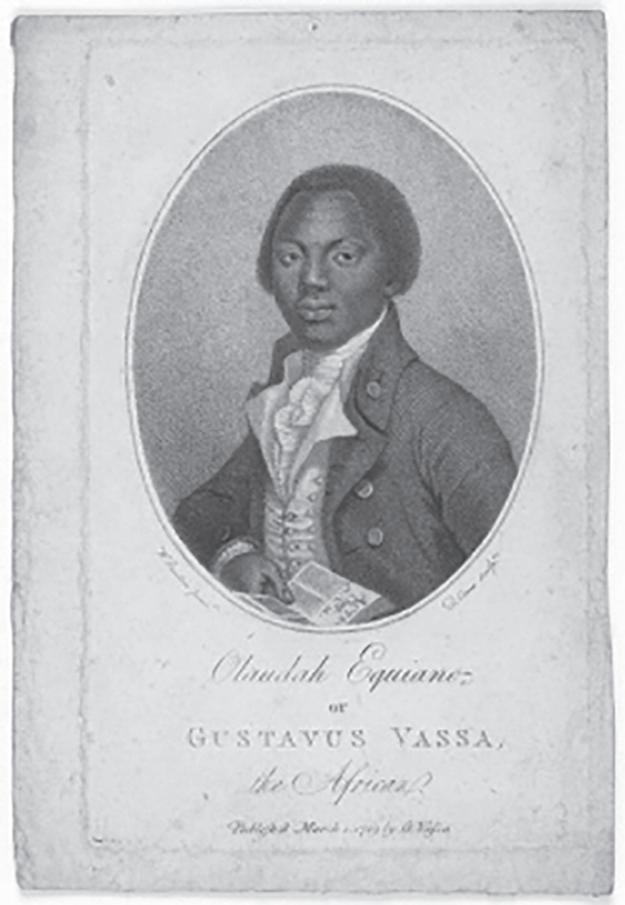
On July 11, 2000, at its annual convention in Cincinnati, the African Methodist Episcopal (AME) Church elected Vashti Murphy to be its first female bishop, presiding over the 18th Episcopal District in southeast Africa. In her capacity, she was responsible for several congregations in Africa, comprising nearly 10,000 people.
In 2005 she became the first woman to serve as Titular Head of the AME Church, overseeing the Council of Bishops as its president. She currently presides over the 13th Episcopal District. Her commitment to community development is evident in her work with urban American cities as well as in AIDS-stricken Africa.
Bishop Vashti Murphy McKenzie was born on May 28, 1947 into a prominent Baltimore, Maryland family, and graduated with a degree in journalism from the University of Maryland in 1978. She later earned a master’s of divinity from Howard University and a doctor of ministry from United Theological Seminary.
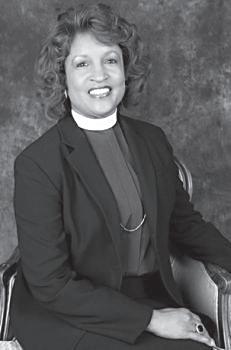
By Stacy M. Brown
NNPA NEWSWIRE SENIOR NATIONAL CORRESPONDENT
U.S. Attorney General Merrick Garland has announced a multifaceted strategy to bolster law enforcement and community-based initiatives to combat violent crime in America. Speaking at a conference for federal grantees in Chicago, Garland highlighted the need to double down on recent progress and stem the tide of violence gripping many American cities.

Garland noted the recent significant drop in homicides, hailing it as the largest one-year drop in half a century. He pointed to Chicago’s 13% decrease in violent crime as a tangible example of the positive impact of targeted interventions. The Attorney General credited much of the progress to the Bipartisan Safer Communities Act, which empowered federal prosecutors to crack down on gun trafficking and straw purchasing while allocating $250 million in grants for community-based violence prevention initiatives.
Of the funding, Garland announced the immediate availability of $78 million to be distributed to organizations actively engaged in reducing violent crime and fostering community trust. He emphasized that these funds would directly support grassroots efforts to address the root causes of violence and promote safer neighborhoods nationwide.
In November, the DOJ announced nearly $217 million in funding to hire 1,730 entry-level officers at 394 agencies in 48 states through the Office of Community Oriented Policing Services hiring program.
Meanwhile, officials said violent crime decreased across some of the nation’s biggest cities last year. According to federal numbers, Philadelphia, and Baltimore each saw 20% reductions in homicides between 2022 and 2023. In his recent State of the Union address, President Joe Biden highlighted that the nation reported historically low murder rates in 2023, with violent crime dropping to one of the lowest levels in 50 years.
According to a Forbes magazine study, South Carolina ranks eighth among the most dangerous states in America, with a crime rate of 4.91 violent crimes per 1,000 residents. However, an annual report by the South Carolina State Law Enforcement Division found that overall violent crime dropped by 2.6% from 2021 to 2022, including a 12% decrease in homicides.
Crime in New York City’s transit system has increased by roughly 7% in 2024 compared to the same period in 2023. The rise includes a series of recent violent attacks and shootings, leading New York Governor Kathy Hochul to deploy the National Guard to the subway system this month.
For Black Americans nationwide, particularly young men, the risk of becoming victims of violent crime remains disproportionately high. While Blacks make up 14% of the U.S. population, they account for 60% of those killed by firearm homicides annually, according to an analysis published by the Brady Center to Prevent Gun Violence.
Hate crimes are also on the rise across the country, according to a report from the Center for the Study of Hate and Extremism at California State University, San Bernardino. The report, titled “Faith Under Fire” and published in January, found that hate crimes increased by 11% in 2023 from 2022, with antisemitic and anti-Muslim hate crimes soaring following the Israel-Hamas war.
The FBI’s quarterly uniform crime report indicates a widespread decrease in violent crime during 2023 compared to the previous year, as well as a 13% decline in homicides relative to 2022. The Major Cities Police Association’s Violent Crime Survey found double-digit declines in homicides across nearly 70 of America’s largest cities in 2023 compared to 2022.
However, while cities like New York City, Los Angeles, Chicago, and Philadelphia saw homicides decline by 12% to 21%, others experienced sharp increases in slayings in 2023. Homicides rose by 24% in Memphis, 27% in Washington, D.C., 15% in Dallas, and 14% in Kansas City.
According to NYPD crime statistics, violent crime in New York City is continuing to fall in 2024. Through March 17, data show homicides are down by 19% from the same period in 2023. Meanwhile, according to NYPD data, violent crime in New York City housing developments fell by 3.2% in 2023 from the previous year.
In addition to the investments, Garland unveiled plans to deploy federal resources and prosecutors to cities disproportionately affected by violent crime, including St. Louis, Missouri; Jackson, Mississippi; and Hartford, Connecticut. He said the targeted deployments aim to support local law enforcement agencies and enhance collaboration in tackling crime hotspots.