



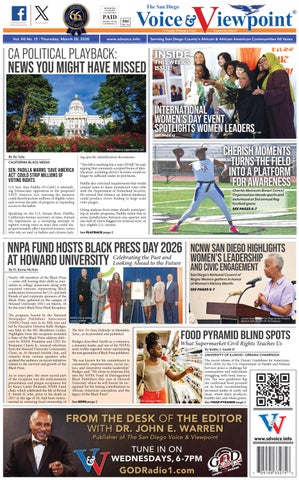


U.S. Sen. Alex Padilla (D-Calif.) is intensifying Democratic opposition to the proposed SAVE America Act, warning the measure could disenfranchise millions of eligible voters and reverse decades of progress in expanding access to the ballot.
Speaking on the U.S. Senate floor, Padilla, California’s former secretary of state, framed the legislation as a sweeping attempt to tighten voting rules in ways that could disproportionately affect married women, voters who rely on mail-in ballots and citizens lack-
ing specific identification documents.
“This bill is anything but a voter ID bill,” he said, arguing that commonly accepted forms of identification, including driver’s licenses, would no longer be sufficient under its provisions.
Padilla also criticized requirements that would compel states to share unredacted voter rolls with the Department of Homeland Security. He warned that reliance on federal databases could produce errors leading to large-scale voter purges.
Citing analyses from states already participating in similar programs, Padilla noted that in some jurisdictions between one-quarter and one-half of voters flagged for removal were, in fact, eligible U.S. citizens.
See PLAYBACK page 2


the Past and Looking Ahead to the Future
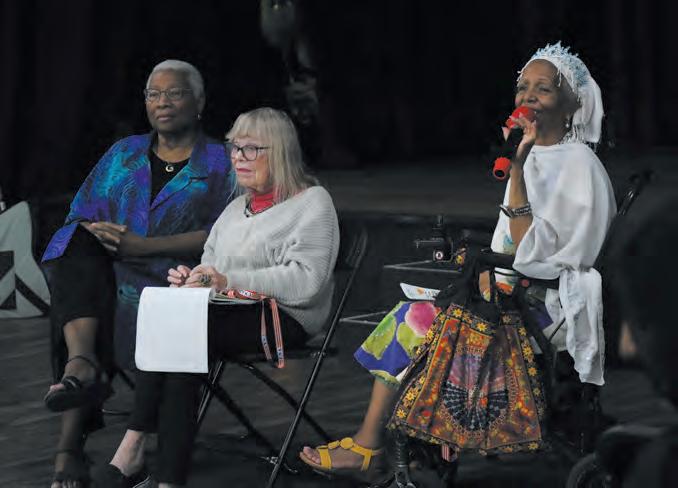
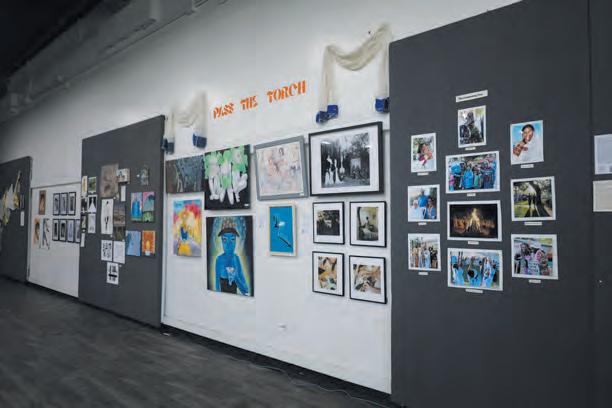
Nearly 100 members of the Black Press — some still honing their skills as journalists in college classrooms along with seasoned veterans representing Black publications from across the U.S.; and both friends of and corporate sponsors of the Black Press, gathered on the campus of Howard University (HU) on March, 18 for this year’s Black Press Week Reception.
The program, hosted by the National Newspaper Publishers Association (NNPA) Fund, now in its 50th year and led by Executive Director Kelly Hodges, was held in the HU Blackburn Center. Highlights from the reception included a State of the Black Press address delivered by NNPA President and CEO Dr. Benjamin Chavis Jr., musical selections from the Howard University Community Choir, an AI-themed fireside chat, and remarks from various speakers who updated the audience on recent initiatives related to the survival and growth of the Black Press.
As in years past, the most sacred part of the reception was the enshrinement presentation and plaque acceptance led by Karen Carter Richards, NNPA Fund chair, which celebrated the life of Bernal E. Smith II, who, prior to his death in 2017 at the age of 45, had been instrumental in restoring local ownership of
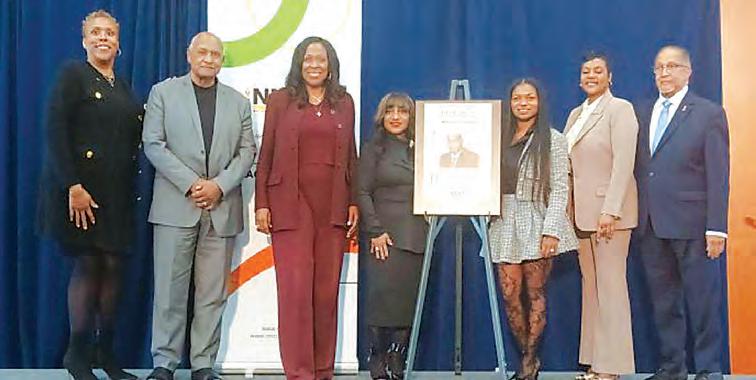
The New Tri-State Defender in Memphis, Tenn., as its president and publisher.
Hodges described Smith as a visionary, a dynamic leader, and one of the NNPA’s most widely regarded voices representing the next generation of Black Press publishers.
“He was known for his commitment to community empowerment, social justice, and innovative media leadership,” Hodges said. “We chose to enshrine him into the NNPA Fund of Distinguished Black Publishers this year at Howard University where he will forever be recognized for his lasting contributions to African American journalism and the legacy of the Black Press.”
See NNPA page 2
Moments Breast Cancer Organization blends sports and sisterhood at

The recent release of the Dietary Guidelines for Americans, 2025–2030, by the U.S. Department of Health and Human Services poses a challenge for communities and individuals struggling with food insecurity. The new guidelines flip the traditional food pyramid on its head, recommending increased intake of costly red meat, whole dairy products, healthy fats, and whole grains.




The California Democrat linked the current debate to the civil rights movement, invoking President Lyndon B. Johnson’s 1965 call for equal voting rights following the violence of Bloody Sunday. He argued that the proposed law would “turn back the clock” on hard-won protections enshrined in the Voting Rights Act.
Padilla’s remarks come as he continues a broader campaign against what he and other Democrats describe as escalating federal pressure on states to provide voter data. Over the past year, he has joined colleagues in filing legal briefs, convening public forums and introducing legislation aimed at limiting voter roll removals.
Republicans backing the SAVE America Act say stricter documentation and data-sharing requirements are necessary to ensure election integrity. Padilla and voting rights advocates counter that maintaining accurate rolls requires precision and transparency — safeguards they argue are missing from the proposal.
“Nothing is more fundamental in our democracy than the right to vote,” Padilla said. “We will do everything in our power to protect it.”
On March 18, Gov. Gavin Newsom announced a new requirement for California high school students to complete a personal finance course, part of a broader effort to expand economic opportunity and address wealth gaps affecting women and girls.
The policy mandates a one-semester financial literacy course for graduation, while a related executive order aims to improve women’s access to capital, savings and investment opportunities across the state.
Together, the moves position financial educa-
tion as a key tool in preparing students for realworld money decisions and in promoting more equitable participation in California’s economy.
The State Board of Education adopted the curriculum under Assembly Bill (AB) 2927, signed by Newsom in 2024. The course will be available beginning in the 2027–28 school year and required for students graduating in the 2030–31 school year and beyond.
Students will learn practical skills including budgeting, managing debt, understanding credit scores, financing higher education and investing. The curriculum also introduces programs like CalKIDS, which provides state-funded college savings accounts for millions of children.
“Financial literacy is a life skill,” Newsom said. “We’re making sure every California student graduates ready to earn, save, invest, and build wealth — while also expanding access so more women and families can fully participate in our economy.”
Alongside the education requirement, Newsom signed an executive order focused on closing the gender wealth gap by expanding access to financial systems and investment opportunities.
First Partner Jennifer Siebel Newsom said the initiative is designed to strengthen families and communities.
“When women have the opportunity to build wealth, families are stronger, communities are healthier, and our economy grows,” she said.
Sen. Akilah Weber Pierson (D-San Diego), chair of the California Legislative Black Caucus (CLBC), announced a new bill aimed at strengthening patient protections by permanently barring physicians who commit sexual misconduct from returning to practice.
Senate Bill (SB) 849 would require automatic revocation of a medical license if it had previ-
Crude oil, gasoline, diesel fuel, and other petroleum products can expose you to chemicals including toluene and benzene, which are known to the State of California to cause cancer and birth defects or other reproductive harm. These exposures can occur in and around oil fields, refineries, chemical plants, transport and storage operations, such as pipelines, marine terminals, tank trucks, and other facilities and equipment listed here:
https://www.wspa.org/proposition-65-notice-information/
The foregoing warning is provided pursuant to Proposition 65. This law requires the Governor of California to publish a list of chemicals “known to the State to cause cancer or reproductive toxicity.” This list is compiled in accordance with a procedure established by the Proposition, and can be obtained from the California Environmental Protection Agency. Proposition 65 requires that clear and reasonable warnings be given to persons exposed to the listed chemicals in certain situations. For more information go to:
www.P65Warnings.ca.gov/petroleum or call:
ously been revoked for sexual misconduct and later reinstated on or after Jan. 1, 2020. The measure would also prohibit those physicians from ever seeking reinstatement again.
The proposal comes as lawmakers seek to close gaps in California law that have allowed some doctors accused of sexual misconduct to resume treating patients.
“Throughout medicine, there have been troubling cases in which physicians whose licenses were revoked for sexual misconduct were later allowed to return to practice, putting new patients at risk,” Weber Pierson said.
California law already mandates automatic revocation for physicians found guilty of sexual misconduct. However, current rules allow some to petition for reinstatement, which has been granted in certain cases.
Weber Pierson said SB 849 would eliminate that pathway and strengthen accountability across the medical system.
“SB 849 closes that door permanently by requiring automatic revocation when a physician’s certificate was previously revoked for sexual misconduct and then reinstated on or after Jan. 1, 2020,” she said. “It also prohibits these individuals from ever petitioning for reinstatement or renewal again.”
Announcing the bill, Weber Pierson emphasized the need to restore trust in health care and protect patients.
“Today I presented my first bill of 2026, SB 849, focused on protecting patients and ensuring trust and professionalism in our healthcare system, because every patient deserves safe, respectful, and accountable care,” she said.
More than 100 advocates from seven regions of California gathered at the State Capitol to call
The Black Press Week 2026 reception opened with a welcome address from Karen Carter Richards, NNPA Fund chair and publisher of the Houston Forward Times, who invited the audience to join her in “celebrating the excellent legacy of those who have powered the Black Press over the past 199 years.”
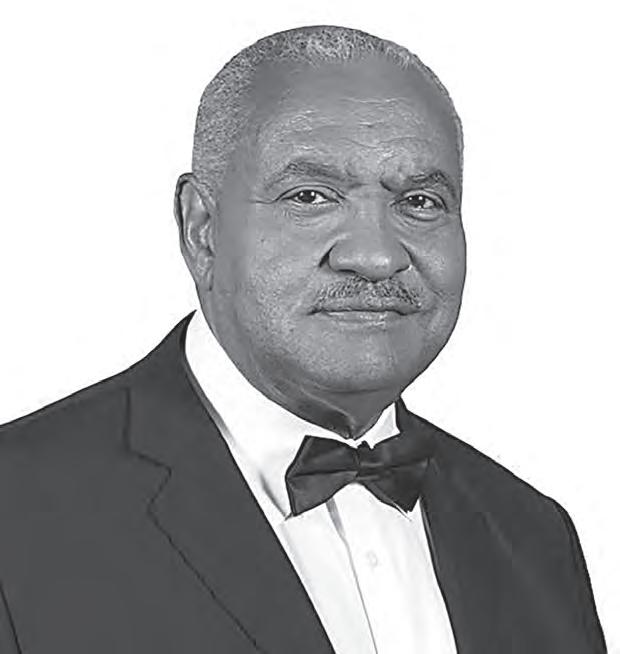
John Warren, NNPA Fund board member, publisher of The San Diego Voice & Viewpoint and chair of the NNPA, delivered opening remarks that emphasized his decades-long connection and commitment to Howard University.
“I’m a two-time graduate of Howard who completed law school 42 years ago and I am excited to be back on this campus,” Warren said. “We have weathered some tough times but always survived because of powerful presidents who shepherded us through the storms. Howard University represents a vast and impressive history — stories that without the Black Press may have never been documented and would have been lost to future generations.”
Chavis, who chose as the theme for his address, “Legacy, Struggle, Innovation, and the Road Ahead,” said while the nation prepares to celebrate its 250th anniversary, Blacks must remember that our history did not begin in 1776 but rather thousands of years earlier on the African continent.
“Even in the face of unprecedented inhumanity, torture, rape, violence, lynchings, and the racist discrimination and enslavement of African people in America before and after 1776, we not only survived but held on to our sense of dignity, purpose, struggle, mission, and vision,” Chavis said. “Now, as we prepare for the 200th anniversary of the Black Press, we must consider what truths are we passing on to the next generation?
“What truths are we holding onto that shatter the sinful and hateful stereotypes that work to sustain our oppression rather than to ensure our liberation? We represent a sacred tradition of truth tell-
for urgent action on housing and homelessness. Participants emphasized that homelessness is solvable if lawmakers commit to sustained funding and policies that support vulnerable populations.
“Homelessness will stop when we have ongoing funding. If we don’t, it will continue,” said Amber, program manager for a Los Angeles County homeless shelter. She noted that the state’s Housing Assistance Programs (HAP) have helped more than 90,000 Californians access housing and exit homelessness. “The funding is critical because without it, over 40,000 people could lose their vouchers. Housing should not be optional; it should be a right.”
Other speakers included a Skid Row resident and advocate for homeless people, Suzette Shaw. She highlighted the importance of including voices with lived experience in shaping policies.
“People who are making the decisions about us have never lived one single day that we’ve lived through,” Shaw said. “It’s imperative to have the voice of someone who can provide context to the policies being introduced around our lives.”
The rally coincided with California Advocacy Day, where attendees met with lawmakers to stress that insufficient funding shifts costs onto emergency services, hospitals, and providers, rather than saving the state money. Speakers urged policymakers to maintain and expand support for youth, seniors, veterans, and families at risk of losing housing.
The event also set the stage for the Housing California Gubernatorial Forum at the SAFE Credit Union Convention Center in Sacramento. The nonpartisan forum featured gubernatorial candidates Tom Steyer, Tony Thurmond, Antonio Villaraigosa, and Betty Yee, who discussed housing affordability, homelessness, and economic stability.
The forum was livestreamed [on the Housing California YouTube channel].
ing as members of the Black Press. However, it has never just been about the news — it has always been about freedom, justice, dignity, and self-determination,” said Chavis who added that the Black Press must continue to serve as a prophetic voice in the wilderness of American democracy as it challenges various forms of injustice.
As the Black Press continues its commitment to digitizing photographs and publications dating back to its founding in the early 19th century, Howard University serves as the home for archives that continue to grow and are housed on Howard’s campus under the auspices of the Moorland Spingarn Research Center (MSRC). Reports from two representatives of the NNPA’s ongoing digitization efforts, Brandon Nightingale, senior project manager, and Sijan Shrestha, MSRC scholar, provided critical information about the NNPA’s efforts to ensure that its past works remain available for future generations.
Chavis challenged his colleagues to ready themselves for the digital transformation which is sweeping across America and the world and to recognize that the shift from print to digital publishing is far from optional but is instead essential for those who wish to survive.
“This moment demands strategic resilience, intergenerational leadership to secure the future, and the ability to move forward as innovators who understand the benefits of emerging technologies like artificial intelligence and who are not afraid of the changes that it will inevitably bring to our industry,” he said. “But changes notwithstanding, our mission remains urgent and that cause first voiced in 1827 by the publishers of Freedom’s Journal which journeyed throughout two centuries of struggle and triumph, is still before us.
“The role of the Black Press is more vital today than ever before,” he continued. “As we honor the legacy of those like Frederick Douglass and Ida B. Wells, we must accept as our task the preparation of a new generation who will be called upon to carry the torch.”
This article originally appeared in The Afro
curity. For these Americans, the real question is not what to eat, but whether they have
This Saturday, March 28, 2026, millions of Americans will come out to participate in the third major No Kings Day Protest against the Presidency of Donald Trump. The last event drew more than 7 million people across this great land, exceeding more than 3,000 separate demonstrations. As important as these events are in making the statement that we are still a nation of democracy and are
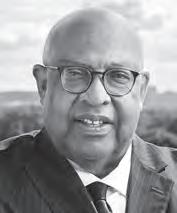
not willing to abandon our government of checks and balances for an authoritarian king, none of this matters if our protest is not matched with our voter participation in the upcoming primary and general elections across the country. There are two key points to be made here: One is that Blacks, who have not participated in great numbers, come out and be counted among those demonstrating. We are the victims of the “No Diversity, Equality and Inclusion” (DEI) campaign the President has launched against our programs and culture.
We must remember that the protest we now see, started with “us’” during the civil rights movement; we are responsible for the Voting Rights Act; we have been the leading force for all protest movements since 1965, as others have sought to follow our example with their causes seeking government changes and inclusion.
We must make our presence known and reclaim our political significance. We can not wait until November. For those of us in California and a number of other states, Primary Elections are coming within the next 90 days. If we are not registered, we can not vote. How we register is not the issue, whether Democrat, Republican or Independent. Only our voting participation can stop Donald Trump and his efforts to make America like Russia and Hungary with authoritarian leadership instead of a democracy.
We must let our neighbors and opponents know that we still count. We still vote and we can still make a difference in any election. No more excuses, just participation, starting this weekend with the “No Kings Day”.
By Fred Redmond
In 1917, A. Philip Randolph and Chandler Owen launched The Messenger, a pro-labor, anti-war magazine that connected racism to exploitation and demanded justice for Black workers. Two years later, the federal government responded with tactics of targeted censorship—surveillance, harassment and threats of prosecution—and branded a small Black labor magazine “the most dangerous” publication in the country simply for encouraging Black workers to organize.
More than a century later, two highly respected Black journalists—Don Lemon and Georgia Fort—are handcuffed and indicted for filming a protest inside a church. The tools have changed, but the oppressive government playbook has not.
That pairing matters: The birth of Negro History Week alongside the rise of an apparatus built to monitor and suppress Black labor dissent. The same government that denied Black people their history also treated them as a threat when they spoke collectively as workers. When Black workers asserted their right to organize and be heard, they faced not just employer retaliation, but state repression.
Randolph went on to organize the Brotherhood of Sleeping Car Porters, the first major Black-led union, and was under

constant federal surveillance. As Black workers organized in factories, on farms and in service jobs across the country, local police and FBI “Red Squads” and federal counterintelligence programs infiltrated meetings, built massive files, and worked to neutralize leaders who linked racial justice to workplace democracy.
That history provides a framework for understanding what happened in Minnesota this January, when Black journalists Don Lemon and Georgia Fort were arrested after covering a protest inside a church opposing U.S. Immigration and Customs Enforcement activity in the area. The message was unmistakable: documenting dissent can itself be treated as a crime.
At the same time, major media outlets are shrinking their newsrooms and walking away from race coverage. The Washington Post recently laid off some 300 journalists, including race and ethnicity reporters. In late 2025, NBC News shuttered entire teams dedicated to covering Black, Latino and Asian American, Native Hawaiian and Pacific Islander stories. In Pittsburgh, the 240-year-old Post-Gazette is being shut down by its owners, who responded to a court order requiring them to honor The NewsGuild-CWA (TNG-CWA) journalists’ contract after years of striking. When powerful newsrooms dismantle the very beats created after 2020 to cover racism and inequality, they send a different version of
the same message: some truths about power are no longer welcome.
The National Writers Union said the arrests “set a disastrous precedent for press freedom in the United States,” and the National Association of Black Journalists called on the government to “halt all retaliatory posture toward journalists.”
The AFL-CIO recognizes that the same tactics used to quash Black voices are used to suppress all our voices—on shop floors, in independent media, in the streets, on picket lines and in places of worship. We stand with our union brothers, sisters and siblings in insisting that the First Amendment is a right and a core worker protection, not a luxury.
A century ago, Woodson insisted that Black people had a history worth telli g and Randolph told Black workers they deserved more than exploitation. The government tried to silence them. This Black History Month, the question remains the same: Will Black truth tellers be honored or handcuffed?
The labor movement’s answer must be clear. We stand with Black workers and Black journalists in their right to dissent, to document, and to demand a better future.
Fred Redmond is the secretary-treasurer of the AFLCIO, the nation’s largest labor federation, representing 64 unions and nearly 15 million workers.
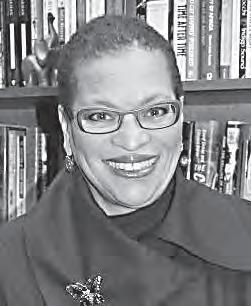
By Dr. Julianne Malveaux
Frederick Douglass did not know the day he was born.
Like many enslaved people, he was denied even the dignity of documentation. Birth dates were approximations. Family lines were severed. Identity existed in property ledgers, not in public record.
His mother, Harriet Bailey, called him her “little Valentine,” and Douglass later chose February 14 as his birthday — an act of self-definition in a country that refused to define him as fully human.
That act matters.
Douglass understood something fundamental: identity is not granted by paperwork. It is asserted through presence, voice and participation. He claimed authorship over his own life in a nation structured to deny it.
Today, we are debating whether documentation should determine access to democracy.
The SAVE Act would require documentary proof of citizenship to register to vote in federal elections. Passports. Birth certificates. Paper trails. Supporters frame it as administrative protection. But the history of American democracy teaches us that administrative mechanisms are rarely neutral.
Paperwork has always been political.
After Reconstruction, when Black political participation expanded, new rules narrowed the electorate. Literacy tests. Poll taxes. Grandfather clauses. Each was presented as procedural. Each functioned as a barrier.
The methods change. The objective — control over who counts — does not.
Documentation requirements would fall hardest on those least likely to have ready access to formal records: seniors born at home in the Jim Crow South, low-income Americans without passports, married women whose legal names no longer match their birth certificates. Even producing paperwork can become a test of belonging.
Documented cases of noncitizen voting are exceedingly rare. The question is not fraud prevention; it is access.
Reconstruction was not only about emancipation. It was about participation. Black men voted. Black officials were elected. Black institutions were built. And when those gains threatened entrenched power, backlash followed.
In 1898, in Wilmington, North Carolina, a legitimately elected multiracial government was overthrown. Black political power was dismantled. The ballot was replaced by the bullet. It was not disorder; it was organized suppression.
The lesson is sobering. When participation expands, resistance emerges.
Today’s debates unfold in legislative chambers rather than in armed mobs. But the question remains: who has the authority to define citizenship?
Douglass claimed his identity in a system that denied him documentation. He did not wait for official recognition to assert his humanity. He understood that democracy depends not on perfect records, but on inclusive participation.
When paperwork becomes a prerequisite for political voice, we should ask whether we are strengthening democracy — or narrowing it.
The struggle over the ballot has never been merely procedural. It has always been about power.
Douglass defined himself when the state would not.
The question now is whether we will let the state decide who counts.
Dr. Julianne Malveaux is a Washington, D.C.-based economist and author.
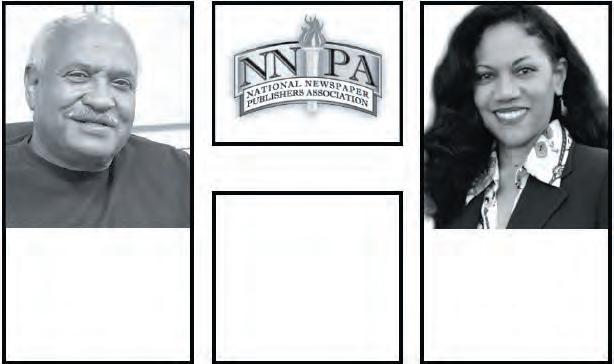


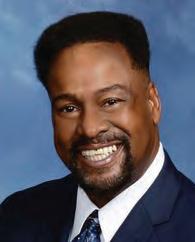

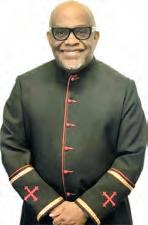
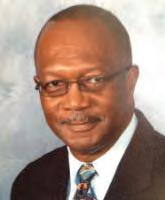

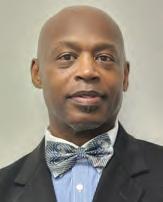
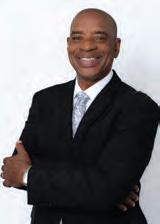
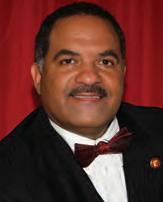
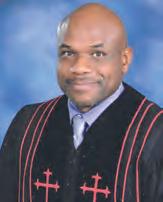
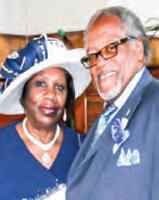




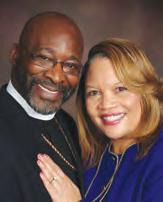
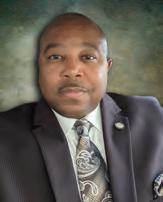
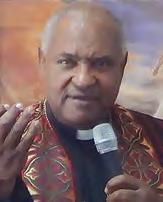
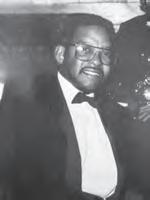

SUNRISE 06/03/1932
SUNSET 03/04/2026
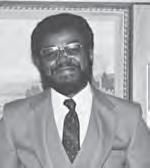
The family of Hardy A. Thrower, Sr. cordially invites you to a Celebration of Life on Friday, April 3, 2026. Celebration of Life Service | 1:00 PM Interment Services | 2:30 PM. Both services will be held at Cypress View Mausoleum, Mortuary and Crematory, located at 3953 Imperial Ave, San Diego, CA 92113. A repass will follow immediately after the interment.
Hardy A Thrower Sr., 93 passed away peacefully on March 4, 2026, leaving behind a legacy of love, service and dedication to family, education and community.
Born on June 3, 1932, in Wellington, Texas to the late Hardy H. and Isabel Thrower, Hardy and his three brothers and two sisters spent their early years in Wellington before the family relocated to Amarillo, Texas in 1944. He graduated from Carver High School in Amarillo as part of the Class of 1951. Later that year, Hardy enrolled at Arkansas AM&N College (now the University of Arkansas at Pine Bluff) on a full four- year football scholarship. It was there that he met the love of his life, Bobbie Jean Sutton. The two were married on October 30, 1955, at Mt. Zion Baptist Church in Little Rock, Arkansas, shortly after Hardy earned his Bachelor of Science Degree. In early 1956, Hardy was drafted into the U.S. Navy, where he served honorably for two years. Upon returning home, he began a civilian career delivering cloth diapers for Babyland before securing a long-term position as a machinist with Convair, a division of General Dynamics. He remained with the company for over 38 years, retiring in 1997.
Hardy was also a successful entrepreneur, owning and operating Thrower Realty. Hardy founded the San Diego Chapter of the UAPB/AM&N National Alumni Association.
A longtime member of St. Stephens Church of God in Christ in San Diego, Hardy was a devoted Christian and humanitarian. He generously gave to his church and extended support to those in need throughout his life. Hardy A. Thrower Sr. leaves behind his loving family to cherish his memory, sons; Hardy A. Thrower Jr. (Susan) of Sparks, Nevada, and Eric L. Thrower (Rosa) of San Diego, California, grandchildren; Natasha R. Boone, Hardy A. Thrower III, Sofia L. Davis Thrower, Vanessa Guerrero, and Marissa Gardner, great-grandkids; Anthony I. Boone, Kyree S Thrower, Amelia Cochran, Victoria Guerrero, Camelia Guerrero, Theo Davis, and a host of relatives and dear friends.
Avant
SUNRISE
01/27/1944
SUNSET
02/25/2026
ARRANGEMENTS BY PREFERRED CREMATION & BURIAL
Service was held March 21, 2026, at Pilgrim Progressive Baptist Church. ***************************************************************************
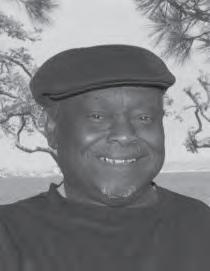
Willie Lee Avant, known affectionately to friends and family as Willie, was a man whose laughter and faith resonated throughout his life. Born on January 27, 1944, in Lane, South Carolina, Willie’s journey began with his parents, Joseph and Elisabeth Avant. Though the family moved to Manning during his early years, his heart remained in Lane, where his grandparents, Mattie and Wesley Bradshaw, raised him. His early life was marked by a deep sense of belonging, simple rural joys, and the beginnings of a faith that would guide him.
Answering the call of duty, Willie left Lane to serve in the US Army around 1966. He later joined the US Navy and retired as a respected HTC Chief Petty Officer. He served aboard the USS Reeves and USS Pelileu during his 22-year career, including two tours in Vietnam where his bravery, leadership, and humor were ever present.
After his military career, Willie worked at ROHR Industries and later the Department of Public Works. In every role, he was more than a colleague—he was a mentor, a friend, and often the highlight of someone’s day. He was recognized by Fidelity Lodge #10 for 50 years of service in Freemasonry.
Willie’s thirst for knowledge was evident in his certifications in firearms, auto repair instruction, welding, and aerospace manufacturing, which he used to support his family and serve others.
His faith was the cornerstone of his life. Willie lived as a testament to Christian values, blending humor with wisdom. He could quote Scripture as easily as he could deliver a joke, and his presence in church was constant.
A devoted father, Willie raised two daughters, LaToya Colter (Neely) and Natasha Avant, with love and commitment. His legacy lives on through his six grandchildren and his great-grandson. His sisters, Sadie Avant Williams and Shirley Avant Lewis, also carry forward his spirit.
Willie enjoyed skeet shooting, welding, travel, and collecting firearms and war memorabilia.
On February 25, 2026, Willie passed away in San Diego, California, leaving a legacy of love, laughter, and faith. He will be remembered for the joy he brought and the love he left behind.
The family extends special thanks to Pastor Donnell Townsend, Ms.Stenella Bassett, The Avant Family, USS Pelileu and USS Reeves groups, Fidelity Lodge #10, VFW Post 1512, friends, and loved ones for your support. God bless you.
SUNRISE 03/12/1945
SUNSET 02/20/2026
ARRANGEMENTS BY PREFERRED CREMATION & BURIAL
Service was held March 20, 2026, at New Shiloh Missionary Baptist Church.

Bobby Viven Williams, a beloved member of his community, was born on March 12, 1945, in Gladewater, Texas, to late loving parents Mary Williams and J. C. Williams.
Bobby spent his early years in Gladewater, in a close-knit community. In 1954, Bobby’s family moved to San Diego, California, where he spent much of his life. He accepted Christ at an early age and united with a local church, cultivating a faith that remained central to his life.
In 1965, Bobby met Ms. Bobbie Johnson. Together, they were blessed with three wonderful children before her passing. In 1978, Bobby met Clara Edwards, whom he called his “Honey Bunch,” and they were together until her passing in 2016. A kind and compassionate soul, Bobby was known for his endless generosity, often providing food, shelter, and support to friends and family in need.
Bobby had a fervent passion for chess, a game he loved to teach to numerous family members and friends. However, his greatest passion was photography. With a camera ever in hand, Bobby documented countless cherished moments at special occasions, preserving memories for those he loved. He was a devoted father, partner, brother, grandfather, and friend, always putting others’ needs before his own. Bobby’s love and caring nature touched everyone who knew him.
His legacy of kindness and dedication will live on in the hearts of those he leaves behind.
“To know him was to love him.”
Bobby passed away on February 20, 2026.
Bobby Viven Williams was preceded in death by his parents; Mary and J. C. Williams, brothers; Jimmy Williams, Joe Williams, Elder Charles Williams, and Jack Williams, and partner Clara Edwards. He is survived by his children; Carey Williams, Tara Williams, Kevin Williams, Jeannette Williams, Elaine McDonald (Derek), Verneal Edwards-Smith, and Sheena Jennings, sister Ruth House, brothers; Elder Clenel Williams (Bernice) and Billy Williams, fourteen grandchildren, eleven great-grandchildren, and host of nieces and nephews and other family members and friends who will forever cherish his memory.
SUNRISE 11/10/1927
SUNSET 02/18/2026
ARRANGEMENTS BY PREFERRED CREMATION & BURIAL
Services will be held today March 26, 2026, beginning at 11:00am at Bethel Baptist Church.
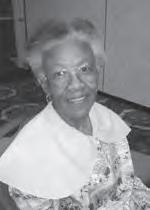
Gerald Ruth Breedlove McFadden was born in Old Washington County, Texas, on November 10, 1927. She was the second child of Oscar and Ruth Ella Scurry Breedlove. During her childhood, she attended Mt. Pleasant Baptist Church outside of Brenham, Texas, where she accepted Jesus Christ as her Savior and was baptized at age ten. As a teenager, her family moved to Houston, united with Damascus Missionary Baptist Church, and she graduated from Booker T. Washington High School. She later attended Prairie View A&M University, following the example of her grandmother, Maggie Ethel Fielder Scurry, the first in the family to graduate college. Gerald credited her Aunt Oneata for helping fund her education and earned a BA in Home Economics.
While attending Prairie View A&M University, Gerald met Frank Edward McFadden, the love of her life. After graduation, she began her career as a braille teacher in Bay City, Texas, later taught kindergarten through second grade in public schools, and taught Sunday School in Mt. Falls and Houston. Gerald and Frank were married on November 17, 1951, in Galveston, Texas. Frank, a Korean War veteran, safely returned home, and the family lived in Virginia, North Carolina, and Maryland. They were blessed with three children: Jennifra, Marilynn, and Frank II. After his military service, they settled in San Diego.
Gerald worked for the San Diego Unified School District, earned her Master’s Degree in Education, and taught until retirement. She joined Bethel Baptist Church in 1960, where she and Frank were ordained and served faithfully in multiple ministries.
Gerald was also a member of the Order of the Eastern Star, Alpha Kappa Alpha Sorority, Inc., and the Elementary Institute of Science. She enjoyed singing, cooking, traveling, and spending time with family. Known for her warmth and humor, she made everyone feel welcome.
She traveled widely, including Europe, Hawaii, and the Bahamas, and cherished family trips. A proud Prairie View graduate, she presented her grandson Raphael II with his diploma in 2009 and attended her great-granddaughter’s graduation in 2024.
Gerald is survived by her sister Lois, children; Jennifra, Marilynn, and Frank II, grandchildren, great-grandchildren, one great-great granddaughter, and many loved ones. She was preceded in death by her husband, parents, and siblings.
Gerald passed away on February 18, 2026.
Gerald will be laid to rest beside her husband at Mt. Hope Cemetery in San Diego, California.
T he Lord is close to the brokenhearted and saves those who are crushed in spirit.
1937
WILLIAM HASTIE BECOMES FIRST BLACK FEDERAL JUDGE
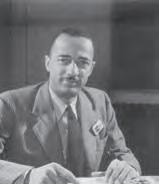
On this day in 1937, William H. Hastie Jr. became the nation’s first Black Federal Judge after being appointed to the Federal District Court in the Virgin Islands. Born in 1904 in Knoxville, Tennessee but raised in Washington, D.C., Hastie’s education included Amherst College and Harvard University Law School, with faculty positions at both Harvard and Howard University. He served as a judge for two years before resigning and later becoming Governor of the Virgin Islands, the first African American to hold such a title in U.S. territory. In 1949, Hastie was confirmed as Judge of the Third United States Circle Court of Appeals, the highest judicial position held by a Black person of the time.
1962
AUGUSTA SAVAGE PASSES AWAY
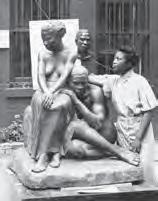
Sculptor, arts educator, and activist Augusta Savage passed away on March 26, 1962. As a sculptor during the Harlem Renaissance, Savage exhibited in many galleries and had numerous commissions, including busts of African American leaders, W.E.B DuBois and Marcus Garvey. In addition to her talents, she founded the Savage School of Arts, became the first African American woman to be apart of the National Association of Women Painters and Sculptors, served as president of the Harlem Artist Guild, and opened the Salon of Contemporary Negro Art, the first gallery for the exhibition of Black art works.

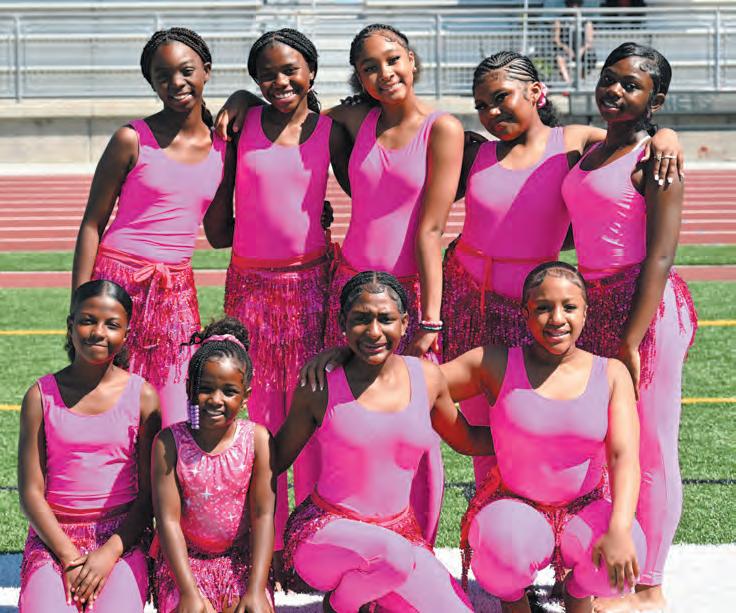

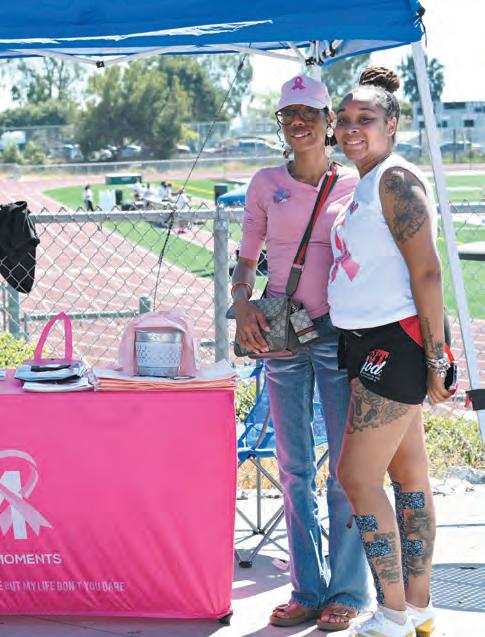
Cherish Moments Breast Cancer Organization brought energy and purpose to Lincoln High School in Southeast San Diego on March 21, 2026, as women and young girls took the field for their 3rd annual flag football game. The event blended sisterhood, strength, and awareness, creating a space where survivors, supporters, and the next generation came together for more than just a game.


By CW, The Freelancer
Laughter and competi
tion filled the field, but the message was clear. This was about fighting for life and raising awareness in a community that continues to be impacted by breast cancer. The atmosphere stayed lively throughout the day with performances by the Royal Pushh dance team, while DJ Coolstyle kept the energy high on the ones and twos, spinning the latest hits that had players on the field and friends and family in the stands moving and grooving.

As the community reflects, the question we showing up to
and girls, young and
Sherell Kinsler captured that spirit with a powerful message: “Take my boobs I
he National Council of Negro Women’s San Diego Chapter convened its general body

Examiner I
Deputy Sheriff Cadet
Food Services Worker
Forensic Pathology Fellow
Licensed Mental Health Clinician, Sheriff's Detentions
Sheriff's Emergency Services Dispatcher Trainee
Sheriff's Fingerprint Examiner




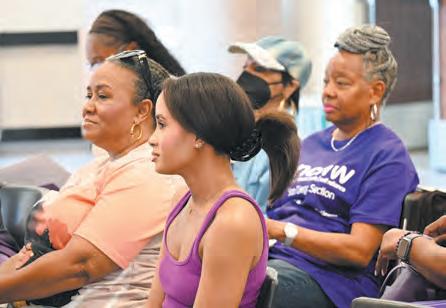
board meeting on March 21, 2026, at 11 a.m. inside Malcolm X Library in Southeast San Diego, bringing together community leaders, advocates, and members in a space grounded in purpose. In recognition of Women’s History Month, the gathering carried a deep sense of reflection and forward movement, honoring the enduring leadership of Black women while focusing on the work still ahead.
The room reflected both legacy and action. Conversations centered on strengthening programs that serve the
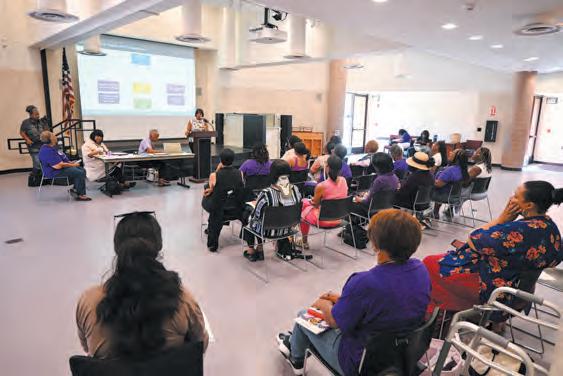


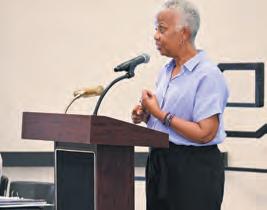
community while expanding influence beyond grassroots efforts. Members were reminded that their work holds power not just in service, but in shaping systems.
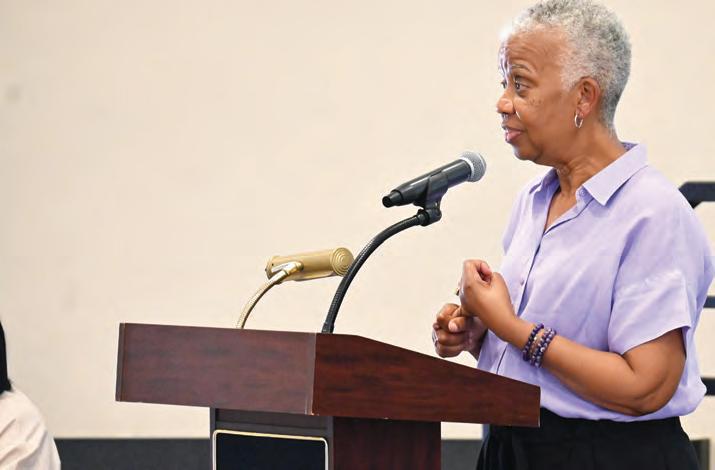
Special guest speaker Chida Warren, Director of the Office of Boards and Commissions under Mayor Todd Gloria, delivered a message rooted in access and opportunity. “Speaking today was important because I was able to give insight on how to connect their (NCNW) programming to policy making at City Hall,” Warren said. She also walked attendees through the process of engaging with boards and commissions, emphasizing that these spaces are critical pathways for community voices to be heard and respected.
Attendees left not only informed but energized equipped with tools to bridge the gap between advocacy and policy. The meeting served as a reminder that when Black women organize, systems can shift.
As momentum builds, the question becomes: How can each of us step forward, use our voice, and be part of the change we want to see in our communities and who can we bring along with us?
By CW, The Freelancer
he Urban Collaborative Project (UCP) is bringing residents, agencies, and community partners to the same table through a new Community-Led Maintenance Workshop series focused on the Euclid Avenue corridor, stretching from Chollas Creekside Park to Brooks Huffman Plaza. The effort is rooted in a simple idea: the people who live and work in a neighborhood should help shape how it is maintained.
Working alongside partners including Diamond BID, Jacobs Center for Neighborhood Innovation (JCNI), the Metropolitan Transit System (MTS), and the County of San Diego Live Well Center, UCP is aiming to address long-standing maintenance gaps while building a more sustainable, locally driven model for stewardship.
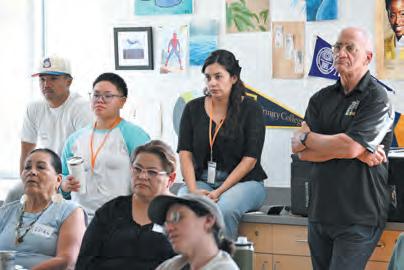
The first workshop, held in late February at Horton Elementary, set the tone. Residents gathered over lunch before moving into a


to ongoing public health and safety concerns, including illegal dumping and a lack of basic infrastructure such as restrooms and lighting. Others highlighted environmental challenges, calling for more trees, green space, and communityled approaches like rainwater harvesting.
At the same time, the conversation expanded beyond physical maintenance. Participants em-
these tools could be shaped to bet ter meet neigh -
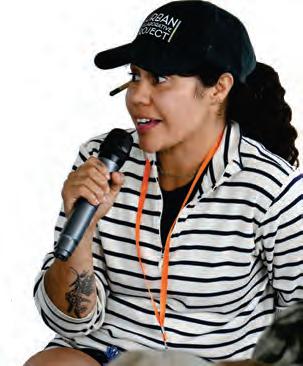
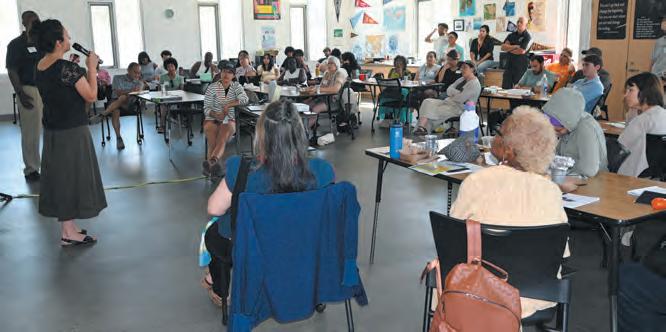

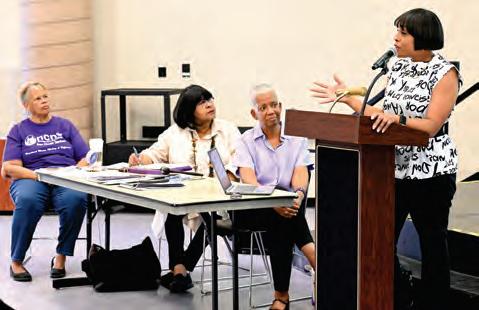
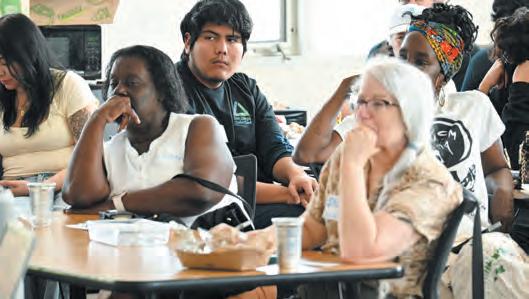
structured conversation that combined presentations, panel discussions, and small group dialogue. A maintenance panel led by Brian “Barry” Pollard helped ground the discussion in lived experience, while breakout groups gave participants space to identify priority concerns and share ideas.
What emerged was a clear picture of both urgency and opportunity. Residents pointed
phasized the importance of rebuilding social connections, suggesting block parties and neighborhood outreach as ways to reduce isolation and strengthen community ties. Economic concerns also surfaced, with interest in keeping resources local through job creation and tools like Maintenance Assessment Districts.
Workshop #2, held in mid-March, built on that momentum by shifting toward solutions. In partnership with the City of San Diego, the session focused on the policies and funding mechanisms that could support enhanced maintenance. Presentations covered topics such as special taxes, financing districts, and how public agencies coordinate services. Residents were encouraged to ask questions and provide feedback on how
borhood needs.
The workshops are designed not just as information sessions, but as a collaborative process where community insight directly informs future planning. By connecting lived experience with policy knowledge, UCP is working to bridge the gap that often exists between institutions and the communities they serve.
Pollard captured the spirit of the effort in a moment that resonated across the room:
“The cavalry ain't coming. If we don't improve our community, it won't get done. Our message is getting through, and the turnout proves it.”
Community members interested in following ongoing efforts and upcoming events can stay connected through Instagram at ucprojectcdc or visit www.ucproject.org/
As the series continues, the focus remains on turning conversation into action and ideas into a shared plan for the corridor’s future. What that plan ultimately looks like will depend on how deeply the community continues to engage, and how willing partners are to meet that energy with lasting support.

As a Black woman expecting, or currently with a baby, you deserve the best care possible. Despite the same levels of education,



By Bo Tefu California Black Media
Make It to Graduation
A new report on college completion in California highlights persistent racial disparities in higher education outcomes, finding that only 50% of Black freshmen earn a bachelor’s degree within six years, significantly lower than graduation rates for Asian and White students.
According to the report compiled by the Public Policy Institute of California (PPIC), overall, the state has made progress in improving college completion. Still, outcomes vary widely depending on the type of institution students attend and their socioeconomic background.
Racial disparities remain pronounced across systems. While 83% of Asian students and 74% of White students graduate within six years, completion rates fall to 62% for Latino students and 50% for Black students. Women also outperform men, graduating at a rate of 72% compared to 68%. Students from lowincome backgrounds face additional challenges: those receiving Pell Grants graduate at significantly lower rates — 62% compared to 76% among their peers.
No Need to Worry Yet About “Virus Without Vaccine” Spreading in California
Health officials say a respiratory virus spreading in parts of the United States is not new and most people should not panic, even as cases increase in California and other states.
Human metapneumovirus, known as HMPV, is circulating this season with rising cases
reported in California and New Jersey. The virus has no vaccine and no specific antiviral treatment, but experts say most infections are mild and resolve on their own.
“HMPV causes symptoms very similar to RSV,” said Dean Blumberg, chief of pediatric infectious diseases at UC Davis Health. “This includes upper respiratory symptoms that sometimes progress to pneumonia or bronchiolitis and wheezing.”
Health experts say prevention measures are similar to those used for other respiratory viruses. People should wash their hands frequently, cover coughs and sneezes and stay home when sick to limit the spread.
California Rolls Out $1.18 Billion for Behavioral Health
California is expanding mental health and substance use disorder treatment statewide with a new $1.18 billion funding round, Gov. Gavin Newsom announced March 12.
The investment supports 66 new projects across 130 behavioral health facilities, including rural and tribal communities, and creates additional residential and crisis treatment centers.
According to the Governor’s office, the funding, part of the Bond Behavioral Health Continuum Infrastructure Program (Bond BHCIP) under Proposition 1, brings statewide behavioral health investments to more than $4 billion. The program has already delivered 6,919 residential treatment beds and 27,561 outpatient slots, exceeding its statewide goals in just two years. In total, Proposition 1 now supports 177 projects across 333 facilities.
“Proposition 1 is doing exactly what we promised it would do: transforming Cal-

ifornia’s behavioral health system,” Newsom said. “In just two years, we didn’t just meet our goal of creating 6,800 treatment beds; we exceeded it.
The program aims to help Californians suffering from mental illness and addiction, including those experiencing homelessness. It builds on the state’s first statewide drop in unsheltered homelessness in 15 years, which saw a 9% decline, according to Newsom’s office.
California’s public health programs could lose billions of dollars due to recent federal budget cuts, state health officials told lawmakers during a joint committee hearing on March 10.
“The rollback of federal policies risks reversing hard-won progress,” said Assemblymember Mia Bonta (D-Oakland).
“For many Californians, accessibility and affordability were already in question,” Bonta
continued. “More than half of Californians are worried about out-of-pocket expenses, long-term care and monthly premiums, concerns that now surpass anxiety about housing, groceries, transportation and utilities.”
Assemblymember Cecilia Aguiar-Curry (DWinters) expressed frustration over the potential impact on vulnerable populations.
“When I see some of the people who come into our offices, our elderly, our disabled, primary care doctors, we’re all very, very concerned,” she said. “This is not affordable. It’s not taking care of our most vulnerable. I’m just very frustrated.”
Sen. Lola Smallwood-Cuevas (D-Los Angeles) also highlighted the human impact of the cuts on social media, writing on Facebook: “Most Medi-Cal recipients already work. More than 1 million Black Californians rely on Medi-Cal and could lose coverage under these harmful federal cuts. Working families should not pay the price when too many communities have already suffered lost lives, lost health, and years of disinvestment.”
By Mike Stobbe AP Medical Writer
A federal judge on Monday, March 16, temporarily blocked federal health officials from cutting the number of vaccines recommended for every child, and said U.S. Health Secretary Robert F. Kennedy Jr. likely violated federal procedures in revamping a key vaccine advisory committee.




The decision halted an order by Kennedy — announced in January — to end broad recommendations for all children to be vaccinated against flu, rotavirus, hepatitis A, hepatitis B, some forms of meningitis and RSV. It also stopped a meeting of a Kennedy-appointed vaccine advisory committee, which was set to convene this week in Atlanta.

ommend to doctors and patients.
The judge's order, however, is not the final word. The blocks are temporary, pending either a trial or a decision for summary judgment. Federal health officials indicated they planned to appeal.
“HHS looks forward to this judge’s decision being overturned just like his other attempts to keep the Trump administration from governing,” said Department of Health and Human Services spokesman Andrew Nixon.
The order issued is the latest development in a lawsuit filed last July by the American Academy of Pediatrics and some other medical groups. The lawsuit in federal court in Boston originally focused on Kennedy’s decision to stop recommending COVID-19 vaccinations for most children and pregnant women.
The lawsuit was updated as Kennedy took more steps that alarmed medical societies, causing the plaintiffs to ask Judge Brian E. Murphy to take steps to address those policy changes too.
For example, the plaintiffs amended the lawsuit to stop the scaling back of the nation’s childhood vaccination schedule. They also asked the court to look at Kennedy’s actions concerning the Advisory Committee on Immunization Practices, which advises public health officials on what vaccines to rec -
Kennedy, a leading anti-vaccine activist before becoming the nation’s top health official, fired the entire 17-member panel last year and replaced it with a group that includes several anti-vaccine voices.
Murphy, who was nominated to the bench by President Joe Biden, said Kennedy’s reconstitution of ACIP likely violated federal law. He ordered the appointments — and all decisions made by the reformed committee — put on hold. The ACIP was scheduled to meet last week to discuss COVID-19 vaccine safety, among other issues, but that gathering was postponed, officials said.
The judge's order should bring clarity, Racine said.
“If anyone has any questions about what’s the appropriate vaccine schedule for their children, the best thing to do is to talk to their pediatricians,” he said.
Schwartz said he expected federal health officials to keep expressing “their deep skepticism regarding the importance of vaccination” and to keep embracing "unsupported vaccine safety allegations.”
After the ruling, one of Kennedy's appointees to the committee, Dr. Robert Malone, urged the Trump administration to keep pursuing Kennedy's vaccine policy changes.
“A district court order is a delay, not a defeat,” he wrote on Substack.

03/12/2026
This business is hereby registered by the following: G. Prime-Time Morgan 478 Westby St Chula Vista, CA 91911
This statement was filed with the Recorder/County Clerk of San Diego County on March 12, 2026
This fictitious business name will expire on March 12, 2031 03/19, 03/26, 04/02, 04/09
FICTITIOUS BUSINESS NAME STATEMENT 2026-9005837
Fictitious business name(s): Valencia Diesel Repair
187 Mace Street Suite E Chula Vista, CA 91911 County of San Diego
2475 Paseo de las Americas #4539 San Diego, CA 92154
Organization California
This statement was filed with the Recorder/County Clerk of San Diego County on February 25, 2026
This fictitious business name will expire on February 25, 2031 03/19, 03/26, 04/02, 04/09
FICTITIOUS BUSINESS NAME STATEMENT 2026-9005626
Fictitious business name(s): On the go mobile Oil Change 515 13th Street, 503 San Diego, CA 92101 County of San Diego
This business is conducted by: An Individual Registrant has not yet begun to transact business under the name(s) above


March 10, 2026
This fictitious business name will expire on March 10, 2031 03/19, 03/26, 04/02, 04/09
FICTITIOUS BUSINESS NAME STATEMENT 2026-9004649
Fictitious business name(s): Apada threads of treasures 7733 Palm St, Ste 101 Lemon Grove, CA 91945 County of San Diego
bid this project. All attendees must preregister with the District prior to attending the site walk at sandiegounified.org/sitewalks. The Bid and Contract Documents may be downloaded free of charge at the District’s online Planroom at sandiegousdplans.com. All bids must be received electronically via PlanetBids before 1:00 p.m. on THURSDAY, APRIL 16, 2026. Prime contractors interested in submitting a bid must go to tinyurl.com/SDUSD-PlanetBids then search under “Bid Opportunities” for “Invitation number” CP26-0723-05-00-00 Asphalt Repairs at Sandburg and Washington Elementary Schools. For new vendors, please register under “New Vendor Registration.” The project estimate is between $720,000 and $760,000, inclusive of allowances. This is not a PSA project but requires the District’s prequalification for projects estimated under $1 million. The District requires that Bidders possess any of the following classification(s) of California State Contractors License(s), valid and in good standing, at the time of
Clerk of San Diego County on March 16, 2026 This fictitious business name will expire on March 16, 2031 03/26, 04/02, 04/09, 04/16
FICTITIOUS BUSINESS NAME STATEMENT 2026-9005762
Fictitious business name(s): Swag Tags
Ad Tags Swagg Tags Swagg Taggs
Ad Taggs 478 Westby St Chula Vista, CA 91911 County of San Diego
This business is conducted by: An Individual The first day of business was:
This business is conducted by: A Corporation Registrant has not yet begun to transact business under the name(s) above This business is hereby registered by the following: Valencia Road Service, INC.
2475 Paseo de las Americas #4539 San Diego, CA 92154 State of Incorporation/ Organization California
This statement was filed with the Recorder/County Clerk of San Diego County on March 13, 2026
This fictitious business name will expire on March 13, 2031
03/19, 03/26, 04/02, 04/09
FICTITIOUS BUSINESS NAME STATEMENT
2026-9005849
Fictitious business name(s):
Wentz Property Group 1820 Paradise St San Diego, CA 92114
County of San Diego
This business is conducted by: A Trust Registrant has not yet begun to transact business under the name(s) above
This business is hereby registered by the following: Nichelle Wentz - Trustee Of Nichelle Wentz Living Trust 1820 Paradise St San Diego, CA 92114
This statement was filed with the Recorder/County Clerk of San Diego County on March 13, 2026
This fictitious business name will expire on March 13, 2031 03/19, 03/26, 04/02, 04/09
FICTITIOUS BUSINESS NAME STATEMENT 2026-9005011
Fictitious business name(s): DMR 500 Corporation
Rieder Homes Group 9815 Carroll Canyon Rd, Suite 203 San Diego, CA 92131
County of San Diego
This business is conducted by: A Corporation
The first day of business was: 03/04/2026
This business is hereby registered by the following: DMR 500 Corporation 9815 Carroll Canyon Rd, Suite 203 San Diego, CA 92131
State of Incorporation/ Organization California
This statement was filed with the Recorder/County Clerk of San Diego County on March 4, 2026
This fictitious business name will expire on March 4, 2031 03/19, 03/26, 04/02, 04/09
FICTITIOUS BUSINESS NAME STATEMENT 2026-9004477
Fictitious business name(s): Sunset Cliffs Liquor 4799 Voltaire St San Diego, CA 92107 County of San Diego
This business is conducted by: A Corporation
The first day of business was: 01/20/2026
This business is hereby registered by the following: Sunset Mini Ventures 4799 Voltaire St San Diego, CA 92107 State of Incorporation/
This business is hereby registered by the following: Eduardo Prudencio 515 13th Street, 503 San Diego, CA 92101
This statement was filed with the Recorder/County Clerk of San Diego County on March 11, 2026
This fictitious business name will expire on March 11, 2031
03/19, 03/26, 04/02, 04/09
FICTITIOUS BUSINESS NAME STATEMENT 2026-9003899
Fictitious business name(s):
Jaz Hair and Nails
5410 Division Street San Diego, CA 92114
County of San Diego
778 Ada Street, Unit 2
Chula Vista, CA 91911
This business is conducted by:
An Individual
The first day of business was: 02/01/2026
This business is hereby registered by the following: Do Ta Nguyen
778 Ada Street, Unit 2 Chula Vista, CA 91911
This statement was filed with the Recorder/County Clerk of San Diego County on February 20, 2026
This fictitious business name will expire on February 20, 2031 03/19, 03/26, 04/02, 04/09
FICTITIOUS BUSINESS
NAME STATEMENT 2026-9005382
Fictitious business name(s): Ebony Care Advantage
8645 Fletcher Pkwy #476 La Mesa, CA 91942 County of San Diego
8030 La Mesa Blvd #283 La Mesa, CA 91942
This business is conducted by: An Individual Registrant has not yet begun to transact business under the name(s) above
This business is hereby registered by the following: Charice Letecia Dupree
8030 La Mesa Blvd #283 La Mesa, CA 91942
This statement was filed with the Recorder/County Clerk of San Diego County on March 10, 2026
This fictitious business name will expire on March 10, 2031
03/19, 03/26, 04/02, 04/09
FICTITIOUS BUSINESS NAME STATEMENT 2026-9005519
Fictitious business name(s): Peace of eden P.O.E.
Peace of Eden Bed & Breakfast
Peace of Eden Boutique 1848 El Prado Ave
Lemon Grove, CA 91945 County of San Diego
This business is conducted by: A General Partnership
The first day of
This business is conducted by: An Individual Registrant has not yet begun to transact business under the name(s) above This business is hereby registered by the following: Conrad Kolleya Bangs Keita 3179 Florine Dr Lemon Grove, CA 91945 This statement was filed with the Recorder/County Clerk of San Diego County on February 27, 2026
This fictitious business name will expire on February 27, 2031 03/19, 03/26, 04/02, 04/09
FICTITIOUS BUSINESS NAME STATEMENT 2026-9005252
Fictitious business name(s): Global Urban Sustainability Coalition
Urban Sustainability Coalition 342 Euclid Ave, Ste 406 #404 San Diego, CA 92114 County of San Diego
This business is conducted by: A Corporation Registrant has not yet begun to transact business under the name(s) above
This business is hereby registered by the following: San Diego Urban Sustainability Coalition
342 Euclid Ave, Ste 406 #404 San Diego, CA 92114
State of Incorporation/ Organization California
This statement was filed with the Recorder/County Clerk of San Diego County on March 06, 2026
This fictitious business name will expire on March 06, 2031 03/19, 03/26, 04/02, 04/09
FICTITIOUS BUSINESS NAME STATEMENT 2026-9003924
Fictitious business name(s): Kentaro KTRFilms
Secret Asiant Productions 14488 Crestwood Avenue Poway, CA 92064
County of San Diego
This business is conducted by: An Individual
The first day of business was: 01/01/2026
This business is hereby registered by the following: Ken Matsuo 14488 Crestwood Avenue Poway, CA 92064
This statement was filed with the Recorder/County Clerk of San Diego County on February 20, 2026
This fictitious business name will expire on February 20, 2031 03/12, 03/19, 03/26, 04/02
FICTITIOUS BUSINESS NAME STATEMENT 2026-9002220
Fictitious business name(s): Premier Finish Painting 1825 Hancock St. Unit #212 San Diego, CA 92110 County of San Diego
This business is conducted by: An Individual Registrant
the Recorder/County Clerk of San Diego County on March 02, 2026 This fictitious business name will expire on March 02, 2031 03/12, 03/19, 03/26, 04/02
FICTITIOUS BUSINESS NAME STATEMENT 2026-9005276
Fictitious business name(s): Pacific Soul Jazz Festival Pacific Soul Music Festival 3645 Ruffin Rd. Suite 200 San Diego, CA 92123 County of San Diego
This business is conducted by: A Corporation
The first day of business was: 03/01/2026 This business is hereby registered by the following: Mandate Project Impact, Inc. 3645 Ruffin Rd. Suite 200 San Diego, CA 92123 State of Incorporation/ Organization California
This statement was filed with the Recorder/County Clerk of San Diego County on March 06, 2026 This fictitious business name will expire on March 06, 2031 03/12, 03/19, 03/26, 04/02
FICTITIOUS BUSINESS NAME STATEMENT 2026-9003934
Fictitious business name(s): Drizzle Sound 2322 Hummingbird Street Chula Vista, CA 91915 County of San Diego This
Clerk of San Diego County on
Petitioner or Attorney:
Chyenne Cierra Diaz, Rodney Christopher Diaz Jr.
To All Interested Persons: Petitioner
Chyenne Cierra Diaz, Rodney Christopher Diaz Jr. filed a petition with this court for a decree changing names as follows:
a. PRESENT NAME: Chyenne Cierra Diaz
PROPOSED NAME: Chyenne Cierra Shadow
b. PRESENT NAME: Rodney Christopher Diaz Jr.
PROPOSED NAME: Red Shadow
c. PRESENT NAME: Kindelyn Lucy Diaz
PROPOSED NAME: Kindelyn Lucy Shadow
THE COURT ORDERS that all persons interested in this matter appear before this court at the hearing indicated below to show cause, if any, why the petition for change of name should not be granted. Any person objecting to the name changes described above must file a written objection that includes the reasons for the objection at least two court days before the matter is scheduled to be heard and must appear at the hearing to show cause why the petition should not be granted. If no written objection is timely filed, the court may grant the petition without a hearing.
NOTICE OF HEARING
a. Date: May 4, 2026 Time: 8:30 A.M. Dept. 61
(To appear remotely, check in advance of the hearing for information about how to do so on the court's website. To find your court's website go to www.courts.ca.gov/find-mycourt.htm)
NO HEARING WILL OCCUR ON THE DATE
SPECIFIED IN THE ORDER TO SHOW CAUSE.
The court will review the documents filed as of the date specified on the Order to Show Cause for Change of Name (JC Form #NC-120).
If all requirements for a name change have been met as of the date specified, and no timely written objection
has been received (required at least two court days before the date specified), the Petition for Change of Name (JC Form #NC-100) will be granted without a hearing. One copy of the Order Granting the Petition will be mailed to the petitioner.
To change a name on a legal document, including a birth certificate, social security card, driver license, passport, and other identification, a certified copy of Decree
Changing Name (JC Form #NC-130) or Decree Changing Name and Order Recognizing Change of Gender and for Issuance of New Birth Certificate (JC Form #NC-230) may be required. Contact the agency(ies) who issue the legal document that needs to be changed, to determine if a certified copy is required.
A certified copy of Decree Changing Name (JC Form #NC-130) or Decree Changing Name and Order Recognizing Change of Gender and for Issuance of New Birth Certificate (JC Form #NC-230) may be obtained from the Civil Business Office for a fee. Petitioners who are seeking a change of name under the Safe at Home program may contact the assigned department for the information on obtaining certified copies.
If all the requirements have not been met as of the date specified, the court will mail the petitioner a written order with further directions.
If a timely objection is filed, the court will set a hearing date and contact the parties by mail with further directions.
A RESPONDENT OBJECTING TO THE NAME CHANGE MUST FILE A WRITTEN OBJECTION AT LEAST TWO COURT DAYS (excluding weekends and holidays) BEFORE THE DATE SPECIFIED. Do not come to court on the specified date. The court will notify the parties by mail of a future hearing date
Any Petition for the name change of a minor that is signed by only one parent must have this Attachment served along with the Petition and Order to Show Cause, on the other nonsigning parent, and proof of service must be filed with the court.
The address of the court is: 330 W. Broadway San Diego, CA 92101 03/26, 04/02, 04/09, 04/06
SUPERIOR COURT OF CALIFORNIA 250 E Main St. El Cajon, CA 92020 North County Division Case Number 26CU012602C
Petitioner or Attorney: Simone Arthur Karyakos
To All Interested Persons: Petitioner Simone Arthur Karyakos filed a petition with this court for a decree changing names as follows:
a. PRESENT NAME: Simone Arthur Karyakos
PROPOSED NAME: Simone Dawood
THE COURT ORDERS that all persons interested in this matter appear before this court at the hearing indicated below to show cause, if any, why the petition for change of name should not be granted.
Any person objecting to the name changes described above must file a written objection that includes the reasons for the objection at least two court days before the matter is scheduled to be heard and must appear at the hearing to show cause why the petition should not be granted. If no written objection is timely filed, the court may grant the petition without a hearing.
NOTICE OF HEARING a. Date: April 23, 2026 Time: 8:30 A.M. Dept. 61
(To appear remotely, check in advance of the hearing for information about how to do so on the court's website. To find your court's website go to www.courts.ca.gov/find-mycourt.htm)
NO HEARING WILL OCCUR ON THE DATE SPECIFIED IN THE ORDER TO SHOW CAUSE.
The court will review the documents filed as of the date specified on the Order to Show Cause for Change of Name (JC Form #NC-120).
If all requirements for a name change have been met as of the date specified, and no timely written objection has been received (required at least two court days before the date specified), the Petition for Change of Name (JC Form #NC-100) will be granted without a hearing. One copy of the Order Granting the Petition will be mailed to the petitioner.
To change a name on a legal document, including a birth certificate, social security card, driver license, passport, and other identification, a certified copy of Decree
Changing Name (JC Form #NC-130) or Decree
Changing Name and Order Recognizing Change of Gender and for Issuance of New Birth Certificate (JC Form #NC-230) may be required. Contact the agency(ies) who issue the legal document that needs to be changed, to determine if a certified copy is required.
A certified copy of Decree
Changing Name (JC Form #NC-130) or Decree
Changing Name and Order Recognizing Change of Gender and for Issuance of New Birth Certificate (JC Form #NC-230) may be obtained from the Civil Business Office for a fee. Petitioners who are seeking a change of name under the Safe at Home program may contact the assigned department for the information on obtaining certified copies.
If all the requirements have not been met as of the date specified, the court will mail the petitioner a written order with further directions.
If a timely objection is filed, the court will set a hearing date and contact the parties by mail with further directions.
A RESPONDENT
OBJECTING TO THE NAME CHANGE MUST FILE A WRITTEN
OBJECTION AT LEAST TWO COURT DAYS (excluding weekends and holidays) BEFORE THE DATE SPECIFIED. Do not come to court on the specified date. The court will notify the parties by mail of a future hearing date
Any Petition for the name change of a minor that is signed by only one parent must have this Attachment served along with the Petition and Order to Show Cause, on the other nonsigning parent, and proof of service must be filed with the court.
The address of the court is: 330 W. Broadway San Diego, CA 92101 03/19, 03/26, 04/02, 04/09
SUPERIOR COURT OF CALIFORNIA 330 West Broadway San Diego, CA 92101 Central Division
Case Number 26CU012057C
Petitioner or Attorney: Juanita Mae Whetstone Rivera AKA Juanita Netthes AKA Juanita Mae WhetstoneRivera AKA Juanita Rivera
To All Interested Persons: Petitioner Juanita Mae Whetstone Rivera AKA Juanita Netthes AKA Juanita Mae WhetstoneRivera AKA Juanita Rivera filed a petition with this court for a decree changing names as follows:
a. PRESENT NAME: Juanita Mae Whetstone Rivera AKA Juanita Netthes AKA Juanita Mae WhetstoneRivera AKA Juanita Rivera
PROPOSED NAME: Juanita Mae WhetstoneRivera [first] [middle] [last-last]
THE COURT ORDERS that all persons interested in this matter appear before this court at the hearing indicated below to show cause, if any, why the petition for change of name should not be granted. Any person objecting to the name changes described
above must file a written objection that includes the reasons for the objection at least two court days before the matter is scheduled to be heard and must appear at the hearing to show cause why the petition should not be granted. If no written objection is timely filed, the court may grant the petition without a hearing.
NOTICE OF HEARING
Date: April 21, 2026 Time: 8:30 A.M. Dept. C-61
(To appear remotely, check in advance of the hearing for information about how to do so on the court's website. To find your court's website go to www.courts.ca.gov/find-mycourt.htm)
NO HEARING WILL OCCUR ON THE DATE SPECIFIED IN THE ORDER TO SHOW CAUSE.
The court will review the documents filed as of the date specified on the Order to Show Cause for Change of Name (JC Form #NC-120).
If all requirements for a name change have been met as of the date specified, and no timely written objection has been received (required at least two court days before the date specified), the Petition for Change of Name (JC Form #NC-100) will be granted without a hearing. One copy of the Order Granting the Petition will be mailed to the petitioner.
To change a name on a legal document, including a birth certificate, social security card, driver license, passport, and other identification, a certified copy of Decree
Changing Name (JC Form #NC-130) or Decree
Changing Name and Order Recognizing Change of Gender and for Issuance of New Birth Certificate (JC Form #NC-230) may be required. Contact the agency(ies) who issue the legal document that needs to be changed, to determine if a certified copy is required.
A certified copy of Decree Changing Name (JC Form #NC-130) or Decree
Changing Name and Order Recognizing Change of Gender and for Issuance of New Birth Certificate (JC Form #NC-230) may be obtained from the Civil Business Office for a fee. Petitioners who are seeking a change of name under the Safe at Home program may contact the assigned department for the information on obtaining certified copies.
If all the requirements have not been met as of the date specified, the court will mail the petitioner a written order with further directions.
If a timely objection is filed, the court will set a hearing date and contact the parties by mail with further directions.
A RESPONDENT
OBJECTING TO THE NAME CHANGE MUST FILE A WRITTEN
OBJECTION AT LEAST TWO COURT DAYS (excluding weekends and holidays) BEFORE THE DATE SPECIFIED. Do not come to court on the specified date. The court will notify the parties by mail of a future hearing date
Any Petition for the name change of a minor that is signed by only one parent must have this Attachment served along with the Petition and Order to Show Cause, on the other nonsigning parent, and proof of service must be filed with the court.
The address of the court is:
330 West Broadway San Diego, CA 92101
03/12, 03/19, 03/26, 04/02
SUPERIOR COURT OF CALIFORNIA
330 W Broadway San Diego, CA 92101 Central Division
Case Number 26CU012217C
Petitioner or Attorney: Alan W. Cheung, Esq. 185615
To All Interested Persons: Petitioner Janet Annette Hunt-Travis filed a petition with this court for a decree changing names as follows:
a. PRESENT NAME: Janet Annette Hunt-Travis
PROPOSED NAME: Janet Annette Travis
THE COURT ORDERS that all persons interested in this matter appear before this court at the hearing indicated below to show cause, if any, why the petition for change of name should not be granted. Any person objecting to the name changes described above must file a written objection that includes the reasons for the objection at least two court days before the matter is scheduled to be heard and must appear at the hearing to show cause why the petition should not be granted. If no written objection is timely filed, the court may grant the petition without a hearing.
NOTICE OF HEARING
Date: April 22, 2026
Time: 8:30 A.M. Dept. C-61
(To appear remotely, check in advance of the hearing for information about how to do so on the court's website. To find your court's website go to www.courts.ca.gov/find-mycourt.htm)
NO HEARING WILL OCCUR ON THE DATE SPECIFIED IN THE ORDER TO SHOW CAUSE.
The court will review the documents filed as of the date specified on the Order to Show Cause for Change of Name (JC Form #NC-120).
If all requirements for a name change have been met as of the date specified, and no timely written objection has been received (required at least two court days before the date specified), the Petition for Change of Name (JC Form #NC-100) will be granted without a hearing. One copy of the Order Granting the Petition will be mailed to the petitioner.
To change a name on a legal document, including a birth certificate, social security card, driver license, passport, and other identification, a certified copy of Decree Changing Name (JC Form #NC-130) or Decree Changing Name and Order Recognizing Change of Gender and for Issuance of New Birth Certificate (JC Form #NC-230) may be required. Contact the agency(ies) who issue the legal document that needs to be changed, to determine if a certified copy is required.
A certified copy of Decree
Changing Name (JC Form #NC-130) or Decree Changing Name and Order Recognizing Change of Gender and for Issuance of New Birth Certificate (JC Form #NC-230) may be obtained from the Civil Business Office for a fee. Petitioners who are seeking a change of name under the Safe at Home program may contact the assigned department for the information on obtaining certified copies.
If all the requirements have not been met as of the date specified, the court will mail the petitioner a written order with further directions.
If a timely objection is filed, the court will set a hearing date and contact the parties by mail with further directions.
A RESPONDENT OBJECTING TO THE NAME CHANGE MUST FILE A WRITTEN OBJECTION AT LEAST TWO COURT DAYS (excluding weekends and holidays) BEFORE THE DATE SPECIFIED. Do not come to court on the specified date. The court will notify the parties by mail of a future hearing date
Any Petition for the name change of a minor that is signed by only one parent must have this Attachment served along with the Petition and Order to Show Cause, on the other nonsigning parent, and proof of service must be filed with the court.
The address of the court is:
330 W Broadway San Diego, CA 92101 03/12, 03/19, 03/26, 04/02
SUPERIOR COURT OF CALIFORNIA
325 S. Melrose Dr. Vista, CA 92081
North County Division Case Number 26CU011432N
Petitioner or Attorney: Ricardo Rowe/Jessica A. Cotrina Ormeno
To All Interested Persons: Petitioner Ricardo Rowe/Jessica A. Cotrina Ormeno filed a petition with this court for a decree changing names as follows:
a. PRESENT NAME: Ricardo Gael Cotrina Ormeno
PROPOSED NAME: Ricky Rowe
THE COURT ORDERS that all persons interested in this matter appear before this court at the hearing indicated below to show cause, if any, why the petition for change of name should not be granted. Any person objecting to the name changes described above must file a written objection that includes the reasons for the objection at least two court days before the matter is scheduled to be heard and must appear at the hearing to show cause why the petition should not be granted. If no written objection is timely filed, the court may grant the petition without a hearing.
NOTICE OF HEARING Date: May 01, 2026 Time: 8:30 A.M. Dept. N-25
(To appear remotely, check in advance of the hearing for information about how to do so on the court's website. To find your court's website go to www.courts.ca.gov/find-mycourt.htm)
NO HEARING WILL OCCUR ON THE DATE SPECIFIED IN THE ORDER TO SHOW CAUSE.
The court will review the documents filed as of the date specified on the Order to Show Cause for Change of Name (JC Form #NC-120).
If all requirements for a name change have been met as of the date specified, and no timely written objection has been received (required at least two court days before the date specified), the Petition for Change of Name (JC Form #NC-100) will be granted without a hearing. One copy of the Order Granting the Petition will be mailed to the petitioner.
To change a name on a legal document, including a birth certificate, social security card, driver license, passport, and other identification, a certified copy of Decree
Changing Name (JC Form #NC-130) or Decree
Changing Name and Order Recognizing Change of Gender and for Issuance of New Birth Certificate (JC Form #NC-230) may be required. Contact the agency(ies) who issue the legal document that needs to be changed, to determine if a certified copy is required.
A certified copy of Decree
Changing Name (JC Form #NC-130) or Decree
Changing Name and Order
Recognizing Change of Gender and for Issuance of New Birth Certificate (JC Form #NC-230) may be obtained from the Civil Business Office for a fee. Petitioners who are seeking a change of name under the Safe at Home program may contact the assigned department for the information on obtaining certified copies.
If all the requirements have not been met as of the date specified, the court will mail the petitioner a written order with further directions.
If a timely objection is filed, the court will set a hearing date and contact the parties by mail with further directions.
A RESPONDENT
OBJECTING TO THE NAME CHANGE MUST FILE A WRITTEN OBJECTION AT LEAST TWO COURT DAYS (excluding weekends and holidays) BEFORE THE DATE SPECIFIED. Do not come to court on the specified date. The court will notify the parties by mail of a future hearing date
Any Petition for the name change of a minor that is
signed by only one parent must have this Attachment served along with the Petition and Order to Show Cause, on the other nonsigning parent, and proof of service must be filed with the court.
The address of the court is: 325 S. Melrose Dr. Vista, CA 92081 03/05, 03/12, 03/19, 03/26
SUPERIOR COURT OF CALIFORNIA COUNTY OF SAN DIEGO 1100 Union Street San Diego, CA 92101 Central Division
Petition For Dissolution (Divorce) of: Marriage Case Number: 23FL008674C
PETITIONER: Calci Cheyenne Freymuth
RESPONDENT: Rogert Gage Freymuth
1. LEGAL RELATIONSHIP: We are married
2. RESIDENCE REQUIREMENTS: Petitioner has been a resident of this state for at least six months and of this county for at least three months immediately preceding the filing of this Petition. (For a divorce, unless you are in the legal relationship described in 1b., at least one of you must comply with this requirement.)
3. STATISTICAL FACTS
(1)Date of marriage (specify): July 05, 2017
(2)Date of separation (specify): January 10, 2023
(3)Time from date of marriage to date of separation (specify): 5 Years 7 Months
4. MINOR CHILDREN The minor children are Ryan Hasan Freymuth, birthdate February 10, 2010, age 5; River Kai Freymuth, birthdate July 20, 2023, age 1
5. LEGAL GROUNDS (Family Code sections 22002210, 2310-2312):
a. Divorce of the marriage or domestic partnership based on 1. irreconcilable differences
6. CHILD CUSTODY AND VISITATION (PARENTING TIME)
a. Legal custody of children to petitioner b. Physical custody of children to petitioner c. Child visitation (parenting time) be granted to respondent
8. SPOUSAL OR DOMESTIC PARTNER SUPPORT
b. Terminate (end) the court's ability to award support to respondent c. Reserve for future determination the issue of support payable to petitioner
9. SEPARATE PROPERTY b. Confirm as separate property the assets and debts in Property Declaration (form FL-160)
10. COMMUNITY AND QUASI-COMMUNITY PROPERTY
b. Determine rights to community and quasicommunity assets and debts. All such assets and debts are listed in Property Declaration (form FL-160)
Date Filed: April 07, 2025
By: I. Barnes, Deputy SUMMONS (Family Law) On First Amended Petition
NOTICE TO RESPONDENT (AVISO AL DEMANDADO) Robert Gage Freymuth
Petitioner's name is: (Nombre del demandante): Calci Cheyenne Freymuth Case Number: 23FL008674C
You have 30 calendar days after this Summons and Petition are served on you to file a Response (form FL120) at this court and have a copy served on the petitioner. A letter or phone call will not protect you.
If you do not file your Response on time, the court may make orders affecting your marriage or domestic
partnership, your property, and custody of your children. You may be ordered to pay support and attorney fees and costs.
For legal advice, contact a lawyer immediately. Get help finding a lawyer at the California Courts Online Self-Help Center (www. courts.ca.gov/selfhelp), at the California Legal Services website (www.lawhelpca.org), or by contacting your local county bar association.
NOTICE-RESTRAINING ORDERS ARE ON PAGE 2: These restraining orders are effective against both spouses or domestic partners until the petition is dismissed, a judgment is entered, or the court makes further orders. They are enforceable anywhere in California by any law enforcement officer who has received or seen a copy of them.
FEE WAIVER: If you cannot pay the filing fee, ask the clerk for a fee waiver form. The court may order you to pay back all or part of the fees and costs that the court waived for you or the other party.
Tiene 30 días de calendario después de haber recibido la entrega legal de esta Citación y Petición para presentar una Respuesta (formularlo FL -120) ante la corte y efectuar la entrega legal de una copia al demandante. Una carta o llamada telefónica o una audiencia de la corte no basta para protegerlo.
Si no presenta su Respuesta a tiempo, la corte puede dar órdenes que afecten su matrimonio o pareja de hecho, sus bienes y la custodia de sus hijos. La corte también le puede ordenar que pague manutención, y honorarios y costos legales.
Para asesoramiento legal, póngase en contacto de inmediato con un abogado. Puede obtener información para encontrar un abogado en el Centro de Ayuda de las Cortes de California (www.sucorte. ca.gov), en el sitio web de los Servicios Legales de California (www. lawhelpca.org) o poniéndose en contacto con el colegio de abogados de su condado.
AVISO-LAS ÓRDENES DE RESTRICCIÓN SE ENCUENTRAN EN LA PÁGINA 2: Las órdenes de restricción están en vigencia en cuanto a ambos cónyuges o miembros de la pareja de hecho hasta que se despida la petición, se emita un fallo o la corte dé otras órdenes. Cualquier agencia del orden público que haya recibido o visto una copia de estas órdenes puede hacerlas acatar en cualquier lugar de California.
EXENCIÓN DE CUOTAS: Si no puede pagar la cuota de presentación, pida al secretario un formulario de exención de cuotas. La corte puede ordenar que usted pague, ya sea en parte o por completo, las cuotas y costos de la corte previamente exentos a petición de usted o de la otra parte.
The name and address of the court is: (El nombre y dirección de la corte son): Superior Court of California 1100 Union Street San Diego, CA 92101 Central Division
The name, address, and telephone number of the petitioner's attorney, or petitioner without an attorney, are: (El nombre, la dirección y número de teléfono del abogado del demandante, o del demandante que no tiene abogado, son): Calci Cheyenne Freymuth 7845 Westside Dr. Apt. #212 San Diego, CA 92108 (619) 483-9785
Date: (Fecha): 04/07/2025 Clerk, by (Secretario, por) I. Barnes, Deputy (Asistente) 03/05, 03/12, 03/19, 03/26
Notice is hereby given to the creditors and contingent creditors of the above-named
equal opportunity and will not discriminate with regard to race, religion, color, ancestry, age, gender, disability, medical condition or place of birth; and will not do business with any firm that discriminates on any basis. Bids shall be received no later than the date and time noted above at: City of San Diego's Electronic Biding Site PlanetBids at: https://www.planetbids.com/p ortal/portal.cfm?CompanyID= 17950 Claudia C Abarca, Director Purchasing & Contracting Department March 24, 2026 3/26/26 CNS-4023475# VOICE & VIEWPOINT NEWS
By Edward Henderson California Black Media
An
ew report released by Black Women Organized for Political Action through its Training Institute for Leadership Enrichment (BWOPA-TILE) and Hispanas Organized for Political Equality (HOPE) is shedding new light on the barriers Black women and Latinas face in California’s health care workforce — and the steps advocates say are needed to close those gaps.
The report, Pathways and Priorities in California’s Healthcare Workforce: Insights from Black Women and Latinas, draws on the experiences of more than 800 young women across California and comes as the state confronts a growing shortage of health care professionals. Researchers say the findings highlight both the demand for health care careers among these communities and the systemic barriers that continue to limit access to those jobs.
“When we address the social and economic barriers they face — from scholarships to educational support — we create real opportunities for individuals to pursue the health care careers they intend.” – Josephine Appiah, BWOPA-TILE
According to findings, Black women and Latinas remain significantly underrepresented in health care professions despite representing a large share of California’s population. Latinos make up about 40% of the state’s residents but hold only 10%–16% of key health care roles. Black Californians represent about 5.3% of the population but occupy just 3%–3.9% of physician positions and as little as 2%–4% of midwifery roles.
The Association of American Medical Colleges projects the United States could face a shortage of more than 85,000 physicians by 2036.
Advocates say expanding pathways into health care careers for Black women and Latinas could help address both challenges — workforce shortages and persistent health disparities.
The study, conducted by the research firm EVITARUS, included a statewide survey of Black women and Latinas ages 18 to 29 as well as online focus
Continued from page 2
During the civil rights and Black power movements, Black communities across the country pushed to expand the meaning of Black protest to include access to a reliable, nutritious food supply. From the Student Nonviolent Coordinating Committee (SNCC) to the Black Panther Party, food emerged as a critical site of s ocial, political, and economic struggle.
In Chicago, food came into sharp focus through the work of the Women of Operation Breadbasket, the direct-action unit of Dr. Martin Luther King Jr.’s Southern Christian Leadership Conference’s (SCLC) Operation Breadbasket in the North. The team of Black women placed the quality of food available in grocery stores in their neighborhoods at the center of their fight for racial and economic justice.
Founded in 1967 by Rev. Willie T. Barrow, a co-founder of Operation Breadbasket alongside Rev. Jesse L. Jackson Sr., the Women of Operation Breadbasket launched a Bad Meat Campaign that same year. Members included prominent figures such as civil rights activist and international labor leader Rev. Addie L. Wyatt, who helped mobilize Black mothers and community members on the South and West Sides in protests against grocers who sold rotten meat and inadequate produce in Black neighborhoods, transforming grocery aisles into battlegrounds for civil rights.
Supermarket Civil Rights
This campaign reveals what I call supermarket civil rights: a highly visible form of consumer activism through which Black communities challenged and

groups. The research is the third installment in a multi-year initiative examining healthcare access and workforce equity.
While respondents overwhelmingly said health care careers are meaningful and stable opportunities, they also described significant barriers that make entering or advancing in the field difficult.
Nearly all participants cited the rising cost of living (98%) and housing affordability (95%) as major obstacles. Financial strain also affects education and career planning: four in ten respondents said reductions in financial aid or job losses had negatively impacted their ability to pursue healthcare careers.
Despite those challenges, the desire to work in health care remains strong. Eighty percent of respondents
said health care jobs are highly important to their communities, and 85% described the profession as a stable career pathway.
Several policy recommendations were also outlined to strengthen the health care workforce pipeline. Respondents identified expanding financial aid and loan forgiveness programs as the top priority, followed by increasing affordable transfer pathways into health care degree programs and improving workplace conditions.
“The report highlights the lived experiences of Black women and Latinas across the state,” Josephine Appiah of BWOPA-TILE said during the webinar. “When we address the social and economic barriers they face — from scholarships to educational support — we create real opportunities for individuals to pursue the health care careers they intend.” www.sdvoice.info
exposed grocery stores as contested sites of power, where food access was routinely compromised and negotiated during the civil rights era.
Robert Culp’s 1969 documentary “Operation Breadbasket” provides footage of supermarket civil rights. In the film, the Women of Operation Breadbasket confront a grocery store owner and a meat manager about hazardous conditions in the meat department at a D&S Super Markets store.
The group’s campaign made clear that bad meat was a significant health concern at the intersection of race, economics, and community well-being. The supplying of bad meat in Black neighborhoods reflected how white grocers valued Black patrons: unsafe working conditions, heightened risk of food-borne illness, and the manipulation of Black purchasing power.
Food Power Politics
But the bad meat campaign offered Black neighborhoods a site to navigate food power politics — the struggle over how food is weaponized in Black communities during times of social unrest and how they fight back.
In one of the documentary’s final scenes, Barrow and Morris returned to tour [a] store months later. The transformation is unmistakable: high-quality meat, stocked meat display fridges, new machinery, updated cleaning systems, and cleaner aisles.
Although the Women of Operation Breadbasket’s Bad Meat campaign did not dismantle racism and food, it dramatized how Black women could fight for civil rights in the least likely of places — inside the
supermarket.
Operation Breadbasket closed in Chicago in 1971, and its founder, Jackson, converted it into Operation People United to Save Humanity — later changed from “Save” to “Serve” (PUSH) — which became the Rainbow PUSH Coalition in 1996, and is still operating. Many members of the Women of Operation Breadbasket continued their activism in this organization.
By demanding dignity in Black food experiences, the Women of Operation Breadbasket asserted the right to safe and nutritious food, a central pillar of today’s food justice movement. Learning from their practical actions expands the blueprint of methods that can help food justice activists and organizations today as they struggle to redress systematic inequity at the nexus of food disparities, poor diet quality, and environmental degradation.
The National Black Food and Justice Alliance (NBFJA) offers a national infrastructure, rooted in Black food experiences, actively mobilizing farmers, organizers, policymakers, advocates, and related stakeholders to reshape how Black communities interface with U.S. foodscapes and imagine brighter, equitable food futures for all.
The history of Supermarket civil rights and its living legacies remind us that the food story of Black life matters. Food justice has always been built from the ground up, and remembering this history is essential to shaping what comes next.
This article originally appeared in Word in Black

By Tihut Tamrat Contributing Writer
In celebration of International Women’s Day this year, community members gathered Sunday, March 8th for PASS THE TORCH, a vibrant event honoring women leaders while uplifting the next generation. Held at the Partnership for the Advancement of New Americans (PANA) in San Diego, the gathering brought together artists, organizers, and families for an afternoon centered on mentorship, creativity, and community connection.
Co-organized by longtime immigrant community advocate Aster Keleta, founder of MAG Children House Resource Center, and multidisciplinary artist Mereb Khasay and emcee, the event aimed to bridge a growing gap between generations of women by creating a space where mentorship, cultural exchange, and collaboration could flourish.
The celebration opened with a lively dance performance by the East African Student Association(EASA) dance team, whose energetic movements set the tone for the afternoon. Guests also explored a visual art gallery curated by young women from across San Diego, featuring work by Fatuma Fadhil of the Uma Collection; multidisciplinary artist Alessandra Ruiz; visual artist Emilia Mehretab; photographer Kamari Mohamed; moon sluice artist Tessa Elizabeth; multimedia artist Natalia Ventura; photographer and emerging documentarian Tihut Tamrat; and visual artist Sierra Roberson.


Keynote speaker Dr. Jean Carole Murat inspired the crowd and gave them new tools to ease all the stresses that come with being a strong independent and powerful woman such as breathwork and the tap to calm method. Anne Hoiberg and Aster Keleta followed with speeches and awardees passed to the younger generation that are carrying the torch of leadership in their own communities.
The afternoon also included poetry readings by Fiza Shaghel and Faryal Ashraf, along with a harp performance by Marina McClane, creating a reflective and celebratory atmosphere throughout the space.
Attendees enjoyed East African cuisine while connecting with artists, organizers, and community members. Conversations between elders and younger attendees echoed the event’s mission of sharing wisdom across generations.
The celebration closed with a vibrant performance by Ballet Folklórico of San Diego State University, whose colorful traditional dance brought the audience together in a powerful finale honoring culture, creativity, and the enduring strength of women’s leadership.