







By Corey Williams and Tassanee Vejpongsa ASSOCIATED PRESS
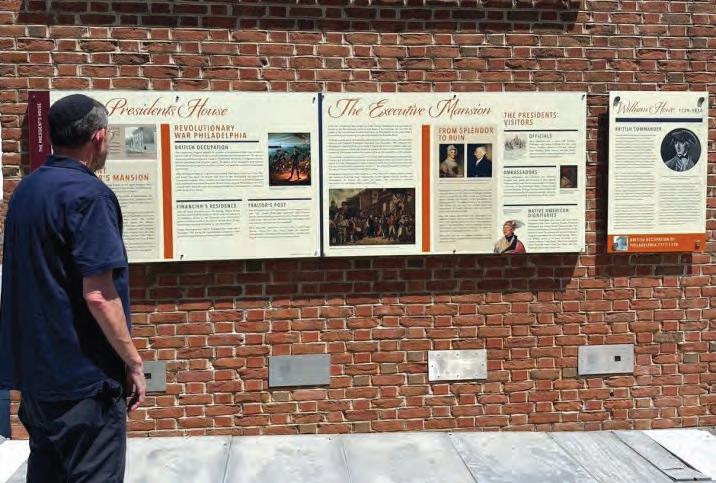
The Trump administration on Wednesday, July 15, replaced an exhibit on slavery at the site of President George Washington’s home in Philadelphia with a version that historians say whitewashes the nation’s history.
The new exhibit was installed in the same area where the Declaration of Independence was adopted on July 4, 1776.

“Overnight, under the cover of darkness, the federal government removed panels at the President’s House that told a thorough history of Philadelphia,” Philadelphia Mayor Cherelle L. Parker said. “It was allowed to do this by the decision of the federal court, but that it did so at night shows it understands this action is shameful, that it violates community trust.”
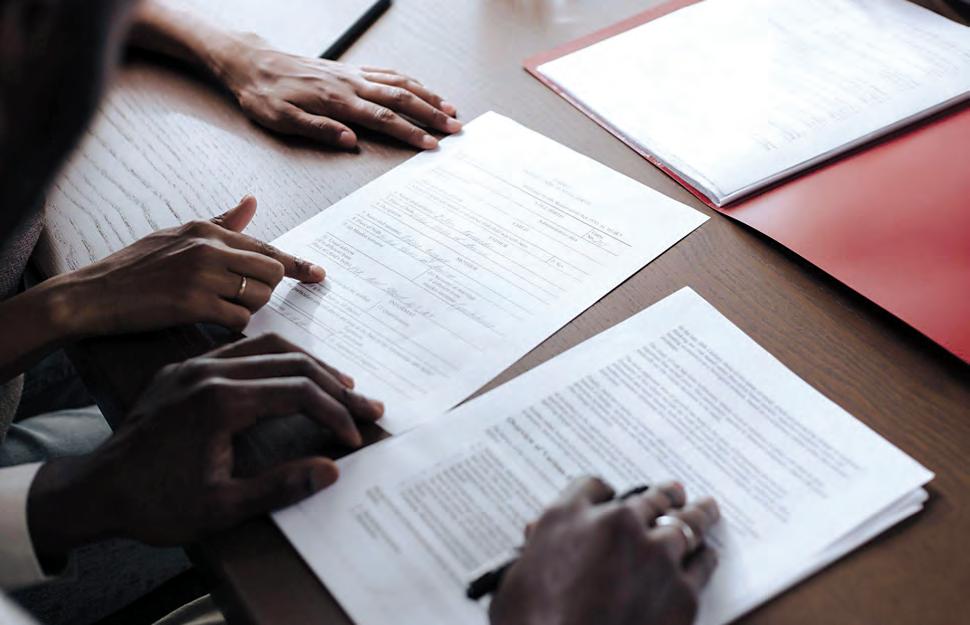
shape whether families can build wealth and pass opportunity to future generations.
That reality is why many economists and civil rights scholars argue that the policies emerging from President Donald Trump’s second administration have major implications for Black economic mobility.
By Anya Armentrout MINNESOTA SPOKESMAN-
A recent study by the Pew Research Center found that 18% of Black teens ages 13-17 use artificial intelligence (AI) chatbots to help with all or most of their schoolwork, triple the 6% of white teens. And 38% of Black teens say AI chatbots have been useful or extremely useful for completing their schoolwork, nearly double the 22% of white teens.
AI and large language models have rapidly entered classrooms and students’ lives, but some psychologists warn that AI-supported schoolwork doesn’t always lead to real learning.
See AI USE page 2

Some supporters contend that Trump’s emphasis on deregulation, lower taxes, and merit-based policies could create broader economic growth. Critics argue that cuts to diversity initiatives, civil-rights protections, and social programs disproportionately harm Black communities that already face historic barriers to wealth accumulation.
The truth may ultimately be found somewhere between those competing narratives.
According to Federal Reserve data, the median wealth of Black families remains a fraction of that of white families. Black homeownership rates also continue to trail national averages, while Black entrepreneurs remain more likely to be denied financing and less likely to receive venture capital investment. See




Continued from cover
The original panels were put in place in 2010 and told the story of how nine slaves lived in the home along with George and Martha Washington in the 1790s, when Philadelphia was briefly the nation’s capital.
The changed exhibition comes as President Donald Trump has made dismantling diversity and inclusion initiatives a priority in an aggressive campaign to overhaul some of America’s most sacred cultural, historic and educational institutions.
Trump issued an executive order in 2025 that called for federally owned or controlled historic sites to not display information to “disparage Americans past or living” and to focus on the “greatness of the achievements and progress of the American people.”
The directive has raised concerns about sanitizing and erasing dark sides of American history.
Trump has continued a broadside against cul-
Continued from cover
“Where you start in America still matters too much,” noted economist William Darity Jr., whose research has focused extensively on racial wealth disparities.
As corporations scaled back Diversity, Equity, and Inclusion initiatives and government agencies faced sweeping cuts, Black women were among the hardest hit. Between spring and late 2025, more than 300,000 Black women either lost jobs, left the workforce, or were pushed out of employment, according to labor data and economic reports tracking the crisis.
Unemployment among Black women climbed from 5.4% to as high as 7.3% by the end of the year — one of the steepest increases of any demographic group. These numbers have an outsized impact on Black communities because nearly 80% of Black mothers in America are primary, sole, or co-breadwinners for their families, according to the Institute for Women’s Policy Research.
And what has gone almost unnoticed is that between November 2025 and February 2026, the U.S. Bureau of Labor Statistics reported that 567,000 Black men lost their jobs across all sectors.
As a result, policy changes affecting employment, housing, education, healthcare, business development, and voting rights can have significant economic consequences.
Texas Southern University (TSU) Professor Michael O. Adams argues that the current U.S. “war economy” isn’t helping matters.
“We need more reinvestment into domestic kinds of issues,” said Adams. “I’m looking at healthcare, education, and economic development… the war economy takes away from those efforts.”
According to Fortune Magazine, the engage-
Continued from cover
“[AI] can be a support for creativity and to access education; it can be a tutor, it can help organize and help future career readiness, but it can also be a privacy risk and a cheating trap and a surveillance tool,” said Tascha Just, President of the Minnesota School Psychologists Association.
AI can be used to help complete schoolwork in many ways, and the line between what is and isn’t cheating isn’t always clear. Some students use chatbots as research platforms, others to explain concepts, and others for editing or co-writing answers. Policies around what is or isn’t allowed aren’t consistent.
“AI is sort of asymmetrically being introduced in some places in education and not other places, some schools, not other schools, by some teachers and not other teachers,” said cognitive psychologist Brian Stone. Stone’s work has shown that more than 60% of college students admit to using AI to cheat. A separate Pew study from 2024 found that one in four teachers think AI will do “more harm than good” in education.
“Most teachers I speak with are really nervous about cheating,” Just said. “Critical thinking
ture he deems too liberal. In March, Trump revealed his intention to force changes at the Smithsonian Institution with an executive order that targeted funding for programs that advanced “divisive narratives” and “improper ideology.” He has also pressured organizations outside of the government, including universities, to take similar actions with the stated aim of eliminating what he says are discriminatory practices.
The Trump administration began removing the old panels earlier this year, but a lower court forced the federal government in February to stop while the city appealed. A three-judge panel of the U.S. 3rd Circuit of Appeals reversed that and ruled July 3 that the work could continue.
The three-judge panel praised the plans for the replacement installation, writing that they were “full of historical context,” despite objections from historians and city officials that the content appears whitewashed.
The Interior Department told The Associated Press in a statement that the new “panels are full of historical context and highlight the momentous events that took place in
ment—dubbed Operation Epic Fury—is producing a “war economy” that is costing U.S. taxpayers over $1 billion a day.
Homeownership remains the primary source of wealth for most American families.
One area of concern among housing advocates is the Trump administration’s opposition to race-conscious housing and reparative programs. The administration recently challenged a housing-reparations initiative in Evanston, Illinois, arguing that race-based housing assistance violates civil-rights laws. Supporters of the program say such initiatives are designed to address generations of housing discrimination.
Critics worry that similar challenges could limit future efforts to narrow the racial homeownership gap. At the same time, supporters of the administration argue that reducing regulations and increasing housing supply could help all buyers regardless of race.
Whether those broader market benefits outweigh the loss of targeted programs remains a subject of debate among housing economists.
Black-owned businesses generated record growth following the pandemic, yet many still rely heavily on government contracts, supplier-diversity programs, and technical-assistance initiatives.
One of Trump’s most consequential actions has been a series of executive orders that have ended or restricted Diversity, Equity, and Inclusion (DEI) requirements in federal agencies and federal contracting. The administration argues these measures restore “merit-based opportunity” and equal treatment under the law.
However, many Black business advocates see potential economic risks. The administration
and cognitive dependence are another issue. It can help critical thinking if you use the right prompts to help you learn, but then it can also just spit out an answer.”
When students become cognitively dependent on technology, they offload mental tasks so often that they aren’t able to complete them independently. Stone likens the brain to a muscle.
“If you’re not careful, it’s like if you go to the gym every day, but have a robot lift the weights for you,” Stone said. “You can brag about your new personal record bench press this week or the A you got on a paper, but if it’s a robot that did it, then your own muscles are just getting weaker and weaker. In this case, your brain.”
“I think students just need to be doing hard things,” he added. “If AI facilitates that, great, they will learn well or even learn better. But if AI helps them avoid the effort, I think that’s where the risk is.”
Just pushes back on those concerns. “I think there’s a lot of fear mongering with regard to that,” she said. “When you find a helpful tool, you use it. I depend on my glasses every single day, and that used to be something controversial.”
She often works with special needs students for whom AI opens new possibilities by using deepfake technology with shy students, trans-
the President’s House and the other sites at Independence National Historical Park.”
“They acknowledge the evils of slavery, including its injustices and hypocrisies, and, by telling the stories of the nine slaves that Washington kept in the President’s House, remind us of their essential humanity,” the statement said.
The new panels still include information on enslaved people who lived in the home and details on the abolitionist movement, how the Constitution treated slavery, the end of slavery in Pennsylvania and how Washington and his successor, John Adams, viewed and treated slavery, as well as information about the 20th century Civil Rights movement.
However, the replacement panels do not include some of the detail in the earlier ones, such as a map of slave trade routes and a timeline on slavery. They also avoid critical headlines such as “The Dirty Business of Slavery.”
The city of Philadelphia had sued the federal government over the removal of information previously included in the panels. It argued that the federal government must consult
revoked Executive Order 11246, a civil rights-era policy that required federal contractors to take affirmative action to ensure equal opportunity.
Reuters reported that minority contractors have already expressed concerns that changes to disadvantaged-business programs could reduce opportunities for Black-owned firms competing for infrastructure and government projects. Some contractors reported revenue losses, delays, and layoffs connected to certification changes.
Higher education remains one of the strongest predictors of lifetime earnings.
The Trump administration has highlighted additional investments in Historically Black Colleges and Universities (HBCUs) as evidence of its commitment to expanding opportunity. The White House has promoted increased support for HBCUs and workforce development initiatives as part of its Black History Month agenda.
However, in September of last year, the Department of Education (ED) announced it would pull the plug on approximately $350 million in discretionary funds for institutions that enroll a high percentage of minority students, including HBCUs
Additionally, many education advocates argue that the broader anti-DEI campaign may reduce programs designed to recruit, retain, and support underrepresented students on college campuses.
The administration contends such programs often violate principles of equal treatment. Opponents argue they address documented disparities in access and outcomes.
Economic mobility is difficult without good health. Healthcare cuts or reductions in pub-
lating drawings into words for nonverbal students, and acting as a “neurotypical translator” for students on the spectrum.
Stone warns that even co-writing with AI, where students generate work and then edit and integrate it with their own writing, produces shallower learning. He’s also observed what he calls “the Google effect:” when someone knows information is readily available, their brain is less likely to retain it. The same applies to AI.
With Black youth using AI for schoolwork three times as often as white youth, the technology threatens to widen educational outcome gaps. Particularly when some districts lack resources to teach AI literacy or maintain tech-free spaces.
“I think it’s about the support to use it well,” Stone said. “It’s entirely possible rich school districts are going to be better at putting the technology away and being able to dedicate the time to teach students hands-on.”
There’s also a cultural dimension to AI-produced content. Large language models are trained on existing data, which may overrepresent certain voices and flatten others.
“ChatGPT will push you toward a very standardized voice,” Stone said. “The data comes from our culture, from our books, which might
with the city before making changes to the President’s House Site. Justice Department lawyers argued the administration alone can decide what stories are told at National Park Service properties.
Parker said the city intends to seek a rehearing “on serious legal issues” presented in the appeals court decision.
Michael Coard, an attorney and founder of Avenging The Ancestors Coalition (ATAC), said the Philadelphia-based history preservation group continues to work on legal strategies opposing the Trump administration’s changing of the panels.
ATAC joined the city’s lawsuit.
Trump is attempting to rewrite history, Coard told reporters near the site.
“What if there’s a president next time who doesn’t like the Liberty Bell because the Liberty Bell was used by abolitionists to support the end of slavery?” he said. “What if there’s a president who doesn’t like the Statue of Liberty because too many immigrants come in? Do we remove the Statue of Liberty?”
lic benefits often affect Black households disproportionately because Black Americans are more likely to rely on Medicaid and other public-health programs.
Policy analysts warn that reductions in healthcare access can produce long-term economic consequences, including higher medical debt, lower workforce participation, and reduced family wealth.
For many families, healthcare costs can be the difference between building savings and falling deeper into financial insecurity.
Voting rights and political power
Economic mobility is also connected to political power.
Voting determines who controls budgets, education funding, housing policy, infrastructure spending, and economic-development initiatives.
Civil-rights advocates have expressed concern that efforts to weaken federal oversight of voting protections could reduce political influence in Black communities. While supporters argue that election-integrity measures strengthen confidence in elections, critics contend that some policies not only create additional barriers to participation but also actively create a reality of voter suppression.
The economic implications are significant because communities with less political representation often have less influence over public investment decisions.
For Black America, economic mobility has never depended solely on individual effort. It has also depended on public policy. Federal and state policies moving forward may determine whether Black families can narrow longstanding wealth gaps—or whether those gaps become even harder to close.
overrepresent certain voices, and so the AI is also going to overrepresent those voices.”
That bias extends to enforcement. AI-detection tools are more likely to flag writing by non-native English speakers as artificially generated, raising equity concerns about who gets accused of cheating.
“The emotional impact of being accused of cheating when you’re not is so significant and can be really traumatic for kids,” Just said.
Black youth also use AI chatbots more for non-academic purposes. 29% use them to get news (compared to 15% of white youth) and 21% use them for emotional support or advice (compared to 8% of white youth). Just finds that last statistic especially concerning.
“These are bots that have not been trained by clinically-trained professionals,” she said, “and it is nerve-wracking to think about what non-professionals might recommend.”
Pew found that teens overall are more hopeful than not about AI, actively weighing the pros and cons. But with Black youth engaging the technology at disproportionate rates, for both schoolwork and emotional guidance, the stakes of getting it right are especially high.
Based on reporting by Minnesota SpokesmanRecorder.
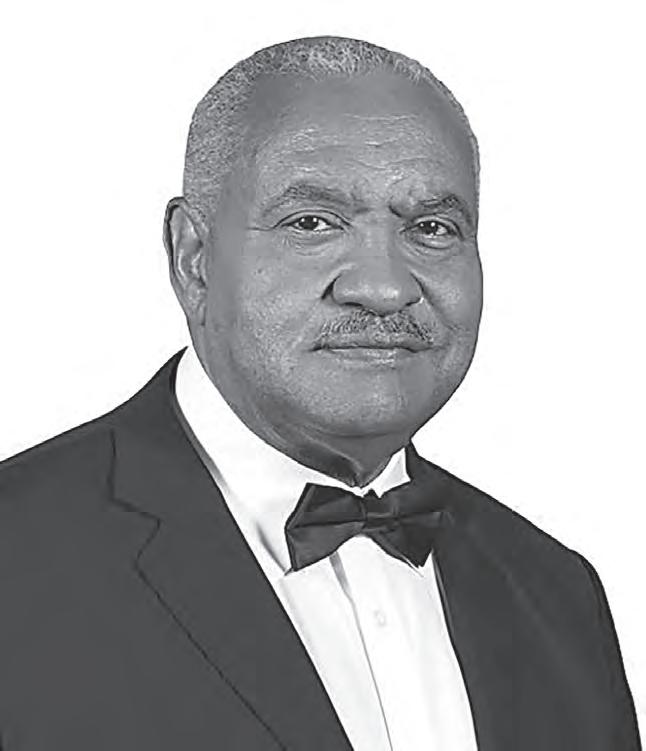
By Dr. John E. Warren PUBLISHER, SAN DIEGO
& VIEWPOINT NEWSPAPER CHAIRMAN, NNPA BOARD OF DIRECTORS
As we find ourselves four months away from the Midterm Elections, we see that the Republican Party has seen the handwriting on the wall in terms of the number of Republicans running for office nationwide who are going down in defeat. The one remaining question is: How many of the rest of us also see the opportunity of the rescue of our democratic form of government, if only we would bother to vote?
Now is the time to engage in Voter Registration, which will ensure our right to vote in the November Midterm elections. While it is important to put people in office who will uphold the Constitution and the Oath of Office that goes with it, one has to be registered to vote before one can actually vote.
The San Diego Voice & Viewpoint newspaper has done what we hope all of our papers will do: simply make Voter Registration Cards available at our office. Not only can you pick up blank registration forms here, we can assist you in filling them out, if you need help. There is no need to wait until October to join a rush to registration. We can hold a number of conversations about who one might consider voting for, the main issue is that as many of us as possible are registered to vote.
It does not matter if you are homeless, have a past criminal record, or speak a different language. This is one of the states that offers multiple language voter registration opportunities.
We must remember that people died for our right to vote. We must also remember that there is a part of America afraid of executing that right, which we have guaranteed under the Constitution. Voting is more than a right; it's an obligation that we have to those who came before us and were denied that right for a variety of reasons. THINK ABOUT IT.
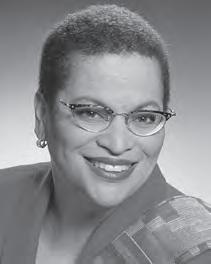
By Julianne Malveaux
As an economist, I have spent much of my life thinking about what money does. It measures value. It facilitates exchange. It stores wealth. But money also tells a story. Every portrait placed on a bill announces whom this nation has chosen to honor—and whose history it expects us to carry in our pockets.
Ten years ago, the Treasury Department announced that Harriet Tubman would replace Andrew Jackson on the front of the $20 bill. That plan has been delayed again and again. Now, while Tubman continues to wait, supporters of Donald Trump are promoting a new $250 bill bearing his likeness, even though Congress has not authorized the denomination and current law prohibits living people from appearing on American currency.
The contrast could hardly be more offensive.
Harriet Tubman was born enslaved and escaped to freedom, then repeatedly risked her life to return south and lead others out of bondage. She served the Union as a nurse, scout and spy. In 1863, she helped lead the Combahee River Raid, which liberated hundreds of enslaved people. Later, she advocated for women’s suffrage. She gave her life to the proposition that freedom was worth fighting for, even when the fight brought her neither wealth nor comfort.

Donald Trump, meanwhile, is a billionaire president who has repeatedly blurred the line between public power and private enrichment. He has put his name on buildings, products and public institutions. Now his image is being proposed for a denomination created to commemorate the nation’s 250th anniversary.
This is more than vanity. It is the currency of oligarchy.
Oligarchy is what happens when wealth buys political power, political power protects and multiplies wealth, and public institutions are bent toward the glorification of people who already possess both. In a democracy, money is a public instrument. In an oligarchy, even public money becomes another surface on which the ruler may write his own name.
The Tubman $20 would tell a different story.
A $20 bill is not a rare commemorative object locked in a collector’s case. It is ordinary money. It passes across grocery counters and restaurant tables. It is slipped into church collection plates and handed to grandchildren. It pays for haircuts, prescriptions, school supplies and rides home. It is folded into a child’s birthday card by an auntie who wants the child to have “a little something.”
See OLIGARCHY page 5
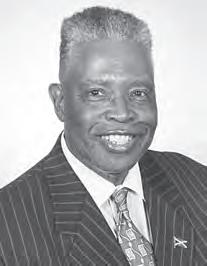
All of us have had occasions in life when we made the wrong choice. After all, life is about the choices that we make. Each day from our rising to our resting we make decisions. It’s inevitable.
Being a part of our society requires that we engage in decision-making. As a child maturing, I had to make choices each day. Mind you, the choices that I made really didn’t move the needle that much. As children, we made child-like decisions.
Over time our decisions did matter much more. Decisions about college, where to live and, of course, our life’s work. Relationships and friendships too had a bearing on what our futures would be.
Sometimes as adults, we listen to other adults in helping us to make personal choices. Now that approach can be both good and bad. Wouldn’t you agree?
If a person is easily swayed, then they’ll probably decide based upon what someone else is saying. You let others make the decision for you.
One of the greatest privileges that we have in the United States of America is the right to vote. It is an individual freedom that we should not take for granted. Globally, there are countries that wish they had what we have.
“One of the greatest privileges that we have in the United States of America is the right to vote. It is an individual freedom that we should not take for granted.” — Dr. James B. Ewers Jr.
I voted for a presidential candidate in 2024 and they did not win. The candidate I voted for had a platform for the people and had leadership experience throughout her career. Her last experience was that of serving as the vice president of the United States of America.
I voted for Kamala Harris. To this day, I do not regret voting for her. She was the best choice, an opinion shared by many people. There simply weren’t enough people who thought that way. Now, we have what we have.
Since that November night, we have lost standing in the world. We are seen as bullies and takers. We are no longer thought of as a participant in the global uplift of the world. The perception and reality are that we force our way into getting what we want.
Look at us now. Are these the results that you expected? As we celebrated our 250th birthday, did you think we would be in this morass of mayhem and misery? If you are honest with yourself, the answer is no. Did you buy as much food to celebrate as you did last year? Just be clear and say no.
Were you missing people at your table or at your backyard barbecue? There are thousands of people documented and in various stages of documentation that are now in jails. Some you will never hear about again in life.
What is so sad about this scenario is that some of their relatives voted against Kamala Harris. They were sold a bill of goods with no receipt and now, no refund. You are stuck.
That’s what happens when you stop listening to verified facts. Now you sit discouraged and disillusioned. Do you remember the timeless expression, “Fool me once shame on you, fool me twice shame on me?” Weren’t you fooled the first time? I guess not.
Poll numbers are not good. It doesn’t matter what poll you review. The numbers don’t lie. This is our present-day circumstance. How do you feel about your vote now? Tell the truth.
This commentary originally appeared in THE AFRO.




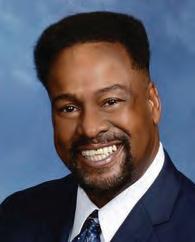


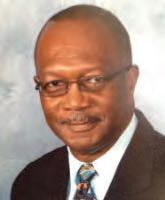

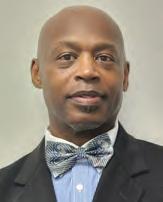

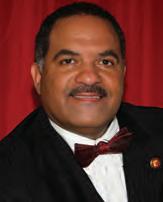









By Tanu T. Henry California Black Media
Nearly 14 years after California intervened in the Inglewood Unified School District's (IUSD) fiscal crisis, the district is closer than ever to regaining full local control. That achievement deserves recognition. It also gives California an opportunity to evaluate what its longest-running school receivership can teach about helping school districts recover from fiscal crisis.
In July, the Los Angeles County Office of Education (LACOE) announced that Inglewood Unified had met all 153 standards established by the Fiscal Crisis and Management Assistance Team (FCMAT). If the district maintains that progress through one more annual re-
view, authority will return to the locally elected school board in 2027, although a state trustee will retain veto authority over certain board actions until the emergency state loan is repaid.
Board President Carliss McGhee, PhD, who has served throughout the receivership, reflected on the district's progress.
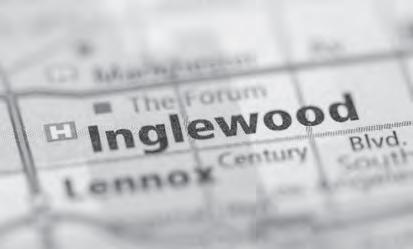
PHOTO: Shutterstock, Courtesy of CBM
“I've been on this board for the last 14 years. It's been 14 years, nine state and county administrators. It's been a journey, but I want to thank the families, I want to thank our students, and I really want to thank our team at IUSD,” McGhee said. She also thanked “the community that held strong” and “continued to do the work.”
For Inglewood's Black community, the announcement marks the culmination of years of advocacy.
The district entered receivership in 2012 after a cash-flow crisis developed during the Great Recession. Staffing levels had been miscalculated before the economic downturn, and as revenues declined the district drew down its reserves to continue operating. An audit also identified financial reporting problems, including overstated attendance, understated salary costs and deficit spending.
Although Inglewood met every FCMAT standard, the agency also found that previously approved budget reductions had not been fully
implemented, contributing to continued deficit spending and unnecessary use of reserves.
The Los Angeles Unified School District recently received a “Lack of Going Concern” notice from LACOE warning it could face cashflow problems by late 2027. Sacramento City Unified School District (SCUSD) projected deficit has grown sharply. Oakland Unified School District (OUSD) and San Francisco Unified School District (SFUSD) continue addressing structural budget challenges, while the state's May 2026 interim financial reports identified 33 districts with negative or qualified financial certifications.
Many of those districts educate large numbers of Black students. Their financial condition affects classroom instruction, student services, school facilities and educational opportunities for communities that have historically faced
By Antonio Ray Harvey California Black Media
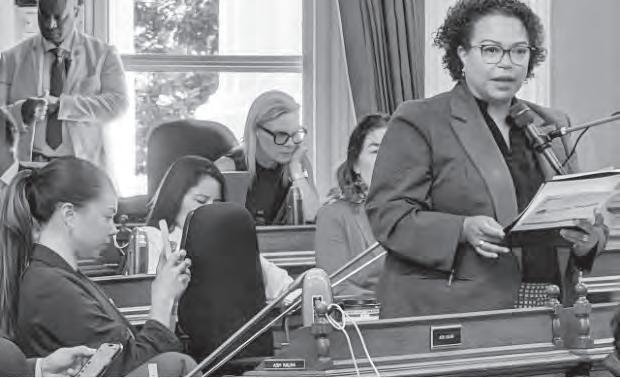
Communities of color in California continue to face significant obstacles to buying and owning homes, along with gaps in government enforcement of fair-lending laws that limit their ability to build wealth proportionate to their share of the state’s population. That’s why Assemblymember Mia Bonta (DAlameda), Chair of the Assembly Health Committee, said she introduced Assembly Bill (AB) 801 in February 2025 specifically to address those disparities impacting communities of color and low-income neighborhoods. The bill is backed by the California Legislative Black Caucus (CLBC).
The bill, known as the California Community Reinvestment Act, if passed and enacted, would mandate financial institutions –including state-chartered banks, credit unions, and independent mortgage companies, to actively meet the credit needs of all communities where they conduct substantial business, prioritizing low- and moderate-income areas.
“The Reinvestment Act creates more transparency around our ability to understand whether or not (financial institutions) in the state are actually providing mortgages in Black and Brown communities to buy houses,” Bonta told California Black Media (CBM).
The bill expands state-level oversight of financial institutions to ensure they actively reinvest in the historically underserved neighborhoods they serve, explicitly addressing the root causes of the racial wealth gap and predatory or discriminatory lending. AB 801 also establishes rules that require the Department of Financial Protection and
Innovation (DFPI) to examine these lenders for compliance at least once every four years.
“We’re in a position right now where we know there's a disproportionate number of Black and Brown people who don’t have the ability to get credit from banks to buy their dream home,” Bonta said. “This bill will allow us to hold banks accountable to understand the extent to which they are actually providing loans to Black and Brown communities over time.”
On June 17, 2026, the bill passed out of the Senate Banking and Financial Institutions Committee with a 5 -2 vote. On June 30, the Senate Judiciary Committee voted to advance AB 801 with an11-2 vote. Now, the bill awaits its fate in the Senate Appropriations Committee after the legislature returns to the State Capitol on Aug. 3.
Bonta told the Senate Banking and Financial Institutions Committee that it was the California Task Force to Study and Develop Reparation Proposals for African Americans that called on the legislature to take structural action to address the ongoing economic harm caused by housing discrimination.
“This is the part of that response that we can focus on today. Since 2015, the Black and Latino borrowers have received conventional mortgage loan originations at roughly half the rate of White borrowers in California,” Bonta said.
AB 801 is primarily backed by civil rights groups, consumer protection advocates, and fair housing organizations aiming to prevent lending discrimination in communities of color.
The African-American Credit Union Coalition (AACUC) expressed concern that the bill undermines the unique structure of cred -
it unions. AACUC is a non-profit organization.
California Community Banking Network (CCBN) worked with the California Bankers Association (CBA), the California Credit Union League, Mortgage Bankers Association, and others to advocate in opposition to AB 801.
unequal educational outcomes.
California has developed a process for helping districts through fiscal crisis. Inglewood demonstrates that state and county oversight can restore financial controls, improve governance and put a district on the path back to local control.
Inglewood's return to local control marks an important achievement. It reflects the commitment of educators, employees, students, parents, community leaders and elected board members who refused to give up on their schools.
California's responsibility does not end when local control returns. Before another district requires state intervention, lawmakers, county education leaders and the new Education Commissioner should examine what Inglewood's experience teaches about building not only fiscal stability, but lasting financial sustainability.
On June 17, Rob Wilson, executive vice president for California's Credit Unions, said AB 801 was “in a better place than it was last year,” but “we do still have some concerns with the bill.”
Wilson leads the organization’s strategic direction, advocacy, and state government affairs, working directly with lawmakers and credit union leaders.
“AB 801 creates a new regulatory framework that we believe is unnecessary and duplicative of existing oversight,” Wilson told the Senate Standing Committee on Banking and Financial Institutions.
In 2024, a minimum annual income of roughly $221,200 was required to qualify for the statewide median-priced single-family home, costing approximately $865,000 to $875,000, according to the California Association of Realtors (CAR).
In 2025, the median income for Black households in California hovered around $70,220 to $73,102. Only about 10% of Black households in the state had the minimum qualifying income required to purchase a median-priced home.
Max Vargas, president and CEO of Greenlining Institute, told the Senate Standing Committee on
Continued from page 3
Imagine Harriet Tubman making those journeys.
Imagine a child opening that birthday card and asking who the woman on the bill is. Imagine generations of Americans encountering Tubman not only during Black History Month, but every day—at the ATM, the corner store and the kitchen table.
That is why representation on currency matters. It is history placed into circulation.
Andrew Jackson, whose portrait remains on the $20 bill, was an enslaver whose policies drove Native people from their lands. Tubman, who liberated enslaved people and served this nation, was supposed to take his place on the front. Earlier plans even retained Jackson on the reverse. Yet even that modest adjust -
ment to our national memory has proved too much for those determined to preserve the old racial hierarchy.
Tubman was not merely an inspirational figure. She challenged an economic system. Enslavement was not only racial terrorism; it was coerced labor that created enormous wealth for white people while treating Black people as property. Each time Tubman led another person to freedom, she stole labor away from enslavers and disrupted the economics of bondage.
That makes her especially appropriate for American currency.
The issue is not merely whether one likes Donald Trump. It is a question of ownership. Does American currency belong to the American people? Does
it reflect a shared history, including the people who expanded the boundaries of freedom? Or is it another possession of a president who treats public institutions as extensions of his personal brand?
Harriet Tubman belongs on the $20 bill because she represents the best of this nation—not the nation as it was, but the nation generations have struggled to make it become. She chose liberation over submission, collective freedom over personal safety and service over self-enrichment.
Donald Trump does not need another monument to himself. The man who lives in the house that enslaved people built has already had far too much access to the nation’s power, attention and money.
The last thing we need is his face on it.
Judiciary that “Without an examination structure, California's fair lending protections exist on paper, but not in practice,” he said.
Founded in 1993, the Greenlining Institute is an Oakland-based policy, research, and leadership organization dedicated to racial and economic justice. Its mission is to fight the legacy of redlining practices while at the same time bringing investments and economic opportunities to marginalized communities of color.
Vargas shared that Greenlining analyzed the Home Mortgage Disclosure Act data and discovered that 37 million mortgage applications submitted between 2018 and 2024 revealed that Black borrowers were 78% more likely than White borrowers to be denied at the final underwriting stage.
“Our families in California are already facing rising costs, growing financial instability, and fewer pathways to building wealth,” Vargas said. “This is on top of federal deregulatory efforts. If California does not act, these gaps will grow and deepen.”


























By Darrel Wheeler Contributing Writer

The 6th annual Summer Bash was held at MLK Community Park on Skyline Drive last Saturday.
From noon until 5 p.m., the community was invited to once again enjoy a day of fun and fellowship under the summer sun.
Cherish Moments, with the support of local organizations, the Trooper White Community Foundation, Forever Kevin's Non-Profit, PHATCAMP Organization, and the Cooper Family Foundation, provided the oppor tunity for all to find some joy at the summertime function.



Local up-and-coming rappers and dancers seized the moment to show their rhyme skills and innovative dance moves.
DJ Coolstyle provided the cool beats for the event participants to listen, vibe and groove to.

The Bash also featured food, vendors, raffles, games, musical chairs, and the always popular potato-sack race.


By Jennifer Sinco Kelleher
Sc ores of people in the United States have been sickened by a parasite commonly linked to contaminated fresh produce that can cause weeks of watery diarrhea. But there are ways to protect yourself and still enjoy summer’s bounty of fruits and vegetables.
The exact source of one of the nation's largest outbreaks in years of cyclospora infections is still not known. And it can be hard to figure out what food sick people had in common because sometimes it’s a single ingredient that might be common in multiple recipes — like basil or cilantro.
Luckily cyclospora infections are generally treatable with antibiotics and rarely cause serious complications.
Here are tips for reducing the risk:
Cyclospora can be tricky to investigate
Cyclospora is a microscopic, spherical parasite that commonly causes watery diarrhea “with frequent and sometimes explosive bowel movements,” according to the U.S. Centers for Disease Control and Prevention.
More than 1,500 people in Michigan have been diagnosed with the parasitic infection and investigations into similar illnesses have been going on in 30 other states, making it the largest such outbreak in state history and one of the nation’s largest in years. No deaths have been reported.
Cyclospora surges can be tricky to investigate, and food poisoning sources can be hard to establish. Investigations can take months and sometimes never find a clear source.
In the past, people have been infected by consuming fruits or vegetables that were exposed to feces-contaminated irrigation water. Also, it’s possible that food distributors may channel

contaminated foods to both grocery stores and restaurants, making it hard to discern where tainted food came from.
Outbreaks tend to occur most often in the late spring and summer.
The heat-loving parasite infects the bowels and spreads through feces.
Food safety tips
While the source of the outbreak is unknown, it's a reminder to always practice basic hygiene, including washing hands with soap and water after using the bathroom and before handling food, said Dr. Erika Noel, an assistant professor at Hawaii's medical school and a pediatrician on the island of Kauai.
Alcohol-based hand sanitizers don't kill cyclospora, but soap and water are highly effective at killing or removing the parasite from hands.

San Diego Voice & Viewpoint is looking for photojournalists, as independent contractors, for paid assignments.
Noel has some tips for washing produce: When washing items like cilantro and basil, separate the leaves. For green onions, cut off the roots, remove the outer layer and run them under water while rubbing the surface. Cooking produce to an internal temperature of 158 degrees Fahrenheit (70 degrees Celsius) or higher will kill cyclospora.
Research shows that washing fruits and vegetables in vinegar can be helpful. Vinegar won't kill the parasite but can help remove it. Noel recommends submerging produce in a bowl filled with three parts water and one part vinegar and swishing it around for a few min-
utes. Using a salad spinner to rinse with water can help get rid of the vinegary taste.
Instead of purchasing pre-mixed salad and washing individual leaves, opt for a head of lettuce and removing the outer layer.
For melons, scrub the outside before cutting through as the knife can carry germs from the rind into the fruit inside.
Peel fruits and vegetables as much as possible. Don't forget to wash cutting boards and countertops.
Some produce can be challenging to clean
Anything with tight crevices or fragile skin can be challenging to clean, like broccoli and cauliflower. Because berries are challenging, Noel recommends cooking them in pies or making jam instead of eating them raw.
Anything grown underground and covered in thick dirt are also tough to clean, such as root vegetables like carrots, potatoes and radishes.
If using pre-mixed salads that have labels that indicated the items have been washed, it's best to wash them again in water and vinegar.
'We don't need to panic'
Noel doesn't want the outbreak to lead to people avoiding eating fruits and vegetables; the health benefits outweigh the risks.
“We don't need to panic,” she said.
Just be aware and ensure basic hygiene habits, which is always a good practice.
EDITOR’S NOTE: San Diego County monitoring shows no local cyclosporiasis outbreaks, though food safety is still recommended.
by Sylvia Perry
For generations, Black Americans were denied equal access to higher education through segregation, discriminatory admissions policies, unequal public school funding and laws that barred many colleges and universities from admitting Black students. Even after legal segregation ended, persistent racial wealth gaps left many Black families with fewer financial resources to pay for college.

To help address those inequities, colleges, foundations and private donors created scholarships specifically for Black and other historically underrepresented students. Today, many of those scholarships are disappearing or being restructured in the wake of the U.S. Supreme Court’s 2023 decision ending raceconscious college admissions.
According to the National Scholarship Providers Association, the share of scholarships with race, ethnicity or gender eligibility requirements has fallen by more than 25% since the ruling, dropping from 15% in 2023 to 11% in 2026. Many scholarship providers have broadened eligibility to include all students or shifted to race-neutral criteria such as household income, first-generation college status or ZIP code in an effort to reduce the risk of legal challenges.
The shift comes amid increased scrutiny of diversity initiatives and pressure from lawsuits, legal complaints and actions by the Trump administration, according to reporting by The Washington Post.
than race.
The scholarship changes are unfolding as Black enrollment declines at many of the nation’s most selective predominantly White institutions following the Supreme Court’s affirmative action ruling. However, the overall number of Black students attending college has not fallen at the same rate. Instead, many students are enrolling at other fouryear institutions, particularly historically Black colleges and universities.
Several HBCUs have reported record applications and enrollment gains since the 2023 ruling. Schools including Hampton University, North Carolina A&T State University, Bethune-Cookman University and Fayetteville State University have reported increased interest from prospective students. National data also show HBCU enrollment grew by nearly 6% in fall 2024, suggesting many Black students are choosing institutions where they see strong academic support, cultural affirmation and a legacy of educating Black professionals.
If you’ve experienced recent job loss this might be the perfect assignment for you.
QUALIFICATIONS:
•Professional writing experience required.
Qualified, interested applicants email your resume and sample of current work to: latanya@sdvoice.info Do you have
•Desire to work during big breaking news, special events, and cover local newsworthy stories.
•Newspaper experience is desired.
•Photo editing and processing preferred.
•Reliable transportation and valid driver’s license.
Supporters of the changes argue scholarships should be awarded without regard to race and say race-neutral standards promote equal treatment. Critics contend the changes weaken one of the tools designed to address generations of educational inequality and could disproportionately affect Black students, who continue to have significantly lower median household wealth than White families.
The legal uncertainty has also reached donorfunded scholarships. In Iowa, a scholarship established by the late Black chemistry professor Ezra Totton for Black science students has become the subject of a court dispute after the university sought to modify its eligibility requirements. In Wisconsin, the state’s Supreme Court struck down a taxpayer-funded scholarship program for minority students, prompting lawmakers to explore replacing it with one based on income rather
The trend has also benefited Jacksonville’s own Edward Waters University. Florida’s first HBCU has experienced five consecutive years of enrollment growth, surpassing 1,200 students in fall 2025—the university’s highest enrollment in more than two decades and roughly 30% higher than its 2019 student population. The milestone reflects a broader resurgence at HBCUs nationwide as many Black students seek institutions that offer academic opportunity, cultural affirmation and a historic commitment to their success.
The growing popularity of HBCUs demonstrates that Black students remain committed to pursuing higher education. Unfortunately, the continued decline of scholarships created to address historic racial disparities could make college less affordable for many students, regardless of where they choose to enroll.
Originally reported in Jacksonville Free Press

Registrant has not yet begun to transact business under the name(s) above This business is hereby registered by the following: Briana Coral Neri Portillo 2350 Massachusetts Ave 9 Lemon Grove, CA 91945
This statement was filed with the Recorder/County Clerk of San Diego County on July 09, 2026
Invitation for Bids (IFB) San Dieguito Lagoon Double Track Project Solicitation No.: SOL1630425 CIP 1239813, 1239822
The San Diego Association of Governments (SANDAG) is seeking contractors to deliver the San Dieguito Lagoon Double Track project.
The San Dieguito River Bridge Replacement, Double Track and Special Events Platform Proj-
ect is part of the Los Angeles-San Diego-San Luis Obispo (LOSSAN) corridor improvements defined in the San Diego Association of Governments (SANDAG) San Diego Forward, the Regional Plan (Regional Plan). The project area spans the segment of North County Transit District (NCTD)-owned rail corridor from MP 241.8, north of Control Point (CP) Valley, in the City of Solana Beach to MP 244.0, south of CP Del Mar, in the City of Del Mar. The project consists of three distinct components: new double track bridge structure (BR 243.0) over the San Dieguito River, 2.1 miles of track improvements including the addition of 1.7 miles of new double track, and a special events rail platform at the Del Mar Fairgrounds.
The project is within the limits of both the City of Del Mar and the City of Solana Beach.
The Del Mar Fairgrounds property is located near the middle of the project along the eastern edge of the railroad right-of-way.
Work includes track construction; new No 20 universal crossover, No 24 turnout; signal systems and communications; construction of a new double-track bridge and special events platform, double box culvert at Stevens Creek; excavation and embankment; ground improvements, retaining wall construction; construction of drainage ditches, culverts, associated structures; site work and track bed preparation (including site clearing, grading, ballast, and sub-ballast, maintenance access roads, site demolition; removal of wood trestle rail bridge; removal of existing revetment and installation of revetment and rock slope protection, construction of new utilities including SDG&E electrical service line, fiber optic communications facilities (Verizon, NCTD); telecommunications relocation, sewer and water line relocations (City of Del Mar), fire and domestic water installation; and hydroseeding); erosion control; temporary irrigation and coastal salt marsh restoration, in addition to procuring all materials and performing all other work necessary to complete the work in accordance with the Contract Plans and Special Provisions. For the SWPPP, this project is a Risk Level 2.
There is no DBE goal for this project. The Engineer’s Estimate is $276,588,718.78. This project is subject to the Community Benefits Agreement (CBA).
The optional Pre-Bid Meeting will be held virtually via Microsoft Teams on July 22, 2026, from 9:30 to 11:00 AM PST/PDT. The deadline for electronic Bid submittal is August 24,2026 by 2:00 PM PST/PDT unless otherwise stated in an addendum. A copy of the solicitation documents and any communications or addenda can be accessed via www.bidnetdirect.com/sandag.
This fictitious business name will expire on July 09, 2031
07/23, 07/30, 08/06, 08/13
FICTITIOUS BUSINESS NAME STATEMENT 2026-9015485
Fictitious business name(s): Just Baked By Monique 4038 Chamoune Ave San Diego, CA 92105
County of San Diego
This business is conducted by: An Individual Registrant has not yet begun to transact business under the name(s) above This business is hereby registered by the following: Monique Georgatos 4038 Chamoune Ave San Diego, CA 92105
This statement was filed with the Recorder/County Clerk of San Diego County on July 14, 2026
This fictitious business name will expire on July 14, 2031
07/23, 07/30, 08/06, 08/13
FICTITIOUS BUSINESS NAME STATEMENT 2026-9015503
Fictitious business name(s): Crown Johnson Consulting Shanelle Johnson
1925 Euclid Ave. Suite 108 San Diego, CA 92105
County of San Diego
This business is conducted by:
A Limited Liability Company
The first day of business was: 06/01/2026
This business is hereby registered by the following:
Crown Johnson Consulting LLC
1925 Euclid Ave. Suite 108 San Diego, CA 92105
State of Incorporation/ Organization California
This statement was filed with the Recorder/County Clerk of San Diego County on July 15, 2026
This fictitious business name will expire on July 15, 2031
07/23, 07/30, 08/06, 08/13
July 13, 2031
07/23, 07/30, 08/06, 08/13
FICTITIOUS BUSINESS NAME STATEMENT 2026-9014259
Fictitious business name(s): Intake on Demand
2244 Faraday Ave, Suite 102 Carlsbad, CA 92008 County of San Diego
268 Avenida Montalvo, Unit 3 San Clemente, CA 92672
This business is conducted by:
A Limited Liability Company
The first day of business was: 06/26/2026
This business is hereby registered by the following: RGHLC LLC 2244 Faraday Ave, Suite 102 Carlsbad, CA 92008
State of Incorporation/ Organization California
This statement was filed with the Recorder/County Clerk of San Diego County on June 26, 2026
This fictitious business name will expire on June 26, 2031 07/23, 07/30, 08/06, 08/13
FICTITIOUS BUSINESS NAME STATEMENT 2026-9014798
Fictitious business name(s): Haul It Away SD 1041 Market Street, Suite 165 San Diego, CA 92101 County of San Diego
This business is conducted by:
A Limited Liability Company
The first day of business was: 07/01/2026
This business is hereby registered by the following: Southland Removal Services LLC
1041 Market Street, Suite 165 San Diego, CA 92101
State of Incorporation/ Organization California This statement was filed with the Recorder/County Clerk of San Diego County on July 06, 2026 This fictitious business name will expire on July 06, 2031 07/23, 07/30, 08/06, 08/13
FICTITIOUS BUSINESS NAME STATEMENT 2026-9014797
Fictitious business name(s): Fortis Guard & Patrol 1041 Market Street, Suite 165 San Diego, CA 92101 County of San Diego
This business is conducted by: A Corporation
The first day of business was: 07/01/2026
This business is hereby registered by the following: PS Protective Services Inc 1041 Market Street, Suite 165 San Diego, CA 92101 State of Incorporation/ Organization California
This statement was filed with the Recorder/County Clerk of San Diego County on July 06, 2026
This fictitious business name will expire on July 06, 2031 07/23, 07/30, 08/06, 08/13
FICTITIOUS BUSINESS NAME STATEMENT 2026-9015174
Fictitious business name(s): Puro Chinaloa Homestyle Kitchen
Coral's Oasis 2350 Massachusetts Ave 9 Lemon Grove, CA 91945 County of San Diego
This business is conducted by: An Individual
This statement was filed with the Recorder/County Clerk of San Diego County on June 29, 2026
This fictitious business name will expire on June 29, 2031 07/16, 07/23, 07/30, 08/06
FICTITIOUS BUSINESS NAME STATEMENT 2026-9012232
Fictitious business name(s): Zesty Living Consulting Services 2574 Mudler St. Lemon Grove, CA 91945 County of San Diego PO Box 153724
San Diego, CA 92195
This business is conducted by: A Limited Liability Partnership Registrant has not yet begun to transact business under the name(s) above
This business is hereby registered by the following: Rochelle Otis PO Box 153724 San Diego, CA 92195
Lillie Cammon Royster PO Box 153724 San Diego, CA 92195
This statement was filed with the Recorder/County Clerk of San Diego County on June 01, 2026
This fictitious business name will expire on June 01, 2031 07/16, 07/23, 07/30, 08/06
FICTITIOUS BUSINESS
NAME STATEMENT 2026-9014080
Fictitious business name(s):
Cool Couriers
Elite Couriers
1111 6th Ave. Ste. 550 #434614 San Diego, CA 92101
County of San Diego
8529 Paradise Valley Road, 263 Spring Valley, CA 91977
This business is conducted by: A Corporation
Registrant has not yet begun to transact business under the name(s) above
This business is hereby registered by the following: CJSRM Corporation
1111 6th Ave. Ste. 550 #434614 San Diego, CA 92101
State of Incorporation/ Organization California
This statement was filed with the Recorder/County Clerk of San Diego County on June 25, 2026
FICTITIOUS BUSINESS NAME STATEMENT
2026-9015166
Fictitious business name(s): SkinLab by STG 5200 Murray Blvd Unit A La Mesa, CA 91942 County of San Diego
1441 Sandal Ln San Diego, CA 92109
This business is conducted by:
A Limited Liability Company
Registrant has not yet begun to transact business under the name(s) above This business is hereby registered by the following: STG Aesthetics LLC 1441 Sandal Ln San Diego, CA 92109 State of Incorporation/ Organization California
This statement was filed with the Recorder/County Clerk of San Diego County on July 09, 2026
This fictitious business name will expire on July 09, 2031
07/16, 07/23, 07/30, 08/06
FICTITIOUS BUSINESS NAME STATEMENT 2026-9014348
Fictitious business name(s): The Queens Brew International 7918 El Cajon Blvd. #N355 La Mesa, CA 91942 County of San Diego
This business is conducted by: An Individual Registrant has not yet begun to transact business under the name(s) above This business is hereby registered by the following: Lavada Samella England 7918 El Cajon Blvd. #N355 La Mesa, CA 91942
This fictitious business name will expire on June 25, 2031 07/16, 07/23, 07/30, 08/06
FICTITIOUS BUSINESS NAME STATEMENT 2026-9013263
Fictitious business name(s): Dalat Cafe & Restaurant
4738 University Ave. Ste H San Diego, CA 92105 County of San Diego
This business is conducted by: A Limited Liability Company
The first day of business was: 06/01/2026
This business is hereby registered by the following: DL168 LLC
4738 University Ave. Ste H San Diego, CA 92105
State of Incorporation/ Organization California
This statement was filed with the Recorder/County Clerk of San Diego County on June 12, 2026
This fictitious business name will expire on June 12, 2031 07/16, 07/23, 07/30, 08/06
FICTITIOUS BUSINESS NAME STATEMENT 2026-9014277
Fictitious business name(s): Y&L Treats 5115 Castana St. San Diego, CA 92114 County of San Diego
This business is conducted by: An Individual Registrant has not yet begun to transact business under the name(s) above This business is hereby registered by the following: Yolanda Ramos Cruz 5115 Castana St. San Diego, CA 92114


This statement was filed with the Recorder/County Clerk of San Diego County on June 26, 2026
This fictitious business name will expire on June 26, 2031 07/16, 07/23, 07/30, 08/06
FICTITIOUS BUSINESS NAME STATEMENT 2026-9014845
Fictitious business name(s): Maiza Cab 4340 44th Street #130 San Diego, CA 92115
County of San Diego
This business is conducted by: An Individual Registrant has not yet begun to transact business under the name(s) above
This business is hereby registered by the following: Abdisalan Abdirahman Said 4340 44th Street #130 San Diego, CA 92115
This statement was filed with the Recorder/County Clerk of San Diego County on July 07, 2026
This fictitious business name will expire on July 07, 2031 07/16, 07/23, 07/30, 08/06
FICTITIOUS BUSINESS NAME STATEMENT 2026-9011930
Fictitious business name(s): Green Life Care
Maestro Building Supply Styled Pavers 9925 Prospect Ave Ste D Santee, CA 92071 County of San Diego 1111 6th Ave Ste 550 PMB 468128 San Diego, CA 92101
This business is conducted by: A Limited Liability Company
The first day of business was: 05/27/2026
This business is hereby registered by the following: Deco Solutions LLC 1111 6th Ave Ste 550 PMB 468128 San Diego, CA 92101
State of Incorporation/ Organization California
This statement was filed with the Recorder/County Clerk of San Diego County on May 27, 2026
This fictitious business name will expire on May 27, 2031 07/09, 07/16, 07/23, 07/30
FICTITIOUS BUSINESS NAME STATEMENT 2026-9014757
Fictitious business name(s): TopChoice Market
SoapyCar Go 6161 El Cajon Blvd Ste B184 San Diego, CA 92115 County of San Diego
This business is conducted by: A Limited Liability Company
Registrant has not yet begun to transact business under the name(s) above
This business is hereby registered by the following: Cheerful Enterprises LLC 6161 El Cajon Blvd Ste B184 San Diego, CA 92115
State of Incorporation/ Organization California
This statement was filed with the Recorder/County Clerk of San Diego County on July 06, 2026
This fictitious business name will expire on July 06, 2031 07/09, 07/16, 07/23, 07/30
FICTITIOUS BUSINESS NAME
begun to transact business under the name(s) above This business is hereby registered by the following: Irma Guadalupe Juarez Crespo 6121 Fairmount Ave #311 San Diego, CA 92120 This statement was filed with the Recorder/County Clerk of San Diego County on June 23, 2026 This fictitious business name will expire on June 23, 2031 07/09, 07/16, 07/23, 07/30
FICTITIOUS BUSINESS NAME STATEMENT 2026-9014338
Fictitious business name(s): Dendra Wood 668 Del Mar Ave Chula Vista, CA 91910 County of San Diego
This business is conducted by: An Individual The first day of business was: 06/29/2026
This business is hereby registered by the following: Marco Mendizabal Arauz 668 Del Mar Ave Chula Vista, CA 91910
This statement was filed with the Recorder/County Clerk of San Diego County on June 29, 2026 This fictitious business name will expire on June 29, 2031 07/09, 07/16, 07/23, 07/30
FICTITIOUS BUSINESS NAME STATEMENT 2026-9014627
Fictitious business name(s): Comfort Taxi 14031 Brighton Ave #21 Poway, CA 92064 County of San Diego This business is conducted by: An Individual Registrant has not yet begun to transact business under the name(s) above This business is hereby registered by the following: Nabil
FICTITIOUS
07/16, 07/23
FICTITIOUS BUSINESS NAME STATEMENT 2026-9012047
Fictitious business name(s): Vietgrowth Education 3203 Winlow St. San Diego, CA 92105 County of San Diego
This business is conducted by: An Individual Registrant has not yet begun to transact business under the name(s) above
This business is hereby registered by the following: Nguyen - Truc - Dao, Nguyen 3203 Winlow St. San Diego, CA 92105
This statement was filed with the Recorder/County Clerk of San Diego County on May 28, 2026
This fictitious business name will expire on May 28, 2031 07/02, 07/09, 07/16, 07/23
FICTITIOUS BUSINESS NAME STATEMENT 2026-9013879
Fictitious business name(s): Mata Isabel Family Child Care 867 60th St. San Diego, CA 92114
County of San Diego
This business is conducted by:
A Limited Liability Company
The first day of business was: 06/22/2026
This business is hereby registered by the following: Little Blessings Corner Daycare Center LLC 867 60th St. San Diego, CA 92114
State of Incorporation/ Organization California
This statement was filed with the Recorder/County Clerk of San Diego County on June 23, 2026
This fictitious business name will expire on June 23, 2031 07/02, 07/09, 07/16, 07/23
FICTITIOUS BUSINESS NAME STATEMENT 2026-9013922
Fictitious business name(s):
Meat Stall Barbecue
3428 Monique Lane Spring Valley, CA 91977
County of San Diego
This business is conducted by: An Individual
The first day of business was: 06/20/2026
This business is hereby registered by the following: Ebernee Larie Farmer
3428 Monique Lane Spring Valley, CA 91977
This statement was filed with the Recorder/County Clerk of San Diego County on June 23, 2026
This fictitious business name will expire on June 23, 2031 07/02, 07/09, 07/16, 07/23
SUPERIOR COURT OF CALIFORNIA
330 W. Broadway San Diego, CA 92101 Hall of Justice
Case Number 26CU038735C
Petitioner or Attorney: Paloma Serna
To All Interested Persons: Petitioner Paloma Serna
filed a petition with this court for a decree changing names as follows:
a. PRESENT NAME: Paloma Serna
PROPOSED NAME: Paloma Vasquez
THE COURT ORDERS that all persons interested in this matter appear before this court at the hearing indicated below to show cause, if any, why the petition for change of name should not be granted. Any person objecting to the name changes described above must file a written objection that includes the reasons for the objection at least two court days before the matter is scheduled to be heard and must appear at the hearing to show cause why the petition should not
be granted. If no written objection is timely filed, the court may grant the petition without a hearing.
NOTICE OF HEARING
a. Date: August 31, 2026 Time: 8:30 A.M. Dept. C-61
(To appear remotely, check in advance of the hearing for information about how to do so on the court's website. To find your court's website go to www.courts.ca.gov/find-mycourt.htm)
NO HEARING WILL OCCUR ON THE DATE SPECIFIED IN THE ORDER TO SHOW CAUSE.
The court will review the documents filed as of the date specified on the Order to Show Cause for Change of Name (JC Form #NC-120).
If all requirements for a name change have been met as of the date specified, and no timely written objection has been received (required at least two court days before the date specified), the Petition for Change of Name (JC Form #NC-100) will be granted without a hearing. One copy of the Order Granting the Petition will be mailed to the petitioner.
To change a name on a legal document, including a birth certificate, social security card, driver license, passport, and other identification, a certified copy of Decree
Changing Name (JC Form #NC-130) or Decree
Changing Name and Order
Recognizing Change of Gender and for Issuance of New Birth Certificate (JC Form #NC-230) may be required. Contact the agency(ies) who issue the legal document that needs to be changed, to determine if a certified copy is required.
A certified copy of Decree
Changing Name (JC Form #NC-130) or Decree
Changing Name and Order Recognizing Change of Gender and for Issuance of New Birth Certificate (JC Form #NC-230) may be obtained from the Civil Business Office for a fee. Petitioners who are seeking a change of name under the Safe at Home program may contact the assigned department for the information on obtaining certified copies.
If all the requirements have not been met as of the date specified, the court will mail the petitioner a written order with further directions.
If a timely objection is filed, the court will set a hearing date and contact the parties by mail with further directions.
A RESPONDENT
OBJECTING TO THE NAME CHANGE MUST FILE A WRITTEN
OBJECTION AT LEAST TWO COURT DAYS (excluding weekends and holidays) BEFORE THE DATE SPECIFIED. Do not come to court on the specified date. The court will notify the parties by mail of a future hearing date
Any Petition for the name change of a minor that is signed by only one parent must have this Attachment served along with the Petition and Order to Show Cause, on the other nonsigning parent, and proof of service must be filed with the court.
The address of the court is: 330 W. Broadway San Diego, CA 92101 07/23, 07/30, 08/06, 08/13
SUPERIOR COURT OF CALIFORNIA
325 South Melrose Dr. Vista, CA 92081 Superior Court North County Division
Case Number 26CU037890N
Petitioner or Attorney: Kaila Rochelle Martinez
To All Interested Persons: Petitioner Kaila Rochelle Martinez filed a petition with this court for a decree changing names as follows:
a. PRESENT NAME: Kaila Rochelle Martinez
PROPOSED NAME: Kaila Martinez Pierce
THE COURT ORDERS that
all persons interested in this matter appear before this court at the hearing indicated below to show cause, if any, why the petition for change of name should not be granted. Any person objecting to the name changes described above must file a written objection that includes the reasons for the objection at least two court days before the matter is scheduled to be heard and must appear at the hearing to show cause why the petition should not be granted. If no written objection is timely filed, the court may grant the petition without a hearing.
NOTICE OF HEARING
a. Date: August 28, 2026 Time: 8:30 A.M. Dept. N-25
(To appear remotely, check in advance of the hearing for information about how to do so on the court's website. To find your court's website go to www.courts.ca.gov/find-mycourt.htm)
NO HEARING WILL OCCUR ON THE DATE SPECIFIED IN THE ORDER TO SHOW CAUSE.
The court will review the documents filed as of the date specified on the Order to Show Cause for Change of Name (JC Form #NC-120).
If all requirements for a name change have been met as of the date specified, and no timely written objection has been received (required at least two court days before the date specified), the Petition for Change of Name (JC Form #NC-100) will be granted without a hearing. One copy of the Order Granting the Petition will be mailed to the petitioner.
To change a name on a legal document, including a birth certificate, social security card, driver license, passport, and other identification, a certified copy of Decree Changing Name (JC Form #NC-130) or Decree Changing Name and Order Recognizing Change of Gender and for Issuance of New Birth Certificate (JC Form #NC-230) may be required. Contact the agency(ies) who issue the legal document that needs to be changed, to determine if a certified copy is required.
A certified copy of Decree
Changing Name (JC Form #NC-130) or Decree Changing Name and Order Recognizing Change of Gender and for Issuance of New Birth Certificate (JC Form #NC-230) may be obtained from the Civil Business Office for a fee. Petitioners who are seeking a change of name under the Safe at Home program may contact the assigned department for the information on obtaining certified copies.
If all the requirements have not been met as of the date specified, the court will mail the petitioner a written order with further directions.
If a timely objection is filed, the court will set a hearing date and contact the parties by mail with further directions.
A RESPONDENT
OBJECTING TO THE NAME CHANGE MUST FILE A WRITTEN
OBJECTION AT LEAST TWO COURT DAYS (excluding weekends and holidays) BEFORE THE DATE SPECIFIED. Do not come to court on the specified date. The court will notify the parties by mail of a future hearing date
Any Petition for the name change of a minor that is signed by only one parent must have this Attachment served along with the Petition and Order to Show Cause, on the other nonsigning parent, and proof of service must be filed with the court.
The address of the court is:
325 South Melrose Dr. Vista, CA 92081
07/23, 07/30, 08/06, 08/13
SUPERIOR COURT OF CALIFORNIA
330 West Broadway San Diego, CA 92101
Hall of Justice Courthouse
Case Number
26CU035789C
Petitioner or Attorney: Thanh Hung Pham; Thi My
Ngo on behalf of minor
To All Interested Persons: Petitioner Thanh Hung Pham; Thi My Ngo on behalf of minor filed a petition with this court for a decree changing names as follows:
a. PRESENT NAME: Ngo Thanh Tuan Pham
PROPOSED NAME: Tuan Pham
THE COURT ORDERS that all persons interested in this matter appear before this court at the hearing indicated below to show cause, if any, why the petition for change of name should not be granted. Any person objecting to the name changes described above must file a written objection that includes the reasons for the objection at least two court days before the matter is scheduled to be heard and must appear at the hearing to show cause why the petition should not be granted. If no written objection is timely filed, the court may grant the petition without a hearing.
NOTICE OF HEARING
a. Date: August 20, 2026
Time: 8:30 A.M. Dept. C-61
(To appear remotely, check in advance of the hearing for information about how to do so on the court's website. To find your court's website go to www.courts.ca.gov/find-mycourt.htm)
NO HEARING WILL OCCUR ON THE DATE SPECIFIED IN THE ORDER TO SHOW CAUSE.
The court will review the documents filed as of the date specified on the Order to Show Cause for Change of Name (JC Form #NC-120).
If all requirements for a name change have been met as of the date specified, and no timely written objection has been received (required at least two court days before the date specified), the Petition for Change of Name (JC Form #NC-100) will be granted without a hearing. One copy of the Order Granting the Petition will be mailed to the petitioner.
To change a name on a legal document, including a birth certificate, social security card, driver license, passport, and other identification, a certified copy of Decree Changing Name (JC Form #NC-130) or Decree Changing Name and Order Recognizing Change of Gender and for Issuance of New Birth Certificate (JC Form #NC-230) may be required. Contact the agency(ies) who issue the legal document that needs to be changed, to determine if a certified copy is required.
A certified copy of Decree Changing Name (JC Form #NC-130) or Decree Changing Name and Order Recognizing Change of Gender and for Issuance of New Birth Certificate (JC Form #NC-230) may be obtained from the Civil Business Office for a fee. Petitioners who are seeking a change of name under the Safe at Home program may contact the assigned department for the information on obtaining certified copies.
If all the requirements have not been met as of the date specified, the court will mail the petitioner a written order with further directions.
If a timely objection is filed, the court will set a hearing date and contact the parties by mail with further directions.
A RESPONDENT OBJECTING TO THE NAME CHANGE MUST FILE A WRITTEN OBJECTION AT LEAST TWO COURT DAYS (excluding weekends and holidays) BEFORE THE DATE SPECIFIED. Do not come to court on the specified date. The court will notify the parties by mail of a future hearing date
Any Petition for the name change of a minor that is signed by only one parent must have this Attachment served along with the Petition and Order to Show Cause, on the other nonsigning parent, and proof of service must be filed with the court.
The address of the court is: 330 West Broadway San Diego, CA 92101 07/09, 07/16, 07/23, 07/30
SUPERIOR COURT OF CALIFORNIA 330 W. Broadway San Diego, CA 92101 Central Division, Hall of Justice
Case Number 26CU035006C
Petitioner or Attorney: XiaoTong Liang and WenChao Chen on behalf of minor
To All Interested Persons: Petitioner XiaoTong Liang and WhenChao Chen on behalf of minor filed a petition with this court for a decree changing names as follows:
a. PRESENT NAME: JunXuan Chen
PROPOSED NAME: Jason Chen
THE COURT ORDERS that all persons interested in this matter appear before this court at the hearing indicated below to show cause, if any, why the petition for change of name should not be granted.
Any person objecting to the name changes described above must file a written objection that includes the reasons for the objection at least two court days before the matter is scheduled to be heard and must appear at the hearing to show cause why the petition should not be granted. If no written objection is timely filed, the court may grant the petition without a hearing.
NOTICE OF HEARING
a. Date: August 11, 2026 Time: 8:30 A.M. Dept. 61
(To appear remotely, check in advance of the hearing for information about how to do so on the court's website. To find your court's website go to www.courts.ca.gov/find-mycourt.htm)
NO HEARING WILL OCCUR ON THE DATE SPECIFIED IN THE ORDER TO SHOW CAUSE.
The court will review the documents filed as of the date specified on the Order to Show Cause for Change of Name (JC Form #NC-120).
If all requirements for a name change have been met as of the date specified, and no timely written objection has been received (required at least two court days before the date specified), the Petition for Change of Name (JC Form #NC-100) will be granted without a hearing. One copy of the Order Granting the Petition will be mailed to the petitioner.
To change a name on a legal document, including a birth certificate, social security card, driver license, passport, and other identification, a certified copy of Decree Changing Name (JC Form #NC-130) or Decree
Changing Name and Order Recognizing Change of Gender and for Issuance of New Birth Certificate (JC Form #NC-230) may be required. Contact the agency(ies) who issue the legal document that needs to be changed, to determine if a certified copy is required.
A certified copy of Decree Changing Name (JC Form #NC-130) or Decree
Changing Name and Order Recognizing Change of Gender and for Issuance of New Birth Certificate (JC Form #NC-230) may be obtained from the Civil Business Office for a fee. Petitioners who are seeking a change of name under the Safe at Home program may contact the assigned department for the information on obtaining certified copies.
If all the requirements have not been met as of the date specified, the court will mail the petitioner a written order with further directions.
If a timely objection is filed, the court will set a hearing date and contact the parties by mail with further directions.
A RESPONDENT
OBJECTING TO THE NAME CHANGE MUST FILE A WRITTEN
OBJECTION AT LEAST TWO COURT DAYS (excluding weekends and holidays) BEFORE THE DATE SPECIFIED. Do not come to court on the specified date. The court will notify the parties by mail of a future hearing date
Any Petition for the name change of a minor that is signed by only one parent must have this Attachment served along with the Petition and Order to Show Cause, on the other nonsigning parent, and proof of service must be filed with the court.
The address of the court is: 330 W. Broadway San Diego, CA 92101 07/09, 07/16, 07/23, 07/30
SUPERIOR COURT OF CALIFORNIA 330 W Broadway San Diego, CA 92101 Hall of Justice
Case Number 26CU021595C
Petitioner or Attorney: Uyen Ha Tu Nguyen
To All Interested Persons: Petitioner
Uyen Ha Tu Nguyen filed a petition with this court for a decree changing names as follows:
a. PRESENT NAME: Uyen Ha Tu Nguyen
PROPOSED NAME: Anna Uyen To
THE COURT ORDERS that all persons interested in this matter appear before this court at the hearing indicated below to show cause, if any, why the petition for change of name should not be granted. Any person objecting to the name changes described above must file a written objection that includes the reasons for the objection at least two court days before the matter is scheduled to be heard and must appear at the hearing to show cause why the petition should not be granted. If no written objection is timely filed, the court may grant the petition without a hearing.
NOTICE OF HEARING a. Date: July 23, 2026 Time: 8:30 A.M. Dept. C-61
(To appear remotely, check in advance of the hearing for information about how to do so on the court's website. To find your court's website go to www.courts.ca.gov/find-mycourt.htm)
NO HEARING WILL OCCUR ON THE DATE SPECIFIED IN THE ORDER TO SHOW CAUSE.
The court will review the documents filed as of the date specified on the Order to Show Cause for Change of Name (JC Form #NC-120).
If all requirements for a name change have been met as of the date specified, and no timely written objection has been received (required at least two court days before the date specified), the Petition for Change of Name (JC Form #NC-100) will be granted without a hearing. One copy of the Order Granting the Petition will be mailed to the petitioner.
To change a name on a legal document, including a birth certificate, social security card, driver license, passport, and other identification, a certified copy of Decree
Changing Name (JC Form #NC-130) or Decree
Changing Name and Order Recognizing Change of Gender and for Issuance of New Birth Certificate (JC Form #NC-230) may be required. Contact the agency(ies) who issue the legal document that needs to be changed, to determine if a certified copy is required.
A certified copy of Decree
Changing Name (JC Form #NC-130) or Decree
Changing Name and Order Recognizing Change of Gender and for Issuance of New Birth Certificate (JC Form #NC-230) may be obtained from the Civil Business Office for a fee. Petitioners who are seeking a change of name under the Safe at Home program may contact the assigned department for the information on obtaining certified copies.
If all the requirements have not
If a
A RESPONDENT OBJECTING TO THE NAME CHANGE MUST FILE
indicated below to show cause, if any, why the petition for change of name should not be granted. Any person objecting to the name changes described above must file a written objection that includes the reasons for the objection at least two court days before the matter is scheduled to be heard and must appear at the hearing to show cause why the petition should not be granted. If no written objection is timely filed, the court may grant the petition without a hearing.
NOTICE OF HEARING a. Date: August 5, 2026 Time: 8:30 A.M. Dept. C-61
(To appear remotely, check in advance of the hearing for information about how to do so on the court's website. To find your court's website go to www.courts.ca.gov/find-mycourt.htm) NO HEARING WILL OCCUR ON THE DATE SPECIFIED IN THE ORDER TO SHOW CAUSE. The court will review the documents filed as of the date specified on the Order to Show Cause for Change of Name (JC Form #NC-120). If all requirements for a name change have been met as of the date specified, and no timely written objection has been received (required at least two court days before the date specified), the Petition for Change of Name (JC Form #NC-100) will be granted without a hearing. One copy of the Order Granting the Petition will be mailed to the petitioner.
To change a name on a legal document, including a birth certificate, social security card, driver license, passport, and other identification, a certified copy of Decree Changing Name (JC Form #NC-130) or Decree Changing Name and Order Recognizing Change of Gender and for Issuance of New Birth Certificate (JC Form #NC-230) may be required. Contact the agency(ies) who issue the legal document that needs to be changed, to determine if a certified copy is required. A certified copy of Decree Changing
or
Recognizing Change of Gender and for Issuance of New Birth Certificate (JC Form #NC-230) may be obtained from the Civil Business Office for a fee. Petitioners who are seeking a change of name under the Safe at Home program may contact the assigned department for the information on obtaining certified copies. If all the requirements have not been met as of the date specified, the court will mail the petitioner a written order with further directions.
If a timely objection is filed, the court will set a hearing date and contact the parties by mail with further directions.
A RESPONDENT
OBJECTING TO THE NAME CHANGE MUST FILE A WRITTEN
OBJECTION AT LEAST TWO COURT DAYS (excluding weekends and holidays) BEFORE THE DATE SPECIFIED. Do not come to court on the specified date. The court will notify the parties by mail of a future hearing date
Any Petition for the name change of a minor that is signed by only one parent must have this Attachment served along with the Petition and Order to Show Cause, on the other nonsigning parent, and proof of service must be filed with the court.
SUMMONS (Citation Judicial)
NOTICE TO DEFENDANT (Aviso al demandado): Emmanuel Ngelelo Adamson/Irakoze Grace
YOU ARE BEING SUED BY PLAINTIFF (Lo esta demandado el demandante): Wakilongo Pascal/Jeanne Pascal
NOTICE! You have been sued. The court may decide against you without your being heard unless you respond within 30 days.
Read the information below.
You have 30 CALENDAR DAYS after this summons and legal papers are served on you to file a written response at this court and have a copy served on the plaintiff. A letter or phone call will not protect you. Your written response must be in proper legal form if you want the court to hear your case. There may be a court form that you can use for your response. You can find these court forms and more information at the California Courts Online Self-Help Center (www. courtinfo.ca.gov/selfhelp), your county law library, or the courthouse nearest you.
If you cannot pay the filing fee, ask the court clerk for a fee waiver form. If you do not file your response on time, you may lose the case by default, and your wages, money, and property may be taken without further warning from the court.
There are other legal requirements. You may want to call an attorney right away. If you do not know an attorney, you may want to call an attorney referral service. If you cannot afford an attorney, you may be eligible for free legal services from a nonprofit legal services program. You can locate these nonprofit groups at the California Legal Services Web site (www.lawhelpcalifornia.org), the California Courts Online Self-Help Center (www. courtinto.ca.gov/selfhelp), or by contacting your local court or county bar association.
NOTE: The court has a statutory lien for waived fees and costs on any settlement or arbitration award of $10,000 or more in a civil case. The court's lien must be paid before the court will dismiss the case.
¡AVISO!
que le entreguen esta citación y papeles legales para presentar una respuesta por escrito en esta corte y hacer que se entregue una copia al demandante. Una carta o una llamada telefónica no lo protegen. Su respuesta por escrito tiene que estar en formato legal correcto si desea que procesen su caso en la corte. Es posible que haya un formulario que usted pueda usar para su respuesta. Puede encontrar estos formularios de la corte y más información en el Centro de Ayuda de las Cortes de California (www.sucorte. ca.gov), en la biblioteca de leyes de su condado o en la corte que le quede más cerca. Si no puede pagar la cuota de presentación, pida al secretano de la corte que le de un formulario de exención de pago de cuotas. Si no presenta su respuesta a tiempo, puede perder el caso por incumplimiento y la corte le podra quitar su sueldo, dinero y bienes sin mas advertencia. Hay otros requisitos legales. Es recomendable que llame a un abogado inmediatamente. Si no conoce a un abogado, puede llamar a un servicio de remisión a abogados. Si no puede pagar a un abogado, es posible que cumpla con los requisitos para obtener servicios legales gratuitos de un programa de servicios legales sin fines de lucro. Puede encontrar estos grupos sin fines de lucro en el sitio web de Calitornia Legal Services, (www. lawhelpcalifornia.org), en el Centro de Ayuda de las Cortes de California, (www. sucorte.ca.gov) o poniéndose en contacto con la corte o el colegio de abogados locales. AVISO: Por ley, la corte tiene derecho a reclamar las cuotas y los costos exentos por imponer un gravamen sobre cualquier recuperación de $10,000 o más de valor recibida mediante un acuerdo o una concesión de arbitraje en un caso de derecho civil. Tiene que pagar el gravamen de la corte antes de que la corte pueda desechar el caso.
Case Number: 37-2024-00000879-CL-FRCTL
The name and address of the court is (El nombre y direccion de la corte es): San Diego County Superior Court 330 West Broadway 2nd Floor San Diego, CA 92101
The name, address, and telephone number of plaintiff 's attorney, or plaintiff without an attorney, is: (El nombre, la direccion y el numero de telefono del abogado del demandante, o del demandante que no tiene abogado, es): Wakilongo Pascal/Jeanne Pascal 3725 Altadena Ave. San Diego, CA 92105 (619) 383-1333
DATE (Fecha): 01/16/2024
Clerk By: G. Lopez Deputy
07/23, 07/30, 08/06, 08/13
On July 23, 1900, the First Pan-African Conference was held in London, bringing together delegates from Africa, the Caribbean, the United States, and Europe to discuss the colonization and future liberation of Africa. Organized by Henry Sylvester Williams, the meeting called for equality and justice for people of African descent worldwide.

W.E.B. Du Bois helped draft the conference's “Address to the Nations of the World”, a landmark appeal for civil and human rights. The conference laid the foundation for the Pan-African movement and future civil rights and independence movements.
This summer, families across San Diego County had access to free summer lunch programs to ensure children and teens had access to meals while school was out. The City of San Diego, San Diego Unified School District, parks, libraries, and recreation partnered to serve free lunches to youths 0-18 in over 40 locations.

Beyond lunch, some sites offered free breakfast, educational activities, and enrichment programs, making lunchtime a fun time for all to enjoy. The program started on June and ends Thursday, July 31. Find a summer lunch site near you:
JACKIE ROBINSON INDUCTED INTO BASEBALL HALL OF FAME
On this day in 1962, Jackie Robinson became the first Black baseball player to be inducted into the National Baseball Hall of Fame. Robinson asked to be judged on his achievements as a ballplayer, and his original Hall of Fame plaque reflected that wish by highlighting only his baseball career. In 2008, Robinson’s plaque was updated to reflect the monumental impact he made on baseball and American history as the game’s first Black major league player.

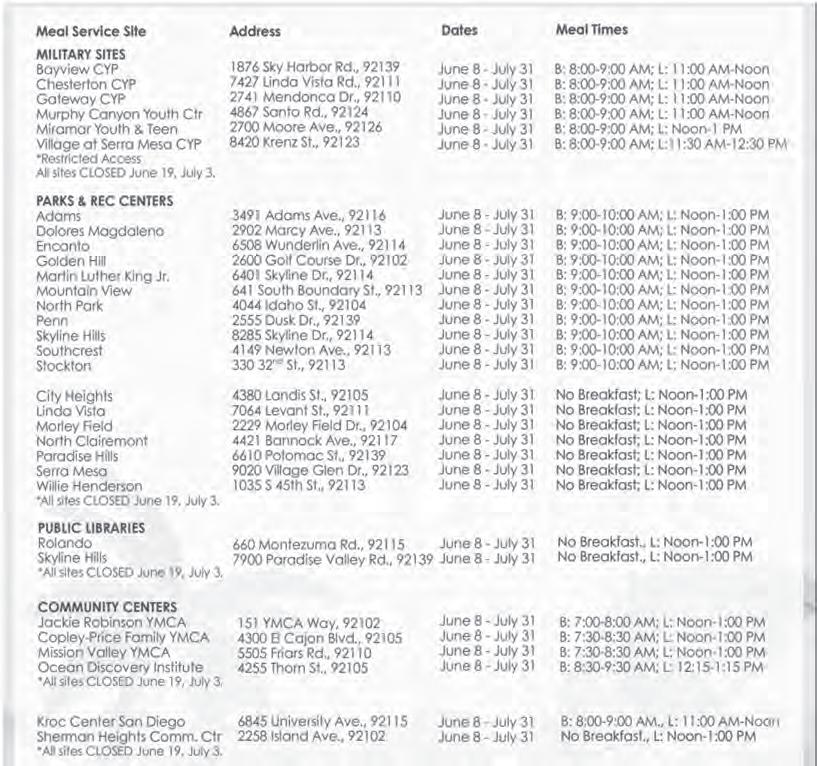
By Charlene Cromwell
As of July first, the income-driven student loan repayment plan that lowered monthly payments for more than 7 million borrowers while accelerating loan forgiveness is gone. In place of the Saving on a Valuable Education (SAVE) plan are two new choices that now require borrowers to prioritize either the amount of loan payments or the total amount borrowed.
“Borrowers should really do their research to see what plan is going to work best for them,” said Nicholas Kent, undersecretary of Education in a recent interview. “But the reality is that SAVE borrowers will have to transition to a new repayment plan sooner rather than later.”
Under the Repayment Assistance Plan (RAP), monthly loan payments are based on the borrower’s income and number of dependents. Alternatively, the Tiered Standard Repayment plan offers fixed terms of 10, 15, 20, or 25 years based on a borrower’s total outstanding loan balance.
The deadline to choose is September 29. Once borrowers complete their new enrollment, monthly payments will begin per the terms of each. After the deadline, any borrower that did not choose will be placed in a standard repayment plan. Further, pending SAVE applications will be denied.
E-Mail Us AT:
266-2233
The SAVE plan’s popularity was due to the meaningful relief that borrowers with modest incomes or long repayment histories received. Many achieved reduced payments, as the plan factored in income and family size. Hundreds of thousands of borrowers with smaller original balances were able to reach loan forgiveness more quickly.
Reactions to these changes from student loan advocates vary from worsening financial stress to anticipating higher payments and still unresolved student loan servicer issues.
A June issue brief by the Julian Bond Institute found that 45 percent of all student loan borrowers suffered credit distress—missed payments or collections— over the past five years. This financial strain is taking a toll on consumers’ long-term financial goals.

“For many borrowers, they’ll end up having a higher payment in the RAP plan than they would in the IBR plan, and cer tainly (more) than they would in the SAVE plan,” Abby Shafroth, director of the National Consumer Law Center’s Student Loan Borrower Assistance Program said.
“Now 7.5 million borrowers have weeks to switch repayment plans,” stated Chris Hicks, Senior Policy Advisor at Protect Borrowers. “The companies standing between them and default are the same ones that have spent decades driving borrowers into it. Lawmakers and regulators at every level must step up now to protect borrowers by reining in these servicers—instead of handing them yet another opportunity to profit at borrowers’ expense.”
Hicks’ comments stem from a recently released joint report by Protect Borrowers and the Debt Collection Lab at Princeton University. Entitled, Repeat Offenders, the report takes aim at student loan servicers that are paid more than a billion dollars each year to support borrowers but instead “provided borrowers with the wrong information, taken illegal fees, and wrongly rejected applications for borrowers trying to get in an affordable repayment plan.”
The report also found that in 2025, every nine seconds another borrower defaulted on their loans. As the lack of effective student loan servicing continues, the report rejects the idea that the new payment plans will relieve the financial stress of unsustainable loan debt.
“This report makes clear that the dysfunction borrowers experience isn’t a series of isolated mistakes, said Bonnie Latreille, visiting
Senior Fellow with the Debt Collection Lab at Princeton University and former Student Loan Ombudsman for the U.S. Department of Education. “It’s the predictable result of a fragmented system that shifts risk onto the people least equipped to absorb it, with no one held accountable.”
The end of SAVE and the start of new repayment plans are the result of a 2025 lawsuit settlement reached last December. The lengthy litigation brought in 2024 by Missouri’s thenAttorney General (AG) Andrew Bailey was joined by his colleagues in Arkansas, Florida, Georgia, North Dakota, Ohio, and Oklahoma in a lawsuit that challenged SAVE, arguing the program was illegal.
The only former SAVE borrowers excused from these payments are those who have been approved for either forbearance or deferment, both temporary and most often used during financial hardships. Forbearance allows a temporary pause in payments but does not pause interest accrual. Deferment also allows a temporary payment pause but can also pause interest from accruing — depending upon the type of loans borrowed. Information on these choices, who is eligible and the terms affecting each is available on Federal Student Aid’s website.
“For a population already managing multiple debt obligations, with little savings and limited cash flow, policy changes that increase payment obligations, narrow repayment options, or resume aggressive collections could not be coming at a worse time”, concluded the Julian Bond Institute brief. Originally published in New Pittsburgh Courier