





Happy 4th of July! Happy of July! 250 Celebrating

Happy 4th of July! Happy of July! 250 Celebrating
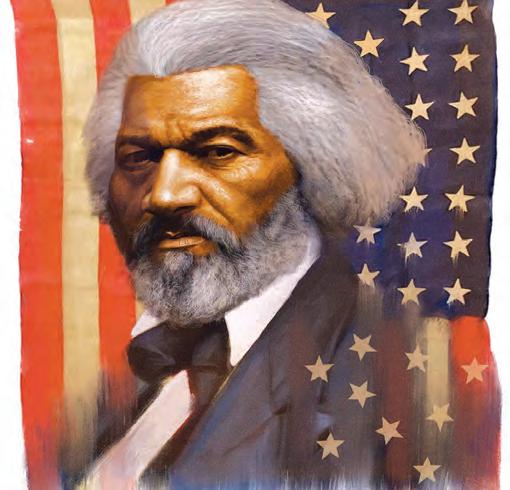
Well before President Abraham Lincoln issued the Emancipation Proclamation in 1863, and well before June 19, 1865, when news of freedom finally reached over 250,000 Galveston, Texas slaves, Frederick Douglass reflected on the paradoxical nature of the nation’s Fourth of July Independence Day celebrations in his July 5, 1852 speech “What, to the Slave, is the Fourth of July?” While change has come, there are still battles to be won for equal rights, equal access, and equal protections under the law. For Black people, the words of Frederick Douglass still resonate today. For some, the July Fourth holiday is cause for anticipatory celebration, others choose not to celebrate at all, while others celebrate the day with some reticence.
— Dr. John E. Warren, Publisher
Excerpt from “What, to the Slave, is the Fourth of July”
Fellow Citizens, I am not wanting in respect for the fathers of this republic. The signers of the Declaration of Independence were brave men. They were great men, too. Great enough to give frame to a great age. It does not often happen to a nation to raise, at one time, such a number of truly great men. The point from which I am compelled to view them is not, certainly, the most favorable; and yet I cannot contemplate their great deeds with less than admiration. They were statesmen, patriots and heroes, and for the good they did, and the principles they contended for, I will unite with you to honor their memory… …Fellow-citizens, pardon me, allow me to ask, why am I called upon to speak here to-day? What have I, or those I represent, to do with your national independence? Are the great principles of political freedom and of natural justice,
See FOURTH page 7
Turning the Tide from Crisis to Control
By Charlene Muhammad CALIFORNIA
BLACK MEDIA
Crystal Lambert knew something was terribly wrong with her three-year-old granddaughter as she sped down the street trying to get her to the hospital.
“I thought she got a hold of some poison,” Lambert recalled.
Doctors found Lambert’s granddaughter had a blood sugar level over 800, diagnosing her with Diabetic Ketoacidosis (DKA), a state in which the body, starved of insulin, begins to shut down.
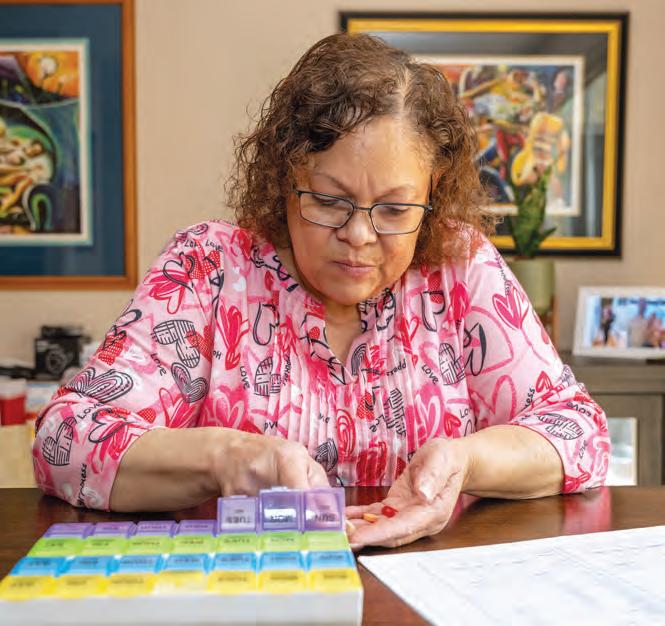
Lambert said she was born with a pancreas that was not fully functioning — it lacked the specialized cells required to produce insulin.
Her granddaughter survived and is five years old today. Now, she gives herself insulin shots, asks endless questions about her condition, and runs like the spirited child she is. But the ter-
ror of that night transformed Lambert — and ultimately inspired her to launch the We Fight Back Organization, a mobile health and food access initiative serving underserved communities across California. Lambert is the executive director.
See DIABETES page 2


By Edward Henderson CALIFORNIA BLACK MEDIA
Beginning July 1, several new California laws took effect, bringing changes that affect workers, students, consumers, renters, and families across the state. While some of the new policies are administrative, others could
have a direct impact on household finances, education, housing, and public safety. Here are some of the most significant new laws Californians should know about:
See CALIFORNIA LAWS page 2
By Danielle Jennings COURTESY OF THE GARLAND JOURNAL
Sadly, not much has changed regarding how Black women are treated and viewed, as evidenced by the current Trump administration. However, there has been an alarming rise in Black femicide that has gone far beyond passing headlines and hashtags — it’s become a devastating crisis that can no longer be ignored.
Within the last few weeks, the news has been dominated by the deaths of Black women at the hands of their domestic partners, such as Coral Springs Vice Mayor Nancy Metayer Bowen,

Dr. Cerina Wanzer Fairfax, Pastor Tammy McCollum, and rapper Qualeisha Barnes. Influencer Ashlee Janae is also included on the list, as her family and many others suspect foul play in her alleged suicide.
These tragic and brutal deaths point to a heartbreaking trend that has only increased since the COVID-

19 pandemic — the rise of Black femicide.
See DEATHS page 2



Continued from cover
• Healthcare Worker Minimum Wage (SB 525): California continues the phased implementation of its landmark healthcare minimum wage law. Beginning July 1, workers at many hospitals and healthcare facilities will receive wage increases, with employees at some facilities reaching a minimum wage of $25 per hour. The law applies not only to nurses, but also to certified nursing assistants, technicians, custodians, food service workers, and other support staff. Because Black and Latino workers are disproportionately represented in many of these positions, the wage increase is expected to provide meaningful financial relief for thousands of California families.
• Transit-Oriented Housing Development (SB 79): New state housing policies taking effect July 1 make it easier to build higher-density housing near public transportation by
Continued from cover
According to the Centers for Disease Control and Prevention (CDC) Behavioral Risk Factor Surveillance System data, nearly 17.9% of Black adults in California have been diagnosed with diabetes — above the national Black adult average of 16.8%, and nearly five points higher than California’s overall adult rate of 12.6% across all races. California ranks 24th out of 39 states with available data for Black adult diabetes rates.
Nationally, according to the U.S. Department of Health and Human Services, Black Americans were 24% more likely than the overall U.S. population to have diabetes in 2024. They also died from diabetes 78% more often than the general population in 2022. Black Americans are also more than twice as likely as the overall population to develop kidney failure caused by diabetes.
limiting certain local zoning restrictions. Supporters believe the law will help address California’s housing shortage, reduce commuting costs, and increase access to jobs and public transit. Housing affordability remains one of the state’s most pressing issues, particularly for communities of color.
• All-Gender School Restrooms (SB 760): California public schools serving kindergarten through 12th grade must now provide at least one all-gender restroom for student use. Supporters say the requirement helps ensure that all students have access to safe and inclusive restroom facilities.
• Student Mental Health Resources on School IDs (AB 727): Student identification cards for grades 7 through 12 and public colleges must include information about suicide prevention resources, including crisis services for LGBTQ+ youth. The goal, supporters argue, is to make life-saving mental health resources more accessible to
According to the California Health Care Foundation’s 2024 Health Disparities Almanac, Black Californians have the shortest life expectancy in the state at just 74.6 years — due in part to chronic conditions like diabetes and its devastating complications.
Leon Rock, co-founder of the African American Diabetes Association, believes statistics, though revealing, only tell part of the story.
“There are a whole bunch of Black folks that don’t tell you that they have diabetes — or don’t know,” he said.
And the disease itself, Rock is careful to note, is not what kills. “They die from the complications. That’s heart attack, that’s stroke, that’s amputations of legs, of feet.
Going blind. All those complications are inherent in a system that has impacted Black folks with diabetes in California and across America.”

students when they need them most.
• Limits on Student Smartphone Use: School districts are expected to begin implementing policies limiting student smartphone use during the school day. The new law requires every school district, county office of education and charter school to adopt a policy by July 1 restricting or prohibiting smartphone use on campus, while allowing exceptions for emergencies, health needs and other specified circumstances. Lawmakers hope the changes will reduce classroom distractions, improve student engagement and support better academic outcomes.
• Standardized Food Date Labels (AB 660): California is introducing standardized food date labels such as “Best if Used By” to replace inconsistent phrases like “Sell By” and “Use Before.” Lawmakers who supported the measure say the change, effective July 1, will reduce consumer confusion and help prevent unnecessary food waste.
For Rock, part of the solution is diagnosis. He says the medical and public health systems are failing Black Californians by the absence of information designed for them.
“That is the bottom line. We need good information. Information that is culturally specific,” said Rock.
Telling people to eat healthy or exercise, he added, falls short when culturally specific alternatives are not provided, and when many residents of urban communities do not feel safe exercising in some neighborhoods — or outside at night.
Dr. Khadijah Lang, a family medicine physician and president of the Golden State Medical Association, agrees that the roots of the crisis run deeper than individual behavior — and blaming patients misses the point.
“We are not genetically predisposed to diabetes,” Lang said. “But the system under which we live increases the likelihood that we will develop it.”
Type 2 diabetes, which accounts for 90 to 95% of all diabetes cases, according to the CDC, develops when the body can no longer use insulin effectively to regulate blood sugar. Left unmanaged, it damages nerves, kidneys, eyes, and the cardiovascular system. The hemoglobin A1C test is a blood draw that reveals how the body has processed sugar over the previous three months — not just at the moment of the test. It is the standard tool for both diagnosis and ongoing monitoring.
That distinction matters, Lang emphasized, because patients cannot manipulate three months of blood sugar history the way they might fast for a day before a single blood draw.
“The pill is not meant to undo or control a sugar level that’s being constantly stressed,” Lang said. “It’s meant to work in conjunction with a low-carbohydrate diet and exercise.” She recommended at minimum 30 minutes of physical activity five days a week — breakable into 10-minute sessions for those who need it.
Lang stressed that education must be delivered
Per research from Dr. Tameka Gillum, an associate professor at the University of New Mexico, and her colleagues, Black femicide is not only a call to action, but also a public health crisis.
According to their findings, in 2020, the year the pandemic began, “Black women were murdered at a rate of 11.6 per 100,000 people, while white women were murdered at a rate of three homicides per 100,000 people, that same year.”
Per Dr. Gillum, the majority of these deaths were at the hands of a romantic partner or by someone the victim knew, as “more than half of Black women murdered in 2020 were killed by current or former romantic partners” and “90% of Black women who were murdered knew the person responsible.”
Research also revealed that pregnancy, which is supposed to be one of the happiest times in a woman’s life, is when many Black women face an increase in domestic violence and murder. In the 19-year period between 2000 and 2019, “homicide became a leading cause of death for Black women both during and after pregnancy, per the research. Additionally, studies also determined that 42% of Black women who died from non-childbirth-related causes died by a form of violence.
• Local Minimum Wage Increases: On July 1, several California cities and jurisdictions raised their local minimum wages to keep pace with inflation. The largest increases include Los Angeles ($18.42/hour), San Francisco ($19.61/hour), Emeryville ($20.34/ hour) — the highest citywide minimum wage in the state — Pasadena ($18.57/hour), and Santa Monica and unincorporated Los Angeles County ($18.47/hour). The increases range from 30 cents to 66 cents per hour, providing additional income for workers in retail, hospitality, restaurants, healthcare support, and other service industries.
• New Firearm Restrictions (AB 1127): Beginning July 1, licensed firearms dealers are prohibited from selling certain semiautomatic pistols that can be readily converted into fully automatic weapons using a device commonly known as a “Glock switch.” The law applies to future retail sales of qualifying firearms but does not ban possession of existing firearms or private-party transfers.
in language people recognize and can relate to. The goal is to inform them of the choices that serve their health best, she said.
But for many Black Californians, even those informed choices remain out of reach, Lambert said.
“They need access to healthy foods and medication, too,” she said.
California has made some critical policy advances. The state has expanded access to the Continuous Glucose Monitor (CGM), which has transformed diabetes care for state residents. Assembly Bill 365, introduced in 2024, proposed requiring Medi-Cal to cover the costs of CGM and other related medical equipment but it failed in the State Senate. Since then, the California Department of Health Care Services (DHCS) reports that the core Medi-Cal CGM benefit now available to eligible patients was solidified through previous budget actions and pharmacy policy updates.
These measures, while meaningful, have not closed the gap for the communities most at risk, according to advocates.
Health care advocates conclude that the solution must be communal, culturally grounded, and sustained — not a fad, not a celebrity moment, not a single clinic visit. For example, observed Lang, lifestyle shaped by shared values and collective accountability can move the needle where individual prescriptions have not.
Rock is building infrastructure to match the urgency, establishing local chapters of the African American Diabetes Association across the country, with California next.
“We have to do for self, period,” he said. “Health is wealth. We have to eat to live.”
And Lambert, whose granddaughter unknowingly started all of this for her, keeps showing up.
“Diabetes advocacy is about dignity, education, prevention, and hope,” she said.
Supported by the California Health Care Foundation (CHCF). Visit www.chcf.org.
Following the recent deaths of Black women due to domestic violence, Paméla Tate, executive director of Black Women Revolt Against Domestic Violence, noted, while speaking with CNN, that deep-seated skepticism towards police and government child services agencies due to institutionalized racism makes Black women reluctant to seek help when dealing with domestic violence issues. Tate’s point of view directly correlates to Dr. Gillum’s research, which found that, dating back to 2015, 20% of Black women are killed by police, despite only being 13% of the U.S. population. Of that number, over half of the black women killed were unarmed.
As the deaths of Black women make the rounds on social media with calls for justice and receive limited news coverage, there are many opinions that largely rely on mental health issues as the reasoning for Black femicide. While that is certainly an underlying issue and a problem in the Black community, there has been an alarming sense of using mental health issues to excuse those who commit violent murders of Black women.
“To say they’re mentally ill, that doesn’t cut it,” Tate told CNN. “There are people who are depressed or people who have schizophrenia and don’t harm… their partners, much less kill them. The mental illness is not what we’re talking about
By Anneshia Hardy The AFRO

There is a dangerous narrative taking shape in this country right now, one suggesting that the Voting Rights Act simply outlived its usefulness. That the protections once necessary during the Civil Rights era are now outdated remnants of a different America. That the country evolved beyond the conditions that made federal oversight necessary in the first place.
But both history and the present tell a far more troubling story.
The Voting Rights Act did not fail. The country abandoned its moral commitment to it. That distinction matters because framing the current crisis as a “failure” of the Voting Rights Act obscures what actually happened. For decades, the law worked exactly as intended because it recognized an uncomfortable truth America still struggles to confront: when left unchecked, political systems and those who benefit from unequal power structures adapt in order to preserve that power.
The Voting Rights Act understood that racial discrimination in voting would not simply disappear because Congress passed legislation or because the country congratulated itself for progress. It understood that exclusion evolves. When literacy tests became illegal, new barriers emerged. When poll taxes were struck down, district lines became weapons. When openly segregationist language became politically toxic, lawmakers learned to repackage exclusion in the softer language of “election
integrity,” “states’ rights” and “race neutrality.” The strategy changed. The objective did not. That is why preclearance under Section 5 of the Voting Rights Act mattered so deeply. It required jurisdictions with documented histories of racial discrimination to receive federal approval before changing voting laws. It was not punitive. It was preventative. And for decades, it worked. But in 2013, the Supreme Court’s decision in Shelby County v. Holder gutted the coverage formula that made preclearance enforceable. The Court argued that the country had changed enough that such protections were no longer necessary. What followed should have shattered the illusion of a “post-racial” democracy. Instead, we witnessed voter purges, polling place closures concentrated in Black communities, attacks on absentee voting, racial gerrymandering battles and legislation across Southern states making democratic participation harder and more fragile.
Now, more than a decade after Shelby, we are watching another escalation unfold in real time.
The recent ruling in Louisiana v. Callais threatens to further weaken protections for Black political representation under Section 2 of the Voting Rights Act. At the same time, states across the South are advancing voting-related bills under the banner of election security. But beneath the procedural language is something far more consequential: a restructuring of democratic access and representation. And the country should be paying close attention. Because what is happening in the South is not isolated regional politics. It is a warning sign for American democracy itself.
Historically, the South has functioned as both the country’s contradiction and its testing ground. Modern voter suppression strategies were refined there before spreading elsewhere. Today, the region is once again becoming the laboratory for determining how much democratic erosion the public is willing to normalize. And normalization is the real danger. Because democracy rarely disappears all at once. It erodes through exhaustion, procedural chaos, legal ambiguity and administrative barriers that appear technical enough to avoid moral scrutiny. It erodes when communities begin to feel their participation no longer matters. It erodes when the public becomes more invested in the performance of democracy than its actual practice. Many Americans only recognize voter suppression when it arrives dressed in the imagery of the past. They search for firehoses, literacy tests and segregation signs while overlooking the quieter bureaucratic mechanisms capable of producing the same democratic outcomes. That selective recognition is produced by historical amnesia.
America remembers the Civil Rights Movement as a story about courage while refusing to fully remember what made that courage necessary in the first place. We celebrate Selma. We quote Dr. King. We repost black-and-white photographs of marchers crossing bridges in pursuit of freedom and democracy. But many of the same institutions that publicly honor that history continue resisting the unfinished demands that movement fought for.
As America approaches its 250th anniversary, we have become a nation deeply committed to commemorating civil rights history while
simultaneously weakening the mechanisms designed to protect its gains. Historical memory without historical accountability becomes nostalgia, not justice.
And that nostalgia has allowed the country to stabilize a dangerous fiction: that racism is primarily historical rather than structural. We now live in a political climate where race-conscious protections are portrayed as threats to democracy while policies producing racially unequal outcomes are framed as neutral governance. That is not evidence that racism disappeared. It is evidence that the language surrounding democracy evolved while many of the underlying power struggles remained intact.
Progress in this country has never happened automatically. Every meaningful expansion of democracy required organizing, pressure, sacrifice, resistance and federal intervention. Voting rights are ultimately about power. Material power. Political power. Community power. And Black political power has consistently pushed this country closer to its democratic ideals, not further from them.
The question before the country now is not whether the Voting Rights Act worked. History already answered that. The real question is whether America still possesses the moral courage to defend the democratic principles it claims to celebrate.
Because preserving democracy requires more than memorializing the past. It requires confronting the present. And right now, too many institutions remain unwilling to do that.
This post appeared first on AFRO American Newspapers.
By Erin Kaplan Los Angeles Wave
Fifty summers ago, in 1976, journalist and author Alex Haley published his masterwork, “Roots: The Saga of an American Family.”
The timing was exquisite: As the nation celebrated the bicentennial with fireworks and paeans to freedom, “Roots” countered it with a deeply personal, Blackcentered narrative of American history that began in Africa and cast the horror of slavery as foundational, not incidental, to the country’s founding and its character.
Despite its unflinching truths, “Roots” was an instant success — both the book and the miniseries that aired on network television the following year — a cultural landmark that resonated across color lines and far beyond literary circles. Its most groundbreaking truth is that Black stories not only matter, they are central to America’s identity.
So it was really only a matter of time before the MAGA movement targeted “Roots” for a takedown. Last month, the Knox County school board in Tennessee banned the Pulitzer Prizewinning novel from libraries after deciding a single scene of white-on-Black rape violated a state law, the Age-Appropriate Materials Act, passed in 2022.
“Roots” became one of more than 100 titles banned in Knox County schools, part of a wider effort sanctioned by the Trump administration to diminish or disappear Black history in public institutions. The outcry about the ban was so immediate and intense that school officials lifted it a few weeks later.
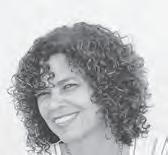
Some of that can be credited to pushback from Haley’s own family members. I’ve been friends for years with his niece, Anne Haley, a lawyer who has spent her career in the Los Angeles city attorney’s office. Anne, 64, grew up intimately acquainted with “Roots” first with the stories about an ancestor named Kinte she’d heard from her Uncle Alex, and with the dozen years it took him to produce
a book that wove those stories into a singular account of the Africa-to-America experience.
The ban wasn’t too surprising given the current political tenor, she said. Anne has always proudly touted her connection to the legacy of “Roots” and had been looking forward to observing the 50-year anniversary in August. She had been writing an essay about the anniversary that mused about whether the near-universal embrace that “Roots” enjoyed in 1976 was even possible now. The ban definitely answered that question.
“It hurt,” she said. “It was like going through the stages of grief. One was indignation — how
Black immigrants in the United States — whether citizens or not — share a common condition with Black Americans. Our ability to access housing, healthcare, education, labor protections, safety, and political representation is deeply tied to the political power of Black communities in this country.
When Black communities lose political power, all Black people across the diaspora become more vulnerable to displacement, criminalization, disenfranchisement, and state violence.
The U.S. cannot claim to be a multiracial democracy while systematically dismantling Black political representation and participation. An attack on Black voting power is an attack on all Black people across the diaspora and on the very possibility of a just democracy.
Voting is more than a civic exercise. Voting is about representation, access to resources, and the ability of communities to shape policies that determine whether we survive, thrive, or are left vulnerable to harm. It is both a right and an expectation of participation in public life.
For generations, however, Black people in the United States were systematically excluded from that right through both legal and extralegal violence — especially across the Deep South. The Voting Rights Act (VRA) of 1965 was won through bloodshed, sacrifice, organizing, and mass resistance led by Black communities demanding full participation in democracy.
The VRA sought to remedy generations of racial exclusion by requiring states with histories of racist voter suppression to receive federal approval before changing election laws or voting procedures, a process
known as preclearance. Section 2 of the VRA also created protections to ensure that Black voters and other historically marginalized communities could elect candidates who would represent their interests.
Historically, white conservative forces have sought to suppress Black political participation because Black communities have consistently organized, voted, and fought for policies rooted in justice, equity, and collective survival.
For more than a decade, the Supreme Court has steadily dismantled the VRA protections.
In 2013, the Court’s Shelby v. Holder decision removed the federal preclearance requirement, opening the floodgates for states to pass voter suppression laws and redraw districts designed to dilute Black political power.
On April 29, the Supreme Court ruled that Louisiana’s congressional map was
unconstitutional because it included two majority-Black districts. In a state where more than one-third of the population is Black, the Court has effectively declared that Black political representation itself is suspect.
This is not simply about maps or district lines. Gerrymandering is one tactic in a much larger project to weaken Black political power, undermine multiracial democracy, and consolidate power away from working-class communities and communities of color.
What the Supreme Court has done is allow racial gerrymandering to exclude Black people from political power, while the effort to ensure Black communities have representation is now considered unconstitutional. Gutting of the VRA is simply the latest chapter in a long history of efforts to silence Black voices and roll back the gains of the Civil Rights Movement.
At the same time, the rise of authoritarian, xenophobic politics under Pres. Donald Trump and the broader far right seeks to codify anti-Blackness, anti-immigrant policies, attacks on women, LGBTQ+ communities, and other marginalized groups into law. These attacks are interconnected.
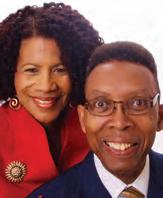
“The United States cannot claim to be a multiracial democracy while systematically dismantling Black political power,” said Nana Gyamfi, executive director of BAJI. “Black immigrants understand that our conditions are tied to the conditions of Black Americans; together then, together now. When Black communities lose political power, all Black people become more vulnerable to displacement, criminalization, disenfranchisement, and state violence. Protecting Black voting rights is not just about elections. It is about protecting the possibility of collective freedom and self-determination for our communities.”











By
He alth disparities continue to fall upon the Black, brown, and underrepresented communities across the United States, but how does that affect our own youth here in San Diego County?
To answer that question, the Policy and Innovation Center put together nearly 20 years' worth of data into the Youth Well-Being Report, designed to point out where San Diego is doing right by its youth, and where it can do better.
Funded by the San Diego Foundation, Prebys Foundation, and the City of San Diego Child and Youth Success, the report examines educational access,
(68% of White youth and 22% of Black youth), as well as by immigrant status (50% for non-immi grants, 34% for immigrants) in San Diego County.
mental and physical health, and economic stability among those ages 0-24.
As shown in the report, some consistent areas of inequality include:
• Close to 40% of SDUSD high school students reported peer isolation in 2023. Disparities were most noticeable by race and sexual orientation: 49% of Black students (compared to 28% of White students) and 56% of gay and lesbian students (compared to 36% of bisexual students) reported not feeling close to people at their school.
• Wide disparities persisted in college enrollment and graduation rates by race, with 88% of Asian American, Native Hawaiian, and Pacific Islander (AANHPI) young adults and only 46% of Black young adults in San Diego County meeting this milestone in 2023. Widening gaps by sex have developed over time, with 73% of San Diego County women and 57% of men ages 18- to 24-years either enrolled or having obtained a college degree in 2023
• The percentage of youth in households making family-sustaining wages varied widely by racial group

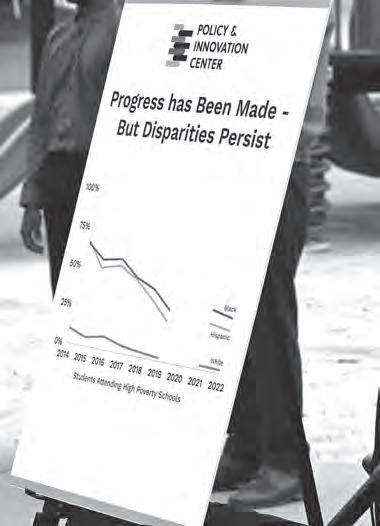
• More than 95% of San Diego County high school students graduated in 2023, yet Black and Hispanic students remained far more likely to attend high-poverty schools than their White peers.
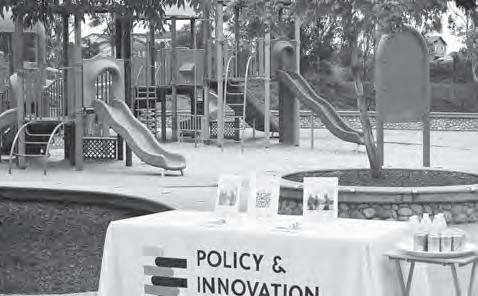
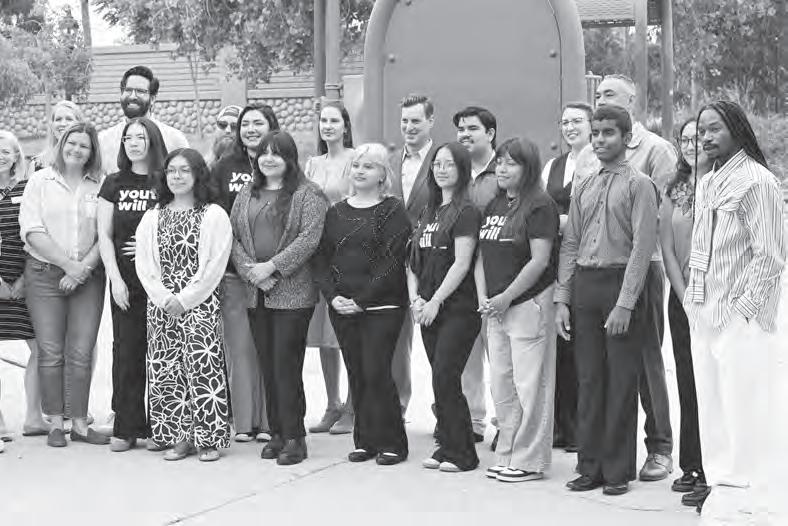
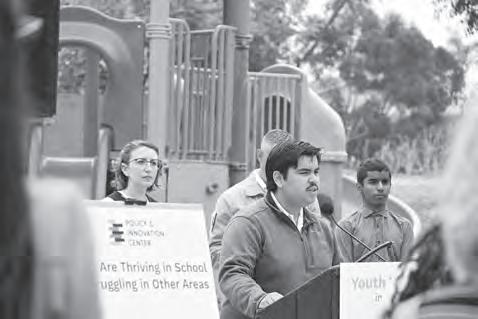
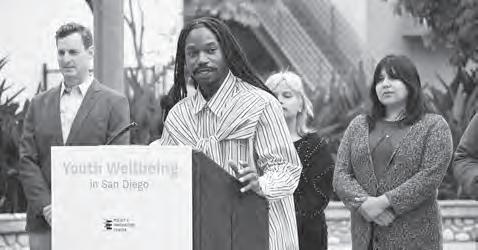
Behind each statistic or data point is an actual child affected by the conditions and circumstances which shape their success. When the report went live on June 18th, a press conference was held at the Park de la Cruz Skate Park & Playground in City Heights, and youth advocates took the podium to share how the data findings reflected their own experiences as students in San Diego.
“In middle school, I was considered an at-risk youth. I started high school during COVID... Isolation and mental health challenges affected many of my peers and me,” San Diego State University student Karlo Vazquez Melendez shared. “I wasn’t always the best student. I was still figuring out who I wanted to be. But what made a difference wasn’t being told what I couldn’t do. It was people who took the time to mentor me, challenge me, and see my potential.”
plained at the press conference.
This report provides policymakers, educators, and service providers a roadmap on where to focus their attention and implement change for the young people here in San Diego. As more data is released, the report’s interactive web platform will also be updated.
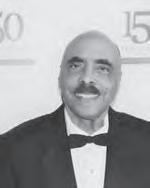
SUNRISE
01/22/1939
SUNSET
05/23/2026
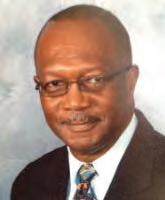
Originally from Grand Rapids, Michigan, Joe was born on January 22, 1939. He moved to San Diego as a young man in 1962 to build his life. In 1964, he began his career at the San Diego Union-Tribune as a dispatcher-clerk. Over the years, he advanced into sales, managing accounts that included Goodyear, Jerome’s, the San Diego Opera, and The Old Globe, among many others. He was widely recognized for his work, receiving numerous awards and commendations throughout his career. After a distinguished career of more than 35 plus years of service with the San Diego Union-Tribune, he retired as an advertising executive.
While building his career, Joe also pursued his educational goals. In 1972, he earned an Associate of Arts Degree in Social Science from San Diego Evening College, and in 1987, he graduated from San Diego State University with a Bachelor of Arts Degree in Sociology.
Beyond his professional and academic accomplishments, Joe was a man of quiet passions. He was an avid reader who surrounded himself with books. A lifelong animal lover, his home was always filled with the companionship of a beloved dog or cat. He had a deep appreciation for all forms of art, including painting, sculpture, architecture, music, and literature. His love of creativity enriched his life. He also loved to travel, making several trips to England over the years.
Joe was also very involved with his community. He served on the Board of Directors of the College Area Community Council and as a member of the College View Estates Association for many years. Because of his hard work and dedication to the neighborhood, the City of San Diego honored him with special commendations in 1996 and 2008.
He was a longtime and devoted member of St. Paul’s Episcopal Cathedral, where he generously shared his time and talents with his church family serving on various committees, teaching Sunday School, and singing faithfully in the Cathedral Choir.
Joe passed on May 23, 2026.His memory lives on in the hearts of the many friends, neighbors, fellow parishioners, and former colleagues who shared in his journey.
A memorial service celebrating Joe’s life and faith will be held on Saturday, July 11, 2026, 11:00 a.m. at St. Paul’s Episcopal Cathedral, located at 2728 Sixth Avenue, San Diego, CA 92103. A reception will follow the service.


“What these findings ultimately represent are signals. They’re symptoms of larger systems, of a larger community, of larger choices. And they remind us that youth well-being does not happen in isolation, nor in happenstance… Youth well-being is not the responsibility of a single actor in the system, it requires all community solutions.”
Dr. Novien Yarber, Senior Learning Officer of the Prebys Foundation ex-
“We really hope that people use this report as a starting point,” Policy and Innovation Center’s lead report author and director of research, Alicia L. Jurek, shared with the Voice & Viewpoint.
“People who work with children can use this to effect change on a policy scale. But there are things that everyday people can do, which is listen to the young people in their lives. Not just listen, but proactively reach out, check in and ask, ‘How are you doing?’”
To view the full report, go to thinkpic. org/youth-wellbeing
VOICE & VIEWPOINT NEWSWIRE
The San Diego County Board of Supervisors unanimously adopted a balanced $9.16 billion budget for fiscal year 2026-27. The new budget became effective July 1. It increases spending by $522 million, or 6.1%, over the current year and also includes 20,389.25 staff years, a net increase of 109.
More information about the budget process is on budget.sandiegocounty.gov.
The County’s recommended budget, released May 18 and revised in June, incorporated feedback from surveys, open houses, virtual and in-person forums, and an 11-day public comment period. Highlights from the Adopted Budget


• F armland Preservation, Open Space Protection & Agricultural Safeguards — $17.3 million
• Climate Action Plan-related Greenhouse Gas (GHG) Reduction Investments — $15 million
By Latanya West VOICE & VIEWPOINT
MANAGING EDITOR
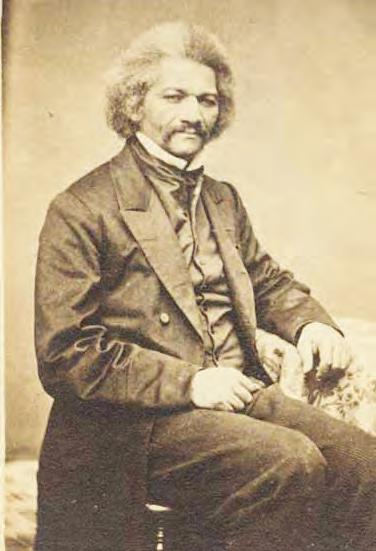
Frederick Douglass is arguably one of the most influential figures in American history.
An internationally renowned orator, statesman, anti-slavery crusader, and author, the child born Frederick Augustus Washington Bailey, came to exemplify what is best and most enduring about American ideals and the promise of our country’s constitution.
son until her untimely death when Frederick was a young boy. Viewed as property to be bought, sold, or transferred in ownership, Douglass was hired out as cheap labor to a number of slave masters.
Long before his physical freedom, Frederick was liberated by the power of words. Ignoring the laws of the times, one of Frederick’s slave mistresses taught him the alphabet. It proved to be a transformative event in Douglass’ life. He recounts in his 1845 bestselling autobiography that
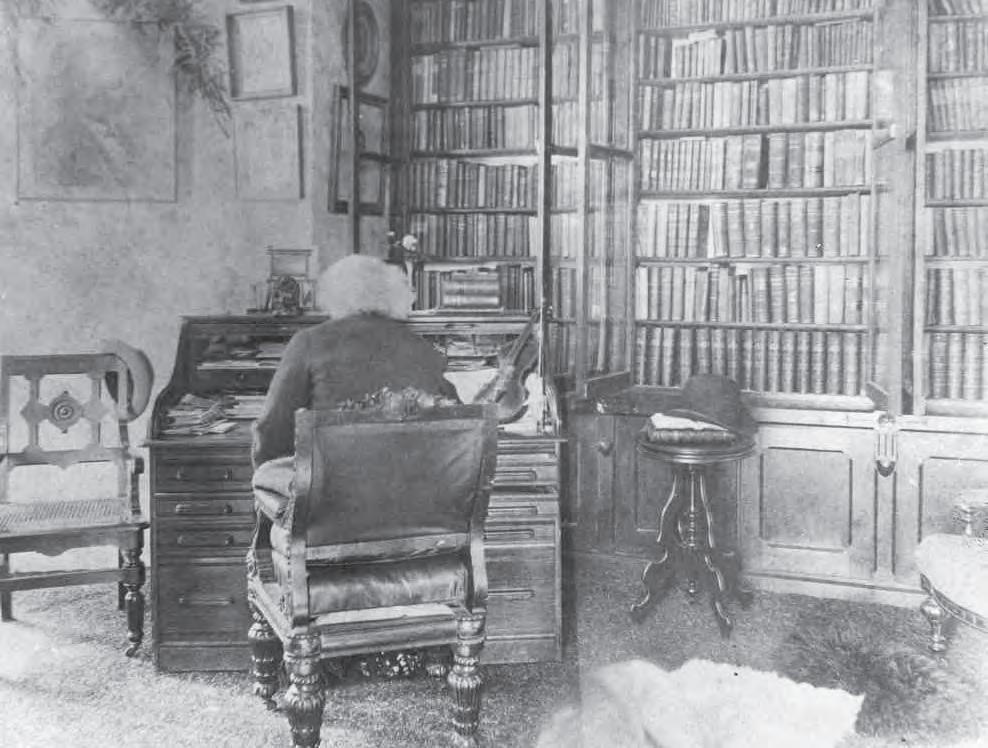
Douglass used words to eloquently and unapologetically speak, write, and educate northern whites about American slavery. He unapologetically named in detail after detail slavery’s horrific injustices, white slavemasters’ and even religious abolitionists’ moral ineptitude, and called to task northern whites who turned a blind eye to slavery’s insidiousness. He called on all Americans to look directly and unflinchingly at slavery’s cost, not only for America’s slaves, but also for the entire nation.
At a time when freedom was only a vague promise on the horizon for most black Americans, Douglass was a resounding voice of hope, justice, and dignity for African Americans. He elevated the national discussion on slavery, helping to hasten its demise.
Here is a brief biography of the man known as the “Prophet of Freedom”:
Douglass’ early life was lonely and tragic. Born a slave sometime in 1818 in Talbot County, Maryland, Frederick Douglass’ father was rumored to be his mother’s white slave owner. His mother, who was
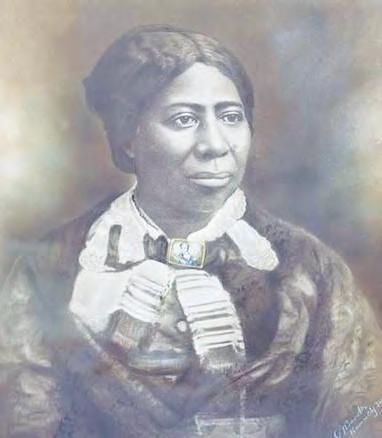
“Learning the alphabet gave me the key to reading; I took that key and, with a little help from my friends, learned how to read, thus becoming a free man in my mind.” With an audacious sense of purpose that flowered as he matured into adulthood, the young Frederick convinced his white childhood friends to teach him to read and write in exchange for food. He read at every opportunity, even after being sold into hard slave labor in rural Maryland. His steely desire for knowledge never faltered. He soon organized a Sunday school for fellow slaves and quickly earned a reputation for being a headstrong troublemaker.
In 1836, Douglass impersonated a sailor and escaped to freedom during a time when abolitionist fervor was growing across the U.S. He married
instrumental in his escape, and settled in New Bedford, Massachusetts. While working as a laborer to support his young family Douglass began to frequent anti-slavery rallies. He was soon up on stage, reluctantly but powerfully sharing his story.
1841 proved to be a fateful year for Douglass. He gave his first major speech at the Massachusetts AntiSlavery Society’s annual convention and launched his influential c areer as an antislavery crusader. The famed abolitionist William Lloyd Garrison was so moved by Frederick’s magnetic stage presence and powerful personal story that he enlisted him to lecture with the American Anti-Slavery Society at meeting halls across the Eastern and Midwestern United States. It was often dangerous work. Douglas became known for his clear, direct, and articulate oratory style. He spoke truthfully and eloquently about his life as a slave, sometimes inciting riotous mobs that weren’t ready to face the American south’s horrifying and morally inept “peculiar institution.”
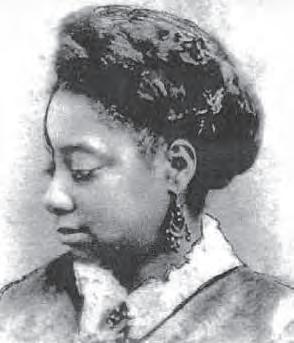
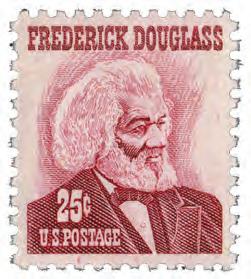
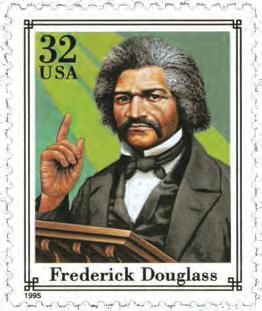
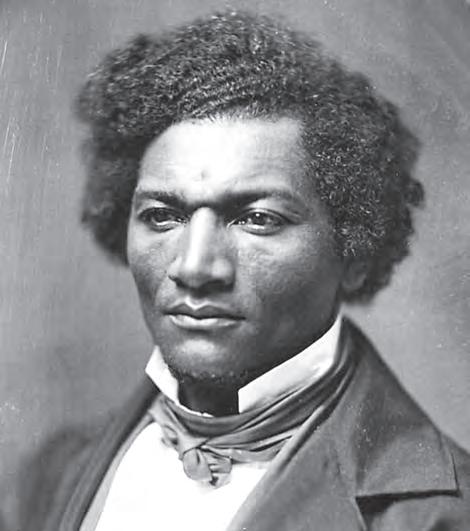
to the war’s effort in the famed fight for Fort Wagner and helped legitimize black troops. Never one to shy away from controversy, Douglass was also an early supporter of the women’s suffrage movement.
international fame and he returned to the States intent on helping African Americans gain the freedoms he enjoyed while abroad.
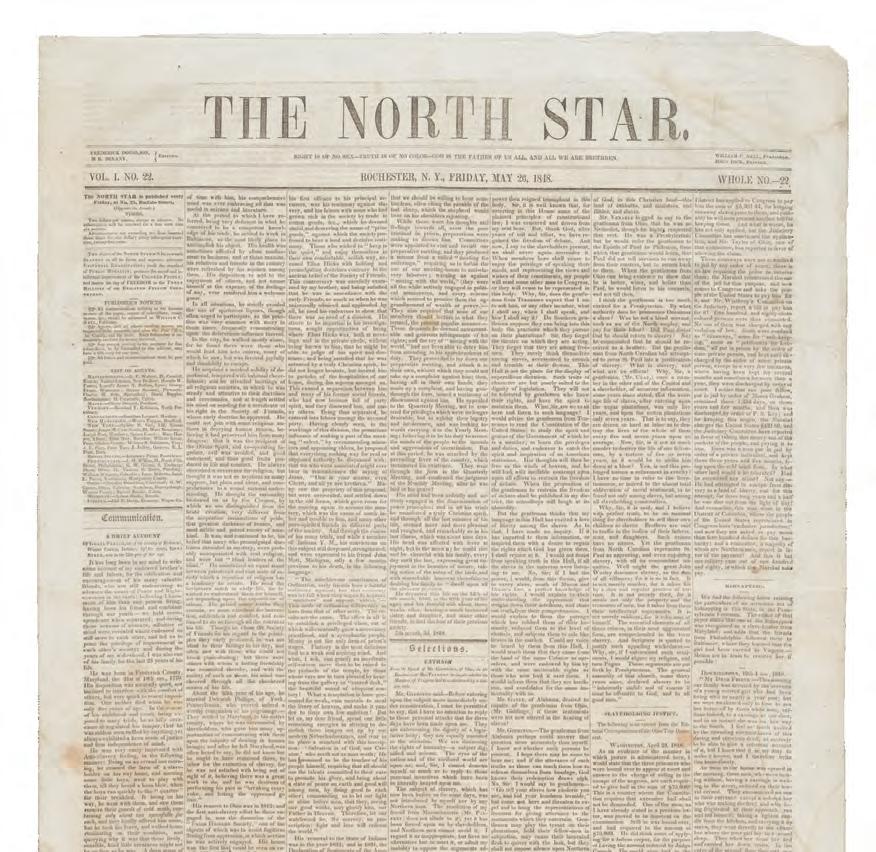
In 1847 he began publication on The North Star, his uniquely successful and influential anti-slavery newspaper, so named for the bright star said to guide fugitive slaves to freedom along the Underground Railroad. In numerous speeches, writings, and publications, Douglass doggedly promoted the end of slavery. During this time, Douglass was also a conductor on the Rochester, New York arm of the Underground Railroad.
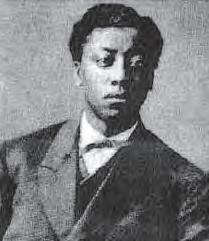
Douglass’ first autobiography, Narrative of the Life of Frederick Douglass, an American Slave, mentioned details about his life as a slave, including the name and residence of his former master. To avoid recapture, Frederick spent two years touring and lecturing to abolitionists in Great Britain. The tour earned him
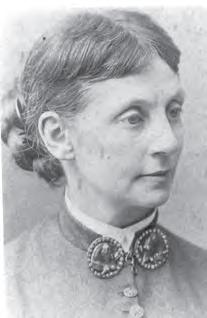
After the Civil War, the former slave continued his appointment with destiny. In the mid-1870’s, Douglass moved to Washington, DC and served in a number of prominent presidential appointments: U.S. Marshall (1877–1881) and Recorder of Deeds for the District of Columbia (1881–1886). He was chargé d’affaires for Santo Domingo and minister to Haiti (1889-1891). In 1874 he was appointed President of the Freedman’s Savings and Trust Company, popularly known as the Freedman’s Savings Bank, the first savings institution established by the U.S. government to assist former slaves and
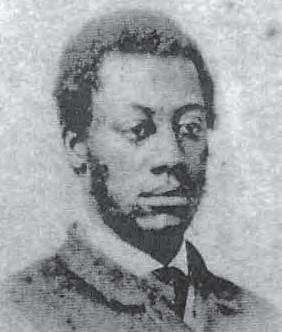
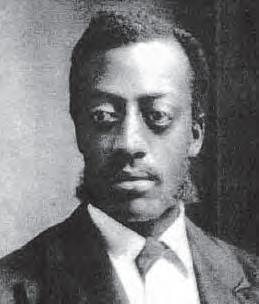
He recounts in his 1882 autobiography, The Life and Times of Frederick Douglass, that his home served as one of the Underground Railroad’s main stations and helped spirit runaway slaves to Canada and freedom.
Douglass’ fame and influence grew as the abolitionist movement and the

African-American Civil War veterans during the Reconstruction era.
Buoyed by the Civil War victory but bitterly disturbed by the failures of Reconstruction, Douglass was a vigorous opponent of Jim Crow segregation until his death from a heart attack in 1895.
political winds of change brought the issue of slavery to the forefront of American politics. His second autobiography, My Bondage and My Freedom, is a more detailed account of his life as a slave and his evolution as a thinking, self-made man who valued faith and literacy. When the Civil War broke out, Douglass’ morally persuasive arguments against slavery were at the vanguard of slavery’s demise.
When Douglass spoke, national leaders paid attention. Douglass outspokenly called for the right of black men to fight for their freedom and boldly petitioned President Lincoln for the fair and equal treatment of African American men in uniform. He helped recruit troops for the first official Civil War infantry of free northern black men. Immortalized in the 1989 movie Glory, the 54th Massachusetts Volunteer Infantry Regiment significantly contributed
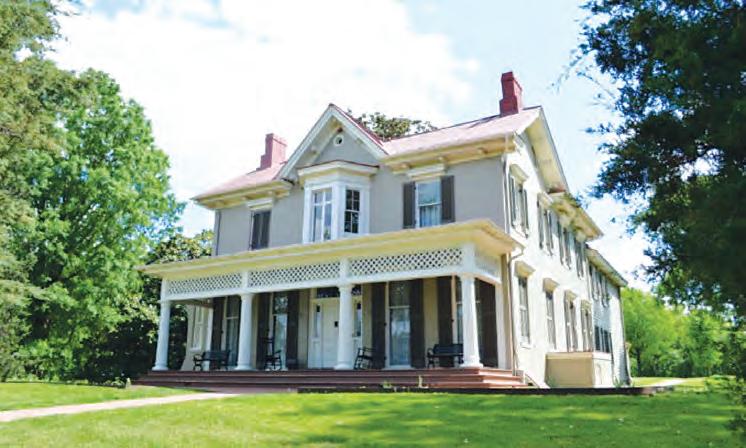
Following Frederick Douglass’s death in 1895, his home, Cedar Hill, was at risk of being sold after his will was ruled invalid under District of Columbia law. His second wife, abolitionist and suffragist Helen P itts Douglass, borrowed $15,000 to purchase the property from Douglass’s heirs and preserve it. In 1900, she established the Frederick Douglass Memorial and Historical Association to maintain the home and its contents, including Douglass’s papers and personal belongings. She spent the rest of her life raising funds and working to preserve the site, laying the foundation for its long-term preservation. The federal government acquired Cedar Hill in 1962, and it is now preserved as the Frederick Douglass National Historic Site.
Cedar Hill, Douglass’ family home, is maintained as part of the National Park Service and was designated a National Historic Site in 1988. His great great granddaughter Nettie Washington Douglass established the Frederick Douglass Family Initiatives to preserve his legacy and create awareness about modern day slavery, which today affects an estimated 27 million people worldwide. Visit www.fdfi.org to learn more.
Somalia’s Path to Independence: July 1, 1960
Rwanda’s Path to Independence: July 1, 1962
Burundi’s Path to Independence: July 1, 1962
Algeria’s Path to Independence: July 5, 1962
Cape Verde’s Path to Independence: July 5, 1975
By Voice & Viewpoint Staff
A NOTE FROM THE PUBLISHER:
This article continues our salute to the independence anniversary of African nations, acknowledging our respect and appreciation of our brothers and sisters among us as we work together to build better lives.

1, 1960
Somalia officially gained full independence from colonial rule on July 1, 1960, when the Italian-administered Trust Territory of Somalia united with the newly independent-
governed State of Somaliland. With all Somali people under one national government, they functioned as a democratic republic until 1969. The reign and eventual collapse of the polarizing Somali president, Siad Barre, led to a civil war in 1991.

Rwanda’s
July 1, 1962
Under German and Belgium authority, Rwandans were separated by ethnic groups creating tensions that continued after independence had been granted in July 1962.
Although the monarchy was overthrown and power was given to the Hutu leaders, those of the Tutsi ethnic group found themselves in exile. These divisions culminated in the

1994 Genocide against the Tutsi, which lead to the death of nearly 8000,000 people in the span of 100 days. This violence ended when the Rwandan Patriotic Front took control of the capital city Kigali on July 4, 1994, commemorated now as Liberation Day. Today, Rwanda prefers to celebrate Liberation Day over independence day, as it signifies unity and reconciliation for all.

Burundi’s Path to Independence: July 1, 1962
Burundi gained independence from Belgian administration on July 1, 1962 following the dissolution of the UN Trust Territory of Ruanda-Urundi. Burundi maintained a traditional monarchy for a few years after independence until it was overthrown in 1966 and the Republic of Burundi was established. Much like Rwanda, ethnic tensions between the Hutu and Tutsi groups lead to violent conflict, military coups, and political instability that lead to the Burundi Civil War from 1993-2005.
Algeria’s Path to Independence: July 5, 1962
Algeria achieved independence on July 5, 1962 after 132 years of French colonization. Political exclusion and economic inequality lead to nationalist movements such as the National Liberation Front, who in 1954 coordinated an uprising that marked the start of the Algerian War of Independence. Eight years of violent conflict eventually led to cease fire negotiations known as the Evian

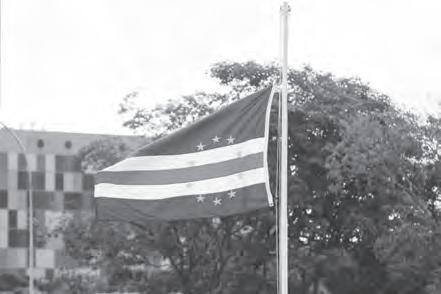
Cabo Verde became independent of Portuguese colonial rule on July 5, 1975, after a nearly two-decade political and diplomatic campaign led by the African Party for the Independence of Guinea and Cabo Verde (PAIGC). A military coup, known as the Carnation Revolution in Portugal, toppled its authoritarian regime in 1974 and paved the way for Cabo Verde to negotiate their independence. Initially, the newly independent country was governed by a one-party system, but in 1990 introduced multi-party elections.
Ancestry travel is emerging as one of the most meaningful travel trends of 2026, and for Black travelers, it carries a significance that extends far beyond leisure. More than simply visiting a new destination, these journeys offer an opportunity to reconnect with family history, cultural identity, and ancestral roots.
According to Condé Nast Traveler, ancestry travel is among the leading travel trends for 2026, reflecting a growing desire among travelers to seek deeper, more personal experiences. Rather than focusing solely on luxury accommodations or sightseeing, many are choosing trips that help them understand where they come from and how their personal stories fit into a broader historical narrative.
For Black travelers, this form of travel often carries added emotional and historical weight. The legacies of slavery, forced migration, colonialism, and incomplete historical records have left many families with limited information about their origins. As a result, travel becomes more than a vacation, it becomes a journey of discovery and reconnection.
Often, these trips begin with a DNA test, a family story, or a clue uncovered through genealogical research. But once travelers arrive at a destination tied to their ancestry,
the experience frequently becomes transformative. It offers an opportunity to stand in places connected to their lineage and to engage directly with cultures and communities that help bring family history to life.
The growth of ancestry travel has been fueled in part by the increasing accessibility of genealogical tools. Platforms such as Ancestry allow users to trace family origins, identify DNA communities, and receive suggestions for “Ancestral Journeys” based on genetic connections.
For people of African descent, specialized organizations such as African Ancestry provide even greater specificity, helping individuals trace maternal or paternal lineages to present-day African countries and ethnic groups. This level of detail can transform a general desire to visit Africa into a purposeful journey centered on specific regions and communities.
That specificity also shapes the nature of the travel experience itself. Rather than booking a generic heritage tour, many travelers are designing itineraries that include archives, museums, memorial sites, local historians, and interactions with contemporary communities. In this way, ancestry travel becomes both an exploration of the past and a deeper engagement with the present.
Among the destinations leading this movement is Ghana. Through initiatives such as Year of Return and Beyond the Return, Ghana has intentionally positioned itself as a welcoming destination for members of the African diaspora seeking to reconnect with their roots.
These initiatives encourage visitors not only to tour important historical landmarks such as Cape Coast Castle and Elmina Castle but also to immerse themselves in Ghana’s contemporary cultural and creative landscape. By doing so, the country offers a powerful model for how heritage tourism can foster lasting connections between Africa and its global diaspora.
Ancestry travel aligns with several broader travel trends shaping 2026. It reflects the demand for more personalized itineraries, deeper cultural context, and experiences that feel emotionally meaningful rather than transactional. These journeys often inspire travelers to spend more time in a destination and to engage more intentionally with local history and communities.
For Black travelers, the appeal is especially profound. An ancestry trip can be historical, educational, cultural, and deeply personal all at once. It provides something that conventional tourism often cannot: the opportunity to place oneself within a larger story that spans continents, generations, and centuries.
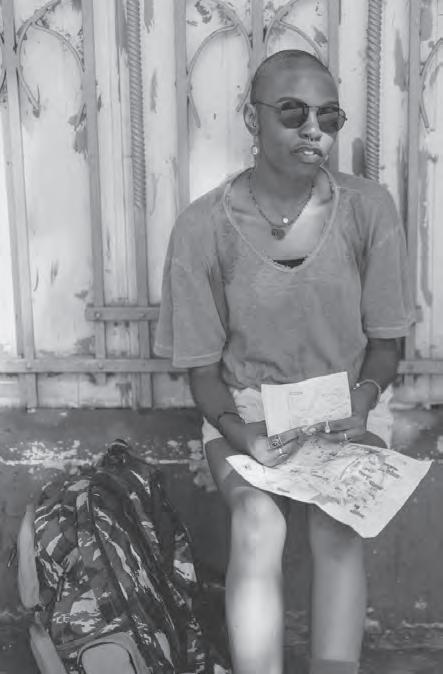
As genealogical tools become more accessible, destinations become better equipped to welcome diaspora travelers, and interest in meaningful travel continues to grow, ancestry travel is poised to play an increasingly important role in how Black travelers explore the world in 2026 and beyond.

equipment, and services for: CP27-0187-52-00-00 MILLER HVAC REPLACEMENT A mandatory site visit is scheduled for 9:00 a.m. on THRUSDAY, JULY 9, 2026, outside the main office of Miller Elementary Schoo, 4343
Opportunities” for “Invitation number” CP27-0187-52-00-00 Miller HVAC Replacement at Miller Elementary School. For new vendors, please register under “New Vendor Registration.” The project estimate is between $670,000 and $755,000, inclusive of allowances. This is not a PSA project but requires the District’s prequalification for projects estimated under $1 million. The District requires that Bidders possess any of the following classification(s) of California State Contractors License(s), valid and in good standing,
the Recorder/County Clerk of San Diego County on June 23, 2026
This fictitious business name will expire on June 23, 2031
07/02, 07/09, 07/16, 07/23
FICTITIOUS BUSINESS NAME STATEMENT 2026-9013846
Fictitious business name(s): RBW Security
6621 Imperial Ave San Diego, CA 92114
County of San Diego
This business is conducted by:
A Limited Liability Company
The first day of business was: 03/01/2026
This business is hereby registered by the following:
Nevada-Southwest Protective Agency 6801 Imperial Ave San Diego, CA 92114
State of Incorporation/ Organization
Nevada
This statement was filed with the Recorder/County Clerk of San Diego County on June 22, 2026
This fictitious business name will expire on June 22, 2031
06/25, 07/02, 07/09, 07/16
FICTITIOUS BUSINESS NAME STATEMENT 2026-9013876
Fictitious business name(s): Express Auto Registration
6189 University Ave. San Diego, CA 92115 County of San Diego
This business is conducted by: A Corporation
The first day of business was: 04/15/2021
This business is hereby registered by the following: Express Auto Registration 6189 University Ave. San Diego, CA 92115
State of Incorporation/ Organization California
This statement was filed with the Recorder/County Clerk of San Diego County on June 23, 2026
This fictitious business name will expire on June 23, 2031 06/25, 07/02, 07/09, 07/16
FICTITIOUS BUSINESS NAME STATEMENT 2026-9013875
Fictitious business name(s): Staride Inc
6189 University Ave. San Diego, CA 92115 County of San Diego
This business is conducted by:
A Corporation Registrant has not yet begun to transact business under the name(s) above
This business is hereby registered by the following: Staride Inc 6189 University Ave. San Diego, CA 92115 State of Incorporation/ Organization
California
This statement was filed with the Recorder/County Clerk of San Diego County on June 23, 2026
This fictitious business name will expire on June 23, 2031 06/25, 07/02, 07/09, 07/16
FICTITIOUS BUSINESS NAME STATEMENT 2026-9012856
Fictitious business name(s): Poki One N Half Chula Vista 970 Eastlake Pkwy #104 Chula Vista, CA 91914 County of San Diego
This business is conducted by:
A Corporation Registrant has not yet begun to transact business under the name(s) above
This business is hereby registered by the following: Woochaetong Inc 970 Eastlake Pkwy #104 Chula Vista, CA 91914
State of Incorporation/ Organization
California
This statement was filed with the Recorder/County Clerk of San Diego County on June 08, 2026
This fictitious business name will expire on June 08, 2031 06/25, 07/02, 07/09, 07/16
FICTITIOUS BUSINESS NAME STATEMENT 2026-9013184
Fictitious business name(s): SunCity Sourdough CO 122 S 20th San Diego, CA 92113 County of San Diego
1111 6th Ave Ste 550 San Diego, CA 92101
This business is conducted by: An Individual
The first day of business was: 06/10/2026
This business is hereby registered by the following: Ibbel Naomi Bustillos 1111 6th Ave Ste 550 San Diego, CA 92101
This statement was filed with the Recorder/County Clerk of San Diego County on June 11, 2026
This fictitious business name will expire on June 11, 2031 06/25, 07/02, 07/09, 07/16
FICTITIOUS BUSINESS NAME STATEMENT 2026-9011432
Fictitious business name(s): Vibe Lip Gloss 1388 Kettner Blvd, Unit 603 San Diego, CA 92101 County of San Diego
This business is conducted by: A Limited Liability Company
The first day of business was: 05/13/2026
This business is hereby registered by the following: Soma Coffee Society 1388 Kettner Blvd, Unit 603 San Diego, CA 92101 State of Incorporation/ Organization California
This statement was filed with the Recorder/County Clerk of San Diego County on May 20, 2026
This fictitious business name will expire on May 20, 2031
06/25, 07/02, 07/09, 07/16
FICTITIOUS BUSINESS NAME STATEMENT 2026-9013380
Fictitious business name(s): Invictus Advisors
StartUp on Steroids 420 Milagrosa Cir Chula Vista, CA 91910 County of San Diego
1041 Market St. Ste. 165 San Diego, CA 92101
This business is conducted by: A Limited Liability Company
The first day of business was: 06/08/2026
This business is hereby registered by the following: Han Solo Ventures LLC 1041 Market St. Ste. 165 San Diego, CA 92101 State of Incorporation/ Organization
California
This statement was filed with the Recorder/County Clerk of San Diego County on June 15, 2026
This fictitious business name will expire on June 15, 2031
06/25, 07/02, 07/09, 07/16
FICTITIOUS BUSINESS NAME STATEMENT 2026-9013254
Fictitious business name(s): Skintuitive 3627 Fifth Ave. Suite #5 San Diego, CA 92103 County of San Diego
This business is conducted by: A Limited Liability Company Registrant has not yet begun to transact business under the name(s) above This business is hereby registered by the following: Coel Mahal LLC 21200 W. Oxnard St. #547 Woodland Hills, CA 91365 State of Incorporation/ Organization California
This statement was filed with the Recorder/County Clerk of San Diego County on June 12, 2026
This fictitious business name will expire on June 12, 2031
06/25, 07/02, 07/09, 07/16
FICTITIOUS BUSINESS NAME STATEMENT
2026-9012795
Fictitious business name(s):
Brown Cup Cafe & Catering
401 N Coast Hwy Suite 105 Oceanside, CA 92054
County of San Diego
271 Blue Springs Ln Oceanside, CA 92054
This business is conducted by:
A Limited Liability Company
The first day of business was: 05/31/2026
This business is hereby registered by the following: Vantora LLC
271 Blue Springs Ln Oceanside, CA 92054
State of Incorporation/ Organization
California
This statement was filed with the Recorder/County Clerk of San Diego County on June 08, 2026
This fictitious business name will expire on June 08, 2031 06/18, 06/25, 07/02, 07/09
FICTITIOUS BUSINESS NAME STATEMENT 2026-9012475
Fictitious business name(s):
I Know Thats Rite LLC DBA I Know Thats Rite 8025 Clairmont Blvd #2300 San Diego, CA 92111 County of San Diego
This business is conducted by:
A Limited Liability Company
The first day of business was: 12/19/2025
This business is hereby registered by the following:
I Know Thats Rite LLC DBA I Know Thats Rite 8025 Clairmont Blvd #2300 San Diego, CA 92111 State of Incorporation/ Organization
California
This statement was filed with the Recorder/County Clerk of San Diego County on June 04, 2026
This fictitious business name will expire on June 04, 2031 06/18, 06/25, 07/02, 07/09
FICTITIOUS BUSINESS NAME STATEMENT
2026-9011120
Fictitious business name(s): Telesforo Paint 5385 Clairemont Mesa Blvd A20 San Diego, CA 92117
County of San Diego
This business is conducted by: An Individual Registrant has not yet begun to transact business under the name(s) above
This business is hereby registered by the following: Rigoberto Telesforo Santiago 5385 Clairemont Mesa Blvd A20 San Diego, CA 92117
This statement was filed with the Recorder/County Clerk of San Diego County on May 15, 2026
This fictitious business name will expire on May 15, 2031 06/18, 06/25, 07/02, 07/09
FICTITIOUS BUSINESS
NAME STATEMENT 2026-9012619
Fictitious business name(s): Ready Secure Managed Cloud
401 W. A St Ste 200 San Diego, CA 92101 County of San Diego
This business is conducted by: A Limited Liability Company
The first day of business was: 06/01/2026
This business is hereby registered by the following: RSM Collective LLC
401 W. A St Ste 200 San Diego, CA 92101 State of Incorporation/ Organization California
This statement was filed with the Recorder/County Clerk of San Diego County on June 05, 2026
This fictitious business name will expire on June 05, 2031
06/18, 06/25, 07/02, 07/09
FICTITIOUS BUSINESS
NAME STATEMENT 2026-9012051
Fictitious business name(s):
Sunshine Emulsion
4640 Cass St. #90315
San Diego, CA 92109
County of San Diego
This business is conducted by: An Individual Registrant has not yet begun to transact business under the name(s) above
This business is hereby registered by the following: Melissa Marshall 4640 Cass St. #90315 San Diego, CA 92109
This statement was filed with the Recorder/County Clerk of San Diego County on May 28, 2026
This fictitious business name will expire on May 28, 2031
06/18, 06/25, 07/02, 07/09
FICTITIOUS BUSINESS
NAME STATEMENT 2026-9011583
Fictitious business name(s): Pathways For Independence And Inclusion 2833 Golfview Dr. Fallbrook, CA 92028
County of San Diego
This business is conducted by: An Individual
The first day of business was: 01/01/2026
This business is hereby registered by the following: Scott Howard Wright 2833 Golfview Dr. Fallbrook, CA 92028
State of Incorporation/ Organization California
This statement was filed with the Recorder/County Clerk of San Diego County on May 21, 2026
This fictitious business name will expire on May 21, 2031
06/18, 06/25, 07/02, 07/09
FICTITIOUS BUSINESS
NAME STATEMENT 2026-9013073
Fictitious business name(s): RCI Trucks
National Truck Finance 5282 Eastgate Mall San Diego, CA 92121 County of San Diego PO Box 928020 San Diego, CA 92192
This business is conducted by: A Corporation
The first day of business was: 01/04/1999
This business is hereby registered by the following: RCI Asset Management Inc PO Box 928020 San Diego, CA 92192
State of Incorporation/ Organization California
This statement was filed with the Recorder/County Clerk of San Diego County on June 10, 2026
This fictitious business name will expire on June 10, 2031
06/18, 06/25, 07/02, 07/09
FICTITIOUS BUSINESS NAME STATEMENT 2026-9012818
Fictitious business name(s): Lilac Esthetics 158 E Main St El Cajon, CA 92020 County of San Diego


792 Avocado Ave Apt. 52 El Cajon, CA 92020
This business is conducted by: An Individual
The first day of business was: 02/26/2026
This business is hereby registered by the following: Rojhen Karim 792 Avocado Ave Apt. 52 El Cajon, CA 92020
This statement was filed with the Recorder/County Clerk of San Diego County on June 08, 2026
This fictitious business name will expire on June 08, 2031 06/18, 06/25, 07/02, 07/09
FICTITIOUS BUSINESS NAME STATEMENT 2026-9010619
Fictitious business name(s): Get Buzzd Permanent Jewelry 1741 La Corta Street Lemon Grove, CA 91945 County of San Diego
This business is conducted by: An Individual Registrant has not yet begun to transact business under the name(s) above
This business is hereby registered by the following: Barbara Flores 1741 La Corta Street Lemon Grove, CA 91945
This statement was filed with the Recorder/County Clerk of San Diego County on May 12, 2026
This fictitious business name will expire on May 12, 2031 06/18, 06/25, 07/02, 07/09
FICTITIOUS BUSINESS NAME STATEMENT 2026-9012145
Fictitious business name(s): SH-Lushie's 4659 Texas St. #14 San Diego, CA 92116 County of San Diego
This business is conducted by: Co-Partners
Registrant has not yet begun to transact business under the name(s) above
This business is hereby registered by the following: James May 4659 Texas St. #14 San Diego, CA 92116
Greg Fanti 2185 Station Village Way San Diego, CA 92108
This statement was filed with the Recorder/County Clerk of San Diego County on May 29, 2026
This fictitious business name will expire on May 29, 2031 06/11, 06/18, 06/25, 07/02
FICTITIOUS BUSINESS NAME STATEMENT 2026-9012839
Fictitious business name(s): Seeding Joy 657 Blackthorne Ave El Cajon, CA 92020 County of San Diego
This business is conducted by: An Individual Registrant has not yet begun to transact business under the name(s) above
This business is hereby registered by the following: Sylvia Hide Dohi 657 Blackthorne Ave El Cajon, CA 92020
This statement was filed with the Recorder/County Clerk of San Diego County on June 08, 2026
This fictitious business name will expire on June 08, 2031 06/11, 06/18, 06/25, 07/02
FICTITIOUS BUSINESS NAME STATEMENT 2026-9012672
Fictitious business name(s): The Delcarmen Group 2325 Golden Ave Lemon Grove, CA 91945 County of San
This business is hereby registered by the following: Kalafatovich Groupm LLC 1819 Plaza Palo Alto Chula Vista, CA 91914 State of Incorporation/ Organization California This statement was filed with the Recorder/County Clerk of San Diego County on June 03, 2026
This fictitious business name will expire on June 03, 2031 06/11, 06/18, 06/25, 07/02
FICTITIOUS BUSINESS NAME STATEMENT 2026-9012171
Fictitious business name(s): Uniqueone Entertainment
Cleaned And Organized
State of Incorporation/ Organization California
This statement was filed with the Recorder/County Clerk of San Diego County June 15, 2026
06/25, 07/02, 07/09, 07/16
STATEMENT OF ABANDONMENT OF USE OF FICTITIOUS BUSINESS NAME
2026-9013446
Fictitious business name(s)
to be abandoned:
JRC Carwash And Detailing Services Located at: 4055 58th St. Apt. 3 San Diego, CA 92115
County of San Diego
This business is conducted by:
A General Partnership
The Fictitious business name referred to above was filed in San Diego County on: 10/14/2025 and assigned File no. 2025-9019582
The fictitious business name is being abandoned by:
Jeuno Christopher Maitre
4055 58th St. Apt. 3 San Diego, CA 92115
Rodeline Denis 4055 58th St. Apt. 3 San Diego, CA 92115
This statement was filed with the Recorder/County Clerk of San Diego County June 16, 2026
06/25, 07/02, 07/09, 07/16
SUPERIOR COURT OF CALIFORNIA 330 W Broadway San Diego, CA 92101 Hall of Justice Case Number 26CU021595C
Petitioner or Attorney:
Uyen Ha Tu Nguyen
To All Interested Persons: Petitioner
Uyen Ha Tu Nguyen filed a petition with this court for a decree changing names as follows:
a. PRESENT NAME:
Uyen Ha Tu Nguyen PROPOSED NAME: Anna Uyen To
THE COURT ORDERS that all persons interested in this matter appear before this court at the hearing indicated below to show cause, if any, why the petition for change of name should not be granted.
Any person objecting to the name changes described above must file a written objection that includes the reasons for the objection at least two court days before the matter is scheduled to be heard and must appear at the hearing to show cause why the petition should not be granted. If no written objection is timely filed, the court may grant the petition without a hearing.
NOTICE OF HEARING
a. Date: July 23, 2026 Time: 8:30 A.M. Dept. C-61
(To appear remotely, check in advance of the hearing for information about how to do so on the court's website. To find your court's website go to www.courts.ca.gov/find-mycourt.htm)
NO HEARING WILL OCCUR ON THE DATE SPECIFIED IN THE ORDER TO SHOW CAUSE.
The court will review the documents filed as of the date specified on the Order to Show Cause for Change of Name (JC Form #NC-120).
If all requirements for a name change have been met as of the date specified, and no timely written objection has been received (required at least two court days before the date specified), the Petition for Change of Name (JC Form #NC-100) will be granted without a hearing. One copy of the Order Granting the Petition will be mailed to the petitioner.
To change a name on a legal document, including a birth certificate, social security card, driver license, passport, and other identification, a certified copy of Decree
Changing Name (JC Form #NC-130) or Decree
Changing Name and Order
Recognizing Change of Gender and for Issuance of New Birth Certificate (JC Form #NC-230) may be required. Contact the agency(ies) who issue the legal document that needs to
be changed, to determine if a certified copy is required.
A certified copy of Decree Changing Name (JC Form #NC-130) or Decree
Changing Name and Order Recognizing Change of Gender and for Issuance of New Birth Certificate (JC Form #NC-230) may be obtained from the Civil Business Office for a fee. Petitioners who are seeking a change of name under the Safe at Home program may contact the assigned department for the information on obtaining certified copies.
If all the requirements have not been met as of the date specified, the court will mail the petitioner a written order with further directions.
If a timely objection is filed, the court will set a hearing date and contact the parties by mail with further directions.
A RESPONDENT
OBJECTING TO THE NAME CHANGE MUST FILE A WRITTEN OBJECTION AT LEAST TWO COURT DAYS (excluding weekends and holidays) BEFORE THE DATE SPECIFIED. Do not come to court on the specified date. The court will notify the parties by mail of a future hearing date
Any Petition for the name change of a minor that is signed by only one parent must have this Attachment served along with the Petition and Order to Show Cause, on the other nonsigning parent, and proof of service must be filed with the court.
The address of the court is: 330 W Broadway San Diego, CA 92101 07/02, 07/09, 07/16, 07/23
SUPERIOR COURT OF CALIFORNIA
330 West Broadway San Diego, CA 92101 Central Division Case Number 26CU033910C
Petitioner or Attorney:
Eugenia Rita Duenas
To All Interested Persons: Petitioner
Eugenia Rita Duenas filed a petition with this court for a decree changing names as follows:
a. PRESENT NAME:
Eugenia Rita Duenas
PROPOSED NAME:
Eugenia Rita Duenas Gogue
THE COURT ORDERS that all persons interested in this matter appear before this court at the hearing indicated below to show cause, if any, why the petition for change of name should not be granted.
Any person objecting to the name changes described above must file a written objection that includes the reasons for the objection at least two court days before the matter is scheduled to be heard and must appear at the hearing to show cause why the petition should not be granted. If no written objection is timely filed, the court may grant the petition without a hearing.
NOTICE OF HEARING
a. Date: August 5, 2026 Time: 8:30 A.M. Dept. C-61
(To appear remotely, check in advance of the hearing for information about how to do so on the court's website. To find your court's website go to www.courts.ca.gov/find-mycourt.htm)
NO HEARING WILL OCCUR ON THE DATE SPECIFIED IN THE ORDER TO SHOW CAUSE.
The court will review the documents filed as of the date specified on the Order to Show Cause for Change of Name (JC Form #NC-120).
If all requirements for a name change have been met as of the date specified, and no timely written objection has been received (required at least two court days before the date specified), the Petition for Change of Name (JC Form #NC-100) will be granted without a hearing. One copy of the Order Granting the Petition will be mailed to the petitioner.
To change a name on a legal
document, including a birth certificate, social security card, driver license, passport, and other identification, a certified copy of Decree
Changing Name (JC Form #NC-130) or Decree
Changing Name and Order Recognizing Change of Gender and for Issuance of New Birth Certificate (JC Form #NC-230) may be required. Contact the agency(ies) who issue the legal document that needs to be changed, to determine if a certified copy is required.
A certified copy of Decree
Changing Name (JC Form #NC-130) or Decree
Changing Name and Order Recognizing Change of Gender and for Issuance of New Birth Certificate (JC Form #NC-230) may be obtained from the Civil Business Office for a fee. Petitioners who are seeking a change of name under the Safe at Home program may contact the assigned department for the information on obtaining certified copies.
If all the requirements have not been met as of the date specified, the court will mail the petitioner a written order with further directions.
If a timely objection is filed, the court will set a hearing date and contact the parties by mail with further directions.
A RESPONDENT OBJECTING TO THE NAME CHANGE MUST FILE A WRITTEN
OBJECTION AT LEAST TWO COURT DAYS (excluding weekends and holidays) BEFORE THE DATE SPECIFIED. Do not come to court on the specified date. The court will notify the parties by mail of a future hearing date
Any Petition for the name change of a minor that is signed by only one parent must have this Attachment served along with the Petition and Order to Show Cause, on the other nonsigning parent, and proof of service must be filed with the court.
The address of the court is: 330 West Broadway San Diego, CA 92101 07/02, 07/09, 07/16, 07/23
SUPERIOR COURT OF CALIFORNIA 325 S. Melrose Dr. Vista, CA 92081 North County Division Case Number 26CU027005N
Petitioner or Attorney: Elizabeth Hernandez Moedano
To All Interested Persons: Petitioner Elizabeth Hernandez Moedano filed a petition with this court for a decree changing names as follows:
a. PRESENT NAME: Elizabeth Hernandez Moedano
PROPOSED NAME: Elizabeth Hernandez
THE COURT ORDERS that all persons interested in this matter appear before this court at the hearing indicated below to show cause, if any, why the petition for change of name should not be granted. Any person objecting to the name changes described above must file a written objection that includes the reasons for the objection at least two court days before the matter is scheduled to be heard and must appear at the hearing to show cause why the petition should not be granted. If no written objection is timely filed, the court may grant the petition without a hearing.
NOTICE OF HEARING a. Date: July 24, 2026 Time: 8:30 A.M. Dept. N-25
(To appear remotely, check in advance of the hearing for information about how to do so on the court's website. To find your court's website go to www.courts.ca.gov/find-mycourt.htm)
NO HEARING WILL OCCUR ON THE DATE SPECIFIED IN THE ORDER TO SHOW CAUSE.
The court will review the documents filed as of the date specified on the Order to
Show Cause for Change of Name (JC Form #NC-120).
If all requirements for a name change have been met as of the date specified, and no timely written objection has been received (required at least two court days before the date specified), the Petition for Change of Name (JC Form #NC-100) will be granted without a hearing. One copy of the Order Granting the Petition will be mailed to the petitioner.
To change a name on a legal document, including a birth certificate, social security card, driver license, passport, and other identification, a certified copy of Decree
Changing Name (JC Form #NC-130) or Decree
Changing Name and Order Recognizing Change of Gender and for Issuance of New Birth Certificate (JC Form #NC-230) may be required. Contact the agency(ies) who issue the legal document that needs to be changed, to determine if a certified copy is required.
A certified copy of Decree
Changing Name (JC Form #NC-130) or Decree
Changing Name and Order
Recognizing Change of Gender and for Issuance of New Birth Certificate (JC Form #NC-230) may be obtained from the Civil Business Office for a fee. Petitioners who are seeking a change of name under the Safe at Home program may contact the assigned department for the information on obtaining certified copies.
If all the requirements have not been met as of the date specified, the court will mail the petitioner a written order with further directions.
If a timely objection is filed, the court will set a hearing date and contact the parties by mail with further directions.
A RESPONDENT
OBJECTING TO THE NAME CHANGE MUST FILE A WRITTEN
OBJECTION AT LEAST TWO COURT DAYS (excluding weekends and holidays) BEFORE THE DATE SPECIFIED. Do not come to court on the specified date. The court will notify the parties by mail of a future hearing date
Any Petition for the name change of a minor that is signed by only one parent must have this Attachment served along with the Petition and Order to Show Cause, on the other nonsigning parent, and proof of service must be filed with the court.
The address of the court is: 325 S. Melrose Dr. Vista, CA 92081 06/25, 07/02, 07/09, 07/16
SUPERIOR COURT OF CALIFORNIA 330 West Broadway San Diego, CA 92101 Hall of Justice Courthouse Case Number 26CU025321C
Petitioner or Attorney: Andriana Hernandez on behalf of minor
To All Interested Persons: Petitioner Andriana Hernandez on behalf of minor filed a petition with this court for a decree changing names as follows:
a. PRESENT NAME: Ezra Amine Hernandez
PROPOSED NAME: Ezra Aviel Hernandez
THE COURT ORDERS that all persons interested in this matter appear before this court at the hearing indicated below to show cause, if any, why the petition for change of name should not be granted. Any person objecting to the name changes described above must file a written objection that includes the reasons for the objection at least two court days before the matter is scheduled to be heard and must appear at the hearing to show cause why the petition should not be granted. If no written objection is timely filed, the court may grant the petition without a hearing.
NOTICE OF HEARING
a. Date: July 30, 2026 Time: 8:30 A.M. Dept. C-61
(To appear remotely, check in advance of the hearing for information about how to do so on the court's website. To find your court's website go to www.courts.ca.gov/find-mycourt.htm)
NO HEARING WILL OCCUR ON THE DATE SPECIFIED IN THE ORDER TO SHOW CAUSE.
The court will review the documents filed as of the date specified on the Order to Show Cause for Change of Name (JC Form #NC-120).
If all requirements for a name change have been met as of the date specified, and no timely written objection has been received (required at least two court days before the date specified), the Petition for Change of Name (JC Form #NC-100) will be granted without a hearing. One copy of the Order Granting the Petition will be mailed to the petitioner.
To change a name on a legal document, including a birth certificate, social security card, driver license, passport, and other identification, a certified copy of Decree Changing Name (JC Form #NC-130) or Decree Changing Name and Order Recognizing Change of Gender and for Issuance of New Birth Certificate (JC Form #NC-230) may be required. Contact the agency(ies) who issue the legal document that needs to be changed, to determine if a certified copy is required.
A certified copy of Decree Changing Name (JC Form #NC-130) or Decree Changing Name and Order Recognizing Change of Gender and for Issuance of New Birth Certificate (JC Form #NC-230) may be obtained from the Civil Business Office for a fee. Petitioners who are seeking a change of name under the Safe at Home program may contact the assigned department for the information on obtaining certified copies.
If all the requirements have not been met as of the date specified, the court will mail the petitioner a written order with further directions.
If a timely objection is filed, the court will set a hearing date and contact the parties by mail with further directions.
A RESPONDENT
OBJECTING TO THE NAME CHANGE MUST FILE A WRITTEN OBJECTION AT LEAST TWO COURT DAYS (excluding weekends and holidays) BEFORE THE DATE SPECIFIED. Do not come to court on the specified date. The court will notify the parties by mail of a future hearing date
Any Petition for the name change of a minor that is signed by only one parent must have this Attachment served along with the Petition and Order to Show Cause, on the other nonsigning parent, and proof of service must be filed with the court.
The address of the court is:
330 West Broadway San Diego, CA 92101 06/25, 07/02, 07/09, 07/16
SUPERIOR COURT OF CALIFORNIA
330 W. Broadway San Diego, CA 92101 Central Division, Hall of Justice
Case Number
26CU032469C
Petitioner or Attorney: Leitris Price
To All Interested Persons: Petitioner Leitris Price filed a petition with this court for a decree changing names as follows:
a. PRESENT NAME: Leitris Price
PROPOSED NAME: Leahtris Waters Benton [first] [middle] [last]
THE COURT ORDERS that all persons interested in this matter appear before this court at the hearing indicated below to show cause, if any, why the petition for change of name should not be granted. Any person objecting to the name changes described
above must file a written objection that includes the reasons for the objection at least two court days before the matter is scheduled to be heard and must appear at the hearing to show cause why the petition should not be granted. If no written objection is timely filed, the court may grant the petition without a hearing.
NOTICE OF HEARING
a. Date: July 29, 2026 Time: 8:30 A.M. Dept. C-61
(To appear remotely, check in advance of the hearing for information about how to do so on the court's website. To find your court's website go to www.courts.ca.gov/find-mycourt.htm)
NO HEARING WILL OCCUR ON THE DATE SPECIFIED IN THE ORDER TO SHOW CAUSE.
The court will review the documents filed as of the date specified on the Order to Show Cause for Change of Name (JC Form #NC-120).
If all requirements for a name change have been met as of the date specified, and no timely written objection has been received (required at least two court days before the date specified), the Petition for Change of Name (JC Form #NC-100) will be granted without a hearing. One copy of the Order Granting the Petition will be mailed to the petitioner.
To change a name on a legal document, including a birth certificate, social security card, driver license, passport, and other identification, a certified copy of Decree
Changing Name (JC Form #NC-130) or Decree
Changing Name and Order Recognizing Change of Gender and for Issuance of New Birth Certificate (JC Form #NC-230) may be required. Contact the agency(ies) who issue the legal document that needs to be changed, to determine if a certified copy is required.
A certified copy of Decree Changing Name (JC Form #NC-130) or Decree
Changing Name and Order Recognizing Change of Gender and for Issuance of New Birth Certificate (JC Form #NC-230) may be obtained from the Civil Business Office for a fee. Petitioners who are seeking a change of name under the Safe at Home program may contact the assigned department for the information on obtaining certified copies.
If all the requirements have not been met as of the date specified, the court will mail the petitioner a written order with further directions.
If a timely objection is filed, the court will set a hearing date and contact the parties by mail with further directions.
A RESPONDENT OBJECTING TO THE NAME CHANGE MUST FILE A WRITTEN OBJECTION AT LEAST TWO COURT DAYS (excluding weekends and holidays) BEFORE THE DATE SPECIFIED. Do not come to court on the specified date. The court will notify the parties by mail of a future hearing date
Any Petition for the name change of a minor that is signed by only one parent must have this Attachment served along with the Petition and Order to Show Cause, on the other nonsigning parent, and proof of service must be filed with the court.
The address of the court is: 330 W. Broadway San Diego, CA 92101 06/18, 06/25, 07/02, 07/09
SUPERIOR COURT OF CALIFORNIA
330 W. Broadway San Diego, CA 92101 Central Division, Hall of Justice
Case Number 26CU029373C
Petitioner or Attorney: Veronica Aguirre Mendez AKA Veronica Lopez
To All Interested Persons: Petitioner Veronica Aguirre Mendez AKA Veronica Lopez filed a petition with this court
for a decree changing names as follows:
a. PRESENT NAME: Veronica Aguirre Mendez AKA Veronica Lopez
PROPOSED NAME: Veronica Mendez
THE COURT ORDERS that all persons interested in this matter appear before this court at the hearing indicated below to show cause, if any, why the petition for change of name should not be granted. Any person objecting to the name changes described above must file a written objection that includes the reasons for the objection at least two court days before the matter is scheduled to be heard and must appear at the hearing to show cause why the petition should not be granted. If no written objection is timely filed, the court may grant the petition without a hearing.
NOTICE OF HEARING a. Date: July 21, 2026 Time: 8:30 A.M. Dept. C-61
(To appear remotely, check in advance of the hearing for information about how to do so on the court's website. To find your court's website go to www.courts.ca.gov/find-mycourt.htm)
NO HEARING WILL OCCUR ON THE DATE SPECIFIED IN THE ORDER TO SHOW CAUSE.
The court will review the documents filed as of the date specified on the Order to Show Cause for Change of Name (JC Form #NC-120).
If all requirements for a name change have been met as of the date specified, and no timely written objection has been received (required at least two court days before the date specified), the Petition for Change of Name (JC Form #NC-100) will be granted without a hearing. One copy of the Order Granting the Petition will be mailed to the petitioner.
To change a name on a legal document, including a birth certificate, social security card, driver license, passport, and other identification, a certified copy of Decree Changing Name (JC Form #NC-130) or Decree Changing Name and Order Recognizing Change of Gender and for Issuance of New Birth Certificate (JC Form #NC-230) may be required. Contact the agency(ies) who issue the legal document that needs to be changed, to determine if a certified copy is required.
A certified copy of Decree Changing Name (JC Form #NC-130) or Decree Changing Name and Order Recognizing Change of Gender and for Issuance of New Birth Certificate (JC Form #NC-230) may be obtained from the Civil Business Office for a fee. Petitioners who are seeking a change of name under the Safe at Home program may contact the assigned department for the information on obtaining certified copies.
If all the requirements have not been met as of the date specified, the court will mail the petitioner a written order with further directions.
If a timely objection is filed, the court will set a hearing date and contact the parties by mail with further directions.
A RESPONDENT OBJECTING TO THE NAME CHANGE MUST FILE A WRITTEN OBJECTION AT LEAST TWO COURT DAYS (excluding weekends and holidays) BEFORE THE DATE SPECIFIED. Do not come to court on the specified date. The court will notify the parties by mail of a future hearing date
Any Petition for the name change of a minor that is signed by only one parent must have this Attachment served along with the Petition and Order to Show Cause, on the other nonsigning parent, and proof of service must be filed with the court.
The
Case Number 26CU029829C
Petitioner or Attorney: Kathryn Clenney #174177
To All Interested Persons: Petitioner Stefanie Yamamoto filed a petition with this court for a decree changing names as follows:
a. PRESENT NAME: Kaidenh Yutaka Yotbounmy
PROPOSED NAME: Kaidenh Yutaka Yamamoto
THE COURT ORDERS that all persons interested in this matter appear before this court at the hearing indicated below to show cause, if any, why the petition for change of name should not be granted. Any person objecting to the name changes described above must file a written objection that includes the reasons for the objection at least two court days before the matter is scheduled to be heard and must appear at the hearing to show cause why the petition should not be granted. If no written objection is timely filed, the court may grant the petition without a hearing.
NOTICE OF HEARING a. Date: July 20, 2026 Time: 8:30 A.M. Dept. C-61
(To appear remotely, check in advance of the hearing for information about how to do so on the court's website. To find your court's website go to www.courts.ca.gov/find-mycourt.htm) NO HEARING WILL OCCUR ON THE DATE SPECIFIED IN THE ORDER TO SHOW CAUSE. The court will review the documents filed as of the date specified on the Order to Show Cause for Change of Name (JC Form #NC-120).
If all requirements for a name change have been met as of the date specified, and no timely written objection has been received (required at least two court days before the date specified), the Petition for Change of Name (JC Form #NC-100) will be granted without a hearing. One copy of the Order Granting the Petition will be mailed to the petitioner.
To change a name on a legal document, including a birth certificate, social security card, driver license, passport, and other identification, a certified copy of Decree Changing Name (JC Form #NC-130) or Decree Changing Name and Order Recognizing Change of Gender and for Issuance of New Birth Certificate (JC
If
Any Petition for the name change of a minor that is signed by only one parent must have this Attachment served along with the Petition and Order to Show Cause, on the other nonsigning parent, and proof of service must be filed with the court.
The address of the court is:
330 W. Broadway San Diego, CA 92101
06/11, 06/18, 06/25, 07/02
SUPERIOR COURT OF CALIFORNIA
325 S. Melrose Drive, Suite 1000 Vista, CA 92081 North County Division
Case Number 26CU029720N
Petitioner or Attorney:
To All Interested Persons: Petitioner Shari Ilene Rosenblum Wilson filed a petition with this court for a decree changing names as follows:
a. PRESENT
PROPOSED NAME: Shari Ilene Wilson
THE COURT ORDERS that all persons interested in this matter appear before this court at the hearing indicated below to show cause, if any, why the petition for change of name should not be granted. Any person objecting to the name changes described above must file a written objection that includes the reasons for the objection at least two court days before the matter is scheduled to be heard and must appear at the hearing to show cause why the petition should not be granted. If no written objection is timely filed, the court may grant the petition without a hearing.
NOTICE OF HEARING
a. Date: July 17, 2026 Time: 8:30 A.M. Dept. N-25
(To appear remotely, check in advance of the hearing for information about how to do so on the court's website. To find your court's website go to www.courts.ca.gov/find-mycourt.htm)
NO HEARING WILL OCCUR ON THE DATE SPECIFIED IN THE ORDER TO SHOW CAUSE.
The court will review the documents filed as of the date specified on the Order to Show Cause for Change of Name (JC Form #NC-120).
If all requirements for a name change have been met as of the date specified, and no timely written objection has been received (required at least two court days before the date specified), the Petition for Change of Name (JC Form #NC-100) will be granted without a hearing. One copy of the Order Granting the Petition will be mailed to the petitioner.
To change a name on a legal document, including a birth certificate, social security card, driver license, passport, and other identification, a certified copy of Decree
Changing Name (JC Form #NC-130) or Decree
Changing Name and Order
Recognizing Change of Gender and for Issuance of New Birth Certificate
(JC Form #NC-230) may be required. Contact the agency(ies) who issue the legal document that needs to be changed, to determine if a certified copy is required.
A certified copy of Decree
Changing Name (JC Form #NC-130) or Decree
Changing Name and Order
Recognizing Change of Gender and for Issuance of New Birth Certificate
(JC Form #NC-230) may be obtained from the Civil Business Office for a fee. Petitioners who are seeking a change of name under the Safe at Home program may contact the assigned department for the information on obtaining certified copies.
If all the requirements have not been met as of the date specified, the court will mail the petitioner a written order with further directions.
If a timely objection is
filed, the court will set a hearing date and contact the parties by mail with further directions.
A RESPONDENT OBJECTING TO THE NAME CHANGE MUST FILE A WRITTEN OBJECTION AT LEAST TWO COURT DAYS (excluding weekends and holidays) BEFORE THE DATE SPECIFIED. Do not come to court on the specified date. The court will notify the parties by mail of a future hearing date
Any Petition for the name change of a minor that is signed by only one parent must have this Attachment served along with the Petition and Order to Show Cause, on the other nonsigning parent, and proof of service must be filed with the court.
The address of the court is:
325 S. Melrose Drive, Suite 1000 Vista, CA 92081 06/11, 06/18, 06/25, 07/02
NOTICE OF PETITION TO ADMINISTER ESTATE OF Adelia Denise Horn Adelia Horn
Case Number: 26PE001057C
To all heirs, beneficiaries, creditors, contingent creditors, and persons who may otherwise be interested in the will or estate or both, of Adelia Horn
A Petition for Probate has been filed by Willie Walls in the Superior Court of California, County of San Diego.
The Petition for Probate requests that Willie Walls be appointed as personal representative to administer the estate of the decedent.
The Petition requests authority to administer the estate under the Independent Administration of Estates Act.
(This authority will allow the personal representative to take many actions without obtaining court approval.
Before taking certain very important actions, however, the personal representative will be required to give notice to interested persons unless they have waived notice or consented to the proposed action.) The independent administration authority will be granted unless an interested person files an objection to the petition and shows good cause why the court should not grant the authority.
A hearing on the petition will be held in this court as follows: July 15, 2026 at 1:45 P.M. in Room 502 located at the Superior Court of California County of San Diego 1100 Union St. San Diego, CA 92101 Central Division, Central Courthouse
If you object to the granting of the petition, you should appear at the hearing and state your objections or file written objections with the court before the hearing. Your appearance may be in person or by your attorney.
If you are a creditor or a contingent creditor of the decedent, you must file your claim with the court and mail a copy to the personal representative appointed by the court within the later of either (1) four months from the date of first issuance of letters to a general personal representative, as defined in section 58(b) of the California Probate Code, or (2) 60 days from the date of mailing or personal delivery to you of a notice under section 9052 of the California Probate Code. Other California statutes and legal authority may affect your rights as a creditor. You may want to consult with an attorney knowledgeable in California law.
You may examine the file kept by the court. If you are a person interested in the estate, you may file with the court a Request for Special Notice (form DE-154) of the filing of an inventory and appraisal of estate assets or of any petition or account as provided in Probate Code section 1250.
A Request for Special Notice form is available from the court clerk.
Petitioner: Willie Walls PO Box 33074 San Diego, CA 92163 (786) 553-8364 06/25, 07/02, 07/09
NOTICE OF PETITION TO ADMINISTER ESTATE OF Lillie Beatrice Barnett Lillie Barnett
Case Number: 37-2010-00152588-PR-PLCTL
To all heirs, beneficiaries, creditors, contingent creditors, and persons who may otherwise be interested in the will or estate or both, of Lillie Barnett
A Petition for Probate has been filed by Willie Walls in the Superior Court of California, County of San Diego.
The Petition for Probate requests that Willie Walls be appointed as personal representative to administer the estate of the decedent.
The Petition requests authority to administer the estate under the Independent Administration of Estates Act.
(This authority will allow the personal representative to take many actions without obtaining court approval.
Before taking certain very important actions, however, the personal representative will be required to give notice to interested persons unless they have waived notice or consented to the proposed action.) The independent administration authority will be granted unless an interested person files an objection to the petition and shows good cause why the court should not grant the authority.
A hearing on the petition will be held in this court as follows: July 15, 2026 at 1:45 P.M. in Room 502 located at the Superior Court of California County of San Diego 1100 Union St. San Diego, CA 92101 Central Division, Central Courthouse
If you object to the granting of the petition, you should appear at the hearing and state your objections or file written objections with the court before the hearing. Your appearance may be in person or by your attorney.
If you are a creditor or a contingent creditor of the decedent, you must file your claim with the court and mail a copy to the personal representative appointed by the court within the later of either (1) four months from the date of first issuance of letters to a general personal representative, as defined in section 58(b) of the California Probate Code, or (2) 60 days from the date of mailing or personal delivery to you of a notice under section 9052 of the California Probate Code. Other California statutes and legal authority may affect your rights as a creditor. You may want to consult with an attorney knowledgeable in California law.
You may examine the file kept by the court. If you are a person interested in the estate, you may file with the court a Request for Special Notice (form DE-154) of the filing of an inventory and appraisal of estate assets or of any petition or account as provided in Probate Code section 1250. A Request for Special Notice form is available from the court clerk.
Petitioner: Willie Walls PO Box 33074 San Diego,
THURGOOD MARSHALL IS BORN
Thurgood Marshall was born in Baltimore, Maryland on July 2, 1908. Marshall received his law degree from Howard University in 1933 before serving as the NAACP’s chief legal counsel. His most famous case was the landmark Brown v. Board of Education ruling in 1954 which overruled the "separate but equal” principle set by Plessy v. Ferguson. Marshall was confirmed as a Supreme Court Justice in 1967, becoming the first Black person to hold the position. He served on the court until 1991 and died two years later at age 84.
CIVIL RIGHTS ACT IS SIGNED INTO LAW
On this day in 1964, President Lyndon B. Johnson signed into the landmark Civil Rights Act. The legislation outlawed discrimination based on race, color, region, sex, or national origin. This bill prohibited discrimination in public accommodations, education, employment and federally funded programs. In later years Congress expanded the act and passed other civil rights legislations such as the Voting Rights Act of 1965 and the Fair Housing Act of 1968.
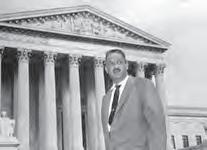
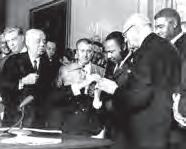
Continued from page 3
dare you?
“Roots” put Tennessee on the map!”
Alex Haley himself had roots in Tennessee, the place where he and his brothers, including Anne’s father, spent summers hearing stories about his African forebears from their grandmother. A towering bronze statue of Haley sits in Alex Haley Heritage Square in Knoxville.
Clinton, a town in the Knoxville metropolitan area, is where Alex Haley bought a farm and where, after “Roots” became a singular cultural phenomenon, he chose to return and live the remainder of his life; he died in 1992. (The farm was bought by the Children’s Defense Fund and turned into a center that, according to the website, grows justice.)
So taking the book written by a local hero out of school libraries because of one objectionable scene is myopic at best. At worst, it’s another blatant effort to whitewash history, and an exercise of the white domination that “Roots” illuminates so thoroughly. The single offending scene was a description of “my great-great-great-great-grandmother being raped by her enslaver. Not a unique circumstance,” Anne Haley said dryly.
As a Black story, “Roots,” for all of its acclaim, was always vulnerable to being de-classicized because in this country, the significance of Black people’s stories in the national narrative has never been a settled matter. To the contrary, they pose an ongoing challenge to the country to fulfill its own promises of fairness and equality. Right now the country is utterly failing to do that, and so “Roots” must fail too. Yet “Roots” itself remains unique, and indelible. Anne Haley and I were 14 in 1977 when the TV miniseries galvanized the nation for a week with unforgettable characters like Kunta Kinte, Fiddler, Kizzie and Chicken George, who battled the oppression of slavery while somehow living lives full of courage, love and humor.
At the same time, “Roots” was fundamentally tough to watch, and sometimes to hear; I remember being startled by the liberal use of the N-word on primetime TV. Also, it was a revelation to see famous white actors I knew from mainstream family fare — Robert Reed from “The Brady Bunch,” Chuck Connors of “The Rifleman,” Sandy Duncan of “Peter Pan” fame — portraying slavers and racist Southerners so convincingly.
That, of course, made people uncomfortable. But discomfort was not the enemy back then. Indeed, it was the point.
“Roots” was part of a tradition of realistic ’70s filmmaking — including “The Deer Hunter,” “Taxi Driver,” “Midnight Cowboy” and “The Godfather” — that was gritty, straightforward and interested not in making America look good, but in exposing America to itself.
As was true with many of those films, the gritty details of the “Roots” story were compelling and eye-opening for everyone. “Roots” was inclusive — not warm and fuzzy or politically correct — because its detailed truth necessarily included all of us.
In Haley’s American family saga, a good many Americans saw for the first time the full saga of themselves, and of the country. And for a brief moment that created community.
Recalling that communal moment is why Anne said she has often had a hard time accepting the intentional divisiveness of this one. She is encouraged by the continued resistance against Black erasure, including the pushback that forced Knox County schools to rescind the ban.
“Uncle Alex always said, ‘Find the good and praise it,’” she said. The lesson for her, especially given the fact that “Roots” was inspired by one family’s oral history, is that Black people must keep telling their stories.
To that end, as part of the 50-year commemoration of the book’s publication in August, Anne is planning to deliver “Roots”–related lectures aimed at young people and stage a marathon reading. She also continues to work on her own family memoir.
“My hope is to make people realize, especially Black people, that we need to coalesce,” she said. “We need to remain a village. We need to reinstitute the village.”
Erin Aubry Kaplan examines the persistent barriers to racial justice and opportunities for progress in an era of receding Black presence in Los Angeles and California for Capital & Main, a nonprofit publication focused on inequality.







Courtesy of JIREH Providers
More than 300 families gathered at the Jackie Robinson YMCA on June 14 for the San
Diego Family Health Fair, featuring a Community Baby Shower, a powerful day of celebration, connection, and support for expecting parents and families across San Diego.

Hosted by JIREH Providers and UC San Diego Health team (led by Dr. Audra Meadows), with support from the Jackie Robinson YMCA and numerous community partners, the event was created in response to a reality that continues to impact far too many families: Black women are disproportionately more likely to experience pregnancyrelated complications, adverse birth outcomes, and barriers to quality maternal healthcare. While these disparities are well documented, so is the power of community when families are given access to resources, support, and trusted relationships.
More than 70% of registered attendees were expecting mothers. Families received free health screenings, health education, resource navigation, community referrals, and opportunities to connect directly with healthcare providers and support organizations. The event also featured free ultrasounds, lactation support, children's activities, food, entertainment, and dozens of community resources designed to support families before, during, and after birth.
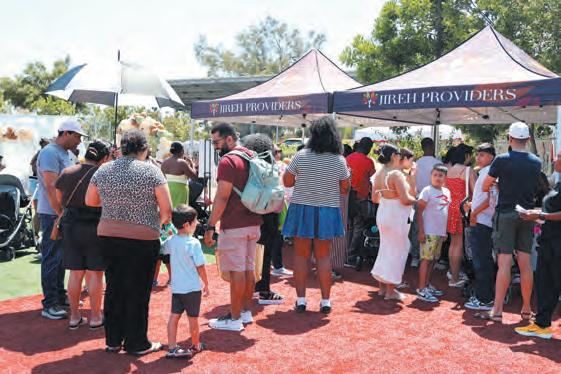
One of the event's most celebrated highlights was the distribution of essential baby items, including cribs, strollers, pack-and-plays, diapers, wipes, and other necessities that can ease the financial burden many families experience during pregnancy and early parenthood. A significant portion of these items were made possible through the generosity of All Saints Church, whose pastor, Meghin Bishop organized a diaper drive and whose volunteers dedicated countless hours to supporting the event.
Families also received free ultrasounds provided by Katrina Stevens, Licensed Sonographer and owner of Babes & Bellies, offering many parents a memorable opportunity to connect with their growing babies while learning more about their pregnancy journey.
"Every family deserves to feel supported, seen, and celebrated," said Samantha Williams, CEO and Co-Founder of JIREH Providers. "Birth equity is not just a healthcare issue—it is a community issue. When we invest in mothers, babies, and families, we invest in the future of our communities. This event was about creating space where families could access resources, build relationships, and know they are not navigating this journey alone."
The event also featured a special performance by internationally renowned vocalist Tinika Wyatt. Tinika and her husband, Jason Wyatt, owners of Transformed Families Counseling & Community Services, helped create an atmosphere rooted in hope, healing, and community.
The event reflected what is possible when healthcare systems, community organizations, faith leaders, and residents come together with a shared commitment to healthier pregnancies, healthier births, and healthier futures. For many attendees, it was more than a baby shower —it was a reminder that an entire community is standing beside them as they prepare to welcome the next generation.