








By Stacy M. Brown BLACK PRESS USA SENIOR NATIONAL CORRESPONDENT
Donald Trump’s takeover of Washington, D.C.’s police force and his threats to extend the same approach to other Black-led cities are being denounced as racially motivated and tied directly to the Project 2025 blueprint. The facts tell a different story: under Black mayors, these cities have recorded some of the most dramatic drops in violent crime in decades.
In the nation’s capital, Trump declared what
By
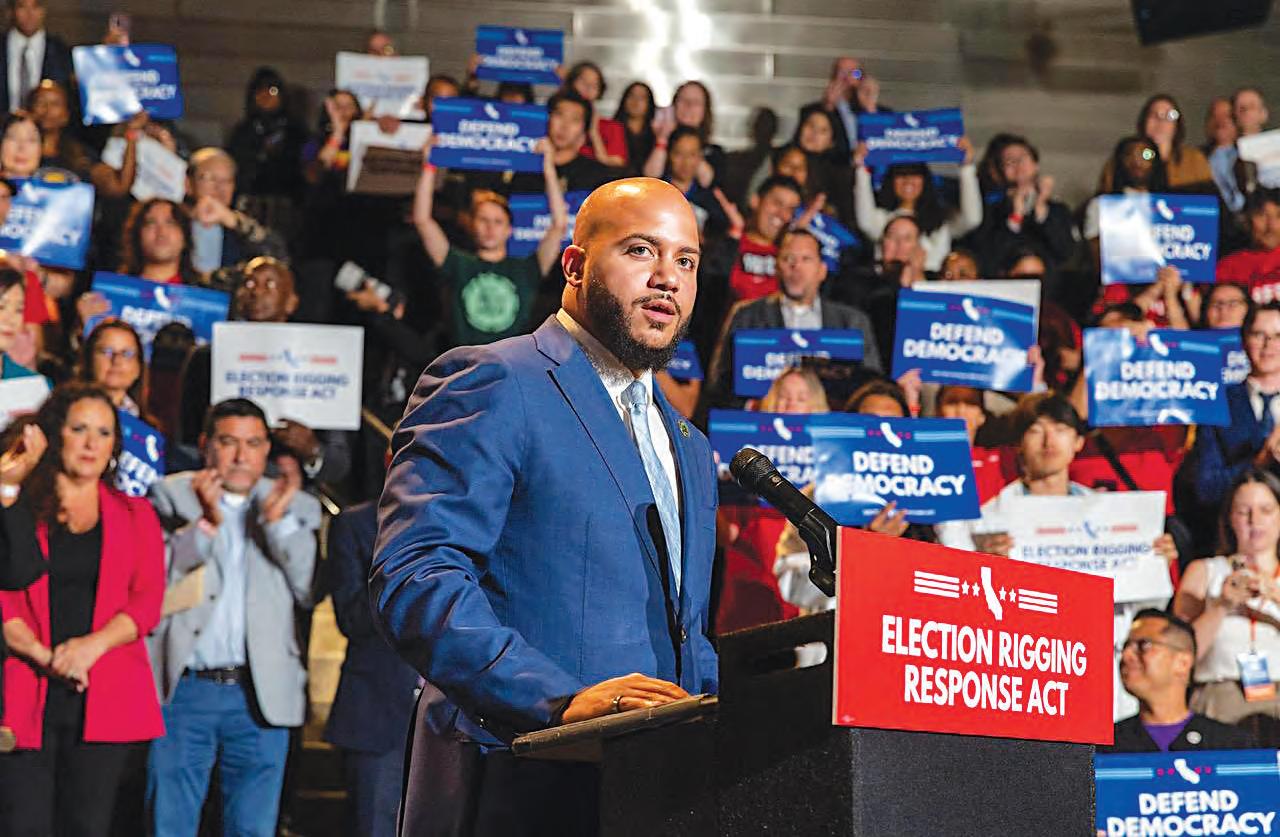
At the Japanese American National Museum in Los Angeles, Gov. Gavin Newsom and top California Democratic leaders unveiled a plan to authorize a special election for new congressional district maps in response to President Donald Trump’s push for partisan gerrymandering in Texas and other states to benefit House Republicans in next year’s midterm elections.
The museum, which chronicles Japanese American incarceration during World War II, carries symbolic weight underscoring California’s commitment to safeguarding civil rights. Newsom, standing with legislative leaders, members of Congress, civil rights advocates
and union leaders, said California has a responsibility to respond.
“Donald Trump, you have poked the bear, and we will punch back … I know they say, ‘Don’t mess with Texas.’ Well, don’t mess with the great Golden State,” Newsom warned.
During the press conference Q&A, Newsom added: “We’re not going to sit back … and be complicit… and watch this system get rigged and watch our democracy fail.” He also pointed to the presence of Immigration and Customs Enforcement (ICE) agents outside the museum, calling it “a sign of weakness, not strength” from Trump’s allies.
See CLASH page 2
A NOTE FROM THE PUBLISHER:
This article initiates a salute to the independence anniversary of African nations. This acknowledges our respect and appreciation of our brothers and sisters among us as we work together to build better lives.
On August 17, 1960, Gabon officially gained its independence from France, becoming one of 17 African nations to shed colonial rule that year. The road to sovereignty had been shaped by decades of French administration, during which Gabon was part of French Equatorial Africa. Following World War II, political reforms in France opened the door to African participation in governance, and Gabonese leaders like Léon M’ba emerged as key voices for autonomy. In 1958, Gabon voted to remain within the French Community, but growing pressure for self-rule soon followed. By 1960, negotiations between Paris and Libreville paved the way for a peaceful transfer of power, with Léon M’ba sworn in as the country’s first president. That moment symbolized not just independence from colonial oversight, but the assertion of Gabonese identity on the world stage.

Each year, Independence Day is honored with parades, cultural performances, and national reflection. The holiday highlights Gabon’s dual legacy: the endurance of its indigenous cultures, from Fang storytelling traditions to Punu masks, and the resilience of its people in shaping a modern nation. Independence brought challenges—navigating political instability, resource dependence, and post-colonial ties to France—but it also offered the opportunity to chart a sovereign course. Today, Gabon’s remembrance of August 17, 1960 stands as both celebration and solemn reflection: a reminder of the sacrifices and negotiations that secured freedom, and a call to uphold the promise of independence for generations to come.
he called “liberation day in D.C.,” vowing to “wipe out crime, savagery, filth, and scum.” But his rhetoric is at odds with his own Justice Department’s data, which shows the District reached a 30-year low in violent crime in 2024. Overall violent crime fell 35% from the year before. Homicides dropped 32%, robberies 39%, and armed carjackings an astonishing 53%. Assaults with dangerous weapons also declined, continuing a trend of steep reductions since a post-pandemic peak in 2023.
See TRUMP page 2



budget hearing where many residents voiced concerns over surveillance technology concerning immigration.
In the backdrop of intense federal deportation measures, community trust in local law enforcement faces renewed scrutiny, particularly over the use of surveillance tools like automated license plate readers (ALPRs) to track an individual's whereabouts.
ALPR technology uses cameras and software to capture images of vehicle license plates. The data can be searched to track vehicle movements or identify stolen or suspect cars. If not used in an investigation, data is deleted after 30 days, according to the San Diego Police Department (SDPD).
While a decade-old California law, Senate Bill 34, bars local agencies from sharing ALPR data with federal or out-of-state entities, local communities fear the protections may not be enough.
As of June 2025, San Diego’s Immigration and Customs Enforcement field office, which handles illegal movement of people, goods and money, has made over 1,339 arrests throughout the county. An Axios analysis from the Deportation Data Project reveals that 72% of arrestees had no criminal record or conviction.
Despite state laws, “the Trump administration is taking a much more authoritarian approach than I have seen in my lifetime,” said District 3 Councilmember Stephen Whitburn, during a June
“It seems within the realm of possibility that this administration would try to force t h e City of San Diego to share ALPR data and use that data to enforce its immigration policies,” said Councilmember Whitburn, who represents the South Park neighborhood, where a controversial raid took place at an Italian restaurant in May.
Heightening concerns, a report from San Diego’s Privacy Advisory Board criticized the department’s lax audit processes, documenting instances where SDPD fell out of compliance with SB 34, including sharing data with U.S. Customs and Border Protection.
The Privacy Advisory Board, currently made up of seven members, was established in 2021 to advise the Mayor and Council on policies and issues related to privacy and surveillance.
“We have zero intention of violating SB 54 or doing the federal government’s job,” said San Diego police Capt. Charles Lara, who oversees compliance. “People who are concerned about us being an arm of ICE—we are not. We’re not doing that work.”
In response to the privacy board’s findings, SDPD released a June memorandum outlining new safeguards and
revisions to prevent future unauthorized access.
Meanwhile, District 8 has the highest share of ALPR cameras, raising concerns given its large Hispanic population in neighborhoods like Barrio Logan, Logan Heights, Otay Mesa, San Ysidro, and the Tijuana River Valley.
District 3 has the second-highest number of cameras, followed by District 4.
“Latino and immigrant communities are already being targeted based on the color of the skin, language, last names and identity,” said Miguel Avila during the hearing. “Our communities live in constant fear of being monitored.”
See ICE page 2



nothing more than a “power grab,” a political stunt meant to undercut local leadership.
Chicago has seen similar success. Mayor Brandon Johnson noted that the city reduced homicides by more than 30% and shootings by almost 40% in just one year, calling the progress historic. The results reflect investments in youth employment, community outreach, and neighborhood-based violence prevention programs.
In Los Angeles, Mayor Karen Bass reported that homicides dropped 14% between 2023 and 2024, crediting expanded gang intervention programs and community-based initiatives aimed at preventing retaliatory shootings. Bass dismissed Trump’s federal intervention as
Earlier in the week, in a letter to Trump, Newsom wrote: “This is a dangerous game — you are playing with fire when you try to undermine free and fair elections in America.”
The Election Rigging Response Act
Newsom is proposing a constitutional amendment, the Election Rigging Response Act for the Nov. 4 ballot. It would keep California’s Citizens Redistricting Commission, declare support for fair, nonpartisan commissions nationwide, and temporarily adopt new congressional districts through 2030 unless other states keep their maps. Voters would decide whether to bypass the commission temporarily and let the Legislature draw maps for the 2026, 2028, and 2030 elections.
The package includes three bills: one calling for the Nov. 4 special election, another establishing new district maps if triggered, and a third reimbursing counties for election costs.
The maps, drawn by the Legislature’s independent experts, are now publicly available on the Assembly and Senate Elections Committee websites for review.
Baltimore has also posted consecutive annual declines since 2022. Officials report that homicides and nonfatal shootings have fallen significantly, carjackings were down 20% in 2023, and other major crimes decreased further in 2024. Only burglaries saw a slight rise. Mayor Brandon Scott pointed to the city’s Comprehensive Violence Prevention Plan, launched in 2021, which treats violence as a public health crisis and invests in community interrupters, victim services, and neighborhood stabilization. Scott accused Trump of using crime as a “wedge issue and dog whistle” while cutting federal support for anti-violence programs.
Oakland stands as another example. According
to the Major Cities Chiefs Association, homicides fell 21% and all violent crime dropped 29% in the first half of 2025 compared with the same period in 2024. The gains are credited to the Department of Violence Prevention, created in 2017, as well as partnerships with grassroots organizations. “The things we are doing are working,” said Nicole Lee of the Urban Peace Movement, while warning that Trump’s threat to send in troops or impose youth curfews would only create “an environment of fear” and put young people of color in the crosshairs.
Despite the hard data, Trump has smeared these cities as “crime-ridden” and “horribly run.” His words have been matched by actions — stripping authority from local leadership in D.C., deploying National Guard troops on

Lawmakers have set an expedited schedule for passing the bills: introduce them in both houses when they return from recess on Aug. 18, hear them in each Elections Committees on Aug. 19, move them to Appropriations on Aug. 20, and hold floor votes on Aug. 21, when they must pass with a two-thirds majority in order to go before voters in a special election.
Assembly Republicans estimate the special
Crude oil, gasoline, diesel fuel, and other petroleum products can expose you to chemicals including toluene and benzene, which are known to the State of California to cause cancer and birth defects or other reproductive harm. These exposures can occur in and around oil fields, refineries, chemical plants, transport and storage operations, such as pipelines, marine terminals, tank trucks, and other facilities and equipment listed here:
https://www.wspa.org/proposition-65-notice-information/
The foregoing warning is provided pursuant to Proposition 65. This law requires the Governor of California to publish a list of chemicals “known to the State to cause cancer or reproductive toxicity.” This list is compiled in accordance with a procedure established by the Proposition, and can be obtained from the California Environmental Protection Agency. Proposition 65 requires that clear and reasonable warnings be given to persons exposed to the listed chemicals in certain situations. For more information go to:
www.P65Warnings.ca.gov/petroleum or call:
city streets, floating youth curfews, and threatening to replicate the model elsewhere. For Black mayors, the motive is clear. “It was not lost on any member of our organization that the mayors either were Black or perceived to be Democrats. And that’s unfortunate,” said Savannah Mayor Van Johnson, president of the African American Mayors Association. Trump’s moves track directly with the hardline agenda of Project 2025, which aims to consolidate federal power and weaken local autonomy. Black mayors say they will continue to stand together and defend the progress their cities have made. “We need to amplify our voices to confront the rhetoric that crime is just running rampant around major U.S. cities,” Johnson stated. “It’s just not true. It’s not supported by any evidence or statistics whatsoever.”
asking California to share its playbook. “Voters, not janky maps, should decide elections,” she said, urging passage of the John Lewis Voting Rights Act.
CBLC Chair State Sen. Akilah Weber Pierson (D-San Diego) later in a press release from Newsom’s office reinforced the caucus’ message stating: “California will not sit idly by while Republicans attempt to rig the electoral system … California is responding to protect our democracy and preserve the will of the people.”
election could cost $235.5 million statewide.
According to Secretary of State Shirley Weber’s office, final costs will depend on logistical details once the Legislature formally calls the election.
Black lawmakers speaking at the press conference linked Trump’s redistricting strategy to broader threats against communities of color.
Assemblymember Isaac Bryan (D-Ladera Heights), vice chair of the California Legislative Black Caucus (CLBC), tied the fight to his Texas roots and to the Texas Democrats who walked out to block voter suppression.
“This isn’t about redistricting. This is about whether we let an authoritarian in the White House break our democracy,” Bryan said at the museum.
He also took the message national. Appearing on MSNBC, Bryan said,
“We cannot let one man dismantle our democracy. California is stepping up to make sure every voter’s voice is heard.”
Rep. Maxine Waters (D-CA-43) called Trump “dangerous and authoritarian,” saying he targets Black and Latino communities with “militarized” tactics. She said California is organized and “will not be intimidated,” stressing the fight is about protecting communities of color from systemic assault.
Rep. Sydney Kamlager-Dove (D-CA-37) described the GOP’s mid-decade redraws as “race-based and classist,” designed to silence Black and Latino voices. She pointed to other states “in play” — Florida, Indiana, Missouri and Ohio — and said Democrats nationwide are
According to SDPD, camera placement locations are “tied to several factors,” including violent crime, gun violence statistics and input from commanding officers.
‘An important part of any relationship is trust’
For Black Lives Matter organizer and former city police commission member, Christina GriffinJones, the state of surveillance has become personal. After her 2020 arrest at a BLM protest, SDPD withheld her cellphone for weeks, prompting a civil lawsuit.
“An important part of any relationship is trust, and trust is manifested from listening to each other and apologizing—the police department does not do that,” said Griffin-Jones.
“I’ve seen firsthand how police surveillance, like the license plate readers, doesn’t keep our community safe. It expands state control, especially in Black and Brown communities, with no real accountability.”
California Republicans blasted the Democrats’ plan, calling it a power grab accusing them of abandoning the voter-approved independent redistricting commission, created to take map-drawing power from legislators. GOP leaders warned the move would erode public trust and predicted voters would reject the measure as partisan politics disguised as reform.
“Don’t p--s on my boots and tell me it’s raining. These are rigged maps drawn in secret to give Democrat politicians more power by dismantling the independent commission Californians created to keep them out of map-drawing,” said Assembly Republican Leader James Gallagher (R-Yuba City).
If voters approve the measure, the new maps would govern California’s 52 congressional districts starting in 2026. That could offset Texas’s redrawn maps and potentially help Democrats retake control of the U.S. House.
With less than three months until the election, both sides are preparing for an expensive fight.
Former House Speaker Kevin McCarthy, a Republican who represented Bakersfield, is reportedly planning a $100 million campaign to defeat the measure. Charles Munger Jr., who championed California’s independent redistricting commission, may contribute up to $30 million more.
If Democrats mount a comparable effort, the statewide campaigns could exceed $200 million as both sides battle to sway voters.
For Black Californians, the outcome carries added weight.
“We have fought too hard for voting rights to sit by while Trump tries to erase them. This is about protecting our communities and making sure our voices are heard at the ballot box.” Waters said.
But, law enforcement officials push back on that narrative. According to police Capt. Lara, the department has one of the most rigorous oversight systems in the nation.
When the city approved contracts for ALPR and smart streetlight programs, it also adopted the Transparent and Responsible Use of Surveillance Technology (TRUST) ordinance. The measure outlines several provisions for monitoring how surveillance tools are deployed.
In addition, he said the technology plays a critical role in keeping the department efficient.
“We’re employing the best technology, and we firmly believe this is a sound investment,” Capt. Lara said. “It helps us squeeze every drop of productivity out of the limited number of officers we currently have.”
But for many like Griffin-Jones, in an era where surveillance technology is expanding and federal immigration crackdowns intensify, trust in law enforcement feels increasingly out of reach. Read the full story with additional reporting and community voices online at sdvoice.info
By Craig J. DeLuz SPECIAL TO CALIFORNIA BLACK MEDIA PARTNERS
President Trump’s recent announcement regarding federal control of the Washington, D.C. police force is a bold and necessary step toward confronting the rampant crime that has plagued our nation’s capital for years. This decision resonates strongly, especially in light of the ever-mounting statistics that tell a grim tale of safety in the District. The persistent narrative attempting to downplay the crime crisis in D.C. must be challenged, as doing so is irrelevant to pursuing real solutions.
President Trump acknowledged a longstanding problem and took action to address it.
For years, D.C. has wrestled with a heinous crime rate. In 2023 alone, the city recorded 200 homicides at its fastest pace ever, leading to an alarming murder rate that surpasses even that of cities like Bogotá, Colombia and Mexico City, Mexico — Latin American capitals notorious for their violence. The statistics are damning: the number of car thefts has doubled, while carjackings have more than tripled in just five years. These figures paint a plain picture of reality, contradicting claims from local officials who have, time and again, insisted that everything is “just fine.” This level of denial, akin to sticking one’s head in the sand, and it does not pave a path to real solutions. It only fosters a dangerous environment in which citizens feel less secure.
President Trump has invoked the District of Columbia Home Rule Act, asserting his constitutional authority — something very much in line with the founding principles that establish congressional oversight over the nation’s capital. By mobilizing 800
members of the National Guard to rein in crime, he is not only prioritizing public safety but also challenging the status quo that has allowed D.C. to spiral into lawlessness.
The President’s concern for safety is echoed in a recent Washington Post poll, which reveals that Black and low-income residents of D.C. are particularly alarmed about the rising crime rates, highlighting a troubling disconnect between prevailing political narratives and the lived experiences of vulnerable communities.
The D.C. Police Union has voiced unanimous support for federal intervention, acknowledging that crime is out of control and that local policies have hindered effective law enforcement.
This highlights a crucial point: when local governments lean on self-serving narratives — like blaming statehood or historical injustices instead of tackling crime head-on — they only deepen public fear. Ignoring worsening conditions while reportedly understating some crime statistics to paint a more up-looking picture is not leadership; it’s a betrayal of public trust.
President Trump’s strategy — to increase police presence and reshape law enforcement authority — is reminiscent of practical measures that stemmed from the “Broken Windows Theory,” which posits that addressing small problems can prevent larger ones from manifesting. The idea is straightforward: if the community can see that law enforcement is actively engaged, the likelihood of crime decreases. This concept has been proven time and again in other cities, where policing strategies that insist on accountability and visible enforcement lead to substantial drops in criminal behavior.
Critics, particularly from the political left, have decried these measures as heavy-handed or racially motivated. Yet, to claim that the administration’s focus on cracking down on crime is rooted in rac-
By Martha Abraham
Off Market Street in Valencia Park, there is a storm drain that serves as a resting place for full grown trees, shrubs and a white deep freezer. Let me say that again; trees, tall, rooted, and thriving are growing in a storm drain designed to ensure that rainwater and runoff pollution are safely diverted away from our communities.
Every time I pass the area, I am reminded of January 22, 2024, the day much of District 4 flooded. I think about the parents who waded through water to bring their children to safety, elders whose homes were swallowed by mud, and the cars that were swept down streets and abandoned. And as I have reflected on this unfortunate event, I’ve come to realize, what turned heavy rain into a human crisis wasn’t just extreme weather, it was neglect. Deliberate, decades-long abandonment of the aging infra-
structure within the neighborhoods of the Fourth District. An area that had been labeled a “Community of Concern” by city officials. City officials who weren't concerned enough to address years of backlogged maintenance on our aging infrastructure, including our storm drains. On January 22, 2024, because of physical obstructions, the rainwater from the Chollas Creek storm drain, unable to flow at its optimal pace, rushed over its banks onto our streets.
In other words, the vegetation and debris left to accumulate in the storm drains caused the waters to overflow the creek banks and flood our streets, homes, churches, schools and businesses.
The Orange Line was shut down for months because much of the track had been washed away as floodwaters surged down Woodman Street from Skyline and crossed over Imperial Ave. Some families lost everything; our neighborhoods never stood a chance.
But the storm alone can not shoulder all the
By Anthony Tilghman
Every town hall, policy hearing, and community roundtable on the future consistently ignores one group: our youth.
We speak about their future, legislate around their needs, and implement policies that will directly shape the trajectory of their lives—but rarely do we fully invite them into the room. And even when we do, it’s often symbolic. A token seat, a moment at the mic, a photo op for the press. That isn’t inclusion. Its performance.
Let’s be clear: the youth voice shouldn’t be optional. It should be mandatory.
Young people aren’t just observing the consequences of today’s decisions—they’re living them.

They ride overcrowded and sometimes unsafe school buses. They sit in classrooms impacted by teacher shortages and crumbling infrastructure. They grow up in communities where access to healthy food, affordable housing, and stable internet remains inconsistent. Many witness their families struggling with the rising cost of living, gun violence, and health care disparities. They feel the effects of climate change not in theory, but in their everyday lives—through record heatwaves, flooding, and school closures.
And yet, when it comes to shaping the policies that address these challenges, youth are too often told to “wait their turn,” as if civic responsibility and political voice have an age restriction.
The truth is, young people already have the passion, the clarity, and the power to lead. What they lack is access.
We must stop treating youth engagement as a
ism is to completely sidestep the reality of the issue. Crime should be colorblind in its consequences; however, it is a troubling fact that people of color are disproportionately the victims of violent crime in D.C, as well as nationwide. There is a clear expectation across all demographics that communities should be safe, and that regardless of one’s political beliefs, no one wants to fall victim to crime. President Trump succinctly addressed this in his remarks, stating, “even if you're a liberal, you might not want people to be murdered on the streets.” This acknowledgment transcends political ideologies and strikes at the heart of what many citizens desire: safety, order, and the opportunity to thrive without fear.
As support swells for Trump's tough-on-crime approach, it underscores a critical realization: that effective governance demands a firm hand when dealing with the chaos that unchecked crime brings to our communities. If those in power wish to rebuild the fabric of trust in law enforcement, they must stop with the bureaucratic deflections and begin tackling the issues head-on. Milking political narratives to safeguard political stature ultimately harms the very constituents they purport to represent.
President Trump’s decisive action to reclaim control over the policing of Washington, D.C. deserves acknowledgment and support. It is a response based on hard truths, action, and a clear message: safety and well-being cannot wait for the next convenient political cycle. As the President suggested, “we want our Capitol back,” and that means stepping up, confronting the pressing issues at hand, and refusing to accept a narrative of complacency when real-world dangers lurk just outside our doors. Only through leadership that prioritizes immediate and tangible responses can we hope to see a decline in crime and a restoration of peace in our nation's capital.
Craig J. DeLuz has almost 30 years of experience in public policy and advocacy and currently hosts “The RUNDOWN.” You can follow him on X at @ CraigDeLuz.
blame. We, as a community, must question why our storm drainage system has been allowed to languish in disrepair. Even after being designated a “Community of Concern”, the maintenance of our infrastructure has not been addressed. Our phone calls and “Get-It-Done submissions haven’t prompted any action. Our storm drains remain severely neglected, overrun with unimpeded wildlife, vegetation and unwanted belongings. And we are left to fend for ourselves, anticipating the next torrential rainstorm with no help from the city that religiously collects and raises our taxes.
No, our disaster didn’t begin in January 2022. It began the moment this city (our representatives) decided we were unworthy. Not worth the cost of investment, or worthy of the time needed to create housing that elevates a community, along with infrastructure to support it. When our drains were neglected and left to choke with vegetation, it set in motion the inevitable drowning of our communities and all the loss, heartbreak, and financial ruin that followed. This is more than a failure of infrastructure. This is a failure of leadership. This is not just poor planning; it is the result of institutional neglect. It is the legacy of redlining, of disinvestment, and of structural racism.
feel-good checkbox or a public relations gesture. When students organize national walkouts demanding safer schools, when teen activists speak at climate summits or testify before Congress, and when young entrepreneurs launch nonprofits and tech solutions to tackle inequality, they are modeling exactly the kind of leadership we say we want—not someday, but now.
According to the Center for Information and Research on Civic Learning and Engagement (CIRCLE) at Tufts University:
• Communities that actively integrate youth in decision-making—through school boards, advisory councils, or participatory budgeting—see higher civic engagement, better school attendance, and more equitable policy outcomes.
This is what environmental racism looks like. This is the legacy of political neglect. And this is exactly why I’m running to represent the Fourth District of San Diego.
My name is Martha Abraham.
I’m a nurse, a neighbor, and a proud daughter of this community, and I am running for San Diego City Council because the cycle of abandonment must end.
This campaign is not about politics. It’s about people and accountability. It’s about community and fighting for policies that elevate and protect lives. It’s about making sure our neighborhoods are not placed first in line for risk and last in line for care. It’s about looking our children in the eyes and saying, “You matter. Your home matters. Your future matters.” This is about justice and representation.
If you’re tired of being forgotten, disregarded, and dismissed, I’m asking you to stand with me. Not because change is easy, but because it’s necessary. Because no one is coming to save us. We have to save each other. We don’t have time to wait for the next flood. Because the reality is, it’s already flooding.
These outcomes are not abstract. They are the direct result of institutionalizing youth voice— not just inviting it.
As someone who has worked in education, run after-school programs, and partnered with youth nationwide, I’ve seen firsthand the brilliance and urgency that young people bring when given the space to lead. I’ve also seen how often that brilliance is overlooked because of outdated hierarchies, adultism, or fear of disruption.
But disruption is exactly what we need. Young people are ready. They’ve been ready. The only question is: Are we ready to follow their lead?
Read the full commentary online at www. sdvoice.info




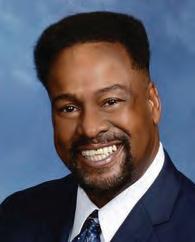



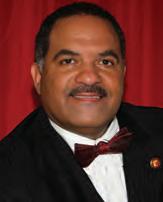
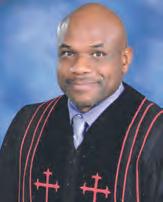





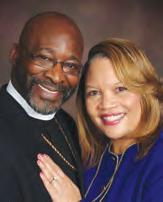
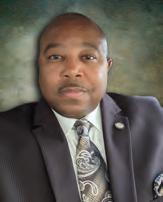



06/20/1979
ARRANGEMENTS BY PREFERRED CREMATION & BURIAL
Service was held August 12, 2025, at Fountain of Life COGIC. ***************************************************************************
Lanaer Young was born on June 20, 1979, to Soretta Irene Hickman and Larry Young. The oldest of five siblings, Lanaer was deeply loved by his family. He was baptized at an early age by Bishop Adlai E. Mack at Christians United Church, where he joined the Junior Gospel Choir and developed a deep knowledge of the Bible. He attended school in San Diego and El Cajon, graduating with honors from Midway Baptist Christian High School.
Family was everything to Lanaer. As the first grandson of the Hickman family, he was welcomed with love and care. With curly blonde hair and a unique presence, he was known for his protective nature and devotion to his mother and family.
Affectionately known as “Red”, Lanaer was full of laughter and charm. He played football at Midway Baptist and continued at Southwestern College through DUO Sports. Football was his passion—his strength and confidence shined on the field.
A brilliant and witty young man, Lanaer had many loving cousins, childhood friends, church mentors, barbershop clients, and coaches—especially from around “Elm Street”. Known for his cool style, music, and signature head nod, he was always the life of the party. Weekends at Gran Gran’s house were filled with friends lining up for his haircuts.
Though life brought challenges, Lanaer met them with courage, faith, and determination. He earned his Bachelor’s Degree and became a Certified Master Barber—a craft he took pride in. In a season of growth, he tattooed the names of loved ones across his body—his own tribute to the family he cherished.
He later settled in Moreno Valley, CA, with his beloved fiancée, Ellena Nunnery, spending 16 years together and welcoming their son Greyson. Lanaer loved tropical fish and breeding pit bulls. He was a proud father to Imani Robertson (25), Lanaer Young Jr. (21), and Greyson Young (11), and a grandfather to two.
Lanaer endured two strokes that left him hospitalized for the past three years. Through it all, Ellena stood by him with unwavering love.
On July 11, 2025, at age 46, God called him home.
Lanaer will always be remembered as “Forever Young”.
He was preceded in death by his father Larry Young and other beloved relatives.
He leaves behind a large and loving family, countless friends, and a legacy of love, strength, and unforgettable presence.
WILLIAM ALLEN “COUNT” BASIE IS BORN
ARRANGEMENTS BY PREFERRED CREMATION & BURIAL
Service was held August 18, 2025, at Preferred Cremation and Burial. ***************************************************************************
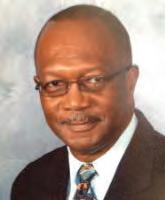
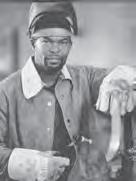
Eric Benard Jackson, a man of profound faith and boundless optimism, was called home to be with the Lord on April 4, 2025, after a valiant battle with Leukemia. Born on September 5, 1958, in the sunny city of San Diego, California, Eric’s life was a testament to his unwavering spirit and passion for creation.
From his earliest days at Stockton Elementary through Gompers Jr. High and Lincoln High School, Eric’s artistic talent and mechanical skill were clear. He sketched beautiful landscapes that reflected the peace he found in faith. His hands, skilled and sure, could breathe new life into the broken and worn—an artist not only with pencil and paper, but in every part of life.
Eric’s career as a Master Welder took him to the rugged terrains of Alaska and the bustling docks of Seattle. His work was more than a job—it was a canvas where he welded with the precision of a craftsman and the heart of an artist. Colleagues admired his dedication and the warmth he brought to every project.
Eric carried his Christian faith with the quiet strength of a man who walks with God. He found comfort in the verse, “I can do all things through Christ who strengthens me,” Philippians 4:13. This scripture was the bedrock of his life, guiding him through trials with hope and a smile that could light up the darkest room.
Though separated by distance and time, Eric’s family remained a cornerstone of his life. He was the beloved brother of Dorothy Eaddy of Tacoma, Washington, Elbert Eaddy (Elaine) of Plano, Texas, Johnathon Jackson (Tracey) of Jalisco, Mexico, and Curtis Jackson (Elisa) of Deming, New Mexico. He was preceded in death by his mother Helen Wilson, father Jon Henry Jackson, and brother Walter Jackson. Each held a special place in his heart, and he cherished their time together.
Eric lived the words of Saint Francis of Assisi: “For it is in giving that we receive.” He gave through his art, his craftsmanship, and his support of others. Handy, hopeful, and passionate about life, he inspired all who knew him.
As we bid farewell to Eric Benard Jackson, we rejoice knowing he has entered the Kingdom of Heaven. We celebrate a life well-lived and a legacy of love. May he rest in peace in the embrace of our Savior.
SUNRISE 08/23/1929
ARRANGEMENTS BY ANDERSON RAGSDALE MORTUARY
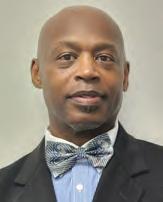
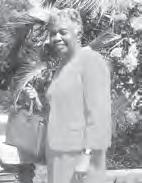
Yvonne Ann Carey was born on March 1, 1938, in Newnan, Georgia. She was raised by her mother Lucy Neely and grandmother Rachel Neely. She attended Central High School in Newnan and then matriculated to Spelman College in Atlanta, Georgia, where she graduated with a Bachelor of Science Degree in Chemistry. While at Spelman, Yvonne met the love of her life, Howard Carey. They married in 1960 and had two children, Melba Yolanda and Rodney Keith. Yvonne and Howard relocated to San Diego in 1963. Yvonne worked for the County of San Diego as a caseworker for the Department of Social Services. Soon after relocating to San Diego, they joined Bethel Baptist Church in where she was a devoted member for over 60 years. Yvonne was a Deaconess and was also involved with both Pearl Frye Circle and the Solace Ministry. Anyone who knew Yvonne experienced her creative genius through the loving gifts she gave which included handmade dolls and hair accessories, baking cakes, and elaborate scrap books. Her extreme thoughtfulness was demonstrated by her support of college students, various charities, and her family. She enjoyed gardening, crafting, walking, shopping, working on puzzles and spending time with her grandchildren. The thing that brought her the most joy was spending time with family and close friends through birthday celebrations, holiday gatherings and her grandchildren’s sporting events. Yvonne passed away on August 7, 2025. She will be greatly missed by those who loved her dearly. She will be remembered for her devotion to God and her gentle spirit.
Viewing
Wednesday, August 27, 2025 5PM -7PM
Anderson~Ragsdale Chapel (FD-1329)
5050 Federal Boulevard San Diego, CA 92102
Pre~Service viewing only
Thursday, August 28, 2025
11:00 AM to 12:00 PM
Homegoing Celebration 12:00 PM
Bethel Baptist Church
1962 North Euclid Avenue San Diego, CA 92102
Committal Service Thursday, August 28, 2025
Mount Hope Cemetery
3751 Market Street San Diego, CA 92102
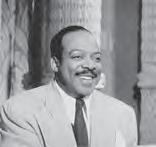
Count Basie, born William Allen Basie on August 21, 1904, was a pioneering jazz pianist and bandleader of the Big Band “Swing” era. Forming the Count Basie Orchestra in 1936, he worked with legends like Billie Holiday and Lester Young. His 1937 hit “One O’Clock Jump” became the band’s signature. Radio broadcasts in the 1930s propelled his orchestra to national fame, breaking racial barriers when hired by a major New York hotel in 1943. Basie adapted to changing jazz styles, touring internationally and recording with stars like Sarah Vaughan and Frank Sinatra. Honored at Carnegie Hall in 1981, he spent his final years working on his autobiography Good Morning Blues, published after his death in 1984. His music’s swing, elegance, and energy cemented his legacy as one of jazz’s greatest bandleaders.
MELVIN VAN PEEBLES IS BORN
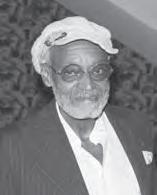
Melvin Van Peebles born on August 21, 1932 was a groundbreaking filmmaker, writer, and actor who reshaped Black representation in cinema. After serving in the Air Force and publishing in France, he debuted in Hollywood with Watermelon Man (1970) before creating Sweet Sweetback’s Baadasssss Song (1971), a landmark in independent and “blaxploitation” film. Also a Tony-nominated playwright, Van Peebles worked across film, theater, and finance, inspiring generations with his bold, uncompromising storytelling. He died in 2021 at age 89.
WILTON “WILT” CHAMBERLAIN IS BORN
08/05/2025
ARRANGEMENTS BY ANDERSON
MORTUARY
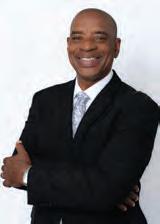
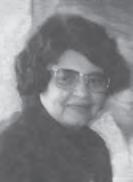
Mrs. Lela Virginia (Varner) Davis, 95, of Chula Vista, California, passed away on Tuesday, August 5, 2025. Lela was born on August 23, 1929, in Keatchie, Louisiana.
She moved to San Diego at an early age with her mother and younger sister. She graduated from San Diego High School and went on to work as a Sheet Metal worker at Roar Aircraft and then employed as an Aircraft Mechanic at Teledyne Ryan until retirement.
Lela was preceded in death by her husband Gean R. Davis, and daughter Ava Johnson.
She is survived by her sister Elmarie V. Moreland, devoted nephew and primary caretaker Billy J. Moreland II, and a host of nephews and nieces.
Lela’s kind heart and dynamic spirit will be deeply missed by all who loved and knew her. Lela’s love for life and family will be forever cherished. Public Viewing
9 am to 11 am Friday, August 29, 2025
Homegoing Celebration 11 am Friday, August 29, 2025
Chapel of Anderson Ragsdale Mortuary 5050 Federal Blvd San Diego, CA 92102
Mausoleum Entombment to immediately follow Greenwood Memorial Park Bible Mausoleum 1:30 p.m. 4300 Imperial Avenue San Diego, CA 92113
Florals and/or Cards: Please have delivered by 3 p.m. on August 28, 2025 to the Anderson Ragsdale Mortuary, 5050 Federal Blvd, San Diego, CA 92102. “Come unto me, all ye that labour and are heavy laden, and I will give you rest.” - Matthew 11:28

T he Lord is close to the brokenhearted and saves those who are crushed in spirit.
Wilt Chamberlain, born on August 21, 1936 was one of the greatest players in NBA history, starring for the Warriors, 76ers, and Lakers. A 13-time All-Star and two-time champion (1967, 1972), he set numerous records, including scoring 100 points in a single game in 1962. Born in Philadelphia, Chamberlain dominated high school and college basketball before joining the Harlem Globetrotters and then the NBA in 1959. Retiring as the league’s all-time leader in points and rebounds, he left an enduring legacy on and off the court before he passed away in 1999 due to congestive heart failure.







By
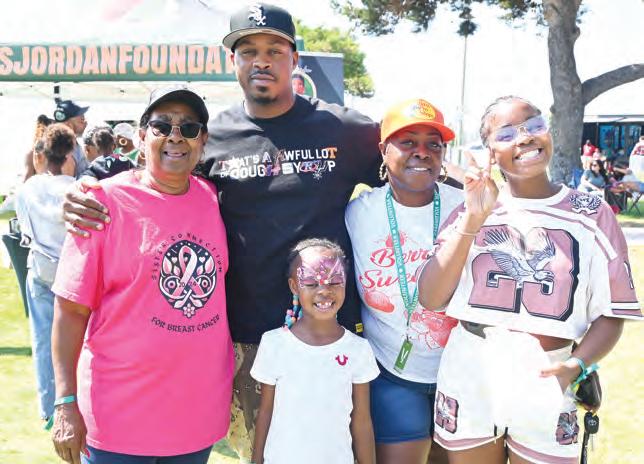
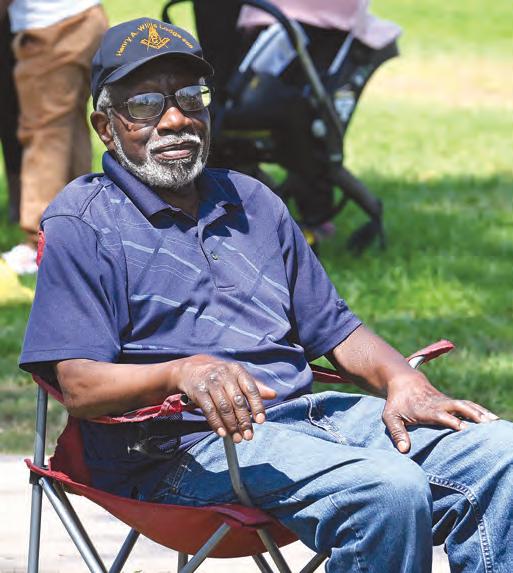
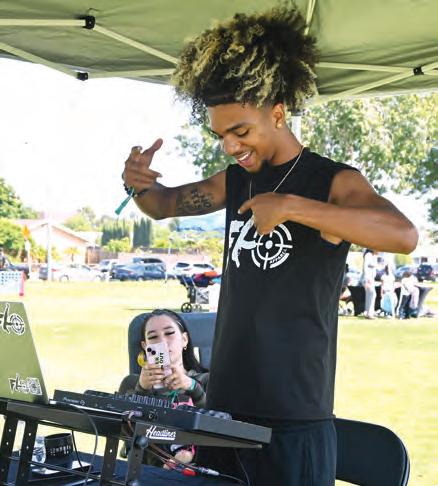
John F. Kennedy Park was filled with music, laughter, and the smell of Tacos, Fried Fish, Hot Dogs and much more. Hundreds gathered for the TS Jordan Foundation’s 3rd Annual “Tre Day” event, held in honor of Trevon Stewart Jordan.
The August 9 celebration brought together families, friends, and community members to remember Jordan, a beloved football coach and teacher known for his dedication to youth, while also providing much-needed resources ahead of the school year.
The warm sum mer afternoon was alive with activity. Children darted between laser tag, and basketball games w hile some were running around playing tag. Lines formed for free food and face painting, while local vendors and community organiza tions offered resources and services.


she said. “The backpacks helped me out this school year because it has been a very rough summer.”
For Trevon’s mother, Myeshia Stewart, who also serves as CEO of the foundation, the turnout was a testament to her son’s


Free backpacks and school supplies courtesy of the foundation were among the most appreciated giveaways. One attendee, visiting for the first time, said the gesture made a difference.
“This is my first time coming to one of these events and I’m happy that I came with my kids because they are having a wonderful time,”
“Turnout was more than expected, I loved it,” she said. “I am glad the community came out to support Trevon, they loved him.”
The event is as much about giving as it is about remembering.
“Tre Day is something we throw every year to give back to the community and honor




the reason and person behind it all, Trevon Stewart Jordan,” said Vice President MyNeshia Stewart, Trevon’s sister. “We give back with free school supplies, backpacks, and interactive games like laser tag and basketball. He was a football coach and a teacher who loved giving back to kids, so we created this foundation to honor his legacy and continue his mission of teaching life skills through the game of football.”
Looking out at the crowd, she added, “I hope my brother is proud. I hope he’s smiling down enjoying the view that he made possible and feels fulfilled knowing that his mission, his legacy will forever live on. His name will always be remembered, I promise.”
The foundation extended thanks to all who helped make the day possible, including Narvesha Hughes, President of the foundation, the committee members, and supporting organizations such as Cherish Moments, Cassandra Fowler LLC.
“My special thanks to my sister Narvesha for all her hard work and dedication,” said Myeshia. “It takes a village.”



By Barbara Smith CONTRIBUTING WRITER
A missing pearl necklace, strange noises in the attic, a flickering gaslight. Add to this an unsolved murder and you have a collection of mysterious occurrences in the psychological thriller Deceived, which opened at the Old Globe Theatre last week. The play, enjoying its West Coast premiere in San Diego, is an intriguing re-imagining of the classic 1944 film Gaslight, which was based on an earlier play Gas Light by Patrick Hamilton. Co-adapters Johnna Wright and Patty Jamieson have ingeniously turned a modern lens on the earlier story of female passivity with a meaty script fueled with a healthy dose of edge-of-your-seat drama, and a surprising closing twist that is both satisfying and substantial. Director Delicia Turner Sonnenberg has once again performed her magic in assembling a diverse and talented cast and then expertly translating the newly energized script into a captivating production.
Performances by each of the four characters are commanding. Bella’s character is most f ully developed, and Brittany Bellizeare convincingly and triumphantly transforms from the p assive, subservient wife to an empowered, confident player in the high-stakes game of survival. Handsome and charmingly romantic when the moment calls for it, Travis Van Winkle’s Jack is a masterful manipulator, alternately a doting husband albeit deceitfully so, and then accusatory, even threatening (“You’ve




Set in London in 1901, the play opens in the sitting room of newlyweds Bella and Jack. An attractive couple, the two engage in sweet romantic banter, but we soon begin to doubt the sincerity of Jack’s affection. Planting seeds of doubt in Bella’s delicate nature, he chides her for misplacing objects, even suggesting she has experienced delusions. And each evening, adding to her vulnerable state, Jack dons his waistcoat, leaving home on purported business. When he is gone, as the gaslight flickers and sounds echo in the attic, Bella begins to doubt her own sanity.
The play is artfully staged in-the-round, offering an intimacy that allows the audience to feel a part of the story. Scenic design by Paige Hathaway features elegant furnishings with tea table, credenza, armchairs, chaise, and, notably, a prominently placed gaslit chandelier that flickers at key moments, a haunting suggestion of eerie happenings to come.


lost your senses like your mother,” he entreats) in his plot to convince the once-fragile Bella she is insane.
Lest you think the drama is relentlessly bleak, Maggie Carney (Elizabeth) and Kennedy Tolson (Nancy), as housemaids, provide uproarious comic relief. Carney’s
Maggie, as the no-nonsense head maid in charge, who barks out orders, emitting grunts and groans distastefully when offended, is a delight. Likewise, Tolson’s Nancy, the edgy new member of the household staff, is wonderfully impertinent, complete with eye-rolling and poked out lips when given tasks she clearly thinks are beneath her station.
You don’t have to see the 1944 film classic to appreciate the timely message of the play. But if you do, you’ll gain an added layer of insight as to how far the needle has moved toward woman’s autonomy and independence in today’s society. “I hope Deceived shows that you can put a woman at the center of a story, and it’s still a great story,” says Johnna Wright, co-adapter of Deceived. Judging from the abundant stomps and cheers at pivotal moments in the play and the rousing applause at the end, Deceived lights the way forward. Deceived runs through September 7. For tickets, visit www.theoldglobe.org
Amidst rise in voter suppression efforts across the country
at home or where they live.”
On the 60th anniversary of the Voting Rights Act, Senator Alex Padilla (D-Calif.) introduced two bills to expand access to the ballot: the Sustaining Our Democracy
The Sustaining Our Democracy Act would fund improvements in federal election administration, secure voting systems, recruit poll workers, and increase voter access—
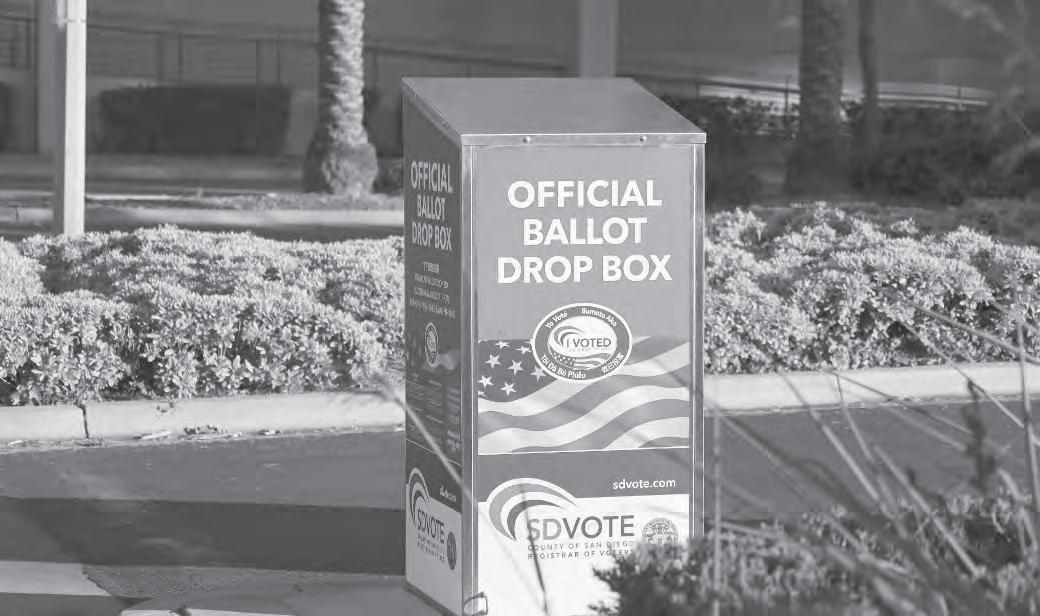
Act and the Expanding the VOTE Act. These measures aim to bolster election infrastructure and support language access for voters with limited English proficiency.
“60 years after civil rights activists overcame enormous barriers to pass the Voting Rights Act, there is an alarming surge of attacks on voting rights across our country,” said Padilla. "We must keep up the fight to ensure that all eligible Americans are able to easily participate in our democracy and cast their ballot, regardless of the language they speak
especially for underserved and Tribal communities. The Expanding the VOTE Act, led in the House by Rep. Nikema Williams (D-Ga.), would ensure translated voting materials for the nearly 68 million U.S. residents who speak a language other than English.
“The tactics of voter suppression may look different, but the intent remains the same,” said Rep. Williams. "These bills are major steps toward protecting the fundamental right to vote.”

Do you have the eye to capture tomorrow’s headlines?
San Diego Voice & Viewpoint is looking for photojournalists, as independent contractors, for paid assignments.
If you’ve experienced recent job loss this might be the perfect assignment for you.
QUALIFICATIONS:
•Professional writing experience required.
•Desire to work during big breaking news, special events, and cover local newsworthy stories.
•Newspaper experience is desired.
•Photo editing and processing preferred.
•Reliable transportation and valid driver’s license.
Qualified, interested applicants email your resume and sample of current work to: latanya@sdvoice.info
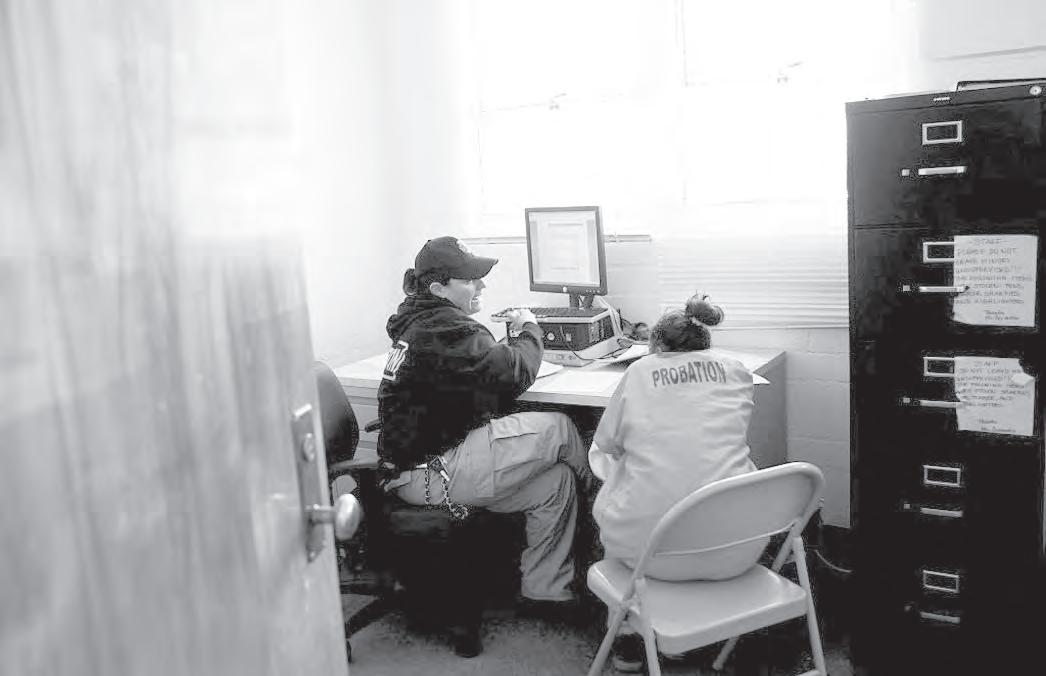
San Diego County Probation has launched an Integrated Healthcare Services Unit to improve medical and behavioral health care for youth in detention and clients under probation supervision. Leading the effort is Medical Director Dr. Lou Gilleran, a retired U.S. Navy Medical Officer with extensive county healthcare experience, and Healthcare Operations Manager Michael Kelley, MSN, an expert in quality assurance and policy coordination. Together, they are overseeing the rollout of Justice-Involved
CalAIM, a new state initiative set to begin this year that will allow Medi-Cal reimbursement for youth medical care 90 days before release—removing a major gap in current services.
Youth will now receive a comprehensive health assessment upon booking, integrated into their re-entry plan, with a new electronic health record system enhancing tracking and billing. Programs such as music production training remain part of vocational services, ensuring health care is paired with skills development for successful re-entry.
San Diego High Girls Shine at Ballislife All-American Camp 2K25
Courtesy of Shatia Moore
Four athletes from San Diego High School stood out at the Ballislife All-American Camp 2K25, competing against top talent from across California and beyond.
The San Diego Four are Jewel Parker (2026, Combo Guard), named one of the camp’s Top 20 players for her scoring and playmaking; Shanti Glenn (2026, Point Guard), earned Top 20 honors with her leadership, court vision, and defensive grit; Seniaah Simms (2028, Wing), showed size and versatility, and was also recognized among the Top 20 players; Gianna Woodson (2028, Guard), battled her way to the Queen of the Court finals, earning respect with her fearless play. Seniaah Sims was a standout, receiving the Hustle Award for the 2028 class.

All four advanced to the Queen of the Court finals, proving their toughness in one-on-one competition. Beyond games, the camp offered skill development stations, 3-on-3 and 5-on-5 matchups, shooting contests, and leadership training. With live-streamed games and highlight coverage, the players also gained valuable exposure for their future basketball careers.

The camp is designed to challenge athletes at the highest level, giving them the opportunity to test their skills against the best while also building confidence, teamwork, and visibility with scouts and coaches. The San Diego High players embraced every opportunity to sharpen their craft and showcase their talent.
A special shout-out to Gary Woodson, who guided the girls off the court, and Coach D, whose support and direction helped push them through. The Woodson family and others brought energy and encouragement, ensuring these athletes could focus on their game.
County Confirms First Measles Case of 2025
County public health officials have confirmed the first case of measles in the region this year in a teenage resident who had recently traveled overseas.
The unimmunized teenager may have exposed others at the following times and locations:

• S cripps Clinic Torrey Pines Urgent Care lo cated at 10710 North Torrey Pines Rd. in La Jolla, on August 6, from 08:53 p.m. to August 7, at 12:26 a.m.
• Rady Children’s Emergency Department located at 3020 Children’s Way, 1st Floor in San Diego, on August 6, from 11:01 p.m. to August 7, at 05:21 a.m.
County epidemiologists are working with Scripps Clinic Torrey Pines Urgent Care and Rady Children’s Hospital to identify poten -
tially exposed patients and staff and do follow up on their vaccination status. They will also evaluate their potential for developing measles.
People with symptoms are asked to call their doctor’s office in advance, rather than visit an office directly, so that infection control measures may be taken to prevent exposure to others. Measles develops seven to 21 days after exposure. Early symptoms include fever, cough, runny nose and red eyes. A distinc tive red rash usually appears one to four days after early symptoms start.
For more information about measles, other vaccine-preventable diseases and the shots that protect against them, visit HHSA Immunization Branch online or by phone at (866) 358-2966.

8/14, 8/21, 8/28, 9/4
FICTITIOUS BUSINESS NAME STATEMENT
2025-9015089
Fictitious business name(s): D & A Coatings
Located at: 3860 Helix St. #45 Spring Valley, CA 91977
County of San Diego
This business is conducted by: An Individual
The first day of business was: 03/30/2017
This business is hereby registered by the following:
Abraham Rafael Gutierrez Valles 3860 Helix St. #45 Spring Valley, CA 91977
Located at: 5390 Ruette De Mer San Diego, CA 92130 County of San Diego
This business is conducted by: An Individual Registrant has not yet begun to transact business under the name(s) above
This statement was filed with the Recorder/County Clerk of San Diego County on August 6, 2025
This fictitious business name will expire on August 6, 2030 8/14, 8/21, 8/28, 9/4
NAME STATEMENT 2025-9013316
FICTITIOUS BUSINESS NAME STATEMENT 2025-9014015
Fictitious business name(s): San
Fictitious business name(s): RMB Professional Services Located at: 801 Woodrow Ave. San Diego, CA 92114 County of San Diego
This business is conducted by:
A General Partnership
The first day of business was: 07/11/2025
This business is hereby registered by the following: Marvin Opanda Roberson 801 Woodrow Ave. San Diego, CA 92114
Zaydie Lynn Manalansan 801 Woodrow Ave. San Diego, CA 92114
Sharon Faye Brown
801 Woodrow Ave. San Diego, CA 92114
This statement was filed with the Recorder/County Clerk of San Diego County on July 11, 2025
This fictitious business name will expire on July 11, 2030 8/21, 8/28, 9/4, 9/11
FICTITIOUS BUSINESS NAME STATEMENT 2025-9015260
Fictitious business name(s): Little Miss Craving Located at: 11160 Brooke Dr #40211 San Diego, CA 92126 County of San Diego
This business is conducted by: Co-Partners
The first day of business was: 08/08/2025
This business is hereby registered by the following: Monica Mendoza
11160 Brooke Dr #40211 San Diego, CA 92126
Mariana Arizza Gomez 11160 Brooke Dr #40211 San Diego, CA 92126
This statement was filed with the Recorder/County Clerk of San Diego County on August 8, 2025
This fictitious business name will expire on August 8, 2030 8/21, 8/28, 9/4, 9/11
FICTITIOUS BUSINESS NAME STATEMENT 2025-9013323
Fictitious business name(s): The Muffin Mam Located at: 7742 Golfcrest Drive San Diego, CA 92119 County of San Diego
This business is conducted by: An Individual Registrant has not yet begun to transact business under the name(s) above
This business is hereby registered by the following: Tamanava Gail Eden 7742 Golfcrest Drive San Diego, CA 92119
This statement was filed with the Recorder/County Clerk of San Diego County on July 11, 2025
This fictitious business name will expire on July 11, 2030 8/21, 8/28, 9/4, 9/11
FICTITIOUS BUSINESS NAME STATEMENT 2025-9015075 Fictitious business name(s): Repurposed Recyclables Art
This business is hereby registered by the following: Stephen Chang 5390 Ruette De Mer San Diego, CA 92130
This statement was filed with the Recorder/County Clerk of San Diego County on August 6, 2025
This fictitious business name will expire on August 6, 2030 8/21, 8/28, 9/4, 9/11
FICTITIOUS BUSINESS NAME STATEMENT 2025-9014879
Fictitious business name(s): Honeytail Studio Located at: 12717 Cijon Street San Diego, CA 92129 County of San Diego
This business is conducted by: An Individual Registrant has not yet begun to transact business under the name(s) above
This business is hereby registered by the following: Erika Khanhduyen Trinh 12717 Cijon Street San Diego, CA 92129 State of Incorporation/ Organization
California
This statement was filed with the Recorder/County Clerk of San Diego County on August 4, 2025
This fictitious business name will expire on August 4, 2030 8/21, 8/28, 9/4, 9/11
FICTITIOUS BUSINESS NAME STATEMENT 2025-9014711
Fictitious business name(s): Rhema Tax Group Located at: 6344 Ferris Sq San Diego, CA 92121 County of San Diego
This business is conducted by: A Corporation
The first day of business was: 07/15/2025 This business is hereby registered by the following: Rhema Consulting Corp 6344 Ferris Sq San Diego, CA 92121 State of Incorporation/ Organization California
This statement was filed with the Recorder/County Clerk of San Diego County on July 31, 2025
This fictitious business name will expire on July 31, 2030 8/14, 8/21, 8/28, 9/4
FICTITIOUS BUSINESS NAME STATEMENT 2025-9013936
Fictitious business name(s): Torres Hats Located at: 1861 Madera St Lemon Grove, CA 91945 County of San Diego
This business is conducted by: An Individual
The first day of business was: 01/12/2025 This business is hereby registered by the following: Sebastian Hernandez Torres 1861 Madera St Lemon Grove, CA 91945
This statement was filed with the Recorder/County Clerk of San Diego County on July 21, 2025 This fictitious business name will expire on July 21, 2030
FICTITIOUS BUSINESS NAME STATEMENT 2025-9014976
Fictitious business name(s): Falcon Vinyl & Glass Located at: 7680 Seattle Dr La Mesa, CA 91941 County of San Diego
PO Box 140 Lemon Grove, CA 91946
This business is conducted by: An Individual
The first day of business was: 05/20/2005
This business is hereby registered by the following: Jean R Almonor PO Box 140 Lemon Grove, CA 91946
This statement was filed with the Recorder/County Clerk of San Diego County on August 5, 2025
This fictitious business name will expire on August 5, 2030 8/14, 8/21, 8/28, 9/4
FICTITIOUS BUSINESS NAME STATEMENT 2025-9014782
Fictitious business name(s): JET Power Construction
Located at: 9846 La Cresta Rd. Spring Valley, CA 91977 County of San Diego
This business is conducted by: An Individual
The first day of business was: 01/31/2000
This business is hereby registered by the following: James Edward Tracht II 9846 La Cresta Rd. Spring Valley, CA 91977
This statement was filed with the Recorder/County Clerk of San Diego County on August 1, 2025
This fictitious business name will expire on August 1, 2030 8/14, 8/21, 8/28, 9/4
FICTITIOUS BUSINESS NAME STATEMENT 2025-9015002
Fictitious business name(s): A & L Bakery
Located at: 7513 Davidson Ave Lemon Grove, CA 91945 County of San Diego
PO Box 656 Bonita, CA 91908
This business is conducted by: A Married Couple
The first day of business was: 07/22/2025
This business is hereby registered by the following: Antonio Durand Johnson PO Box 656 Bonita, CA 91908
Irma Lanee Battle Johnson PO Box 656 Bonita, CA 91908
This statement was filed with the Recorder/County Clerk of San Diego County on August 5, 2025
This fictitious business name will expire on August 5, 2030 8/14, 8/21, 8/28, 9/4
FICTITIOUS BUSINESS NAME STATEMENT 2025-9013768
Fictitious business name(s): Leia's Snacks
Leia's and Lani's Snacks Located at:
3010 E Beyer Blvd. San Diego, CA 92173 County of San Diego
This business is conducted by: An Individual Registrant has not yet begun to transact business under the name(s) above
This business is hereby registered by the following: Leilani Lopez
3010 E Beyer Blvd. San Diego, CA 92173
This statement was filed with the Recorder/County Clerk of San Diego County on July 17, 2025
This fictitious business name will expire on July 17, 2030 8/14, 8/21, 8/28, 9/4
FICTITIOUS BUSINESS NAME STATEMENT 2025-9014471
Fictitious business name(s): GB Flooring Located at: 1511 Felspar Street Apt 3 San Diego, CA 92109
County of San Diego
This business is conducted by: An Individual
The first day of business was: 07/28/2025
This business is hereby registered by the following: Guilherme Manoel Dal Bello 1511 Felspar Street Apt 3 San Diego, CA 92109
This statement was filed with the Recorder/County Clerk of San Diego County on July 29, 2025
This fictitious business name will expire on July 29, 2030 8/7, 8/14, 8/21, 8/28
FICTITIOUS BUSINESS NAME STATEMENT 2025-9013891
Fictitious business name(s): Euphoric Pet Grooming Located at: 7614 Parkway Dr. Apt. 10 La Mesa, CA 91942
County of San Diego
This business is conducted by: An Individual
The first day of business was: 03/20/2025
This business is hereby registered by the following: Rhiannon Nicole Reed 7614 Parkway Dr. Apt. 10 La Mesa, CA 91942
This statement was filed with the Recorder/County Clerk of San Diego County on July 21, 2025
This fictitious business name will expire on July 21, 2030 8/7, 8/14, 8/21, 8/28
FICTITIOUS BUSINESS
NAME STATEMENT 2025-9014693
Fictitious business name(s): UT-HO Boba Vietnamese Food To Go Located at: 1480 Eastlake Pkwy Suite 903 Chula Vista, CA 91915
County of San Diego 11716 River Rim Rd San Diego, CA 92126
This business is conducted by: A Corporation
The first day of business was: 07/31/2025
This business is hereby registered by the following: UT-HO Boba Vietnamese Food To Go 11716 River Rim Rd San Diego, CA 92126 State of Incorporation/ Organization California
This statement was filed with the Recorder/County Clerk of San Diego County on July 31, 2025
This fictitious business name will expire on July 31, 2030 8/7, 8/14, 8/21, 8/28
FICTITIOUS BUSINESS
NAME STATEMENT 2025-9014669
Fictitious business name(s): San Diego Veterans Chamber of Commerce
National Veterans Chamber of Commerce Located at: 1245 Elkelton Blvd Spring Valley, CA 91977 County of San Diego
This business is conducted by:
A General Partnership
The first day of business was: 03/15/2020
This business is hereby
registered by the following: Rachael Allison Russell 1245 Elkelton Blvd Spring Valley, CA 91977 Joseph Molina 1245 Elkelton Blvd Spring Valley, CA 91977
This statement was filed with the Recorder/County Clerk of San Diego County on July 31, 2025
This fictitious business name will expire on July 31, 2030 8/7, 8/14, 8/21, 8/28
FICTITIOUS BUSINESS NAME STATEMENT 2025-9013377
Fictitious business name(s): Vanderpool Properties Located at: 229 F St Chula Vista, CA 91910
County of San Diego
This business is conducted by: An Individual
The first day of business was: 01/01/2020
This business is hereby registered by the following: Meggan Taylor Copeland 229 F St Chula Vista, CA 91910
This statement was filed with the Recorder/County Clerk of San Diego County on July 14, 2025
This fictitious business name will expire on July 14, 2030 7/31, 8/7, 8/14, 8/21
FICTITIOUS BUSINESS NAME STATEMENT 2025-9014129
Fictitious business name(s): Black Wallstreet Streetwear Located at: 603 Kelso Court Chula Vista, CA 91911
County of San Diego
This business is conducted by: An Individual
The first day of business was: 06/14/2025
This business is hereby registered by the following: Antoine Wilson 603 Kelso Court Chula Vista, CA 91911-6704
This statement was filed with the Recorder/County Clerk of San Diego County on July 23, 2025
This fictitious business name will expire on July 23, 2030 7/31, 8/7, 8/14, 8/21
FICTITIOUS BUSINESS NAME STATEMENT 2025-9013301
Fictitious business name(s): L&B Fish 'N Chips Located at: 820 W G St Apt 363 San Diego, CA 92101
County of San Diego
This business is conducted by: Co-Partners
The first day of business was: 07/11/2025
This business is hereby registered by the following: Shamiya La "Star" Paggett 820 W G St Apt 363 San Diego, CA 92101
Darnell Dwayne Green 1120 Nestor Way San Diego, CA 92154
This statement was filed with the Recorder/County Clerk of San Diego County on July 11, 2025
This fictitious business name will expire on July 11, 2030 7/31, 8/7, 8/14, 8/21
FICTITIOUS BUSINESS NAME STATEMENT 2025-9014013
Fictitious business name(s): Certified Gorillaz Located at: 1445 K St #729 San Diego, CA 92101 County of San Diego


This business is conducted by: An Individual Registrant has not yet begun to transact business under the name(s) above This business is hereby registered by the following: Reginald K Cole Jr 1445 K St #729 San Diego, CA 92101 This statement was filed with the Recorder/County Clerk of San Diego County on July 22, 2025 This fictitious business name will expire on July 22, 2030 7/31, 8/7, 8/14, 8/21
FICTITIOUS BUSINESS NAME STATEMENT 2025-9013786
Fictitious business name(s): Mr. 28 Landscaping and Junk Removal Located at: 2229 Oceanview Blvd San Diego, CA 92113 County of San Diego
This business is conducted by: An Individual The first day of business was:
7/31, 8/7, 8/14, 8/21
FICTITIOUS BUSINESS NAME STATEMENT 2025-9013241
Fictitious business name(s): Sun-Dried Studio Located at: 8367 Capricorn Way, #3 San Diego, CA 92126 County of San Diego This business is conducted by: An Individual Registrant has not yet begun to transact business under the name(s) above This business is hereby registered by the following: Audra Arevalo 8367 Capricorn Way, #3 San Diego, CA 92126 This statement was filed with the Recorder/County Clerk of San Diego County on July 10, 2025 This fictitious business name will expire on July 10, 2030 7/31, 8/7, 8/14, 8/21
FICTITIOUS BUSINESS NAME STATEMENT 2025-9013884
Fictitious business name(s): Brothers Signature Catering and Events --Brothers Catering and Events Brothers Catering Located at: 7091 El Cajon Blvd. San Diego, CA 92115 County of San Diego This business is conducted by: A Corporation The first day of business was: 07/21/2025
This business is hereby registered by the following: Terra American Bistro, Inc. 7091 El Cajon Blvd. San Diego, CA 92115 State of Incorporation/ Organization California This statement was filed with the Recorder/County Clerk of San Diego County on July 21, 2025 This fictitious business name will expire on July 21, 2030 7/31, 8/7, 8/14, 8/21
FICTITIOUS BUSINESS NAME STATEMENT 2025-9013903
Fictitious business name(s): Hi I'm The Bug Guy Pest Control Inc
H.I.T Bugs
the hearing for information about how to do so on the court's website. To find your court's website go to www.courts.ca.gov/find-mycourt.htm)
NO HEARING WILL OCCUR ON THE DATE SPECIFIED IN THE ORDER TO SHOW CAUSE. The court will review the documents filed as of the date specified on the Order to Show Cause for Change of Name (JC Form #NC-120). If all requirements for a name change have been met as of the date specified, and no timely written objection has been received (required at least two court days before the
document, including a birth certificate, social security card, driver license, passport, and other identification,
a certified copy of Decree
Changing Name (JC Form #NC-130) or Decree
Changing Name and Order
Recognizing Change of Gender and for Issuance of New Birth Certificate (JC Form #NC-230) may be required. Contact the agency(ies) who issue the legal document that needs to be changed, to determine if a certified copy is required.
A certified copy of Decree
Changing Name (JC Form #NC-130) or Decree
Changing Name and Order
Recognizing Change of Gender and for Issuance of New Birth Certificate (JC Form #NC-230) may be obtained from the Civil Business Office for a fee. Petitioners who are seeking a change of name under the Safe at Home program may contact the assigned department for the information on obtaining certified copies.
If all the requirements have not been met as of the date specified, the court will mail the petitioner a written order with further directions.
If a timely objection is filed, the court will set a hearing date and contact the parties by mail with further directions.
A RESPONDENT OBJECTING TO THE NAME CHANGE MUST FILE A WRITTEN OBJECTION AT LEAST TWO COURT DAYS (excluding weekends and holidays) BEFORE THE DATE SPECIFIED. Do not come to court on the specified date. The court will notify the parties by mail of a future hearing date
Any Petition for the name change of a minor that is signed by only one parent must have this Attachment served along with the Petition and Order to Show Cause, on the other nonsigning parent, and proof of service must be filed with the court.
The address of the court is:
330 West Broadway San Diego, CA 92101
8/21, 8/28, 9/4, 9/11
SUPERIOR COURT OF CALIFORNIA
330 West Broadway San Diego, CA 92101 Case Number 25CU031101C
Petitioner or Attorney: Hamed Gheidi
To All Interested Persons: Petitioner Hamed Gheidi and Bahareh Javadinasab filed a petition with this court for a decree changing names as follows:
PRESENT NAME: Fatemeh Gheidi
PROPOSED NAME: Fatima Gheidi
THE COURT ORDERS that all persons interested in this matter appear before this court at the hearing indicated below to show cause, if any, why the petition for change of name should not be granted.
Any person objecting to the name changes described above must file a written objection that includes the reasons for the objection at least two court days before the matter is scheduled to be heard and must appear at the hearing to show cause why the petition should not be granted. If no written objection is timely filed, the court may grant the petition without a hearing.
NOTICE OF HEARING
Date: September 30, 2025
Time: 8:30 A.M. Dept. C-61
(To appear remotely, check in advance of the hearing for information about how to do so on the court's website. To find your court's website go to www.courts.ca.gov/find-mycourt.htm)
NO HEARING WILL OCCUR ON THE DATE SPECIFIED IN THE ORDER TO SHOW CAUSE.
The court will review the documents filed as of the date specified on the Order to Show Cause for Change of Name (JC Form #NC-120).
If all requirements for a name change have been met
as of the date specified, and no timely written objection has been received (required at least two court days before the date specified), the Petition for Change of Name (JC Form #NC-100) will be granted without a hearing. One copy of the Order Granting the Petition will be mailed to the petitioner.
To change a name on a legal document, including a birth certificate, social security card, driver license, passport, and other identification, a certified copy of Decree Changing Name (JC Form #NC-130) or Decree Changing Name and Order Recognizing Change of Gender and for Issuance of New Birth Certificate (JC Form #NC-230) may be required. Contact the agency(ies) who issue the legal document that needs to be changed, to determine if a certified copy is required.
A certified copy of Decree Changing Name (JC Form #NC-130) or Decree Changing Name and Order Recognizing Change of Gender and for Issuance of New Birth Certificate (JC Form #NC-230) may be obtained from the Civil Business Office for a fee. Petitioners who are seeking a change of name under the Safe at Home program may contact the assigned department for the information on obtaining certified copies.
If all the requirements have not been met as of the date specified, the court will mail the petitioner a written order with further directions.
If a timely objection is filed, the court will set a hearing date and contact the parties by mail with further directions.
A RESPONDENT OBJECTING TO THE NAME CHANGE MUST FILE A WRITTEN OBJECTION AT LEAST TWO COURT DAYS (excluding weekends and holidays) BEFORE THE DATE SPECIFIED. Do not come to court on the specified date. The court will notify the parties by mail of a future hearing date
Any Petition for the name change of a minor that is signed by only one parent must have this Attachment served along with the Petition and Order to Show Cause, on the other nonsigning parent, and proof of service must be filed with the court.
The address of the court is: 330 West Broadway San Diego, CA 92101 8/21, 8/28, 9/4, 9/11
SUPERIOR COURT OF CALIFORNIA 330 W. Broadway San Diego, CA 92101 Central Division Hall of Justice
Case Number 25CU039914C
Petitioner or Attorney:
Eileen Begelman and Eugene Begelman
To All Interested Persons: Petitioner
Eileen Begelman and Eugene Begelman filed a petition with this court for a decree changing names as follows:
PRESENT NAME: Liel Begelman
PROPOSED NAME: Lia Begelman
THE COURT ORDERS that all persons interested in this matter appear before this court at the hearing indicated below to show cause, if any, why the petition for change of name should not be granted. Any person objecting to the name changes described above must file a written objection that includes the reasons for the objection at least two court days before the matter is scheduled to be heard and must appear at the hearing to show cause why the petition should not be granted. If no written objection is timely filed, the court may grant the petition without a hearing.
NOTICE OF HEARING
Date: September 23, 2025
Time: 8:30 A.M. Dept. C-61
(To appear remotely, check in advance of the hearing for information about how to do
so on the court's website. To find your court's website go to www.courts.ca.gov/find-mycourt.htm)
NO HEARING WILL OCCUR ON THE DATE SPECIFIED IN THE ORDER TO SHOW CAUSE.
The court will review the documents filed as of the date specified on the Order to Show Cause for Change of Name (JC Form #NC-120).
If all requirements for a name change have been met as of the date specified, and no timely written objection has been received (required at least two court days before the date specified), the Petition for Change of Name (JC Form #NC-100) will be granted without a hearing. One copy of the Order Granting the Petition will be mailed to the petitioner.
To change a name on a legal document, including a birth certificate, social security card, driver license, passport, and other identification, a certified copy of Decree
Changing Name (JC Form #NC-130) or Decree
Changing Name and Order Recognizing Change of Gender and for Issuance of New Birth Certificate (JC Form #NC-230) may be required. Contact the agency(ies) who issue the legal document that needs to be changed, to determine if a certified copy is required.
A certified copy of Decree
Changing Name (JC Form #NC-130) or Decree
Changing Name and Order Recognizing Change of Gender and for Issuance of New Birth Certificate (JC Form #NC-230) may be obtained from the Civil Business Office for a fee. Petitioners who are seeking a change of name under the Safe at Home program may contact the assigned department for the information on obtaining certified copies.
If all the requirements have not been met as of the date specified, the court will mail the petitioner a written order with further directions.
If a timely objection is filed, the court will set a hearing date and contact the parties by mail with further directions.
A RESPONDENT OBJECTING TO THE NAME CHANGE MUST FILE A WRITTEN OBJECTION AT LEAST TWO COURT DAYS (excluding weekends and holidays) BEFORE THE DATE SPECIFIED. Do not come to court on the specified date. The court will notify the parties by mail of a future hearing date
Any Petition for the name change of a minor that is signed by only one parent must have this Attachment served along with the Petition and Order to Show Cause, on the other nonsigning parent, and proof of service must be filed with the court.
The address of the court is: 330 W. Broadway San Diego, CA 92101 8/7, 8/14, 8/21, 8/28
SUPERIOR COURT OF CALIFORNIA 330 W. Broadway San Diego, CA 92101 Hall of Justice Case Number 25CU039992C
Petitioner or Attorney: Alan W. Cheung, Esq. 185615
To All Interested Persons: Petitioner Ethel Susan Becker AKA Susan Ethel Becker filed a petition with this court for a decree changing names as follows:
PRESENT NAME: Ethel Susan Becker AKA Susan Ethel Becker
PROPOSED NAME: Susan Becker Algaze
THE COURT ORDERS that all persons interested in this matter appear before this court at the hearing indicated below to show cause, if any, why the petition for change of name should not be granted.
Any person objecting to the name changes described above must file a written objection that includes the reasons for the objection at least two court days before
the matter is scheduled to be heard and must appear at the hearing to show cause why the petition should not be granted. If no written objection is timely filed, the court may grant the petition without a hearing.
NOTICE OF HEARING
Date: September 23, 2025 Time: 8:30 A.M. Dept. C-61
(To appear remotely, check in advance of the hearing for information about how to do so on the court's website. To find your court's website go to www.courts.ca.gov/find-mycourt.htm)
NO HEARING WILL OCCUR ON THE DATE SPECIFIED IN THE ORDER TO SHOW CAUSE.
The court will review the documents filed as of the date specified on the Order to Show Cause for Change of Name (JC Form #NC-120).
If all requirements for a name change have been met as of the date specified, and no timely written objection has been received (required at least two court days before the date specified), the Petition for Change of Name (JC Form #NC-100) will be granted without a hearing. One copy of the Order Granting the Petition will be mailed to the petitioner.
To change a name on a legal document, including a birth certificate, social security card, driver license, passport, and other identification, a certified copy of Decree Changing Name (JC Form #NC-130) or Decree Changing Name and Order Recognizing Change of Gender and for Issuance of New Birth Certificate (JC Form #NC-230) may be required. Contact the agency(ies) who issue the legal document that needs to be changed, to determine if a certified copy is required.
A certified copy of Decree
Changing Name (JC Form #NC-130) or Decree
Changing Name and Order Recognizing Change of Gender and for Issuance of New Birth Certificate (JC Form #NC-230) may be obtained from the Civil Business Office for a fee. Petitioners who are seeking a change of name under the Safe at Home program may contact the assigned department for the information on obtaining certified copies.
If all the requirements have not been met as of the date specified, the court will mail the petitioner a written order with further directions.
If a timely objection is filed, the court will set a hearing date and contact the parties by mail with further directions.
A RESPONDENT
OBJECTING TO THE NAME CHANGE MUST FILE A WRITTEN
OBJECTION AT LEAST TWO COURT DAYS (excluding weekends and holidays) BEFORE THE DATE SPECIFIED. Do not come to court on the specified date. The court will notify the parties by mail of a future hearing date
Any Petition for the name change of a minor that is signed by only one parent must have this Attachment served along with the Petition and Order to Show Cause, on the other nonsigning parent, and proof of service must be filed with the court.
The address of the court is:
330 W. Broadway San Diego, CA 92101 8/7, 8/14, 8/21, 8/28
SUPERIOR COURT OF CALIFORNIA
330 W. Broadway San Diego, CA 92101
Central Courthouse
Case Number 25CU037698C
Petitioner or Attorney: Rebekah Tyrell Hill
To All Interested Persons: Petitioner Lashon Malcom Edward Stevens filed a petition with this court for a decree changing names as follows:
PRESENT NAME: Lashon Malcom Edward Stevens
and relocation of
Health (SBH) Intensive Outpatient Program (IOP) services located at 410 Dickinson Street, San Diego, CA 92103.
• Facility: UC San Diego Health, Hillcrest Medical Center.
• Service Affected: Senior Behavioral Health Intensive Outpatient Program (IOP).
• Proposed Effective Date: No sooner than 90 days from the date of this notice (May 29).
• The SBH IOP provided intensive outpatient group therapy services for older adults diagnosed with behavioral health conditions, with the majority of patients treated for major depressive disorders.
• Between July 1, 2020, and June 30, 2024, the SBH IOP served 141 unique patients. Patients were primarily aged 65 and older and represented a racially and ethnically diverse population, with the majority identifying as White/Caucasian.
• The SBH IOP has served patients covered by Medicare and commercial insurance plans.
• Less than 5 personnel are expected to be impacted by the change in services.
• Aggregate demographic and service data will be shared with Medi-Cal managed care plans in compliance with SB1300.
• This change is part of a broader initiative to enhance behavioral health services at the UC San Diego Health East Campus Medical Center, including the expansion of higher levels of care such as electroconvulsive therapy (ECT), increased home-based care, and further integration of outpatient behavioral health programs.
• The transition is intended to improve access, streamline care delivery, and better meet the behavioral health needs of the region.
• UC San Diego Health will continue to provide inpatient psychiatric services at Hillcrest Medical Center (age >18) and East Campus Medical Center (age >50). UC San Diego Health will continue to provide outpatient psychiatric services at Outpatient Psychiatric Services Hillcrest, La Jolla, and Rancho Bernardo locations.
• Other known local intensive outpatient geriatric behavioral health service providers include Sharp Mesa Vista Hospital, Paradise Valley Hospital and Sharp Grossmont Hospital, which accept Medicare and commercial insurance plans.
• Comments or questions may be submitted to: publiccomments@health.ucsd.edu
• UC San Diego Health may be reached at 858-657-7000.
The closest comparable facilities offering intensive outpatient geriatric behavioral health services are:
Sharp Mesa Vista Hospital (5 miles)
7850 Vista Hill Avenue, San Diego, CA 92123
Paradise Valley Hospital – Bayview Behavioral Health Campus (14 miles)
330 Moss Street, Chula Vista, CA 91911
Sharp Grossmont Hospital – Senior Intensive Outpatient Program (12 miles)
5555 Grossmont Center Drive, La Mesa, CA 91942
information on obtaining certified copies.
THE COURT ORDERS that all persons interested in this matter appear before this court at the hearing indicated below to show cause, if any, why the petition for change of name should not be granted. Any person objecting to the name changes described above must file a written objection that includes the reasons for the objection at least two court days before the matter is scheduled to be heard and must appear at the hearing to show cause why the petition should not be granted. If no written objection is timely filed, the court may grant the petition without a hearing.
NOTICE OF HEARING
Date: September 11, 2025 Time: 8:30 A.M. Dept. 61
(To appear remotely, check in advance of the hearing for information about how to do so on the court's website. To find your court's website go to www.courts.ca.gov/find-mycourt.htm)
NO HEARING WILL OCCUR ON THE DATE SPECIFIED IN THE ORDER TO SHOW CAUSE.
The court will review the documents filed as of the date specified on the Order to Show Cause for Change of Name (JC Form #NC-120).
If all requirements for a name change have been met as of the date specified, and no timely written objection has been received (required at least two court days before the date specified), the Petition for Change of Name (JC Form #NC-100) will be granted without a hearing. One copy of the Order Granting the Petition will be mailed to the petitioner.
To change a name on a legal document, including a birth certificate, social security card, driver license, passport, and other identification, a certified copy of Decree Changing Name (JC Form #NC-130) or Decree Changing Name and Order Recognizing Change of Gender and for Issuance of New Birth Certificate (JC Form #NC-230) may be required. Contact the agency(ies) who issue the legal document that needs to be changed, to determine if a certified copy is required.
A certified copy of Decree Changing Name (JC Form #NC-130) or Decree Changing Name and Order Recognizing Change of Gender and for Issuance of New Birth Certificate (JC Form #NC-230) may be obtained from the Civil Business Office for a fee. Petitioners who are seeking a change of name under the Safe at Home program may contact the assigned department for the
If all the requirements have not been met as of the date specified, the court will mail the petitioner a written order with further directions.
If a timely objection is filed, the court will set a hearing date and contact the parties by mail with further directions.
A RESPONDENT OBJECTING TO THE NAME CHANGE MUST FILE A WRITTEN OBJECTION AT LEAST TWO COURT DAYS (excluding weekends and holidays) BEFORE THE DATE SPECIFIED. Do not come to court on the specified date. The court will notify the parties by mail of a future hearing date
Any Petition for the name change of a minor that is signed by only one parent must have this Attachment served along with the Petition and Order to Show Cause, on the other nonsigning parent, and proof of service must be filed with the court.
The address of the court is: 330 W. Broadway San Diego, CA 92101 7/31, 8/7, 8/14, 8/21
SUPERIOR COURT OF CALIFORNIA
330 W. Broadway San Diego, CA 92101 Central Division Hall of Justice Case Number 25CU035276C
Petitioner or Attorney: Akeem Smith
To All Interested Persons: Petitioner Akeem Smith filed a petition with this court for a decree changing names as follows:
PRESENT NAME: Akeem Smith
PROPOSED NAME: Akeem Amante Dunlap
THE COURT ORDERS that all persons interested in this matter appear before this court at the hearing indicated below to show cause, if any, why the petition for change of name should not be granted.
Any person objecting to the name changes described above must file a written objection that includes the reasons for the objection at least two court days before the matter is scheduled to be heard and must appear at the hearing to show cause why the petition should not be granted. If no written objection is timely filed, the court may grant the petition without a hearing.
NOTICE OF HEARING
Date: August 27, 2025 Time: 8:30 A.M. Dept. 61
(To appear remotely, check
in advance of the hearing for information about how to do so on the court's website. To find your court's website go to www.courts.ca.gov/find-mycourt.htm) NO HEARING WILL OCCUR ON THE DATE SPECIFIED IN THE ORDER TO SHOW CAUSE.
The court will review the documents filed as of the date specified on the Order to Show Cause for Change of Name (JC Form #NC-120).
If all requirements for a name change have been met as of the date specified, and no timely written objection has been received (required at least two court days before the date specified), the Petition for Change of Name (JC Form #NC-100) will be granted without a hearing. One copy of the Order Granting the Petition will be mailed to the petitioner.
To change a name on a legal document, including a birth certificate, social security card, driver license, passport, and other identification, a certified copy of Decree
Changing Name (JC Form #NC-130) or Decree
Changing Name and Order Recognizing Change of Gender and for Issuance of New Birth Certificate (JC Form #NC-230) may be required. Contact the agency(ies) who issue the legal document that needs to be changed, to determine if a certified copy is required.
A certified copy of Decree Changing Name (JC Form #NC-130) or Decree
Changing Name and Order
Recognizing Change of Gender and for Issuance of New Birth Certificate (JC Form #NC-230) may be obtained from the Civil Business Office for a fee. Petitioners who are seeking a change of name under the Safe at Home program may contact the assigned department for the information on obtaining certified copies.
If all the requirements have not been met as of the date specified, the court will mail the petitioner a written order with further directions.
If a timely objection is filed, the court will set a hearing date and contact the parties by mail with further directions.
A RESPONDENT
OBJECTING TO THE NAME CHANGE MUST FILE A WRITTEN OBJECTION AT LEAST TWO COURT DAYS (excluding weekends and holidays) BEFORE THE DATE SPECIFIED. Do not come to court on the specified date. The court will notify the parties by mail of a future hearing date Any Petition for the
Petitioner or Attorney: Issac Velasquez AKA Isaac Velasquez
To All Interested Persons: Petitioner Issac Velasquez AKA Isaac Velasquez filed a petition with this court for a decree changing names as follows:
PRESENT NAME: Issac Velasquez AKA Isaac Velasquez
PROPOSED NAME: Isaac Velasquez
the objection at least two court days before the matter is scheduled to be heard and must appear at the hearing to show cause why the petition should not be granted. If no written objection is timely filed, the court may grant the petition without a hearing.
NOTICE OF HEARING
Date: September 15, 2025 Time: 8:30 A.M. Dept. 61
(To appear remotely, check in advance of the hearing for information about how to do so on the court's website. To find your court's website go to www.courts.ca.gov/find-mycourt.htm)
HEARING
the Order Granting the Petition will be mailed to the petitioner.
To change a name on a legal document, including a birth certificate, social security card, driver license, passport, and other identification, a certified copy of Decree
Changing Name (JC Form #NC-130) or Decree
Changing Name and Order
Recognizing Change of Gender and for Issuance of New Birth Certificate (JC Form #NC-230) may be required. Contact the agency(ies) who issue the legal document that needs to be changed, to determine if a certified copy is required.
A certified copy of Decree
Changing Name (JC Form #NC-130) or Decree
Changing Name and Order
Recognizing Change of Gender and for Issuance of New Birth Certificate (JC Form #NC-230) may be obtained from the Civil Business Office for a fee. Petitioners who are seeking a change of name under the Safe at Home program may contact the assigned department for the information on obtaining certified copies.
If all the requirements have not been met as of the date specified, the court will mail the petitioner a written order with further directions.
If a timely objection is filed, the court will set a hearing date and contact the parties by mail with further directions.
A RESPONDENT OBJECTING TO THE NAME CHANGE MUST FILE A WRITTEN OBJECTION AT LEAST TWO COURT DAYS (excluding weekends and holidays) BEFORE THE DATE SPECIFIED. Do not come to court on the specified date. The court will notify the parties by mail of a future hearing date
Any Petition for the name change of a minor that is signed by only one parent must have this Attachment served along with the Petition and Order to Show Cause, on the other nonsigning parent, and proof of service must be filed with the court.
The address of the court is: 330 W. Broadway San Diego, CA 92101 7/31,
ability to award support to Petitioner and Respondent
9. SEPARATE PROPERTY
There are no such assets or debts that I know of to be confirmed by the court.
10. COMMUNITY AND QUASI-COMMUNITY PROPERTY a. There are no such assets or debts that I know of to be divided by the court.
Date Filed: July 2, 2025
8:oo AM By: C. Pacho
SUMMONS (Family Law)
NOTICE TO RESPONDENT (AVISO AL DEMANDADO)
Zohreh Taheri
Petitioner's name is: (Nombre del demandante): Reza Ghasemi
Case Number: 25FL007608C
You have 30 calendar days after this Summons and Petition are served on you to file a Response (form FL120) at this court and have a copy served on the petitioner. A letter or phone call will not protect you.
If you do not file your Response on time, the court may make orders affecting your marriage or domestic partnership, your property, and custody of your children. You may be ordered to pay support and attorney fees and costs.
For legal advice, contact a lawyer immediately. Get help finding a lawyer at the California Courts Online Self-Help Center (www. courts.ca.gov/selfhelp), at the California Legal Services website (www.lawhelpca.org), or by contacting your local county bar association.
NOTICE-RESTRAINING ORDERS ARE ON PAGE 2:
These restraining orders are effective against both spouses or domestic partners until the petition is dismissed, a judgment is entered, or the court makes further orders. They are enforceable anywhere in California by any law enforcement officer who has received or seen a copy of them.
FEE WAIVER: If you cannot pay the filing fee, ask the clerk for a fee waiver form. The court may order you to pay back all or part of the fees and costs that the court waived for you or the other party.
Tiene 30 días de calendario después de haber recibido la entrega legal de esta Citación y Petición para presentar una Respuesta (formularlo FL -120) ante la corte y efectuar la entrega legal de una copia al demandante. Una carta o llamada telefónica o una audiencia de la corte no basta para protegerlo.
Si no presenta su Respuesta a tiempo, la corte puede dar órdenes que afecten su matrimonio o pareja de hecho, sus bienes y la custodia de sus hijos. La corte también le puede ordenar que pague manutención, y honorarios y costos legales.
Para asesoramiento legal, póngase en contacto de inmediato con un abogado. Puede obtener información para encontrar un abogado en el Centro de Ayuda de las Cortes de California (www.sucorte. ca.gov), en el sitio web de los Servicios Legales de California (www. lawhelpca.org) o poniéndose en contacto con el colegio de abogados de su condado.
AVISO-LAS ÓRDENES DE RESTRICCIÓN SE ENCUENTRAN EN LA PÁGINA 2: Las órdenes de restricción están en vigencia en cuanto a ambos cónyuges o miembros de la pareja de hecho hasta que se despida la petición, se emita un fallo o la corte dé otras órdenes. Cualquier agencia del orden público que haya recibido o visto una copia de estas órdenes puede hacerlas acatar en cualquier lugar de California.
EXENCIÓN DE CUOTAS: Si no puede pagar la cuota de presentación, pida al secretario un formulario de exención de cuotas. La corte puede ordenar que usted pague, ya sea en parte o por completo, las cuotas y costos
de la corte previamente exentos a petición de usted o de la otra parte.
The name and address of the court is:
(El nombre y dirección de la corte son): Superior Court of California 1100 Union Street San Diego, CA 92101
The name, address, and telephone number of the petitioner's attorney, or petitioner without an attorney, are:
(El nombre, la dirección y número de teléfono del abogado del demandante, o del demandante que no tiene abogado, son): Reza Ghasemi 10322 Caminito Surabaya San Diego, CA 92131 T: (619) 908-0488
Date: (Fecha): 07/02/2025
Clerk, by (Secretario, por) C. Pacho, Deputy (Asistente) 8/14, 8/21, 8/28, 9/4
SUMMONS (Citation Judicial)
NOTICE TO DEFENDANT (Aviso al demandado): Sarah Ann Biafore, an Individual
YOU ARE BEING SUED BY PLAINTIFF (Lo esta demandado el demandante): Cameron Malek, an Individual
NOTICE! You have been sued. The court may decide against you without your being heard unless you respond within 30 days. Read the information below.
You have 30 CALENDAR DAYS after this summons and legal papers are served on you to file a written response at this court and have a copy served on the plaintiff. A letter or phone call will not protect you. Your written response must be in proper legal form if you want the court to hear your case. There may be a court form that you can use for your response. You can find these court forms and more information at the California Courts Online Self-Help Center (www. courtinfo.ca.gov/selfhelp), your county law library, or the courthouse nearest you. If you cannot pay the filing fee, ask the court clerk for a fee waiver form. If you do not file your response on time, you may lose the case by default, and your wages, money, and property may be taken without further warning from the court. There are other legal requirements. You may want to call an attorney right away. If you do not know an attorney, you may want to call an attorney referral service. If you cannot afford an attorney, you may be eligible for free legal services from a nonprofit legal services program. You can locate these nonprofit groups at the California Legal Services Web site (www.lawhelpcalifornia.org), the California Courts Online Self-Help Center (www. courtinto.ca.gov/selfhelp), or by contacting your local court or county bar association. NOTE: The court has a statutory lien for waived fees and costs on any settlement or arbitration award of $10,000 or more in a civil case. The court's lien must be paid before the court will dismiss the case.
¡AVISO! Lo han demandado. Si no responde dentro de 30 dias, la corte puede decidir en su contra sin escuchar su versión. Lea la información a continuación.
Tiene 30 DIAS DE CALENDARIO después de que le entreguen esta citación y papeles legales para presentar una respuesta por escrito en esta corte y hacer que se entregue una copia al demandante. Una carta o una llamada telefónica no lo protegen. Su respuesta por escrito tiene que estar en formato legal correcto si desea que procesen su caso en la corte. Es posible que haya un formulario que usted pueda usar para su respuesta. Puede encontrar estos formularios de la corte y más información en el Centro de Ayuda de las Cortes de California (www.sucorte. ca.gov), en la biblioteca de leyes de su condado o en la corte que le quede más
cerca. Si no puede pagar la cuota de presentación, pida al secretano de la corte que le de un formulario de exención de pago de cuotas. Si no presenta su respuesta a tiempo, puede perder el caso por incumplimiento y la corte le podra quitar su sueldo, dinero y bienes sin mas advertencia. Hay otros requisitos legales. Es recomendable que llame a un abogado inmediatamente. Si no conoce a un abogado, puede llamar a un servicio de remisión a abogados. Si no puede pagar a un abogado, es posible que cumpla con los requisitos para obtener servicios legales gratuitos de un programa de servicios legales sin fines de lucro. Puede encontrar estos grupos sin fines de lucro en el sitio web de Calitornia Legal Services, (www. lawhelpcalifornia.org), en el Centro de Ayuda de las Cortes de California, (www. sucorte.ca.gov) o poniéndose en contacto con la corte o el colegio de abogados locales. AVISO: Por ley, la corte tiene derecho a reclamar las cuotas y los costos exentos por imponer un gravamen sobre cualquier recuperación de $10,000 o más de valor recibida mediante un acuerdo o una concesión de arbitraje en un caso de derecho civil. Tiene que pagar el gravamen de la corte antes de que la corte pueda desechar el caso.
Case Number:
37-2024-00021370-CU-BCCTL
The name and address of the court is (El nombre y direccion de la corte es): San Diego Superior CourtCentral Division 330 W. Broadway San Diego, CA 92101
The name, address, and telephone number of plaintiff 's attorney, or plaintiff without an attorney, is: (El nombre, la direccion y el numero de telefono del abogado del demandante, o del demandante que no tiene abogado, es): Michael Egenthal (CA BAR # 263127) LAW OFFICE OF MICHAEL EGENTHAL 9250 Towne Centre Drive Unit 13 San Diego, CA 92121 (516) 297-5376
DATE (Fecha): 05/30/2024
Clerk By: G. Lopez Deputy 8/14, 8/21, 8/28, 9/4
SUPERIOR COURT OF CALIFORNIA COUNTY OF SAN DIEGO 1100 Union Street San Diego, CA 92101 Petition For Dissolution (Divorce) of: Marriage
Case Number: 25FL006654C
PETITIONER: Lan Thimy Nguyen
RESPONDENT: Hung Viet Ho
1. LEGAL RELATIONSHIP: We are married
2. RESIDENCE
REQUIREMENTS:
Petitioner has been a resident of this state for at least six months and of this county for at least three months immediately preceding the filing of this Petition. (For a divorce, unless you are in the legal relationship described in 1b., at least one of you must comply with this requirement.)
3. STATISTICAL FACTS
(1)Date of marriage (specify): July 11, 2014
(2)Date of separation (specify): May 16, 2018
(3)Time from date of marriage to date of separation (specify): Years Months
4. MINOR CHILDREN There are no minor children
5. LEGAL GROUNDS (Family Code sections 22002210, 2310-2312):
a. Divorce of the marriage or domestic partnership based on 1. irreconcilable differences
8. SPOUSAL OR DOMESTIC PARTNER SUPPORT
b. Terminate (end) the court's ability to award support to
9. SEPARATE PROPERTY
There are no such assets or debts that I know of to be confirmed by the court.
10. COMMUNITY AND QUASI-COMMUNITY
PROPERTY
a. There are no such assets or debts that I know of to be divided by the court.
Date Filed: June 6, 2025
8:oo AM
By: Leah M. Boucek, Judicial Officer
SUMMONS (Family Law)
NOTICE TO RESPONDENT (AVISO AL DEMANDADO) Hung Viet Ho
Petitioner's name is: (Nombre del demandante): Lan Thimy Nguyen
Case Number: 25FL006654C
You have 30 calendar days after this Summons and Petition are served on you to file a Response (form FL120) at this court and have a copy served on the petitioner. A letter or phone call will not protect you.
If you do not file your Response on time, the court may make orders affecting your marriage or domestic partnership, your property, and custody of your children. You may be ordered to pay support and attorney fees and costs.
For legal advice, contact a lawyer immediately. Get help finding a lawyer at the California Courts Online Self-Help Center (www. courts.ca.gov/selfhelp), at the California Legal Services website (www.lawhelpca.org), or by contacting your local county bar association.
NOTICE-RESTRAINING
ORDERS ARE ON PAGE 2:
These restraining orders are effective against both spouses or domestic partners until the petition is dismissed, a judgment is entered, or the court makes further orders. They are enforceable anywhere in California by any law enforcement officer who has received or seen a copy of them.
FEE WAIVER: If you cannot pay the filing fee, ask the clerk for a fee waiver form. The court may order you to pay back all or part of the fees and costs that the court waived for you or the other party.
Tiene 30 días de calendario después de haber recibido la entrega legal de esta Citación y Petición para presentar una Respuesta (formularlo FL -120) ante la corte y efectuar la entrega legal de una copia al demandante. Una carta o llamada telefónica o una audiencia de la corte no basta para protegerlo.
Si no presenta su Respuesta a tiempo, la corte puede dar órdenes que afecten su matrimonio o pareja de hecho, sus bienes y la custodia de sus hijos. La corte también le puede ordenar que pague manutención, y honorarios y costos legales.
Para asesoramiento legal, póngase en contacto de inmediato con un abogado. Puede obtener información para encontrar un abogado en el Centro de Ayuda de las Cortes de California (www.sucorte. ca.gov), en el sitio web de los Servicios Legales de California (www. lawhelpca.org) o poniéndose en contacto con el colegio de abogados de su condado.
AVISO-LAS ÓRDENES DE RESTRICCIÓN SE ENCUENTRAN EN LA PÁGINA 2: Las órdenes de restricción están en vigencia en cuanto a ambos cónyuges o miembros de la pareja de hecho hasta que se despida la petición, se emita un fallo o la corte dé otras órdenes. Cualquier agencia del orden público que haya recibido o visto una copia de estas órdenes puede hacerlas acatar en cualquier lugar de California.
EXENCIÓN DE CUOTAS: Si no puede pagar la cuota de presentación, pida al secretario un formulario de exención de cuotas. La corte puede ordenar que usted pague, ya sea en parte o por completo, las cuotas y costos
Probate Code section 1250.
de la corte previamente exentos a petición de usted o de la otra parte.
The name and address of the court is: (El nombre y dirección de la corte son): Superior Court of California, County of San Diego 1100 Union Street San Diego, CA 92101
The name, address, and telephone number of the petitioner's attorney, or petitioner without an attorney, are: (El nombre, la dirección y número de teléfono del abogado del demandante, o del demandante que no tiene abogado, son): Lan Thimy Nguyen 5751 Market Street San Diego, CA 92114 T: (619) 996-4234
Date: (Fecha): 06/09/2025
Clerk, by (Secretario, por) A. Rubalcava, Deputy (Asistente) 8/7, 8/14, 8/21, 8/28
Case Number: 25PE001186C
To all heirs, beneficiaries, creditors, contingent creditors, and persons who may otherwise be interested in the will or estate or both, of Carroll Porter
A Petition for Probate has been filed by Rochelle Porter in the Superior Court of California, County of San Diego.
The Petition for Probate requests that Rochelle Porter be appointed as personal representative to administer the estate of the decedent.
The Petition requests authority to administer the estate under the Independent Administration of Estates Act.
(This authority will allow the personal representative to take many actions without obtaining court approval. Before taking certain very important actions, however, the personal representative will be required to give notice to interested persons unless they have waived notice or consented to the proposed action.) The independent administration authority will be granted unless an interested person files an objection to the petition and shows good cause why the court should not grant the authority.
A hearing on the petition will be held in this court as follows: September 18, 2025 at 1:45 P.M. in Department 503 located at the Superior Court of California County of San Diego 1100 Union St. San Diego, CA 92101
If you object to the granting of the petition, you should appear at the hearing and state your objections or file written objections with the court before the hearing. Your appearance may be in person or by your attorney.
If you are a creditor or a contingent creditor of the decedent, you must file your claim with the court and mail a copy to the personal representative appointed by the court within the later of either (1) four months from the date of first issuance of letters to a general personal representative, as defined in section 58(b) of the California Probate Code, or (2) 60 days from the date of mailing or personal delivery to you of a notice under section 9052 of the California Probate Code. Other California statutes and legal authority may affect your rights as a creditor. You may want to consult with an attorney knowledgeable in California law.
You may examine the file kept by the court. If you are a person interested in the estate, you may file with the court a Request for Special Notice (form DE-154) of the filing of an inventory and appraisal of estate assets or of any petition or account as provided in
A Request for Special Notice form is available from the court clerk.
Petitioner: Rochelle Porter 2012 Helix St. Spring Valley, CA 91977 (619) 549-0968 8/21, 8/28, 9/4
NOTICE OF PETITION TO ADMINISTER ESTATE OF Lillian Ann Cross
Case Number: 25PE001744C
To all heirs, beneficiaries, creditors, contingent creditors, and persons who may otherwise be interested in the will or estate or both, of Lillian Ann Cross
A Petition for Probate has been filed by Rose M. Cross in the Superior Court of California, County of San Diego.
The Petition for Probate requests that Rose M. Cross be appointed as personal representative to administer the estate of the decedent.
The Petition requests authority to administer the estate under the Independent Administration of Estates Act. (This authority will allow the personal representative to take many actions without obtaining court approval. Before taking certain very important actions, however, the personal representative will be required to give notice to interested persons unless they have waived notice or consented to the proposed action.) The independent administration authority will be granted unless an interested person files an objection to the petition and shows good cause why the court should not grant the authority.
A hearing on the petition will be held in this court as follows: September 30, 2025 at 10:15 A.M. in Department 504 located at the Superior Court of California County of San Diego 1100 Union St. San Diego, CA 92101 Central Branch
If you object to the granting of the petition, you should appear at the hearing and state your objections or file written objections with the court before the hearing. Your appearance may be in person or by your attorney.
If you are a creditor or a contingent creditor of the decedent, you must file your claim with the court and mail a copy to the personal representative appointed by the court within the later of either (1) four months from the date of first issuance of letters to a general personal representative, as defined in section 58(b) of the California Probate Code, or (2) 60 days from the date of mailing or personal delivery to you of a notice under section 9052 of the California Probate Code. Other California statutes and legal authority may affect your rights as a creditor. You may want to consult with an attorney knowledgeable in California law.
You may examine the file kept by the court. If you are a person interested in the estate, you may file with the court a Request for Special Notice (form DE-154) of the filing of an inventory and appraisal of estate assets or of any petition or account as provided in Probate Code section 1250. A Request for Special Notice form is available from the court clerk.
Attorney for Petitioner: Gary W. Powell 1475 6th Avenue, Suite 501 San Diego, CA 92101 (619) 685-6975 8/21, 8/28, 9/4
FOLLOW US ON SOCIAL MEDIA:
FB - SDVoiceAndViewpoint
X - @voiceviewpoint
Insta - @voiceviewpoint
BlueSky - @sdvoice.info



























During a compelling session at the U.S. Black Chambers Annual Conference, April Jeffries, global president at Ipsos, and Ron Busby Jr., head of product at ByBlack, shared groundbreaking insights from consumer research that demonstrates strong support among most Americans for Black-owned businesses when identified as such with a logo developed by Fund for Social Equity and USBC emphasizing Black ownership and family prosperity.
The conversation, titled "Beyond the Buzz: Understanding Popular Opinion Through Data Insight," emphasized the critical importance of moving beyond headlines and assumptions to understand what consumers truly think about supporting Black-owned businesses.
Jeffries presented findings from multi-year studies conducted by Ipsos for the Fund for Social Equity, a research and marketing nonprofit that is developing and market testing initiatives to narrow the racial wealth gap. The most recent study included 4,500 people across diverse demographics about their response to a "Certified for Future Generations Prosperity" seal on Black-owned products. The results proved encouraging:

• Only 15% expressed disinterest — a surprisingly low rejection rate
• 50% of Americans expressed strong interest in purchasing products with the certification seal
• 3 5% remained neutral or open to the concept, bringing total positive/neutral response to 85%
• 3 0% increase in purchase intent when products featured the seal
• 6 0% of consumers believe racism is built into the economy, indicating awareness of systemic challenges
The research identified specific product categories where the seal drives elevated consumer interest, including health and beauty products, clothing and apparel, and fresh foods — all major consumer spending categories where Black-owned businesses can gain competitive advantage.
The findings revealed that consumers across demographic lines — including non-Black consumers — recognize the legitimacy and market value of certified Black-owned business labels.
Drawing from her experience and that of others with the development of organic food certification, Jeffries noted that the Black-owned business seal research showed results "equal to or better than what we saw with organic"
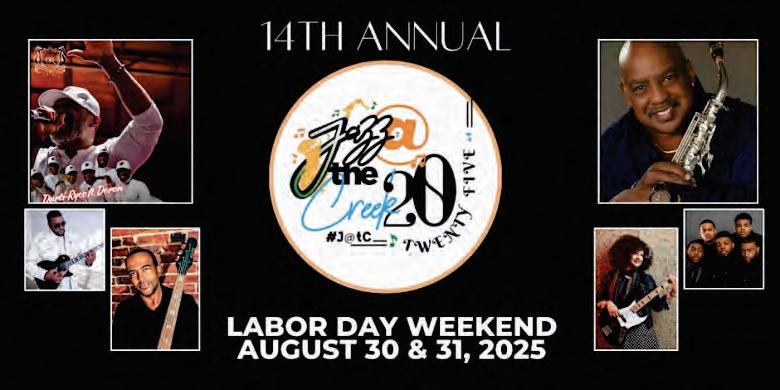



products. The key difference: "Technology now allows us to implement this much faster than the 20-year organic rollout."
The research identified specific metropolitan markets showing strongest support: Houston, Dallas, Philadelphia, Atlanta, Oakland, and Washington, D.C. These markets represent immediate opportunities for Black-owned businesses to leverage certification for potentially accelerated growth.
A central theme of the discussion centered on the importance of credible research and certification. ByBlack, the nation's leading platform for Black business certification, has rigorous standards — requiring businesses to be at least 51% Black-owned, headquartered in the United States, and operational for at least two years — and provides the verification consumers seek when making informed purchasing decisions.
Both speakers emphasized that this research represents just the beginning. "What we tested was a concept," Jeffries explained. "What
we need now is validation of the reality of that concept. How does this actually play out with your businesses?"
The conversation concluded with a call for Black-owned businesses to get certified, for retailers to embrace clear labeling, and for consumers to actively seek out and support verified Black-owned enterprises.
This research arrives at a critical moment when Black entrepreneurs continue launching businesses at historic rates yet face persistent barriers in accessing capital and contracts. The findings suggest that consumer support, when properly channeled through certification and clear identification, can serve as a powerful market force for economic equity.
For Black business owners, the message was clear: certification and bold identity can be a significant competitive advantage. For retailers and corporations, the data demonstrates that featuring certified Black-owned products aligns with consumer values while potentially driving sales.
GODRadio1.com has done it again, bring -


ing home the 2025 Stellar Award for Internet Radio Station of the Year, marking its second consecutive win at gospel music's highest celebration. The Stellar Awards, known as the “Grammys of Gospel”, honor excellence in music and media, and this back-to-back recognition highlights GODRadio1.com’s commitment to uplifting programming, faith-filled content, and providing a powerful platform for gospel artists worldwide. This historic win comes as its parent company, M.A.N.D.A.T.E. Records Inc., celebrates 30-years of impact, elevating independent artists, producing world-class events, and amplifying voices of faith, hope, and inspiration across the globe.