







By Bo Tefu CALIFORNIA BLACK MEDIA

California’s 2026 governor’s race is now wide open after former Vice President Kamala Harris announced July 30 that she will not run, ending months of speculation about her political future following her 2024 presidential loss to Donald Trump.
“I have given serious thought to asking the people of California for the privilege to serve as their governor,” Harris said in a statement. “But after deep reflection, I’ve decided that I will not run in this election.”
See HARRIS page 2



In a corner of Southeast San Diego where 92% of students are economically disadvantaged and just 39% read at grade level, a small church-based tutoring program has rolled up its sleeves to make a difference.
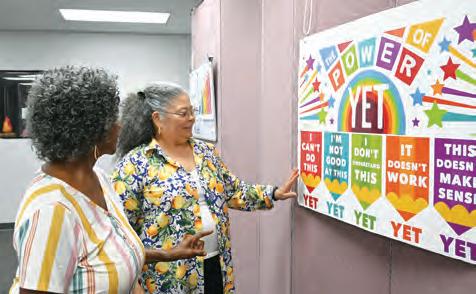
“We’re just community members,” said Pastor Robert Pope of Encanto Southern Baptist Church. “But we are seeing the broader call for the community to step in and fill this gap,” Pastor Pope said.
Poverty, language barriers and underfunded schools contribute to a growing literacy crisis nationwide, and in San Diego. Compelled to take action after observing widening education disparities post-pandemic, the Encanto Village Tutoring Program is working to close the education gap in one of San Diego’s most underserved communities.
See LITERACY page 2
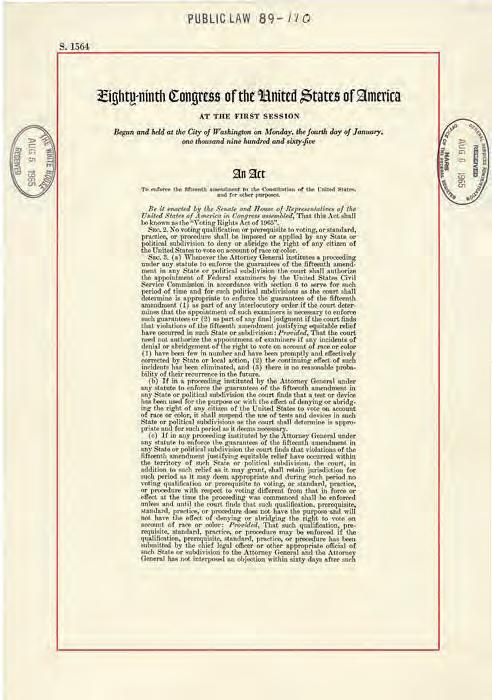
The Voting Rights Act was signed into law on August 6, 1965, by President Lyndon Johnson. It outlawed the discriminatory voting practices adopted in many southern states after the Civil War, including literacy tests as a prerequisite to voting.
This “act to enforce the fifteenth amendment to the Constitution” was signed into law 95 years after the amendment was ratified. In those years, African Americans in the South faced tremendous obstacles to voting, including poll taxes, literacy tests, and other bureaucratic restrictions to deny them the right to vote. They also risked harassment, intimidation, economic reprisals, and physical violence when they tried to register or vote. As a result, AfricanAmerican voter registration was limited, along with political power.
The Voting Rights Act of 1965 was the
By E.R. Shipp
Oct. 4-7, 1864:
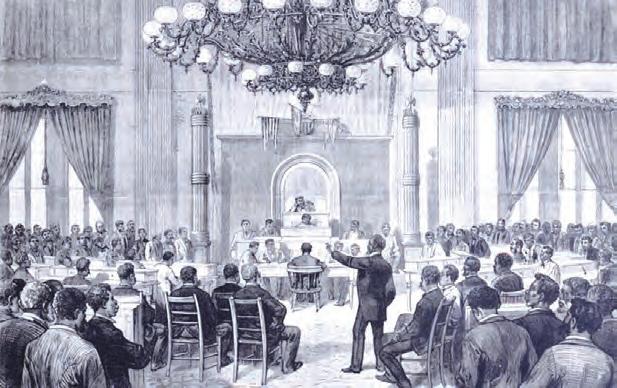
In Syracuse, New York, the National Convention of Colored Men issue an eloquent appeal for an end to slavery at the end of the Civil War and the right to vote for Black men. After laying out their case, the delegates ask the American people: “Are we good enough to use bullets, and not good enough to use ballots?”
Dec. 6, 1865: With Georgia’s vote to ratify
most significant statutory change in the relationship between the federal and state governments in the area of voting since the Reconstruction period following the Civil War; and it was immediately challenged in the courts. Between 1965 and 1969, the Supreme Court issued several key decisions upholding the constitutionality of Section 5 and affirming the broad range of voting practices for which preclearance was required. In 2013, the Court struck down a key provision of the act involving federal oversight of voting rules in nine states.
The Voting Rights Act had an immediate impact. By the end of 1965, a quarter of a million new Black voters had been registered, one-third by federal examiners. By the end of 1966, only four out of 13 southern states had fewer than 50 percent of African Americans registered to vote. The Voting Rights Act of 1965 was readopted and strengthened in 1970, 1975, and 1982.
Source: National Archives



Continued from cover
Harris, who previously served as California attorney general and U.S. senator, said she plans to remain active in public service, though not in an elected role at this time. She expressed interest in campaigning for Democrats nationwide and hinted at future plans, including possible nonprofit or political action committee work.
The decision keeps her national profile intact as she considers a potential 2028 presidential run. A person close to Harris said running for governor would have limited her ability to stay visible on national issues and might have conflicted with a future White House campaign.
“This does keep the door open for 2028,” the person said, adding that Harris spent months talking with advisers and was deeply conflicted before deciding not to run.
Harris, the first Black and South Asian American vice president, replaced President Joe Biden as
Continued from cover
Children’s literacy rates are dropping, and the broader public school system is often stretched too thin to address the full scale of the unfolding crisis.
According to data from the National Center for Education Statistics, only 30% of all fourth graders nationwide scored proficient in reading.
“This is a reading crisis. It's not just our neighborhood, but it's even more exacerbated in our neighborhood,” said Pastor Pope.
the Democratic nominee in 2024 after he left the race. Although she carried California by 20 points, she lost the general election.
Her decision leaves a crowded Democratic field vying to succeed Gov. Gavin Newsom, who is barred by term limits from running again in 2026. Among the declared or likely candidates are Lt. Gov. Eleni Kounalakis, State Superintendent of Public Instruction Tony Thurmond, former U.S. Health and Human Services Secretary Xavier Becerra, former Rep. Katie Porter, former state Senate leader Toni Atkins, and former Los Angeles Mayor Antonio Villaraigosa.
Despite the competitive field, Democrats are expected to retain the governorship in the solidly blue state.
For now, Harris says she looks forward to reconnecting with Californians as a private citizen.
VOICE & VIEWPOINT EDITOR’S NOTE:
“The south of the 8 feels like a demarcation line,” said Sandra Hall, one of the volunteers for the Encanto Village Tutoring program.
Called to do something, Hall, along with other community members, including Delia Price, began putting the idea for Encanto Village Tutoring into action.
Filling the gap
The group started by sending letters to public schools in the Southeastern neighborhoods offering help. One school accepted the call: Encanto Elementary.
The full statement released by former Vice President Kamala Harris on July 30 reads as follows:
“Over the past six months, I have spent time reflecting on this moment in our nation’s history, and the best way for me to continue fighting for the American people and advancing the values and ideals I hold dear.
I am a devout public servant, and from the earliest days of my career, I have believed that the best way I could make a difference in people’s lives and fight for a better future was to improve the system from within. And it has been a profound honor to do that work and serve the people of California and our nation—as a prosecutor, Attorney General, United States Senator, and Vice President.
In recent months, I have given serious thought to asking the people of California for the privilege to serve as their Governor. I love this state, its people, and its promise. It is my home. But after deep reflection, I’ve decided that I will not run for Governor in this election.

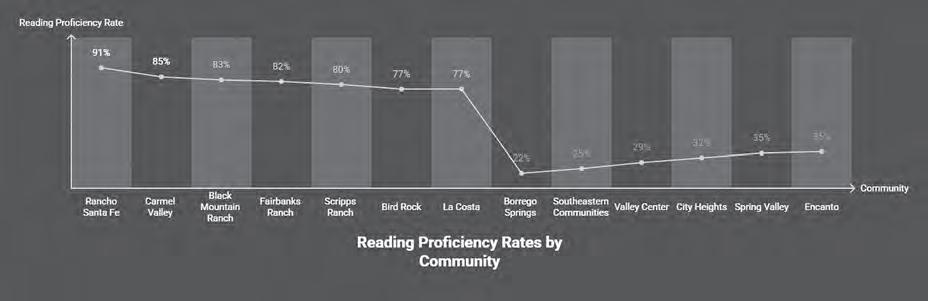
According to the State of Literacy in San Diego report, data highlights a significant literacy divide in the county. Students in affluent northern San Diego neighborhoods significantly outperform their peers in southern communities in the county. In Rancho Santa Fe, Carmel Valley, and Fairbanks Ranch, over 80% of students meet reading standards, compared to just 25% in Southeastern San Diego, 36% in Encanto and San Ysidro.
The data tells the story that many southeastern residents have known all along.
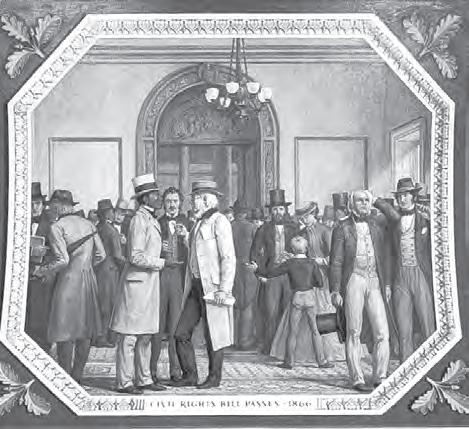
April 9, 1866:
The Civil Rights Act of 1866 declares that all people born in the United States are U.S. citizens and have certain inalienable rights, including the right to make contracts, to own property, to sue in court, and to enjoy the full protection of federal law.
“We went in with three to four volunteers into Encanto Elementary, and we just basically showed up and said, ‘What is it that you all need?” said Hall.
The big need was reading instruction.
The school helped identify the lowest performing students, most of them immigrant children, who had transferred to the school and hardly knew English.
“For kids in the fourth grade, that teacher is
teaching fourth graders. If an immigrant comes in and their English language level is at second grade, they don't have the time to go and sit with that kid and go one-on-one,” said Hall.
With a staff of about 20 teachers, most classrooms maintain a ratio of roughly 20 students per teacher, often without the support of an aide.
Recognizing how easily students could slip through the cracks, the group launched its program with just ten children in its first year.
‘We’re just community members’
Although confident in their ability to read, the tutors admit that at first, they didn’t know much about teaching literacy. As a result, the volunteers taught themselves best practices for working with struggling students. They scoured the internet, read articles and attended presentations from groups like the San Diego Council on Literacy.
The Science of Reading, an evidence-based
tial election after the Civil War. In the South, Black people are concentrated in the Republican strongholds.
May 31, 1870:
Congress enacts the first of three Enforcement Acts aimed primarily at criminalizing the Ku Klux Klan’s terror campaign to interfere with the right of freedmen to vote. It establishes penalties, gives the president the power to send troops to protect Black voters, and gives federal courts the power to enforce the act.
Oct. 15, 1883:
The U.S. Supreme Court strikes down the Civil Rights Act of 1875, which prohibits racial discrimination in public accommodations that, 81 years after the 1883 court ruling, will become the hallmark of the Civil Rights Act of 1964. The Supreme Court holds that Congress can only regulate state conduct, not private acts of racial discrimination. This further guts federal civil rights protections for Black people.
I have extraordinary admiration and respect for those who dedicate their lives to public service — service to their communities and to our nation. At the same time, we must recognize that our politics, our government, and our institutions have too often failed the American people, culminating in this moment of crisis. As we look ahead, we must be willing to pursue change through new methods and fresh thinking—committed to our same values and principles, but not bound by the same playbook. For now, my leadership—and public service — will not be in elected office. I look forward to getting back out and listening to the American people, helping elect Democrats across the nation who will fight fearlessly, and sharing more details in the months ahead about my own plans.
In the United States of America, power must lie with the people. And We, the People must use our power to fight for freedom, opportunity, fairness, and the dignity of all. I will remain in that fight.”
literacy resource published by the National Center on Improving Literacy, soon became the foundation for how the tutors approach the program. The method emphasizes phonemic awareness, vocabulary development, decoding and comprehension.
“That became our foundation,” Hall said. “We found the gap, started there, and built our students up by exposure to worksheets, reading aloud, listening to English and gradually expanding their vocabulary.
Now in its fourth year, the program has been a proven success, with students consistently receiving recognition from their schools and achieving higher reading levels.
While program outcomes have been fruitful, the group recognizes that the need in the Encanto and Southeastern communities stretches far beyond their capacity.
With the school season approaching, Pastor Pope, along with Hall and Price all emphasized how their program needs more volunteers and funding to provide tutors with a stipend.
“This is a reading crisis,” said Pastor Pope. “We accepted the challenge, not to replace any educator, but to answer a broader call for the community to step in and fill this gap. It is absolutely possible for a regular person, someone with time, energy, and a willingness to learn, to make a real difference.”
If you are or know anyone interested in helping with the efforts of the Encanto Village Tutoring Program, reach out to Mrs. Sandra Hall, email: hallsan@yahoo.com or Mrs. Delia Price, email: dlmorr1@aol.com.
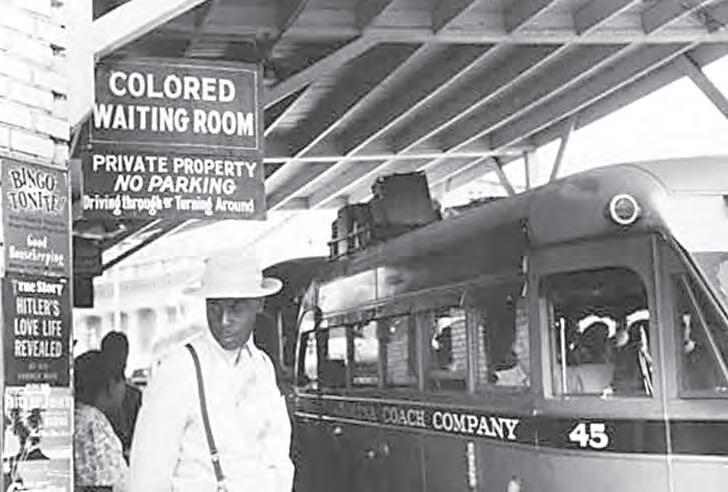
Nov. 1, 1890:
Mississippi leads the way in disenfranchising Black voters with adoption of its new state constitution. Other Southern states adopt the Mississippi Plan, which is upheld by the U.S. Supreme Court on Apr. 25, 1898, in Williams v. Mississippi.
March 2, 1867
Congress passes the first of four Reconstruction Acts, setting the terms by which former Confederate states would be readmitted to the Union. Among the requirements are that new state constitutions that enfranchised freedmen ratify the 14th Amendment.
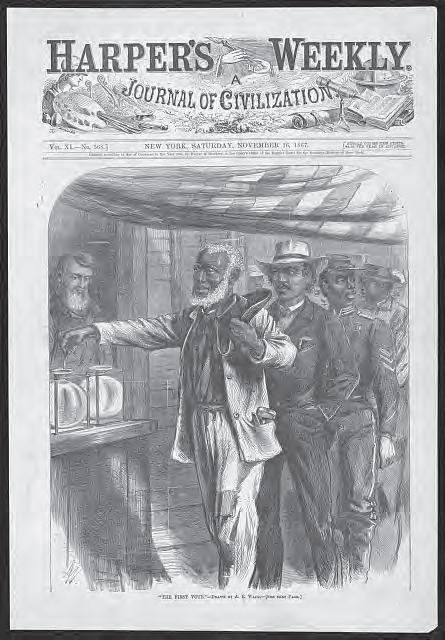
July 9, 1868: Ratification of the 14th Amendment guarantees citizenship, equal protection under the law, and due process to millions of formerly enslaved people who were previously treated as chattel, livestock, or furniture. Within months, Black men begin to vote.
Nov. 3, 1868:
The 700,000 Black men who cast ballots propel Ulysses S. Grant to victory in the first presiden-
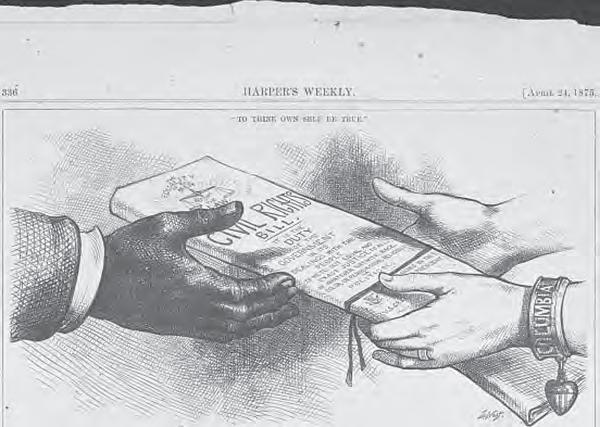
May 18, 1896:
In Plessy v. Ferguson , the U.S. Supreme Court upholds the constitutionality of racial segregation laws, giving birth to the phrase “separate but equal” that would be the law of the land for the next 58 years. The ruling further empowers white supremacists to undermine the civil rights of Black people that the U.S. Constitution and a number of federal statutes have promised since 1865. See TIMELINE page 15
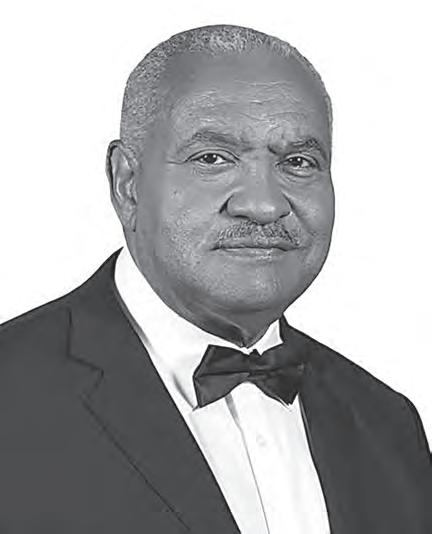
By Dr. John E. Warren PUBLISHER, THE SAN DIEGO VOICE & VIEWPOINT
As some of us celebrate the passage of the Voting Rights Act of 1965, there are those among us determined to destroy
what’s left of its significance. The Civil Rights Division of the Department of Justice has been gutted by Donald Trump with senior staff either being fired or quitting. Without the enforcement which gave the act teeth, we are seeing a Republican-led Administration moving on the redrawing of electoral districts to ensure that the Democrats do not retake control of the House of Representatives, without which we can not impeach Trump or stop his raid on federal dollars which are being redirected from their legislative intent on the move to wipe out representative government.
When one adds to that our own diminishing interest in voting, even though those before us died for our right to vote, we as a nation are in a crisis, which will require all
our participation. That participation can only be exercised with the ballot.
Let us not forget that those who are dismantling our government and way of life are fewer than the majority of us, but they both vote and plan ahead to the next election. They know that still too many of us are apathetic about voting. So let’s not get excited about the attacks on voting rights without looking at whether we are personally doing our part. We must contact our friends and relatives, wherever they live and demand that they join us in voting against this madness. Let’s register, look at who is running against these Republicans candidates and get out the vote. Our very lives depend upon it.
By Aswad Walker HOUSTON DEFENDER
Lord have mercy, how mainstream media, the supposed bastion of “balanced reporting” and “objective journalism,” has fallen.
Once mainstream—i.e. Corporate—media was celebrated as a courageous watchdog willing to speak truth to power, come what may. Today, that body of “journalists” has become hitmen for Rupert Murdoch and those of his ilk. They’re like a 1960s police attack dog, protecting the racist mobs and the cops, sweat-drenched from beating the black off peaceful protesters with nightsticks, yet willingly and forcefully ripping out the flesh of those their masters target as troublemakers.
Plus, today’s corporate media is more “corporate” than “media,” ruled by that almighty dollar, and the person or entity signing off on their direct deposits.
And the question—Has mainstream media been bought off?— well, if you have to ask, you haven’t been paying attention… and the media’s counting on that.
C.R.E.A.M.
Then we have the so-called “cable news giants.” CNN, Fox, MSNBC—different seasoning, same dish. These networks are owned by right-leaning billionaires or massive corporations with tax shelters in places where the sun never sets on the wealthy. Their golden rule? Don’t bite the hand that funds the commercials.
Think about it: Do you really expect NBCUniversal (owned by Comcast), or ABC (owned by Disney), or Fox News (blessed by the ghost of Reaganomics) to challenge the economic status quo? Please. They all live by the credo the Wu Tang Clan put to a beat: “Cash rules everything around me. C.R.E.A.M., get the money. Dolla-Dolla bill y’all!”
With marching orders from those who make their direct deposits, corporate media live by the adage, “If a critical event happens anywhere on the planet and we don’t report on it, it never happened.” There’s not enough time or space to run down all the newsworthy happenings that got swept under the rug. Don’t believe me? Just roll the tape on all the stories that somehow slipped past your 24-hour news cycle:
• The “Hands Off” Protest, where thousands of Black, Brown, and working-class folks flooded streets in opposition to war, police violence, and empire, was ignored.
• The presence of “forever chemicals” poisoning our water, air, and cereal is downplayed. It’s too messy for advertisers, and besides,

Dow Chemical isn’t going to pay for a takedown of itself.
• Union victories led by people of color—ghosted. You’d think the media would cheer on workers… but corporate owners prefer obedient labor.
• Nearly half of unhoused individuals are employed, yet we’re supposed to believe homelessness is a personal failure and not a system-wide scam?
• A New York judge called for a recount of the 2024 Presidential Election in a New York county due to “gross irregularities,” and you didn’t hear about it? Funny how “breaking news” never breaks that way.
• The 50501 Movement protests—crickets. Apparently, massive demonstrations against political corruption don’t fit the ad-friendly narrative.
• Rising global opposition to Trump’s policies is downplayed as “extremism” or “divisiveness,” while white nationalism gets a PR makeover.
• The growing number of missing Black women and girls is treated like background noise.
• Global protests against authoritarian regimes? Meh. Doesn’t move the Nielsen ratings.
• African nations rejecting neocolonialism in favor of selfde termination? Heaven forbid Americans start thinking Africa is more than a charity case or a war zone.
You don’t have to be media-rich to be media literate. Here’s a list of ways to bypass the propaganda machine and actually get informed:
• Support the Black Press – Outlets like Word In Black, The Black Agenda Report, The AFRO and the Defender Network tell our stories, unfiltered.
• Subscribe to Independent Journalism – Publications like Democracy Now, The Intercept, Grist, Truthout, and ProPublica still believe facts matter.
• Follow Global South Media – Al Jazeera, Africanews and Telesur offer perspectives Western media buries.
• Use Social Media Critically – Follow organizers, whistleblowers, and citizen journalists. And always ask: “Who benefits from this narrative?”
• Host Community Media Circles – Watch, read, and break down the news together. Media literacy is power.
• Call Out Media Silence – Write letters. Flood comment sections. Let them know we see the bias, and we’re not buying it.
So yes, mainstream media has been bought off. But the resistance? It’s still free—unfiltered, underfunded, and more necessary than ever.
Read the full article at www.sdvoice.info.

By Sonia Banker
Only a few years after the pandemic, young kids in this country are seeing a whole new disruption to their learning: immigration raids.
One of the Trump administration’s first actions after assuming office was to rescind the Biden administration’s guidelines for Immigration and Customs Enforcement (ICE), which limited enforcement activity in “sensitive locations” like schools and churches.
Since then, immigration raids have escalated — often under questionable pretenses. This spring, immigration agents tried to enter two elementary schools in Los Angeles. At the door, agents said they wanted to determine students’ well-being and claimed to have authorization from the children’s caretakers.
Administrators denied them entry — and when they spoke with caretakers later, they learned that agents had lied about receiving permission. “I’m absolutely incensed that DHS agents would try to enter elementary schools,” said Rep. Judy Chu (D-CA). “These are children who should be learning to read and write, not cowering in fear of being ripped away from their homes.”
Unfortunately, schools are no longer a safe haven for our students. You can imagine the trauma and disruption that comes from armed agents entering schools and removing students. But these raids will also have long-term implications on learning outcomes, mental health, and even school funding for children enrolled in public schools nationwide. And we’re seeing that now in rising rates of absenteeism.
In June, Stanford professor Thomas Dee published a groundbreaking report detailing the relationship between raids and school absences. Focusing on recent raids in California’s Central Valley region, Dee studied attendance data from over three years at five nearby school districts. Dee was able to correlate raids with a 22 percent increase in student absenteeism, particularly affecting youngest learners.
In the weeks following Dee’s report, media outlets from across the county — from New York to Denver and Chicago — reported similar patterns of immigration raids leading to increased student absences. Fearful of raids, families across the nation have opted to keep their children home.
In many states, including California, school funding is determined by average daily attendance. This means that the more students miss school, the less that school will receive going forward. So when a raid forces a student to miss school, it doesn’t just impact their own learning — it also means fewer resources for their classmates, teachers, and their entire district.
This threatens the public school ecosystem, inflicting longterm harm on a generation of students already recovering from pandemic-era setbacks. “Absences are both more common for everybody, but they are also more extreme,” said Jacob Kirksey, an associate professor of education policy at Texas Tech. Raids “can essentially create what we found from COVID — this generation of students who have a patently different experience with schooling.”
Importantly, students and educators still have rights. For instance, a school district cannot ask about a student’s citizenship or immigration status as proof of that student’s residency. Students have the right to withhold this information, and schools may not prohibit that student from enrollment if they do not disclose it.
You can explore your legal protections as a student or an educator by visiting MySchoolMyRights.com, a website published by the ACLU where you’ll find clear, accessible guidance on what ICE can or can’t do in schools.
Over half of American voters believe schools should not be touched by immigration raids. They understand that ICE raids on schools don’t make communities safer. They make classrooms emptier and schools more vulnerable to funding cuts.
We must advocate on behalf of those students by demanding transparency and passing policies that limit ICE access to protect our students and families. We owe all kids a safe haven at school and the freedom to learn without fear.
Sonia Banker is a Henry A. Wallace Fellow at the Institute for Policy Studies.




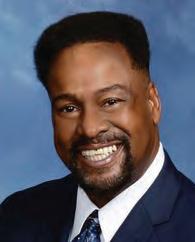


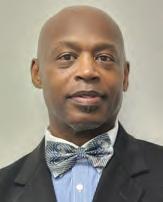
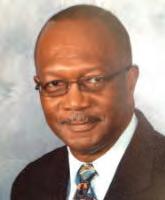
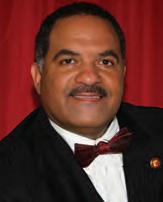
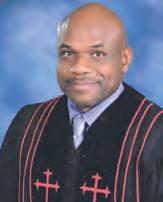
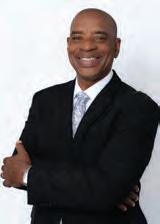
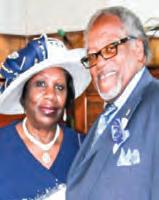




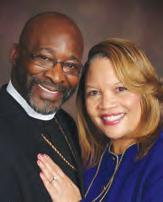

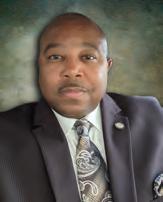

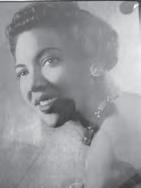

SUNRISE 12/12/1930 SUNSET 07/07/2025
ARRANGEMENTS BY BEASLEY FUNERAL HOME.
Lillie Mae West entered this world on December 12, 1930, in Laurens County to the late Lula Saxon Nelson and the late Claude H. Nelson. She was the only child. This was the beginning stage of The Great Depression. Her early education started at the Mt. Carmel School (Rosenwald School) where she would stay with her grandparents, the late Frances and Mack Saxon, Jr. She would later graduate from the Fountain Inn Negro High School (Rosenwald School) in 1947. She would go on to attend and graduate from South Carolina State University in 1951 with a B.S. Degree in Home Economics. Lillie started her career as a teacher in Inman, South Carolina, at Ben Bomar High School. Shortly after, she moved to Brooklyn, New York, where she worked as a dietician at a hospital and lived with an aunt, Lizzie Mitchell. She met a man, who was in the US Marine Corps-Willie Paul West Jr., and they married on June 12, 1955, in Norfolk, Virginia, where he was stationed at the time. They would be married for 46 years, until his passing on August 15, 2001.
While in San Diego, she was a member of the Mission Village Baptist Church. She worked for the San Diego City Schools as a Director of a Child Development Center. When she moved back to South Carolina in 1980, she reunited her membership with New Liberty Baptist Church under the pastorship of Rev. Nathaniel Sartor. She was previously baptized there and was a member during her youth. Later, she became a deaconess, church clerk, financial secretary, and member of Women's Missionaries. She was an active and faithful member until declining health in 2019. Lillie required a greater level of caregiving. She received hospice care services at North Carolina State Veterans Home in Salisbury, North Carolina, by Pruitt Health Hospice.
In the early afternoon of July 7, 2025, she entered into eternal rest. Mrs. Lillie M. West is survived by 4 children; Rodney (Freda) West, Sr. and Veronica West of San Diego, CA, Paula West of San Francisco, CA, and Gregory West of Charlotte, NC, four grandchildren; Jennifer (Willie) Morrow of Plantersville, AL, Rodney West, Jr. of San Diego, CA, Gamilah (Joy) West of Dallas, TX, and Johnathan (Nikki) Schott of San Marcos, CA, great-grandchildren, in-laws, an aunt, and many nieces, nephews, and cousins. One grandchild, Ryan West, preceded her in death.
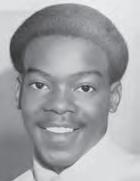
SUNRISE 06/21/1950 SUNSET 07/10/2025
ARRANGEMENTS BY PREFERRED CREMATION & BURIAL
Service was held July 30, 2025 at Miramar National Cemetery. ***************************************************************************
Otis Jones, Jr., affectionately known as “Jrbug,” was born on June 21, 1950, to the late Otis Jones and Mary Ellen Tyler in Little Rock, Arkansas. He was the second of six children. At the age of ten, Jrbug moved from Little Rock to San Diego, California, settling in Southeast San Diego. He received his education at Lincoln High School, graduating in 1969. On February 24, 1970, Jrbug was drafted into the U.S. Army, where he served until 1972. Though not deployed to Vietnam—due to having a sibling already serving—he earned the National Defense Service Medal and the Sharpshooter (Rifle) Medal. After an honorable discharge, Jrbug worked alongside his father at General Dynamics/Convair. He later held positions with SDG&E and Blue Ribbon Services, contributing to various special ship projects.
Jrbug had a kind heart and would do anything for anyone. Though life brought him many ups and downs, he found joy in his mother’s cooking, playing cards and dominoes, watching football, and spending time with family and friends. He was a proud father of three children: Tiffany, Lanesha, and Devon, all of San Diego. While life’s challenges made it difficult to have the relationship he wanted with them, he never stopped trying. He believed strength and growth came through effort and struggle. Later in life, Jrbug reflected that life is like a photograph—you must use the negatives to develop. He understood that struggle was part of his purpose, and his story would always be one of strength, courage, and wisdom.
On July 10, 2025, Jrbug was called home to be with the Lord. He fought the good fight, finished his course, and kept the faith. He was preceded in death by his parents; Otis Jones and Mary Ellen Jones. He leaves to cherish his memory three brothers; Sylvester (Shag) Tyler (Shonda), Jerry Jones (Sheila), and Marcus (Butch) Jones (Angela), two sisters; Mary Ann (Mae Boosie) Sharp (Winston) and Tracy Jones, his beloved children; Tiffany Fountain (Darryl), Lanesha Lewis (George), and Devon Jones, grandchildren and great-grandchildren; Casiana Forney (Dy’Lon), Courtney Williams, Dondrelle Lewis, Jonni Lewis, Bella Lewis, Levelle Lewis, Jenovah Lewis, and Braelynn Jones, and a host of nieces, nephews, cousins, extended family, and friends.
By
The Estate of Michael Jackson has filed an explosive petition in Los Angeles Superior Court accusing Frank Cascio, a man once described as Jackson’s “second family,” of masterminding a $213 million extortion plot to force payouts by threatening to flip decades of public support into salacious allegations about the King of Pop. The court action, exclusively obtained by Black Press USA, reveals in unprecedented detail how the estate contends that Cascio and unnamed associates used their proximity to Jackson—once proudly touted in books and interviews—to demand a fortune from the most successful celebrity estate in history.
A Decades-Long Public Defense
As recently as 2011, Cascio promoted his memoir My Friend Michael, describing a warm, fatherly relationship with Jackson. “I want to be precise and clear, on the record, so that everyone can read and understand,” he wrote. “Michael’s love for children was innocent, and it was profoundly misunderstood.” He doubled down in dozens of interviews. During a 2005 ABC Primetime Live broadcast, Cascio—then using the name Frank Tyson—declared: “If Michael ever laid a finger on me, I would not be in this chair right now.” In 2019, when HBO’s controversial Leaving Neverland documentary ignited a fresh wave of criticism and threatened multiple Jacksonrelated projects—including Cirque du Soleil’s “Michael Jackson ONE”— estate co-executors John Branca and John McClain, along with the Michael Jackson Company, sought Cascio’s support. Instead, they say, Cascio turned on them.
Facing mounting public pressure and what they describe as repeated threats to invent new claims, the estate entered into a confidential settlement on January 10, 2020. Under the agreement, Cascio and his associates would receive millions over five years— $3 million each, according to sources familiar with the negotiations—in exchange for comprehensive waivers, a sweeping nondisclosure clause, and an ironclad promise to arbitrate any disputes. The estate said it acted reluctantly to protect Jackson’s children and preserve projects that would cement the late artist’s legacy. The settlement contained an unusually strict provision barring even the disclosure of the agreement’s existence.
The $213 Million Demand

Despite having collected payments under that deal, Cascio, through lawyers, allegedly re-emerged in July 2024 with a stunning ultimatum: Pay $213 million more, or face a media spectacle. According to the court filing, Cascio’s legal team—then led by attorney Howard King—threatened to “expand the circle of knowledge” and leak allegations to the buyer of Jackson’s $600 million music catalog if their demands were not met. In one email sent August 29, 2024, King wrote, “We expect a substantive response by the end of day tomorrow. Otherwise, we will be forced to expand the ‘circle of knowledge.’”
The Geragos Factor
By January 2025, Cascio had replaced
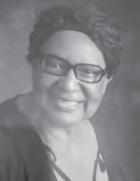
07/16/2025
ARRANGEMENTS BY PREFERRED CREMATION & BURIAL
Service will be held August 7, 2025 at Preferred Cremation and Burial.
Flora Stella Moore born in Waelder, Texas, on September 27, 1937, to Sylvester Seay and Verna Randel. She was a sister to Mary, Dora, and Henry. On January 15, 1964, she united in holy matrimony with Vardell Noah Moore in her beloved home state of Texas. She had three children: Helen Marie, Vicky Lynn (who preceded her in death), and Vence Edward. Flora’s role as a mother was one of her greatest joys, and she embraced it with every fiber of her being. Her life was a testament to faith, family, and the joy found in simple pleasures. Flora’s working life was as diverse as it was dedicated. She provided care and comfort as a babysitter, contributed to the local economy at a peanut plant, and served meals in the school district cafeteria. Through each endeavor, she extended her nurturing spirit to those around her. A devout Christian, Flora’s faith was the cornerstone of her life. She lived the Christian virtues of love, generosity, and selflessness.
After her husband’s discharge from the Air Force, the family moved to San Diego, California. Flora cherished time spent with her family above all. She also found joy in watching her favorite shows, with recent favorites being Sistas, Family Feud, and Wheel of Fortune. Her laughter and commentary during these programs were a source of entertainment for her loved ones. Flora loved visiting Las Vegas, enjoying stays at her favorite hotel, Lady Luck, and playing the slot machines. Her heart was always open, her hands ready to help, and her presence a sanctuary of warmth. She lived a life that reflected the words of Scripture: “Well done, good and faithful servant.”
Flora was called home to the Lord on July 16, 2025, in San Diego.
She leaves to mourn her husband Vardell Noah, children; Helen Marie and Vence Edward, siblings; Mary, Dora, and Henry, many nieces and nephews, and her legacy lives on through her grandchildren, from Helen Marie: Angela, Alenio, Anerio, and Ashley, from Vicky Lynn: Tyrone (preceded in death), Larissa, and Justin, and from Vence Edward: Shawanee, Selina, Vence Joseph, Vanity, Vence Edward II, Victoria, Kymberly, Kyla, and Val. She had many great-grandchildren and was a proud great-great-grandmother, with one more on the way.
Now resting in God’s embrace, Flora’s story of love and faith continues to inspire all who knew her.
The Lord is close to the brokenhearted and saves those who are crushed in spirit.

Psalm 34:18
his counsel with Mark Geragos—ironically, Jackson’s former defense lawyer who had proclaimed to Good Morning America that “there’s nothing sexual going on” and that Jackson was “100 percent innocent.” According to the estate’s filing, Geragos lowered the demand to $44 million but warned that if the estate refused, they would sue for defamation, emotional distress, and an alleged “cover-up.” The estate insists these claims are “bogus” and barred by the original settlement’s releases and arbitration clauses. The petition points out that the agreement explicitly requires arbitration for any disputes, even the question of whether a claim is arbitrable. “The question of arbitrability is itself a question to be resolved finally by the arbitrator,” the contract states.
Read the full article at www.sdvoice. info.

The County of San Diego Planning & Development Services (PDS) invites you to attend a virtual meeting to share your thoughts on the potential separate sale of Accessory Dwelling Units (ADUs). PDS, in collaboration with community input, is in the process of refining the ADU Ordinance to provide affordable homeownership opportunities in San Diego County.

PDS is hosting a virtual meeting to receive your input on August 13th, 2025 at 6:00 PM.
Following direction received from the Board of Supervisors on October 9, 2024, staff are developing a local program to allow for the separate sale of ADU’s under Assembly Bill (AB) 1033, a state law passed in 2023 that allows cities and counties to voluntarily adopt an ordinance allowing the independent sale of ADUs separate from the primary residential unit. During the webinar, staff will also provide an overview of ADU legislation adopted in 2023 and 2024, and outline potential impacts these laws may have
on the County’s zoning ordinance. Your input is essential as PDS is exploring policy options for a local program to bring forward for the Board’s consideration.
If you would like to attend the public webinar, register in advance for the m e eting using the link provided below.
When: August 13th, 2025 at 6:00 pm
Where: https://sdcounty-cagov.zoom.us/meeting/registerS9e0aItWTFOcswCyDc94rA#/ registration
Meeting ID: 894 6059 5313
Passcode: 037509
For more information about the Project and to subscribe to the project mailing list, visit https://www.sandiegocounty.gov/content/ sdc/pds/advance/housingoptions.html
If you have any questions, please contact Enrique Flores or Amber Jagers at PDS. LongRangePlanning@sdcounty.ca.gov or at the following phone number: (858)505-6677
that public access to apportionment data is vital for lawful governance and state oversight.
Attorney General Bonta Calls for Transparency in Federal Spending
California Attorney General Rob Bonta recently co-led a coalition of 19 attorneys general in submitting an amicus brief in Citizens for Responsibility and Ethics in Washington v. Office of Management and Budget . The case challenges the Trump Administration’s deactivation of the Public Apportionments Database—an online tool that tracks how federal agencies spend con-
Senator Padilla Demands Investigation Into Hatch Act Violations Amid GOP Redistricting Push
gressionally appropriated funds. The coalition argues this move undermines states' ability to detect unlawful funding decisions. “This information is essential for transparency and accountability,” said Bonta, urging the court to uphold public access to apportionment data.
Despite a 2022 congressional mandate requiring timely public disclosure of apportionment decisions, OMB announced it would no longer comply. Since then, the Trump Administration has secretly withheld billions in federal funds, delaying or canceling support for education, AmeriCorps, and libraries. The July 29th brief emphasizes how this lack of transparency harms states’ ability to respond effectively, often resulting in funding crises. Bonta co-led the filing with attorneys general from 18 other jurisdictions, asserting
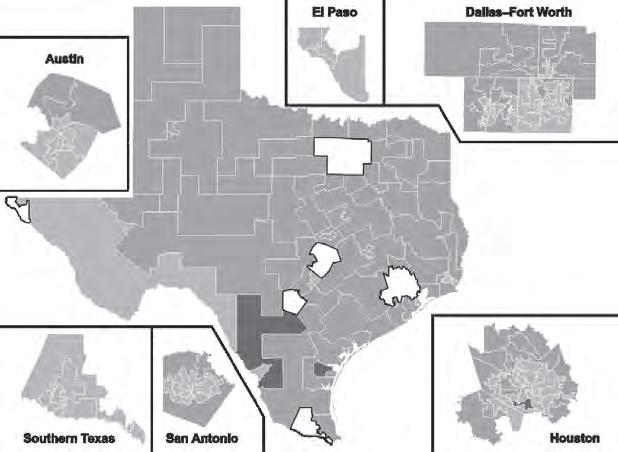
In late July, Senator Alex Padilla, alongside Senators Durbin, Schiff, and Whitehouse, called for a federal investigation into potential Hatch Act violations by senior Trump Administration officials. The lawmakers allege that White House and DOJ officials improperly pressured Texas and other Republican-led states to redraw congressional maps mid-decade—a move intended to protect GOP control of the House by unseating key Democrats. Officials, including Deputy Chief of Staff James Blair, reportedly met with Texas Republicans and Gov. Greg Abbott to discuss targeting five Democratic-held districts, including Rep. Jasmine Crockett’s in Dallas. Crockett, a rising Democratic voice, now faces the threat of being redistricted out of her seat, putting Democratic control of the House further at risk.
The senators argue that the DOJ’s reversal of its longheld defense of Texas’ district lines appears to be a partisan maneuver, providing cover for a redistricting agenda meant to tilt upcoming elections. They warn this misuse of executive power not only endangers individual seats but also undermines public trust in democratic institutions. As Democrats work to regain House control in 2026, losing seats like Crockett’s could derail those efforts.
Padilla, Schiff, Markey Condemn DHS Spy Drones Over LA Protests
On July 31st, Senators Alex Padilla, Adam Schiff, and Ed Markey demand answers after the Department of Homeland Security (DHS) deployed Predator drones over peaceful protests in Los Angeles. The Senators condemned the aerial surveil -
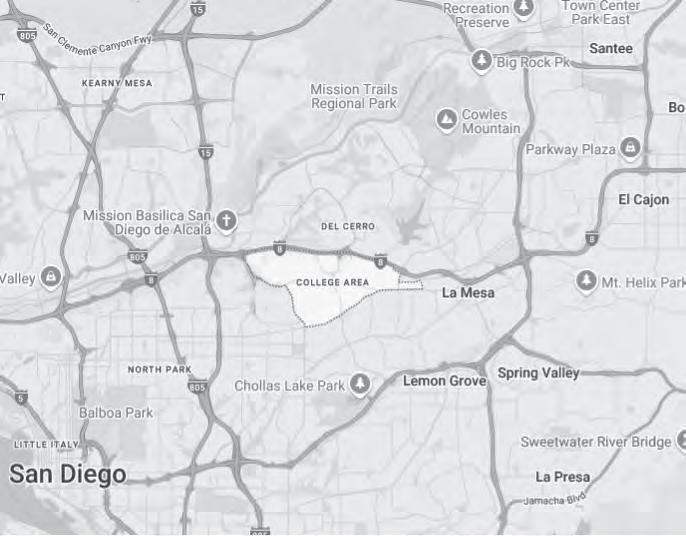
City of San Diego to Update College Area Community Plan
For the first time in more than 30 years
The City of San Diego has released a second draft of the College Area Community Plan Update and is inviting the public to review and provide feedback. This is the first update to the plan in more than 30 years, and the latest draft incorporates public input received following the release of the initial draft earlier this year.
Community plans, along with the Citywide General Plan, provide a long-range vision and serve as the framework to guide neighborhood growth and development over the next 30 years.
The College Area Community Plan Update aligns with Blueprint SD, the City’s 2024 General Plan update, which focuses on placing new homes and jobs near transit, parks and services to meet equity, climate and housing goals and requirements.
The second draft of the College Area Community Plan Update includes:
• I ncreased opportunities for new homes, businesses and community amenities in focused, mixed-use and transit-oriented village areas.
• A mobility framework that prioritizes the comfort and safety of all road users, including bicyclists, pedestrians and transit riders.
• Streets designed with wide sidewalks, shade trees and landscaping that promote pedestrian activity and support local businesses.
• N ew public spaces planned for the community, including a linear park along Montezuma Road.
The public is encouraged to review the draft and provide input by September 7, 2025, by visiting the College Area Community Plan Update webpage at www.sandiego.gov.
After the public comment period, the draft will be reviewed by the College Area Community Planning Group, followed by the Planning Commission and the City Council’s Land Use & Housing Committee, each of which will offer additional opportunities for public feedback. Final consideration by the City Council is expected by the end of the year.
City of San Diego Announces $15 Million to Create New Affordable Homes
The City of San Diego announced on July 31st an additional $15 million in funding for the Bridge to Home initiative. This fund -
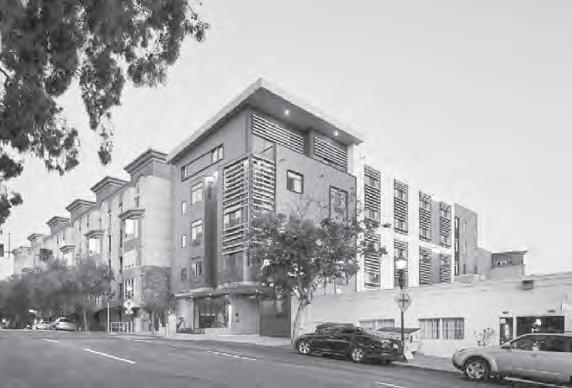
ing is part of Round 6 of the gap-financing program, which, according a recent press release, has already invested nearly $108 million to get 2,148 affordable homes across 24 projects built more quickly.
Last week, the City issued a notice of funding availability (NOFA), which allows qualified developers to submit proposals for how they would use the funding to create low- to moderate-income units. Bridge to Home provides gap financing to make affordable housing projects a reality, as these projects typically require a combination of funding sources, including from local, state and federal programs. Each recommended project is subject to City Council consideration and approval. Of the $15 million in this round of Bridge to Home funding, $10 million is derived from former redevelopment funds whose use is restricted to creating new housing, including site improvements as well as construction. New to this round, the City will allocate $5 million in federal housing and community development funding to help smaller and emerging development partners acquire land for projects that are 40 units or fewer. These projects do not typically rely heavily on state or federal tax credit programs. The City will host an emerging developer networking session on Aug. 19, 2025l.
For more info visit Bridge to Home on sandiego.gov.
lance as a violation of privacy and First Amendment rights, likening the practice to tactics used by authoritarian regimes. DHS published drone footage labeling protestors as “rioters,” which the lawmakers warned could intimidate citizens from exercising their right to protest.
The Senators’ letter to DHS Secretary Kristi Noem questioned the legality and purpose of the surveillance, particularly its impact
on communities of color. They also demanded a detailed explanation of the technol ogy used, whether facial recognition was involved, and who authorized the footage’s release. Senators Bernie Sanders and Chris Van Hollen co-signed the letter. Separately, Padilla has also opposed the Trump administration’s militarized crackdown on protests, blocking military appointments and introducing legislation to increase transparency in immigration enforcement.
By Duane Johnson

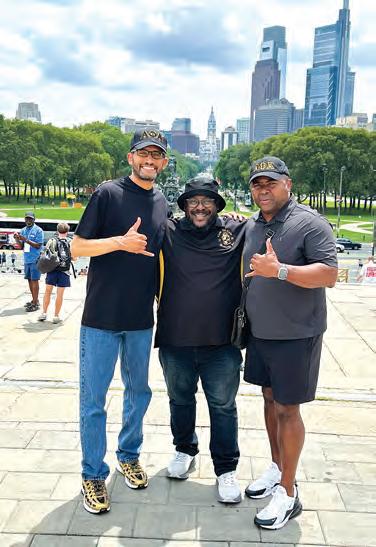
From July 16–20, the Zeta Sigma Lambda Chapter of Alpha Phi Alpha Fraternity, Inc.—the San Diego Alphas— attended the fraternity’s 98th General Convention in Philadelphia, PA. Nearly 5,000 members of the first intercollegiate Black Greek-letter fraternity gathered at the Pennsylvania C onvention Center for a week of workshops, business sessions and social events, all under the theme “Reimagining Alpha for the Future.”
The San Diego delegation was honored as the second-highest fundraising chapter in the nation for March of Dimes in 2025, raising an impressive $13,896. This national
recognition comes on the heels of another major milestone: Bro. Don Long’s induction into the Western Region Hall of Fame. He is the second member of Zeta Sigma Lambda to receive this prestigious honor following the late Dr. Payton C. Cook, a belovedLincoln High School principal. San Diego now holds the distinction of being the only chapter in Alpha’s 119-year history to have two members inducted into the Western Region Hall of Fame.
Adding to their accolades, the San Diego Alphas received a warm round of applause in front of a packed house at the Old Gold & Black Leadership Gala where they were recognized as the Alpha chapter that traveled the farthest—making the journey from San Diego to the City of Brotherly Love.
“The 98th General Convention was a proud moment for the San Diego Alphas. We made the trip across the country and were recognized for raising nearly $14,000 for March of Dimes, but more than anything, it spoke to the heart and hustle of our chapter. We went to do the work of Alpha, and we did. Seeing the work


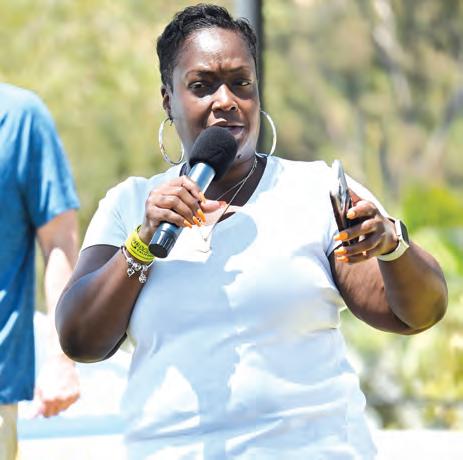
On Saturday, July 12, 2025, Senator Akilah Weber Pierson, M.D., member of the California State Senate representing Senate District 39, joined scores of volunteers to welcome hundreds of families to her Annual Backpack Giveaway and Family Resource Fair at KIPP Adelante Prep Academy in Southeast San Diego.
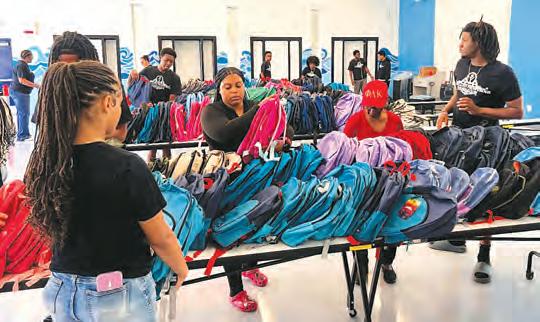
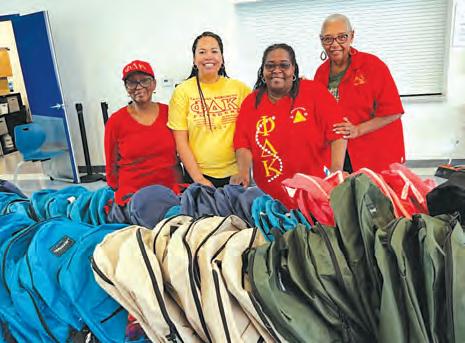
over 20 community resource tables. The fair began at 9:30 a.m., with backpack distribution running from 10 a.m. to 1 p.m., offering families a strong start to the new school year.

other chapters are doing, both across the country and around the world, really put into perspective the impact Alpha is having. I’m proud that San Diego is playing a part in that,” said Johnnie Welborne, President of the Zeta Sigma Lambda Chapter.
And while the chapter continues to make an impact nationally, their focus remains local. The San Diego Alphas invite the community to join them for their signature Holiday Scholarship Ball on December 13.
This elegant evening helps fund educational programming for youth in San Diego. In 2025 alone, the chapter awarded $23,000 in scholarships to graduating high school seniors. For tickets, donations or more information, visit www.sandiegoalphas.com/
The event featured free backpacks stuffed with school supplies for K–12 students, opportunity drawings—including a chance to win one of ten desktop computers from Computers 2 Kids—free kids’ helmets, vision screenings, and





By The Freelancer

undreds of families turned out Saturday for Assemblymember Dr. LaShae SharpCollins’ Back to School Health Resource Fair, held August 2nd at New Creation Church. The event brought together more than 30 vendors offering free resources, health screenings, and school supplies aimed at preparing students for a strong start to the new academic year.
roof. Families could access behavioral health information from the C ounty of San Diego, oral and eye screenings from UCSD programs, and resources from organizations like Family Health Centers of San Diego, Planned Parenthood, and San Ysidro Health. The Humane Society,

“This event matters because it’s a half-year check-in with the people that saw fit to get me into office,” Sharp-Collins said, who represents California's 79th Assembly District. “It was an opportunity to show the work I have been doing for the district, but also host something funded by connections I have made while partnering with groups I have been working with locally forever.”
The fair featured an array of services under one


Educational institutions, including San Diego City College and the College of Continuing
By Voice & Viewpoint Staff
The 8th Annual Afrofuturism Lounge took place on Thursday, July 24, 2025, at 6:00 PM at the Fleet Science Center in Balboa Park, located at 1875 El Prado, San Diego, CA 92101. Although this event coincides with San Diego Comic-Con, Afrofuturism showcased the creativity and innovation of Black comic book creators, artists, writers, and visionaries.
The event inspired thought-provoking discussions, immersive art, and groundbreaking ideas that celebrate the intersection of culture, technology, and imagination. This year’s theme, “Minds Over Matters!”, invited attend-
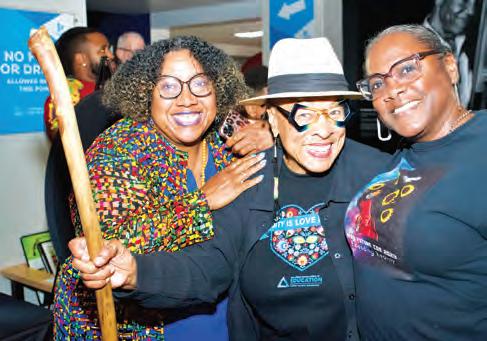
ees to explore the powerful intersection of Afrofuturism, Black speculative arts, and social change. The Lounge provided an educational, entertaining, and informative space for cre-
ative and critical thinkers alongside community builders to experience Black Comix as an art form and a catalyst for futurist thought and industry opportunities.



support to the 79th District
Education, offered enrollment details, and groups like the San Diego Building Trades highlighted workforce pathways for students considering careers in skilled trades.
The event also featured giveaways, including backpacks filled with


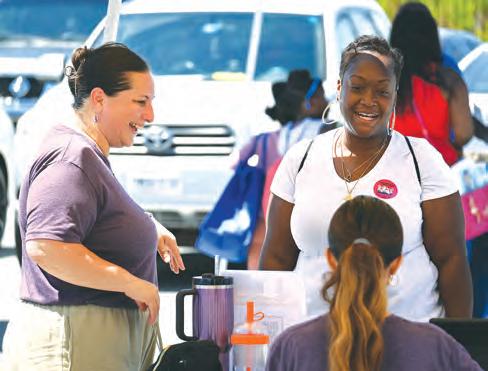
school supplies. Local barber Isaiah Price offered free haircuts, and the San Diego Seals lacrosse team joined to engage kids in activities.

Sharp-Collins said the backpack giveaway was a highlight. “The best feeling is seeing a kid’s eyes light up when they get to pick their backpack,” she said. “For many, you could tell they’d never experienced something like that. Getting ready for back to school, armed with the fresh confidence that comes from your community pouring into you in the form of a backpack and school supplies, is transformative for some of our youth.”





Hip Hop, Afrobeat, and a House Happy Hour electrified the evening as the program highlighted The Stardust Project P review, Afrofuturism and innovation discussions, Fireside Chat with Keithan Jones, Juke Joint Cosplay Karaoke and Dancing, art from Southeastern art team, and art from Alexis Dixon.
Activities such as the Besse Saka swap meet, book recommendation divination, Goddess tarot reading, Glyphs & Ghosts, Afroids Affirmations, and the Afrofuturism scavenger hunt were available to participate in.



The fair was supported by partners including Sycuan Casino, PhRMA, Mandate Project Impact, AT&T, GOD Radio 1, Falck San Diego, and the Harvey Family Foundation.
For Sharp-Collins, the day was about more than supplies. “It’s about showing families that they’re seen and supported,” she said. “When we come together like this, we’re investing in the future of our community.”





year’s





By The Freelancer
The Royal Family brought more than two centuries of history to San Diego July 31st through August 3rd, turning the harbor city into a hub of laughter, music, and memories. Descendants of Fant and Phyllis Royal, who raised four sons: Doye, Morris, Dave, and Robert (and lost two daughters at birth), arrived from across the country for a four-day reunion that celebrated their legacy and looked ahead to the future.
Relatives traveled from Georgia, New York, the Carolinas, Arizona, Florida, Utah, Detroit, California, and beyond. The San Diego committee: Saladin Martin, Eventa Brown, Latesha Fields, Monique White, Amanda Jones, Dajon Howden, Dar Mims, Maurice Johnson, and Ishajuwan Saunders organized the events, ensuring the family had plenty to eat, dance to, and remember.

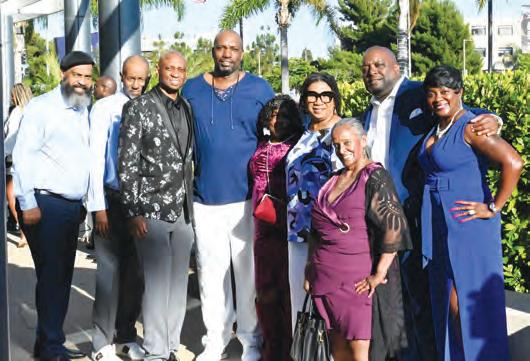


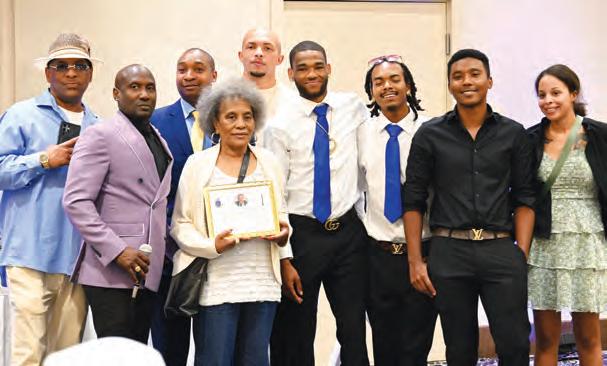
The gathering kicked off at the Hilton DoubleTree Harborside with a warm welcome. Rhonique Randall, who hosted and cleaned up all four days, kept the atmosphere running


smoothly. Boots On The Ground Line Dancing by Maisha Mahone set the tone, while food, games, and conversations brought everyone closer. The children were involved and had a lot of fun.
Two: City Tour, Dinner Dance, and Awards
The morning started with a creative T-shirt cutting session led by Teresa Jackson. By afternoon, attendees boarded a city tour hosted by Saladin Martin and assisted by Maurice Johnson, taking in the scenic and historic landmarks of San Diego.
First,” Joshaie Brown Jr. claimed, “Best Dressed,” and Aaliyah Slayton took home the Rudy Hall Sr. “Keeper of the Flame” Award. Resolutions were presented by Narriman Fields, Tariri Mims, and Ceicily Williams-Grant. The evening closed with a symbolic passing of the staff to the Detroit chapter, which will host the next reunion.
Day Three: Family Cookout
Chef Key Locke and friends served up a Mexican Fiesta at Admiral Baker Park. The cookout was laid-back and flavorful, with the kind of food that keeps people coming back for seconds and sometimes thirds.
Day Four: Fish Fry Farewell
The final day’s fish fry gave everyone one last chance to sit together, share stories, and make promises to do it all again in a year.
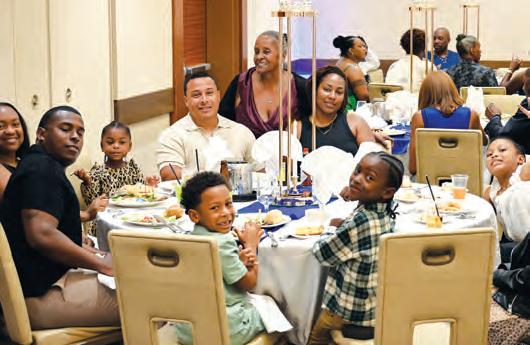
That evening, the Happy Hour Dinner Dance transformed DoubleTree into a celebration of music and elegance. J-Movelle performed live, and DJ King Arthur kept the dance floor moving. Hosts Latesha Fields and Saladin Martin mixed humor with heart, ensuring no one left without a smile. Awards highlighted family spirit: Shannon Crenshaw earned “Who Paid
The San Diego committee thanked volunteers, donors, photographers, The Freelancer and Shawn Jones, and everyone who made the event possible. “This family has traveled many roads, but we always find our way back to each other,” one attendee said. Next stop: Detroit, Michigan.
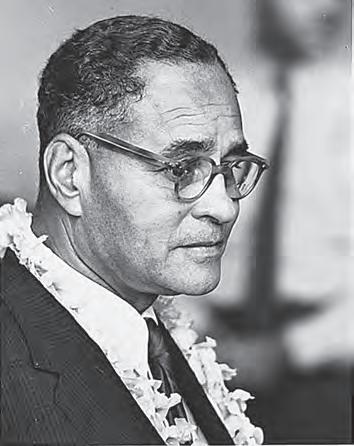
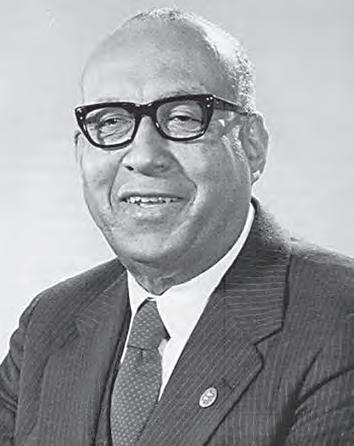
RALPH BUNCHE IS BORN
Ralph J. Bunche, born in Detroit on August 7, 1903, rose from early hardship to become a trailblazing diplomat, scholar, and the first African American Nobel Peace Prize winner. After excelling at UCLA and earning a Ph.D. from Harvard—the first Black American to do so in political science—he taught at Howard University and contributed significantly to postwar global diplomacy, including the founding of the United Nations.
Bunche’s mediation in the Arab-Israeli conflict earned him the Nobel Prize in 1950. A civil rights advocate, he joined marches in Washington and Selma. He died in 1971, leaving a legacy of peace and justice.
MELVIN EVANS IS BORN
Melvin Herbert Evans, born in St. Croix on August 7, 1917, earned his M.D. from Howard University in 1944 and held various medical roles before becoming the Virgin Islands' health commissioner. In 1969, President Nixon appointed him governor, and in 1970, Evans became the territory’s first elected governor, serving until 1975. A Republican, he later represented the Virgin Islands as a non-voting delegate in Congress.
While in Congress, Evans helped secure federal support for education and healthcare in the Virgin Islands. He later served as U.S. Ambassador to Trinidad and Tobago until his death in 1984, continuing a life of dedicated public service.

By Mark Banchereau Associated Press
U.S. singer Ciara is one of the first public figures to become a citizen of Benin under a recent law by the small West African country granting citizenship to descendants of enslaved people.
The Grammy-winning performer’s acquisition of citizenship at a ceremony Saturday, July 26 in the city of Cotonou is part of a broader initiative by Benin to attract the Black diaspora, acknowledge the country’s role in the transatlantic slave trade, and promote tourism focused on slavery-related sites of remembrance.
“By legally recognizing these children of Africa, Benin is healing a historical wound. It is an act of justice, but also one of belonging and hope,” Justice Minister Yvon Détchénou said at the ceremony.
Here’s what to know about Benin’s efforts to welcome descendants of enslaved people:
Benin’s Afro-descendant citizenship law
In September, Benin passed a law granting citizenship to those who can trace their lineage to the slave trade.
It is open to anyone above 18 who doesn’t already hold other African citizenship and can provide proof that an ancestor was deported via the slave trade from anywhere in sub-Saharan Africa. Beninese authorities accept DNA tests, authenticated testimonies and family records.
[Two weeks ago], the government launched My Afro Origins, the digital platform that processes applications.
While Benin is not the first country to grant citizenship to descendants of enslaved people, its citizenship law carries added significance, in part because of the role it played in the transatlantic slave trade.
A national reckoning with its role in the slave trade
European merchants deported an estimated 1.5 million enslaved people from the Bight of Benin — a region that includes present-day Benin, Togo and parts of Nigeria — to the Americas.
Beninese kings actively participated in capturing and selling enslaved people to Portuguese, French and British merchants. The former kingdoms and the communities they raided still exist today as tribal networks.
Benin has long been working to reconcile with its legacy of complicity. It has openly acknowledged its role in the slave trade, a stance not shared by many other African nations that participated.
In the 1990s, it hosted an international conference to examine how and where enslaved people were sold. In 1999, then-President Mathieu Kérékou apologized to

By Rodney Muhumuza
Associated Press
Food insecurity is rising in many parts of Africa, with the number of people unable to afford a healthy diet surpassing 1 billion — some two-thirds of the continent’s population — in 2024, according to a United Nations report published Monday, July 28.
The prevalence of moderate or severe food insecurity in Africa is more than double the global average of 28%, whereas figures from Latin America and the Caribbean, Asia and Oceania don’t reach that mark, the report said.
The annual report, produced by five U.N. agencies, analyzes trends in efforts to achieve the goal of zero hunger around the world by 2030. Those agencies include the World Health Organization, the Food and Agriculture Organization and the World Food Program.
An estimated 8.2% of the global population may have faced hunger in 2024, down from 8.5% in 2023 and 8.7% in 2022, a positive trend that “contrasts with the steady rise in hunger in most subregions of Africa” and in western Asia, or parts of the Middle East and South Asia, the report said.
The prevalence of undernourishment, a key measure of progress, surpassed 20% in Africa and rose to 12.7% in western Asia, it said.
The report is the latest to suggest that eliminating food insecurity universally remains a serious challenge. Africa remains the most vulnerable continent.
According to the current projection, 512 million people in the world may be chronically undernourished in 2030, with nearly 60% of them to be found in Africa, the report said.
“We must urgently reverse this trajectory,” said Máximo Torero, chief economist with the FAO.
A major mark of distress is the number of Africans unable to afford a healthy diet. While the global figure fell from 2.76 billion in 2019 to 2.6 billion in 2024, the number increased in Africa from 864 million to just over 1 billion during the same period.
That means the vast majority of Africans are unable to eat well on the continent of 1.5 billion people.
The U.N. warned in a report in October that conflicts, economic instability and climate shocks — in addition to reduced funding for emergency food and agriculture assistance — were driving alarming levels of acute food insecurity in 22 “hunger hot spots.”
That report, by FAO and WFP, mentioned Sudan, South Sudan, Haiti, Mali and the Palestinian territories as being of the “highest concern level.”
Chad, Lebanon, Myanmar, Mozambique, Nigeria, Syria and Yemen were classified as “hotspots of very high concern,” where large numbers of people faced or were projected to face critical levels of acute food insecurity.
Torero, the FAO chief economist, said the situation in Africa is “concerning,” driven in part by the failure of agricultural production to keep up with population growth in many areas.
At the same time, he said, many parts of Africa face violent conflict and setbacks stemming from climate change.
“These shocks interact and reinforce each other, weakening already fragile agrifood systems,” he said, speaking about the latest U.N. report. “Conflict zones such as Sudan and the Sahel face particularly acute challenges. Additionally, climate poses a serious threat, particularly to the most vulnerable populations.”

Following her citizenship ceremony, Ciara toured the historic city, where she walked the Slave Route to the Door of No Return.
“Between emotion, reflection and heritage, I experienced a profound return to what truly matters,” she said.
By Sam Metz Associated Press
Long a staple in local markets, argan oil today is in luxury hair and skin care products lining drugstore aisles worldwide. But its runaway popularity is threatening argan forests, with overharvesting piled on top of drought straining trees once seen as resilient in the harshest of conditions.
But the forest has thinned. Trees bear fewer fruit, their branches gnarled from thirst. In many places, cultivated land has replaced them as fields of citrus and tomatoes, many grown for export, have expanded.
Shifting climate is a part of the problem. Fruit and flowers sprout earlier each year as rising temperatures push the seasons out of sync.

Hafida El Hantati, owner of one of the cooperatives that harvests the fruit and presses it for oil, said the stakes go beyond the trees, threatening cherished traditions.
“We must take care of this tree and protect it because if we lose it, we will lose everything that defines us and what we have now,” she said at the Ajddigue cooperative outside the coastal town of Essaouira.
For centuries, argan trees have supported life in the arid hills between the Atlantic Ocean and the Atlas Mountains, feeding people and animals, holding soil in place and helping keep the desert from spreading.
The spiny trees can survive in areas with less than an inch of annual rain and heat up to 50 degrees Celsius (122 Fahrenheit). They endure drought with roots that stretch as far as 115 feet (35 meters) underground. Goats climb trees, chomp their fruit, and eventually disperse seeds as part of the forest’s regeneration cycle.
Moroccans stir the oil into nut butters and drizzle it over tagines. Rich in vitamin E, it’s lathered onto dry hair and skin to plump, moisturize and stave off damage. Some use it to calm eczema or heal chicken pox.
Goats that help spread seeds can be destructive, too, especially if they feed on seedlings before they mature. Overgrazing has become worse as herders and fruit collectors fleeing drier regions encroach on plots long allocated to specific families.
The forests also face threats from camels bred and raised by the region’s wealthy. Camels stretch their necks into trees and chomp entire branches, leaving lasting damage, Charrouf said. Today, women peel, crack and press argan for oil at hundreds of cooperatives. Much makes its way through middlemen to be sold in products by companies and subsidiaries of L’Oréal, Unilever, and Estée Lauder.
But workers say they earn little while watching profits flow elsewhere. Cooperatives say much of the pressure stems from climbing prices. A 1-liter bottle sells for 600 Moroccan dirhams ($60), up from 25 dirhams ($2.50) three decades ago. Products infused with argan sell for even more abroad. Cosmetics companies call argan the most expensive vegetal oil on the market.
The coronavirus pandemic upended global demand and prices and many cooperatives closed. Cooperative leaders say new competitors have flooded the market just as drought has diminished how much oil can be squeezed from each fruit.
Cooperatives were set up to provide women a base pay and share profits each month. But Union of Women’s Argan Cooperatives President Jamila Id Bourrous said few make more than Morocco’s minimum monthly wage.
Another issue is the supply chain. The government has attempted to build storage centers to help producers hold onto their goods longer and negotiate better deals. So far, cooperatives say it hasn’t worked, but a new version is expected in 2026 with fewer barriers to access.

PHOTO: Freepik
Stress is part of every day, especially when you’re juggling deadlines, meetings, and endless to-do lists. And while you can’t always eliminate the pressure, by building the right habits and backing them up with the right tools, you can learn to handle it better.
Thought leaders across companies have chimed in to help readers understand how they deal with stress and how their vocation has shaped their behaviors. Here are three simple ways to build stress resilience — and how the right tools can help support your mindset:
1.Write It Out
When you’re about to embark on something that causes you stress, maybe it’s a big presentation at work or a tough conversation, taking a moment to write down positive affirmations can help calm your nerves. Try phrases like:
• “I’m ready for this.”
• “I’ve done the work.”
• “I am resilient, capable and calm.”
2.Use Tools That Keep You in Flow
Research shows that when writing feels effortless, your brain is more likely to enter a “flow state” -- that focused zone where ideas click and distractions fade. Whether you’re brainstorming or planning your day, having the right pen can give
you the zen focus you need. What helps make the planning process go as smoothly as possible? Choosing a pen that feels good in your hand. A smooth-writing tool can make the act of writing feel more soothing and intentional, not like just another task.
3.Let Color Work for You
Color affects mood more than most people realize. With a little intention, you can use it to shape how you feel throughout the day. For example:
• Pink sparks optimism
• P urple stimulates your creative side
• Blue c an boost your productivity
• G reen promotes calm and balance
You can apply this concept in small ways, like choosing color-coded pens to match your goals or surrounding yourself with certain hues in your workspace or wardrobe. It’s a simple, visual way to give your brain a gentle nudge in the right direction.
Everyday stress isn’t going away, but with a few mindful habits and the right tools, you can take back a sense of control. For more tips and to explore wellness-focused writing utensils, visit PowerToThePen. com.
Statepoint
In the “2025 World Happiness Report,” evidence shows that sharing meals has a substantial impact on an individual’s well-being. Those who regularly eat with others report higher life satisfaction and display higher levels of social support, positive reciprocity and less loneliness.
Civil and Respectful Interactions
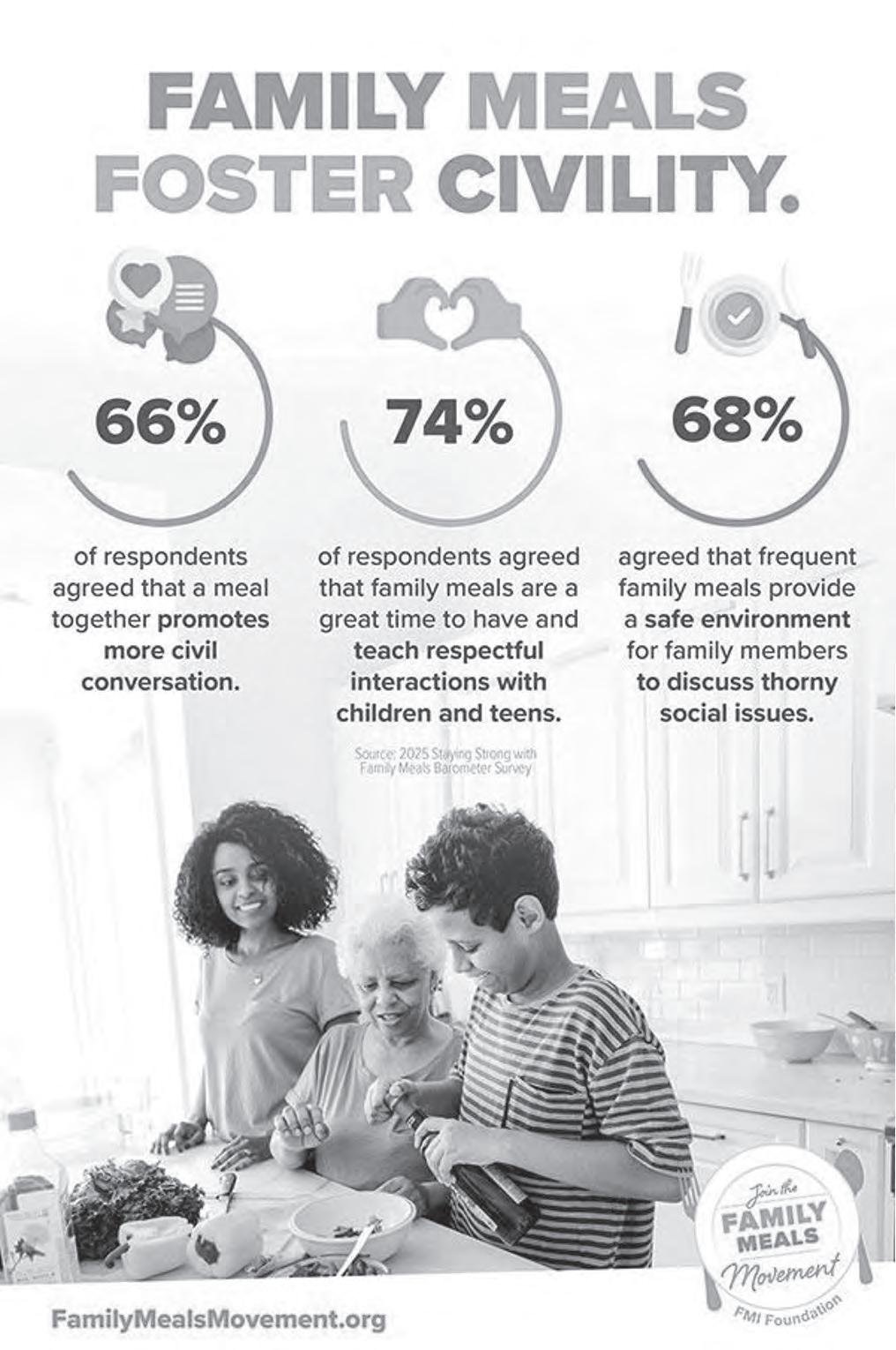
In a world full of distractions, it may come as no surprise the “2025 Family Meals Barometer” survey found poor communication is a leading concern among parents, more worrisome than schoolwork or chores.
More than two-thirds of respondents expressed a belief that civility in America is worse today compared to 10 years ago, but 74% said family meals are a great time to have and teach respectful interactions. Frequent family meals create a safe environment for families to discuss thornier societal issues.
Better Nutrition
Numerous studies have shown families who eat more meals together have healthier eating habits and better diets in general. Family meals at home typically make it easier to fill plates with food from each food group. What’s more, parents who prepare well-balanced meals and model healthy food choices allow children to mirror and adopt similar habits.
Improved Family Function
In the “2025 Family Meals Barometer” survey, respondents cited having more time to spend together and family meals as the top two ways they feel more connected to family and loved ones. With busy school and extracurricular schedules, many families are hardpressed to find quality time together without distractions. Gathering around the dinner table is an opportunity to connect with one another and talk about what’s happening at work, school and with friends.
Better Grades at School
Numerous factors affect students’ academic performance, but eating
together as a family helps reinforce many of the variables thought to influence student success. More nutritious meals play a role in stronger cognitive function. Multiple researchers found that children who are part of families that eat together regularly tend to have a stronger vocabulary and higher grades.
Improved Mental Health
Another way family meals benefit students at school and beyond is stronger mental and emotional health. In several independent studies, researchers found a positive correlation between family meals and self-esteem, psychosocial outcomes and other markers of mental health.
Make Dinner Prep a Family Affair
The benefits of eating together as
a family don’t have to wait until everyone is at the table. During dinner prep, parents and children have a chance to work elbow-toelbow and talk about their days. When children participate in preparing healthy food, they may be more interested in eating it. As an added bonus, kids who take part in food preparation enjoy the benefits of building their own life skills. DIY dishes that put kids in charge of what goes on their plates can be a fun way to bring the family together and make meal prep easy. You can customize salad kits with a selection of protein options, create your own personal pizzas or serve a bar-style dinner such as nachos, baked potatoes or tacos that let each family member choose their own toppings.
Family Features
By Tannistha Sinha Houston Defender
Scholars and artists are trying to keep African American Studies alive during heightened political scrutiny and limitations to discussions on race and identity in education.
During a panel titled “Black Studies Teach-In,” hosted by Harris County Commissioner Rodney Ellis in Texas, scholars and artists shared their strategies for protecting and transforming Black scholarship.
Dr. Felicia Harris, associate professor of communications at the University of Houston-Downtown, stressed the urgency of the moment.
“We are in an unprecedented moment of transformation in public education in this country and, in particular, our state,” Harris said. “We’ve seen several laws passed that will not only radically transform how we teach and learn about Black and American history, lives and culture, but we’ve also seen laws eliminate how institutions support and retain Black stu -
dents, students of color and students from other historically excluded and marginalized groups.”
Reclaiming the academy and workforce
Dr. Toniesha Taylor, professor of communication and director at the Center for Africana Futures at Texas Southern University, offered a compelling response. Her work fuses Black Studies with workforce development through certification programs rooted in racial justice and digital literacy.
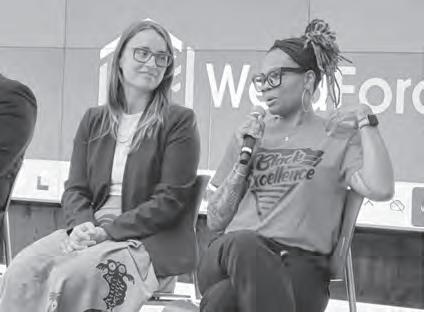
“Our goal here is to disrupt the role of gatekeepers that intentionally place black or marginalized folks in industries that don’t lead to professional success,” Taylor said. “This isn’t just job training. This is a way for us to remix Black Studies into the future of labor.”
Black art as a time machine
Visual artist and professor Anthony Suber described his work as building “a time machine” through Afro-
futurist art that connects past, present and future Black identity. As a longtime collaborator with Project Row Houses and a mentor to young artists, Suber emphasized that erasing Black history from classrooms will not erase it from the culture.
“We have to control and create our own opportunities, influence how history gets told and connect back to our ancestors,” he said.
Suber reflected on the significance of murals, music and sculpture in preserving cultural memory, warning that cultural appropriation and erasure remain constant threats if
Black communities do not actively protect their legacies.
Philosophy, love, and liberation
The stakes are existential for Dr. Annie Ring, assistant professor of philosophy at UH-Downtown.
“Unfortunately, in this anti-Black world, anti-Blackness shapes the collective unconscious,” Ring said, referring to French psychiatrist and philosopher Frantz Fanon’s work that revealed how anti-Blackness shapes both individual and collective unconsciousness.
She added that these are biological and socially constructed through place, culture and language. Also, without Fanon’s insights, scholars would not grasp how deeply context shapes the unconscious or fully understand it.
“Blackness shapes our understanding of perception, freedom, and existence,” she said. “Without it, philosophy is incomplete.”
Will Black Studies survive?
The message was clear: Black Studies are not a luxury. They are nec -
essary not just for Black students but for all who seek to understand, resist and rebuild the world.
Dr. Elizabeth Whittington, assistant professor of communications at Prairie View A&M University, shared how she redesigned her courses to center Black experiences, relationships and the impact of systemic racism. Incorporating works by Black authors like Clint Smith and Nikole Hannah-Jones, author of the 1619 Project, she created a curriculum that deepened students’ understanding of Black history at the HBCU and transformed her course into one that centers Black love, vulnerability and relational dynamics.
“Without Black Studies, philosophy would not understand the unconscious perception and the human freedom to create ourselves,” she said. “The popular narrative about philosophy, which minimizes the importance of Black thought, has got it all wrong. Black thought matters. It is necessary and we must include Black Studies in our curriculum. We can’t let people who don’t know better tell us otherwise.”

This business is conducted by: A Corporation
Registrant has not yet begun to transact business under the name(s) above
Spring Valley, CA 91977
Joseph Molina 1245 Elkelton Blvd Spring Valley, CA 91977
This statement was filed with the Recorder/County Clerk of San Diego County on July 31, 2025
This fictitious business name will expire on July 31, 2030 8/7, 8/14, 8/21, 8/28
FICTITIOUS BUSINESS NAME STATEMENT 2025-9013377
Fictitious business name(s): Vanderpool Properties Located at: 229 F St Chula Vista, CA 91910 County of San Diego
This business is conducted by:
An Individual
The first day of business was: 01/01/2020
This business is hereby registered by the following: Meggan Taylor Copeland 229 F St Chula Vista, CA 91910
This statement was filed with the Recorder/County Clerk of San Diego County on July 14, 2025
This fictitious business name will expire on July 14, 2030 7/31, 8/7, 8/14, 8/21
FICTITIOUS BUSINESS NAME STATEMENT 2025-9014129
Fictitious business name(s): Black Wallstreet Streetwear Located at: 603 Kelso Court Chula Vista, CA 91911 County of San Diego
This business is conducted by:
An Individual
The first day of business was: 06/14/2025
This business is hereby registered by the following: Antoine Wilson 603 Kelso Court Chula Vista, CA 91911-6704
This statement was filed with the Recorder/County Clerk of San Diego County on July 23, 2025
This fictitious business name will expire on July 23, 2030 7/31, 8/7, 8/14, 8/21
FICTITIOUS BUSINESS NAME STATEMENT 2025-9013301
Fictitious business name(s): L&B Fish 'N Chips Located at: 820 W G St Apt 363 San Diego, CA 92101 County of San Diego
This business is conducted by: Co-Partners
The first day of business was: 07/11/2025
This business is hereby registered by the following:
Shamiya La "Star" Paggett 820 W G St Apt 363 San Diego, CA 92101
Darnell Dwayne Green 1120 Nestor Way San Diego, CA 92154
This statement was filed with the Recorder/County Clerk of San Diego County on
name(s) above This business is hereby registered by the following: Reginald K Cole Jr 1445 K St #729 San Diego, CA 92101 This statement was filed with the Recorder/County Clerk of San Diego County on July 22, 2025
This fictitious business name will expire on July 22, 2030 7/31, 8/7, 8/14, 8/21
FICTITIOUS BUSINESS NAME STATEMENT 2025-9013786
Fictitious business name(s): Mr. 28 Landscaping and Junk Removal Located at: 2229 Oceanview Blvd San Diego, CA 92113 County of San Diego
This business is conducted by: An Individual
The first day of business was: 03/03/2021
This business is hereby registered by the following: Claude Lamonte Broadway 2229 Oceanview Blvd San Diego, CA 92113
This statement was filed with the Recorder/County Clerk of San Diego County on July 18, 2025
This fictitious business name will expire on July 18, 2030 7/31, 8/7, 8/14, 8/21
FICTITIOUS BUSINESS NAME STATEMENT 2025-9013241
Fictitious business name(s): Sun-Dried Studio
Located at: 8367 Capricorn Way, #3 San Diego, CA 92126
County of San Diego
This business is conducted by: An Individual Registrant has not yet begun to transact business under the name(s) above
This business is hereby registered by the following: Audra Arevalo 8367 Capricorn Way, #3 San Diego, CA 92126
This statement was filed with the Recorder/County Clerk of San Diego County on July 10, 2025
This fictitious business name will expire on July 10, 2030 7/31, 8/7, 8/14, 8/21
FICTITIOUS BUSINESS NAME STATEMENT 2025-9013884
Fictitious business name(s): Brothers Signature Catering and Events
Brothers Catering and Events
Brothers Catering
Located at: 7091 El Cajon Blvd. San Diego, CA 92115 County of San Diego
This business is conducted by: A Corporation
The first day of business was: 07/21/2025
This business is hereby registered by the following:
Terra American Bistro, Inc. 7091 El Cajon Blvd. San Diego, CA 92115 State of Incorporation/ Organization
California
This statement was filed with the Recorder/County Clerk of San Diego County on July 21, 2025
This fictitious business name will expire on July 21, 2030 7/31, 8/7, 8/14, 8/21 -
FICTITIOUS BUSINESS NAME STATEMENT 2025-9013903
Fictitious business name(s): Hi I'm The Bug Guy Pest Control Inc
H.I.T Bugs Pest Control
Located at: 5015 Comanche Dr. Unit D La Mesa, CA 91942 County of San Diego
PO Box 2024 La Mesa, CA 91943
This business is hereby registered by the following: Hi I'm the Bug Guy Pest Control Inc PO Box 2024 La Mesa, CA 91943 State of Incorporation/ Organization
California
This statement was filed with the Recorder/County Clerk of San Diego County on July 21, 2025
This fictitious business name will expire on July 21, 2030 7/31, 8/7, 8/14, 8/21
FICTITIOUS BUSINESS NAME STATEMENT 2025-9013100
Fictitious business name(s): Future Consulting Located at: 1750 Bellington Ln Fallbrook, CA 92028
County of San Diego
This business is conducted by: An Individual
The first day of business was: 07/07/2025
This business is hereby registered by the following: Curtis Wesley Warner 1750 Bellington Ln Fallbrook, CA 92028
This statement was filed with the Recorder/County Clerk of San Diego County on July 08, 2025
This fictitious business name will expire on July 08, 2030 7/24, 7/31, 8/7, 8/14
FICTITIOUS BUSINESS NAME STATEMENT 2025-9013309
Fictitious business name(s): Rivers & Roads Located at: 2928 State St. Carlsbad, CA 92008
County of San Diego
This business is conducted by: An Corporation
The first day of business was: 07/11/2025
This business is hereby registered by the following: Rage Enterprises, Inc. 1407 Minnesota Ave. Oceanside, CA 92054 State of Incorporation/ Organization California
This statement was filed with the Recorder/County Clerk of San Diego County on July 11, 2025
This fictitious business name will expire on July 11, 2030 7/24, 7/31, 8/7, 8/14
FICTITIOUS BUSINESS NAME STATEMENT 2025-9013323
Fictitious business name(s): The Muffin Mom Located at: 7742 Golfcrest Dr. San Diego, CA 92119 County of San Diego
This business is conducted by: An Individual Registrant has not yet begun to transact business under the name(s) above
This business is hereby registered by the following: Tamanava Gail Eden 7742 Golfcrest Dr. San Diego, CA 92119
This statement was filed with the Recorder/County Clerk of San Diego County on July 11, 2025
This fictitious business name will expire on July 11, 2030 7/24, 7/31, 8/7, 8/14
FICTITIOUS BUSINESS NAME STATEMENT 2025-9013131
Fictitious business name(s): Skin Envie Touch of Magic --Youthful Beauty By Love
Modesto Esthetics Center and Wellness SPA Located at: 3402 Piazza De Oro Way Ste. 250 Oceanside, CA 92056 County of San Diego
This business is conducted by: A Corporation The first day of business was: 06/01/2025
This business is hereby registered by the following: ReGenA Wellness, INC. 3402 Piazza De Oro Way Ste. 250 Oceanside, CA 92056 State of Incorporation/ Organization California
This statement was filed with the Recorder/County Clerk of San Diego County on July 09, 2025
This fictitious business name will expire on July 09, 2030 7/24, 7/31, 8/7, 8/14
FICTITIOUS BUSINESS NAME STATEMENT 2025-9012551
Fictitious business name(s): Market St Pizzeria Located at: 4676 Market St. San Diego, CA 92102 County of San Diego
This business is conducted by: A Limited Liability Company
The first day of business was: 06/30/2025 This business is hereby registered by the following:
This statement was filed with the Recorder/County Clerk of San Diego County on June 30, 2025
This fictitious business name will expire on June 30, 2030 7/24, 7/31, 8/7, 8/14
FICTITIOUS BUSINESS NAME STATEMENT 2025-9012997
Fictitious business name(s):
Rochin's Aguas Frescas Located at: 10767 Jamacha Blvd. Spc. 49 Spring Valley, CA 91978 County of San Diego
This business is conducted by: An Individual
The first day of business was: 04/26/2005
This business is hereby registered by the following: Kimberly Granados Moreno 10767 Jamacha Blvd. Spc. 49 Spring Valley, CA 91978
This statement was filed with the Recorder/County Clerk of San Diego County on Julio 07, 2025
This fictitious business name will expire on Julio 07, 2030 7/24, 7/31, 8/7, 8/14
FICTITIOUS BUSINESS NAME STATEMENT 2025-9011157
Fictitious business name(s): Ferrer Mobile Notary Services Located at: 11425 Matinal Cir San Diego, CA 92127 County of San Diego
This business is conducted by: An Individual
The first day of business was: 04/26/2005
This business is hereby registered by the following: Kirsten Regina Ferrer Ferrer Mobile Notary Services 11425 Matinal Cir San Diego, CA 92127
This statement was filed with the Recorder/County Clerk of San Diego County on June 09, 2025
This fictitious business name will expire on June 09, 2030 7/17, 7/24, 7/31, 8/7
FICTITIOUS BUSINESS NAME STATEMENT 2025-9013067
Fictitious business name(s): Juicy Jamz Lemonade Located at: 10193 Hooper St San Diego, CA 92124 County of San Diego
This business is conducted by: An Individual
The first day of business was: 07/06/2025
This business is hereby registered by the following: Bethany Perez 10193 Hooper St San Diego, CA 92124 State of Incorporation/ Organization California
This statement was filed with the Recorder/County Clerk of San Diego County on July 08, 2025


This fictitious business name will expire on July 08, 2030 7/17, 7/24, 7/31, 8/7
FICTITIOUS BUSINESS NAME STATEMENT 2025-9012573
Fictitious business name(s): ICR Property Services Located at: 8706 Ildica St #2 Spring Valley, CA 91977 County of San Diego
This business is conducted by: An Individual
The first day of business was: 06/30/2025
This business is hereby registered by the following: Isaak Carlos Romero 8706 Ildica St #2 Spring Valley, CA 91977
This statement was filed with the Recorder/County Clerk of San Diego County on June 30, 2025
This fictitious business name will expire on June 30, 2030 7/17, 7/24, 7/31, 8/7
FICTITIOUS BUSINESS NAME STATEMENT 2025-9013192
Fictitious business name(s): Khayr Cab Located at: 3810 Winona Ave #122 San Diego, CA 92105
County of San Diego
This business is conducted by: An Individual
The first day of business was: 07/08/2025
This business is hereby registered by the following: Ahmedkhayr Mohamud Dahir 3810 Winona Ave #122 San Diego, CA 92105
This statement was filed with the Recorder/County Clerk of San Diego County on July 09, 2025
This fictitious business name will expire on July 09, 2030 7/17, 7/24, 7/31, 8/7
FICTITIOUS BUSINESS NAME STATEMENT 2025-9012303
Fictitious business name(s): ISD Locksmith Located at: 9090 Judicial Dr San Diego, CA 92122 County of San Diego
This business is conducted by: An Individual
The first day of business was: 06/25/2025
This business is hereby registered by the following: Itzhak Hamama 9090 Judicial Dr San Diego, CA 92122
This statement was filed with the Recorder/County Clerk of San Diego County on June 25, 2025
This fictitious business name will expire on June 25, 2030 7/17, 7/24, 7/31, 8/7
STATEMENT OF ABANDONMENT OF USE OF FICTITIOUS BUSINESS NAME 2025-9014692
Fictitious business name(s) to be abandoned: Dori Boba Located at: 1480 Eastlake Pkwy, Ste 903 Chula Vista, CA 91915 County of San Diego
This business is conducted by: A Limited Liability Company
The Fictitious business name referred to above was filed in San Diego County on: 12/01/2023 and assigned File no. 2023-9025783
The fictitious business name is being abandoned by: Dori Boba Eastlake LLC 1480 Eastlake Pkwy, Ste 903 Chula Vista, CA 91915 State of Incorporation/ Organization California
This statement was filed with the Recorder/County Clerk of San Diego County July 31, 2025 8/7, 8/14, 8/21, 8/28
STATEMENT OF ABANDONMENT OF USE OF FICTITIOUS BUSINESS NAME 2025-9013814
Fictitious business name(s) to be
SUPERIOR COURT OF CALIFORNIA 330 W. Broadway San Diego, CA 92101 Central Division Hall of Justice Case Number 25CU039914C
Petitioner or Attorney: Eileen Begelman and Eugene Begelman
To All Interested Persons: Petitioner Eileen Begelman and Eugene Begelman filed a petition with this court for a decree changing names as follows:
PRESENT NAME: Liel Begelman
PROPOSED NAME: Lia Begelman
THE COURT ORDERS that all persons interested in this matter appear before this court at the hearing indicated below to show cause, if any, why the petition for change of name should not be granted. Any person objecting to the name changes described above must file a written objection that includes the reasons for the objection at least two court days before the matter is scheduled to be heard and must appear at the hearing to show cause why the petition should not be granted. If no written objection is timely filed, the court may grant the petition without a hearing.
NOTICE OF HEARING Date: September 23, 2025 Time: 8:30 A.M. Dept. C-61
(To appear remotely, check in advance of the hearing for information about how to do so on the court's website. To find your court's website go to www.courts.ca.gov/find-mycourt.htm)
NO HEARING WILL OCCUR ON THE DATE SPECIFIED IN THE ORDER TO SHOW CAUSE.
The court will review the documents filed as of the date specified on the Order to Show Cause for Change of Name (JC Form #NC-120).
If all requirements for a name change have been met as of the date specified, and no timely written objection has been received (required at least two court days before the date specified), the Petition for Change of Name (JC Form #NC-100) will be granted without a hearing. One copy of the Order Granting the Petition will be mailed to the petitioner. To change a name
so on the court's website. To find your court's website go to www.courts.ca.gov/find-mycourt.htm)
NO HEARING WILL OCCUR ON THE DATE SPECIFIED IN THE ORDER TO SHOW CAUSE.
The court will review the documents filed as of the date specified on the Order to Show Cause for Change of Name (JC Form #NC-120).
If all requirements for a name change have been met as of the date specified, and no timely written objection has been received (required at least two court days before the date specified), the Petition for Change of Name (JC Form #NC-100) will be granted without a hearing. One copy of the Order Granting the Petition will be mailed to the petitioner.
To change a name on a legal document, including a birth certificate, social security card, driver license, passport, and other identification, a certified copy of Decree
Changing Name (JC Form #NC-130) or Decree
Changing Name and Order
Recognizing Change of Gender and for Issuance of New Birth Certificate (JC Form #NC-230) may be required. Contact the agency(ies) who issue the legal document that needs to be changed, to determine if a certified copy is required.
A certified copy of Decree
Changing Name (JC Form #NC-130) or Decree
Changing Name and Order
Recognizing Change of Gender and for Issuance of New Birth Certificate (JC Form #NC-230) may be obtained from the Civil Business Office for a fee. Petitioners who are seeking a change of name under the Safe at Home program may contact the assigned department for the information on obtaining certified copies.
If all the requirements have not been met as of the date specified, the court will mail the petitioner a written order with further directions.
If a timely objection is filed, the court will set a hearing date and contact the parties by mail with further directions.
A RESPONDENT
OBJECTING TO THE NAME CHANGE MUST FILE A WRITTEN OBJECTION AT LEAST TWO COURT DAYS (excluding weekends and holidays) BEFORE THE DATE SPECIFIED. Do not come to court on the specified date. The court will notify the parties by mail of a future hearing date
Any Petition for the name change of a minor that is signed by only one parent must have this Attachment served along with the Petition and Order to Show Cause, on the other nonsigning parent, and proof of service must be filed with the court.
The address of the court is:
330 W. Broadway San Diego, CA 92101
8/7, 8/14, 8/21, 8/28
SUPERIOR COURT OF CALIFORNIA
330 W. Broadway San Diego, CA 92101 Central Courthouse Case Number 25CU037698C
Petitioner or Attorney:
Rebekah Tyrell Hill
To All Interested Persons: Petitioner
Lashon Malcom Edward Stevens
filed a petition with this court for a decree changing names as follows:
PRESENT NAME: Lashon Malcom Edward Stevens
PROPOSED NAME: La Shon Malcom Williams
THE COURT ORDERS that
heard and must appear at the hearing to show cause why the petition should not be granted. If no written objection is timely filed, the court may grant the petition without a hearing.
NOTICE OF HEARING
Date: September 11, 2025
Time: 8:30 A.M. Dept. 61
(To appear remotely, check in advance of the hearing for information about how to do so on the court's website. To find your court's website go to www.courts.ca.gov/find-mycourt.htm)
NO HEARING WILL OCCUR ON THE DATE SPECIFIED IN THE ORDER TO SHOW CAUSE.
The court will review the documents filed as of the date specified on the Order to Show Cause for Change of Name (JC Form #NC-120).
If all requirements for a name change have been met as of the date specified, and no timely written objection has been received (required at least two court days before the date specified), the Petition for Change of Name (JC Form #NC-100) will be granted without a hearing. One copy of the Order Granting the Petition will be mailed to the petitioner.
To change a name on a legal document, including a birth certificate, social security card, driver license, passport, and other identification, a certified copy of Decree Changing Name (JC Form #NC-130) or Decree Changing Name and Order Recognizing Change of Gender and for Issuance of New Birth Certificate (JC Form #NC-230) may be required. Contact the agency(ies) who issue the legal document that needs to be changed, to determine if a certified copy is required.
A certified copy of Decree
Changing Name (JC Form #NC-130) or Decree
Changing Name and Order Recognizing Change of Gender and for Issuance of New Birth Certificate (JC Form #NC-230) may be obtained from the Civil Business Office for a fee. Petitioners who are seeking a change of name under the Safe at Home program may contact the assigned department for the information on obtaining certified copies.
If all the requirements have not been met as of the date specified, the court will mail the petitioner a written order with further directions.
If a timely objection is filed, the court will set a hearing date and contact the parties by mail with further directions.
A RESPONDENT
OBJECTING TO THE NAME CHANGE MUST FILE A WRITTEN OBJECTION AT LEAST TWO COURT DAYS (excluding weekends and holidays) BEFORE THE DATE SPECIFIED. Do not come to court on the specified date. The court will notify the parties by mail of a future hearing date
Any Petition for the name change of a minor that is signed by only one parent must have this Attachment served along with the Petition and Order to Show Cause, on the other nonsigning parent, and proof of service must be filed with the court.
The address of the court is: 330 W. Broadway San Diego, CA 92101 7/31, 8/7, 8/14, 8/21
SUPERIOR COURT OF CALIFORNIA
330 W. Broadway San Diego, CA 92101 Central Division Hall of Justice
Case Number 25CU035276C
Petitioner or Attorney: Akeem Smith
To All Interested Persons: Petitioner Akeem Smith filed a petition with this court for a decree changing names as follows:
PRESENT NAME: Akeem Smith
PROPOSED NAME:
Akeem Amante Dunlap
THE COURT ORDERS that all persons interested in this matter appear before this court at the hearing indicated below to show cause, if any, why the petition for change of name should not be granted. Any person objecting to the name changes described above must file a written objection that includes the reasons for the objection at least two court days before the matter is scheduled to be heard and must appear at the hearing to show cause why the petition should not be granted. If no written objection is timely filed, the court may grant the petition without a hearing.
NOTICE OF HEARING
Date: August 27, 2025 Time: 8:30 A.M. Dept. 61
(To appear remotely, check in advance of the hearing for information about how to do so on the court's website. To find your court's website go to www.courts.ca.gov/find-mycourt.htm)
NO HEARING WILL OCCUR ON THE DATE SPECIFIED IN THE ORDER TO SHOW CAUSE.
The court will review the documents filed as of the date specified on the Order to Show Cause for Change of Name (JC Form #NC-120).
If all requirements for a name change have been met as of the date specified, and no timely written objection has been received (required at least two court days before the date specified), the Petition for Change of Name (JC Form #NC-100) will be granted without a hearing. One copy of the Order Granting the Petition will be mailed to the petitioner.
To change a name on a legal document, including a birth certificate, social security card, driver license, passport, and other identification, a certified copy of Decree Changing Name (JC Form #NC-130) or Decree Changing Name and Order
Recognizing Change of Gender and for Issuance of New Birth Certificate (JC Form #NC-230) may be required. Contact the agency(ies) who issue the legal document that needs to be changed, to determine if a certified copy is required.
A certified copy of Decree Changing Name (JC Form #NC-130) or Decree Changing Name and Order Recognizing Change of Gender and for Issuance of New Birth Certificate (JC Form #NC-230) may be obtained from the Civil Business Office for a fee. Petitioners who are seeking a change of name under the Safe at Home program may contact the assigned department for the information on obtaining certified copies.
If all the requirements have not been met as of the date specified, the court will mail the petitioner a written order with further directions.
If a timely objection is filed, the court will set a hearing date and contact the parties by mail with further directions.
A RESPONDENT
OBJECTING TO THE NAME CHANGE MUST FILE A WRITTEN OBJECTION AT LEAST TWO COURT DAYS (excluding weekends and holidays) BEFORE THE DATE SPECIFIED. Do not come to court on the specified date. The court will notify the parties by mail of a future hearing date
Any Petition for the name change of a minor that is signed by only one parent must have this Attachment served along with the Petition and Order to Show Cause, on the other nonsigning parent, and proof of service must be filed with the court.
The address of the court is:
330 W. Broadway San Diego, CA 92101 7/31, 8/7, 8/14, 8/21
SUPERIOR COURT OF CALIFORNIA
330 W. Broadway San Diego, CA 92101 Hall of Justice Courthouse
Case Number
25CU038082C
Petitioner or Attorney: Issac Velasquez AKA Isaac Velasquez
To All Interested Persons: Petitioner Issac Velasquez AKA Isaac Velasquez filed a petition with this court for a decree changing names as follows:
PRESENT NAME: Issac Velasquez AKA Isaac Velasquez
PROPOSED NAME: Isaac Velasquez
THE COURT ORDERS that all persons interested in this matter appear before this court at the hearing indicated below to show cause, if any, why the petition for change of name should not be granted. Any person objecting to the name changes described above must file a written objection that includes the reasons for the objection at least two court days before the matter is scheduled to be heard and must appear at the hearing to show cause why the petition should not be granted. If no written objection is timely filed, the court may grant the petition without a hearing.
NOTICE OF HEARING
Date: September 15, 2025 Time: 8:30 A.M. Dept. 61
(To appear remotely, check in advance of the hearing for information about how to do so on the court's website. To find your court's website go to www.courts.ca.gov/find-mycourt.htm)
NO HEARING WILL OCCUR ON THE DATE SPECIFIED IN THE ORDER TO SHOW CAUSE.
The court will review the documents filed as of the date specified on the Order to Show Cause for Change of Name (JC Form #NC-120).
If all requirements for a name change have been met as of the date specified, and no timely written objection has been received (required at least two court days before the date specified), the Petition for Change of Name (JC Form #NC-100) will be granted without a hearing. One copy of the Order Granting the Petition will be mailed to the petitioner.
To change a name on a legal document, including a birth certificate, social security card, driver license, passport, and other identification, a certified copy of Decree Changing Name (JC Form #NC-130) or Decree Changing Name and Order Recognizing Change of Gender and for Issuance of New Birth Certificate (JC Form #NC-230) may be required. Contact the agency(ies) who issue the legal document that needs to be changed, to determine if a certified copy is required.
A certified copy of Decree Changing Name (JC Form #NC-130) or Decree Changing Name and Order Recognizing Change of Gender and for Issuance of New Birth Certificate (JC Form #NC-230) may be obtained from the Civil Business Office for a fee. Petitioners who are seeking a change of name under the Safe at Home program may contact the assigned department for the information on obtaining certified copies.
If all the requirements have not been met as of the date specified, the court will mail the petitioner a written order with further directions.
If a timely objection is filed, the court will set a hearing date and contact the parties by mail with further directions.
A RESPONDENT
OBJECTING TO THE NAME CHANGE MUST FILE A WRITTEN OBJECTION AT LEAST TWO COURT DAYS (excluding weekends and holidays) BEFORE THE DATE SPECIFIED. Do not come to court on the specified date. The court will notify the parties by mail of a future hearing date
Any Petition for the name change of a minor that is signed by only one parent must have this Attachment served along with the
(SBH) Intensive Outpatient Program (IOP) services located at 410 Dickinson
Facility: UC San Diego Health, Hillcrest Medical Center.
Service Affected: Senior Behavioral Health Intensive Outpatient Program (IOP).
Proposed Effective Date: No sooner than 90 days from the date of this notice (May 29).
• The SBH IOP provided intensive outpatient group therapy services for older adults diagnosed with behavioral health conditions, with the majority of patients treated for major depressive disorders.
Between July 1, 2020, and June 30, 2024, the SBH IOP served 141 unique patients. Patients were primarily aged 65 and older and represented a racially and ethnically diverse population, with the majority identifying as White/Caucasian. The SBH IOP has served patients covered by Medicare and commercial insurance plans.
Less than 5 personnel are expected to be impacted by the change in services.
• Aggregate demographic and service data will be shared with Medi-Cal managed care plans in compliance with SB1300.
This change is part of a broader initiative to enhance behavioral health services at the UC San Diego Health East Campus Medical Center, including the expansion of higher levels of care such as electroconvulsive therapy (ECT), increased home-based care, and further integration of outpatient behavioral health programs.
The transition is intended to improve access, streamline care delivery, and better meet the behavioral health needs of the region.
UC San Diego Health will continue to provide inpatient psychiatric services at Hillcrest Medical Center (age >18) and East Campus Medical Center (age >50). UC San Diego Health will continue to provide outpatient psychiatric services at Outpatient Psychiatric Services Hillcrest, La Jolla, and Rancho Bernardo locations.
Other known local intensive outpatient geriatric behavioral health service providers include Sharp Mesa Vista Hospital, Paradise Valley Hospital and Sharp Grossmont Hospital, which accept Medicare and commercial insurance plans. Comments or questions may be submitted to: publiccomments@health.ucsd.edu
UC San Diego Health may be reached at 858-657-7000.
The closest comparable facilities offering intensive outpatient geriatric behavioral health services are:
Sharp Mesa Vista Hospital (5 miles)
7850 Vista Hill Avenue, San Diego, CA 92123
Paradise Valley Hospital – Bayview Behavioral Health Campus (14 miles)
330 Moss Street, Chula Vista, CA 91911
Sharp Grossmont Hospital – Senior Intensive Outpatient Program (12 miles)
5555 Grossmont Center Drive, La Mesa, CA 91942
is scheduled to be
The
allows for current senior behavioral health resources to be congregated in a
medical-psychiatric inpatient unit on a UC San Diego Health campus that also offers expanded
services, new partial hospital programs and home-based care.
The transition aims to improve access, streamline care delivery, and better meet the behavioral health needs of the region.
•Proposed Effective Date: No sooner than 120 days from the first date of this notice.
The SBH Inpatient Unit, consisting of 14 beds, provided inpatient treatment for a variety of behavioral health conditions commonly experienced by older adults, as categorized under Medicare Severity Diagnosis-Related Groups (MSDRGs); these included a broad mix of psychiatric conditions managed in an acute care setting.
The SBH inpatients served over the past five years have been covered by Medicare, Medi-Cal, and commercial insurance plans.
Between July 1, 2019, and June 30, 2024, the SBH Inpatient Unit discharged over 1,100 patients, averaging approximately 244 discharges and 190 unique individuals per year. Patients were primarily aged 65 and older and represented a racially and ethnically diverse population, with the majority identifying as White/Caucasian and a portion of patients choosing not to disclose demographic information.
Aggregate demographic and service data will be shared with Medi-Cal managed care plans in compliance with SB1300.
•Potential impacts may occur to less than 50 employment positions which will be prioritized for re-deployment within UC San Diego Health where possible.
UC San Diego Health will continue to provide inpatient and outpatient psychiatric services at Hillcrest Medical Center (age >18) and East Campus Medical Center (age >50).
The closest comparable facilities offering inpatient geriatric behavioral health services are:
San Diego County Psychiatric Hospital (3 miles)
3853 Rosecrans Street, San Diego, CA 92110
Sharp Mesa Vista Hospital (5 miles)
7850 Vista Hill Avenue, San Diego, CA 92123
Paradise Valley Hospital – Bayview Behavioral Health Campus (14 miles)
330 Moss Street, Chula Vista, CA 91911
The facilities are contracted with Medi-Cal, Medicare and various commercial insurance plans for inpatient behavioral health services.
•A public hearing will be scheduled within 60 days; details will be posted at https://health.ucsd.edu/policies-notices
•Comments may be submitted to: govtcomm@ucsd.edu
•UC San Diego Health may be reached at 858-657-7000 PUBLIC
Petition and Order to Show Cause, on the other nonsigning parent, and proof of service must be filed with the court.
The address of the court is: 330 W. Broadway San Diego, CA 92101 7/31, 8/7, 8/14, 8/21
SUPERIOR COURT OF CALIFORNIA
330 W. Broadway San Diego, CA 92101
Hall of Justice
Case Number 25CU036310C
Petitioner or Attorney: Alan W. Cheung Esq. 185615
To All Interested Persons: Petitioner Mila Valdez Quilos filed a petition with this court for a decree changing names as follows:
a.PRESENT NAME: Mila Valdez Quilos
PROPOSED NAME: Milagros Valdez Quilos
THE COURT ORDERS that all persons interested in this matter appear before this court at the hearing indicated below to show cause, if any, why the petition for change of name should not be granted.
Any person objecting to the name changes described above must file a written objection that includes the
reasons for the objection at least two court days before the matter is scheduled to be heard and must appear at the hearing to show cause why the petition should not be granted. If no written objection is timely filed, the court may grant the petition without a hearing.
NOTICE OF HEARING
Date: August 21, 2025 Time: 8:30 A.M. Dept. C-61
(To appear remotely, check in advance of the hearing for information about how to do so on the court's website. To find your court's website go to www.courts.ca.gov/find-mycourt.htm)
NO HEARING WILL OCCUR ON THE DATE SPECIFIED IN THE ORDER TO SHOW CAUSE.
The court will review the documents filed as of the date specified on the Order to Show Cause for Change of Name (JC Form #NC-120).
If all requirements for a name change have been met as of the date specified, and no timely written objection has been received (required at least two court days before the date specified), the Petition for Change of Name (JC Form #NC-100) will be granted without a hearing. One copy of the Order Granting the
Petition will be mailed to the petitioner.
To change a name on a legal document, including a birth certificate, social security card, driver license, passport, and other identification, a certified copy of Decree Changing Name (JC Form #NC-130) or Decree Changing Name and Order Recognizing Change of Gender and for Issuance of New Birth Certificate (JC Form #NC-230) may be required. Contact the agency(ies) who issue the legal document that needs to be changed, to determine if a certified copy is required.
A certified copy of Decree Changing Name (JC Form #NC-130) or Decree Changing Name and Order Recognizing Change of Gender and for Issuance of New Birth Certificate (JC Form #NC-230) may be obtained from the Civil Business Office for a fee. Petitioners who are seeking a change of name under the Safe at Home program may contact the assigned department for the information on obtaining certified copies.
If all the requirements have not been met as of the date specified,
To All Interested Persons: Petitioner
Zoe Rebecca Kornweibel filed a petition with this court for a decree changing names as follows:
a.PRESENT NAME:
Zoe Rebecca Kornweibel
PROPOSED NAME:
Zoe Rebecca Kornweibel Fenix
b.PRESENT NAME:
Abigail Chloe Martinez
PROPOSED NAME: Lana Chloe Martinez-Zeroth
THE COURT ORDERS that all persons interested in this matter appear before this court at the hearing indicated below to show cause, if any, why the petition for change of name should not be granted. Any person objecting to the name changes described above must file a written objection that includes the reasons for the objection at least two court days before the matter is scheduled to be heard and must appear at the hearing to show cause why the petition should not be granted. If no written objection is timely filed, the court may grant the petition without a hearing.
NOTICE OF HEARING
Date: August 18, 2025 Time: 8:30 A.M.
Dept. 61
(To appear remotely, check in advance of the hearing for information about how to do so on the court's website. To find your court's website go to www.courts.ca.gov/find-mycourt.htm)
NO HEARING WILL OCCUR ON THE DATE SPECIFIED IN THE ORDER TO SHOW CAUSE.
The court will review the documents filed as of the date specified on the Order to Show Cause for Change of Name (JC Form #NC-120).
If all requirements for a name change have been met as of the date specified, and no timely written objection has been received (required at least two court days before the date specified), the Petition for Change of Name (JC Form #NC-100) will be granted without a hearing. One copy of the Order Granting the Petition will be mailed to the petitioner.
To change a name on a legal document, including a birth certificate, social security card, driver license, passport, and other identification, a certified copy of Decree
Changing Name (JC Form #NC-130) or Decree
Changing Name and Order
Recognizing Change of Gender and for Issuance of New Birth Certificate (JC Form #NC-230) may be required. Contact the agency(ies) who issue the legal document that needs to be changed, to determine if a certified copy is required.
A certified copy of Decree
Changing Name (JC Form #NC-130) or Decree
Changing Name and Order
Recognizing Change of Gender and for Issuance of New Birth Certificate
(JC Form #NC-230) may be obtained from the Civil Business Office for a fee. Petitioners who are seeking a change of name under the Safe at Home program may contact the assigned department for the information on obtaining certified copies.
If all the requirements have not been met as of the date specified, the court will mail the petitioner a written order with further directions.
If a timely objection is filed, the court will set a hearing date and contact the parties by mail with further directions.
A RESPONDENT
OBJECTING TO THE NAME CHANGE MUST FILE A WRITTEN
OBJECTION AT LEAST TWO COURT DAYS (excluding weekends and holidays) BEFORE THE DATE SPECIFIED. Do not come to court on the specified date. The court will notify the parties by mail of a future hearing date
Any Petition for the name change of a minor that is signed by only one parent must have this Attachment served along with the
Petition and Order to Show Cause, on the other nonsigning parent, and proof of service must be filed with the court.
The address of the court is: 330 W. Broadway San Diego, CA 92101 7/17, 7/26, 7/31, 8/7
SUPERIOR COURT OF CALIFORNIA COUNTY OF SAN DIEGO 1100 Union Street San Diego, CA 92101
Petition For Dissolution (Divorce) of: Marriage Case Number: 25FL006654C
PETITIONER: Lan Thimy Nguyen
RESPONDENT: Hung Viet Ho
1. LEGAL RELATIONSHIP: We are married
2. RESIDENCE REQUIREMENTS:
Petitioner has been a resident of this state for at least six months and of this county for at least three months immediately preceding the filing of this Petition. (For a divorce, unless you are in the legal relationship described in 1b., at least one of you must comply with this requirement.)
3. STATISTICAL FACTS
(1)Date of marriage (specify): July 11, 2014
(2)Date of separation (specify): May 16, 2018
(3)Time from date of marriage to date of separation (specify): Years Months
4. MINOR CHILDREN There are no minor children
5. LEGAL GROUNDS (Family Code sections 22002210, 2310-2312):
a.Divorce of the marriage or domestic partnership based on 1.irreconcilable differences
8. SPOUSAL OR DOMESTIC PARTNER SUPPORT
b.Terminate (end) the court's ability to award support to Respondent
9. SEPARATE PROPERTY
There are no such assets or debts that I know of to be confirmed by the court.
10. COMMUNITY AND QUASI-COMMUNITY PROPERTY
a.There are no such assets or debts that I know of to be divided by the court.
Date Filed: June 6, 2025
8:oo AM By: Leah M. Boucek, Judicial Officer
SUMMONS (Family Law)
NOTICE TO RESPONDENT (AVISO AL DEMANDADO) Hung Viet Ho
Petitioner's name is: (Nombre del demandante): Lan Thimy Nguyen
Case Number: 25FL006654C
You have 30 calendar days after this Summons and Petition are served on you to file a Response (form FL120)at this court and have a copy served on the petitioner. A letter or phone call will not protect you.
If you do not file your Response on time, the court may make orders affecting your marriage or domestic partnership, your property, and custody of your children. You may be ordered to pay support and attorney fees and costs.
For legal advice, contact a lawyer immediately. Get help finding a lawyer at the California Courts Online Self-Help Center (www. courts.ca.gov/selfhelp), at the California Legal Services website (www.lawhelpca.org), or by contacting your local county bar association.
NOTICE-RESTRAINING
ORDERS ARE ON PAGE 2:
These restraining orders are effective against both spouses or domestic partners until the petition is dismissed, a judgment is entered, or the court makes
further orders. They are enforceable anywhere in California by any law enforcement officer who has received or seen a copy of them.
FEE WAIVER: If you cannot pay the filing fee, ask the clerk for a fee waiver form. The court may order you to pay back all or part of the fees and costs that the court waived for you or the other party.
Tiene 30 días de calendario después de haber recibido la entrega legal de esta Citación y Petición para presentar una Respuesta (formularlo FL -120) ante la corte y efectuar la entrega legal de una copia al demandante. Una carta ollamada telefónica o una audiencia de la corte no basta para protegerlo.
Si no presenta su Respuesta a tiempo, la corte puede dar órdenes que afecten su matrimonio o pareja de hecho, sus bienes y la custodia de sus hijos. La corte también le puede ordenar que pague manutención, y honorarios y costos legales.
Para asesoramiento legal, póngase en contacto de inmediato con un abogado. Puede obtener información para encontrar un abogado en el Centro de Ayuda de las Cortes de California (www.sucorte. ca.gov), en el sitio web de los Servicios Legales de California (www. lawhelpca.org) o poniéndose en contacto con el colegio de abogados de su condado.
AVISO-LAS ÓRDENES DE RESTRICCIÓN SE ENCUENTRAN EN LA PÁGINA 2: Las órdenes de restricción están en vigencia en cuanto a ambos cónyuges o miembros de la pareja de hecho hasta que se despida la petición, se emita un fallo o la corte dé otras órdenes. Cualquier agencia del orden público que haya recibido o visto una copia de estas órdenes puede hacerlas acatar en cualquier lugar de California.
EXENCIÓN DE CUOTAS: Si no puede pagar la cuota de presentación, pida al secretario un formulario de exención de cuotas. La corte puede ordenar que usted pague, ya sea en parte o por completo, las cuotas y costos de la corte previamente exentos a petición de usted o de la otra parte.
The name and address of the court is:
(El nombre y dirección de la corte son): Superior Court of California, County of San Diego 1100 Union Street San Diego, CA 92101
The name, address, and telephone number of the petitioner's attorney, or petitioner without an attorney, are:
(El nombre, la dirección y número de teléfono del abogado del demandante, o del demandante que no tiene abogado, son): Lan Thimy Nguyen 5751 Market Street San Diego, CA 92114 T: (619) 996-4234
Date: (Fecha): 06/09/2025
Clerk, by (Secretario, por) A.Rubalcava, Deputy (Asistente) 8/7, 8/14, 8/21, 8/28
SUMMONS (Citation Judicial)
NOTICE TO DEFENDANT (Aviso al demandado): SJC Financial Services, Inc.; Stephen Christopher, an individual; and Does 1 through 10, inclusive, YOU ARE BEING SUED BY PLAINTIFF (Lo esta demandado el demandante): LCS Capital, LLC
NOTICE! You have been sued. The court may decide against you without your being heard unless you respond within 30 days. Read the information below.
You have 30 CALENDAR DAYS after this summons and legal papers are served on you to file a written response at this court and have a copy served on the plaintiff. A letter or phone call will not protect you. Your written response must be in proper legal form if you want the court to hear
your case. There may be a court form that you can use for your response. You can find these court forms and more information at the California Courts Online Self-Help Center (www. courtinfo.ca.gov/selfhelp), your county law library, or the courthouse nearest you. If you cannot pay the filing fee, ask the court clerk for a fee waiver form. If you do not file your response on time, you may lose the case by default, and your wages, money, and property may be taken without further warning from the court. There are other legal requirements. You may want to call an attorney right away. If you do not know an attorney, you may want to call an attorney referral service. If you cannot afford an attorney, you may be eligible for free legal services from a nonprofit legal services program. You can locate these nonprofit groups at the California Legal Services Web site (www.lawhelpcalifornia.org), the California Courts Online Self-Help Center (www. courtinto.ca.gov/selfhelp), or by contacting your local court or county bar association. NOTE: The court has a statutory lien for waived fees and costs on any settlement or arbitration award of $10,000 or more in a civil case. The court's lien must be paid before the court will dismiss the case.
¡AVISO! Lo han demandado. Si no responde dentro de 30 dias, la corte puede decidir en su contra sin escuchar su versión. Lea la información a continuación.
Tiene 30 DIAS DE CALENDARIO después de que le entreguen esta citación y papeles legales para presentar una respuesta por escrito en esta corte y hacer que se entregue una copia al demandante. Una carta o una llamada telefónica no lo protegen. Su respuesta por escrito tiene que estar en formato legal correcto si desea que procesen su caso en la corte. Es posible que haya un formulario que usted pueda usar para su respuesta. Puede encontrar estos formularios de la corte y más información en el Centro de Ayuda de las Cortes de California (www.sucorte. ca.gov), en la biblioteca de leyes de su condado o en la corte que le quede más cerca. Si no puede pagar la cuota de presentación, pida al secretano de la corte que le de un formulario de exención de pago de cuotas. Si no presenta su respuesta a tiempo, puede perder el caso por incumplimiento y la corte le podra quitar su sueldo, dinero y bienes sin mas advertencia. Hay otros requisitos legales. Es recomendable que llame a un abogado inmediatamente. Si no conoce a un abogado, puede llamar a un servicio de remisión a abogados. Si no puede pagar a un abogado, es posible que cumpla con los requisitos para obtener servicios legales gratuitos de un programa de servicios legales sin fines de lucro. Puede encontrar estos grupos sin fines de lucro en el sitio web de Calitornia Legal Services, (www. lawhelpcalifornia.org), en el Centro de Ayuda de las Cortes de California, (www. sucorte.ca.gov) o poniéndose en contacto con la corte o el colegio de abogados locales. AVISO: Por ley, la corte tiene derecho a reclamar las cuotas y los costos exentos por imponer un gravamen sobre cualquier recuperación de $10,000 o más de valor recibida mediante un acuerdo o una concesión de arbitraje en un caso de derecho civil. Tiene que pagar el gravamen de la corte antes de que la corte pueda desechar el caso.
Case Number:
37-2022-00026174-CL-CLCTL
The name and address of the court is (El nombre y direccion de la corte es): Superior Court of California County of San DiegoCentral Division 330 W Broadway, San Diego, CA 92101
The name, address, and telephone number of plaintiff 's attorney, or plaintiff without an attorney, is: (El nombre, la direccion y el numero de telefono del abogado del demandante, o
Continued from page 2
1900-1910:
A number of states adopt laws that exempt white men from literacy tests and other requirements. The date – often Jan. 1, 1867 – comes before the March 1867 Reconstruction Act requiring Southern states to enfranchise Black men, and before the 15th Amendment, adopted in 1870, saying Black men could not be denied the right to vote.
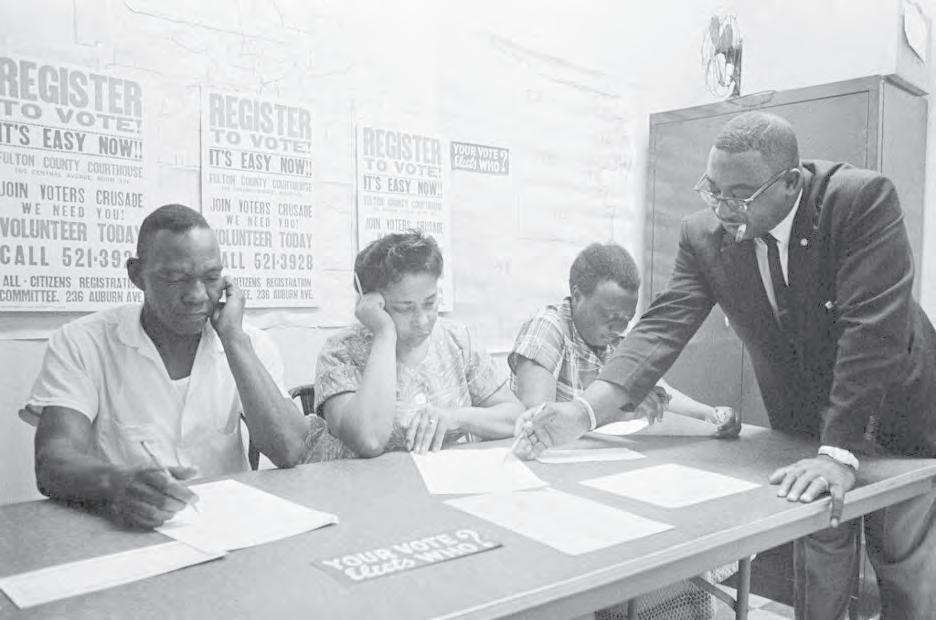
Aug. 26, 1920:
The 19th Amendment becomes law, granting women the right to vote — well, mainly white women. This has been a particularly arduous fight for Black women, who have been at the forefront in advocating voting rights.
June 2, 1924:
The Indian Citizenship Act grants Native Americans the right to vote. Some states ignore the law.
March 20, 1940:
The NAACP Legal Defense and Educational Fund is incorporated as the legal arm of the NAACP with Thurgood Marshall as its director.
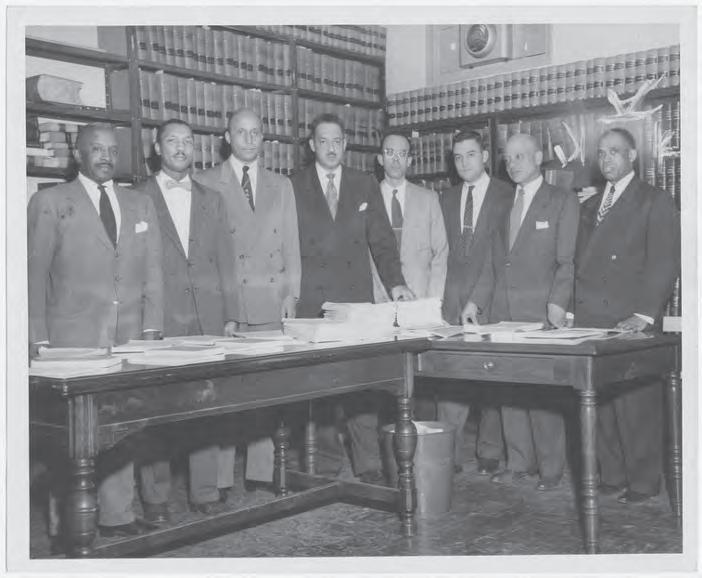
June 20, 1940:
Amid a domestic terror campaign aimed at anyone even suspected of involvement with the newly-organized NAACP chapter, Elbert Williams is kidnapped and lynched in Brownsville, Tennessee, because of his efforts to register Black voters. The NAACP considers him “the first NAACP member murdered for his civil rights activity.”
July 12, 1947:
Thurgood Marshall and his team win the case of Elmore v.Rice that challenges South Carolina’s whites-only Democratic Party primaries. But as one scholar notes, “While there was a victory in the ability to vote, the assurance of actually being able to vote without conditions was not.”
January 10, 1957:

The Southern Christian Leadership Conference (SCLC), led by Dr. Martin Luther King Jr., is founded in Atlanta, Ge orgia. Its mission is to coordinate and expand nonviolent civil rights work following the success of the Montgomery Bus Boycott.
Sept. 9, 1957: President Dwight Eisenhower signs the Civil Rights Act of 1957 into
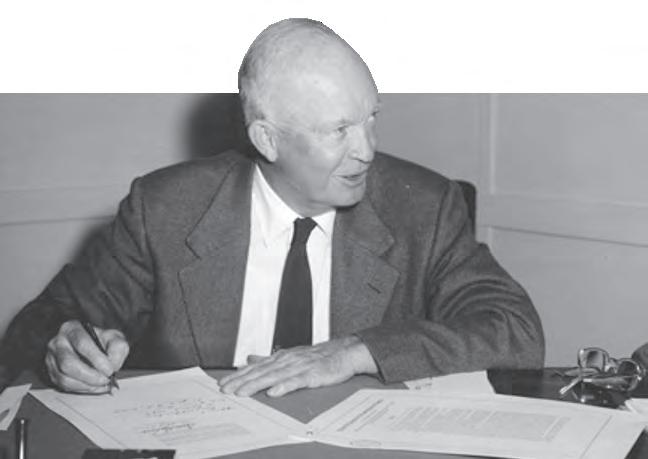




law, noting it is only the second federal civil rights law enacted in 85 years. The law establishes the Civil Rights Division in the Justice Department and an independent, bipartisan Civil Rights Commission to recommend policy related to voting rights, among other matters. The commission’s input will later influence the 1964 Civil Rights Act and the 1965 Voting Rights Act.
April 15, 1960:
The Student Nonviolent Coordinating Committee (SNCC) is founded.
turned away. After harassment, a drive-by shooting, losing her job, and being forced to move to another county, she passes on the third try on Jan. 10, 1963. But she is turned away again because she does not have money to pay the poll tax.
Aug. 28, 1963:
The March on Washington for Jobs and Freedom draws 250,000 people to the Lincoln Memorial. While it is meant to persuade Congress to enact the civil rights bill proposed by President Kennedy five months
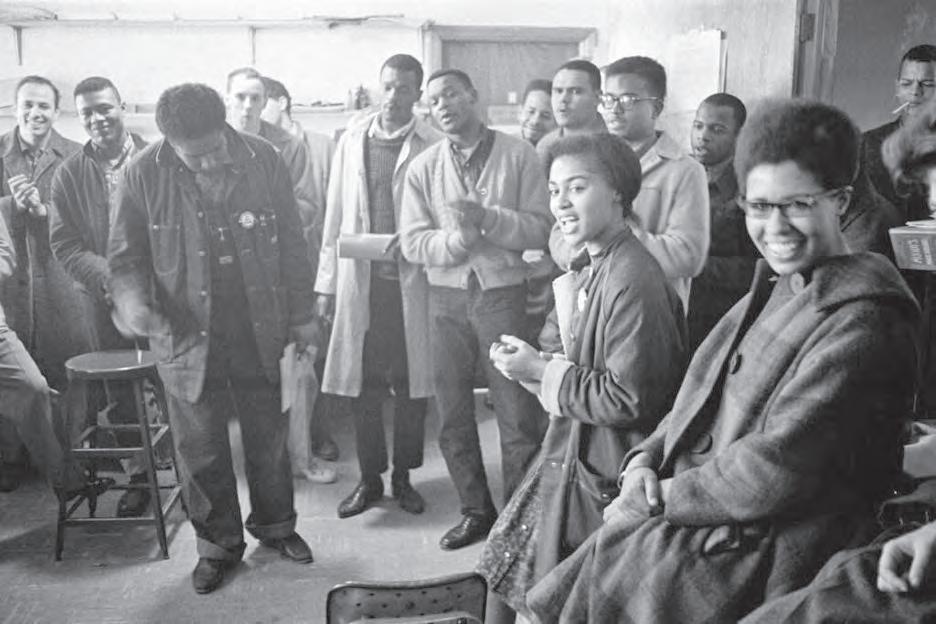
May 6, 1960:
The Civil Rights Act of 1960 becomes law. It is meant to protect Black Americans’ right to vote, But it does not eliminate literacy tests, poll taxes, or the intimidation and violence that keep many Black people from casting ballots.
Aug. 27, 1962:
A sharecropper named Fannie Lou Hamer attends her first SNCC meeting in Sunflower County, Mississippi, and learns for the first time that she has a right to vote. Four days later, she and 17 others travel to Indianola, the county seat, to register to vote. Most, including her, fail the literacy test and are
before his assassination, many of those gathered carry signs demanding voting rights.
Jan. 23, 1964:
The 24th Amendment is ratified, outlawing poll taxes in federal elections. (It will be another two years before the Supreme Court rules that poll taxes are unconstitutional in state and local elections.) Of the old Confederacy, only Texas and Florida ratify the 24th Amendment before it becomes the law of the land.
July 2, 1964:
President Lyndon B. Johnson signs the Civil Rights Act of 1964 into law. While most of the focus is on what this means for Black people’s access to public accommodations like hotels, restaurants, recreational facilities, and public transportation, the law also bans discriminatory practices in voter registration.
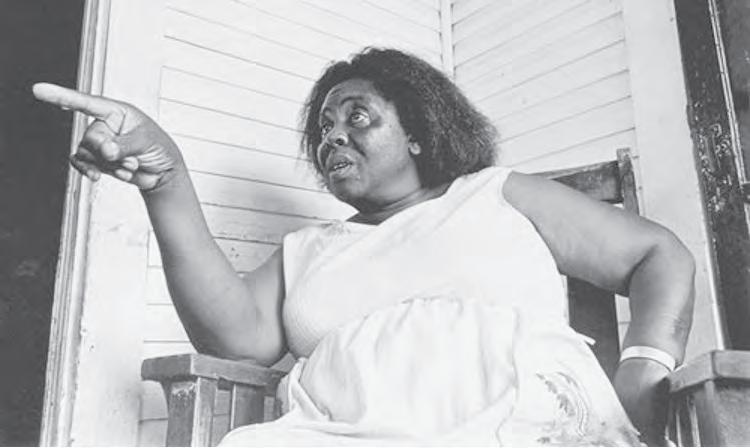
March 15, 1965:
In a nationally-televised address, President Lyndon B. Johnson tells a joint session of Congress that he wants a voting rights law. He makes reference to God as he closes his speech.
May 17, 1965—Aug. 4, 1965:

Congress acts. The Senate gets a bill, S.1564, on March 17; the House gets a bill, H.R. 6400, on March 19. The Senate passes its bill by a vote of 77-19 on May 26. The House passes its bill by a vote of 333-85 on July 9. After the two chambers reach a consensus, the House votes 328-74 to pass the bill on Aug. 3; the Senate votes 79-18 on August 4. Most of the opposition comes from Southern legislators.

Aug. 6, 1965: