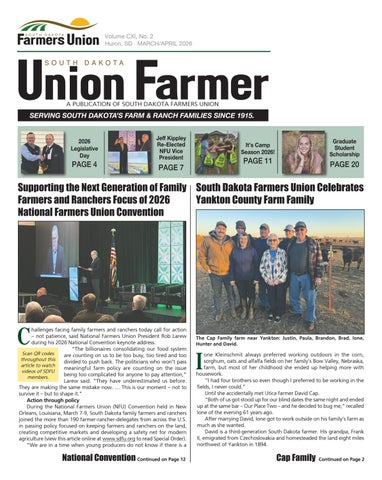
Supporting the Next Generation of Family Farmers and Ranchers Focus of 2026 National Farmers Union Convention
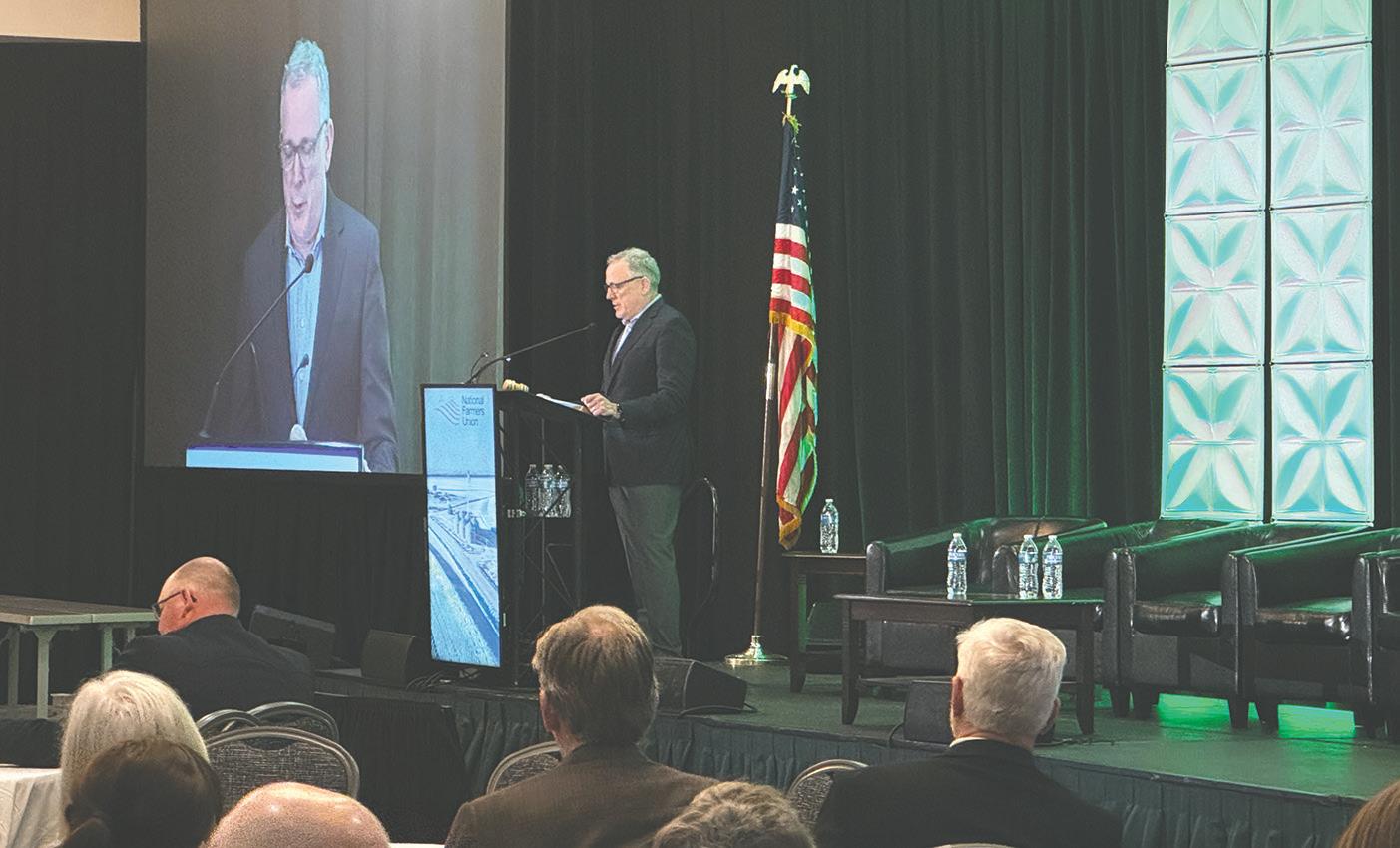
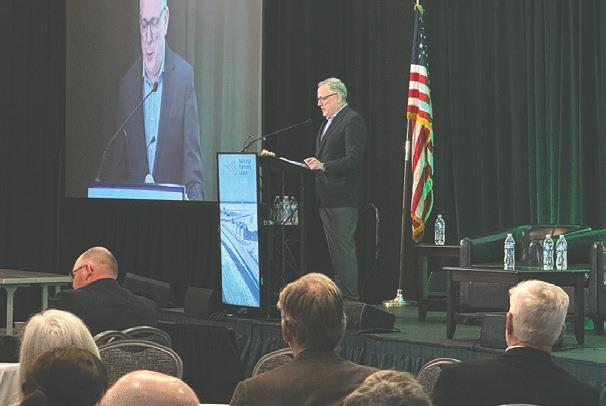
Challenges facing family farmers and ranchers today call for action – not patience, said National Farmers Union President Rob Larew during his 2026 National Convention keynote address.
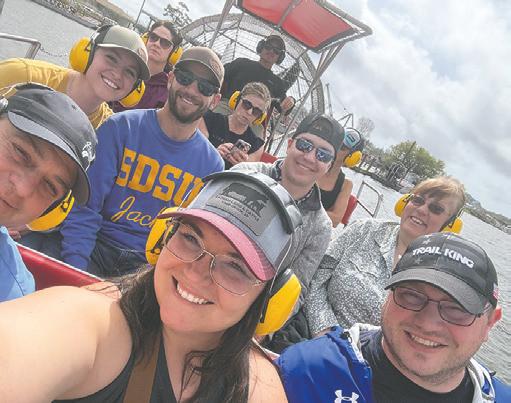
Scan QR codes throughout this article to watch videos of SDFU members.
“The billionaires consolidating our food system are counting on us to be too busy, too tired and too divided to push back. The politicians who won’t pass meaningful farm policy are counting on the issue being too complicated for anyone to pay attention,”
Larew said. “They have underestimated us before. They are making the same mistake now. … This is our moment – not to survive it – but to shape it.”
Action through policy
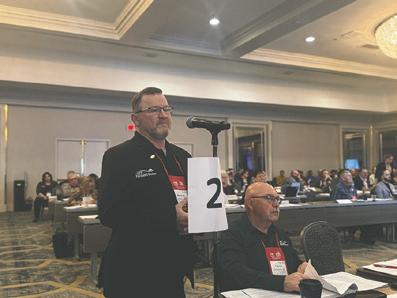
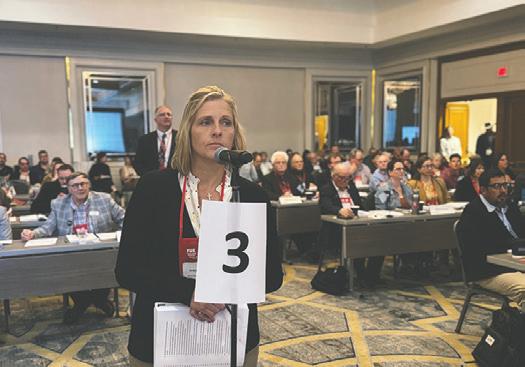
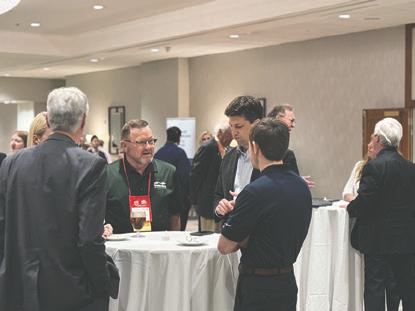
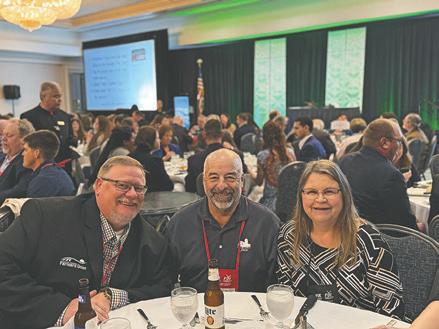
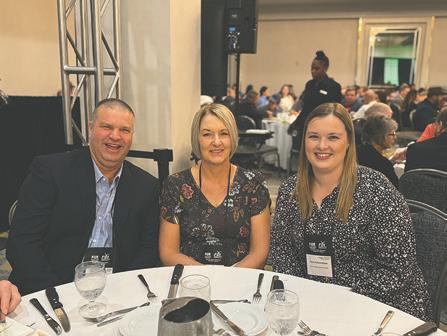
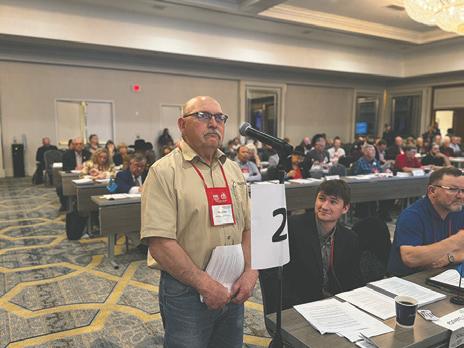
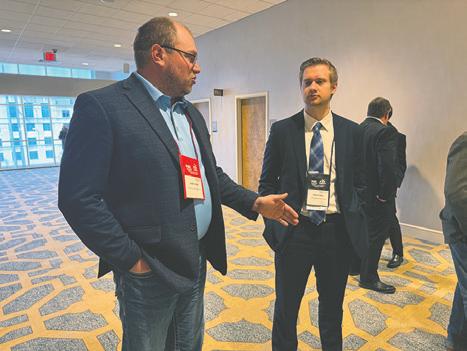
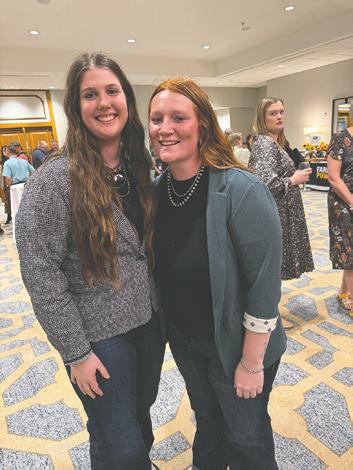
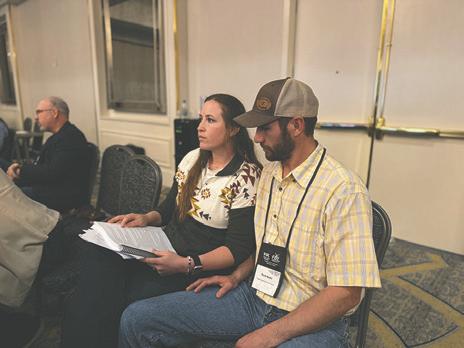
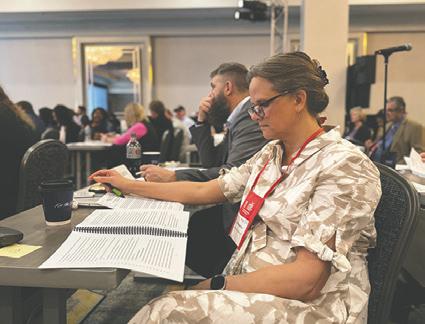
During the National Farmers Union (NFU) Convention held in New Orleans, Louisiana, March 7-9, South Dakota family farmers and ranchers joined the more than 190 farmer-rancher-delegates from across the U.S. in passing policy focused on keeping farmers and ranchers on the land, creating competitive markets and developing a safety net for modern agriculture (view this article online at www.sdfu.org to read Special Order).
“We are in a time when young producers do not know if there is a
South Dakota Farmers Union Celebrates Yankton County Farm Family
Ione Kleinschmit always preferred working outdoors in the corn, sorghum, oats and alfalfa fields on her family’s Bow Valley, Nebraska, farm, but most of her childhood she ended up helping more with housework.
“I had four brothers so even though I preferred to be working in the fields, I never could.”
Until she accidentally met Utica farmer David Cap.
“Both of us got stood up for our blind dates the same night and ended up at the same bar – Our Place Two – and he decided to bug me,” recalled Ione of the evening 61 years ago.
After marrying David, Ione got to work outside on his family’s farm as much as she wanted.
David is a third-generation South Dakota farmer. His grandpa, Frank II, emigrated from Czechoslovakia and homesteaded the land eight miles northwest of Yankton in 1894.
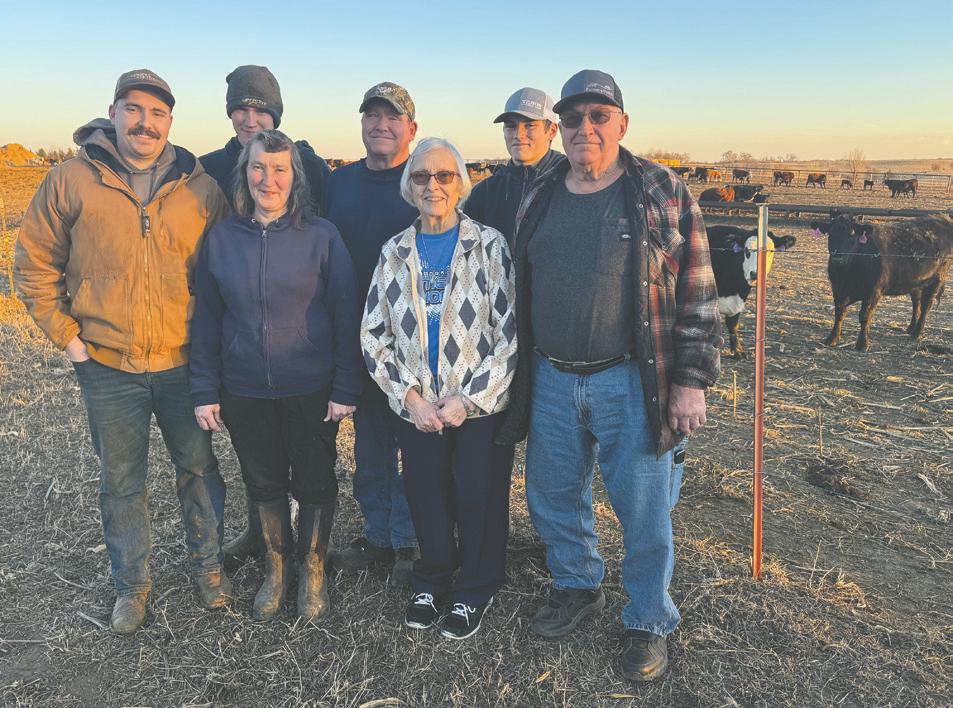
The Cap Family farm near Yankton: Justin, Paula, Brandon, Brad, Ione, Hunter and David.
Union Farmer
“There is a lot of pride in having a name continue on, on the farm.” – David Cap
His dad, Jerry, took over the farm in 1924.
“When I was growing up we milked cows, had stock cows, hogs and chickens – you can’t forget the chickens. My mother would order chickens every year. One year she ordered 1,000 chicks. She would butcher the chickens for us and she also sold them to a few people in town,” David recalled.
After they got married, in addition to
helping David in the milking parlor and fields, Ione also planted a large vegetable garden. “The kids helped me in our big garden and we would can more than 100 quarts of pickles and 200 quarts of beans as well as other fruits and vegetables,” Ione said. “I liked canning because then there was something on the shelf to add to any meal.”
With a growing family and dairy herd, meal prep was often last minute. “I did not have time to make fancy meals,” Ione said. “We were out milking morning and night. We’d work in shifts. The three oldest would go out and milk around 5:30 then come in and shower and go to school. Then I’d wake up the youngest and get them ready for school. We were usually out in the barn until 8 or 9 at night.”
Ione and David raised six children on their farm: Brad, Kevin, Sheryl, Roxann, Ronnie and Carmen.
“They learned responsibility and a good work ethic,” Ione said.
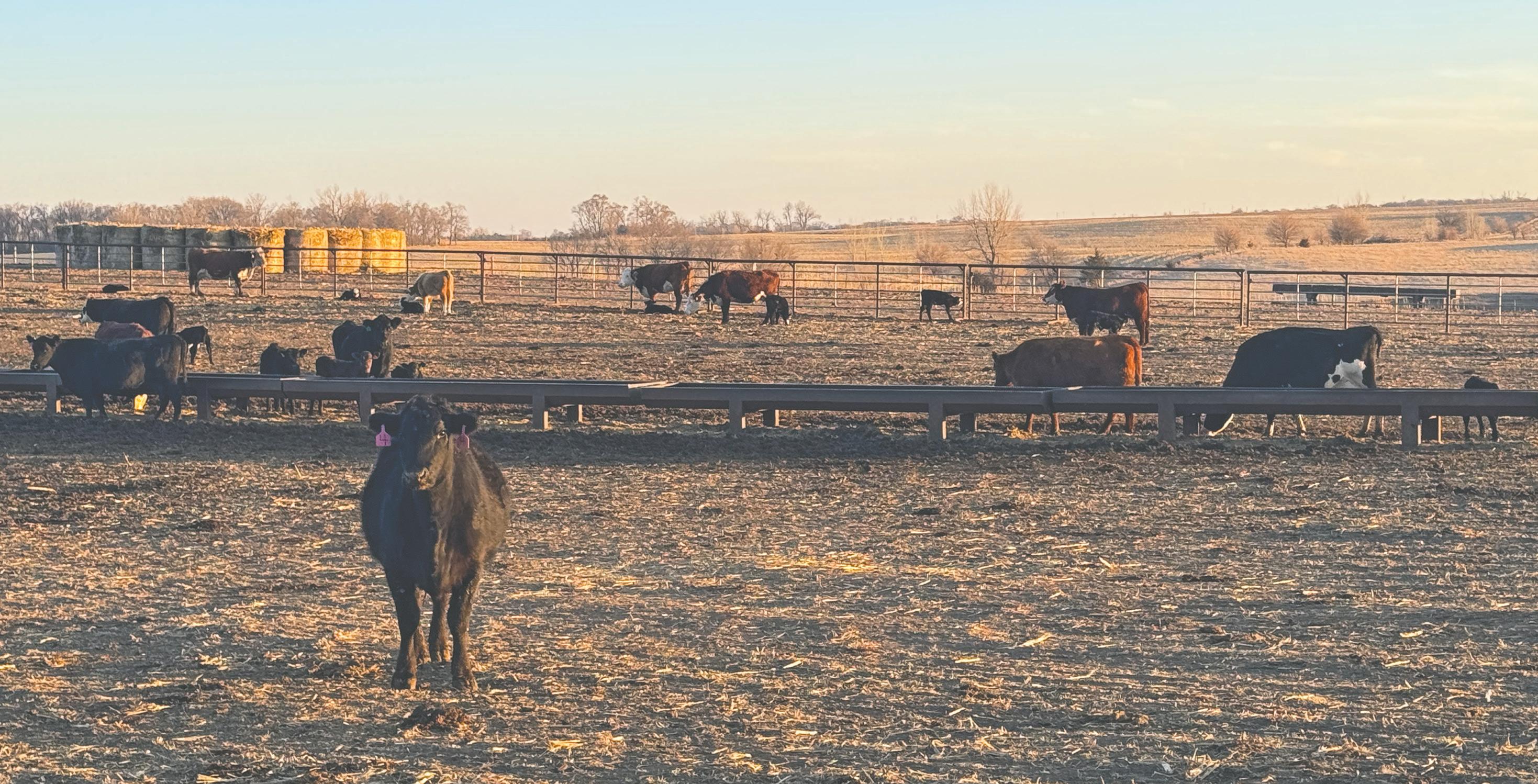
Today they have 15 grandchildren. They are grateful because their oldest son, Brad, and his wife, Paula, and their sons, Justin, Brandon and Hunter, carry on the family farming tradition.
“I am happy to have someone to hand the farm down to. But when prices are not good, I worry about them. I don’t want to see my son or his sons go broke and lose everything,” David explained.
David and Ione understand challenging times. They were raised by Depression-era
parents and weathered the Farm Crisis of the ‘80s because each of them had off-farm incomes. Ione babysat and David drove semi and did custom combining.
Then in 2018 the family had to sell their 60head dairy herd because inputs were rising but the price of milk was not.
“It was good timing because in 2019, it rained so much the milk truck would not have been able to get through to pick up milk,” David said.
Because he milked cows his entire life, selling the herd was a difficult decision. David and Ione loved their dairy cows. “You get to know the cows so well because you spend time with them twice a day, every day and they become your pets. I always had a tough time when a cow got
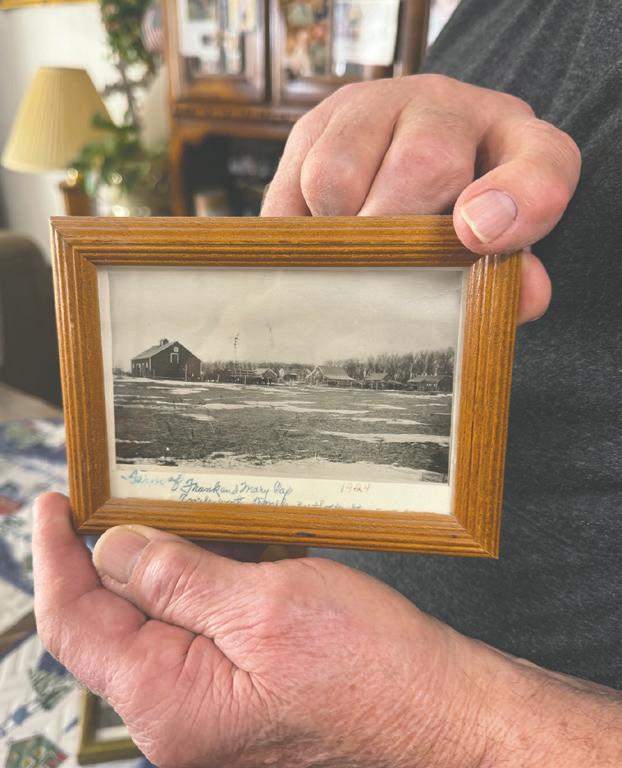
David Cap shows a historic photograph of his family’s farm.
too old to milk and I had to sell her,” David said. They credit their faith with helping them through the challenging times. “It is easy to lean on the Lord and turn to him in prayer,” Ione said. “We prayed together as a family all the time and I taught religion classes. I love to sing and I have been in the choir since the eighth grade. Half of us joined the choir as a family.”
Unlike Ione, David said he joined the choir, not because he loves to sing, but because he felt left out. “I did not want to sit downstairs by myself.”
Preparing
for the future of the Cap family farm
When David’s dad passed away in the mid1980s, his estate plan was not what attorneys today would approve of, however, it allowed for David and Ione to continue farming.
With the future of their farm’s legacy in mind, David and Ione are working on an estate plan that will help ensure that the next generation of Caps can continue farming.
“We have heard some horror stories where the children who are farming have to sell off land just to pay the taxes or they cannot afford to buy the ground from their siblings, so it gets sold outside of the family,” David said.
In addition to ensuring a healthy transition of the family farm, David and Ione have also worked to ensure the health of the land they pass on to the next generations of Caps.
“We are no-till on most acres and the water holding capability of the soil has greatly increased due to the organic matter that has been gained,” David said. He explained that to further increase organic matter and keep a living root in the ground as long as possible, the family plants cover crops after small grain harvest. “We use a mix of beets, radish, turnips and rye.”
“I like planting cover crops because they help us keep the ground from blowing away –literally,” said Brad, David and Ione’s son.
Similar to Ione and David, Brad and Paula met on a blind date. Paula grew up on a dairy farm near Waubay. Also similar to Ione and David, the couple worked together on the farm full time until 2018 when the family sold the dairy cows.
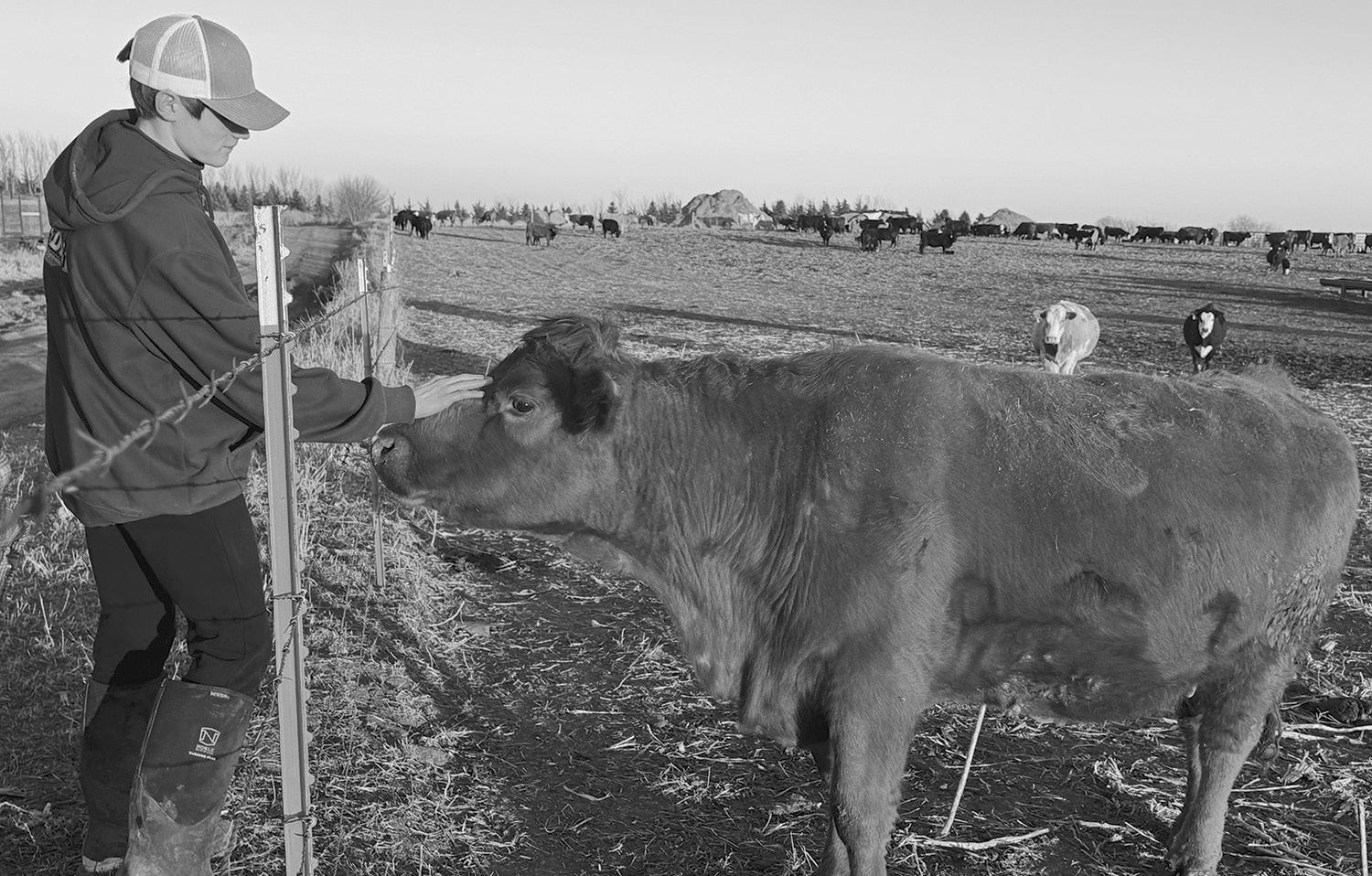
“It is in our blood,” Brad said. “Farming is hard work. Especially with dairy cows, you have to milk them even if the prices are bad or the weather is bad, but I like doing it. I like watching the calves grow. I like being outside with the cattle first thing in the morning. I see sunrises all the time.”
“I like the fact that I got to raise my kids here on the farm,” Paula added.
Now that their older sons, Justin and Brandon, are building up their own beef herd on the farm, Brad and Paula work full time off the farm. Their daughter, Megan, is a registered nurse for Avera McKennan Hospital in Sioux Falls and their daughter, Carly, is studying to become a nurse at South Dakota State University.
Justin and Brandon began building up the farm’s beef herd after Justin graduated from college with a degree in accounting. Justin works full time off the farm as an accountant, while Brandon, who graduated from college spring of 2025 works full time on the farm.
“We have sat around this kitchen table and discussed where we want the farm to go and how we want to get there,” Justin explained.
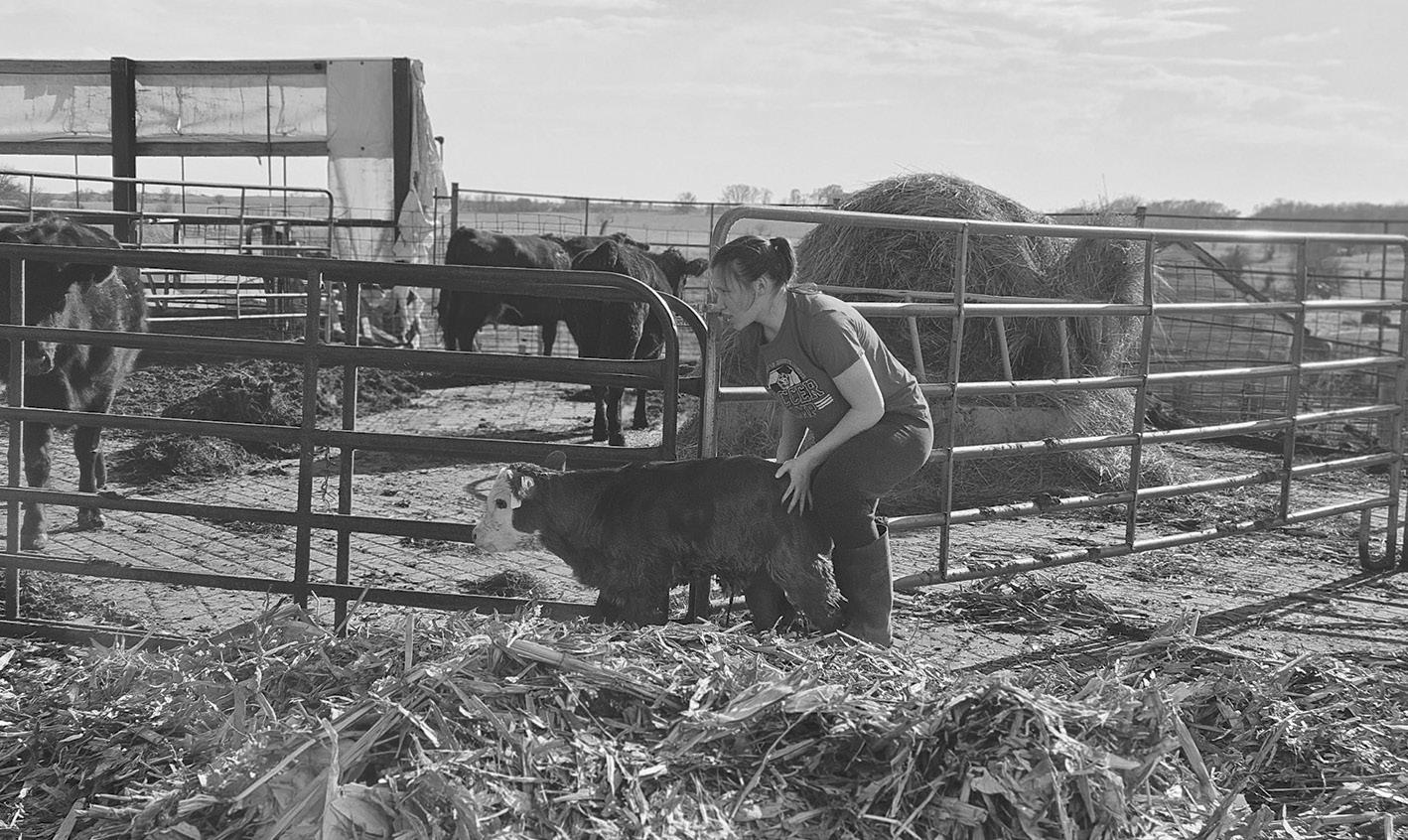
The brothers are in the midst of calving right now. Because Brandon is alone on the farm during the work week, the brothers sort cows each weekend so the cows close to calving can be nearby and under surveillance.
“We have several cameras and we all have access to them on our cell phones so if we see a cow is having trouble, we can go out and help her,” Brandon said. “If we save one calf, it more than pays for all the cameras.”
Hearing their grandsons discuss their future on the Cap family farm is heartwarming for David and Ione.
“It’s a good feeling to know they will be here and farming even after we are gone,” David said. “There is a lot of pride to having a name continue on, on the farm. When a person goes through a cemetery, you think, ‘I remember those people, but they are not farming anymore.’ There are not many five generation farms anymore.” n by Lura Roti for SDFU
Hunter Cap
Carly Cap is studying at South Dakota State University to become a nurse. Carly’s sister, Megan, is registered nurse at Avera McKennan Hospital in Sioux Falls.
Union Farmer
Legislative Day 2026: Farmers Union Recognizes Sen. Sydney Davis and Rep. Tim Goodwin for Service to Agriculture
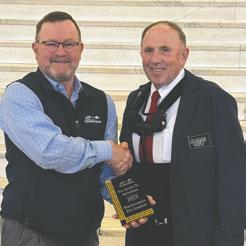
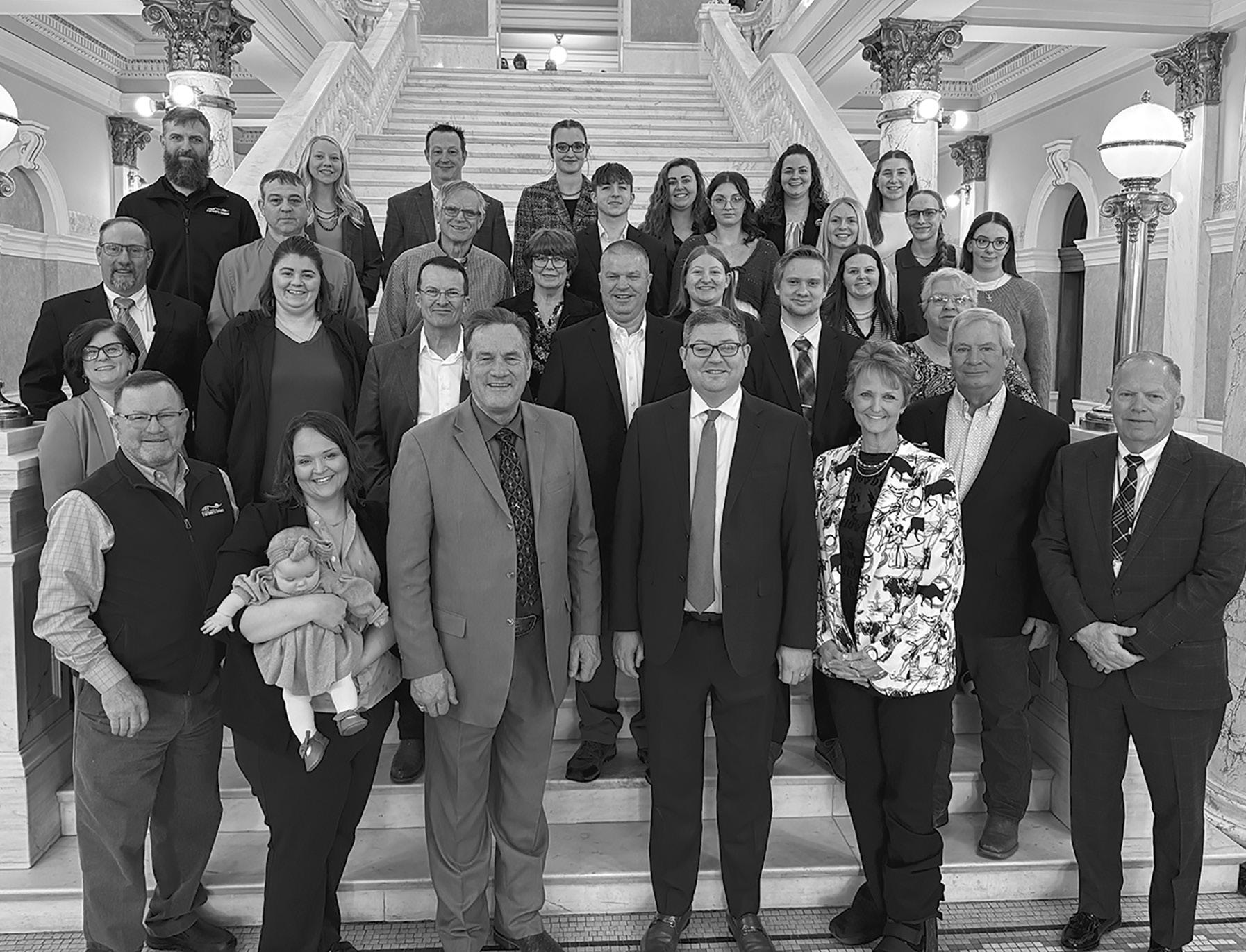
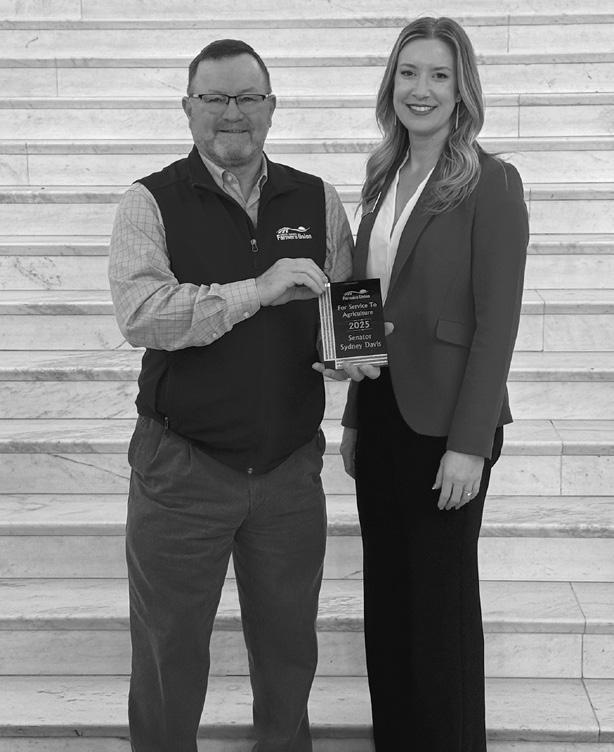
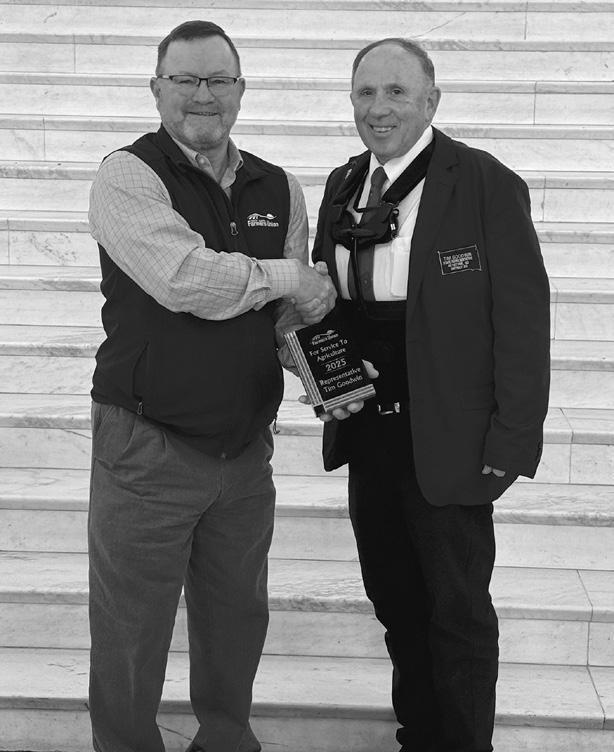
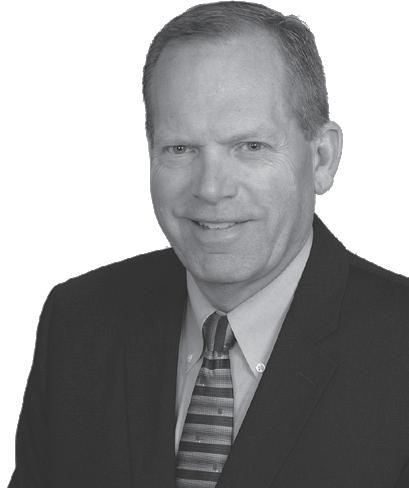
The state’s largest agriculture organization recognized Sen. Sydney Davis and Rep. Tim Goodwin March 3 with the Service to Agriculture Award during South Dakota Farmers Union’s annual Legislative Day.
“Family farmers and ranchers need strong advocates willing to be a loud voice for the needs of our state’s largest industry,” said Doug Sombke, President of South Dakota Farmers Union. “As the numbers of families involved in production agriculture shrink, we depend heavily on legislators like Sydney Davis and Tim Goodwin to support the policy that supports our farms, ranches and rural communities.”
Read on to learn more about Davis and Goodwin.
Sydney Davis, District 17 Senator
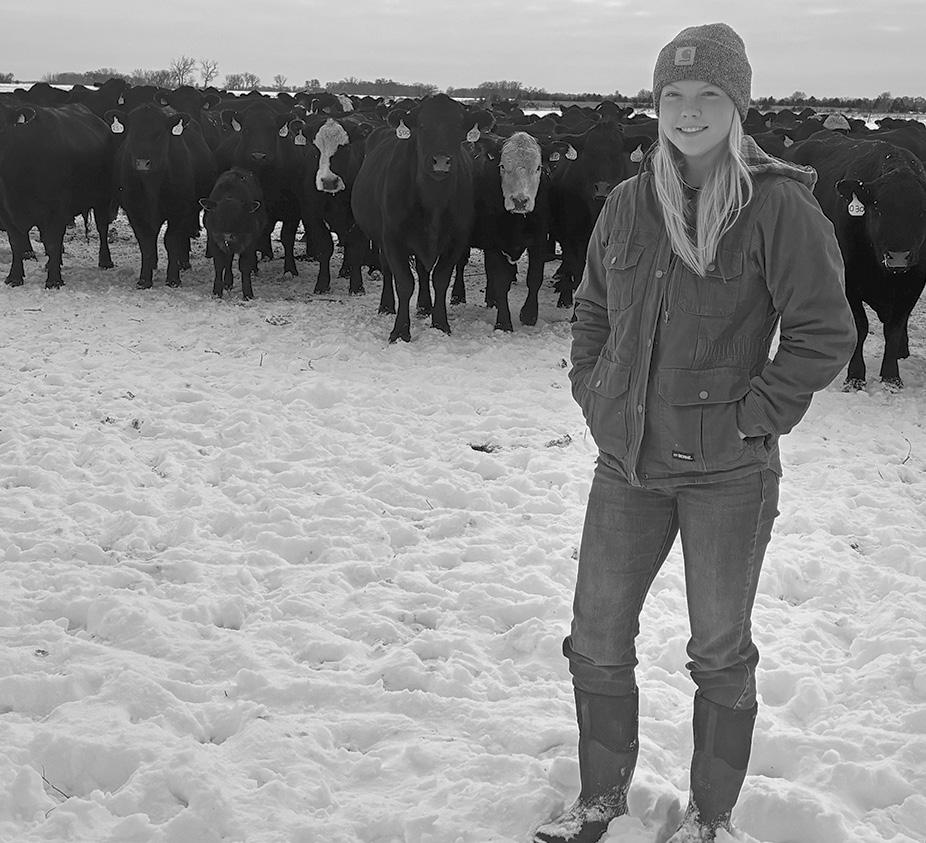
Growing up on a Black Angus seedstock operation outside of Mitchell, Sydney (Geppert) Davis said she developed a deep love for agriculture and an understanding about what it means to care for others.
“Growing up in this way of life, as a kid I developed a respect for all the things around me – whether that is nature or animals – if I don’t help take care of it, it cannot take care of me,” Davis said.
This innate desire to care for others and an interest in science led Davis to pursue a nursing degree at South Dakota State University and
eventually she pursued an advanced degree at Mount Marty University to become a certified registered nurse anesthetist. Today, she works at the Vermillion hospital.
Like Davis, her husband, Garrett, also grew up in agriculture. So, when they began to think about their future as parents, it was important to them that they could raise their children on a farm. So, in 2017, the couple purchased a cattle operation near Beresford from a family friend ready to pass their operation on to a young producer.
“Raising children on a farm teaches them so much about life. For example today, it’s really cold outside, and it would be nice to hang out inside and play Nintendo, but the cows are hungry and need their feed,” Davis said, of the way of life she is happy her three young children; Bo, 8, Pepper, 4, and Tulsi, 1, get to
“Growing up in this way of life, as a kid I developed a respect for all the things around me – whether that is nature or animals – if I don’t help take care of it, it cannot take care of me.” – Sydney Davis
experience and learn from.
Even though her career is in healthcare, Davis said when it comes to agriculture issues in Pierre, she relies on her rural ranch upbringing to advise her. “It often surprises my colleagues when I comment on agriculture topics in a way that shows I know what I’m talking about. My husband does the day-to-day work on our operation, but I still know how to operate a chain and puller and can get a newborn calf to nurse.”
Her career in healthcare is what led her
to run for office. There was policy that would impact the way she and other healthcare workers could practice. So, Davis began to get to know her legislators and advocate for what she and other healthcare professionals needed to best care for their patients.
“Through the process, I gained a lot of confidence, understanding and knowledge of what the work of a legislator is and how important it is for our legislature to have diverse voices.”
Elected in 2021 to the House of Representatives and again in 2023 to the Senate, Davis understands the power of citizen advocates and encourages South Dakota’s family farmers and ranchers to advocate for their needs by getting to know their legislators.
“Reach out to your legislator with a phone call or in-person meeting and share who you are and what you do so that they can reach out to you if they need advice,” Davis said. “We are always quick to brag that agriculture is our No. 1 industry, and yet, agriculture is one of the most underrepresented aspects of our citizen legislature.”
Sen. Sydney Davis was recognized by SDFU with the Service to Agriculture Award.
She explained that although legislators read their email they receive a lot of email, so phone calls or in-person meetings are most impactful. Davis also encourages citizens who can, to make time to serve.
“Service and getting involved does not always mean public office, it means getting involved in your community and in the organizations that matter to you,” Davis said. “Decisions are made by people who show up.”
Tim Goodwin, District 30 Representative and Majority Whip
Reflecting on his military and sales careers and his service in the South Dakota Legislature, Majority Whip Tim Goodwin said the roots of his successes are traced back to growing up on his family’s farm near Watertown.
“Working on the farm and being active in the ag community, I was in 4-H and FFA – I served as President of the 4-H club and Watertown FFA Chapter – these life experiences shaped who I am,” said Goodwin.
“Working on the farm and being active in the ag community, I was in 4-H and FFA – I served as President of the 4-H club and Watertown FFA Chapter – these life experiences shaped who I am.”
– Tim Goodwin
Goodwin explained that even the ability to participate in parliamentary procedure on the House floor during Session as the District 30 Representative can be traced back to his years in 4-H and FFA. “I still cringe when somebody says, ‘I make a motion.’ I think, ‘don’t you know any better than that?’ ‘Weren’t you ever in 4-H or FFA?’ I didn’t know it at the time, but everything I did and the experiences I had on the farm and in 4-H and FFA prepared me for life.”
Just in case you’re wondering, the correct way to present a motion is to simply say, “I move.”
Goodwin graduated high school in 1973. Even though the draft ended a year prior, military service was part of Goodwin’s plan. “I joined the Army and became a paratrooper in the 82nd Airborne Division as a combat medic. So that was three great years to grow up – from 18 to 21.”
After graduation, Goodwin was recruited by the Army National Guard to a full-time position that eventually led to Goodwin working as the recruiting commander at Camp Rapid. Goodwin and his team of 80 recruited 600 soldiers a year. “It was absolutely the best job I ever had,”
Goodwin said. “I am a soldier. It was my calling. … I think the best thing a young person can do is join the National Guard and get your college paid for and the benefits. Both my sons did this. I guess I’m still a recruiter.”
When Goodwin retired from his military career he was only 41. So, he began his second career working in home materials sales. It was this career that led him to the state Legislature. Through his work he got to know several members of his community and soon learned
that many were concerned about human rights violations happening in a closed community near Pringle.
“On the compound, no one received a birth certificate or a death certificate. There were
Union Farmer
child marriages going on – everybody was talking about it, but nothing was being done,” explained Goodwin, who reached out to State Attorney Marty Jackley for advice.
During his first term, Goodwin introduced a bill that passed requiring all citizens born in South Dakota to receive a birth certificate within 45 days of birth and a death certificate within 45 days of passing.
This law forced accountability and the community left South Dakota. Today, the cult leader Warren Jeffs is in a Texas prison serving a life sentence.
“As a legislator I realized that I could make a difference – one person can work with others to change laws in South Dakota and make South Dakota a better place,” Goodwin explained. “I see myself as the champion of the little guy. I serve because I want to make South Dakota a better place. I know this makes me sound old, but I want to make it a better place for my grandkids. I want them to be able to live the life I lived. So, every day I work to make a difference.”
Goodwin retired from his second career before running for the state Legislature. He continues to work to solve issues impacting South Dakota communities. During the 2026 Legislative Session, he introduced a bill aimed to protect family farms by limiting the expansion of corporate dairies in South Dakota by limiting herd size to 7,000-head.
“Family farms are a part of the culture of South Dakota, so I will do what I can to protect them,” Goodwin said. “Family farms and ranches are the backbone of our state. It is how our state was founded and I want to preserve this way of life.” n by Lura Roti for SDFU
Rep. Tim Goodwin was recognized by SDFU with the Service to Agriculture Award.
Union Farmer
2026 Legislative Update
By Mitch Richter
During the Legislative Session SDFU lobbyist Mitch Richter is in Pierre each day to keep an eye on issues and ensure SDFU policy is represented. Read on to learn about legislative actions that impacted policy SDFU members care about.
Property taxes, data centers and right to repair were issues discussed during the 2026 Legislative Session and South Dakota Farmers Union kept a close eye on these issues because they align with member-led policy. Following the close of the 2026 Legislative Session SDFU Lobbyist Mitch Richter provides members with an update.
Property Taxes:
Two bills passed that impact property taxes.
Senate Bill 96 was Gov. Larry Rhoden’s bill that gives counties an option to implement a half-cent sales tax for property tax relief. Funds earned from this sales tax go to reduce property taxes on owner-occupied homes. SDFU was in favor of this bill. However, it does not do much for rural coun-
ties where there are not many retail businesses and many of the same individuals paying property taxes are also paying the half-cent sales tax.
Senate Bill 245 also passed. This bill goes into effect July 1, 2027. The bill increases sales tax from 4.2 percent to 4.5 percent. The 0.3 percent it adds to sales tax, was previously cut by former Gov. Kristi Noem. The cut will sunset July 1, 2027. The bill allocates funds earned from the additional 0.3 percent sales tax to owner-occupied property tax relief. Of note, 0.3 percent sales tax increase would raise about $110 million in funds statewide.
Data Centers: Several proposed bills that focused on data centers did not pass.
Data centers wanted a sales tax break on equipment utilized within the data centers. This equipment needs to be changed out every three to five years, amounting to significant sales tax earnings for the State of South Dakota. Bills asking for sales tax breaks did not pass. SDFU policy does not support giving tax breaks to data centers.
SDFU policy does support Senate Bill 135. This bill makes data centers responsible for all costs associated with data center infrastructure. The bill basically states that data centers cannot transfer their costs to South Dakota cities or counties.
Right to repair: Although bills were drafted, they did not make it out of committee. SDFU policy supports right to repair and will continue to work for passage of bills during Legislative Session 2027 to provide family farmers and ranchers with the technological access they need to repair their own equipment. n
Legislative Day 2026
National Farm Organization Re-Elects Aberdeen Farmer to Serve as Vice President
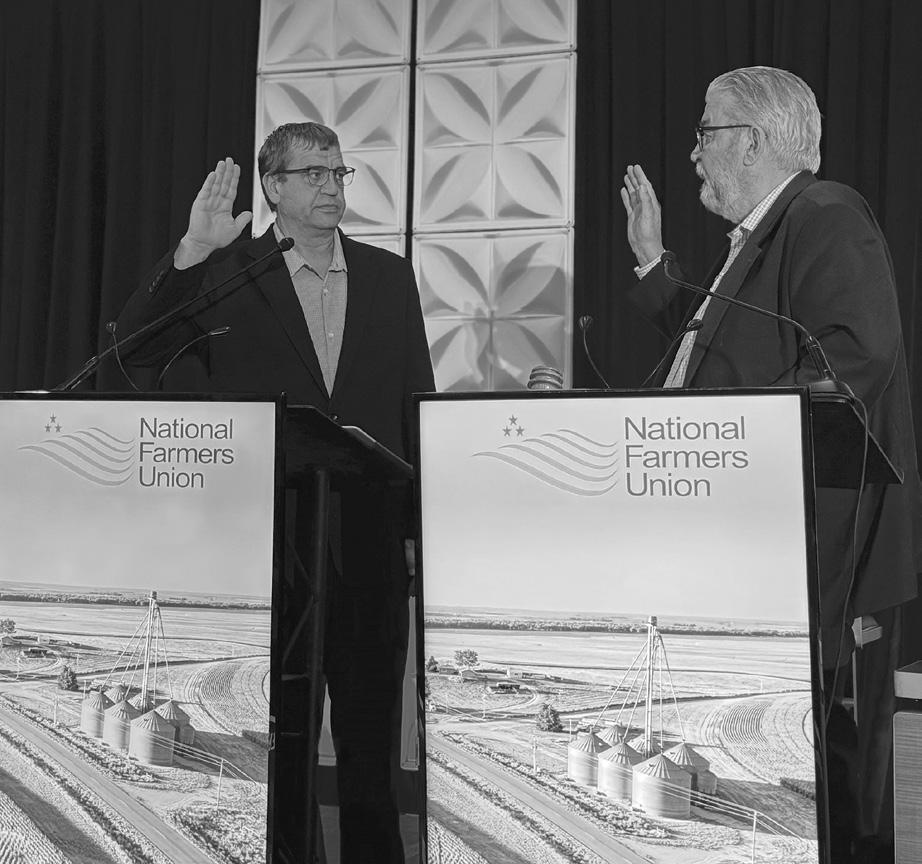
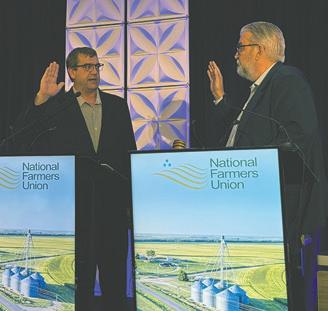
Family farmers and ranchers re-elected Aberdeen farmer Jeff Kippley to serve as the National Farmers Union Vice President March 8, during its national convention held in New Orleans, Louisiana.
“As a fourth-generation farmer, it is an honor to represent and fight for policy on behalf of family farmers and ranchers across the nation,” Kippley said. “Whether you are a cattle rancher in South Dakota, cotton farmer in Texas or a blueberry farmer in Michigan, we all face similar challenges, and we need to work together for policy to support a better tomorrow.”
Getting a Farm Bill passed that will work for family farmers and ranchers is a top priority for Kippley. “We’d like to see the Farm Bill re-imagined to improve the safety net,” said Kippley, as he begins his third term serving as National Farmers Union Vice President. “What we have been doing for the last 30 years is not working. We need to get this done because we are seeing family farms and ranches disappear at an extreme rate.”
In addition to strong farm policy at the federal level, Kippley advocates for family farmers and ranchers to get involved in state and local policy. “Engagement is a focus,” Kippley said. “U.S. farmers are underrepresented at all levels of government. I encourage Farmers Union members to become involved in democracy across the U.S., whether this is serving on your local co-op board, county commission, city council or running for your state legislature. We need the people who are actually boots on the ground to be in the meetings where the decisions are taking place.”
Kippley also serves as Vice President of South Dakota Farmers Union, the state’s largest agriculture organization. He and his wife, Rachel, have four children and raise crops and cattle. In addition to farming, Kippley operates a tax preparation business with his dad, John, and sister, Michelle Olson. n by Lura Roti for SDFU
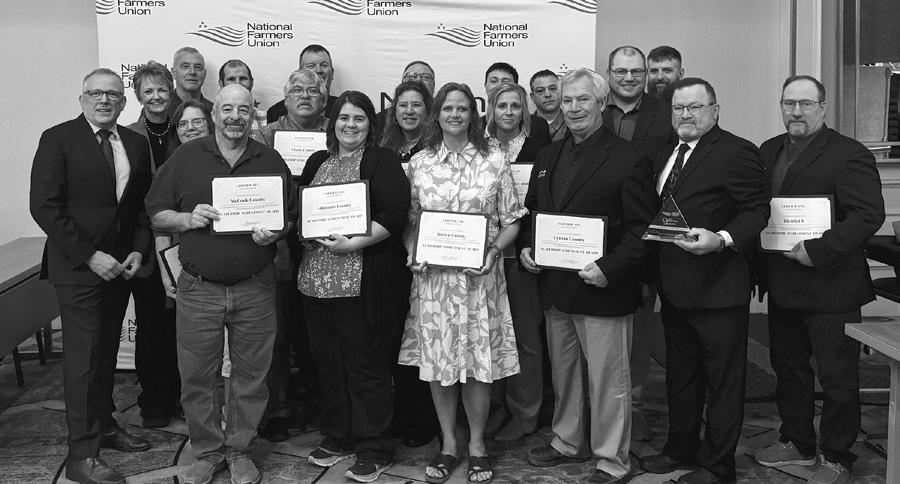
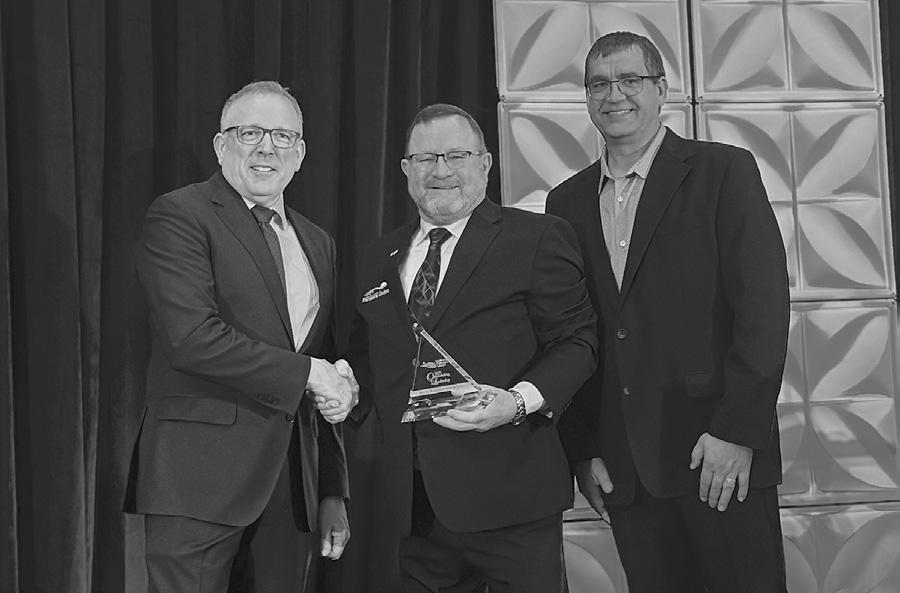
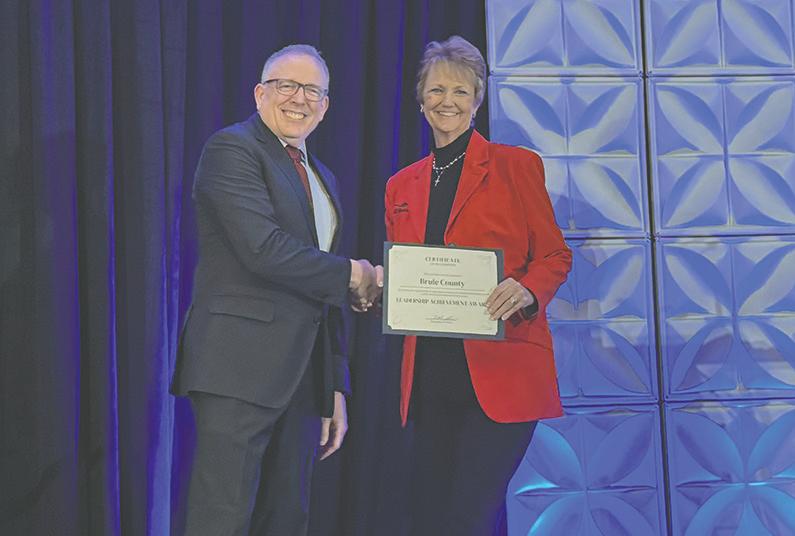
South Dakota Farmers Union Recognized
Scan to watch a video of Jeff Kippley swearing in ceremony.
Dakota Farmers Union County
District
growth in
Cooperatives Return Profits to Rural Communities … And More … What Students Learned During College Conference on Cooperatives
Growing up in Castlewood, South Dakota, Olivia Whiting values her rural roots and community. During the College Conference on Cooperatives, the Lake Area Technic al College student learned that cooperatives do also.
“Because cooperatives return profits back to their members instead of investors, it allows money to stay in the community the cooperative serves and the members live,” Whiting explained. “I think this is cool because I want money I spend to stay in my rural community versus some investor who does not live here.”
Whiting is studying ag business at Lake Area Technical College (LATC) and hopes to return to Castlewood or some community nearby to begin her career after she graduates. “I am excited about helping farmers become more productive,” Whiting said.
Whiting learned about how cooperatives work while attending the College Conference on Cooperatives hosted by National Farmers Union. South Dakota Farmers Union sponsored Whiting and several other South Dakota college students to attend the event held in Minneapolis
where students learned about the history of cooperatives, how the cooperative business model works and how this business model works to meet a diversity of needs.
“We learned about how ACE Hardware is part of a purchasing cooperative. So, instead of each store purchasing 10 hammers, together
College Co-op Trip
Beresford Cattle Producer Wins Ag Advocacy Contest
As a high school junior, Kylie Mockler competed in an FFA Leadership Development Event that inspired her college majors and career path.
“For the ag issues event, I was standing up in front of a crowd speaking on agriculture issues and providing the facts about the ag issue,” the South Dakota State University freshman ag leadership/ag communications major explained. “And I was like, ‘this is what I want to do. This is what I would love to do. I would love to advocate for agriculture and tell the truth about agriculture.’”
With her career goal in mind, Mockler determined to create weekly social media posts focused on agriculture. She launched Keepin. it.rural_ page on Instagram…and then nothing.
“I felt like I was stuck. I wanted to get out there and get posting, but I wasn’t. And then Bridget Twedt told me about the Farmers Union Farming for the Future Social Media Scholarship Contest,” she said. “It was just the motivation I needed. The timing was perfect. This contest was a great opportunity for me.”
The multi-week agriculture advocacy contest sponsored by South Dakota Farmers Union provided students with weekly prompts and challenges. “I competed not just for the
scholarship opportunity, but for the experience,” Mockler said. “The contest gave me a feel for what I want to do in my future.”
Mockler learned a lot the first year she competed. And although she did not place in 2024, when she returned to compete in 2025, Mockler, now a college freshman, placed first overall winning $3,000 in scholarship dollars; she also received the Excellence Award, as the only student to receive more than 1,000 points and she was named the Social Media Star. She is living out her dream to be an ag
influencer, with a growing list of followers. At its peak, a post on Keepin.it.rural received more than 31,000 views and more than 6,000 likes.
“This experience really encouraged me to keep posting and creating creative content,” Mockler said.
Encouraging rural youth to advocate for agriculture is among the goals of the Farming for the Future Ag Advocacy Scholarship, explained Karla Hofhenke, Executive Director for South Dakota Farmers Union.
“Family farms and ranches provide more than an income for many South Dakotans – it is a way of life,” Hofhenke said. “Our organization knows in addition to working to protect family farms and ranches through policy, this way of life also needs effective and educated advocates.”
To learn more about how South Dakota Farmers Union supports family farmers, ranchers and rural communities, visit www. sdfu.org. To view social media posts created by Mockler and other students participating in the Farming for the Future Agriculture Advocacy Scholarship Contest, visit South Dakota Farmers Union Foundation Facebook page or search #FarmingForTheFuture25. n by Lura Roti for SDFU
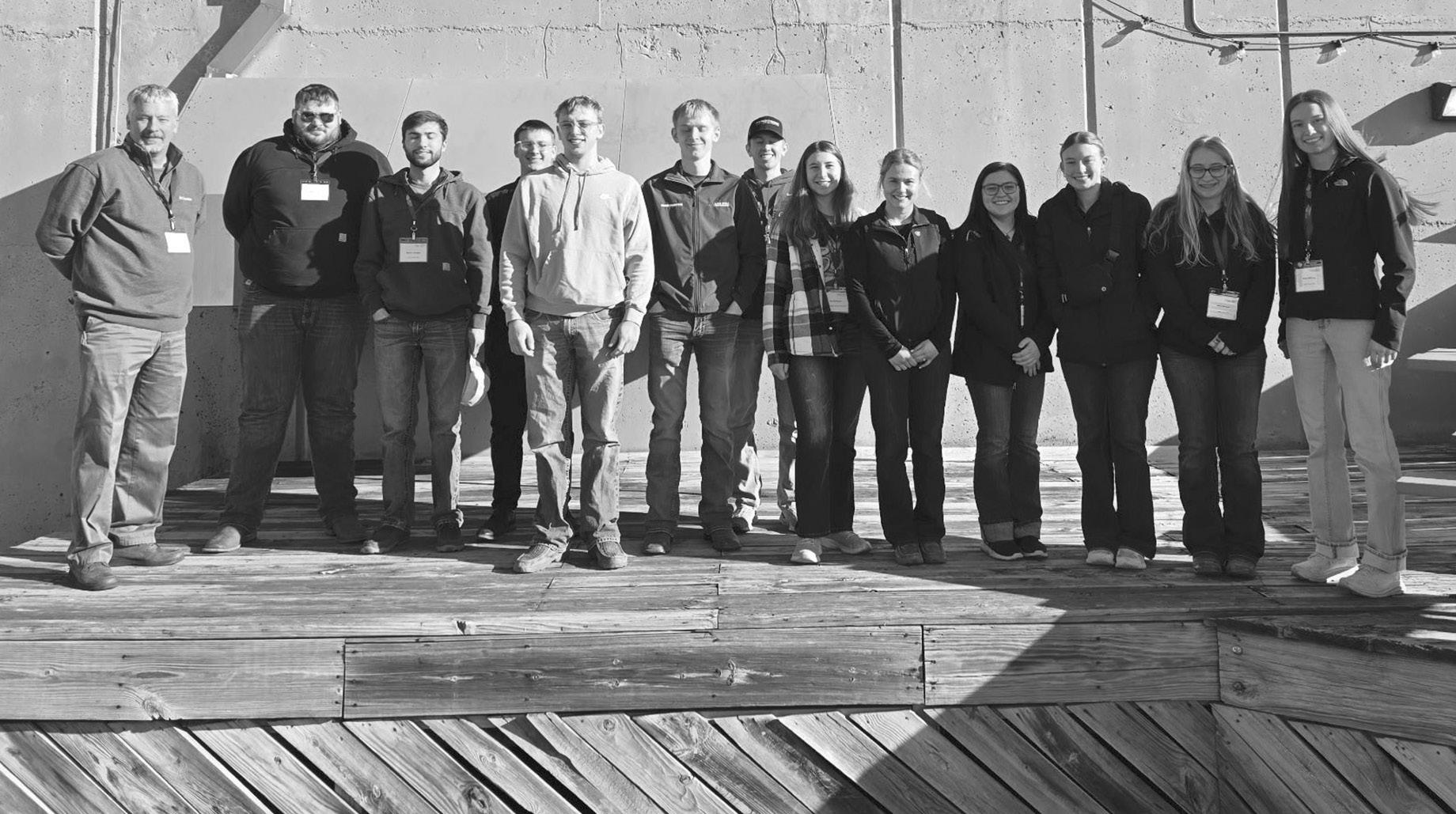
South Dakota Farmers Union sponsored several college students to attend NFU College Conference on Cooperatives (left to right) Jeffrey York, LATC Instructor; Hudson Drake, Wyatt Leininger, Ethan Thompson, Josh Meehl, Mason Tschetter, Luke Sachariason, Aeriel Eitreim, Jacie DeVries, Tory Fink, Adair Hanisch, Riley Sprouse and Olivia Whiting.
Kylie Mockler was recognized with the Social Media Rock Star award during the Farming for the Future Ag Advocacy Contest.
College Co-op Trip
Continued from Page 8
they can purchase 10,000 hammers and receive a volume discount,” explained LATC precision agriculture student Mason Tschetter.
Tschetter said he knew a bit about cooperatives before the event because his family farms near Huron and they are members of several cooperatives. Because of the College Conference on Cooperatives he now knows about the history and diversity of cooperatives.
“It is amazing how through cooperatives individuals are able to band together and meet their needs – things that would not be accomplished otherwise without large amounts of capital,” Tschetter said. “What I learned about cooperatives I can see myself using in my future on my family’s farm since I will be purchasing most of the farm inputs from cooperatives.”
Understanding the role cooperatives play in rural communities is important explained Karla Hofhenke, Executive Director for South Dakota Farmers Union.
“Cooperative education is something Farmers Union invests in because our family farmers and ranchers build their lives in our rural communities,” Hofhenke said. “Much of the infrastructure rural citizens depend on –electricity, water, internet – is provided to them by cooperatives. Most South Dakotans are members of a cooperative whether they realize it or not. It is important to the future success of rural communities and cooperatives that citizens understand how they work and become engaged in cooperative leadership.”
To learn more about how South Dakota Farmers Union invests in family farmers, ranchers and rural communities, visit www.sdfu.org n by Lura Roti for SDFU
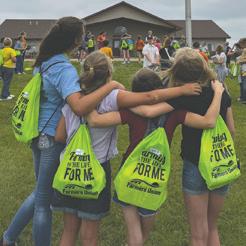
Calling All Rural Youth – Farmers Union Summer Camp Registration is Open
On Haddie Perrion’s 6th birthday, she was excited because finally she was old enough to attend Farmers Union Camp.
“She was counting the days because she had watched her older sister go to day camp and Youth Camp and she saw how much fun Bexley had,” explained Haddie’s mom, Sarah.
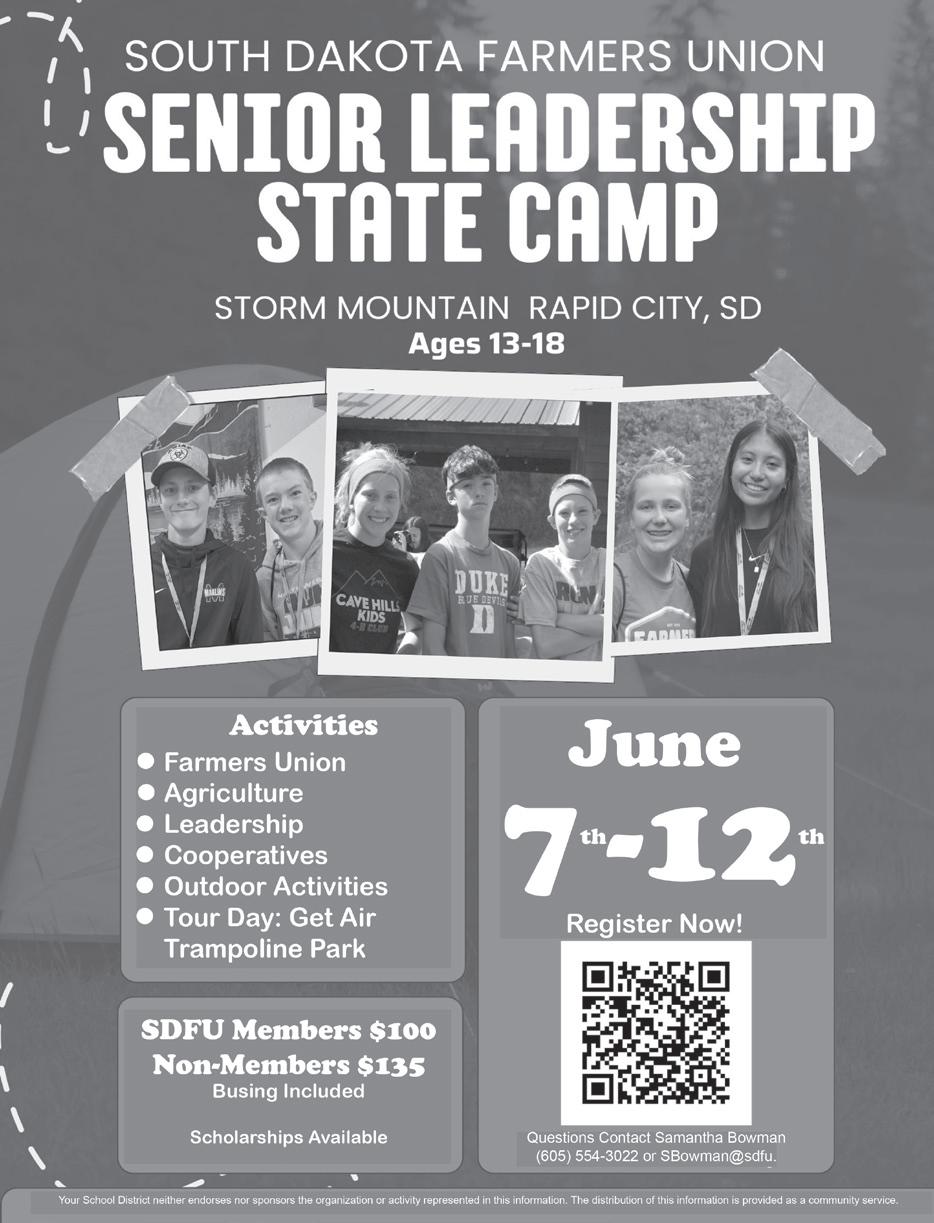
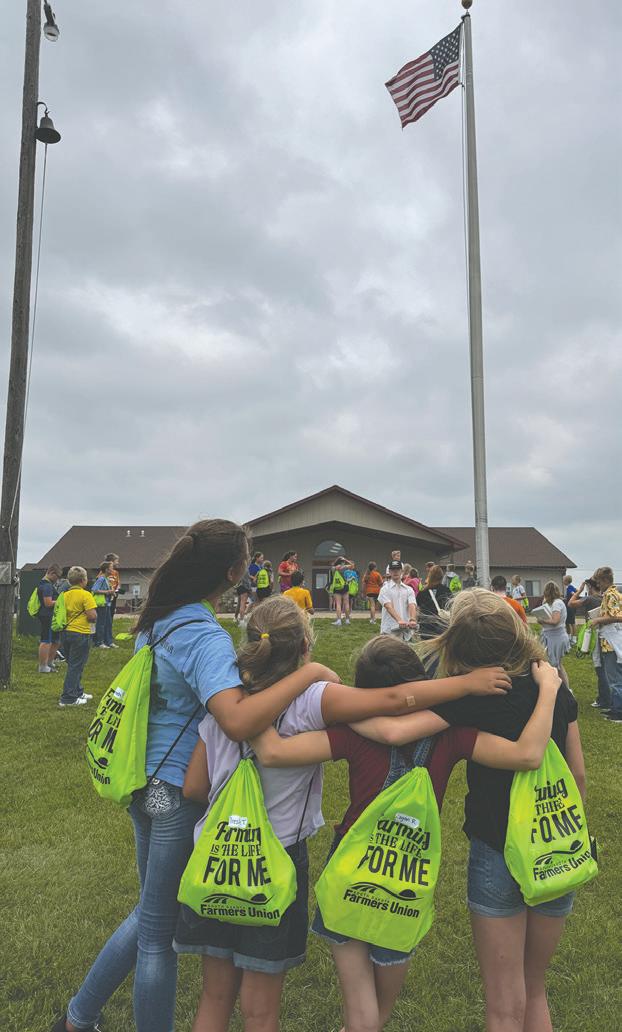
Like most of the more than 1,000 youth who attend Farmers Union Summer Camps, Bexley and Haddie live in rural South Dakota. So Farmers Union Camps are designed for them with fun activities focused on farm safety, agriculture careers, cooperatives and opportunities for confidence-boosting leadership development, explained Karla Hofhenke, Executive Director of South Dakota Farmers Union.
“Farmers Union invests in summer camps because of the positive impact camp education has on rural youth,” said Hofhenke. “Agriculture is our state’s No. 1 industry and rural youth are the future of agriculture in South Dakota. The youth who attend these camps will be the next farmers, ranchers, teachers, agronomists, Extension staff, ag loan officers and cooperative employees – we want to help prepare them for careers and leadership roles in our rural communities.”
Fun for kids and affordable for parents
South Dakota Farmers Union subsidizes their summer camps so that they are affordable for
South Dakota’s farm, ranch and rural families. The organization even provides transportation to their youth and teen leadership camps.
“Investing in our youth is investing in our future,” Hofhenke explained.
The state’s largest agriculture organization offers several camp opportunities:
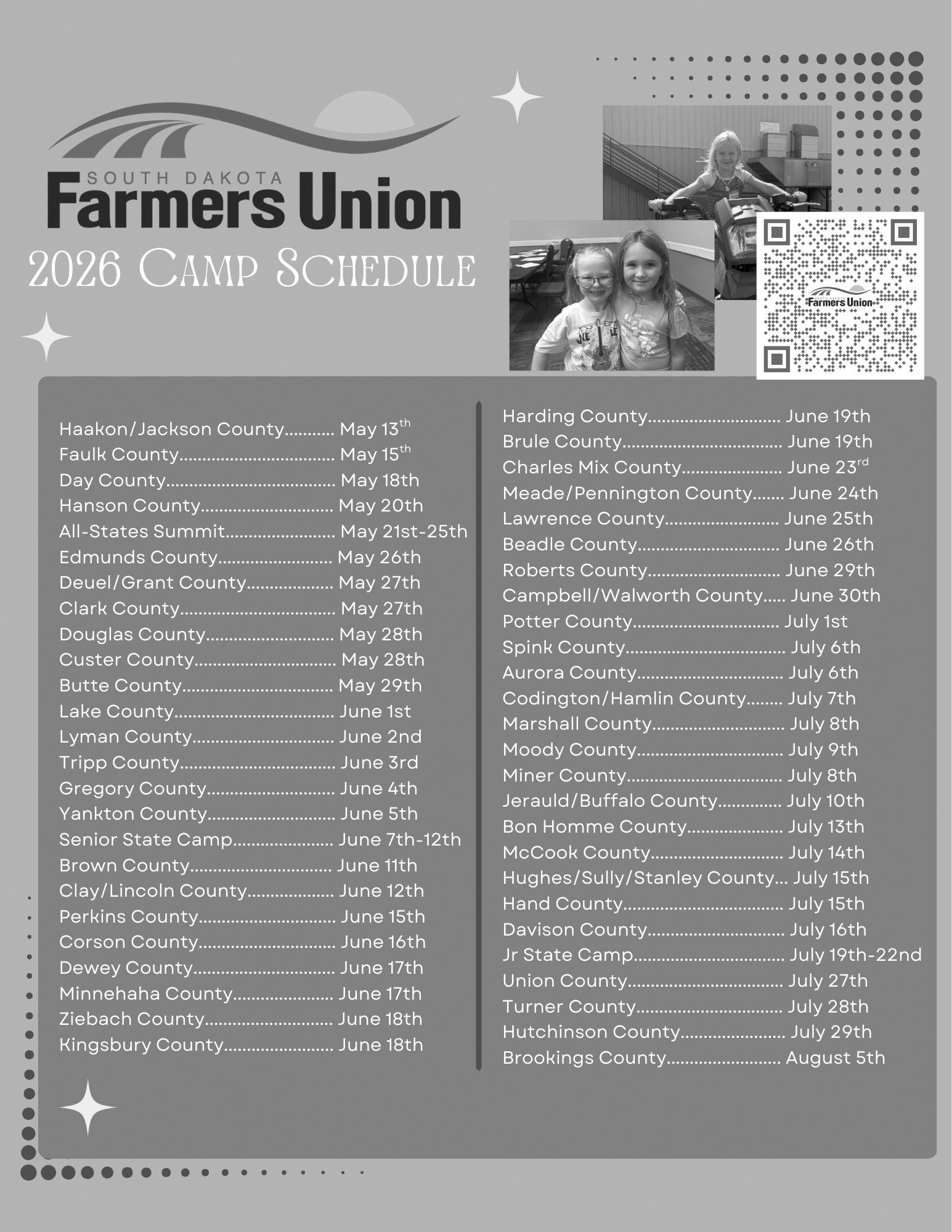
State Sr. Camp – for youth grades 7 through 12 – June 7-12 at Storm Mountain in the Black Hills, visit www.sdfu.org to register
State Jr. Camp – for youth ages 9 to 12 –July 19-22 at Camp Byron near Huron, visit www.sdfu.org to register
Day Camps – for youth ages 6 to 12 –located statewide, visit www.sdfu.org for date and location near you
Youth leaders help plan camp
Like Haddie Perrion, 16-year-old Loreli Ruhnke’s older siblings are the reason she wanted to attend Farmers Union Camp.
“My big sister, LizBeth would come home from Farmers Union camp and talk about how much fun she had and all the awesome people she met – so I could not wait until I was old enough to attend,” Ruhnke explained.
“Farmers Union invests in summer camps because of the positive impact camp education has on rural youth.” – Karla Hofhenke
Today, Ruhnke serves on the Junior Advisory Council (JAC). It’s a team of youth, nicknamed JACs, selected through an interview process and elected by their peers to help plan and facilitate camp.
“When I was a camper, I looked up to the JACs. They made a point to come up to me and talk to me and introduce me to other campers and make sure I was having fun,” Ruhnke explained. “Now that I am serving in this role, I want to do the same for campers.”
In addition to campfires, camp songs and other camp traditions, Farmers Union Camp is unique because campers gain hands-on experience in running a cooperative.
“Historically, cooperatives were integral in the development of South Dakota’s rural infrastructure – even today they remain relevant,” Hofhenke explained. “Many rural citizens receive their fuel, water, electricity, internet and farm inputs from a cooperative. So, it is important that rural youth understand how they operate and their value to their
communities.”
During camp, youth run a cooperative focused on newspaper, housing, snacks, insurance and credit union.
“I did not think about cooperatives in the slightest before learning about cooperatives at Farmers Union Camp,” said Coltyn Raymond, 17, a junior at Ethan High School. “After learning about them, I now realize how present they are in my daily life growing up in rural South Dakota. And now I notice all these co-ops that have been around all along. Now, I realize their worth and what they do for people.”
It was Raymond’s older sister, Madi, who inspired him to attend Farmers Union Camp and serve as a JAC. In addition to cooperative education, Raymond said the leadership development training he received at Farmers Union Camp has helped him succeed in other organizations like FFA and Student Council.
“Because of Farmers Union Camp I am able to get up in front of my class and speak. At camp I learned how to give speeches and I learned about parliamentary procedure and I gained a lot of confidence talking to people I just met. Before camp I was shy. Camp really brought me out of my shell.”
To learn more about Farmers Union Camp, visit www.sdfu.org or contact Karla Hofhenke at Karla@sdfu.org. n
Union Farmer National Farmers Union 2026
National Convention Continued from Page 1
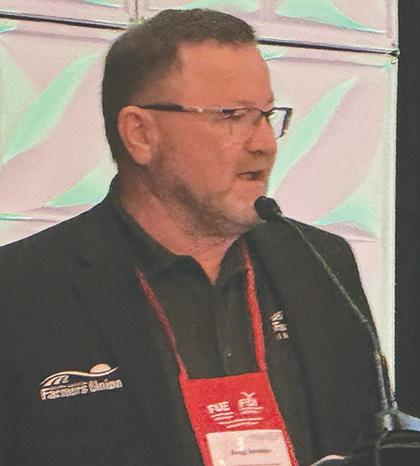
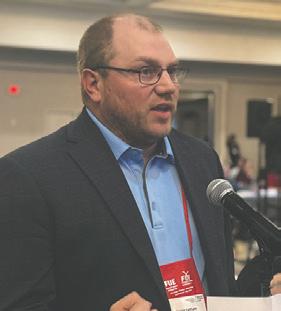
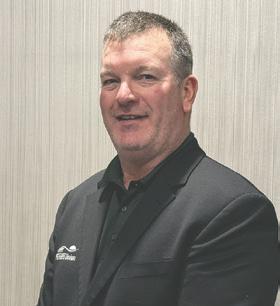
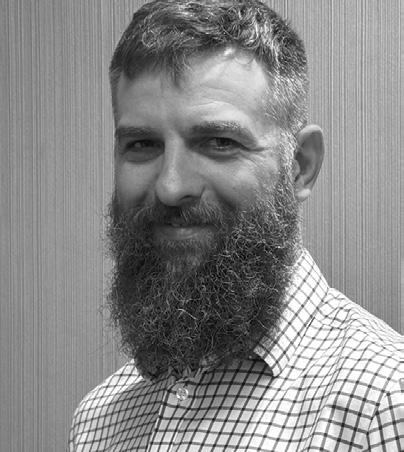
future in farming,” said Doug Sombke, President of South Dakota Farmers Union and a fourth-generation Brown County farmer.
Sombke reiterated a fact that Larew pointed out during his keynote – farm and ranch bankruptcies were up 46 percent in 2025. Things do not look to be improving in 2026. Sombke explained that in addition to low grain markets made worse by trade war tariffs, the recent war in Iran has had a negative impact on agriculture inputs – drastically increasing the cost of the fertilizer and fuel farmers need for the upcoming growing season.
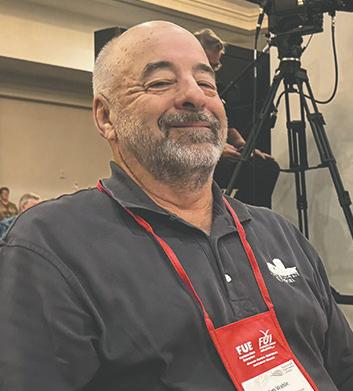
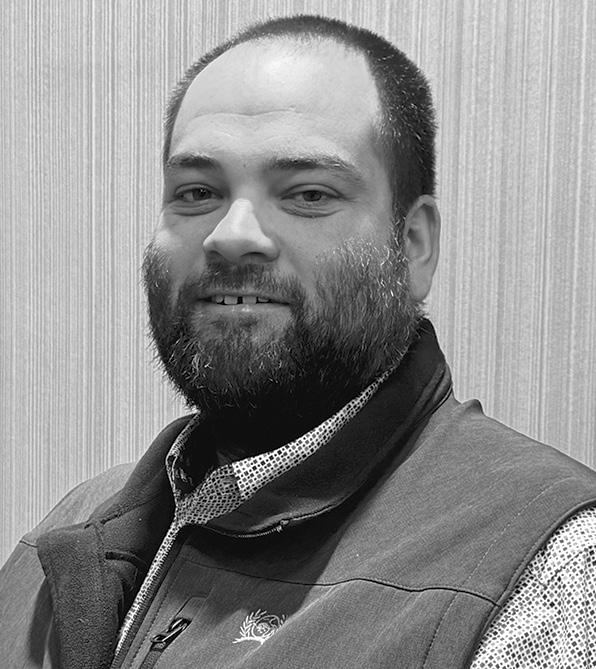
These financial challenges are tough on seasoned farmers and ranchers who carry a low debt load. But for farmers and ranchers just getting started, they can be devastating, explained Salem farmer Jim Wahle, 67.
“Because of the tariffs’ impact on markets, I was already not planning to make money this growing season. I was trying to make a marketing plan so that I could break even,” said Wahle, who served as a South Dakota Farmers Union delegate to the NFU Convention. “Now with this war and the price of fertilizer and fuel, I am nervous for the young farmers who have much more debt.”
Since the war in Iran, Wahle said farmers have seen fertilizer prices increase by $200 or more per ton.
“As things evolve, our policy needs to change with it,” explained Clark farmer and delegate Gail Temple. “What worked in the past, may not work in the future.”
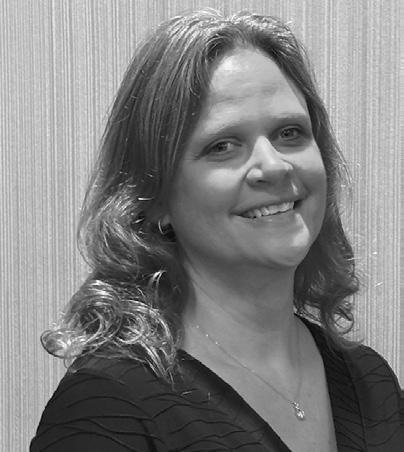
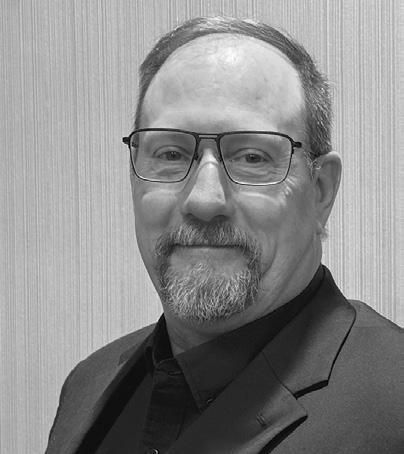
Temple, Wahle, Johnson and Sombke were among the delegates elected by South Dakota Farmers Union members during the organization’s State Convention held in December 2025. Other South Dakota delegates to NFU Convention were Chaz Blotsky, Hidden Timber; Michelle Olson, Aberdeen; Rachel Kippley, Aberdeen; Jason Latham, Buffalo; Kaeloni Latham, Buffalo; John Kippley, Aberdeen; Lance Perrion, Ipswich; Sarah Perrion, Ipswich; Rob Lee, De Smet; Darrin Olson, Aberdeen; Keeleigh ReisElwood, Reliance; Terry Sestak, Tabor; and Amber Kolousek, Wessington Springs.
Supporting the next generation
Supporting the next generation of family farmers and ranchers was a focus that resonated beyond the Policy Meeting. It was the focus of speakers and panel discussions.
“We need to help our young producers now,” said Groton farmer and South Dakota delegate Chad Johnson. “My margins were tight already, and I have been at this for a long time. These young producers, their margins are razor sharp. This is the reason the policy we develop at convention is so important. It allows farmers to come together with a unified voice in the message we deliver to policymakers in D.C.”
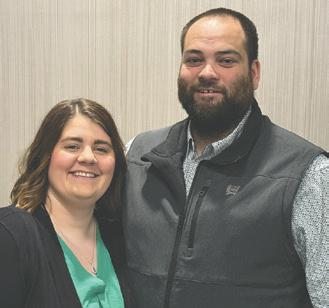
Young farmers and ranchers felt the support, said Sarah Perrion, 31, who farms near Ipswich with her husband, Lance, and their three young daughters.
“Farmers Union is like a family – members really care – and not just members from our state. I was sitting in the hallway and Rob Larew stopped to ask how our kids are doing,” Sarah said. “He only met our daughters one time when he visited our farm to learn more about how packer consolidation was impacting us. How many other ag groups’ national president shows up at your farm to better understand how policy they are advocating for impacts you?”
Policy developed during the NFU Convention guides the organization’s lobbying efforts on Capitol Hill.
Doug Sombke
Jim Wahle
Chad Johnson
Gail Temple
Sarah and Lance Perrion
National Farmers Union 2026
National
Convention Continued from Page 12
Sarah and Lance have been actively involved in Farmers Union since 2022, when they participated in the NFU D.C. Fly-In. Following the Fly-In they were selected to participate in Farmers Union Enterprise Leadership, a year-long leadership and professional development program designed specifically for young farmers and ranchers.
“For us, Farmers Union is where we can make a difference for our family’s farm by solving real-world problems through policy,” said Sarah, who serves as Edmunds County Farmers Union Education Director.
Leadership program.
“As a young producer, it is great to be a part of a like-minded community and hear what other states are concerned about and the policy that is important to producers in other areas of the U.S.,” Blotsky said. “And being a Farmers Union camper all those years really helped because I developed confidence and I knew how to participate in parliamentary procedure. I actually helped a delegate from another state draft their policy.”
Harding County rancher Jason Latham agreed. Jason and his wife, Kaeloni, participated in the same leadership program a few years later and were elected to serve as delegates to the NFU Convention; and Kaeloni was asked to participate in a convention panel focused on the future of family farms and ranches.
“Times like this are when policy matters most,” said Latham, 37, and the President of Harding County Farmers Union. “When times are tough and we are worried about losing farms and ranches and consolidation among the packers and the seed and fertilizer companies – this is when we need policy developed by farmers and ranchers.”
Investing in leadership development for young producers is an important focus of NFU, explained Aberdeen farmer and NFU Vice President
Jeff Kippley. “Developing new leaders to fill the roles of those who have sat in those seats for many years is important, because as we move forward, just like on family farms, to succeed in the future, we have to bring in the next generation to be involved.”
Seeing so many young producers engaged in policy during NFU Convention was a highlight for Wessington Springs crop and cattle producer Scott Kolousek 50. “The next generation is here – this crowd is a lot younger than in years past.”
Hidden Timber rancher Chaz Blotsky, 21, was among the younger producers elected to serve as a South Dakota delegate.
“I am excited to serve as a delegate this year because I have watched policy for several years and I have learned a lot from other members, so I’m excited to put what I have learned into action,” said Blotsky, a fifthgeneration cattle producer.
Encouraging young members, like Blotsky, to get involved at the local, state and national level is something the board members and staff of South Dakota Farmers Union focus on, explained Karla Hofhenke, Executive Director of South Dakota Farmers Union.
“The future of family farms, ranches and rural communities depends on the next generation having leadership skills and support,” Hofhenke said. “And supporting our state’s family farmers, ranchers and their rural communities is the focus of South Dakota Farmers Union.”
He will graduate from Mitchell Technical College this spring with degrees in agriculture business and animal science. Blotsky hopes to find an off-ranch agriculture career while continuing to build his cattle and meat goat herds.
Involved in Farmers Union youth leadership programming since elementary school, the 2026 NFU Convention is the third national convention Blotsky has attended because in 2023 he served on the National Youth Advisory Council and in 2024 he attended convention as a participant in the Farmers Union Enterprise
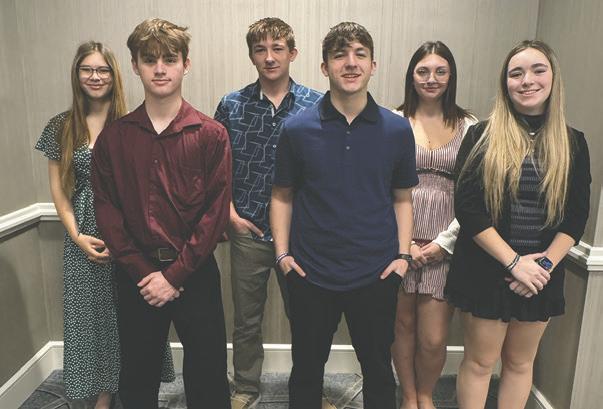
In addition to elected delegates, three South Dakota college students serving on the Farmers Union National Youth Advisory Council and six high school youth involved in South Dakota Farmers Union youth leadership programming also attended: Patrick Olson, Northern State University; Madisyn Raymond, South Dakota State University; Brandon Toennies, SDSU; Coltyn Raymond, Ethan; Danielle Kruger, De Smet; Loreli Ruhnke, Pierre; Logan LaMont, Union Center; Chase Blotsky, Hidden Timber; and Cadence Konechne, Kimball.
To watch videos featuring South Dakota family farmers and ranchers who attended National Farmers Union Convention, view this article online at www.sdfu. org n
Jason Latham
Jeff Kippley
Scott Kolousek
Chaz Blotsky
SDFU Executive Director Karla Hofhenke with NFU President Rob Larew
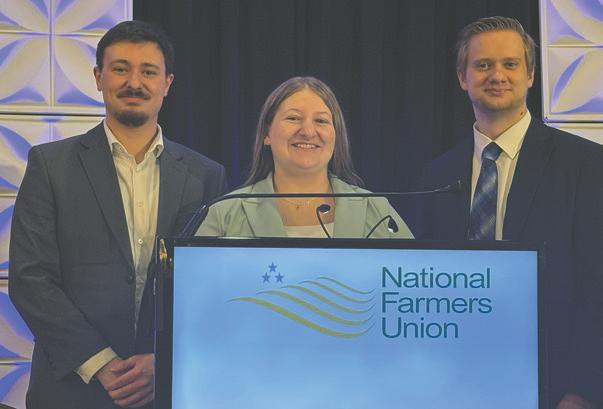
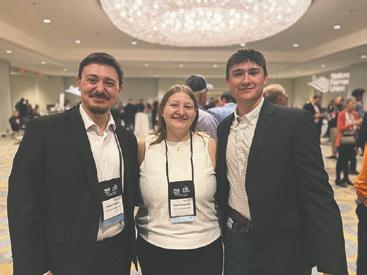
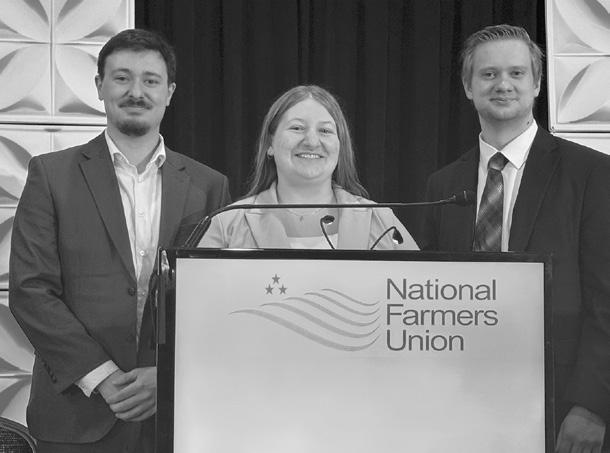
South Dakota college students who serve on the National Farmers Union Youth Advisory Council: Brandon Toennies, Madi Raymond and Patrick Olson. Turn to page 15 to learn their thoughts on Farmers Union.
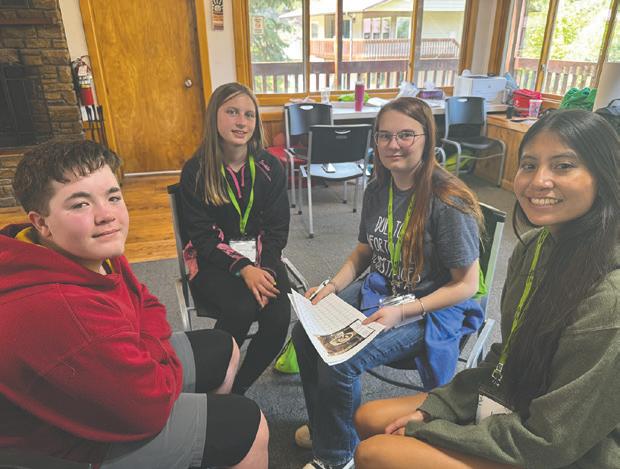
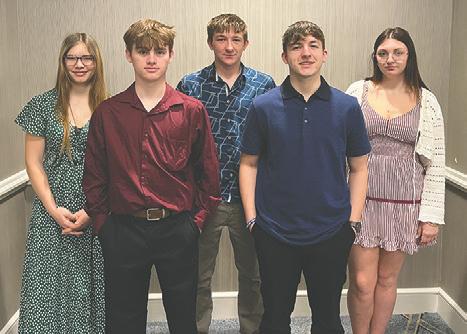
South Dakota Farmers Union Youth Leaders: Loreli Ruhnke, Pierre; Logan LaMont, Union Center; Chase Blotsky, Hidden Timber; Coltyn Raymond, Ethan; Danielle Kruger, De Smet; and Cadence Konechne, Kimball.
National Farmers Union President Rob Larew
Union Farmer
National Farmers Union 2026 Union Farmer
Harding County Rancher Speaks for Future of Family Ranches and Farms
When Kaeloni Parmely said “yes,” to marry Harding County cattleman Jason Latham, she also became forever committed to the Latham family’s more than a century-old ranching legacy.
Eleven years later she is advocating for a brighter future for not only their young three sons who will be the sixth generation to care for grasslands and cattle on the Latham Ranch, but for family farms and ranches across the U.S. through her involvement in Farmers Union.
“We have three little boys. So, every single day I think about how important it is for us to continue doing what we can do to improve our business so that it is here for them. They are the next generation,” Latham said.
During the 2026 National Farmers Union Convention held in New Orleans,
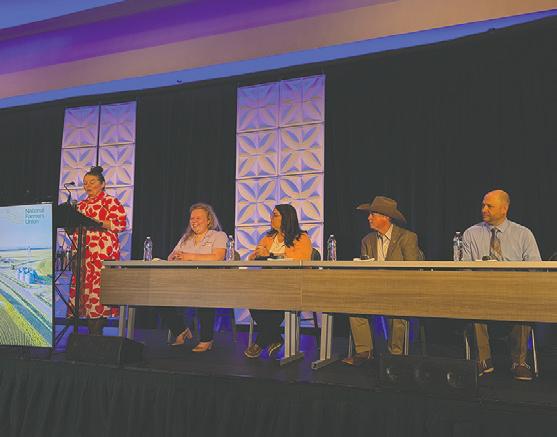
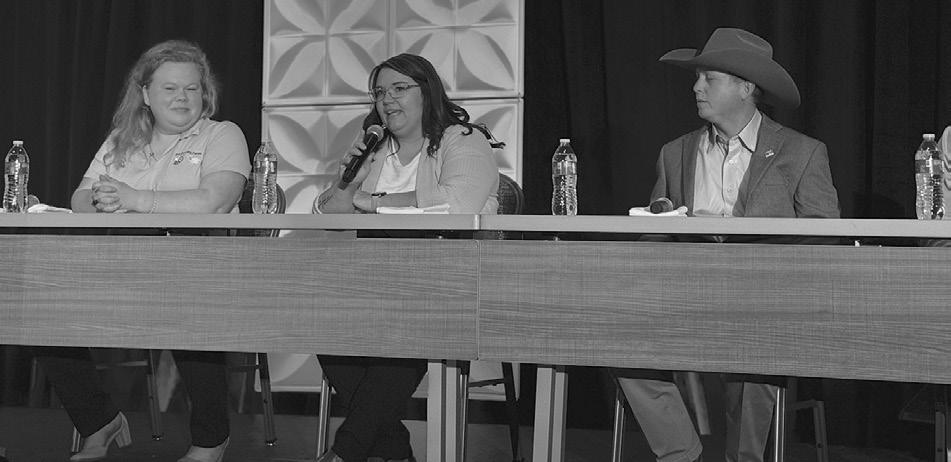
Louisiana, Latham was among a panel of four young producers to share advice and encouragement for the future of family farms and ranches.
“I did not grow up in agriculture, so everything I learned has been since my husband and I got married in 2014. So, I got introduced to the cattle industry when the markets were really great,” Latham explained of the year before country-of-origin labeling (COOL) was repealed. “Everything changed when the market crashed in 2015.”
To supplement the family budget, for most of their marriage, Latham has held an off-ranch job. “I have a day job to support my husband’s ranching hobby,” she joked.
Today, she works for Pioneer Bank and Trust. “It’s a small rural
Continued on Page 18
South Dakota College Leaders Share Their Farmers Union Story during 2026 National Convention
National Farmers Union Youth Advisory Council is made up of five college-age youth elected by their peers during the 2025 National Farmers Union D.C. Summit.
Three of the 2025-2026 National Farmers Union Youth Advisory Council members are South Dakota students: Madisyn Raymond, South Dakota State University agriculture communications major; Patrick Olson, Northern State University accounting major; and Brandon Toennies, SDSU history education, geography and political science major.
During the 2026 National Farmers Union Convention, Raymond, Olson and Toennies spoke about what they value about being student members of South Dakota Farmers Union and the impact the organization has had on who they are today.
Read on to enjoy excerpts from their speeches.
Madisyn Raymond, South Dakota State University
Attending Senior State Leadership Camp is where I fell in love with the people and purpose of Farmers Union.
I met amazing people from across the state at camp, as well as some of my best friends.
I learned about the seven principles of cooperatives, the legislative system, and the agriculture industry, as well as the history and work of Farmers Union.
As I grew up through the camp system, eventually I became a JAC and then a SAC. Being a JAC and SAC gave me first-hand experience of the work of Farmers Union and the people making it happen.
Farmers Union became more than a fun summer camp. It transformed into an organization fighting for the agriculture industry, local farmers and ranchers, and rural communities. Farmers Union helped me grow passions for agriculture, advocacy and policy. My experience in the organization led me to where I am today: South Dakota State University, double majoring in agricultural communications and political science, with a certificate in lobbying and government advocacy.
Patrick Olson, Northern State University
Answering the question – what does Farmers Union mean to me – is harder than I expected.
Farmers Union gives me the opportunity to meet people who share my passion for agriculture and it provides a place where we can work together to address the challenges
we face.
But the more I thought about it, the more I realized that answer doesn’t really capture what Farmers Union means to me.
It doesn’t explain the community that forms within the organization. It doesn’t capture the connections that are built, or the feeling of finally having your concerns heard and knowing that you can actually contribute to fixing them.
Farmers Union is a place where young people are encouraged to grow, where their voices are respected, and where they are given the opportunity to make a real difference.
Youth Advisory Continued on Page 22
Harding County rancher Kaeloni Latham (center) served on a National Farmers Union Panel.
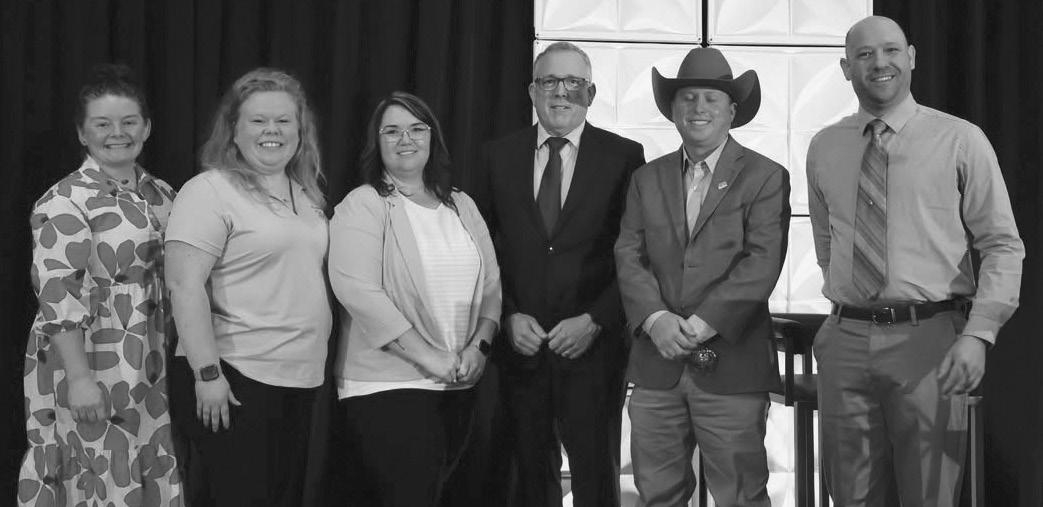
The Future of Family Farming and Ranching panel: Carah Ronan, Montana (moderator); Breanna Reed, Indiana; Kaeloni Latham, South Dakota; Rob Larew National Farmers Union President; Tim Bates, Oklahoma; and Mike Seifert, Minnesota.
Scan to watch KOTA TV interview with Kaeloni Latham
Brandon Toennies, Madisyn Raymond and Patrick Olson
Union Farmer
NFU Member Thoughts
RACHEL KIPPLEY, Aberdeen
“When we got involved with Farmers Union 20 years ago, we were just starting a family. And now that my oldest son is a freshman at Dakota State University, the time has come. We need to figure out a game plan in a time of a lot of uncertainty, just getting together with our fellow farmers to figure out our unified message through policy so we can take that message to D.C. policymakers. Are there places for this next generation on the farm? If we don’t get this stuff figured out we are going to continue to lose more and more producers.”
PATRICK OLSON, Aberdeen and National Farmers Union Youth Advisory Council member
“I found policy really interesting because we really try and differentiate between national policies and what we want to keep up to local.”
ROB LEE, De Smet
“Delegates talked about data centers at length, and you can see the difference of opinions in the crowd based on those who have experienced data centers in their area versus those who are watching them impact other states. The consensus of the delegation was that we will leave the policy development pertaining to data centers to the states.”
LANCE PERRION, Ipswich
“Sarah and I have been involved in the FUEL program and other leadership programs through Farmers Union. These programs help to give us direction and insight into being leaders when we go back to farms and local communities.”
Scan QR Codes next to photos to watch videos of Farmers Union members.
National Farmers Union 2026 Union Farmer
OREN LESMEISTER, Parade
“During NFU Convention, I got to have a one-on-one with the Under Secretary of Agriculture from the USDA. We asked him about monopolies in agriculture – we talked about fertilizer, seed, corn inputs, tractors and of course the antitrust issues within the meatpacking industry. To his credit, he gave us some answers. Maybe not what we wanted to hear, but at least we got to have our voice heard.”
AMBER KOLOUSEK, Wessington Springs
“I find attending NFU Convention for policy important because it’s good to represent South Dakota values and what is going on in our state. I realize that everybody’s coming with their state’s best interests at heart, we need to make sure that South Dakota, it’s beef and farming industry, is well represented.”
KEELEIGH REIS-ELWOOD, Reliance
“As a fifth-generation farmer/rancher and a young producer, I am excited that I got to serve as a delegate because I get to bring concerns, ideas and priorities from South Dakota to the national stage and help shape the direction of the organization.”
LARRY BIRGEN, Beresford
“Planting season is just a month away and it’s kind of scary looking forward. The war in Iran is impacting our oil prices. A lot of people have not locked in diesel, because prices were really low. Now all of a sudden, prices at the pump have skyrocketed. And fertilizer – if you hadn’t locked it in – it has gone up tremendously in the last week. Our commodity prices were low because of tariffs and now our input costs, that were already high, are now so much higher. I am somebody that’s established. I’m fine. But I worry about our younger producers who are mortgaged, because the interest rates are higher than normal – they are the highest as they’ve been since the ’80s. So it’s very scary for our beginning farmers. These are some reasons why I am glad to be Farmers Union member, because we all have the same issues. And we can all stick together for one common goal and that’s to make our family farms sustainable.”
Speaker Tells Farmers Failure to Enforce Anti-Trust Laws Created Food Deserts
Federal government’s failure to enforce anti-trust laws has frustrated farmers and ranchers for decades, said Doug Sombke, a fourth-generation Brown County farmer and President of South Dakota Farmers Union.
“It takes competition to have fair markets. But when monopolies happen, we end up with only one or two entities to sell to or to buy from and we no longer have a fair market,” Sombke explained.
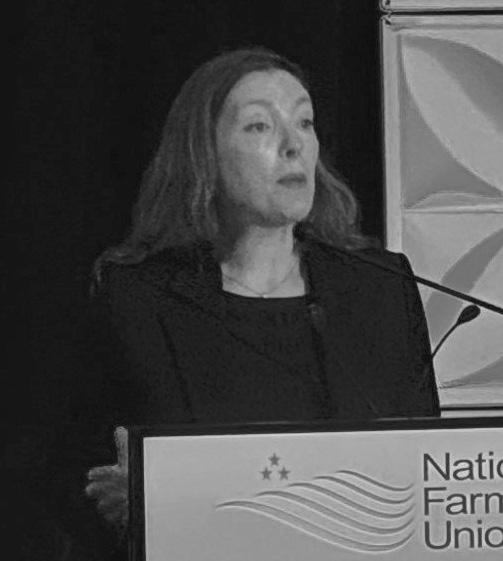
According to several studies, failure to control monopolies is not only impacting those who raise crops and livestock, but corporate consolidation also impacts consumers, said Stacy Mitchell, co-executive director for the Institute for Local Self Reliance and a leading authority on corporate concentration and its impact on local economies.
“Food deserts don’t simply materialize for no reason. They materialize because the Federal Trade Commission decided to stop enforcing the rules and RobinsonPatman Act and independent groceries disappeared,” said Mitchell during a talk she presented to family farmers and ranchers during the 2026 National Farmers Union Convention.
Mitchell referenced a January 2026 article that dives into details, explaining, “Suspending enforcement allowed suppliers to discriminate in pricing in favor of the largest chains, tilting the playing field against independent and small-chain grocers. The result was a wave of consolidation that reshaped the grocery sector, weakened competition, pushed prices upward and generated food deserts. Reversing these
Continued from Page 15
bank. Remember to support local banks because they get agriculture and they understand that in our rural community, ag is our No. 1 priority,” Latham said.
In addition to Latham, the panel featured young producers from Indiana, Oklahoma and Minnesota. These farmers and ranchers discussed the out-of-the box strategies they implement to turn a profit in the midst of an ag landscape where corporations are putting the squeeze on
trends requires restoring fair supplier pricing by reviving enforcement of the Robinson-Patman Act.” (Scan the above QR code to read the complete article or view this article online at www.sdfu.org to find the link.)
Providing a brief history lesson to NFU Convention attendees, Mitchell explained antitrust issues began to anger the American people at the turn of the century when industrialists like John D. Rockefeller discovered they could make a lot of money by seizing control of the railroads.
“Rockefeller built an oil monopoly when he gained control of the railroads because he assured his oil moved freely while blocking his rivals…abuses like this sparked a grassroots antimonopoly movement of farmers, workers and small business owners,” said Mitchell, explaining that this movement gained enough momentum to get Congress to act.
In 1914, the Federal Trade Commission was established for the purpose of oversight and enforcement. The Robinson-Patman Act, passed in 1936, is among the laws passed by Congress to protect American citizens and local businesses from monopolies – other laws Mitchell noted were the 1921 Packers and Stockyards Act and the 1950 Anti-Merger Act.
“The enforcement of these laws led to decades of really broad prosperity and growth,” Mitchell said.
These laws are still on the books, but they no longer protect Americans and local businesses due to a lack of enforcement by the federal government beginning in the 1980s.
“What happened? Folks knew they could not get Congress to repeal the laws because they were super popular, so what they did is they quietly set about interpreting them and changing them,” Mitchell said.
Mitchell explained this was a bipartisan effort, beginning in with the Reagan administration followed by the administrations of Clinton and Obama.
family farmers and ranchers – input prices are skyrocketing due to consolidation, and corporate consolidation has created an environment where anti-trust issues impact markets.
Latham said instead of being afraid of new ideas or technologies, young producers need to find a way to make new tools work for them. She also encouraged young producers to become part of organizations that support them, like Farmers Union.
“You have to be willing to step into those leadership positions when the doors open,” Latham said. “Farmers Union has been life
What happens when anti-trust laws are ignored?
“The results were devastating,” Mitchell said. “It led to the hollowing out of our communities, extreme concentration of power and ultimately the destabilization of democracy.”
To further explain the negative impact of corporate consolidation within the grocery store industry on everyday Americans, Mitchell pointed to a 1985 survey of businesses in every town in North Dakota.
“There’s this assumption that food deserts have always been with us. That these are places that are either too poor or too sparsely populated to support a grocery store. This is not true,” Mitchell said, pointing to the survey that showed in 1985 virtually every town in North Dakota – even towns with populations as low as 300 – had at least one grocery store.
But without federal oversight or enforcement, mergers happened and anti-trust laws were ignored – locally-owned grocery stores were forced out and the big players, like Walmart, did not always see a need to replace them – even in urban areas with dense populations. Mitchell shared an example of an urban neighborhood of more than 30,000 becoming a food desert because corporations know that people will travel for groceries.
“This is a scandal and it needs more attention,” Mitchell said to family farmers and ranchers, many of whom were nodding their head in agreement.
To hear what Wessington Springs rancher and South Dakota Famers Union board member, Scott Kolousek thought of Mitchell’s talk, read this article online at www.sdfu.org n by Lura Roti for SDFU
Scan to hear what SDFU member Scott Kolousek thought of Stacy Mitchell’s convention talk.
changing for us. When we started a few years ago, we did not have an active chapter in our county. We went to a conference, and when we signed up, I believe my husband’s exact words were, ‘that is an expensive trip, they are not going to pay our entire costs.’ But South Dakota Farmers Union did cover all the costs of the conference. And my husband and I have worked to bring our county back.”
View this article at www.sdfu.org and link to the complete panel video. n by Lura Roti for SDFU
Scan to read article
Kaeloni
Ethanol & Automakers — Time for a New Collaboration
Doug Durante, Executive Director, Clean Fuels Development Coalition
In last month’s column we focused on the value of higher blends and how automakers can benefit from what we call HOLC fuels – high octane, low carbon. Despite the fact the ethanol industry is inexplicably agreeing to cap itself at 15 percent by supporting legislation limiting the rvp waiver, there still can be a future for blends higher than just 15 percent.
But first a quiz: name a federal program or policy that costs taxpayers nothing, costs consumers nothing, provides value and regulatory relief to a heavily regulated business, provides value to the consumer in the way of lower fuels cost, strengthens American energy security, provides new demand for American agricultural products and provides environmental and public health benefits. Give up? How about flex-fuel, also known as dual fuel, vehicle credits. I would argue that the incentive of providing credits to automakers was the most successful energy policy ever enacted by Congress, based on a cost benefit: No cost, and lots of benefit.
Following oil embargoes by Iran (sound familiar?) that served as a wakeup call as to our dependence on imported oil, in 1975 the Corporate Average Fuel Economy (CAFÉ) program was established. Cars now had to meet certain mileage requirements to save American consumers from themselves and their insatiable appetite for cheap gasoline, regardless of where it came from. Then in 1988 as interest in alternatives to gasoline grew, Congress passed the Alternative Motor Fuels Act (AMFA) that established credits for vehicles using alternative fuels that automakers could use to meet their corporate average.
Methanol and natural gas met the definition of dual fuel vehicles, but it was ethanol that stole the show. Over the next decade, 20 million flex-fuel vehicles capable of operating on any combination of ethanol
and gasoline up to 85 percent rolled out of Detroit. Bill Ford himself was pictured in ads with a Ford Explorer standing in a cornfield touting the benefits of ethanol. General Motors launched an ambitious “Live Green, Go Yellow” campaign including a Super Bowl commercial. GM gave members of the Governors’ Ethanol Coalition and advocates like CFDC fully wrapped FFVs to further promote ethanol. Chrysler got in on the act as well, offering a variety of E85 capable vehicles.
Keeping in mind the absolute objective was to use less oil, in some respects it was easy math. If a car got 20 miles to the gallon of gasoline, but went that same 20 miles with E85, that car is only using 15 percent of the gasoline. Assuming a slight mileage loss for ethanol’s lower energy content and any other considerations, this vehicle now should be rated as getting the gasoline equivalent of well more than 60 miles per gallon.
There are several caveats to this, no one could argue that a FFV operated on E85 all the time so a usage, or utility factor had to be applied. Ultimately the credits automakers could claim were capped at 1.2 miles per gallon which may not sound like much but it was sufficient to continue to produce FFVs. So what happened?
By late 2007 and into 2008, many in the environmental community felt emboldened due to the democratic majority in Congress. Driven by their hatred of agriculture, fueled by ignorance and being just plain obnoxious, they mounted a successful campaign to repeal the credits, arguing these vehicles were not using ethanol and rather than try to make the system work – after all, it did displace oil – they refused. At CFDC, working with our automaker members and the auto manufacturers alliance, we offered numerous proposals to accurately calculate ethanol usage and adjust the credits accordingly. At that time, the extension of the RFS was on
the table and defending the FFV credits took a back seat. It was a slow phaseout but by 2019 they were completely gone.
So how effective was the credit program in terms of achieving its objectives? By 2014 nearly half of Ford, GM and Chrysler vehicles were FFVs, with 100 models available resulting in more than 20 million flex vehicles on the road. Today an embarrassing total of just 8 vehicles according to the Department of Energy’s Alternative Fuel Data Center offer flex capability, and one of them is a cargo van. Pretty hard to argue against the fact that with the credits you get flex vehicles – without the credits you don’t.
Sadly, there is no national movement to reduce oil consumption. In fact, the Trump administration seems determined to use as much oil as possible, even in the face of constant turmoil in the Middle East. So, before we naively set our value proposition as reducing oil, lets base our value proposition on what seems to drive everything these days, which is money.
Consumers should be educated to view fuels as to the cost per mile. Ethanol wins that metric every time, regardless of the blend level. While E85 always offers a lower price than regular gasoline, ethanol’s value is even higher in a 30 percent blend due to the significant octane rating. If regular vehicles were optimized, which is to say tuned to a higher octane and adjusted to a higher compression, it completely negates any mileage loss due to ethanol’s lower BTU. In fact, industry and DOE data indicate we could see a 7 percent efficiency gain!
So the ag and ethanol industries would be wise to get behind a campaign when the next round of mileage requirements comes up to not only reinstate credits for vehicles that use alternative fuels but to prorate them so E10, E15, E30 and E85 can all benefit, and automakers have an easy tool to meet future emission and mileage requirements. n
SDSU Veterinary Student Receives Farmers Union Scholarship
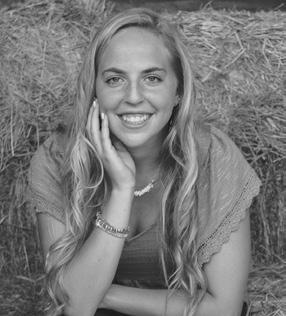
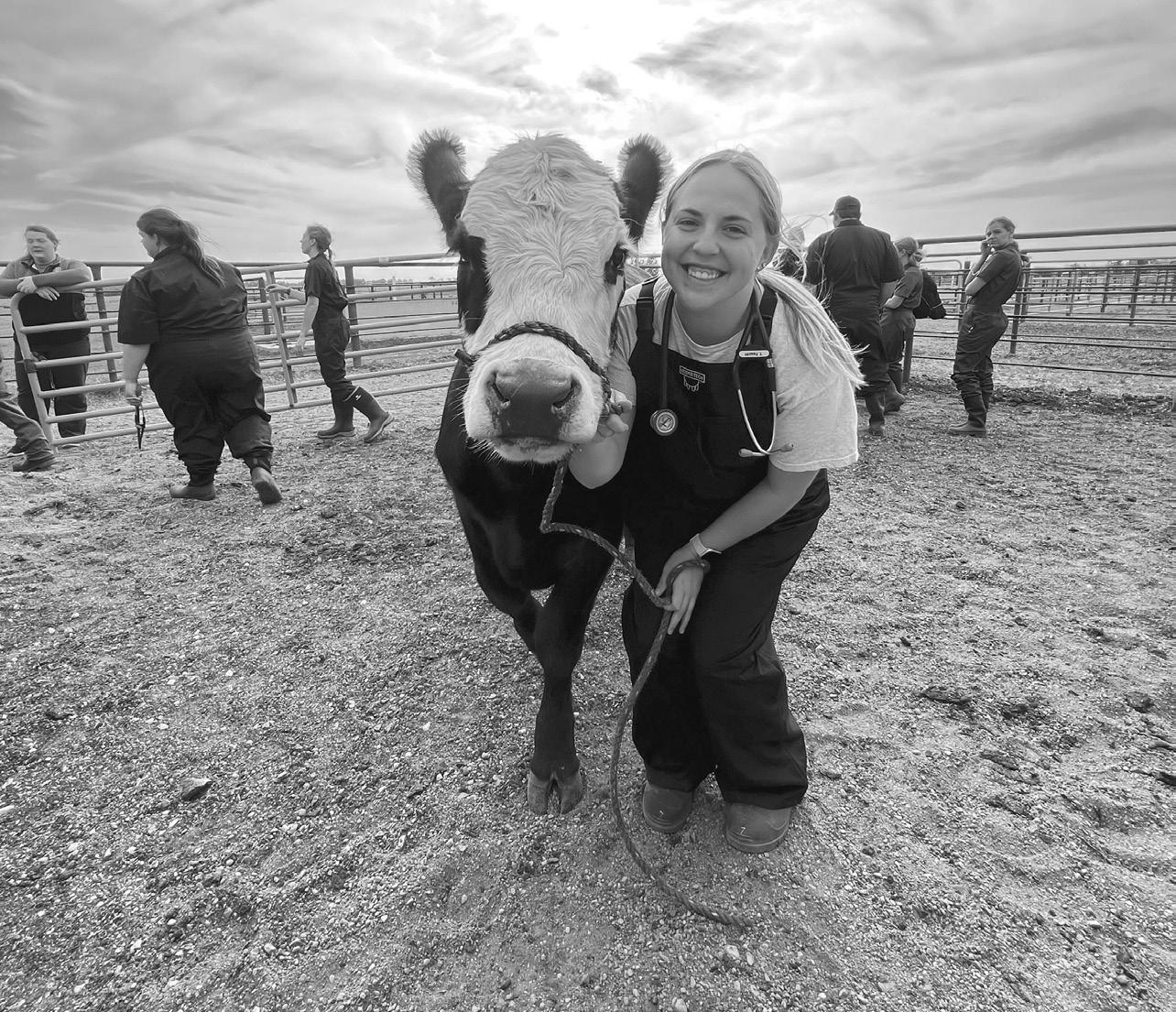
Helping her grandpa, Randy Willmott, feed and care for bottle calves on the family’s Brookings County farm led Tara Feucht to veterinary medicine. Feucht is the recipient of the South Dakota Farmers Foundation Union Travelers Motor Club $2,500 Graduate School Scholarship.
name and truly care that we learn the material correctly.”
“I would help Grandpa mix the formula, fill the bottles, take the bottles out to the calves,” the South Dakota State University veterinary student explained. “I also helped him run them through the chute and give them vaccines. Grandpa Randy is my biggest role model – he is the reason I love animals.”
A member of the Brookings FFA Chapter, as a high school student Feucht applied her passion for animal husbandry to the veterinary science FFA contest. Her senior year, she and her teammates won the state contest and qualified to compete at the 2022 National FFA Convention.
She further explored veterinary medicine with a part-time job at Big Sioux Veterinary Care and at Clin Global, a Brookings research company.
“Seeing both sides of veterinary medicine, I realized I liked the diversity the career offers. Every day is different because as a vet you see so many different cases and animal species,” Feucht said.
Feucht received her undergraduate degree in animal science, with a science specialization from South Dakota State University in 2025. She was accepted to three veterinary schools. “I know I am lucky because some of my classmates applied four times before being accepted,” said Feucht, who is among the 20 students accepted to SDSU veterinary medicine program out of the 250 who applied. “It helped that I was involved at SDSU beyond my studies. Yes, GPA matters, but you also need to show that you are a wellrounded individual.”
As an undergraduate student, Feucht was a member of the pre-vet club at SDSU and volunteered to serve as superintendent of the Little I vet science competition. “Little I is a great experience because I needed to communicate with my committee members, agriculture education teachers and high school students. And it takes a lot of organization and time management to put on a competition of this size.”
Time management skills definitely come in handy as a vet student, Feucht said. “The classes are definitely challenging. It helps that our class size is small and our professors know us by
With the heavy class load, Feucht said there is no additional time for a part-time job, which is among the many reasons she is grateful for the Farmers Union Graduate Scholarship. All told, without scholarships, Feucht and her classmates spend about $16,700 a semester on veterinary school during the four semesters they are at SDSU. This increases for Feucht to $34,155 when she transfers to the University of Minnesota because of out-of-state tuition rates.
Because of scholarships, loans and other programs, Feucht is able to cover the cost. “I have heard teens say they want to become a veterinarian, but they know they will not be able to afford vet school. My message to them is, ‘there are opportunities to help you finance vet school – like this Farmers Union scholarship.’ If you want to become a veterinarian, don’t let the cost of school stand in your way.”
The SDSU Veterinary Medicine program collaborates with the University of Minnesota. So, after spending two years at SDSU, Feucht and her classmates will transfer to study in Minnesota.
After vet school, Feucht hopes to return to Brookings to practice. “South Dakota is really short on veterinarians – especially those willing
to practice rural medicine. South Dakota is home. This is where my family is. This is where I want to be.”
Providing financial support to the next generation of agriculture professionals is among the ways South Dakota Farmers Union (SDFU) supports family farmers and ranchers, explained Karla Hofhenke, Executive Director of SDFU.
“Family farmers and ranchers need support from agriculture professionals like veterinarians, agronomists and nutritionists – the list is extensive – to continue to produce crops and livestock today and into the future,” Hofhenke said.
Gene Hammond, President and principal owner of Travelers Motor Club agreed.
“We are a rural motor club so rural America is important to us. We believe the best way to preserve rural America is to invest in the next generation,” Hammond said. “To provide for someone who wants to advance themselves and provide services through education to benefit rural citizens, we just see great value in that.”
To learn more about how South Dakota Farmers Union supports family farmers and ranchers, visit www.sdfu.org n by Lura Roti for SDFU
Tara Feucht is the recipient of the South Dakota Farmers Foundation Union Travelers Motor Club $2,500 Graduate School Scholarship.
Union Farmer
From the President... Springtime is a Season of Hope
It’s calving season and soon we’ll be in the fields planting. There’s just something about the rebirth and greening up of everything that happens in the spring that brings feelings of hope and optimism each year.
Spring 2026 is no different.
Right now there are many challenges facing family farmers and ranchers – and quite frankly all Americans. But just like the rebirth we see each spring, the issues we face will get resolved because as farmers and ranchers we are people of action.
Speaking of action, just two weeks ago your elected delegates were speaking up for South Dakota Farmers Union policy during the National Farmers Union Convention. And at nearly the same time, two U.S. Senators introduced the Family Grocery and Farmer Relief Act to help break up monopolies in the packing industry: Vermont Sen. Peter Welch, a member of the Senate Agriculture Subcommittee on Livestock, Dairy, Poultry, and Food Safety, and Senate Minority Leader Chuck Schumer of New York.
According to the information provided about Senate Bill 4007, it is, “A bill to restore competition in the meatpacking industry by reducing excessive concentration and market power and ultimately reduce prices for American consumers, and for other purposes.” (scan the QR code below to read more about this bill).
I have personally asked Sens. Rounds and Thune to sign on to the bill. I ask our members to do the same.
As unfortunate as the rising costs of groceries are, consumers are now joining with family farmers and ranchers to demand action.
I’m happy to see action beyond a bailout. Breaking up monopolies can make
Sombke, SDFU President
a long-term positive impact for farmers’ and ranchers’ markets and cost of groceries for all consumers.
There is hope. Don’t get discouraged. We have been through tough times before and we will get through this season – together.
Grocery store prices are drawing attention to monopolies in the agriculture sector and the war in Iran is shining a light on U.S.-produced energy. We are optimistic that laws will be lifted to allow use of ethanol blends year-round.
Farmers Union supports the next generation
As I focus on what brings me hope in our industry this spring, our rural youth top the list. Among the reasons I am proud to serve you as President of this organization is Farmers Union’s focus and investment in youth through Farm Safety Trailer, FFA Farm Safety Quiz Bowl and our summer camp program.
There is no better investment we can make than educating the next generation so that they have the tools and knowledge to be safe on farms and ranches, engage in their local cooperatives and develop their personal and professional leadership skills.
If there is a young person in your life, encourage them to attend Farmers Union Camp this summer.
Happy Easter!
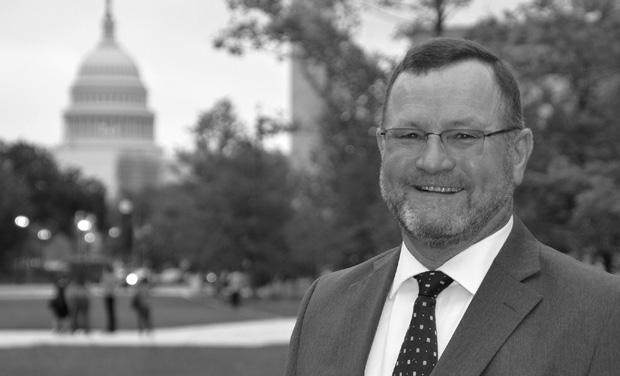
Doug Sombke, President South Dakota Farmers Union
Congressional Leaders Contact information:
South Dakota Union Farmer, ISSN 0745-8797, publishes eight times per calendar year, with issues printed in January, February, March/April, May, June/July, August, September/ October and November/December. Periodical postage paid at Sioux Falls, S.D.
Karla Hofhenke, Publisher Lura Roti, Editor Wendy Sweeter, Copy Editor Diane Martinson, Layout & Design
All information for publication must be submitted by the 15th of the month. You may submit items to address below or email items to: sdfu@sdfu.org
POSTMASTER: Address changes to: SDFU, PO Box 1388, Huron, S.D. 57350-1388
Contact NFU National Farmers Union 20 F Street NW Suite 300 Washington, DC 20001
Rob Larew, President ~ Jeff Kippley, Vice President Darin Von Ruden, Secretary ~ Doug Sombke, Treasurer 202.554.1600 www.nfu.org
Doug
Union Farmer
Around the State with Farmers Union SALE
South Dakota Farmers Union members and staff are making a difference in rural communities across South Dakota.
WOMEN IN BLUE JEANS
BLACK HILLS STOCK SHOW
Youth Advisory Continued from Page 15
Brandon Toennies, South Dakota State University
If someone had approached me a year ago and asked what Farmers Union meant to me I would have responded with a murky answer and talked about seeing their sponsorships while watching state football.
I also saw these ads when I participated in 4-H or went along with my dad to sale barns, but I never recognized the importance and the scope of the organization.
Knowing what I know now, I wish I pleaded with my parents to take me to a Farmers Union Camp.
Farmers Union means many things to me: opportunity, leadership, purpose and most
importantly in the last year, growth.
I’ve grown as a person, a professional, a student and as a future farmer and rancher.
I have had the opportunity to travel to D.C. and talk with congressional staff to highlight the struggles that producers face such as rising costs in production.
The opportunity to sit in on South Dakota’s legislative process showed me the importance of standing up, speaking out and getting involved.
The opportunity to collaborate with other members and hear others prospectives within the industry.
While these are only a few examples, they represent the tremendous opportunities Farmers Union has given me, with each one helping me grow as a member. n
Keeping up on governmental policy and programming vital to your farm or ranch doesn’t need to be a chore.
Subscribe to Farmers Union Producer Connection weekly email today and stay connected to the news you need.
Producer Connection includes weekly:
• Summaries of Congressional activity
• South Dakota Ag News
• Farmers Union Updates
To subscribe, visit www.sdfu.org and add your email address to the “Join Our Mailing List” located at the bottom of the homepage.
Union Farmer
Thank You
Dear Karla Hofhenke,
This week is National FFA Week and we wanted to take the time to thank you! We appreciate your support and devotion to the agricultural community. Your hard work does not go unnoticed. We are happy to have you as a part of our community and a strong supporter of the FFA Organization.
Sincerely,
Dells FFA Member
Paige Geraets ***
Dear Karla and S.D. Farmers Union, Hello this is Reed Johnson the District 8 Teacher Rep. for S.D. FFA Foundation. I would
FARMERS UNION SIGNS
Show your Farmers Union spirit with a special Farmers Union sign. The cost per sign is $10 or free with a five-year or greater membership to Farmers Union.
To get yours today, call 605-352-6761 or email sdfu@sdfu.org.
COOK’S CORNER
Rhubarb Muffins
1 ¼ c. brown sugar
½ c. cooking oil
1 egg
2 tsp. vanilla
1 c. buttermilk
1 ½ c. rhubarb, diced
like to thank you for your major donation to S.D. FFA. I would also like to thank you for your dedication to a student organization like FFA. If we did not have support like yours the events we do would not be possible.
Thank you, Reed Johnson ***
Karla and S.D. Farmers Union,
Thank you for the wonderful trip to San Antonio (Tri-State Conference). What a perfect location, amazing food, great speakers and even better company! We are so happy and thankful for the opportunity.
Brad and Amy Johnson – Carty too
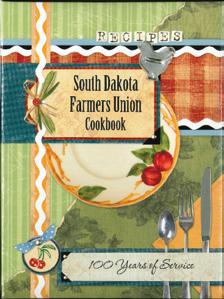
ORDER YOUR OWN COPY OF THE FARMERS UNION CENTENNIAL COOKBOOK
Cookbooks are $10 plus tax and shipping. Call 605-352-6761 or email sdfu@sdfu.org to place your order today!
Brecky (Keierleber) Cwach Davis, S.D.
½ c. walnuts, chopped ¼ tsp. black walnut flavoring
2 ¾ c. flour
1 tsp. baking soda
1 tsp. baking powder ½ tsp. salt
Preheat oven to 350 degrees F. In a large bowl, put brown sugar, oil, egg, vanilla and buttermilk; mix well. Stir in rhubarb, walnuts and flavoring. In a smaller bowl, combine flour, soda, baking powder and salt. Then add to rhubarb mixture. Spoon batter into muffin pans.