Ag-Based Camp Exposes Youth to Farm Safety, Co-op Education, Fun & Friends
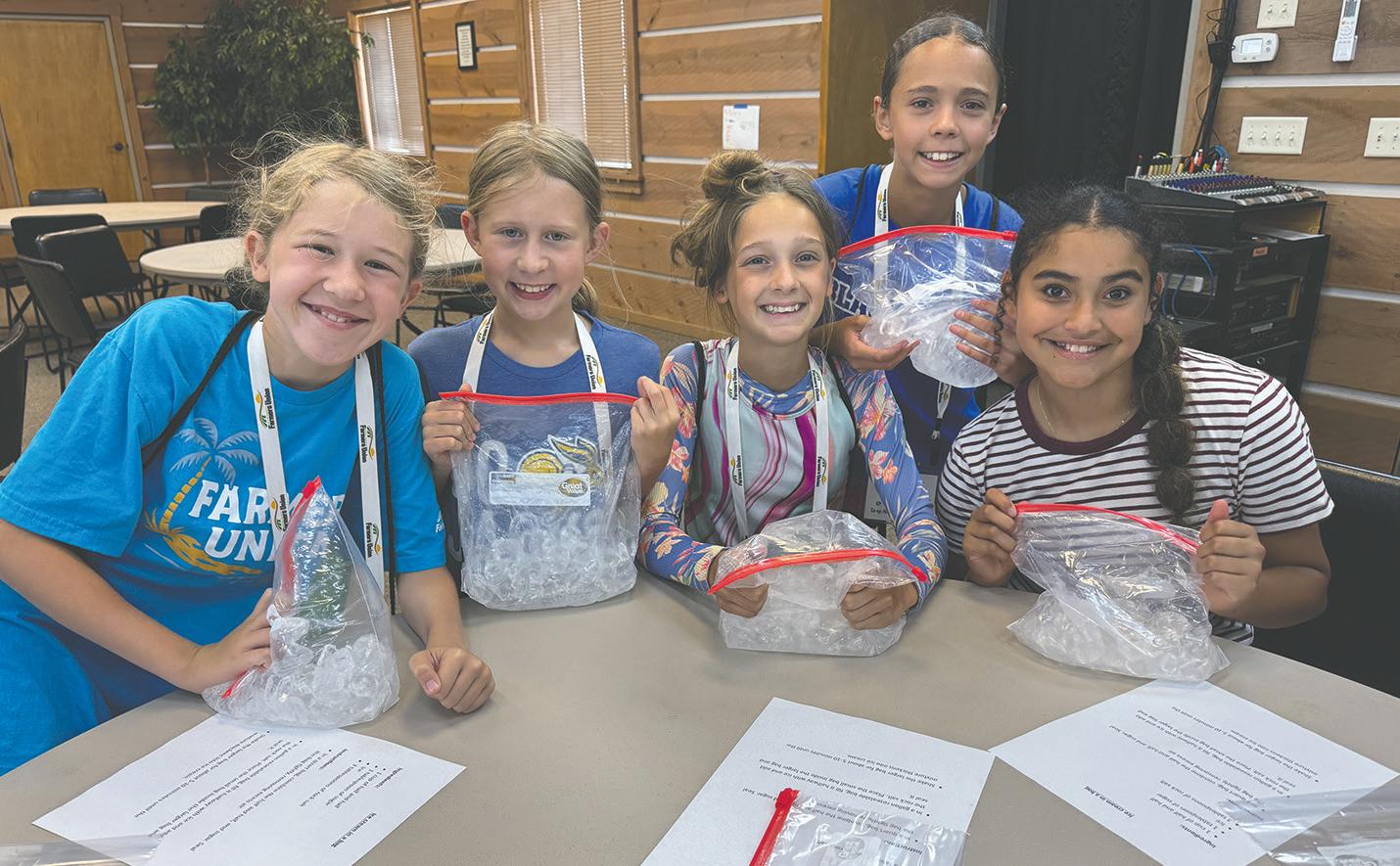
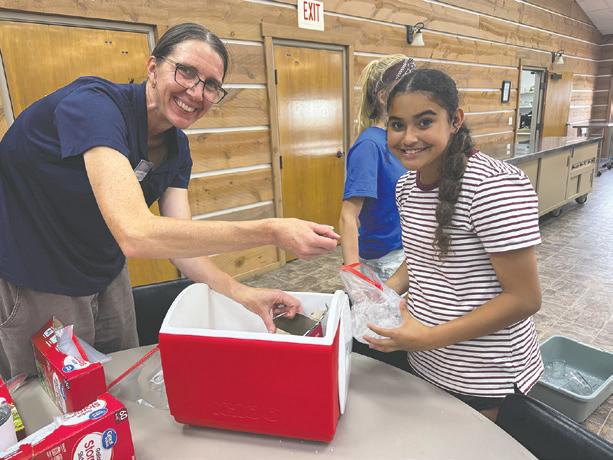
Along line of young campers wait as Londa Nwadike scoops ice, salt, cream and sugar into the resealable plastic bags they each hold.
“Making ice cream is a fun way to teach about dairy science and I love talking about dairy science because there are so many great careers in the industry and I want to inspire youth to think about them for their futures,” explained Nwadike, South Dakota State University David A. Thompson Endowed Department Head and Professor of Dairy and Food Science. “This activity also helps them make a farm-to-table connection.”
Connecting youth from across South Dakota with education about where their food comes from, farm safety and the cooperative business model are among the reasons South Dakota Farmers Union hosts a Jr. State Camp each summer, explained Executive Director, Karla Hofhenke.
“Youth are our future,” Hofhenke said. “And because agriculture is our state’s largest economic driver, it is important they understand it and its impact – because whether they grow up on a farm or ranch or live in
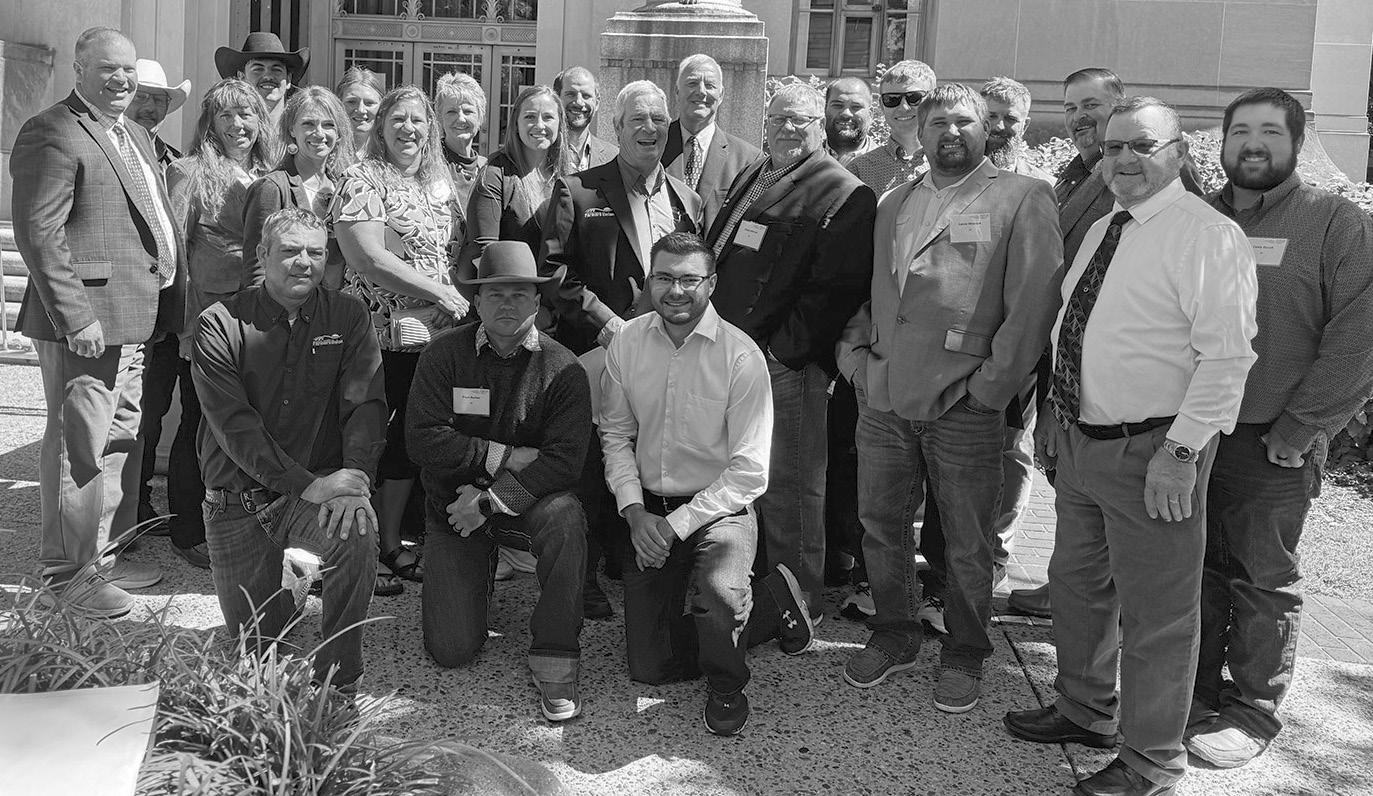
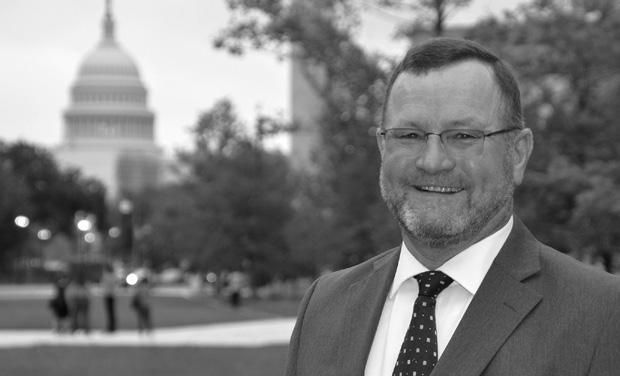
Farmers & Ranchers Prepare for 2026 D.C. Fly-In
PAGE 8
Farmers Union Celebrates Day
County Farm Family
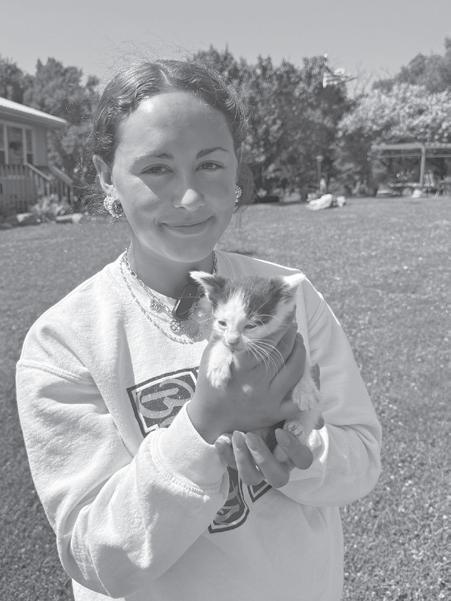
The small porch of Mike and Sandy Rumpca’s farmhouse is full of sunbathing kittens. Groggy with sleep, they barely look up when Lennox, 15, and Jocelyn, 17, run up the steps.
Sandy has donuts and scotcheroos waiting for her grandkids.
“Grandma always has good food,” said Jocelyn, a Webster High School senior. “If I’m ever hungry, I can just walk over.”
It’s one of the perks to living next door, explained Sandy’s daughterin-law, Chelsy. “When the kids were little, if I made something they didn’t like for supper, they would come over to Grandma’s.”
Sandy loves having her son and his family next door.
“I love watching them grow from the time they were babies to where they are now,” Sandy said. “I love that they include me on things from school and having them around to play with the cats – words cannot express how grateful I am to have them live by me.”
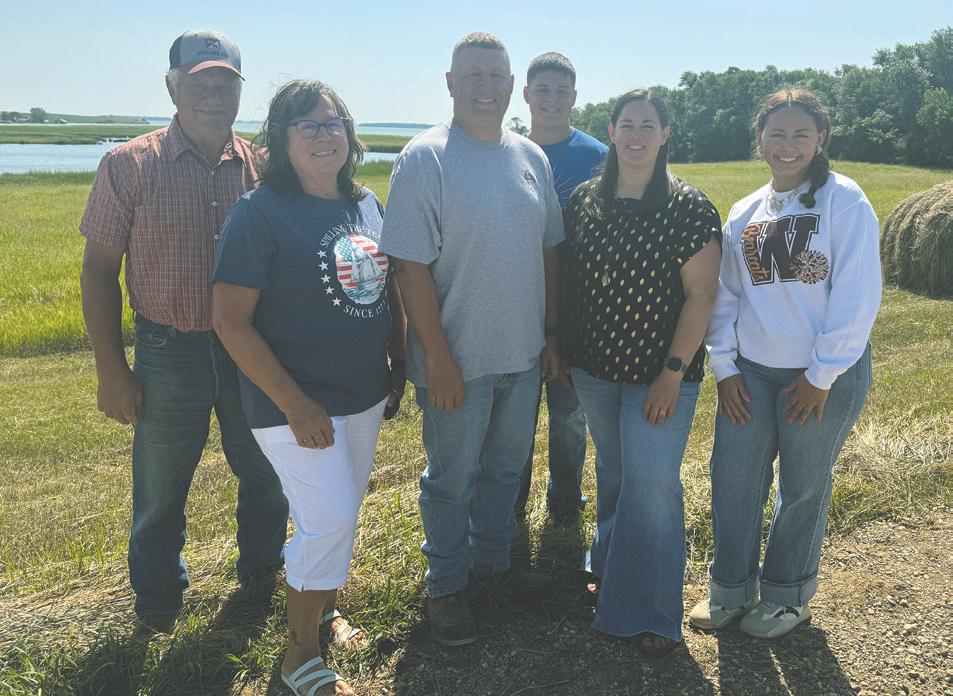
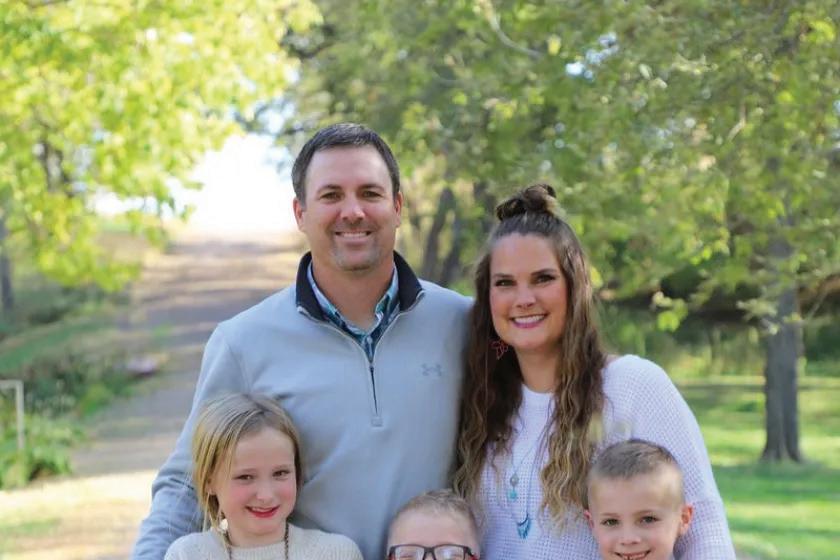
The Rumpca family on their farm near Webster: Mike, Sandy, Tyler, Chelsy, Lennox and Jocelyn.
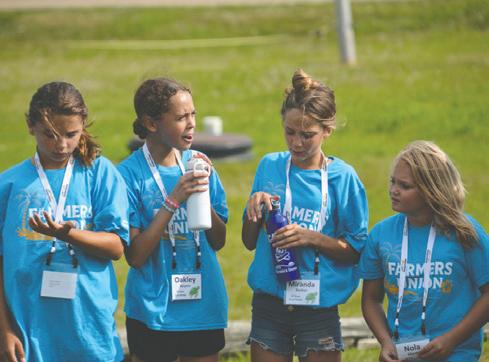
Campers make ice cream: Corley Atyeo, Clear Lake; Ottilie Lau, Parkston; Miranda Becker, Tulare, Oakley Beyers, Rosco and Keily Lopez, Plankinton.
Union Farmer
“We are stewards of the land. This is our part of the world, and we have to keep it. My main goal was to hang on to it forever.”
– Mike Rumpca
Raising their children on the farm is one of the many reasons Chelsy and Tyler decided to move from their home in Webster to Tyler’s family farm seven miles outside of town.
“I wanted them to experience the quiet living where they have plenty of space to play and they can learn responsibility,” Chelsy explained.
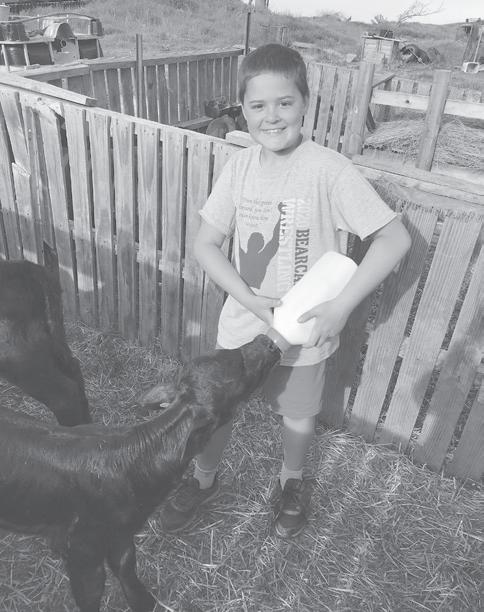
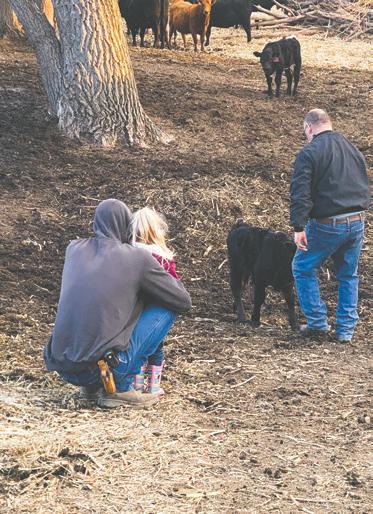
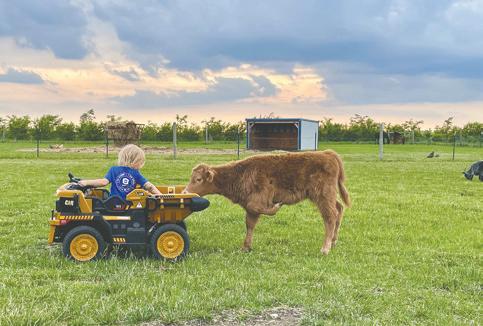
As she prepares for life after high school, Jocelyn would agree with her mom. “There was a time when Lennox and I had 12 bottle calves to take care of. It taught me responsibility and how to prioritize what needs to be done first. If I wanted to do something, I knew I needed to feed the calves first.”
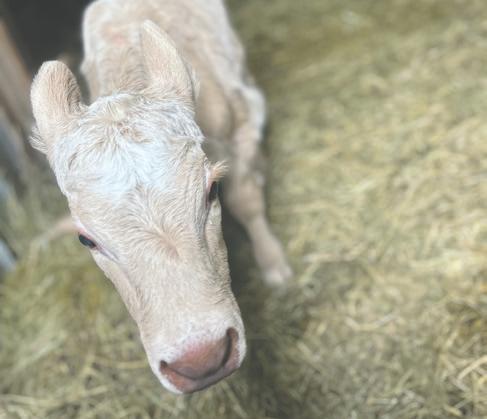
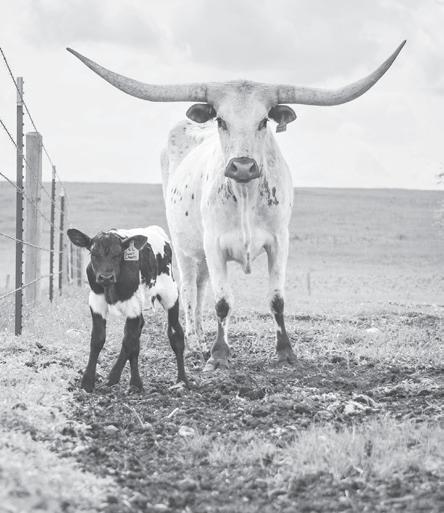
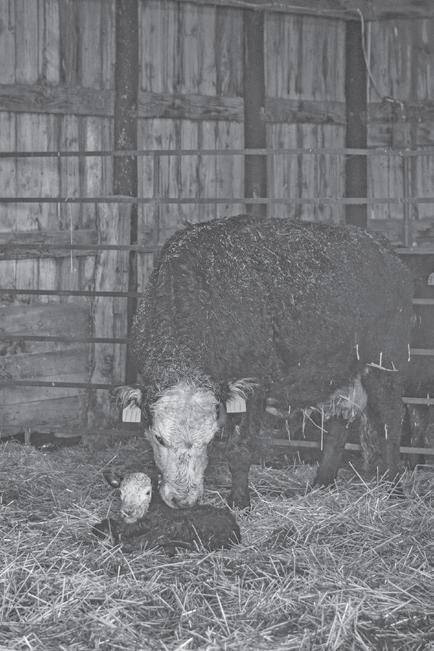
calf.
Seeing the fifth generation of Rumpcas enjoying farm life makes Mike smile.
“This is home. My grandparents started it. Then my parents. Now the next generation comes to take care of it,” said the thirdgeneration Day County farmer. “We are stewards of the land. This is our part of the world, and we have to keep it. My main goal was to hang on to it forever.”
Achieving this goal has been a struggle.
Milking cows is the best life
Farming was all Mike ever wanted to do.
“It’s all I knew. It’s what life was.”
After high school, Mike got a diesel mechanics degree from North Dakota State School of Science and returned to Webster to work for a local farm implement/John Deere dealership. He farmed on the side with his parents, Bernard “Barney” and Joan. He married Sandy Gruba and 10 years later they moved on to the farm.
In 1991, Barney’s health was in decline, so Mike quit his job in town and he and Sandy bought the farm. Mike was following the family farming tradition. His dad purchased the farm in 1961 from his grandpa, Bernard Sr., who purchased the farm in 1941 from a neighbor.
The Rumpca family has been farming in Day County since emigrating from Poland in the late 1800s.
When Mike purchased the farm, the Rumpca farm was one of many small dairy farms in Day County.
“Milking cows is the best life,” Mike said.
“Cows don’t talk back. You don’t have to answer to anybody. You start milking around 6 in the morning and then you’re done around 8 and then you start your day on the farm, haying or whatever needs to be done.”
Sandy agreed. “I thought it was the best, getting up early and seeing what God created while you slept. You bring the cows in and the birds are singing.”
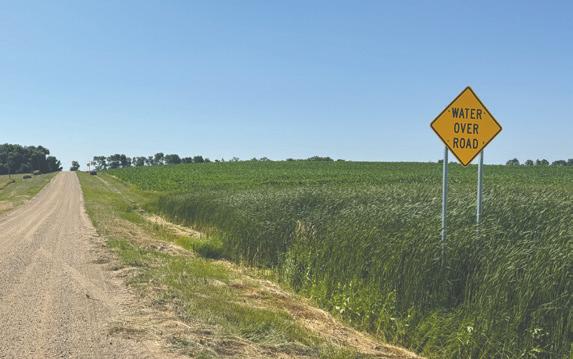
The water kept coming and coming
And then everything changed.
“In 1993 there was a 100-year-rain up north. They got 10 inches of rain in one day. Pickerel Lake flooded, and it drained into Waubay Lake, and it flooded,” Mike said. “The water just kept
Rumpca Family Continued from Page 1
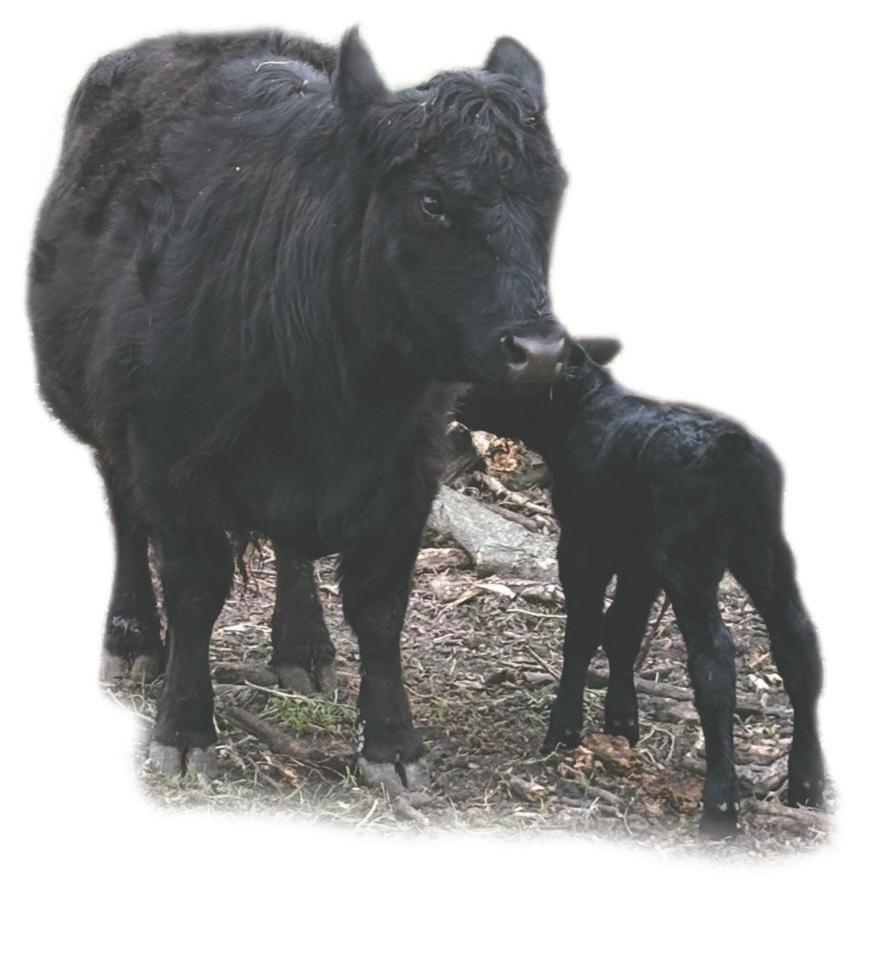
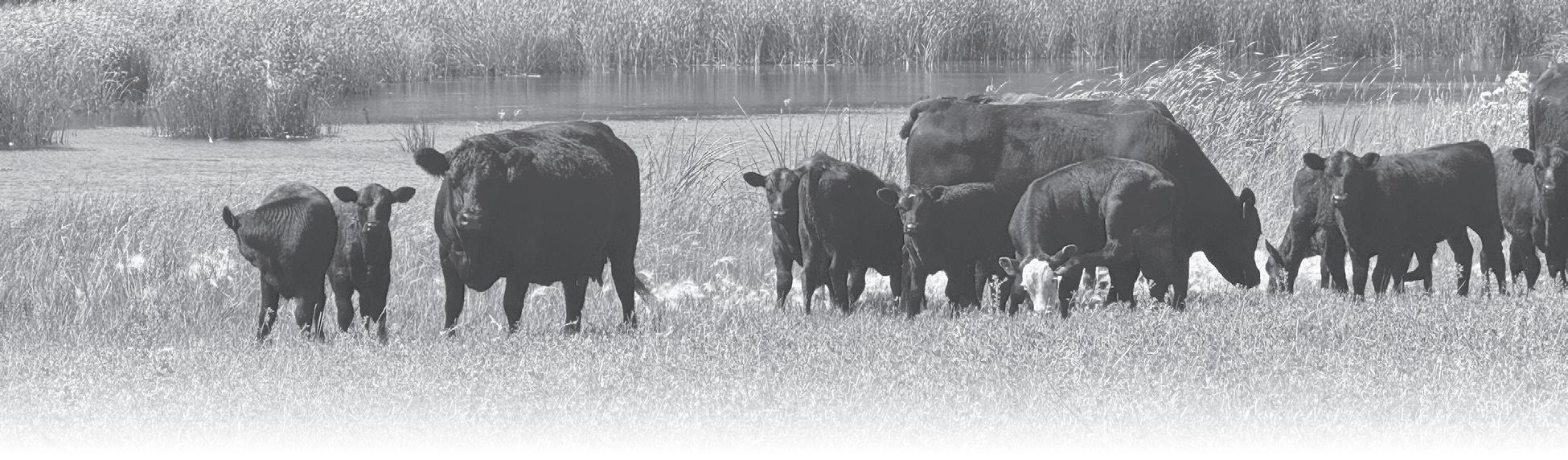
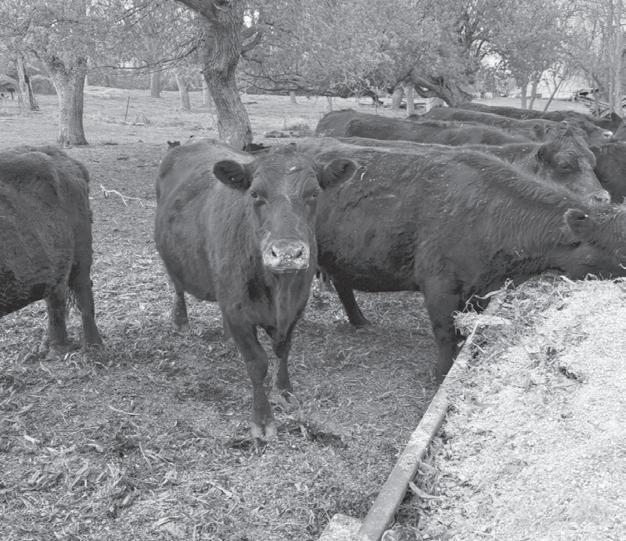
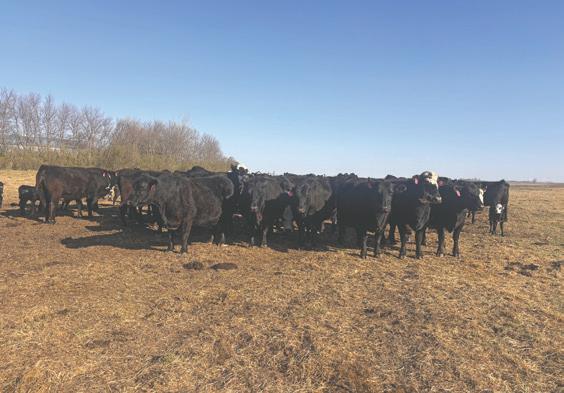
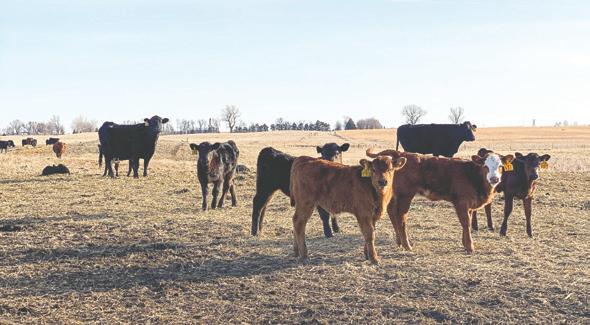
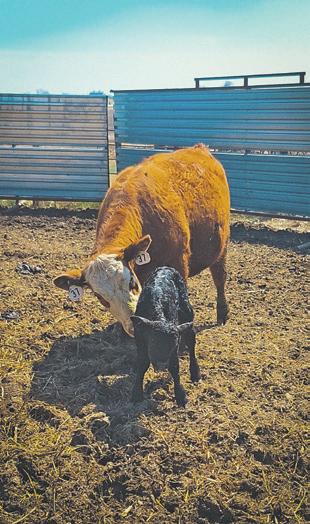
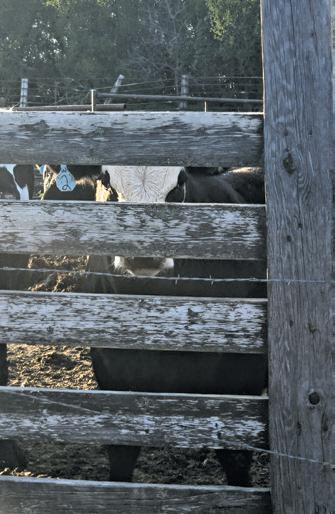
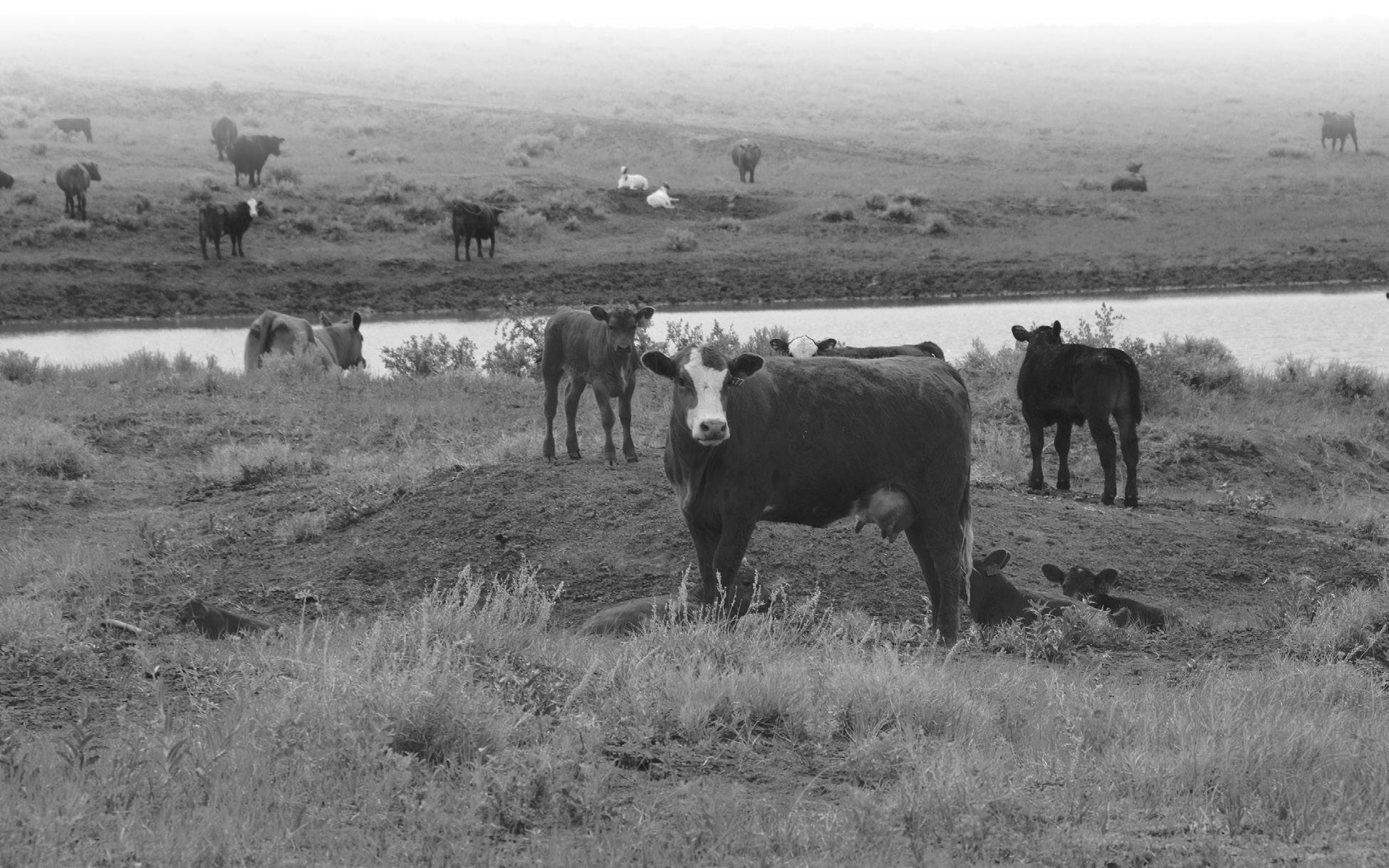
Aberdeen Angus cow and
Scan to view Farm Family videos & photos
coming and coming.”
“I took the kids out to the pasture near our house and the water was knee deep. We started catching fish with our hands. I never saw anything like it in my life,” Sandy said.
“We had a slough by our barn that always dried up. And we thought, ‘it will never get to the slough,’ because we could see ridge rocks east of the slough which we always figured was the ancient shoreline from the days when Noah built the Arc. But it just kept coming and coming,” Mike recalled. “Today it’s all under deep feet of water.”
Preserving the farm through determination
The Rumpca farm story has two chapters: Chapter 1 – Before the Water; and Chapter 2 – After the Water.
“When the water came, it changed things because we had to go to town to work because we had to quit milking,” Mike said.
The initial flooding swallowed up 80 acres.
And the water just kept coming. By 1997 it was slapping up against the milk barn’s foundation.
“The cows had to swim through muddy water to get to the barn to be milked in the morning,” Sandy said. “That’s when we knew we could not keep doing this.”
The dairy herd is what financially sustained the farm.
Tyler was 14 when his parents sold the milk cows.
“Everything was different because I was so used to milk chores and then Dad and Mom had to work off the farm,” said Tyler of Mike going to work as a mechanic for Harlow’s, a school bus repair shop in Webster, and Sandy managing a convenience store in Roslyn.
“My parents taught me a lot about determination,” Tyler said. “No matter what gets thrown at you, you don’t quit. I watched them struggle when the water first came, and they always made sure there was food on the table and that this was a nice home for my sister
and I. And they managed to keep the farm.”
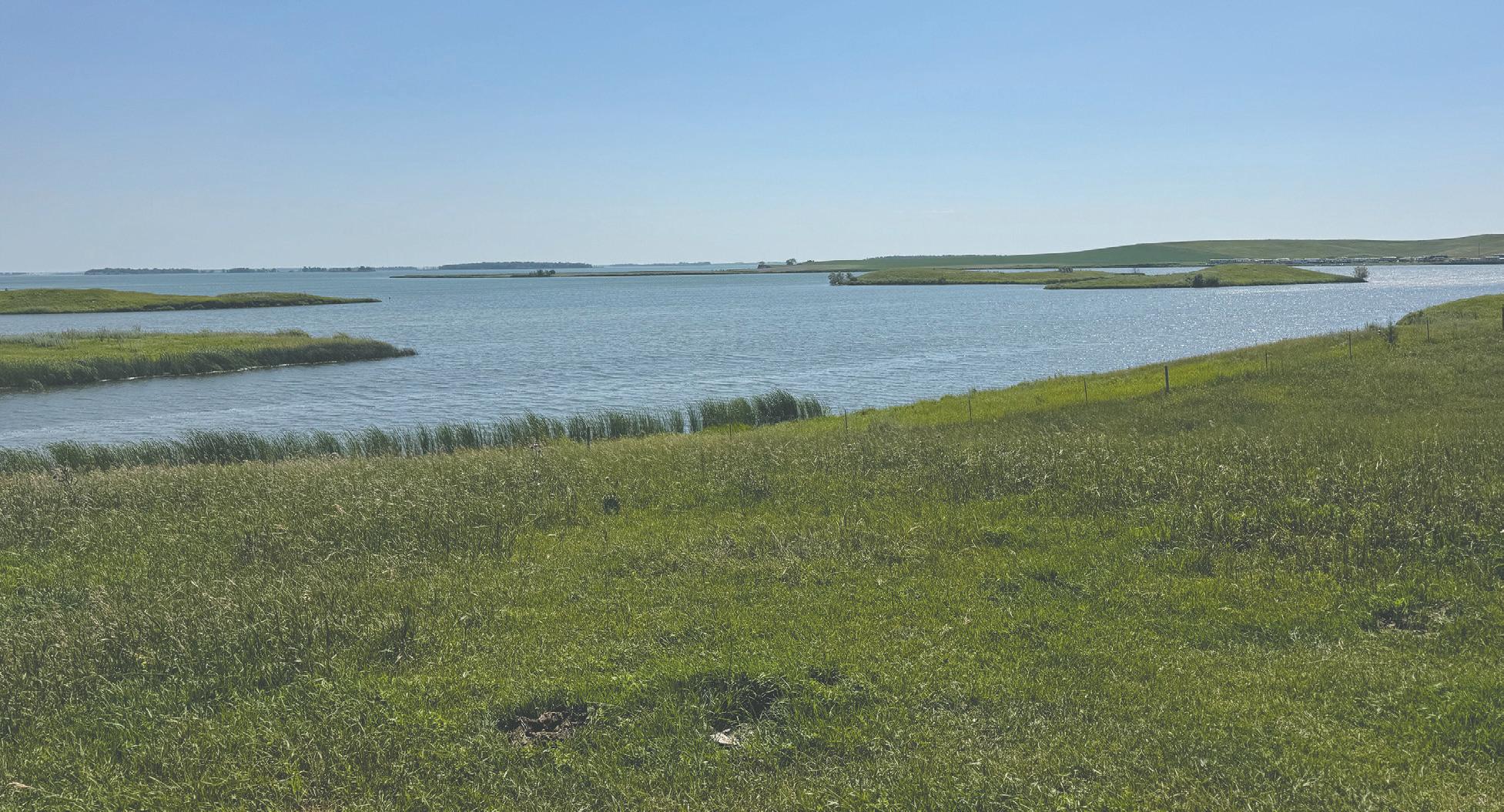
Today about 15 feet of water covers nearly half of what was Rumpca pasture, hay acres and cropland.
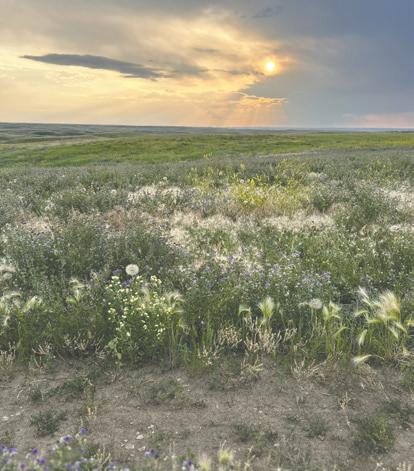
Evidence of what they lost is in plain sight. The farmhouse used to face a century’s old hiproofed dairy barn. Today, it looks out over an expansive body of water. The old milk barn was taken out in a windstorm several years ago, leaving a lone silo and small red shed that used to house the bulk tank behind.
To make best use of the land out of the water’s reach, the family raises a small commercial cow/calf herd and enough hay and corn to feed them. They also raise soybeans.
Tyler and Mike got into stock cows after they sold their dairy cows. “It started out as my FFA
project and we just kept expanding the herd,” explained Tyler, who followed in Mike’s footsteps, getting a diesel tech degree at Lake Area Technical College and working for Harlow’s.
Although he knew he would not be able to farm full time, Tyler said the way of life his parents provided for him and his sister, Jennifer, is one that he loved and wanted for himself and his family.
“This family farm is a neat thing to continue and with the size that the herd is, it is manageable with my work,” explained Tyler, who now works as a diesel mechanic instructor at Lake Area Technical College. “There’s nothing like coming home and going out to the field and getting to work. Some days you feel like you are working 24 hours a day, but there is such a feeling of accomplishment when your day is done.”
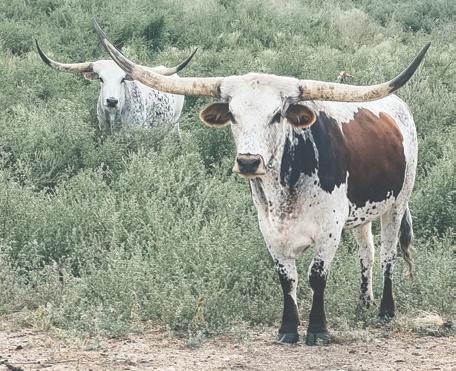
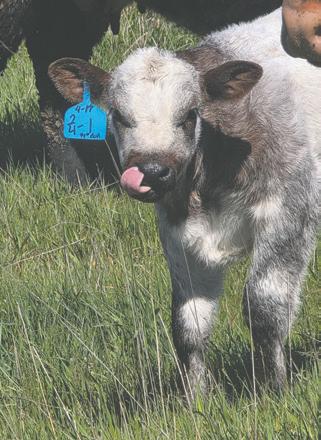
To stretch their feedstuffs further, the Rumpcas began buying Aberdeen Angus cows. At about 1,100 pounds and 5-feet tall, the breed is much smaller than traditional Angus, which means they consume less feed. But when bred to a conventional bull, these small cows can raise typical weight calves.
“At a certain point, the calves are almost as tall as their mothers, so it is difficult to tell which are the cows and which are calves,” Tyler said.
Today, Tyler and Mike’s herd includes some cows owned by Lennox and Jocelyn. Like his dad, Lennox is raising cattle as part of his FFA supervised agricultural experience.
“I’m excited to be the fifth generation on this farm because when I’m 30, this will become a century farm,” Lennox said.
In addition to FFA, Lennox is also actively involved in Farmers Union youth programming and currently serves as a member of Junior Advisory Council. In this role, Lennox works with a team of teens from across South Dakota to help plan and facilitate Farmers Union State Rumpca Family
Continued on Page 18
Union Farmer
Teens Compete in Quiz Bowl Championships & Farmers & Ranchers Feed Fairgoers During South Dakota Farmers Union Day at the State Fair
You are invited to join South Dakota Farmers Union to celebrate farm and ranch families together with hundreds of fairgoers during the South Dakota State Fair, Saturday, Sept. 5.
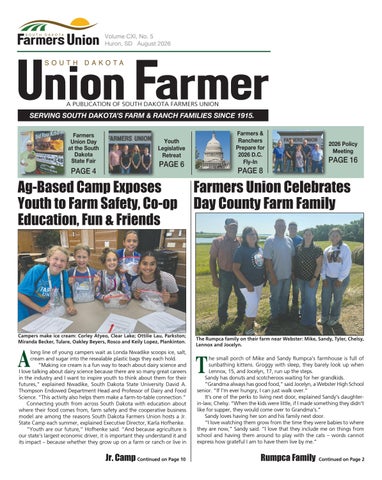
“Farmers Union Day at the State Fair is a day to focus on and celebrate the South Dakota families who do the work of our state’s No. 1 industry of agriculture,” explained Karla Hofhenke, Executive Director of South Dakota Farmers Union. “We host several activities, but my favorite is the Farmers Share Lunch, because it’s a time when farmers and ranchers get to share a meal with those they work to feed. And consumers gain a clear understanding that high grocery store prices do not reflect the share farmers receive for what they produce.”
Based on current markets, the lunch will only cost fairgoers 47¢.
“It’s a good way to help consumers understand that even though they may see farmers driving large machinery, it does not mean we are receiving big bucks,” said Chad Johnson, a Groton farmer who serves on the
Farmers Union board of directors. “State fair brings people from all over the state to one place, so this meal is a great way to learn what people from other areas of the state are thinking about and concerned about. And if they have a question about agriculture that I can’t answer, I can always introduce them to another farmer who may be from their area.”
Clark farmer Gail Temple said like all South Dakotans, high grocery store prices have a negative impact on their household budget.
“Farmers have to shop at the grocery store just like everyone else. And even though the price of everything has gone up, my income has not.”
A Farmers Union member since she was a child, Temple said attending Farmers Union Day at the State Fair has been a lifelong tradition.
“Growing up, the State Fair was our annual vacation. It’s where I get to reconnect with old friends,” Temple said. “And during the Farmers Share Lunch I enjoy visiting with people I don’t know and learn about what they do and answer any questions they have for me as a farmer.”
Temple and Johnson serve on the South
Dakota Farmers Union board of directors. So, during Farmers Union Day, they get to hand out merch to fairgoers to celebrate farm and ranch families. “A cross section of the state comes out to the State Fair each year, so I enjoy the
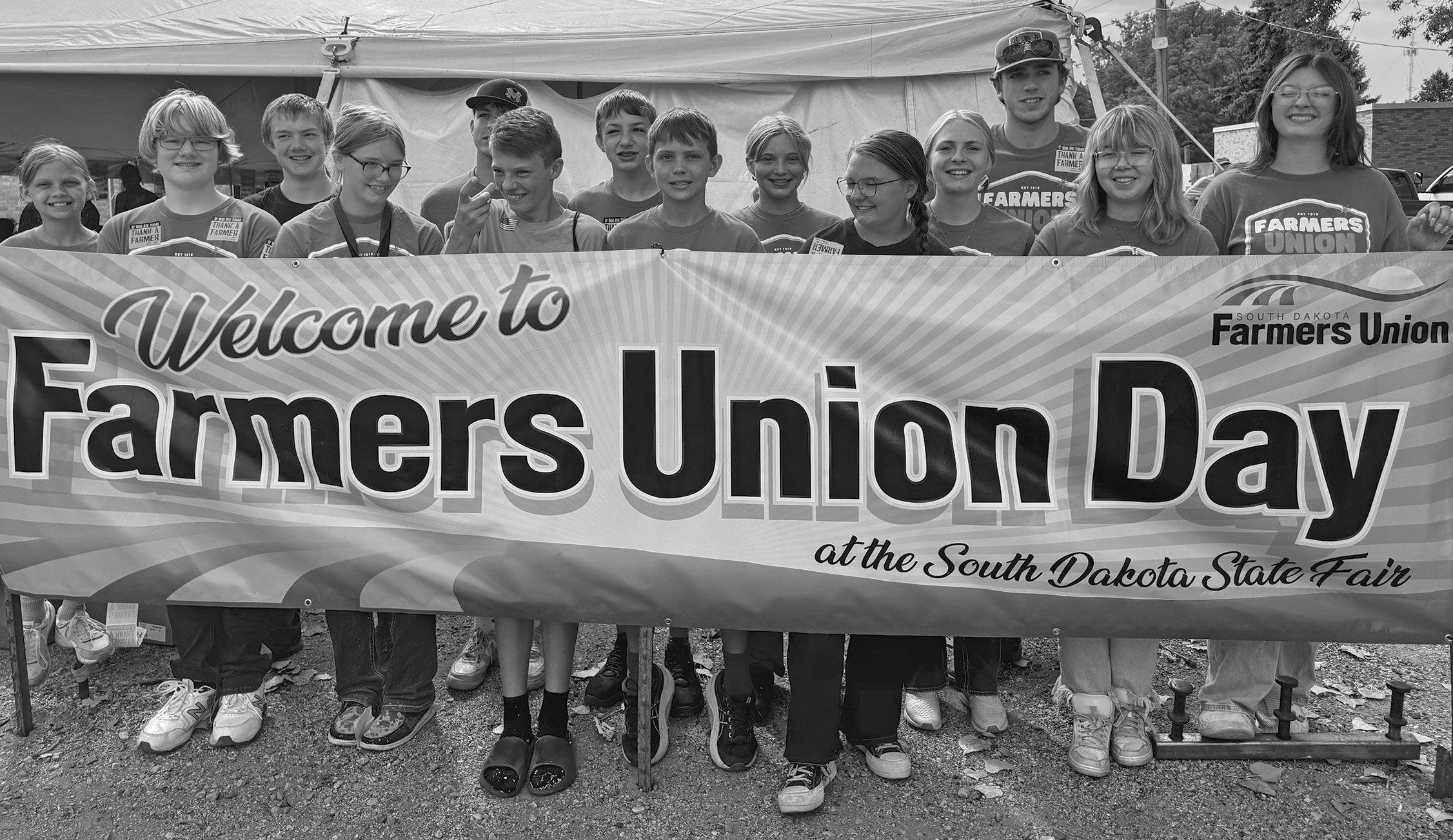
Each year during the fair, Farmers Union youth help serve the Farmers Share Lunch to 1,000 fairgoers.
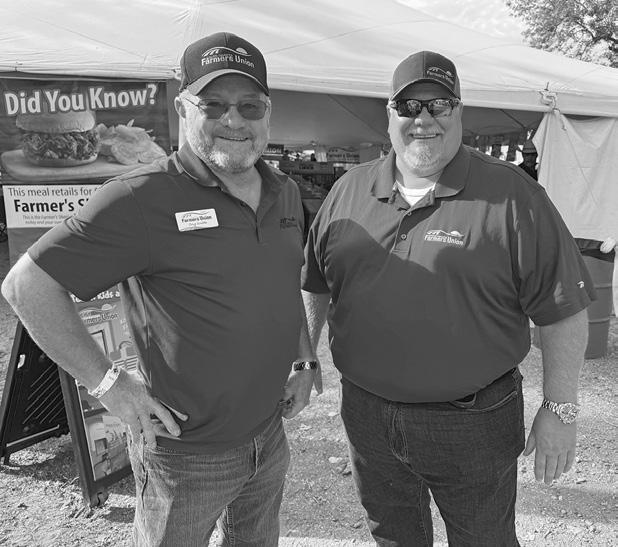
SDFU President, Doug Sombke and Groton farmer and Board member, Chad Johnson during the 2025 State Fair.
opportunity to visit with a whole bunch of people who may not know anything about farming or ranching,” Temple said.
Farm Safety Quiz Bowl Championships
Supporting South Dakota’s farm and ranch families through policy and education is a focus of the state’s largest agriculture organization.
To help teens focus on farm safety, each year, South Dakota Farmers Union hosts a Farm Safety Quiz Bowl each spring during the State FFA Convention. The top four teams qualify to compete for the championship title during Farmers Union Day at the State Fair.
FFA chapters with qualifying teams are: Faulkton Area, HitchcockTulare, Tri-Valley and Wessington Springs.
“Sadly, farming and ranching are two of the more dangerous occupations. This is the reason Farmers Union invests in education to help keep our farm and ranch families safe,” explained Doug Sombke, President of South Dakota Farmers Union and a Brown County farmer.
In addition to the Farm Safety Quiz Bowl Championships and Farmers Share Lunch, South Dakota Farmers Union will host a panel discussion to focus on the impact of Senate Bill 96, which allows counties to charge a half-cent tax on gross receipts. The earnings will go to lower the county portion of owner-occupied properties.
Farmers Union has also invited the 2026 gubernatorial candidates to answer agriculture-focused questions from fairgoers.
“It is important that we all hear from candidates what their policy will be when it comes to agriculture,” Sombke said. “With the extreme weather conditions and high fuel and fertilizer costs, it’s been a challenging growing season for many agriculture producers. We are all eager to understand what our state’s leaders plan to do to support these families.”
Farmers Union Members Get Free State Fair Passes
Farmers Union is a premiere sponsor of the South Dakota State Fair
and has a limited number of gate passes to give members. To receive your State Fair passes, members should call Lacey Bich, 605-554-3023 or email name, mailing address and number of tickets requested to Lbich@sdfu. org. n by Lura Roti for SDFU
Show your Farmers Union pride by wearing your SDFU apparel (shirt, cap, etc.) for a chance to
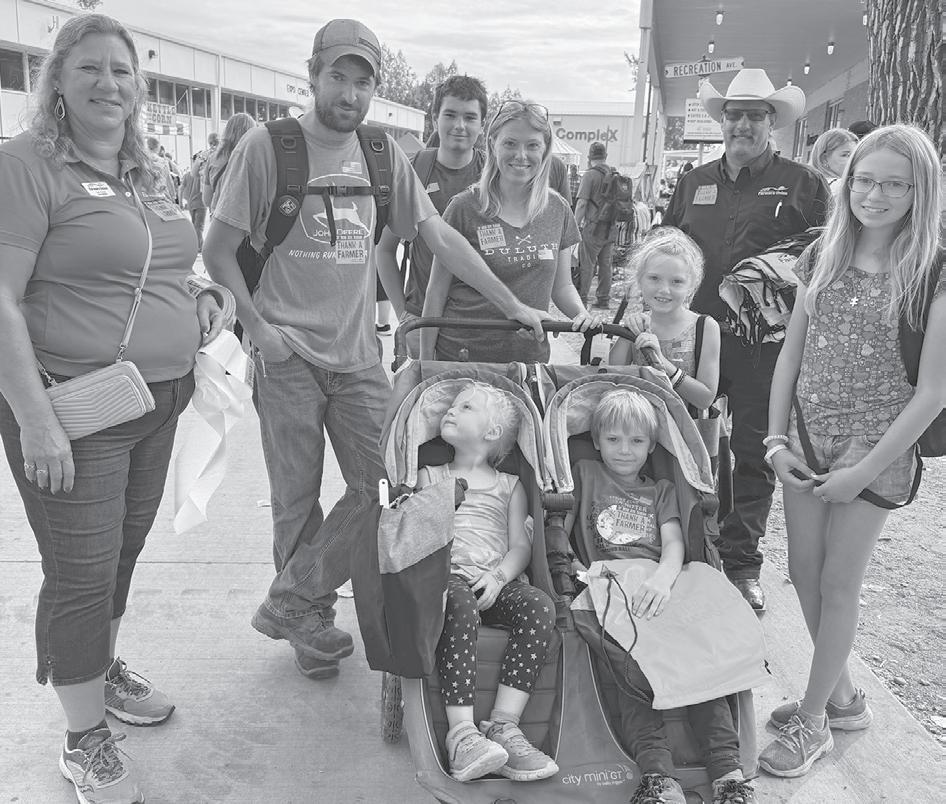
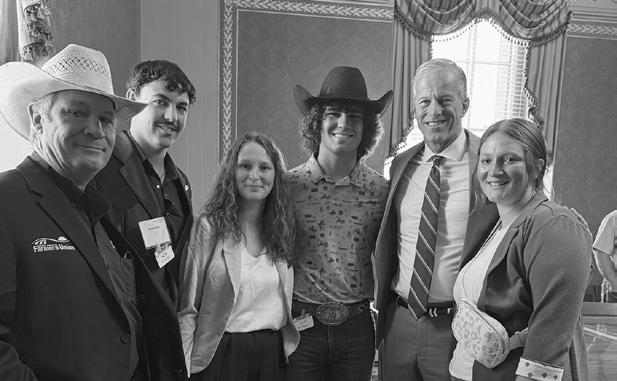
SDFU Board members Gail Temple (far left) and Oren Lesmeister (far right) hand out farmer-friendly merch and meet with fairgoers during the 2025 South Dakota State Fair.
Union Farmer
For as long as she can remember, Elizabeth Wonnenberg’s dad, Hank, has left their Dallas farm for a few days periodically to work on grassroots policy in his leadership role serving on the South Dakota Farmers Union Policy Committee.
But, it was not until she attended the 2026 Policy Meeting this July as part of the Farmers Union Legislative Retreat that she got to actually learn what grassroots policy development was all about.
“Hanging out at the Policy Meeting was my favorite part of the trip,” explained the 14-yearold. “By watching, I got to learn what Farmers Union stands for and what they would like to see in the future. I liked being able to see how it works and what my mom and dad are talking about.”
For several years in a row now, her parents, Hank and Melissa, have served as delegates to state and National Farmers Union policy meetings.
Liberty Doerr also enjoyed learning during the Policy Meeting.
“It was interesting learning how policy gets changed and how new policy is added and how it is the members who decide policy, not the president,” said Doerr, a Huron High School sophomore.
Doerr and Wonnenberg were among four South Dakota youth who got to spend a few days in Huron learning about grassroots policy and civic government as part of South Dakota Farmers Union Legislative Retreat.
The Legislative Retreat is a trip earned by youth who have attended Senior State
Leadership Camp for two years.
The other youth to attend the two-day retreat were Kynslee Brown, Huron and Grace Eckerman, Spencer. Since all the youth attended camp together, the two-day retreat was a reunion of sorts.
“It was fun to reunite with friends from camp because we don’t get to see them very often, which made it all the sweeter,” Eckerman said. “I always enjoy making friends at camp and learning their stories.”
In addition to reconnecting with camp friends, Eckerman said she enjoyed learning about what Mark Robish, the Mayor of Huron, does for his job.
Youth Learn Grassroots Policy & Civic Engagement During Legislative Retreat
“Mayors do a lot of paperwork and it was interesting to learn how much little things matter in a city,” said Eckerman of the time the youth got to spend visiting with the mayor and touring City Hall. “The mayor told us about the issue of stray cats in Huron and how a lot of people are sick and tired of stray cats and there is a lot of arguing about the solution.”
Visting with the Huron mayor was also Kynslee Brown’s favorite activity. “I live in Huron, so I enjoyed learning how everything fits together in this town and learning about the commission meetings that they have every Monday – it was really cool to learn about.”
Providing youth with an opportunity to learn
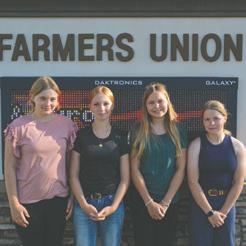
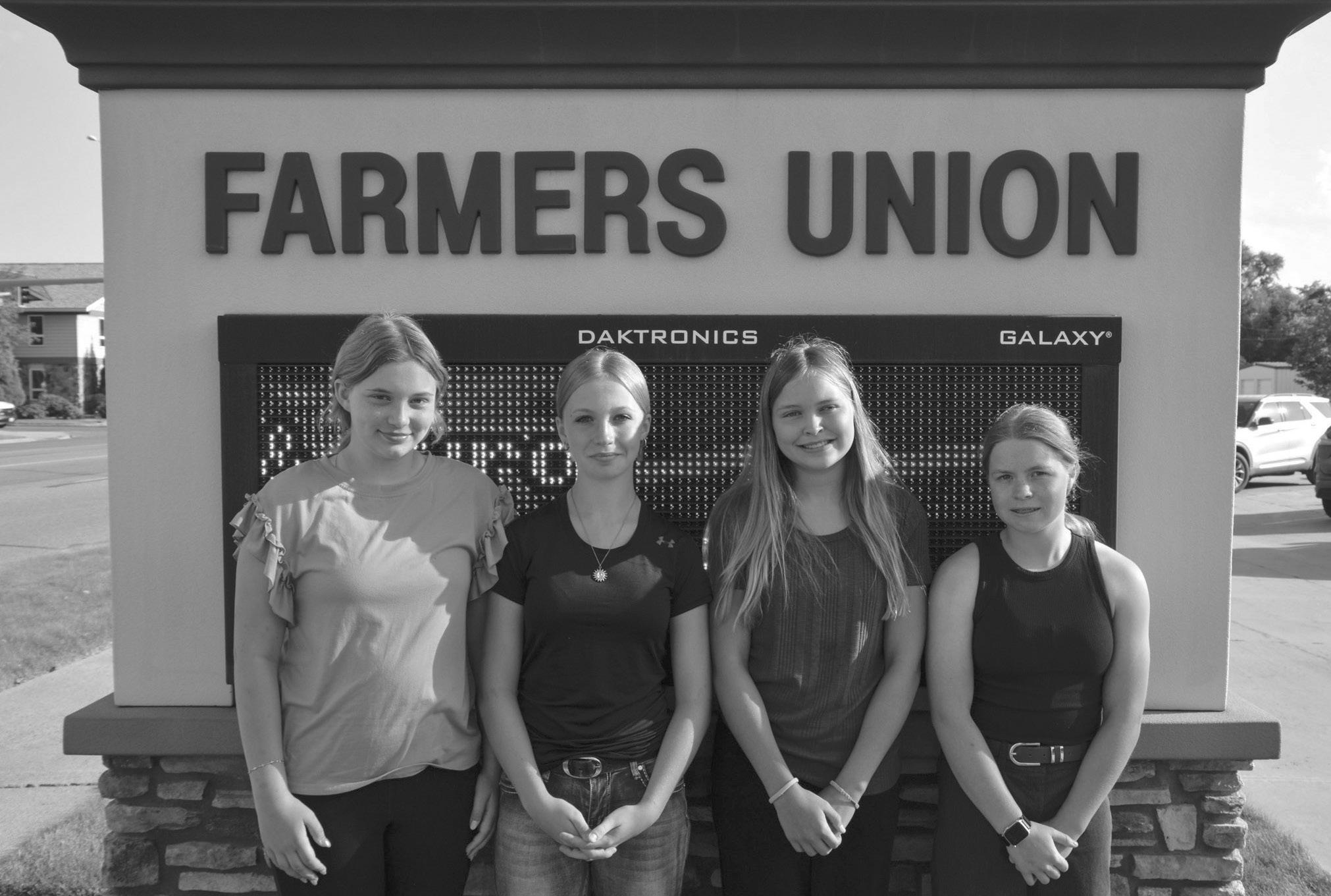
Left to right: Liberty Doerr, Kynslee Brown, Grace Eckerman and Elizabeth Wonnenberg.
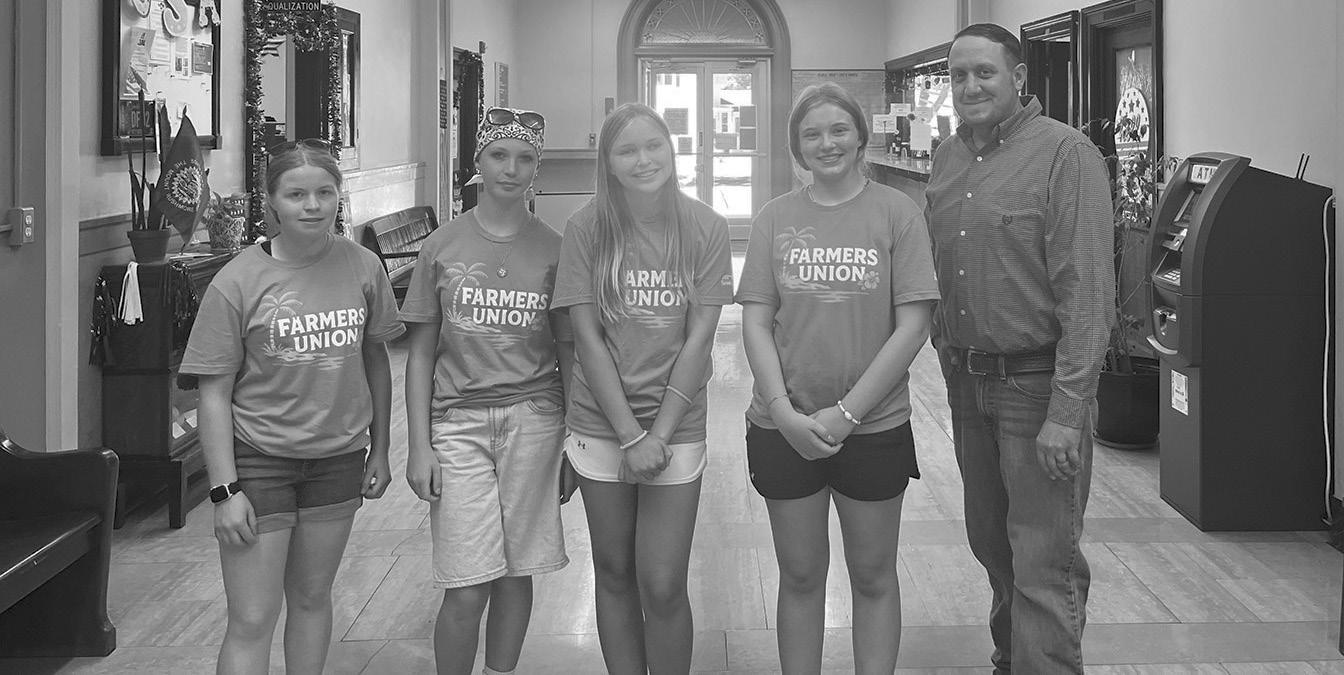
Huron County Commissioner Jared Zerfoss gave Farmers Union youth a tour of the County Courthouse.
about grassroots policy and civic government is important, explained Karla Hofhenke, South Dakota Farmers Union Executive Director.
“If youth understand how policy is developed in our organization and in city government, then they will be more likely to participate in policy in the future,” Hofhenke said. “As a grassroots policy organization, we encourage all our members to get involved in local policy because through policy, not politics, positive change can happen.”
To learn more about South Dakota Farmers Union youth programming, visit www.sdfu.org n by Lura Roti for SDFU
When agriculture-related policy is up for discussion in D.C., who do congressional leaders think it impacts?
For many in Congress, the image that flashes before their eyes may be that of the 1930’s America Gothic painting of a farmer in overalls, pitchfork in hand with his wife in an apron standing beside him. Or worse, it may be an image of someone who doesn’t care for their animals or about the environment.
Those involved in agriculture know that neither image is correct. And together South Dakota Farmers Union members can help change what congressional leaders think by participating in the 2026 National Farmers Union Washington, D.C., Fly-In held Sept. 14-16, explained Jeff Kippley, National Farmers Union Vice President and Aberdeen farmer.
“Some in Congress just have this mythical figure in mind when they hear the word, ‘farmer,’ that has nothing to do with who we are as farmers,” said Kippley, who in his role as NFU Vice President spends many days each year in the Halls of Congress advocating on behalf
Attend D.C. Fly-In & Remind Congress Who Farmers & Ranchers Are
of family farmers and ranchers. “They don’t think of farms as family-owned and operated. They think farmers don’t care about the land or the environment. And yet, all this could not be farther from the truth.
“All farmers want, is to make a living to support their family and pass the farm on to the next generation.
“When family farmers and ranchers travel to D.C., and sit down with congressional leaders and tell stories about what is happening in the Dakotas – it really pays off because they get to meet a real farmer or rancher.”
“And once a congressional leader meets a farmer or rancher and makes a connection to them through their personal stories, Kippley said this is when the image of WHO a farmer or rancher is, begins to change from fiction to reality.
De Smet farmer Rob Lee experienced this when he has participated in the D.C. Fly-In.
“It is obvious that agriculture is not top of mind for many in Congress, until you put it in front of them by talking about the importance of policy like a current Farm Bill or right to repair to your family and farming operation,” Lee said.
This is the reason South Dakota Farmers Union sponsors several family farmers and ranchers to attend the NFU Fly-In each year, explained Doug Sombke, President of South
Dakota Farmers Union and a fourth-generation Brown County farmer.
“The Fly-In provides a good opportunity to get in front of your congressional leader – and I would say more importantly – get in front of congressional leaders who are not from South Dakota. It is really important to share the stories of farmers and ranchers with those who represent urban districts and states,” Sombke said.
Kippley agreed.
“Producers sharing their stories makes a huge difference for our lobbying efforts,” Kippley said. “Our three representatives from South Dakota get agriculture and they support us. But they are only three votes. And you can’t get anything done with three votes. But if you can get 20 or 30 votes by impacting congressional leaders from urban areas because they heard from producers who explained to them what we do and why what we do is important, this can go a long way to convincing them to support policy we need.”
To learn more about the Washington, D.C., Fly-In, email Karla Hofhenke, Executive Director of South Dakota Farmers Union, at Karla@sdfu. org. To learn more about South Dakota Farmers Union policy and advocacy efforts, visit www. sdfu.org. n by Lura Roti for SDFU
Jeff Kippley
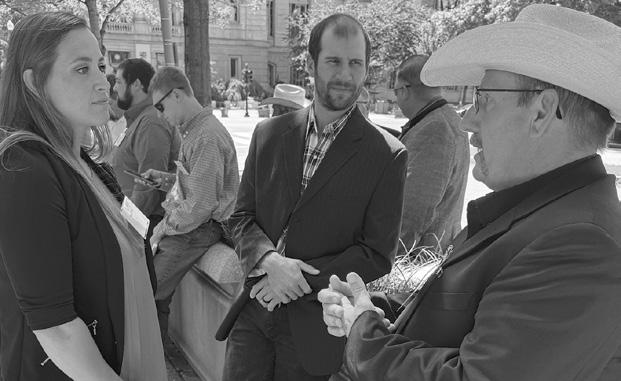
South Dakota farmers and ranchers met with Dept. of Justice staff to discuss anti-trust issues among packers during the 2025 Farmers Union D.C. Fly-In.
Junior Camp 2026
Union Farmer
Continued from Page 1
town, the future of our economy depends on them.”
Camper Keily Lopez said she did not know what ingredients went into ice cream until Nwadike’s demonstration. “It’s nice to know that ice cream has milk in it because milk comes from cows,” said the Plankinton 12-year-old. “I live in town, and I knew milk came from cows, but I didn’t think about it being in ice cream.”
“Hands-on makes me feel productive and helpful.”
– Corley Atyeo, 11, Clear Lake
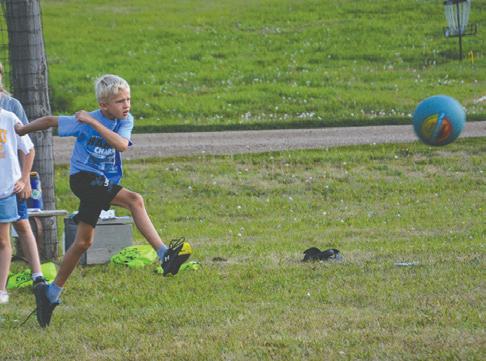
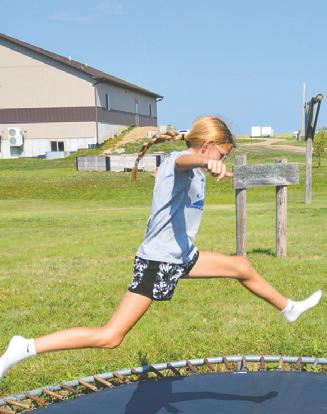
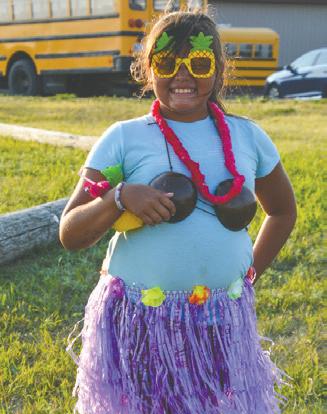
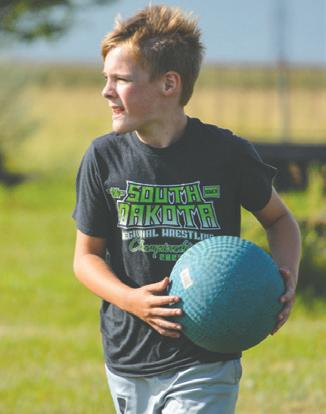
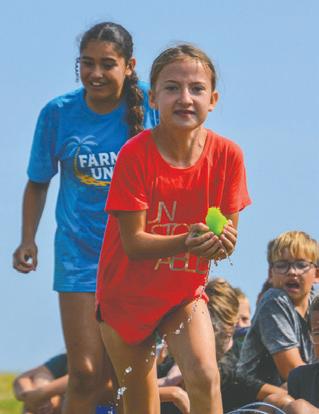
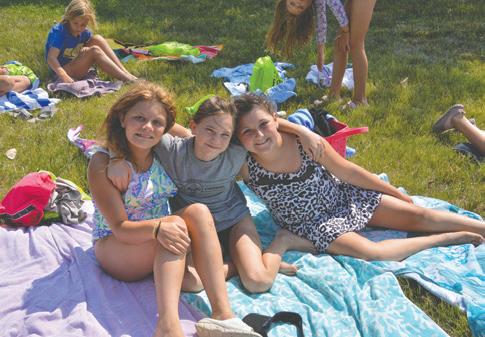
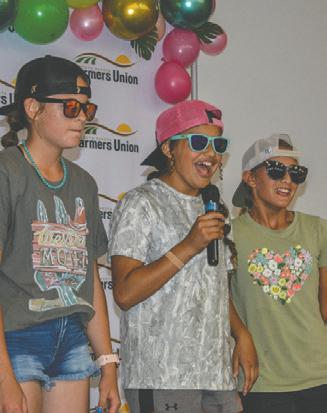
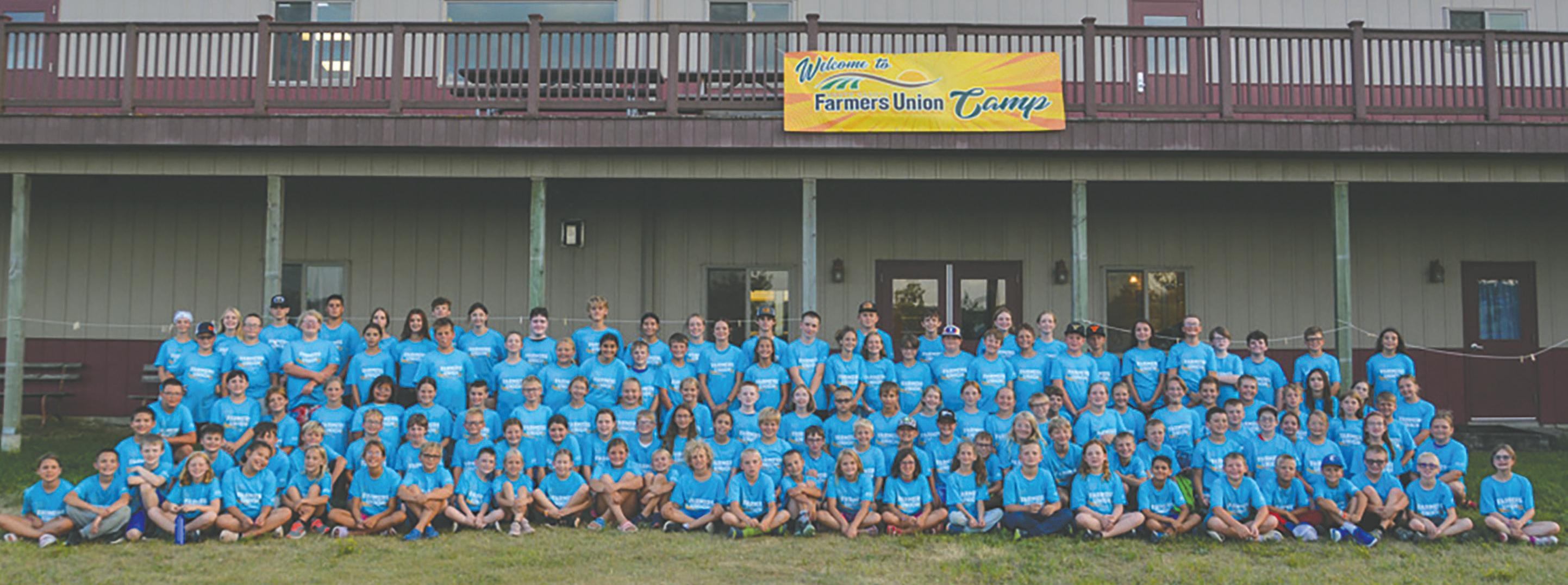
Lopez is one of 118 South Dakota 9-to-12year-olds who attended Farmers Union Jr. State Camp held at Camp Byron near Huron, July 1922.
Learning by doing is a focus of every camp activity. And 11-year-old Corley Atyeo appreciated this.
“Hands-on makes me feel productive and helpful,” explained Atyeo, who lives on a farm near Clear Lake.
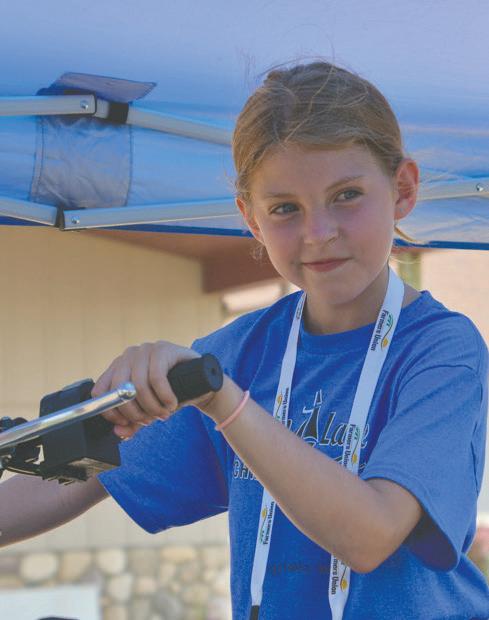
Before making ice cream, Atyeo was helping sell snacks as part of the Camp Store Cooperative. As a member of the store cooperative, Atyeo and the other campers in the Store Co-op priced inventory, created posters to market inventory and spent time selling items to other campers.
“Learning about co-ops is something we started learning about at Farmers Union day camps,” said Ruth Weber, a farm kid from Ethan. “I like that a co-op is not owned by a boss, it is owned by the people who use it.”
This is Weber’s second year to attend Jr. State Camp, and this year Weber is a member
of the Insurance Cooperative. This cooperative sells cards to campers to help them retrieve items they lose during camp, like water bottles or name tags.
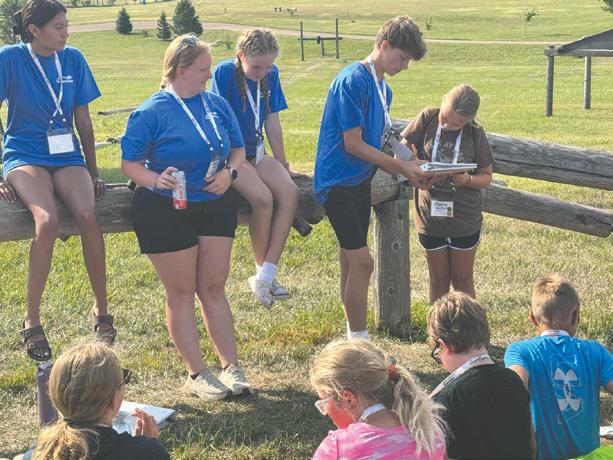
“Cooperatives are a big part of rural communities, so it is good for kids to learn about how they operate,” explained Chord Blotsky, who lives on his family’s cattle ranch near Hidden Timber. The Winner High School freshman is among a group of rural teens who served as camp counselors.
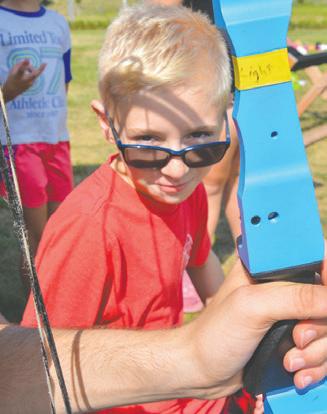
Blotsky and the other teen leaders all attended the Farmers Union Sr. Leadership Camp which was held in the Black Hills this June. As a counselor, Blotsky worked as a team with the other counselors to facilitate all camp activities.
“I have been attending Farmers Union Camp since I was little. I have learned a lot about being a role model and serving as a leader from the teens who were my camp counselors,” Blotsky said. “As a counselor, I hope to help the campers
have fun.”
According to camper Harper Hill, Blotsky and the other counselors were successful.
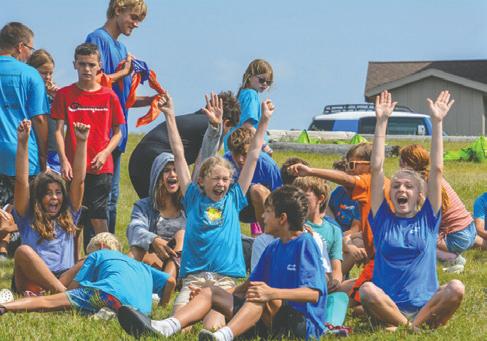
“The counselors are outgoing and kind and they really help make camp amazing,” said Hill, a sixth-grader from Lake Preston.
This is Hill’s first year to attend Farmers Union Camp, and she said it’s been fun and helped her gain confidence by overcoming fears.
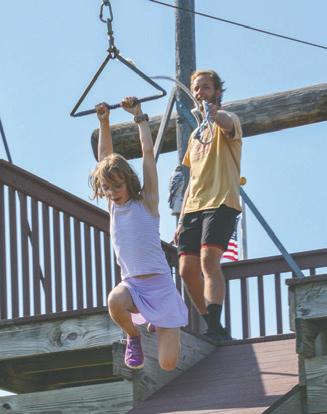
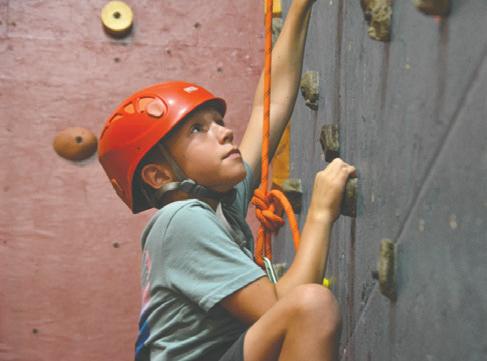
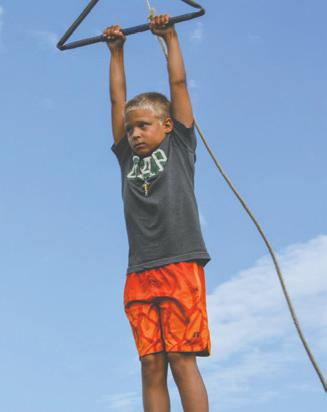
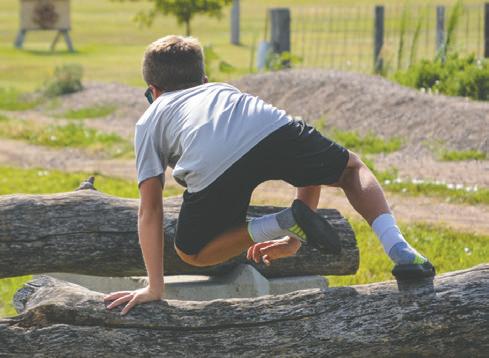
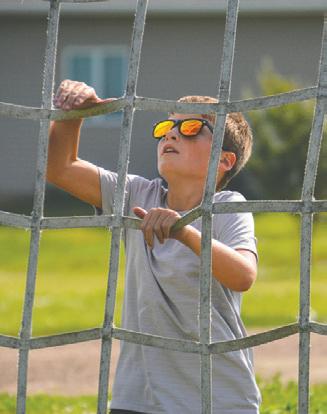
“I am scared of heights, but I wanted to go on the zipline and do rock climbing,” said Hill, explaining that she got encouragement from her camp counselors and new friends. “I did both and it feels like a big accomplishment.”
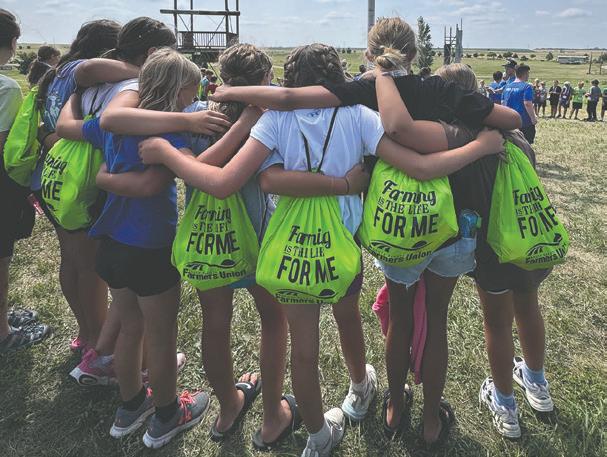
Camp friendships are the reason Bennett Schoenfelder keeps returning to Farmers Union Camp. 2026 is his third year.
“I like that a co-op is not owned by a boss, it is owned by the people who use it.”
– Ruth Weber, Ethan
“I only had one friend the first year I went to camp. My mom said it would be good for me and camp would help me make friends. She was right. I have made so many friends at camp and camp taught me how to make friends at school,” explained the Dimock farm kid. “I realized that with a simple, “Hi,” I can get to know someone new and we can become friends.’”
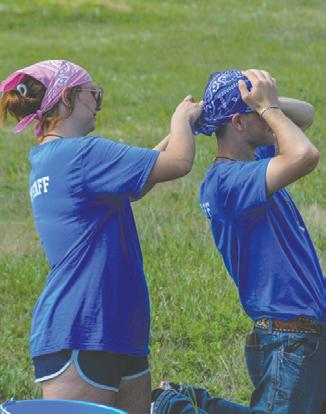
Helping every camper develop confidence and make friends is a goal of each counselor, said Kyle Olson. And to help the teen leaders ahead of camp, Farmers Union hosted a leadership development training for them.
Jr. Camp
Londa Nwadike, SDSU, leads a farm-to-table activity during Farmers Union Jr. Camp. Pictured here with camper Keily Lopez.
Scan to enjoy camper videos and news stories
Camp Awards:
Heart of Farmers Union:
Stian Roux, Aberdeen Smiler Award:
Ivan Weber, Ethan I’ll Do It Award:
Wylie Hoffman
Kindness Counts Award:
Evan Herrick, Parker and Rachel Head, Tulare
Caterpillar Award:
William Greene, Plankinton
Neveah Peterson, Chester
Claire Blachford, Miller and Jennah Shott, Winner
Extra Mile Award:
Carson Hartman, Mitchell
Leadership Award:
Cash Koch, Salem
Ty Konechne, Kimball
Leady Lease, Colman
Golden Pitchfork Award:
Chord Blotsky, Hidden Timber
Cleanest Cabin Award:
Aaron Kippley, Aberdeen
Waylon Thomas, Highmore
Rennen Guthmiller, Huron
Joseph Serocki, Wilmot
Jarrett Latham, Camp Crook
Eli Manresa, Rapid City
Declan Stockwell, Hartford
Dirtiest Cabin Award:
Ethan Mutter, Sturgis
Bennett Schoenfelder, Dimock
Ryder Bunkers, Dell Rapids
Declyn Schmidt, Tripp
Ty Konechne, Kimball
Jaydon Latham, Camp Crook
Jackson Pillar, Lake Preston
Noah Herrick, Parker
Best KP: Green
Lennox Rumpca, Webster
Liberty Doerr, Huron
Aiden Kafka, Pierre
Annabella Grewing, Watertown
Caleb Schoenfelder, Parkston
Camden Drey, Hosmer
Carson Hartman, Mitchell
Charlotte Larsen, Freeman
Corbin Powell, Holabird
Hadlyn Cope, Artesian
Keily Lopez Casillas, Plankinton
Miranda Becker, Tulare
Oakley Byers, Rosco
Oliver Schmidt, Tripp
Ottilie Lau, Parkston
Rebecca Holthause, Bridgewater
Romeo Head, Tulare
“We learned about different personality types, how to identify a camper’s personality and how to relate to personality types that may be different from our own,” explained Olson, a Northwestern High School sophomore. “Understanding campers’ personalities helped us connect with campers. And if you connect with them, they respect you and they are more willing to listen and participate.”
Olson is one of six teens elected to serve on the Farmers Union 2026-2027 Junior Advisory Council. Together with the other members, Olson helped organize the Jr. Camp. And he and his team will help plan the 2027 Sr. Leadership Camp. The other members are Danielle Kruger, De Smet; Logan LaMont, Union Center; Ethan Mutter, Sturgis; Riley Mutter, Sturgis and
“I live on a farm so it’s important that I know how to stay safe.”
– William Greene, 12, Plankinton
Lennox Rumpca, Webster. Several more teens who attended Sr. Camp also served as camp counselors.
The leadership skills developed while serving in leadership roles through Farmers Union youth programming helps prepare teens for life’s next steps said Cadence Konechne. Konechne graduated as Kimball High School’s valedictorian and will be a freshman at the University of Notre Dame this fall.
“Farmers Union taught me I can reach big and anything I put my mind to is achievable,” said Konechne, who is majoring in political science. “I have met politicians and lobbyists by attending the Farmers Union legislative day in Pierre and the D.C. Fly-In and this exposed me to policy and politics. By meeting them, I realized, even though they are famous, they are normal people. It made their careers not out of reach for someone like me from rural South Dakota.”
Konechne said this understanding gives her confidence as she moves on to attend an elite university.
Sturgis Brown junior Logan LaMont said his involvement in Farmers Union youth
Union Farmer
programming since he was in elementary school has given him hope for the future. A sixth-generation Union Center rancher, LaMont wants to return to his family’s cattle and sheep ranch after high school.
“Farmers Union taught me how to be a better leader for the ranch and gives me the skills I need to work with others to be successful,” LaMont explained. “As an organization, Farmers Union helps unite farmers and ranchers because they can bring their problems to the membership and through policy the organization can help fix the problems or address concerns.”
The future of South Dakota agriculture is always a focus for the state’s largest agriculture organization. So, farm safety is also a focus of camp programming. It’s a topic that all South Dakota youth need to think about, said 10-yearold William Greene.
“I live on a farm so it’s important that I know how to stay safe so I don’t get a broken arm or die,” Greene said.
His camp friend, 12-year-old Brylen Eastlick does not live on a farm, but many of his friends do. This is the reason the fourth-year camper said he likes learning about how to stay safe on a farm. “I want to help them out on their farms, maybe even work on one of their farms, so it is important I know how to stay safe around tractors.”
To ensure the camp is accessible to all, Farmers Union subsidizes the cost of camp. Each camper was able to attend the three-day camp for less than $100. To learn more about South Dakota Farmers Union Youth programming, visit www.sdfu.org n by Lura Roti for SDFU
Life on South Dakota’s Farms & Ranches
Enjoy these photos submitted by photographers from across South Dakota. Want to share some of your own? You can enter photos in South Dakota Farmers Union annual photo contest through October 1. Photographers compete for cash prizes. All photos need to be entered through the SDFU website www.sdfu.org click on Photo Contest link under the News & Events tab.
Amanda Goens
Leanne Mallon
JaCee Dvorak
Rose Wagner
Nikki Tuschen
Makenna Skiff
Ryan Wendinger
Allie Kunkel
Amber Hommel
Crystal Josephsen
Nikki Tuschen
Amanda Weber
Samantha Swanson
Anne Crose
Melissa Braun
Kayla Konechne
Paige Gesinger
Lisa Rossow
Nikki Tuschen
Cherie Leibel
Paige Gesinger
Brandi Stoddard
Photo Contest
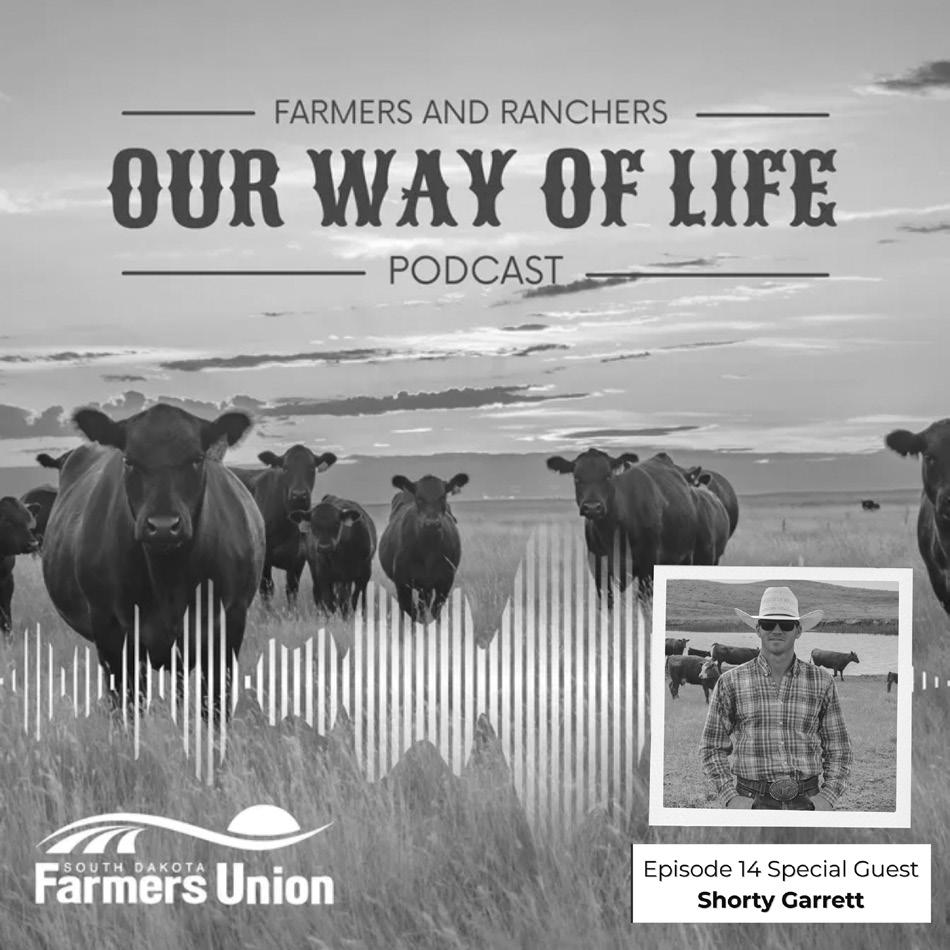
Our Way of Life: Rural Ranching & Rodeo Realities with Saddle Bronc Rider Shorty Garrett
What do you do when the double life calls you by name? How do you chase two dreams so intentionally placed on your heart? In this Our Way of Life Podcast, we sit on the porch to chat with Eagle Butte, SD rancher and PRCA saddle bronc rider, Shorty Garrett.
Nurtured by a rural ranching family, Shorty always knew that a good life included a couple of reliable dogs, some cattle, family and a piece of land he could call his own. However, rodeo is practically hardcoded into his genetics. Shorty is a direct descendant when it comes to some of South Dakota’s finest in the rodeo world. His family’s legacy instilled a love and passion for the sport, but Shorty is the one making a name for himself.
“When you’re starting out, you don’t even really know if this can actually be possible, and so the measure of success that you’re looking for is minor,” said Garrett. “As you get better, you think ‘I can do that’. You start believing in yourself a little more and you begin to think, “well if I did that, then I can do this’. The measure of success now is 10 times greater than men.”
Shorty serves as a reminder to us all that life is not linear and you are not confined to one dream. As Shorty says, “some days are chickens, some days are feathers – your big day could be tomorrow and you’d never know.”
With one full time job being needed at home on the range, and the other traveling the rodeo trail, Shorty walks us through what it takes to do both, the truth behind the chutes, and what he loves most about the life he’s paved. You can listen along by scanning the QR code, or visiting us on Spotify or our website. n by Lydia Hill, SDFU Digital Media Intern
Scan to enjoy Podcast
More Photo Contest Entries
Scan to Submit Photos
Keeping up on governmental policy and programming vital to your farm or ranch doesn’t need to be a chore.
Subscribe to Farmers Union Producer Connection weekly email today and stay connected to the news you need.
Producer Connection includes weekly:
• Summaries of Congressional activity
• South Dakota Ag News
• Farmers Union Updates
To subscribe, visit www.sdfu.org and add your email address to the “Join Our Mailing List” located at the bottom of the homepage.
Sarah Oberg
Brandi Stoddard
Kennedy Masat
Annette Schrock
Nikki Tuschen
Paige Gesinger
Brooke Stevens
Brooke Stevens
Nikki Tuschen
Kayla Konechne
Maritime Fuels: Will Corn Sail on the Love Boat or the Titanic?
Doug Durante, Executive Director, Clean Fuels Development Coalition
Ahoy mates! Welcome aboard! Let’s get ship shape. Batten down the hatches. Anchors aweigh!
Does this get you in the mood for marine fuels and visions of the deep blue sea? Apparently, it does for many, including the National Corn Growers Association (NCGA) who recently released a detailed report outlining their demand strategy for the next 250 years.
In their report, NCGA identified three key areas to focus on to increase demand for corn. We have all heard the promise of Sustainable Aviation Fuels (SAF), adding marine fuels to that along with a renewed push for biobased products are admirable goals for sure, particularly since NCGA and the entire ethanol industry has voluntarily capped itself out of the promise of high octane in the U.S. motor fuel market by agreeing to hold the line to 15 percent volumes.
With little hope of getting to E20 or more if current legislation passes both houses, someone has convinced someone that we can make up volume with these two highly competitive, regulatory dependent markets, thereby creating the newest shiny object to chase. And there may be something there. I’m an “all of the above” believer and cheer on E10, E15, E85, aviation, maritime and anything else we can apply ethanol to. However, we need to be realistic and read the room.
Just as is the case with aviation fuels, corn ethanol is just one of the pathways to low carbon – not exactly a priority with the current administration and Congress. The long-awaited 45Z tax credits may or may not apply to marine fuels, and the value may or may not be fully passed on from the ethanol producer to the feedstock suppliers, i.e. corn growers. We learned that during all the years of the ethanol excise tax exemption when the petroleum industry received the actual incentive. 45Z and other incentives are term limited and only authorized for a few years.
The push for decarbonization comes from the International Maritime Organization’s (IMO) Net Zero Framework, requiring all ships worldwide to meet GHG emission reductions or be subject to fines, fees or sanctions. The Trump administration immediately rejected such proposals and threatened retaliatory measures to ships entering U.S. ports. As a result, the proposal stalled out and given the Trump factor, who knows if it will go forward.
Moreover, as is the case with SAF, there are lots of other fuels and technologies that will compete for market share, several are doing quite well already. Methanol, ammonia, hydrogen, various renewable diesel fuels and other emerging technologies are all lining up. Ethanol’s low BTU value is a demerit, although mixing ethanol and methanol shows promise.
So back to the NCGA vision of increased demand. The new report suggests that the marine market represents a potential for 3 billion bushels if corn ethanol captured a modest 10 percent of the market; 10 percent of the SAF market would be another 1.7 billion bushels. These are reasonable targets, RFA’s Geoff Cooper recently estimated a 4 to 5 billion-gallon demand from marine use if just 5 percent of that market could be tapped. Compare that to moving to an E20plus blend which represents a new multibillion gallon market or, be still my heart, nationwide E30 that could increase corn demand by a new 5 billion bushels.
I stress that aviation and marine use is not something to give up on but there are significant regulatory, market and technical challenges that must be recognized. If Trump’s war on renewables and carbon mitigation programs carries over to the next administration and Congress, and the Supreme Court maintains their finding that carbon emissions are not a danger to public health, I sure wouldn’t want to bet the farm on anything that requires carbon-based incentives. Consider that the European Parliament moved to strip soybeans as an
acceptable renewable fuel and carbon mitigation tool. They have been grumbling about corn in the same way for years. Where I would focus, and it’s not too late for NCGA to fix the RVP legislation and add a fourth goal of truly high octane, is on the 130 billion-gallon gasoline market right in front of us, and the hundreds of billions of gallons globally that need octane. More than 50 percent of new cars either require or recommend premium gasoline – meaning 91 AKI or above. The retail spread of regular to premium is substantial – anywhere from 60 cents to $1. Yet the rack, or wholesale price differential, has averaged about 13-15 cents for decades. The tax, transport and marketing costs are the same for premium as they are for regular—that huge spread in the billions of dollars goes in the pocket of oil companies. With ethanol’s historical price advantage, why wouldn’t we want to get into that market? Jim Lane is the editor/publisher of the Biofuels Digest and a lot smarter than I am. He also has written extensively on the value of octane and leans toward even higher margins between premium and regular. I encourage anyone to go to the Digest site and research octane – you will come away a lot more informed.
There is a reason ethanol has had such great success in penetrating the gasoline market and that is because it is so compatible with engines, distribution systems and supply. That compatibility has yet to be established with a marine market. Putting all our resources and political clout on to a boat and heading out could be a trip on the Titanic if carbon programs are pulled and incentives disappear.
The gasoline market, with its staggering profit margin on premium gasoline, is right in front of us, right now. Let’s not make it hard on ourselves by picking just one thing to go after – let’s do them all and for goodness’ sake, not ignore the high-octane market, not just bringing 84 blendstock to 87/88. n
Union Farmer
Brand Board, Data Centers, Property Taxes & Childcare Discussed during SDFU 2026 Policy Meeting
In early July, Harding County rancher Jason Latham took seven head of cattle to the sale barn. Markets are strong and one heifer went for north of $3,400. But after the sale, Latham did not get to bring the check home.
“The Brand Board placed a hold on the check because they questioned the heifer’s ownership – and yet they shipped her off to Texas before I knew there were any issues,” Latham explained. “Proving ownership is the Brand Board’s job. But if the cow has already been shipped, it can be difficult to do. Had the Brand Board policy been to hold the cow and the check, until ownership is proven, I could have simply compared the vet’s vaccine records with the cow’s bangs tag and it would prove she is ours.”
Fortunately, with the sale barn owner’s help, Latham was able to prove ownership and take the check to the bank.
Advocating for a more practical solution, Latham brought the issue and potential solution up during South Dakota Farmers Union 2026 Policy Meeting, suggesting an amendment to the current policy that will now be voted on during the organization’s State Convention held in December.
The ability to bring challenges facing his family’s ranch to an organization to discuss potential solutions is among the reasons Latham is an active member.
“Policy is the bedrock of this organization,” Latham said. “One voice can get lost in an echo chamber. So being part of a big organization with lots of voices, so you can all stand together when you advocate in Pierre or D.C. really helps get our point across.”
Suggesting changes to the current Policy Book or shining a light on new issues is the purpose of the annual meeting.
“If you want to see true grassroots in action, you should attend a Farmers Union Policy Meeting because everybody gets a voice. Everybody gets their say,” explained Rob Lee, a farmer from De Smet. “As members, I think we all do a pretty good job listening with open minds and respect, and there are a lot of good questions.”
That’s not to say the debate doesn’t get heated, which can also make for an interesting meeting. “We all come from different backgrounds so we have different viewpoints, so there can be some pretty lively discussions,”
Latham said. “But at the end of the day, we are all still friends, because at the end of the day we are trying to make life better for farmers and ranchers in our state.”
In addition to updating policy focused on the state’s Brand Board, property taxes, childcare and data centers were also topics discussed during the policy meeting.
The discussion surrounding data centers encouraged the renewal of a special order passed during the 2025 State Convention.
“Farmers and ranchers care about data centers because there are a lot of natural resources that may be impacted – water, electricity and waste,” explained Larry Birgen, a Beresford farmer. “We also need to make sure that we are not giving these companies tax breaks, because farmers and ranchers already carry a heavy tax burden through property taxes.”
The updated special order focused on data
centers and all items presented during the July Policy Meeting will be voted on by memberdelegates during State Convention held Dec. 9 and 10 in Huron. The items passed by members during convention will become the guiding policy for Farmers Union leadership and lobbyists.
“I encourage all members to make time for State Convention policy meeting because Farmers Union policy is the members’ policy. It is an active, fluid document that we all work to keep relevant and up to date to best represent family farmers and ranchers who belong to this organization,” Lee said.
Lee and Latham are members of the State Policy Committee. They serve together with Hank Wonennberg, Dallas; Sarah Perrion, Ipswich; and David Cap, Utica.
To learn more about South Dakota Farmers Union policy, visit www.sdfu.org n by Lura Roti for SDFU
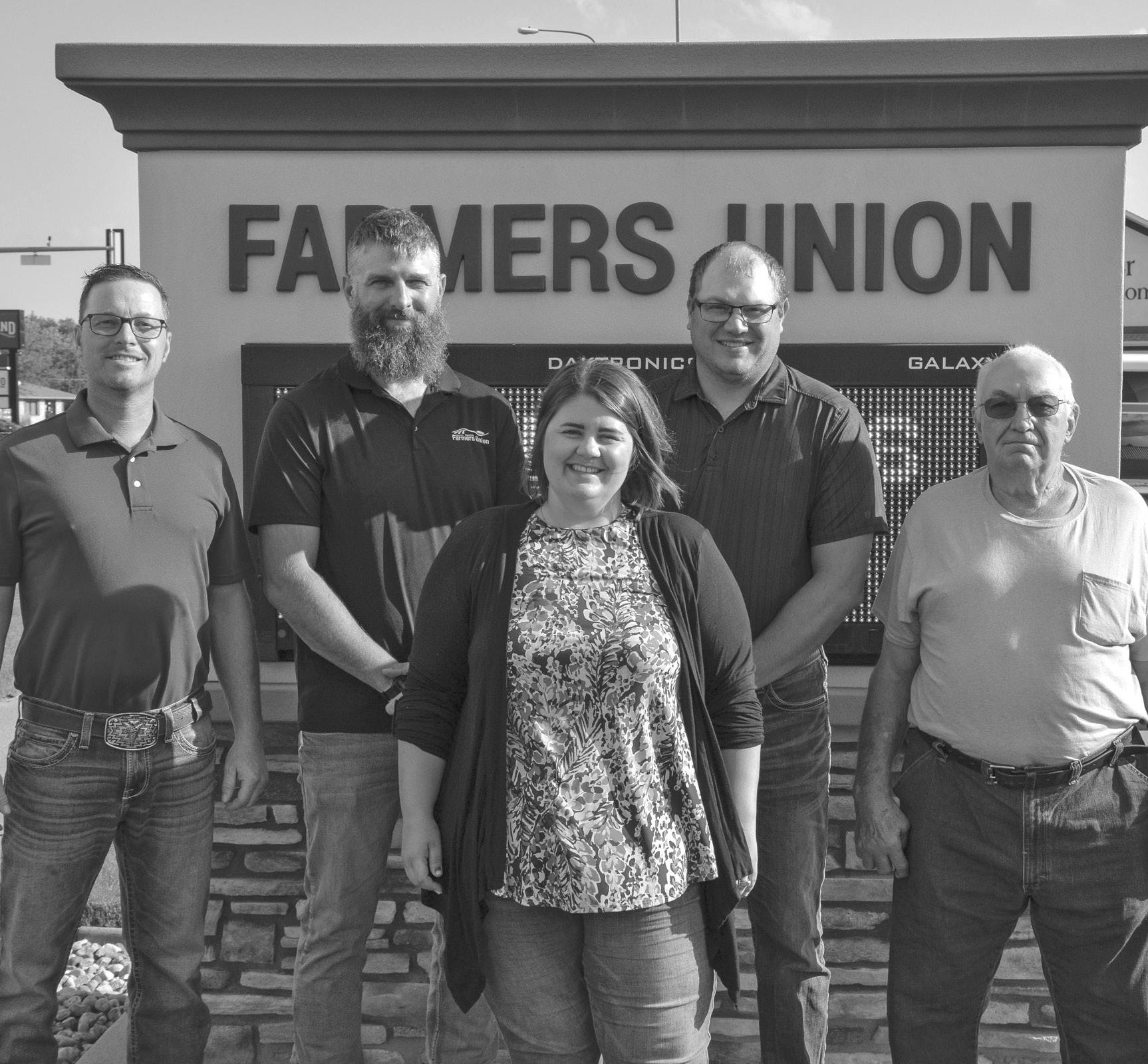
SDFU Policy Committee: Hank Wonnenberg, Dallas; Rob Lee, De Smet; Sarah Perrion, Ipswich; Jason Latham, Harding County and David Cap, Utica. Not pictured, Audra Scheel, Wessington Springs.
Union Farmer
From the President... State Fair Connects Us with Consumers
Sombke, SDFU President
The countdown to the South Dakota State Fair has officially begun! As I’ve shared before, the South Dakota State Fair is more than an event for me and my family – it’s a family reunion of sorts.
It’s where we get to reconnect with old friends from across the state. It’s an event that truly marks the passage of time. I used to look forward to watching friends’ kids in the showring. Today, I’m watching their grandkids!
The Farmers Share lunch is among my favorite State Fair events because it’s when I not only connect with my Farmers Union family, but I get to visit with consumers from across the state. Since the beginning, education has been the base of the Farmers Union triangle along with legislation and cooperatives. When I visit with consumers who are only paying 47 cents for the meal because that is the farmers’ share, they are surprised.
The Farmers Share Lunch is a good reminder that even though grocery store prices continue to climb, the farmers share does not. And the financial pain we all feel when we grocery shop is felt throughout the ag industry as input costs continue to escalate.
D.C. Fly-In 2026
Policy to support farm and ranch families was the focus of our recent Policy Meeting. I am eager to share policy concerns and opportunities discussed during this meeting with congressional leaders during the National Farmers Union D.C. Fly-In this September. Recent changes to the Packers and Stockyards Act will be among the discussion points. The USDA removed regulations designed to boost competition and protect farmers and ranchers from packer monopolies.
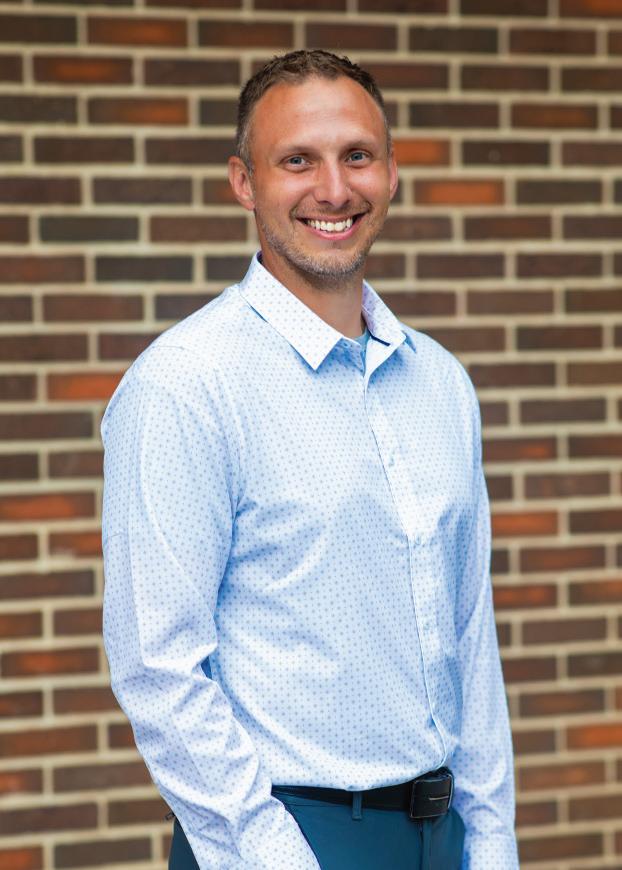
Rep. Dusty Johnson
Mason Ohnstad, Legislative Assistant 202-225-2801
mason.ohnstad@mail.house.gov
During recent Fly-Ins, Farmers Union members met with U.S. Department of Justice staff to discuss anti-trust issues in the packing industry. A few years ago, these discussions led to the Department of Justice focusing their efforts on the packing industry.
The recent de-regulation in the Packers and Stockyards Act is frustrating. I am hoping during this year’s Fly-In we have a similar opportunity. Regulations that protect farmers and ranchers from monopolies also protect consumers. For a clear example of the danger of consolidation, we only need to think back six years to COVID supply chain issues.
Farmers now have the right to repair Grassroots policy is hard work. So, it is encouraging when we experience a win. Thanks to the efforts of many Farmers Union members and staff, farmers, ranchers and community members recently experienced a win when the Federal Trade Commission secured a landmark settlement with Deere & Company that requires them to provide farmers and independent repair shops with the same diagnostic, repair resources and software capabilities as John Deere dealerships have access to. Next steps? Now we need Congress to pass laws requiring all farm equipment manufacturers to do the same.
Thank you for your efforts in this policy win!
Doug Sombke, President South Dakota Farmers Union
Congressional Leaders Contact information:
Sen. Mike Rounds
Lucas Heitkamp, Legislative Assistant 202-224-5842
South Dakota Union Farmer, ISSN 0745-8797, publishes eight times per calendar year, with issues printed in January, February, March/April, May, August 2026, August, September/October and November/December. Periodical postage paid at Sioux Falls, S.D.
Karla Hofhenke, Publisher Lura Roti, Editor Wendy Sweeter, Copy Editor Diane Martinson, Layout & Design
All information for publication must be submitted by the 15th of the month. You may submit items to address below or email items to: sdfu@sdfu.org
POSTMASTER: Address changes to: SDFU, PO Box 1388, Huron, S.D. 57350-1388
Lydia Hill ext. 1220 Digital Media Interm Huron Direct Line 605-554-3024
David Smith
Legislative/Farm Specialist Pierre Direct Line 605-350-8857
Lacey Bich Executive Assistant Cavour Direct line: 605-554-3023
SDFU Board of Directors
Doug Sombke.........President Groton
Jeff Kippley Vice President Aberdeen
Larry Birgen District I Beresford
Scott Kolousek District II Wessington Springs
Gail Temple District III Clark
David Reis District IV Oacoma
Chad Johnson District VII Groton
Oren Lesmeister District VIII Parade
Contact NFU
National Farmers Union 20 F Street NW Suite 300 Washington, DC 20001
Rob Larew, President ~ Jeff Kippley, Vice President Darin Von Ruden, Secretary ~ Doug Sombke, Treasurer 202.554.1600 www.nfu.org
Doug
Union Farmer
Farming and ranching have changed quite a bit in the last 40 years and so has the insurance producers use to protect their farms and ranches, explained Kevin Ressler with Farmers Union Insurance.
“Today’s farms and ranches are much larger and their risk much greater. But as these needs have increased, the number of insurance options have actually decreased.”
The same extreme weather that impacts yields also impacts the cost of insurance, added Jason Wells, Chief Underwriting Officer for Farmers Union Insurance. “Storms are not just rain, hail and thunder and lightning anymore, it is high winds and tornadic activity.”
So, what’s a producer to do? To help navigate today’s unique farm and ranch insurance climate, Ressler and Wells, together with Farmers Union Insurance Agent Scott Sabers, have these tips to share.
Check-In Each Year: Risk exposure is constantly changing. To make sure your operation has the coverage it needs, check in with
Tips to Surviving Today’s Insurance Landscape
Continued from Page 3
Jr. and Sr. Leadership Camps.
Lennox went through an interview and election process to be selected to serve on the Junior Advisory Council.
“I learned my leadership skills from my dad and my fellow campers,” Lennox said.
Lennox began attending Farmers Union Camp three years ago. “He was always saying he wanted to go to summer camp. And I was reading the Farmers Union newsletter and saw something about their camps and I was like, ‘hey, here you go,’” Tyler said.
“I was devastated it was only three days,” Lennox added.
your insurance agent each year. For example, many producers may think a building on their farm that they use to operate a second business, like seed sales or auto mechanics, is covered by their farm or ranch policy when in fact because insurance companies do not consider these businesses “normal and customary” they would need different policies.
Be Selective: Before you insure something, ask yourself: “What would you do if it was destroyed?”
If you would replace it because your operation relies on it, then make sure it is insured. If you would not replace it, then don’t insure it. Reducing what is covered by insurance may help you save on premiums.
Bottom line: Insure what you can’t afford to lose.
Increase Deductible & Save: Clients are often surprised how much they can save on insurance premiums (the amount you pay each billing cycle whether disaster strikes or not) if they increase their deductible (the amount they pay if they need to make a
Mike retired in 2023 and Sandy retired in 2024 from their off-farm jobs.
“It’s nice to be able to farm full time and enjoy this stage of life because we are not worried about losing the farm,” Mike said.
Sandy agreed. In addition to helping Mike and Tyler with the crops, cattle and haying, in retirement, she also cares for several cats and kittens – decedents of the original barn cats.
When floodwaters cut the barn off from dry land, a few dozen barn cats were stranded. “They all migrated up to the house, so we built them their own little barns,” Sandy said. “I love my cats.”
Like the family who cares for them, Mike said cats have been a part of the farm since the
claim).
Umbrellas Do More than Protect from Rain: If you or a family member are at fault for an accident – whether it happens on your farm or not – your farm is at risk.
We live in an era of lawsuits. Protect your farm, ranch and family with liability insurance. It is the least expensive product available. In addition to liability on specific items, buy an umbrella policy for additional coverage in the case of a lawsuit.
Agents Don’t Cost Extra: The beauty of Farmers Union Insurance is we are not an insurance provider. We work with many insurance companies to provide insurance. This means we can offer you a variety of coverage and cost options.
Our No. 1 goal is to help farmers and ranchers manage their risk through insurance.
Should you need to submit a claim, we are here to help with the paperwork and answer questions. It’s our job and we take pride in the work we do. n
beginning. “We always had a lot of barn cats to keep the mice out of the grain. Whenever my mom thought there was a mouse in the house, she would have us bring up a big gray cat. When the cat caught the mouse, he would bring it to Ma and show her.”
The kittens are another reason for Jocelyn and Lennox to visit. “They are getting so busy, I feel like we need an appointment to see them these days. But if they see their favorite kitty, they can’t help but stop over,” Sandy said.
To enjoy photos and videos of the Rumpca family, visit www.sdfu.org and click on the SD Farm and Ranch Families link under the About Us tab. n by Lura Roti for SDFU
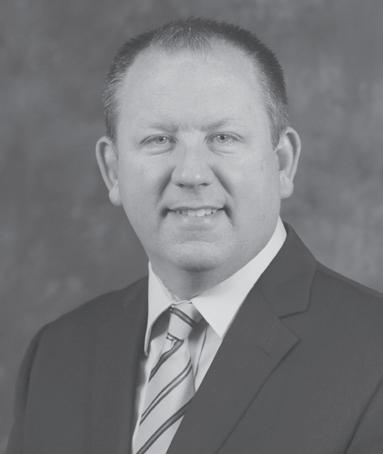
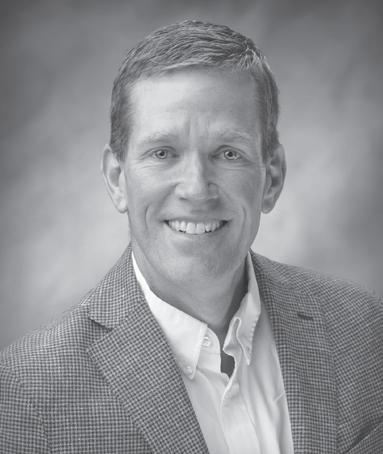
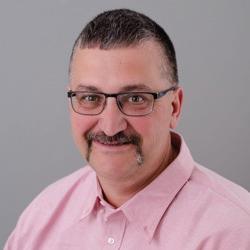
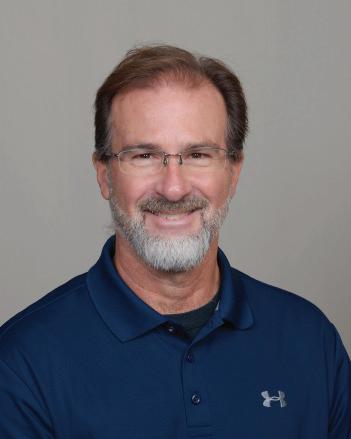
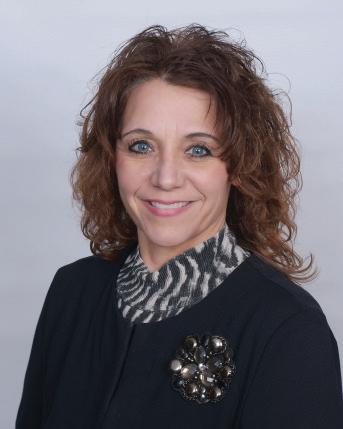
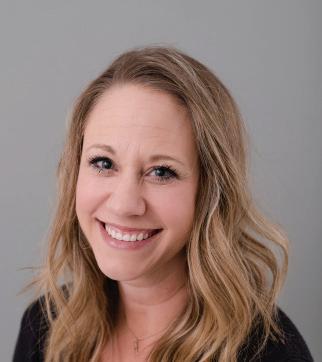
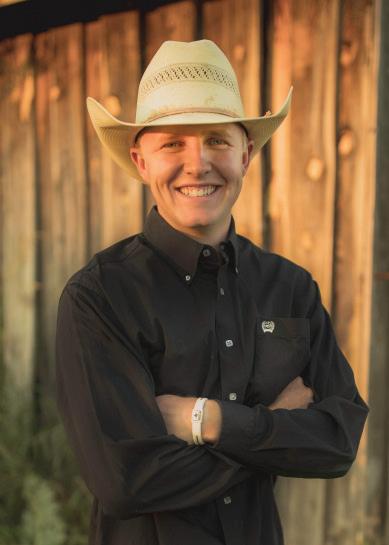
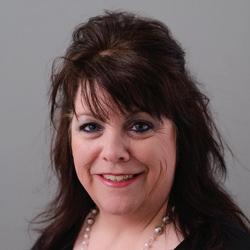
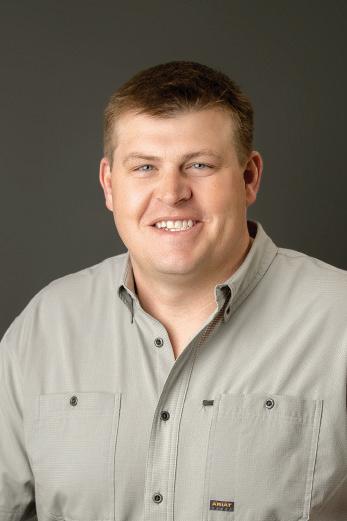
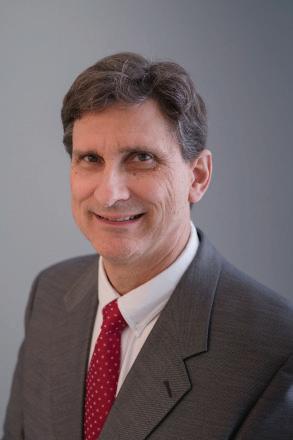
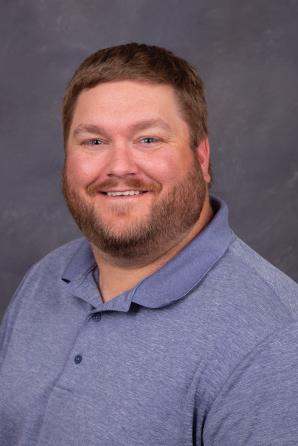
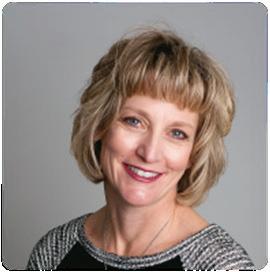
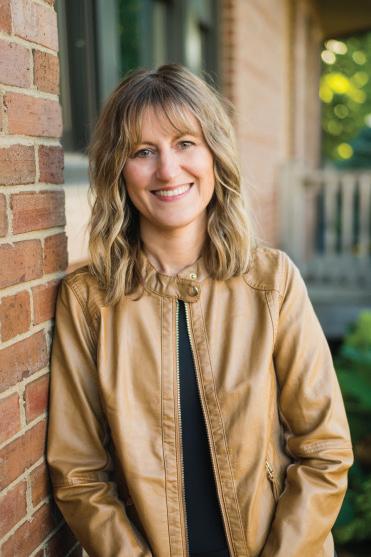
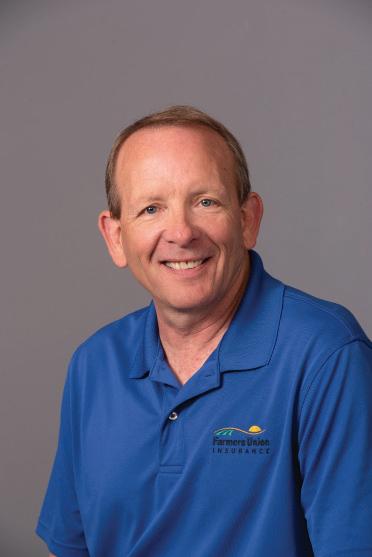
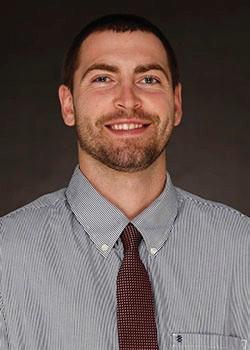
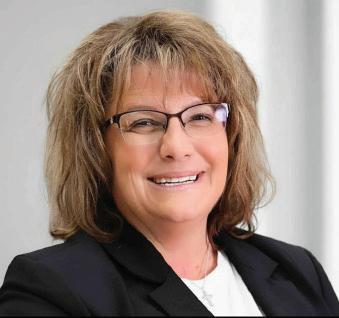
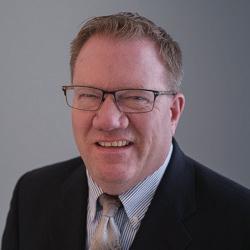
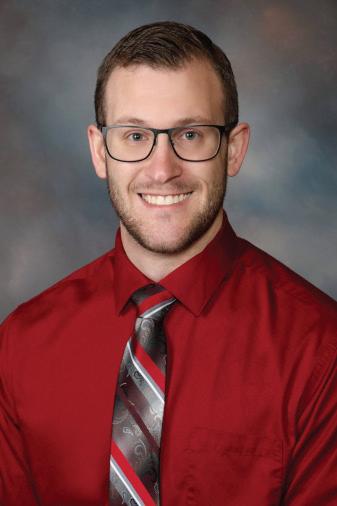
Jason Kevin Scott
Rumpca Family
Dear Farmers Union, I want to sincerely thank you for everything you do through Farmers Union State Camp. I am especially grateful for the opportunity to participate in the reward trip to Minnesota.
Sincerely,
Bryn Marvel
Union Farmer
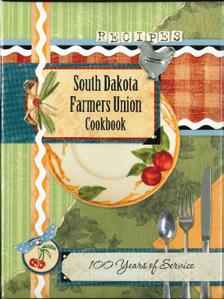
Cookbooks are $10 plus tax and shipping. Call 605-352-6761 or email sdfu@sdfu.org to place your order today! ORDER YOUR OWN COPY OF
State Fair Gate Passes Available!
Remember to Include:
• Your name
• Mailing address
• Number of passes you need
COOK’S CORNER
Carrot Cake
4 eggs beaten or unbeaten
2 tsp baking soda
3 c grated raw carrots (coarse is okay, such as in a gelatin salad)
1 or 2 tsp cinnamon
1 tsp vanilla
2 c sugar
½ tsp salt
1 ½ c cooking oil
1 c nuts, chopped
2 c flour, sifted
Preheat oven to 350°F. In one bowl mix eggs, oil, sugar, carrots, and vanilla until well mixed. another bowl sift the dry ingredients. Combine the two mixtures, beating well. Fold in the nuts. Bake in two 9-inch layer cake pans or in a long loaf pan for about an hour or in the layer pans about 40 – 50 minutes.
Frosting:
8 oz package cream cheese
1 whole stick margarine
1 lb box powdered sugar
1 tsp vanilla
Combine & beat well. Frost on cool cake. A half recipe would be enough for an oblong cake.