The Peer-Reviewed Section of SDC JOURNAL is edited by an independent Editorial Board and the articles contained therein solely represent the opinions of the authors and do not reflect the view or positions of the Stage Directors and Choreographers Society (SDC).
LETTERS TO THE EDITOR Letters to the editor may be sent to SDCJournal@SDCweb.org
POSTMASTER
Send address changes to SDC JOURNAL, SDC, 321 W. 44th Street, Suite 804, New York, NY 10036.
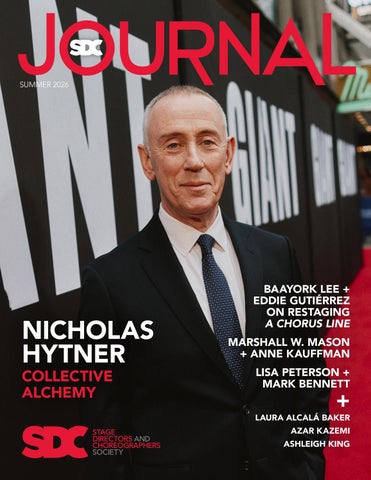
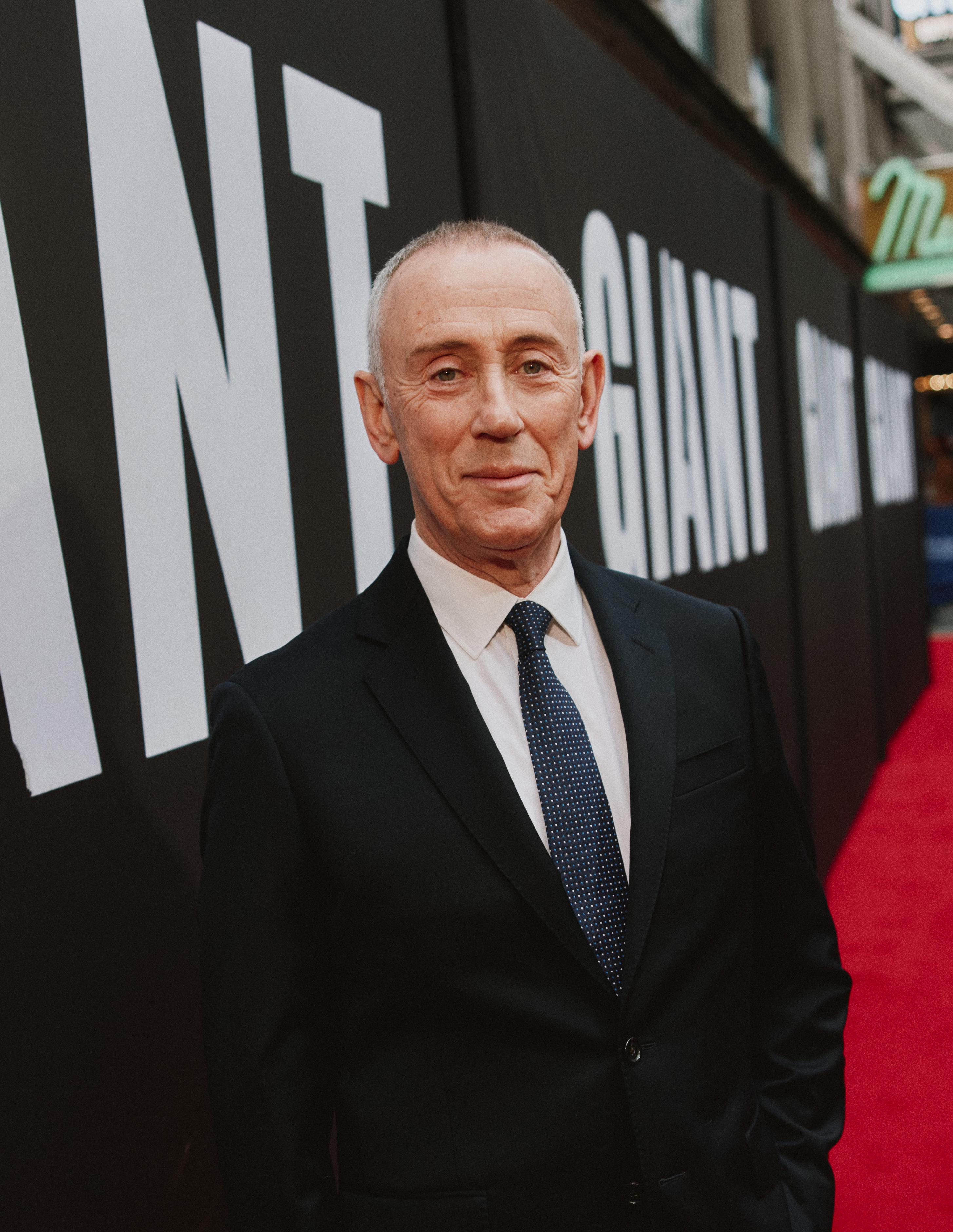
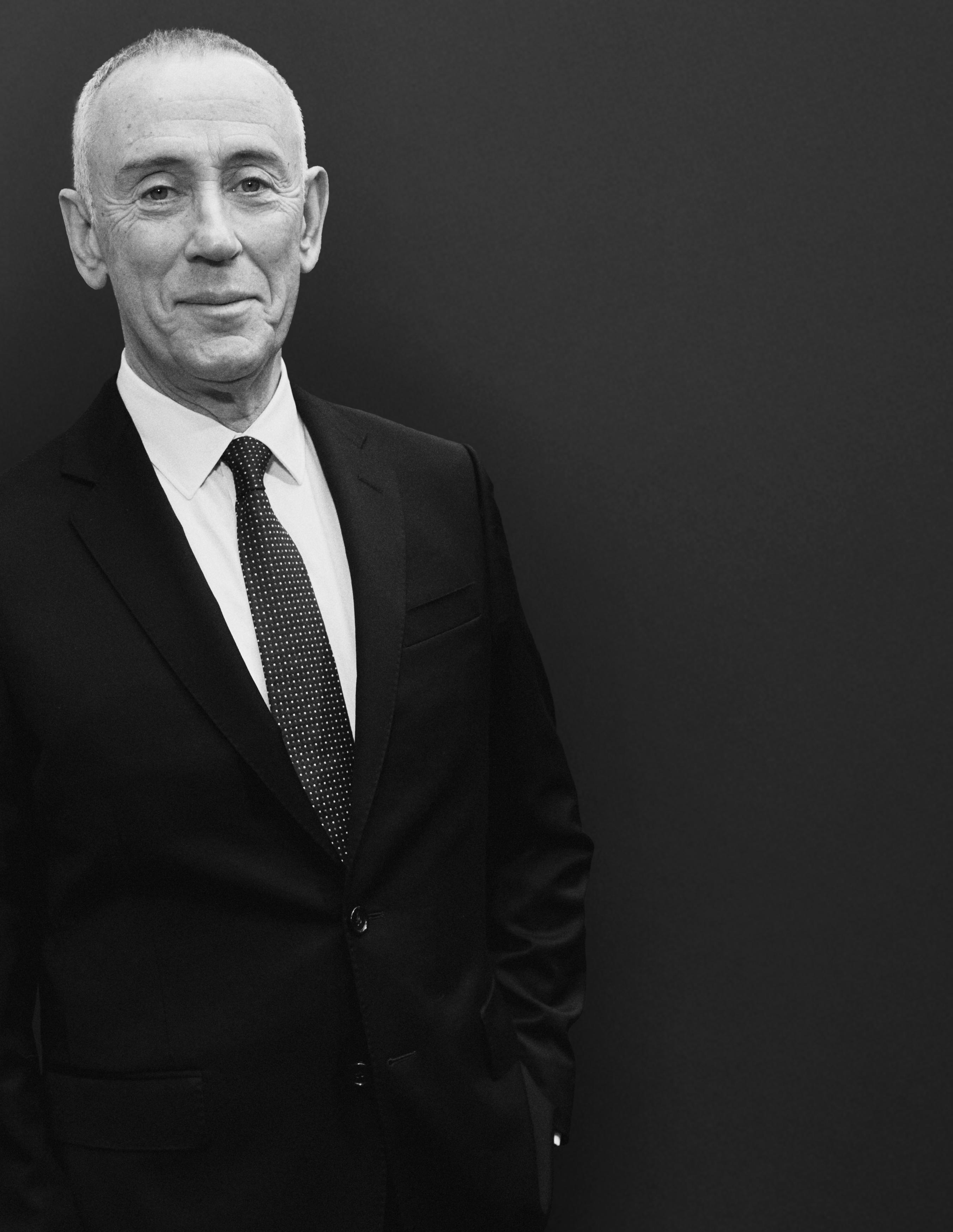
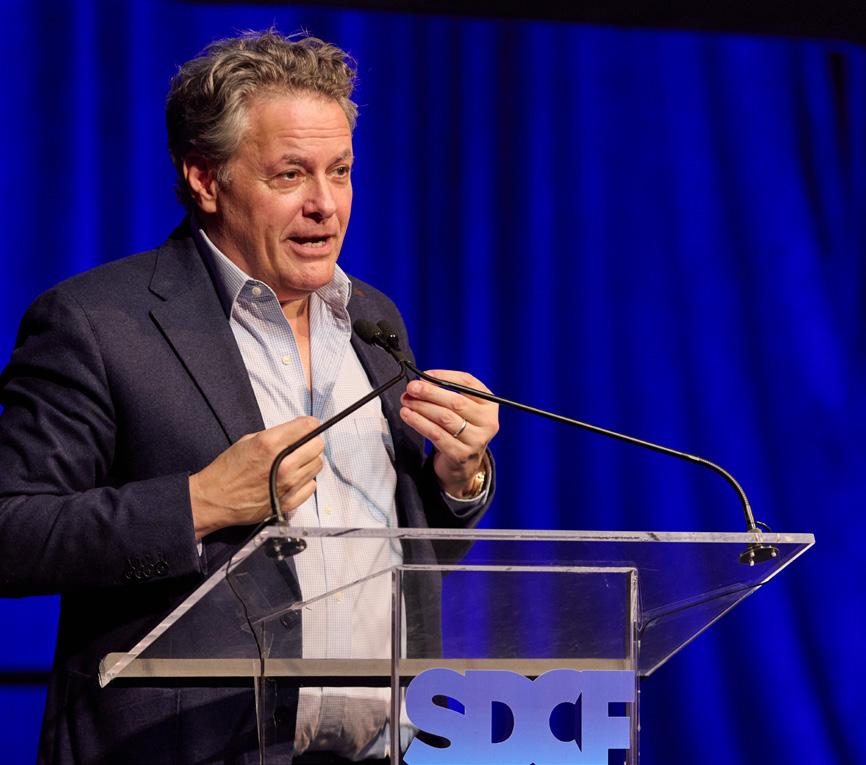
Nicholas Hytner
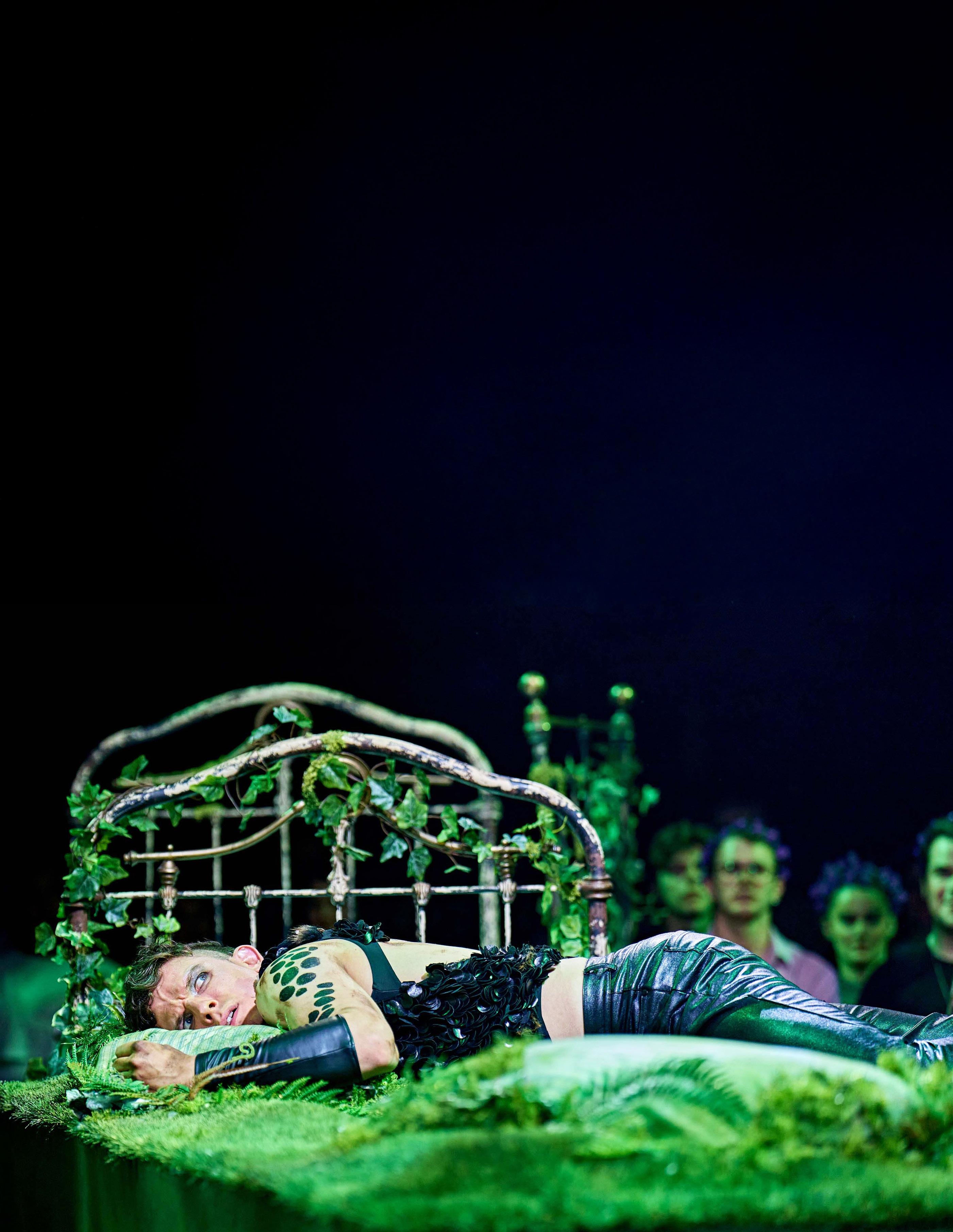
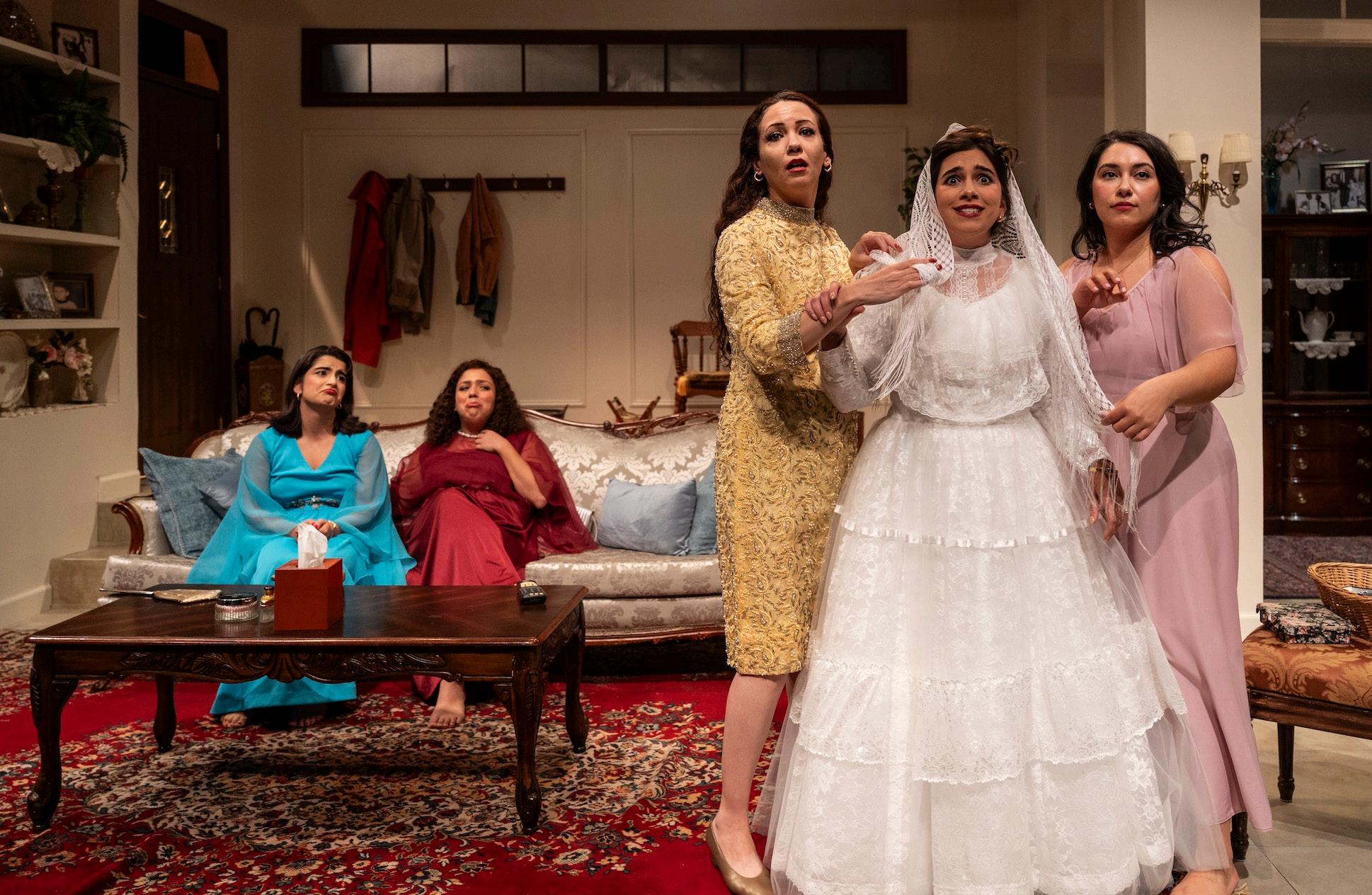
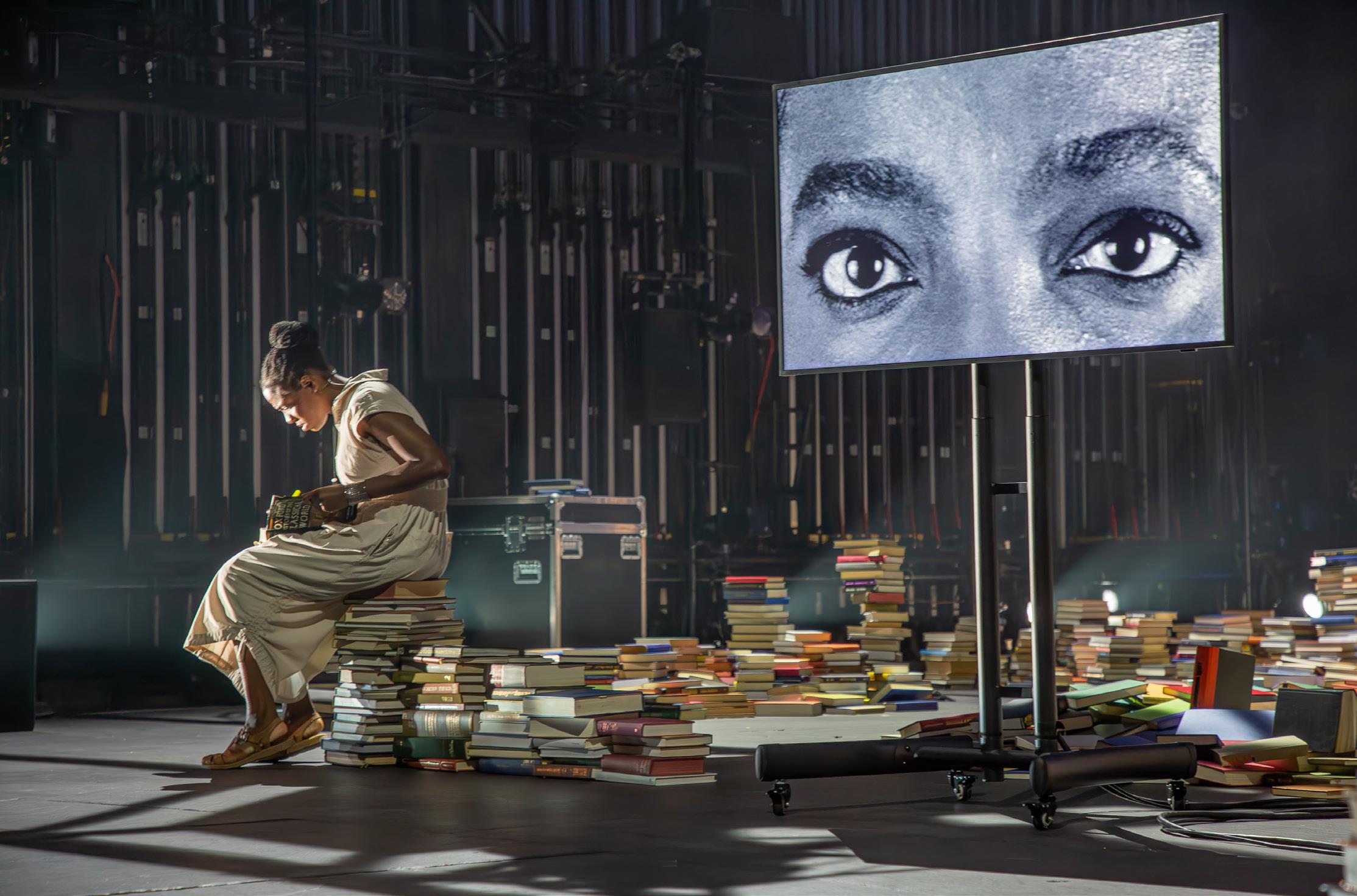
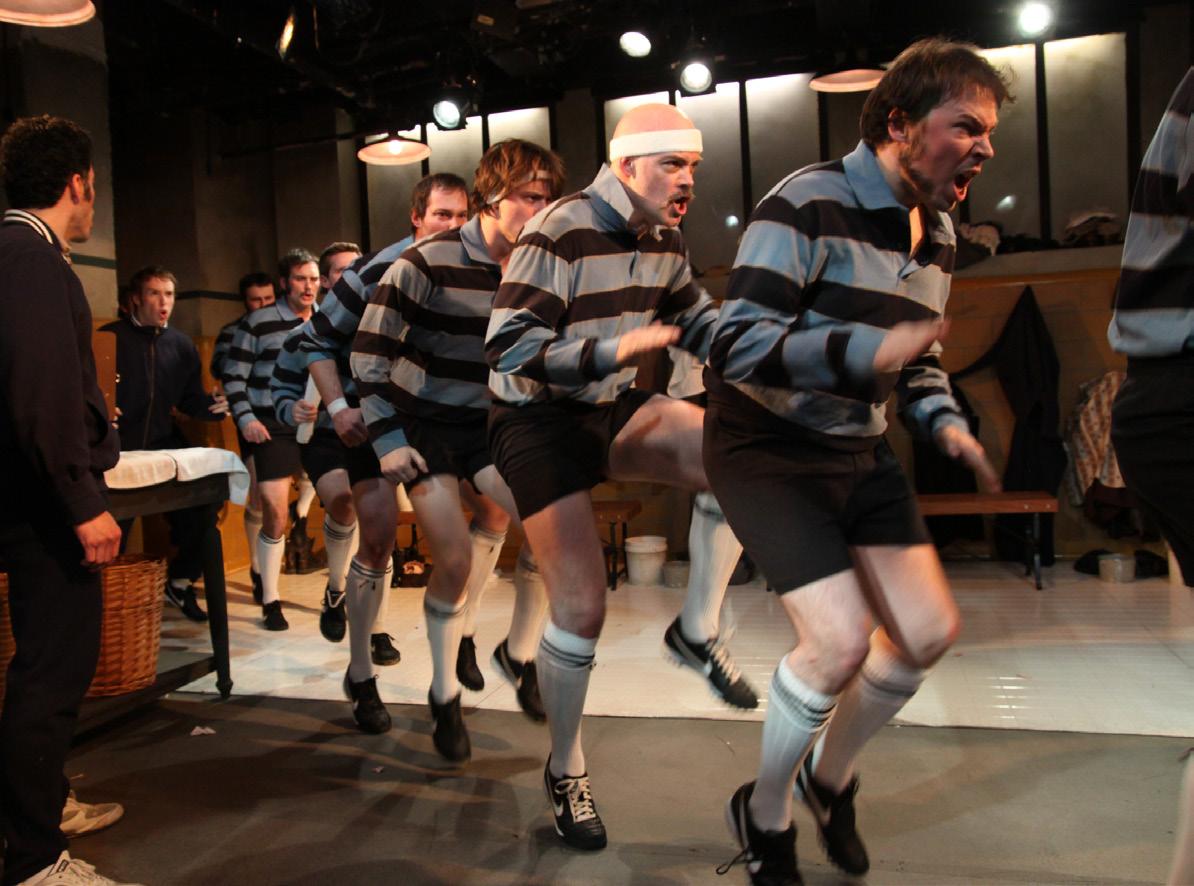
David Moorst in A Midsummer Night’s Dream at The Bridge, directed by Nicholas Hytner PHOTO MANUEL HARLAN
FROM THE PRESIDENT
It is my great privilege to share with you my first letter for SDC Journal as President of the SDC Executive Board. The Board represents a range and breadth of experience—35 directors and choreographers who are elected by you, the Membership, to serve your needs and ensure that the Union remains strong. I am proud to stand among them.
Since being elected President last November, I have engaged with SDC Members across the country. The meetings and conversations I’ve had in these first several months of my tenure have reminded me of the strength of the SDC community. When I feel isolated in a country that each day grows increasingly hostile to creative work and free speech, I am buoyed by that strength. I know that my fellow directors and choreographers share my commitment to that creative work, and that together, we can make our Union, and our country, a better place.
One of the things that has been a big takeaway for me is the desire, the yearning, felt by so many of you, to come together with other directors and choreographers in a meaningful way. The professions of director and choreographer are often lonely ones. There are only a few SDC Members in most rooms—sometimes just one or two, but even when there are more than that, we are usually outnumbered! Being a director or choreographer—people who are envisioning, communicating, and leading the execution of the flow, the movement, the shaping of performance—is a singular endeavor. Across all the things that make us different from each other, across all our many differences in terms of practice, people want to talk in substantive and unmediated ways about the wide world, the field, and our craft.
I have been on the Executive Board of SDC since 2006, and I have never felt more acutely the need for collectivity and unity. Fifteen or 20 years ago, in my mind, SDC Members were striving toward commonality with other directors and choreographers, as opposed to recognizing how much we had in common. Today, when certain dangers are more acute, when we can point to metrics that show the divisions in this country and in the world, when the country has an epidemic of loneliness—we are actively leaning into the notion of commonality.
How SDC can bring us together and increase our sense of shared experience and interests as directors and choreographers feels more important than ever right now. The more we’re able to come together and grapple with how we deploy our strength as a Union— how we develop our relationships with employers, how we secure stronger minimum terms and conditions for our work, how we position directors and choreographers as leaders in the field—the more we also strengthen the possibility of connection.
We also connect people through SDC Journal, a magazine dedicated to craft. The focus of the Journal is on vision and process, sharing insights, and illuminating the work of directors and choreographers. The conversations and interviews in each issue of the Journal remind me that the pursuit of artistic excellence is also a shared one.
Recently, I had the opportunity, with Western Regional Representative Jon Lawrence Rivera, to meet with Keith McNutt, Executive Director of the Western Region of the Entertainment Community Fund. In addition to sharing information with Keith about SDC’s robust Membership in the Western Region, we enjoyed a tour of the arts center that is under construction as part of the Hollywood Arts Collective affordable housing complex.
The Entertainment Community Fund is one of the industry’s greatest resources, providing free and confidential services and programs to help entertainment workers navigate a wide range of professional and personal challenges. In addition to resources that are available to everyone in the entertainment industry, contract-filing SDC Members also have access to the Fund’s Member Assistance Program, which provides a variety of short-term counseling services. All our Members have to do is call and say, “I’m with SDC” and they can access such programs as a housing resource center, a career center, information about financial wellness, personal wellness, health insurance navigation, educational workshops, and more. I have personally benefited greatly from their services. On behalf of everyone at the Union, I encourage our Members to make use of the opportunities available to them through the Entertainment Community Fund.
In Solidarity,
Michael John Garcés Executive Board President
PHOTO MICHAEL HULL
FROM THE EXECUTIVE DIRECTOR
Where do I find inspiration?
I continue to find the context within which we are doing our work to be challenging. While that has always been true, I don’t know that there are many who would disagree with me when I say that this moment—this time—feels different. The work we do requires us to see around the corners. The third move is as critical as the first. Of course, no plan survives first contact, so agility also matters. One step at a time.
In this moment, at this time, where do I find inspiration? Quite simply, in the pages of each issue of SDC Journal. As I read each issue, from the first draft to the final proof on its way to print, I find inspiration in your work and all the ways in which it is manifest. In the voices of the Membership. In your commitment to the rooms where you create. As I see you move through challenges—one after another—and resolve them. While I know all collaborations are not the same, reading through this issue underscores for me that very different approaches to collaboration lead to successful work.
I am inspired by Lisa Peterson’s collaboration with composer and sound designer Mark Bennett. The way Lisa gives space to her longtime collaborator, as I know she does with many others, is a lesson in trust and what is possible when you surround yourself with the best. I am also a bit melancholy when I read about the early days of their work together. Lisa and Mark strengthened their collaboration by spending days together—with the full design team—in rooms at theatres across the country, playing with ideas before preliminary designs were due. Think of that. That was a time before videotapes of final run-throughs were allowed, before low-functioning Skype was overtaken by Zoom, and before the infrastructure of the industry became severely stressed.
In 2023, I read a piece in The Guardian in which Nicholas Hytner asked big questions about government subsidies for arts and culture. Boldly and with precision, he deliberately and pointedly encouraged a conversation. As he would say, it was a provocation. Where I sat in midtown New York, it spurred discourse. Inspired by his institutional leadership, his influence in cultural policy spaces, and his extraordinary body of work, we talked following the opening of this season’s Giant on Broadway. Among the many things that have stayed with me—and which seems to me to be very necessary right now if we are to emerge from this moment politically, socially, and culturally—is his view that answers may lie in compromise.
Agility is a theme in Lauryn Johnson’s interview with Baayork Lee and Eddie Gutiérrez about their restaging work on A Chorus Line. They must be agile to balance the legacy of Michael Bennett’s original intention with the adaptation necessary to help the show succeed in new spaces with new performers. Their ongoing collaboration—with each other and with the international A Chorus Line family—reminds me of the rewards of playing the long game.
Azar Kazemi candidly shares her experiences making work today as an Iranian American, directing Sanaz Toossi’s plays Wish You Were Here and English, the latter of which was in rehearsal in February 2026 as the United States attacked Iran. A growing body of work by
Middle Eastern writers has offered a new generation of directors opportunities to tell their stories, stories that take an even deeper resonance right now.
A huge swath of the DC population rotates every four to eight years, making it the most heavily transient city in the country. The influx and exodus of government workers runs parallel to a foundation of citizens who call DC home, many for generations. I am excited about how Ashleigh King, as an artist born and raised in DC, considers the intersection of the power of culture and the power of policymakers.
I am reminded that our Members regularly use the limitations they’re presented with to their creative advantage. Laura Alcalá Baker exemplifies this in her interview about the joys and challenges of moving her production of Gloria Calderón Kellett’s play One of the Good Ones from the mainstage of Kansas City Repertory Theatre to community spaces across Kansas City.
Anne Kauffman’s conversation with Marshall W. Mason made me feel like I was eavesdropping. The depth and specificity with which Anne mines Marshall’s process and pedagogy is a master class. Of course, Marshall is one of the greatest. An exquisite artist and teacher who contributed so much to the craft and practice of theatre, all while serving SDC and the Membership, including as Union President.
Which leads me back to SDC. The inspiration I get from the Journal stories of Members working, facing challenges, solving problems, and deepening their craft helps inspire me as I engage in the decision-making necessary for the Union to be able to further your strength as artists and leaders, in the room and in the field.
In Solidarity,
Laura Penn Executive Director
PHOTO HERVÉ HÔTE
MUSES + MUSINGS
WITH ASHLEIGH KING
Who or what inspired your career in theatre?
I started dancing at three and was doing competitions by six. Debbie Allen used to have a contract with the Kennedy Center to do family-focused productions, and I did five of those shows almost every
other year starting the summer after fourth grade. I love that working with her was my first experience with a theatre professional. She was a great inspiration when I was first starting out. There were so many young professionals in those shows, and she taught us balance really early. We would be sitting on the sides and she’d say, “If you’re not watching, you’re doing your homework.” She was always very serious about enriching the entirety of our lives.
I also had dance teachers. Gloria “Miss Glo” Hampton was my main teacher growing up; she is now the dance teacher for Dance Moms: A New Era. And I had teachers like Pat Hawkes at Dancensations Dance Center and Mark Marino at Dance USA. They instilled in me how important storytelling was and how dance was another medium for communication. Those early influences—being able to watch a creative who had such a wealth of experience and talent, and then having this great foundation from my teachers— helped foster and feed my love of storytelling through movement.
What inspires you most about DC and its theatre community?
I was born in Washington, DC, but raised in the general DMV area. Without realizing it I began some of my theatrical relationships when I was 20 years old. Some of the people that I’ll work with this season are people that I had dinner and drinks and meltdowns with before I was ever trying to purposely network here. That’s something that I find beautiful in all regional theatre. You see creatives who work together consistently and have a shared language and history that they can pull from that’s more than just their education. I love that about regional theatre; it is theatre created by a community for their community.
But DC in particular: you cannot escape the fact that this is a place where words have power and policy is made. No theatre is frivolous. It is always a risk. It is always extremely vulnerable, whatever you make. But in DC we have a direct line to our policymakers who are both harming us and fighting for us. The reality that you can do something like She Persisted as a children’s show at a small theatre in a national park, and Sonia Sotomayor can sit there among children and watch another generation learn empathy and history? It means that every theatre
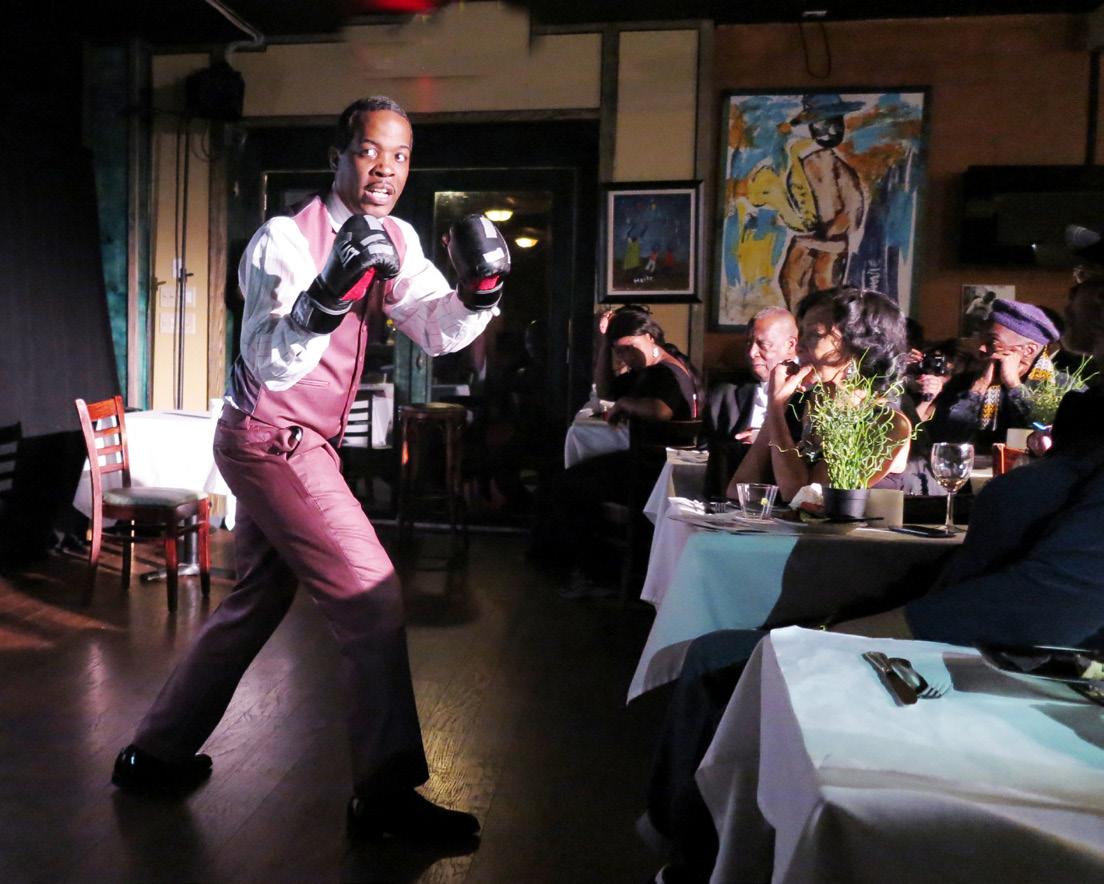
Deimoni Brewington + Jeremy Keith Hunter in Tambo & Bones at Spooky Action Theater, directed by Ashleigh King PHOTO DJ COREY PHOTOGRAPHY
experience in DC has this extra level of power.
More than that, DC itself just has a rhythm and a beauty to it. I love being in a city that is constantly affirming its Blackness. It’s so beautiful in its rich history and culture when it comes to Black Americans. You can go two blocks down from some policymaker’s place of power to see another culture-shifting place of power—a gallery that’s all local artists or jazz musicians or something—and see how those two things are fighting to influence the rhythm and the heartbeat of the city every day.
You recently finished directing Tambo & Bones by Dave Harris at Spooky Action Theater, which follows two characters who start as minstrel characters in the first act and become rappers in the second act. What most inspired you when you were preparing for and working on that project?
Shortly before the artistic director, Elizabeth Dinkova, reached out to me with this opportunity, I read this piece on social media about how a lot of Gen Z speak is an appropriation of AAVE (African-American Vernacular English) or historically Black phrases. Those things are being adopted, bastardized, and generally fed to the masses as new lingo. But moreover, I was seeing Black content creators and choreographers on social media creating really amazing short-form vertical movement pieces that were then immediately being attributed to other content creators. I was looking at that and getting very fired up thinking about the reality of minstrelsy—Black performance, but also performative Blackness from Black humans—being the basis for a lot of media in America, and the violence that can be perpetrated when other communities use that performance without crediting it. That was so deliciously complicated, and that was my way into Tambo & Bones.
I also have to give a shout-out to the incredible sound designer, navi, who has a truly encyclopedic knowledge of hip-hop. Because I’m a movement-based person at heart—which means inherently musical— once we had the hip-hop music for the second act and we got that rhythm, then I knew what our shared sound and language was.
Where do you get your inspiration in general? Is it books, movies, visual art?
I am a chronic people watcher. I love watching how other people move. How does a regular person hop over a puddle? I guarantee it’s not a glissade. I want to see that little hop, the way their body collapses again. My inspiration whenever I am stuck will always be to stare out the window and watch people deal with everyday encounters. I make up a little story about them and then realize how that relates to whatever I’m working on. Also, kids are just such free movers. They don’t have any inhibitions. I find so much interesting movement in a person that hasn’t studied how to move.
Last but not least, there are so many different types of theatre in DC, and for me, theatre always feeds theatre. I’m inspired by my fellow theatremakers, by being able to go and see a Synetic production that’s all movement-based, or Solas Nua [a multidisciplinary arts company devoted exclusively to contemporary Irish arts].
What’s a great play, musical, or performance you love that people don’t talk about much or might not have heard of?
Sasha Velour’s Travesty [on tour, recently presented by Woolly Mammoth] is the future of theatre. It will be in the history books as she continues. It’s such a mind-blowing evening; it’s a great mix of mediums because it has incredible projection design and she’s such a fearless storyteller, and it has an incredible integration of those different mediums. There’s history, humor, and glamour. I know she’s headed to England, but I
hope she continues to tour. People have to see it.
My other one has to be the end of Branden Jacobs-Jenkins’s An Octoroon. I remember going to see that show [also at Woolly Mammoth, in 2017] and I found myself watching the audience as often as I watched the stage. Then you get to the ending, and there’s this explosion and the facade falls down. There was Jon Hudson Odom standing there in whiteface.
I have been chasing that feeling ever since: the acceleration building toward that end, the crescendo where you feel like you are willingly being dragged to the edge of a cliff, the pace increasing until all of a sudden, BOOM! The show’s over and you have no idea if you’re flying or falling. Any show that can end on a gasp or a collective exhale, I think, “We’ve done it.” We’ve created community. We’ve taken people to church.
Ashleigh King is a DC-based director/ choreographer and five-time Helen Hayes Award recipient respected for emotionally honest, genre-blending theatrical work and dynamic musical staging. She prioritizes creating deeply collaborative rehearsal spaces. Passionate about both new works and beloved musicals, King views theatre as civic engagement rooted in connection and community.
Merry Wives at Shakespeare Theatre Company, choreographed by Ashleigh King PHOTO TERESA CASTRACANE PHOTOGRAPHY
HOW WE MET THAT CHALLENGE
WITH LAURA ALCALÁ BAKER
Kansas City Repertory Theatre’s KCRep for All program features one show from KCRep’s mainstage season, restaged and reimagined to be performed in community centers, public libraries, and senior centers throughout the Kansas City region. SDC Journal spoke with director Laura Alcalá Baker about the joys and challenges of
bringing Gloria Calderón Kellett’s family “dramedy,” One of the Good Ones, from the KCRep’s Copaken Stage to the broader Kansas City community.
What drew you to One of the Good Ones?
Oh, my gosh. Gloria Calderón Kellett, the playwright, has such a delightful sense of humor. It was refreshing to read a play that had so much joy, love, and laughter at the forefront. I really believe that laughter is the way to get an audience to fall in love with people and what they care about. Plus, it’s about a Latine family. I love a Latine family drama—dramedy— because we’re a funny people. Very often our stories are portrayed with the traumatic events that are happening to our community, so an opportunity to see a loving, thriving, American-Latine family right now: what a gift!
How did the design process function for the play, knowing it would start in the KCRep space and then tour to spaces with a different ground plan?
From the beginning, KCRep told me, “Build the show as you imagine it for the mainstage, and then we’ll imagine what it looks like in the tour scenario.” So I got to dream first! What the team had done, what Dionna [Ndlovu, KCRep for All Producer and KCRep Director of Arts Engagement] had done, is make sure that we had all the pieces in place so that we were rehearsing for the mainstage show on the exact configuration that we would have for a tour. The Copaken stage is sizable, nearly 30 feet across the proscenium. Each of those community spaces had its own specifications, but we did know that we would have a 15x15 foot box. So I had that scale shift in mind from the beginning. As we were going through the process, I thought about what we could pare down to keep the core of the world and the storytelling rich without losing any of what we built.
We were having full production meetings for the tour during tech for the mainstage show. Our scenic designer, Chelsea M. Warren, had a ground plan of what the full stage looked like. We were in conversation about which pieces were critical so that
Gene Gabriel, Isabella Campos, Tyler Lindquist + Natascia Diaz in One of the Good Ones at Kansas City Repertory Theatre, directed by Laura Alcalá Baker PHOTO DON IPOCK
PHOTO EVAN ANDERSON
I could still maintain staging to some degree. Trying to make sure that the cast wasn’t totally backwards was important. If we move that table—if we flip that table and that couch—then suddenly the entire play is backwards, and everyone has to reimagine things that they’ve been doing for weeks. So I was trying to make things replicable as much as possible.
Then there was also navigating logistics of what set pieces need to go where, because everything had to go into a box truck. In this comedy, there’s a front door of the house that opens, and whoever’s behind the door is really important. There was a time when there was not going to be a door for the tour. Then we had two days of rehearsal with no door, and I realized the door was critical. You need a door in a comedy; you need it to open and not know what’s going to be on the other side. That’s just so classic. To their credit, amazingly, the team took the actual door from the set—which was this archway, ornate, beautiful Spanish Colonial door—and built that to be travelable.
Having that set piece helped us know who these people are. Now we know where this home is, right? We’re in California, we’re in Pasadena. When that door opened and we saw who we saw, it was such a strong gesture. One element made a huge difference.
You mentioned that you had two days of rehearsal for the tour. How did that process work?
We rehearsed the mainstage show and they did their run. KCRep brought me back for the last performance to watch it again. A luxury! The actors and the team had one day off and then we went back into rehearsal for two days. We knew our play, but that 15x15 footprint made it feel all new. With the quick turnaround, it was about trying to make sure the cast maintained their actions and staging as much as possible to keep the same storytelling.
What I didn’t have on the road was lighting; there was no way to focus the eye of the audience in that respect. I was looking at stage pictures and composition to make sure that they were still telling the story in the way we meant to do it, that the actions were still maintained in this smaller space, that it could be seen— because sightlines were different.
Entrances and exits were all new. There was a point in the play where the father, Enrique, was supposed to magically appear, as if he’s been sitting there the whole time and listening in on a conversation. There’s a big gag about that. I had to figure out where we were going to put him. Of course, the answer
is always the audience. So we put him in the audience. When it was time for him to enter, he just stood up.
How did that change the audience’s experience?
Suddenly there was this relationship with the audience of, “Oh, we’re in this house with them.” It’s amazing how a thing that feels like a little gesture can be so impactful; now they’re not just observing the house, they’re inside the house, even if it’s just for that moment.
You can’t for a second forget the audience is there, because you’re in their space, right? These are their community centers and their public spaces and we’re being welcomed into their homes—and then we are creating a home for them to share with us. It’s such a mutual exchange.
Laura Alcalá Baker is a Chicagobased director and new play developer specializing in unearthing the missing canon. Recent works include: a home what howls (Steppenwolf), The Leopard Play (Steep Theatre), The Way She Spoke (DCASE), RUST (Goodman/New Stages), Somewhere Over the Border (City Theatre/ People’s Light), and I Am Not Your Perfect Mexican Daughter (DCPA).
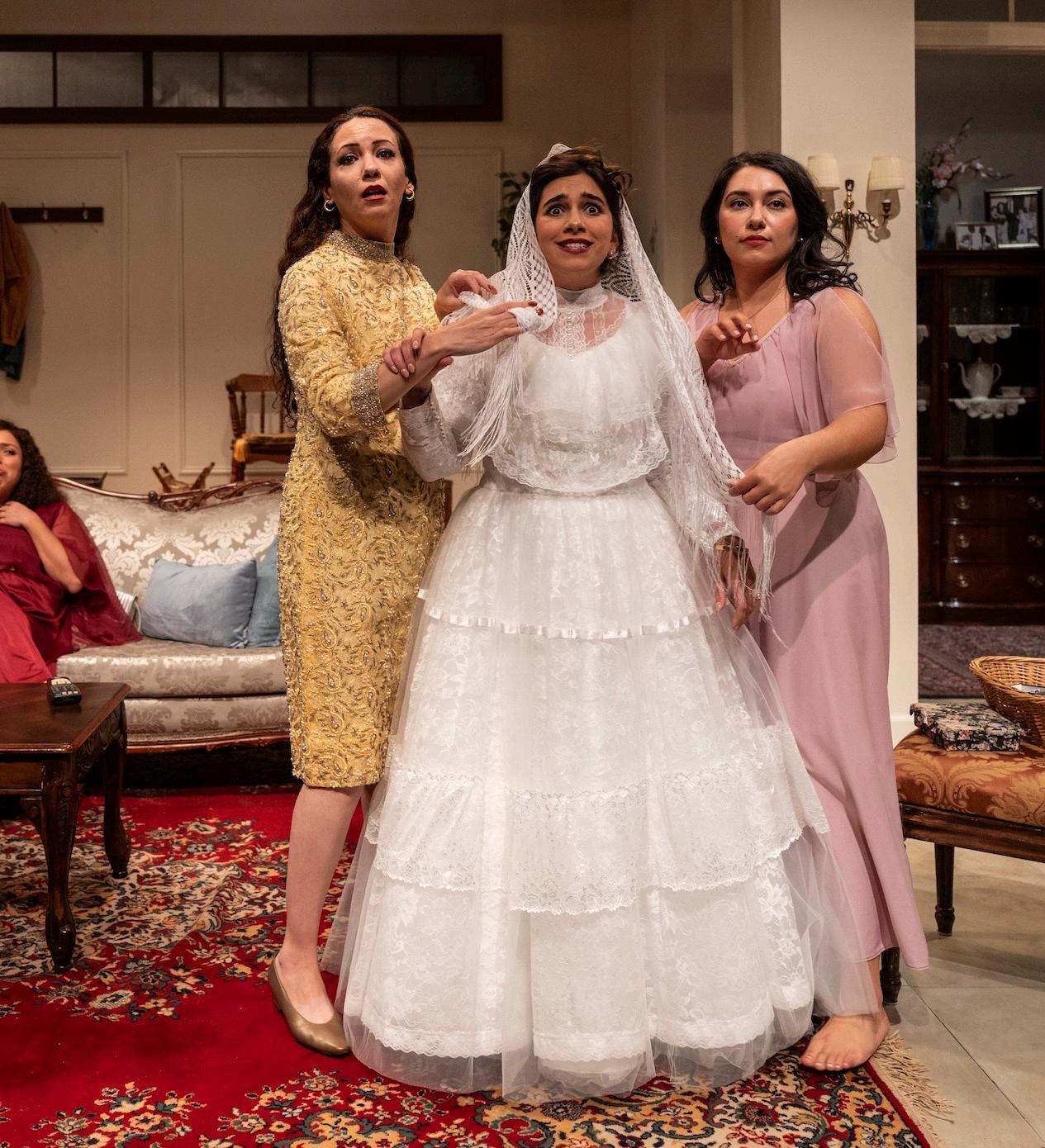
The KCRep for All touring production of One of the Good Ones, directed by Laura Alcalá Baker PHOTO KENNEY ELLISON
WHAT (AND HOW) I LEARNED
WITH AZAR KAZEMI
Azar Kazemi’s production of Sanaz Toossi’s play Wish You Were Here opened at Remy Bumppo Theatre in Chicago in September 2025. When the United States attacked Iran in February 2026, Kazemi was in rehearsal for another of Toossi’s plays, the Pulitzer
Prize-winning English, at Indiana Repertory Theatre. Kazemi was the first IranianAmerican director to have fully staged both of Toossi’s published plays, which focus on Iranian characters. With that unique perspective in mind, SDC Journal spoke with Kazemi about the experience of directing Toossi’s work in a time of war. This column has been edited and condensed from that conversation.
I’m a first-generation Iranian American who was raised in Northern Idaho. Growing up Iranian in Idaho was not an easy thing, but I’ve always been very proud of my Persian heritage. I speak Farsi, and I visited Iran many times growing up because I still had family there. In early 2022 when I heard about this play English that was selling out at the Atlantic Theater, I flew to New York just to see the play. Then I went back in May 2022 because Playwrights Horizons was doing Wish You Were Here. It was extremely meaningful to see well-produced plays about Iranians, who at times even spoke Farsi on stage, and reflected back to their audiences the beauty of our people and culture. Toossi’s
ability to infuse humor and relatability into her work connected me to both plays in a way I hadn’t experienced before.
Wish You Were Here is a love letter to female friendship; it follows five women over 13 years in Iran, between 1978 and 1991. English also takes place in Iran, and it’s about the incredible, difficult, and frustrating experience of learning a new language, and all the ways in which even in our first language we can fail to express ourselves well. In most immigrant plays I’ve seen, the universal dream is to come to the United States. But in Toossi’s plays there are characters who don’t want to leave Iran, as Nazanin says in Wish You Were Here: “I could never leave. I love being from somewhere beautiful.”
These plays show the culture that I was raised with and that I witnessed in Iran. They’ve given me the opportunity to put on stage a part of my life that I could never express to people. I told the designers for both productions that I knew we were going to have a majority white audience, but I was directing these plays for the Iranians. I wanted to make sure that I did them proud. It was so gratifying to give Iranian audience
PHOTO IAN McLAREN
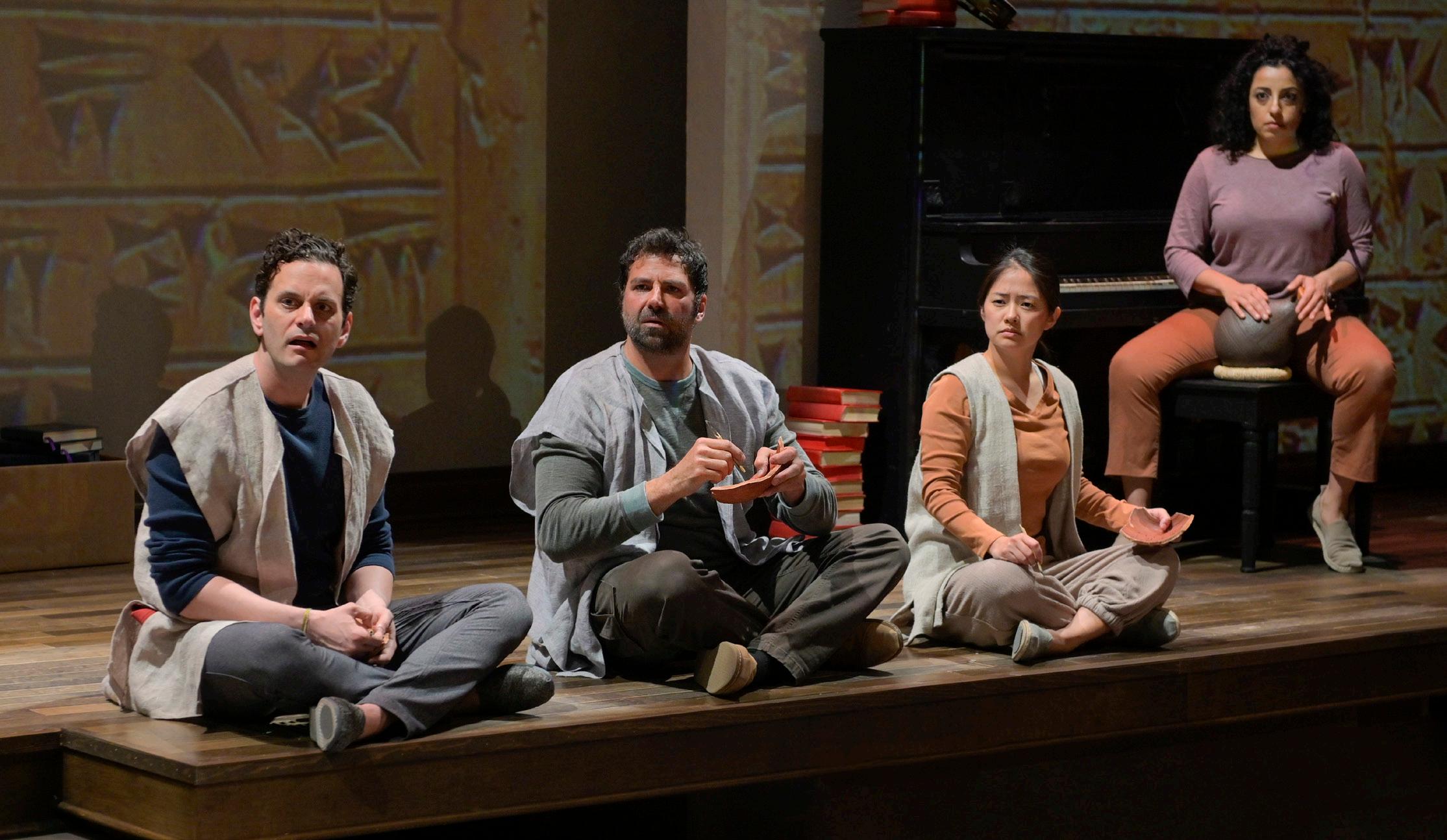
Natasha Behnam, Emelia Maryam Mosay, Neagheen Homaifar, Revon Yousif + Leyla Modirzadeh in English at Indiana Repertory Theatre, directed by Azar Kazemi PHOTO ZACH ROSING
members touch points that made them feel seen and invited into the theatre. Audience members would tell me that the set of Wish You Were Here looked like their aunt’s or their grandma’s house in Iran and the music transported them back to their youth. With English, we were able to invite and collaborate with the Iranian community in Indianapolis through programming and events honoring the Persian New Year. The full company of actors in English attended every single talk back. At the same time, people were so moved by the play no matter what their background was.
In Wish You Were Here, the main character Nazanin stays in Iran while everyone else leaves. She has an amazing monologue near the end of the play that’s about the idea of home: leaving your home, not having a home, and wanting to find a home. It made audience members weep every night. Some Iranian audience members came up to me afterwards and said, in Farsi, “We know why we’re crying, but why are all these Americans crying?”
There was not an active war at the time, but they were surprised to see American audiences caring about characters that looked like them.
Since the war began I’ve had several people text me to check in, saying, “I just want you to know that with everything in the news, I keep thinking about Wish You Were Here and those characters.”
That’s why I’m a theatre artist. We need many stories about a people and a place to really start to engage with them. As theatre artists, we’re uniquely positioned to tell those stories and depict the full breadth of a culture’s humanity.
These experiences reinvigorated my feeling that theatre is the ultimate place to start a conversation, build community, and be in relationship with one another. I think we forget that people are in pain; we hide our pain away and forget to have empathy for each other. Theatre is the best way that I can try to reflect human beings back to one another. It’s a place where we can expose our pain and look at it. I really feel like—on a very metaphorical level, when they say you have to let a wound breathe—in the exposure of that wound, we are finally able to start to heal and let joy in.
It was incredibly special to direct Toossi’s plays back-to-back and to show the
everyday lives of Iranians on stage. It’s easy, during a war, to dehumanize people or not think about the actual individuals that are living in that country, losing their lives or their homes, or both. I have a lot of family still in Iran; one of my aunts and her husband decided not to leave Tehran when the bombing started, and my grandfather is in Karaj, where Sanaz Toossi’s plays take place. At a time when I could do absolutely nothing to help my family—I couldn’t even call them on the phone—I could direct a play about Iranians and see audience members walk out of the theatre changed, looking at Iranian people as human beings and not just a statistic or an image on their TV. I don’t know if I’ll ever have a greater gift in my career than that.
Azar Kazemi is an Iranian American director and educator based in Chicago. She directs socially charged plays where the political and personal collide. Kazemi is on faculty at The Theatre School at DePaul University, where she also received her MFA in Directing. She is a proud Member of SDC.
Yourtana Sulaiman, Tina Arfaee, Joan Nahid, Gloria Imseih Petrelli + Shadee Vossoughi in Wish You Were Here at Remy Bumppo Theatre, directed by Azar Kazemi PHOTO MICHAEL BROSILOW
A CONVERSATION WITH
ALCHEMY COLLECTIVE NICHOLAS HYTNER LAURA PENN
BY
PHOTO EMILIO MADRID
AS AN ARTIST,
institutional leader, and civic leader in an environment of constant evolution—politically, socially, and culturally—three-time Olivier Award-winner Nicholas Hytner ran the National Theatre for 12 years, from 2003 to 2015, a period he writes about vividly and beautifully in his book Balancing Acts. With his NT colleague Nick Starr, he then co-founded the Bridge Theatre, a 900-seat adaptable auditorium in London that has been a creative home to such acclaimed productions as Hytner’s own immersive stagings of Guys & Dolls and A Midsummer Night’s Dream .
At the National, the Bridge, and on film—including the recent historical drama The Choral , written by his longtime collaborator Alan Bennett—Hytner’s work has been eclectic and electric. He describes himself as a regular but infrequent visitor to Broadway, where his productions include One Man, Two Guvnors; The History Boys ; and Carousel (all originally produced by the National). He won Tony Awards for his direction of both The History Boys and Carousel, as well as a producing Tony for the National’s production of War Horse, and was nominated for Best Director for One Man, Two Guvnors and Miss Saigon .
This year, Hytner was nominated for a Tony for directing Mark Rosenblatt’s Giant , which transferred to Broadway following successful runs at the Royal Court Theatre and in the West End. The play dramatizes an imagined conversation between children’s author Roald Dahl—played by 2026 Tony Award winner John Lithgow—his fiancée, and his UK and U.S. publishers after Dahl made antisemitic remarks in a 1983 review of a book about Israel’s invasion of Lebanon. Hytner spoke with SDC Executive Director Laura Penn shortly after the play opened on Broadway.
LAURA PENN | You’ve talked about the collective alchemy of creating a show. I couldn’t help but find myself wondering, with Giant, how deep the trust had to have been in the rehearsal room for the company, particularly John Lithgow, to go where they went. My experience of the fear the characters were feeling was palpable. It was like they were with the audience in wondering, where is this going to go?
NICHOLAS HYTNER | It was an extraordinarily open and trusting process with an actor absolutely unafraid—because he’s so secure in himself and in his craft—to go to the really dark, cruel heart of a man otherwise enormously charming and with a big emotional hinterland. He never questioned that the two can go hand in hand. It was a surprisingly harmonious process.
LAURA | How did the production come about?
NICHOLAS | Mark Rosenblatt was not a playwright; he is a director. We met initially for him to describe this idea he had for a play. He ended with the question, “Who do you think should write it?” I said to him, “This idea is so complete. You’ve thought it through in such detail that we won’t get a playwright to write the play you want to see. A good playwright, a playwright that we might want to work with, is going to write a different play.” I knew Mark quite well from the National Theatre, and he was talking like a writer, so on a hunch I said, “You should write it yourself.”
When I read it I sent it immediately to John, who read it within 24 hours and wrote back to say, “There’s something fantastic here.” Then I happened to be—in my capacity as ex-Director of the National Theatre, which I enjoy—having a drink with David Byrne, the new Artistic Director of the Royal Court. I’d never worked at the Royal Court, and I didn’t know David though I’d seen his work. He wrote asking to talk through what it’s like to take over a major London theatrical institution, and in the course of that conversation, he said, “The cupboard’s bare. You don’t have anything, do you?” Which is how Giant ended up at the Royal Court.
period, four weeks, the play moved forward another major step, and Mark, being himself a director, was open to the process of focusing the play dramaturgically and structurally.
LAURA | One of the things I also am curious about is it was developed a long time ago, before the October 7, 2023, Hamas attack on Israel. And your first rehearsal here was March 1, the day after the U.S. bombed Iran.
NICHOLAS | This is hats off to David Byrne. We did, I think, a three-day workshop at the Bridge in September 2023. David must have read it at the end of September; he
NICHOLAS | In all honesty, I think aspiring to be a hammer is noble, necessary, and often inspiring, but art more often holds up the mirror in my experience. I don’t think Giant wields a hammer. I think it asks an audience to accept complication, contradiction, nuance. I think it’s challenging to any convinced point of view.
I was very skeptical about its commercial future. It was the producers, Dayna Lee and Brian Lee, who were convinced before it opened at the Royal Court that there was a commercial life for it. They gave the Royal Court considerable support in exchange for the commercial rights. I said, “This is great. I would be thrilled for you to make this contribution to the Royal Court Theatre, but believe me, this has no commercial future.” I felt that all along. When it was an unexpected success in the West End, I still doubted whether it would have a Broadway life, and they proved me wrong again.
“It turns out that there is an enormous audience that responds to complexity and ambiguity”
confirmed that he had programmed it on, I think, October 5, 2023. There was never a question after October 7 that this would in any way deflect anybody from doing the play. It is a depressing reflection on Middle East politics that I suspect anytime you produce this play—certainly since 1983, when it’s set, and probably also in the future—it’s always going to feel as if it’s about now.
It could have ended up at the Bridge, but it was obviously going to be better in a smaller, more intimate house. The Royal Court was the perfect place, and the initial rehearsal process was protected by that environment and this trusting, incisive, generous leading actor. Through that relatively brief rehearsal
LAURA | One of my favorite quotes is attributed to Brecht: “Art is not a mirror held up to reality but a hammer with which to shape it.” For me, Giant absolutely was a reflection, but it also felt as though it was pushing me somewhere else. It was requiring something of me. There was a little bit of a hammer. What are your thoughts on the mirror-hammer question?
It turns out that there is an enormous audience that responds to complexity and ambiguity, and that passionately held, competing truths can exist simultaneously.
LAURA | To not be alone in discovering that ambiguity is quite moving. I’m always curious, when I look at a director’s body of work, when they knew they were a director. When did that happen for you?
NICHOLAS | I realized when I was at university that I can’t act and I can’t write. I tried both. I think a lot of directors, if they’re honest, initially wanted to write or act, and some of them still do, but that’s how it happened for me. One of the great things about being an artistic director, particularly at a place as productive as the National Theatre, is that you get to work with scores of other directors. You don’t get to work with them as a freelance director; you get to talk to them, you get to exchange ideas and aspirations, but you don’t get to work with them.
LAURA | I began my career at Arena Stage, and Zelda Fichandler talked a lot about the gift as an artistic director of being in conversation with other directors and having the privilege of watching them work. The community of directors that came to the National under your leadership is pretty exceptional.
NICHOLAS | The National, because of what it was set up to be, is a magnet for almost all of the first-class directors in the UK. It was
an education to work with directors whose process was unlike mine. Katie Mitchell, for instance, did, I think, 13 shows during the 12 years I ran the National Theatre. Katie is so particular; her signature is so strong. She is a genuinely groundbreaking artist. It was thrilling to work with her, always.
It was not just British directors. The exchange between London and New York has always been immensely productive in both directions, both commercial and not-forprofit, and to work with directors like Jack O’Brien, George C. Wolfe, Bill T. Jones, Anna Shapiro, Alex Timbers, Rachel Chavkin, who I admire enormously, was an enormous pleasure.
LAURA | Do you have an animating process or principle that runs through your own work?
NICHOLAS | I’ve never really worked it out to the extent that there is a process that I can teach. That doesn’t mean there isn’t one. The book I wrote was about the 12 years at the National Theatre. I’ve not gone back to it since I wrote it, but I suspect quite a lot of it is about process, though much of it is about the institution, how that institution came to life, and my observations of the different people—writers, directors, actors, designers—everybody whose work enriched both the National and me.
For 25 years, I’ve had a double privilege. One is that—theoretically, and in some cases, in actuality—I’ve been able to direct whatever I want. I’ve always been constrained, though, by what the organization, the institution, the building that I’m responsible for needs. Very often what I want to do and what I think are the needs of the organization completely coincide. But I’m not sure I have ever directed something that I doubted would answer the needs of the building. It’s one of the reasons that I did Giant at the Royal Court, because I thought the Bridge wasn’t the right space for it, and I had doubts about its commercial viability. It turns out I was wrong about that, but boy was I right about doing it at the Royal Court. But I’ve
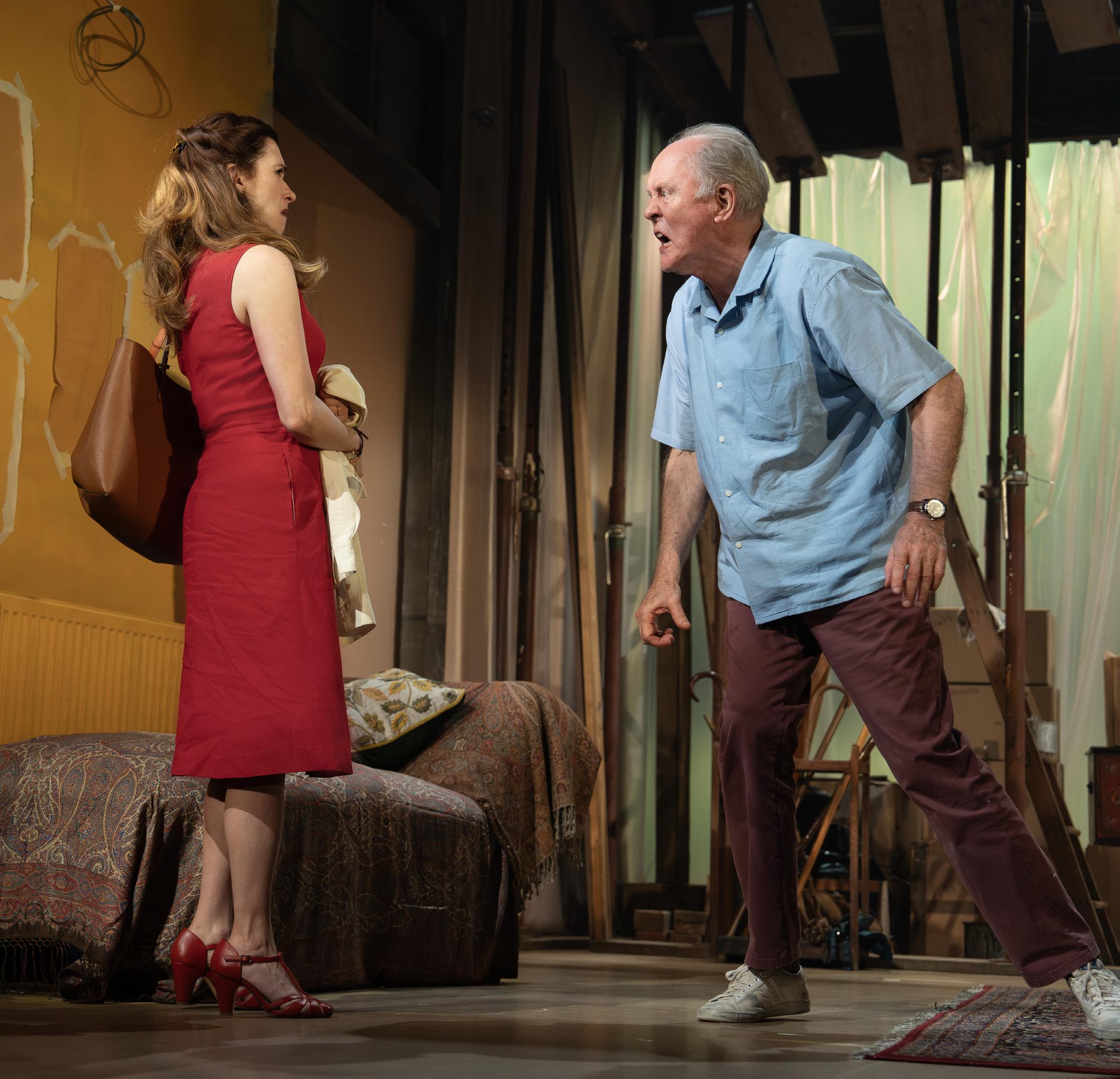
Aya Cash + John Lithgow in Giant on Broadway, directed by Nicholas Hytner
PHOTO JOAN MARCUS
also had the pleasure of directing things [at the National] simply because that’s what we needed. One Man, Two Guvnors started as, “We’ve got a long summer here with no laughs. Somebody’s got to do a comedy.” That show was kind of rustled up at the last moment.
Giant is the first play I’ve directed since 2002 that I haven’t been involved as artistic director/producer, and I loved it. I loved it. For me, it was a sign that it’s probably time to focus on being a director again, to rediscover directing and not worry about having to take responsibility anymore.
LAURA | It’s interesting that you say rediscover directing, because you’ve always been directing. But what I’m hearing is this discovery is outside of the frame of an institution. What would it mean to direct without that obligation, that consideration?
NICHOLAS | The thing that I will miss most of all, when this happens, will be working with other directors. I’d love to find a way of continuing that, and I’d love to do some more teaching.
LAURA | One of the conversations we’re having a lot at SDC is about the Broadway-
West End relationship, which many people feel is shifting. I had a conversation with a reporter from The Stage recently, and he said, “Broadway has always been the jewel in the crown.” It was interesting for a British journalist to phrase it that way. He asked whether I thought the West End was becoming the jewel in the crown now, because there’s a lot more being developed in London that comes over to New York these days.
NICHOLAS | Maybe the jewel in the crown is wherever you don’t happen to be. The number of times I’ve heard how much more exciting the German theatre is than the British theatre—always from British theatre people. The Germans, I have to say, are famous throughout Europe for not having much time for anybody else’s theatre tradition, so they probably think that as well. But as a London-based British theatremaker, if I see something in Paris or Berlin, my heart is always beating faster. Ditto if I see something on Broadway.
I was only in New York for a month [to open Giant], and I didn’t get a chance to see very much. But I saw three things which bowled me over. I saw Tristan und Isolde at the Met [directed by Yuval Sharon], which I found
thrilling. I saw The Outsiders; that’s the first time I’ve seen Danya Taymor’s work, and it absolutely blew me away. As in, “This is a voice. This is a new voice doing new things.” And I went to see Death Becomes Her [directed and choreographed by Christopher Gattelli]. I found it really funny, fabulously entertaining. As a display of choreographic and directorial expertise and wit, again, I was blown away by it. It’s always thrilling to see work which I don’t believe could have been rooted or grown in London.
LAURA | One of the things we’re finding is that, economically, producers are being drawn to London because it’s a different economic model.
NICHOLAS | A truth that is simultaneously depressing and very moving is that it has always been the case that the chief sources of subsidy for the performing arts have been the artists. If you’re a visual artist, or a filmmaker, you can luck into a completely market-driven model for a thrilling and lucrative creative career. That’s infinitely harder if you’re a performing artist. Maybe one or two superstar conductors, and maybe one or two directors and designers, if they’re fortunate enough to happen to direct a show which has a huge commercial life. Essentially
the actors we work with, the writers we work with, or if you play the oboe even in a major UK symphony orchestra, you’re subsidizing— by your enthusiasm and your obsession with your art form—you are subsidizing the production of that art.
God knows I’m not making a complaint on my own behalf; I’m one of the super lucky ones. So often our colleagues—directors, actors, writers—subsidize the work they do on the stage by being adept and eager enough to direct film, to get involved with television. Or in the case of many London directors, by doing opera in the rest of Europe, which is properly paid because it’s, by our standards, lavishly subsidized. I would add that if you talk to people who work in the French theatre, they’ll say, “It’s a disaster. The money isn’t there anymore, we’re having to cut back.” But they’re cutting back from a place unrecognizable in London, let alone New York.
LAURA | This is part of our work at the Union. We want people to work, but we want them to work at a standard that is worthy
“A truth that is simultaneously depressing and very moving is that it has always been the case that the chief sources of subsidy for the performing arts have been the artists.”
of their talents, that is respectful of what they bring to the table. That’s our job here in the U.S.; obviously there’s not—thank you, Margaret Thatcher—a similar union to protect and support you in the UK.
Your cultural policy work is extraordinary, as is your role as a provocateur. I found myself really drawn to the conversations that you inspired during the pandemic. I was at a convening recently with philanthropists and service organizations, trying to develop a roadmap for cultural policy here. The first day we were charged with defining some words so that we could go into a rigorous discussion. “When we say artist, what do we mean? When we say sector, what do we mean?” We couldn’t do it, and the policy discussion didn’t get very far because we couldn’t even agree on what we mean by “artist.” We’re not going to make any progress here if we can’t create a unified message or two. You seem to have some of the same issues over there.
NICHOLAS | The UK, as you know, was a late adopter of state support of the arts.
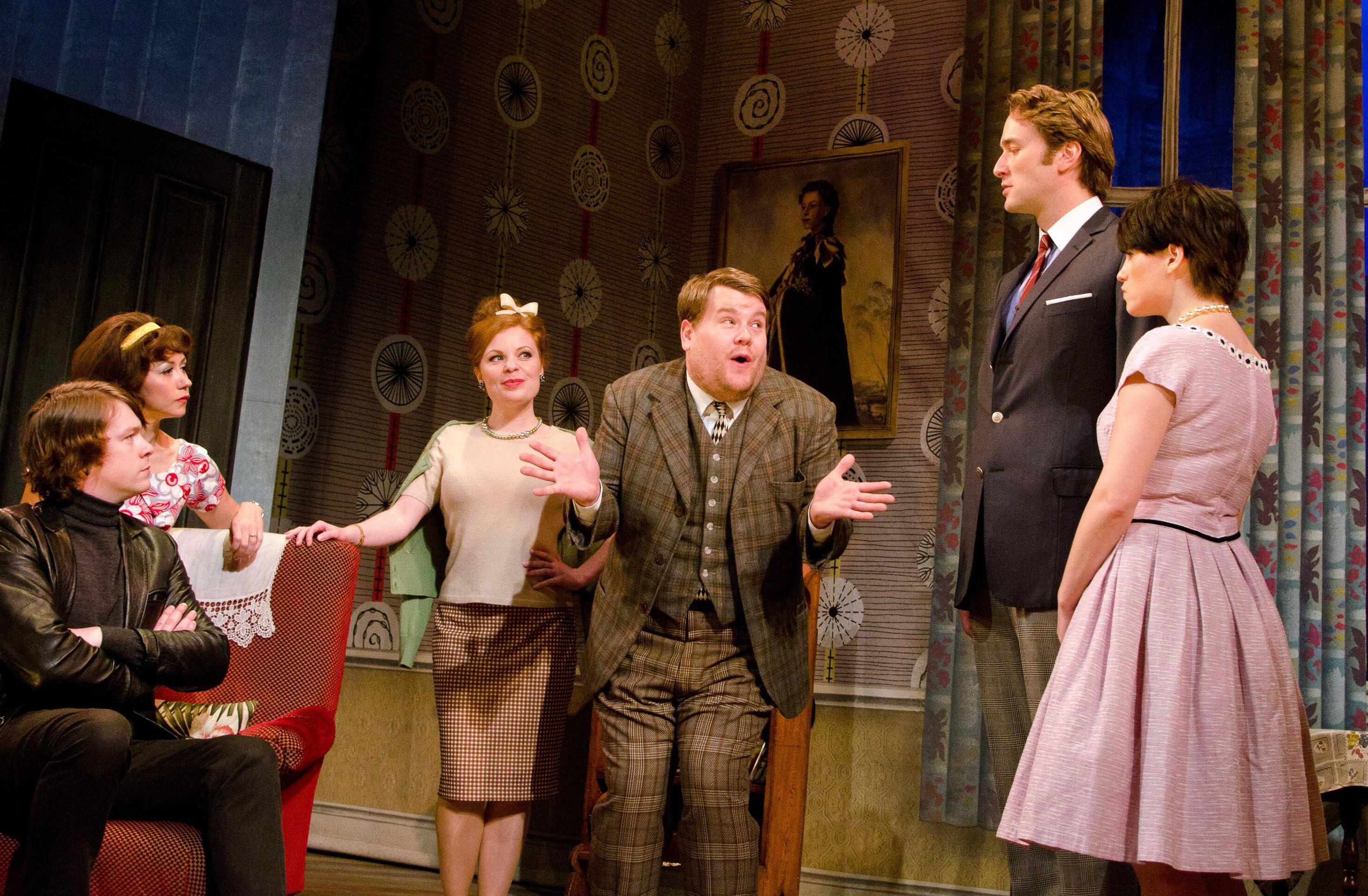
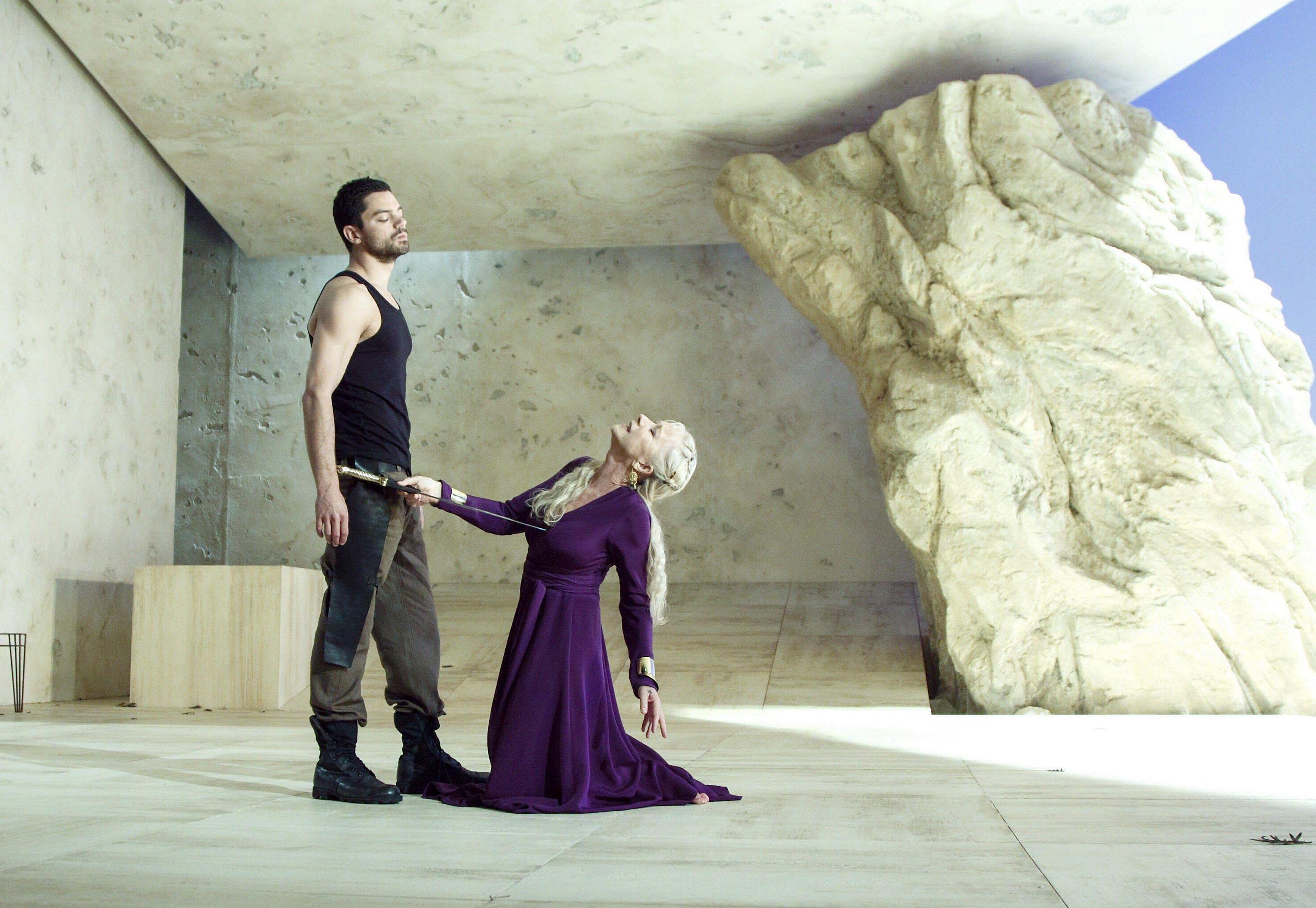
OPPOSITE James Corden (center) + cast in One Man, Two Guvnors at the National Theatre, directed by Nicholas Hytner PHOTO DONALD COOPER/ALAMY ABOVE Dominic Cooper + Helen Mirren in Phèdre at the National Theatre, directed by Nicholas Hytner
PHOTO DONALD COOPER/ALAMY
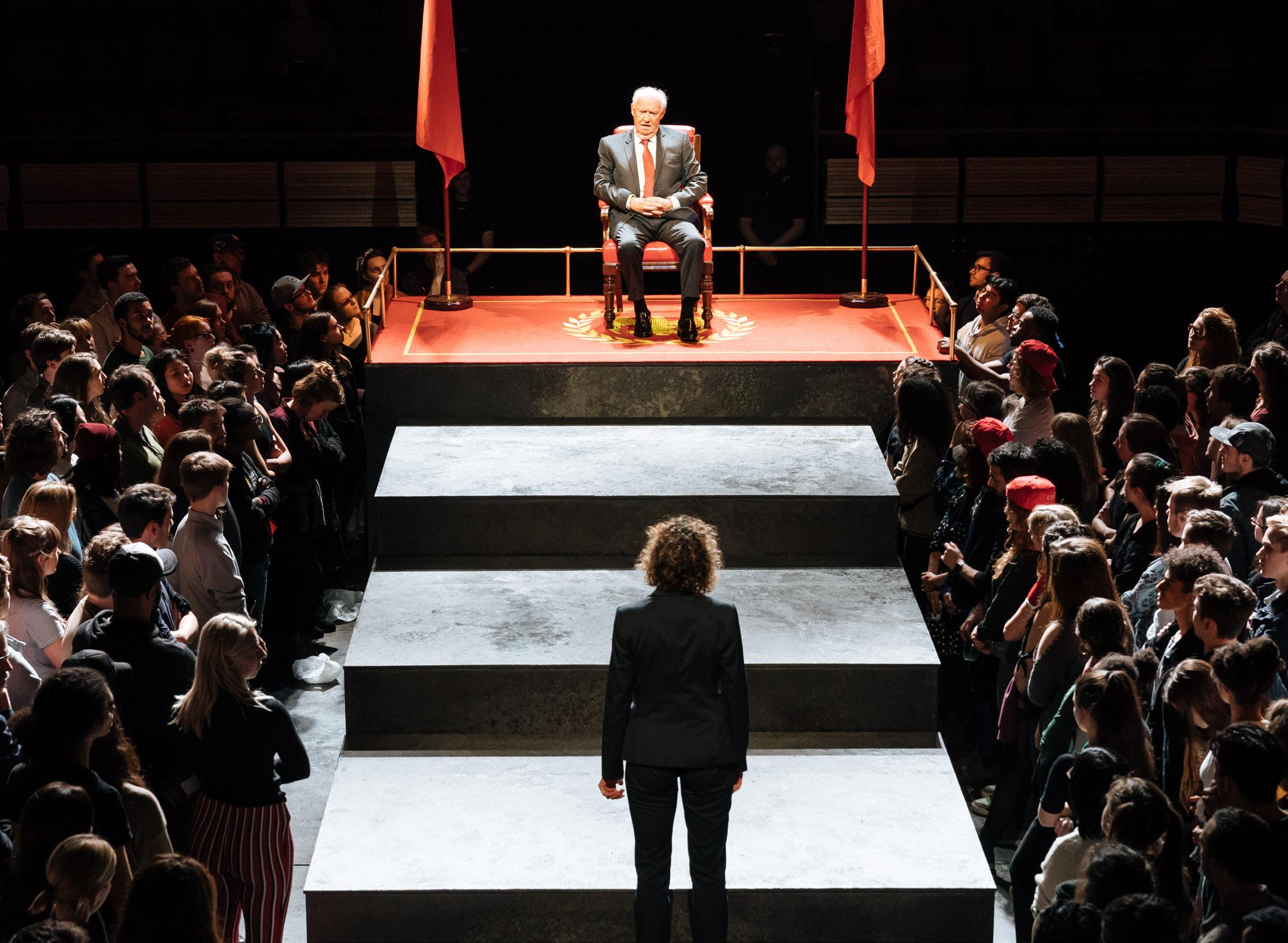
TOP David Calder + Hannah Stokely in Julius Caesar at The Bridge, directed by Nicholas Hytner
PHOTO MANUEL HARLAN
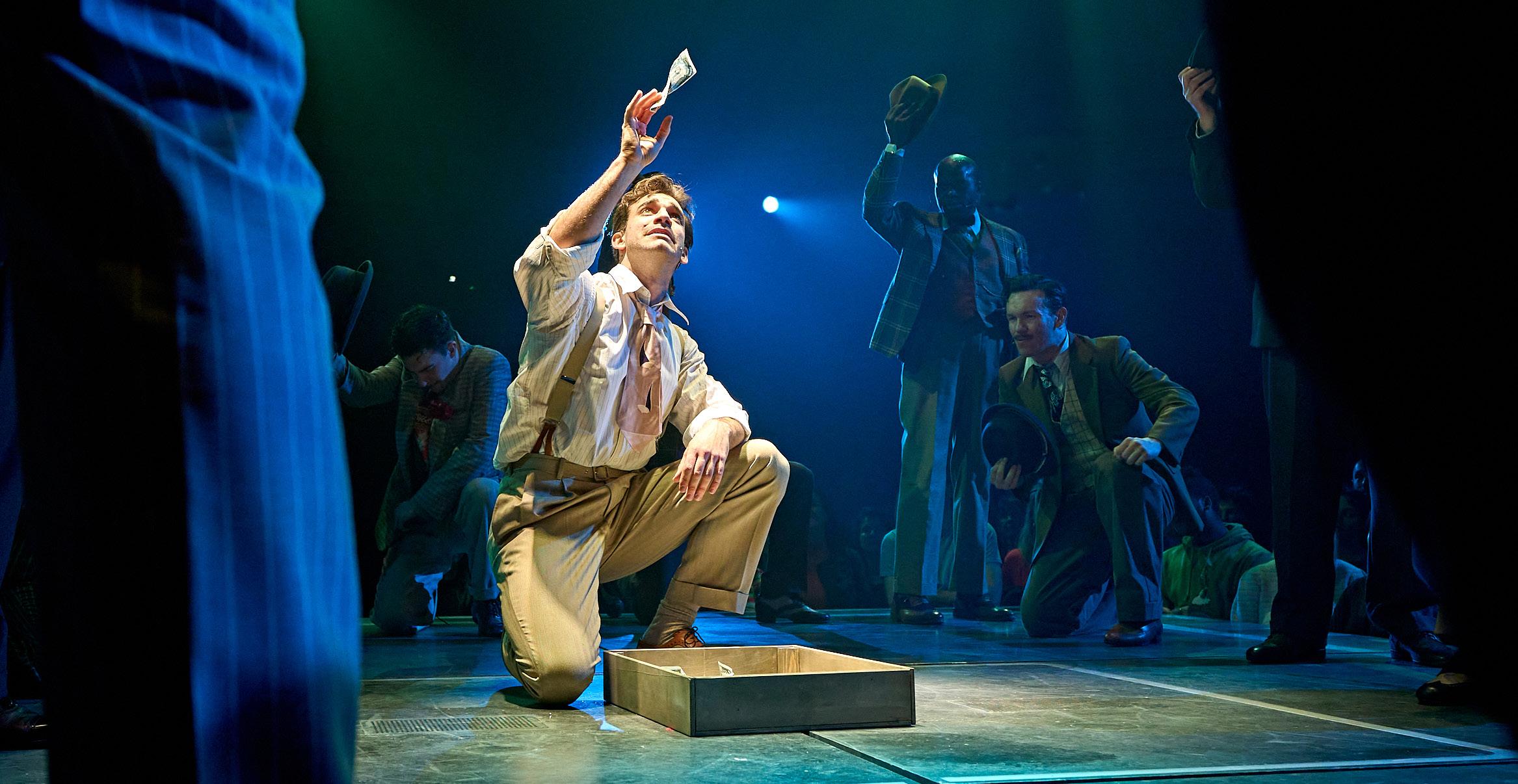
BOTTOM Andrew Richardson + cast in Guys & Dolls at The Bridge, directed by Nicholas Hytner
PHOTO MANUEL HARLAN
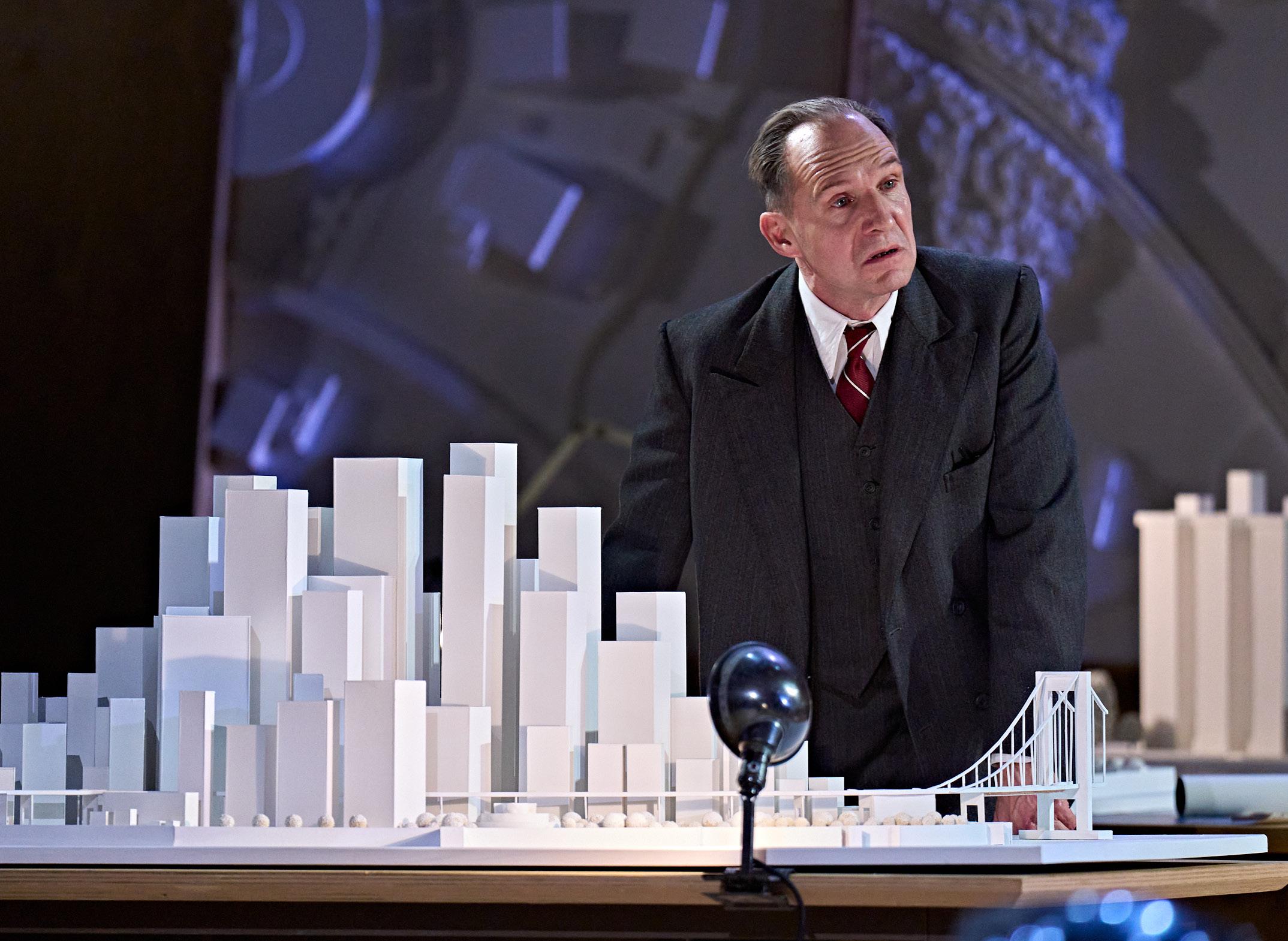
OPPOSITE Ralph Fiennes in Straight Line Crazy at The Bridge, directed by Nicholas Hytner
PHOTO MANUEL HARLAN
The Arts Council was formed post-World War II, and it was never funded at anywhere near continental European levels. In much of Europe, there’s a political consensus that the arts are inherently valuable, an indispensable part of a functioning society, and worth funding for their own sake.
In Britain, there’s always been an instrumental element to public funding. “What do you give to the community in exchange for the money you’re getting to make your art?” I’m most comfortable when the answer to that question is that we’re giving maximum access to the best art possible. Essentially, we’re paying for the widest range of people to make the best possible art for the widest possible audience.
That pendulum swung in the other direction in the UK in recent years. I wrote not that long ago, something along the lines of:
“Look, sport is organized differently in the UK. We have two funding bodies, one which sponsors elite sport at the highest level because that’s worth doing, and it gives an enormous amount of pleasure to enormous numbers of people when we win Olympic medals. The other body pays for sport at the
grassroots level for everybody to participate in because that has innumerable social benefits, it’s joyous and healthy.” I tentatively asked, “Is there a model here?” The Arts Council was vehement in its hostility. It had recently published a strategy called “Let’s Create,” which argued that everybody in the country’s creative and that the job of the Arts Council is to encourage that creativity and make it possible for everybody to take part in creative activity. It’s an inspiring and coherent premise.
But I don’t think it’s exactly the same thing as encouraging the best possible artists to make the best possible art for the widest possible audience. And I was not saying that one was more important than the other. I was not saying that one deserved more money than the other. I was saying: find a way of funding both missions. Don’t divert public money from one to the other. If you want to fund a nationwide program of grassroots performing arts, find the money for it. Don’t take the money away from the artists, don’t neglect the artists, because they’re feeling neglected.
LAURA | I have a fantasy of sitting in front of the Department of Education here and saying, “Okay, here’s the deal. We’ve taken over arts and education because it’s been ripped from the schools. We’re happy to do it, but here’s your choice: you either pay us to do it, or you take it back.” Those are the two choices, because this is not sustainable.
NICHOLAS | Of course you’re right. And I’ve talked to some British artistic directors who’ve said in private, “We’re having to spend time and money on things that we’re not necessarily best equipped to do.” But I watch what the new crop of artistic directors are doing—Indhu Rubasingham at the National, David Byrne at the Royal Court, Nadia Fall at the Young Vic, Tamara Harvey and Daniel Evans at the Royal Shakespeare Company—they are doing optimistic, exciting, and really interesting work, because somehow the broken financial model is prompting extra degrees of ingenuity. They’re all finding a way through, all of them.
LAURA | I want to ask you a question about the field and how it’s changed as an industry, and in some ways maybe how it hasn’t. If I
can take us back a moment to Miss Saigon, which kicked off a debate.
NICHOLAS | It kicked off an overdue change. The change in the casting ethos that happened because of the activism around Miss Saigon was correct at the time and overdue.
LAURA | I often use it in conversation because a lot of the conversations now around representation, authenticity,
appropriation feel to some folks like we’re just beginning to have those conversations. I feel a need for us to look backward and go, “No, we’ve been actually wrestling with this for quite a while now”—albeit with a greater or lesser degree of success.
NICHOLAS | From lots of different directions. The second show I directed in New York was the Lincoln Center Carousel, which started life at the National Theatre. It’s not that long ago—well, it depends; 30
years is an age, but it also is yesterday—that the presence of Audra McDonald and Shirley Verrett in that cast was found unacceptable by some people. So those conversations have been going on a while.
LAURA | Both unacceptable by some and also a breakthrough for many. Would you say that there has been progress and not just performative progress?
NICHOLAS | I think it would be a mistake to imagine that we have reached the end stage of perfection. Progressive opinion changes all the time about things like representation. You can look back 30 years, as I do, and think, “Oh my God, how did we not know that? How did I not know that?” The one thing I can promise is that in 30 years’ time those now absolutely confident of the rightness of their opinions will be embarrassed by some of what they thought.
LAURA | In your book, you say, “You start with a vision, and you deliver a compromise.” Have you ever not had to compromise?
NICHOLAS | Compromise is not a term I use remotely derogatorily. I think it is a feature of the performing arts; it is in the nature of collaboration. Family life is a compromise. A romantic relationship involves compromise because it involves not just the acknowledgement of, but the celebration of another point of view. I’ve
seen directors who have, and almost always with great grace, insisted that actors act in a certain way. They’ve identified the goal and everyone has to walk the same road to it. But it always involves not just acknowledging but celebrating that people go at different speeds. You cannot deny the imaginative or creative energies of the people that you’re working with.
You can start with an idea of what it’s going to be like. Where you adapt, where you compromise, is when people start showing you that there are different places that you might get to, or that there are talents or imaginative contributions that they might exploit in a way that you hadn’t imagined.
It’s that phenomenally difficult tightrope that a director at the beginning of their career has to walk: if I’m too rigid about where we’re going and how to get there, I’m a jerk. But if I don’t have the roadmap, how am I a director? You start off by being the least experienced person in the room. At then one day you go into rehearsal, and you think, “Oh my God, I am the most experienced person in this room. How depressing is that?” It happens so quickly. But when you’re the least experienced person, you can’t come on like an omniscient guru. The ones who progress are the ones who know how to walk that tightrope all the way until they don’t have to do it anymore because they’ve been around longer than anybody else.
LAURA | What I’m hearing you say is, if there is an animating principle or an ethos, it’s about compromise.
NICHOLAS | Yes. But compromise is a joy, not a difficulty.
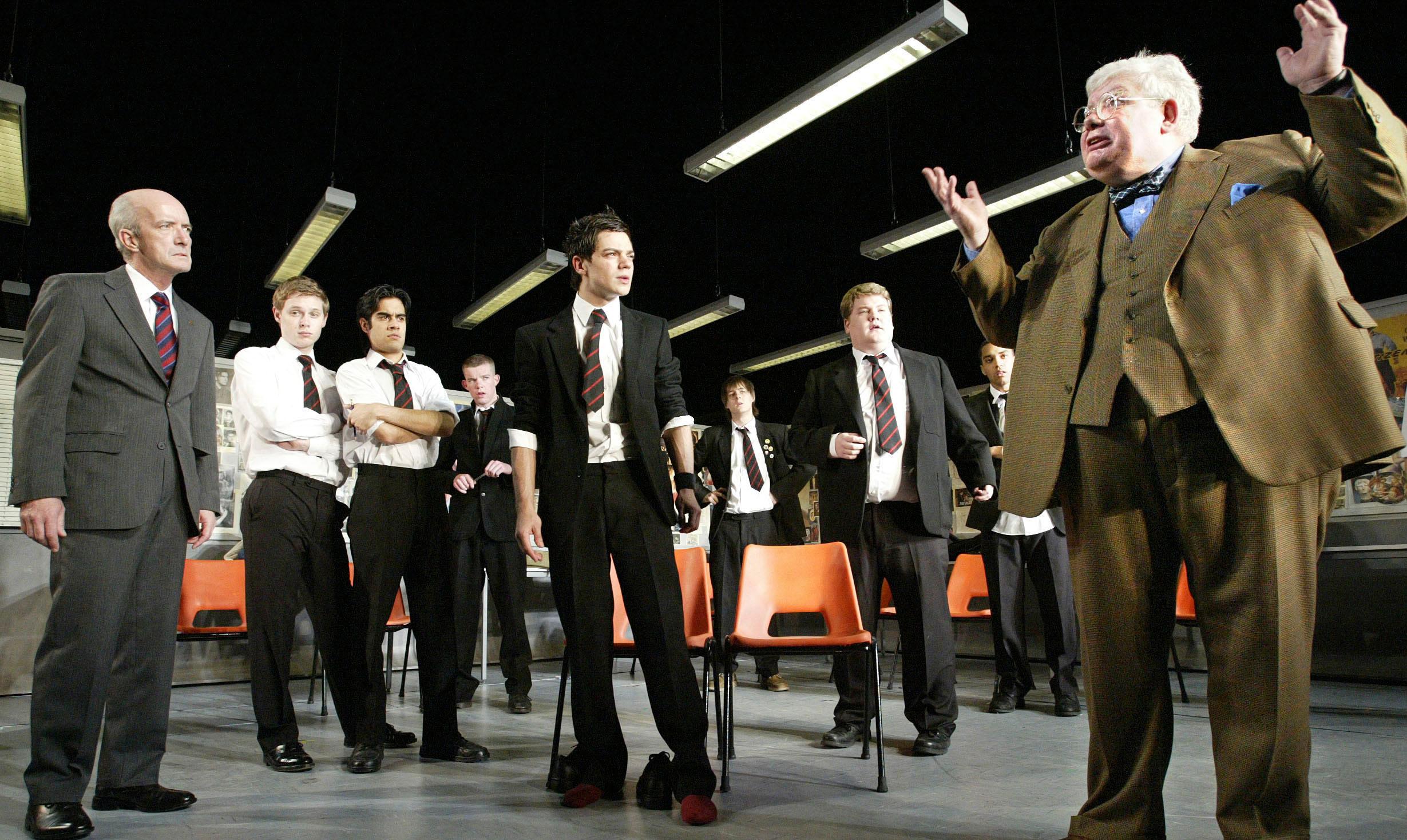
OPPOSITE, TOP Richard Griffiths (right) + cast in The History Boys at the National Theatre, directed by Nicholas Hytner PHOTO DONALD COOPER/ALAMY
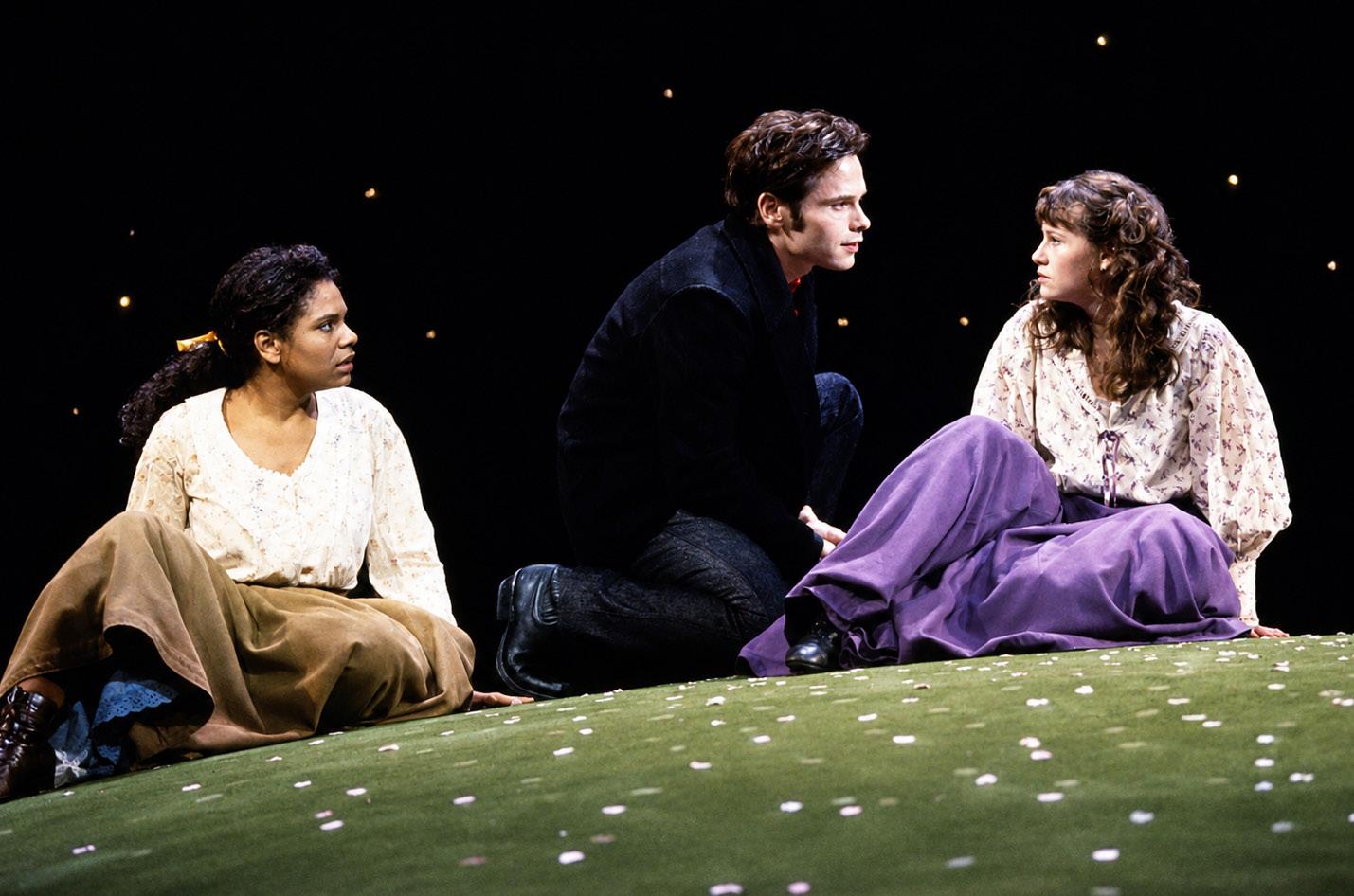
OPPOSITE, BOTTOM Audra McDonald, Michael Hayden + Sally Murphy in Carousel at Lincoln Center Theater, directed by Nicholas Hytner
PHOTO JOAN MARCUS/MARC BRYAN-BROWN/PHOTOFEST
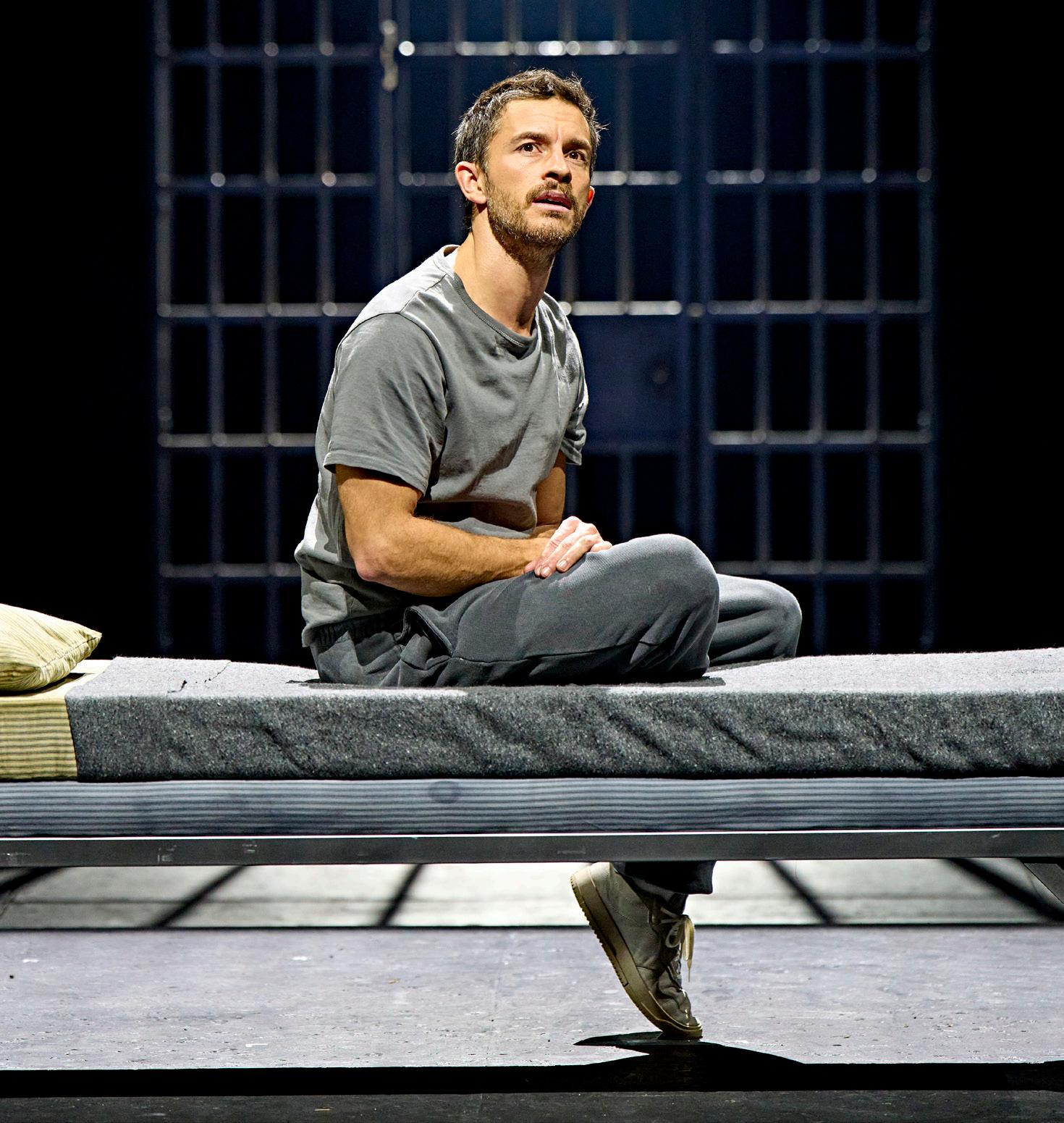
TOP Jonathan Bailey in Richard II at The Bridge, directed by Nicholas Hytner
PHOTO MANUEL HARLAN
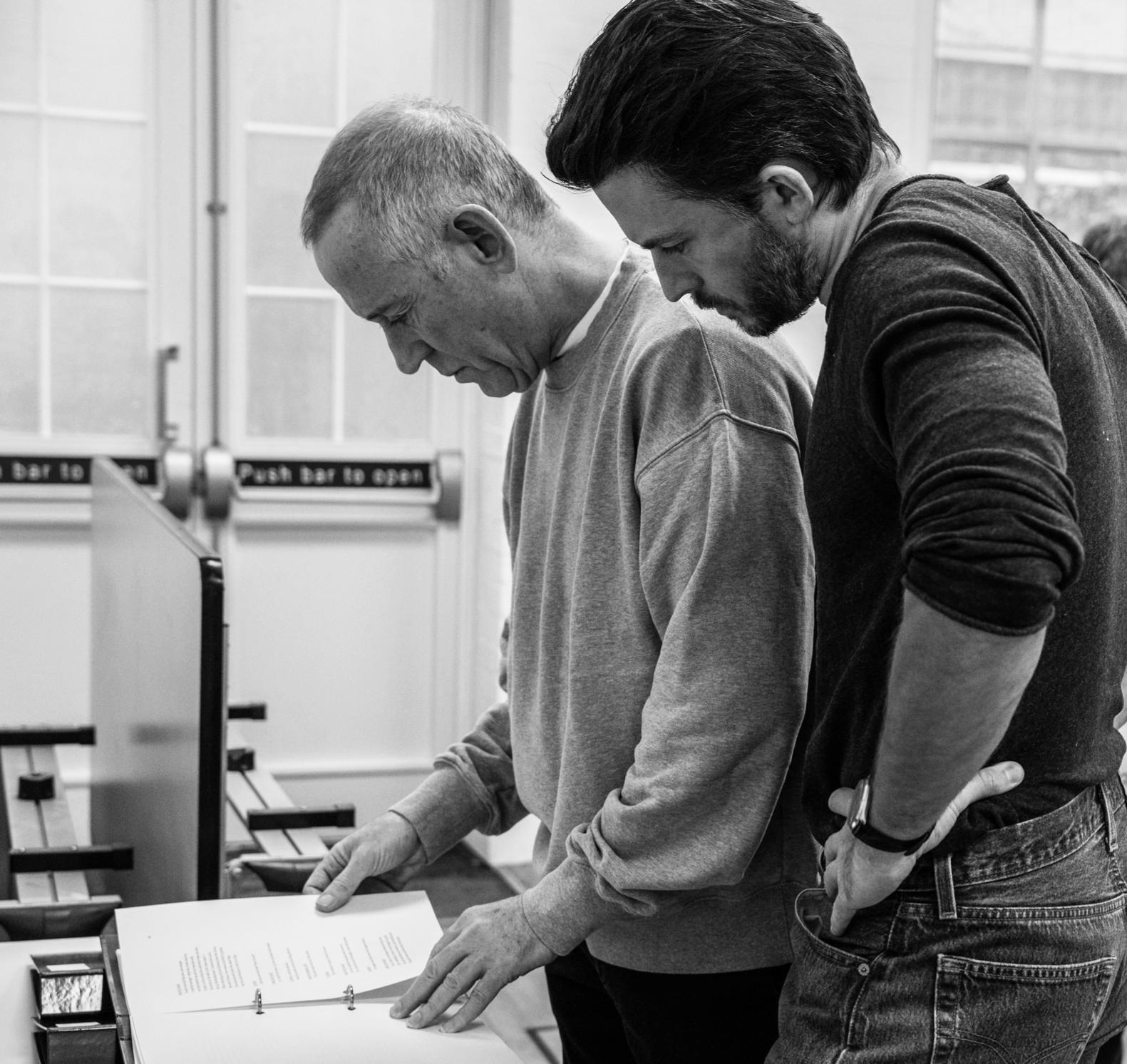
BOTTOM Nicholas Hytner + Jonathan Bailey in rehearsal for Richard II at The Bridge
PHOTO CRAIG SUGDEN
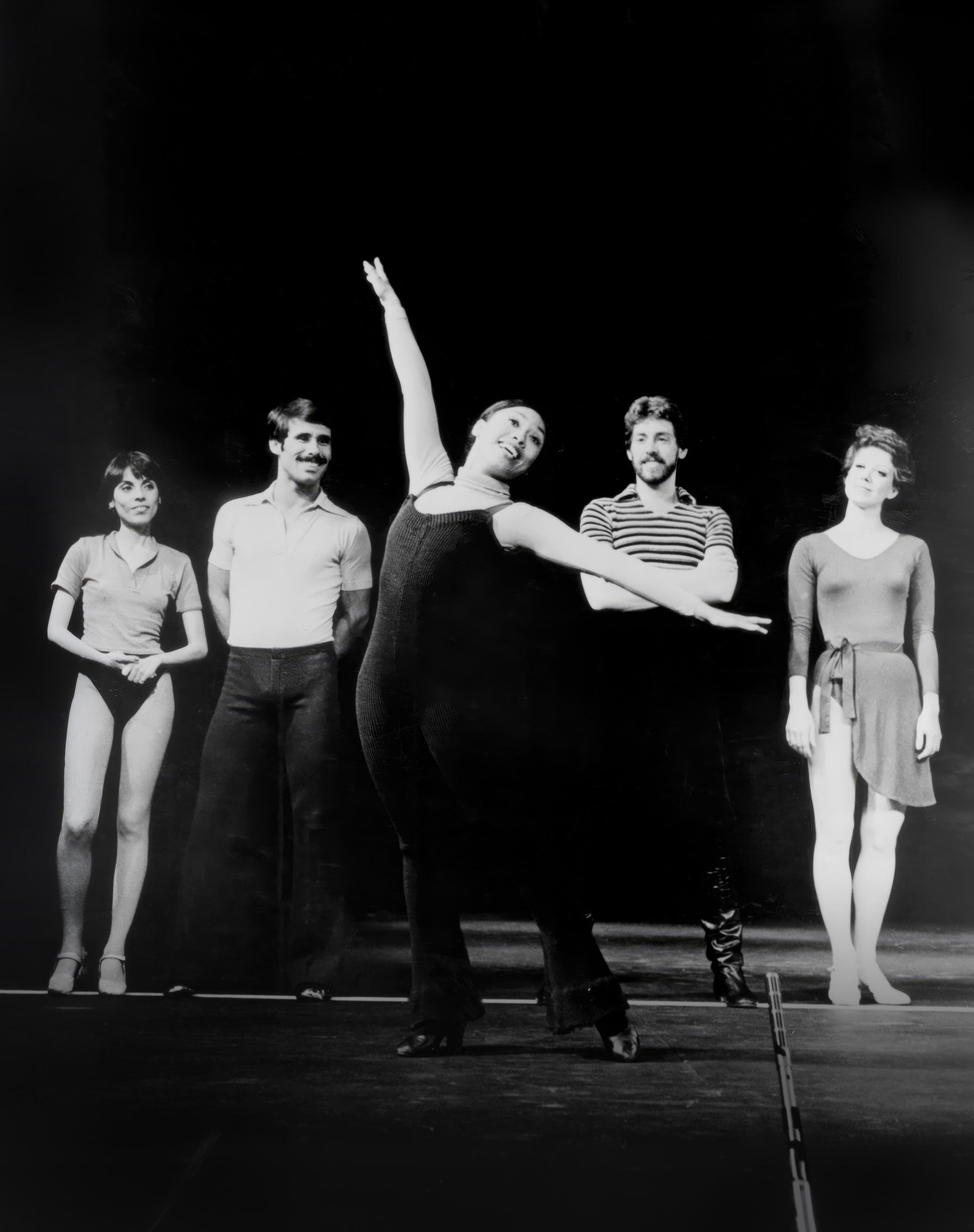
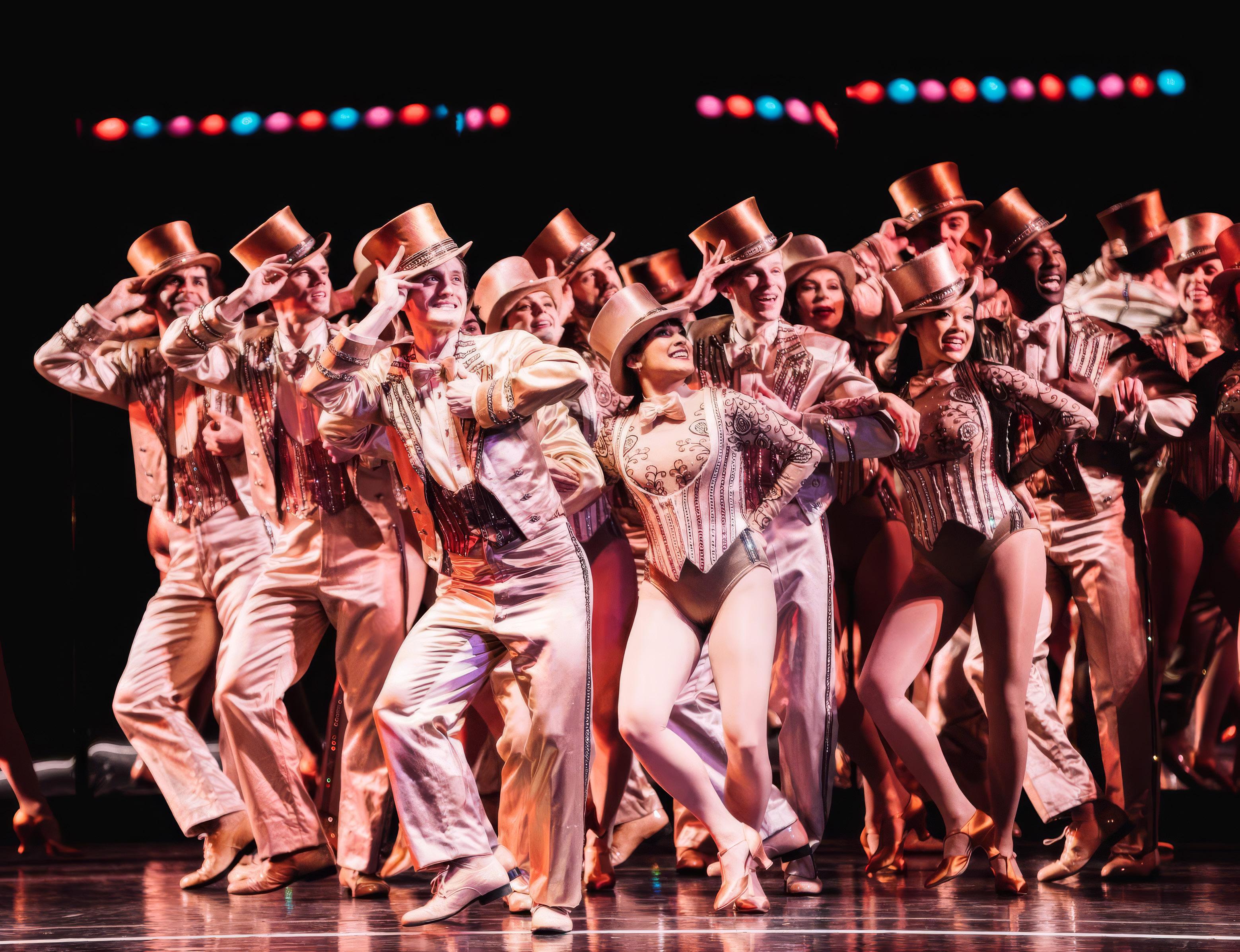
Baayork Lee (center), with Kay Cole, Don Correa, Andy Keyser + Donna McKechnie in the 1st National Tour of A Chorus Line, 1976 PHOTO PHOTOFEST
BAAYORK LEE + EDDIE GUTIÉRREZ ON RESTAGING A CHORUS LINE
INTRODUCTION + INTERVIEW BY LAURYN JOHNSON
When a theatre work is revived, most often structural elements like the book, lyrics, and music remain intact because they can be preserved on paper and accurately recreated by new interpreters. Visual elements like costumes, scenery, and lighting are often updated to reflect current technical capabilities. More intangible elements, like staging and choreography, are typically created fresh for each production.
But what happens when a show’s original choreography is so intrinsic to its storytelling, so essential to its characters, and so integral to its success that you can’t imagine the show being performed any other way? Well, you restage it.
Such is the case with many dance-driven works that were created by the great twentieth-century directorchoreographers. Jerome Robbins’s West Side Story, Bob Fosse’s Dancin’, and Michael Bennett’s A Chorus Line each have been revived on Broadway, with staging meticulously recreated by dancers who had been in the original productions.
Restagers carry a heavy responsibility: accurately passing on the physical information that contains the heart of a show. It’s a role that requires a terrific memory, impeccable organizational skills, and a passion for preserving their mentor’s legacy.
Last summer, A Chorus Line celebrated its 50th anniversary with a sold-out concert at the Shubert Theatre, where the show transferred three months after opening at The Public Theater in 1975. At the helm of this concert was director-choreographer Baayork Lee, an original cast member, dance captain, and assistant to Michael Bennett. Lee, who has been restaging this show around the world for the last half-century, now has a team of younger director-choreographers she has trained to carry the Chorus Line mantle forward.
To learn more about the art of restaging, I spoke with Baayork Lee and one of her protégés, Eddie Gutiérrez. An edited transcript of our conversation follows.
LAURYN JOHNSON | These days, anyone can learn Michael Bennett’s steps from a YouTube video, but what makes a restager’s work necessary and important is that you can share Michael’s intention behind the steps.
Baayork, much of your life has been dedicated to A Chorus Line. You were part of the original tape sessions, you were used as the basis for one of the characters, you were the original Connie Wong, and you were also the dance captain and assistant to the choreographers, Michael Bennett and Bob Avian, on the original production. Can you tell me how the responsibility for keeping A Chorus Line alive first landed on your shoulders?
BAAYORK LEE | Michael had several assistants before me, and when [the previous assistant went on to other projects] Bob said to me, “I think it’s going to be you next!”— because I was always there. That’s just my personality. I would be there early every day learning everything, writing everything down. I used to say, “I didn’t get this job
because I’m cute!” I would write everything down because Michael would improvise choreography, and the next day he wouldn’t remember what he did and I’d say, “This is what it was!”
The wonderful thing about Michael is that he allowed his assistants to speak and be a part of the process, and a lot of choreographers don’t allow that. Michael was always about collaboration. He took the best from the best, and his assistants had a voice.
So, it was opening night of A Chorus Line downtown at The Public Theater. After the show, people were screaming and yelling, and we were nervous wrecks. We ran into our dressing room and Michael grabbed me and I thought, “Oh, he’s going to give me notes again.” He said, “You are going to take this around the world,” and I started to laugh.
LAURYN | What did you think at that time?
BAAYORK | Well, I had done two shows with Michael that were flops [A Joyful Noise and Henry, Sweet Henry]. We had done two workshops [for A Chorus Line]. We didn’t
know what it was. So, when he said, “You’re going to take this around the world,” I went, “Oh yeah, sure. Ha ha ha.”
LAURYN | So how did that play out?
BAAYORK | I had to grow up as a choreographer and a director on the job. Michael spent a lot of time with me, just going through the lighting plot, and the scenic changes, because he was getting me ready to send me out and do this work. Fifty years later, here I am. I’m forever grateful, because I still enjoy it. Michael’s legacy needs to live on. I teach it so that it can stay alive.
LAURYN | Eddie, how did your A Chorus Line journey begin, and when did you first meet Baayork?
EDDIE GUTIÉRREZ | My A Chorus Line journey is actually kind of strange in a lot of ways. It feels like I’ve weirdly been intertwined with this show since the day I was born. I was born on April 8, which is Michael Bennett’s birthday, in the year that he passed away, 1987. It always felt like there’s been a cosmic lining up of things. It
Sammy Williams, Pamela Blair, Donna McKechnie, Robert LuPone, Kelly Bishop + Priscilla Lopez in the original production of A Chorus Line at The Public Theater, 1975 PHOTO NYSF/PHOTOFEST
was the first show I did in high school, the first musical that made me go, “Oh my gosh, I think I want to do this.”
LAURYN | Were you Paul?
EDDIE | No, I wasn’t. I was Greg, because I was the only out person at my school, and my teacher thought I’d be the only one to be able to handle such a brazen kind of character. I wanted to be Paul so bad, though. I remember watching it every night being like, “Oh, I hope I get to play that role one day.”
I went to college for acting, and my first big professional job was a regional production of A Chorus Line. This is before Baayork. I had auditioned once for Baayork, for the Broadway revival [in 2006]. I was this little 18-year-old boy, with like one year of dance training. We had to do the double pirouette, and I got cut immediately. I auditioned a total of four different times before I booked the national tour that I did in 2012. That was my first time officially working with Baayork. It was a quick bus-and-truck tour: go to one stop, get back on the bus, drive to another, do the show again. A nice introduction to the rough-and-tumble kind of touring life.
I moved to LA to pursue TV and film; I was not doing theatre at all for several years. It happened to be that Baayork came to LA to do the Hollywood Bowl. [The Hollywood Bowl production in 2016 was directed and choreographed by Baayork; Bob Avian was the Production Supervisor.] I was like, “I think I’m going to audition for this. I haven’t danced in a while. Let me just try.” I got cast as one of the cut dancers, and covering Paul, and it was phenomenal. I remember dropping little hints to Baayork during that rehearsal process. “I’d love to learn this show one day. I would love to be able to spread this and pass it on to new dancers.”
LAURYN | The art of restaging is much more familiar in the worlds of ballet and modern dance, where you have repertory companies that are 75, 100 years old, performing Balanchine, Robbins, Graham, Ailey, Limón. It’s not as common for Broadway shows to retain their original choreography when they’re revived; usually each revival is a chance for a new interpretation. Why is it so important for A Chorus Line to retain its original choreography, lighting, and staging?
BAAYORK | As long as I have a breath in me, I want the world to see what we created, what Michael created, what Bob created—as well as our stories, because they are our stories. That is so important. It’s really important for the next generations to see what we created. Because we changed the face of theatre. You know, our lighting designer Tharon Musser designed the first [computerized] lighting board. We were [one of the first shows] without an intermission. [And one of the few shows with] no stars above the title. There’s so many things. The workshops. The word workshop, that process, we started. There’s so many things that A Chorus Line changed.
EDDIE | From my perspective, what was so impactful for me in learning the show was understanding how the cogs work in A Chorus Line. The staging is the way it is because of something that happens musically. The music is the way it is because of something that’s happening choreographically. Everything fits together and the cogs move as one because it was created that way. It was all created at the same time. This wasn’t a show where a book was written, or a score was written and then
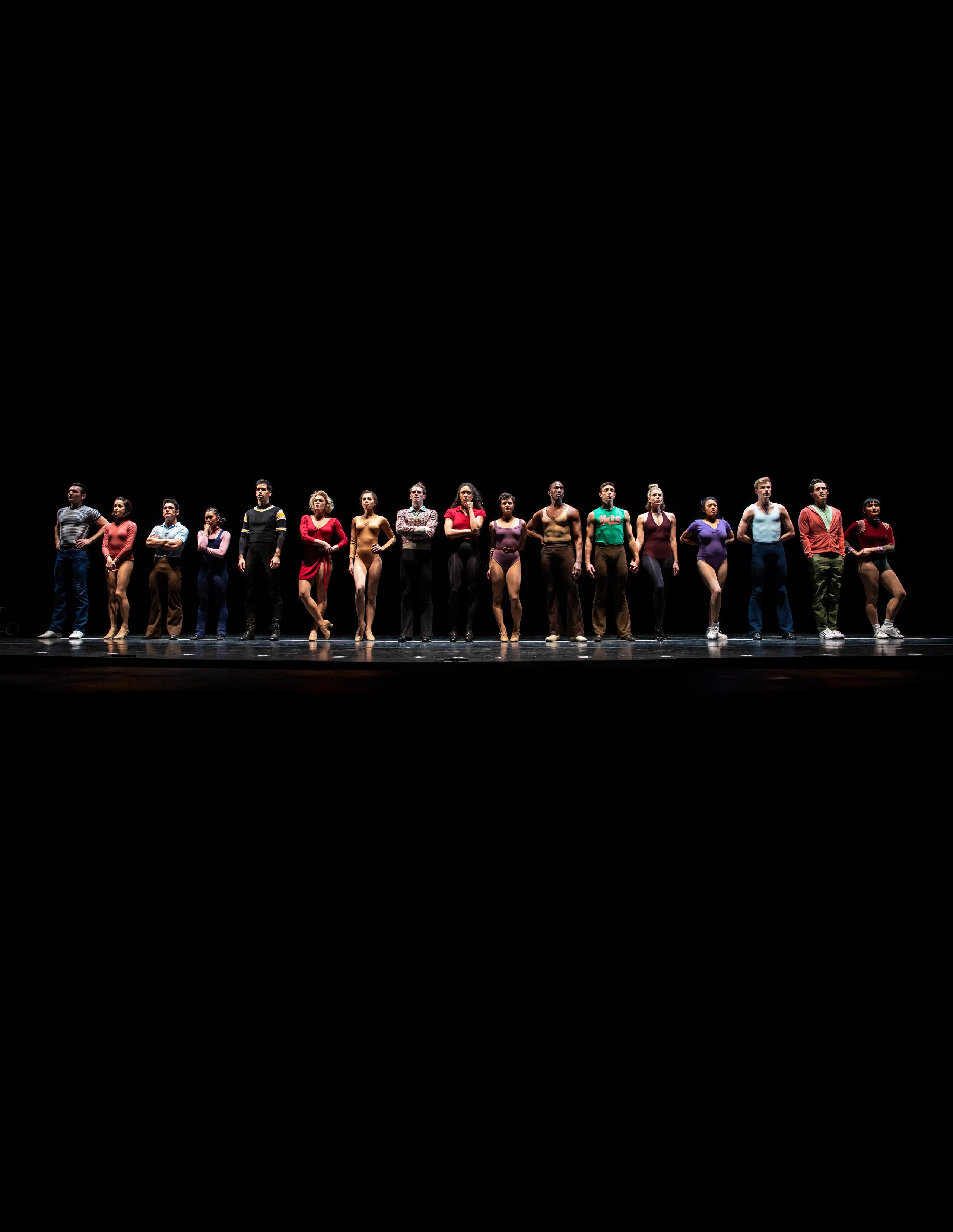
A Chorus Line at the Hollywood Bowl, directed + choreographed by Baayork Lee, 2016
PHOTO CRAIG T. MATHEW/MATHEW IMAGING, C/O LA PHILHARMONIC
they went, “Okay, we’ve got a show. Who wants to choreograph it?”
I am definitely of the school of, when you do a revival, ask, “Why are we doing it now? What are we trying to say?,” which frequently calls for updating the choreography. But those shows didn’t have the choreography as an integral part of the creation, of it all happening at the same time.
BAAYORK | We had the choreography before we had the music. We only had a drummer.
EDDIE | Before, exactly. The choreography came first.
BAAYORK | We had the choreography, and the stories, before Marvin Hamlisch came in, before the book writers came in. The steps were there, and then Marvin put the music on the steps. When he saw the steps, he wanted to write that note to go with that step.
LAURYN | Reading Donna McKechnie’s memoir Time Steps: My Musical Comedy Life, she talks about being in Marvin’s apartment and the music literally being written to the answers that she was giving to questions that he would ask.
BAAYORK | That’s what he did with all of us. He brought us all in a room and he said, “Talk, just talk.” And as we talked, he played our personalities. He created
our personalities. That’s the underscoring of the show.
The thing about A Chorus Line is that we didn’t have four years of acting class. We just played ourselves. We were dancers, we were all friends, and we just came out and spoke the truth and talked about ourselves. Those are the characters that Michael wanted on the stage.
LAURYN | In 1976, the year after A Chorus Line opened, Michael rehearsed a new Broadway company, a national company, and an international touring company at the same time in the basement of City Center. I always picture that kind of like an assembly line of dancers.
BAAYORK | It was an absolutely thrilling time, because the dancers were all Broadway dancers. And we [the original Broadway company] were still doing the show. Michael would have me and Bob work with two companies at the same time, from 10:00 until 6:00, and then in the evenings Michael would work with the third company—the international company—and I would have to go off and perform the show because the Tony nominators were coming.
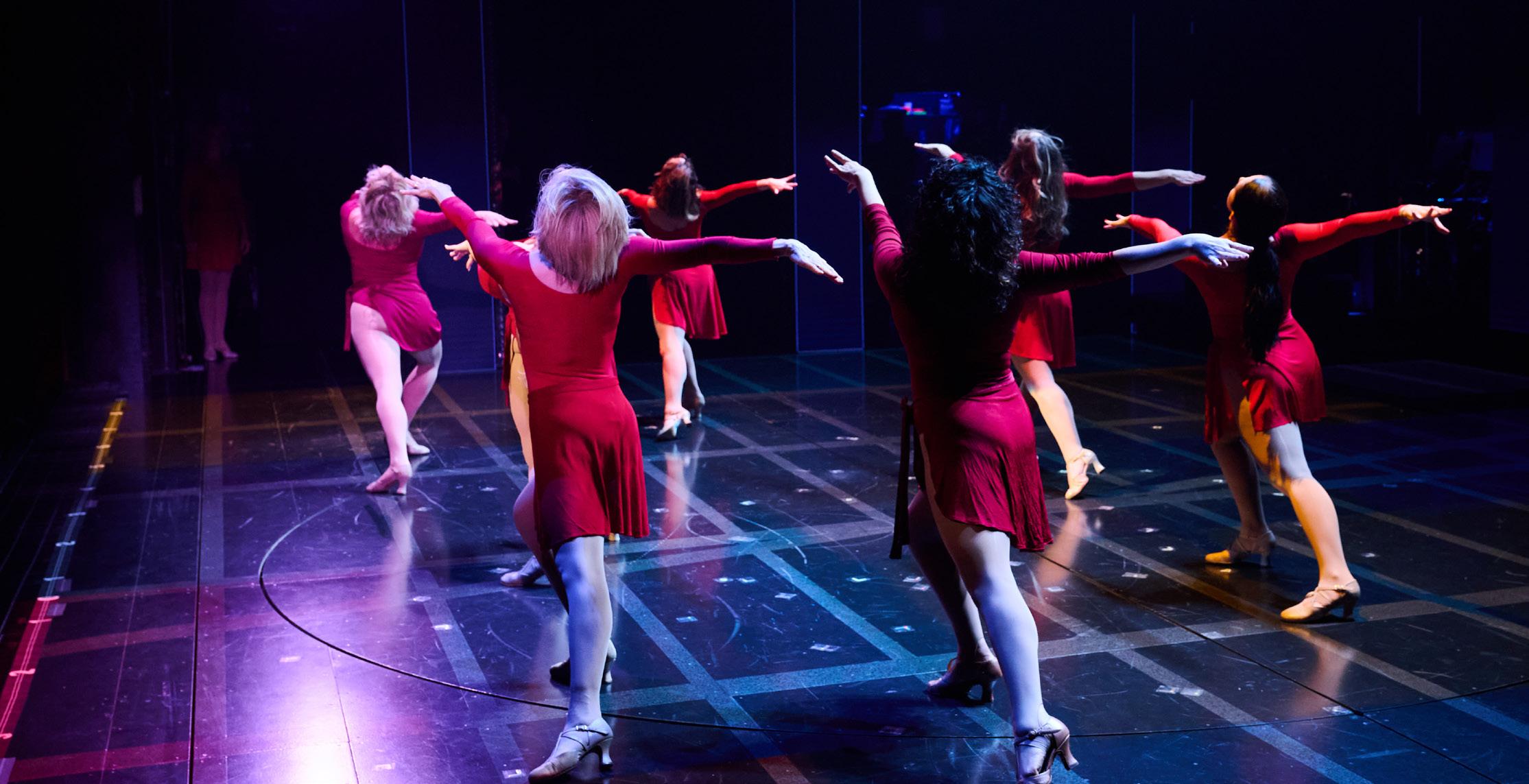
With two companies, you have the line, plus you have the covers for both companies— so you would have 12 Cassies and eight Connies. That was all about the steps, and putting the show up. Then Michael and Bob
took them and talked about the characters, and things like that.
Now it’s my time to put the show together. The one thing Michael said is, “When you audition, make sure they leave with hope, and that they leave with something tangible: the combination. Teach it well, take your time. And just know that this is going to continue on, and they will come back again and again and again.”
EDDIE | Is that how Michael taught also, in auditions?
BAAYORK | Absolutely. When he sent me out on my own, he said, “You know they’re dancers. You’re looking for technique, you’re looking for line, you know what you’re looking for. The musical director is there to look for, ‘Can they sing? Can they hit the notes?’ But with the acting, take your time, because that is really the basis of the show.” We were called “a musical play.” That’s how we were first advertised—a play with music. Then all of a sudden, I think because marketing saw all the fancy costumes at the end, it became a “musical.”
But I use Michael’s advice. If I have 12 Judys or 10 Pauls, I spend an hour with each one of them. Even if they don’t get the job, they have the information. By the time they get the job and come to me on the first day, they know who that character is.
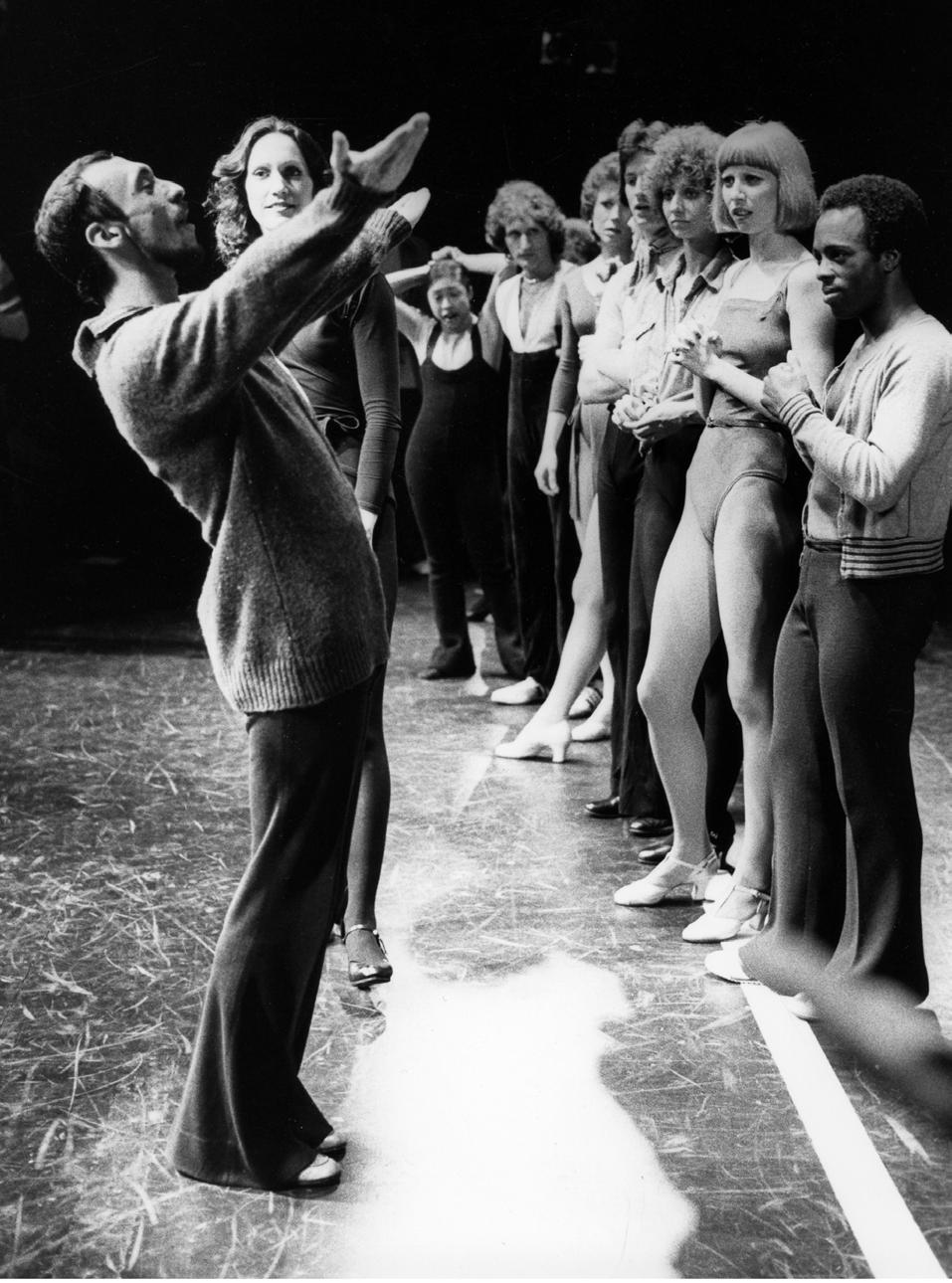
Michael Bennett + company in rehearsal for A Chorus Line on Broadway, 1975 PHOTO PHOTOFEST
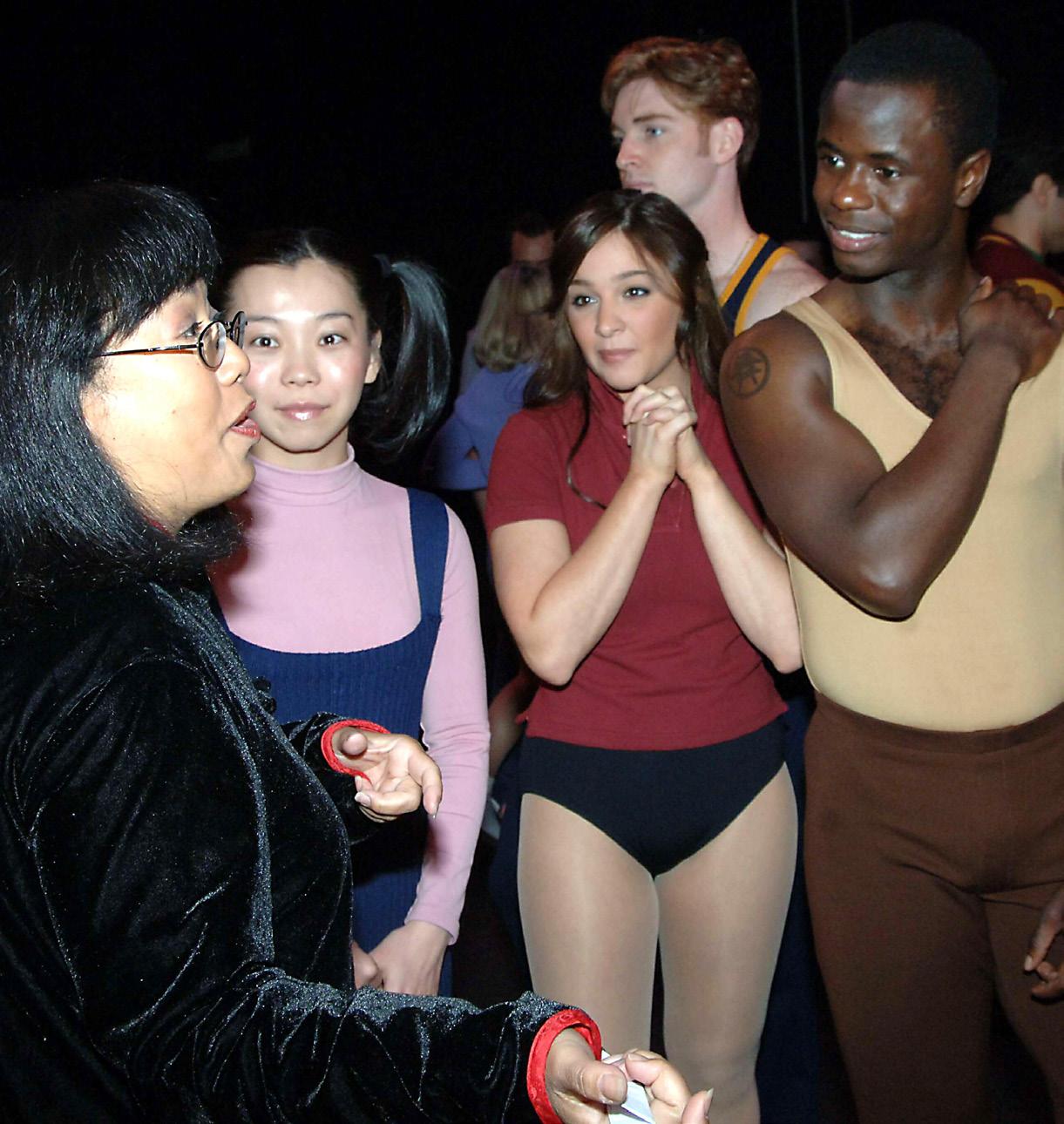
Baayork Lee (left) with Yuka Takara, Alisan Porter, James T. Lane + Tyler Hanes (rear), cast members of the 2006 Broadway revival of A Chorus Line PHOTO UPI/ALAMY
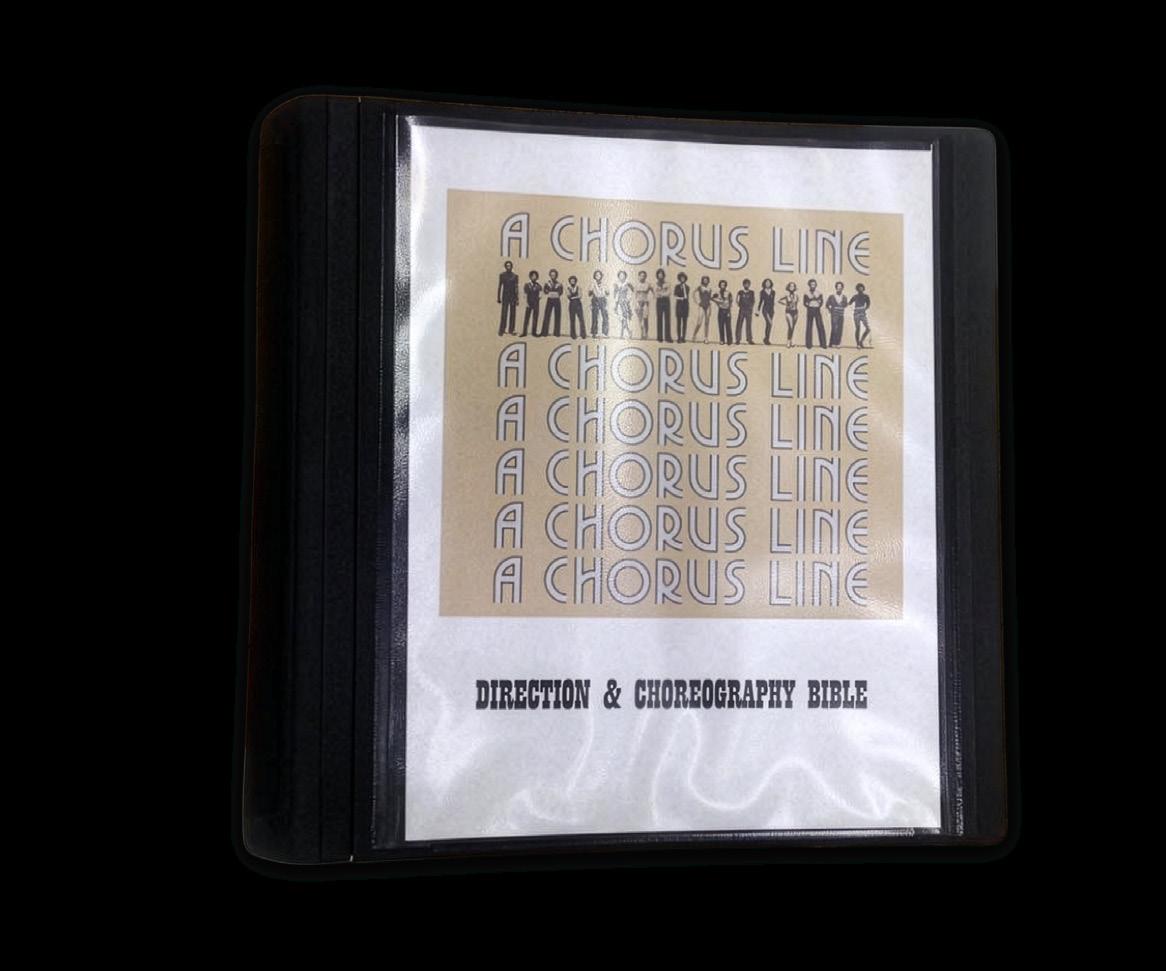
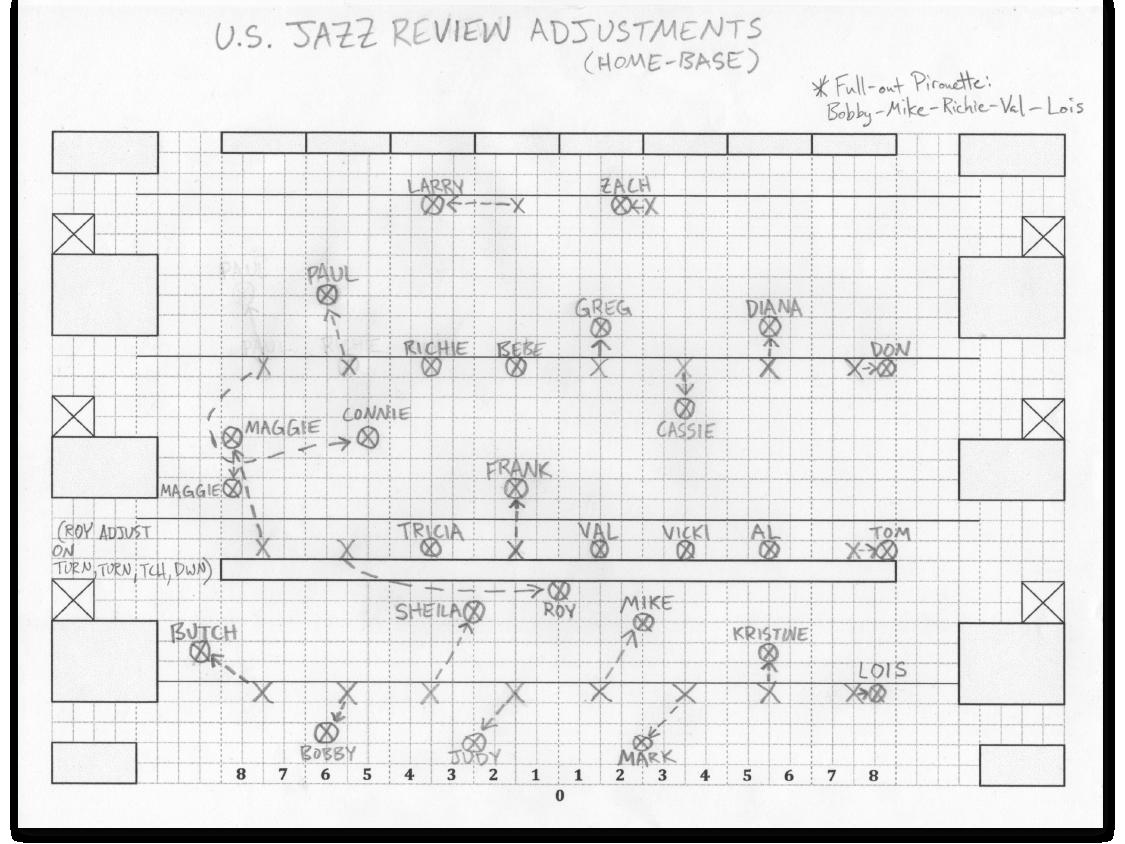
Eddie Gutiérrez’s direction + choreography bible for A Chorus Line
LAURYN | So really, when you are sitting down with a new cast on day one, it’s not day one. You’ve already put in at least a few hours with all of them, whether they’ve only auditioned once or several times.
EDDIE | The audition process that Baayork leads for A Chorus Line is so generous. You get so much workshopping time on the characters. The stories were built on people; there wasn’t acting, it was just them being themselves. You have to find people who can do that, who can just be that, and not act. So, finding those people, the 19-year-old who can play 35, you have to make sure that you create the space for them to let that side of themselves out without pushing it, without acting. And you know before day one of rehearsals that they have it in them already.
BAAYORK | At the time [the original production was created], you didn’t have universities that you went to for four years for musical theatre. There was only ballet at Juilliard, or you did Martha Graham, or you did contemporary dancing. There were no musical theatre schools. And so, Michael created these exercises.
For a Sheila, he would have her sit on a piano, on top of a piano, and give her a cigarette and a glass. He would have Fran playing cocktail music. [Fran Liebergall was the original pianist for A Chorus Line; she served as musical supervisor and/or conductor on productions for more than 30 years.] Sheila is at a bar, and she is just having a good old time talking to her friend Zach. And we would have Zach at the foot, saying the lines that are in the show. “How would you react if you were sitting at a cocktail lounge with your friend?”
LAURYN | I’ve never heard that before. What are some of the other exercises that he used?
BAAYORK | Another one was for Cassie. It was an interrogation. Michael would have her sitting in a chair, nailed to the chair, and Zach would just walk around like a detective.
LAURYN | Baayork, the first day you get a new company in the studio, where do you start with them? What’s your opening speech?
BAAYORK | I talk about what Michael gave us, and that I’m going to be giving them exactly the same thing, so they are fully aware of what they’re getting into. We start with the tape sessions, and how that came about, and then the workshops and the whole process. That’s important for them to know. They’re not just coming into it and doing steps and doing a character. There is a foundation there.
LAURYN | How long do you spend talking with them?
BAAYORK | Maybe an hour.
LAURYN | What I’m hearing is that restaging goes beyond teaching the steps, and beyond requiring you to have good memories. It requires curiosity. It’s not just, “I have steps, and I give them to you.” There’s a lot of digging.
EDDIE | Especially because Michael was a director-choreographer. He wasn’t just a choreographer. Direction, inherently, is that you have to bring people to the work. You can’t just push the work on them; there has to be a meeting in the middle. You have to be asking questions of your actors, of your
designers, of the originals who are passing it on to you, so that way you can pass on the intent and not just put people in slots. Otherwise, that’s not organic at all.
BAAYORK | And because we were who we were, and he chose us; he chose those characters, he knew us. We were all friends. I danced with Michael. He danced with all of us in shows. He didn’t have to investigate that much with us. But as it goes down the line, then you have to create.
LAURYN | If your original foundation was, “We’re all friends, and now we’re doing a show,” you have to recreate that baseline for new casts.
EDDIE | I think one of the most magical things about doing a company, you’re instantly walking into a room of family, because frequently a lot of people have done the show before, and everyone knows that kind of vocabulary.
LAURYN | Could you tell me a specific instance in the show where Michael’s intention really informs the way the steps should be executed? Maybe something where a dancer, once they hear it they go, “Oh, okay, now I get it. I knew the step, but now I know the step.”
BAAYORK | Yes. I can talk about the fourth montage, which is where our journey goes from 12 to where we are today. There are certain steps that we named. It was the ’70s, and we would go out to the disco and come back with steps. And so, we have Wash Your Clothes, we have the Egg Beaters, we have all these names for these steps. It’s really important. When we do Wash Your Clothes, they know exactly what it is. Or an Egg Beater, all of those things.
“The Bible” Lorem Ipsum
LAURYN | You speak the same language.
EDDIE | You speak the same language. You’d say, “Let’s go from the Egg Beaters.” Everyone knows what they’re talking about, even though you may have come from different companies from all over the world.
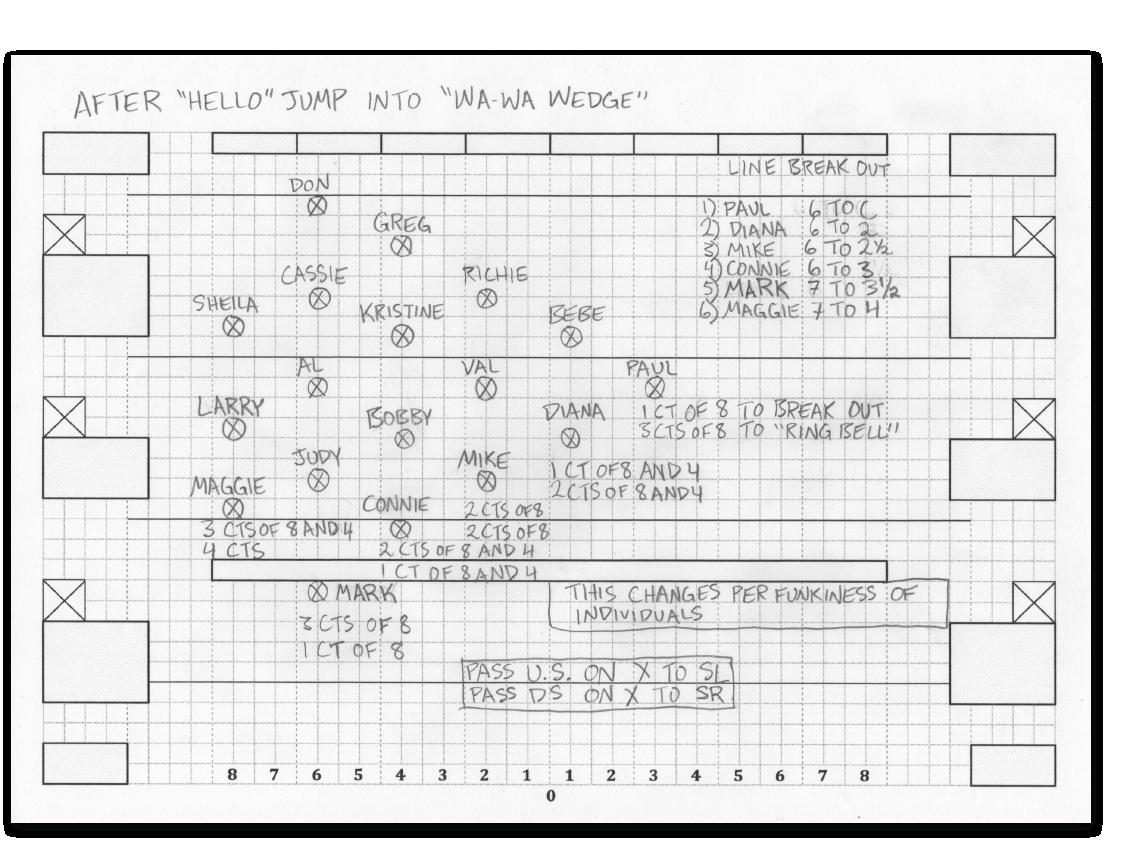
LAURYN | How do you stay organized? I’m sure at this point you know the show backwards and forwards in your brain, but do you keep binders of the information, handwritten notes of formations?
BAAYORK | In the beginning I had handwritten notes because Michael was creating, and he was “un-creating.” I think by the time we got to the international company, a year later, [dance supervisor]
T. Michael Reed said, “Baayork, I can’t do these stick figures anymore. We can’t do this anymore.” And he came up with the bible of all the formations. Which is great, and I use
it all the time. That’s what I give to the dance captains. But when I am training the next generation, I say, “You make your own bible, because you’ll remember it. If I just hand it to you, you won’t remember it.”
EDDIE | When I was making mine, I took the basis of the original bible, but I made it so that I understood what every symbol meant, that it was very clear to me and how I think. It’s the exact same formations, the exact same movements, all of it. I was just making sure that I understood the language that I put into it.
LAURYN | Could you give me a specific example of something that exists in one form in Baayork’s bible, and how you adapted it for your brain?
EDDIE | The charts on the deck and how they’re spaced out. There’s a very specific grid that the original exists on. I had to kind of transpose that. I wanted to truly make it from scratch, so I opened up a blank document on my computer and built a grid. I made certain lines bolder, for instance, to
make sure I understood how many feet were spaced between either the Marley lines, or going across the stage. Or to just make symbols clear for which character is which— little things that I can look at and instantly know what I’m looking at. There’s no question and no time that I need to take to ask, “Wait, what is this? Who is this? Where am I putting this person?” It all just clicks instantly when I look at it.
LAURYN | When you’re restaging A Chorus Line, what elements can be flexible and adapt based on an actor’s capabilities or the venue setup, versus what elements are nonnegotiable and must be done precisely?
BAAYORK | Non-negotiable are the big production numbers, but the solo numbers are negotiable. I adapt to what the performer can do, especially for the actors playing Mike. Some of them don’t tumble, some are just tap dancers. So, it’s the solo numbers…
EDDIE | One of the coolest things about the show is that, even though it is a proscenium show and it exists on the stage, it is an immersive show because you as the audience are walking into the space that the show takes place in, which is the theatre. One of the things that I’ve learned working with you, Baayork, and talking about different spaces with the show, is that you can’t ignore that the space—the theatre, the stage—that you’re working on is part of the show.
If you’re in the round, if you’re on a thrust, that is where these dancers are auditioning. You can’t ignore that and be like, “Okay, we have to try to do a proscenium show in this space.” No. You have to go, “This is where they’re auditioning.” So, if in the opening number they’re stretching before they dance, and you’re in the round, maybe they’re warming up on the sides of the stage, and then they get up onto it, and they dance
except “The Music and the Mirror,” which is iconic.
But I must say that anyone who auditions for the show wants to do the original. They really do.
LAURYN | I’m curious about venue, because when Michael was putting up the show, he was very specific about what kind of stage he wanted it to be on. It had to be a proscenium, not a thrust, not in the round. Have you had to work in venues that are—
BAAYORK | On the thrust, and in the round.
LAURYN | How do you negotiate that? What’s an element that would have to change to adapt, and how do you try to keep it as close to Michael’s intention?
BAAYORK | Well, in the round, what I did was cut it in quarters. What changed was I had Zach, the director character, walking around, so that people would have to change their point of view to where he was standing.
there. You have to acknowledge that the space is where the show is taking place.
LAURYN | Baayork, when did you start thinking it might be time not to just be teaching the show, but teaching people how to teach the show?
BAAYORK | Fifteen years in. I would go around the world all by myself, with Fran, the musical director. Michael Gorman, who was my Bobby, said, “Listen, I’ve been playing this show for 15 years now. I think I’d like to go on the other side.” That’s how it started. It started with Michael Gorman, and he was with me for 35 years. But through that process, people would come to me and say, “Look, I think it’s time for me too.” I don’t just take everybody. I have to see their organizational skills, and how they interact with the company. It’s really important, because I try to form a family, especially the road companies. So, I make phone calls. “How is this person? How do they get along? How are they touring?”
ABOVE Eddie Gutiérrez as Paul (second from right) + company in the New York City Center gala production of A Chorus Line, choreographed by Baayork Lee, 2018 PHOTO JOAN MARCUS
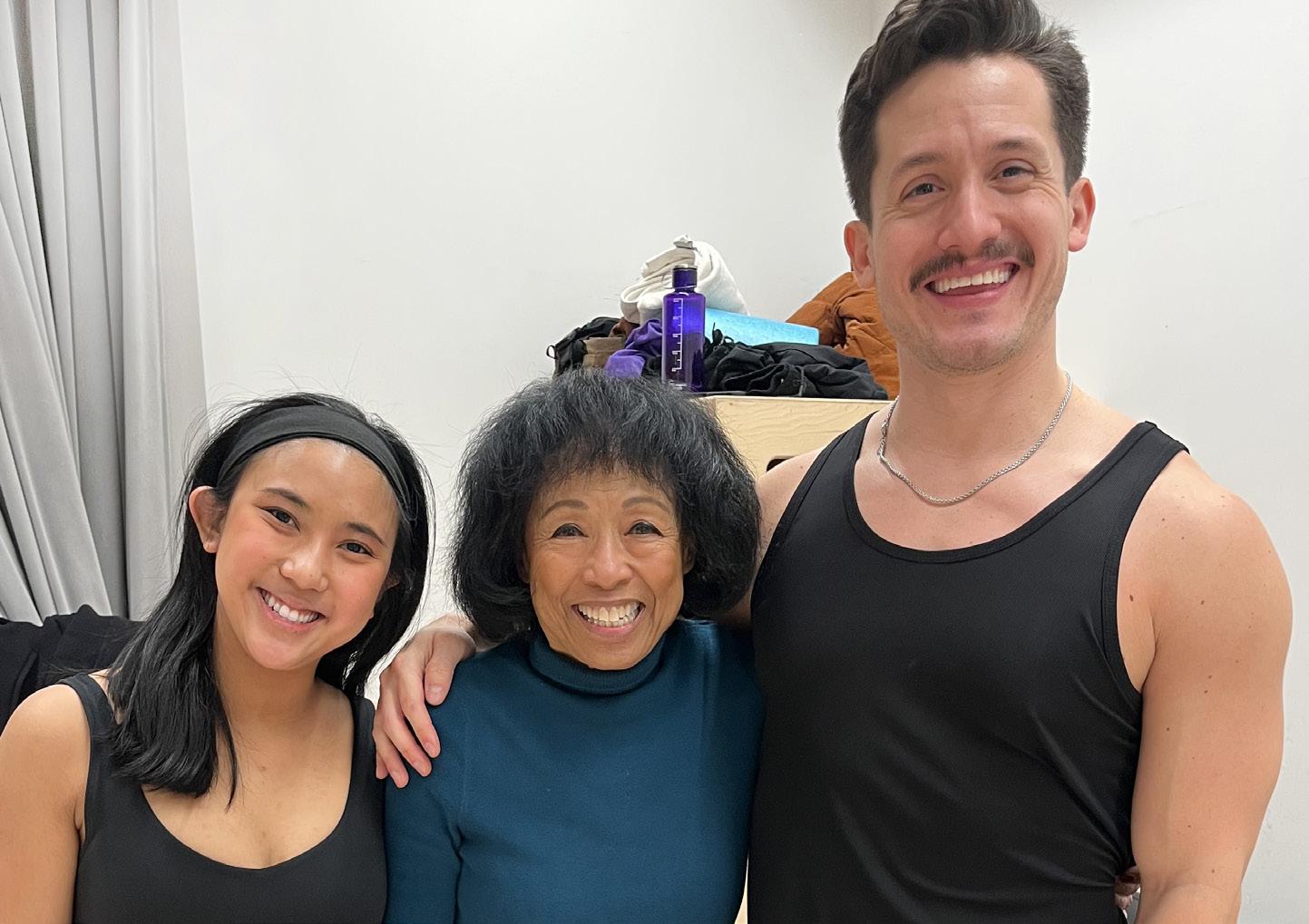
EDDIE | The 2018 International Tour that Baayork trained me on began a whole new chapter in my life as a directorchoreographer, working on the other side of the table, learning every part of the show, and passing it on to the next generation. I’ve gotten to work with and meet so many of the original cast, and I know their stories very intimately from them. The work of making sure that their stories continue to get told feels very important. I value this gift that you’ve given me, Baayork, and I’m so honored every time I get to pass it on.
LAURYN | If Michael Bennett is the original, Baayork is second generation, you’re third generation.
BAAYORK | He didn’t tell you that he was playing the role of Paul all the time.
EDDIE | Every time I did the show, I was playing Paul. It’s an acting role, and I love getting to do that monologue. I came at the show as an actor who danced and sang, and I do think that influences the way I teach it too. It’s very important that the choreography is passed on, Michael Bennett’s style is passed on. But I come at it from wanting to tell these stories, and keep these characters alive.
I feel like all these major productions we’ve done—the Hollywood Bowl, City Center, the 50th anniversary—there’s always an element of going back to something that was very monumental. [New York City Center’s Gala Performance of A Chorus Line in 2018 was choreographed by Baayork and directed
by Bob Avian.] It was like there were big pieces of history infused into our process at all times. We rehearsed at 890 Broadway for the 50th.
BAAYORK | Michael Bennett’s building. [Bennett purchased the building at 890 Broadway in 1978 and converted it into a complex of rehearsal studios for dance and theatre.]
LAURYN | Let’s talk about the 50th anniversary that happened last year. Not only was there homage paid to Michael, but homage to his staging of the 1983 A Chorus Line gala [the 3,389th performance, which made it the then-longest-running show in Broadway history]. You had so many callbacks, not only bringing back the cast, but also specific staging and elements of it. Can you tell me about the thought process and the care that went into producing the show?
BAAYORK | I had been thinking about this for two years, because I knew it was going to be coming. I knew that I could not top Michael Bennett’s 1983 gala production, where he got all the companies from around the world to come in. [More than 300 Chorus Line alumni returned to the Shubert Theatre to perform different scenes in the show, culminating with all the alumni in their gold costumes performing the finale on stage and in the aisles.] The most important thing that I thought about was, “How do I pay homage to all those dancers who have done the show? And all the companies around the world? What can I do to honor them as
well as the show, and Michael, and all the creators?” That was my starting point.
I had it all in my head: who’s going to come out: [original cast members] Donna [McKechnie], Wayne [Cilento], Kelly [Bishop], Priscilla [Lopez]. I knew that I was going to have all the dancers in the aisles at the end [as Michael did at the gala].
LAURYN | You also echoed other details of Michael’s 1983 gala production by staging one scene in multiple languages, and by including nine actresses playing Cassie during “The Music and the Mirror.”
BAAYORK | Yes, and it proved to all of us that A Chorus Line is timeless, and that people want to see the original choreography.
LAURYN | For each of you, what is your favorite part of the restaging process? Auditions, rehearsals, or seeing the final product? Or something else?
BAAYORK | All the above. I really love teaching the show. Cleaning the show. I think I was a good dance captain. I watched the show three times a week, and [I would] clean and clean and clean. I also love the audition process, because I get to be with the characters in a room, but also to see how the young dancers come again and again, and I see their growth. I love the process. Then, when the rehearsal period’s over, I go, “Oh, okay. So now we have to do the tech, and now we have to do the show. And now there’s costumes.” But I just love that process, the audition, the teaching, the rehearsal.
Multiple Cassies performing “The Music and the Mirror” in the 50th anniversary concert of A Chorus Line, directed + choreographed by Baayork Lee, 2025
PHOTO JENNY ANDERSON
EDDIE | Rehearsal is definitely my favorite part, especially because A Chorus Line, obviously it’s a very dance-heavy show, so the cast tends to skew a little younger. You’re getting dancers in their twenties, early thirties. They’re earlier on in their careers. What A Chorus Line forces you to confront, as a performer, is your own artistry and why you’re in this business. What is tethering you to this art form? You have to investigate that and question it. A lot of the performers haven’t had those thoughts yet in their careers. They haven’t really truly thought, “If I got injured, what happens next?” This show forces them to face that. I’ve noticed, when I bring new people into the show and this is their first time doing it, most of the time they have a moment where they finally lock in for themselves why they’re doing this and what the stakes are of being in this business.
It’s a very beautiful moment to see them go through that, because they really start to value their career and their bodies—their ability, what they can do right now—in ways they haven’t yet. Because they get to see, “Oh, this is what I do for love, and it’s a gift that we get to borrow.” It’s, “One day, I won’t be dancing like this.” I’m kind of at the end of that part of my life, of not being able to dance like that anymore. I am so grateful that I got to be able to dance like that. It’s something to cherish, and I love getting to help people find that during the process, because getting to do this really is a gift.
BAAYORK | Producers send tours out with 20-year-olds playing 35-year-olds. You really have to tap into who they are, and how they can relate to that character. “Do you know somebody? Is there anything in your life?” That’s why it’s really important when I say
no outside observers are allowed to be in my rehearsals, because everything becomes one-on-one and very, very personal. How do you get a 19-year-old to play a 35-yearold? Someone who’s never spoken a word on stage and has to do an eight-minute monologue. How do I tap into who he is now, to get him to be that, and send that message. Most important is to send the message, and not try to be somebody else, but who he is now, sending the message.
LAURYN | What do you each hope that actors learn during the process of performing and learning A Chorus Line?
BAAYORK | What’s really important is having your family, your A Chorus Line family. People made friends, after 50 years, they’re still friends. There’s something about the show. You know, “It’s my first show, and you’re my first friend in New York.” We have family all over the world. We communicate, because they’ve all done my warmup, they’ve all done the process, and so everyone feels like they’re family.
EDDIE | A Chorus Line was one of my first shows, so these were my first family members in show business. It’s a family that doesn’t die. It goes on forever. It’s really an amazing thing to have. It’s an anchor in this business.
I hope it also is a chance for artists to feel agency in their career, because a lot of times it’s dancers who haven’t really gotten big leading roles. This is a show of 19 leading characters. To give them a chance to really take the stage and find out who they are, both in what they think of their artistry, and what is it that they do, and where do they feel power as a performer on the stage?
BAAYORK | I also say, “You’re not just a dancer, you’re an artist.” That encompasses everything. Dancers, you know, will say, “I’m just a dancer.” No. Even in the ballet, you’re not just a dancer. You’re telling stories. You’re storytellers, and that’s really important for them to find that out, at a young age. I love when they haven’t done anything, and they come to me, and they’re in the show. Because they’re fresh. They are so eager to learn, and to learn what we can give them. We talk about them growing.
I always say, “You’ll do many companies of A Chorus Line with different directors, and you will do what that director tells you to do.” It’s not just, “Oh, this is the way...” No. For any show, that’s what you do. You are adapting, because you’re artists, and you are professionals.
EDDIE | The show itself was built to give dancers agency in a way that they never had before. The history of A Chorus Line is a story of people opening the door for others and giving them the opportunity.
It also was happening on the other side of the table, with Michael to Bob to you. And now to all the people that you’ve trained, including myself.
BAAYORK | Bob is my mentor. After 35 years of directing and choreographing companies around the world, I came back to do the revival [in 2006]. There was Bob, and I felt like this little girl, back in the ’70s. He is my mentor. I wouldn’t be here without him, without him encouraging me. Somebody has to see something in you to say, “You can do it.” Bob was a big champion of mine.
EDDIE | It’s cool knowing that Bob was Michael’s right-hand man, and you were the left hand. Working at the Hollywood Bowl and City Center with both of you was like, I got to see the team back together. The way you worked together had decades of history.
BAAYORK | I was Michael’s dance captain on Promises, Promises and Seesaw. Michael didn’t have a great ballet training. Bob came from the Boston Ballet School; I’m from the School of American. When they were creating the show, Michael would say, “You guys take it.” And so, I’ve worked very closely with Bob, and his choreography is very apparent in the show.
That also happened with [the original] choreography. We went over to London, and Michael sends me to Australia, and then he comes in and he changes it. God bless Bob Avian. He said, “We’ve got to find a standard.” So, we had a dance captain convention, and we brought the dance captains from all over to New York.
Baayork Lee + Eddie Gutiérrez teaching at NYU, with student Bella Villanueva
PHOTO C/O EDDIE GUTIÉRREZ
And we said, “This is what it’s going to be. Everybody’s going to do the same choreography.” That’s when it became, if you will, stamped: “This is what it is.”
That’s what I did for 35 years. And after 35 years of directing and choreographing all these companies around the world, I came back to do the revival. And Bob Avian said, “I want to tweak a little bit,” which was wonderful for me. Because I went, “Ooh, yes, just a little bit.”
EDDIE | Different, just a little different.
BAAYORK | Just a little different. And Bob put his stamp on it, which was kind of wonderful.
EDDIE | Bob was Michael’s cochoreographer. It was his work as well, to have authority to adjust and change. If Michael was still around, he would have changed some things as well.
BAAYORK | Oh, he would have changed the entire show. Believe me. He would have changed the entire show.
Johnson is a dancer, historian, and founder of Immortal Icons of Dance, a platform that preserves dancers’ legacies through oral histories. Her articles have appeared in Playbill and BroadwayWorld, as
well as the George Balanchine and Jerome Robbins Foundations’ newsletters. She is currently writing a book on Bob Fosse’s collaborators and creative process due for release in 2027.
Eddie Gutiérrez (front) leading the Finale Wedge in the New York City Center gala production of A Chorus Line, choreographed by Baayork Lee, 2018
PHOTO JOAN MARCUS
Baayork Lee, Eddie Gutiérrez + Lauryn Johnson PHOTO SDC JOURNAL
Lauryn
The Process Itself Was the Fun Part
Anne Kauffman
An Interview with Marshall W. Mason by
ounding Member and former SDC President
Marshall W. Mason attended Northwestern University with the intention of becoming an actor. There, he studied with the legendary acting teacher Alvina Krause; sensing that he would not be a great actor, he began directing, receiving Miss Krause’s commendation for his first show, a student workshop production of Cat on a Hot Tin Roof. Directing became his destiny. (Mason’s collected papers, representing his life and work from 1940 to 2019, are now housed at Northwestern.)
After moving to New York in 1961, Mason found his second mentor in Joe Cino, the founder of Caffe Cino, which became central to the new-theatre movement of the 1960s. It was at Caffe Cino that Mason met Lanford Wilson and launched what became the longest-standing professional partnership of a director and playwright in the American theatre. Their first collaboration, in 1965, was a nowlegendary production of Balm in Gilead at La MaMa. In 2002, Mason directed the New York premiere of Book of Days (following several regional productions of the play) as part of the Signature Theatre’s season dedicated to Wilson’s work. In between, Mason directed more than 60 productions of Wilson’s plays.
Most of those plays—including THE HOT L BALTIMORE, The Mound Builders, Fifth of July, Talley’s Folly, and Burn This premiered at Circle Repertory Company, which Mason and Wilson co-founded (with Tanya Berezin and Rob Thirkield) in 1969. Home both to classics and new work, Circle Rep began as an Off-OffBroadway theatre in a loft at 83rd Street and Broadway before moving to its own home at Sheridan Square and firmly establishing itself as a company that stimulated, challenged, and enlivened the American theatre. Mason, who remained
Artistic Director of Circle Rep for 18 years, stated the company’s goals when it was founded: “To establish an ongoing ensemble of artists—actors, directors, playwrights, and designers—who would work collectively to create a living play.”
For this interview, Mason welcomed Tonynominated director Anne Kauffman— who worked as an intern in the Literary Department at Circle Rep before she began her professional career—into his home, an airy space filled with art, photographs, books, plants (his partner of 52 years, Daniel Irvine, takes care of them all), and bountiful testaments of his life in the theatre, including his 2016 Tony Award for Lifetime Achievement.
Mason and Kauffman began their conversation talking about Arizona— where Kauffman grew up, and where Mason taught acting and directing at Arizona State University for 10 years—and Mason’s two books: The Transcendent Years: Circle Repertory Company & the 1960s and Creating Life on Stage: A Director’s Approach to Working with Actors
They plunged in immediately. Two directors from different generations, bound by their shared love of theatre, talking about craft.
OPPOSITE, CLOCKWISE FROM TOP LEFT
Christopher Lloyd + Ja’Net Du Bois in THE HOT L BALTIMORE at the Mark Taper Forum, directed by Marshall W. Mason
PHOTO STEVEN KEULL C/O NORTHWESTERN UNIVERSITY ARCHIVES
Jonathan Hogan + Jonathan Hadary in As Is on Broadway, directed by Marshall W. Mason PHOTO PHOTOFEST
Ethan Hawke + Tyne Daly in the National Actors Theatre production of The Seagull on Broadway, directed by Marshall W. Mason
PHOTO JOAN MARCUS/PHOTOFEST
Christopher Reeve, Swoosie Kurtz + Amy Wright in Fifth of July on Broadway, directed by Marshall W. Mason PHOTO PHOTOFEST
John Malkovich + Joan Allen in Burn This at the Mark Taper Forum, directed by Marshall W. Mason PHOTO PHOTOFEST
Marshall W. Mason + Lanford Wilson
PHOTO PHOTOFEST
RIGHT Marshall W. Mason photographed at home PHOTO SDC JOURNAL
MARSHALL W. MASON | When I was teaching directing at ASU, I wanted to teach a method of working, and I couldn’t find a book that really did that. There was no textbook that I could use; they’re all so philosophical. Harold Clurman is wonderfully inspiring, and I of course used On Directing, but he doesn’t tell you how to do it. Harold was a mentor of mine. He came to Circle Rep and gave us great encouragement along the way. Of course, that connected us all back to the Group Theatre, which is lovely. And Kermit Bloomgarden, who was my first producer of an Off-Broadway play, THE HOT L BALTIMORE, had been with the original Group as well. It was a nice connection.
Creating Life on Stage is a how-to book, offering out how to set up an improvisation, how to set up a rehearsal schedule. I’m very much a believer in having a good schedule that people can rely on, so they know when you’re going to get to them. I don’t have actors sitting around who are not working, I only call in the ones that are working. If you’re not called, you’re expected to be home working on your lines or working on whatever individual actors want to work on. When we come together, then people bring what they’ve got and we share.
ANNE KAUFFMAN | How do you start working?
MARSHALL | What I do is divide the play into beats, and I have a plan for what beats we’re going to be rehearsing. I require the actors to learn their lines before I work with them. Then we sit down and just run the lines and so forth until after a while it’s time to get up and start moving and then I can stage them.
ANNE | So, it doesn’t necessarily go scene by scene, it’s a collection of beats.
MARSHALL | It’s like threading a necklace of pearls. You have one pearl and then suddenly you’ve got a necklace.
ANNE | How did you learn to direct?
MARSHALL | Miss Krause. I used techniques that she developed. She was the one who taught me about dividing the play into beats and rehearsing with the lines already learned. Once I got to New York, I began learning about the Meisner Technique from the actors I worked with. All the really good actors seemed to have studied at the Neighborhood Playhouse. So, I learned about independent activity and having an objective and how they’re in conflict with each other. I learned all that from my actors, and they’re all part of my directing technique now.
Directing is a real personality sport. Everybody directs differently because of who they are, and we all have different skills. Some are very, very people oriented, which I am, but there are others who are wonderful directors who are not good with people at all. They have great ideas and somehow they get the actors to do them. So, it varies from one director to another a great deal. The way I work is not the be-all and end-all, but that’s why I wanted to document it in the book.
ANNE | Lanford Wilson once acted in a play at Circle Rep, is that right?
MARSHALL | Yes. Lanford was in him [by e.e. cummings] and he directed a play called Not to Worry [by A.E. Santaniello]. We had a philosophy at Circle Rep that the actors should direct, and the directors should learn to act and so forth, so everybody could get out of their box and really work with each other in a collaborative way. Lanford acted once and directed once, but he was a playwright, we soon discovered that.
ANNE | I’m fascinated by this philosophy that everyone should do everyone’s roles. Where did that come from?
MARSHALL | I think I was the originator of that, having been an actor myself first. I don’t know if anybody else had really approached the theatre that way. It was very good to
Jonathan Hadary, John Cameron Mitchell + Piper Laurie in the Circle Rep production of The Destiny of Me, directed by Marshall W. Mason PHOTO PHOTOFEST
Marshall W. Mason C/O NORTHWESTERN UNIVERSITY ARCHIVES
mix things up that way because you learn tolerance—or you think, “Oh, why wouldn’t she just say it the way I wrote it?” Once you’ve done it, you do have appreciation for the other crafts. Learning to be really respectful of the process that the other fellow is going through is an important part of creating an ensemble.
It’s not easy to be an actor, it’s tough. It’s much tougher, of course, to be a writer, even harder.
ANNE | You had an amazing collaboration, of course, with Lanford—which we will talk about—but you also directed plays by other writers including Larry Kramer and William M. Hoffman.
MARSHALL | I loved working with Larry Kramer on The Destiny of Me. He was very friendly, wonderful, and not like his persona at all. We think of Larry as being always mad; he wasn’t with me. He was really kind and generous and supportive. We had a good time together. And Lanford was very helpful on Destiny of Me. He came to see it after we were in previews. We were running very, very long. And Lanford said, “I see some places you can do cuts.” So Lanford and Larry and I went to my apartment, which was on Christopher Street, just down the block from the theatre, and sat up all night cutting. We lost a good half hour out of the play, which made it a much better play.
a major production. Did you have similar sustained relationships with designers?
MARSHALL | I have a whole family full of scenic designers, costume designers, lighting designers. There were two scenic designers I worked with an awful lot, and I absolutely loved both of them: John Lee Beatty and David Potts. If I knew what I wanted to see, I could work with David Potts because I would describe what I had in mind. He would deliver the space beautifully.
With John Lee, I never, ever, ever suggested what he should do. I always said, “This is the problem, how are you going to solve it?” He would come up with solutions that were far better than I would have ever imagined
described as Circle Rep’s style, with both design and acting.
MARSHALL | When you do realism and you do it well, you can’t tell that there’s any acting. The best example I can give of that is the first production I ever saw with Al Pacino in it, a play called Does a Tiger Wear a Necktie? I went to see it, having no idea who Al Pacino was; he had not been discovered yet. I said, “Oh my God, they have found some drug addict and put him on stage. How can this be? What kind of problems must he cause backstage?” It was all acting, but you couldn’t see it. When it’s at its best, you don’t see the acting, you see the characters doing the action.
“We had a philosophy at Circle Rep that the actors should direct, and the directors should learn to act and so forth, so everybody could get out of their box and really work with each other in a collaborative way.”
ANNE | Wow. Larry Kramer was okay with that. He must have been pretty psyched to be working with you and Lanford.
MARSHALL | That’s right. He had offered me The Normal Heart to begin with, but I had already committed myself to doing As Is The first two AIDS plays were out at the same time. [William M. Hoffman’s As Is premiered at Circle Rep in March 1985; The Normal Heart opened at The Public Theater in April.] I thought Larry’s play was so angry. As Is was the opposite; it told people what the disease was with such an open heart and such love. As Is transferred to Broadway and won the Drama Desk Award for Best Play that season. Larry, of course, didn’t transfer to Broadway, but his play ran a long, long time at The Public Theater.
ANNE | I know William M. Hoffman was a member of Circle Rep, and that As Is was developed there in the Lab before it became
myself. At our first meeting for The Mound Builders, I said, “I don’t have any idea what the set should be like.” About two weeks later, we had a second production meeting, and everybody was there—the costume designer, the lighting designer. We were all sitting around a table and I said, “I finally have an idea of what I want for the set.” I described in great detail the kind of set I had in mind. Toward the end of my exposition, I noticed that John Lee had a portfolio, and he brought out a rendering, and it was what I had just described.
He and I had a wonderful relationship over the years. All of his set designs were inspirational. He and I had a joke. If he put it on stage, I would use it, and if it wasn’t used, it went.
ANNE | That’s a really good philosophy. John Lee’s work was certainly a great reflection of the poetic realism that has been
ANNE | How does that weave into your way of working with actors? How do you get them there? How do you get them to where they look like a real drug addict?
MARSHALL | I do some improvisation in which the actors create a circumstance that is related to the play, but not directly in the play. A good example of that would be in The Seagull [Mason directed The Seagull for Tony Randall’s National Actors Theatre in 1992, with a company that included Jon Voight, Tyne Daly, Ethan Hawke, Laura Linney, Joan MacIntosh, and Tony Roberts.]
You will remember that Konstantin attempts to kill himself and he misses. We know that moment happens because we see him being treated, but we don’t see the scene where he tried to kill himself. Chekhov left that between the acts. We improvised to fill that in. The actors went through the experience. The audience didn’t see it, but the actors experienced it.
That’s the kind of thing that helps the actor not to go for results, but to explore. What do I want, what are the circumstances? That’s where you get off stage and into the world of the play. Actors have got to get away from, “I’m on stage performing,” and get into the given circumstances of the play: where are you, when is it, what do you want, how you go about getting it, why do you want it. All five of the given circumstances are crucial, particularly the place and the time. I remind the actors of those before we begin working on a scene, and they know their objective is to use their imaginations, rather than my telling them what to do. I let them discover what it is they should be doing, and out of
that comes the movement. I don’t go home and work out where they’re going to move with chess pieces.
ANNE | Exactly.
MARSHALL | I see the actor have an impulse to move; I say, “Go to the window.” The impulse was there in the actor—“I need to move.” The window is a good place for them to go.
ANNE | Did you do these improvisations on every play you directed?
MARSHALL | Always. The way I worked is backwards from the way most directors work, in the sense that I required the lines to be learned ahead of time. The actors put their concentration on creating the environment and playing with each other. The Meisner Technique comes in very strongly because you want to respond spontaneously to what the other actor is giving you. Concentrating on the given circumstances of the play and having the actors involve their imaginations, they come up with the impulses.
Then, after we’ve run the lines three or four times through, I can say, “I see you’re ready
to start moving.” Then we get up and start finding the moves that are appropriate to the action and the inner motives, and I can take those impulses and turn them into a stage picture. The actors don’t realize by going to the window that I’m doing something. They just know, “Oh, I can walk to the window, and I feel good about that.” If they don’t feel good about it, then you change it, you do something else.
It’s a collaborative process. You’re all trying to bring the play to life, and that means creating the world of the play, which is different from being on stage in front of an audience. You’ve got to get the actors to immerse themselves in the creation of this other world, and then everybody is in it together, and that’s how you have ensemble.
I think directing is sculpture in motion and every moment is revealing what’s going on in the characters. It’s the unconscious things that are most important. Actors come from all different worlds. When we’re all using the same approach—you run the lines, you hear the play and discover from that how you’re interacting with the other actors, what you want and how they’re responding—it leads you to a physical life that feels true.
And if an actor needs to write down a piece of blocking, it’s not right. If it’s right, they will know it in their body and won’t need to write it down. It’s not an intellectual process, it’s imaginative. I’ve had many an actor say, “I’ll never work any other way in my life.” It affects the way they approach their acting.
ANNE | Do you approach new plays and classics the same way?
MARSHALL | When I do Shakespeare, I try to do it as if the script has just been tossed in over the transom. I have to approach it as if it’s a new play. It has additional requirements—you have to put some time in working on the verse, and the actors might have to be able to duel, depending on the needs of the play. But Hamlet basically is a guy who’s got a problem. And his problem is his mother has just married his uncle, and he’s been cheated of his rightful place in the line of succession. For the actor playing Hamlet, the inner experience is the same, but Shakespeare, of course, gives you the wonderful opportunity to express what’s going on better than anybody ever has. The language is a gift rather than something that you must try to do.
I had a great time doing Hamlet. [Mason’s 1979 production for Circle Rep featured William Hurt, Beatrice Straight, Douglass Watson, and Lindsay Crouse.] It was a wonderful cast, and they did really good work. I did it in rep with Mary Stuart because it was the same period. Well, it doesn’t have to be. You can put Hamlet in any time or place you want to do it because of Shakespeare, but I did it as if we were at the Globe and this was 1503 and I just received the script, and we got to work on it as a new play. And it worked.
ANNE | I wonder if you know a book called Letters to George, which is Max Stafford-Clark’s book about writing letters to George Farquhar.
MARSHALL | I know Max very, very well, but I’ve not read his book.
ANNE | He’s such a new-play director, and he’s always had the playwright there with him. When he was directing The Recruiting Officer, he decided to write letters to George Farquhar, as though he was collaborating with him. That’s his directing book, which
is an interesting way of dealing with the classics.
I want to ask you about some of your collaborations with Lanford—THE HOT L BALTIMORE, The Mound Builders, Fifth of July, Talley’s Folly. What are some memories of working on those plays? What were the victories? What were the failures?
MARSHALL | Well, on those plays, the ones you’re talking about, we didn’t have any failures. When something doesn’t work, that really is painful because you know you’ve done the right thing, but somehow it didn’t work in the long run. Harold Clurman, in his book On Directing, says at the end, “Suppose I do all of these things and it’s still a failure. What does a director do? You forgive yourself.” You’re not guaranteed success, but on the other hand, the approach that works for you will deliver no matter what the play may be, as long as you concentrate on building the world of that play. Lanford’s world is completely different from Shakespeare’s world, but they both are trying to capture action that is revelatory to the inner experience. Getting out of the head is really important, which is why I love
Meisner’s approach so much, because it deals with impulses rather than ideas.
ANNE | Right.
MARSHALL | THE HOT L BALTIMORE was the first big commercial success we had at Circle Rep, and Lanford wrote it specifically for the actors in the company. A key thing about Circle Rep was that it had actors who were trained together to perform, as a company, any play, experimental or traditional, and bring it to life. We were aiming for playwrights to write the play with specific actors in mind. Lanford loved it so much. When he wrote for specific actors, he heard their voice as he was writing it. As a writer, you’re never disappointed; it’s always what you wrote. You wrote it for Conchata Ferrell with that big, wonderful laugh of hers.
ANNE | I’m curious about the creation of Circle Rep. Was there a hole in the culture or a philosophy missing in the New York landscape? Or were you just like, “This is a ton of fun with all of our friends.”
MARSHALL | Alvina Krause told us when she was training us, “I am training you for a theatre that does not exist.” My whole goal in life was to bring that theatre into existence. Not all of our plays were successful, obviously, but overall, we had a remarkably successful run. It was very different from a theatre that just chooses a play that they think the audience would like—an import from Great Britain that has already been successful, and so forth. There’s no philosophy, there’s no artistic vision involved with that. That’s just luck of the draw. Sometimes you choose a good play and it’s a success. Sometimes you choose one that didn’t work so well and it’s a flop.
In any case, hit-flop, hit-flop is a terrible way to build an artistic theatre. You need to have a commitment beyond the current project, whatever it may be. If all the people in the company are committed to the same kind of vision, they speak the same language. When we say, “What is your objective?” they all know what you mean. I almost never speak in terms of, “from upstage left to downstage right.” I don’t use that kind of terminology because, again, that’s keeping you in your
OPPOSITE, LEFT Trish Hawkins + Judd Hirsch in Talley’s Folly on Broadway, directed by Marshall W. Mason PHOTO PHOTOFEST
CENTER Lanford Wilson + Marshall W. Mason in rehearsal for Balm in Gilead PHOTO C/O NORTHWESTERN UNIVERSITY ARCHIVES
RIGHT Jeff Daniels + Richard Thomas in Fifth of July on Broadway, directed by Marshall W. Mason PHOTO PHOTOFEST
head. I try to work from the actor’s point of view: move to the window; she’s after you, get away from her. In terms like that, the moves are more organic to the actor’s life than when they’re intellectually thinking, “Now I move over here, I don’t know why.”
I was directed by David Mamet. I was playing Malvolio in Circle Rep’s production of Twelfth Night [in 1980]. David did everything the opposite of everything I believe. We sat around for at least a week of doing nothing except sitting around the table, reading—I guess that’s called table work for most directors. David would come around and whisper in the ear of the actor playing Olivia, “She’s a Jehovah’s Witness.” He would say to me, in my ear, “You’re the prime minister. Make it all work.” So we had great
suggestions from this guy who, let’s face it, has some genius in him.
ANNE | Yes.
MARSHALL | He was able to really be inspirational. After we had sat around the table for the week and had said the play over and over and over—we knew the lines, we knew the relationships, and so forth—he said, “Okay, we’re going to do it on our feet now. Move anywhere you like. Anywhere that you feel that you should be, go there.” It was as organic as it could possibly be. It was absolute heaven; it was a wonderful way to work. The reverse of what I do because I was doing beat-by-beat and here we were doing the whole play, not a beat-by-beat, but the whole thing.
Then in the third week, he said, “Now I’m going to stage it.” He began giving us directions like, “When you get your cue, step forward two steps and say your line and then back up two steps.” I said, “David, I can motivate the two steps forward. I know why I might do that to get somebody’s attention, but I cannot justify why I would walk backwards two steps. That doesn’t make sense.” So we were in this terrible struggle the last couple of weeks of rehearsal and his own wife, Lindsay Crouse, hated him as much as everybody else did. It brought us together as an ensemble because we all hated him.
ANNE | Yes, that happens too.
MARSHALL | It’s not the way you want to get to an ensemble, but sometimes that’s what it takes.
ANNE | Marshall, I’m really taken by this idea of a company coming together and having a bigger purpose than each of its offerings. It feels like a real group of artists who are collaborating on what the larger meaning of this endeavor is.
MARSHALL | Exactly right.
ANNE | I would love to dig into that now because I feel like there’s a real dearth of that at the moment.
MARSHALL | The objective of most commercial theatre, of course, is to make money. Starting right from there, you’re creating a theatre that’s playing to the audience for the biggest response so that you make the most money. That’s why you have to have stars, you can’t have just great actors. They’ve got to be great actors who are stars because they want to sell the tickets. In terms of the commercial theatre, that’s the way it is, and that’s the way it’s given to us. It’s not that way in Britain. It’s not that way in France. It’s not that way in any country that has a national theatre where they work together over and over.
Off-Off-Broadway was where there was more freedom because the objective wasn’t to make money, it was to explore. The process itself was the fun part. I think we have some opportunity like that with regional theatres. It depends, of course, on the artistic director and the kind of vision he or she may have. You get Zelda Fichandler, for example, with the wonderful Arena Stage in Washington, DC, which was a great place to work. I just did one play there, A Streetcar Named Desire [in 1978], which was really a challenge. It was terrifically done. Everybody loved it except one critic. Tennessee, of course, wrote it for a proscenium stage, so I took all of his stage directions—which were originally envisioned,
TOP Chip Zien, Irene Tedrow, Jennifer Salt + Ted Le Plat in THE HOT L BALTIMORE at the Mark Taper Forum, directed by Marshall W. Mason PHOTO STEVEN KEULL C/O NORTHWESTERN UNIVERSITY ARCHIVES
BOTTOM Balm in Gilead at La MaMa, directed by Marshall W. Mason PHOTO FREDERICK EBERSTADT C/O NORTHWESTERN UNIVERSITY ARCHIVES
“The end product was to create something adventurous and wonderful and spontaneous or appearing to be spontaneous.”
I’m sure, to be upstage behind the main action—and put everything that he said on stage, but sometimes the audience was looking at the play through the street, so it was a different perspective.
ANNE | Beautiful.
MARSHALL | The one critic that hated it— everybody else was lovely—but the one critic that hated it said, “Director as star.” Meaning that I had imposed all this stuff on Streetcar I, of course, let him know, “Everything you saw was in the original script written by Tennessee Williams, and I just brought it to life.” I thought it was fascinating to see Blanche go through what she goes through while this is what’s going on around her in the French Quarter. It was an original way to look at it, but it was dictated by the fact that it was at Arena; I didn’t have any choice.
ANNE | I want to ask you about Joe Cino and the Caffe Cino, which is the birthplace of the Off-Off-Broadway theatre movement. How does he figure into the philosophy that you brought to Circle Rep?
MARSHALL | There, again, the overall objective was to create something magical and put it on three times a night in a very tiny space. We had to create magic in a coffee house. Joe was very supportive. His basic philosophy was, do what you have to do.
ANNE | What did that mean?
MARSHALL | That’s a green light. You didn’t have the restrictions that some theatre might put on you. “You can’t do that; our audience won’t go for that.” This audience was going to take whatever we made for them and love it. And they did for the most part. He was a great inspiration in
that sense. He was a very jolly fellow, warm, loving, embracing his actors who worked for almost nothing. We passed a basket and divided whatever we took in; carfare is really all it came down to, but it was a group, community effort.
Off-Off-Broadway in general had that tone to it. Ellen Stewart, I think, was a little more commercially minded than Joe was.
ANNE | Ellen Stewart was more money driven?
MARSHALL | She had a bigger stage and had to sell tickets. Even so, La MaMa was encouraging in the same kind of way that Cino was. She created her theatre in imitation of what Joe was doing; they were very good friends. She said, “I see what Joe is doing, I’m going to do it too, across town.” We went back and forth between La MaMa and the Cino, and there was no difference.
ANNE | Who was “we”?
MARSHALL | We actors, we artists, all of us. There wasn’t really a Cino company and a La MaMa company; there were just actors going from one to the other with the same kind of goals. They were very different, but in no case was it about the commercial success. That wasn’t the end product. The end product was to create something adventurous and wonderful and spontaneous—or appearing to be spontaneous.
Going to Caffe Cino, you had no idea what you were in for. No idea. The same thing came to be true of Circle Rep. At first, it was just Off-Off-Broadway like the Cino, except we were doing more substantial traditional things like Chekhov. Our first new play was
David Starkweather’s A Practical Ritual to Exorcise Frustration After Five Days of Rain. If you’re going to see a play by that title, you have no idea what you’re going to see.
Another thing about Circle Rep, along these terms, was our changing the location of the stage. We moved the stage all around that space. We did proscenium sometimes; we did it in the round sometimes. It was the original black-box concept.
ANNE | Really?
MARSHALL | There were no black boxes before Off-Off-Broadway came on the scene. I subsequently discovered that simultaneously they were doing things like that in Europe, as well, and the experimental work in London had the same kind of goals that we had here Off-Off-Broadway. There was a revolution in terms of how theatre is done that really came from trusting original voices to come with original ideas and original worlds for audiences to enjoy.
Circle Rep required building an audience whose objective was not just to be entertained, but to probe and experience new things and be adventurous. We had to train the audience, is what it comes down to. Circle was a new kind of approach to the theatre; the audience came not knowing what the play was or not knowing what they were going to see or what kind of adventure it would be or where it was going to be in the theatre, whether it was going to be traditional or experimental. I think our audience wanted it that way. That’s why they came.
Anne Kauffman is a Tony Award-nominated and Obie Award-winning director known primarily for her work on new plays.
Anne Kauffman + Marshall W. Mason photographed at his home PHOTO SDC JOURNAL
A Conversation Between
Lisa Peterson Mark Bennett
Director Lisa Peterson and composer/sound designer Mark Bennett were introduced in 1990 by James Nicola, who thought they might collaborate well on New York Theatre Workshop’s production of Light Shining in Buckinghamshire by Caryl Churchill. Nicola’s instinct was right. In the 35 years since, Peterson and Bennett have been close collaborators on numerous projects around the country, including reimagined classics and new plays. Also among their credits are three original projects— An Iliad, The Good Book, and The Song of Rome—created by Peterson and actor Denis O’Hare, who work collectively to develop, write, and edit the pieces they make together.
Peterson and Bennett spoke with SDC Journal while they were in rehearsal for their latest collaboration, George + George, which debuted at the Spoleto Festival USA in May. Commissioned by Spoleto for the 250th anniversary of the American Revolution, George + George is set at Valley Forge in 1778. The play (produced in a concert staging) uses as a springboard the real-life event of George Washington—in an attempt to motivate his demoralized troops—putting on a performance of a British play called Cato, about the end of the Roman Republic, using his soldiers as the actors. The piece, which Peterson likens to Noises Off and Waiting for Guffman, is a satirical comedy that moves through ridiculousness to speaking out against tyranny.
MARK BENNETT | For many of the shows we’ve done together, I was present through a lot of the rehearsal process. Each production is always all in. Lisa and I, we don’t tend to think small—we tend to dive in and go, “What are all the musical possibilities? What are all the sonic possibilities this thing could hold?”
LISA PETERSON | Sometimes sound designers, composers, come in late in the process, almost at the same time as a lighting designer. I’ve done projects that way, where the sound doesn’t really enter the conversation until very late, when you’re just about to go into tech. When you say, “all in,” Mark, I think of it as deeply conceptual participation. It’s usually not just sound and music. Sometimes it’s me going to you and saying, “All right, so what kind of world is this?”
MARK | You can’t work that way if you just show up a week before tech. What Lisa offers is a chance to actually journey on a making process. “I am creating this thing for the next six weeks. I’m going to be onboard as a designer and also as a collaborative maker!”
LISA | The relationship that we have is one of those dramaturgical-design relationships. We would have conversations that would determine even scenic choices. Or, in the case of An Iliad, the casting. We weren’t going to have a live musician and then Mark—not easily—convinced me that it would be a good idea to have somebody else on stage.
MARK | The funny thing with An Iliad was, immediately upon reading it, I heard this sound. A specific musical timbre. I remember a conversation with you, Lisa, where you said, “We’re pretty sure we don’t want a sidekick.” That was the phrase.
TOP A concert staging of George + George at Spoleto Festival USA, directed by Lisa Peterson PHOTO PRMKT
BOTTOM Mark Bennett + Lisa Peterson in rehearsal for George + George at Spoleto PHOTO LANCE SHOOK
LISA | I said, “This being who’s telling the story is alone, as alone as any being can ever be. It’s got to just be them and the audience. They cannot have another presence on stage.” I was very certain that you were wrong and that we couldn’t have a musician on stage, but then you said, “But aren’t the Muses part of the world?”
MARK | I mentioned that in passing, and I remember you taking it in. Then you and Denis got together, and you came back to me and said, “We figured out how to make it possibly work [with the musician] as the Muse. Let’s try it.” I may have also tried to buttress my case with some audio recordings of a double bassist I had worked with in the past, Robert Black, the great Bang on a Can double bass player. He couldn’t do it because of concert tours, but he said, “I have a brilliant student who I think would jump at this. He hasn’t done something like this before, but I think this would be a great fit for him.” And we took him on.
LISA | Brian Ellingsen.
MARK | He turned out to be a beautiful collaborative addition.
LISA | The argument of playing it so we could hear it was so smart. I live with a set
Denis O’Hare in An Iliad at New York Theatre Workshop, directed by Lisa Peterson
PHOTO JOAN MARCUS C/O NYTW
Rachel Christopher in The Song of Rome at Spoleto Festival USA, directed by Lisa Peterson PHOTO WILLIAM STRUHS
designer, so this is a little radical to say, but for me, the primary collaborator is sound and music, just because of the way my brain works. From the time I was a kid, I can’t remember when I didn’t want to do theatre. But I think of things very musically.
An Iliad is a good example. It looks like a bare stage—it isn’t really, but it looks like a bare stage. We could do it on a bare stage. We’re trying to do it on a bare stage. But sound and music is essential, and that’s pretty much always true for me.
MARK | I was aware from very early on that I was working with a director who started out as a violist. I see your musicality in other shows, too, that I haven’t worked on with you, Lisa. In Good Night, Oscar, the way that evening modulates and builds to the piece of music—the work of those six minutes of “Rhapsody in Blue” could only be done with a director who has the kind of mind-blowing musical brain that Lisa does.
Lisa knows that music and sound is a tool in the toolbox that is really powerful. What you understand, which I think very few directors really get and know how to play with, is that sound design is a sensitive gas pedal, and that you can tap into primal stuff really quickly in an audience. How Lisa understands the power of that is one of the other things that I find is so wonderful and rare.
There’s a commonality of language that’s very, very easy with Lisa. And I have to say that the mind meld of you and Rachel [scenic designer Rachel Hauck] has been—I mean, Rachel is the only set designer I know who will call me and say, “I have found the most amazing table. It’s in my office. You have to come up and hear it.”
LISA | When we did Moon for the Misbegotten at Baltimore Center Stage and Cherry Jones played Josie, we hung—was it a player piano?
MARK | We hung an upright piano suspended in the air. We were able to activate it, so the keys were able to do some depressing.
LISA | That wouldn’t have been hanging there if you and I hadn’t talked about the way that music should haunt them. That was Kate Edmunds’s design.
MARK | That was also a beautiful collaboration with [dramaturg] Morgan Jenness. Lisa and Morgan and I really dove into the possible Irish music hall traditions that we could play with, and we infused the production with piano music. I remember this crazy, nutty song titled, “It Is True That the Women Are Worse than the Men
Because They Went Back to Hell and Came Back Again.”
Lisa also taught me so much about collaboration when we did Antony and Cleopatra for Berkeley Rep. What Lisa was able to do, and it was extraordinary, was fly us out for a week, I think it was many months before the first rehearsal.
LISA | Berkeley Rep paid for that, even though I was working in Los Angeles on staff at Center Theatre Group at the time. Directors did this in the ’80s and the ’90s. There are no funds for it anymore. But back in the day, directors would do this. It was a sort of European [model] to take this time; you wouldn’t start designing it until you’d
had [an extended] conversation. In the case of Antony and Cleopatra, we read it in order to cut it because I was only doing it with six actors. The cutting came from those design conversations.
MARK | We would gather together for eight hours a day. We read through the play. Each of us brought sourcing stuff—I brought music, Rachel and [costume designer] Joyce Kim Lee and [lighting designer] Chris Akerlind came with many visuals. We started going through the play, taking on the roles, reading through it scene by scene, talking about what could be at issue in each scene. Out of that came this extraordinary visual physical world that was a very large slab of marble for the stage floor with all this
Cherry Jones + Stephen Markle in A Moon for the Misbegotten at Baltimore Center Stage, directed by Lisa Peterson
PHOTO RICHARD ANDERSON C/O BALTIMORE CENTER STAGE
space underneath, and actors going on rolling chairs underneath this stage, and a live grand piano sitting right behind it. We couldn’t have unlocked that had we not had that week. We were able to hive mind to such a degree that when we showed up three or four months later at tech, we all were so deeply on the same page. It was very smooth.
LISA | Those were the good old days.
MARK | The excitement for me of starting a new one with Lisa is always, what musical egg can we crack on this one? The history of all of those projects has been, how can music and sound be an element that we get to hang the hat on? There’s something that’s always been musically and dramaturgically based about the way we work. They go hand in glove.
Lisa has given me extraordinary opportunities. The chutzpah that I had when we were doing Major Barbara to say, let’s do the transition between these two scenes with the whole company. Let me write you a song. Let me write some text and write lyrics and try to figure out what might be an interesting world of singing that could fit with George Bernard Shaw and a text about all the factory workers who worked at
Undershaft and Lazarus. We created this big production number.
LISA | The thing about you, Mark, is that you are a great composer who is a sound designer. That’s how I think of you. Not all sound designers are composers, and certainly not all composers are sound designers. That’s another reason why I would go to you if I thought to myself, this needs composition. I probably wouldn’t ask you for something if I thought it just needed sound design. Or, if it’s all sound and there’s not what you would call music, but the sound needs to be composed.
MARK | Right. Or thought of compositionally. I think George + George will be interesting because there are a lot of opportunities for music, but also, we’re dealing with a cold winter at Valley Forge. What is the sound of the wind through that piece, and how do you make that feel like a composition element?
LISA | If I have any inkling that there might be anything played live, I also think of you, Mark. Live sound effects and live music are hallmarks of the things we do together. This is the opposite of the way people work now, but we used to go and get actual stuff—
honkers and bangers and all kinds of funny sound-making tools, plus weird instruments.
MARK | Lisa and I were East Village kids, downtown kids. We began to play around with what we now call “a devised process” very early on, even if the text was extant.
LISA | Mark, I’m curious if your selfdefinition in terms of sound and music has changed over the 35 years that we’ve been working together.
MARK | I’ve always thought of myself primarily as a composer who then backed up into sound design. That actually was an Adam Guettel observation when we were co-composing a show for New York Theatre Workshop back in the day, a play called Love and Anger. I’ve always believed that compositional thinking drives content-based sound design. So when I talk to my sound design students [at NYU Tisch School of the Arts, where Bennett is Head of Sound Design Training], I talk to them in musical terms. I try to teach them a musical vocabulary. So, what’s about suspension? What’s about accelerando, decelerando, crescendo, decrescendo? How are you thinking of the whole sound world, not just on the macro level of an entire arc of a piece, but also cue by cue by cue? How are you taking the
Major Barbara at the Guthrie Theater, directed by Lisa Peterson PHOTO MICHAL DANIEL
audience on whatever the musical journey is, no matter what your content is, whatever your material is. If it’s just crickets and bird song and a wolf howl flowing through it, how do you think of that compositionally?
LISA | So it’s always been composition first.
MARK | Composition first. And sound design mediums have become more compositional. Sound designers now have sample libraries. I would be in a room with a string quartet saying, “Just slowly drift off of pitch and drift back on pitch over the course of the next two minutes. I’ll give you some
visual directions while you do it.” Now you can buy sample libraries that do these things. It’s interesting to see these compositional tools become more available to sound designers. While nothing beats what you can do with live players—I want to be clear about that—the sonic possibilities these libraries give projects that don’t have the means to hire live is a new development in the sound design creative landscape.
One of the things I love about Lisa is that you are always open to, “Let’s give it a try.” On Light Shining in Buckinghamshire, you would say, “Just put stuff in the actor’s hands, put stuff in the room. What can the room generate?” It became really fascinating on The Good Book, where Rachel and Lisa visually incorporated another piano into the space, but we put stuff inside it that the actors could pluck and work with. At one point, we had three actors doing crazy things on this upright piano during a transition— one pulling a piece of fishing wire that we had threaded through a couple of the strings and someone else with mallets on some of the other strings. One holding the pedal down with their hand. We treated it as an elaborate percussion box.
LISA | Which is why it’s important for you to be there as the design is being built so that an actor can have an opinion about it and also collaborate.
MARK | I never have to try to convince Lisa about the power of a pulse under a scene and what that does because she gets it immediately. It’s how you can drive an evening, being careful and smart about how you line all of it up, and then pass it along to actors and understand that actors can live in duet with the sound design and music, as opposed to it just being something under them.
LISA | I love what you said about us both being downtown kids, because I think that’s true. That’s what I want to be. My objective is always to experiment or to try to not be conventional.
MARK | We have never lost the joy of being kids in that way, of just approaching the work like, “Whoa, what if we...,” and being excited and ebullient. What continues to surprise me about Lisa is your shoot-for-the moon ideas and bravery. Just when you think it can’t get either more out there or better, you manage to always top it. You come up with these great, wild ideas. I always feel like our collaboration is a fertile landscape because we have openness to giving each other room for crazy ideas, and because we can always be so beautifully honest.
Wayne Wilcox, Elijah Alexander, Shannon Tyo + Denmo Ibrahim in The Good Book at Berkeley Rep, directed by Lisa Peterson
PHOTO ALESSANDRA MELLO/BERKELEY REPERTORY THEATRE
Lisa Peterson + Mark Bennett PHOTO LANCE SHOOK
Published by SDC and established in 2015, the SDC Journal
Peer-Reviewed Section (PRS) serves directors and choreographers working professionally and in universities and advanced training programs.
CALL FOR SUBMISSIONS
The SDC Journal PRS seeks essays with accessible language that explore theory and practice and intersections of scholarship and craft. We welcome traditional scholarly articles as well as practicebased research, dramaturgical packets, and evidence-based teaching approaches.
Examples of these types of articles include essays on:
· Directing or choreographic practice (by oneself or another); practice-based research; and performance as research. Innovations in the field, such as new approaches to casting, staging intimacy, and uses of technology, digital theatre, and AI.
Scholarship that inspires creative work (i.e., original practices, theory).
· Dramaturgical material from a production that may be useful to other directors or choreographers.
Approaches to training, teaching, and mentoring into the profession.
Professional trends such as equity in hiring, compensation and benefits, intellectual property, etc.
Professional-academic partnerships.
We accept essays on a rolling basis.
For details on submission requirements, process, and evaluation criteria, please visit: www.sdcweb.org/sdc-journal/sdc-journal-peer-review
SPECIAL CALL FOR SHORTER ESSAYS AND CASE STUDIES
Based on feedback from Members, we’re inviting submissions of short-form essays (approximately 1,500 words) focusing on practical case studies that integrate theory, craft, and teaching. Submissions should include images where appropriate and articulate how the work situates itself in contemporary directorial or choreographic discourse.
Submission deadline for this special call is September 15, 2026
Please direct inquiries to both PRS Co-editors:
Ann M. Shanahan, MFA
Professor of Acting & Directing, University of Wisconsin - Madison Amshanahan@wisc.edu
Emily A. Rollie, PhD
Associate Professor of Theatre & Performance, Central Washington University Erollie@gmail.com
PRS BOOK REVIEWS
The SDC Journal PRS seeks artists and practitioners to review books and publications that focus on the field of directing or choreography. For those new to academic publication, writing a book review is an excellent way to learn the process. In addition to reviewers, the editors also seek suggestions of titles for review that would be of interest to SDC Members.
Inquiries, for both reviews and titles for review, may be directed to the PRS Book Review Editor:
Kathleen M. McGeever, MFA
Professor of Performance and Chair, Northern Arizona University Kathleen.McGeever@nau.edu
YOUR INPUT, PLEASE.
Scan for a brief survey on the Peer-Reviewed Section.
We welcome your feedback on future directions for the PRS and invite you to share thoughts on the section’s mission, accessibility, format, and areas for growth.
REPRESENT
$5 from the price of each item purchased will be donated to SDC Foundation’s programming.
THE 2026 SDC FOUNDATION
“MR. ABBOTT” AWARD PRESENTATION TO BARTLETT SHER
On Monday, March 23, director Bartlett Sher was honored at Gotham Hall in New York City with SDC Foundation’s 2026 “Mr. Abbott” Award for his outstanding artistry and creative impact throughout his decadeslong career on Broadway and beyond. The celebratory gala brought together many of Sher’s colleagues and collaborators for an evening that was part moving tribute, part affectionate roast. The event, hosted by Tony Award-winning actors Danny Burstein and Ruthie Ann Miles—who also sang a glowing rendition of “Something Wonderful” from South Pacific, which Sher directed to Tonywinning acclaim—was written by J.T. Rogers and directed by Miranda Haymon.
The “Act One” speakers included Gala CoChair Joseph Haj, Artistic Director of the Guthrie Theater and SDC Vice President; SDCF Director Laura Peete and President Leigh Silverman; and four of Sher’s longtime associates—Maggie Burrows, Miranda Haymon, Sarna Lapine, and Tyne Rafaeli. A recorded Zoom video featured messages from Dolly Parton, Gala CoChair LaTanya Richardson Jackson, Robert Downey Jr., Aaron Sorkin, Patti LuPone, Kelli O’Hara, Laura Benanti, Ken Watanabe, and many others.
In “Act Two” of the evening, special guests gave voice to Sher’s profound impact and influence over the course of his wide-ranging
career. Actor Celia Keenan-Bolger and composer/lyricist Adam Guettel spoke about Sher’s decade running Seattle’s Intiman Theatre (alongside Laura Penn, now SDC’s Executive Director); actor Lauren Ambrose and producer André Bishop represented his tenure at Lincoln Center Theater; and Steven Pasquale sang a stirring version of “Wondering” from The Bridges of Madison County (which Sher directed on Broadway), accompanied by music director Fred Lassen.
As is tradition, the “Mr. Abbott” Award was presented to Sher by another Member of SDC. Stephen Daldry, who directed (with Justin Martin) a production of Kyoto last season at Lincoln Center Theater, where Sher
Bartlett Sher, center right, with (from left) SDCF President + SDC Executive Board member Leigh Silverman, SDC President Michael John Garcés, and SDC Executive Board members Lisa Portes, Maria Torres (also an SDCF Trustee), JoAnn M. Hunter, Shelley Butler, Dan Knechtges, Leah C. Gardiner + Joseph Haj PHOTO JEREMY DANIEL
TOP LEFT Celia Keenan-Bolger + Bartlett Sher
CENTER LEFT Steven Pasquale + Lauren Ambrose both performed at the gala
BOTTOM LEFT Composer/lyricist Adam Guettel
TOP RIGHT Directors (and former Associate Directors to Bartlett Sher) Sarna Lapine, Maggie Burrows, Tyne Rafaeli + Miranda Haymon
CENTER RIGHT SDC Executive Director Laura Penn, Bartlett Sher, Commissioner of the New York City Mayor’s Office of Media and Entertainment Rafael Espinal + SDC President Michael John Garcés
BOTTOM RIGHT SDCF Director Laura Peete + SDCF President Leigh Silverman
ALL PHOTOS BY JEREMY DANIEL
currently serves as Executive Producer, made note of Sher’s “unstoppable, infectious” capacity for work.
“The fact that he’s been unbelievably successful for four decades is admirable,” Daldry said. “The fact that he still has the energy, enthusiasm of a young man feels, well, frankly, unfair. He is a beloved man of the theatre because that’s what he is. A man of the theatre filled with love for actors, designers, directors, choreographers, writers, and producers—and somehow that love has yet to be touched by cynicism or regret. As a young man, Bart was lifted onto the shoulders of giants and now he’s become one himself, celebrated as such on both sides of the Atlantic. It is my great joy to be here tonight to be part of this celebration.”
Sher’s thank-you speech was filled with generous and touching recognition of the
LEFT Bartlett Sher, J.T. Rogers + André Bishop
BOTTOM LEFT Ruthie Ann Miles + Danny Burstein, longtime collaborators of Bartlett Sher, hosted the celebratory evening
BOTTOM RIGHT Stephen Daldry presented the “Mr. Abbott” Award to Bartlett Sher
many individuals—his family and his chosen family—who have guided, mentored, and supported his work. He concluded his thanks by noting that he had “something more pressing to convey and something I just can’t leave here without saying.
“I’ve always believed and experienced that the work we do can be powerful catalysts for change, that the great beginning of theatre is grounded in the democracies of ancient Athens where, when you passed into the theatre, you consciously had to walk by all the great institutions of democracy and shared stories of who we are and who we could be. Right now that work has never been more under threat and more required—and required more of us all. Every director and every artist in this room has more loaded on our shoulders right now than ever, for we are a bulwark against forces and ideologies and beliefs we could never
have imagined here. This is the ongoing work we must all be pursuing with all of our hearts right now.
“I ask on this night,” Sher continued, “for all of us to be mindful of how much difference we can make. It is our job to hope, to help pose the most difficult questions and not answer them, to bring our history and the best of who we are in all of our complexity and ambiguity into the work, and to be refreshed in the hope and knowledge that this work is more important now than ever. And finally, I turn to those who’ve helped bring me to this work. The SDC Foundation in its mission has the deep responsibility to help train new directors and choreographers. And for me, this award is only possible because of the chain of love and learning that goes into becoming a director.”
THANK YOU
to all our donors for their generous support of SDC Foundation through their contributions to the 2026 “Mr. Abbott” Award celebration of Bartlett Sher!
$50,000+
Sir Howard Panter + Dame Rosemary Squire
Seattle Friends
$25,000+
Ida Cole
Adam Guettel
Kewsong Lee, Lincoln Center
Theater Board Chairman
The Shubert Organization
$15,000+
Jerry Mitchell
Ambassador Theatre Group
Amblin Entertainment Group
Creative Artists Agency
Eve Alvord
Erin Coomer
$2,500+
Joseph Benincasa
Davenport Theatrical Enterprises
Dodger Properties LLC
Oskar Eustis
John Gore Organization
Joseph Haj
Slevin & Hart PC
IATSE
Jane Lisman Katz
Spivak Lipton LLP
Longbrake Foundation
Segal Marcos/Advisors
NETwork Presentations
Robin Romeo
Lia Vollack
$1,000+
101 Productions, Ltd.
Aetna
Ellen Conklin
Kristin Flanders
Gould, Kobrick & Schlapp PC
Guthrie Theater
Mike Hatch
Jeffrey Horowitz
JoAnn M. Hunter
Imaginary Ink, Inc.
Josh Labelle
Pam MacKinnon
Alan Mark
Marshal McReal
Mandy Moore
Bob Osmond
Laura Penn
Sam Pinkleton
Hope Pordy
Paige Price
Seret Scott
Phoebe Sher
Leigh Silverman
Stage Directors and Choreographers Society
Solomon Family Foundation
$10,000+
Brooke Neidich
Marc Platt Productions
Jeffrey Richards Associates
$5,000+
Susan Stroman
Temple University
Delphine + Charles Stevens
Laurel Strong
Maria Torres
Lia Vollack + Derek McLane
$500+
Actors’ Equity Association
Laura Aden
The Broadway League
Marc Bruni
Bee Carrozzini
Justin Emeka
Charles Fee
Zach Frechette
Michael John Garcés
Amy Gilfenbaum
Hartford Stage
Janklow Foundation
Anne Kauffman
Derek McLane
Maura O’Neill
Laura Peete
Pam Schell
Theatre for a New Audience
Sergio Trujillo
Moya Vazquez
$100+
Alyson Adler
Randy Anderson
Sam Barickman
Melia Bensussen
Lileana Blain-Cruz
DB Bonds
Chris Burney
Kristin Caskey
Jonathan Cerullo
Lance Chantiles
Stephanie Coen
Curt Conklin
Kristy Cummings
LaTanya Richardson + Samuel L. Jackson
Barbara Whitman Productions
Evan Yionoulis
Marcia Zech
Jeffrey Endick
Sheldon Epps
Allison French
Kent Gash
Christopher Gattelli
Jenny Gersten
Marcia Goldberg
Patrick Goodwin
Kim Grigsby
Caitlin Higgins
Leah Hofmann
Elisabeth Humphrey
Colleen JenningsRoggensack
Dennis Kearney
John Kiffel
Dan Knechtges
George Lane
Sarna Lapine
Kevin Lin
Jenna Marotta
Bob Martin
Cynthia Mayeda
Aubie Merrylees
Sharon Ott
Jonathan Parker
Benjamin Pearcy
Anna Pitera DeVito
Lisa Portes
Todd Rappaport
Luis Salgado
Eric Santagata
Steven Schlapp
Mike Schleifer
Robert Score
Keturah Shapiro
Ben Simpson
Bernard Telsey
Michael Van Sertima
Gabriel Vega
Weissman
Pat White
Eileen Wiseman
Doug Wright
2025–2026 SDCF AWARD + FELLOWSHIP RECIPIENTS
LYNNETTE BARKLEY FUND
The Lynnette Barkley Fund supports SDCF Professional Development Program alumni with $5,000 unrestricted awards to advance impactful passion projects and grow their artistic careers.
Miguel Bregante
Jessica Chen
Youri Kim
ABE BURROWS AWARD FOR ASSISTANT DIRECTORS
The Abe Burrows Award for Assistant Directors grants a $10,000 unrestricted award to support an emerging director/choreographer, allowing them to fully focus as an assistant director on a project.
Sunnie Eraso
Roman Sanchez
Finalists: Rachel Dickson, Diego Alejandro González
JOE A. CALLAWAY AWARDS
The Joe A. Callaway Awards honor outstanding Off-Broadway directing and choreography each season, with recipients selected by a committee of peer directors and choreographers.
Darrell Grand Moultrie — Excellence in Choreography for Goddess (The Public Theater)
Zhailon Levingston — Excellence in Direction for Table 17 (MCC Theater)
Finalists for Excellence in Direction: Ken Rus Schmoll for I’m Assuming You Know David Greenspan (Atlantic Theater Company), Whitney White for Liberation (Roundabout Theatre Company)
Callaway Award winner Darrell Grand Moultrie (Choreography), finalist Whitney White (Direction), and winner Zhailon Levingston (Direction)
PHOTO ANGELA MARI ORELLANA
2025–2026 SDCF AWARD + FELLOWSHIP RECIPIENTS
GORDON DAVIDSON AWARD
The Gordon Davidson Award recognizes a director or choreographer for lifetime achievement and distinguished service in the regional theatre nationally.
JoAnne Akalaitis
JoAnne Akalaitis accepting the Gordon Davidson Award, presented at La MaMa PHOTO MICHAEL HULL
DENHAM FELLOWSHIP
The Denham Fellowship awards an annual $10,000 grant to a woman who is an early- or mid-career director to further develop their directing skills.
Charlotte Cohn
The Sound, Jewish Community Center of Greater Rochester
ZELDA FICHANDLER AWARD
The Zelda Fichandler Award honors a director or choreographer for outstanding regional theatre work and community impact with a $5,000 unrestricted gift.
Joanie Schultz
Finalists: Dr. Brian Cheslik, Maija García, Addie Gorlin-Han
MIKE OCKRENT FELLOWSHIP
The Mike Ockrent Fellowship provides an opportunity for an earlycareer director or choreographer to support an experienced director or choreographer on the production of a big-budget Broadway musical or play.
Krystyna Resavy
Ragtime, with Ellenore Scott
Zelda Fichandler Award winner Joanie Schultz + Committee Chair Braden Abraham at the award ceremony, hosted by Steppenwolf Theatre Company PHOTO ELIAS CARMONA
2025–2026 SDCF AWARD + FELLOWSHIP RECIPIENTS
LLOYD RICHARDS NEW FUTURES RESIDENCY
The Lloyd Richards New Futures Residency awards $50,000 to a mid-career director or choreographer with a profound commitment to celebrating Black voices to develop leadership skills through mentorship with a host theatre and artistic leader.
Dominic Moore-Dunson
Resident Artist with Morgan Green, Wilma Theater
BARBARA WHITMAN AWARD
The Barbara Whitman Award honors an outstanding director with a $10,000 unrestricted prize to support and elevate their artistic work.
Julia Rosa Sosa Chaparro
Finalists: Susanna Jaramillo, Irvin Mason Jr., Sarah Shin, Diana Wyenn
SDCF 2025–2026 PROFESSIONAL DEVELOPMENT PROGRAM
The Professional Development Program offers early-career directors and choreographers hands-on opportunities to observe or support experienced artists throughout the production process through opening night.
Directing Observer Eliyana Abraham, with Sarah Rasmussen (I and You at the Olney Theatre Center)
Directing Observer Joe Elise Green, with Dan Knechtges (Beautiful, The Carole King Musical at Theatre Under the Stars)
Directing Fellow Juyoung Koh, with Delicia Turner Sonnenberg (August Wilson’s Fences at The Old Globe)
Choreography Fellow Giada Leigh, with Rickey Tripp (Ain’t Too Proud at The Muny)
Directing Observer Carlos Martinez, with Mark S. Hoebee (West Side Story at Paper Mill Playhouse)
Choreography Fellow Alicia Newcom, with Jennifer Rias (Beaches on Broadway)
Directing Fellow Saffron Quinn, with Robert O’Hara (La Cage Aux Folles at New York City Center)
Directing Fellow Jaquita Ta’le, with Awoye Timpo (Windfall at Steppenwolf)
Directing Fellow Julian X, with Zhailon Levingston and Bill Rauch (Cats: The Jellicle Ball on Broadway)
Directing Observer Chloé Yasmine, with Kenny Leon (Balusters at Manhattan Theatre Club)
Barbara Whitman (center right) with award winner Julia Rosa Sosa Chaparro (center left) and finalists Sarah Shin, Irvin Mason Jr. + Susanna Jaramillo PHOTO C/O SDCF
SDC LEGACY
RUSSELL GARRETT
1959–2026
Director, choreographer, and actor Russell Garrett worked in theatres throughout New England—he made his home in Boston—and across the country. He was instrumental in SDC’s organizing efforts in Boston; he sat on the negotiating committee where the Union achieved recognition by the New England Area Theaters (NEAT) and bargained the inaugural agreement. Garrett served as Artistic Director of the Worcester Foothills Theatre Company from 2005 to 2009, directing productions including Moonlight and Magnolias, Falsettos, Tea at Five, As Bees in Honey Drown, and It’s a Wonderful Life. His credits as a director-choreographer included the Worcester Foothills production of Falsettos; Unchained Melodies and The Legend of Georgia McBride for Seven Angels Theatre; Chicago for the Arts Center of Coastal Carolina; and The Drowsy Chaperone and A Chorus Line for Sierra Repertory Theatre. His final production, Come from Away, had an extended run at the Majestic Theater in Massachusetts earlier this year.
FRANK DUNLOP
1927–2026
British theatre director Frank Dunlop was the founder of the Young Vic, which began as an offshoot of the Old Vic, the first residence of the Royal National Theatre under Laurence Olivier. Dunlop, an Associate Director at the National, called his new venture a “paperback theatre” and set out to make high-quality work available to young people at a low cost. Notable Young Vic productions directed by Dunlop include Scapino, an irreverent take on Molière’s farce that starred and was co-adapted by Jim Dale as the company’s opening production in 1970, and the first full theatrical staging of Joseph and the Amazing Technicolor Dreamcoat, which was presented at the 1972 Edinburgh Festival before moving to the Young Vic stage. Dunlop served as director of the Brooklyn Academy of Music Theater Company from 1976 to 1978, dividing his time between London and New York. From 1984 to 1991, he ran the Edinburgh Festival. Dunlop’s work as a director in the U.S. included a touring version of Camelot (first with Richard Burton and then Richard Harris) and Oscar and the Lady in Pink, which starred Rosemary Harris and toured to The Old Globe, George Street Playhouse, and other theatres.
RIGHT Frank Dunlop (left) with Dame Sybil Thorndike at the opening of the Young Vic in 1970 PHOTO C/O THE YOUNG VIC
BELOW Scapino by Frank Dunlop + Jim Dale at the Young Vic, directed by Frank Dunlop
PHOTO C/O THE YOUNG VIC
Come from Away at the Majestic Theater, directed + choreographed by Russell Garrett PHOTO KAIT RANKINS
SDC LEGACY
WOODIE KING JR.
1937–2026
Woodie King Jr. was a pioneer of the Black Arts Movement. He began his career as an actor, making his Broadway debut in The Great White Hope. In 1970, inspired by the Federal Theatre Project of the 1930s, he founded the New Federal Theatre, which opened with his production of Suddenly, Last Summer by Tennessee Williams. He created the National Black Touring Circuit in 1974 to increase access to Black theatre for communities across the nation. Over six decades, New Federal Theatre—known today as Woodie King Jr.’s New Federal Theatre—produced more than 400 plays, serving as a trailblazer for Black artists and bringing national attention to numerous writers and actors. In 2020, the company received a Tony Honor for Excellence in Theatre. King retired from New Federal Theatre in 2021. His many awards include an Obie for Sustained Excellence, an NAACP Image Award for his direction of the Broadway production of Checkmates—the cast included Ruby Dee, Denzel Washington, and Paul Winfield—and Audelco Awards for Best Director and Best Play for Robert Johnson: Trick the Devil. He was inducted into the Theater Hall of Fame in 2011 and received the Off-Broadway Alliance’s “Legend of Off Broadway” Award in 2020.
The Changing Room at the T. Schreiber Studio, directed by Terry Schreiber
PHOTO C/O T. SCHREIBER STUDIO
TERRY SCHREIBER
1937–2026
Director and teacher Terry Schreiber established the T. Schreiber Studio in 1969 with 12 students in a converted loft on the Upper East Side of Manhattan. He taught and directed at the studio for more than 50 years, until 2022. His many productions there include Summer and Smoke, Hedda Gabler, Uncle Vanya, The Seagull, Orpheus Descending, The Iceman Cometh, The Birthday Party, The Homecoming, How I Learned to Drive, Sweet Bird of Youth, Night of the Iguana, The Real Thing, and The Cherry Orchard. Schreiber directed at regional theatres around the country and staged numerous American plays in Japan. On Broadway, he directed K2, about two climbers stranded below the peak of K2, the world’s second-highest mountain, in the Himalayas—Ming Cho Lee’s set, lit by Allen Lee Hughes, featured a vertical wall of simulated ice—as well as Devour the Snow and The Trip Back Down, starring John Cullum. He was the author of Acting: Advanced Techniques for the Actor, Director, and Teacher
Reginald L. Wilson in Sugar Ray by Laurence Holder, in a site-specific production at New Harlem Besame Restaurant, directed by Woodie King Jr.
PHOTO REMY S. PHOTOGRAPHY
SDC MEMBERS + ASSOCIATES continued... Kristin Yancy
Haosong Yang Luke B Yankee · Michelle Yaroshko
Sam Yates · Jessica L Yates Nejla Yatkin Marlies Yearby
Ann Yee · Annie Yee · Torange Yeghiazarian Chay Yew
Evan D Yionoulis · Johnny Patrick Yoder · Sarah E Yorke
Emily Young · Tara Young · Tracy Young · Christie Young
Courtney Young Sierra Young Pirronne Yousefzadeh
Dennis Zacek · Josh M Zacher James Zager
Adam Zahler · Barbara L Zahora Gustavo Zajac
Kevin Zak · Jerry Zaks · Francesca Zambello · Greg Zane
Melissa Zaremba · Janet Zarish Jose Zayas
Abigail Zealey Bess · Lauren Zeftel Mo Zhou
Mary A Zimmerman · Christie Zimmerman Joanne Zipay
David Zippel · John Zisa Blanka Zizka · Bessie Zolno
Steve E Zuckerman · Ernest Zulia · Daniel E Zuzalek
Joel Zwick · Jules L Aaron · Cassie Abate Charles Abbott
Lisa L Abbott Banji Aborisade Braden Abraham
Valerie Accetta Arthur Adair Julian Adair
Abigail Adams · Dean Adams · Hilary S Adams
Knud Adams · Lori J Adams · Warren Adams · Zoë C Adams · Kayla M Adams May Adrales · Suzanne Agins · Corey N Agnew · Julio Agustin · NJ Agwuna · Sherrie Ahlin
Brian Byungkoo Ahn · Jordan Ahnquist · JoAnne Akalaitis · Billie Aken-Tyers · Tea Alagic · Lava Alapai · Nick Albrecht Laura Alcalá Baker · Rachel Alderman
Gerard Alessandrini · Jason Alexander · Kate Alexander · Bryce Russell Alexander Orlando Alexander Ioana Alfonso · Saheem Ali · Shariffa Chelimo Ali · Paula Ali Behnam Alibakhshi Zi Alikhan · Peter W Allas · Christopher M Alleman · Brian P Allen · Debbie Allen · Woody Allen · Barbara J Allen Stacy Alley Michael T Allosso Geoffrey Alm · Gregory T Almanza Fabian Aloise · David Alpert · Tom Alsip Kadeem Alston-Roman Jeremy Aluma · Kikau Alvaro Stephen Amato · Benny Sato Ambush Justin Amellio · Jessica Ammirati · Peter H Amster · Aaron D Anderson · Jane Anderson · Melissa Rain Anderson · Carl B Anderson · Christopher J Anderson Rick D Anderson Rachel Anderson-Rabern Andrea T Andresakis · Carl Andress · Ariana Andretta Ashley Andrews · Julie Andrews · Keith Andrews · Cristina M Angeles Autumn D Angelettie · Bob Angelini · William Carlos Angulo · Darin Anthony · Joseph P Antoun · Leraldo Anzaldua · David Anzuelo · Rebecca Aparicio · Libby E Appel Michael Arabian · J. Ed Araiza · Jonathan A Arak Elena Araoz · Matthew Arbour · Arin Arbus · Chelsey M Arce · Michael Arden · Kate Arecchi Julie Arenal Chari Arespacochaga · Stafford Arima · Jillian A Armenante · Carlos P Armesto · Robert Armin · Jamie Armitage · David S Armstrong · David Glenn Armstrong Mark Armstrong · Geoffrey S Arndt Randall Arney · Jenny Arnold · Heather Arnson · Alexandra Aron · Joelle Re Arp-Dunham Breon Arzell · Rob Ashford Izumi Ashizawa Christopher Ashley · Dalia Ashurina · Peter D Askin · Michele Assaf · Avital R Asuleen Calvin K Atkinson Marc J Atkinson Borrull · Melissa Attebery David Auburn · Matt August · Daniel Aukin · Chad Austin · Jessie Austrian · Nathan Autrey Nicholas C Avila · Alan Ayckbourn · Stori Ayers · Karen Azenberg Victoria Baatin · Akin Babatunde · Thom Babbes · Tatiana Baccari · Adriana Baer · Mark Baer · Conor Bagley · Vernel M Bagneris · Alan Bailey · Chris Bailey · Beki C Baker Bob Balaban · Michael Balderrama · Eliza Baldi · Gabbie Ballesteros Nell Bang-Jensen · Jonathan Bank · Daniel Banks · Emily S Banks Joey Banks Martha Banta Jon Baptiste SuzAnne Barabas · Michael Barakiva · Sherri Eden Barber · Kelli Barclay · Dmitri V Barcomi Hillary Sea Bard Mark H Barford Robin M Barker Lynnette Barkley · Michael Barnard · Paul M Barnes · Sierra Lai Barnett Addie L Barnhart Andrew E Barnicle · Michael Baron · Debra Baron Drew Barr · Gabriel Barre
Ellie Potts Barrett · Marco Barricelli · Seth Barrish · Rob Barron · Joe Barros · Robert Bartley · Shura Baryshnikov · Amanda Baschnagel Christopher Basile Jacob Basri
Kathy Bates · Sivan Battat · Stefanie Batten Bland · Jennifer Elizabeth Bauer-Lyons Michael J Baugh Jessica Bauman · Ronald P Baumanis Cheryl Baxter
Michael Baxter Christopher Bayes · Roger Bean · Douglas Carter C Beane · Amanda Bearse · Dennis Beasley Kurt Beattie · James P Beaudry · Steve Bebout
Doreen M Bechtol Carol Becker Ilana Becker Lila R Becker Willard Beckham · Julie M Beckman Eliza Beckwith · Megan Behm Craig Belknap · Ian Belknap David H Bell · Mark Bell · Carlton V Bell · Lou Bellamy · Alexandra Beller · Elizabeth Bell-Haynes · Michael Bello · Ian A Belton · Catalina Beltrán · Jen Bender Kristine Bendul Vivienne Benesch David Bennett · Jenny Bennett · Tim Bennett · Elizabeth Bennett Dani H Bensky · Sarah Benson · Melia Bensussen · Joshua Bergasse Jesse Berger · Allison Bergman · Evan Bergman · Teddy Bergman · Britt K Berke Jay Berkow · Roque D Berlanga · Pamela Berlin · Terry L Berliner · Karen Berman
Lauren D Berman Jason E Bernard · Michael Berresse · Michael Berry · William Berry · Emma Berry Tracy Bersley · John Berst Christopher D Betts · Robert Bianca Michole Biancosino Allison Bibicoff · Larry Biederman Richard Biever · Kevin Bigger Anna V Bikales Helena Binder · Jeffrey M Binder · Hunter Bird · Donald E Birely
Katie G Birenboim · Tanya Birl-Torres Mary E Birnbaum Trevor Biship-Gillespie · Stephen Bishop Louis Blachman Bonnie Black Al Blackstone · David L Blackwell Lileana Blain-Cruz · Lee Blair Paul Blake Richard H Blake Carol Blanco · Martin Blanco · Jessica Blank · Andy Blankenbuehler · Trent Blanton Michael Blatt · Janice L Blixt
Melanie N Blood Michael P Bloom Tye C Blue · Sylvia Cervantes Blush Walter Bobbie · Zeke Bocklage Seth Bockley · Carly L Bodnar Philip Boehm Anne D Bogart Daniel Boisrond · Jonah Bokaer · Keith Arthur Bolden · Ian Bond · James Alexander Bond · Tim Bond · DB Bonds · Rufus Bonds · Alberto Bonilla · Jo Bonney Mark Booher · Margaret Booker · Susan V Booth · Tod Booth · Andrew L Borba · Margot Bordelon · Christian Borle · Barbara Bosch · Michelle A Bossy · Jessica Bostock Matthew Bourne · Stephen Bourneuf · Duane Boutte · John Bowab · Robin Bowles Nick Bowling · Grady McLeod Bowman · George D Boyd · Gregory Boyd Julianne Boyd · Sean Boyd Hope Boykin · VP Boyle Stephen Brackett · Corey Bradberry David Bradley · Jaki Bradley · Josh B. Bradley Rebecca Bradshaw · Judy Braha Lisa Brailoff · Devin Richard Brain · Risa Brainin · Whitney F Branan · Joe Brancato · Laura Brandel Kate Brandon Greggory Brandt · Kirsten Brandt · Kathleen Brant Jason Brantman Beau D Bratcher Nancy Renee Braun · Ines Braun Laura Braza · Miguel A Bregante Garcia Siobhan Maya Bremer Randy L Brenner Joann Green Breuer · Gregg W Brevoort · Nathan Brewer · Nicole Brewer · Sara Brians · Tracy Brigden · John R Briggs · Emily A Briggs Latrelle Bright J David Brimmer
Robert Brink · Colleen Britt Bryce Britton Steve H Broadnax · Chase Brock · Lee Brock · Jay D Brock Joshua Kahan Brody · Noah Brody · Avery Brooks
Brian Harlan Brooks · Hal Brooks · Emma Rose Brooks · Kiandra Brooks · Phoebe E Brooks · Charles D Brooks III · Stephen Brotebeck · Tricia Brouk · Wesley Broulik Arvin Brown · Camille A Brown · Enrique L Brown · Lili-Anne Brown · Mack Brown · William Brown · Wren T Brown · Danyé E Brown Jeannie-Marie Brown Kacie M Brown
Mya Brown Tiger Brown Trish Brown Nick J Browne Stephen Brown-Fried · Brandon Bruce Cheryl Lynn Bruce · Regge Allan Bruce Michelle Bruckner MJ Bruder Munafo · James F Bruenger-Arreguin Lise Bruneau · Sara Bruner · Marc Bruni · Dori C Bryan-Ployer Daniel Bryant · Rosemary Bucher Kate Buckley Stephen Buescher · Samuel Buggeln · Dexter Bullard · Rick Bumgardner · James Bundy · Sam Buntrock · Lyndsay Burch · Stephen Burdman · Bill Burford · Abbey J Burgess Terry Burgler · Brendan Burke · Mary Catherine Burke · Mikael Burke · Chelsea E Burke Mayah L Burke Kelly F Burnette Kent D Burnham Alexander Burns · Bill Burns
Theresa Burns · T Fulton Burns James Burrows · Maggie Burrows · Linda Burson · Nefertiti Burton Barry Busby · David Bushman · Victoria Bussert · Billy Bustamante E. Faye Butler · Michael Butler · Oliver Butler · Shelley Butler · Jonathan Butterell · Sarah Butts Jason McConnell Buzas · Donald Byrd · Laura G Byrne Jesse E Byron Ashton Byrum · Evan F Caccioppoli · Andrew D Cadiff · John Newport Caird · Joe Calarco · Scott Calcagno · David Hemsley Caldwell · Jeffrey Calhoun · David Callaghan Simon Callow · Alice Camarota Gavin Cameron-Webb · Anne Marie Cammarato · Karma S Camp · Amy E Campbell · Christopher K Campbell · Matthew Scott S Campbell Tor Campbell · Clinton D Campbell Adrienne Campbell-Holt · Emma V Canalese Val Caniparoli · Casy Cann · Sammi Cannold · Jason Cannon Carolyn Cantor Lauren Cantrell-Salerno Laura Caparrotti Cate J Caplin Beatrice Capote Robert Caprio Kristen Carcone · Stuart Carden · William Carden · Luis Cardenas Ludmila Cardoso de Brito Edward Carignan · Kevin Carillo Len Cariou · Nancy Carlin · Tatyana-Marie Carlo · Vincent Carlson Elizabeth J Carlson-Guerin Warren Carlyle · Matthew D Carney · Cristin Carole · Karen Carpenter · Larry Carpenter · Terrone D Carpenter Anderson Carr Geno Carr John Carrafa
Roxane M Carrasco · Jose Carrasquillo · Donald Carrier Juliette Carrillo · Brad Carroll · Jade King Carroll · Shana Carroll · Bronwen Carson Christopher L Carter Dan Carter · Elizabeth Carter · Katherine M Carter · Chrissie Cartwright · Natalie Caruncho · Thomas Caruso · Glenn Casale · Karen Case Cook Delvyn Case, Jr
Ayodele Casel · Tony Caselli · Yo-EL A Cassell · Kerry Casserly · Jaime Castaneda · Liam Castellan · Roger Castellano · Teo Castellanos · Bill Castellino · Elowyn Castle Amanda Castro · Ilia Jessica Castro · Lou Castro · Pilar Castro Kiltz Adam Cates · Nancy Cates · David Catlin · Arturo Catricala · Jo Cattell · Emma A Cavage
MaryBeth Cavanaugh · Erin M Cawley Ron Celona · Justin Cerne · Jonathan Stuart Cerullo · Yari Cervas Martin Cespedes · Michael Chamberlin David Chambers Jennifer Chambers · Kristy Chambrelli Michelle Chan Jennifer Chang · Tisa Chang · Lisa E Channer · Jason Chanos · Andi Chapman · Maeve A Chapman Fred Chappell...