© Bertrand Pichène
Sub tuum praesidium
Surge amica mea
Sub tuum praesidium
Surge amica mea
Curated by Guy James
Antoine Brumel (c. 1460–1512/13)
Constanzo Festa (c. 1485/90–1545)
Virgo salutiferi / Ave Maria Josquin des Prez (c. 1450/55–1521)
Ave Maria… virgo serena

Jean Mouton (1459–1522)
Prière pour Marie Owain Park (1993–)
Sub tuum praesidium
Du tout plongiet / Fors Seulement
Fors seulement
Jean L’Héritier (c. 1480–c. 1551)
Antoine Brumel (c. 1460–1512/13)
Antoine de Févin (c. 1470–1511/12)
Petite camusette de Févin
De tous regretz Mouton
Plaine d’ennuy / Anima mea
Dulcis amica Dei
Loyset Compère (c. 1445–1518)
Johannes Prioris (c. 1460–c. 1514)
Plaisir n’ai plus Ninfea Crutwell-Reade (1989–)
Dulcis amica Dei / Da pacem, Domine Gaspar van Weerbeke (c. 1445–c. 1516)
Consommo la vita mia Prioris
Petite camusette Josquin
Guy James, countertenor
Alasdair Austin, countertenor
Joseph Wicks, tenor
Will Wright, tenor
Simon Grant, baritone
Owain Park, director and bass
Program time: 70 minutes without intermission. Applause welcomed at the end of the program. Please be sure to turn off any electronic devices that could make noise during the performance. No flash photography, filming, or recording without express permission from the performers.
This program was made possible in part by David Camp. We are grateful for his generosity.
The modern challenge of reconstructing music from French Renaissance Court stems largely from a paucity of sources which survived the French Revolution. Most that did survive did so outside of modern-day France. Queen of Hearts focuses on one source from modernday Belgium: Margaret of Austria’s Chansonnier (Br 228), and a further two now residing in UK collections: Anne Boleyn’s Music Book (1070) and Pepys 1760, which is associated with Anne of Brittany and Mary Tudor. This programme contextualises this repertory by also exploring a Choirbook which survives in Bologna: Q.19. Providing an Italian perspective on the queenly courts is a pleasing return to the scene of our Josquin’s Legacy project which focused on Franco-Flemish music at the Este court in Ferrara. It is likely that many works in Q.19 were transmitted through composers associated with Ferrara around the tenures of Josquin (1503-4) and Brumel (1506?-10) as the Este’s Maestro di cappella. Sub tuum praesidium is an ancient Christian hymn and one that particularly inspired composers associated with Ferrara. Bookending the first half of our programme, two settings of this text bridge our French and Bolognese sources: Brumel’s lower-voice work is mostly homophonic and contrasts with L’Héritier’s flowing polyphony from Bologna Q.19.
The opening of Festa’s Surge amica mea displays a striking similarity to Josquin’s landmark Virgo Salutiferi, which appears in both Q.19 and Anne Boleyn’s Music Book. Virgo Salutiferi is one of a few works we can confidently date to Josquin’s tenure at Ferrara. It has been posited that Josquin designed a simple canonic part in Ferrarese works, with the resolution or ‘Dux’ part (also the Italian word for Duke) to be sung by his musical patron Duke Ercole I. The ‘dux’ part from Virgo Salutiferi was possibly written for Ercole I’s daughter-in-law: the infamous Lucrezia Borgia.
Mouton’s Ave Maria… virgo serena from Q.19 displays his clear mastery of the art form, with beautiful control and expression in both polyphonic and homophonic music, the latter also being showcased in his understated but heart-breaking chanson, De tous regretz. Many ‘regretz chansons ’were written for both Anne of Brittany and Margaret of Austria and reflect a deep melancholy in their eventful lives.
Anne Boleyn left the court of Margaret of Austria in 1514 to attend to Mary Tudor, who was then on her way to marry Louis XII and become his third wife, following the death of Anne of Brittany. Owain Park’s Prière pour Marie
sets a prayer reportedly uttered by French peasants on Mary’s journey through France, beautifully reflecting upon the blurring of the boundary between queens terrestrial and celestial: ‘Marie au ciel et Marie en la terre.’
Also around the turn of the 1500s the Song of Songs was appropriated to venerate the Blessed Virgin Mary. The comparison between biblical kings and queens and their modern counterparts was exploited to imply a holy legitimacy to the bloodlines of Europe’s royals. This found musical expression in motet-chansons, where the secular world of courtly concerns in the vernacular were set directly alongside sacred music in Latin. Compere’s Plaine d’ennuy from Margaret of Austria’s chansonnier is an example of this rare, specific genre, in which he borrows a tenor part from Weerbeke’s Anima mea liquefacta est
Also in Margaret’s chansonnier we find two settings of Fors Seulement. Famously set by the great Johannes Ockeghem, parts from his trio were then extracted then used as a basis by later composers for their settings. The second of these in the chansonnier, that of Antoine Brumel, borrows Ockeghem’s superius part as a tenor line in Du tout plongiet.
Fors seulement is one of many works by Antoine de Fevin which appear in Pepys’ manuscript 1760, associated with Anne of Brittany, alongside two short works by Prioris which serve as a musical motto for her court. The first of these Dulcis amica Dei is one of several works possibly written to mourn Fevin’s death and the music was later borrowed by many composers, and might have inspired Weerbeke’s setting from Q.19, which uses Da Pacem Domine as a cantus firmus.
Ninfea Cruttwell-Reade’s Plaisir n’ais plus, also specially commissioned for our Queen of Hearts project, sets Clement Marot’s poetry of 1532, a part of the circle of court poets surrounding Anne of Brittany. CrutwellReade describes her work as influenced by monodic psalm-singing, but then expands and transcends the harmony of the early renaissance to explore the seconda practica, with cadential figures from Monteverdi and Carlo Gesualdo reproduced and recomposed, before going further still, in her own style.
Weerbeke’s intricate Dulcis Amica Dei heavily adapts and extends the text from Prioris’s short work with standard Marian tropes. We present the first part of two, which culminates with a gorgeous minor cadence. This is then answered by the second of Prioris’s short works from 1760, a rare work from our sources texted in Italian:
Consommo la vita mia. Appropriately for this programme, which ponders concerns both celestial and terrestrial, the text can be read either as a humble supplication to God without an expectation of his mercy, or as a bill of sorts, impishly requesting payment for services rendered in the style of the In te Domine speravi often attributed to Josquin.
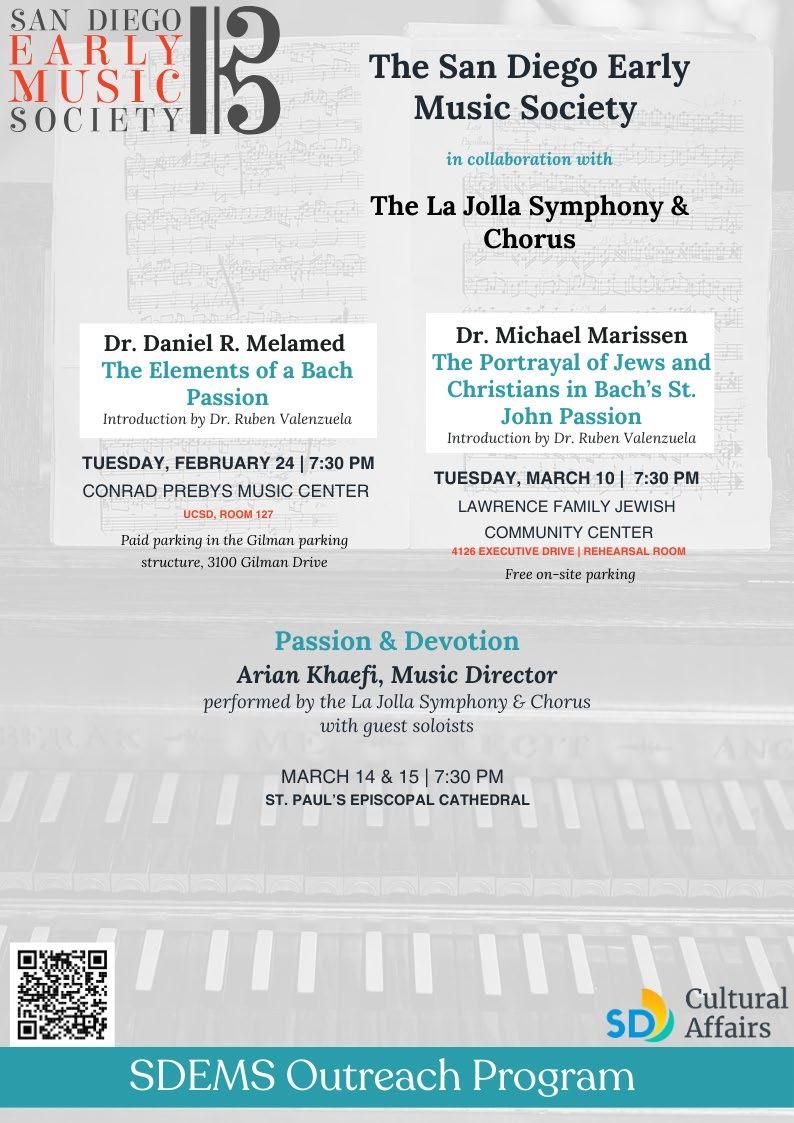
The Gesualdo Six is an award-winning British vocal ensemble comprising some of the UK’s finest consort singers, directed by Owain Park. Praised for their imaginative programming and impeccable blend, the group formed in 2014 for a performance of Gesualdo’s Tenebrae Responsories in Cambridge and has gone on to perform at numerous major festivals around the world.
Notable highlights include a concert in the distinguished Deutschlandradio Debut Series, performances at renowned venues including Wigmore Hall (London), Miller Theatre (New York), the Sydney Opera House, and their debut at the BBC Proms in 2023. In 2024, The Gesualdo Six made their South American debut in Colombia, and appeared in Japan, China and Singapore for the first time. The ensemble have collaborated with Fretwork, the Brodsky Quartet, and Matilda Lloyd, and tour a work of concert-theatre titled Secret Byrd with Director, Bill Barclay.
The Gesualdo Six is committed to music education, regularly hosting workshops for young musicians and composers. The ensemble have curated two Composition Competitions, with the most recent edition drawing entries from over three hundred composers worldwide. The group recently commissioned new works from Shruthi Rajasekar and Joanna Marsh, alongside coronasolfège for 6 by Héloïse Werner.
The ensemble have harnessed the power of social media to make classical music accessible to millions worldwide, creating captivating videos from beautiful locations while on tour. The group released their debut recording English Motets on Hyperion in 2018 to critical acclaim. This has been followed by seven further albums (Christmas, Fading, Josquin’s legacy, Gesualdo’s Tenebrae Responsories for Maundy Thursday, Lux Aeterna, William Byrd’s Mass for five
Our programme concludes with a playful note, returning to the great master Josquin whose folky Petite Camusette uses six voices double the forces of Févin’s setting and employs a typically considered canon in the inner tenor voices.
Programme note © Guy James 2026
voices, Morning Star) and most recently Queen of Hearts. The group’s tenth album, Radiant Dawn, featuring a special collaboration with trumpeter Matilda Lloyd, will be released in August 2025.
“Exciting, inventive, vibrant”
MusicWeb International
Owain Park was born in Bristol in 1993. As well as directing The Gesualdo Six, he is Principal Guest Conductor of the BBC Singers and works with ensembles including Southbank Sinfonia, Chamber Choir Ireland, Ensemble la Sportelle and Capella Cracoviensis. In 2024, he conducted the BBC Singers in a selection of Bruckner motets at the BBC Proms, which served as a prelude to the Berlin Philharmonic’s performance of Bruckner’s Symphony No. 5. He also conducted the BBC Symphony Orchestra in works by Anne Dudley and Iain Farrington as part of the BBC Singers at 100 celebrations at the Barbican.
Owain’s compositions, published by Novello, have been performed internationally by renowned ensembles including the Tallis Scholars and Aurora Orchestra. He studied orchestration with John Rutter at Cambridge University before undertaking a Master’s degree in composition. Currently Composer-in-Residence with the London Choral Sinfonia, Owain was named one of BBC Radio 3’s 31 under 31 Young Stars. The Choir of Trinity College Cambridge recorded an album of his compositions, which was nominated for the BBC Music Magazine Awards. In 2023, his piece Battle Cry, featured on a collaborative album by mezzo Helen Charlston and theorbist Toby Carr, won the Gramophone Award for Best Concept Album.
Owain is President of Cathedral Commissions at Wells Cathedral, supporting new works by contemporary composers. He is a Fellow of the Royal College of Organists and was awarded the Dixon Prize for improvisation, having been Senior Organ Scholar at
Wells Cathedral and Trinity College, Cambridge. Owain is also a keen gardener, and when he’s not on stage he can be found raking leaves, pruning shrubs, or picking cherry tomatoes.
SUB TUUM PRAESIDIUM
The Gesualdo Six appear by arrangement with Alliance Artist Management, 579 West 215th Street #2B, New York, NY 10034
Music by Antoine Brumel
Sub tuum praesidium confugimus, sancta Dei genitrix; To your protection we fly, holy mother of God; nostras deprecationes ne despicias in necessitatibus nostris, do not spurn our prayers in our time of need, sed a periculis cunctis libera nos but from all perils set us free, semper virgo Maria benedicta. ever blessed virgin Mary.
SURGE AMICA MEA
Surge, amica mea,
Arise, my beloved, speciosa mea, et veni. my beautiful one, and come. Columba mea in foraminibus Petrae, My dove, in the clefts of the rock, in cavernis maceriae. in the hollows of the wall.
Ostende mihi faciem tuam,
Show me your face, sonet vox tua in auribus meis: let your voice sound in my ears: vox enim tua dulcis for your voice is sweet, et facise tua decora. and your face is lovely.
O pulcherrima mulierum,
O most beautiful among women, vulnerasti cor meum, you have wounded my heart, soror mea, sponsa mea, my sister, my bride, dilecta mea, formosa mea, my beloved, my fair one, unica mea. my only one.
Descende in ortum meum.
Come down into my garden. Flores apparuerunt in terra nostra. Flowers have appeared in our land. Vineae dederunt odorem suum,
by Constanzo
The vineyards have given forth their fragrance; ficus protulit grossos suos. the fig tree has put forth its young fruit.
Filiae Jerusalem, Daughters of Jerusalem, venite et videte, come and see, quia amore langueo. for I am faint with love.
Virgo salutiferi genitrix intacta Tonantis
Virgin bearer of salvation, inviolate mother of the thunderer [God], unicaque undosi stella benigna maris, sole loving star of the stormy sea, quam rerum pater, ut lapso succurreret orbi, whom the father of all things, to rescue a fallen world nondum distincto jusserate esse chaos, even before he had made order from the chaos, Jesseaeque sacro nasci de sanguine gentis determined would be born from the holy line of Jesse, et matrem statuit virginitate frui. and be a mother, although a virgin.
Ave Maria, gratia plena, Dominus tecum. Hail Mary, full of grace, the Lord is with you.
Tu potis es prime scelus expurgare parentis,
You can cleanse the sin of our first ancestor
humanumque Deo conciliare genus, and reconcile the human race to God; lacte tuo, qui te cuncta elementa crearat, with your milk you fed the one who created you and all the elements, pavisti vilis culmine tecta casae. beneath the roof of a humble dwelling.
Ave Maria, gratia plena, Dominus tecum. Hail Mary, full of grace, the Lord is with you.
Nunc, caeli regina, tuis pro gentibus ora,
Now, queen of heaven, pray for your people; quosque tuos juvit filius, ipsa juva. come to the aid of those whom your son too helped. Alleluia Alleluia.
Ave Maria, gratia plena,
Hail Mary, full of grace, benedicta tu in mulieribus. blessed are you among women. Alleluia. Alleluia.
Ave Maria, gratia plena,
Hail Mary, full of grace, Dominus tecum, Virgo serena. the Lord is with you, serene Virgin.
Tu parvi et magni, For lowly and great, leonis et agni, lion and lamb, Salvatoris Christi; our saviour Christ: templum extitisti, you have been his temple, sed virgo intacta. while still a virgin.
Tu floris et roris,
For the flower and rose, panis et pastoris, the bread and the shepherd: virginum et regina, you queen of virgins, rosa sine spina, a rose without a thorn, genitrix es facta. you became their mother.
Tu civitas regis justitiae,
You are the royal seat of justice, Tu mater es misericordiae, you are the mother of mercy, de lacu faecis et miseriae, from out of the depths of dregs and misery Theophilum reformans gratiae. hast seen Theophilus to grace. Te collaudat caelestis curia, The heavenly court praises you, tu mater es regis et filia. you the king’s mother and daughter;
O Maria dulcissima, O sweetest Mary, per te reis donatur venia. through you the accused is forgiven. O Maria piissima, O most pious Mary, per te reis donatur venia. through you the accused is forgiven.
O Maria mitissima, O most gentle Mary, per te jusits confertur gratia. through you favour comes to the just.
Pro nobis semper Christum exora. For us always entreat Christ. Amen. Amen.
Comme la paix entre Dieu et les hommes
Words by Pierre Gringore, on the visit of Mary Tudor to Paris in 1514
As the peace between God and man Par le moyen de la Vierge Marie
Through the means of the Virgin Mary Fut jadis faicte, ainsi a present sommes
Was once made, so are we now,
Bourgeois François déchargez de nos sommes, French bourgeois, released of our burdens, Car Marie avec nous se marie.
Because Mary has married us; Justice et paix auprès d’elle
Justice and peace appear through her Au parc de France et pays d’Angleterre,
In the fields of France and countryside of England; Puis que le lien d’amours tient l’armoirie.
Since the ties of love restrain arms, Acquis avons, pour nous nul n'en varie,
We have acquired for ourselves, nothing less, Marie au ciel et Marie en la terre. Mary in heaven and Mary on earth.
Sub tuum praesidium confugimus, sancta Dei genitrix;
To your protection we fly, holy mother of God; nostras deprecationes ne despicias in necessitatibus nostris, do not spurn our prayers in our time of need,
sed a periculis cunctis libera nos
but from all perils set us free, semper virgo Maria benedicta. ever blessed virgin Mary.
De tout plongiet au lac de desespoir,
Wholly plunged into the lake of despair, Trouvé me suis sans attente n’espoir I am left without expectation or hope D’avoir jamais des biens de Fortune; of ever having the benefits of Fortune; Mais, se trouver puis sçayson oportune, but, if I can find the right moment, Je me assairay d’en quelque chose avoir. I will endeavour to have some.
altus altus
Fors seulement l’atente que je meure,
Simply waiting until I might die, En mon las cueur nul espoir ne demeure, in my weary heart no hope remains, Car mon malheur si tresfort me tourmente for my misery so much pains me
Qu’il n’est douleur que par vous je ne sente, that there is no grief which by you I do not feel, Pource que suis de vous perdre bien seure. because I to lose you am certain.
FORS SEULEMENT
Music by Antoine de Févin
Fors seulement la mort sans aultre l’atente que je meure, Simply waiting until I might die, En mon las cueur num espoir ne demeure, in my weary heart no hope remains, Car mon malheur si tresfort me tourmente for my misery so much pains me
Qu’il n’est douleur que par vous je ne sente, that there is no grief which by you I do not feel, Pource que suis de vous perdre bien seure. because I to lose you am certain.
PETITE CAMUSETTE
Petite camusette, à la mort m'avez mis,
Music by Antoine de Févin
Little Camusette, you will be the death of me. Robin et Marion, s'en vont au bois joly.
Robin and Marion, they went off to the pretty (green) woods.
Ilz s'en vont, ilz s'en vont bras à bras, They went off, they went off arm in arm. ilz se sont endormis. They fell asleep.
Petite camusette, à la mort m'avez mis.
DE TOUS REGRETZ
De tous regretz ung tout seul me tormente
Little Camusette, you will be the death of me.
Music by Jean Mouton
Of all regrets, a single one torments me, Et le support ne puys plus soubstenir. And no longer can I endure it. Triste seray sans joye maintenir, Sad will I be, maintaining no joy, Jusques a ce qu'auray qui me contente. Until I have that which contents me.
Plaine d’ennuy de longue main attainte
Filled with boredom at long waiting, De desplaisir en vie langoureuse, with unhappiness at idle life, Dis a par moy que seroit bien heureuse
tell me how I might be happy Se par la mort estoit ma vie estainte. if by death were my life to be ended.
bassus
Anima mea liquefacta est.
bassus
My soul melted. Filiae Jerusalem, Daughters of Jerusalem, nuntiate dilecto meo quia amore langueo.
tell my beloved that I languish from love.
Dulcis amica Dei,
Sweet companion of God, Rosa vernans, stella decora, rose blooming, beautiful star, Tu memor esto mei be mindful of me Dum mortis venerit hora. when comes the hour of death.
PLAISIR N’AI PLUS
Plaisir n’ai plus, mais vis en déconfort.
Music by Ninfea Cruttwell-Reade
Words by Clément Marot | Translation by Ninfea Cruttwell-Reade
Pleasure I have no longer, but a life of discomfort. Fortune m’a remis en grand douleur.
Fortune has dealt me a great sorrow. L’heur que j’avais est tourné un malheur,
The time that I had has turned to misfortune, Malheureux est, qui n’a aucun confort.
Fort suit dolent, et regret me remord,
Unhappy is he who lacks all comfort.
Deep is my mourning, and regret consumes me. More m’a ôté ma Dame de valeur.
Death has robbed me of my precious lady. L’heur que j’avais est tourné un malheur, The time that I had has turned to misfortune: Malheureux est, qui n’a aucun confort.
Valoir ne puis, en ce monde suis mort.
Unhappy is he who lacks all comfort.
I can be of no worth, to this world I am dead. Morte est m’amour, dont suis en grand langeur.
Dead is my love, and great my languor. Langoureux suis, pleine d’amère liqueur, Languishing, I am filled with a bitter cordial, Le coeur me part pour sa dolente mort. My heart breaks at her sorrowful death.
AMICA DEI / DA PACEM, DOMINE
Dulcis amica dei, digna genitrix,
Sweet friend of God, worthy Mother, virgo semper Maria, ever-virgin Mary, humiles ac fragiles nostras suscipe preces, receive our humble and fragile prayers. Ad te nos pauperes in hoc seculo et lacrimarum, To you, we poor ones, in this world and the vale of tears valle suspiramus, not without hope. ad clementiam tuam oculos non sine spe erigimus, we lift our eyes to your mercy, Te misericordie matrem, You we acknowledge, Mother of mercy et pauperum advocatam, and advocate of the poor, corde et ore confitemur, with heart and voice, per te namque pax nostra apud deum, for through you our peace before God has been effected, effecta est, ut digne templum pacis dici valeas. so that you may rightly be called the temple of peace.
Consommo la vita mia poco a poco,
Music by Johannes Prioris
I eat up my life little by little, et non audar demandare de la mercede. and I dare not ask for any reward.
Petite camusette, à la mort m'avez mis,
Robin et Marion, s'en vont au bois joly.
Ilz s'en vont, ilz s'en vont bras à bras,
Prez
Little Camusette, you will be the death of me.
Robin and Marion, they went off to the pretty (green) woods.
They went off, they went off arm in arm. ilz se sont endormis. They fell asleep.
Petite camusette, à la mort m'avez mis.
Little Camusette, you will be the death of me.
The San Diego Early Music Society is a non-profit organization founded to showcase the musical treasures of the medieval, Renaissance, and Baroque periods, as performed on period instruments and in accordance with historical practice. The Society was established in 1981 and has presented concerts in churches, small halls, museums, and homes settings for which the music was composed.
Artists internationally renowned for their performances and recordings are presented in concert each season. World-class vocal and instrumental soloists, ensembles, and chamber orchestras perform an exciting repertoire from various periods and countries.
Each year, the San Diego Early Music Society offers a vibrant season of concerts through two distinct series. The Main Series brings to our stages nationally and internationally acclaimed ensembles, both established and upand-coming, whose performances and recordings are celebrated for their high quality and exceptional artistry. The Solo Series features renowned soloists and small ensembles from the US and abroad in more intimate settings, creating a highly personal concert experience.
In addition, our Outreach Program seeks to share the beauties of medieval, Renaissance and Baroque music with San Diegans of all ages through free demonstrations, master classes and performances, often by local early music practitioners. To foster connection among lovers of music before 1750, each year we host an Early Music Sing-Along and an Early Music Showcase that attract large numbers of participants and audience members.
Board of Directors and Staff
President: Kathlyn Robbins | Vice President and Artistic Director: Laurent Planchon | Secretary: David Jacobson
Treasurer: Elisabeth Fidler | Directors: Samuel Buse, Jean Lewis, Takae Ohnishi, William Propp, Maxime Zondlowski
Executive Director: Pamela Narbona Jerez | Box Office: Brad Rice and Sidney Browne
Communications Coordinator: Khalayla Thompson | Stage Crew: Gregory Santos

Follow this QR code to sign up to our email list to get reminders and important information about upcoming concerts and free outreach events.

Financial support is provided by the City of San Diego through Cultural Affairs
We wish to express our heartfelt gratitude to all who have contributed to the San Diego Early Music Society with a financial gift or with a gift of their time. Ticket sales account for only a portion of our production costs. Thanks to your support, we can continue to present the best early music ensembles and soloists at prices that are affordable and accessible to all.
The 2025-2026 season is made possible with support from the following individuals:
Producer (20,000+): Charles Perrin, Laurent Planchon
Underwriter ($10,000-$19,999): Elinor Merl & Mark Brodie, Gary & Zoraida Payne, Greta & Stephen Treadgold, City of San Diego, Cisco Systems
Partner ($5,000-$9,999): David L. Camp
Benefactor ($2,500-$4,999): Sally & Andy Buffington, Vera Kalmijn in memory of Ad. J. Kalmijn, Lee Talner, Maxime Stephan Zondlowski & Machel Allen
Patron ($1,000-$2,499): Cindy Bruecks & David Craig, Jill & Dr. Hank Chambers, Dr. Richard & Linda Claytor, Ann Rea Craig, Alanna Fraser, David Jacobson, David K. Jordan, Dan & Cynthia Kronemyer, Anne & Andy McCammon, Holly & Warren Otto, Garey & Valerie Ramey, Peter & Hiroko Vogt
Sponsor ($500-$999): Robert & Virginia Black, Paul & Thérèse Carmona, Steven & Cynthia Dember, Martha Carey & Elisabeth Fidler, Karl & Greet Hostetler, Samuel Krueger, Mark R. Lester, Douglas & Susan McLeod, Ruperto & Laurie Mendiones, Michele Michaels, William Propp & Anna Propp Covici, Dale & Pat Thompson, Anne Turhollow, Tanya Young & Michael McManus, Dr. John B. Shapira & Dr. Donna E. Roth
Sustainer ($250-$499): Anonymous I, Anonymous II, David & Amita Bardwick, Maurine Beinbrink, Doug Brandt, Carina Chiang & Ross Frank, Todd Cloaninger, James & Louise Davidson, Gale Etschmaier, Penny & Randy Hawkins, Bill & Montserrat Hohnhorst, Matt Kilman, Bob & Veronica Longstreth, Karen & Joseph Moore, Takae Ohnishi, Mary & Dave Payton, Jaybird Sacks, Sherri & Brian Schottlaender, Anne Thompson-Welch & Andrew Welch
Supporter ($100-$249): Anonymous, Samuel Buse, Sara Baird & Jim Callahan, The Chamberlain Family, Christmas gift in honor of Elisabeth Fidler, Marie Elisabeth & Doug Clark, Peter Cramer, James Determan, Dick Gadler, Gerken Family Charitable Fund, Barbara & Glenn Goltz, Wendy Greene, Dr. & Mrs. Frederick Howden, Frederick H. Hurd & Grace Weigel Hurd, Geri Jenkins, Hollace Jones, Roberta Kovitz & Gregory Jackson, Bob Lange, Lanna C Lewin, Jean Lewis, Hal Meltzer, Nathan Mull, Gerald Ondercin, In Memory of John Berecochea, Brad & Eleanor, Bradley Pinchot, Carol Plantamura in memory of Felix Prael, Susan Russo, Dr. Schiller, Betty Sherman, Ulla Sinz, Cathe Sobke
Friend ($50-$99): Anonymous, Bader & Archibald, Dr. Mary Ann Calcott, Elizabeth Clarquist, Jeff & Katrin Genzlinger, Scott & Margeret Henderson, Mark Jacobson, Negar Knowles, The Samuel Lawrence Foundation, Russell J. La Puma, Tom Pauly, William Purves, Susan Rogers, Janet Smarr, Marty Trujillo
Continuo Society: Vera Kalmijn, Sandy Lakoff in memory of Evelyn Lakoff, Michael & Constance Mullin, Jack & Helen Ofield, Samuel Lawrence Foundation, David Dwyer Smith, Sandra Stram in memory of Peter Farrell, Lee Talner. Continuo Society members are those who have remembered the San Diego Early Music Society in their estate planning.
This list reflects donations received February 1, 2025, through present. We regret any errors or omissions on this page. Please contact us at sdems@sdems.org to inform us of any corrections.