SCRLA Welcomes New Executive Committee for 2026 SCRLA Updates
Advocacy in Action: A Mid-Session Recap of the 126th S.C. General Assembly
The Rise of 'Pet Tourism' and What It Means for Your Business
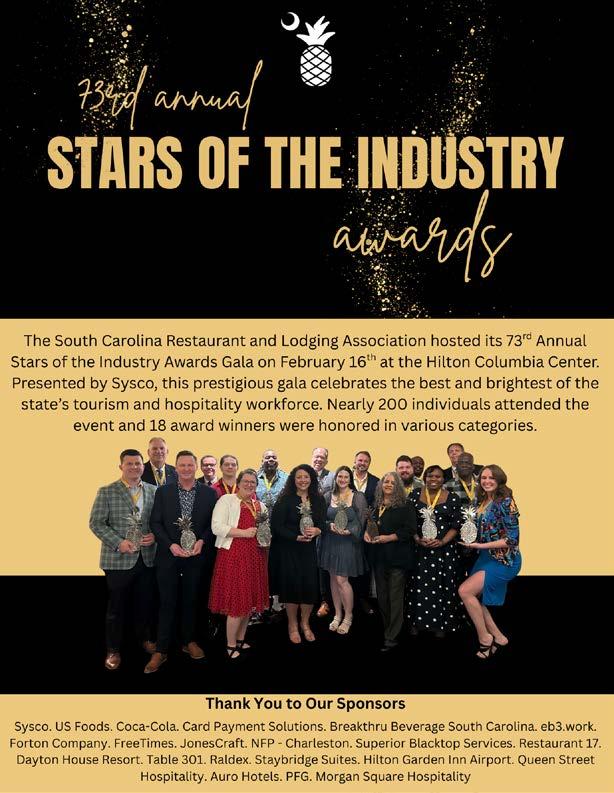
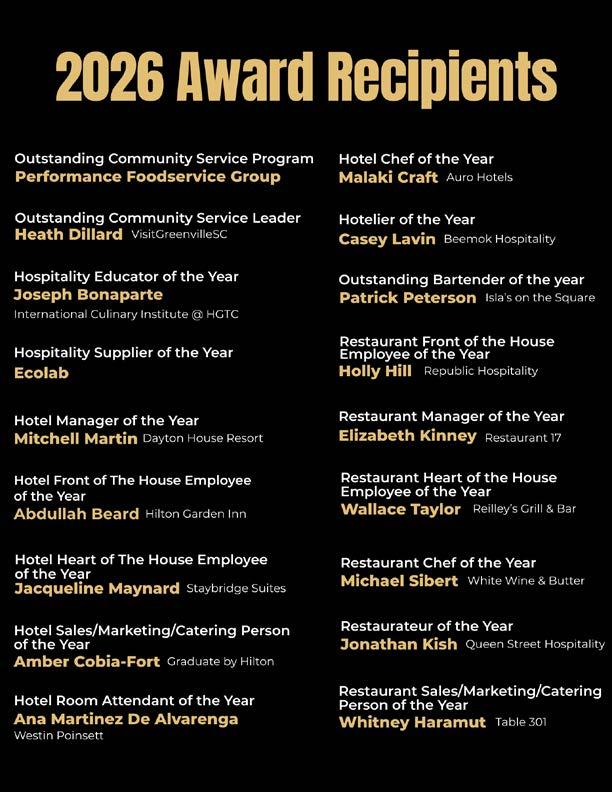
73rd Stars of the Industry Award Winners
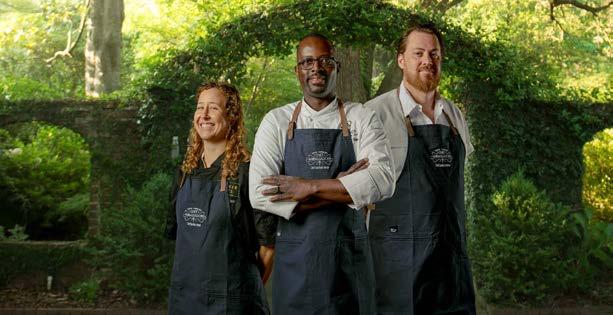
Governor Names Three Chefs as South Carolina’s 2026 Chef Ambassadors
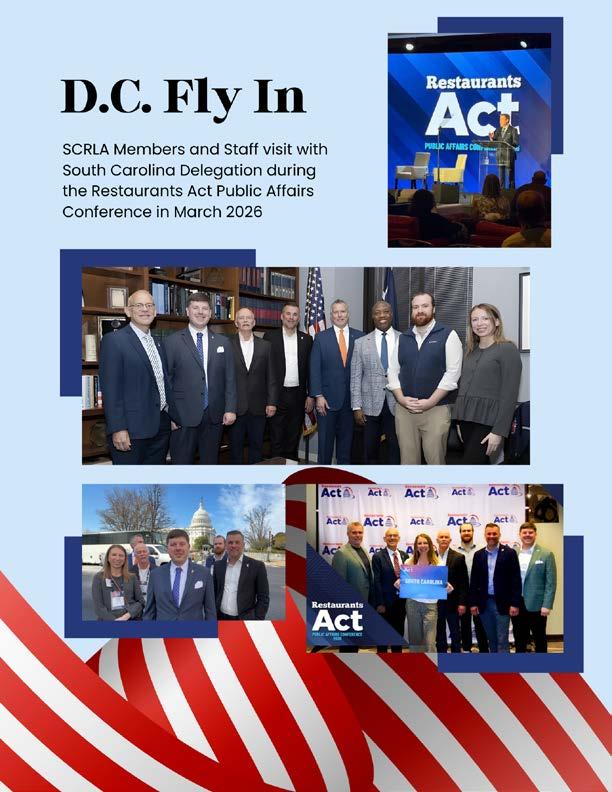
D.C. Fly In - SCRLA Staff and Members Meet with Legislators in Our Nation's Capitol
Navigating Credit Card Fees and Tips - Saving Your Business Money
Mandatory Alcohol Server Training and Your UI Rate: What You Need to Know
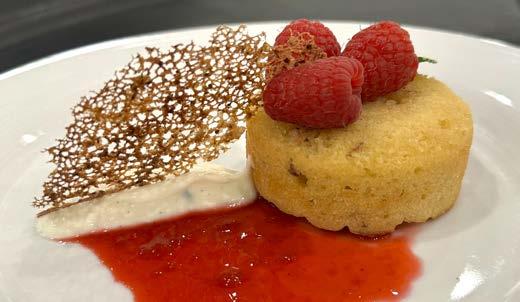
Daniel Morgan Technology Center ProStart Culinary Competition Dessert Creation Pineapple-Salted Plum Cake with Whipped Ricotta, Rasberry Coulis and Pecan Lace Tuile
MEET YOUR SCRLA TEAM
The South Carolina Restaurant and Lodging Association provides superior value and effective communication by being the voice of the foodservice and lodging industry in government and public relations, educational programs, offering operational benefits, and creating opportunities for member involvement.
Mark Newman President and CEO
Hannah Hopewell Director of Communications
Douglas OFlaherty Chief Operating Officer
Christal VanWickler
Bookkeper & Education Coordinator
Lenza Jolley VP of Membership & Development
AnnMarie McManus Meetings & Events Manager
Hank Davis VP of Governmental Affairs & Community Development
Victoria Tobin Executive Director, MBAHA
Dear Members,
As I begin my term as Chairman of the SCRLA, I am profoundly honored to serve an industry that is the heartbeat of our state’s identity. Hospitality is woven into the very fabric of South Carolina. From the restaurateurs crafting unforgettable culinary moments to the lodging professionals welcoming millions of guests, our members define this state as a premier destination known for warmth and excellence. Your work does more than drive economic growth; it strengthens our communities and upholds the reputation of the Palmetto State.
As we look forward, SCRLA is positioned to build upon incredible momentum. While we represent diverse businesses from every region and sector, we are united by a singular, powerful mission: ensuring that hospitality in South Carolina continues to thrive.
Welcoming New Leadership
A cornerstone of our excitement for the coming year is the appointment of our new President and CEO, Mark Newman. Mark joins us with an extensive background in association leadership, public engagement, and strategic collaboration. Throughout his career, he has proven an adept ability to bridge gaps, build lasting partnerships, and guide organizations through transformative growth.
Mark’s leadership philosophy—rooted in innovation and service—aligns perfectly with our mission. He understands the critical importance of listening to our members and advocating fiercely for the industries we serve. We are confident that his vision will usher in a new era of influence for SCRLA, and we are thrilled to have his energy shaping our future.
Driving Engagement & Member Value
One of our primary objectives for 2026 is expanding membership growth and deepening engagement. The strength of SCRLA lies in its "unified voice," and that voice is only as loud as the members who power it. Whether through attending events, volunteering on committees, or collaborating on advocacy, your involvement is what dictates our strategic success.
To support this, we are focused on ensuring every member finds tangible value in their affiliation. This year, we are committed to expanding educational resources, enhancing our networking opportunities, and strengthening our programming.
We are fortunate to have a dedicated professional staff that facilitates these connections with enthusiasm, ensuring our members feel informed, supported, and welcomed at every turn.
Advocacy & Professional Development
Advocacy remains at the core of our work. The hospitality landscape is evolving rapidly, requiring consistent and sophisticated engagement with policymakers. From workforce development and regulatory reform to economic policy, SCRLA will continue to work closely with legislators to ensure your needs are not just heard but addressed.
Furthermore, as guest expectations shift, we remain committed to leadership development. We will continue to provide innovative resources that help you build stronger teams, streamline operations, and stay ahead of global trends. Our goal is to make SCRLA an indispensable resource that you rely on for your daily and long-term success.
The Strength of Our People
Ultimately, the true power of SCRLA is not found in its initiatives, but in its people. Our members share a common passion for service—a desire to bring people together and create community. That passion is the engine that drives us forward.
With the dedication of our members, the expertise of our staff, and the fresh vision of our new leader, I am certain that 2026 will be a year of unprecedented innovation.
I look forward to working alongside each of you as we build a more resilient and prosperous future for South Carolina’s hospitality industry.
Hospitably Yours,
Chad Patterson SCRLA Board Chair President and CEO, Raldex Hospitality
Elevate Your Voice: Join South Carolina’s Delegation at Hotels on the
Hill 2026
In the hospitality industry, our success is often shaped by the decisions made in the halls of government. From workforce challenges to regulatory hurdles, the policies debated in Washington, D.C., have a direct impact on the daily operations of South Carolina’s hotels and lodging properties.
That is why we are calling on our state’s hoteliers to join us for the American Hotel & Lodging Association’s (AHLA) Hotels on the Hill. Taking place May 12–13, 2026, at the Hilton Washington DC Capitol Hill, this is the premier legislative action event for our industry.
Why Your Presence Matters
While the SCRLA and AHLA work year-round to represent your interests, nothing is more powerful than a Member of Congress hearing directly from a constituent. When you join the South Carolina delegation, you aren't just a face in the crowd—you are a business leader and an employer sharing real-world stories about how federal policy affects your staff, your guests, and your bottom line.
What to Expect
Hotels on the Hill is designed to maximize your impact through a focused two-day program:
● Direct Advocacy: Participate in scheduled meetings with South Carolina’s Congressional delegation to advocate for policies that support hotel owners and operators.
● Legislative Briefings: Receive the latest updates on the most pressing legislative and regulatory issues currently impacting the hospitality sector.
● Industry Alignment: Connect with peers and hospitality leaders from across the country to ensure our industry speaks with one unified, powerful voice.
Register Today
South Carolina’s tourism and hospitality industry is a primary driver of our state’s economy. By attending Hotels on the Hill, you ensure that our state’s unique needs are prioritized in the national conversation. Registration is now open. If you are interested in attending, please reach out to Hank Davis at hank@scrla.org or 803-766-0067.
SCRLA Executive Committee and Board of Directors
Chad Patterson Chairman Raldex Hospitality
Darterian Moore Member Breakthru Beverage SC
Jonathan Kish Vice Chairman Queen Street Hospitality
Harris Mullis Member Lee's Famous Chicken
Randy DeVaux Treasurer Kingston Resorts
Danielle Nance Member Restaurant 17
Don Alcorn Rush's
Franky Campbell Coca-Cola Consolidated
Tony Cuajunco Holy City Hospitality
Adam Hayes Larkins Restaurant Group
Payden Mitchell The Seals
Chris Oxford Pinckney Carter Company
Mary Shields Beemok Hospitality Collection
Michelle Woodhull Charming Inns
Keith Benjamin Uptown Hospitality
Richie Cannon The Butcher The Baker
David Erbacher Crowne Plaza Resort
Scott Larymore Charleston Crab House
Bob Munnich Dray Bar and Grill
Tony Perricelli Dayton House Resort
Dan Blumenstock Member Lowcountry Hotels
Andy Wolfe Member Grand Palms Resort
Scott Smith University of South Carolina HRTM
Steve Cook Saluda's
Victoria Fernandez-Wooley Spartanburg Marriott
Cima Mathur Persis Biryani Indian Grill
Michael O'Brien Hilton Columbia Center Hotel
Catherine Reilley Coastal Restaurants and Bars
David Turner Historic Columbia
Kirk Watkins Immediate Past Chair
Jesse Bullard Southern Way Catering
David Crone Brittain Resorts and Hotels
Bill Groves Embassy Suites by Hilton Greenville Golf Resort
Chaston McNeely U.S. Foods
Chris Olsen Hub City Hospitality
Nathan Rex Culinary Institute of Charleston
Glen Williams Hotel Hartness
The AI Frontier: Transforming South Carolina’s Hospitality Landscape
As South Carolina’s tourism industry continues to set records, our state’s hotel owners and operators face a paradox: business is booming, but the complexity of managing it has never been higher. Between fluctuating demand in coastal markets and the labor hurdles we all know too well, the "old way" of operating is being challenged.
Recent insights from industry leaders like BCG and NYU, alongside tech innovators like Atomize, suggest that we are entering the era of the "AI-First" hotel. This isn't about replacing the Southern hospitality our guests expect; it’s about using technology to handle the "math" so our teams can focus on the "mission."
1. Driving Revenue with Precision
Traditional revenue management often feels like driving by looking in the rearview mirror—using historical data to guess future demand. AI is changing the game by shifting to real-time, dynamic pricing.
Modern systems now analyze variables in seconds— including local event sentiment, weather patterns, and even air capacity into hubs like Charleston or Greenville. Early adopters are seeing RevPAR increases of up to 1525% within months. By automating these adjustments, your revenue managers move from being "calculators" to being "thinkers," approving strategic narratives rather than manually adjusting spreadsheets.
2. Solving the Labor Puzzle: Retention and Efficiency
With labor costs rising and staffing shortages remaining a top concern, AI offers a dual solution. First, it streamlines the "grunt work." AI-synchronized housekeeping schedules can reduce room cleaning and preparation times by up to 20% by aligning tasks with real-time checkout data.
Second, it improves the employee experience. When AI-enabled tools handle routine guest inquiries or automate back-office reporting, your staff is freed from "friction-filled" tasks. This allows them to engage in higher-value guest interactions, which is essential for job satisfaction and long-term retention.
IT’S NOT JUST FOOD, IT’S...
MEMORIES
The way guests find our properties is shifting. BCG reports that nearly 37% of travelers now use AI-driven assistants to plan their trips. If a hotel’s data isn't machine-readable or integrated, it risks becoming a "digital ghost"—invisible to the very tools guests are using to book.
THE difference
Adaptability now means ensuring your technology stack—from your PMS to your RMS—is integrated. Properties that break down these data silos are able to respond faster to market shifts, such as a sudden storm or a last-minute festival announcement, ensuring they aren't left behind by more agile competitors.
4. Enhancing Guest Satisfaction
MYRTLE BEACH CONVENTION CENTER MAY 6, 2025 | 9 AM - 3 PM
Today’s traveler expects hyper-personalization. AI allows us to deliver this at scale without overburdening the front desk. From chatbots that provide instant, multilingual concierge services to predictive maintenance that fixes an HVAC issue before a guest even notices it, technology is becoming an invisible layer of service.
EXPERIENCE HOW IT’S NOT JUST FOOD, IT’S... on May 6th, 2025! You won’t want to miss our unique showcase of taste and innovation that’s so much more than just food. Discover inventive and unique products that can’t be found anywhere else, gather insight from our team of specialists and industry experts, and gain key resources to help your business thrive!
Contact your sales rep to learn more!
By using AI to handle the "predictable," we empower our staff to handle the "exceptional." In South Carolina, where the personal touch is our greatest asset, AI isn't a threat—it's the ultimate support tool for the next generation of hospitality.
SCRLA HOSTS ANNUAL MEETING AT THE CAMBRIA IN COLUMBIA
On January 20, the SCRLA held its 81st anniversary celebrationand annual meeting at the Cambria hotel in Columbia. Attendees enjoyed a beautiful charcuterie board and beverages provided by the Cambria along with culinary creations by SC ProStart students. The celebration, presented by Ecolab, was accompanied by a live band and welcomed members from all different sectors of the hospitality industry.
2026 SOUTH CAROLINA PROSTART INVITATIONAL HELD IN GREENVILLE
The 22nd Annual South Carolina ProStart Invitational took place from March 1-3 at the Embassy Suites Greenville Golf Resort & Conference Center. Sponsored by the US Coast Guard, the competition included 15 high schools and approximately 100 students. Anderson Career & Technology Center (culinary) and Golden Strip Career Center (management) will compete in Baltimore at the National ProStart Invitational in April.
4TH ANNUAL HUBITALITY ROCK & ROAST HELD AT FR8 YARD
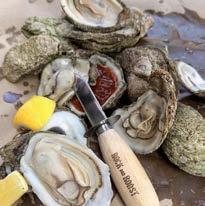
The 4th annual Rock & Roast took place on February 21 in Spartanburg to raise funds for Hubitality, which provides emergency assistance to those in critical need. Live music by Lazrluvr surrounded the area as visitors feated on oysters, roasted pork, and a llimited Fr8 Yard menu. Thank you to all who attended and helped raise essential funds for Hubitality, which does wonders for Spartanburg's hospitality industry.
SCRLA UPDATES
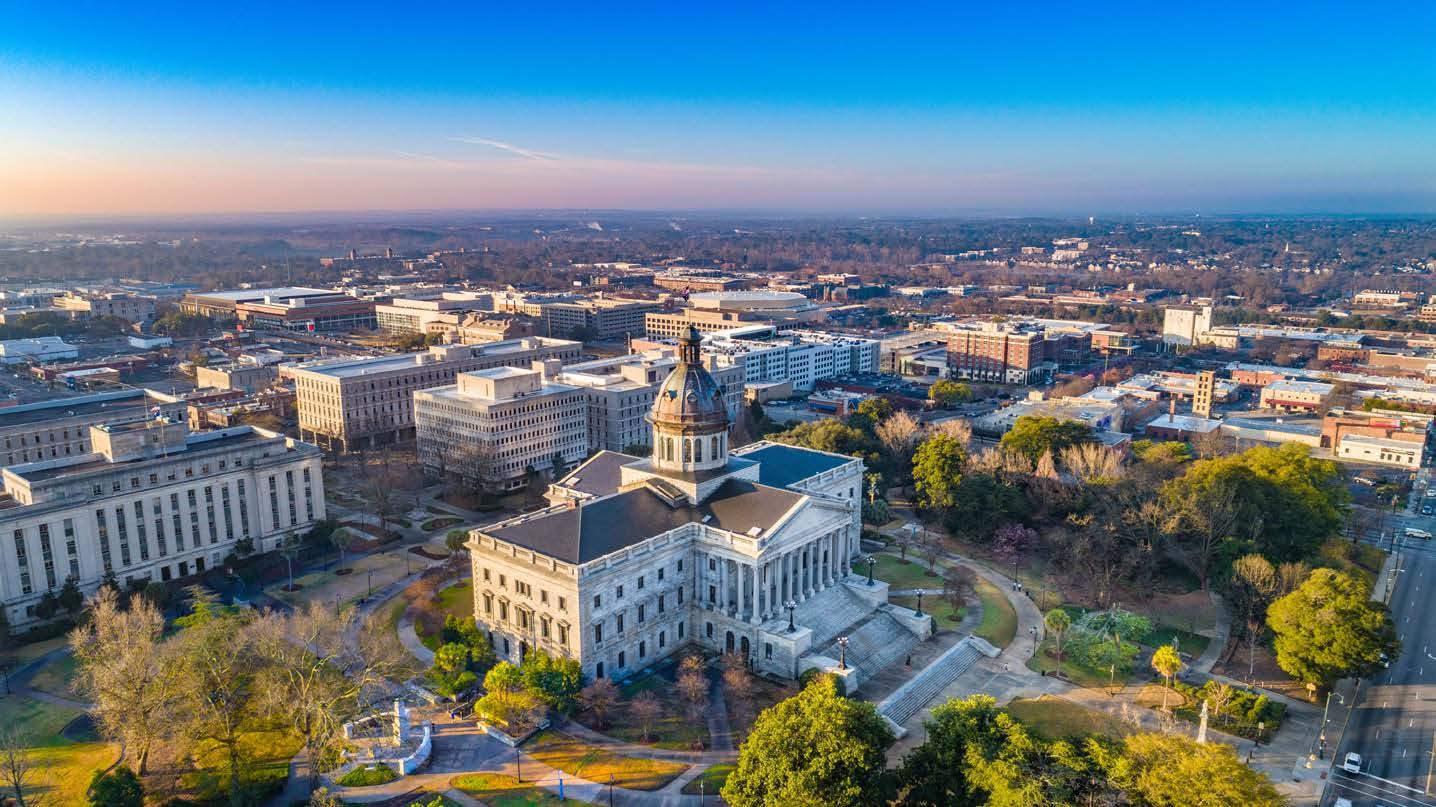
Advocacy in Action: A Mid-Session Recap of the 126th S.C. General Assembly
The second half of the 126th Session of the South Carolina General Assembly has proven to be a consequential one for the state’s hospitality industry. From insurance and liability reforms to workforce challenges and regulatory changes affecting alcohol service, lawmakers have been actively debating policies that will shape the operating environment for restaurants, hotels, and tourism-related businesses across the state in 2026 and beyond.
With the legislative session now past its midpoint, and 2026 being an election year for the entire South Carolina House of Representatives, activity at the Statehouse has been fast-paced and highly consequential. Throughout the session, the SCRLA has remained actively engaged with lawmakers to ensure the voice of our industry is heard as policies impacting hospitality are considered.
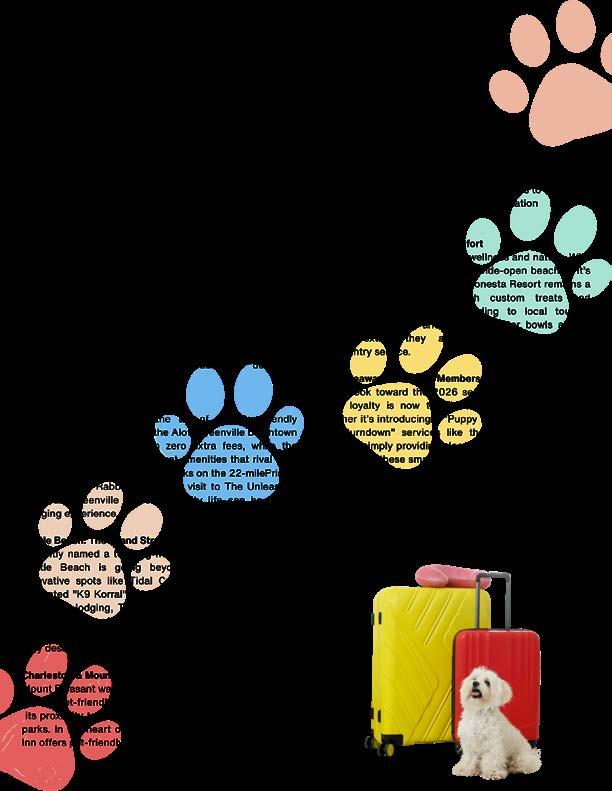
The Rise of the "Pawprint Economy" in South Carolina
Better Protection. Smarter Payments.
A co-branded partnership bringing insurance coverage and payment solutions together.
Skye Insurance
An independently owned agency serving all 50 states with 25+ years of experience - smart protection plans for home, auto & business with transparent advice.
- Commercial, Home & Auto Insurance
- Flexible Deductibles & Policy Comparisons
- Proven Risk Management Success
- Nationwide Coverage - All 50 States
Card Payment Solutions
A trusted leader in payment processing providing secure, flexible transaction services for businesses of all sizes - competitive rates and dedicated support.
- Credit, Debit & ACH Processing
- Mobile & Online Payment Gateways
- Transparent Fees & Pricing
- Dedicated Account Support
Processing - Credit & Debit Cards - ACH Transfers - Mobile Payments - Online Gateways
Why We Work Together
Insurance and payments are two pillars of financial security. Together, Skye Insurance and Card Payment Solutions offer clients one trusted network, protecting assets and keeping finances flowing, seamlessly and affordably.
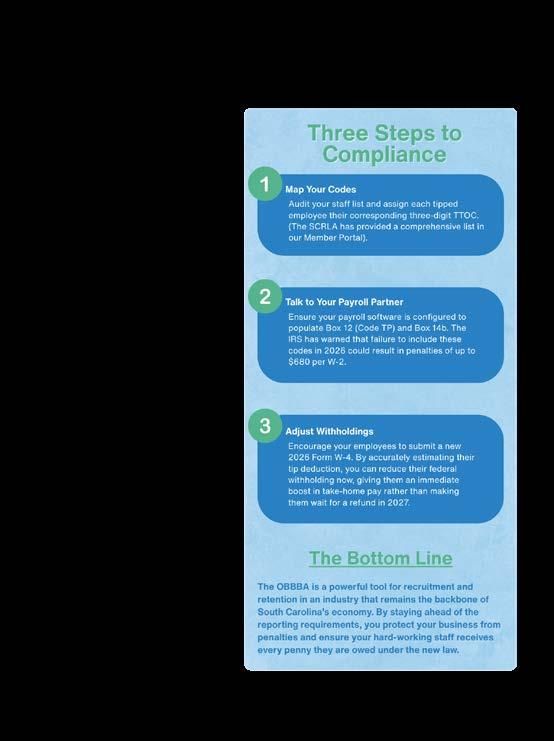
Navigating the "No Tax on Tips" Era: A Roadmap for South Carolina Operators
The landscape of hospitality compensation shifted permanently on July 4, 2025, with the signing of the One Big Beautiful Bill Act (OBBBA). While the headlines focused on "No Tax on Tips," the reality for restaurant and lodging owners is a significant update to payroll compliance and reporting. As we enter the 2026 tax year, the grace period is over, and precision is now mandatory.
The Benefit: More Money in Employee Pockets
At its core, the OBBBA allows tipped employees to claim an "above-the-line" deduction of up to $25,000 on their federal income taxes. This applies to "qualified tips"— voluntary gratuities given by customers, including credit card tips and valid tip pools. It is important to note that mandatory service charges (automatic gratuities) do not qualify for this deduction and must be treated as regular wages.
Starting January 1, 2026, the IRS has introduced specific reporting requirements to ensure employees can actually claim these savings. Employers must now utilize two new sections on the Form W-2
:
The 2026 Mandate: New W-2 Reporting
Box 12, Code TP: This is where you will report the total dollar amount of qualified tips received by the employee.
Box 14b (TTOC): This new box requires a three-digit Treasury Tipped Occupation Code. These codes verify that the employee works in an industry that "customarily and regularly" received tips prior to 2025.
Beyond the Dining Room: Golf, Spas, and Attractions
One of the biggest wins for South Carolina’s diverse tourism industry is the breadth of the Treasury’s list. The deduction isn't just for servers and bartenders. Under the new TTOC system:
- Golf Operations: Cart attendants and caddies fall under Code 701.
- Lodging: Front desk clerks (303) and housekeepers (304) are eligible.
- Wellness: Massage therapists (602) and estheticians (601) at resort spas are included.
- BOH Inclusion: In a major shift, kitchen staff—including cooks (105) and dishwashers (108)—are eligible for the deduction if they receive tips through a valid pooling arrangement.
SCRLA.
"Mystery Shoppers" Now Auditing Live Music and Audio Compliance
As an advocate for the South Carolina hospitality industry, the SCRLA wants to ensure our members are prepared for new tactics being used to monitor music licensing and venue operations.
We have recently obtained details of a specialized "Mystery Shop" program specifically targeting venues that host live bands, DJs, and karaoke. While these shoppers may appear to be standard patrons, their primary objective is to capture highquality audio recordings and detailed venue data.
What the "Music Study" Shoppers are Looking For
According to the project guidelines, these shoppers are being paid to record 60 minutes of continuous audio/video of the music being performed. Unlike traditional mystery shops that focus on service or food quality, these individuals are focused on:
● Audio Audits: Recording clear, audible music via mobile devices to verify the specific songs, artists, or sets being played.
● Capacity & Usage: Reporting on maximum occupancy signs, the size and usage of dance floors, and the number of working TVs (including whether the TV audio is audible).
● Proof of Performance: Providing exterior photos, event posters, and receipts for cover charges to prove the venue is actively marketing and profiting from live entertainment.
● Operational Details: Documenting whether the music is the primary focus of the event or background entertainment.
Why This Matters for Your Business
Music Performance Rights Organizations (PROs) such as ASCAP, BMI, GMR and SESAC are increasingly sophisticated in how they identify venues that may be operating without the proper licenses.
The data collected by these shoppers—ranging from occupancy limits to the specific duration of music played—is often used to calculate licensing fees or as evidence in copyright enforcement actions. Even if a shopper's report is labeled as a "microphone quality test," the granular data they collect (TV content, dance floor size, and seating) mirrors the exact criteria used to determine licensing tiers.
How to Protect Your Venue
1. Review Your Licenses: Ensure your agreements with ASCAP, BMI, SESAC, and GMR are up to date and cover your specific activities (e.g., ensuring you have a "live music" rider if you’ve moved from background streaming to hosting DJs).
2. Train Your Staff: Be aware of patrons who place phones on tables pointed toward the ceiling or speakers for extended periods, or those who are taking photos of occupancy signs and "behind-thescenes" venue details.
3. Audit Your Marketing: Shoppers are instructed to verify events via your social media and website before visiting. Ensure your public-facing calendars accurately reflect the type of entertainment you provide.
The SCRLA remains committed to helping you navigate the complexities of music licensing. If you have questions regarding your current standing or need resources on how to handle licensing inquiries, please contact our office.
Governor Names Three New Chefs as Chef Ambassadors Celebrating Local Cuisine
In January 2026, Governor Henry McMaster announced the appointment of three distinguished chefs as South Carolina's Chef Ambassadors for the year: Jordan Lazarus Heyd, Guichard Ulysse, and James London. This esteemed program, now in its 12th year, aims to highlight the state's rich culinary heritage by showcasing the talents of local chefs who exemplify South Carolina's diverse food traditions.
After a global yachting adventure and a life-altering medical diagnosis, Jordan Heyd attended culinary school in South Africa before returning home to launch her successful restaurant, Lekker Eats. Now serving as a 2026 South Carolina Chef Ambassador, she focuses on a from-scratch philosophy that prioritizes clean, intentional, and locally sourced ingredients like peaches and grits. Her cooking style blends international inspiration with a deep respect for the state’s culinary heritage, offering guests an inclusive and elevated dining experience on the Grand Strand.
Haitian-born chef Guichard Ulysse, co-owner of House 509 Bistro & Wine Bar in Greer, has been named a 2026 South Carolina Chef Ambassador for his innovative fusion of Caribbean, French, and Southern influences. His culinary philosophy centers on "intentional pairing," using locally sourced staples like white stone grits, sweet potatoes, and seasonal strawberries to create elevated yet approachable dishes. By blending traditional techniques with global flavors, Ulysse aims to showcase the diverse and evolving heritage of South Carolina’s food scene while fostering deep community connection through every meal.
Charleston native and 2026 South Carolina Chef Ambassador James London brings a "dock-to-table" philosophy to his nationally acclaimed restaurant, Chubby Fish, which has earned honors from the Michelin Guide and James Beard Foundation. His ingredient-driven approach focuses on the superior quality of local white shrimp, farmed oysters, and seasonal produce, allowing the daily catch from coastal fishermen to dictate an eclectic, ever-changing menu. By combining formal French training with a deep connection to his maritime roots, London aims to showcase the state's evolving culinary diversity and the exceptional bounty of South Carolina’s nutrient-rich waters.
Governor McMaster emphasized the importance of the Chef Ambassador program in promoting the state's culinary and agricultural sectors. By appointing chefs who are deeply rooted in their communities and committed to local sourcing, the program aims to showcase the best of South Carolina's culinary offerings.
As Chef Ambassadors, Heyd, Ulysse, and London will represent South Carolina at various food festivals, educational events, and media engagements throughout the year. Their diverse backgrounds and culinary styles reflect the rich tapestry of flavors and traditions that define South Carolina's food scene. Through their efforts, they will not only highlight the state's gastronomic excellence but also underscore the vital relationship between local agriculture and culinary innovation.
SCRLA Engages Federal Lawmakers at National Restaurant Association's Public Affairs Conference
In March, leaders from the South Carolina Restaurant & Lodging Association traveled to Washington, D.C. to participate in the National Restaurant Association’s Public Affairs Conference, the restaurant industry’s largest grassroots advocacy event. Held March 10–12, the conference brings together restaurant operators, hospitality leaders, and state restaurant association representatives from across the country to engage directly with federal policymakers on the top issues impacting our industry.
SCRLA was proud to join industry colleagues from across the nation to ensure that the voice of South Carolina’s hospitality industry was well represented on Capitol Hill. Throughout the conference, participants attended policy briefings, advocacy sessions, and industry discussions before meeting with members of Congress to share firsthand perspectives on the challenges and opportunities facing restaurant operators.
Advocating for Key Federal Priorities
During meetings with members of South Carolina’s congressional delegation, SCRLA advocated for several key policy priorities that directly impact the hospitality industry.
One of the top issues discussed was passage of the Credit Card Competition Act, bipartisan legislation aimed at increasing competition in the credit card processing market. Credit card processing fees, commonly known as swipe fees, have become one of the largest operating expenses for many restaurants, trailing only food and labor costs. The legislation seeks to introduce more competition among payment networks, which could help lower these fees and provide meaningful cost relief for businesses that process thousands of transactions each week. SCRLA also highlighted the importance of maintaining and strengthening the United States–Mexico–Canada Agreement (USMCA) as it approaches its scheduled review. Canada and Mexico are among the largest suppliers of food and beverage products used by restaurants across the United States. Preserving the agreement and avoiding new tariffs helps ensure restaurants maintain reliable access to key ingredients at stable and affordable prices.
Another major focus of the delegation’s conversations was the need for comprehensive immigration reform. Workforce availability remains one of the most pressing challenges facing the hospitality industry. Restaurants and hotels rely on a strong and stable workforce, and meaningful reforms that modernize visa programs and support the existing workforce are essential to sustaining industry growth and meeting customer demand.
Championing South Carolina Hospitality in the Nation’s Capital. The Public Affairs Conference provides a valuable opportunity for hospitality leaders to speak directly with federal lawmakers about how national policy decisions affect businesses at the state and local levels. For SCRLA, these meetings help ensure policymakers understand the significant role the hospitality industry plays in South Carolina’s economy and workforce.
Restaurants, hotels, and tourism-related businesses support hundreds of thousands of jobs across the state and serve as a key driver of economic activity in communities large and small. Sharing these perspectives directly with members of Congress helps reinforce the importance of policies that allow hospitality businesses to grow and thrive.
Strengthening the Industry’s Collective Voice Advocacy for South Carolina’s hospitality industry doesn’t end at the Statehouse. It also requires a strong and unified voice in Washington. By participating in the Public Affairs Conference and engaging with our congressional delegation, SCRLA helps ensure that South Carolina’s hospitality industry remains actively involved in shaping federal policies that affect our businesses, employees, and guests.
As policy discussions continue throughout the year, SCRLA will remain engaged with lawmakers and our national partners to advocate for solutions that reduce costs for operators, strengthen the workforce, and support the continued growth of South Carolina’s hospitality industry.
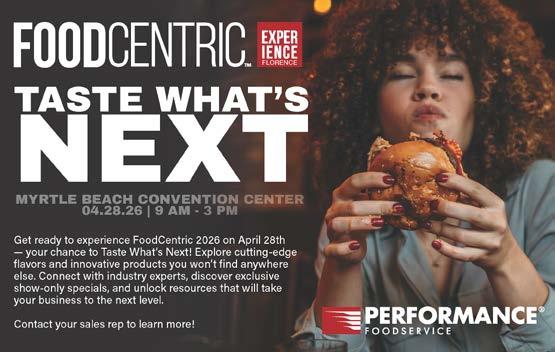
From equipping you with profitable ingredients that make your menu shine, to simple business tools that grow your operation, to connecting you to restaurant experts – we’re here to support your business in every way! Our passion is helping foodservice operators like you, make it.
Celebrating Kia Smith, South Carolina's ProStart Educator of Excellence
The South Carolina Restaurant and Lodging Association (SCRLA) is proud to spotlight a remarkable leader within our hospitality community. Kia Smith, the Culinary Arts instructor at Sumter Career and Technology Center (SCTC), was recently honored as the South Carolina Association for Career and Technical Education (SCACTE) Teacher of the Year.
Adding to her impressive list of accolades, Smith was also named the 2025-26 Sumter School District Teacher of the Year—making history as the first instructor from the career center to receive the district-wide honor since its consolidation in 2011.
A Journey from Student to Mentor
For Smith, the culinary world isn't just a profession; it’s a full-circle journey. A 2008 graduate of Sumter High School, she was once a student in the very same program she now leads. Her early success in the program earned her scholarships that paved the way to a bachelor’s degree in food service management from Johnson and Wales University.
Today, she uses her platform to ensure her students have even greater access to those same life-changing opportunities. Under her leadership, the SCTC culinary program became just the second in South Carolina to earn official accreditation from the American Culinary Federation (ACF), a rigorous three-year process that now allows her to teach to national industry standards.
Smith has ammassed over 12 years of experience in the food service industry and actively participates in ProStart Teacher Leadership events throughout the year. During the 2020 pandemic, she adapted her curriculum to an online format and distributed hands-on materials and supply kits for at home learning to maintain quality instruction and engagement with her students.
The Secret Ingredient: Rapport
Smith’s success in the classroom stems from a "student-first" philosophy. "If they don't feel like you really care, it's going to be hard for them to care about anything that you care about," Smith says. By meeting students where they are and learning their unique interests, she has built a program that is consistently at full capacity.
Leading by Example
Beyond the classroom, Smith embodies the entrepreneurial spirit of the hospitality industry. She is the owner of Sweet Success Bakery on Bultman Drive in Sumter, a "childhood dream" she has operated for the past 18 months. Balancing the demands of a top-tier educational program with a thriving small business, Smith can often be found at her bakery until 7 p.m. most weeknights.
"Chef Smith goes beyond the call of duty... her program becoming ACF accredited has helped put Sumter Career and Technology Center on the map for South Carolina as well as the nation." — Shirrie Miller, Principal, Sumter Career and Technology Center
As a reward for her district-wide achievement, Smith was presented with a brand-new 2025 Honda Accord, courtesy of Freedom Honda of Sumter, to drive during her year of service.
The SCRLA congratulates Chef Kia Smith on her well-deserved honors and thanks her for her unwavering commitment to developing the next generation of South Carolina's hospitality workforce.
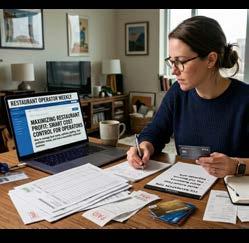
Navigating Credit Card Fees and Tips: Saving Your Business Money
As the landscape of dining shifts further toward a cashless economy, restaurant and lodging operators are increasingly feeling the squeeze of credit card processing fees. One common question we receive at the South Carolina Restaurant and Lodging Association is: “Can I legally deduct the credit card processing fee from an employee’s tip?”
The short answer is yes. However, staying compliant requires a clear understanding of both federal Fair Labor Standards Act (FLSA) guidelines and the South Carolina Payment of Wages Act.
The Federal Standard: The Proportionate Rule
Because South Carolina does not have specific state legislation prohibiting the practice, we follow the U.S. Department of Labor (DOL) standards. Under federal law, an employer may subtract the cost of the credit card processing fee from an employee’s tip, provided:
1. It is Proportionate:
You can only deduct the percentage that applies to the tip itself. For example, if your processor charges a 3% fee, and a guest leaves a $20 tip on a $100 bill, you may deduct 3% of the $20 ($0.60). You cannot deduct the 3% fee for the entire $120 total from the employee’s tip.
2. No Profit to the Business:
The deduction must strictly cover the actual cost of the transaction. If your processing fee is 2.5%, you cannot deduct 3% and keep the difference for "administrative costs."
3. Minimum Wage Protection:
The deduction cannot result in the employee’s hourly earnings falling below the federal minimum wage ($7.25 per hour).
The South Carolina Requirement: Notice and Transparency
While federal law allows the deduction, the South Carolina Payment of Wages Act dictates how you must communicate this to your staff. Transparency is the best defense against wage-and-hour disputes.
New Hires: If you have this policy in place, it must be disclosed in writing at the time of hiring.
Existing Staff: If you are implementing this policy for the first time, you are required by state law to provide at least seven days’ written notice to all affected employees before the change takes effect.
Best Practices for Your Operation
Before making this change, consider the impact on your workplace culture. While these fees add up for an operator, the deduction can be a point of friction for front-of-house staff. If you decide to move forward:
Update your Employee Handbook: Ensure the policy is clearly outlined and signed by all employees.
Show the Math: Be prepared to provide documentation of your credit card processing rates if an employee or the DOL requests it.
Consistency is Key: Apply the policy uniformly across your entire service team to avoid claims of unfair treatment.
As always, the SCRLA is here to help you navigate these regulatory waters. Staying informed not only protects your bottom line but also ensures a fair and transparent environment for your team.
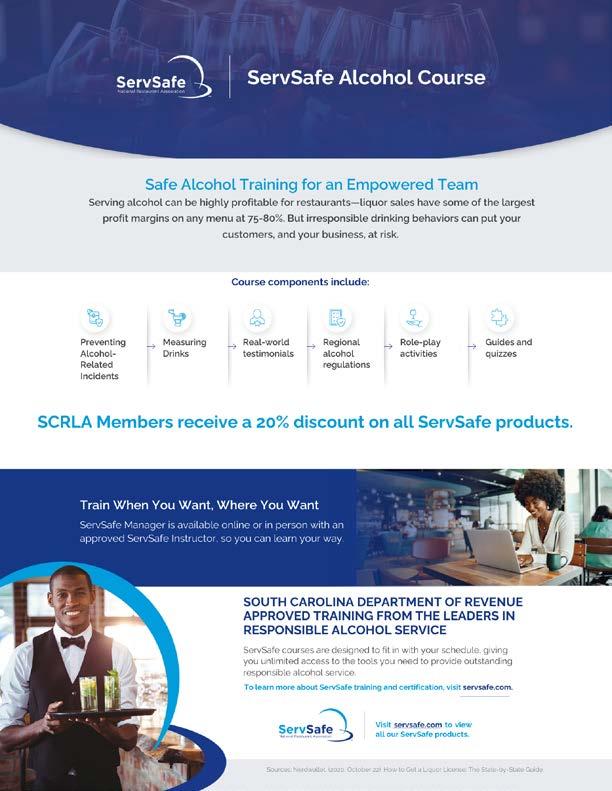
Mandatory Alcohol Server Training and Your UI Rate: What You Need to Know
With H. 3430 now in effect, the hospitality industry is navigating a new era of compliance. While the new law’s primary goal is to lower liquor liability insurance costs and improve safety, it has introduced a practical dilemma for operators: What happens to your unemployment insurance (UI) rate if an employee fails the mandatory server training and must be terminated?
To answer this questions, the SCRLA reached out to the SC Department of Employment and Workforce to help members navigate this answer. Under South Carolina law, any employee serving alcohol for on-premises consumption (and their managers) must complete an SCDOR-approved training program. While the official enforcement deadline has been extended to May 1, 2026, many members are already preparing their teams.
The "Fact-Specific" Nature of UI Claims
If an employee is unable to pass the required exam after multiple attempts and no other non-alcohol-serving positions are available, their termination is technically a legal necessity. However, the Department of Employment and Workforce (SCDEW) views that separation for UI purposes depends heavily on the specific facts of the case.
1. Discharge for Inability (Potential Rate Impact)
South Carolina law generally protects employees who are discharged for "substandard performance due to inefficiency, inability, or incapacity." If an employee makes a genuine, documented effort to pass the exam but simply lacks the capacity to do so, they will likely be eligible for benefits. In this case, the employer’s UI account would be charged.
2. Discharge for Cause or Misconduct (Potential Rate Protection)
If the employee is terminated because they refused to participate in the training, failed to put forth meaningful effort, or willfully disregarded the requirement, the separation may be classified as "misconduct" or "cause other than misconduct." Under these circumstances, the claimant may be disqualified from receiving some or all benefits, which could protect your UI tax rate.
Proactive Steps for SCRLA Members
To put your business in the best position during a SCDEW audit or dispute, we recommend the following:
● Maintain Paper Trails: Keep detailed records of every training session provided, the number of exam attempts, and any remedial help offered to the employee.
● Update Job Descriptions: Ensure your employment agreements and handbooks explicitly state that maintaining valid SCDOR alcohol server certification is a mandatory condition of employment.
● Document Reassignment Efforts: If you attempt to move the employee to a different role (e.g., host or kitchen staff) to avoid termination, document the offer and the outcome.
We’re committed to helping your business be successful through our People, Products, and Platforms. With new capabilities, better value, personalized offers, unparalleled product assortment, trusted expertise and innovation — we have all the tools you need.
On May 19, the South Carolina Restaurant & Lodging Association is taking over Topgolf in Charleston, Greenville, and Myrtle Beach simultaneously for a three-city showdown where the stakes are high and the leaderboard is global . You aren' t just playing the people in the bay next to you you're playing the entire state.
Is the Lowcountry leading? Is the Upstate taking over? Or is the Grand Strand clearing the field?
Score high, climb the virtual leaderboard, and claim total bragging rights for your city.
Secure your spot before the field is full .
Reach out to Hank Davis at hank@scrla org or 803-7660067 to secure your spot today.