


Scouts, welcome to The Phoenix Challenge 2026!
This is it - the ultimate scoutcraft and programme challenge where patrols from all over the country will come together to test their skills, push themselves, and prove what they’re capable of. This challenge is about teamwork, leadership, adventure, and having an unforgettable weekend with your patrol.
This year, you are invited to step into the boots of legendary Irish explorer Tom Crean in our theme: Tom Crean and the Lost Journal. Inspired by Crean’s extraordinary journeys of endurance, courage, and determination, your patrol will uncover fragments of a long-lost expedition journal. By piecing together clues, overcoming challenges, and forging your own story of adventure along the way, you will follow the footsteps of Tom Crean.
Just as Crean relied on his team in the harshest conditions on Earth, success at the Phoenix will depend on your patrol’s ability to work together, think creatively, and rise to every challenge presented. From campcraft and cooking to problem-solving and exploration, every element of the weekend will test not only your skills, but your spirit.
Throughout the event, your patrol will create its own record of the journey, capturing experiences, challenges, and achievements in a way that reflects your unique adventure. Like the explorers before you, the story you write will be one of teamwork, perseverance, and discovery.
So prepare yourselves. The journal has been lost. The story is waiting to be found. And your adventure begins now.
Yours in Scouting,
Michaela Fitzgerald | Shane Cusack Phoenix Challenge Event Leads


Thursday August 13th to Sunday August 16th 2026

Castle Saunderson International Scout Centre, Cavan, H14 X650
Patrol - €800
Scouter (Staff & Accompanying) - €85
1 July 2026 st County Confirmation Form
Patrol Application
Wildcard Application
Alternative Entry Routes Application
Staff Application
To take part in The Phoenix Challenge 2026, each team must consist of a patrol of 8 scouts and must meet all of the following criteria.
These must be confirmed by the relevant County Commissioner or County Programme Co-ordinator:
Age and Registration
All participants must be registered Scouts and must be 15 years old or under on 1 April 2026. Patrols with over age members will be disqualified.
County Qualifying Event
The Scout Section entering must have competed in their Scout County Qualifying Event for 2026.
Annual Camp Requirement
The Scout Section must have completed an annual camp of at least 4 consecutive nights during the 2026 camping season.
Most teams enter the Phoenix Challenge by qualifying through their County Qualifying Event.
County places are now based on the number of patrols that participate in the County Qualifying Event, not the number of groups or sections in the county.
Important: A maximum of one place can be allocated to any single Scout Group or Scout Section.
Counties may apply for one additional place for a Combined County Patrol, with the following conditions:
The patrol must contain Scouts from at least two Scout Groups. Membership must be proportionally balanced based on the number of groups represented.
(E.g., if two groups combine, each should supply roughly half the patrol.)
At least one of the groups in the combined patrol must NOT have attended the Phoenix Challenge in the last 3 years.
Every group represented in the patrol must have attended their County Qualifying Event.
Wildcard entries may be issued, as was the practice in 2024 & 2025.
Wildcards may only be awarded to Scout Groups or Scout Sections that: have not participated in the Phoenix Challenge in the previous three years, and meet the general entry criteria listed on page 4.

Every Team who enters The Phoenix Challenge will have the opportunity to achieve a maximum of 10,000 points. Over the course of the event, tasks, challenges, and standards will be assessed to determine the standard of a particular patrol.
The breakdown of marks is as follows:
There are four award standards for the Phoenix Challenge:




Gold Standard awarded to patrols achieving between 80% and 100% inclusive of the overall marks. Each patrol member will be awarded a Gold Standard Phoenix Challenge Badge to wear on their uniform.
Silver Standard awarded to patrols achieving between 65% and 79% inclusive of the overall marks. Each team member will be awarded a Silver Standard Phoenix Challenge Badge.
Bronze Standard awarded to patrols achieving between 30% and 64% inclusive of the overall marks. Each team member will be awarded a Bronze Standard Phoenix Challenge Badge.
Participation Award awarded to Teams achieving up to 29% of the overall marks. Each team member will be awarded a Participation Badge to wear on their uniform




Environmental Award
Entrepreneurship Award
Logbook Trophy
Cooking & Eating Trophy
Campcraft Trophy
Skills Bases Trophy
Leadership Award






The points achieved by each patrol will not be announced during the awards ceremony.
Besides those listed, no additional places will be announced.
A print out detailing the Patrol’s score will be available after the award ceremony.
3rd place will be announced, and the 3rd Place Trophy presented
2nd place will be announced, and the Runner Up Trophy presented
1st place will be announced, and The Phoenix Challenge Trophy presented
The timetable below provides an overview of the event. Each team will receive a more detailed timetable in their patrol handbook.
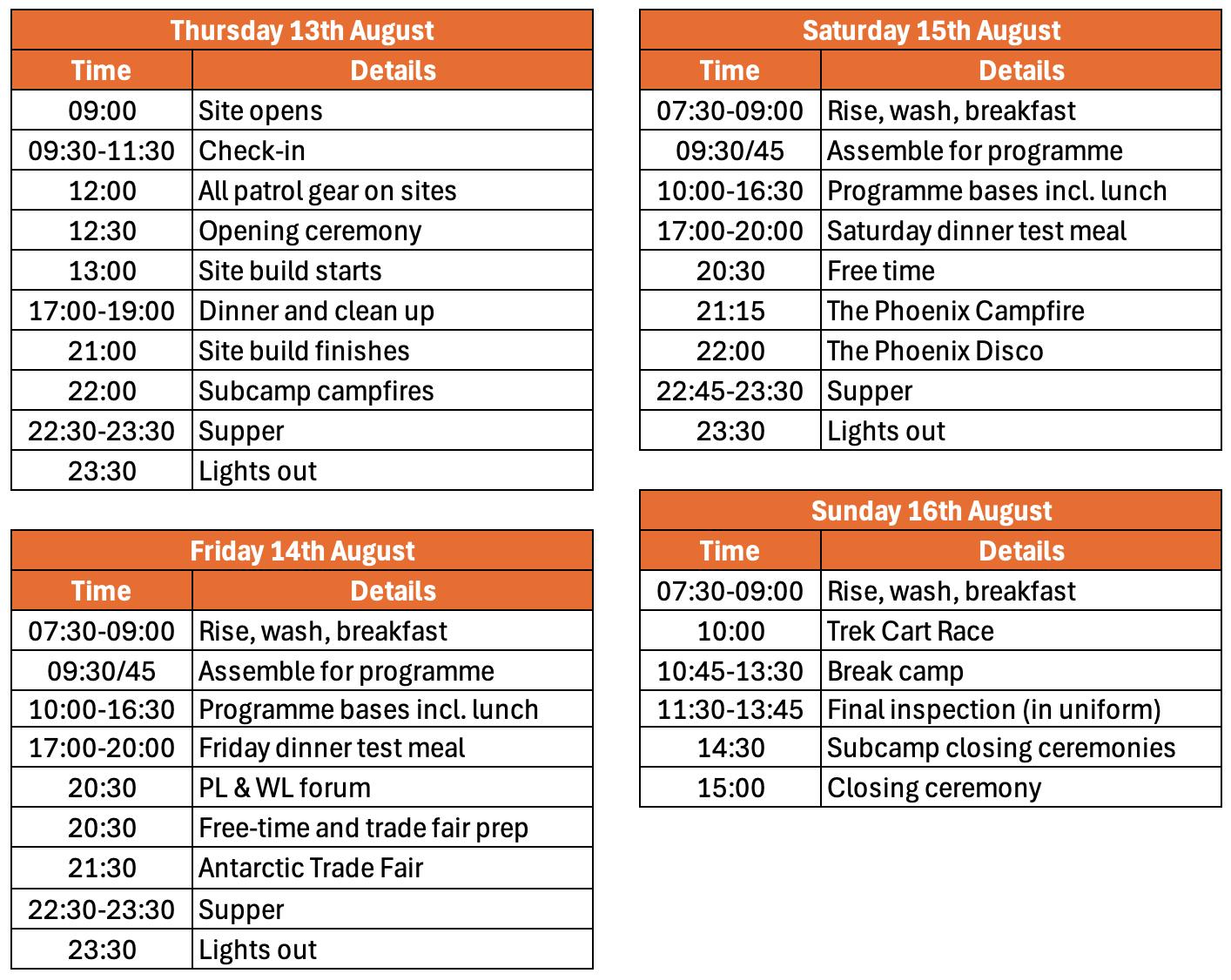

These timings are a guide and are subject to change both pre and during the event
Tom Crean’s stories are legendary. However, several parts of his personal journal are missing! These missing pieces contain vital information that is needed to continue his journey through the endless plains of snow and ice on the continent of Antarctica.
Tom Crean's story begins in Annascaul, County Kerry, and stretches across the globe through Dangerous Seas to the icy landscape of Antarctica. Through the Discovery, Terra Nova, Endurance and Polar programmes, you have developed skills and knowledge that will guide you on your own journey.
Now, following in the footsteps of Tom Crean and his crew, you will work together as a team to face challenges, complete tasks and push your patrol to new limits on this adventure.
Tom Crean was a hero who accomplished the impossible. Utilise the skills you have acquired through your time in scouting to uncover the missing parts of his journal. Skills you have learned through the implementation of the One Programme and your reading of the Scouting Trail. These tasks will test your patrols leadership, teamwork and problem solving abilities.
To prepare patrols should practice:
Working together.
Taking initiative while on bases.
Respectful to each other and other patrols.
Using the strengths of all patrol members.
Making sure all the patrol members are involved and engaged.
Good communication and each patrol member pulling their weight.
Evaluation, decision making & communicating to your patrol.
The PL/WL directing the patrol throughout the task.
Delegating and keeping everyone involved.
The PL/WL keeping an eye on their patrol to ensure they are motivated, hydrated, protected from the elements/risks and happy.
Ensuring principles of Leave No Trace are followed while on the base.
The PL/WL ensures the time is managed to aim to complete the task. Patrols should be at their bases at the designated times.
Don’t panic and do your best.
To help you uncover the missing parts of his journal here is a list of equipment you will need:


Important
Please note that all equipment, uniforms, trade fair, trek cart and fold out table must be stored on your site for the duration of the event
On Thursday evening, patrols will assemble at their Subcamps for an enjoyable campfire led by their subcamp team. This provides an opportunity to unwind after a long day of hard work, form new friendships, and learn the famous subcamp chants!
On Friday evening, after dinner, the hard-working patrol/watch leaders will get the opportunity to take a break from guiding their patrols and meet with the Chief Scout, where they will get a platform to discuss topical issues, socialise with other PLs and give their feedback and opinions on the event and aspects of scouting.
On Friday night, patrols will have the opportunity to showcase their hidden talents! Just like Tom Crean and the Antarctic explorers, who may have engaged in pastimes like whittling, knotting paracord or playing games to shorten the long winter evenings, patrols can show off their skills in areas such as these.
Patrols will be given an approximately 2m x 3m space to bring in their trek cart, a folding table and anything else they may need to setup their stall. Marks will be available for participation, creativity, and incorporation of the theme. A reminder that the Entrepreneurship Award goes to the patrol with the best trade fair stall.
On Saturday evening, patrols will experience the traditional Phoenix Campfire under the backdrop of the scenic Castle Saunderson. All the patrols will assemble together for the large campfire, where they will get the chance to learn songs, sing them, and experience the incredible atmosphere at the Phoenix Campfire.
On Saturday night, patrols can party the night away like Antarctic explorers returning home from an expedition. The disco is a chance to unwind and socialise after their incredible achievement over the weekend.
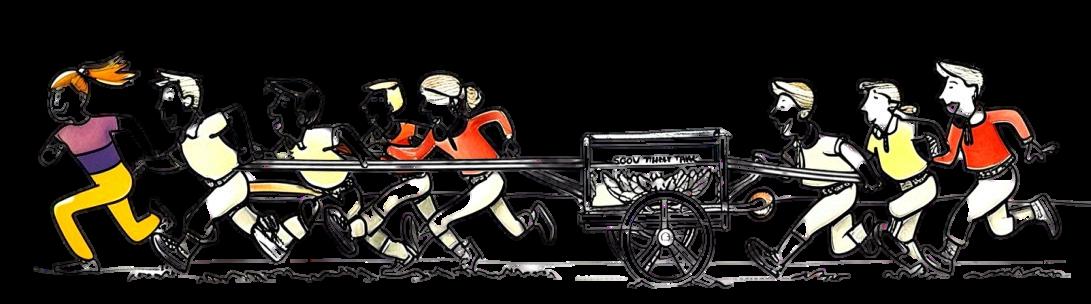
On Sunday, patrols will complete the annual trek cart race. Just like Antarctic pioneers hauling sledges, patrols will push or pull their empty trek carts around a challenging track. Please note that no marks are awarded for the race. Marks, however, will be awarded to patrols that have suitable trek carts, which are practical for their primary use over the weekend: transporting equipment, food and waste over uneven ground.
On Sunday morning there will be the annual Trek Cart Race, however, the Primary use of your trek cart over the weekend is transport of team equipment, food and rubbish. It is important that your trek cart is in working order and Patrols should have some basic tools, spare parts and some knowledge to service their trek carts if needed. Below is a resource based on the recommended Trek Cart for the event.
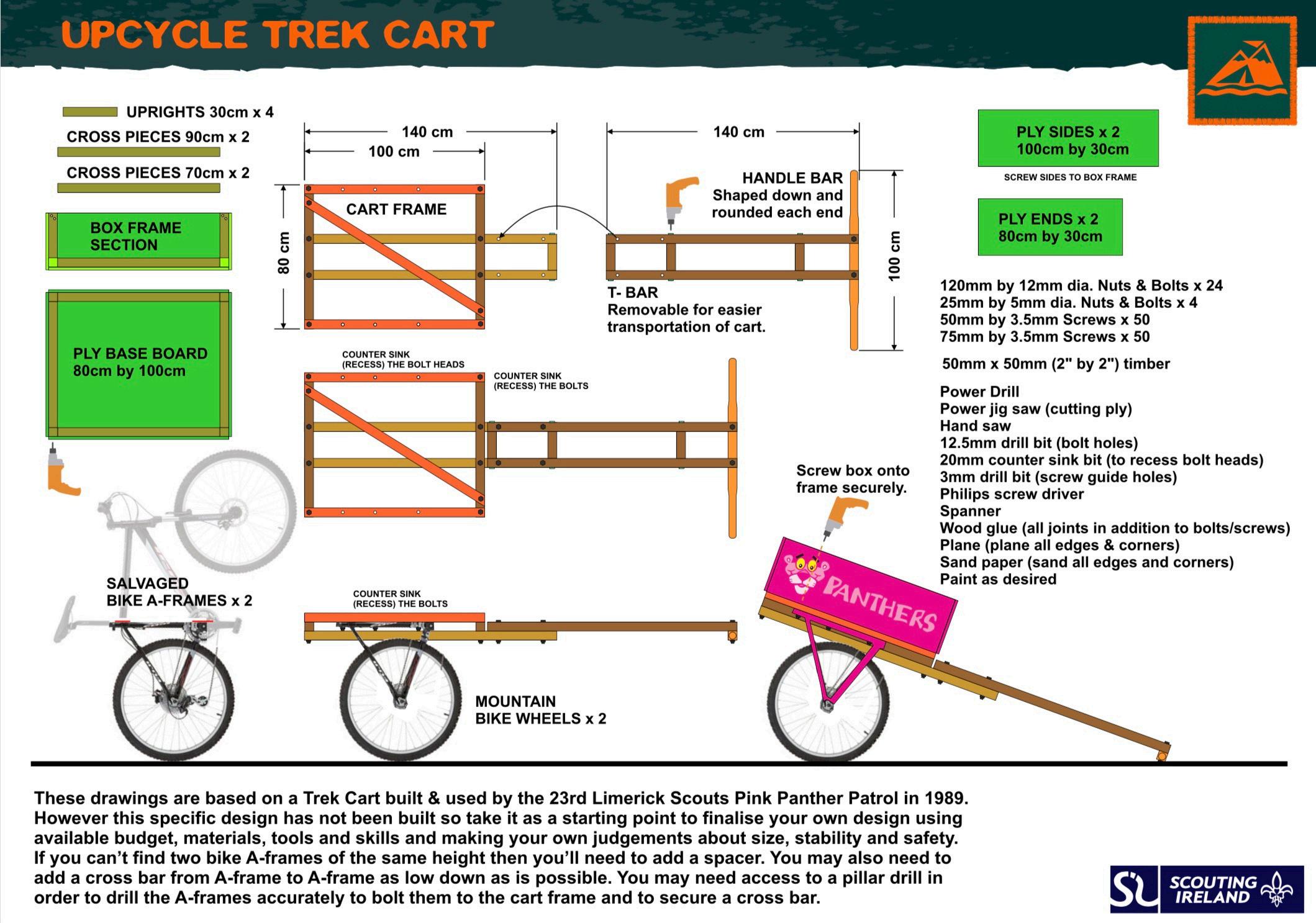
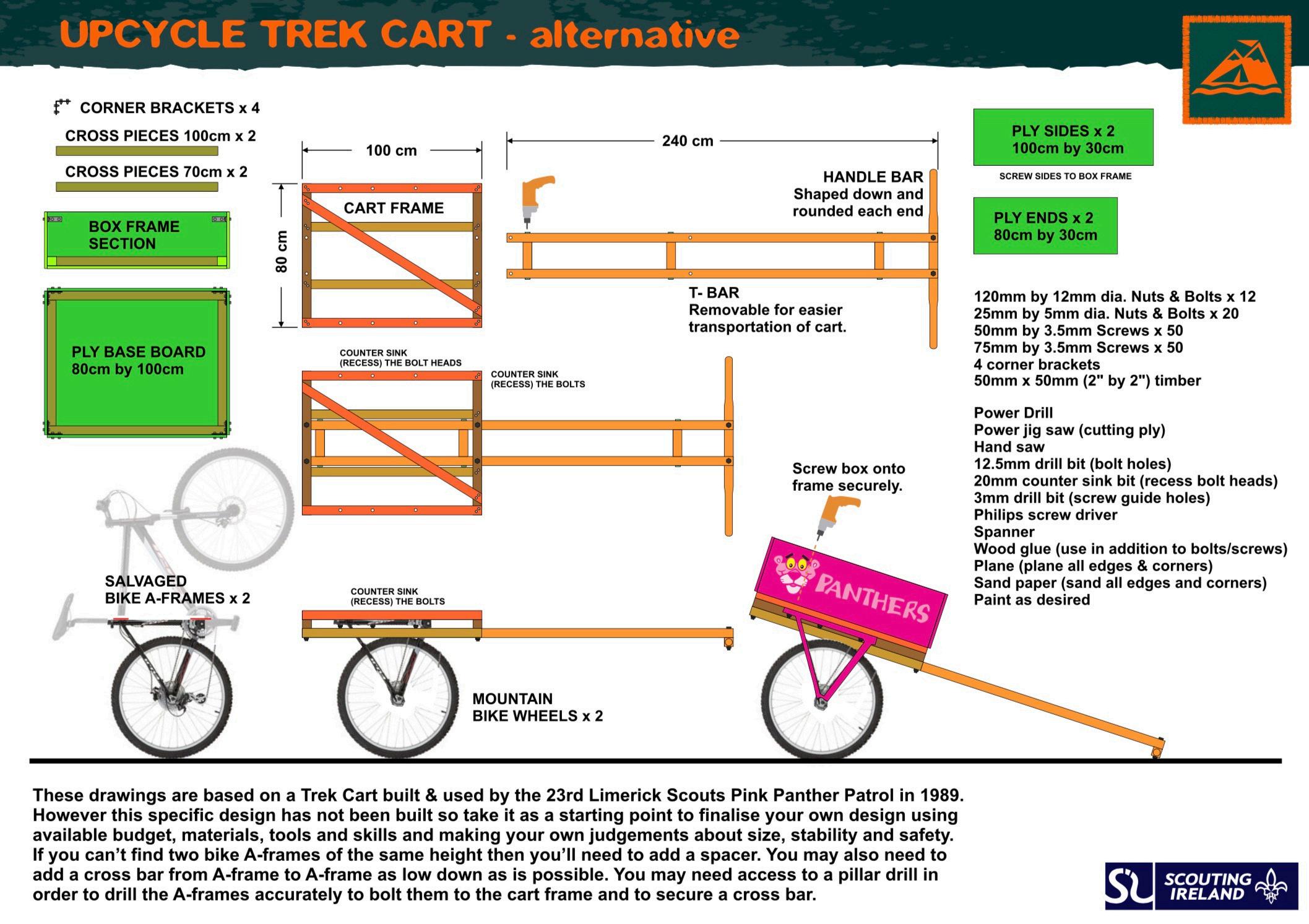
Important points:
The site size is approx. 169 square metres for all patrols (approx. 13m x 13m). Sites will be marked out in advance, and patrols should not alter their allocated site. The team will do their best to ensure sites are square, but this may not be possible in all cases.
The position of the altar fire will be dictated, at either the front left or right corner of your site. Patrols need to be prepared to flip their site layout.
Sleeping tents may be of any type. However, there is a requirement to have at least one Icelandic-style tent on site. This can be a sleeping tent or a store tent.
Each patrol must supply all their own equipment for the event. No equipment or timber poles/spars will be supplied to participating patrols.
All site contents need to be within the boundary of the site.
For 2026, a gate is not required on site. Instead, patrols will be required to build a flagpole. This flagpole must have the ability to raise and lower the flag (this must be demonstrated). Further requirements detailed in the flagpole criteria.
Patrol uniforms must be stored on site at all times. Uniforms are to be stored in a clear plastic box in an appropriate area on the site.
Gadgets may be free standing or driven into the ground, however, free standing is recommended due to the hardness of ground at the site.
All lashings will be assessed for appropriate type, neatness and tightness.
It is possible to combine several gadget functions into one gadget with separate sections, instead of having all required gadgets as standalone. This can allow patrols to simplify their gadgets to what best suits their needs. If patrols decide to build individual gadgets, this is also acceptable.
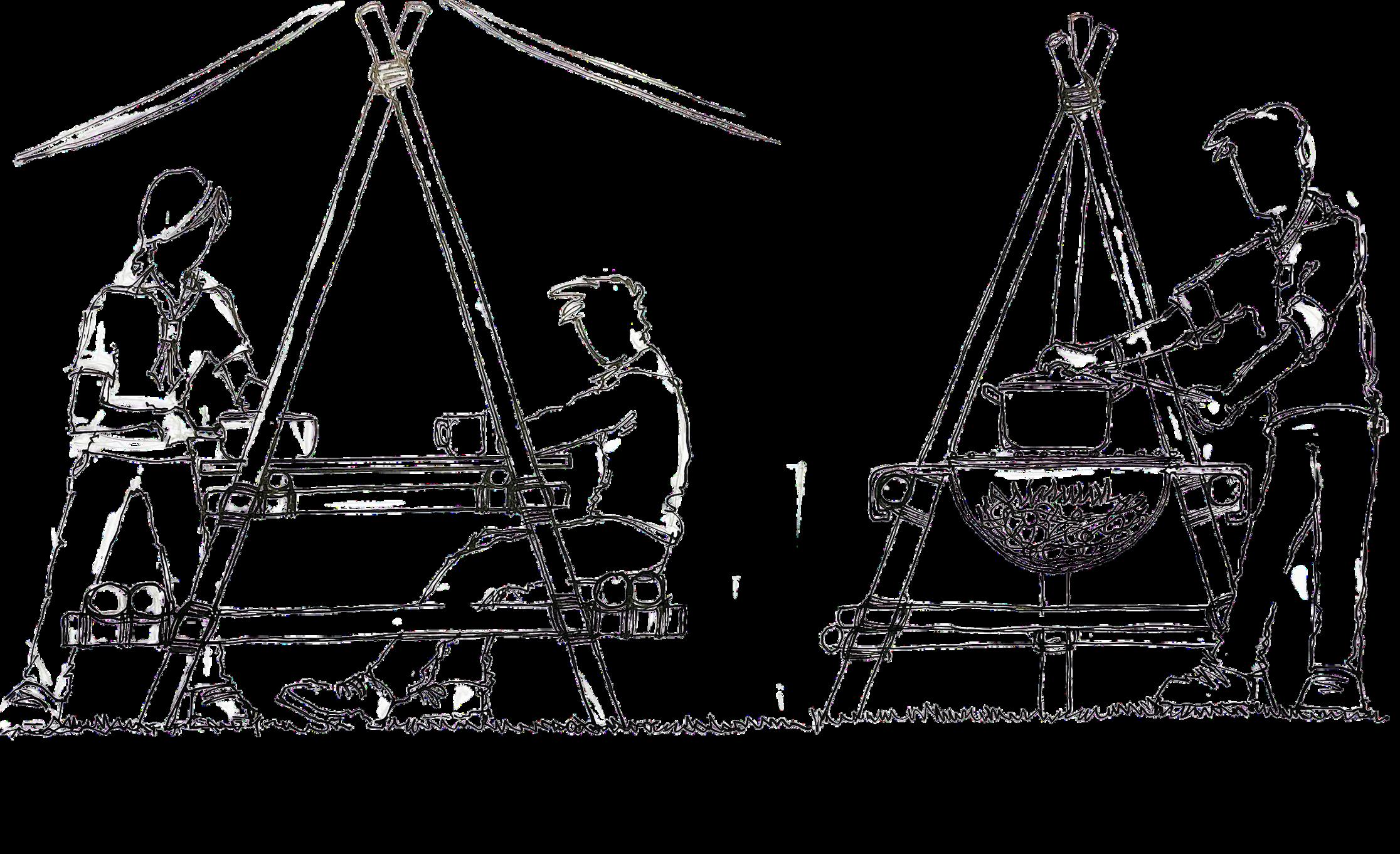
Tripods & Quadpods: Should be braced as low to the ground as possible. Use spars on all sides for support, or a T-bar bracing in tripods, and a diagonal X brace in quadpods. Braces should not stick out more than 15cm.
If a patrol chooses not to pitch a Store Tent or Shelter, provision to store food and other items should be provided for in the Dining shelter. Food should not be stored in the open and not in the sleeping tent(s).
Hygiene & Tidiness: Will be assessed in all areas (tents, boxes, tabletops, etc.) and at every inspection. The site and all patrol gear should be kept tidy and organised.
Safety: Will be assessed in all areas (patrol site build, tool storage, food storage, gadgets construction) and at every inspection. A first aid kit should be easily accessible if the team is onsite. All teams should have a designated first aider.
Good teamwork, leadership and planning is important for site build and a functioning patrol site. This will be assessed.
Gear on site: All gear required for the entire weekend must be on site on Thursday, and stored on site when not in use for the duration of the event. Marks will be allotted accordingly.
If patrols are using more than one gas cooker, they must bring more than one gas bottle (i.e. Two cookers = two separate hoses and two gas bottles).
Fire Point: A clearly defined fire point must be present on your site. This does not need to be a gadget. The location of the fire point is important: it should be central but not impeding access to the site of other gadgets. The fire points must contain a minimum of 1 x water bucket, 1 x sand bucket (covered for protection), and a fire blanket.

Prior to the Opening Ceremony, patrols must have all their equipment laid out next to or inside the boundary of the site (you will be directed where to lay your equipment). There must be no marking of gadget/tent locations on the site before the event starts.
Patrols are allowed to have the different gadgets bundled together, colour coded for identification, etc, upon arrival.
A wastewater treatment facility needs to be provided on patrol sites.
All holes (from boundaries / pegs) must be filled in for final inspection.
Protection of the fire gadget should be done with mud or suitable alternative. Tinfoil is not allowed but re-usable self adhesive aluminium tape is acceptable.
Fire barrels are to be safe and suitable for the job intended. If your Patrol's altar fire is deemed unsuitable for use by the Campcraft Support Team, you will be instructed to cook on gas.
Teams should incorporate the event theme where possible into the design and decoration of their site. The site noticeboard and flagpole are examples of where the theme could be incorporated.
Supporting gadgets with guy lines is not allowed, however, they can be used for the Flagpole if required. If used, they must not cause an obstruction or trip hazard.
No prefabricated gadgets, or tying of lashings in advance of the competition.
Fire extinguishers are banned on patrol sites. A fire blanket and buckets of sand and water should be provided instead.
The cutting of sods is not allowed. Fire trays must be used on Altar Fires. Refer to altar fire details.
Between the hours of 11:00pm and 7:30am there is to be no site work, i.e. no retying of gadgets/lashings.
The use of clingfilm or tinfoil to cover cooking equipment such as pots and pans is prohibited, and marks will be deducted for use of same. This also applies to protection of the altar fire.
Boundary
EquipmentStorage
NoticeBoard
WasteWaterSystem
WoodpileandChoppingArea
SiteLayout
WoodandWaterAvailability
FirePoint
Uniform
SustainabilityPractices
IncorporationofTheme
SafetyandHygiene
PatrolLeadershipandTeamwork
Further information is found below per item, or in ‘Important Points’ on pages 34-36

Poles, pegs, and guy lines are correct for tent type and used correctly. Tent is pitched correctly, and prevents water ingress.
Doors should be closed when patrols are off site and tents not in use.
Interior clean and tidy, personal gear packed away, gear away from tent walls.
Groundsheet rolled back during the day if possible.
Patrols will need to demonstrate their ability to brail icelandic tent doors correctly.
Poles, peg, guy lines are correct for tent type. Shelter pitched correctly.
Adequate cover for the entire patrol, protected from the elements, and with ease of access.
The store can be any type of tent or a separate shelter from the dining area. If combined with the dining shelter, it will only count as a dining shelter, not a store. Poles, pegs, and guy lines are correct for tent type and used correctly. Tent was pitched correctly, and prevents water ingress.
For store tent: tables, boxes, and gadgets etc, should not be leaning or rubbing against the walls of the tent.
For store shelter: tables, boxes, and gadgets etc, should be stored towards the centre as opposed to along the sides, to ensure protection from the elements.
Safe and appropriate height of the fire tray, and fire tray secure.
Spars supporting fire tray should be protected (NOT tinfoil).
Fire barrels should be cleaned out for the final inspection only, and at a designated area. Teams are not required to dispose of ashes daily / after every use.
Fire barrels are to be safe and suitable for the job intended. If your fire barrel is deemed unsuitable for use, you will be instructed to cook on gas.
If the method of construction of an Altar Fire gadget is deemed unsafe, you will be instructed to cook on gas. Patrols will be given the option to alter/rebuild the gadget if they so wish where time permits.
Dresser
Gadget design and use of traditional scout materials in the build (e.g. plate racks from timber etc).
Being used for the intended purpose (leave the pots and plates on it)!
All items off the ground and no cling film or tinfoil protecting equipment.
Food Prep Table
Appropriate height of the work surfaces, and a large enough space for food prep.
Storage Gadget
Must be a pioneering structure (must have lashings), and be functional.
Items need to be stored clear off the ground.
If built in a tent, position to ensure it does rub off and damage the walls of the tent.
If built in a shelter, position to ensure protection from the elements.
Patrol Wash Stand
This can be a separate gadget to the dresser for utensil washing, or combined with another gadget.
Appropriate height of the basins, and a minimum of 2 basins for wash-up.
Water containers are stored on the gadget
Table and Seating
All Scouts can comfortably at the table, under shelter.
The table should be an appropriate height and in accordance with the seating.
Tabletop should be a flat piece of wood and secured to the gadget, so it doesn’t move.
Boundary
Correct knots: round turn and two half hitches are used to start and finish, and the clove hitch or the marlin spike are used on the intermediate boundary poles.
Boundaries taut, poles in line and rope at approximately scout waist height
Bins
A gadget is required for waste management, which must include 3 bins (not just bin bags!) for General Waste, Compost and Recycling. Correct use of bins will be assessed.
See cooking & eating / waste management sections in this pack.
It should comprise of a 2-layer filter. The first layer can be a
to remove solids. The second layer should be sand to remove grease. T should be emptied after every meal. The top filter should be cleaned /
The wood pile does NOT need to be a gadget, but fire wood should ground and covered so that it is protected from the elements. Fire wood should be graded by size, and may be stored in the sto required.
Patrols must have a Chopping Area. This must include a boundary, g Chopping block, with sufficient size to work in (suggested size 2m x 2m
The Chopping area should be cleared of chippings after use.
Site Layout
Gadgets position, usability, and walkway space will be assessed. All tentage should be the furthest point from the fire; this includes an awareness of other patrols’ tents.
Wood and Water Availability
There should always be ample water and firewood on site. You will need enough fire wood to light, maintain and cook 2 evening dinners, including hot water for wash-up.
Uniform
Full Scouting Ireland uniform is required: trousers, shirt/sea scout jumper, belt, group neckerchief and woggle (uniform for whole patrol). Uniform should be neat and tidy.
Scouts should have badges on display:
Spirit of Adventure / Crean Award
Adventure Skills
Black shoes or hiking boots with navy or black socks.
Sustainability Practices
Patrols should try where possible to construct and live on a sustainable campsite
Inspections
There will be 9 inspections from the campcraft team over the weekend.
2 inspections will take place during the Thursday site build:

Thursday Progress: after a few hours of site-build. Patrols should have sleeping tent(s) and dining shelter complete. All equipment/gear should be stored on site and a first aid kit accessible. The site should be a safe working area.
Thursday Evening: after dinner, nearing end of site-build. Completed altar fire, table & seating, storage gadget and all tentage. Provision for waste disposal, fire wood and water. All equipment/gear should be stored away in an organised manner.
All other required items will be assessed throughout the weekend.
Final Inspection: Site returned to pre-event state. All equipment (patrol and personal) clean, tidy and packed away safely. Scouts must be in uniform as per above. Patrols should have eaten their lunch.
This year, some food will be provided by the Phoenix event team, while Patrols will also bring food for some of the meals. As a patrol, you will create part of your evening meals by bringing and preparing your own choice of Starters and Desserts. However, you will NOT know what your main course is going to be for each meal until the day.
Patrols will get to design Saturday's main course from ingredients that will be provided to them. So start having fun, get creative and remember to keep the theme at the forefront of all your planning! Full details of what is required to be brought are set out below.
When choosing foods, it is important to incorporate all patrol members' preferences and dietary requirements into your choices so that everyone can enjoy a balanced meal. Patrols will be assessed on:

Planning (defined roles for food prep, cooking and wash-up), Good Time management and Teamwork.
Safe use of different cooking methods; gas cooker, trangias and the lighting/ maintaining/extinguishing of an altar fire - using protective gloves when needed.
Following a given recipe and/or creating a meal from all the ingredients provided, creativity of prepared meals, and sitting down to eat meals together as a patrol.
Planning and being familiar with their menu for the weekend, while catering for the tastes and dietary requirements of the patrol members. Adequate fluids for hydration.
Execution of the different courses for the dinner meals.
Correct use and adequate quantities of equipment and cleaning supplies on site (as per the lists found in this info pack).
Food storage; separate and easily identifiable storage for perishable vs. nonperishable food items.
Good hygiene practices for self, equipment and surfaces including availability of hot and cold water. Think ‘clean as you go!’ across all areas used.
Segregation and disposal of water and waste water correctly.
Safe and correct practices for using an axe and saw, including safe storage with covers when not in use.
Sufficient wood, fuel and water on site and protection of same from the elements.
The Cooking and eating team will visit sites once a day and will be looking at the above elements as well as teamwork and the overall meal being served. Your patrol does not need to provide a full portion of any meal for the markers, only a small amount to taste.
Day/Inpection
Details
Inspection 1 - Thursday General Inspection and Thursday Dinner
Inspection 2 - Friday During Dinner - 2 Course Meal
Inspection 3 - Saturday During Dinner - 3 Course Meal
Inspection 4 - Sunday During Breakfast and Lunch Prep
Please read this section carefully
Each patrol must set out all dietary requirements that the patrol has. The event will provide alternative substitutes for common dietary requirements that are indicated to the cooking and eating team prior to the start of the event.
If a patrol member(s) has complex dietary needs/allergies, this must be specified to the team and included on the activity consent form. Every effort will be made to cater for them, however this patrol member should bring sufficient alternatives with them for the whole weekend, eg gluten free bread, plant based milk etc.
This meal will consist of a main course, and will be cooked on gas. Food and recipe fully provided by the Phoenix team.
This meal will consist of a Main Course and either a Starter or Dessert. You will choose, design and bring all ingredients for your chosen Starter or Dessert which must be fully prepared on site. The Phoenix team will provide the main course. This meal will be cooked on fire.
This meal will consist of a Starter, Main Course, and Dessert. You will choose, design and bring all ingredients for the Starter and Dessert, and the Phoenix team will provide the main course. All elements of your chosen dishes must be prepared on site. This meal will be cooked on fire.
For Saturday's main course, the Phoenix team will provide the main ingredients but you will choose the meal! Your Patrol will be given a variety of ingredients, including a protein, carbohydrate and vegetables that are suitable for all patrol members. Your patrol will be then be able to design your own main course from these ingredients. While the Phoenix team will provide the staple items, your patrol is welcome to add any other non-perishable, shelf-stable ingredients such as spices, tins etc. to complete your chosen recipe. You will not know what is being provided until the day, however, all items will be common, versatile foods that scouts are familiar with cooking. All ingredients provided must be used in your chosen recipe.
You will have the choice of following the basic recipe provided by the Phoenix team. However, those patrols that make an effort to design your own recipe will be rewarded.
This meal will consist of an unknown main course element. All ingredients and recipe will be provided by the Phoenix team.
The main component will be provided for Friday, Saturday and Sunday lunches. This will either be cooked or non-cooked, with patrols required to bring 2 working Trangias in good condition and sufficient fuel. These trangias can also be used on programme bases. Ingredients and recipe provided by the Phoenix team. The patrol can supplement this with fruit and non-perishable snacks. With the exception of Sunday Lunch, these will NOT be marked.
For some meals your patrol will be given the option to request either the vegetarian or meat-based menu. If you choose the vegetarian option, you will be provided with vegetarian ingredients for the entire patrol for the whole weekend. Meal Details
Thursday Dinner 1 Course
Friday Lunch Partially Provided
2 Courses - unknown main provided. Starter or Dessert brought by patrol
Saturday Dinner
3 Courses - unknown main provided. Starter and Dessert brought by patrol
Sunday Breakfast Provided, unknown to patrol
Please ensure the ingredients you bring are suitable for all patrol members dietary requirements!
Minimum Required:
Patrols are welcome to bring additional pantry staples to enhance their meals, such as salt & pepper, condiments, flour etc. However, these are not a requirement for any meal.
Storage
Water Container
Food storage boxes with lids
Minimum 6 iceblocks marked with group name, frozen
Cooler Boxes x2
The iceblocks from Thursday evening will be replaced daily from event freezers, patrols should keep their own iceblocks from Thurday.
Waste must be divided into:
1.Recycling: Put straight into a waste bin without a bin bag.
2 Compost: Dispose into a container lined with a bio-degradable bag.
3.General Waste: Put in a waste bin lined with a transparent plastic bag.


Food Scraps, peelings, leaves, grass, tea bags, sisal and contaminated paper
Everything else you cannot put in your recycling, compost or glass bin.
Waste Water Waste water must be filtered and have no solid waste in it. This will be inspected during the weekend.
Leave No Trace! This year there is an emphasis on little to no waste. Remove & recycle excess packaging at home if possible.
Use up left over non-perishables etc from camps prior to the Phoenix, while ensuring you have what you need for the weekend.
Consider the environmental impact of your menu during your planning.
Patrols are responsible for managing the waste they generate, and all waste must be stored on your site.
Pay particular attention to managing food scraps & waste so that it doesn’t spill. Don’t over-fill biodegradable bags. Ensure waste is carefully scraped into biodegradable bags, not onto the outside of the bag or on the ground.
At set times you will bring your separated waste to the Waste Management Area to be inspected. You will then be directed to dispose in the relevant large bin.
Patrols that do not separate & manage their waste and waste water correctly will be penalised.
This year’s Phoenix Challenge is inspired by the life and expeditions of the legendary explorer Tom Crean.
Patrols are challenged to take on the role of an expedition team, documenting their journey across the weekend as if they were exploring the harsh and demanding conditions faced by Crean in Antarctica.
The focus should be on teamwork, resilience, adventure and storytelling, reflecting the spirit of Antarctic exploration.
The logbook will be worth 600 marks in total and will be divided into 3 elements:
The main logbook should document your patrol’s journey across the weekend. Your logbook should show clear progression over the weekend, capturing different stages of your expedition. It should include but is not limited to:
Overall Log:
Patrol Introductions
Site Map
Patrol Profile of each Member
Link to theme
Creativity
Each daily log/account:
Date and Location
Menu
Overview of the Weather Pictures/Artwork
Overview of the Programme/Activities
Link to Theme

The noticeboard will form part of the overall logbook marking, recognising the creativity and effort involved. The noticeboard must include:
Patrol Introduction
Patrol Profile for Each Member
Site Map
Menu
Weather Forecast
Link to Theme
Patrols will complete a short PowerPoint presentation in advance of the event. The patrol needs to create the presentation and then record themselves giving said presentation. Further details of submission will be provided to qualifying patrols.
The presentation should include:
How did you qualify for the Phoenix, what entry route do you fall under Where did you go on summer camp and provide a brief summary of activities undertaken
Each Patrol member should introduce themselves and what their role is Details on the creation/construction of the patrol site noticeboard What training and preparation are you doing for this years event?
The presentation should be 4 to 6 slides long
The presentation should be a maximum of 2 minutes and 30 seconds, with any content delivered after 2 ½ minutes receiving 0 marks.
All patrols should be registered and have their gear on site for 12:00 noon.
Patrols should not arrive on site before 09:00 on Thursday morning.
A traffic management system will be in place, please respect and follow the directions of the volunteer stewarding staff.
You must park in designated areas only as directed
As with participants, patrol equipment should not arrive before 09:00 on Thursday morning.
Patrol gear should fit in one trailer/van and not split between multiple vehicles.
Patrol equipment should be transported on a trailer to the designated drop-off point. The logistics team will then transport the trailer to your designated site.
Trailers are expected to be roadworthy with a jockey wheel, a ball hitch, properly inflated tyres, a safety wire and not over laden for their intended capacity.
All trailers should have a laminated A4 sheet displaying your team's site number. Site numbers will be issued in advance.
Vans are prohibited from driving on site at any stage during the event.
Patrol equipment arriving in vans will be transferred to a logistics trailer at the designated drop-off point. Teams should allow additional time for this due to the limited availability of logistic trailers.
It is Strongly recommended that gear is transported via trailer as gear arriving later in vans may not make it onsite in time.
Registration of patrols that have qualified through their county qualification event, county combined patrols or through allocation of a wildcard place must be completed via my.scouts.ie. The registration deadline is the 1 July 2026. One accompanying scouter to register as part of the event booking. Teams will also need to fill in a separate patrol registration form via jotforms to confirm dietary choices etc.
Registration for additional adult and venture staff places will be a two step process, first through an expression of interest form and then registration once you receive confirmation of your place. Please note, not all staff who apply will be accepted due to staffing number constraints related to the venue. Groups are only guaranteed one staff place (their accompanying scouter). Further information on registration will be released to staff who are accepted onto the event.
The deadline for expressions of interest is the 14 June, no exceptions. All staff registering must be available for the duration of the event (13:00 Thursday - 16:00 Sunday). All staff will be allocated to a specific role and will be required for the whole event, from Thursday morning to Sunday afternoon. th
All staff/accompanying scouters will be camping on site. All staff will be required to complete an induction on Thursday afternoon. In-date vetting (adults + ventures) and safeguarding training (adults only) is mandatory and will be checked by Scouting Ireland. All staff will be added to a WhatsApp group prior to the event. This will be used for communication and broadcast purposes only.
Site Allocation will be emailed to all accompanying scouters of registered patrols preevent. You will require this for printing your trailer tag and for check-in.
These preferences as per the Cooking and Eating element of the event will be collected at the time of patrol registration. Please communicate your choices to your patrol and ensure they know if they are meat or vegetarian. This cannot be changed once submitted.
Access to the site will be controlled by the stewarding staff. Site is open from 09:00 on Thursday morning only. No participants should arrive before 09:00.
6. Check-in
Check-in is open from 09:30 to 11:30 on Thursday morning. The PL/WL and accompanying scouter should check-in together. Participating scouts should match the names registered via my.scouts.ie portal.
7. Activities Consent & Managing Medications Forms
A copy of fully complete activities consent forms is required for each scout participant and venture staff. These will be collected via email in advance of the event. Consent forms should be scanned and submitted in ONE PDF. Accompanying scouters should keep a copy for themselves also. Managing medications is the responsibility of the accompanying scouters, please talk to admin staff at check-in.
8. Uniform Requirements
Full and correct Scouting Ireland uniform must be worn at the Closing Ceremony only. Scouts are NOT required to arrive in uniform. Uniforms should always be onsite over the course of the weekend where they will be inspected.
9. Event Completion Time
The closing ceremony is scheduled for 15:00 on Sunday. Please note this is a guide, and may change. All changes will be communicated as soon as information is available.
10. Subcamp Staff
Your Subcamp staff team are there to help you - if you require any information on any of the activities over the course of the weekend, ask the staff - if they don't know the answer they'll find out. If you need anything, or have forgotten anything, see your Subcamp Chief.
11. Patrol Property
All property, both personal and patrol, is entirely the responsibility of the team members. No responsibility will be taken by the event team.
12. First Aid & Hospital Trips
The first aid team is composed of trained and experienced scouters. In the event a participant requires medical treatment, is it the responsibility of their scout group to cover any costs incurred. This can be claimed back through Scouting Ireland insurance via the normal channels. The accompanying scouter for each patrol MUST be available to accompany a participant to the hospital in such an event.
If, for any reason, the accompanying scouter expects that they will not be available for a period over the event, they should not register to attend this event.
Standard scout pen knives or fixed blade knives (e.g. Mora) are permitted with the following rules:
• NO carrying of fixed blade knives on your person.
• All knives must be stored in a patrol box or bag and taken out only when in use. Only one knife per patrol is permitted on bases.
Each site will be marked with a wooden board displaying the site number (e.g. R3) and group name. These signs are NOT to be removed under any circumstances.
Scouters are reminded to make sure the gas cooker used by the patrol in is good working order and that the hose linking the cooker to the gas bottle is within regulations:
No more than 5 years old and has no visible cracks or damage to it. Knobs should be checked to ensure that they work. If patrols are using more than one gas cooker, they must bring more than one gas bottle (i.e. Two cookers = two separate hoses and two gas bottles)
Otherwise, cookers will be deemed unsuitable for use on inspection by the Campcraft Support team. Gas cookers will be inspected on Check-in and should be brought with you on arrival.
The position of the Altar fire will be dictated. Altar fires must be at the front of the site in either the left or right corner, to coincide with a neighbouring patrol. If unsure, please ask your sub camp staff. Patrols need to be prepared to flip their site layout.
Please note that live animals are not permitted on the Phoenix Challenge.
All patrols should read the information pack and any additional resources released between now and the event. See our social media channels for the One Drive link. Please send email queries to pr.phoenixchallenge@scouts.ie