Finance Handbook for Scout Groups

Date: April 2018
Revision Date
A 01/04/2018
Revision Schedule
Description
Document Issued # 09/10/2017
Document Issued

Scouting Ireland Mission
Scouting Ireland is dedicated to enabling and empowering young people to realise their potential, through its core values based on the Scout Promise and Law, fostering active citizenship and helping create a better community; society and world.
Our Mission will be achieved by:
Facilitating young people in their own personal development
Providing them with the opportunities to lead
Fostering the core values of the Scout Promise and Law and active citizenship among our Young People
Vision For Scouting Ireland:
Scouting Ireland to be Ireland’s leading educational youth organisation and be seen as innovative, influential, and dynamic and making a real contribution to local communities, across the island of Ireland.
With an inclusive and progressive culture (based on Scout Law and Promise) young people are fulfilling their potential, facilitated by Adult Volunteers who are committed to the young person’s education and personal development.
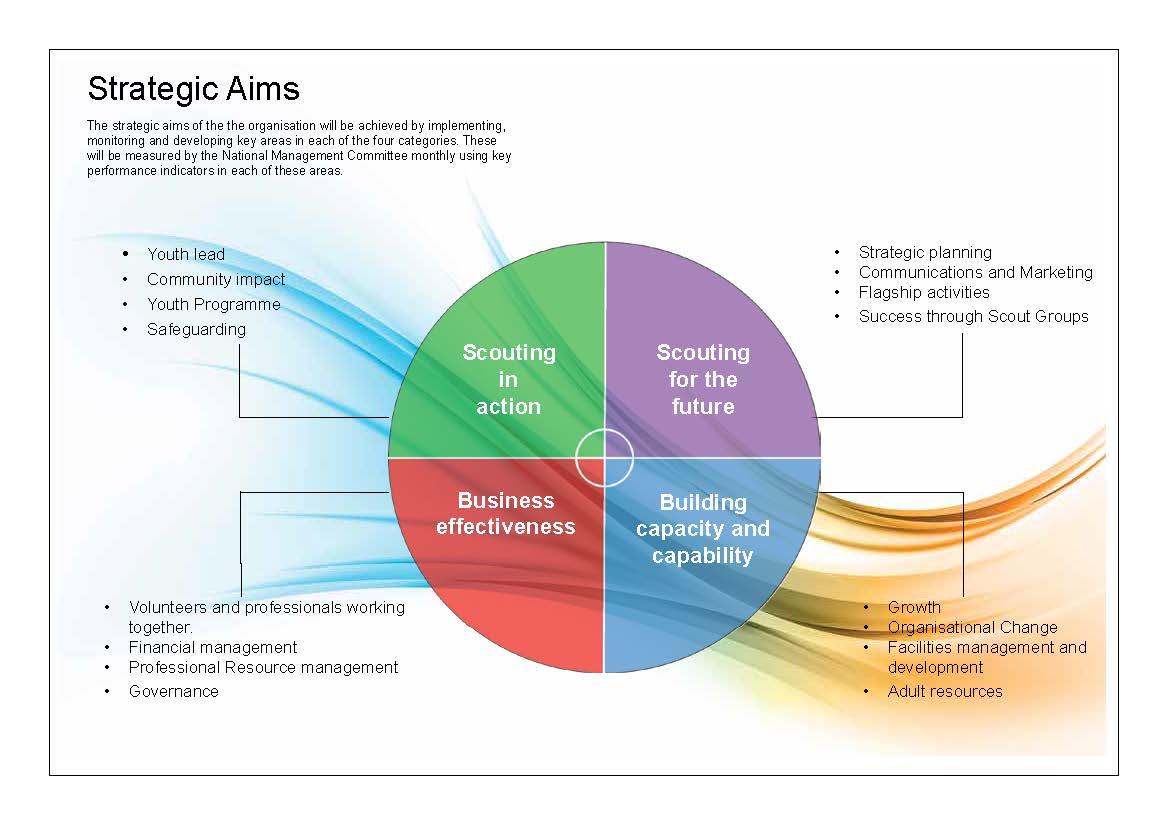
Empowering young people to reach their full potential Community based organisation Faith respectful and values based organisation Improving the world Equality, diversity and inclusivityScouting Ireland Strategic Plan
Financial controls are essential to any business, be it commercial, not for profit or a charity. Not only do they safeguard the Organisation from accidental or fraudulent mismanagement but they also facilitate the development of clear policies and procedures to assist the management – as well as help volunteers to understand their responsibilities in the day-to-day running of the business of the Organisation.
Underpinning all financial management systems is a series of financial policies and procedures which guide operations and lay out how your Organisation uses and manages its money. A financial procedures manual brings all these together in one document. It helps to establish financial controls within the Organisation that ensure accuracy, timeliness and completeness of financial data.
Aim of Scout Ireland Finance Handbook
This manual has been prepared to help
• Group Treasurers and Group Leaders,
• County Treasurers and County Commissioners,
• Provincial Treasurers and Provincial Commissioners,
• To ensure that there are appropriate financial procedures, controls and documentation in place within their Group, County and / or Province.
• It sets out some basic controls, which must be implemented at Group, County and Provincial level and provides guidance various financial functions and transactions. It also provides some basic formats for financial statem ents that should be prepared by each Group.
This document should be read in conjunction with the Constitution and Rules of Scouting Ireland and by paying specific reference to policy document SID11/03.
This finance manual is written within the context of the “Group” being an entit y within Scouting Ireland and not a separate legal entity, comprising members of Scouting Ireland who are part of the Group.
• County Commissioners and County Treasurers, Provincial Commissioners and Provincial Treasurers should use the principles set out in this document to enable them to provide appropriate assistance to Groups to ensure that there are appropriate financial procedures, controls and documentation in place within the Scout Group and also their Scout County and Province.
Role of the Treasurer
Summary
• Manage the Finances
• Report bank balances at each meeting
• Report Income & Expenditure
• Manage ALL Bank Accounts
• Produce Annual Accounts / End of project accounts
• Manage the Budgetary Process
• Ensure Tax Compliance
• Tackle any financial issues AS they arise
• Know that you are supported by the Finance Support Team - it is important that you have contact details for your support people
Finance Support Team
National Treasurer
Provincial Treasurers
Financial Controller
Assistant Accountant
Skills and Attributes
• be capable of handling figures and cash
• have an orderly mind and methodical way of thinking
• have experience in dealing with large sums of money and budgets
• have experience of financial control and budgeting
• have an eye for detail
• experience using excel or accounting systems an advantage
• book keeping experience an advantage
Key Goals
• Keep it simple. We don’t need large corporation policies and procedures. We're all volunteers with very full lives.
• The Treasurer; collects money, makes deposits, receives expense reports, pays bills, writes cheques (with a co signatory!)
• The Treasurer, with input from the team, creates and manages the budget. Updates and publishes Scout account records. Reviews bank statements; Balances the books; Creates event surplus/deficit summaries
• The Treasurer holds ultimate responsibility for the for finance function for the project
• Prepares a plan and budget for renewal of equipment
• Ensures that purchasing procedures are followed
Accountability, Transparency and Responsibility
Transparency & Communication
Openly share information
• If a team member wishes to see the detailed finances, this should be facilitated. As Treasurer you may wish to walk them through the documents to avoid misunderstandings or quick judgments and to understand why they are asking. (if there is an underlying issue as Treasurer, you should be made aware )
• Don't automatically send the detailed finances out to everyone. Finances and financial statements take time, experience and context to understand. Financial reports without the relevant supporting information can be misinterpreted.
• Review both large expenditures and non-standard expenditures with the Team BEFORE and AFTER spending the money.
• Bring print outs of Income & Expenditure to meetings.
• Share financial summaries with the Team.
• Bring print-outs of bank statements and incom e & expenditure to the meetings.
Walk the Team through the financial statements ... line by line
• The Group Treasurer is primarily responsible for managing the financial affairs of the Scout Group.
As part of the function he / she reports to the Group Leader, Scout Group Council and to the County Treasurer.
o See Group Treasurer Job Description attached in Appendix 1.
• The County Treasurer manages the financial affairs of the Scout County.
As part of their role they work with the Group Treasurers to assist them implement the rules and regulations of the Association and ensure compliance with all relevant legislation including the Charities Act.
o See the County Treasurer Job Description attached in Appendix 2.
The County treasurer can meet with the Group Treasurers annually to assist them to meet the financial reporting guidelines of the association.
The County Treasurer can meet with individual Group Treasurers and Group Leaders if required to provide assistance to Groups.
• The Provincial Treasurer manages the financial affairs of the Scout Province.
As part of their role they work with the County Treasurers to enable them to complete their roles and assist them to implement the rules and regulations of the Association at County and Group level.
o See appendix 3 for the Job Description of the Provincial Treasurer.
BUDGETING
Financial Risk
When preparing a budget it is wise to agree a “viability” point with the team , this is particularly relevant when budgeting for example: summer camps, international trips, county and provincial events.
*County or Provincial events with a turnover in excess of €50,000 require the approval of the National Management Committee /Board of Directors of Scouting Ireland as it poses significant fin ancial risk to the organisation.
Assess actual and projected income and expenditure regularly to ensure that you are on target with budget
If a project is not financially viable have procedures documented that include refunds to participants, cancellation of services and goods and ensure that this is made available to all parties at the time of engagement
• Project income: fees, fundraising, grants etc.
• Prioritise expenditure
• Budget should be discussed and developed by team in line with available finances and expenditure commitments Budget should be adhered to
• Out-of-Budget expenditure must be approved by the team and may require additional fund raising
• Be conscious of being fair
• Provide supporting information before the annual planning session. Such as year end bank balance and prior year Income & Expenditure.
• Create an estimated budget based on past actual spending.
• The Group Treasurer, in conjunction with the Group Leader, is responsible for preparing an annual budget for the Group.
• The budget should forecast spending for the year, income for the year, capital projects (including fixed asset purchases) and income and expenditure for larger events.
• For ease of use budgets should be prepared on a cash basis. (Depreciation of assets held is not required)
• For fund raising events the expected revenue to be generated from the event, together with the associated cost should also be forecast, in advan c e of commencing the event. If not effectively managed Groups can generate a large amount of cash from fundraising events with little or no control on how costs are monitored. Consequently it is recommended that a separate budget is prepared for all large scale fundraising events.
• Large scale events such as Section / Group Camps must have a separate event budget prepared and approved by the Treasurer in advance of the event taking place. All event expenses (including costs incurred by scouters to attend the event) must be included so that a realistic cost per person can be accurately calculated.
• It is recommended that should an event costs more than € 500 to run; a budget should be prepared by the Section leader and approved by the Group Treasurer in advance.
• Sample budget templates for use at Section, Group or County level are included in Appendix 8.
• County and Provincial Treasurers will prepare budgets annually as per their job descriptions.
Bank Accounts
OPENING BANK ACCOUNTS
• Bank Accounts can be held with any financial institution (i.e. Banks, Credit Unions, and Post Office Savings etc).
• All Group Bank Accounts (including on line payment options) must be opened following a resolution passed at a Scout Group Council Meeting.
• All Scout County Bank Accounts (including on line payment options) must be opened following a resolution passed at a Scout County Management Meeting. Scout County Bank Accounts are available by contacting National Office (Financial Controller) as these accounts have already been opened for each Scout County.
• All Scout Province Bank Accounts (including on line payment options) must be opened following a resolution passed at a PMST meeting.
• All bank acco unts shall include the words “Scouting Ireland” and the name of the Group in the title. e.g. “Scouting Ireland - 72nd Dublin O’Connell Street” or “72 nd Dublin O’Connell Street Scouting Ireland Group”
• All bank acco unts (including banking on line accounts) shall require a minimum of 2 signatures for each and every transaction.
• Scout Groups can have as many bank accounts as is reasonably required for them to carry on the business of the Scout Group. As a minimum the following types of Accounts should be in operation:
o a business current Account
o a Savings / Deposit Account
o Camp / Event Accounts
o On line banking facilities
• Sample letters to be provided to banks are listed in Appendix 4 & 5.
o The letters should be printed on official Group Headed paper
o Be signed by either the Group Leader or Group Treasurer and one other signatory or
o The Group Leader and Group Treasurer
o A resolution must be approved by Scout Group Council to open a bank account
• Scouting Ireland supports the use of on line banking facilities at Group, County and Provincial level to allow treasurers manage the financial affairs and effectively carry out the business of the respective entity.
• Scouting Ireland is a registered Charity so fees applicable on bank accounts can vary depending on the financial institution.
• Fee structure and access to the financial institution for the account signatories should be considered when opening bank accounts.
For Groups in existence prior to the formation of Scouting Ireland that have exist in g b an k a cco unts, th ey a ll m u st be put u nd er th e operational control of the Grou p Tre asurer a nd hav e th e n am e s ch an ge d to inclu de the w ording Sc outin g Irelan d.
The in te nt of h aving t he nam e “Sc outin g Ireland” includ ed is to ensure that in the, hopef ully, un likely event that the Grou p closes th at the ban k acc ou nt d oes not b ec ome a dorma nt acc ou nt a nd d oes not get de alt wit h in acco rda nc e wit h th e rule s gov erning suc h accou nts.
On im p le m e nta tion of this po licy doc um ent; Gro up Treasurers must e nsure t h at the letters set out in ap pen dix 4 and 5 are sent to th e finan cia l in stitutio n w h ere t he Gro up ho lds their accounts.
OPERATING THE BANK ACCOUNT(S)
• At Scout Group level, the Group Treasurer is responsible for the Group’s finances, monitoring all bank accounts and implementing controls over payments and receipts.
• At Scout County level, the County Treasurer is responsible for the Counties finances, monitoring all bank accounts and implementing controls over payments and receipts
• At Provincial level, the Provincial Treasurer is responsible for the provincial finances, monitoring all bank accounts and implementing controls over payments and receipts
• All bank Accounts must be reconciled by the respective Treasurer at a minimum every quarter.
o Best practice would be to reconcile the operating accounts monthly and all other bank accounts quarterly as a minimum standard.
• Any Group Section / Event Bank Accounts must be reconciled and reported on by the Group Treasurer in conjunction with the Section Leader / Event coordinator.
o Any County or Provincial event Bank Accounts must be reconciled by the respective Treasurer as per their job description.
• The respective Treasurer must have full operational control of all bank accounts.
Controls for payments made by cheque
Bank mandates should require two signatures, one of which being that of the treasurer. Clear authority limits should apply and the approval of the respective governing councils be it at Group, County or Provincial level should be sought prior to the payment being made.
In all cases there are a number of basic controls that should be in place, including:
• ensuring cheque books are kept in a secure place;
• regular review of bank mandates and authority limits;
• prohibition on the signing of blank cheques;
• prompt recording of payments in cash books including details of the cheque number, nature of the payment and the payee; and
• Obtaining documentation to support the validity of the payment including relevant invoices and confirmation that the goods or services have been receive d.
Controls for payments by debit card, credit card and charge cards
Increasingly payments are being made using debit cards, credit cards and charge cards. These payment cards can provide convenience but it is important that controls are in place to ensure their correct use.
Debit cards charge bank accounts directly and payments therefore have an immediate impact on bank balances; their misuse or loss can be extremely serious. Credit and charge card payments are invoiced monthly and there is some ability to intervene in the case of misuse, but controls still need to be in place over their use.
*An online banking facility allows 24/7 access to bank balances and transactions which adds further control to the use of debit, credit and charge cards.
Used properly these methods of payment are generally considered to be safe, but it is recommended that certain controls are put in place, including:
• setting a clear policy for the use of payments cards, the criteria for their issue, spending limits and their security;
• considering the need to place restrictions on, for instance, the types of retailers where the cards may be used, e.g. blocking their use in restaurants, food retailers or on certain websites;
• communicating the policy for the use of payment cards clearly, in writing, to all using them;
• ensuring payments cards are cancelled and destroyed, if the individual ceases to hold the their position within the Group, County or Province or if the authorisation of the card’s use is withdrawn;
• ensuring that debit card ex penditure is supported by a voucher and/or invoice and recorded and analysed in accounting records;
• Copies of all credit or charge card statements being sent directly to the charity’s finance team and not the individual card holder. The statements are used to record and analyse transactions in the accounting records and are matched with supporting vouchers and invoices provided to, or obtained by, holders of cards;
• Periodic review of card use to ensure consistency of use with set policies.
Online Banking
Controls for payments by direct debit, standing order and BACS/SEPA direct credit, EF
The use of cheques to make payments is diminishing with the use of electronic payment. Banks have developed software that allows the provision for more than one person to authorise payments. Such dual-authority options require two users to complete a BACS/SEPA transaction. Groups, Counties and Provinces should ask their own banking provider for details of their own similar dual-authority options. The guidelines for cheque and direct payments should be applied when using online banking facilities.
Scouting Ireland supports treasurers at Group, County and Provincial level to enable them to implement cost effective, environmentally friendly processes and procedures to effectiv ely complete the function of treasurer in an efficient and timely manner. We acknowledge that the Effective use of technology will enable Treasurers to set up and maintain:
• EFT Payments (Electronic Fund transfers) / Standing Orders and or Direct Debit Payments.
• Card Payments or mobile money transfers.
• E mail and scanning facilities to send and receive remittance advices, and send reports from Group to County to Province.
• On line Banking to access bank account details and monthly statements and make payments efficiently. Annual returns submitted on time will enable treasurers to ensure their Scout Group, County and or Province remains compliant with all current legislation.
It is often convenient to make payments by direct debit, standing order and BACS direct credit. These are all safe ways of making payments provided that appropriate controls are in place. These controls should provide assurance that direct payments are only made for expenditure properly authorised and incurred by the Group, County or Province. Controls should ensure that payments are only made when authorised and that payments are accurately recorded in the accounting records.
The difference between direct debits and standing orders is that the bank account holder is the only party to the arrangement who can make changes to the amount or collection date of a standing order. With a direct debit only the recipient of the monies can amend the amount, having notified the payer before so doing.
BACS Direct Credit/SEPA payments are a simple, secure and reliable service, which enables organisations of all sizes to make payments by electronic transfer directly into a bank or building society account. However, before setting up the system the Group, County or Province should ensure that it has robust controls in place, because the nature of these payments makes it difficult to recall them before the payee’s account is credited, in the event of errors or fraudulent transfers being discovered.
Banks have developed software that allows the provision for more than one person to authorise payments. Such dual-authority options require two users to complete a BACS/SEPA transaction. Groups, Counties and Provinces should ask their own banking provider for details of their own similar dual-authority options.
Groups, Counties and Provinces should ensure that only specifically authorised individuals are able to set up arrangements to make payments by direct debit, standing order or BACS/SEPA. This authority should be limited to
a small number of people with a list of authorised individuals drawn up and retained. The documents setting up the payments should be retained as part of the Groups, Counties and Provinces accounting records. The payments should be monitored so that the Groups, Counties and Provinces can ensure that the arrangement is cancelled when the Groups, Counties and Provinces stop using the goods or services being supplied.
Additional controls can be applied when setting up an online banking facility such as daily limits, transaction limits, authorisation control and beneficiary set up.
Controls for payments in cash
• Avoid cash whenever possible - Handling cash is the number one place where money is confused, lost or stolen. A disorganized person can easily confuse the project cash with their own money. A stressed person can easily borrow cash. Cash is an issue because cash is difficult to track. Cheques / EFT leave a trail.
• Track cash - As money is handed to you, record the cash in a ledger while the person is still standing with you. Give the person a receipt for the cash.
• Never pay expenses directly from incoming cash - Deposit everything. Whenever possible, pay all expenses with cheques. It's about transparency, discipline, organisation, knowing what things cost and getting receipts (or at least something to document the expense). DO NOT NET OFF as all income and expenditure MUST be recorded.
• The team may consider operating a cash float system which must be reconciled as agreed.
• For events the event treasurer can request that all Scout Group s and Scout Counties MUST pay by cheque or EFT prior to the event – this will further eliminate the need for cash to be handled.
Payments in cash should be kept to a minimum due to the greater risk that handling cash presents and difficulties that can arise in establishing correctness and control over significant cash transactions.
Where payments are made in cash it is recommended that:
• cash payments are for small amounts only;
• cash should be paid out of a petty cash float specifically kept for such payme nts, and not from incoming cash or by way of direct withdrawal from the bank account;
• details of payments should be entered in a petty cash book;
• supporting documentation for the cash payment should be authorised by someone other than the person who maintains the petty cash or the person making the payment;
• the balance of petty cash in hand, and the records, should be kept securely; and
• Regular spot checks of the petty cash float should be made by an authorised person independent of the person who maintains the petty cash.
Similar considerations apply to the use of cards which are preloaded with cash where cash withdrawals are made by using a PIN at a cash point or similar facility.
Cash withdrawals should be reviewed for authorisation and correctness by someone other than the person who withdrew the cash.
Banking Guidelines in Summary
Best practice is that any 2 of 3 signatories can sign as approved by the Scout Group Council, County Management Committee and / or PMST.
• At Scout Group level two of the signatories must be the Group Treasurer and Group Leader.
• At Scout County level two of the signatories must be the County Treasurer and County Commissioner.
• At Provincial level two of the signatories must be the Provincial Treasurer and the Provincial Commission er.
• The Treasurer must have full operational control of all bank accounts and must ensure all bank accounts are in the Group name.
• Guidelines for operating bank accounts must be adhered to at all levels of the organisation.
ACCOUNTS
Group Accounts
o The financial affairs of the Group will be managed by the Group Treasurer in accordance with the rules of Scouting Ireland.
o He / She will prepare an annual budget and record all income & expenditure against budget. Regular updates of actual spend against budget will be presented to at least every other Group Council meeting.
o Fully reconciled financial updates should be presented to Group Council at least every quarter.
o The County Treasurer will provide assistance to the Group Treasurer if required to ensure they can complete Group accounts in line with the Associations policies.
o Templates for preparation of accounts are included with this manual in Appendix 6.
County Accounts
o The financial affairs of the Scout County will be managed by the County Treasurer in accordance with the rules of Scouting Ireland.
o The County Treasurer reports to the County Officers and the County Management team and receives and pays all monies on behalf of the Scout County.
o County Treasurers prepare annual budgets for approval by the County Management Team and will report actual spend against budget to the County Management team at a minimum of every other CMT meeting.
o Fully reconciled accounts against budget should be presented to the CMT at least every quarter.
Provincial Accounts
o The financial affairs of the Scout Province will be managed by the Provincial Treasurer in accordance with the rules of Scouting Ireland.
o He / she will prepare budgets annually for review by the National Treasurer and Financial Controller and the approval of the National Management Committee.
o He / she will present updates on actual spend against budget to the scheduled PMST meetings at least every quarter.
REVIEW/AUDIT
• Best practice dictates that Treasurers should have their accounts at least ‘independently checked’ annually. An independent check can be carried out by your County Treasurer, Provincial Treasurer or an independent person who is suitably qualified to carry out a reasonable check on the accounts provided.
• County Treasurers can fulfil this ‘independent check’ on behalf of all Groups in their County.
• If the County Treasurer is also a Group Treasurer the Group should ask the Provincial Treasurer to complete the independent check.
• Independent Checks or full audits can be performed by a suitably qualified person as selected by the Group, County or Province. It is not necessary, as at September 2014, for Groups or Counties to have their accounts officially audited, unless the terms of a grant received / other funding require audited accounts.
• Scout County Accounts are audited annually as part of Scouting Ireland’s audit.
• Provincial Accounts are audited annually as part of Scouting Ireland’s audit.
Queries
• In the event a query is raised at Group Council level on a financial matter the
o County Treasurer will perform an initial ‘independent check’ and report back to the Group Leader and County Commissioner.
o If they deem it appropriate they will ask the Provincial Treasurer to perform a full audit / review of the Group Accounts at the request of the National Treasurer.
o The Provincial Treasurer will prepare a written audit report with recommendations and report back to the Group Council, County Treasurer, County and Provincial Commissioner and National Treasurer.
o In such cases any such recommendations made by the County / Provincial Treasurer must be fully implemented within an agreed timeframe at the request of the National Treasurer.
INCO ME & CASH HANDLING
• All cash receipts received into Scout Group Sections must be recorded by the Programme Scouters in that Section.
• All income is Group Income – whether it comes in through an individual section or direct to the Group Leader / Treasurer. This includes Camp income, Weekly Subs, Membership fees, Fundraising etc.
• A cash receipts record book must be maintained and best practice dictates that receipts should be provided to parents, sponsors, etc.
• The cash collected at Section level, together with the summary information, must be provided to the Group Treasurer at least on a monthly basis.
• All cash should then be lodged by the Group Treasurer as quickly as possible, but not later than 10 days after receipt.
• The Group Treasurer may delegate the lodging of cash where required but should ensure that adequate controls over the cash are in place.
• Electronic Fund Transfers (EFT Payments on line) / Standing Orders can be implemented at Group, County and Provincial level to assist treasurers to manage financial transactions
• As required and as authorised by the Group Counc il, each Section may receive a float to fund on - going programme expenses. Separate floats should be provided for larger events such as summer camp, attendance at National Events, etc. Details of all funds spent, together with the accompanying receipts, must be returned to the Group Treasurer promptly at the end of the event and in advance of issuing further funds.
• Some Groups may allow sections to retain a specified % of the weekly subscriptions income received at section level to be used for programme activities.
o Where this is in place the section leader must prepare a quarterly section cash control form and return it to the Group Treasurer by the 10th day of the following month at the very latest.
o The Group Treasurer will then prepare a quarterly Section Income & Expenditure report and present it as part of their report to the next scheduled Group Council meeting.
• When programme events are held at Section, Group, and County and / or Provincial level the income relating to the event must be recorded on an event income account sheet and given to the Treasurer at the first available opportunity after the event has concluded.
• A sample Section income Monthly Cash Control form is included in Appendix 7.
FUND RAISING
General
• Scout Groups are encouraged to participate in Scouting Ireland’s fundraising initiatives (such as 12 Days of Christmas: presently this initiative is not available to Groups in Northern Ireland due to legislative constraints) to assist in raising funds annually.
• All fundraising income whether raised at Section or Group level must be recorded in the annual accounts of the Group.
• Local Scout Group Section / Scout Group events such as Church Gate Collections and Bag Packs must comply with current rules and regulations.
o Best practice and local factors should be borne in mind to maximize the returns available and ensure public support is maintained for the Group.
o Cash collection buckets must be sealed and labelled with the Scout Group Name.
o A minimum of two (2) people must manage the counting and lodgement of proceeds.
Note: banks and financial institutions will only accept FULL bags of coin
o Collectors must retain a copy of the permit obtained when collecting.
• Scout Groups should manage Scout Group Section fundraising initiatives carefully to ensure their successful completion does not adversely impact on other Scout Group initiatives being planned.
• Where permits are required the Scout Group Leader / Scout Group Treasurer will apply for same and ensure all requirements of the permits are complied with.
• If a section or Scout Group raises funds for a charity (such as Mountain rescue, RNLI etc) all such monies raised must be recorded in the accounts of the Scout Group under income and expend iture.
• Guidelines will be updated and issued by Scouting Ireland where appropriate.
Fundraising Code of Good Practise – Charities Institute of Ireland

CII+Fundraising+Codes+-+Events.pdf
Guidelines+Charitable+Organisations+on+Fundraising.pdf
CII+Fundraising+Codes+-+Cash.pdf
Charitable Donations
Approved bodies can claim tax relief for donations made to them by donors.
Donations that qualify for tax relief
The following donations to approved bodies qualify for tax relief:
• a minimum donation of €250
• a maximum donation of €1,000,000 in any one year.
Ø Relief will be restricted to 10% of the donor's annual income if there is a connection between the donor and the approved body.
Ø An approved body may claim 31% tax relief on your donation. They receive the grossed up amount, net of tax deducted at the specified rate.
Ø The repayment to an approved body cannot exceed the amount of tax that the donor has paid for that year. The donor is not allowed a repayment of any tax that has been repaid to the approved body.
The donation must:
Ø be in the form of money or designated securities (quoted shares and debentures) or a combination of both
Ø not be repayable to the donor
Ø not benefit the donor or anyone connected with the donor
Ø not be a condition or connected with any arrangement involved in obtaining a property other than by way of a gift from the donor to the approved body.
Donors must complete form CHY3 - Enduring Certificate which covers a period of up to five years
Note: If a Scout Group is not a registered charity your Scout Group should contact the finance team in National Office to discuss tax reclaim as this will have to be completed by Scouting Ireland Services CLG on behalf of your Scout Group.
Tax Clearance Cert
A Tax Clearance Certificate is confirmation from Revenue that an applicant's tax affairs are in order at the date of issue of the certificate. Note: If a Scout Group is not a registered with Revenue please contact the finance team in National Office for advice prior to registering with Revenue.
Expenditure
EXPENSE POLICY
o It is the polic y of Scouting Ireland to reimburse employees and volunteers for allowable expenses which are inc urred wholly, necessarily and exclusively whilst on Scout Group business, providing those expenses are incurred in line wit h the expenses policy.
o Before any expense is inc urred employ ees and member s must give consider ation to the most cost effective method of incurring that expense. They should also consider whether the expenditure represents ‘value for money’ for the Scout Group.
o Scout Groups, Counties and Provinces will implement this policy through the respective Treasurer implementing the following guidelines on Expenditure.
o Scouting Ireland supports the effective use of Banking on Line / Payment by EFT at Group, County and Provincial level to effectively manage cash flow.
Note: mileage can be claimed at €0.2175 per KM and €0.35 per mile – changes to this rate will be notified to Scout Groups.
Summary
• Expenses policy to be agreed by the project team
• Scouting Ireland Policy available on website
• Be aware of tax implications
• Expenses must fall within Policy and Budget
• Ensure ‘value for money’
• All expenses must be claimed with 45 days of being incurred
• All expenses must be receipted
• Templates available for Expense Claim Form
Administration and Procedure
• Each Scout Group / County / Province must establish c lear procedure and authority levels for the committal of expenditure within the Scout Group / County / Province and approved by the relevant teams.
• Unless exceptional circumstances arise only expenditure outlined in the Budget should be committed without gaining spec ific approval of the Group Council for it.
• Valid expenses incurred by a scouter on an activity will be reimbursed by once:
o The expense is pre-approved in advance by the budget holder.
o The expense is claimed within 45 days of the expense incurred.
o The are sufficient funds to pay the expense.
o Expenses Claim form / Invoice is approved correctly.
• The Treasurer must ensure that adequate records are kept of all expenditure (to enable the completion of the Accounts).
• Receipts should be kept for all items of expenditure. Where no receipt is received / the receipt is lost an explanation of same (noting the reason) must be noted in the record book by the Treasurer.
• The Treasurer should make payments by cheque or Electronic Fund Transfer (EFT).
• Direct Debits / Standing Orders can be used for recurring payments (such as ESB, Heating etc).
• Cash payments over € 75.00 must be paid by Scout Group Cheque or EFT.
• At County / Provincial level all payments must be made by cheque or EFT.
• An Expense claim form or invoice must be presented to the Treasurer for all payments made.
• All items must have been pre budgeted for before payment is made. Where an unforeseen expense is incurred on a section or Group event it must be approved for pa yment by the Group Leader / Treasurer and Group Council as soon as practicable.
• When mileage is being claimed current Scouting Ireland volunteer mileage rates are the maximum permitted rates allowable. Distances claimed must be more than 5 miles / 8 km’s as per current Scouting Ireland guidelines.
• A sample expense claim form is included in Appendix 9 with this manual.
PAYMENT PROCESSES
• Cheques / Bank Transfers etc. must be signed by the authorized signatories as appointed by the Scout Group Counc il.
• A minimum of two signatories ar e required for all payments.
• All Cheques or payments should be approved / signed by two authorised signatories, one of whom must be the Group Treasurer.
• Payment should be made in full within 30 Days of receipt of an Expense claim / Invoice by the Treasurer.
• Banking on line payments must be authorized by any 2 of the respective account signatories.
• Direct debits / Standing Orders can be used to pay recurring transactions on a monthly or quarterly basis. Please refer to the section on banking for further guidance on payment processes.
YEAR END ACCOUNTS
• The Annual Accounts of a Scout Group must be prepared by the Group Treasurer annually and once approved by Group Council they must be signed by the Group Treasurer and Group Leader.
• The Annual Accounts must be presented to the AGM of the Parents and Friends committee annually.
• The accounts must cover a statement of affairs on all accounts of the Group including Main Group current Account; Long Term Fund Account; Section Account s (if any) and Camp Savings Ac counts etc.
• The Opening and Closing Reconciled Balance on eac h Account must be presented together with a statement of Income and Expenditure on each Account.
• Netting of Income and Expenditure on an activity in the Accounts presented is not allowed.
o They should be shown separately with the Activity Income in the Income Section and the Activity Expenditure in the Expenditure Section.
• Additional clarification notes to the Accounts should be presented where they will aid the understanding of the Accounts by members of the Group Coun c il.
• The Accounts should include a Treasurer’s statement of affairs on the status of the Group Accounts.
• Note: an excel accounts template has been designed by Scouting Ireland to assist Groups and Counties in the preparation of their accounts and reconciling their bank accounts. This is available from the Finance Department in National Office.
Summary
o At the end of the financial year/ project , make one last call for outstanding expenses and receipts
o Reconcile and close issues. Don't let financial problems go from one year to the next
o Pay all outstanding bills. Of course if someone has a late expense submitted after the final financial statements are published, still reimburse them. Just record it in the next year financial year
o Produce an income / expenditure statement
o Produce a balancing statement showing scout accounts, receivables, payables and a list of equipment and its value
o Publish Income and Expenditure in prescribed format
o Review with the team
o DO NOT NET OFF TRANSACTIONS
o Submit reports to appropriate team in Scouting Ireland and close off project
AGM TIMELINES AND ANNUAL RETURNS TO SCOUTING IRELAND
• Scout Groups should complete accounts to the year-end date of 31st August, and submit them to the County Treasurer by 15th October.
• Scout Groups shall hold AGM’s and Parents & Friends Information meetings before the end of November annually. Any changes or adjustments to the annual accounts should be notified to the Coun ty Treasurer.
• County Treasurer’s will ‘independently check’ the accounts submitted and forward them to the Provincial Treasurer before the 15th November.
• The Provincial Treasurer will review all accounts received and report details of same to the National Treasurer via the Financial Controller before the 15th December annually.
• Once received and checked by the Provincial Treasurer a Scout Group is deemed to have submitted their accounts to the Association.
• A Scout Group’s Annual return is completed when:
o Accounts with supporting documentation have been received and validated by the Provincial Treasurer.
o The Group has complied fully with the requirements as laid out in SID 60/10.
o The membership database has been updated annually and QSE data updated by the Group Leader.
o Payment of the membership fees has been received in National Office before close of business on the annual due date.
• Groups that are non-compliant with the Annual return will be reviewed with the Provincial Treasurers and the National Treasurer and follow up actions will be agreed on a Group by Group basis.
ASSETS
The establishment and ongoing maintenance of an asset register will assist the Group and County in budgeting for items that will need to be replaced in the Scout year.
• The Group must maintain a register of their fixed assets. A standard template is provided in appendix 10.
• The Group Treasurer and Group Quartermaster, working together, should compile the asset register – i.e. a list of all fixed assets owned by the Group.
• Every asset with a purchase / replacement value in excess of €200 should be recorded on the Register.
• A schedule of all items of equipment with an individ ual value of less than €200 may also be maint ained.
• The Group Quartermaster must assist the Group Treasurer in ensuring that the Asset Register is complete and accurate and that all assets are maintained in good c ondition in a secure location.
Summary
• Assets should be managed by Quartermaster
• Keep centrally and in good condition
• Maintain an Asset register (list of all equipment purchased)
• Plan for renewal or replacement of equipment – budget process
• Personal equipment vs. national / project equipment
• Ensure adequate Insurance
ASSETS ON THE DISSOLUTION/CLOSURE OF A SCOUT GROUP
• In accordanc e with Article 56 of the Constitution of Scouting Ireland before a Scout Group is c losed the Scout Group Council must inform and se ek instructions as to the p r operty of any kind (including bank accounts) held by or for that Group from the County Commissioner.
• SID58-10 is the relevant policy document.
TAXES
• Scouting Ireland has a policy of being fully compliant with all tax laws and regulations.
• All payments made by a Sc outing Ireland Group needs be compliant with tax requir ements and will inc lude VAT an d other taxes where they should be due in accordance with Tax Laws and Regulations
• Scouting I reland will not assume the tax liability for any indi v idual – and all payment s should be made net of attributable tax.
Communication of updates of Finance Handbook
Updates to the Finance Handbook will be communicated through a notification in the Scouting Ireland weekly mailing – this will issue to all Scouters who have registered their email addresses on the database.
Best Practice Guidelines


Appendix 1: Job Description: Group Treasurer
The Job
The Group Treasurer is primarily responsible for the financial affairs of the Scout Group.
Term of Office
Elected by the Scout Group Council for a term of one year.
The Group Treasurer is eligible for reelection
Roles
• Treasurer and Member of the Scout Group Council
• Treasurer of the Parents and Friends Support Group
Key areas of responsibility
• To deal with the financial affairs of the Scout Group.
• To prepare and present the annual budget for the Scout Group for approval by the Scout Group Council.
• To prepare the annual accounts of the Scout Group for the approval of the Scout Group Council.
• To submit, in accordance with Rule 168, the annual accounts of the Scout Group to the County Treasurer.
• To submit, in accordance with Rule 170, the annual accounts of any Group Campsite / Centre to the National Treasurer.
• To work with the Group Quartermaster / Group Leader to ensure an up to date register of all Group property and equipment is maintained.
• To ensure, in consultation with the Group Council, adequate insurance cover is in place to protect the Scout Group’s equipment and property.
• To establish and manage the Scout Groups’ bank accounts.
• To be responsible for the supervision of the financial planning of and monitoring of income and expenditure from all activities, events etc of the Scout Group and all its Programme Sections.
• The implementation and monitoring of the application of the Associations Finance Manual within the Scout Group.
• To carry out any other functions or duties as required by the Scout Group Council.
Working with
• Group Leader
• Parents and Friends Support Group
• County Treasurer
Accountable to
• Scout Group Council
Time commitment
• Meetings of the Scout Group Council and the Parents and Friends Support Group must be attended.
• Time will be needed for preparation of the various budgets, accounts and documents required in addition to the work required for the carrying out of the financ ial affairs of the Scout Group.
Qualifications
• Membership of the Association in accordance with the Rules
• Customised Training
• Full Knowledge and understanding of the aims and policies of the Association
• To demonstrate an ability to discharge the key areas of responsibility.
Appendix 2: Job Description: County Treasurer
The Job
The County Treasurer is primarily responsible for the financial affairs of the Scout County.
Term of Office
• Elected by the Scout County Board for a term of three years.
• The County Treasurer is eligible for reelection for one further period of three years
Roles
• Member of the National Council
• Member of the Scout County Board
• Member of the Scout County Management Committee
Key areas of responsibility
• To deal with the financial affairs of the Scout County.
• To establish and manage the Scout County bank accounts.
• To be responsible for the supervision of the financial planning of and the monitoring of income and expenditure from the Training and Events run by the Scout Cou nty.
• The implementation and monitoring of the application of the Associations Finance Manual within the Scout County.
• To prepare and present the annual budget for the Scout County for approval by the Scout County Management Committee.
• To prepare the annual accounts of the Scout County for the approval of the Scout County Board.
• To receive the annual accounts of all Scout Groups in the Scout County from the Group Treasurer.
• To support Scout Groups in the preparation of annual accounts & other financial matters as required.
• To submit the annual accounts of the Scout County and each Scout Group in the Scout County to the National Treasurer.
• To support all Campsite/Centre Managers in their Scout County to ensure compliance with Rule 170.
• The County Treasurer will support the financial operations of the Scout Groups within the Scout County. The support will include:
o Reviewing Financial procedures (including cheque signing procedures)
o Maintaining a register of Scout Group Bank Accounts ( includes Credit Union, An Post accounts etc)
o Working with the County Commissioner / Training Team to ensure training as required is available to and undertaken by the Group Treasurers
o Supporting the Group Treasurer in the preparation of the Scout Group Budgets.
o Reviewing the annual Scout Group Accounts.
• To carry out any other functions or duties as required by the Scout County Management Committee.
Working with
• County Commissioner
• Scout County Management Committee
• Provincial Treasurer
Accountable to
• Scout County Board
Time commitment
• Meetings of the Scout County Board & the Scout County Management Committee must be attended.
• Time will be needed for preparation of the various budgets, accounts and documents required in addition to the work required for the carrying out of the financial affairs of the Scout County
Qualifications
• Membership of the Association in accordance with the Rules
• Customised Training
• Full Knowledge and understanding of the aims and policies of the Association
• To demonstrate an ability to discharge the key areas of responsibility
Appendix 3: Job Description: Provincial Treasurer
Term of Office
• In accordance with Rule 106 (f) the Provincial Treasurer is appointed by the Provincial Management / Support Team.
• The Provincial Treasurers’ term of office is concurrent with the term of the Provincial Commissioner.
Roles
• Member of the Provincial Management Support Team
Key areas of responsibility
In accordance with Rule 110A, the functions of the Provincial Treasurer include:
• Dealing with the financial affairs of the Scout Province;
• The preparation of the budget for the Scout Province for the approval of the Provincial Management/ Support Team;
• The preparation of the accounts of the Scout Province for the approval of the Provincial Management/ Support Team.
• In accordance with Rule 110B, the Provincial Treasurer is responsible for the submission of the annual accounts of the Scout Province to the National Treasurer.
Working with
• Provincial Commissioner
• Provincial Management/ Support Team
• Scout Groups and Scout Counties within the Scout Province
• National Treasurer
Accountable to
• Provincial Commissioner
• Provincial Management/ Support Team
• National Treasurer
Time commitment
• The time required can be hard to quantify, but it is in line with a management position.
• Formal meetings need to be attended on a regular basis. Meetings of the Provincial Management Support Team (approximately 5 or 6 per year) must be attended.
• Time is also required for matters which arise and must be attended to in between meetings, and in preparation for meetings, in addition to the time required for the specific discharge of the key areas of responsibility.
Qualifications
• Membership of the Association in accordance with the Rules.
• Customised Training
• Full knowledge and understanding of the aims and policies of the Association
• To demonstrate an ability to discharge the specific areas of responsibility associated with the Appointment.
Duties of the Provincial Treasurer
• The Provincial Treasurer is a member of the Finance Support Team.
• The Provincial Treasurer is responsible for establishing and management of the Provincial bank accounts.
• The Provincial Treasurer is responsible for the supervision of the financial planning of and monitoring of income and expenditure from the Training and Events run by the Scout Province.
• The Provincial Treasurer is responsible for the preparation of the annual budget for approval by the Provincial Management Support Team.
• The Provincial Treasurer is responsible for the submission of the annual budget of the Scout Province to the National Treasurer.
• The Provincial Treasurer is responsible for the review and management of expenses incurred by the Provincial Management Support Team.
• The Provincial Treasurer is responsible for implementing and monitoring the application of the Associations Finance Manual within the Scout Province.
• The Provincial Treasurer is responsible for monitoring and control of assets purchased by the Scout Province including furnishing National Office with all relevant d etails and a VAT invoice for inclusion in the Associations Asset Register (for assets purchased by the Scout Province).
• The Provincial Treasurer is responsible for the annual reporting to National Office in respect of the status of assets purchased in the current year and prior years and held by the Scout Province.
• The Provincial Treasurer is responsible for preparing an income and expenditure account for all income and expenditure accounted for through the Provincial bank accounts and reporting to Nati onal Office within 30 days of the end of the Associations Financial Year.
• The Provincial Treasurer will either prepare a separate Income and Expenditure account and comparison to budget for each event or course run or will require the organiser of such e vent to prepare such reports.
• The Provincial Treasurer is responsible for ensuring the annual accounts of any Provincial Campsite/Centre are submitted to the National Treasurer by the Campsite/Centre Manager in accordance with Rule 170.
• The Provincial Treasurer is responsible for preparing quarterly bank reconciliations for each Provincial account. The bank reconciliation prepared at the end of the Associations Financial Year will be sent with the accounts to the National Treasurer.
• The Provincial Treasurer is responsible for any other financial functions or duties as required by the Provincial Management Support Team.
• The Provincial Treasurer will support the financial operations of the Scout Counties within the Scout Province. The support will include:
o Reviewing Financial procedures (including cheque signing procedures)
o Maintaining a Register of Scout County Bank Accounts (includes Credit Union , An Post accounts etc)
o Providing support to the County Treasurer in the preparation of the Scout County Budgets.
o Working with the Provincial Commissioner / Training Team to ensure training as required is available to and undertaken by the County Treasurers.
o Reviewing the annual Scout County Accounts.
• The Provincial Treasurer as required will work with the County Treasurer to provide support as appropriate to Scout Groups on financial matters.
Appendix 4: Letter to Bank – Group ceasing to Operate
Date:
Addressee:
Bank Name / Address
FAO: Account Manager
Re: Group Name / Main Account Number
Dear Account Manager Name,
(Insert Scout Group Number / Scout Group name) hold the below listed account numbers with your branch. The Group is an entity of Scouting Ireland, whose National Office is located in Larch Hill, Tibradden, Dublin 16.
At our regular monthly management meeting held on the (insert meeting date) the officers have decided to wind up the activities of the (insert Group Name) with effect from (insert date of cessation of Activities)
As the signatories / Officers are not the beneficial owners of the Group all correspondence on the below named Accounts should be addressed to the following contacts with effect from (1 st date after cessation)
The Financial Controller, Scouting Ireland, Larch Hill, Tibradden, Dublin 16.
Yours sincerely,
For and on Behalf of:
(Insert Scout Group Number / Scout Group name)
Group Leader
Group Name:
Group Treasurer
Group Name:
Sort Code: Account Number: Account Name: Account Type:
Appendix 5: Letter to Bank – Change of Group Name
Date:
Addressee:
Bank Name / Address
FAO: Account Manager
Re: Group Name / Main Account Number
Dear Account Manager Name,
The Officers of (Insert Scout Group Number / Scout Group name) wish to confirm that:
• The Group is managed by a Group Council which is made up of volunteer members from each open Section in the Group.
• There are no beneficial owners of the Group – all decisions are made by majority vote at the regularly scheduled Group Council meetings.
At our regular Group Council meeting held on (insert meeting date):
• A motion was passed to change the name of the Group to: Insert Name: E.G: 72nd Dublin Scout Group O’Connell St
Please therefore change the name on the Accounts listed below and update your systems to reflect the above resolution as passed.
All cheques / Lodgments can be accepted when made in either the name of: 72nd Dublin Scout Group or O’Connell St Scout Group
Trusting the above is in order. Should you require any further details please contact the undersigned by return.
Yours sincerely,
For and on Behalf of: (Insert Scout Group Number / Scout Group name)
Group Leader
Group Treasurer
Group Name Group Name
Sort Code: Account Number: Account Name: Account Type:
Appendix 6A: GROUP INCOME AND

APPENDIX 6B: GROUP TREASURERS STATEMENT
Treasurer’s Statement
I have supervised the recording of the transactions in the financial records of the Gr oup and to the best o f my belief and knowledge the transactions recorded are complete and accurate ly rec orde d in the books of the Group.
I have prepared these accounts, as Treasurer of the Scouting Ireland [Group], from the transactions recorded in the books o f the Group and the information provided to me by the Scouters within the Group and, as fa r as I am aware and believe, the accounts are a true reflection of the Group’s financial transactions during the ye ar and of the Group’s fina ncial Position at the ye ar end.
Treasurer
DD/MM/Y YYY
APPENDIX 6C: BANK RECONCILIATION TEMPLATE
*should b e presented to th e Grou p Council as a n app endix to the Accoun ts; as proof o f the funds therein.
Date: Balance per A ccoun ts
Balance per B ank S ta teme nt
Appendix: 7: Section Monthly Cash Control Form
Appendix 8A: Section Programme Event Budget Template
Group Name:
Section Event Budget Template
List Group and County Events to be attended
Date of Event From: To:
The overall cost of attending each event must be listed under the following headings
Accommodation
Event Fees
Food Programme Cost
Contingency (minimum 10%) Other
Section programme allocation
Group Contribution to the event Donations
(Deficit) / Surplus (A - B)
Signed:
Section Leader:
Group Treasurer:
• A separate budget must be submitted for each event costing more than € 500.00
• The budget should be prepared on a breakeven basis - any shortfall must be explained
• The budget should be pre-approved by the Group Treasurer
Appendix 8B: Group Overall Annual Budget Template
Group Name: Group Annual Budget Template
County Fees
Scouting Ireland Membership
Training
Administration
National Council
Web Site Costs
Postage / Stationery / Telephone
Den Insurances
ESB / Heating Costs
Other
Rent Equipment
Den Costs
Programme Sections
Den Development
Other
Financed By
Annual Registration
National Office Rebates
Section Programme surplus c/over
Corporate Donations
VEC Grants
Other Grants
Fundraising
Other Income
TOTAL
Notes
• Total A and B should agree
• Aim is to breakeven on an annual basis - or at least make a small surplus
Appendix 8C: Scout County Annual Budget Template
Scout County Name Scouting Ireland
Draft BUDGET for Year:
Appendix 9: Expense Claim Form:

I confirm that the above expenses were incurred wholly, necessarily and exclusively by me to discharge my role in Scouting Ireland and that I have endeavour to achieve the best value for money in each item claimed.
Claimant Signature : Approved:
Name Printed: Chq /EFT No Date
Appendix 10: Asset Register
Exam ple Asset Register
List out all assets (e quipm ent etc) over € 200 purchased and held by the S co ut Gr oup. T his sch edule must be presented at least annually to the Gro up Co uncil; prefera bly at the AG M together w ith th e Accoun ts o f the S co ut Gro up.
Date Purchased
Quantity
Description
Category Fixtures & Fittings Equipment Other
Replacement Value Date Sold or Disposed of