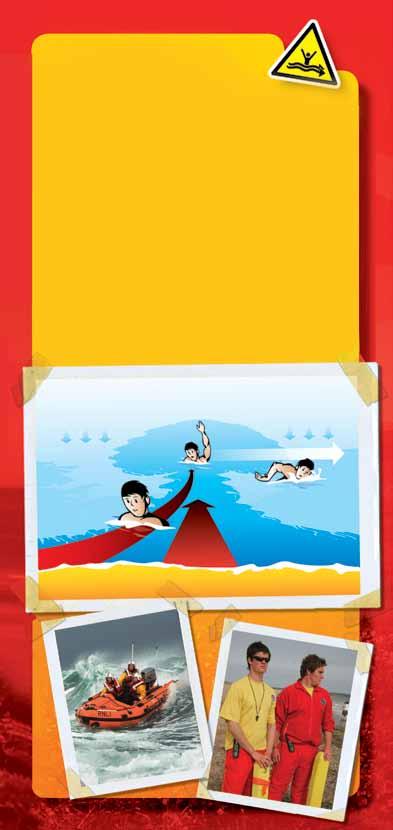
Rips are strong currents that can quickly take swimmers from the shallows out beyond their depth.
Lifeguards will show you how to avoid rips, but if you do get caught in one: Stay calm – don’t panic.
If you can stand, wade rather than swimming. Keep hold of your board or inflatable to help you float.
Raise your hand and shout for help.
Never try to swim directly against the rip, or you’ll get exhausted.
Swim parallel to the beach until free of the rip, then make for shore.
If you see anyone else in trouble, alert the lifeguards or call 999 or 112 and ask for the Coast Guard.
Incoming waves
Incoming waves
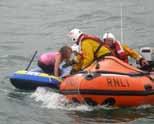
Photo: RNLI/Nigel Millard
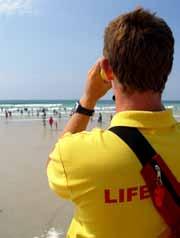
Photo: Irish Water Safety
Rip head
Beach
Swim parallel to shore
Swimmer carried out to sea
Direction of current
Ripchannel
swimming, surfing AND bodYboarding
Swimming in the sea is very different from being in a pool –even small waves can take you by surprise and disorientate you.
Surfing and bodyboarding are the most fantastic fun, but are very demanding, so you need to be a good swimmer.
Experience of swimming at surf beaches is a great start, as it will help you develop an understanding of the behaviour of waves.
If you’re new to the sport, we suggest you get some proper training from an approved Irish Surfing Association school. Visit isasurf.ie for further information.
ALL BOARDERS
Always: follow the advice of the lifeguards check your board for damage before use wear your leash stay with your board and shout for help if in difficulty. Never: go alone ditch your board, as it will keep you afloat.
SURFERS ONLY
Always: surf between the black and white flags (if present). Never: surf between the red and yellow flags drop in on another surfer.
BODYBOARDERS ONLY
Always: bodyboard between the red and yellow flags wear short fins.
If you get into difficulties, stick up your hand and shout for help – but never abandon your board.
know your flags
RED AND YELLOW FLAGS
These show the lifeguarded area: the safest place to swim and bodyboard.
BLACK AND WHITE CHEQUERED FLAGS
For surfboards, kayaks and other non-powered craft. Never swim or bodyboard here.
RED FLAG
Danger! Never go in the water when the red flag is up, under any circumstances.
TIDES
A beach can seem like a vast playground, but the tide can come in surprisingly quickly. Many lifeguard and lifeboat rescues are to people getting cut off by the rising water. To prevent this happening to you, check local tidal information before you set out.
Always keep a look out for the tide’s direction while on the beach, and if in doubt, move out!
inflatables mISSING CHILDREN
Blow-up toys and airbeds are designed for pools, not the sea, where they can easily be swept out. Never use inflatable toys in the sea.
Children are safest when supervised, so encourage them to always play with friends or family and never walk off or go swimming alone. As soon as you get to the beach, agree a meeting point in case of separation.
If a child does go missing: calmly check your surroundings first, ensuring other children remain monitored contact the lifeguards or police and keep them informed let all searchers know once the child is found.
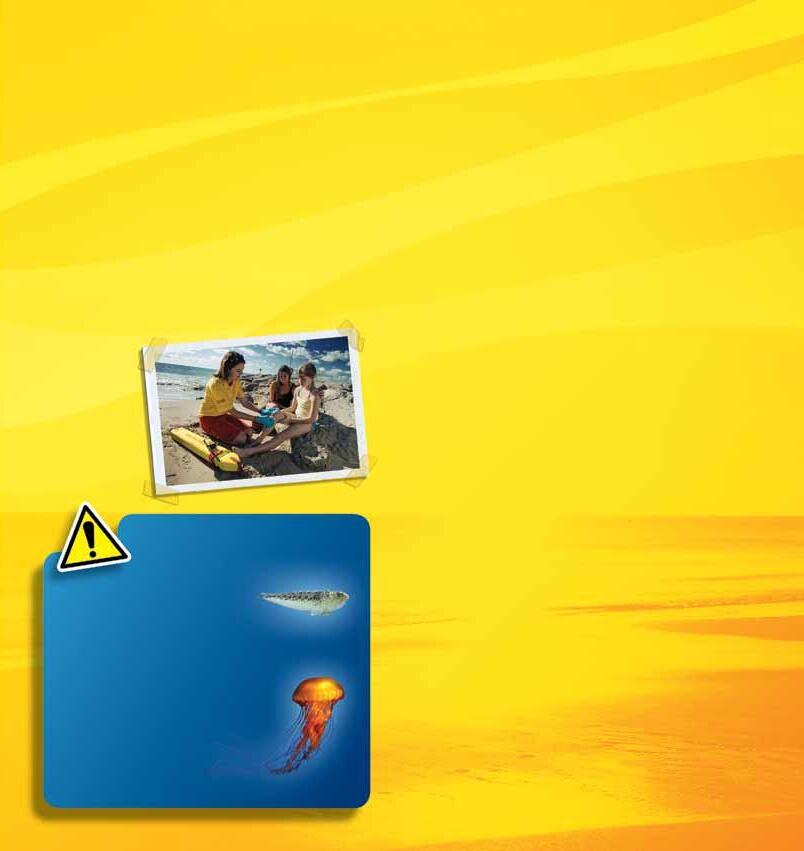
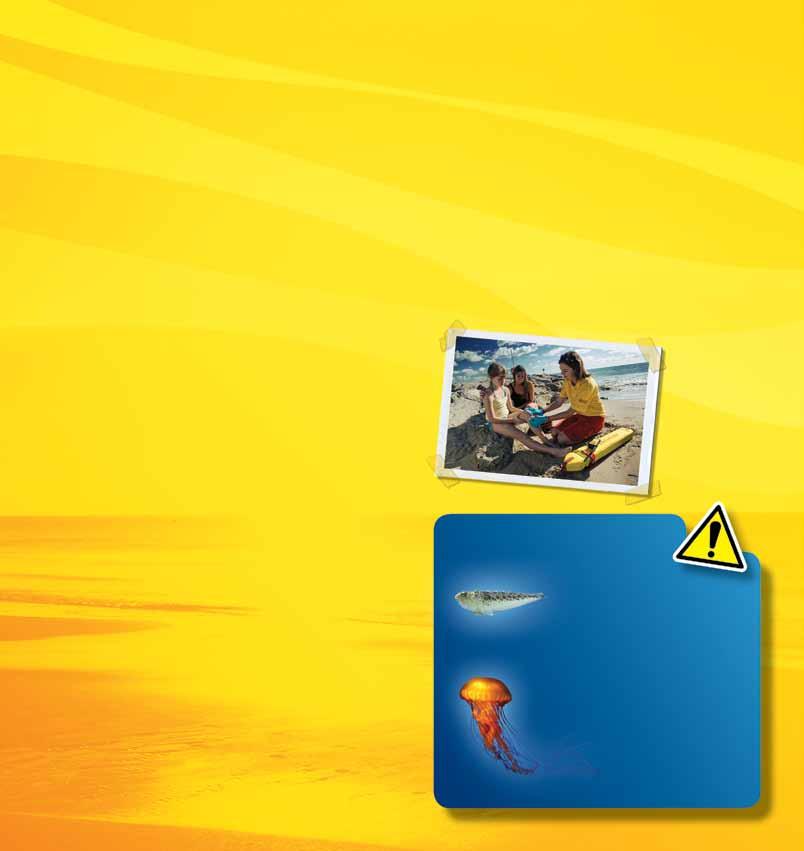
Treating a sting
Weeverfish
Place the affected area in water as hot as is comfortable. Test the water first so as not to scald the person who has been stung.
Jellyfish
Do not rub, as this will cause the pain to intensify. Lightly spray the area with sea water and apply a cold compress or ice if available.
If severe or life-threatening symptoms are present, seek medical attention immediately.
tombstoning
Jumping from heights into water is dangerous because:
water depth alters with the tide – it might be shallower than you think - submerged objects like rocks may not be visible it can be really cold and the shock makes it difficult to swim there can be strong currents that might sweep you away.
Many people have been seriously hurt or even killed due to tombstoning. Our advice is not to do it at all.
sunscreen
Sunburn can ruin your holiday. Protect yourself by using a high-factor sunscreen – 30+ for young children. It is always a good idea to avoid direct exposure to the sun during the hottest part of the day and take advantage of shade where you can. Remember the slogan …
SLIP on a T-shirt
SLAP on a hat
SLOP on some sunscreen
drinks
Fluid is vital. Cooler weather can mean a flask of tea or soup, but on any day make sure there is plenty of water for everyone, as the wind and sun can easily dehydrate you, even when it isn’t very hot.
Alcohol is a poor idea at the beach. If affects judgement, leading to greater risk-taking behaviour. Never enter the water when you’ve been drinking, especially in the evening when lifeguards are no longer patrolling.
Alcohol also contributes to dehydration, increasing the danger of heat stroke. Be moderate or, better still, leave this kind of partying until after you’ve left the beach.
If you see someone in difficulty, never attempt a rescue. Tell a lifeguard or, if you can’t see a lifeguard, call 999 or 112 and ask for the Coast Guard Company/club stamp