Knowing how to deal with waste when on camp is critical for cleanliness, environmental responsibility and the opportunity to return to the same site in the future.
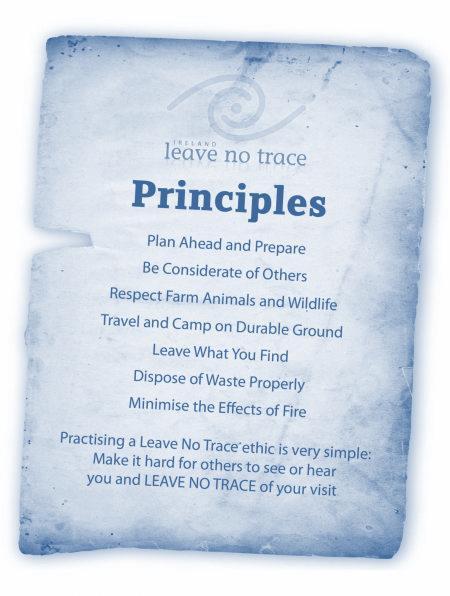
Ensure that food debris is not left lying around.Always clean tables before and after use.Take all unused foods back to the store tent and store correctly and safely.All refuse containers must be emptied and cleaned regularly. In particular, all refuse and waste food material must be removed from inside any preparation area at the end of each meal.This is most important at camp to deter vermin.
Use an environmentally friendly detergent where possible.
To store of camp waste for disposal later, put dry waste in one bin bag and wet waste in another. Food waste should be double-bagged and kept out of the reach of animals.
Site and Oversight
Risk Management
Careful thought must be given to identifying and managing any risks that are associated with camping.
A Scouter who holds a current First Aider certificate must accompany the Cub Scouts on camp.
Always ensure that if the Cub Pack are undertaking extra programme activities provided by an outside provider, that this activity is covered by Scouting Ireland insurance.
If you are green field camping, make sure that you provide the landowner with a copy of the Scouting Ireland letter of indemnity.
It is a good idea to pre-visit the camping site two weeks before the camp is due to take place.You and your Scouter team should do a ‘walk-about’ and discuss and note any issues or problems you can foresee.After this site visit, discuss with your Scouters how you might going about tackling each risk or issue. For example, you may realise that the toilets for the Cub Scouts to use is a quite a trek away- are there any portaloos the campsites have access to that can be put in your field for the weekend?
Site and Oversight
Campsite Layout
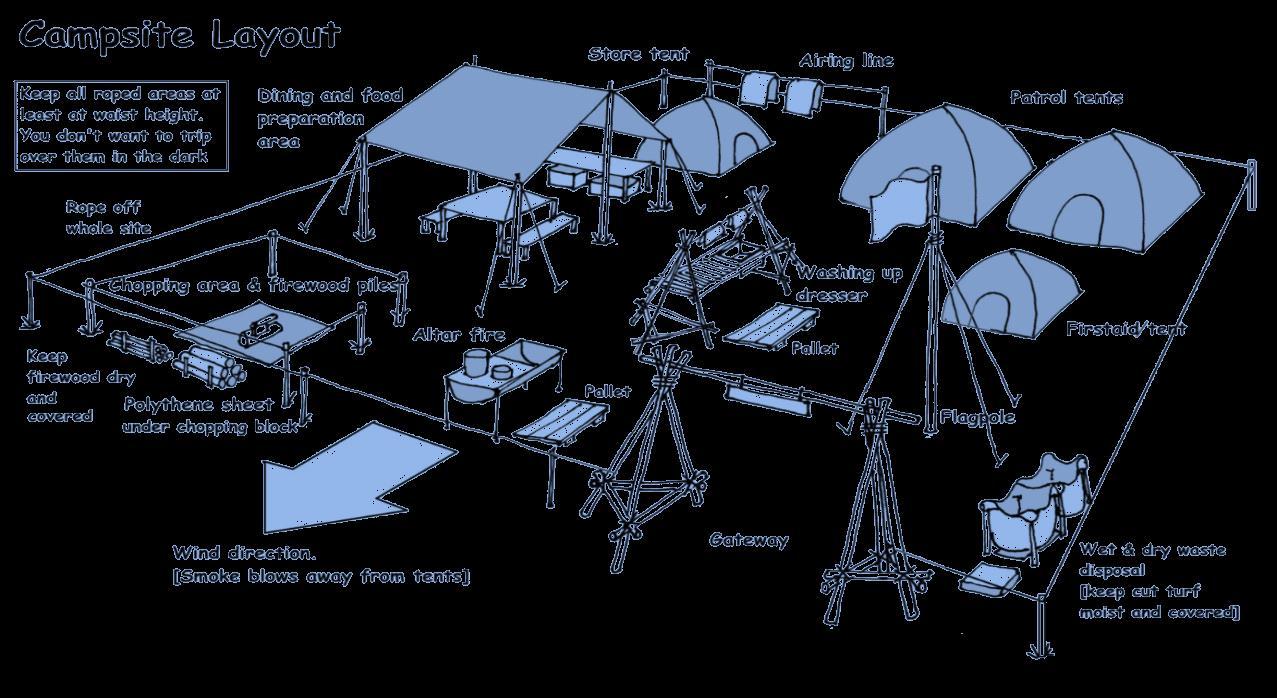
Cub Scouts should be made aware of why a site layout is important. Learning how to correctly lay out a campsite can be made interesting for the Cub Scouts if you demonstrate by setting up a model campsite out of Lego or craft materials at their weekly meetings when introducing them to the camping adventure skills.
If your site can have hedges and trees, this will enable you to discuss making use of shelter.The Cub Scouts can make model gadgets out of matches and elastic bands. Allow each Six to spend part of the meeting making gadgets for their model campsite.
The earlier in the day that the Cub Pack reaches the campsite, the easier it will be to set up the camp and settle in. The practice of sending an advance party to pitch the camp is not be encouraged, as the Cub Scouts lose out on valuable camping adventure skills training.
Site and Oversight
Campfire
Ideally the campfire should be located fairly close to the centre of the campsite. You must take into account the prevailing wind direction before you set up any area of your campsite. You will not want the wind blowing the smoke and embers towards any tentage (or indeed any other area), and the prevailing wind will also determine your type and layout of the fire itself. Position your campfire downwind of the rest of your campsite.
Woodpile
It is common sense that your woodpile should be within a short distance of your campfire, but not too close as to present a threat. The wood should be graded and arranged into different sections. Even a simple stack should be provided cover against the elements, even if it is only a bin liner pegged over the top of the pile. Ideally you should have a store of kindling as well; this most certainly should be kept dry.
Chopping Area
Place your chopping area adjacent to your woodpile.The area should be clearly marked and 'roped-off' forming a circle that is at least 2 arm plus axe lengths in radius. There should be an entrance/exit left for ease of use. Inside the chopping area you may want to place a log (in which you can store the axe when not in use, although they should have a sheath as well for when the weather turns). A chopping block of some description will really be needed. It is much more comfortable, and safer, to aim your swings at a block that is at a certain height, than at the piece of wood lying on the ground. A simple tree stump or large log turned on its end will normally suffice.
Site and Oversight
Cooking Area
Your cooking area should be placed fairly close to the campfire, away from the tentage and ideally close to a clean water supply. Your cooking area includes area for food preparation, serving, utensil storage and food storage. It should be within a shelter (even if you have no mess tents or dining shelters you can construct a simple shelter that at least provides cover from the rain). All food (storage and preparation) should be done off the ground. Your cooking area must be kept clean at all times. There should be several 'bins' for wet and dry refuse. All utensils and pots etc. should be stored off the ground in a clean environment.
If you are cooking under a shelter with gas, the gas bottle itself should be outside the shelter if possible. Common sense dictates that any flame should be away from the sides of the shelter, and any fire should be on a sturdy rest that will not fall, or get knocked over. If cooking within the shelter a water container of some description must be kept nearby for the sole purpose of safety. It is to be kept full, ready to hand, and not used for any other purpose.
Dining Area
A dining area can be immediately adjacent to the cooking area. Dining shelters should be close to the kitchen so that hot food can be served, but not in line with smoke from cooking fires. If possible, the dining area should be sheltered from the elements. Seating and tables to eat from will be needed. All tables should be cleaned before and after each meal. The menu, camp programme and duty roster should be laminated and displayed in the dining area.
Site and Oversight
Storage
If you have any storage tents you may want to place them closer to the areas where they will be used (e.g. the kitchen area).
The storage tent must contain a full first aid kit placed within easy reach by the door, and visible to all. Any items stored in the tent must be off the ground. Storage could also include your own tents. Any clothing or equipment not being used should be neatly stored away in your rucksack. Also during the day, if you have room and the weather permits, pull your groundsheet out of your tent and store to one side to let your tent air, and the ground 'recover’.
Washing Area
If you have a washing area, this should be placed towards the centre of the site as a whole.As it will be used not only for personal washing, but washing the dishes etc. it should be within a short distance of the cooking and dining area.
Water Points
Water points should be positioned in well drained areas if possible.
Site and Oversight
Tentage
Where you place your tentage will determine the layout of the rest of the camp to a large extent. Tentage should be placed towards the outer edge of the site if possible (not in the middle of the field!). Do not place tents right next to trees (especially solitary trees that will attract any lightning!), and be sure to look above as well as around on the ground. Common sense says that no tentage should be placed near the campfire/ chopping area/toilets.
Scouters tents should be positioned fairly near to Cubs. Where possible, pitch with the back/tail end pointing into the prevailing wind.
Cub Scouts tents should be at least 2 metres apart. Where possible, pitch with the back/ tail end pointing into the prevailing wind.
Also during the day, if you have room and the weather permits, pull your groundsheet out of Icelandic tents and store to one side to let your tent air, and the ground 'recover'.
Kitchens or mess tents should be set up close to the water supply and positioned so that smoke will not blow into camp. Cooking tents must be 6 metres apart from all other tents.
Care should be taken in the relative positions of the tents. No tents should be placed immediately next to the site entrance or exit. Scouters tents should be placed in between the Cub Scouts tents and the entrance. All the tents that will be used for 'living or sleeping' should really be placed in the same area, rather than spread around the site.
Food for Thought
Menu
The Cub Scouts can fully assist with planning a balanced menu by using the Food Pyramid from the back of their Handbook.
It is important when developing a menu to remember programme so that meals fit into the time available. Cooked breakfasts alongside familiar cereals are a great way to ensure the Cub Scouts have a good start to the day and helps in avoiding snacking.
While heathy eating is very important and using the food pyramid to plan menus, remember that the Cub Scouts will be outside all day, moving about and active for longer days than they would be at home, so the combination of fresh air and exercise will make for increased appetites.
Meals
Menu planning should be done as part of the Sixer Council as the tastes and food intolerances or allergies change from year to year in the Cub Pack.
Menus should be created by the Cub Scouts with Scouters support to ensure balance.
Cub Scouts should be shown how and why perishable and non-perishable food items are stored on camp.
Cub Scouts should be preparing and cooking the meals on a rota system, with Scouter assistance when it comes to the use of sharp knives or heavy lifting of pots and pans.
Simple one pot wonders i.e. spaghetti Bolognese, curry, sweet-and-sour chicken or stew are usually main course favourites with this age range and a simple recipe should be provided. .
Food for Thought
Organisation
Describe to the Cub Scouts how to keep the camp kitchen clean and organized: Explain the importance of storing raw meats, poultry, fish and vegetables in separate cool boxes.
Use separate coloured chopping boards for raw foods, cooked foods and vegetables. If this is not possible then ensure that the boards and equipment that are used are washed in very hot soapy water between each use.
The use of anti-bacterial sprays or wipes on work surfaces is another good way of eliminating bacteria.
Hand washing is vital and it is essential to wash hands before helping to prepare food, set tables or eating, especially when outdoors and on camp.
Some campsites also provide ice pack freezing services for cooler boxes, a good way to keep food fresh on camp.
Always check to ensure that your water source is potable.
Food for Thought
Ideas and Suggestions…
The following is a list of easy-to-make food suggestions that your Cub Pack may like to use to inspire your planning! Don’t forget that often Cub Scouts will taste food and dishes for the very first time on camp.
Breakfast
French toast
Porridge (try making it with chocolate milk for something different!)
Pancakes
Fruit salad
Lunch
Falafels in pitta
Bread twists (backwoods-style!)
Hot dogs
Homemade soup
Quiche (you can buy premade pastry cases)
Healthy sandwiches (prepared individually in Sixes from a ‘salad bar’ of ingredients)
Dinner
‘One-pot wonders’: stew, curry, sweet-and-sour, Bolognese, etc.
Pasta carbonara
Pizza made by Cub Scouts with homemade garlic bread
BBQ
Baked potatoes with various toppings
Beef nachos
Burritos/ fajitas/ tacos (easy to prepare with lots of jobs for Cub Scouts)
Suggestion: for dessert, why not give each Six the same set of mysterious ingredients.Award a prize to the Six who come up with the most creative, bestpresented and most delicious dishes!
Food for Thought
Sample Recipe: Pancakes
Here is a very simple recipe for pancakes as an example of what your Six may be able to do on camp. Remember, keep everything as simple as possible- quantities do not have to be 100% accurate in most recipes, for example.
The internet can be a great source of recipes, but again, make sure they are as simplified as possible for Sixes.
A Scouter may assist or oversee safety arrangements in Sixes, but should avoid ‘taking over’- let the Cub Scouts make their own mistakes… within reason!
THE WORLD’S BEST PANCAKES
You will need: a cup or two of flour, 2 large eggs, a cup of milk, a pinch of salt, a piece of kitchen roll with oil on it, and your favourite fillings (bananas, lemon wedges, strawberries, etc.)
1. Put the flour, eggs, milk and a pinch of salt into a bowl, then pass this around the Six- each member has twenty seconds to whisk as fast as they can!
2. Put the frying pan over a medium flame on your hob and carefully wipe it with some oiled kitchen paper (get your Scouter to demonstrate first!).
3.When this is hot, cook your pancakes for about one minute on each side until golden. Can any of the Six flip the pancake successfully?!
4. Make sure a member of the Six is preparing the fillings as the pancakes are being cooked.
5.When there are enough pancakes made, dig in as a Six and enjoy! Give any leftovers to your Scouters… if they are behaving themselves!
Food for Thought
Involving Cub Scouts front-and-centre
Cub Scouts should be working in Sixes to prepare all meals on camp- this is where fun, learning, teamwork and getting that ‘sense of achievement’ happens! Something to bear in mind is that if the Cub Scouts helps in preparing the dish, he or she is more likely to eat and enjoy it! Here are some tasks the Cub Scouts may enjoy doing as part of mealtime preparation:
Washing the vegetables
Laying out the ingredients for preparation
Preparing the different chopping boards
Acting as the ‘hygiene inspector’
Peeling and/or chopping fruits and vegetables
Cooking the meats
Watching and stirring the pots
Whisking the mixtures
Stirring-in the sauces
CAYG (cleaning-as-you-go)
Setting places on the table
Dishing out food onto plates
Lining up the members of the Six to receive the food
Dealing with complaints!
Spars and Sparks
Tent Pitching
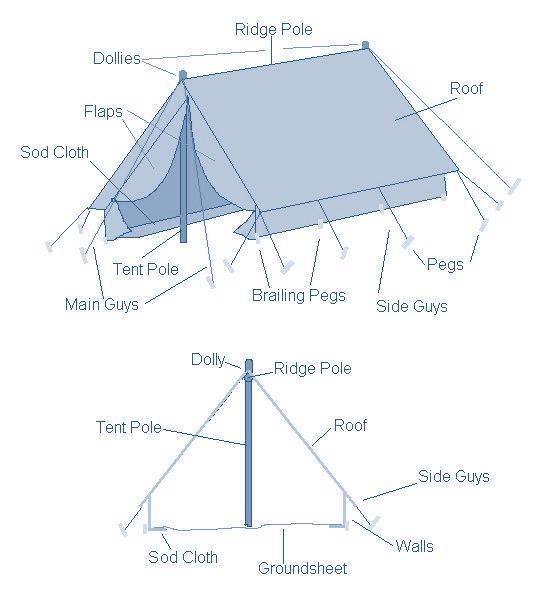
The Cub Scouts will benefit from the experience of setting up their own tents. Scouters can help but the Cub Scouts need to do the work themselves.They will learn lasting lessons from their mistakes and their confidence will grow as they become more successful at the task. Explain to the Cub Scouts that tents are expensive, and must be cared for.
Practice in pitching and striking the tents should be undertaken well prior to going on camp. This allows the Pack to get any teething problems and frustrations out of the way. The Sixer should direct the activity, with some help from Scouters if needed.
Things to bear in mind:
Remove shoes and boots before entering a lightweight tent. Do not use any SPRAYS (ie spray deodorant) inside or near tent, it can destroy the waterproofing. Keep all the tent parts together at all times.
Spars and Sparks
Pitching (putting up) tents
Clear area of sharp objects like stones, sticks, etc. Look up. See what is overhead. Avoid pitching under large trees. Make sure that the surrounding area is well drained and level ground. Keep away from clay soil (puddles and mud when it rains) if possible.
Striking (taking down) tents
Striking and packing away is a reversal of the pitching process. Sweep out floors to remove any dirt and debris from the tent. Loosen guy lines. Pull out the pegs and wipe the mud off on rag. Remove poles and allow tent to come down. Fold, roll up or stuff tent depending on manufactures directions.
Try not to pack a wet tent. In some instances this is unavoidable. Wet tents that need to be transported should be packed loosely and set up to dry as soon as possible on return to the Scout Den. Damp tent fabric and guy lines are soon affected by mildew and will start to rot.
Mark and report any damage to the Scout Group Quartermaster so that the tent can be repaired before it is required for the camp.
Spars and Sparks
. Pioneering- Square Lashing
While Cub Scouts may have honed their pioneering skills in the Scout Den making simple gadgets by using bamboo and elastic bands, those working on their Tagann badges should be progressing to making basic gadgets from spars and by using lashings. The Cub Scouts must help to ‘build’ their campsite and take ownership of it.
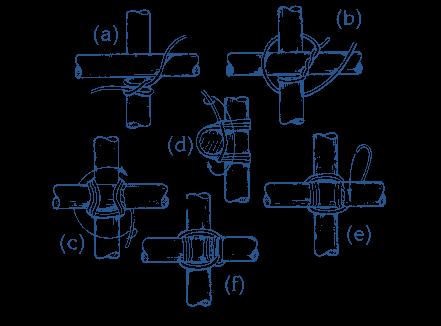
The illustration below shows how to perform a square lashing.
•Begin with a clove hitch underneath the spar to be supported (a).
•Wrap the two ends of the rope together so that the short end is trapped and the clove hitch cannot come undone. Wrap the rope first over one spar, then under the other, pulling tight all the time (b).
•On the second turn round; go inside the previous turn of rope on the top but outside underneath the spars (c).
•After three turns, apply three frapping turns which pull on the rope turns already made, making them even tighter (d).
•Finish off with a clove hitch on the opposite spar to the one on which you started (e)
Spars and Sparks
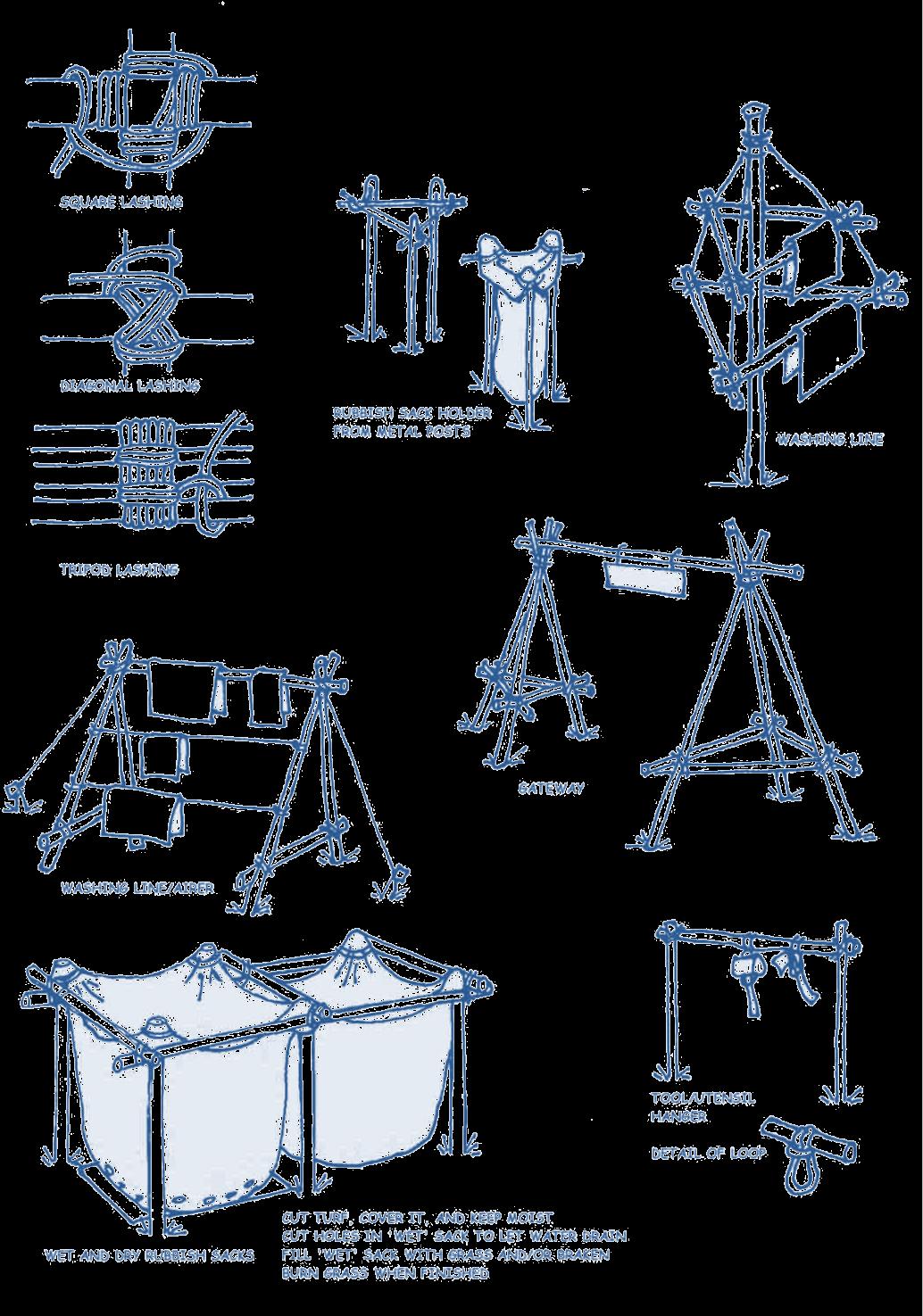
. Gadgets
The illustration below provides several examples of simple gadgets that Cub Scouts could practice making in the scout den for use while on camp.
Spars and Sparks
. Fire Lighting
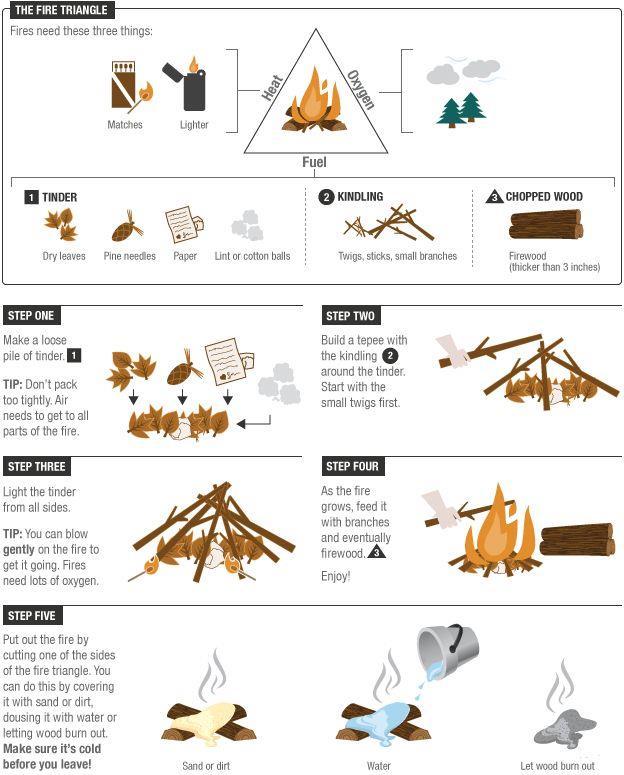
Knowing how to light a fire is an essential skill in Scouting. It’s used for cooking and also for warmth.Three elements are needed to make a fire: oxygen, heat and fuel.This is what is known as a fire triangle.Typically, wood is the fuel for a fire, oxygen is provided by the air and the heat comes from a match or spark. If any of these elements are removed, the fire will extinguish.
1. Preparation is vital. Collect plenty of dead, dry wood.
2. Begin small and light with your back to the wind.
3. Feed the fire, don’t smother it, and pay particular attention in the early stages.
4. Add additional fuel frequently as needed.
5. Cook over embers, not over flames, such as you would on a barbeque.
6. Never leave the fire unattended
7. Ensure you can extinguish a fire quickly in case of emergency. Keep a bucket of water or sand close at hand.
8. Always return fire sites to their original state, leaving no trace
9. Extinguish the fire and clear the fireplace correctly.
The ideal exercise for Cub Scouts to learn about fire lighting is to have toasted marshmallows as the end result of the process.
Prepare a safe area for the Cub Scouts to light their fires. Let them attempt to light cotton wool balls from a kneeling position.They should have a small bundle of matchstick-sized kindling already gathered prior to lighting the fire. This should be added as soon as the cotton wool catches. Add slightly more fuel so that the fire it will continue to burn for 5 to 10 minutes. Explain how to toast marshmallows on long sticks, holding them above but not directly into the flames. When all the marshmallows are eaten, demonstrate how to extinguish the fire in the correct manner.
Spars and Sparks
. Fire Lighting
Adding the Magic
. Campfire
The campfire is probably the most loved of camping traditions. It’s a place to create memories and dreams. The ideal campfire programme lasts about 45 to 60 minutes.This is long enough to keep everyone's attention, but not so long that the Cub Scouts become restless.
A good campfire should be structured with a formal opening, a loud animated and enthusiastic middle, and a defined closing. A good rule of thumb is to "follow the flame." When the flames are high, the energy should match.As the fire dies down, things get calmer. The campfire might also be a suitable venue for sketches and stories.
The campfire should be hosted by a Cub Scouter with the assistance of the Cub Scout who has been given the role of lighting the fire and helping with the planning.
The Campfire Leader should keep the pace rolling along and make sure that all Cub Scouts are involved and that there is a good mix of song types such as songs with lots of movement, while “repeat after me” songs are always hugely popular.
To close out the campfire, choose something appropriately quieter and reflective. Traditionally, the first verse of ‘Taps’ is the most common closing to all Scouting campfires:
Day is done. Gone the sun
From the lake, from the hills, from the sky. All is well.
Safely rest. God is nigh.
Adding the Magic
. Extinguishing the fire, preserving the spirit
After the closing, the Cub Scouts should head back quietly to the mess tent for supper before lights out and bedtime.The campfire lead should always make sure that the fire is safely extinguished before bedtime.
The next morning after the campfire, you may like to collect the ashes from the pit and put these into small individual tubs to be given out to each Cub Scout at the Scouts’ Own.The next time the Cub Scout attends a camp with a campfire, they can add their ashes to the fire and again collect the cooled ashes of this new fire, doing likewise for every campfire they attend.This creates a spiritual link between their Scouting experiences.
Campfire songs
There is a vast array of campfire songs and these have been passed down via oral tradition for generations. For those who are new to scouting, or to widen your knowledge base of campfire songs, try the Scouting Ireland Campfire Songs App which has an impressive collection of songs loved by scouts of all ages. Having over 150 songs available on your smartphone will allow you to learn and practice new songs in the scout den with the Cub Scouts so that for your campfire on the pack holiday the pack will have a good old sing song. Check it out and download the Scouting Ireland Campfire Songs App from the links below (a simple search in your app store will also work):
Android devices
goo.gl/53w7ob
Apple devices
goo.gl/rwg8dy
Adding the Magic
. Scouts’ Own
A Scouts' Own is a short inspirational ceremony usually built around a theme. It should be short, usually lasting no longer than 15 minutes. It should be made up of any combination of readings, prayers, reflections and music. Many Scouts' Owns are based on a particular theme, such as friendship, world peace or the world around us.
The Scouts' Own is an opportunity for the Cub Scouts to reflect upon who they are and the core beliefs and values that shape them and what they do. It should be organized and led by the Cub Scouts in a spiritual location of their choosing. The role of the Scouter is to provide guidance. Keep it simple. Use symbols for a pronounced visual experience. Ensure that as many Cubs as possible play a part in the ceremony. If the Cub Scouts wish to write out their thoughts or reflections, put a limit on the number of sentences. Nobody should speak unless absolutely necessary or unless they are reading of singing. If reading, age appropriate language should be used as well as stories and songs. Cub Scouts always enjoy the sense of accomplishment of having carried out a ceremony such as a Scouts’ Own.
Some ideas for components of a Scouts’ Own include:
Short poems
Prayers
Reflections, quotes, proverbs
Short parables and fables
Quotes by Robert Baden-Powell
Favourite memories
A moment of silence
Lighting of candles (battery-operated ones may work best) or torches
A reflective song you might hear at the campfire (Taps, Scouting Light etc.)
Handing out of campfire ashes from the night before
Adding the Magic
Flag Ceremony
Some Packs always have a flag ceremony at camp- it may be a tradition within your Scout Group. The flag ceremony is usually conducted at the opening of a camp, as well as every morning at camp. Flag lowering is done at the closing of camp as well as every evening.
At camp, the flag ceremony is best held before breakfast.This is a good way to get everyone up and going before the start of the morning's activities.
A flag on land should not fly at night unless it is fully illuminated.The flag should be lowered at sunset. In the summer, this can be after dinner as part of gathering for the evening's activities.
A recitation of the Cub Scout Promise or Law can happen at the ceremony. When these are recited, everyone must be at alert, making the Scout Sign, and facing forward. A colour party usually consists of one person for breaking and two for lowering.
These ceremonies are normally led by the Camp Chief. They could also be led by the Sixers on a rota basis.You may wish to add to the ceremony by entrusting a Six with providing a reflection (morning ceremony) or summing up their favourite moments of the day (evening ceremony).
NB: If you choose to fly the Irish tricolour flag on your camp, don’t forget the expected protocols/ etiquette around this. More information can be found here: goo.gl/aAJRjn
Adding the Magic
Gear Check
Good practice dictates that a gear check precedes the camp, with enough time between the check and the camp for parents to purchase any required items.
Apart from these small ‘forgotten’ items which the parents may need to purchase at the last minute, the Cub Scout should be familiar with all items In their kit.
Camping clothes- and especially boots- should be ‘worn in’ in the weeks leading up to the camp to prevent problems such as blisters from occurring.
The gear check should be completed by a Scouter with the Cub Scout; the Cub Scout should be able to sort through their kit with ease and know where each piece of personal gear goes.
In order for the Cub Scout to prepare for this gear check, a gear list (an adaptation of one listed in the previous resource) should be provided.The Cub Scouts should be able to ‘check off’ each item as they pack at home.
Adding the Magic
. Sleeping bag and mat
A comfortable night’s sleep is determined by the warmth and comfort of the sleeping bag. Cold rising from the ground through the groundsheet of the tent will draw away warmth leading to a restless night’s sleep.
If possible, Scouters should also check Cub Scouts sleeping bags at a camp planning meeting before camp to ensure that they are adequate. Scouters should advise parents on the best buys.A sleeping bag will last for many years and an investment in a proper bag at the beginning is always worthwhile. Lightweight festival style summer sleeping bags are not suitable for most camps.
The sleeping mat prevents the transfer of heat by acting as an insulation layer between the Cub Scout and the ground. Sleeping mats have different levels of quality and effectiveness.The cheaper mats have a loose cell structure and will compress easily so that the insulating layer can be quite thin and offer little protection. Yoga mats are not suitable for camping and should not even be considered.
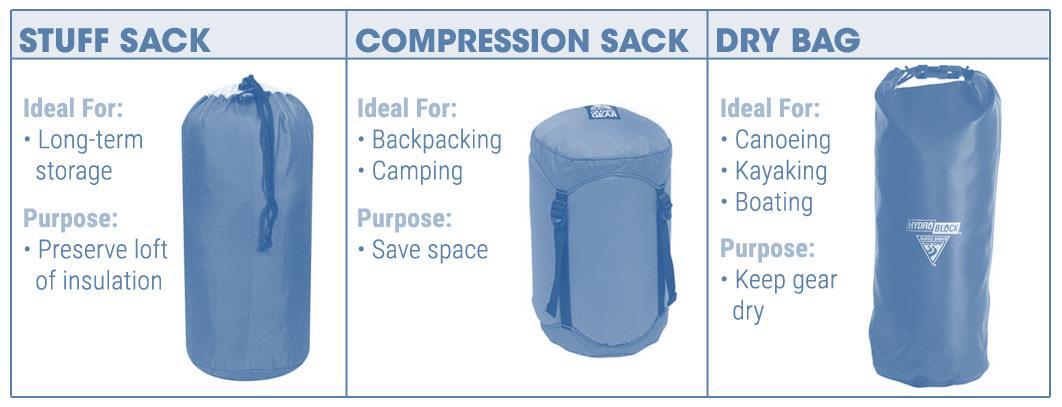
How you store your sleeping bag affects its lifespan. When you arrive home from camp, unzip the bag and air it out for at least 24 hours to make sure it's completely dry. Never store your bag in its stuff sack! It's fine to use a stuff sack or even a compression stuff sack on camp, but when you return home, get your bag out of that confined space, give it a good shake to fluff up the fill material, and then store it in a cool, dry place. Spread it out under your bed, hang it in a wardrobe, or put it in a big, breathable storage bag or pillowcase.Watertight storage bags are also a bad idea. Condensation can build up inside and result in mildew.
Adding the Magic
. Care of your sleeping bag
Washing
Wash your bag when it gets dirty, or loses a noticeable amount of fill, but not after every trip.This should be done at least once a year.Washing will help restore warmth and breathability so the bag performs like new again.
For safe and thorough cleaning, head to your local laundry and use a jumbo, large capacity washing machine.
Be sure to turn the sleeping bags inside out prior to washing.Water will escape through the lining material more easily than it will through the water resistant or waterproof shell material during the spin cycle. During washing, ensure all zippers and theVelcro tab are secured.
Use warm or cold water, the gentle cycle, and a mild detergent of which you should use as little as possible. Never use fabric softener.
Drying
If using a tumble dryer, opt for the largest dryer you can find.
For a down sleeping bag, toss in 6 tennis balls or a clean pair of sneakers to help fluff it up.
Turn the dial to the lowest/coolest setting. Sleeping bags take anywhere from 2 to 5 hours to dry completely.
Check the bag periodically to make sure the fabric isn't scorching hot and the insulation isn't bunching or clumping. If it’s too hot, the fabric or the synthetic fill can melt.
To air-dry your sleeping bag, lay it out flat on towels over two portable clothes racks, or dry in a shaded area out of direct sunlight, as excessive exposure to UV will degrade the nylon shell fabric.A warm, dry, windy day provides the perfect conditions for air-drying your sleeping bag.
Make sure your bag is thoroughly dry before placing it in its storage bag.
Camping with the Stars
. Administration
All camps must adhere to Scouting Ireland’s Camping and Adventures in the Out of Doors Policy (SID 77-11). Refer to the most up-to-date version of this document.
Make sure that all of your paperwork is in order well in advance of the camp. Insist that where there is no consent form or medication form (where applicable), the Cub Scout will not be able to partake in the camp.
It is good practice to have copies of the Accident/ Incident Report Form printed out for the weekend.
Links to the forms required for camp are listed below:
Activity Consent Form (SIF 11/05)
goo.gl/qG9uGc Managing Medications Form (SIF 11a/10)
goo.gl/6RxKx8 Accident/Incident Report Form (SIF 10/05) goo.gl/g3Jj4P
Camping with the Stars
Revision
As the Camp Chief, you may like to have your own checklist ready to tick off by the time the week of the camp comes around, for example:
Parents informed of drop-off and collection times
All activities consent forms completed and collated
All relevant medication forms completed and collated
Medicines kept/ stored in agreed manner
Copies of accident report form
List of Cub Scouts attending
List of parental and emergency contacts
Phone and phone charger
First Aid kits
Group gear sorted and dropped to site in time for camp
Activity equipment packed
Money/ signed cheque for campsite
Spare personal equipment (you may like to have a spare sleeping bag, etc. in case of accidents)
Suncream, insect repellent, etc.
Risk assessment carried out
Outline of Camp programme and times; washing and cooking rotas
With your checklist all ticked off, all that is left is to ensure your Cub Scout Pack has a camp to remember!
Camping with the Stars
Review
Following the return from your Pack Holiday it is time to review the camp with the Scouters and the Cub Scouts.These reviews should be done in the Cub Scouts Sixes.
Remember the four F’s in a review:
Facts:What happened?
Feelings: How did you feel it went?
Findings:What did you learn?
Future:What would you do better next time?
As well as reviewing the camp programme, events and how everyone got on, the Cub Scouts should also review with their travel cards so see if they undertook their learning objectives as planned.This review of their personal progression in the SPICES is the most important part of the Cub Scout programme. As the camp is the highlight of the scout year, it is a time to award the Turas,Taisteal and Tagann badges.
It is important to take on board reviews of the Cub Scouts when planning the next Pack adventure or camp.Are there areas that could have been improved or unforeseen circumstances that you might be better equipped for next time? A sitdown with the Scouter team allows a more in-depth discussion and this review should also greatly inform planning for future camps.
Remember, it is not a true camping experience if everything goes exactly to plan! The plan is there to guide your Scouters and Cub Scouts, but it is not the end of the world if one or two things didn’t happen due to running out of time, etc. Oftentimes, the most memorable parts of camp are the unexpected moments nobody could have planned! As long as everyone got back in one piece, had a fantastic time and- most importantly- are eagerly awaiting their next camp, chalk that down as a success! Know what can be improved, but don’t forget to celebrate the successes too!
Extra support
We hope you have found this resource useful and that it has inspired you to help provide a fantastic camp for your Cub Scout Pack.
As we know from the Scout Method,‘learning by doing’ is best! If, however, you would like extra support, there are a number of different sources you can turn to.
The Scout Shop- with outlets in Bray, Dublin and Limerick as well as an online store- have many printed publications such as Adventure Skills books, campfire lyrics and handbooks with programme ideas.
There are a number of Scouting Ireland-produced printable online resources that may assist you.Visit https://www.scouts.ie/Cub-Scout for Cub Scout-specific programme ideas.You may also find resources from different sections useful too- have a browse around scouts.ie and keep an eye on the national mailings released every Wednesday!
Finally, our National Scout Centres have a wealth of experience helping Packs to have great camping experiences. Do not hesitate contacting them before your camp with queries or requests for advicethat’s what they are there for and they are the experts!
All contacts for Camp Chiefs and other Scouting Ireland staff and volunteers can be found in the ‘Contact Us’ section of scouts.ie.