COMMUNITY-EMBEDDED TRADITIONAL SKILLS TRAINING: A BUILDING PRESERVATION TRUST APPROACH
Feasibility Study
Scottish Historic Buildings Trust April 2025
ZERTEX MEDIA PUBLISHING
Feasibility Study
Scottish Historic Buildings Trust April 2025
ZERTEX MEDIA PUBLISHING
Scottish Historic Buildings Trust’s mission is to conserve at-risk, historically significant buildings by giving them fresh life, economic viability and purpose in the local community.
Appendix 1: Adams Napier Partnership Report
Appendix 2: Elementscotland Report
Rural Scotland is suffering from twin crises: the dereliction of historic buildings and endemic gaps in the traditional construction skills required to repair and maintain them. We are all familiar with the ‘rotten tooth’ of a neglected historic building within our towns and villages or a previously iconic landmark in need of restoration and conservation. Such buildings can reflect a lack of community optimism and feed apathy and loss of civic pride.
As a Buildings Preservation Trust, the mission of Scottish Historic Buildings Trust is to deliver the repair and regeneration of significant historic buildings for the benefit of their communities. With this feasibility study, we sought to tackle these twin challenges together, by designing a model for the delivery of that core purpose which would also contribute to tackling the growing crisis in traditional skills.
This feasibility study presents:
1. A replicable model for a BPT-led delivery of traditional skills training through historic building restoration projects in rural towns in Scotland.
2. A proposed pilot project which would apply this model on-site in Eyemouth, in the Scottish Borders.
Our model takes a place-based approach to skills training delivery. Community wealth building from restoring an old building may not be immediately obvious. However, if the building itself becomes the classroom – the vehicle for skills learning – then the physical restoration becomes the by-product of growth and development within communities.
Scottish Historic Buildings Trust
Riddle’s Court, 322 Lawnmarket, Edinburgh EH1 2PG 0131 220 1232
Reg. Charity No.
Scottish Historic Buildings Trust (SHBT) is Scotland’s largest Buildings Preservation Trust (BPT), and one of the most active in the UK. The Trust’s mission is to conserve at-risk buildings all over Scotland by giving them fresh life, economic viability, and purpose in the local community. Since our foundation nearly 50 years ago, our award-winning projects have delivered over £40 million of capital investment into Scotland’s built heritage.
As well as delivering our own fully-funded building regeneration projects, SHBT also works with external partners, including local authorities and community groups. We frequently provide project management and fundraising expertise for historic building repair and conservation projects and have experience managing substantial placebased regeneration grant schemes on behalf of local authorities. Our recent work in the Scottish Borders includes project management of the Jedburgh and Hawick Conservation Area Regeneration Schemes (CARS) in partnership with Scottish Borders Council and the Port House project with Jedburgh Community Trust.

Our awardwinning projects have delivered over £40 million of capital investment into Scotland’s built heritage.
This feasibility study was carried out between November 2024 and March 2025. Two consultant work packages were commissioned to support the project, which were competitively tendered and appointed in October 2024. These were:
Adams Napier Partnership
Adams Napier Partnership, a firm of Chartered Building Surveyors and Heritage Consultants based in Peebles, were appointed to conduct the Building Identification and Condition Assessments. This was led by Dr William Napier, a chartered building surveyor, architectural historian, and decorative plasterer with over 30 years’ experience working on historic and traditional buildings throughout Scotland. Their commission was to identify local buildings of historic significance in need of repair, seek dialogue with owners to discuss their willingness to partake in the scheme, and contribute to identifying skills training opportunities.
Elementscotland
Kevin McClure and Margaret McCole of Elementscotland, based in Coldingham, were appointed to undertake the Skills Training Provision Design. Formerly Director of Construction at The Ridge, Dunbar, Kevin has many years’ experience both as an educator and a joiner delivering contracts for private and public sector clients. He and Margaret are long-standing advocates for access to community-based skills training. Their brief was to use the training opportunities presented by the identified buildings to design a skills curriculum suitable for delivery via BPT-led restoration projects on-site.
The reports from both contributors form the basis of this feasibility study and can be read in full online as Appendices
This feasibility study was part-funded by the UK government through the UK Shared Prosperity Fund.
The UK Shared Prosperity Fund is a central pillar of the UK government’s Levelling Up agenda and provides £2.6 billion of funding for local investment by March 2025. The Fund aims to improve pride in place and increase life chances across the UK by investing in communities and place, supporting local business, and people and skills. For more information, visit www.gov.uk/government/publications/ uk-shared-prosperity-fund-prospectus
“We welcome SHBT’s fresh approach to dealing with some of our historic built environment’s most entrenched issues: skills and rural dereliction. Historic Environment Scotland is delighted to support this important project.”
- Colin Tennant, Head of Technical Conservation, HES
Riddle’s Court, Edinburgh © Colin McLean Photography
The contribution of Zertex Media, a digital-first publisher based in Fort William in the Highlands, is gratefully acknowledged.
The remaining match funding was provided by Scottish Historic Buildings Trust.
The challenge posed by an escalating crisis in traditional skills in Scotland is well established. Launching its new Heritage Skills at Risk Register in partnership with the Institute of Conservation (ICON) during Scottish Apprenticeship Week in March 2025, Historic Environment Scotland (HES) said, “the shortage of traditional heritage skills is at risk of becoming a crisis due to a lack of training opportunities and awareness about the problem.”1
The lack of availability in the skills needed to repair and maintain Scotland’s historic built environment directly impacts the quality of the places in which people live, work, and spend their time. Traditional buildings (constructed pre-1919) are estimated to make up 33% of Scotland’s retail space, 24% of Scotland’s office space, and 41% of the spaces used by the public sector in Scotland.2
Of the approximately 2.6m dwellings in Scotland that make up the nation’s housing stock, 18% are of traditional construction, and around 71% of these are in need of critical repairs.3
Traditional skills training provision is not currently at a level that meets this challenge. As of 2025, stonemasonry apprenticeships in Scotland are only available in Glasgow, Elgin, and Stirling. 68% of employers anticipate a skills shortage by 2028 – an increase of 20% since 2019.4
Dr David Mitchell, Director of Cultural Assets at HES, has said, “We must significantly increase training opportunities to ensure our traditional and historic buildings are maintained for future generations.
“We need a concerted effort to attract young people into the sector from schools, colleges and universities, as well as encouraging skilled workers and career changers to consider this vital field.” 5
Traditional dwellings constructed before 1919 make up approximately 18% of Scotland’s building stock, but are also the least energy efficient, with only 30% rated EPC band C or better. The Scottish Government estimates that heat in buildings is responsible for 20% of Scotland’s carbon emissions and has set the target to reach net zero by 2045. Retrofitting these buildings for a low carbon future is a national priority but the skills needed to deliver this are still critically under-resourced.
Appropriately retrofitting our historic buildings not only preserves their cultural contribution to Scotland’s towns and cities, but also preserves the embodied carbon created through their original construction and maintenance.
With their ‘vapour-open’ design and traditional construction materials, pre-1919 buildings require different methods of retrofit to their modern counterparts. Interventions that aim to seal the structure can be wholly inappropriate for historic buildings, potentially causing an accumulation of moisture inside the building, leading to poor indoor air quality, damp, mould, and accelerated decay of the building fabric.
Specific skills are required to retrofit historic buildings appropriately; but if done correctly, the process can deliver multiple benefits for the occupants, reducing energy bills, improving health, and increasing thermal comfort. Demand for appropriate retrofit solutions for pre-1919 housing will only increase, but finding qualified and knowledgeable tradespeople is often difficult for property owners, creating a bottleneck. Equipping the construction sector with the skills to retrofit the UK’s historic buildings could generate an additional £35 billion in output annually and support 290,000 jobs.6
1 Risk Register in development to tackle heritage skills crisis, HES, 5 March 2025
2 Scotland’s Historic Environment Audit 2024
3 Scottish House Condition Survey: 2022 Key Findings
4 Skills Investment Plan 2024, HES
5 Risk Register in development to tackle heritage skills crisis, HES, 5 March 2025
6 Heritage and Carbon: Addressing the skills gap, Grosvenor for Historic England, 2023
An increased provision of traditional skills training is not only required to meet the challenge of repairing and maintaining the places and spaces where we live and work, it represents a significant opportunity for growth.
Figures from the Fraser of Allander Institute have demonstrated that every £1 million directly spent on repairing, maintaining and improving buildings supports 21 full-time equivalent jobs across Scotland – 40% higher than for new builds.7 HES estimates that 10,000 new jobs will be needed over the next decade to maintain and adapt Scotland’s traditional building stock.8
Across Scotland, the potential of vacant and derelict historic buildings and those simply in need of repair, is waiting to be unlocked. Scottish Government has declared a national housing emergency, yet there are 46,217 empty homes in Scotland, with 28,280 empty for 12 months or longer.9
There were 1,054 Residential buildings on the Buildings At Risk Register when updates were paused in 202410, alongside 184 properties categorised as Commercial, 159 as Industrial, and 56 as Recreational.
Through repair and regeneration, these buildings could be restored to useful life in their communities with their floorspace made available for housing, retail, community functions, commercial activities, or a hybrid mix of uses.
The Place Principle, adopted by Scottish Government in 2018, sets out how a holistic approach to services, land, and buildings can improve people’s lives, support sustainable economic growth and create more successful places. Restoring historic buildings in a way which also delivers traditional skills training that is accessible to people in the places where they live supports this interconnected, collaborative approach to improving Scotland’s places.
Our study focused on the regeneration opportunities in Scotland’s small rural towns. There are 2,214 registered Buildings at Risk in Scotland:
Rural (900)
7 The economic, social and environmental benefits of stimulating repairs and improvements to the Scottish built environment to aid a green recovery from Covid-19, Fraser of Allander Institute, 2021
8 Skills Investment Plan 2024, HES
9 Scottish Empty Homes Partnership Annual Impact Report 2024
10 The Buildings at Risk Register for Scotland
The Ridge was set up in 2012 as a single social enterprise (‘The Ridge (Scotland) CIC’) serving Dunbar and the surrounding villages11. It has since evolved into an overarching SCIO with a wholly-owned trading subsidiary, The Ridge Foundations CIC (Community Interest Company). The organisation aims to create jobs and training opportunities in and around Dunbar, through the maintenance of both the natural and built environment. The range of practical support offered by The Ridge allows more vulnerable members of the community to overcome barriers, allowing people the chance to fulfil their potential.
Image, right: work in progress at Black Bull Close, Dunbar, a heritage skills training project led by The Ridge.© The Ridge
Launched in September 2023, Craft Your Career is delivered by HES in collaboration with Fife Council, Fife College, and The Ridge Foundations, Dunbar12. The programme provides hands-on training in craft and traditional skills through a pre-apprenticeship scheme, along with valuable work experience and employability coaching, to offer a new opportunity in heritage skills development. Since their launch, the pilot projects have trained 36 individuals in key skills such as roofing, joinery, and stonemasonry, with a strong focus on employability.
The Inverkeithing Heritage Regeneration Project (2019–2024) (IHRP) was a Townscape Heritage and Conservation Area Regeneration Scheme managed by Fife Historic Buildings Trust on behalf of Fife Council. The project included funding to support apprentices, spread between two within Fife Council and two in the private sector. The IHRP funding covered 50% of the costs of wages for Year One apprentices, up to a maximum of £4,000 per individual. With the employability funding available from the Fife Job Contract, this meant that the wage costs for employers in the first year were negligible.
The project also offered traditional skills training bursaries of up to £500 to attend courses and training for employers and employees at any level, with most opportunities delivered at the Scottish Lime Centre Trust in Charlestown, Fife. One-to-one mentoring opportunities were available, with mentors appointed and paid a day rate for guiding earlycareer traditional craftspeople through bespoke career development opportunities, from recommending reading, attending courses, viewing relevant educational materials such as the HES YouTube Inform series, and on occasion, shadowing and volunteering opportunities.
11 About Us – The Ridge SCIO
12 Training initiative attracts new talent to heritage sector, HES
Shortage of traditional skills
Vacant and derelict historic buildings
• New entrants and additional capacity in construction sector
• Local trades supported to upskill in conservation techniques
• Repaired town centre buildings
• Economic benefits from additional floorspace delivered for residential or commercial use
Our model takes a place-based approach to skills training delivery. By using the restoration of historic buildings as the vehicle for traditional skills training, the project leaves a legacy of repaired buildings – delivering additional floorspace for residential, commercial, or community uses, bolstering local amenity and civic pride – as well as bringing new entrants to the heritage construction sector and supporting existing trades.
SHBT’s core purpose remains to save significant historic buildings at risk across Scotland by regenerating and repurposing them with new uses that benefit their communities. However, the growing crisis in traditional construction skills threatens our own mission; without the skills needed to repair the buildings we hope to save, we cannot deliver projects that meet our core purpose.
Our approach is inspired by the legacy of the National Trust for Scotland’s (NTS) Little Houses Improvement Scheme (LHIS), which itself evolved from the NTS’s pioneering conservation approach in Culross, Fife, in the 1930s. The scheme restored historic houses, ensuring their character was not lost, and resold them to raise funds for the next project. The LHIS was one of the most significant rural restoration programmes in conservation history, saving more than 165 houses across Scotland from its launch in 1960 and demonstrating the impact that a BPT-led approach can have.
Our vision for the scheme was that it should:
1. Be replicable: we aimed to design a BPT-led model that could be used in rural towns across Scotland.
Rural depopulation

Housing crisis

• High-quality education and training opportunities for young people in rural areas
• New residential accommodation available in repaired historic buildings
Climate Emergency

Social exclusion and disengagement
• Upskilled contractors trained in retrofit
2. Be time-limited: SHBT’s projects are often long-term but not indefinite.
3. Meet our core purpose: the scheme needs to deliver repaired historic buildings.
4. Support local trades: to increase their capacity, rather than compete with them.
5. Respond to community need: the scheme should have full buy-in from key stakeholders and the local community.
6. Be open to all: involve career changers and those out of work, as well as young people, demonstrating that traditional building skills are an aspirational career option.
Our study proposes a five-year, three-phase model for the BPT-led delivery of traditional skills training. Full details of the development of the model and the training curriculum can be found in the report from Elementscotland. The phases are:
0. Project Development
1. Pre-Apprenticeships
2. Modern Apprenticeships
3. Area-Based Regeneration
• Improved social cohesion and community pride
Riddle’s Court during restoration.© SHBT
PHASE 0: PROJECT DEVELOPMENT


Education routes Developing the Young Workforce, Build Your Future
Community Engagement
Employability providers
Job Centres, local authorities


Trainees selected School leavers, career changers, job seekers
PHASE 1: PRE-APPRENTICESHIPS
Semester 1
Construction Skills Certification Scheme Card, Basic First Aid, Employability skills
Semester 2
NPA Constructions Skills SCQF Level 5, on-site practical experience, meetings with local trades


PHASE 2: MODERN APPRENTICESHIPS




Self-referral Local advertising, taster days

Further education, training or employment opportunities
PHASE 3: AREA-BASED REGENERATION


Capacity added to local trades and community engagement increased to support an area-based regeneration scheme.
An initial scoping phase prior to the commencement of Year One of the project will ascertain whether the scheme is feasible in the proposed location.

Identify historic buildings in the town that need repair, from non-economic but locally significant structures to act as anchor properties, such as monuments, mausolea, and boundary walls, to vacant residential properties, pubs, churches, and public buildings suitable for regeneration.
Obtain approximate costs of conservation and renovation for the selected properties, identify the training opportunities the buildings would provide, and ascertain the likelihood of obtaining either ownership or a long lease of the properties.
Map and survey local trades to understand heritage skills gaps, existing experience, and appetite for hosting apprentices and taking on historic building projects.
Consult key stakeholders, including the local authority, town teams, community councils, high schools, further education providers, property owners, and local tradespeople to ensure that the project has strong local support.


Fundraise for a phased approach, with an initial focus on securing support for the Pre-Apprenticeship Phase. Further project development activity will be undertaken during Year One to support the next phase of the project.

Many of the surveys returned from tradespeople as part of this feasibility study said that the risk of an apprentice dropping out before completing their training was a significant factor in their hesitation to offer a training role.
This model addresses these concerns through a pre-apprenticeship stage. During this phase of the project, a cohort of 12–14 pre-apprentices would undertake a 40-week 12-hour training programme under the guidance of a Project Manager and qualified trainers. Based primarily in workshop space within the town, the trainees would have access to a ‘practical classroom’ via the repair of community heritage assets such as monuments, boundary walls, and small historic buildings that may have no obvious viable economic use.
The projects would be delivered by a main contractor appointed by SHBT, with access to the site for trainees agreed as part of the procurement process. Over the course of a five-year period, assuming enough suitable heritage assets exist in the chosen location, two pre-apprenticeship cohorts would be offered for a potential maximum of twenty-eight trainees.
What is a pre-apprenticeship?
A pre-apprentice course provides the participant with an understanding of the area of work they want to enter. It means potential employers know that trainees have experienced the working environment of their selected industry prior to the commitment of an apprenticeship. For example, the Land-based Pre-Apprenticeship is a pathway for progression within the rural sector. Approximately 50% of its trainees progress on to a Modern Apprenticeship in Agriculture, with the majority remaining with their mentor businesses.14
Pre-apprentices would be selected for the project through open recruitment, with the opportunity widely advertised. Although, typically, apprenticeship schemes begin in September with the start of the academic year, a January start would also suit the cohort of school leavers finishing at Christmas. The scheme is not designed exclusively for young people. Recruitment is open to all, including career changers and those out of work.
In line with comparable schemes such as Craft Your Career, the pre-apprentices would be paid a training allowance of £50 per week (£125 pro-rata) based on attendance.
13 Modern Apprenticeship Statistics Q3 2024/25, Skills Development Scotland (February 2025)
14 Land Based Pre-Apprenticeship Programme 2025, Ringlink Scotland
By the third quarter of 2024/25, the overall achievement rate for Modern Apprentices in Construction and related trades was 78.2%, compared with an overall achievement rate of 79.7%.13
Curriculum
The pre-apprentice cohort would attend training for two days per week over a forty-week period, divided into two semesters.
Semester One: Focus on essential workplace skills, emphasising site safety, teamwork, health, and wellbeing. This semester concludes with a Construction Skills Certification Scheme (CSCS) test, providing participants with an entry-level qualification for the construction industry. Some trainees may choose to leave the programme at this point to pursue employment or further training opportunities elsewhere.
Semester Two: Those who choose to continue their training into the second semester will work towards a National Progression Award (NPA) in Construction Skills at Scottish Credit and Qualifications Framework (SCQF) level 5. Further opportunities would be offered on a case-by-case basis, working with other partners to provide bespoke packages of life skills to participants.
Any feasible deliverability of the assessed qualification locally depends on the availability of occupationally competent trainers and SQA Assessors. A partnership with the local further education (FE) college for enrolment and verification will be required. Whilst there is an option to deliver the same content without an SQA qualification, reducing the costs and administrative burden of the scheme, the preference is for formal assessment wherever possible as a mark of recognised competency and achievement, giving quality assurance to both trainees and their future employers.
Community engagement
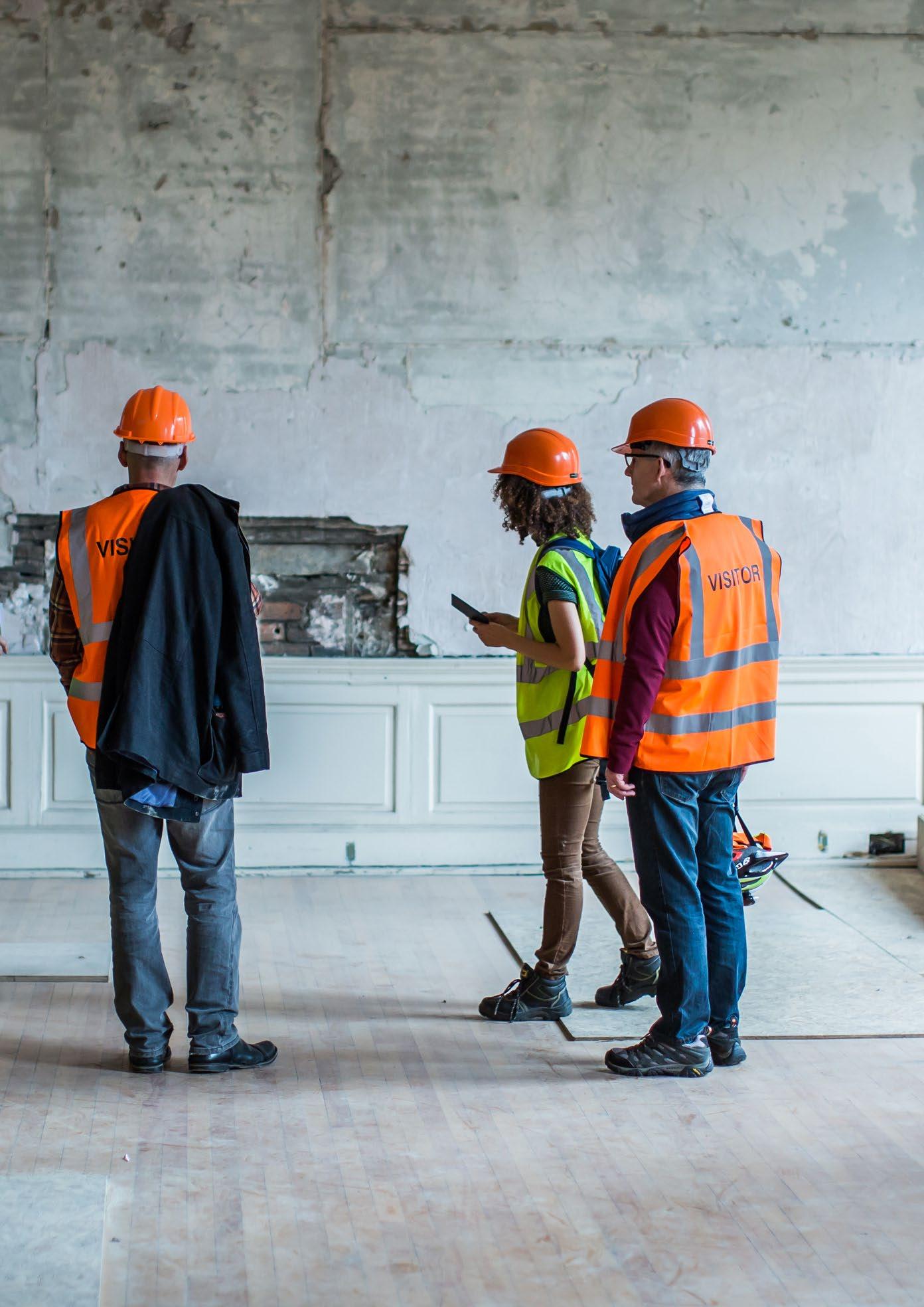
While the repair project is on site, open days and hard hat tours for the local community, including school groups, will widen engagement in the project. CPD opportunities for local trades – including those not involved in the project at this stage – will add value and lay the groundwork for Phase Two.
Progression
Trainees who complete the pre-apprenticeship phase and wish to continue will have the opportunity to progress to the second stage of the project: Modern Apprenticeships. During the second semester, meetings will be organised with local trades to identify potential placements.
Phase One Outputs

14
Trainees achieve Construction Skills Certification Scheme card

7
Trainees achieve Construction Skills at SCQF level 5
1-2
Historic community assets appropriately repaired Community engagement activities
In this phase of the project, SHBT will undertake full repair projects on two to four historic buildings that have been identified for their significance, repair need, training opportunities presented, and potential community benefit.
As part of the procurement process, trades working on the construction projects would commit to taking on a new Modern Apprentice, whose wages for the first year would be funded by the project. The Modern Apprentices would be employed by the contractor and gain heritage skills experience from the SHBT projects while they are on site, in addition to their training at a local FE college.
Project development
The initial feasibility study will have identified the properties which have the potential to be developed into successful training projects. Full project development will take place during Year One, while the preapprenticeship phase is on site. This will include all items required to bring the project to RIBA Stage 4:
• Condition Survey
• Use Options Appraisal
• Technical Specification
• Planning Permission
• Listed Building Consent
• Procurement Strategy and Tender Documents
Additional fundraising required for this stage of the project will be completed in Year One.
Participants
It is envisaged that four trainees from the pre-apprenticeship cohort would progress to Modern Apprenticeship roles with local contractors.

The scheme would pay the wages of the Modern Apprentices at the apprentice rate for the first year.
In addition, a programme of CPD opportunities in heritage skills would be offered over the course of the year, open to all staff from participating contractors, not only the Modern Apprentices. This programme could include specialist sessions in:
• Lime Mortars
• Retrofitting Traditional Buildings
• Structural Timber Repairs and Joinery
• Heritage-Led Project Management and Compliance
Anticipated qualifications
Depending on their host trade, it is envisaged that the Modern Apprentices would train for the following qualifications:
• SVQ Carpentry and Joinery (Construction) SCQF level 6
• SVQ Stonemasonry (Construction) SCQF level 6
• SVQ Plastering (Construction) SCQF level 6
• SVQ Roofing Occupations (Construction) SCQF level 6

However, it must be noted that the limited provision nationally of some skills training at an FE college-level is a serious barrier which is outwith the remit of this study to solve. At the time of writing, FE college training for stonemasonry apprenticeships in Scotland is only available in Glasgow, Elgin, and Stirling. 4
New Modern Apprenticeship roles
2–4
Historic buildings repaired

Local trades upskilled with heritage CPD
3.6 PHASE THREE: SUPPORT FOR FURTHER AREA-BASED REGENERATION YEARS
The final phase of the project, in Year Five, could see SHBT support the local authority in developing future area regeneration projects for the town or wider locality. SHBT’s involvement is intentionally timelimited and linked to the viable historic building repair projects that are available. However, its legacy would lay the groundwork for schemes such as HES’s Heritage and Place Programme.
With a groundswell of pre-existing community engagement and interest in regeneration, a list of identified potential buildings that fell outwith the scope of SHBT’s project, and local trades who had been supported to add capacity and upskill in heritage conservation, the impact of a future area regeneration scheme is likely to be significantly magnified.

Area regeneration scheme application supported

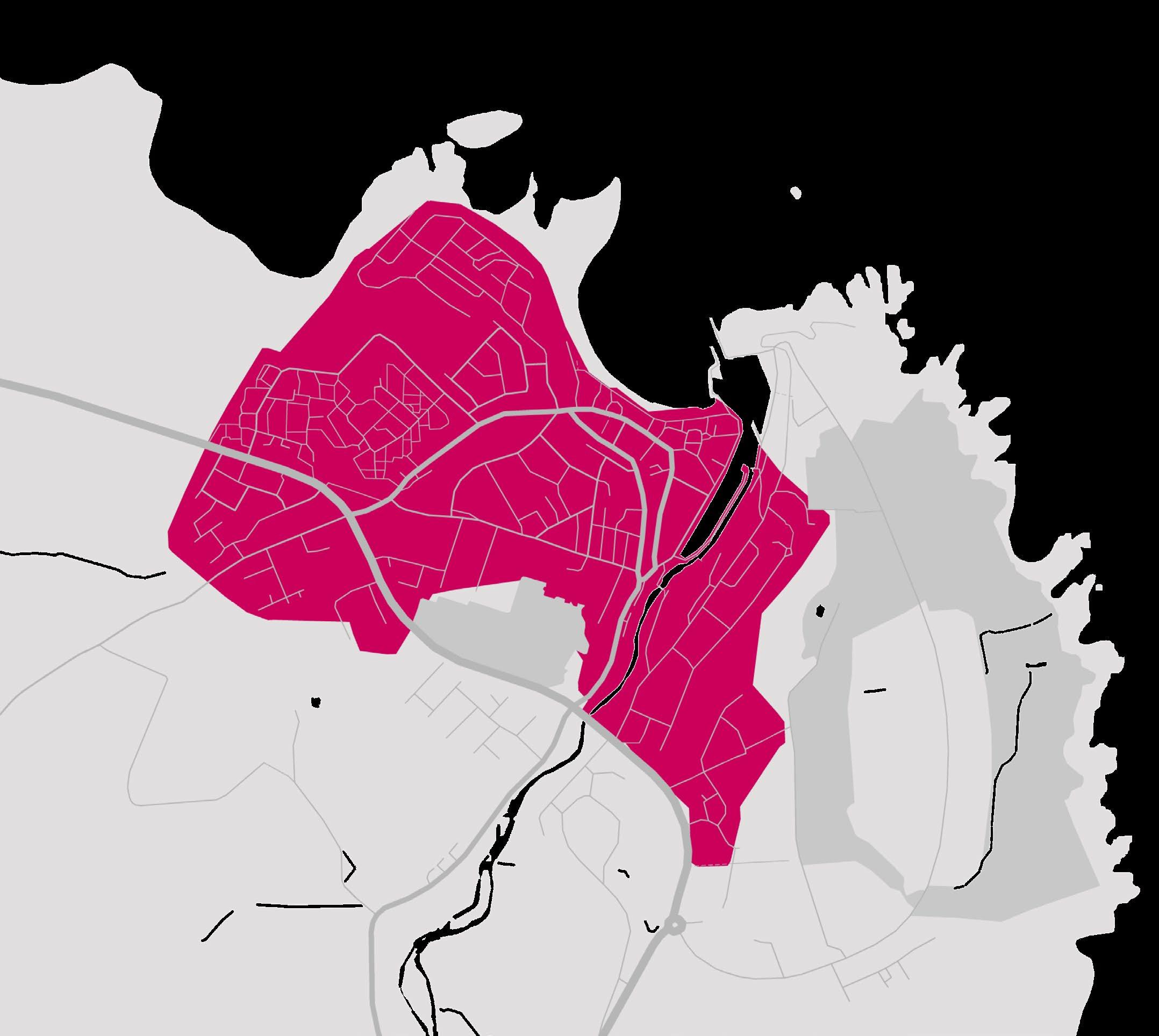
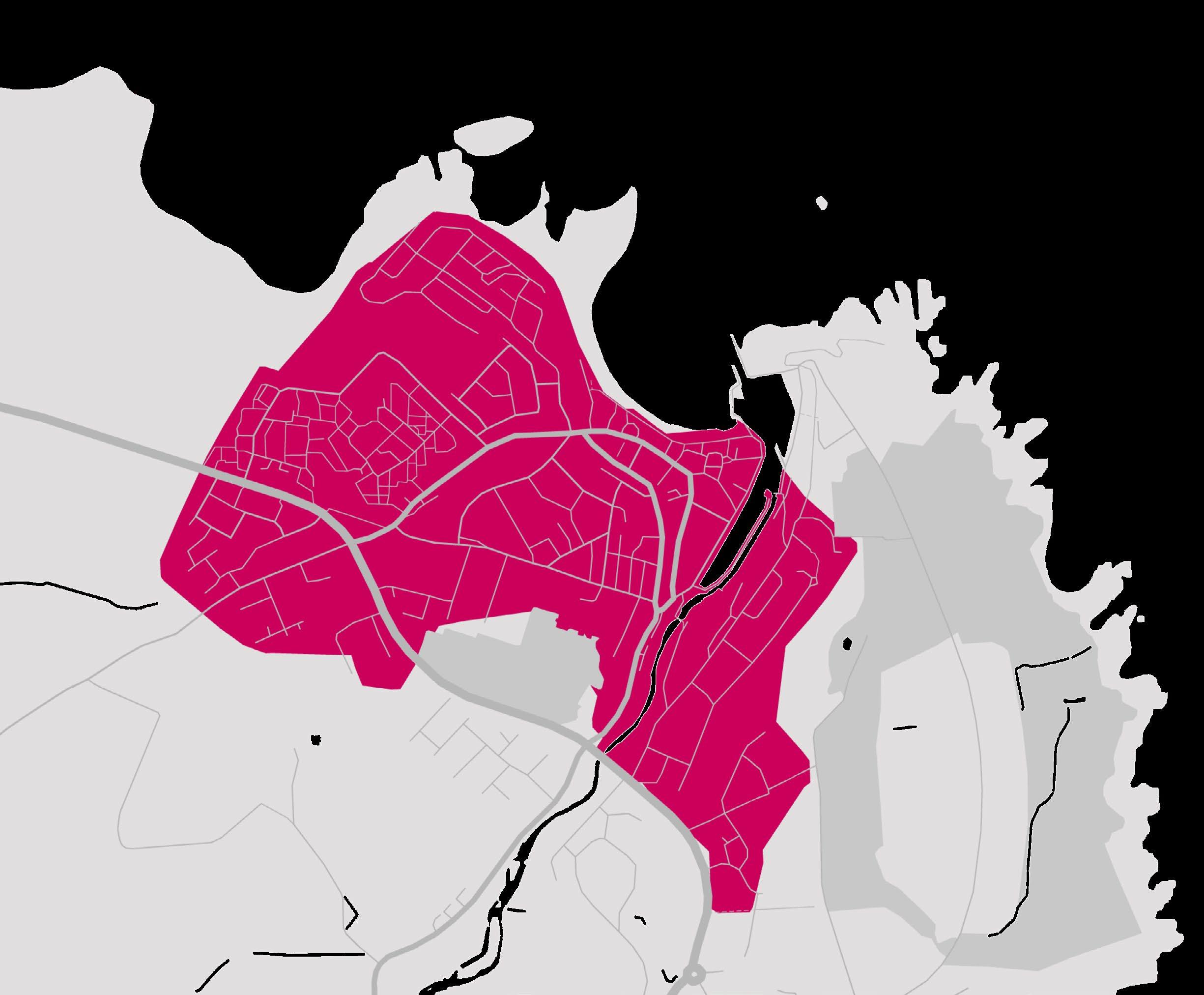
Eyemouth, in the Scottish Borders, and its environs were specifically selected as the geographic focus of the study. With a retail vacancy rate of 15% and floorspace vacancy rate of 14%, Eyemouth experiences levels of town centre vacancy above the Scottish Borders average, and has several properties on the Buildings at Risk Register.
The locality of East Berwickshire suffers from rural deprivation. Many of the surrounding areas fall into the most deprived 10% in the Geographical Access domain rank, meaning that people here face longer travel times to access services. Training and development opportunities are scarcer, with 85% of respondents to our survey selecting ‘No’ when asked whether they felt there were enough training opportunities in the area (13% were ‘Not Sure’, and only 2% said ‘Yes’).
The larger towns of the central Borders may offer more opportunities but accessing them is almost impossible for those depending on public transport (the bus to Galashiels involves a four-hour round trip). For many, moving out of the area into more urban locations is easier, feeding a downward spiral of depopulation and exacerbating local skills gaps.
The Annual Participation Measure assesses school leaver activity amongst 16- to 19-year-olds. In Scotland in 2020/21, there was a positive and sustained participation rate of 92.2%. Eyemouth was one of seven Intermediate Zones with a lower positive and sustained participation rate. This means that a higher proportion of school leavers from Eyemouth are going straight into what is termed a ‘negative destination’, such as youth unemployment, than average. Leavers resident in Eyemouth historically have had a lower average level of attainment than the Scottish Borders and Scottish averages.
This project directly addresses the identified need in Eyemouth by delivering high-quality traditional construction skills training close to where people live.
The second section of this study develops the model outlined above
into a pilot project proposal for delivery onsite in Eyemouth, in the Scottish Borders.
Adams Napier Partnership carried out the brief to identify and assess historic buildings in Eyemouth whose condition presents opportunities for skills training alongside a BPT-led repair project. An initial longlist was scored based on fabric condition, significance, prominence, current use and ownership, and potential for training. Condition appraisals were carried out on shortlisted properties, and the findings presented to the community and stakeholders.
In total, eight projects have been identified at properties that could meet the aims of the Building Skills Eyemouth project. All have the potential to improve the condition of locally significant and prominent assets to the benefit of Eyemouth’s community whilst also offering a wide range of training opportunities to help increase the local availability of traditional craft skills.
Outline estimates indicate that construction costs to deliver all of the identified projects would require funding between £3.3 million to £3.7 million if reserve projects are included. Of the final shortlist, the projects that go forward will be those where partnership or acquisition can be agreed with SHBT and sufficient funding can be raised.
The shortlisted properties are:
Properties in poor condition which offer a wide range of training opportunities:
1. Cemetery Watch House, High Street
2. Highway Christian Fellowship Building, Armatage Street
3. Eyemouth Burgh Chambers, Church Street
4. The Coble House, Marine Parade
5. 34 Harbour Road (reserve)
Community assets offering some training opportunities:
6. Old Cemetery Environs between High Street and Albert Road
7. Gunsgreen House Environs
8. Pend and steps linking Albert Road to Armatage Street (reserve)
The proposed projects in this phase present excellent entry-level training opportunities on non-economic historic structures that have local significance and prominence within the town.
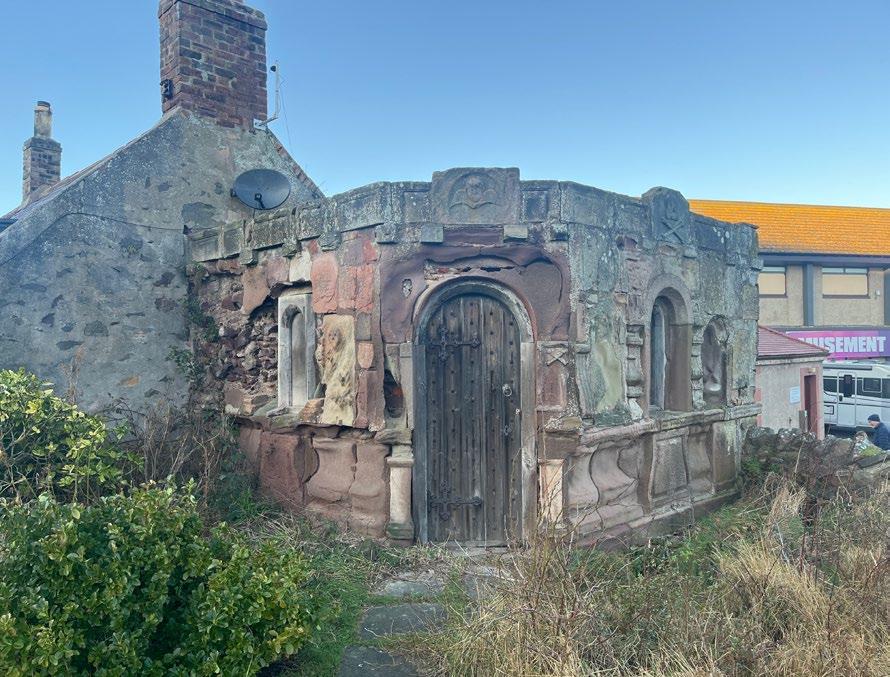
Building date: 1849
Listing: B-Listed BARR: Yes
Condition: Poor
Use: Vacant
Estimated repair cost: £116,975
The small 19th century Watch House in the northwest corner of Eyemouth’s old cemetery is characterfully constructed from reused gravestones and memorials, many elaborately carved. The building dates from 1849, when an outbreak of cholera in the town necessitated raising the ground level of the graveyard by six feet. Its position immediately adjacent to the High Street makes it a highly prominent building in the centre of Eyemouth, ideally located for community engagement when the project is on site.
The structure requires a new roof covering and abutments, wholesale repointing of rubble masonry, replacement of missing and badly eroded decorative stonework with other areas conserved and consolidated, and full repair of external joinery and partial replacement.
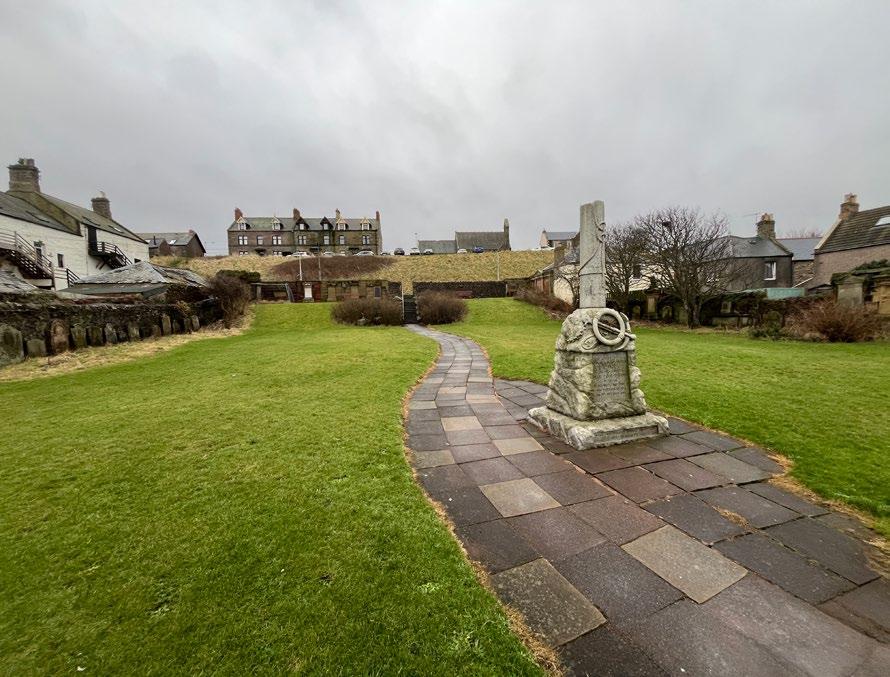
Building Date: post-1800
Listing: C-Listed BARR: N/A
Condition: Poor Use: Public Amenity
Estimated Repair Cost: £178,708
With the gravestones cleared from grassed areas to the side boundary walls, the burial ground area is, in effect, a public amenity green space in the centre of Eyemouth. However, the cemetery walls are in poor condition with failing mortar joints visible throughout all rubble masonry walls and vegetation prevalent.
The walls onto Albert Road and Home Street properties show bulging and partial collapse.
The space presents training opportunities for extensive repointing and consolidation, including localised rebuilding and stone replacement. Depending on funding availability, there is the opportunity to improve the area’s appearance by introducing natural stone paving and steps, and undertaking an element of landscaping. Alternatively, these works could also come under the remit of a future area regeneration scheme with a specific public realm budget.
In this phase, SHBT proposes to take on larger projects on historic buildings that may be vacant, derelict, or benefit from repurposing and repair to give them new life for the benefit of the local community. Through the procurement process, contractors winning tenders to deliver elements of the construction phase would be supported to take on a new Modern Apprentice, as outlined.
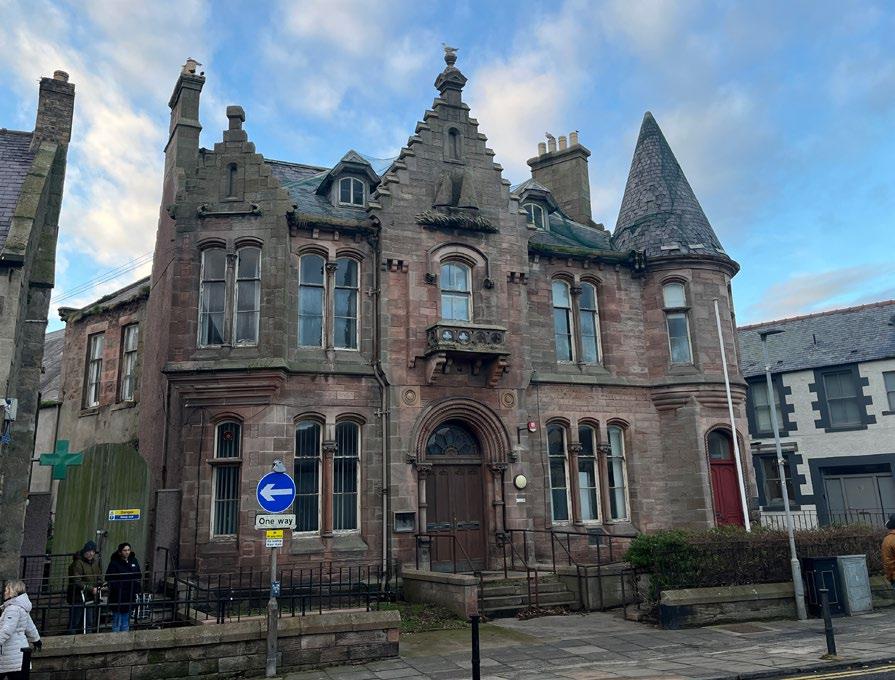
Building date: c.1880
Listing: B-Listed
BARR: Yes
Condition: Poor
Use: Vacant
Estimated repair cost: £2,799,544
This locally significant Scottish Baronial building has been the subject of two recent planning and listed building consent applications, firstly in 2016 for a community and business innovation centre and in 2020 for residential conversion. The building’s condition is poor, requiring reslating throughout, localised stone repair, extensive repointing, an overhaul of rainwater goods, and extensive joinery repairs.
This property has wide local support as a potential project and offers good training potential at Modern and Pre-Apprenticeship level. It would fit well with the building preservation trust delivery model if acquisition or partnership can be agreed.
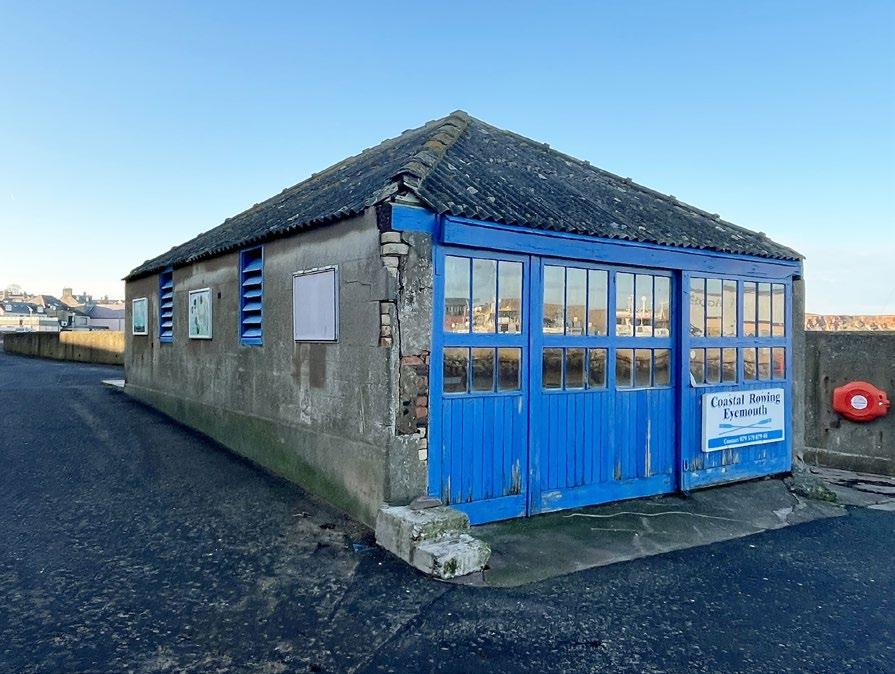
Listing: None
BARR: No
Condition: Poor Use: Non-Residential
Estimated repair cost: £152,908
This single storey structure is currently used as storage by the local rowing club. Asbestos sheet roof covering, rendered brick walls, timber doors and windows. Internal timber linings, including parts repurposed from a nearby early 17th-century tower house. It is on the site of a former timber structure roofed with the upturned roof of a ‘Coble’ boat. Locally significant, with a connection to the history of the Eyemouth Disaster of 1881.
A capital project would include new roof coverings and associated timber repairs, with the rowing club considering an option which would reinstate a roof resembling that of an upturned boat. Structural repairs to the brick walls and new glazed doors to the principal entrance are required. Refurbishment would probably include replacing the timber louvres with new windows.
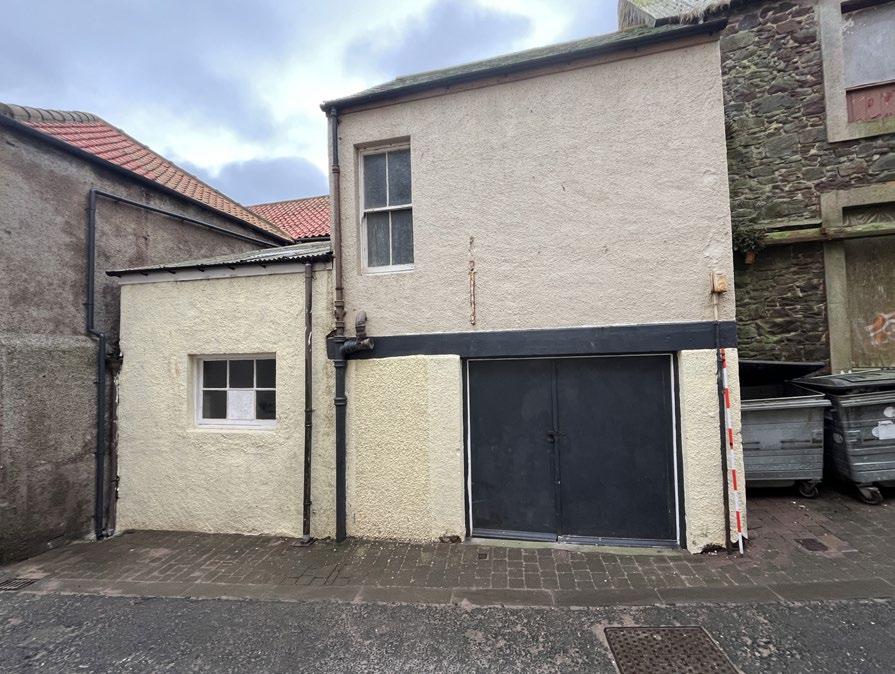
Highway Christian Fellowship Building
Building date: Late 19th century
Listing: None
BARR: No
Condition: Fair
Use: Vacant
Estimated repair cost: £475,112
The building was previously in use as meeting rooms and nursery; repair would be an opportunity to bring a vacant building back into use. It is wind and watertight, having had external repairs carried out, but minor roof repairs are needed, and the streetfacing windows are locally in poor condition. The internal condition is poor, but on the upper floor, some internal finishes, including decorative paintwork, survives.
The building has good training potential, particularly for internal trades, and also presents an opportunity for a retrofit case study.
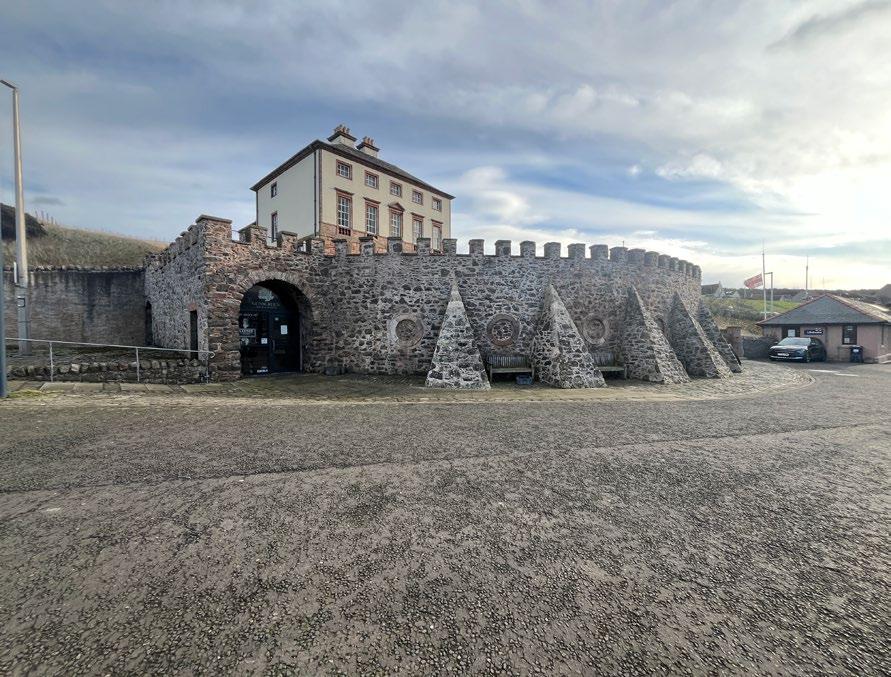
Building date: Early 19th century
Listing: A-Listed
BARR: No
Condition: Fair
Use: None
Estimated repair cost: £24,329
This site includes part-earth retaining terraced mass masonry rubble walls (mostly curved) with a stone capped crenelated wallhead and buttresses located immediately west of Gunsgreen House. The mix of pointing styles and mortars suggests a history of localised repair work.
As a locally significant and part of a prominent A-Listed building, it would make a good public realm type project with the potential for introductory levels of training that could be delivered in small phases over several years.
The inspiration for this project was the Little Houses Improvement Scheme, which operated a revolving fund model whereby proceeds from the sale of a completed building would finance the next project. Today, the common scenario of conservation deficits – where the cost of repairing and/ or converting a heritage asset to a viable use exceeds its market value after the work is completed, along with clawback clauses in grant funding – has made this model largely unviable. It is therefore envisaged that the costs outlined below would be raised through grant funding. Construction costs: watch house
Construction project costs are estimated, and budgets can be adjusted depending on the design approach adopted and level of training likely to be delivered. Reserve projects have not been included but could be pursued depending on the scheme's uptake.
This study has shown the potential benefits of a BPT-led placebased approach to traditional skills training.
Further project development is now required to take the scheme to an on-site pilot phase in Eyemouth:
• Fundraising to support the Phase One: Pre-Apprenticeship costs as outlined.
• Agreement to be finalised with Borders College and HES regarding assessment and quality assurance of SQA qualifications for pre-apprenticeship trainees.
• Agreement to be reached with the owner(s) of the identified historic built assets – the Watch House, and Old Cemetery Environs – for an SHBT project to proceed.
• Preparation of conservation plan, design specification, and contractor brief.
• Planning permission and Listed Building Consent to be obtained, where applicable.
For further information, refer to the following documents:
Appendix 1 Adams Napier Partnership Report (2.2MB PDF)
Appendix 2 Elementscotland Report (3.5MB PDF)
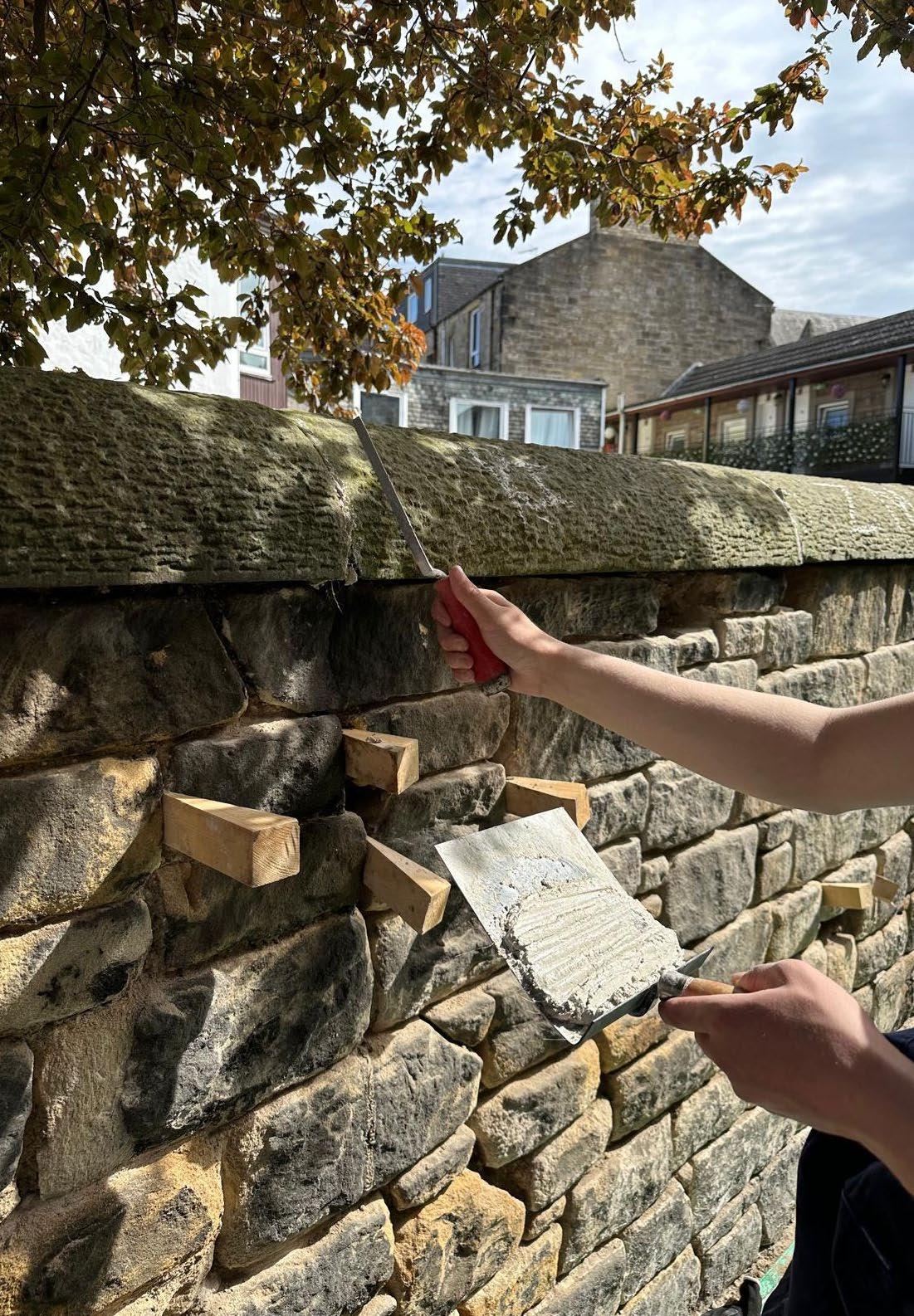
If the building itself becomes the classroom –the vehicle for skills learning –then the physical restoration becomes the by-product of growth and development within communities.


Cover map data © 2025 Google Eyemouth over the bay, by Michael Dales licensed under CC BY-NC 2.0 Report design by Abigail Daly | www.ruskinlane.co.uk Icons by Flaticon.com and Vecteezy.com