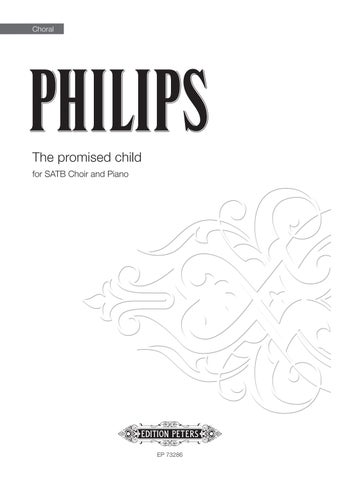
Choral
PHILIPS The promised child for SATB Choir and Piano
EP 73286
JULIAN PHILIPS
The promised child for SATB Choir and Piano Words by Stephen Plaice
ALLE RECHTE VORBEHALTEN
· ALL RIGHTS RESERVED
EDITION PETERS L E I P Z I G · L O N D O N · NEW YORK
THE PROMISED CHILD Words by Stephen Plaice FARMERS The summers burn too soon. Weeds thrive in the cracks, choke the young corn. FISHERMEN No trident rules the sea. We risk our shoddy boats for a creel of sprats. SHEPHERDS The wolf ravages the flock. The ewes fail in labour. The lamb is still born. ALL Let’s sing the world to come. Let’s sing the child foretold. He comes to end the Age of Iron, begin the Age of Gold. Magnum Mysterium begins ANGEL Do not be afraid. I bring you news of great joy, a joy to be shared by all people. Today in David’s City a Saviour has been born to you; he is Christ the Lord. Magnum Mysterium ends
FARMERS Now the Great Year turns. The green shoot pushes through! FISHERMEN Now the glittering shoals teem into our nets! SHEPHERDS Now the wolf is banished. The new lamb finds its legs! ALL Emmanuel! Emmanuel! The promised child is born! FARMERS The luscious fruits fill the Horn of Plenty! FISHERMEN The swordfish leaps willingly upon the spear! SHEPHERDS The Good Shepherd comes to gather up his flock! ALL Let’s sing the world to come. Let’s sing the child foretold. He comes to end the Age of Iron, begin the Age of Gold Emmanuel! Emmanuel! The promised child is born!
© Stephen Plaice Reprinted by permission
Commissioned by InterOpera
The promised child for SATB Choir and Piano
Words Stephen Plaice
Expectant (q = c.56)
Music Julian Philips (2018)
° 5 &4
∑
∑
∑
Soprano
5 &4
∑
∑
∑
Alto
5 &4
∑
∑
∑
Tenor
5 &4 ‹
∑
∑
∑
Soprano Solo
?5 4 Bass ¢
Piano
° S. & 4
A.
T. B. ¢
{
Ó™
∑
FARMERS:
Œ
‰ œJ mf
The
bbœœ. œœ. -œ ##œœ. -œ . n œ b j n ?5 J ‰ Œ b œ ? J ‰ ‰ & nœ. b œJ ‰ Œ 4 J ‰ mp p mp sim. . œ. œ . . . ? 5 œ ‰ Œ œ œ ‰ ‰ #œJ J ‰ Œ œ œ ‰ œ 4 J #œ- J #œ- J œ-
œ bœ bœ ‰
œ ˙ J
sum - mers burn
too soon.
nbœœ. b-œ ‰ Œ J
. bœœ ‰ ‰ bœj J & . p
œœ. ‰ Œ #-œœ J
œœ. ‰ & ‰ œj ? J # œ.
∑
∑
∑
&
∑
∑
∑
& ‹
∑
∑
? ‰ bœJ ‰ bœ
{
Weeds thrive
j ? bœ œ ‰ Œ & bœ. mp œœ. ? J ‰ Œ #œ -
Edition Peters 73286
œ #œ
>œ J ‰ Œ
in the cracks,
FISHERMEN:
Œ
‰ #œj mf
No
‰ bœJ ‰ œJ #œJ ‰ ˙ choke
. nbœœ ‰ -œ bœ. ‰ Œ J J j #œœ ‰ #œ #œjœ ‰ Œ . # œ- . sim.
Ó™
the young
corn.
œ
œ J
‰ Œ
Ó
#œœ. ‰ ? œ. ‰ ‰ j ‰ j Œ œ & œ #œ J J # œ. œ. pp . . j ‰ ‰ j Œ ‰ #œJ ‰ #œœ ‰ &#œj Œ ? œœ #œ. J œ. .
#-œ #nœœ. ‰ Œ J #œœ -
Music © 2018 by Peters Edition Ltd, London Text © Stephen Plaice Reprinted by permission
2
° S. & 7
1
∑
∑
∑
∑
∑
∑
A.
&
T.
& #œ œ ‰ œ #œj ˙ ‹ tri-dent rules the sea.
B. ¢
?
{
We risk
mp più legato
nœ
°
3
° S. &
œœœœ
‰ bœ œ
3
ø
ø
SHEPHERDS:
Œ
> œ b œœ. œ œ œ ‰ Œ bb œœ J
‰
3
œœ œ
3
3
3
œœ
ø
2 A tempo
poco rit.
∑
& Ó™
3
3
3
∑
œœ œœ
#œ #œ œ
10
(q = c.56)
mp
j œ
The
B. ¢
our shod -dy boats
3 ‰ œ œ bœ ™ bœj j ‰ Œ >œ for a creel of sprats.
∑
#œ œ
? ‰ œœ
T.
> ‰ bœ œ œ™ œ J
∑
?
A.
‰ nœj œ
b œ ‰ b œb œ
wolf
mp
mf
j n#œ.œ ‰ Œ bœœ>
∑
œœ. >œ œ‰ œ J
mf
j j nœ.œ ‰ bœœ. ‰ &
∑
3 4
‰ nœj œ ‰ œ j œj œ ™ œ bœ bœ œ
3 4
mf
ra -va-ges the flock. The ewes fail in la - bour,
& ‹
∑
∑
∑
3 4
?
∑
∑
∑
™ ? ˙˙ ™
3 4
. . 6 œœ 3œ. #œ. œ. œ. #œœ. n œ. n œœ. #n œœ # œœJ ‰Œ J ≈& œ
{
. . . & ≈#œ œnœœ ‰ ≈#œ. œ. nœœnœ#œ‰ Œ .. . 3 3
mp leggiero
œ bb œœ n œ œ
n˙˙
Ÿ~~~~~~~~~~~~~ Ÿ~~~~ Ÿ~~~ Ÿ~~ ? œ œ̇ œ ˙˙ ™ all semitone trills
mp
? œ
p poco a poco cresc.
3
œ-
œ œ b œ œ nœœ
3
&4
Ÿ~~~~~ Ÿ~~ Ÿ~~~~~ Ÿ~~~ ˙˙™ bœ œ̇ œ 43
° 3 S. & 4 13
4 4
∑
j 3 & 4 ‰ œ #œ
∑
f poco marcato
A.
The lamb
3 &4 ‹
∑
?3 4 B. ¢
∑
T.
{
3 & 4 #˙ #˙
mf
#œ
°
A.
T.
4 &4 ‹
{
4 4
∑
˙
œ J
‰
œœ J
? 4 #˙˙˙ ™™™ 4
3
j ‰ #œ
4 #œ œ 4
˙
sing
3 4Œ
Œ #œJ ‰ #˙
p espressivo
Let’s
sing
world to
œ œ œ 44 J
the world to
‰ œJ 44
p espressivo
œ
˙˙
Œ
4 4
˙˙
#œœ
4 4
j œ ‰ 42 œ™ œJ 83 œJ ≈ œJ ™ 44 ˙
œ‰ J
p cresc.
j ‰ 42 œ™ #œj 83 œj ≈#œj™ 44 #˙˙ #œ
j œœ ‰
j 3 œj ≈ j™ 4 ˙ j‰ 2 # œ #œ 4 4 8 #œ #œ ™
j œ‰
f
3
# œœ
p
sing
the
world fore - told.
p
Let’s
sing
the
world fore - told.
p
Let’s
sing
the
œ‰ 2 ˙ J 4
p
. 6 . œ. # œ. œ .œ#œ. #œ. œ. n œ J ‰ ≈ ‰ ≈ Œ mf
the world to
p espressivo
Œ #œj ‰ #œ ™
3
Let’s
‰
sing
3 4Œ
4 œ œ #œ œ œ œ œ œœ #œœ 3 ˙˙ 4 œ #œ œ œ œ 4 >
˙
come.
Let’s
sing,
3
‰
j œ™ #œ #œ œ 44
Let’s
3
j œ
? 4 ##˙˙ 4 B. ¢
4 &4
∑
‰
come.
Œ
j œ ‰
3
p espressivo
Let’s
4 4
˙
come.
3 4Œ
still born
j œ
come.
Ó
Œ
4 œ bœ œ nœ bœ œ nœ bœ œ 3 ˙ 4#œ nœ # œ nœ # œ > 4 œ œ
#œœ
17
4 &4
is
œ nœ
? 3 >r ˙ 4 #œ ˙
° 4 S. & 4
3 ‰ œ 44 œ- #œj œ J
3 4Œ
3
Let’s
##œœœ p
sing
2 4 ˙ 2 #˙˙ 4
p
œ
He
p cresc.
œ
He
p cresc.
œ
world fore - told.
He
3 4˙ 8 #œJ ≈ œ™ J 4
nœ
œ‰ J
world fore - told.
∑
to
3 8
∑
p cresc.
He
. 3 . . . œœ 3 . œ. # œ. œ. n œ . # œ . . # œ œ 4 Œ ≈ J ‰ ≈ œ#œ 4
˙™ 3 ‰ ™ #œœ ™™ 4 ˙˙ ™™ 8 J 4
mf
œœœ
6
4
° S. & œ™
mf
21
comes
& Ϫ
A.
comes
œ œ œ œ œ œ 45 œ™ J
to end the age of
I
j œ œ
mf
to end
& œ œ ‹ comes to
T.
B. ¢
age of
end the age of
comes
end
-
Œ
I
-
mf
age of
œ
mp
j œ
ron,
œ œ
f ‰ ™ œr œ #œ 44 n˙
Age
‰ j j ‰ 43 œœ œœ
œ
f ‰ ™ nœr nœ œ 44 b˙
‰ bœj œj ‰ 43
‰ ™ nœR œ œ 44 b˙
‰ bœJ œJ ‰ 43
be - gin the
be - gin the
œ
-
3
ron,
3
6
f
. bœ. nœ. œ. b œ. b œ ≈ n˙ n˙ 6
5 4 ˙˙ bb ˙-˙
Age
f
. b œ. n œ. n ˙ . . b œ . . . . b œ œ . . b œ n œ b œ n œ ˙ œ. œ 5 ≈ œ. œ ‰ ≈ 4 I
Age
be - gin the
ron,
bœ J
3
& œ
ron,
j bœ
œ œ 5 bœ ™ 4
∑
œœ ? œ Œ
I
mf
‰ œœ
{
5 œ œ 4 œ™
œ œ œ œ œ 5 bœ ™ 4
? Ϫ &
-
‰ ™ œr œ œ 44 ˙ f
j œ
be - gin the
Age
4 4
b ẇ b ?4 ˙ 4
‰ œj œj ‰ 43 of
of
of
of
∑
œœ œ ™ J bœ ™
3 4 3 4
4
° 3 S. & 4 ˙™
œ Œ
Œ
∑
4 4
3 & 4 ˙™
œ Œ
Œ
∑
4 4
3 & 4 n˙ ™ ‹ Gold.
œ Œ
Œ
∑
4 4
?3 4 n˙ ™ B. ¢
œ Œ
Œ
∑
4 4
24
mf
Gold.
mf
A.
Gold.
mf
T.
{
mf
” 6 “” . . œ. œ. # œ. œ. . #œ. œ. . #œ. œ. . #œ. œ. œ. n œ. # œ. “. nœ. #œ. œ. œ. n œ. . . . . œ œ # œ n œ œ . . . . . œ 3 4 J ‰ ≈#œ œ Œ ≈ œ#œ œ R œ œ ‰ ≈#œ œ &4 ‰ ≈ 4 3 6 3 6 6 6 mf . n œ. # œ. œ. 6 6 . œœ . . œ œ 3 . n œ # œ . . 4 ? 3 nœ Œ & ≈ œ#œ œ. œ. œ. Œ Œ ≈ œ#œ œ. œ. œ. ‰ ≈ œ#œ œ. œ. œ#œ œ 4 4 . . . . . 6 Gold.
6
5 Recitative, a little faster 27 f declamatory ANGEL: ° 4 Œ # œ™ #œ œ #œ S. Solo ¢& 4
{
:“; > w ###w w 4 &4 w
Do
not
be
5
a -
∏∏∏∏∏∏∏∏∏∏∏∏∏∏∏∏∏∏∏∏∏∏∏∏
œ œ œ œ
f
° S. Solo ¢& ‰
&
#œ œ œ
ø
œbœ œ#œ œ
be
œœ
ø
6 (e = c.150) ° 5 j S. Solo ¢& 8 œ œ œ œ
{
pealing
in
‰
Da - vid’s
Œ
5 & 8 œ- œ- œ- œ œ - p
bœ œ
great
#œ
joy,
œ
#œ œ œ
œ bœ J 3
bœ J
œ œ#œ œ
5
ø
by
all
5
œnœ
Più mosso (in tempo) (q = 75)
5 4œ œ œ
Œ
peo - ple
-œ b-œ bœ- - œ œ ? mp
Ϊ
più f
œ
bœ
To
-
# -œ -œ b -œ #-œ
œ
A
sa
b -œ -œ b -œ Œ &J Œ
b-œ -œ b-œ J p
-
nœ J ‰
p
∑
5 8
mf
Œ
ø
œ
ci - ty
™ # Ÿ˙~~~~~~~~~~~~~~~~~~~~~~
5 5 4 Ó™ 8 # p Ÿ~~~~~~~~~~~~~~~~~~~~~~~~~~~~~~~~~~~~ # ˙™ #œ œ 5 #œ- œ bœ #œ 58 4 - - -
œ
j œ œ
œ
a
ø
#œ #œ#œ#œ
n
33
5 œ &8 J ‰
shared
Ÿ~~~~~~~~~~ bœ nœ
3
‰ œ
˙™
7
3
5
#œ
- day
ø
‰ n œ #œ
‰
3
to
œ J
3
nœ œ#œ
bœ œ œJ J
bœ
œ
&
bring you news of
# Ÿ˙~~~~~~~~~~~~~~~~~~~~~~
œnœ
3
joy
œ
5
31
&
3 œ œ œ- œj œj
œ œ#œ œ
5
° S. Solo ¢& œ
{
ø
mp resonant
I
&
# Ÿ˙~~~~~~~~~~~~~~~~~~~~~~~~~~~~~~~~~ ™
œ
bœ œ bœ
j œ
29
‰
fraid!
4 w & 4 n##w ww nw ww (slow spread) °
{
j œ
˙™
ø
œ œ #œ J
6 8
‰
6 8
viour has been
Œ
nœ œ- œ #œ œ - - -
6 8
6
° 6 j S. Solo ¢& 8 œ œ œ œ ‰ 37
{
born
to
7 9 Ϊ 8
‰
you
poco accel.
° 5 œ™
S. Solo ¢& 8
{
Lord.
#œ #œ œ #œ # œ #œ œ #œ # œ 5 #œ &8
5 & 8 œœ ™™™ œœ ™
{
œœœœ
Œ œœœœ ™™™™
{
œ œ ##œœ # œ
FARMERS: f
Now
œ #œ ‰ #œ J J
the Great
Year
?
œ
12 bb˙˙ ™™ 8
œœ ™™
12 8 ˙˙ ™™
œœ ™™
‰ bœ ™
Œ
7 8
∑
5 8
the
mp
Ϫ
œœ ™™
5 8 5 8
œœ ™™
5 8
∑
#œ œ #œ #œ œ #œ #œ #œ œ #œ #œ ‰ ‰ œ #œ 7 ##œœ ‰ ‰ #œ œœ Œ 8 J J œœœœ ™™™™
œœœœ
œ
œ
? œ
œ
œ J
œ
œj #œœ
œ
#œ #œ œj ## œœ # œ #œ #œ œj # œœ # œ
Ϫ
7 8
œœœœ
j œ #œœ
turns.
? #œ #œ œj ##œœ #œ #œ #œ œj #œœ #œ mf
12 b˙ ™ 8
Christ
œœ ™™
9 8 ˙™ ˙ ™
f poco pesante
°? #œ B. ¢ 47
is
p
mosso, always flowing 8 Più (e = 168) 44 5 #œ #œ œ œ ##œœ #œ &8
5 & 8 #œ #œ
He
Ϫ
œ
‰
œ
Ϫ
9 ˙™ 8 ˙ ™
6 ‰ &8 œ œ - - b œ- œ- œmp 6 ‰ &8
40
mf
‰
œ
‰ ?
œ
‰
œ bœ œ œ œ
œ
œ bœ œ œ œ
œ
#œ The
green
‰ œ œ œ #œ œ œ
5 8
∑
Ϫ
œ
5 8
œ ‰ bœ œ ™ shoot
pu - shes
œœ ™ œ
œ bœ
œ
œœ™ œ
œ bœœœ
œ
° T. & ‹ œ™ ? œ™ B. ¢ 51
{
?
∑
through!
œ
° T. ¢& œ ‹ shoals 55
{
∑
teem
in - to our
œ œ œj œœ
° A. ¢& 59
œœ
œœ ‰ J
∑
œœ ™ œ œ œœ #œœ
SHEPHERDS:
° 10 f
∑
bœ Now
‰
& bœœ™ œ
™ œœœ ™™
f
œ
Now
j ? œ bœ bœ œ œ œ œœ J œ J œ bœ bœ œ œ œ
nets!
œ
œ
∑
œœ™™
j œ œ œ bœ
f
∑
œ œ bœœ ™ œ œ nœ œ œ œ f b>œ œ J ‰ ‰ Œ œ °
? œ œ œj œœ
{
∑
œ œ
œ #œ œ #œ &
? Ϫ Ϫ
?
7
9 FISHERMEN:
the
wolf is
ba
nished.
œ
the glit - te - ring
∑
œ
mf
nœ œ œj œœ
œ
∑
œ bœœœ œ
bœ œ bœ. œ bœJ bœ
3
nœ œ œj œœ
Œ
œœœ
j œ œ œ bœ
ø
Œ œœœ™™™ œœ ™ œ œ œœ #œœ Œ™
ø
bœ
The
j œ œ œ œ œ œ bœ bœ bœ œ bœ œ bœ bœ bœ bœ œœ bœ # œ œ j œ # œœ # œ mf œ œ œ œ œ œ bœ bœ bœ œ bœ j ? ‰ œ bœ bœ bœ bœ œœ bœ #œ œ j œ #œœ #œ & ‰
° S. Solo & 63
{
A. ¢&
& ?
Ϫ
new
Ϫ lamb
n œœ™ œ nœœ ™ œ °
Ϊ
∑
Ϫ
œ œ finds its
‰
œ ø
Ϫ Ϫ
œ œ œ œ
œ J
Em - ma - nu - el!
legs!
œ œœœ œ œ œœœ œ
ANGEL: f
Ϫ
œ
œ œ
Œ
œœ™ œ œ nœ #œ
œ œ #œ #œ œ #œ #œ œ
>œ J ‰ ‰ Œ
f
ø
œ
‰ œ ∑
œœ™™
Em
-
œœ
œœ ™ # œ # œ œœ œ #œ
ø
8
° œ S. Solo & 67
œ
œ
œ
Œ
Ϫ
-ma - nu - el!
∑
&
S.
T.
B. ¢
& ‹
∑
?
∑
{
& œœ™ œ
œ
?
° S. & 70
&
A.
∑
mp
˙™
œ
˙™
œ
T.
B. ¢
œ
™ ? #˙ mp
{
&
œ
# œ™ ?#œ ™ mp
Ϊ
œ
œ
‰
œ
‰
prom - ised
#œ ™
p misterioso
#œ J
The
œ
prom - ised
ø
-j œ˙ ™ #œ p #˙™ œ #œ J-
Ϫ Ϫ
œ
Ϫ
œ
∑
‰ #œ
‰ 58 œ ™
œ
Ϫ
œ
∑
™ ‰ 58 #œ
œ
Ϫ
œ
∑
œ œ œ œ œ œ ##œœ œœ 5 8
Œ
œ œ #œ œ œ #œ
œ #œ œ œ ‰ ‰ œ #œ J
5 8 #œœ ™™ # œœ ™™
œœœœ ™™™ ™
œœœœ
is
‰ #œ
Ϊ Ϊ
The
12 Ó™ œœ 8 ˙™ œœ œ ˙™ #œ 12 ˙˙ ™™ 8 ø mp
#œœ ™™
&
p
born!
œ
Ϫ
œ
∑
p
is
Ϊ
œ J
#œ
‰
child
œœ™™
Ϫ
‰
œ
‰ 58 œ ™
is
mp
j œ œ
is
child
™ & #˙ ‹ child
Ϫ
‰
œ
‰ 58 #œ ™
‰ œ
child
mp
j œ œ
The prom - ised p misterioso
12 Œ ™ 8
∑
#œ ™
The prom - ised p misterioso
12 Œ ™ 8
∑
œœ™™ œœ ™ # œ # œ
p misterioso
12 Œ ™ 8
∑
œ #œ
∑
12 Œ ™ 8
∑
∑
&
A.
11 12 8
## œœ ™™
born!
p
born! p
born!
œœœœ
œœœœ ™™™ ™
œœœœ
Julian Philips Julian Philips (b. 1969) studied music at Emmanuel College, Cambridge, and his compositions have been performed at major festivals and venues including the Proms, the Tanglewood Music Festival, Welsh National Opera and Glyndebourne. A significant composer of operatic music, Philips’ work includes Followers, The Yellow Sofa, and Knight Crew (libretto by Nicky Singer) commissioned by Glyndebourne (2010). Welsh National Opera commissioned two chamber operas, Dolffin and Wild Cat. Other works include two ballets for English National Ballet, Les Liaisons Dangereuses and The Snow Queen. Julian Philips is Honorary Fellow of, and was made Head of Composition at, the Guildhall School of Music in 2004. He has also taught at Cambridge.
Photo © Jamie Smith
Julian Philips (*1969) studierte Musik am Emmanuel College in Cambridge. Seine Kompositionen sind bei führenden Festivals und in renommierten Häusern erklungen, darunter die BBC Proms, das Tanglewood Music Festival, Welsh National Opera und das Opernfestival im englischen Glyndebourne. Philips ist ein bedeutender Opernkomponist, und seinen Schaffen umfasst die Bühnenwerke Followers, The Yellow Sofa sowie Knight Crew (2010), ein Auftragswerk für Glyndebourne auf ein Libretto von Nicky Singer. Zwei Kammeropern, Dolffin und Wild Cat, entstanden im Auftrag der Welsh National Opera. Zu weiteren Werken gehören zwei Ballette für das English National Ballet, nämlich Les Liaisons Dangereuses und The Snow Queen. Julian Philips ist „Honorary Fellow“ der Guildhall School of Music, wo er 2004 zum Leiter der Kompositionsabteilung ernannt wurde. Außerdem lehrte er in Cambridge.
EDITION PETERS GROUP L E I P Z I G
·
L O N D O N
·
N E W
w w w . e d i t i o n p e t e r s . c o m
Y O R K