The Language of Eden
26-27 March 2026

The Language of Eden
With Roderick Williams and the SCO Chorus
Thursday 26 March, 7.30pm The Queen's Hall, Edinburgh Friday 27 March, 7.30pm City Halls, Glasgow
VAUGHAN WILLIAMS Serenade to Music
ELGAR Serenade
BUTTERWORTH (arr. R WILLIAMS) Six Songs from 'A Shropshire Lad'
Interval of 20 minutes
HAYDN 'The Representation of Chaos' from The Creation CAPPERAULD The Language of Eden (World Premiere) *
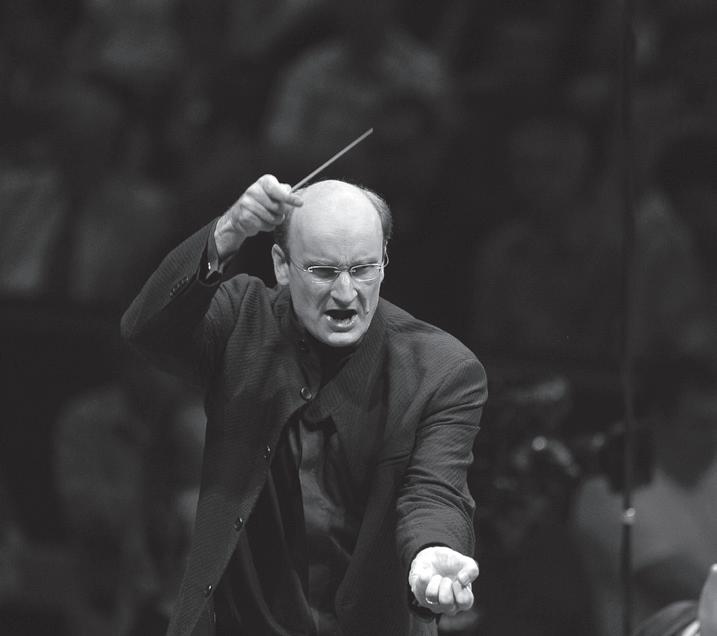
Andrew Manze conductor
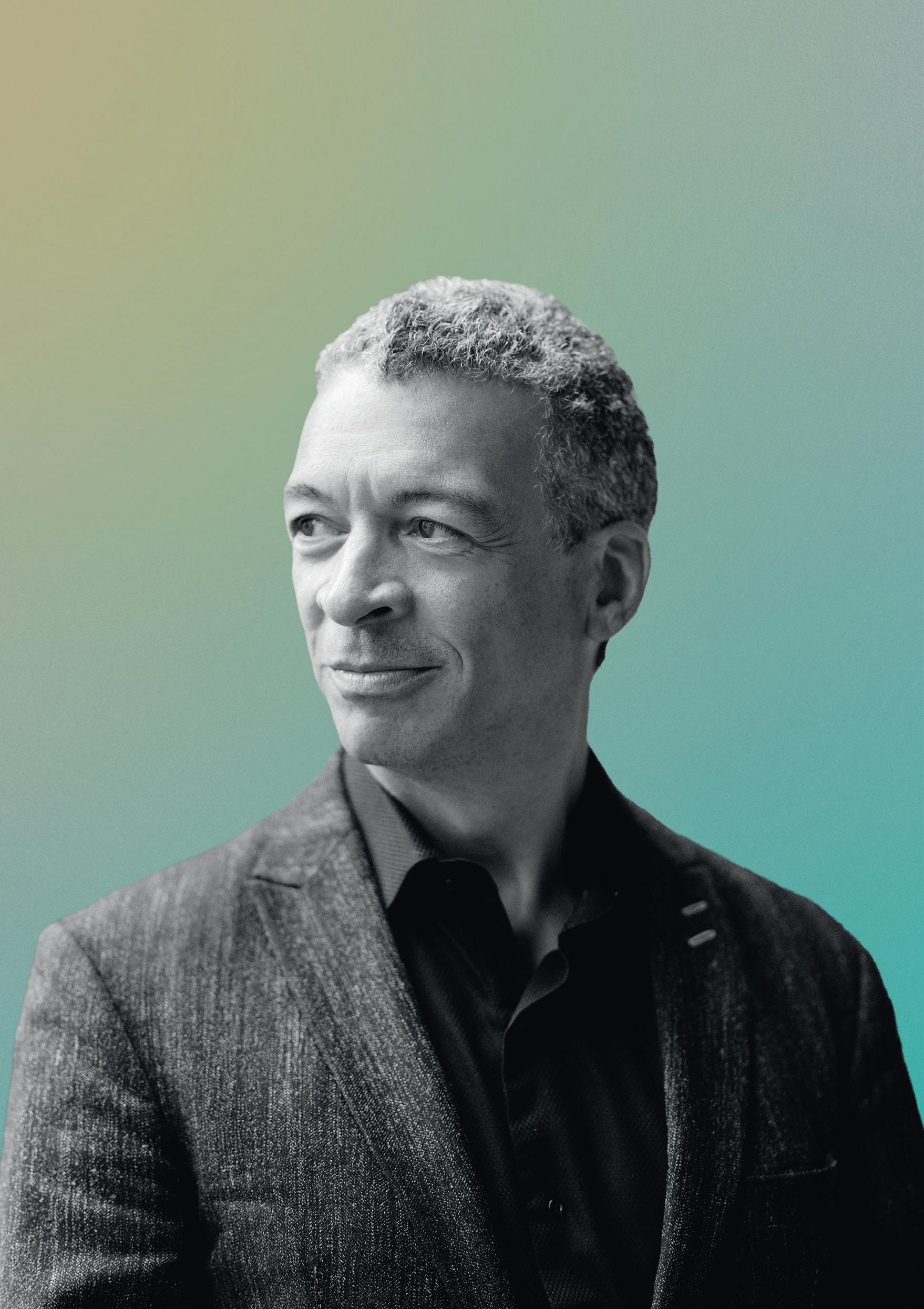
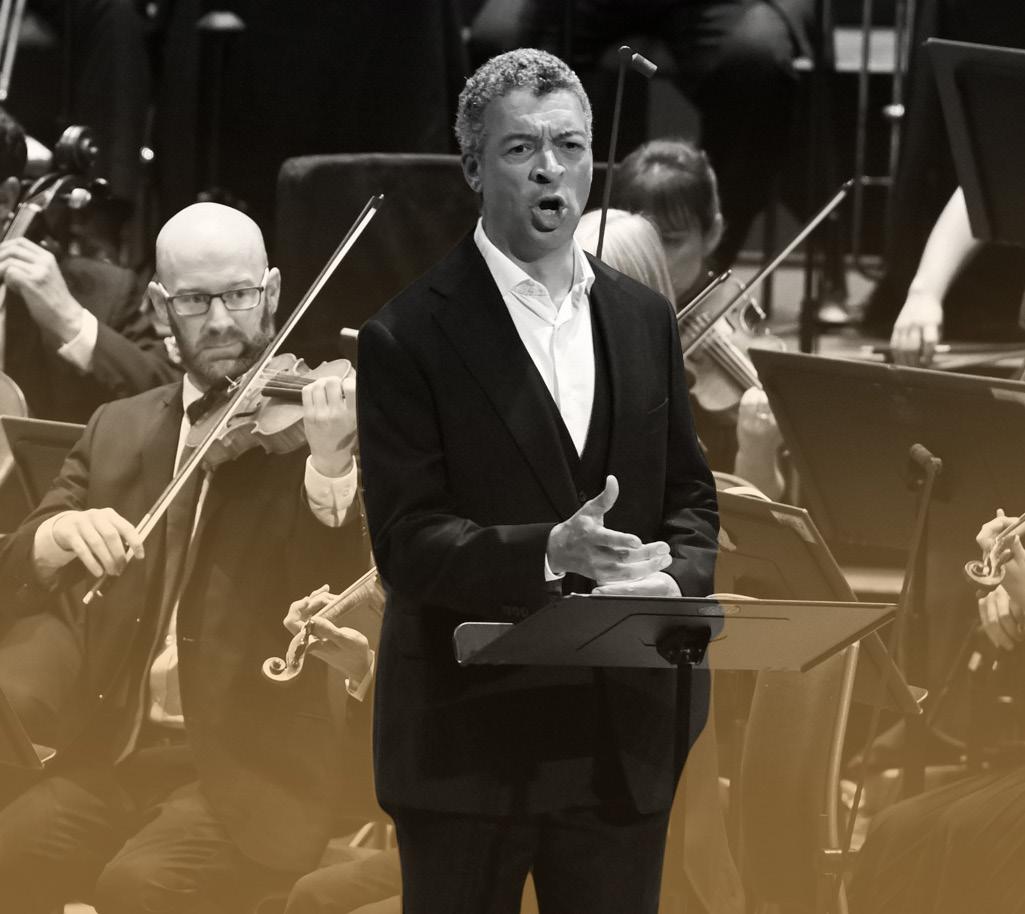
Roderick Williams baritone
SCO Chorus
Gregory Batsleer chorus director
Pekka Kuusisto
Circus
*Commissioned by the Scottish Chamber Orchestra. Generously supported by the Hope Scott Trust and the Fidelio Charitable Trust.
4 Royal Terrace, Edinburgh EH7 5AB
+44 (0)131 557 6800 | info@sco.org.uk | sco.org.uk
The Scottish Chamber Orchestra is a charity registered in Scotland No. SC015039. Company registration No. SC075079.
Dreamers’
© Chris Christodoulou
Roderick Williams
Andrew Manze
© Chris Christodoulou
THANK YOU
Principal Conductor's Circle
Our Principal Conductor’s Circle are a special part of our musical family. Their commitment and generosity benefit us all – musicians, audiences and creative learning participants alike.
Annual Fund
James and Patricia Cook
Visiting Artists Fund
Harry and Carol Nimmo
Anne and Matthew Richards
International Touring Fund
Gavin and Kate Gemmell
Learning and Participation Fund
Jo and Alison Elliot
Sabine and Brian Thomson
American Development Fund
Erik Lars Hansen and Vanessa C L Chang
Productions Fund
Geoff and Mary Ball
Bill and Celia Carman
Anne, Tom and Natalie Usher
Scottish Touring Fund
Eriadne and George Mackintosh
Claire and Anthony Tait
New Music Fund
Ken Barker and Martha Vail Barker
Colin and Sue Buchan
The Thomas Family
CHAIR SPONSORS
Conductor Emeritus Joseph Swensen
Donald and Louise MacDonald
Chorus Director Gregory Batsleer
Anne McFarlane
Second Violin Rachel Smith
J Douglas Home
Principal Viola Max Mandel
Ken Barker and Martha Vail Barker
Viola Brian Schiele
Christine Lessels
Viola Steve King
Sir Ewan and Lady Brown
Principal Cello Philip Higham
The Thomas Family
Sub-Principal Cello Su-a Lee
Ronald and Stella Bowie
Cello Donald Gillan
Professor Sue Lightman
Cello Eric de Wit
Jasmine Macquaker Charitable Fund
Principal Flute André Cebrián
Claire and Mark Urquhart
Sub-Principal Flute Marta Gómez
Judith and David Halkerston
Principal Oboe
The Hedley Gordon Wright Charitable Trust
Sub-Principal Oboe Katherine Bryer
Ulrike and Mark Wilson
Principal Clarinet Maximiliano Martín
Stuart and Alison Paul
Principal Bassoon Cerys Ambrose-Evans
Claire and Anthony Tait
Sub-Principal Bassoon Alison Green
George Rubienski
Principal Horn Kenneth Henderson
Caroline Hahn and Richard Neville-Towle
Funding Partners





SCO Donors
Diamond
The Cockaigne Fund
Malcolm and Avril Gourlay
John and Jane Griffiths
James and Felicity Ivory
George Ritchie
Tom and Natalie Usher
Platinum
E.C. Benton
Michael and Simone Bird
Silvia and Andrew Brown
David Caldwell in memory of Ann
Dr Peter Williamson and Ms Margaret Duffy
David and Elizabeth Hudson
Helen B Jackson
Dr and Mrs Peter Jackson
Dr Daniel Lamont
Graham and Elma Leisk
Professor and Mrs Ludlam
Chris and Gill Masters
Duncan and Una McGhie
Anne-Marie McQueen
James F Muirhead
Robin and Catherine Parbrook
Jane Peacock in memory of Douglas Peacock
Charles Platt and Jennifer Bidwell
Patrick and Susan Prenter
Mr and Mrs J Reid
The Walter and Janet Reid Charitable Trust
Martin and Mairi Ritchie
Hilary E Ross
Elaine Ross
Sir Muir and Lady Russell
Jill and Brian Sandford
Michael and Elizabeth Sudlow
Robert and Elizabeth Turcan
Alan and Sue Warner
Bill Welsh
Anny and Bobby White
Robert Mackay and Philip Whitley
Finlay and Lynn Williamson
Ruth Woodburn
Gold
Peter Armit
Adam Gaines and Joanna Baker
John and Maggie Bolton
Elizabeth Brittin
Kate Calder
James Wastle and Glenn Craig
Jo and Christine Danbolt
James and Caroline Denison-Pender
Andrew and Kirsty Desson
David and Sheila Ferrier
Chris and Claire Fletcher
James Friend
Iain Gow
Margaret Green
Christopher and Kathleen Haddow
Catherine Johnstone
Julie and Julian Keanie
Gordon Kirk
Janey and Barrie Lambie
Mike and Karen Mair
Roy and Svend McEwan-Brown
John and Liz Murphy
Tom Pate
Maggie Peatfield
Sarah and Spiro Phanos
Alison and Stephen Rawles
Andrew Robinson
Olivia Robinson
Anne McAlister and Philip Sawyer
Irene Smith
Dr Jonathan Smithers
Ian S Swanson
Ian and Janet Szymanski
John-Paul and Joanna Temperley
Douglas and Sandra Tweddle
Catherine Wilson
Neil and Philippa Woodcock
Georgina Wright
Silver
Roy Alexander
Fiona and Neil Ballantyne
The Batsleer Family
Jack Bogle
Jane Borland
Alan Borthwick
Dinah Bourne
Michael and Jane Boyle
Mary Brady
Paula and Colin Brown
John Brownlie
Laura Buist
Robert Burns
Sheila Colvin
Lorn and Camilla Cowie
Adam and Lesley Cumming
Dr Wilma Dickson
Seona Reid and Cordelia Ditton
Sylvia Dow
Colin Duncan in memory of Norma Duncan
Richard and Cath Dyer
Raymond Ellis
Dr and Mrs Alan Falconer
Sheila Ferguson
Dr William Irvine Fortescue
Dr David Grant
Anne Grindley
Andrew Hadden
J Martin Haldane
Ronnie and Ann Hanna
Roderick Hart
Norman Hazelton
Ron and Evelynne Hill
Philip Holman
Clephane Hume
Tim and Anna Ingold
David and Pamela Jenkins
Margaret Mortimer and Ken Jobling
Ross D. Johnstone
James Kelly, in memory of Mairi Kelly
Professor Christopher and Mrs Alison Kelnar
Dr Ian Laing
Geoff Lewis
Dorothy A Lunt
Vincent Macaulay
James McClure in memory of Robert Duncan
Ben McCorkell
Lucy McCorkell
Gavin McCrone
Michael McGarvie
Brian Miller
Alistair Montgomerie
Norma Moore
Andrew Murchison
Pamela Andrews and Alan Norton
Gilly Ogilvy-Wedderburn
Mairi & Ken Paterson
John Peutherer in memory of Audrey Peutherer
James S Potter
Timothy Barnes and Janet Sidaway
Catherine Steel
John and Angela Swales
Takashi and Mikako Taji
C S Weir
Susannah Johnston and Jamie Weir
David and Lucy Wren
Roderick Wylie
We are indebted to everyone acknowledged here who gives philanthropic gifts to the SCO of £300 or greater each year, as well as those who prefer to remain anonymous.
We are also incredibly thankful to the many individuals not listed who are kind enough to support the Orchestra financially on a regular or ad hoc basis. Every single donation makes a difference.
Become a regular donor, from as little as £5 a month, by contacting Hannah Wilkinson on 0131 478 8364 or hannah.wilkinson@sco.org.uk.
“…an orchestral sound that seemed to gleam from within.”
THE SCOTSMAN
HM The King Patron
Donald MacDonald CBE
Life President
Joanna Baker CBE Chair
Gavin Reid LVO
Chief Executive
Maxim Emelyanychev
Principal Conductor
Andrew Manze
Principal Guest Conductor
Joseph Swensen
Conductor Emeritus
Gregory Batsleer
Chorus Director
Jay Capperauld
Associate Composer
© Chris Christodoulou
Your Orchestra Tonight
First Violin
Pablo Hernán Benedí
Afonso Fesch
Emma Baird
Aisling O’Dea
Amira Bedrush-McDonald
Fiona Alexander
Catherine James
Jess Hall
Second Violin
Marie Schreer
Hatty Haynes
Wen Wang
Rachel Smith
Rachel Spencer
Stewart Webster
Viola
Anne Sophie van Riel
Elaine Koene
Steve King
Kathryn Jourdan
Cello
Philip Higham
Donald Gillan
Eric de Wit
Kim Vaughan
Bass
Jamie Kenny
Ben Havinden-Williams
Flute
André Cebrián
Alba Vinti Lopéz
Piccolo
Alba Vinti Lopéz
Oboe
José Antonio Masmano
Fraser Kelman
Cor Anglais
Fraser Kelman
Clarinet
Maximiliano Martín
William Stafford
Bassoon
Luke Tucker
Alison Green
Horn
Kenneth Henderson
Martin Lawrence
Gavin Edwards
Ian Smith
Aisling O’Dea
First Violin
Information correct at the time of going to print
Trumpet
Peter Franks
Shaun Harrold
Trombone
Duncan Wilson
Nigel Cox
Bass Trombone
Alan Adams
Tuba
Craig Anderson
Timpani
Stefan Beckett
Percussion
Kate Openshaw
Colin Hyson
What You Are About To Hear
VAUGHAN WILLIAMS (1872-1958)
Serenade to Music (1938)
ELGAR (1857-1934)
Serenade for String Orchestra, Op.20 (1888-1892)
Allegro piacevole
Larghetto
Allegretto
BUTTERWORTH (1885-1916)
Six Songs from 'A Shropshire Lad' (1911) arr. R WILLIAMS
Loveliest of trees
When I was one-and-twenty Look not in my eyes
Think no more, lad
The lads in their hundreds Is my team ploughing?
HAYDN (1732-1809)
'The Representation of Chaos' from The Creation (1798)
JAY CAPPERAULD (b. 1989)
The Language of Eden (World Premiere)
Creation And Questions
Four Elements
Prophecy
Humanity’s Chaos Approches
Adam’s Wordless Song & Eden’s Farewell
Commissioned by the Scottish Chamber Orchestra. Generously supported by the Hope Scott Trust and the Fidelio Charitable Trust.
Is music a language? It’s far from a fanciful question – in fact, it’s a conundrum that’s occupied philosophers and scientists for centuries. Geneva-born thinker JeanJacques Rousseau thought it definitely was, and said so in his Essay on the Origin of Languages, published posthumously in 1781. There, Rousseau theorised that music emerged from a human need to express emotion, rather than to convey specific meanings. The following century, Austrian critic and historian (and devout champion of Brahms and Schumann) Eduard Hanslick disagreed. Though he described music as a ‘language we speak and understand, but that we are unable to translate’, he found it difficult to accept that music could express specific emotions, stressing instead its internal logic and abstract formal processes. It might be a language, he seemed to be saying, but it’s one that only makes sense in its own terms.
More recent neurological research has shown that music and language share certain areas of the brain, but that they also rely on their own distinctive and separate processes. Richard Strauss famously claimed he could compose music to describe a knife and fork if he wanted to. But despite his assertions, it’s generally agreed nowadays that music – unlike verbal language – can’t refer to an object or an idea, give instructions, or make assertions. Its connections with social rituals – both ancient and modern – have led some recent researchers to look back to Rousseau, and suggest that music is indeed a language, but one that communicates emotion rather than semantic meaning.
You may be wondering why we’re philosophising about music’s disputed linguistic connections. Music as language
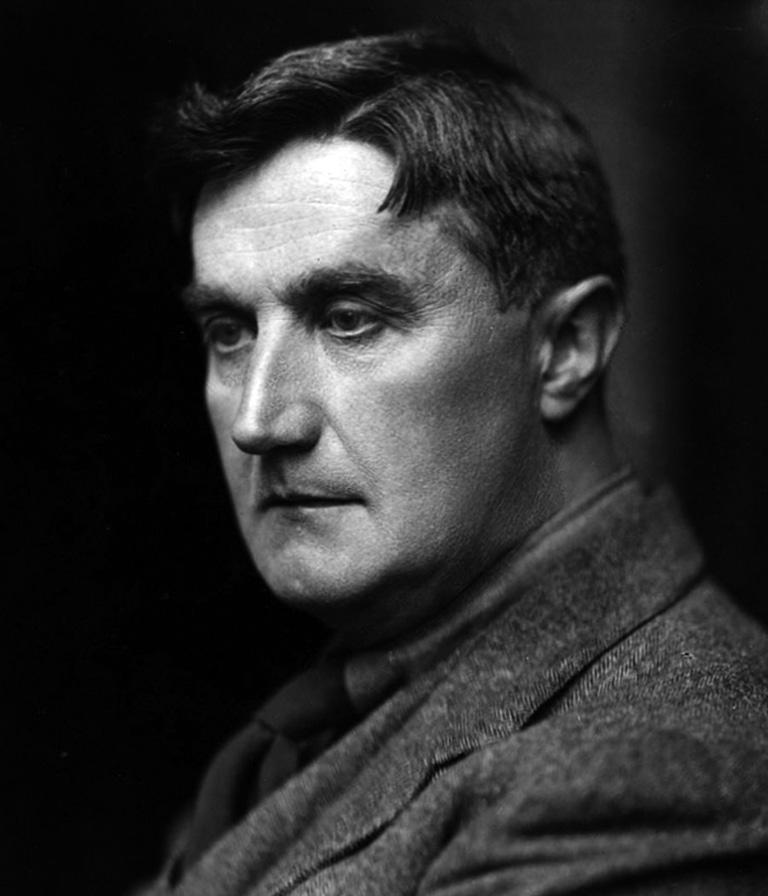
That mix of musical wonder and human desire is mirrored – perhaps not coincidentally – in the text that Vaughan Williams chose for the Serenade.
forms a central theme running through tonight’s programme – most overtly in the concert’s concluding piece, a brand new oratorio by the Scottish Chamber Orchestra’s Associate Composer Jay Capperauld. But music as language – at least as a language of emotion – is also a central idea behind tonight’s opening work.
Indeed, Vaughan Williams’s 1938 Serenade to Music conveys such strong emotion that it reportedly reduced Sergei Rachmaninov –hardly a musician known for his unrestrained emotional effusiveness – to tears at the piece’s premiere in October that year, at London’s Royal Albert Hall. Rachmaninov had performed his own Piano Concerto No.2 before the interval, and took a seat in the audience for the second half. If it sounds like a grand occasion, it was: a jubilee concert to celebrate the 50th anniversary of the
first concert conducted by Sir Henry Wood, founder and organiser of London’s annual promenade concerts since 1895, and a force of nature in British music.
Wood had suggested that Vaughan Williams might write a new piece for the gala event, and the two men hatched a plan for a work that would involve a roster of the starriest British singers of the time. What Vaughan Williams created would bring together a chorus of 16 soloists, each of them given their own moment to step out from the choral texture and shine individually. The composer even went as far as including each singer’s initials next to their specific parts in his score: more than music conceived and written simply for voices, this is a piece that was created with individual performers in mind, and written to showcase their individual voices.
Ralph Vaughan Williams
It’s reported, in fact, that several of those singers struggled to get through rehearsals for the premiere, so moved were they by Vaughan Williams’s creation. The Serenade to Music is indeed a glowing tribute to the power of music itself. But it’s also perhaps a tribute of a more earthly kind too. Vaughan Williams had begun a passionate affair with the poet and writer Ursula Wood in March 1938, despite both lovers being married, and despite a fourdecade age difference between them. After many years of secrecy, Vaughan Williams and Wood married in 1953. Looking back to 1938, Wood later remembered: ‘I think he was rather in love with me at that time; I think the Serenade was written for me.’
That mix of musical wonder and human desire is mirrored – perhaps not coincidentally – in the text that Vaughan Williams chose for the Serenade. He selected lines from Shakespeare’s The Merchant of Venice, in which lovers Lorenzo and Jessica consider the music of the spheres on a romantic moonlit night. Shakespeare compares the motion of the planets to the voices of angels, and warns us never to trust someone that music fails to move.
The great playwright might have been writing about this piece of music in particular: it’s hard to imagine many remaining unaffected by Vaughan Williams’s Serenade. After welling up in the audience, Rachmaninov later confessed to Sir Henry Wood that he’d never felt so moved by music as by this piece. It is indeed a work a ravishing beauty, though it’s not without its moments of passing dissonance and its unexpected harmonic twists. Its general mood of rapt calm might have surprised listeners in 1938: this was just three years after Vaughan Williams unveiled his angular, dissonant Fourth Symphony. (‘It looks wrong and it sounds wrong, but it’s
right,’ the composer famously said about that creation. ‘I don’t know whether I like it, but it’s what I meant.’) But something had changed: it was around the same time as the Serenade that Vaughan Williams began work on his radiant Fifth Symphony, which would be premiered in 1943.
With a main, winding melody that returns again and again, the Serenade follows an overall arch form. After a prominent violin solo, the chorus enters first as a single entity, before dividing into individual voices in the piece’s more complex central section, only to return to glowing ensemble harmonies at its hushed close.
We stay in England for tonight’s second piece, and we remain with music that conveys strong emotions – though in the case of Edward Elgar’s fastidiously crafted Serenade for Strings, those emotions are set very much within Hanslick’s internal logic and abstract processes. Though the gloriously tuneful piece is now understandably one of the composer’s most popular works, it wasn’t always that way. He wrote it in March 1892, early on in his career, while he was still struggling to make a living for himself, his wife and daughter in his native Worcestershire from teaching and directing local music ensembles. It was one of those amateur groups – the Worcester Ladies’ Orchestral Class – that gave the Serenade its first performance later that year, in fact. But when he sent it off to London publisher Novello in the hope that they might take it on, Elgar was brushed off: the reply came that ‘this class of music is practically unsaleable’.
It didn’t remain so when Elgar’s Enigma Variations put him firmly on the musical map in 1899, and interest gathered in the earlier works that this saviour of English music
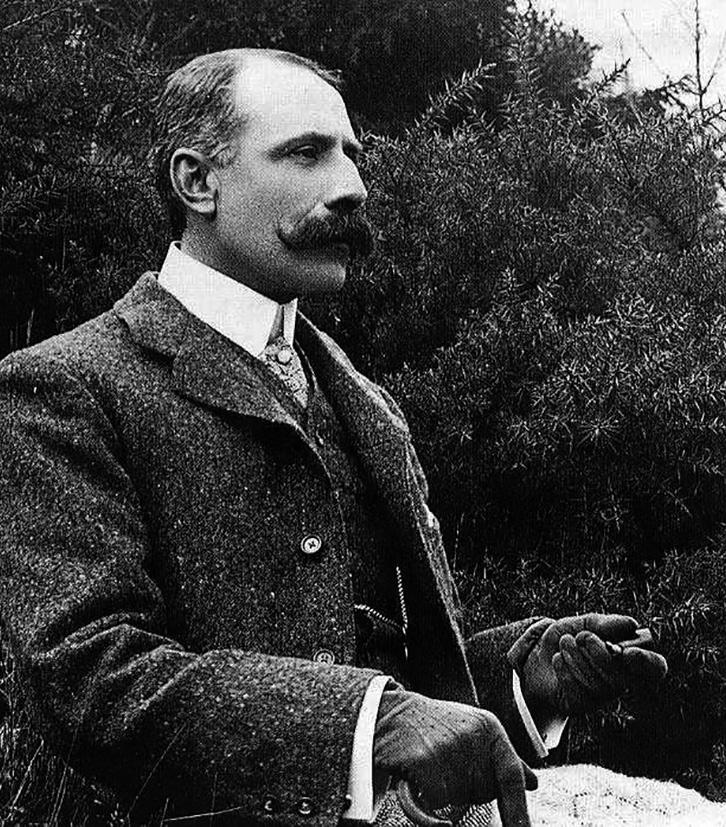
Though the gloriously tuneful Serenade is now understandably one of the composer’s most popular works, it wasn’t always that way.
had produced. Indeed, late in his life, Elgar confessed that the Serenade’s three short movements were probably his favourites of all his own pieces: ‘I like ’em (the first thing I ever did),’ he wrote to a friend.
It’s not hard to see why the Serenade would become such a cherished work, by listeners and by Elgar himself. It demonstrates not only the composer’s expertise at musical construction, but also the gentle melancholy that would mark out so many of his later works.
The Serenade’s opening movement has been interpreted variously as a lullaby or as music to welcome the dawn. But with its soaring melody set against an insistent figure in the violas, it defines very much its own mood and character. The slower second movement contains one of the
composer’s most overtly lovely melodies, whose bounding leaps convey a very Elgarian sense of restrained passion, and an impassioned central section whose phrases rise ever higher without the stability of a bassline. With its restless shifting between optimistic major and more sombre minor modes, Elgar’s lilting, rather Brahmsian final movement seems to sum up the Serenade’s bittersweet mood, and the composer wraps things up with the return of the opening movement’s insistent rhythm before a quiet but luminous conclusion.
For many listeners, there are few musical works that more profoundly convey emotion than George Butterworth’s Six Songs from A Shropshire Lad. There’s an indelible connection between this music and the First World War, though this has only emerged retrospectively.
Edward Elgar
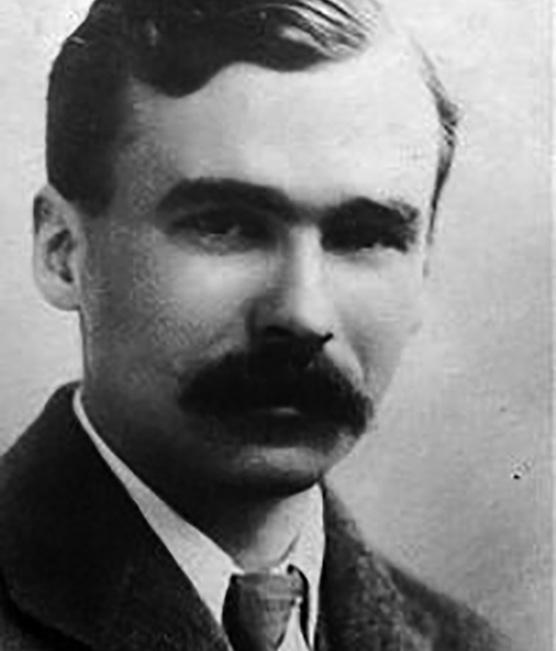
For many listeners, there are few musical works that more profoundly convey emotion than George Butterworth’s Six Songs from A Shropshire Lad.
In all, Butterworth set 11 poems from AE Housman’s 1896 collection A Shropshire Lad (the six we hear tonight, plus five more as Bredon Hill and Other Songs). But the deaths of the lads that Housman’s poignant verse returns to again and again occurred more than two decades before the Great War, and were instead in the service of Queen Victoria and her Empire.
Butterworth himself, however, provides an almost archetypical example of the decimation that the War wrought on the young of the 1910s. On graduating from Oxford, he had launched a successful career as a writer, teacher and composer – indeed, he was a friend of Vaughan Williams’, and equally passionate about English folk music. But that career was interrupted by the conflict: he joined the British Army, destroying many of his early compositions
in the process, unsure whether he’d live to revise and finalise them once the war was over. He was killed in action at the Battle of the Somme, during the night of 4-5 August 1916, aged 31, leaving just a handful of exquisite, deeply moving works behind.
Despite being written before the War, and setting poetry referring to the casualties of earlier conflicts, it’s hard to imagine Butterworth’s six Housman songs as referring to anything other than the Great War, and to see the ubiquitous ‘lads’ of Housman’s verse – sturdy and vigorous, yet as vulnerable as children – as representing the thousands killed in the conflict that would come just a few years later.
Themes of passing time, mortality and lost love haunt these six songs. ‘Loveliest of trees’ recounts the turning of the seasons, while
George Butterworth
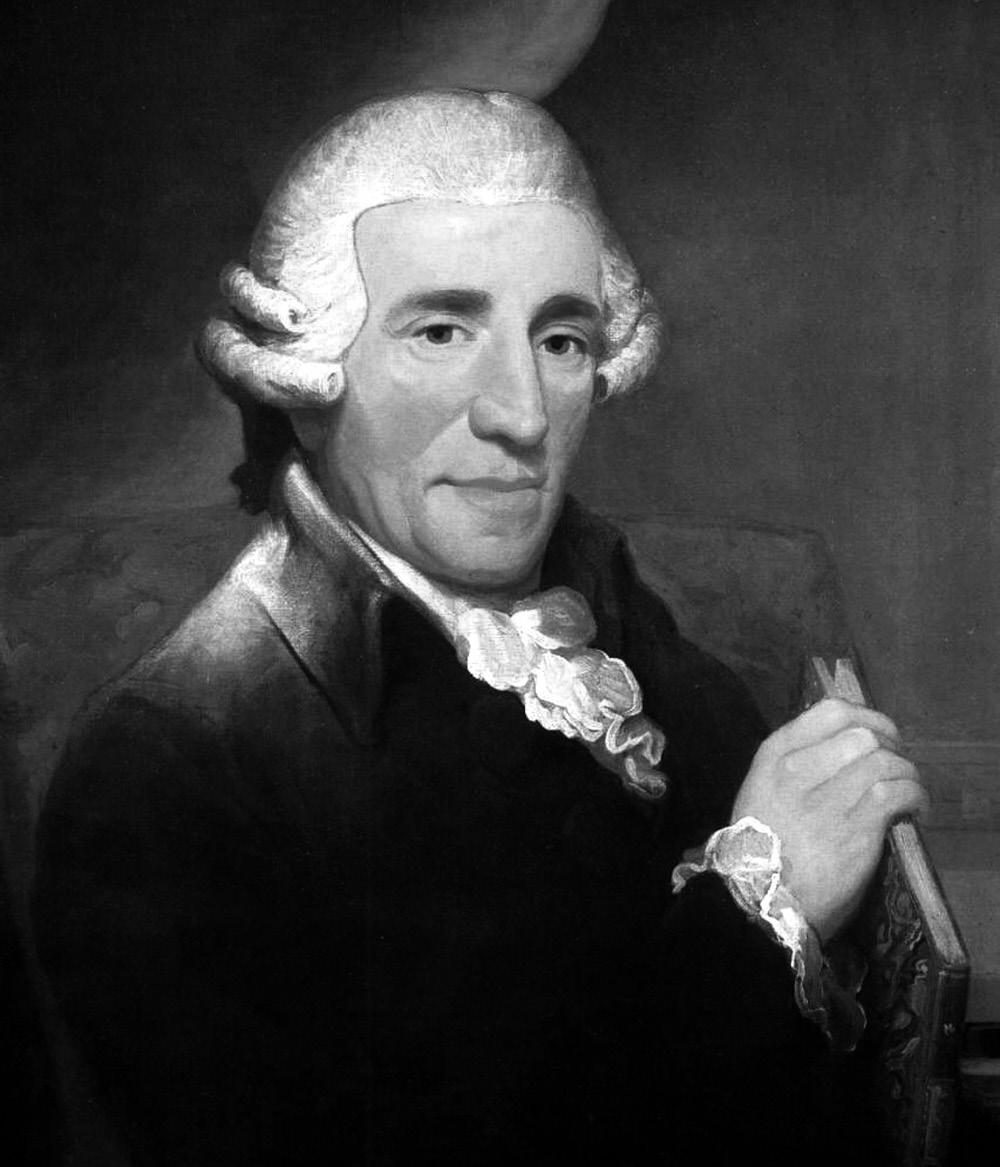
There’s perhaps less to directly inspire or uplift in The Creation’s intentionally strange, unpredictable opening movement. Instead, surrender yourself to the chaos before creation.
the passing of time continues as a theme in ‘When I was one-and-twenty’, which employs a traditional English tune in its tale of lost love and lost innocence. ‘Look not in my eyes’ tells the story of Narcissus in an unusual, five-in-a-bar time, with caressing, shifting harmonies, while the message of the brisk ‘Think no more, lad’ couldn’t be clearer: live life to the fullest, for tomorrow we die.
Butterworth’s final two songs are his most poignant. ‘The lads in their hundreds’ unashamedly admires the sturdy physicality of the young men letting their hair down at Ludlow fair, but is shot through with quiet tragedy that these are the very boys who ‘will never be old’: as an anthem for doomed youth, it’s hard to see it as anything but prophetic. The final ‘Is my team ploughing?’ is a ghostly dialogue between two of those lads, one of whom has survived the war, the
other of whom ‘now lies under the land he used to plough’, his lines accompanied by delicate, distant harmonies.
For tonight’s penultimate piece, we look back to the very beginning of things – before war, before language, before music, before anything at all. And to do so, we turn to one of Joseph Haydn’s most radical and most unconventional creations.
‘The Representation of Chaos’ depicts just that, and comes as the rule-breaking, no doubt listener-shocking opening movement to Haydn’s grand oratorio The Creation, which will go on to depict God’s process of bringing the heavens, the earth, the animals and humankind into being in some of the composer’s freshest, most optimistic music. Haydn was in London in 1791 when he was overwhelmed by the splendour and grandeur
Franz Joseph Haydn
of Handel’s oratorios Messiah and Israel in Egypt. When impresario Johann Peter Salomon – who’d organised his visit – handed him a libretto for a similar work based on the Creation, he immediately saw the potential.
He ended up composing two separate versions of The Creation: one in the original English, and another in a German translation. And he later admitted that he felt composing the work had almost been an act of religious devotion in itself – though the oratorio very much reflects Haydn’s personal perspective on a forward-looking, optimistic faith, as well as the composer’s evident belief in the power of music to move, inspire and uplift its listeners.
But that’s for the rest of the oratorio. There’s perhaps less to directly inspire or uplift in its intentionally strange, unpredictable opening movement. Instead, surrender yourself to the chaos before creation: Haydn’s sometimes sinister, meandering, unpredictable figures break all the musical rules of the composer’s time in their portrayal of the unsettling, sometimes dissonant disorder before God began his week of creativity.
Music, creation and deep emotion come together in tonight’s final piece. Ayrshireborn Jay Capperauld is the SCO’s Associate Composer, and has already written many works for the Orchestra, from the macabre Bruckner’s Skull to the saxophone concerto Rewired, as well as the hushed choral beauty of The Night Watch and The Winter’s Brightening, both collaborations with South Uist-born poet Niall Campbell. Capperauld and Campbell collaborate again in tonight’s The Language of Eden. The composer writes:
The Language of Eden is a new creation myth that tells of the birth of language itself, and
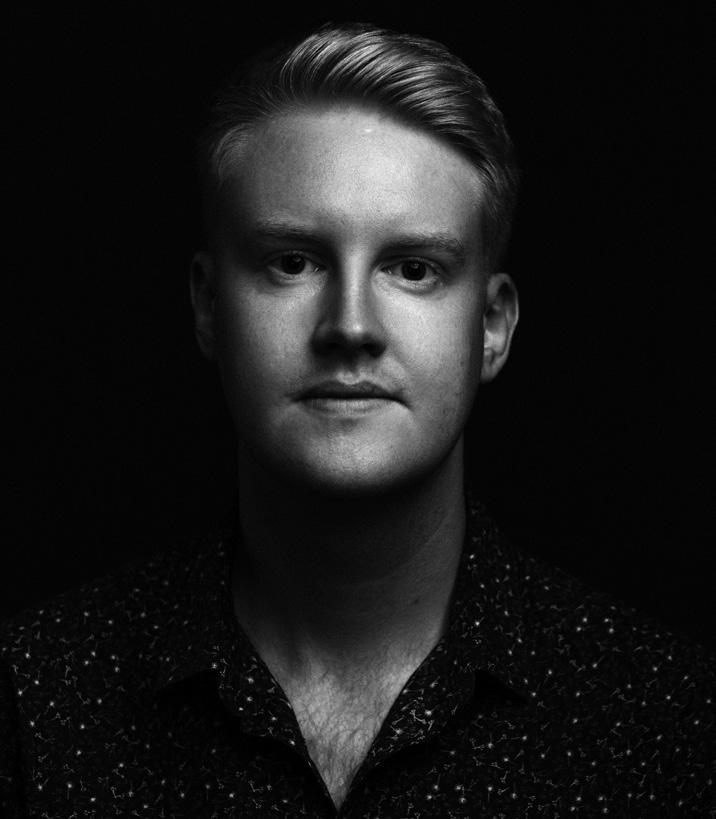
takes its source inspiration from the various language deprivation experiments that have taken place throughout human history. These experiments have been made by Egyptian pharaohs, Holy Roman rulers and South Asian emperors in order to determine humanity’s truest and most innate form of communication. Allegedly, King James IV of Scotland conducted one of these experiments in the late 1400s when he sent two infants to be raised by a mute woman on the secluded island of Inchkeith, in the Firth of Forth, in an attempt to discover which language the children would grow up to speak when they were cut off from the rest of the world. By extension, the experiment was conducted to ascertain whether, if the children did speak at all, their communication could be considered the ‘original language of God’ or indeed the language spoken by Adam and Eve in the Garden of Eden.
Jay Capperauld
© Euan Robertson
The Language of Eden is a new creation myth that tells of the birth of language itself, and takes its source inspiration from the various language deprivation experiments that have taken place throughout human history. These experiments have been made by Egyptian pharaohs, Holy Roman rulers and South Asian emperors in order to determine humanity’s truest and most innate form of communication.
This piece for baritone soloist, chorus and orchestra re-imagines those experiments in a fantastical story that tells of the promethean creation of ‘Adam’ (represented by the baritone soloist), the sole inhabitant of a personified island called ‘Eden’ (represented by the Chorus), who sculpts and shapes Adam from its elemental landscape. As Adam is being built, he learns about himself and his environment through the concepts and words that are gifted to him by Eden, who describes the air of the island as Adam’s breath and lungs, the earth as his skin and bones, the magma as his heart and passions, and the water as his tears and empathy. All of Eden’s elemental gifts and their respective concepts/words embody Adam and his consciousness, but one of those elements has always existed within him: music. This is humanity’s innate language, and this is the vehicle through
which people can understand themselves and others.
Upon completion of its creation, Eden sees something on the horizon. Adam hears a cacophony approaching. Humanity has come to collect Adam and learn from him the true ‘Adamic’ language, a language hidden and innate within us all. Adam must leave the island Eden to fulfill his destiny and impart his understanding of music’s compassionate power to the rest of humankind for the betterment of themselves and their world.
This is a journey from silence into sound as Eden attempts to create the one human who can teach humanity about itself – their joys, their furies, their woes and their compassion – through the innate language of music.
© David Kettle
Libretto
VAUGHAN WILLIAMS (1872-1958)
Serenade to Music (1938)
How sweet the moonlight sleeps upon this bank!
Here will we sit, and let the sounds of music Creep in our ears: soft stillness and the night Become the touches of sweet harmony. Look, how the floor of heaven Is thick inlaid with patines of bright gold: There's not the smallest orb that thou behold'st But in his motion like an angel sings Still quiring to the young-eyed cherubins; Such harmony is in immortal souls; But, whilst this muddy vesture of decay Doth grossly close it in, we cannot hear it. Come, ho! and wake Diana with a hymn: With sweetest touches pierce your mistress' ear, And draw her home with music.
I am never merry when I hear sweet music.
The reason is, your spirits are attentive: The man that hath no music in himself, Nor is not mov'd with concord of sweet sounds, Is fit for treasons, stratagems and spoils; The motions of his spirit are dull as night, And his affections dark as Erebus: Let no such man be trusted... Music! hark!
It is your music of the house.
Methinks it sounds much sweeter than by day.
Silence bestows that virtue on it.
How many things by season season'd are.
To their right praise and true perfection! Peace, ho! the moon sleeps with Endymion, And would not be awak'd.
Soft stillness and the night Become the touches of sweet harmony.
(from Shakespeare’s The Merchant of Venice, Act V, scene 1)
BUTTERWORTH (1885-1916)
Six Songs from 'A Shropshire Lad' (1911) arr. R WILLIAMS
Loveliest of trees
Loveliest of trees, the cherry now Is hung with bloom along the bough, And stands about the woodland ride Wearing white for Eastertide.
Now, of my threescore years and ten, Twenty will not come again, And take from seventy springs a score, It only leaves me fifty more.
And since to look at things in bloom Fifty springs are little room, About the woodlands I will go To see the cherry hung with snow.
When I was one-and-twenty
When I was one-and-twenty I heard a wise man say, “Give crowns and pounds and guineas But not your heart away; Give pearls away and rubies But keep your fancy free.”
But I was one-and-twenty, No use to talk to me.
When I was one-and-twenty I heard him say again, “The heart out of the bosom Was never given in vain; ’Tis paid with sighs a plenty And sold for endless rue.”
And I am two-and-twenty, And oh, ’tis true, ’tis true.
Look not in my eyes
Look not in my eyes, for fear They mirror true the sight I see, And there you find your face too clear And love it and be lost like me.
One the long nights through must lie Spent in star-defeated sighs, But why should you as well as I Perish? Gaze not in my eyes.
A Grecian lad, as I hear tell, One that many loved in vain, Looked into a forest well And never looked away again. There, when the turf in springtime flowers, With downward eye and gazes sad, Stands amid the glancing showers
A jonquil, not a Grecian lad.
Think no more, lad
Think no more, lad; laugh, be jolly; Why should men make haste to die? Empty heads and tongues a-talking Make the rough road easy walking, And the feather pate of folly Bears the falling sky.
Oh, ’tis jesting, dancing, drinking Spins the heavy world around. If young hearts were not so clever, Oh, they would be young for ever; Think no more; ’tis only thinking Lays lads underground.
The lads in their hundreds
The lads in their hundreds to Ludlow come in for the fair, There’s men from the barn and the forge and the mill and the fold, The lads for the girls and the lads for the liquor are there, And there with the rest are the lads that will never be old.
There’s chaps from the town and the field and the till and the cart, And many to count are the stalwart, and many the brave, And many the handsome of face and the handsome of heart, And few that will carry their looks or their truth to the grave.
I wish one could know them, I wish there were tokens to tell The fortunate fellows that now you can never discern; And then one could talk with them friendly and wish them farewell And watch them depart on the way that they will not return.
But now you may stare as you like and there’s nothing to scan; And brushing your elbow unguessed at and not to be told They carry back bright to the coiner the mintage of man, The lads that will die in their glory and never be old.
Is my team ploughing?
“Is my team ploughing, That I was used to drive And hear the harness jingle When I was man alive?”
Ay, the horses trample, The harness jingles now; No change though you lie under The land you used to plough.
“Is football playing Along the river-shore, With lads to chase the leather, Now I stand up no more?”
Ay, the ball is flying, The lads play heart and soul; The goal stands up, the keeper Stands up to keep the goal.
“Is my girl happy, That I thought hard to leave, And has she tired of weeping As she lies down at eve?”
Ay, she lies down lightly, She lies not down to weep: Your girl is well contented. Be still, my lad, and sleep.
“Is my friend hearty, Now I am thin and pine, And has he found to sleep in A better bed than mine?”
Yes, lad, I lie easy, I lie as lads would choose; I cheer a dead man’s sweetheart, Never ask me whose.
A E Housman
JAY CAPPERAULD (b. 1989)
The Language of Eden (World Premiere)
CREATION AND QUESTIONS
The Island Eden
I will tell you everything you need to know. The old world is breaking up and something new is coming. I see it on the horizon. And you are the answer. The missing part. I must make you out of nothing. I must shape you well for what is coming. Spark into being. Live. Start. Speak.
Adam
Where am I?
I hear you, but where are you? I hear your voice, but where are you? How did I get here? And who are you? And who am I?
The Island Eden
I will tell you everything you need to know.
Adam
Are you that voice on the wind? I see nothing. Are you that sound when the trees are shaking?
The Island Eden
I am the thrift, the reeds, the campion. I am the breeze that shakes the bracken. I am the air.
I am the wet rocks, and the everything.
Adam
Help me understand. What do I call you? Tell me who you are, and where I am?
The Island Eden
I am Eden – this whole island. I’m your teacher – and your everything.
Adam
And what am I? Am I a breath just taken on the breeze? A little nothing?
The Island Eden
You are Adam. I have created you. You are wet clay that longs for shaping.
Adam
Tell me why I’m here! I have a mind of fog. Nothing before, and nothing after.
The Island Eden
I will tell you everything you need to know. The new world is on its way and you will meet it soon. It is in pain and must be tamed. But not yet – this island must give its lessons now.
Adam
Teach me everything that I will need to know. Make of me a blank page, and write in me everything that I should know.
The Island Eden
I must finish shaping you and making you. I will give to you four elements. These will be my gifts to fix your stars and give you balance. So first I give you air.
FOUR ELEMENTS
Adam
This air, this air.
I take it on. This North wind. This East air. It makes me and shapes me, and gives me lungs With which to breathe this sweet air. It fills me up. I am all Westerly – all breath, and breeze. I am a Southern storm, like something sung. I am the blackbird’s voice – pure exhalation. I am the mouth that caught the wind.
The Island Eden
And now I give you the earth – its shape, and firmness – its soil, and its grass and clay.
Adam
The mountain stands, and now I stand, freshly formed, And made physical – made touch of skin –my pale as limestone skeleton. These arms already worn. These hands made hard by the rockface. My body weathering, growing, reaching, gathering. I know what the rock knows when it falls from the cliff top and as it strikes the ground. My feet of Eden’s clay are guiding me onwards, Through my terrain of flesh and stone.
I am transformed - a body made from the deep ground; I am the earth cut into this new outline. Taking me forward, my feet of Eden’s clay are walking.
The Island Eden
For you, my third gift – the fire’s red element. From beneath the island, this gift of magma to give you warmth.
Adam
Kindled into passion. All heat, all kiss. With the embers of the island. All fire, with burning tenderness. Where anger is needed, let me blaze. I can feel a lantern made of light and sparks Burning brighter than the North star in the dark. My heart is an ore kept in the breastbone’s hill, I hear its core - its blistering melody just starting; Let me sing its warmth: warm thoughts, warm touch. Let me be tempered by the heat. A hammer striking all of its sparks. My heart of Eden’s fire is beating.
The Island Eden
And last, this water – the streams of life–My final gift to you.
Adam
I take it all – your estuaries are now my veins. These rivers, my bloodstream. And water seems a birthright of empathy that’s poured in me. For the first time, I say, I flow. I sing. All water is a type of remembering. I hear those notes played by the rain. A waterfall of tears cascade and run over.
The Island Eden
My river boy. My island son. You are complete. This part is done.
Adam
I am your river boy. Your mountain child. All inner warmth and sweet storm’s breath.
The Island Eden
There is one gift I cannot give.
Adam
What am I missing? Tell me all.
PROPHECY
The Island Eden
Limitless and everlasting – your tongue already knows it. That innate language that sings – like snowfall on a wild garden. It is in you. This music that will tame the chaos – balm the wounds of the new world that has been crying out in pain. The new world is on its way – and you will meet it now.
HUMANITY’S CHAOS APPROCHES
The Island Eden Humanity is on its way – to take you and learn from you.
Adam
Is there no more time? What if I cannot do all they ask of me?
The Island Eden
You must speak the sounds you know so well – and face the noise.
Adam
What if my voice is too weak; too small; smaller than a sparrow in its cage?
The Island Eden
Teach them everything they need to know – use your voice and sing.
Adam
What if I am not enough? What if they do not hear me?
The Island Eden
You must break the cord that keeps you here –I have taught you everything you need to know. You must go. You’re ready now. You can go, and you shall.
Adam
I must teach them what the rock knows when it falls.
I can teach them what the blackbird knows when it calls.
I will soothe them. I will heal their wounds. I will tame them. I will meet them now.
The Island Eden
I see them on the horizon. They’re coming – closer and closer. And you must go. The dark clouds fill out the sky. Just listen and you’ll hear their cries.
Adam
I hear them on the horizon. They rage and clash against themselves. Closer and closer – I see them. They have reached us. They are here!
ADAM’S WORDLESS SONG & EDEN’S FAREWELL
Adam
Do you hear the calmness taking hold? But still my heart, it tells me: “It’s time to go”. Thank you, my teacher - my everything. Farewell.
The Island Eden
The calm takes hold of everyone. The solace in your voice. They belong to you, and you to them. The wind has filled your sails with song. Teach them well, my river boy, my island son. Farewell.
Adam
I pledge it with my breath, and my bones, and my heart, and my tears. Farewell. Farewell.
Reprinted with permission from Niall Campbell. All rights reserved © Niall Campbell 2025.
Andrew Manze
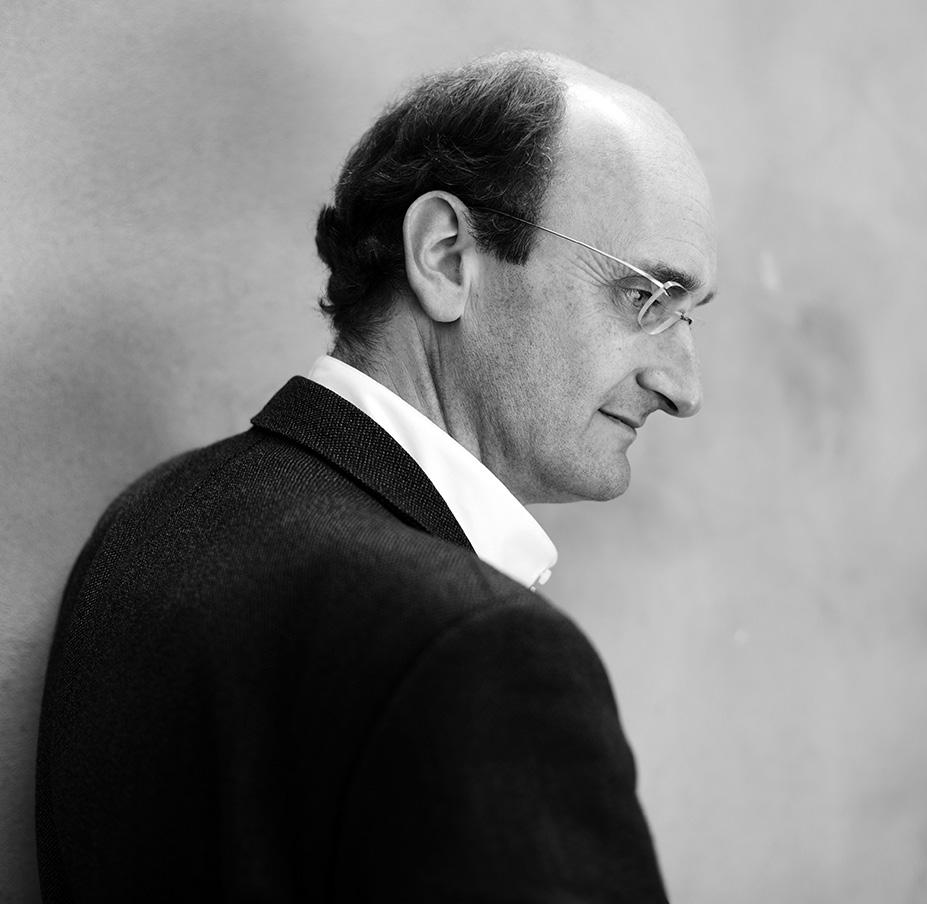
Andrew Manze is widely celebrated as one of the most stimulating and inspirational conductors of his generation. His extensive and scholarly knowledge of the repertoire, together with his boundless energy and warmth, mark him out. He held the position of Chief Conductor of the NDR Radiophilharmonie in Hannover from 2014 until 2023. Since 2018, he has been Principal Guest Conductor of the Royal Liverpool Philharmonic Orchestra. Last September he was appointed Principal Guest Conductor of the Scottish Chamber Orchestra.
In great demand as a guest conductor across the globe, Manze has long-standing relationships with many leading orchestras, including the Royal Concertgebouworkest, the Munich Philharmonic, Rotterdam Philharmonic, Royal Stockholm Philharmonic, Bamberg Symphoniker, Oslo Philharmonic, Finnish Radio, Mozarteum Orchester Salzburg, Chamber Orchestra of Europe, RSB Berlin, and the Dresden Philharmonic among others. In the 24/25 season, Manze will also make debuts with the Toronto Symphony Orchestra and the Orchestre Symphonique de Montréal, and return to the Hallé Orchestra, the Atlanta Symphony Orchestra, and the Salzburg Festival.
From 2006 to 2014, Manze was Principal Conductor and Artistic Director of the Helsingborg Symphony Orchestra. He was also Principal Guest Conductor of the Norwegian Radio Symphony Orchestra from 2008 to 2011, and held the title of Associate Guest Conductor of the BBC Scottish Symphony Orchestra for four seasons.
After reading Classics at Cambridge University, Manze studied the violin and rapidly became a leading specialist in the world of historical performance practice. He became Associate Director of the Academy of Ancient Music in 1996, and then Artistic Director of The English Concert from 2003 to 2007. As a violinist, Manze released an astonishing variety of recordings, many of them award-winning.
Manze is a Fellow of the Royal Academy of Music, Visiting Professor at the Oslo Academy, and has contributed to new editions of sonatas and concerti by Bach and Mozart, published by Bärenreiter and Breitkopf & Härtel. He also teaches, writes about, and edits music, as well as broadcasting regularly on radio and television. In November 2011 Andrew Manze received the prestigious ‘Rolf Schock Prize’ in Stockholm.
© Benjamin Ealovega
Roderick Williams
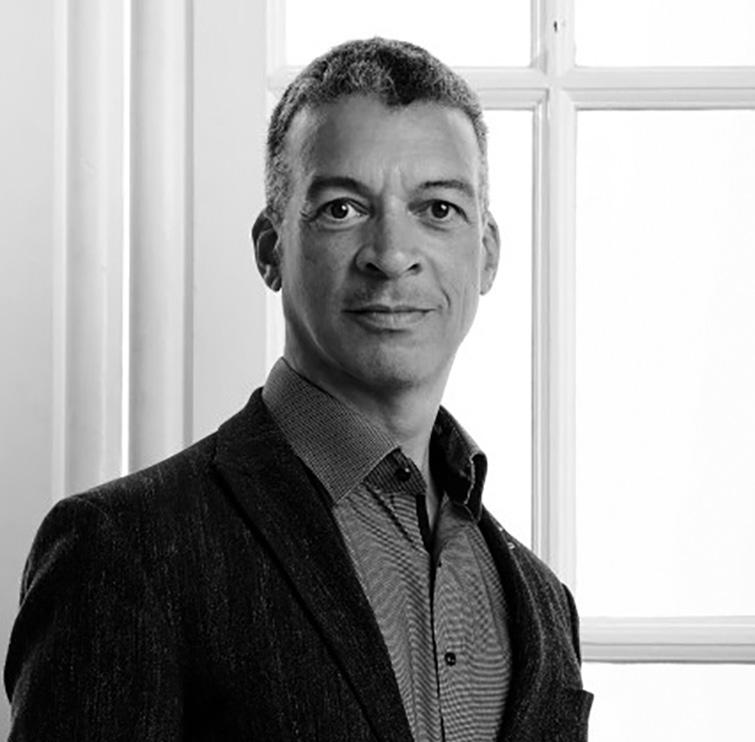
Roderick Williams is one of the most sought after baritones of his generation. He performs a wide repertoire from baroque to contemporary music, in the opera house, on the concert platform and is in demand as a recitalist worldwide.
He enjoys relationships with all the major UK opera houses and has sung opera world premieres by David Sawer, Sally Beamish, Michael van der Aa, Robert Saxton and Alexander Knaifel. Recent and future engagements include the title role in Eugene Onegin for Garsington, the title role in Billy Budd with Opera North, Papageno for Covent Garden, and productions with Cologne Opera, English National Opera, Welsh National Opera and Netherlands Opera.
Roderick sings regularly with all the BBC orchestras and all the major UK orchestras, as well as the Berlin, London and New York Philharmonic Orchestras, Deutsches Symphonie-Orchester Berlin, Orchestre Philharmonique de Radio France, Ensemble Orchestral de Paris, Accademia Nazionale di Santa Cecilia in Rome, Cincinnati Symphony and Bach Collegium Japan amongst others. His many festival appearances include the BBC Proms (including the Last Night in 2014), Edinburgh, Cheltenham, Bath, Aldeburgh and Melbourne Festivals.
Roderick Williams has an extensive discography. He is a composer and has had works premiered at the Wigmore and Barbican Halls, the Purcell Room and live on national radio. In December 2016 he won the prize for best choral composition at the British Composer Awards. From the 2022/23 season he took the position of Composer in Association of the BBC Singers.
He recently completed a three year odyssey of the Schubert song cycles culminating in performances at the Wigmore Hall and has subsequently recorded them for Chandos. Future releases include more Schubert, Schumann in English as well as works by Vaughan Williams.
He was Artistic Director of Leeds Lieder in April 2016, Artist in Residence for the Royal Liverpool Philharmonic Orchestra from 2020/21 for two seasons and won the RPS Singer of the Year award in May 2016. He was awarded an OBE in June 2017.
For full biography please visit sco.org.uk
Gregory Batsleer
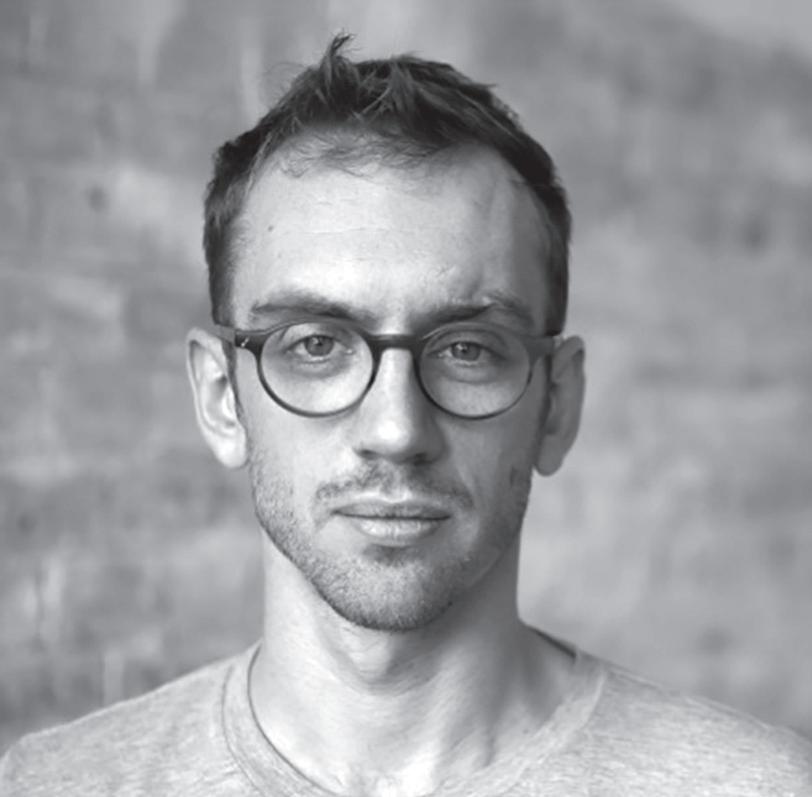
Gregory Batsleer is acknowledged as one of the leading choral conductors of his generation, winning widespread recognition for his creativity and vision. Since taking on the role of SCO Chorus Director in 2009, he has led the development of the Chorus, overseeing vocal coaching, the SCO Young Singers’ Programme and the emergence of regular a capella concerts. As well as preparing the Chorus for regular performances with the Orchestra, he has directed their successful appearances at Edinburgh Jazz, East Neuk, Glasgow Cathedral and St Andrews Voices Festivals, at Greyfriars Kirk at Christmas and Easter, and on the SCO Summer Tour.
In 2021 Gregory took up the position of Festival Director for the London Handel Festival. He leads the programming and development of the Festival, fulfilling its mission to bring Handel’s music to the widest possible audiences.
As guest conductor, Gregory has worked with many of the UK’s leading orchestras and ensembles. Recent highlights include performances with the Royal Northern Sinfonia, RSNO, Hallé Orchestra, Black Dyke Band, National Youth Choir of Great Britain, Orchestra of Opera North, Manchester Camerata, SCO and Royal Liverpool Philharmonic.
From 2012 to 2017, he was Artistic Director of the National Portrait Gallery’s Choir in Residence programme, the first ever in-house music programme of any gallery or museum in the world. He has been Artistic Director of Huddersfield Choral Society since 2017 and was Chorus Director with the Royal Scottish National Orchestra from 2015 - 2021. Gregory has curated and devised performances for the Southbank Centre, Wilderness Festival and Latitude and collaborated with leading cultural figures across a variety of different art forms. He is the co-founder and conductor of Festival Voices, a versatile ensemble dedicated to cross-art collaboration.
Gregory sits on the board of Manchester Camerata as a non-executive director. His outstanding work as a choral director was recognised with the 2015 Arts Foundation’s first-ever Fellowship in Choral Conducting. His contract with the SCO Chorus was recently extended until summer 2028.
Gregory’s Chair is kindly supported by Anne McFarlane
Sun 29 Mar, 3pm The Queen’s Hall, Edinburgh
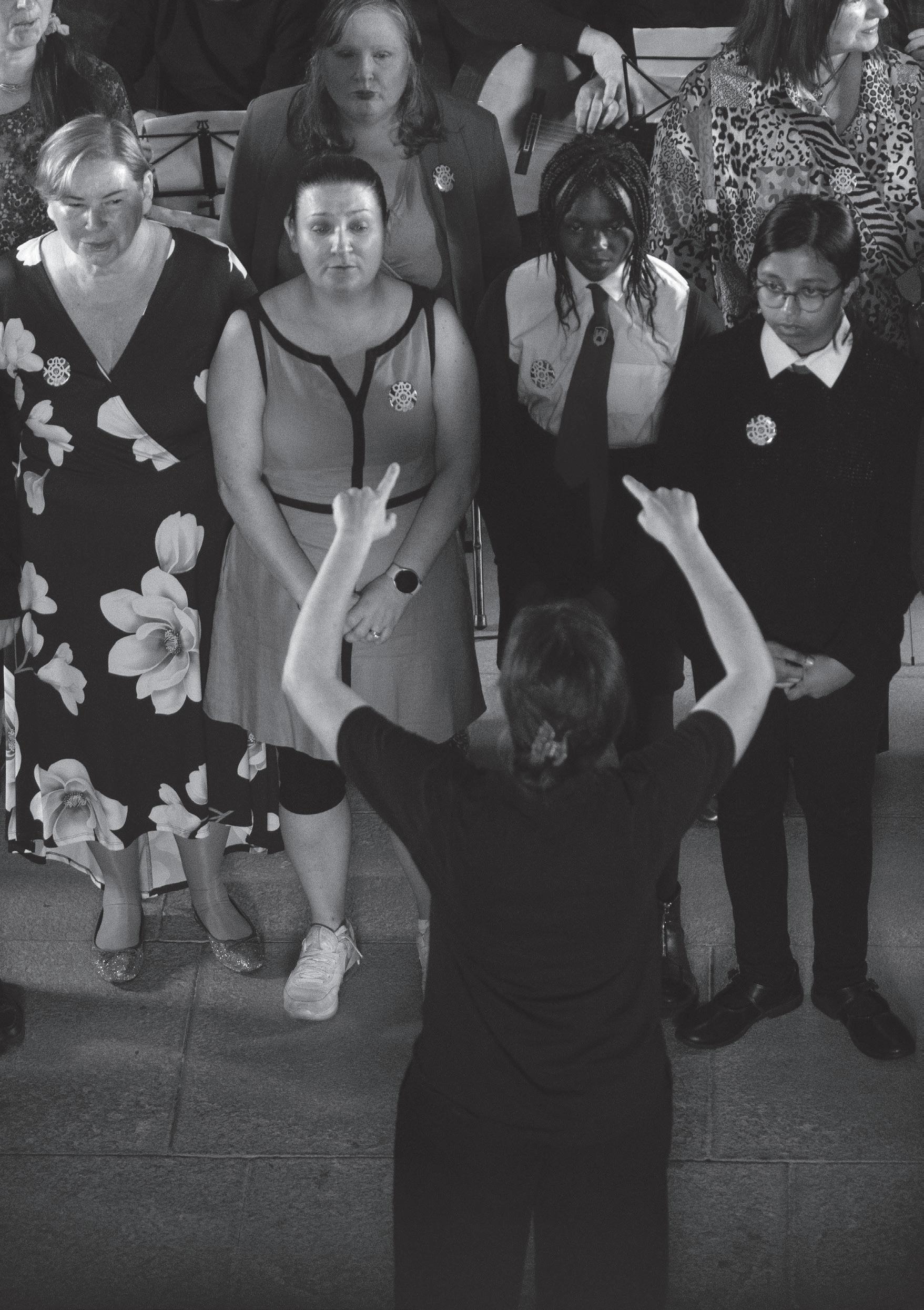
Tapestry
Kindly supported by the Cockaigne Fund, Cruden Foundation, Daphne Hamiton Charitable Trust, Garfield Weston Foundation, HR Creswick Charitable Trust, Plum Trust, and Mrs Rowena Goffin’s Charitable Trust.
SCO Chorus
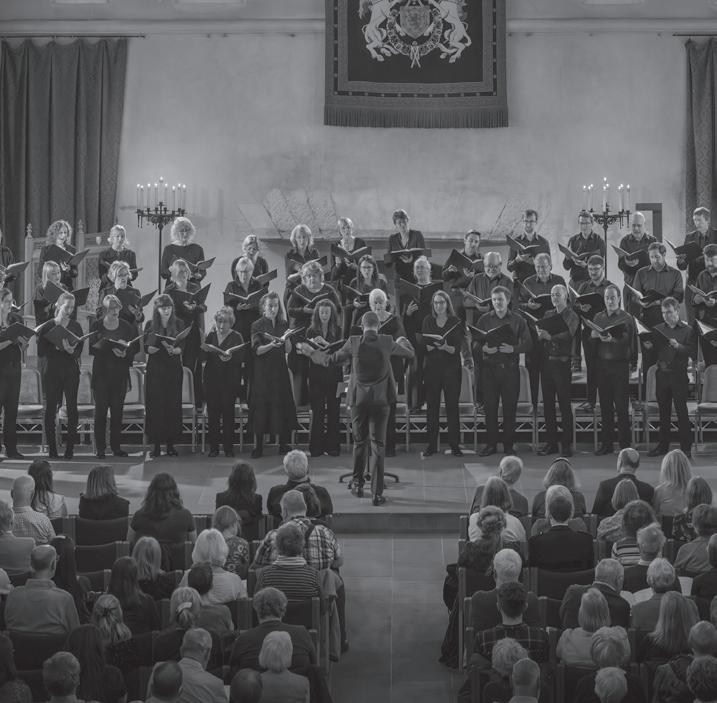
The Scottish Chamber Orchestra Chorus, under the direction of Gregory Batsleer since 2009, has built a reputation as one of Scotland’s most vibrant and versatile choirs. Widely regarded as one of the finest orchestral choruses in the UK, it celebrates its 35th anniversary in 2026.
Members enjoy the unique opportunity of performing with one of the world’s leading chamber orchestras, working with international conductors including Maxim Emelyanychev, Andrew Manze, Riccardo Minasi, Richard Egarr, Václav Luks and Sir James MacMillan.
The Chorus appears regularly with the Orchestra in Scotland’s major cities. Recent concerts have covered a wide range of music including Bach Mass in B minor and Christmas Oratorio, Berlioz L’Enfance du Christ, Brahms Requiem, Haydn Creation, MacMillan Seven Last Words, Poulenc Gloria, a rare performance of Vaughan Williams Flos Campi and premiere performances of works by Anna Clyne (SCO Associate Composer 2019-2022) and Sir James MacMillan.
The SCO Chorus also performs a capella, both digital and live, in music ranging from Thomas Tallis to newly-composed work. Its annual Christmas concerts have established themselves as a Season highlight; the Chorus also enjoys appearing on the SCO’s Summer Tour.
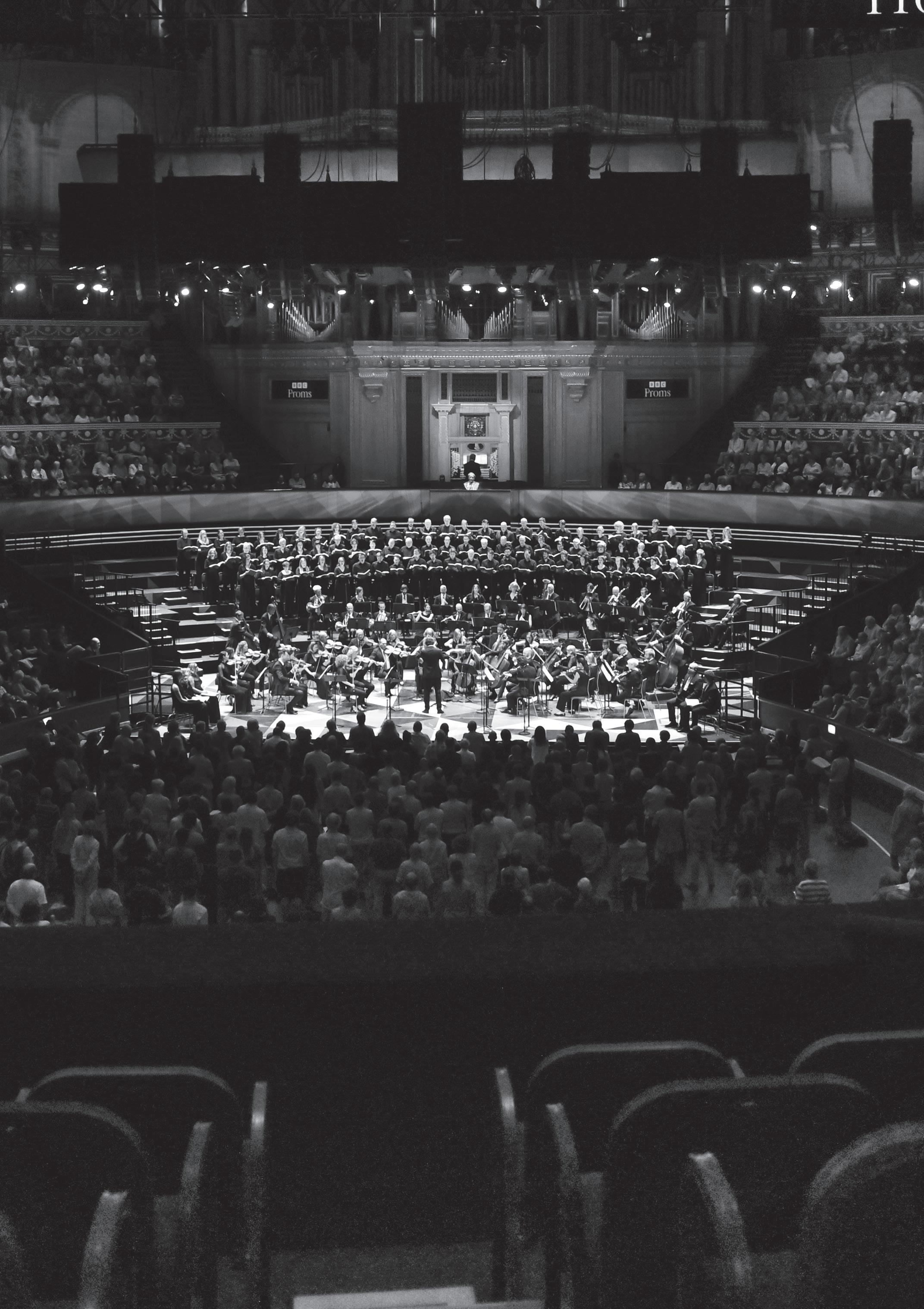
Other notable out-of-Season appearances have included critically-acclaimed performances with the SCO at the BBC Proms in Handel’s Jephtha in 2019 and in Mendelssohn's Elijah in 2023, and at the 2023, 2024 and 2025 Edinburgh International Festivals in semi-staged performances of Mozart’s Die Zauberflöte, Così fan Tutte and La Clemenza di Tito
Our Young Singers' Programme was established in 2015 to nurture and develop aspiring young singers. It is designed for young people with a high level of choral experience and ambitions to further their singing with a world-class ensemble.
Further information at sco.org.uk
The SCO Chorus Young Singers' Programme is kindly supported by the Baird Educational Trust.
© Christopher Bowen
Your Chorus Tonight
Information correct at the time of going to print
SOPRANO
Kirstin Anderson
Naomi Black
Nancy Burns
Morven Chisholm
Mairi Day
Joanne Dunwell
Emily Gifford
Alice Higgins
Gregory Batsleer
Chorus Director
Stuart Hope
Associate Chorusmaster
Emma Morwood
Voice Coach
Susan White
Chorus Manager
* Young Singers' Programme
Florence Kaiser*
Elizabeth McColl
Katie McGlew
Anna Morris*
Alison Williams
ALTO
Shona Banks
Dinah Bourne
Sarah Campbell
Gill Cloke
Judith Colman
Jennie Gardner
Claire Goodenough
Anne Grindley
Melissa Humphreys
Rachel Kemp
Elaine McAdam
Hilde McKenna
Charlotte Perkins
Linda Ruxton
Olivia Smith*
TENOR
Colin French
Ian Gibson
Peter Hanman
Theodore Hill
Keith Main
Matt Norriss
Michael Scanlon
Paul Vaughan
BASS
Gavin Easton
Hugh Hillyard-Parker
Richard Hyder
Donald MacLeod
Sandy Matheson
Richard Murphy
Kenneth Murray
Douglas Nicholson
David Paterson
Peter Silver
Stephen Todd
Roderick Wylie
Scottish Chamber Orchestra
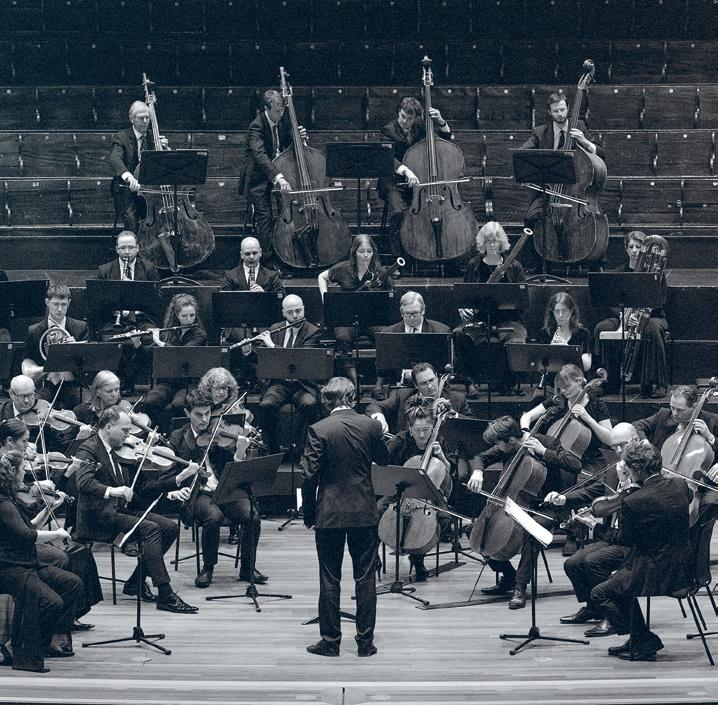
The Scottish Chamber Orchestra (SCO) is one of Scotland’s five National Performing Companies and has been a galvanizing force in Scotland’s music scene since its inception in 1974. The SCO believes that access to world-class music is not a luxury but something that everyone should have the opportunity to participate in, helping individuals and communities everywhere to thrive. Funded by the Scottish Government, City of Edinburgh Council and a community of philanthropic supporters, the SCO has an international reputation for exceptional, idiomatic performances: from mainstream classical music to newly commissioned works, each year its wide-ranging programme of work is presented across the length and breadth of Scotland, overseas and increasingly online.
Equally at home on and off the concert stage, each one of the SCO’s highly talented and creative musicians and staff is passionate about transforming and enhancing lives through the power of music. The SCO’s Creative Learning programme engages people of all ages and backgrounds with a diverse range of projects, concerts, participatory workshops and resources. The SCO’s current five-year Residency in Edinburgh’s Craigmillar builds on the area’s extraordinary history of Community Arts, connecting the local community with a national cultural resource.
An exciting new chapter for the SCO began in September 2019 with the arrival of dynamic young conductor Maxim Emelyanychev as the Orchestra’s Principal Conductor. His tenure has recently been extended until 2028. The SCO and Emelyanychev released their first album together (Linn Records) in 2019 to widespread critical acclaim. Their second recording together, of Mendelssohn symphonies, was released in 2023, with Schubert Symphonies Nos 5 and 8 following in 2024.
The SCO also has long-standing associations with many eminent guest conductors and directors including Principal Guest Conductor Andrew Manze, Pekka Kuusisto, François Leleux, Nicola Benedetti, Isabelle van Keulen, Anthony Marwood, Richard Egarr, Mark Wigglesworth, Lorenza Borrani and Conductor Emeritus Joseph Swensen.
The Orchestra’s current Associate Composer is Jay Capperauld. The SCO enjoys close relationships with numerous leading composers and has commissioned around 200 new works, including pieces by Sir James MacMillan, Anna Clyne, Sally Beamish, Martin Suckling, Einojuhani Rautavaara, Karin Rehnqvist, Mark-Anthony Turnage, Nico Muhly and the late Peter Maxwell Davies.
© Christopher Bowen
Sunday 31 May, 4pm
Edinburgh New Town Church sco.org.uk
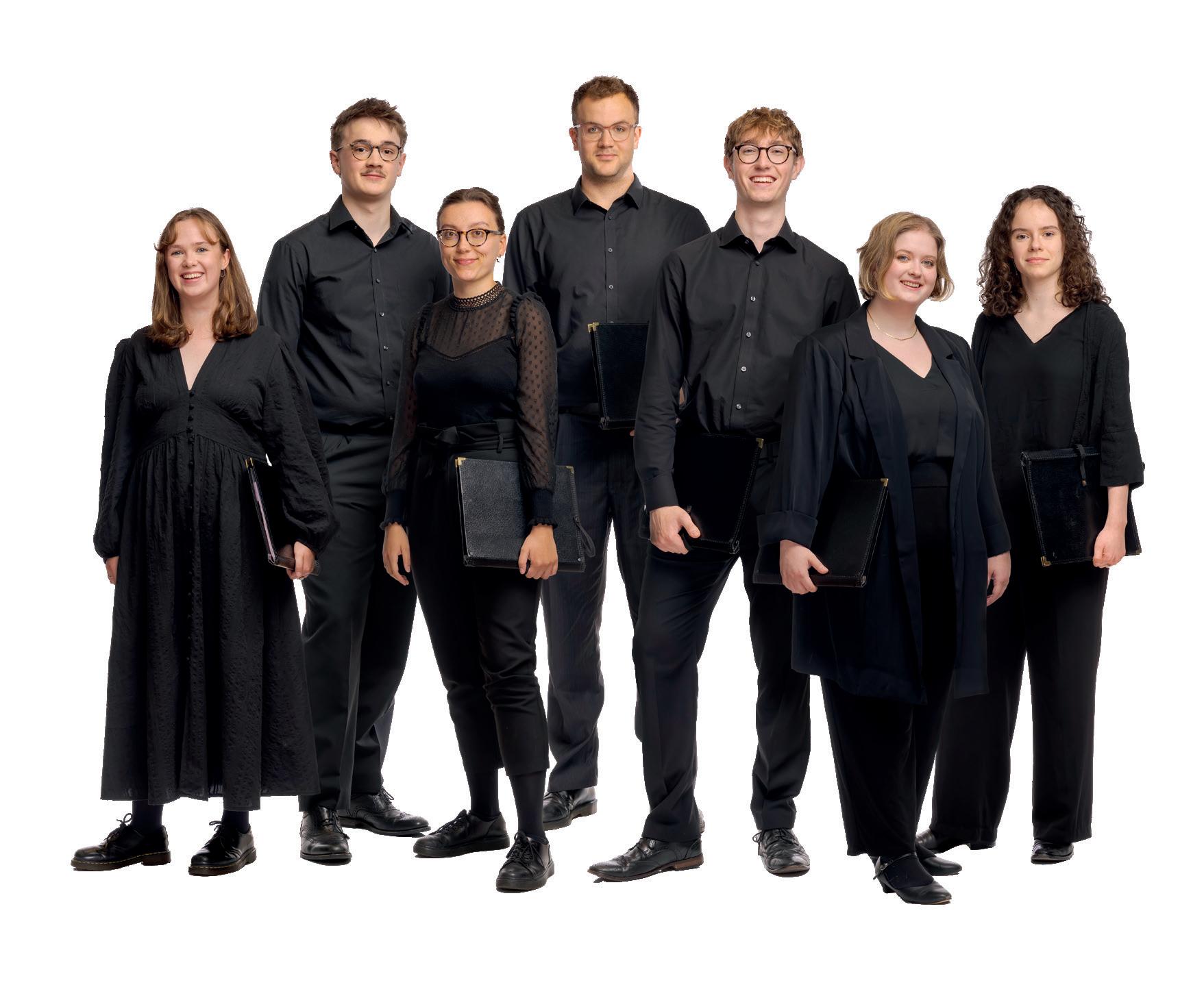
Monteverdi Madrigals
Gregory Batsleer SCO Chorus Director
SCO NEW MUSIC FUND
Shape the Sound of the Future
Make a donation between 12 February and 30 March and double the impact of your gift.
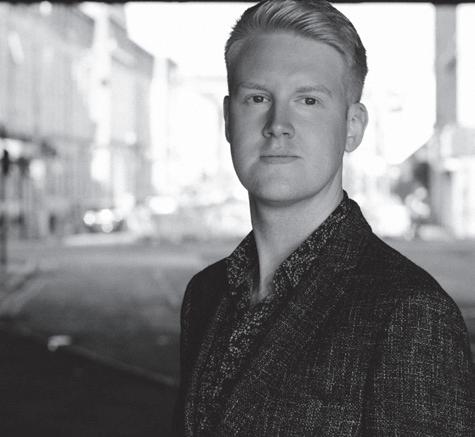
SCO Associate Composer Jay Capperauld
We've launched the SCO New Music Fund to support new commissions and talented composers.
Every £1 will be doubled but only until Monday 30 March. Donations will be matched up to £30,000, meaning your gift goes twice as far. Together, we can help shape the sound of the future.
Thank you for your support! SCAN ME To donate and find out more.
Top photo ©Stuart Armit | Photo of Jay ©Euan Robertson