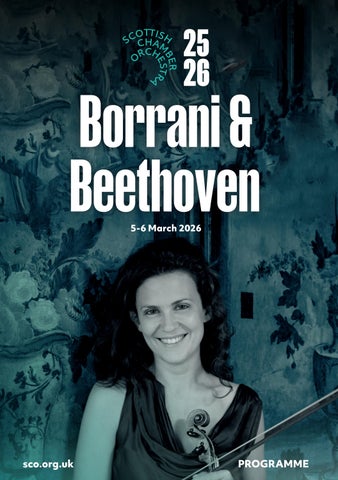
Borrani & Beethoven
5-6 March 2026

Borrani & Beethoven
Thursday 5 March, 7.30pm The Queen's Hall, Edinburgh Friday 6 March, 7.30pm City Halls, Glasgow
ROSSINI Overture, The Barber of Seville
BEETHOVEN Concert Aria: Ah, perfido!
BRITTEN Variations on a Theme of Frank Bridge
Interval of 20 minutes
BEETHOVEN Symphony No.8
Lorenza Borrani director/violin
Robin Johannsen soprano
Borrani
4 Royal Terrace, Edinburgh EH7 5AB +44 (0)131 557 6800 | info@sco.org.uk | sco.org.uk
SC075079.
Lorenza
© Piera Mungiguerra
Robin Johannsen
© Tatjana Daschel
THANK YOU
Principal Conductor's Circle
Our Principal Conductor’s Circle are a special part of our musical family. Their commitment and generosity benefit us all – musicians, audiences and creative learning participants alike.
Annual Fund
James and Patricia Cook
Visiting Artists Fund
Harry and Carol Nimmo
Anne and Matthew Richards
International Touring Fund
Gavin and Kate Gemmell
Creative Learning Fund
Sabine and Brian Thomson
American Development Fund
Erik Lars Hansen and Vanessa C L Chang
CHAIR SPONSORS
Conductor Emeritus Joseph Swensen
Donald and Louise MacDonald
Chorus Director Gregory Batsleer
Anne McFarlane
Principal Second Violin
Marcus Barcham Stevens
Jo and Alison Elliot
Second Violin Rachel Smith
J Douglas Home
Principal Viola Max Mandel
Ken Barker and Martha Vail Barker
Viola Brian Schiele
Christine Lessels
Viola Steve King
Sir Ewan and Lady Brown
Principal Cello Philip Higham
The Thomas Family
Sub-Principal Cello Su-a Lee
Ronald and Stella Bowie
Cello Donald Gillan
Professor Sue Lightman
Productions Fund
Geoff and Mary Ball
Bill and Celia Carman
Anne, Tom and Natalie Usher
Scottish Touring Fund
Eriadne and George Mackintosh
Claire and Anthony Tait
New Music Fund
Ken Barker and Martha Vail Barker
Colin and Sue Buchan
The Thomas Family
Cello Eric de Wit
Jasmine Macquaker Charitable Fund
Principal Flute André Cebrián
Claire and Mark Urquhart
Sub-Principal Flute Marta Gómez
Judith and David Halkerston
Principal Oboe
The Hedley Gordon Wright Charitable Trust
Sub-Principal Oboe Katherine Bryer
Ulrike and Mark Wilson
Principal Clarinet Maximiliano Martín
Stuart and Alison Paul
Principal Bassoon Cerys Ambrose-Evans
Claire and Anthony Tait
Sub-Principal Bassoon Alison Green
George Rubienski
Principal Horn Kenneth Henderson
Caroline Hahn and Richard Neville-Towle
Funding Partners





SCO Donors
Diamond
The Cockaigne Fund
Malcolm and Avril Gourlay
John and Jane Griffiths
James and Felicity Ivory
George Ritchie
Tom and Natalie Usher
Platinum
E.C. Benton
Michael and Simone Bird
Silvia and Andrew Brown
David Caldwell in memory of Ann
Dr Peter Williamson and Ms Margaret Duffy
David and Elizabeth Hudson
Helen B Jackson
Dr and Mrs Peter Jackson
Dr Daniel Lamont
Graham and Elma Leisk
Professor and Mrs Ludlam
Chris and Gill Masters
Duncan and Una McGhie
Anne-Marie McQueen
James F Muirhead
Robin and Catherine Parbrook
Jane Peacock in memory of Douglas Peacock
Charles Platt and Jennifer Bidwell
Patrick and Susan Prenter
Mr and Mrs J Reid
The Walter and Janet Reid Charitable Trust
Martin and Mairi Ritchie
Hilary E Ross
Elaine Ross
Sir Muir and Lady Russell
Jill and Brian Sandford
Michael and Elizabeth Sudlow
Robert and Elizabeth Turcan
Alan and Sue Warner
Bill Welsh
Anny and Bobby White
Robert Mackay and Philip Whitley
Finlay and Lynn Williamson
Ruth Woodburn
Gold
Peter Armit
Adam Gaines and Joanna Baker
John and Maggie Bolton
Elizabeth Brittin
Kate Calder
James Wastle and Glenn Craig
Jo and Christine Danbolt
James and Caroline Denison-Pender
Andrew and Kirsty Desson
David and Sheila Ferrier
Chris and Claire Fletcher
James Friend
Iain Gow
Margaret Green
Christopher and Kathleen Haddow
Catherine Johnstone
Julie and Julian Keanie
Gordon Kirk
Janey and Barrie Lambie
Mike and Karen Mair
Roy and Svend McEwan-Brown
John and Liz Murphy
Tom Pate
Maggie Peatfield
Sarah and Spiro Phanos
Alison and Stephen Rawles
Andrew Robinson
Olivia Robinson
Anne McAlister and Philip Sawyer
Irene Smith
Dr Jonathan Smithers
Ian S Swanson
Ian and Janet Szymanski
John-Paul and Joanna Temperley
Douglas and Sandra Tweddle
Catherine Wilson
Neil and Philippa Woodcock
Georgina Wright
Silver
Roy Alexander
Fiona and Neil Ballantyne
The Batsleer Family
Jack Bogle
Jane Borland
Alan Borthwick
Dinah Bourne
Michael and Jane Boyle
Mary Brady
Paula and Colin Brown
John Brownlie
Laura Buist
Robert Burns
Sheila Colvin
Lorn and Camilla Cowie
Adam and Lesley Cumming
Dr Wilma Dickson
Seona Reid and Cordelia Ditton
Sylvia Dow
Colin Duncan in memory of Norma Duncan
Richard and Cath Dyer
Raymond Ellis
Dr and Mrs Alan Falconer
Sheila Ferguson
Dr William Irvine Fortescue
Dr David Grant
Anne Grindley
Andrew Hadden
J Martin Haldane
Ronnie and Ann Hanna
Roderick Hart
Norman Hazelton
Ron and Evelynne Hill
Philip Holman
Clephane Hume
Tim and Anna Ingold
David and Pamela Jenkins
Margaret Mortimer and Ken Jobling
Ross D. Johnstone
James Kelly, in memory of Mairi Kelly
Professor Christopher and Mrs Alison Kelnar
Dr Ian Laing
Geoff Lewis
Dorothy A Lunt
Vincent Macaulay
James McClure in memory of Robert Duncan
Ben McCorkell
Lucy McCorkell
Gavin McCrone
Michael McGarvie
Brian Miller
Alistair Montgomerie
Norma Moore
Andrew Murchison
Pamela Andrews and Alan Norton
Gilly Ogilvy-Wedderburn
Mairi & Ken Paterson
John Peutherer in memory of Audrey Peutherer
James S Potter
Timothy Barnes and Janet Sidaway
Catherine Steel
John and Angela Swales
Takashi and Mikako Taji
C S Weir
Susannah Johnston and Jamie Weir
David and Lucy Wren
We are indebted to everyone acknowledged here who gives philanthropic gifts to the SCO of £300 or greater each year, as well as those who prefer to remain anonymous.
We are also incredibly thankful to the many individuals not listed who are kind enough to support the Orchestra financially on a regular or ad hoc basis. Every single donation makes a difference.
Become a regular donor, from as little as £5 a month, by contacting Hannah Wilkinson on 0131 478 8364 or hannah.wilkinson@sco.org.uk.
“…an orchestral sound that seemed to gleam from within.”
THE SCOTSMAN
HM The King Patron
Donald MacDonald CBE
Life President
Joanna Baker CBE Chair
Gavin Reid LVO
Chief Executive
Maxim Emelyanychev
Principal Conductor
Andrew Manze
Principal Guest Conductor
Joseph Swensen
Conductor Emeritus
Gregory Batsleer
Chorus Director
Jay Capperauld
Associate Composer
© Chris Christodoulou
Your Orchestra Tonight
First Violin
Lorenza Borrani
Paula Alasà
Emma Baird
Amira Bedrush-McDonald
Aisling O’Dea
Fiona Alexander
Sarah Bevan-Baker
Kristin Deeken
Second Violin
Marcus Barcham Stevens
Gordon Bragg
Hatty Haynes
Michelle Dierx
Rachel Smith
Catherine James
Viola
Max Mandel
Felix Tanner
Elaine Koen
Steve King
Cello
Philip Higham
Su-a-Lee
Donald Gillan
Eric de Wit
Bass
Jamie Kenny
Yehor Podkolzin
Flute
André Cebrián
Alba Vinti López
Oboe
Sasha Calin
Katherine Bryer
Clarinet
Maximiliano Martín
William Stafford
Bassoon
Cerys Ambrose-Evans
Alison Green
Katherine Bryer
Sub-Principal Oboe
Information correct at the time of going to print
Horn
Jože Rošer
Martin Lawrence
Trumpet
Peter Franks
Shaun Harrold
Timpani
Elsa Bradley
What You Are About To Hear
ROSSINI (1792-1868)
Overture, The Barber of Seville (1816)
BEETHOVEN (1770-1827)
Ah, perfido!, Op.65 (1796)
BRITTEN (1913-1976)
Variations on a Theme of Frank Bridge, Op.10 (1937)
Introduction and Theme
Variation 1: Adagio
Variation 2: March
Variation 3: Romance
Variation 4: Aria Italiana
Variation 5: Bourrée classique
Variation 6: Wiener Walzer
Variation 7: Moto perpetuo
Variation 8: Funeral March
Variation 9: Chant
Variation 10: Fugue and Finale
BEETHOVEN (1770-1827)
Symphony No.8 in F major, Op.93 (1812)
Allegro vivace e con brio
Allegretto scherzando quasi andante
Tempo di menuetto
Allegro vivace
Humour in music is a funny business – or at least it tries to be. But how composers manage to raise a smile within the most abstract of art forms requires a whole raft of musical techniques and ideas, from stealth and surprise to outright parody. There’s no shortage of humour – of varying shades – among the music in tonight’s concert, from the dashing wit of Rossini’s Barber of Seville Overture to the jokes and high jinks of Beethoven’s Eighth Symphony. There’s even quite a bit of knowing comedy among the piquant stylistic evocations of Britten’s Variations on a Theme of Frank Bridge – but perhaps quite a bit less in the deeply emotional concert aria by Beethoven that completes today’s music.
For many listeners, the Overture to Rossini’s 1816 opera The Barber of Seville is the epitome of effervescent musical wit, summing up to a tee the scheming hairdresser running rings around local bigwigs at the centre of the composer’s comic romp. This music, however, was not conceived for The Barber of Seville at all. Rossini had originally composed the Overture for his 1813 opera Aureliano in Palmira, and then reused it in his 1815 Elizabeth, Queen of England. His rather shameless re-recycling for The Barber of Seville marked his third use of the material – but there was a reason.
Rossini had simply run out of time. Remarkably, he dashed off The Barber of Seville in less than three weeks – not that you’d ever suspect it from the opera’s wealth of wit and melody. But this was hardly unusual. Rossini was a notoriously fast worker: he’d maintain the pace of producing at least two operas per season for 19 years. He’d originally had something Spanish-sounding in mind for The Barber
He’d originally had something Spanish-sounding in mind for The Barber of Seville’s Overture, to match the opera’s Iberian setting, but he left things too late to put it together. In the end, recycling older material was his only option.
of Seville’s Overture, to match the opera’s Iberian setting, but he left things too late to put it together. In the end, recycling older material was his only option.
The irony, of course, is how indelibly we associate the Overture’s bubbling comedy and good humour with the opera itself –despite the fact that it contains precisely no themes or melodies that we’d encounter later in the opera. And for eagle-eared listeners at the opera’s first performance – on 20 February 1816 at Rome’s Teatro Argentina – that redeployment of existing music was perhaps just one reason behind the show’s fiasco of a premiere.
For a start, rival composer Giovanni Paisiello – who’d already scored a hit with his own operatic version of Beaumarchais’s 1775 comedy – turned up with some
cronies to disrupt this new version by the upstart Rossini before it gained a foothold in audiences’ affections. Paisiello and his mates caused mayhem, allegedly releasing a stray cat to prowl around the stage, and the poorly rehearsed cast hardly helped by tripping over scenery, falling through trapdoors and missing their cues. From knowing wit and good humour, the show had descended into farce. Appalled, Rossini left early, and stayed away for the following night too. When a mob of torch-wielding locals approached his residence after the second performance, he feared the worst. In fact, they were there to proclaim and celebrate his genius, and Rossini’s Barber soon found a permanent place in the repertoire. Its music became so well known and widely loved, in fact, that it later inspired affectionate parodies from the likes of Woody Woodpecker, Bugs
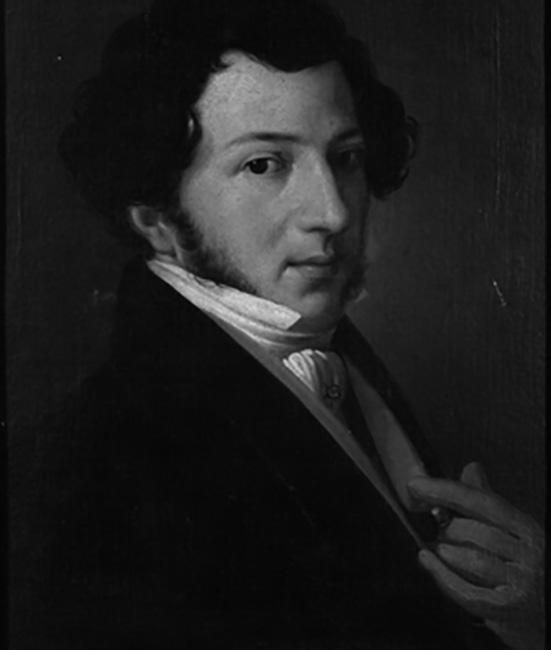
Gioachino Rossini circa 1815
Beethoven’s aim (and, let’s be frank, Duschek’s too) was to showcase her legendary vocal abilities, and with its huge range, its florid writing and its deeply expressive melodic lines, the piece remains a challenge for sopranos today.
Bunny and Tom and Jerry, each in their own individual animated take.
Launching with some attention-grabbing loud chords, Rossini’s Overture seems barely able to contain its excitement in its restrained opening section. The loud chords return to kick off the Overture’s faster section, contrasting a nimble but melancholy violin tune against a wittier, far more mischievous oboe melody. After a couple of Rossini’s trademark swelling crescendos, the tempo surges forward even faster before the Overture’s exuberant conclusion.
We veer away from humour for tonight’s second piece, and plummet into a world of turmoil, turbulence and tragedy. Beethoven’s Ah! perfido follows in a long line of vocal showpieces for wronged opera
heroines that stretches back to opera’s earliest days. Its style might be operatic, but it’s not taken from a larger stage work: instead, Beethoven wrote Ah! perfido in 1796 expressly for concert performance, and for a recital being given by the accomplished soprano Josepha Duschek, in Leipzig on 21 November that year. His aim (and, let’s be frank, Duschek’s too) was to showcase her legendary vocal abilities, and with its huge range, its florid writing and its deeply expressive melodic lines, the piece remains a challenge for sopranos today.
The woman in front of us is Deidamia, Princess of Scyros, who’s been abandoned by her lover, Greek hero Achilles, as he flees to follow his destiny in the Trojan War. She curses him and calls on the gods to make him suffer, yet also longs for his return and
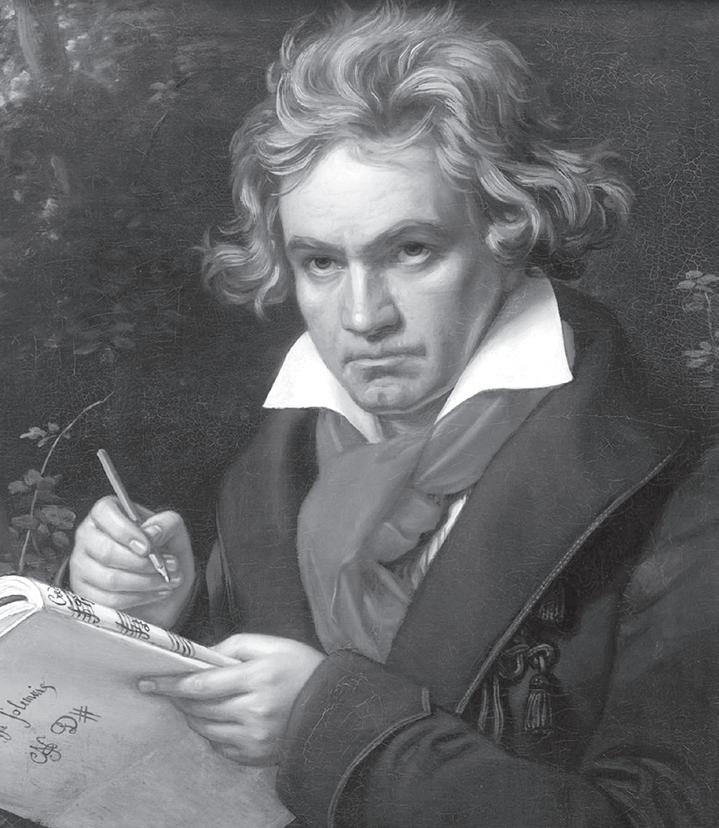
Ludwig van Beethoven
prays for his good fortune. Accordingly, Beethoven uses his orchestral backdrop to illustrate her shifting, quicksilver moods. Don’t be fooled by the positive, heroic sounds of the work’s opening: there’s undeniable turmoil in the composer’s rushing figurations and juddering sudden halts. A lyrical clarinet solo marks Deidamia’s acceptance, and leads to the tender, lyrical aria itself – but the turmoil of the opening makes several unexpected returns.
Don’t be taken in by the piece’s relatively mature opus number (65) either. That was a late addition to the piece by Viennese publisher Artaria, who’d spotted a gap in Beethoven’s own numbering and took the opportunity to cast the piece as a creation from his pioneering middle period. It’s actually one of his earliest pieces (he was 24 at its premiere), and if you hear a fair bit of Haydn and Mozart in its clean, clear musical style, that’s almost certainly what the composer intended – even if its more rugged, emotionally charged writing also hints at what was to come.
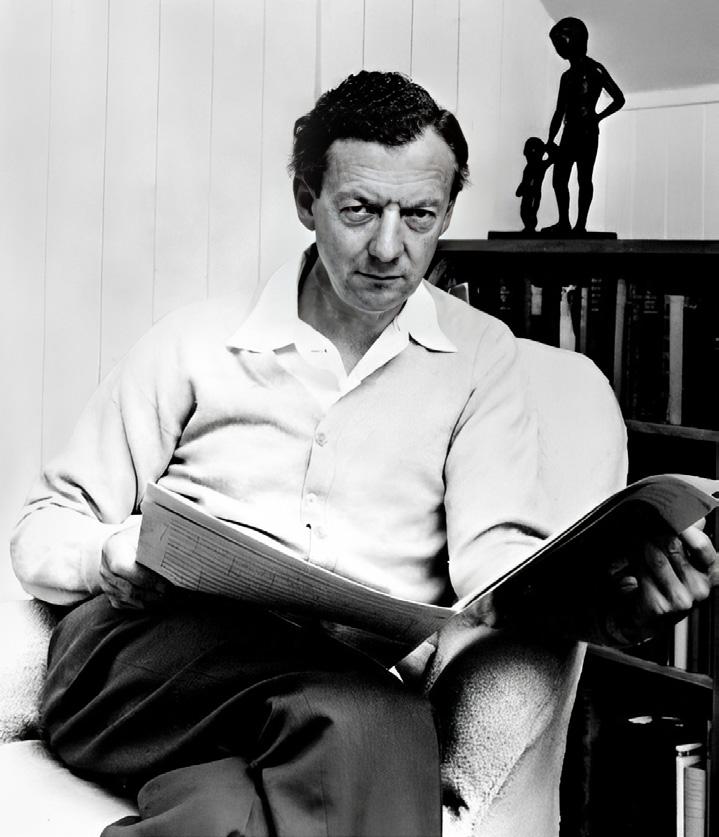
From Beethoven’s abandoned heroine, we jump forward to the 20th century for tonight’s next piece, and back into a world of wit and humour – well, partially, at least. In his Variations on a Theme of Frank Bridge, the 23-year-old Benjamin Britten set out to make his mark on the musical world. It’s ironic, however, that the piece that established Britten’s international reputation was – like the Rossini Overture that launched tonight’s concert – also a bit of a rush job.
It was in May 1937 that the young Britten was approached by conductor Boyd Neel to write a piece for his virtuoso chamber
orchestra, with the performance date set for the following August – a mere three months later, and at no less an occasion than the Salzburg Festival, which fellow composer Richard Strauss had co-founded in 1920. Of course Britten accepted, and in the end worked astonishingly quickly, taking little more than a month to complete his Variations on a Theme of Frank Bridge
It helped that the piece had been in Britten’s mind for some time. He’d first thought about writing something based on his former teacher’s music back in 1932, but was forced to put the idea aside because of other commitments. Britten had known and loved Bridge’s music since his childhood – it was the older man’s orchestral suite The Sea that had first inspired him to become a composer.
The pair first met in 1927 at the premiere in Norwich of Bridge’s Enter Spring, when the 13-year-old Britten approached a reluctant Bridge begging for composition lessons. Seeing the quantity and quality of Britten’s childhood output, Bridge quickly agreed, and went on to nurture the prolific, rather over-enthusiastic young composer into a master craftsman who honed every line and every harmony in his music for maximum expressive effect. Britten later called him ‘my musical father’.
And his set of variations is in many ways a character portrait of his beloved teacher: in the score he gave to Bridge, Britten even indicated that each variation referred to an aspect of the older man’s personality. It’s also been suggested that its wildly contrasting moods – from despair to exuberant joy – may reflect two momentous events in the younger composer’s recent life: the death of his beloved mother in
It’s ironic, however, that the piece that established Britten’s international reputation was –like the Rossini Overture that launched tonight’s concert –also a bit of a rush job.
January 1937, and his first meeting with tenor Peter Pears, who would go on to become his life partner, in March of the same year.
Britten took the theme for his work not from one of Bridge’s later, more complex scores, but from second of the wistful Three Idylls for string quartet, making the contrasts between Bridge’s Elgarian language and his own modernist style all the more striking. He fractures the theme into its consistuent parts, disguises it and transforms it radically in a set of variations that conjure a remarkable range of sounds and textures from its small-scale forces, yet remain immediately accessible.
Two dramatic plucked chords kick off the opening ‘Introduction and Theme’, followed by a double bass drumroll and fanfares
heralding Bridge’s poignant melody, heard in its original quartet arrangement. The ‘Adagio’ (representing Bridge’s integrity) has dark, pensive harmonies interspersed with yearning melodies in the violins, and the brusque, military rhythms of the ‘March’ (his energy) contrast plucked and bowed playing. The ‘Romance’ (Bridge’s charm) is a graceful waltz, and the droll ‘Aria Italiana’ (his humour) shows the Variations at their most parodic, with violins and violas strummed guitar-style and a soaring, extrovert tune on top. The ‘Bourrée classique’ (Bridge’s tradition) seems to look back to the Baroque string music of Bach and Vivaldi, and the humorous, over-thetop ‘Wiener Walzer’ (his enthusiasm) is a parody of a Viennese waltz that has something of the barely controlled frenzy of Ravel’s La valse. Scurrying strings characterise the propulsive ‘Moto perpetuo’
Benjamin Britten
© Hans Wild
(his vitality), and the achingly tragic ‘Funeral March’ (Bridge’s sympathy) sets a wailing violin melody against a remorseless bassline. The otherworldly ‘Chant’ (his reverence) precedes the ‘Fugue and Finale’ (Bridge’s skill and affection), where the older composer’s star pupil shows off his technical abilities before concluding with a glowing return of the opening theme.
We return to Beethoven for tonight’s final piece, and we find him – quite unusually, it has to be said – in something of a mischievous mood, despite challenging personal circumstances. So iconic and influential are the composer’s nine symphonies that it’s almost inevitable some get overshadowed by others. In between the heroic grandeur of No.3 and the death-tolife journey of No.5, for example, sits the far more modest No.4. Likewise, between the obsessive dance rhythms of No.7 and the choral grandeur of No.9 comes little No.8.
It’s indeed the shortest of all Beethoven’s symphonies, and one that the composer himself was rather modest about: he described it as ‘my little Symphony in F’, partly to distinguish it from his far longer and more ambitious ‘Pastoral’ Symphony, No.6, in the same key.
He began work on it in 1812 at the age of 41, straight after he’d finished the Symphony No.7. It was a time of great personal turmoil, as revealed in the notorious unsent letter in which the composer unburdened his surging emotions to his still unidentified ‘immortal beloved’. He’d also had a serious run-in with his brother Johann, attempting to break up the younger man’s relationship with Therese Obermayer, of whom he strongly disapproved. He failed – Johann and Therese were married a few months
later – but succeeded in driving a wedge between himself and his sibling. And of course, Beethoven’s hearing was steadily deteriorating. He conducted the Eighth Symphony’s premiere on 27 February 1814 in Vienna’s Redoutensaal, but, reportedly, ‘the orchestra largely ignored his ungainly gestures and followed the principal violinist instead’.
There’s little evidence, however, of any of Beethoven’s misfortunes in the Eighth Symphony’s music. Indeed, it contains some of his most overtly comic writing, surely intended to raise a smile. It’s even been suggested – not without evidence – that Beethoven may have been poking gentle fun at the whole idea of what a symphony is. Just as he’d made the point of replacing the symphonic form’s traditional minuet dance movement with a more tricksy, playful scherzo, it’s not impossible to view the Symphony No.8 as a large-scale, fourmovement ‘scherzo’ in place of an entire symphony – one that delights in defying expectations, thwarting conventions and subverting traditions across melody, harmony, rhythm and much more.
Even Beethoven’s very opening seems gently subversive. He launches straight in with his hearty opening theme, but it’s suddenly interrupted by a quiet, tentative response from the woodwind, an answer that has to be repeated more forcefully across the full orchestra just in case we hadn’t noticed it. Elsewhere, there are unexpected accents, rhythms that confuse the ear, and sudden silences that keep the listener guessing as to what’s coming next. Listen out, too, for the grand return of the movement’s opening theme towards the end of the movement. It’s hardly difficult to spot: Beethoven cranks up the musical
tension almost to breaking point, only to then bury the theme itself deep in the bassoons, cellos and basses, where it can barely be heard for the joyful clamour from the rest of the orchestra.
Beethoven marks his slow movement Allegretto scherzando, indicating not only that it’s not slow, but also that we should expect a few jokes. And with its sudden contrasts in volume, its ticktocking woodwind accompaniment, and its songlike melody, it sounds like it might have been lifted straight out of a fashionable comic opera of the time. This is, however, an entirely instrumental opera in which the orchestra’s musicians play the characters: when an immovable figure from the violins never wants to settle during the movement’s closing bars, for instance, it takes a loud, growling response from the rest of the orchestra to make them see reason.
And, perhaps predictably, where we might expect to find a typically Beethovenian scherzo as a playful third movement, the composer gives us – what else? –an old-fashioned minuet. It’s as if he’s returning to the kind of music that his own innovations had rendered obsolete. This is no straightforward dance, however:
Beethoven sets strings, woodwind and trumpets apart as though they should be playing in time but keep missing their cues, and there are sudden, military-style intrusions from thunderous trumpets, horns and timpani into what might be the elegance of the ballroom.
Beethoven is at his most overtly comic, however, in his boisterous finale, kicked off squarely by the loud, parping ‘wrong’ note that interrupts the flow of its dashing main theme early on. He takes his music
No wonder the Symphony received a somewhat lukewarm reception as its Vienna premiere – though it’s a piece that demonstrates beyond doubt what remarkable fertile bedfellows music and humour can make.
through so many unexpected key shifts that at a certain point it simply breaks down, seemingly unsure of where it should head next. And he fills his supposedly short and pithy sign-off coda section with so much incident and activity that it fills nearly half the whole movement’s length. Listen out for a remarkable passage just before the movement’s final peroration where everything seems to get stuck, with the same bell-like chord passed down from flutes to oboes, clarinets, horns and bassoons, and then all the way back up again – all very pretty, but going nowhere. No wonder the Symphony received a somewhat lukewarm reception as its Vienna premiere – though it’s a piece that demonstrates beyond doubt what remarkable fertile bedfellows music and humour can make.
© David Kettle
Libretto
BEETHOVEN (1770-1827)
Ah, perfido!, Op.65 (1796)
Ah! perfido, spergiuro, Barbaro traditor, tu parti?
E son questi gl'ultimi tuoi congedi?
Ove s'intese tirannia più crudel?
Va, scellerato! va, pur fuggi da me, L'ira de' numi non fuggirai!
Se v'è giustizia in ciel, se v'è pietà, Congiureranno a gara tutti a punirti!
Ombra seguace, presente, ovunque vai,
Vedrò le mie vendette;
Io già le godo immaginando;
I fulmini ti veggo già balenar d'intorno.
Ah no! Fermate, vindici Dei!
Risparmiate quel cor, ferite il mio!
S'ei non è più qual era, son io qual fui,
Per lui vivеa, voglio morir per lui!
Per pietà, non dirmi addio!
Di tе priva che farò?
Tu lo sai, bell'idol mio!
Io d'affanno morirò
Ah crudel! Tu vuoi ch'io mora!
Tu non hai pietà di me?
Perchè rendi a chi t'adora
Così barbara mercè?
Dite voi, se in tanto affanno
Non son degna di pietà?
Pietro Metastasio
Ah, you’re leaving, you wicked, Lying, brutal traitor?
And are these your final goodbyes?
Could tyranny ever be more cruel?
Go, scoundrel! You can flee from me,
But you will not escape the anger of the Gods!
If the heavens are just and merciful, They will plot your demise together!
Like an ever-present shadow, I shall pursue you
And see my revenge through.
I’m already relishing the scene, With flashes of lightning all around you.
Ah no, stop, vengeful Gods!
Spare his heart, strike mine instead!
He has changed, though I have not: I have lived for him, and would die for him!
Have pity, do not bid me farewell!
What would I do without you?
You know, my idol, That I would die of anguish.
Ah, cruel one, you want me to die!
Have you no compassion?
Why do you treat one who loves you
So heartlessly?
Tell me, does my torment
Make me unworthy of your pity?
Translation © SCO
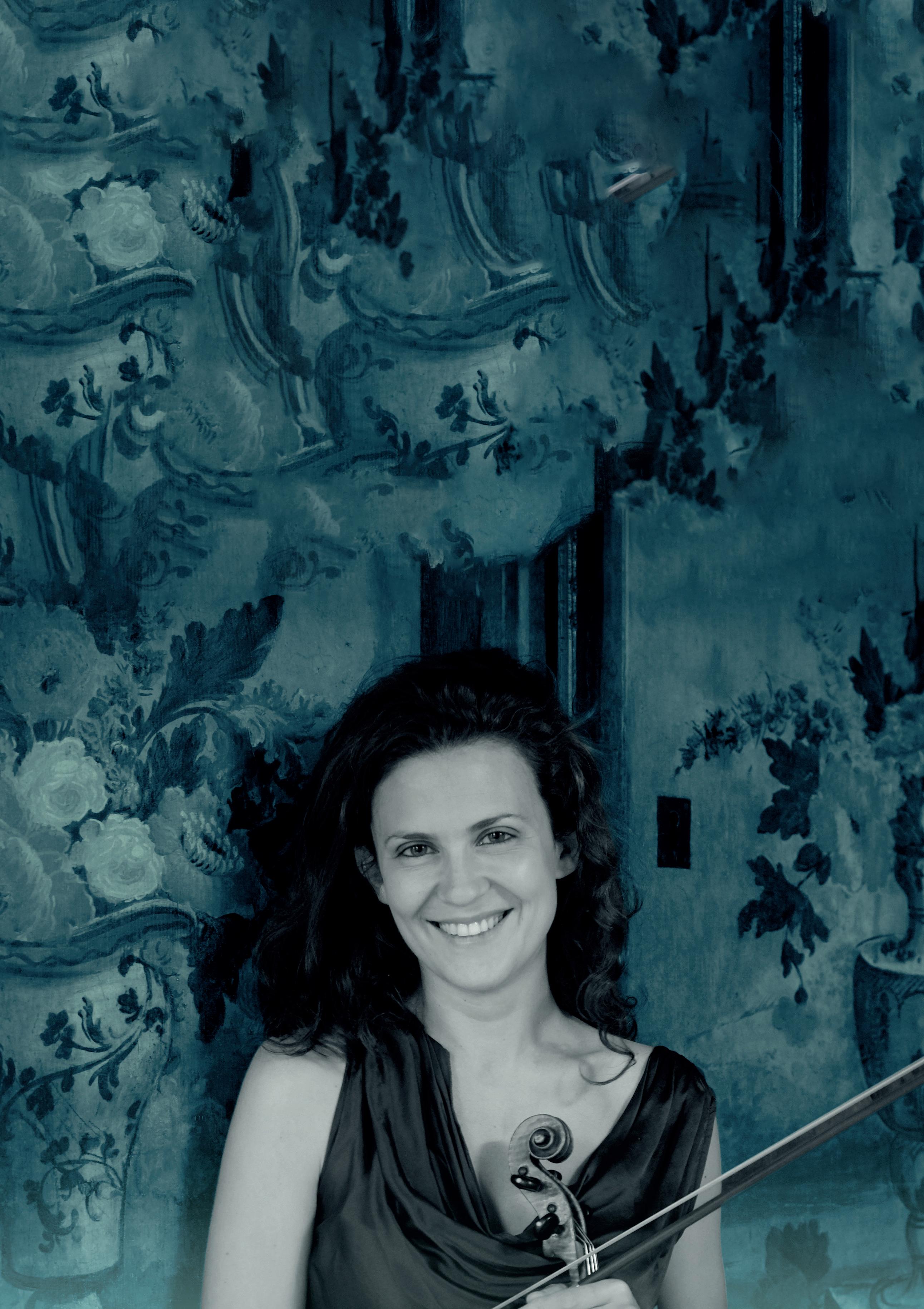
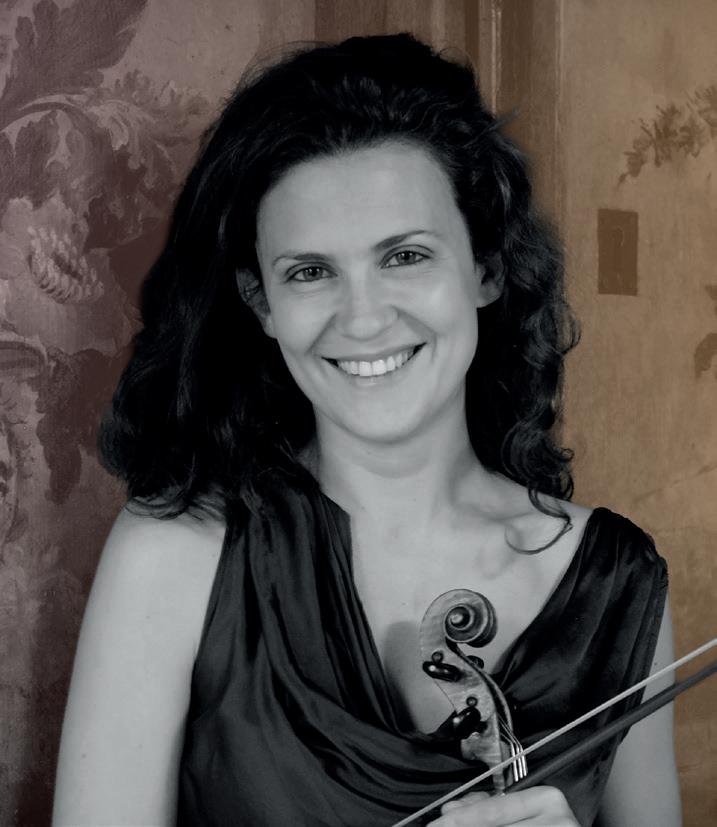
Lorenza Borrani
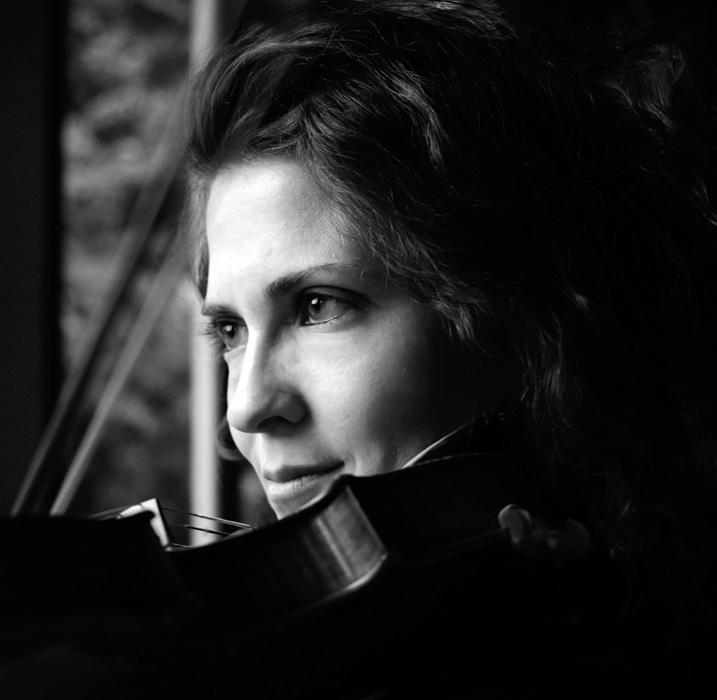
Lorenza Borrani’s inspiring programmes and inclusive approach in music making are recognized and appreciated by the renowned orchestras throughout the world. Alongside her orchestral activities, she is a committed chamber music partner in special projects with her close musical friends.
This season Borrani returns to Arctic Philharmonic and Vasteras Sinfonietta where she has been the Artistic Partner. Other return visits include engagements with Orchestre de Paris, Bilbao Symphony Orchestra, Scottish Chamber Orchestra and Mozarteumorchester Salzburg in programmes she play/directs and increasingly conducts.
As a chamber musician, Lorenza Borrani is one of the founders of Spunicunifait, an ensemble dedicated to playing Mozart’s string quintet works which have been released on the Alpha label to critical acclaim. Lorenza Borrani is one of the co-founders of Spira Mirabilis, a laboratory for the study, research and performance of orchestral and chamber music repertoire of all periods, working without a conductor or a leader, all musicians taking equal responsibility.
For full biography please visit sco.org.uk
© Piera Mungiguerra
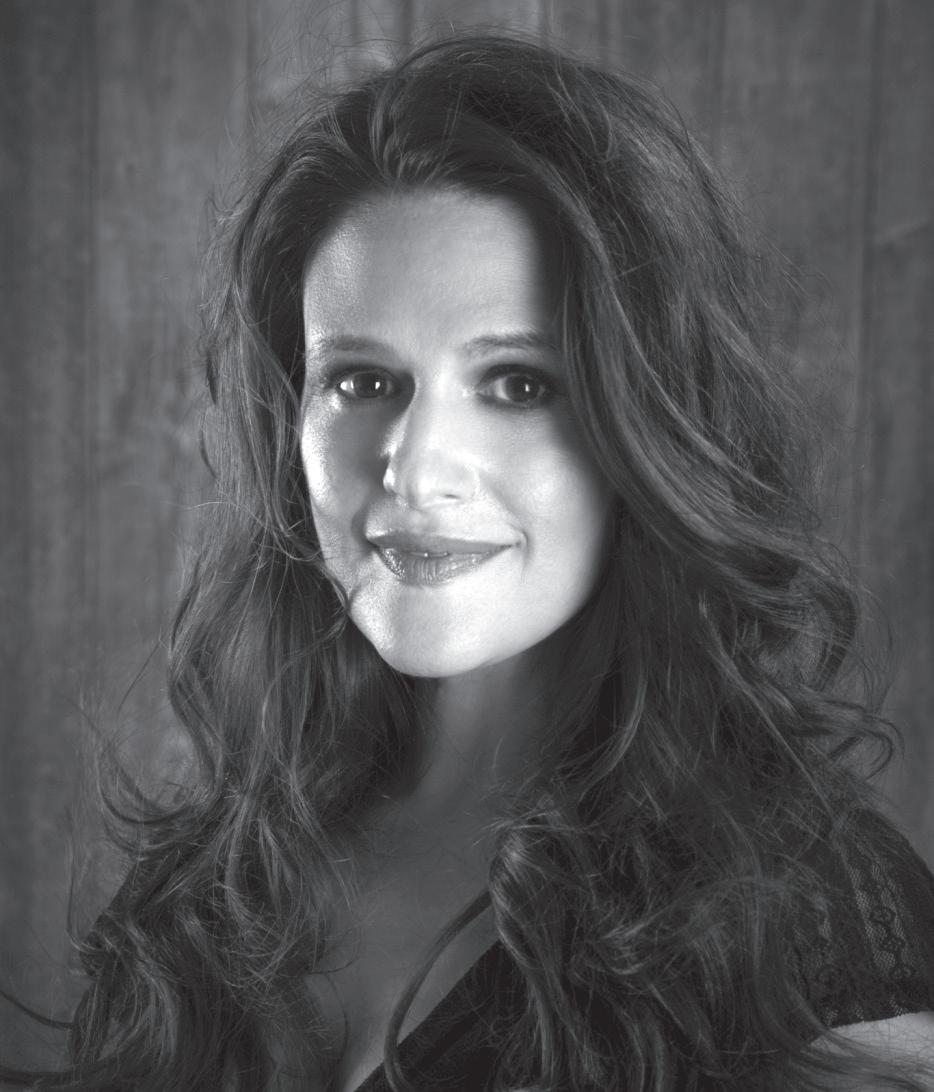
Soprano Robin Johannsen
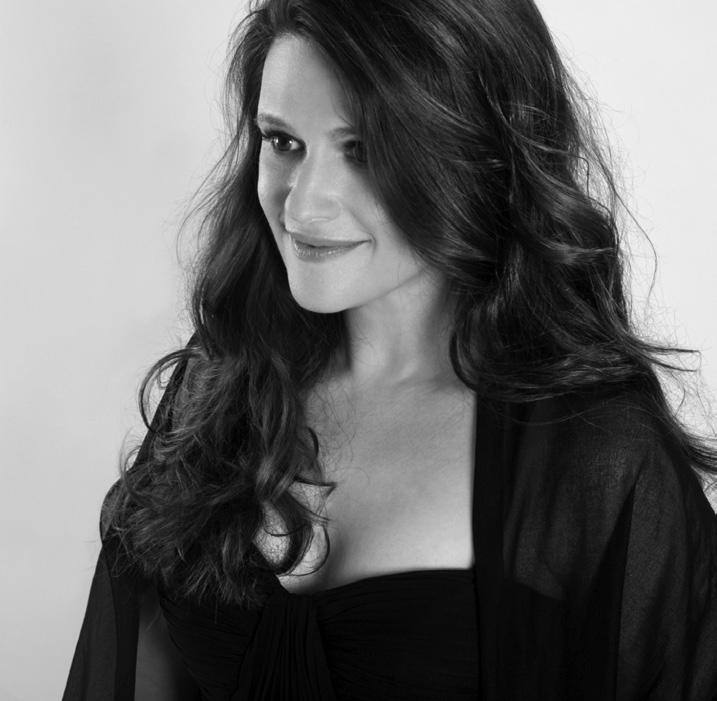
American soprano Robin Johannsen is known for her virtuosity, energy, agility, endurance, and above all for her scintillating coloratura. On the operatic stage she has appeared at Deutsche Oper Berlin where she started her career as a young artist, Theater an der Wien, Festspielhaus Baden-Baden, Athens’ Megaron, Staatsoper Berlin, Hamburgische Staatsoper, Semperoper Dresden, Teatro Regio Torino, Staatsoper Stuttgart, Oper Frankfurt, Vlaamse Opera, Théâtre Royal de la Monnaie, Komische Oper Berlin, Oper Leipzig and Bayreuth Festival in roles including Susanna Le nozze di Figaro, Norina Don Pasquale, Oscar Un ballo in Maschera, Marzelline Beethoven’s Leonore, Konstanze Die Entführung aus dem Serail, Fiordiligi Così fan tutte, the title role of Telemann’s Emma und Eginhard, and Leocasta in a new production of Vivaldi’s Il Giustino at the Berliner Staatsoper.
Robin has a special affinity for the Baroque and Classical repertoires. She has close working relationships with René Jacobs and Andrea Marcon and is a frequent guest with the Akademie für Alte Musik Berlin, La Cetra Basel, the Internationale Bachakademie Stuttgart, Concerto Köln, Kammerakademie Potsdam, and Belgium’s B’Rock. She has also collaborated with conductors such as David Afkham, Marin Alsop, Jonathan Cohen, Ottavio Dantone, Laurence Equilbey, Mirga Gražinytė-Tyla, Thomas Hengelbrock, Philippe Herreweghe, Manfred Honeck, Philippe Jordan, Ton Koopman, Antonello Manacorda, Alessandro De Marchi, Andrea Marcon, Hans-Christoph Rademann, Christian Thielemann and Robin Ticciati.
Robin has worked with some of the finest orchestras around the world and in some of the most prestigious festivals, performing at venues such as the Berliner Philharmonie, Concertgebouw Amsterdam, Gasteig Munich, Konzerthaus Berlin, Paris Philharmonie, the Vatican, Salzburg’s Mozarteum and Groβes Festspielhaus, Tonhalle Zürich, Elbphilharmonie, the Wiener Musikverein and Santa Cecilia in Rome.
For full biography please visit sco.org.uk
© Tatjana Daschel
Scottish Chamber Orchestra
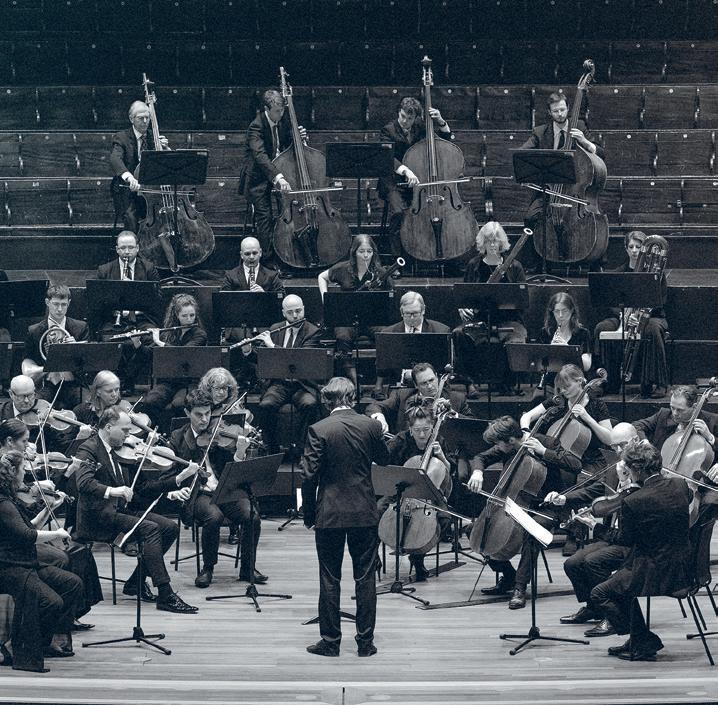
The Scottish Chamber Orchestra (SCO) is one of Scotland’s five National Performing Companies and has been a galvanizing force in Scotland’s music scene since its inception in 1974. The SCO believes that access to world-class music is not a luxury but something that everyone should have the opportunity to participate in, helping individuals and communities everywhere to thrive. Funded by the Scottish Government, City of Edinburgh Council and a community of philanthropic supporters, the SCO has an international reputation for exceptional, idiomatic performances: from mainstream classical music to newly commissioned works, each year its wide-ranging programme of work is presented across the length and breadth of Scotland, overseas and increasingly online.
Equally at home on and off the concert stage, each one of the SCO’s highly talented and creative musicians and staff is passionate about transforming and enhancing lives through the power of music. The SCO’s Creative Learning programme engages people of all ages and backgrounds with a diverse range of projects, concerts, participatory workshops and resources. The SCO’s current five-year Residency in Edinburgh’s Craigmillar builds on the area’s extraordinary history of Community Arts, connecting the local community with a national cultural resource.
An exciting new chapter for the SCO began in September 2019 with the arrival of dynamic young conductor Maxim Emelyanychev as the Orchestra’s Principal Conductor. His tenure has recently been extended until 2028. The SCO and Emelyanychev released their first album together (Linn Records) in 2019 to widespread critical acclaim. Their second recording together, of Mendelssohn symphonies, was released in 2023, with Schubert Symphonies Nos 5 and 8 following in 2024.
The SCO also has long-standing associations with many eminent guest conductors and directors including Principal Guest Conductor Andrew Manze, Pekka Kuusisto, François Leleux, Nicola Benedetti, Isabelle van Keulen, Anthony Marwood, Richard Egarr, Mark Wigglesworth, Lorenza Borrani and Conductor Emeritus Joseph Swensen.
The Orchestra’s current Associate Composer is Jay Capperauld. The SCO enjoys close relationships with numerous leading composers and has commissioned around 200 new works, including pieces by Sir James MacMillan, Anna Clyne, Sally Beamish, Martin Suckling, Einojuhani Rautavaara, Karin Rehnqvist, Mark-Anthony Turnage, Nico Muhly and the late Peter Maxwell Davies.
© Christopher Bowen
11-13 March, 7.30pm
St Andrews | Edinburgh | Glasgow
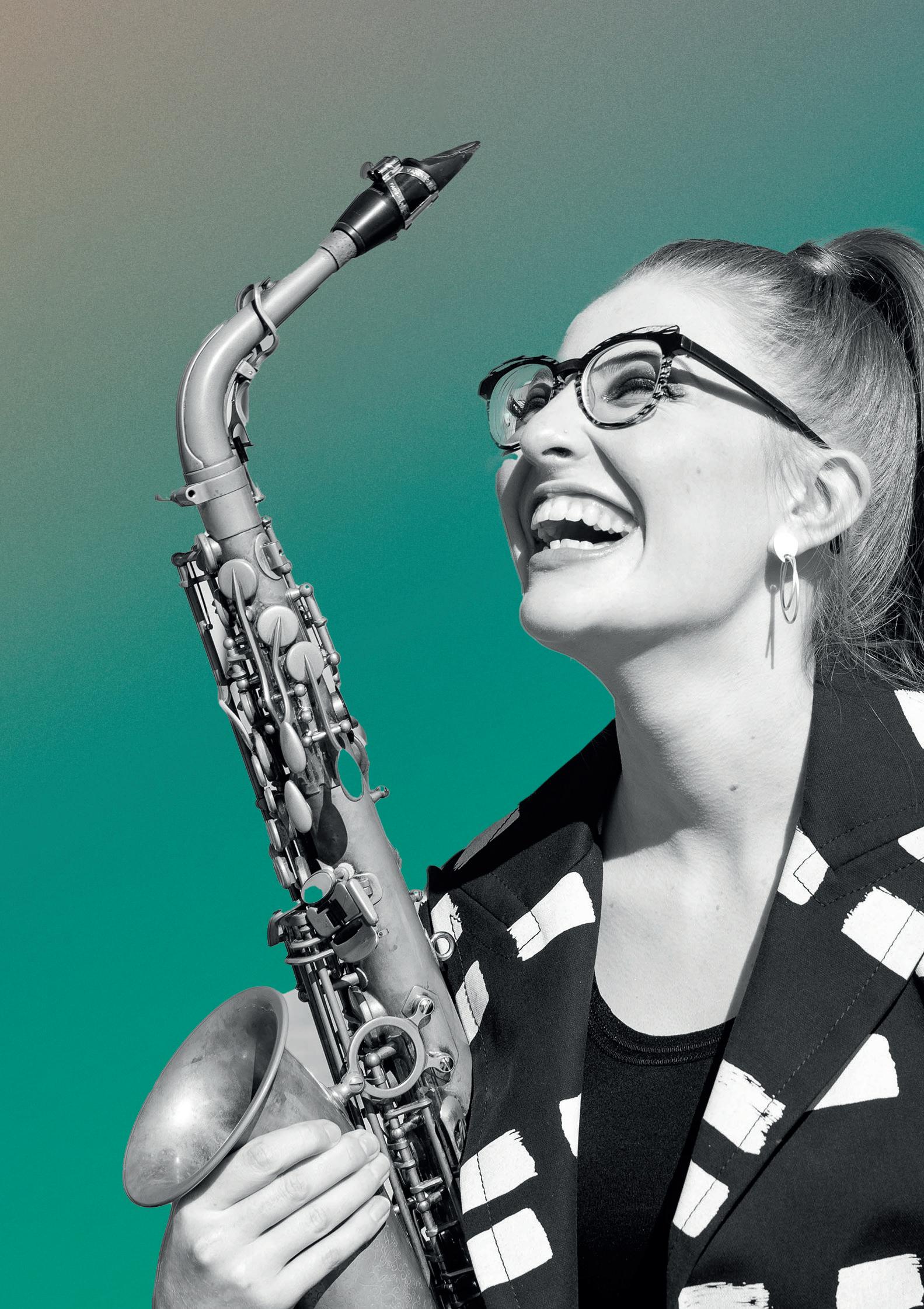
New Dimensions
Saxophone Dreams

SCO NEW MUSIC FUND
Shape the Sound of the Future
Make a donation between 12 February and 30 March and double the impact of your gift.
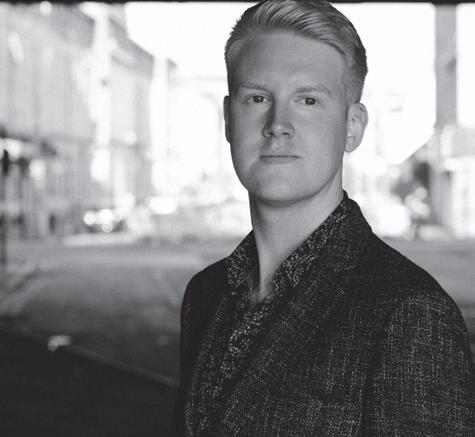
SCO Associate Composer Jay Capperauld
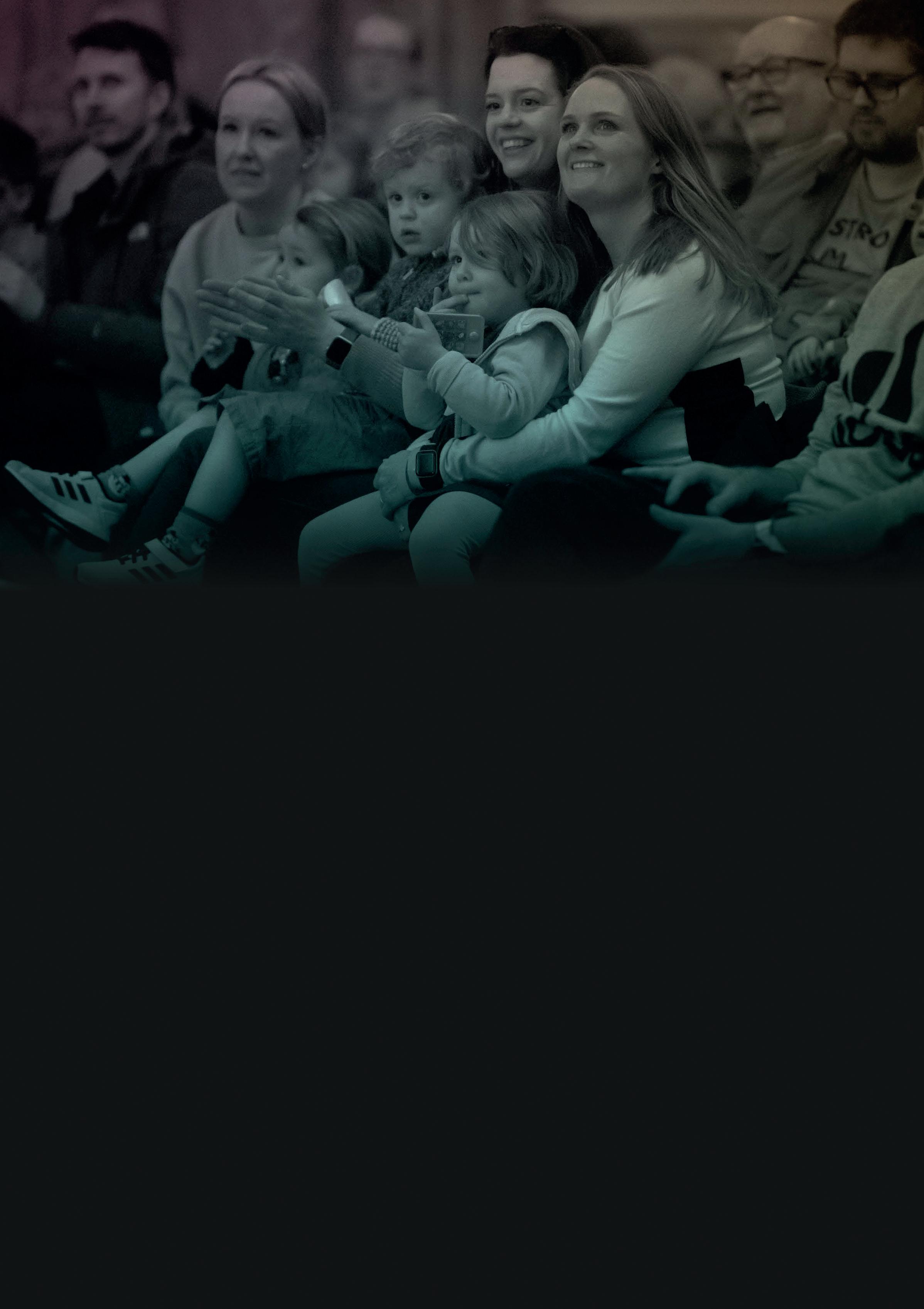
On Thursday 12 February, we’re launching the SCO New Music Fund to support new commissions and talented composers.
Every £1 will be doubled but only until Monday 30 March. Donations will be matched up to £30,000, meaning your gift goes twice as far. Together, we can help shape the sound of the future.
Thank you for your support! SCAN ME To donate and find out more.
Top photo ©Stuart Armit | Photo of Jay ©Euan Robertson