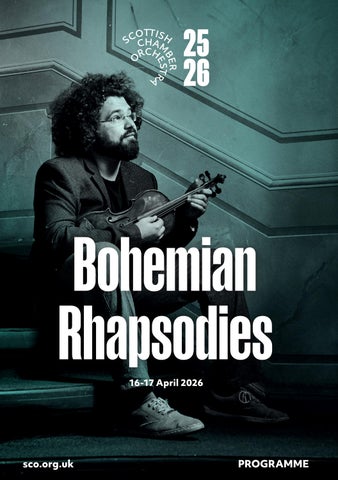
Bohemian Rhapsodies
16-17 April 2026

Bohemian Rhapsodies
A Celebration of Czech Music with Jonian Ilias Kadesha
Thursday 16 April, 7.30pm The Queen's Hall, Edinburgh
Friday 17 April, 7.30pm City Halls, Glasgow
KAPRÁLOVÁ Suite en miniature, Op.1
MARTINŮ Violin Concerto No.2
Interval of 20 minutes
MARTINŮ La revue de cuisine
DVOŘÁK Czech Suite
Jonian Ilias Kadesha director/violin
4 Royal Terrace, Edinburgh EH7 5AB
+44 (0)131 557 6800 | info@sco.org.uk | sco.org.uk
Pekka Kuusisto
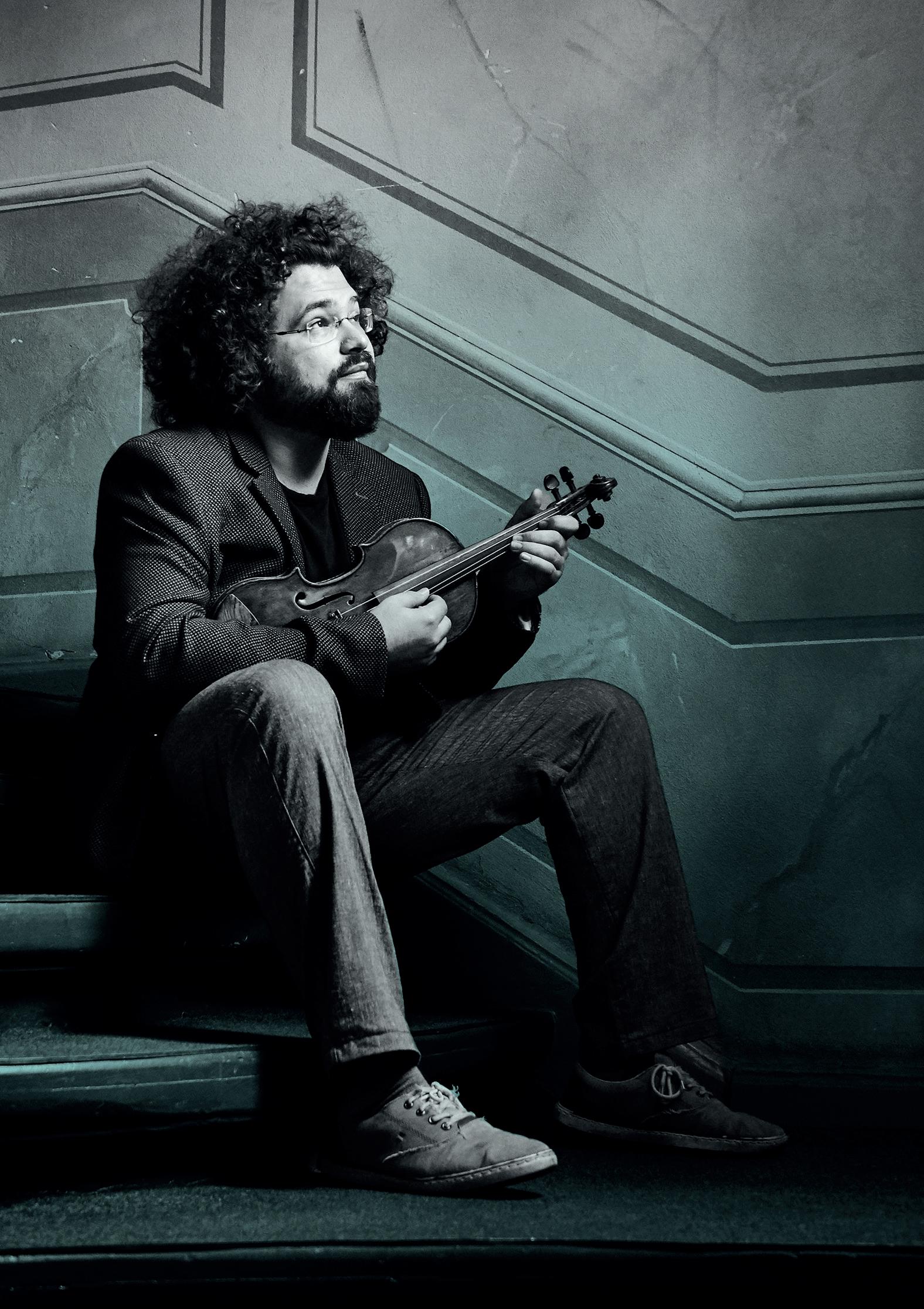
Jonian Ilias Kadesha
© Kaupo Kikkas
THANK YOU
Principal Conductor's Circle
Our Principal Conductor’s Circle are a special part of our musical family. Their commitment and generosity benefit us all – musicians, audiences and creative learning participants alike.
Annual Fund
James and Patricia Cook
Visiting Artists Fund
Harry and Carol Nimmo
Anne and Matthew Richards
International Touring Fund
Gavin and Kate Gemmell
Learning and Participation Fund
Jo and Alison Elliot
Sabine and Brian Thomson
American Development Fund
Erik Lars Hansen and Vanessa C L Chang
Productions Fund
Geoff and Mary Ball
Bill and Celia Carman
Anne, Tom and Natalie Usher
Scottish Touring Fund
Eriadne and George Mackintosh
Claire and Anthony Tait
New Music Fund
Ken Barker and Martha Vail Barker
Colin and Sue Buchan
The Thomas Family
CHAIR SPONSORS
Conductor Emeritus Joseph Swensen
Donald and Louise MacDonald
Chorus Director Gregory Batsleer
Anne McFarlane
Second Violin Rachel Smith
J Douglas Home
Principal Viola Max Mandel
Ken Barker and Martha Vail Barker
Viola Brian Schiele
Christine Lessels
Viola Steve King
Sir Ewan and Lady Brown
Principal Cello Philip Higham
The Thomas Family
Sub-Principal Cello Su-a Lee
Ronald and Stella Bowie
Cello Donald Gillan
Professor Sue Lightman
Cello Eric de Wit
Jasmine Macquaker Charitable Fund
Principal Flute André Cebrián
Claire and Mark Urquhart
Sub-Principal Flute Marta Gómez
Judith and David Halkerston
Principal Oboe
The Hedley Gordon Wright Charitable Trust
Sub-Principal Oboe Katherine Bryer
Ulrike and Mark Wilson
Principal Clarinet Maximiliano Martín
Stuart and Alison Paul
Principal Bassoon Cerys Ambrose-Evans
Claire and Anthony Tait
Sub-Principal Bassoon Alison Green
George Rubienski
Principal Horn Kenneth Henderson
Caroline Hahn and Richard Neville-Towle
Funding Partners






SCO Donors
Diamond
The Cockaigne Fund
Malcolm and Avril Gourlay
John and Jane Griffiths
James and Felicity Ivory
George Ritchie
Tom and Natalie Usher
Platinum
E.C. Benton
Michael and Simone Bird
Silvia and Andrew Brown
David Caldwell in memory of Ann
Dr Peter Williamson and Ms Margaret Duffy
David and Elizabeth Hudson
Helen B Jackson
Dr and Mrs Peter Jackson
Dr Daniel Lamont
Graham and Elma Leisk
Professor and Mrs Ludlam
Chris and Gill Masters
Duncan and Una McGhie
Anne-Marie McQueen
James F Muirhead
Robin and Catherine Parbrook
Jane Peacock in memory of Douglas Peacock
Charles Platt and Jennifer Bidwell
Patrick and Susan Prenter
Mr and Mrs J Reid
The Walter and Janet Reid Charitable Trust
Martin and Mairi Ritchie
Hilary E Ross
Elaine Ross
Sir Muir and Lady Russell
Jill and Brian Sandford
Michael and Elizabeth Sudlow
Robert and Elizabeth Turcan
Alan and Sue Warner
Bill Welsh
Anny and Bobby White
Robert Mackay and Philip Whitley
Finlay and Lynn Williamson
Ruth Woodburn
Gold
Peter Armit
Adam Gaines and Joanna Baker
John and Maggie Bolton
Elizabeth Brittin
Kate Calder
James Wastle and Glenn Craig
Jo and Christine Danbolt
James and Caroline Denison-Pender
Andrew and Kirsty Desson
David and Sheila Ferrier
Chris and Claire Fletcher
James Friend
Iain Gow
Margaret Green
Christopher and Kathleen Haddow
Catherine Johnstone
Julie and Julian Keanie
Gordon Kirk
Janey and Barrie Lambie
Mike and Karen Mair
Roy and Svend McEwan-Brown
John and Liz Murphy
Tom Pate
Maggie Peatfield
Sarah and Spiro Phanos
Alison and Stephen Rawles
Andrew Robinson
Olivia Robinson
Anne McAlister and Philip Sawyer
Irene Smith
Dr Jonathan Smithers
Ian S Swanson
Ian and Janet Szymanski
John-Paul and Joanna Temperley
Douglas and Sandra Tweddle
Catherine Wilson
Neil and Philippa Woodcock
Georgina Wright
Silver
Roy Alexander
Fiona and Neil Ballantyne
The Batsleer Family
Jack Bogle
Jane Borland
Alan Borthwick
Dinah Bourne
Michael and Jane Boyle
Mary Brady
Paula and Colin Brown
John Brownlie
Laura Buist
Robert Burns
Sheila Colvin
Lorn and Camilla Cowie
Adam and Lesley Cumming
Dr Wilma Dickson
Seona Reid and Cordelia Ditton
Sylvia Dow
Colin Duncan in memory of Norma Duncan
Richard and Cath Dyer
Raymond Ellis
Dr and Mrs Alan Falconer
Sheila Ferguson
Dr William Irvine Fortescue
Dr David Grant
Anne Grindley
Andrew Hadden
J Martin Haldane
Ronnie and Ann Hanna
Roderick Hart
Norman Hazelton
Alistair Hector
Ron and Evelynne Hill
Philip Holman
Clephane Hume
Tim and Anna Ingold
David and Pamela Jenkins
Margaret Mortimer and Ken Jobling
Ross D. Johnstone
James Kelly, in memory of Mairi Kelly
Professor Christopher and Mrs Alison Kelnar
Dr Ian Laing
Geoff Lewis
Dorothy A Lunt
Vincent Macaulay
James McClure in memory of Robert Duncan
Ben McCorkell
Lucy McCorkell
Gavin McCrone
Michael McGarvie
Brian Miller
Alistair Montgomerie
Norma Moore
Andrew Murchison
Pamela Andrews and Alan Norton
Gilly Ogilvy-Wedderburn
Mairi & Ken Paterson
John Peutherer in memory of Audrey Peutherer
James S Potter
Timothy Barnes and Janet Sidaway
Catherine Steel
John and Angela Swales
Takashi and Mikako Taji
C S Weir
Susannah Johnston and Jamie Weir
David and Lucy Wren
Roderick Wylie
We are indebted to everyone acknowledged here who gives philanthropic gifts to the SCO of £300 or greater each year, as well as those who prefer to remain anonymous.
We are also incredibly thankful to the many individuals not listed who are kind enough to support the Orchestra financially on a regular or ad hoc basis. Every single donation makes a difference.
Become a regular donor, from as little as £5 a month, by contacting Hannah Wilkinson on 0131 478 8364 or hannah.wilkinson@sco.org.uk.
“…an orchestral sound that seemed to gleam from within.”
THE SCOTSMAN
HM The King Patron
Donald MacDonald CBE
Life President
Joanna Baker CBE Chair
Gavin Reid LVO
Chief Executive
Maxim Emelyanychev
Principal Conductor
Andrew Manze
Principal Guest Conductor
Joseph Swensen
Conductor Emeritus
Gregory Batsleer
Chorus Director
Jay Capperauld
Associate Composer
© Chris Christodoulou
Your Orchestra Tonight
First Violin
Jonian Ilias Kadesha
Colin Scobie
Tijmen Huisingh
Henry Tong
Fiona Alexander
Sarah Bevan-Baker
Kirstin Deeken
Jess Hall
Second Violin
Sophia Prodanova
Rachel Spencer
Rachel Smith
Amy Cardigan
Amelia Harding
Emma Downes
Viola
Max Mandel
Francesca Gilbert
Elaine Koene
Steve King
Cello
Philip Higham
Su-a Lee
Donald Gillan
Kim Vaughan
Bass
Jamie Kenny
Jim Vanderspar
Information correct at the time of going to print
Flute
Marta Gómez
Alba Vinti Lopéz
Oboe
Sofía Zamora Meseguer
Francesa Cox
Cor Anglais
Francesa Cox
Clarinet
Maximiliano Martín
William Stafford
Basset Horn
Maximiliano Martín
Bassoon
Cerys Ambrose-Evans
Elena Comelli
Horn
Boštjan Lipovšek
Martin Lawrence
Gavin Edwards
Ian Smith
Trumpet
Peter Franks
Shaun Harrold
Euan Scott
Trombone
Duncan Wilson
Nigel Cox
Bass Trombone
Andy Fawbert
Tuba
Craig Anderson
Timpani
Louise Lewis Goodwin
Percussion
Colin Hyson
Philip Hague
Stuart Semple
Piano
Aaron Shorr
Harp
Eleanor Hudson
What You Are About To Hear
KAPRÁLOVÁ (1915-1940)
Suite en miniature, Op.1 (1935)
Praeludium
Pastorale
Ukolébavka
Menuetto
MARTINŮ (1890-1959)
Violin Concerto No.2 in G minor, H 293 (1943)
Andante – Poco allegro
Andante moderato
Poco allegro
MARTINŮ (1890-1959)
La revue de cuisine, H 161 (1927)
Prologue
Tango
Charleston
Final
DVOŘÁK (1841-1904)
Czech Suite in D major, Op.39 (1879)
Preludium (Pastorale): Allegro moderato
Polka: Allegretto grazioso
Sousedská (Minuet): Allegro giusto
Romance: Andante con moto
Finale (Furiant): Presto
Thinking in terms of national stereotypes can, it has to be said, quickly lead to quite contentious and not entirely palatable ideas. That said, it’s hard to deny that there’s something distinctive and richly flavoured about Czech music, in its dancing, driving rhythms, its songful, sometimes folksy melodies and its bright, open-air harmonies. A lot of that character was consciously self-generated: being subsumed for more than four centuries into the Habsburg Empire, and sitting somewhat uncomfortably between the cultural powerhouses of Germany and Russia, Czech artists felt it was only their duty to define and express their nation’s own, individual voice.
It’s somewhat ironic, then, that all three of tonight’s composers spent significant periods of time abroad – through a mix of choice and circumstances – and that two of tonight’s four pieces were written far from their composers’ original homeland. But perhaps that very distance only served to strengthen and concentrate the music’s distinctively Czech essence.
The lives and careers of our first two composers, in fact, are intimately linked. Vítězslava Kaprálová was actually born in Moravia – in Brno, the region’s capital –into a strongly musical family in 1915, and quickly showed exceptional musical talents. She started composing aged nine, began studies at the Brno Conservatoire aged 15, and later continued her musical immersion at the Prague Conservatoire and then in Paris, where one of her teachers was none other than Bohuslav Martinů.
We’ll come to Martinů’s own story shortly. He quickly became deeply besotted with his immensely talented young student
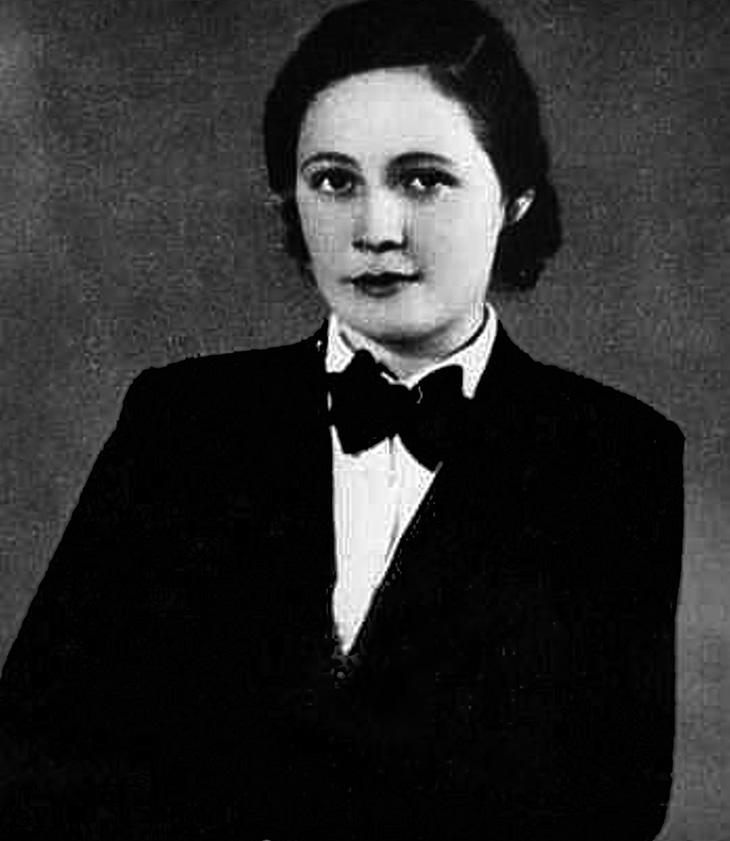
It’s only in the 21st century that the remarkable richess of Kaprálová’s music has begun to be unearthed.
during their lessons in 1938-9, writing her passionate love letters as well as setting about promoting her music and encouraging her burgeoning career. It would prove an extremely short career, however: as the French capital grew increasingly threatened by advancing Nazi forces, Kaprálová was evacuated from Paris in May 1940 and died just a month later in Montpellier, possibly from typhoid fever, at the tragically young age of just 25.
During her nine brief years of serious composing, Kaprálová had nonetheless produced a substantial collection of works – from songs to chamber music, choral pieces, concertos and orchestral suites – as well as conducting the Czech Philharmonic and BBC Orchestra (forerunner of today’s
BBC Symphony Orchestra). Her music, however, slipped quietly from view – a situation not helped when the later Czech communist authorities labelled it ‘decadent’ and actively suppressed it. It’s only in the 21st century that the remarkable richess of Kaprálová’s music has begun to be unearthed.
Though numbered as her Op.1, tonight’s Suite en miniature is actually Kaprálová’s second orchestral work (the first was her Piano Concerto, now numbered Op.7). She opted for Op.1, however, because the Suite represents a 1935 orchestration of one of her very earliest pieces, a Suite for piano that she wrote in 1931, aged just 16, during her first year at the Brno Conservatoire. She returned to the piano original during her first months at the
Vítězslava Kaprálová
Prague Conservatoire, not only casting its music across the broader, more colourful orchestral palette, but also making a few judicious adjustments to the piece in the process.
Kaprálová opens with a dark, somewhat mystical ‘Praeludium’, for just the orchestra’s strings, which might at times prefigure Shostakovich in is brooding intensity. The gentle, folksy ‘Pastorale’, by contrast, is for winds only, and the two ensembles come together – with an additional harp – for the impressionistic ‘Lullaby’. Kaprálová enriches her orchestra still further, adding trumpet and percussion to the gently bouncing, fresh and breezy concluding ‘Menuetto’.
After music by one of Martinů’s students, let us now turn to Martinů himself – though by the time he wrote tonight’s Violin Concerto No.2, he’d fled Paris for the relative safety of America. But let’s step back a bit before we travel across the Atlantic. Unlike Brnoborn Kaprálová, Martinů was thoroughly Bohemian, though the town where he was born – Polička, in the tower of the St Jakub Church, where his father was sexton – lies pretty close to the Moravian border. Like Kaprálová, he studied at the Prague Conservatoire, but he was never a strong (nor particularly interested) student. Nonetheless, he later found jobs as a violinist with Prague’s National Theatre Orchestra and the Czech Philharmonic –whose eminent conductor, Václav Talich, ended up one of the first major figures to encourage and promote Martinů’s music.
But it was a scholarship from the Czech Ministry of Education in 1923 that really changed Martinů’s life, sending him to study in Paris with composer Albert
Roussel. And Martinů threw himself into the vibrant cultural maelstrom of Paris in the 1920s, embracing the latest trends (from jazz to surrealism to neo-Classicism) and idolising Igor Stravinsky. We’ll hear one particularly vibrant fruit of his Parisian years – his ballet score La revue de cuisine – after the interval.
He met, taught and (probably) fell deeply in love with Kaprálová. But like her, Martinů was forced to flee France as the impending Nazi threat grew stronger. After leaving Paris for the south of France, he struggled to persuade the Vichy authorities to allow him to depart the country entirely. Once the US ambassador stepped in to help, however, Martinů was finally permitted to leave, arriving in the USA on 30 March 1941.
At first, he struggled to adapt to American life – patchy English language skills didn’t help – but with the help of fellow émigrés he quickly established himself in the US classical music world. It was just as well: even after the War, he was unable to return to what was now communist Czechoslovakia, and took US citizenship in 1952. He would finally return to Europe four years later, and lived in Switzerland until his death in 1959.
For tonight’s next piece, however, we return to Martinů just two years after he’d arrived in America. His First Symphony – premiered by the Boston Symphony Orchestra under Serge Koussevitzy on 13 November 1942 – had been a towering success. In the audience was Russian-born Mischa Elman, one of the 20th century’s greatest violinists, though Martinů seemed to have little knowledge of him when Elman visited to request a new violin concerto. Elman
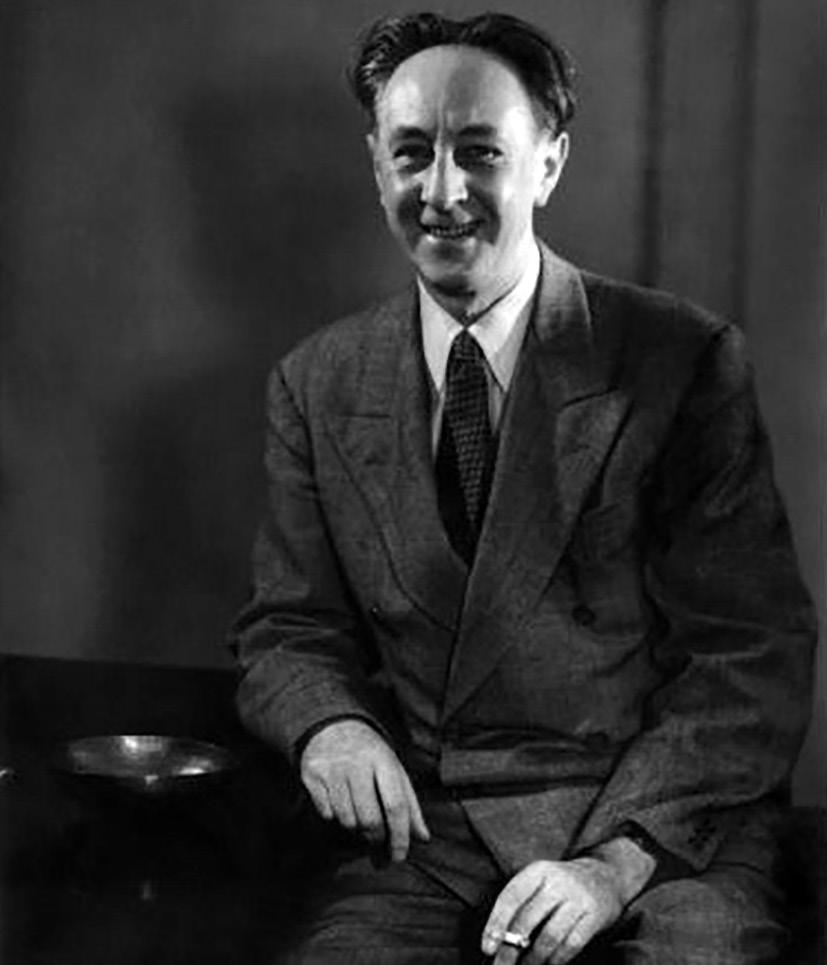
It was a scholarship from the Czech Ministry of Education in 1923 that really changed Martinů’s life, sending him to study in Paris with composer Albert Roussel.
later invited Martinů to visit, and gave him a private half-hour performance, after which the composer left without a word. It was a thoroughly disconcerting genesis for what would become Martinů’s Second Violin Concerto, though the composer later explained he’d been meticulously planning the work while listening to Elman’s playing, and didn’t want his thinking distracted by social niceties.
What emerged was a new Concerto entirely tailored to Elman’s specific playing style, in particular a strong focus on noble melodies and richly expressive writing that harnessed the violin’s specific sonic capabilities. Martinů was also aware of Elman’s love for the iconic concertos of Beethoven, Brahms and others, and indicated that he’d consciously modelled
the piece on those classic pieces from the past.
And so it unfolds, with a serious-minded first movement followed by a lyrical slow movement, and a sprightly dance finale. Imposing orchestral chords launch the opening movement, leading to the violinist’s impassioned first entry, though there’s an undeniable hint of jazz to their line as it gradually unfolds. After a surprisingly introspective solo cadenza, the movement ends quietly but uneasily.
The solo violinist plays against a slimmed-down orchestra of just strings, woodwind and horns in the gentle, sunlit second movement, spinning melodies of a distinctive folk-like simplicity. After another inward-looking solo cadenza –
Bohuslav Martinů
this time rather melancholy – rising figures allow the movement to drift upwards to its airborne conclusion.
Martinů’s finale, however, is an earthy Czech polka that puts the Concerto’s soloist through their paces with elaborate, rousingly rhythmic writing. The piece’s third solo cadenza is far more outspoken and assertive, and prompts a glittering dash to the finish.
From Martinů’s many years in America, we hop back in time a couple of decades for tonight’s next piece, to discover a very different composer. La revue de cuisine comes from Martinů’s madcap time in Paris, and is one of three ballets (plus an opera, piano pieces and chamber music) that he wrote in 1927. His music brings to colourful, witty life a bizarre scenario by choreographer Jarmila Kröschlová that whimsically recounts the private lives of kitchen utensils. Pot and Lid’s marriage is floundering; Dishcloth ends up duelling with Broom; and the suave Whisk is stirring things up for the lot of them. The day is saved when a Monty Python-style giant foot kicks some sense into them all.
The ballet was premiered in Prague in November 1927, and it went down a treat – not surprisingly, with its absurdist humour, Stravinskian rhythmic wit and gushing admiration for jazz. A trumpet fanfare kicks off the Prologue’s off-kilter march, which quickly seems to lose its way, while the melodramatic ‘Tango’ transports us to a more seductive, sultry world. The ‘Charleston’ breaks into a foot-tapping dance, and the Finale – in which Pot and Lid are finally reunited – brings together snippets of earlier movements with unabashed wit and sparkle.
Like Martinů, Bohemian-born Antonín Dvořák also spent a number of years in America, though more through choice than circumstance. In 1892, he was invited to become Director of New York’s recentlyestablished National Conservatory of Music, a role and location that would inspire his best-loved musical creation, the ‘New World’ Symphony (which, incidentally, forms the climax of the SCO’s current Season in May). But despite a sky-high salary and his fascination with the American music he discovered, he also felt a deep longing for his Bohemian homeland and returned in 1895.
For tonight’s final piece, however, we meet Dvořák more than a decade before his American adventures. He wrote the Czech Suite in 1879, when his fame was just beginning to grow. In the wake of Liszt’s Hungarian Rhapsodies and Brahms’ Hungarian Dances , character pieces in a colourful, nationalistic style were all the rage. It was on the recommendation of fellow composer Brahms, in fact, that publisher Friedrich August Simrock approached Dvořák to compose something along similar lines. The resulting Slavonic Dances , originally written for piano duet and intended for domestic consumption, were an enormous success, but the composer nonetheless received a pitifully small fee. (It was only when he orchestrated them the following year that he negotiated a more reasonable sum for himself.)
This, however, was just one of many disagreements between composer and publisher. Dvořák disliked, too, his first name being Germanicised to Anton as if to indicate he wasn’t simply a Czech country bumpkin, and was far from happy with
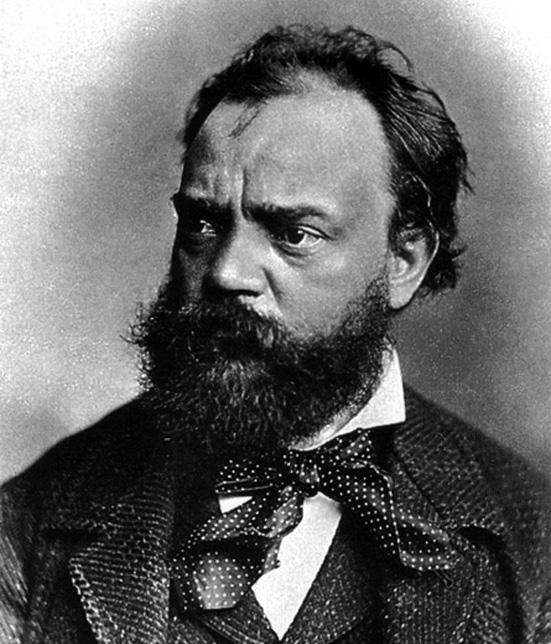
What Dvořák created in his Suite falls somewhere between a set of dances and a serenade.
Simrock’s insistence that he should get first refusal on any future compositions. So much so that when it came to the Czech Suite – composed the year following the Slavonic Dances and intended as a kind of follow-up – Dvořák gave it a low opus number of 39, implying it was an older work from his back catalogue to evade the disputed agreement.
What Dvořák created in his Suite falls somewhere between a set of dances and a serenade. The work opens with a lyrical, scene-setting ‘Pastoral’, which evokes the work’s bucolic atmosphere with the distant hum of Czech bagpipes ever present behind a smoothly flowing melodic line. The second movement is a stylised polka, one of the most popular Bohemian dance forms, which found its
way into many other composers’ works (not least the finale of Martinů’s Concerto we heard earlier). It begins with a wistful, somewhat understated melody in the minor, but becomes far more confident and rambunctious when it shifts to the brighter major. The third movement is a ‘Sousedská’, a Czech folk equivalent of a minuet, though with an accent on the second beat of the bar. Next comes a lyrical nocture in the form of a ‘Romance’, which opens with a flute melody against a gently pulsing accompaniment, and a dazzling, dashing, boisterious ‘Furiant’ brings the Suite to an exuberant conclusion – and may well recall some of the wilder moments in Dvořák’s earlier Slavonic Dances
© David Kettle
Antonín Leopold Dvořák
Jonian Ilias Kadesha
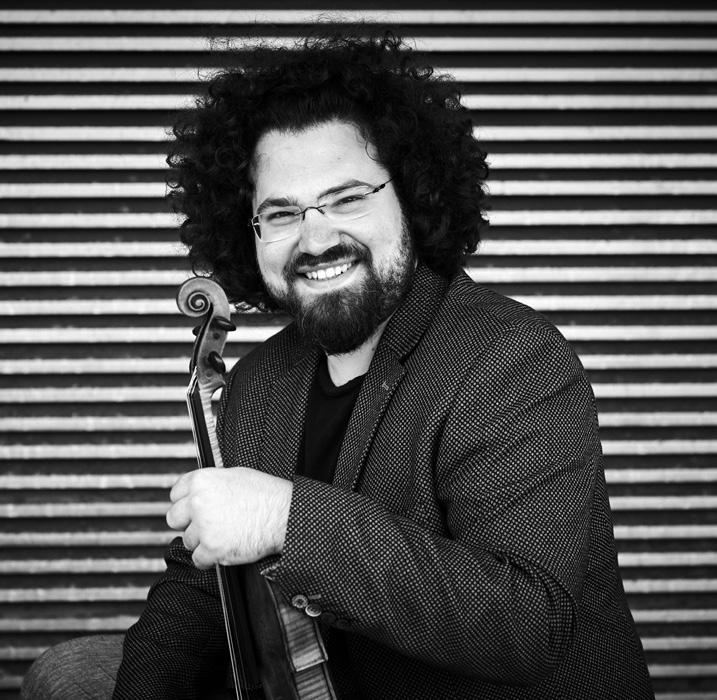
Jonian Ilias Kadesha is a Renaissance musician in the diversity and creativity of his intellectual interests and music-making. His studies in philosophy and rhetoric influence the stylistic accuracy of his interpretations, whether of early or contemporary music, and his rich imagination is clear both in the sound worlds he creates and the projects he curates as concerto soloist, soloist–director and chamber musician.
He has performed widely as soloist throughout Europe in concertos including Sibelius, Mozart, Shostakovich, Bartók, Stravinsky, Mendelssohn and Beethoven, among others. His accomplishments as a soloist-director are increasingly recognised and he collaborates frequently with leading chamber orchestras. His approach to the classical orchestral canon is informed by his chamber music playing and he often improvises his own cadenzas and ornamentation.
Kadesha’s flair for programming is evident in his chamber music projects. He curated a six-concert series for the Leeds International Concert Season (2024–25). He is co-founder of the award-winning Trio Gaspard, he appears regularly with the group at festivals and venues around the world, and is also a member of the Kelemen Quartet.
His curiosity for repertoire is wide-ranging, as demonstrated by recordings he has made for Linn Records, to which he signed in 2021. His debut solo album featured Bach’s Partita in D minor alongside Helena Winkelman’s Ciaccona and works by Biber, Schnittke, Kurtág and Auerbach. His follow-up ‘Suite Italienne’ with CHAARTS Chamber Orchestra, featuring Giovanni Sollima’s violin concerto TYCHE along with works by Vivaldi and Stravinsky, received outstanding five-star reviews.
For full biography please visit sco.org.uk
© Kaupo Kikkas
Scottish Chamber Orchestra
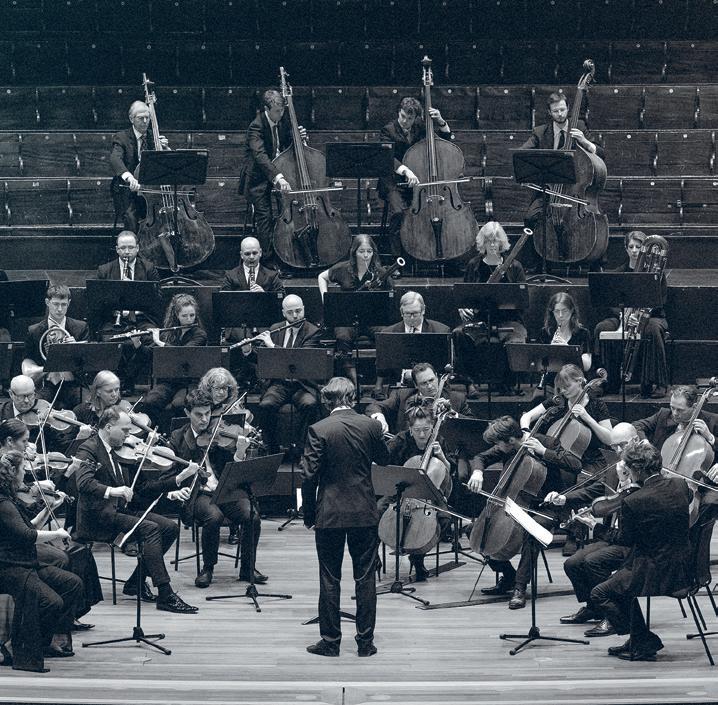
The Scottish Chamber Orchestra (SCO) is one of Scotland’s five National Performing Companies and has been a galvanizing force in Scotland’s music scene since its inception in 1974. The SCO believes that access to world-class music is not a luxury but something that everyone should have the opportunity to participate in, helping individuals and communities everywhere to thrive. Funded by the Scottish Government, City of Edinburgh Council and a community of philanthropic supporters, the SCO has an international reputation for exceptional, idiomatic performances: from mainstream classical music to newly commissioned works, each year its wide-ranging programme of work is presented across the length and breadth of Scotland, overseas and increasingly online.
Equally at home on and off the concert stage, each one of the SCO’s highly talented and creative musicians and staff is passionate about transforming and enhancing lives through the power of music. The SCO’s Creative Learning programme engages people of all ages and backgrounds with a diverse range of projects, concerts, participatory workshops and resources. The SCO’s current five-year Residency in Edinburgh’s Craigmillar builds on the area’s extraordinary history of Community Arts, connecting the local community with a national cultural resource.
An exciting new chapter for the SCO began in September 2019 with the arrival of dynamic young conductor Maxim Emelyanychev as the Orchestra’s Principal Conductor. His tenure has recently been extended until 2028. The SCO and Emelyanychev released their first album together (Linn Records) in 2019 to widespread critical acclaim. Their second recording together, of Mendelssohn symphonies, was released in 2023, with Schubert Symphonies Nos 5 and 8 following in 2024.
The SCO also has long-standing associations with many eminent guest conductors and directors including Principal Guest Conductor Andrew Manze, Pekka Kuusisto, François Leleux, Nicola Benedetti, Isabelle van Keulen, Anthony Marwood, Richard Egarr, Mark Wigglesworth, Lorenza Borrani and Conductor Emeritus Joseph Swensen.
The Orchestra’s current Associate Composer is Jay Capperauld. The SCO enjoys close relationships with numerous leading composers and has commissioned around 200 new works, including pieces by Sir James MacMillan, Anna Clyne, Sally Beamish, Martin Suckling, Einojuhani Rautavaara, Karin Rehnqvist, Mark-Anthony Turnage, Nico Muhly and the late Peter Maxwell Davies.
© Christopher Bowen
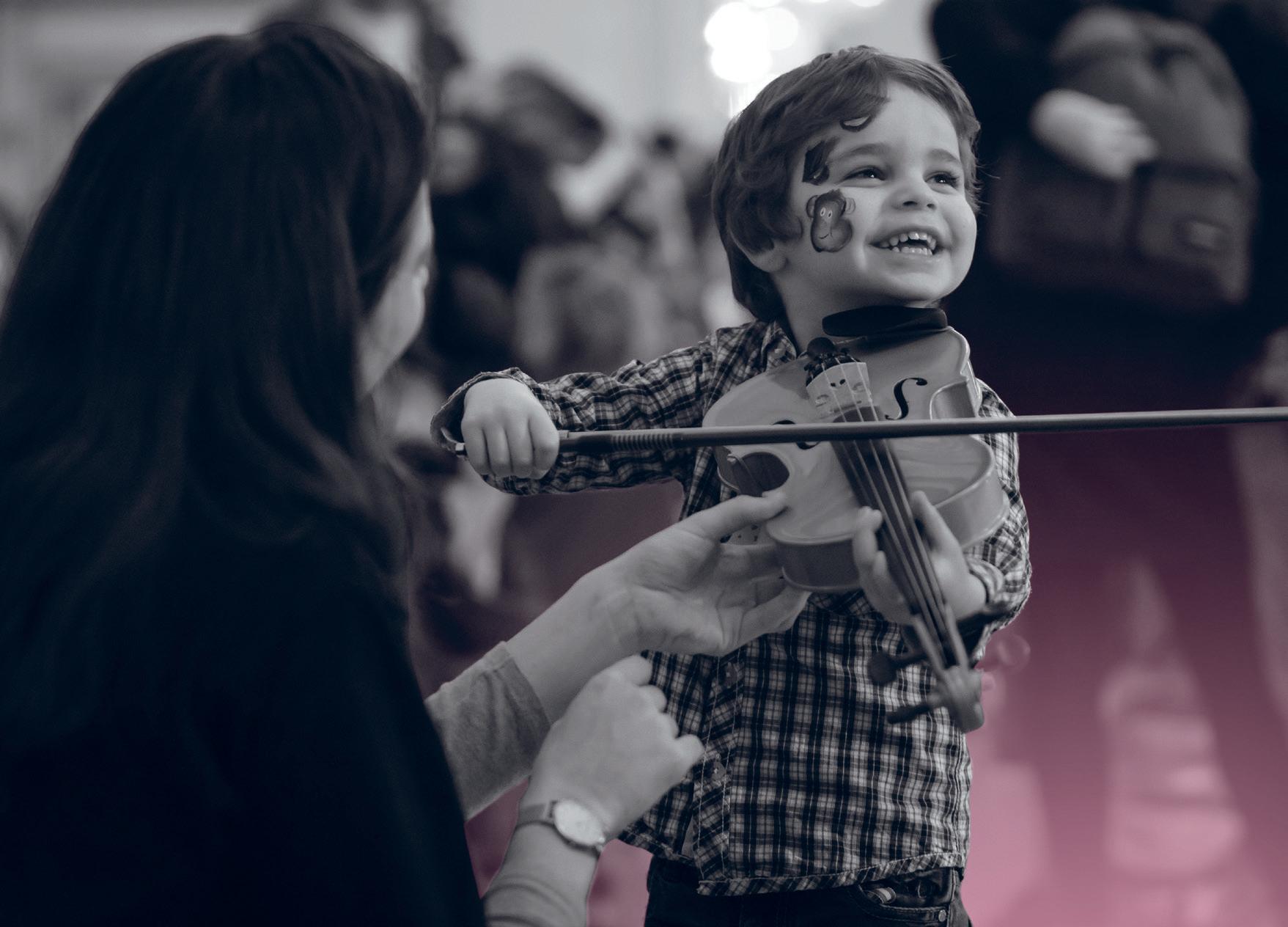

Support Us
Each year, the SCO must fundraise around £1.2 million to bring extraordinary musical performances to the stage and support groundbreaking education and community initiatives beyond it.
If you share our passion for transforming lives through the power of music and want to be part of our ongoing success, we invite you to join our community of regular donors. Your support, no matter the size, has a profound impact on our work – and as a donor, you’ll enjoy an even closer connection to the Orchestra.
To learn more and support the SCO from as little as £5 per month, please contact Hannah at hannah.wilkinson@sco.org.uk or call 0131 478 8364.
The SCO is a charity registered in Scotland No SC015039.
Photo: Stuart Armitt