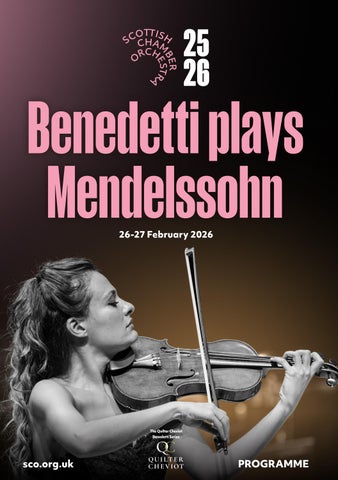

Benedetti plays Mendelssohn
26-27 February 2026

Benedetti plays Mendelssohn
Thursday 26 February, 7.30pm Usher Hall, Edinburgh Friday 27 February, 7.30pm City Halls, Glasgow*
BRAHMS Academic Festival Overture
MENDELSSOHN Violin Concerto
Interval of 20 minutes
BRAHMS Symphony No.4
Maxim Emelyanychev conductor
Nicola Benedetti violin
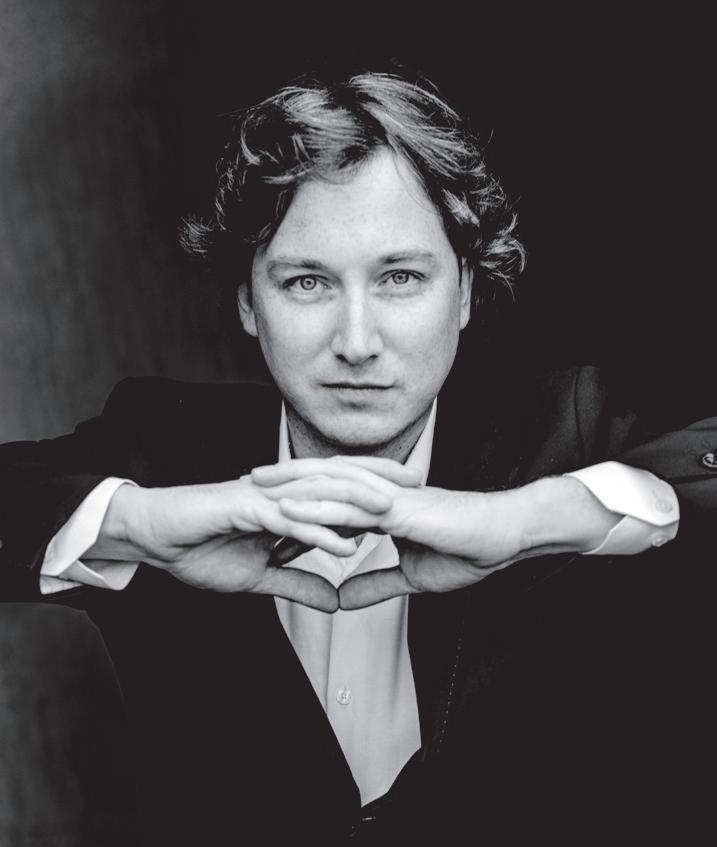
Maxim Emelyanychev

* This performance will be recorded for the BBC ‘Radio 3 In Concert’ series, due for broadcast on 2 March 2026.
4 Royal Terrace, Edinburgh EH7 5AB
+44 (0)131 557 6800 | info@sco.org.uk | sco.org.uk
The Scottish Chamber Orchestra is a charity registered in Scotland No. SC015039. Company registration No. SC075079.
© Andrej Grilc
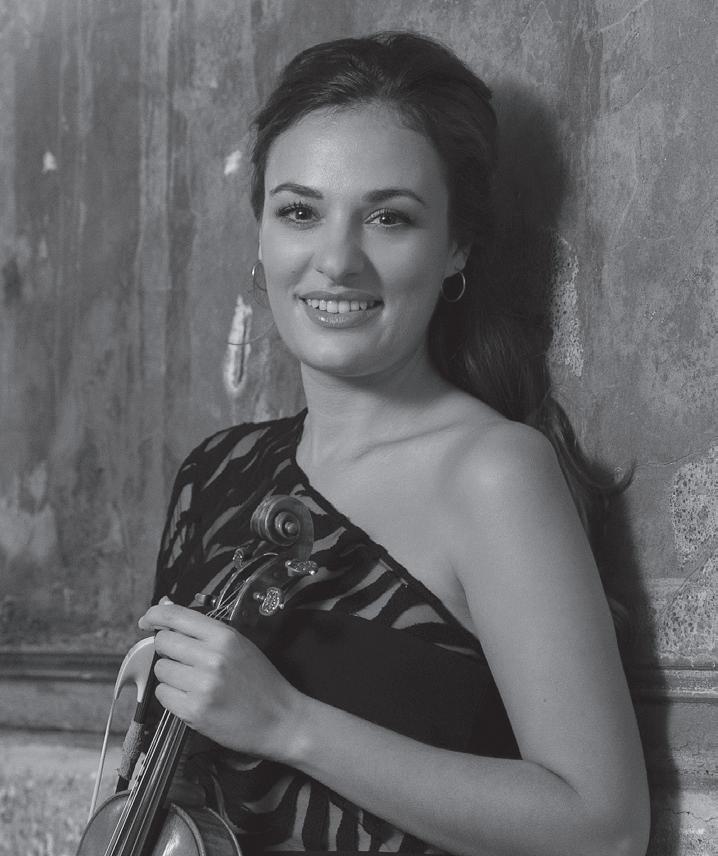
Nicola Benedetti
© Craig Gibson
THANK YOU
Principal Conductor's Circle
Our Principal Conductor’s Circle are a special part of our musical family. Their commitment and generosity benefit us all – musicians, audiences and creative learning participants alike.
Annual Fund
James and Patricia Cook
Visiting Artists Fund
Harry and Carol Nimmo
Anne and Matthew Richards
International Touring Fund
Gavin and Kate Gemmell
Creative Learning Fund
Sabine and Brian Thomson
American Development Fund
Erik Lars Hansen and Vanessa C L Chang
CHAIR SPONSORS
Conductor Emeritus Joseph Swensen
Donald and Louise MacDonald
Chorus Director Gregory Batsleer
Anne McFarlane
Principal Second Violin
Marcus Barcham Stevens
Jo and Alison Elliot
Second Violin Rachel Smith
J Douglas Home
Principal Viola Max Mandel
Ken Barker and Martha Vail Barker
Viola Brian Schiele
Christine Lessels
Viola Steve King
Sir Ewan and Lady Brown
Principal Cello Philip Higham
The Thomas Family
Sub-Principal Cello Su-a Lee
Ronald and Stella Bowie
Cello Donald Gillan
Professor Sue Lightman
Productions Fund
Geoff and Mary Ball
Bill and Celia Carman
Anne, Tom and Natalie Usher
Scottish Touring Fund
Eriadne and George Mackintosh
Claire and Anthony Tait
New Music Fund
Ken Barker and Martha Vail Barker
Colin and Sue Buchan
The Thomas Family
Cello Eric de Wit
Jasmine Macquaker Charitable Fund
Principal Flute André Cebrián
Claire and Mark Urquhart
Sub-Principal Flute Marta Gómez
Judith and David Halkerston
Principal Oboe
The Hedley Gordon Wright Charitable Trust
Sub-Principal Oboe Katherine Bryer
Ulrike and Mark Wilson
Principal Clarinet Maximiliano Martín
Stuart and Alison Paul
Principal Bassoon Cerys Ambrose-Evans
Claire and Anthony Tait
Sub-Principal Bassoon Alison Green
George Rubienski
Principal Horn Kenneth Henderson
Caroline Hahn and Richard Neville-Towle
Funding Partners





SCO Donors
Diamond
The Cockaigne Fund
Malcolm and Avril Gourlay
John and Jane Griffiths
James and Felicity Ivory
George Ritchie
Tom and Natalie Usher
Platinum
E.C. Benton
Michael and Simone Bird
Silvia and Andrew Brown
David Caldwell in memory of Ann
Dr Peter Williamson and Ms Margaret Duffy
David and Elizabeth Hudson
Helen B Jackson
Dr and Mrs Peter Jackson
Dr Daniel Lamont
Graham and Elma Leisk
Professor and Mrs Ludlam
Chris and Gill Masters
Duncan and Una McGhie
Anne-Marie McQueen
James F Muirhead
Robin and Catherine Parbrook
Charles Platt and Jennifer Bidwell
Patrick and Susan Prenter
Mr and Mrs J Reid
The Walter and Janet Reid Charitable Trust
Martin and Mairi Ritchie
Hilary E Ross
Elaine Ross
Sir Muir and Lady Russell
Jill and Brian Sandford
Michael and Elizabeth Sudlow
Robert and Elizabeth Turcan
Alan and Sue Warner
Anny and Bobby White
Robert Mackay and Philip Whitley
Finlay and Lynn Williamson
Ruth Woodburn
Gold
Peter Armit
Adam Gaines and Joanna Baker
John and Maggie Bolton
Elizabeth Brittin
Kate Calder
James Wastle and Glenn Craig
Jo and Christine Danbolt
James and Caroline Denison-Pender
Andrew and Kirsty Desson
David and Sheila Ferrier
Chris and Claire Fletcher
James Friend
Iain Gow
Margaret Green
Christopher and Kathleen Haddow
Catherine Johnstone
Julie and Julian Keanie
Gordon Kirk
Janey and Barrie Lambie
Mike and Karen Mair
Roy and Svend McEwan-Brown
John and Liz Murphy
Tom Pate
Maggie Peatfield
Sarah and Spiro Phanos
Alison and Stephen Rawles
Andrew Robinson
Olivia Robinson
Anne McAlister and Philip Sawyer
Irene Smith
Dr Jonathan Smithers
Ian S Swanson
Ian and Janet Szymanski
John-Paul and Joanna Temperley
Douglas and Sandra Tweddle
Bill Welsh
Catherine Wilson
Neil and Philippa Woodcock
Georgina Wright
Silver
Roy Alexander
Fiona and Neil Ballantyne
The Batsleer Family
Jack Bogle
Jane Borland
Alan Borthwick
Dinah Bourne
Michael and Jane Boyle
Mary Brady
Paula and Colin Brown
John Brownlie
Laura Buist
Robert Burns
Sheila Colvin
Lorn and Camilla Cowie
Adam and Lesley Cumming
Dr Wilma Dickson
Seona Reid and Cordelia Ditton
Sylvia Dow
Colin Duncan in memory of Norma Duncan
Richard and Cath Dyer
Raymond Ellis
Dr and Mrs Alan Falconer
Sheila Ferguson
Dr William Irvine Fortescue
Dr David Grant
Anne Grindley
Andrew Hadden
J Martin Haldane
Ronnie and Ann Hanna
Roderick Hart
Norman Hazelton
Ron and Evelynne Hill
Philip Holman
Clephane Hume
Tim and Anna Ingold
David and Pamela Jenkins
Margaret Mortimer and Ken Jobling
Ross D. Johnstone
James Kelly
Professor Christopher and Mrs Alison Kelnar
Dr Ian Laing
Geoff Lewis
Dorothy A Lunt
Vincent Macaulay
James McClure in memory of Robert Duncan
Ben McCorkell
Lucy McCorkell
Gavin McCrone
Michael McGarvie
Brian Miller
Alistair Montgomerie
Norma Moore
Andrew Murchison
Pamela Andrews and Alan Norton
Gilly Ogilvy-Wedderburn
Mairi & Ken Paterson
John Peutherer in memory of Audrey Peutherer
James S Potter
Timothy Barnes and Janet Sidaway
Catherine Steel
John and Angela Swales
Takashi and Mikako Taji
C S Weir
Susannah Johnston and Jamie Weir
David and Lucy Wren
We are indebted to everyone acknowledged here who gives philanthropic gifts to the SCO of £300 or greater each year, as well as those who prefer to remain anonymous.
We are also incredibly thankful to the many individuals not listed who are kind enough to support the Orchestra financially on a regular or ad hoc basis. Every single donation makes a difference.
Become a regular donor, from as little as £5 a month, by contacting Hannah Wilkinson on 0131 478 8364 or hannah.wilkinson@sco.org.uk.
“…an orchestral sound that seemed to gleam from within.”
THE SCOTSMAN
HM The King Patron
Donald MacDonald CBE
Life President
Joanna Baker CBE Chair
Gavin Reid LVO
Chief Executive
Maxim Emelyanychev
Principal Conductor
Andrew Manze
Principal Guest Conductor
Joseph Swensen
Conductor Emeritus
Gregory Batsleer
Chorus Director
Jay Capperauld
Associate Composer
© Chris Christodoulou
Information correct at the time of going to print Our Musicians
Your Orchestra Tonight
This concert will be played on gut strings throughout, and you will hear natural brass instruments in the Mendelssohn.
First Violin
Stephanie Gonley
Afonso Fesch
Emma Baird
Aisling O’Dea
Amira Bedrush-McDonald
Sarah Bevan Baker
Catherine James
Kristin Deeken
Second Violin
Marcus Barcham Stevens
Hatty Haynes
Michelle Dierx
Rachel Smith
Stewart Webster
Serena Whitmarsh
Feargus Hetherington
Rachel Spencer
Viola
Max Mandel
Jessica Beeston
Brian Schiele
Steve King
Rebecca Wexler
Kathryn Jourdan
Cello
Philip Higham
Su-a Lee
Donald Gillan
Eric de Wit
Niamh Molloy
Kim Vaughan
Bass
Jamie Kenny
Toby Hughes
Ben Havinden-Williams
Maitiú Gaffney
Flute
André Cebrián
Marta Gómez
Carolina Patrício
Piccolo
Marta Gómez
Oboe
Kyeong Ham
Katherine Bryer
Clarinet
Maximiliano Martín
William Stafford
Bassoon
Cerys Ambrose-Evans
Alison Green
Contrabassoon
Alison Green
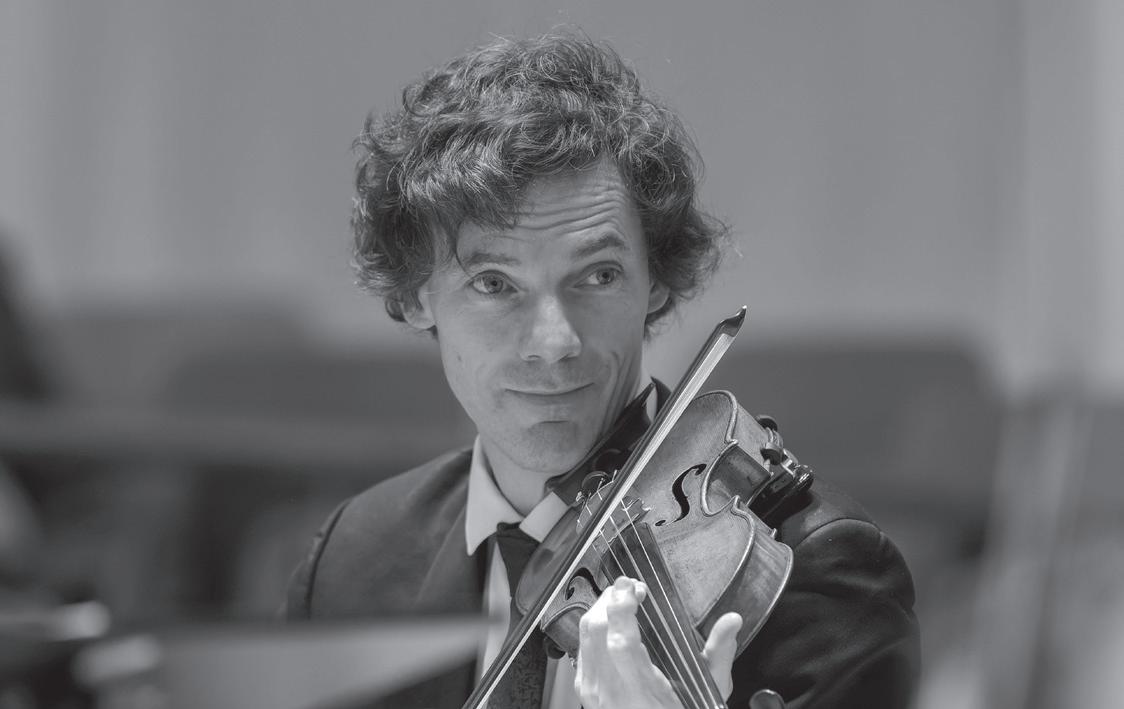
Marcus Barcham Stevens Principal Second Violin
Horn
Kenneth Henderson
Gijs Laceulle
Jože Rošer
Flavia Comba
Trumpet
Peter Franks
Peter Mankarious
Euan Scott
Trombone
Duncan Wilson
Nigel Cox
Andy Fawbert
Tuba
Craig Anderson
Timpani
Tom Hunter
Percussion
Colin Hyson
Pete Murch
Lauren O’Malley
What You Are About To Hear
BRAHMS (1833–1897)
Academic Festival Overture, Op.80 (1880)
MENDELSSOHN (1809-1847)
Violin Concerto in E minor, Op.64 (1844)
Allegro molto appassionato Andante
Allegretto non troppo – Allegro molto vivace
BRAHMS (1833–1897)
Symphony No.4 in E minor, Op.98 (1884)
Allegro non troppo Andante moderato
Allegro giocoso
Allegro energico e passionato
The two composers whose music we hear in tonight’s concert never actually met. For a start, Johannes Brahms was just 14 when Felix Mendelssohn died in 1847, at the tragically tender age of just 38. Nonetheless, they’re intimately connected – and not just biographically through the figure of fellow composer Robert Schumann, close friend and contemporary of Mendelssohn, and mentor and champion of Brahms. Both Mendelssohn and Brahms shared a deep affection for the music that had come before them, especially that of JS Bach. And both prized clarity and craftsmanship over showy spectacle and empty excess – although they could turn their hands to wit, too, as tonight’s opening piece demonstrates.
Admittedly, serious-minded Brahms might not be the first composer to spring to mind if you’re thinking about musical humour. Haydn and Mozart, perhaps; Satie and Poulenc, certainly; Brahms – well, perhaps less so. Which makes the first piece in tonight’s concert, one of Brahms’ bestloved and most frequently performed creations, all the more remarkable –especially if we listen to it with fresh ears and strip it of any comfortable familiarity.
It was in March 1879 that the 45-year-old Brahms was notified that he was to receive an honorary doctorate from the University of Breslau (then in Prussia, but now Wrocław in Poland). He was pleased, and sent a short handwritten note thanking the institution for the honour. A deep distaste for publicity and self-promotion no doubt played a significant role in the composer’s rather muted response: four years earlier, he’d even turned down a similar honour
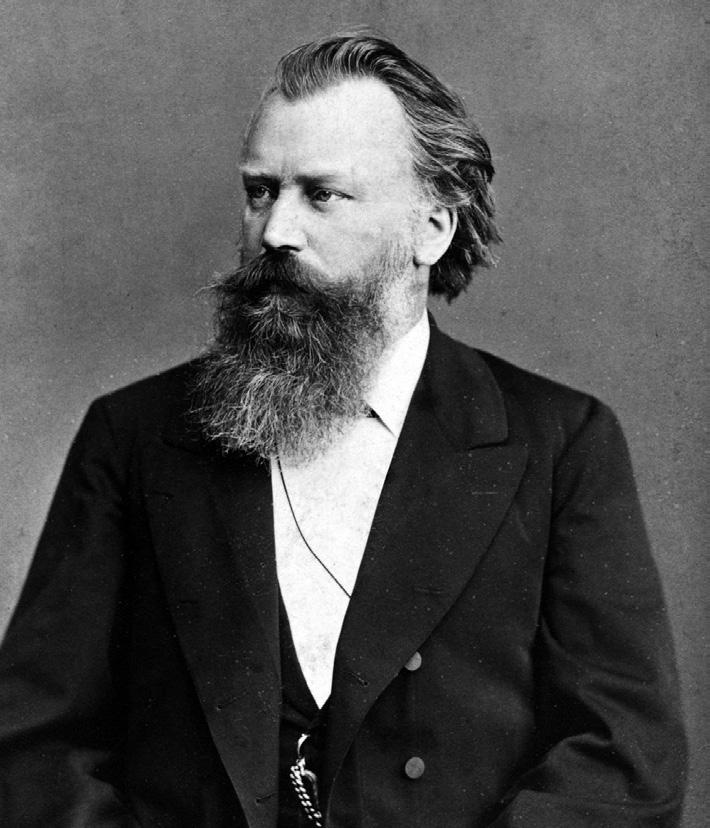
Admittedly, serious-minded Brahms might not be the first composer to spring to mind if you’re thinking about musical humour.
from the University of Cambridge because of the lavish celebrations he’d be expected to take part in.
In any case, Breslau’s Director of Music Bernhard Scholz – who’d nominated Brahms for the doctorate in the first place – clearly didn’t think the composer’s response was enough. He’d had in mind a brand new piece from Brahms, written specifically for this grand occasion, and made his request clear in a letter back: ‘compose a fine symphony for us! But well orchestrated, not too uniformly thick!’
What Brahms ended up composing was not the desired symphony, but tonight’s Academic Festival Overture . And though he attacked the project with relish, he seems to have approached it with quite a sense of mischievous fun as well. It’s
surely no coincidence that, despite Scholz’s advice about orchestration, Brahms employed one of the biggest and most lavish orchestras he ever wrote for. And for his Overture’s raw material, he turned not to lofty musical themes that might convey musty university libraries and high-flying intellectual theorising, but to something far earthier and more boisterous: student drinking songs.
Brahms never went to university himself, but he got a taste of student life as a 20-year-old in 1853. His friend Joseph Joachim (for whom he’d later write his Violin Concerto) was taking some summer classes in Göttingen, and he invited Brahms along. Young Johannes reportedly enjoyed a high old time with Joachim and his mates, throwing himself wholeheartedly into the partying, drinking
Johannes Brahms
and beer garden antics of their student lifestyle without actually being a student himself – and, crucially, without having to do any actual studying.
The experience clearly stayed with Brahms, and when it came to creating a work to mark his own elevation to Doctor philosophiae honoris causa, he made sure it was a celebration of all the joys of student life. Yes, his Academic Festival Overture – which Brahms himself described as ‘a very boisterous potpourri of student songs’ – is undoubtedly ‘academic’ in its impeccable musical craftsmanship and its reverential adherence to well-established musical rules and structures. But it’s ‘academic’ in another sense, too, in its joyful depiction of student life in all its exuberant glories.
He sent it off to Scholz with a slightly sarcastic note: ‘I have written an Academic Festival Overture so that you aren’t too embarrassed by your guest.’ Despite his misgivings, Brahms ended up front and centre at the piece’s premiere, on 4 January 1881 at the University, where he conducted the Overture at the beginning of the day’s degree ceremony. Sadly, the reactions from the professors and students present haven’t been recorded, but there must have been quite a striking contrast between the high spirits of Brahms’ music and the general seriousness of the ceremony.
Brahms opens his Overture with quiet but urgent music, adapted from the Rákóczy March, a famous Hungarian tune that was the country’s unofficial national anthem at one stage. After a brief pause, three trumpets intone the first of the piece’s student songs over an expectant
timpani roll: this is ‘Wir hatten gebauet ein stattliches Haus’ (‘We have built a stately house’), which begins solemnly, but quickly expands in grandeur. The Rákóczy March and ‘Wir hatten’ themes get mixed together before violins and violas usher in another student song, the sweeping, lyrical ‘Der Landesvater’ (‘The Father of our Country’), with which students traditionally pledged their allegiance to Germany. The mood changes completely as a solo bassoon moves on to a more overtly humorous student ditty known as ‘The Fox-Ride’, sung as part of an initiation ceremony for new students.
All the tunes we’ve heard so far are mixed together in a more turbulent, stormier central development section, before the Overture concludes with one of the most famous German student songs of them all. ‘Gaudeamus igitur’ urges students to have fun while they’re still young, and is sung out by the brass with cascading decorations from the strings, bringing the Overture to an authentically joyful and surprisingly moving conclusion in a celebration of youth, student life, and a time when anything and everything seems possible.
From Brahms’ celebration of youth, we leap to an equally fresh, vibrant work from four decades earlier. The Violin Concerto, however, was the last major orchestral piece that Mendelssohn produced, and, unlike the childhood music he wrote at a rate of knots, it took him a while – six years, in fact, though Mendelssohn has the excuse of directing Leipzig’s Gewandhaus Orchestra and founding the city’s Music Conservatoire at the same time. The Concerto is rooted in friendship, that between Mendelssohn and violinist
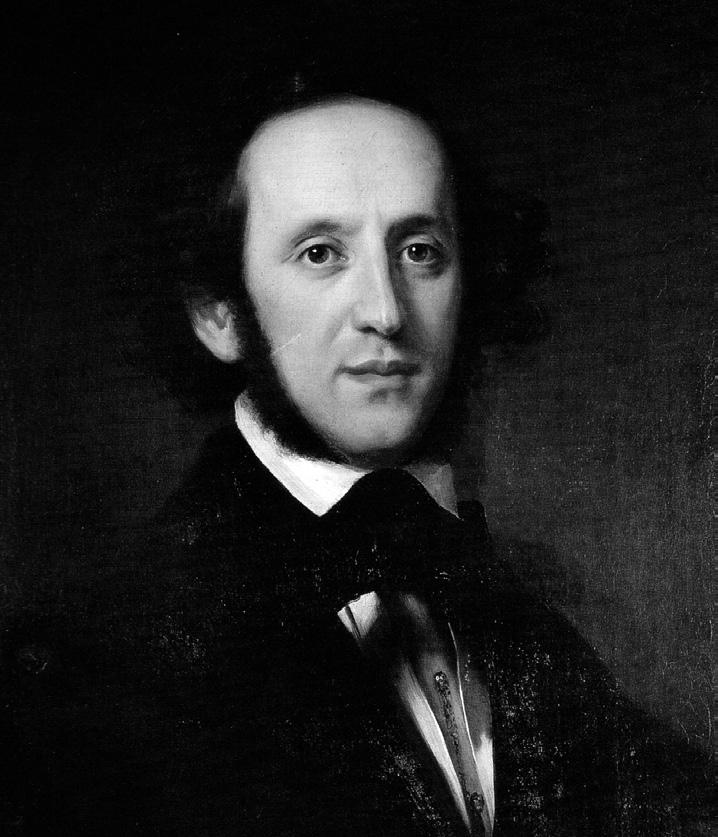
The Concerto is rooted in friendship, that between Mendelssohn and violinist Ferdinand David, who first became friends and chamber music partners as far back as 1825, when they were both in their teens.
Ferdinand David, who first became friends and chamber music partners as far back as 1825, when they were both in their teens. When Mendelssohn founded the Leipzig Conservatoire, he soon enlisted David as its inaugural violin professor, and when he took on the directorship of the Gewandhaus Orchestra, no prizes for guessing who he hurried to appoint as its leader.
The first inklings of a Violin Concerto came in 1838, when Mendelssohn wrote to David: ‘I should like to write a violin concerto for you next winter. One in E minor runs through my head, the beginning of which gives me no peace.’ In the end, Mendelssohn only completed the work on 16 September 1844, and worked closely with his friend on it. One of David’s specific requests was that the Concerto
should avoid virtuoso display for its own sake, with the result that, though the piece is hardly without its difficulties, it remains relatively playable, and a favourite for younger violinists (incidentally, tonight’s soloist, Nicola Benedetti, recorded it as her second CD release, at the age of 18). David – who else? – premiered the Concerto in Leipzig on 13 March 1845. It was an immediate hit, and has remained popular ever since.
Nonetheless, it’s a quietly innovative piece. Mendelssohn the conductor wasn’t fond of applause between movements of a longer work, so he composed links joining the Concerto’s three movements: a solo bassoon that refuses to be quiet once the haunting first movement has ended, then a more elaborate dialogue between the soloist and orchestra to launch the
Felix Mendelssohn
playful finale. Furthermore, Mendelssohn breaks Classical convention by placing the violinist’s showy solo cadenza not towards the end of the first movement, but at the climax of its central development section, an innovation that was picked up and copied by composers including Tchaikovsky and Sibelius.
We opened tonight’s concert with Brahms in a somewhat playful mood, but with one of the composer’s grandest and most visionary works. He was 52 when he completed his Fourth and final Symphony in the summer of 1885, and by that time was widely seen as Germany’s leading composer. That hardly calmed his notorious self-doubt, however – and nor did an early reaction to the Fourth Symphony, from the influential critic (and keen supporter of the composer) Eduard Hanslick at a private two-piano play-through for friends, confidants and collaborators. ‘I had the feeling that I was being given a beating by two incredibly intelligent people,’ Hanslick famously blurted after hearing just the first movement. The following day, another friend – writer Max Kalbeck – visited Brahms to advise him privately not to allow the Symphony out as it then stood.
Though undoubtedly shaken, Brahms resolved to let the Symphony live in precisely the form he’d intended it – and it was a huge success at its premiere in Meiningen on 25 October 1885 (though slightly less acclaimed at its Viennese premiere just a few months later).
It’s now one of the most deeply loved of all symphonies, and unquestioningly adored by listeners from newcomers to aficionados. So what was all the fuss
about? Perhaps it comes down to the Symphony’s uncompromising intellectual complexity, and to the profound ideas and emotions it dares to contemplate – even if Brahms clothes his densely wrought arguments and philosophical ruminations in some of the richest, most gloriously melodic music he wrote. Or perhaps it comes down to the Symphony’s overall trajectory, a deeply cathartic journey from vigour and optimism to fate-filled doom. Brahms had long laced a dark thread of melancholy through his music, and it’s been speculated that immersing himself in ancient Greek tragedies before he began work on the Symphony may have brought ideas of fate more keenly into his thinking. There’s further evidence in a somewhat despairing letter he sent to his publisher around the same time: ‘in Austria, where everything tumbles downhill, you can’t expect music to fare better. Really it’s a pity and a crying shame, not only for music but for the whole beautiful land and the beautiful, marvellous people. I still think catastrophe is coming.’
Nonetheless, Brahms offsets his profound contemplations with music that’s richly coloured and finely wrought. The flowing melody that opens his first movement in fact serves to map out the main harmonic areas that the Symphony will explore. It’s followed by a more lyrical theme first heard in the cellos, then a second, far brighter melody in the woodwind – all of which undergo substantial transformations as they return throughout the movement.
His slower, calmer second movement pits an archaic-sounding woodwind melody against gently tick-tocking pizzicato string accompaniment, with a central section
Despite Brahms’ apparently limitless creativity in spinning fresh contexts and treatments for his recurring theme, there’s an almost spiritual profundity in encountering what’s essentially the same music over and over again, and yet observing it from ever shifting perspectives.
that’s initially stormier before calming to something far more sweetly lyrical. The third movement contains arguably the most exuberant, outward-looking music in all of Brahms’ symphonies, with even a triangle adding a gentle sparkle.
After the boisterous energy of the third movement, the austere seriousness of the fourth might come as something of a shock. Here, Brahms revisits the ancient form of a passacaglia, in which a bassline repeats again and again, with increasingly complex, intricate music on top of it. In this case, Brahms’ repeating idea is a series of harmonies derived from a section of Bach’s Cantata No.150, using which he conjures a remarkable set of 30 variations that generate immense cumulative power. A slower, quieter central collection of variations provides contrast, before the
opening music returns more vehemently than ever.
Despite Brahms’ apparently limitless creativity in spinning fresh contexts and treatments for his recurring theme, there’s an almost spiritual profundity in encountering what’s essentially the same music over and over again, and yet observing it from ever shifting perspectives. It would prove to be the last of his music that Brahms would hear, when he attended a performance of the Fourth Symphony at Vienna’s Musikverein just a month before his death in April 1897. The ailing Brahms, visibly suffering from the effects of the liver cancer that would shortly kill him, was reportedly moved to tears by the ovation he received after each of the Symphony’s movements.
© David Kettle
Maxim
Emelyanychev
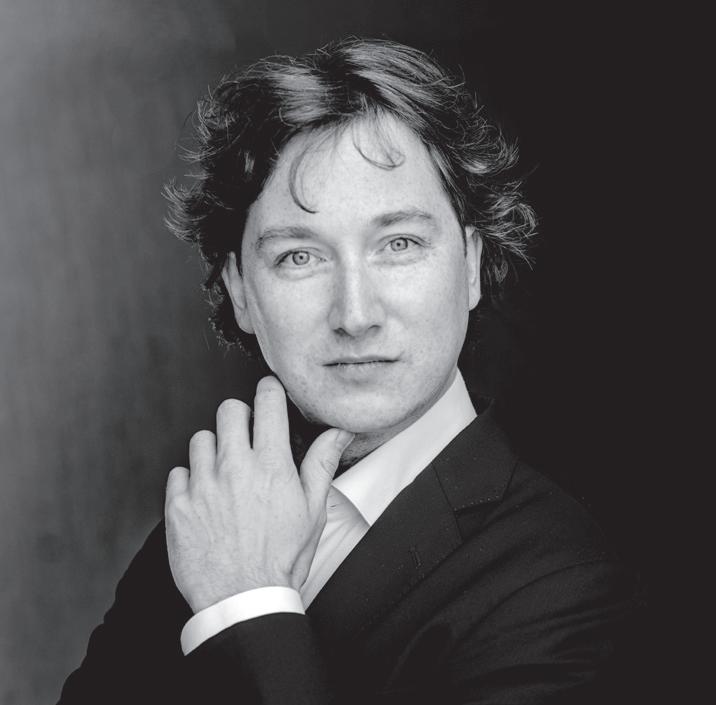
Maxim Emelyanychev has been Principal Conductor of the Scottish Chamber Orchestra since 2019. He is also Chief Conductor of period-instrument orchestra Il Pomo d’Oro, and became Principal Guest Conductor of the Swedish Radio Symphony Orchestra from the 2025/26 Season.
Born in Nizhny Novgorod, Emelyanychev made his conducting debut at the age of 12, and later joined the class of eminent conductor Gennady Rozhdestvensky at the Moscow Conservatoire.
Emelyanychev was initially appointed as the SCO’s Principal Conductor until 2022, and the relationship was later extended until 2025 and then until 2028. He has conducted the SCO at the Edinburgh International Festival and the BBC Proms, as well as on several European tours and in concerts right across Scotland. He has also made three recordings with the SCO, of symphonies by Schubert and Mendelssohn (Linn Records).
Emelyanychev has also conducted many international ensembles including the Berlin Philharmonic, Royal Concertgebouw Orchestra, Orchestra dell'Accademia Nazionale di Santa Cecilia, Deutsches Symphonie-Orchester Berlin, Rotterdam Philharmonic Orchestra, Finnish Radio Symphony Orchestra, Seattle Symphony and Orchestra of the Age of Enlightenment. In the opera house, Emelyanychev has conducted Handel’s Rinaldo at Glyndebourne, the same composer’s Agrippina as well as Mozart’s The Magic Flute at the Royal Opera House, Covent Garden, and Mozart’s Die Entführing aus dem Serail at the Opernhaus Zürich. He has also conducted Mozart’s Die Zauberflöte, Così fan tutte and La clemenza di Tito with the SCO at the Edinburgh International Festival. He has collaborated closely with US soprano Joyce DiDonato, including international touring and several recordings.
Among his other recordings are keyboard sonatas by Mozart, and violin sonatas by Brahms with violinist Aylen Pritchin. He has also launched a project to record Mozart’s complete symphonies with Il Pomo d’Oro. In 2019, he won the Critics’ Circle Young Talent Award and an International Opera Award in the newcomer category. He received the 2025 Herbert von Karajan Award at the Salzburg Easter Festival.
For full biography please visit sco.org.uk
Andrej
Grilc
Nicola Benedetti
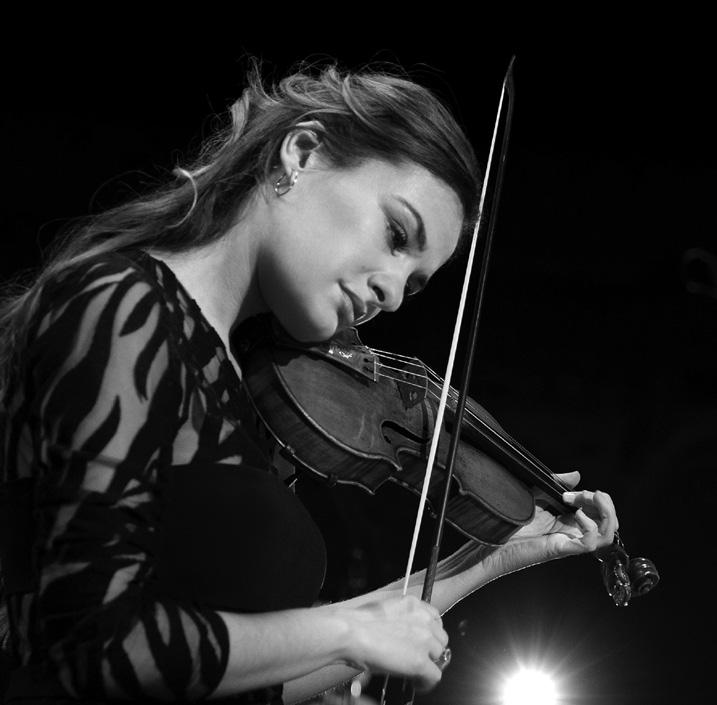
Nicola Benedetti is one of the most sought-after violinists of her generation. Her ability to captivate audiences and her wide appeal as an advocate for classical music has made her one of the most influential artists of today.
Nicola opened her 2025-26 season with a unique and personal solo tour of pre-eminent stages across the UK and Ireland including the Usher Hall, Edinburgh, Royal Concert Hall, Glasgow, Bridgewater Hall, Manchester, National Concert Hall Dublin, and the Royal Albert Hall. Coinciding with the release of her new album Violin Café, this marked Nicola’s first solo tour in over a decade, combining popular virtuosic and seductive romantic works, arranged for violin, guitar, accordion and cello.
Elsewhere in the season Nicola returns to the New York and Czech Philharmonic Orchestras with the Marsalis Violin Concerto, to the Rundfunk-Sinfonieorchester Berlin, Royal Scottish National, Philharmonia and London Philharmonic Orchestras with the Elgar Violin Concerto, and to the Scottish Chamber Orchestra with Mendelssohn’s Violin Concerto in E minor.
Nicola Benedetti is a GRAMMY Award winner (Best Classical Instrumental Solo, 2020), twotime winner of Best Female Artist at the Classical BRIT Awards, and in 2021 was recognised as BBC Music Magazine’s ‘Personality of the Year’ for her online support of young musicians during the pandemic. A long-time leader in music education, she established the Benedetti Foundation in 2019, delivering transformative experiences through mass music events. Nicola was appointed a CBE in 2019, awarded the Queen’s Medal for Music (2017), and an MBE in 2013.
In October 2022, Nicola became the Festival Director of the Edinburgh International Festival. In taking the role she became both the first Scottish and the first female Festival Director since the Festival began in 1947.
For full biography please visit sco.org.uk
© Craig Gibson
Violin
Scottish Chamber Orchestra
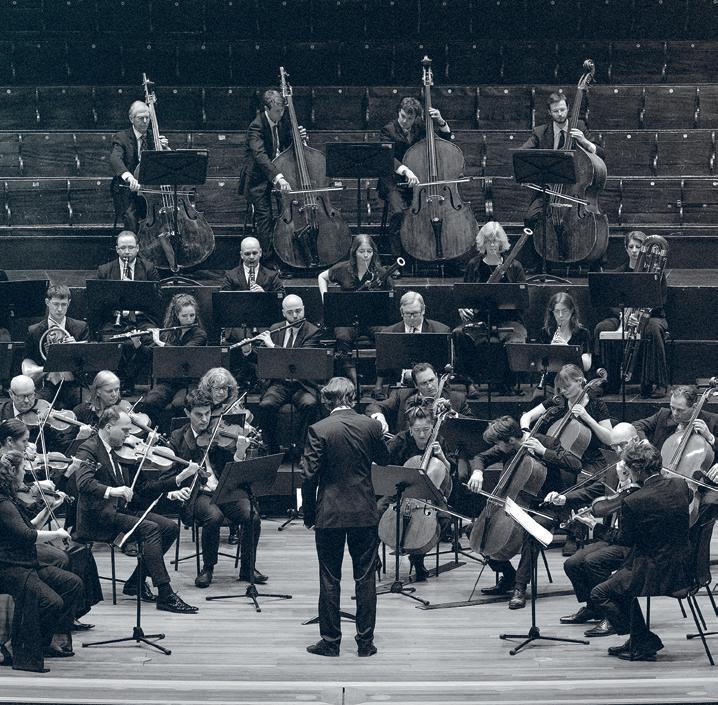
The Scottish Chamber Orchestra (SCO) is one of Scotland’s five National Performing Companies and has been a galvanizing force in Scotland’s music scene since its inception in 1974. The SCO believes that access to world-class music is not a luxury but something that everyone should have the opportunity to participate in, helping individuals and communities everywhere to thrive. Funded by the Scottish Government, City of Edinburgh Council and a community of philanthropic supporters, the SCO has an international reputation for exceptional, idiomatic performances: from mainstream classical music to newly commissioned works, each year its wide-ranging programme of work is presented across the length and breadth of Scotland, overseas and increasingly online.
Equally at home on and off the concert stage, each one of the SCO’s highly talented and creative musicians and staff is passionate about transforming and enhancing lives through the power of music. The SCO’s Creative Learning programme engages people of all ages and backgrounds with a diverse range of projects, concerts, participatory workshops and resources. The SCO’s current five-year Residency in Edinburgh’s Craigmillar builds on the area’s extraordinary history of Community Arts, connecting the local community with a national cultural resource.
An exciting new chapter for the SCO began in September 2019 with the arrival of dynamic young conductor Maxim Emelyanychev as the Orchestra’s Principal Conductor. His tenure has recently been extended until 2028. The SCO and Emelyanychev released their first album together (Linn Records) in 2019 to widespread critical acclaim. Their second recording together, of Mendelssohn symphonies, was released in 2023, with Schubert Symphonies Nos 5 and 8 following in 2024.
The SCO also has long-standing associations with many eminent guest conductors and directors including Principal Guest Conductor Andrew Manze, Pekka Kuusisto, François Leleux, Nicola Benedetti, Isabelle van Keulen, Anthony Marwood, Richard Egarr, Mark Wigglesworth, Lorenza Borrani and Conductor Emeritus Joseph Swensen.
The Orchestra’s current Associate Composer is Jay Capperauld. The SCO enjoys close relationships with numerous leading composers and has commissioned around 200 new works, including pieces by Sir James MacMillan, Anna Clyne, Sally Beamish, Martin Suckling, Einojuhani Rautavaara, Karin Rehnqvist, Mark-Anthony Turnage, Nico Muhly and the late Peter Maxwell Davies.
© Christopher Bowen
SCO NEW MUSIC FUND
Shape the Sound of the Future
Make a donation between 12 February and 30 March and double the impact of your gift.
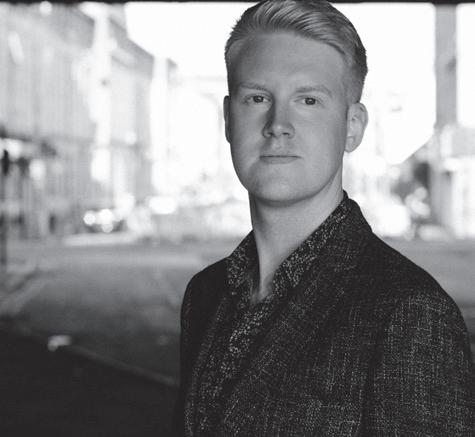
SCO Associate Composer Jay Capperauld
On Thursday 12 February, we’re launching the SCO New Music Fund to support new commissions and talented composers.
Every £1 will be doubled but only until Monday 30 March. Donations will be matched up to £30,000, meaning your gift goes twice as far. Together, we can help shape the sound of the future.
Thank you for your support! SCAN ME To donate and find out more.
Top photo ©Stuart Armit | Photo of Jay ©Euan Robertson