19-20 February 2026

19-20 February 2026
Thursday 19 February, 7.30pm The Queen's Hall, Edinburgh
Friday 20 February, 7.30pm City Halls, Glasgow
BACH Brandenburg Concerto No.3
BRITTEN Simple Symphony
HANDEL Water Music Suite in F
Interval of 25 minutes
SCARLATTI (arr.CAPPERAULD) Stylus Scarlatti (World Premiere) *
SCHNITTKE Gogol Suite
Maxim Emelyanychev conductor
*Commissioned by the Scottish Chamber Orchestra. Generously supported by the Marchus Trust.
Maxim Emelyanychev

4 Royal Terrace, Edinburgh EH7 5AB
+44 (0)131 557 6800 | info@sco.org.uk | sco.org.uk
The Scottish Chamber Orchestra is a charity registered in Scotland No. SC015039. Company registration No. SC075079.
THANK YOU
Our Principal Conductor’s Circle are a special part of our musical family. Their commitment and generosity benefit us all – musicians, audiences and creative learning participants alike.
Annual Fund
James and Patricia Cook
Visiting Artists Fund
Harry and Carol Nimmo
Anne and Matthew Richards
International Touring Fund
Gavin and Kate Gemmell
Creative Learning Fund
Sabine and Brian Thomson
American Development Fund
Erik Lars Hansen and Vanessa C L Chang
Conductor Emeritus Joseph Swensen
Donald and Louise MacDonald
Chorus Director Gregory Batsleer
Anne McFarlane
Principal Second Violin
Marcus Barcham Stevens
Jo and Alison Elliot
Second Violin Rachel Smith
J Douglas Home
Principal Viola Max Mandel
Ken Barker and Martha Vail Barker
Viola Brian Schiele
Christine Lessels
Viola Steve King
Sir Ewan and Lady Brown
Principal Cello Philip Higham
The Thomas Family
Sub-Principal Cello Su-a Lee
Ronald and Stella Bowie
Cello Donald Gillan
Professor Sue Lightman
Productions Fund
Geoff and Mary Ball
Bill and Celia Carman
Anne, Tom and Natalie Usher
Scottish Touring Fund
Eriadne and George Mackintosh
Claire and Anthony Tait
New Music Fund
Ken Barker and Martha Vail Barker
Colin and Sue Buchan
The Thomas Family
Cello Eric de Wit
Jasmine Macquaker Charitable Fund
Principal Flute André Cebrián
Claire and Mark Urquhart
Sub-Principal Flute Marta Gómez
Judith and David Halkerston
Principal Oboe
The Hedley Gordon Wright Charitable Trust
Sub-Principal Oboe Katherine Bryer
Ulrike and Mark Wilson
Principal Clarinet Maximiliano Martín
Stuart and Alison Paul
Principal Bassoon Cerys Ambrose-Evans
Claire and Anthony Tait
Sub-Principal Bassoon Alison Green
George Rubienski
Principal Horn Kenneth Henderson
Caroline Hahn and Richard Neville-Towle




Diamond
The Cockaigne Fund
Malcolm and Avril Gourlay
John and Jane Griffiths
James and Felicity Ivory
George Ritchie
Tom and Natalie Usher
Platinum
E.C. Benton
Michael and Simone Bird
Silvia and Andrew Brown
David Caldwell in memory of Ann
Dr Peter Williamson and Ms Margaret Duffy
David and Elizabeth Hudson
Helen B Jackson
Dr and Mrs Peter Jackson
Dr Daniel Lamont
Graham and Elma Leisk
Professor and Mrs Ludlam
Chris and Gill Masters
Duncan and Una McGhie
Anne-Marie McQueen
James F Muirhead
Robin and Catherine Parbrook
Patrick and Susan Prenter
Mr and Mrs J Reid
The Walter and Janet Reid Charitable Trust
Martin and Mairi Ritchie
Hilary E Ross
Elaine Ross
Sir Muir and Lady Russell
Jill and Brian Sandford
Michael and Elizabeth Sudlow
Robert and Elizabeth Turcan
Alan and Sue Warner
Anny and Bobby White
Robert Mackay and Philip Whitley
Finlay and Lynn Williamson
Ruth Woodburn
Gold
Peter Armit
Adam Gaines and Joanna Baker
John and Maggie Bolton
Elizabeth Brittin
Kate Calder
James Wastle and Glenn Craig
Jo and Christine Danbolt
James and Caroline Denison-Pender
Andrew and Kirsty Desson
David and Sheila Ferrier
Chris and Claire Fletcher
James Friend
Iain Gow
Margaret Green
Christopher and Kathleen Haddow
Catherine Johnstone
Julie and Julian Keanie
Gordon Kirk
Janey and Barrie Lambie
Mike and Karen Mair
Roy and Svend McEwan-Brown
John and Liz Murphy
Tom Pate
Maggie Peatfield
Sarah and Spiro Phanos
Charles Platt and Jennifer Bidwell
Alison and Stephen Rawles
Andrew Robinson
Olivia Robinson
Anne McAlister and Philip Sawyer
Irene Smith
Dr Jonathan Smithers
Ian S Swanson
Ian and Janet Szymanski
John-Paul and Joanna Temperley
Douglas and Sandra Tweddle
Bill Welsh
Catherine Wilson
Neil and Philippa Woodcock
Georgina Wright
Silver
Roy Alexander
Fiona and Neil Ballantyne
The Batsleer Family
Jack Bogle
Jane Borland
Alan Borthwick
Dinah Bourne
Michael and Jane Boyle
Mary Brady
Paula and Colin Brown
John Brownlie
Laura Buist
Robert Burns
Sheila Colvin
Lorn and Camilla Cowie
Adam and Lesley Cumming
Dr Wilma Dickson
Seona Reid and Cordelia Ditton
Sylvia Dow
Colin Duncan in memory of Norma Duncan
Richard and Cath Dyer
Raymond Ellis
Dr and Mrs Alan Falconer
Sheila Ferguson
Dr William Irvine Fortescue
Dr David Grant
Anne Grindley
Andrew Hadden
J Martin Haldane
Ronnie and Ann Hanna
Roderick Hart
Norman Hazelton
Ron and Evelynne Hill
Philip Holman
Clephane Hume
Tim and Anna Ingold
David and Pamela Jenkins
Margaret Mortimer and Ken Jobling
Ross D. Johnstone
James Kelly
Professor Christopher and Mrs Alison Kelnar
Dr Ian Laing
Geoff Lewis
Dorothy A Lunt
Vincent Macaulay
James McClure in memory of Robert Duncan
Ben McCorkell
Lucy McCorkell
Gavin McCrone
Michael McGarvie
Brian Miller
Alistair Montgomerie
Norma Moore
Andrew Murchison
Pamela Andrews and Alan Norton
Gilly Ogilvy-Wedderburn
Mairi & Ken Paterson
John Peutherer in memory of Audrey Peutherer
James S Potter
Timothy Barnes and Janet Sidaway
Catherine Steel
John and Angela Swales
Takashi and Mikako Taji
C S Weir
Susannah Johnston and Jamie Weir
David and Lucy Wren
We are indebted to everyone acknowledged here who gives philanthropic gifts to the SCO of £300 or greater each year, as well as those who prefer to remain anonymous.
We are also incredibly thankful to the many individuals not listed who are kind enough to support the Orchestra financially on a regular or ad hoc basis. Every single donation makes a difference.
Become a regular donor, from as little as £5 a month, by contacting Hannah Wilkinson on 0131 478 8364 or hannah.wilkinson@sco.org.uk.
“…an orchestral sound that seemed to gleam from within.”
HM The King Patron
Donald MacDonald CBE
Life President
Joanna Baker CBE Chair
Gavin Reid LVO
Chief Executive
Maxim Emelyanychev
Principal Conductor
Andrew Manze
Principal Guest Conductor
Joseph Swensen
Conductor Emeritus
Gregory Batsleer
Chorus Director
Jay Capperauld
Associate Composer
Information correct at the time of going to print Our Musicians
This concert will be performed on gut strings with modern brass and timpani.
First Violin
Stephanie Gonley
Tijmen Huisingh
Irina Simon Renes
Aisling O’Dea
Amira Bedrush-McDonald
Fiona Alexander
Sarah Bevan Baker
Second Violin
Marcus Barcham Stevens
Gordon Bragg
Rachel Smith
Elvira van Groningen
Abigail Young
Ameila Harding
Feargus Hetherington
Viola
Max Mandel
Francesca Gilbert
Brian Schiele
Steve King
Cello
Philip Higham
Su-a Lee
Donald Gillan
Kim Vaughan
Bass
Jamie Kenny
Toby Hughes
Guitar
Roberto Carrillo-Garcia
John Gregson
Flute
André Cebrián
Marta Gómez
Piccolo
Marta Gómez
Oboe
Kyeong Ham
Katherine Bryer
Cor Anglais
Katherine Bryer
Clarinet
Cristina Mateo Sáez
William Stafford
E-Flat Clarinet
Cristina Mateo Sáez
Bass Clarinet
William Stafford
Bassoon
Cerys Ambrose-Evans
Alison Green
Contrabassoon
Alison Green
Horn
Kenneth Henderson
Gavin Edwards
Trumpet
Peter Franks
Shaun Harrold
Trombone
Duncan Wilson
Tuba
Craig Anderson
Timpani
Simon Archer
Percussion
Iain Sandilands
Colin Hyson
Pete Murch
Robbie Bremner
Catriona Duncan
Keyboard
Andrew Forbes
Stephen Doughty
Simon Smith
JS BACH (1685-1750)
Brandenburg Concerto No.3 in G major, BWV 1048 (1718)
[Allegro]
Adagio
Allegro
BRITTEN (1913-1976)
Simple Symphony, Op.4 (1933-34)
Boisterous Bourrée
Playful Pizzicato
Sentimental Sarabande
Frolicsome Finale
HANDEL (1685-1759)
Water Music: Suite No.1 in F Major, HWV 348 (1717)
Overture (Largo – Allegro)
Adagio e staccato
Allegro – Andante – Allegro da capo
Passepied
Air
Minuet
SCARLATTI (1685-1757)
Stylus Scarlatti (World Premiere) arr. Capperauld (2026)
1. Sonata in C major K.159 (1738)
2. Sonata in D minor K.141 (c1730)
3. Sonata in D minor K.32 (c1720)
4. Sonata in A major K.209 (c1738)
Commissioned by the Scottish Chamber Orchestra. Generously supported by the Marchus Trust.
(1934-1998)
Gogol Suite (1980)
Overture
Chichikov’s Childhood
The Portrait
The Overcoat
Ferdinand VIII
The Bureaucrats
The Ball
The Testament
It might be a contentious thing to suggest, but despite what hardened avant-gardists and radical trailblazers would have you believe, is there such a thing as real originality in music? However rebellious or innovative they are, all musicians are born and formed in a culture that surrounds them every aspect of their lives, permeating their thinking and creativity from the very start. Even if it’s a culture they ultimately reject, its very absence unavoidably defines what they might embrace in its place.
With that admittedly provocative thought in mind, it’s probably inevitable that composers down the ages have consciously looked back to their predecessors for inspiration – whether simply to celebrate the beauties and emotional power of music of the past, or as a purposeful rejection of more modern musical attitudes that they didn’t much like. Tonight’s concert brings together music that’s authentically ancient alongside sounds that are far more strikingly modern, but which look back with affection, reverence or perhaps something slightly more mischievous to those earlier musical creations. But even if a backward glance to music of the past might be inescapable, the more interesting questions are perhaps why it happens, and how.
We begin back in the early 18th century, and with what must surely count as classical music’s most elaborate, ambitious, but ultimately unsuccessful attempt to gain employment. JS Bach wrote his set of six Brandenburg Concertos around 1721, when his employer, Prince Leopold of Anhalt-Köthen, was reallocating funds from his court musicians to his palace guards, possibly as a result of his new wife being anything
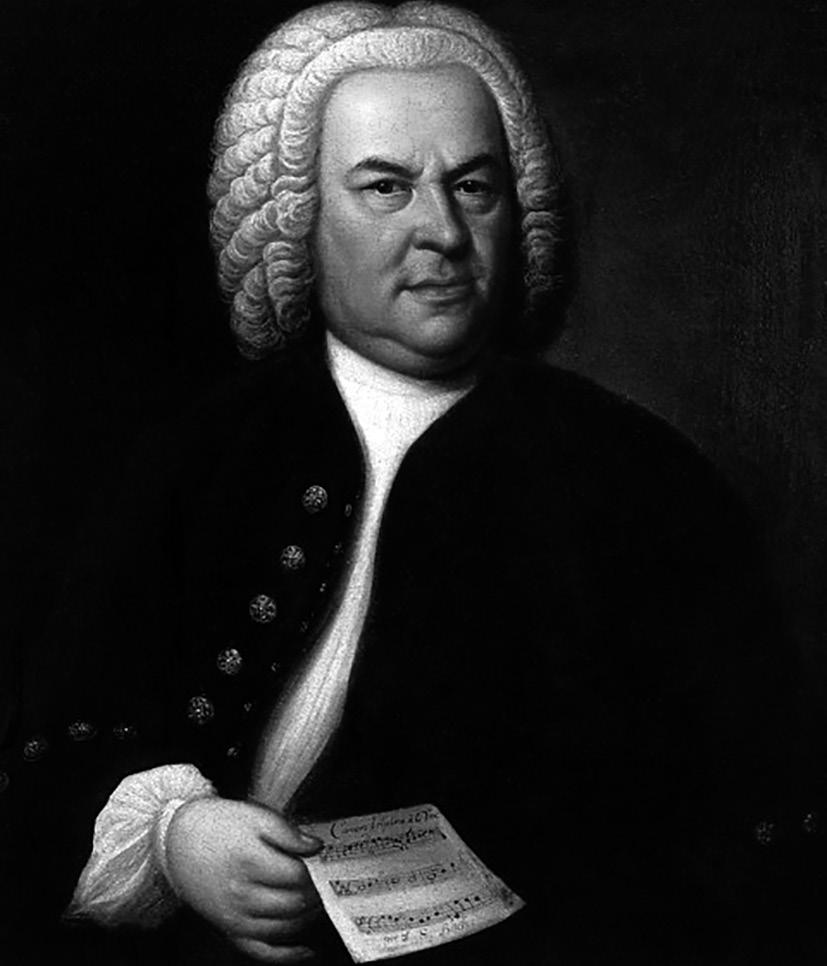
but a music lover. Bach could see what was on the cards. He’d met Christian Ludwig, Margrave of Brandenburg, two years earlier, when he was visiting Berlin to seek out a new harpsichord for the Köthen court, and the nobleman had casually suggested that Bach might put together a few concertos for his own court orchestra. Sensing the possibility of jumping ship to a wealthier establishment, Bach assembled a beautifully printed score of these six sophisticated concertos – each one conceived for its own individually selected group of soloists – and duly sent them off.
Not only did he never hear back: it seems the concertos weren’t even played. The manuscripts languished in the Brandenburg archives for more than a century until their rediscovery in 1849 and publication the following year. Nonetheless, Bach’s unsuccessful job application has left
us with some of music’s most distinctive and memorable pieces, in which the composer demonstrates not only his mastery of weaving together contrapuntal melodic lines, but also his expertise in spinning intense, emotional melodies.
Unlike the vivid and unusual instrumental combinations encountered elsewhere in the set, tonight’s Brandenburg Concerto No.3 is written for strings alone – more precisely, for the striking combination of three violins, three violas and three cellos, plus a continuo group supplying bassline and harmonies. That three-timesthree number symbolism is probably not unintentional, and its parallels with the Holy Trinity can’t have been lost on a composer of Bach’s abiding faith. That’s not to suggest any religious connotations to the music: rather, it’s the sheer variety of textures and roles that Bach conjures for his apparently similar-sounding instruments that’s most captivating.
Those ever-shifting textures are clearly on display in Bach’s busy, bustling first movement, whose distinctive three-note, high-low-high opening idea on the violins gets thrown back and forth between the instruments to weave all of the composer’s material together. Sometimes he focuses on one particular trio of instruments, and occasionally shines a spotlight on an individual player, almost like a film director zooming from wide-angle to close-up and back again. After a plunge into profound darkness and turmoil in the middle of the movement, its carefree opening music returns to bring it to a reassuringly confident conclusion.
Bach’s second movement – if you can really call it a movement – is something
of an oddity, comprising just two chords. Perhaps he merely intended a short pause between the Concerto’s two faster movements, or perhaps he had something more elaborate in mind – some kind of improvised cadenza? Different musicians have interpreted Bach’s enigmatic creation in different ways – which was probably the point all along. Bach closes, however, with a whirling, dance-like counterpart to his opening movement, whose notes and figurations whizz by in a kind of unstoppable momentum.
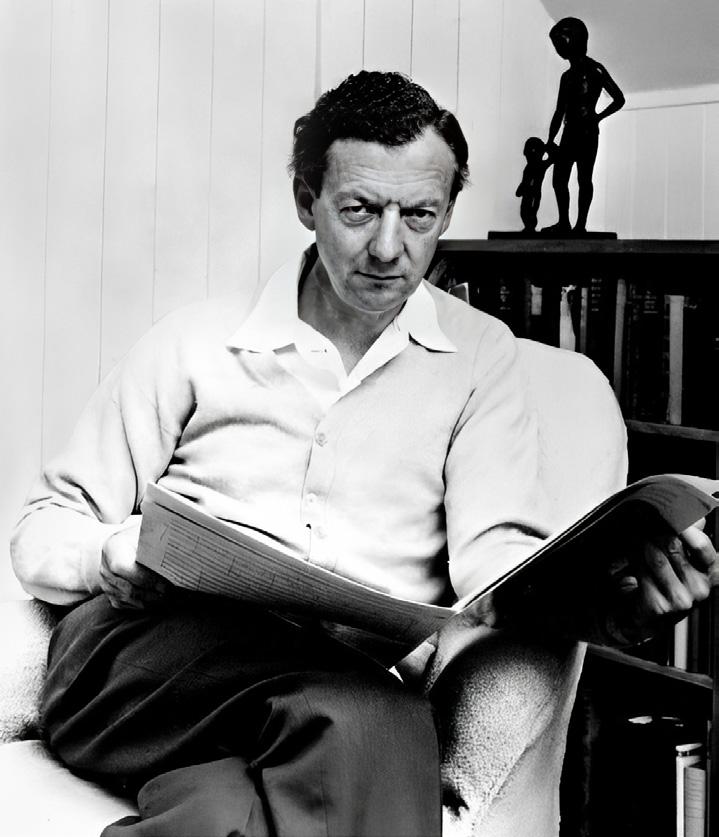
We leap forward more than two centuries for tonight’s second piece, to discover the young Benjamin Britten drawing on some of the dance styles of Bach’s time in his idiosyncratic take on a symphony. It was in 1933-34, at the age of just 20, that Britten composed his Simple Symphony , during his final year as a student at London’s Royal College of Music. It is based, however, on snippets of piano pieces and songs that he’d composed many years before, between the ages of nine and 12. And he’s proudly explicit about those earlier pieces in the Symphony’s score, marking the themes clearly and indicating which childhood works they came from.
The opening ‘Boisterous Bourrée’ is a vigorous Baroque dance whose main theme is shared between pairs of instruments – second violins and cellos, then violas and first violins – before a more graceful second theme enters over a gently lapping accompaniment. The ‘Playful Pizzicato’ is the Symphony’s scherzo, deftly scored and full of bewitching sonic variety despite restricting itself to plucked strings throughout. Its folksy central section bears an uncanny resemblance to a piece called ‘Barwick Green’, written in 1924 by Arthur
Wood – and far better known as the theme tune to The Archers
The slow and intense ‘Sentimental Sarabande’ is the Symphony’s longest movement, in which Britten injects another Baroque dance form with the pathos of an English folk song – perhaps gazing back in time further than the Baroque to the Elizabethan music of Dowland and others that he so adored. He brings the Symphony to a rousing, rhythmic conclusion in his ‘Frolicsome Finale’, which seems to stick doggedly to the downcast minor before swerving into the major mode for its sparkling conclusion.
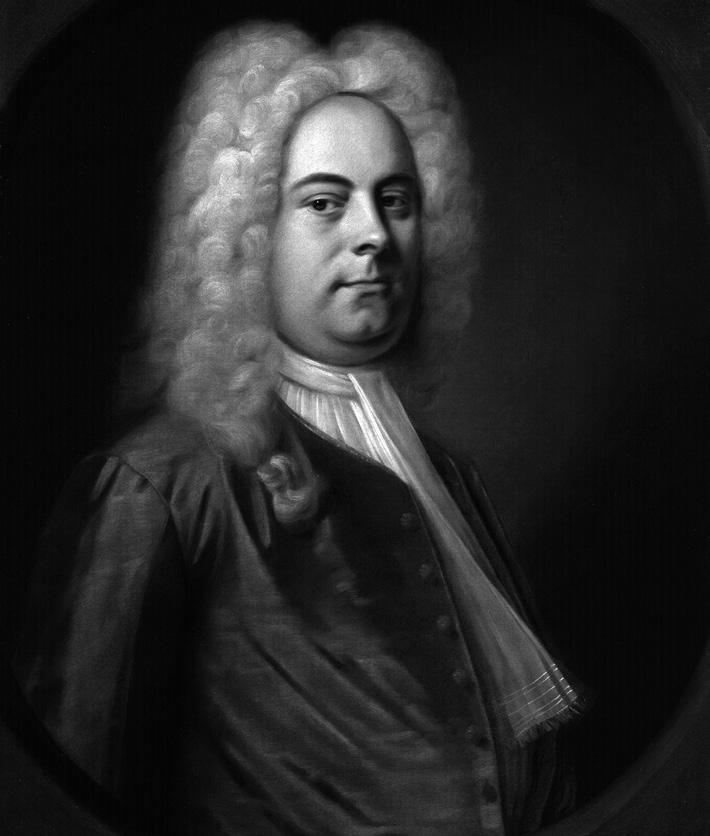
Just four years before Bach’s unsuccessful job application, George Frideric Handel was involved in a major musical project of his own for a man who proved – unlike the Margrave of Brandenburg – a
steadfast and faithful employer. George, Elector of Hanover, gave Handel one of his first jobs, as music director at his Saxon court, and even put up with the musician’s incessant travels across the Channel for engagements in London. Handel left George’s employment after just a few months – it’s unclear whether he jumped or was pushed – but when the Elector assumed the British throne in 1714, becoming King George I, any animosity was quickly put aside, and Handel became a valued musical collaborator.
Musical water excursions were then all the rage among European royalty and the super-rich. There was something of a craze for river trips with accompaniment from live musicians, and even for mock naval battles enacted for entertainment purposes. Most vividly remembered of all of them, however, is the trip aboard the Royal Barge that
King George I and his retinue undertook on the evening of 17 July 1717, departing from the Palace of Whitehall, arriving for dinner in Chelsea before returning to Whitehall. It wasn’t just the King and his company who were out on the river that evening: many Londoners were intent on joining the festivities, to the extent that the Daily Courant reported that ‘many other Barges with Persons of Quality attended, and so great a Number of Boats, that the whole River in a manner was cover’d’. And for this grand occasion, the King had asked Handel to supply the music.
Let’s return to the Daily Courant for a description of the evening: ‘A City Company’s Barge was employ'd for the Musick, wherein were 50 instruments of all sorts, who play’d all the Way from Lambeth the finest Symphonies, compos’d express for this Occasion, by Mr Hendel; which his Majesty liked so well, that he caus’d it to be plaid over three times in going and returning. At Eleven his Majesty went a-shore at Chelsea where a Supper was prepar’d, and then there was another very fine Consort of Musick, which lasted till 2; after which, his Majesty came again into his Barge, and return’d the same Way, the Musick continuing to play till he landed.’
Handel composed three Water Music suites for the occasion. It was long assumed that they’d been separated between outgoing journey, meal and return, though it’s now thought that all three were probably played at all three stages. However the music’s scheduling worked, tonight’s Suite No. 1 would have kicked off the celebrations, and Handel ensured a rich and diverse collection of dances and other pieces to entertain and captivate his royal listeners. The opening Overture contrasts a stately,
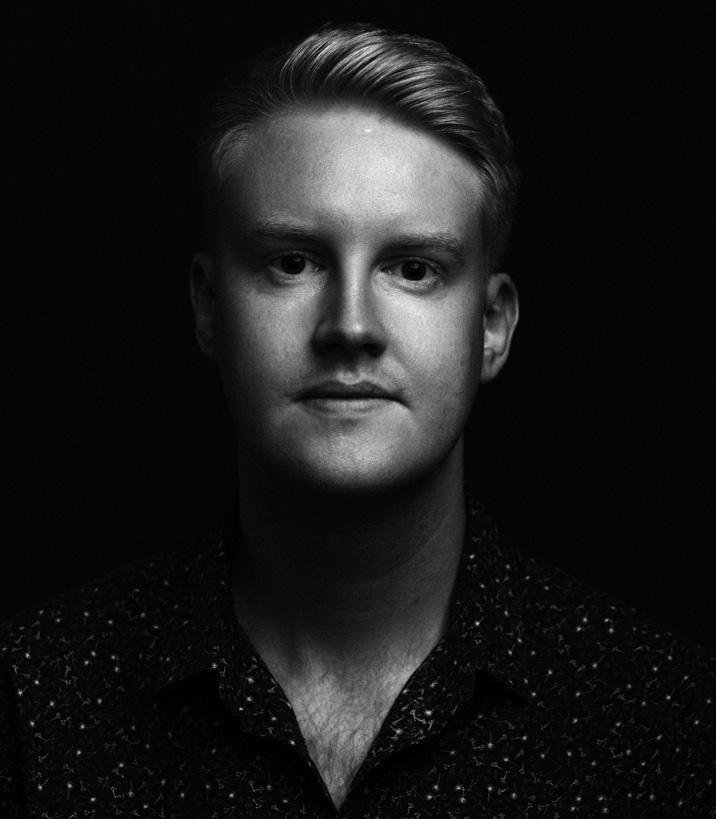
ceremonial opening with a far jollier, faster section, and it’s followed by a thoughtful oboe aria, and then a sonorous, and celebratory Allegro with prominent horns. A gently flowing Andante opens a short set of dances, leading to a livelier, three-time Allegro, a gently moving Air and a brisk and bracing Minuet.
From early 18th-century London, we leap to very much the present day for tonight’s next piece, which is receiving its very first performances. Ayrshire-born Jay Capperauld is the Scottish Chamber Orchestra’s Associate Composer, and has written many new works specially for the Orchestra. His theatrical work for families, The Great Grumpy Gaboon , has delighted audiences right across Scotland, while his macabre Bruckner’s Skull deals with death and obsession (and can be experienced online as part of the SCO’s current Digital
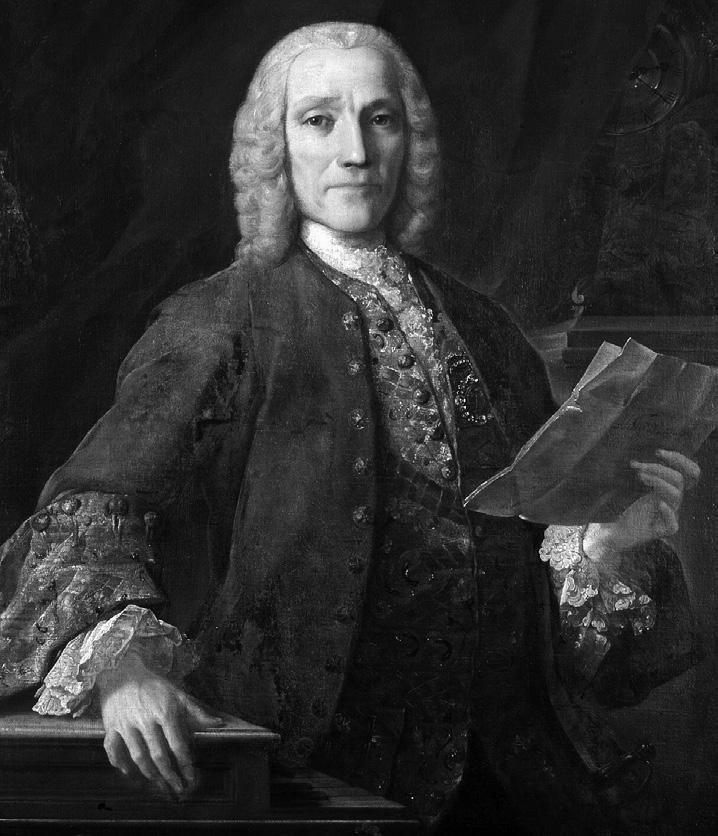
Stylus
Scarlatti is
an orchestral re-imagining of four famous keyboard sonatas by the Italian Baroque composer Giuseppe Domenico Scarlatti
Season). His cantata The Language of Eden , written in collaboration with Scottish poet Niall Campbell, considers nothing less than the birth of verbal communication itself, and receives its premiere in March.
Capperauld writes about tonight’s new piece:
Stylus Scarlatti is an orchestral reimagining of four famous keyboard sonatas by the Italian Baroque composer Giuseppe Domenico Scarlatti. With a total of 555 sonata works for keyboard, this piece makes a feature of opus numbers K.159, K.141, K.32 and K.209 to create a whole musical journey that explores Scarlatti's wide-ranging, theatrical styles. From the hunting fanfares of K.159 in C major, to the strident ferocity of K.141 in D minor, to the soporific melancholy of
K.32 in D minor and the lilting elegance of K.209 in A major, this new orchestration for chamber orchestra takes its title from the Baroque-inspired ‘stylus fantasticus’ musical form, as though Stylus Scarlatti is a work in and of the style of the great composer.
From a fantastical musical style, we move in tonight’s final piece to – well, something equally fantastical, but perhaps more than a little grotesque too. Whether Alfred Schnittke’s Gogol Suite is smiling or snarling is probably for you to decide.
Schnittke shot to notoriety in the 1980s and 1990s after being virtually unknown – to Western listeners, at least – despite decades of prolific work. There was a simple reason for that lack of recognition, however: Schnittke lived almost his entire life under the strictures of the Soviet
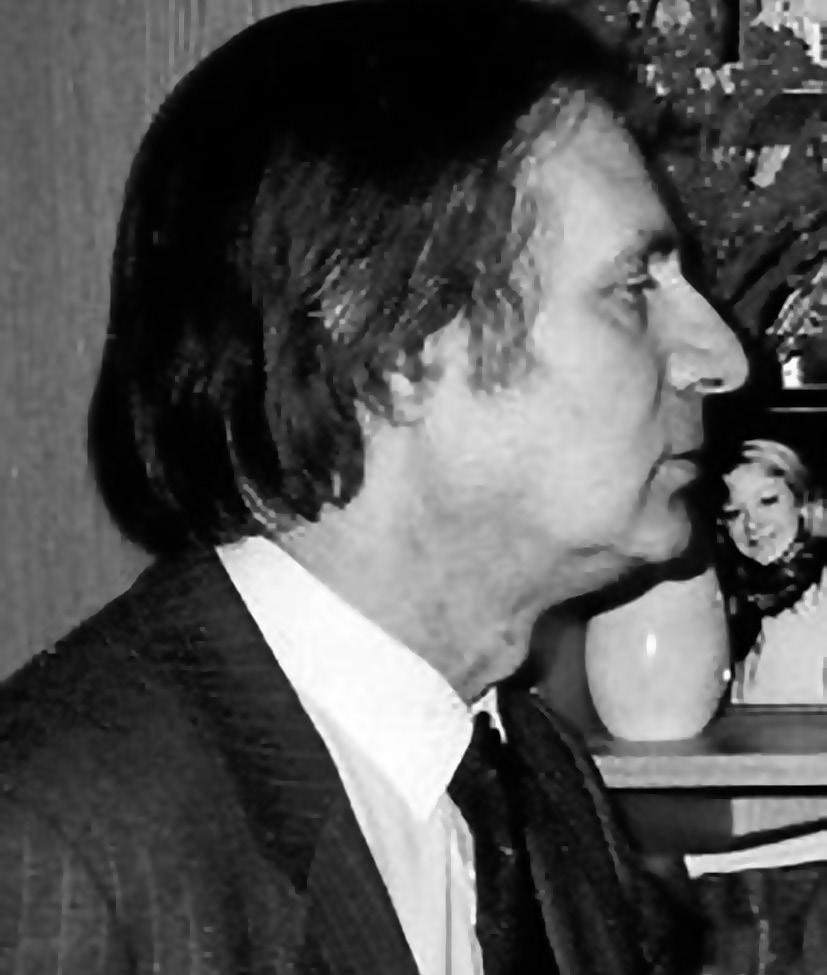
He was widely considered the heir to Shostakovich’s legacy, continuing that earlier composer’s uncanny mix of despair, frustration and often bitter, sarcastic humour. In Schnittke’s music, it’s often hard to tell where one stops and the other begins.
regime, and though his abilities and expertise were recognised within the USSR, his music was rarely permitted to be heard west of the Soviet bloc. Nonetheless, in his home country – and, as time went on, beyond – he was widely considered the heir to Shostakovich’s legacy, continuing that earlier composer’s uncanny mix of despair, frustration and often bitter, sarcastic humour. In Schnittke’s music, it’s often hard to tell where one stops and the other begins.
Despite Soviet strictures, however, Schnittke was able to gain a few glimpses of Western musical developments throughout his life, especially during the so-called ‘Krushchev thaw’ that followed the death of Stalin in 1953, when avantgarde ideas began seeping into the USSR from Western Europe. He had great success as a composer for film, television
and the theatre, and it was the demands of those forms that set him down the path that he would follow later in his career. Used to combining numerous different musical styles within a single score, often switching back and forth between them nimbly as a storyline demanded, Schnittke quickly adopted this freewheeling mix of styles – later termed ‘polystylism’ – as his overarching musical approach.
Anyone who heard the SCO performing Schnittke’s Concerto Grosso No.1 earlier in this Season will already have encountered this approach to creating music – sometimes disconcerting, but undeniably powerful. It’s an approach that’s been criticised for an apparent lack of authenticity, as though we’re never quite sure which one of these musical impersonations represents the ‘real’ Schnittke. The answer is probably
that they all do – or at least that the apparently irreconcilably different styles add up to music that reflects the profusion and confusion of ideas and voices we habitually encounter in modern-day life.
All that said, there’s a big question as to whether you could legitimately describe Schnittke’s Gogol Suite as polystylistic, or whether it’s simply packed full of quotations from earlier composers (and, it has to be said, from Schnittke himself). The Suite began life as incidental music to a play – The Revision List – staged at Moscow’s Taganka Theatre in 1976 by the influential Soviet director Yuri Liubimov. It was Liubimov’s own creation, hurling together storylines, characters and themes from across the works of the early 19th century writer Nikolai Gogol in a madcap, somewhat chaotic revue, and Liubimov decided that Schnittke was just the man to create its music. For his part, Schnittke was reportedly so enthused with the project that he’d attend rehearsals, then dash to the director’s house to throw down his musical ideas on manuscript paper. As well as drawing on his experience of writing for film, TV and theatre, Schnittke stated that he was also attempting to reflect the show’s disarming mix of farcical comedy and deep tragedy, a blend that can only have come from the imagination of the great Ukraineborn novelist and playwright.
Indeed, Gogol was (and remains) something of a revered figure in Russia and its neighbouring countries, known for his unmistakable mix of harsh realism, madcap comedy and often deeply grotesque elements. With its comic absurdity, pitch-black humour and sly condemnations of society’s shortcomings, it’s perhaps no surprise that Gogol’s
writing drew such enthusiasm from Schnittke. Accordingly, the score he put together – for an unusual orchestra including electric guitar and bass, flexatone (you’ll know it when you hear it), organ, harpsichord, piano, celeste, bells, even prepared piano – collides together musical styles and quotations, revelling in their incompatibility, and is as cunningly crafted as it is bluntly effective. This probably accounts for the much-loved Soviet conductor Gennady Rozhdestvensky, the show’s musical director, feeling that the music needed a future life in the concert hall and putting tonight’s Suite together himself.
Mocking fanfares lead to strange, strident, Baroque-style music in the chaotic opening Overture – which eventually reveals itself to have been quoting a very familiar piece by Beethoven all along. ‘Chichikov’s Childhood’, based around Gogol’s novel Dead Souls , might sound a little like Haydn’s ‘Surprise’ Symphony – though what Schnittke does with his innocuous opening theme is a long way from the 18th century.
‘The Portrait’ – based on a Gogol short story of the same name – begins as a desolate, musical-box-style waltz, but eventually winds itself up into a kind of warped delirium before crashing down again. It’s an apt musical parallel for Gogol’s story of an aspiring artist who’s corrupted by wealth and fame, and sets out to destroy the very works he admires.
Similarly, ‘The Overcoat’ closely follows the storyline of Gogol’s short story of the same name. Poor clerk Akaky Bashmachkin’s life briefly gains meaning when he saves enough to buy a new overcoat, but when
Schnittke transports us to Gogol’s birthplace, where a fragile but steadfast ‘Ukrainian Folk Song’ continues undeterred despite an increasingly shrill and strident sonic onslaught from the orchestra. The troubled relationship between Gogol’s native Ukraine and larger, more powerful Russia involved subjugation and control in both Gogol and Schnittke’s different times – and, of course, remains an issue that’s very pertinent to us today.
it’s stolen, his new-found confidence comes crashing down. Likewise, after a macabre opening for piano, harpsichord and celeste, Schnittke’s music quickly becomes far more lavish – if not downright raucous – before petering out to virtually nothing. The themes of ‘The Overcoat’ continue in the dreamy ‘Ferdinand VIII’, inspired by Gogol’s Diary of a Madman , whose delusional protagonist believes himself to be the fictional monarch.
A well-known theme from Mozart’s The Marriage of Figaro Overture gets piled up into teetering towers of music in ‘The Bureaucrats’, a portrait of government paper-pushers whose lives have lost all meaning (with, perhaps, a bit of Tchaikovsky thrown in too?). It builds a terrifyingly powerful, unstoppable momentum before stopping suddenly on an enigmatic chord from the electric guitar.
‘The Ball’ returns to Gogol’s Dead Souls and assigns its deathly waltz tune to prepared piano, solo double bass, bells, tuba, even some whistling from the orchestral players. Bells return in the majestic but mysterious ‘Testimony’, based on Gogol’s descriptions of Russia. To close, however, Schnittke transports us to Gogol’s birthplace, where a fragile but steadfast ‘Ukrainian Folk Song’ continues undeterred despite an increasingly shrill and strident sonic onslaught from the orchestra. The troubled relationship between Gogol’s native Ukraine and larger, more powerful Russia involved subjugation and control in both Gogol and Schnittke’s different times – and, of course, remains an issue that’s very pertinent to us today.
© David Kettle
Sun 22 February, 3pm
The Queen’s Hall, Edinburgh sco.org.uk
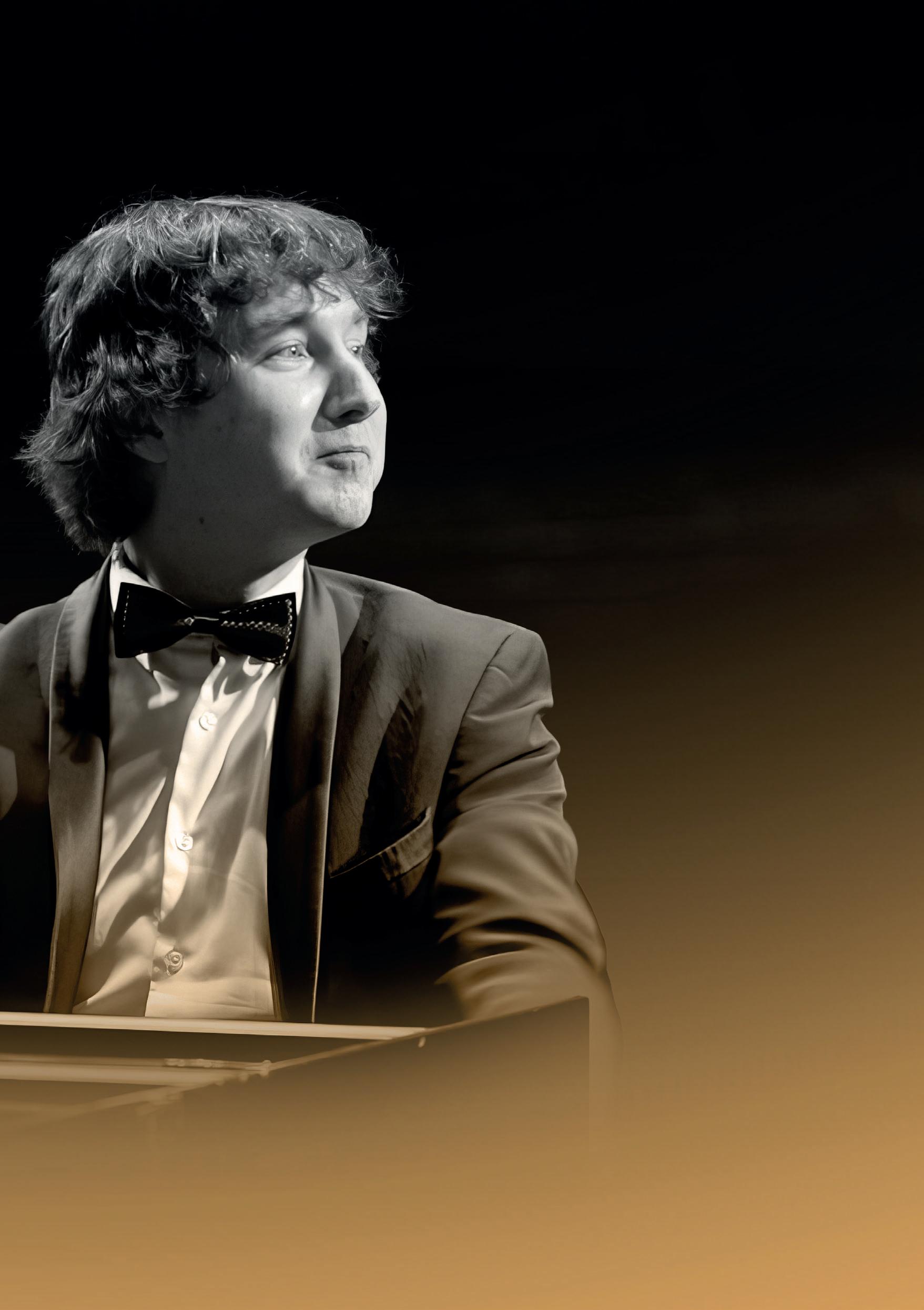
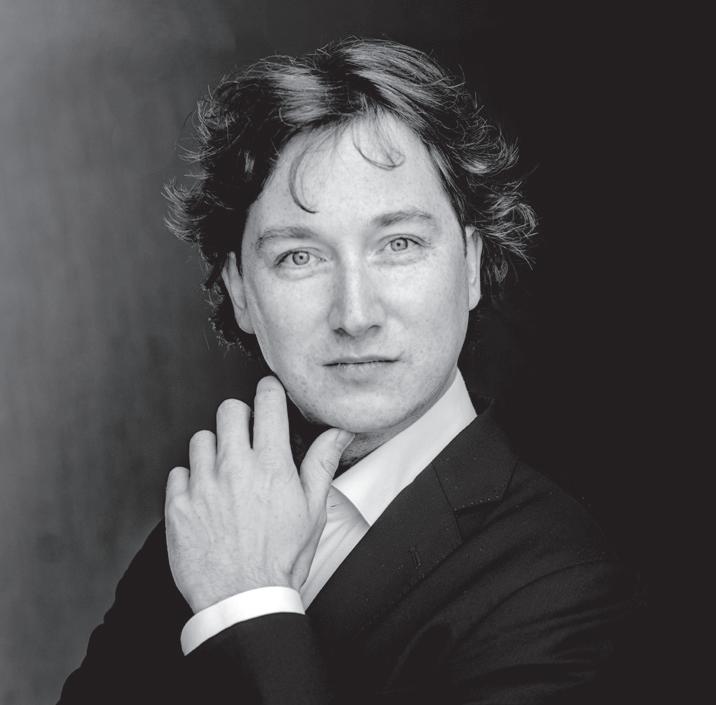
Maxim Emelyanychev has been Principal Conductor of the Scottish Chamber Orchestra since 2019. He is also Chief Conductor of period-instrument orchestra Il Pomo d’Oro, and became Principal Guest Conductor of the Swedish Radio Symphony Orchestra from the 2025/26 Season.
Born in Nizhny Novgorod, Emelyanychev made his conducting debut at the age of 12, and later joined the class of eminent conductor Gennady Rozhdestvensky at the Moscow Conservatoire.
Emelyanychev was initially appointed as the SCO’s Principal Conductor until 2022, and the relationship was later extended until 2025 and then until 2028. He has conducted the SCO at the Edinburgh International Festival and the BBC Proms, as well as on several European tours and in concerts right across Scotland. He has also made three recordings with the SCO, of symphonies by Schubert and Mendelssohn (Linn Records).
Emelyanychev has also conducted many international ensembles including the Berlin Philharmonic, Royal Concertgebouw Orchestra, Orchestra dell'Accademia Nazionale di Santa Cecilia, Deutsches Symphonie-Orchester Berlin, Rotterdam Philharmonic Orchestra, Finnish Radio Symphony Orchestra, Seattle Symphony and Orchestra of the Age of Enlightenment. In the opera house, Emelyanychev has conducted Handel’s Rinaldo at Glyndebourne, the same composer’s Agrippina as well as Mozart’s The Magic Flute at the Royal Opera House, Covent Garden, and Mozart’s Die Entführing aus dem Serail at the Opernhaus Zürich. He has also conducted Mozart’s Die Zauberflöte, Così fan tutte and La Clemenza di Tito with the SCO at the Edinburgh International Festival. He has collaborated closely with US soprano Joyce DiDonato, including international touring and several recordings.
Among his other recordings are keyboard sonatas by Mozart, and violin sonatas by Brahms with violinist Aylen Pritchin. He has also launched a project to record Mozart’s complete symphonies with Il Pomo d’Oro. In 2019, he won the Critics’ Circle Young Talent Award and an International Opera Award in the newcomer category. He received the 2025 Herbert von Karajan Award at the Salzburg Easter Festival.
For full biography please visit sco.org.uk
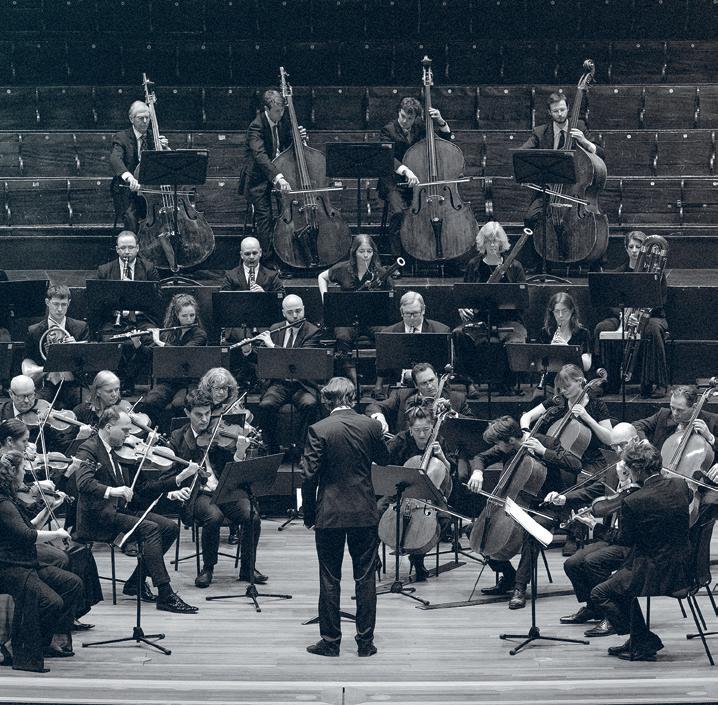
The Scottish Chamber Orchestra (SCO) is one of Scotland’s five National Performing Companies and has been a galvanizing force in Scotland’s music scene since its inception in 1974. The SCO believes that access to world-class music is not a luxury but something that everyone should have the opportunity to participate in, helping individuals and communities everywhere to thrive. Funded by the Scottish Government, City of Edinburgh Council and a community of philanthropic supporters, the SCO has an international reputation for exceptional, idiomatic performances: from mainstream classical music to newly commissioned works, each year its wide-ranging programme of work is presented across the length and breadth of Scotland, overseas and increasingly online.
Equally at home on and off the concert stage, each one of the SCO’s highly talented and creative musicians and staff is passionate about transforming and enhancing lives through the power of music. The SCO’s Creative Learning programme engages people of all ages and backgrounds with a diverse range of projects, concerts, participatory workshops and resources. The SCO’s current five-year Residency in Edinburgh’s Craigmillar builds on the area’s extraordinary history of Community Arts, connecting the local community with a national cultural resource.
An exciting new chapter for the SCO began in September 2019 with the arrival of dynamic young conductor Maxim Emelyanychev as the Orchestra’s Principal Conductor. His tenure has recently been extended until 2028. The SCO and Emelyanychev released their first album together (Linn Records) in 2019 to widespread critical acclaim. Their second recording together, of Mendelssohn symphonies, was released in 2023, with Schubert Symphonies Nos 5 and 8 following in 2024.
The SCO also has long-standing associations with many eminent guest conductors and directors including Principal Guest Conductor Andrew Manze, Pekka Kuusisto, François Leleux, Nicola Benedetti, Isabelle van Keulen, Anthony Marwood, Richard Egarr, Mark Wigglesworth, Lorenza Borrani and Conductor Emeritus Joseph Swensen.
The Orchestra’s current Associate Composer is Jay Capperauld. The SCO enjoys close relationships with numerous leading composers and has commissioned around 200 new works, including pieces by Sir James MacMillan, Anna Clyne, Sally Beamish, Martin Suckling, Einojuhani Rautavaara, Karin Rehnqvist, Mark-Anthony Turnage, Nico Muhly and the late Peter Maxwell Davies.
SCO NEW MUSIC FUND
Make a donation between 12 February and 30 March and double the impact of your gift.
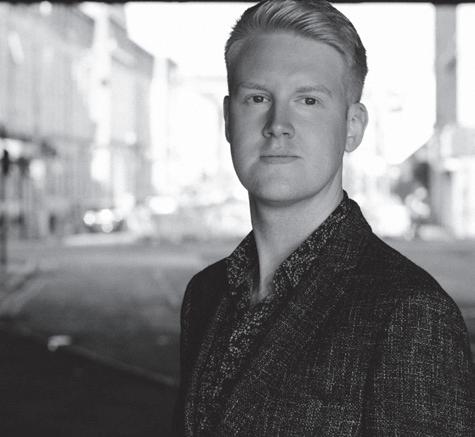
SCO Associate Composer Jay Capperauld
On Thursday 12 February, we’re launching the SCO New Music Fund to support new commissions and talented composers.
Every £1 will be doubled but only until Monday 30 March. Donations will be matched up to £30,000, meaning your gift goes twice as far. Together, we can help shape the sound of the future.
Thank you for your support!