
Science Gallery Bengaluru, India 29 – 31 October 2025
Executive
Reflections
Annexures




Science Gallery Bengaluru, India 29 – 31 October 2025
Executive
Reflections
Annexures
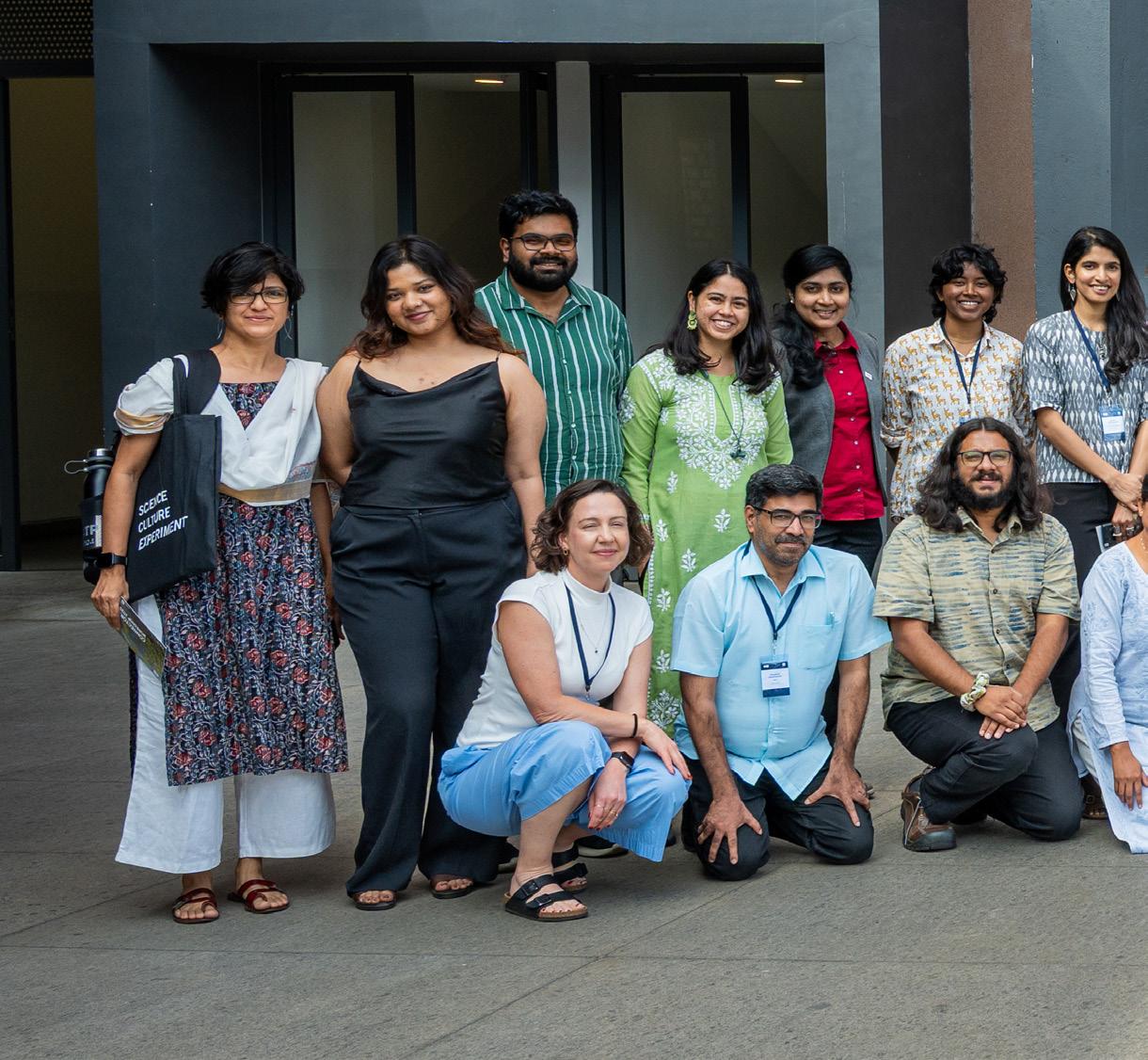
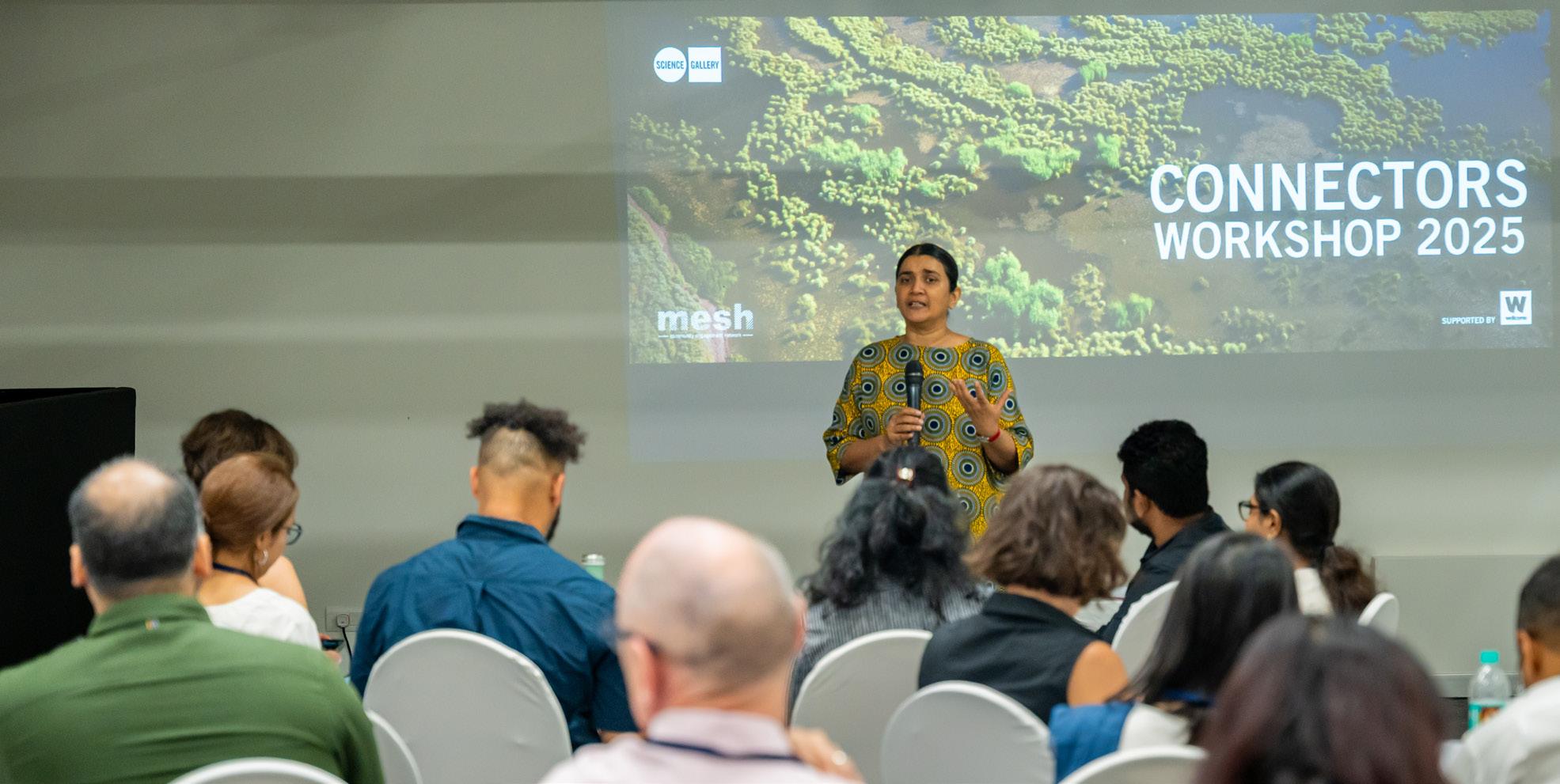
The Connectors Workshop 2025 was a three-day convening held at Science Gallery Bengaluru, India, from 29 to 31 October 2025.
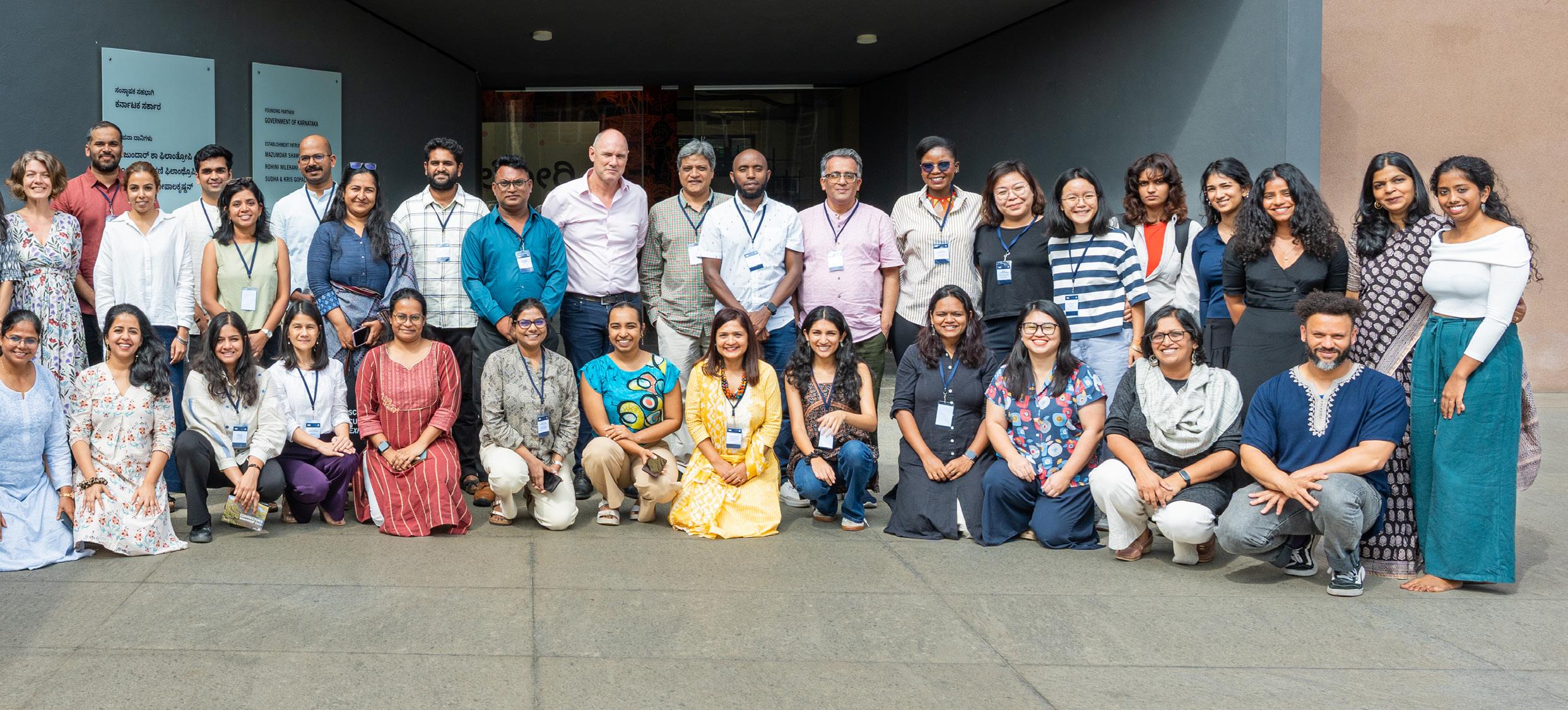
It marked the second iteration of a growing global effort to support a Community of Practice for those working at the intersection of health research and community engagement in the Global South. Building on the first convening in Cape Town (2022), the Bengaluru workshop brought together around 60 practitioners, researchers, funders, artists, and community advocates from across South Asia, Africa, South-east Asia, and beyond.
The workshop intentionally moved away from a conventional conference format. Instead, it was designed as a participant-led, practitioner-driven space that prioritised dialogue, reflection, and horizontal learning. The role of the “Connector” emerged not just as a functional bridge between research and communities, but as a critical yet often unrecognised actor navigating power, translation, and trust across these worlds.
A central thread throughout the workshop was a critical interrogation of “meaningful community engagement.” Participants reflected on how the term has often become diluted in institutional settings, and surfaced tensions around extractive research practices, tokenistic participation, and unequal ownership of knowledge. This came through strongly in discussions that challenged the “feeding tube” model of research, where knowledge and standards are unidirectionally transferred from Global North to Global South, and in reflections on structures like Community Advisory Boards (CABs), which were questioned as being at risk of becoming procedural “checkboxes” rather than spaces of genuine power-sharing.
At the same time, participants shared grounded examples of what more meaningful engagement can look like in practice. These included community-led filmmaking processes where local participants shaped narratives and acted in the films; creative formats such as comics and youth-led digital platforms that open up new entry points into science and health; and long-term, iterative engagement processes where research questions themselves were reshaped through sustained interaction with communities. Across these examples, a common thread was clear: engagement is not an add-on to research, but central to how knowledge is produced, interpreted, and used.
The workshop also foregrounded deeper questions of power and knowledge. Participants explored how lived experience can be recognised as expertise, particularly in areas such as mental health, infectious disease, and indigenous rights, and what it would take to move from consultation to genuine co-creation. Discussions on impact further pushed back against conventional metrics, arguing that shifts in trust, relationships, and narratives are often the most meaningful outcomes, even if they are harder to quantify.
Equally important was a recognition that the value of this space lies not in immediate outputs, but in what it enables. Connectors functioned as a rare peer-learning environment where participants could bring not just polished work, but also failures, tensions, and unresolved questions. This created a sense of professional solidarity that is often missing in institutional settings, particularly for those working in intermediary or boundaryspanning roles.
The convening concluded with a collective call to carry this forward while protecting the core ethos of the space. As Connectors grows, there is a recognised need to remain intentional about what this space is, and is not, so that it does not become subsumed by the very institutional pressures it seeks to challenge. Key next steps include nurturing local capsules, developing shared guiding principles and practical toolkits, strengthening digital platforms for ongoing exchange, and continuing to advocate for more equitable and community-led approaches within research systems.
Alun Davies
This was my first visit to Bengaluru, and I was struck by how much the experience of the city seemed to mirror the Connectors meeting itself; vibrant, busy, at times a little hectic, but also punctuated by moments of calm and reflection.That same sense of richness and contrast ran throughout the meeting.
I found myself moved in different ways by the themes, presentations, and discussions. There were moments that felt heavy, as we engaged with complex challenges, but these were balanced by a real sense of inspiration. I was particularly struck by how presenters drew on their creativity to respond to those challenges, often in thoughtful and unexpected ways.
The welcome we received from our hosts at Science Gallery Bengaluru made a lasting impression on me. It is such an inspiring space, and the warmth and generosity of the team created an environment where open exchange and genuine connection felt possible from the outset. What I will carry with me most, though, is the people. It’s rare to leave a meeting feeling that you’ve made real friends, but that is how this experience felt to me. I very much hope these connections will continue and grow into future collaborations.
I want to begin by thanking Sarah Iqbal for suggesting that we host the Connectors Workshop 2025 at Science Gallery Bengaluru. I also want to thank Beenish Shaikh of the Wellcome for taking the time to attend the workshop. Her presence brought home priority and the seriousness with which the Trust looks at the development of communities of practice in public engagement for global health.
Tasha Koch, Sarah Iqbal, Nabeel Petersen and Alun Davies held together the proceedings of the workshop with care. Their experiences were especially insightful for the attendees but also a learning opportunity for the Science Gallery Bengaluru team. Representatives of our funding partners: Shruti Sundaresan from the Rohini Nilekani Philanthropies and Pooja Sehgal from the Gates Foundation - were wonderful contributors to the workshop. They are also witnesses to how this hosting of practitioners from India and from the region has enhanced our convening capability and further consolidated our position as an important node in the public engagement ecosystem.
We, at Science Gallery Bengaluru, are committed to taking this further, as and when there is opportunity, and to contributing to the development of communities of practice in public engagement.
Connectors 2025 has stayed with me in a way that most meetings haven’t, reinforcing the idea that spaces like these are much-needed, not as one-offs, but as ongoing, intentional spaces for reflection, exchange, and solidarity. Due to the way academic conferences are designed, there is rarely room for deep, honest reflection on community engagement in research. That is precisely why hosting Connectors felt important.
As organisers, we tried to hold this meeting as enablers rather than conveners. That meant providing the infrastructure, setting the tone, but then stepping back and letting participants shape where things went. What emerged was a space that felt genuinely participant-led, rather than institution-driven. This shift matters. It creates the conditions for conversations to be more honest, more grounded, and less about performing the “right” answers. And you could feel that in the room. People brought not just their work, but also their doubts, tensions, and half-formed thoughts. There were moments of discomfort, but they didn’t feel out of place. If anything, they felt necessary. Sitting with those moments, rather than trying to resolve them too quickly, is where some of the most thoughtful and generative conversations unfolded.
At a time when inequities are deepening and health and research challenges are becoming more complex, we need more Connectors, people who can move across worlds, hold multiple perspectives, and keep things meaningfully connected. Spaces like this are part of how that becomes possible. Which is not just by bringing people together, but by helping us see ourselves, and each other, as part of something larger that is still taking shape.
The Connectors initiative grew informally before the pandemic, born out of conversations among community engagement practitioners who recognised that people doing this work often had no professional home. Nabeel Petersen, Tasha Koch, and Helen Latchem, working across different Global South contexts, pooled their energy and resources to create a space for honest and constructive peer exchange, first as a series of online sessions hosted on Mesh, part of The Global Health Network (TGHN).
Following this, the first in-person meeting, held in Cape Town in 2022, and partly supported by Wellcome, established the core ethos of the network: equity, openness, and critical reflection. The term “Connector” was adopted to recognise and validate those who work at the interface of research and communities; often advocating for community voices within systems that are not designed to accommodate them. The meeting also resulted in a detailed report, available on the Mesh platform.
Building on this foundation, the rationale for Connectors 2025 was to expand and strengthen the Connectors network across regions, while also deepening inquiry into how community engagement is practised, enabled, and constrained within health research systems. The workshop created an opportunity to bring together practitioners working in varied disciplinary, institutional and social contexts, and to place these experiences in conversation with one another.
At its core, the convening was designed not just as a space for exchange, but for collective sense-making, to interrogate the structural conditions that shape engagement, including funding, institutional incentives, ethics, and questions of power, representation, and accountability. It aimed to move beyond descriptive accounts of practice towards a more critical and grounded understanding of what meaningful community engagement requires in different settings.
Importantly, the workshop served as a space for solidarity, where participants could find shared purpose, build trust, and experience camaraderie with others navigating similar challenges. In doing so, it acknowledged that sustaining community engagement practice is not only about methods and frameworks, but also about the relationships and support systems that enable practitioners to continue this work over time.
The workshop was therefore conceived as both a continuation and a strengthening of the Connectors initiative — reinforcing its ethos while not only expanding its reach, but also deepening and diversifying the breadth of discussions. In doing so, it sought to move beyond the participation of Connectors towards more meaningful exchange, and to lay the groundwork for sustained collaboration and collective action within the network.

Strengthen and deepen a global community of practice around science and health engagement by bringing together practitioners across disciplines, sectors, and regions, and building a more cohesive, supportive network.
Elevate and more clearly articulate the role of Connectors, particularly in the Global South, by recognising their critical work in bridging research and communities, and making a case for sustained funding and institutional recognition.
Enable shared learning through the exchange of creative, participatory and contextually grounded approaches, enabling cross-learning while acknowledging the diversity of practices and contexts.
Take a longer-term view by collectively shaping a roadmap for the network, with the aim of guiding future collaboration and contributing more meaningfully to wider health and policy ecosystems through coordinated action.
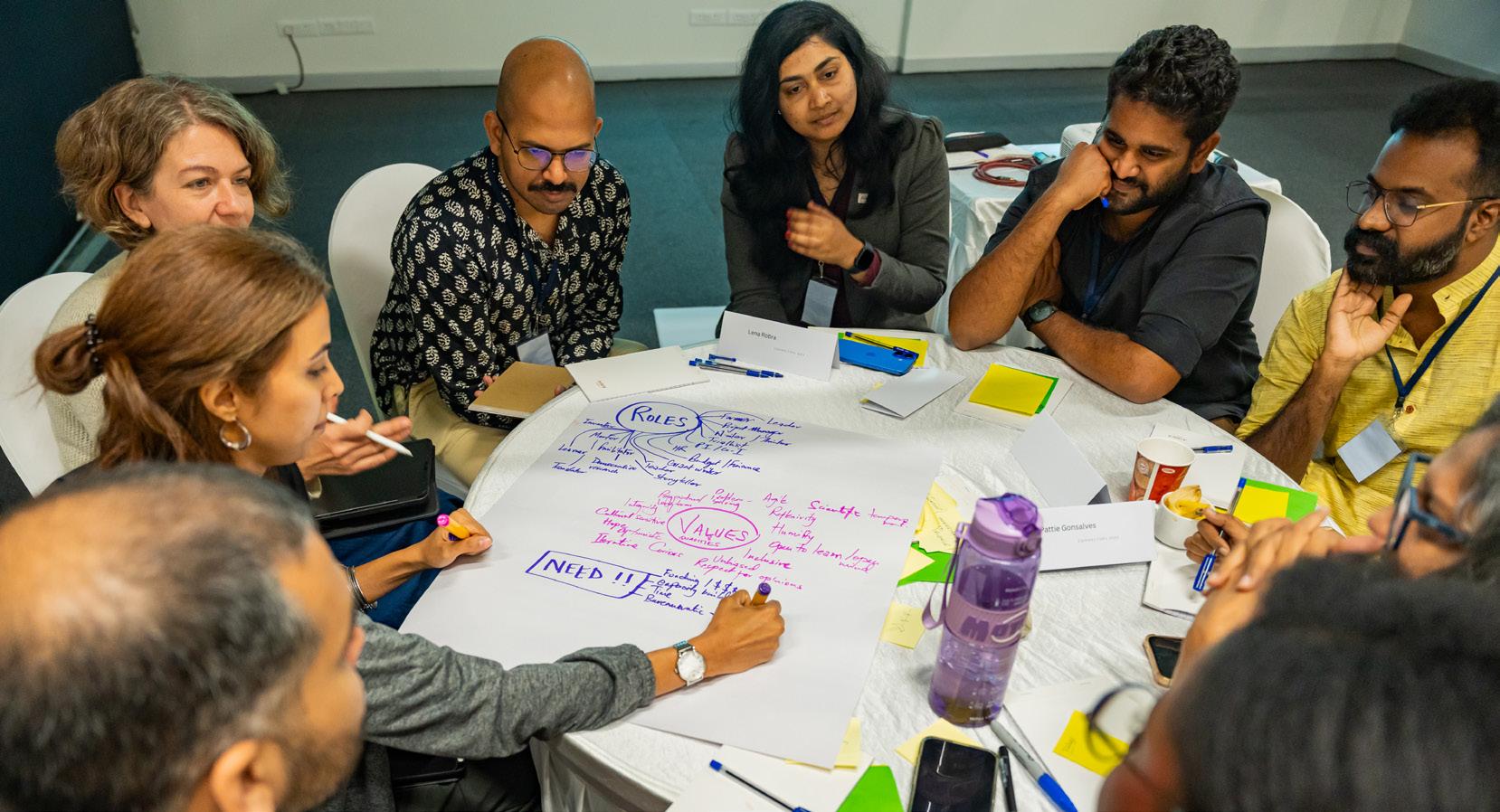
The workshop ecosystem comprised approximately 60 stakeholders representing a balanced mix of sectors and geographies.
• Geographic Mix: Majority representation from India (~50), Indonesia, Kenya, Nepal, South Africa, Thailand, UK and Vietnam (~10).
• Sectoral Diversity: The participants included senior academic researchers (e.g., IPH Bengaluru, Sangath), NGO practitioners (e.g. The Banyan, SEARCH Gadchiroli), international funders (Rohini Nilekani Philanthropies, Wellcome), and creative storytellers (Eh!woza, Shujaaz Inc).
• Stakeholder Roles: Participants ranged from medical doctors and sociologists to community advocates. This diversity ensured that discussions on power and equity were grounded in varied professional realities.
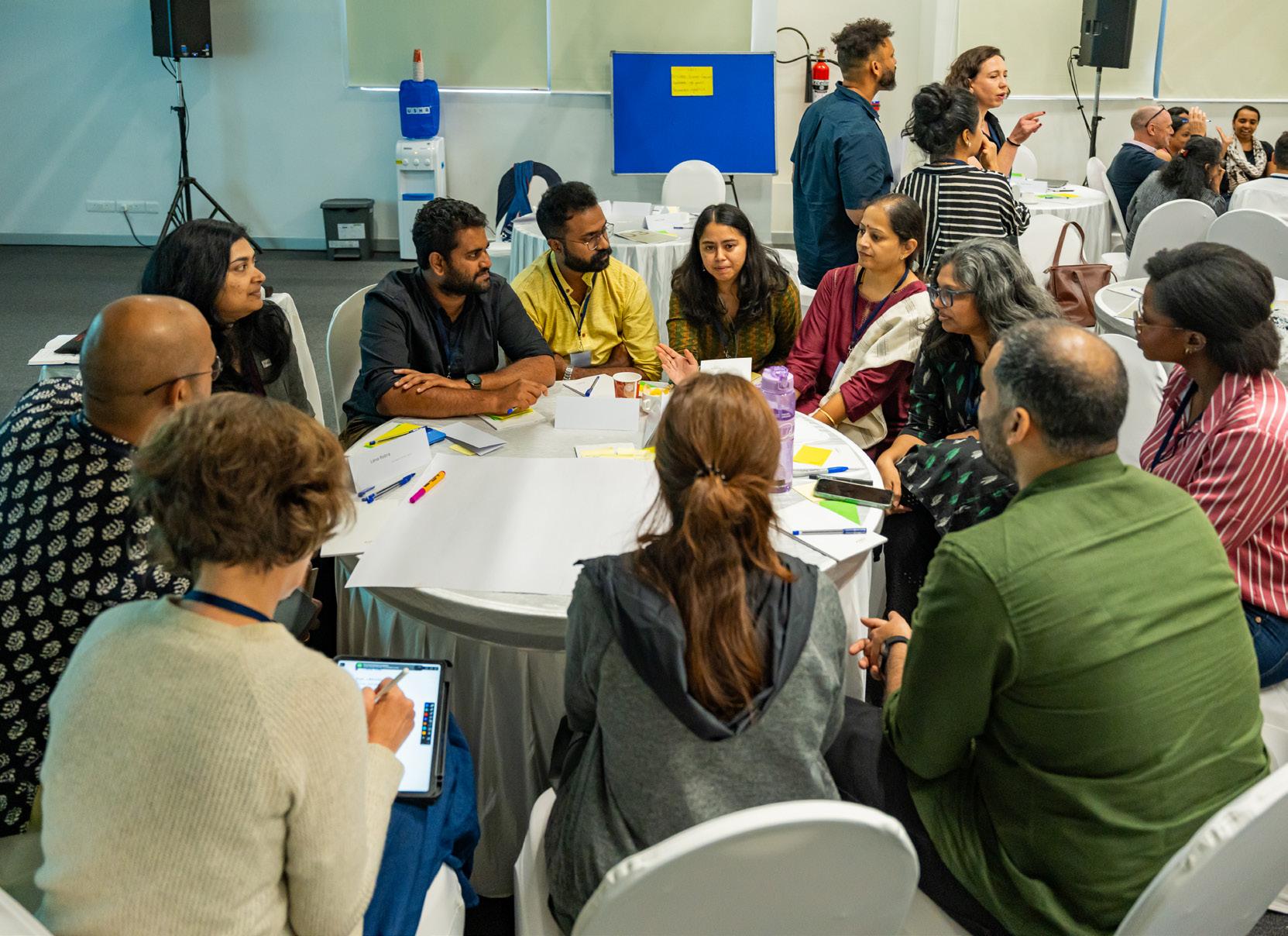
The design logic of Connectors 2025 centered on creating a “learning container” a safe, democratic space for co-learning, failure-sharing and networking.
While the organisers set the overall structure, the substance of the workshop was shaped by participants themselves, with sessions facilitated by those in the room rather than external experts.
• Traditional hierarchies were intentionally flattened by centring dialogue and peer exchange over formal presentations, creating a more democratic and participatory environment.
• Formats like Chai and Chat enabled informal, one-on-one conversations through random pairings, allowing for quieter, more personal exchanges that might not surface in larger group settings.
• The Open Marketplace created space for participants to self-organise around emerging themes, giving them agency to shape discussions based on what felt most relevant in the moment.
• Daily reflection sessions ensured that the workshop remained responsive, allowing the group to collectively adapt the agenda based on what was surfacing in the room.
• Creative icebreakers helped build comfort and trust early on, making it easier for participants to engage openly, take risks in sharing, and move beyond surface-level interactions.
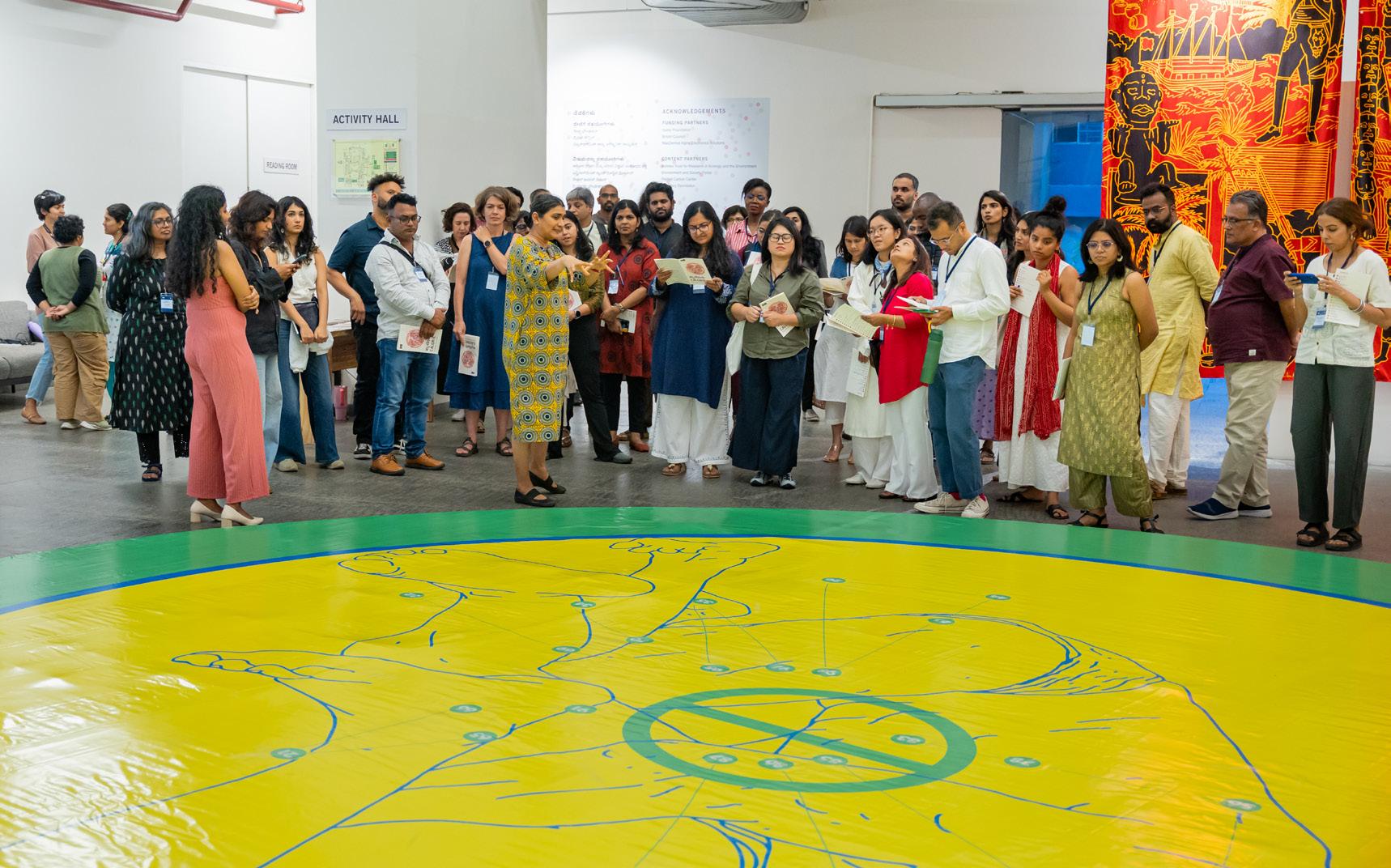
The physical and sensory context of the workshop was also an important part of its design. A guided visit to the Science Gallery Bengaluru’s CALORIE exhibitionseason (https://bengaluru.sciencegallery.com/) offered a shared experiential anchor and a tangible example of publicly engaged research in practice. In parallel, a community lunch prepared by Sarjapura Curries, an ecological food initiative led by artist Suresh Kumar, brought in elements of local, embodied knowledge, grounding the conversations in lived experience beyond the formal sessions.
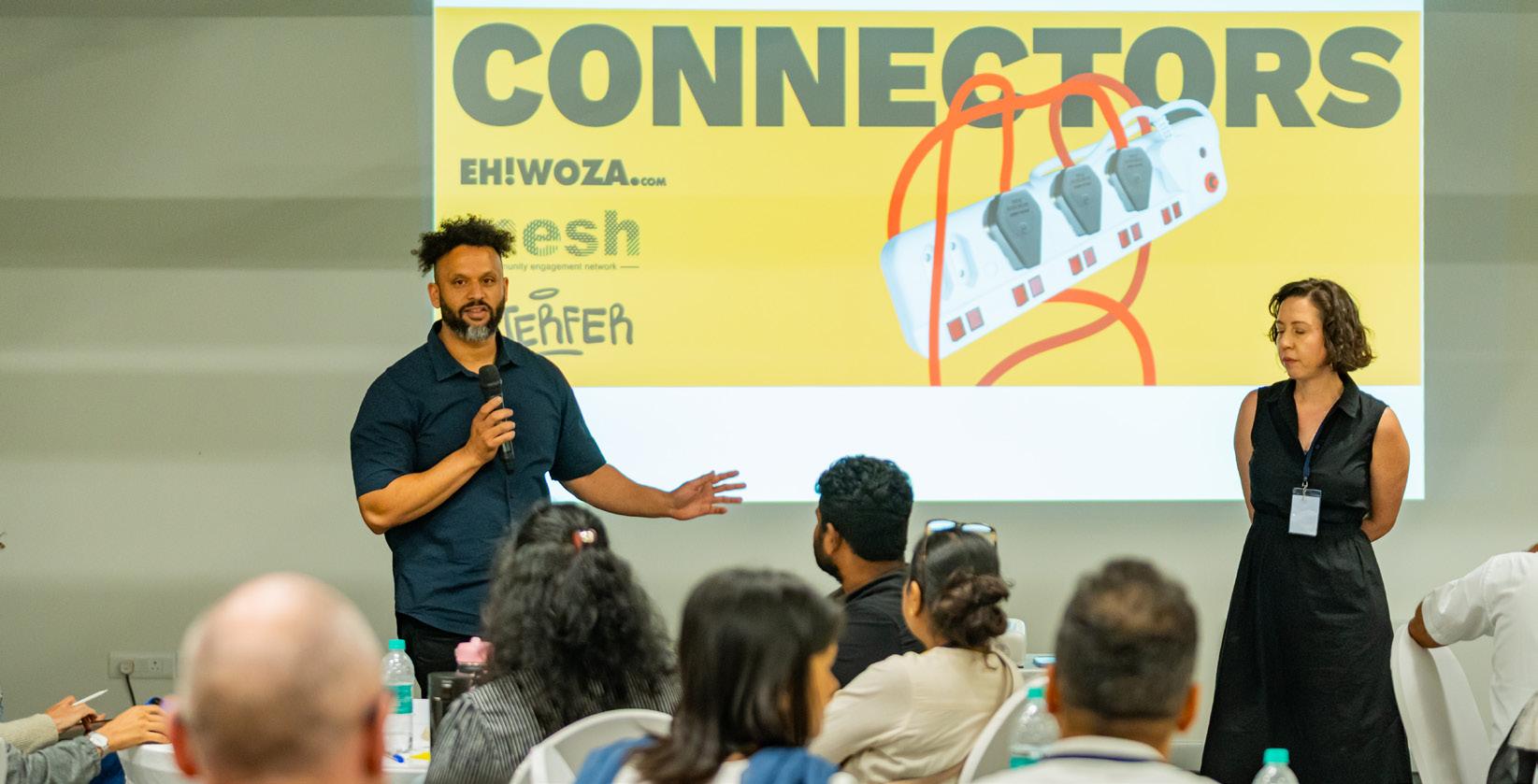
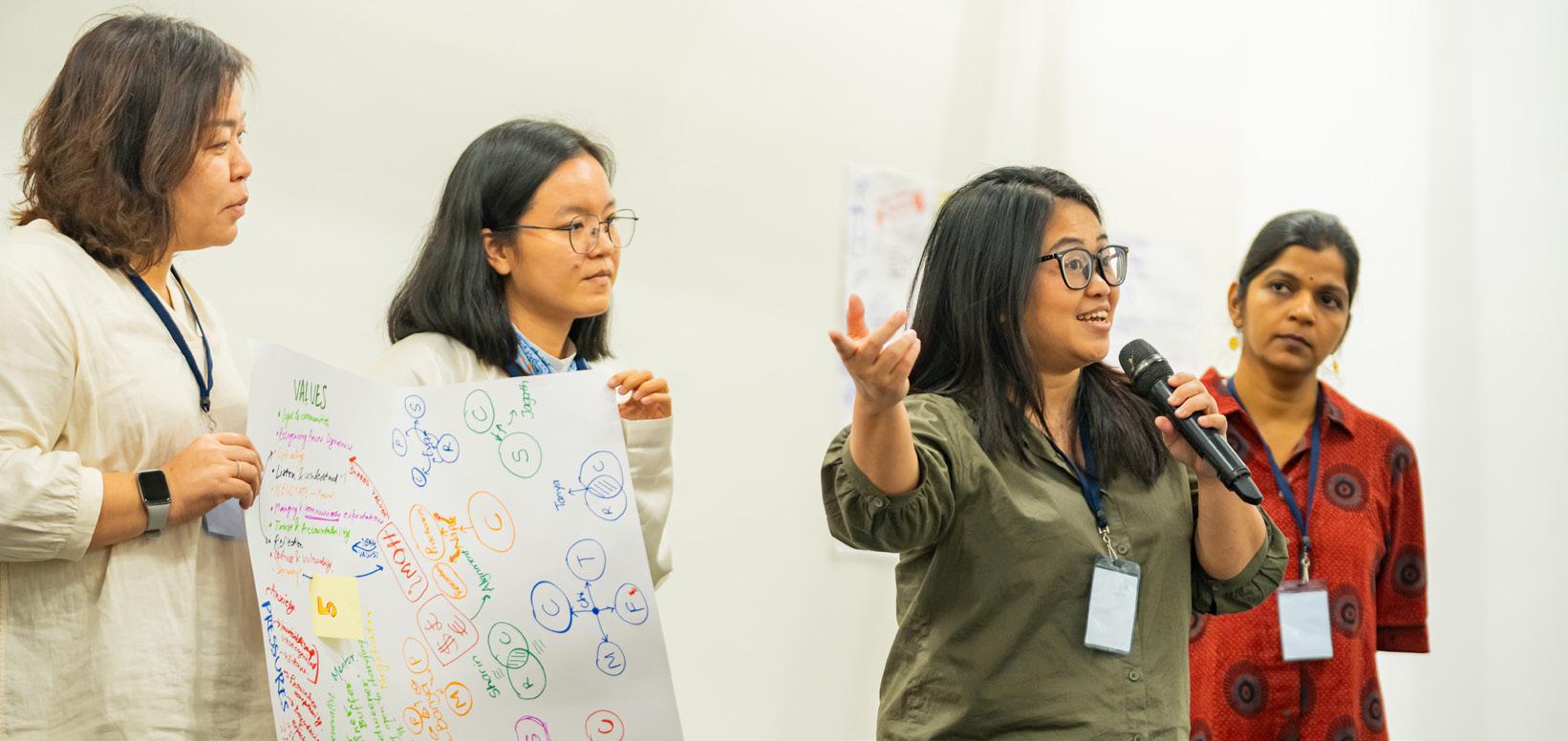
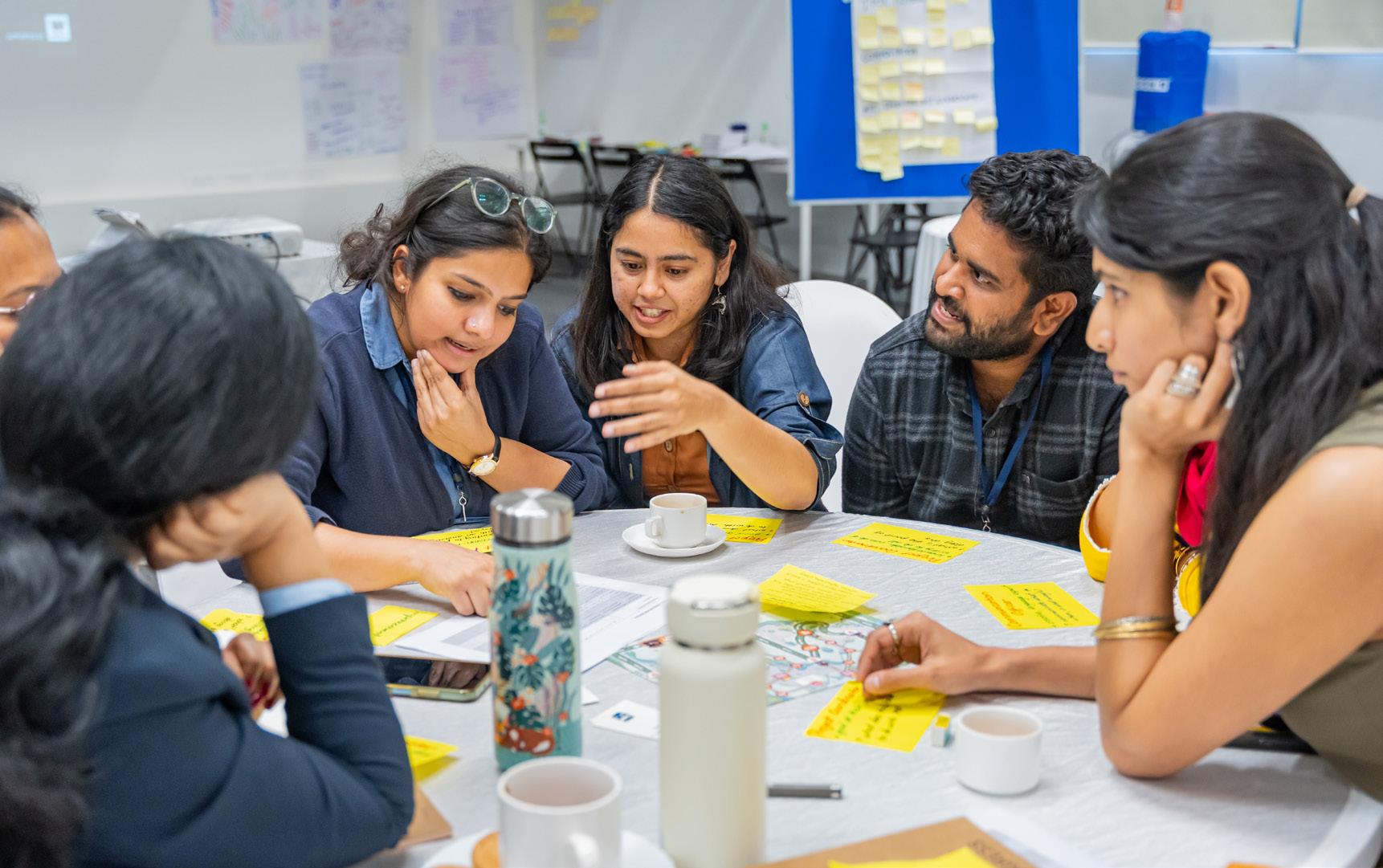
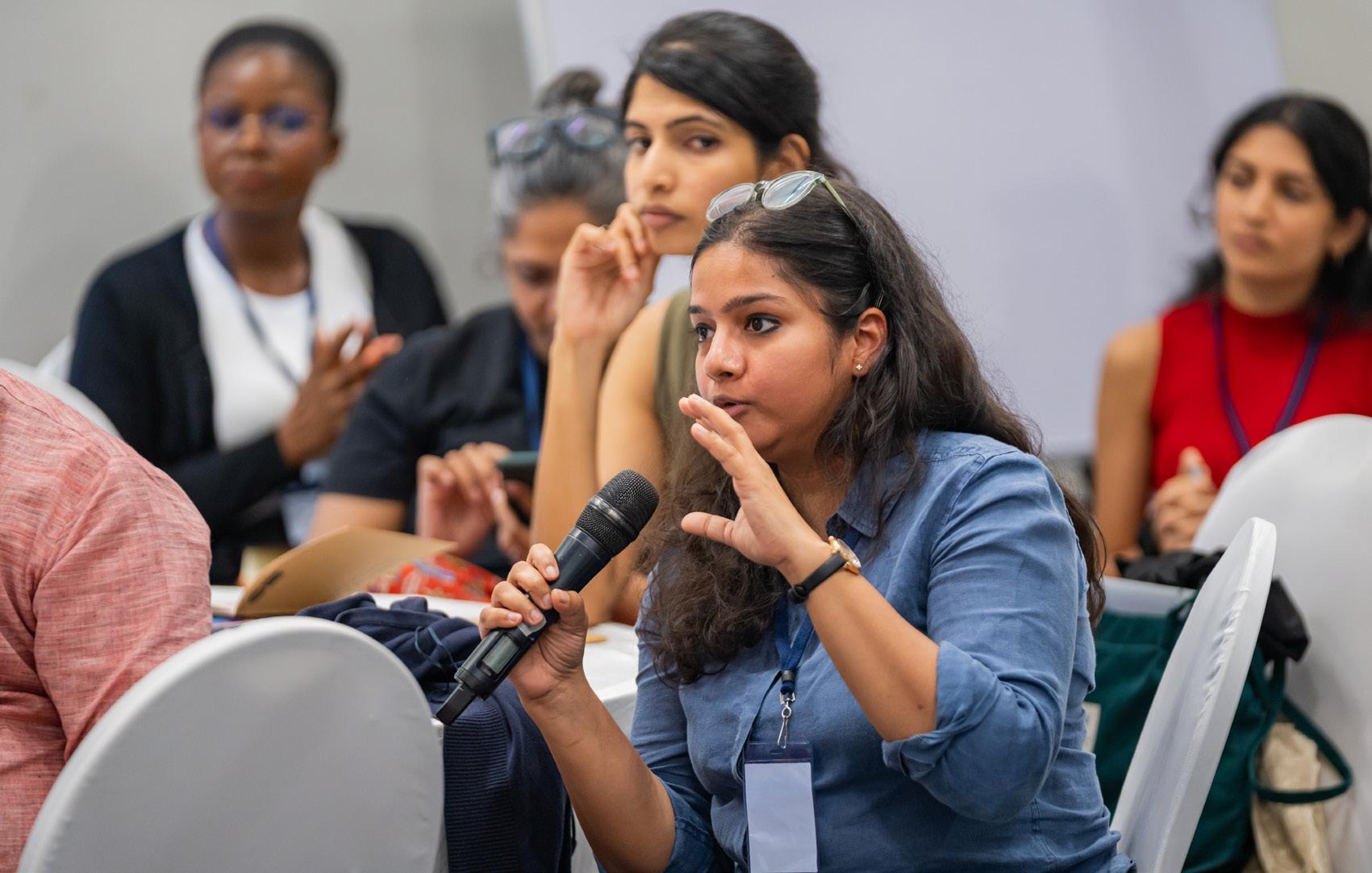
Image: Participants sharing the challenges they face in their role as a connector.
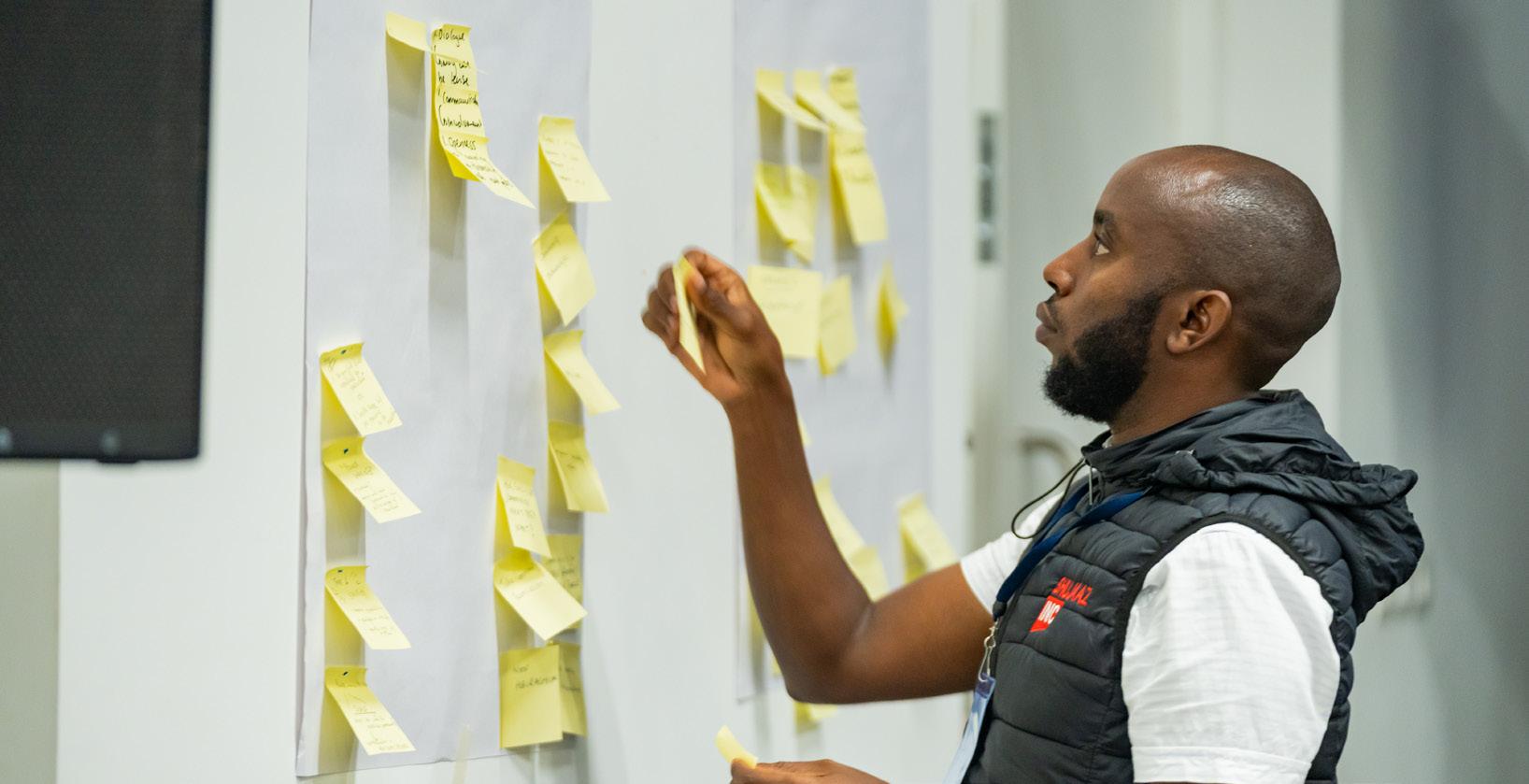
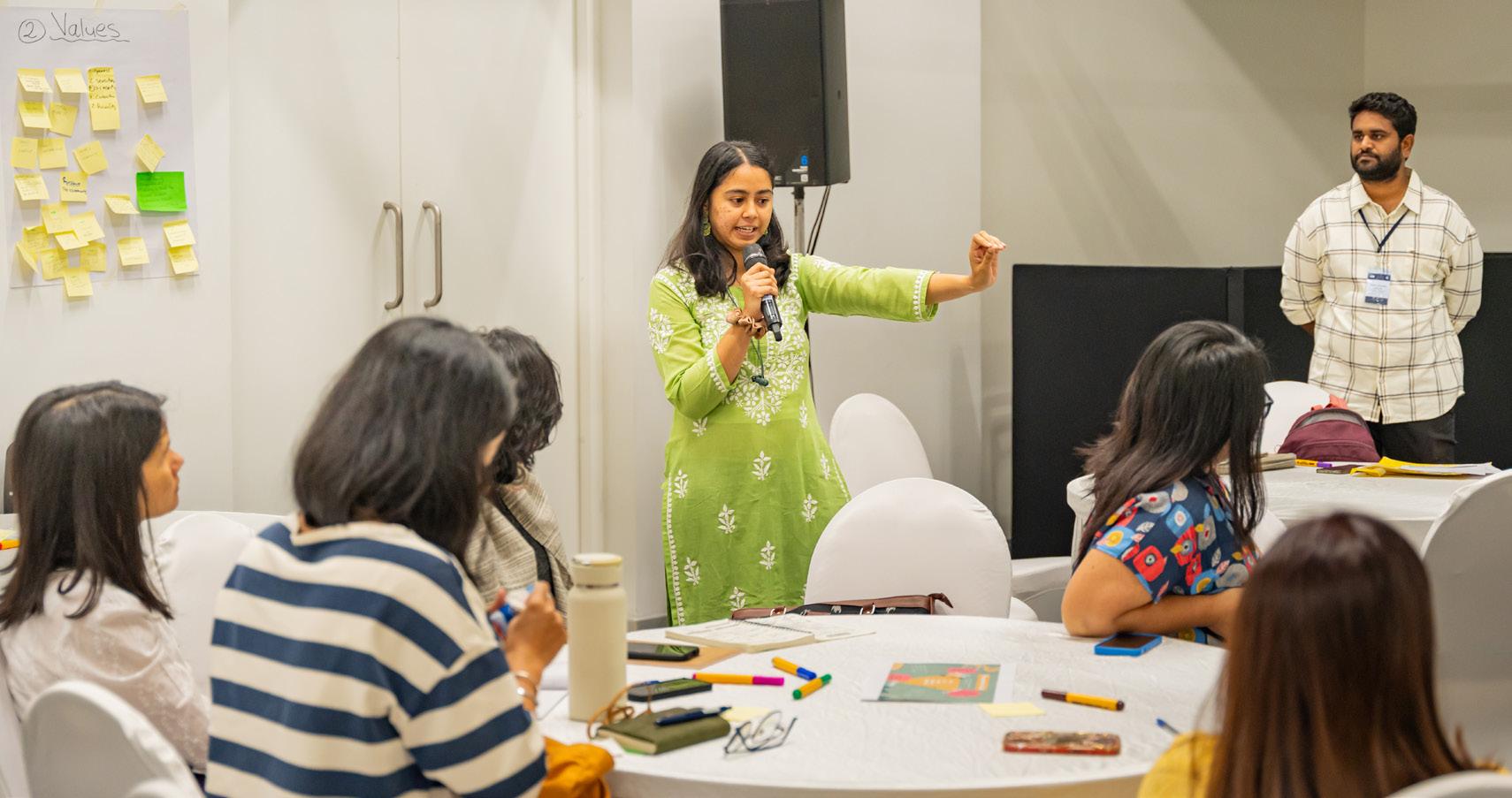
Image: Participants sharing their feedbacks and takeaways.
Speakers: Jahnavi Phalkey (Founding Director, Science Gallery Bengaluru) and Sarah Hyder Iqbal (Independent Researcher).
The opening session served as the conceptual and institutional anchor for the workshop. Jahnavi Phalkey introduced Science Gallery Bengaluru (SGB) as a “two-way bridge” between research and the public, emphasizing that the gallery is not just a place for exhibitions but a mentorship institution. She explained SGB’s goal to socialize a new generation of young adults (ages 15-30) into interdisciplinary thinking, ensuring that public engagement becomes an intrinsic part of scientific culture rather than a “separate problem”. Phalkey noted that SGB had recently partnered with Imperial College London to develop a public lab complex featuring nature, food, and media labs, providing neutral ground for scholars and artists to experiment with unconventional partners.
Sarah Hyder Iqbal then provided the historical context of the Connectors initiative, tracing its journey from the online workshop series in 2021 and in-person workshop in Cape Town in 2022. She challenged the delegation to view the gathering not as a standard conference but as a collaborative process to “shape a new model for exchange in public engagement” tailored to the Global South. Iqbal addressed the “professional identity crisis” many in the room felt, noting that the term “Connector” was chosen to validate those who straddle the worlds of funding, community, and research. The session established an ethos of openness, where participants were encouraged to think beyond the status quo and connect meaningfully over their shared struggles in hierarchical knowledge systems.
Key Takeaways:
• Engagement must be socialized into the next generation of researchers to prevent it from remaining a sidelined discipline.
• Public institutions like galleries can serve as neutral, experimental “third spaces” for interdisciplinary research and co-creation.
• Connection is a continuous process and a professional practice in itself, not just a project or workshop deliverable.
“Connection
is not a deliverable. It’s a process.”
— Sarah Hyder Iqbal
“Socializing
a new generation into thinking beyond disciplines... doesn’t become a separate problem.”
— Jahnavi Phalkey
“Health wasn’t even part of their agenda... how am I going to do an HIV program for something that they may or may not ever see?”
— Angela Chaudhuri
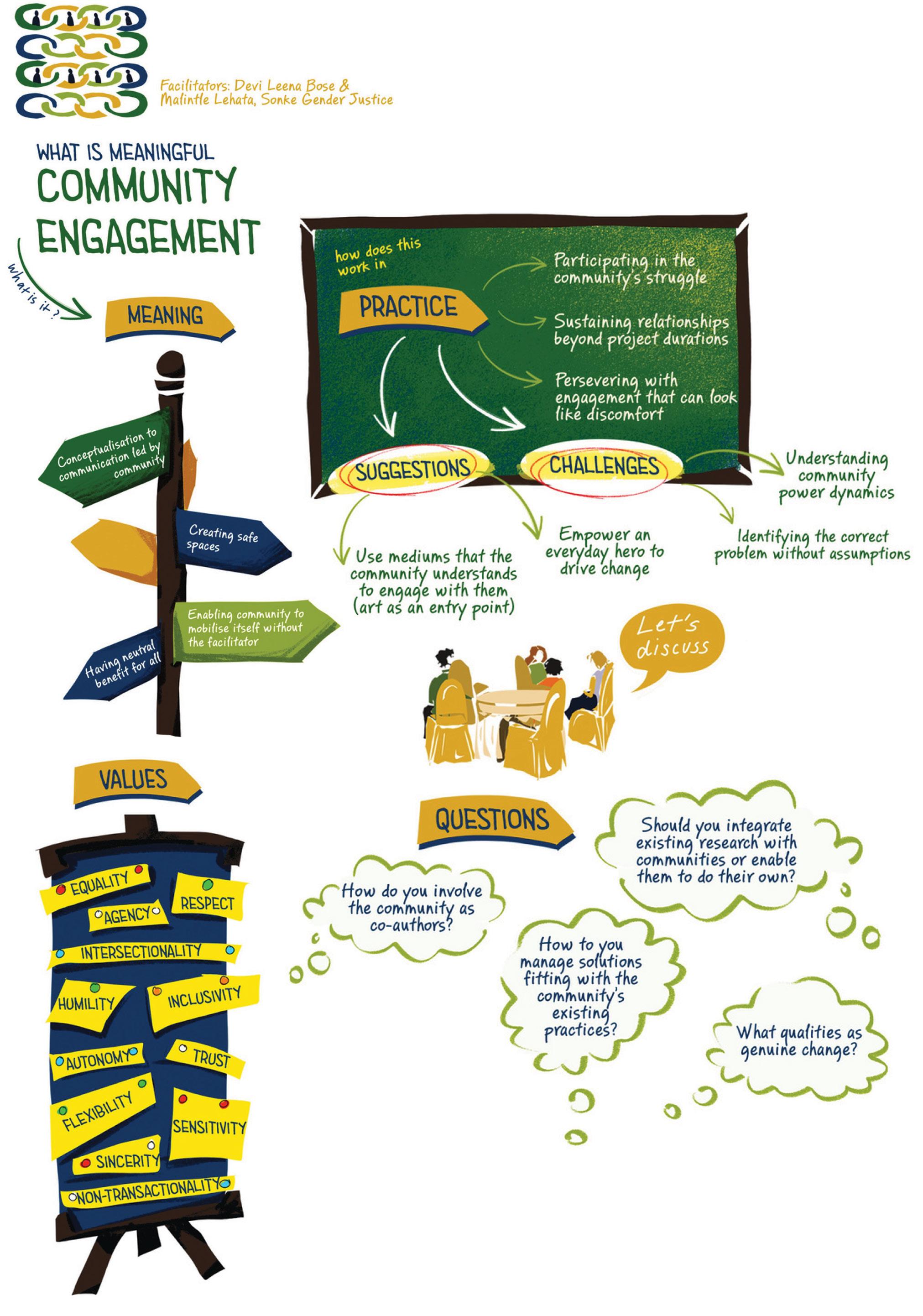
What does
mean to those involved?
Facilitators: Devi Leena Bose, Behavioural Insights Lead, CoPD; Malintle Lehata, Research Specialist, Sonke Gender Justice
This opening session set the tone for the workshop by creating space for a grounded, and at times uncomfortable, conversation on what community engagement really means in practice. It invited participants to interrogate not just definitions, but the values, power structures, and lived experiences that shape engagement across contexts.
This session was a collective deliberation on the term “meaningful community engagement,” which many participants felt had become hollow institutional jargon. Facilitators used group exercises to unpack how different stakeholders, funders, researchers, and communities, interpret this space. The dialogue revealed a deep-seated tension regarding “extractive” research practices. A powerful analogy surfaced describing researchers as “blood takers”, a term used by some South African communities to describe medical researchers who take data or biological samples without ever returning results or benefits to the community.
Delegates shared stories of moving toward collaborative models. For instance, a project in Vietnam involved ethnic groups as co-scriptwriters and actors in vaccine health films, ensuring the narrative was narrated by the community themselves. Angela Chaudhuri shared a critical lesson from HIV programming: success only occurred when researchers stopped viewing participants solely as “sex workers” and started addressing their urgent needs for safety and food. The session emphasized that true collaboration requires “building the table” together before a research proposal is even finalized, co-writing grant applications with community partners to ensure shared ownership.
Key Takeaways:
• Meaningful engagement moves from researching on a community to researching with a community as equal partners from inception.
• Conflict, disagreement, and discomfort are often signs of genuine engagement rather than superficial consensus.
• Mistrust grows when relationships are transactional; practitioners must commit to long-term, reciprocal cycles beyond a project’s funding cycle.
“Meaningful community engagement doesn’t need to look pretty or nice... at the heart of it is often conflict and disagreement.”
— Rohan Patankar
“Hand the microphone to the community... let’s make a project together, rather than coming to them and saying ‘would you like to be involved?’” — Workshop Participant
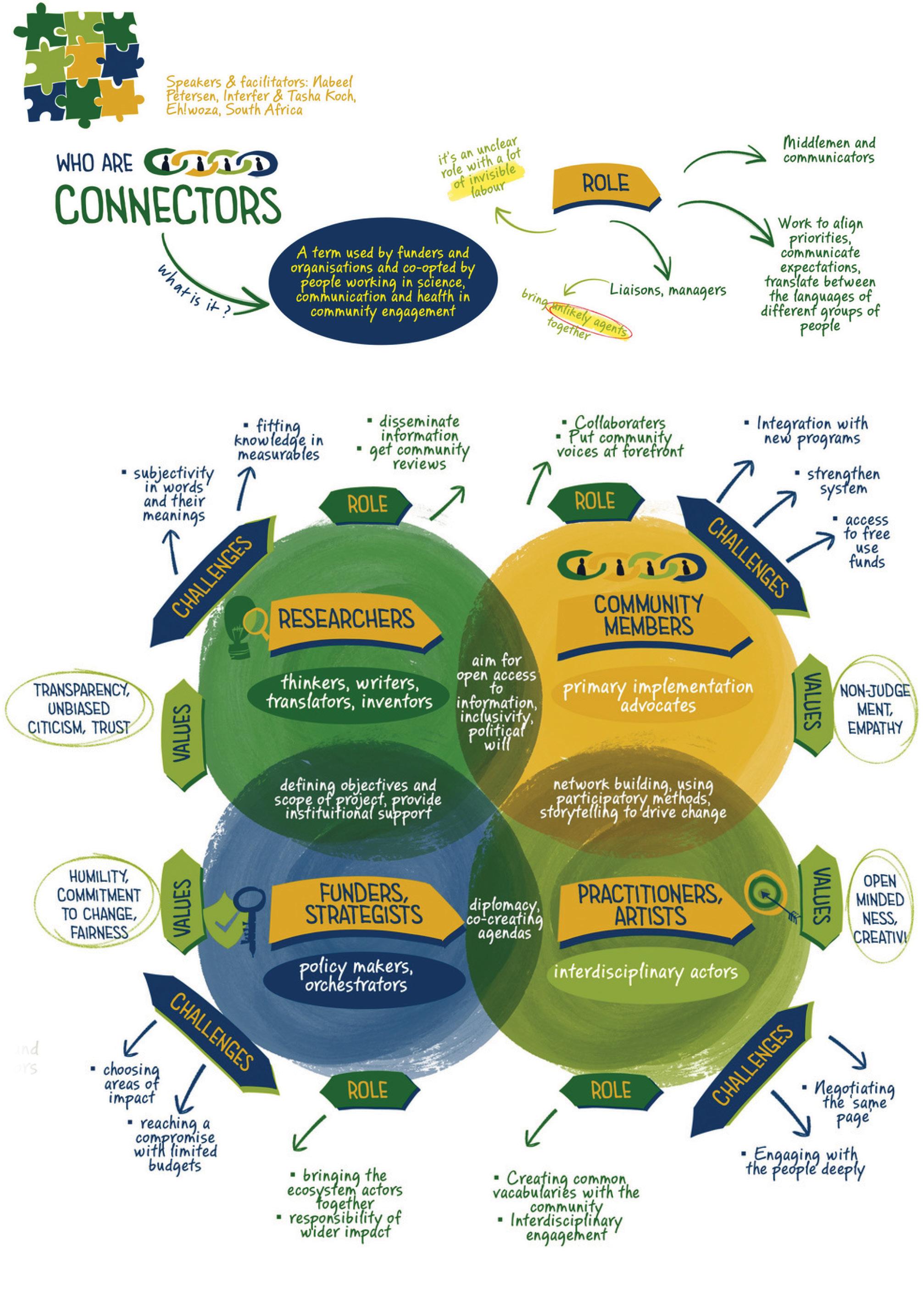
Speakers & Facilitators: Nabeel Petersen (Interfer) and Tasha Koch (Eh!woza).
While the meeting provided a basic definition of a “Connector”, this session further refined what it means to be one, not just as a role, but as a way of working across research, community, policy, and implementation spaces that are often difficult to hold together. The exercise itself made the point clearly: most participants did not locate themselves in a single role, but described layered identities and responsibilities that shift across contexts.
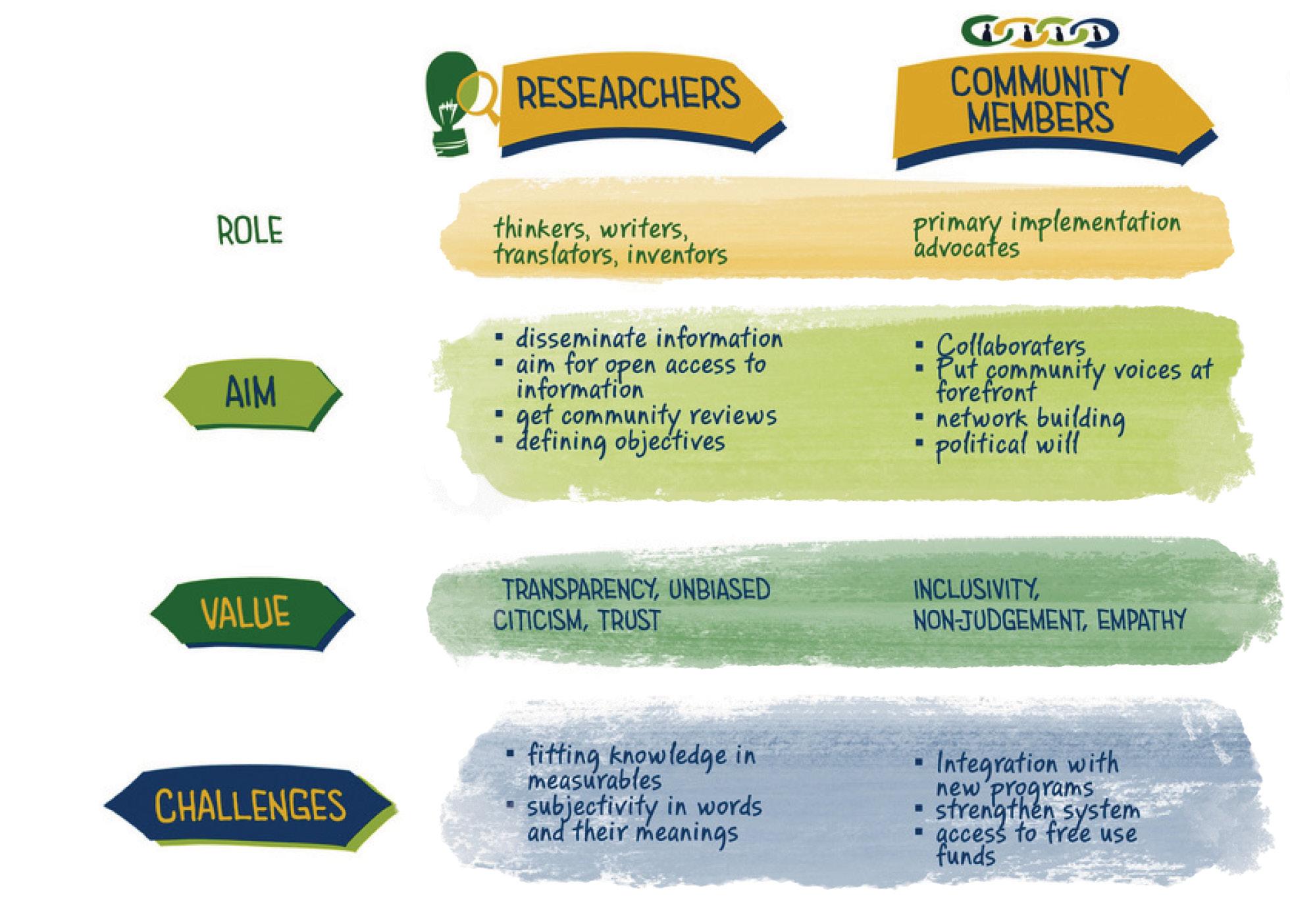
Participants signed up for roles they identified with: scientists, artists, funders, community members, and those who resisted categorisation, to map their pressures, values, and needs. What emerged was a vivid picture of the Connector as someone navigating multiple, often competing expectations, while holding relationships and translating across different worlds. This role is not easily captured within existing systems and often has to be self-defined in practice.
The ‘researchers/scientists’ group described the many hats they wear, from farmer and writer to facilitator, translator, and grant writer, and stressed values such as inclusivity, humility, openness to criticism, and respect for local knowledge. Their needs were practical and structural: funding, time, capacity building, administrative support, open access, space for dissemination, and recognition that mental and physical strain are part of the work.
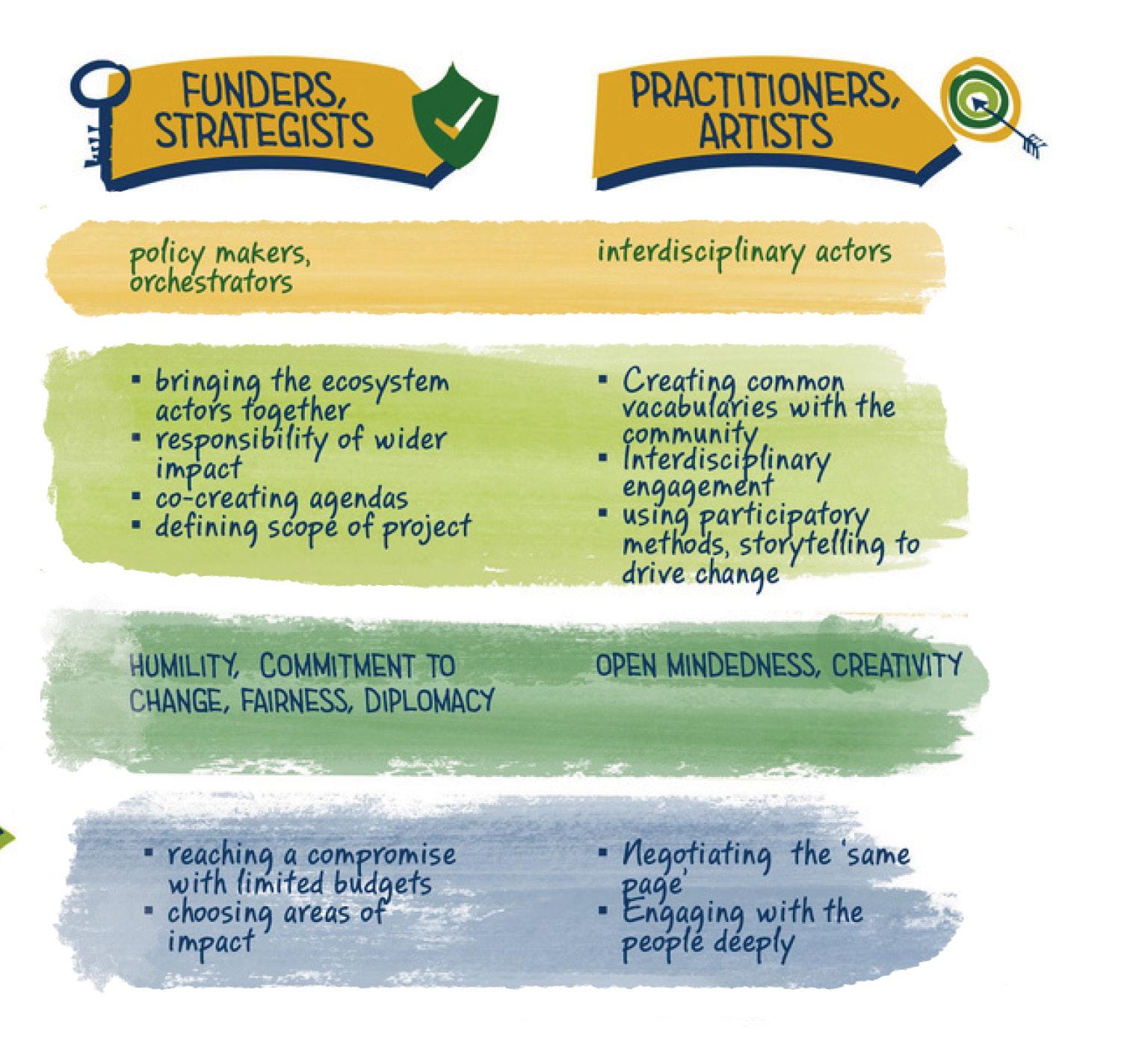
The ‘artists/implementers’ group focused on the Connector as bridge, broker, conductor, and translator. Their metaphors, from opera conductor to Wi-Fi router, captured the work of connecting people, untangling complexity, and moving between ideas and action. They also drew attention to the invisible labour involved in managing egos, relationships, and jargon, while naming the need for institutional accountability, better mentorship, shared vocabulary, and more room to work creatively without being boxed in by rigid systems. Language emerged as both a barrier and a site of negotiation, requiring not just translation, but careful co-creation to avoid reinforcing hierarchies or assumptions about who understands what.
The ‘community’ group emphasised that many of them were already acting as connectors, enablers, and advocates. Their values centred on listening, empathy, non-judgment, agency, and democratic practice. They spoke about the need for untied funds, access to communities through appropriate gatekeepers, and stronger multi-stakeholder buy-in. They also highlighted the pressures of peer learning, staying focused, and navigating mistrust shaped by previous harmful experiences, including colonial histories.
The ‘funder/policy’ group described their role as more than resource provision. They saw themselves as convenors, enablers, and thought partners who can support co-created goals, capacity building, institution building, and strategic risk-taking. At the same time, they named the tension between what communities need and what funding structures allow, and the limits created by fixed strategies, theory of change logics, and the challenge of building trust across very different priorities.
The ‘uncategorised’ group reflected most strongly on being in the middle of many worlds and described themselves as being in the middle, constantly moving between stakeholders, expectations, and systems. Their roles included mediator, mentor, bridge, negotiator, and generalist, and they stressed the importance of listening, managing expectations, recognising power dynamics, and being open about limits. They also pointed to the tension between the demands placed on them and the lack of recognition they receive, along with the constant need to justify their work and translate it into forms that others will accept.
“The network wants to serve itself... we sort of governed the admin, but that was our role primarily.”
— Nabeel Petersen
Key Takeaways:
• Connectors straddle multiple paradigms, acting as “jargon-breakers” who translate between academic institutions and community needs.
• Connectors work across boundaries in ways that are not formally recognised, requiring them to define their roles and practices in real time.
• Shared language matters, but it has to be built with communities and contexts, not assumed in advance.
• The work involves significant invisible labour, relational, emotional, and strategic, that is rarely acknowledged in funding or institutional structures.
• There are no clear entry pathways into becoming a ‘Connector’, contributing to ongoing ambiguity and precarity.
• Peer spaces are essential because they help legitimise this work, surface shared challenges, and build a collective sense of purpose.
“Connectors are like opera conductors, bringing everyone together and keeping them in tune.”
— Participant
“I always had a professional identity crisis as to who I am and what I am doing... I think ‘Connector’ really resonated.”
— Sarah Hyder Iqbal
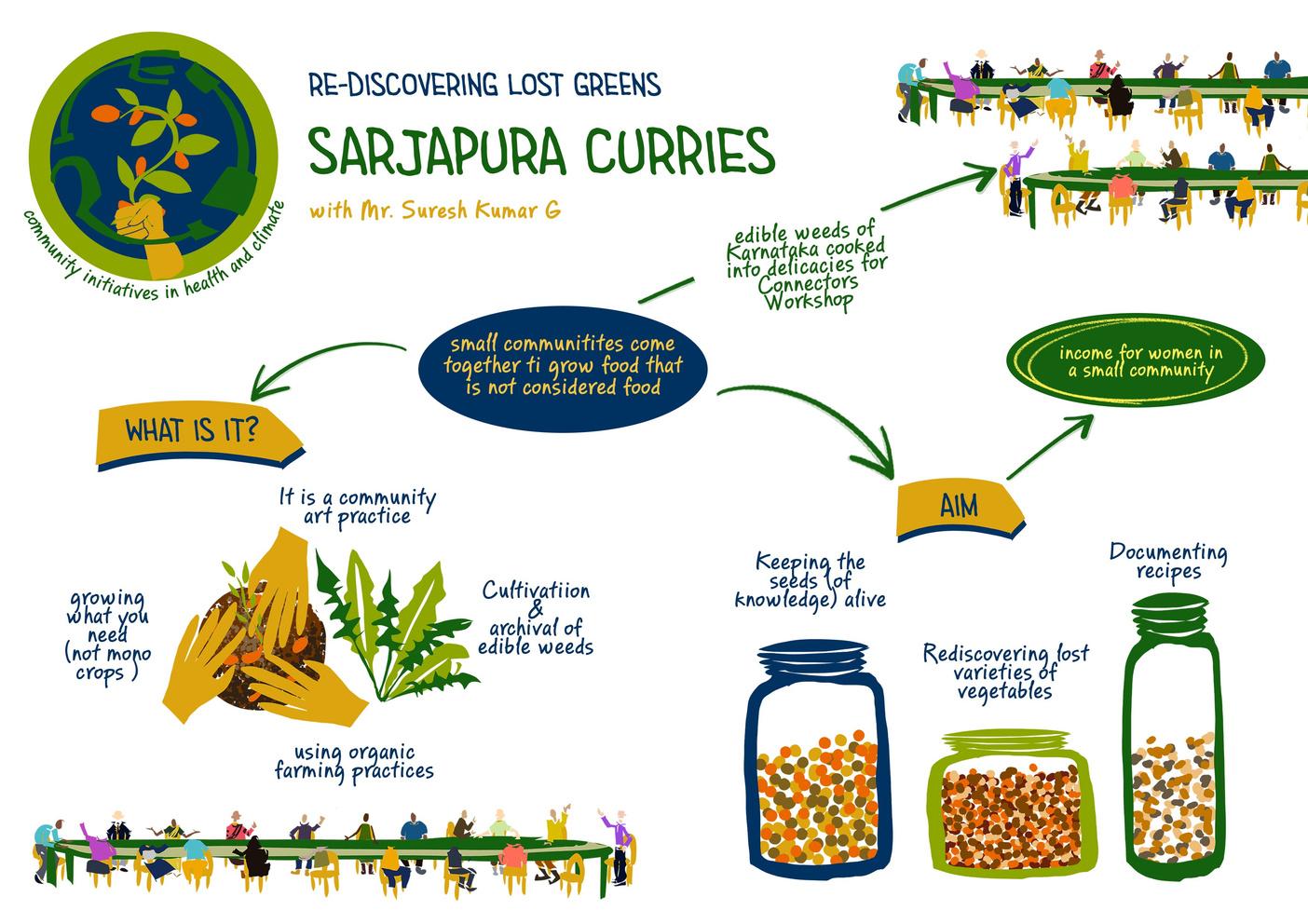
Speaker: Suresh Kumar, Visual Artist, Sarjapura Curries
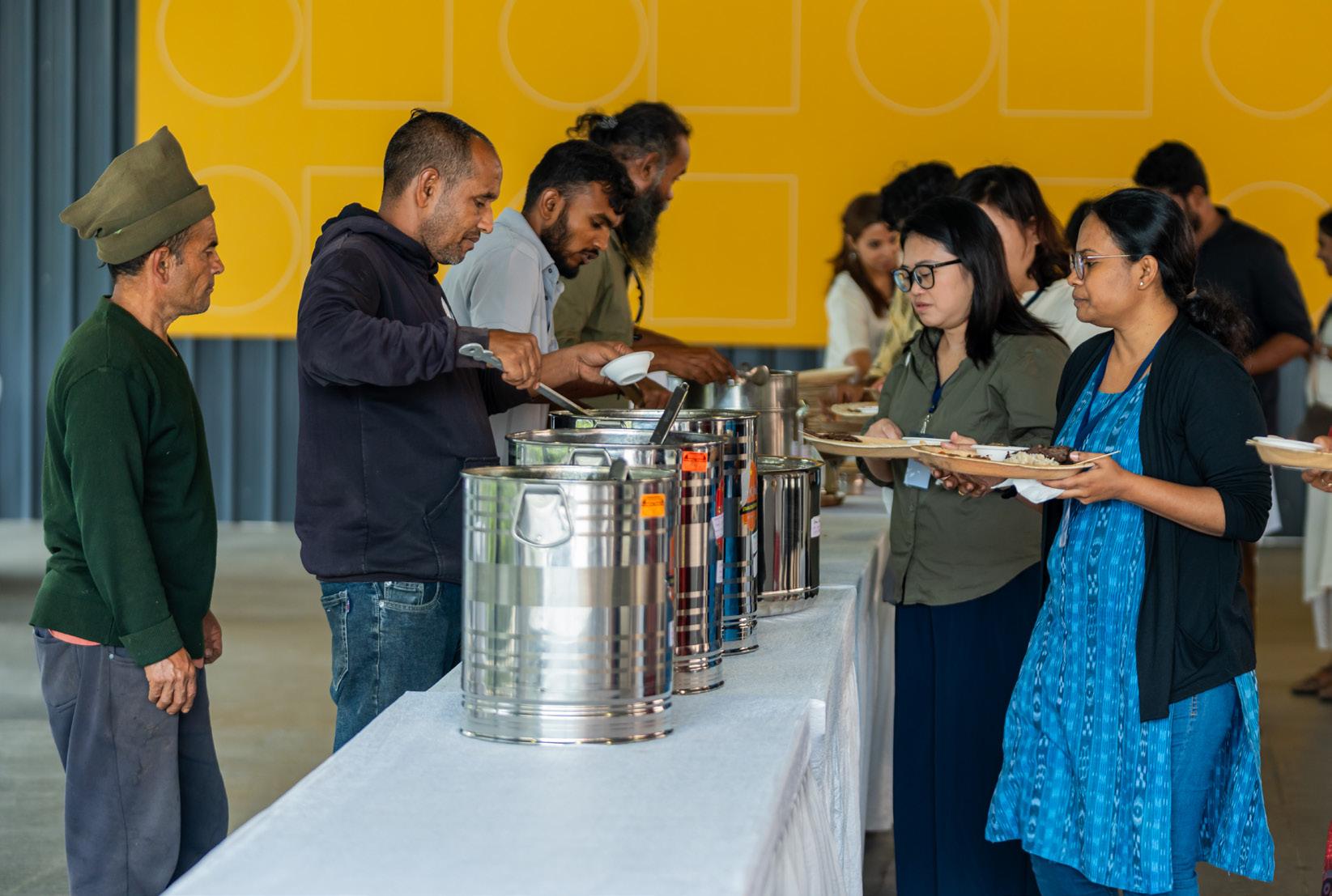
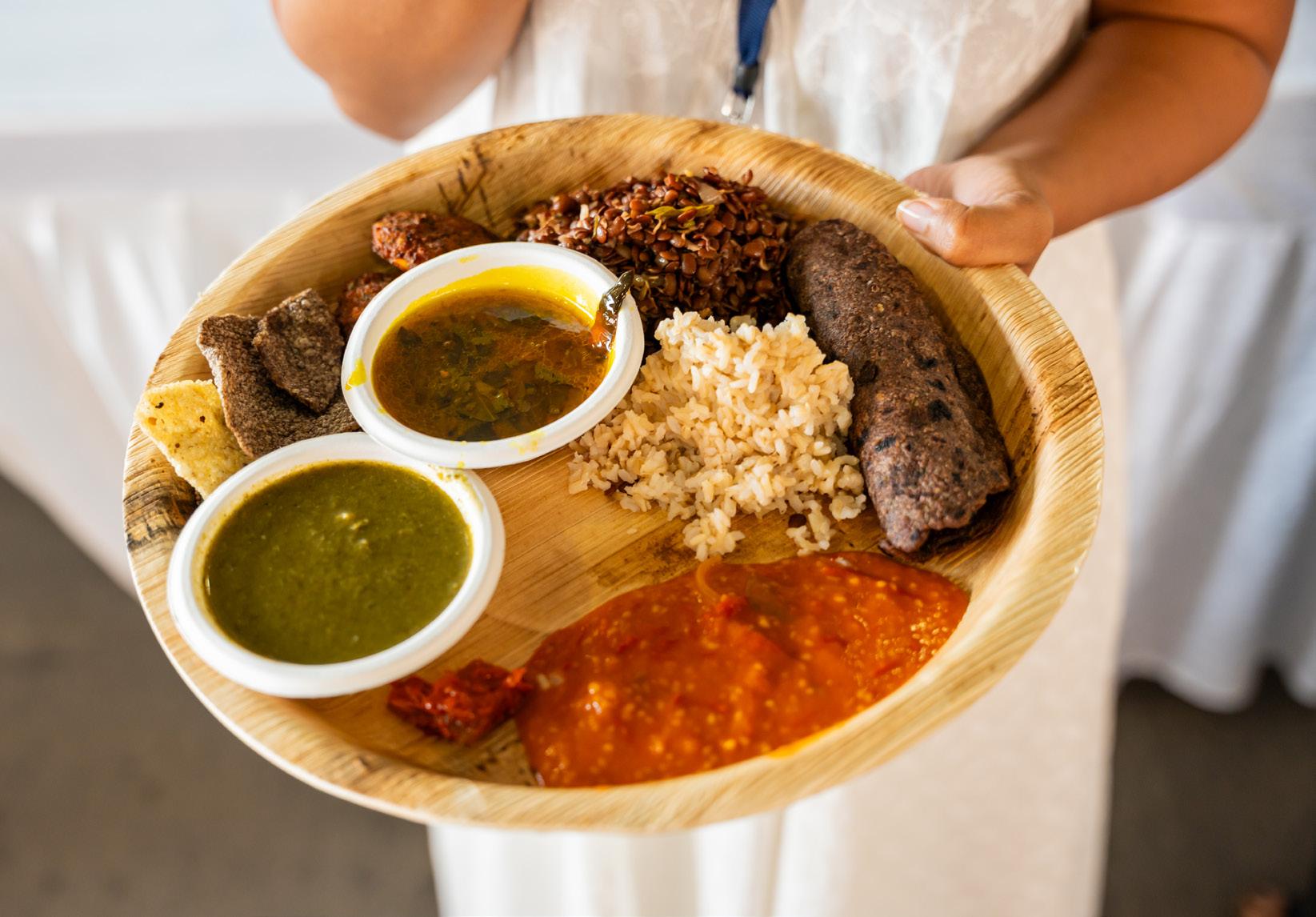
Over a community lunch prepared by Sarjapura Curries, Suresh Kumar — a visual artist from Bengaluru — spoke about his project to revive native food knowledge in his community. What began as a small community kitchen garden, supported by a grant from the Bengaluru Sustainable Forum, has grown into a two-and-a-half-acre farm with animals and a diverse range of native greens and cereals.
Suresh describes Sarjapura Curries as an ‘artist-run project’, not an NGO, not a social enterprise, but a community arts practice rooted in ecological knowledge. The project archives edible wild greens and forageables that have disappeared from mainstream markets, documents recipes from village elders, and challenges the notion that medicine and food are separate. The lunch itself, almost entirely sourced from the farm, was an act of knowledge-sharing: living proof of what community-led practice looks like when it begins with indigenous knowledge and works outward.
“When
does your food become medicine? When does your medicine become food?”
— Suresh Kumar
Speakers: Anshuman Karol (PRIA), Malintle Lehata (Sonke Gender Justice), Neetu Singh (Shades of Rural India), Srinidhi Gurunath (Socratus Collective Wisdom Corporation), and Tarini Shipurkar (Praxis - Institute for Participatory Practice)
Facilitator: Devi Leena Bose, Independent Consultant
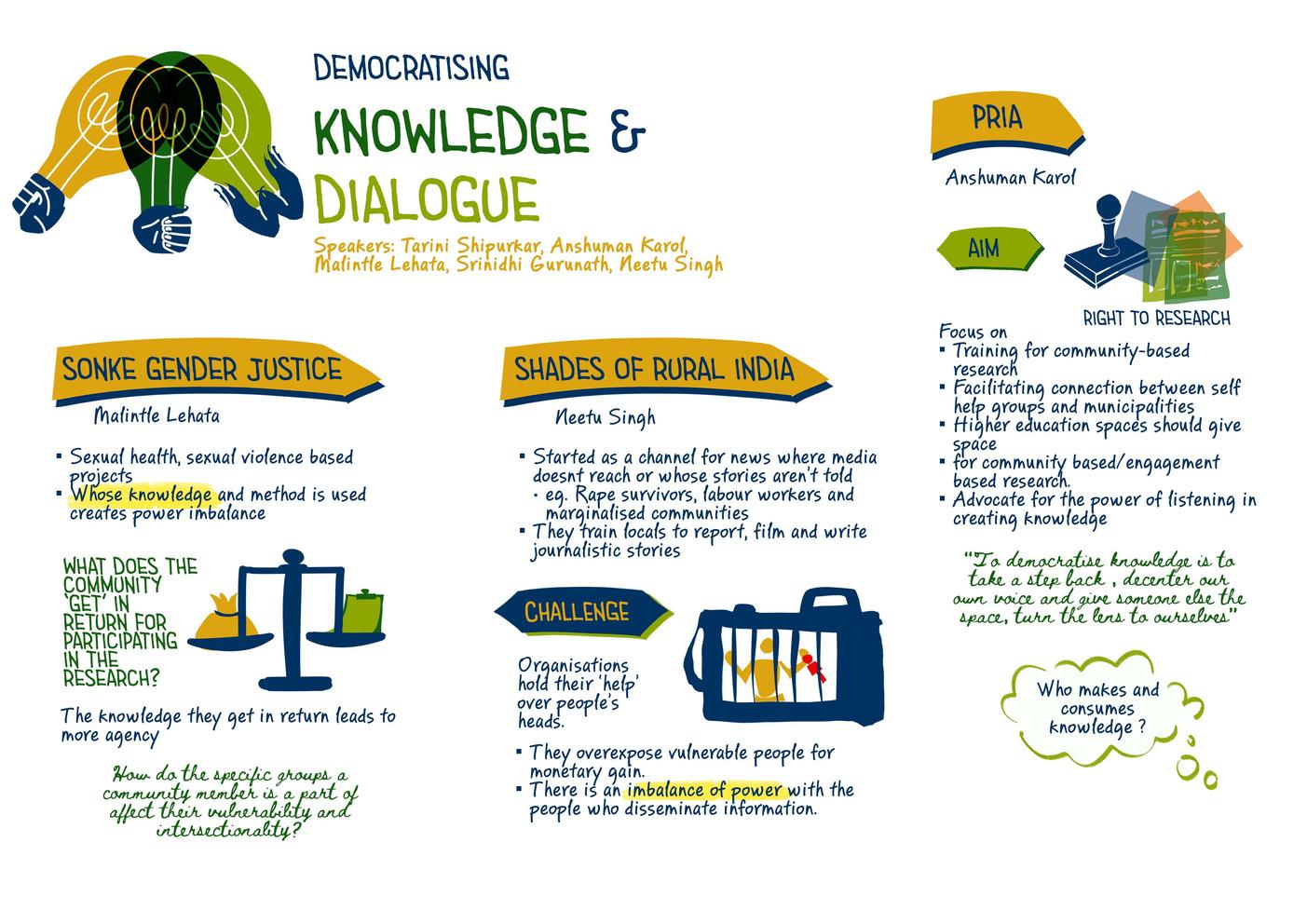
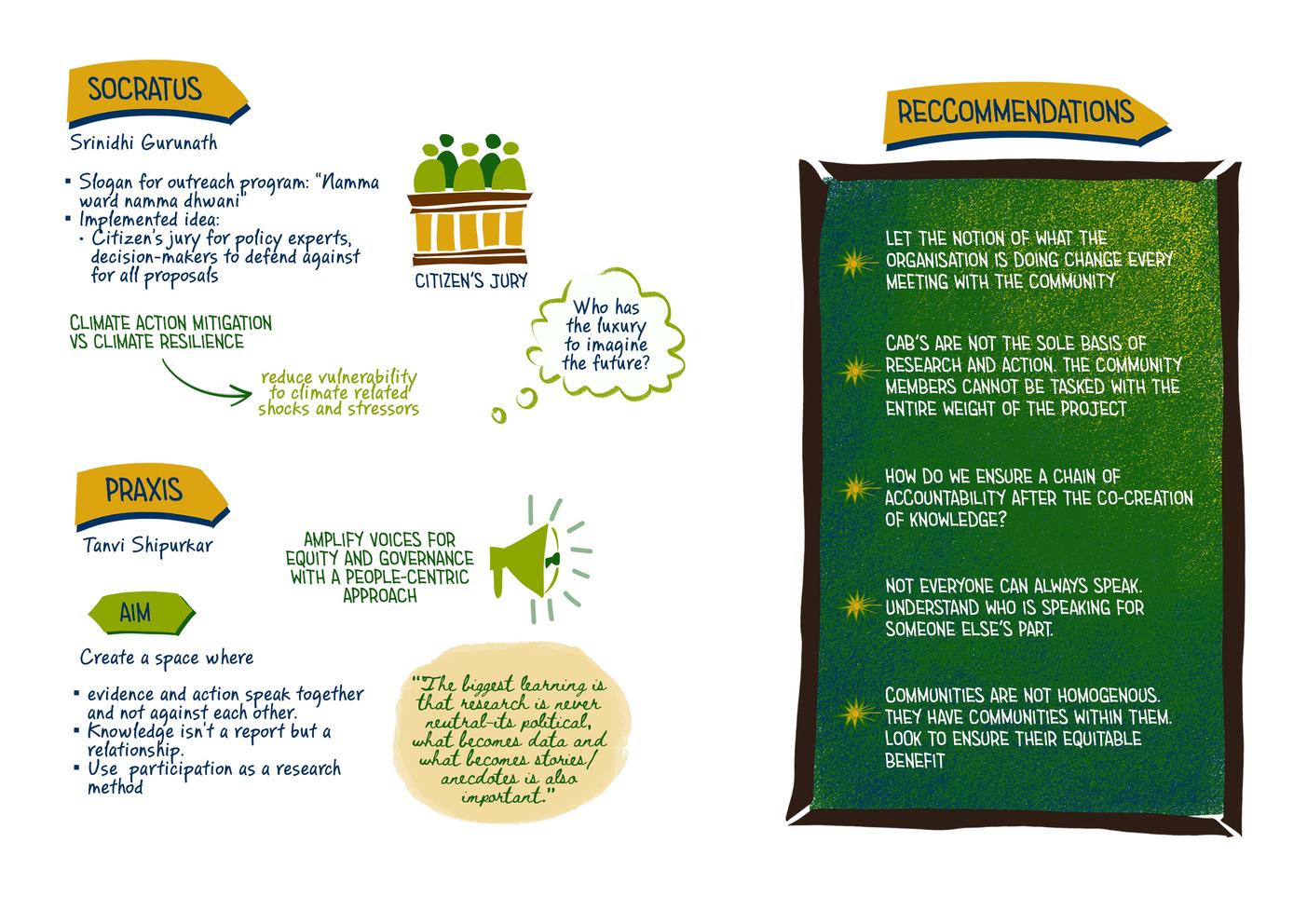
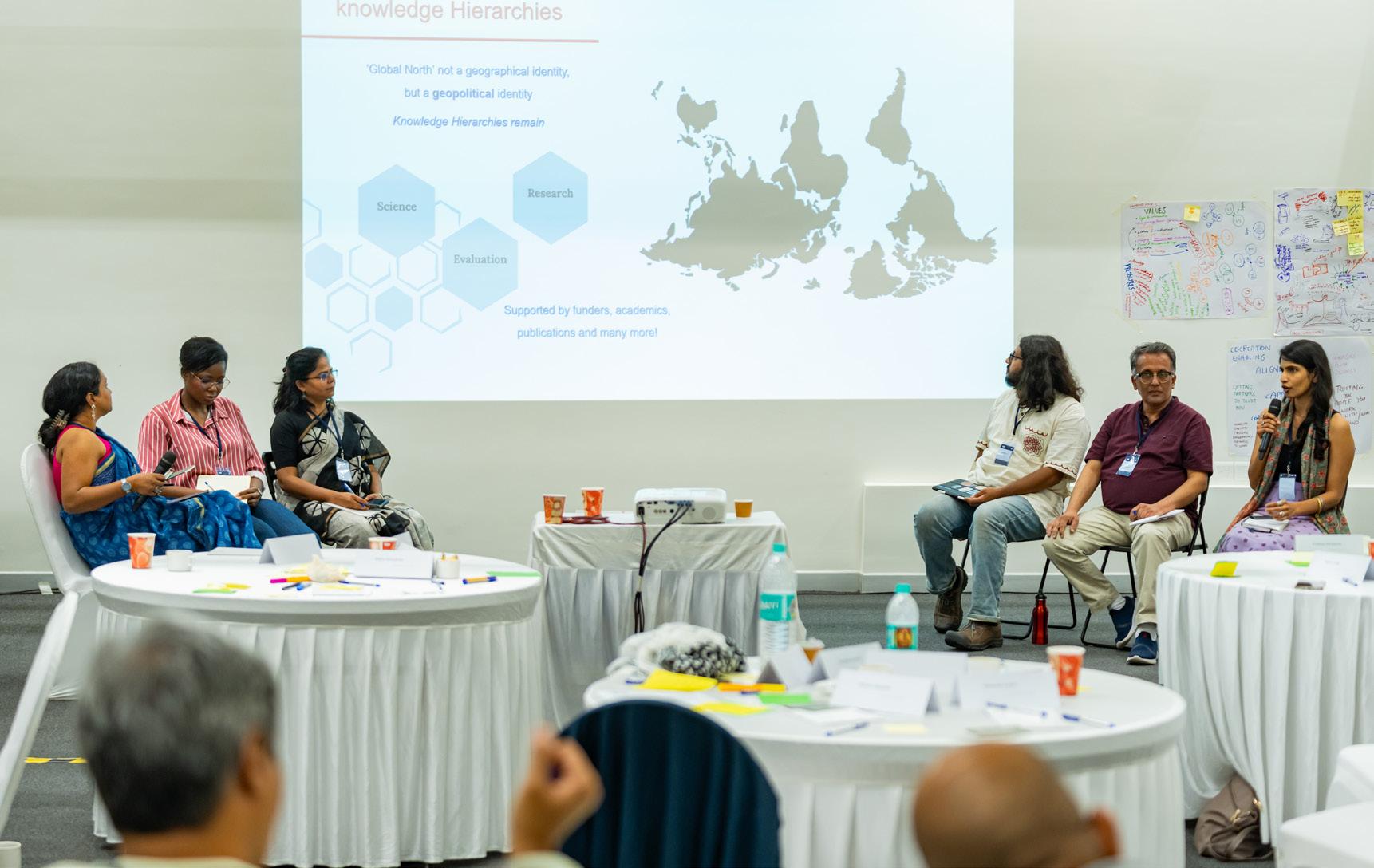
This session reframed “democratising knowledge” not as a method or tool, but as a shift in power, relationships, and responsibility. This panel used the structure of a ‘story circle’ to explore how knowledge hierarchies are produced, maintained, and challenged. The speakers came from research, participatory practice, independent journalism, and community governance, each having found different ways to open up closed knowledge systems.
Anshuman Karol described how PRIA trains community women as ‘citizen scientists’ — mapping local water bodies, testing water quality, and presenting findings directly to municipal administrations. In one example from Jharkhand, youth-led geotagging of fluoride contamination of the handpumps changed the entire dynamic of the administration’s response. When communities produce the data and present it themselves, the power narrative shifts.
The role of media by Neetu Singh added another layer, highlighting how whose stories get told shapes public discourse and priorities. She shared how Shades of Rural India empowers Dalit, Adivasi, and transgender journalists to set their own reporting agendas, keeping democracy alive by giving voice to communities that mainstream media systematically excludes. Independent journalism was highlighted as a way to surface voices that are otherwise excluded, while also pointing to the labour, risk, and precarity involved in doing this work.
Srinidhi Gurunath spoke about Socratus’s ‘Citizen Juries’ on climate and health in Bengaluru — a format that flips the conventional relationship between experts and citizens. Rather than having policy experts lecture, community members deliberate as jurors while experts defend their positions. This also revealed that people frame issues like climate change through everyday realities such as health, housing, water, and work, rather than abstract categories.
Tarini Shipurkar framed the conversation with a vivid analogy: a feeding tube connecting two bodies, historically running from Global North to Global South, delivering standards, policies, and research methods. She argued that decolonising research is not simply a matter of changing the content being fed through the tube, or making it more comfortable. The deeper question is why the tube exists at all.
Finally, the session emphasised that democratising knowledge is not only about shifting power to communities, but also about transforming institutions. This includes building capacities within both communities and systems, creating pathways for community-generated knowledge to influence policy, and strengthening the ability of institutions to listen.
Key Takeaways:
• What gets counted as “data” versus “story” is shaped by power, funding, and institutional norms.
• Participatory tools alone are not enough if decision-making authority remains unchanged.
• Democratising knowledge requires building “listening capacities” within powerful institutions so they are prepared to accept community-led data.
• It is not enough to “empower communities”; systems must build the capacity and willingness to listen, respond, and share control.
• Citizen juries and community mapping are practical mechanisms for flipping power and ensuring policies reflect lived vulnerabilities.
• Marginalized voices must be empowered to create their own knowledge systems rather than just being included in existing ones.
• Democratising knowledge is labour-intensive, often uncomfortable, and requires moving beyond familiar ways of working.
“Research is never neutral. It is political.”
— Tarini Shipurkar
Speaker: Alun Davies (Mesh – The Global Health Network)
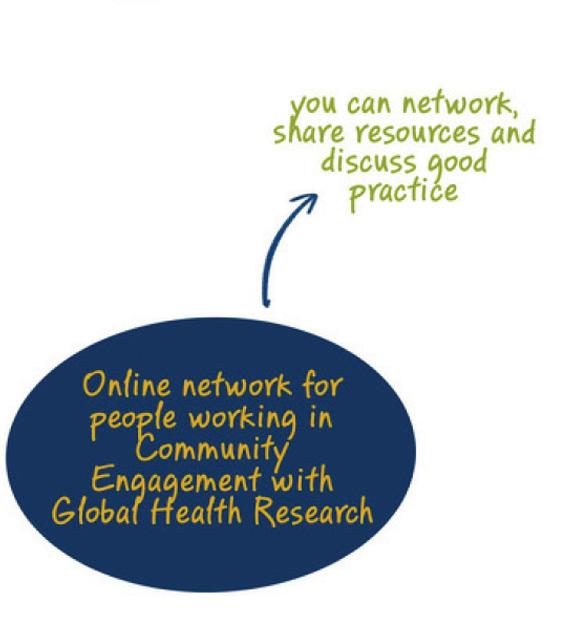
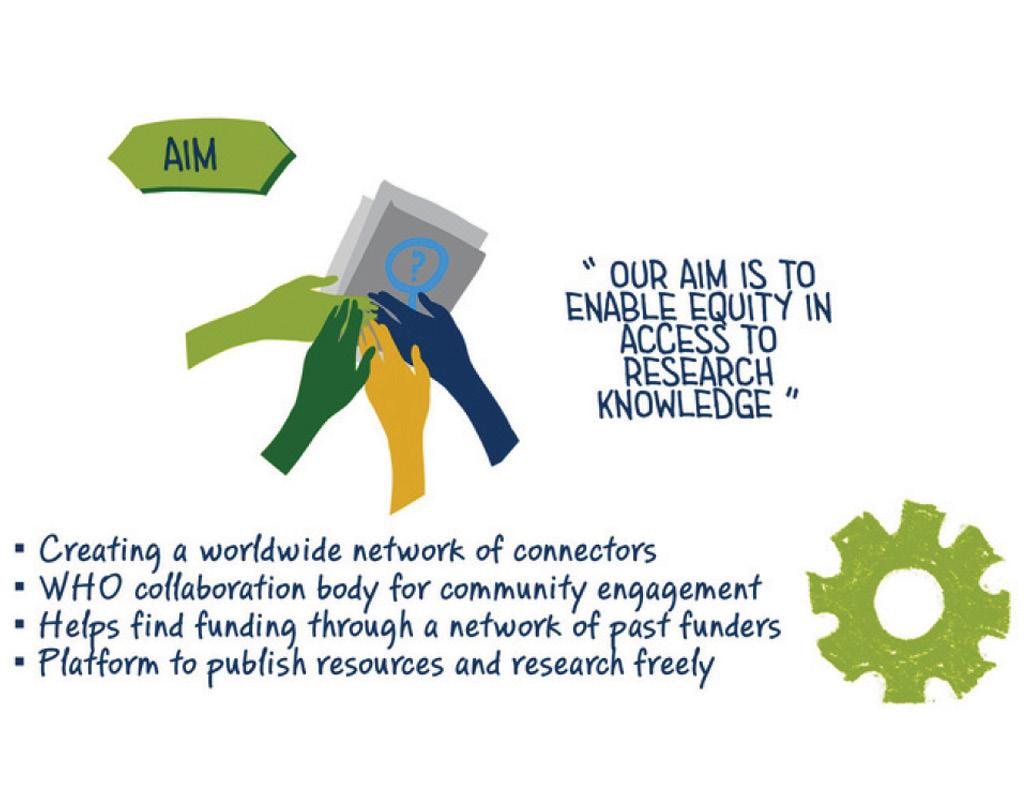
Alun Davies gave an outline of how Mesh combines a regional presence, with coordinators based in Africa, Asia, Latin America and the Caribbean, and North Africa and the Middle East, with a huge collection of online resources for community engagement.
Mesh is a natural home for project descriptions, toolkits and other resources related to community engagement. Alun encouraged participants to share these with The Global Health Network’s 1.3 Million global audience through Mesh.
Key Takeaways:
• Mesh homepage: https://mesh.tghn.org
• Join Mesh, Connect and Collaborate with Engagement colleagues https://mesh.tghn.org/get-involved/
• A comprehensive online training for community engagement and involvement with health research: https://mesh.tghn.org/Online-CEI-training/
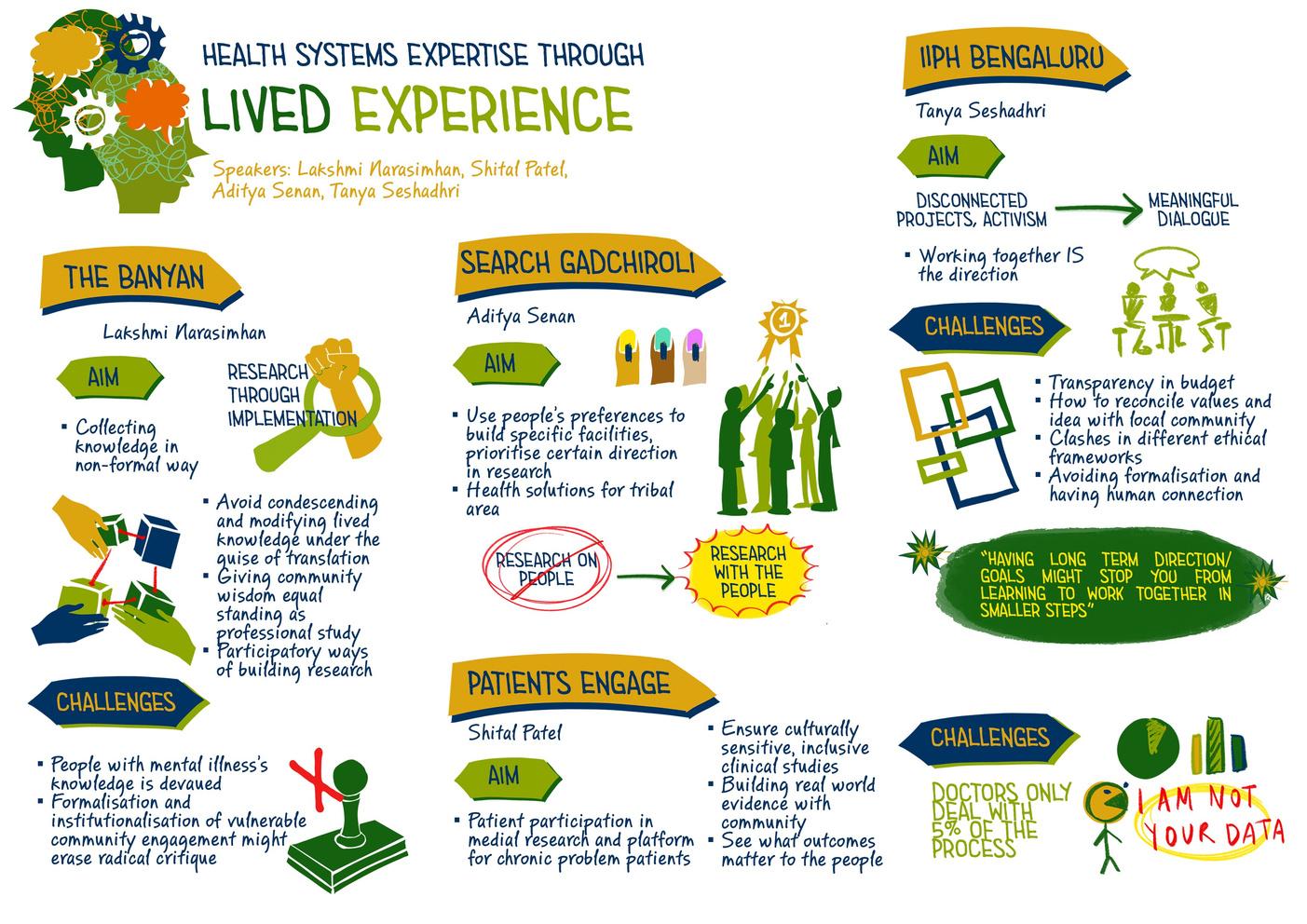
Speakers: Aditya Senan (SEARCH Gadchiroli), Lakshmi Narasimhan (The Banyan), Shital Patel (PatientsEngage), and Tanya Seshadri (IPH Bengaluru).
Facilitator: Alun Davies, Mesh – The Global Health Network
This session explored how lived experience can be recognised as professional expertise, not as a ‘narrative nuance’ added to quantitative studies, but as an independent and equal form of knowledge. While there is growing recognition of patient and public involvement, the discussions pushed beyond inclusion to question whose knowledge is legitimised, how it is produced, and who holds decision-making power.
Aditya Senan shared two powerful examples from SEARCH Gadchiroli. In the 1980s, tribal women already recognised childhood pneumonia by its local name. SEARCH worked with them to link this local knowledge to the ‘breath counter’ — a bead-andclock device allowing women to diagnose pneumonia and administer antibiotics in the village. The intervention achieved 82% accuracy and reduced infant mortality from 121 to 80 per 1,000 live births within two years. It was later adopted as national policy and scaled to over 80 countries. The power was not in the protocol it was in who got to act and who got to decide.
“Go to the people, live among them... and when the work is done, they will say: we have done this ourselves.”
— Aditya Senan
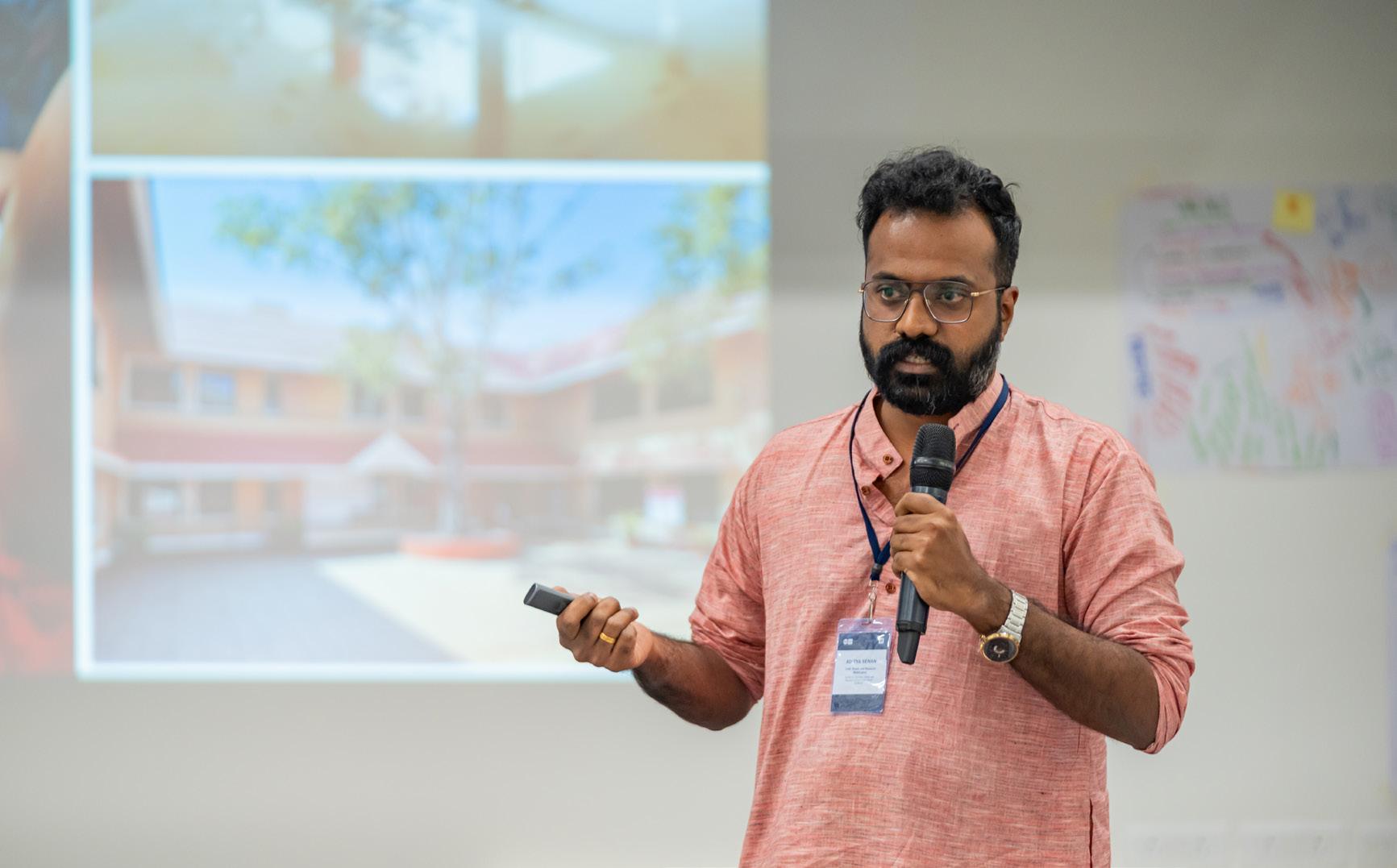
Image: Aditya
Senan
“Lived experience is professional expertise... anybody with the intention to actually do something experimental with unconventional partners.”
— Lakshmi Narasimhan
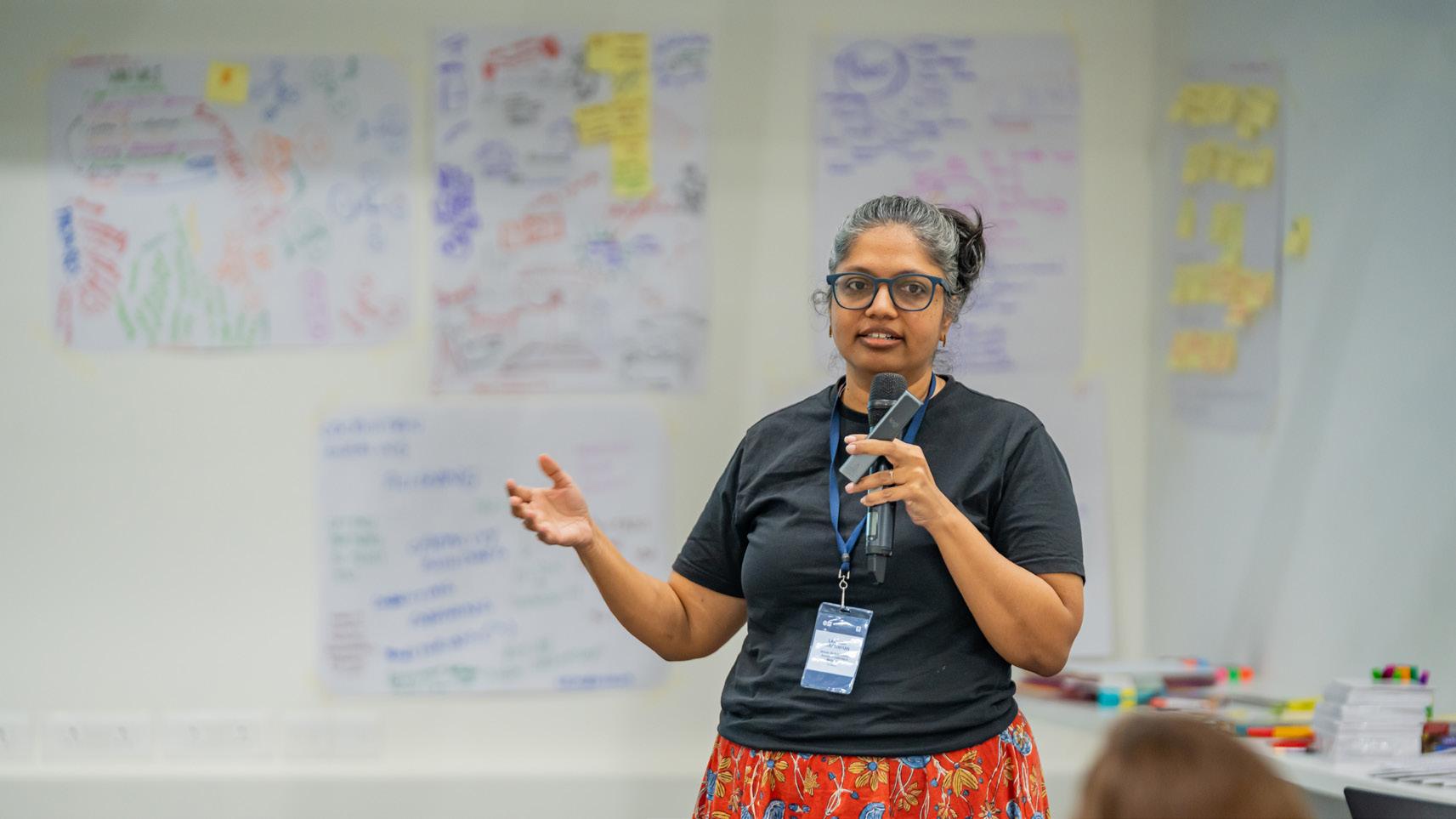
Lakshmi Narasimhan described how The Banyan began not as a formal health organisation, but as two young women sharing a home with homeless women with mental illness in Chennai. This foundational act shaped the Banyan’s philosophy: capacity is relational. With the right support, anyone can exercise professional capacity, regardless of a mental health diagnosis. She emphasized that lived experience should not just be included as an add-on, but should actively co-shape research questions and inform practice, ensuring the work remains grounded, relevant, and responsive to real-world needs.
Shital Patel argued for a shift from patient-centred care to patient-engaged research. Patients manage 95% of their care outside clinical settings, so their knowledge of what works, what burdens them, and what outcomes actually matter should shape study design from the start.
Tanya Seshadri described the ‘churning’ that comes when academic frameworks collide with indigenous worldviews. Working with Adivasi tribal communities in South Karnataka, her team’s proposal to study ‘maternal health’ was met with the response that the concept was too narrow, a mother’s health is inseparable from the health of the forest. This encounter forced a rethinking of the entire research framework.
All four speakers reinforced that translation of knowledge did not mean simplification. Assuming communities cannot engage with complex ideas was in itself a form of injustice. The discussion also pointed to the emotional and institutional labour involved in this shift. Efforts to centre lived experience often require unlearning, negotiation, and navigating conflicts within teams, communities, and formal research systems. Democratising expertise, therefore, is not a linear progression but an ongoing process of recalibration.
Key Takeaways:
• Lived experience needs to be formalized as professional expertise, not just a narrative nuance for quantitative studies. It challenges dominant evidence hierarchies and expands what counts as valid knowledge.
• Inclusion without power shift risks tokenism in research. Many current engagement models involve patients and communities but stop short of shared decision-making or co-creation.
• Knowledge hierarchies persist, especially in clinical and research systems. Certain forms of knowledge, especially experiential and narrative, continue to be undervalued.
• Co-creation is relational and long-term. It depends on trust, sustained engagement, and the blurring of roles between researcher, practitioner, and community member.
• Local knowledge can transform outcomes when combined with science. Community-led approaches can lead to more relevant, effective, and scalable interventions.
• Power, ethics, and representation remain contested. Questions of who represents communities, whose voice is heard, and how decisions are made continue to shape the process.
• This work involves significant emotional and institutional labour. It requires unlearning, negotiation, and managing tensions across different systems and expectations.
“Nothing about us without us.” — Shital Patel
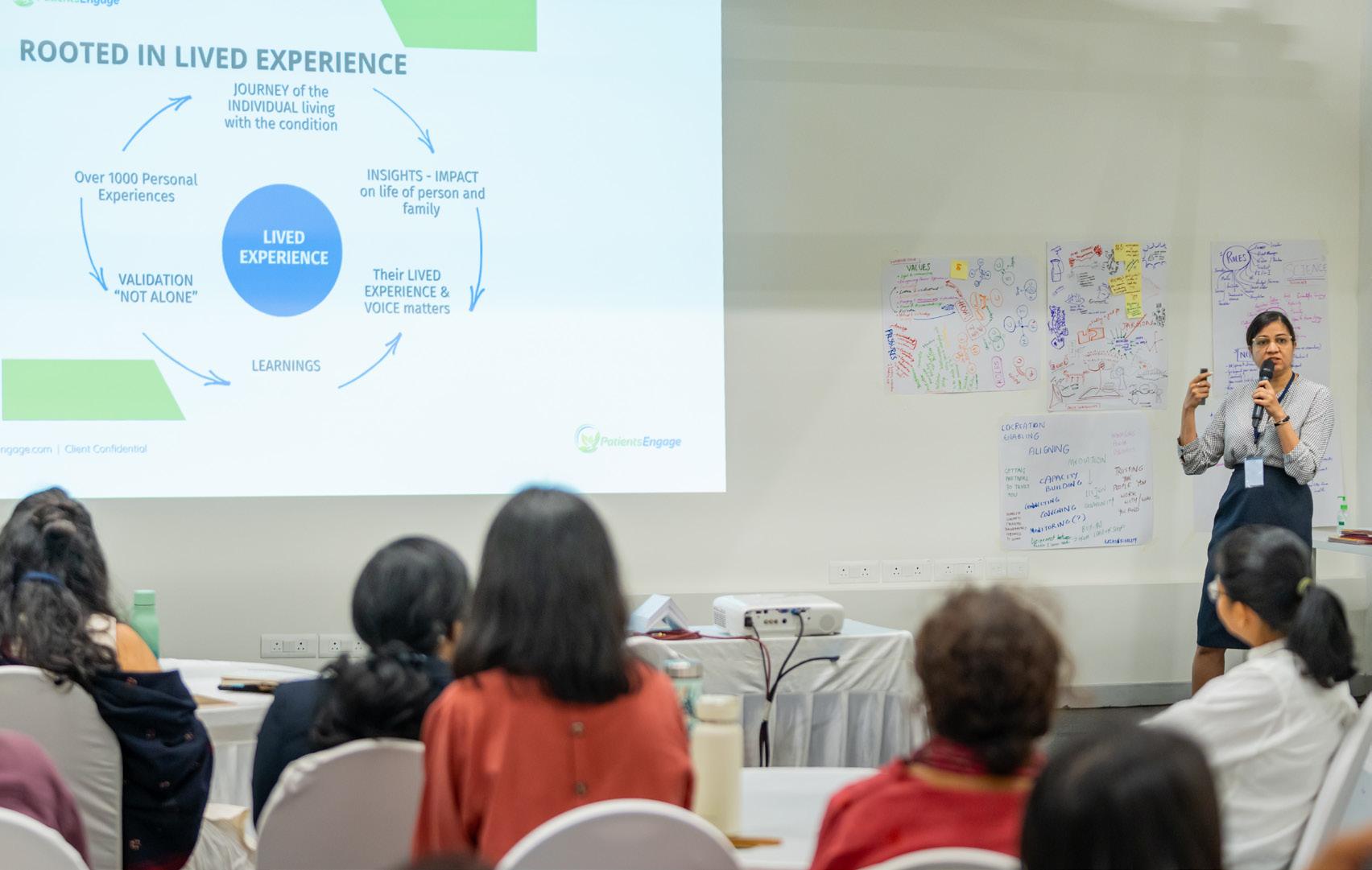
Facilitators: Harikeerthan Raghuram (Sangath) and Napat Khirikoekkong (MORU Thailand).
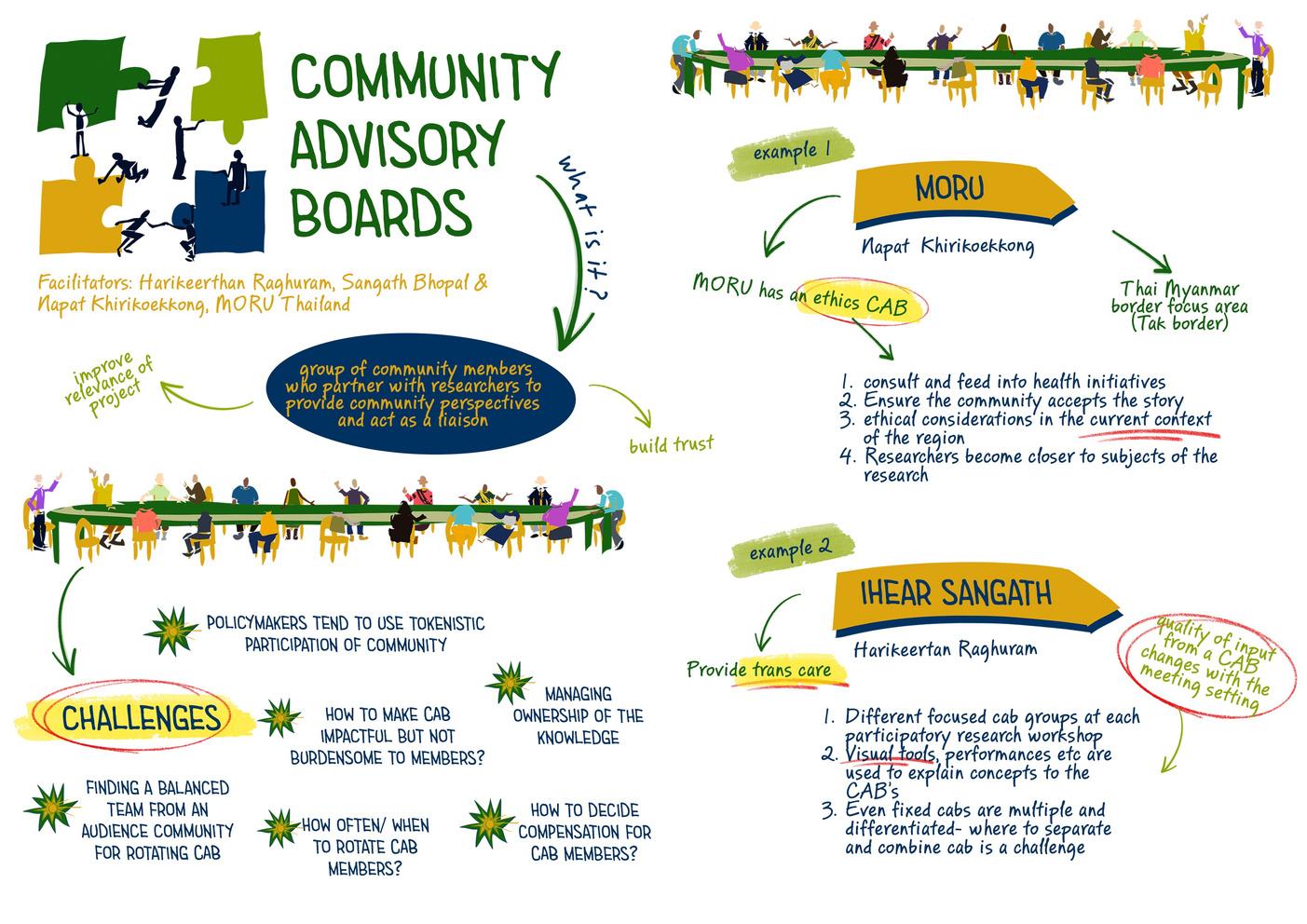
The facilitators opened with an unusual yet provocative exercise. They invited participants to share feedback on the workshop, and then, as planned, one of the organisers whispered something to them. The facilitators paused, apologised, and said the feedback would not be taken forward as the decisions for the next edition had already been made. The point landed quickly; with many expressing disappointment even after being told the exercise was staged. It closely mirrored how participation often plays out in real-world community engagement, where input is invited, but not necessarily acted upon.
That set up the core question for the session: are Community Advisory Boards bridges to equity, or simply boxes to tick in grant proposals? The facilitators brought contrasting field experiences, grounding the discussion in concrete practice rather than abstraction.
Harikeerthan Raghuram described Sangath’s evolving model in India, working with trans and disabled communities. He described the challenge of building genuine relationships when the pandemic forced everything online. In-person meetings build trust in ways virtual engagement cannot replicate.
Napat Khirikoekkong shared MORU’s 16-year experience running a CAB on the Thai-Myanmar border, one of the world’s most complex conflict settings. Members are farmers, housewives, civil servants, and community leaders with deep knowledge of the border’s political dynamics. One example illustrated the CAB’s value clearly: when researchers planned a malaria GPS study involving loggers crossing the border, CAB members flagged that GPS devices could be mistaken for surveillance equipment. Their solution, a visible logo jacket and an explanatory letter in multiple languages, protected participants in ways the research team had not anticipated.
Pradeep Narayanan offered a sharp provocation: if a CAB is placed in a log-frame as a project output, it will be shaped by the same systems it is supposed to challenge. For a CAB to be meaningful, members must have the power to theorise research findings, not just provide access to communities.
Key Takeaways:
• CABs must have decision-making power, including the agency to reject or redirect research agendas.
• Fair compensation is a matter of justice; community members contribute critical contextual intellectual labor.
• Effective boards require heterogeneity and democratic processes to prevent certain voices from overpowering others.
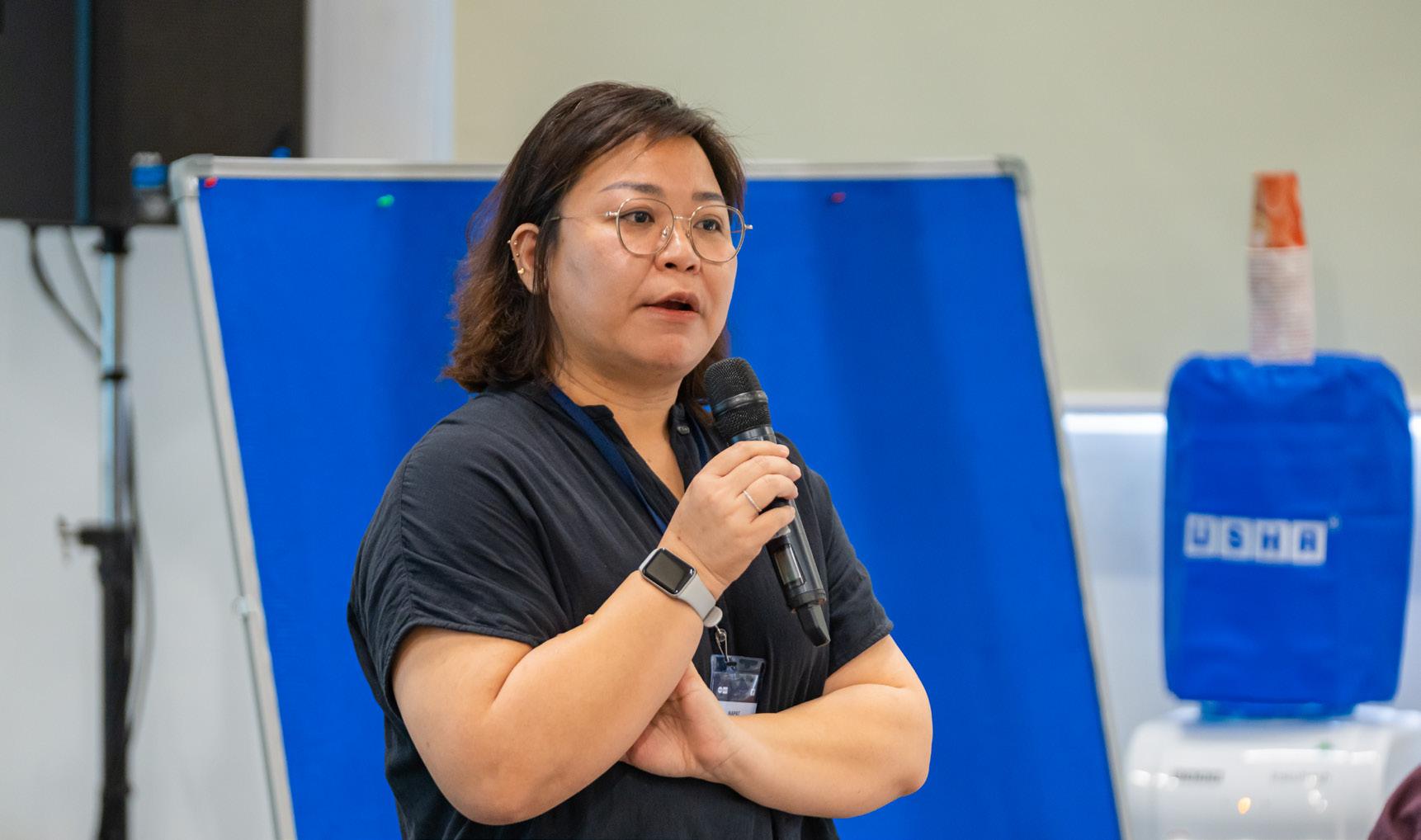
“CABs: bridges to Equity in research? because it’s a question mark.” — Napat Khirikoekkong
“CAB members should be compensated at par with researchers... they are contributing intellectual labor.” — Workshop Participant
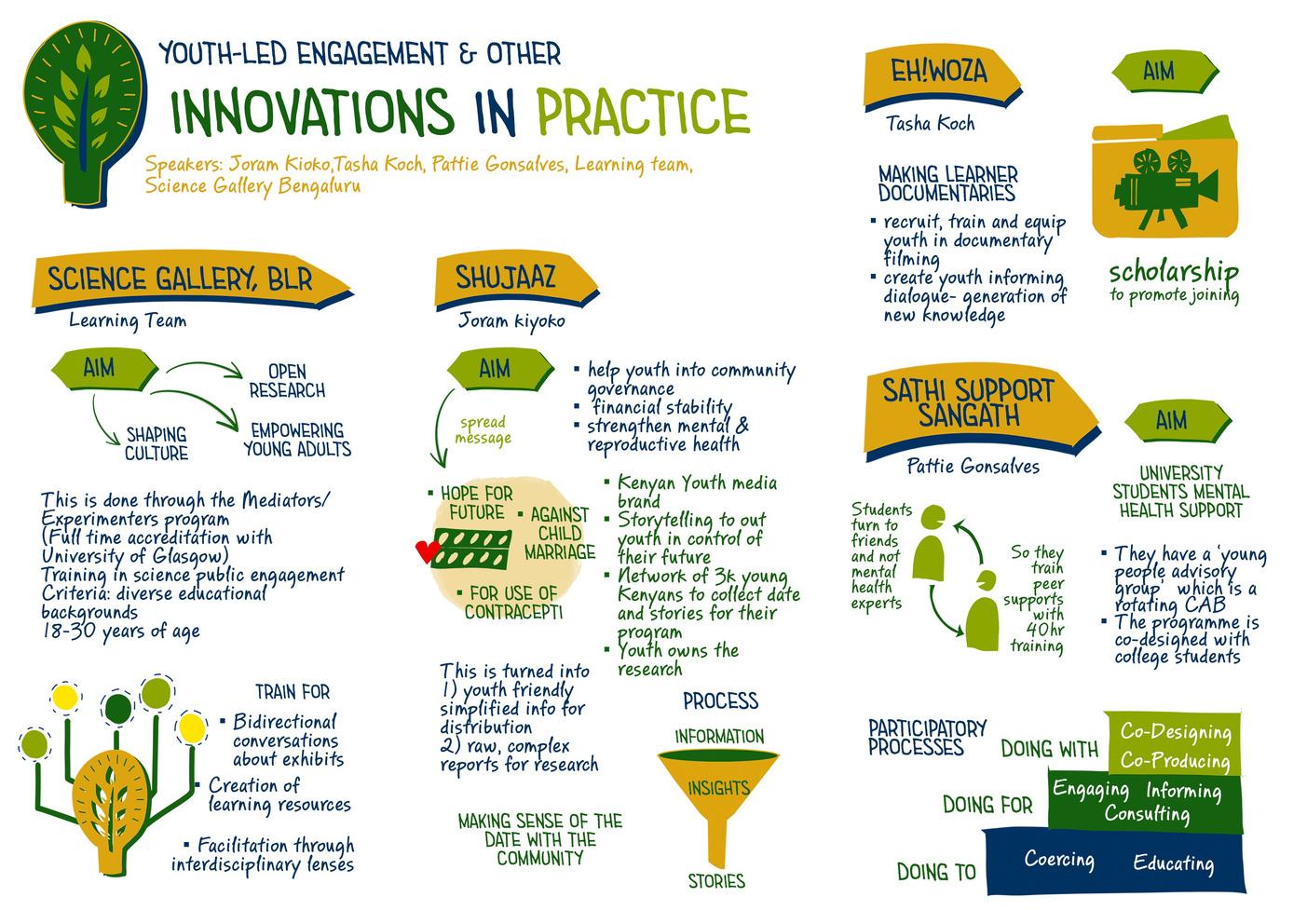
Speakers: Joram Kioko (Shujaaz Inc.), Tasha Koch (Eh!woza), Pattie Gonsalves (Sangath), and Harsha Jagadeesh, Malavika Sudhir and Shelwyn James (SGB Learning Team)
Facilitator: Madhushree Kamak, Independent Creative Producer
This session explored how creative and youth-centred formats can fundamentally shift the power dynamics of community engagement, not as add-ons to research, but as core methodology. Framed by a broader concern that linkages between research and communities are becoming increasingly important in the face of global inequities, misinformation, and shifting power dynamics, the discussion focused on how creative, youth-centred approaches can reshape both process and outcomes. A recurring question was when engagement truly becomes collaborative rather than remaining a consultation exercise.
Joram Kioko described Shujaaz’s approach to reaching 7.7 million young Kenyans through comics, social media, and a nationwide community research network. The key insight from 15 years of work: young people want to talk about three things — sex, money, and fun. Everything else has to be framed through those lenses.
Shujaaz’s ‘player first’ process begins by unlearning everything, going to the community, and asking what story should be told and how. The network of 3,000 youth community researchers distributes comics, collects data, and returns findings to communities — closing a loop that most research tends to leave open.
Pattie Gonsalves described Sangath’s ‘Saathi Support’ programme, a peerdelivered mental health intervention for university students in Delhi, co-designed with students across all phases of the research cycle. Students were not merely subjects or ‘peer supporters’; they were co-investigators, advisory group members, campus ambassadors, and qualitative data collectors. She showed how co-design is iterative, expensive, and time-consuming, but each cycle improves both the intervention and the relationship.
Tasha Koch described Eh!woza’s filmmaking programme in Cape Town. The critical principle: learners retain editorial control over their films. It is in the editing that narrative is shaped — and if a professional editor takes over that process, the story belongs to someone else. She was direct about the limits: Institutional pressures that constrain timelines and budgets also constrain how far community ownership can go.
The Science Gallery Bengaluru team introduced the Experimentor and Mediator Programme — in which young adults (18–30) from varied backgrounds become the ‘first public’ for research-led exhibitions. Experimentors and Mediators facilitate bidirectional conversations between exhibits and visitors, engage in their own research and documentation, and develop interdisciplinary skills over a 14-month programme certified by the University of Glasgow.
Key Takeaways:
• Youth must be treated as co-creators and owners of the process, not only as data subjects.
• True co-creation requires handing over editorial and decision-making power, even if it complicates research timelines.
• Framing health through the lens of a community’s daily aspirations (e.g., money, fun) is more impactful than top-down messaging.
“Sex, money, fun. You have to frame everything you want to tell young people around them.”
— Joram Kioko
“Innovation for us meant unlearning everything... and letting young people co-create the message and the medium.”
— Workshop Participant
“I think true, true co-creation is really difficult to do... especially within the research system.”
— Tasha Koch
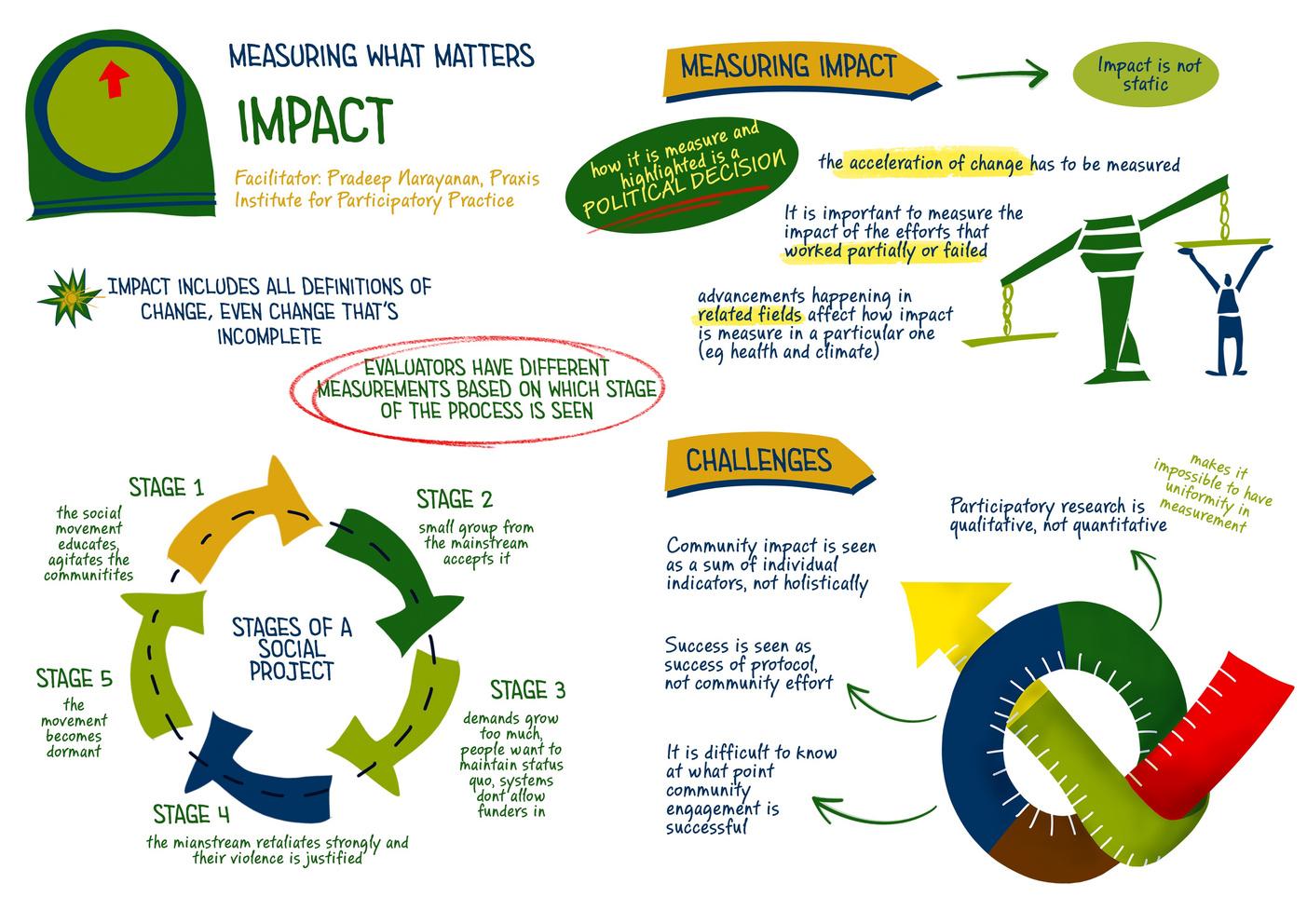
Facilitator: Pradeep Narayanan (Praxis - Institute for Participatory Practices)
After opening with the song The Times They Are A-Changin’ by Bob Dylan to invite reflection, Pradeep Narayanan reframed measurement as the study of movement, not a static world. Both the ‘rebel’ and the ‘status quo’ claim that change is underway, but its direction, velocity, and who it serves is where politics resides. And that, he argued, is exactly where measurement lives too. We never measure a still world; we measure something already in motion.
He extended this through the metaphor of tides and waves. Large structural forces, patriarchy, caste, capital, act like gravitational pulls, shaping the movement of the tide. But what we typically measure are only surface shifts. When the tide rises in one place, it recedes in another; gains often generate counter-forces elsewhere. If we measure only what is visible, we miss both the system and the counter-tide.
Staying with the ocean, he offered the image of a leaf floating on water: when a wave passes, the leaf rises and falls but does not travel. What moves across the ocean is not the water, but the energy. Measurement, he suggested, is often preoccupied with the ‘water’, activities, outputs, participation, while overlooking the ‘energy’: shifts in power, imagination, consciousness, and resistance that actually drive change. Water can be counted; energy must be sensed.
He further situated interventions within an ecosystem of colliding theories of change. No programme operates on a blank slate; individuals navigate multiple, often competing forces at once, those of institutions, markets, communities, and social norms. Impact, then, is not a linear outcome, but something emerging from these intersections.
He described the ‘five stages of collective action’, from early education and organisation to moments when movements make systemic demands and encounter institutional pushback. What may appear, in conventional evaluation, as failure at this stage is often a strategic pause within a longer trajectory of change. Pradeep also introduced the idea of a community’s ‘right to opacity’, the right not to be fully visible or legible to outsiders. Silence, he argued, is not an absence of data, but an assertion of agency.
He closed with a provocation to funders and practitioners alike: when evaluation log-frames prioritise risk mitigation, do they end up constraining the very conditions required for meaningful change?
Key Takeaways:
• Impact is the “percolation of ideas” and shifts in power, which cannot be captured by purely quantitative metrics.
• Researchers must respect a community’s “right to opacity”— what is not said is often as important as what is documented.
• Theories of change must account for competing narratives within a community.
“Impact is the percolation of ideas.” — Pradeep Narayanan
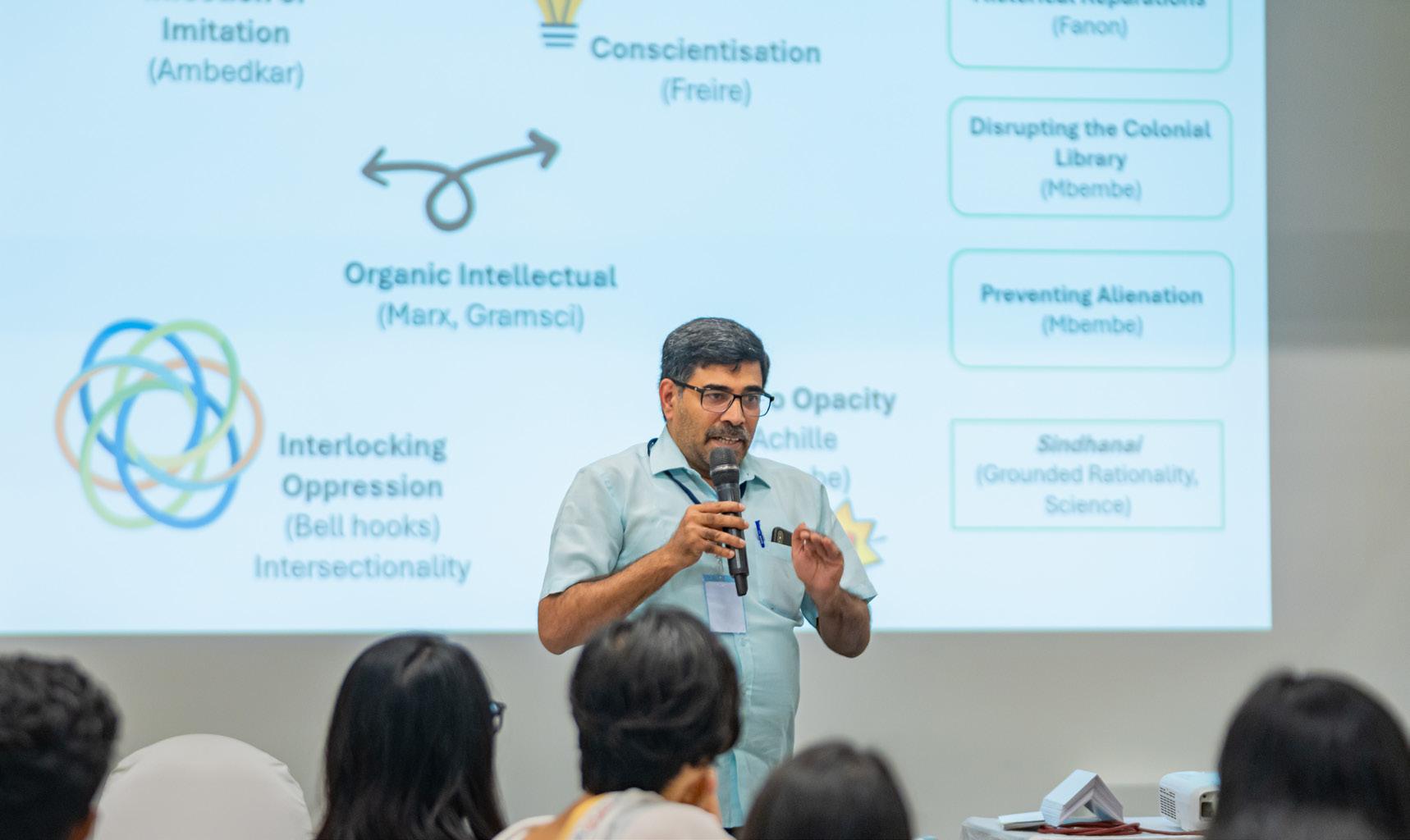
“Everything is continuously shifting and changing, why use old metrics and old ideas for phenomena we don’t understand?”
— Pradeep Narayanan
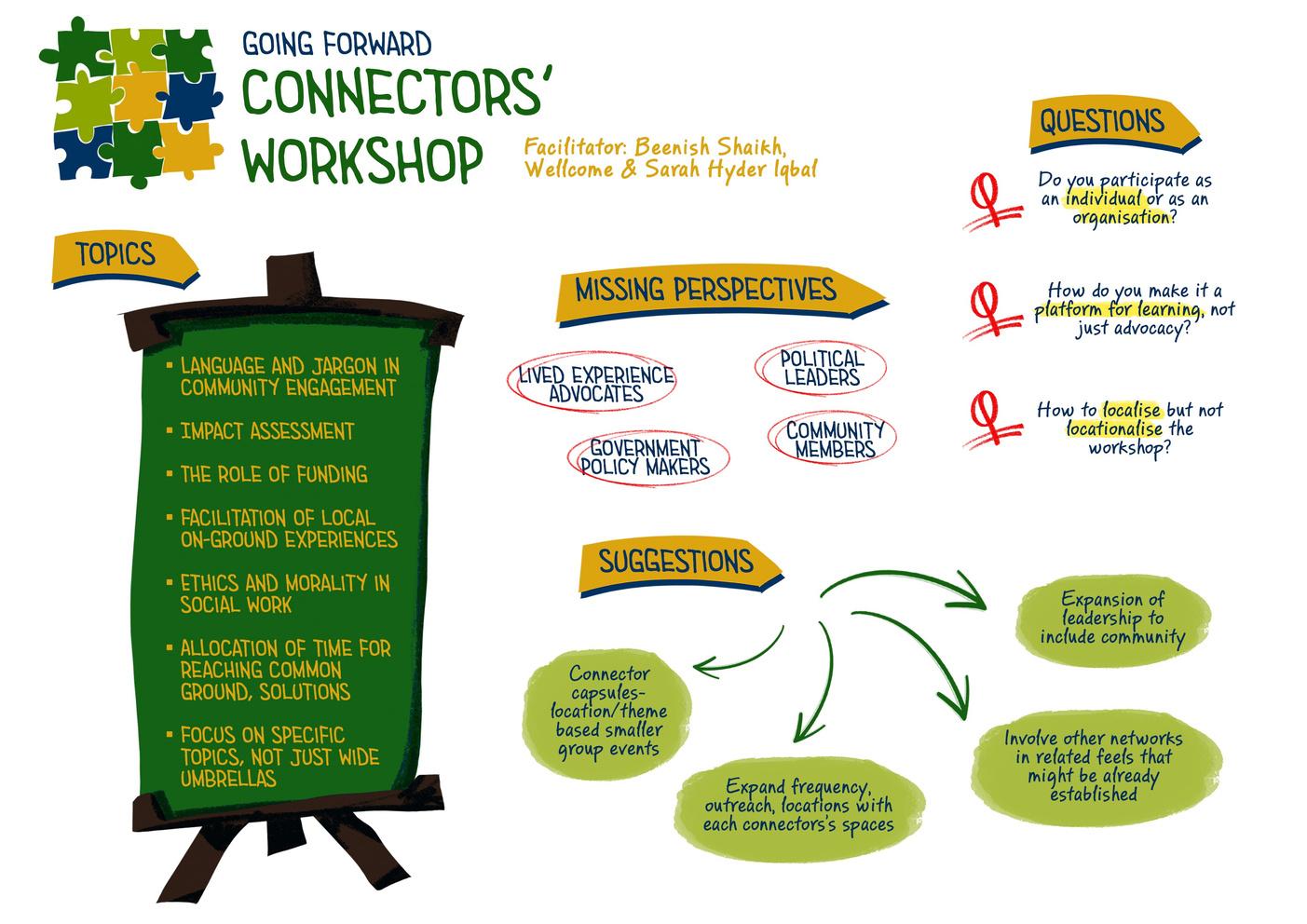
Facilitator: Beenish Shaikh (Wellcome) and Sarah Hyder Iqbal.
The final session aimed to define the future of the network, with participants taking collective responsibility for its survival. Three questions framed the discussion: what themes should the next Connectors workshop explore; whose voices are missing; and what would help this community of practice remain active and meaningful.
On sustaining the community, two ideas received strong support. The first was ‘Connector Capsules’, smaller, local gatherings using the Connectors name and ethos to keep conversations alive between global workshops. Participants noted these gatherings should rotate across cities and countries to avoid the network becoming too location-specific.
The second idea was a ‘Connector Manifesto’, a living document, translated across languages, that evolves as the community evolves. Not a policy statement, but a set of shared commitments that can serve as both a guiding compass and an open invitation for others to join.
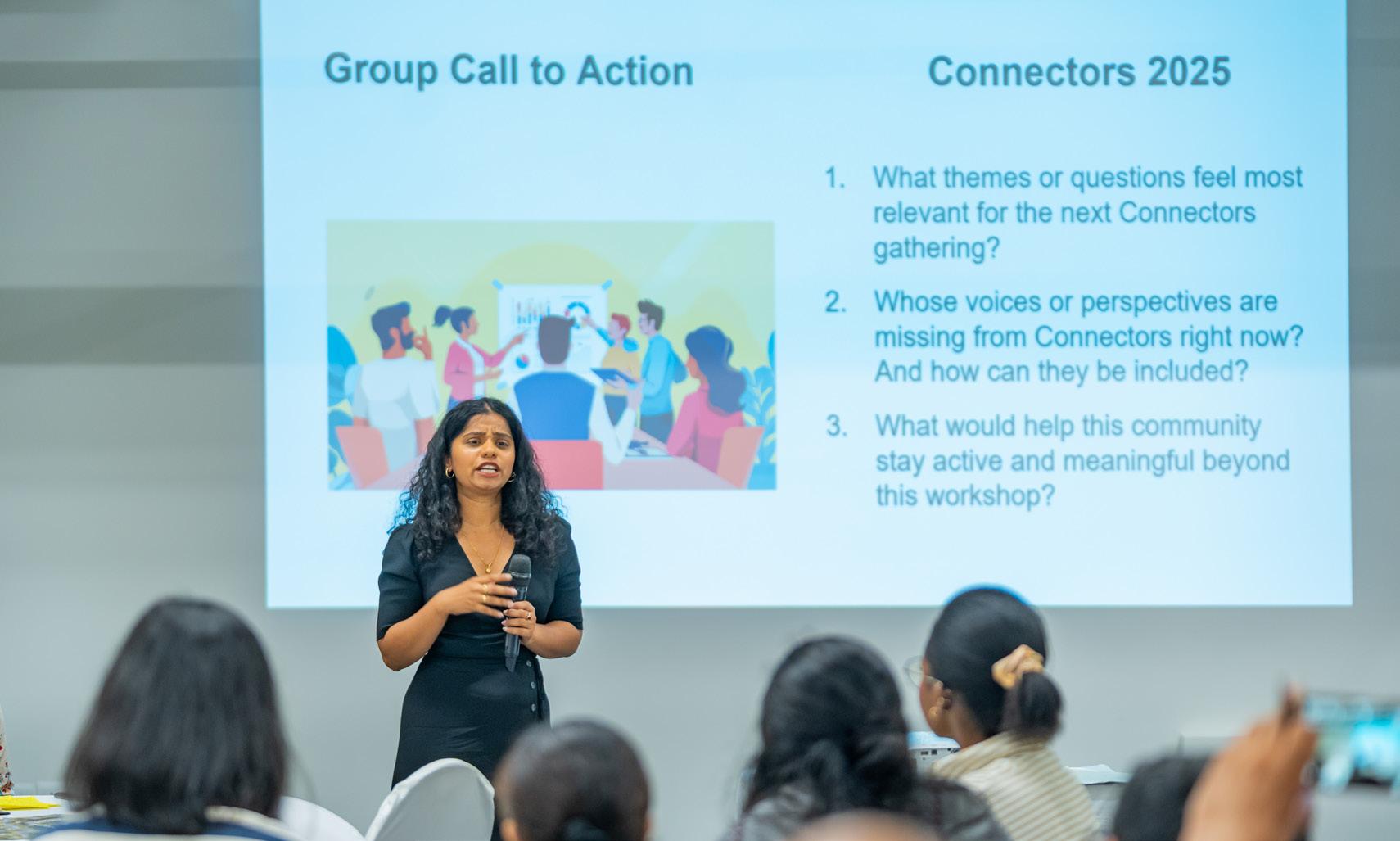
On missing voices, participants identified communities themselves as the most significant gap, acknowledging the tension inherent in a workshop about community engagement that did not include community members. Scientists and researchers were also identified as under-represented. Policymakers were a contested absence: some felt they were essential, others worried about changing the nature of the space.
Sarah Hyder Iqbal closed by noting that the energy created in these three days should be allowed to flow freely, in ‘crazy ways’ if necessary, and should not be contained by the boundaries of any one institution or event.
Key Takeaways:
• Sustainability relies on regional subgroups (capsules) and individual drive rather than a single central organization.
• Engagement work should be a mandatory ethical requirement in research reporting, not just a donor elective.
• The network must prioritize “epistemic justice,” centering Global South voices and lived experience in all future agendas.
“The deeper work is not about solving everything, but about holding each other steady as we keep trying.”
— Sarah Hyder Iqbal
The Ideas Marketplace ran across Day 2 and Day 3, with dedicated 2.5-hour slots for participants to bring in projects, questions, and challenges they wanted to explore. Sessions were proposed in advance, with others signing up based on interest, and discussions unfolding in a largely self-organised way around themes that felt relevant to the group. In total, six sessions took place over the two days, ranging from evaluation methodologies to questions around AI governance in health research.
This session drew on a programme that has established patient support groups across several districts in Uttar Pradesh and Bihar, working with survivors of Lymphatic Filariasis and Kala Azar. The groups have built member confidence, reduced stigma, and developed community advocates. The challenge brought to the group was one of institutionalisation and scale: how do you sustain these structures after a pilot ends, and how do you scale without losing what made them effective?
In summary, the participants suggested better leveraging existing health system infrastructure rather than maintaining parallel community structures; building the visibility and evidence base of the model during the pilot phase so it can make the case with state health departments; and exploring whether digital tools could support the project.
Led by: Vo Thi Que Chi, OUCRU Vietnam | Day 2
Participants were introduced to evaluation design through a role-play board game rather than a presentation. Teams were assigned fictional community engagement projects and worked through the evaluation planning process as players, each with different institutional priorities. A ‘Manager’ in each team had to navigate conflicting demands and steer the group to an agreed plan.
The most valuable element, in participants’ assessment, was not the framew-ork itself but what the game revealed: the stakeholder negotiation and political work that typically happens behind the scenes in real evaluation processes. Several participants with no prior evaluation experience found the format genuinely accessible. The experience contributed to a revised version of the game, subsequently published on Mesh: mesh.tghn.org/evaluation/evaluation-process-board-game/
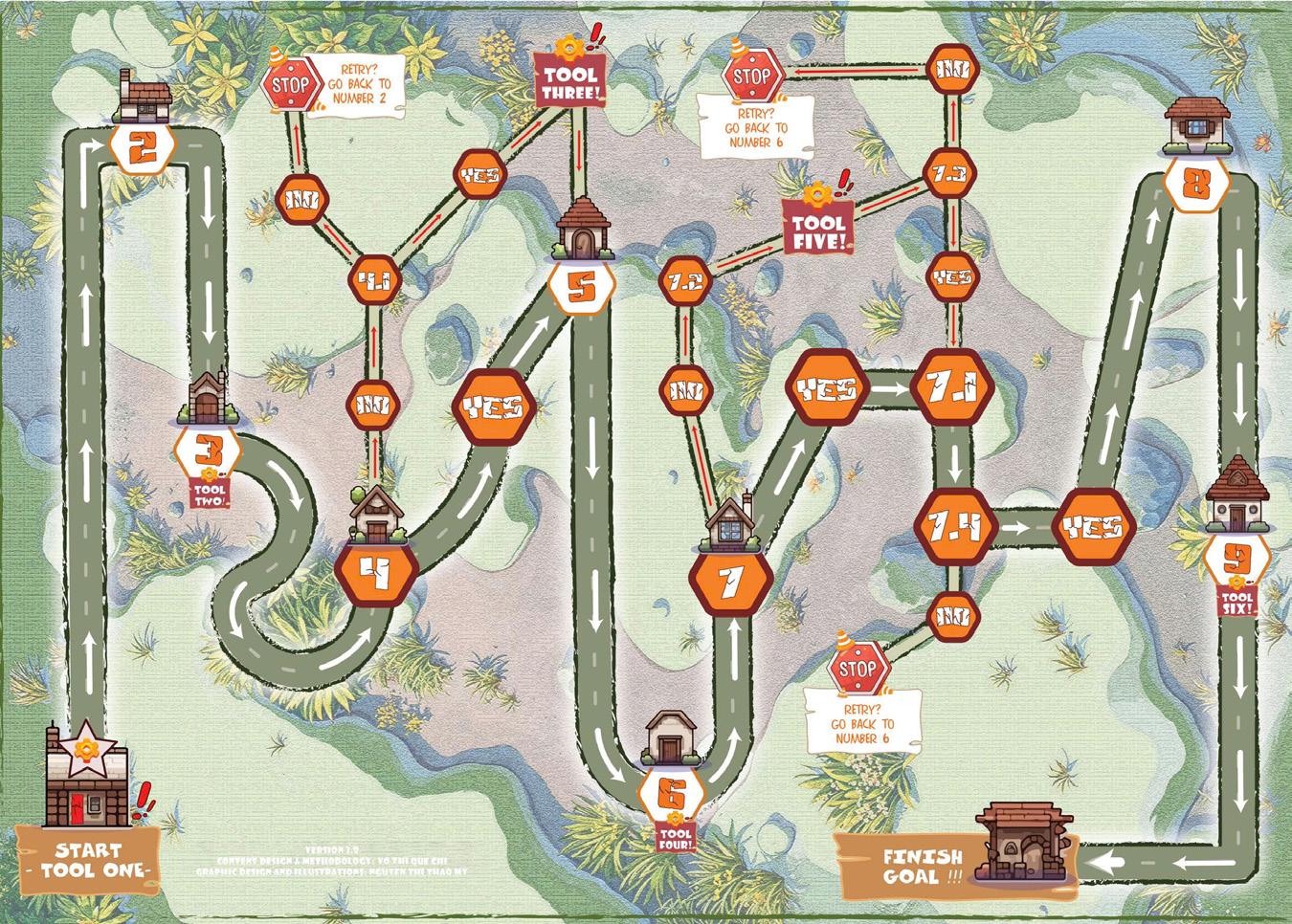
“Bringing the game to the Connectors Workshop in Bengaluru, India in October 2025, I was hoping to get more feedback to further improve the game. Before the delivery day, only a few people signed up for my game. But on the delivery day, that number quadrupled!
The original version of the game relied on a facilitator (me) to lead, and I couldn’t manage a dozen people effectively by myself, so I improvised and let players adopt certain roles and personalities within a project team. The game was unexpectedly successful! People were so in character and having fun. They also had many “a ha!” moments while exploring the questions and discussing the answers with their mates. And that was how version 3.0 of the game was born!”
— Vo Thi Que Chi, OUCRU-VN
Led by: Rohan Patankar, Quicksand Design Studio | Day 2
Held in the reading room on the afternoon of Day 2, this session offered space for listening, reading, reflection, drawing, and conversation. Chairs were arranged around a large table, with publications from Quicksand laid out for participants to browse — covering projects on ecology, technology, and health, including Land, Body, Ecologies; Decentralising Digital; and Mindscapes (Bengaluru).
Six participants joined. Some read quietly by themselves; others chatted in pairs. One pair sat on the floor going through books together; another spent the hour exchanging notes about their everyday lives in Delhi and Cape Town. Participants described it as a welcome break from the group-based structured conversations of the main programme.
by: Asmi Khushi and Giridhar Dasari, ATREE | Day 3
This session presented work done by ATREE with Saora tribal farmers in Andhra Pradesh, using a co-learning approach to connect indigenous farming knowledge with scientific evidence on soil health and ecosystem function. The aim was to help communities demonstrate, in terms legible to policy makers, that their practices produce better outcomes for people and land. The challenge brought to the group: how to maintain deep community ownership while also meeting the scientific requirements of reliability and scalability that policy engagement demands.
Given the emerging importance of AI, participants felt the need to host a session to examine the growing presence of AI in health research. Concerns were raised specifically around data ownership and algorithmic bias, as well as how governance systems could ensure that communities remain substantive participants rather than data sources. Kaustabh Misra brought in resources to explore rights-based approaches to AI governance in the Indian context. These led to a deeper discussion on where AI could add genuine value versus where it risked over-simplifying the relational complexity that community engagement depends on.
The Connectors Workshop 2025 reaffirmed that the role of the ‘Connector’ constitutes a distinct practice, one that existing professional structures rarely recognise or resource adequately. Participants engaged with this shared reality from different disciplinary and geographic positions, finding common ground not only in the challenges they faced but in the values they brought to their work.
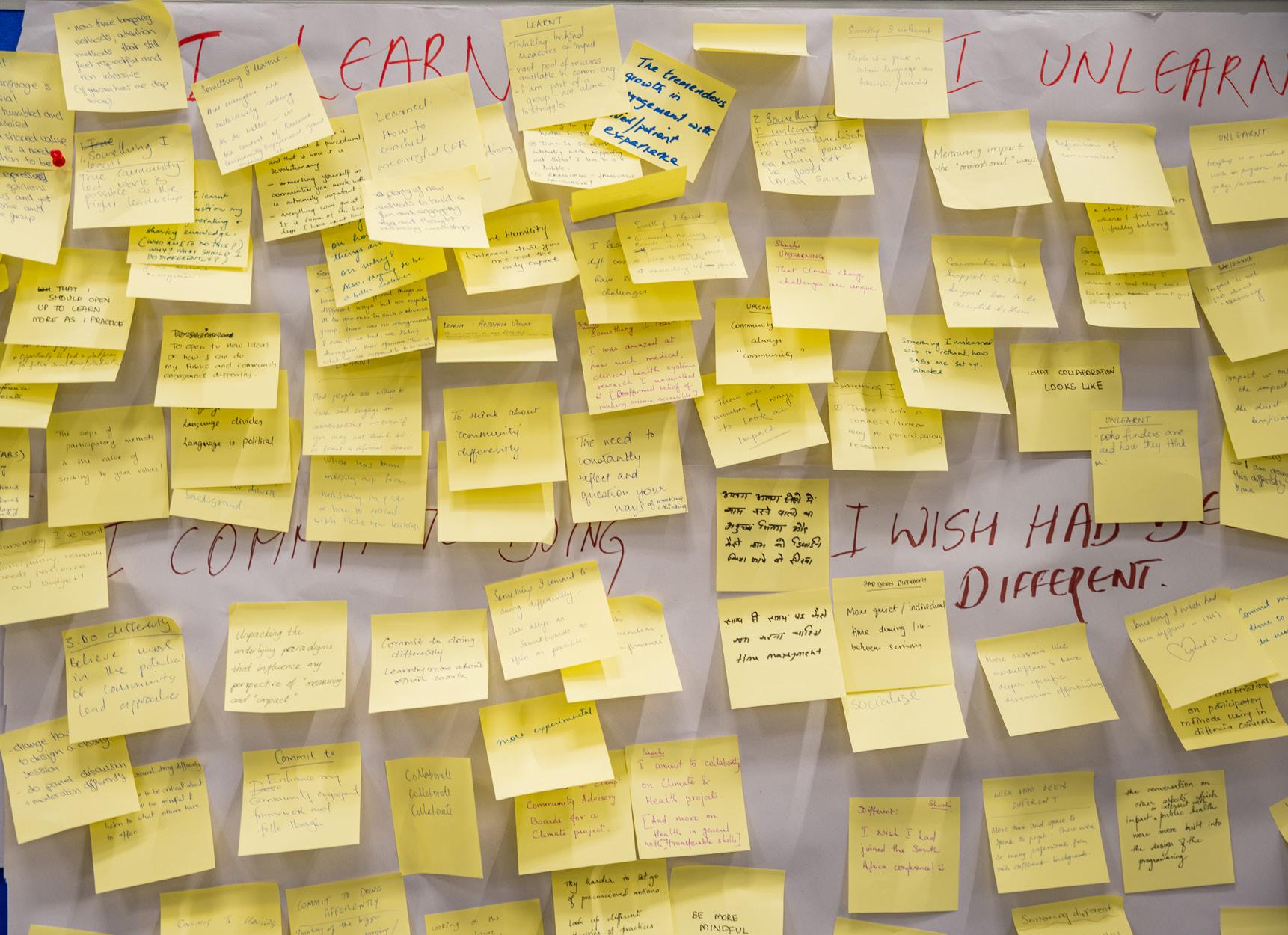
For many participants, this was the first formal gathering designed for people doing this kind of work. The significance of that was evident in both the quality of discussion and in what participants reported: a sense of professional recognition, and of not navigating these questions alone.
Post-event feedback reinforced this with 74% respondents rating their overall experience 5 out of 5, 100% saying they would recommend the event to colleagues, and 79% rating their likelihood of future collaboration at 4 or 5 out of 5.
The decision to move away from a typical conference like format was broadly successful. Sessions were designed to generate discussion rather than deliver content, and participants responded accordingly. The ‘Who is a Connector’ activity on Day 1 was a particularly effective example: by grouping people based on how they view their role, rather than the organisations or professional occupations they represent, it produced candid conversation that crossed typical stakeholder divides.
The scientist-researcher group reflected on anxieties about rigour and attribution. The artist-implementer group described the emotional labour of managing relationships between parties with competing priorities. The funder group acknowledged the gap between their organisational theories of change and what communities actually need. Multiple participants described this dimension of the experience as ‘therapeutic’, a word used to signal that peer-to-peer reflection of this kind is largely absent from their professional lives.
Many international gatherings that frame themselves around the Global South still default to northern standards for evidence, language, and methodological legitimacy. This workshop was organised, facilitated, and largely populated by practitioners based in South Asia, Africa, and South-East Asia. The cases that anchored discussion — tribal women diagnosing pneumonia in Gadhchiroli (https://www. searchgadchiroli.org/) Citizen Juries in Bengaluru (https://socratus.org/)
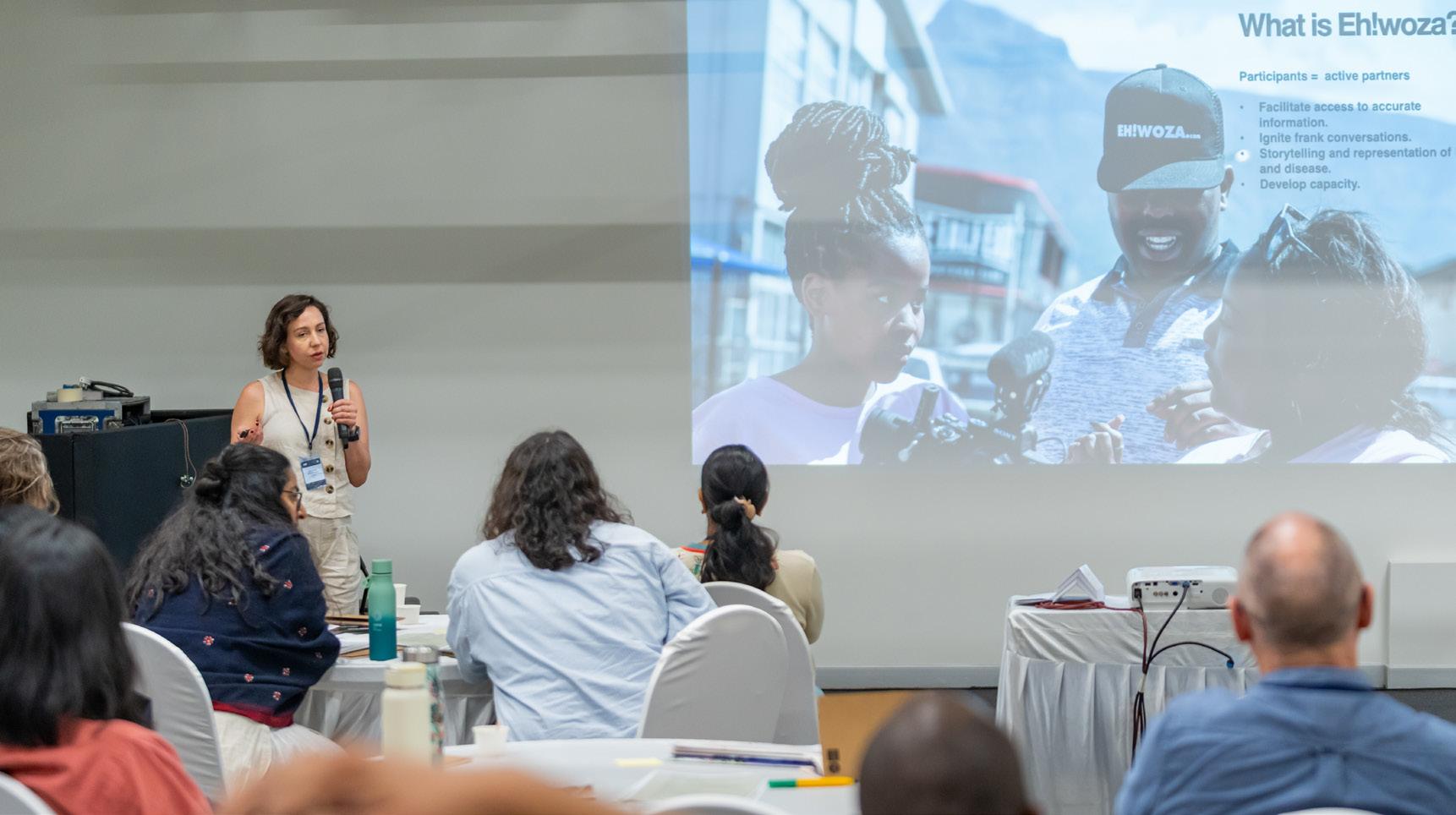
community filmmaking in South Africa (https://ehwoza.com/), youth media networks in Nairobi (https://www.shujaazinc.com/) — were not illustrative examples appended to a northern argument. They were the primary analytical material from which the workshop’s intellectual content was built.
This allowed India and Global South’s specific context to be engaged with substantively: the intersection of a rapidly expanding health sector with deep structural inequities; the role of caste in shaping who produces knowledge and whose knowledge is valued; and the particular challenges of community engagement in settings shaped by colonial histories. These were not peripheral concerns for the participants in the room but the conditions within which most of them worked.
The inclusion of researchers, funders, artists, journalists, public health practitioners, and science communicators in the same programme produced the kind of productive disagreement that more homogeneous professional gatherings rarely generate. Tensions that ordinarily play out through grant applications and evaluation processes, between what funders want to fund, what researchers want to do, and what communities need, surfaced directly in the discussions, where they could be examined. The impact assessment session illustrated this clearly.
Pradeep Narayanan’s argument that log-frames and output metrics are political instruments rather than neutral tools prompted direct disagreement between funders and practitioners about where responsibility for measurement frameworks lies. These exchanges were occasionally uncomfortable but they were among the most substantive of the workshop.
Science Gallery Bengaluru was chosen as host not only for logistical reasons but because its model of research-led public engagement aligned directly with the workshop’s concerns. The guided exhibition tour on Day 1, facilitated by SGB’s Mediators, gave participants a shared reference point for discussing what a different relationship between research and public engagement can look like in institutional practice. The community lunch prepared by Sarjapura Curries served a similar purpose. Suresh Kumar’s project which revives indigenous food knowledge through agricultural practice embodies many of the principles under discussion. The choice to encounter that work through eating rather than presenting it was itself a form of demonstration.
The most consistent concern across sessions was the systematic invisibility of the labour Connectors perform. This is not primarily a matter of individual institutional oversight, it is a structural problem rooted in how research funding is organised.
Grant applications demand clear attribution of change to specific interventions. The slow work of developing community relations resists such attribution by design. Professional development budgets are oriented towards technical skills with established credentialing pathways. The fuzzy labour of navigating between researchers, communities, funders, and policymakers — managing conflicting expectations, translating between registers, absorbing institutional friction — does not appear in any performance frameworks.
The practical consequences are significant. Participants across multiple sessions described professional anxiety, difficulty justifying their roles to institutional managers, and the cumulative exhaustion of working in structures that have no framework for valuing what they contribute.
The terms most commonly used in the field such as ‘community engagement’ and ‘co-creation’ surfaced repeatedly as both necessary and problematic. Different stakeholders apply different meanings to the same words, and the effort to create shared vocabulary tends to produce new jargon that excludes the communities the work is supposed to serve.
One participant observed that language in this sector has become “highly corporatised” and drained of political content. Another noted the self-defeating quality of efforts to avoid jargon: terms that begin as critiques of dominant frameworks are absorbed into those frameworks and lose their critical specificity. Someone pointed to the practical difficulty of working across multiple language registers simultaneously, between funder-facing professional English, academic vocabulary, and the local languages in which field work actually takes place. This tension reflects something deeper than a terminology problem. It concerns which terms of reference are treated as the default standard, and who bears the burden of translation.
Several groups raised this independently during the Call to Action session: the gathering spent three days examining community engagement while the communities under discussion were absent from the room. The gap between practitioners speaking on behalf of communities and communities speaking for themselves is precisely the gap that Connectors are meant to bridge. Its reproduction within the workshop was acknowledged as a genuine concern and a structural one.
One participant group posed the question directly during the feedback session: “Would you like me to bring my village from Africa?”. The question surfaces real design and resourcing challenges: what would it mean to include community members as partners rather than as case studies? What language, format, and power arrangements would need to shift? What investment would be required? These questions were raised without resolution, and they warrant attention for future editions.
The workshop surfaced a structural contradiction familiar to many practitioners: the conditions imposed by the research system often make genuine community engagement harder rather than easier. Project timelines insufficient for trust-building; risk-mitigation requirements that, once formalised in a grant application, effectively rule out the forms of advocacy and constructive friction that might produce systemic change; output metrics calibrated to measure activity rather than transformation.
Several participants also raised the fragility that comes from dependence on a small number of large funders, a concern made worse by political shifts in the global funding landscape. When a major funder changes its strategic direction, the impact is not limited to the project that was funded: it can dissolve community relationships and organisational capacity built over years. The question of how the Connectors network might sustain itself through such shifts, rather than being dependent on the continuity of any single funding relationship, was raised repeatedly but not resolved.
A recurring question throughout the workshop was whether participants were engaging as individuals or as representatives of their organisations. The event was designed to encourage individual participation, to create conditions where people could reflect from personal experience rather than from institutional briefs. In practice, most participants carry both identities simultaneously, and the separation is not always clean or easy.
This has implications for how the network operates over time. A community of practice built primarily on individual commitment is more resistant to institutional control but also more vulnerable to attrition as individual circumstances change. One anchored in formal institutional support has more structural continuity but risks becoming a platform shaped by employer and funder priorities. Participants noted this tension in the context of planning the future of Connectors.
The final session surfaced a question that deserves direct attention: what kind of space is Connectors, and what should it remain?
There was a strong, shared recognition that Connectors works best as a peer learning space—one where practitioners working at the intersection of research and lived experience can reflect on their practice, share methods and failures, and find a sense of professional solidarity that is often missing in their everyday work. It is not a conference in the conventional sense, nor an advocacy forum, nor a funder-convening.
As Sarah Hyder Iqbal observed in the closing session: “We have enough conferences, we have enough workshops on specific themes, on very specific agendas. But we don’t have spaces like these which can take conversations anywhere.”
Maintaining this character will require active choices. As the network grows and attracts institutional support, it will face pressure to produce demonstrable outputs, align with funder priorities, and professionalise in ways that could alter the nature of the gathering. The risk is not just dilution, but a gradual move away from the honesty and openness that made the space meaningful in the first place.
One way to maintain this is to have a shared definition of the space articulated by the Connectors themselves which can be used as a guiding framework. Underlying this was a broader point that: the value of Connectors lies not in what it produces in the conventional sense, but in what it enables — reflection, trust, and the slow building of a community of practice.
Nineteen participants responded to a post-event feedback form. The data below reflects their direct responses:
1. Overall Ratings
89% 26% of respondents rated their overall experience 5 out of 5. said the programme exceeded or met their expectations, with 42% saying it exceeded expectations.
74% 74% 100%
The remaining 26% gave a rating of 4. No respondent rated the experience below 4.
All respondents said they would recommend Connectors to colleagues or peers.
said sessions provided enough opportunities for interaction and reflection. The two respondents who answered ‘to some extent’ both noted they would have valued more unstructured networking time.
2. Connections Made
58%
42% of respondents said they made several new professional or community connections.
42% said they made a few. No respondent reported making no connections.
79% rated their likelihood of collaborating or staying in touch at 4 or 5 out of 5.
• The most frequently cited standout sessions were: Measuring What Matters (Pradeep Narayanan’s session on impact and participatory research) — named by multiple participants; Rethinking Expertise in Health Research Breaking Out of the Box: Innovations in Practice; and the Ideas Marketplace.
• One participant described the Ideas Marketplace: ‘It brought together experience and expertise from different geographical locations to develop a solution which could be tested and applied immediately after.’
• When asked what kind of continued engagement they preferred, the most popular responses were: annual in-person gathering (cited by 79%), online network or mailing list (58%), regional meet-ups (53%), and thematic working groups (47%).
• Several participants explicitly supported the idea of Connector Capsules.
• Participants suggested the following themes for future workshops: ethics in community engagement; climate change and health and AI and community engagement.
• They also requested skill building sessions on proposal and grant writing; post-research policy engagement, including creative approaches to translating research into policy.
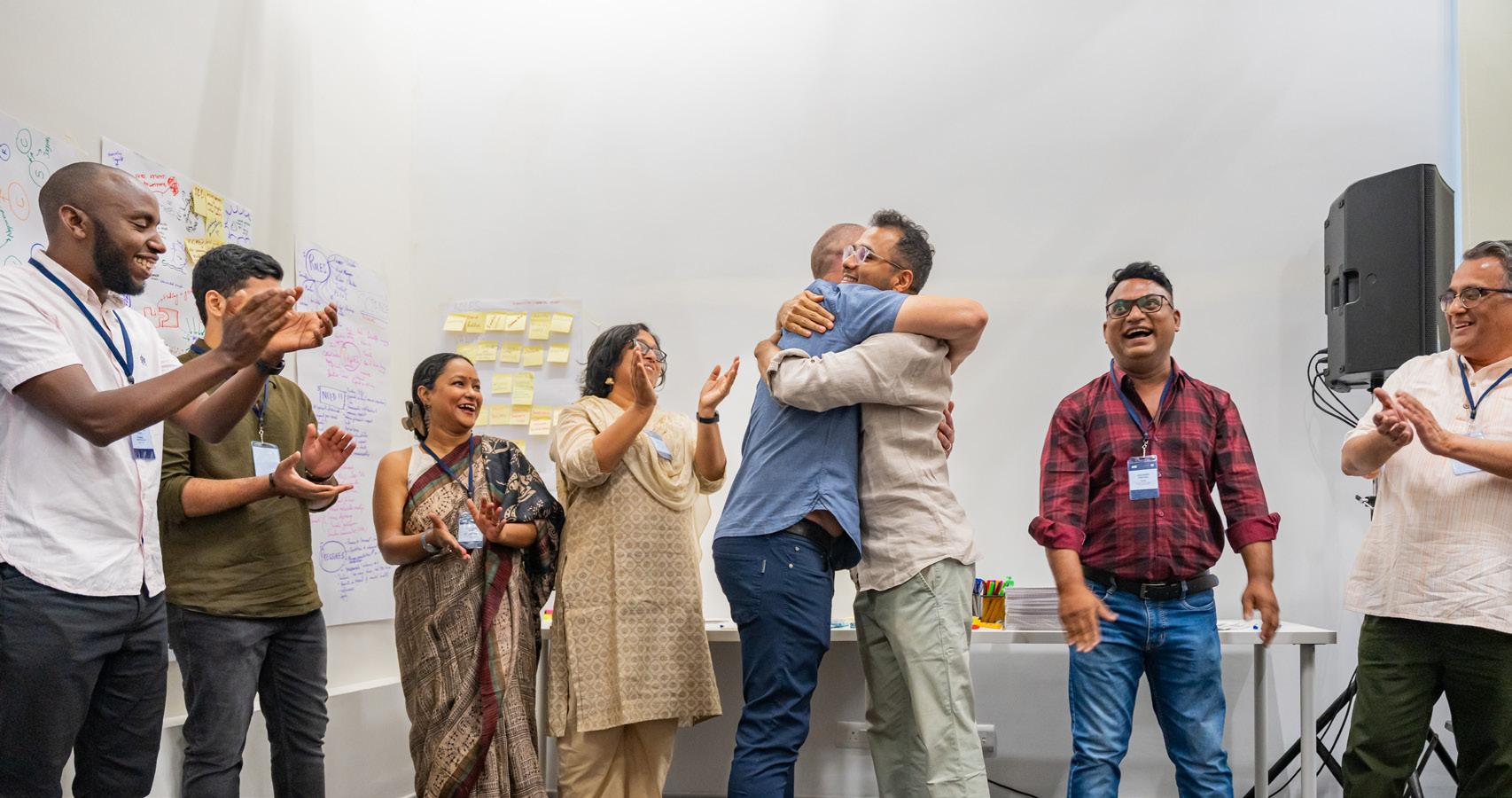
When asked to describe Connectors 2025 in one word or phrase, participants said:
“This was an excellent effort to throw people together, let them find common ground, and think up ways of collaborating.”
— Participant
“I really enjoyed the workshop. It is meticulously planned, and everyone is so grounded.”
— Speaker/Facilitator
“Connectors should have connectors in their own states and regions to build the chain and create a ripple effect for change.”
— Participant
“Being immersed in Bengaluru was truly a wonderful experience for me, surrounded by inspirational colleagues, creative ideas and a passion for research. I loved every minute of it.”
— Organizer/Partner
“Thank you to the organizing team for the amazing coordination and guidance in the build up. I truly felt taken care of.”
— Speaker/Facilitator
“It would be great to keep ‘Connectors’ and the connections alive. Various expertise exist which can be used to apply for grants to carry out participatory health research.”
— Participant
As the workshop drew to a close, participants reflected on how to sustain the energy of the three days and translate it into concrete next steps. Two kinds of action emerged: things that could begin immediately, and longer-term structural work the community could take on together.
• Launch “Connector Capsules”: There was a strong desire to initiate local subgroups to keep dialogues alive. This has already begun to take shape, with some participants organizing their own deliberations inspired by the Connectors format and actively using the group to sustain exchange, test ideas, and build a community of practice.
• Develop a Toolkit: Participants identified an opportunity to collate funding strategies, case studies, and mentorship guides, drawing on the collective expertise in the room. Mesh can be a natural home for this repository. This is already beginning to take shape through ‘Methodology Labs’ led by Praxis with some of the Connectors participants, focusing on ethics and impact measurement.
• Seed and Support Collaborations: Several early collaborations among participants are already emerging — from joint session ideas to cross-country exchanges and peer support around ongoing projects. Importantly, these are not being centrally driven but are growing organically from shared interests and the trust built during the workshop.
• Shift power: Continue to advocate for the community to hold greater decisionmaking power in research design, priority-setting, and grant processes — not as a programme aspiration but as a scientific and structural requirement.
• Strengthen Mesh as a digital home: Use Mesh as the shared platform for resources, ongoing conversations, and knowledge exchange between editions of the workshop. (https://mesh.tghn.org/)
• Sustain the space: There is a clear case for Connectors to continue as a recurring convening. This is a call to funders — both those present and beyond — to recognise the value of spaces like this and support their continuity, while preserving their participant-led ethos.
9.00 – 10.00 AM :
Welcome and Introductions — Jahnavi Phalkey & Sarah Hyder Iqbal
10.00 – 11.30 AM :
What Does Community Engagement Mean to Those Involved?
11.30 – 12.00 PM :
12.00 – 1.00 PM :
1.00 – 1.30 PM :
1.30 – 2.30 PM : 2.30 – 3.15 PM :
3.15 – 4.45 PM :
4.45 – 5.00 PM : 5.00 – 5.15 PM :
5.15 – 6.00 PM :
6.00 – 7.30 PM :
Chai and Chat
Who Is a Connector?
Sarjapura Curries: Re-discovering Lost Greens with Suresh Kumar
Lunch
Who Is a Connector? (continued)
Democratising Knowledge and Dialogue — Panel discussion
Introduction to Mesh and the Ideas Marketplace
Coffee/Tea break
Guided Tour of Science Gallery Bengaluru Exhibition
Welcome Dinner
9.00 – 9.45 AM : 9.45 – 11.15 AM :
11.15 – 12.00 PM :
12.00 – 1.30 PM :
1.30 – 2.30 PM :
2.30 – 4.00 PM : 4.00 – 4.15 PM : 4.15 – 5.45 PM : 6.00 – 8.00 PM :
Reflections on Day 1
Rethinking Expertise in Health Research Through Lived Experience
Chai and Chat
Community Advisory Boards: Bridges to Equity in Research?
Lunch
Breaking Out of the Box: Innovations in Practice
Coffee/Tea break
Open Space — Ideas Marketplace
Dinner and Social Evening
9:00 – 10:00 AM : 9:45 – 11:30 AM :
Open Space — Ideas Marketplace (continued)
Measuring What Matters: Definitions of Impact — Pradeep Narayanan
11:00 – 11:45 AM : 11:40 – 1.30 PM : 1:30 PM onwards :
Coffee/Tea break
Call to Action: Developing Next Steps — Beenish Shaikh & Sarah Hyder Iqbal
Lunch and Departures
Connectors 2025 was supported through a combination of carried-forward funds from the 2022 convening, contributed by Eh!Woza, Interfer, and Mesh, and additional funding from the Wellcome for this edition. Science Gallery Bengaluru provided all infrastructural and logistical support for Connectors 2025.

Eh!woza: Works at the intersection of science communication, youth advocacy, community engagement, and skills development to merge medicine and social impact.

Mesh – The Global Health Network: An online community of practice for people working in community engagement with global health research. Created in 2016 through a partnership between Wellcome and The Global Health Network.
Science Gallery Bengaluru: A not-for-profit public institution for research-based engagement targeted at young adults. Works at the intersection of the human, natural, and social sciences with engineering, art, and design. Established with the founding support of the Government of Karnataka.
Wellcome: A global charitable foundation established in 1936, working towards a healthier future for everyone through transformative scientific discoveries and equitable health solutions.
Aditya Senan Lead, Grants and Resource Mobilization, Society for Education, Action and Research in Community Health (SEARCH)
Aleena Sebastian Assistant Professor, NIAS Bangalore
Alun Davies Senior Programmes Manager, Mesh – The Global Health Network
Amar Nawkar Programme Officer, Tata Trusts
Angela Chaudhuri Chief Catalyst, Swasti
Anshuman Karol Lead, Governance and Climate Action, PRIA (Participatory Research in Asia)
Ashata Dahal Public Engagement Manager, Oxford University Clinical Research Unit Nepal
Asmi Khushi Research/Policy Associate, Ashoka Trust for Research in Ecology and Environment (ATREE)
Banya Kar Lead, Science Communication and Public Relations, BRIC–National Institute of Immunology
Beenish Shaikh Community Engagement and Partnerships Manager, South and South-East Asia Wellcome
Dasari Giridhar Research Associate, Ashoka Trust for Research in Ecology and the Environment (ATREE)
Devi Leena Bose Lead, Behavioural Insights CoPD, WPP Media
Devika Pradeep Programme Associate, Science Gallery Bengaluru
Eva Simarmata Public and Community Engagement Officer, Oxford University Clinical Research Unit (OUCRU) Indonesia
Georgina Lamare Social Behaviour Change (SBC) Consultant, UNICEF
Harikeerthan Raghuram Associate Director (Health Equity), Sangath
Harsha Jagdeesh Learning Associate, Science Gallery Bengaluru
Jagath V Senior Programme Associate, Science Gallery Bengaluru
Jahnavi Phalkey Founding Director, Science Gallery Bengaluru
Jith Jagajeevan Remadevi Research Fellow, The George Institute for Global Health India
Jogendra Singh Parihar Director, South Asian Sanitation Worker & Labour Network (SASLN)
Joram Kioko Senior Manager, Community Operations Shujaaz Inc.
Kadambari Patil Scientific Communication Coordinator, Centre for Brain and Mind, NIMHANS Bangalore
Kaustubh Misra Program Lead, Samagata Foundation
Lakshmi Narasimhan Director, The Banyan / Banyan Academy of Leadership in Mental Health (BALM)
Lena Robra Head of Academic Engagement, Swissnex India
Madhushree Kamak Independent Creative Producer
Malintle Lehata Research Specialist, Sonke Gender Justice
Malavika Sudhir Learning Associate, Science Gallery Bengaluru
Manasi Pingle Coordinator, Bengaluru Sustainability Forum
Nabeel Petersen Director and Researcher, Interfer
Napat Khirikoekkong Senior Social Science Researcher and Senior Engagement Facilitator, Mahidol Oxford Tropical Medicine Research Unit (MORU)
Neetu Singh Independent Journalist, Shades of Rural India
Pattie Gonsalves Project Director, Youth Mental Health Group, Sangath
Pooja Sehgal Country Lead, Health & Nutrition Communications, Gates Foundation India
Pradeep Narayanan Advisor, Praxis Institute for Participatory Practices
Radhika Kannan Advocacy Manager, Mariwala Health Initiative
Rohan Patankar Senior Manager, Quicksand Design Studio
Sarah Hyder Iqbal Independent Consultant
Saveetha Meganathan Senior Scientist and Lead, Community Engagement and Policy
Shelwyn James S Learning Manager, Science Gallery Bengaluru
Slyvia Lehata Research Specialist, Sonke Gender Justice
Stewardship Program Tata Institute for Genetics and Society
Sevantee Ghosh Strategic Medical Lead, Médecins Sans Frontières (MSF) South Asia
Sharin D’Souza Research Coordinator, Initiative for Health Equity Advocacy and Research (iHEAR), Sangath
Shital Patel Patient Advocate and Projects Head, PatientsEngage
Shruti Sundaresan Communications & Community Engagement Lead, Rohini Nilekani Philanthropies
Shuchi Vora Head of Learning, Global Resilience Partnership
Siuli Mitra Director, IndiaBioscience
Sopan Joshi Project Director, SEARCH Gadhchiroli
Srinidhi Gurunath Program Manager, Socratus Collective Wisdom Corporation
Suresh Kumar Visual Artist, Sarjapura Curries
T Jayashree Co-founder, QAMRA Archival Project, National Law School of India University (NLSIU)
Tanya Seshadri Senior Fellow and Assistant Director, Education Institute of Public Health Bengaluru
Tarini Shipurkar Senior Programme Officer, Praxis Institute for Participatory Practices
Tasha Koch Co-Director, Eh!woza
Vani H Chalageri Scientist D, ICMR – National Institute of Malaria Research (NIMR)
Vo Thi Que Chi PCE MEL Officer, Oxford University Clinical Research Unit Vietnam (OUCRU-VN)