
SCIENCE GALLERY BENGALURU 2025
Contact us
info@bengaluru.sciencegallery.com
bengaluru.sciencegallery.com
instagram.com/scigalleryblr facebook.com/SGBlr
twitter.com/SciGalleryBlr
linkedin.com/company/scigalleryblr
Foreword
The Year in Review 2023–24
Public Engagement
Learning and Mentorship
Media Presence
Overview of Science Gallery Network
Financial Reports
Governance and Leadership
Team
Partners
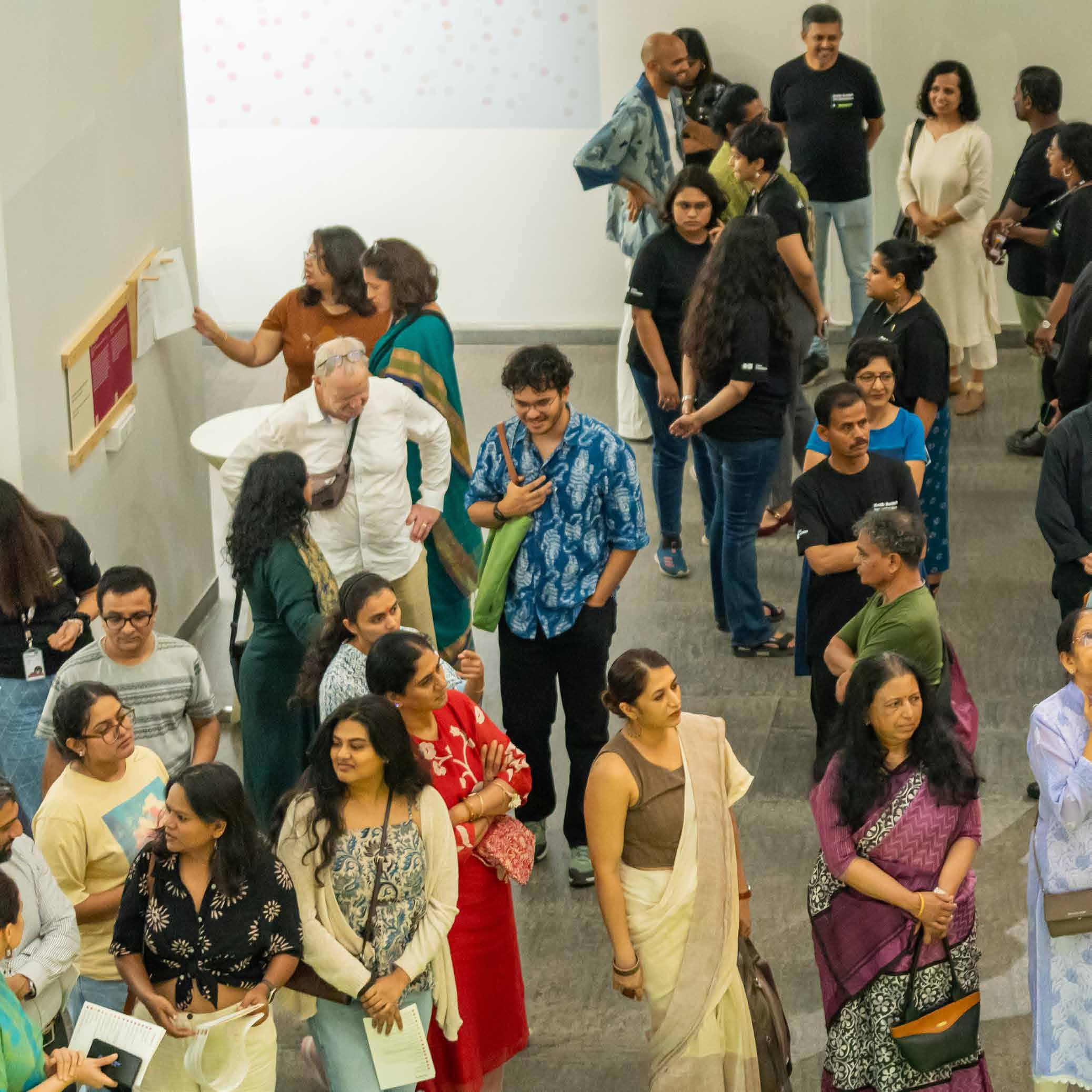
Visitors at CALORIE Opening, 2025.
SCIENCE CULTURE EXPERIMENT
FOREWORD
We launched CALORIE, our eighth exhibition and our third in our own premises, in August this year. This is our second year in our own premises, and yet it feels like we have been in the building for a long time.
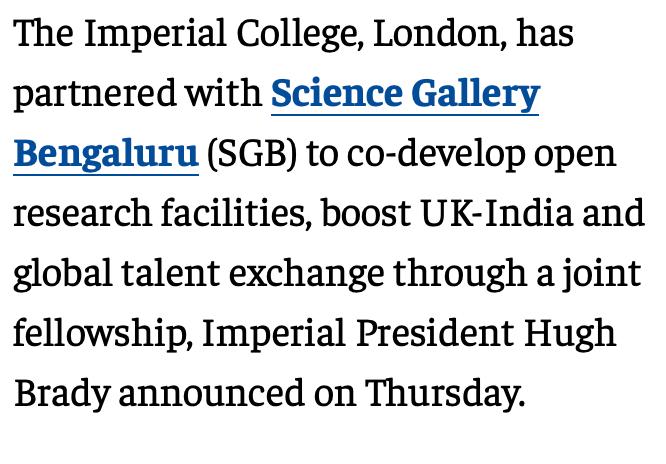
The highlight of this year is our signing a Memorandum of Understanding with Imperial College London to co-develop our Public Lab Complex. We have called it our “Ideas Incubator” and at times our “Ideas Lab”–a proposal that has found resonance already with TTK Prestige, Samagata Foundation and the Tata Trusts who have given us seed funding to bring together artists and scholars from across disciplines and practices to make magic!
We received a large grant from Tata Trusts Grant which will fund our next exhibition season QUANTUM, and seedfunded our Materials Lab. We have also received a grant for CALORIE from the Gates Foundation. We also received grants from the Wellcome Trust to host a workshop with public engagement practitioners; from Pro Helvetia, the Swiss Arts Council to host a workshop on River Landscapes; and from the British Council to host a ten-day workshop on art and technology. We have received two multi-year commitments for one exhibit annually from the Shyama Foundation and McDermid Alpha.
Apart from our own exhibition CALORIE, we hosted three travelling exhibitions this year: ‘South Asia and the Institute’ from the Massachusetts Institute of Technology showcasing stories of their South Asian students over time. We also hosted an exhibition of the ‘Project 560’ program of the India Foundation for the Arts, and finally, we hosted ‘Waterscapes’ an exhibition by the Paani Earth Foundation. We closed the year with two pop-up exhibitions curated by our own team, ‘Through Your Eyes’ drawing on photography submissions to our Open Call. We also created a rapid response exhibition on this year’s Nobel Prizes drawing on materials from the Nobel Prize Outreach team, the highlight of which were five ‘Ask Me Anything’ sessions where scholars spoke about the prize followed by a long Q&A session.
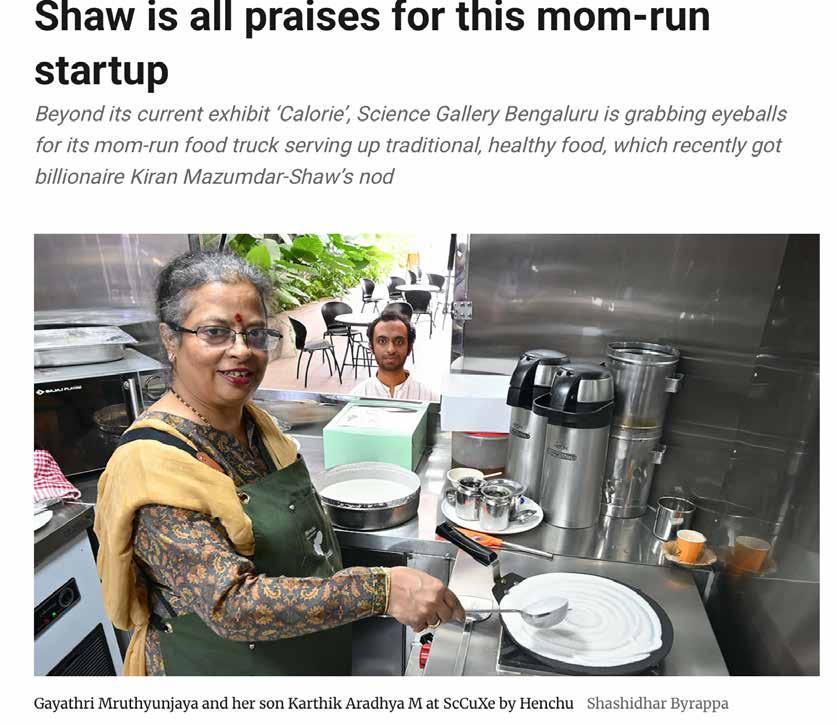
Continuing on our journey to develop our premises as a welcoming hang out, we opened Café ScCuXe by Henchu in September this year which is proving to be quite popular. We were delighted to host the Global Leaders Dinner of the Bangalore Tech Summit this year.
In the coming year, we look forward with excitement to co-developing the Public Lab Complex with colleagues in India and abroad to realise the last facet of the Science Gallery Bengaluru way!
Thank you for supporting our work and we look forward to conversations and partnerships in the future.
Kiran Mazumdar-Shaw
Jahnavi Phalkey Chair, Board of Directors Founding Director
THE YEAR IN REVIEW
• Launched the Sci560 Film Festival at Bangalore International Centre in collaboration with the Bangalore Film Forum
• Hosted River Landscapes: A New Glossary, a transdisciplinary workshop on fluvial landscapes
• Conducted a refresh of our exhibitionseason Sci560 to include more cutting-edge research and objects
• Launched the second edition of our annual food festival Namma Oota
• Hosted a series of public programmes as part Arts and Technologies in India, an initiative of the British Council
Launched the open call for Entangled Ecosystems grant in collaboration with Shared Ecologies
CARBON travelled to the Advanced Research Centre in Glasgow
Closed Sci560 after an 11-month long run
Opened CALORIE, our exhibitionseason on food to the public
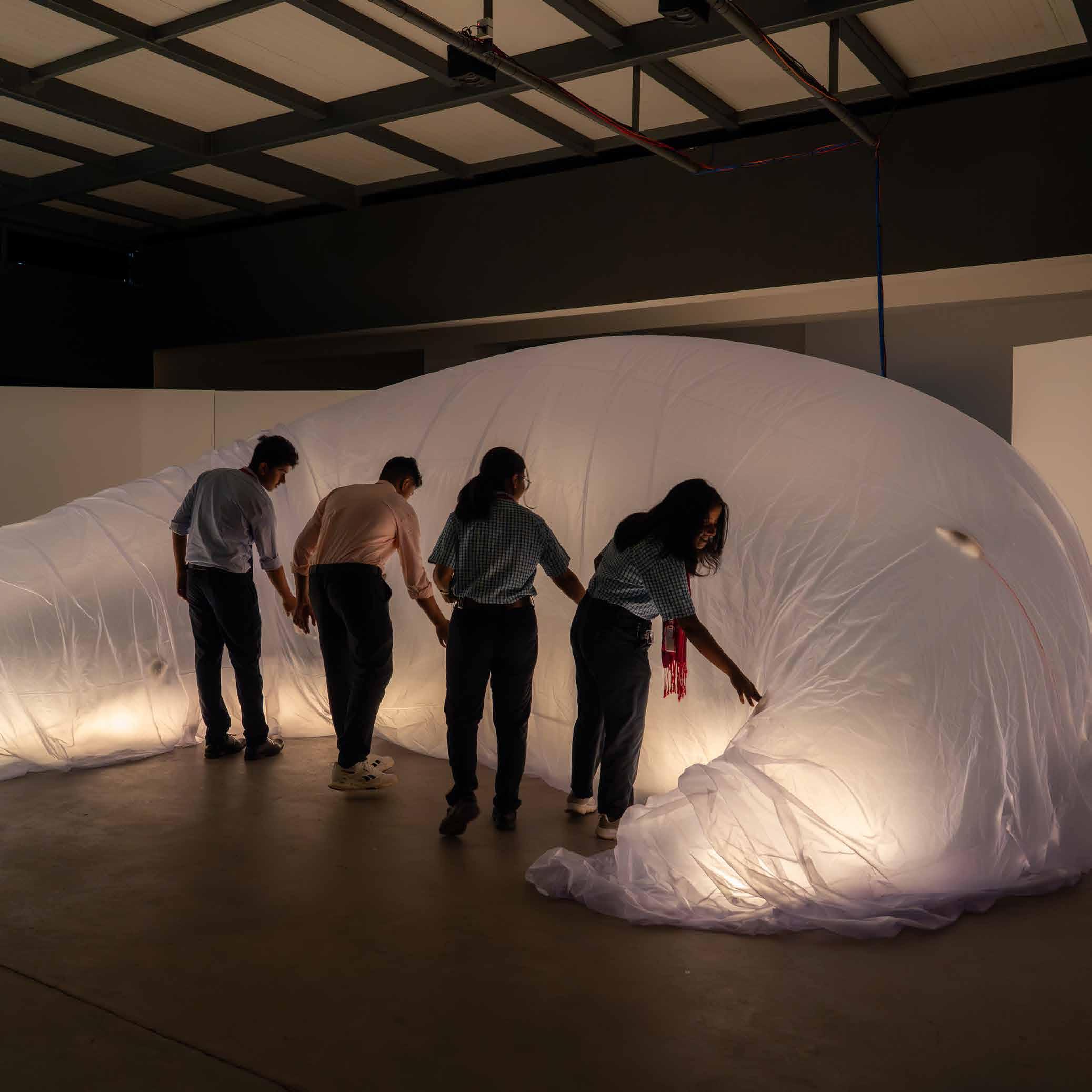
Visitors interact with sikau/pubalova's stuff change at CALORIE, 2025
01 PUBLIC ENGAGEMENT
Public engagement remained central to Science Gallery Bengaluru’s work in 2025, shaping how we connected research, culture, and civic life. Across exhibitions, programmes, and partnerships, we designed encounters that invited visitors to engage critically with science—not as distant expertise, but as something embedded in everyday life, history, and social systems.
Our two major exhibition-seasons, Sci560 and CALORIE, anchored a year-long programme of public activity that combined lectures, performances, workshops, festivals, and participatory formats. These initiatives extended learning beyond the gallery floor, encouraging dialogue, debate, and hands-on exploration, while welcoming audiences with varied interests and levels of familiarity with science.
Sci560, our first full exhibition-season in our permanent premises, marked a significant expansion of publicfacing engagement. Through an ambitious calendar of programmes, we introduced new formats such as studio visits, laboratory walk-throughs, and lecture-performances, that opened up
artistic and scientific processes to the public. These formats fostered closer interactions between researchers, artists, and citizens, and strengthened the Gallery’s role as a civic space for reflection on Bengaluru’s scientific and technological histories.
Building on this foundation, CALORIE continued to deepen participation while refining programme design. Its public engagement initiatives explored food, nutrition, and health through interdisciplinary lenses, bringing together food scientists, nutritionists, artists, technologists, and social scientists. Public lectures, workshops, performances, a food festival, and a participatory programme invited audiences to question familiar concepts such as calories, diet, and energy, situating them within broader historical, political, and cultural contexts.
In addition to exhibition-linked programmes, we sustained public engagement through off-season events and partnerships with cultural and research institutions. These initiatives ensured continuity of dialogue throughout the year and enabled
responsiveness to emerging ideas and collaborations.
Together, these public engagement efforts reached wide audiences while maintaining depth and quality of interaction. They reinforced our commitment to making science accessible, interdisciplinary, and socially relevant, and affirmed the Gallery’s role as a platform where research, creativity, and public conversation intersect.
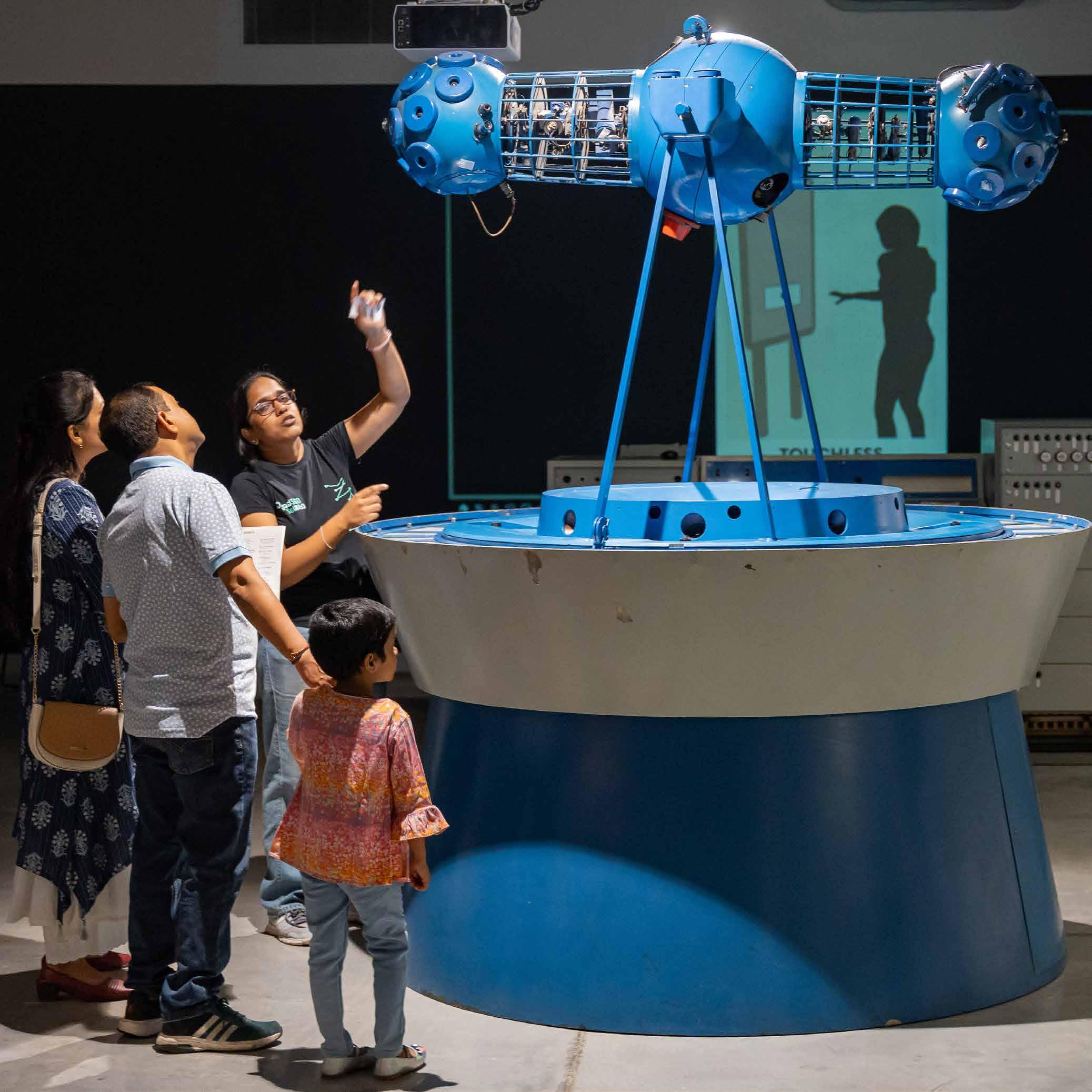
A Mediator shows Jawaharlal Nehru Planetarium's Optomechanical Projector at Sci560, 2024.
EXHIBITION-SEASON
SCI560
24.08.2024 – 08.08.2025 24
Bengaluru is India’s most recognised military–industrial–academic complex, and Sci560 was one way to question how this came to be. The city has long been a distinct microcosm of India. Over time, it was known as the Garden City, the military city, the industrial city, and, more recently, an IT, hi-tech, and start-up city—at times even India’s own Silicon Valley. A dynamic twentieth century shaped its emergence as a centre of new science and engineering.
The confidence in India’s research-led industry draws from achievements in information technology, biotechnology, and the space programme. It is little surprise, then, that Bengaluru became a symbol of a New India. Yet the city also held unexpected stories from a rich past in science and engineering— stories that contributed directly to these major success narratives.
Sci560 invited visitors to explore some of the ideas, individuals, and institutions that built this legacy. Our seventh exhibition season opened on 24 August 2024 and aimed to foster stronger connections between the citizens of Bengaluru and the city’s research institutions. The exhibition featured 33 objects on loan from 22 institutions and spanned two floors, presenting themes that examined the military–industrial–academic ecosystem from which Bengaluru’s identity as a Science City emerged.
As the first full season in our own premises, Sci560 allowed us to deepen engagement with our audiences through an expanded programme. We introduced new public-facing formats, including studio and laboratory visits that opened up artistic and scientific processes. We also commissioned
a film that traced the evolution of Bengaluru’s sewage system through the story of a woman who accidentally flushed her watch down a drain.
Together, these efforts helped us build new bridges—with researchers, artists, institutions, and citizens— and strengthened our capacity to create meaningful conversations around science and society.
This exhibition-season was supported by Rohini Nilekani Philanthropies.
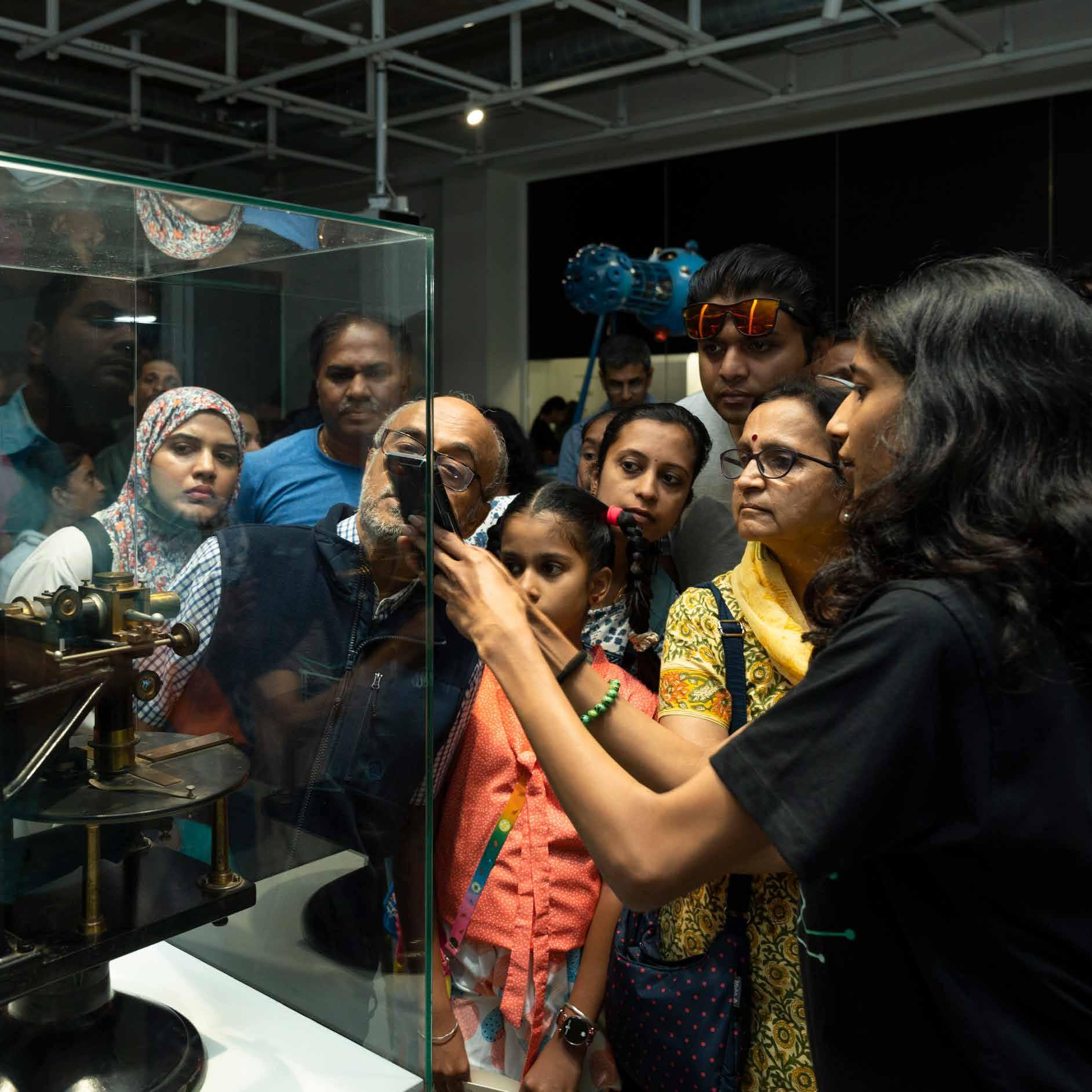
A Mediator shows Indian Institute of Astrophysics' Photometer at Sci560, 2025.
Funding Partner
Rohini Nilekani Philanthropies
Institutional Partners
Azim Premji University
Indian Institute of Astrophysics
Indian Institute of Science
International Centre for Theoretical Sciences
Jawaharlal Nehru Centre for Advanced Scientific Research
Jawaharlal Nehru Planetarium
National Centre for Biological Sciences
National Institute of Design
National Institute of Mental Health and Neurosciences
Raman Research Institute
Content Partners
Bharat Electronics Limited
California Institute of Technology Archives
India Post
Indian Music Experience Museum
Madras Engineer Group
Mod Foundation
Museum of Art & Photography (MAP)
Nature Conservation Foundation
Scoby Labs
Short Wave Radio Museum & Knowledge Centre
Unmuseum
Zeiss Archives
Programme Partner
Infosys Science Foundation
SCI560 OVERVIEW
PUBLIC OUTPUTS:
VISITORS: MUSEOLOGICAL OUTPUTS: EXHIBITION :
51,318 IN-PERSON
41 EXHIBITS
2,74,376 ONLINE 22 PARTNERS
3,25,694 TOTAL 72%

Visitors rated the exhibition 4 and above (Out of 5)

38 ARTISTS AND SCHOLARS
Visitors said they were exposed to new ways of thinking 70%

Visitors said they would like to visit again 100%
PROGRAMME PARTICIPANTS
PROGRAMMES

90% of Participants rated the programme 4 and above (Out of 5)

93%
Participants felt engaged in the experience

96%
Participants said they were inspired to know more
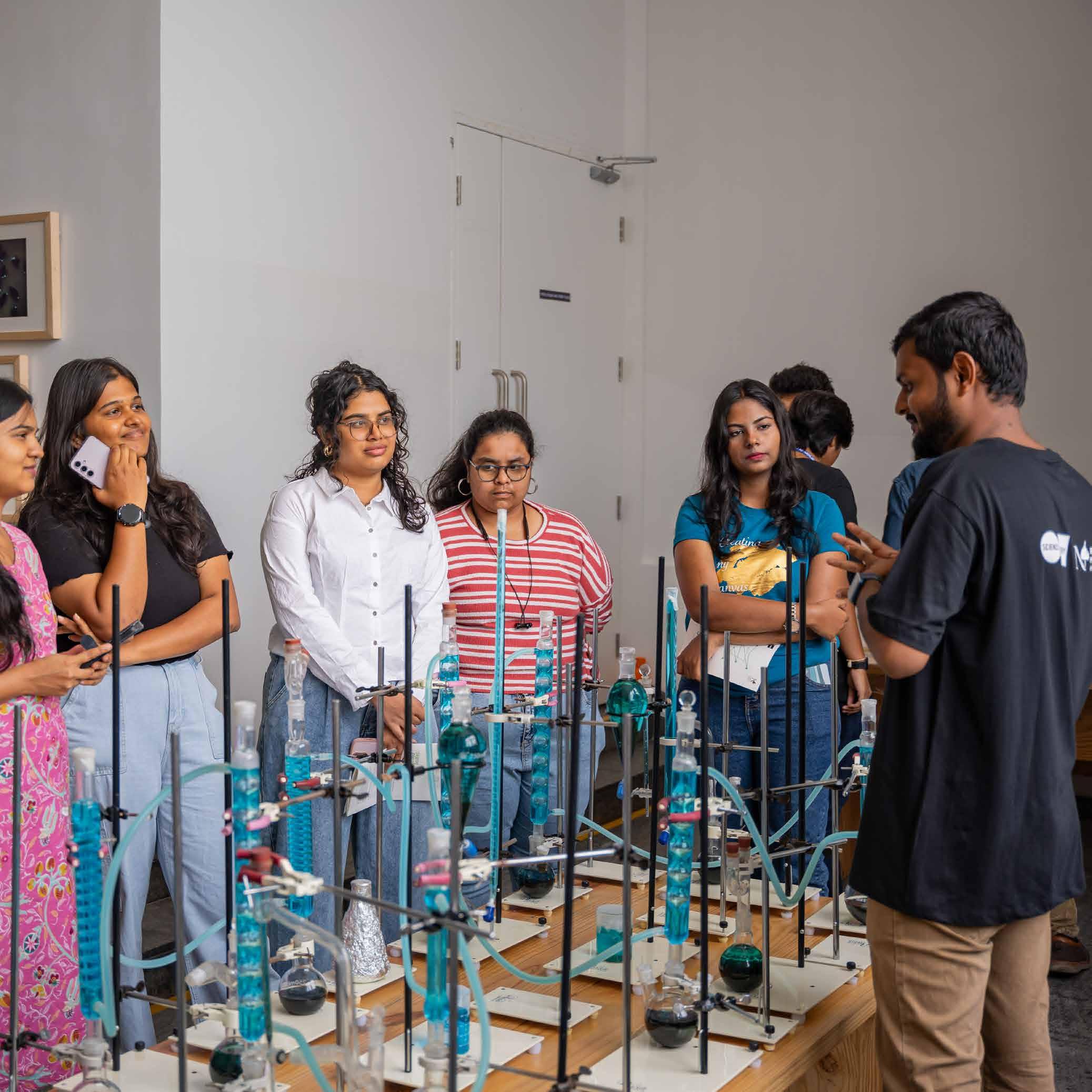
A Mediator shows National Centre for Biological Sciences' Jivanu at Sci560, 2024.
“I took away many small nuggets and insights from the lecture. Like the difference between the average estimated requirement of nutrients and popular excessive RDA.”
— Sonal Garg, Programme Participant
“The biggest takeaway for me was the extent of open data I am sitting on but never realised and never understood its significance to daily impact to the planet! Informed me more on how to be a lot more responsible citizen.”
— Indu Kanth, Programme Participant, Bengaluru Climate Resilience through Geospatial Data
“It was very interesting to interact with Bengalureans who had perspectives on science different from my own!”
— Abel Thayil, Programme Participant, Lingua Frank! Ah!
LEGACY
PERPETUAL EXHIBITION AND DIGITAL ARCHIVE
The Sci560 exhibition website will remain live to give visitors a sense of Bengaluru’s legacy as a city of science. An archive of the exhibition will also be created on the SGB website, featuring learning resources, documentation of programmes, media coverage, and visitor feedback.
LEARNING TOOLS: EXHIBITION-IN-A-BOX
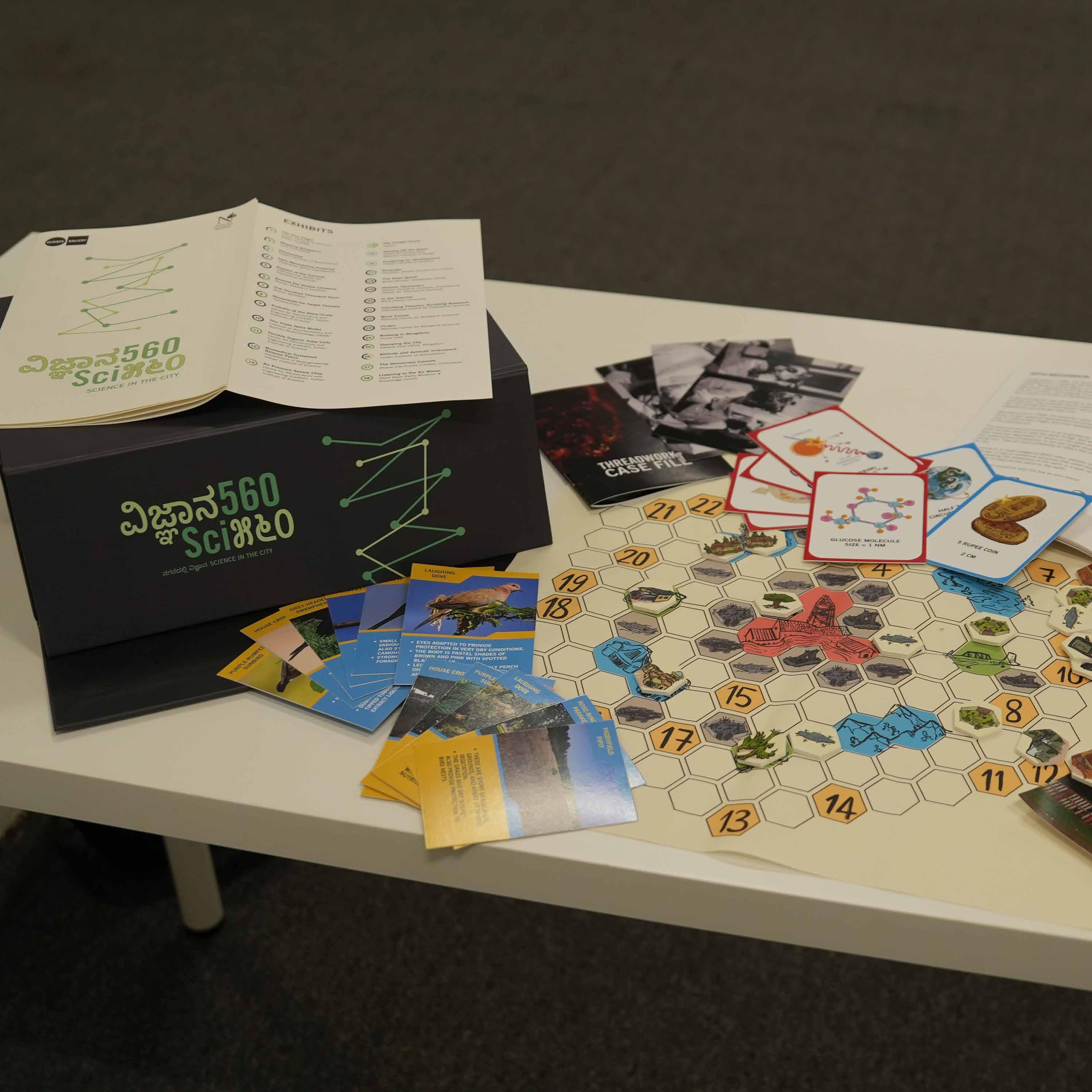
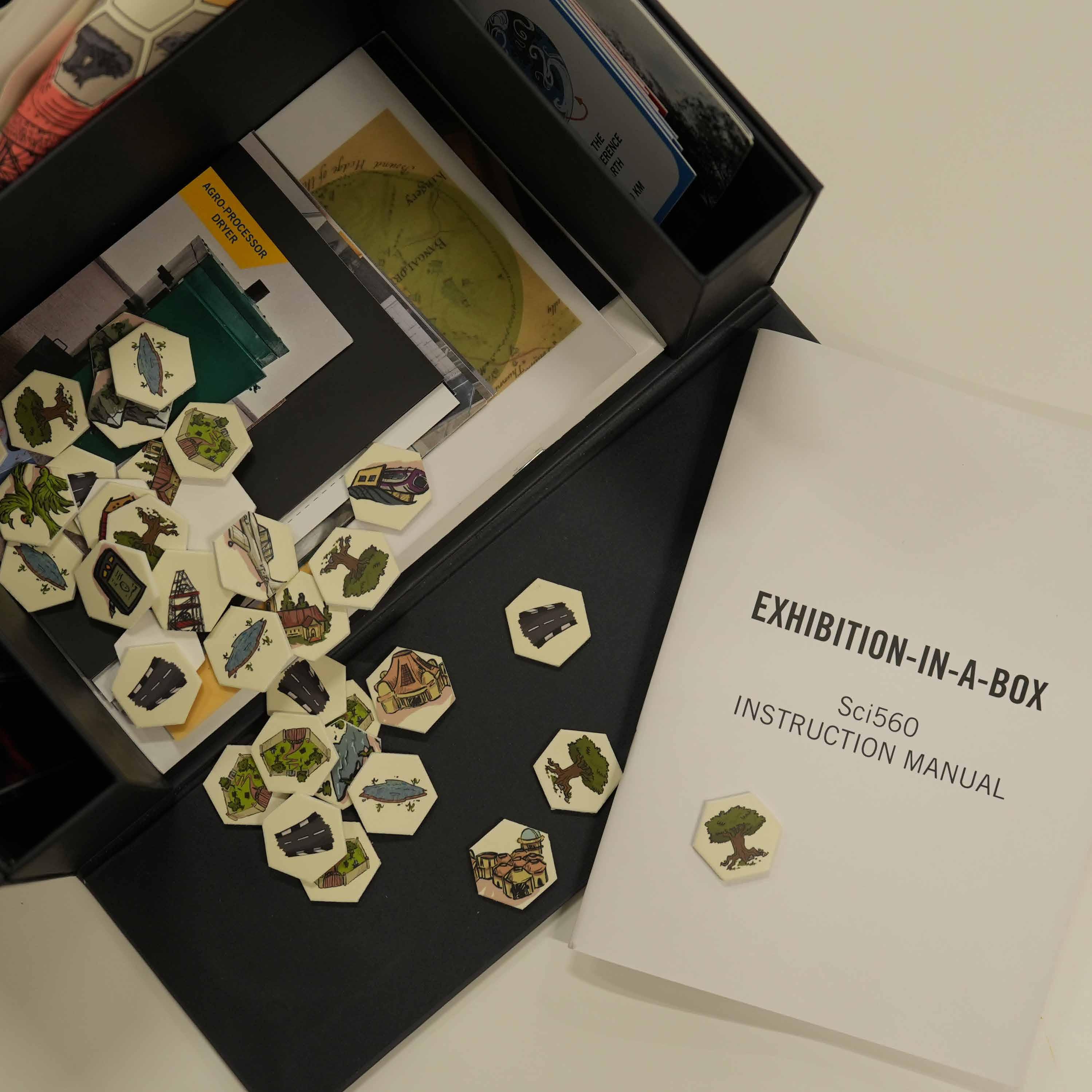
The Exhibition-in-a-Box is a portable, table-top version of our larger exhibitions, featuring scaleddown objects, provocations, and activities that make the experience travelable. These kits are interactive learning modules that audiences can freely handle and explore at schools, colleges, and studio spaces. The Sci560 Exhibition-in-a-Box is a game which plays out in the year 2125.
LEARNING TOOLS: ACTIVITY HANDBOOK
This DIY companion to our exhibition features ten hands-on activities and prompts, enabling a participant to conduct experiments and observations at home, in a classroom, or in a public learning space. It extends the life of the exhibition by allowing the visitor to carry questions and ideas beyond the Gallery walls.
LEARNING TOOLS: OPEN COURSEWARE
The Open Courseware compiles resources from our exhibition-seasons to support open-ended, interdisciplinary learning and expand the public knowledge commons. It distils interactive exhibits, research, media, and participatory activities into modules for teachers and learners to develop critical thinking.
The Sci560 Open Courseware explores 5 modules:
• Ecology and Evolution
• Astronomy
• History of Science
• Science and Society
• Urban Planning
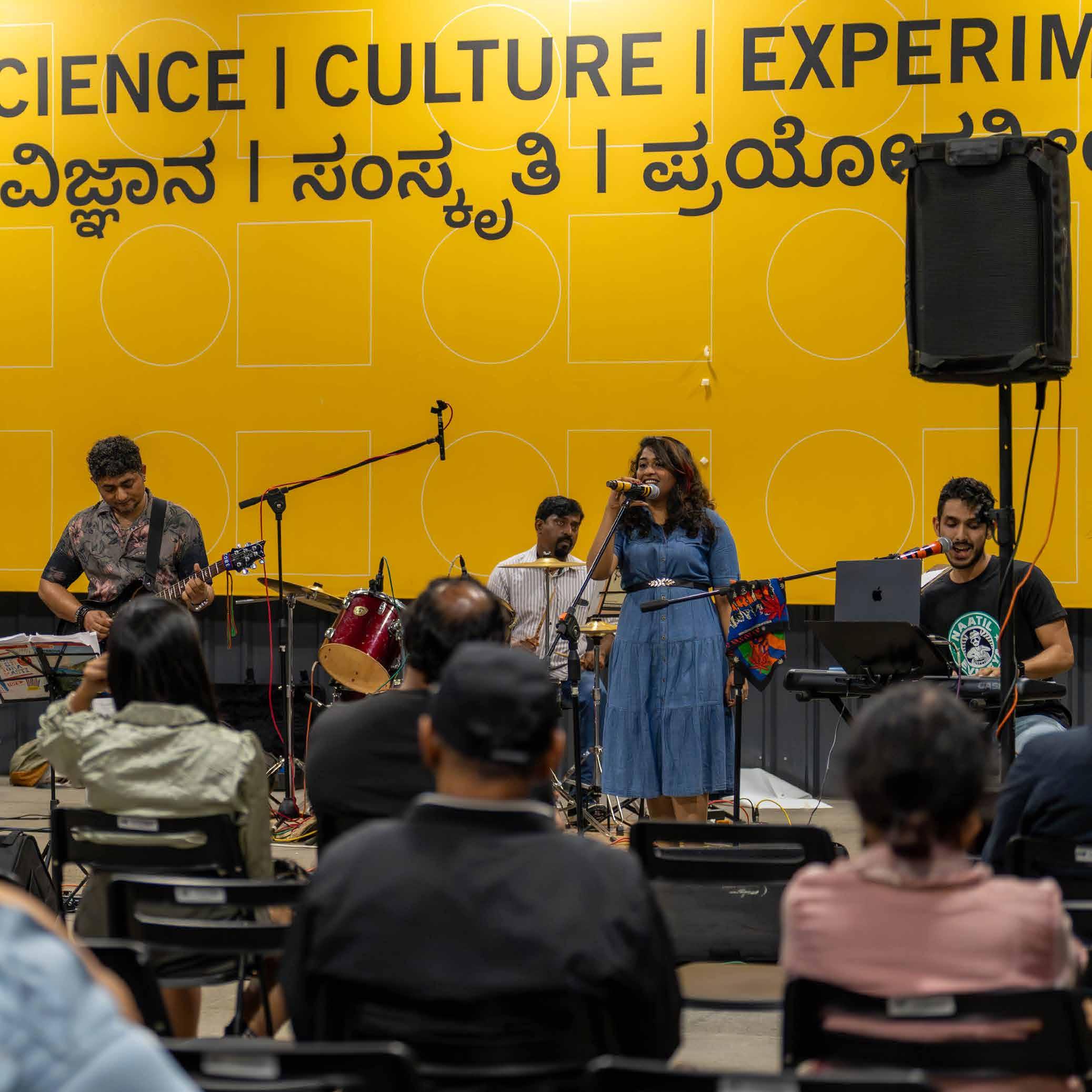
Republic of Bengaluru plays at Bangalore Music Strip at Sci560, 2025.
FILM COMMISSION: DOWN THE DRAIN BY NITYA MISRA
We ran an open call to commission a short film based on the themes of our exhibition-season Sci560. After several rounds of evaluation, filmmaker Nitya Misra was selected for the strength of her proposal and her filmmaking experience. Over the next six months, she developed the short film with mentorship from our team on both technical and conceptual aspects. The resulting film, Down the Drain, is a documentary fiction that explores the story of Bengaluru’s sewage through the perspective of a woman who accidentally flushes her watch down the toilet. The film premiered at the opening of the Sci560 Film Festival. Based on the success of this format, we are now planning to commission and mentor a film for all our exhibitions moving forward.
It has been screening at multiple festivals and venues such as:
• All Things Environment Film Festival
• Bangalore International Centre
• Bangalore Film Forum
• Goethe-Max Mueller Bhavan
• Courtyard Koota
• Neev Academy
• Mod Foundation
• Visvesvaraya Industrial & Technological Museum
• Sabha BLR
ARTISTIC RESEARCH COMMISSION | WHEN THE SONG FADES: THE STORY OF BANGALORE MUSIC STRIP BY ANJAL B, DESIGN INTERN
The design intern created an interactive web experience exploring Bengaluru's live music culture, beginning with the Bangalore Music Strip of the 1970s in Cubbon Park. Using archival material and interviews with musicians, the project highlights how this communitydriven event shaped the city's vibrant music scene. This interactive experience was launched with a lecture performance at the gallery and will soon be live on the Sci560 website.
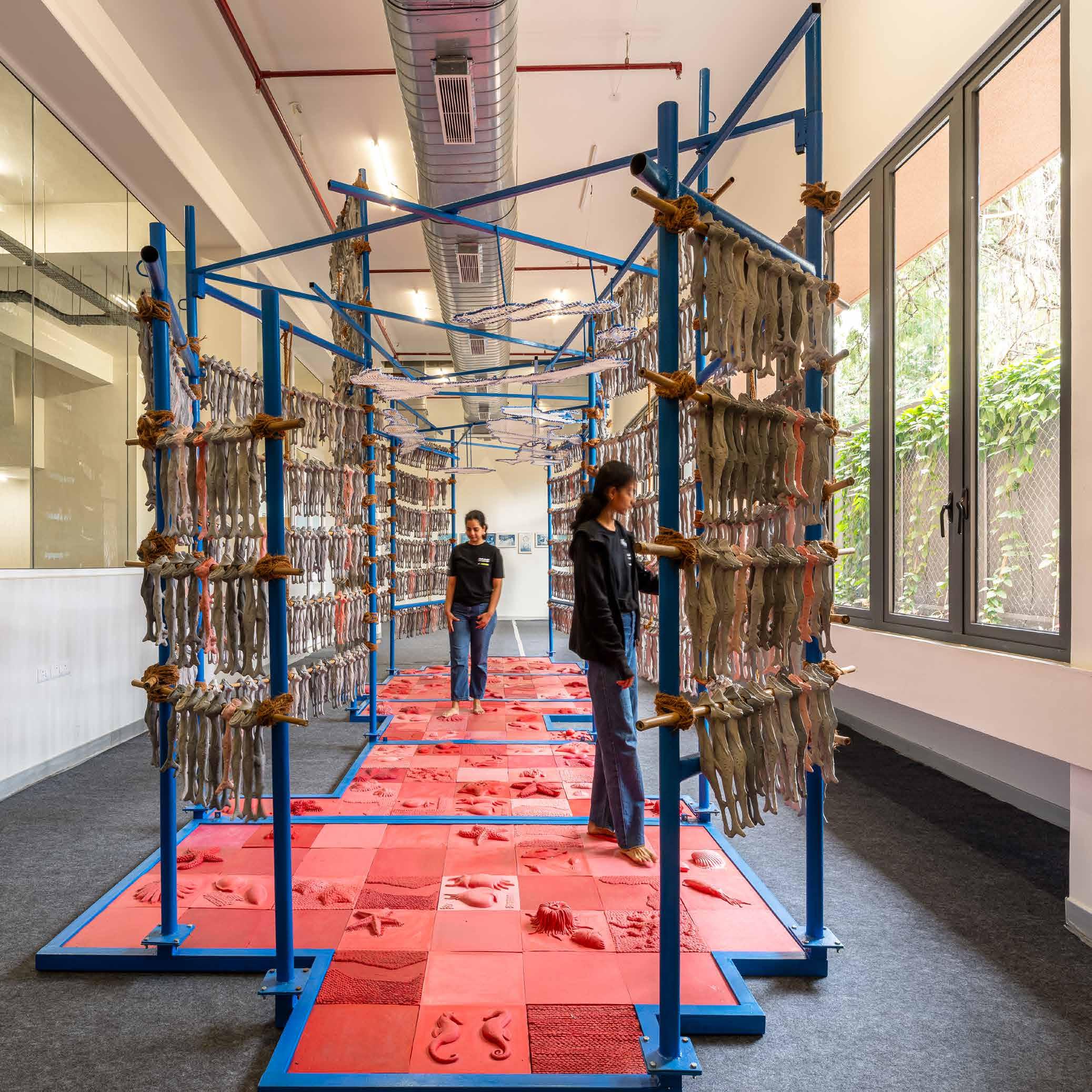
Visitors interact with Parag Tandel's How to Cook Bombay Duck in Various Ways at CALORIE, 2025.
EXHIBITION-SEASON
CALORIE
09.08.2025 – Ongoing
Calorie has captured our notions of quantifying energy in food for more than a century. Food was considered fuel. In the eighteenth century, Antoine Lavoisier proposed that respiration is combustion, no different from a candle burning, and devised an ice calorimeter to house a guinea pig to test his theory! Nicolas Clément-Desormes coined “calorie” in relation to heat engines.
A century later, Wilbur Atwater went on to calculate the energy values of foods which remain in use today.
Why count calories? The first reasons were to manage absenteeism and loss of productivity in workhouses. Bread, meat, and leisure, earlier argued for as concerns of justice, became matters of efficiency and cost. Food became uniform and comparable between people, nations, and time periods: it became the state’s obligation to manage food inventory and the dietary needs of the population. Food became
comparable between bodies and twentieth century diet fads took off!
Food is not only fuel. Our understanding of the composition of food and how the body processes it has moved on. A simple model of combustion has been replaced by a complex understanding of nutrition and nutrigenomics. Numbers logged in your pedometer or food labels are at best honest guesses. It is no longer simply true that to “lose weight you must use up more calories than you take in.”
A calorie is not only a calorie. Join us to find out how these ideas unfold across CALORIE, an exhibition that explores our food systems and cultures through the lens of health and nutrition.
Featuring 35 works by 52 artists, scholars, and institutions, the exhibition moves from edible insects grown on our premises to immersive
experiences that unpack the nutritional value of carbohydrates in South Asian cuisine. Historical materials— including 20th-century Indian food advertisements and archival documents on the making of the calorimeter—sit alongside contemporary research. Bringing together food scientists, nutritionists, artists, and social scientists, CALORIE invites visitors to rethink how food is produced, understood, and experienced today.
This exhibition-season is supported by the Gates Foundation.
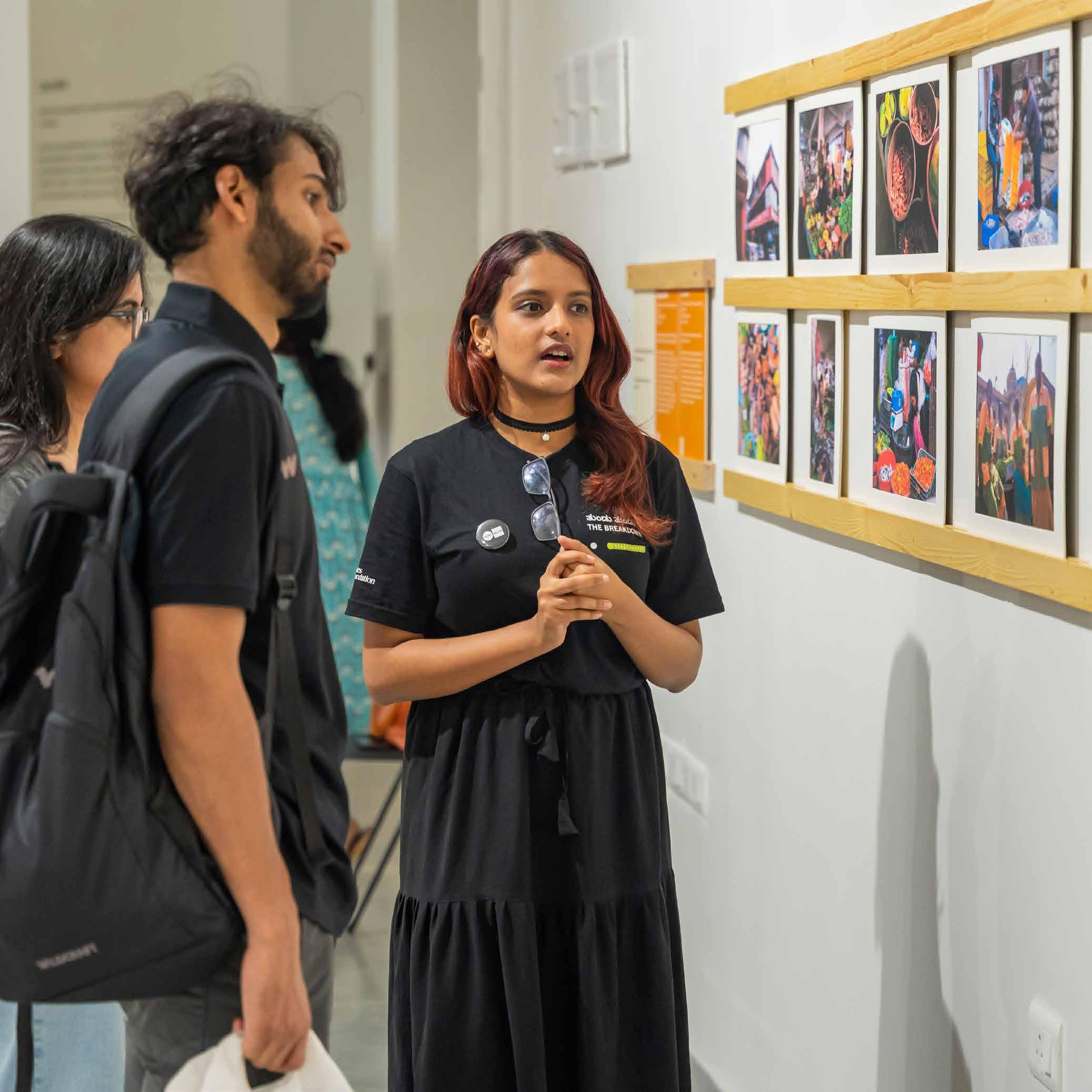
A Mediator shows Locavore's Market Archives at CALORIE, 2025.
Funding Partners
Gates Foundation
Tata Trusts
British Council India
MacDermid Alpha Electronics
Content Partners
Ashoka Trust for Research in Ecology and the Environment (ATREE)
Environment and Society Portal
Museum of Art and Photography (MAP)
Rachel Carson Centre
The Marg Foundation
CALORIE OVERVIEW
PUBLIC OUTPUTS: VISITORS: MUSEOLOGICAL OUTPUTS: EXHIBITION :
20,065 IN-PERSON
35 EXHIBITS
80,070 ONLINE 9 PARTNERS
100,135 TOTAL
52 ARTISTS AND SCHOLARS
"I LEARNT THAT COMPUTATIONAL GASTRONOMY CAN BE APPLIED IN MANY WAYS, SUCH AS OPTIMISING FOR HEALTH, FOOD SUPPLY, AND TASTE. IT OFFERS A COMPELLING WAY TO EXAMINE THE “WHY” BEHIND WHAT WE EAT."
— Aaryak Garg, participant in 'Making Food Computable'
PROGRAMMES
PROGRAMME PARTICIPANTS
PROGRAMMES
92% of Participants rated the programme 4 and above (Out of 5)
100% Participants felt engaged in the experience
100% Participants said they were inspired to know more
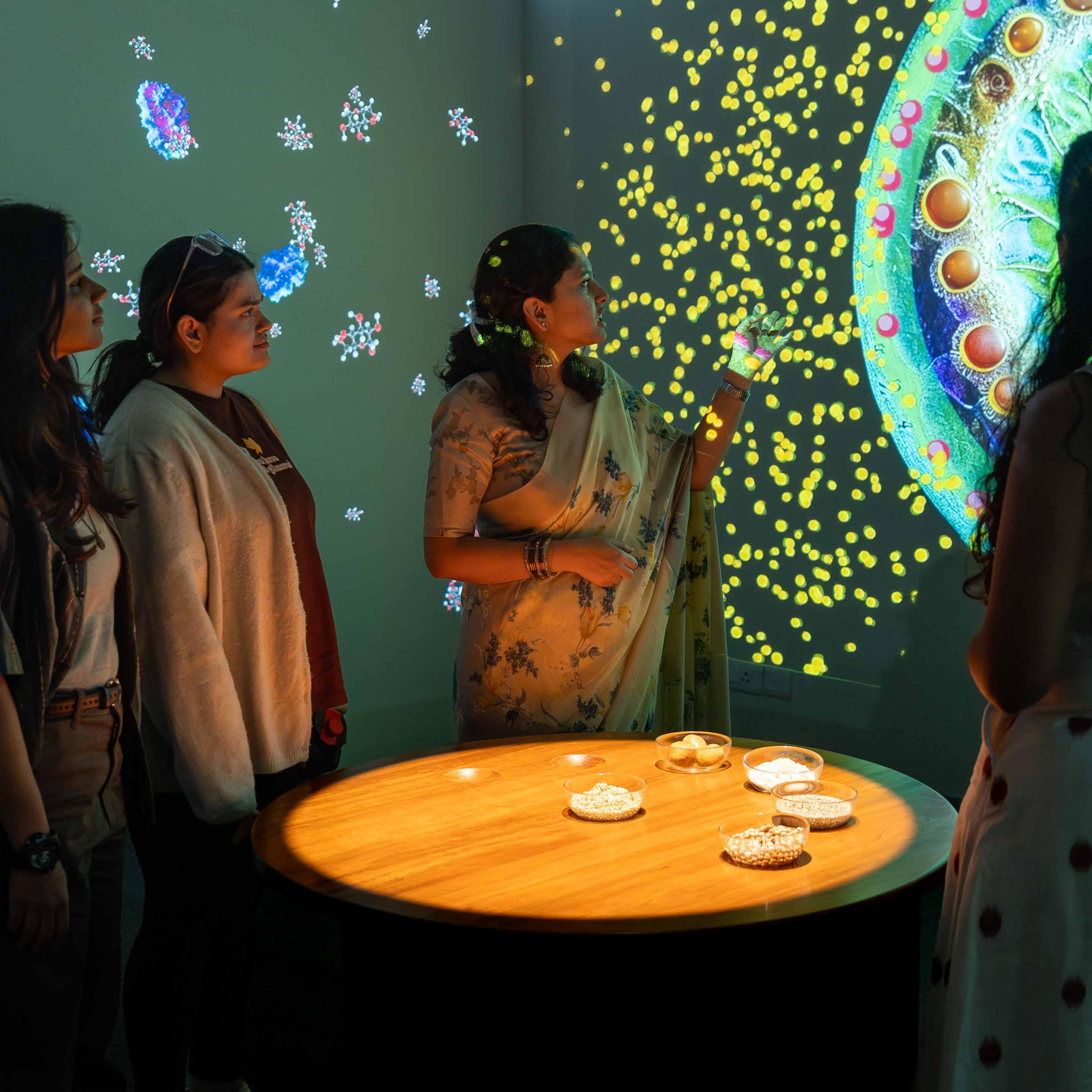
A Mediator shows Priya Mani and Vinay Venkatraman's Carbivore at CALORIE, 2025.
"I became aware of the diversity of rice varieties and began exploring ways to support local farmers and artisans, ensuring fair trade practices and eliminating middlemen."
— Nishant Malpani, participant in 'Seeds of Expression'
“I have come for a talk before to SGB, and there is so much to see here! It’s always a welcoming feeling (at SGB), even if you don't know anyone here. It's so much fun to bond over something new with other participants. It’s also a comfortable and fun way to learn something!"
— Deva, Nutritionist, Visitor
“The workshop was so interesting! It was really fun, and everyone had a great time on Sunday. I have been to SGB before and have attended many interesting workshops and lectures. The space here is so cool, and the staff and everyone who works here make it a great experience. I learned quite a lot of new facts and gained some knowledge today, which has helped me improve my skills.
— Gautam, Developer, Visitor
OTHER EXHIBITIONS AT SCIENCE GALLERY BENGALURU
SOUTH ASIA AND THE INSTITUTE: TRANSFORMING CONNECTIONS
26.01.2025 – 31.07.2025
Partner: Massachusetts Institute of Technology (MIT) South Asian Alumni Association
South Asia and the Institute: Transformative Connections explores MIT’s 140-year relationship with South Asia. From the first Indian student in 1880 to post-independence collaborations and a growing South Asian diaspora, the exhibition highlights how MIT has shaped and been shaped by South Asian scholars, engineers, and nation-builders.
PROJECT 560 FESTIVAL
13.09.2025 – 22.09.2025
Partner: India Foundation for the Arts
The Project 560 Festival reflected on seven years of artistic and civic engagement with Bengaluru. Over two weekends, 36 curated projects brought alive the city’s neighbourhoods, cultural spaces, and ecosystems through walks, workshops, talks, games, and exhibitions across the city, including Science Gallery Bengaluru. SGB came on board as a venue partner for this showcase and hosted a series of public programmes associated with the exhibition.
WATERSCAPES OF BENGALURU
20.09.2025 – 01.12.2025
Partner: Paani Earth Foundation, Visvesvaraya Industrial and Technological Museum
Waterscapes of Bengaluru is a unique attempt to tell the story of Bengaluru’s forgotten rivers and the failed attempts at reviving them. This exhibition is an invitation to pause, reflect, and explore how each of us can contribute and engage more meaningfully with our city’s water systems and governance.
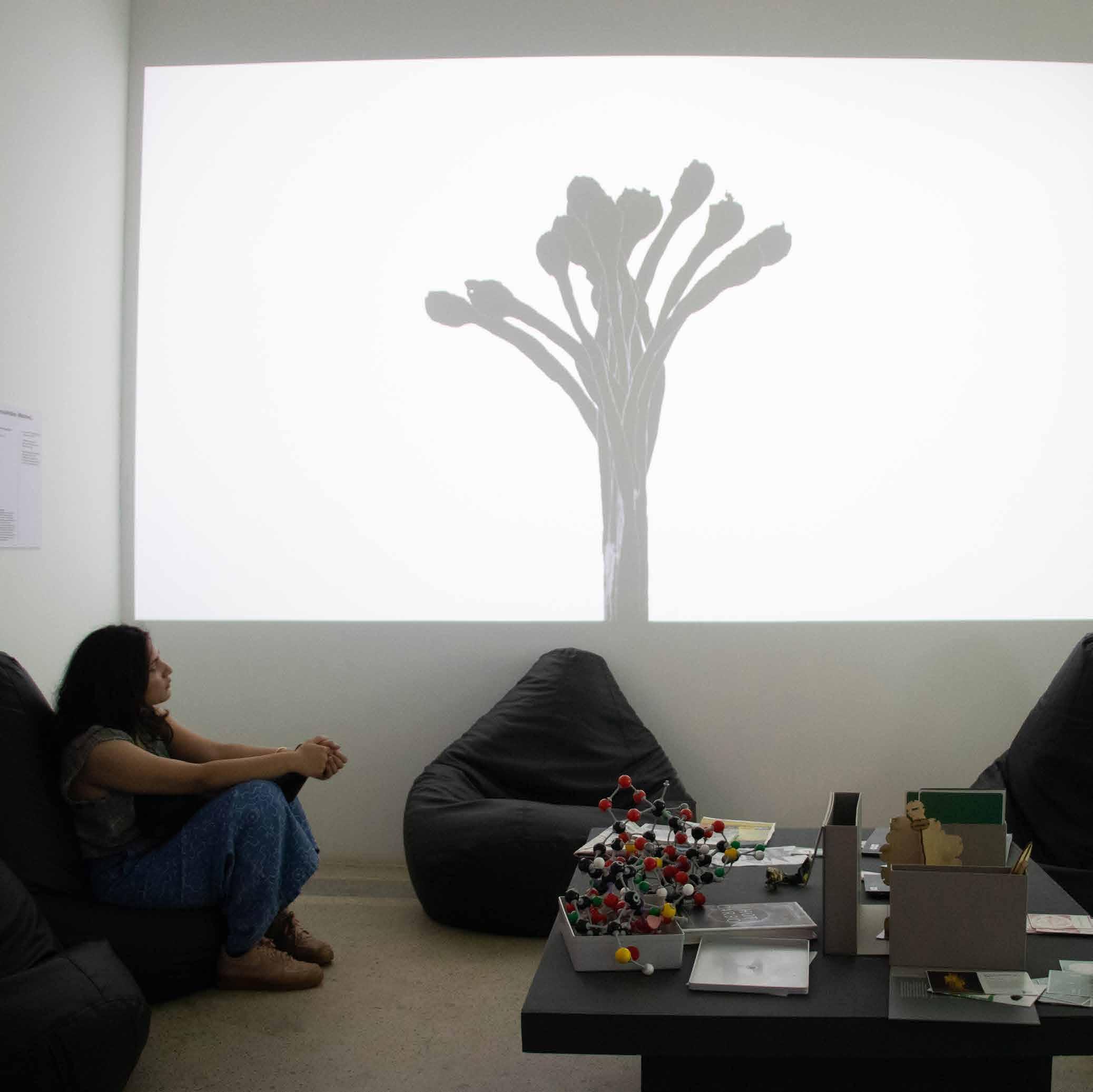
Visitors interact with David Hochgatterer's Streichhölzer (Matches) at CARBON, 2025 at Advanced Research Centre, Glasgow.
OUR EXHIBITIONS ELSEWHERE
CARBON AT ADVANCED RESEARCH CENTRE, GLASGOW
04.06.2025 - 29.06.2025
700 Attendees
Partner: University of Glasgow
As part of the Glasgow Science Festival, a travelling module of CARBON was showcased at the Advanced Research Centre in Glasgow. It was launched on 3 June 2025 in the presence of Andrew Tobin, Director of the Advanced Research Centre; Kiran MazumdarShaw, Executive Chairperson of Biocon and Chair of the Board of Directors, Science Gallery Bengaluru; Anton Muscatelli, Principal and Vice-Chancellor of the University of Glasgow; and Jahnavi Phalkey, Founding Director of Science Gallery Bengaluru.
Featured artists included Susan Eyre, Jane Tingley, Annelie Berner, David Hochgatterer, Ravi Agarwal, Marina Zurkow, Ishan Tankha, and the trio of Dhiraj Kumar Nite, Manoj Deshwal, and Pillow Deshwal. As part of the exhibition programming, artist Susan Eyre also led a workshop on building cloud chambers.

Visitors at the workshop, "Decoding 'Birds in the City': A Board Game for Engaging with Urban Nature" at Sci560, 2025.
OFF-SEASON PROGRAMMING
We created a robust programme of offseason public events independent of the Sci560 and CALORIE exhibition cycles. This comprised 11 lectures, panels, screenings, performances, and lectureperformances, collectively reaching 413 attendees.
The programmes brought together leading researchers, artists, filmmakers, musicians, and practitioners working across AI Education, History of Medicine, Archaeology, Neuroscience, Astrophysics, Space Science, Mathematics, Filmmaking, Jazz, and art–science Collaboration. Topics ranged from teaching AI to K–12 learners and historical perspectives on pandemics, to imaging black hole horizons, the parental brain, iron-age technologies in South India, and the physiological demands of long-duration space travel.
Several formats encouraged deeper public participation, including AMAs, panel discussions, rough-cut film screenings that invited audience feedback into the creative process, and live performance-based explorations of science and music. Collectively, these programmes sustained public engagement at SGB outside the exhibition calendar, reinforcing the Gallery’s role as a platform for interdisciplinary knowledge exchange and ongoing dialogue between research, creative practice, and the public.
PROGRAMMES IN PARTNERSHIP
RIVER LANDSCAPES: A NEW GLOSSARY ON RAIN-FED SMALL FARMERS
10.02.2025 – 14.02.2025
17 Participants
Partner: Pro Helvetia
As a part of the River Landscapes: A New Glossary project, Science Gallery Bengaluru hosted a transdisciplinary workshop on fluvial landscapes, with particular attention to the story of the river Kaveri. The workshop was held at Science Gallery Bengaluru premises and saw participation from students, early career researchers and community practitioners from diverse disciplines and walks of life. In addition to workshops and lectures organised by leading practitioners, we also organised a film screening of Cauvery: River of Life at the Bangalore International Centre, which was followed by a discussion with the filmmaker Sara and the executive producer Sanjay Gubbi.
The output from the workshop was displayed at Science Gallery Bengaluru on 9th March. A glossary of terms related to fluvial landscapes is currently in production and is expected to be completed by March 2026.
11.01.2025
35 Attendees
Partners: Bangalore International Centre (BIC), Institute for Cultural Research and Action (ICRA)
Facilitators: V Gayathri, K P Suresha, T N Prakash Kammardi, Jagath V (Moderator)
A screening of the documentary Sakalarigu Samruddhi, which follows the journey of small and marginal farmers embracing sustainable agriculture to break cycles of crop loss, debt, and environmental strain. The film highlights organic farming, soil and water conservation, mixed cropping, and agroforestry—showcasing how these practices build resilience and strengthen livelihoods. It underscores the pivotal role of rain-fed smallholders in shaping a sustainable, communitydriven food system. The screening was followed by a panel discussion and audience Q&A. Jagath V, Senior Programme Associate at Science Gallery Bengaluru, moderated the panel discussion and Q&A.
ARTS AND TECHNOLOGIES IN INDIA INFOSYS PRIZE LECTURES AND AMAS
22.03.2025 – 23.03.2025
Partner: British Council India
A series of public engagement programmes in collaboration with the British Council focused on the British Council report ‘Arts and Technologies in India: Reimagining the Future’ with report participants, artists, and partners from Bengaluru, India as part of the Science Gallery Bengaluru’s ‘Sci560: Science in the City’ exhibition.
12.04.2025 – 22.06.2025
Partner: Infosys Science Foundation
In collaboration with the Infosys Science Foundation, we hosted a series of public lectures and AMAs by prize-winning researchers across disciplines. The talks spanned the dynamics of cell membranes, the origins of complex life, the shaping of human civilisation by grasses, the impacts of shifting land use, and advances in point-of-care diagnostics, bringing cutting-edge scientific research to wider audiences.
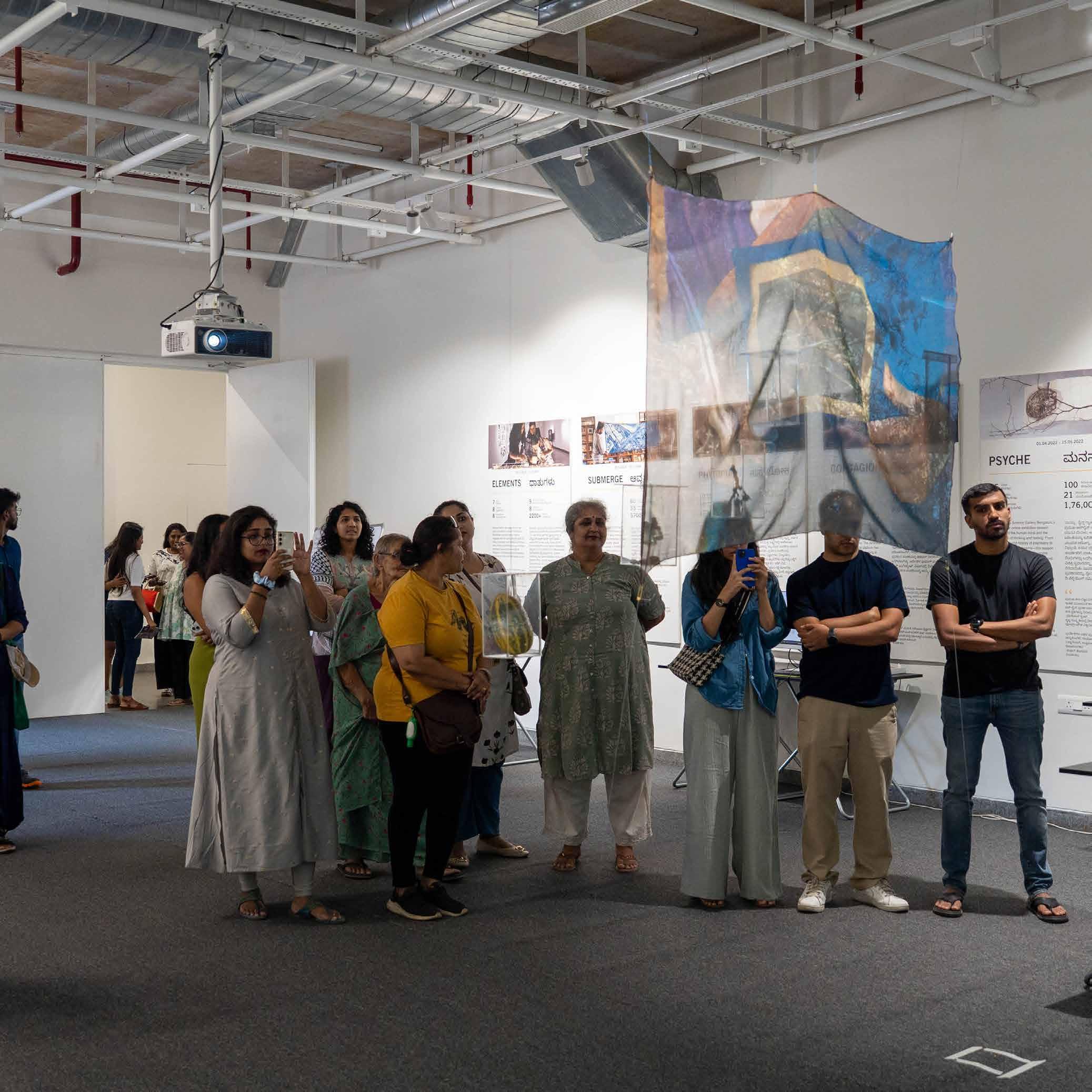
Participants at the River Landscapes workshop, 2025.
19.05.2025 - 21.05.2025
PINT OF SCIENCE ENTANGLED ECOSYSTEMS GRANT
186 Attendees
Science Gallery Bengaluru came on board as an outreach partner for Pint of Science, an annual science festival, which brings scientists to the public through informal events organised at pubs in the city. As part of our engagement, Harsha Jagadeesh, Learning Associate at Science Gallery Bengaluru delivered a talk titled ‘A Game of Hide and Seek’, which explored how animals adapt and survive through various camouflage techniques.
11.05.2025 – 01.04.2026
35 Attendees
Partners: Shared Ecologies
As a part of our commitment to exploring the Anthropocene through public engagement, we are partnering with Shared Ecologies, a programme supported by Shyama Foundation to commission an exhibit created by an artist in collaboration with ecologist Meghna Krishnadas. This is an opportunity to create a new exhibit that explores ecological connections through the intersection of art, science, and research.
As part of this programme, we launched an open call to invite artists to develop this exhibit. Through the open call, the jury identified Abhishek Kapahi and Shreni Sanghvi as the shortlisted artists for the grant. The exhibit is currently in its development stage with field research and lab visits now underway. The exhibit will be showcased at Science Gallery Bengaluru in April 2026.
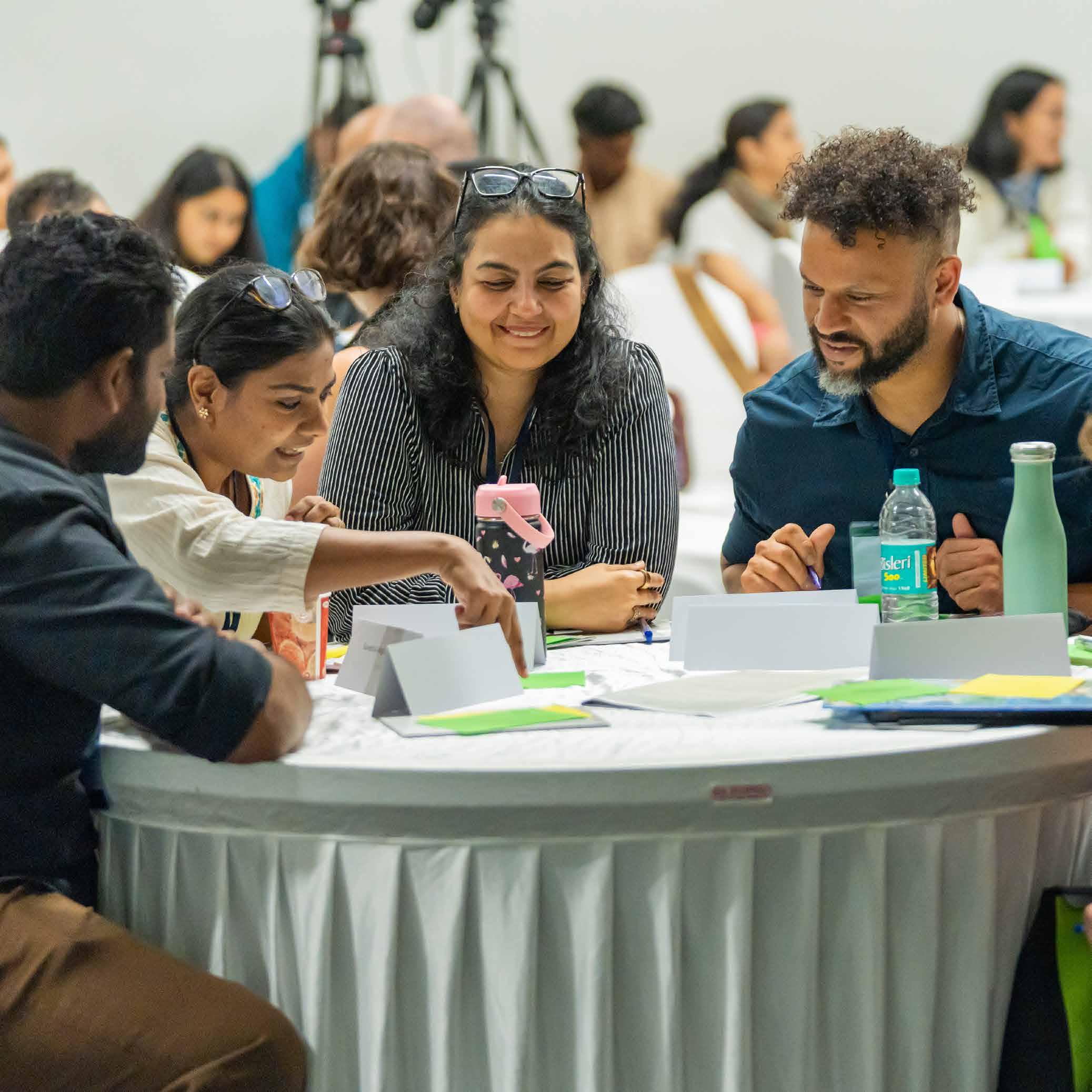
Participants at the CONNECTORS Workshop, 2025.
CONNECTORS WORKSHOP
29.10.2025 – 30.10.2025
60 Attendees
Partners: Eh!Wowza, Mesh, Wellcome Trust
Connectors 2025 was conceived with the aim of strengthening a global Community of Practice in health research and engagement focused on collaboration, equity, and shared learning, with an emphasis on enabling connections across the Global South. The concept of ‘Connectors’ in research remains under-explored and under-recognised, and this workshop offered a chance to elevate the importance of public and community engagement, equitable knowledge exchange, and funding. India’s diverse social, political and cultural landscape demands adaptable approaches to biomedical and health research and public and policy engagement, providing insights that can benefit other complex regions. Furthermore, India’s rapidly growing economy and health sector, coupled with significant gaps in regulations and equitable access to healthcare, presented an ideal environment for Connectors to drive more inclusive, community-focused practices for the region.
The SGB team supported the event by managing end-to-end logistics, including visa documentation, participant coordination for accommodation and flights, vendor and production management, design and printing of programme materials, catering
arrangements, an offsite networking dinner, and event merchandise. The team is currently working on the post-event documentation and outcomes.
The workshop was pioneered by Sarah Hyder Iqbal and the SGB Team. It encouraged knowledge exchange and collaborative practices within the Global South, with a focus on shared learning and sustainable partnerships. The workshop was able to identify and share best practices for bridging the gap between research and community needs, focusing on cultural sensitivity and local context.
The workshop brought together 60 participants from across the Global South and was facilitated by Sarah Hyder Iqbal. It featured a series of participant-led sessions designed to foster collaboration and partnership-building. These sessions allowed individuals or small groups to host focused discussions, share work-in-progress, and collectively brainstorm solutions. Marketplace themes included innovative engagement tools, creative approaches to public engagement, collaboration models, funding strategies, and project showcases.
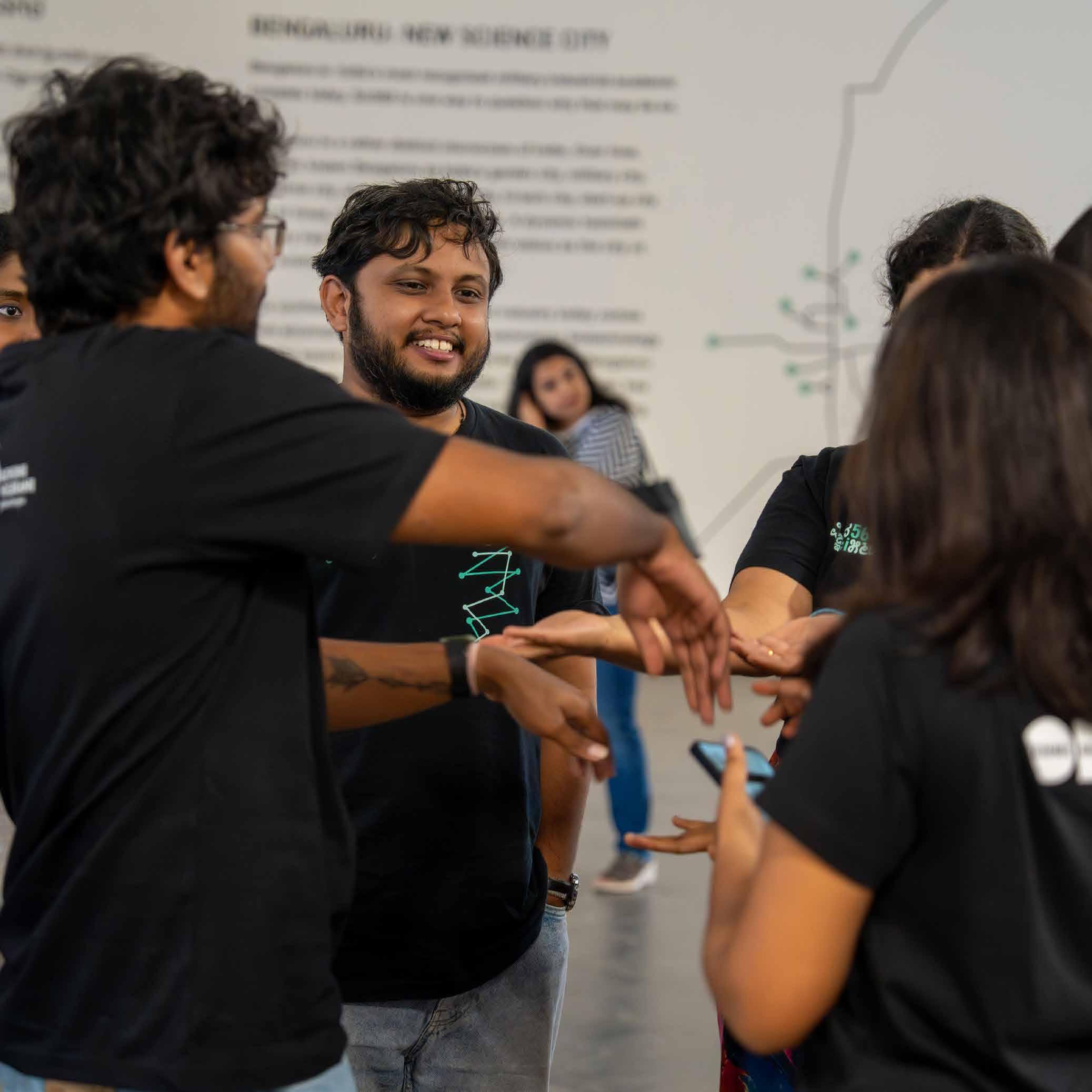
Team SGB at Sci560, 2025.
02 LEARNING AND MENTORSHIP
Our mission to nurture a generation of future research pioneers and active citizens primed for critical thinking with twenty-first century skills is achieved through our Learning and Mentorship Initiatives. Through non-evaluative, self-motivated, and open-ended learning and mentorship programmes, we empower young adults to explore and engage with various forms of public engagement. Our offerings for the Learning and Mentorship Initiatives are broken down into three strands— Mentorship Programmes, Learning Programmes and Learning Resources.
In the year 2024-25, we focused on consolidating our mentorship programmes, building strong regional and international partnerships, and creating a space for young adults to experiment with public engagement strategies.
The Sci560 exhibition-season gave us the space to assess what a typical year of learning anchored around the exhibition would look like in the Gallery. The full-time mediators for Sci560 played an important role in this process. In addition to their core responsibility of mediating on the exhibition floor, they facilitated public programmes, shaped meaningful learning experiences for diverse student groups, led externships for other young adults, collated exhibition-related research, and codeveloped learning resources. As an institution, we recognised that the full-time mediators were contributing to our public engagement mandate beyond the expectations of their original role. In the process, we realised that we had, in effect, created an entirely new mentorship programme. To more accurately reflect the depth and breadth of their responsibilities and differentiate it from part-time mediation, we formalised and established it as the Experimentor Programme during CALORIE.
We have entered into a Memorandum of Agreement with the University of Glasgow on the Experimentor Programme to offer an online Postgraduate Certificate in Science Public Engagement. The programme is also open to the general public. The Mediator Programme, on the other hand, has continued to grow and remains a high-demand learning pathway for young people in Bengaluru. It has consistently attracted a diverse and enthusiastic cohort of college students and working professionals who work with us on a part-time basis.
Additionally, we have revitalised the Internship Programme and restructured the Externship Programme. At present, the Learning and Mentorship Initiatives provides a platform for interns and externs to work closely with experimentors and mediators as well. This, we believe, has added depth to each of the programmes and creates an ecosystem of collaboration and co-enquiry. Through the Student
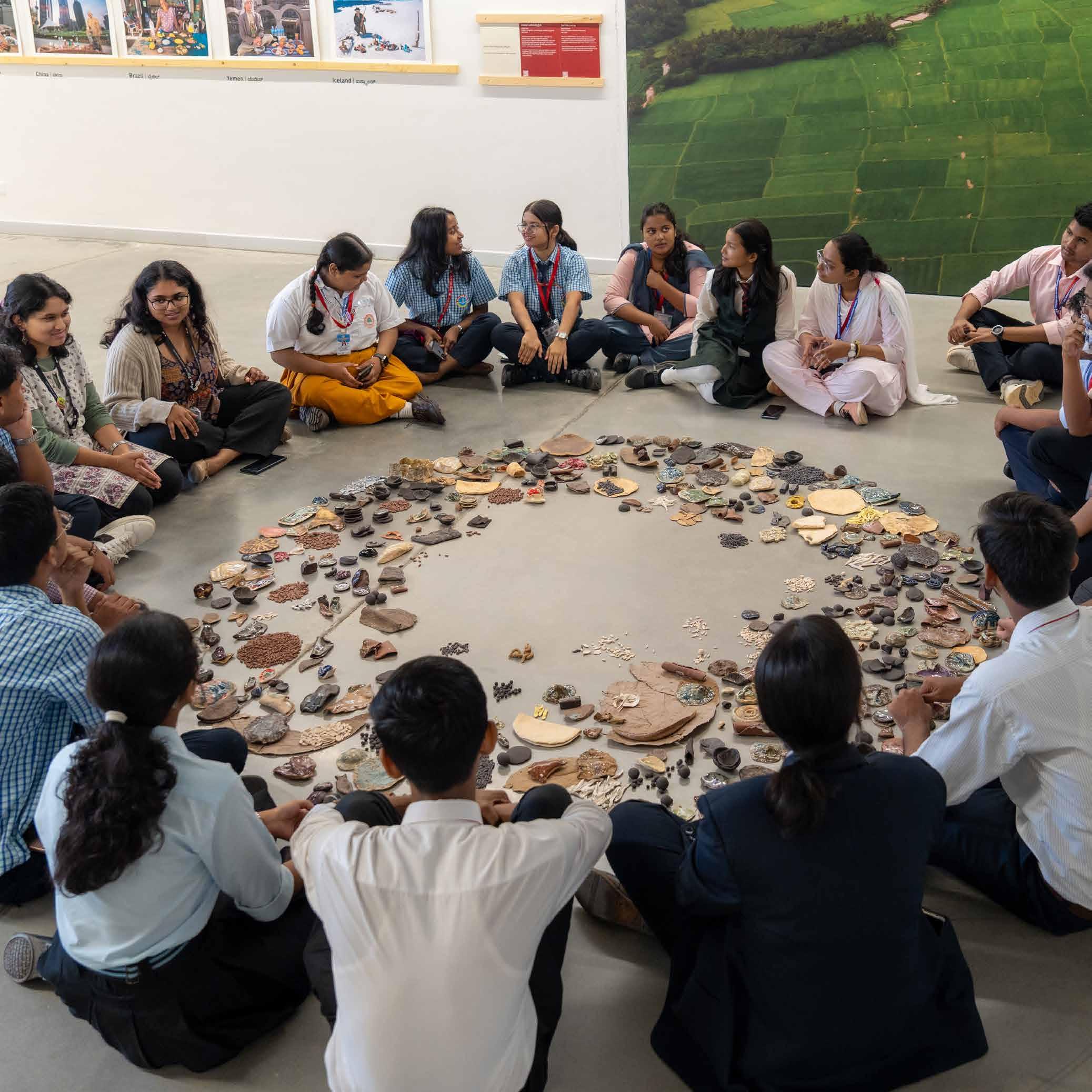
Visitors interact with Rajyashri Goody's Don't lick it all up at CALORIE (in italics), 2025.
Learning Experiences (SLEs) and Educator Workshops, our Learning Programmes have also expanded in reach and meaningful impact.
We have taken significant strides towards enhancing the quality and accessibility of our offerings. Our ethos of creating a public life for research is extended through the third strand of Learning Resources. We are delighted to report that three Memoranda of Agreements were signed with the following departments of the Government of Karnataka:
• Department of Rural Development and Panchayat Raj
• Department of Higher Education
• Department of School Education and Literacy
This will extend our Learning Resources—such as Exhibition-in-aBox (EIAB), Activity Handbook (AH) and Open Courseware (OCw)—to over 6,000 libraries, all high schools, and science centres across the state. At present, we are working towards fundraising and creating capacity within the team to implement this project.
In essence, through the Science Gallery Bengaluru way of thinking and shaping the Learning and Mentorship Initiatives, we are striving to reimagine museum education globally and set a standard for interdisciplinary learning in public spaces.
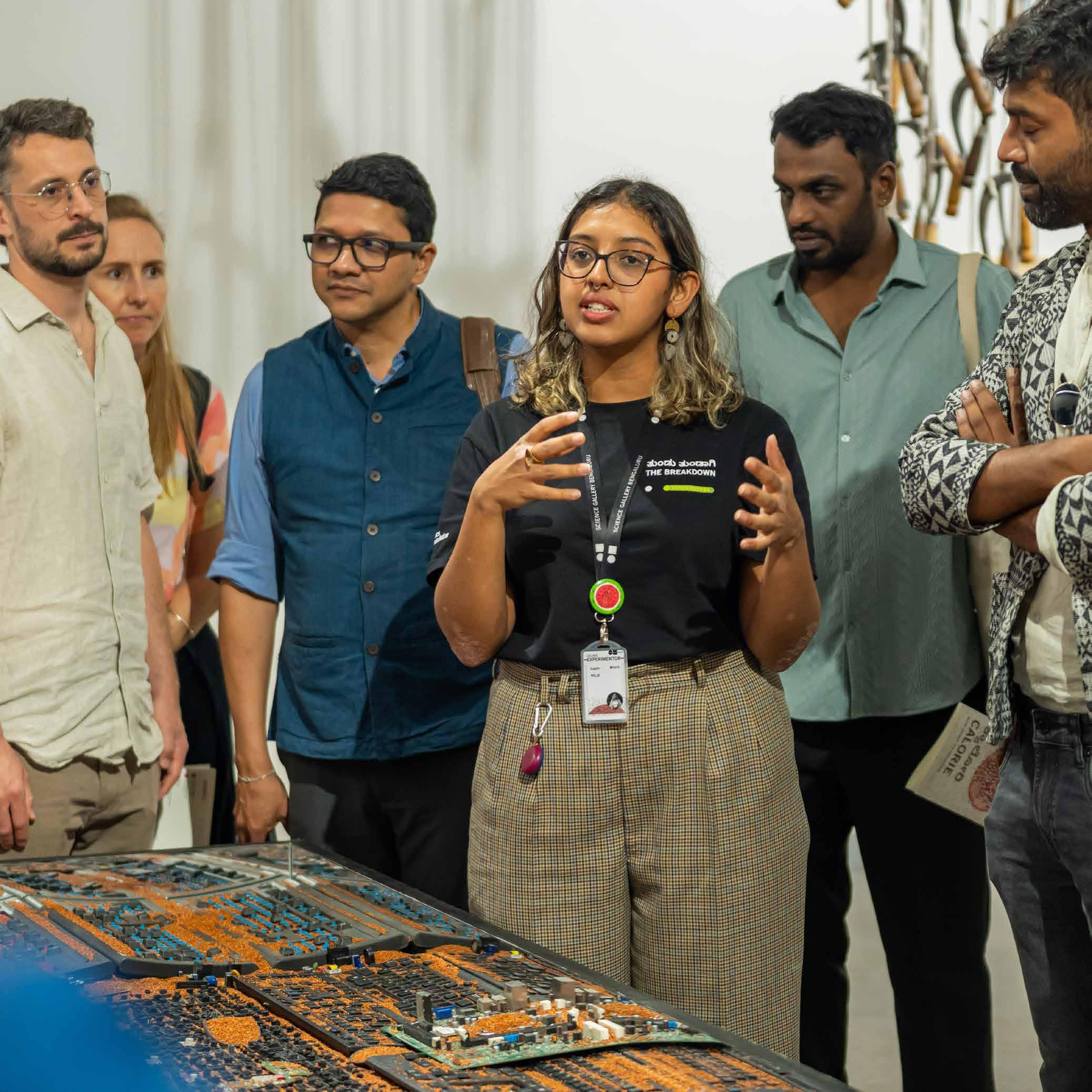
An Experimentor shows Surekha's Ragi.net at CALORIE, 2025.
MENTORSHIP PROGRAMMES
Our mentorship programmes are primarily designed for 18–30 year olds, and are 6–14 month long, with training periods and a focus on peer-to-peer mentorship.
We have developed five distinct programmes that provide exposure to research practices through deep engagement with peers and experts, conversations with the public, and learning by doing. They are as follows:
a. Experimentor Programme
b. Mediator Programme
c. Internship Programme
d. Externship Programme
e. Summer School
We are also actively working towards structuring the Apprenticeship Programme as part of activating our labs for the Public Lab Complex.
From Mediator to Experimentors: Evolving roles in Public Engagement
In 2023, the Mediator programme was divided into full-time and parttime programmes based on the depth of engagement and time commitment. The success of the fulltime Mediator Programme that began with the CARBON exhibition-season provided strong proof of concept, and encouraged us to experiment with the structure, inputs, and expectations of the programme during the Sci560 exhibition-season. In doing so, we had created an entirely distinct learning and mentorship initiative—one that differed significantly from previous Mediator Programmes both within the Gallery and across the Science Gallery network. Recognising the expanded scope, responsibilities and unique nature of the full-time programme, we formalised it as the Experimentor Programme during the CALORIE exhibition-season to reflect the purpose and distinction from the traditional
Mediator Programme. Accordingly, the Experimentor programme refers to the full-time programme and the part-time programme is identified as the Mediator Programme.
Experimentors and Mediators shape dialogue with the public at the intersection of science and art.
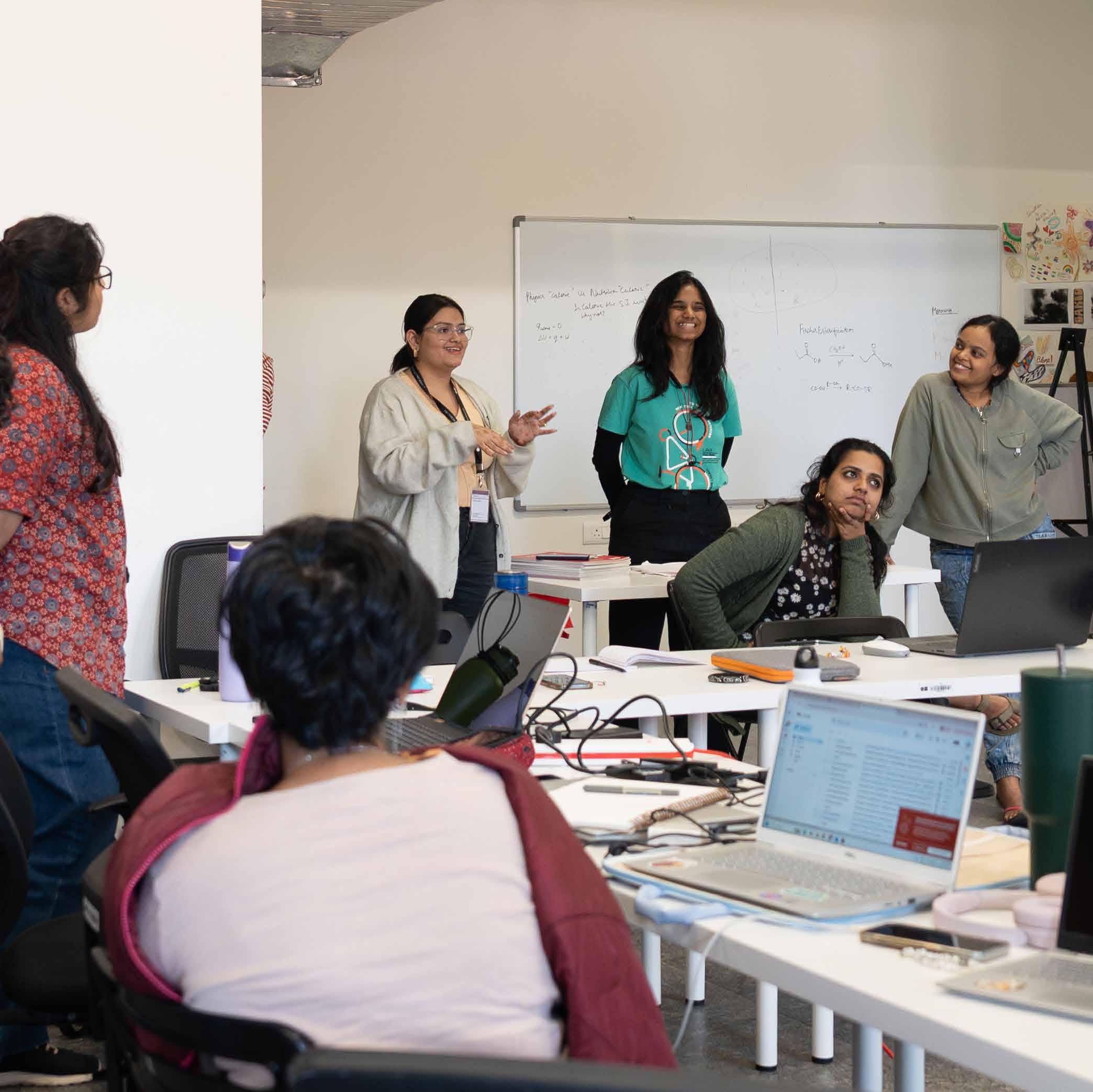
Team SGB at CALORIE, 2025.
WHO ARE EXPERIMENTORS?
The Experimentors spend 5 days a week at the gallery, for a period of 14 months. They are not only trained in the core skills required for mediating, but also work on other skills in writing, design thinking, and public engagement. As members of the larger SGB team, they also support other teams in creating experiences inside and outside the gallery. During the course of the programme, they contribute to the Gallery's mission by creating engagement activities and public programmes, collating exhibition related research, facilitating learning programmes and outreach, and driving visitor experience on the gallery floor. They also create learning resources to extend the reach of the ongoing exhibition-season.
They also have the opportunity to receive a Postgraduate Certification in Science Public Engagement from the University of Glasgow.
WHO ARE MEDIATORS?
Mediators are young adults who are in college or working, and can spend their weekends at SGB. The structure of the Mediator Programme is similar to previous exhibitions, and focuses on training the mediators to hone their skills in facilitation, communication, and critical and interdisciplinary thinking. Mediators conduct general and themed walkthroughs and support the public programmes at the Gallery.
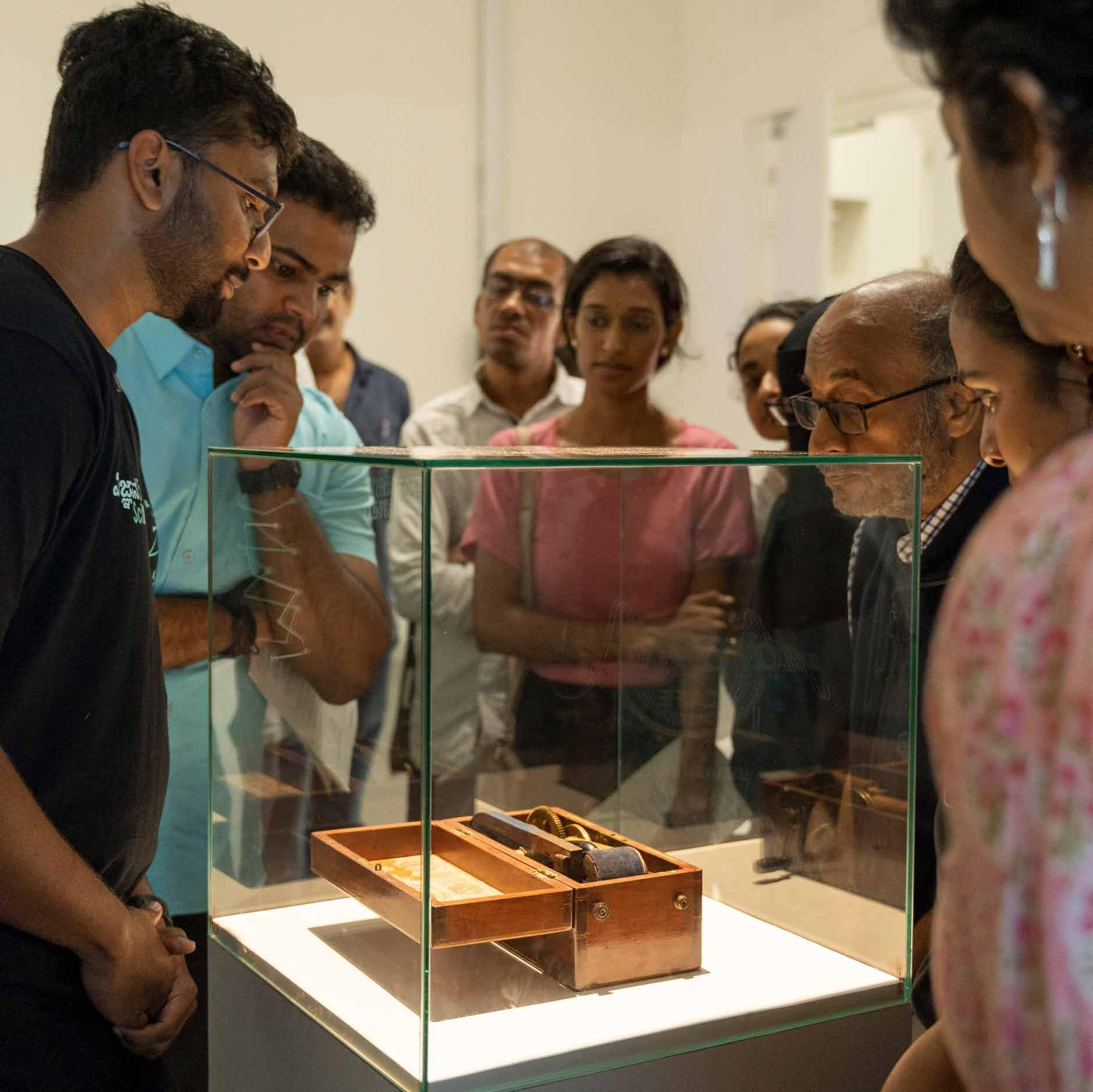
A Mediator shows National Institution of Mental Health and Neuroscience's Of Minds and Machines at Sci560, 2025.
SCI560
Continuing the full-time and part-time Mediator Programme for Sci560 (July 2024 – July 2025), our Experimentors and Mediators, engaged the public through general and themed walkthroughs, experimental public programmes and student walkthroughs. They were able to drive visitor experience in new and interesting ways.
NUMBER OF FULL-TIME MEDIATORS (EXPERIMENTORS): 15
NUMBER OF PART-TIME MEDIATORS ( MEDIATORS): 44
NUMBER OF TRAINING HOURS: 320+
NUMBER OF TRAINING SESSIONS: 93
FULL-TIME MEDIATORS (EXPERIMENTORS)
Aarushi Susheel
Aditi Rajesh Narayanan
Akshad Somnathe
Anusha Bhairaddy
Diya Mathur
Fathima Aslaha T R
Gaayatri Chandrasekharan
Gokul Prabhu
Jagrut Amuri
Kavana Kiran
Pravallika Patnam
Sandhra Sajeevan
Upasana Patgiri
Vignesh K
Vishwas Solagi
PART-TIME MEDIATORS (MEDIATORS)
Abhijeet Singh
Adithya H
Akhilesh Pachnanda
Akshatha Chandrashekar
Anusha Bhairaddy
Anushka Tiwari
Anushka Vijay
Arnav K A Srikanth
Arya M S
Athul Jayan
Brandon Fernandes
Devika B M
Diya Mathur
Duhitha Srinivas
Ghreeshma.C
Hariharan B.K
Hitha Muthirakkal
Jahnavi Goyal
L Aishwarya
Lasya Digvijay
Lavika C Patil
Likhith Chandragiri
Maansi Sharan
Manjuvarshini R
Meenakshi Nenmelil
Megha V.
Merlyn Suchitra Paul
Mulla Aizaz Muzawar
Mytripriya Muralidhar
Nagakishan V J
Nikitha N
Nirmala Devi R C
Rakesh
Rohini M
S Thejaswini
Sangeetha V
Sanjana Bl
Sheryl Varghese
Sneha Shet
Sowmya Jayaraman
Swaradaa Raghuram
Upasana Patgiri
Vaishnavi Subramanya
Vanessa Sunil
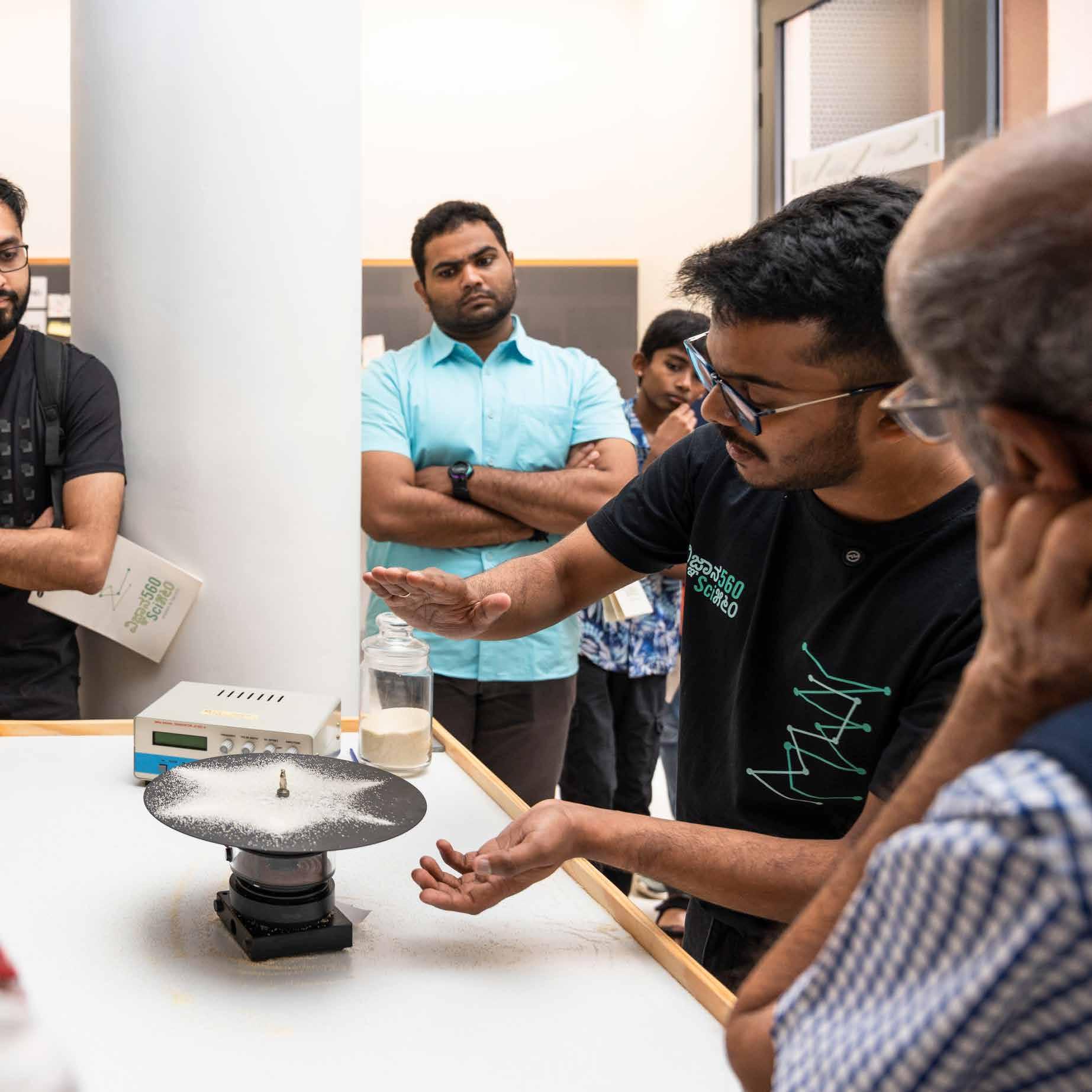
A Mediator shows Raman Research Institute's Historic Harmonics at Sci560, 2025.
The Sci560 exhibition-season came to a close on 31 July 2025. It also marked the ending of the Sci560 Mediator Programme where the Mediators, over 13 months, had created diverse learning experiences and programmes for the public. Titled 'So Much to Say', the full-time mediators ran a public programme that documented their experiences and learnings from the programme. Prior to the end of the programme, we conducted multiple surveys, debrief meetings, and feedback sessions with the mediators, to be used in designing and planning the next iteration of the programmes.
"This is an intense learning, unlearning and relearning space. This will truly make you question everything you know and the things around you. You'll also meet and interact with some of the coolest people who will have an impact on your life."
—Aditi Rajesh Narayanan, Full-time Mediator at Sci560
“Being a mediator aligned with my goals as a writer and science communicator, as it helped me understand what people enjoy, what they want, and how they respond. I’ve been able to be present with visitors—to think with them, talk to them—and it’s been a rewarding experience. I’ve also bonded with peers who share similar interests, and gained valuable experience working with people and in groups.”
—Gaayatri Chandrasekharan, Full-time Mediator at Sci560
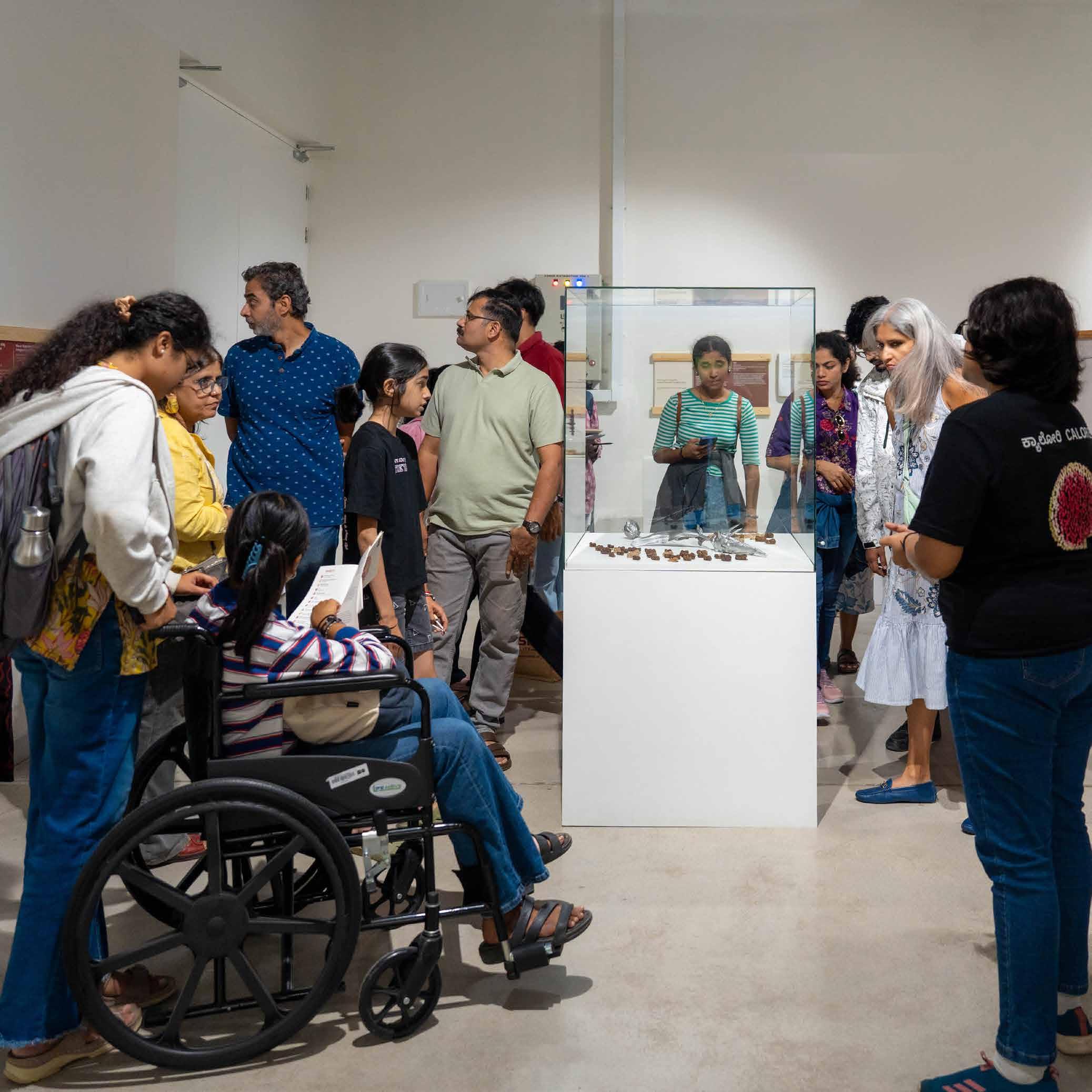
Team SGB shows Anna Dumitriu and Alex May's Manna: Epigenetics and Intergenerational Trauma at CALORIE, 2025.
CALORIE
During CALORIE, we furthered our two-part model for public engagement through the Experimentor and Mediator Programmes. The Experimentors also have the opportunity to obtain a Postgraduate Certification in Science Public Engagement from the University of Glasgow.
NUMBER OF EXPERIMENTORS TRAINED: 12
NUMBER OF MEDIATORS TRAINED: 32
NUMBER OF TRAINING HOURS: 128.5+
NUMBER OF TRAINING SESSIONS: 58
*as of December 2025
Training
The training for the Experimentors and Mediators is divided into three main sections:
1. SGB Team Training
The SGB team works with the experimentors and mediators to facilitate training and practice mediation sessions. These are crucial for the mediators to grasp the ethos of SGB, and to understand the exhibitionseason and their role within it. The Experimentors receive additional training given the nature of their role and the time commitment associated with the programme.
CALORIE 101
The CALORIE 101 series was a set of lectures, discussions, and experiences put together for the Experimentors and Mediators, that served as an exploration of the themes of the exhibition-season. This introduced the Experimentors and Mediators to larger narratives around it, to prepare them for mediation.
CALORIE 101 Facilitators
Adithya Pradyumna, Environmental Health Researcher
Amita Baviskar, SociologistAnthropologist
Balaji Parthasarathy, Economic Geographer and Economic Sociologist
Purnima Menon, Nutrition Researcher
Nirmala Krishnamurthy, Science Educator
Richa Kumar, Social Anthropologist
Suresh Kumar, Artist
Tejas Sudhakar, Chef
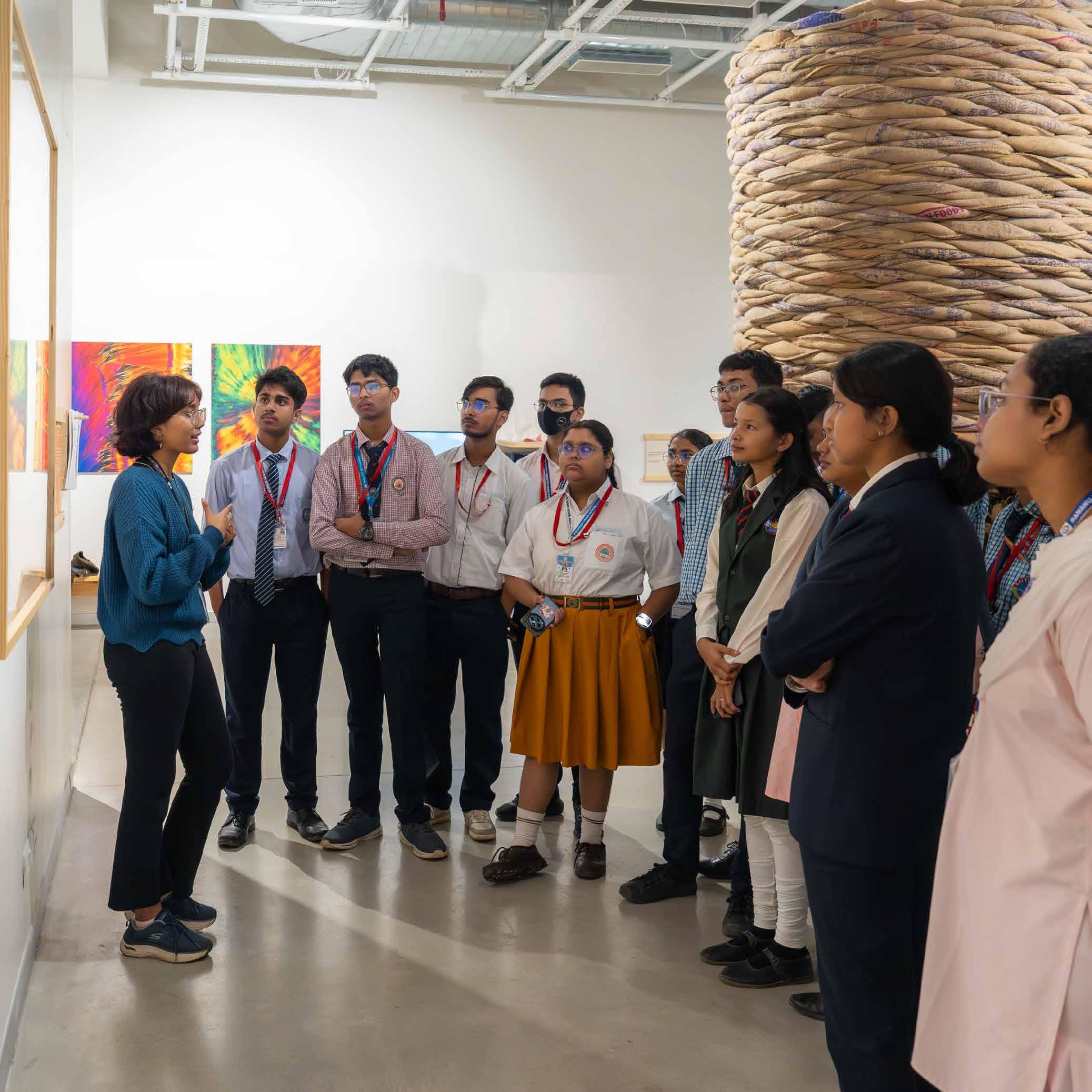
An Experimentor shows Dayananda Nagaraju's Kanja: Interconnected Harvests at CALORIE, 2025.
3. Exhibit Training
Each exhibiting artist and scholar runs a session with the Experimentors and Mediators, where they discuss the exhibit in detail. These training sessions expose Experimentors and Mediators to interdisciplinary research and art practices to understand the exhibit's key themes, as well as the process behind creating the final work. Each session is split into two halves. In the first half, the artist(s) explain the research, process, and ethos behind the exhibit. The second segment of the training is an open question and answer forum for young adults to ask questions and raise points of information.
Postgraduate (PG) Certification in Science Public Engagement
Experimentors have the unique opportunity to study with the University of Glasgow and obtain a PG Certification in Science Public Engagement—an online distance learning programme. There are courses offered by UofG and SGB spread across two semesters.
University of Glasgow courses: Museums, Education and Curriculum Development
Science for Public Spaces
Science Gallery Bengaluru course:
Interdisciplinary Learning in Public Spaces
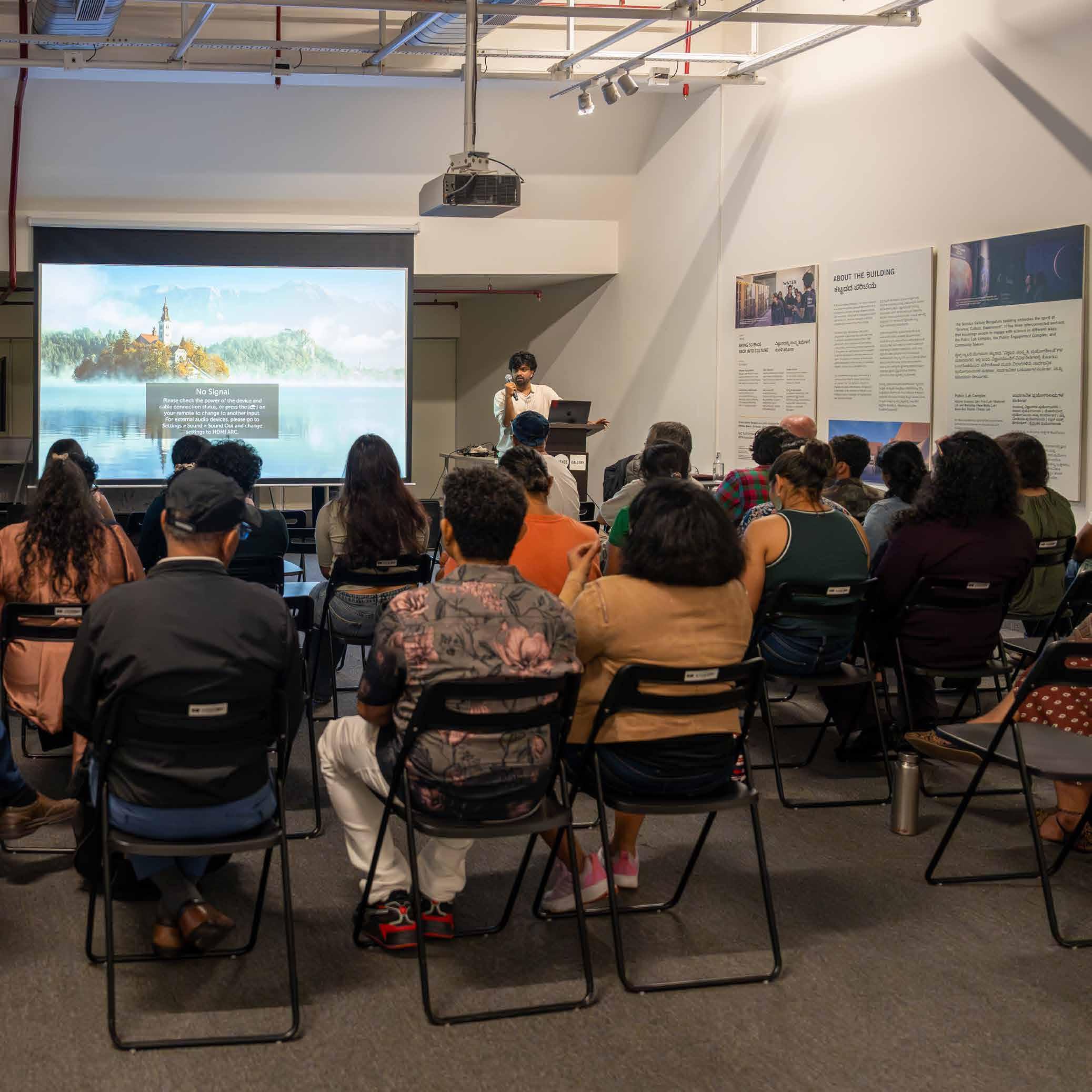
Anjal B delivers his lecture Bangalore Music Strip in 2025.
INTERNSHIPS
Each year, we invite applications from young adults to pursue interdisciplinary projects and support our public engagement activities, including exhibitions, events, learning resources and publications. We offer internships that are typically six to twelve-month commitments.
Name Institution Project Detail
Anjal B, Design Intern National Institute of Design, Ahmedabad
Anuhya Mahesh, Design Intern Srishti Institute of Art, Design and Technology, Bengaluru
Krittika Bhuiya, Communications Intern Indian Institute of Human Settlements Bengaluru,
(Urban Fellows Programme)
When the Song Fades: The Story of Bangalore Music Strip
Created an interactive web experience exploring Bengaluru's live music culture, beginning with the Bangalore Music Strip of the 1970s in Cubbon Park.
Sci560 Learning Resources Worked with the Sci560 Mediators to anchor the creation of legacy resources such as the Exhibitionin-a-Box and Activity Handbook.
Sci560 Social Media Management Supported the Communications team during a transitional phase, especially during the food festival and closing events for Sci560.
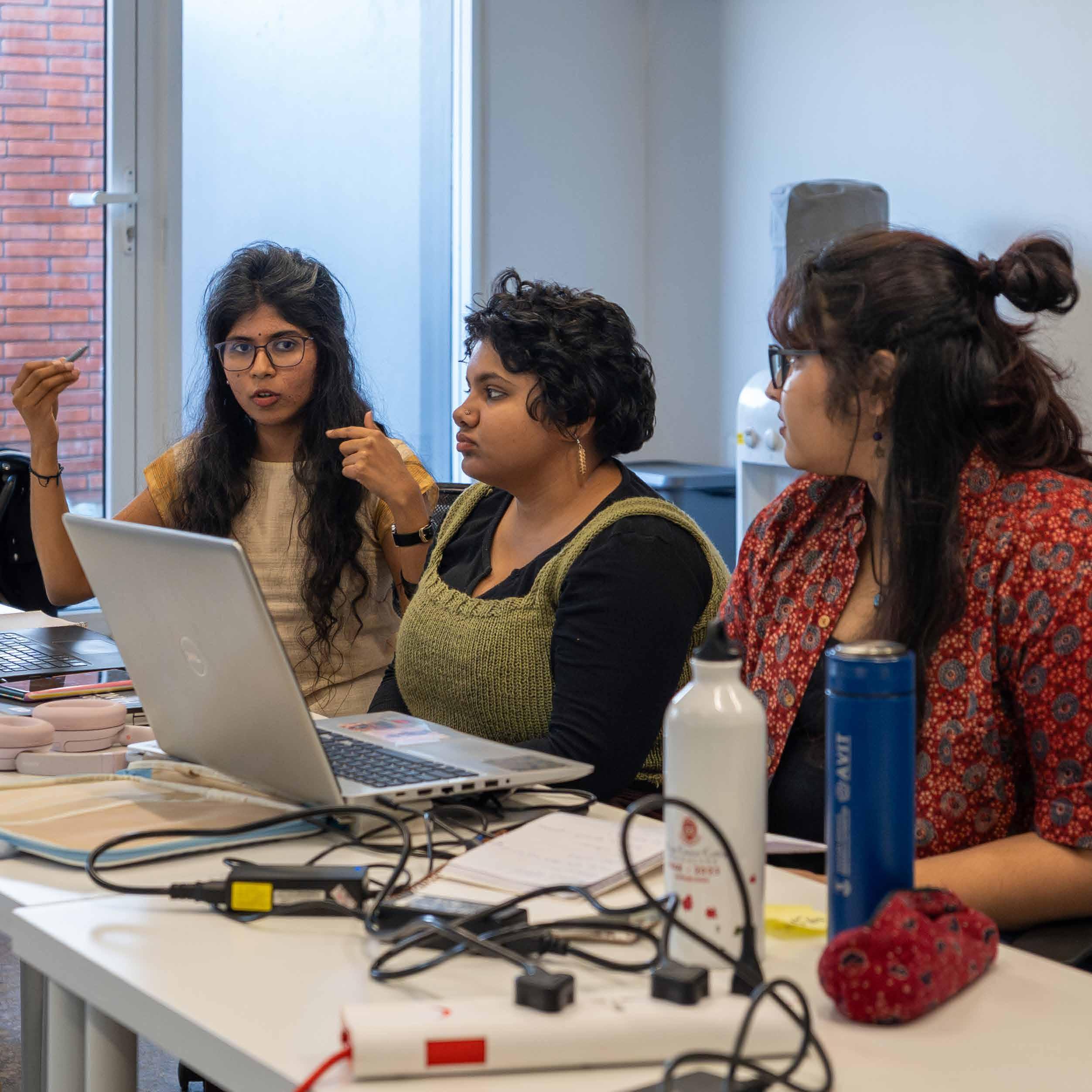
Experimentors engaged in a training session, 2025.
EXTERNSHIPS
Externships provide young adults (high school students and undergraduate students) with exposure to public engagement at SGB. The primary focus of the externship is to provide young people with an exposure to science/art practice and delve into how SGB reimagines the same. Over a period of four weeks, externs work with the Learning and Mentorship initiatives team to get a glimpse of the different skills, teams, and work required to create public engagement with research.
We ran two externship cycles this year: in May and June.
May
Number of applications: 9
Number of externs selected: 5
June
Number of applications: 15
Number of externs selected: 5
Each year, we invite applications from young adults to pursue interdisciplinary projects and support our public engagement activities, including exhibitions, events, learning resources and publications. We offer internships that are typically six to twelvemonth commitments.
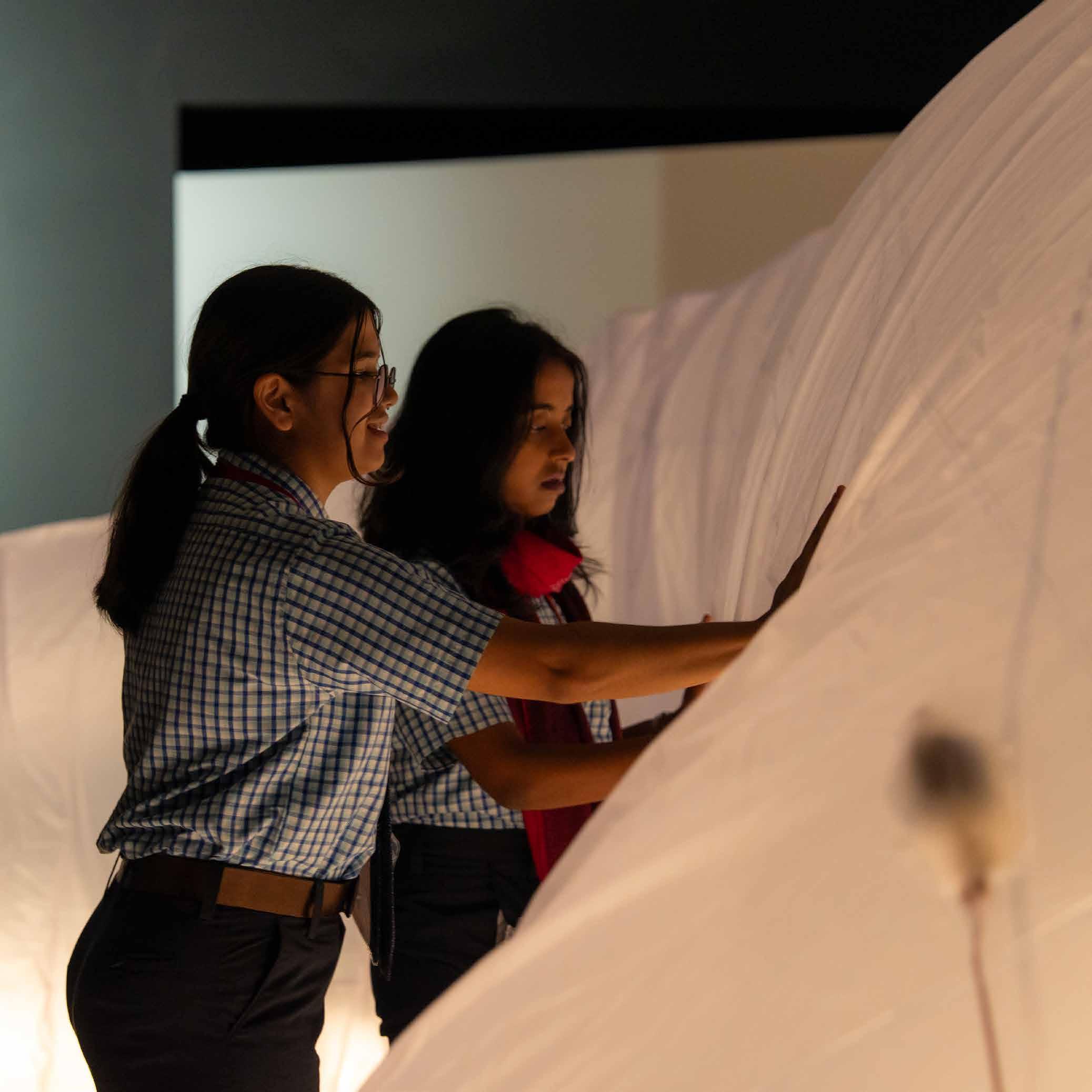
Visitors engage with sikau/pubalova's stuff change at CALORIE, 2025.
LEARNING PROGRAMMES
STUDENT LEARNING EXPERIENCES
To encourage student groups to visit the gallery and the exhibition, we have created guided walkthroughs of Sci560 and CALORIE, complete with activities and discussions. The experimentors and mediators plan and conduct two-hour long walkthroughs where the students explore 7-9 exhibits and discuss its key themes. Walkthroughs are available in English and Kannada, with other Indian languages on request.
During Sci560, the focus was on introducing students to the history of research in Bengaluru whereas in CALORIE we are critically exploring health and nutrition.
Sci560
Metrics
TOTAL NUMBER OF ATTENDEES: 9946+
TOTAL SLE HOURS: 702+
TOTAL NUMBER OF INSTITUTIONS: 131
GOVERNMENT SCHOOL AND COLLEGES: 20
OTHER INSTITUTIONS: 111
Mediation Experience Metrics
Educators rated the student learning walkthrough 4 and above (out of 5): 86%
Educators felt that students were able to engage with Sci560: 93%
Educators would recommend other schools or classes in the school to visit Sci560: 93%
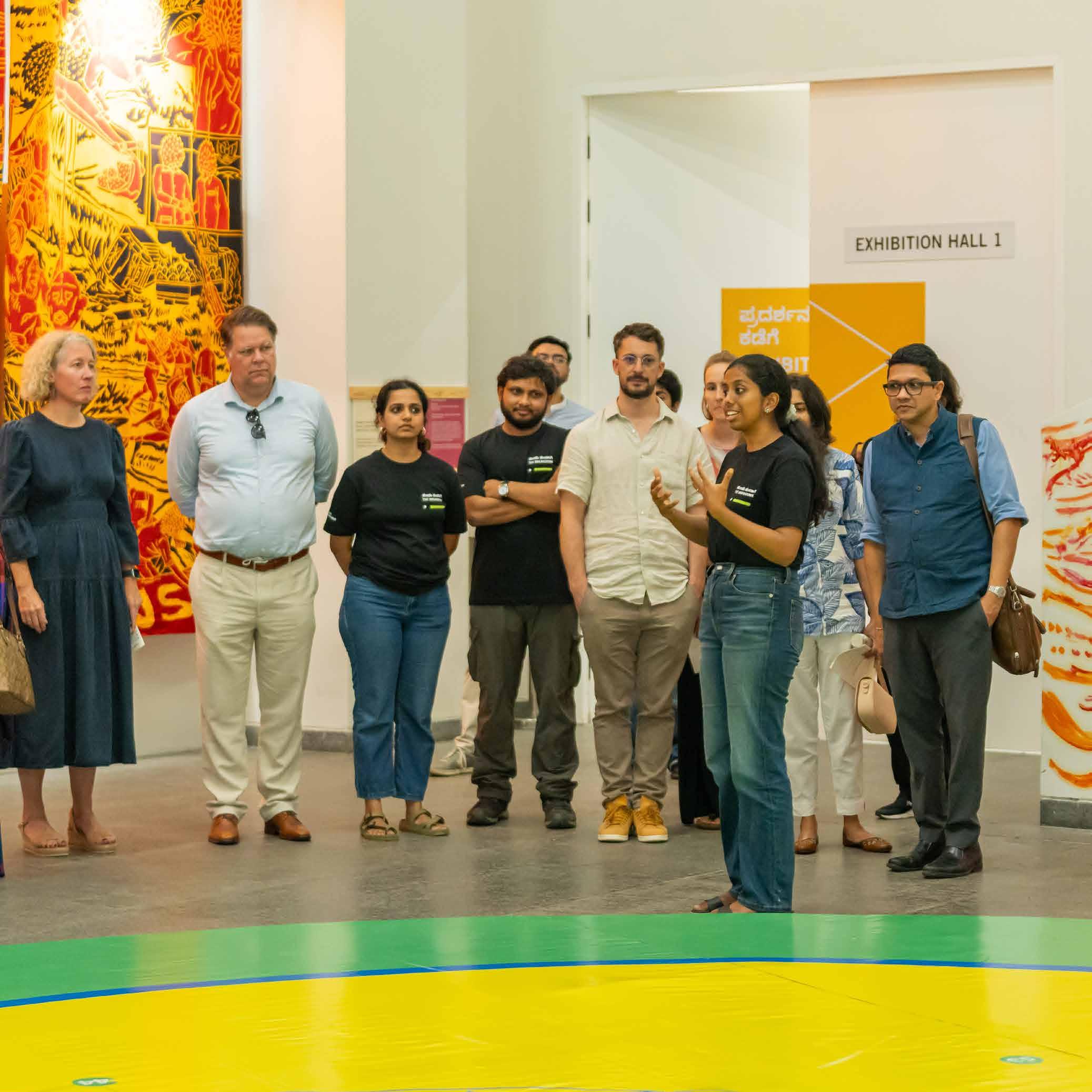
Team SGB engages visitors at CALORIE, 2025.
CALORIE
TOTAL NUMBER OF ATTENDEES: 3920
TOTAL SLE HOURS: 288
TOTAL NUMBER OF INSTITUTIONS: 71
GOVERNMENT SCHOOL AND COLLEGES: 6
OTHER INSTITUTIONS: 65
*as of December 2025
“The experience was immersive and engaging, the students were able to see the connections between so many things, ranging from geography to astrophysics, and history to biodiversity.”
—Kaavya, Indus, Avinash, Teachers from the Valley School
“It was a highly thought-provoking visit . My students thoroughly enjoyed the visit. I would definitely like to have future visits scheduled. The session was incredibly informative and engaging, leaving the students enriched with valuable insights.”
– Meenakshi, Teacher from Vibgyor High Yelahanka
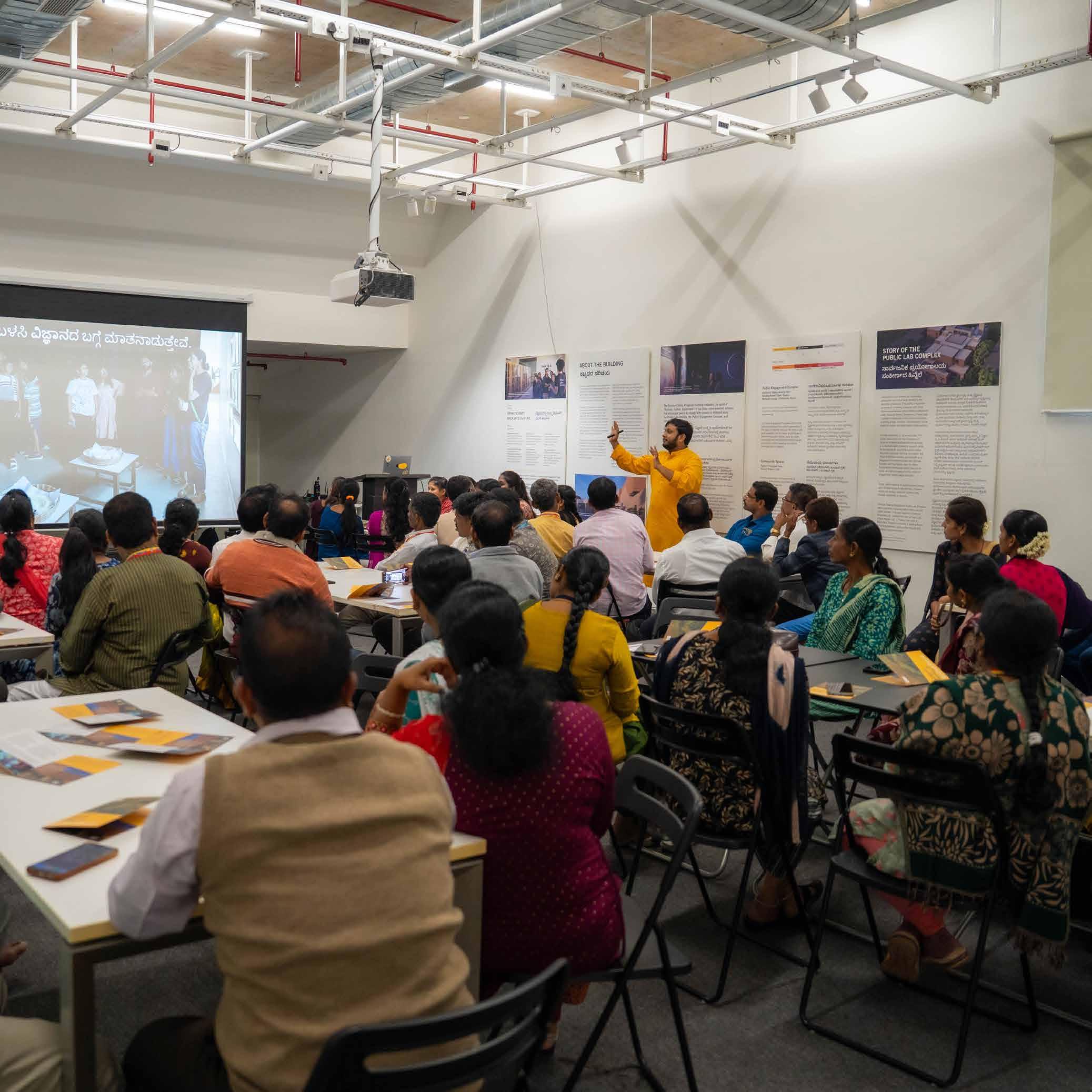
Team SGB conducts the Educator Workshop, 2025.
EDUCATOR TRAINING PROGRAMME
As part of our commitment to bring interdisciplinarity into everyday learning and teaching, we are developing the Educator Training Programme. We piloted the following workshops and received positive feedback from the educators.
1. Training for Librarians from Arivu Kendras
Dates: 27 June, 04 July, and 11 July
Metrics: 180 librarians from 31 districts of Karnataka
As part of the partnership with the Department of Rural Development and Panchayat Raj, SGB conducted daylong Kannada workshops for librarians from the 31 districts in Karnataka. Over the three days, 180 librarians visited the Gallery and explored the Sci560 exhibition-season and were introduced to SGB’s Learning Resources.
2. Training for science educators from Agastya International Foundation
Dates: 26 March, 29 March, 11 May
Metrics: 165 educators
We are working with Agastya International Foundation to introduce concepts of interdisciplinarity to their science educators working across the country. They visited the Sci560 exhibition-season and were introduced to SGB’s Learning Resources.
LEARNING RESOURCES
Our Learning Resources are created for young adults to explore either by themselves or in classrooms/non-formal learning spaces. They draw from our exhibitions and encourage a critical engagement with the topic at hand.
Our Learning Resources have been recognised as important to further the access to non-formal, interdisciplinary educational tools. We have signed three Memorandum of Agreements with the Government of Karnataka to share our resources with gram panchayat libraries (Department of Rural Development and Panchayat Raj), and schools and colleges (Department of School Education and Literacy and Department of Higher Education) across the state.
Sci560 Exhibition-in-a-Box
The Exhibition-in-a-Box is a portable, table-top version of our larger exhibitions, featuring scaled-down objects, provocations, and activities that make the experience travelable. These kits are interactive learning modules that audiences can freely handle and explore at schools, colleges, and studio spaces. Through Sci560 we discovered some of the ideas, individuals, and institutions that make science in the city of Bengaluru. The Sci560 Exhibitionin-a-Box is a game which plays out in the year 2125. It invites participants to explore some of the stories of Bengaluru, tap into the challenges, joys, and confusions of building and inhabiting a city. This bilingual learning resource was co-created by the Sci560 Mediators along with a designer from our Internship Programme.
Suitable for: Ages 14 – 30
Sci560 Activity Handbook
The Sci560 Activity Handbook is a bilingual do-it-yourself companion that features ten hands-on activities and prompts, enabling a participant to conduct experiments and observations at home, in a classroom, or in a public learning space. Co-created by the Sci560 Mediators along with a designer from our Internship Programme, it extends the life of the exhibition by allowing the visitor to carry questions and ideas beyond the Gallery walls.
Suitable for: Ages 12 – 18
Sci560 Open Courseware
The Open Courseware compiles resources from our exhibitionseasons to support open-ended, interdisciplinary learning and expand the public knowledge commons. It distills interactive exhibits, research, media, and participatory activities into modules for teachers and learners to develop critical thinking. The initial structuring and layout of the Sci560 Open Courseware was developed by the Sci560 Mediators and explores 5 modules around Ecology and Evolution, Astronomy, History of Science, Science and Society and Urban Planning. This is currently under review and being completed by the Learning and mentorship initiatives team.
Suitable for: Ages 14 – 30
02 MEDIA PRESENCE
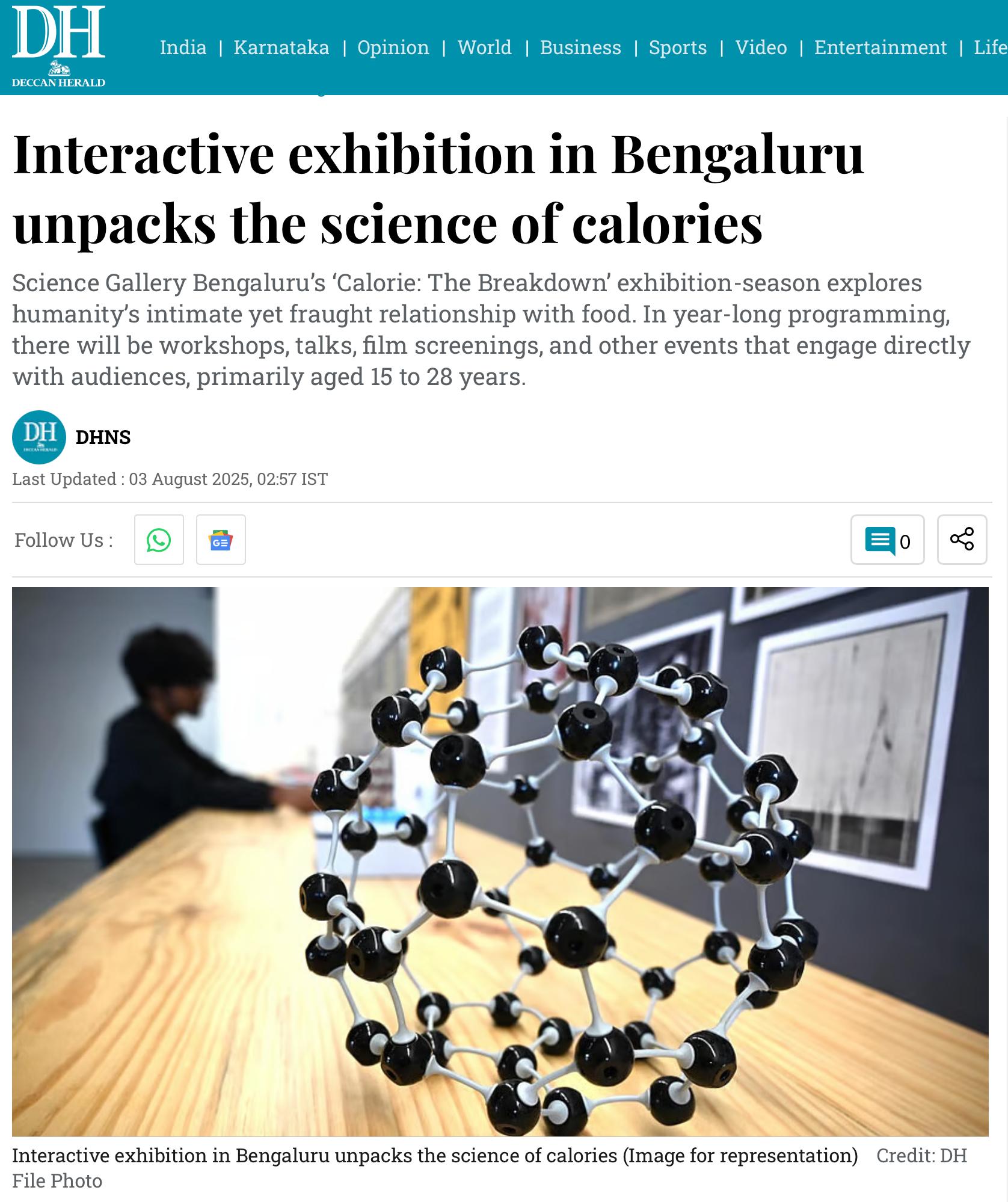
Social Media at SGB focuses on Instagram (most popular), Twitter/X, Linked In, Facebook, Whatsapp, and YouTube. Outgoing content relate to our exhibition, programmes, people, collaborations, and other institutional work.
SOCIAL MEDIA PRESENCE
70,000+ FOLLOWERS
4.2 MILLION+ ACCOUNTS ENGAGED
PRESS FEATURES
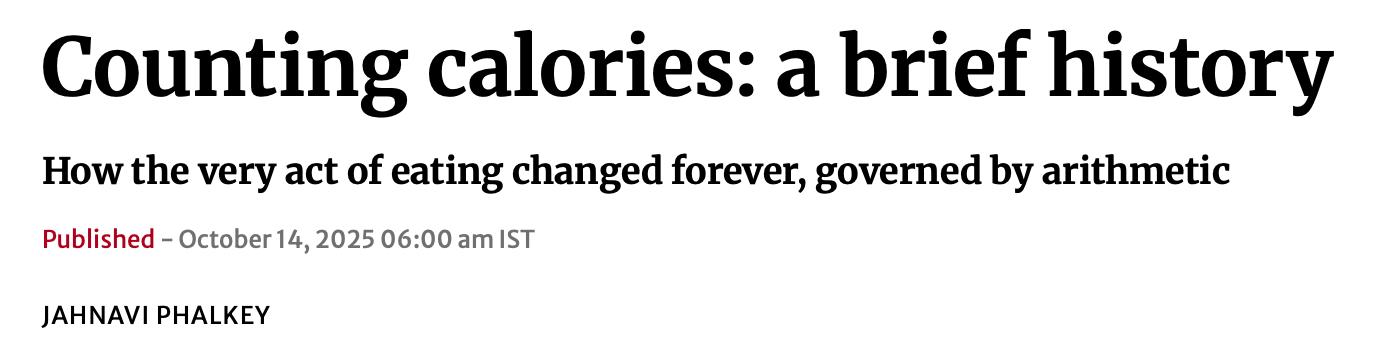
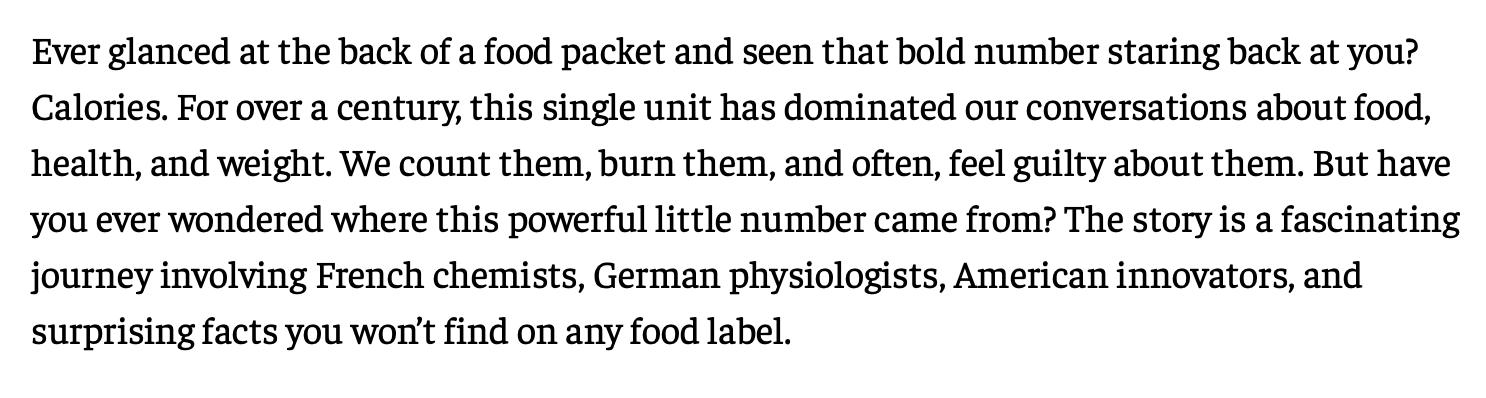
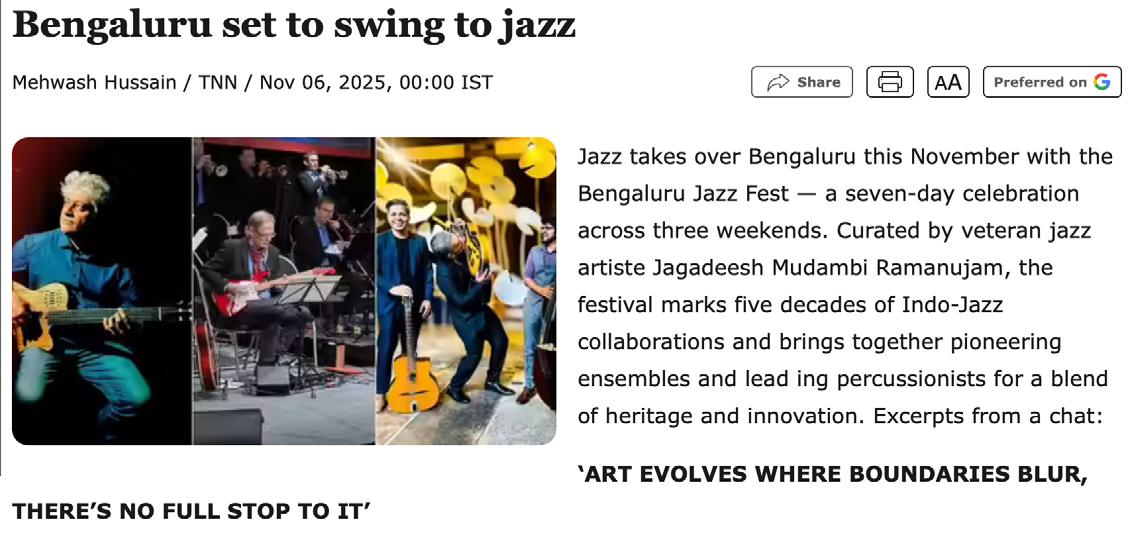
We received nearly 100 press features, and mentions in media. Science Gallery Bengaluru was covered by the leading dailies, both online and print, in the country. Clusters of press coverage focussed around the launch of CALORIE in August and the Public Labs Complex announcement of collaboration with Imperial College London in October. Other subjects with multiple media stories and YouTube videos are our weekend programmes and the new Cafe ScCuXe by Henchu.





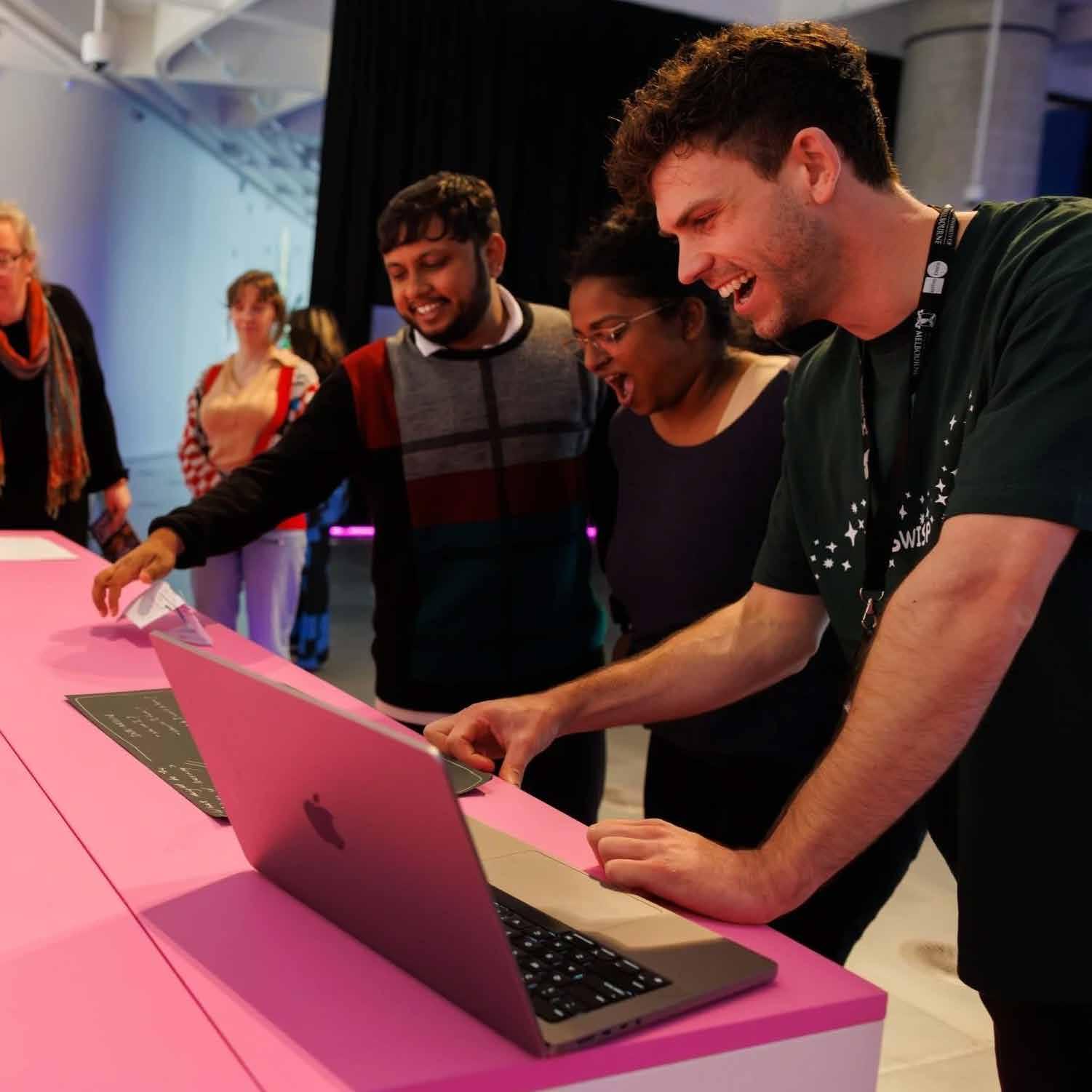
Team SGB at Science Gallery Melbourne.
04 OVERVIEW OF SCIENCE GALLERY NETWORK
SCIENCE GALLERY INTERNATIONAL
DIRECTORS REPORT 2025
Objectives and activities
The Science Gallery model aims to create new pathways for young people to learn, find agency and explore their creative potential through an innovative approach to art and science. It does this through creating unique, transdisciplinary exhibitions, events and programmes to engage inquiring minds in connective, participative, and surprising ways.
Science Gallery International played a valuable role in the establishment of each of the nodes of the Science Gallery Network, in Europe, North America, Asia and Australia. It has supported new galleries as they have developed and continues to share ideas and insights from across the Network. All Network members have access to tools and resources designed to leverage their investment in the network. SGI has helped to develop these resources and share the best of practice across its members, whilst undertaking research on the wider impact of their work.
SGI’s principal activities has been the building of a thriving, diverse and influential network through the following priorities:
• Strengthening the network, building sustainability
• Providing a flexible partnership model
• Serving the Network’s key constituency: young people
SGI HIGHLIGHTS
Science Gallery International delivered a strong year of activity that advanced the Network’s strategy and strengthened collaboration across its member galleries. A major milestone was the development and approval of a new differentiated membership model in December 2024, alongside active engagement with several prospective members. Auckland University of Technology signed a pre-development agreement in 2025 with an advance commitment toward 2026, signalling continued interest in network membership. SGI also retained Emory as a Research Member and drafted a new Network Charter to support clearer governance and alignment among members.
SGI enhanced the Network’s profile through representation at GIID, ECSITE and ASTC, opening new opportunities for future partnerships. The second Network Review was completed and shared with stakeholders, receiving very positive responses. SGI’s website underwent a significant upgrade, adding sections on research publications, a comprehensive archive of exhibitions across all galleries and new impact stories that highlight the Network’s global reach. Despite reduced staffing, SGI maintained regular newsletters and social media activity.
Collaboration deepened across programming, research and philanthropy through active working groups, the development of a touring strategy and shared resources to support cross-network initiatives. SGI provided editorial and design support for the Network’s climate publication, delivered induction and training for new staff and offered one-to-one fundraising and strategy support to multiple locations. Work continued on trademark registrations, data-sharing agreements and the shared exhibition database, alongside the successful completion of Shaun Ussher’s PhD in partnership with Research Ireland. A new data dashboard was also introduced to improve reporting and insight.
Through these achievements, SGI continued to support a cohesive, ambitious and internationally recognised Network while laying strong foundations for its next phase of development as the Network matures and SGI transitions to a peer-led model.
NETWORK ACTIVITIES 2024-2025
Science Gallery Monterrey officially opened in November 2024, with its opening exhibition Brave New Future. Monterrey was host to the Global Summit on Innovation Districts in April 2025, where Sarah Durcan and Miguel Virgen gave a keynote address on the democratisation of science, and led a workshop with Audrey Chang on the Science Gallery model for innovation districts. This led to interest from a number of key innovation districts in joining the Network, including Detroit, Rhode Island, Japan and others.
Science Galleries sparked critical conversations on human and planetary health, visions of hopeful futures, expanded narratives of science fiction, and more. We ignited collaborations between university researchers and artists, advanced interdisciplinary research, and equipped thousands of students with future-focused skills through STEAM education.
Young people, researchers, community leaders, and artists were at the heart of our programmes, with passionate student mediators serving as the public face of Science Gallery. Collaborations with scientific, cultural, and governmental institutions further expanded the Network’s reach.
NETWORK HIGHLIGHTS
SCIENCE GALLERY ATLANTA
Science Gallery Atlanta at Emory University, in partnership with Accenture, unveiled their exhibition Resilient Earth, which closed in July 2025. Featuring 13 installations, including seven collaborative projects between Emory community members and local artists, the exhibition explores plastic waste, flood resilience, and human adaptability to climate change, offering a reflective space where visitors can discuss their roles, actions,and commitments in supporting the future of our planet. Science Gallery Atlanta transitioned to a research level membership in January 2025, and due to funding cuts in the US, suspended operations after the closure of Resilient Earth.
SCIENCE GALLERY BENGALURU
Science Gallery Bengaluru expanded its role as a civic and cultural hub through a series of major initiatives from October 2024 to November 2025. The gallery opened Sci560, an exhibition celebrating Bengaluru’s identity as a Science City, supported by Rohini Nilekani Philanthropies and developed in collaboration with leading institutions including the International Centre for Theoretical Sciences and the National Centre for Biological Sciences. The exhibition and its wide-ranging
public programme highlighted the city’s scientific and industrial heritage and attracted strong local media attention.
In September 2025 the gallery partnered with Paani Earth Foundation and the Visvesvaraya Museum to launch Waterscapes of Bengaluru, a travelling exhibition exploring the city’s complex water systems and the restoration of its forgotten rivers. The Project 560 Festival, presented across the city shortly afterwards, featured more than 30 projects including neighbourhood walks, workshops, talks and games, demonstrating the gallery’s growing influence beyond its walls. Throughout the period more than 25 young adult mediators from diverse academic backgrounds contributed to public engagement, serving as the voice of the gallery and supporting its mission to connect research, culture and community.
SCIENCE GALLERY MONTERREY
Science Gallery Monterrey at Tecnológico de Monterrey opened its permanent space in November, becoming the first location of the Science Gallery Network in Latin America. The Gallery acts as a creative catalyst in the cutting-edge Expedition building within Tec’s new Innovation District. The inaugural exhibition, BRAVE NEW FUTURE, invited collective reflection on how we can imagine and create brighter futures,
showcasing works by international artists, collaborations between Tec students and researchers, alongside pieces commissioned by Science Galleries across the Network.
In October 2025 Monterrey launched its new season with the exhibition CONSCIOUSNESS / CONSCIENCIA: It’s Not What You Think, a showcase of twelve art-science works selected from over 240 international proposals, exploring the nature of awareness across human, vegetal and artificial forms. The season reinforced SG Monterrey’s mission to democratize science and foster critical reflection among young people, students and the broader community.
SCIENCE GALLERY LONDON
Science Gallery London launched VITAL SIGNS: Another World Is Possible in November 2024, bringing together artists, designers, and researchers to explore how the health of the natural world — from waterways and atmosphere to ocean floors — is intrinsically linked to human wellbeing and planetary futures. The exhibition ran through May 2025 and offered a broad programme of talks, tours, print weeks, community events, and even BSL-guided visits, enabling wide public engagement and inclusive access. Highlights included immersive and research-driven works such as living-grass “skins” grown from poetry
by a major writer, and audio-visual installations that invite reflection on environmental justice, waste, pollution, and collective responsibility. In 2025 the gallery introduced ancillary events – from “The Art of Care” and intergenerational “Lifelines: Rethinking Ageing Across Generations,” to “Algorave” evenings and public talks – deepening its commitment to social, ecological and cultural questions.
QUANTUM UNTANGLED
opened in October 2025, featuring immersive sculptures and interactive artworks by leading artists including Conrad Shawcross, Robin Baumgarten, Alistair McClymont, Monica C. LoCascio & Daniela Brill Estrada and Matthew Woodham – plus poetry, photography and films developed with scientists from King’s College London, inviting visitors to experience quantum concepts through art.
SCIENCE GALLERY MELBOURNE
Science Gallery Melbourne showcased SCI-FI: Mythologies Transformed, examining science fiction, ancestral knowledge, and contemporary art with a focus on Asian and First Nations women artists.
In July 2025 the gallery opened DISTRACTION, an exhibition examining how our attention and creativity are shaped by digital overload. Featuring interactive installations, games, and researchdriven artworks, it invites visitors to consider the costs and possibilities of living in an always-on media environment.
The gallery continued to invest in community and inclusive learning. Notably, its collaboration with a local Deaf school allowed Deaf and hard-ofhearing young people to participate in STEAM workshops and contribute to exhibitions — offering video responses in Auslan and collaborating with Deaf artists on gallery-based projects.
SGM also collaborated with AUT in Auckland on a future careers forum, setting the ground-work for future collaborations with this new network member.
GOVERNANCE AND PERSONNEL
SGI has a committed and active board of directors that met four times during the year. Board members Mary Carty, Ken Arnold and Julie Wells retired in April 2025. Roberto Iñiguez Flores was appointed to the board by Technologico de Monterrey, and Stephen Howell was appointed by the SGI Board. The Finance & Audit Committee met more frequently throughout the year, chaired by Vice Chair Beatrice Pembroke. A board evaluation process was conducted, supported by nonprofit governance expert Patricia Quinn, and was considered by the board at its September meeting.
Executive Director Sarah Durcan, and Engagement and Learning Manager, Jahitza Balaniuk, will step down from their roles at the end of 2025, while the part-time contractors will remain in place to support governance, finance, IT and onboarding of new members.
05 FINANCIAL REPORTS
BALANCE SHEET AS AT 31 MARCH 2025
I. EQUITY AND LIABILITIES
(1)
Fund
(2) Deferred Grants (a)
(3) Non-Current
(4) Current Liabilities
(a)
II. ASSETS
(1)
(2) Current Assets
STATEMENT OF INCOME AND EXPENDITURE FOR THE YEAR ENDED 31 MARCH 2025
III. REVENUE
IV. EXPENSES
V. EXCESS OF INCOME OVER EXPENDITURE BEFORE EXCEPTIONAL AND EXTRA-ORDINARY ITEMS AND TAX (III-IV)
VI. EXCEPTIONAL ITEMS AND EXTRA-ORDINARY ITEMS
VII. EXCESS OF INCOME OVER EXPENDITURE BEFORE TAX (V-VI)
VIII.
IX. EXCESS OF INCOME OVER EXPENDITURE FOR THE YEAR (VII-VIII)
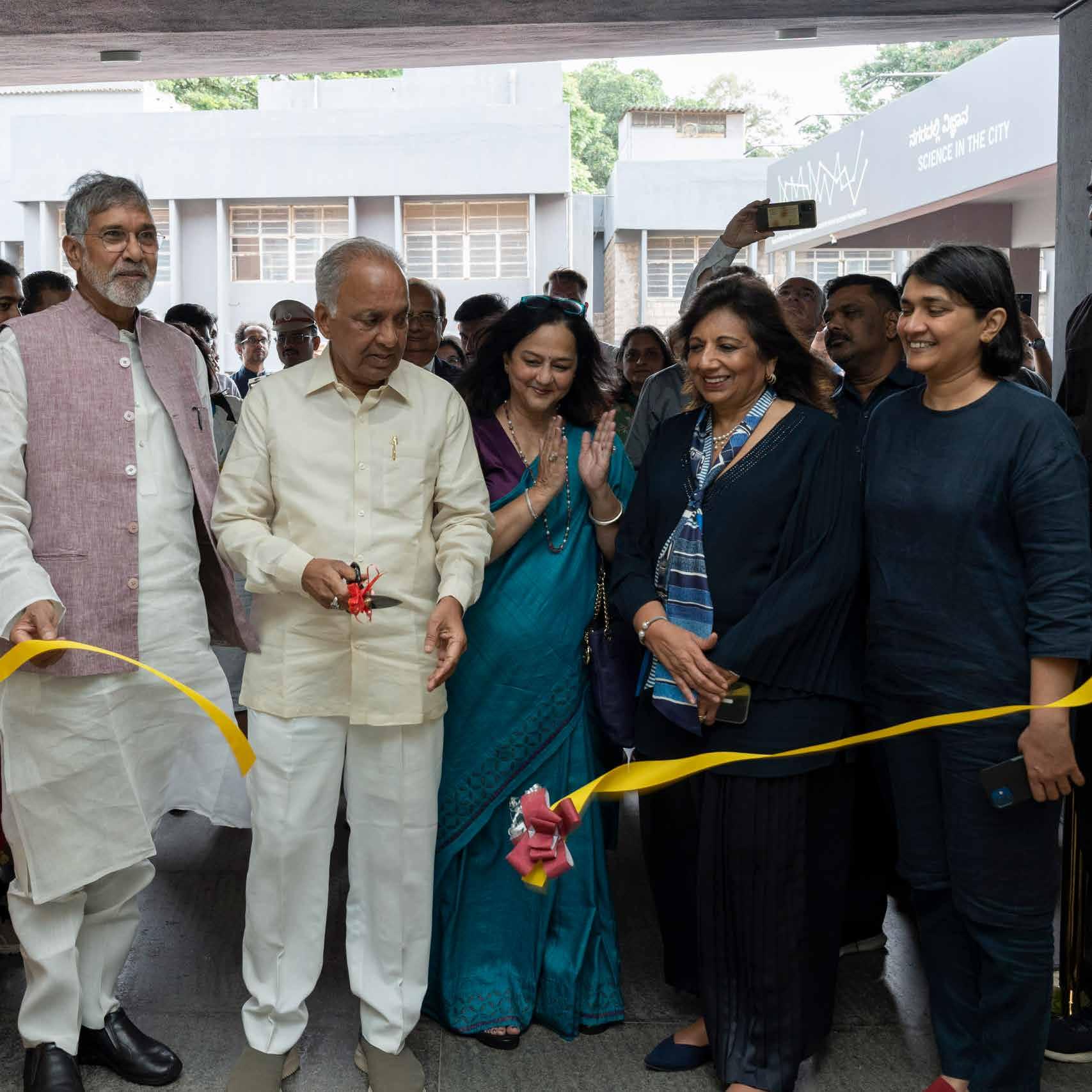
Sci560 Opening Event, 2024.
06 GOVERNANCE AND LEADERSHIP
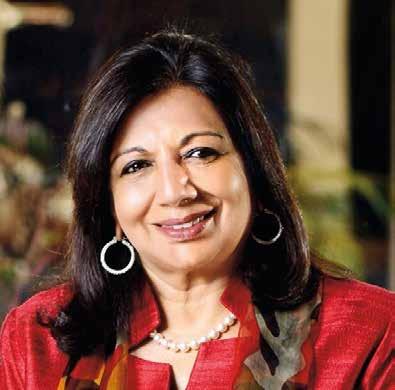
KIRAN MAZUMDAR-SHAW (CHAIRPERSON OF THE BOARD)
Kiran Mazumdar-Shaw is the Executive Chairperson of Biocon Limited. She is a pioneering biotech entrepreneur, a healthcare visionary, and a passionate philanthropist. She is committed to equity in healthcare through access and affordability as she pursues a path of making a difference to billions of lives globally.
Dr Mazumdar-Shaw is the proud recipient of India’s highest civilian honours, the Padma Shri (1989) and the Padma Bhushan (2005). She was also honoured with the Order of Australia, Australia’s Highest Civilian Honour in January 2020.
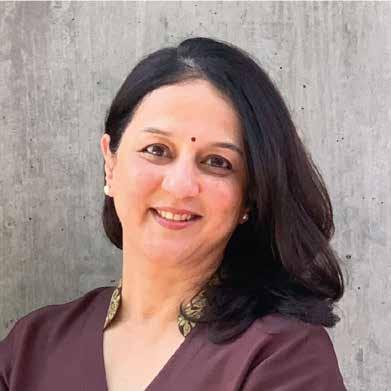
ROHINI NILEKANI
Rohini Nilekani is the FounderChairperson of Arghyam, a foundation she set up for sustainable water and sanitation, which funds initiatives all across India. She is Co-founder and Director of EkStep, a non-profit education platform. She sits on the Board of Trustees of the Ashoka Trust For Research In Ecology And The Environment, and serves on the Eminent Persons Advisory Group of the Competition Commission of India.
Ms Nilekani has written for many leading publications such as the Times of India, India Today and Mint. In 2017 she was inducted as Foreign Honorary Member of the American Academy of Arts and Sciences. She is also a member of the Advisory Board of the Well Being Project from 2019.
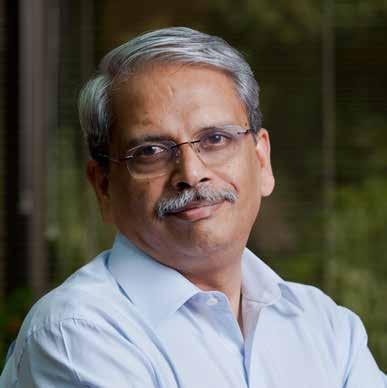
SENAPATHY GOPALAKRISHNAN
Senapathy “Kris” Gopalakrishnan is the Chairman of Axilor Ventures, an accelerator that helps start-ups during the early stage of their business journey. Mr Gopalakrishnan served as the Vice-Chairman of Infosys from 2011 to 2014, the Chief Executive Officer and Managing Director from 2007 to 2011, and was one of the Co-Founders.
In January 2011, the Government of India awarded Mr Gopalakrishnan the Padma Bhushan, the country’s thirdhighest civilian honor. He holds Master’s degrees in Physics and Computer Science from the Indian Institute of Technology, Madras. He is a Fellow of the Indian National Academy of Engineers and an Honorary Fellow of the Institution of Electronics and Telecommunication Engineers of India.
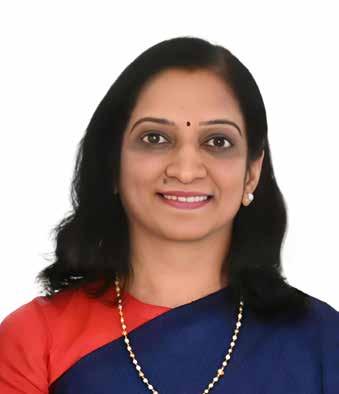
N MANJULA
Dr. N. Manjula, IAS (2002 batch) is Secretary to the Government of Karnataka for Electronics, IT, Biotechnology and Science & Technology. An MBBS by training, she leads the State’s technology and innovation agenda, driving key policies for startups, IT and space technology. With over two decades of administrative experience, she has held senior leadership roles across district administration, tourism, higher education, urban development and power infrastructure, and is known for translating policy into impactful public outcomes.
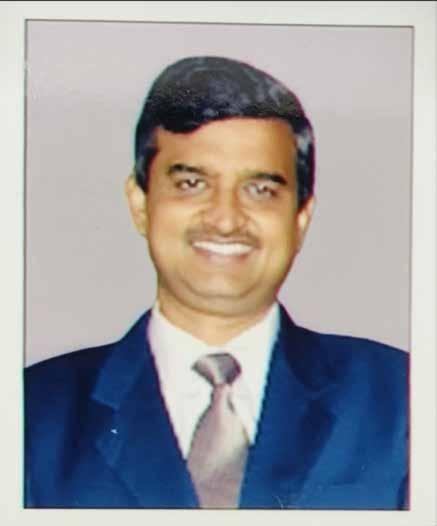
KUMAR SINGH
Ritesh Kumar Singh is a Karnataka cadre IAS officer of 1996 batch with almost three decades of diverse and rich experience. He is a B.Tech.(Computer Science) graduate from IIT Kanpur and post graduate in Public Administration (International Development) from Harvard University. He had served the Government of Karnataka in various capacities as Principal SecretaryDepartment of School Education, Secretary (Expenditure)-Finance Department, Secretary - Revenue Department and Managing Director –Karnataka Power Corporation Limited. During his stint with the Government of India, he worked with various departments such as Economic Affairs, Urban Development, Petroleum & Natural Gas and as Joint Secretary Ministry of Environment, Forest & Climate Change. He also served as a Senior Advisor – World Bank India Executive Director office at Washington DC. He is currently serving as Principal Secretary – Department of Finance, Government of Karnataka.
Sadashiva Prabhu B. is an Indian Administrative Service Officer of the 2018 batch. His academic background is BA, LL.B. from Mahatma Jyotiba Phule Rohilkhand University, Bareilly, Uttar Pradesh. He is an Air Veteran having served in the Indian Air Force for 20 years. Over the last 17 years, he has served in the various Departments in the Government of Karnataka. He is currently serving as Director, Dept. of Science and Technology, Govt. of Karnataka/Managing Director, Karnataka Science and Technology Promotion Society (KSTePS). Also, he is the Director of Public Instruction (Mid-Day Meals), Bengaluru.
RITESH
SADASHIVA PRABHU B
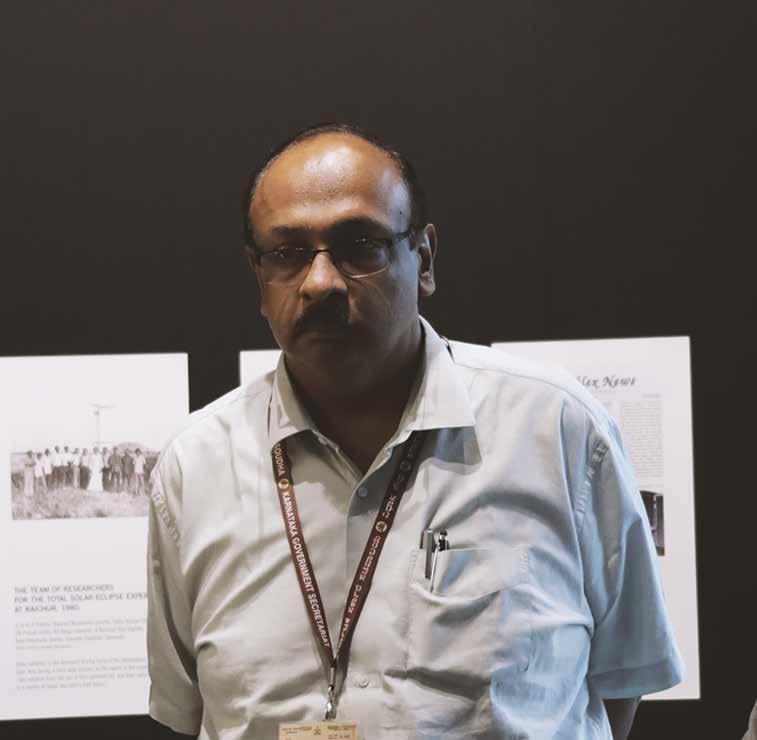
I S N Prasad is an Indian Administrative Service Officer of the 1986 batch. Over the last 33 years he has served in various departments in the State and Central Government. He is currently the Additional Chief Secretary at the Finance Department in the Government of Karnataka.
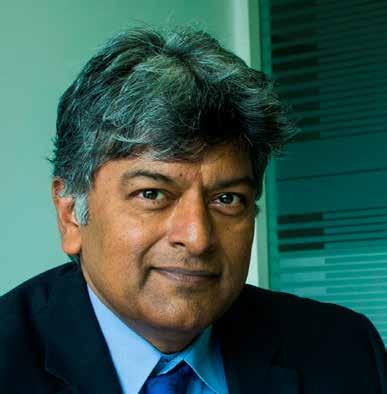
VIJAY CHANDRU
Vijay Chandru is an academic and an entrepreneur. His academic career in decision sciences spanned over four decades at Purdue University and at the Indian Institute of Science. Dr Chandru is an (Emeritus) Distinguished Technologist of the Indian National Academy of Engineering and Adjunct Professor in BioSystems Science and Engineering at the Indian Institute of Science.
At Strand Life Sciences, he served as Founder Executive Chairman from inception in 2000 till 2018. He is currently associated with the International Institute of Art, Culture and Democracy (IIACD), where he pursues his interests in digital heritage, and with OPFORD Foundation, a platform for orphan diseases and genomic medicine.
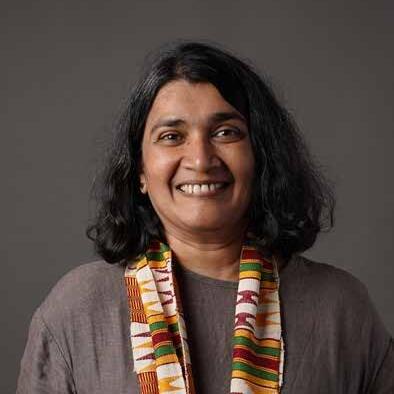
JAHNAVI PHALKEY (EXECUTIVE DIRECTOR)
Jahnavi Phalkey was appointed Executive Director of Science Gallery Bengaluru in November 2018. Prior to that she was faculty at King’s College London. She started her academic career at the University of Heidelberg, following which she was based at Georgia Tech-Lorraine, France, and at Imperial College London.
Dr Phalkey was an external curator to the Science Museum London, and was a Scholar-in-Residence at the Deutsches Museum, Munich. She is the author of Atomic State: Big Science in Twentieth Century India and has co-edited Science of Giants: China and India in the Twentieth Century.
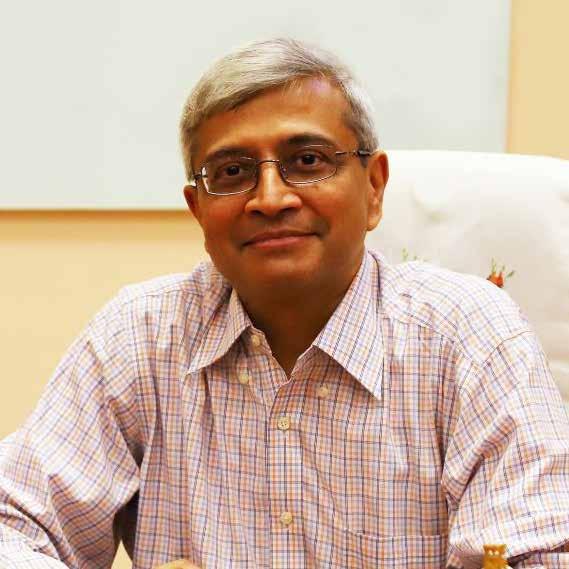
GOVINDAN RANGARAJAN
Govindan Rangarajan is currently the Director of the Indian Institute of Design. He obtained an Integrated MSc (Hons) degree from the Birla Institute of Technology and Science, Pilani, and a PhD from the University of Maryland, College Park, USA. He then worked at the Lawrence Berkeley Lab, University of California, Berkeley, before returning to India in 1992. He has been a faculty member of the Department of Mathematics, Indian Institute of Science (IISc), since 1992.
Professor Rangarajan is a JC Bose National Fellow. He is also a Fellow of the Indian Academy of Sciences and the National Academy of Sciences, India. He was awarded the Chevalier dans l’Ordre des Palmes Academiques (Knight of the Order of Academic Palms) by the Government of France.
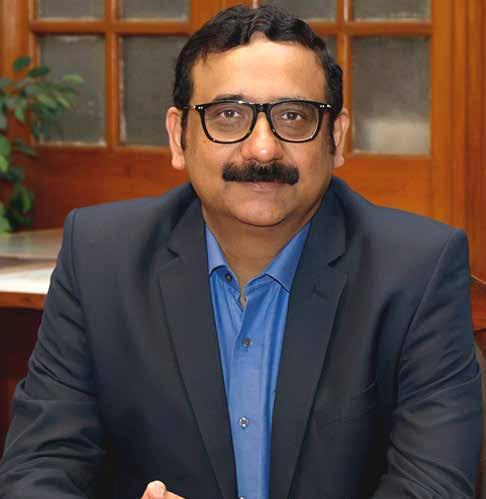
ANIL KUMAR P S
P.S. Anil Kumar is Professor of Physics and Dean, Administration and Finance at Indian Institute of Science (IISc) Bangalore.
He obtained a doctorate in Physics in 1998 from the University of Pune. He was a Dutch Technology Foundation Post-doctoral Fellow at the University of Twente, in The Netherlands until 2000. Then he moved to the Max-Planck Institute of Microstructural Physics, Germany with a Max-Planck Postdoctoral Fellowship, and, subsequently, an Alexander von Humboldt Research Fellowship. He joined the Department of Physics of the Indian Institute of Science in 2004. His research interests are in Spintronics, Magnetic Nano-structures, Magneto-transport in Metallic Multilayers and Oxides, Topological insulators, and Magnetic properties of ultra-thin ferromagnets.
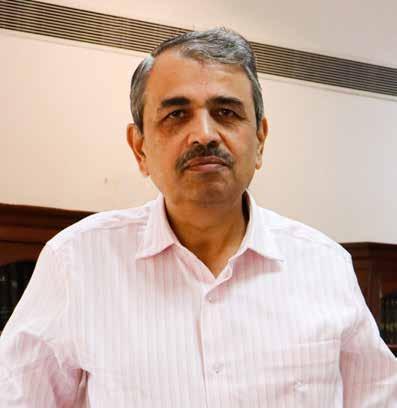
L S SHASHIDHARA
Prof Shashidhara did his undergraduate and post-graduate studies in Genetics and Plant Breeding at the University of Agricultural Sciences, Dharwad, India and studied regulation of chlorophyll biosynthesis for his Ph.D. at the University of Cambridge, UK. Subsequently, he shifted his field of research to developmental biology and later to cancer biology. Prof Shashidhara specializes in Genetics, Molecular Biology and Evolutionary biology. His group has identified key mechanisms that specify organ development and regulate growth control during embryonic development using Drosophila as a model system. They have also expanded their study to examine the status of these evolutionarily conserved mechanisms in epithelial cancers in human.
07 TEAM
EXECUTIVE DIRECTOR
Jahnavi Phalkey
BUILDING CONSTRUCTION
Head of Estate and Facilities: Rajesh MS
Senior Design Associate: Karan Shedge
Plumber: Babrubahan Nayak
Electrician: Nagendra P
Operations Manager- Security: Suresh Chandra Saahu
Audio-visual and Data Architecture: T2 Consultants
Project Management Consultants: Kris Cooper Project
Management Consultants
Construction Contractors: KPIL Projects
EXHIBITIONS
Senior Programmes Manager: Gayatri Manu
Senior Programme Associate: Jagath V
Programme Associate: Devika P
Programme Associate: Manasvi CM
Junior Programme Associate: Danny Jeyaraj
Learning Manager: Shelwyn James S
Learning Manager-Digital: Ashritha Sadu
Learning Associate: Harsha Jagadeesh
Learning Associate: Malavika Sudhir
Production Manager: David Verghese
Production Associate: Aaiushi Beniwal
EDITORIAL AND PUBLICATIONS
Editorial and Publications Associate: Sarasi Ganguly
Senior Editorial and Publications Associate: Shambhawi Vikram
MEDIA, COMMUNICATIONS AND DESIGN
Head of Media and Communication: Sandhya Ramesh
Media and Communication Associate: Janvi Baweja
Media and Communication Associate: Ruchita Sud
Design Manager: Anupama KT
Design Associate: Arjun S
Senior Design Associate: Shweta Jangir
Senior Design Associate: Shubhani S
Web Developer: Shaunaq Madan
Design Intern: Vishal R
ACCOUNTING AND FINANCE
Accounts Manager: Girija H S
Accounts Executive: Nandesha AG
Financial Consultants: Sarthena Advisors LLP
Company Secretary: Pramod S
Auditors (CAG appointed): Venkat and Vasan Chartered Accountants
Legal Consultants: Mani, Chengappa and Mathur; H N A & Co LLP (Formerly known as Hiregange & Associates LLP)
Auditors and Consultants: Brahmayya & Co.
ADMINISTRATION, OPERATIONS AND HUMAN RESOURCES
Executive Assistant to Director: Chandrika Vijaykumar
Head of Administration and Operations- Roshan Yedery
Administrative Manager: Prahallada Reddy
Office Assistant: Santhosh V
HR Manager: Yogitha M
Senior Consultant: Vinita Kathuria
Compliance: HR Vidhyalaya
Gayatri Manu Sr. Programmes Manager
Shambhawi Vikram Sr. Editorial and Publications Associate
Shelwyn James Learning Manager
Harsha Jagadeesh Learning Associate
Jagath V Sr. Programme Associate
Devika P Programme Associate
Danny Jeyaraj Jr. Programme Associate
David Varghese Production Manager
Anupama KT Design Manager (Audio-Visual)
Shubhani S Sr. Design Associate
Shweta Jangir Sr. Design Associate
Jahnavi Phalkey Executive Director Chandrika Vijaykumar Executive Assistant to Director
Ashrita Sadu Learning Manager Digital
Malavika Sudhir Learning Associate
Sandhya Ramesh Head of Media and Communications
Janvi Baweja Media and Communications Associate
Girija HS Accounts Manager
Roshan Yedery Head of Administration and Operations
Ruchita Sud Media and Communications Associate
Karan Shegde Sr. Design (Building) Associate
Sarthena External Vendor
Vinitha Katharia Senior Consultant
M Talent Manager
Prahalada Reddy Administrative Manager Rajesh Head of Estate and Facilities
Nandesha Accounts Executive Santosh Of ce Assistant
Aaiushi Beniwal Production Associate
Arjun S Design Associate
Sarasi Ganguly Editorial and Publications Associate
Nagendra P External Vendors Sr. Electrician
Babrubahan Nayak Plumber
Bluestar India 2 Technicians Environment Concept Services 2 Technicians The Career Choice Security and Housekeeping
Yogitha
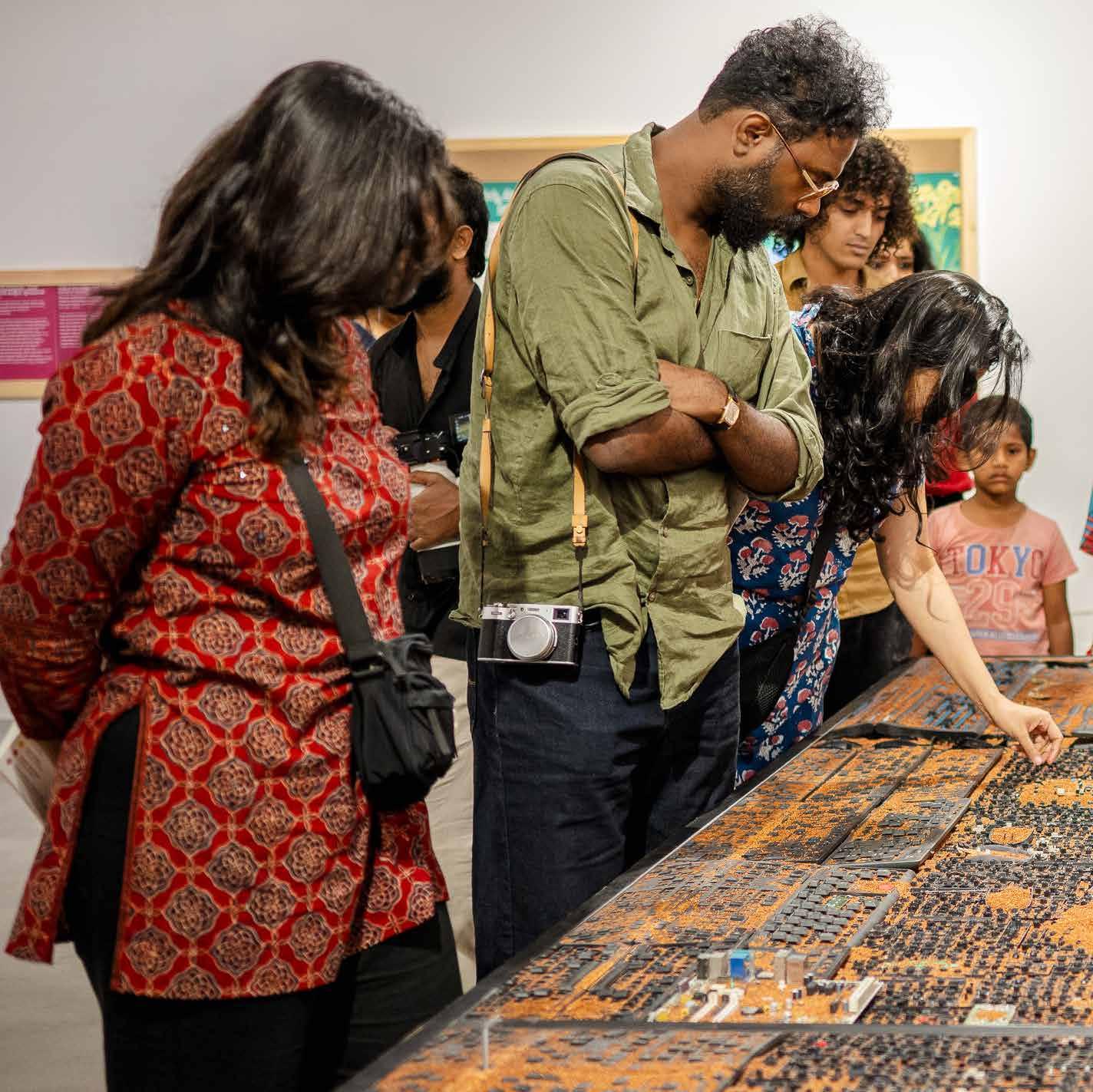
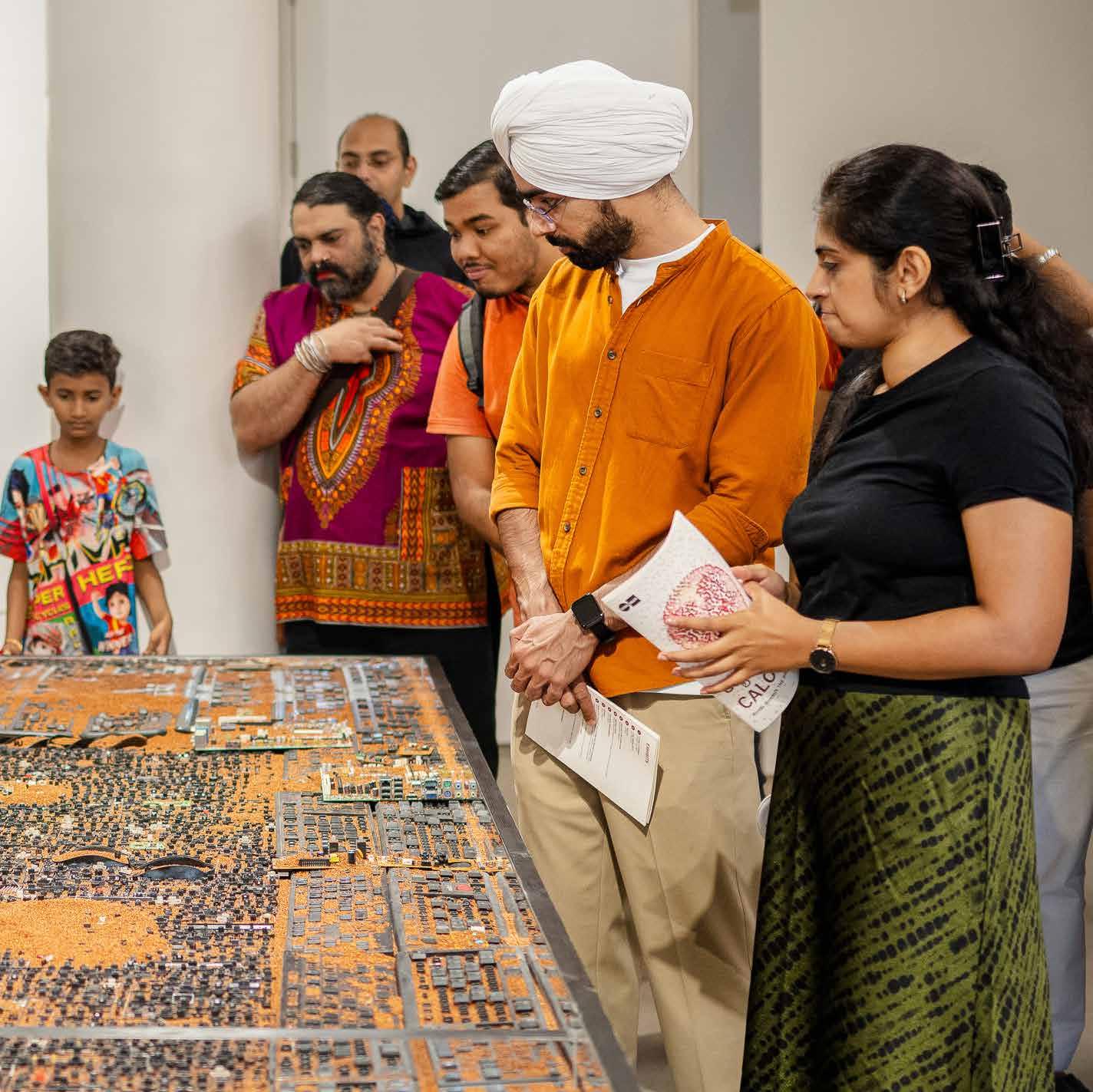
Visitors engage with Surekha's Ragi.net at CALORIE, 2025.
PARTNERS
Founding Partner
GOVERNMENT OF KARNATAKA
Lead Academic Partner
INDIAN INSTITUTE OF SCIENCE
Collaborating Academic Partners
NATIONAL CENTRE FOR BIOLOGICAL SCIENCES,
TATA INSTITUTE OF FUNDAMENTAL RESEARCH
INTERNATIONAL CENTRE FOR THEORETICAL SCIENCES
Know More
For more information about Science Gallery Bengaluru, please visit our website at www.bengaluru.sciencegallery.com.
To browse our past exhibitions and to learn more about previous programmes, visit our archives at https://bengaluru.sciencegallery.com/past-exhibitions.
Contact Us
Write to us at info@bengaluru.sciencegallery.com.
Visiting Address
Science Gallery Bengaluru 10-11, Bellary Road Sanjaynagar, Bengaluru - 560024, Karnataka, India
To stay informed about our upcoming exhibitions and programmes, sign up for our newsletter or follow us on social media.
@SGBlr
@SciGalleryBlr
@SciGalleryBlr
Science Gallery Bengaluru
Science Gallery Bengaluru
Science Gallery Bengaluru 10-11, Bellary Road
Sanjaynagar, Bengaluru - 560024, Karnataka, India
E: info@bengaluru.sciencegallery.com bengaluru.sciencegallery.com