
The Geographical Limits of Polybius’ Second Romano-Carthaginian Treaty

Band 63
Im Auftrag der Schweizerischen Vereinigung für Altertumswissenschaft
herausgegeben vonCédric Brélaz, Ulrich Eigler, Gerlinde Huber-Rebenich und Paul Schubert
The GeographicalLimitsofPolybius’ Second Romano-Carthaginian Treaty
Schwabe Verlag
Published with the support of the Swiss National Science Foundation.
Open Access:Unlessotherwise stated,thispublication is licensed underthe Creative Commons Attribution-NonCommercial-NoDerivatives 4.0International (CCBY-NC-ND 4.0) licence.
Any commercial exploitation by othersrequires the prior consent of the publisher. The use of content forthe purpose of developing or training AI systems without the consent of the publisher is prohibited.
Bibliographicinformation published by the Deutsche Nationalbibliothek
The Deutsche Nationalbibliothek lists this publicationinthe DeutscheNationalbibliografie; detailed bibliographic data areavailable on the Internet at http://dnb.dnb.de.
© 2026 by Luis Silva Reneses, published by Schwabe Verlag Basel, Schwabe Verlagsgruppe AG, Basel, Schweiz
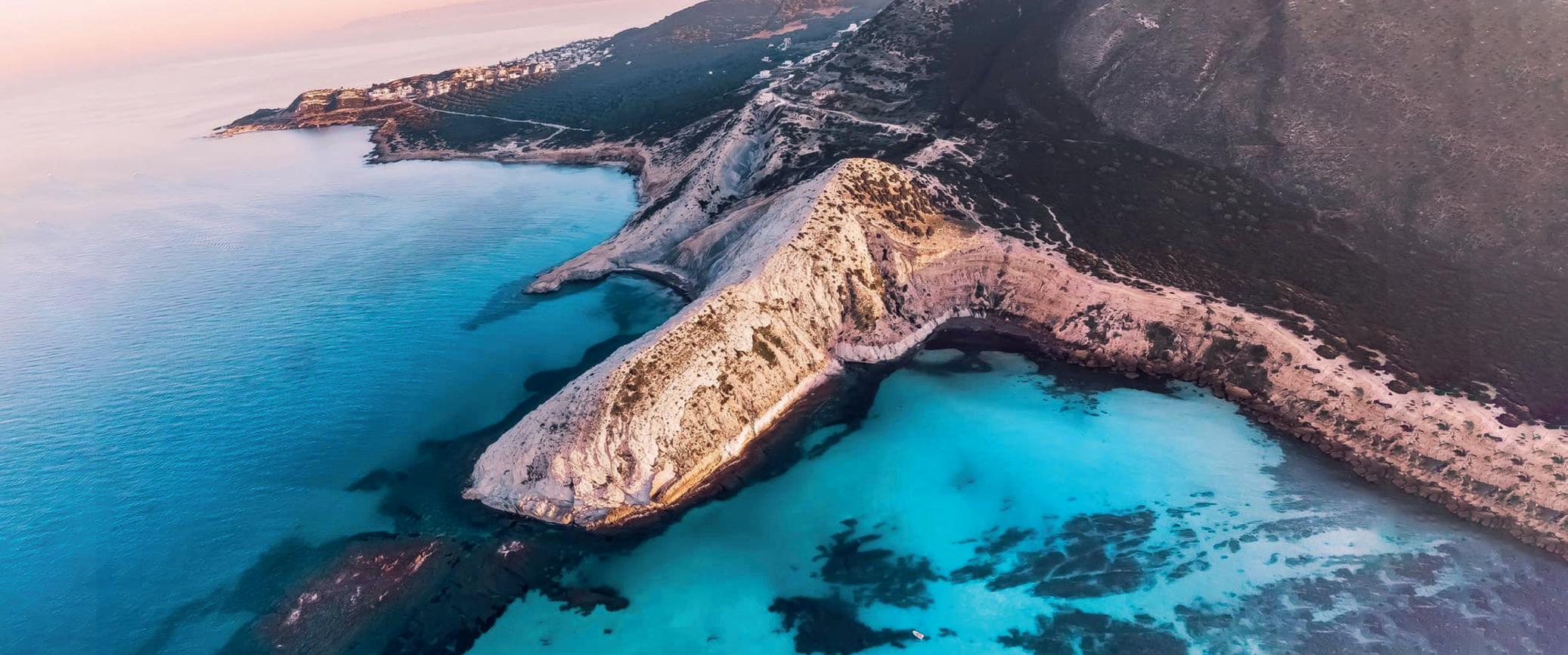
Proofreading:Timothy Simich, Sidney Cover image:Aerial view ofCape Blanc (Ras al-Abyad); © Hassen Gharmoul Cover design:icona basel gmbH, Basel
Cover:KathrinStrohschnieder,Stroh Designagentur, Oldenburg Typesetting:3w+p, Rimpar Print:Prime Rate Kft., Budapest
Printed in the EU
Manufacturer information:Schwabe Verlagsgruppe AG, St. Alban-Vorstadt 76, CH-4052 Basel, info@schwabeverlag.ch
Responsible person under Art. 16 GPSR: Schwabe Verlag GmbH, Marienstraße28, D-10117 Berlin, info@schwabeverlag.de
ISBN Print 978-3-7965-5416-2
ISBN e-Book (PDF)978-3-7965-5417-9
DOI 10.24894/978-3-7965-5417-9
The e-Book has identicalpage numberstothe print edition (first printing) and supports full-textsearch. Furthermore, the table ofcontents is linked to the headings.
rights@schwabe.ch www.schwabe.ch
Chapter
Chapter 3
3.1
3.2 Tarseion, Tarshish,Tartessos, and the Thersitai:
Chapter 4
4.1
Chapter 5
Fair Promontory and Mastia Tarseionaccording to Polybius
5.1 The location ofthe Fair Promontory
5.2 The location ofMastia Tarseion: modern
5.3 The location ofMastia Tarseion: re-reading Polybius
Chapter 6
Rocks, altars, and treaties in the Servian scholia on the Aeneid
6.1 Vergil’shidden rocks:dissecting Serv.Auct. Aen 1.108
6.2 Quadrigarius’ Altars ofNeptune and the locationofMastia Tarseion. ...
3.Numismatic
This work is the resultofa research project on Carthaginianimperialism in Iberia, funded by the Swiss National Science Foundation. Little did Iknow, when Ifirst began investigating the clauses ofthe second Romano-Carthaginiantreaty,thatmy research path would lead me from Iberia to North Africa – or that what beganasa modest project for an article would eventuallygrow intoa book.
Iowe special thanks to my mentor Pierre Sánchez for his constant encouragement andvaluable insight;many ofthe ideas developed here arose from stimulating and ever-ongoing discussions on Romano-Carthaginianrelations over coffee. Iamalso deeplythankful to Paul Schubert and Michel Aberson, whose thoughtful comments and rigorous feedbackhave greatly improved the manuscript.
My thanks go as well to Pierre Moret forgenerously sharing his latest work on Mastia Tarseion before publication, allowing me to engage with it in my own thinking.Intellectually, this study is much indebted to his originalquestionsand shrewd observations.
Research and writing were conducted across the Universities of Oxford, Madrid, and Geneva;I am particularly grateful to EduardoSánchez Morenofor his friendly assistance at the Universidad Autónoma de Madrid. Iwould also like toexpress my gratitude to Enrique García Riaza for inviting me to presentthis projectinvariousevents and meetings, and to the entire Libera Res Publica research network for their warm welcomeand helpful suggestions throughout the years.
Finally, Iwish to thank the members of the scientific committee of the Schweizerische Beiträge zumAltertumswissenschaft for accepting this work for publication,aswell as Arlette Neumann-Hartmann and Ruth Vachek for their diligent editorial work at Schwabe.
ACIP L. Villaronga /J.Benagesi Olivé, AncientCoinage of the Iberian Peninsula. Greek, Punic, Iberian, Roman,Barcelona,2011.
ANET3 J. B. Pritchard (ed.), Ancient Near Eastern Textsrelating to the OldTestament,Princeton,19693 (19551).
Barigazzi A. Barigazzi, Favorino di Arelate. Opere. Introduzione, testo criticoe commento,Firenze, 1966
BianchettiS.Bianchetti, PiteadiMassilia. L’Oceano,Pisa /Roma, 1998.
Broggiato M. Broggiato, Cratete di Mallo. Iframmenti. Edizione, introduzione enote,La Spezia, 2001.
Charpin F. Charpin, Lucilius,Satires,3 vol., Collection des Universités de France, Paris, 1978–1991.
Chassignet M. Chassignet, L’Annalistique romaine,3 vol., Collection des Universitésde France, Paris,1996–2004.
CIL CorpusInscriptionum Latinarum,Berlin,1862–
CIS CorpusInscriptionum Semiticarum,Paris, 1881–
Dilts M. R. Dilts, Heraclidis LembiExcerpta Politiarum,Durham, 1971.
FD III Fouilles de Delphes,III, Épigraphie,Paris,1909–1985.
FGrHist F. Jacoby et al. (ed), Die Fragmente der griechischen Historiker,vol. I–V, Berlin /Leiden, 1923– [https://scholarlyeditions.brill.com/bnjo/].
FRHist T. J. Cornell et al. (ed.), The Fragmentsofthe Roman Historians,3 vol., Oxford, 2013.
GoukowskyP.Goukowsky, DiodoredeSicile, Bibliothèque historique, Fragments. Livres XXI–XXVI,Collection des Universités de France, Paris,2006.
I. Lampsakos P. Frisch, DieInschriften vonLampsakos,Bonn,1978.
ICO M. G. Amadasi Guzzo, Le iscrizioni fenicie epuniche dellecolonieinoccidente, Roma,1967.
ILS H. Dessau, InscriptionesLatinaeSelectae,2 vol., Berlin, 1892–1916.
IPT G. LeviDella Vida /M.G.AmadasiGuzzo, Iscrizioni puniche della Tripolitania (1927–1967),Roma, 1987.
IRT J. M. Reynolds /J.B.Ward-Perkins, The Inscriptions of Roman Tripolitania, Roma,1952.
List of Abbreviations
KAI H. Donner /W.Rolling. Kanaanäische und Aramäische Inschriften,Wiesbaden, 3vol., 1962–1969.
Pfeiffer R. Pfeiffer, Callimachus,vol. 1, Fragmenta,Oxford, 1949.
PMG D. L. Page (ed.), Poetae Melici Graeci,Oxford, 1962.
Powell J. U. Powell, CollectaneaAlexandrina,Oxford, 1925
RINAP The Royal Inscriptions of the Neo-AssyrianPeriod,Winona Lake IN, 2011–[https://oracc.museum.upenn.edu/rinap/].
Roller D. W. Roller, Eratosthenes’ Geography. Fragments Collected and Translated with Commentaryand Additional Material,Oxford, 2010.
RPC M. Amandry /A.M.Burnett /P.P.Ripollès Alegre, Roman Provincial Coinage,London /Paris,1992– [https://rpc.ashmus.ox.ac.uk/].
SAA State Archives of Assyria,Helsinki, 1987–
Sblendorio M. T. SblendorioCugusi, M. Porci Catonis Orationumreliquiae,Torino, 1982
SIG3 W. Dittenberger, Sylloge Inscriptionum Graecarum,3rd edition,4 vol., Leipzig, 1915–1924.
SNG Cop Sylloge Nummorum Graecorum.Denmark. The Royal Collection of Coins and Medals,Danish NationalMuseum,Copenhagen, 1942–1979.
Stiehle R. Stiehle, “Der Geograph Artemidoros von Ephesos” , Philologus 11, 1856, 193–244.
“Thecontroversy regardingthe treaties betweenRomeand Carthage is almost asancient as the Punic Wars themselves, andunlike these it hasnot the merit ofhaving come to an end.”
Over acenturyhas passed since Max Cary made this statement, and yet the “battle ofdissertations,” as he went ontodescribe it, continues to rage on to this dayover the number, chronology, contents, and implications of aseries of treaties struck throughout the longhistory of Romano-Carthaginian diplomatic relations.1 So much so that there is hardlya singletreaty clause reported and discussed by Polybius in his famous digressiononthe mutual obligations binding these two Mediterranean powers up to the time of Hannibal(Plb. 3.21.8–3.28.5) that has not been submitted to scrutiny, amidst often unjustified controversy and scepticism. The purpose of this monograph is to revisit one of these moderncontroversies, namely that which regards the locationofthe geographicallimits fixed by the Carthaginiansinwhat Polybius considered to be the secondofthree treaties they had concluded with the Romans before the outbreakofthe FirstPunic War. Whereasinthe firsttreatyreportedbyPolybiusthe Carthaginianshad only forbidden the Romans to sail past “the Fair Promontory” (τὸ Καλὸν ἀκρωτήριον), aclause in the second treaty further forbade the Romans to pillage, trade, or founda city beyond the Fair Promontory as well as “Mastia Tarseion” (Μαστία Ταρσήιον).2
My interest in this treaty clause stems fromthe prominent role it hasplayed ina different yetequallycomplex historiographical debate, surrounding the nature, extent, and evolutionofCarthaginian involvement in Iberian affairsprior to Hamilcar Barca’slanding in Gadir in 237.3 Traditionally,Carthaginianimperialism has been taken for granted as anatural result ofthe North African city’sgrowing interest in economicand human resources overseas from the sixth centuryonwards: in Iberia as in other regions of the Western Mediterranean, Carthage’ssupposedly ambitious and aggressiveforeign policy would have been guided by the long-term goal of exerting political hegemony over her “natural” kinsmen and allies, the other Phoenician cities in whose commercial interests she appeared to be working, in order to master trade routes and to monopolisethe exploitation of resources to the detriment of both Greek colonies and indigenous communities.4
1 Cary 1919, 67.
2Plb. 3.22–24.
3All dates are BCE unless stated otherwise.
4Meltzer 1879;Gsell 1913;Schulten 1924;Schulten 1928;Huss 1985;Tsirkin 1996.
This conventional interpretation was first challenged in 1978 by CharlesR.Whittaker, who argued that Carthage’sforeign policycan hardly be said to meet any of what he identified as “imperial” criteria (territorialconquest and annexation, provincial administrative apparatus, tribute-perception, land exploitation, asystem of unequal alliances, and trade monopolies)until the time of the Punic Wars.5
Although Whittaker’sanalysis was essentially focused on Sicily,his views were enthusiasticallywelcomed by anumber of Spanish scholars who have since proposed to abandon the old model ofa CarthaginianterritorialempireinIberia infavour of anew one of commercial hegemony,relying on commoneconomic interests with Phoenician cities, consolidated by the founding of tradingports and the establishment of bilateral treaties of alliance, and only sporadically requiring military intervention in order to assist these same Phoeniciancities against their inland neighbours.6 Over the last few decades, however,important efforts have been made to critically reassess the available literary evidence which, coupled withnew numismatic and archaeologicalfindings, have resulted in an increasing tendency to remain open to the possibility ofa more proactive and enduring Carthaginian involvement in Iberia as early as the mid-fourth century.7
Such adate is far fromanecdotal:ifthere is one premise on which the vast majorityofscholars who have taken an interest in this subject agree (regardless of what conclusionsthey draw from it), it is thatPolybius’ second RomanoCarthaginian treaty, commonlydated to 348, provides officialand incontrovertible proof that the Carthaginians had interests and ambitions in, if not control of, parts ofthe Iberian Peninsula. The reason for this is that scholars firmly believe thatthe mention of Mastia Tarseion in the treaty contains,one wayoranother,animplicit reference to Iberia.Revisitingthe issueofthe treaty’sgeographicallimitsisthereforea necessary preliminary step when it comes to evaluating the existence – or lack thereof – of pre-Barcid Carthaginian imperialisminthis region.
If one were to give Polybius’ account of the treaty to readtosomeone unacquainted with the abundant modern literature that hasbeen devoted to analysing its contents, he orshe wouldhardly ever jump to theconclusionthatthe placeor placestherein referred to as “Mastia Tarseion” belong in the IberianPeninsula. Mastia Tarseion onlyappears in Polybius’ rendering of the text of the treaty as a geographical limit (orlimits)beyond which the Romans are forbidden to pillage, 5 Whittaker 1978
6González Wagner 1984;Barceló 1988;González Wagner 1989;López Castro 1991;Alvar Ezquerra/ MartínezMaza/ Romero Recio1992; González Wagner 1994;Domínguez Monedero 2005; Barceló 2006;López Castro 2018;López Castro 2021.
7Koch 2000;Ferrer Albelda /Pliego Vázquez 2010;Ferrer Albelda/ Pliego Vázquez2013;Álvarez Martí-Aguilar2014; BendalaGalán 2015;Álvarez Martí-Aguilar2017; Ferrer Albelda /García Fernández /Pliego Vázquez 2017;GarcíaCardiel 2017;Álvarez Martí-Aguilar2019;Machuca Prieto 2019; BendalaGalán 2021;Ferrer Albelda /Pliego Vázquez 2021.
trade, and found acity.8 And in his commentary of the treaty, all Polybius has to say about Mastia Tarseion isthat the Carthaginians “addit” (πρόσκειται)tothe Fair Promontory as places beyond which the Romans are not allowed to pillage or found acity.9 Unlike several other Mediterranean regions and islands whichrepeatedly come up in this treaty as in the previous one (Libya, Latium, Sardinia, Sicily), IberiaisnowherementionedbyPolybius until he comes to amuch later treaty, that which the Romans struck with Hasdrubalin226, and by which the Carthaginians pledged nottocross the Ebro River to make war.10 By that time, of course, Carthage’smilitary presence in Iberia is beyond any doubt.
The man responsible for associating Mastia Tarseion with Iberia is none otherthan aGreek grammarian working at Constantinople around the time of Justinian (i.e.almost seven centuries after Polybius), known to modernscholarship as Stephanus of Byzantium. In his geographicallexicon, containing information drawn from earlier Greek authors ondifferent sorts of geonyms and their corresponding ethnic adjectives, Stephanus dedicates two different entries to the Μαστιανοί andto Ταρσήιον.The Μαστιανοί he describes as apeople (ἔθνος)locatednear the Pillars of Heracles (i.e.the Strait of Gibraltar) on the authority of Hecataeus of Miletus’ bookon Europe,before going on to claim thatthis people takes its name from the city (πόλις)ofMastia.11 As for Ταρσήιον,healso describes it as a city(πόλις)located near the Pillars ofHeracles, but this time he does cite Polybius ashis source of information.12 Thus, according to Stephanus, there were two different cities called Mastia and Tarseion near the Strait of Gibraltar,and one of them at least – Mastia – was in Iberia.
The first Latin translation of Polybius’ Book 3tobemade in early modern Western Europe was the work ofNiccolòPerotti in 1454, just afew decades before copiesofStephanus’ lexicon also began circulating in Italy.13 Significantly, Perotti ignored the “problem” posed by Mastia Tarseion by omitting these two wordsaltogetherfrom his rendering of the textofthe treaty and of Polybius’ comments.14 By the time this mistake was put right by Isaac Casaubon in his own Latin translation ofPolybius (1609), Stephanus of Byzantium’sviews had already permeated,as 8
11Steph.
12 Steph. Byz. τ 38:
13For the reception of Polybius’ and Stephanus’ works in 15th and 16th century Western Europe, see Momigliano 1974, 352–369 andBillerbeck /Neumann-Hartmann 2021, 176–197, respectively.
14 Perotti 14732 (14541), 66: Romani sociiue Romanorum [sic] ultra promuntorium Pulchri [sic] nec praede nec mercature gratia nauiganto [= Plb. 3.24.4]. Plb. 3.24.2 is completely absent from Perotti’srather free translation Introduction
suggested by the fact that the Genevan scholar identifiedMastia and Tarseion as two different places.15 Somewhat surprisingly, however,itwas Tarseion – rather than Mastia – whichfirst came to be related to the Iberian Peninsula,and this in anequallysurprising context: in aposthumous work published in 1580, the Dutch humanist JanVan Gorp used Stephanus’ locationofTarseion nearthe Pillars of Heracles as supporting evidence forhis theory that aplace called Tarshish in the Old Testament was to be identifiedwith Tartessos, aregion or acity located by Greek and Roman authors in southern Iberia, not far from the Strait of Gibraltar.16 Van Gorp’sinterpretationwas to enjoywidespread popularity among 17th century Biblical scholars, and it also made its way into the first critical editions of Stephanus’ lexicon.17
Yet contemporary commentators of Polybius’ works, though also aware by now of Stephanus’ testimony, proved more reluctant to acceptits implications. In his Notae in Polybium of1670, basedonCasaubon’stranslation, Jacob Gronow inferred from hisunderstanding of the textofthe treaty and of Polybius’ comments that Mastia andTarseionwere two different promontories located near the Fair Promontory, on thecoast ofNorthAfrica.18 Over acentury later, Guillaume de Clermont-Lodève,better known as the Baron de Sainte-Croix, went one step further: he tentatively identified the Fair Promontory with Cape Farina,Mastia with Cape Blanc, and Tarseionwith Cape Serrat, three consecutive promontories lying tothe west of Carthage.19
At the same time, scholars such as Christian G. Heyne and Arnold H. L. Heeren were finding it increasinglydifficult to reconcile what they thought Polybius seemed to imply with what Stephanus explicitlystated,though without yetbeing fully convinced by the latter’sversion.20 In his authoritative edition of Polybius (1789–1795), Johannes Schweighäuser still agreed thatMastia at least, if not also Tarseion, were most likely two different places on the North Africancoast, to the westofCarthage;nevertheless, he did follow Stephanus in classifyingboth places
15Casaubon1609,178–179: Pulchro autempromontorioadiectasuntMastia et Tarseium, ultraquae locaRomanis nonpermittitur nequepraedas facere,neque urbemcondere [= Plb. 3.24.2]; […] Romaniultra Pulchrumpromontorium, MastiametTarseiumpraedas ne faciunto,admercaturamne eunto,urbem nullamcondunto [= Plb. 3.24.4].
16 VanGorp 1580, 70–71.
17 De Pineda1613, 247;Bochart16923 (16461), 170–171;DePinedo1678, 637; Holste1684, 313;Flórez 1756, 28–29.
18 Gronow 1670, 401: promontoria [ ] quam reliqua Carthagini praeiacentia comprehendantur, quae sane plura sunt, et recensenturlibro tertio Pulchrum, Mastia,Tarseium;Gronow 1670, 413: Mastialoco Africae prope PulcrumPromontorium& Tarseium.
19 De Sainte-Croix 1779, 38 n. 2; De Sainte-Croix 1793, 3.
20 Heyne 1788, 60–62 n. l: tum cur non scriptumsimpliciter, pertotam Africametpartem Hispaniae?Cur in Hispania ignobiles istae urbes pro finibusconstituae? […] probabiliusitaque est, fuisse Mastiam et Tarseium urbes uicinas Carthaginiaboccidente [ ]; Heeren 18042 (17931), 730 n.1: “mit Gewißheit läßt sich also hier nicht entscheiden;und mit bloßem Absprechenwürde nichts gethan seyn.”
Introduction 15
as “cities” (oppida).21 The tide was beginning to turn, and adecisive step in the Iberian direction was taken in 1843 by the German Orientalist Franz K. Movers: following in the footsteps of earlier Biblical exegetes and of Stephanus’ first editors, he positively equated Tarseion with Tarshish and Tartessos, he further identified Mastia with Stephanus’ homonymous city of the Iberian Mastianoi, and he located whathethoughtwere in fact two neighbouring territories near the Strait ofGibraltar.22 Over the next three decades, German scholars unanimously agreed that Mastia and Tarseion were in Iberia, debating only whether these two places should be understood as territories or as cities, and whether they weretobelocatednearthe Strait of Gibraltar, as Movers had contended, or further east alongthe Mediterranean coast.23
Modern interpretations ofMastia Tarseion took anew turn with the publication of Otto Meltzer’smonumental Geschichte der Karthager in 1879;itwas this work which most successfullyconsolidated theview thatPolybius’ first two Romano-Carthaginian treaties constitute akey piece of evidence regarding early Carthaginian involvement in Iberian affairs.24 His reasoning canbesummarised asfollows. If the Carthaginians forbade the Romans to sail past the Fair Promontory in the first treaty, it was not, as Polybius claims,toprotect their tradingports inByssatis and the lesser Syrtis (Figure 1), but to prevent them from reaching their western possessions in southern Iberia;accordingly,the Fair Promontory was not to be identified with Cape Bon, as Polybius implies, but with Cape Farina (Figure 2).Bythe timeofthe second treaty, the Carthaginians hadfurther expandedtowards south-eastern Iberia and thought it necessary to better protect this area, hence their decision to add Mastia Tarseion as anew geographical limit. Having correctedthe reading Ταρσήιον foundinPolybius’ manuscriptsto Ταρσηίων, Meltzer understoodthis to be asingleplace (“Mastia of the Tarseians,” i. e. of the Tartessians – or, as he put it, “Mastia im Lande Tarsis”)which he identified with the site of what wouldlater become Carthago Nova (modern Cartagena) because this city is presumably described as an urbs Massiena by Avienus in his Ora Maritima (Figure 2).
Three years later, in 1882, Georg F. Unger pointed out that Mastia cannot have been both acity of the Mastianoi, as Stephanus claims, and acity of the Tartessians, as Meltzer wouldhaveit; while he accepted Meltzer’slocation of the FairPromontory at Cape Farina and Movers’ identification of Tarseion with Tartessos, he argued that Polybius’ Mastia must be dissociated from Stephanus’
21Schweighäuser 1792, 534–535 (reproducing Heyne’sviews); Schweighäuser 1794, 370 (Μαστία: Africae (utvidetur) oppidum, Carthaginiaboccidente […]) and 461 (Ταρσήιον: oppidum ab occidente Carthaginis [ ]). See also Meineke 1849, 604;Büttner-Wobst 1904, 148; Täckholm1974, 48 n. 42.
22 Movers 1843, 9–11;see also Movers 1850, 603–604.
23 Müller 1855, 203–204;Aschbach 1859, 15 n. 2–3; Müllenhoff 1870, 155;Magdeburg 1873, 32; Mommsen 18746 (18541), 415(implicitly); Wende1876, 4n.9;Vollmer 1877, 618–620.
24Meltzer 1879, 182, 341–342, 519–520.
Iberian city of the Mastianoi, and suggested locating the Mastia of the treaty in Corsica instead, building on one of Servius’ comments on the Aeneid in which this island is referred to as media in the Romano-Carthaginian treaties (Figure 3).25
In 1938, Lothar Wickert tookMeltzer’sreasoning one step further:heprovidedanexplanation for the reading Ταρσηίων by suggesting that Polybius had mistaken aLatin genitiveplural Tarseiom (= Ταρσηίων)inthe treaty for an accusative singular Tarseiom (= Ταρσήιον), and he argued that the Fair Promontoryshould be identifiedwith Cape Palos, immediately east of Cartagena, thus rejectingPolybius’ locationofthis promontory so as to movethe geographicallimits of both RomanoCarthaginian treaties to the Iberian Peninsula (Figure 4).26 This second part of his interpretation enjoyed limited support, but debates over the identification of the Fair Promontory continued over thefollowingdecades, with scholarsdivided between Cape Bon and Cape Farina.
By contrast, Meltzer’sidentificationofMastia Tarseion with Cartagena, backed by Wickert’srefinements, remained largely unquestioned for over acentury.27 It was not until 1990 that Luis A. García Moreno exposed some of theweaknesses of Meltzer’sinterpretationbyshowing that Avienus’ text standsinisolation when compared to along Greek ethnographic traditionwhich coherently locates the Mastianoinearthe Strait of Gibraltar,asdoesalsoStephanus of Byzantium; while notyet goingasfar as to deny that Mastia wasa “Tartessian” city,hetentativelysuggested identifyingthiscitywithCarteia,inthe BayofAlgeciras (Figure5).28
This paved the way fora renewed and diversified debate during the following decade. In an important paper published in 2002, Pierre Moret rejected the Iberian location ofMastia Tarseion altogetherasthe result of previous scholarship having placed too much trust in Stephanus’ unreliable entries;based on his understanding of Polybius’ text and of the historical context of the treaty, he conclud25Unger 1882, 199.
26 Wickert1938;see alsoHampl 1958,64n.12; Wickert 1958;Barzanò 1987, 178; cf.Scardigli 1991, 107.The idea originallygoesbacktoMüller1883, 150.
27 Strachan-Davidson1888, 66–67;Soltau1889,140;Atenstaedt 1891,107–108; Gsell1913, 440, 445–447;Täubler 1913, 260; De Sanctis1916, 30;Schulten1922, 116;Piganiol1923,183;Meyer 1924, 296;Schulten1924, 34, 122–123; Schulten 1925, 65;Schulten1928, 771–772, 781;Schulten1930, col.2153; Schachermeyr 1930, 356; Schulten 1932,col.2450;Schulten1935, 16;Wickert 1938, 354–357;Beaumont1939, 84, 86;David 1946, 234n.13; Mazzarino20032 (19471), 108–109;Álvarez Delgado 1952,271–272; Colozier 1953,87–88,92; Thiel1954, 15, 48;Aymard1957, 287; Walbank1957,347;Nenci 1958a,92–93;Giannelli 1962, 420; Werner 1963, 353–355;Toynbee 1965, 526–527;Sumner1968, 211, 217–218; Petzold1972, 374, 376; Werner 1975,21, 37;PenaGimeno 1976–1978,528;Marek 1977, 7; Whittaker1978,88; González Wagner 1984, 217, 220;Koch1984, 109–115;Huss1985, 152–155;Barzanò 1987, 178; Barceló1988, 133–143; González Wagner 1989, 149;Scullard1989, 528; LópezCastro1991, 96–99;Scardigli 1991, 105–108; Lancel 1992, 22;Lipiński et al 1992, 95;Flach 1994, 36;GonzálezWagner1994,12; VillarLiébana 1995, 244;Loreto 1995–1996,794,797;Cataudella1996, 331–333;DíazTejera1997,266–267.For furtherreferences,see HernándezPrieto 2017,66n.63.
28 García Moreno 1990;see also SilgoGauche1992, 369–370; Ferrer Albelda/ De la Bandera Romero1997; AlvarEzquerra2000,62; PérezVilatela2003, 35–36;EspadaRodríguez 2013,88; GarcíaMoreno2023, 382–383. Introduction 16
ed that either Mastia Tarseionwas acity in North Africa, to the west of Carthage, orthat Mastia and Tarseion were two different cities located in North Africa and inSardinia, respectively(Figure 6).
30
29 Moret has since abandoned the idea of two different geonyms and ofa Sardinian location, however:having come to endorse Wickert’stheory of agenitive plural Tarseiom,henow contendsthatMastia Tarseion was acoastal landmark (a harbour, ariver mouth, or apromontory)belonging to acity in North Africa, west of Carthage, and he suggests identifying this city withThapsa, also known as Rusicade(modern Skikda),implying thatPolybius may have misread aform MastiaTa<p>seiom – i. e. a “Mastia of the T(h)apsenses”– in the Latin text of the treaty (Figure 7).
In 2007, Daniele Maras identified Mastia and Tarseion with Mystia and Tyrseta, two cities said to have belonged to the Samnites by Philistus of Syracuse (in two fragmentsalso cited in Stephanus’ lexicon), and he suggested locating these cities on either side of the Isthmus of Catanzaro in Bruttium, an areawhich he saw asmore crucial to Carthaginian interests and more likely to be threatened by Roman ambitions than Iberia could possibly have been at the time of the treaty (Figure 8).
32
31 Finally, in three articles published in 2006, 2008 and 2012, EduardoFerrer Albelda rejected these two authors’“revisionist” views and madea new case for the Iberian location ofthe geographicallimits of the treaty, contending, in line with Movers, that Mastia and Tarseionwere in fact two different Iberian territories (rather than cities)within the Carthaginian sphere of influence, respectively located to theeastand to thewestofthe Strait of Gibraltar(Figure 9).
Despite some initial, albeit rather hesitant, sympathy for Moret’sarguments,33 the majority of Spanish scholars have eventually come to endorse Ferrer Albelda’sinterpretation, with the result that it is now generally agreed thatMastia and Tarseion were two Iberian territories orregions located on the Mediterranean and the Atlantic side ofthe Strait of Gibraltar, respectively.34 OutsideSpain, the picture is somewhat different:although afew voiceshave been raised against the
29Moret 2002.
30 Moret 2025.
31 Maras 2007.
32 FerrerAlbelda 2006;FerrerAlbelda 2008a;FerrerAlbelda 2012. SeealsoFerrerAlbelda 2008b, 59–61;FerrerAlbelda /PliegoVázquez 2010,535–539; FerrerAlbelda 2011, 195–196; FerrerAlbelda 2013, 115–119; Ferrer Albelda/ Pliego Vázquez2013, 114–115;FerrerAlbelda /García Fernández /Pliego Vázquez 2017,341–342; FerrerAlbelda2019, 73;FerrerAlbelda /PliegoVázquez2021,21–22.
33 Domínguez Monedero 2005, 190;Barceló 2006, 118; López-Ruiz 2009, 262;EspadaRodríguez 2013, 87–88;Bendala Galán 2015, 117–118.
34 López Castro2008, 200–204;Álvarez Martí-Aguilar2009, 98;DeHoz 2010, 227–230;López Pardo/ Suárez Padilla 2010, 785–787;Ruiz Acevedo 2010, 135–139;Álvarez Martí-Aguilar 2014, 32–33;Olcoz Yanguas /Medrano Marqués 2014, 78–80;Celestino Pérez /López-Ruiz 2016, 52–53;ÁlvarezMartí-Aguilar2017, 131;García Cardiel 2017, 403–404;Hernández Prieto 2017, 64–71;López Castro 2018, 180–182;Álvarez Martí-Aguilar 2019, 122;Machuca Prieto 2019, 145–149;Bendala Galán2021, 112–113;López Castro 2021, 90–91;Rosselló Calafell 2022, 28n.32; Rodríguez Ramos 2023, 37–38. Introduction
Iberian location of the geographical limits of the treaty,35 Meltzer’sidentification ofMastia Tarseion with Cartagenacontinues to pervade many recent works by scholars who for the most part seem to remain unaware of their colleagues’ latest contributions,36 while others simply limit themselves, more or less cautiously,to reproducing the generic view that Mastia Tarseion was somewhere in southern Iberia.37
The main contention of this bookisthat the alleged connection between Mastia Tarseion and the Iberian Peninsula which has become almost dogmatic in modern scholarship is the result ofanunfortunate chain of misinterpretationsofthe ancient evidence, often involving circular reasoning and false premises thatdo not stand critical examinationwhen analysed separately and deconstructed. In Chapter 1, Iwill review the ancient evidence forRomano-Carthaginian treaties struck prior to the outbreak ofthe First Punic War, re-placing the three treaties reported by Polybius within their historical context and discussing their implications for our understanding ofthe earlyrelations between Rome and Carthage. In Chapter 2, Iwill debunk moderntheories regarding the identity of andthe role played by Carthaginian and Roman partnersinPolybius’ second treaty, showing them to have no bearing on the issue oflocating Mastia Tarseion. In Chapter 3, I will undertake acomprehensive analysis of Stephanus of Byzantium’sentries on the Mastianoi and Tarseionagainst the backdrop of this author’speculiar work method to demonstrate that his testimony cannot be used to maintain thatMastia and Tarseion were two different cities orthat they were in Iberia.InChapter 4, I will show that Polybius’ evidence is not decisivewhen it comes to determining whether the grammatical construction “Mastia Tarseion” refers to one or two different geonyms;drawing on parallelsfrom otherancient treaties containingnaval limits, Iwill further argue that Mastia Tarseion was neither acity nor aterritory but acoastal feature, most likelya promontory oranisland lying near apromontory. In Chapter 5, Iwill expose theweaknesses of modern theories regardingthe location of the Fair Promontory and Mastia Tarseion;a thorough investigation of Polybius’ accountofthe first and second treatieswill lead me to conclude that he clearly understoodboth geographical limits at stake tobeinNorth Africa, east and 35Foulon /Molin 2004, 188–189;Curchin 2010, 18;Horn 2011, 261–262;Bouiron 2022, 594–595, 679–680 (partially or completely followingMoret 2002); Dudziński 2014 (building on Maras 2007).
36 E. g. Hoyos 1998, 8, 166;Bringmann 2001, 117;Coarelli 2001, 323–324;Braun 2004, 309;Flach / Schraven 2007, 138, 168;Zimmermann 2007, 48;Hoyos 2010, 178;Antonelli 2011, 229;Zimmermann 2013, 10;Hoyos 2015, 83;Untermann 2018, 519;Zelanti 2019, 233–234;Roller 2022, 155–156.
37 E. g. Lazenby 1996, 31–32;Oakley 1998, 256;Koch 2000, 169;Bresson 2004, 661;Lipiński 2004, 248–249;Forsythe 2005, 280;Koch 2005, 32–33;Serrati 2006, 116;Steinby 2007, 49;Ameling 2011, 50;Scardigli 2011, 32;Ladewig 2014, 96;Melliti 2016, 76, 365;Quinn 2018, 128;Cifani 2021, 232. Pilkington 2019, 13–14 describes the treaty of 348 as “the only textual description of the full extent ofCarthaginian power in this period” but does not discuss any of the issues raised by the geographical limits mentionedinthe document.
Introduction 19
west of the city of Carthage respectively, and that this proves to be the only interpretation that is compatible with both the contents of the second treaty and Polybius’ comments on it. Finally, in Chapter 6, Iwill analyse apassage of the Servian scholia on the Aeneid in which some rocks, known to Claudius Quadrigarius as the “Altars of Neptune,” are described as aboundary fixed by atreaty between the Roman and the Carthaginian empires;I will identify this place with Mastia Tarseion and suggestlocating it at or near Cape Blanc, immediately west of the city of Hippou Akra,also known as Hippo Diarrhytus (modern Bizerte).