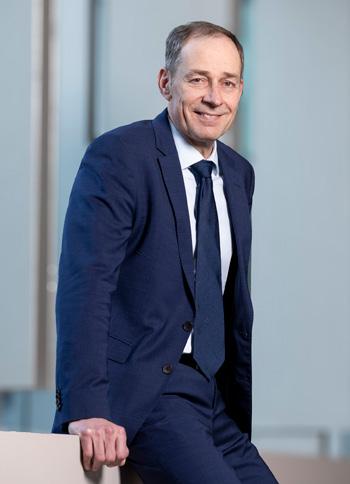
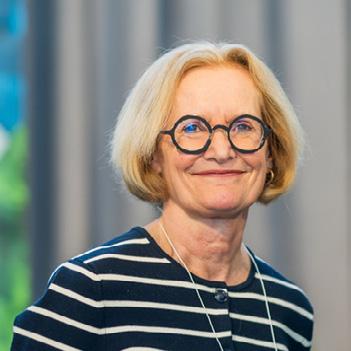
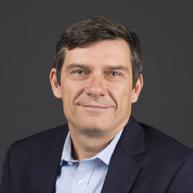
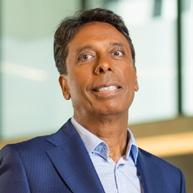
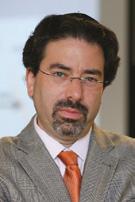
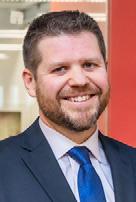
30 Perry Sadorsky, Professor of Business Economics and Policy
Rzeźnik,
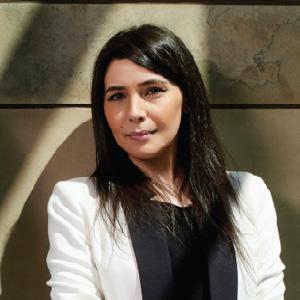
Ruodan Shao, Professor of Organization
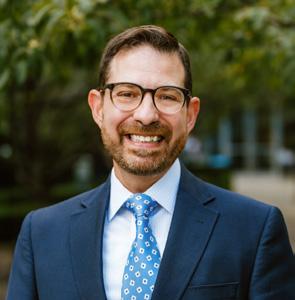
60 Matthias Kipping, Richard E. Waugh Chair in Business History, Professor of Strategic Management
66 Maxim Voronov, Professor of Sustainability and Organization
Schulich’s Core Research Areas: Faculty Interviews 28 Abu Shiraz Rahaman, Professor of Accounting
Irene Henriques, Professor, Business Economics and Policy 40 Mark J. Kamstra, Professor of Finance 46 Markus Giesler, Professor of Marketing 52 Murat Kristal, Professor of Operations Management and Information Systems 58 Luke Zhu, Associate Professor of Organization Studies
Majid Majzoubi, Assistant Professor of Strategic Management 70 Geoffrey M. Kistruck, Professor, RBC Chair in Social Innovation and Impact FROM THEN UNTIL NOW
From Then Until Now: 60 Years of Research Excellence
For six decades, our faculty have challenged convention and reshaped how organizations, industries and society understand some of the most pressing issues of our time.
Our researchers have consulted with some of the world’s leading global companies, advised governments, contributed to public debate, and produced research that informs both theory and practice. This legacy of impact spans a wide range of fields — and continues to grow.
Opening New Frontiers: 60 Years of Research Impact and
Innovation
This year, as Schulich marks its 60 th Anniversary, we reflect not only on where we’ve been, but on what has defined us from the very beginning. This school was founded on a vision — that business education could be more connected to the real world, more socially responsible, and more willing to open new frontiers of management knowledge. Just as importantly, we were committed to building a strong intellectual foundation: a place where scholars are encouraged to pursue bold, creative and risky ideas. That spirit continues to define our research culture today.
For six decades, our faculty have challenged convention and reshaped how organizations, industries and society understand some of the most pressing issues of our time. Our researchers have consulted with some of the world’s leading global companies, advised governments, contributed to public debate, and produced research that informs both theory and practice. This legacy of impact spans a wide range of fields — and continues to grow.
Today, that momentum is as strong as ever. Schulich is rated #1 nationally for both field-weighted citation impact and percentage of publications published in top journals. Our dynamic
and ambitious research environment also continues to generate strong results in attracting research funding, underscoring the originality and relevance of the work being produced across the school.
Equally important is the breadth of what we study. From climate finance and sustainable business to artificial intelligence, digital markets, and the future of work, our faculty are advancing new thinking in both established and emerging domains. Our doctoral students are central to this ecosystem, contributing fresh ideas and helping to shape the next generation of scholarship.
As we celebrate 60 years of research excellence, we also look ahead. Our commitment remains clear: to support innovative, high-impact research that addresses complex global challenges and helps shape a more sustainable and inclusive future. That is the legacy that guides us going forward.
Sincerely,
DETLEV ZWICK, P h D Dean & Tanna H. Schulich Chair in Digital Marketing Strategy Schulich School of Business
Welcome to the Schulich School of Business 2025 Spotlight on Research Annual Report
Welcome to Schulich’s annual report on research. We produce Spotlight on Research each year to provide our stakeholders with an overview of the faculty’s scholarly undertakings and achievements of the preceding calendar year. And we’ve got a lot to share this year!
First, Schulich researchers published widely and well, and attracted considerable attention for their work. In 2025, they produced an impressive output of approximately 7 books, 18 book chapters, and 130 refereed journal articles. Our faculty members collaborate with industry, government, community groups, not-for-profits, and academic partners locally and internationally to address pressing business and societal challenges and to create deep and diverse new knowledge. See the section entitled “New & Forthcoming Publications.”
Second, Schulich researchers secured significant funding from Canada’s Tri-Council agencies, the primary source of research support for Canadian universities. In 2025, Schulich achieved a 100% success rate in SSHRC Insight Development Grants and NSERC Discovery Grants, and a 50% success rate in SSHRC Partnership Development Grants, exceeding national averages. You can find details in the section of the report on “Newly Funded Research Projects.”
Third, Schulich is training and graduating a vibrant cadre of new scholars. With specializations in Accounting, Finance, Operations Management and Information Systems, Marketing, Organizational Studies, Strategy and Sustainability, there are approximately 40 students in our programs. See their accomplishments and awards in the “PhD Academic Activities” section.
Fourth, we’re drawing attention to the fact that Schulich researchers are at the forefront of studying how AI is entangled in solving (or exacerbating) some of the most pressing challenges in business and society today. This report highlights a handful of scholars with AI-related research interests, including Adam Diamant, Abi Shriharan, Theodore Noseworthy, Markus Giesler, Gregory Saxton and Dean Neu. See the section entitled “From Insight to Impact: AI Research at Schulich”
Fifth, this year’s report features “deep dives” and “faculty interviews” into the research of scholars from
all areas. These include: Linda Thorne and Abu Shiraz Rahaman from Accounting; Perry Sadorsky and Irene Henriques from Economics; Aleksandra Rzeźnik and Mark Kamstra from Finance; Ela Veresiu and Markus Giesler from Marketing; Raha Imanirad and Murat Kristal from Operations Management and Information Systems; Ruodan Shao and Luke Zhu from Organizational Studies; Matthias Kipping and Majid Majzoubi from Strategic Management; and Maxim Voronov and Geoffrey Kistruck from Sustainability.
Finally, in honour of the School’s 60 th Anniversary, this year’s annual report takes a look back at research highlights from all decades. See the Feature entitled “From Then Until Now.”
The Office of the Associate Dean, Research (OADR) is deeply committed to supporting our researchers and takes pride in securing interdisciplinary, multifaceted, and diverse research funding. Research Officer, Farhana Shumu Islam, takes the lead in this
aspect of Office’s work. She also takes primary responsibility for many other OADR activities, such as preparing this annual report, organizing our bi-annual Research and PhD Day, liaising with the School’s Accreditations and Rankings Unit, York’s VPRI and central offices, and helping faculty arrange to have Visiting Scholars and Postdocs.
The Office of the Associate Dean is also committed to supporting the mobilization of knowledge created by our faculty members. One way we do so is by encouraging our faculty to share news about the research they’re presenting, publishing and publicizing via this dedicated email address: researchsuccess@schulich.yorku.ca
Our Knowledge Mobilization Specialist, Andrew Micak, collects these messages and creates LinkedIn posts to circulate information about our research to broader audiences.
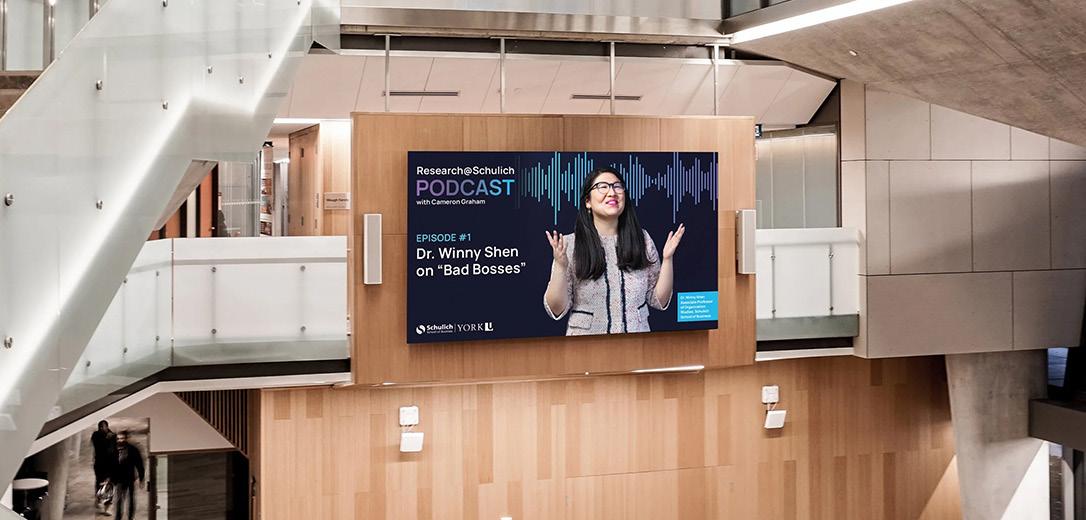
Our office publishes a Research @ Schulich newsletter that is being sent out three times each year to share this information with a broader swath of stakeholders. Now in its second season, the Research @ Schulich podcast was launched in 2024 by the ADR’s office in collaboration with Professor Cameron Graham, featuring interviews with faculty about specific research projects (see schulich.yorku.ca/ faculty-research/spotlight-onresearch/research_schulich/ ).
We are pleased to announce the appointment of Leila Daddoust to the position of Research Office Administrator within our office. In this role, she will support research-related data collection and statistical analysis, update the Faculty & Research section of the Schulich website, coordinate and maintain Discover York Academics (DYA), and provide administrative
and program support for the PhD Program and Research area.
We hope you enjoy reading about our extensive and impactful research as much as we enjoy sharing it with you. And, most of all, we would be happy to hear from you. Please email any feedback, suggestions, or comments you may have to mail to: researchsuccess@schulich.yorku.ca
Sincerely, DR. EILEEN FISCHER
Associate Dean, Research; Professor of Marketing; Anne & Max Tanenbaum Chair in Entrepreneurship and Family Enterprise Schulich School of Business
The Research @ Schulich podcast is now in its second season.
Faculty News and Research
New Full Professors
Schulich Faculty members are leading scholars from the world’s best universities. Their award-winning research is recognized globally. They are at the forefront of their fields and are increasingly being acknowledged for their long-term impacts and contributions to management education and research. Two members of Schulich’s faculty have recently been advanced in position from Associate Professor to Professor.
Ambrus Kecskés Professor of Finance
Ambrus Kecskés is a Professor of Finance at the Schulich School of Business at York University. He studied at the Rotman School of Management and earned a B.Com. and PhD in Finance, both from the University of Toronto.
His main research expertise and interests lie at the intersection of financial markets and the real economy. He has published numerous papers in the top finance and accounting journals. His research has won many best paper awards at conferences around the world and is regularly cited by such media outlets as the Wall Street Journal, Bloomberg, Forbes, the Financial Post, The Globe and Mail, and CBC News.
His teaching focuses on corporate finance and ranges from the undergraduate to the doctoral levels. He has won numerous teaching excellence awards. In addition to his teaching at York University, he has taught at Virginia Tech and the University of Toronto.
Ruodan Shao Professor of Organization Studies
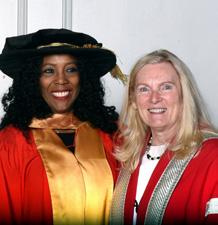
Professor Ruodan Shao is a leading scholar whose research interests include corporate social responsibility, cross-cultural management, business ethics and ethical decision-making, and organizational justice. Her work is widely recognized for its scholarly rigour, practical relevance, and significant impact on the field. She has published 23 peer-reviewed journal articles, including 9 in journals listed on the Financial Times Top 50 (FT50). Her research has appeared in leading outlets such as the Journal of Applied Psychology, Organizational Behavior and Human Decision Processes, Personnel Psychology, and the Journal of Management. Her work has been cited over 5,532 times (as of April 22, 2026), and she has presented more than 40 papers at top international academic conferences. As noted by Dean Detlev Zwick, “Ruodan’s research zeros in on timely topics of great relevance, and she is a most worthy recipient of the Dean’s Research Impact Award.”
Professor Shao’s research excellence has been recognized through numerous honours. She is a two-time recipient of the Schulich Research Excellence Fellowship (2021, 2024). She received the Best Submission with Practical Implications Award from the Academy of Management in 2019 and the Best Published Paper Award from the International Association for Business and Society and Brigham Young University Marriott School of Management in 2017.
Beyond her research, Professor Shao is deeply committed to academic service. She is currently Associate Editor of the Journal of Vocational Behavior and serves on the editorial boards of four other leading journals. At Schulich, she supervises eight PhD students as a dissertation committee chair and/or member. She also plays an active role in institutional service, including serving as Area Coordinator, Senator for York University, Vice Chair of Faculty Council, and contributing to the Schulich Business Excellence Academy Program — an EDI-focused initiative for high school students — along with various school committees. Her teaching interests include organizational behaviour and human resource management. She received the University of British Columbia (UBC) Graduate Student Teaching Award and was nominated for the UBC Commerce Undergraduate Society Teaching Excellence Award in 2010.
Newly Funded Research Projects
Schulich researchers continue to successfully secure funding from Canada’s federal Tri-Council granting agencies, the major source of research and scholarship funding for Canadian universities. Schulich researchers predominantly receive funding from the Social Sciences and Humanities Research Council (SSHRC) and the Natural Sciences and Engineering Research Council (NSERC). We proudly present some of the interesting work that is being conducted by our researchers.
MAJID MAJZOUBI
Assistant Professor of Strategic Management
SSHRC INSIGHT DEVELOPMENT GRANTS
The
Differential Impact of Framing Strategies on Expert and Novice Stakeholders During Organizational Change: A Mixed-Methods Investigation
Principal Investigator: Majid Majzoubi
When organizations announce major changes, whether by pivoting their strategy, restructuring operations, or entering new markets, they often provoke resistance that erodes reputation, depresses market value, and derails the initiative itself. This project investigates how leaders can frame change to reduce resistance and build support. Should they emphasize continuity with the past or a decisive break from it? Should they foreground why the change matters or how it will be carried out?
The answer, we argue, depends on two factors: the type of audience and the type of change. For expert audiences such as analysts are more likely to be persuaded by concrete, how-focused messaging, while novice audiences such as general consumers respond more readily to why-focused, vision-oriented framing. Likewise, offensive changes pursued from a position of strength call for continuity and why-focused framing, whereas defensive changes undertaken from a position of weakness may require a different logic altogether.
Combining controlled experiments with large-scale analysis of corporate earnings calls and regulatory filings, the project offers practical guidance for executives, communicators, and policymakers navigating organizational transformation.
ALEKSANDRA RZEŹNIK
Assistant Professor of Finance
SSHRC INSIGHT DEVELOPMENT GRANTS
Demand Elasticity in the Bond Market
Principal Investigator: Aleksandra Rzeźnik
Capital markets allocate capital across the economy. To do this well, markets must be liquid and resilient: they must absorb order imbalances and return prices to fundamental values after disruptions. One source of disruption is a liquidity shock, which occurs when a group of investors suddenly needs cash and sells assets. Such selling can push prices below their fundamental value, creating temporary market inefficiency.
Our research examines these disruptions in the context of mutual fund fire sales. When funds face large outflows, they sell existing positions, which creates downward price pressure on the securities held by many distressed funds. While prior studies have largely focused on the supply side of fire sales, they leave two basic questions unresolved: Do fire-sale discounts actually exist, and why do some securities experience larger and more persistent price declines than others under similar selling pressure?
We study these effects from a demand-based perspective. We show that fire-sale discounts depend on specialized demand, that is, on whether a given bond has access to elastic investors. We identify investor activeness, funding liquidity, and revealed preference for a specific bond as observable determinants of that demand elasticity.
SSHRC INSIGHT DEVELOPMENT GRANTS
Peer Misconduct in AI-driven Corporate Data Responsibility: Do Firms Succumb to the Bad or Aspire to the Good?
Principal Investigator: Justin Tan
The rapid advancement of artificial intelligence (AI) has underscored the critical role of data in business operations while raising concerns about data security and the need for Corporate Data Responsibility (CDR) — ethical norms guiding data-related practices. Balancing economic benefits with societal expectations remains challenging, as institutional pressures often conflict. While prior research highlights peer influence in shaping organizational strategies, the impact of peer misconduct on firms’ ethical data practices remains underexplored.
This study examines how peer misconduct influences firms’ symbolic and substantive CDR strategies. It contributes to the literature by uncovering mechanisms and contextual factors shaping these peer effects, extending research on misconduct to inter-organizational dynamics. The findings provide theoretical and practical insights into corporate behaviour in the digital era and offer guidance for regulating data practices in line with Canadian priorities.
The research also delivers managerial insights for the Canadian IT sector, equipping firms with strategies to strengthen competitiveness and performance. Additionally, it supports policymakers in promoting responsible data practices. By advancing knowledge and training graduate students, the project contributes to innovation, academic excellence, and informed public debate on corporate accountability.
SSHRC INSIGHT DEVELOPMENT GRANTS
Exploring the Management of Natural Assets in the Insurance and Banking Industry: Innovations for Enhancing Environmental and Financial Resilience
Principal Investigator: Olaf Weber
The project explores how natural assets such as forests, wetlands, and biodiversity can be integrated into the insurance and banking sectors to improve both financial performance and environmental sustainability. It fills an important research gap by investigating how financial institutions currently include natural assets in policies, risk models, and business strategies, while also identifying the main motivations, obstacles, and other factors driving this integration.
The study is based on the growing understanding that natural assets support economic stability through ecosystem services such as flood mitigation, carbon sequestration, and climate regulation. At the same time, financial institutions are facing increased exposure to climate and biodiversity risks, which can present both challenges and opportunities for innovation.
Using a mixed-methods approach, the research integrates document analysis, financial data, surveys, interviews, and focus groups with stakeholders from major global and Canadian financial institutions. Advanced tools, including natural language processing, support the evaluation of corporate disclosures and practices.
Ultimately, the project aims to develop practical strategies for incorporating natural assets into financial decision-making, aligning business goals with sustainable development, and enhancing resilience within the financial system.
JUSTIN TAN Professor of Strategic Management; Newmont Endowed Chair in Business Strategy
OLAF WEBER Professor; CIBC Chair in Sustainable Finance; Director, Centre of Excellence in Responsible Business
Associate Professor of Organization Studies
SSHRC INSIGHT GRANTS
What Will People Say? How Image Risks Impede Equity, Diversity, and Inclusion Involvement at Work
Principal Investigator: Winny Shen
A major impediment to progress on equity, diversity, and inclusion (EDI) is that many workers are reluctant to engage with these efforts. Yet, given the scale and complexity of these challenges, meaningful change requires broad and sustained participation. This project focuses on the critical role of interpersonal context in shaping employees’ willingness to engage with EDI. Specifically, we propose that workers may refrain from participating in EDI efforts when they believe doing so could harm their image in the eyes of their coworkers — even when they personally value EDI.
The overarching goals of this program of research are to conceptualize and measure these concerns, which we call EDI-related image risks, demonstrate their negative impact on workplace EDI involvement, and explore how they can be overcome. To this end, we develop and validate a measure of this new construct and apply it across a series of observational surveys and intervention studies.
KIRIDARAN
KANAGARETNAM
Professor of Accounting; Ron Binns Chair in Financial Reporting, Banking and Governance
SSHRC INSIGHT GRANTS
Are Firms Reactive or Proactive to Climate Change Risk?
Principal Investigator: Kiridaran Kanagaretnam
This research program investigates how climate change beliefs and attitudes (CBA) function as a social norm influencing corporate climate risk management. It explores whether firms adopt proactive strategies (driven by belief in climate change) or reactive ones (prompted by past climate disasters). The study focuses on two contexts: corporate clean innovation, measured through green patents and green jobs, and banks’ credit risk management, assessed via credit buffers such as abnormal loan loss provisions and allowances. Using data from the Yale Climate Opinion Survey and FEMA disaster declarations, the research applies social norm theory to argue that even if managers personally reject climate change, they may still conform to prevailing societal beliefs.
The study posits that strong climate beliefs encourage long-term investments in clean innovation and influence banks to build credit risk buffers. This work will contribute to the literature and practice by highlighting the proactive role of CBA in shaping corporate behaviour, in contrast to prior research focused on reactive responses to physical climate risks. It also extends the social norm literature by introducing CBA as a novel determinant of corporate governance and risk management practices in environmentally sensitive sectors.
WINNY SHEN
SSHRC PARTNERSHIP DEVELOPMENT GRANTS
Bridging Worlds: Collaborative Solutions for Global Biodiversity Accounting and Reporting
Principal Investigator: Charles Cho
This project seeks to address disparities in biodiversity accounting by fostering a global dialogue and creating a harmonized framework for reporting biodiversity impacts. Biodiversity accounting measures the effects of business activities on ecosystems, species, and natural resources, but practices vary widely due to diverse regulatory environments, cultural values, and stakeholder priorities. With the release of the Global Reporting Initiative (GRI) 2024 Biodiversity Standard and the integration of biodiversity into sustainability reporting by the International Sustainability Standards Board (ISSB), global efforts toward consistent reporting are underway. However, challenges remain in harmonizing frameworks between the Global North, which emphasizes regulatory compliance, and the Global South, which focuses on stakeholder engagement but lacks formal structures.
This project has three objectives: 1) to identify regional differences in biodiversity reporting across Germany, Canada, and Costa Rica; 2) to assess biodiversity standards through the lens of double materiality, addressing both financial risks and ecological impacts; and 3) to develop and test an open-access, standardized biodiversity reporting tool adaptable to both global and local needs. This work will advance sustainability practices and train the next generation of sustainability accounting scholars as well as sustainability and disclosure managers through applied, industry-relevant research.
NSERC DISCOVERY GRANTS
Operations Analytics with Applications to Health Services
Principal Investigator: Adam Diamant
Healthcare systems are becoming increasingly complex, placing growing pressure on administrators and practitioners to make evidence-based decisions. This research develops data-driven approaches to support decision-making in these environments, with a focus on rigorous but practical solutions. It also addresses several modern operational challenges such as home healthcare delivery, surgical capacity planning, and the coordination of care across multiple stages of treatment.
The research draws on methodologies from several areas including optimization, artificial intelligence, and reinforcement learning and machine learning. On the methodological side, it introduces new approaches for capturing uncertainty, modeling intricate system dynamics, and transparently articulating stakeholder trade-offs across competing operational objectives, while also developing computational tools that enable these models to be applied in real-world clinical settings. From an applied perspective, the program works closely with healthcare partners to ensure that the proposed methods translate into implementable strategies and decision-support tools. By leveraging real-world datasets and practitioner expertise, the research aims to improve system efficiency, expand access to care, and support more equitable outcomes for diverse patient populations.
ADAM DIAMANT
Associate Professor of Operations Management and Information Systems; York Research Chair in Managing AI-Driven Technologies in Health Care
CHARLES CHO
Professor of Sustainability Accounting; Erivan K. Haub Chair in Business & Sustainability
NSERC DISCOVERY GRANTS
Advancing Sustainable and Responsible Operations in Supply Chains and Manufacturing
Principal Investigator: Vibhuti Dhingra
Modern manufacturing and supply chain systems must not only be efficient, but also sustainable and socially responsible. For instance, maximizing manufacturing output can no longer come at the expense of environmental degradation. Similarly, companies can no longer overlook suppliers’ unethical practices in the pursuit of low-cost products and just-in-time inventories. Operational decision-making has, therefore, become significantly more challenging as companies need to optimize the triple bottom line of people, planet, and profit. This research seeks to improve the design and engineering of supply chain and manufacturing systems under rising environmental and social challenges. To do so, we focus on three research themes.
The first theme will address the challenge of promoting responsible operations among suppliers that are further upstream in the supply chain (e.g., semiconductor manufacturers in electronics supply chains). The second theme will examine how supply networks should be designed and restructured when there is a risk of suppliers violating ethical standards during production. The third theme will develop analytical and data-driven decision-making tools for promoting responsible operations in the mining industry, a sector that is critical for Canada’s transition to a low-carbon economy.
A Systemic Approach to Supporting Community Housing Providers in Scaling Up Affordable Housing Supply — Business Model Innovation
Principal Investigator: Lyndsey Rolheiser
Canada’s social and supportive housing crisis reflects decades of disinvestment and a project-by-project funding model that inhibits scale, speed, and learning. With at least 25% of new housing supply required to be non-market to meet affordability targets, and Canada ranking as one of the lowest in the OECD for social housing share, this CMHC-funded project develops a business model framework for scaling supportive housing delivery nationally through prefabrication and Community Housing Provider leadership.
Building on YWCA’s successful Block Line Supportive Residence in Kitchener, delivered in 12 months using mass timber, the research argues that Canada does not have a housing technology problem, but a systems problem. The core contribution is a portfolio-based business model that aligns mass timber prefabrication with Design-Build contracting, municipal enabling mechanisms, and programmatic government funding.
The framework identifies the YWCA’s national network of 29 Member Associations as a uniquely positioned delivery platform, addresses structural impediments in planning approvals and prefabrication financing, and offers strategic recommendations to federal, provincial, and municipal partners alongside CMHC for unlocking a scalable, repeatable national supportive housing delivery system.
LYNDSEY ROLHEISER
Assistant Professor of Real Estate
VIBHUTI DHINGRA
Assistant Professor of Supply Chain Analytics
Professor; CIBC Chair in Sustainable Finance; Director, Centre of Excellence in Responsible Business
FUNDING AGENCY: CLIENT EARTH
Aggregation of Climate-Related Risk Exposure in Employer-Sponsored 401(k) Plans
Principal Investigator: Olaf Weber
This project examined climate-related financial risks within an employer-sponsored 401(k) plan, focusing on portfolio exposure to carbon-heavy sectors and the impacts on long-term investment performance. Using various data sources, such as ESG ratings, emissions figures, and climate-alignment models, the study highlights significant exposure to high-emission industries, limited integration of sustainability measures, and notable gaps in ESG disclosure across funds.
The findings reveal that a significant portion of portfolio emissions stems from value-chain activities (Scope 3), highlighting a deep reliance on carbon-heavy business models. Sectorlevel analysis also shows a significant misalignment with Paris Agreement goals, especially in industries like oil and gas, aviation, and heavy manufacturing.
Importantly, scenario analysis shows that reducing exposure to the highest-emitting assets through divestment or portfolio tilting has little or even positive effects on long-term financial returns. While index funds are somewhat affected by such adjustments, actively managed and smaller-cap funds often benefit from lower carbon exposure.
Overall, the report concludes that climate-risk mitigation is financially feasible and recommends enhanced disclosure, integration of climate measures into fiduciary oversight, and broader access to low-carbon investment options.
GRANT FUNDING SOURCE: NATURAL RESEARCH COUNCIL CANADA
Sustainability Perceptions in Aircraft Cabins
Principal Investigator: Olaf Weber
This project examined how sustainability is perceived inside aircraft cabins, emphasizing the growing importance of passenger experience, cabin design, and stakeholder engagement in advancing sustainable aviation. It demonstrates that sustainability is not only a technical issue but also a perception challenge, where visual cues, materials, and communication strategies significantly influence how passengers and crew interpret environmental initiatives.
The findings reveal a significant “perception gap,” where environmentally friendly features may go unnoticed, while aesthetic elements can create a false sense of sustainability. Passenger perceptions are influenced by comfort, trust, and emotional reactions, while price sensitivity and limited willingness to pay remain key barriers. Cabin crew play a vital but underused role as sustainability ambassadors, often limited by insufficient training and organizational support.
The report highlights various assessment methods, including stakeholder analysis, life cycle assessment, behavioural models, and immersive technologies like virtual and augmented reality, which help evaluate and influence perceptions of sustainability.
Overall, the study advocates for a comprehensive, interdisciplinary approach that combines technological innovation, behavioural insights, and ESG considerations to align perceived and actual sustainability, boost credibility, and support the more effective adoption of sustainable aviation practices.
OLAF WEBER
MITACS
Cultivating a Thriving Workforce at St. Joesph’s Health Centre
Principal Investigator: Amin Mawani and Kyla Morgan
Under the supervision of Professor Amin Mawani, Kyla Morgan, MHIA (Schulich School of Business, York University, class of 2025), completed a MITACS-funded business strategy consulting project with St. Joseph’s Health Centre (SJHC).
SJHC is a multi-site healthcare organization providing long-term care, continuing care, and rehabilitation services in Greater Sudbury, Ontario.
The project, titled Cultivating a Thriving Workforce, addressed workforce productivity and development challenges across three phases:
• A needs assessment combining external labour market analysis with an internal management survey;
• The development of a tailored Employee Value Proposition (EVP) presented to SJHC’s senior operations team;
• The foundational groundwork for a human capital workforce productivity strategy, including a preliminary role criticality matrix, succession readiness tracker, Individual Development Plan templates, and a pipeline dashboard to support SJHC’s ongoing planning capacity.
This experiential research project represents an important first step in building the infrastructure for a long-term, evidence-informed workforce productivity strategy in community healthcare.
AMIN MAWANI Director, Master of Health Industry Administration (MHIA); Professor of Taxation
KYLA MORGAN (MHIA ’25)
Chairs and Professorships
Schulich’s Endowed Chairs and Professorships are recognized positions of distinction and are designed to support outstanding research and teaching excellence at the School. These Chairs and Professorships contribute to the School’s overall academic excellence by supporting leading scholars in their fields.
Ann Brown Chair of Organization Studies (Established in 2010)
IVONA HIDEG
BA & MASc (Waterloo); PhD (Toronto) Associate Professor of Organization Studies
Anne and Max Tanenbaum Chair in Entrepreneurship and Family Enterprise (Established in 1999)
EILEEN FISCHER
BA & MASc (Waterloo); PhD (Queen’s) Professor of Marketing; University Professor (York University)
CIBC Chair in Sustainable Finance (Established in 2022)
OLAF WEBER
BA & MA (University of Mannheim, Germany); PhD (Dr.rer.nat) (University of Bielefeld) Professor of Sustainability
Bell Media Professorship in Media Management (Established in 2002)
LISA DE WILDE
BA Hons & LLB (McGill)
Bell Media Professor of Media Management
Bob Finlayson Chair in International Finance (Established in 2011)
KEE-HONG BAE
BS & MS (Korea); PhD (Ohio State) Professor of Finance
CIT Chair in Financial Services (Established in 1998)
MOSHE A. MILEVSKY
BA (Yeshiva University College, New York City); MA & PhD (York University); MSc (University of Edinburgh, UK) Professor of Finance
CPA Ontario Chair in International Entrepreneurship (Established in 2011)
MOREN LÉVESQUE
BSc & MSc (Laval University); PhD (University of British Columbia) Professor of Operations Management and Information Systems
Erivan K. Haub Chair in Business and Sustainability (Established in 1993)
CHARLES H. CHO
BSc, MSc & PhD (University of Central Florida) Professor of Sustainability Accounting
George Weston Ltd Chair for Sustainable Supply Chains (Established in 2021)
DAVID JOHNSTON
BA Hons, MBA & PhD (Western)
Professor of Operations Management and Information Systems
Hewlett-Packard Chair in Corporate Social Responsibility (Established in 2003)
DIRK MATTEN
Dipl.-Kfm. (Essen, Germany); Dr.rer.pol. & Dr.habil. (Düsseldorf, Germany) Professor of Sustainability
Newmont Mining Chair in Business Strategy (Established in 2003)
JUSTIN TAN
BBA (Tianjin, China); MA (Kansas); PhD (Virginia Tech)
Professor of Strategic Management/Policy
Jay Smith and Laura Rapp Chair in Innovation and Entrepreneurship (Established in 2025)
Executive Director, Schulich Office of Innovation & Entrepreneurship
Kraft Foods Canada Chair in Marketing (Established in 2004)
(Formerly Nabisco, founded in 1985)
RUSSELL BELK
BS & PhD (Minnesota)
Professor of Marketing; University Distinguished Research Professor (York University)
Krembil Chair in Health Management and Leadership (Established in 2021)
JOSEPH MAPA
DHA & MBA (Toronto)
Adjunct Professor; Director, Krembil Centre for Health Management and Leadership; Executive Director, Health Industry Management Program
Nigel Martin Chair in Finance (Established in 1996)
ELIEZER Z. PRISMAN
BA (Hebrew, Israel); MSc & DSc (Technion, Israel) Professor of Finance
OMERS & Oxford Chair in Real Assets (Established in 2024)
JOSEPH OGILVIE
BSc (Morehouse College); BSc (Georgia Institute of Technology)
Adjunct Professor, OMERS & Oxford Leadership Institute in Real Assets
Pierre Lassonde Chair in International Business (Established in 1997)
PREET S. AULAKH
BSc & MA (Panjab, India); PhD (Texas-Austin) Professor of Strategy and International Business
Richard E. Waugh Chair in Business History (Established in 2003; Re-named in 2016)
MATTHIAS KIPPING
MA (Paris-Sorbonne, France); MPA (Harvard University, USA); D.E.A. (EHESS, France); Dr. phil. (University of Munich, Germany) Professor of Policy
RBC Professorship in Social Innovation and Impact (Established in 1997)
GEOFFREY KISTRUCK
BA (Western); MBA (McMaster); PhD (Western) Professor of Sustainability
Ron Binns Chair in Financial Reporting, Banking and Governance (Established in 2010)
KIRIDARAN KANAGARETNAM
BSc (Peradeniya, Sri Lanka); MSEE (Purdue University); PhD (Syracuse University) Professor of Accounting
Scotiabank Professorship in International Business (Established in 1998)
ANOOP MADHOK
BCom (Calcutta, India); MBA (Cincinnati); MA (Johns Hopkins); PhD (McGill) Professor of Strategy
Scotiabank Chair in International Finance (Established in 2013)
LILIAN NG
BBA (National University of Singapore); MBA (Binghamton, NY); PhD (Pennsylvania) Professor of Finance
CHAIRS PENDING
George R. Gardiner Professorship in Business Ethics (Established in 1992)
Professorship in Management Science (Established in 2003)
Timothy R. Price Chair in Real Estate and Infrastructure (Established in 2016)
JIM CLAYTON
BA Honours (Queen’s University); MA (Western); PhD (University of British Columbia) Professor of Real Estate and Infrastructure
York Research Chair in Managing AI-Driven Technologies in Health Care (Established in 2022)
ADAM DIAMANT
BSc (University of Toronto); MSc (Boston University); PhD (University of Toronto) Associate Professor of Operations Management and Information Systems
Tanna H. Schulich Chair in Digital Marketing Strategy (Established in 1996)
DETLEV ZWICK
MS (University of Cologne); MS (University of Memphis); PhD (University of Rhode Island) Dean, Schulich School of Business Professor of Marketing
(Established in 2002)
Jarislowsky-Dimma-Mooney Chair in Corporate Governance (Joint appointment with Osgoode Hall Law School. Established in 2006)
Gordon Charlton Shaw
Henry J. Knowles Chair in Organizational Strategy
PhD Academic Activities
Schulich’s PhD Program encourages students to start translating their research interests into peer-reviewed publications from the earliest stages of their academic careers. Many are quite successful in establishing an enviable track record by the time they are ready to graduate and take up their initial academic posting. These young scholars make us proud!
PUBLICATIONS — JOURNAL ARTICLES AND BOOK CHAPTERS
Hasan, Mohammad Maruf (2025), “Climate Risk and Donations to Nonprofit Organizations.” Journal of Business Ethics (with T. Ahmed, X. Huan, and G.D. Saxton) https://doi.org/10.1007/s10551-02506158-8
Hasan, Mohammad Maruf (2025), “The Cost of Noise: Noise Pollution and Nonprofit Expenses.” Journal of Public Budgeting, Accounting & Financial Management, 37(1), 86-108. (with T. Ahmed, J. Niyirora and G.D. Saxton) https://doi.org/ 10.1108/JPBAFM-07-2024-0135
Hasan, Mohammad Maruf (2025), “Linking Environmental Health and Civic Health: An Analysis of Air Pollution and Charitable Giving.” Nonprofit Management & Leadership (with G.D. Saxton, M. Benson, C. Guo, D. Neely, T. Ahmed and S. Zhang) https://doi.org/10.1002/nml.70029
Jackson Farrell, Patricia (2025), “Policy Forum: Demand and Supply Policies for Electric Vehicle Adoption — A Comparison of Norway and Canada.” Canadian Tax Journal 73:1, 43-56. (with Epelbaum, N., Gandhi, D., and Pampena, T.) https://doi.org/10.32721/ ctj.2025.73.1.pf.epelbaum
Ke, Yongqi (Forthcoming), “Monetary Policy, Uneven Development, and Accounting for Spatial Justice.” In L. Rochon and S. Rossi (Eds.), Central Banking, Monetary Policy and the Common Good. Edward Elgar Publishing. (with D. Cohen and C. Graham)
Lam, Janice Y. (2025), “Benevolent Sexism and Gender Equity at Work.” Oxford Encyclopedia of Business and Management Oxford: Oxford University Press. (with Wong, H.W., and Hideg, I.)
Lam, Janice Y. (2025), “Taking on the Invisible Third Shift: The Unequal Division of Cognitive Labor and Women’s Work Outcomes.” Psychology of Women Quarterly, 49(2), 205–219. (with Krstić, A., Shen, W., Varty, C.T., and Hideg, I.) https://doi.org/ 10.1177/03616843251330284
Lam, Janice Y. (2025), “Mind the Gap: A Psychological and Structural Perspective on Activist Shareholders’ Targeting of Women CEOs.” Journal of Management (with Paustian-Underdahl, S.C., Devine, R.A., Hideg, I., Holmes, R.M., and Lamont, B.T.) https://doi.org/10.1177/01492063251335563
Lam, Janice Y. (2025), “All Women — Not Just Mothers — Could Benefit from More Workplace Flexibility.” The Conversation, July 28. (with Krstić, A., Hideg, I., and Shen, W.)
PUBLICATIONS — JOURNAL ARTICLES AND BOOK CHAPTERS
Lam, Janice Y. (2025), “Designing Disability Inclusive Career Fairs: A Guide for Career Fair Organizers, Job Seekers, Employers, and Other Collaborators.” (with Samosh, D., Atwood, K., Moke, J., Kwan, E., Mohan, A., Soderstrom, R., Jetha, A., and McCarthy, S.)
Liu, Minqi (2025), “Indigenous Peoples, Environmental Accountability and The Semantic Meaning of Resource Extraction Firm Disclosures.” Accounting, Auditing & Accountability Journal. (with Taylor-Neu, K., Saxton, G.D., Neu, D., Rahaman, A.S. and Everett, J.)
Liu, Minqi (2025), “Communicating Norms of Conduct: The Semantics of Professionalism.” Accounting and the Public Interest (with Taylor-Neu, K., and Saxton, G.D.)
Liu, Minqi (2026), “Vultures, Vampires, and Necro-waste in the Oil and Gas Industry.” Journal of Business Ethics. (with Everett, J., Neu, D., Rahaman, A.S., Saxton, G.D., and Taylor-Neu, K.)
Scarfone, Joseph (2026), “Policy Forum: Tax Credits for Healthy Behaviour — Evaluating Newfoundland and Labrador’s Fitness Tax Credit Through a Difference-in-Differences Analysis.” Canadian Tax Journal, 74(1), 99-115. https://doi.org/10.32721/ctj.2026.74.1.pf. scarfone
Sedgewick, Jennifer R. (2025), “A Contest Study to Reduce Attractiveness-Based Discrimination in Social Judgment.” Journal of Personality and Social Psychology, 128(3), 508-535. (with Roy, E., Lai, C., and Axt, J.) https://doi.org/10.1037/pspa0000414
Sharif-Esfahani, Parisa (2026), “Gender and Leadership Styles.” In L. A. Marchiondo (Ed.), Gender and Leadership: Shattering the Status Quo. Routledge. (with Shen, W.)
Wong, Heather W. (2025), “Benevolent Sexism and Gender Equity at Work.” Oxford Encyclopedia of Business and Management. Oxford: Oxford University Press. (with Lam, J.Y., and Hideg, I.)
Wong, Heather W. (Forthcoming), “The Hidden Costs of DEI Work: Understanding Identity Taxation in Contemporary Organizations.” Research on Social Issues in Management: Call to Action for Policymakers: Defending and Advancing Diversity, Equity, and Inclusion (DEI) Initiatives (with Koval, C.Z., Ferris, D.L., and Hideg, I.)
Zaman, Raisa T. (2025), “Rupaboi: Transforming the Tourism Culture of Bangladesh.” In Sage Business Cases. SAGE Publications, Ltd. (with F. Enam)
Zaman, Raisa T. (2026), “R&S Closet: Aspiring to Leap Over the Fence.” In Sage Business Cases. SAGE Publications, Ltd (with A. Huraira)
Zhang, Haoyu (2026), “From Screening Gains to Automation Risks: How IT Investment Shapes Banks’ Lending Outcomes.” Applied Economics Letters, 1–7. (with Jia, X. and Kanagaretnam, K.) https://doi.org/10.1080/ 13504851.2026.2637692
Zhang, Haoyu (Forthcoming), “Benefits and Consequences of CECL-Adoption During COVID-19.” Journal of Accounting, Auditing & Finance. (with Jia, X. and Kanagaretnam, K.) https://doi.org/10.1177/0148558X251358312
Zhang, Shujie (2025), “Linking Environmental Health and Civic Health: An Analysis of Air Pollution and Charitable Giving.” Nonprofit Management & Leadership. (with G.D. Saxton, M. Benson, C. Guo, D. Neely, T. Ahmed and M. Hasan) https://doi.org/10.1002/ nml.70029
Zhang, Shujie (2025), “ESG Communication Tactics and Reputational Capital on Social Media.” Information, 16(12), 1063. (with T. Ahmed, G. Maharaj, and G.D. Saxton) https://doi.org/10.3390/info16121063
Zhang, Xinyue (2026), “Democratic Distance in Cross-Border M&A: How Political System Alignment Shapes Ownership Strategy.” Journal of Business Research, 213, 116239. (with J. M. Lee and J. Kwak) https://doi.org/ 10.1016/j.jbusres.2026.116239 By
expanding Research Day to Research & PhD Day, Schulich is further recognizing the vital role doctoral students play in advancing the School’s research excellence and intellectual community.
AWARDS
Abboud, Tima
• Ontario Graduate Scholarship, Government of Ontario, Canada (15,000 CAD), 2025– 2026
• Canada Graduate Research Scholarship — Doctoral (CGRS-D), Social Sciences and Humanities Research Council of Canada (SSHRC) (120,000 CAD), 2026– 2029
Ahmadi, Ali
• Business for a Better World Dissertation Award, Colorado State University and RRBM (8,000 USD), 2025
• Best Paper Award, Canadian Sustainable Finance Network Conference (1,000 CAD), 2025
• Best Paper Award (Corporate Finance Semifinalist), Financial Management Association (FMA) Conference, 2025
• Canadian Securities Institute Research Foundation (CSI-RF) PhD Scholarship, 2024– 2025
Ghamkhar, Dorsa
• Academic Excellence Fund, York University, 2026
• Professional Development Fund, CUPE Local 3903, 2026
Lam, Janice Y.
• PhD Leadership Award in Research and Community Building, Schulich School of Business, York University, 2026
Scarfone, Joseph
• Best Reviewer Award, Administrative Sciences Association of Canada (ASAC) 46th Annual Conference, University of Waterloo, 2025
• Best Student Paper Presentation Award, Canadian Economics Association (CEA) 59th Annual Meeting, Université du Québec à Montréal (UQAM), 2025
• Canada Graduate Research Scholarship — Doctoral (CGRS-D), Social Sciences and Humanities Research Council of Canada (SSHRC) (120,000 CAD), 2026– 2029
Syed, Muhammad
• AQCA Travel Grant Award, QCA Conference of the Americas, University of Cincinnati, 2026
Tabatabaei, Elham
• American Finance Association (AFA) Travel Grant, 2026
• Southwestern Finance Association (SWFA) PhD Travel Grant, 2026
• Academic Excellence Fund, York University, 2026
• Nominated for FMA Annual Meeting Best Discussant Award, 2025
• Robert Cuff Fellowship, 2025
• MITACS Globalink Research Award Abroad, 2025
CONFERENCE PRESENTATIONS AND PROCEEDINGS
Ahmadi, Ali. Presented at the Swiss Society for Financial Market Research (SGF) Conference, Zurich, 2026; European Finance Association (EFA) Doctoral Tutorial, Paris, 2025; Northern Finance Association (NFA) Conference, Calgary, 2025; Financial Management Association (FMA) Conference, Vancouver, 2025; RCF-ECGI Corporate Finance and Governance Conference, New York, 2025; Canadian Sustainable Finance Network (CSFN) Conference, Toronto, 2025; Business for a Better World (B4BW) Symposium, Colorado State University, 2025.
Boroumand, Mohammad. “Maintaining the Right Distance: A Dyadic and Dynamic View of Optimal Distinctiveness.” Proceedings of the Annual Meeting of the Academy of Management (AOM), 2025. (with Majzoubi, M., Goudarzi, K., and Zhao, E. Y.)
Ghamkhar, Dorsa. Accepted for presentation at the FMA European Conference Doctoral Student Consortium, Braga, Portugal, 2026.
Ghamkhar, Dorsa. Accepted for presentation at the Canadian Sustainable Finance Network Conference, Alberta, Canada, 2026; Global Finance Conference, Ponta Delgada, Portugal, 2026; 21st International Behavioral Finance Conference, London, England, 2026; 20th International Behavioral Finance Conference, Hong Kong, 2026.
Lam, Janice Y. “Male Allyship: Effects of Communality Perceptions on Men’s Career Outcomes.” Proceedings of the Annual Meeting of the Academy of Management (AOM), 2025. (with Hideg, I., Bosak, J., and Heilman, H.)
Wolfenden, Barry
• Canada Graduate Research Scholarship — Doctoral (CGRS-D), Social Sciences and Humanities Research Council of Canada (SSHRC) (120,000 CAD), 2026– 2029
Zaman, Raisa T.
• Canada Graduate Research Scholarship — Doctoral (CGRS-D), Social Sciences and Humanities Research Council of Canada (SSHRC) (120,000 CAD), 2026– 2029
• Schulich Dissertation Proposal Defense Prize, Schulich School of Business, York University (2,000 CAD), 2026
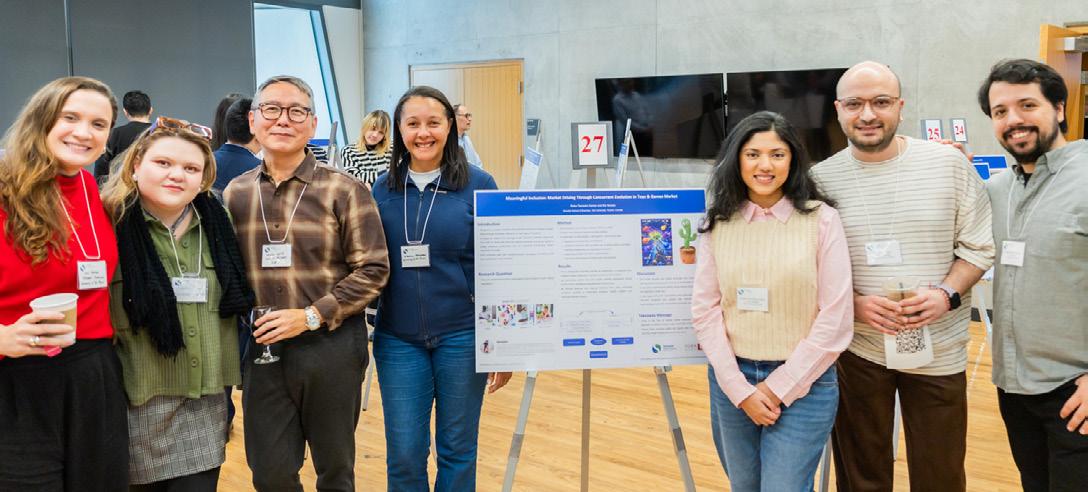
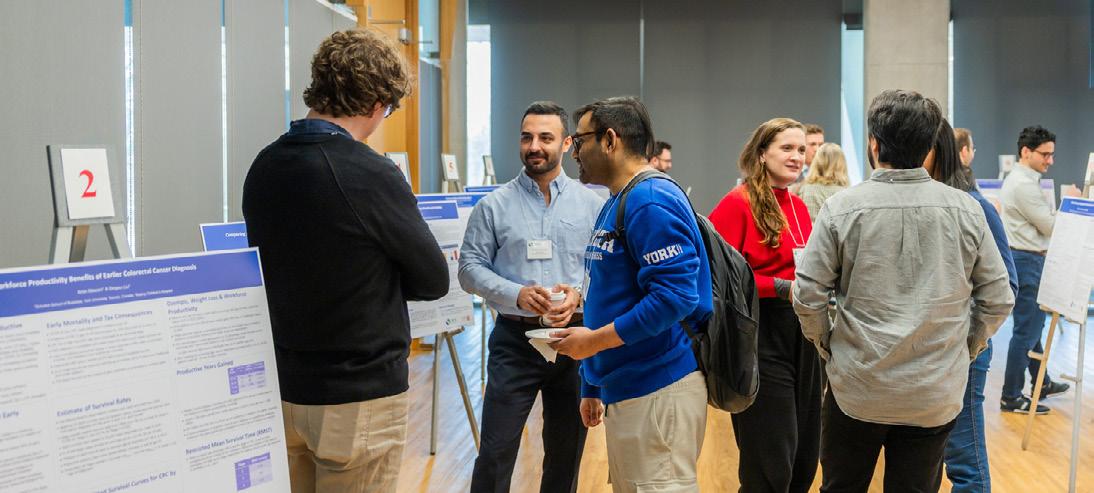
• Best Research Poster Award and Research Grant (500 CAD), Schulich Research & PhD Day, Schulich School of Business, York University, 2026
• 407 ETR Graduate Student Award, York University (5,000 CAD), 2025– 2026
• Ontario Graduate Scholarship, Government of Ontario, Canada (10,000 CAD), 2025– 2026
• Best Paper Award (Artificial Intelligence Track, Full Paper), AIRSI 2025, The Metaverse Conference, 2025
• Academic Excellence Fund, York University (1,200 CAD), 2025
Lam, Janice Y. “Invisible Weight: The Pressure Behind Diversity, Equity, and Inclusion.” Proceedings of the European Association of Work and Organizational Psychology (EAWOP) Congress, 2025. (with Shen, W.)
Lam, Janice Y. “Responses to Job Candidate Disclosure of Bipolar Disorder: The Role of Identity Management Strategies and Educational Affiliation.” Proceedings of the Symposium for Disability and Accessibility, Yale University, 2025. (with Moke, J., Lyons, B., and Samosh, D.)
Lam, Janice Y. “Diversity, Equity, & Inclusion Across Borders: Global Perspectives on Research and Practice at Work.” Moderator, European Association of Work and Organizational Psychology (EAWOP) Congress, Prague, 2025.
CONFERENCE PRESENTATIONS AND PROCEEDINGS
Lam, Janice Y. “Application Able-ing: Disclosing Disability in Job Applications.” Invited talk, IDEA Early Career Researcher Talk, 2026.
Scarfone, Joseph. Presented “Contracting with the State: Government Funding Dependence and Expenditure Allocation in Canadian Non-Profit Organizations” at the International Society for Third Sector Research (ISTR) 17th International Conference and PhD Seminar, Lisbon, Portugal, 2026.
Scarfone, Joseph. Presented “Mandated Periodic Disclosure and Market Pricing During a Repeated Supply-Chain Shock: Evidence from the Red Sea Crisis” at the Illinois International Accounting Symposium and the Canadian Economics Association (CEA) Annual Meeting, Niagara Falls and Vancouver, 2026.
Scarfone, Joseph. Presented “From Oversight to Empowerment: Unpacking the Links Between Supreme Audit Institutions, Budget Transparency, and Public Participation” at the Administrative Sciences Association of Canada (ASAC) Annual Conference, Calgary, 2026.
Syed, Muhammad. Presented “Early Firm Growth: A Fuzzy-Set Qualitative Comparative Analysis of Foundational Capabilities in Pre-Scale Up Ventures” at the QCA Conference of the Americas, University of Cincinnati, 2026.
Syed, Muhammad. Presented “Data Network Effects in Generative AI Ecosystems” at the AI Plus Management Doctoral Consortium, UCL School of Management, London, UK, 2026.
Syed, Muhammad. Accepted for presentation “How Early-Stage Ventures Achieve ProductMarket Fit: Configurations of Co-Creation Under Uncertainty” at the Canadian Entrepreneurship Research Conference, Ivey Business School, Western University, London, ON, Canada, 2026.
Syed, Muhammad. Accepted for presentation “How Early-Stage Ventures Achieve ProductMarket Fit: Configurations of Co-Creation Under Uncertainty” at the Strategic Entrepreneurship Journal Paper Development Workshop, Startup Capital Summit, Coimbra, Portugal, 2026.
Tabatabaei, Elham. Accepted into the 33rd Finance Forum, 2026 and the Financial Management & Accounting Research Conference (FMARC) Doctoral Colloquium, 2026.
Tabatabaei, Elham. Presented at the American Finance Association (AFA) PhD Poster Session, 2026; Southwestern Finance Association (SWFA) Annual Meeting, 2026; Midwest Finance Association (MFA) Annual Meeting, 2026.
Tabatabaei, Elham. Presented “Consequences of Strategic Communications” at the Financial Management Association (FMA) Annual Meeting, 2025.
Tabatabaei, Elham. Presented “New Ideas in FinTech” at the Financial Management Association (FMA) Annual Meeting, 2025.
Wong, Heather W. Presented “I’ll Believe It When I See It: Widespread Use of Diversity Statements Undermines Perceived Sincerity and Organizational Attraction” at the Canadian Psychological Association Annual Meeting, St. John’s, Newfoundland, Canada, 2025. (with Varty, C., and Hideg, I.)
Wong, Heather W. Presented “Beyond Accommodations, Toward Care and Community in the University” at the Communities of Care Symposium, Buffalo, New York, United States, 2025. (with Johnson, S.J.)
Zaman, Raisa T. Presented “Designing Marketing and Public Policy for Neurodiversity” at the AMA Marketing and Public Policy Conference, Ottawa, Canada, 2026.
Zaman, Raisa T. Presented “Meaningful Inclusion: Market Driving Through Concurrent Evolution” at the American Marketing Association Conference, Madrid, Spain, 2026.
Zaman, Raisa T. Presented “Care Entanglement: Co-constituting Care through Consumption” at the Association for Consumer Research (ACR) Conference, Washington, United States, 2025.
Zaman, Raisa T. Presented “Care Entanglement: Co-constituting Care through Consumption” at the Consumer Culture Theory (CCT) Conference, London, United Kingdom, 2025.
Zaman, Raisa T. Presented “Consumer Journey: Implications for Marketing in the Age of Neurodiversity” at the Transformative Consumer Research (TCR) Conference, Washington, United States, 2025.
As part of the next generation of business scholars, Schulich’s PhD students are making important contributions to research across emerging and established fields.
SCHULICH’S CORE RESEARCH AREAS: DEEP-DIVE RESEARCH SPOTLIGHTS AND FACULTY INTERVIEWS
Take a deep dive into the achievements of some of the most accomplished researchers in their respective fields and see where academic rigour meets real-world relevance to drive innovations for business and society.
DEEP-DIVE RESEARCH SPOTLIGHT
Linda Thorne, Professor of Accounting
Shaping Ethical Judgment in Accounting: From Professional Ethics to Technological Disruption, Advancing Accountability in a Changing World
Professor Linda Thorne developed her interest and understanding of the importance of ethics for the professional accounting community while practicing accounting and auditing as a CPA. She continued to pursue her studies at Schulich School of Business, and after receiving her MBA, she enrolled in the PhD program at McGill University where she studied the Ethical Development of Professional Accountants.
ADVANCING ETHICS IN ACCOUNTING: A CAREER OF IMPACT AND INFLUENCE
After receiving her PhD, she returned to the Schulich School of Business where she has taught for over 25 years while continuing her research program. Today, Professor Linda Thorne is an internationally recognized scholar whose research has made sustained and influential contributions to accounting, ethics, taxation, professionalism, and behavioural research over more than three decades. Her work is characterized by intellectual leadership, methodological rigour (particularly experimental and behavioural methods), interdisciplinary reach, and strong engagement with both academic and professional communities. Her work applies theories of moral development, disruption, regulation, and behavioural ethics to understand how emerging technologies reshape judgment, accountability, and professional identity in regulated environments.
articles in professional journals as well as high-impact research publications in leading journals, including the Journal of Business Ethics, Behavioral Research in Accounting, Accounting, Auditing & Accountability Journal, Auditing: A Journal of Practice & Theory, Contemporary Accounting Research, Business Ethics Quarterly, and the Canadian Tax Journal. Her papers have been presented over 100 times at accounting conferences and in invited presentations to regulators as well as academics. Her scholarship has helped shape foundational understanding of ethical decision-making, tax fairness and compliance, CSR, professionalism, auditor judgment, and the behavioural consequences of regulation. Many of her articles are widely cited and continue to inform contemporary debates on ethics, governance, and accountability in accounting and taxation, and more recently she has pursued a major research program examining the ethical and professional
INTEGRATING ETHICS INTO ACCOUNTING RESEARCH
A central thread of Professor Thorne’s research is the integration of ethics, fairness, and professional judgment into mainstream accounting and tax research. Recently, she worked on a project examining the changes to the international accountants’ professional code of ethics entitled NOCLAR. This study, conducted by researchers from five Canadian universities, looked at how a major change to the international accounting Code of Ethics affected accountants’ sense of responsibility. In 2018, the international accounting body updated its Code of Ethics for accountants in 138 countries through a standard called NOCLAR, which stands for “non-compliance with laws and regulations.”
ETHICS IN ACTION: STRENGTHENING RESPONSIBILITY THROUGH REGULATION
The NOCLAR changes were designed to help accountants better understand
Professor Thorne’s research program has produced an extensive portfolio of over 100 ARTICLES IN PROFESSIONAL JOURNALS
as well as high-impact research publications in leading journals distinctions in the marketing field for early career scholars.
LINDA THORNE Professor of Accounting
accountants are allowed to break confidentiality and report wrongdoing to outside authorities when necessary. The rules also require accountants to first understand the situation and raise concerns with management when they encounter potential illegal activity. To see how these changes affected accountants in practice, the research team conducted an experiment involving 113 professional accountants from Canada and the United States. The results showed that NOCLAR helped clarify accountants’ responsibility to report fraud and strengthened their sense of duty to report serious illegal acts to external authorities. Overall, the findings support the effectiveness of the NOCLAR changes and offer useful lessons not only for the accounting profession, but also for other professions that rely on codes of ethics to guide responsible behaviour.
TRANSPARENCY, DISCLOSURE, AND INVESTOR DECISION-MAKING
Professor Thorne also conducted another study using an experiment to evaluate the influence of a regulatory change with several former PhD students, now employed at other Canadian universities. This study examines a specific part of the regulatory change of International Financial Reporting Standard 18 (IFRS 18). IFRS 18 requires
Management Performance Measures (MPMs) — that are non-GAAP metrics used to convey management’s view of firm performance — to be relocated from the Management Discussion and Analysis (MD&A) to the notes to the financial statements. Historically unaudited and lightly regulated, MPMs have been used opportunistically to obscure poor performance. IFRS 18, effective January 2027, requires MPMs to be disclosed in a single note and reconciled to GAAP measures with explanations for each adjustment. The results of the experiment show that the changes proposed in IFRS 18 not only increase investors’ perceptions of transparency, reliability, and understandability but also increase investment intentions and impact investors in different ways based on financial sophistication, while underscoring the importance of disclosure design for diverse users.
UNDERSTANDING DIGITAL DISRUPTION IN ACCOUNTING
More recently, Professor Thorne has also been a pioneer in research on technology and accounting, leading major funded projects examining the ethical and professional implications of digital innovation, population testing, blockchain, and audit automation. Her work in this area bridges behavioural research, regulation, and practice, positioning her as a thought leader
in understanding how technological disruption reshapes ethical judgment and professional standards.
DESIGNING SYSTEMS FOR ETHICAL COMPLIANCE
She is currently working with a research team on a paper assessing how different types of blockchain influence taxpayer compliance.
As tax authorities consider blockchain to modernize tax reporting, clear guidance is needed on which system designs best support compliance. Experimental evidence from this study shows that taxpayer compliance is strongest when tax authorities have access to blockchain-based records. Compliance levels are comparable between public blockchains and private blockchains with government access but decline when private blockchains operate without government oversight. The study also finds that mandating taxpayer participation yields higher compliance than voluntary adoption. These findings suggest that blockchain initiatives are most effective when participation is mandatory and government access is built into system design, providing practical direction for tax agencies evaluating blockchain adoption.
Professor Thorne recently worked on a project examining the changes to the international accountants’
PROFESSIONAL CODE OF ETHICS ENTITLED NOCLAR (non-compliance with laws and regulations).
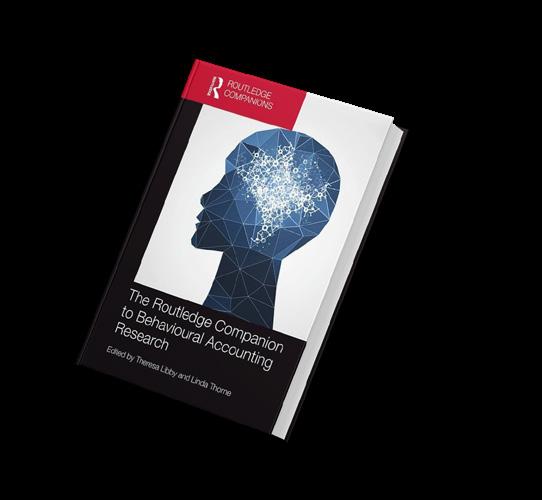
Professor Thorne co-edited The Routledge Companion to Behavioural Accounting Research, a foundational reference that SYNTHESIZES AND ADVANCES BEHAVIOURAL SCHOLARSHIP IN ACCOUNTING RESEARCH.
The volume has been widely used, particularly in behavioural doctoral programs.
SUSTAINED EXCELLENCE AND EXTERNAL VALIDATION
Her scholarly influence is highlighted by substantial competitive research funding, including multiple SSHRC grants as both Principal Investigator and Co-Investigator, as well as funding from CPA Ontario, CPA–CAAA, CIHR, and industry partners. These grants, collectively totalling more than a half million dollars, support largescale, collaborative projects and reflect sustained external validation of the significance and quality of her research agenda. Her contributions are reflected in the recognition she has received from her peers, including the George Baxter Award for Outstanding Contributions to the Canadian Academic Accounting Association, the Schulich Research Excellence Fellowship, multiple institutional research fellowships, national best paper awards, and election as a Fellow CPA (Ontario). Collectively, these honours reflect both academic distinction and service to the profession.
EXTENDING IMPACT BEYOND
ACADEMIC
JOURNALS
AND A LASTING CONTRIBUTION TO RESEARCH, PRACTICE, AND POLICY
Beyond conducting research, Professor Thorne has made major contributions to scholarly infrastructure through book editing and authorship.
She co-edited The Routledge Companion to Behavioural Accounting Research, a foundational reference that synthesizes and advances behavioural scholarship in accounting research. The volume’s first edition has been widely used, particularly in behavioural doctoral programs, and a second edition has recently been released, reflecting ongoing demand and intellectual leadership in the field. Her numerous book chapters, forewords, and practitioner-oriented publications further demonstrate her commitment to knowledge mobilization and interdisciplinary engagement. These contributions translate academic research into accessible insights for policymakers, professionals, and educators and extend the reach of her scholarship beyond academic journals.
Professor Thorne has also given back to the professional accounting and accounting research community through her research leadership and service. She has provided extensive service to national and international accounting organizations, including board membership, grant review service, postgraduate research support, professional education, and senior governance roles. She has served as President as well as in a
number of committee chairs within the Canadian Academic Accounting Association, held multiple leadership roles in the American Accounting Association (ethics, professionalism, and doctoral support), contributed to professional accounting education and certification bodies in Canada, and served on SSHRC adjudication panels. In terms of contributions to the academic accounting community, she has served in senior editorial roles (Associate Editor and Editorial Board Member) across top journals and has been a frequent invited speaker at international universities, regulatory bodies, and professional organizations, translating research insights into policy and practice impact. She has also supervised and mentored numerous PhD students and early-career scholars, many of whom have gone on to successful academic careers, amplifying her long-term research influence.
In summary, Professor Thorne’s tenure at Schulich reflects a sustained, highimpact program of scholarship that has shaped academic understanding, informed professional practice, influenced regulation, and advanced the study of ethics and behaviour in accounting and taxation at both national and international levels.
Abu Shiraz Rahaman, Professor of Accounting
QTell us about the key research projects you are currently engaged in.
AIn my current research program, our team is working on three main research streams: environmental disclosures and the ethics of mining practices in Alberta’s oilfields; accounting and healthcare policy in Africa; and the development and distribution of audit committee expertise in Canada, among others.
QWhat motivated or inspired you to pursue this line of research?
AI strongly believe that these are issues that have significant societal and public policy implications and affect our lives as well as the planet that we inhabit and we have an unquestionable duty to preserve it.
QWhat are some of the most significant challenges you have encountered in your research journey, and how have you addressed them?
AArguably, one of the most significant challenges for all fieldwork typically involves gaining access to research participants and organizations for fieldwork. In my case, this is more acute because most of our major work in the past involved studying the role of accounting in the fight against corruption, and because of the sensitive nature of corruption, it is always difficult to access relevant information to produce the kind of quality work that we and/or journal editors/reviewers expect. One way around this challenge involves the use of the Access to Information Act and leveraging personal connections in governmental institutions to gain the relevant research data.
QWhat has been a particularly rewarding, significant or defining moment in your research career?
AThe networks that I have been able to build, which started at the Interdisciplinary Accounting Conference right after my doctoral
degree. I met Professor Dean Neu (then a faculty member at the University of Calgary and now at Schulich), and it turned out that we shared strikingly similar research interests. To make a long story short, I moved to Calgary to join Dean Neu a couple of years after the conference, and together with Professor Jeff Everett and Professor Greg Saxton (also faculty members at Schulich), we have become very productive research collaborators, whose work is widely recognized globally. Our published conceptual and empirical papers on accounting and public policy, including corruption, healthcare, and the environment, have made us leading scholars in this field within the interdisciplinary/ critical accounting community. For example, our work on accounting and the fight against HIV/AIDS in Africa demonstrated how accounting serves as a coordinating device that enables authorities to assemble over 3,000 heterogeneous and geographically dispersed non-governmental agencies to launch an effective HIV/AIDS campaign funded by the World Bank and IMF.
“ In my current research program, our team is working on three main research streams: environmental disclosures and the ethics of mining practices in Alberta’s oilfields; accounting and healthcare policy in Africa; and the development and distribution of audit committee expertise in Canada, among others.”
ABU SHIRAZ RAHAMAN , Professor of Accounting
Q
In what ways does your research approach differ from others in your field?
A
The approach of our research team generally involves the use of mixed methods. For research objectives that allow us to generalize our findings, we typically approach these projects with quantitative computerized tools involving the use of large language models. But we also do fine-grained qualitative analyses that highlight the importance of the particular context that we are studying. For most of our projects, we have a secondary objective that allows us to explore the ethical aspects and implications of our findings, and such work is usually targeted at business ethics journals.
Q
What are your future research plans or emerging areas of interest?
A
My plan is to secure a large SSHRC grant to recruit new doctoral students to join our team and assist in achieving my medium- to long-term research objectives, an important part of which involves training new scholars in critical/interpretive accounting research.
Q
As Schulich celebrates 60 years of research and academic excellence, how does your work reflect its legacy and contribute to its future direction?
AIn Canada, Schulich is indisputably the number one school for interdisciplinary accounting research, and this was the main reason for my decision to join the School a couple of years ago. My work is widely recognized in the global critical/interpretive accounting community as impactful and at the highest quality level, and together with the work of my colleagues in the Accounting Area, this would further enhance the visibility and outstanding reputation of Schulich globally.
Schulich @
DEEP-DIVE RESEARCH SPOTLIGHT
Perry Sadorsky, Professor of Business Economics and Policy
Rethinking Business, Energy, and Financial Markets
For more than three decades, Professor Perry Sadorsky has been mapping the shifting fault lines where business, energy and financial markets intersect — long before many of today’s defining challenges came into focus. From early insights into how stakeholder pressure shapes corporate environmental action and why countries diverge in their paths to decarbonization to uncovering how clean energy, digital assets and financial markets are increasingly interconnected, his work has consistently challenged conventional wisdom.
Across disciplines, a unifying thread runs through his research: markets do not operate in isolation, and neither do the forces that shape them. By combining rigorous empirical analysis with forward-looking questions, Sadorsky has helped reframe how scholars, investors and policymakers understand risk, sustainability and the evolving architecture of the global economy.
The evidence of that sustained impact is clear. Sadorsky, Schulich Professor of Business Economics & Policy, has been named a Highly Cited Researcher by Clarivate Analytics for five consecutive years — a distinction reserved for scholars whose work ranks among the top one percent globally in citations. He was an editor of Energy Economics, one of the premier journals for research in energy economics and finance, and he plays an important role in shaping the direction of scholarship in the field.
What makes his work particularly compelling is its coherence. Across a wide range of topics, Sadorsky returns to a core idea: systems — corporate,
financial and energy-related — are deeply interconnected, and understanding those connections is essential to making better decisions.
BEYOND PRESSURE: WHAT REALLY DRIVES SUSTAINABLE BUSINESS
One of Sadorsky’s earliest and most influential contributions lies in business sustainability. Long before ESG became mainstream, he was examining how firms respond to environmental pressures — and why those responses often fall short.
His research challenges a common assumption: that external pressure alone — from regulators, customers or advocacy groups — is enough to drive meaningful environmental performance.
“External pressure can compel firms to act,” he explains, “but without the right internal foundations, those actions often remain superficial.”
Those foundations include employee engagement, quality management systems, investment in environmental R&D, and strong leadership
One of Sadorsky’s earliest and most influential contributions lies in business sustainability. Long before ESG became mainstream, he was examining how firms respond to environmental pressures — and why those responses often fall short.
commitment. Without them, companies may adopt policies that look impressive but produce little real change — a phenomenon known as “decoupling,” where symbolic actions substitute for substantive ones (Darnall, Henriques, and Sadorsky, 2008).
Real progress, argues Sadorsky, requires building internal capabilities that embed sustainability into how organizations operate.
FROM COMPLIANCE TO CAPABILITY
If pressure is not enough, what does it take to move firms toward genuine sustainability?
Sadorsky points to outcome-based regulation. Rather than prescribing specific actions, policymakers should focus on results and allow firms flexibility in how they achieve them. “When firms are given room to figure things out, they build systems that lead to lasting change,” he notes.
PERRY SADORSKY Professor of Business Economics and Policy
In energy economics, Sadorsky tackles a fundamental question: what does it take for countries to achieve meaningful decarbonization? His answer is both simple and daunting: “ EVERYTHING HAS TO HAPPEN AT ONCE.”
PERRY SADORSKY Professor of Business Economics and Policy
Transparency is equally critical. His research shows that standardized disclosure allows markets to distinguish genuine leaders from those engaging in greenwashing, while also strengthening the effectiveness of market and community pressures when reliable information is available (Henriques and Sadorsky, 1996). Financial incentives tied to environmental R&D — one of the strongest predictors of comprehensive environmental management systems — can further reinforce long-term capability building (Darnall, Henriques, and Sadorsky, 2008; 2010).
For business leaders, the lesson is clear: without strong internal systems and leadership commitment, even well-designed sustainability strategies are unlikely to succeed.
RETHINKING RISK IN A MORE COMPLEX FINANCIAL WORLD
Sadorsky’s research has increasingly expanded beyond firms to the broader financial system, particularly how new technologies and asset classes are reshaping risk.
One of his recent findings challenges a widely held concern: that financial technology poses a major threat to financial stability. “At this stage, FinTech is not a driver of systemic risk,” he says.
This does not mean the sector is riskfree, but it suggests a more targeted regulatory approach — focused on areas such as cybersecurity and data management rather than blanket rules.
More broadly, his work highlights the limitations of traditional risk models. Financial theory has long relied on volatility and assumptions of normal distributions. But real-world events — from financial crises and pandemic shocks to cryptocurrency volatility — show that extreme events occur more often and with greater impact than expected.
To better capture this reality, Sadorsky emphasizes tools such as Conditional Value at Risk and network-based models that account for how shocks spread through interconnected systems. His own research uses methods that account for rare, extreme events and the fact that risk is constantly changing.
Just as importantly, points out Sadorsky, risk itself is dynamic. Asset relationships can shift rapidly, especially in times of stress. “The goal is not just to optimize returns,” he explains, “but to build portfolios that are resilient.”
This shift — from return maximization to resilience — marks a fundamental change in how investors and regulators think about financial stability.
THE RISE OF DATA-DRIVEN FINANCE
These challenges are especially evident in digital asset markets. Assets like Bitcoin lack traditional
fundamentals such as earnings or cash flows, yet they exhibit patterns that can be analyzed and, to some extent, predicted.
Sadorsky’s research highlights the growing importance of non-traditional data — including social media sentiment, blockchain activity and macroeconomic signals. “What we’re seeing is a shift toward models that incorporate behaviour, networks and information flows,” he notes. “Expect to see greater reliance on machinelearning methods designed to capture complex patterns in data.”
As a result, financial analysis is becoming more interdisciplinary, drawing on data science and machine learning to capture dynamic market behaviour.
THE LONG ROAD TO DECARBONIZATION
In energy economics, Sadorsky tackles a fundamental question: what does it take for countries to achieve meaningful decarbonization? His answer is both simple and daunting: “Everything has to happen at once.”
The energy transition comprises a network of closely connected subsectors (renewable energy, electric vehicles, power grid connectivity, critical minerals, etc.). It is essential to understand which sub-sectors serve as transmitters and receivers of systemic risk and how systemic risk evolves.
Transitioning to a low-carbon economy requires simultaneous progress across multiple fronts — shifting energy sources, building infrastructure, aligning policy, and managing economic trade-offs. It also demands substantial investment, particularly in emerging economies.
Complicating matters further are “hard-to-abate” sectors such as steel, cement and shipping, where lowcarbon alternatives remain limited. Furthermore, the global economy is currently experiencing extreme economic policy uncertainty due to unpredictable trade policy shifts, geopolitical conflicts, and political instability in major economies. While the current oil price shocks could
incentivize a transition from fossil fuels to clean energy, an inconsistent global regulatory framework is creating a wait-and-see approach among investors.
At the same time, countries are starting from very different positions. Effective policy must reflect these differences and be sustained over the long term through coordinated industrial strategy and investment.
BRIDGING THE GLOBAL DIVIDE
This raises a critical question: how can the world balance development needs with climate goals?
Sadorsky points to finance as a central lever. Governments, he contends, should focus on de-risking private investment to attract capital into clean energy, especially in developing regions. Existing mechanisms such as carbon markets also need reform, as they often allow wealthier countries to offset emissions without delivering meaningful benefits where investment is most needed.
For vulnerable countries, grants rather than loans are often more appropriate, as debt can exacerbate fiscal constraints.
Finally, says Sadorsky, timelines must be realistic. What matters is credible, well-funded plans tailored to national circumstances, alongside recognition that adaptation and resilience are as critical as mitigation.
CLIMATE RISK AND MARKET REALITY
Another key theme in Sadorsky’s work is the mispricing of climate risk in financial markets.
This creates a dual challenge for investors. Physical risks — such as extreme weather — can disrupt operations and reduce profitability. Transition risks — driven by policy or technological change — can rapidly alter asset values. “These risks don’t necessarily unfold gradually,” he notes. “They can reprice very quickly.”
For policymakers, the implication is clear: markets alone are unlikely to correct these mispricings in time. Addressing the issue requires coordinated action, including climate risk disclosure, carbon pricing and financial stress testing.
Some institutions are already incorporating these risks into their models, but broader adoption is needed to ensure system-wide resilience, says Sadorsky.
Governments should focus on de-risking private investment to attract capital into clean energy, especially in developing regions.
A MORE INTELLIGENT ENERGY FUTURE
Looking ahead, Sadorsky sees significant promise in machine learning and data-driven approaches to energy systems. These tools can improve forecasting, optimize operations, and reduce the cost of integrating renewable energy.
Better prediction of supply and demand can help manage the variability of wind and solar power, while more sophisticated pricing can support energy storage and demand response.
CONNECTING THE DOTS
Across all of these areas — business sustainability, financial markets, digital assets, and energy economics — a consistent picture emerges. The challenges facing the global economy are complex, interconnected, and constantly evolving. Addressing these challenges requires better data, more sophisticated models, and a willingness to rethink long-held assumptions.
This is where Sadorsky’s work has made its greatest contribution.
By bridging disciplines and connecting ideas often studied in isolation, he has helped build a more integrated understanding of how markets function — and how they can be guided toward better outcomes.
Irene Henriques, Professor, Business Economics & Policy
QTell us about the key research projects you are currently engaged in.
ASome of my work begins in places you might not expect, like a wastewater facility. The Grasswood Wastewater project is Indigenous-led infrastructure, but it is also a story about governance and autonomy. It shows what it looks like when communities design systems on their own terms.
That same question, how do we make systems last — has led me into research on biodiversity and blockchain. I am exploring how we can create “smart contracts with a memory,” so environmental commitments made today remain visible and enforceable decades from now. For example, this could allow a conservation agreement tied to a specific ecosystem to be monitored over time, ensuring protections are upheld long after the original decisionmakers are gone. I am interested in systems that do not forget.
What motivated or inspired you to pursue this line of research?
My work grows out of a long-standing concern with sustainability and a frustration with short-term thinking. Again and again, I saw decisions that prioritize the present at the expense of the future, including environmental commitments that are ambitious in the moment but rarely revisited years later.
Working with Indigenous communities deepened that understanding. I saw governance traditions that are inherently long-term, even across generations. That experience stayed with me and pushed me to think about how institutions and technologies can better reflect that responsibility.
What are some of the most significant challenges you have encountered in your research journey, and how have you addressed them?
Much of my work happens between disciplines and communities, and that can be challenging. As a business scholar, I often find myself outside familiar frameworks.
Over time, I have come to see my role as a translator, someone who listens carefully and connects different perspectives. That only works through trust, built through long-term relationships and shared understanding. Q
How has your research contributed to advancing knowledge or addressing real-world challenges?
AVisiting the Naawi-Oodena project was especially meaningful. Seeing multiple First Nations come together to reshape an urban space into a hub of economic sovereignty made the abstract very real.
It reminded me that these questions are not theoretical. My goal is to contribute research that supports solutions that are both practical and lasting.
QIn what ways does your research approach differ from others in your field?
AI tend to ask a slightly different question, not just what works now, but what will still work decades from now. That leads me to focus on long-term governance.
“ Some of my work begins in places you might not expect, like a wastewater facility. The Grasswood Wastewater project is Indigenous-led infrastructure, but it is also a story about governance and autonomy. It shows what it looks like when communities design systems on their own terms.”
IRENE HENRIQUES , Professor, Business Economics & Policy
I also work across boundaries. I do not see a divide between Indigenous governance traditions and emerging technologies like blockchain. Both offer important ways of thinking about how we protect the future.
QWhat are your future research plans or emerging areas of interest?
ALooking ahead, I am increasingly interested in how we measure real impact. It is easy to point to intentions or short-term outputs, but much harder to show lasting change.
I want to understand how we track outcomes over time, whether in projects like Naawi-Oodena or in efforts to rethink how we value nature. I am exploring how biodiversity agreements could be digitally encoded so that ecosystem changes are tracked and linked to original commitments. This includes exploring how nature might be represented in decisionmaking through legal and digital tools. At its core, this is about making sure impact is something we can demonstrate.
QAs Schulich celebrates 60 years of research and academic excellence, how does your work reflect its legacy and contribute to its future direction?
ASchulich has always been a place that connects ideas to real-world challenges. My work reflects that by linking sustainability, governance, and innovation. I hope it contributes to Schulich’s continued leadership in addressing complex global issues in the years ahead.
Schulich @
Professor Irene Henriques, Dean Detlev Zwick and Kristin Murray, Schulich’s Executive-in-Residence on Indigenous Initiatives.
DEEP-DIVE RESEARCH SPOTLIGHT
Aleksandra Rzeźnik, Assistant Professor of Finance
Intermediaries, Liquidity, and Market Stability: Understanding How Asset Managers Shape Prices, Risk, and Resilience in Modern Financial Markets
Aleksandra Rzeźnik , Assistant Professor of Finance, examines capital markets from the perspective of the institutions that intermediate between investors and financial markets. Her research focuses on asset managers, such as mutual funds, exchange-traded funds, and money market funds, and studies how their portfolio decisions, liquidity management, and trading behaviour affect asset prices and market stability. Rather than viewing asset prices as determined solely by the characteristics of securities, her work emphasizes the role of financial intermediaries, showing how the incentives, constraints, and risk-bearing capacity of asset managers shape risk premia in modern financial markets.
A central theme of Professor Aleksandra Rzeźnik’s research is liquidity transformation, which is how financial intermediaries provide investors with liquidity while investing in assets that are often highly illiquid. Her work examines how asset managers balance this trade-off, particularly during periods of market stress. She studies how investor flows, regulatory changes, and institutional constraints affect funds’ portfolio choices and liquidity management, and how these decisions can propagate shocks across markets.
By analyzing the interaction between fund investors, portfolio managers, and the liquidity of the assets they hold, her research highlights how micro-level portfolio decisions can translate into broader market outcomes and systemic risk.
By linking the actions of individual financial intermediaries to outcomes in financial markets, her work contributes to a better understanding of how modern capital markets function and how regulation and institutional design can promote a more stable financial system.
FINANCIAL FRAGILITY
Since witnessing the unfolding of the Great Recession and its consequences during her undergraduate studies, Rzeźnik has developed a strong interest in the vulnerability of the financial system, commonly referred to as financial fragility. While much of the existing research emphasizes the high leverage of banks as a key source of fragility, she focuses on mutual funds, which typically operate with little or no leverage. Her work shows that financial fragility can arise even in the absence of leverage.
ALEKSANDRA RZEŹN IK
Assistant Professor of Finance
By linking the actions of individual financial intermediaries to outcomes in financial markets, her work contributes to a better understanding of how modern capital markets function and how regulation and institutional design can promote a more stable financial system.
Mutual funds promise investors that they can withdraw their money every day. However, many of the assets funds hold, for example, corporate bonds or small-cap stocks, cannot always be sold quickly without affecting their prices. To meet this promise, fund managers must carefully manage the amount of cash and the number of easy-to-sell assets they hold in their portfolios. Rzeźnik’s research shows that managers actively adjust their portfolios in anticipation of possible investor withdrawals. Importantly, these decisions depend not only on the behaviour of their own investors but also on what other funds might do. If many funds expect redemptions and begin selling the same securities, prices can fall because too many sellers enter the market at the same time. Anticipating this, managers may choose to sell earlier or hold more liquid assets. In this way, the strategies of different funds influence one another. When many managers behave similarly, their aggregate actions can affect how scarce and valuable liquidity becomes in financial markets. Her research shows that
the aggregate strategic decisions made by mutual fund managers generate time variation in the compensation investors require for holding hard-to-sell assets — the market price of liquidity.
So, are the financial intermediaries always the bad guys, making capital markets more fragile?
REINSTATING FINANCIAL STABILITY
By studying who holds assets and how their constraints affect trading, Aleksandra Rzeźnik and her co-author, Rüdiger Weber, show that stabilizing financial markets often requires ensuring that the financial institutions can continue to take on risk.
Their work investigates what happens when mutual funds are forced to sell stocks quickly because many investors withdraw their money simultaneously. These “fire sales” can push stock prices down, even if nothing has changed about the companies themselves. But the effect on prices depends on who can buy the stocks being sold.
To better understand this, Rzeźnik and Rüdiger measure price elasticity. In simple terms, this means how willing investors are to buy more of a stock when its price falls. If buyers quickly step in when prices drop, the price does not fall very much. But if investors are reluctant or unable to buy, prices can drop much more sharply.
Markets remain more stable when there are investors who already know the stocks well, actively manage their portfolios, and have sufficient funding to step in and absorb this selling pressure. In this sense, financial stability depends not only on limiting forced sales but also on ensuring that enough informed and flexible investors are present to take the other side of trades, helping prices remain resilient during periods of stress.
Aleksandra Rzeźnik and Rüdiger Weber find that prices are more stable when stocks are absorbed by well-positioned investors — those with the expertise, flexibility, and capital to step in when others are forced to sell. These investors are willing and able to step in when others
By studying who holds assets and how their constraints affect trading, Professor Aleksandra Rzeźnik and her co-author, Rüdiger Weber, show that stabilizing financial markets often requires ensuring that the financial institutions can continue to take on risk.
are forced to sell. Using unique Canadian trade-level data, together with Susan Christoffersen, Donald Keim, and David Musto, Rzeźnik documents that funds with fewer investment opportunities or greater flexibility supply liquidity to other traders, absorbing trading pressure and helping stabilize prices. Thus, maintaining financial stability requires ensuring that investors in the market have both the willingness and the capacity to bear risk when shocks occur.
INTERMEDIARIES ARE NOT THE ONLY CULPRIT
Financial markets are usually thought to be influenced by large institutions, but ordinary retail investors can also affect market stability, especially when confused. In joint work with Kathleen Weiss Hanley and Loriana Pelizzon, Aleksandra Rzeźnik investigates how investors respond to an unexpected change in the environmental, social, and governance (ESG) rating of a major ESG rating agency. This marketwide change in methodology allows her to analyze the trading behaviour of different investor types: from unsophisticated retail investors to highly sophisticated short-sellers.
The revision changed how ESG risk was measured and, crucially, inverted the meaning of the rating scale. After the new ratings were widely distributed to the public through platforms such as Morningstar and Yahoo! Finance in 2019, many retail investors misunderstood the changes. When ratings appeared to improve, retail investors increased their holdings; when ratings appeared to worsen, they reduced them, even though the change reflected only a scale inversion.
This confusion had tangible market effects. Retail trading generated temporary price movements unrelated to company fundamentals. More sophisticated market participants, including short sellers, often took the opposite side of these trades, anticipating that prices would eventually revert once the misunderstanding faded.
The broader lesson is that financial markets are not moved only by large institutions or economic fundamentals. When complex metrics are simplified and widely disseminated, even small investors acting on misunderstood signals can, in aggregate, move prices away from their true values, at least for a while.
WHAT’S NEXT?
Together with her co-authors, Professor Rzeźnik is working on a project that examines the role of dealerspecific intermediation risk in bond markets.
In fixed-income markets, individual bonds are often traded through specific dealers that help stabilize prices by making it easier to buy and sell. When these relationships weaken, or when dealers’ capacity to intermediate declines, temporary price dislocations can arise. This project builds on Rzeźnik’s broader research agenda on intermediary asset pricing and financial market stability. The research is supported by the Women in Intermediary Asset Pricing grant Rzeźnik received in 2023 and is conducted as part of the German Research Foundation Research Unit FOR5230, a collaborative initiative that studies the role of financial intermediaries in asset pricing.
In another project, funded by a 2025 SSHRC Insight Development Grant, Rzeźnik studies specialized demand in the bond market. Unlike equities, bonds can be structured, particularly in terms of issuance size, to meet the eligibility criteria of major bond indices. This allows her to examine how firms adjust bond issuance to qualify for index inclusion and to study the consequences, including higher liquidity, greater price fragility, and potentially less efficient capital structures. Professor Rzeźnik emphasizes how much she benefited from the guidance and support of Schulich’s Research Office in developing and securing this SSHRC grant.
In joint work with Kathleen Weiss Hanley and Loriana Pelizzon, Aleksandra Rzeźnik investigates how investors respond to an unexpected change in the environmental, social, and governance (ESG) rating of a major ESG rating agency.
This market-wide change in methodology allows her to analyze the trading behaviour of different investor types: from unsophisticated retail investors to highly sophisticated short-sellers.
FACULTY INTERVIEW
Mark J. Kamstra, Professor of Finance
QTell us about the key research projects you are currently engaged in.
AMuch of my current work centres on behavioural finance and empirical asset pricing, particularly the ways human sentiment, attention, and social interaction shape financial markets. I’ve been developing research that links mood, risk tolerance, impatience, and investor behaviour, work rooted in psychological and economic evidence. I’m also exploring methodological innovations, including machine learning-enhanced models of investor attention and return predictability.
QWhat motivated or inspired you to pursue this line of research?
AI’ve always been fascinated by the places where traditional rational-agent finance just doesn’t explain what markets actually do. Early in my career, exposure to work across psychology and economics made it clear that people’s moods create predictable patterns in risk-taking. This interdisciplinary overlap, bridging empirically grounded psychology with asset-pricing theory, is what pulled me in and still motivates me today.
Q
What are some of the most significant challenges you have encountered in your research journey, and how have you addressed them?
AOne long-standing challenge is working with financial phenomena that are subtle, noisy, or difficult to measure, especially when trying to isolate behavioural effects. Data limitations, reproducibility, and cross-disciplinary validation all come with the territory. I’ve addressed this by leaning heavily on robust statistical approaches, embracing transparency, and participating in large-scale reproducibility collaborations, like the Management Science reproducibility project assessing nearly 500 studies.
What has been a particularly rewarding, significant or defining moment in your research career?
AA defining moment for me has been the influence of my work on seasonality and mood-linked market cycles, for example, the Winter Blues and daylight-saving-time research, which helped shift how scholars think about sentiment and risk pricing. These findings showed that human biology and psychology can have systematic, economically meaningful effects on markets, and seeing that research spark further inquiry across fields has been very rewarding. The press coverage and attention have also been validating.
QHow does your approach differ from others in your field? A
I tend to approach asset-pricing questions through a behaviourally grounded but empirically rigorous lens, integrating psychological and medical evidence into formal finance models. This allows me to bridge the gap between rationalist frameworks and more intuitive behavioural stories, while still relying on classic econometric tools and newer machine-learning methods to test predictions. My work on seasonal affective disorder and changing mood, changing risk-taking behaviour can be thought of as “rational behavioural finance.” This work can fall between the two chairs of rational and behavioural finance, which has required of me both patience and fortitude.
QWhat are your future research plans or emerging areas of interest?
AGoing forward, I’m interested in deepening work on investor attention and social interaction, especially as new data sources, digital traces, social platforms, AI-driven analytics, reshape both markets and modelling possibilities. I’m also continuing work on some methodological topics that are leading me to overturn some seminal results in asset pricing.
“
A defining moment for me has been the influence of my work on seasonality and mood-linked market cycles, for example, the Winter Blues and daylight- saving-time research, which helped shift how scholars think about sentiment and risk pricing.”
MARK J. KAMSTRA , Professor of Finance
QAs Schulich celebrates 60 years of research and academic excellence, how does your work reflect its legacy and contribute to its future direction?
ASchulich has a long tradition of interdisciplinary, socially relevant research, and I see my work as part of that legacy. By combining insights from psychology, economics, and data science, I aim to contribute research that’s analytically rigorous but also connected to real-world investor behaviour and market functioning. As Schulich looks ahead, I hope my work helps reinforce its strengths in innovation, empirical excellence, and cross-disciplinary thinking, supporting the next generation of research in finance and beyond.
Schulich @
DEEP-DIVE RESEARCH SPOTLIGHT
Ela Veresiu, Associate Professor of Marketing
Fostering Belonging in the Marketplace to Enhance Consumer Well-Being
Schulich’s Ela Veresiu , Associate Professor of Marketing and current Marketing Area Coordinator, studies how markets, including both public and private sectors, can better serve underrepresented consumer groups. More specifically, her research focuses on consumer well-being and market belonging at the intersection of institutions, brands, technology, and identity. But what does this really mean?
Through her work, Professor Ela Veresiu is dedicated to understanding how institutions, brands, and technologies can foster belonging for traditionally discriminated-against consumer groups, who range from immigrants, ethnic minorities, and refugees to 2SLGBTQI+ individuals and mature women. As a result, she conducts highly impactful research such as multicultural marketing, racist branding, and morally-based consumption, which are of critical social importance and relevance today.
Veresiu’s research encompasses a wide variety of data collection (e.g., archival, ethnography, in-depth interviews, netnography) and analysis (e.g., critical, hermeneutical, longitudinal) techniques. Impressively, she works with large, multi-method, multi-year, and multi-actor datasets. Her research projects can be further broken down by intersecting identity markers of discrimination, including race and ethnicity, as well as gender and age.
RACE AND ETHNICITY IN THE MARKETPLACE
Drawing inspiration from her own childhood experiences as a young immigrant in Toronto, Veresiu began her academic journey investigating a key question: do multicultural markets discriminate? To answer this question, she conducted a multiyear, multi-stakeholder study during her doctoral program of one of the world’s most acclaimed multicultural markets: Canada. Multicultural markets celebrate cultural diversity, combine market competition with social inclusion, and champion the coexistence of different ethnic communities through individual consumption choices.
Her study finds that Canada’s multicultural marketplace inadvertently turns visible minorities’ cultures into fetishized consumption objects. It does so by encouraging citizens to become consumers of ethnic products through four consumer socialization strategies
Professor Veresiu’s research investigating a key question: DO MULTICULTURAL MARKETS DISCRIMINATE
won the Consumer Culture Theory Consortium’s Sidney J. Levy Award and the Journal of Consumer Research’s Ferber Award Honorable Mention. These are two of the highest international distinctions in the marketing field for early career scholars.
stemming from Canadian politicians, market researchers, brand managers, and store owners. However, this type of consumerism engages with different ethnic communities on a surface level. It tends to foster marketplace inclusion without necessarily leading to resource (re)distribution.
As world leaders continue to grapple with global migration flows, Veresiu’s research has important implications for immigration policies. It cautions against solely adopting a marketbased multicultural system and recommends government bodies to not treat people purely as consumers.
This research culminated in an awardwinning publication in the top-tier FT50 Journal of Consumer Research It won the Consumer Culture Theory Consortium’s Sidney J. Levy Award and the Journal of Consumer Research’s Ferber Award Honorable Mention. These are two of the highest international distinctions in the marketing field for early career scholars.
ELA VERESIU Associate Professor of Marketing
In Germany, Professor Veresiu researched how brand managers can successfully change their racist brand names and logos. The brand case for this study was Gypsy Sauce (Zigeunersauce), which until the summer of 2020 was a very popular condiment in Germany, massproduced by several famous food brands.
ELA VERESIU Associate Professor of Marketing
At the same time, based on her earlier childhood experiences in Romania, Veresiu set out to better understand an under-researched consumer group: those who self-identify as Roma, but are derogatorily known as “Gypsies.”
The Roma represent Europe’s largest ethnic minority. She studied Roma consumers in both Italy and Germany. Her Italian-based research focused on a state-subsidized, yet ultimately racialized gated community for Roma migrants built on the outskirts of a city, in a field near a highway bridge. The study found that despite the Italian government’s attempt to assimilate the Roma through this housing program, the group engaged in consumption practices to protect their culture and traditions.
In Germany, Veresiu researched how brand managers can successfully change their racist brand names and logos. The brand case for this study was Gypsy Sauce (Zigeunersauce), which until the summer of 2020 was a very popular condiment in Germany, mass-produced by several famous food brands including Kraft Heinz. The companies involved used two main arguments in the press to justify the brand repositioning of a perceived racist slur (“Gypsy”). Antiracism was used to highlight how negative stereotypes of ethnic groups used by brands can be harmful to group members. And social tolerance was used to show how public opinion can shift over what popular phrases are considered acceptable or not. Yet, in her article, she cautions brand managers against merely changing racialized brand names without also giving back to the ethnic communities from which they benefited, for example, through corporate policy changes, community initiatives, and financial donations.
Most recently, Veresiu examined the state of research on refugees’ marketplace discrimination by reviewing 215 publications spanning the business, management, marketing, and social sciences disciplines. Marketplace discrimination is the differential treatment of consumers based on perceived group-level
identity markers, such as race, ethnicity, gender, and age. This extensive work identifies three key forms of refugee marketplace discrimination: structural, racial, and spatial. It highlights the need for scholars, practitioners, and policymakers to understand and address the complex, intersecting forms of discrimination that refugees face in marketplaces around the world.
AGE AND GENDER IN THE MARKETPLACE
Veresiu later turned her attention to gender and age-based marketplace discrimination, particularly in the fashion and beauty industries.
She received her first Social Sciences and Humanities Research Council (SSHRC) Insight Development Grant of just over $50,000 to study mature women’s empowerment. She studied how social media and brands can help alleviate the gendered ageism that female consumers face as they age out of markets. This research finds that advanced (aged 50+) female style influencers utilize the social media platform Instagram to actively fight gendered ageism that is rampant in the fashion and beauty industries. Specifically, they deconstruct and defy gendered and ageist fashion and beauty rules through their posts. Furthermore, when selecting brands to collaborate with as influencers, they often refuse to be the token senior. Tokenism occurs when companies fail to offer meaningful support for or integrate true diversity practices.
This finding led to a follow-up study on how brand managers can design age-inclusive brands. This second research initiative finds three forms of institutional work used by entrepreneurs to successfully launch an age-inclusive brand by fostering belonging: 1) narrative work positively reframing stereotypes associated with the stigmatized group; 2) material work expanding the possibilities for the stigmatized group to engage with the product category; and 3) relational work giving voice to a range of market actors from the stigmatized group.
Building on the SSHRC grant’s aim of establishing better business practices for marketing professionals to empower consumers, Veresiu co-authored a business case and a book chapter on inclusive digital advertising targeting 2SLGBTQI+ consumers. These pieces question the appropriateness of online data collection and data-driven digital advertising in the context of discriminated consumers. They discuss alternatives, such as contextual targeting and strategic influencer marketing, to reach typically underrepresented consumers while respecting their privacy online.
Her meaningful work has been recognized by both York University and the Schulich School of Business. So far, she is a two-time winner of the York University Research Leader Award and has held two Schulich Research Fellowships.
WHAT’S NEXT: CONSUMER HEALTH
Veresiu has shifted her research focus to consumer health and market belonging. Helping doctoral students with their dissertation-based research, she has investigated the thriving
self-care trend, which consists of consumer actions directed toward the goal of sustaining one’s life, health, and well-being. This study, published in the Journal of Consumer Research, reveals that everyday consumption is likely to be moralized when there are culturally contested meanings of core ideas, like “self” and “care,” leading cultural authorities, such as influencers and medical professionals, to prescribe wildly different ways to pursue the same consumption goal. Consumers then set moral boundaries of acceptable self-care consumption by either assuming a morally righteous position, indicating moral inclusivity, applying moral licensing, or expressing moral autonomy. This moralization process has broader implications for how consumers see themselves, the world, and their roles in society, which can be used to promote socially beneficial consumption practices.
Currently, Veresiu is co-supervising Schulich doctoral candidate Raisa Tasneem Zaman on her dissertation research that looks at how care is co-constituted through consumption by parents of neurodiverse children. This work aims to prescribe how
public and private marketplaces can better serve consumers experiencing neurodiversity, including autism, ADHD, or dyslexia.
Finally, Professor Veresiu recently received another SSHRC grant, this time an Insight Grant of over $90,000, to study Canada’s menopausal marketplace.
This work, which is in the datacollection phase, was inspired by a 2022 report by the Menopause Foundation of Canada. The report showed that 72% of women surveyed stated the advice they received on menopause was not helpful. In a nutshell, this research examines how menopause, a natural process of aging, impacts Canadian women and how the marketplace can better serve them. It plans to identify what obstacles are preventing innovation and product development in the menopause market and what inclusive practices practitioners can use to overcome these obstacles and best cater to menopausal consumers.
Professor Veresiu’s research finds that advanced (aged 50+) female style influencers utilize the social media platform Instagram to actively fight gendered ageism that is rampant in the fashion and beauty industries.
Markus Giesler, Professor of Marketing
Q
Tell us about the key research projects you are currently engaged in. A
My current work revolves around a central question: how do markets shape how people think, feel, and act, especially in moments of uncertainty? I am working on several projects that explore this from different angles, including how consumers cope with crises, how digital platforms reorganize trust between strangers, and how responsibility is increasingly delegated to technologies rather than individuals. Across these projects, I am interested in how markets do not just respond to behaviour but actively structure it.
Q
What motivated or inspired you to pursue this line of research? A
I have always been fascinated by the idea that markets are not neutral systems but cultural and social forces. Early in my career, I became interested in how consumption practices can shape identity, morality, and everyday life. Over time, this evolved into a broader interest in how markets organize uncertainty, whether in financial systems, digital platforms, or everyday decision making. Q
What are some of the most significant challenges you have encountered in your research journey, and how have you addressed them?
AOne recurring challenge has been pushing beyond established ways of thinking in the field. It is often easier to refine existing ideas than to challenge their underlying assumptions. I have tried to address this by grounding my work in rich empirical contexts while also engaging deeply with theory from adjacent disciplines such as sociology and science and technology studies. This combination helps open up new ways of seeing familiar phenomena.
What has been a particularly rewarding, significant or defining moment in your research career?
A particularly defining and rewarding experience has been serving on the editorial team of the Journal of Consumer Research. Being entrusted with shaping the direction of the field and supporting authors through the publication process has been a great honour. It is a form of scholarly service that I take very seriously, and one that has deepened my appreciation for the craft of research. I am fortunate to continue contributing to the journal in this capacity, currently serving again as a guest editor. Q
In what ways does your research approach differ from others in your field? A
My approach tends to start from a simple premise: what if the things we take for granted in markets are not natural, but made? Rather than treating markets as stable backdrops, I focus on how they are constructed through practices, technologies, and narratives. This often means drawing on interdisciplinary perspectives and prioritizing conceptual development that challenges the status quo.
What are your future research plans or emerging areas of interest?
Looking ahead, I am particularly interested in how artificial intelligence and automation are reshaping consumer decision making and responsibility. I also want to further develop research on resilience, examining how markets encourage certain ways of coping with uncertainty while sidelining others. These questions feel increasingly urgent as technological and societal changes accelerate.
“ My current work revolves around a central question: how do markets shape how people think, feel, and act, especially in moments of uncertainty?”
MARKUS GIESLER , Professor of Marketing
QAs Schulich celebrates 60 years of research and academic excellence, how does your work reflect its legacy and contribute to its future direction?
ASchulich has a strong tradition of research that is both intellectually rigorous and socially relevant. I see my work as contributing to this by advancing theory while also engaging with pressing real-world issues, such as digital transformation and the evolving role of markets in society. Looking forward, I hope to continue building bridges across disciplines and pushing for research that not only explains markets but also helps shape better ones.
Schulich @
DEEP-DIVE RESEARCH SPOTLIGHT
Raha Imanirad, Assistant Professor of Operations
Management and Information Systems
Measuring Performance in Complex Systems: Advancing Data-Driven Insights for Organizational Resilience
Evaluating organizational performance has become increasingly challenging as organizations generate growing volumes of complex and multidimensional data. Raha Imanirad, Assistant Professor of Operations Management and Information Systems, develops analytical methods to study operational performance in service systems, with a particular focus on healthcare. Her research examines how organizations transform resources — such as labour, technology, and capital — into outcomes, offering new frameworks for measuring efficiency in complex systems. By leveraging large-scale operational data, her work provides data-driven insights that help organizations improve performance and strengthen system resilience.
RETHINKING HOW ORGANIZATIONS MEASURE PERFORMANCE
A central focus of Professor Imanirad’s research is advancing the analytical foundations of performance evaluation. Many industries rely on benchmarking methods to compare performance across organizations and identify opportunities for improvement. One widely used framework evaluates how efficiently organizations convert resources into outcomes.
However, traditional approaches were developed for relatively simple data environments. Today’s organizations operate within complex systems where performance depends on many interconnected factors, and where data may be incomplete, uncertain, or multidimensional. In sectors such as healthcare, energy, banking, and public
RAHA IMANIRAD Assistant Professor of Operations Management and Information Systems
services, organizations generate large volumes of operational information that reflect multiple dimensions of performance — such as quality, efficiency, sustainability, and resilience. These dimensions often share resources and influence one another, making performance evaluation significantly more complex than traditional benchmarking models assume.
Imanirad develops new analytical frameworks that extend traditional benchmarking approaches to better reflect these realities. Her work builds on Data Envelopment Analysis (DEA), a widely used methodology for evaluating efficiency across organizations. While DEA has long served as a cornerstone of performance measurement, its traditional formulations were designed for relatively small and well-structured datasets. As organizations generate
increasingly large, high-dimensional, and heterogeneous data, conventional DEA models face growing limitations in representing complex data structures and incorporating uncertain information.
To address these challenges, Imanirad develops next-generation DEA frameworks capable of modeling complex operational environments. Her research introduces methodological innovations that allow efficiency models to account for interdependent performance dimensions, uncertainty in observed data, and the presence of qualitative and contextual information. These approaches integrate techniques from optimization and artificial intelligence (AI) to produce models that are both analytically rigorous and applicable to modern data environments.
Professor Imanirad develops new analytical frameworks that extend traditional benchmarking approaches to better reflect these realities. Her work builds on Data Envelopment Analysis (DEA), a widely used methodology for evaluating efficiency across organizations.
In many real-world systems, organizations manage multiple performance dimensions simultaneously and share resources across activities. Traditional benchmarking models often evaluate these dimensions independently, overlooking the internal relationships among them. Imanirad’s work develops efficiency models that capture these interdependencies while maintaining the ability to distinguish between high- and low-performing organizations.
These models also incorporate both desirable outcomes — such as improved service quality — and undesirable outcomes — such as waste, risk, or environmental impacts — providing a more comprehensive representation of organizational performance.
Another challenge arises from uncertainty in the data used to evaluate performance. In practice,
measurements are often incomplete, imprecise, or subject to reporting variability. Indicators such as service quality, patient satisfaction, or organizational preparedness may involve subjective assessments rather than precise numerical values. Imanirad’s research develops efficiency models that account for both statistical uncertainty in quantitative data and ambiguity in qualitative evaluations. By integrating approaches from distributionally robust optimization and advanced modeling techniques for subjective information, these frameworks produce performance assessments that remain stable even when data are noisy or incomplete.
Modern organizations also generate large amounts of qualitative and narrative information that are difficult to incorporate into conventional benchmarking models. Regulatory filings, operational reports, and incident disclosures often contain important signals about organizational behaviour, transparency, and responses to critical events. Imanirad explores how emerging tools from AI and machine learning can transform such narrative information into structured indicators that can be integrated into efficiency evaluation. This work
develops new methods that convert qualitative and narrative information into structured measures, allowing efficiency models to capture important contextual aspects of performance that are typically excluded from traditional analysis.
Together, this line of research advances efficiency evaluation to better reflect the complexity of modern organizations. By enabling the integration of diverse forms of information within efficiency frameworks, it provides a more complete basis for comparing performance across organizations and over time. This facilitates a deeper understanding of how systems operate in practice and helps uncover opportunities for improvement in settings where traditional approaches fall short.
UNDERSTANDING HEALTHCARE SYSTEMS UNDER STRESS
Alongside her methodological research, Imanirad studies how complex healthcare systems operate in practice. Her work examines how operational factors across different levels of the healthcare system — from physician-level decisions to hospitalwide operations — shape performance in real-world healthcare environments.
By enabling the integration of diverse forms of information within efficiency frameworks, it provides a more complete basis for comparing performance across organizations and over time.
As principal investigator of a Canadian Institutes of Health Research (CIHR) grant, she led a research program examining how the COVID-19 pandemic affected hospital operations across Ontario. Using clinical and administrative data from more than 730,000 patient admissions across 20 hospitals, the project integrated DEA with causal inference techniques to evaluate how hospitals transformed resources into patient outcomes before and during the pandemic, creating an integrated framework for assessing performance across multiple dimensions.
The findings showed that differences in hospital performance became more pronounced during the pandemic. The gap between higher- and lowerperforming hospitals widened by approximately 4–6 percent over time. While hospitals generally maintained key quality indicators for non-COVID patients, the treatment of COVID-19 patients was associated with longer hospital stays, higher ICU utilization, and increased mortality risk. These patterns reflected the sustained operational pressures hospitals faced during the pandemic, including disruptions in patient flow and challenges in discharge processes.
Further analysis showed that these changes were not explained by patient severity alone. Instead, declines in efficiency were associated with operational disruptions and resource constraints.
These pressures did not affect hospitals uniformly, and institutions differed in how they adapted. Those that implemented stronger coordination mechanisms — such as coordinated staffing arrangements, shared operational strategies, and cross-institutional information sharing — experienced smaller efficiency losses, highlighting the importance of coordination and collaboration as sources of system resilience during prolonged stress.
Imanirad and her collaborators are currently developing a multi-agent AI framework to support the analysis of qualitative insights from healthcare leaders.
In this approach, specialized AI models analyze interview transcripts and help identify recurring themes related to operational strain, workforce management, coordination, and innovation.
To complement the quantitative analysis, the research also drew on interviews with hospital leaders across Ontario. These conversations offered insight into how hospitals coordinated resources, managed staffing pressures, and adapted their operations during a period of unprecedented system stress — reinforcing the quantitative findings while providing a deeper understanding of the strategies that supported resilience across hospitals.
Building on this foundation, Imanirad and her collaborators are currently developing a multi-agent AI framework to support the analysis of qualitative insights from healthcare leaders. In this approach, specialized AI models analyze interview transcripts and help identify recurring themes related to operational strain, workforce management, coordination, and innovation. Preliminary results show strong alignment between AI-generated themes and human interpretations, demonstrating that these tools can support consistent and reliable interpretation of qualitative healthcare data.
This work will be extended to support system-level preparedness analysis by translating these qualitative themes into structured, actionable guidance. The approach leverages domainspecific, fine-tuned Large Language Models (LLMs) embedded within a collaborative architecture to generate best practices that strengthen healthcare system resilience during large-scale disruptions, including future pandemics.
DESIGNING MORE EFFICIENT AND RESILIENT SYSTEMS
Across both streams of research, Imanirad’s work connects methodological innovation with real-world application. It advances how organizational performance is evaluated while demonstrating how these analytical models can inform operational decisions in complex environments such as healthcare systems. Through these integrated frameworks, her research helps organizations improve efficiency, allocate resources more effectively, and design systems capable of adapting and sustaining performance under uncertainty.
FACULTY INTERVIEW
Murat Kristal, Professor of Operations Management and Information Systems
QTell us about the key research projects you are currently engaged in.
AMy research focuses on how organizations build and operationalize digital transformation capabilities, with a particular emphasis on financial services. A central initiative is the development of a Digital Transformation Maturity Index (DTMI), which examines how firms convert digital investments into measurable performance outcomes. In parallel, I am working on projects exploring bank–FinTech collaboration, the development of digital service capabilities, and the impact of evolving payments regulation through a complexity theory lens. Across these streams, my objective is consistent: to understand not only what organizations invest in, but how they translate those investments into sustained, enterprise-level value.
QWhat motivated or inspired you to pursue this line of research?
AMy work is rooted in a long-standing interest in how organizations adapt in complex and dynamic environments. Early in my career, I focused on supply chains and operational capabilities, particularly the role of adaptivity in driving performance. As digital technologies began reshaping
industries, it became clear that the same fundamental questions — around capability building, alignment, and execution — were re-emerging in new forms. What continues to motivate me is the persistent gap between technological potential and organizational realization. Understanding and closing that gap is both intellectually compelling and practically consequential.
QWhat are some of the most significant challenges you have encountered in your research journey, and how have you addressed them?
AA core challenge has been studying phenomena that evolve faster than traditional academic research cycles. Digital transformation is inherently interdisciplinary, context-dependent, and continuously shifting, which makes it difficult to capture through static models. I address this by combining methodological rigour with sustained engagement in practice — through executive education, applied research partnerships, and close interaction with industry leaders. This approach allows me to iterate on research questions in real time, ensuring that the work remains both analytically robust and practically relevant.
QWhat has been a particularly rewarding, significant or defining moment in your research career?
AThe most defining aspect of my career has been the ability to translate research into institutional and realworld impact. Leading the MBA in Technology Leadership (Tech MBA) program has been a particularly meaningful experience, enabling me to shape how future leaders think about and execute digital transformation. Similarly, founding the Master of Business Analytics (MBAN) and the Master of Management in Artificial Intelligence (MMAI) programs allowed me to embed research-driven insights directly into curriculum design and capability development. More recently, establishing the Institute of Digital Business (IDB) has created a platform that integrates research, executive education, and industry collaboration. Together, these initiatives reflect a core philosophy in my work: advancing knowledge is important, but building the mechanisms through which that knowledge is applied at scale is equally critical.
Q
In what ways does your research approach differ from others in your field?
“ Leading the MBA in Technology Leadership (Tech MBA) program has been a particularly meaningful experience, enabling me to shape how future leaders think about and execute digital transformation.”
MURAT KRISTAL , Professor of Operations Management and Information Systems
AMy research is distinguished by its deliberate integration of theory, data, and practice. I draw on operations management, strategy, and information systems, while maintaining active engagement with industry to test and refine ideas. Conceptually, I view organizations as complex adaptive systems, which allows me to move beyond linear cause-and-effect models and better capture how capabilities evolve over time. This perspective enables a more nuanced understanding of digital transformation as a dynamic, systemlevel phenomenon rather than a series of isolated initiatives.
Q
What are your future research plans or emerging areas of interest?
ALooking ahead, I am focused on advancing research on AI-enabled organizations, particularly in areas such as governance, scalability, and measurable productivity impact. I am also exploring how regulatory environments — especially in payments and financial services — shape innovation trajectories and firm performance. More broadly, I am interested in developing frameworks that help organizations move from experimentation to scaled, sustainable transformation, where digital and AI capabilities are fully embedded in operating models.
Q
As Schulich celebrates 60 years of research and academic excellence, how does your work reflect its legacy and contribute to its future direction?
ASchulich has a strong tradition of research that is both rigorous and globally relevant, and my work aligns closely with that ethos. Through my research and program-building efforts, I aim to position Schulich at the forefront of AI, analytics, and digital transformation. Looking ahead, I believe Schulich has a unique opportunity to lead in bridging academic insight with real-world execution — helping organizations not only understand transformation conceptually, but also implement it effectively at scale.
Schulich @
DEEP-DIVE RESEARCH SPOTLIGHT
Ruodan Shao, Professor of Organization Studies
Ethics, Justice, and Responsibility in Organizations: Understanding How Employees Think, Feel, and Act
In today’s organizations, leaders face increasingly complex moral landscapes. Companies are expected to demonstrate social responsibility, treat stakeholders fairly, respond ethically to crises, and navigate cultural differences across global contexts. Yet behind every organizational decision are individuals — employees who interpret, evaluate, and respond to what their organizations do.
Professor Ruodan Shao’s research sits at this critical intersection: How do employees perceive corporate actions? When do they see them as fair, ethical, or responsible? And how do those perceptions shape their emotions, behaviours, and ultimately, organizational outcomes?
Over the past decade, Shao has developed an internationally recognized research program that integrates corporate social responsibility (CSR), organizational justice, behavioural ethics, and crosscultural management. Her work has been published in leading journals including Journal of Applied Psychology, Journal of Management, Personnel Psychology, Organizational Behavior and Human Decision Processes, and Journal of Business Ethics. Collectively, her scholarship advances a central insight: employees are not passive recipients of organizational policies. They are moral agents who actively interpret and respond to their work environments.
A MICRO-LEVEL PERSPECTIVE ON CORPORATE SOCIAL RESPONSIBILITY
Much of the early CSR literature treated social responsibility as a firm-level construct tied to financial performance. Ruodan helped advance a “micro-CSR” perspective that asks a different question: How do employees react to CSR?
In one of the earliest empirical studies examining CSR from the employee perspective, her research demonstrated that employees’ and job applicants’ reactions to CSR depend not only on what the organization does, but also on how individuals define themselves morally. Individuals with a strong moral identity respond more positively to responsible corporate actions, whereas first-party experiences of injustice can attenuate CSR’s positive effects.
This line of work reveals that CSR is not uniformly beneficial. Instead, its impact depends on individual values,
perceived fairness, and context. By integrating justice theory and identity theory into CSR research, Shao helped build a more psychologically grounded understanding of why CSR sometimes inspires engagement, and other times falls flat.
Her ongoing research extends this work into new territory. For example, she investigates what happens when employees perceive inconsistencies between how they evaluate their organization’s CSR and how they believe external stakeholders evaluate it. This “CSR image incongruence” can generate emotional ambivalence and conflicting behaviours, such as both advocating for and distancing from the organization. These findings offer timely insights for leaders navigating an era of social media scrutiny and stakeholder polarization.
Professor Shao’s work has been published in leading journals including Journal of Applied Psychology, Journal of Management, Personnel Psychology, Organizational Behavior and Human Decision Processes, and Journal of Business Ethics.
RUODAN SHAO Professor of Organization Studies
JUSTICE, MISTREATMENT, AND MORAL REACTIONS
A second pillar of Shao’s research examines injustice and mistreatment at work. She has contributed to both foundational theory and applied insights in organizational justice.
Through large-scale meta-analyses involving hundreds of studies across more than 30 countries, she demonstrated how cultural values shape employees’ reactions to fairness and unfairness. These findings have important implications for global organizations: justice perceptions are universal in importance but culturally nuanced in expression.
Her work also extended justice research beyond traditional supervisor-employee relationships. In service settings, employees may experience mistreatment from customers. Shao’s research showed that such mistreatment can lead to sabotage or withdrawal behaviours, but that individual moral identity, cultural values, and supervisory fairness can buffer these effects.
Importantly, her research does not treat injustice as a purely cognitive phenomenon. Instead, she emphasizes emotional and moral mechanisms. Employees who experience or observe unfairness engage in complex sensemaking processes that influence not only their attitudes, but also their ethical and counterproductive behaviours.
Her award-winning meta-analytic work on multi-foci justice further refined how scholars conceptualize fairness. By demonstrating that justice perceptions are shaped by responsible actors and targeted reactions, she helped advance more precise theoretical models of organizational justice.
BEHAVIOURAL ETHICS AND MORAL IDENTITY
Shao’s research in behavioural ethics explores why individuals sometimes fail to act ethically even when they know what is right.
Her award-winning review of moral identity synthesized an emerging field and clarified how seeing oneself as a moral person predicts ethical decisionmaking beyond moral reasoning alone.
This work has influenced subsequent research examining moral behaviour in organizations and beyond.
Building on this foundation, she examines how moral identity interacts with workplace contexts. For example, her research demonstrates that moral identity can amplify the positive effects of CSR, reduce unethical responses to mistreatment, and shape pro-environmental behaviour at work.
In more recent work, she and her collaborators introduced the “plurality effect”: individuals are more likely to behave dishonestly toward groups than toward individuals. This research shifts attention from characteristics of the actor to characteristics of the target, offering a novel perspective on unethical behaviour.
Together, these studies challenge simplistic assumptions about ethics in organizations. Ethical behaviour is not determined solely by rules or incentives. It emerges from the interplay between identity, context, and perceived responsibility.
Through large-scale meta-analyses involving hundreds of studies across more than 30 countries, Professor Shao demonstrated
HOW CULTURAL VALUES SHAPE EMPLOYEES’ REACTIONS TO FAIRNESS AND UNFAIRNESS.
In a world where organizations are increasingly judged not only by financial performance but also by ethical conduct and social impact, understanding
HOW EMPLOYEES INTERPRET AND RESPOND TO ORGANIZATIONAL ACTIONS IS MORE IMPORTANT THAN EVER.
CROSS-CULTURAL AND GLOBAL PERSPECTIVES
A hallmark of Shao’s scholarship is its cross-cultural scope. Having conducted research across North America, East Asia, and Europe, she integrates cultural frameworks into her theoretical models.
Her large-scale meta-analytic work demonstrated how cultural values such as individualism, power distance, and uncertainty avoidance moderate justice reactions. Other projects compare employee responses to mistreatment across Canada and China, revealing culturally contingent patterns of retaliation and resilience.
In an increasingly global business environment, such findings are critical. Policies designed in one cultural context may produce unintended consequences in another. By systematically incorporating culture into micro-organizational research, Shao provides insights for multinational organizations seeking fairness and responsibility across borders.
METHODOLOGICAL RIGOUR AND SCHOLARLY IMPACT
Shao’s work is characterized by methodological diversity and rigour. She employs meta-analyses, laboratory experiments, multi-wave
field surveys, multilevel modeling, and cross-cultural comparative designs. This methodological breadth enables her to test complex theoretical models and enhance the robustness of her findings.
Her research has received numerous international awards, including Best Paper Awards and research impact distinctions. She has also secured major competitive research grants from SSHRC, NSF, and international funding agencies. Beyond publications and grants, she contributes to the profession as an Associate Editor at the Journal of Vocational Behavior and Human Relations and serves on the editorial boards of leading journals. She actively mentors graduate students and junior scholars, many of whom have gone on to successful academic careers.
LOOKING FORWARD: INTEGRATING ETHICS, RESPONSIBILITY, AND EMOTION
Looking ahead, Shao aims to further integrate her research streams. She plans to examine when responsible corporate actions may backfire, how ethical leadership sometimes unintentionally demotivates employees, and how emotional ambivalence shapes complex workplace behaviours.
Her long-term goal is to develop an integrative framework that connects corporate responsibility, justice, ethical identity, and cultural context into a coherent theory of moral behaviour in organizations.
In a world where organizations are increasingly judged not only by financial performance but also by ethical conduct and social impact, understanding how employees interpret and respond to organizational actions is more important than ever.
Through her rigorous, globally informed, and psychologically grounded research, Professor Shao continues to illuminate how fairness, responsibility, and morality shape organizational life and how organizations can foster environments that promote ethical and socially responsible behaviour.
Luke Zhu, Associate Professor of Organization Studies
QTell us about the key research projects you are currently engaged in.
AMy current research focuses on sustainable work and how organizations can support employee well-being and performance over the long term in high-demand environments.
Many modern workplaces rely on speed, constant connectivity, and sustained cognitive effort, but these demands can create psychological and physiological costs that undermine both people and organizations.
A core focus of this work is understanding how stress and anxiety shape day-to-day functioning at work and how scalable, low-disruption interventions can help employees remain engaged, healthy, and effective without requiring fundamental reductions in workload.
What motivated or inspired you to pursue this line of research? A
This research was inspired by several forces. At a broad level, I have observed a steady rise in employee anxiety driven by rapid technological change, growing global competition, and increasing pressure for short-term performance. At the day-to-day level, employees often face constant connectivity, blurred work-life boundaries, and sustained performance expectations.
This work is also motivated by growing opportunities for interdisciplinary research. Advances in technology and neuroscience now allow us to better understand how psychological and physiological processes shape work experiences. Finally, on a personal level, this direction reflects a desire to explore new ideas and methods that keep my research relevant and intrinsically motivating.
QWhat are some of the most significant challenges you have encountered in your research journey, and how have you addressed them?
AAcross projects, I ask how organizations can design work systems that protect human energy, resilience, and attention so they remain sustainable over time. Q
One major challenge has been keeping pace with how dramatically the research landscape has evolved. Today, impactful research requires
a wide range of skills, methods, and resources, often across disciplines. Scholars are expected to integrate experimental, field-based, and archival data to strengthen real-world relevance.
To address this, I focus on staying current with new theories, tools, and technologies. More importantly, I recognize the limits of individual expertise and place a strong emphasis on collaboration. Building research teams with complementary skills allows us to tackle complex and meaningful questions more effectively.
QWhat has been a particularly rewarding, significant or defining moment in your research career?
AA defining moment was presenting research on how a non-invasive stimulation device could affect employees’ anxiety at work. The audience included both scholars and practitioners, and the discussion included both enthusiasm and scepticism.
That exchange was deeply rewarding because it showed the work resonated beyond academia and sparked meaningful debate. Even the skepticism signaled that the research was challenging existing assumptions and contributing to discussions that matter for organizations and society.
“ I recognize the limits of individual expertise and place a strong emphasis on collaboration. Building research teams with complementary skills allows us to tackle complex and meaningful questions more effectively.”
LUKE ZHU, Associate Professor of Organization Studies
Q
In what ways does your research approach differ from others in your field?
A
My approach largely aligns with my field, but I often begin with thought experiments and observations of real-world behaviour rather than starting with the literature. This helps generate creative and practically grounded ideas, though it sometimes leads to conclusions others have reached through different paths. I see this as a way to balance creativity and rigour.
Q
What are your future research plans or emerging areas of interest?
A
I have begun a new research direction focused on how organizations can use technology to address workplace challenges rooted in human behaviour and underlying mechanisms. I plan to expand this work by studying a broader range of non-invasive, scalable tools and examining when, how, and for whom they are most effective.
Q
As Schulich celebrates 60 years of research and academic excellence, how does your work reflect its legacy and contribute to its future direction?
AMy work reflects Schulich’s tradition of rigorous research with real-world impact by focusing on sustainability at the human level. By examining how work environments affect stress, attention, and well-being, my research contributes to understanding how organizations can achieve performance that is productive, responsible, and sustainable over time.
Schulich @
(L to R): Professor Olaf Weber, Professor Luke Zhu and Professor Amin Mawani.
DEEP-DIVE RESEARCH SPOTLIGHT
Matthias Kipping, Richard E. Waugh Chair in Business History, Professor of Strategic Management
Embracing Complexity: From Accidental Beginnings to Reshaping Management Research through Collaboration and Curiosity
Professor Matthias Kipping likes a challenge — often more than one — and thrives on collaborating with scholars across disciplines and countries. His journey into management research was somewhat accidental but, once he embarked on it, he made the most of it, expanding not only his own intellectual horizons but also helping to reshape the field itself.
FROM HISTORY TO POLICY AND MANAGEMENT RESEARCH: RETHINKING EUROPEAN INTEGRATION AND NAVIGATING DISCIPLINARY BOUNDARIES
Trained as a historian, and holding a Master in Public Administration (MPA) from Harvard’s Kennedy School, Kipping began his academic career studying the origins of European integration. Having personally experienced how the continent came together, he developed a deep interest in understanding its institutional evolution. His doctoral research showed the post-WWII struggles of overcoming the previous pattern of economic integration based on international cartels in the resource industries and building integrated and competitive markets instead.
His research uncovered the crucial role that steel users and their associations played in changing this pattern,
looking in detail at the many ways their viewpoints influenced the policy process and eventually prevailed — setting Europe on a new path. Reflecting on this early work, he notes with some irony that one of his strongest articles — published in French only — in a new journal at the time — under the memorable title ‘Les tôles avant les casseroles’ (which translates less elegantly into English as ‘Sheet steel before saucepans’) — received only about five citations.
Challenging established orthodoxy, however, came at a cost. His work unsettled prevailing views and some well-known scholars, complicating his early academic trajectory. As fate would have it, someone had seen him present his findings at an international conference and offered him a one-year contract, which then turned into a permanent position in the Management Department at the
Professor Matthias Kipping, along with Professor Takafumi Kurosawa from Kyoto University and Schulich Professor Eleanor Westney, collaborated on The Oxford Handbook of
University of Reading in the UK, where he joined a group of business historians, initially continuing to draw on his doctoral research to publish about “Americanization,” the extent to which the US example and influence shaped — or not — postwar economies, institutions, and businesses in Western Europe and Japan.
CHARTING THE EVOLUTION OF MANAGEMENT CONSULTING
Kipping soon decided to pivot and embrace a new research topic: management consulting, a field he had briefly worked in between his MPA and his doctoral research. Little did he know at the time that this topic would stay with him until today. Part of the reason is the industry’s own evolution since the late 19th century, which he set out to chart, and which continues to evolve, from scientific management to organization and strategy, and now IT consulting.
MATTHIAS KIPPING
Richard E. Waugh Chair in Business History, Professor of Strategic Management
His current SSHRC-funded research investigates the latter, much of which is based in India, looking in particular at the opportunities it provided for female engineers, who today make up around a third of programmers/ consultants in these India-based firms, and the major challenges to their modus operandi coming from AI and changes in immigration policies in the Global North.
BUILDING A FIELD: COLLABORATION AND KNOWLEDGE CREATION
Early on, he realized that there was a paucity of research on what was then and is even more so now an important and highly impactful activity — which he only later understood was related to the difficulty of theorizing it. So, what he did — and this was to become a pattern, was organizing a workshop within the framework of an EU-funded project on the Creation of European Management Practice (CEMP), bringing together scholars interested in consulting, business schools, and management media. Contributions
MATTHIAS KIPPING
Richard
E. Waugh Chair in Business History, Professor of Strategic
Management
were eventually published in a volume, co-edited with Professor Lars Engwall from Uppsala University who was also the overall coordinator of CEMP. These collaborations led to a wide range of outputs, including articles, book chapters, and The Oxford Handbook of Management Consulting in 2012, co-edited with Timothy Clark and again preceded by a workshop. Perhaps most significantly, it also resulted in a co-authored book (published by Routledge in 2016) together with Lars Engwall and Behlül Üsdiken from Sabanci University, examining how business schools, consultants, and management media — emerging from modest origins in the 19th century — came to define management practices globally.
A forthcoming book extends this analysis further, exploring how these actors have spread management ideas beyond business into domains such as healthcare, higher education, politics, and even religious institutions. In related ongoing work, Kipping,
together with two professors from the University of Lausanne, is also investigating how former consultants from leading firms have come to occupy influential positions within business and political elites across countries.
BRINGING HISTORY BACK INTO MANAGEMENT RESEARCH
The CEMP project also introduced Kipping to a broader scholarly movement aimed at integrating historical perspectives into management and organization theory.
Through his involvement with the annual colloquium of the European Group for Organizational Studies (EGOS), now the second-largest management conference after the AoM, and after he helped organize its 18th Colloquium at Universitat Pompeu Fabra in Barcelona in 2002, he became part of a group of scholars advocating for greater use of history in the field.
PAST
“ Whatever I do in terms of research, I do it from a historical perspective. That means putting things into context and not only looking at what’s happening just now, but understanding how we got here — and what possible alternatives existed and why they were not followed — or faded.”
FUTURE
Professor Kipping’s current research focuses on the opportunities for female engineers in India, who today make up around a third of programmers/consultants in firms, and challenges from AI and changes in immigration policies in the Global North.
Together, they helped institutionalize this approach, including the creation of a Standing Working Group and a series of influential publications. Among these, a 2014 Academy of Management Annals article — later expanded into a book — stands out as his most cited work. It introduced a key distinction between “history-totheory,” where historical data are used to derive generalizations, and “historyin-theory,” where theory itself incorporates historical processes such as path dependence.
Despite the influence of this framework, Kipping notes that its broader call — for management research to become more historically cognizant and context-sensitive — has yet to be fully realized.
UNDERSTANDING INDUSTRY DYNAMICS PLUS A NEW LENS: EXPLORING THE EYEWEAR INDUSTRY
More recently, Kipping has added a third major research stream focused on ‘industry dynamics’, which looks at when and why industries change or remain stable. For him, this was partially driven by what he perceived as the constant talk about ‘disruption’ in business schools like Schulich, where he had moved to in 2006 and is now the Richard E. Waugh Chair in
Business History. Further inspiration came from his participation in various research projects, organized by Professor Takafumi Kurosawa from Kyoto University, about how industries evolve and change location (or not). They eventually decided to put together an Oxford Handbook on this topic, brought on board Schulich Professor Eleanor Westney, and organized an initial workshop in Kyoto in 2019. Ironically, their project was itself disrupted by the COVID-19 pandemic — and regained steam with another workshop in the Fall of 2022, this time at Schulich, supported by SSHRC and the Richard E. Waugh Chair. The editing process was also lengthened by the number of chapters, 39 in total, and required extensive coordination and significant revisions because few scholars are accustomed to examining industries per se rather than entrepreneurs, managers or organizations within them. The finalized chapters were published online, and the completed manuscript was handed over to OUP earlier this year and a printed version is imminent.
The three editors are now planning to generalize the insights from this material by developing a “theory of industry.” And Kipping has embarked on an industry study, finally moving
beyond consulting, looking at eyewear, which, at first glance, looks rather messy between large and small firms, with elements of science, craft, and fashion and potentially an imminent technological ‘disruption’.
WHAT IT MEANS TO BE A BUSINESS HISTORIAN: USING THE PAST TO INFORM THEORY — AND GUIDE THE FUTURE
For Kipping, the common thread across all his work is a commitment to historical perspective:
“Whatever I do in terms of research, I do it from a historical perspective. That means putting things into context and not only looking at what’s happening just now, but understanding how we got here — and what possible alternatives existed and why they were not followed — or faded. This, believe it or not, helps us to derive general insights (“theorize” as management researchers would put it) and even provides us with some guidance for the future.”
Majid Majzoubi, Assistant Professor of Strategic Management
QTell us about the key research projects you are currently engaged in.
AMy research currently focuses on firm communications and how they shape the way stakeholders evaluate a firm and its strategies. One project that recently was published looked at the different types of promises CEOs make and what those promises signal. Another project I’m currently working on explores how CEOs can frame change depending on whether the change comes from a position of strength or weakness. And a third project examines how CEOs respond to difficult questions during earnings calls, especially when they give nonanswers and when those non-answers are judged more negatively.
Q
What motivated or inspired you to pursue this line of research?
AI noticed early on that one of the biggest challenges in strategy is not the strategy itself, but getting alignment and buy-in from internal and external stakeholders. That part is often harder than coming up with the strategy in the first place. So I became interested in how a firm can reflect its strategy through effective communication with different stakeholders and do so in a way that is itself strategic.
Q
What are some of the most significant challenges you have encountered in your research journey, and how have you addressed them?
AMy work is empirical, and the topics I study tend to be very nuanced, because communication itself is nuanced. It is easy to measure something like R&D investment, but how do you measure whether an answer to a question was actually a non-answer, or whether a promise was vague? Machine learning has been a real game-changer for me. It has allowed me to study things that were simply not possible to research before.
Q
What has been a particularly rewarding, significant or defining moment in your research career? A
Working with doctoral students has by far been the most rewarding part. Especially when you see their progress over time and eventually you reach a point where you are the one asking for their thoughts. We are very lucky to have top-talented doctoral students here at Schulich.
QIn what ways does your research approach differ from others in your field? A
What I bring to the table is a computer science background combined with a lifelong passion for businesses and how they impact society and our lives. I have been watching CEO speeches on YouTube since I was a teenager. That combination helps me advance the field methodologically while staying grounded in questions that might be genuinely interesting. I am also probably too picky for my own good when it comes to choosing projects, but I would rather spend years on something I’m passionate about. And collaboration is a big part of how I work. I’ve never done a solo project.
Q
What are your future research plans or emerging areas of interest?
AI believe the craft of research is going to be fundamentally changed by AI. I want to stay at the forefront of that shift. What are the questions we could not answer before that we can now? And what are the questions that become more relevant for the world that comes after this change? Those are the things I want to explore.
“ I noticed early on that one of the biggest challenges in strategy is not the strategy itself, but getting alignment and buy-in from internal and external stakeholders. That part is often harder than coming up with the strategy in the first place.”
MAJID MAJZOUBI , Assistant Professor of Strategic Management
QAs Schulich celebrates 60 years of research and academic excellence, how does your work reflect its legacy and contribute to its future direction?
ASchulich encourages excellence and innovation, and that is exactly what I have tried to pursue in my research. It has been a fantastic place to do that. You can take on ambitious, even risky work, and be supported through the three to five years it takes to see it through. There is also a real culture of collaboration and collegiality here, and Schulich’s world-class standing opens doors internationally. I have been fortunate to work with co-authors from great universities all over the world, and that is not something you can do without the right platform behind you.
Schulich @
Maxim Voronov, Professor of Sustainability and Organization
Driving and Resisting Change: Understanding the Hidden Forces That Shape Our World
Professor Maxim Voronov has built a research program focused on how societies change — and why they often don’t. His work illuminates the hidden cultural and emotional forces behind transformation, from the values and stories that inspire social movements to the dynamics that keep long-standing institutions in place. As Professor of Sustainability and Organization at the Schulich School of Business, his research addresses pressing questions such as: how do we build, challenge, and reshape the systems around us? What enables meaningful change, and what stands in its way?
Professor Voronov joined the Schulich School of Business in 2018 and currently serves as PhD Program Coordinator for the Sustainability area. His research has been published in the Academy of Management Review, Academy of Management Journal, Journal of Management Studies, Organization Studies, Harvard Business Review, and Scientific American, among other leading outlets.
Voronov currently serves as Senior Editor at Organization Studies and sits on the editorial boards of Academy of Management Review, Academy of Management Journal, Journal of Management Studies, and Research in the Sociology of Organizations. His contributions have earned recognition, including the 2023 Academy of Management Review Best Article of the Year award and best reviewer awards from the field’s top journals.
MAXIM VORONOV Professor of Sustainability and Organization
UNDERSTANDING SOCIAL CHANGE
At the heart of Voronov’s research agenda lies a fundamental question: how do people and organizations drive or resist significant changes in our world? His work reveals that transformative change — and resistance to it — operates through mechanisms that often escape conscious awareness. Values, narratives, emotions, and takenfor-granted assumptions combine to sustain or challenge institutional arrangements, from industry norms to democratic governance itself.
This perspective positions Voronov’s scholarship at the intersection of pressing societal concerns. Whether examining how industries create cultural value, how movements mobilize collective action, or how trust erodes in public institutions, his research provides analytical tools for understanding the dynamics that shape contemporary life.
EMOTIONS AND INSTITUTIONAL LIFE
A central stream of Voronov’s scholarship examines the emotional dimensions of institutional persistence and change — a connection that may seem surprising at first. Institutions are often thought of as rational structures governed by rules, incentives, and formal procedures. Yet Voronov’s research reveals that emotions are fundamental to how institutions actually operate and endure.
His 2012 paper with Russ Vince, “Integrating emotions into the analysis of institutional work,” published in the Academy of Management Review, helped reshape how scholars think about institutional dynamics. Named a finalist for the Best Published Paper in Organization and Management Theory and recipient of the Emerald Citations of Excellence Award, this work demonstrated how emotions are not merely byproducts of institutional processes but active forces in maintaining and disrupting social order.
At the heart of Voronov’s research agenda lies a fundamental question: how do people and organizations drive or resist significant changes in our world? His work reveals that transformative change — and resistance to it — operates through mechanisms that often escape conscious awareness.
Subsequent papers developed this insight into a comprehensive theoretical framework. His 2016 Academy of Management Review article with Klaus Weber introduced “emotional competence” as central to navigating institutional environments — the capacity to feel what is appropriate, to sense when norms are violated, and to experience institutional expectations viscerally. A 2024 paper in the Journal of Management Studies extended this work by drawing on sociology to understand how emotions are socially embedded, shaped by contexts and relationships rather than purely individual experience.
AUTHENTICITY AND ITS DARK SIDE
Another significant strand of Voronov’s work explores authenticity and why authenticity claims carry such power. His 2017 Academy of Management Journal paper, co-authored with Felipe Massa, Wesley Helms, and Liang Wang, uncovered how Ontario winemakers transformed customers into passionate “evangelists” for cool-climate wines. The research revealed that authentic emotional expression by producers
inspired advocacy among consumers, illustrating how authenticity circulates between organizations and their audiences to reshape entire markets.
Building on this foundation, his 2023 Academy of Management Journal paper with William Foster, Gerardo Patriotta, and Klaus Weber examined how Canadian distilleries engage in “authenticity work.” The study demonstrated that organizations cannot simply claim authenticity. Instead, they actively produce it through the interplay of material practices and compelling narratives about heritage, craft, and place. Distillers combined traditional techniques with stories of tradition and terroir, producing a sense of authenticity that transcended the physical product.
Yet Voronov’s research also exposes authenticity’s darker dimensions. His 2022 Academy of Management Review paper, co-authored with Trish Ruebottom, Sean Buchanan, and Madeline Toubiana, received the journal’s Best Article of the Year award for its analysis of how businesses
Professor Voronov’s 2023 Academy of Management Journal paper with William Foster, Gerardo Patriotta, and Klaus Weber examined how Canadian distilleries engage in “authenticity work.”
The study demonstrated that organizations cannot simply claim authenticity. Instead, they actively produce it through the interplay of material practices and compelling narratives about heritage, craft, and place.
leverage authenticity and transgression to create value. The work examined “voyeuristic businesses” that commercialize intimate or taboo experiences, revealing how authenticity claims can facilitate exploitation even as they generate consumer engagement. This line of research demonstrates that authenticity is not inherently virtuous — it is a powerful cultural resource that can be mobilized for diverse ends.
CONFRONTING CONTEMPORARY CHALLENGES
Voronov’s recent and ongoing work addresses urgent contemporary challenges. A paper under review, co-authored with Gerardo Patriotta, develops a theory of “omnicrises” — systemic disruptions like pandemics, financial collapses, and geopolitical conflicts that transcend organizational boundaries and destabilize the institutional fabric of society.
Unlike conventional crises confined to specific organizations or industries, omnicrises trigger what Voronov and Patriotta call “jurisdictional fracturing,” creating vacuums of authority that undermine communities’ sense of stability and continuity. The work examines how occupational groups — scientists, healthcare professionals, political leaders — contest authority and expertise when established systems fail, and how societies construct a “new normal” in the aftermath.
This research connects to Voronov’s broader interest in the changing nature of expertise in contemporary society. In an era when trust in established institutions continues to erode and alternative knowledge claims proliferate through social media and partisan outlets, understanding how expertise is established, contested, and defended becomes increasingly critical. Who gets to speak authoritatively about public health, climate science, or economic policy? How do we distinguish legitimate knowledge from misinformation? These questions animate Voronov’s current research agenda and speak directly to concerns about democratic resilience.
Indeed, defending democracy against authoritarian tendencies represents an emerging focus of his scholarship. Ongoing work with collaborators examines how mainstream actors can unwittingly enable the erosion of democratic norms through cycles of passivity and complacency.
By understanding the institutional and emotional dynamics that normalize threats to democratic governance, this research aims to inform efforts at resistance and renewal.
Publications in outlets like Harvard Business Review and Scientific American extend these insights to broader audiences. Recent pieces have examined how reality television helps explain contemporary political phenomena and why understanding complacency is essential for resisting authoritarianism — arguing that to counter complacency, we must first comprehend how it operates. This public engagement reflects Voronov’s conviction that organizational scholarship should illuminate — and help address — the challenges societies face.
LOOKING FORWARD
As institutions worldwide confront unprecedented pressures — from climate change to technological disruption to threats against democratic governance — Voronov’s research agenda offers both analytical tools and practical wisdom.
His work on how change happens, why it often doesn’t, and what enables collective action provides foundations for understanding the transformations ahead. Whether examining how industries reinvent themselves, how movements mobilize support, or how democracies defend against erosion, his scholarship illuminates the hidden forces that shape our shared world.
Voronov’s research aligns with Schulich’s commitment to research that matters — scholarship addressing fundamental questions about organizations and society while speaking to urgent contemporary challenges. As he continues exploring how meaningful change happens, his work promises to inform both scholarly understanding and practical action for years to come.
In an era when trust in established institutions continues to erode and alternative knowledge claims proliferate through social media and partisan outlets, understanding how expertise is established, contested, and defended becomes increasingly critical.
Who gets to speak authoritatively about public health, climate science, or economic policy?
How do we distinguish legitimate knowledge from misinformation?
FACULTY INTERVIEW
Geoffrey M. Kistruck, Professor, RBC Chair in Social Innovation & Impact
QTell us about the key research projects you are currently engaged in.
AIn addition to some ‘regular sized’ projects, I am at an inflection point between two large programs of research: (1) the design and testing of a multi-year intensive entrepreneurship training program for unemployed youth within Perez Zeledon, Costa Rica, that is in the process of wrapping up, and; (2) a new focus on how refugee entrepreneurs navigate the tensions between formal and information institutional pressures in their new home. The entrepreneurship training program builds on a decade of research and involved an intensive one-month immersive experience for necessitydriven entrepreneurs. Delivered three times over two years with a team of local experts, it also included ongoing mentorship. We are currently analyzing extensive data for both academic and practitioner outputs. The next big project on refugee entrepreneurs is bringing a more local Canadian focus — which is rare for me, exploring how they navigate tensions between formal and informal institutional pressures. We will track refugees from diverse backgrounds in the Greater Toronto Area as they build businesses, examining their reliance on government and diaspora support. Eventually, we will expand our geographic focus to compare how the patterns we observe within the Canadian context generalize to similar ethic groups settling in other countries (e.g. Germany, China, etc.).
QWhat motivated or inspired you to pursue this line of research?
AThe entrepreneurship training project emerged from a 2019 conference conversation. After critiquing a colleague’s experiment, I was challenged to design a program from scratch. That question stayed with me, highlighting that, despite extensive research, I had never fully tackled the complexity of integrating multiple interventions. I took on that challenge, stepping away from tightly specified variables to engage with the messiness of real-world implementation. It was uncomfortable, but deeply instructive, and I look forward to sharing these insights with both scholars and practitioners.
The refugee entrepreneurship project was sparked by rising refugee numbers in Canada and debates about their economic impact. Preliminary fieldwork suggests refugee entrepreneurs differ from immigrants in resources, settlement patterns, and experiences. Particularly compelling is how they navigate tensions between formal institutional expectations and informal norms within diaspora communities. We are currently developing a SSHRC grant and plan to begin data collection this fall.
QWhat are some of the most significant challenges you have encountered in your research journey, and how have you addressed them?
AOne of my earliest challenges as a young scholar was choosing to focus my PhD on business as a tool for poverty alleviation, despite pressure to pursue more traditional topics for publication. I responded by ensuring my work met the highest standards and by clearly demonstrating how insights from resource-constrained enterprises could apply to firms in developed contexts.
An ongoing challenge has been navigating my own privilege in field settings. Conducting research in rural communities in Africa and Latin America brings inherent power imbalances that cannot be easily resolved. Instead, I work to mitigate them by involving participants in study design, jointly interpreting findings, and being mindful of how I engage in research settings. While I do not always get it right, I remain committed to improving.
QWhat has been a particularly rewarding, significant or defining moment in your research career?
AI think I’d have to say the two ‘roadmap’ papers I have published. The first paper focuses on mapping out all of the different ways in which mainstream management theories overlay with the topic of business and poverty, and more importantly, how the phenomenon creates opportunities for new contributions to such theories. The second paper focuses on laying out a step-by-step approach we term
“ While I’m not the only management scholar doing field experiments, it is somewhat rare… especially mixed-method designs within contexts of poverty.”
GEOFFREY M. KISTRUCK , Professor, RBC Chair in Social Innovation & Impact
‘abductive experimentation’ that represents an epistemological method for conducting ‘hands-on’ research whereby the focus is on actively working to address issues of poverty for a study-specific population while generating insights that are generalizable to a much broader population.
Q
In what ways does your research approach differ from others in your field?
AWhile I’m not the only management scholar doing field experiments, it is somewhat rare…especially mixedmethod designs within contexts of poverty. I have found that during my search for surprising ‘patterns’ within the phenomenon I study, using an approach that iterates constantly between unstructured interviews, randomized control trials, lab studies, etc. has provided me with several unique insights. I also might be a little different than many management scholars in that when I begin a study — and even when it comes to developing hypotheses — I want to be truly confused. In other words, if I feel that existing literature provides guidance on what the outcome(s) of an intervention I’m designing might be…it’s not a study I’m interested in conducting. I just really enjoy coming up with more ‘informed guesses’ than highly structured ‘hypotheses’ before everyone invests a lot of time and energy into a field study.
Q
What are your future research plans or emerging areas of interest?
A
See above regarding refugee entrepreneurship.
QAs Schulich celebrates 60 years of research and academic excellence, how does your work reflect its legacy and contribute to its future direction?
ASchulich has long demonstrated a commitment to research at the intersection of business and society — even before it became popular. Our Centre of Excellence in Responsible Business began prior to the turn of the century when most business schools were just starting to get their heads around the idea of ‘corporate social responsibility’. The senior leadership at Schulich, as well as its prominent donors, have continued to support a strong school focus on how business impacts the environment and society at large, and many of my colleagues within the Sustainability Area are global leaders within their respective fields. I believe that the foundation Schulich has built with respect to combining thought-leadership with real-world impact will ensure it maintains a leadership position within this space for decades to come.
Schulich @
From
Then Until Now: 60 Years of Research
Excellence
For 60 years, the Schulich School of Business has been at the forefront of innovation, thought leadership, and transformative research.
1960s
Research Highlights
1965
• York’s Faculty of Administrative Studies (FAS) established.
• Part-time MBA study option created (the first in Canada).
• Six month MBA Strategy Study created (the first in Canada).
1967
• The Toronto Stock Exchange commissions Schulich to undertake an in-depth study of the supply and demand for Canadian equities.
1968
• Schulich establishes a Division of Research and E.J. Spence, one of the School’s original faculty members, is appointed Director.
1969
• Schulich’s Arts & Media Administration MBA specialization is established in 1969, the first in Canada — and the first of numerous industry-specific MBA specializations to follow in the decades ahead.
• Founding Dean James Gillies succeeds in winning a grant worth $100,000 from the Ford Foundation in 1969 that is then matched by corporate donations, making York’s new business school one of the first in North America to receive funding from the Ford Foundation. The funds are made available to any faculty member with a substantial research project and a commitment to publish the findings of the research and are also used to attract top faculty
“From the point of view of the development of the Faculty, the grant was priceless. It was a sign that the Faculty was a major player in business education in Canada — a huge vote of confidence in a brand new enterprise and a magnet that helped to draw to York the brightest and best faculty members when they were most needed to participate in the task of building the Faculty. And it established a research culture in the Faculty at a time when the Faculty was just developing its principal characteristics.”
JAMES GILLIES
Commentary on the Ford Foundation grant from his memoir From Vision to Reality
1970s
Research Highlights
1971
• Schulich’s PhD program is established.
1972
• The Joint MBA/JD program, the first of its kind in Canada, is established.
1979
• Founding Dean James Gillies, an economist and expert in business-government relations, is appointed Senior Policy Advisor to the Prime Minister of Canada, The Right Honourable Joe Clark.
1980s
Research Highlights
1981
• The Max Bell Program for Business-Government Studies is established.
1983
• Charles McMillan, Professor of Strategic Management and International Business and an expert on global productivity and industrial policy, is appointed Senior Policy Advisor to the Prime Minister of Canada, The Right Honourable Brian Mulroney.
1986
• Gareth Morgan publishes the seminal text, Images of Organization, which becomes an instant classic in organizational theory. The book would go on to revolutionize the field of organization studies, is translated into 15 languages and is taught in business schools around the world.
Over a quarter century later, it remains essential reading for those wishing to understand the complexities of how businesses operate and how to apply organizational concepts in practice.
1988
• Dezsö J. Horváth, CM is appointed Dean of the School.
Horváth served as dean for 32 years and is recognized as the longest-serving dean of any major business school in the world.
Charles McMillan, Professor of Strategic Management and International Business
“ Some intellectuals influence public policy on the margins; others influence outcomes. Charles McMillan belongs to the second category... From privatization to free trade, there was no aspect of the Mulroney agenda that was not substantially influenced by Charley McMillan.”
PROFESSOR MACDONALD SUMMED UP PROFESSOR M c MILLAN’S PUBLIC POLICY LEGACY AS BEING
“ a principal architect of policies that have transformed Canada’s economic landscape.”
1990s
Research Highlights
1990
• International MBA (IMBA) established (first in Canada).
1991
• Real Property Development (now known as Real Estate and Infrastructure) specialization established (the first in Canada).
1992
• Schulich becomes one of the first business schools in North America to establish Chairs in Business Ethics, and Business and the Environment
• Erivan K. Haub Program in Business & Sustainability established (the first in Canada).
1994
• Downtown campus established at King and Bay (named the Miles S. Nadal Management Centre in 1996).
1995
• Christine Oliver is named the top-cited business school professor in Canada.
1996
• Schulich partners with the University of Ottawa and McGill University to establish the CIDA-funded Southeast Asia PhD Program
1995
• Faculty of Administrative Studies (FAS) name changed to Schulich School of Business in honour of distinguished benefactor Seymour Schulich.
1997
• Christine Oliver is the first non-American to be appointed editor of the prestigious Administrative Science Quarterly
1999
• Joint MBA/MFA and MBA/MA (Fine Arts) established.
• Schulich establishes Anne & Max Tanenbaum Program and Chair in Entrepreneurship and Family Enterprise and names Eileen Fischer as its Chair.
2000s
Research Highlights
2003
• Carly Fiorina, former CEO of Hewlett-Packard, announces $2-million gift to endow a new Chair in Corporate Social Responsibility in 2003.
• Schulich establishes CTV Chair in Broadcast Management and a Chair in Business History
2005
• Preet Aulakh, Professor of Strategy and International Business, is named the Hans B. Thorelli Award winner by the American Marketing Association for the “most significant contribution to international marketing theory or practice” over a five-year period.
“This Chair represents our profound belief that many of the great ideas for the next generation of corporate social responsibility will come from within the four walls of this school.”
CARLY FIORINA Former CEO of Hewlett-Packard
• Yigang Pan, Professor of Marketing and International Business, is ranked the 3rd most prolific author in the Journal of International Business Studies during the period 1996–2006.
• Douglas Cumming, Professor of Finance and Entrepreneurship, receives the Ontario Research Chair in Economics and Public Policy
• Justin Tan, Professor of Strategic Management/Policy, is awarded a Fulbright Fellowship.
2007
• The Jarislowsky Dimma Mooney Chair in Corporate Governance is established.
• Moshe Milevsky, Associate Professor of Finance, shares the CFA Institute’s prestigious Graham and Dodd Scroll Award of Excellence with a co-author for groundbreaking research paper.
• Wesley Cragg, Professor Emeritus and Senior Scholar, receives a $2.1-million grant from the Social Sciences and Humanities Research Council (SSHRC) in 2007, which helped paved the way to making the Canadian Business Ethics Research Centre Network (CBERN), one of the top business ethics networks in Canada.
2009
• The Hennick Centre for Business and Law is jointly established by Schulich and Osgoode Hall Law School with a mandate to develop business and law scholarship.
• Russell Belk, Professor of Marketing, is recognized in the Journal of Marketing as one of the most prolific scholars in the world’s top marketing journals from 1982 to 2006.
• Anoop Madhok, Professor of Strategic Management/Policy, receives the Decade Award in 2009 from the Academy of International Business (AIB) for an article appearing in the Journal of International Business Studies which is judged to have had the most influence over the past decade.
(L to R): Paul Tsaparis, Carly Fiorina and Dezsö J. Horváth
Douglas Cumming with Dirk Matten at Research Day 2015.
2010s
Research Highlights
2010
• Schulich launches the Centre of Excellence in Responsible Business, one of the world’s largest academic centres dedicated to triple-bottom-line thinking.
2014
• Markus Giesler is named one of the world’s “40 Best Business School Professors Under the Age of 40” by the management education website Poets & Quants.
• Christine Oliver is inducted as a Fellow of the Academy of Management.
• Theodore J. Noseworthy, Associate Professor of Marketing and Scientific Director of the NOESIS Lab, receives a Canada Research Chair in Entrepreneurial Innovation and the Public Good.
• Gareth Morgan receives The Martin Trailblazer Award, presented by the Academy of Management, for “scholarship and influence that has blazed new trails and opened new avenues of inquiry in the field of organization theory.”
2016
• Oxford University Press publishes Re-Imagining Capitalism, a book that Schulich produces in collaboration with McKinsey & Company that features some of the world’s leading academics, global executives and NGO leaders.
• Professor Geoffrey M. Kistruck launches the Social Impact Research Lab, designed to improve the implementation of international poverty solutions.
• Eileen Fischer receives the prestigious University Professor title at the 2016 Convocation.
2017
• James Darroch receives the 2017/2018 Donner Prize for the book he co-authored with Patricia Meredith titled, Stumbling Giants: Transforming Canada’s Banks for the Information Age
• Russel Belk is named a Fellow of the Royal Society of Canada.
• Moshe A. Milevsky, Professor of Finance, wins the Kulp-Wright Book Award from the American Risk and Insurance Association for King William’s Tontine: Why the Retirement Annuity of the Future Should Resemble its Past
2019
2018
• Dirk Matten, Hewlett Packard Chair in Corporate Social Responsibility at Schulich, receives the AMR Decade Paper Award for a paper co-authored in 2008 in the Academy of Management Review
2019
• The Academy of International Business awards Gold Medals to Preet S. Aulakh, Professor of Strategy and International Business and Pierre Lassonde Chair in International Business, and Yigang Pan, Professor of Marketing and International Business, for their substantive contributions to the Journal of International Business Studies
• Schulich opens the $50-million Rob and Cheryl McEwen Graduate Study & Research Building
2020s
Research Highlights
2020
• Schulich announces the establishment of the George Weston Ltd Centre for Sustainable Supply Chains with the aim of becoming a global leader in management education and research related to supply chain management.
2021
• Dr. Detlev Zwick, Professor of Marketing and the Tanna H. Schulich Chair in Digital Marketing Strategy, is appointed Dean of the School. He has been reappointed as Dean of the Schulich School of Business for a second five-year term, beginning July 1, 2026.
• Schulich launches the Krembil Centre for Health Management and Leadership to carry out collaborative research with industry and other health care organizations in order to generate cuttingedge management knowledge in health administration and help develop the next generation of future health care leaders.
• Moren Lévesque, Professor of Operations Management and Information Systems, CPA Ontario Chair in International Entrepreneurship, receives Academy of Management Entrepreneurship Division’s Dedication to Entrepreneurship Award, for innovative and impactful contributions to entrepreneurship scholarship.
• Accounting Professor Kiridaran Kanagaretnam is appointed Ron Binns Chair in Financial Reporting, Banking and Governance.
2022
• Schulich establishes the CIBC Chair in Sustainable Finance to pursue research in areas such as green energy transition, the low carbon economy, and the political, regulatory and governance challenges of a sustainable financial system.
• Adam Diamant, Associate Professor of Operations Management and Information Systems is appointed Tier 2 York Research Chair (YRC) in Managing AI-Driven Technologies in Health Care.
• Ela Veresiu, Associate Professor of Marketing becomes one of the Top 30 over 30 Marketing Professors in Canada, Marketing News Canada
Detlev Zwick appointed as the new Dean of Schulich School of Business.
Schulich
2023
• Perry Sadorsky, Professor of Sustainability and Economics, is named to the Highly Cited Researchers list for an impressive fifth consecutive year, ranking among the world’s top 1% of researchers by citations for their field.
• Dr. Olaf Weber is appointed the inaugural holder of the new CIBC Chair in Sustainable Finance.
• Marcia Annisette, Professor of Accounting, receives the honour of University Professor from York University.
• Lilian Ng, Professor of Finance and the Scotiabank Chair in International Finance, wins the Academy of International Business’s Best Paper Award for her paper “Corporate Decarbonization under Financial
• Geoffrey Kistruck, Professor and RBC Chair in Social Innovation and Impact, wins the Academy of Management’s Kauffman Best Paper Award in Entrepreneurial Cognition, “Reframing Entrepreneurship: A Field Experiment on the Relative Efficacy of Reflexive vs. Habitual Framing for Entrepreneurial Education.”
• Ruodan Shao, Professor of Organization Studies, wins the Academy of Management Annual Conference Conflict Management Division’s Best Paper Award for a co-authored paper titled, “The Plurality Effect: People Behave More Unethically Toward Group Than Individual Targets.”
2024
• Schulich launches the OMERS & Oxford Real Assets Leadership Institute with a term-funded Chair in Real Assets to drive collaboration between academia and industry and fostering innovative research.
• Julian Scott Yeomans, Professor of Operations Management and Information Systems, launches his new co-authored book, Sensitivity Analysis for Business, Technology and Policymaking Made Easy with Simulation Decomposition (SimDec) at Schulich which introduces an innovative approach to sensitivity analysis.
• Maxim Voronov, Professor of Sustainability and Organization, wins the Academy of Management Review Best Article of the Year for his paper “Commercializing the Practice of Voyeurism: How Organizations Leverage Authenticity and Transgression to Create Value.”
Launch of the OMERS & Oxford real Assets Leadership Institute.
(L to R): Professor Eileen Fischer, Associate Dean of Research and Julian Scott Yeomans, Professor of Operations Management and Information Systems at the SimDec launch event.
Schulich School of Business Toronto Ontario
Marcia Annisette with Dr. Rhonda Lenton, York University’s President and Vice-Chancellor at the 2023 Convocation Ceremony.
2020s
Research Highlights 2024
• Moren Lévesque, Professor of Operations Management and Information Systems and CPA Ontario Chair in International Entrepreneurship, wins the Journal of Operations Management’s Jack Meredith Best Paper Award.
• Ambrus Kecskés, Professor of Finance, wins the Finance Symposium’s Best Paper Award for a co-authored paper titled, “Producing AI Innovation and Its Value Implications.”
• Grant Packard, Associate Professor of Marketing becomes one of the Top 30 over 30 Marketing Professors in Canada, Marketing News Canada
2025
• Eileen Fischer, Max and Anne Tannenbaum Chair of Entrepreneurship and Family Enterprise and Professor of Marketing, is named as a Fellow of the Association for Consumer Research.
• Finance Professor Moshe Arye Milevsky is appointed the CIT Chair in Financial Services at the Schulich School of Business.
• Işık Biçer, Associate Professor of Operations Management and Information Systems, launches his new book Re-Imagining Supply Chain Management: Uncovering the Hidden Trade-offs in the Digital Age at Schulich.
• Amin Mawani, Professor of Taxation, receives inaugural National Thomas Schneider Community Impact Research Award by the Canadian Academic Accounting Association (CAAA).
• Schulich establishes the Jay Smith and Laura Rapp Chair in Innovation and Entrepreneurship, held by Chris Carder, Executive Director of Schulich’s Office of Innovation & Entrepreneurship, to carry out applied research in areas related to venture creation and venture capital.
• Charles Cho, Professor of Sustainability Accounting; Erivan K. Haub Chair in Business & Sustainability is appointed as member of the Global Reporting Initiative (GRI)’s Global Sustainability Standards Board — “a role that is instrumental to GRI’s vision to create a future
(L to R): Jay Smith; Judy Schulich; Chris Carder and Dean Detlev Zwick at the launch of the new Jay Smith and Laura Rapp Chair in Innovation and Entrepreneurship.
80 Schulich School of Business
From Insight to Impact: AI Research at Schulich
In just a few short years, artificial intelligence has become a defining force across business and society. At Schulich, researchers have been leading this transformation, applying AI to some of the most pressing challenges in marketing, finance, healthcare, and beyond. Schulich faculty have spent the past five years exploring how AI can drive smarter decisions, greater efficiency and better outcomes while also addressing the ethical and human dimensions of this transformative technology.
SMARTER CARE, BETTER OUTCOMES: AI IN ACTION
Adam Diamant, Associate Professor of Operations Management and Information Systems at Schulich and a Tier II York Research Chair in Managing AI-Driven Technologies in Health Care, is uncovering new efficiencies in how care is delivered. His work brings AI and analytics into the heart of healthcare, developing tools that sharpen diagnostics and streamline outpatient services with the aim of producing better patient outcomes. At its core, his research explores how AI can connect the dots across healthcare systems — improving access, aligning processes, and equipping practitioners with smarter, data-driven insights.
LEADING THE HUMAN SIDE OF AI IN HEALTHCARE
Dr. Abi Sriharan, Scientific Director and Senior Scientist in AI and Healthcare Organizations at Schulich’s Krembil Centre for Health Management and Leadership, focuses on what it takes to make AI work in the real world of healthcare. Her research highlights the leadership, governance and human factors that shape successful adoption. One of the main themes in her research is that unlocking AI’s potential isn’t just about technology — it’s about leadership that puts people and patients first.
TRUST, BIAS AND THE PSYCHOLOGY OF AI
Theodore Noseworthy, Professor of Marketing at Schulich, unpacks how AI is reshaping the way we think, create and decide. His research explores the psychology behind AI-generated content — including our growing tendency to trust it, sometimes more than traditional sources. He examines what that means for bias, misinformation and regulation, and how AI is influencing everything from consumer behaviour to creative expression. The bigger question: how will the widespread adoption of AI in nearly every area of our lives redefine the relationship between humans and intelligent machines?
INSIDE THE AI EXPERIMENT: CONSUMERS, DATA AND POWER
Markus Giesler, Professor of Marketing at Schulich, takes a wide-angle view of AI’s impact on markets and society. He sees AI as a live, society-wide experiment — one where we are both the architects and the subjects. His research probes how intelligent technologies are reshaping consumer behaviour, power dynamics and the flow of data. Along the way, he raises deeper questions about influence, bias and the role of tech leaders in shaping the systems that increasingly shape us.
AI, ACCOUNTABILITY AND THE FUTURE OF TRANSPARENCY
Dean Neu and Gregory Saxton, Professors of Accounting at Schulich, are examining how AI, Big Data, and digital platforms are redefining accountability. Their work looks at how data-driven systems are changing corporate transparency, public discourse, and environmental responsibility. As these tools expand, so does their potential to help citizens, organizations, and regulators hold institutions to account. Their research zeroes in on where technology meets ethics and governance — and how that intersection can drive real, system-level change.
New and Forthcoming Publications
Books
The Research Office takes pride in presenting the accomplishments of our faculty members in the form of books and book chapters. Schulich researchers are conducting top-calibre research and have achieved recognition for business education and scholarships in the international stage.
Empire and the Peasant Proprietor: Inter-Colony Land Reform in the Victorian Era
By: Preet S. Aulakh
Hardcover: 472 Pages
Publisher: Oxford University Press
Publication Year: 2025
ISBN: 978-0198928287
Doing and Using Research in Arts and Cultural Management
By: François Colbert, Jennifer Wiggins, Russell Belk, Ruth Rentschler, Danilo Dantas
Hardcover: 186 Pages
Publisher: Routledge
Publication Year: 2025
ISBN: 978-1032784496
Re-imagining Supply Chain Management: Uncovering the Hidden Trade-offs in the Digital Age
By: Işık Biçer
Hardcover: 268 Pages
Publisher: Cambridge University Press
Publication Year: 2025
ISBN: 978-1009619141
Cases and Exercises on Sustainability Accounting
Edited by: Charles H. Cho, Ericka Costa and Blerita Korca
Hardcover: 240 Pages
Publisher: Edward Elgar Publishing: Cheltenham, UK
Publication Year: 2025
ISBN: 9781035330591
Routledge Handbook of Identity and Consumption (2nd Edition)
Edited by: Russell W. Belk and Ayalla Ruvio
Hardcover: 586 Pages
Publisher: London, Routledge
Publication Year: 2025
ISBN: 9781032468815
The Routledge Companion to Behavioural Accounting Research (2nd Edition)
Edited by: Theresa Libby, Linda Thorne
Hardcover: 698 Pages
Publisher: Routledge
Publication Year: 2025
ISBN: 978-1032892566
The Oxford Handbook of Industry Dynamics
Edited by: Matthias Kipping, Takafumi
Kurosawa and D. Eleanor Westney
Publisher: Oxford University Press
Publication Year: 2026
ISBN: 9780190933463
Forthcoming
Marketing in a Digital World: Exploring Immersive Experiences, Innovation, and Cultural Dynamics of Consumption
Edited by: Varsha Jain, Githa Heggde, Russell Belk and George Spais
Business Ethics: Managing Corporate Citizenship and Sustainability in the Age of Globalization (6th Edition)
Edited by: Andrew Crane, Dirk Matten, Laura J. Spence, and Sarah Glozer
Publisher: Oxford University Press
Publication Year: 2026 (forthcoming)
How Management Speak Became Ubiquitous and Universal: The Role of Business Schools, Management Consultants, and Business Media
By: Matthias Kipping and Lars Engwall
Publisher: Palgrave Macmillan
From Racket to Riches: The Management Consulting Business in Historical and Comparative Perspective
By: Matthias Kipping
Publisher: Oxford University Press
Book Chapters
Schulich’s faculty members are among the most innovative scholars in the world, conducting breakthrough research in numerous fields of business. Below is a selection of book chapters representing top-calibre research in various disciplines.
Aulakh, Preet S. (2025). “Intellectual Property Rights and Global Competitiveness of Developing Economies: The Case of India’s Pharmaceutical Industry.” In Sonia E. Rolland (Ed.), Research Handbook on Trade Law and Development. Cheltenham: Edward Elgar.
Biehl, Markus (2025). “Transportation 4.0: Leveraging Industry 4.0 Technologies to Enhance Economic, Environmental, and Social Performance.” In Y. Khojasteh and S.M. Mousavi Jahan Abadi (Eds.), Emerging Technologies in Supply Chains — Towards Digital Transformation. Cham: Springer Nature.
Belk, Russell (2025). “Creating Consumer Engagement via Symbolism: Luxury Brand Advertising in India.” In P. Kotler and K. Hasan (Eds.), The New Sustainability: Redefining Business from Startups to Industry Leaders (with R. Bhardwaj and A. Joy)
Belk, Russell (2025). “The Modern Girl Myth: Understanding the New Indian Woman Through her Consumption Choices.” In Ayalla Ruvio and Russell Belk (Eds.), Routledge Handbook of Identity and Consumption, 198–209. London: Routledge (with T. Ghoshal)
Belk, Russell (2025). “Extended Self in a Digital Age.” In Ayalla Ruvio and Russell Belk (Eds.), Routledge Handbook of Identity and Consumption, 49–60. London: Routledge.
Belk, Russell (2026). “The Magic of Threshold Rituals: Cosmic Protection from Unseen Forces.” In Cele Otnes and Tina M. Lowrey (Eds.), Rituals, Consumption and Marketing: A Research Companion. London: Routledge. (with V. Kapoor and C.N. Bheacháin)
Belk, Russell (2026). “Liquid Romance and Gift Giving of Teenagers in Japan.” In Cele Otnes and Tina M. Lowrey (Eds.), Rituals, Consumption and Marketing: A Research Companion. London: Routledge. (with Y. Minowa and T. Matsui)
Belk, Russell (Forthcoming). “Art and Art Collecting in a Digital Age.” in Adelina Broadbridge, Borum Lee and Ian Fillis (Eds.), Routledge Companion to Arts Marketing London: Routledge.
Belk, Russell (Forthcoming). “Brand Hive Minds and Bitcoin Resilience.” In Carolyn Strong (Ed.), Cryptocurrency and Blockchain: Consumer Research and Business Insights Berlin: De Gruyter. (with M. Humayun)
Belk, Russell (Forthcoming). “Digital Consumption.” In José Labeaga and José Molina (Eds.), Elgar Encyclopedia of Consumption. Cheltenham: Edward Elgar.
Belk, Russell (Forthcoming). “SelfPresentation and Identity.” In Chris Fullwood, Alison Attrill-Smith, Dawn Branley-Bell, Pelham Carter and Lisa Orchard (Eds.), Palgrave Encyclopedia of Cyberpsychology Switzerland: Springer Nature.
Belk, Russell (Forthcoming). “Extended Self in Digital Space.” In Vasilena Stefanova and Iris-Anda Ilies (Eds.), Palgrave Encyclopaedia of Cyberpsychology
Cho, Charles H. (2025). “Materiality Assessment and Sustainability Reporting: An Experiential Learning Project.” In Charles H. Cho, Ericka Costa and Blerita Korca (Eds.), Cases and Exercises on Sustainability Accounting, 174–178. Cheltenham: Edward Elgar.
Cho, Charles H. (2025). “Social Audit: Silent and Shadow Account.” In Charles H. Cho, Ericka Costa and Blerita Korca (Eds.), Cases and Exercises on Sustainability Accounting, 96–102. Cheltenham: Edward Elgar.
Cho, Charles H. (2025). “Introduction to Cases and Exercises on Sustainability Accounting.” In Charles H. Cho, Ericka Costa and Blerita Korca (Eds.), Cases and Exercises on Sustainability Accounting, 1–14. Cheltenham: Edward Elgar. (with E. Costa and B. Korca)
Fischer, Eileen (2025). “Rituals Revised: How Beauty Influencers Impact Grooming Rituals.” In C. Otnes and T. Lowrey (Eds.), Rituals, Consumption and Marketing, 102–115. Cheltenham: Taylor and Francis. (with G. Guzel)
Fischer, Eileen (2025). “Market System Dynamics: Key Processes, Biases and Research Opportunities.” In S. Geiger, K. Mason, N. Pollock, P. Roscoe, A. Ryan, S. Schwarzkopf and P. Trompette (Eds.), Market Studies: Mapping, Theorizing and Impacting Market Actions, 428–37. Cambridge: Cambridge University Press. (with M. Giesler)
Graham, Cameron (Forthcoming). “Monetary Policy, Uneven Development, and Accounting for Spatial Justice.” In L.-P. Rochon (Ed.), Central Banking, Monetary Policy and the Common Good. United Kingdom: Edward Elgar. (with D. Cohen and Y. Ke)
Henriques, Irene (2026). “Transforming Indigenous Procurement as a Lever for Growth.” In A. M. Peredo, J. Pirini and S. Cummings (Eds.), Indigenous Management: Knowledges and Frameworks. Thousand Oaks, California, USA: Sage Publications Ltd. (with R. Colbourne, A.M. Peredo, R. Anderson and R. Wanuch)
Henriques, Irene (2026). “Reclaiming Connections to Prosperity on Turtle Island.”
In A. M. Peredo, J. Pirini and S. Cummings (Eds.), Indigenous Management: Knowledges and Frameworks. Thousand Oaks, California, USA: Sage Publications Ltd. (with R. Colbourne and A.M. Peredo)
Hideg, Ivona (2025). “Benevolent Sexism and Gender Equity at Work.” In Oxford Encyclopedia of Business and Management Oxford: Oxford University Press. (with J.Y. Lam and H.W. Wong)
Hideg, Ivona (Forthcoming). “The Hidden Costs of DEI Work: Understanding Identity Taxation in Contemporary Organizations.” In E. King, M. Hebl and Q. Roberson (Eds.), Research on Social Issues in Management: Call to Action for Policymakers: Defending and Advancing Diversity, Equity, and Inclusion (DEI) Initiatives. Information Age Publishing. (with C.Z. Koval, H.W. Wong and D.L. Ferris)
Kim, Henry M. (2026). “Crypto Tumbler.” in R. Beck and C. B. Slade (Eds.), Elgar Encyclopedia of Cryptocurrencies, Blockchain and DLT. Edward Elgar. (with A. Sabbhet)
Kipping, Matthias (2025). “The Rise of Management Consulting: Emergence, Expansion, Explosion.” In M. Kipping et al. (Eds.), The Oxford Handbook of Industry Dynamics. Oxford University Press. (online)
Kipping, Matthias (2025). “Commentary on Chapter 3: The Evolution of Teaching Content.” In L. Nachum and A. Yaprak (Eds.), The Historical Evolution of International Business London: Palgrave Macmillan, pp. 173–181.
Kipping, Matthias (2026). “Introduction: Purpose, Process, and Insights of the Handbook.” In M. Kipping et al. (Eds.), The Oxford Handbook of Industry Dynamics Oxford University Press, forthcoming. (with E. Westney and T. Kurosawa)
Kipping, Matthias (2026). “History of the Concept of Industry.” In M. Kipping et al. (Eds.), The Oxford Handbook of Industry Dynamics. Oxford University Press, forthcoming. (with T. Kurosawa and E. Westney)
Kipping, Matthias (2026). “Beyond Expectations: Consultants as the Modern-Day Oracle.” In I. Köhler, L. Lenel, A. Nützenadel and J. Streb (Eds.), The Routledge Handbook of Economic Expectations in Historical Perspective. London: Routledge. (with S. Schöttler)
Lyons, Brent (2025). “From Backlash to Breakthrough: Fostering Change Through Dialogue Across Perspectives.” In C. Bryan (Eds.), Research on Social Issues in Management: Pushing our Understanding of Diversity in Organizations
Matten, Dirk (Forthcoming). “Multinational Corporations Politics.” In D.D. Bergh et al. (Eds.), Oxford Research Encyclopedia. Oxford: Oxford University Press. (with M. Geppert and D. Pastuh)
McMillan, Charles (Forthcoming). “Docility, Collaborative Learning, and Continuous Innovation: A Case Study of Celebrity Chefs.” In Cătălina Radu (Ed.), Contemporary Perspectives on Organizational Behaviour [Working Title]. IntechOpen.
Prisman, Eliezer (Forthcoming). “Real Estate Transactions in Ancient Israel: Excavating Embedded Options Utilizing Modern Finance & Comparing it to Ontario Property & Contract Law.” In G. Epstein and E. Katz (Eds.), Jewish Law, Lore, and Economics: Essays in Memory of Jacob Rosenberg (Provisional title). Israel: Bar-Ilan University Press. (with M. Huberman)
Shen, Winny (2026). “Gender and Leadership Styles.” In L.A. Marchiondo (Ed.), Gender and Leadership: Shattering the Status Quo London: Routledge. (with P.S. Esfahani)
Thorne, Linda (2025). “Introduction to the Second Edition.” In Theresa Libby and Linda Thorne (Eds.), The Routledge Handbook of Behavioral Accounting Research, 3–5. London: Routledge. (with T. Libby)
Thorne, Linda (2025). “The Development of Behavioral Measures of Accounting Constructs.” In Theresa Libby and Linda Thorne (Eds.), The Routledge Companion to Behavioral Accounting Research (2nd Ed.), 113-124. London: Routledge. (with S. Hassan)
Voronov, Maxim (Forthcoming). “Cycles of Passivity: How Mainstream Actors Unwittingly Enable Erosion of Democracy.” in G. Espedal, T. Ruebottom, M. Struminska-Kutra, J. Bento da Silva, and D. Creed (Eds.), The Palgrave Handbook of Emotions and Values in Organizational Institutionalism. Cham: Palgrave Macmillan. (with N. Malhotra)
Weber, Olaf (2025). “Psychologische Aspekte im nachhaltigen Bankgeschäft.” In I. López (Ed.), CSR und Wirtschaftspsychologie: Psychologische Strategien zur Förderung nachhaltiger Managemententscheidungen und Lebensstile, 281–298. Berlin Heidelberg: Springer.
Weber, Olaf (2025). “Social Banking: Financial Opportunities and Social Inclusion.” In The Palgrave Handbook of Social Finance, 171–190. Cham: Springer Nature.
Journal Articles
One of the features that makes a school of business perform at a consistently high level is the quality of its research. Scholars at Schulich have transformed the way management educators understand core issues in many areas and are publishing in prestigious journals.
Aulakh, Preet S. (Forthcoming), “Canada-India Bilateral Trade and Behind the Border Measures,” Canadian Foreign Policy Journal. (with M.L. Tantri and C.N. Kumar)
Aulakh, Preet S. (Forthcoming), “Market Access, Sustainability and Diversification: Decomposing Canada’s Exports of Dried Legumes,” Journal of International Trade Law and Policy. (with M.L. Tantri and C.N. Kumar)
Auster, Ellen (Forthcoming), “Stragility Amidst Chaos: Strategic, Agile, PeoplePowered Action,” Rotman Magazine (with L. Hillenbrand)
Auster, Ellen (2025), “How to Cultivate Braver Conversations,” Rotman Magazine, 117-120. (with A. Atkins)
Bae, Kee Hong (2025), “The Effect of Board Reforms on CEO Compensation: Evidence from a Comparison between Public and Private Firms,” Review of Corporate Finance, 5(1-2), 21-60. (with J. Kang and A. Tsang) http://dx.doi.org/10.1561/114.00000070
Bamber, Matthew (2025), “Guest Editorial: Shining a Light on the Invisible Work: The Both- and Many-Sidedness of Conducting (Ethnographic) Research,” Qualitative Research in Accounting & Management, 22(1), 1-9. (with M. Tekathen) https://doi.org/10.1108/QRAM-012025-252
Bamber, Matthew (2025), “Can We Explain Managerial Non-Answers During Conference Call Q&As?,” Contemporary Accounting Research, 42(2), 1079–1105. (with P-L. Nappert) https://doi.org/ 10.1111/1911-3846.13030
Bamber, Matthew (2025), “Playing Ball: Evaluation, Valuation, and Accountants in Major League Baseball,” Qualitative Research in Accounting and Management, 23(1), 90–117. (with P-L. Nappert and M. Plante) https://doi.org/10.1108/ QRAM-11-2024-0240
Belk, Russell (2026), “Yes, But…: Technology, Netnography, and Futures,” Futures , 175, 103737. (with M. Humayun and M. Hajirasouliha) https://doi.org/10.1016/ j.futures.2025.103737
Belk, Russell (2026), “‘No Pain No Gain’: Understanding and Applications of Pain in Marketing Scholarship and Practice,” Journal of Business Research, 803, 115814. (with M.N. Kastanakis and S. Magrizos) https://doi.org/10.1016/j.jbusres. 2025.115814
Belk, Russell (2026), “Virtual Characters, Virtual Influence? Assessing the Efficacy of Virtual and Human Influencers and the Influence of Need for Interaction and Consumer Envy,” Journal of Retailing and Consumer Services , 88, 104486. (with M. Pichierri) https://doi.org/10.1016/ j.jretconser.2025.104486
Belk, Russell (2025), “Stories Beyond Statistics: Qualitative Methods for Global Marketing Research,” Journal of Global Marketing, 38(5), 436–448. (with L. Cavusoglu) https://doi.org/10.1080/ 08911762.2025.2530570
Belk, Russell (2025), “The Role of Volitional Reconsumption in the Lives of Gay Men Living with Concealable Stigmatized Identities,” Journal of Business Research, 199, 115552. (with V. Kapoor and W. Hein) https://doi.org/10.1016/j. jbusres.2025.115552
Belk, Russell (2025), “Can You See Me Now? Toward a Theory of Sensory Flamboyance and Subtlety in Consumption,” Consumer Needs and Solutions , 12. (with T. Ghoshal) https://doi.org/10.1007/s40547-02500154-9
Belk, Russell (2025), “Turning Private Possessions into Assets: A Calculative-Based Approach to Platform Versus Proximity Rentals,” Journal of Business Research, 193, 115353. (with D. Roux) https://doi.org/ 10.1016/j.jbusres.2025.115353
Belk, Russell (2025), “Breaking Barriers: How Creativity Drives Research,” Brazilian Administrative Review, 22(1), e250035. (with R.A. Barboza) https://doi.org/10.1590/18077692bar2025250035
Belk, Russell (2025), “Exploring Avatar Selves in the Metaverse: Consumer Co-Creation of Experiences,” Journal of Consumer Behaviour, 24(2), 694-716. (with A. Chakraborty and V. Jain) https://doi.org/10.1002/cb.2440
Belk, Russell (2025), “Value Outcomes in Airbnb as a Chronotopic Service,” International Journal of Research in Marketing, 42(1), 55-73. (with M. Makkar and S. Appau) https://doi.org/10.1016/j. ijresmar.2024.05.008
Belk, Russell (2025), “Religion in Neoliberal Times: The Global Spread of Marketization, Implications for Religion, and Future Research Directions,” Marketing Theory, 25(1), 57-76. (with E. Izberk-Bilgin) https://doi.org/10.1177/ 14705931241261000
Belk, Russell (2025), “The Role of Augmented Reality Experiences in Consumers’ Purchase Intention Towards New Products,” Journal of Consumer Behaviour, 24(2), 799-819. (with A. Ambika, V. Jain, D. Kasilingam and R. Krishna) https://doi.org/10.1002/cb.2435
Belk, Russell (2025), “2024: A Very Good Year for IJBA,” International Journal of Business Anthropology, 15(2). https://doi.org/10.33423/ijba.v15i2.8003
Belk, Russell (2025), “Redemptive Materialism: Consumption Practices in Contemporary African Pentecostalism,” Consumption and Society, 1-18. (with S.K. Bonsu and F. Chaker) https://doi.org/ 10.1332/27528499Y2025D000000056
Belk, Russell (2025), “The Revolution is Here: Thinking Through Health Technology Capabilization,” Recherche et Applications en Marketing. (with J. Takhar, A. SchneiderKamp and V. Lima) https://doi.rg/10.1177/ 20515707251342449
Belk, Russell (2025), “Book Review: The Property Species: Mine, Yours and the Human Mind (2020),” Journal of Consumer Culture, 25(1), 100–113. https://doi.org/ 10.1177/1469540521994325
Belk, Russell (2025), “Reimagining HumanAI Relationships: A Positive Future for Chatbots, Social AI, and the Phygital Self,” Journal of Macromarketing. (with A. Ahuvia, P.B. Brandtzæg et al.) https://doi.org/ 10.1177/02761467251398717
Belk, Russell (2025), “Threshold Atmospheres: Conjuring the Affective in Inflection,” Marketing Theory. (with V. Kapoor and C. Ní Bheacháin) https://doi.org/ 10.1177/14705931251392293
Belk, Russell (2025), “From Kurtas to Crop Tops: A Theory of Postliminal Self-Transformation,” Journal of Consumer Psychology. (with T. Ghoshal) https://doi.org/10.1002/jcpy.70006
Belk, Russell (Forthcoming), “Death Technologies and Digital Afterlife: An Ethical Perspective,” Academy of Marketing Science Review. (with E. Hermann and V. Lima)
Belk, Russell (Forthcoming), “Unveiling the Self through Augmented Reality Consumption Experiences,” Journal of Consumer Marketing. (with A. Ambika and V. Jain)
Belk, Russell (Forthcoming), “Get Fit or Die Trying: Spiritual and Religious Meanings of Gym Consumption Experience,” Journal of Consumer Psychology
Belk, Russell (Forthcoming), “Scarcity and its Discontents,” Journal of the Academy of Marketing Science. (with G. Das and S. Jain)
Belk, Russell (Forthcoming), “End-of-Life and Beyond,” Recherche et Applications en Marketing
Belk, Russell (Forthcoming), “Original Consumer Research versus Theory Enabled Research,” Marketing Theory. (with R. Canniford, P-Y. Dolbec and E. Fischer)
Belk, Russell (Forthcoming), “Qualitative Research: Going Beyond Description,” Psychology and Marketing. (with R. Varman and D. Bajde)
Belk, Russell (Forthcoming), “Save Our Ship: Marketing in Turbulent Seas,” Academy of Marketing Science Review
Belk, Russell (Forthcoming), “Emotional Intelligence and Facial Emotion Recognition from Static Freeze-Frame Images in a Simulated Video-Call Display,” Journal of Marketing Communications (with C. De Sainte Maresville and C. Petr)
Belk, Russell (Forthcoming), “Who am I to Disagree?” Journal of Customer Behaviour
Belk, Russell (Forthcoming), “Face the Music,” Journal of Customer Behaviour (with L. Cavusoglu)
Belk, Russell (Forthcoming), “Possessions and the Extended and Incorporated Self,” Journal of the Academy of Marketing Science. (with V. Lima)
Belk, Russell (Forthcoming), “A Pioneering Exploration of Medical Staff and Doctors’ Reactions of Metaverse-based Technologies in Healthcare,” European Journal of Innovation Management. (with S. Andrea and A. D’Angelo)
Belk, Russell (Forthcoming), “Secular Sweat, Sacred Gains: Repentance-Driven Fitness Striving in an Islamic Context,” Journal of Consumer Psychology. (with H. Zouaoui and V. Lima)
Bell, Chris (2025), “Economic Growth Target Setting Under Environmental Constraints: A Spatial Autoregressive Model Analysis of Chinese Prefectures,” Journal of Environmental Management, 376, 124473. (with B. Chen and Y. Zhang) https://doi.org/ 10.1016/j.jenvman.2025.124473
Bell, Chris (2025), “The Double-Edged Sword Effect of Career Calling on Occupational Well-Being among Grassroots Civil Servants: A Moderated Mediation Model,” Current Psychology, 45(86). (with F. Zhang and Y. Hu) https://doi.org/ 10.1007/s12144-025-08703-0
Cao, Melanie (Forthcoming), “Capital Reallocation and Firm-Level Productivity Under Political Uncertainty,” Quarterly Review of Finance. (with D. Tut) http://dx.doi.org/10.2139/ssrn.3875672
Cao, Melanie (2025), “Are Cryptocurrency Prices in Line with Fundamental Assets?,” Journal of Risk and Financial Management, 18(11), 608. (with A. Hou) https://doi.org/ 10.3390/jrfm18110608
Cho, Charles H. (2025), “When ‘Places’ Educate: Hacking Accounting Education Through Spaces,” Accounting Forum, 49(1), 1-19. (with D. Derichs, N. McGuigan, J. Ballantine, A. Ghio, L. Gorman, C. de Araujo Wanderley) https://doi.org/ 10.1080/01559982.2024.2440968
Cho, Charles H. (2025), “Examining Stakeholder Reactions to Corporate Social Responsibility: Evidence from Social Media,” European Management Journal, 43(6), 1020–1037. (with E. Zarzycka, C. She, D. Dobija, J. Krasodomska and J. Bothello) https://doi.org/10.1016/j.emj.2024.11.001
Cho, Charles H. (Forthcoming), “Materiality Assessment and Interconnectedness of Sustainable Development Goals: Uncovering Misalignments between Corporate and Stakeholder Priorities,” Sustainability Accounting, Management and Policy Journal (with Dobija, D., Krasodomska, J., Zarzycka, E. and She, C.) www.emerald.com/sampj/ article/doi/10.1108/SAMPJ-12-2024-1334/ 1345047/Materiality-assessment-andinterconnectedness-of
Clayton, Jim (2025), “From Core to Complexity: The Investment Landscape for Real Estate Gets More Complicated,” Journal of Portfolio Management, 51(11), 13–22. (with T.R. Arnold, F.J. Fabozzi, S.M. Giliberto, J. Gordon, Y. Liang, G. MacKinnon and A. Mansour) https://doi.org/10.3905/ jpm.2025.51.11.013
Cook, Wade D. (2025), “Measuring Efficiency in Tourism: A Problem of Shared Factors and Multiple Attributes in DEA,” SocioEconomic Planning Sciences , 98, 102117. (with S.V. Avilés-Sacoto, E.C. Avilés-Sacoto and D. Güemes-Castorena) https://doi.org/ 10.1016/j.seps.2024.102117
Darke, Peter R. (2025), “Promoting Crowdsourced New Products: Competing Co-Contributor Attractiveness, Similarity, and Persuasion Knowledge Processes,” Journal of Product Innovation Management, 42(4), 679-703. (with F. Cambier and I. Poncin) https://doi.org/10.1111/jpim.12780
Deutsch, Yuval (2025), “Beyond Dangling Carrots: The Effect of Policy Maker Motives on Their Response to Corporate Political Activity,” Academy of Management Review (with P. Tabasi-Nejad) https://doi.org/ 10.5465/amr.2023.0033
Devine, Avis (2025), “Developing a Transdisciplinary and Adaptive Framework to Measure Health and Well-being for the Workplace: The 12 Competencies,” Journal of Corporate Real Estate, 27(3), 238–258. (with A. Loder, C. Candido, S. Altomonte, W.A. Gray, C. Lindberg, S.S.E. Chung, I. Rothmann, Y. Kawai, U. Satish and S. Augustin) https://doi.org/10.1108/JCRE09-2024-0033
Dhingra, Vibhuti (2025), “Project Networks and Reallocation Externalities,” Management Science, 71(11). (with H. Krishnan and J.C. Serpa) https://doi.org/ 10.1287/mnsc.2022.01574
Diamant, Adam (2025), “Learning to Optimize Contextually Constrained Problems for Real-Time Decision Generation,” Management Science, 71(2), 1165-1186. (with T. Chan, R. Mahmood and A. Babier) https://doi.org/10.1287/ mnsc.2020.03565
Diamant, Adam (2025), “Optimal Capacity Planning for Cloud Service Providers with Periodic, Time-Varying Demand,” European Journal of Operational Research, 322(1), 133-146. (with E. Furman) https://doi.org/ 10.1016/j.ejor.2024.11.017
Everett, Jeffrey (2025), “Indigenous Peoples, Environmental Accountability and the Semantic Meaning of Resource Extraction Firm Disclosures,” Accounting, Auditing & Accountability Journal, 38(5), 1375-1404. (with M. Liu, K. Taylor-Neu, G.D. Saxton , D. Neu and A.S. Rahaman) https://www.sciencedirect.com/ org/science/article/abs/pii/ S0951357425000047
Everett, Jeffrey (2026), “Vultures, Vampires, and Necro-waste in the Oil and Gas Industry,” Journal of Business Ethics. (with M. Liu, K. Taylor-Neu, G.D. Saxton , D. Neu and A.S. Rahaman) https://doi.org/ 10.1007/s10551-026-06321-9
Fischer, Eileen (2025), “It’s a Tough Job, but Somebody’s Got to Do It”: Committed Consumers’ Voluntary Emotion Work in Alternative Market Systems,” Journal of Consumer Psychology, 35(4), 584–601. (with K. Bentsen and P.E. Pedersen) https://doi.org/10.1002/jcpy.1454
Fischer, Eileen (2025), “Looking Beyond Institutional Influences on Social Entrepreneurs: Key Issues and an Agenda for Future IB Research on Social Venture Impact,” Journal of International Business Studies , 57, 26–35. (with A.R. Reuber) https://doi.org/10.1057/s41267-02500819-6
Fischer, Eileen (2026), “From Adaptation to Disruption: Structured Ambivalence as a Catalyst for Consumer-Led Institutional Work,” Journal of Consumer Research (with A.E. Hartman) https://doi.org/ 10.1093/jcr/ucag004
Fischer, Eileen (2026), “Creating and Maintaining Digital Third Places: Orchestrating Interaction Ritual Chains at a Distance,” Journal of Retailing, 102(1), 24–43. (with O. Sandikci and B. Saatcioglu) https://doi.org/10.1016/j.jretai.2025. 08.001
Fischer, Eileen (Forthcoming), “Original Consumer Research Versus Theory Enabled Research,” Marketing Theory. (with R. Canniford, P-Y. Dolbec and R. Belk)
Foroughi, Pouyan (2025), “Walking Quietly: Fiduciary Waivers and Blockholder Exit,” Global Finance Journal, 68, 101196. https://doi.org/10.1016/j.gfj.2025.101196
Foroughi, Pouyan (Forthcoming), “Environmental Violations in the Power Sector: Accountability and Community Welfare,” Journal of Business Ethics (with H. Hamisheh Bahar and L. Ng) https://doi.org/10.1007/s10551-02506162-y
Giesler, Markus (2025), “Consumer Activism in the Metaverse: A Framework for Virtualized Protest as Playful Resistance,” Journal of the Association for Consumer Research, 10 (2). https://doi.org/10.1086/ 734652
Graham, Cameron (2025), “Performance Measurement, Financial Reporting Quality, and Digitalization in the Healthcare Sector,” The British Accounting Review, 57(6), 101738. (with S. Ibrahim, C. Begkos, M. Arnaboldi and F.R. Rakeeb) https://doi.org/10.1016/ j.bar.2025.101738
Henriques, Irene (2025), “Connectedness and Systemic Risk Between FinTech and Traditional Financial Stocks: Implications for Portfolio Diversification,” Research in International Business and Finance, 73, Part A, 102629. (with P. Sadorsky) https://doi.org/10.1016/j.ribaf.2024. 102629
Henriques, Irene (2025), “Exploring Public Health Research for Corporate Health Policy: Insights for Business and Society Scholars,” Business & Society, 64(4), 641-674. (with B.W. Husted and L.R. Rojas-Cruz) https://doi.org/10.1177/ 00076503241235310
Hideg, Ivona (2025), “Leading Through the Uncertainty of COVID-19: The Joint Influence of Leader Emotions and Gender on Abusive and Family-Supportive Supervisory Behaviors,” Journal of Occupational and Organizational Psychology, 98(1), e12439. (with W. Shen and T. Hentschel) https://doi.org/10.1111/joop.12439
Hideg, Ivona (2025), “Mind the Gap: A Psychological and Structural Perspective on Activist Shareholders’ Targeting of Women CEOs,” Journal of Management (with S.C. Paustian-Underdahl, R.A. Devine, R.M. Holmes, B.T. Lamont and J.Y. Lam) https://doi.org/10.1177/ 01492063251335563
Hideg, Ivona (2025), “Parental Leaves and Men’s Communality Advantage at Work,” Sex Roles , 91, 53. (with A. Krstić) https://doi.org/10.1007/s11199-025-01591-5
Hideg, Ivona (2025), “Taking on the Invisible Third Shift: The Unequal Division of Cognitive Labor and Women’s Work Outcomes,” Psychology of Women Quarterly, 49(2), 205–219. (A. Krstić, W. Shen , C.T. Varty and J.Y. Lam) https://doi.org/10.1177/03616843251330284
Hsu, Sylvia H. (2025), “Associations Between Patient Characteristics and Progression to Multiple Myeloma Among Patients with Monoclonal Gammopathy of Undetermined Significance: A Systematic Review,” Clinical Lymphoma Myeloma and Leukemia, 25(4), e222-e231. (with Y. Li, R. Wang, P. Theprungsirikul, N. Neparidze, S.H. Chang and S.Y. Wang) https://doi.org/ 10.1016/j.clml.2024.12.006
Imanirad, Raha (2025), “Assessing Health and Well-being (SDG 3) in OECD Countries: A Joint Variable Selection Directional Distance Function Approach,” Annals of Operations Research. (with H. Omrani and A. Emrouznejad) https://doi.org/10.1007/ s10479-025-06837-9
Imanirad, Raha (2025), “A Robust Composite Indicator Framework for Evaluating Sustainable Development Goal 3 Using Benefit-of-the-doubt Models and Principal Component Analysis,” International Transactions in Operational Research, 33(4), 2639–2669. (with Z. Yang, H. Omrani and A. Emrouznejad) https://doi.org/10.1111/ itor.70099
Imanirad, Raha (2025), “Modeling PCA Information Loss with Fuzzy Theory in a Network DEA Framework: Efficiency Evaluation of Electricity Distribution Companies,” OPSEARCH. (with H. Omrani and A. Emrouznejad) https://doi.org/ 10.1007/s12597-025-01049-y
Joshi, Ashwin W. (2025), “Effects of Supplier Customer Orientation on Buyer Loyalty: A Contingent Process Model Based on Self-Determination Theory,” Journal of Relationship Marketing, 24(4), 317–357. https://doi.org/10.1080/15332667.2025. 2462882
Joshi, Ashwin W. (2025), “How and When Incentives and Collaboration Are Effective in Fostering Supplier Component Innovation: Insights from Social Exchange Theory,” Journal of Business Research, 189, 115131. https://doi.org/10.1016/j.jbusres. 2024.115131
Kanagaretnam, Kiridaran (2025), “Ambiguity of Tone in Annual Reports and Bank Risk Taking,” Accounting & Finance, 65(1), 935-970. (with W. Li, G. Shi and Z. Zhou) https://doi.org/10.1111/acfi.13353
Kanagaretnam, Kiridaran (2025), “Digital Inclusion and Financial Inclusion: Evidence from Peer-to-Peer Lending,” Journal of Business Ethics , 196, 345-380. (with X. Jia) https://doi.org/10.1007/s10551-02405689-w
Kanagaretnam, Kiridaran (2025), “Climate Disasters and Analysts’ Earnings Forecasts: Evidence from the United States,” European Accounting Review, 34(3), 1277–1304. (with L. Zhang) https://doi.org/10.1080/0963818 0.2024.2364785
Kanagaretnam, Kiridaran (2025), “Benefits and Consequences of CECLAdoption During COVID-19,” Journal of Accounting, Auditing & Finance. (with X. Jia and H. Zhang) https://doi.org/10.1177/ 0148558X251358312
Kanagaretnam, Kiridaran (2026), “Climate Beliefs, Attitudes, and Bank Risk Management,” Journal of Banking & Finance (with L. Dal Maso and X. Jia) https://doi.org/ 10.1016/j.jbankfin.2026.107652
Kanagaretnam, Kiridaran (Forthcoming), “Can Financial Literacy Enhance ESG Disclosures?” Accounting & Finance (with X. Jia, J. Lee and C.Y. Lim)
Kanagaretnam, Kiridaran (Forthcoming), “Climate Beliefs and Attitudes and Corporate Tax Savings,” Journal of Business Ethics. (with L. Zhang)
Kanagaretnam, Kiridaran (Forthcoming), “From Screening Gains to Automation Risks: How IT Investment Shapes Banks’ Lending Outcomes,” Applied Economics Letters (with X. Jia and H. Zhang)
Kim, Henry M. (2025), “Does Blockchain Help Make the World Better? Analyzing the Effect of Blockchain Adoption on Environmental, Social, and Governance Performance of Firms,” Journal of Information Systems , 39(2), 111–138. (with A.Y. Jeong and J.H. Lim) https://doi.org/10.2308/ISYS-2024-074
Kim, Henry M. (2025), “When Incentives Feel Different: A Prospect-Theoretic Approach to Ethereum’s Incentive Mechanism,” Electronics , 14(24), 4916. (with H. Arshadi) https://doi.org/10.3390/ electronics14244916
Kistruck, Geoffrey (2025), “Give Peace a Chance? Addressing Organizational Conflict Events in Intractable Conflict Environments,” Journal of Management, 51(2), 748-780. (with L. Weber, A. Slade Shantz, and R. Lount) https://doi.org/10.1177/ 01492063231196556
Kristal, Mehmet M. (Forthcoming), “One Size Does Not Fit All: Evaluating the Impact of Bank-FinTech Collaborations on Service Digitalization,” Electronic Commerce Research and Applications (with T. Cao and X. Huang)
Larkin, Yelena (2025), “Short-Term Institutional Investors and the Diffusion of Supply Chain Information,” Journal of Empirical Finance, 81, 101581. (with R. Duan) https://doi.org/10.1016/j.jempfin. 2025.101581
Larkin, Yelena (2025), “Corporate Environmental Footprint and Product Market Competition,” Journal of Financial Intermediation, 64, 101178. (with Y. Grinstein) https://doi.org/10.1016/j.jfi.2025.101178
Larkin, Yelena (Forthcoming), “Counterproductive Sustainability Research,” Business and Economics Journal
Lévesque, Moren (2025), “New Venture Creation: Innovativeness, Speed-toBreakeven, and Revenue Tradeoffs,” Small Bus Econ, 65, 2439–2464. (with S. Estrin and A. Herrmann et al.) https://doi.org/10.1007/ s11187-025-01062-x
Lévesque, Moren (2025), “It’s Time to Break Up: Dynamics Surrounding Young-Established Firm Alliance Duration,” Production and Operations Management, 34(6), 1276-1305. (with N. Asgari, A. Subramanian and P.-H. Soh) https://doi.org/10.1177/ 10591478241279551
Lévesque, Moren (2025), “Artificial Intelligence and Entrepreneurship: A Call for Research to Prospect and Establish the Scholarly AI Frontiers,” Entrepreneurship Theory and Practice, 49(3), 620-641. (with M. Obschonka, D.A. Grégoire, B. Nikolaev, F. Ooms, J.M. Pollack and T.S. Behrend) https://doi.org/10.1177/ 10422587241304676
Lévesque, Moren (2026), “Enhancing Transparency and Replicability in Entrepreneurship Research with Preregistrations, Registered Reports, and Registered Revisions: A Call for Papers,” Entrepreneurship Theory & Practice, 50(3) 643-670. (with K. Fellnhofer, K. Wennberg, T.S. Allison, P. Arenius, J. Gish, and J. Pollack) https://doi.org/10.1177/ 10422587251401175
Lévesque, Moren (2026), “Entrepreneurship, Age, and the Lifespan: Taking Stock and Avenues for Future Research,” Journal of Business Venturing, 41(1), 106548. (with U. Stephan, T. Kautonen, and R. Bakker) https://doi.org/10.1016/ j.jbusvent.2025.106548
Lévesque, Moren (Forthcoming), “AI, Trust, and the Market for Lemons: Rethinking the Credibility of Entrepreneurship Research,” Small Bus Econ. (with M. Obschonka) https://doi.org/10.1007/s11187-026-01180-0
Li, Guangrui (Kayla) (Forthcoming), “Preparing Technology Managers for the Post-Consumer Reviews Era,” IEEE Engineering Management Review (with D. Charoen and W. Khern-am-nuai)
Lyons, Brent (In Press), “Beyond Backlash: Advancing Dominant-Group Employees’ Learning, Allyship and Growth Through Social Identity threat,” Academy of Management Review. (with C. Bryan) https://doi.org/10.5465/amr.2021.0521
Majzoubi, Majid (2025), “The DoubleEdged Sword of Exemplar Similarity,” Organization Science, 36(1), 121-144. (with E. Zhao, T. Zuzul and G. Fisher) https://doi.org/10.1287/orsc.2022.16855
Majzoubi, Majid (2026), “Shaping Expectations, Losing Flexibility: A Study of CEO Promises As Strategic Communication Tools,” Strategic Management Journal, 1–82. (with A. Murray and W.J. Mayew) https://doi.org/10.1002/smj.70068
Matten, Dirk (2026), “Fascism as a Management Philosophy,” Philosophy of Management https://doi.org/10.1007/ s40926-025-00355-1
Matten, Dirk (Forthcoming), “CEO Activism — Towards A Political Theorization,” Organization Theory. (with A. Crane and J. Moon)
Mawani, Amin (2025), “A Policy Roadmap for Sustainable Mass-Testing,” Health Affairs Scholar, 3(8), qxaf151. (with S.N. Krylov, S.M. Krylova, A.T.H. Le, S.M. Moghadas, N. Tabatabaei, M. Papagelis, P. Tsasis, M.E. Wiktorowicz, and R.S. Rosenbaum) https://doi.org/10.1093/haschl/qxaf151
Mawani, Amin (2025), “Impact of Asset Bubbles on Exercise of Executive Stock Options,” International Journal of Financial Studies , 13(2), 84. (with S. Sarkar) https://doi.org/10.3390/ijfs13020084
Mawani, Amin (2025), “Accrual vs Cash Basis of Accounting in Canadian Covid-19 Subsidy Programs,” Accounting Perspectives , 24(2), 423-440. (with S. Hajee) https://doi.org/10.1111/1911-3838.12398
Milevsky, Moshe A. (2025), “Pensions and Protestants: or Why Everything in Retirement can’t be Optimized,” Annals of Actuarial Science 19 (3), 573–592. (with M. Velazquez) https://doi.org/10.1017/ S1748499524000290
Milevsky, Moshe A. (2025), “The Riccati Tontine: How to Satisfy Regulators on Average,” Geneva Risk and Insurance Review, 50, 72-102. (with T.S. Salisbury) https://doi.org/10.1057/s10713-02400105-9
Neu, Dean (2025), “Indigenous Peoples, Environmental Accountability and the Semantic Meaning of Resource Extraction Firm Disclosures,” Accounting, Auditing & Accountability Journal, 38(5), 1375-1404. (with M. Liu, K. Taylor-Neu, G.D. Saxton , A.S. Rahaman and J. Everett) https://www.sciencedirect.com/ org/science/article/abs/pii/ S0951357425000047
Neu, Dean (2025), “The Ethical CPA: Journal of Accountancy Letters to the Editor,” Accounting History, 30(1), 114-135. (with G.D. Saxton , A.S. Rahaman and K. Taylor-Neu) https://doi.org/ 10.1177/10323732241301106
Neu, Dean (2025), “Twitter Bots, Democratic Deliberation and Social Accountability: The Case Of #Occupywallstreet,” Accounting, Auditing & Accountability Journal, 38, 934–964. (with G.D. Saxton) https://doi.org/ 10.1108/AAAJ-01-2023-6234
Neu, Dean (2026), “Vultures, Vampires, and Necro-waste in the Oil and Gas Industry,” Journal of Business Ethics. (with M. Liu, K. Taylor-Neu, G.D. Saxton , A.S. Rahaman and J. Everett) https://doi.org/10.1007/ s10551-026-06321-9
Ng, Lilian K. (2025), “Ethical Leadership in Climate Action: Navigating National Government Intervention, Financial Constraints, and Corporate Decarbonization,” Journal of Business Ethics. (with X. Wang, J. Yu and N. Zaiats) https://doi.org/ 10.1007/s10551-025-06195-3
Ng, Lilian K. (2025), “What Have We Learned about Green and Climate Finance?” The British Accounting Review, 57(5), 101749. (with H. Liang and A. Yoon) https://doi.org/ 10.1016/j.bar.2025.101749
Ng, Lilian K. (2026), “Revealing or Concealing? The Competitive Landscape of Bad News Disclosure,” Journal of Corporate Finance, 97, 102930. (with R. Dai and R. Duan) https://doi.org/10.1016/j.jcorpfin. 2025.102930
Ng, Lilian K. (2026), “Innovating Green: Competition Meets Regulation,” Management Science, 72(3) 2398-2426. (with R. Dai and R. Duan) https://doi.org/ 10.1287/mnsc.2023.00600
Ng, Lilian K. (2026), “The Real Effects of Protecting Biodiversity,” Review of Finance, 30, 193-230. (with A. Akbari, M.D. Pham and J. Yu) https://doi.org/10.1093/rof/rfaf055
Ng, Lilian K. (Forthcoming), “Environmental Violations in the Power Sector: Accountability and Community Welfare,” Journal of Business Ethics. (with P. Foroughi and H. Hamisheh Bahar) https://doi.org/ 10.1007/s10551-025-06162-y
Noseworthy, Theodore J. (2025), “Robots in the Kitchen: The Automation of Food Preparation in Restaurants and the Compounding Effects of Perceived Love and Disgust on Consumer Evaluations,” Appetite, 204, 107723. (with E. Pancer, L. McShane, N. Taylor and M. Philp) https://doi.org/10.1016/j.appet. 2024.107723
Noseworthy, Theodore J. (2026), “How Humanoid Robots Influence Consumer Preferences in the Foodservice Industry,” Appetite, 220(1), 108429. (with L. McShane, N. Taylor, E. Pancer and M. Philp) https://doi.org/10.1016/j.appet.2025. 108429
Noseworthy, Theodore J. (Forthcoming), “Future is Now: Aspirational-Sized Clothing and Weight Loss,” Advances in Consumer Research. (with N. Taylor)
Oppong-Tawiah, Divinus (2025), “Meaningful Work as an Ethical Approach: Shaping the Next Generation of Organizational Gamification,” Information System Frontiers , 27, 941–964. (with X. Minocher, F. Boroomand and J. Webster) https://doi.org/10.1007/s10796-02410478-x
Packard, Grant (2025), “Using Traditional Text Analysis and Large Language Models in Service Failure and Recovery,” Journal of Service Research, 28, 382–388. (with F. Villarroel Ordenes, J. Hartmann and D. Proserpio) https://doi.org/10.1177/ 10946705241307678
Packard, Grant (2025), “The Power of Pausing in Collaborative Conversations,” Organizational Behavior and Human Decision Processes , 191, 104455. (with A. Van Zant, J. Berger and H. Wang) https://doi.org/ 10.1016/j.obhdp.2025.104455
Phillips, Robert (2025), “Forgiving Stakeholders,” Academy of Management Professionals , 39(2), 205-226. (with V.T Ho and J. Harrison) https://doi.org/10.5465/ amp.2023.0460
Prisman, Eliezer Z. (2025), “A DecisionTheoretic Method for Analyzing Crossing Survival Curves in Healthcare,” Healthcare Analytics , 8, 100405. (with E. Appelbaum, M. Leshno and E. Prisman) https://doi.org/ 10.1016/j.health.2025.100405
Rahaman, A. Shiraz (2025), “The Ethical CPA: Journal of Accountancy Letters to the Editor,” Accounting History, 30(1), 114-135. (with G.D. Saxton , D. Neu and K. Taylor-Neu) https://doi.org/10.1177/10323732241301106
Rahaman, A. Shiraz (2025), “Indigenous Peoples, Environmental Accountability and the Semantic Meaning of Resource Extraction Firm Disclosures,” Accounting, Auditing & Accountability Journal, 38(5), 1375-1404. (with M. Liu, K. Taylor-Neu, G.D. Saxton , D. Neu and J. Everett) https://www.sciencedirect.com/ org/science/article/abs/pii/ S0951357425000047
Rahaman, A. Shiraz (2025), “Corruption networks and anti-corruption mechanisms: the case of Kenya,” Accounting, Auditing & Accountability Journal, 38(6), 1546-1574. (with N. Waweru, E. Garriga Cots) https://doi.org/10.1108/AAAJ-05-20247072
Rahaman, A. Shiraz (2026), “Vultures, Vampires, and Necro-waste in the Oil and Gas Industry,” Journal of Business Ethics (with M. Liu, K. Taylor-Neu, G.D. Saxton , D. Neu and J. Everett) https://doi.org/ 10.1007/s10551-026-06321-9
Rolheiser, Lindsey (2025), “The Price of Work from Home: Commercial Real Estate in the City and the Suburbs,” Journal of Real Estate Research, 1–33. (with C. Ghosh, A. van de Minne and X. Wang) https://doi.org/10.1080/08965803. 2025.2523123
Rzeźnik, Aleksandra (2025), “Skilled Active Liquidity Management: Evidence From Shocks to Fund Flows,” Journal of Empirical Finance, 81, 101579. https://doi.org/10.1016/ j.jempfin.2025.101579
Rzeźnik, Aleksandra (Forthcoming), “Active Liquidity Management, Strategic Complementarities, and Market Price of Liquidity,” Management Science
Sadorsky, Perry (2025), “Connectedness and Systemic Risk Between FinTech and Traditional Financial Stocks: Implications for Portfolio Diversification,” Research in International Business and Finance, 73, Part A, 102629. (with I. Henriques) https://doi.org/10.1016/j.ribaf.2024.102629
Sadorsky, Perry (2025), “A Partial Correlation-Based Connectedness Approach: Extreme Dependence Among Commodities and Portfolio Implications,” Energy Economics , 144, 108421. (with S.J.H. Shahzad, E. Bouri and S. Karim) https://doi.org/10.1016/j.eneco. 2025.108421
Sadorsky, Perry (2025), “How Important Are Climate Change Risks for Predicting Clean Energy Stock Prices? Evidence From Machine Learning Predictive Modeling And Interpretation,” Journal of Climate Finance, 10, 100058. (with S.A. Basher) https://doi.org/10.1016/j.jclimf.2024.100058
Sadorsky, Perry (2025), “Does the Yield Curve Affect the Systemic Risk Between the Stocks of Fintech and Traditional Finance Companies?,” Finance Research Open, 1(4), 100073. https://doi.org/10.1016/j. finr.2025.100073
Saxton, Gregory D. (2025), “The Ethical CPA: Journal of Accountancy Letters to the Editor,” Accounting History, 30(1), 114-135. (with A.S. Rahaman , D. Neu and K. Taylor-Neu) https://doi.org/ 10.1177/10323732241301106
Saxton, Gregory D. (2025), “The Cost of Noise: Noise Pollution and Nonprofit Expenses,” Journal of Public Budgeting, Accounting & Financial Management, 37(1), 86-108. (with T. Ahmed, M.M. Hasan and J. Niyirora) https://doi.org/10.1108/ JPBAFM-07-2024-0135
Saxton, Gregory D. (2025), “Indigenous Peoples, Environmental Accountability and the Semantic Meaning of Resource Extraction Firm Disclosures,” Accounting, Auditing & Accountability Journal, 38(5), 1375-1404. (with M. Liu, K. Taylor-Neu, D. Neu , A.S. Rahaman and J. Everett) https://www.sciencedirect.com/ org/science/article/abs/pii/ S0951357425000047
Saxton, Gregory D. (2025), “Twitter Bots, Democratic Deliberation and Social Accountability: The Case of #Occupywallstreet,” Accounting, Auditing & Accountability Journal, 38(3), 934-964. (with D. Neu) https://doi.org/10.1108/ AAAJ-01-2023-6234
Saxton, Gregory D. (2025), “Climate Risk and Donations to Nonprofit Organizations,” Journal of Business Ethics , 1-22. (with T. Ahmed, M.M. Hasan and X. Huan) https://doi.org/10.1007/s10551-02506158-8
Saxton, Gregory D. (2025), “The Price of Controversy: CEO Twitter Activity and Stock Market Performance,” Public Relations Review, 51(4), 102606. (with T. Ahmed) https://doi.org/10.1016/j.pubrev. 2025.102606
Saxton, Gregory D. (2025), “ESG Communication Tactics and Reputational Capital on Social Media,” Information, 16(12), 1063. (with T. Ahmed, G. Maharaj and S. Zhang) https://doi.org/10.3390/ info16121063
Saxton, Gregory D. (2025), “Dirty Air, Empty Coffers? Nonprofit Donations and Volunteering in the Context of Severe Air Pollution,” Journal of Public Budgeting, Accounting & Financial Management, 37(6), 324-353. (with M. Benson, C. Guo and D.G. Neely) https://doi.org/10.1108/ JPBAFM-10-2024-0192
Saxton, Gregory D. (2026), “The Effects of Bots on Market Reactions to Earnings News,” Journal of Information Systems , 1-23. (with T. Ahmed) https://doi.org/10.2308/ ISYS-2024-049
Saxton, Gregory D. (2026), “Vultures, Vampires, and Necro-waste in the Oil and Gas Industry,” Journal of Business Ethics. (with M. Liu, K. Taylor-Neu, D. Neu , A.S. Rahaman and J. Everett) https://doi.org/10.1007/s10551-02606321-9
Saxton, Gregory D. (Forthcoming), “Communicating Norms of Conduct: The Semantics of Professionalism,” Accounting and the Public Interest, 1-27. (with M. Liu and K. Taylor-Neu) https://doi.org/10.2308/ API-2024-017
Shao, Ruodan (2025), “The Plurality Effect: People are More Dishonest Toward Group than Individual Targets,” Journal of Experimental Social Psychology, 119, 104746. (with H.C. Huang, A.E. Tenbrunsel, K.A. Diekmann and D.P. Skarlicki) https://doi.org/10.1016/j.jesp.2025. 104746
Shao, Ruodan (2025), “Using Augmentation-Based AI Tool at Work: A Daily Investigation of Learning-Based Benefit and Challenge,” Journal of Management, 51(8), 3353-3390. (with Y. Shao, C. Huang, Y. Song, M. Wang and Y.H. Song) https://doi.org/10.1177/ 01492063241266503
Shen, Winny (2026), “Bouncing Back, Holding Steady, or Wiser for Wear? Uncovering and Predicting Trajectories of Work–Eldercare Conflict and Enrichment During the COVID-19 Pandemic,” Journal of Occupational Health Psychology. (with E. Cho and T.-Y. Chen) https://doi.org/ 10.1037/ocp0000431
Shen, Winny (2025), “Dual-Earner Couples,” Annual Review of Organizational Psychology and Organizational Behavior, 12, 369–394. (with K.M. Shockley and H. Dodd) https://doi.org/10.1146/annurevorgpsych-110622-053405
Shen, Winny (2025), “Taking on the Invisible Third Shift: The Unequal Division of Cognitive Labor and Women’s Work Outcomes,” Psychology of Women Quarterly, 49(2), 205–219. (with A. Krstić, C.T. Varty, J.Y. Lam and I. Hideg) https://doi.org/ 10.1177/03616843251330284
Shen, Winny (2025), “Intersectional Penalties for Perceived Interpersonal Justice Violations among Black and Hispanic Male Leaders in the Workplace,” Journal of Business and Psychology, 40(4), 903–923. (with D.R. Bobocel and J. Becker) https://doi.org/10.1007/s10869-02409994-z
Shen, Winny (2025), “Leading Through the Uncertainty of COVID-19: The Joint Influence of Leader Emotions and Gender on Abusive and Family-Supportive Supervisory Behaviors,” Journal of Occupational and Organizational Psychology, 98(1), e12439. (with I. Hideg and T. Hentschel) https://doi.org/10.1111/joop.12439
Shen, Winny (2026), “Critical Issues Facing Asian Americans and Pacific Islanders in Organizations and Society,” American Behavioral Scientist, 70(4), 367–381. (with E. Ng, A. Lewis and R. Bonner) https://doi.org/10.1177/ 00027642241231317
Shum Nolan, Pauline (2025), “Dumb Money? Social Network Attention Herding, Sentiment, and Markets,” Journal of Finance and Data Science, 11, 100169. (with C.C. Huang) https://doi.org/10.1016/ j.jfds.2025.100169
Tan, Justin (2025), “Reconfiguring Innovation Ecosystem Connectivity: How Firms Foster Architectural and Component Innovations in Response to U.S.-China Technological Decoupling,” Asia Pacific Journal of Management, 1-47. (with J. Song) https://doi.org/10.1007/s10490-02510074-w
Tan, Justin (2025), “Identity Matters: Collective and Personal Selves Influencing Intelligent Algorithm Adoption Across Diverse Contexts,” Asia Pacific Journal of Management, 1–24. (with Y. Wang and S. Zhong) https://doi.org/10.1007/s10490025-10092-8
Tan, Justin (2026), “Greedy or Desperate? Performance Feedback and App Data Misconduct,” Journal of Management Science and Engineering, 11(1), 149–168. (with Y. Guo and S. Zhong) https://doi.org/ 10.1016/j.jmse.2026.01.001
Tan, Justin (Forthcoming), “Technological Strategies in an Innovation Ecosystem: A Dynamic View of Interaction Between Leaders and Followers Based on Evolutionary Game Theory and Multiagent Simulation,” Journal of Management Science (with X.Y. Zhao)
Tan, Justin (Forthcoming), “Breakthrough of Key Core Technology “Neck-Jamming” by Focal Firm From Innovation Ecosystem Perspective — A Case Study of Chinese High-Speed Train Traction System,” Nankai Management Review International. (with J. Song, K. Wang, X. Zhao and S. Zhong)
Tan, Justin (Forthcoming), “Resource Orchestration, Team Faultlines, and Entrepreneurial Resilience,” Entrepreneurship Theory and Practice (with J. Guan, S. Lin and J. Dong)
Tan, Justin (Forthcoming), “Environmental, Social, and Governance (ESG): Origins, Practices, Significance, and Future Research,” Journal of Management Science and Engineering
Thorne, Linda (2025), “Revue de la Littérature sur les Programmes de Dénonciation Fiscale,” Éthique publique, 27(1-2). (with L. Berger and S. Wick) https://doi.org/10.4000/15980
Thorne, Linda (2026), “Technology and Its Implications for Staff Auditors,” Accounting Horizons , 40(1), 103-115. (with C. MacTavish, K. Fiolleau and E. Osecki) https://doi.org/ 10.2308/HORIZONS-2023-057
Tian, Yisong (Forthcoming), “The Impact of Managerial Equity Incentives on Corporate Hedging Decisions: Theory and Empirical Evidence,” Financial Markets, Institutions and Instruments. (with C.C. Huang)
Tian, Yisong (Forthcoming), “Are Female CEOs More Likely to Stand on the Edge of a ‘Glass Cliff’?” Journal of Law, Finance and Accounting. (with K. Song)
Veresiu, Ela (2025), “Timing Legitimacy: Identifying the Optimal Moment to Launch Technology in the Market,” Journal of Marketing, 89(3), 136-153. (with T.D. Robinson) https://doi.org/ 10.1177/00222429241280405
Veresiu, Ela (2025), “Moralizing Everyday Consumption: The Case of Self-Care,” Journal of Consumer Research, 52(1), 219-242. (with R.E. Hochstein and C.M. Harmeling) https://doi.org/10.1093/ jcr/ucae056
Veresiu, Ela (2026), “Building Age-Inclusive Brands: The Case of 19/99 Beauty,” Journal of Product & Brand Management, 35(2), 306-319. (with M.-A. Parmentier) https://doi.org/10.1108/JPBM-072024-5372
Veresiu, Ela (2026), “The House is Burning, and We Are Looking Elsewhere: The Urgency of Researching Consumption Injustices,” Consumption Markets & Culture, 1-19. (with J. Santana, A.G. Arcuri, L. Velloso, M.M. Lopes, K. Brondino-Pompeo, I.C. de Morais, S.N.N. Cross, B. Figueiredo, G. Ger, W. Hein, D. Pirani, P. Rojas-Gaviria and J. Waverley) https://doi.org/10.1080/1 0253866.2026.2638886
Veresiu, Ela (2026), “Refugee Marketplace Discrimination: A Systematic Integrative Review,” Journal of Marketing Management, 1-50. (with C.J. Mal and T.C. Licsandru) https://doi.org/10.1080/026725 7X.2026.2619634
Voronov, Maxim (2025), “Legitimacy Tests: Theorizing Legitimacy as Justification Work,” Organization Theory, 6(4). (with G. Patriotta and G. Augustine) https://doi.org/10.1177/26317877251387737
Voronov, Maxim (2025), “How Tencent Built Trust with Users During a Moment of Upheaval,” Harvard Business Review (with M. Wang and R. Zhang) https://hbr.org/2025/04/research-howtencent-built-trust-with-users-during-amoment-of-upheaval
Voronov, Maxim (2025), “How Reality TV Helps Explain Trump’s Success,” Scientific American. (with M. Toubiana and T. Ruebottom) https://www.scientificamerican.com/ article/how-reality-tv-helps-explaintrumps-success/
Voronov, Maxim (2025), “Building Bridges in the Digital Age: How Online Platforms Foster Trust During a Crisis,” Organization Studies , 47(3). (with M.S. Wang and R. Zhang) https://doi.org/10.1177/ 01708406251326647
Voronov, Maxim (2025), “Emotions, Institutions, and Power,” Oxford Research Encyclopedia of Business and Management (with L. Jarvis Jr.) https://doi.org/10.1093/ acrefore/9780190224851.013.475
Voronov, Maxim (Forthcoming), “Crises Unbound: Institutions, Occupational Groups and the Constructions and Resolution of Omnicrises,” Journal of Management (with G. Patriotta)
Voronov, Maxim (Forthcoming), “When a Flagship Conference Stops Caring: The Case of the AOM Annual Meeting,” Journal of Management Inquiry
Weber, Olaf (2025), “To Label or Not? A Choice Experiment Testing Whether Labelled Green Bonds Matter to Retail Investors,” Humanities and Social Sciences Communications , 12, 82. (with V. Saravade and A. Vitalis) https://doi.org/10.1057/ s41599-025-04395-w
Weber, Olaf (2025), “Inclusive Mapping of Sustainable Finance and Accounting: A Bibliometric Review,” Sustainability Accounting, Management and Policy Journal, 16(2), 618-702. (with Z. Lin, C. Ma and Y.S. Ren) https://doi.org/10.1108/ SAMPJ-05-2024-0511
Weber, Olaf (2025), “Dynamic Connectedness Between Crude Oil Futures and Energy Industrial Bond Credit Spread: Evidence from China,” Energy Economics , 143, 108294. (with Y. Ren, T. Klein, Y. Jiang and P. Liu) https://doi.org/10.1016/ j.eneco.2025.108294
Weber, Olaf (2025), “An Assessment of Sustainable Banking Performance in Sub-Saharan Africa — Does Doing Good and Doing Well Go Hand in Hand?,” Corporate Social Responsibility and Environmental Management, 32(5), 6283–6300. (with A. Appiah, A. ElAlfy and A. Vitalis) https://doi.org/10.1002/csr.70038
Weber, Olaf (2025), “Environmental Protection Tax, Green Management Innovation and Corporate ESG Performance: The Moderating Effect of Media Attention and Top Management Team’s Environmental Attention,” Sustainable Development (with M. Li, Y. Gu, X. Wang and M. Bai) https://doi.org/10.1002/sd.70526
Weber, Olaf (2025), “From Legitimacy to Leadership: A Comparative Analysis of Environmental, Social, and Governance Reports from the World’s Largest Private Equity Firms,” Canadian Public Policy, 51(S2), 105-114. (with M. Mirza, F. Sayeed, N.A. Abbasi and J. Wilson) https://doi.org/10.3138/cpp.2025-017
Weber, Olaf (2025), “Sustainable Finance and Climate Change: An Introduction to the Special Issue,” Canadian Public Policy, 51(S2), 1-5. https://doi.org/10.3138/ cpp.51-S2-01
Weber, Olaf (2025), “A Comparative Analysis of Sustainable Finance Policies and Practices of Canadian Development Financial Institutions and Multilateral Development Banks,” Canadian Public Policy, 51(S2), 93-104. (with A. Imam) https://doi.org/10.3138/cpp.2025-044
Weber, Olaf (2025), “Fintech and Green Investor Entry,” International Review of Economics & Finance, 104, 104715. (with Y. Jiang, T. Klein and Y.-S. Ren) https://doi.org/10.1016/j.iref.2025.104715
Weber, Olaf (2025), “An Investigation of Campuses’ Sustainability Practices in Nigerian Higher Education Institutions,” International Journal of Sustainability in Higher Education. (with I.B. Jimon, A. Clarke and A. ElAlfy) https://doi.org/10.1108/ IJSHE-06-2024-0427
Weber, Olaf (2025), “Enhancing Environmental Performance: Evidence from SAARC Countries,” Contemporary South Asia, 33(2), 206-229. (with S. Bose and A. Hoque) https://doi.org/10.1080/ 09584935.2024.2371782
Weber, Olaf (2025), “What’s in a Name? Exploring the Intellectual Structure of Social Finance,” International Journal of Emerging Markets , 20(4), 1617-1640. (with R. Carè) https://doi.org/10.1108/ IJOEM-07-2022-1142
Weber, Olaf (2026), “Fossil Fuel Divestment for the Climate: Will Next Generations Change Institutions?,” Academia Green Energy, 3(1). (with D. de Lange) https://doi.org/10.20935/AcadEnergy8181
Weber, Olaf (2026), “Corporate Involvement in the Sustainable Development Goals: The Case of Banks in Sub-Saharan Africa,” Sustainable Development, 34(52), 1102–1117. (with A. Appiah, M.-C.C. Segger, A. ElAlfy and M. Wood) https://doi.org/10.1002/ sd.70385
Weber, Olaf (2026), “Green Talk, Costly Walk: The Financial Cost of Greenwashing,” Business Strategy and the Environment (with S. Taddeo, A. Regoli and R. Carè) https://doi.org/10.1002/bse.70595
Yeomans, Julian Scott (2025), “Simulation Decomposition Analysis of the Iowa Food-Water-Energy System,” Environmental Modelling and Software, 188, 106415. (with T. Jeong, M. Kozlova and L. Leifsson) https://doi.org/10.1016/ j.envsoft.2025.106415
Yeomans, Julian Scott (2025), “Simple Binning Algorithm and SimDec Visualization for Comprehensive Sensitivity Analysis of Complex Computational Models,” Journal of Environmental Informatics Letters, 13(1), 38-56. (with M. Kozlova, A. Ahola and P. Roy) https://doi.org/10.3808/ jeil.202400149
Yeomans, Julian Scott (2025), “Comparative Analysis of the DatarMathews Real Options Method and Simulation Decomposition for Strategic Environmental Decision-Making,” Journal of Environmental Informatics Letters , 14(1), 30-42. (with S. Liukkonen, M. Kozlova and R. Stepanov) https://doi.org/10.3808/jeil.202400156
Yeomans, Julian Scott (2026), “Initial Opportunity Selection for Deep Technologies: Deep Technology Opportunity Navigator (DTON),” Technovation, 151, 103464. (with A. Myers, E. Albats and M. Kozlova) https://doi.org/10.1016/j. technovation.2025.103464
Yeomans, Julian Scott (2026), “How to Scale a 3D Concrete Printing Facility? A Stochastic Decision-Support Framework for Production Investment,” Journal of Information Technology in Construction, 31, 180-200. (with D. Hall, M. Kozlova, A. Mohite, A. Walzer) http://dx.doi.org/10.36680/ j.itcon.2026.008
The Schulich School of Business is globally recognized for producing top-calibre research in its pursuit of discovery and innovation.
Our commitment to scholarly excellence, along with our strong sense of social responsibility, is making a difference in terms of how businesses are evolving. The future trajectory of Schulich’s research path promises accelerated growth and development, new transformational ideas, and increased engagement regarding the application of new knowledge for the benefit of society.
schulich.yorku.ca/faculty-research
60 Years of Research Impact and Innovation
The Schulich School of Business continues its rise in research trajectory as it guides us along with new developments that occur in the business world and beyond. The research conducted here has deepened our knowledge, developed our thinking and expertise, and connected us to new insights regarding the organizations and industries we participate in.
Schulich School of Business
Rob and Cheryl McEwen Graduate Study & Research Building York University, 4700 Keele Street, Toronto, Ontario, Canada M3J 1P3 researchsuccess@schulich.yorku.ca