Character Virtues Cross Curricular Links Assessment Points Subject Specific Skills CEIAG Links
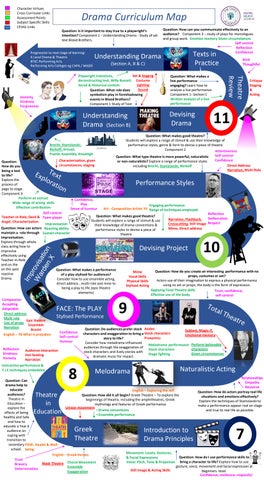
Drama Curriculum Map Question: Is it important to stay true to a playwright’s intention? Component 1 - Understanding Drama - Study of set text Blood Brothers.
Progression to next stage of learning: A Level Drama & Theatre BTEC Performing Arts Performing Arts Colleges eg CAPA / MADD
Understanding Drama
Texts in Practice
(Section A, B & C)
Understanding Drama (Section B)
Question: What makes a live performance engaging? Learn how to analyse a live performance. Component 1: Section C Written analysis of a live performance
Kind Thoughtful
Theatre Review
Set & Staging Playwright intentions, deconstructing text, Willy Russell, Costume Lighting Social & Historical context Sound Question: What role does symbolism play in foreshadowing events in Blood Brothers? Component 1 Study of Text
Honesty Kindness Forgiveness
Question: How can you communicate effectively to an audience? Component 3 – study of plays for monologues and group work. Emotion memory Given circumstances Self control Reflection Confidence
Critique Staging & Acting
11
Devising Drama
Question: What makes good theatre? Students will explore a range of stimuli & use their knowledge of performance styles, genre & form to devise a piece of theatre Component 2 Attentiveness
Brecht, Stanislavski, Berkoff, Artuad, Frantic Assembly, Kneehigh
Question: What type theatre is more powerful, naturalistic or non-naturalistic? Explore a range of performance styles including Brecht, Stanislavski, Berkoff
Self control Confidence Direct Address Narration, Multi Role
Characterisation, given Question: circumstances, staging How do you being a text to life? Explore the process of page to stage. Component 3. Perform an extract Confidence, Wide range of acting skills Play Engaging performance Effective contribution Art - Composition Artists Y9 Range of techniques employed Sense of humour Self-control Reflection Question: What makes good theatre? Teacher-in-Role, Devil & Team player Deliberation Narration, Flashback, Students will explore a range of stimuli & use Angel, Characterisation Crosscutting, Still Image Respect Improvisation their knowledge of drama conventions & Question: How can actors Reacting ability Mime, Direct address performance styles to devise a piece of maintain a role through Sustain character theatre improvisation. Explore through whole class acting how to improvise effectively using Teacher-in-Role and on the on the spot Question: What makes a performance Question: How do you create an interesting performance with no Mime reactive of a play stylised for audiences? props, costumes or set? Vocal Skills Drama. Consider how to use ensemble acting, Actors use of their imagination to express a physical performance Physical Skills direct address , multi-role and mine to using no set or props; the body is the form of expression. Stylised Acting being a play to life (epic theatre Applying Total Theatre skills Trust, confidence, elements) Effective use of the body self control Compassion Accepting Adaptable Direct address Stylised Performance Multi role Epic theatre Use of props Ensemble Narration Question: Do audiences prefer stock Asides Brecht Subtext, Magic-if, Confidence characters and exaggeration to bring a Stock characters English – Y8 What is prejudice Emotional memory Self-control Proxemics story to life? Humour Consider how melodrama influenced Melodrama performance Perform believable audiences through the exaggeration of Reflection characters Stock characters Audience Interaction stock characters and lively stories with Kindness Given circumstances Stage fighting Hot-Seating dramatic music for impact. Honesty Narration
Performance Styles
Devising Project
FACE: The PLAY
Interactive performance & T.I.E techniques embedded
8
10
9
Melodrama
Naturalistic Acting
Relationships Question: Can Empathy drama help to Remorse educate English – Exploring the self Question: How do actors portray real life audiences? Question: How did it all begin? Greek Theatre – To explore the situations and emotions effectively? Theatre in beginnings of theatre, including the amphitheatres, Greek Explore the techniques of Stanislavski to Education – mythology and features of Greek performance make a performance appear real on stage Unison movement explore the ▪ Drama conventions and true to real life as possible. effects of being ▪ Ensemble performance healthy and Safe and how to educate a Year 6 audience on coping with transition to secondary PSHE: Health & Wellschool. being Movement: Levels, Gestures, English – Greek Heroes Question: How do I use performance skills to & Facial Expressions Trust Voice: Pitch, Tone & Projection bring a character to life? Explore how to use Mask Theatre Choral Movement Bravery gesture, voice, movement and facial expression at Ensemble Determination Still Image & Acting Skills beginners level. Exaggeration Confidence, resilience, respectful
Theatre in Education
Greek Theatre
Introduction to Drama Principles
7