St Stephen’s Kearsley Moor C of E Primary School
EYFS Long Term Overview 2021-2022
Forest Schools
Topic
Autumn 1
Autumn 2
Spring 1
Spring 2
Summer 1
Summer 2
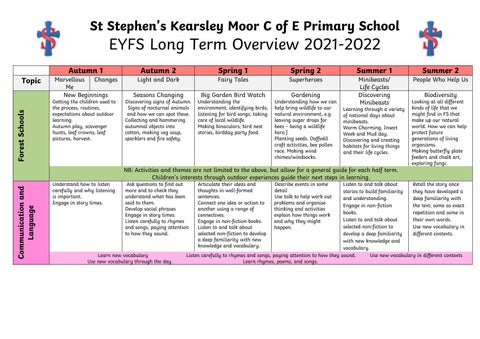
Marvellous Changes Me New Beginnings
Light and Dark
Fairy Tales
Superheroes
Minibeasts/ Life Cycles Discovering Minibeasts
People Who Help Us
Getting the children used to the process, routines, expectations about outdoor learning. Autumn play, scavenger hunts, leaf crowns, leaf pictures, harvest.
Seasons Changing
Discovering signs of Autumn. Signs of nocturnal animals and how we can spot these. Collecting and hammering autumnal objects into cotton, making veg soup, sparklers and fire safety.
Big Garden Bird Watch
Understanding the environment, identifying birds, listening for bird songs, taking care of local wildlife. Making binoculars, bird nest stories, birdday party food.
Gardening
Understanding how we can help bring wildlife to our natural environment, e.g. leaving sugar drops for bees – being a wildlife hero.] Planting seeds. Daffodil craft activities, bee pollen race. Making wind chimes/windsocks.
Learning through a variety of national days about minibeasts. Worm Charming, Insect Week and Mud day. Discovering and creating habitats for living things and their life cycles.
Biodiversity
Looking at all different kinds of life that we might find in FS that make up our natural world. How we can help protect future generations of living organisms. Making butterfly plate feeders and chalk art, exploring fungi.
Communication and Language
NB: Activities and themes are not limited to the above, but allow for a general guide for each half term. Children’s interests through outdoor experiences guide their next steps in learning. Understand how to listen carefully and why listening is important. Engage in story times.
Ask questions to find out more and to check they understand what has been said to them. Develop social phrases Engage in story times. Listen carefully to rhymes and songs, paying attention to how they sound.
Learn new vocabulary Use new vocabulary through the day
Articulate their ideas and thoughts in well-formed sentences. Connect one idea or action to another using a range of connectives. Engage in non-fiction books. Listen to and talk about selected non-fiction to develop a deep familiarity with new knowledge and vocabulary.
Describe events in some detail Use talk to help work out problems and organise thinking and activities explain how things work and why they might happen.
Listen to and talk about Retell the story once stories to build familiarity they have developed a and understanding. deep familiarity with Engage in non-fiction the text; some as exact books. repetition and some in Listen to and talk about their own words. selected non-fiction to Use new vocabulary in develop a deep familiarity different contexts. with new knowledge and vocabulary. Listen carefully to rhymes and songs, paying attention to how they sound. Use new vocabulary in different contexts Learn rhymes, poems, and songs.