PSHE Progressive Curriculum for Primary
DfE Statutory Relationships & Health Education outcomes
( Updated Oct 2021 – consent focus)
Puzzle overview Being Me in My World
EYFS PSED – ELG: SELFREGULATION Show an understanding of their own feelings and those of others, and begin to regulate their behaviour accordingly. Give focused attention to what the teacher says, responding appropriately even when engaged in activity, and show an ability to follow instructions involving several ideas or actions. ELG: MANAGING SELF Explain the reasons for rules, know right from wrong and try to behave accordingly. PSED – ELG: BUILDING RELATIONSHIPS Work and play cooperatively and take turns with others. Show sensitivity to their own and to others’ needs.
Year 1
Being Me in My World Puzzle – Autumn 1 Year 2 Year 3 Year 4
Year 5
Year 6
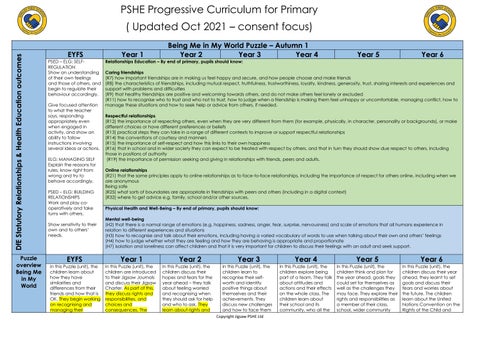
Relationships Education – By end of primary, pupils should know: Caring friendships (R7) how important friendships are in making us feel happy and secure, and how people choose and make friends (R8) the characteristics of friendships, including mutual respect, truthfulness, trustworthiness, loyalty, kindness, generosity, trust, sharing interests and experiences and support with problems and difficulties (R9) that healthy friendships are positive and welcoming towards others, and do not make others feel lonely or excluded (R11) how to recognise who to trust and who not to trust, how to judge when a friendship is making them feel unhappy or uncomfortable, managing conflict, how to manage these situations and how to seek help or advice from others, if needed. Respectful relationships (R12) the importance of respecting others, even when they are very different from them (for example, physically, in character, personality or backgrounds), or make different choices or have different preferences or beliefs (R13) practical steps they can take in a range of different contexts to improve or support respectful relationships (R14) the conventions of courtesy and manners (R15) the importance of self-respect and how this links to their own happiness (R16) that in school and in wider society they can expect to be treated with respect by others, and that in turn they should show due respect to others, including those in positions of authority (R19) the importance of permission seeking and giving in relationships with friends, peers and adults. Online relationships (R21) that the same principles apply to online relationships as to face-to-face relationships, including the importance of respect for others online, including when we are anonymous Being safe (R25) what sorts of boundaries are appropriate in friendships with peers and others (including in a digital context) (R32) where to get advice e.g. family, school and/or other sources. Physical Health and Well-Being – By end of primary, pupils should know: Mental well-being (H2) that there is a normal range of emotions (e.g. happiness, sadness, anger, fear, surprise, nervousness) and scale of emotions that all humans experience in relation to different experiences and situations (H3) how to recognise and talk about their emotions, including having a varied vocabulary of words to use when talking about their own and others’ feelings (H4) how to judge whether what they are feeling and how they are behaving is appropriate and proportionate (H7) isolation and loneliness can affect children and that it is very important for children to discuss their feelings with an adult and seek support.
EYFS
Year 1
In this Puzzle (unit), the children learn about how they have similarities and differences from their friends and how that is OK. They begin working on recognising and managing their
In this Puzzle (unit), the children are introduced to their Jigsaw Journals and discuss their Jigsaw Charter. As part of this, they discuss rights and responsibilities, and choices and consequences. The
Year 2 In this Puzzle (unit), the children discuss their hopes and fears for the year ahead – they talk about feeling worried and recognising when they should ask for help and who to ask. They learn about rights and
Year 3 In this Puzzle (unit), the children learn to recognise their selfworth and identify positive things about themselves and their achievements. They discuss new challenges and how to face them Copyright Jigsaw PSHE Ltd
Year 4
Year 5
Year 6
In this Puzzle (unit), the children explore being part of a team. They talk about attitudes and actions and their effects on the whole class. The children learn about their school and its community, who all the
In this Puzzle (unit), the children think and plan for the year ahead, goals they could set for themselves as well as the challenges they may face. They explore their rights and responsibilities as a member of their class, school, wider community
In this Puzzle (unit), the children discuss their year ahead, they learnt to set goals and discuss their fears and worries about the future. The children learn about the United Nations Convention on the Rights of the Child and