1 Progression of skills – Music Curriculum intent: Music should be an enjoyable experience for pupils and teachers. Children participate in a range of musical experiences, building up their confidence at the same time. They develop their understanding of rhythm and pitch and learn how music is structured, as well as learning technical vocabulary for these elements. As children’s confidence builds, they enjoy the performance aspect of music. Children experience listening to music from different cultures and eras. Music is taught as a discrete subject but also across the curriculum. Areas of learning, such as times tables in maths, vocabulary in languages and movement in dance can allincorporate different elements of music. A weekly singing assembly allows the children opportunities to develop their singing skills and gain an understanding of how ensembles work. Performances, such as Christmas plays and nativities and end of year shows, demonstrate that music is important to the life of the school. Extracurricular activities, such as choir and peripatetic music lessons, also provide children with experience of making music.
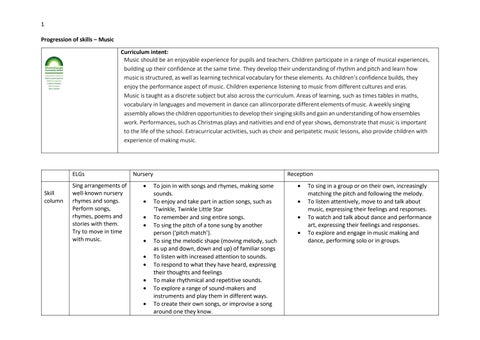
ELGs Skill column
Sing arrangements of well-known nursery rhymes and songs. Perform songs, rhymes, poems and stories with them. Try to move in time with music.
Nursery • • • • • • • • • •
Reception To join in with songs and rhymes, making some sounds. To enjoy and take part in action songs, such as ‘Twinkle, Twinkle Little Star To remember and sing entire songs. To sing the pitch of a tone sung by another person (‘pitch match’). To sing the melodic shape (moving melody, such as up and down, down and up) of familiar songs To listen with increased attention to sounds. To respond to what they have heard, expressing their thoughts and feelings To make rhythmical and repetitive sounds. To explore a range of sound-makers and instruments and play them in different ways. To create their own songs, or improvise a song around one they know.
• • • •
To sing in a group or on their own, increasingly matching the pitch and following the melody. To listen attentively, move to and talk about music, expressing their feelings and responses. To watch and talk about dance and performance art, expressing their feelings and responses. To explore and engage in music making and dance, performing solo or in groups.