Scholes Junior and Infant School PE Substantive Knowledge Progression Theme: Dance Reception
Year 1
Year 2
Year 3
Year 4
Year 5
Year 6 Key Stage 3
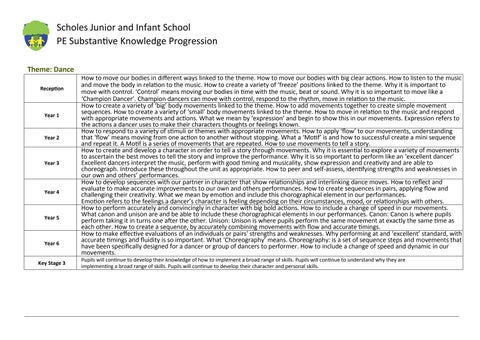
How to move our bodies in different ways linked to the theme. How to move our bodies with big clear actions. How to listen to the music and move the body in relation to the music. How to create a variety of ‘freeze’ positions linked to the theme. Why it is important to move with control. ‘Control’ means moving our bodies in time with the music, beat or sound. Why it is so important to move like a ‘Champion Dancer’. Champion dancers can move with control, respond to the rhythm, move in relation to the music. How to create a variety of ‘big’ body movements linked to the theme. How to add movements together to create simple movement sequences. How to create a variety of ‘small’ body movements linked to the theme. How to move in relation to the music and respond with appropriate movements and actions. What we mean by ‘expression’ and begin to show this in our movements. Expression refers to the actions a dancer uses to make their characters thoughts or feelings known. How to respond to a variety of stimuli or themes with appropriate movements. How to apply ‘flow’ to our movements, understanding that ‘flow’ means moving from one action to another without stopping. What a ‘Motif’ is and how to successful create a mini sequence and repeat it. A Motif is a series of movements that are repeated. How to use movements to tell a story. How to create and develop a character in order to tell a story through movements. Why it is essential to explore a variety of movements to ascertain the best moves to tell the story and improve the performance. Why it is so important to perform like an ‘excellent dancer’ Excellent dancers interpret the music, perform with good timing and musicality, show expression and creativity and are able to choreograph. Introduce these throughout the unit as appropriate. How to peer and self-assess, identifying strengths and weaknesses in our own and others’ performances. How to develop sequences with our partner in character that show relationships and interlinking dance moves. How to reflect and evaluate to make accurate improvements to our own and others performances. How to create sequences in pairs, applying flow and challenging their creativity. What we mean by emotion and include this chorographical element in our performances. Emotion refers to the feelings a dancer’s character is feeling depending on their circumstances, mood, or relationships with others. How to perform accurately and convincingly in character with big bold actions. How to include a change of speed in our movements. What canon and unison are and be able to include these chorographical elements in our performances. Canon: Canon is where pupils perform taking it in turns one after the other. Unison: Unison is where pupils perform the same movement at exactly the same time as each other. How to create a sequence, by accurately combining movements with flow and accurate timings. How to make effective evaluations of an individuals or pairs' strengths and weaknesses. Why performing at and ‘excellent’ standard, with accurate timings and fluidity is so important. What ‘Choreography’ means. Choreography: is a set of sequence steps and movements that have been specifically designed for a dancer or group of dancers to performer. How to include a change of speed and dynamic in our movements. Pupils will continue to develop their knowledge of how to implement a broad range of skills. Pupils will continue to understand why they are implementing a broad range of skills. Pupils will continue to develop their character and personal skills.