NPA Primary School
Long-term map - Geography 2021
This long-term plan has been designed specifically for our school to show how, what and when we cover and progress all of the curriculum through relevant Geographical knowledge and skills across the year groups. The context in which these are taught is left to the discretion of teachers, confirmed by the subject leader.
EYFS Vocabulary Locational knowledge
Autumn
Spring
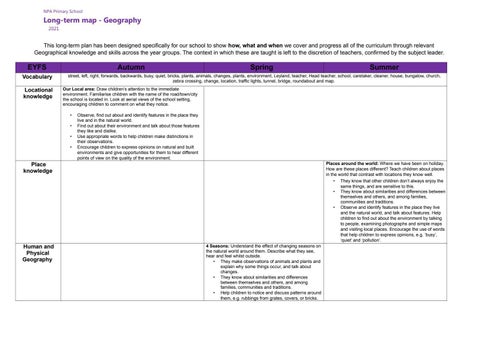
street, left, right, forwards, backwards, busy, quiet, bricks, plants, animals, changes, plants, environment, Leyland, teacher, Head teacher, school, caretaker, cleaner, house, bungalow, church, zebra crossing, change, location, traffic lights, tunnel, bridge, roundabout and map. Our Local area: Draw children’s attention to the immediate environment. Familiarise children with the name of the road/town/city the school is located in. Look at aerial views of the school setting, encouraging children to comment on what they notice. • • • •
Observe, find out about and identify features in the place they live and in the natural world. Find out about their environment and talk about those features they like and dislike. Use appropriate words to help children make distinctions in their observations. Encourage children to express opinions on natural and built environments and give opportunities for them to hear different points of view on the quality of the environment. Places around the world: Where we have been on holiday. How are these places different? Teach children about places in the world that contrast with locations they know well. • They know that other children don’t always enjoy the same things, and are sensitive to this. • They know about similarities and differences between themselves and others, and among families, communities and traditions. • Observe and identify features in the place they live and the natural world, and talk about features. Help children to find out about the environment by talking to people, examining photographs and simple maps and visiting local places. Encourage the use of words that help children to express opinions, e.g. ‘busy’, ‘quiet’ and ‘pollution’.
Place knowledge
Human and Physical Geography
Summer
4 Seasons: Understand the effect of changing seasons on the natural world around them. Describe what they see, hear and feel whilst outside. • They make observations of animals and plants and explain why some things occur, and talk about changes. • They know about similarities and differences between themselves and others, and among families, communities and traditions. • Help children to notice and discuss patterns around them, e.g. rubbings from grates, covers, or bricks.