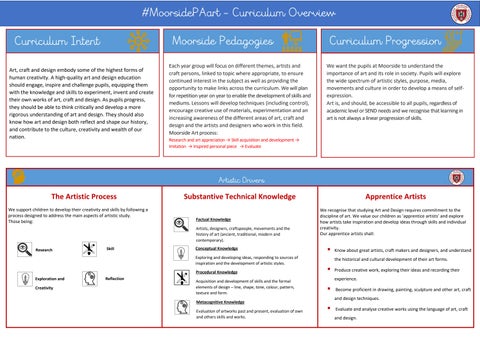
Art, craft and design embody some of the highest forms of human creativity. A high-quality art and design education should engage, inspire and challenge pupils, equipping them with the knowledge and skills to experiment, invent and create their own works of art, craft and design. As pupils progress, they should be able to think critically and develop a more rigorous understanding of art and design. They should also know how art and design both reflect and shape our history, and contribute to the culture, creativity and wealth of our nation.
The Artistic Process We support children to develop their creativity and skills by following a process designed to address the main aspects of artistic study. Those being:
Each year group will focus on different themes, artists and craft persons, linked to topic where appropriate, to ensure continued interest in the subject as well as providing the opportunity to make links across the curriculum. We will plan for repetition year on year to enable the development of skills and mediums. Lessons will develop techniques (including control), encourage creative use of materials, experimentation and an increasing awareness of the different areas of art, craft and design and the artists and designers who work in this field. Moorside Art process: Research and art appreciation → Skill acquisition and development → Imitation → Inspired personal piece → Evaluate
Substantive Technical Knowledge Factual Knowledge Artists, designers, craftspeople, movements and the history of art (ancient, traditional, modern and contemporary).
Research
Skill
Conceptual Knowledge Exploring and developing ideas, responding to sources of inspiration and the development of artistic styles. Procedural Knowledge
Exploration and Creativity
Reflection
We want the pupils at Moorside to understand the importance of art and its role in society. Pupils will explore the wide spectrum of artistic styles, purpose, media, movements and culture in order to develop a means of selfexpression. Art is, and should, be accessible to all pupils, regardless of academic level or SEND needs and we recognise that learning in art is not always a linear progression of skills.
Acquisition and development of skills and the formal elements of design – line, shape, tone, colour, pattern, texture and form. Metacognitive Knowledge Evaluation of artworks past and present, evaluation of own and others skills and works.
Apprentice Artists We recognise that studying Art and Design requires commitment to the discipline of art. We value our children as ‘apprentice artists’ and explore how artists take inspiration and develop ideas through skills and individual creativity. Our apprentice artists shall:
Know about great artists, craft makers and designers, and understand the historical and cultural development of their art forms.
Produce creative work, exploring their ideas and recording their experience.
Become proficient in drawing, painting, sculpture and other art, craft and design techniques.
Evaluate and analyse creative works using the language of art, craft and design.