SPOTLIGHTONSAFEGUARDING
Working
Secondary | December 2025
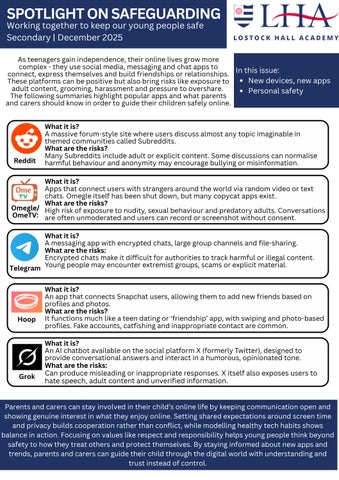
As teenagers gain independence, their online lives grow more complex - they use social media, messaging and chat apps to connect, express themselves and build friendships or relationships. These platforms can be positive but also bring risks like exposure to adult content, grooming, harassment and pressure to overshare. The following summaries highlight popular apps and what parents and carers should know in order to guide their children safely online.
What it is?

In this issue:
New devices, new apps
Personal safety
A massive forum-style site where users discuss almost any topic imaginable in themed communities called Subreddits.
What are the risks?
Many Subreddits include adult or explicit content. Some discussions can normalise harmful behaviour and anonymity may encourage bullying or misinformation.

Omegle/ OmeTV:
High risk of exposure to nudity, sexual behaviour and predatory adults. Conversations are often unmoderated and users can record or screenshot without consent. Reddit
Telegram

What it is?
Apps that connect users with strangers around the world via random video or text chats. Omegle itself has been shut down, but many copycat apps exist
What are the risks?
What it is?
A messaging app with encrypted chats, large group channels and file-sharing. What are the risks:
Encrypted chats make it difficult for authorities to track harmful or illegal content. Young people may encounter extremist groups, scams or explicit material
What it is?
An app that connects Snapchat users, allowing them to add new friends based on profiles and photos
What are the risks?
It functions much like a teen dating or ‘friendship’ app, with swiping and photo-based profiles. Fake accounts, catfishing and inappropriate contact are common.

What it is?
An AI chatbot available on the social platform X (formerly Twitter), designed to provide conversational answers and interact in a humorous, opinionated tone.
What are the risks:
Can produce misleading or inappropriate responses. X itself also exposes users to hate speech, adult content and unverified information.
Parents and carers can stay involved in their child’s online life by keeping communication open and showing genuine interest in what they enjoy online. Setting shared expectations around screen time and privacy builds cooperation rather than conflict, while modelling healthy tech habits shows balance in action. Focusing on values like respect and responsibility helps young people think beyond safety to how they treat others and protect themselves. By staying informed about new apps and trends, parents and carers can guide their child through the digital world with understanding and trust instead of control.