100% coverage of New Zealand Mathematics and Statistics Curriculum for Phases 1-3
Proven results in Aotearoa New Zealand schools for over a decade Clear, step-by-step lessons for consistent, explicit teaching
Structured problem solving and reasoning for deep understanding
Ratio
Let's Remember Let's Remember
1. Write the missing fractions. of the shapes are squares. of the shapes are triangles.
2. A store has 108 pairs of jandals. It has 4 times as many pairs of jandals as gumboots. How many pairs of jandals and gumboots does the store have altogether?
?
EXPLORE
In New Zealand, it is estimated that there are about 4 workers for every person aged 65 or older.
a) What is the ratio of the number of workers to the number of people aged 65 or older?
b) If there are 1,000 workers, how many people aged 65 or older are there?
How can we solve this problem? Discuss in your group and fill in Columns 1 and 2. 4
1. What I already know that will help me solve the problem
Divide a whole number by a 1-digit number.
2. What I need to find out and learn 3.What I have learnt
Use a ratio to compare two quantities. Solve word problems involving ratio. Answer varies.
Unit 1 Finding Ratio
You will learn to... • use a ratio to compare two quantities
1.1 Using a ratio to compare two quantities
Let's Learn Let's Learn
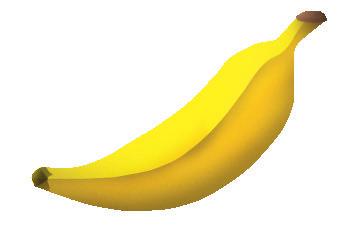
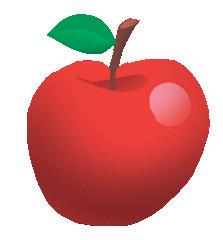
a) There are 2 bananas and 3 apples.
The ratio of the number of bananas to the number of apples is 2 : 3.
The two quantities we are comparing form the terms of the ratio.
first term → 2 : 3 ← second term
We read the ratio 2 : 3 as 2 to 3.
The ratio of the number of apples to the number of bananas is 3 : 2. 2 : 3 is not the same as 3 : 2.
We use a ratio to compare quantities. a : b is a ratio.
The quantities we are comparing form the terms of the ratio. ‘a’ and ‘b’ are the terms of the ratio.
a : b is read as a to b. b : a is read as b to a. They are not the same.
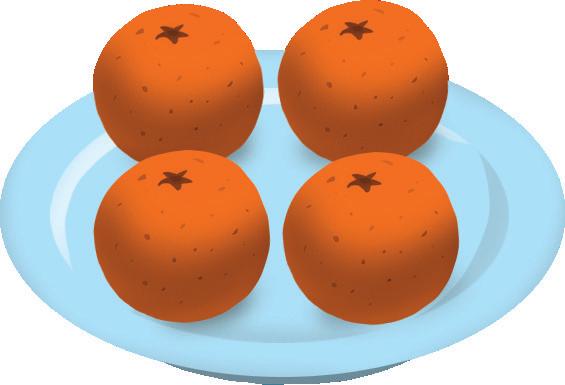
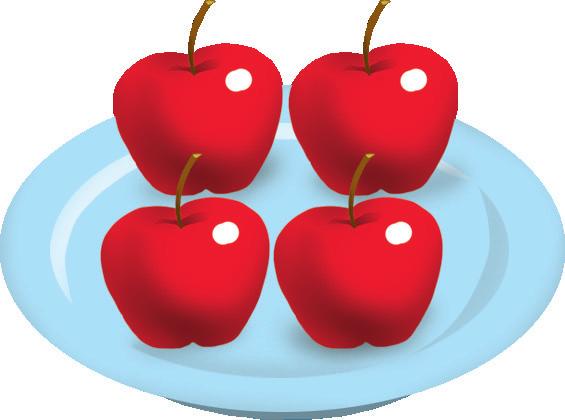
b) Each plate has the same number of fruits.
We can compare the number of oranges and apples by comparing the number of plates of each type of fruit. The ratio of the number of plates of oranges to the number of plates of apples is 3 : 1, not 3 plates : 1 plate.
The ratio 3 : 1 does not tell us the actual number of fruits.
A ratio compares quantities. The quantities being compared may have units, but we do not write the units in the ratio.
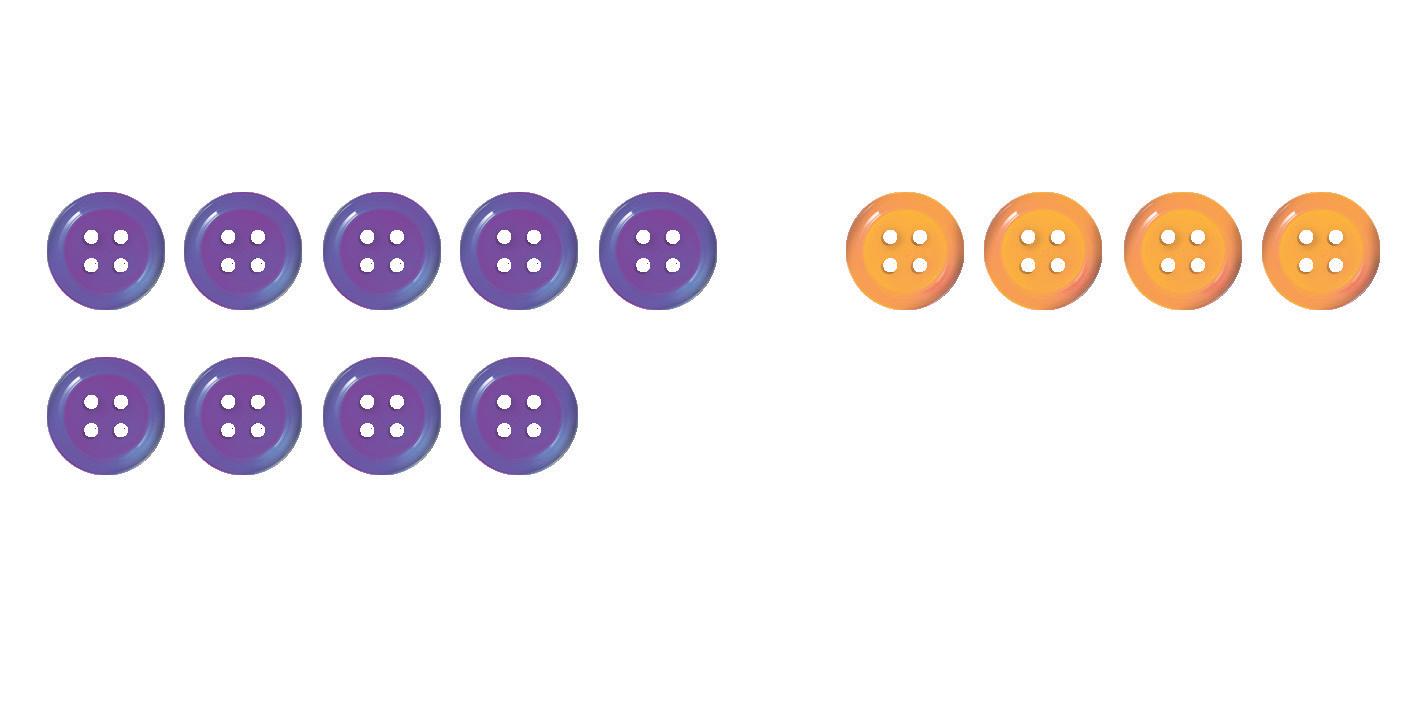
a) The ratio of the number of blue buttons to the number of orange buttons is :
b) The ratio of the number of orange buttons to the number of blue buttons is : . Let's Do Let's Do
Let's Practise Let's Practise
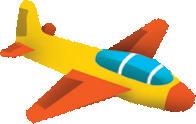
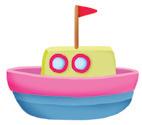
1. Write the ratios. toy aeroplanes toy boats
a) The ratio of the number of toy aeroplanes to the number of toy boats is : .
b) The ratio of the number of toy boats to the number of toy aeroplanes is :
2. Write the ratios. 4 cm 3 cm
a) The ratio of the length of the rectangle to its width is : .
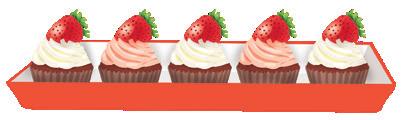
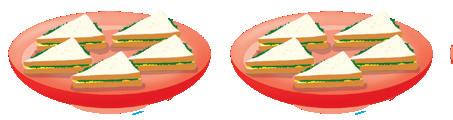
3. Write a ratio to compare the numbers of cupcakes and sandwiches. cupcakes sandwiches
b) The ratio of the width of the rectangle to its length is : . The ratio of the number of cupcakes to the number of sandwiches is 2 : 5. OR The ratio of the number of sandwiches to the number of cupcakes is 5 : 2.
THINK ABOUT IT
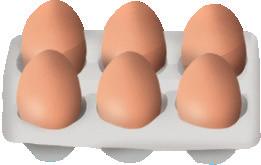
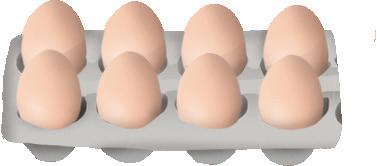
Sarah uses a ratio to compare the number of eggs.
brown eggs
Sarah
white eggs
The ratio of the number of brown eggs to the number of white eggs is 2 : 1.
Is Sarah correct? Why do you say so?
Sarah is not correct. She should not compare the number of cartons of eggs directly because there are different number of eggs in the cartons.
What did you learn about using ratio to compare two quantities?
When we use a ratio to compare the number of objects put in groups, we can do so by comparing the number of groups only if the groups have the same number of objects.
Think of a time in your daily life when you need to use ratios.
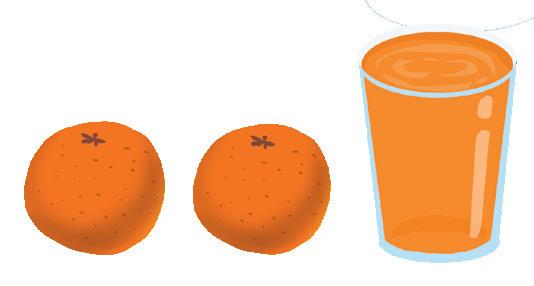
I use 2 oranges to make 1 cup of orange juice. The ratio of the number of oranges to the number of cups of orange juice is 2 : 1. So, I use 4 oranges to get 2 cups of orange juice.
P B Chapter 7: Exercise 1.1, page 120
>> Look at EXPLORE on page 190 again. Can you solve the problem now? What else do you need to know?
1.2 Using a ratio to compare a quantity with the total quantity
Let's Learn Let's Learn
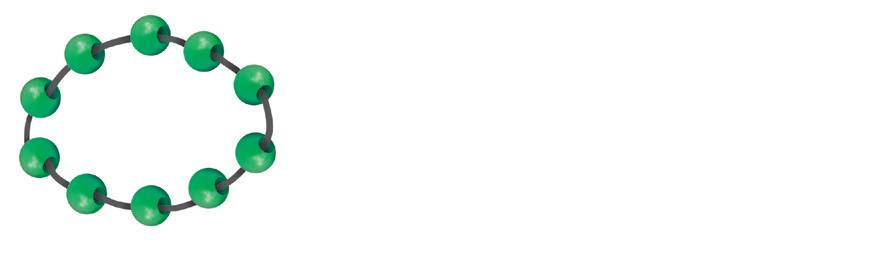
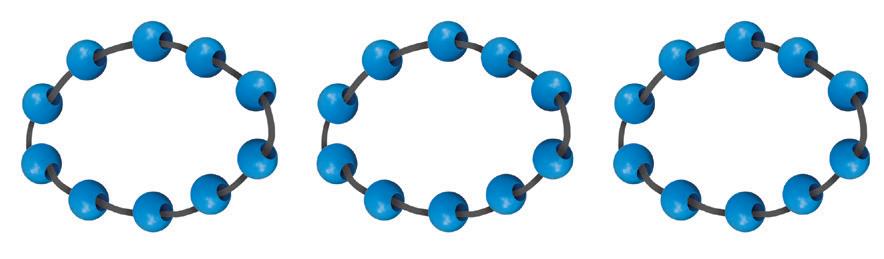
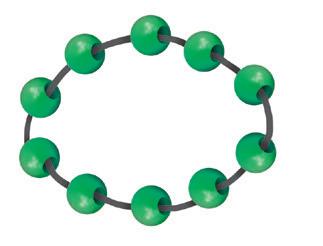
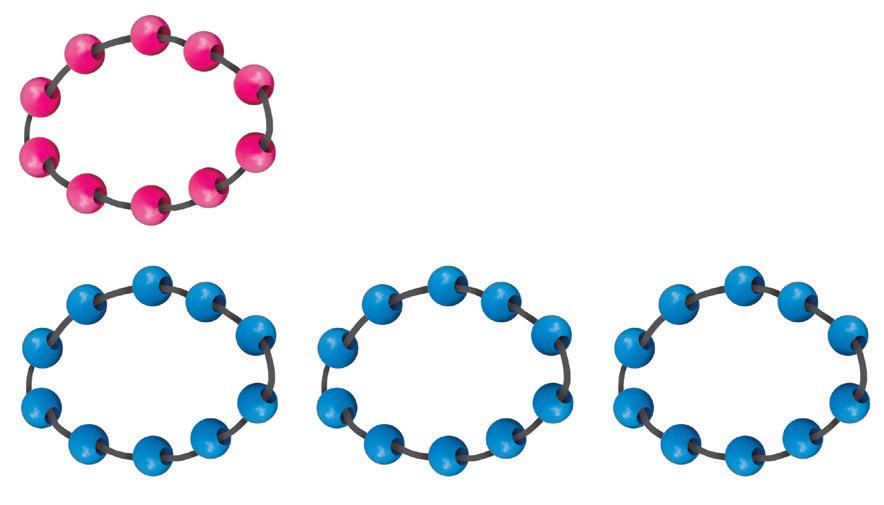
Each string has the same number of beads.
The ratio of the number of strings of green beads to the number of strings of blue beads is 1 : 3.
The ratio of the number of strings of blue beads to the number of strings of green beads is : .
There are 4 strings of beads altogether.
The ratio of the number of strings of blue beads to the total number of strings of beads is 3 : 4.
Let's Do Do
1. Write the ratios.
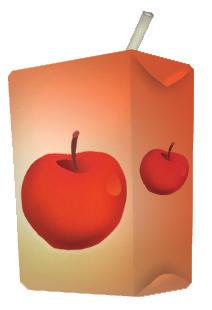
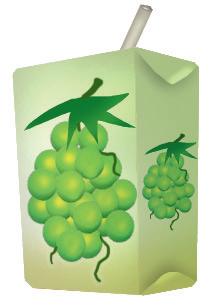
a) The ratio of the number of apple juice packets to the number of grape juice packets is :
b) The ratio of the number of apple juice packets to the total number of drink packets is : .
c) The ratio of the total number of drink packets to the number of grape juice packets is : .
1. Write the ratios.
a) The ratio of the mass of the bag of rice to the total mass of the two bags is : . b) The ratio of the total mass of the two bags to the mass of the bag of flour is : .
1.3 Using a bar model to show a ratio
We can draw a bar model to show the ratio of the number of strings of beads.
The ratio of the number of strings of green beads to the number of strings of blue beads is 1 : 3, not 1 unit : 3 units. We do not write the units in the ratio. 1
1. Write the ratios. Rope B
Rope A
strings of green beads
strings of blue beads
a) The ratio of the length of Rope A to the length of Rope B is
b) The ratio of the length of Rope B to the length of Rope A is
c) The ratio of the length of Rope B to the total length of the two pieces of rope is : .
1. Write the ratios. mass of Bag A
mass of Bag B
a) The ratio of the mass of Bag A to the mass of Bag B is :
b) The ratio of the mass of Bag B to the total mass of the two bags is
Unit 2 Problem Solving
You will learn to...
• solve word problems involving ratio
• solve non-routine problems involving ratio
2.1 Word problems
Let's Learn Let's Learn
1. The ratio of the volume of oil in Barrel A to the volume of oil in Barrel B is 5 : 3. If Barrel A contains 125 litres of oil, find the volume of oil in Barrel B.
2 Understand the problem. Mārama
3
1 Work out the Answer Whakaatu
What is the ratio of the volume of oil in Barrel A to the volume of oil in Barrel B? How much oil does Barrel A contain? What do I have to find?
Plan what to do. Whakaaro
I can draw a bar model to help me solve the problem.
5 : 3 means 5 units to 3 units.
4 Check if your answer is correct. Tirohia
=
3 My answer is correct.
Barrel A 125 L
Barrel B ?
The volume of oil in Barrel B is 3 5 of the volume of oil in Barrel A. 3 5 of 125 L = 3 5 × 125 = 375 5 = 75
The volume of oil in Barrel B is 75 litres.
Compare the methods in Steps 3 and 5. Which method do you prefer? Why?
2. In a nature reserve, the ratio of the number of kererū to the total number of kererū and tūī is 2 : 7. If there are 658 kererū and tūī altogether, how many tūī are there?
What is the ratio of the number of kererū to the total number of kererū and tūī? How many kererū and tūī are there altogether? What do I have to find?
I can draw a bar model to help me solve the problem.
7 units → 658
There are 470 tūī. Plan what to do. Whakaaro 2 Understand the problem. Mārama 1 Work out the Answer. Whakaatu 3 + Plus Solve the problem in another way. Tāpiri 5
1 unit → 658 ÷ 7 = 94
5 units → 5 × 94 = 470
1. Understand 2. Plan 3. Answer 4. Check 5. Plus 658 kererū tūī ?
7 units – 2 units = 5 units
The ratio of the number of kererū to the number of tūī is 2 : 5.
Check if your answer is correct.
Understand 2. Plan 3. Answer 4. Check
Let's Do Let's Do
Solve the word problems. Use the bar models to help you. Show your work clearly. Next, try solving each problem in a different way. Which method do you prefer? Why? 1. The ratio of the number of buses to the number of cars is 4 : 7. If there are 36 more cars than buses, how many cars are there?
Understand 2. Plan 3. Answer 4. Check 5. Plus
2. At a rangatahi holiday camp, the ratio of the number of boys to the total number of boys and girls is 5 : 8. How many girls are there if there are 75 boys?
boys girls 75 ?
Let's Practise Let's Practise
Solve the word problems. Show your work clearly.
1. The ratio of roses to tulips in a bouquet is 5 : 7. If a florist used 30 roses to make several such bouquets, how many tulips did she use?
2. Daniel and Amelia shared an amount of money in the ratio 9 : 4. If Amelia received $100, what was the amount of money shared?
3. The ratio of Jenny’s height to the total height of Jenny and Rachel is 5 : 13. Rachel is 57 centimetres taller than Jenny. Find Jenny’s height.
4. A painter mixed some blue paint and red paint to make purple paint. The ratio of red paint to purple paint is 4 : 7. If 51 litres of blue paint were mixed in, how much purple paint did he make?
L 15 L
Answer varies. Sample:
CREATE YOUR OWN
5. To prepare drinks for a whānau gathering, Whāea Lani uses some lemon juice and water in the ratio 4 : 7 to make lemonade. She has 35 litres of lemon juice at first and uses 35 litres of water to make the lemonade. How many litres of lemon juice does she have left?
Chapter 7: Exercise 2.1, pages 123–125
The ratio of the number of pies to the number of sausage rolls Tony bakes is 5 : 3. If he bakes 12 fewer sausage rolls than pies, how many pies does he bake?
Read the word problem. Change the numbers in the word problem. How did you decide what numbers to use?
Next, solve the word problem. Show your work clearly. What did you learn?
The ratio of the number of pies to the number of sausage rolls Tony bakes is 8 : 5. If he bakes 15 fewer sausage rolls than pies, how many pies does he bake? 3 units → 15 1 unit → 15 ÷ 3 = 5 8 units → 8 × 5 = 40 He bakes 40 pies. 95 cm
2.2 Mind stretcher
Let's Learn Let's Learn
Wiremu and his class raised $490 at a local community fair by selling whakairo and crafts. He split the funds between a local marae development project and a youth sports programme in the ratio 4 : 3. 20% of the funds for the local marae development project was used to buy native seedlings and tools. How much money was used to buy native seedlings and tools?
2
Mārama
3
4
How much money was raised at the local community fair? How was the fund split between the two projects? What percentage of the marae development funds was used to buy native seedlings and tools? What do I have to find? Understand the problem.
I can draw a bar model to help me solve the problem. Plan what to do.
Whakaaro
Work out the Answer. Whakaatu
1 Check if your answer is correct.
Tirohia
My answer is correct.
marae development project.
+ Plus Solve the problem in another way.
Tāpiri
4 7 × $490 = $280
20% × $280 = 20 100 × $280 = $56
$56 was used to buy native seedlings and tools.
Compare the methods in Steps 3 and 5. Which method do you prefer? Why?
1. Understand 2. Plan 3. Answer 4. Check 5. Plus
Let's Do Let's Do
Mike earned $693 mowing his neighbours’ lawns. He saved 1 3 of the money and spent the rest on food and books in the ratio 5 : 6. How much did Mike spend on food?
Strategy: Draw a bar model
1 – 1 3 = 2 3
He spent 2 3 of the money on food and books.
2 3 × $693 = $462
He spent $462 on food and books. ? food books $462
11 units → $462
1 unit → $462 ÷ 11 = $42
5 units → 5 × $42 = $210
Mike spent $210 on food.
I have learnt to... solve word problems involving ratio solve non-routine problems involving ratio
>> Look at EXPLORE on page 190 again. Fill in Column 3. Can you solve the problem now?