

100% coverage of New Zealand Mathematics and Statistics Curriculum for Phases 1-3
All-in-one teaching support with clear explanations, assessments and resources Easy-to-follow structured lesson guidance that simplifies planning and teaching Math Pro for additional digital teaching resources and online professional development

Strand(s): Number
• CB: pp. 181–182
• Math Pro: Recall
• Recognise and name notes and coins
Scheme of Work
Let’s Remember
• Count and tell the amount of money in a group of coins only or a group of notes only, using more than one denomination
• Add and subtract numbers up to 100
1: Dollars and Cents New Zealand Curriculum Year 3: Number — Financial mathematics
Unit
1.1 Knowledge ( ★ ) and Practices ( ◆ )
★ New Zealand curr ency is a decimal system of dollars made up of 100 cents.
◆ Repr esenting currency values of mixed dollars and cents without using decimal notation (e.g. $2 and 50 cents)
• CB: pp. 183–184
• PB: pp. 132–133
• Math Pro: Practice
• Play money
• Count and tell the amount of money in a group of notes and coins in dollars and cents
1.1 Counting dollars and cents
1.2 Knowledge ( ★ ) and Practices ( ◆ )
★ New Zealand curr ency is a decimal system of dollars made up of 100 cents.
◆ Making amounts of money using oneand two-dollar coins and 5-, 10-, 20-, 50-, and 100-dollar notes
• CB: pp. 185–186
• PB: pp. 134–135
• Math Pro: Practice
• Play money
• Make up an amount of money using a group of coins and notes
1.2 Making up an amount of money
2: Shopping
Unit
New Zealand Curriculum Year 3: Number — Financial mathematics
2.1 Knowledge ( ★ )
★ Finding the total cost and giving change with money involves addition and subtraction.
• CB: pp. 187–188
• PB: pp. 136–137
• Math Pro: Practice
• Play money
• Read the price of an object and pay for it
2.1 Adding amounts of money
• Add money in cents up to $1
• Add money in dollars up to $100
2.2 Knowledge ( ★ ) and Practices ( ◆ )
★ Finding the total cost and giving change with money involves addition and subtraction.
◆ Using addition and subtraction to give change
• CB: pp. 189–190
• PB: pp. 138–139
• Math Pro: Practice
• Play money
• Read the price of an object and pay for it
2.2 Subtracting amounts of money
• Subtract money in cents up to $1
• Subtract money in dollars up to $100
• Count change like a cashier in a purchasing situation
Unit 3: Problem Solving
New Zealand Curriculum Year 3: Number — Financial mathematics
3.1 Knowledge ( ★ ) and Practices ( ◆ )
★ Finding the total cost and giving change with money involves addition and subtraction.
◆ Using addition and subtraction to give change
• CB: pp. 191–194
• PB: pp. 140–141
• Math Pro: Practice
• Solve 1-step word problems involving money
3.1 W ord problems
• CB: pp. 195–197
• Math Pro: Assessment
• 1 copy of Maths Journal (BM8.1) per student
• Solve a non-routine problem involving money using the strategy of making a supposition
• Solve a non-routine problem involving money using the strategy of drawing a bar model
The suggested duration for each lesson is 1 hour.



Chapter 8 Money
Chapter Overview
Let’s Remember Unit 1: Dollars and Cents Unit 2: Shopping Unit 3: Problem Solving
Let's Remember Recall:
1. Recognising and naming notes and coins (CB1 Chapter 10)
2. Counting and telling the amount of money in a group of coins only or a group of notes only, using more than one denomination (CB2 Chapter 11)
3. Adding and subtracting numbers up to 100 (CB3 Chapter 3)


EXPLORE
Have students read the word problem on CB p. 182. Discuss with students the following questions:
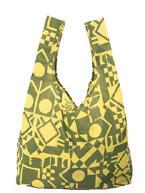
•Do you think we should use reusable shopping bags? Why?
•How can reusable shopping bags help the environment?
•Can you think of other ways to help the environment?
Have students form groups to complete the tasks in columns 1 and 2 of the table. Let students know that they do not have to solve the word problem. Ask the groups to present their work.
Tell students that they will come back to this word problem later in the chapter.
1.1 Counting dollars and cents




Unit 1: Dollars and Cents
1.1 Counting dollars and cents
Let's Learn Let's Learn
Objective:
•Count and tell the amount of money in a group of notes and coins in dollars and cents
Materials:
•Play money
Resources:
•CB: pp. 183–184
•PB: pp. 132–133
Stages: Concrete Experience and Pictorial Representation
Have students work in groups. Distribute play money to each group.
Have each group put a ten-dollar note, 2 fifty-cent coins, a twenty-cent coin and 2 ten-cent coins on the table.
Say: We want to find the total amount of money. Point out to students that there are 2 fifty-cent coins. Have them recall that $1 is equal to 100c. So, 2 fifty-cent coins are equal to $1.
Ask: How many dollars are there? (11) How many cents are there? (40)
Say: We read this as eleven dollars and forty cents. Let us write this amount.
Stage: Abstract Representation
Write: $11 and 40 cents
Say: Let us count the amount of money again. Count the dollars, then count the cents. $10, $10 and 50 cents, $11, $11 and 20 cents, $11 and 30 cents, $11 and 40 cents. There is $11 and 40 cents.
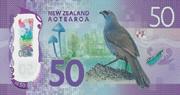
Point out to students that different countries use different types of money, such as the British pound, Indian rupee and Thai baht.
Let's Do Let's
Task 1 requires students to count and write the amount of money in a group of notes and coins.
Let's Practise Let's
Task 1 requires students to count and match the amounts of money in groups of coins or groups of notes and coins.
1.2 Making up an amount of money
Let's Learn Let's Learn
Objective:
•Make up an amount of money using a group of coins and notes
Materials: •Play money
Resources:
•CB: pp. 185–186
•PB: pp. 134–135
Stages: Concrete Experience, and Pictorial and Abstract Representations
Have students work in pairs. Distribute play money to each pair. Get students to role-play a scenario where one is ‘Kiri’ and the other is a shopkeeper.
Have students look at the picture on CB p. 185. Say: Kiri wants to buy a book for $28. She has some money in her wallet.
Have students who are role-playing as ‘Kiri’ select the correct notes and coins from the play money to show the amount of money Kiri has in her wallet.
Have students who are role-playing as shopkeepers say the price of the book, $28. Have students who are role-playing as ‘Kiri’ choose the respective play notes and play coins to pay for the book.
Ask students who are role-playing as shopkeepers to check that the amount of money is correct.
Say: We count forwards to make $28. We start with the twenty-dollar note, then the five-dollar note, and so on.
Have students count forwards the money with you: $20, $25, $27, $28.
Ask: Which notes and coins should Kiri use to pay for the book? (1 twenty-dollar note, 1 five-dollar note, 1 two-dollar coin and 1 one-dollar coin.)
1.2
Making up an amount of money


Let's Do Let's Do

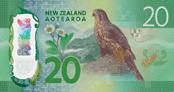
Task 1 requires students to make up an amount of money using a group of coins and notes.
Let's Practise Let's Practise
Task 1 requires students to make up an amount of money using a group of coins and notes.
EXPLORE
Have students go back to the word problem on CB p. 182.
Ask: Can you solve the problem now? (Answer varies.) What else do you need to know? (Answer varies.)
Students are not expected to be able to solve the problem now. They will learn more skills in subsequent lessons and revisit this problem at the end of the chapter.

2.1 Adding amounts of money
a) Kalanei buys an apple and an orange.

Kalanei has to pay.
40c + 50c = 90c
Kalanei has to pay 90c.
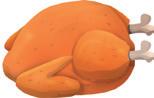


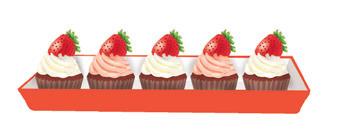
b) Mrs Walker buys a roast chicken and a box of cupcakes. How much does she have to pay? $14 + $8 = $ Mrs Walker has to pay $

Unit 2: Shopping
2.1 Adding amounts of money
Let's Learn Let's Learn Objectives:
•Read the price of an object and pay for it
•Add money in cents up to $1
•Add money in dollars up to $100
Materials:
•Play money
Resources:
•CB: pp. 187–188
•PB: pp. 136–137
(a) Stages: Concrete Experience, and Pictorial and Abstract Representations
Have students look at the pictures in (a) on CB p. 187.
Say: Kalanei buys an apple and an orange.
Ask: What is the price of the apple? (40c) What is the price of the orange? (50c)
Ask: How can we find how much money Kalanei has to pay? (Add the prices of the apple and the orange.)
Write: 40c + 50c = ______






Point out to students that they can add money the same way they add whole numbers. Ask a student to work out the addition on the board. Have him/her complete the addition sentence on the board.
Remind students to include the c symbol in the addition sentence.
Say: Kalanei has to pay 90c.
Ask two students to role-play a scenario where one is ‘Kalanei’ and the other is a cashier. Give ‘Kalanei’ some play money. ‘Kalanei’ pays the ‘cashier’ 90c and the ‘cashier’ counts to check that the amount of money given is correct.
(b) Stages: Concrete Experience, and Pictorial and Abstract Representations
Follow the procedure in (a) to add amounts of money in dollars.
Let's Do Let's and Let's Practise
Task 1 requires students to add money in cents up to $1 and in dollars up to $100.
2.2 Subtracting amounts of money
Let's Learn Let's Learn
Objectives:
•Read the price of an object and pay for it
•Subtract money in cents up to $1
•Subtract money in dollars up to $100
•Count change like a cashier in a purchasing situation
Materials:
•Play money
Resources:
•CB: pp. 189–190
•PB: pp. 138–139
Vocabulary:
•change
(a) Stages: Concrete Experience, and Pictorial and Abstract Representations
Have students look at the picture in (a) on CB p. 189.
Say: Anna has 50c and does not have enough money to buy the eraser.
Ask: What is the price of the eraser? (70c) How can we find how much more money Anna needs? (Subtract the amount of money Anna has from the price of the eraser.)
Write: 70c – 50c = ______
Point out to students that they can subtract money the same way they subtract whole numbers. Ask a student to work out the subtraction on the board. Have him/her complete the subtraction sentence on the board.
Remind students to include the c symbol in the subtraction sentence.
Say: Anna needs 20c more to buy the eraser. Invite a student to the front of the class and give the student some play money. Ask the student to take out a fifty-cent coin.
Say: [Name of student] has 50c. He/she wants to buy an eraser that costs 70c.
Have the student take out play money that makes 70c with 50c. The student should take out 20c.
(b) Stages: Concrete Experience, and Pictorial and Abstract Representations
Have students look at the picture in (b) on CB p. 189.
Say: Mr Evans buys a toaster and gives the cashier $50.
Ask: What is the price of the toaster? ($37) How much does Mr Evans give the cashier? ($50) Say: The price of the toaster is $37 but Mr Evans pays more than $37. He will get some money back. The money he gets back is called change.
2.2 Subtracting amounts of money
a) Anna has 50c. She does not have enough money to buy the eraser.
Subtract 50c from the price of the eraser to find out how much more money Anna needs.
70c – 50c = 20c
Anna needs 20c more to buy the eraser.
b) Mr Evans buys a toaster. He gives the cashier $50.
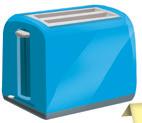
Subtract the price of the toaster from $50.
$50 – $37 = $13
Mr Evans gets $13 in change
We can also count forwards from the price of the toaster to the amount given to the cashier. 37 38 39 40 50 + 1 + 1 + 1 + 10
We count forwards 13 so the change is $13.


Ask: How can we find the amount Mr Evans gets in change? (Subtract the price of the toaster from $50.)
Write: $50 – $37 = ______
Ask a student to work out the subtraction on the board. Have him/her complete the subtraction sentence on the board.
Remind students to include the $ symbol in the subtraction sentence.
Say: Mr Evans gets $13 in change. Besides subtraction, we can also count forwards from the price of the toaster to the amount given to the cashier to find the change.
Invite a student to the front of the class and give the student a fifty-dollar play note.
Say: [Name of student] wants to buy a toaster that costs $37. He/she pays me $50.
Ask the student to pass you the fifty-dollar note.
Say: Let us find out how much is the change by counting forwards from $37 to $50. We can use a number line to help us find the change.
Draw a number line on the board with ‘37’ and ‘50’ marked on two ends of the number line. Show students a one-dollar coin and place it on the desk.
Say: We count forwards 1 from 37.
Draw a curved arrow from 37 to 38 on the number line and label it ‘+ 1’.
(continued on next page)
Repeat the above procedure to count forwards 1 from 38 to 39 and from 39 to 40 and also count forwards 10 from 40 to 50.
Say: The note and coins on the desk are the change.
Guide students to count the amount of change. Say: The amount of change is $13. We can also count the amount of change using the number line.
Guide students to use the labels on the curved arrows of the number line to count the amount of change.
Say: The amount of change is $13.
Let's Do Let's
Task 1 requires students to count change like a cashier in a purchasing situation.
Task 2 requires students to subtract money in dollars up to $100.
Let's Practise Let's Practise
Task 1 requires students to subtract money in cents up to $1 and in dollars up to $100, and count change like a cashier in a purchasing situation.