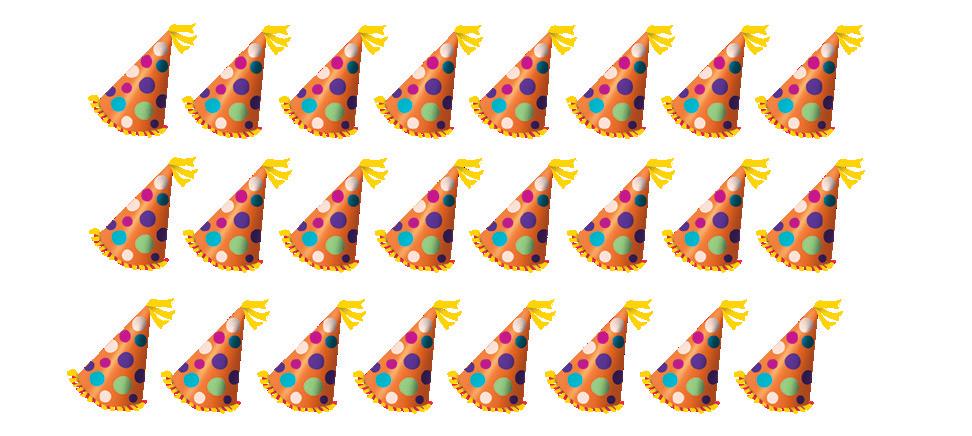
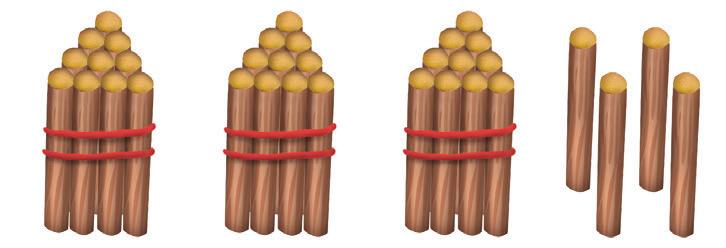
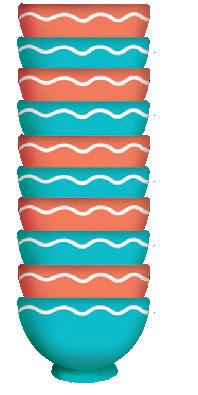
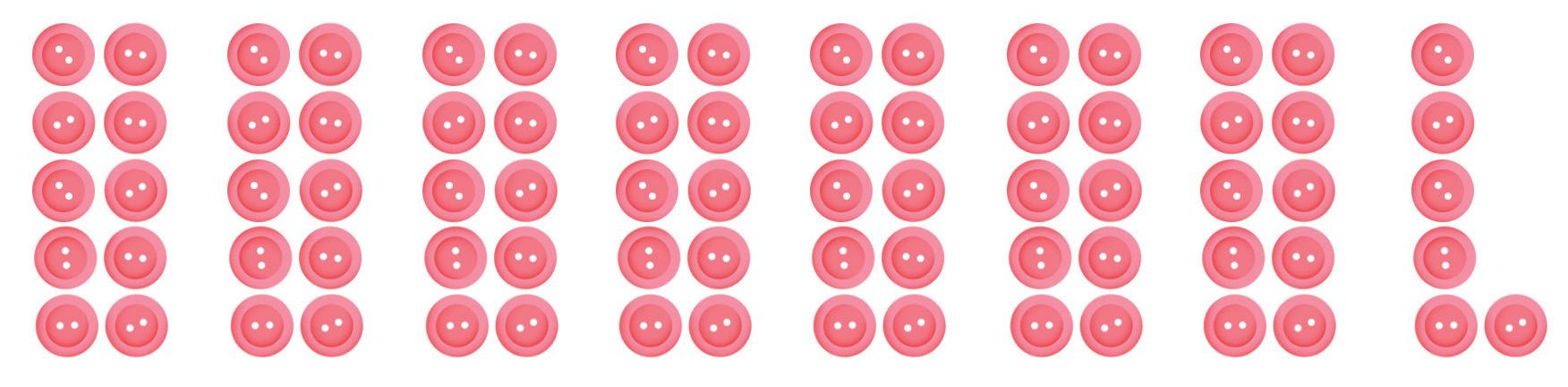
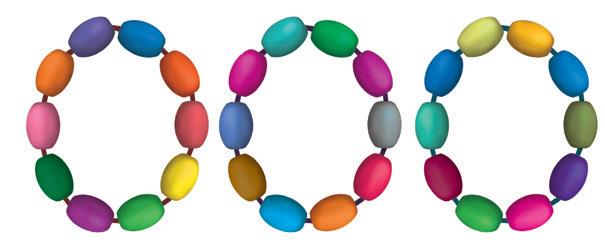
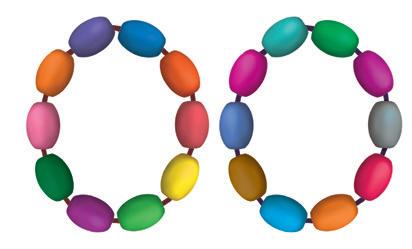
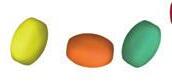
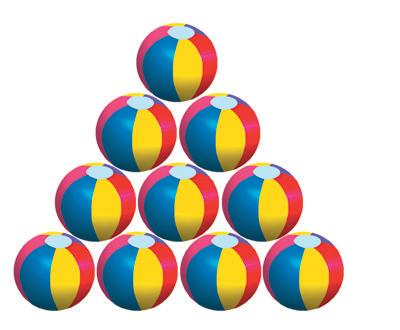
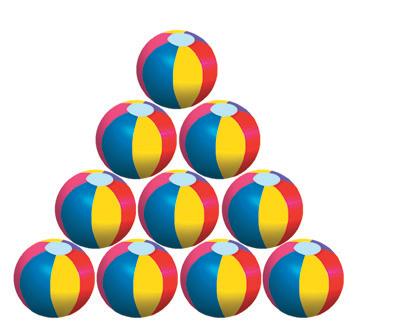
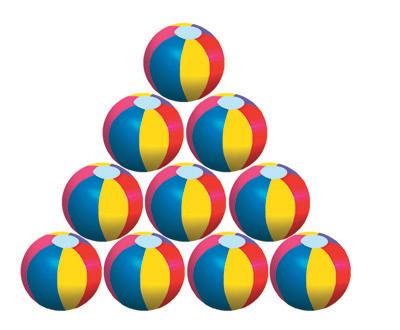
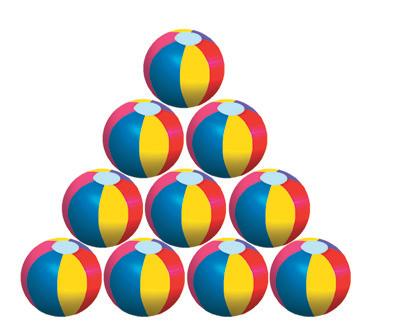
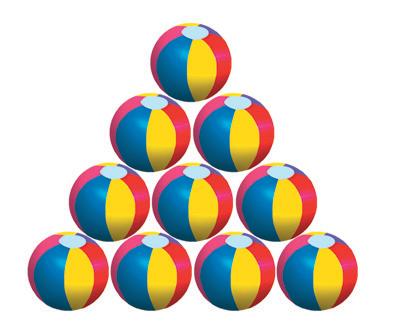
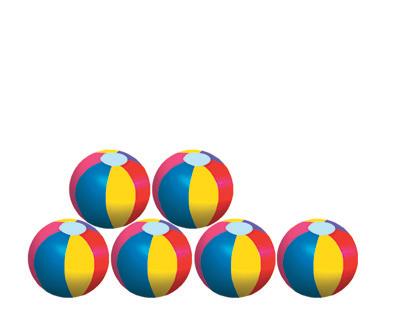
1. Count and write the number of buttons. There are buttons.
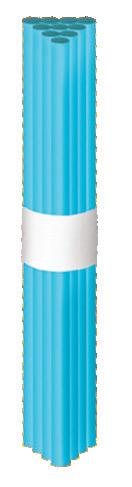
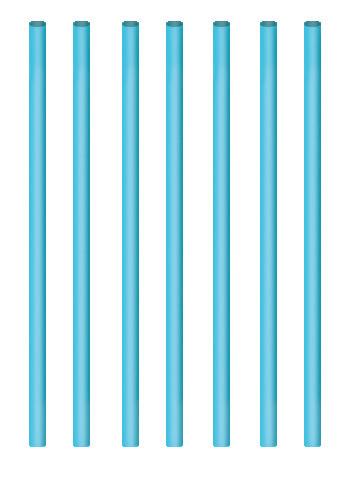
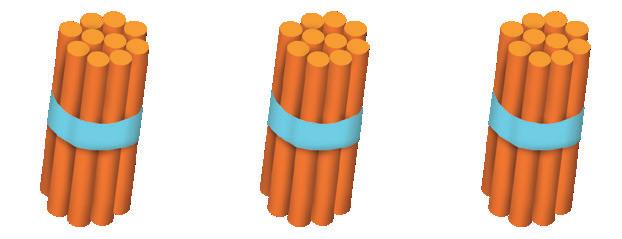
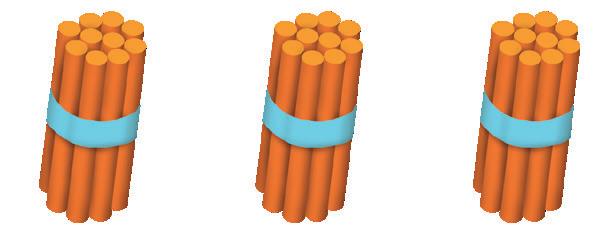
2. Count and write the number of straws. There are straws.
3. Write the numerals.
a) sixty-eight b) fifty-two c) one hundred and four
4. Match.
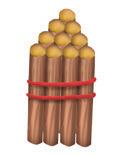
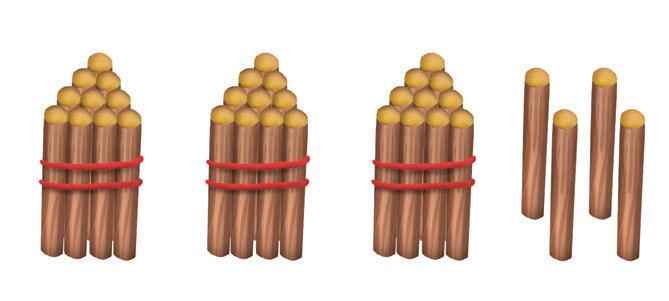
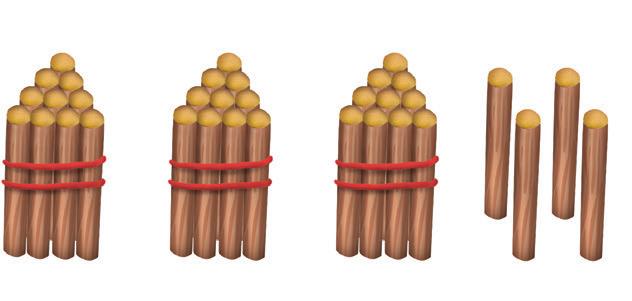
1. Count and write the number of sticks.
There are sticks.
2. Count and write the number of dots.
There are dots.
3. Write the numerals.
a) seventy-one b) one hundred and two
4. Write the numbers in English words. a) 45
111 5. Match.
Let's Learn Let's Learn
53 is 50 and 3. 53 = 5 tens 3 ones
1. Count and write the missing numbers.
56 = 5 tens ones 56 = 50 +
= 1 hundred ten 2 ones
= 100 + + 2 2. Add.
1. Count and write the missing numbers.
= tens ones = +
2. Write the missing numbers. a) 4 tens 6 ones = b) 50 and 8 make . c) 1 hundred 8 ones = d) is 100, 10 and 5.
3. Add.
1.4 Counting by grouping
Let's Learn Let's Learn
a) 2, 4, 6
Count forwards in 2s. 2, 4, 6
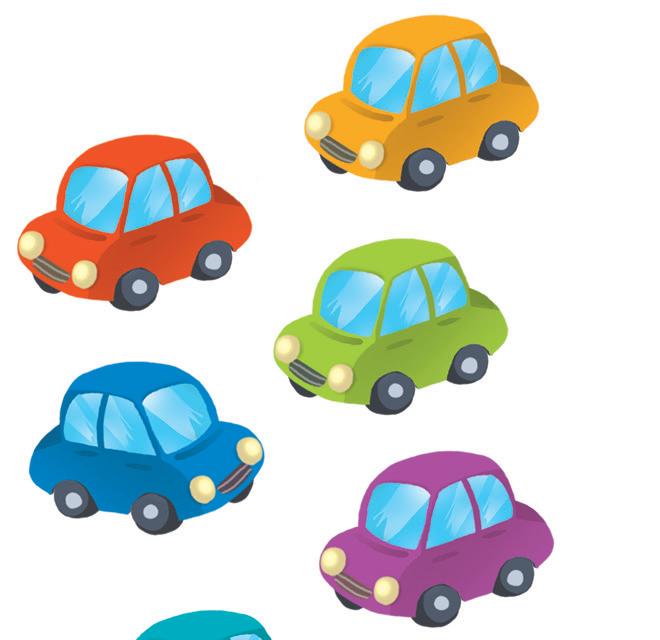
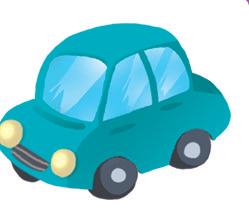
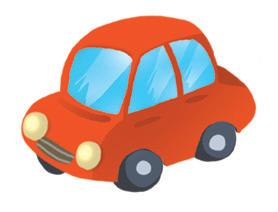
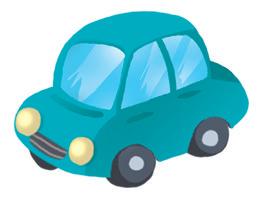
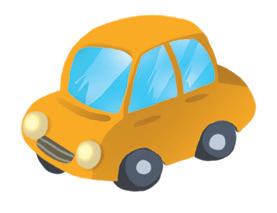
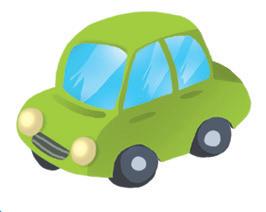
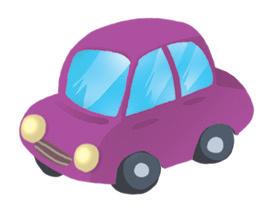
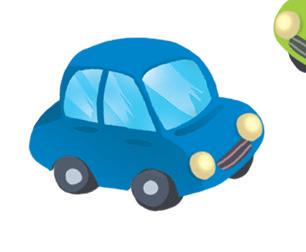
There are 6 toy cars.
b)
c)
12 beans can be put into groups of 2. 12 is an even number.
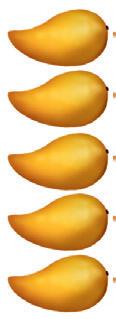
Count forwards in 5s. or Count forwards in 10s. 5, 10, 15, 20 10, 20
There are mangoes.
An even number of objects can be put into groups of 2. An odd number of objects cannot be put into groups of 2. There will be 1 object left over. 5, 10, 15, 20 10, 20 or 20
15 beans cannot be put into groups of 2. There is 1 bean left over. 15 is an odd number.
1, 3, 5, 7, 9 11, 13, 15, 17, 19
Look at the digits in the ones place. What pattern do you see?
The digit in the ones place of an odd number is 1, 3, 5, 7 or 9.
The digit in the ones place of an even number is , , , or . 0, 2, 4, 6, 8, 10 12, 14, 16, 18, 20
Let's Do Let's Do
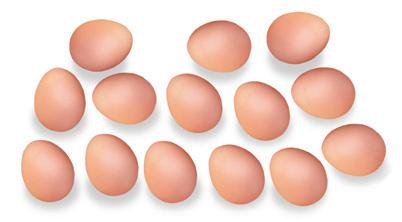
1. Count and write the number of objects. Circle groups of 2, 5 or 10 objects to help you count.
2. Cross out the group that shows an even number.
3. Is 72 an even or an odd number?
Why? The digit in the ones place is .
1. Count and write the number of objects.
2. Circle the group that shows an odd number.
3. Circle the even numbers.
4. Circle the odd numbers.
5. Is 107 an even or an odd number? Why?
I have learned to... count within 120 read and write numbers up to 120 write 2-digit and 3-digit numbers in hundreds, tens and ones skip count objects in twos, fives or tens identify odd and even numbers Odd number The digit in the ones place is 7.
Unit 2 Order of Numbers
You will learn to...
• find 1, 2, 5 or 10 more than or less than a given number
• describe and complete number patterns
• read numbers to 120 on a number line
• round numbers to the nearest ten
• compare and order numbers within 120
2.1 Finding more than and less than Let's Learn Let's Learn
b) Count backwards 5 ones from 56.
56, 55, 54, 53, 52, 51
5 less than 56 is .
c) Count forwards 1 ten from 19. 19, 29
10 more than 19 is . 1 ten = 10
Let's Do Do
1. Write the missing numbers.
a) is 1 more than 65. b) is 1 less than 65. c) is 2 more than 65. d) is 2 less than 65. e) is 5 more than 65. f) is 5 less than 65. g) is 10 more than 65. h) is 10 less than 65.
Let's Practise Let's
1. Write the missing numbers.
a) is 1 more than 53. b) is 1 less than 53. c) is 10 more than 53. d) is 10 less than 53. e) is 2 more than 53. f) is 2 less than 53. g) is 5 more than 53. h) is 5 less than 53.
2. Answer the questions.
a) What number is 2 more than 34?
b) What number is 1 less than 50?
c) What number is 5 more than 115?
d) What number is 10 less than 102?
2.2 Number patterns
Let's Learn Let's Learn
We can find number patterns on a number chart.
a) pattern: Start at 63. Count forwards in 3s.
The number pattern is 63, 66, 69, 72.
Each number is 3 more than the number before it.
The next two numbers in the pattern are 75 and 78.
b) pattern: Start at 89. Count backwards in 2s.
The number pattern is 89, 87, 85, 83.
Each number is 2 less than the number before it.
The next two numbers in the pattern are and .
Let's Do Do
1. Describe each number pattern. Then, continue the number pattern.
a) pattern: Start at 28.
Count forwards in . 28, , , , ,
b) pattern: Start at 80. Count in . 80, , , , ,
2. Complete the number patterns. a) 85, 80, 75, , b) 42,
,
1. Continue each number pattern. Then, describe the number pattern.
a) 88, 86, 84, 82, , Count in . b) 18, 21, 24, 27, , Count in .
2. Complete the number patterns.
a) 55, 60, 65, , b) 17, 15, 13, ,
c) , 110, 100, 90, 80, , 60 d) 36, , , 45, 48, 51
2.3 Reading number lines
Count forwards in 1s: 40, 41, 42. stands for 42.
Count forwards in 1s: 44, . stands for .
Count backwards in 1s: 50, 49, . stands for
Let's Do Let's Do
1. Complete the number lines.
1. Complete the number lines.
2. Look at the number line.
a) Label the number that is 1 more than 49 with A.
b) Label the number that is 2 less than 54 with B.
c) Label the number that is 2 more than 53 with C.
d) Which letter stands for a number that is 5 less than letter C?
3. Mark 117 with a cross on the number line below.
2.4 Rounding numbers to the nearest ten
Let's Learn Let's Learn
a) Round 62 to the nearest ten.
62 is between 60 and 70. It is nearer to 60 than to 70.
62 is 60 when rounded to the nearest ten.
62 ≈ 60
≈ is the approximation sign.
b) Round 38 to the nearest ten.
I round 62 to the nearest ten. 62 is approximately 60.
38 is between 30 and 40. It is nearer to 40 than to 30.
38 is 40 when rounded to the nearest ten.
38 ≈ 40
c) Round 85 to the nearest ten.
38 is approximately 40.
85 is halfway between 80 and 90. We round 85 up to the greater ten.
85 is 90 when rounded to the nearest ten.
85 ≈ 90
85 is approximately 90.
d) Round 106 to the nearest ten.
106 is between 100 and 110. It is nearer to 110 than to 100. 106 is 110 when rounded to the nearest ten.
106 ≈ 110
To round a number to the nearest ten, look at the digit in the ones place. If it is 5 or greater, round up. If it is less than 5, round down.
Let's Do Do
1. Round each number to the nearest ten.
2. Round each number to the nearest ten.
Let's Practise Let's
1. Round each number to the nearest ten. a) 23 ≈ b) 99 ≈ c) 105 ≈
2. a) There are 84 cows on a farm. Round the number of cows to the nearest ten.
b) 118 children took part in a cross-country race. Round the number of children to the nearest ten.
2.5 Comparing and ordering numbers
Let's Learn Let's Learn
a) Compare 53 and 47.
Compare the tens. 5 tens is greater than 4 tens.
53 is greater than 47. 53 > 47
b) Compare 53 and 59.
53 is less than 59. 53 < 59
c) Compare 53, 47 and 59.
47 is the least number. 59 is the greatest number.
Arrange the numbers in order. Begin with the greatest. , , (greatest)
First, compare the tens. They are the same. Then, compare the ones. 3 ones is less than 9 ones.
First, compare the tens. 4 tens is less than 5 tens.
Then, compare the ones of 53 and 59. 9 ones is greater than 3 ones.
d) Compare 106, 99 and 102.
First, compare the hundreds. 0 hundreds is less than 1 hundred.
Next, compare the tens of 106 and 102. They are the same. Then, compare the ones of 106 and 102. 6 ones is greater than 2 ones.
99 is the least number. 106 is the greatest number.
Arrange the numbers in order. Begin with the least. , , (least)
Let's Do Let's Do
1. Write greater than or less than.
2. Write > or <. a) 44 69 b) 87 84
3. Arrange 86, 49 and 94 in order. Begin with the least. , ,
1. Write > or <.
2. Circle True or False.
a) 56 < 65 True / False
b) 95 > 101 True / False
c) 120 < 112 True / False
3. Arrange the numbers in order. Begin with the given number.
I have learnt to... find 1, 2, 5 or 10 more than or less than a given number describe and complete number patterns read numbers to 120 on a number line round numbers to the nearest tens compare and order numbers within 120
Unit 3 Problem Solving
You will learn to…
• solve non-routine problems involving numbers up to 120
3.1 Mind stretcher
Let's Learn Let's Learn
Adele arranges three numbers in order. 33 is the greatest and 24 is the least. The third number has 3 tens and at least 1 one. What can the third number be?
1 Plan what to do.
2 Work out the Answer
4
3 Check if your answer is correct.
My answer is correct. Understand the problem.
How many numbers are there? What number is the greatest? What number is the least? What do I know about the third number? What do I have to find?
I can make a list to solve the problem.
The third number is greater than 24 but less than 33.
The third number can be 25, 26, 27, 28, 29, 30, 31 or 32.
The third number has 3 tens and at least 1 one. Only 31 and 32 have 3 tens and at least 1 one. So, the third number can be 31 or 32.
Both 31 and 32 are greater than 24 but less than 33. Both 31 and 32 have 3 tens and at least 1 one.
+ Plus Solve the problem in another way.
The third number is greater than 24 but less than 33. Draw a number line.
From the number line, 25, 26, 27, 28, 29, 30, 31 and 32 are greater than 24, but less than 33.
The third number has 3 tens and at least 1 one. So, the third number can be 31 or 32.
Compare the methods in steps 3 and 5. Which method do you prefer? Why?
1. Understand 2. Plan 3. Answer 4. Check 5. Plus
Let's Do Let's Do
Oscar and Sarah are in a queue to buy tickets for a football match. There are 11 people between Oscar and Sarah.
Oscar's queue number is 101.
Sarah is in front of Oscar. What is Sarah’s queue number?
Strategy: Draw a picture.
Sarah’s queue number is 89. 11 people
I have learnt to... solve non-routine problems involving numbers up to 120
>> Look at EXPLORE on page 2 again. Fill in column 3. Can you solve the problem now?