100% coverage of New Zealand Mathematics and Statistics Curriculum for Phases 1-3
Proven results in Aotearoa New Zealand schools for over a decade
Clear, step-by-step lessons for consistent, explicit teaching
Structured problem solving and reasoning for deep understanding
Whole Numbers
Let's Remember Let's Remember
1. Write eight hundred and sixty thousand, four hundred and twelve in numerals.
2. Write 982,015 in words.
3. Fill in the missing numbers.
631,420 = 600,000 + + 1,000 + + 20
4. Fill in the blanks.
a) In 702,144, the digit 0 is in the place, and its value is .
b) In 417,388, the digit is in the place and its value is 400,000.
5. Write > or <. a) 66,912 606,912 b) 125,211 122,511 c) 132,402 123,240 d) 357,999 375,339
6. Arrange the numbers in order. Begin with the greatest. 483,505, 43,855, 400,855 , , (greatest)
860,412 nine hundred and eighty-two thousand and fifteen 30,000 0 483,505 400,855 43,855 4 400 ten thousands hundred thousands
7. Count forwards or backwards to complete the number pattern.
6,224, 6,227, , 6,233,
8. Round 4,358 to the nearest a) ten.
b) hundred. c) thousand.
9. List all the the factors of 24.
1, 2, 3, 4, 6, 8, 12, 24
EXPLORE
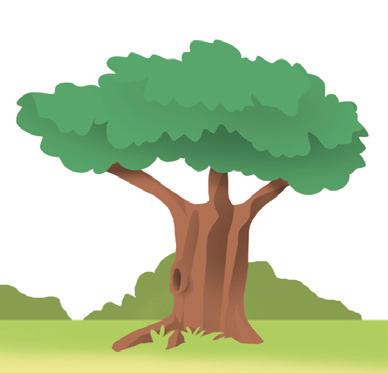
Last year, 6,482,913 native trees were protected and restored in Region A through various conservation projects. In a nearby Region B, 6,905,240 native trees were protected through similar conservation work.
a) Which region protected more trees?
b) Round the number of trees protected in Region A to the nearest hundred thousand and to the nearest million. 6,230 6,236 4,360 4,400 4,000 Region B
How can we solve this problem? Discuss in your group and fill in columns 1 and 2.
1. What I already know that will help me solve the problem
Compare and order numbers within 1,000,000. Round a whole number to the nearest hundred thousand.
2. What I need to find out and learn
Compare and order numbers within 1,000,000,000. Round a whole number to the nearest million.
6,500,000 and 6,000,000
3. What I have learnt
Answer varies.
Unit 1 Numbers to 1,000,000,000
You will learn to...
• read and write numbers within 1,000,000,000
• identify the values of digits in a 7-digit, 8-digit or 9-digit number
• compare and order numbers within 1,000,000,000
• count forwards and backwards with whole numbers, including working with negative numbers
• describe and complete a number pattern involving positive and negative numbers by counting forwards and backwards
1.1 Reading and writing numbers
Let's Learn Let's Learn
a) The number 1,000,000 is read as one million.
100,000, 200,000, 300,000, 400,000, 500,000
600,000, 700,000, 800,000, 900,000, 1,000,000
1 million is 100,000 more than 900,000.
1 million = 1,000 thousands 1,000,000 = 1,000 thousands
One thousand million is also known as one billion. 1,000 million = 1,000,000,000 = 1 billion
d) The distance between the Sun and Jupiter is about 778,547,200 kilometres.
778,000,000 + 547,000 + 200 = 778,547,200
778,547,200 is read as seven hundred and seventy-eight million, five hundred and forty-seven thousand and two hundred.
1. Write the numerals.
a) ninety million, eight hundred and fifty thousand and thirty-six
b) three hundred and fifty-two million, seven hundred and forty-nine thousand and eighty
2. Write the numerals in words.
a) 43,210,123 b) 904,086,470
Let's Do Let's Do forty-three million, two hundred and ten thousand, one hundred and twenty-three nine hundred and four million, eighty-six thousand, four hundred and seventy 90,850,036 352,749,080
1. Write the numerals.
a) thirty-four million, eight hundred and fifty-nine thousand, two hundred and three
b) six hundred and forty-eight million, seven hundred and fifty thousand and two
c) one billion
2. Write the numerals in words.
a) 2,022,022
b) 51,030,584
c) 802,395,200
fifty-one million, thirty thousand, five hundred and eighty-four two million, twenty-two thousand and twenty two eight hundred and two million, three hundred and ninety-five thousand and two hundred
1.2 Identifying values of digits Let's Learn
In 2,149,637: the digit 2 is in the millions place and its value is 2,000,000. the digit 1 is in the place and its value is 100,000. the value of the digit 9 is . 2,149,637 = 2 millions 1 hundred thousand 4 ten thousands 9 thousands 6 hundreds 3 tens ones = 2,149 thousands 6 hundreds 3 tens ones
We can partition a number in different ways. 9,000 7 7 hundred thousands 34,859,203 648,750,002 1,000,000,000
P B Chapter 1: Exercise 1.1, page 1
In 120,539,264:
the digit 1 is in the hundred millions place and its value is 100,000,000. the digit 2 is in the ten millions place and its value is .
120,539,264 = 1 hundred million 2 ten millions 5 hundred thousands 3 ten thousands 9 thousands 2 hundreds 6 tens ones = 120 millions 539 thousands 2 hundreds 6 tens ones
Let's Do Let's Do
1. Write the missing numbers or words.
a) In 7,438,902, the digit is in the hundred thousands place and its value is .
b) In 60,892,516, the digit is in the millions place and its value is
c) In 943,607,821, the digit 9 is in the place and its value is .
9,140 6,200,085 500,074,020 hundred millions 20,000,000
=
1. Write the missing numbers or words.
In 68,047,293:
thousands 6
the digit is in the ten millions place. the digit 7 is in the place. the value of the digit 8 is the value of the digit 0 is . the digit 4 is in the place and its value is .
3. Arrange the numbers in order. Begin with the least. 6,038,597, 6,380,597, 6,038,975 , , , (least) P B Chapter 1: Exercise 1.3, page 3
1.4 Number patterns
Let's Learn
a) Start at 5. Count forwards by threes.
+ 3 + 3 + 3 + 3 + 3
5, 8, 11, 14, 17, ?
What number comes next in this pattern?
3 more than 17 is 20.
The number that comes next is 20.
b) What number comes next in this pattern?
7, 3, –1, –5, –9, ?
We can use a number line to find the missing number.
, 9, 10, 11, ...
The rule of the pattern is ‘Start at 7. Count backwards by fours.’.
4 less than –9 is .
The number that comes next is
–9 is a negative number. We read it as ‘negative 9’. –13 –13
c) What is the missing number in this number pattern?
–1, –4, –7, ?, –13
From the number line, we can see that the rule is ‘Start at –1. Count backwards by threes.’.
So, the answer is –10.
We can also find the answer without using a number line by observing the relationship between the positive and negative numbers.
Counting forwards by threes from 1:
1, 4, 7, 10, 13, …
Counting backwards by threes from –1:
–1, –4, –7, ?, –13, …
Compare the two patterns. What do you notice?
So, 3 less than –7 is –10.
The missing number is –10.
d) What is the missing number in this number pattern?
+ 2 + 2 + 2 + 2 + 2
–16, –14, ?, –10, –8, –6
2 more than –14 is .
2 more than is –10.
The missing number is .
Let's Do Let's Do
The rule of the pattern is ‘Start at –16. Count forwards by twos.’.
1. Continue the number patterns. You may draw a number line to help you.
a) Rule: Start at 3. Count backwards by ones. 3, , , , , ,
b) Rule: Start at –42. Count forwards by fives. –42, , , , , ,
2. Complete each number pattern. Then, describe the number pattern.
a) 8, 5, 2, , , –7,
Rule: Start at . Count .
b) –15, –11, –7, , , 5,
Rule: Start at . Count .
Let's Practise
backwards by threes forwards by fours
1. Complete each number pattern. Then, describe the number pattern.
a) –26, –21, –16, , –6, , 4
Rule:
Start at –26. Count forwards by fives.
b) –21, –18, , –12, , –6, –3
Rule:
Start at –21. Count forwards by threes.
c) , 3, 1, , –3, –5,
Rule:
Start at 5. Count backwards by twos.
d) 37, 27, 17, 7, , ,
Rule:
Start at 37. Count backwards by tens.
I have learnt to... read and write numbers within 1,000,000,000 identify the values of digits in a 7-digit, 8-digit or 9-digit number compare and order numbers within 1,000,000,000 count forwards and backwards with whole numbers, including working with negative numbers describe and complete a number pattern involving positive and negative numbers by counting forwards and backwards
>> Look at EXPLORE on page 2 again. Can you solve the problem now? What else do you need to know?
Unit 2 Rounding Numbers
You will learn to...
• round a whole number to the nearest million, hundred thousand, ten thousand, thousand, hundred or ten
2.1 Rounding whole numbers
Let's Learn Let's Learn
a) The number of visitors to ski fields in central Otago in July on a particular year was 187,325.
187,325 is between 180,000 and 190,000. It is nearer to 190,000 than to 180,000. So, we round up.
187,325 is 190,000 when rounded to the nearest ten thousand. 187,325 ≈ 190,000
To round a number to a place value, look at the digit to the right of the place value stated. If the digit is 5 or greater, round the number up. If the digit is less than 5, round the number down. For example, the digit to the right of the ten thousands place in 187,325 is 7. It is greater than 5. So, we round up the number to the higher ten thousands number, which is 190,000.
b) Round 4,325,680 to the nearest hundred thousand.
4,325,680
4,300,000
4,325,680 is 4,300,000 when rounded to the nearest hundred thousand. 4,325,680 ≈ 4,300,000
The digit to the right of the hundred thousands place is 2. So, we round down.
c) Round 8,500,000 to the nearest million.
8,000,000 9,000,000 8,500,000
8,500,000 is 9,000,000 when rounded to the nearest million.
8,500,000 ≈
Let's Do Let's Do
1. Round 183,260 to the nearest ten thousand and to the nearest hundred thousand.
a) 183,260 180,000
The digit to the right of the millions place is 5. So, we round up.
183,260
183,260 is when rounded to the nearest ten thousand.
b) 183,260 is when rounded to the nearest hundred thousand.
2. Round 5,540,986 to the nearest million.
5,000,000 5,500,000 6,000,000 5,540,986
5,540,986 is when rounded to the nearest million.
3. Round 6,375,819 to the nearest a) ten. b) hundred. c) thousand. d) ten thousand. e) hundred thousand. f) million.
Digit to the right of ten thousands place < 5 9,000,000 180,000 200,000 6,000,000 6,380,000 6,375,820 6,400,000 6,375,800 6,000,000 6,376,000
1. Complete the table. Number Rounded to the nearest ten hundred thousand 919 4,582 16,289
2. Complete the table. Number Rounded to the nearest ten thousand hundred thousand million 6,485,300 7,162,380 21,954,027
3. About 3,480,000 visitors travelled to attractions in the Auckland region last year. Round this number to the nearest million.
$4,500,000 3,000,000
4. A construction project in Queenstown costs $4,451,000. Round the cost to the nearest hundred thousand dollars.
I have learnt to... round a whole number to the nearest million, hundred thousand, ten thousand, thousand, hundred or ten
Unit 3 Factors, Square Numbers and Cube Numbers
You will learn to...
• find factor pairs and all the factors for numbers that result from multiplying any two whole numbers between 1 and 12
• identify square numbers up to 144
• identify cube numbers up to 125
3.1 Finding factors of a whole number
Let's Learn Let's Learn
a) Find all the factors of 12.
1 × 12 = 12
2 × 6 = 12
3 × 4 = 12
factor pair
factor × factor = product
The factor pairs of 12 are (1, 12), (2, 6) and (3, 4).
We can rearrange the numbers in the factor pairs to get the list of factors. So, the factors of 12 are 1, 2, 3, 4, 6 and 12.
b) We can find the factors of a large number by systematically dividing it by numbers starting from 1. If the answer is a whole number, record it and form the factor pair.
Find all the factors of 72.
The factors of 72 are 1, 2, 3,
72 ÷ 1 = 72 1 × 72 = 72 → (1, 72)
The next pair (9,8) is a repeat of this. So, we stop here. 4, 6, 8, 9, 12, 18, 24, 36 and 72
c) Find all the factors of 121.
1 × 121 = 121
11 × 11 = 121
The factors of 121 are .
Let's Do Let's Do
1. Complete all the factor pairs of 45. Then, list its factors.
1 × (1, ) × 15 ( , 15)
5 × (5, )
The factors of 45 are .
Let's Practise Let's Practise
1. Write the missing factors.
a) × 13 = 78 b) 20 × = 100
c) 4 × = 108 d) 12 × = 144
2. Find all the factor pairs of 128. Then, list its factors.
1 × 128 = 128 (1, 128)
2 × 64 = 128 (2, 64)
4 × 32 = 128 (4, 32)
8 × 16 = 128 (8, 16) 5 12 3 9 45 3 9
Factor pairs: (1, 121) and (11, 11) 121 has only three factors as one of the factors is repeated. 1, 11 and 121 1, 3, 5, 9, 15 and 45 1, 2, 4, 8, 16, 32, 64, 128 45 6 27
The factors of 128 are . P B Chapter 1: Exercise 3.1, page 7
B Chapter 1: Exercise 3.2, page 8 Let's Practise Let's
3.3 Identifying cube numbers
Let's Learn Let's Learn
We can arrange 1, 8, 27 and 64 blocks into cubes.
When we multiply a number by itself two more times, we get the cube of the number.
3 × 3 × 3 = 27 33 = 27
The cube of 3 is 27. We read 33 as 3 cubed. It means 3 × 3 × 3.
The cube of a whole number is called a cube number.
The numbers 1, 8, 27 and 64 are cube numbers.
Let's Do Let's Do
1. Write the cube number for each diagram.
2. Complete the multiplication sentences, then write the cube numbers. a) 23 = × × b) 43 = × × = =
3. Circle the cube numbers.
Let's Practise Let's Practise
1. Draw a diagram to show that 27 is a cube number.
2. Complete the multiplication sentences, then write the cube numbers.
a) 33 = × × = b) 53 = × × =
3. Write the first five cube numbers.
1, 8, 27, 64, 125
4. Write a cube number that is a) odd. b) even.
THINK ABOUT IT
Sarah relates cube numbers to square numbers.
A cube number cannot be a square number.
Is Sarah correct? Why do you say so?
No, Sarah is not correct. Some numbers are both square and cube numbers. For example: 64 = 8 × 8 = 82 and 64 = 4 × 4 × 4 = 4³
So, a number can be both a square number and a cube number.
What did you learn about square and cube numbers?
Square numbers are made by multiplying a number by itself. Cube numbers are made by multiplying a number by itself twice.
Think of a time in your daily life when knowing square or cube numbers can be useful.
I am arranging chairs in a square shape for a class activity. I put the same number of chairs in each row and each column. I can use square numbers to find the total number of chairs needed.
I have learnt to...
find factor pairs and all the factors for numbers that result from multiplying any two whole numbers between 1 and 12 identify square numbers up to 144 identify cube numbers up to 125
Sarah
Unit 4 Problem Solving
You will learn to... • solve non-routine problems involving whole numbers
4.1 Mind stretcher
Let's Learn Plan what to do.
Lucas builds towers using blocks. Tower 1 has 12 blocks. Tower 2 has 22 blocks. Tower 3 has 32 blocks, and so on. He has exactly 500 blocks. How many complete towers can he build? How many blocks will be left over?
1
Understand the problem.
3
2 Work out the Answer.
How many blocks does Lucas have? How many blocks will he use in each of the first three towers? How many blocks will be left with if he only builds three towers? Can he build more? What do I have to find?
I can make a table to list the number of blocks required for each tower and keep a running total of the blocks used.
I make a table to list the number of blocks required for each tower and the number of blocks used.
506 blocks are needed for 11 towers. This would require more than the 500 blocks that Lucas has. So, Lucas can only build 10 complete towers.
5
4 + Plus Solve the problem in another way.
Check if your answer is correct.
385 + 115 = 500
385 < 500 (10 towers possible)
385 + 121 = 506 > 500 (11 towers not possible)
My answer is correct.
Start with 500 blocks and subtract each tower’s blocks.
After Tower 1: 500 – 1 = 499 After Tower 2: 499 – 4 = 495 After Tower 3: 495 – 9 = 486
. . After Tower 10: 215 – 100 = 115 After Tower 11: 115 – 121 = –6
There are not enough blocks to be subtracted for Tower 11 after Tower 10 is built.
So Lucas can build 10 complete towers, with 115 blocks left over.
Compare the methods in steps 3 and 5. Which method do you prefer? Why?
500 – 385 = 115 He will have 115 blocks left. 1. Understand 2. Plan 3. Answer 4. Check 5. Plus
Let's Do Let's Do
Ariki is trying to find a mystery number using the following clues:
• The number is between 4,000,000 and 5,000,000.
• The digit in the ten-thousands place is 3 less than the millions digit.
• The digit in the thousands place is 3 more than the tens digit.
• The digit in the tens place is greater than 1 and is a factor of 9.
• The digit in the hundreds place is a cube number.
• The digit in the hundred thousands place, hundreds place and ones place are the same.
What is the mystery number?
Strategy: Use logical reasoning
The mystery number is between 4,000,000 and 5,000,000.
So, the digit in the millions place is 4.
The digit in the ten-thousands place is 3 less than 4, so it is 1.
The digit in the tens place is greater than 1 and is a factor of 9.
The possible digits are 3 or 9.
If the tens digit is 9, then the thousands digit would be 9 + 3 = 12, which is not possible.
So, the tens digit is 3, and the thousands digit is 6.
The digit in the hundreds place is a cube number. Cube digits are 1 and 8 (since 13 = 1 and 23 = 8).
The digit in the hundred thousands place, hundreds place and ones place are the same.
So, these three digits must all be 1 or all be 8.
So, the mystery number is either 4,116,131 or 4,816,838.
I have learnt to... solve non-routine problems involving whole numbers
>> Look at EXPLORE on page 2 again. Fill in column 3. Can you solve the problem now?