
All-in-one teaching support with clear explanations, assessments and resources

Easy-to-follow structured lesson guidance that simplifies planning and teaching Math Pro for additional digital teaching resources and online professional development


Strand(s): Number
Numbers to 100
Chapter
Vocabulary
Scheme of Work
Objectives
• CB: p. 1
• Math Pro: Recall
• Count up to 20 objects
Let’s Remember
• Read a number up to 20 — the numeral and the corresponding number word
Unit 1: Counting New Zealand Curriculum Year 1: Number — Number structures, Operations
1.1 Knowledge ( ★ ) and Practices ( ◆ )
★ Te reo M a ori number naming is based on place value (e.g. rua tekau m a tahi — two 10s and 1).
◆ Using te reo M a ori for numbers up to 30
• digit • numeral
• CB: pp. 2–7
• PB: pp. 1–2
• 2 copies of Tens Frame (BM1.1) per pair of students
• Math Pro: Practice
◆ Adding ten to a one-digit number
• Read a number up to 20 in te reo M a ori
• Counters
• Strings of 17 beads: 1 for demonstration, 1 per pair of students
• Represent a 2-digit number within 20 as the sum of 10 and ones, and vice versa
1.1 Counting, reading and writing numbers within 20
1.2 Knowledge ( ★ ) and Practices ( ◆ )
★ The whole numbers from 0 to 100 form a sequence.
◆ Counting forwards or backwards from any whole number between 1 and 20, and then between 1 and 100
• backwards
between
forwards
just after
just before
• CB: pp. 8–9
• PB: p. 3
• Math Pro: Practice
◆ Naming the number before or after a given number in the counting sequence up to 20
• Counters
• Count forwards and backwards in ones from any number within 20
• Give a number that comes before or after a number or between two numbers within 20
Counting forwards and backwards
1.2
1.3 Knowledge ( ★ ) and Practices ( ◆ )
★ The names of numbers between 20 and 99 use the ‘–ty’ suffix.
★ T e reo M a ori number naming is based on place value (e.g. rua tekau m a tahi — two 10s and 1).
• CB: pp. 10–14
• PB: pp. 4–5
• Math Pro: Practice
◆ Reading and writing whole numbers up to 100, and representing them using base 10 structure
• 3 copies of Tens Frame (BM1.1) per pair of students
• Count within 30 by making tens first
• Counters
• Read a number up to 30 in English and te reo M a ori, and write in numerals
1.3 Counting, reading and writing numbers within 30
1.4 Practices ( ◆ )
• CB: pp. 15–16
• PB: pp. 6–7
• Math Pro: Practice
◆ Reading and writing whole numbers up to 100, and representing them using base 10 structure
• 3 copies of Tens Frame (BM1.1) per pair of students
• Counters
• Represent a number within 30 in different ways
1.4 Showing numbers in different ways
1.5 Knowledge ( ★ ) and Practices ( ◆ )
★ The base 10 number system is organised by place value (tens and ones for two-digit numbers).
◆ Reading and writing whole numbers up to 100, and representing them using base 10 structure
• CB: pp. 17–18
• PB: p. 8
• Math Pro: Practice
• 1 enlarged copy of Place Value Cards (BM1.2)
• Represent a 2-digit number up to 30 in tens and ones
1.5 Showing tens and ones
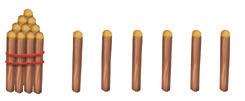
• 2 rubber bands per group
• 23 straws per group
• Base ten blocks
Unit 2: Tens and Ones
Zealand Curriculum Year 1: Number — Number structures
2.1 Knowledge ( ★ ) and Practices ( ◆ )
★ The names of numbers between 20 and 99 use the ‘–ty’ suffix.
◆ Reading and writing whole numbers up to 100, and representing them using base 10 structure
• CB: pp. 19–21
• PB: p. 9
• Math Pro: Practice
• 1 enlarged copy of Place Value Cards (BM1.2)
• 1 rubber band
• 9 bundles of 10 straws
• 10 straws
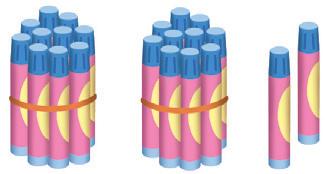
• Count by tens within 100
• Read and write tens up to 100
2.1 Counting, reading and writing numbers in tens
2.2 Knowledge ( ★ ) and Practices ( ◆ )
★ The base 10 number system is organised by place value (tens and ones for two-digit numbers).
★ The names of numbers between 20 and 99 use the ‘–ty’ suffix.
◆ Reading and writing whole numbers up to 100, and representing them using base 10 structure
• CB: pp. 22–23
• PB: p. 10
• Math Pro: Practice
• Math Pro: Assessment
• 1 enlarged copy of Place Value Cards (BM1.2)
• Base ten blocks
• 1 copy of Maths Journal (BM1.3) per student
• Count within 100 by making tens
• Read and write a number up to 100
2.2 Numbers in tens and ones
• Represent a 2-digit number in tens and ones
The suggested duration for each lesson is 1 hour.
Chapter 1 Numbers to 100
Chapter Overview
Let’s Remember Unit 1: Counting Unit 2: Tens and Ones
Let's Remember Let's Remember
Recall:
1. Counting up to 20 objects (SB0 Chapter 7)
2. Read a number up to 20 — the numeral and the corresponding number word (SB0 Chapter 7)
EXPLORE
Have students read the problem on CB p. 1. Discuss with students the following questions:
• What is recycling?
• Besides drink cans, what other things can we recycle?
• What do you think drink cans could be recycled into?
• Why is recycling important?
• How can you play your part in recycling?
Have students form groups to complete the tasks in columns 1 and 2 of the table. Let students know that they do not have to solve the problem. Ask the groups to present their work.
Tell students that they will come back to this problem later in the chapter.




Unit 1: Counting
1.1 Counting, reading and writing numbers within 20
Let's Learn Let's Learn
Objectives:
• Read a number up to 20 in te reo Ma ori
• Represent a 2-digit number within 20 as the sum of 10 and ones, and vice versa
Materials:
• 2 copies of Tens Frame (BM1.1) per pair of students
• Counters
• Strings of 17 beads: 1 for demonstration, 1 per pair of students
Resources:
• CB: pp. 2–7
• PB: pp. 1–2
Vocabulary:
• digit
• numeral
(a) Stages: Concrete Experience, and Pictorial and Abstract Representations
Have students work in pairs. Distribute a copy of Tens Frame (BM1.1) and counters to each pair of students.
Stick 1 counter on the board.
Ask: How many counters are there? (1)
Draw a tens frame on the board.
Say: Let us put 1 counter in the tens frame. Place the counter in the tens frame as shown on CB p. 2 to show the number 1. Have students count 1 counter and place it in their tens frame.
Write: 1 one
Point to the numeral and word form of ‘1’ in English on the board and read them aloud.
Point to the numeral 1 on the board.
Say: 1 is a numeral.
Write: numeral
Say: A numeral is a symbol used to represent a number of objects.
Write: tahi
Say: The number one is read as tahi in te reo Ma ori. Tahi.
Have students read aloud after you. Stick 2 counters on the board.
Say: Let us count the counters. 1, 2. There are 2 counters.
Draw a tens frame on the board.
Say: Let us put the 2 counters in the tens frame. Place the 2 counters in the tens frame as shown on CB p. 2 to show the number 2. Have students count 2 counters and place them in their tens frame.
1.1 Counting, reading and writing numbers within 20
Write: 2 two
Point to the numeral and word form of ‘2’ in English on the board and read them aloud. Point to the numeral 2 on the board.
Say: 2 is also a numeral.
Write: rua
Say: The number two is read as rua in te reo Ma ori. Rua.
Have students read aloud after you.
Repeat the procedure for the numbers 3 to 5.
Repeat the procedure in (a) on TG p. 5 for the numbers 6 to 10. Ensure that students place the counters side by side in the tens frame, starting from the left, and fill up the first row before moving to the second row.
Ask: What if there are no counters? How do we show nothing? (Answers vary.)
Say: We use zero to show nothing.
Write: 0 zero
Point to the numeral and word form of ‘0’ in English on the board and read them aloud. Point to the numeral 0 on the board.
Say: 0 is a numeral.
Write: kore
Say: The number zero is read as kore in te reo Ma ori. Kore.
Have students read aloud after you.
Ask: Why is ‘zero’ not said aloud when we count? (‘Zero’ means nothing and we do not count when there is nothing. We start counting from 1.)
To reinforce students’ counting skill, have them work in groups. Call out any number up to 10 in te reo Ma ori and have students take out that number of counters. The first group to form the correct set wins a point. Play several rounds. The group with the most points wins.
(b) Stage: Concrete Experience
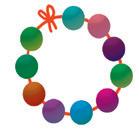
Have students continue to work in pairs. Distribute a string of 17 beads to each pair.
Ask: How many beads are there? (17)
Count the beads on the string to verify that there are 17 beads. 1, 2, 3, …, 17.
Say: We can break 17 into two parts.
Count 10 beads on the string and remove the remaining beads from the string. Have students do the same with their beads.
Say: There are 10 beads on the string. Let us count the remaining beads. 11, 12, 13, …, 17. There are 17 beads.
Ask: How many beads are on the string? (10) How many beads are not on the string? (7) How many beads are there altogether? (17)
Say: 10 and 7 make 17.
Stage: Pictorial Representation
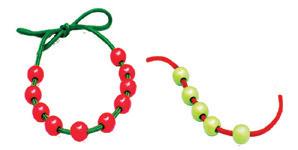
Have students look at the picture on CB p. 3.
Ask: How many beads are there? (15) How many red beads are there on the tied string? (10) How many green beads are there on the other string? (5)
Say: There are 10 beads on one string and 5 beads on the other string. There are 15 beads altogether. 10 and 5 make 15.

Stage: Abstract Representation
Say: We can write an addition sentence to show 10 and 5 make 15.
Write: 10 + 5 = 15
Have students look at the beads on their desk. Ask a student to write an addition sentence for the beads on the board (10 + 7 = 17). Have students look at the two addition sentences on the board and point out that a 2-digit number within 20 is made up of 10 and a 1-digit number. Explain to students what a digit is.
(c) Stages: Concrete Experience, and Pictorial and Abstract Representations
Have students continue to work in pairs. Distribute 1 more copy of Tens Frame (BM1.1) to each pair.
Draw 2 tens frames on the board.
Say: Let us put 11 counters in the tens frames. Place the counters in the tens frames as shown on CB p. 4 to show the number 11. Have students count 11 counters and place them in their ten frames.
Say: One tens frame is full. There are 10 counters in the tens frame. The other tens frame has 1 counter. When we have 1 more than 10, we have a total of 11 counters.
Write: 11 eleven
Point to the numeral and the word form of 11 on the board and read them aloud. Point to the numeral 11 on the board.
Say: 11 is a numeral.
Write: tekau ma tahi
Say: The number 11 is read as tekau ma tahi in te reo Ma ori. Tekau ma tahi.
Have students read aloud after you. Explain to students that 11 is 10 which is tekau and 1 which is tahi, so 11 is tekau ma tahi.
Draw 2 tens frames on the board.
Say: Let us put 12 counters in the tens frames. Place the counters in the tens frames as shown on the page to show the number 12. Have students count 12 counters and place them in their tens frames.
Say: One tens frame is full. There are 10 counters in the tens frame. The other tens frame has 2 counters. 2 more than 10 is 12. We have a total of 12 counters.
Write: 12 twelve
Point to the numeral and the word form of 12 on the board and read them aloud. Point to the numeral 12 on the board.
Say: 12 is also a numeral.
Write: tekau ma rua
Say: The number 12 is read as tekau ma rua in te reo Ma ori. Tekau ma rua.
Have students read aloud after you. Explain to students that 12 is 10 which is tekau and 2 which is rua, so 12 is tekau ma rua. Repeat the above procedure for the numbers 13 to 15.
14fourteen
15fifteen tekau mā rima

17seventeen tekau mā whitu





Repeat the procedure for the number 12 on TG p. 7 for the numbers 16 to 20.
Write: 0, 1, 2, 3, 4, 5, 6, 7, 8, 9, 10, 11, 12, 13, 14, 15, 16, 17, 18, 19, 20
Point to the numerals 0 to 20 on the board. Say: These are numerals.
To encourage students to remember the numbers 11 to 20 in te reo Ma ori, call out random numbers from 11 to 20 in te reo Ma ori and ask students to write the numerals on the board.




Let's Do
Task 1 requires students to write the sum of 10 and a 1-digit number as a 2-digit number within 20.
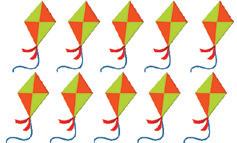
Task 2 requires students to count within 20 and match the pictures to the corresponding numbers in te reo Ma ori.
Let's Practise
Task 1 requires students to write the sum of 10 and a 1-digit number as a 2-digit number within 20.
Task 2 requires students to count within 20 and match the pictures to the corresponding numbers in te reo Ma ori.
Task 3 requires students to read numbers up to 20 in te reo Ma ori and write the corresponding numerals.
1. Write the missing numbers.


Count and match.






3. Write the numerals. a) kore b) toru c) rua tekau d) tekau mā iwa
1.2 Counting forwards and backwards
Let's Learn Let's Learn
Objectives:
• Count forwards and backwards in ones from any number within 20
• Give a number that comes before or after a number or between two numbers within 20
Materials:
• Counters
Resources:
• CB: pp. 8–9
• PB: p. 3
Vocabulary:
• backwards
• between
• forwards
• just after
• just before
(a) Stage: Concrete Experience
Draw 2 tens frames on the board.
Say: Let us count the number of counters together as I put one counter at a time in these tens frames. Use your fingers to help you count forwards.
Put one counter in the first tens frame. Have students hold up one finger and say ‘1’ aloud. Put a second counter and have students open another finger and say ‘2’ aloud. Continue to have students count forwards until they reach 10. Say: You have just counted forwards from 1 to 10. The numbers get larger by 1 as we count forwards.
Repeat the activity, encouraging students to count forwards to 10 faster this time. Leave 10 counters in the tens frame.
Say: Let us now count backwards from 10 to 1 as I remove one counter at a time. Open 10 fingers and close them one at a time as we count backwards. 10, 9, 8, …,1. Remove the counters one at a time as students count backwards. Repeat this activity two more times, encouraging students to count backwards from 10 to 1 faster each time. Next, get students to count forwards from 10 to 20 and then 1 to 20 as you place counters in the tens frames. Then, have them count backwards from 20 to 1 as you remove counters from the tens frames. Repeat this a few times until students are able to count forwards and backwards at a reasonable speed.
10 comes just before 11. 12 comes just after 11. 11 is between 10 and 12.
Let's Do
1. Count forwards or backwards. Write the missing numbers.
10 15
a) 9, , 11, 12, 13
b) 17, 16, , 14, 13
Stage: Pictorial Representation
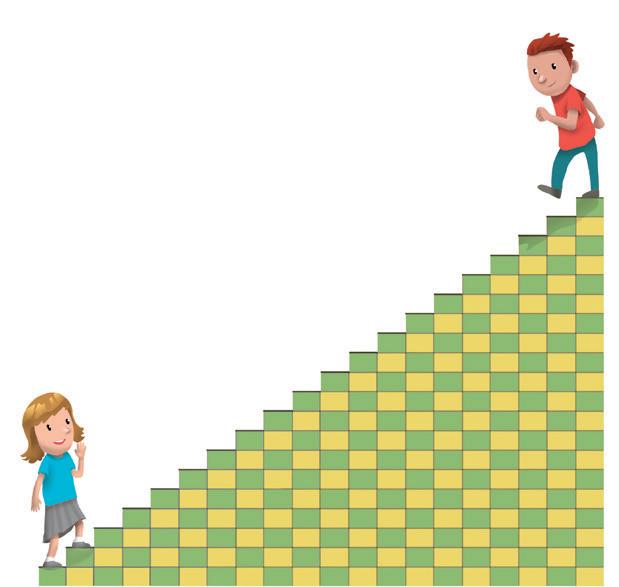
Have students look at the picture in (a) on CB p. 8. Get them to observe that the number of steps in each column are written below the column.
Say: We can start from the left and count forwards from 1 as we go up the stairs. 1, 2, 3, …, 20.
Point out to students that there are more steps in each column as we count forwards.
Say: Let us now try to count forwards from 14 to 17. 14, 15, 16, 17.
Then, have students count forwards from other numbers such as 16, 17 and 18.
Say: Now, let us start from the right and count backwards from 20. 20, 19, 18, …, 1.
Point out to students that there are fewer steps in each column as we count backwards.
Say: Let us now try to count backwards from 14 to 11. 14, 13, 12, 11.
Then, have students count backwards from other numbers such as 18, 17 and 16.
Stage: Abstract Representation
Have students close their books and count forwards from 1 to 20. Write the numbers 1 to 20 as students count forwards. Ask students to count backwards from 20 to 1 and write the numbers 20 to 1 as students count backwards.
(Continued on the next page)
(b) Stages: Pictorial and Abstract Representations
Draw the number strip in (b) on CB p. 8 on the board.
Say: We can count forwards by ones using a number strip.
Have students count forwards by ones from 9 to 15. Draw an arrow from each number to the next on the number strip as students count. Erase the arrows.
Say: We can also count backwards by ones using a number strip.
Have students count backwards by ones from 15 to 9. Draw an arrow from each number to the previous on the number strip as students count. Circle the number 11 on the number strip.
Ask: What number comes just before 11? (10)
Explain that we count backwards to find the number that comes just before.
Write: 10 comes just before 11.
Ask: What number comes just after 11? (12)
Explain that we count forwards to find the number that comes just after.
Write: 12 comes just after 11.
Say: 10 comes just before 11 and 12 comes just after 11. So, 11 is between 10 and 12.
Write: 11 is between 10 and 12.
Erase the circle on the number strip. Ask questions about other numbers in the number strip using the words ‘just before’, ‘just after’ and ‘between’.
Let's Do Let's and Let's Practise
Task 1 requires students to count forwards and backwards by ones within 20.
Task 2 requires students to give a number that comes just before or just after a number or between two numbers within 20.
EXPLORE
Have students go back to the problem on CB p. 1.
Ask: Can you solve the problem now? (Answer varies.) What else do you need to know? (Answer varies.)
Students are not expected to be able to solve the problem now. They will learn more skills in subsequent lessons and revisit this problem at the end of the chapter.
Complete the number strip. Then, write the missing numbers.
a) comes just before 16.
b) comes just after 12.
c) is between 9 and 11.
1. Count forwards or backwards. Write the missing numbers.
a) 5, , 7, 8, 9, , 11
b) 12, 13, , 16, , 18
c) , 11, 10, , 8, 7, 6
d) , 19, , 17, 16, 15,
2. Write the missing numbers.
a) comes just before 11.
b) comes just after 14.
c) 12 comes just before
d) 20 comes just after
e) is between 16 and 18.
1.3 Counting, reading and writing numbers within 30
Let's Learn Let's Learn
Objectives:
• Count within 30 by making tens first
• Read a number up to 30 in English and te reo Ma ori, and write in numerals
Materials:
• 3 copies of Tens Frame (BM1.1) per pair of students
• Counters
Resources:
• CB: pp. 10–14
• PB: pp. 4–5
(a) Stages: Concrete Experience, and Pictorial and Abstract Representations
Stick 24 counters randomly on the board.
Say: Let us count the counters. 1, 2, 3, …, 10. There are more than 10 counters.
Ask: How can we put the counters to make it easier to count them? (Put them in groups of 10.)
Say: Let us count the counters again by putting them in groups of 10.
Arrange the counters in rows of 10 as you count. You should have 2 rows of 10 counters and 1 row of 4 counters.
Say: There are 10 counters in the first row. There are also 10 counters in the second row. 10, 20. Altogether, there are 20 counters in the first two rows. There is a third row of counters, so we have more than 20 counters.
Ask: How many counters are there in the third row? (4)
Say: Let us count all the counters. 10, 20, 21, 22, 23, 24. There are 24 counters.
Point out to students that there are 20 counters in the first two rows and 4 counters in the third row, so there are 24 counters.
Say: 20 and 4 make 24. We can write the addition sentence.
Write: 20 + 4 = 24
Have students count other number of counters by putting them in groups of 10.
1.3 Counting, reading and writing numbers within 30



21twenty-one rua tekau mā tahi
22twenty-two rua tekau mā rua
23twenty-three rua tekau mā toru
24twenty-four rua tekau mā whā
25twenty-five rua tekau mā rima
(b) Stages: Concrete Experience, and Pictorial and Abstract Representations
Have students work in pairs. Distribute 3 copies of Tens Frame (BM1.1) and some counters to each pair.
Draw 3 tens frames on the board.
Say: Let us put 21 counters in the tens frames. Place the counters in the tens frames as shown on CB p. 11 to show the number 21.
Have students count 21 counters and place them in their tens frames.
Say: Two tens frames are full. There are 10 counters in each tens frame. The other tens frame has 1 counter. 10, 20, 21. 21 is 20 and 1.
Write: 21 twenty-one
Point to the numeral and word form of 21 on the board and read them aloud.
Write: rua tekau ma tahi
Say: The number 21 is read as rua tekau ma tahi in te reo Ma ori. Rua tekau ma tahi.
Have students read aloud after you.
Explain to students that 21 is 20 or 2 tens which is rua tekau and 1 which is tahi, so 21 is rua tekau ma tahi.
Draw 3 tens frames on the board.
Say: Let us put 22 counters in the tens frames. Place the counters in the tens frames as shown on the page to show the number 22.
26twenty-six rua tekau mā ono
27twenty-seven rua tekau mā whitu
28twenty-eight rua tekau mā waru
29twenty-nine rua tekau mā iwa
30thirtytoru tekau
Have students count 22 counters and place them in their tens frames.
Say: Two tens frames are full. The other tens frame has 2 counters. 10, 20, 21, 22. 22 is 20 and 2.
Write: 22 twenty-two
Point to the numeral and word form of 22 on the board and read them aloud.
Write: rua tekau ma rua
Say: The number 22 is read as rua tekau ma rua in te reo Ma ori. Rua tekau ma rua. Have students read aloud after you.
Explain to students that 22 is 20 or 2 tens which is rua tekau and 2 which is rua, so 22 is rua tekau ma rua.
Repeat the above procedure for the numbers 23 to 30.





Let's Do Let's


Let's Practise Let's Practise
Task 1 requires students to write tens and ones as a 2-digit number.
Task 2 requires students to count within 30 and write the numerals.
Task 3 requires students to match the numerals to the corresponding number words in English.
Task 4 requires students to write the numerals given the number words in te reo Ma ori.
Task 1 requires students to count within 30 and write the numerals.
Task 2 requires students to write tens and ones as a 2-digit number.
Task 3 requires students to write the numerals given the number words in English.
Task 4 requires students to match the number words in English and in te reo Ma ori.
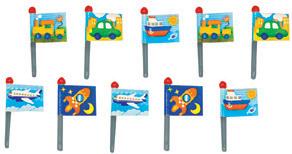
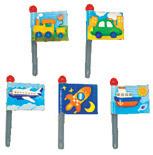
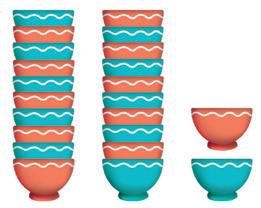
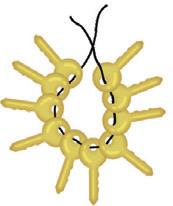

1.4 Showing numbers in different ways
Let's Learn Let's Learn
Objective:
• Represent a number within 30 in different ways
Materials:
• 3 copies of Tens Frame (BM1.1) per pair of students
• Counters
Resources:
• CB: pp. 15–16
• PB: pp. 6–7
(a) Stage: Concrete Experience
Have students work in pairs. Distribute 3 copies of Tens Frame (BM1.1) and some counters to each pair.
Say: Represent 15 using the counters and the tens frames.
Students should put all the counters on the tens frames to get 1 full tens frame and a tens frame with 5 counters.
Say: Let us count the counters in the tens frames. 10, 11, 12, 13, 14, 15. There are 15 counters.
Stage: Pictorial Representation
Have students look at the pictures in (a) on CB p. 15. Relate the counters in the tens frames to the pictures. Lead students to see that 10 and 5 make 15.
Say: Since 10 and 5 make 15, we can also write the number 15 using a number bond.
Copy the number bond in (a) on the page on the board.
Stage: Abstract Representation
Have students look at the picture of the flags and the number bond in (a) on the page. Remind students that when we add the parts of a number bond, we get the whole.
Write: There are 15 flags.
10 and 5 make 15.
10 + 5 = 15
(b) Stages: Concrete Experience, and Pictorial and Abstract Representations
Follow the procedure in (a). Guide students to conclude that 2 more than 20 is 22.
Let's Do Let's and Let's Practise Let's Practise
Task 1 requires students to write numbers within 30 in different ways.