August always feels like New York’s inbetween month.
We’re still chasing summer adventures, squeezing in more ways to enjoy NYC, to cool off, enjoy adventures, soak up more sunshine, spend time with family, just MORE before back-to-school brings us back to a routine.
That’s exactly what this issue is built around, starting with:
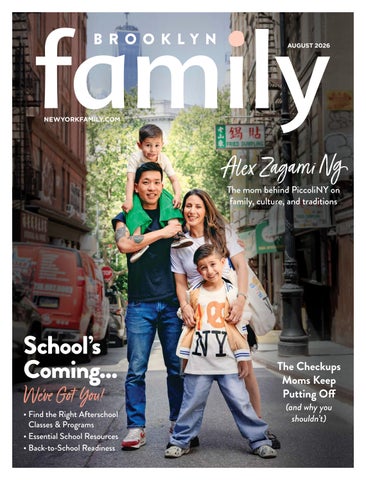
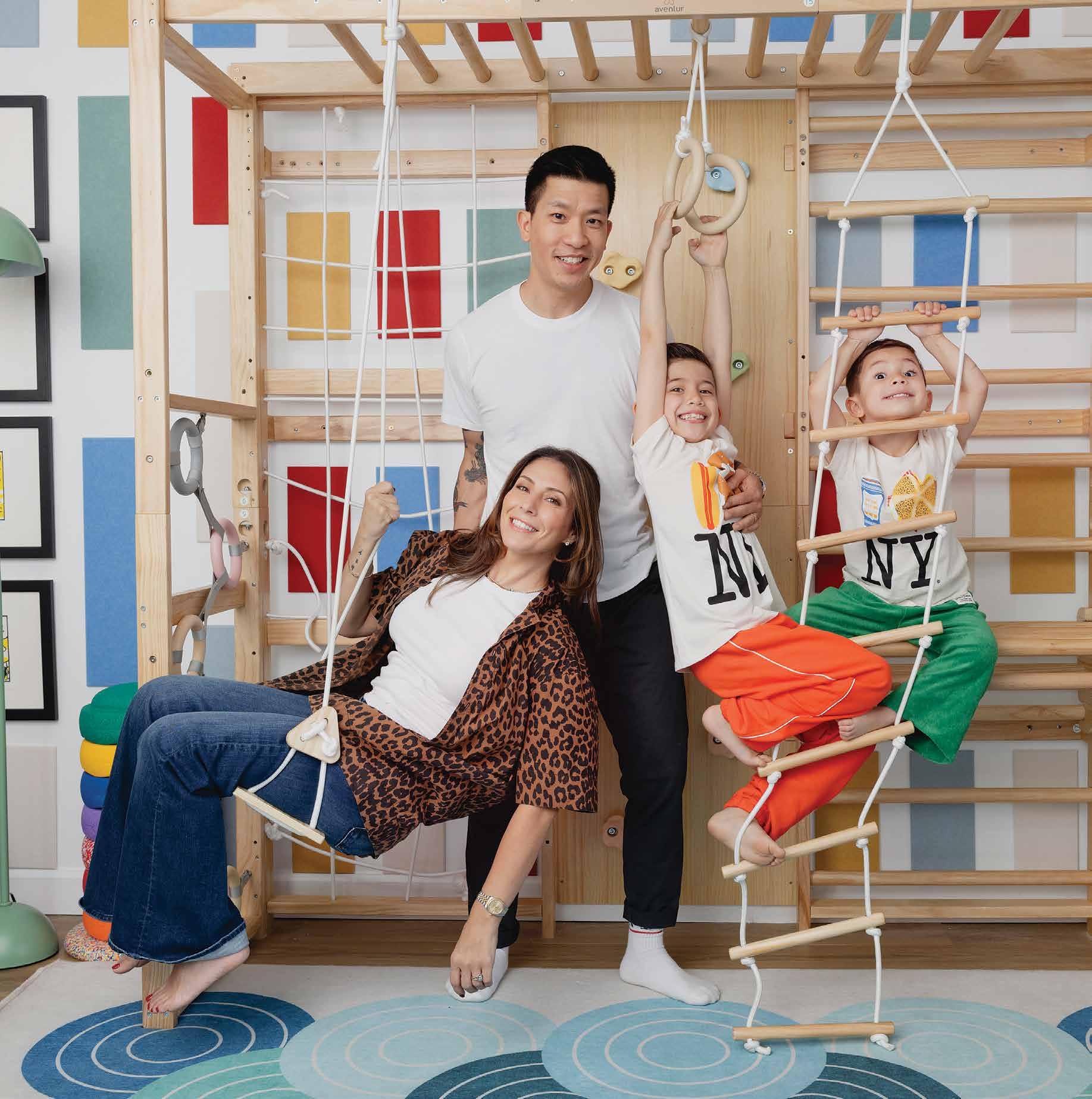
This month’s cover mom, Alex Zagami Ng (page 26), shares how her beloved brand, PiccoliNY, is a love letter to its neighborhoods, family traditions, and the community that makes this city unlike anywhere else.
And with back-to-school on the horizon, we have you covered. Check out our Back-to-School Readiness List (page 8), amazing after-school programs (page 22), and education resources throughout this issue to guide you through the upcoming school year.
Here’s to soaking up a little more summer before the backpacks come out. In the meantime, we hope this issue helps your family step into the new school year feeling inspired, prepared, and ready for whatever comes next.
New York Family
PUBLISHER: Clifford Luster
EDITORIAL DIRECTOR: Donna Duarte-Ladd
ASSOCIATE PUBLISHER: Erin Brof
ADVERTISING DIRECTOR: Stacie Goldberg
EDITORIAL LEAD: Jeannine Cintron
DEPUTY EDITOR: Danielle Ramos
EVENTS EDITOR: Shara Levine
ASSOCIATE DIGITAL EDITOR: Soe Kabbabe
EDITORIAL ASSISTANT: Alexa Lutter
PARTNERSHIP MANAGERS: Lauren Alperin, Lauren Anchin, Mary Cassidy, Chris Cunnington, Lori Falco, Shelli Goldberg-Peck, LynnMarie Hanley, Lisa Herlihy, Janine Mulé, Nina Spiegelman, Gwen Tomaselli
MARKETING & STRATEGY DIRECTOR: Rosalia Bobé
MARKETING & EVENTS
COORDINATOR: Ashley Rivera
MARKETING ASSISTANT: Lorens Morris
MEDIA SALES ASSISTANT: Ruston Ropac
ART DIRECTOR: Leah Mitch
WEB DEVELOPER: Sylvan Migdal
GRAPHIC DESIGNERS: Arthur Arutyunov, Connie Sulsenti
EDITORIAL CONTRIBUTOR: Soe Kabbabe
CONTACT INFORMATION
ADVERTISING: (718) 260-4554
Advertising@NewYorkFamily.com
CIRCULATION: (718) 260-8336
Tina@NewYorkFamily.com
ADDRESS:
New York Family Media/Schneps Media 15 MetroTech Center, Seventh Floor Brooklyn, NY 11201
PRESIDENT: Victoria Schneps-Yunis
CEO: Joshua Schneps
COO: Clifford Luster
New York Family is the recipient of 7 Parenting Media Awards for 2025, including Gold awards for both Design and Editorial for our monthly print publication.
GET IN TOUCH
Share your feedback and ideas about family life in New York! Email us at editorial@newyorkfamily.com and tag us at #newyorkfamily
BACK TO SCHOOL Readiness Checklist
BY JEANNINE CINTRON
PREPARE
Your child likely needs more than a new backpack and lunchbox for the first day. Purchase bento boxes, reusable water bottles, small ice packs, thermoses, pocket tissues, etc.
Stock up on breakfast and lunch supplies. If possible, plan your menus in advance to save time during the week.
Review schoolwork from the previous year. If it seems like your child needs to brush up on any subjects, and after two months off school, he or she surely might, put in some extra study time before the first day.
Prepare homework space. Buy new home supplies and organize the area where your child will be spending time completing assignments after school.
MEDICAL
Make sure all medical checkups are up-todate, including pediatrician, dentist, and optometrist.
ROUTINES
Practice the new bedtime routine and morning routine a week or so before school starts.
Mary Miele, learning and education specialist and CEO of Evolved Education Company, suggests creating pictures of tasks to do in the morning and night.
“Print them out and put them on the table. As your child completes them, turn the picture over,” she explained. “Older students can write tasks on note cards and do the same thing.”
Christine Hernandez, certified doula, early childhood and parenting expert, and founder of Allo Saratoga, recommends adjusting your child’s sleep schedule long before the night before the first day of school.
“We all know that summertime can bring a lot of fun and late nights catching fireflies, but as we gradually head back to the routine of fall, it’s really important to slowly–that’s the key–adjust your child’s sleep schedule back to the school-year time and routine,”
she said. “By gradually adjusting their sleep schedule back to a regular routine before school starts, you help them ease into the new academic year with less stress and fatigue. This transition allows them to be well-rested, alert, and ready to engage in school activities from the very beginning. Simply adjust their bedtime by a few minutes every night, starting a few weeks before school begins, and it won’t be such a fight the night before school begins.”
Set up a family calendar. This is a great way to prepare for what’s coming up and get everyone excited about the school year ahead.
“I recommend setting up a family calendar to organize everyone’s schedules, including school activities, extracurriculars, and important dates,” Hernandez explained. “Having a visual representation of the weekly routine helps everyone stay on track and manage time effectively. We all know those first few weeks back to school are chaotic, so set everyone up for success with a family calendar.”
MAKEYOUR HISTORY
450 yearsunparalleled education in New York of has arrived
As the first day approaches, limit time spent on electronic devices and increase daily reading time.
Also, Miele said that for students who have phones, text them a note with their morning, evening, and weekly afterschool activity routines for easy reference. Be sure to include daily and weekly chores, as doing chores is an excellent way to prepare children for adult life and build executive functioning.
Brainstorm some new ways to ask “how was your day” when kids get home from school. Asking more specific questions will help you understand how well your child is doing in a new class, new school, with new teachers, etc.
Re-establish meal times that match school hours. This includes breakfast, lunch and dinner times.
“Having regular meal times helps regulate energy levels and prepares the body for the school day,” Hernandez said. “It will help prepare everyone for the upcoming year, so start establishing these meal times a few weeks before school begins to gradually get back into the routine.”
SAFETY
Review safety procedures for walking to school or getting on and off the school bus. If your child is attending a new school, do a practice run to familiarize him or her with the new surroundings.
FIRST DAY
Prepare the night before. Set the breakfast table, pack lunches, lay out clothes, organize supplies and fill book bags.
Make a list. Memorize new class numbers and teachers’ names.
Double, triple, and quadruple check your supply list. Make sure you have everything your child will need for the first day.
Summer homework check-in. Make sure all summer homework assignments have been completed.
For younger children or those with firstday jitters, read a book together the night before about starting school.
Popular titles include Wemberly Worried by Kevin Henkes, The Kissing Hand by Audrey Penn, We Don’t Eat Our Classmates by Ryan T. Higgins, and Llama Llama Misses
Mama by Anna Dewdney.
ACADEMICS
Stock up on books. Once the school year starts, provide access to books and make time for reading, Miele said.
“Even 20 minutes on weekend days will help,” she said.
Talk about news articles with your children. Miele recommends Newsela as a great resource. Also, preview math courses and skills.
For older students, meet with your child and create an approach to studying, homework, and scheduling that everyone agrees on.
“Be sure that when you create a system, you all follow it with fidelity. Keep in mind that many middle and high school students need time on the weekends to do homework and study,” Miele said. “Create a family plan for this before school begins, with clearly
Fontbone Hall Academy
A Tradition of Excellence
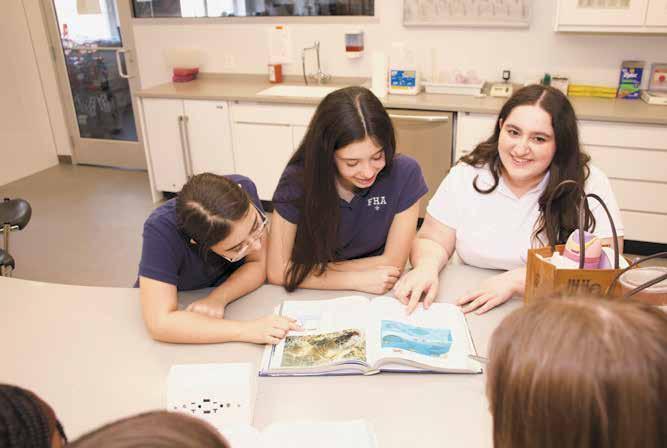
For nearly 90 years, Fontbonne Hall Academy has empowered young women to grow academically, spiritually, and personally. Sponsored by the Sisters of Saint Joseph, our mission is rooted in faith, academic excellence, leadership, and service. Serving students in grades 6–12, Fontbonne provides a welcoming community where every student is encouraged to discover her strengths and reach her full potential.
Academic Excellence
Students benefit from a challenging college-preparatory curriculum featuring Advanced Placement (AP) and College Bridge courses, allowing them to earn college credit while preparing for higher education. Signature programs, including our STEM Biomedical Science track and Choral Scholars Program, provide opportunities to explore passions, develop critical thinking, and build real-world skills.
Student Life & Leadership
Learning extends far beyond the classroom through modern science labs, athletics, performing arts, clubs, leadership opportunities, and community service.
The Visitation Program (Grades 6–8)
Designed specifically for middle school students, our Visitation Program provides a strong academic foundation while easing the transition into high school. Small class sizes, dedicated faculty, and a supportive learning environment help students build confidence, strengthen essential skills, and prepare for long-term success.
Preparing for the Future
With a 100% college acceptance rate, personalized support, and a tradition of excellence, Fontbonne Hall Academy prepares students for success in college and beyond. Whether beginning in our Visita-
tion Program or entering high school, every student becomes part of a community dedicated to helping young women learn, lead, and thrive.
Faith & Service
As a Catholic school, faith is woven into daily life through prayer, liturgy, retreats, and meaningful service experiences. Inspired by the Sisters of Saint Joseph, students learn the importance of compassion, integrity, respect, and serving others, preparing them to make a positive impact in their communities.
Join the Community!
Schedule a tour today and discover how Fontbonne Hall Academy empowers young women to learn, lead, and thrive.
Fontbonne Hall Academy 9901 Shore Road, Brooklyn, NY 11209 718-748-2244 ext. 1128 fontbonne.org
CUNY & SUNY Colleges Just Got More Affordable
BY DANIELLE RAMOS
This past May Governor Hochul signed a major education package as part of New York’s FY27 budget with several big and impactful changes for families with collegeage students, and maybe even themselves, too. Here’s what’s in it.
Tuition at SUNY and CUNY Is Frozen Tuition is staying flat for resident undergraduate students at SUNY stateoperated campuses and CUNY senior colleges, meaning families won’t see a tuition hike this year.
The state is also giving schools additional funding to help cover costs while keeping prices steady.
Free Community College Is Expanding
The SUNY and CUNY Reconnect program allows adult learners to attend community college for free when pursuing degrees in high-demand fields. It launched in 2025 and enrolled more than 12,000 students in its first year. In the past, students could attend community college for free if they pursued a degree in a high-demand field, like healthcare, cybersecurity, or advanced manufacturing. Now, the program is adding new eligible fields, including logistics, transportation, air traffic control, and emergency management. In big news for those who want to get into healthcare, adults who want to earn a nursing degree can now qualify even if they already hold a college degree in another field. This is a significant change for career changers
entering healthcare, especially for parents who want to re-enter the workforce.
Students Will Graduate with Work Experience
Under a new statewide initiative called New York Career Connect, SUNY and CUNY schools will be required to make sure every student graduates with real-world work experience by 2030. That could include internships, paid work placements, public service roles, and career advising that’s tied directly to a student’s major.
Emergency Aid Funds at Every Campus
Every SUNY and CUNY campus will now be required to have an emergency aid fund for students dealing with unexpected financial stress, like medical bills, housing issues, or family emergencies. The goal is to help students get support quickly so a sudden crisis doesn’t force them to leave school.
For more on SUNY and CUNY programs, visit suny.edu or cuny.edu.
Meet Amy Salomon, Head of School at Gillen Brewer
Amy says, “being a special needs parent certainly wasn’t on my bingo card.” It was, however, an unexpected turn her life took; and, while it has its challenges, she wouldn’t change it for the world. If it hadn’t happened, she never would have found her way to Gillen Brewer.
Amy is a lifelong educator in New York City independent schools. About fifteen years ago, she pivoted to special education, and three years ago she joined this community. What she found here astounded her.
Gillen Brewer was founded on two pillars that resonate deeply with her, both as an educator and as a special needs parent.
The first is the school’s academic-therapeutic approach. Amy knows firsthand how much special needs families are asked to juggle — school, therapy appointments,
family life. Gillen Brewer eases that burden by bringing therapies and academics together in one place, during the school day. But the benefits go far beyond convenience. When teachers and therapists collaborate daily, they develop a truly holistic understanding of each child. Goals are reinforced
across settings, strategies are aligned, and students are supported by an entire team moving toward the same outcomes.
The second pillar is a strong schoolhome partnership. Raising a child with learning, language, or social challenges can feel isolating — Amy has felt that way herself and believes families deserve to be part of a community that understands their journey. As a result, Gillen Brewer doesn’t just educate children, the school partners with families. The Gillen Brewer team helps parents reinforce skills at home, creates opportunities for connection, and makes sure every family feels known, supported, and valued.
When families and schools work together, children thrive.
Amy can’t wait to meet you. You already have a lot in common with her.
Advice for New Parents
What to know — from the delivery room to bringing baby home
BY DR. MAJA CASTILLO AND MARIA SMILIOS
About 100,000 babies are born in New York City every year. That’s 100,000 families stepping into one of the most profound — and let’s be honest, most terrifying — moments of their lives.
The joy is real. So is the fear. So is the exhaustion that hits before you’ve even left the hospital.
Choosing Where to Have Your Baby
The hospital closest to you isn’t always the right one — and you deserve to ask questions before you’re in labor. When you’re researching where to give birth, the things that matter most aren’t always in the brochure.
Ask what happens the moment you walk in during labor. Ask who specifically will be in the room with you. Ask what support you’ll receive before they send you home with this new person you’re suddenly responsible for.
And make sure the hospital is equipped to handle the unexpected, because sometimes it happens, and you want to know the right people are already there.
You Don’t Have to Figure This Out Alone
One of the most underrated things a new parent can do is talk to other parents. Not for advice, necessarily, but just for the reminder that what you’re feeling is normal, that someone else has been up at 3 am wondering the same things you are.
That support can look like an in-person group, an online community, or a structured program. At Flushing Hospital Medical Center, we offer Centering Pregnancy, which brings expectant mothers together with health experts to ask questions, share experiences, and build the kind of community that carries you through those early weeks.
Pick Your Pediatrician Before the Baby Arrives
This may surprise a lot of parents, but your baby will typically need to see a pediatrician within one to two days of coming home. That first visit covers weight, feeding, and a general health check, and it goes a lot smoother when you’re not scrambling to find a doctor while running on no sleep.
Once you have a pediatrician, use them. Call with the small questions. That’s what they’re there for.
Take Your Own Health Seriously, Too
The focus after birth naturally shifts to the baby, but you matter too, and your health directly affects your child’s.
The CDC estimates that about 1 in 9 women experience postpartum depression, meaning it’s far more common than most people realize, and far more treatable than
many fear. Mood and anxiety disorders in perinatal health impact 1 in 5 women, according to the Maternal Mental Health Leadership Alliance (MMHLA).
It’s normal to feel a rush of emotions in those first weeks. But if what you’re feeling tips into persistent sadness, anxiety, or a sense that something is off, say something.
You can talk to your own doctor, your baby’s pediatrician, or a support group. Asking for help isn’t a sign that you’re struggling — it’s a sign that you’re paying attention.
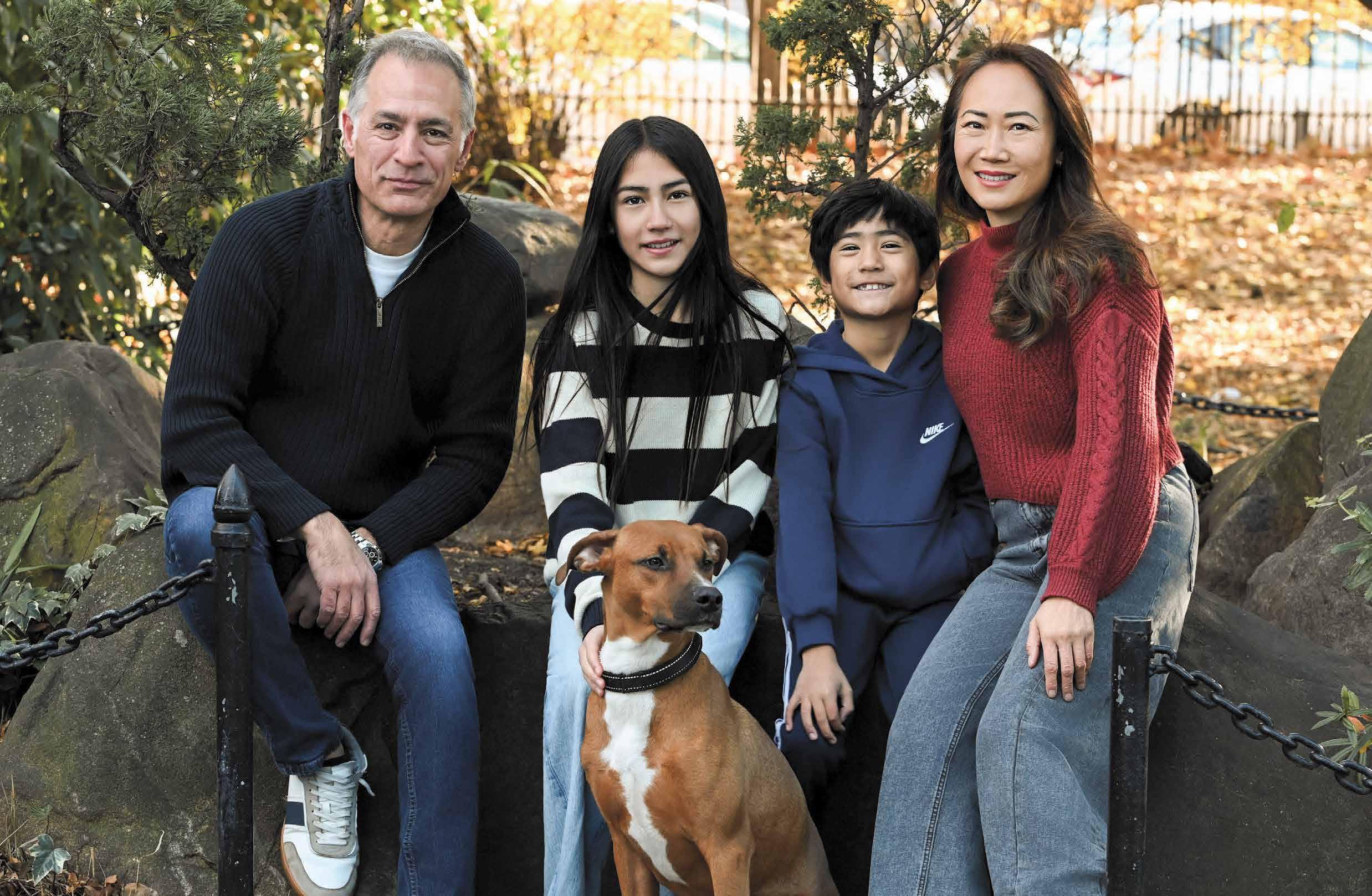
Maria Smilios, CNS, Director of Nursing at Flushing Hospital Medical Center, was born at the same hospital she now serves and is deeply committed to supporting the diverse communities of Queens.
Dr. Maja Castillo, MD, is a Healthfirst Medical Director, pediatrician, mother, and proud Queens resident.
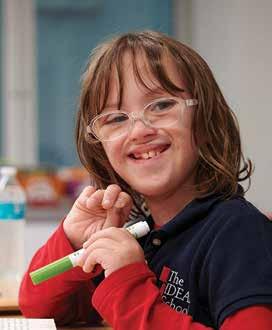
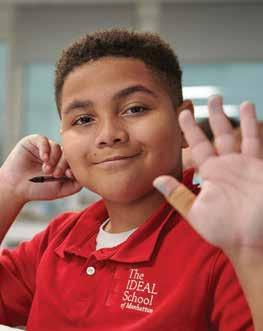
Inclusion in Action at The IDEAL School of Manhattan
The IDEAL School of Manhattan is New York’s only K-12+ independent inclusion school. The school’s philosophy expands the definition of diversity to include ability and economic status. Generous financial assistance packages and scholarships have built a student body that reflects the city’s diversity more than any other independent school.
The school’s core principles are Inclusion, Diversity, Excellence, Acceptance, and Leadership. Every aspect of the IDEAL experience--instruction, assessment, program, enrichment--reflects a researchbased commitment to inclusion education as a means for academic excellence.
IDEAL’s exceptional academic program sets a high bar, and using differentiated instruction, teachers lay a path
for students to reach their goals. Lower School (K-5) classes are co-taught by a general educator and a learning specialist. Middle School (6-8) classes build students’ social skills and introduce more complex
academic concepts. High School (9-12) is student-driven, develops life skills, and prepares students for postsecondary education. The Next Steps Transition Program (18-21) is an alternative or ramp to college, supporting students’ continued academic progress, educating them and their families about adult services, and finding compatible internships in and out of school.
Please visit www.theidealschool.org to learn more about the school and its home at 5 Hanover Square in Lower Manhattan with five-borough accessibility.
To schedule a visit, email admissions@ theidealschool.org. To RSVP for IDEAL’s annual in-person open house on Saturday, October 24, go to www.theidealschool.org/ admissions/open-houses-and-tours.
A Different Kind of Private School
At IDEAL, we expand the definition of diversity to include ability. IDEAL is a nurturing, supportive environment where we meet all children where they are and help them reach their goals. Join our annual in-person open house on October 26 to learn more about our learning community with substantial financial assistance based on need. www.theidealschool.org/open-houses
for a virtual open house or schedule a personal tour to learn about our unique inclusion mission. Call 212-769-1699 x10105 or email admissions@theidealschool.org
Finding the Right School in New York
Tips for navigating admissions
BY MIA SALAS AND NEW YORK FAMILY
There are few parenting experiences in New York City that inspire quite as much conversation—and anxiety—as school admissions.
Whether your child is entering preschool, kindergarten, middle school, or making the leap to high school, the process can quickly begin to feel all-consuming. Calendars fill with open houses. Group chats become unofficial advice columns. Parents compare notes over playground conversations and latenight searches. Suddenly, terms like district priorities, rolling admissions, and school philosophy enter everyday vocabulary.
And beneath all of it sits one persistent question: How do I know I’m making the right choice?
The reality is that school admissions in New York City rarely comes down to finding the single “best” school. Instead, it’s about identifying the environment where your child will feel supported, engaged, challenged, and excited to learn.
For many families, the process begins with deciding whether to explore public schools, private schools, or both.
Private schools often attract families looking for a more individualized educational experience. Because they operate independently, each school develops its own curriculum, culture, and educational philosophy, which means no two experiences look exactly alike.
That flexibility allows schools to shape everything from classroom structure to enrichment opportunities. Some emphasize creativity and project-based learning. Others prioritize leadership development, language immersion, arts education, or academic rigor. Smaller class sizes are also often part of the appeal, giving families the sense that teachers may have more flexibility to adapt to different learning styles and needs.
But experienced parents often say the
same thing after going through admissions: prestige doesn’t necessarily equal fit.
A school’s reputation may catch your attention, but day-to-day experience matters more. What does the classroom feel like? How do teachers engage with students? Is the environment warm and collaborative, or more structured and traditional? Does the school’s philosophy reflect how your child naturally learns?
These questions often become more revealing than acceptance rates or rankings.
Private school admissions themselves can feel surprisingly involved. Many families begin researching months before applications officially open, attending tours and information sessions well before deadlines arrive. Depending on the school and age group, applications may include written materials, interviews, recommendations, student visits, and family meetings.
Cost is another consideration that naturally enters the conversation. While private education in New York carries a reputation for high tuition, financial aid has become an increasingly important part of admissions for many schools, making exploration possible for a wider range of
families than some initially assume.
At the same time, many families discover that New York City’s public school system offers more variety than expected.
With hundreds of schools across the five boroughs, public education in NYC includes an enormous range of experiences and educational models. While all schools follow city and state academic standards, individual schools often develop identities shaped by their communities and priorities.
One school may center arts integration and creative expression. Another may emphasize science and technology. Others focus on language programs, project-based learning, community partnerships, or expanded extracurricular offerings.
Families are often surprised to learn how different neighboring schools can feel from one another.
Public schools also offer broad academic exposure across core subjects while providing after-school opportunities that can become an important part of family life. For working parents especially, enrichment programs and extended-day options often become part of the overall decision—not simply an added bonus.
One common misconception is that because public education is guaranteed, there’s no admissions process involved.
In reality, families still make choices. Depending on grade level and location, parents may participate in applications and ranking systems through MySchools, exploring neighborhood options alongside district, boroughwide, and citywide programs. Available seats and admissions priorities play a role—but so does understanding what environment will help your child thrive.
School Search Checklist: Questions to Ask Before You Apply
Before submitting applications or ranking schools, keep this list handy during tours and research:
q Can I picture my child here?
Forget reputation for a moment—does the environment actually feel right for your child’s personality and learning style?
Learn about counseling, academic support, learning specialists, enrichment, and socialemotional resources.
q What opportunities exist beyond academics?
Clubs, arts, athletics, leadership opportunities, after-school programs, and community experiences all shape a child’s experience.
q Does the school culture align with our family values?
Pay attention to how teachers speak to students and how students interact with one another.
q What are the practical realities?
Commute time, start and dismissal schedules, cost, after-school care, and logistics matter more than many parents expect.
q What questions do I still have?
Keep notes after each tour—you’ll forget details faster than you think.
That may be the biggest lesson admissions season offers.
It’s easy to believe there’s a perfect answer hiding somewhere inside spreadsheets, school tours, and online forums. But parents who come out the other side often describe the process differently: less as solving a puzzle and more as paying attention.
Pay attention to how your child responds in a classroom. Notice what questions matter most to your family. Trust the things that don’t appear on school websites—the energy of a hallway, the way teachers speak to students, the feeling you leave with after a visit.
Because ultimately, choosing a school isn’t about winning admissions season.
It’s about choosing the place where your child gets to become themselves.
skateboarding
Discover the joy of
Juniors Ages 3-6 Fall I · 9/12-11/5 Fall II · 11/6-1/29
Kids & Teens
Ages 5-15 Fall · 9/12-1/29
booking private lessons & birthday parties
The Checkups Moms Keep Putting Off
and why you shouldn’t!
BY DANIELLE RAMOS
Between all the annoying tasks moms have to do day in and day out, adding another to our calendar, like a regular checkup, isn’t always high on our priority list, but it should be.
The truth is that skipping your own checkups isn’t just bad for you; it’s also bad for everyone who depends on you. And the frustrating truth about a lot of serious health conditions is that they don’t always announce themselves. That’s exactly why routine physicals and screenings exist – to catch something before it goes south.
We talked to Dr. Meleen Chuang, Medical Director of Women’s Health at the Family Health Centers at NYU Langone, to get her straight-talking advice on what checkups moms actually need, when to get them, and how to stop putting yourself last.
To help us understand why these checkup appointments are so important (and how to make the most of them), we spoke with Dr. Meleen Chuang, Medical Director of Women’s Health at the Family Health Centers at NYU Langone. Dr. Chuang shares what to expect at different ages, why prevention is powerful, and how parents can model healthy habits for the whole family.
Why are annual physicals so important, especially for busy moms?
Busy moms often put their family’s needs before their own. Annual checkups are often overlooked because you may feel perfectly fine. However, annual checkups are important for early detection and prevention of health issues.
Annual physicals are important because they allow for early detection of health conditions with no symptoms, such as certain cancers or illnesses. Preventative care gives you the opportunity to keep your health in top shape, such as getting updated vaccines, monitoring and treating chronic conditions,
and improving your lifestyle (eating, exercise, mental health).
Building a good relationship with your health care provider is also a part of your annual physical. The more your doctor knows about you, the easier it is for your doctor to give you personalized and comprehensive health advice.
What are the most important screenings and checkups women should be getting at
different life stages?
While specific recommendations can vary based on individual health history and risk factors, there are general guidelines. Regular basic checkups typically include monitoring your blood pressure to detect hypertension, checking cholesterol levels to assess heart disease risk, and screening for diabetes to keep blood sugar levels in check.
Staying up-to-date on recommended vaccinations is key to maintaining immunity,
while mental health screenings can help identify and address issues like anxiety, depression, and stress. Lifestyle counseling is also valuable for discussions on smoking cessation, weight management, and nutrition. Finally, don’t forget about dental health—seeing a dentist once or twice a year for an exam and cleaning can help catch potential problems early.
Well Woman Exams:
Starting at Age 21
From age 21 and beyond, it’s important to keep up with your annual well-woman exam. This typically includes a review of your medical history, checks on vital signs, a physical exam, and assessments like a breast exam, skin exam, and eye and hearing tests. Your doctor will also monitor for signs of pre-diabetes, pre-hypertension, and track your weight and thyroid function. They’ll discuss your eating habits, lifestyle choices (like smoking, alcohol, and drug use), and the importance of staying active.
In addition, these tests should be performed:
– Pap Smear: Done during a pelvic exam to detect early signs of cervical cancer
– Infectious/STI Screening:
Recommended if sexually active or with new partners
– Chlamydia and Gonorrhea: For women 25 and older, screening is recommended if at high risk.
– Hepatitis C: One-time screening for all adults aged 18 to 79.
– HIV: One-time screening for all adults aged 15 to 65.
– Cervical Cancer Screening: Starts at age 21
– Pap test every 3 years for women ages 21-29
– Pap test every 3 years, HPV test every 5 years, or both every 5 years (“co-testing”) for women ages 30-65
– Continue Pap tests for 20 years after treatment for cervical dysplasia or until age 65, whichever is longer
Midlife and Beyond:
Additional
Health Considerations
In addition to the exams and screenings mentioned earlier, women in midlife and beyond should pay attention to the following health check-ups:
Cancer Prevention Screenings:
– Mammogram: Regular breast cancer screenings (typically every 1–2 years for women 40 and older).
– Colorectal Cancer Screening: Starting
"Many people skip checkups because they feel healthy, but this can be a risky approach. Prevention and early detection are important because catching and treating diseases early significantly improve health outcomes and can lead to less invasive treatment options."
at age 45, or earlier if you have a family history or other risk factors.
– Lung Cancer Screening: For those at high risk, usually smokers or former smokers.
Menopause Management: Annual exams are crucial for managing symptoms related to menopause (hot flashes, mood changes, etc.), as well as for addressing associated health risks (like osteoporosis and heart disease). This is also the time to discuss options such as hormone replacement therapy (HRT).
Cholesterol Screening: Begins around age 45 for women with no known risk factors for coronary heart disease. More frequent screening may be needed depending on health status.
Dental Exam: Visit the dentist once or twice a year for an exam and cleaning to maintain oral health.
Prediabetes and Type 2 Diabetes Screening: Begin screening at age 35. If you are overweight or have obesity, screenings should be repeated every three years.
Eye Exam: Have an eye exam every 5 to 10 years before age 40. After 40, you may need them more frequently depending on your eye health.
How can moms make the most of their annual checkup?
Gather relevant information: Be ready to discuss any changes in your medical history, including new diagnoses, recent vaccinations, or surgeries.
Bring a list of medications: Include all prescription medications, over-the-counter drugs, supplements, and vitamins you are currently taking.
Share family medical history: Inform your doctor about any new health issues diagnosed in your close family members, as this can indicate a genetic predisposition.
Discuss lifestyle habits: Be honest about your exercise, smoking, and drinking habits, as these are important for your doctor.
Bring any health data: If you track your blood pressure, keep a food log, or use a symptom tracker, bring this information to share with your doctor.
Schedule related appointments in
advance: If you know you need bloodwork or other screenings (like a mammogram), try to have them done before your physical and bring the results with you for review.
Be honest: Your doctor is there to help, not to judge. Be open and honest about your health and lifestyle.
Advocate for yourself: Don’t hesitate to ask for clarification, discuss options, or seek referrals to specialists if needed.
A lot of people skip checkups because they feel fine. What would you say to those folks about why prevention and catching things early matter?
Many people skip checkups because they feel healthy, but this can be a risky approach. Prevention and early detection are important because catching and treating diseases early significantly improve health outcomes and can lead to less invasive treatment options. Regular checkups allow for the early identification and management of chronic conditions like hypertension and diabetes, preventing them from getting worse.
Annual exams are a proactive step towards maintaining long-term health. Rather than waiting for an illness to force you to seek care, regular visits create a record of your health over time.
If you could give moms one simple but powerful piece of advice to take care of their health, what would it be?
Taking care of your own health isn’t selfish – it’s essential for you to continue being there for your family. If you don’t look after yourself, you won’t be able to look after others.
Dr. Meleen Chuang is the Medical Director of Women’s Health at the Family Health Centers at NYU Langone, where she provides compassionate care to women of all ages. With a deep passion for women’s health, Dr. Chuang specializes in managing conditions like polycystic ovary syndrome and abnormal cervical dysplasia, offering proactive and patient-centered care that ensures her patients are well-informed and actively engaged in their health decisions.
Apply for 2027-2028 on our website on or after September 7, 2026
Families will be invited to enroll based on the date of their application, so applying earlier is better!
2026 Open House Dates: 9/28/26, 10/5/26, 10/19/26, 11/9/26, 11/23/26, 12/7/26, 12/21/26
All Open Houses run 9 am - 10:30 am, parents must submit an application prior to registering for an Open House.
Brooklyn Waldorf School Cultivates A New Generation Of Independent Thinkers As Vibrant And Diverse As Our Surrounding City.
BROOKLYN’S
BEST After-School Programs & Activities
The school day may end in the afternoon, but some of the most meaningful learning happens long after the final bell rings. Afterschool programs give kids the chance to explore new interests, build confidence, develop friendships, and discover talents they may never have known they had. Whether it’s dance, music, theater, sports, STEM, or art, these activities help children grow in ways that go beyond the classroom. With the new school year just around the corner, now is the perfect time to find an activity that matches your child’s personality and interests. Fortunately, New York offers no shortage of incredible options. We’ve rounded up some of the area’s top afterschool programs, where experienced instructors create fun, engaging environments that encourage kids to learn, grow, and thrive both on and off the field, stage, or studio.
Mark Morris Dance Center
3 Lafayette Ave, Brooklyn, NY 11217 718.624.8400, schooladmin@mmdg.org markmorrisdancegroup.org
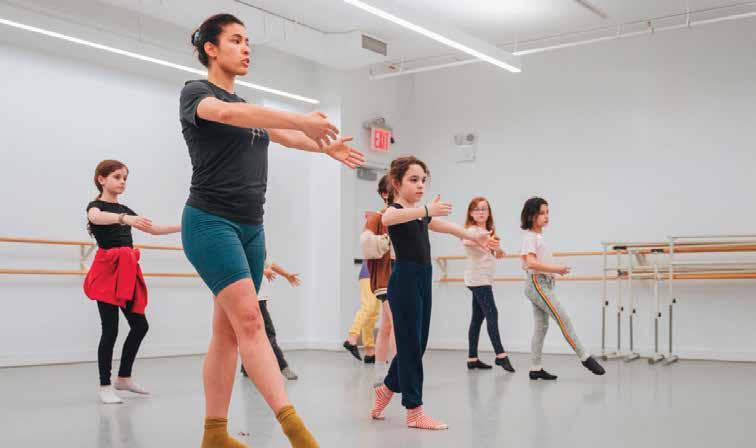
The School at the Mark Morris Dance Center provides year-round dance programming for all students, including those with disabilities, operating on the philosophy that “Dance is for Anybody!” All their classes feature live music. Their Early Childhood Program includes “WeDance” (newborn to 4), where young dancers develop skills through play, and “Creative Dance” (4-6), which introduces techniques and improvisation. At age 5, students can take “Creative Explorations” to explore Ballet, Modern, Hip-Hop, Broadway Jazz, or Tap. The Children and Teen Program, for ages 6 to 18, offers diverse genres, including Modern, Contemporary, Jazz, Broadway Jazz, Ballet, Hip-Hop, and Tap. The most passionate dancers also have the possibility to join the Student Company.
MakeInspires
230 Huntington St, Brooklyn, NY 11231 347-227-7483, brooklyn@makeinspires.com makeinspires.com
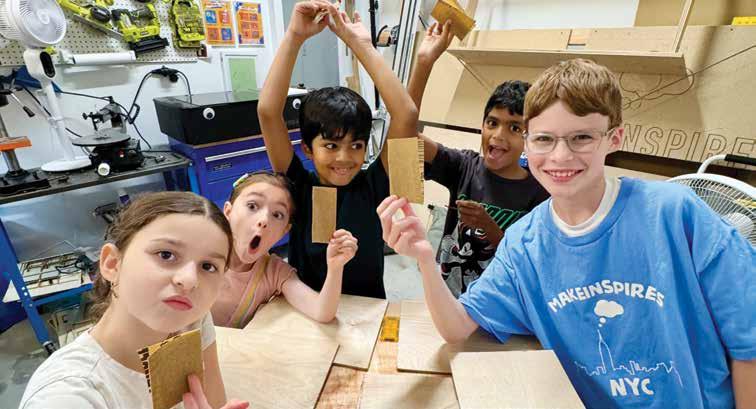
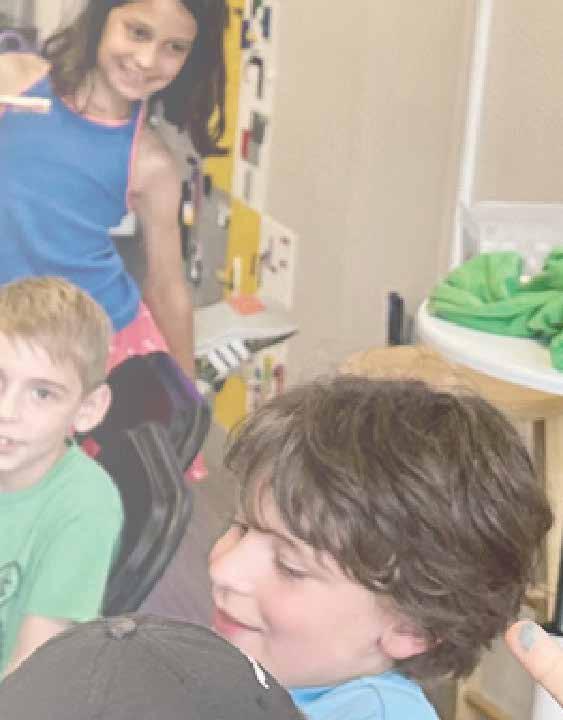
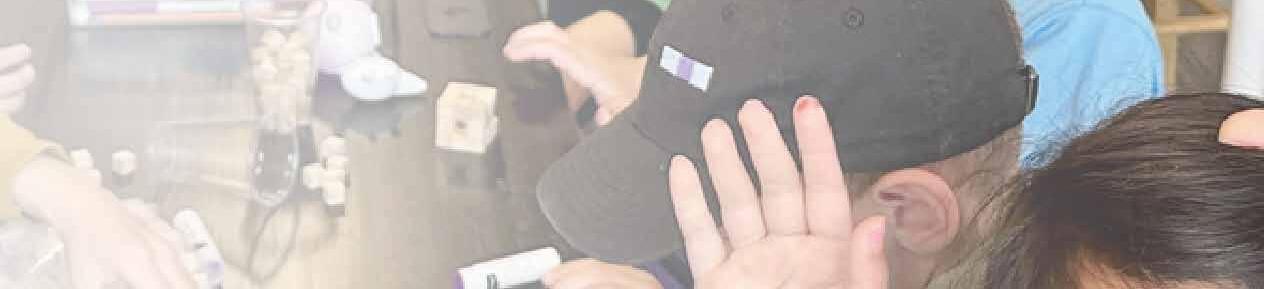
Students ages 4 to 16 design, build, and invent using real tools and technology at MakeInspires, a network of STEAM education makerspaces. For over 15 years, MakeInspires has guided young makers through more than 60 original curricula spanning 3D printing, woodworking, coding, electronics, and engineering. Join MakeInspires’ after school programs this fall in Brooklyn, Chappaqua, Mamaroneck, and the Upper East Side, beginning September 14th. Registration is open at makeinspires. com, and first-time families can use code FIRST for 10% off. Each session gives children hands-on time to turn ideas into finished projects while developing creativity, problem-solving, and confidence. Whether a child gravitates toward circuits, saws, or software, MakeInspires offers a space to explore, experiment, and make something entirely their own.
TheNoel Pointer Foundation 1360 Fulton Street, 5th Floor, Brooklyn, NY 11216 718-230-4825, info@noelpointer.org noelpointer.org
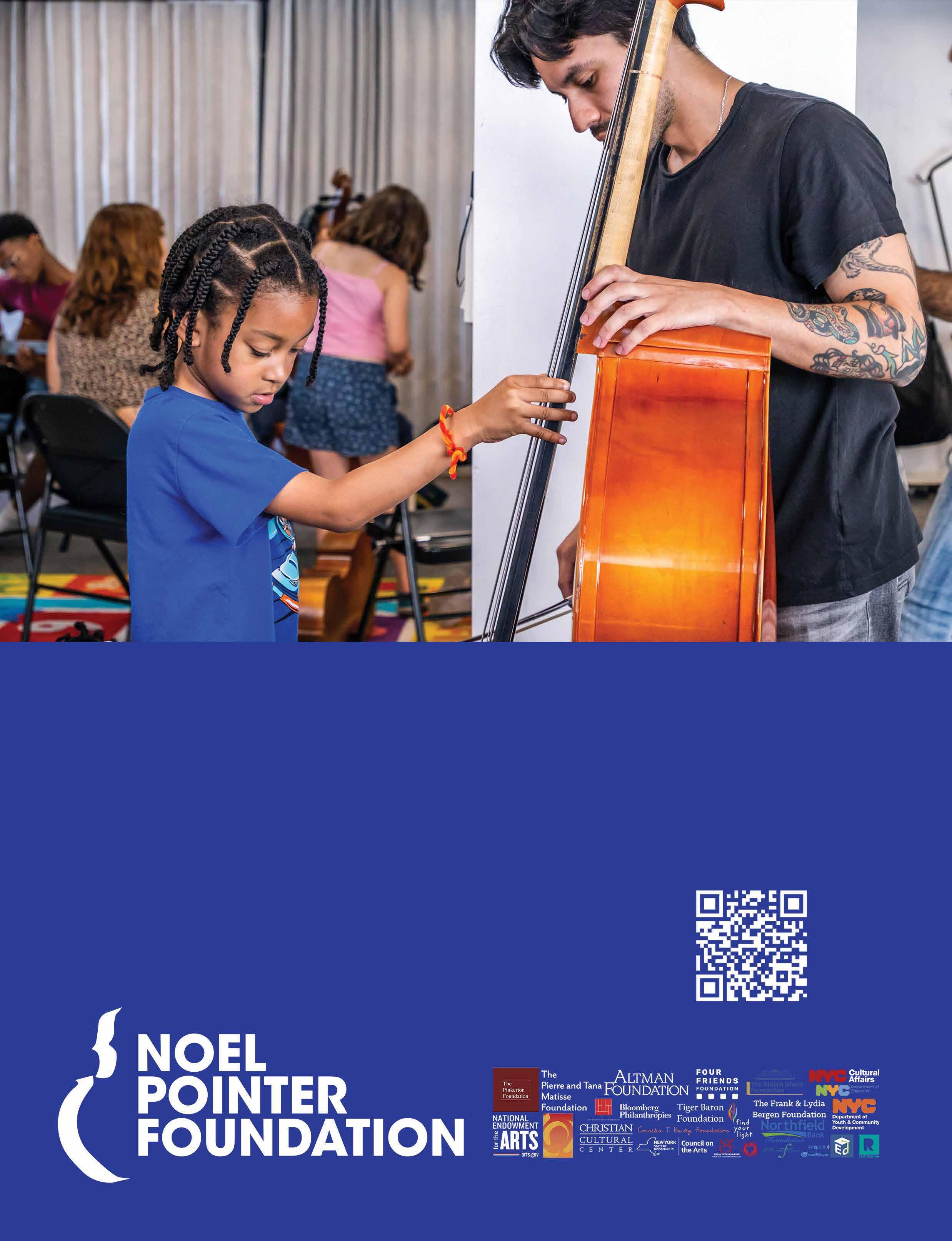
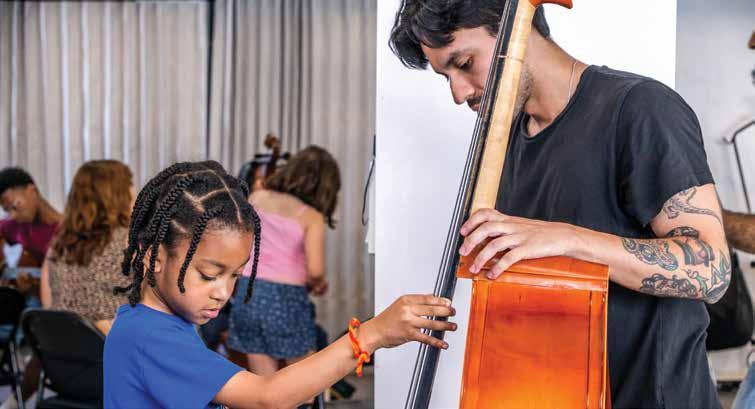
The Noel Pointer Foundation is a non-profit organization launched 30 years ago in 1995 to honor the memory of Grammy-nominated jazz violinist Noel Pointer, a platinum-selling artist who loved performing in inner-city communities and believed strongly that teaching a child a string instrument had the potential to change the entire trajectory of their life. Starting with 18 children at PS44 in Brooklyn, NPF now operates music programs in nearly 50 schools and daycare centers, serving over 35,000 students in all five boroughs. The on-campus NPF Preparatory Program offers an Ensemble Program, a Solo Program, and Music Enrichment Electives from September through May with programming for ages 9 months to adults. More information and registration are available at noelpointer.org.
Park Slope United Locations throughout Brooklyn 929-822-5051
parkslopeunited.com
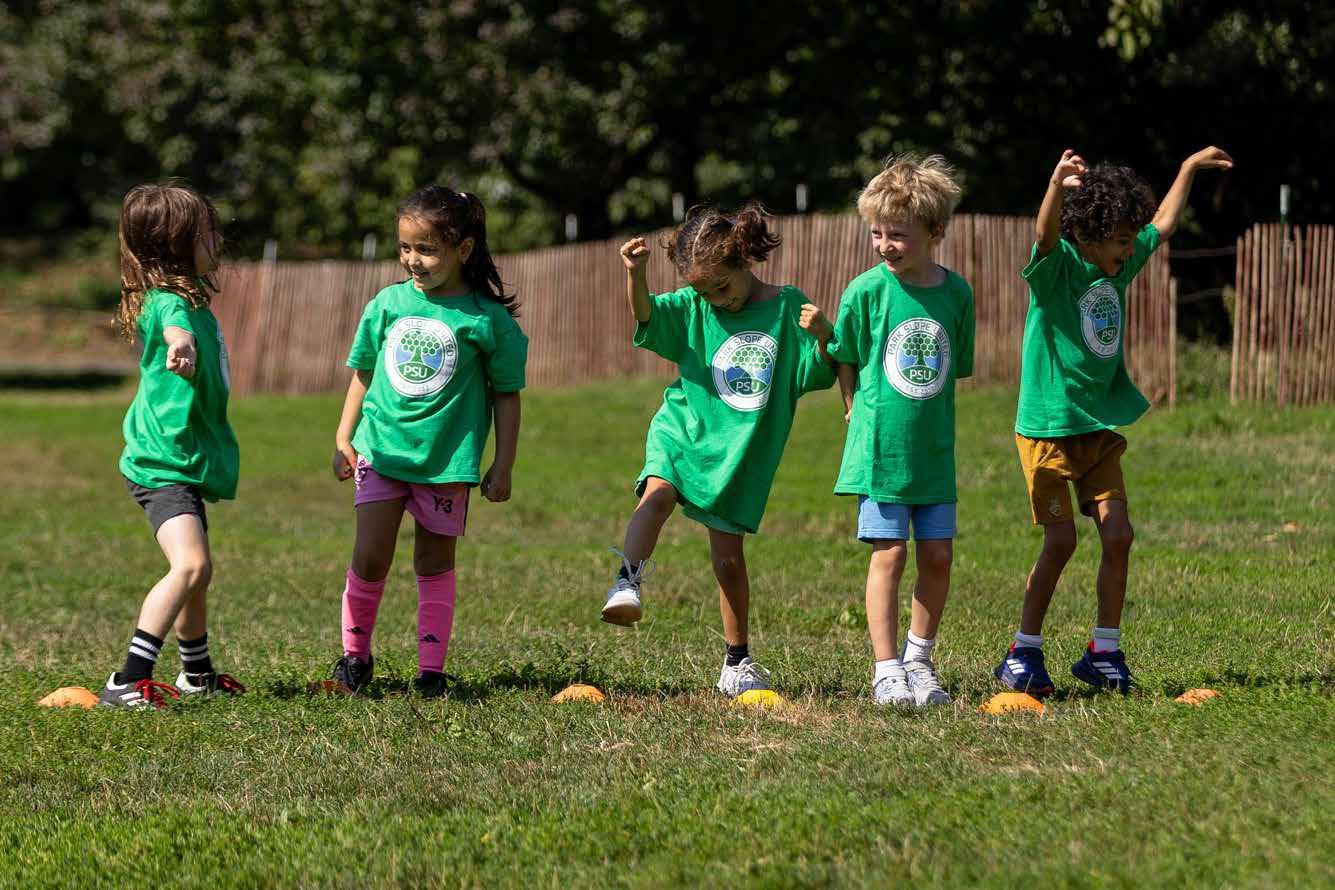
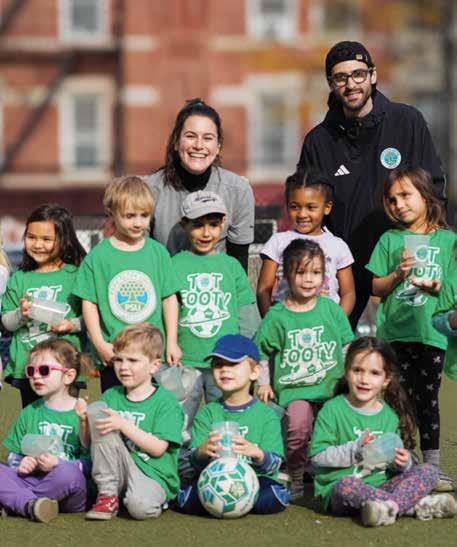
Park Slope United is Brooklyn’s leading youth soccer club, providing a comprehensive soccer experience for children of all skill levels, from beginners to serious academy travel players. As the largest club in the borough, PSU offers a wide range of classes, leagues, and camps throughout Brooklyn. The fall season begins after Labor Day and runs for 10 weeks. All of PSU’s programs are led by highly rated professional coaches with extensive experience working with these age groups - no parent volunteers here! Whether you are looking to get your soccer star started with their first class or take the next step to continue their development, PSU has a program for you! Registration is currently open for all fall class and league programs at all Brooklyn locations. Visit the website to view all schedules and secure your child’s spot.
SKATEYOGI
Williamsburg: 58 N 9th St. & Kent Ave. Prospect Lefferts Gardens: 140 Empire Blvd. & Bedford Ave. 718-484-9777
skateyogi.com
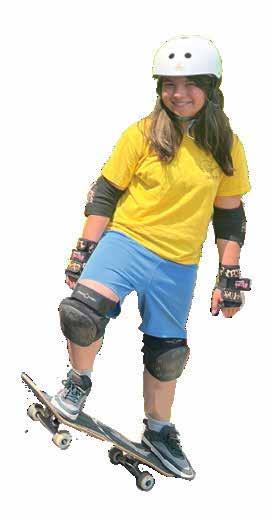
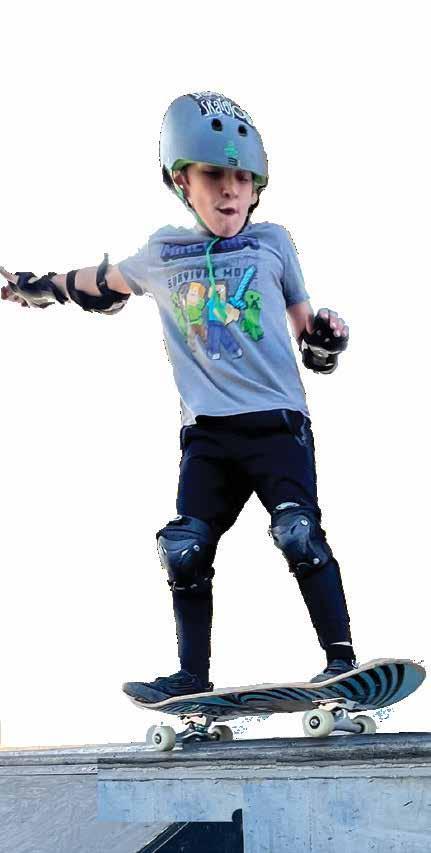
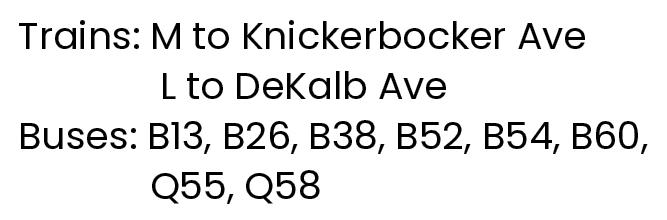
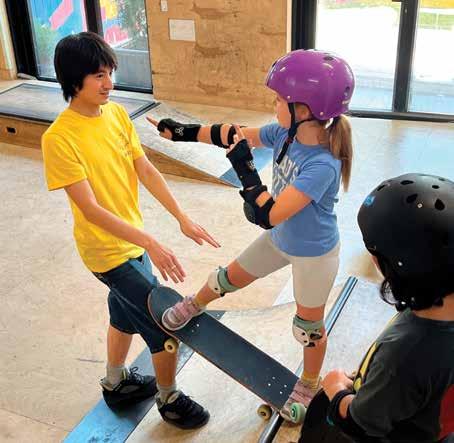
Discover the joy of skateboarding with SKATEYOGI! At their two indoor skate spaces in Brooklyn, SKATEYOGI offers skateboarding programs in a fun, creative environment for all ages (ages 3 to adults). Their small teacher-tostudent ratio and egofree approach make every student feel welcomed. SKATEYOGI classes are great exercise, a form of creative expression, and very adaptable to different learning styles. Their two locations are easily accessible from the Bedford Ave L station (Williamsburg) and Prospect Park B/Q (PLG). Weekly group classes, private lessons, birthday parties, and day camps on school holidays are available. They offer after-school pick-up at select schools, including Brooklyn Arbor, PS 31, PS 34, PS 770, Compass, and more. An open-level format welcomes absolute beginners to experienced skaters. Skateboard rental is included for all on-site programs.
S T E AM AFTER SCHOOL
More Than an After-School Program. It's a Real Makerspace.
St Studden e ts s agees 4–4 16 6 design, n buuiildd, an and innvevent with h reeal a toools s at t M MaakekeInnsppirires, , a ne netwtwork k o of STTEAM M makererspaaces es Fa Fall l aft f e errsc schoool proograams s sttarart t Septptemmbe b r 14 4 we weekly ses e si s ons accroross s 60+ 0 hanndds-oon cu currrriculaa, witth pi p ckkup up from s seeleecct schchoo o lss.
Students ages 4–16 design, build, and invent with real tools at MakeInspires, a network of STEAM makerspaces. Fall afterschool programs start September 14 — sessions across 60+ hands-on curricula, with pickup from select schools.
Register now · Use code FIRST for 10% off
Expert Tips for Setting the Right Goals for Your Child This School Year
As a new school year nears, many of us think of fresh starts and new goals for our kids. But every child learns differently, and what helps one kid thrive may not work for another. Yes, grades and achievements are important, but goals should have some layers to them- the ones that build confidence, encourage growth, and support unique learning styles.
We asked educators and educational experts to share their best advice for families for this new school year.
William Benson, PsyD Training Coordinator, ADHD & Behavior Disorders Center
Director, Tourette’s and Trichotillomania Program
Child Mind Institute
When considering your child’s goals, it’s important to meet them where they are, rather than trying to set goals based on some universal standard. What is a reasonable change that we can expect from them with hard work? This may not mean getting caught up to grade level or having as many close friends as their sibling did at their age. Instead, it may look more like starting out reading a preferred book for only 15 minutes without distraction but then reading for 30-minute increments by the end of the year. It may mean making just one or two new friends. Additionally, in order to achieve your goals, you have to have the bandwidth to focus on them. Therefore, it is necessary to prioritize. Think of the top 3-4 areas that you think have the most impact on your child’s life, and then try to create one specific, reasonable, and time-limited goal for each domain.
The start of a school year comes with a mix of emotions, and new backpacksfresh school supplies offer the promise of a new, fresh start. At the same time, if your child struggles in school, parents probably have a lot of anxiety anticipating what new or recurring issues your child may face. There will inevitably be a transition while your child adjusts to a new teacher and a mix of other students. Teachers also need time to get to know your child and their unique needs, along with the other students in their classrooms. In my role as an advocate for students in special education, I consistently advise parents to allow this transition to play out naturally. I recommend setting up a time to speak with teachers a few weeks into the school year. This should be a collaborative meeting in which parents share additional information about their child, focused on their goals, but also can request information from the teacher to address any concerns parents may have. If an informal meeting cannot address issues with services or supports first, parents may request a formal meeting to resolve those issues at any time.
Jacqui Byrne Founder, FlexSchool Flexschool.net
As a mom of four and a longtime educator, I’ve learned from experience that the most meaningful goals aren’t the ones adults choose for the child. Here are the strategies I’ve found most helpful:
Start with curiosity. No matter how much you’d secretly love to see your child improve a skill or behavior you’ve been worried about, resist the urge to focus on deficits. Start instead by asking what they’d be excited to do or learn. An authentic goal that your child cares about can unlock intrinsic motivation to develop the skills they’ll need to reach it.
Model goal-setting. Commit to a goal of your own and let your child see you working toward it. Talk openly about setbacks, adjustments, and small wins. When kids see adults embracing imperfection, it can ease the fear of mistakes and give them the confidence to take a risk and try something new.
Make it a family affair. Show your child that personal growth is not a one-child assignment but a shared family value. If everyone chooses their own goal, then establishing a morning reminder reminds everyone that each day is a new opportunity to change. An example that springs to mind is a recurring scene from the series Ted Lasso. There’s a sign on the locker room wall that says “Believe.” Every team member taps that sign on their way out the door to a game. It’s a small gesture, but through simple repetition, it becomes a powerful motivator and bonding ritual over time. Consider designing a family crest or motto together and creating a similar daily practice.
Parents want the world for their kids and often are driven and distracted by clocks and comparisons. The fear of how many milestones may have not been reached yet and that there is no time ahead to still make progress can be debili tating, but that is fear not fact. There is no end to neuroplasticity and developmental progress when high engagement, innovation, and relentless love are constantly at hand and the ability to celebrate every win, no matter how small they may feel. Kids are processing and digesting knowledge all the time while managing a world of intense input, which can make expressing their knowledge difficult. Make your child’s world feel physically safe, sensory safe, and emotionally safe, then gauge academic and independence goals. When looking at the goals for the new year ahead, look at moving the needle one or two steps, not the infinite future. We make more progress in the immediacy of independence and needs in front of us than in the abyss of what might be 10 years from now. Make this year’s goals exactly that, for this year, and make them success-driven using skills your kids have already started to show! Include a focus on their happiness and community, for that is what carries us all through...
Liza Kaplan Montanino
Certified Pediatric Sleep Consultant
Certified Special Needs
Sleep Consultant
Certified Autism & Anxiety Sleep Specialist
Lactation Educator
Founder and Owner, Rock-a-Bye-Baby Sleep
As a new school year begins, I encourage parents to focus on growth rather than comparison. All children learn, communicate, and develop skills at their own pace, with neurodivergent children often on a different timeline than their peers. To set a child up for success, goals should be individualized and rooted in the child’s strengths, interests, and support needs.
It’s also important to involve your child in the goal-setting process whenever possible! When children have a voice in identifying what they want to work toward, they are often more motivated and engaged.
Finally, it helps to remember that growth and accommodations are not mutually exclusive. Using sensory tools, visual supports, movement breaks, regulation strategies, and/or other accommodations doesn’t diminish or invalidate progress; it creates the conditions that allow a child to thrive. Success is not one-sizefits-all.
Diane Taranto, PhD. Executive Director, Seton Foundation For Learning
As parents, it is natural to want to see your child make as much progress as possible, but the most meaningful goals are the ones that are centered on your individual child—not on comparisons with others. Every child has their own learning style, strengths, interests, and pace of development. The best goals build on their unique strengths while encouraging growth in areas that are more challenging.
Start by choosing just a few realistic, measurable goals that can be celebrated throughout the year. For one child, success may be improving communication skills or increasing independence with daily routines. For another, it may be developing friendships, building confidence, or mastering an academic concept. Remember that growth is not always measured by grades or test scores. Small, consistent steps forward often lead to the greatest long-term success.
Most importantly, maintain open communication with your child’s teachers and therapists. Working together ensures that goals are consistent between home and school, creating the support and encouragement your child needs to thrive.
Meet Alex Zagami Ng
The mom behind PiccoliNY shares on family, city, and traditions
BY DONNA DUARTE-LADD
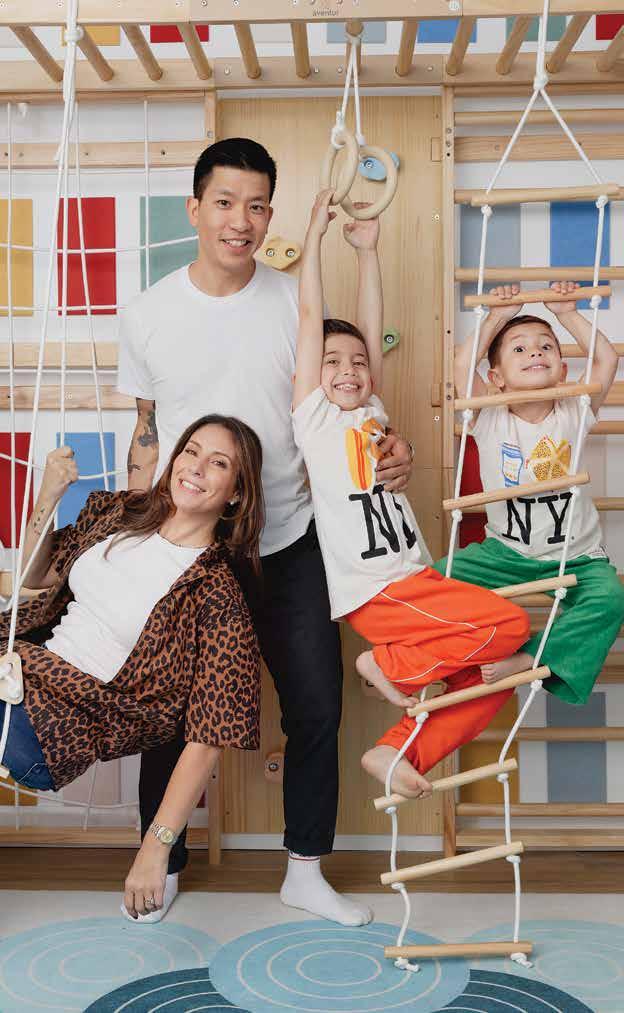
Ihave been a die-hard fan of our cover mom, Alex Zagami Ng, and her brand, PiccoliNY (@piccoliny). Their Hot Dog Pretzel NY tee and LemmeGetABaconEggAndCheese teether are just a few of my go-to gifts that pack that New York energy and are worthy of gifting.
Then I met Alex, and it all made sense.
At the heart of this iconic New York–inspired global brand are its generational roots in this city, where PiccoliNY is more than product; it’s a love letter to its neighborhoods, culture, food, and community, built from the ground up.
As big as this city is, you have definitely spotted one of their socks popping off some fashionista’s fit on the subway, a busy mom carrying her life in one of their roomy totes, at the playground, or while grabbing coffee.
Running a label, married life, city kids looks like this: Alex and her husband, Tyler, both born-and-raised New Yorkers, are raising their two kids, Sonny, 9, and Cameron, 4, in Chinatown, balancing work, extended family, and the nonstop pace of New York life. Like many parents, they navigate school drop-offs, PTA, family traditions, and all the business-y things.
And for Alex, as the founder and creative director of her brand, ya know… she’s just out there building an empire (!), along with the everyday chaos that somehow becomes the good stuff, a reality she candidly chronicles on @momswhogetshitdone.
I checked in with Alex to chat about motherhood, crafting a business with intention, raising kids in the city she grew up in, why New York and family have always been, and always will be, at the heart of what she creates.
NYF: Your brand has become such a favorite for so many families. What do you think it is about what you’ve created that resonates so deeply with people?
AZN: Fifteen years ago, we had a kids’ shop in Nolita with sparsely filled shelves. The candle
Alex's Favorites
Favorite Parks
We’re always chasing green space and water views, especially the kind with room to run.
• West Thames Park
• Columbus Park
• Gotham Park
• The Yard (Governors Island)
Favorite Museums
Rainy days, curious questions, and a little bit of wonder.
• MoMA
• New York Hall of Science
• American Museum of Natural History
• Brooklyn Children’s Museum
Favorite Treats
The spots that make a regular Tuesday feel like a celebration.
• DeFonte’s Sandwich Shop, Nicky Special
• Russ & Daughters, Black and White Cookie
• Veniero’s Italian Cheesecake
• Dominique Ansel, Cronut
Everyday City Adventures
The unplanned days are usually the best ones.
• Catch a show at Forest Hills Stadium, then grab a slice at Masani afterward. It’s one of our favorite things to do
.• Wandering through Chinatown (food, claw machines, and boba)
• Riis Park (beach and ceviche)
was being burnt on both ends, rent was due, but I wasn’t going to put the dream on hold. I started creating things inspired by the city I was born and raised in — I had to hustle and figure it out. PiccoliNY, and our original design,
‘Hotdog Pretzel New York,’ came from that very sight and smell that greeted me every morning as I exited the subway on my commute.
I think that’s what people connect with. Everything we make comes from somewhere real — little pieces of New York, the sights, the scents, the tastes that make moments we cherish and remember.
NYF: New York City is woven into so much of your story. What does it mean to represent NYC through your brand?
AZN: Both Tyler’s and my families built businesses in Chinatown and Little Italy. That’s where we learned hard work, community, and showing up for your neighbors. To me, repping New York means celebrating the people, the neighborhoods, and the small businesses that make this city what it is.
My grandfather owned a bakery in Little Italy for over 60 years. We later learned that Tyler’s parents used to go there after school, and years later, that same bakery made their wedding cake. The mixing of cultures, the kismet of it all.
That’s a story that could only happen in New York. We don’t take that for granted.
NYF: You’re raising two kids while growing a successful company. How has becoming a parent shaped the way you lead and make decisions as a founder?
AZN: Motherhood changed how I think as a founder, full stop. It’s also made me faster and more decisive. Most days, no one’s coming to save you — not as a founder, not as a mom — so you make the call, you move on, you fix it later if you need to. You take a breath. You give yourself a break. Neither business nor family runs perfectly day in and day out. Some days it’s mismatched socks and a tantrum in the car. Other days, it’s a launch that doesn’t go as planned. It’s being comfortable in controlled chaos.
NYF: You’ve often spoken about the importance of family. What role has your
support system played throughout your entrepreneurial journey?
AZN: I couldn’t have done this alone. Building a business is lonely, and there were plenty of long nights where self-doubt would creep up. But my mom never doubted me. Fifteen years ago, she co-signed my small business loan without telling my dad, and today she’s still there to help whenever I need her. She jokes that it was like strapping me onto the Brooklyn Cyclone — once that bar comes down, there’s no getting off.
She taught me that success isn’t just what you build — it’s how you treat people, how you show up, leaving things a little better than you found them. That’s the foundation PiccoliNY was built on.
NYF: What are some of the little things your kids do or say that inspire you the most?
AZN: My kids draw constantly. Give them a piece of paper, and they’re gone, fully absorbed. It’s funny, because drawing was never my strength. I can design, I can build
a brand, but put a pencil in my hand, and I’ll freeze. Watching them do so freely what I never could is humbling.
I see a lot of myself in how my kids experience the world. I understand the things that are harder for them, because they were harder for me too, and that’s made me more intentional about nurturing who they actually are. Their curiosity, their drawings, the questions that never stop — that’s what inspires me most. I just want to keep fueling it, one color marker at a time.
Photo by Yoko Haraoka
calendar
BY SHARA LEVINE
BROOKLYN
Kosher Wonderland at the Jewish Children’s Museum
WHEN: Sundays – Thursdays, 8 am – 5 pm, through Aug. 31
WHAT: Step into a magical world of giant treats and kosher adventures, where kids can explore kosher food through hands-on stations and whimsical scenes.
WANT TO GO?: Included with admission: $16-$19. (718) 907–8833, jcm.museum
Summer First Discoveries
WHEN: Wednesdays and Fridays, 10:30 am – 12:30 pm, through Aug. 14
WHERE: Brooklyn Botanic Garden, 1000 Washington Ave., Prospect Park
AGES: 4 and younger
WHAT: Little ones are invited to pot up a plant, create a craft, read a story, and use their senses to explore nature at special Discovery Garden activity stations.
WANT TO GO?: Included with admission: $16-$22; free for children younger than 12. bbg. org
Coney Island Fireworks
WHEN: Fridays, 9:45 pm, through Aug. 28
WHERE: Coney Island Beach, West 16th St., Coney Island
AGES: All
WHAT: See the skies light up every Friday night this summer with a fireworks display over Coney Island!
WANT TO GO?: Free. denoswonderwheel.com
Free Canoeing on the Gowanus Canal
WHEN: Sundays through Aug. 23; see website for schedule
WHERE: Gowanus Dredgers
Canoe Club Boathouse, 165 2nd St., Gowanus
AGES: All
WHAT: Hop into a canoe and paddle at your own pace inside the protected Gowanus Canal where you’ll discover the canal’s unique mix of wildlife and urban waterfront scenery.
WHAT: Feel the rhythm of Carnival culture with steel drums, stilt walkers, and costumed dancers at this island family fête!
WANT TO GO?: $15. (718) 467–8800, brooklynkids.org
Play in the Square
WHEN: Sundays, Aug. 9 and
Aug. 23, noon – 3 pm
WHERE: Domino Square, 12 S 3rd St., Williamsburg
AGES: All
WHAT: Kick off your morning with lively sing-alongs, followed by interactive fun like creative crafts or puppet shows.
WANT TO GO?: Free. dominopark.com
Farmhouse Family Day: Summer Fun on the Farm
WHEN: Aug. 15 – 16, Saturday and Sunday, 11 am – 3 pm
WHERE: Wyckoff House Museum, 5816 Clarendon Road, East Flatbush
AGES: 4 – 12
WHAT: Create crafts to commemorate the farm coming alive during the summer!
WANT TO GO?: Free. wyckoffmuseum.org
Brooklyn Cyclones Star Wars Night
WHEN: Saturday, Aug. 15, 6 pm
WHERE: Maimonides Park,
1904 Surf Ave., Coney Island AGES: All
WHAT: The ballpark will transform into a galaxy far, far away, with droids, Stormtroopers, heroes, and more! After the game, a postgame fireworks show, you will enjoy.
WANT TO GO?: From $26. mlb. tickets.com
Little Spoon Presents: Music of The Beatles + More for Kids
WHAT: Be there for the biggest Battle of Brooklyn event ever! Immerse yourself in August 1776 through costumed interpreters, civilian and soldier stories, a parade, and more.
WANT TO GO?: Free. greenwood.com
MANHATTAN
The Very Hungry Caterpillar Show
WHEN: Through Aug. 30; see website for schedule
WHERE: DR2, 103 East 15th St., Union Square
AGES: All
WHAT: Four classic Eric Carle stories leap off the page and onto the stage in a whimsical production featuring 75 beautifully crafted puppets that will delight audiences of all ages.
WANT TO GO?: Tickets start at $49. (212) 239–6200, hungrycaterpillarshow.com
44th Annual National Dominican Day Parade
WHEN: Sunday, Aug. 9, 11 am WHERE: Parade begins at 6th Ave. bet. West 37 St and West 38 St., Midtown
AGES: All
WHAT: Celebrate Dominican culture and pride with festive floats, live performances, first responders, and local leaders.
WANT TO GO?: Free. natddp. org
India Day Parade
WHEN: Sunday, Aug. 16, noon
WHERE: Madison Ave. at E 38th St to E 27th St., Murray Hill
AGES: All
WHAT: Celebrate Indian Independence Day at the largest parade outside of India, featuring marching bands, colorful floats, and vibrant cultural performances.
WANT TO GO?: Free. fianynjct. org
The Wiggles Tree of Wisdom Spectacular
WHEN: Saturday, Aug. 22, 3 pm & 6 pm
WHERE: Beacon Theatre, 2124 Broadway, Upper West Side
AGES: 8 and younger
WHAT: The Wiggles are coming to town with a magical live show featuring timeless hits and sing-along moments, including favorites like “Yummy Yummy” and “Hot Potato”!
WANT TO GO?: Tickets start at $55. msg.com
BRONX
Summer of Moomin
WHEN: Tuesdays – Sundays, 10 am – 6 pm, through Sept. 13
WHERE: New York Botanical Garden, 2900 Southern Blvd., Bronx Park
AGES: All
WHAT: Step into the world of the Moomins and experience the Garden through the spirit of Moominvalley with a cluebased quest, hands-on crafts, and more.
WANT TO GO?: Included with admission: $15-$35. (718) 817–8700, nybg.org
Family Art Project: Garden Guardians
WHEN: Aug. 15 – 16, Saturday and Sunday, 10 am – 1 pm
WHERE: Wave Hill, 675 W 252nd St., Riverdale
AGES: All
WHAT: Use your imagination to design your very own garden guardian and bring it to life as
QUEENS
The 36th Hong Kong Dragon Boat Festival
WHEN: Aug. 8 – 9, Saturday and Sunday, 9 am
WHERE: Flushing Meadows Corona Park, 11101 Corona Ave., Flushing
AGES: All
WHAT: Experience the largest Dragon Boat Festival in the U.S., celebrating the centuriesold tradition of dragon boat racing.
WANT TO GO?: Free. hkdbf-ny. org
South Asian Parade
WHEN: Sunday, Aug. 9, noon – 3 pm
WHERE: Parade runs along 37th Ave. bet. 69th St. and 89th St., Jackson Heights AGES: All
a sculpture.
WANT TO GO?: Free with admission to the grounds: $4-$10. (718) 549–3200, wavehill.org
Family Day August 2026: Art-Making for All Ages
WHEN: Saturday, Aug. 29, 1 – 3 pm
WHERE: The Bronx Museum, 1040 Grand Concourse, Concourse
AGES: All
WHAT: Bronx Museum educators will be on hand to guide families through artmaking activities inspired by the exhibits.
WANT TO GO?: Free. (718) 681–6000, bronxmuseum.org
Dance Theater of Harlem
WHEN: Saturday, Aug. 29, 7 pm
WHERE: Lehman Center for the Performing Arts, 250 Bedford Park Boulevard West, Kingsbridge AGES: All
WHAT: Experience the elegance, power, and artistry of the world-renowned Dance Theatre of Harlem during an evening that promises to inspire audiences of all ages.
WANT TO GO?: $31.15; $5 ages 10 and younger when purchased through the box office. (718) 960–8833, lehmancenter.org
WHAT: Celebrate the heritage and vibrant cultures of the South Asian community at this festive parade, with traditions from Bangladesh, Pakistan, Sri Lanka, Nepal, Bhutan, and the Maldives.
WANT TO GO?: Free. queenscb3.cityofnewyork.us
Bolivian Day Parade
WHEN: Sunday, Aug. 16, noon – 3 pm
WHERE: Parade takes place on 37th Ave. bet. 69th St. and 89th St., Jackson Heights AGES: All
WHAT: Celebrate the history and culture of Bolivia with festive floats, stunning costumes, live performances, and more.
WANT TO GO?: Free. queenscb3.cityofnewyork.us
Arthur Ashe Kids’ Day
WHEN: Sunday, Aug. 23, 9:30 am – 6 pm
WHERE: USTA Billie Jean King National Tennis Center, Flushing Meadow - Corona Park, Flushing AGES: All
WHAT: This annual event features a variety of entertainment and activities including musical performances, player appearances, interactive games and more.
WANT TO GO?: Free. usopen. org
Play in the Square at Domino Square
Closing Out SUMMER
Heavy, beautiful, and true
BY DONNA DUARTE-LADD
Idon’t hate summer, and I’ll get to the good stuff in a sec, but to be real: it kicks my a** every. single. year. Parenting a neurodivergent kid when camp is done, and school hasn’t started yet? Not exactly relaxing. Those long, unstructured days everyone else seems to love (at least on Insta) are brutal for a kid who needs routine, and for the mom who’s with him 24/7. Right now, we’re in some rough patches, and I’m counting the days until we are back on a schedule.
That said, I have been trying to approach this summer differently. I’ve been peeling back some of those “ugh” layers and letting myself enjoy the moments that do feel light. Part of that is perspective: I only have two more summers at home with my oldest before he heads to college. That reality makes me pause, breathe, and soften on the hard days.
And while the lack of routine with my youngest can stretch me thin, I’ve been planting seeds for the summers ahead, for him and for us as a family. After years of paperwork, he was finally approved for an OPWDD program (you can learn all about OPWDD on Newyorkfamily.com), which means extra support as he grows. And this fall, he will start horseback riding, some ninja gym time, all things we’d been holding off on until he was ready. And now, he is.
Let’s pivot for a breath and share for parents just starting on this neurodivergent journey, a few lessons I’ve learned the hard way:
It’s all about location. Sometimes that means leaving Disneyworld early if it is too loud and overwhelming or adjusting plans last-minute that just aren’t working.
Don’t force the fit. The situation has to work for your kid, not the other way around.
Pick your battles. There’s a difference between teaching resilience and pushing a child through something they truly can’t process.
Those in-between-school-break stretches test many of us
Just last week (okay, it was yesterday, ha ha), I found myself crying into my pillow from the weight of it all. So circling back to summer: I don’t hate it. It’s just…harder than I’d like. Summer is supposed to be carefree, but for some of us (let’s say parents of a severely neurodivergent kid), it can be a lot. And it’s okay to be honest about that. Some days, it’s just A LOT.
Then you’ll have a day where a sunset is so good, or your kid has one of those unstoppable giggle fits (the best) because
his big brother tripped and he finds his discomfort funny, thanks, big bro, for unintentionally taking one for the team. Don’t get it twisted, I’m team summer. Golden State born and raised, I’m making this season work. That’s exactly why I’m dedicating an essay to this topic, because I know I’m not alone. Seasonal breaks bring tough days, a mix of “WTFs” and sunshine, and sometimes both in the same week. And yes, this is summer, unpredictable, exhausting, and unforgettable.
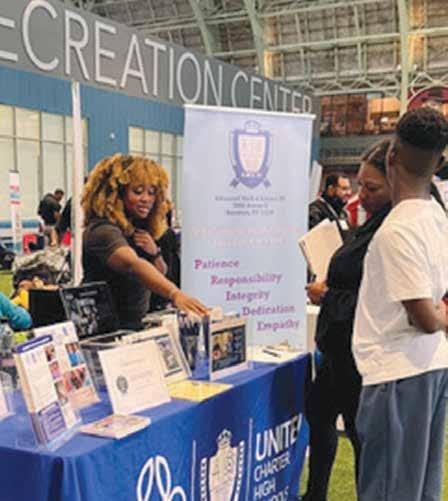
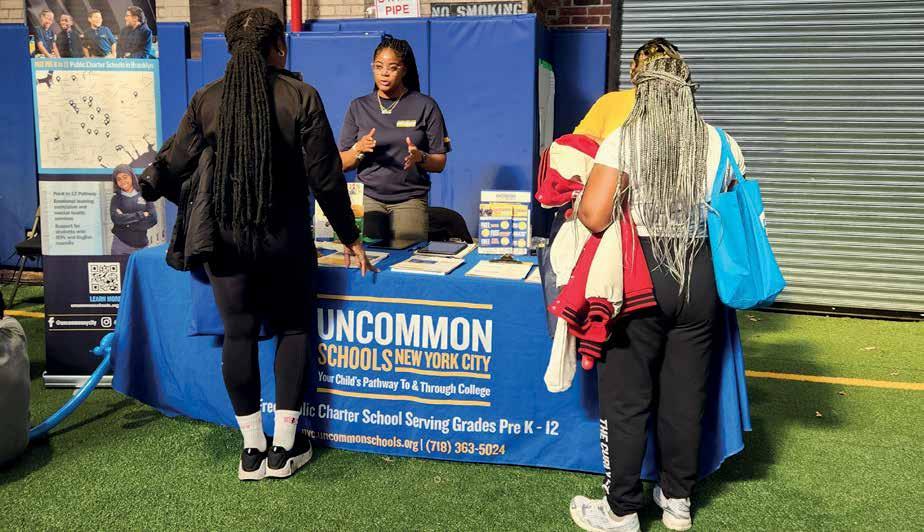
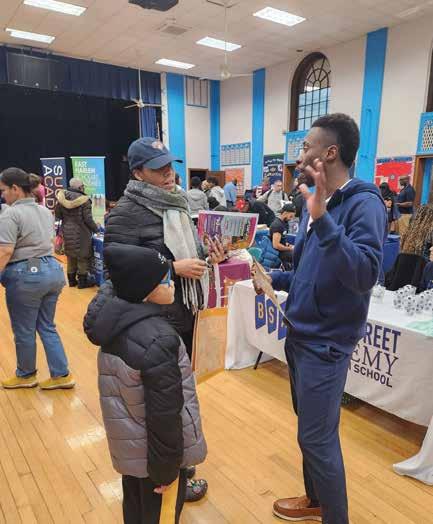
Brooklyn Charter School Fair
Saturday, Oct. 3rd 12PM - 3PM
Get ready for a special afternoon where charter school representatives, afterschool programs, community and family resources come together under one roof!
Meet - Brooklyn Charter School representatives, get your questions answered, and apply the same day.
Explore - Programs and services, including afterschool activities, community resources, wellness support, and more. Play - Robotics Demos, Face Painting, Balloon Twisting, Photobooth Fun, Raffles & Giveaways, Gaming, and Music.