ChineseEntrepreneuris produced and designed by Media Group Pte Ltd (Registration No. 200105565G) for Singapore Chinese Chamber of Commerce & Industry (Registration No. S61550014E). Copyright of the materials contained in this publication belongs to SCCCI. Nothing in here shall be reproduced in whole or in part without prior written consent of SCCCI and/or Media Group Pte Ltd. The views expressed in Chinese Entrepreneurby authors and contributors are not necessarily those of SCCCI and no liabilities shall be attached thereto. All rights reserved. Editorial enquiries should be directed to the Editor, ChineseEntrepreneur , Singapore Chinese Chamber of Commerce & Industry, 47 Hill Street, #05-01/02, SCCCI Building, Singapore 179365. Tel: (65) 6337 8381 E-mail: research@sccci. org.sg. Unsolicited material will not be returned unless accompanied by a self-addressed envelope and sufficient return postage. While every reasonable care will be taken by the Editor, no responsibility is assumed for the return of unsolicited material. MDDI (P) 047/04/2026. Printed by KHL Printing Co Pte Ltd (Registration No. 197801823M).
03
目录
CONTENTS
16
华商人物 Up Close
千锤百炼出精品,筑梦狮城显匠心 专访中冶新加坡首席执行官谭志勇
Forging Excellence Through Craftsmanship, Growing Sustainably in Singapore
Interview with Tan Zhiyong, CEO of MCC Singapore
30
22
东南亚华商 Southeast Asian Chinese Entrepreneurs
专访印度尼西亚
中华总商会总主席张锦雄
Interview with Indonesian Chinese Entrepreneur Association (PERPIT) Chairman Abdul Alek Soelystio
中华脉搏 China Beat
Beijing’s New Red Line: Offshore Firms Can’t ‘De-China’
42
商团动态 Industry Dynamics
与时俱进,开拓车商新契机 专访新加坡车商公会会长王荣健
Keeping Pace with the Times, Unlocking Opportunities for the Automotive Parts Industry
Interview with Kelvin Ong, President of the Singapore Cycle & Motor Traders’ Association
Chinese Entrepreneur (华商) is a bilingual publication. While the publication carries only selected articles in English, we can provide an English translation of the Chinese articles for our readers upon request.
FORGING EXCELLENCE THROUGH CRAFTSMANSHIP, GROWING SUSTAINABLY IN SINGAPORE
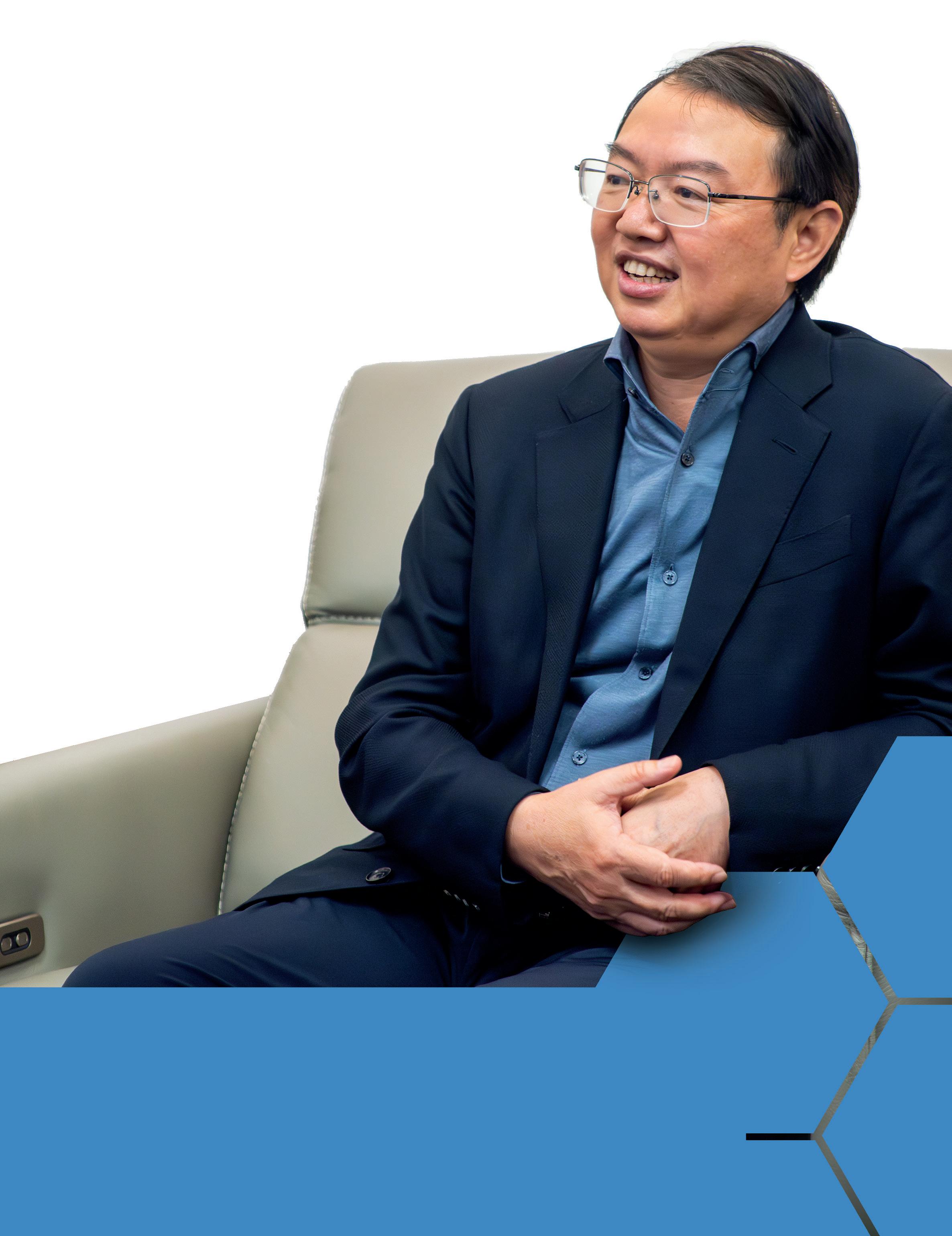
SSince entering the Singapore market in 1996, Tan Zhiyong, CEO of MCC Singapore, has led the company with a strong commitment to innovation and transformation. Starting from labour subcontracting, the company progressively moved into professional subcontracting and general contracting, and expanded into real estate development in 2010 with the establishment of MCC Land (Singapore).
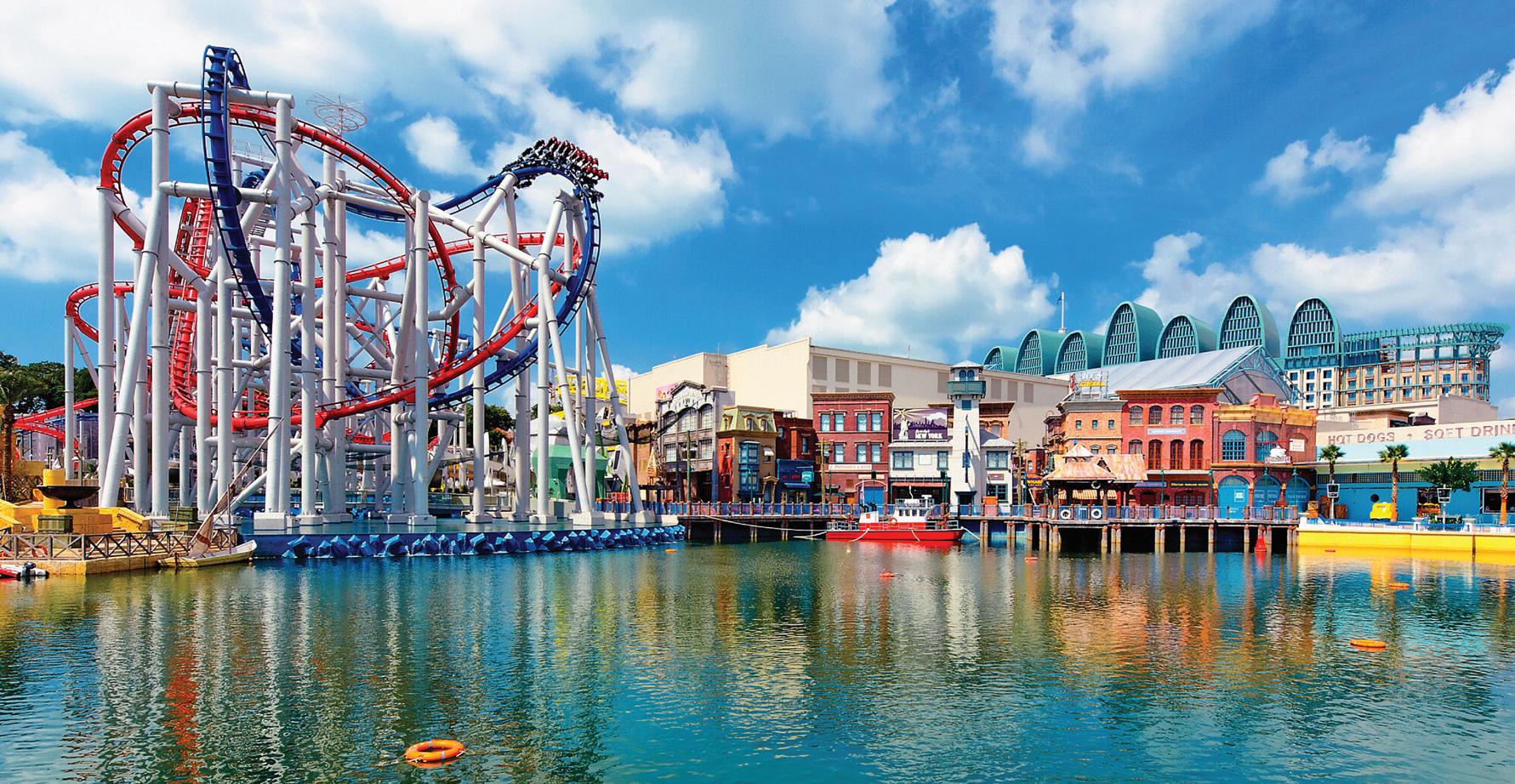
To date, MCC Singapore has developed 16 real estate projects and participated in the construction of major landmark developments such as Universal Studios Singapore and Rainforest Wild Adventure, building a strong foothold in Singapore’s highly competitive market.
In this edition of Chinese Entrepreneur, Tan Zhiyong shares how the company achieves breakthroughs amid crises and change, while establishing its presence in Singapore through a localised management approach. He also offers his perspectives on key industry developments, including green construction and regional cooperation.
Q: Based on your observations, what key trends will shape Singapore’s construction and real estate sectors in the coming years?
A: Singapore’s construction and real estate sectors are being reshaped by three major trends.
First, greater emphasis on sustainability and green building. The Singapore government continues to strengthen green building certification frameworks, raising environmental standards across the industry. Green construction, energy-efficient design and low-carbon operations have evolved from being “value-adds” to becoming baseline requirements. Sustainability is no longer just a regulatory obligation but an important source of market value. Companies’ capabilities in green technology and sustainable practices will directly determine their future growth potential.
Second, the acceleration of digitalisation and smart construction. Technologies such as Building Information Modelling (BIM), artificial intelligence (AI), drone inspections and smart site management systems are transforming traditional construction practices. AI is no longer just a support tool — it is increasingly a decision-
making assistant, enabling predictive risk analysis, optimising procurement and improving design efficiency. This significantly enhances both project management efficiency and safety, while improving the enterprise’s operational capabilities.
Third, urban renewal and infrastructure upgrading will continue to generate long-term opportunities. With Singapore’s ageing population, the government is increasing investments in estate renewal, lift upgrading, barrier-free infrastructure and public transport enhancements. At the same time, major projects such as MRT expansions, public housing developments and smart city solutions are underway. These initiatives not only represent stable and longterm market demand, but also create new growth opportunities for enterprises with integrated development and operational capabilities.
18个月缔造20万平方米的欢乐奇迹——中冶新加坡用“中国速度”在狮城落成东南亚首个环球影城。
MCC Singapore brought Southeast Asia’s first Universal Studios to life in the Lion City with “China Speed” — completing the 200,000 square-metre wonderland of joy in just 18 months.
MCC Singapore is currently involved in the Resorts World Sentosa Waterfront Lifestyle Development — the attraction’s largest integrated waterfront development in nearly two decades. Featuring high-end hotels, commercial facilities and coastal landscapes, the project is set to become a new benchmark in world-class lifestyle and tourism destinations, further elevating Singapore’s cultural tourism landscape.
Singapore’s construction sector remained weak, and payments were difficult to recover. At that time, our long-term main contractor encountered financial difficulties and was on the verge of collapse, leaving us unable to recover substantial project payments. The company faced severe operational strain.
This experience made me realise that if Chinese enterprises remain at the lower end of the value chain, their fate is often controlled by others. To achieve sustainable development, we must move up the value chain, strengthen our core capabilities, and take greater control of our future. Therefore, MCC Singapore has continued to evolve from being a labour subcontractor initially, progressively building a full value chain covering planning, design, construction, development and operations, to deepen our transformation into an integrated urban developer and operator.
位,逐步向产业链高端 延伸,掌握更多核心能 力与主动权。
Q: What challenges did you face when expanding your business into construction and real estate development?
A: Over the past 30 years, the greatest challenges have not come from market competition, but from surviving crises and identifying opportunities for transformation.
A major turning point came around 2002. Following the Asian financial crisis, 如果一家中资企业长期 停留在产业链下游, 企业的发展主动权往往 掌握在别人手中。要实 现长期可持续发展,企 业必须不断突破自身定
The COVID-19 pandemic was another major challenge. Supply chain disruptions, labour shortages and volatile material costs created significant pressure, alongside stringent safe management measures. We responded by diversifying procurement channels and leveraging our in-house workforce to maintain project continuity. Our early investment in digitalisation also enabled remote monitoring of project progress, safety and site conditions, ensuring smooth delivery. These experiences have been crucial in strengthening our commitment to digitalisation and smart construction.
As the market environment continues to evolve, the ability to constantly innovate and adapt—rather than favourable conditions—will be what determines a company’s long-term survival and success.
A: Among the many projects we have undertaken, Universal Studios Singapore stands out as the one I am most proud of. The project spans approximately 200,000 square metres. In the United States and Japan, similar theme parks typically take four to five years to complete, yet we were given just 18 months.
Despite its scale and complexity, we undertook the project. This was because our parent company, China Metallurgical Group Corporation (MCC Group), has deep expertise in large-scale steel and industrial projects, which are often more complex than theme park construction in terms of structural and engineering requirements. Leveraging this strength along with the team’s seamless execution, we successfully completed it on schedule despite the tight timeline and stringent standards, setting a record in the construction of world-class theme parks. This project not only enhanced our reputation but also showcased the capabilities of Chinese enterprises in delivering large-scale, complex developments, opening doors for us in the tourism sector. We subsequently participated in projects such as the Maritime Experiential Museum, Rainforest Wild Adventure and Minion Land at Universal Studios Singapore, and established longterm partnerships with Mandai Wildlife Group and Resorts World Sentosa. These collaborations highlight a key truth in the construction industry — trust is the most valuable asset.
Currently, we are involved in the Resorts World Sentosa Waterfront Lifestyle Development, an integrated waterfront destination featuring hotels, commercial facilities and coastal landscapes, with a contract value exceeding $2 billion.
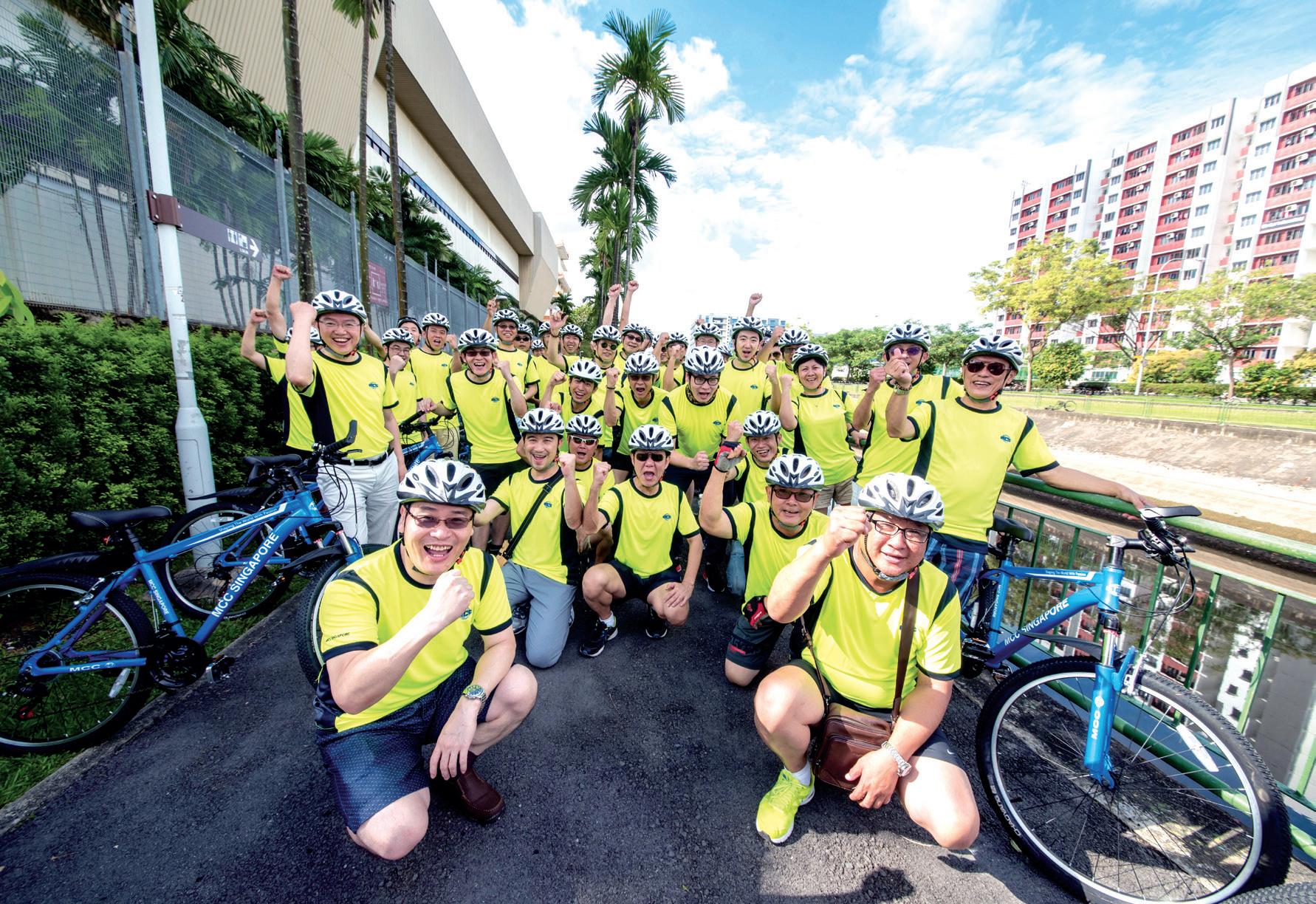
The 2017 Go Green Day is an example of how MCC Singapore integrates sustainability and environmental responsibility into its corporate culture and daily operations, taking concrete action to promote a sustainable future.
In 2023, MCC Singapore established the MCC Innocentre, integrating smart construction, steel structure manufacturing, digital management and robotics technologies to support the industry’s transition towards AI adoption through technology-driven quality construction.
Q: What are the core strengths that have enabled MCC Singapore to sustain transformation and growth in a competitive market?
A: Our core strengths can be summarised in three areas. First, our localised and specialised management approach. When we first entered the Singapore market in 1996, attracting local talent was challenging, as many preferred multinational corporations. However, we have consistently prioritised local talent and localisation. Today, local employees make up a significant proportion of our workforce, with fewer than 10% seconded from our headquarters.
We adhere to the principles of localisation, specialisation, intensification and digitalisation, building a stable and efficient team that understands the local market while effectively executing group strategies.
Second, our ability to integrate across the value chain. We have developed capabilities across labour subcontracting, professional subcontracting, general contracting, real estate development and urban planning and operations. This allows us to achieve synergies across business segments and strengthens our resilience.
Third, the strong technical capabilities and resources of our parent company provide us with a competitive edge, particularly in steel structures
and complex engineering projects, enabling us to establish a firm foothold in the local market.
Q: How is MCC Singapore leveraging AI and emerging technologies? How will AI and sustainability reshape the industry?
A: Technology is transforming the construction and real estate sectors, and AI will be a key driver of this transformation.
We are actively exploring applications in smart site management, the integration of BIM and AI,
and intelligent building systems to enhance safety, efficiency and operational capabilities. We have also established the MCC Singapore Construction Technology Innovation Centre to showcase mature technologies and robotic solutions introduced from China, supporting the industry’s transition towards AI adoption.
Looking ahead, three major shifts will define the industry. First, a move from experience-driven to data-driven decision-making.
Second, a transition from traditional to smart construction, with increasing prefabrication and automation.
Third, a shift from “selling products” to “delivering services”, where developers place greater emphasis on long-term value creation, operations and service capabilities, transforming living spaces into integrated lifestyle platforms.
Q: As President of China Enterprises Association (Singapore), how do you view the prospects of Singapore and Chinese enterprises jointly expanding into third-party markets such as Southeast Asia?
A: The joint “going global” efforts of Singapore and Chinese enterprises reflect the deepening of regional cooperation, with significant potential for both sides to expand into thirdparty markets together.
Southeast Asia’s young population, rapid urbanisation and rising demand for infrastructure and urban development present strong growth opportunities. Singapore companies bring strengths in international management, financing systems and institutional frameworks, while Chinese enterprises offer deep expertise in engineering and project execution.
Leveraging Singapore’s position as an ASEAN member, Chinese enterprises can work alongside local partners to expand into Southeast Asia and surrounding markets, creating strong synergies. MCC Singapore is actively participating in such initiatives and exploring sustainable development models in regional markets. There is significant potential
in areas such as green energy, smart cities and tourism-related developments.
The China Enterprises Association (Singapore) also aims to build a service platform to integrate resources across industries, strengthen mutual support among enterprises, and collaborate with organisations such as the Singapore Chinese Chamber of Commerce & Industry (SCCCI) and Singapore Business Federation (SBF) to support enterprises as they venture into third-party markets.
中冶新加坡在樟宜东车厂项目中积极推进智慧工地建设,通过数字化管理与智能安全系统,实现工程品质、安全管理与施工效率同步提升。 Through the Changi East Depot project, MCC Singapore advanced smart construction development by leveraging digital management and intelligent safety systems to enhance project quality, safety management and construction efficiency simultaneously.
Q: What advice would you give to Chinese enterprises looking to enter or already operating in Singapore?
A: First, understand and respect the local regulatory environment. Singapore’s market is highly structured, and companies must have a clear grasp of its legal framework, standards and business practices.
Second, commit to localisation. This goes beyond workforce composition to include cultural integration and meaningful engagement with the local ecosystem. If Chinese enterprises coming to Singapore do not integrate into the local community, they can easily become isolated. I encourage Chinese entrepreneurs to actively
engage with the community, and have also joined them in initiatives such as distributing food to vulnerable groups, helping them better understand the local society.
Integration is essential, but it must be mutual — while Chinese enterprises make the effort to integrate, the local community must also be open and welcoming. This will in turn support stronger collaboration between Singapore and Chinese enterprises in expanding into third-party markets.
Third, continue to strengthen professional capabilities. Singapore’s market is highly competitive and quality-driven. Only companies with strong technical expertise and sound management capabilities can achieve sustainable, long-term growth.
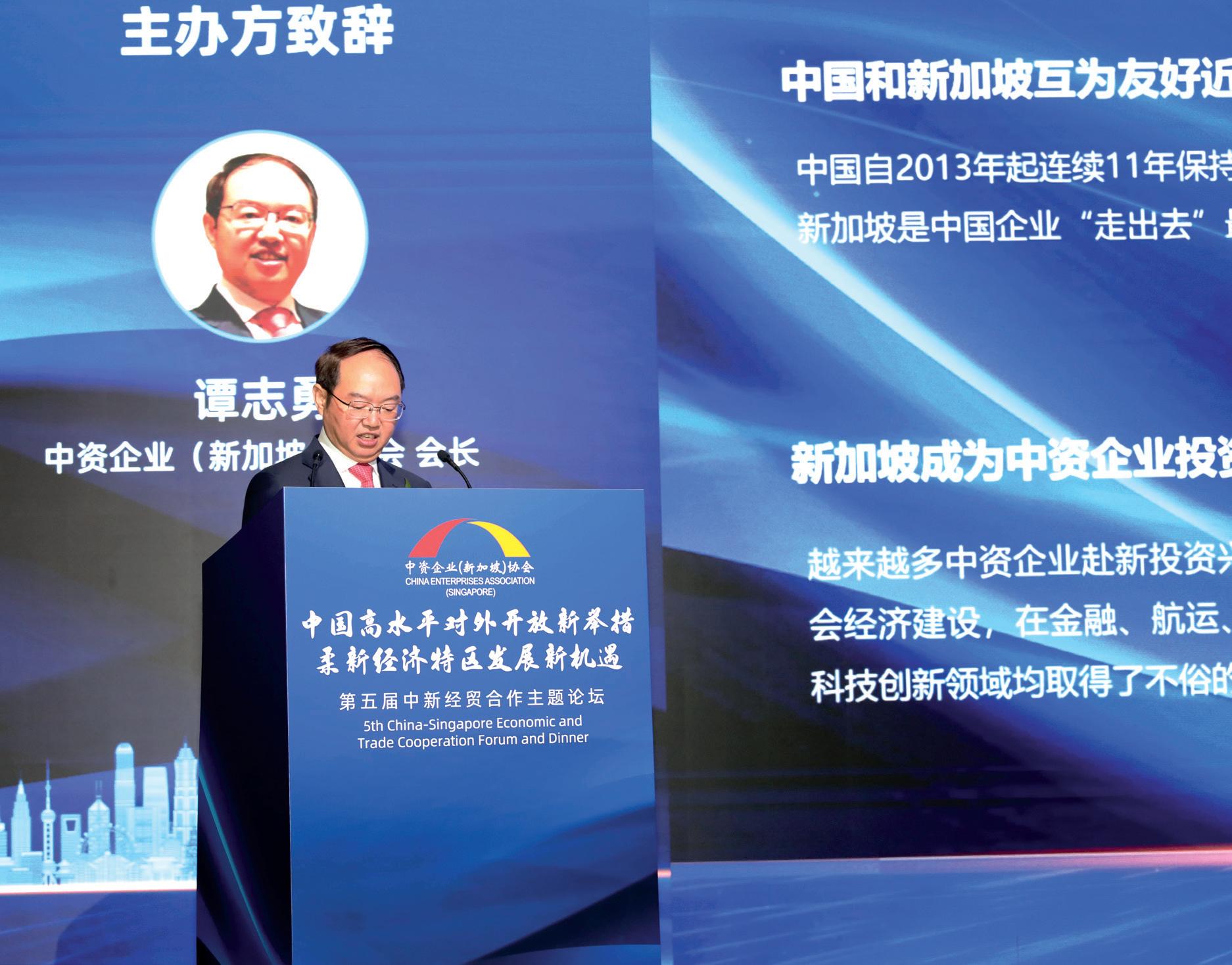
Tan Zhiyong, CEO of MCC Singapore and President of the China Enterprises Association (Singapore), delivered a speech at the 5th ChinaSingapore Economic and Trade Cooperation Forum, advocating deeper collaboration between Singapore and Chinese enterprises to jointly explore new opportunities for regional development.
Q: You are actively involved in community service, including serving on the SCCCI Council and as President of China Enterprises Association (Singapore). What are your thoughts on giving back to society? What motivated you to join SCCCI, and how do you hope to contribute to the local business community?
A: My motivation is simple: the development of any business is made possible by society, and giving back is therefore a responsibility. I have always believed that a company’s value lies not only in the profits it generates, but also in the positive impact it brings to the society.
MCC Singapore has grown in Singapore over the past 30 years, from humble beginnings to where it is today, and every step has been made possible by the trust and support of the local community. Therefore, I hope to leverage various
platforms to further strengthen exchanges and collaboration between Chinese enterprises and the local business community.
As a long-established and influential business chamber, SCCCI plays an important role in promoting Singapore–China economic cooperation and supporting enterprise development, and I hope to contribute in these areas.
As President of the China Enterprises Association (Singapore), I am committed to strengthening interaction and resource-sharing among Chinese enterprises, building stronger synergies, guiding them to actively fulfil their social responsibilities, while demonstrating that they create not only economic value, but also lasting value for society.
Looking ahead, I hope to continue advancing Singapore–China economic cooperation and promoting two-way collaboration, to drive youth development in Singapore by creating opportunities for the younger generation through internships and mentorship programmes. I will continue sharing our company’s experience and expertise in green building, smart construction, and construction safety, while working alongside the industry to advance the high-quality development of Singapore’s built environment.
BEIJING’S NEW RED LINE: OFFSHORE FIRMS CAN’T ‘DE-CHINA’
Chinese regulators are aggressively expanding its oversight on Chinese companies, moving beyond capital controls to prevent technology, data and talent from fleeing overseas. By scrutinising offshore “red-chip” structures and blocking high-profile acquisitions like Meta’s bid for Manus, authorities are signalling that corporate re-domiciliation can no longer bypass China’s tightening national security and tax net. Lianhe Zaobao correspondent Liu Sha explains.
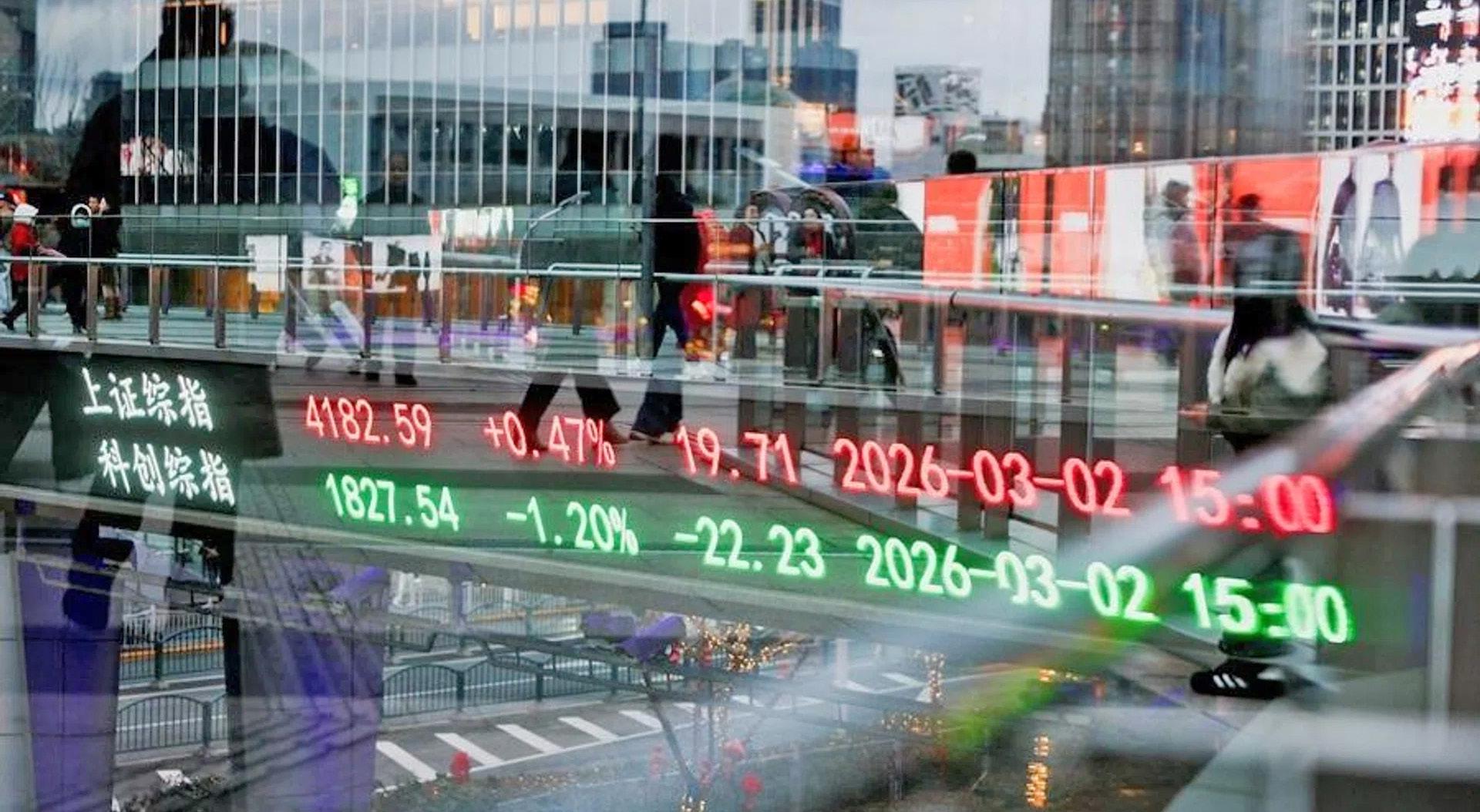
An electronic board shows Shanghai stock indices as people walk on a pedestrian bridge in the Lujiazui financial district in Shanghai, China, on 2 March 2026. (Go Nakamura/Reuters)
From greater scrutiny of Hong Kong IPOs by companies with offshore structures to blocking Meta’s acquisition of Manus, Beijing is tightening its “look-through” supervision of companies with “Chinese DNA”.
On 27 April, China’s National Reform and Development Commission halted the acquisition agreement between Meta and Manus, an AI start-up originating from China, shocking tech and investment circles.
OVERSIGHT EXTENDING FROM CAPITAL TO DATA AND TALENT
The next day, Chinese state broadcaster CCTV reported that the government is clamping down on non-compliant practices such as origin-washing and security risks arising from expanding to overseas markets, saying, “Regulation according to the law is a necessary measure for orderly opening up, and does not contradict the government’s stance in welcoming foreigners to invest or start companies.”
On 29 April, Yuyuan Tantian ( 玉渊谭天), a social media account under CCTV, published a post emphasising that the government’s move to block Manus’s acquisition is not a ban on overseas expansion by Chinese AI companies, but to delineate non-compliance.
The social media post described Manus as a start-up that was incubated using domestic resources. Subsequently, it was driven by American factors to rebrand into a Singaporean company before being sold to foreign investors in a move to circumvent Chinese regulatory oversight. “It is only natural for the authorities to intervene in attempts to sidestep regulation,” the article wrote.
LIU SHA
Correspondent, Lianhe Zaobao
Translated by Bai Kelei
The post also mentioned that Manus’s key assets, such as its algorithm, data and talent, originated from or were developed in China; if Meta successfully acquires and gains control of Manus, its core technology and team would be entirely relocated overseas, so Manus should have declared and requested a national security risk evaluation. When it comes to regulatory oversight, the article also urged companies to confront problems directly, communicate sincerely and understand the purpose of regulation in order to build consensus.
Both start-ups and investment funds have been alarmed by the roadblock in the acquisition of Manus. Methods like corporate re-domiciliation, shifting headquarters abroad and doing away with offices in China that were used for “China-shedding” no longer work.
In fact, the “substance over form” logic behind look-through regulation did not begin with the Manus case. For more than a year, China has already placed capital market companies with offshore structures under greater scrutiny, and the Manus incident merely signals that the authorities have extended its coverage from capital to data and talent.
Methods like corporate re-domiciliation, shifting headquarters abroad and doing away with offices in China that were used for “China-shedding” no longer work.
The Manus AI agent app is displayed on a mobile phone near the logo of US tech giant Meta, in this illustration picture taken on 28 April 2026. (Florence Lo/Illustration/Reuters)
DWINDLING HONG KONG IPOS BY RED-CHIP COMPANIES
Since the late 1990s, Chinese firms established shell companies in the Cayman Islands or British Virgin Islands as holding companies for their Chinese operations. These “red-chip” structures conveyed “foreign company” legal status, making it more convenient to raise capital and go public abroad, as well as to circumvent some Chinese regulatory oversight.
However, there has been a significant reduction in Chinese companies with red-chip structures going public in Hong Kong this year. Based on data collated by financial data platform Wind, as of 8 April, out of the 41 companies to be successfully listed in Hong Kong in 2026, only two, or less than 5% of them, have red-chip structures. The proportion
of such companies was around 30% in 2025. In the filing data from China Securities Regulatory Commission (CSRC), only one red-chip firm managed to obtain an off-shore listing filing notice during the first quarter of 2026.
Additionally, regulatory authorities have also requested some red-chip companies that intend to list in Hong Kong to move their main entities back to mainland China. AI company StepFun is reportedly in the process of unwinding its offshore entities to pave the way for its Hong Kong IPO.
In the 9 April edition of Securities Times (《证券时报》), a publication by the CSRC, it was mentioned that with the optimisation and adjustment in regulatory policies, red-chip structures have become “prudent exceptions” instead of the “preferred channel”.
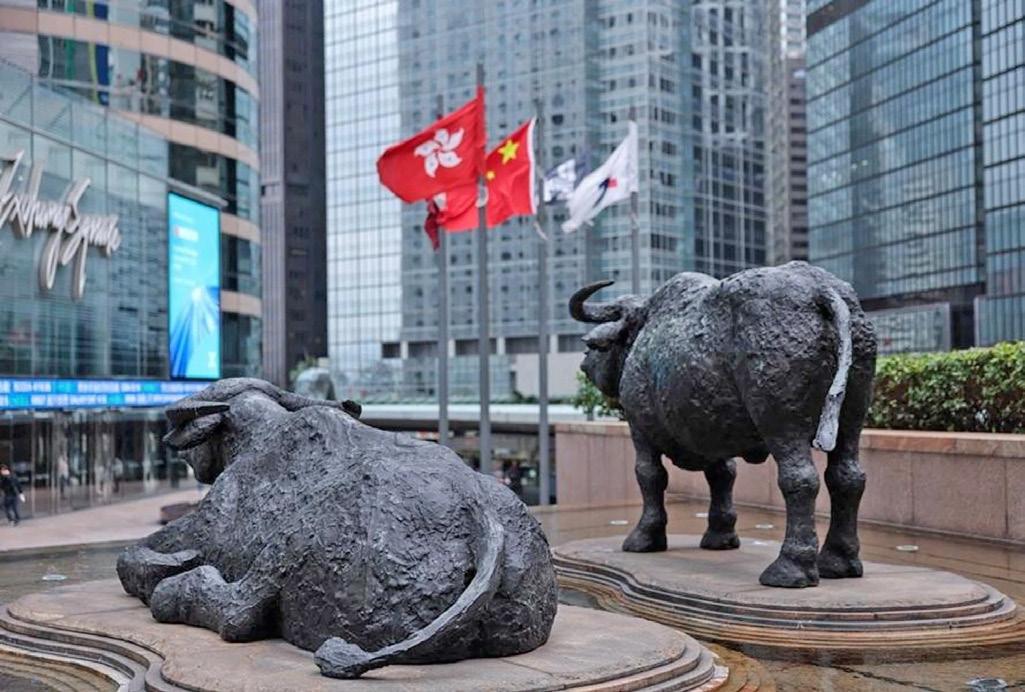
Bull statues near screens showing the Hang Seng stock index and stock prices outside Exchange Square, in Hong Kong, China, on 3 February 2026. (Tyrone Siu/Reuters)
Chinese authorities are now targeting overseas-listed companies with “Chinese DNA”, regardless of where they are domiciled, where their holding companies are based, or even whether their founders hold foreign citizenship.
Zhao Ya (pseudonym), a partner at a Beijing law firm, told Lianhe Zaobao that the Hong Kong Stock Exchange and CSRC have always discouraged the use of red-chip and variable interest entity (VIE) corporate structures due to their complex shareholding structures and risks of regulatory arbitrage.
Zhao shared that the creation of red-chip company structures was to make it easier for industries with foreign investment restrictions to obtain foreign capital and to enable the shareholders of companies listed overseas to reduce their shareholdings or receive dividend payouts. But from a regulatory viewpoint, the lack of effective oversight over overseas listings, fund-raising and tax collection results in capital outflow.
She noted that look-through regulation prioritises where a firm does its business and the origin of its technology over its nominal corporate structure. This goes beyond making it more difficult for red-chip firms to pursue overseas listings. Chinese authorities are now targeting overseas-listed companies with “Chinese DNA”, regardless of where they are domiciled, where their holding companies are based, or even whether their founders hold foreign citizenship.
Their aim is to bring these companies’ tax and shareholding arrangements, and capital operations back under the ambit of China’s regulatory framework. “Proper filing has to be lodged with the tax authorities for fund-raising, debt issuance and business trusts,” Zhao said.
EVERGRANDE EXPOSED WEALTH TRANSFER THROUGH OFFSHORE STRUCTURES
Chinese regulators have become far more alert to the risks associated with red-chip corporate structures following the 2023 asset-transfer controversy involving former property giant Evergrande Group.
Chinese media reported that the group’s founder, Hui Ka Yan and his ex-wife Ding Yumei transferred more than 50 billion RMB (US$7.3 billion) worth of dividends to their offshore holding company, and the money eventually flowed into their offshore trust.
After the abovementioned assets entered the duo’s trust, they are no longer classified as personal property under the law and therefore could not be used to offset Evergrande Group’s debt. In other words, Hui used offshore structures to transfer and ring-fence his wealth. In September 2025, judicial proceedings pierced the trust, and the Hong Kong High Court appointed Evergrande Group’s liquidators as the trust’s receivers.
Offshore structures enable capital raised through public listings and share dividends to flow out of China, and have been a tax enforcement grey area for the longest time. However, Chinese regulatory authorities are gradually plugging such gaps through systemic enhancements.
On 26 December 2025, China’s central bank and its State Administration of Foreign Exchange announced a new regulation that came into effect on 1 April this year. It stipulates that in principle, domestic firms are to repatriate funds raised overseas through public listings, or shareholding reduction and transfer. If it is necessary for companies to keep such funds abroad, approval must be obtained from or a filing has to be made with the relevant authorities.
SHELL COMPANIES NO EXCEPTION
The principles of look-through regulation mean that shell companies used to evade tax have also come under the radar.
Offshore structures enable capital raised through public listings and share dividends to flow out of China, and have been a tax enforcement grey area for the longest time.
In February this year, Hello Group, the parent company of social app Momo, was required to pay 548 million RMB in further taxes. This was reportedly due to the tax authorities deeming that Momo’s parent company based in Hong Kong did not have operations that were substantial enough to qualify for the 5% preferential tax rate for dividends paid, under an agreement between the mainland and Hong Kong, so Hello Group was taxed at 10% instead and ordered to cover the shortfall.
A general view of the skyline in Hong Kong, China, on 13 July 2021. (Tyrone Siu/Reuters)
Since 2025, local tax bureaus across China have progressively launched audits into the unpaid income tax of Chinese tax residents on their foreign earnings, demanding settlement of these back taxes.
Carl Liu, executive partner at Guantao Law Firm’s Beijing office, wrote an article that pointed out that China has fully implemented regulatory principles of “substance over form”. Through exchanging tax collection intelligence with global partners, using the Common Reporting Standard (CRS) and big data, Chinese tax agencies have precisely unmasked conduit companies and shell entities used for tax evasion.
Under the CRS framework, China is now able to engage in the automatic exchange of financial account information with over 100 countries and regions. This mechanism provides Chinese authorities with clearer oversight of its taxpayers’ offshore accounts, making both corporate and individual overseas earnings increasingly transparent. Since 2025, local tax bureaus across China have progressively launched audits into the unpaid income tax of Chinese tax residents on their foreign earnings, demanding settlement of these back taxes.
In March this year, Bloomberg reported that tax bureaus in Jiangsu and Shenzhen have requested from the ultimate beneficiaries of offshore trusts detailed financial information, including dividend income and investment gains from the sale of shares.
Beijing law firm partner Zhao Ya said, “From a legal perspective, assets in trusts don’t count as personal assets, but with a substance-over-form approach, tax authorities have deemed dividends and investment gains from shareholding reductions as personal earnings from abroad that need to be declared in accordance with the law.”
END OF GLOBALISATION-ERA MENTALITY
When interviewed, Tan Chong Huat, a senior partner at RHTLaw Asia, said that all the signs indicate that the Chinese government has moved beyond capital to include technology, data and talent within the scope of its oversight for domestic companies expanding overseas. Even if these companies are legally foreign entities, Beijing may continue to intervene as long as they are reliant on China for technology, talent, and research and development (R&D).
In the case of Manus, even though it moved its headquarters, the core of its team is from China, and its early-stage R&D and product prototype were completed in China, so it is still a firm with Chinese DNA.
Meta’s proposed acquisition would give it control over the brand, data and core team of Manus, and this touched a raw nerve with Chinese regulators...
Meta’s proposed acquisition would give it control over the brand, data and core team of Manus, and this touched a raw nerve with Chinese regulators because beyond the corporate entity, expanding overseas could also entail shifting its talent, technical capabilities and data abroad.
Ding Xinyan, founder of the Singapore Enterprise Growth Accelerator (SEGA), said when interviewed that geopolitics and the AI rivalry between China and the US have prompted China to focus on more than capital outflows to scrutinise whether its core technological capabilities and AI talent are being drawn abroad through offshore financing and overseas mergers and acquisitions.
Ding also reminded entrepreneurs and investors of the need to cultivate a mindset of compliance and communication with regulators, as “the previous globalisation-era mentality of ‘flat structures and borderless capital’ is no longer applicable”.
This article was first published in Lianhe Zaobao on 30 Apr 2026, and later in ThinkChina on 13 May 2026. ThinkChina is an English language e-magazine by Lianhe Zaobao. SCCCI collaborates with ThinkChina to cross-share content. www.thinkchina.sg
A person visits the World Artificial Intelligence Conference in Shanghai, China, on 26 July 2025. (Go Nakamura/Reuters)
KEEPING PACE WITH THE TIMES, UNLOCKING OPPORTUNITIES FOR THE AUTOMOTIVE PARTS INDUSTRY
Interview with Kelvin Ong, President of Singapore Cycle & Motor Traders’ Association
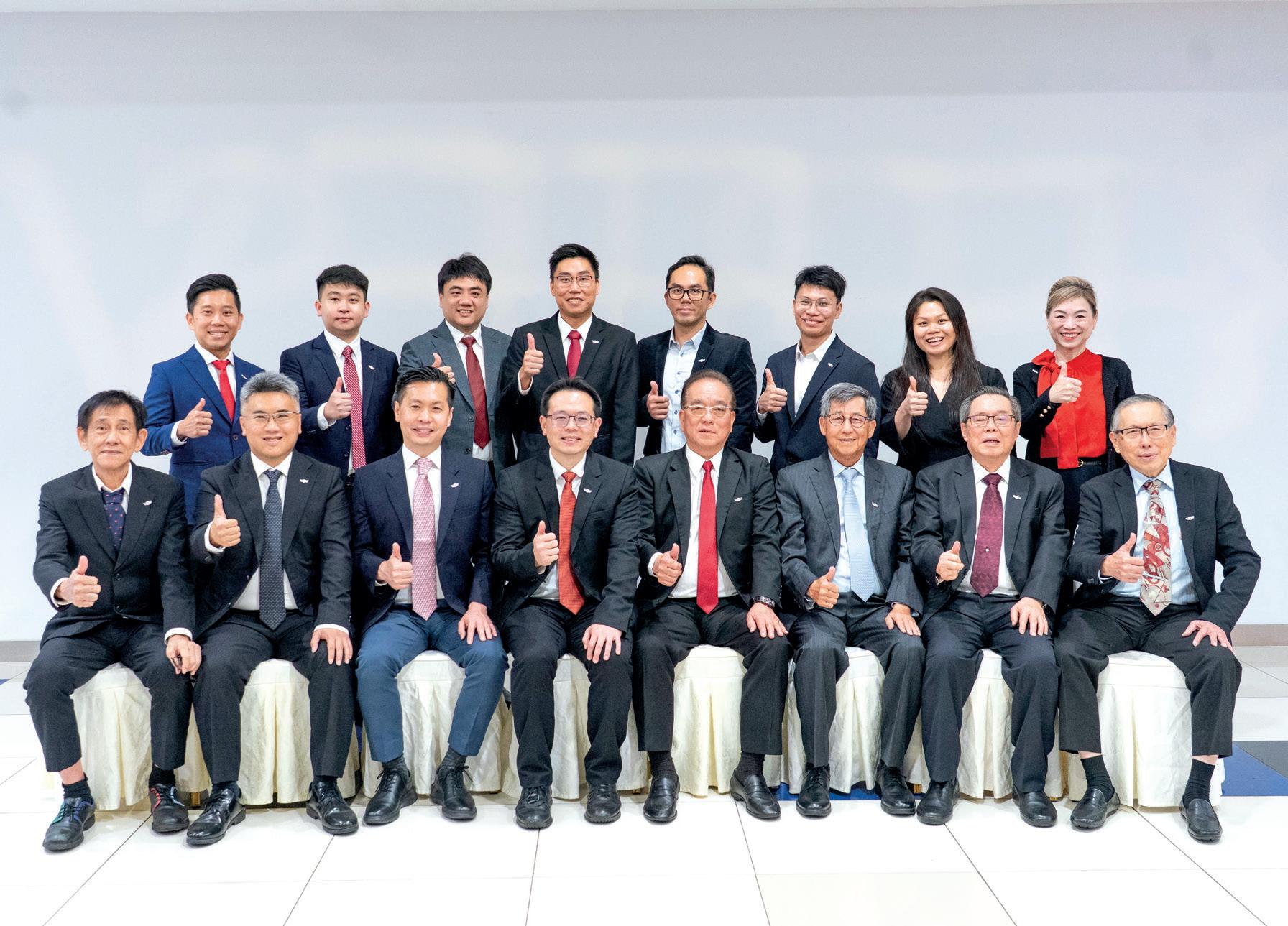
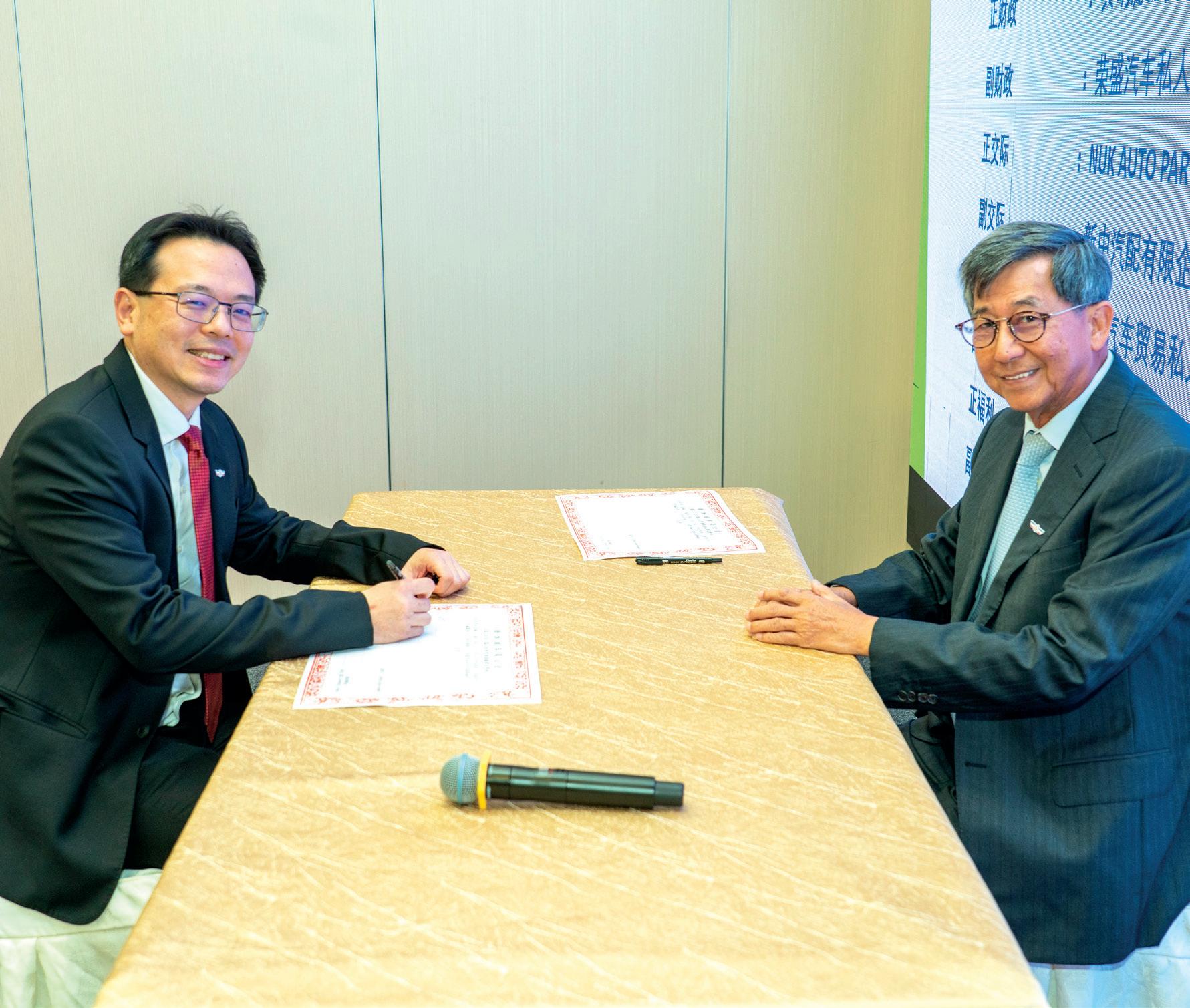
新加坡车商公会于2026年4月24日举行就职典礼,迎来2026至2027年度执监委员。
SCMTA’s 2026–2027 Board of Management Committee was inaugurated on 24 April 2026 at the association’s installation ceremony.
As the Singapore Cycle & Motor Traders’ Association (SCMTA) marks its 94th anniversary this year, the association continues to evolve alongside
changing social and market demands, while actively optimising its operations in recent years to better serve its more than 100 member companies.
In this edition of Chinese Entrepreneur, Kelvin Ong, President of SCMTA shares their efforts to attract younger talent, as well as how SCCCI has supported SCMTA in enhancing professional capabilities and advancing digital transformation initiatives, enabling the association to better assist members in strengthening their businesses while supporting the growth of the industry.
Q: How does SCMTA’s membership profile look like? How do you serve your members?
A: Founded in 1932, SCMTA originally represented businesses in the bicycle trade. As Singapore’s transport sector evolved, with motor vehicles replacing bicycles as the primary mode of transport, our membership profile also changed in tandem.
Today, SCMTA members comprise mainly small and medium-sized enterprises (SMEs), including importers, exporters, distributors, wholesalers, retailers and service providers in the motor vehicle parts and accessories industry. The association currently represents about 80% of motor vehicle parts dealers in Singapore. Over the years, the requirements for members to remain in business have shifted,
and SCMTA has adapted accordingly to meet these changing needs.
SCMTA facilitates business networking and trade connections with peers across the transport industry, enabling members to broaden their reach to new customers. We also serve as a bridge between our members and government agencies, advocating for their interests while providing a channel for the Government to provide regulatory updates to members.
Q: What are the key challenges currently faced by SCMTA members? How are you helping them to overcome these challenges?
A: Rising operational costs remain a key challenge for our members. In response, SCMTA will organise more talks and workshops with various digital solution providers, including providers of cloud-based Enterprise Resource Planning (ERP) software, online delivery services, artificial intelligence (AI) platforms, and financial and accounting solutions such as e-invoicing. These sessions will cover how members can begin their AI journey and use these relevant digital tools to improve operational efficiency.
At the same time, SCMTA is exploring shared platforms, such as arranging group purchasing for services commonly required by member companies. These initiatives aim to help members remain competitive amid rising business costs.
Another key challenge our members face is adapting to changes in Singapore’s vehicle population. The transportation industry has evolved significantly over the years, from bicycles
in the early 1900s, to basic motor vehicles in the mid-20th century, and to increasingly advanced motor vehicles in the late 20th century. As a result, both the types of parts used, and the technical expertise required for vehicle repair and maintenance have continued to evolve.
In recent years, with the introduction of electric vehicles (EVs) to the market, the main shift for our members has been the need to understand how EV repairs are carried out, as well as identify the parts required. SCMTA members must be equipped with new knowledge and skills to remain relevant in EV repair and maintenance.
To support members, SCMTA provides relevant market data on Singapore’s vehicle population to help members keep abreast of industry and vehicle technology trends. We will also organise industry-relevant talks for our members to learn about the aftermarket repair needs for EVs and how to adapt to stocking the appropriate parts for EV repairs.
In addition to EVs, the growing presence of Chinese vehicle manufacturers has also brought about changes in Singapore’s vehicle landscape.
SCMTA will arrange networking sessions with new Chinese vehicle parts suppliers to ensure that members can source the relevant vehicle parts to supply to workshops carrying out repair works.
问:您认为本地汽车零件业在未来几 年将迎来哪些商机?
答:本地车辆总数向来受到拥车证制度所限制,因 此公路上的车辆数量也维持在相对稳定的水平。
然而,随着电召与配送服务平台日益普及,加 上消费者越来越倾向网购,越来越多车辆也投入相
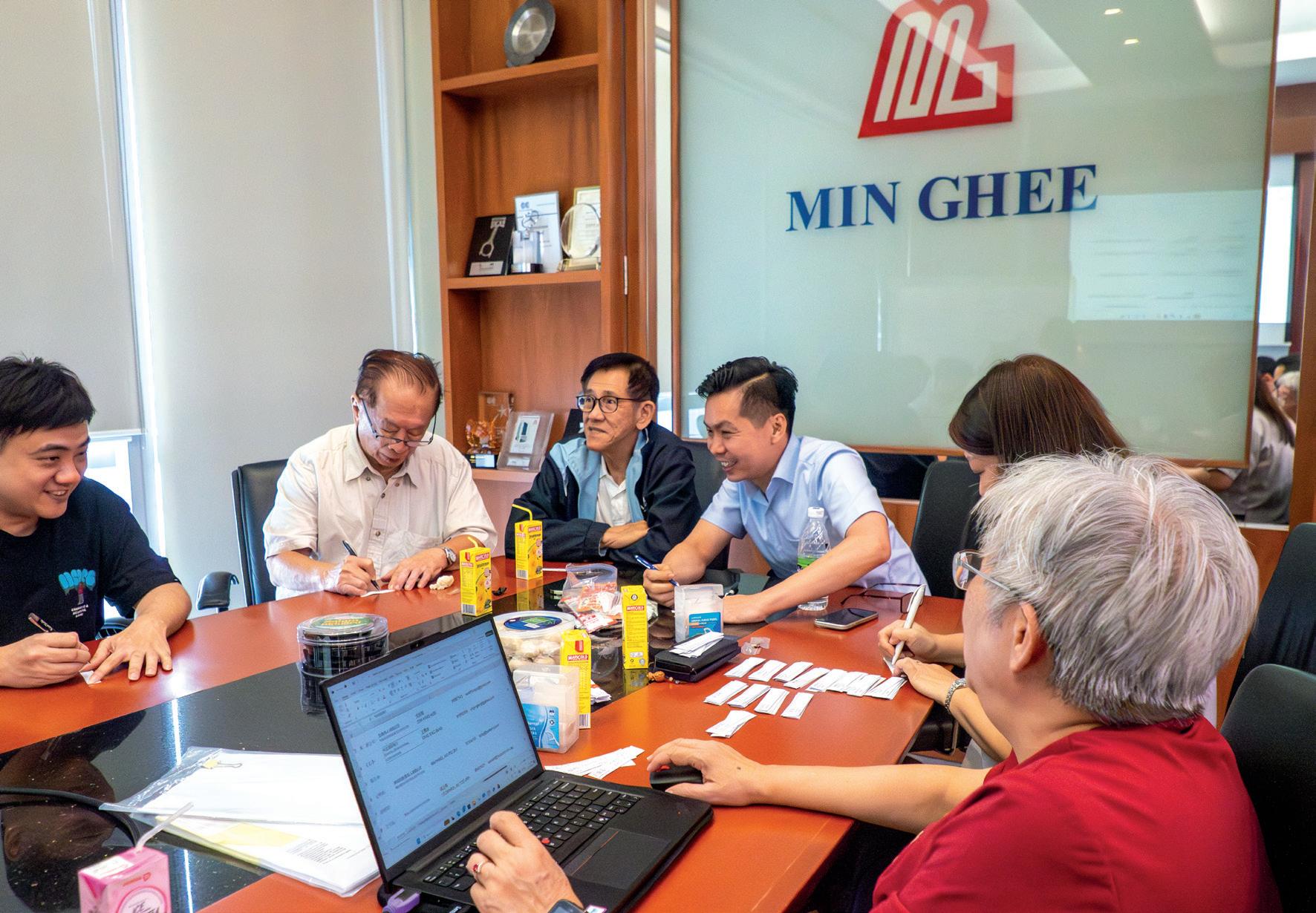
新一届执委会部分成员开会商讨公会的发展愿景,并拟定未来工作重点。
Members of the 2026–2027 Committee charted the association’s future development plans and work strategies at a committee meeting.
Q: What business opportunities do you see for Singapore’s automotive parts industry over the next few years?
A: Singapore’s vehicle population is constrained by the certificate of entitlement (COE) system, resulting in the number of vehicles on the road remaining relatively stable.
However, with the increased use of ridehailing and delivery platforms, as well as changing consumer behaviour towards online purchases, more vehicles are being used to
support the growing demand for these services. As a result, Singapore’s automotive parts industry will also benefit from the increase in demand for the maintenance and repair of these higher-mileage vehicles.
In my view, venturing beyond Singapore also presents new opportunities. Access to overseas markets can benefit members, as vehicles tend to remain in use for longer in countries without a COE system. For example, the auto parts that members stock for older vehicle models which may face declining demand in the Singapore market can still be sold in those overseas markets, particularly in countries where vehicle population continues to grow. SCMTA aims to help members expand their networks beyond Singapore by linking them with the right countries, industry players and partners to access these opportunities.
Q: SCCCI is often viewed as a bridge between businesses and the government. In what ways has SCCCI supported SCMTA’s transformation?
A: SCCCI’s Trade Association Committee (TACOM) Transformation Centre (TTC) has supported SCMTA through various initiatives, including providing access to training programmes and industry insights. SCCCI has also created platforms for collaboration with other transport associations, bringing industry stakeholders together to build connections and identify ways to collectively engage the Government in supporting the entire industry.
In terms of digitalisation, SCMTA applied for the Digitalisation of TACs Programme (Digi-TAC) with the assistance of SCCCI and secured funding to implement key digital initiatives. SCCCI has played a key role in assessing the association’s digital needs and connecting us with digital solution providers and training institutions to advance our digital transformation efforts. These initiatives include revamping the association’s website to enhance member engagement, as well as upskilling our secretariat team through training
programmes and advisory services to strengthen their digital capabilities and improve the association’s operational efficiency.
SCCCI has also acted as a bridge to government agencies in facilitating SCMTA’s request for controlled access to the Land Transport Authority’s (LTA) Vehicle Registration & Licensing System (VRLS),
enabling better planning and stocking of suitable automotive parts for Singaporeregistered vehicles.
As a relatively small association, SCMTA, especially our younger members, has also benefited from SCCCI’s guidance in strengthening our capabilities and enhancing our knowledge in managing the association.
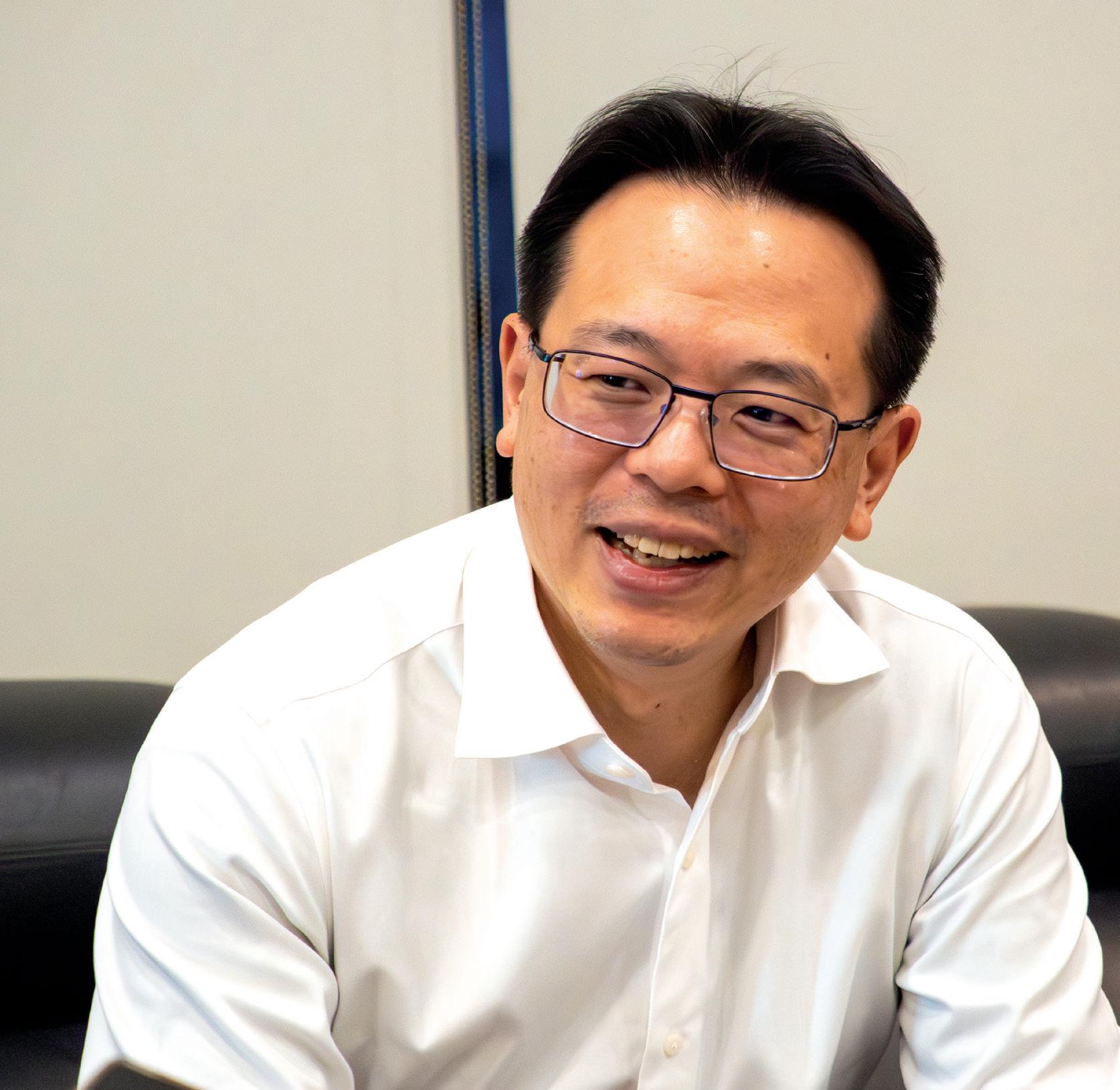
王荣健再次连任新加坡车商公会会长,并将在未来两年继续带领公会为业界和会员服务。
Kelvin Ong has been re-elected President of SCMTA and will continue leading the association in serving its members and the industry over the next two years.
Q: What are SCMTA’s initiatives to attract and develop younger talent to join the association?
A: Currently, our management committee is in transition, with a mix of older and younger representatives, including about 30% of members below the age of 50.
One of the key challenges we face is attracting younger members to join the association, particularly encouraging greater participation from secondgeneration representatives of member companies.
Therefore, we have been encouraging younger representatives to take on greater responsibilities within SCMTA through both formal and informal engagement sessions, to ensure smooth leadership renewal over time. These formal sessions include official events and meetings organised by our association, such as our annual dinner and committee meetings. Informal interactions, such as dinners, coffee sessions and other gatherings also provide additional opportunities for members to network.
In our recent election, more young representatives have stepped forward, and we have appointed them to various committee positions to take on a greater role within the association. With each renewal of the management committee term, we hope the committee will introduce new initiatives to strengthen SCMTA’s role and ensure the association remains relevant to its members. We will also continue to better align our activities and programmes, including training sessions, with the needs and interests of both younger and more senior members, based on what members find most relevant and necessary.
With each renewal of the management committee term, we hope the committee will introduce new initiatives to strengthen SCMTA’s role and ensure the association remains relevant to its members. We will also continue to better align our activities and programmes, including training sessions, with the needs and interests of both younger and more senior members, based on what members find most relevant and necessary.
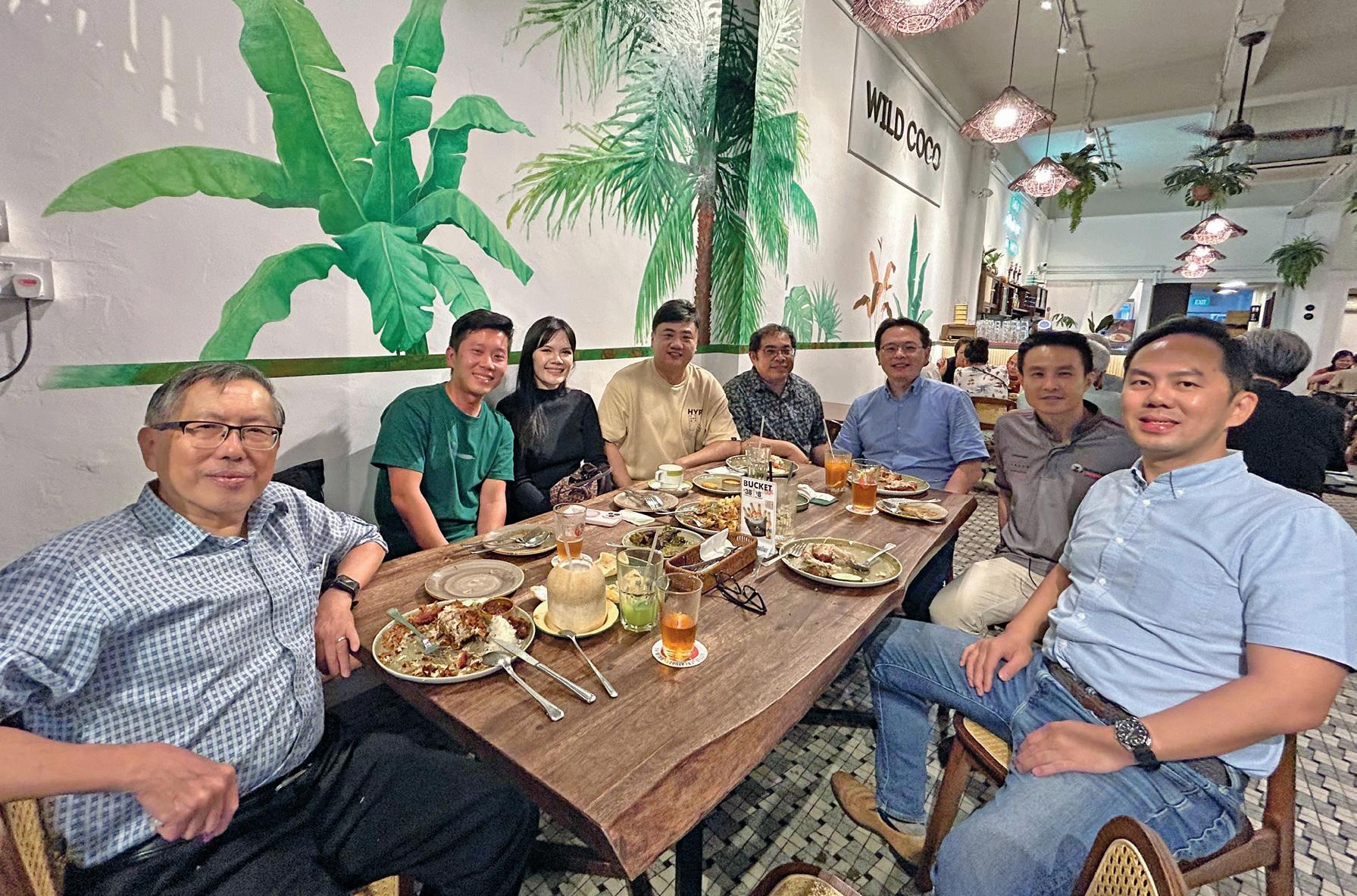
新加坡车商公会计划通过举办更多聚餐和茶叙等活动,促进会员之间的交流与联系。
SCMTA plans to organise more engagement sessions, such as dinners and coffee sessions, to encourage greater interaction and networking among members.
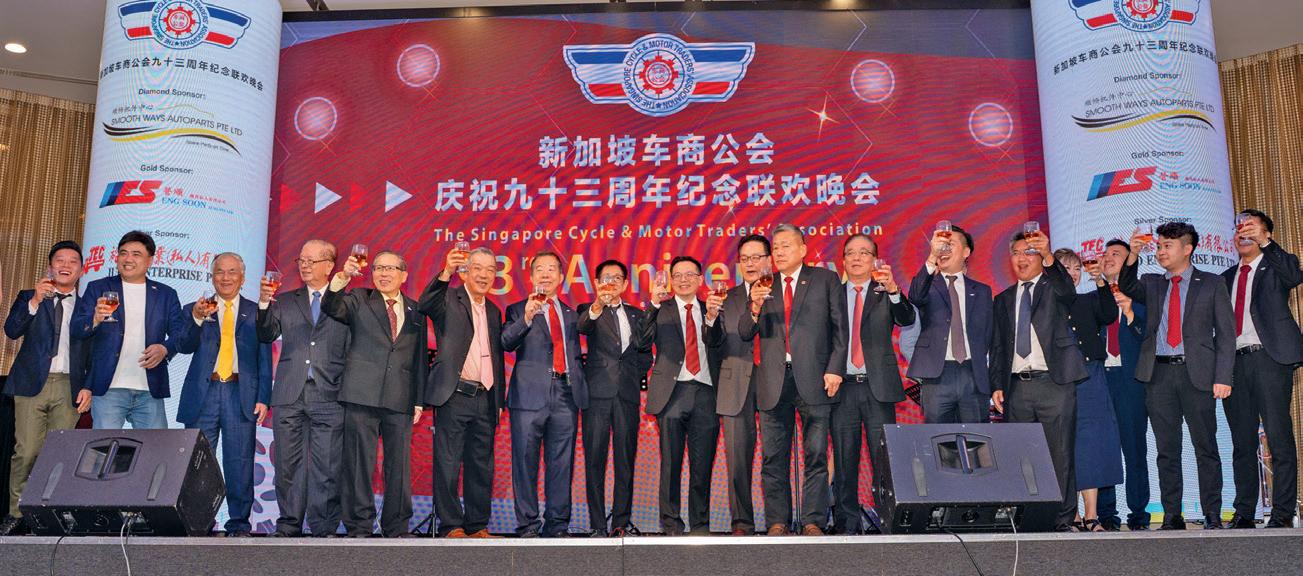
新加坡车商公会于2025年11月20日举办庆祝公会成立93周年纪念联欢晚会。
SCMTA held its annual dinner on 20 November 2025 to mark the association’s 93rd anniversary.
Q: What is your vision for SCMTA over the next few years?
A: Our vision is for SCMTA to be a key platform for our members to address their business needs and concerns. This can be achieved through continued efforts in attracting new members, retaining existing ones and deepening engagement with members. As the next generation steps up and leads the association forward, SCMTA can continue to play a bigger role in assisting members to prepare for the challenges and opportunities ahead as the industry evolves.
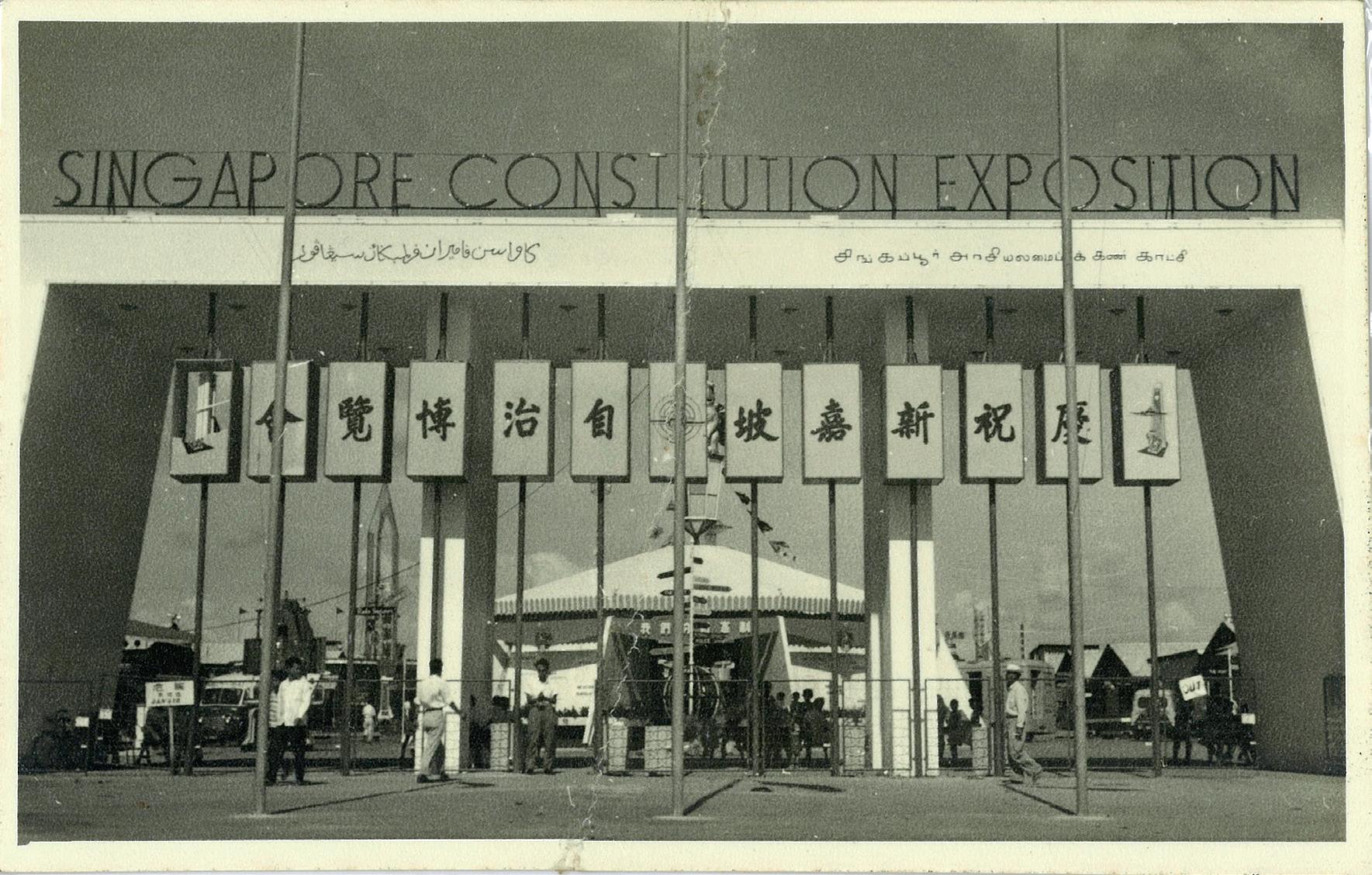
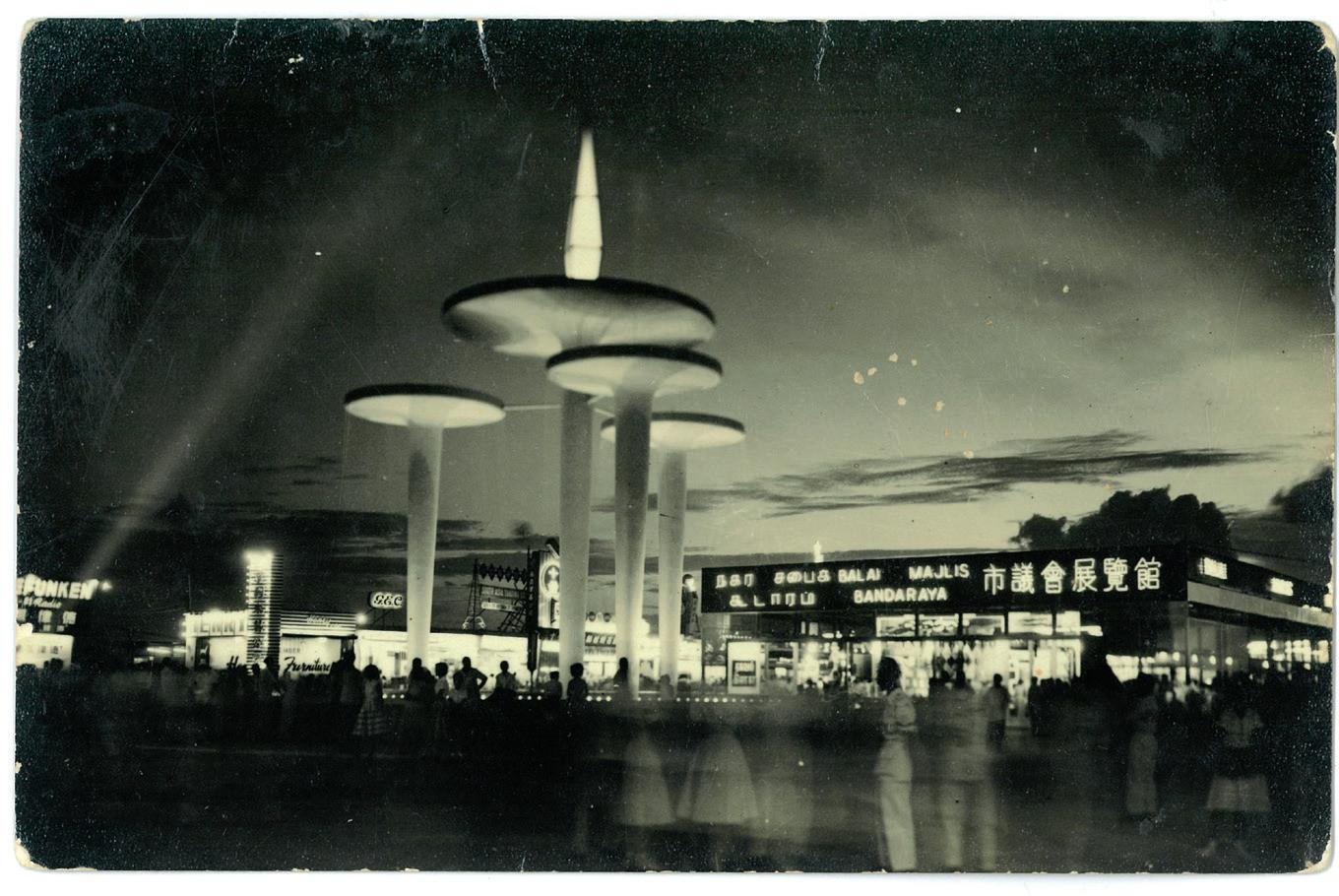
庆祝新加坡自治博览会入口(1959年)
Entrance of the Singapore Constitution Exposition (1959) 黄汉民特许复制
In 1959, as Singapore entered a new era of self-governance, a spirit of optimism swept across the island. To commemorate the promulgation of the new Constitution, Singapore Chinese Chamber of Commerce & Industry (then “Singapore Chinese Chamber of Commerce”, hereinafter referred to as “the Chamber”) organised the Singapore Constitution Exposition—an ambitious, month-long showcase of national pride and economic potential.
At a time when large-scale exhibitions were rare, visitors came from across the island—some even by sampan—underscoring the occasion’s scale and significance. Behind it was the Chamber’s vision and leadership, uniting political, community, and business leaders to turn an ambitious idea into a monumental national event.
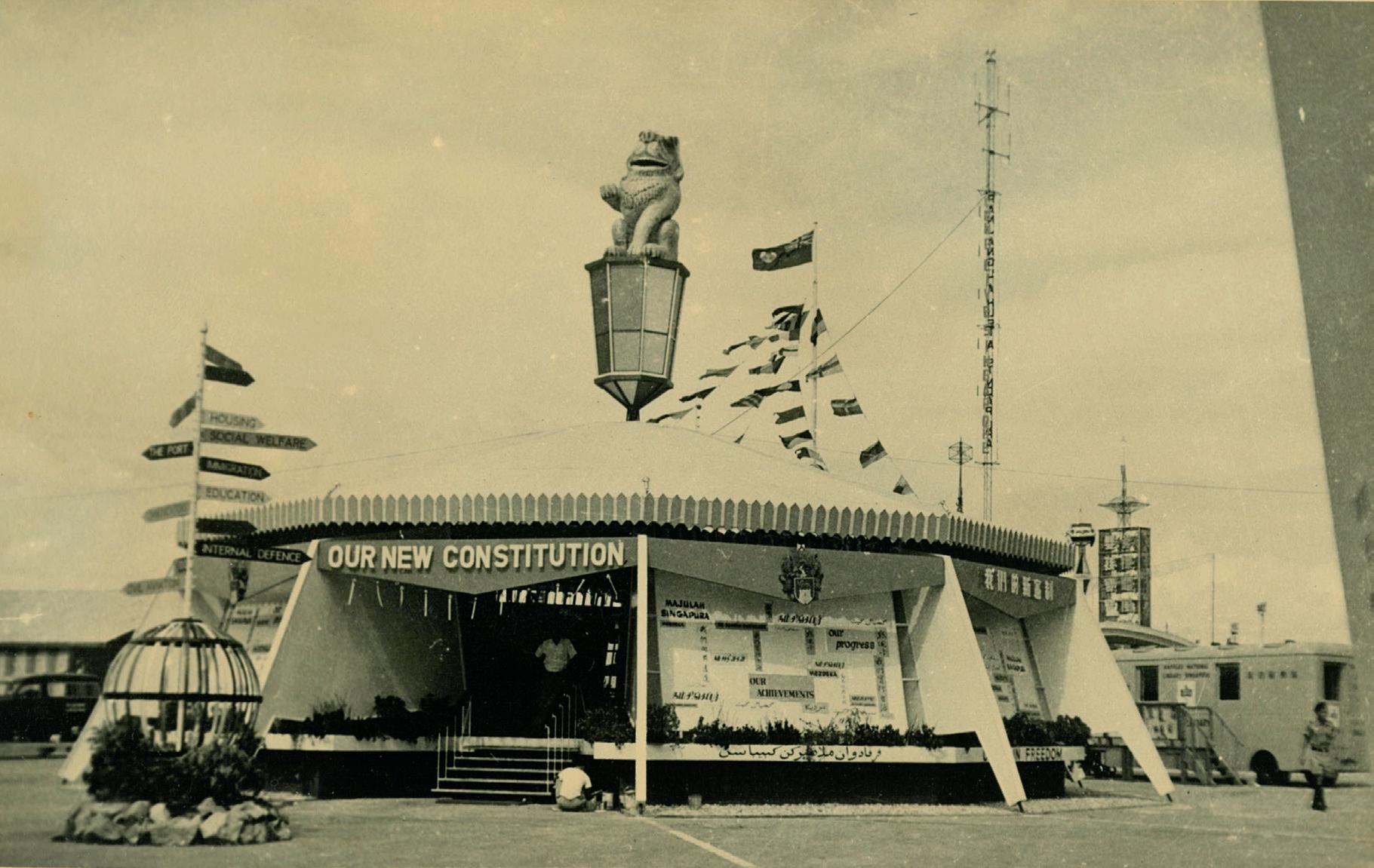
宪法展览馆向参观者介绍投票权及立法议会的设立(1959年) Constitution Pavilion educating visitors on voter rights and the Legislative Assembly (1959) 黄汉民特许复制 ReproducedwithpermissionfromWongHanMin
Singapore’s journey to self-governance was a long and tumultuous one, shaped by more than a century of colonial rule and upheaval. Since its founding as a British colony in 1819 by Sir Stamford Raffles, Singapore had been ruled under imperial authority. This arrangement was profoundly shaken during the Japanese Occupation in the Second World War, which eroded public confidence in colonial rule and ignited strong anti-colonial sentiments.
The 1950s that followed were marked by political awakening and social unrest, as local residents increasingly sought for the right to determine their own future. Although David Marshall became Singapore’s first Chief Minister in 1955, key powers such as internal security and foreign affairs remained in British hands, underscoring the limits of local autonomy.
A turning point came in 1956, when Lim Yew Hock, then Chief Minister of Singapore, took firm action against communist activists, convincing the British of Singapore’s readiness for greater self-rule. This paved the way for the grant of full internal self-government in 1959, where Singapore is “known as the State of Singapore and not as a colony”. It was against this backdrop of hardwon progress and rising national consciousness that the Singapore Constitution Exposition was conceived.
Since its founding in 1819, Singapore had been described by Sir Stamford Raffles as an “emporium”, a place where the widest range of goods gather for trade. More than a century later, then Chamber President Ko Teck Kin, had the similar vision. On 1 August 1958, he proposed holding an exposition to commemorate Singapore’s new constitutional milestone at a dinner hosted by the Chamber. It coincided with the day the Royal Assent was given to the State of Singapore Bill, granting authority for the creation of the State of Singapore and its new constitution. Sharing his vision for the exposition, President Ko said: “It is hoped that this Exposition will help to focus world attention upon the role of Singapore as the Entrepot and Showroom of Southeast Asia, and promote trade and better understanding among the nations of the world.”
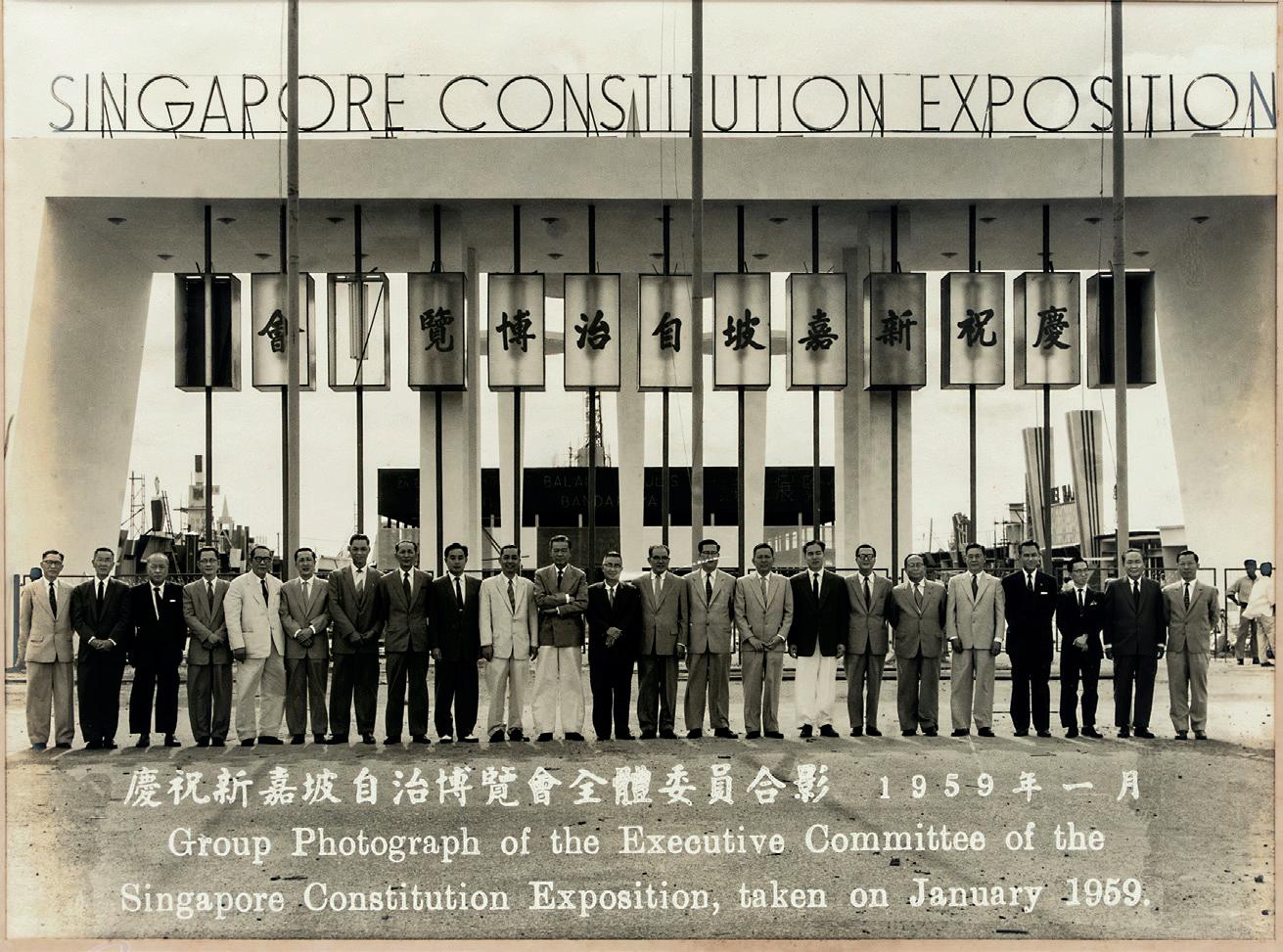
庆祝新加坡自治博览会全体委员合影(1959年) Group Photography of the Executive Committee of the Singapore Constitution Exposition (1959) 新加坡中华总商会珍藏 SCCCI Collection
The 1959 Singapore Constitution Exposition was brought to life through the dedication of the Chamber’s 27-member organising committee, led
by then President Ko and Vice President Mr Yap Pheng Geck. Other prominent committee members included Lien Ying Chow, Soon Peng Yam, Tan Keong Choon, Lim Kee Ming, Tan Eng Joo, who were former presidents of the Chamber.
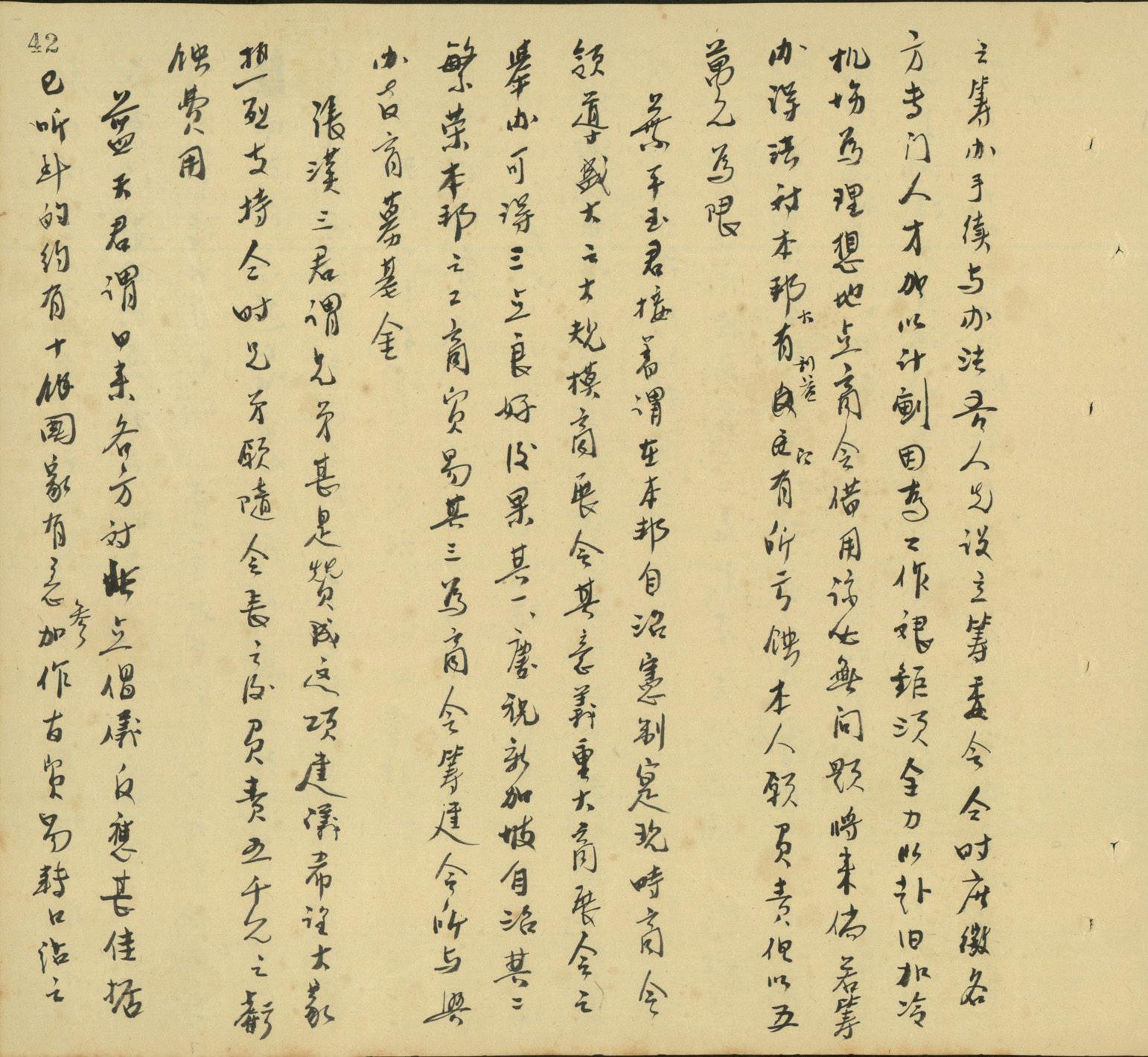
Despite a tight preparation timeline of just several months, the Chamber’s leaders played a central role in shaping the success of the Singapore Constitution Exposition. At the first committee meeting on 15 May 1958, seven members were tasked with drafting the Exposition’s regulations and site development plan, presenting a comprehensive proposal that also established its name, opening date, and venue. As reflected in the Chamber’s 1958 meeting minutes, the Exposition was conceived not only as a celebration of Singapore’s new Constitution but also to “promote the state’s prosperity of commerce and trade”.
职务/部门 Position/Department
会长 President
副会长 Vice-Chairman
秘书处 Secretary-General
总务部 General Affairs
财政部 Finance
管理部 Custody
外交部 Public Relations
宣传部 Publicity
交通部 Communications
纠察部 Supervisory
建设部 Construction
委员 Committee Member
高德根 Ko Teck Kin
叶平玉 Yap Kheng Geck
林继民 Lim Kee Ming
郭佩弦与陈培熙为辅)
(Assisted by Peter T. Kwok and Tan Puay Hee)
黄奕欢 Ng Aik Huan
蓝 天 Lam Tien
康振福 Kheng Chin Hock
张汉三 Teo Hang Sam
胡清才 Aw Cheng Chye
林国仁 Lim Kok Gin
林应标 Lim Eng Peow
卓经端 Toh Keng Tuan
赖宜敏 Lai Nee Min
连瀛洲 Lien Ying Chow
陈永裕 Tan Eng Joo
陈共存 Tan Keong Choon
许镇国 Koh Tin Kok
李国汉 Lee Kok Han
傅文楷 Foo Voon Kai
庄为麟 Chong Wee Ling
曾智生 Chan Tee Seng
洪永安 Ang Eng Ann
蓝允藏 Lam Joon Chong
王相贤 Woon Shian Yein
符致逢 Foo Chee Fong
孙炳炎 Soon Peng Yam
叶怡煎 Yap Ee Chian
黄卓善 Wee Tock Sian
Executive Committee Members of the
总商会1958年4月29日的会议记录
Meeting Minutes of the Chamber, dated 29 April 1958 新加坡中华总商会珍藏 SCCCI Collection
Then Chamber’s President and VicePresidents, together with Tan Lark Sye and more than 10 Council Members, personally
conducted site inspections at Kallang Airport with volunteer surveyors and members of the press, identifying it as the most suitable venue for a large-scale exposition. Following the groundbreaking ceremony, the committee worked closely with relevant authorities to ensure smooth traffic flow through designated parking areas. Careful coordination was also undertaken to secure water and electricity supply, organise entertainment programmes, oversee publicity efforts, and train reception staff — reflecting the leaders’ foresight and dedication in delivering a well-organised and impactful national event.
The Singapore Constitution Exposition received strong support from the Government. In addition to providing Old Kallang Airport as the venue,
the Government also set up dedicated exhibits of the Singapore Government and City Council at the Exposition. Housed within the Government Pavilion, they showcased the work of various departments, including the Internal Defence, Labour and Welfare, and Commerce and Industry. This demonstrated the Government’s commitment to engaging the public and providing greater transparency on its policies and initiatives. Prominent government leaders expressed strong support for the initiative. Chief Minister Lim Yew Hock commended the Chamber for its efforts, noting that the Exposition would help foster a greater sense of loyalty and pride among the people of Singapore. Similarly, Minister for Commerce and Industry J. M. Jumabhoy highlighted the importance of the event in addressing the public’s misunderstanding of Singapore’s economic position, and in communicating the Government’s policies and efforts to strengthen the national economy.
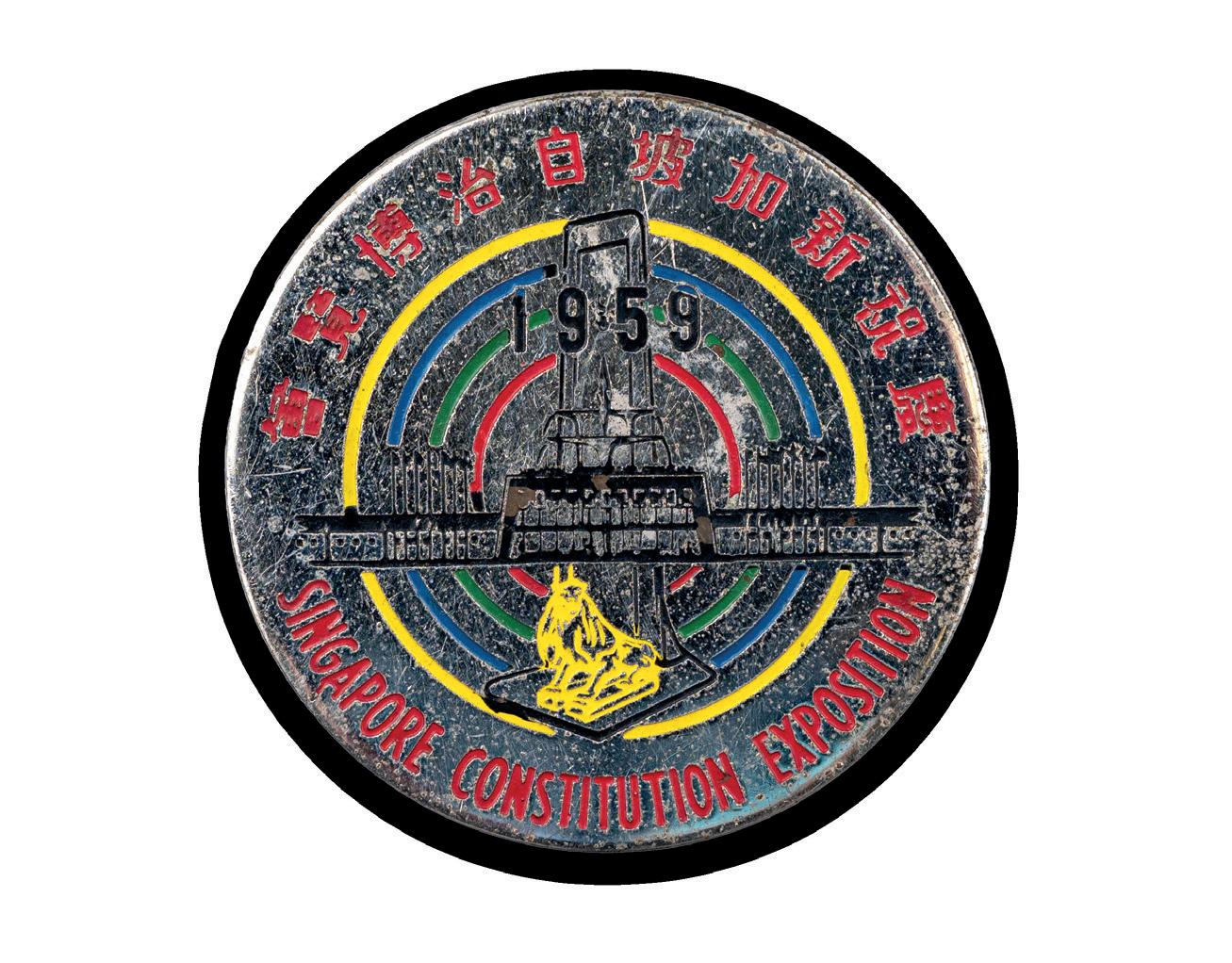
庆祝新加坡自治博览会佩章 Badge of the Singapore Constitution Exposition 新加坡中华总商会珍藏 SCCCI Collection
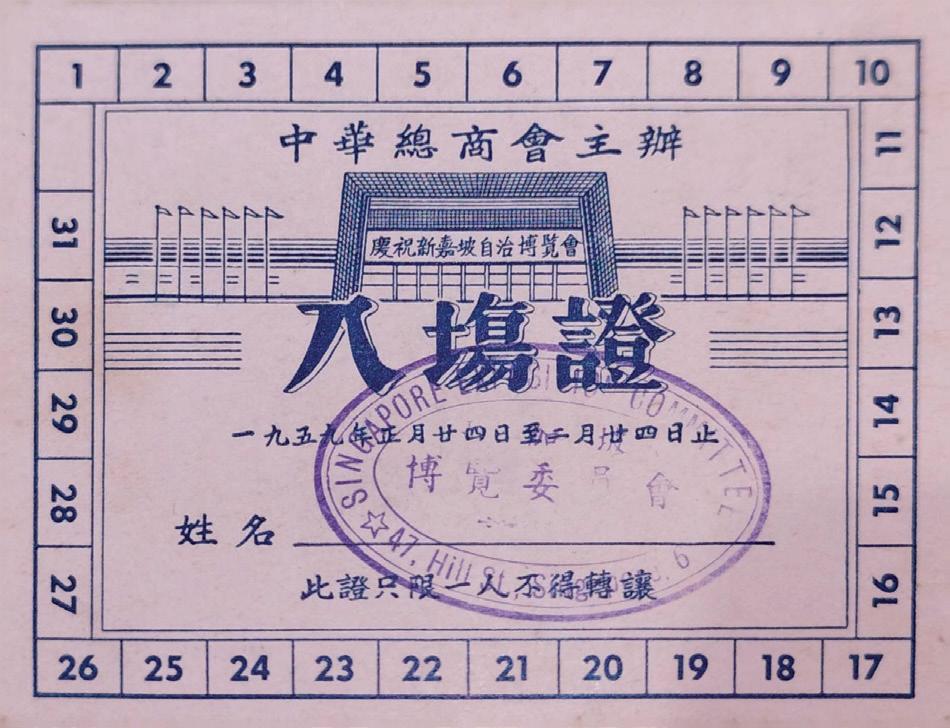
Entry Pass of the Singapore Constitution Exposition
ReproducedwithpermissionfromWongHanMin
A SHOWCASE OF UNPRECEDENTED SCALE
The Singapore Constitution Exposition was the first of its kind in Singapore and the largest exhibition ever held in the Southeast Asia region at the time. Staged at the Old Kallang Airport grounds, the event was ambitious in both scope and scale, transforming the site into a vibrant showcase of enterprise, innovation, and national progress. Significant improvements were made to the venue in preparation for the Exposition, underscoring the magnitude of the undertaking.
The Exposition brought together more than 600 exhibitors across 450 booths, including 285 firms from Singapore and Malaya. In addition to
commercial participants, various City Council departments presented their development plans for the newly self-governing state. These exhibits, which occupied some 100,000 square feet near the rear entrance of the fair, offered visitors a glimpse into Singapore’s future and the Government’s vision for national development. The prominence of the Exposition was further reflected in its inclusion in the official programme for the Duke of Edinburgh’s visit in February 1959.
Beyond its physical scale, the Exposition also had a notable economic impact. According to The Straits Times (29 August 1958), it generated some 15,000 jobs, ranging from guides and
sales staff to technicians, providing a temporary boost in employment and supplementary income for many. The scale of investment was equally substantial, with total costs estimated at $10 million, of which about $5 million was spent on construction alone. When taking into account the value of the exhibits and the work involved, The Straits Times (2 February 1959) described it as “a $50 million show,” reflecting the sheer magnitude and ambition of the event.
The Singapore Constitution Exposition was more than a showcase of enterprise—it was a celebration of Singapore’s attainment of full internal self-government and a reflection of the optimism and pride of its people. At a time when visitors travelled by sampan or crossed swampy terrain to reach the Old Kallang Airport grounds, the Exposition stood as a powerful symbol of collective effort and national aspiration.
Today, large-scale exhibitions have become far more accessible and sophisticated, held in purpose-built venues such as the World Trade Centre, Suntec City Convention Centre, and the Singapore EXPO at Changi. Modern events, from global industry exhibitions to international festivals, attract tens of thousands of participants and span vast exhibition spaces, reflecting Singapore’s growth into a leading hub for trade and exchange.
Yet, beyond these advancements, the spirit underpinning such gatherings remains unchanged. The Singapore Constitution Exposition exemplified the enduring core values of the Chamber—Patriotism, Integrity, Succession, Innovation, and Uniting businesses. These values continue to shape Singapore’s business community today, reminding us that progress is not only measured by scale, but by purpose, resilience, and a shared commitment to the nation’s future.
WELCOME ABOARD (December’25-February’26)
Member Company
3S LIFESTYLE PTE LTD
AARONQUEK.COM LLP
ABSOLUTE DIGITAL PRIVATE LIMITED
AIRCOND. NETWORK PTE LTD
ALLTIME HEALTH PTE LTD
ANG KHANG WEI
ASIA SYNC NETWORK PTE LTD
ATLAS WORKS PTE LTD
AUSPAC INVESTMENT MANAGEMENT PTE LTD
BETTER WELLNESS PTE LTD
BIZSUPERMART PTE LTD
CANSI FRUIT PTE LTD
CHEE SIN YUE
CORNERSTONE GLOBAL PARTNERS PTE LTD
DOMIVERSE PTE LTD
EMERITUS INSTITUTE OF MANAGEMENT PTE LTD
FLASHMAN FIX NETWORK TECHNOLOGY PTE LTD
FONZE CAPITAL MANAGEMENT PTE LTD
FOONG HAO HAN ISAAC
GONG JING LI PTE LTD
HARVEST ACCOUNTING PTE LTD
HEC CORDYCEPS (SINGAPORE) PTE LTD
HO LIP TENG
HUAI PU PTE LTD
ISOFTSTONE PTE LTD
J. P. WILSON PTE LTD
KENNETH & CO PTE LTD
KOH CHIA CHIA
LI WEIMIN
LIM JING KAI
LYNN STYLE FASHION
LYU YUQIANG
MACA NATION TRADING CONNEXIONS PTE LTD
MAO SHENG QUANJI CONSTRUCTION PTE LTD
NAM HUP PRODUCTIONS PTE LTD
NG CHEOW SIANG
NSQ ADVISORY PRIVATE LIMITED
PAYROLL2U PTE LTD
PREMIER GI SERVICES PTE LTD
QIAO YUANKUO
QUEK LIUYONG
RAAYANA MICROSYSTEMS PTE LTD
SAFECO LEGACY WEALTH GROUP PTE LTD
SANTOSO BENNY
SINGAPORE FINTECH ASSOCIATION
SINOCHEM INTERNATIONAL OIL (SINGAPORE) PTE LTD
SINOLION CAPITAL GROUP PTE LTD
STARLIGHT ADVISORY PTE LTD
TAN CHIN MING
TEAMJRO PTE LTD
TING KIAN SENG
TOH TONG JIE AMANDA JILLIAN
WONG CHEE KEONG MICK
Representative
MINA CHEN MING CHUN
QUEK SIAU LENG
IGEN TAN YI SHENG
MARK LIM FANG YONG
LIN DONGYU
ANG KHANG WEI
YEO HENG SUAN
WONG JUN RONG
AMANDA CHU
LIU QING YANG
CHUA JIAN CHEN
XIE DE HAI
CHEE SIN YUE
SEAN NG MOH SONG
WU LILIN
JESZLENE DEVON ZHOU
ZHAO YI
PIAO YU
ISAAC FOONG HAO HAN
LI XIAOJIE
BRYAN ZHAO BINRU
FANG YAN
HO LIP TENG
JIANG LIANGHUI
YE YONG
JASLENE PANG YOU WEI
CHRISTOPHER FONG KEEN WAI
KOH CHIA CHIA
LI WEIMIN
LIM JING KAI
TAN GIOK KIAW
LYU YUQIANG
LING SHUI LIN
CHOO JUN WEI
TAY SOUW PHORN
NG CHEOW SIANG
NG SIEW QUAN
LIU LINGLING
GOH HENG KIAT
QIAO YUANKUO
QUEK LIUYONG
SRIVASTAVA VANDANA
TAN LU
BENNY SANTOSO
HOLLY FANG HONGYI
LI QING
JAMES LEE PUAY KHNG
IRIS ANG
TAN CHIN MING
LEE JUE RONG
TING KIAN SENG
AMANDA JILLIAN TOH TONG JIE
MICK WONG CHEE KEONG
Director
Founder
Managing Director
General Manager
Managing Director
Member Relations, Sales and Marketing Executive
Director
Director
Director
Director
Chief Executive Officer
Director
Director, Private Wealth Management
Co-Founder & Managing Director, Asia Pacific
Director
Head of China Enterprise
Founder & Chief Executive Officer
Director
Commodity Associate
Director
Director
Managing Director
Managing Director
Managing Director
Vice President
Managing Director
Director
Chief Commercial Officer
Managing Director
Manager
Director
Director
Director
Executive Director
Project Director
Freelancer (Tourist Guide)
Director
Business Development Director
Director
Director
Partner
Founder & Chief Executive Officer
Chief Executive Officer
Partner
Global Head of Network
Managing Director
Managing Director
Associate Director
Managing Director
Financial Services Director
Managing Director
Executive Senior Financial Consultant
Facility Director
Food & Beverage
Professional, Business & Technical Services
Wholesale & Retail Trade
Professional, Business & Technical Services
Wholesale & Retail Trade
Information & Communications
Professional, Business & Technical
Professional, Business & Technical Services
Transport, Storage & Logistics
Others
& Insurance Manufacturing
Transport, Storage & Logistics
Wholesale & Retail Trade
Others Professional, Business & Technical Services
Tourism & Hotels Professional, Business & Technical Services