MUOTTAS MURAGL INSPIRATION SINCE 1854: PREMIUM JEWELLERY FROM GÜBELIN
STEFANIE HEINZMANN:
FEEL
Dear Reader,
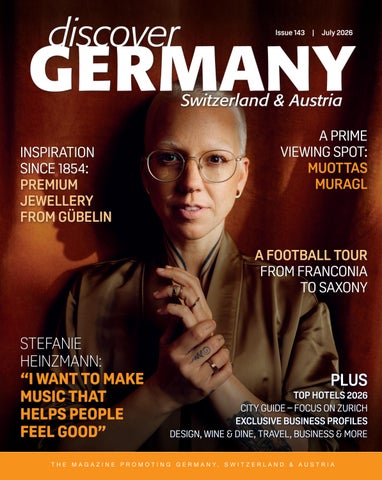
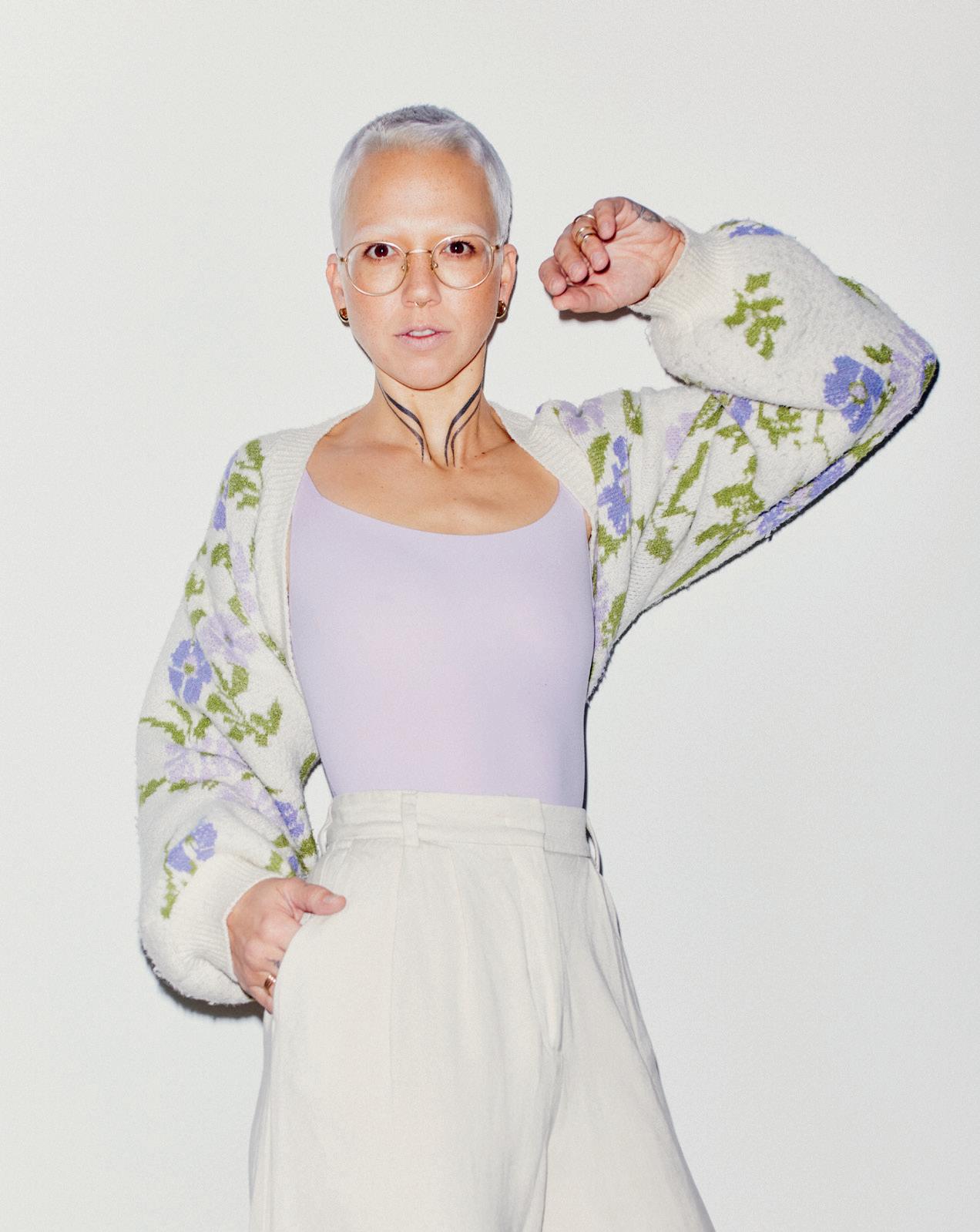
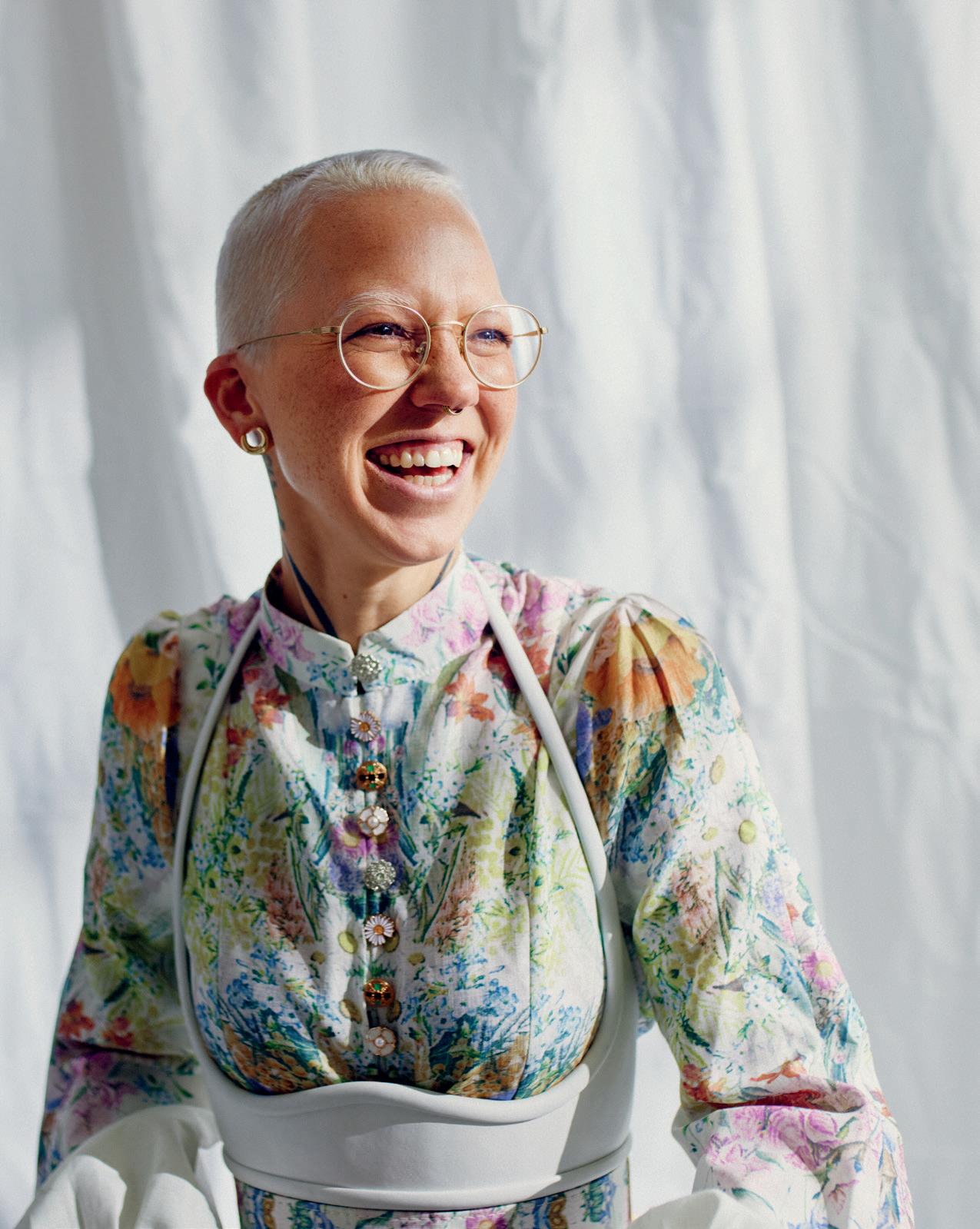
July arrives with a vibrant mix of travel inspiration, cultural highlights and fresh perspectives from across the DACH region. In this issue, we sit down with our cover star Stefanie Heinzmann, who speaks about her latest album, personal growth and her wish to create music that helps people feel good. Alongside this interview, we bring together striking destinations, standout businesses and carefully curated recommendations designed to accompany you through the summer.
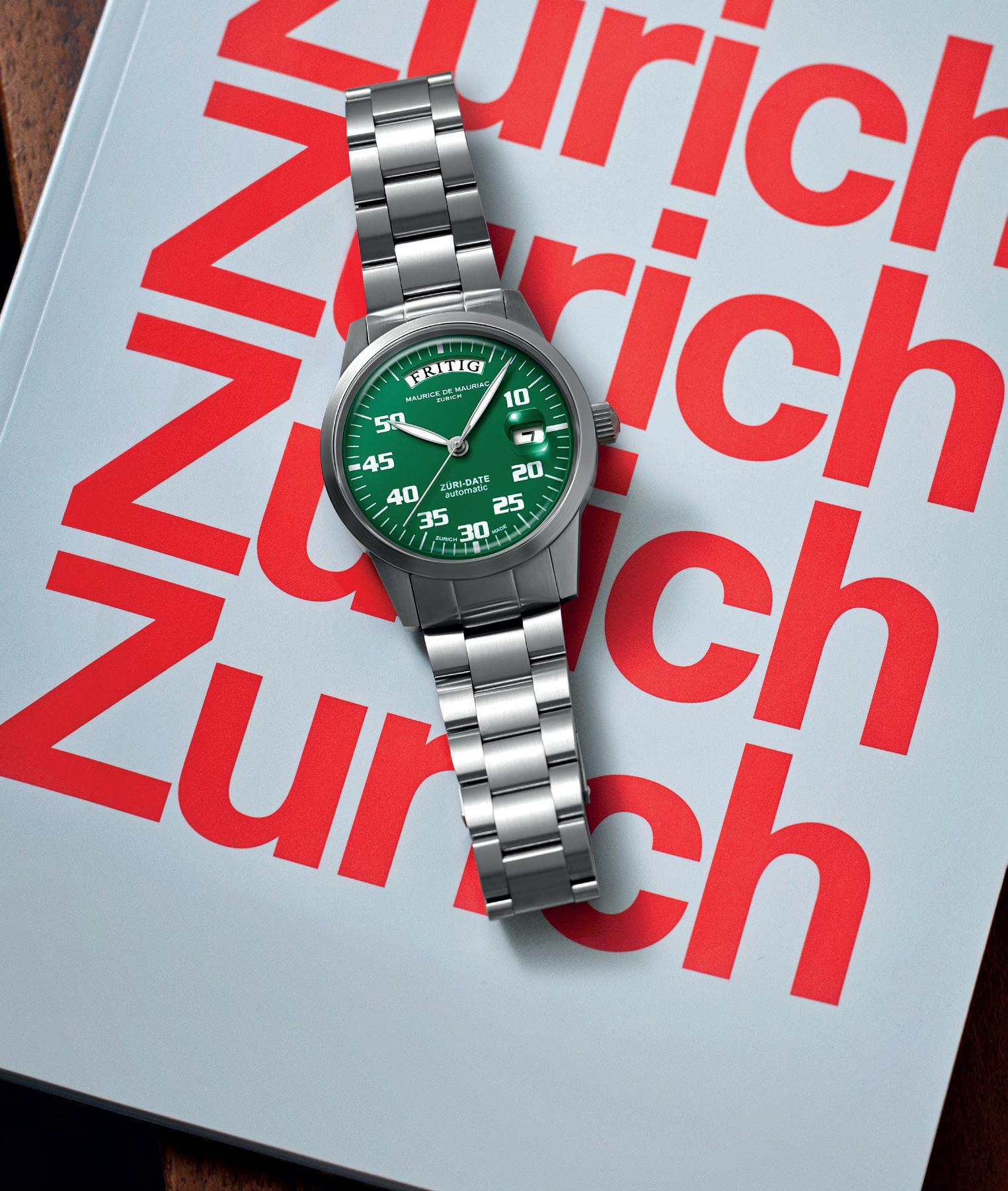
Among this month’s special themes, we present a handpicked selection of exceptional places to stay for your next getaway. We also turn our attention to Zurich in a city guide that explores its rich blend of medieval charm, cultural life, water-focussed lifestyle, and easy access to nature. On the business side, we further introduce some of the most innovative companies currently shaping the DACH region.
Our feature pages continue this journey with stories that celebrate craftsmanship, place and experience. We step inside the world of premium jewellery with Gübelin, trace Germany’s football culture from grassroots clubs to the Bundesliga, and take in the remarkable setting of Muottas Muragl high above the Upper Engadine.
As always, our regular sections offer even more to discover, from design and fashion finds to culinary recommendations, wonderful places to stay, aesthetic medicine experts, a wealth of different columns, and much, much more.
We hope this edition inspires new plans, memorable excursions and a fresh appreciation for the people, places and ideas shaping summer in Germany, Austria and Switzerland. Enjoy!
Nane Steinhoff Editor
Contents
JULY 2026
COVER FEATURE
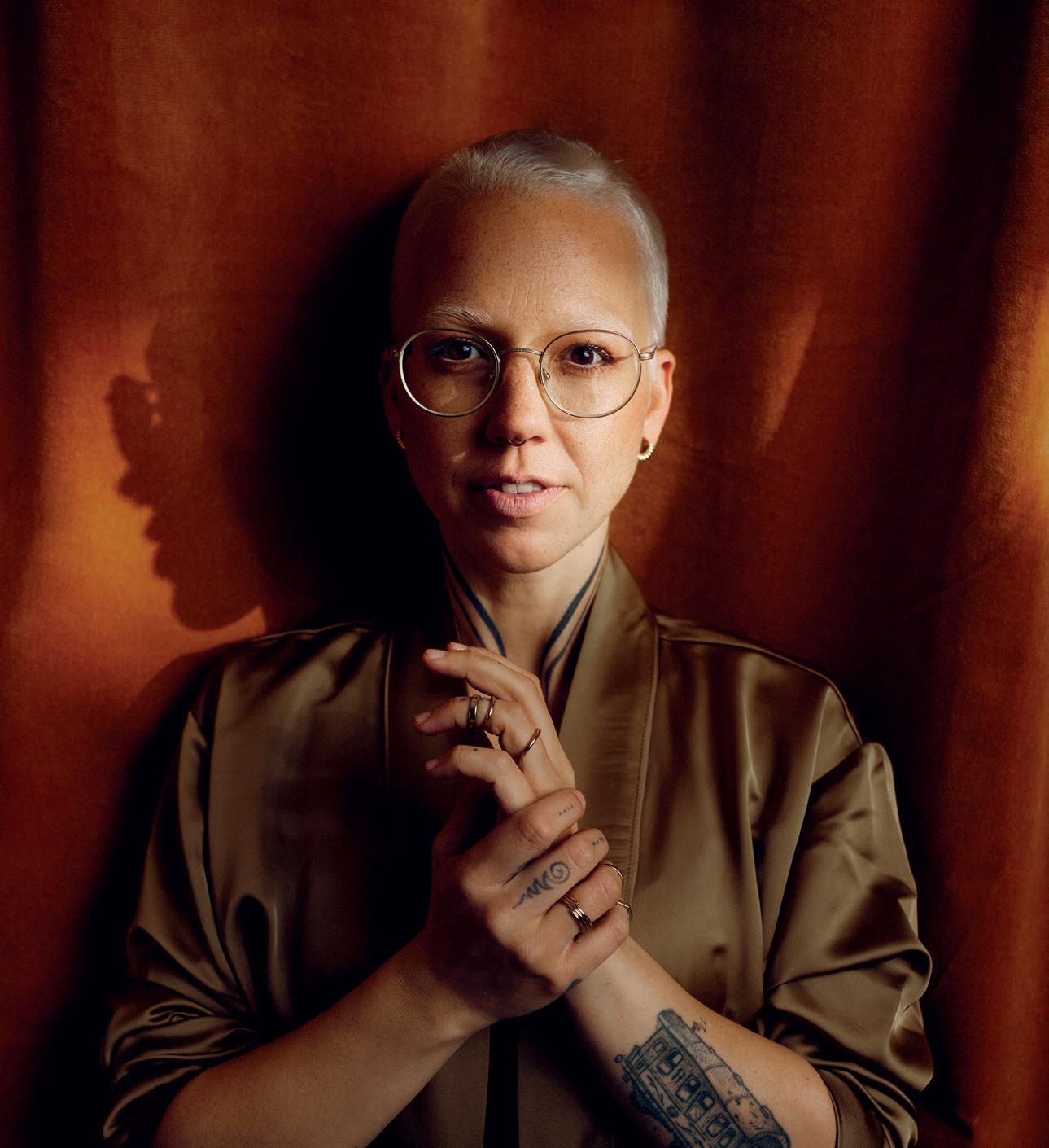
18 STEFANIE HEINZMANN: “I WANT TO MAKE MUSIC THAT HELPS PEOPLE FEEL GOOD”
With her latest album, Circles, Swiss singer Stefanie Heinzmann lets listeners get close to her true self. The record is an intimate testimony of her personal journey and an endorsement of the benefits of looking closely at who you really are.
SPECIAL THEMES
37 TOP HOTELS 2026
Here, you will discover our selection of this year’s finest hotel recommendations, carefully chosen for your holiday pleasure.
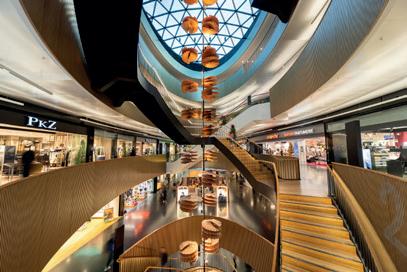
58 CITY GUIDE – FOCUS ON ZURICH
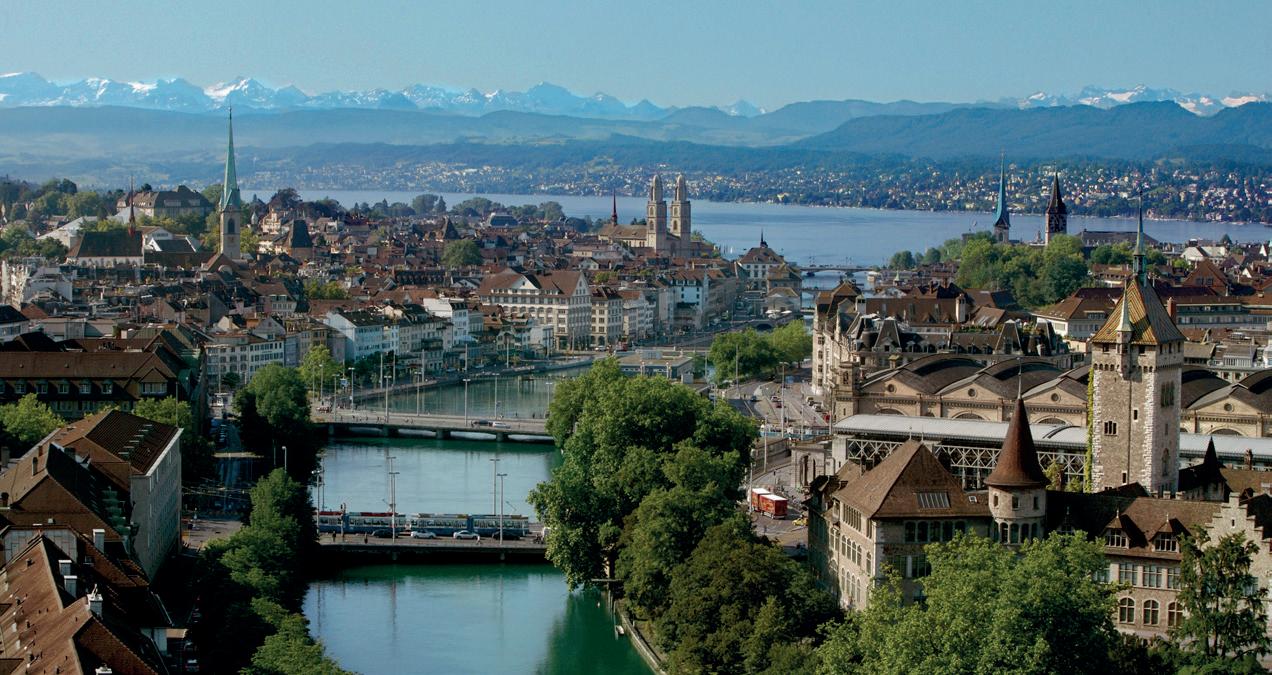
While impressing visitors with a medieval old town with plenty of sights, charming streets and shops, Zurich is also a must-visit for art and culture fans, as well as nature enthusiasts; there really is something for everyone to explore.
65 EXCLUSIVE BUSINESS PROFILES
In this special theme, find out what the DACH region has to offer on the business front as we introduce some of its most innovative companies.
FEATURES
10 PREMIUM JEWELLERY FROM GÜBELIN: INSPIRATION SINCE 1854
Anyone visiting a Gübelin boutique in Lucerne, Zurich, Geneva, or St. Moritz in Switzerland will encounter far more than just a traditional jeweller. From timeless and elegant high jewellery pieces and iconic watch models to internationally recognised gemstone expertise, the Swiss family business has stood for excellence for generations.
28 FROM AMATEUR FOOTBALL TO THE BUNDESLIGA
From big arenas in the cities to small grounds in villages, watching football can be a lot of fun. Amid the 2026 World Cup, join writer Daniel Barthold on a tour from Franconia to Saxony filled with history, food, tradition and newly founded clubs.
18
32 MUOTTAS MURAGL: A PRIME VIEWING SPOT
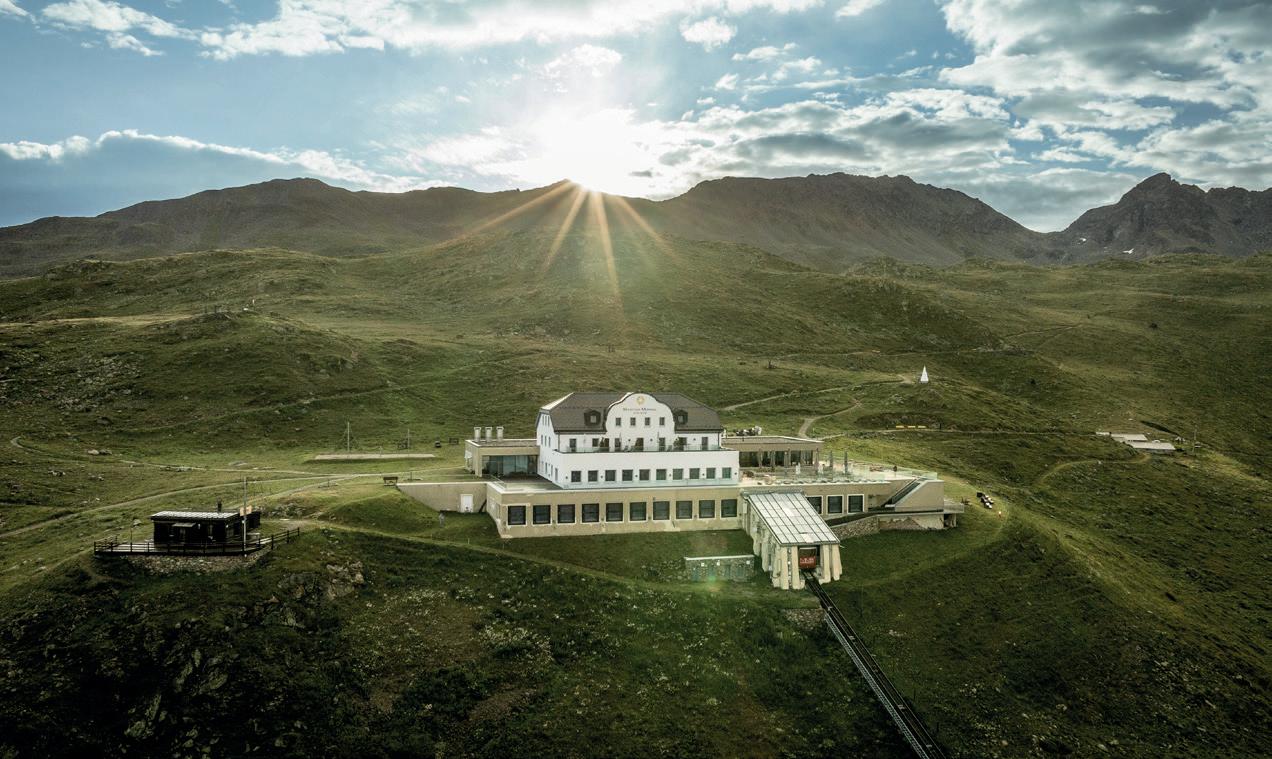
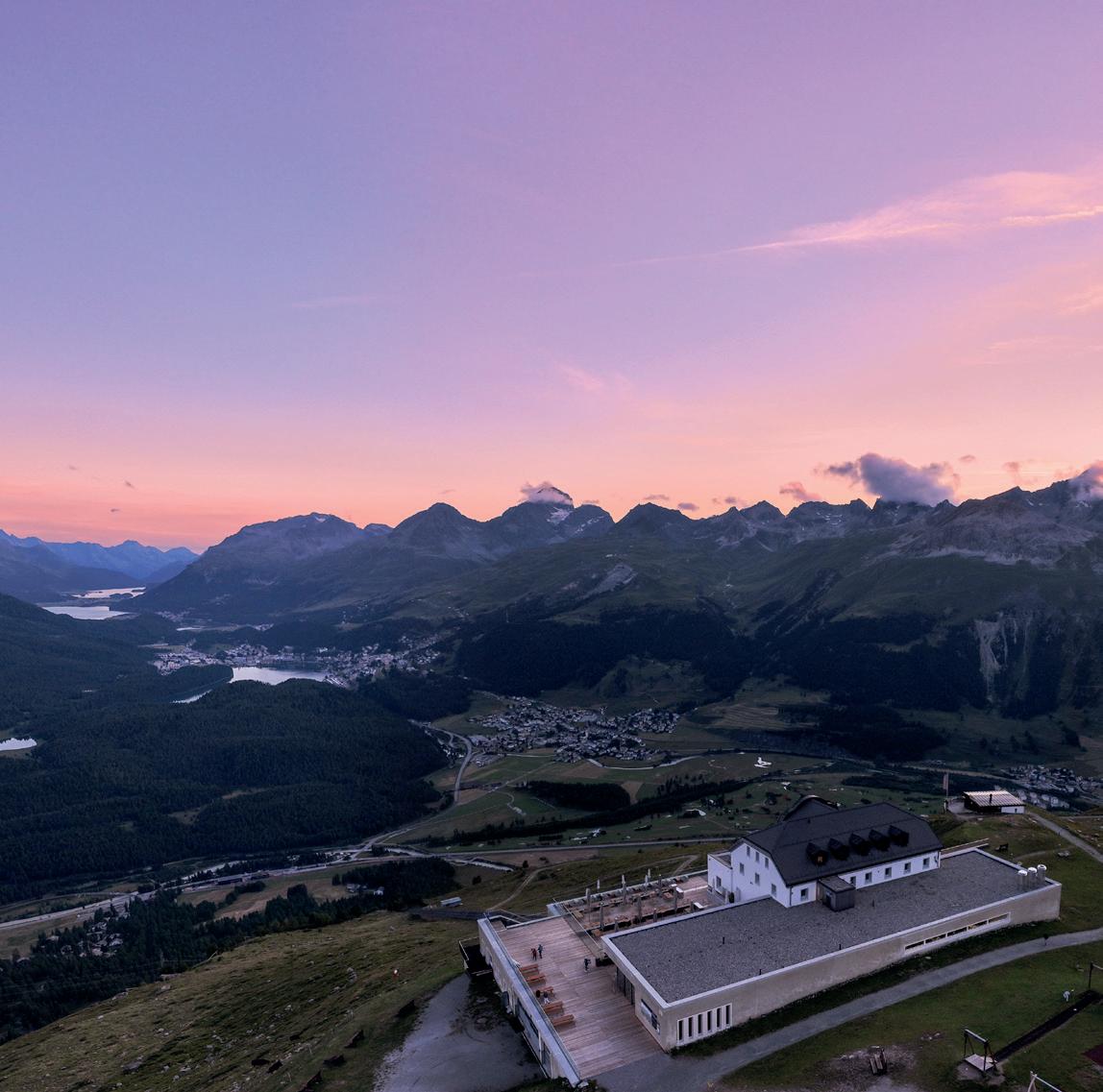
There are places you visit – and places that linger long after you leave. Muottas Muragl undoubtedly belongs to the latter category. High above the Upper Engadine, panoramic views, culinary delights, and tranquillity combine to create an experience that feels both exclusive and surprisingly approachable.
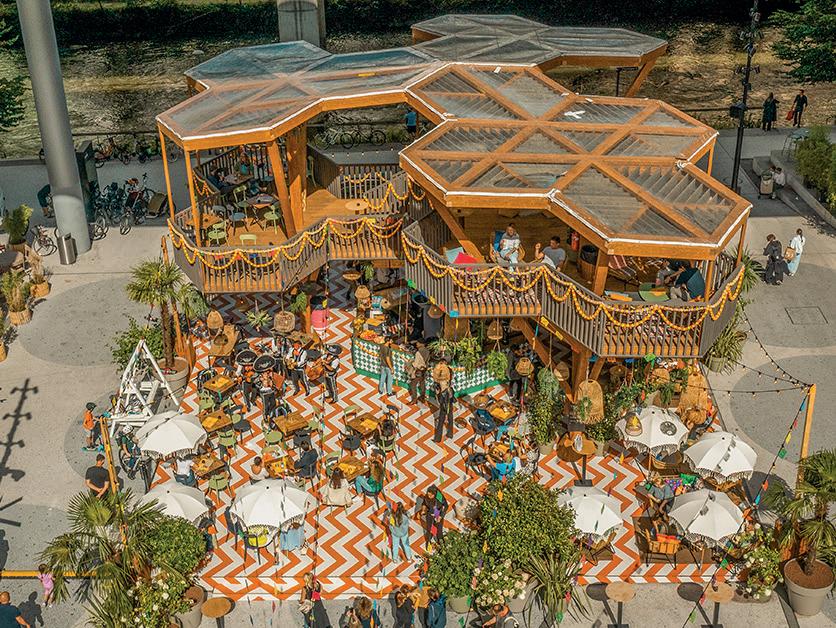
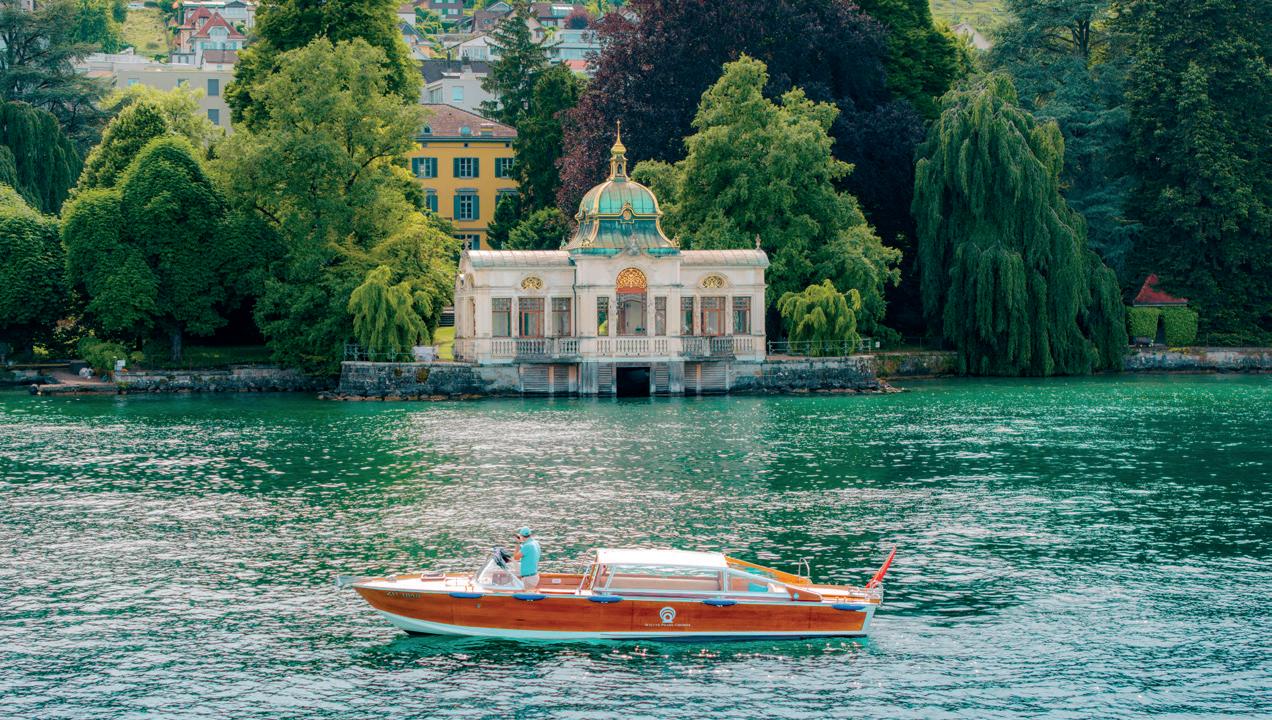
52 THE CITY THAT LIVES BY THE WATER
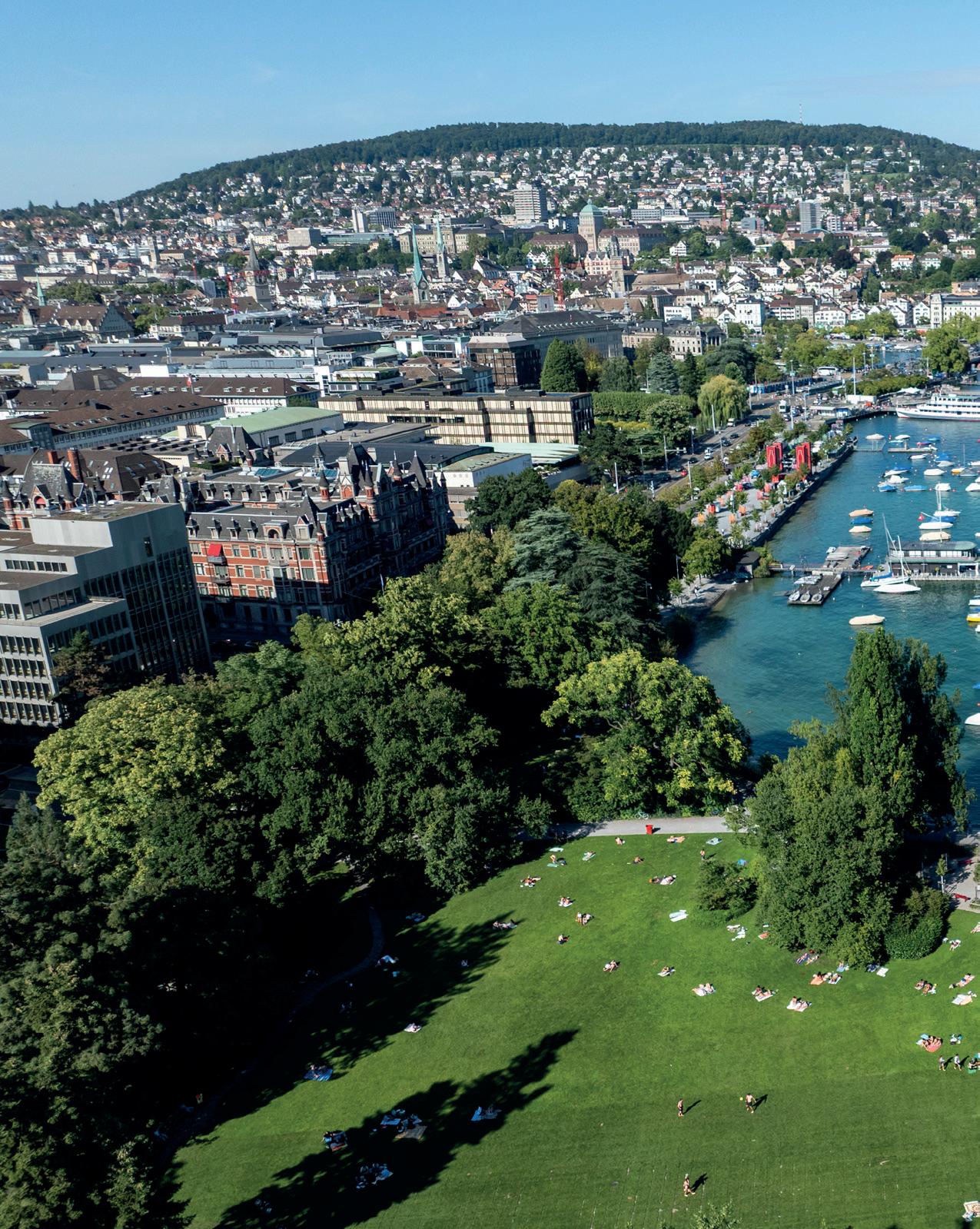
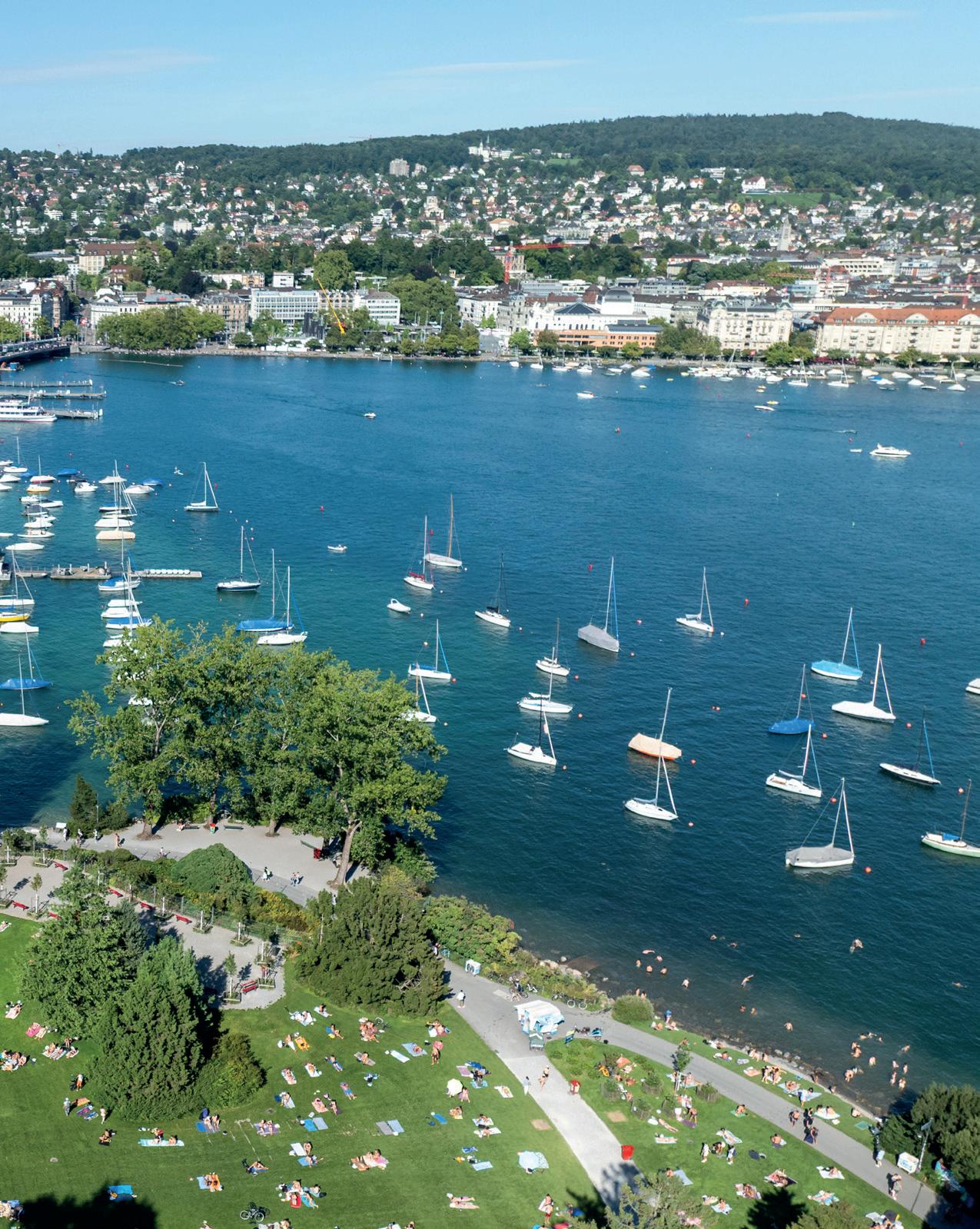
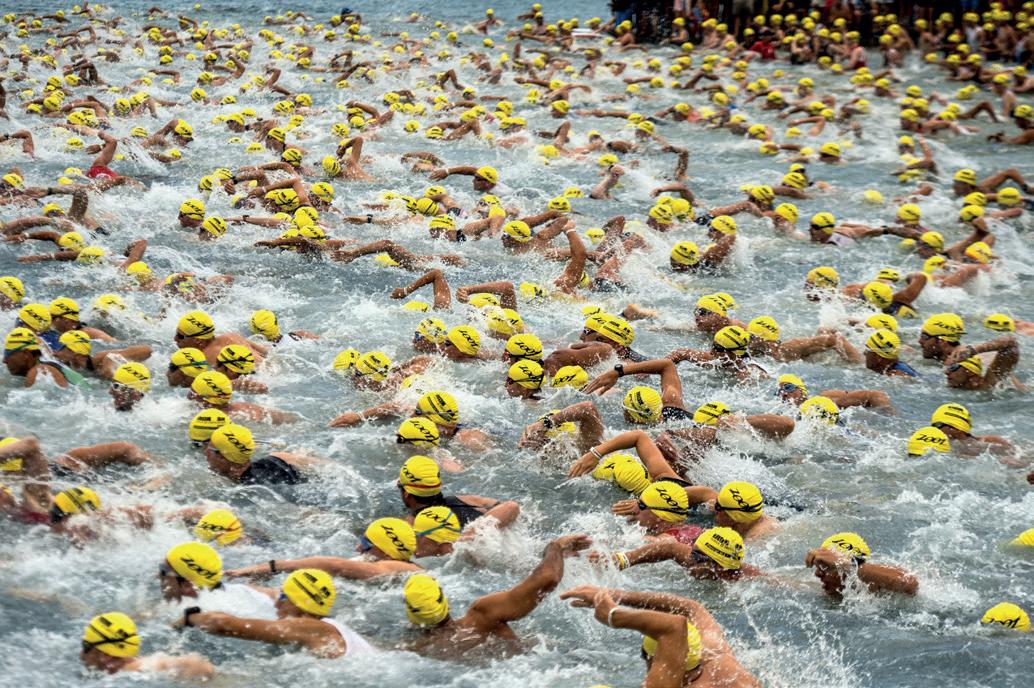
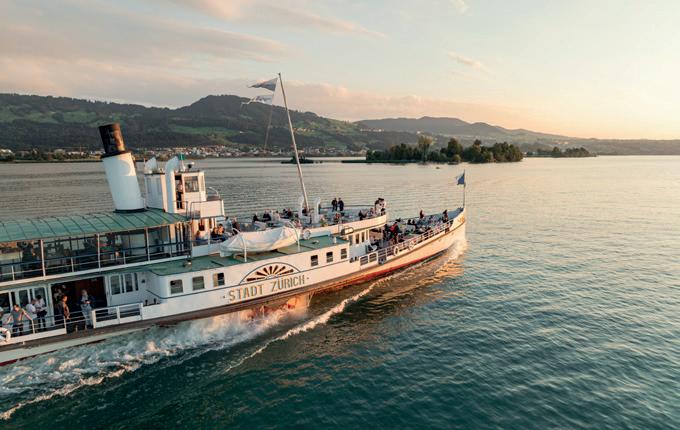
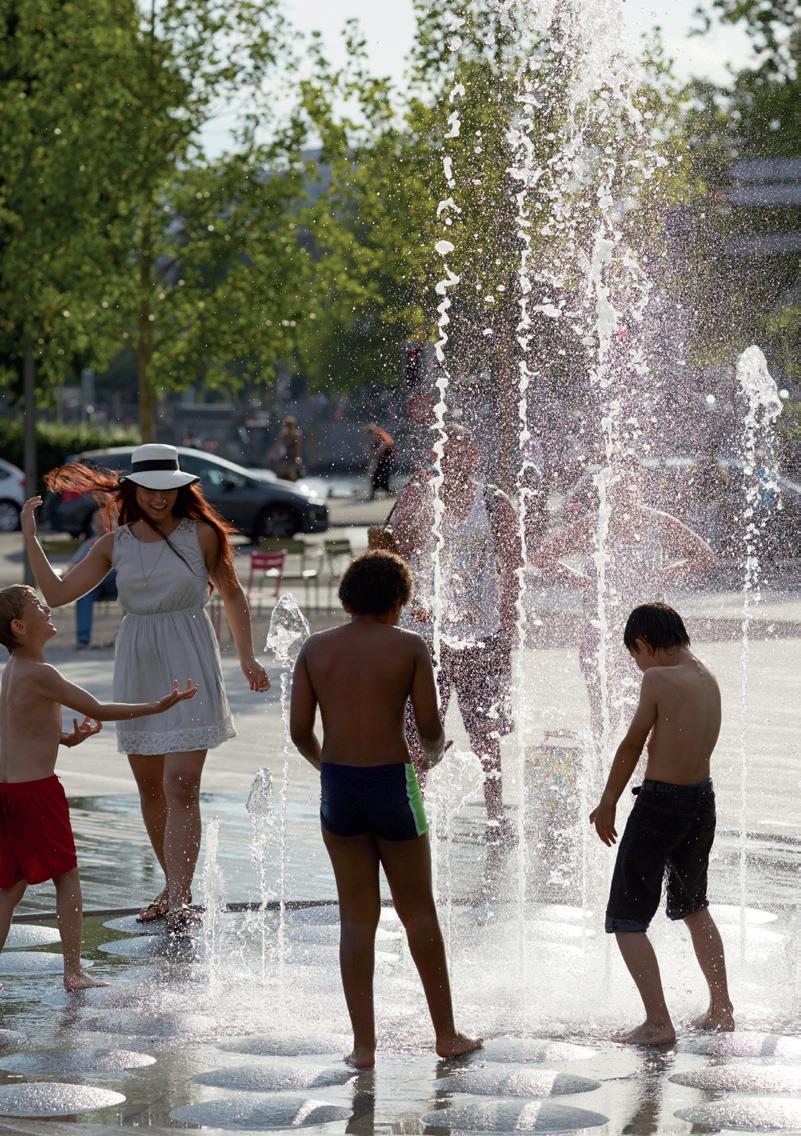
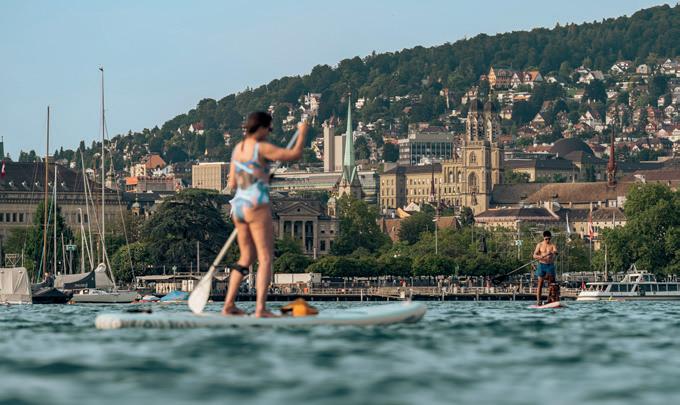
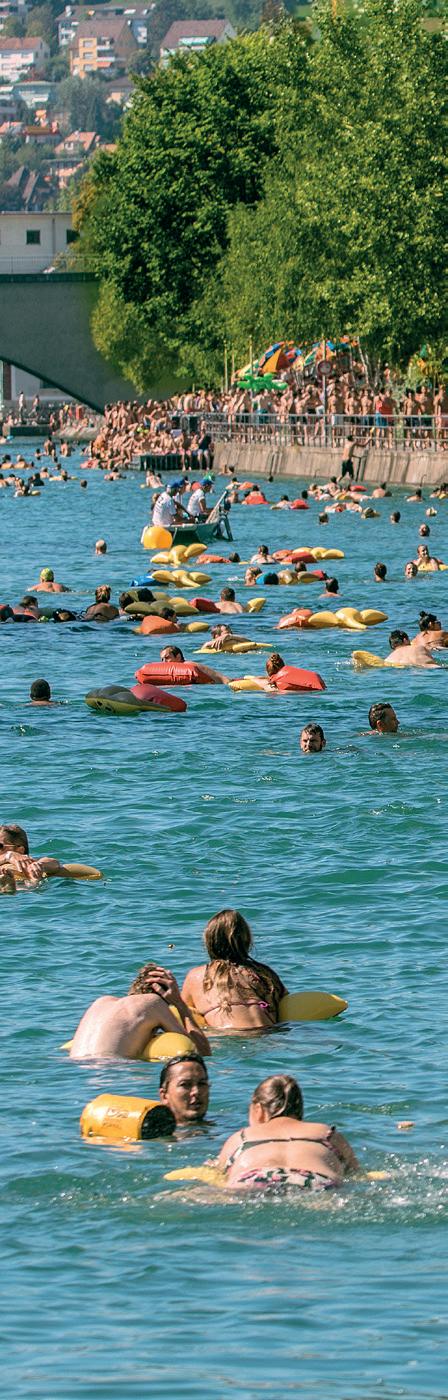
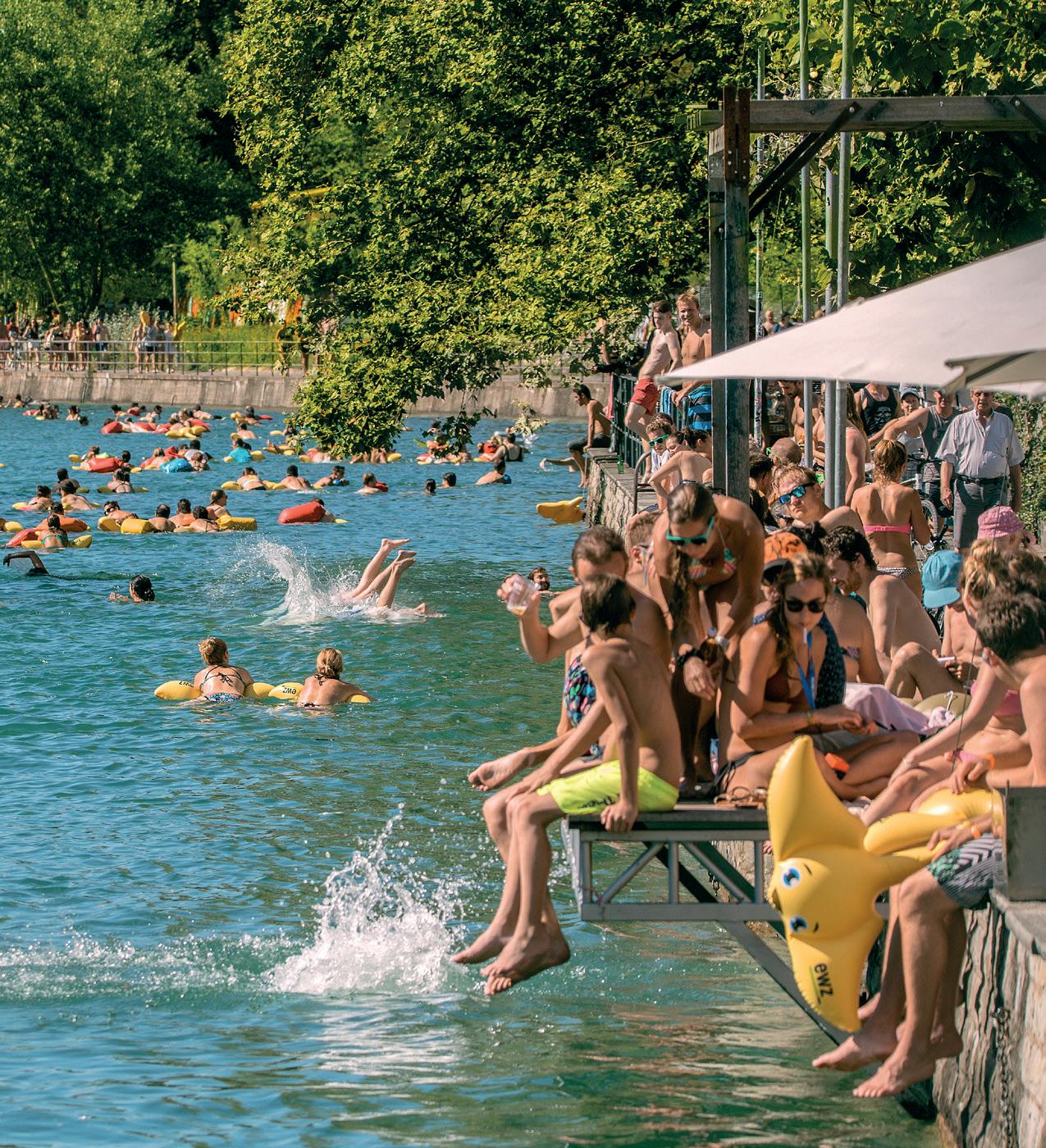
Zurich is defined by water. In summer, the lake, the river Limmat, the city’s lidos and its public fountains shape how residents use public spaces and how visitors experience the city. Here, we reveal how best to explore the Swiss city from the water.
REGULARS & COLUMNS
6 DEDICATED TO DESIGN AND FASHION FINDS
Whether searching for trendy design items, innovative interior products, architects or unique fashion pieces, be sure to take a look at our Design section.
22 WINE & DINE
A wine column, top restaurants and winemakers – our Wine & Dine section is about all things culinary.
32 TRAVEL
Great hotels and places to stay, an enchanting castle, an aesthetic medicine expert and more – our Travel section gives you some much-needed travel tips.
65 BUSINESS
This month, our Business section is filled with innovative companies from the DACH region.
69 DISCOVER HER POWER COLUMN
The most interesting companies right now are being built by women who stopped trying to fit in. A new GOALGIRLS* column about women building businesses differently.
70 CULTURE CALENDAR
Discover Germany, Austria & Switzerland’s Culture Calendar is your perfect guide to what not to miss in July.
73 SECRET BERLIN COLUMN
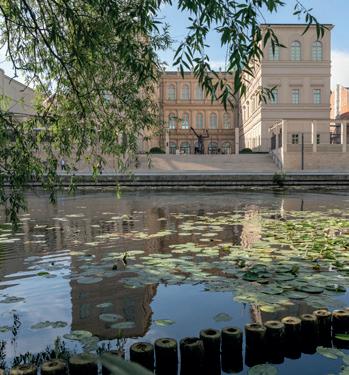
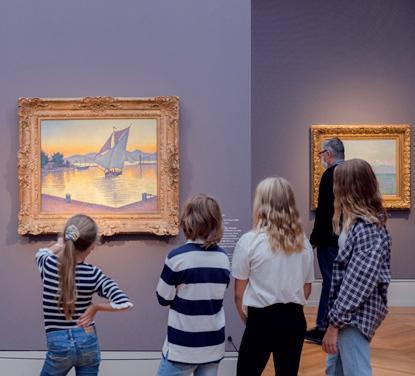
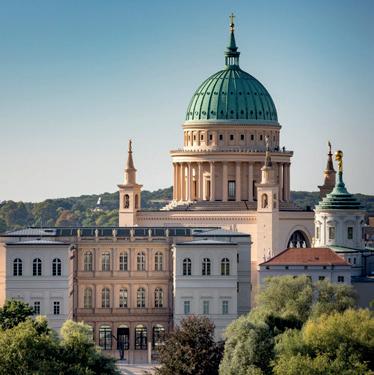
This month, long-term Berlin resident Cornelia Brelowski explores a special museum visit in Berlin’s sister city of Potsdam.
74 GERMAN CURIOSITIES COLUMN
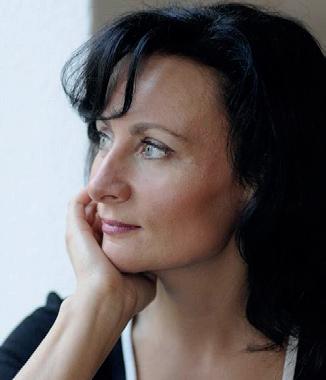
Here, Barbara Geier writes about Germany's archive of around 65,000 love letters. 33
Fashion Finds
Summer denim is back! And zero, a German fashion brand owned by the Betty Barclay Group, shows us how we can best style it. For the warmer months, denim comes into its own in lighter washes, softer textures and more relaxed silhouettes. Think easy shirts, loose-fit jeans, midi skirts and breezy jackets, paired with crisp white and colourful basics, woven accessories or simple sandals. The result? Effortless outfits for both casual days and more elevated occasions.
Perfectly paired with these relaxed barrel jeans, this oversized viscose blouse impresses with short sleeves and cute embroidery detail. Tie it up and turn it into a cropped blouse for a more modern look. Blouse £61, jeans £78. www.zero.de
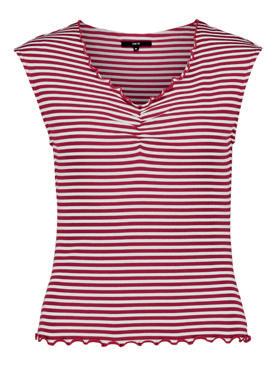
This striped top with ruched detail will elevate any summer denim outfit; a touch of 70s feeling included. £22. www.zero.de
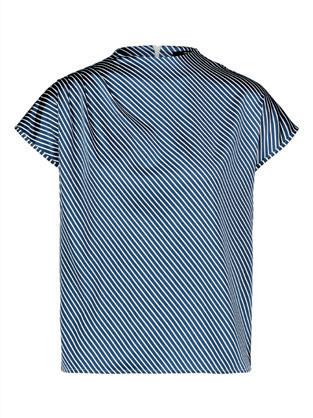
Looking for something special? This striped satin blouse comes with a cute stand-up collar and is an absolute highlight for any outfit. Pair with a white denim skirt or white denim jeans for an airy summer look. £40. www.zero.de
EDITOR’S PICKS I PRESS IMAGES BY BETTY BARCLAY GROUP GMBH & CO. KG
This blazer jacket in denim look adds a modern twist to your summer wardrobe and pairs perfectly with everything from dresses to white jeans. £61. www.zero.de
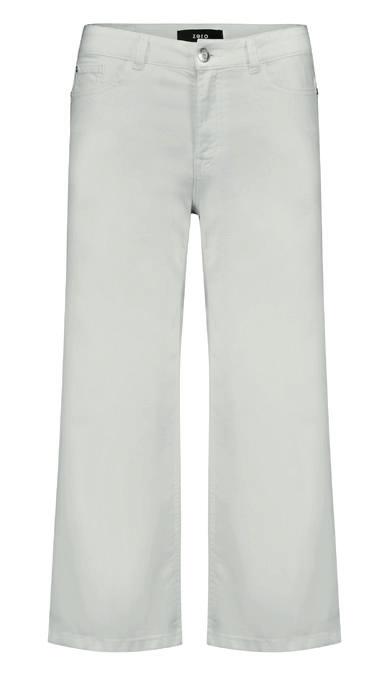
Cropped white jeans should be a staple in every wardrobe. Easily dressed up or down, they keep you cool even on hotter days. £69. www.zero.de
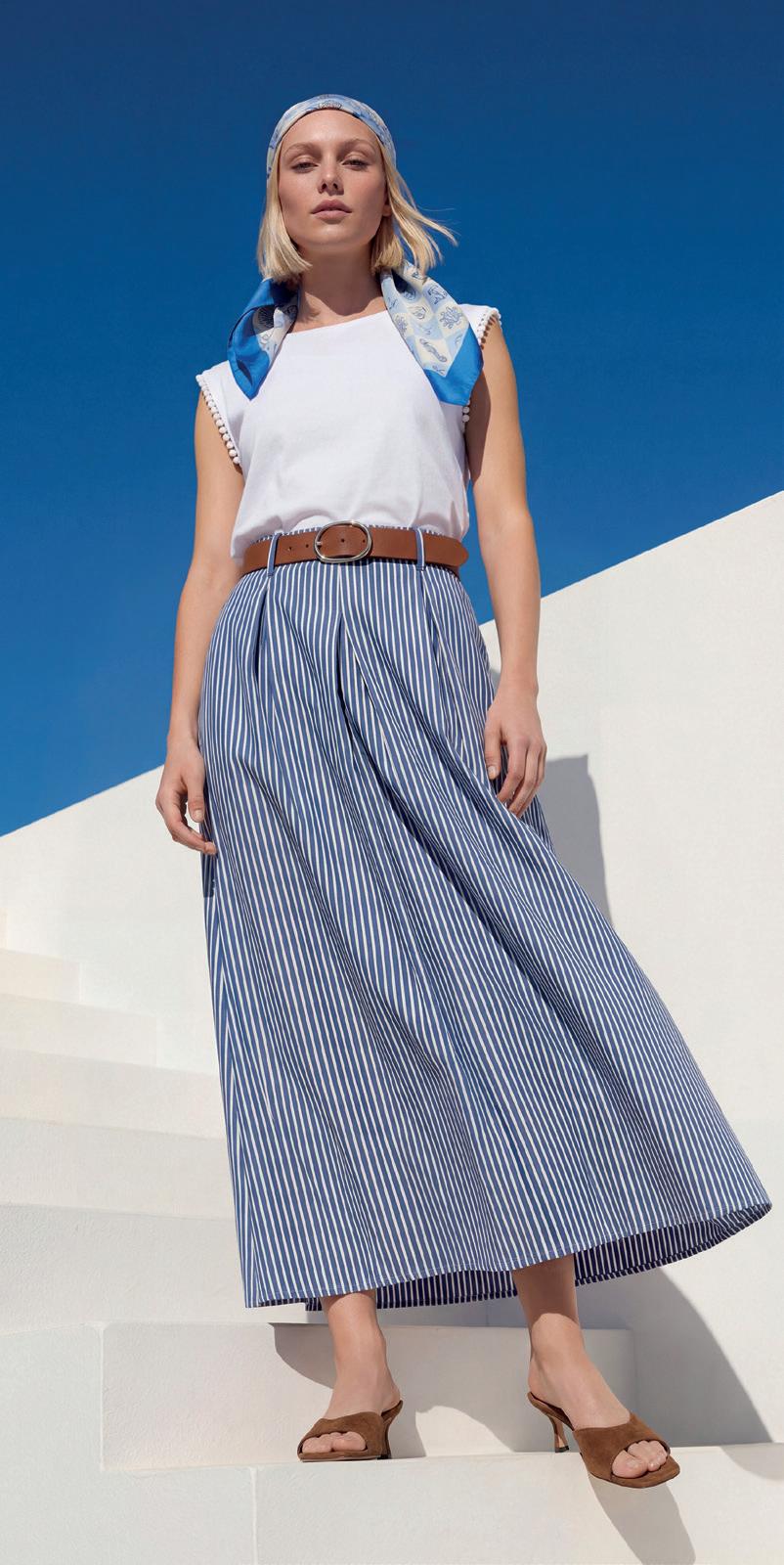
This look captures summer denim at its most effortless: a white jersey top with pom pom details tailored over a flowy cotton skirt in denim optics creates a fresh, modern contrast. Clean lines and a relaxed silhouette keep the outfit polished yet easy-going, striking that perfect balance between smart and casual. Skirt £69, top £22. www.zero.de
Dedicated to Design
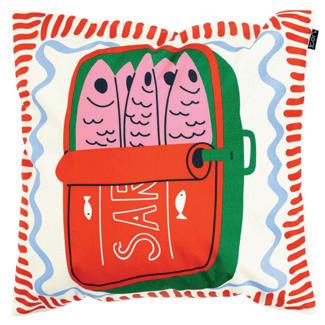
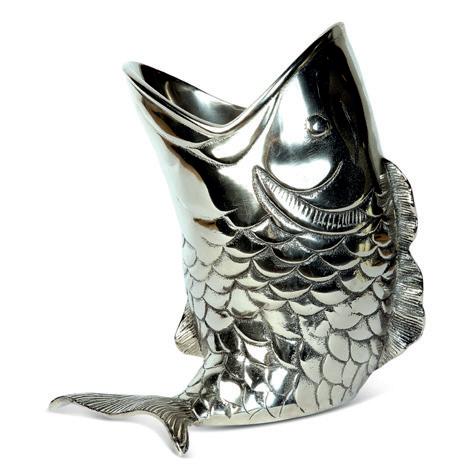
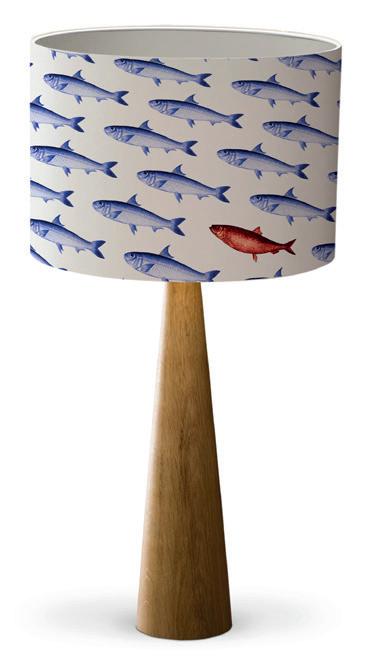
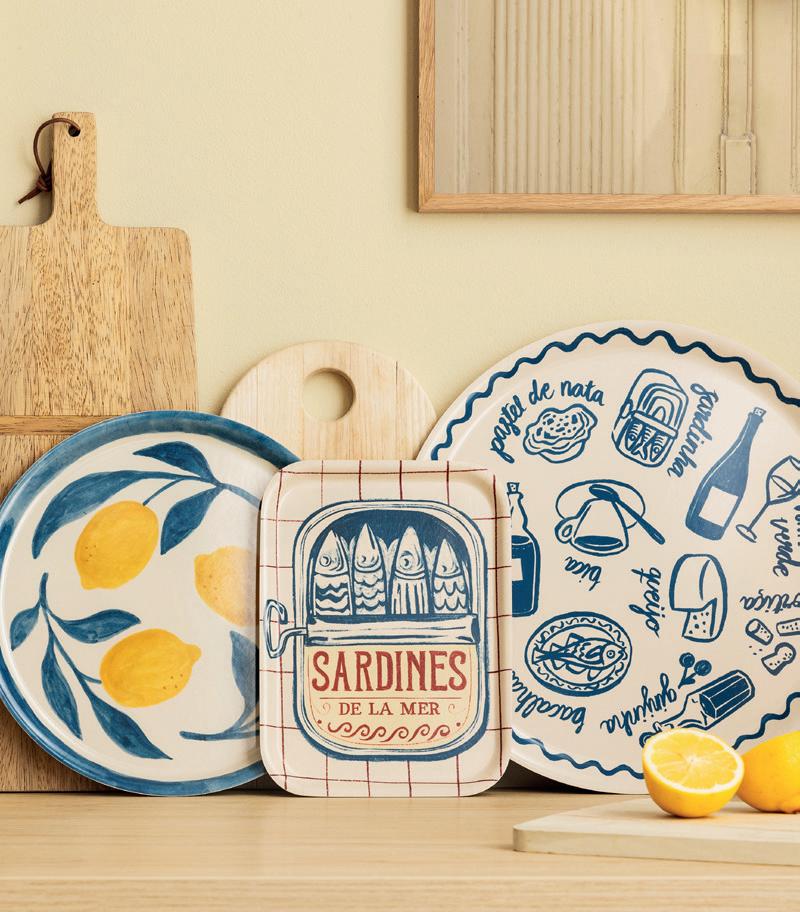
The catch of the day interior trend brings a playful, collectible twist to coastal style, with fish motifs making waves across accessories, ceramics, glassware and table settings. Think illustrated sardines, seafood-inspired details and sunny holiday nostalgia – an irresistibly cheeky trend that adds character, charm and a splash of seaside fun to summer spaces.
EDITOR’S PICKS I IMAGES: PRESS LOFT
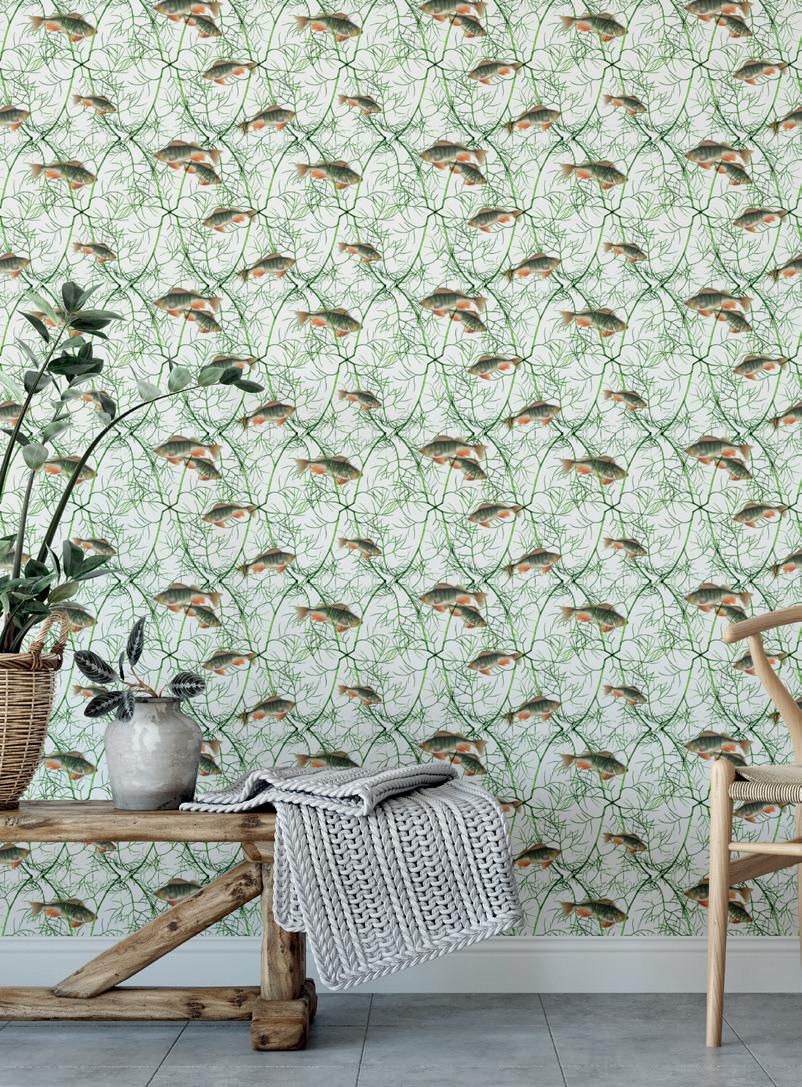
Who needs an aquarium when you can have fish gliding across your walls instead? With its whimsical dill vines and swimming fish, this playful wallpaper brings a splash of personality and an effortlessly breezy feel to any room. From £51 per square metre. www.gmm-berlin.com
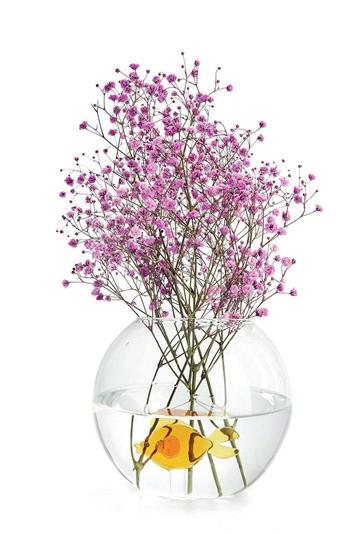
This round glass vase is the cutest addition to any space! Encased within clear borosilicate glass is a carefully crafted amber fish, creating a striking decorative piece that brings character and dimension to any room. £30. www.charlesandmarie.de
Water-resistant, comfy and stylish – this outdoor chair cushion easily switches up any garden décor effortlessly and is a perfect addition to outdoor sofas or rattan furniture. £19.99. www.iconbeanbags.co.uk
Crafted in nickel-plated aluminium, this wine cooler is guaranteed to be a talking point! A quirky, yet wonderful gift. £145. www.annabeljames.co.uk
Meet the lampshade with a mischievous streak: a red herring in a sea of sardines. Handmade to order with vintage illustrations and gold detailing, it’s witty, whimsical and guaranteed to spark conversation. £65. www.mountainandmolehill.com
These birch veneer trays serve up Portugal-inspired culinary charm in the chicest way. Decorated with playful food illustrations, they instantly brighten up any tablescape, but the styling fun doesn’t stop there: hang them on the wall for an easy dose of sun-soaked Iberian character. £23.95 (left), £18.95 (middle) and £30.95 (right). www.desenio.de
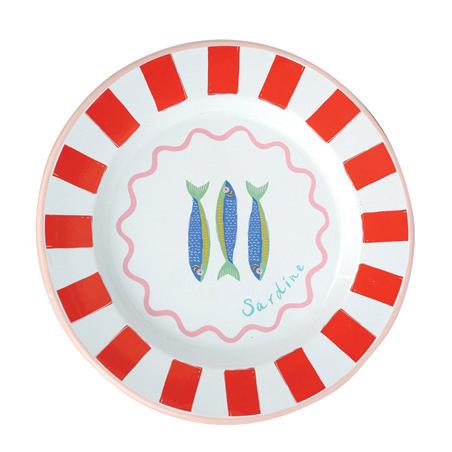
Picnic perfection with a cheeky twist, this candy-coloured enamel plate serves up sardines, stripes and seaside charm. Lightweight, shatterproof and joyfully kitsch, it’s made for stylish summer feasting. £15. www.talkingtables.co.uk
INSPIRATION SINCE 1854
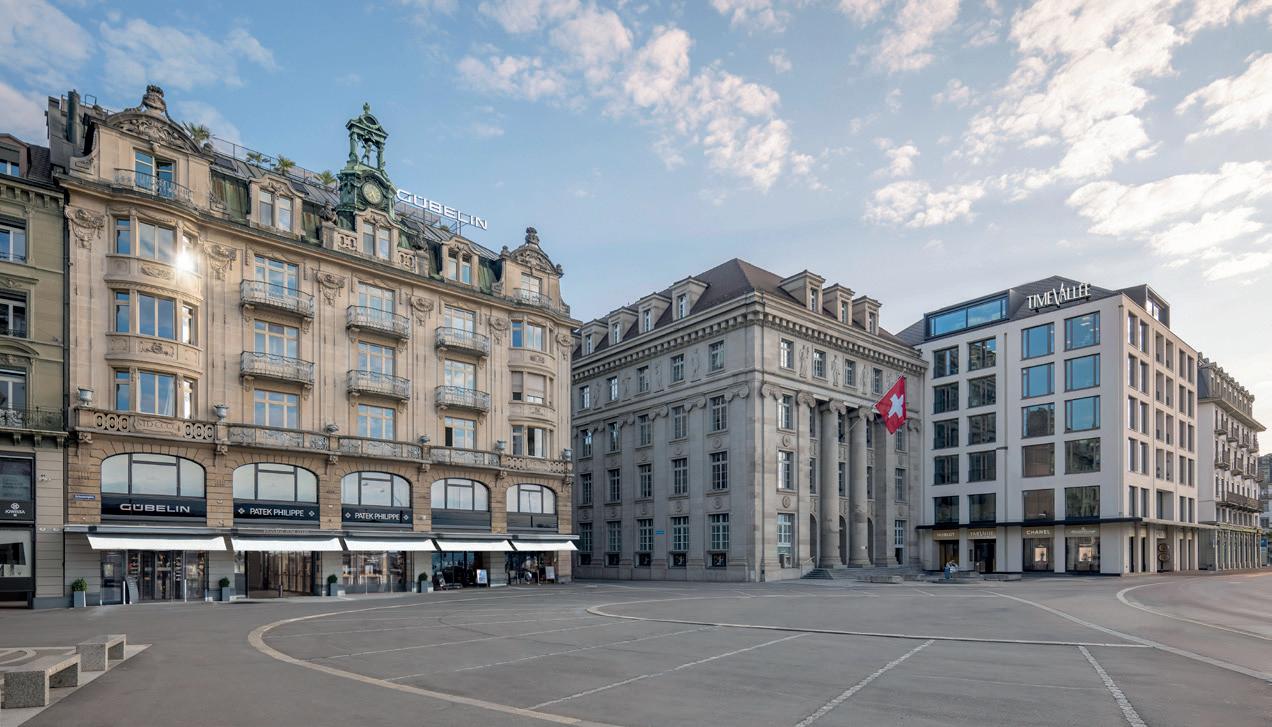
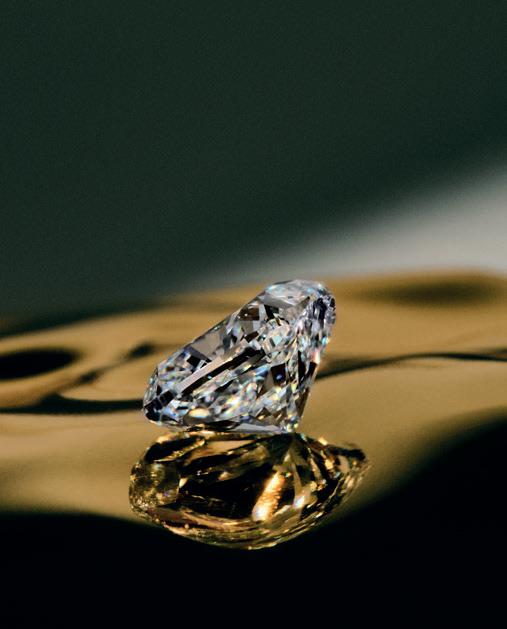
Anyone visiting a Gübelin Boutique in Lucerne, Zurich, Geneva, or St. Moritz in Switzerland will encounter far more than just a traditional jeweller. The philosophy of ‘Deeply Inspired’ has shaped the family business for generations and is reflected in every aspect of the company – from timeless and elegant high jewellery pieces and iconic watch models to internationally recognised gemstone expertise.
Inspired by the inner beauty of nature, the uniqueness of each person and the fascination of unique gemstones, Gübelin creates experiences that go far beyond the classic concept of luxury. A key element of every jewellery piece is the iconic ruby, the hallmark of the house for decades, symbolising the values that Gübelin embodies: passion, authenticity, trust, and permanence. What makes the house's creations so special is the combination of emotional radiance and scientific precision. Each piece of jewellery tells a story – not only through its design, but also through the origin and character of its gemstones.
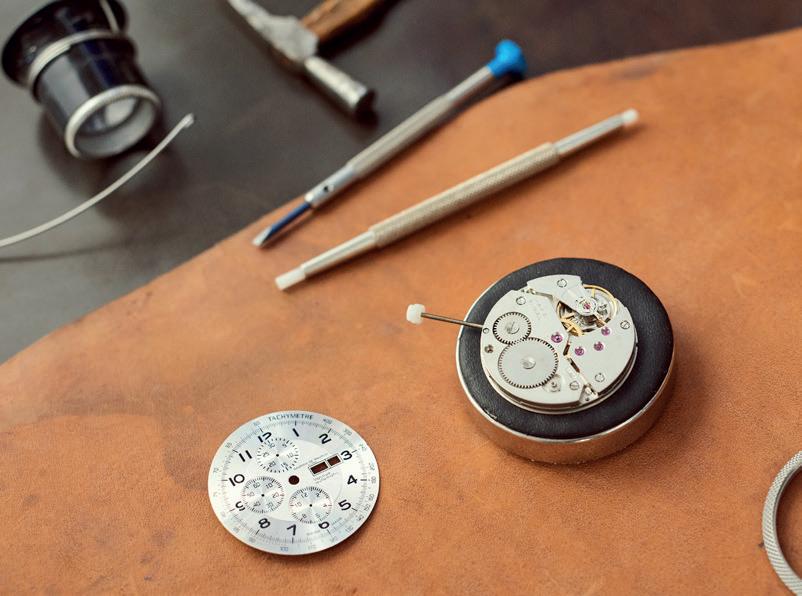
The company's roots stretch back to 1854, when a watchmaking workshop was founded in Lucerne. Over generations, the company has continuously developed and expanded its expertise step by step. A decisive
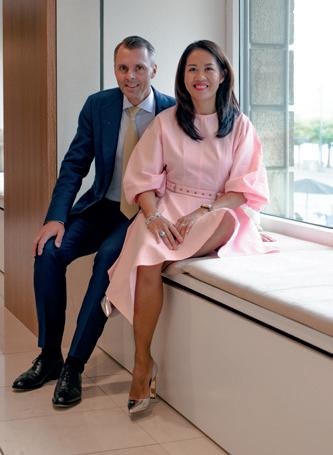
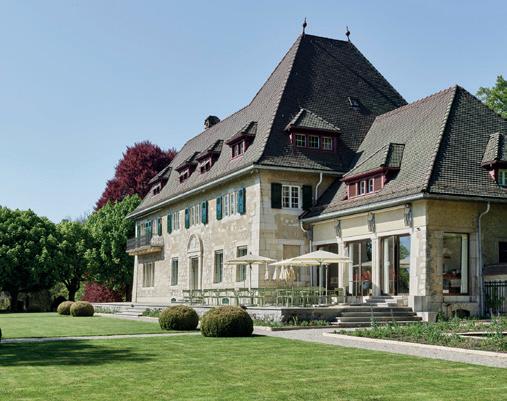
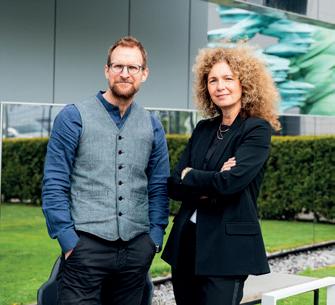
contribution to this was made by Eduard Joseph Gübelin, representing the fourth generation, whose passion for gemstones laid the foundation for the company's current position. His extensive collection of reference stones later formed the basis for the renowned Gübelin Gem Lab and the Gübelin Museum. To this day, the company is managed by the owning family. With Raphael and Wilvy Gübelin, the sixth generation now leads
the company, combining its rich history with a contemporary vision of luxury, knowledge, and hospitality.
MULTIFACETED EXPERIENCES
The House of Gübelin combines unique expertise. On the one hand, as a renowned retailer, the company carries a carefully curated selection of the world's most important watch brands, and on the other hand, exclusive jewellery creations are produced in its own workshops, characterised by exceptional gemstones and the highest level of craftsmanship.
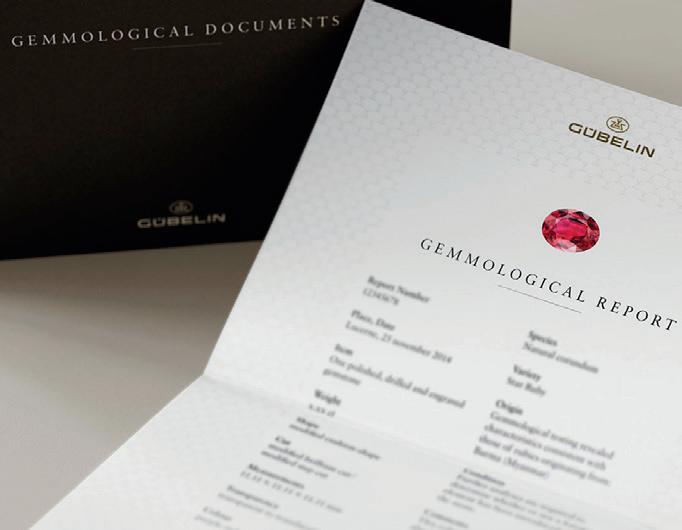
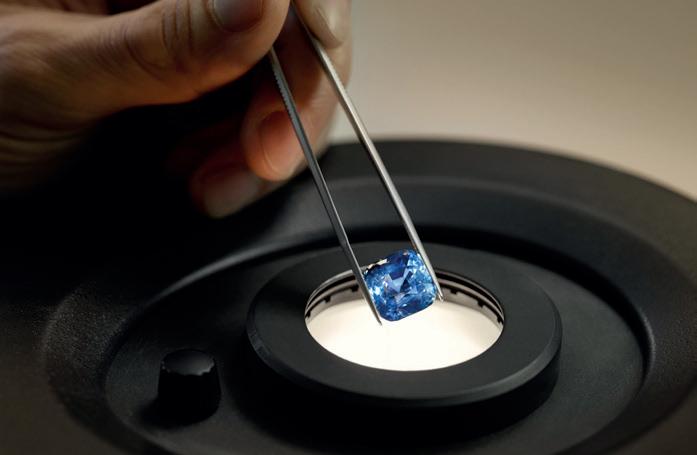
The Gübelin Gem Lab plays a special role in this. As one of the world's leading institutes for the analysis and certification of coloured gemstones, it has enjoyed international renown for decades. Its expertise inspires trust among collectors, trading partners, and customers worldwide. Scientific research and a profound understanding of gemstones are firmly anchored in the company's DNA and lend exceptional credibility to every consultation – true to the principle: where precious values meet verified trust.
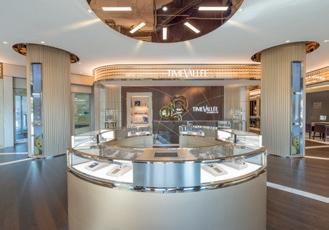
TimeVallée Boutique in Lucerne.
INSPIRATION SEIT 1854
Wer in der Schweiz eine Gübelin Boutique in Luzern, Zürich, Genf oder St. Moritz besucht, begegnet weit mehr als einem traditionsreichen Juwelier. Die Philosophie „Deeply Inspired“ prägt das Familienunternehmen seit Generationen und spiegelt sich in jedem Bereich des Hauses wider – von zeitlosen und eleganten High Jewellery Pieces über ikonische Uhrenmodelle bis hin zur international anerkannten Edelsteinexpertise.
Inspiriert von der inneren Schönheit der Natur, der Einzigartigkeit jedes Menschen und der Faszination einzigartiger Edelsteine erschafft Gübelin Erlebnisse, die weit über den klassischen Luxusgedanken hinausgehen. Ein Key-Element jedes Schmuckstückes ist der ikonische Rubin, seit Jahrzehnten das Markenzeichen des Hauses, sinnbildlich für die Werte, die Gübelin verkörpert: Leidenschaft, Authentizität, Vertrauen und Beständigkeit. Was die Kreationen des Hauses so besonders macht, ist die Verbindung von emotionaler Strahlkraft und wissenschaftlicher Präzision. Jedes Schmuckstück erzählt eine Geschichte – nicht nur durch sein Design, sondern auch durch die Herkunft und den Charakter seiner Edelsteine.
Die Wurzeln des Unternehmens reichen bis ins Jahr 1854 zurück, als in Luzern eine Uhrmacherwerkstatt gegründet wurde. Über Generationen hinweg entwickelte sich das Unternehmen kontinuierlich und baute seine Kompetenzen Schritt für Schritt aus. Einen entscheidenden Beitrag dazu leistete Eduard Joseph Gübelin, Vertreter der vierten Generation, dessen Leidenschaft für Edelsteine den Grundstein für die heutige Position des Hauses legte. Seine umfangreiche Referenzsteinsammlung bildete später die Basis für
das renommierte Gübelin Gem Lab sowie das Gübelin Museum. Bis heute wir das Unternehmen von der Eigentümerfamilie geführt. Mit Raphael und Wilvy Gübelin führt inzwischen die sechste Generation das Haus und verbindet dessen traditionsreiche Geschichte mit einer zeitgemässen Vision von Luxus, Wissen und Gastfreundschaft.
FACETTENREICHE ERLEBNISSE
Das House of Gübelin vereint einzigartige Kompetenzen. Zum einen führt das Unternehmen als renommierter Retailer eine sorgfältig kuratierte Auswahl der bedeutendsten Uhrenmarken der Welt, und gleichzeitig entstehen in den eigenen Ateliers exklusive Schmuckkreationen, geprägt von aussergewöhnlichen Edelsteinen und höchster Handwerkskunst.
Eine besondere Rolle spielt dabei das Gübelin Gem Lab. Als eines der weltweit führenden Institute für die Analyse und Zertifizierung von Farbedelsteinen geniesst es seit Jahrzehnten internationales Ansehen. Seine Expertise schafft Vertrauen bei Sammlern, Handelspartnern und Kundinnen rund um den Globus. Die wissenschaftliche Forschung und das tiefgehende Verständnis von Edelsteinen sind fest in der DNA des Unternehmens verankert und verleihen jeder Beratung eine aussergewöhnliche Glaubwürdigkeit – ganz nach dem Prinzip: Wo kostbare Werte auf verifiziertes Vertrauen treffen.
Diese Haltung zeigt sich auch in allen Gübelin Boutiquen weltweit, diese sind weit mehr als klassische Verkaufsgeschäfte. Gübelin versteht sie als Orte der Inspiration, wo sich Menschen willkommen und vertraut fühlen sollen. In einer Atmosphäre, die eher an ein stilvolles
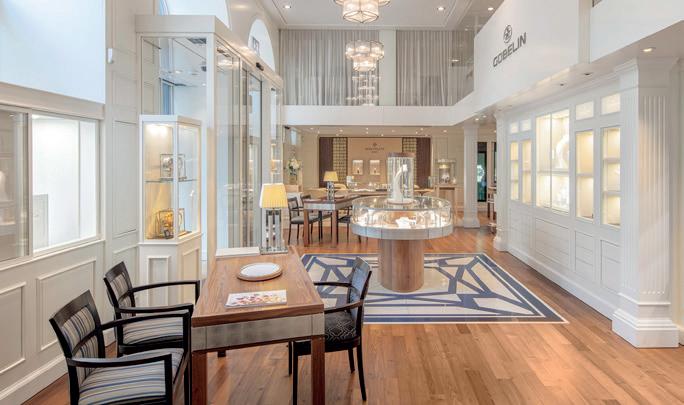
Gübelin Boutique Zürich.
This philosophy is reflected in all Gübelin Boutiques worldwide, which are far more than traditional retail stores. Gübelin sees them as places of inspiration where people should feel welcome and at ease. In an atmosphere more reminiscent of a stylish living room than a traditional boutique, personal encounters and trusting relationships take centre stage. Here, personalised advice is based not only on product knowledge, but also on decades of experience and a genuine passion for watches, jewellery, and gemstones.
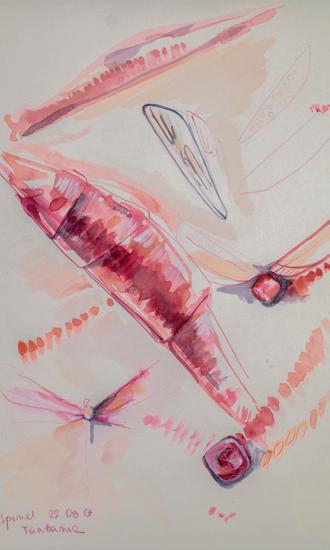
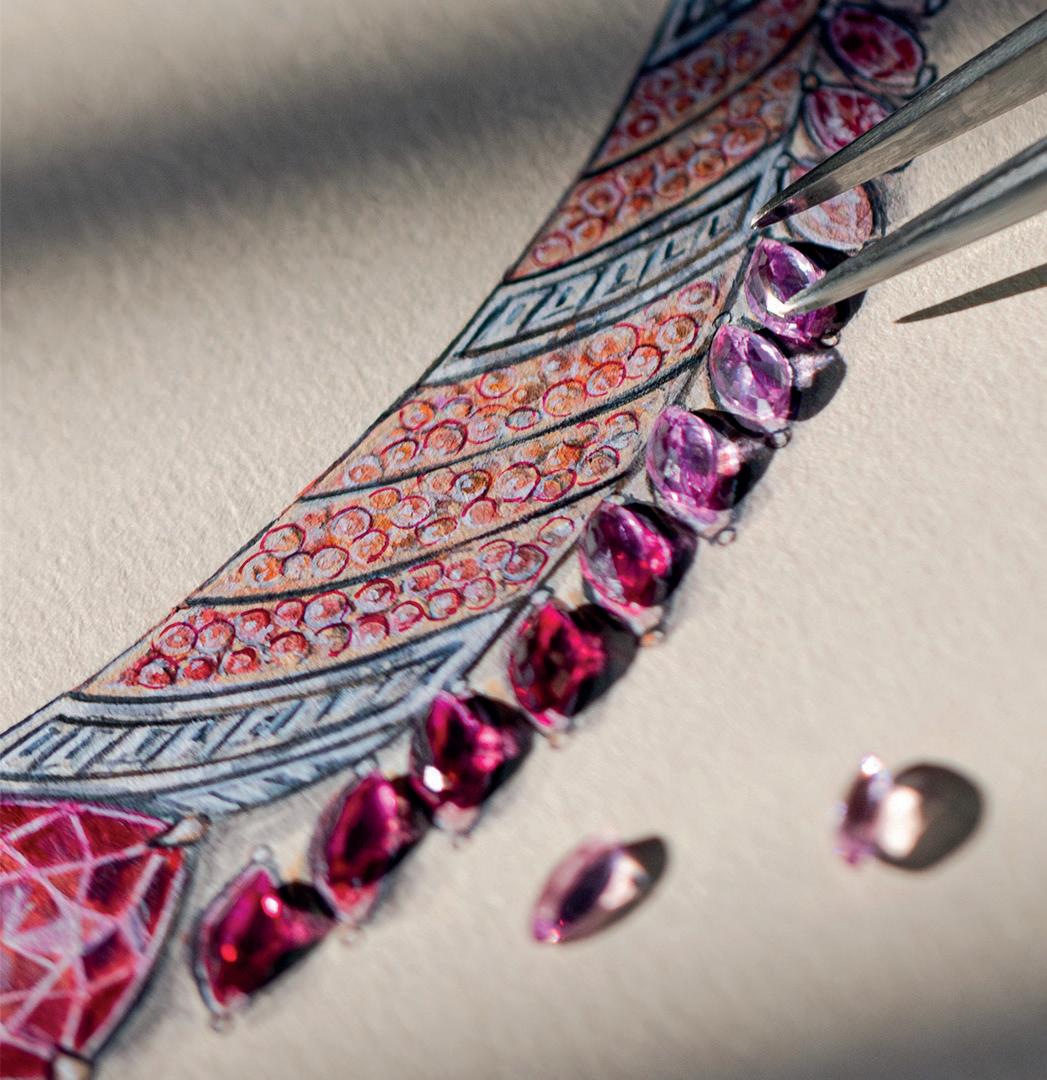
Inspired by the fascinating inner world of an exceptional Tanzanian spinel, a high-jewellery masterpiece of rare expressiveness was created. The unique structures of the over 22-carat gemstone reminded the designers of a dragonfly in the first light of dawn – a motif reflected in the necklace's sculptural form and luminous colour gradient. Over 700 hours of craftsmanship and carefully selected gemstones combine to form a truly unique creation.
TIMEVALLÉE AND MUSEUM
With Switzerland's first TimeVallée Boutique, the House of Gübelin has created a space in Lucerne where the world of leading watch manufacturers can be experienced firsthand. The innovative concept unites a carefully curated selection of renowned brands and invites visitors to discover the diversity of haute horlogerie in a relaxed atmosphere. Personalised advice and in-depth expertise are just as central as the passion for exceptional timepieces.
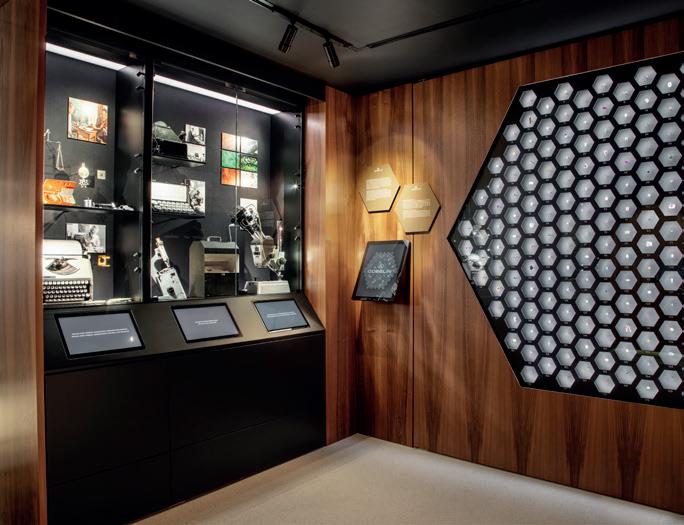
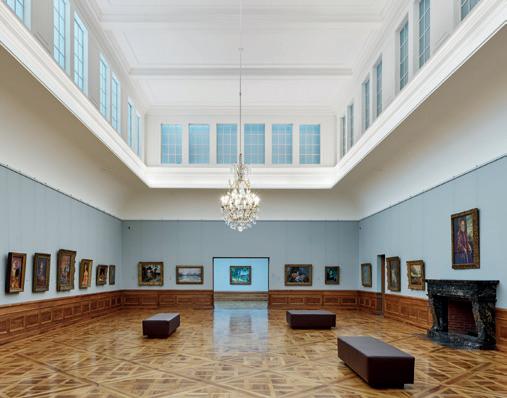
At the same time, the Gübelin Museum in Lucerne bridges the gap between past, present, and future. Its collection tells the story of fascinating gemstones and illustrates the close connection between science, culture, and craftsmanship. In doing so, the museum underscores its commitment to preserving knowledge, passing it on to future generations, and remaining innovative.
UNIQUE IN ITS KIND
The combination of a family business, internationally recognised gemstone expertise, its own Gem Lab, exclusive jewellery creations, renowned watch retail, TimeVallée, and muse-
um makes the House of Gübelin unique. Few establishments worldwide unite research, craftsmanship, trade, and cultural outreach under one roof.
More than 170 years after its founding, Gübelin stands for far more than luxury. The company embodies trust that has grown over generations and expertise that is internationally renowned. It is a place where knowledge and emotion, tradition and innovation, as well as people and stories, converge – perfectly in line with their ‘Deeply Inspired’ philosophy.
www.gubelin.com
Gem Museum in Lucerne.
Raphael and Wilvy Sy Gübelin.
Wohnzimmer als an eine traditionelle Boutique erinnert, stehen persönliche Begegnungen und vertrauensvolle Beziehungen im Mittelpunkt. Die persönliche Beratung basiert dabei nicht allein auf Produktwissen, sondern auf jahrzehntelanger Erfahrung und echter Leidenschaft für Uhren, Schmuck und Edelsteine.
Inspiriert von der faszinierenden inneren Welt eines aussergewöhnlichen Spinells aus Tansania entstand ein High-Jewellery-Meisterwerk von seltener Ausdruckskraft. Die einzigartigen Strukturen des über 22 Karat schweren Edelsteins erinnerten die Designer an eine Libelle im ersten Licht des Morgens – ein Motiv, das sich in der skulpturalen Form und dem leuchtenden Farbverlauf des Colliers widerspiegelt. Über 700 Stunden Handwerkskunst und sorgfältig ausgewählte Edelsteine vereinen sich zu einer einmaligen Kreation.
TIMEVALLÉE UND MUSEUM
Mit der ersten TimeVallée-Boutique der Schweiz hat das House of Gübelin einen Ort in Luzern geschaffen, an dem die Welt führender Uhrenmanufakturen erlebbar wird. Das innovative Konzept vereint eine sorgfältig kuratierte Auswahl renommierter Marken und lädt Besucherinnen und Besucher dazu ein, die Vielfalt der Haute Horlogerie in entspannter Atmosphäre zu entdecken. Persönliche Beratung und fundierte Expertise stehen dabei ebenso im Mittelpunkt wie die Leidenschaft für aussergewöhnliche Zeitmesser.
Gleichzeitig schlägt das Gübelin Museum in Luzern eine Brücke zwischen Vergangenheit, Gegenwart und Zukunft. Die Sammlung erzählt die Geschichte faszinierender Edelsteine und macht sichtbar, wie eng Wissenschaft, Kultur und Handwerkskunst miteinander verbunden sind. Damit unterstreicht das Museum den Anspruch des Hauses, Wissen zu bewahren, an kommende Generationen weiterzugeben und innovativ zu bleiben.
EINZIGARTIG IN SEINER ART
Die Kombination aus Familienunternehmen, international anerkannter Edelsteinexpertise, eigenem Gem Lab, exklusiven Schmuckkreationen, renommiertem Uhrenhandel, TimeVallée und Museum macht das House of Gübelin in seiner Form einzigartig. Nur wenige Häuser weltweit vereinen Forschung, Handwerk, Handel und kulturelle Vermittlung unter einem Dach.
Mehr als 170 Jahre nach seiner Gründung steht Gübelin damit für weit mehr als Luxus. Das Unternehmen verkörpert Vertrauen, das über Generationen gewachsen ist, und eine Kompetenz, die international geschätzt wird. Es ist ein Ort, an dem Wissen und Emotion, Tradition und Innovation sowie Menschen und Geschichten zusammenfinden – ganz im Sinne der Philosophie „Deeply Inspired“.
www.gubelin.com
Signature Ruby.
Sketch Tanzanian Sunrise.
NEVERMINED AND MANDANA: LUXURY IN FULL COLOUR
Diamonds have always symbolised permanence, beauty, and profound emotions. But what does luxury mean in a time when origin, responsibility, and transparency are increasingly important? This is precisely the question that Nevermined and mandana address, reinterpreting modern luxury from North Rhine-Westphalia.
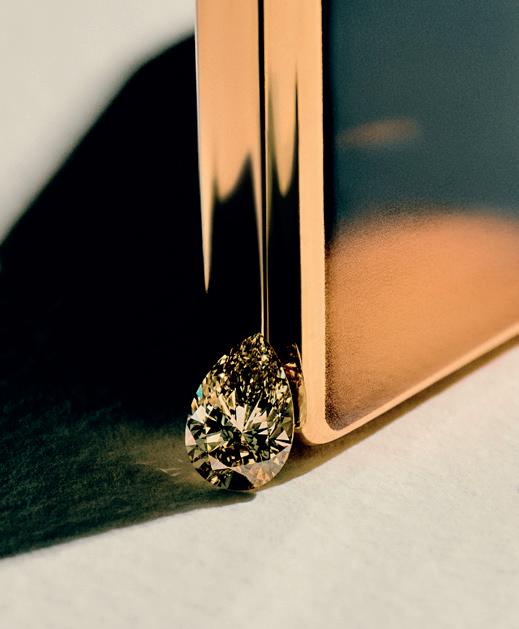
As the first German laboratory for premium lab-grown diamonds, Nevermined creates the technological foundation for a new generation of jewellery. mandana, on the other hand, translates these diamonds into con temporary fine jewellery collections made from recycled 18-karat gold and 950 plati num. What makes this relationship special is the close connection between the two brands: from the production of the diamonds in Essen to the processing in Germany and Spain, the value chain remains transparent and traceable. Under the name Nevermined Origin, this philosophy of origin represents
a clear promise: modern diamonds with a traceable history that combine innovation, design, and conscious luxury, demonstrating
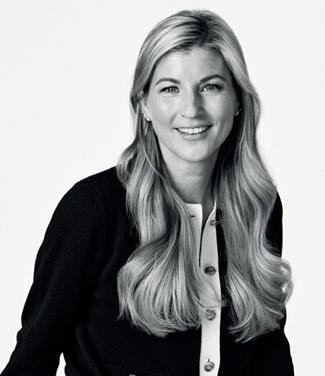
The face behind this idea is Christine Marhofer, who originally worked in the fashion industry where she became acquainted with aesthetics and desirability, but also encountered the limitations of a system that is often too fast-paced, too short-lived, and not sustainable enough. From the desire to create something lasting, a vision emerged that redefines luxury. "Jewellery should make personality visible and evoke emotions," says Marhofer. "That's precisely where we see the future of fine jewellery."
The focus is therefore on quality, personality, and emotional impact. Nevermined's labgrown diamonds are physically, chemically, and optically identical to mined diamonds and are evaluated according to the same international 4C criteria. At the same time,
NEVERMINED & MANDANA: LUXURY IN FULL COLOUR
Diamanten stehen seit jeher für Beständigkeit, Schönheit und große Gefühle. Doch was bedeutet Luxus in einer Zeit, in der Herkunft, Verantwortung und Transparenz immer stärker in den Mittelpunkt rücken? Genau an dieser Frage setzen Nevermined und mandana an, die modernen Luxus aus Nordrhein-Westfalen neu interpretieren.
Nevermined ist das erste deutsche Labor für Premium lab-grown Diamanten und schafft damit die technologische Grundlage für eine neue Generation von Schmuck. mandana übersetzt diese Diamanten in zeitgemäße Fine Jewellery Kollektionen aus recyceltem 18 Karat Gold und 950er Platin. Das Besondere ist die enge Verbindung beider Marken: Von der Herstellung der Diamanten in Essen bis zur Verarbeitung in Deutschland und Spanien bleibt die Wertschöpfungskette transparent nachvollziehbar. Unter dem Begriff „Nevermined Origin“ steht diese Herkunftsphilosophie für ein klares Versprechen: moderne Diamanten mit nachvollziehbarer Geschichte, die Innovation, Design und Conscious Luxury clever verbinden und somit zeigen, dass Fine Jewellery heute weit mehr sein kann als ein Statussymbol.
Das Gesicht hinter dieser Idee ist Christine Marhofer, die ursprünglich aus der Fashionbranche kommt. Dort lernte sie zwar die Welt des Ästhetischen und Begehrenswerten kennen, stieß aber auch auf die Grenzen eines Systems, das oft zu schnell, zu kurzlebig und zu wenig nachhaltig ist. Aus dem Wunsch, etwas Bleibendes zu schaffen, entstand eine Vision, die Luxus neu definiert. „Schmuck soll Persönlichkeit sichtbar machen und emotional berühren“, so Marhofer. „Genau darin sehen wir die Zukunft von Fine Jewellery.”
Im Mittelpunkt stehen somit Qualität, Persönlichkeit und emotionale Wirkung. Die lab-grown Diamanten von Nevermined sind physikalisch, chemisch und optisch identisch mit Minendiamanten und werden nach denselben internationalen 4C-Kriterien bewertet. Gleichzeitig
schafft die eigene Produktion in Essen gestalterische Freiheit und maximale Kontrolle über Qualität und Entwicklung. Auch die Designs von mandana folgen diesem Anspruch. Klare Linien treffen auf starke Symbolik, etwa im charakteristischen achteckigen Design, das an das Unendlichkeitssymbol erinnert und für Balance, Verbindung und Beständigkeit steht.
CONSCIOUS LUXURY MIT SOMMERLICHER LEICHTIGKEIT
Nachhaltigkeit ist bei Nevermined und mandana kein Zusatz, sondern Teil des gesamten Konzepts. Die Diamanten wachsen in Essen mit 100 Prozent zertifiziertem Ökostrom unter kontrollierten Bedingungen und mit vollständig nachvollziehbarer Herkunft. Nevermined zählt zudem zu den ersten Unternehmen in Deutschland mit SCS-007 zertifizierten labgrown Diamanten. mandana setzt ergänzend auf recycelte Edelmetalle, transparente Lieferketten und langlebige Gestaltung. Selbst bei den Verpackungen wird weitergedacht: Zum Einsatz kommt unter anderem Oleatex, eine
in-house production in Essen allows for creative freedom and maximum control over quality and development. The designs of mandana also adhere to this principle. Clean lines meet strong symbolism, such as in the characteristic octagonal design, reminiscent of the infinity symbol, which represents balance, connection, and permanence.
CONSCIOUS LUXURY WITH SUMMERY LIGHTNESS
For Nevermined and mandana, sustainability is not an add-on; it is an integral part of their entire concept.The diamonds are grown in Essen using 100 per cent certified green electricity under controlled conditions and with fully traceable origins. Nevermined is also among the first companies in Germany to offer SCS-007 certified lab-grown diamonds. mandana complements this with recycled precious metals, transparent supply chains, and durable design. Even the packaging reflects this commitment: they use materials such as Oleatex, a vegan leather alternative made from olive oil production byproducts. Christine Marhofer explains: "For us, sustain-
ability isn't just a trend; it's the foundation of everything we do."
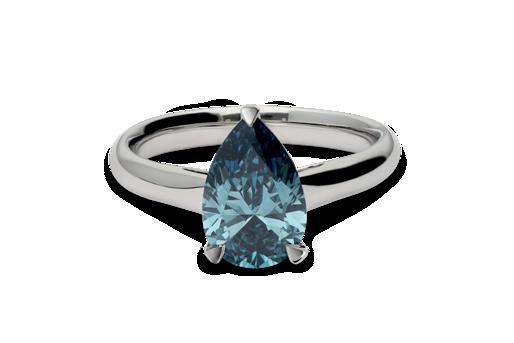
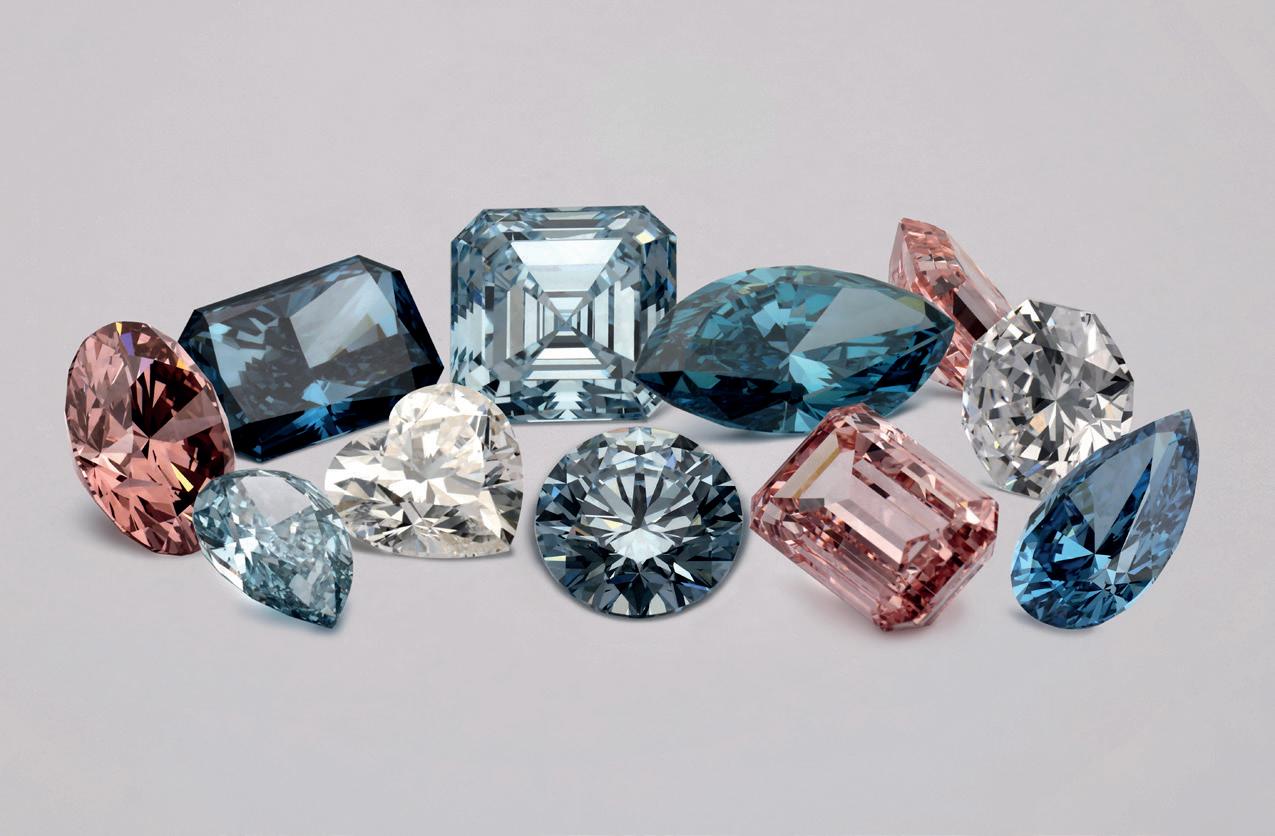
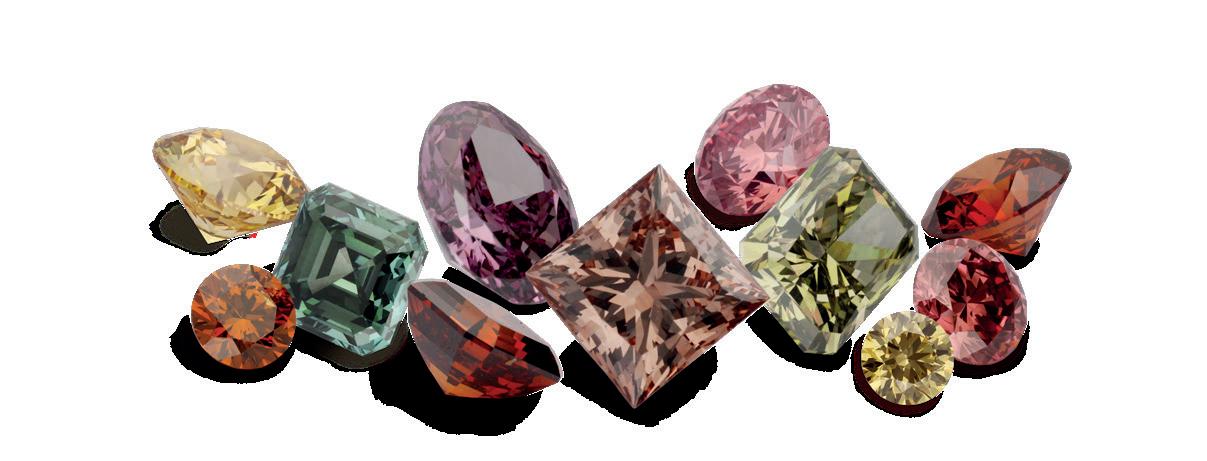
Summer is a particularly good time to see how versatile this approach can be. So-called fancy colours like blue, green, pink, or yellow unfold a special radiance in the sunlight and reflect an international jewellery trend that emphasises individuality. In addition, unusual shapes like oval, radiant, or pear cut lend classic solitaire pieces a fresh, modern touch. The new jewellery pieces made from recycled 950 platinum combine understated elegance with expressive colour, making them a perfect match for the season's light-heartedness.
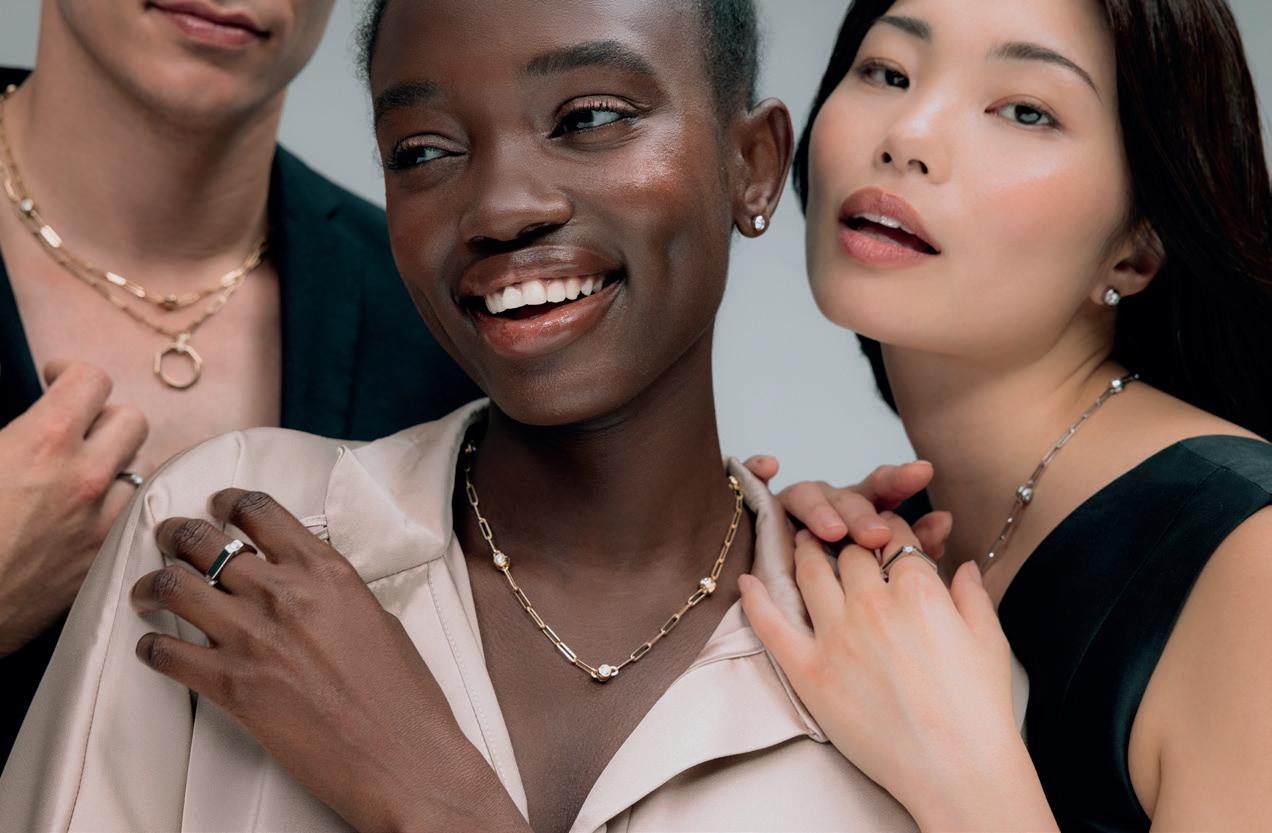
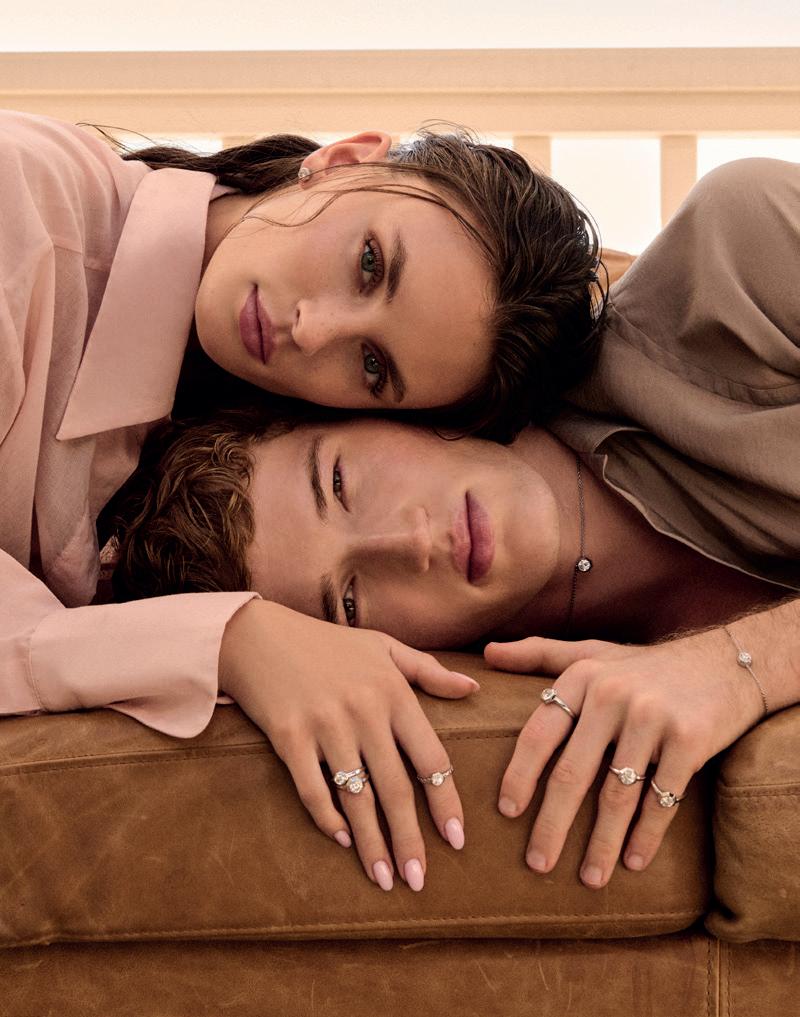
Furthermore, the gender-neutral All Gens collection demonstrates what contemporary jewellery can look like today. With clean lines, modern layering options, and pieces for different generations and forms of individuality, it exemplifies mandana's philosophy. The fact that this concept is not only emotionally appealing but also aesthetically compelling is evidenced by the Gold Award of the German Design Award.
At Nevermined and mandana, innovation, design, and heritage combine to create a new understanding of luxury: conscious, transparent, and responsible. Or, as Christine Marhofer puts it: "Today, jewellery should not only look beautiful, but also accompany people and become an expression of their own identity."
Nevermined lab-grown Diamanten sind physikalisch und chemisch identisch mit Minendiamanten, aber um ein Vielfaches günstiger. Foto: Nevermined Diamonds
vegane Lederalternative aus Resten der Olivenölproduktion. Christine Marhofer sagt dazu: „Nachhaltigkeit ist für uns kein einzelner Trend, sondern die Grundlage unseres gesamten Handelns.“
Gerade im Sommer zeigt sich, wie vielseitig dieser Ansatz sein kann. Fancy Colours wie Blue, Green, Pink oder Yellow entfalten im Sonnenlicht eine besondere Strahlkraft und greifen einen internationalen Schmucktrend auf, der Individualität in den Vordergrund stellt. Hinzu kommen außergewöhnliche Shapes wie Oval, Radiant oder Pear Cut, die klassischen Solitaire-Stücken eine frische, moderne Note verleihen. Die neuen Schmuckstücke aus recyceltem 950er Platin verbinden reduzierte Eleganz mit ausdrucksstarker Farbe und passen damit ideal zur Leichtigkeit der Saison.
Wie zeitgemäßer Schmuck heute aussehen kann, zeigt auch die genderneutrale All Gens Kollektion. Mit klaren Linien, modernen Layering-Möglichkeiten und Schmuckstücken für unterschiedliche Generationen und Formen von Individualität steht sie exemplarisch für die Haltung von mandana. Dass dieses Konzept nicht nur emotional, sondern auch gestalterisch überzeugt, zeigt die GoldAuszeichnung des German Design Awards.
So entsteht aus Innovation, Design und Herkunft ein neues Verständnis von Luxus: bewusst, transparent und verantwortungsvoll. Oder, wie Christine Marhofer es formuliert: „Schmuck soll heute nicht nur schön aussehen, sondern Menschen begleiten und Ausdruck der eigenen Identität sein.”
“I WANT TO MAKE MUSIC THAT HELPS PEOPLE FEEL GOOD”
With her latest album, Circles, Swiss singer Stefanie Heinzmann lets listeners get close to her true self. The record is an intimate testimony of her personal journey and an endorsement of the benefits of looking closely at who you really are.
TEXT: SILKE HENKELE I PHOTOS: MAXIMILIAN KÖNIG
Speaking with Stefanie, you do not meet a pop diva, but a woman who talks with remarkable openness about topics like insecurity, personal growth, self-acceptance and, last but not least, the benefits of spring cleaning, which she has interrupted for our meeting.
BECOMING A STAR
Stefanie’s career was not drafted at a drawing board and hence did not begin with a well-constructed master plan. In fact, she never necessarily intended to go on a major stage at all. It was her brother who persuaded her to audition for Stefan Raab’s television casting show SSDSDSSWEMUGABRTLAD (short for Stefan is looking for a superstar who may sing whatever he or she wants and who is also happy to appear on RTL) back in 2008. “I didn’t want to apply,” she recalls with a laugh. “My brother teased me and said, ‘You won’t get very far anyway.’ So I went.”
Shortly afterwards, the then 18-year-old won the competition. “I think it’s safe to say that my family and I were almost in shock! I re-
member that my parents went to console the runner-up, the magnificent Gregor Meyle, before they congratulated and hugged me.”
What makes her and her story different from other pop fairy tales is the honesty with which she speaks, not only about her beginnings but also about the darker chapters of her life. At 17, Heinzmann spent a long time in hospital and it may be this experience that plays a huge part in explaining Stefanie’s determination to look into herself. “I’ve always had a deep trust in myself,” she says. “And I always wanted to grow.” Her words show a deeply-anchored self-awareness that becomes palpable throughout her latest album. “Circles is a hymn of our unique ways and needs,” the singer explains.
THE EMOTIONAL WORLD OF CIRCLES
Stefanie’s honesty towards herself and others may well be the reason why the singer’s listeners feel emotionally connected to her music. The songs on Circles do not feel strained or artificial. They feel real and are not
built around perfection, but around vulnerability, doubt, the challenge of accepting oneself as well as the pressure to keep functioning.
An exceptionally emotional song on the album is Feel, in which she confronts the harsh inner voice that so many people carry within themselves. “I made peace with that voice and often tell it to sit down and have something to drink,” she smirks. “The important part was learning to understand what that voice actually wanted from me,” Stefanie recalls.
Hurricane, a song which initially sounds almost defiant, is less about fighting but about remaining steadfast; a hymn to stay focussed on yourself. For Stefanie, a hurricane symbolises the chaos of the outside world. “The storm is happening around us. If we manage to sit in the calm eye of the hurricane we can stay quiet, remain connected to our true self and prepare to face what is happening around us.”
Myself feels like an ode to solitude, though never to loneliness. “I used to be very insecure about being introverted,” the singer says. “Now I understand that it’s simply part of who I am. And that’s ok.” So, on the tour bus, while her band and team are sitting to
gether, drinking, chatting, and listening to music, you may find Stefanie in the middle of it all, reading a book. “I love being there, being among people. I just don’t necessarily want to interact socially. My friends understand that part of me. And they know that I love them and that I’m there for them whenever they need me.”
TOUR WITH A NEW CONCEPT
The difference with Circles, amongst others, is the production process itself. Earlier in her career, songwriting was often influenced by commercial expectations. This time, Stefanie approached music in a more holistic way, visiting many emotional and perceptual levels. A close friend working in energy healing became part of the creative process. “I think that Circles is my most intimate album,” Stefanie muses. “I feel that the older I get, the less interested I am in the rotation lists of radio stations or similar. I want to make music that genuinely helps people feel good.”
The concept of her upcoming tour fits this mood. Several dates have already sold out. This time, Stefanie deliberately chose seated theatres and concert halls instead of the more traditional standing room venues. Earlier in her career, she loved the raw energy of gigs: arriving, playing, causing mayhem, moving on to the next city. But: “My new songs required something different, something deeper,” the singer says. “A seated concert feels more peaceful. I don’t want stress to be part of the experience.”
LOVE ON THE GO AND A BIG ANNOUNCEMENT
When asked what she hopes people take home after her concerts, Stefanie’s answer comes straight away. “Hope. Lightness. Love packed away in Tupperware that you can take out whenever you need it.”
A beautiful image that probably says more about Stefanie than mere words could do. She is a woman that has learned to be true to herself and who genuinely cares about others. Beautiful traits that will soon bring her to an even wider television audience, as the singer has just been announced as the new host of the Swiss edition of Sing My Song in 2027.
UPCOMING TOUR DATES:
8 October, 2026
Visp (CH) – La Poste
9 October, 2026
Lucerne (CH) – KKL
10 October, 2026
Bern (CH) – Kursaal
24 October, 2026
Munich – Alte Kongresshalle
25 October, 2026
Offenbach – Capitol
26 October, 2026
Aachen – Eurogress
28 October, 2026
Essen – Lichtburg
29 October, 2026
Cologne – Theater am Tanzbrunnen
30 October, 2026
Hanover – Theater am Aegi
31 October, 2026
Halle – Steintor Varieté
2 November, 2026
Dresden - Alter Schlachthof
3 November, 2026
Baunatal - Stadthalle
5 November, 2026
Bremen – Metropol Theater
6 November, 2026
Lübeck – Kulturwerft Gollan
7 November, 2026
Berlin – Großer Sendesaal des rbb
8 November, 2026
Osnabrück – Osnabrück Halle
10 November, 2026
Hamburg – Laeiszhalle
11 November, 2026
Erfurt – Alte Oper
12 November, 2026
Ludwigshafen – BASF Feierabendhaus
13 November, 2026
Stuttgart – Theaterhaus T1
15 November, 2026
Weikersheim – Tauberphilharmonie
16 November, 2026
Neunkirchen – Neue Gebläsehalle
19 December, 2026
Schaffhausen (CH) – Stadttheater
20 December, 2026
Basel (CH) – Volkshaus
21 December, 2026
Zurich (CH) – Volkshaus
Tickets available at www.stefanieheinzmann.de
Stefanie Heinzmann |
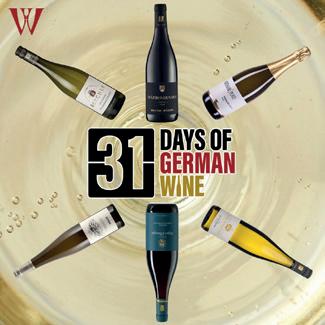
Join us in celebrating 31 days of German wine this July
TEXT: KATE JONES, THE WINEBARN
'31 Days of German Wine' is a nationwide campaign led by Wines of Germany, dedicated to showcasing the remarkable diversity, quality and food-friendly nature of the country's world-class wines.
Throughout July, hundreds of restaurants, wine bars, major retailers and independent wine merchants across the UK and around the world take part by hosting tastings, offering special promotions, and featuring curated German wine flights.
The campaign provides wine lovers with a unique opportunity to explore Germany's renowned wine regions, discover its diverse grape varieties, and gain insight into the distinctive climates, terroirs and winemaking traditions that shape these exceptional wines.
Whether new to German wine or a long-time enthusiast, The WineBarn – a multi-awardwinning specialist German wine merchant –invites you to join the celebrations and broaden your vinous horizons. To mark the occasion, the team has hand-selected a collection of six personal favourites, showcasing six grape varieties from six different wine regions. Read on to discover these outstanding wines, complete with tasting notes and food pairing suggestions. Prost!
KRANZ
2024 Ilbesheimer Westerberg Riesling Premier Cru dry Region: Pflaz
Tasting Notes: Flavours of exotic yellow fruit with a hint of lemongrass. Highly aromatic, it has a fine chalky grip, long finish, fresh juiciness balanced with a soft acid and a salty minerality in the finish. A harmonious dry white wine with great length.
Food Pairing: Seafood, veal and Asian cuisine
MEYER-NÄKEL
2022 Spätburgunder Blauschiefer dry Region: Ahr
Tasting Notes: Blauschiefer, meaning blue slate, is an extraordinary combination of slate rich soil and Spätburgunder (Pinot Noir) grapes. A mineralic wine with fruity aromas of blackberry, blueberry, red currant and dark cherry, accompanied by
smoky, floral and roasted notes. This dry Spätburgunder has a good substance, smooth tannins and elegance.
Food Pairing: Poultry, light meat, pasta and mushroom dishes.
BERCHER
2024 Jechtinger Weissburgunder dry Region: Baden
Tasting Notes: Light golden yellow in colour, this Weissburgunder (Pinot Blanc) has aromas of apple, citrus fruit, hazelnut and delicate floral notes. Its filigree acidity is complimented by subtle fruity notes.
Food Pairing: Rabbit terrine and grilled fish.
KOCHAN & PLATZ
2022 Riesling Sekt Brut Region: Mosel
Tasting Notes: A fine, fresh and fruity sparkling wine with aromas of citrus, peach and apricot. It has a low residual sweetness, fine perlage and a pleasant acidity.
Food Pairing: Delicate seafood dishes and creamy cheeses
WIRSCHING
2024 Scheurebe QbA dry Region: Franken
Tasting Notes: An intense bouquet with bold flavours of tropical fruit and pink grapefruit. This dry Scheurebe (similar to the Sauvignon Blanc varietal) has an engaging freshness and vivid acidity.
Food Pairing: Light vegetarian cuisine and Asian dishes
JÜRGEN ELLWANGER
2023 Hebsacker Lemberger dry Region: Württemberg
Tasting Notes: Aromas of ripe blackberry and dark cherry with hints of spice. Very juicy with a lively acidity and delicate tannins on the palate. In the finish, it has a velvety and flavour-intense length.
Food Pairing: Grilled meat and mushroom risotto.
The WineBarn is a multi-award-winning wine merchant that specialises in exclusively German wine and has been bringing pure drinking pleasure to the UK for over 26 years. Its elegant wines have been selected to cover a range of styles – from the affordable to the luxury, from dry to sweet and from fresh to full-bodied, ensuring there is something to suit all tastes and pair with any cuisine.
To find your new favourite German wine, you can contact the award-winning merchant The WineBarn now.
RIESLING REIMAGINED – A YOUNG GERMAN WINEMAKER GOES NYC
New York has always been a place for visionaries. Loud, fast-paced, and open to everything that redefines enjoyment. It is precisely here that Weingut Leitz is now writing the next chapter of its story – with Riesling and non-alcoholic lifestyle products that capture the spirit of the times.
More than 25 years ago, Johannes Leitz was among the winemakers who fundamentally changed the perception of German Riesling in the USA. At a time when German wines were often underestimated internationally, he brought dry Rheingau Riesling back to the top wine lists of New York. Precision, origin, and character suddenly became fashionable. Johannes Leitz showed a new generation of sommeliers and wine lovers just how relevant German Riesling could be.
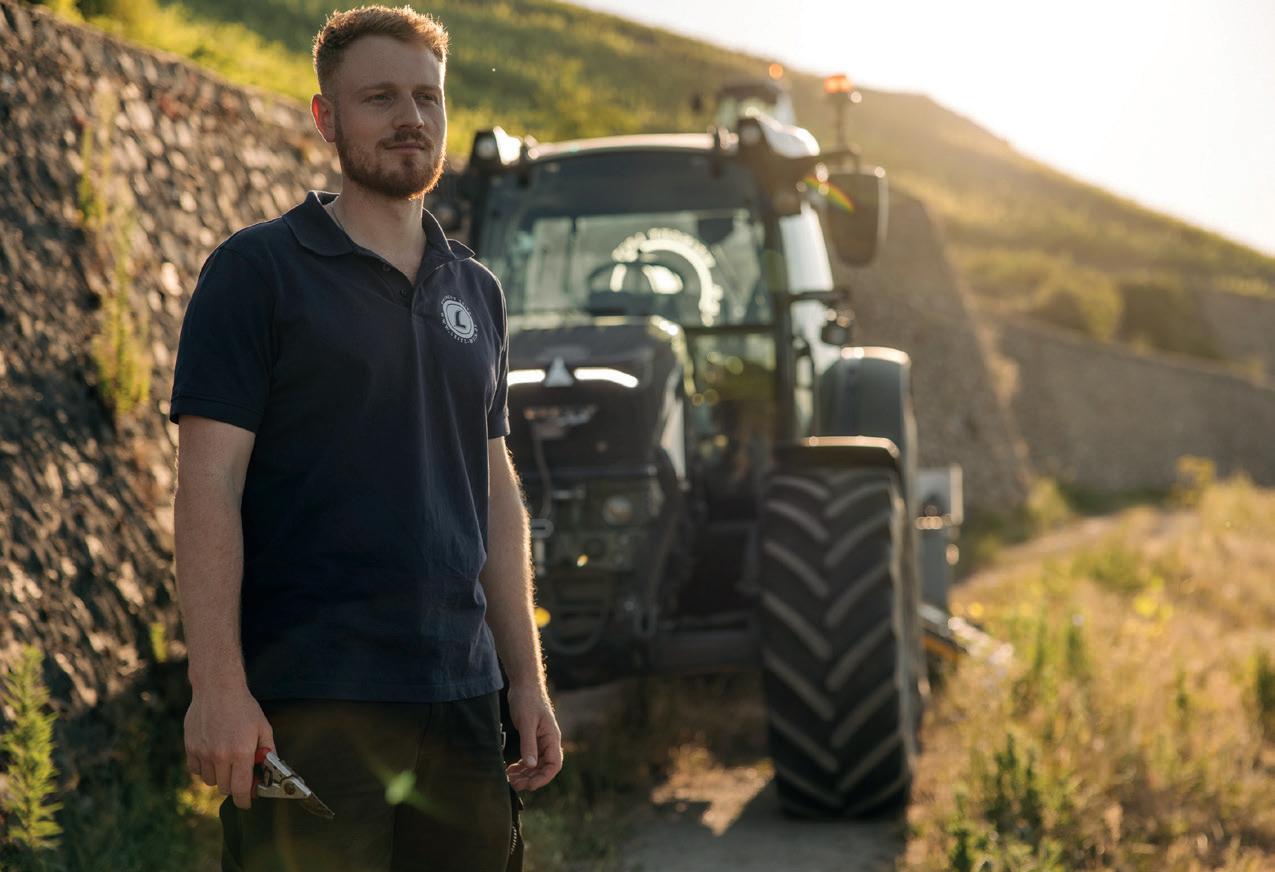
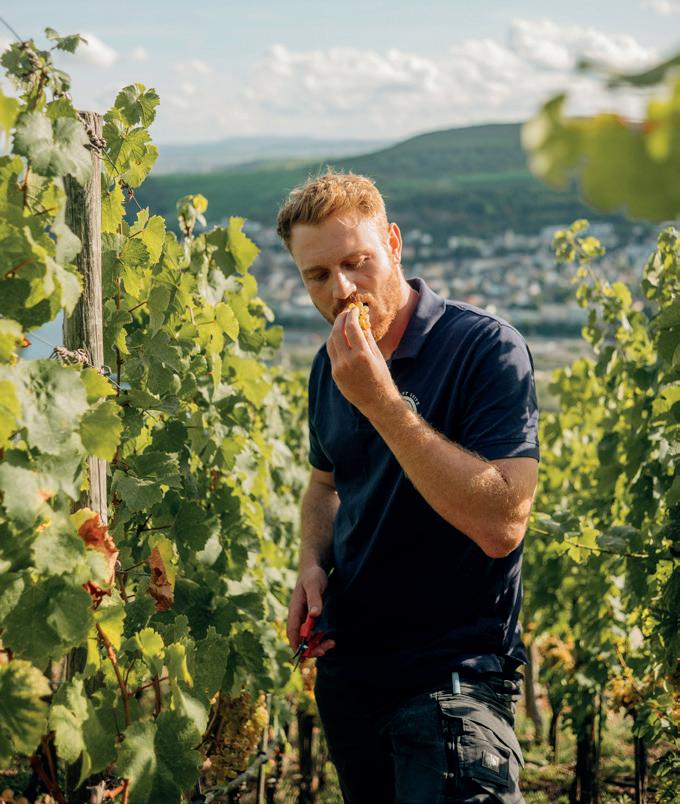
Today, his son Antonius Leitz follows in his footsteps – in a wine world that is changing once again. "Young people consume more consciously, more openly, and less dogmatically," says Johannes Leitz. "It's no longer just about alcohol, but about quality, lifestyle, and genuine moments of enjoyment."
And therein lies the great opportunity for the future of wine. Antonius Leitz sees this change not as a short-term trend, but as a consistent evolution of modern wine culture. "The DNA remains the same: Rheingau, Riesling, and uncompromising quality," says Antonius Leitz. "At the same time, new products are being created for new occasions – above all, top-quality non-alcoholic wines."
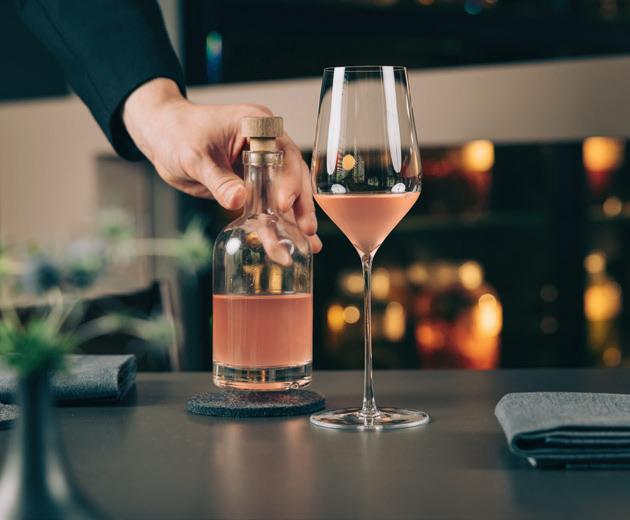
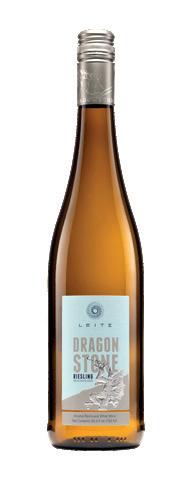
The wine estate’s dealcoholised Dragonstone Riesling exemplifies this trend. It is not a substitute product, but a distinct wine with freshness, vibrancy, delicate fruit, and the typical Riesling energy – just without the alcohol. This perfectly captures the spirit of a generation that enjoys wine more consciously but refuses to compromise on taste. This works particularly well in New York. In restaurants
that rethink pairings, in bars with serious non-alcoholic menus, and among people who value quality independently of alcohol content.
For Antonius Leitz, NYC is therefore more than just a market. The city shows where the world of enjoyment is headed. Johannes Leitz modernised German Riesling in America. Now Antonius is taking this idea further – with great wines and non-alcoholic products that demonstrate what contemporary enjoyment looks like today.
www.leitz-wein.de
Dragonstone Riesling dealcoholised.
Antonius Leitz.
RIESLING NEU GEDACHT – GERMAN JUNGWINZER GOES NYC
New York war schon immer ein Ort für Visionäre. Laut, schnell und offen für alles, was Genuss neu definiert. Genau hier schreibt das Weingut Leitz jetzt das nächste Kapitel seiner Geschichte – mit Riesling und alkoholfreien Lifestyle-Produkten, die den Zeitgeist treffen.
Vor mehr als 25 Jahren gehörte Johannes Leitz zu den Winzern, die das Ansehen deutschen Rieslings in den USA grundlegend verändert haben. In einer Zeit, in der deutsche Weine international oft unterschätzt wurden, brachte er trockenen Rheingau-Riesling zurück auf die großen Weinkarten New Yorks. Präzision, Herkunft und Charakter wurden plötzlich modern. Johannes Leitz zeigte einer neuen Generation von Sommeliers und Weinliebhabern, wie relevant deutscher Riesling sein kann.
Heute tritt sein Sohn Antonius Leitz in diese Fußstapfen – in einer Weinwelt, die sich erneut verändert. „Junge Menschen konsumieren bewusster, offener und weniger dogmatisch“, so Johannes Leitz. „Es geht nicht mehr nur um Alkohol, sondern um Qualität, Lifestyle und echte Genussmomente.“
Und genau darin liegt die große Chance für die Zukunft des Weins. Antonius Leitz versteht diesen Wandel nicht als kurzfristigen Trend, sondern als konsequente Weiterentwicklung moderner Weinkultur. „Die DNA bleibt dieselbe: Rheingau, Riesling und kompromisslose Qualität“, so Antonius Leitz. „Gleichzeitig entstehen
neue Produkte für neue Momente – allen voran alkoholfreie Weine auf höchstem Niveau.“
Der Dragonstone Riesling alkoholfrei steht exemplarisch für diese Entwicklung. Kein Ersatzprodukt, sondern ein eigenständiger Wein mit Frische, Spannung, feiner Frucht und der typischen Riesling-Energie – nur ohne Alkohol. Genau das trifft den Nerv einer Generation, die bewusster genießt, aber keine Kompromisse beim Geschmack akzeptiert. Gerade in New York funktioniert das. In Restaurants, die Pairings neu denken, in Bars mit ernst zu nehmen-
den alkoholfreien Karten, und bei Menschen, die Qualität unabhängig vom Alkoholgehalt bewerten.
Für Antonius Leitz ist NYC deshalb mehr als ein Markt. Die Stadt zeigt, wohin sich Genuss weltweit entwickelt. Johannes Leitz hat deutschen Riesling in Amerika modernisiert. Jetzt führt Antonius diese Idee weiter – mit großen Weinen und alkoholfreien Produkten, die zeigen, wie zeitgemäßer Genuss heute aussieht. www.leitz-wein.de
Johannes und Antonius Leitz.
Antonius Leitz.
Dragonstone Riesling alkoholfrei.
HOW RESTAURANT RUTZ IS REDEFINING BERLIN’S TOP-CLASS CUISINE
Culinary excellence meets minimalist precision – at restaurant Rutz, every detail is reimagined to elevate flavour, form and experience.
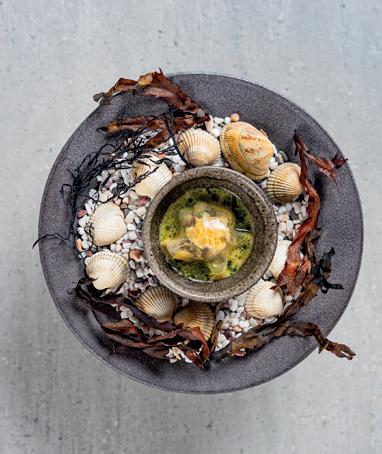
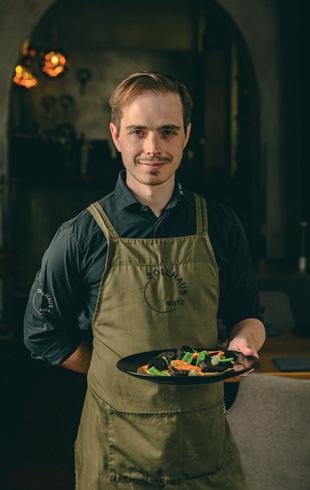
When Rutz first opened in 2001, it was an ambitious wine bar with a bold idea. Today, it stands as Berlin’s only restaurant to hold three Michelin stars, along with the prestigious Green Michelin Star for its sustainability efforts. Owners Anja and Carsten Schmidt run the establishment with heartfelt dedication, while executive chef Marco Müller has impressed with a style defined by puristic finesse. “There’s always an idea at the heart of every dish – an inspiration that becomes something daring,” says Marco Müller. “Our menu is our identity.”
The Rutz also goes the extra mile when it comes to drinks. “Our origin as a wine bar comes with certain obligations,” Sebastian Höpfner, sommelier, says. “The kitchen team and our sommeliers are constantly experimenting to create the most harmonious wine pairings.” Equally well-thought-out are the alcohol-free options: juices, kombuchas, broths and extracts, all precisely tailored to each course. Throughout, host Falco Mühlichen strikes a refined balance between polished hospitality and relaxed urban charm.
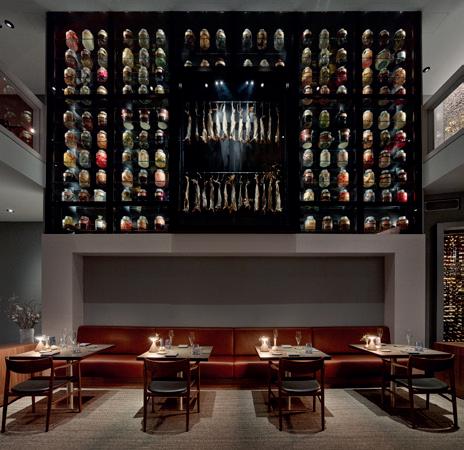
Since its 2022 redesign by architect Prof. Gesine Weinmiller, the interiors now echo the restaurant’s ethos: clear, timeless, unpretentious. Or, as the Rutz team puts it; “Using the finest ingredients, we create food that nourishes the mind, touches the heart, and leaves the belly warmly content.”
WIE DAS RUTZ BERLINER SPITZENKÜCHE NEU DEFINIERT
Kulinarische Exzellenz trifft auf puristische Präzision – im Restaurant Rutz wird jeder Aspekt neu gedacht, um Geschmack, Form und Erlebnis auf ein neues Niveau zu heben.
Das Berliner Spitzenrestaurant Rutz begann 2001 als ambitionierte Weinbar. Heute ist es das einzige Drei-Sterne-Restaurant der Hauptstadt mit zusätzlichem Grünen Michelin-Stern für Nachhaltigkeit. Inhaber Anja und Carsten Schmidt führen das Haus mit persönlicher Hingabe, während Executive Küchenchef Marco Müller mit puristischer Finesse überzeugt. „Es steht immer ein erster Gedanke hinter jedem Gericht, eine Inspiration wird zu einer ausgefallenen Idee“, so Marco Müller. „Unser Menü ist unsere Identität.“
Auch bei den Getränken geht das Rutz die Extrameile. „Allein die Wurzeln des Rutz als Weinbar verpflichten“, betont Sebastian Höpfner, der Sommelier. „Das Küchenteam und unsere Sommeliers tüfteln in ständigen Proben an den stimmigsten Weinbegleitungen.“ Auch alkoholfreie Begleitungen wie Säfte, Kombuchas, Brühen oder Auszüge passen wie maßgeschneidert zu jedem Gang. Gastgeber Falco Mühlichen sorgt dabei für eine Atmosphäre zwischen feiner Gastlichkeit und urbaner Leichtigkeit.
Seit dem Re-Design 2022 unter der Führung von Architektin Prof. Gesine Weinmiller spiegelt auch das Interieur den klaren, zeitlosen Anspruch des Hauses wider. Oder, wie das Rutz-Team es selbst formuliert: „Aus besten Lebensmitteln schaffen wir Essen, das den Kopf füttert, das Herz berührt und den Bauch wärmend glücklich macht.“
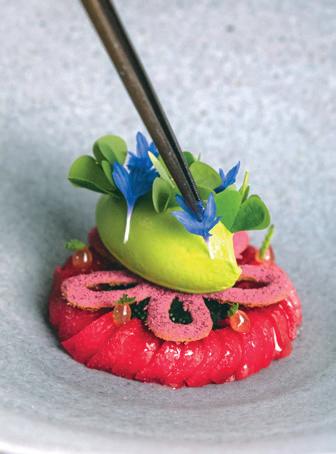
Oyster and green strawberry.
Photo: Steffen Sinzinger
Rhubarb & roasted koji, oxalic acid.
Photo: Pia Negri
Photo: Stefan Josef Müller
STAR EXPERTISE WITHOUT THE STAR ATTITUDE
With Rutz Zollhaus, Berlin has gained a place that combines big city vibe and country inn atmosphere in a rare way.
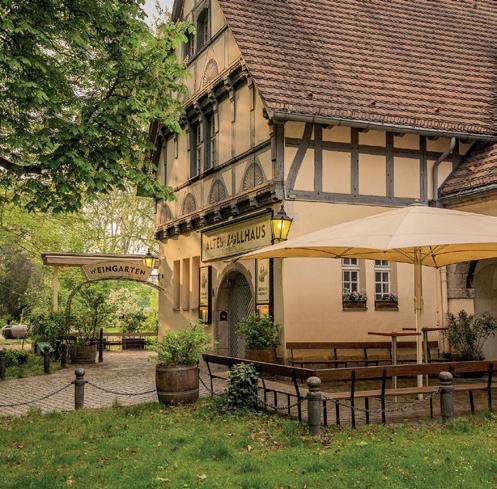
Located on the Landwehr Canal, beneath old chestnut trees and housed in a listed half-timbered building from 1901, Rutz Zollhaus exudes a relaxing atmosphere. It is, as owners Anja and Carsten Schmidt describe, "probably the most centrally located country inn in Berlin" – right in the heart of Kreuzberg. In summer, the vineyard and terrace with its canal view beckon, and in winter, the corner bench by the tiled stove offers a cosy retreat.
The restaurant combines regional, seasonal products, artisanal precision, and modern lightness. Head chef Florian Mennicken and executive chef Marco Müller reimagine German classics: approachable, contemporary, and full of character. Particularly appealing is their approach of understanding regionality "not as a dogma, but as an invitation," according to Florian Mennicken.
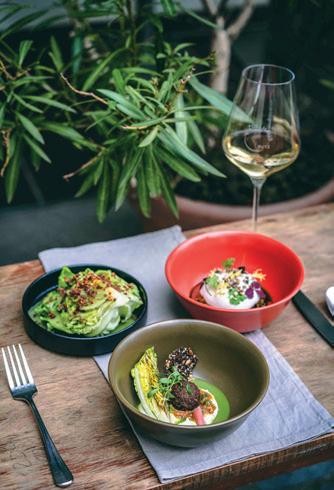
On the plate, you might find refined Königsberger Klopse (meatballs) with veal and Iberico pork, blood sausage from a regional sausage maker, or grilled lettuce. "Instead of a set menu, we offer a surprise menu with the motto: Let us just do it," says Jan Schoop, restaurant manager and host. Wine also plays a starring role as around 200 selections hark back to the spirit of the former Rutz wine bar.
Whether for dinner, a summer evening on the terrace or a private party in the Schmugglerscheune (smuggler's barn) – Rutz Zollhaus is a restaurant with attitude, history and genuine Berlin hospitality.
STERNE-EXPERTISE OHNE STERNE-ATTITÜDE
Mit dem Rutz Zollhaus hat Berlin einen Ort, der Großstadt und Landgasthausgefühl auf seltene Weise zusammenbringt.
Direkt am Landwehrkanal, unter alten Kastanien und in einem denkmalgeschützten Fachwerkhaus von 1901, empfängt das Haus seine Gäste mit einer Atmosphäre, die sofort entschleunigt. Es ist, wie Anja und Carsten Schmidt, Inhaber, beschreiben, „das wohl innerstädtischste Landgasthaus Berlins“ – mitten in Kreuzberg und doch wie eine kleine Auszeit vom urbanen Tempo. Im Sommer locken Weingarten und Terrasse mit Kanalblick, und im Winter die Eckbank am Kachelofen.
Kulinarisch verbindet das Restaurant regionale, saisonale Produkte, handwerkliche Präzision und moderne Leichtigkeit. Küchenchef Florian Mennicken und Küchendirektor Marco Müller denken deutsche Klassiker neu: zugänglich, zeitgemäß und mit Charakter. Besonders schön ist dabei der Ansatz, Regionalität „nicht als Dogma, sondern als Einladung“ zu verstehen, so Florian Mennicken.
Auf den Teller kommen etwa raffinierte Königsberger Klopse „halb & halb“ mit Kalb und Iberico, Blutwurst vom regionalen Wurstmacher oder ein gegrillter Kopfsalat. „Statt festem Menü gibt es unser Überraschungsmenü mit dem Motto: ‚Lasst uns nur machen‘“, sagt Jan Schoop, Restaurantleiter und Gastgeber. Auch der Wein spielt eine Hauptrolle: Rund 200 Positionen knüpfen an den Geist der ehemaligen Rutz Weinbar an.
Ob Dinner, Sommerabend auf der Terrasse oder privates Fest in der Schmugglerscheune – das Rutz Zollhaus ist ein Haus mit Haltung, Geschichte und echter Berliner Gastlichkeit.
Florian Mennicken. Photo: Steffen Sinzinger
Three starters. Photo: Pia Negri
The exterior. Photo: Steffen Sinzinger
FROM AMATEUR FOOTBALL TO THE BUNDESLIGA
Football fan culture in Germany is said to be second to none on the European continent. From big arenas in the cities to small grounds in villages, watching football can be a lot of fun. Amid the 2026 World Cup, join writer Daniel Barthold on a tour from Franconia to Saxony filled with history, food, tradition and newly founded clubs.
TEXT & PHOTOS: DANIEL BARTHOLD
The south-east of Germany is all about tradition and history. Old towns, countless food options and lovely train journeys. My trip from Nuremberg in Bavaria to the city Hof, near the border to Saxony, was off to a bad start though. Due to construction
work, there were no direct trains, and a bus replacement service brought me from the largest city in Franconia to the small town of Pegnitz. From there, a local train service took a bit over an hour to Hof and its beautiful Central Station.
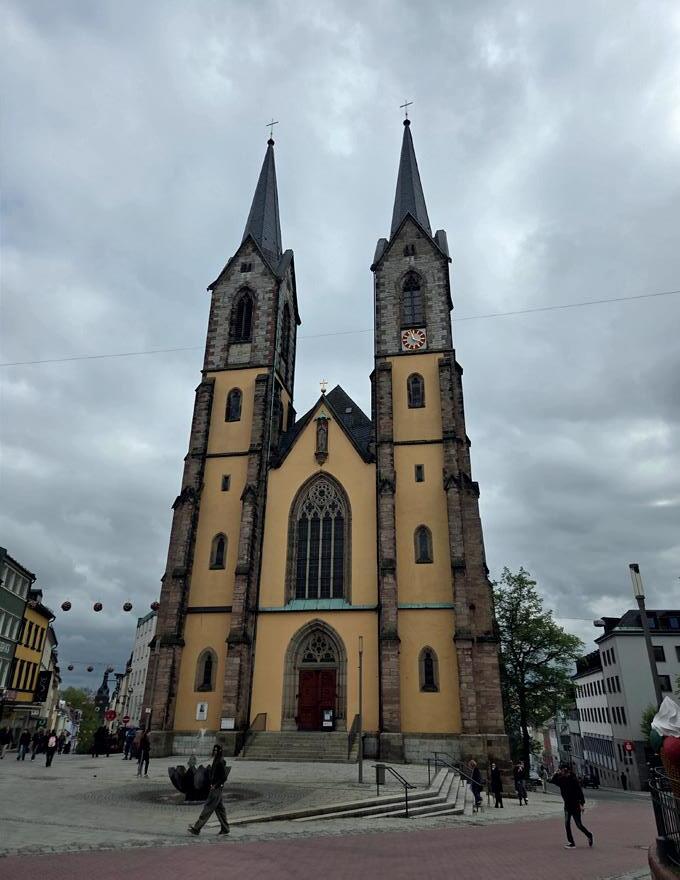
The city lies on the river Saale in Upper Franconia with a population of just over 46,000. If you like local breweries, grilled sausages and a quiet atmosphere compared to the bigger Bavarian hubs, Hof is a perfect
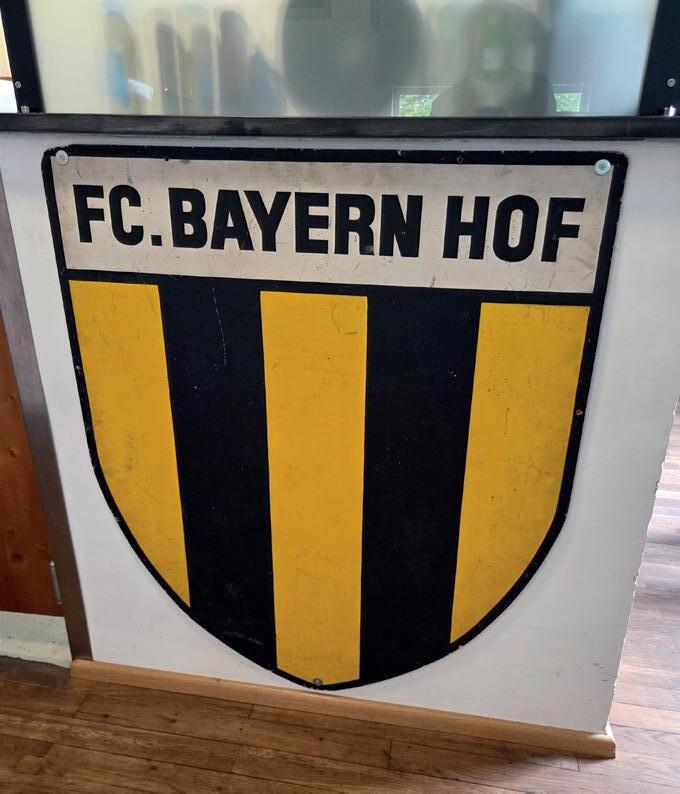
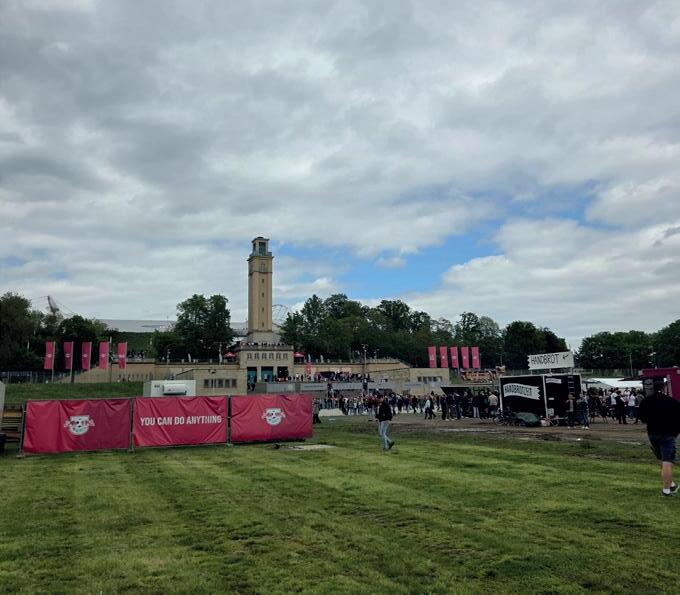
Old logo, FC Bayern Hof. Famous "Glockenturm" of the old stadium, Leipzig.
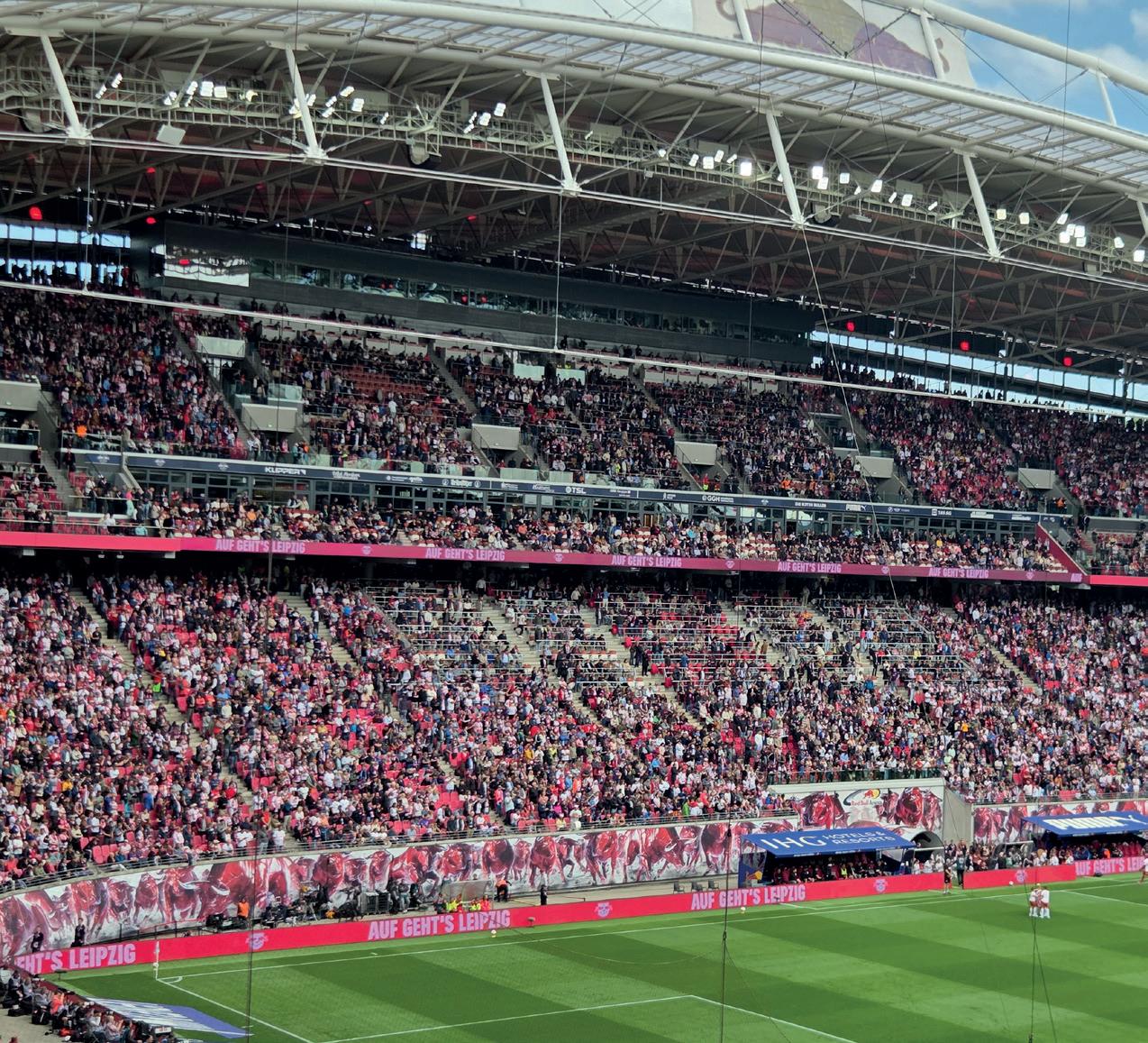
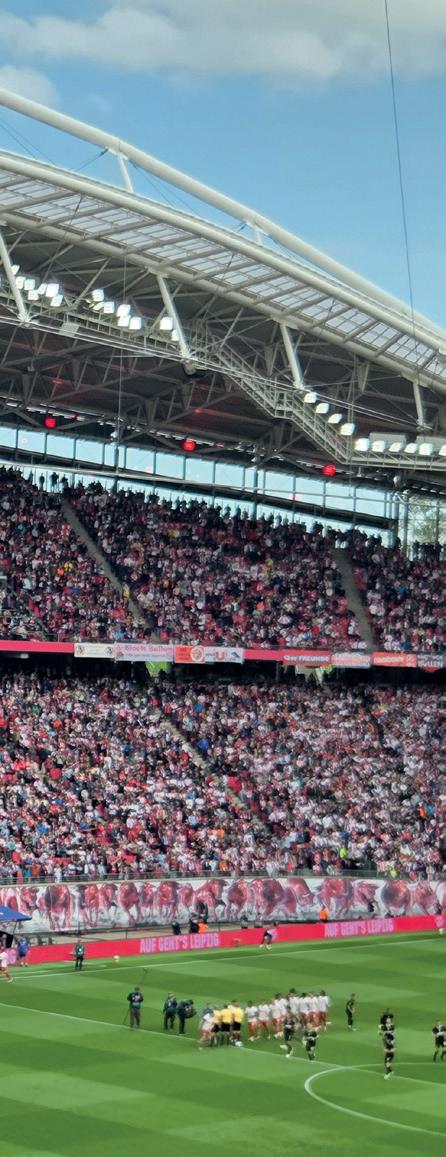
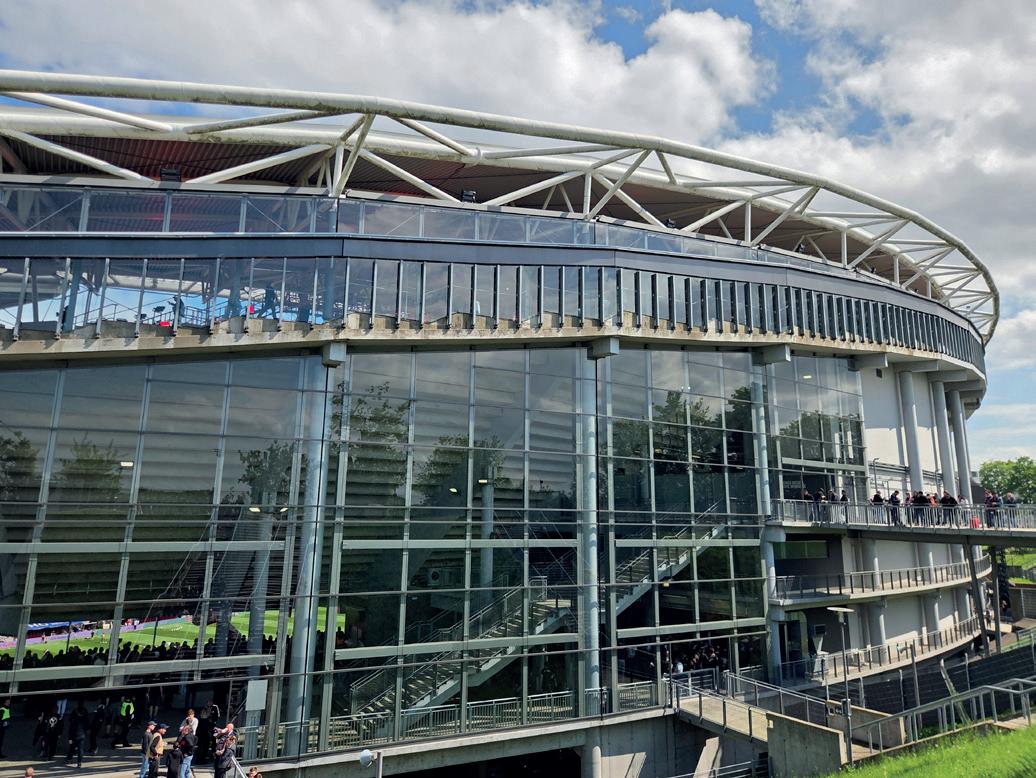
Leipzig Arena.
city for you. And there is a small but very traditional football team. Bayern Hof is a club that used to play as high as the second tier of the German league pyramid but now plays in the Bavarian League North – the 5th tier and hence, non-professional football.
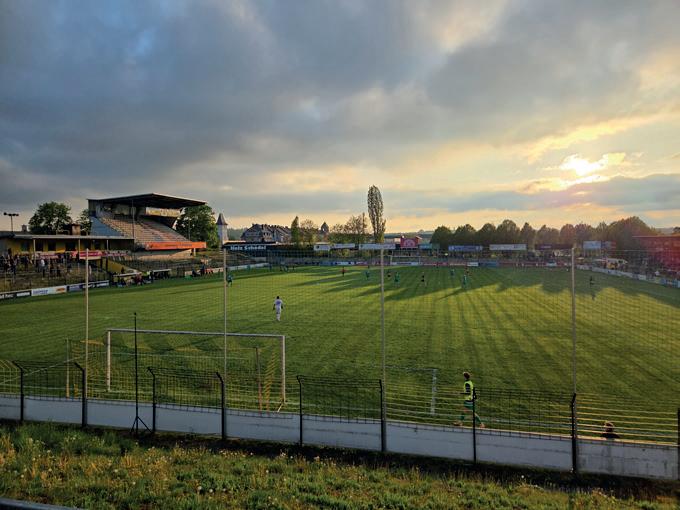
I was lucky enough to attend the final home match of the season, including an emotional farewell to leaving players in front of a crowd of 775 on a lovely, sunny Friday evening in the stadium. The ground Grüne Au is amazing because it ticks all the boxes of a stadium traveller. A very old wooden main stand, nice terraces, and a stunning club house. On top of that, a football ticket for 8.50 euro is rare these days. The opponent? A team I had never heard of before and a name that would be difficult for non-German speakers to pronounce: TSV Neudrossenfeld. As a neutral spectator, the result was not that important, but I was happy to see at least two goals in a 1-1 draw. My upcoming stadium adventure the following day in Leipzig was going to represent the complete opposite scale of German football.
The next morning, I had to catch the 8.32am train from Hof to Leipzig – in theory. Unfortunately, more rail construction work forced me to take another replacement bus to the city of Zwickau. Not only did it mean that I crossed the state border from Bavaria to Saxony, but it also represents one of the many older borders within Germany when the country was divided between the Federal Republic and the GDR. The landscape I was able to witness on the bus was stunning and it was the first time I saw the gorgeous Vogtland with its meadows, old villages, and farms.
After arriving at Zwickau Central, I was finally able to catch another train which took me to Chemnitz. It is one of the bigger cities in Saxony, formerly known as Karl-MarxStadt. However, my destination was Leipzig and after making it onto my final part of the journey on a packed train, I arrived at yet another station. Leipzig Hauptbahnhof, which is German for central station, is one of the biggest and most beautiful train hubs in Germany with two floors, many food and shopping options, and a lovely main hall. From there, it is a short journey with the local tram to the huge arena – home of Red Bull Leipzig.
St Marienchurch, Hof.
Stadium Grüne Au, Hof.
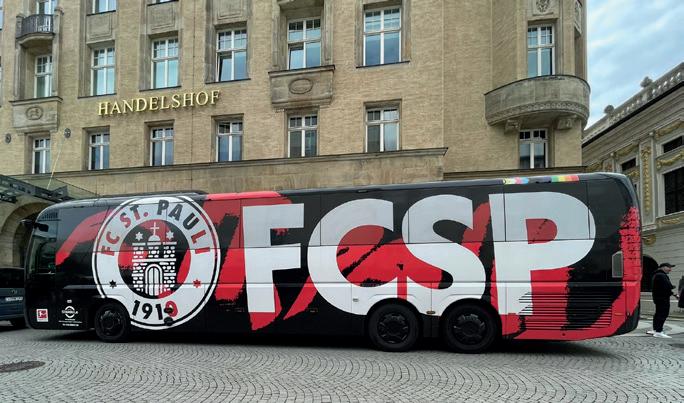
The club has only been founded in 2009 with strong financial opportunities and a chance to qualify for the Champions League on the day against relegation strugglers FC St. Pauli. The impressive stadium holds 45,228 seats and hosted the UEFA Conference Final this year. In front of a sell-out crowd, this Bundesliga clash showed the excitement of Bundesliga football and the atmosphere that is considered the best in Europe. Statistically, it is the league with the highest average attendances as well as two giants of international football –Bayern Munich and Borussia Dortmund.
After the match, it was back to the station, to make my way to Franconia once again where the circle of this trip closed. After a stopover in Erlangen, an underrated town with a nice little marketplace, I had to catch a Sunday flight from Nuremberg back to Stansted Airport. On the way, you will find countless bakeries for both sweet and savoury treats. And if you have a bit of time to spare, you can take the subway from Nuremberg to Fürth to
explore another traditional city in northern Bavaria. For beer lovers, the pub density and the number of local breweries is immense and perfect for football travellers or people who just like to sit in a beer garden and watch the world go by. One thing I know for sure: I will be back in Franconia and Saxony.
Information on the Bundesliga: www.bundesliga.com
The English tourism page for Franconia is available here: www.frankentourismus.com
Outside Leipzig Arena.
FC St. Pauli team bus in Leipzig.
A PRIME VIEWING SPOT ABOVE LAKES, FORESTS AND MOUNTAIN PEAKS
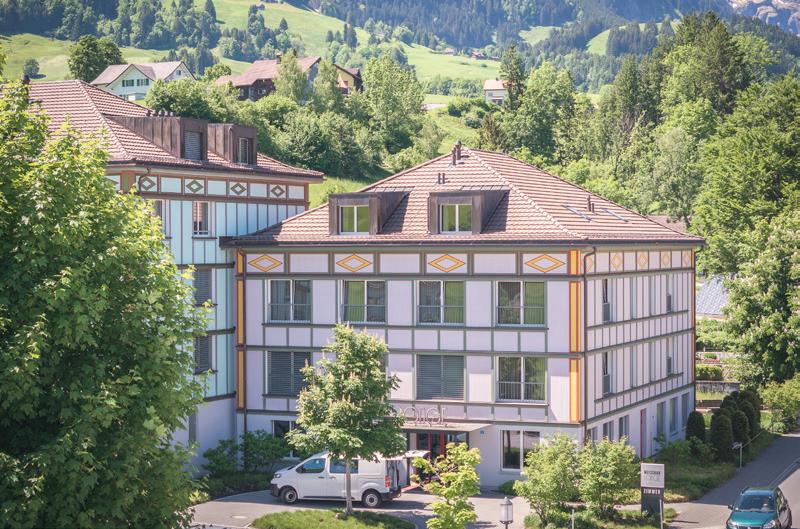
There are places you visit – and places that linger long after you leave. Muottas Muragl undoubtedly belongs to the latter category. High above the Upper Engadine, panoramic views, culinary delights, and tranquillity combine to create an experience that feels both exclusive and surprisingly approachable. A mountain that offers not just a view, but an atmosphere.
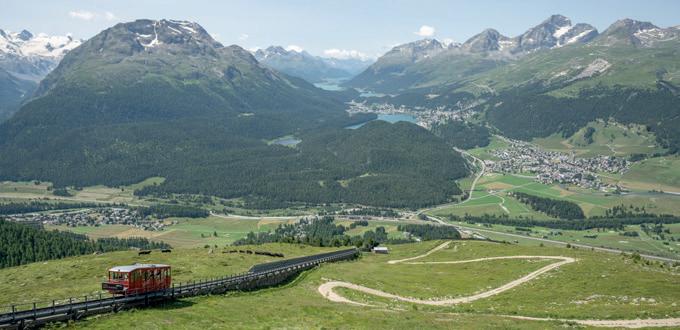
The ride on the historic funicular sets the tone from the very start of one’s trip: relaxed, stylish, with that quiet anticipation that makes for a great travel experience. Arriving at the top at 2,456 metres, a panorama unfolds that is truly exceptional, even in the picturesque Engadine region. From St. Moritz to Silvaplana and on to Maloja, the Upper Engadine lake district lies at the visitors' feet.
What makes this place so special, however, cannot be measured solely in altitude or viewpoints. It is the interplay of landscape, light, and atmosphere. Or, as Ladina Jann, hostess at the Romantik Hotel Muottas Muragl, describes it: "Muottas Muragl isn't a
place you just see – it's a place you feel." This is precisely the strength of this experiential mountain. Anyone who stands here quickly understands why Muottas Muragl is more than just a tourist destination. The light seems clearer, the colours more intense, the expanse almost limitless. "The view conveys a feeling of freedom and vastness that you only experience in a few places," says Jann.
CULINARY ENJOYMENT WITH A VIEW
Muottas Muragl masterfully combines nature and culinary delights. This is particularly evident in their mountain dining experience, which has long since become one of the strongest reasons to visit. Accessible only by
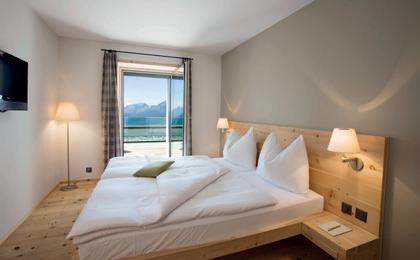
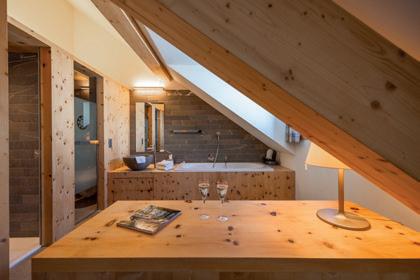
the historic funicular railway, the Romantik Hotel Muottas Muragl sits at an altitude of 2,456 metres above sea level. The cosy rooms in this Engadine mountain hotel exude romance and a sense of security – nestled in Swiss pine wood and offering sweeping views across the Engadine valley. This reflects the hotel's philosophy: quality without pretension, hospitality without ostentation, and alpine tradition with contemporary ease.
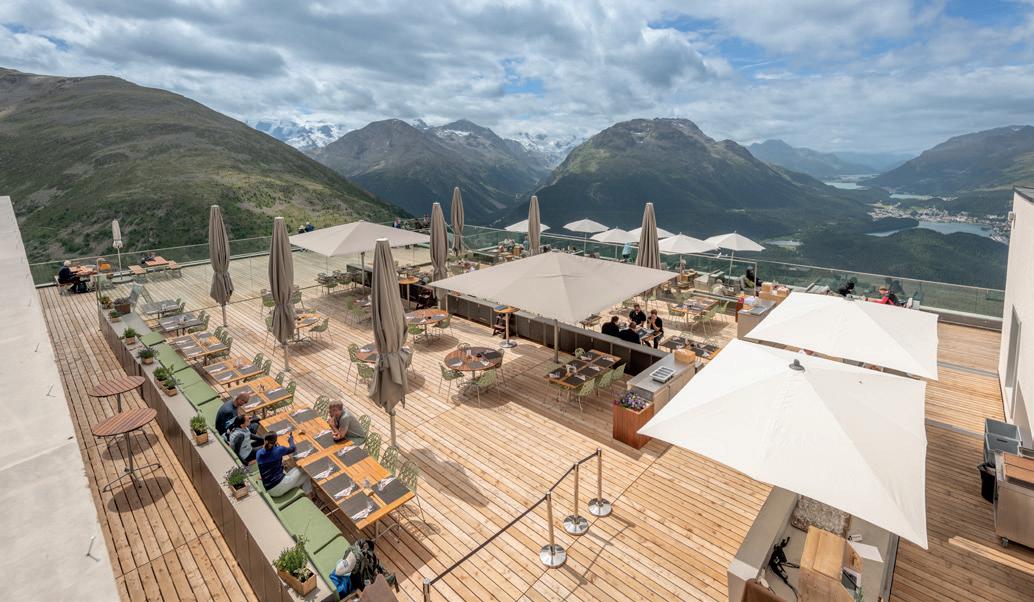
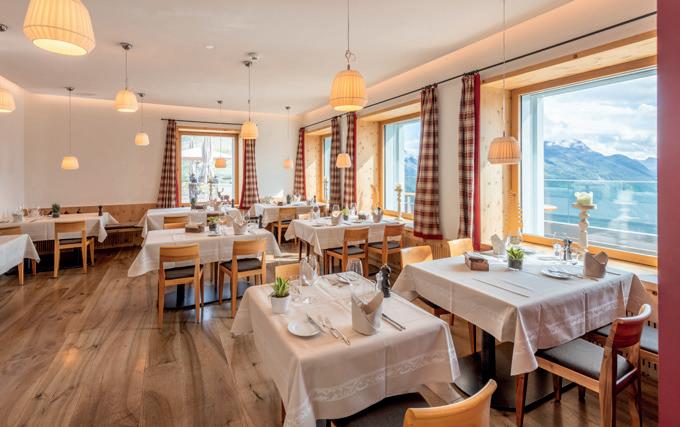
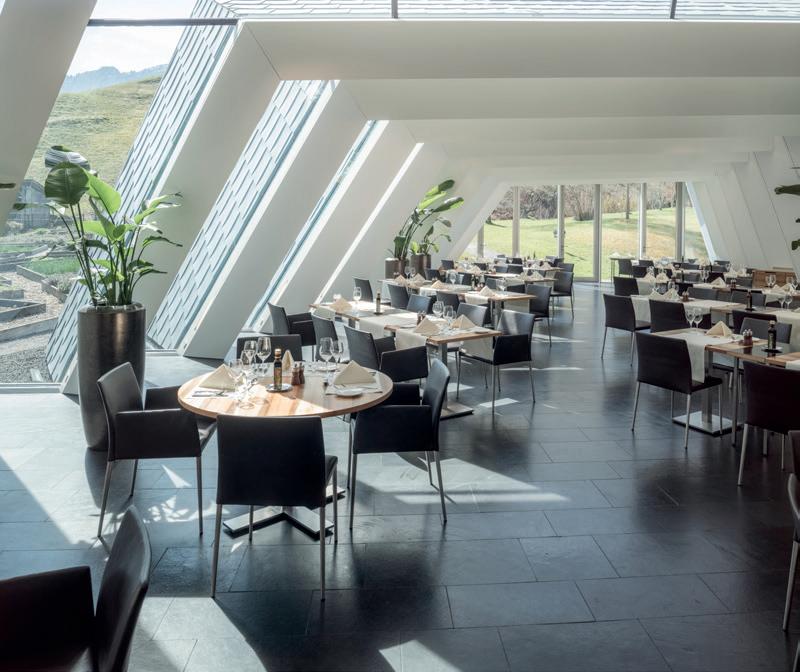
The hotel's panoramic terrace and restaurant are places where enjoyment transcends mere good cuisine. Whether for lunch, a romantic dinner for two, a meal with friends and family, or as a culinary accompaniment to a special occasion, this exceptional mountain restaurant enchants visitors with its unique views and exquisite cuisine. And as the sun dips lower and the colours over the valley slowly transform, the special time begins that is aptly named the magic hour up here.
Photo: Stefan Bienz
EIN LOGENPLATZ ÜBER SEEN, WÄLDERN UND GIPFELN
Es gibt Orte, die man besucht – und Orte, die lange nachklingen. Muottas Muragl gehört zweifellos zur zweiten Kategorie. Hoch über dem Oberengadin verbinden sich hier Panorama, Genuss und Ruhe zu einem Erlebnis, das zugleich exklusiv und erstaunlich nahbar wirkt. Ein Berg, der nicht nur Aussicht bietet, sondern Atmosphäre.
Schon die Fahrt mit der historischen Standseilbahn setzt den Ton: entschleunigt, stilvoll, mit jener leisen Vorfreude, die gute Reiseerlebnisse ausmacht. Oben auf 2.456 Metern angekommen, öffnet sich ein Panorama, das selbst im bilderreichen Engadin aus dem Rahmen fällt.
Von St. Moritz über Silvaplana bis nach Maloja liegt die Oberengadiner Seenlandschaft zu Füssen der Besucher.
Was diesen Ort so besonders macht, lässt sich jedoch nicht allein in Höhenmetern oder Aussichtspunkten messen. Es ist das Zusammenspiel aus Landschaft, Licht und Atmosphäre. Oder, wie es Ladina Jann, Gastgeberin im Romantik Hotel Muottas Muragl, beschreibt: „Muottas Muragl ist kein Ort, den man nur sieht – es ist ein Ort, den man spürt.” Genau darin liegt die Stärke dieses Erlebnisbergs. Wer hier oben steht, versteht schnell, warum Muottas Muragl für viele mehr ist als ein Ausflugsziel. Das Licht scheint
klarer, die Farben intensiver, die Weite beinahe grenzenlos. „Die Aussicht vermittelt ein Gefühl von Freiheit und Weite, das man nur an wenigen Orten erlebt”, so Jann.
GENUSS MIT AUSSICHT
Muottas Muragl versteht es, Naturerlebnis und Kulinarik auf elegante Weise miteinander zu verbinden. Besonders spürbar wird das beim Mountain Dining, das sich längst zu einem der stärksten Argumente für einen Besuch entwickelt hat. Nur mit der historischen Standseilbahn erreichbar, thront das Romantik Hotel Muottas Muragl auf 2.456 Metern über dem Meer. Die gemütlichen Zimmer in diesem Engadiner Berghotel versprühen Romantik und Geborgenheit – eingebettet in Arvenholz und mit weitem Blick über das Engadin. Dazu passt die Grundhaltung des Hauses: Qualität ohne Steifheit, Gastfreundschaft ohne Übertreibung, alpine Tradition mit zeitgemässer Leichtigkeit.
Die Panoramaterrasse und das Panoramarestaurant des Hotels sind zudem Orte, an denen Genuss mehr ist als gute Küche. Ob zum Mittagessen, einem romantischen Essen zu zweit, einem Abendessen mit Freunden und Familie oder als kulinarische Begleitung zu einem besonderen Anlass – dieses außergewöhnliche Bergrestaurant verzaubert Besucher mit seiner einzigartigen Aussicht und seiner feinen Küche. Und, wenn die Sonne tiefer sinkt und sich die Farben über dem Tal langsam verändern, beginnt jene Phase, die hier oben nicht zufällig Magic Hour genannt wird.
Gerade dann zeigt der Berg eine weitere, besonders poetische Seite. Nach dem letzten Licht über den Seen kehrt Ruhe ein, und mit ihr jene stille Intensität, die man aus dem Alltag kaum mehr kennt. Wer bleiben möchte, kann den Abend nahtlos in eine Übernachtung im Romantik Hotel Muottas Muragl übergehen lassen. „Unter diesen Bedingungen einzuschlafen und am nächsten Morgen den Sonnenaufgang über den Engadiner Bergen zu erleben, gehört zu den Erlebnissen, die lange in Erinnerung bleiben”, sagt Jann.
Foto: Fabian Gattlen
Foto: Fabian Gattlen
Foto: Daniel Gerber
It is precisely then that the mountain reveals another, particularly poetic side. After the last light fades over the lakes, tranquillity descends, and with it, a quiet intensity rarely found in everyday life. Those wishing to linger can seamlessly transition from the evening to an overnight stay at the Romantik Hotel Muottas Muragl. "Falling asleep under these conditions and experiencing the sunrise over the Engadine mountains the next morning is an unforgettable experience," says Jann.
Just steps from the hotel, Villa Lyss elegantly adds another dimension to the experience: as a stylish event venue that provides a perfect setting for special occasions. Jann explains: "Many people describe this as a revitalising place of power." Anyone who spends an evening up here, walks along a path, or simply gazes down into the valley quickly understands why this word, for once, does not sound too grand.
BETWEEN PHILOSOPHERS’ TRAIL AND PANORAMIC SWING
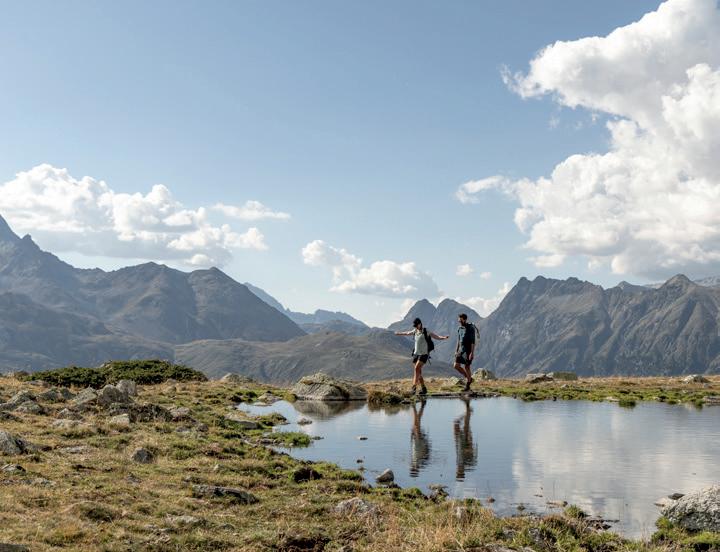
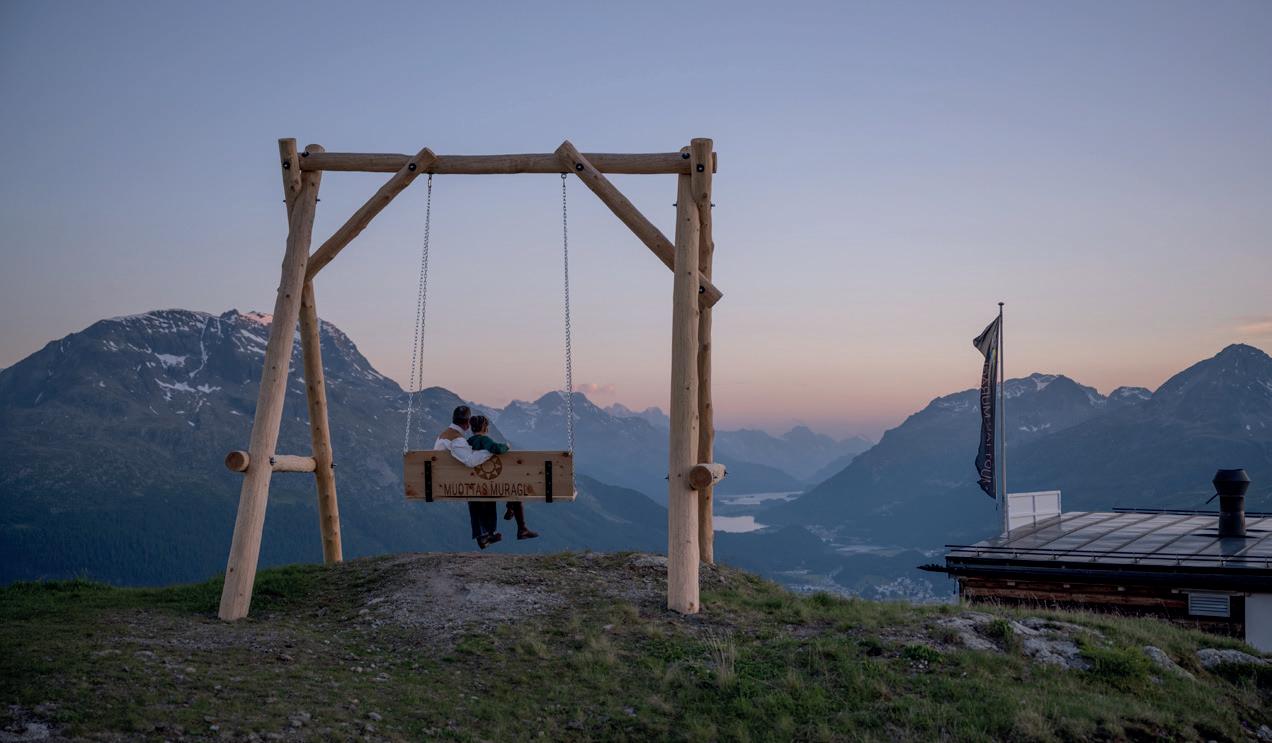
But Muottas Muragl is by no means just a place for a grand evening appearance. The mountain truly reveals its versatility during the day. The Philosophers’ Path, for example, invites you to a relaxing hike with breathtaking views down into the valley and sweeping
vistas, while the panoramic swing creates that rare moment when vista and lightness come together in an almost childlike way. And around the playground and the wellmaintained paths, families will discover a mountain that convincingly combines adventure and accessibility.
Added to this is a natural landscape that has much to offer and does not need to artificially stage itself. With a bit of luck, you might spot marmots, ibex, chamois, or golden eagles, and especially in the early morning hours, nature often reveals its most pristine side. This is precisely what makes it so appealing, according to Jann: "What makes nature in the Engadine so special
for me is its authenticity. It doesn't seem staged, but rather real and powerful."
Here, couples will find romance without kitsch, families will discover quality without obstacles, active guests will experience a harmonious environment, and connoisseurs will find precisely the tranquillity that often defines luxury today. Ultimately, one impression remains above all: Muottas Muragl is a place that cannot be reduced to a single strength. It combines breathtaking views, delicious cuisine, and a comfortable hotel stay with a landscape that itself remains the true star.
www.muottasmuragl.ch
Photo: Engadin St. Moritz Mountains AG
Photo: Stefan Bienz
Nur einige Schritte vom Hotel entfernt, erweitert die Villa Lyss das Erlebnis auf elegante Weise um eine weitere Facette: als stilvolle Eventlocation, die besondere Anlässe in einen Rahmen setzt. Jann erklärt: „Viele Menschen beschreiben den Ort als Kraftort.” Wer hier oben einen Abend verbringt, einen Weg entlanggeht oder einfach nur ins Tal blickt, versteht schnell, warum dieses Wort ausnahmsweise nicht zu gross klingt.
ZWISCHEN PHILOSOPHENWEG UND PANORAMASCHAUKEL
Doch Muottas Muragl ist keineswegs nur ein Ort für den grossen Auftritt am Abend. Gerade tagsüber entfaltet der Berg seine Vielseitigkeit. Der Philosophenweg lädt zu einer entspannten Wanderung mit Tiefblicken ins Tal und Weitblicken ein. Die Panoramaschaukel schafft jenen seltenen Moment, in dem Aussicht und Leichtigkeit fast kindlich zusammenfinden. Und Familien entdecken rund um den Spielplatz und die gut ausgebauten Wege einen Berg, der Abenteuer und Zugänglichkeit überzeugend verbindet.
Hinzu kommt eine Natur, die einiges zu bieten hat und sich nicht künstlich in Szene setzen muss. Mit etwas Glück lassen sich Murmeltiere,
Steinböcke, Gämsen oder Steinadler beobachten und gerade in den frühen Morgenstunden zeigt sich die Natur oft von ihrer ursprünglichsten Seite. Genau das macht den Reiz aus, laut Jann: „Was die Natur im Engadin für mich besonders macht, ist ihre Authentizität. Sie wirkt nicht inszeniert, sondern echt und kraftvoll.”
Paare finden hier also Romantik ohne Kitsch, Familien entdecken Qualität ohne Hürden, aktive Gäste erleben ein stimmiges Terrain,
und Geniesserinnen und Geniesser bekommen genau jene Ruhe, die Luxus heute oft erst ausmacht. Am Ende bleibt vor allem ein Eindruck: Muottas Muragl ist ein Ort, der sich nicht auf eine einzige Stärke reduzieren lässt. Er verbindet einen atemberaubenden Ausblick, leckere Küche und gemütlichen Hotelaufenthalt mit einer Landschaft, die selbst der eigentliche Hauptdarsteller bleibt.
www.muottasmuragl.ch
Foto: Engadin St. Moritz Mountains AG
Foto: Stefan Bienz
HYGGE HAUS: ENTSCHLEUNIGUNG HAT EINE ADRESSE
Abschalten ist keine Kunst. Es braucht nur den richtigen Ort. Das HYGGE HAUS, eine knappe Stunde südwestlich von Berlin, bietet genau das: die perfekte Umgebung, um Stress und Stadthektik hinter sich zu lassen.
TEXT: NANE STEINHOFF I FOTOS: KINGA RYBINSKA
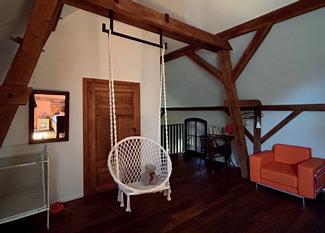
Eingebettet in die idyllische Kulisse eines 100-Seelen-Dorfes, umgeben von Wald und Wasser, macht das Feriendomizil seinen Mietern leicht, in den Relax-Modus zu wechseln. Kein Beton, kein Lärm, keine Abgase – stattdessen stehen je nach Tageszeit klappernde Störche, Vogelkapellen oder summende Insekten auf dem Programm. Und Stille. Wer so viel Natur um sich hat, möchte sie auch schützen. Genau dieser Gedanke treibt Kinga und Matthias an, als sie sich entscheiden, aus dem alten Stallgebäude ein Urlaubsrefugium zu machen. Neben viel Herzblut und harter Arbeit stecken nachhaltige Baumaterialien in den Wänden und Böden: Holzfaserdämmung, Lehmputz, regional gebrannte Fliesen, lokales Eichenholz.
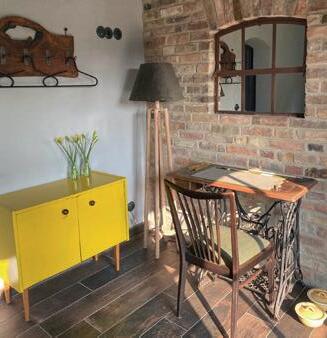
Das Ambiente lebt von der gelungenen Fusion aus Landhaus- und Industriestil, die durch charmante Upcycling-Elemente eine ganz besondere Note erhält. „Wir wollten modernen Komfort, schönes Design und Nachhaltigkeit vereinen“, sagt Kinga. „Vor allem aber eine Ruhezone schaffen – für Menschen, die Entschleunigung suchen“, ergänzt Matthias.
Und da das Paar hundeverliebt ist, sind hier auch Vierbeiner herzlich willkommen. Hunde finden hier Schlafplätze, Näpfe und Handtücher – vor allem aber einen umzäunten Garten und unberührte Natur direkt vor der Haustür.
www.hygge-haus.com
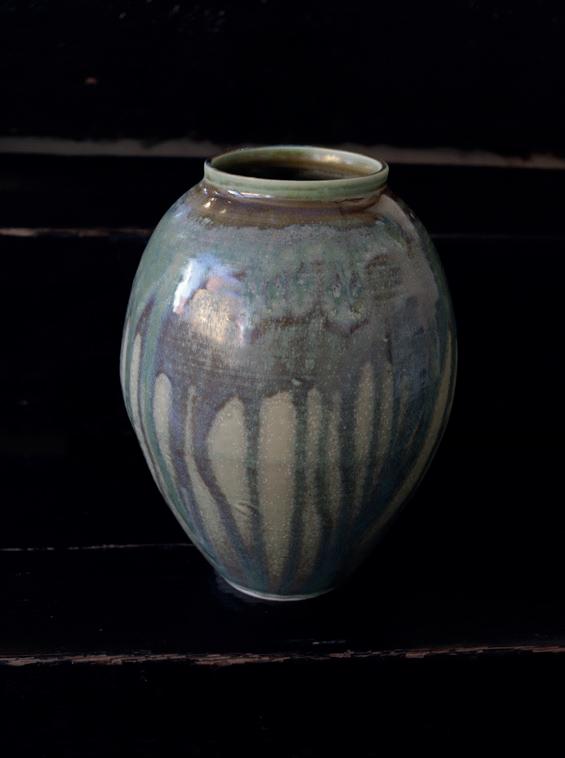
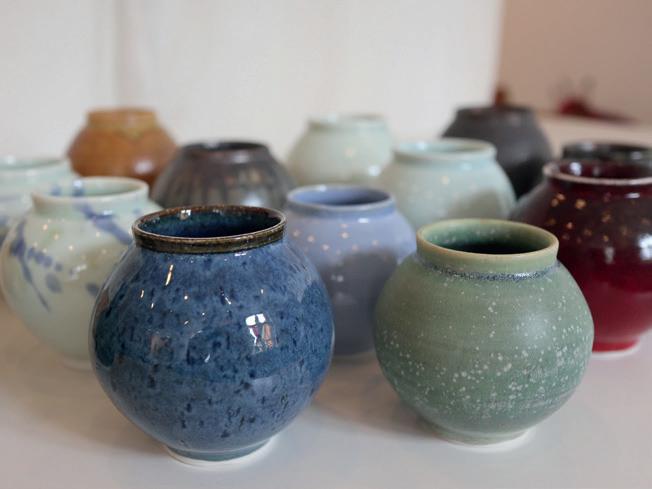
www.cosytimesceramics.dk
Instagram: @cosytimesceramics.kerteminde
Das offene Obergeschoss verbindet historischen Scheunencharakter mit Gemütlichkeit.
Sichtmauerwerk, handgefertigte Einzelstücke und sorgsam ausgewählte Flohmarkt-Funde sorgen für authentischen Charme.
SPECIAL THEME: TOP HOTELS 2026 – ELEVATING YOUR HOLIDAYS
Relax and indulge
If you are seeking a well-deserved escape, hotels across Switzerland and Germany stand ready to offer exquisite cuisine, stunning landscapes and captivating vistas, along with first-class wellness amenities and attentive service. Over the next few pages, you will discover our selection of this year’s finest hotel recommendations, carefully chosen for your holiday pleasure.
PHOTOS: UNSPLASH
HENRI
HOTEL BERLIN: BOUTIQUE FLAIR
WITH A TAD OF BERLIN HISTORY
Whether travelling for business or leisure, guests look for more than just a hotel room. They seek places with character and a charming atmosphere.
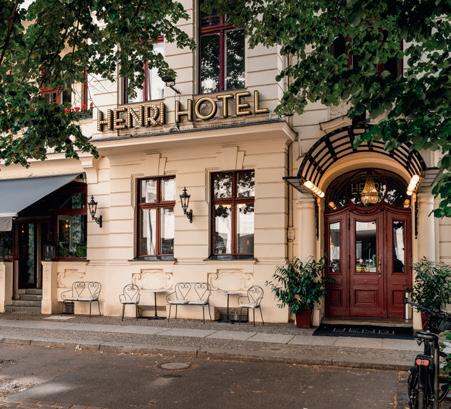
Set within a historic late 19th century townhouse in Charlottenburg, just a short stroll from Berlin’s iconic Kurfürstendamm, HENRI Hotel Berlin combines the elegance of the Belle Époque with contemporary comfort.
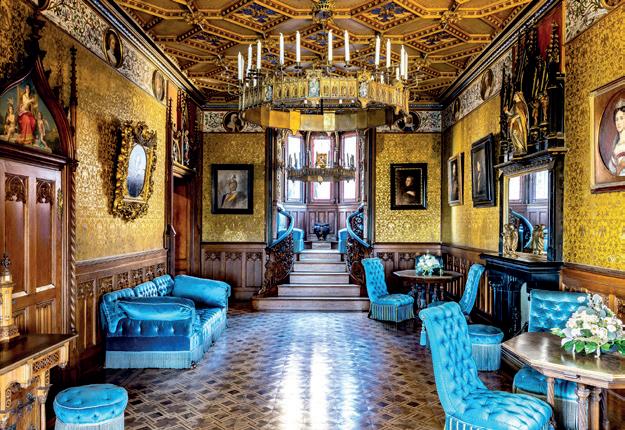
High stucco ceilings, herringbone parquet flooring, velvet, brass and carefully selected antiques reflect the character of this elegant Berlin residence. At the same time, warm colours, individually designed rooms and welcoming salons create a relaxed, homely atmosphere.
Guests particularly appreciate the hotel’s authentic and uncomplicated culinary offering as well as the thoughtfully designed salons, which provide inviting spaces to enjoy breakfast, gather for the traditional German-style evening supper or unwind with a glass of wine at the end of the day. Many guests value this unique balance of sociability and privacy.
At HENRI Hotel Berlin, personality takes precedence over perfection and genuine hospitality over staged experiences. The hotel is elegant without being formal, nostalgic without being outdated. Perhaps it is precisely this contrast that makes HENRI Hotel Berlin so special: a place that resonates emotionally with its guests and offers a rare sense of home in the heart of a vibrant city.
HENRI HOTEL BERLIN: BOUTIQUE-FLAIR MIT BERLINER GESCHICHTE
Egal ob privat oder beruflich: Wer verreist, sucht mehr als nur ein Hotelzimmer. Gefragt sind Orte mit Charakter und Atmosphäre.
In einem historischen Gründerzeithaus in Charlottenburg, nur wenige Schritte vom berühmten Kurfürstendamm entfernt, verbindet das HENRI Hotel Berlin den Charme der Belle Époque mit zeitgemäßem Komfort.
Hohe Stuckdecken, Fischgrätparkett, Samt, Messing und sorgfältig ausgewählte Antiquitäten spiegeln den Charakter dieses eleganten Berliner Stadthauses wider. Gleichzeitig sorgen warme Farben, individuell designte Zimmer und die offenen Salons für eine ungezwungene, wohnliche Atmosphäre.
Besonders geschätzt werden die unkomplizierte, authentische Kulinarik der Hausküche und die liebevoll gestalteten Salons, in denen Gäste frühstücken, beim traditionellen Abendbrot zusammenkommen oder den Tag bei einem Glas Wein ausklingen lassen. Viele Gäste lieben genau dieses Gefühl von Gemeinschaft und gleichzeitigem Rückzug.
Im HENRI Hotel Berlin steht Persönlichkeit vor Perfektion, Gastfreundschaft vor Inszenierung. Das Haus ist elegant, aber nie steif, nostalgisch, aber nicht rückwärtsgewandt. Und vielleicht ist es auch genau dieser Widerspruch, der das HENRI Hotel Berlin besonders macht: Das Haus berührt seine Gäste emotional und ist damit ein Ort, in dem man sich inmitten einer Großstadt wie zu Hause fühlt.
www.henri-hotels.co.uk/hotels/berlin.html
HOTEL KRAFFT IN BASEL:
150 YEARS OF SWISS HOSPITALITY
Located directly on the banks of the Rhine with easy access to Basel’s inner city, Hotel Krafft combines an extraordinary history with timeless design and vibrant dining.
Hermann Hesse once stayed here. Ever since 1873, this historic hotel has welcomed generations of travellers, artists, and notable personalities. Its close proximity to museums, the historic district, restaurants, and cultural attractions, as well as its unique waterfront location, are key features that continue to attract visitors from near and far.
In 2002, Krafft Group’s CEO Franz Xaver Leonhardt realised a childhood dream here and carefully transformed the building into a contemporary boutique hotel through an exciting interplay of historic architecture and timeless design featuring Vitra classics. To this end, the attic was converted, the restaurant was revitalised, and the wine bar Consum, located across the street, was created as an additional popular gathering place. Today, Restaurant Krafft is known for its seasonal, French-inspired cuisine and was awarded 13 points by Gault-Millau in 2025.
The 4-star hotel appeals particularly to those who appreciate a place full of character, offering the perfect blend of hospitality, architecture, and atmosphere. As an integral part of Basel’s city life, the Krafft is also closely tied to the city’s cultural scene and for many visitors serves as the ideal starting point to experience Basel in an authentic way.
HOTEL KRAFFT IN BASEL: 150 JAHRE SCHWEIZER GASTLICHKEIT
In direkter Lage am Rheinufer mit Anbindung an die Basler Innenstadt verbindet das Hotel Krafft außergewöhnliche Geschichte mit zeitlosem Design und lebendiger Gastronomie.
Schon Herrmann Hesse hat hier gewohnt: Seit 1873 beherbergt das traditionsreiche Hotel Generationen von Reisenden, Künstlern und Persönlichkeiten. Seine direkte Nähe zu Museen, Altstadt, Gastronomie und kulturellen Highlights sowie die besondere Lage am Wasser sind zentrale Eigenschaften, die auch heute Gäste von nah und fern anziehen.
Im Jahr 2002 erfüllte sich Franz-Xaver Leonhardt, CEO der Krafft-Gruppe, hier einen Kindheitstraum und schuf anhand eines spannenden Dialogs zwischen historischer Architektur und zeitlosem Design – unter anderem durch Vitra-Klassiker – ein Boutiquehotel der Gegenwart. Hierzu wurde das Dachgeschoss ausgebaut, das Restaurant neu belebt und mit der Weinbar Consum auf der gegenüberliegenden Straßenseite ein weiterer, beliebter Treffpunkt geschaffen. Das Restaurant Krafft steht heute für eine saisonale, französisch inspirierte Küche und wurde 2025 von GaultMillau mit 13 Punkten ausgezeichnet.
Das 4-Sterne Hotel zieht insbesondere Menschen an, die einen charaktervollen Ort mit der perfekten Mischung von Gastfreundschaft, Architektur und Atmosphäre zu schätzen wissen. Als fest verankerter Teil des Basler Stadtlebens ist das Krafft zudem eng mit dem kulturellen Geschehen der Stadt verbunden und bildet für viele Gäste den idealen Ausgangspunkt, um Basel authentisch zu erleben.
www.krafftbasel.ch
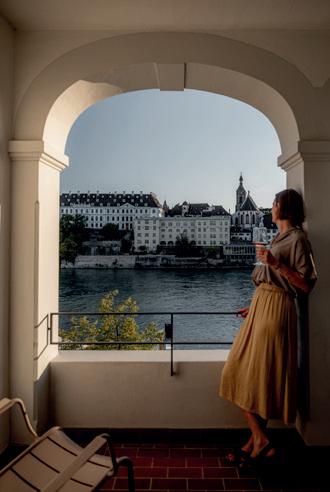
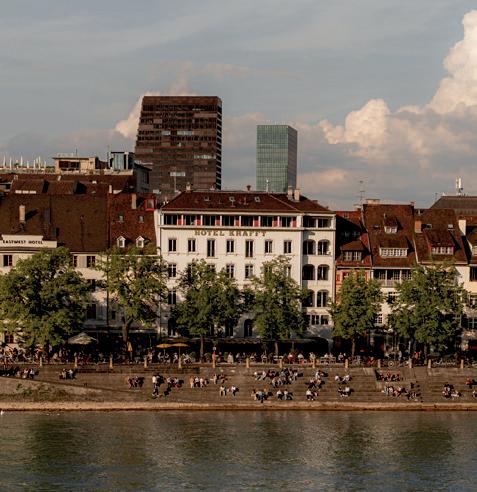
Krafft with a view of the Rhine.
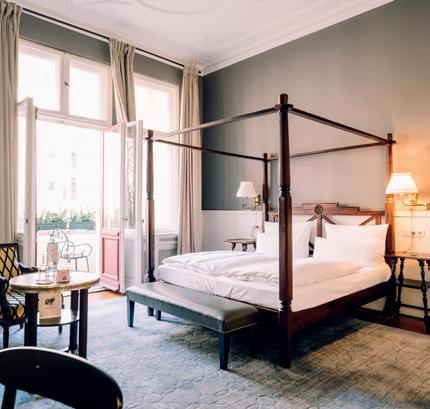
Double room with a balcony overlooking the Rhine.
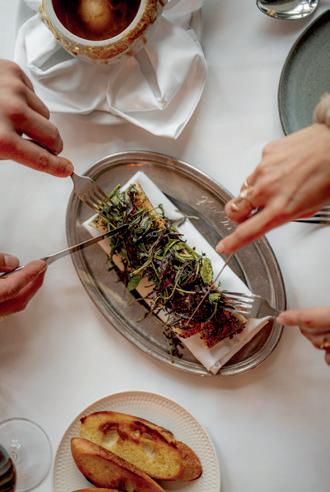
Dinner at Krafft.
RESORT HOF WEISSBAD: AWARD-WINNING CUISINE AND WELL-BEING IN THE HEART OF APPENZELL
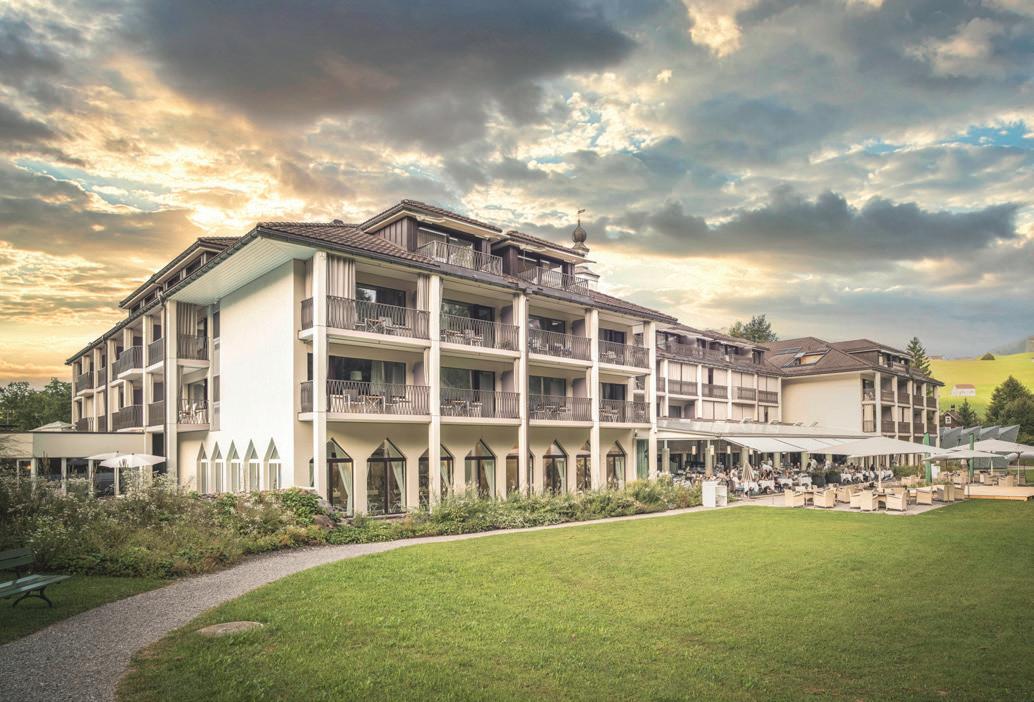
In Appenzell’s striking natural landscape, Resort Hof Weissbad combines warm hospitality, culture, well-being and an award-winning culinary identity. Nestled at the foot of the Alpstein, the resort brings together the four-star superior Hotel Hof Weissbad and the modern Lodge Hof Weissbad – a retreat where regional character, contemporary comfort and the calm of the Appenzellerland meet.
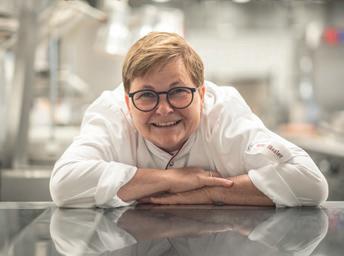
In addition to the beautiful natural surroundings and peaceful atmosphere, the food is at the heart of the experience at Hof Weissbad. In 2026, head chef Käthi Fässler celebrates 30 years at the resort and has been named Chef of the Year 2026/27 in the prestigious Andrin Willi Hotelrating. At the same time, Resort Hof Weissbad has been ranked among Switzerland’s top 10 well-being hotels, placing ninth in the 2026/27 rating –recognition that underlines the strength of its combined culinary and wellness offer.
Fässler leads a brigade of around 35 and oversees more than 450 dishes a day, from breakfast and bistro fare to banquets and gourmet menus. Her cuisine, rooted in Appenzell, has held 16 GaultMillau points since 2009 and is
built on regional sourcing, seasonality and precision. “For me, good cuisine always begins with the product. When quality, care and teamwork come together, the result is enjoyment that stays in the memory,” says Käthi Fässler.
Guests can dine in the striking Flickflauder restaurant, which is also the gourmet res-
taurant, in the elegant restaurant Veranda, or in the traditional Schotten-Sepp-Stube, while private events range from fondue evenings in the former cheese dairy chalet to kitchen parties and banquets in the resort’s intimate event spaces. A highlight of the anniversary year is a six-course gourmet menu surprise, available from 21 May to 19 December 2026, designed to reflect Fässler’s culinary journey over three decades. “Despite the national recognition, Käthi Fässler prefers to remain where her heart lies: in the kitchen, in the middle of the team and close to the product,” says director Elias Leu.
VIVID CULTURE
But Resort Hof Weissbad is more than a destination for gourmets. Guests can choose between two accommodation options: the four-star superior Hotel Hof Weissbad and the modern Lodge Hof Weissbad. Both combine relaxation and activity with thoughtful details, first-class comfort and generous inclusive services that make a stay particular-
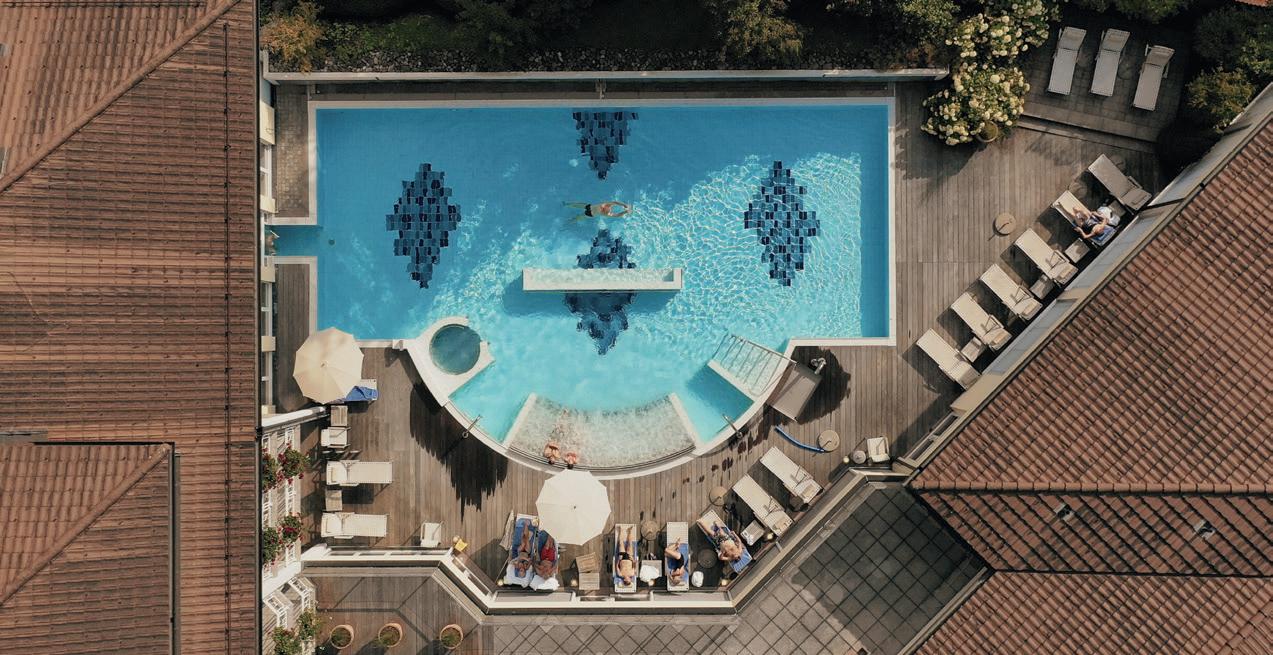
Outdoor pool.
Spa and wellness in the bathing and sauna facility. Photo: Thomas Biasotto
RESORT HOF WEISSBAD: PREISGEKRÖNTE KÜCHE UND WELLNESS
IM HERZEN VON APPENZELL
Inmitten der beeindruckenden Naturlandschaft des Appenzellerland vereint das Resort Hof Weissbad herzliche Gastfreundschaft, Kultur, Wohlbefinden und eine preisgekrönte Kulinarik. Am Fuße des Alpsteins gelegen, besteht das Resort aus dem Vier-SterneSuperior-Hotel Hof Weissbad und der modernen Lodge Hof Weissbad – ein Refugium, in dem regionaler Charakter, zeitgemäßer Komfort und die Ruhe des Appenzellerlandes aufeinandertreffen.
Neben der wunderschönen Natur und der friedlichen Atmosphäre steht im Hof Weissbad das Essen im Mittelpunkt des Erlebnisses. Küchenchefin Käthi Fässler feiert 2026 ihr 30-jähriges Jubiläum im Resort und wurde im renommierten Andrin Willi Hotelrating zur Köchin des Jahres 2026/27 gekürt. Gleichzeitig zählt das Resort Hof Weissbad zu den Top 10 der Wellnesshotels der Schweiz und belegt im Ranking 2026/27 den neunten Platz – eine Auszeichnung, die die Stärke des kombinierten kulinarischen und Wellnessangebots unterstreicht.
Käthi Fässler leitet ein Team von rund 35 Mitarbeitern und ist für über 450 Gerichte täglich verantwortlich – vom Frühstücksbuffet und Bistro-Gerichten bis hin zu Banketten und Gourmet-Menüs. Ihre Küche, die ihre Wurzeln in Appenzell hat, ist seit 2009 mit
16 GaultMillau-Punkten ausgezeichnet und basiert auf regionalen Zutaten, Saisonalität und Präzision. „Für mich beginnt gute Küche immer beim Produkt. Wenn Qualität, Sorgfalt und Teamarbeit zusammenkommen, entsteht Genuss, der in Erinnerung bleibt”, sagt Käthi Fässler.
Gäste können im beeindruckenden Flickflauder, dem Gourmet-Restaurant, im eleganten Restaurant Veranda oder in der traditionellen Schotten-Sepp-Stube speisen. Private Veranstaltungen reichen von Fondueabenden im ehemaligen Käsechalet bis hin zu Küchenpartys und Banketten in den intimen Veranstaltungsräumen des Resorts. Ein Höhepunkt im Jubiläumsjahr ist das sechsgängige GourmetÜberraschungsmenü, welches bis 19. Dezember 2026 erhältlich ist und Käthi Fässlers kuli-
narische Reise der letzten drei Jahrzehnte widerspiegelt. „Trotz der nationalen Anerkennung bleibt Käthi Fässler lieber dort, wo ihr Herz schlägt: in der Küche, mitten im Team und nah am Produkt“, sagt Direktor Elias Leu.
KULTUR ZUM ERLEBEN UND MITMACHEN
Doch das Resort Hof Weissbad ist weit mehr als ein Ort für Gourmets. Gäste haben die Wahl zwischen zwei Unterkünften: dem Vier-Sterne-Superior-Hotel Hof Weissbad und der modernen Lodge Hof Weissbad. Beide vereinen Entspannung und Aktivität mit liebevollen Details, erstklassigem Komfort und großzügigen Inklusivleistungen, die den Aufenthalt besonders angenehm gestalten. Besucher können durch die historische und charmante Stadt Appenzell schlendern, spannende Wanderungen im Alpsteingebirge unternehmen, Rad fahren, Golf spielen oder die lokalen Bräuche und Traditionen kennenlernen. „Im Juli und August verwandelt sich unser Hotelpark in eine Bühne für Sommerkonzerte mit jungen Schweizer Künstlern – ein Highlight für Gäste und Einheimische“, ergänzt Susanne Leu, Direktorin des Resorts Hof Weissbad.
3-Sterne Lodge Hof Weissbad. Foto: Thomas Biasotto
Hof Weissbad Gourmet-Menü. Foto: Thomas Biasotto
Küchenchefin Käthi Fässler. Foto: Thomas Biasotto
ly easy. Visitors can enjoy strolls through the historic and charming town of Appenzell, exciting hikes in the Alpstein Mountains, bike rides, golf, or local customs and traditions.
“In July and August, our hotel park turns into a stage for summer concerts with young Swiss artists – a highlight for guests and locals,” adds Susanne Leu, director of Resort Hof Weissbad.
APPENZELL HEALTH
The resort’s health centre combines medical expertise with holistic regeneration to create a first-class medical wellness concept. “This is the perfect place for people who want to consciously improve their health, achieve their ideal weight in a sustainable way, or feel more energetic and full of vitality,” says Thomas Möderndorfer, director of the health centre.
The health and wellness offerings at Resort Hof Weissbad range from prevention and regeneration to targeted strengthening. Appenzell Health is based on four interconnected pillars: nutrition, relaxation, exercise, and mindfulness. Guests who wish to proactively strengthen their health will find individualised programmes rather than standard solutions.
"Personal needs and goals are at the heart of everything we do. We don't offer a onesize-fits-all programme; instead, we create a personalised health journey, tailored to each guest's individual needs, focusing on areas such as stress reduction, improved sleep, metabolism, vitality, or sustainable habits," explains Möderndorfer.
Depending on the package, diagnostic and therapeutic elements such as cardio scans, altitude training (IHT/IHHT), Omega 3 analysis, and selected complementary medicine approaches are integrated. Medical support is individualised, empathetic, and always geared towards the resources and potential of the guests.
A health coach further provides detailed nutrition analyses, cooking classes, and tailored dietary advice, with the cuisine accommodating all allergies and dietary needs for lasting results. Relaxation options include meditation, spa treatments, sports massages, and the new bathing and sauna facility featuring relaxation and fitness areas, outdoor pools, multiple saunas, and a vitality lounge. The movement and therapy team assists with
rehabilitation, prevention, and performance improvement, both at the resort and in the revitalising Alpstein region.
A special highlight: Resort Hof Weissbad is Switzerland’s only certified F.X. Mayr® centre. Nutritional expertise, modern diagnostics and naturopathic approaches therefore play a central role at the resort. Food becomes a gentle tool for energy, lightness and inner balance – without the rhetoric of deprivation, but with expertise and enjoyment.
With its newly recognised culinary leadership, top 10 well-being ranking and deep connection to Appenzell’s culture and landscape, Resort Hof Weissbad continues to offer a distinctly Swiss retreat defined by authenticity, quality and warm hospitality.
www.hofweissbad.ch/en
Discover Germany, Austria & Switzerland readers receive a discount on their overnight stay. Simply enter the booking code DISCOVER when booking on the website.
Appenzell Health – relaxation for body and mind.
Restaurant Flickflauder. Foto: Thomas Biasotto
APPENZELL HEALTH
Das dem Resort angeschlossene Gesundheitszentrum verbindet medizinische Kompetenz mit ganzheitlicher Regeneration zu einem Medical Wellness Konzept der Extraklasse. „Bei uns finden Menschen, die ihre Gesundheit bewusst stärken, ihr Wohlfühlgewicht nachhaltig finden oder sich vitaler und leistungsfähiger fühlen möchten, die idealen Bedingungen”, sagt Thomas Möderndorfer, Direktor Gesundheitszentrum.
Das Gesundheitsangebot des Resort Hof Weissbad reicht von Prävention und Regeneration bis zur gezielten Stärkung. ‚Appenzell Health’ ist gestützt auf den 4 Säulen, die ineinandergreifen: Ernährung, Entspannung, Bewegung und Bewusstsein. Gäste, die also präventiv ihre Gesundheit stärken möchten, finden hier individuelle Programme statt Standardlösungen, da das entwickelte Programm auch über den Aufenthalt hinauswirken soll. „Im Zentrum stehen persönliche Bedürfnisse und Ziele. Wir bieten kein ‚Programm von der Stange‘, sondern es entsteht ein persönlicher Gesundheitsweg – je nach Ausgangslage mit Fokus auf zum Beispiel Stressabbau, besse-
ren Schlaf, Stoffwechsel, Vitalität oder nachhaltige Gewohnheiten“, so Möderndorfer.
Je nach Package werden diagnostische und therapeutische Elemente wie Cardioscan, Höhen-Training (IHT/IHHT), Omega 3 Analyse und ausgewählte komplementärmedizinische Ansätze integriert. Die medizinische Begleitung ist individuell, empathisch und orientiert sich stets an den Ressourcen und Potenzialen der Gäste.
Im Bereich Ernährung bietet ein Gesundheitscoach umfassende Analysen, Kochkurse und individuelle Ernährungsberatung. Die Küche des Resorts passt sich allen Allergie- und Kurvorschriften der Gäste an und garantiert so nachhaltige Ergebnisse. Für Entspannung sorgen Meditationen, Spa- und Wellnessbehandlungen, Sportmassagen sowie der neue Bade- und Saunahaus-Komplex mit Ruhe- und Fitnessräumen, Aussenpools, verschiedenen Saunen und einer Vital-Lounge. Das erfahrene Bewegungs- und Therapieteam unterstützt Gäste bei Rehabilitation, Prävention und Leistungssteigerung – sowohl im Resort als auch in der Kraft spendenden Natur des Alpsteins.
Ein besonderes Highlight: Das Resort Hof Weissbad ist das einzige zertifizierte F.X. Mayr® Zentrum in der Schweiz. Ernährungswissen und moderne sowie naturheilkundliche Ansätze spielen somit im Resort eine tragende Rolle. Essen wird zum sanften Werkzeug für Energie, Leichtigkeit und innere Ruhe – ohne Verzichtsrhetorik, dafür mit Know-how und Genuss.
Mit seiner neu anerkannten kulinarischen Führungsrolle, der Top-10-Platzierung im Bereich Wellness und der tiefen Verbundenheit mit der Kultur und Landschaft von Appenzell bietet das Resort Hof Weissbad einen unverwechselbar schweizerischen Rückzugsort, der sich durch Authentizität, Qualität und herzliche Gastfreundschaft auszeichnet.
www.hofweissbad.ch
Discover Germany, Austria & Switzerland Leser erhalten einen Rabatt auf die Übernachtung. Einfach auf der Webseite beim Buchungscode DISCOVER eingeben und profitieren.
Hotel Hof Weissbad. Foto: Thomas Biasotto
BETWEEN PEAKS AND STILLNESS
For those looking to escape busy tourist hotspots in favour of genuine rest and relaxation, Austria’s Pitztal Valley offers a different kind of retreat. Surrounded by the striking beauty of the Tyrolean Alps, Jerzner Hof combines warm family hospitality, excellent cuisine and modern wellness with the peaceful charm of an unspoilt mountain landscape.
In the Pitztal Valley, life seems to move at a gentler pace. Even today, the region remains relatively untouched by mass tourism, defined by dramatic mountain peaks, dense forests and crystal-clear lakes. On a sunny plateau in the village of Jerzens sits Jerzner Hof, a family-run four-star superior hotel that has welcomed guests from around the world for decades.
The hotel was founded in 1969 by the parents of the current Eiter host family as a small inn. Over the years, careful expansion and modernisation gradually transformed the property into one of the best-known wellness hotels in the Pitztal Valley. Today, the hotel offers 45 rooms, a spacious spa area, and an atmosphere that continues to attract nature lovers throughout the year.
Despite the hotel’s growth, its personal and familiar atmosphere has remained at the centre of everything. “We all help out
wherever we’re needed,” says host Joachim Eiter. Whether in the restaurant, at the hotel bar, during breakfast service or at reception, the family remains closely involved in the day-to-day running of the hotel and values genuine connections with guests. “In the evenings, I especially enjoy working in the restaurant,” Joachim explains. “Afterwards, I like to look after our guests at the hotel bar.”
Alongside its warm service and close connection to nature, Jerzner Hof places great emphasis on relaxation and wellbeing. The spacious wellness area includes an indoor pool, natural swimming pond, several saunas and steam baths, as well as peaceful relaxation areas designed for unwinding after a day in the mountains.
The surrounding landscape invites guests outdoors in every season. During the summer months, visitors can explore hiking trails and mountain lifts reaching heights
of up to 3,440 metres. In winter, the region becomes a paradise for skiing, tobogganing and scenic winter walks.
The hotel’s cuisine is equally centred around quality and regional ingredients wherever possible. Creative dishes made with carefully selected produce ensure that the culinary experience becomes a memorable part of every stay.
For anyone seeking headspace, nature and genuine hospitality, Jerzner Hof is the kind of place that guests return to time and time again.
www.jerznerhof.at/en
ZWISCHEN GIPFELN UND RUHE
Wer im Urlaub nicht Trubel, sondern echte Erholung sucht, findet im österreichischen Pitztal einen ganz besonderen Rückzugsort. Der Jerzner Hof verbindet familiäre Herzlichkeit, ausgezeichnete Kulinarik und moderne Wellness mit der Ursprünglichkeit der Tiroler Bergwelt.
Im Pitztal scheint die Zeit etwas langsamer zu vergehen. Das Tiroler Tal gilt bis heute als vergleichsweise naturbelassen, geprägt von majestätischen Berggipfeln, üppigen Wäldern und kristallklaren Seen fernab großer Tourismuszentren. Genau hier, auf einem sonnigen Hochplateau in Jerzens, liegt der Jerzner Hof – ein familiengeführtes 4-SterneSuperior-Hotel, das seit Jahrzehnten Gäste aus aller Welt willkommen heißt.
Gegründet wurde der Betrieb 1969 von den Eltern der heutigen Gastgeberfamilie Eiter als kleiner Gasthof. Über die Jahre entwickelte sich das Haus durch stetige Modernisierung zu einem beliebten 4-Sterne-Superior-Hotel mit 45 Zimmern und großzügigem Wellnessbereich und lockt vor allem Naturliebhaber in dieses kleine Paradies – egal zu welcher Jahreszeit. Heute zählt der mehrfach ausgezeichnete Jerzner Hof zu den bekanntesten Wellnessadressen im Pitztal.
Trotz des gewachsenen Angebots ist eines geblieben: die familiäre Atmosphäre. „Wir packen überall mit an“, erzählt Gastgeber Joachim
Eiter. Ob im Service, an der Hotelbar, beim Frühstück oder an der Rezeption – die Familie ist im Alltag präsent und pflegt den persönlichen Kontakt zu den Gästen. „Ich selbst bin am Abend am liebsten im Service im Hotelspei-
Gastgeberfamilie Eiter.
sesaal tätig“, so Joachim Eiter. „Anschließend unterhalte und betreue ich dann gerne unsere Gäste an der Hotelbar.“
Neben dem persönlichen Service und der Nähe zur Natur legt man im Jerzner Hof auch viel Wert auf Genuss und Entspannung. Die weitläufige Wellnesslandschaft umfasst unter anderem einen Indoorpool, einen Naturbadeteich, mehrere Saunen und Dampfbäder sowie herrliche Ruhezonen.
Gleichzeitig zieht es viele Gäste hinaus in die atemberaubende Natur: Im Sommer locken Wanderungen und Bergbahnen bis auf 3.440 Meter Höhe, im Winter Skifahren, Rodeln und Winterwanderungen. Die Tiroler Bergwelt spricht einfach für sich.
Auch kulinarisch setzt das Hotel auf Qualität und Regionalität, wo immer dies möglich ist. Die Küche verbindet kreative Ideen mit hochwertigen Zutaten und macht den Aufenthalt auch geschmacklich zu einem Erlebnis.
Wer Ruhe, Naturverbundenheit und herzliche Gastfreundschaft sucht, findet im Jerzner Hof einen Ort, an dem man schnell zum Stammgast wird.
www.jerznerhof.at
RESPONSIBLE SURGICAL ART
Where art and medicine meet: Dr. Christian Schrank, the renowned specialist in plastic and aesthetic surgery, boasts nearly three decades of comprehensive experience. As an expert in face-neck lifts using dynamic SMAS, he passionately cares for his patients at the esteemed Klinikum Herrsching/Schindlbeck in Herrsching am Ammersee.
In the dynamic world of plastic-aesthetic surgery, it is often the subtle nuances that make all the difference. It is a field where scientific precision meets artistic vision. At the heart of this fusion is Dr. Christian Schrank. "I'm fascinated by the incredibly broad spectrum that plastic surgery offers and the opportunity to be creative in aesthetic surgery," says the charismatic surgeon. "At the same time, the unique challenge is that our results should look natural and non-operated, creating an aesthetically harmonious appearance."
A NATURAL APPEARANCE THROUGH SPECIAL SMAS TECHNIQUE
Dr. Schrank's work on the advanced face-neck lift with dynamic SMAS (superficial musculoaponeurotic system) not only pushes the boundaries of what is possible in surgery, but
also illustrates the expertise behind every precise cut and meticulously planned suture. Dr. Schrank explains: "The days of skin-tightening facial surgeries should finally be over since the development of the surgical method that involves shortening or lifting the slackened muscle tissue located under the skin, known as SMAS."
There are only a few places in all of Europe that master the face-neck lift with SMAS to perfection. Together with his colleague Dr. Yoram Levy, Dr. Schrank has refined this method to ensure that the results are not only aesthetically pleasing but also lasting. "You can imagine the SMAS muscle tissue as a trampoline on which you jump around for 50 years. Afterwards, the springs are worn-out and the outer tarp sags," illustrates
Dr. Schrank, who is not only a leader in this field in Germany but also competes with the best in the world. "The excess skin can be removed – without having to pull it –serving as a cover, without being tightened, thus retaining its remaining elasticity. This way, we create a natural, non-tightened, and non-operated-looking result, maintaining and refreshing individual radiance."
The ongoing development of plasticaesthetic surgery brings both innovations and controversial discussions – especially regarding facelift techniques. Dr. Schrank observes that the Deep Plane facelift is often touted as the latest trend, yet it is frequently conflated with the SMAS technique that has been continuously refined since the 1970s. The actual Deep Plane technique, developed by Dr. Sam Hamra in the 1990s, is characterised by particularly deep dissection in which facial muscles are partially detached from the bone and prepared between the branches of the facial nerves. Due to its
VERANTWORTUNGSVOLLE CHIRURGISCHE KUNST
Wo Kunst und Medizin sich begegnen: Dr. Christian Schrank, der renommierte Spezialist für Plastische und Ästhetische Chirurgie, kann auf fast drei wertvolle Jahrzehnte Erfahrung zurückblicken. Als Experte für Face-Neck-Lifts mit dynamischem SMAS, kümmert er sich im angesehenen Klinikum Herrsching/Schindlbeck in Herrsching am Ammersee mit großer Empathie um seine Patienten.
In der dynamischen Welt der PlastischÄsthetischen Chirurgie sind es oft die feinen Nuancen, die den Unterschied ausmachen. Es ist ein Feld, in dem wissenschaftliche Präzision auf künstlerische Vision trifft. Im Zentrum dieser Fusion ist Dr. Christian Schrank. „Mich begeistern das ungeheuer breite Spektrum, das die Plastische Chirurgie bietet, und die Möglichkeit, in der Ästhetischen Chirurgie kreativ sein zu können", sagt der charismatische Chirurg. „Gleichzeitig besteht die besondere Herausforderung darin, dass unsere Ergebnisse natürlich und unoperiert aussehen sollen und eine ästhetische Harmonie des Erscheinungsbildes ergeben.”
NATÜRLICHKEIT DURCH SPEZIELLE
SMAS-TECHNIK
Dr. Schranks Arbeit am hoch entwickelten Face-Neck-Lift mit dem dynamischen SMAS (Superficial Musculoaponeurotic System) hebt nicht nur die Grenzen dessen, was in der Chirurgie möglich ist, sondern veranschaulicht auch die Expertise hinter jedem präzisen Schnitt und jeder sorgfältig geplanten Naht. Dr. Schrank erklärt: „Die Zeiten der hautstraffenden Gesichtsoperationen sollten eigentlich seit der Entwicklung der Operationsmethode mit der Kürzung beziehungsweise Hebung der erschlafften Muskelbindegewebsplatte, die sich unter der Haut befindet, und SMAS genannt wird, endgültig vorbei sein.”
Es gibt in ganz Europa nur wenige Adressen, die das Face-Neck-Lift mit SMAS in Perfektion und Vollendung beherrschen. Zusammen mit seinem Kollegen Dr. Yoram Levy hat Dr. Schrank diese Methode verfeinert, um sicherzustellen, dass die Ergebnisse nicht nur ästhetisch ansprechend, sondern auch dauerhaft sind.
„Man kann sich die SMAS-Muskelschicht gut wie ein Trampolin vorstellen, auf welchem man 50 Jahre lang herumspringt. Dann sind
die Federn ausgeleiert und die Plane hängt durch”, veranschaulicht Dr. Schrank, der auf diesem Gebiet nicht nur in Deutschland führend ist, sondern sich auch mit den weltweit Besten auf Augenhöhe befindet. „Nachdem die ausgeleierten Federn gekürzt und das SMAS angehoben wurde, entsteht ein „neues“, straffes inneres Stützgerüst, welches das Face-Neck-Lift „trägt”. Nun kann die überschüssige Haut – ohne an ihr ziehen zu müssen – entfernt werden und dient somit zur
‚Bedeckung‘, ohne gestrafft zu werden und ihr die übrig gebliebene Elastizität zu nehmen.
Auf diese Weise entsteht ein natürliches, nicht gestrafftes und unoperiert aussehendes Ergebnis, das die individuelle Ausstrahlung beibehält und wieder auffrischt.”
Die fortwährende Entwicklung der plastischästhetischen Chirurgie bringt sowohl Innovationen als auch kontroverse Diskussionen mit sich – insbesondere in Bezug auf FaceliftTechniken. Dr. Schrank beobachtet, dass das ,Deep Plane’ Facelift zwar häufig als aktueller Trend herausgestellt wird, jedoch oft mit der seit den 1970er Jahren bewährten SMASTechnik gleichgesetzt wird, die im Laufe der Zeit stetig verfeinert wurde. Die eigentliche Deep
Dr. Christian Schrank. Foto: Markus Gmeiner
Dr. Christian Schrank.
high invasiveness and the associated risk of nerve damage, this method has largely been abandoned by many leading facial surgeons. Dr. Schrank emphasises that the current hype surrounding the Deep Plane facelift is driven primarily by marketing rather than by genuine surgical advancements. In his practice, the focus remains on achieving natural, long-lasting results through a differentiated and masterfully executed SMAS technique – with patient safety and authentic rejuvenation always taking precedence over short-lived trends.
EXPERTISE AT THE HIGHEST LEVEL
Dr. Schrank's exceptional expertise is based not only on his extensive training in plastic surgery but also on his work treating severe burns and his deep understanding of reconstruction and microsurgery. "Reconstructing the faces of severely burned patients demands the highest levels of creativity, surgical manual skills, and, finally, the aesthetic sense and understanding of the treating surgeon," he explains.
caring service and absolute discretion. In addition to the face-neck lift, he offers the entire spectrum of face and body shaping measures, including forehead-brow lifts and eyelid lifts.
Overall, Dr. Christian Schrank embodies the ideal combination of scientific expertise and artistic sensitivity, making him one of the leading facial surgeons. Talent, passion and empathy not only make Dr. Christian Schrank a recognised surgeon in professional circles – he is also highly regarded among patients, as consistently positive JAMEDA reviews confirm.
www.dr-schrank.de/en
As a valued speaker and head of the FaceNeck-Lift section of the German Society for Aesthetic Surgery, he is involved in the further training of specialists and gives lectures at renowned congresses worldwide. He also trains the next generation of plastic surgeons in his own department. "The further development of established surgical methods is very close to my heart," the surgeon emphasises.
SAFETY AND TRUST FIRST
For the specialist, a trusting relationship between doctor and patient is key to success. "In a personal conversation, I try to find out what bothers the patient and affects their quality of life," Dr. Schrank says. "From this, I derive an individual treatment plan." Transparency and honesty are his top priorities. "The patient must have a clear idea of what is possible and where the limits are."
All treatments are carried out to the highest professional standards, with safety being paramount. Patients also benefit from an environment shaped by human warmth,
Ästhetik am Ammersee Seestrasse 43
82211 Herrsching am Ammersee +49815229150
Plane-Technik, entwickelt von Dr. Sam Hamra in den 1990er Jahren, zeichnet sich durch eine besonders tiefe Präparation aus. Dabei werden unter anderem Gesichtsmuskeln teilweise vom Knochen gelöst und zwischen den Ästen der Gesichtsnerven präpariert. Aufgrund der hohen Invasivität und des damit verbundenen Risikos von Nervenschädigungen wurde diese Methode von vielen führenden Gesichtschirurgen weitgehend wieder verlassen. Dr. Schrank betont, dass der derzeitige Hype um das Deep Plane Facelift vor allem durch Marketing und weniger durch tatsächliche chirurgische Fortschritte getrieben wird. In seiner Praxis liegt der Fokus weiterhin auf natürlichen, langanhaltenden Ergebnissen durch eine differenzierte und meisterhaft ausgeführte SMAS-Technik – wobei Patientensicherheit und authentische Verjüngung stets über kurzlebigen Trends stehen.
EXPERTISE AUF HÖCHSTEM NIVEAU
Dr. Schranks herausragende Expertise basiert nicht nur auf seiner umfassenden Ausbildung in der Plastischen Chirurgie, sondern auch auf seiner Arbeit mit Schwerbrandverletzten und seinem tiefen Verständnis für Rekonstruktionsund Mikrochirurgie. „Die Rekonstruktion von Gesichtern schwerbrandverletzter Patienten stellt höchste Ansprüche an die Kreativität, die chirurgisch-manuellen Fähigkeiten und schließlich den ästhetischen Sinn und das Verständnis des behandelnden Chirurgen", erklärt er.
Als geschätzter Referent und Leiter der Sektion Face-Neck-Lift der Gesellschaft für Ästhetische Chirurgie Deutschlands engagiert er sich in der Weiterbildung von Fachärzten und hält weltweit Vorträge auf renommierten Kongressen. Auch in der eigenen Abteilung bildet er den plastischchirurgischen Nachwuchs aus. „Die Weiterentwicklung etablierter Operationsmethoden liegt mir sehr am Herzen”, betont der Chirurg.
SICHERHEIT UND VERTRAUEN AN ERSTER STELLE
Für den Spezialisten ist die vertrauensvolle Beziehung zwischen Arzt und Patient ein Schlüssel zum Erfolg. „Im persönlichen Gespräch versuche ich herauszufinden, was den Patienten stört und seine Lebensqualität beeinträchtigt”, so Dr. Schrank. „Daraus leite ich ein individuelles Behandlungskonzept ab.”
Transparenz und Ehrlichkeit stehen für ihn dabei an erster Stelle. „Der Patient muss eine klare Vorstellung davon haben, was möglich ist und wo Grenzen liegen.”
Alle Behandlungen laufen nach höchsten professionellen Maßstäben ab, wobei die Sicherheit immer Priorität hat. Patienten profitieren zudem von einer Umgebung, die von menschlicher Wärme, fürsorglichem Service und absoluter Diskretion geprägt ist. Angeboten wird neben dem Face-Neck-Lift, das gesamte Spektrum der gesichts- und körperformenden Maßnahmen wie beispielsweise auch das StirnBrauen-Lift und Lidstraffungen.
Insgesamt verkörpert Dr. Christian Schrank die ideale Kombination aus wissenschaftlicher Expertise und künstlerischer Sensibilität,
die ihn zu einem der führenden Gesichtschirurgen macht. Talent, Leidenschaft und Einfühlungsvermögen machen Dr. Christian Schrank allerdings nicht nur zu einem anerkannten Chirurgen in Fachkreisen – auch unter Patienten steht er hoch im Kurs, was die positiven JAMEDA Bewertungen durchweg bestätigen.
Ästhetik am Ammersee
Seestrasse 43
82211 Herrsching am Ammersee +49815229150
Patient nach einer Behandlung. Foto: Dr. Christian Schrank
Patientin nach einer Behandlung. Foto: Markus Gmeiner
HOHENZOLLERN CASTLE: HISTORY WITH A MAJESTIC VIEW
Hohenzollern Castle sits majestically atop the Zollerberg hill between Stuttgart and Lake Constance. Visitors here experience not only one of Germany's most impressive hilltop castles, but also a piece of living dynastic history – complete with magnificent panoramic views and surprising glimpses behind historic walls.
Around 1,000 years ago, the Counts of Zollern recognised the strategic strength of the striking conical hill. Its steep slopes offered protection, while its elevated position afforded sweeping views across the landscape. From this first fortress developed the ancestral home of the Hohenzollern dynasty, whose line produced Swabian counts and princes, Brandenburg electors, Prussian kings, and ultimately even German emperors.
The current castle is the third structure to stand on the hill. After the earlier buildings from the 11th and 15th centuries were destroyed or fell into ruin, the present, impressively restored castle complex was built between 1850 and 1867. It combines romantic 19th century architecture with the historical legacy of a family that shaped German history for centuries.
Today, the imposing backdrop is the main remaining feature of the former fortified character. Visitors from all over the world
come daily to explore the ancestral seat of the Hohenzollern dynasty. On a clear day, the view stretches far across the Zollernalb region to the Feldberg mountain, some 100 kilometres away – a panorama that alone makes the journey worthwhile.
Inside, magnificent rooms, chapels, and casemates await discovery. The Count's Hall and the Treasury, with its precious ex-
hibits – including the legendary snuffbox said to have saved Frederick the Great's life – are particularly popular. Those wishing to explore the castle independently can use the free castle app and helpful staff are also available to answer any questions.
The castle also has much to offer in terms of cuisine: the restaurant serves regional specialties, and the beer garden invites visitors to linger when the weather is fine. Cakes, tarts, and the castle's own Preußens Pilsener round off the visit.
www.burg-hohenzollern.com
Burg Hohenzollern
Information
D-72379 Burg Hohenzollern
Phone: +49 (0) 7471 2428
info@burg-hohenzollern.com
Daily tours from 10am, last admission 5pm (those who wish to experience Hohenzollern Castle in peace should plan at least two to three hours for their visit).
Tickets are available online at www.burg-hohenzollern.com
Original suits of armour and medieval weapons can be admired in the Silver Cellar.
From
Zellerhorn viewpoint,
view of Hohenzollern Castle and the Zollernalb region named after it.
BURG HOHENZOLLERN: GESCHICHTE MIT MAJESTÄTISCHER AUSSICHT
Majestätisch thront die Burg Hohenzollern auf dem Zollerberg zwischen Stuttgart und Bodensee. Wer hierherkommt, erlebt nicht nur eine der eindrucksvollsten Höhenburgen Deutschlands, sondern auch ein Stück lebendige Dynastiegeschichte – samt grandioser Fernblicke und überraschender Einblicke hinter historische Mauern.
Schon vor rund 1.000 Jahren erkannten die Grafen von Zollern die strategische Stärke des markanten Bergkegels. Die steilen Hänge boten Schutz, die erhöhte Lage weite Sicht über die Landschaft. Aus der ersten Festung entwickelte sich das Stammhaus der Hohenzollern, aus deren Linie schwäbische Grafen und Fürsten, brandenburgische Kurfürsten, preußische Könige und schließlich sogar deutsche Kaiser hervorgingen.
Die heutige Burg ist bereits die dritte Anlage auf dem Berg. Nachdem die früheren Bauten aus dem 11. und 15. Jahrhundert zerstört wurden oder verfielen, entstand zwischen 1850 und 1867 die heutige, eindrucksvoll restaurierte Burganlage. Sie verbindet romantische Architektur des 19. Jahrhunderts mit dem historischen Erbe einer Familie, die deutsche Geschichte über Jahrhunderte mitprägte.
Heute ist vom einstigen Wehrcharakter vor allem die imposante Kulisse geblieben. Täglich kommen Besucherinnen und Besucher aus
In der Schatzkammer sind unter anderem auch die preußische Königskrone und die
aller Welt, um den Stammsitz der Hohenzollern zu erkunden. Bei klarer Sicht reicht der Blick weit über die Zollernalb bis hin zum rund 100 Kilometer entfernten Feldberg – ein Panorama, das allein schon die Anreise lohnt.
Im Inneren warten prunkvolle Räume, Kapellen und Kasematten auf Entdeckung. Besonders beliebt sind der Grafensaal und die Schatzkammer mit ihren kostbaren Exponaten – darunter
auch die legendäre Tabaksdose, die Friedrich dem Großen einst das Leben gerettet haben soll. Wer die Anlage individuell erkunden möchte, nutzt die kostenlose Burg-App; zusätzlich steht hilfsbereites Personal für Fragen bereit.
Auch kulinarisch hat die Burg einiges zu bieten: Im Burg-Restaurant werden regionale Spezialitäten serviert, und bei schönem Wetter lädt der Biergarten zum Verweilen ein. Kuchen, Torten und das hauseigene Preußens Pilsener runden den Ausflug ab.
www.burg-hohenzollern.com
Burg Hohenzollern Information D-72379 Burg Hohenzollern Telefon: +49 (0) 7471 2428 info@burg-hohenzollern.com
Täglich Besichtigungsbetrieb ab 10:00 Uhr, letzter Einlass 17:00 Uhr (wer Burg Hohenzollern in Ruhe erleben möchte, sollte für den Besuch mindestens zwei bis drei Stunden einplanen).
Eintrittskarten gibt es online auf www.burg-hohenzollern.com
Der Blaue Salon, das Wohnzimmer der Königin, zählt zu den schönsten Räumen der Burg.
kaiserliche Uniform ausgestellt.
Dreh- und Angelpunkt Burghof. Hier finden die Besucher die Zugänge zu den Museumsräumen, zu den beiden Burg-Kapellen, zu den Kellergewölben, zum Restaurant, zum Biergarten zum Burg-Shop und zur Besucherinformation.
THE CITY THAT LIVES BY THE WATER
Zurich is defined by water. In summer, the lake, the river Limmat, the city’s lidos and its public fountains shape how residents use public spaces and how visitors experience the city.
TEXT: NANE STEINHOFF
Rentenwiese.
Photo: Cemil Erkoc / Zürich Tourismus
In many European cities, visitors orient themselves by cathedrals, shopping streets or a single historic square. In Zurich, the pattern is different. The lakefront, riverbanks and quays do as much to organise the city as its old town or business district. Office workers sit by the water at lunch, commuters cross it by tram and boat, and swimmers step into the river within walking distance of major streets. Water is not ornamental here. It is part of how the city functions.
That starts with geography. Zurich sits at the northern end of Lake Zurich, where the Limmat flows out of the basin and cuts through the centre before meeting the Sihl. The smaller Schanzengraben canal adds another water corridor on the edge of the old town. Together, these waterways influence the city’s layout, its transport habits and its summer routines. They also help explain why the waterfront feels less like a leisure district than an extension of ordinary public space.
In summer, much of life moves towards the lake and the river. Zurich has more than 25 public lidos and more than 1,200 fountains.
Bathing water quality is also a material factor. According to the Federal Office for the Environment, bathing water in Swiss lakes and rivers is generally very good, with more than 97 per cent of monitored bathing waters rated at least sufficient. In Zurich, that helps sustain a public culture built around swimming, boating and spending time outdoors close to the water. What can look at first like a postcard
setting turns out, on closer inspection, to be part of the city’s daily infrastructure.
A BATHING CULTURE WITH THE CONFIDENCE OF TRADITION
To understand Zurich in summer, it helps to understand the local bathing culture, which has a longer history than the city’s current image might suggest. Its roots reach
A steam ship on Lake Zurich. Photo: Cemil Erkoc / Zürich Tourismus
IRONMAN in Zurich.
Photo: Zürich Tourismus
back to Roman times as archaeological remains at Thermengasse show that bathhouses stood here as part of a Roman urban culture in which bathing was tied to hygiene, sociability and civic life. That early infrastructure did not survive intact into the modern city, but it established a precedent: water in Zurich was not only a resource or a trade route, but also a public space.
The modern tradition took shape much later, in the 19th century, when bathing became linked to public health. Running water and private bathrooms were not yet common, and city authorities began building bathhouses along the river and lake as practical facilities for washing as well as recreation. Zurich’s Frauenbad on the Limmat dates to 1837, and by around 1900 the city had built about 20 bathhouses, many of them strictly segregated by gender and governed by limited bathing times. In the early 20th century, attitudes shifted again. Bathing gradually moved beyond hygiene and towards exercise, leisure and time spent outdoors. Sunbathing decks were added, restrictions eased and the city’s baths became places to stay rather than simply places to wash. The opening of Strandbad Mythenquai in 1922 marked that change clearly, reflecting a broader view of swimming and outdoor life as part of modern urban culture. What survives in Zurich today is the result of those layers of history: a bathing culture with Roman origins, 19th century public health logic and a 20th century emphasis on recreation, all still visible in the way the city uses its water now.
Today, the city’s open-air baths, or badis, are not treated as regular part of urban life. On warm days, the lake and river act as public meeting points as much as leisure spaces. People arrive before work for a swim, return later with friends, or spend evenings on decks and lawns that remain busy long after office hours. Some of these facilities are historic bathhouses with separate swimming areas and long-established routines. Others have been adapted into hybrid spaces that combine bathing with food, bars or evening programmes. In each case, the point is similar: the water is not reserved for the edges of the city. It is built into the centre.
The Limmat is central to that pattern. River swimming in Zurich is routine rather than
exceptional, and that distinction matters. In many cities, the idea of entering an urban river would still feel unusual or restricted. In Zurich, it is normal enough to be planned into the rhythm of the day. Official guidance recommends using designated entry and exit points, staying clear of shipping areas and not underestimating the current. Popular access points include the stretch near Dynamo, with exits further downstream near Oberer Letten.
Frauenbad Stadthausquai sits directly on the Limmat and remains one of the more distinctive central locations. Oberer Letten
and Unterer Letten draw swimmers to the river in a more informal setting, while lakeside baths such as Seebad Utoquai, Seebad Enge, Mythenquai and Tiefenbrunnen open the shoreline to a broader summer crowd. For visitors, these places are more than swimming spots. They are vantage points for understanding how Zurich uses its waterfront: not as a separate leisure zone but as part of everyday circulation, recreation and social life.
For tourists, the range of water-based activities is broad without being difficult to access. Swimming remains the most direct option,
Photo: Elisabeth Real
/ Zürich Tourismus
Sechseläutenplatz square in summer.
but it is not the only one. Stand-up paddling is available on Lake Zurich, with rental and lessons at Mythenquai and Tiefenbrunnen, and the Schanzengraben offers a calmer stretch often used for paddling close to the centre. Pedalo rental from Pier 7 on the Limmatquai provides a slower way to be on the water, with views back towards the quays and church towers. A Lake Zurich cruise offers a different scale. The Lake Zurich Navigation Company runs scheduled round trips, and in summer its historic paddle steamers also operate on selected services. For first-time visitors, that mix matters. It means the city can be read from the water as well as from the street, whether through a short paddle session, a swim from a badi or an afternoon crossing on a steamer.
FOUNTAINS, QUAYS AND A SUMMER ITINERARY
Water is also present in smaller, more practical ways. Zurich has more than 1,200 public fountains, and around 800 are connected to the regular drinking water network. They appear across the city in squares, near churches, by tram stops and in residential streets. In summer, they serve a simple public purpose: they make it easier to move through the city on foot without constantly seeking shelter or a shop. That network says something about local priorities. Water in Zurich is not only scenic or recreational. It is also visible as public infrastructure, available in ordinary places and folded into ordinary routines.
The lakefront shows the same pattern at a larger scale. The quays and promenades
are used for walking, sitting, swimming and boarding boats, often within the same afternoon. A practical summer route might start at Bürkliplatz, continue along the shore to Zürichhorn and include a stop at a lakeside bath, a boat landing or one of the open public areas used for swimming and sunbathing. July also brings several outdoor events that fit naturally into this setting. For example, the Allianz Cinema operates by the lake from 16 July to 16 August, while the organised public swim across Lake Zurich, Seeüberquerung, is scheduled for 1 July.
Zurich is often presented through its financial centre, luxury shopping streets and postcard views of the old town. None of that is wrong, but in summer it is incomplete. The stronger story is the one told by the lake, the river, the baths and the fountains. They shape how public space is used, how people spend time after work and how visitors move through the city. In summer, the best way to understand Zurich is not simply to look at the water but to follow it: along the quays, onto the boats, into the baths and, if conditions and confidence allow, into the river itself.
- To get around the city easily, use Zurich’s public transit network. A ZVV transit ticket or Zurich Card covers trams, buses, and river boats.
- Book in advance as July is peak tourist season in Zurich.
For more things to do,
visit and see in Zurich, take a look at the following special theme.
Local tips
Stand-up paddling.
Photo: Christian Meixner / Zürich Tourismus
The Limatschwimmen swimming event.
Photo: Ricardo Perret / Zürich Tourismus
SPECIAL THEME: CITY GUIDE – FOCUS ON ZURICH
The Swiss city that has it all
While impressing visitors with a medieval old town with plenty of sights, charming streets and shops, Zurich is also a must-visit for art and culture fans, as well as nature enthusiasts; there really is something for everyone to explore. If you plan a trip to Zurich this year, we have handpicked some of the city’s highlights in this special theme.
SIHLCITY: WHERE SHOPPING, CULTURE AND LIFESTYLE MEET
As Zurich’s only Urban Entertainment Centre located right in the heart of the city, Sihlcity combines contemporary architecture with the industrial charm of the former Sihl paper mill. Historic buildings blend seamlessly with open public spaces, light-filled walkways and modern design.
Whether for a spontaneous coffee on the popular Kalanderplatz, an evening at the cinema or a concert, a workout, relaxed shopping across more than 80 stores or an overnight stay at The Home Hotel, Sihlcity offers plenty of opportunities for inspiration, enjoyment and encounters with friends. Here, variety is one of Sihlcity’s greatest strengths: a carefully curated mix of international and local brands, innovative popup concepts, cultural experiences and high-quality dining perfectly reflects Zurich’s vibrant urban lifestyle.
Throughout the year, regular events, cultural highlights and seasonal attractions turn Sihlcity into a lively meeting place. This summer, for example, Kalanderplatz and its iconic 6.5-metre treehouse are being transformed into a football-themed oasis under the motto ‘Big City Life’, featuring public screenings and international street food specialities.
With its unique combination of shopping, dining, culture and entertainment, Sihlcity continually creates new experiences and reasons to return.
SIHLCITY: ZWISCHEN SHOPPING, KULTUR UND GENUSS
Als einziges Urban Entertainment Center direkt in der Stadt Zürich verbindet Sihlcity moderne Architektur mit dem Industriecharme der ehemaligen Papierfabrik Sihl. Historische Gebäudeteile treffen hier auf offene Begegnungsräume, helle Passagen und zeitgemässes Design.
Egal, ob ein spontaner Kaffee auf dem beliebten Kalanderplatz, Kinooder Konzertabend, Fitness, entspanntes Shopping in über 80 Stores oder eine Übernachtung im The Home Hotel: In Sihlcity ist reichlich Raum für Inspiration, Genuss und Begegnung. Ein besonderer Bonus ist die Vielfalt, denn internationale und lokale Brands, innovative Popup-Konzepte, kulturelle Angebote und hochwertige Gastronomie spiegeln das spannende urbane Lebensgefühl Zürichs perfekt wider.
Regelmässige Events, kulturelle Highlights und saisonale Aktionen machen Sihlcity das ganze Jahr über zu einem lebendigen Treffpunkt. Diesen Sommer zum Beispiel verwandelt sich der Kalanderplatz mit dem markanten 6,50 Meter hohen Baumhaus unter dem Motto ‚Big City Life’ in eine Fussballoase mit Public Viewing und internationalen Streetfood-Spezialitäten.
Mit der einzigartigen Mischung aus Shopping, Gastronomie, Kultur und Unterhaltung schafft Sihlcity immer wieder neue Erlebnisse und Anlässe für einen Besuch.
DOLCE VITA ON LAKE ZURICH
Anyone who associates Zurich purely with banks, boutiques and business has probably never experienced the city from the water. Between historic villas, hidden swimming spots and small islands, Lake Zurich reveals a surprisingly Mediterranean side of Switzerland – especially on board the classic motor yachts of White Pearl Yachting.
The Zurich-based company offers private cruises on stylish vintage boats, including the Donna Anna, an original Venetian mahogany Motoscafo. Once gliding through the canals of Venice, the elegant water taxi now brings a touch of Italian glamour to Lake Zurich, complete with Riva-style and a hint of George Clooney energy. Travelling at speeds of up to 40 km/h, the yacht glides past exclusive lakeside villas, charming waterfront restaurants and the glittering lights of Zurich’s lakeside promenade.
Part of the appeal lies in the blend of nostalgic elegance and modern comfort. Guests can enjoy interior heating, a high-quality sound system, Wi-Fi, as well as a carefully curated Champagne and wine selection. Towels for a spontaneous swim in the lake (with water temperatures of up to 26°C), bar snacks, and soft drinks are included, too.
White Pearl Yachting also offers a range of curated experiences that combine classic cruises with carefully selected excursions ashore. The Sights & Villas Cruise takes guests past Zurich’s historic old town and the famous villas of the Gold Coast, while the Island & Canals Experience combines the idyllic island of Ufenau with the picturesque waterways of Hurdnerwäldli, often referred to as Little Venice. Those looking for something more relaxed can opt for the Picnic & Park Cruise, which includes access to a private lakeside park and a picnic by the water. Another popular option is the journey to Rapperswil, the City of Roses, known for its rose gardens, castle and deer park.
Alongside romantic sunset cruises and private outings, White Pearl Yachting also organises bespoke corporate events and celebrations. Depending on the yacht, up to 45 guests
can be accommodated. Catering, DJs, live saxophone performances and even water sports training sessions can all be arranged individually.
Particularly during the summer months, Lake Zurich reveals itself at its most elegant and relaxed – feeling at times more like the
Italian Riviera than the heart of Switzerland.
www.white-pearl-yachting.ch
DOLCE VITA AUF DEM ZÜRICHSEE
Wer bei Zürich nur an Banken, Boutiquen und Business denkt, hat den Zürichsee vermutlich noch nie vom Wasser aus erlebt. Denn zwischen historischen Villen, versteckten Badebuchten und kleinen Inseln entfaltet sich hier eine überraschend mediterrane Seite der Schweiz – besonders an Bord der klassischen Motoryachten von White Pearl Yachting.
Das Zürcher Unternehmen bietet private Fahrten auf stilvollen Vintage-Booten an, darunter die Donna Anna, ein original venezianisches Mahogani-Motoscafo aus Mahagoni. Das elegante Taxiboot, das einst durch die Kanäle Venedigs fuhr, bringt heute italienisches Flair auf den Zürichsee – inklusive Riva-Style und einer Prise George-Clooney-Feeling. Mit bis zu 40 km/h gleitet die Yacht vorbei an exklusiven Seevillen, idyllischen Seeufer-Restaurants und anderen Sehenswürdigkeiten. Tagsüber in der Sonne des Zürichsees, nachts im Licht der Uferpromenade.
Besonders reizvoll ist die Mischung aus Nostalgie und modernem Komfort. An Bord erwarten Gäste ein beheizbarer Innenraum, ein hochwertiges Soundsystem, WiFi sowie sorgfältig ausgewählte Champagner und Weine. Badetücher für den Sprung ins bis zu 26°C warme Wasser des Zürichsees, Bar Snacks und Soft Drinks sind inklusive.
White Pearl Yachting bietet zudem verschiedene „Experiences", die klassische Bootsfahrten mit ausgewählten Ausflügen kombinieren. So führt die Sights & Villas Cruise
entlang der Zürcher Altstadt und vorbei an den berühmten Villen der Goldküste, während die Island & Canals Experience die idyllische Insel Ufenau und die kleinen Kanäle des Hurdnerwäldlis – auch Little Venice genannt – verbindet. Wer es entspannt mag, entscheidet sich für die Picnic & Park Cruise mit privatem Parkbesuch und Picknick am Seeufer. Ebenso beliebt ist die Fahrt nach Rapperswil, der Stadt der Rosen, mit ihren Rosengärten, dem Schloss und dem bekannten Hirschgehege. So findet jeder den perfekten Ausflug.
Neben romantischen Sunset-Cruises und privaten Ausflügen organisiert White Pearl Yachting auch maßgeschneiderte Firmenanlässe und Events. Je nach Yacht finden bis zu 45 Gäste Platz. Catering, DJ, Live-Saxophon oder sogar Wassersport-Trainings können individuell ergänzt werden.
Gerade in den Sommermonaten zeigt sich der Zürichsee dabei von seiner schönsten Seite: elegant, entspannt und fast ein wenig wie die italienische Riviera – nur eben mitten in der Schweiz.
Wer also Lust hat, Zürich einmal aus einer völlig neuen Perspektive zu entdecken, findet
hier eine der stilvollsten Möglichkeiten überhaupt.
www.white-pearl-yachting.ch
MADE BY ZURICH
Some watches tell the time. Others tell stories. The timepieces created by Maurice de Mauriac do both, while carrying the unmistakable signature of their home city, Zurich.
Since its founding by Daniel Dreifuss, the independent family-run watchmaker Maurice de Mauriac has become known for Swiss watchmaking with real character. Today, his children Massimo, Leonard and Masha – affectionately known as the “WatchBros” and “WatchSis” – continue to run the company from its Zürich atelier with the same almost obsessive passion. The result is not watches destined for display cases or safes, but watches for creative people who want to experience them.
“We pay tribute to the titans of watchmaking history and then forget them at exactly the right moment, allowing us to create the details people love our watches for,” says Massimo. “That frees up a huge amount of energy, which we put to very enjoyable use.”
Zürich plays a central role in all of this. The city not only shapes the brand’s identity but also inspires many of its designs. The distinctive light on the River Limmat, the colours of the tram network, the atmosphere of Zürich’s neighbourhoods and chance encounters with
creative minds all find their way into new designs and collaborations. “It gives us the stories that others often have to go looking for,” Massimo says.
One of the brand’s best-known collections is the L series. Despite the variety of models within the range, they are united by a clear and unmistakable design language. Wearing an L
series watch is not about status but about expressing personal style. The L3 Sees Red has even earned a reputation as a watch for the creative class, reflecting the community that has embraced it.
Another highlight is the Züri-Date, the only watch that “speaks” Swiss German, reflecting the brand’s connection to its home city in a uniquely charming way. Asked whether he has a personal favourite, Massimo replies: “That’s like asking a mother which of her children she loves most. We genuinely love them all. For different reasons. But we love them equally.”
Anyone wanting to delve deeper into the world of watchmaking should take a closer look at Maurice de Mauriac’s popular watchmaking workshops. At the atelier in Zürich, guests can assemble their own watch under the guidance of a member of the family, experiencing firsthand the precision, craftsmanship and passion that goes into every timepiece. For visitors to Zürich, it is a memorable and uniquely Swiss experience that brings the art of watchmaking to life.
www.mdm-uhren.ch
The first and only Swiss watch that speaks Swiss German.
The Maurice de Mauriac Siblings.
MADE BY ZÜRICH
Manche Uhren erzählen die Zeit. Andere erzählen Geschichten. Die Zeitmesser von Maurice de Mauriac schaffen beides und tragen dabei unverkennbar die Handschrift ihrer Heimatstadt Zürich.
Seit der Gründung durch Daniel Dreifuss steht die unabhängige Familienmanufaktur Maurice de Mauriac für Schweizer Uhrmacherkunst mit viel Charakter. Heute führen seine Kinder Massimo, Leonard und Masha – die sogenannten „WatchBros“ und „WatchSis“ – das Unternehmen erfolgreich und mit derselben nahezu obsessiven Leidenschaft weiter. Dabei entstehen keine Uhren für Vitrinen oder Tresore, sondern für kreative Menschen, die ihre Uhren leben wollen.
„Wir huldigen den Titanen der Uhrgeschichte und vergessen sie im richtigen Moment, um die Akzente setzen zu können, für die man unsere Uhren liebt“, erzählt Massimo. „Das setzt viel Energie frei, die wir sehr lustvoll nutzen.“
Zürich spielt dabei eine zentrale Rolle. Die Stadt prägt nicht nur die Identität der Marke, sondern inspiriert auch viele ihrer Designs. Das besondere Licht über der Limmat, die Farben der Tramlinien, die Atmosphäre der Quartiere oder Begegnungen mit kreativen
Persönlichkeiten fließen immer wieder in neue Modelle und Kollaborationen ein. „Das liefert uns die Geschichten, die andere für ihre Uhren oft suchen müssen“, so Massimo.
Besonders bekannt ist die L-Serie. Trotz unterschiedlicher Ausführungen verbindet die Modelle eine klare und unverwechselbare Designsprache. Wer eine Uhr der L-Serie trägt, setzt kein Statussymbol in Szene, sondern unterstreicht den eigenen Stil. Nicht umsonst hat sich die L3 Sees Red in kreativen Kreisen zu einer Art Kultobjekt entwickelt.
Ein weiteres Highlight ist die Züri-Date, die als einzige Uhr Schweizerdeutsch „spricht“ und damit die Verbundenheit zur Stadt auf charmante Weise sichtbar macht. Auf die Frage, ob er selbst eine Lieblingsuhr hat, antwortet Massimo: „Das ist so, als würde man eine Mutter fragen: Welches deiner Kinder liebst du am meisten? Wir lieben sie wirklich alle. Aus unterschiedlichen Gründen. Aber die Liebe ist für alle gleich groß.“
Wer tiefer in die Welt der Uhrmacherei eintauchen möchte, sollte unbedingt einen Blick auf die beliebten Uhrmacherkurse werfen. Im Maurice-de-Mauriac-Atelier können Gäste unter fachkundiger Anleitung gemeinsam mit einem Familienmitglied ihre eigene Uhr montieren und dabei die Präzision und Leidenschaft erleben, die in jedem einzelnen Zeitmesser steckt. Gerade für Besucherinnen und Besucher Zürichs ist dieser Workshop eine fantastische Möglichkeit, die Schweizer Uhrmacherkunst hautnah kennenzulernen.
www.mdm-uhren.ch
Bau deine eigene Uhr.
Der Uhrmacherkursraum.
MASTERPIECES IN AN INTIMATE SETTING
MEISTERWERKE IN PRIVATER ATMOSPHÄRE
Perched on a hillside above Winterthur and surrounded by a historic landscaped park on the edge of the forest, the Oskar Reinhart Collection «Am Römerholz» is one of Switzerland’s most important art collections. Unlike a traditional art museum, it began as the private collection of Oskar Reinhart and is still housed in his former home and the gallery built especially to display his treasures. Here, visitors encounter world-class masterpieces not in vast museum halls, but in the very rooms for which they were originally collected.
The collection comprises 209 works spanning European art from the Late Gothic period to the early modern era. Its particular strength lies in French Impressionism and its precursors, featuring works by Delacroix, Courbet, Corot, Renoir, Cezanne, Manet, Monet and Van Gogh. These are complemented by outstanding paintings from Old Masters including Pieter Bruegel the Elder, Lucas Cranach and Hans Holbein, as well as Goya.
What makes the collection truly special is the harmony between art, architecture and landscape. The historic villa, expansive parkland and exceptional collection come together to create a remarkably complete cultural experience. Visitors can discover world-renowned masterpieces far from the crowds of major museums while the museum café and fine dining restaurant provide the perfect way to round off a visit.
Between French Impressionism, historic parkland and elegant villa architecture, the Oskar Reinhart Collection «Am Römerholz» offers a cultural experience unlike any other. Widely regarded as one of Switzerland’s most beautiful museums, it provides a rare opportunity to enjoy outstanding masterpieces of European art in peaceful surroundings. www.roemerholz.ch
Zwischen französischem Impressionismus, historischer Parkanlage und eleganter Villenarchitektur entfaltet sich ein besonderes Kulturerlebnis. Die Sammlung Oskar Reinhart «Am Römerholz» gehört zu den schönsten Orten der Schweiz, um herausragende Meisterwerke europäischer Kunstgeschichte in aller Ruhe zu genießen.
Hoch über Winterthur, eingebettet in eine historische Parkanlage am Waldrand, befindet sich die Sammlung Oskar Reinhart «Am Römerholz» – eine der bedeutendsten Kunstsammlungen der Schweiz. Anders als klassische Kunstmuseen war sie ursprünglich die Privatsammlung von Oskar Reinhart und wird bis heute in seiner ehemaligen Villa sowie der eigens errichteten Galerie präsentiert. Meisterwerke von Weltrang begegnen einem hier nicht in großen Museumshallen, sondern in den Räumen, für die sie einst gesammelt wurden.
Die Sammlung umfasst 209 Werke europäischer Kunst von der Spätgotik bis zur frühen Moderne. Ihr Schwerpunkt liegt auf dem französischen Impressionismus und dessen Wegbereitern. Besucher begegnen Meisterwerken von Delacroix, Courbet, Corot, Renoir, Cezanne, Manet, Monet und van Gogh. Ergänzt wird die Sammlung durch herausragende Werke Alter Meister wie Pieter Bruegel dem Älteren, Lucas Cranach oder Hans Holbein sowie Goya.
Besonders reizvoll ist das Zusammenspiel von Kunst, Architektur und Landschaft. Die historische Villa, die weitläufige Parkanlage und die hochkarätige Sammlung bilden ein Gesamtkunstwerk von seltener Geschlossenheit. Wer hier durch die Räume wandert, entdeckt Weltkunst fernab großer Besuchermassen. Nicht zuletzt laden das Museumscafé und die abendliche Spitzengastronomie dazu ein, den Besuch entspannt ausklingen zu lassen.
SPECIAL THEME: EXCLUSIVE BUSINESS PROFILES
The DACH region’s innovators
On the following pages, find out what the DACH region has to offer on the business front as we introduce some of its most innovative companies.
PHOTOS: PIXABAY
VALUES AS AN INTEGRATIVE CONCEPT
How can individual mindsets be aligned with economic demands? Wertefabrik, the leading values-driven management consultancy in the German-speaking world, offers a clear answer: through value-driven organisational development that goes beyond mission statements and becomes tangible in everyday working life.
At the heart of Wertefabrik’s approach is integration, as managing partner Silke Otto explains: “Organisations operate within the tension between the needs of their members and economic requirements. As organisations cannot perceive as such, they rely on resonance, on the interplay between individual perception and organisational decision-making. This is exactly where we come in, supporting organisations in connecting these different logics and shaping them productively.”
Wertefabrik approaches the work from three perspectives: humanistic, systemic and dialogic. Values are not viewed in isolation, but as a dynamic framework that only gains meaning through exchange. In this way, space is created for genuine dialogue, strengthening the ability to bring together differing perspectives constructively.
“We believe that people have the capacity for judgement and can take responsibility for their values. Organisations benefit when employees act not merely as executors, but as active contributors,” says Otto. “For us, values aren’t abstract guidelines, but a concrete basis for action in everyday work, as well as a connecting element between individuals and the organisation.”
The impact is clear: clients report more transparent decisionmaking, greater individual responsibility and a more open culture of communication. With its Signature seminar, Wertefabrik also offers a practical format that enables organisations to continue value-driven development independently and embed it sustainably, including an approach to navigating value tensions in everyday work.
www.wertefabrik.de
WERTEORIENTIERUNG ALS INTEGRATIONSKONZEPT
Wie lassen sich individuelle Haltung und wirtschaftliche Anforderungen in Einklang bringen? Die Wertefabrik, die führende werteorientierte Unternehmensberatung im deutschsprachigen Raum, hat darauf eine klare Antwort: durch werteorientierte Organisationsentwicklung, die nicht bei Leitbildern stehen bleibt, sondern im Arbeitsalltag greifbar wird.
Im Zentrum der Wertefabrik steht immer ein integrativer Ansatz wie geschäftsführende Gesellschafterin Silke Otto erklärt: „Organisationen bewegen sich im Spannungsfeld zwischen den Bedürfnissen ihrer Mitglieder und ökonomischen Erfordernissen. Da Organisationen selbst nicht wahrnehmen können, sind sie auf Resonanz angewiesen, auf die Wechselwirkung zwischen individueller Wahrnehmung und organisationaler Entscheidung. Genau hier setzen wir an und unterstützen dabei, diese unterschiedlichen Logiken miteinander zu verbinden und produktiv zu gestalten.”
Methodisch arbeitet die Wertefabrik dabei aus drei Perspektiven: humanistisch, systemisch und dialogisch. Werte werden nicht isoliert betrachtet, sondern als dynamisches Gefüge, das erst im Austausch Bedeutung gewinnt. So werden Räume für echte Auseinandersetzung geschaffen und die Fähigkeit gestärkt, unterschiedliche Sichtweisen konstruktiv zu verbinden.
„Wir gehen davon aus, dass Menschen über Urteilskraft verfügen und Verantwortung für ihre Werte übernehmen können. Organisationen profitieren, wenn Mitarbeitende nicht als Ausführende, sondern als Mitgestaltende agieren“, so Otto. „Werte sind für uns keine abstrakten Leitbilder, sondern konkrete Handlungsgrundlage im Arbeitsalltag und zugleich verbindendes Element zwischen Mensch und Organisation.“
Die Wirkung zeigt sich deutlich: Kunden berichten von klareren Entscheidungsprozessen, stärkerer Eigenverantwortung und einer offeneren Kommunikationskultur. Mit ihrem Signature Seminar bietet die Wertefabrik zudem ein praxisnahes Format, das Organisationen befähigt, werteorientierte Entwicklung eigenständig weiterzuführen und nachhaltig zu verankern – inklusive des Umgangs mit Werte-Spannungen im Alltag.
The Signature seminar at Wertefabrik.
The Signature seminar.
Christoph Bader and Silke Otto, managing directors at Wertefabrik.
BICULTURALISM: AN OVERLOOKED STRENGTH OF OUR TIME
More people today are growing up between two cultures, yet the social and professional opportunities that come with biculturalism are still widely underestimated. In her new book, Dr Karin Schreiner deliberately shifts the focus towards the potential of bicultural identity.
“When we talk about migration, the focus is often on deficits,” explains Vienna-based intercultural trainer and consultant Dr Karin Schreiner. “I’m interested in the resources that bicultural people bring with them and how these can benefit society. Bicultural people build cultural bridges, which is why we should pay more attention to them.”
In her new book Bikulturalität: Lost in Cultures?, Schreiner explores how people navigate two cultural identities and which factors help them integrate both cultures into their sense of self. The book is based on numerous conversations with bicultural individuals reflecting on life between different cultural contexts.
The topic is becoming increasingly relevant: global mobility, international relationships and migration now shape many biographies. People with bicultural backgrounds often bring multilingualism, cultural sensitivity and the ability to navigate different ways of thinking – qualities that are valuable both in the workplace and in society.
The book is aimed not only at bicultural individuals themselves, but also at business owners, managers, team leaders and anyone interested in gaining a deeper understanding of cultural diversity and how to navigate it more consciously.
www.iknet.at
BIKULTURALITÄT: UNTERSCHÄTZTE STÄRKE UNSERER ZEIT
Immer mehr Menschen wachsen heute zwischen zwei Kulturen auf – doch die gesellschaftlichen und beruflichen Chancen von Bikulturalität werden noch immer unterschätzt. Mit ihrem neuen Buch lenkt Dr. Karin Schreiner den Blick bewusst auf die Potenziale bikultureller Identität.
„Wenn wir über Migration sprechen, stehen oft Defizite im Vordergrund“, erklärt die Wiener interkulturelle Trainerin und Beraterin Dr. Karin Schreiner. „Mich interessieren die Ressourcen, die bikulturelle Menschen mitbringen und die für unsere Gesellschaft von Vorteil sein können. Bikulturelle Menschen sind kulturelle Brückenbauer, deshalb sollten wir ihnen mehr Aufmerksamkeit schenken“
In ihrem neuen Buch Bikulturalität: Lost in Cultures? beschäftigt sich Schreiner mit der Frage, wie Menschen zwei kulturelle Identitäten in sich vereinen und welche Faktoren dabei helfen, beide Kulturen als Teil der eigenen Persönlichkeit zu integrieren. Grundlage dafür sind zahlreiche Gespräche mit bikulturellen Menschen, die von ihrem Leben zwischen unterschiedlichen kulturellen Kontexten berichten.
Das Thema gewinnt zunehmend an Bedeutung: Globale Mobilität, internationale Partnerschaften und Migration prägen heute viele Biografien. Menschen mit bikulturellem Hintergrund bringen häufig Mehrsprachigkeit, kulturelle Sensibilität und die Fähigkeit mit, zwischen unterschiedlichen Denkweisen zu vermitteln – Eigenschaften, die sowohl für Unternehmen als auch für das gesellschaftliche Zusammenleben wertvoll sind.
Das Buch richtet sich nicht nur an bikulturelle Menschen selbst, sondern auch an Unternehmer, Führungskräfte und alle, die kulturelle Vielfalt besser verstehen und bewusster nutzen möchten.
Dr. Karin Schreiner.
Photo: feelimage
Photo: Neofelis / Karin Schreiner
EMPALIS CONSULTING DENKT BUSINESS
CONTINUITY NEU
Cyberangriffe, regulatorische Anforderungen, geopolitische Unsicherheiten, die zunehmende Abhängigkeit von digitalen Geschäftsprozessen… Dies sind Themen, die Unternehmen vor eine zentrale Frage stellen: Wie bleibt der Geschäftsbetrieb auch im Krisenfall handlungsfähig?
Die Empalis Consulting GmbH aus Stuttgart blickt auf mehr als 30 Jahre Erfahrung im Bereich Datenverfügbarkeit, -sicherung und IT-Infrastruktur zurück. Was 1989 mit dem Aufbau und der Optimierung komplexer Backup-Infrastrukturen begann, hat sich zu einem ganzheitlichen Beratungsansatz für Business Resilience, Cyber Resilience und Data Protection entwickelt.
„Im Kern geht es bei Empalis seit jeher um Business Continuity“, so die geschäftsführende Gesellschafterin Alina Mot. „Unsere Wurzeln liegen in der technischen Expertise rund um Verfügbarkeit, Backup und Security. Heute verbinden wir diese Kompetenz mit strategischen Anforderungen aus Governance, Risikomanagement und Compliance.“
Dabei verfolgt Empalis einen Ansatz, der weit über klassische IT-Beratung hinausgeht und branchenübergreifend wirksam ist. Denn: „Business Continuity ist nicht optional, sondern Kernanforderung.“
Während viele Anbieter entweder auf technische Lösungen oder auf GovernanceThemen fokussiert sind, verbindet das Unternehmen beide Welten. Ziel ist es, dass Resilienz nicht nur geplant, sondern nachweisbar wird – auf Basis der kritischen Prozesse, aktuell dokumentiert und validiert.
„Wir machen die Business Resilienz unserer Kunden faktisch überprüfbar“, betont Mot. „Im Mittelpunkt steht für uns die Auditierbarkeit der Wiederherstellung und damit die tatsächliche Handlungsfähigkeit eines Unternehmens im Ernstfall.“
Besonders relevant ist dieser Ansatz angesichts neuer regulatorischer Anforderungen wie NIS2 und DORA oder der zunehmenden Bedeutung von Datenouveränität und KIGovernance. Viele Unternehmen stehen vor der Herausforderung, komplexe Vorgaben umzusetzen und gleichzeitig ihre bestehende Infrastruktur zu modernisieren. Hier setzt Empalis mit individuellen Analysen und klaren Handlungsempfehlungen an.
Von BCM-Enablement-Verfahren über Cyber Resilience-Assessment bis hin zu Technologie-Health Checks entwickelt das Unternehmen konkrete Fahrpläne für mehr Sicherheit und Widerstandsfähigkeit.
Ein entscheidender Erfolgsfaktor ist dabei die Verbindung von Strategie und Umsetzung. Dank jahrzehntelanger Erfahrung in Infrastruktur, Architektur und Managed Services begleitet Empalis Unternehmen nicht nur bei der Konzeption, sondern auch bei der operativen Realisierung. „Uns interessiert nicht allein die Technologie, sondern ihre Wirksamkeit“, so Mot. „Die entscheidende Frage lautet doch: Kann das Unternehmen im Ernstfall weiterarbeiten und seine geschäftskritischen Prozesse zuverlässig wiederherstellen?“
Mots klarer Appell lautet: „Resilienz darf kein theoretisches Konzept bleiben! Sie muss messbar, auditierbar und jederzeit nachweisbar sein. Kein Unternehmen sollte zu lange warten. Qualifizierte Partner sind entscheidend, um drängende Fragen rund um Datensicherheit, Wiederherstellungsfähigkeit und sichere Prozesse frühzeitig und nachhaltig zu beantworten.“
www.empalis.de
Kontakt unter:
Alina Mot, CEO Empalis Consulting GmbH.
DISCOVER HER POWER WITH CHARLOTTE KÜPPERS OF LOOSH
The most interesting businesses right now are not being built by people who fit the system. They are being built by people who refuse to be discouraged by it. A new GOALGIRLS* column about women building businesses differently.
There are many interviews with inspiring female founders. Most begin with the same questions – and end with the same polished answers. But businesses do not change through polished answers. They change through people who keep building when nobody claps yet. That is exactly what DISCOVER HER POWER is about. Women who do not adapt to outdated systems – but challenge them entirely.
MEET A FOUNDER WHO REFUSES TO BE DISCOURAGED
Charlotte Küppers is the founder of LOOSH, a sugar-free electrolyte brand built around a surprisingly radical idea: health should support life, not become another full-time job. At first glance, LOOSH operates in the wellness space. But what Charlotte is really questioning is a culture that turns health into performance and self-optimization into obligation. Because somewhere between sleep trackers, step counters and productivity hacks, many of us forgot what being healthy was supposed to be for in the first place. Charlotte is here to challenge that.
WHEN VULNERABILITY BECOMES POWER
Kaddie: Where does your girl power come from?
Charlotte: "My power is unspectacular and exactly because of that, underestimated: resilience. I don’t break when something breaks. I can adapt to every situation without adapting myself. That’s the difference many people miss. Strategy can change every day. I don’t."
Charlotte describes herself as someone who keeps going long after others would have found a reasonable excuse to stop. Investor rejection? Lesson learned. Next. Setback? Keep building.
Charlotte: "The system is built on discouragement. What makes me dangerous is that it doesn’t work on me."
WHAT IF HEALTH SERVED LIFE? NOT THE OTHER WAY AROUND?
Kaddie: If your business were a movement –what would it destroy?
Charlotte: "First: health optimisation as an obligation. We track our sleep, steps and nutrition as if our body was a project with a deadline. We optimise for a future that never arrives. I want to reverse the question. Not: ‘How can I become even healthier?’ But: ‘What do I want to be healthy for?’"
The second thing she would dismantle? Gatekeeping around capital. "Too many funding decisions are still made by people who only recognise what feels familiar."
DELETE THIS NARRATIVE:
Kaddie: Which assumption about women in business should be deleted?
Charlotte: "Emotional means unprofessional. Delete that immediately."
Because emotions are data. Knowing when a team is struggling. Knowing when a negotiation shifts. Knowing what a community truly needs. That’s not weakness. That’s information. And information wins.
Charlotte: "A man gets called passionate. A woman gets called emotional. The problem was never emotion. The problem is who we forgive for having it."
WHEN POWER SHIFTS
Kaddie: What would be different if more women led companies?
Charlotte: "The first thing to crack would be the informal structures. The deals made on golf courses. The promotions based on similarity. The networks people are born into instead of working their way into."
Power would not become quieter. It would simply have to explain itself. And money?
Money would finally start flowing towards markets that have been dismissed for decades. Female health. Care. Products built around women's realities.
Charlotte: "These are not niche markets. They’re billion-euro markets that were overlooked by people who never lived them."
CHARLOTTE KÜPPERS IS NOT JUST BUILDING AN ELECTROLYTE BRAND
She is challenging two industries at once: the wellness industry that profits from our guilt, and the funding industry that still mistakes familiarity for excellence. Because resilience is not glamorous. But it changes everything.
GOALGIRLS* is an international FLINTA* creative collective and agency. Follow on @heygoalgirls Would you like to be featured next? Visibility grows when we share it –so here is how you take this stage:
1. Share a post from @weareloosh or your thoughts on this interview in your Instagram story.
2. Tag in your story: @weareloosh @heygoalgirls This stage belongs to women who claim it.
Charlotte Küppers.
Culture Calendar
July brings a packed calendar of open-air celebrations, from lively music festivals and contemporary dance performances to world-class theatre, comedy and cultural events. Whether on city streets, mountain tops, beachfront stages or historic squares, summer is in full swing across Germany, Austria and Switzerland, offering countless opportunities to experience the DACH region’s vibrant spirit.
TEXT: MARILENA STRACKE
Summertime@NORDERNEY. Photo: König Event Marketing
DONAUINSELFEST, DANUBE ISLAND,
VIENNA (3 – 5 JULY)
Held on Vienna’s famous Danube Island, the Donauinselfest is considered one of the world’s largest free open-air festivals, attracting millions of visitors every year. Spanning several kilometres along the river, the festival combines live music, cabaret, sports, food and cultural programming across numerous stages and themed areas, turning the Austrian capital into a vibrant summer celebration. www.donauinselfest.at
48 HOURS
NEUKÖLLN, BERLIN (3 – 5 JULY)
For 48 hours each summer, Berlin’s Neukölln district transforms into a sprawling stage for contemporary art, performance, music and
installations. Featuring more than 1,000 artists across galleries, bars, cafés, parks and unexpected pop-up spaces, the free festival offers a unique glimpse into one of Berlin’s most creative and diverse neighbourhoods. www.48-stunden-neukoelln.de
CALIENTE! FESTIVAL, ZURICH
(3 – 5 JULY)
Bringing an authentic Latin American atmosphere to the heart of Zurich, Caliente! is one of Europe’s largest Latin festivals. Held at the city’s Kasernenareal, the three-day celebration combines live music, DJs, dance performances, tropical food and colourful street culture, transforming the neighbourhood into a lively summer barrio filled with Latin flair. www.caliente.ch
Caliente! Festival. Photo: Peter Zingg
IMPULSTANZ, VIENNA
(9 JULY – 9 AUGUST)
Transforming Vienna into an international hub for contemporary dance each summer, ImPulsTanz is one of the world’s largest festivals dedicated to dance and performance. Founded in 1984, the festival brings together acclaimed choreographers, emerging artists, workshops, research projects and open-air dance classes across some of Vienna’s most iconic venues, creating a city-wide celebration of movement and creativity. www.impulstanz.com
GURTENFESTIVAL, BERN
(15 – 18 JULY)
Set atop Bern’s scenic Gurten mountain, Gurtenfestival combines live music with panoramic views across the Swiss capital and the
Leïla Ka (FR) Maldonne, (ImPulsTanz).
Photo: Duy-Laurent Tran
Trisha Brown Dance Company with Merce Cunningham Trust (US), Dancing with Bob: Rauschenberg, Brown & Cunningham Onstage, (ImPulsTanz). Photo: Ben McKeown
Alps. Since 1977, the open-air festival has grown into one of Switzerland’s best-loved summer events, attracting international headliners such as Lilly Allan and Lorde alongside local acts across multiple stages, with food
stalls, art installations and a relaxed hillside atmosphere adding to its unique charm. www.gurtenfestival.ch
SALZBURG FESTIVAL, SALZBURG (17 JULY – 30 AUGUST)
Returning to Salzburg’s historic stages and cathedral squares, Salzburg Festival once again brings together world-class opera, classical music and theatre in one of Europe’s most prestigious cultural events. This year’s highlights include new productions of Carmen and Ariadne auf Naxos, as well as the festival’s iconic open-air staging of Jedermann on Cathedral Square, starring Philipp Hochmair alongside new cast member Roxane Duran. www.salzburgerfestspiele.at
WIENER CABARET FESTIVAL, VIENNA
(25 JULY – 1 AUGUST)
Set in the atmospheric Arkadenhof courtyard of Vienna’s City Hall, the Wiener Kabarettfestival celebrates Austrian cabaret, satire and comedy with a week of live performances under the summer sky. This year’s programme features artists including Andreas Vitasek, Nina Hartmann, Benedikt Mitmannsgruber
and Gerald Fleischhacker, alongside live podcast shows, music performances and emerging comedy talent. www.wienerkabarettfestival.at
SUMMERTIME, NORDERNEY
(29 JULY – 2 AUGUST)
Set against the spectacular backdrop of the North Sea, Summertime@NORDERNEY transforms the island’s beachfront into an open-air concert arena for five days of live music and entertainment. This year’s line-up includes Robin Schulz, ClockClock, Sarah Connor and DJ Ötzi, bringing a mix of pop, dance and party anthems to one of Germany’s most unique seaside festival locations. www.summertime-norderney.de
Körnerpark Guided Tour (48h Neukölln).
Photo: Ashley Smith
Heroes (48h Neukölln).
Photo: Ashley Smith
Vorfluter-Soft Power (48h Neukölln). Photo: Ralf Deves
Museum visit at Berlin’s sister city – postcard from Potsdam
It will get hot this summer – it always does these days. Therefore, both residents and visitors may try and get a breath of fresh air in one of the numerous gardens and castle grounds surrounding Berlin since imperial times. But on the way to, say, Sanssouci, you can rather nonchalantly pop into one of the world’s most extraordinary collections of impressionist masters – situated only 5 minutes from Potsdam main station.
You will enjoy the fresher and cooler air already when alighting from the train – on offer are the S-Bahn (overground) and the regional train, both departing from various of Berlin’s major stations. I for one prefer the regional train. Although it runs at an hourly rhythm as opposed to the more frequent overground, it is quicker, has fewer stops and is more comfortable – at the same fare. Leaving the main station in Potsdam, you cross the bridge into town and immediately turn right towards the Alter Markt square, where you will find the former Palais Barberini, erected by Frederic the Great in 1771–72 as a grand town house in close proximity to the City Palace. Together with the Church of St. Nicholas and the Old City Hall, the ensemble formed the centrepiece of the Prussian kings’ royal seat for a long time. Designed by architects Georg Christian Unger and Carl von Gontard, the palace was modelled after the Baroque Palazzo Barberini in Rome as a cultural hub and had an eventful history until it was destroyed at the end of WW II.
With its reconstruction as a museum in 2017, SAP co-founder and art patron Hasso Plattner
created a fitting place for his comprehensive collection of impressionists and postimpressionists, presented permanently along with three special exhibitions per year. I just went to see the one around Max Liebermann, a prominent Berlin artist and collector, as well as founder of the avant-garde formation Berlin Secession and president of the Prussian academy of the arts from 1920-1932. After his death and his wife’s suicide (preventing her from being deported at the age of 85), his collection was confiscated by the Nazis and had to be painstakingly retrieved after the war through years of provenance research via for example the Max Liebermann Society. Many of the lost treasures were identified and their historical context reconstructed. Even if you missed this extraordinary treat – not to worry: the next special exhibition will follow soon, featuring Paul Signac in the context of Neo-impressionism, starting 4 July and running well into October.
After having gorged on impressionist eye candy, you can rest at the in-house café and treat yourself to a genuine Solyanka, or a piece of quiche or cake, and further enjoy
TEXT: CORNELIA BRELOWSKI
the cool environment. And if the day is not too hot – why not take a stroll through town all the way to Sanssouci, walk the gardens and take the train back to Berlin from the old Kaiserbahnhof station Park Sanssouci? It would make for a perfect summer day in Berlin’s most beautiful sister city.
Brelowski is a writer and journalist who lives in Berlin. With her main field of interest being art and design, she enjoys observing her history-laden home town in all its quirky detail and ever-changing shape and culture. Apart from writing, the author also engages in English language theatre, the art of which she learned in London.
Cornelia
Photo: Coline Matthee
Museum Barberini Courtyard, seen from the Havel River. Photo: Helge Mundt Kids’ tour. Photo: David von Becker
Museum Barberini and St. Nicholas Church, Potsdam. Photo: Helge Mundt
Love, archived
Which country do you think is most likely to host an archive of close to 65,000 love letters spanning four centuries? Correct, it’s Germany. And who would initiate such a heartfelt project? Right again, a Swiss linguist.
Eva Wyss founded the archive in the late 1990s while working at the University of Zurich. Her motivation was linguistic research mainly focused on love letters written by famous people; time to shine a spotlight on private love letters by ordinary people from all walks of society. Her first appeal for donations from the public placed in a newsletter resulted in 2,500 love letters sent in within six months. This led to the launch of a love letter archive research project and the then Zurich Love Letter Archive. In 2013, the collection had grown to around 6,000 letters and moved with its founder to the University of Koblenz. Since 2015, the continually growing letter mountain is in the process of digitisation.
Quite a labour of love given that as of March 2026, the archive comprised 64,893 letters from 67 countries, with the most recent one dating from 2025. All those sweet words live on anything from conventional paper to calendar pages or even an embroidered handkerchief with the handwritten message: “Geliebter Monsieur, dieses Taschentuch gebe ich zu einem Abschied, wie wohl noch keiner
Discover Germany Issue 143 July 2026
Published 07.2026 ISSN 2051-7718
Published by Scan Magazine Ltd. Print H2Print
Creative Director
Mads E. Petersen
Editor
Nane Steinhoff
Copy-Editor
Malin Norman
Graphic Designer
Mercedes Moulia
Contributors
Barbara Geier
in meinem Leben trauriger war.“ – “Beloved Monsieur, I give you this handkerchief on the occasion of our parting, perhaps the saddest farewell I have ever known.” This is dated May 1959, clearly a time of a more flowery writing style. Fittingly, this love letter writer ended her note with lyrics from Franz Lehár’s operetta The Land of Smiles: “Aus dem Paradies flog ein Traum uns zu: eine Harmonie, ich und du!” – “From paradise a dream flew down to us: a harmony, you and I!”
While many of the love letters in the collection go back to the late 19th and the 20th century, expressing your feelings in writing is by no means a thing of the past. It’s just the medium that has changed. Hence, the archive also collects digital love letters, including emails, text messages and WhatsApp chats. Contemporary expressions of love are not only shifting to visuals (hello, emoji) but, so linguist Eva Wyss, also to public platforms such as Instagram that are increasingly seen to be part of the modern-day love letter.
One thing that might get lost with the move to platforms that favour shorter ways of communicating or talking without words altogether, are instances of linguistic creativity featuring very long made-up terms of endearment. One archive example is “Du Sapperlotslausbübischtolltrolliges Wesen Du!” written by
someone who called himself Spitz to a lady by the name of Lisel in 1930. In case you want to use that for your next love letter, it would be something along the lines of "You wonderfully ridiculous little rascal of a creature, you." Which certainly beats a simple “darling” or “sweetheart”…
and communications consultant. She is also the face behind www.germanyiswunderbar.com, a German travel and tourism guide and blog