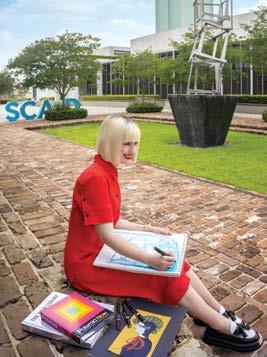
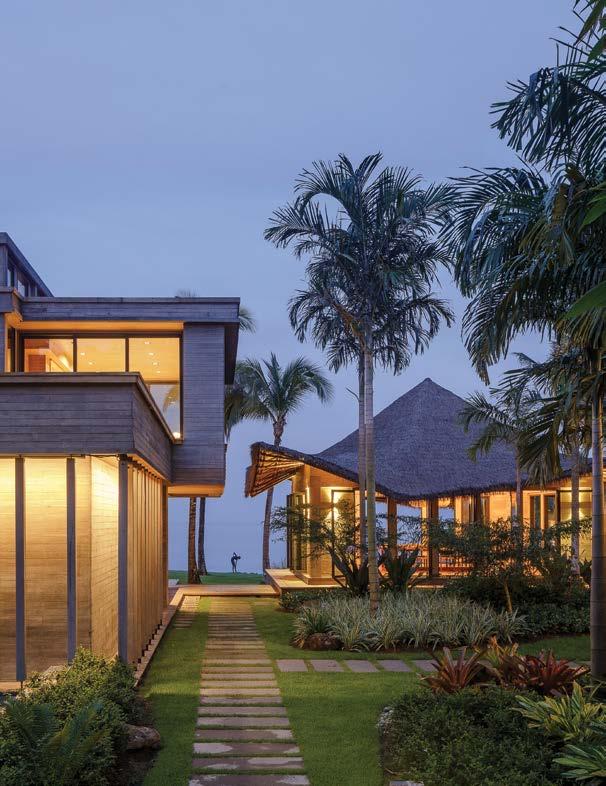
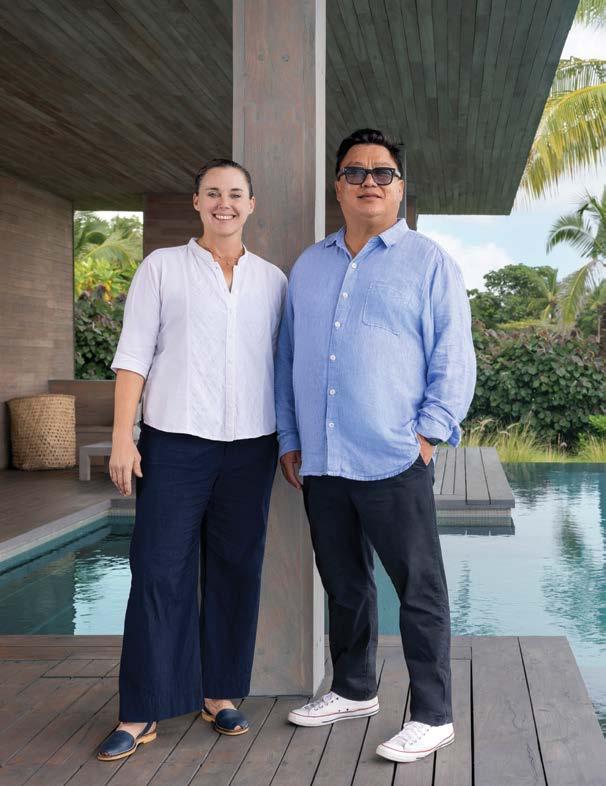
Welcome to SCAD, where students shape imagination into the tangible, testable, unforgettable reality of animated and live-action films, fashion collections, new games, new brands, sneaker designs, architectural feats, and electric vehicles that roll from concept right into the street. At SCAD, our Bees learn to create real work for real clients in real time. Nothing here is ever just homework.
All these future creative triumphs are made possible by the “Four Cs” of SCAD. First the CALLING of talented new students to SCAD, summoned for their brilliance and entrepreneurial daring to join our Happy Hive. Come see for yourself. Listen for that calling.
When you arrive at SCAD, you’re able to build your CHARACTER as a professional — with the help of our extraordinary professors and resources you’ll learn about in these pages, from the SCAD Film Studios backlot to expert coaching for every client pitch. We’ll equip you with every tool to turn pro.
Pretty soon, you’ll be ready for CASTING into a dream role at the world’s best brands, from Apple and Google to Delta Air Lines and Deloitte. With a career coach for life, we’ll have you ready for every interview and portfolio review. The role of a lifetime awaits.
And through your entire SCAD experience, you’ll benefit from remarkable CONNECTIONS, where the university invites elite filmmakers, actors, designers, and other industry leaders to inspire and welcome you into their professions. You’ll see a few of their faces and names in this catalog. Prepare to meet your heroes!
SCAD invites you to study at the biggest and best university for creative professions on the planet, to turn every dream into reality. Start designing your new life today. Together, we’ll make it real.
With love for you and each and every SCAD Bee,
Paula S. Wallace SCAD President and Founder @paulaswallace
130+ SCAD alumni credits on 2025 Academy Award winners and nominees Page 94
750+ All courses taught exclusively by renowned professors
550+ first-place student awards in 2024–25 Page 54
global locations Savannah Atlanta
100 24 / 7 wellness support Page 46 Bee Well students
18,500+ students from
60,000+ alumni network worldwide
employment degree programs
Alumni design showcase in Lacoste, France
100+
100+
Annual events
Annual events
Studentproduced docuseries for PBS
800+ assignments 300+ job offers Collaborations with the world’s most influential brands
SCAD athletics championships in 2024–25
50+
Design for good Page 46
Atlanta
Atlanta is a mecca for luxury, commerce, and culture, and home to some the world’s hottest companies, from buzzworthy startups and blockbuster studios to multinational conglomerates. SCAD is nestled at the heart of it all, where students and alumni live and learn within a sprawling urban canopy and land career-making opportunities.
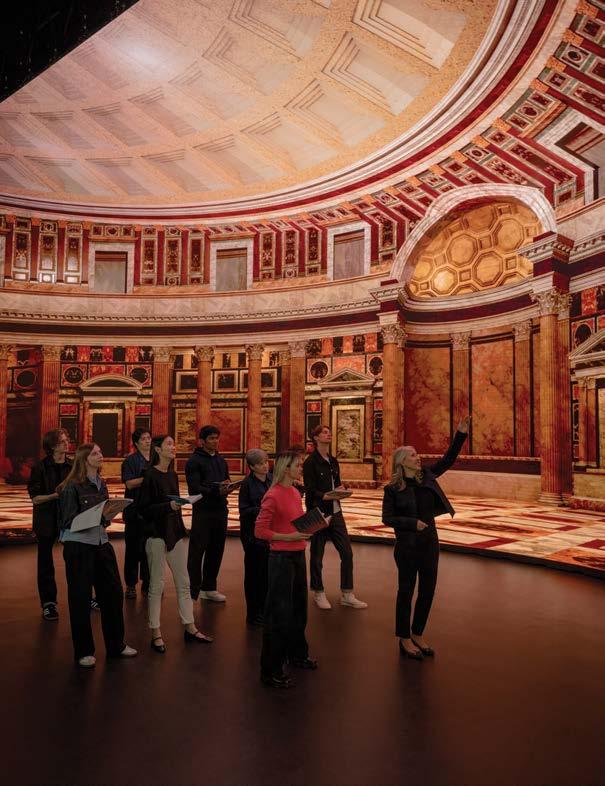
The university’s fastest-growing location, SCAD Atlanta offers next-level technology and resources for every academic pursuit. The LED volume stage and production spaces at SCAD Film Studios in Atlanta equip students with the technology to complete films and TV pilots that rival mega studios. At SCAD Studio, students perfect their masterpieces, props, and more in an advanced, Renzo Piano-designed maker space. Digital studios and labs, machine tools, and physical resources at SCAD Atlanta’s central complex at 1600 Peachtree St. prepare students to tap into an expansive job market. At the university’s own SCAD FASH Museum of Fashion + Film, must-see exhibitions and exclusive screenings complement programs in the top-ranked SCAD School of Fashion and SCAD School of Film and Acting.
Atlanta came out on top as the BEST CITY to start a career, due to its high median income growth rate, ABUNDANT JOB OPPORTUNITIES, and high job satisfaction.
— The Huffington Post
SCAD Atlanta students spread their wings in high-design residential suites in FORTY, FORTY FOUR, and FORTY FIVE, featuring spectacular Midtown views, study spaces, dining, amenities, and more. SCAD acting students spring into Atlanta’s thriving film scene at SCADshow and its two theaters, a 700-seat main stage and an intimate 150seat space, which also host the university’s signature festivals for all things animation, television, and streaming: SCAD AnimationFest and SCAD TVfest. In the adjacent courtyard, SCAD COURT welcomes outdoor performances, screenings, and exhibitions.
Throughout the region, students make their mark on the arts and innovation scene and contribute to the growth of Atlanta’s top companies with SCADpro, the university’s boutique creative consultancy. The SCAD Casting Office — the only casting office in higher education, with locations in Atlanta and Savannah — and SCAD Atlanta’s location near major film and TV studios have helped students and alumni secure onscreen and production roles in acclaimed shows and blockbuster movies, including multiple Marvel Cinematic Universe projects. Students also find opportunity in the area’s expansive luxury market, with nearly every major brand represented within its landscape of hotels, jewelry, fashion, and more.
SCAD’s proximity to Hartsfield-Jackson Atlanta International Airport, the world’s busiest and most connected airport, make it an ideal location for international students and globe-trotting travelers, with more than 150 domestic and 70 global destinations among its daily departures. Energy, inspiration, and entertainment are just steps away in Atlanta’s chic shops, major venues, and 300-plus acres of forested green spaces, including Piedmont Park, Atlantic Station, Buckhead, and the famed Atlanta Beltline.
FORTY FIVE’s rooftop pool is an oasis of relaxation for students in Midtown Atlanta.
ACCLAIM FOR ATLANTA
Best Big City for Film Production MovieMaker magazine
Best City to Start a Career WalletHub
Most Livable Cities
The Economist
Best City to Start a Business LinkedIn
Best of the World National Geographic
World’s Busiest Airport Airports Council International
No. 1 Region for Film Production Business Facilities Magazine
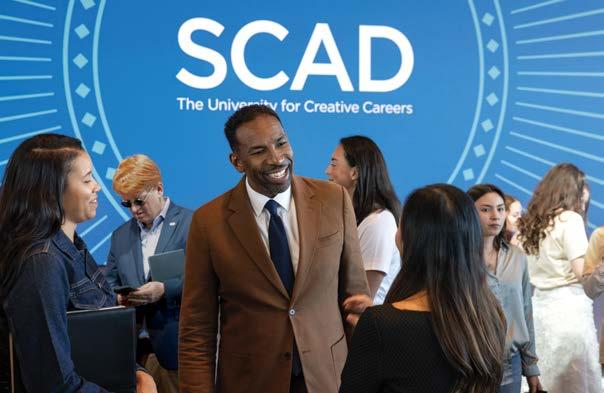
At the forefront of design innovation and entrepreneurship, SCAD Atlanta students connect with influential leaders like Mayor Andre Dickens.
Empowered by the university’s unparalleled resources, SCAD Atlanta students create their own films, documentaries, and TV series like chefATL.
SCAD Atlanta students live and learn within a vibrant, tight-knit creative community.
Savannah
Set within one of the largest historic districts in the nation, SCAD Savannah and its future-forward degree programs offer students a picturesque launchpad for creativity and innovation. SCAD students live and learn in the most distinctive built environment in higher education, among more than 70 new and historic structures revitalized by SCAD and dappled throughout this charming coastal city, including modern apartment- and suite-style residence halls and academic buildings with advanced technology.
Creative adventure abounds for the next generation of design leaders in these storied spaces, which house classrooms, studios, and high-tech labs — as well as unparalleled SCAD-specific resources like the innovation and design studio SCADpro, where top companies like Google, BMW, Nike, and Deloitte tap SCAD students to dream up their next big ideas. At SCAD Film Studios in Savannah, students enjoy access to the university’s cutting-edge LED volume stage and a nearly 11-acre Hollywood-style backlot, the largest and most comprehensive university film complex in the U.S., which includes film sets of tree-lined brownstones, gritty city streets, and more than a dozen storefronts as well as a production design studio for fabricating props, sets, costumes, and more.
With its rich history, award-winning restaurants, and inimitable Southern hospitality, Savannah is SO MUCH MORE THAN MEETS THE EYE. Great shopping, luxury hotels, and proximity to beaches and parks add to Savannah’s allure and that’s barely skimming the surface. Savannah’s culture and people will leave you reinvigorated. — Travel + Leisure
SCAD Savannah venues host a packed calendar of events, including the university’s signature events and grandest celebrations. The award-winning SCAD Museum of Art sparks endless inspiration, presenting acclaimed exhibitions by today’s most relevant artists and welcoming major guests to a trio of annual events: visionary creatives for SCAD deFINE ART, design and business leaders for SCADstyle, and trendsetting fashion student designers and industry icons for the SCAD FASHION runway show. SCAD’s two historic movie palaces, Trustees Theater and the Lucas Theatre for the Arts, welcome dozens of Hollywood stars and thousands of guests for the SCAD Savannah Film Festival, the largest university-run film festival in the world. At these events and more, SCAD students step into the spotlight, connect with VIPs, and gain exclusive insight into their future industries.
From the city’s vibrant squares to Tybee Island’s sunny shores just a short drive from downtown, the SCAD imprint is evident across the Hostess City of the South. A cadre of alumni-owned businesses elevate the allure of Savannah’s culturally rich National Historic Landmark District. Alumni-led architecture and design firms preserve and reimagine the city’s storybook charm. Renowned and emerging SCAD artists showcase their work at alumni-founded galleries and boutiques. And fellow SCAD luminaries curate the décor, ambiance, and inventive menus at the area’s nationally recognized cafés and restaurants.
SALUTE TO SAVANNAH
World’s Greatest Places
Time
Top U.S. Cities
Travel + Leisure
No. 1 City for Creative Professionals
Thrillist
Top Travel Destination in the U.S.
Goop
Best U.S. Small Cities
Condé Nast Traveler
The South’s Best Cities
Southern Living
Best Small Cities for Filmmakers
MovieMaker magazine
SCAD students enjoy sun and fun in Savannah’s subtropical climate, close to local beaches and spectacular scenic views.
SCAD residence hall communities and classroom workspaces are a hive of student activity throughout the year.
At the
Through SCAD University Recreation‘s outdoor excursions, students explore the natural wonders of the region.
SCAD Savannah Film Festival, students interact on the red carpet with honorees and luminaries like actor and producer Daisy Ridley.
Lacoste
For more than 20 years, SCAD Lacoste has welcomed celebrated creative luminaries and culture-curious students to seek inspiration from the pastoral region of southern France made famous by Monet, van Gogh, and Picasso. With idyllic landscapes, illustrious local attractions, and thoughtfully preserved architectural marvels for classrooms, newly enrolled and first-year students, returning students, and alumni are beckoned by the transcendent experience of adding an international perspective to their studies, artistic practices, and global careers.
Even before embarking on their SCAD education, students can visit Lacoste through Pre-Bee, a weeklong introduction to university life accented by an unforgettable initiation among lavender fields and lifelong friends. At Lacoste, the university’s study abroad location, students seamlessly pursue their SCAD degrees. Courses vary each quarter, with offerings across programs such as advertising, animation, art history, fashion, film and television, interior design, painting, and photography. Students also participate in Lacoste-based SCADpro missions, connecting with companies throughout Europe as they pitch problem-solving proposals and projects.
SCAD graduates may return to the region to enjoy an artist’s residency as an ambassador of the SCAD Alumni Atelier. While the Luberon Valley and its verdant charm form a resplendent, old-world backdrop to the time-honored village, SCAD Lacoste’s digitally connected spaces, high-end resources, and modern amenities help catalyze artistry and innovation for students and alumni.
A slate of year-round SCAD programming has made Lacoste an international destination for design, fashion, film, and more. The university’s globally acclaimed museum SCAD FASH Lacoste has hosted sweeping surveys of fashion legends including Pierre Cardin, Isabel Toledo, Azzedine Alaïa, Julien Fournié, Christian Lacroix, and Christian Dior while SCAD Lacoste AnimationFest and the SCAD Lacoste Film Festival celebrate international contributions to visual storytelling.
SCAD Lacoste offers the university’s preeminent educational experience immersed in the beauty, culture, and history
GLOBAL GUESTS
Jean Paul Gaultier CFDA Award-winning fashion designer
Ruben Toledo Artist
Janty Yates Academy Award-winning costume designer
Bob Weis
Former Walt Disney Imagineering president
Chioma Nnadi Vogue editor
Jeremy Irons Academy Award-winning actor
Jean-Pierre Jeunet
Academy Awardnominated director
Ilse Crawford
Interior and furniture designer
Aaron Taylor-Johnson Golden Globe Awardwinning actor
Joey Shimoda Architect
Stefano Pilati Fashion designer
Phoebe Waller-Bridge Emmy Award-winning actor and writer
of the Luberon Valley.
Students gain a worldly perspective and network on excursions to premier destinations like Art Basel Paris at the Grand Palais.
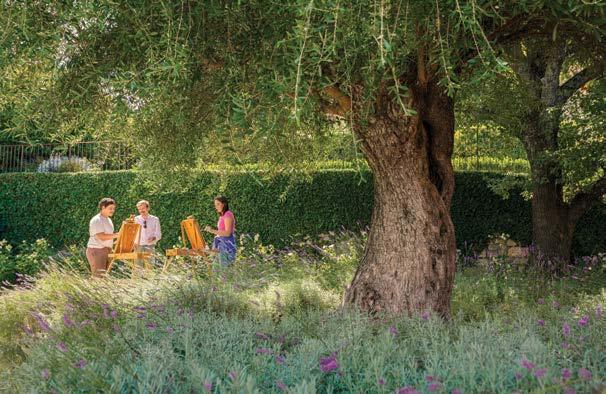
Emerging visionaries hone their artistic skill sets amid the magical landscape of Provence.
Students connect with collaborators and find inspiration in Lacoste’s boundless creative energy.
SCADnow
For the artist, designer, and professional on the go, SCADnow delivers unparalleled distance education on demand and in real time. Through the university’s signature online learning platform, students connect with a vibrant digital community, whether on-ground in Atlanta, Savannah, or Lacoste, or logging in from infinite locales around the world.
The flexible, award-winning SCADnow platform empowers students from all backgrounds to gain expertise in their disciplines with instruction from world-renowned faculty. Depending on their major, students can take all or part of their program through SCADnow, effortlessly shifting modalities to fit their unique schedules.
SCADnow courses meet virtually via Zoom at designated times throughout the week and feature live, online lectures, demonstrations, discussions, and collaborations. For students who prefer to experience SCADnow asynchronously, engagement with professors and peers is amplified through on-demand discussions, course content, and recorded class sessions. To complement the “in-class” feel of this digital environment, SCADnow offers students a robust slate of extended learning opportunities and support services.
Outside the digital classroom, SCADnow students can participate in virtual conversations and master classes with creators and trendsetters in art, business, design, and entertainment. And, through SCADamp, the university’s professional presentation studio, students develop and deliver compelling pitches that help them capitalize on career-making moments.
SCADnow maximizes connectivity and choice while preparing students for the realities of working and collaborating as creative professionals. SCADnow learning opportunities also extend to professionally driven SCAD initiatives, like online collaborations with top companies via SCADpro, the university’s boutique creative consultancy, as well as virtual employer recruitment and interviews. Through SCADpro, SCADnow students have partnered with Deloitte to solve for complex government and public sector needs, advanced strategic design principles for Samsung, and developed a scalable brand ecosystem for Beachview.
SCAD now ACCOLADES
Gold Award for Website Training and Knowledge-base MUSE Creative Awards Catalyst Award in Training and Professional Development Anthology Award for Excellence in Design Practice Online Learning Consortium Award for Excellence in eLearning Instructional Technology Council Gold Level Trendsetter Award U.S. Distance Learning Association Catalyst Award for Leading Change Anthology
SCADnow students can tap into the university’s preeminent creative curriculum from everywhere in the world at any stage of their educational and professional journeys.
Academic Experience
Across 100 degree programs — top-ranked by The Hollywood Reporter, The Business of Fashion, Red Dot Design, The Rookies, DesignIntelligence, and Variety, among others — SCAD prepares students to excel in the classroom and future careers through essential learning.
The First Year Experience course introduces every new undergraduate student to university life, helping them forge connections with fellow first-time college classmates and explore the range of resources and student clubs at SCAD. Taken in their first academic quarter, the FYE program also helps incoming students set expectations for SCAD courses, which are taught on the 10-week quarter system and mirror the fast-paced deadlines and cross-collaboration of the professional world.
SCAD constantly researches and reimagines the wide range of degree programs the university offers to ensure students learn the critical skills and knowledge necessary for successful careers. The university consults industry leaders, gathers data on business and design needs through alumni and professional mentors as well as SCADpro, and collects student feedback to inform each program’s genesis and continued evolution. This transformative approach, lauded by CBS News as a singular example of innovation in higher education, directly leads to success, with SCAD and its students earning more than 1,700 awards representing excellence in academic departments in 2024–25, including more than 550 first-place wins.
As students advance in their degree programs, SCADextra extends the university learning experience. With thousands of workshops and coaching sessions offered each quarter at no additional cost, students augment their in-class studies, expand their SCAD network, and create their ideal academic experience. Enriching in-class learning, SCADextra workshops cover a variety of topics, from tutorials on how to perfect award and competition submissions to investigations of potential professional paths like footwear patterning and medical interior design. Through SCADextra coaching, students elevate their academic performance and achieve their true potential.
SCAD is ranked NO. 1 BEST ART SCHOOL in the U.S. by Art & Object.
In addition to SCAD’s digitally connected spaces, students can download a vast array of software packages on their personal computers, made available by the university at no extra cost, including the full Adobe Creative Cloud; Autodesk programs like 3ds Max, AutoCAD, Maya, and Revit, among others; and Nuke and Katana modeling and motion media programs. In global SCAD Libraries, students have access to more than 1 million print and electronic resources to augment and enhance their academic pursuits.
Across locations, SCAD students learn from faculty who are experts in their fields, like chair of industrial design Jr Neville Songwe.
Graduate Studies
From technology to global commerce, health care to engineering and beyond, advanced expertise equips ambitious creatives with the tools to thrive in the professional world — and SCAD helps make it happen. Careers built on master’s-level knowledge and skill are expected to grow more than 12% between 2023 and 2033, according to the U.S. Bureau of Labor Statistics. At SCAD, graduate students are empowered to realize their highest aspirations of study. Through in-demand programs, flexible learning options, and an unrivaled network of faculty and industry mentors, SCAD graduate students become thought leaders spearheading innovation for international companies and their own lucrative brands.
In specialty graduate programs like design for sustainability, creative business leadership, luxury and brand management, sneaker design, and interactive design and game development — many the first of their kind — students prepare to helm the creative economy. Across all programs, students polish their presentation and communication skills while mastering narratives, critical thinking, and future-forward problem-solving to help them thrive in today’s professional marketplace.
Graduate students develop evolved, analytical, and practical perspectives in their chosen disciplines through coursework that embodies SCAD’s signature blend of research, analysis, studio creation, and fieldwork. Peer and individual critiques and seminar discussions boost students’ development of a creative-critical framework, and electives empower them to explore new fields for inspiration, engendering a holistic and integrated understanding of creative disciplines.
SCAD undergraduate students can maximize the impact of their education through GRADpath@SCAD, a customized course of study that culminates in an advanced degree. GRADpath@SCAD students excel in the academic arena, honing their career focus and leadership abilities as they seamlessly transition into graduate studies and the professional world. SCAD also offers the Integrated Path to Architectural Licensure, a prestigious academic track that enables architecture students to complete their B.F.A. and M.Arch. degrees as well as the Architect Registration Examination in as few as seven years.
I returned to SCAD to pursue my M.F.A. because it’s always been the place that UNDERSTANDS AND SUPPORTS me. SCAD has truly improved my work and helped me grow into a stronger, more confident designer.
ISAAC YU
SCAD M.F.A. fashion; B.F.A., fashion, 2022
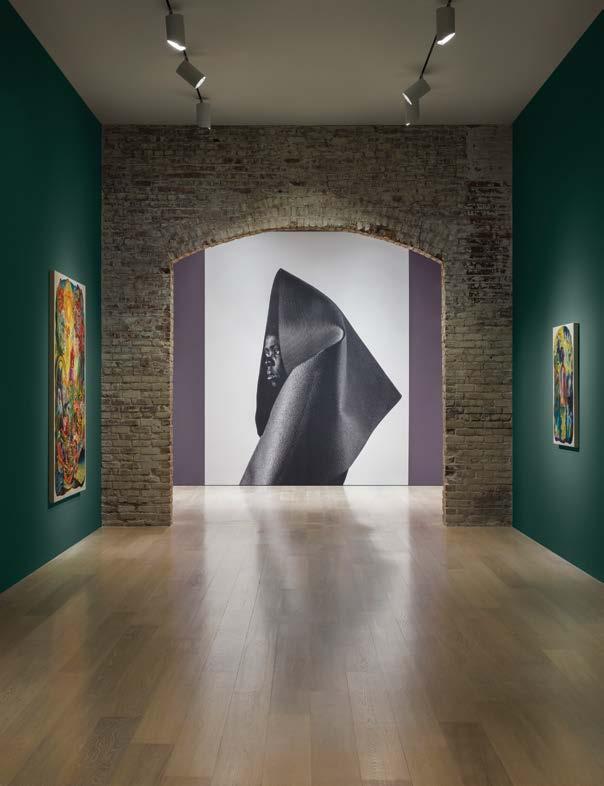
Graduate students like SCAD Atlanta 2025 Excelsus Laureate and photographer Kourtney Iman King continue their ascension to the echelons of culture through exclusive opportunities at the university and beyond, achieving global accolades for their creative endeavors including features in premier exhibitions and publications.
Faculty
Renowned creatives, celebrated artists, and top business leaders, SCAD’s esteemed professors are innovators in their chosen fields and in the classroom, where they lead new generations of designers and entrepreneurs. Internationally acclaimed, SCAD’s educators across 100 degree programs include Emmy, Oscar, and Peabody winners as well as recipients of awards from the Cannes Film Festival, The Hollywood Reporter, and the American Institute of Architects, among others.
SCAD is led by an AWARD-WINNING FACULTY of more than 750 expert professors.
With a focus on career-defining mentorship, SCAD’s faculty prepares talented students for creative careers through informed instruction, industry experience, and artistic excellence. Business of beauty and fragrance students make their mark with guidance from De Sole School of Business Innovation dean Meloney Moore, the former executive director of marketing at Estée Lauder. In the user experience (UX) design program, burgeoning design pros interface with professor BC Hwang, former senior director of Samsung Electronics’ Mobile UX Innovation Lab. Emerging interior designers learn to create human-centered spaces from professor and SCAD alum Brian Sweny, who has led design, restoration, and adaptive reuse projects for distinguished institutions like the New York Public Library and the Bronx Zoo.
FACULTY INDUSTRY EXPERIENCE
Activision Blizzard Cartoon Network DC Comics Disney Electronic Arts
Elle Decor Google The Guardian IBM Interscope The Metropolitan Museum of Art Netflix The New York Times Oculus Perkins+Will Rolling Stone Samsung Sony Versace Vivienne Westwood Wizards of the Coast
In the SCAD School of Visual Communication, sequential art students conceptualize their own worlds by shadowing Eisner Award-winning comic book artist and cartoonist Rashad Doucet, the illustrator of Invader Zim, Rick and Morty, and Pax Samson, among others. On stage, screen, and behind the scenes, student stars learn from actor and SCAD chair of film and television D.W. Moffett, whose credits include How to Get Away with Murder, Friday Night Lights, Chicago Med, Switched at Birth, and more.
SCAD students receive individual attention and work alongside these highly accomplished educators in small classroom settings. Professors also bring wide-ranging industry connections into the classroom, offering unparalleled networking opportunities for students that lead to coveted internships and accelerated career paths.
SCAD faculty like advertising professor Reggie Harrison bring a wealth of creativity, expertise, and career connections to university classrooms. All SCAD courses are taught exclusively by faculty.
Career Preparation
From day one of classes to first jobs and leadership roles, SCAD students and alumni are supported by the university’s office for career and alumni success (CAS). With assistance available to SCAD Bees everywhere in the world, CAS offers resources, events, and advisement opportunities to help them thrive in their chosen fields.
Through individualized coaching and guidance from their assigned career adviser, SCAD students customize a Career Action Plan to accomplish their goals. They work closely with a CAS adviser to develop standout résumés and portfolios, secure internships, and ace interviews and presentations at SCAD signature events. With career-defining resources like SCADpro, the university’s innovation and design studio, and SCADamp, the university’s professional presentation studio that turns novices into dazzling presenters, students gain firsthand professional and public-speaking experience. And, at CAS-hosted recruiting events like SCAD Career Fair, SCAD Out to Launch, and a regular lineup of company visits, students pitch their best work and secure pivotal internship and job opportunities with more than 700 visionary employers.
Beyond a world-class creative education, a SCAD degree offers access to a prestigious global network of professional connections more than 60,000 strong. As creative leaders in their chosen fields, SCAD alumni return to the university as peers, collaborators, and future employers, serving as mentors and participating in signature events and classroom visits where they illuminate the path for current students looking to follow in their footsteps.
Support from SCAD continues long after students cross the graduation stage. CAS helps graduates maximize their expressive potential and reach professional goals with networking events, alumni mixers, communication coaching, and more throughout the year hosted online or in major cities by the SCAD Alumni Society. Through SCADpro Fund, the university invests in emergent alumni entrepreneurs, while the SCAD Alumni Atelier ambassadorship empowers graduates to advance their artistic and professional endeavors with a focus on brand building and entrepreneurship.
SCAD provides RICH RESOURCES and various student opportunities for study, internships, or employment. You dare to do it and ask for it because you’re already prepared. No matter your venture, SCAD PAVES THE WAY.
HSIANG-TING YEN
Founder, HTY Jewelry
SCAD M.F.A., jewelry and objects, 2012; SCAD M.A., metals and jewelry, 2010
Through classroom visits, portfolio reviews, and student mentorship, SCAD Executives in Residence like former president and CEO of Hermès Americas Bob Chavez offer students additional opportunities to refine their professional credentials on the path to securing impactful careers. alumni employment
*A 2024 study found that 99% of recent SCAD graduates were employed, pursuing further education, or both within 12 months of graduation.
The world’s most influential brands look to SCAD for the design solutions of tomorrow through SCADpro, the university’s collaborative design studio. As the preeminent source for creative education, SCAD connects students and faculty to elite companies, harnessing the power of design to generate future-forward ideas, products, and systems — all within the university’s world-class academic environment.
Recognized as the premier innovation generator in higher education, SCADpro infuses fresh thinking and creative expertise into the groundbreaking results it delivers to clients large and small every academic quarter. Operating across all three of the university’s on-ground locations and online, SCADpro has delivered key insights on how to maximize efficiency, understand Gen Z and Gen Alpha consumers, and boost bottom lines for a client list that includes several of Forbes’ 100 most valuable companies.
Through more than 800 assignments, SCADpro students from the university’s 40-plus majors have collaborated with titans of finance, health care, hospitality, entertainment, technology, automotive, e-commerce, and more. Embodying the university ethos of rigorous education, professional collaboration, and comprehensive career preparation, SCADpro helps students develop essential career attributes like flexibility, communication prowess, and skillful project management — all while they complete assignments that fulfill their degree requirements.
For many, SCADpro leads directly to top jobs after graduation. SCAD animation alum Adriana Manrique Gutierrez wowed NASA partners on an assignment creating educational materials and outreach marketing for ICESat-2, a satellite measuring ice-sheet elevation. Gutierrez was hired by NASA as a multimedia specialist on public outreach for the multinational, $10 billion James Webb Space Telescope. User experience (UX) design alum Seth Leister collaborated with Deloitte on three SCADpro assignments — out of eight total he completed while a SCAD student! — and was hired as an analyst soon after graduation, joining more than 30 other SCAD alumni recruited by Deloitte after previous SCADpro partnerships. SCAD user experience (UX) design alum Angela Martin pitched SCADpro concepts for a buildyour-own children’s computer kit to Lenovo and was hired to join the company immediately after graduation.
Collectively, more than 8,000 students have enhanced extraordinary résumés and portfolios through SCADpro assignments and design challenges with companies like IBM, Microsoft, Walt Disney lmagineering, and more. CBS Sports asked SCADpro to develop immersive augmented reality concepts for the network’s football broadcasts and studio show. BMW asked students to apply AI and mixed reality technology to their marketing and car-buying experiences. Prestige wellbeing brand Philosophy tasked SCADpro students with creating a multiplatform marketing campaign. Sam Edelman partnered with SCADpro to design a line of sneakers sold online and in Nordstrom stores. And Paramount+ sought SCADpro perspectives for original content and experiences.
A multidisciplinary team of SCADpro students designed the lobby space of Hyundai Mobis’ new production facility in Georgia, part of the car manufacturer’s massive, electric vehicle-focused Metaplant.
In other notable assignments, multidisciplinary student teams have designed new TV broadcast graphics for WWE, applied real-time technology to theme park concepts for Universal Creative, helped minimize patient fall injuries for Mayo Clinic, redesigned café spaces for The Coca-Cola Company, amplified a college student-themed ad campaign for Walmart, and honored Savannah’s history in a curated color palette for Sherwin Williams. Through short-term design challenges sponsored by global partners, SCAD students and faculty ideate on big-picture issues like the future of K–12 education, remote work, and adapting restaurants to fit contemporary needs.
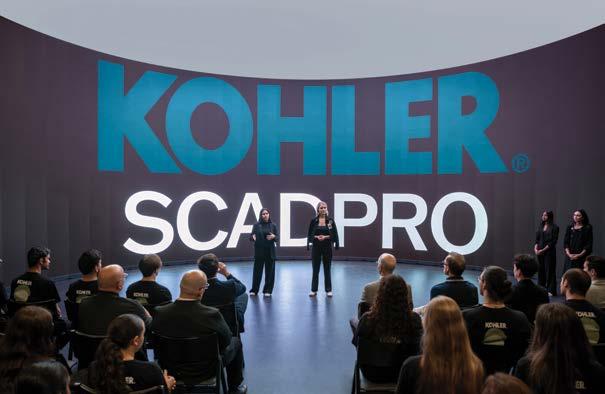
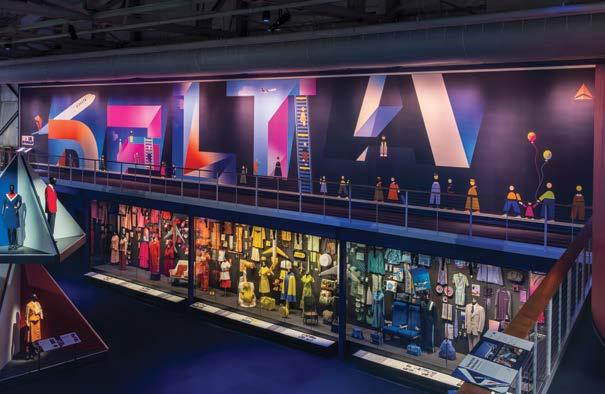
In recent SCADpro collaborations, students have conceptualized new outdoor luxury and wellbeing products for Kohler (above) and designed an original digital mural for the Delta Flight Museum in Atlanta (below).
SCAD’s frequent and fruitful partnerships with Deloitte, the world’s leading service provider, led to the establishment of Deloitte Foundry in Savannah in 2023. This partnership between SCAD and Deloitte galvanizes SCAD students to join groundbreaking new initiatives, including the cuttingedge Deloitte Rapid Implementation Studio, Digital Frontier Studio, and continued SCADpro creative assignments with Deloitte.
SCADpro also prepares students to pursue their own entrepreneurial endeavors. Students are provided the resources and tools to create an original product or service concept in SCAD StartUp, a weeklong business challenge led by SCADpro and the user experience design student club FLUX. After graduation, SCADpro partners with alumni to support them with the mentorship and momentum necessary to launch successful new companies, products, and services in the global marketplace.
SCADpro students collaborated with design firm Provost Studios to envision the future of extended reality through the university’s LED volume stage and other next-generation technology, exploring XR’s potential usage in sports broadcasting and fan engagement, health care, and financial services.
SCADamp WORKSHOPS
Prepare for Success
Map Your Story
Visualize Your Brand
Design Your Slide Deck
Refine Your Presence
Choreograph Your Presentation
Curate Your Story
Engage Your Audience
Connect as a Team
Embrace Improvisation
Whether they are first-time presenters or seasoned pros, SCAD students and alumni prep for the peak-performance moments that launch dream careers and ignite thriving brands and businesses with SCADamp, the university’s professional presentation studio. To ace these life-changing experiences, SCAD students and alumni connect with veteran SCADamp communication coaches through a tiered workshop series and individual sessions centered on verbal, visual, and interpersonal communication.
With its ADVANCED TECHNOLOGY and world-class coaches, SCADamp sets the stage for students to be hired.
A complement to the university’s curriculum, SCADamp teaches participants to speak, visualize, and connect across a spectrum of career-making contexts, furthering the university’s mission to prepare talented students for creative professions. Students can track their progress, much like their degree requirements, and receive a certificate of completion after finishing 10 SCADamp workshops. Students also enjoy 24/7 access to a SCADamp digital platform and video resource library, which hosts interviews with actors, voiceover talent, and producers, and features step-by-step tutorials on how to maximize sound, lighting, and camera angles.
From Zoom to the boardroom, SCADamp equips students and alumni with the latest technology and presentation stages — including videoconference spaces and close-quarters simulated speaking environments like elevators and airplane seats — to share their work, ideas, and credentials with polish and power. This presentation preparation extends to the entire university community and beyond, with SCADamp hosting teams from business leaders like Google for executive coaching sessions.
SCADamp coaching helped SCAD fashion alum Christopher John Rogers debut his brand on a global stage when he won the CFDA/Vogue Fashion Fund. A fellow fashion graduate, Naecia Dixon sharpened her presentation, interviewing, story-mapping, and visualization skills through SCADamp en route to a trio of major accolades: the Fashion Scholarship Fund Case Study Competition, the FSF Chairman’s Award, and the Virgil Abloh Post-Modern Scholarship. SCADamp coaches have also supported SCAD teams that have gone on to win international competitions like Walt Disney lmagineering’s Imaginations Design Competition and the Global Wellness Summit’s Shark Tank of Wellness Student Competition.
Masters of communication, visual presentation, and presence, SCADamp coaches teach students to share their work and stories with polish, power, and poise.
Specialized Resources
Throughout its film sets, design shops, computer labs, and advanced studios, SCAD offers a veritable wonderland of physical and digital resources for students whose ambitious vision calls for a cutting-edge arsenal of next-gen tech. At the university’s locations in Atlanta and Savannah, Georgia, and Lacoste, France, as well as online via the award-winning SCADnow platform, students’ access to specialized technology and industry-leading software is intentional and designed to equip them with expertise in the real-world landscape of the studios, startups, and firms they will one day lead.
At SCAD, student films and TV pilots take center stage on the university’s advanced LED volume stages at SCAD Film Studios in Savannah and Atlanta. In these elite environments of infinite possibility, powered by Unreal Engine and stYpe RedSpy camera tracking systems — the same type of system used by Disney’s blockbuster Marvel Cinematic Universe films and smash-hit TV shows like The Mandalorian and House of the Dragon — students shoot lush cinematic adventures on 4K cameras. In Savannah, the expansive SCAD Film Studios is also home to an 11-acre backlot, the largest of its kind at any academic institution, offering students unprecedented access to professional-level film and TV studio space.
These film locations are complemented by a full suite of postproduction spaces: Foley soundstages and Icon D-Command recording studios empower sound design students to compose soaring soundscapes while green screen studios, Vicon motion capture systems, and software — like Blender, Toon Boom, and Katana (created by SCAD grad Steve LaVietes, netting him an Academy Award!) — enable animation, motion media design, and visual effects students to make magic. At SCAD’s networked render farm at Montgomery Hall, students working in programs like Houdini, Maya, and RenderMan significantly cut down processing times. Aspirational game developers can program their chart-topping apps with Unreal and Unity and explore these worlds with the latest VR headsets — all available at The Shed in Savannah — while motivated music producers can create tracks with Ableton Live, the same program used by icons like Daft Punk, Skrillex, and Calvin Harris.
Beyond its digital labs and production studios, SCAD’s physical resources benefit students across dozens of future-forward majors. In Atlanta, immersive reality, industrial design, and user experience (UX) design students innovate in revolutionary design and digital labs at FORTY FIVE, while animation and visual effects students generate new realms in digital studios in the central complex at 1600 Peachtree St. At SCAD Savannah’s Gulfstream Center for Design, students in furniture and industrial design transform their concepts into corporeal objects, prototyping their plans on a range of 3D printers, an injection molding machine, or a CNC mill and routers. And in Number Nine’s digital textile lab or on Pepe Hall’s Jacquard loom, SCAD fashion and fibers students in Savannah develop, weave, and print their signature patterns in style.
Student and external productions can stage the streetscapes of SCAD Film Studios’ expanded backlot in Savannah to represent a range of cities and eras.
ON-SET TECH
Two LED volume stages
4K cameras
Chroma key green screen studios
Foley and automated dialog recording stages
Hasselblad XS film scanners
Icon D-Command recording studios
Phase One l00MP Camera Systems
Vicon motion capture studios
CHARGE YOUR CREATIVITY
Software from Adobe to ZBrush
3D printers
Chromira ProLab printer
CNC mill and routers
Injection molding machine
Jacquard loom
EXHIBITING ARTISTS
Nina Chanel Abney
Miya Ando
Iván Argote
Diedrick Brackens
Pia Camil
George Clinton
Sarah Crowner
Raul De Lara
Cao Fei
Doreen Lynette Garner
Hassan Hajjaj
Chase Hall Jónsi
Hayv Kahraman
Ken Gun Min
Marilyn Minter
Zanele Muholi
Rashaad Newsome
Toyin Ojih Odutola
Ebony G. Patterson
Christina Quarles
Samuel Ross
Rose B. Simpson
Hank Willis Thomas
Carrie Mae Weems
Museums
Hosting visionary artists and designers on an international stage, SCAD exhibitions engage every creative dimension — from painting, sculpture, and photography to couture garments, film, and digital media — complementing the future-forward disciplines offered at the university. SCAD museums in Atlanta and Savannah, Georgia, and Lacoste, France, enlighten minds and elevate dialogue year-round with public programming for all ages, including signature events, lectures, screenings, workshops, gallery talks, and tours. With quarterly excursions between Atlanta and Savannah, SCAD students at both locations enjoy the breadth of everything SCAD museums have to offer.
SCAD MUSEUM OF ART
Imaginative exhibitions across more than 10 galleries at the SCAD Museum of Art bring international artists to connect with SCAD students and enrich Savannah’s cultural landscape. A premier contemporary art museum, SCAD MOA shows and commissions work by emerging and established artists at the forefront of visual and material culture. SCAD MOA’s dedicated alumni gallery offers SCAD graduates global exposure and major career milestones like their first solo museum exhibitions. Permanent gallery space is also dedicated to exhibiting the work of contemporary Black artists in connection with the museum’s Walter and Linda Evans Center for African American Studies, which celebrates the depth and expressive legacy of African American art and culture.
As an artist, I have always looked to the NEXT GENERATION for creativity and inspiration. I am thrilled to have the opportunity to share my practice at the SCAD Museum of Art, an institution that is renowned for its multidisciplinary approach to art and design.
GEORGE CLINTON
Legendary artist and musician
Exhibitions at the SCAD Museum of Art highlight the global influence of creative expression, featuring work by internationally acclaimed artists such as Ken Gun Min and SCAD deFINE ART 2025 honoree Zanele Muholi.
SCAD FASH MUSEUMS
Captivating viewers with iconic looks from the runway to the screen, SCAD FASH Museum of Fashion + Film in Atlanta and SCAD FASH Lacoste in resplendent Provence, France, celebrate fashion as a universal language, garments as important conduits of identity, and film as an immersive and memorable medium. Lauded by eminent fashion publications including Vogue, W Magazine, and Vanity Fair, SCAD FASH museums present exhibitions, films, and events that mine the rich and storied legacies of fashion history to inform contemporary designers and inspire future innovations. Connecting students and visitors to internationally renowned fashion designers, filmmakers, and photographers, these vital resources further cultural and creative exploration.
It is exciting to share a creative dialogue with the next generation at SCAD and inspire them to feel the full JOY OF CREATION and invention. What SCAD FASH does so brilliantly is help students see how all the disciplines can intertwine — that ANYTHING IS POSSIBLE in their work if it is achieved with sincerity and love.
RUBEN TOLEDO
Famed artist and fashion illustrator
RECENT SCAD FASH EXHIBITIONS
Christian Dior: Jardins Rêvés Campbell Addy: The Stillness of Elegance Jeanne Lanvin: Haute Couture Heritage Sandy Powell’s Dressing the Part: Costume Design for Film Imane Ayissi: From Africa to the World CinéMode par Jean Paul Gaultier Manish Arora: Life Is Beautiful Entering Modernity: 1920s Fashion from the Parodi Costume Collection Cristóbal Balenciaga: Master of Tailoring The Blonds: Glamour, Fashion, Fantasy Christian Lacroix Habille Peer Gynt pour la Comedie-Francaise Julien Fournié: Haute Couture Un Point C’est Tout! Robert Fairer Backstage Pass: Dior, Galliano, Jacobs, and McQueen Madame Grès: The Art of Draping Azzedine Alaïa: L’Art de la Mode Isabel Toledo: A Love Letter Ruth E. Carter: Afrofuturism in Costume Design Robert Wun: Between Reality and Fantasy
SCAD FASH exhibitions like Christian Dior: Jardins Rêvés offer fresh contemplations on style and beauty, celebrating past, present, and future innovations in fashion.
ONCE A BEE, ALWAYS A BEE
SCAD Art Sales
SCAD Museum of Art alumni gallery
SCADpro Fund investment
SCADamp coaching
SCAD Alumni Atelier ambassadorship
Après SCAD Alumni mentorship
Career coaching
Alumni Advancement
Support for SCAD students continues well after graduation with evergreen alumni resources that elevate careers across art, design, and business sectors. Through SCAD Art Sales, the university’s full-service art consultancy and curatorial collective, SCAD artists gain elite representation and access to an international clientele, earning commissions for high-profile installations, interior design placements, public murals, and film and television productions, as well as acquisitions by prestigious collectors. Graduates also benefit from global exposure and reach career milestones with solo museum exhibitions in the dedicated alumni gallery at the SCAD Museum of Art
Complementing the university’s professional design studio, SCADpro, which connects students with the world’s most influential companies, SCADpro Fund invests in new ventures by SCAD alumni, helping them scale faster and push inventive boundaries with innovative solutions for business challenges. Supported by the resources of SCADpro Fund, alumni entrepreneurs build brands, studios, and businesses that earn international acclaim, simultaneously nurturing their communities and creating new internship and job opportunities for SCAD students. Further honing graduates’ professional aptitude, the university’s SCADamp studio offers personalized consultations that equip alumni — like The Big Favorite founder Eleanor Turner and fashion designer Christopher John Rogers — with the pitching and presentation prowess to secure big financial backers or shine in major media moments.
The SCAD Alumni Atelier, conceived and endowed by SCAD President and Founder Paula Wallace, offers graduates the time, space, and resources to immerse themselves in the creative process and launch a new era of their work. SCAD Alumni Atelier ambassadors advance their careers, strengthen their connection to the university, and join an exceptional cohort of venturists, artists, designers, and scholars who return to the SCAD location of their choosing to create, ideate, and build personal brands and businesses. Global networking summits like Après SCAD further enrich graduates’ professional and personal endeavors, connecting them with esteemed industry professionals and fellow alumni.
Through the SCAD Alumni Society, graduates at every step of their career champion future generations, sharing their professional knowledge and insight. At preeminent SCAD signature events and through master classes, studio visits, and critiques, alumni share wisdom, review portfolios, and welcome the newest members of the SCAD network — connections that translate to symbiotic career opportunities for students and graduates alike.
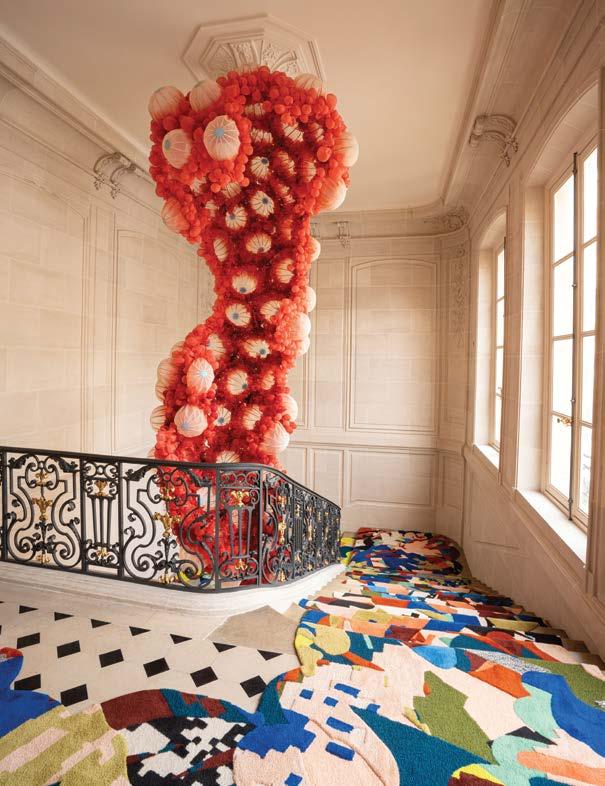
SCAD’s specially curated showcases at venues like Design Miami in Paris highlight the innovative global practices of graduates such as fibers alumni Lærke Lillelund (pictured; based in Copenhagen, Denmark) and Trish Andersen (based in Savannah, Georgia).
Signature Events
Through year-round signature events, workshops, critiques, and networking opportunities, SCAD connects students to the top minds in art, business, design, entertainment, fashion, and more. Visiting luminaries offer sage insights and exclusive mentorship opportunities that inform and inspire future careers. Hosted at the university’s premier museums and theaters, SCAD events illuminate the most revelatory innovations, content, and conversations today across all creative disciplines.
The academic year starts with Atlanta’s SCAD AnimationFest, an annual celebration of the medium across film, television, gaming, and beyond. At the SCAD Savannah Film Festival, student filmmakers welcome cinematic icons like Ava DuVernay, Sir Steve McQueen, and Emerald Fennell to the largest university-run film festival in the world, which has screened more than 200 Academy Award-nominated films since its inception in 1997. Fall heats up at SCAD AT MIAMI, the university’s installation at the prestigious Design Miami fair, where works by students and alumni — representing SCAD programs from fibers and jewelry to industrial design, furniture design, and architecture — earn praise from international collectors, galleries, and art and design VIPs.
SCAD students from EVERY LOCATION are invited to meet the VIBees of the university’s expansive network of CREATIVE VISIONARIES and make career-defining connections.
Kicking off winter quarter, SCAD TVfest unites audiences in the heart of Atlanta’s entertainment mecca with the cast and crew of bingeworthy shows like The Morning Show, Fellow Travelers, and Stranger Things, as well as insightful conversations with showrunners and stars like Milo Ventimiglia, Laurence Fishburne, Laverne Cox, and Sterlin Harjo. SCAD deFINE ART brings together visionary artists like Zanele Muholi, Christina Quarles, and George Clinton to present thought-provoking work and ideas in new exhibitions, conversations, gallery tours, and celebrations of the transformative power of creative expression.
Design insights alight in spring quarter, when SCADstyle introduces today’s top talents influencing fashion, footwear, beauty, advertising, architecture, and beyond, who share of-the-moment inspirations and emerging trends exclusively with SCAD. A final flourish to the quarter, SCAD FASHION debuts brilliant student collections live on the runway, wowing VIP guests — including top brand reps and editors from Vogue, W Magazine, WWD, and more — while garnering millions of views on Instagram and YouTube. Summer quarter sizzles with the SCAD Lacoste Film Festival, welcoming cinephiles around the world to honor international icons of the industry.
See more special guests, honorees, and professional mentors at scad.edu/luminaries.
SCAD TVfest honored actor and producer Noah Centineo (The Recruit) with the Distinguished Performance Award in 2025.
SCAD LUMINARIES
Mahershala Ali
Rachel Brosnahan
Willy Chavarria
Kieran Culkin
Colman Domingo
Wes Gordon
Prabal Gurung
Ethan Hawke
Aurora James
Daniel Kaluuya
Richard Linklater
Rob Lowe
Mikey Madison
Karla Martínez de Salas
Isabela Merced
Tyler Mitchell
Demi Moore
Lupita Nyong’o
Miuccia Prada
Margaret Qualley
Law Roach
Daniel Roseberry
Zoe Saldaña
LaQuan Smith
Sebastian Stan
Anna Sui
Hillary Taymour
Steven Yeun
SCAD Savannah Film Festival Fall quarter
SCAD Sidewalk Arts Festival Spring quarter
SCAD deFINE ART Winter quarter
SCAD Lacoste Film Festival Summer quarter
Student Life
Opportunities to excel abound at SCAD. In Bee Well, the university’s collaborative initiative committed to the 24/7 care of students’ social, physical, and emotional wellbeing, students find a strong foundation of support, resources, and events designed just for them.
Through SCAD Squads, students find their hive with other SCAD Bees from around the world in unique communities complete with curated activities and so much more. The SCAD social calendar is packed with moments to build lifelong friendships, too — from open-mic nights and talent shows to exhibitions and annual traditions like the Masquerade Ball and SCAD Sidewalk Arts Festival. SCAD also empowers students to take the lead on their collegiate experience through 100-plus student clubs and organizations, offering unique spaces founded on the interests, disciplines, and skills that excite them most.
From Savannah’s The Hive and Victory Village to the highdesign, high-rise complex of the FORTY, FORTY FOUR, and FORTY FIVE residence halls in Atlanta, SCAD spaces inspire students with studios, gaming lounges, study nooks, and artwork from alumni who came before them. In the maisons of picturesque Lacoste, a richly preserved medieval village, students source inspiration from the world’s most profound artists and visionnaires and become luminaries in their own right through tech-savvy spaces and modern amenities.
No matter their SCAD location, students find a dedicated network of counselors, staff, and amenities to help them meet their health goals. At premier fitness centers — SCADfit in Atlanta, Savannah, and Lacoste, and ClubSCAD in Atlanta and Savannah — a robust schedule of group classes and private sessions with personal trainers are available on-site and online. Residents fuel up with locally sourced food, available with convenient, in-app ordering and no-hassle pickup options from dining halls, markets, and grab-and-go eateries. University Recreation equips students with the freedom to finesse their own fitness quest through outdoor excursions, sports clubs, and intramural sports.
SCAD is a really HIGH ENERGY place. When I got here, I felt like I already had a community. Everyone is so into their work and getting to know people, which creates a a very special environment.
SOFIA FUNES GÁRATE
SCAD B.F.A. painting
The offices of mental health, disability services, neurodiversity services, deaf services, and more provide students with a safe, confidential source for comprehensive care, including mindfulness programming to recharge their creativity and support their unique needs. Group and individual sessions with the office of mental health are led by licensed SCAD counselors who motivate students to pursue their purpose and navigate their priorities in nonjudgmental settings. Through special resources and events, SCAD ensures all students feel welcomed, valued, respected, and empowered to thrive in their programs of study and social pursuits.
Through SCAD SERVE, students channel their art, design, and entrepreneurial knowledge to help neighbors in need, all under the guidance of university and local leaders. SCAD SERVE harnesses the power of the SCAD community to improve quality of life through six critical areas: food, shelter, clothing, education, safety, and the environment. Recent projects include a complete reimagining of Goodwill Industries’ donor experience, a streamlined disaster relief solution for American Red Cross partners, and a transformation of a tractor trailer into a mobile grocery store to address local food deserts.
SCAD Bees make lasting connections through more than 100 student clubs and wellness resources as well as a dynamic year-round calendar of university events.
International Student Life
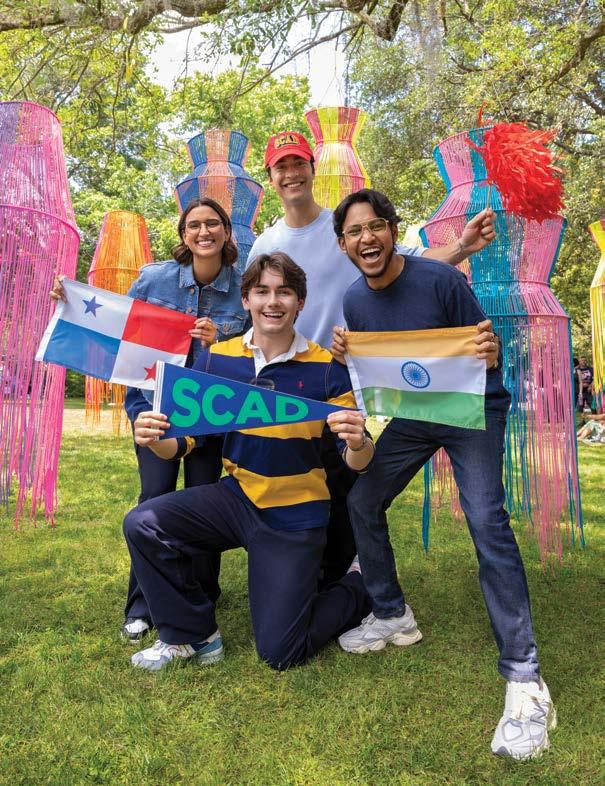
From Brazil to Greece, India to the Bahamas and beyond, students representing more than 100 countries from around the world converge at SCAD where they find a vibrant community awaiting them. Through student-run clubs and a calendar stacked with signature events, exhibitions, and programming, international students find a suite of opportunities to connect with fellow Bees and celebrate the university’s rich cultural tapestry.
The International Student Services Office (ISSO) is a hub brimming with dedicated support to help students thrive at SCAD and in the U.S. Whether in person or online, ISSO guides students toward world-spanning careers through customized programs, mentoring, and resources that begin before students arrive at SCAD and continue long after graduation. Eligible F-1 students may obtain Optional Practical Training (OPT) work authorization for 12 months following completion of any SCAD degree program, as well as an additional 24 months after the completion of any of the 29 STEM-designated majors at SCAD.
ISSO hosts energizing cross-cultural events and networking sessions to help students make the most of each quarter, including a dinner series hosted by local SCAD alumni exclusively for students from abroad. Through curated events and workshops on creative thinking, storytelling, travel, immigration, student life, the U.S. job market, housing, and more, students learn success strategies that help them excel in advanced SCAD coursework, enhance their communication skills, and acclimate to university life.
Students in the English as a Second Language (ESL) program, offered through the SCAD Language Studio, receive comprehensive preparation for the university’s dynamic and immersive academic environment. Upon enrollment, ESL students engage in a rich variety of learning experiences, including relevant lectures, collaborative studio projects, classroom instruction, and exclusive networking events — all designed to enhance English language proficiency and support a smooth transition into university life for our international English language learners.
What’s great about SCAD is how DIVERSE it is. I had never been in a place before where I met SO MANY different people from different parts of the world.
REGINA PEREZ-CORONA
Brand and new products manager, Bissú Cosméticos
SCAD B.F.A., business of beauty and fragrance, 2022
Students from around the world are welcomed into a vibrant multicultural environment, share their heritage at global celebrations, and find unique support for their successful lives at SCAD.
As students advance through the ESL levels, they benefit from close mentorship and guidance from distinguished faculty members who hold advanced degrees in English language teaching, applied linguistics, and related disciplines. The SCAD Language Studio further enriches the learning experience through curated field trips, cultural immersion opportunities, and special workshops that connect language development with creative practice. These experiential learning components deepen students’ understanding of academic and cultural expectations in the U.S. university setting. All SCAD Language Studio courses are preparatory and do not count toward degree credit. Students are assessed on a satisfactory/unsatisfactory basis, with a comprehensive final exam administered at the end of each academic quarter.
SCAD TEAMS
Bowling
Cross country
Cycling
Equestrian
Esports
Fencing
Golf
Indoor track and field
Lacrosse
Outdoor track and field
Soccer
Swimming
Tennis
Athletics
In Atlanta and Savannah, SCAD student-athletes give new meaning to the art of competition, winning accolades on and off the playing field. Members of the National Association of Intercollegiate Athletics, SCAD teams have celebrated dozens of conference, individual, and national championships in sports like cross country, cycling, fencing, golf, and more.
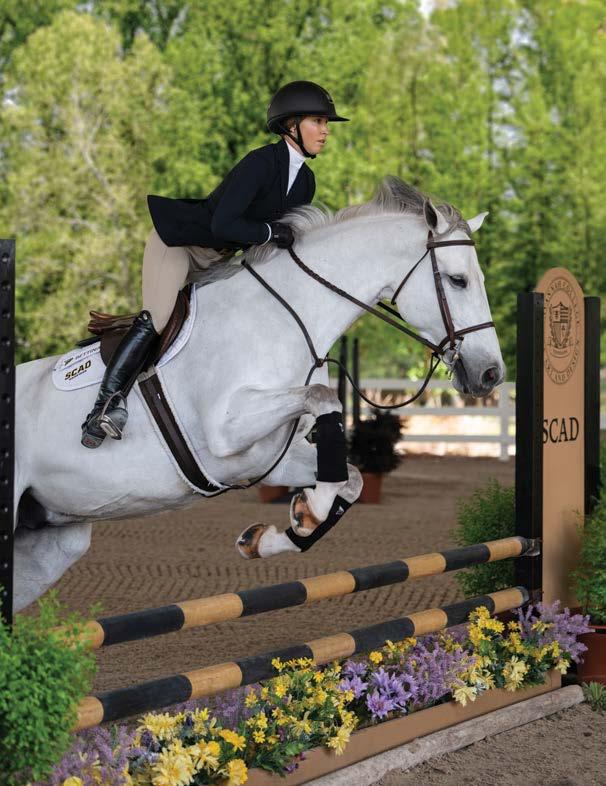
Across all sports, SCAD student-athletes combined to win more than 50 team and individual conference and national titles in 2024–25. SCAD women’s soccer became the latest team to win an NAIA national championship, joining the ranks of recent SCAD squads to win national titles in bowling, lacrosse, and swimming. The SCAD equestrian team is the most decorated in the nation, frequently capturing American National Riding Commission (ANRC), Intercollegiate Horse Shows Association (IHSA), and Tournament of Champions titles — including a current streak of 12 consecutive Tournament of Champions overall titles. In the online arena, SCAD students from around the globe compete on conference title-winning esports teams in League of Legends, Super Smash Bros., Rocket League, and Overwatch 2. Guided by expert coaches and accomplished faculty, these talented teammates demonstrate the SCAD ideals of scholarship, leadership, integrity, and sportsmanship, earning hundreds of All-American honors for their athletic and academic achievements, among other awards.
In Atlanta and Savannah, competition extends to the entire student body. Each quarter, more than 1,000 SCAD students of all levels and abilities join intramural teams in sports like badminton, basketball, dodgeball, esports, flag football, kickball, soccer, Spikeball, volleyball, and more. Beyond the playing field, SCAD is committed to keeping students active outside the classroom. At the university’s premier fitness centers SCADfit, located in Atlanta, Savannah, and Lacoste, and ClubSCAD in Atlanta and Savannah, students have access to a wide range of fitness equipment, workout classes, and wellness seminars to enhance their health and boost their creativity.
The option to be an athlete has shaped my SCAD experience more than anything else. I’m grateful for the coaches and staff that have cultivated a RESOURCEFUL ENVIRONMENT that helps us grow as people and develop skills we can take into our artistic career and postgraduate life.
ABIGAIL SIDDALL
SCAD soccer athlete and NAIA national champion
SCAD B.F.A., production design, 2025
Showcasing their creativity on the field and in the classroom, the SCAD women’s soccer team won the NAIA National Championship in 2024.
SCAD foundation studies and general education courses are led by faculty with expertise from art and design fundamentals to finance and economics, such as associate chair of business Edphan Chanetsa.
Foundation Studies and General Education
Every SCAD undergraduate student’s educational experience is anchored by an academically rigorous program in drawing and design, providing students with the studio instruction necessary to build the visual, conceptual, and creative ability to succeed in their chosen degree and future professional pursuits.
In SCAD foundation studies courses and general education courses, or SCAD Core, students foster the strong intellectual reserve and vast knowledge essential to thriving careers, learning to investigate, interpret, and defend new ideas as well as to view the world creatively, critically, and inquisitively. All students complete a minimum of 20 quarter hours of foundation studies and 55 quarter hours of SCAD Core. Foundation studies courses in design, drawing, color theory, and more are the base for students to advance into their program of study and postgraduate aspirations. With the help of advisers, students choose electives based on specific course requirements for each discipline.
In general education courses, students complete at least one course in three categories — humanities/fine arts, social/ behavioral sciences, and mathematics/natural sciences — that encourage deeper inquiry into art and design. Course topics include explorations of creativity from nearly every era, civilization, and region across the globe — from the art and photography of New York City’s 1980s punk scene to the evolution of visual expression from the Paleolithic era to the Medieval period — and the application of human behavior
Research, analysis, and synthesis
Students utilize a range of qualitative and/or quantitative methods to develop foundations of inquiry, conduct effective research, analyze information, and justify proposed solutions.
Historical investigation and contextualization
Students investigate and interpret the historical, social, political, and economic contexts surrounding visual and cultural production to determine meaning and significance.
Cross-cultural knowledge and engagement
Students actively engage with cultural theories, perspectives, and ideas to enrich understanding of their roles within diverse and inclusive communities.
and psychology in the creative process. SCAD courses also explore business fundamentals, economic principles, and strategic decision-making that instill key management and analytical skills necessary to launch successful businesses. Students take their first steps in establishing a distinct visual identity, enhancing their vision with emerging technologies and ethically creative uses of AI for research and ideation. They augment this exploration during mentorship events and classroom visits with top creatives from Adobe, Netflix, and other leading companies.
All undergraduate students complement their studies with a suite of learning resources and events available to the entire university community. Through the SCADextra academic resource hub, students elevate their expertise through workshops with professional coaches and expert staff, exclusive events, and one-on-one peer mentor support. Across disciplines, students build networks with fellow Bees in the lecture series Major Connections and Professional Tool Kit, which feature upper-level SCAD students and alumni who discuss how their current work is rooted in their foundation studies experience. First-year students also have multiple opportunities to enter their artwork in foundation studies-supported competitions at SCAD, including the Foundations Honor Show, the Portfolio Award Competition, Drawing Works, and the SCAD Sand Arts Festival
Strategic communication
Students employ specialized terminology and persuasive communication practices to convey ideas professionally based on an evaluation of diverse audiences and circumstances.
Digital fluency
Students effectively and ethically communicate ideas and identity, interpret information, construct knowledge, and design content in a digitally connected world.
Leadership and professionalism
As future leaders of creative professions, students demonstrate work and behavior that reflect ethical and professional standards within a range of contexts.
GEN ED LEARNING OUTCOMES
Degree Programs
Top ranked by Art & Object, DesignIntelligence, The Hollywood Reporter, The Business of Fashion, and more, SCAD offers more programs and specializations than any other art and design university in the U.S. scad.edu/programs
Infusing fresh perspectives into accessory design, SCAD students invent cutting-edge elements of style, from luxe handbags to wearable tech. Backed by a comprehensive, market-driven curriculum and vanguard digital suites, SCAD alumni go on to thrive in leading roles at companies like Tory Burch, Coach, Kate Spade, Stuart Weitzman, and more.
WORK IN STYLE
Thom Browne Jimmy Choo Salvatore Ferragamo Sam Edelman Donna Karan
Ralph Lauren Zaldy NYC FCTRY LAb HOKA Rag & Bone LUAR Perry Ellis
Gabriela Hearst Golden Goose Abercrombie & Fitch
Instructed by industry visionaries on the intricacies of concept imaging, construction, technology, merchandising, and more, students define their own unique design aesthetic in a program top ranked by both The Business of Fashion and Fashionista, among others. Through hands-on courses, master classes, and presentation studios, students elevate their body of work, develop self-promotional materials, and assemble a professional portfolio using the latest tools and precision systems.
The SCAD accessory design program is UNIQUE. My professors taught me everything about the design process, recognized my skills, and encouraged me to KEEP PUSHING my work.
AIDAN KAM
SCAD B.F.A., accessory design, 2025
While sharpening their techniques in design and patternmaking, students advance their proficiency with industrial sewing equipment, skiving machines, and CAD software, honing digital fabrication methods to bring their sustainable designs and 3D prototypes to reality. In addition to a distinguished faculty with vast experience in luxury goods, students access the genius of celebrated guest designers. Through the university’s Style Lab mentorship program as well as SCADpro, students workshop their creations with brands including Swarovski and Fossil, as well as in partnership with Marchon, the leader in innovative eyewear. Collaborations across the School of Fashion and beyond — like the annual SCAD FASHION runway shows — as well as working relationships with suppliers, manufacturers, and factories prepare accessory design students for professional practice.
Aidan Kam
Modeled by Rose Davis
SCAD alum Burke Swanson returns to Broadway in the Tony Award-winning musical Stranger Things: The First Shadow
SCHOOL OF FILM AND ACTING
Acting
Learn to star on screen, stage, and streaming at the only university with on-site, professionally run casting offices. Under the tutelage of expert faculty and casting directors with years of entertainment experience, SCAD acting students have stepped into the spotlight on Broadway and contributed to film and TV productions with networks and studios like Apple TV+, BET, CBS, Hulu, NBC, Netflix, Peacock, and Prime Video.
Budding SCAD actors prepare for these scene-stealing interactions at one of The Hollywood Reporter’s best universities for drama. Through the SCAD Casting Office, located in both Atlanta and Savannah, students book roles on productions in Georgia, Los Angeles, New York, and beyond — and explore high-stakes behind-the-scenes careers. Before graduation, SCAD acting students build an impressive list of credits in animated films, plays, musicals, concerts, multicamera sitcoms, and short films, including some produced and shot on SCAD’s own Hollywood-style backlot or LED volume stages.
With the academic year split into two “seasons” for on-camera projects and live performance, students have myriad opportunities to star on screen or stage — all fully produced in SCAD film studios or university theaters like Savannah’s historic Lucas Theatre for the Arts or Atlanta’s SCADshow theater. SCAD students receive instruction from professors with impressive credentials: accomplished actors, directors, and casting directors at major studios and networks, and veterans of films and shows such as Scandal, Origin, Dopesick, The Big Bang Theory, Juror #2, Key & Peele, May December, The Good Wife, The Walking Dead, The George Lopez Show, The Glorias, Florida Man, How to Get Away with Murder, and more.
CREATIVE CAREERS
Actor
Improv/sketch performer
Voiceover talent
Casting director
Artistic director
Director
Producer
Talent agent
Stunt performer
Content creator
EVERY PROMPT that I give them, they run through the tape and eat these challenges for breakfast like it’s nothing. SCAD students are such a formidable bunch. They impress me and humble me every week with their TALENT and with their PREPARATION.
LESLIE ODOM JR.
Tony Award-winning actor and SCAD mentor
Master classes at annual SCAD Savannah Film Festival and SCAD TVfest signature events feature a recent guest list that includes all four Academy Award acting winners in 2025 — Adrien Brody, Kieran Culkin, Mikey Madison, and Zoe Saldaña — as well as luminaries like Demi Moore, Hiroyuki Sanada, Uzo Aduba, Amy Adams, Colman Domingo, Kathryn Hahn, Felicity Jones, Sebastian Stan, Lupita Nyong’o, Kevin Costner, and Noah Centineo. Students get behind-thecurtain advice from Hollywood icons and breakout stars, preparing them for on-site auditions and invitation-only showcases with top agents, managers, and producers to launch marquee acting careers.
SCAD GRAD STARS
Kayli Carter I’ll Be Right There and A Complete Unknown Kiandra Richardson Kingdom Business and Empire DeRon Horton The Last Days of Ptolemy Grey and Dear White People Burke Swanson Stranger Things: The First Shadow and Back to the Future: The Musical Daniel Thrasher Dinner with the Parents, YouTube creator
CREATIVE CAREERS
Digital advertising director
Art director
Content creator
Copywriter
Advertising designer
Brand strategist
Digital marketing specialist
Social media director/ producer
Creative technologist/ specialist
Director of brand partnerships
DE SOLE SCHOOL OF BUSINESS INNOVATION
Advertising and Branding
In an ever-evolving landscape driven by storytelling, strategy, and innovation, SCAD advertising and branding students become the thinkers and makers who lead the conversation within an industry poised to exceed a quarter-million job openings across the U.S., according to data from the U.S. Bureau of Labor Statistics.
At SCAD, students explore how culture, design, and communication intersect — and how great ideas spark even greater impact — developing skill sets in market research, analysis, and cross-platform thinking. Immersed in a hands-on curriculum that spans brand evolution, creative production, and consumer engagement, students prepare to generate innovative solutions that accelerate brands and craft compelling narratives that resonate with audiences around the globe.
ALUMNI EMPLOYERS
Anomaly BBDO Edelman Highdive Grey Global Group IKEA Leo Burnett Publicis Saatchi & Saatchi Wieden+Kennedy Ogilvy Nike NFL Wasserman Razorfish Digitas Health United Nations Programme
Students develop a critical understanding of scroll-stopping content creation and worldbuilding experience design, as well as fluency in social media messaging, digital marketing, and emerging tech like game engines, augmented reality, and AI. Through SCADpro, the university’s boutique creative consultancy, students collaborate directly with top companies including Meta, Google, The Coca-Cola Company, L’Oréal, BMW, and Mercedes-Benz, gaining expertise on real briefs with real outcomes.
SCAD advertising and branding students earn international recognition and top honors including ADDY Awards, Young Ones Awards, and Red Dot Design Awards. Graduates go on to shape contemporary culture, launching highpowered careers at premier agencies and brands like TikTok, YouTube, Adobe, 72andSunny, R/GA, The Mill, and Wunderman Thompson. From Apple and Nike to Spotify, Netflix, and Xbox, SCAD alumni lead captivating campaigns that blend ingenuity, technique, and multichannel mastery — embodying the university’s future-forward ethos as they define the industries of tomorrow.
Spotify x Uber Radius Radio concept Stella Braune
SCADDY Gold Award winner
STUDENT LIFE
Lea Bagi
SCAD B.F.A. ADVERTISING
SCAD B.F.A. ILLUSTRATION
Certain of her destiny as an artist, Lea Bagi anticipated a creative trajectory at SCAD, but what she discovered and accomplished proved delightfully unexpected. A firm believer in rituals as a means of self-expression, Bagi eagerly adopted hard work as a daily practice, double majoring in illustration and advertising to further hone her ardency for storytelling. She graduated as the Salutatorian with high hopes for her future with Estée Lauder’s MAC Cosmetics team.
What led you to SCAD?
It was my dad who first suggested SCAD after researching top art universities around the world. SCAD was the very first to accept me. It truly felt like love at first sight. What drew me in wasn’t just the stunning campus, strong industry ties, or impressive alumni; it was the kindness and humanity. They saw me as a person, not a number.
What is your daily routine as a student?
Coming from an Eastern European background, discipline has always been a core part of my routine and that carried into my time at SCAD. More than anything, SCAD has taught me the true value of time — and how I choose to spend it matters.
What stands out most about your SCAD experience?
No matter how packed their schedules are, students make time for each other — film students helping advertising majors shoot a campaign video, or an illustration student collaborating with a writing major to bring a story to life. These unexpected collaborations have led to some of the strongest friendships and most meaningful creative experiences. SCAD curates community. That’s what truly sets it apart.
Which SCAD resources have been most beneficial? From the start, I made it a priority to maximize every opportunity SCAD offered. I began working on my SCADamp certificate as a first-year student, later opening for Refinery29 and Eileen Fisher at SCAD events, and even introducing the 2025 Commencement speaker Jon Batiste. I had the honor of working with brands like Philosophy by Coty and La Mer through SCADpro, which helped me realize just how passionate I am about the beauty industry.
What are your postgraduate plans?
To continue studying for a more beautiful future, specifically within the beauty industry. I’m thrilled to be continuing my collaboration with Estée Lauder’s MAC Cosmetics team, where I hope to work on impactful projects that not only inspire but also empower self-expression. I’m excited to contribute to work that celebrates identity, creativity, and purpose, and to grow within a brand that aligns so closely with my values.
What advice would you offer prospective SCAD students?
Use the resources SCAD offers. Whether it’s guest lectures, SCADamp, or student clubs, stay curious and don’t suppress that inner voice that’s calling for more. More knowledge. More exploration. More challenge. SCAD is one of the rare places where your curiosity is celebrated.
SCHOOL OF ANIMATION AND MOTION
Animation
Animators add character, color, and motion to the films, TV shows, video games, and interactive media that earn both the love of fans and big box-office dollars. Under expert faculty instruction and mentorship, SCAD animation students master next-generation technology as they develop the acumen to launch into a global market worth more than $400 billion, according to research from Statista.
In the classroom, SCAD students explore classic 2D, 3D, and stop-motion animation styles, which inform their artistic choices when fine-tuning original animated universes in later coursework. Deeper into their curriculum, SCAD animation students learn to tailor demo reels, professional websites, and portfolios for internship and career pursuits as they explore notable animation studios and roles in the production process. The program culminates in a capstone animation filmmaking sequence where students collaborate to create awardwinning animated films and connect to future careers. SCAD is also recognized as a Toon Boom Centre of Excellence, offering the opportunity for résumé-boosting certifications in this elite professional software, as well as Adobe Creative Cloud and Maya.
Through SCAD Animation Studios, students have collaborated on studio-style film productions resulting in short films like Time Flies, Bearly, and The Pope’s Dog that explore emerging animation techniques and earn major recognitions. Student animators present these films in competition at the SCAD Savannah Film Festival or in premiere screenings during SCAD AnimationFest, the university’s Atlanta-based celebration of all things animation, digital media, and visual effects. At these events, students learn from illustrious honored guests across film and TV like Adam Muto, Chris Sanders, and Genndy Tartakovsky.
CREATIVE CAREERS
2D animator
3D animator
Storyboard artist
Animation producer
Character FX artist
Character FX technical director
Texture/lighting director
Digital modeler
Stop-motion fabricator
Flame artist
SCAD was named to Animation Career Review’s BEST SCHOOLS to study animation in 2025.
SCADpro, the university’s innovation and design studio, offers students opportunities to collaborate with Adult Swim, CBS Sports, Delta Air Lines, NASA, and more, launching career dreams to new heights. These professional endeavors prepare alumni to join forces with the world’s greatest studios and deliver unforgettable features — from Academy Award winners and nominees like Inside Out 2, The Wild Robot, Guillermo del Toro’s Pinocchio, Encanto, Coco, and Spider Man: Into the Spider-Verse to beloved franchises like Star Wars, How to Train Your Dragon, Frozen, Kung Fu Panda, and more.
CREATIVE CAREERS
AI product developer
Real-time content developer
Autonomous agent designer
AI design strategist
Machine behavior designer
Creative technologist
Conversational interface designer
AI story engineer
Ethical design strategist
AI systems designer
SCHOOL OF CREATIVE TECHNOLOGY
Applied AI
At the intersection of creative vision and intelligent systems, SCAD’s degree in applied AI prepares a new generation of designers, storytellers, and strategists to shape our future.
SCAD students don’t just build AI — they humanize it. With a focus on ethics, behavior, and cultural impact, the program empowers students to design intelligent systems that keep people at the center, balancing innovation with empathy, responsibility, and imagination. From interactive agents and immersive environments to intelligent products and platforms, students gain the skills to imagine, prototype, and shape how AI behaves — and how people interact with it.
VISITING AI EXPERTS
Cyril Foiret, founder and creative director, Maison Meta Fred Gilbert, vice president, Google Workspace Tomasz Opasiński, creative strategist, Adobe Seth Piezas, senior product manager, NVIDIA Joshua To, vice president of product design, AR, AI, and wearables, Meta Steve Johnson, vice president of experience design, Netflix
Coursework spans interaction design, computational thinking, storytelling, and systems modeling — all essential for working with agentic technologies in creative industries. As part of real-world partnerships and professional studio work, students craft intuitive experiences, shape and choreograph machine behavior, and design with intent.
SCAD is a global leader in creative AI education, hosting annual summits that bring together top voices and powerhouses in business, entertainment, design, and tech, including Google, Meta, Adobe, Deloitte, Maison Meta, ServiceNow, Gensler, NVIDIA, and Netflix. These events offer SCAD students a front-row seat to explore emergent trends and the future of intelligent systems — connecting them directly with major employers in the AI space who are pioneering what’s next.
By 2030, AI and other emergent technologies will lead to some 11 million NEW JOBS, among these many roles that have never existed before. — The New York Times
SCAD’s unmatched creative ecosystem empowers students across disciplines — architecture, advertising, fashion, user experience (UX) design, animation, and more — to design intelligent, human-centered systems that fuse innovation with cultural insight and AI with imagination. Students across every SCAD major have access to these tools through the applied AI minor, learning to fortify their primary discipline with competitive skills.
SCAD’s annual AI Summit connects students with industry experts on AI and other emergent technologies, including SCAD alumni like professor of visual effects Diana Diriwaechter, who draws on more than 20 years of experience at Blue Sky Studios and Epic Games, and Kate Aronowitz, Google Ventures lead and a SCAD Executive in Residence.
SCHOOL OF BUILDING ARTS
Architectural History
Immersion is a cornerstone of the SCAD student experience — and it is within one of the nation’s largest historic landmark districts that architectural history students become experts in the built environment. Amid Savannah’s richly preserved and internationally lauded cityscape, undergraduate and graduate students investigate the histories, theories, and practices that mark the discipline. Guided by accomplished faculty, students develop focused lines of inquiry that elevate their professionalism and credentials, priming them for their next great quest.
SCAD courses examine distinct architectural and urban traditions influenced by trade, cultures, technology, and nature. Students track the history of structures and landscapes and explore the political, societal, and economic forces that shape buildings and cities around the world. At every stage, students are led by renowned faculty with extensive publication credits and expertise that spans Greek and Roman antiquity, medieval East Africa, and the making of modern cities, including Savannah. Students go beyond the physical environment in surveys of virtual and on-screen representations of cities in modern and contemporary media.
Beyond the classroom, SCAD professors connect students to career-defining experiences, where they lead on-site work at monumental locations, author National Register nominations, deliver conference papers, and intern with public organizations and private firms. Students augment this fieldwork with classes in geographic information systems (GIS), electronic design, and professional presentation techniques. Students may also explore different contexts across time and place at SCAD locations in metropolitan Atlanta or the meticulously preserved medieval village of Lacoste, France, interweaving their diverse experiences into a culminating thesis project, in which they investigate the history, theory, and criticism of architecture and the built landscape.
SCAD alumni advance to a range of prominent roles in urban policy, heritage management, environmental stewardship, and preservation advocacy with prestigious design and cultural resource management firms like Quinn Evans Architects, as well as city and state governments, academia, federal organizations like the National Park Service, and preservation societies like the New York Landmarks Conservancy.
My time at SCAD enriched my capacity to CONNECT architecture with broader cultural, historical, and societal contexts. With SCAD’s interdisciplinary approach and hands-on experiences, I left with a STRONG FOUNDATION to enter the professional field.
BRITTANY BRYANT
Principal city planner, City of Denver
SCAD M.F.A., architectural history, 2011
SCAD’s LED volume stages empower architectural history students to explore venerated global monuments, including Rome’s Pantheon.
CREATIVE CAREERS
Architectural researcher
Architectural history interpreter
Preservation planner/ officer
Cultural resource manager
Digital humanities specialist
Heritage organization administrator
Historic foundation registrar
Historic site manager/ curator
Main Street program manager
Real estate data analyst
CREATIVE CAREERS
Architect
Sustainability specialist
Architectural illustrator/ renderer
Real estate developer
Site planner
Building construction manager
Building inspector
Project manager
Zoning official
Hospitality designer
SCHOOL OF BUILDING ARTS
Architecture
Structures and spaces transform under the careful attention of architects. At SCAD, architecture students learn to turn cultural, ecological, historical, and theoretical concepts into dazzling environments where our most meaningful experiences unfold. Within the university’s world-renowned B.F.A. and professional M.Arch. programs, undergraduate and graduate students gain expertise in plan and place to dream up innovative locales and new mixed-use spaces.
SCAD students benefit from the Integrated Path to Architectural Licensure, or IPAL, a progressive academic track merging all three components of licensure — education, experience, and examination — to attain their licensure sooner. Through IPAL, students combine SCAD courses, professional internships, and advanced preparation for the Architect Registration Examination with unparalleled academic support and resources.
ALUMNI EMPLOYERS
Herzog & de Meuron BIG—Bjarke Ingels Group HOK Skidmore, Owings & Merrill Gensler Perkins & Will SmithGroup Sasaki SHoP Architects
The SCAD M.Arch. program was awarded the maximum term of accreditation by the National Architectural Accrediting Board, whose meticulous accreditation standards are accepted and often required by state registration boards. These distinguished credentials are matched only by the accomplishments of renowned SCAD faculty consisting of awardwinning licensed practitioners, LEED-accredited specialists, and honorees of the American Institute of Architects (AIA) and the Congress for the New Urbanism.
At Savannah’s Clark Hall, students develop in-demand technical proficiency within a studio culture that mirrors the professional sector, while exploring future-forward approaches to the design-build process through augmented and virtual reality technologies. At SCAD locations in Atlanta and Lacoste, France, students explore how rural, urban, and cultural contexts drive design. Inspired by their SCAD courses and experiences, and leveraging their global perspective on design, students garner awards and recognition for their work from the AIA, The Architect’s Newspaper, and international innovators across public and private sectors.
Ivan and Kristin Morales’ Casa Loro, located along Panama’s Pacific Ocean coast, features multiple pavilions constructed from renewable materials like bamboo and teak in its ecologically sensitive design. Photography by Fernando Alda, courtesy of IM/KM Architecture.
SCAD B.F.A., ARCHITECTURE, 1999
Ivan Morales
CREATIVE CAREERS
Curator
Manager for art programming
Appraiser
Art journalist
Gallerist
Collections manager
Culture conservator
Development officer
Art historian
Archivist
SCHOOL OF LIBERAL ARTS
Art History
Art historians play a crucial role in interpreting, preserving, and restoring valued artworks and artifacts, offering context and recognition to past and present cultures. At SCAD, art history students follow in the footsteps of renowned artists, architects, and sculptors through a comprehensive program that emphasizes visual expression, research, and contextualization.
SCAD art history students receive instruction from the largest full-time faculty of art history professionals in the world. SCAD professors hold outstanding credentials and conduct pioneering research on varied subjects, from Buddhist art in Japan to the influence of the Medici family during the Italian Renaissance. SCAD students benefit from personalized degree experiences through unique courses aligned with their specific interests, choosing from more than 80 electives that include environmental art, the iconography of monuments, medieval manuscripts, and surrealism. Students complete their degree with a thesis delving into history, methodologies, and art theory and criticism on a subject of their choice.
At signature events such as SCAD deFINE ART, students engage in exclusive artist talks and enriching lectures and symposia with celebrated art luminaries. Students further their exploration of the art world at SCAD libraries and museums that house magnificent collections containing rare, valuable, and historically significant works. One-of-a-kind collections at SCAD museums include the Walter and Linda Evans Collection of African American Art, the Earle W. Newton Collection of British and American Art, the Shirrel Rhoades Collection of Photography, and works from the Andy Warhol Foundation for the Visual Arts.
Outside the classroom, students boost their acumen with the Art History Society and an array of work and internship opportunities at university museums and art institutions around the globe. SCAD alumni have forged innovative careers as leaders in the arts, earning prestigious positions at world-famous galleries and museums such as the Guggenheim and the Smithsonian, establishing new museums such as the Savannah African Art Museum, and conducting scholarly research in top Ph.D. programs.
SCAD art history students benefit from on-site instruction at the university’s renowned art museums, led by preeminent faculty members such as Capri Rosenberg, Ph.D.
DE SOLE
SCHOOL OF BUSINESS INNOVATION
Business of Beauty and Fragrance
Students in the pioneering SCAD business of beauty and fragrance program are poised to make their impact in this expansive industry — expected to value nearly $600 billion by 2028 — as influencers, entrepreneurs, and executives. Led by faculty from powerhouses like Estée Lauder Companies and L’Oréal and mentored by celebrated guests from top brands, from Rare Beauty to Chanel, students become insiders on global beauty branding, product development, business modeling, visual storytelling, sustainability practices, and entrepreneurial opportunities.
Students explore three professional paths as part of their SCAD experience: creative strategy and design, marketing strategy, and product development. Design thinking is layered into the curriculum and students engage in hands-on projects, like designing a comprehensive strategy to price, market, package, and distribute a new product launch within an existing brand. Using insight from their research on successful companies, students conclude their academic journey with the conception of a new beauty brand and business model that fills a whitespace in the industry. Beauty Bees develop their collaboration skills by working with students in other disciplines to develop their concepts. Through SCADpro, the university’s boutique creative consultancy, students solve challenges for international brands like Philosophy, CoverGirl, Calvin Klein Fragrances, La Mer, and Urban Decay.
Since the program’s inception in 2018, students and graduates have earned distinctions like the Ulta Beauty MUSE 100, CFDA x Coach Dream It Real, and the Virgil Abloh Post-Modern Scholarship, as well as coveted spots on Forbes’ 30 Under 30 list. Students gain insight and career-making connections from recruitment visits by Goop and Benefit as well as industry mentorship by executives and guests, including Tom Ford Beauty Senior Vice President of Global Marketing and Strategy Dexter King and Allure Magazine Editor-in-Chief Jessica Cruel. SCAD students graduate as globally minded, business-centric professionals ready to launch their own companies or land top jobs at major beauty brands.
CREATIVE CAREERS
Beauty and fragrance entrepreneur
Brand and new products manager
Global product marketer
Junior executive trainee
Social media and marketing manager
Artwork packaging developer
Digital marketing associate
Consumer engagement associate
Travel retail marketing associate
Consumer insights associate
SCAD not only shaped my life but inspired me to launch MY OWN body care brand. Thanks to the incredible opportunities in the SCAD beauty program, I turned my passion into reality.
CARMEN CHENG
Founder, Yùmei
SCAD B.F.A., business of beauty and fragrance, 2024
Sampling selections from Allure Magazine’s Best of Beauty Awards, students enjoy exclusive access to top products at the SCAD series Beauty Unlocked.
CREATIVE CAREERS
Chief executive officer
Executive marketing director
Consulting associate
Strategic initiatives director
Corporate affairs manager
Brand strategist/manager
Creative entrepreneur
Global creative director
Chief strategy officer
Intrapreneur
DE SOLE SCHOOL OF BUSINESS INNOVATION
Creative Business Leadership
Where the business world and the creative sphere converge, visionaries are made — and it all happens at SCAD. Through the university’s future-forward creative business leadership program, SCAD empowers its graduate students to become thought leaders and entrepreneurs who power small businesses and drive innovation in the C-suite of global organizations.
The FUTURE requires a different approach. It involves focus on customer experience, an empowered hybrid workforce, and a new kind of leadership: a design leadership approach that is empathetic, sensing, and STRATEGIC. IBM CEO study
The focused curriculum in the university’s one-year M.A. and two-year M.B.I. programs fuses design principles with management strategies, equipping graduates with the agility to helm big brands; reimagine services, productions, operations, and strategy; found and fund their own business ventures; and take charge of the technological transformation across major industries. With an emphasis on entrepreneurship and financial success, the creative business leadership program is an ideal continuation of a SCAD education across all university degree programs. Through the accelerated GRADpath@SCAD track, incoming first-year students can complete select undergraduate degrees and an M.A. program like creative business leadership in just four years.
In fundamental finance courses, students learn to navigate risk, explore the competitive landscape, and understand how businesses are funded. Using specialized simulation software, students experience the multifactor, high-stakes decision-making scenarios CEOs regularly face. In various leadership courses, students learn analytical thinking techniques to manage complex human-related problems and develop leadership strategies that deliver successful results.
As a complement to this coursework, students benefit from exclusive opportunities to connect with leaders across the business spectrum. Visionaries like Design Miami cofounder Craig Robins, Glossier Chief Creative Officer Marie Suter, John Hardy Creative Chairman Reed Krakoff, and former Hermès President and CEO Bob Chavez share their own experiences and advice to set SCAD students on the path for postgraduate success.
SCAD Étoile honoree Tory Burch regaled students with insights from her brand’s past milestones, future aspirations, and inimitable business model at SCADstyle 2025.
SCHOOL OF DESIGN
Design for Sustainability
At the helm of sustainable design, SCAD students are pioneering solutions that minimize waste and maximize technical and material innovation. Whether curbing the consumption of nonrenewable resources or advancing healthy, productive environments, design for sustainability students at SCAD learn to lead green business practices that nurture economic prosperity and champion a more equitable, abundant future.
Globally, the market for sustainable technology will QUADRUPLE to $137.4 billion by 2030. — ResearchAndMarkets
Well before graduation, SCAD students influence top brands in career-making classroom collaborations. Furniture brands Brown Jordan and Maria Yee challenged students to develop products built from emergent materials like thermally modified timber and plant-based composites. Through SCADpro, the university’s innovation and design studio, Reebok tasked students with converting the company’s scrap fabric into fashionable looks. Google turned to SCAD students to identify new uses for location-sharing services in times of disaster, and Heineken tapped students to ideate solutions that repurposed contaminated glass. Across the globe, SCAD Bees balance conservation and commerce to reduce carbon footprints and build value through the creation of sustainable products.
SCAD design for sustainability students research consumer lifestyle choices and business practices, emphasizing resource productivity, social innovation, and future-oriented business strategies. Leading-edge technologies such as lifecycle analysis software provide SCAD students with knowledge applicable to a broad spectrum of civic and professional roles. Throughout their coursework, students collaborate and apply their aspirational vision toward a sustainable future for companies such as Hewlett-Packard, IBM, IDEO, Nike, Starbucks, Subaru, Walmart, and more.
CREATIVE CAREERS
Strategic business development officer
Sustainability director
Environmental specialist
Sustainability manager
Corporate social responsibility officer
Energy solutions developer
Green building specialist
Product developer
Design manager
Sustainability specialist
The most successful organizations make their transformations intrinsically sustainable, DATA-FIRST, and hybrid by design. Sustainability must be a priority from the start, not an afterthought.
ANTONIO NERI President and CEO, Hewlett-Packard
CREATIVE CAREERS
Chief innovation officer
Design manager/ director
UX manager/strategist
Product development manager
Director of operations
Innovation strategist
Design researcher
Design strategist
Experience designer
Visual information specialist
DE SOLE SCHOOL OF BUSINESS INNOVATION
Design Management
Design management specialists bring cardinal transformation to the world’s foremost companies, infusing tried and true business principles with future-forward vision. At SCAD, the premier site for the study and practice of design thinking, design management students experience an insightful curriculum merging creative ingenuity with business acumen. The SCAD design management program prepares alumni to steward sophisticated, human-centered strategy at companies like 3M, Lowe’s, Meta, and Porsche.
SCAD offers the transformative Master of Business Innovation degree, the FIRST OF ITS KIND in the U.S.
In project planning and implementation courses, students learn to think and problem-solve like designers as they dive into the preparation strategies critical to forming a profitable and successful new business entity. They explore business plan development, technology transfer, and offshore sourcing, while developing original design concepts for commercial products, communications, environments, and services. The program also investigates business strategy, design theory, data visualization, communication techniques, social innovation, financial systems, and marketing.
Through SCADpro, the university’s innovation and design studio, SCAD design management students gain experience with major partners that leads to pivotal postgraduate careers: making nimble local communication tools for Google, prototyping a footwear collection and building an associated brand campaign for Sam Edelman and Nordstrom, and designing an interactive display for Oshkosh’s next-generation line of fleet vehicles. Successful SCADpro partnerships with Deloitte have expanded opportunities for students to pioneer research, design thinking, and business solutions at SCAD’s Deloitte Foundry. From these experiences, graduates are prepared to enter a multitude of markets that value design thinking, business theory, consumer needs, prototype development, and product testing.
As managing editor of Elle Decoration Vietnam, SCAD alum Thuy Duong Nguyen creates platforms for dialogue on design thinking, technology, cultural exchange, and the creative economy.
SCHOOL OF LIBERAL ARTS
Dramatic Writing
SCAD dramatic writing students develop stellar scripts for stage and screen, learning to apply professional approaches as they prepare to work with top directors and producers around the globe and join successful TV writers’ rooms. As students, SCAD Bees craft rich narratives for TV shows, feature films, full-length plays, and immersive experiences across genres that engage audiences of all ages.
Students collaborate with peers across the university’s award-winning digital media and entertainment arts programs to create funny, powerful, and moving content through distinctive courses on a wide range of topics, from comedy writing to film adaptation to musical narrative. Student-helmed scripts are selected for university productions with casts and crews of fellow SCAD students, including the standout docuseries chefATL, animated shorts Bearly and The How Book, award-winning shorts The Peak and Our Side, and original comedy series Lodged, Tours and Attractions, G.R.I.T.S., Nailed It!, and The Buzz.
VISITING CREATORS
Sir Steve McQueen, writer, producer, and director, Blitz Richard Linklater, co-writer, producer, and director, Hit Man Jac Schaeffer, creator, writer, producer, and director, Agatha All Along RaMell Ross, co-writer and director, Nickel Boys The Duffer Brothers, creators, writers, producers, and directors, Stranger Things
Outside the classroom, students further their SCAD experience by joining university clubs to collaborate with peers on sketch comedy and film production, among other interests. The university’s events calendar — including SCAD TVfest and the SCAD Savannah Film Festival — offers exclusive access to renowned screenwriters, actors, directors, producers, and showrunners.
SCADFILM events, including partnerships with the Writers Guild Foundation, give students unprecedented access to scripts and documents from iconic TV shows like Friends, Cheers, The Sopranos, and Star Trek as well as Academy Award-winning and nominated films like American Fiction, Barbie, and Everything Everywhere All at Once. Bolstered by these valuable experiences, alumni go on to work for leading production studios, major networks, theme parks, and more.
After working on acclaimed student sitcoms The Buzz and G.R.I.T.S. while a student, SCAD alum Chad Morton graduated to Hollywood, joining the script department of ABC’s smash-hit Abbott Elementary
CREATIVE CAREERS
Television writer
Showrunner
Screenwriter
Playwright
Video game narrative designer
Show writer for live entertainment and attractions
Interactive content writer
Story editor
Story consultant
Script developer
CREATIVE CAREERS
Equine events manager
Equine accessories designer
Equine journalist
Equestrian community manager
Equestrian business manager
Equestrian marketing specialist
Horse show director
Equine facilities manager
Equine trainer
Sport horse sales broker
SCHOOL OF LIBERAL ARTS
Equestrian Studies
Nestled in a lush environment and a climate ideal for year-round riding, the SCAD equestrian studies program prepares students to flourish within a time-honored practice and a lucrative, $300-billion economic market. The university’s preeminent degree program and its championship equestrian team — which has won more American National Riding Commission titles than any other university over the past 20-plus years — are based at the 180-acre Ronald C. Waranch Equestrian Center, SCAD students’ gateway to the professional world. Designed to host major equestrian events, the Waranch Equestrian Center features an in-house veterinary staff, industry-standard equipment, and premier horse tack — including a number of saddles donated by Hermès, the renowned maker of leather goods and luxury accessories. To support the university’s remarkable sporting prowess, the state-of-the-art equestrian center also includes two stables, three competition areas with schooling rings attached, a covered arena, customized paddock sizes, pastures, and a derby field outfitted with banks.
Equestrian studies courses are taught by SCAD faculty members who are industryleading trainers, judges, and horse show managers, actively competing in U.S. Equestrian Federation hunter/jumper and dressage competitions. The program’s curriculum includes equine anatomy, behavior, psychology, training principles, competition regulations, and governance to prepare students for successful careers. Lectures and clinics led by visiting trainers, authors, Olympic riders, judges, veterinarians, and horse show managers enhance fieldwork and classes.
Various internship opportunities provide students with real-world industry experience to strengthen their professional credentials. In previous SCADpro collaborations, students applied the expertise they learned in arenas and stables to design durable backpack concepts for equestrian apparel brand Equis Boutique and created a safer, more ventilated hard hat for construction company Clayco. This combination of stable-side education and professional partnerships empowers SCAD alumni to pursue careers in competition, equine business, marketing, medicine, and more.
Going to SCAD was the best decision I could have made. I made CONNECTIONS that helped me get to where I am today, and I also found a great group of friends who will last a lifetime, in and out of the equestrian world.
Students gain insight on every aspect of equestrian life, striding into professional success as athletes, coaches, trainers, and more.
SCHOOL OF FASHION
Fashion
Emboldened by the university’s unparalleled resources, SCAD grads innovate at the forefront of social and cultural movements, revolutionizing the industry with inclusive, sustainable designs. SCAD fashion alumni thrive in design studios at global brands like Chanel, Thom Browne, Marc Jacobs, The Row, and Anthropologie, and launch their own labels like visionary graduates Christopher John Rogers, Kate Barton, and Nigel Xavier.
Praised by The Business of Fashion, SCAD’s fashion degree programs leverage real-world experience with expert curriculum. At SCAD, fashion students study sartorial history and process, meet career-making brand reps, editors, and industry leaders like members of the CFDA, and receive one-on-one mentorship from legends and innovators like Miuccia Prada, Tory Burch, Anna Sui, Emily Adams Bode, LaQuan Smith, LUAR’s Raul Lopez, Collina Strada’s Hillary Taymour, Willy Chavarria, Jason Wu, and Schiaparelli’s Daniel Roseberry — as well as past mentors like the late Dame Vivienne Westwood.
In 2025, SCAD students EARNED MORE than $200,000 from the prestigious Fashion Scholarship Fund, receiving MORE WINS than any other university.
SCAD Savannah’s fashion epicenter Number Nine offers students a professional-grade digital textile lab and other leading-edge technology to create original garments. In Atlanta, fashion students enjoy exclusive access to SCAD FASH, the only museum dedicated to fashion and film, featuring acclaimed exhibitions by design icons past and present, such as Azzedine Alaïa, Sandy Powell, Madame Grès, Guo Pei, Christian Siriano, Manish Arora, Ruth E. Carter, and Jeanne Lanvin. Fashion courses transition SCAD students seamlessly into professional practices, encouraging development of the ingenuity, flexibility, and adaptability they need to succeed. Throughout their coursework, students expand on foundational techniques, building their skill set in intricate design details, complicated pattern pieces, and sustainable design processes using 3D simulation software.
At signature events like the SCAD FASHION runway show, students debut their collections to design VIPs, extending their global reach with cover age in elite publications including Vogue, W Magazine, WWD, Interview Magazine, NYLON, and Essence Magazine, among many others. Alumni designs receive showcases each year in a new dedicated gallery at SCAD Lacoste alongside exhibitions of work by icons such as Christian Dior.
DRESSED BY SCAD BEES
Beyoncé Rihanna Zendaya A$AP Rocky Lil Nas X Madonna
Earning high praise in Vogue Runway’s spotlight on SCAD FASHION 2025, Logan Fluharty’s senior thesis collection The City Wears You offered a contemporary take on the high-contrast world of 1940s film noir. Modeled by Owen West Gibson.
CREATIVE CAREERS
Creative director Brand founder
Fashion designer
Knitwear designer
Bridal/eveningwear designer
Menswear designer
Style content director
E-commerce stylist
3D apparel developer
CAD designer
Fashion illustrations by SCAD professor Ben Morris
CREATIVE CAREERS
Brand manager
Visual merchandiser
Retail buyer
Global marketing manager
E-commerce merchandise manager
Digital content specialist
Marketing strategist
Sourcing manager
Supply chain manager
Product developer
SCHOOL OF FASHION
Fashion Marketing and Management
Empowered by an experiential curriculum in merchandising, product development, brand cultivation, supply chain management, and sustainability, SCAD fashion marketing and management students are poised to lead the trillion-dollar global industry. Guided by university mentors equipped with incomparable strategic and imaginative prowess, students and alumni shape the future of fashion as style forecasters, brand developers, and architects of multidimensional fashion activations who thrive at the intersection of design and business.
With a keen focus on brand identity, the SCAD fashion marketing and management program opens doors to a wide range of enterprising careers that span echelons of hospitality, travel, lifestyle, and design. Throughout their education, students are immersed in realworld studies that place them at the forefront of cultural and technological advancements influencing the way consumers engage with trends, goods, and brands.
With the ability to study seamlessly across the university’s global locations in Atlanta, Savannah, Lacoste, and SCADnow, students gain access to international markets and platforms while problem-solving innovative approaches to identifying and formulating new products that expand the consumer reach of elite brands. These next-level style leaders gain invaluable knowledge about the latest developments influencing the fashion industry including sustainability, globalization, and emerging technologies.
Through SCADpro, the university’s boutique creative consultancy, students work alongside executives from leading brands like Hermès, David Yurman, and L’Oréal who seek forwardlooking ideas and intuitive style savvy. In these professional collaborative partnerships that presage their future careers, SCAD students establish next-wave digital and print campaigns, create inventive interactive retail immersions, and develop content and strategies to reach new generations of brand devotees. Through SCAD’s precise combination of education and experience, alumni transform the industry at West Elm, i-D, Christopher John Rogers, Kith, Kate Spade, Sam Edelman, Coach, and other bellwether brands.
INTERN IN STYLE
Fendi Bulgari Thom Browne Parfums Christian Dior Ulla Johnson Tory Burch David Yurman 3.1 Phillip Lim Harper’s Bazaar Tapestry Reformation Adidas
The editor in chief of SCAD’s fashion publication The Manor and a Fashion Scholarship Fund finalist, Flora Medina is now associate editor of i-D magazine.
SCHOOL OF FASHION
Fibers
Advancing one of the most historic creative practices, fibers artists entwine art, design, science, and tech to shape our collective experience of the material world. From fashion and interiors to surfaces, automotives, and even robotics, textiles are essential to our perceptions of spaces, objects, and ourselves. SCAD fibers alumni work in inventive and in-demand roles, gaining prestige in the fine art and luxury sectors; designing elaborate installations for fashion houses and retailers; launching their own studios, companies, and lines; and developing first-of-their-kind products and materials for iconic companies like Nike and NASA. Works by SCAD textile artists are continually showcased at distinguished shows and art fairs including Design Miami.
INTERN IN STYLE
Badgley Mischka Oscar de la Renta Coach Nordstrom J.Crew Anthropologie
Perry Ellis Loloi Rugs V Magazine Shaw Mohawk Home Foley + Corinna
Seamlessly blending handcraft with digital applications, SCAD fibers students use advanced technologies, including laser cutting and 3D printing, to transform simple materials into dynamic systems. Further refining their aesthetic and technical skills, students seeking futures as sustainability specialists explore richly tactile alternatives to mass production through the compelling expertise of the university’s fibers faculty.
Professional networking is integral to the fibers curriculum. Students benefit from exclusive, intimate conversations and studio visits with artists and design leaders: recycling pioneer Stacy Flynn, co-founder of Evrnu; Nicolò Favaretto Rubelli, CEO of famed Venetian textile house Rubelli; acclaimed couturière Guo Pei; Leatrice Eiseman, executive director of the Pantone Color Institute; SCAD graduate Maura Ambrose, founder of Folk Fibers; SCAD alum Chuck Chewning, principal of Charles H. Chewning Interiors; and renowned artists The Haas Brothers, Carla Fernández, Chiharu Shiota, lgshaan Adams, Shoplifter, Liz Collins, Cynthia Gutiérrez, and Barbara Earl Thomas. Through university showcases — like the highly anticipated annual SCAD FASHION runway show and SCAD Fibers Open Studio — students connect with design VIPs and captivate global audiences with extraordinary textures of knit, woven, beaded, and embellished collections.
CREATIVE CAREERS
Sustainable product developer
Color/material/finish designer
Textile designer
Surface designer
Carpet designer
Knitwear designer
Print and pattern designer
Digital/CAD designer
Digital print engineer
Embroidery and embellishment designer
The SCAD fibers program is the LARGEST in the U.S.
In her debut solo museum exhibition SUBMERGE at the SCAD Museum of Art, fibers alum Anya Molyviatis presented a new series of her signature three-dimensional textiles, transforming perceptions of depth, motion, and function.
CREATIVE CAREERS
Director
Producer
Showrunner
Cinematographer
Videographer
Screenwriter
Editor
Casting director
Online content creator
Location manager
SCHOOL OF FILM AND ACTING
Film and Television
From the writers’ room to the director’s chair to the awards stage, SCAD’s expansive film and television program prepares students for starring roles up and down the production pipeline. Located in both Atlanta and Savannah — the capitals of Georgia’s $10-billionper-year entertainment industry and two of MovieMaker magazine’s best cities for filmmakers — the program guides its rising auteurs through the entirety of the filmmaking process.
At one of The Hollywood Reporter’s top film schools, students benefit from unprecedented access to SCAD production spaces, including LED volume stages and green screen studios at SCAD Film Studios in Atlanta and Savannah, as well as a sprawling streetscape backlot in Savannah — centerpiece of the largest university film studio complex in the nation — to produce and shoot their own short films, TV pilots, and music videos. Under the tutelage of Emmy Award-winning faculty with deep connections to the industry, SCAD students are poised to make an impact before graduation on real-world sets, including work on recent films and TV shows like Manhunt, May December, Juror #2, Origin, Fear the Walking Dead, Stranger Things, and Clean Slate
These on-set experiences are augmented by opportunities to earn certifications in the latest filmmaking technology, providing the foundation for students to develop a signature style applicable on film and TV productions in Georgia, Hollywood, and across the globe. Through graduate-level specializations in editing and cinematography, SCAD students add their technical expertise to all levels of the filmmaking process.
At the SCAD Savannah Film Festival, SCAD TVfest, and the SCAD Lacoste Film Festival, students attend screenings of Academy Award and Emmy Award-winning films and TV shows and meet A-list actors, filmmakers, and artisans like Ron Howard, Ava DuVernay, Cord Jefferson, Emerald Fennell, Richard Linklater, RaMell Ross, Eva Longoria, Hoyte van Hoytema, Adam Muto, and The Duffer Brothers. These SCAD signature events also function as a launchpad for students to screen their own short films and TV pilots in competition. From SCAD Lacoste, student and alumni filmmakers have a home base to attend Cannes and Annecy and present their films internationally. SCAD filmmakers have earned a variety of accolades at these festivals and more, including Student Emmy Awards, Student Academy Awards, and the ICG Emerging Cinematographer Award. After graduating, students join top talent on set in major studio productions — including 18 Academy Award-nominated films in 2025 — or create their own acclaimed films.
A virtuoso team of student producers, VFX designers, cinematographers, and production designers collaborated to realize the senior thesis film Celestial Court, a philosophical drama directed by Mark Owens and filmed on-site at SCAD’s LED volume stage.
SCHOOL OF BUILDING ARTS
Furniture Design
Advanced tech, tools, and software are at students’ fingertips in the SCAD furniture design program where next-gen designers hone their expertise. Students elevate form and function and build showstopping collections in the university’s Gulfstream Center for Design, where they take ideas from concept to production on leading-edge laser cutters, five-axis CNC milling machines, CNC routers, and 3D printers. Guided by lauded faculty members, students conduct critical market research, synthesize their findings, and devise pioneering concepts, products, and solutions.
Traveling to some of the world’s largest markets and trade shows, students forge careerdefining connections with professional designers, manufacturers, retailers, and clientele. Through SCADpro, the university’s boutique creative consultancy, and in collaborative coursework, students have created with companies like Crate & Barrel, Mitchell Gold + Bob Williams, Design Within Reach, Emeco, and Veranda Magazine, among others. Legendary furniture designers such as Dakota Jackson and David Rockwell also lend their ingenuity to students through class visits, workshops, and panel discussions.
Works by SCAD furniture design students and alumni are exhibited at prestigious venues including Design Miami and the International Contemporary Furniture Fair at New York Design Week, among others. Positioned for postgraduate success, alumni design for top brands, launch their own lines and studios, and are profiled in Architectural Digest, Vogue, and Elle Decor. Both students and alumni consistently win top honors including NYCxDESIGN Awards, International Design Awards, International Society of Furniture Designers Pinnacle Awards, Best in Show at the ISFD Innovation + Design contest, and ICFA/Richard Frinier Design Scholarships.
CREATIVE CAREERS
Furniture designer
Environmental designer
Production designer
Studio artist
Lighting/accessories designer
Fixture and display designer
Creative design manager
Merchandising director
Hospitality designer
Design consultant
SCAD guides students systematically and shapes us into TRULY OUTSTANDING designers. There’s not only the development of designers’ creativity but an IN-DEPTH study of the production process.
BO ZHANG
Design director, Desz
SCAD M.F.A., furniture design, 2016
Shmello chair
Bryce Moon
NYCxDESIGN Award winner
Interior Design Magazine Best of Year Award winner
Leaning
Chloe Spieler
NYCxDESIGN Award winner
on Love lounge chair and ottoman
Alumni Q&A
With an equal commitment to artistry and functionality, Erica Stine crafts heirloom-quality furniture for leading interior design brands. Her time as a SCAD graduate student led to fruitful collaborations with Anthropologie, Urban Outfitters, and Woven (formerly Selamat Designs), culminating in a Red Dot Award-winning design, an ADEX Award nomination, and a design role at Jonathan Adler. Her work reflects her distinct voice, steeped in references to the decorative arts and interior design history.
What drew you to SCAD?
I was craving the ability to look at furniture from a sculptural standpoint, and SCAD was able to deliver on that perspective. I love that it has a lot of nuanced majors, so there were many opportunities for collaboration. SCAD’s graduate programs are also very flexible in terms of structure. Advisers and professors help guide you on finding your voice creatively. Whether you want to be a furniture maker or work for a larger company, SCAD allows you the flexibility to explore across every channel and figure out the best, most specific career path for you.
How did SCAD help prepare you for your career?
SCAD does an amazing job of helping you pinpoint exactly what type of path you want to take and how to get there. It makes starting your career or your own business feel achievable and manageable. From writing contracts to marketing myself to maximizing what I charge, being able to understand my career from both an artistic and legal standpoint was huge.
How did you benefit from SCAD’s industry connections?
SCAD is great at introducing you to different companies, which was extremely helpful. Every furniture company operates a little bit differently. Understanding the range of processes in the industry helped me prepare for all of those different variations — and, in the position I’m in now, I can develop more intentional ideas based on the very specific vision and aesthetic of Jonathan Adler.
What lessons from SCAD do you use most often in your work?
Furniture construction and development were really important foundational skills I learned at SCAD. Not only did I learn how to build things myself, but I also learned how factories design for large-scale production. And I continue to reference lessons in art and architectural history as a base of knowledge about what’s been done historically. Having all those references in my head from different time periods has been essential. It’s what I do every day.
How have you remained connected to SCAD after graduation?
I love staying in touch with my professors. They’re incredible. They’re so involved in the lives of alumni. They also send students to me for advice or to look at their portfolio, and I love that. I love hearing from students and seeing what they’re working on. I’m glad that I’m able to be a resource in that way. It’s amazing.
CREATIVE CAREERS
User interface designer
XR engineer
Mobile game/app designer
Environment artist
Game designer
UX designer
Narrative designer
Modeler/texture artist
Technical artist
Character artist
SCHOOL OF CREATIVE TECHNOLOGY
Game Development
SCAD offers the most lauded game development program in the U.S., an extraordinary entry point into an industry more valuable than the music and movie industries combined, according to research from consultancy Creativ Strategies. With a massive player base and a calendar of hit releases each year — from instant classic mobile games to epic multiplayer live-service titles — the gaming industry is one of the most lucrative in the world, eclipsing $400 billion.
With accolades from The Rookies, The Princeton Review, and Animation Career Review, the SCAD game development program is matched only by the games created by its students — winners of competitions like the Intel University Games Showcase and Entelechy, as well as recipients of acclaim from major publications like Game Informer, Wired, and more.
ALUMNI EMPLOYERS
Adobe Google Meta YouTube Epic Games Gearbox Software Microsoft IBM Toyota Stardock Maxis Amazon Games Blizzard Zynga Scopely
Across all locations, SCAD students have access to industry-standard software, including Autodesk Maya, ZBrush, Substance Designer and Painter, Motion Builder, Unreal Engine, and Unity. Next-gen technology and gaming peripherals, including motion capture systems and augmented and virtual reality headsets, offer avenues for students to break new ground as they design hit games and engaging websites or pioneer inventive apps and immersive experiences. As part of their studies, students receive mentorship from esteemed faculty and major guests as well as participate in international trade events like SIGGRAPH, GDC, and SXSW.
In addition to these connections within gaming, SCAD students level up with SCADpro, the university’s innovation and design studio. At Savannah’s Deloitte Foundry and its innovative design studios, students working with SCADpro push the limits of interactive design as they experiment with nascent technology like the metaverse, blockchain, and immersive reality, or tackle design prompts from major clients. Recent SCADpro campaigns include partnerships with Google, Fender, Delta Air Lines, Samsung, BMW, Epic Games, Stride, and CBS Sports.
Designed by a team of 15 SCAD students, Xolo & the Forgotten Gods places players in control of a shapeshifting dog in a classic side-scrolling adventure.
SCHOOL OF DESIGN
Graphic Design
SCAD graphic design students become leaders, creators, and brand makers at the helm of the world’s top companies and most engaging social movements, using their distinct visual proficiency to elevate campaigns across sectors. Even before graduation, students’ ingenuity draws awards and acclaim from prestigious organizations such as the International Design Awards, Indigo Awards, Red Dot Communication Design Awards, Core77 Design Awards, and GDUSA American Package Awards, among others.
SCAD graphic design coursework parallels the latest evolutions of professional practice, equipping students with the knowledge to expertly engage with artificial intelligence, sight, sound, haptics, and interactivity to create sophisticated, multisensory experiences. Undergraduate students learn distinct approaches to typeface design, merge advanced technology and best practices as they explore digital realms, and enhance interactions with form and space as they interrogate the relationship between users and their environment. Graduate students in the graphic design and visual experience program research political, cultural, and social factors affecting design history; harness data and social media as design elements; vivify retail spaces, museums, and attractions to create immersive experiences; and redefine the designer’s role in the ever-evolving landscape of AI and machine learning.
Through SCADpro, the university’s boutique creative consultancy, students have collaborated with prestigious companies and industries, including the American Red Cross, BMW, The Coca-Cola Company, Delta Air Lines, Disney, GE Transportation, Hewlett-Packard, and Snap-on. With this complete package of instruction, experience, and portfolio-building, students earn internships and career opportunities at top design studios, tech firms, sports and entertainment organizations, ad agencies, and fashion houses.
SCAD taught me to honor the design PROCESS just as much as the outcome, to find inspiration from real stories and to adopt an unexpected design approach, one that creates a sense of SURPRISE and INTRIGUE for those viewing it.
TANYA KAR
Senior visual communication designer, IDEO SCAD M.A., graphic design and visual experience, 2022
CREATIVE CAREERS
Art director
Graphic designer
Digital designer
Mobile app designer
Interactive designer
Publication designer
Brand designer
Creative designer/ director
Package designer
UX/UI designer
Istanbul 2036 Olympics brand campaign
Mila Kiryakakis
PRINCIPAL PRODUCT DESIGNER, UBER
SAN FRANCISCO, CALIFORNIA
SCAD B.F.A., GRAPHIC DESIGN, 2013
Parvaneh Toghiani
Alumni Q&A
Parvaneh Toghiani never backs down from a challenge. As a graphic design student specializing in branding and package design, she developed strong visual design, problem-solving, and abstract thinking skills through courses in typography, illustration, and motion graphics — a foundation strengthened in SCADpro assignments with Fossil and The Coca-Cola Company. After graduation, Toghiani moved from the tactile world of design to Silicon Valley’s digital landscape. As a product designer at Groupon and Telenav, she enhanced web and mobile experiences and helped develop new applications. Since joining Uber in 2016, she has driven innovation as the design lead on improvements to carpool, bus, and package delivery services. Over the last four years, she co-led two major redesigns of Uber’s core apps — a two-year overhaul of the Rider app, followed by the same for its Driver app — helping to shape the design of Uber’s mobility ecosystem and applying the principles first instilled in her at SCAD.
What drew you to SCAD?
I was drawn to SCAD for the opportunity to learn in a diverse, creatively charged environment with world-class facilities. It felt like a place where I could grow both personally and professionally. I was also fortunate to receive a scholarship, which was an incredible opportunity.
How did SCAD prepare you for your career?
As a product designer, I’m involved in every stage of the product lifecycle, from identifying user and business needs to concept sketching, prototyping, user testing, and refining UI and motion designs for a seamless engineering handoff. SCAD provided me with a solid foundation in graphic design and the opportunity to collaborate on real-world projects through SCADpro, which helped me build a broader tool kit. It has made me flexible and comfortable working through ambiguity — skills I rely on every day.
How did your career evolve after graduation?
Before graduating, I thought I’d go into package design because I loved crafting tactile, physical experiences. When I joined Groupon, the team recognized my visual and systems thinking skills and took a chance on me. SCAD played a massive role in giving me the confidence to bet on myself and adapt. I leaned into learning quickly, and that willingness to figure things out became the foundation for my growth in product design.
You co-led the redesign of the Uber app. What skills were helpful in managing such a large-scale project for a global product?
The redesign was much more than just designing. It entailed deep collaboration and ongoing communication across teams. We needed to align stakeholders, manage feedback, and cultivate resilience since bold ideas often encounter initial resistance. A significant part of our success stemmed from storytelling, painting a vivid vision of the future and inviting others along for the journey. We developed high-fidelity prototypes that made the work feel tangible and real, even in the early stages of development. It was a massive effort in both creative problem-solving and organizational leadership. The “blue sky” mentality SCAD instilled in me — being unafraid to push beyond the obvious or safe solution — has been invaluable in a fast-changing field like product design.
CREATIVE CAREERS
Advertising illustrator
Art director
Graphic novel artist
Animation character designer
Entertainment design illustrator
Illustrator for game design
Storyboard artist
Muralist
Book illustrator
Editorial illustrator
SCHOOL OF VISUAL COMMUNICATION
Illustration
With the stroke of a brush or stylus, illustrators create vibrant worlds, characters, and stories filled with complex emotions and ideas. At SCAD, students use traditional and digital techniques to create prismatic visual narratives for larger-than-life murals, beloved games, books, and album covers. Students are empowered to realize their wildest dreams, securing internships, commissions, and careers across industries with global giants like Netflix, Adult Swim, Ruggable, Mattel, and Minecraft
SCAD illustration students engage in independent and collaborative practices within the entertainment industry through a forward-thinking curriculum that enables them to create captivating concepts for both print and digital media. Illustration courses establish a foundation for students to construct immersive universes across diverse genres such as adventure, history, horror, fantasy, and science fiction. Students in both undergraduate and graduate programs blend their creativity and innovation to develop professional concepts geared toward expanding markets in animation and video, crafting a comprehensive portfolio, and boosting their business acumen for professional practice.
SCAD classrooms, studios, and digital production labs are equipped with Wacom Cintiq displays, Macs, and the latest software. SCAD also provides the entire Adobe Creative Cloud for download, allowing students unlimited access to their creativity. The SCAD experience extends beyond the classroom, with illustration students enhancing their learning opportunities on tours of publishing houses and design studios as well as one-on-one coaching sessions with visiting experts, among others.
SCAD illustration graduates grace the pages of esteemed magazines and newspapers such as The Atlantic, The Boston Globe, National Geographic, The New York Times, The New Yorker, The Saturday Evening Post, and Time. They boldly embark on careers as artists, animators, visual designers, and art directors at companies like Condé Nast, Hearst, Blue Mammoth Games, AT&T, NPR, and Candlewick Press.
Being a good artist is only half of it. SUCCESS requires knowing how to manage a small business, read a contract, and protect your rights. SCAD gave me time to focus on illustration and learn about the BUSINESS SIDE, and fostered a creative environment that felt safe to discuss my ideas.
IRENA FREITAS
Author and illustrator
SCAD M.F.A., illustration, 2017
Still Growing
Jessica Kretchmer
SCHOOL OF CREATIVE TECHNOLOGY
Immersive Reality
With a future-forward perspective toward how we will consume content and complete tasks, immersive reality is powering a paradigm shift in entertainment, gaming, medicine, construction, aerospace, and more. At SCAD, the academic leader in extended reality, students push the boundaries of virtual experiences in a market expected to approach $1.7 trillion globally by 2032, according to Unity’s Industry Trends Report.
Students in this trailblazing program — top-ranked by The Rookies for immersive media — explore the limitless possibilities of this pioneering technology, including state-of-the-art head-mounted displays and two LED volume stages co-designed by alumni-owned studio Meptik, building on SCAD’s reputation for transcendent immersive experiences. SCAD students have long been at the vanguard of this groundbreaking new field. Students from 14 SCAD degree programs collaborated to produce Say It With Music!, the world’s first VR musical short film, while their peers in game development built the VR-enabled battle royale Brobot Beatdown, an E3 College Game Competition winner that placed players at the helm of giant robots in a fully destructible city. When the global SIGGRAPH conference commissioned SCAD to design a virtual lobby for its annual event, students designed the VR experience Tahul, a lost world inspired by Moroccan culture.
SCAD also prepares students to chart new territories in immersive reality and demonstrate its value as a change agent across multiple industries. Recent projects like TheraVR and VR for Good put extended reality to use in medicine, therapy, and palliative care, garnering national press and honors from the Telly Awards and Indigo Awards recognizing their inventive use of interactive design.
In SCAD courses, students learn the fundamentals of these innovative experiences and the rapid evolution of the medium into the mainstream. Further coursework focuses on content creation and human movement, with students learning to design experiences on industry-standard real-time engines like Unreal and Unity as well as on SCAD’s LED volume stages. Across university courses, students are equipped with the next generation of creative tools, including Apple Vision Pro and Meta Quest headsets.
CREATIVE CAREERS
XR designer
Technical artist
XR content producer
Creative/UX designer
Environmental artist
Game designer
Realtime artist
Show effects designer
Virtual production
technical director
AI experience designer
Recent data predicts the immersive tech market will EXPLODE. This isn’t just fast growth — it’s proof that immersive tech is becoming a CRITICAL part of how businesses operate and grow.
— Unity Industry Trends Report
At SCAD’s Deloitte Foundry, a partnership between the university’s studentpowered creative consultancy SCADpro and multinational professional services firm Deloitte, students explore the potential uses of immersive reality and other emerging technologies in the public sector. In other SCADpro partnerships, students have produced extended reality branded content for David Yurman and LoveShackFancy, created immersive reality concepts for CBS Sports’ football coverage and interactive installations at Universal Studios, and delivered professional-quality applications powered by AR/VR to clients like 3M, BMW, Gulfstream Aerospace, and Hasbro.
SCAD students brought the university into the metaverse with Unreal Editor for Fortnite (UEFN), reimagining historic SCAD locations and important university initiatives within the genre-defining game.
Alumni Q&A
A Memphis native, Sarah Clifton Yandell has always loved the thrill of sport, whether playing video games or riding horses competitively. A chance encounter at a riding competition set her on a course to SCAD, where she joined the equestrian team and pursued an interactive design and game development degree. Soon after, she added a second major in the university’s immersive reality program. As one of the earliest graduates of this groundbreaking discipline, Yandell used her impressive credentials to secure an internship with NASA as an XR development and computer vision artist, before earning a full-time position as a 3D artist for Axiom Space.
What was your experience like as a SCAD athlete on the university’s championship-winning equestrian team?
Being on the team teaches you a lot about discipline. You have to stay on top of team workouts, team-building events, and shows. You’ve got to be present and give your all both in competition and in classes. Having such a structured routine helped me mentally with my studies as well as to grow my sense of self and to mature. I miss being able to go out to the barn and see the horses every week. Having such a strong community enriched my experience at SCAD.
How did you decide to pursue a double major?
Once I knew my schedule and how to plan my time, I became an officer for the Immersive Reality Club and joined the SCAD Game Development Network. I also took an immersive reality elective class and just within the first two weeks, my professor had already inspired me to pursue a second degree in that program. While it was hard at times to juggle the equestrian team, two majors, clubs, and classes, it was well worth it.
How did your SCADpro experiences prepare you for your current career?
With SCADpro, I collaborated on projects for Deloitte and MGM Resorts in Las Vegas. The Deloitte project helped me understand what it was like to be a professional and how to work with people from other majors as a team. The MGM Resorts project taught me about the qualities of great leadership, which I believe is essential for collaboration. SCADpro prepares you for fast-paced industries and teaches you how to ready yourself for a job. I learned how to communicate with various customers and stakeholders and how to present my ideas, which pushed me out of my comfort zone.
What do you hope to achieve in your career?
I love working in the aerospace industry and being a part of innovating at Axiom Space. Everyone is so passionate about what they do, and that’s been extremely important to me. This isn’t an industry where you expect to find an artist, but if you did, you would expect them to have a highly technical skill set. I’ve learned through my experiences that this industry needs artists and design thinking, and I want to show other creatives that they can thrive and be successful here.
What was the most important lesson you learned at SCAD?
You will get out of SCAD as much as you put in. If you want a great university experience and are willing to work hard, SCAD is the choice for you. Everyone here wants you to succeed: the professors, chairs, deans, and your peers. They want you to be the best version of yourself and they’ll encourage you to work smarter and help you find amazing opportunities.
CREATIVE CAREERS
Product designer
Innovation catalyst
Transportation designer
Medical devices designer
Interaction designer
Consumer electronics designer
UX designer/researcher
Marine designer
Lighting designer
Industrial designer
SCHOOL OF DESIGN
Industrial Design
At SCAD, industrial design students transform the future of form and function through play and imagination, merging these two aspects of inspiration to visualize invisible concepts and shape environments, systems, and products around the world. Students create meaningful strategies that elevate the consumer experience and, as alumni, turn usability challenges into elegant solutions for major companies including Google, Adidas, Samsung, Ralph Lauren, and CB2.
In a program marked by its future-forward curriculum, students learn to approach design with an open mind, redefining possibility as they determine the look, feel, and use of products. Through SCADpro, the university’s innovation design studio, SCAD students have collaborated with Lowe’s to redesign the garden centers in their home improvement stores; with Movado to conceptualize new luxury watches and jewelry; with BMW to chart the future of premium in-car experiences and vehicle enhancements for aging populations; and with Lenovo to create a build-your-own PC kit for tweens. Students have also partnered with AT&T, Amazon, Meta, The Coca-Cola Company, Dynacraft, Fisher-Price, General Motors, Hewlett-Packard, Mattel, Microsoft, and Reebok to generate imaginative concepts and prototypes. After graduation, alumni go on to reimagine usability and manufacturing for Honeywell, PepsiCo, Anthropologie, Steelcase, Hexbug, Logitech, and many more.
The SCAD industrial design curriculum parallels professional practice with groundbreaking insights and technology. Led by faculty with unrivaled industry experience — from Ferrari and GE to IBM and Samsung — SCAD students realize their revolutionary concepts and use the university’s elite resources to take prototypes from computer screen to reality. At SCAD Savannah, the Gulfstream Center for Design’s 10,000-square-foot model shop gives students ample space to work with raw materials, plastics, and composites. In Atlanta, students ideate and create at FORTY FIVE, equipped with maker spaces, leading-edge digital fabrication labs, usability testing labs, a machine shop, and user research labs.
SCAD industrial design students and alumni have earned awards and recognitions from the most prestigious global competitions, including the Core77 Design Awards, International Design Excellence Awards, The Rookie Awards, Red Dot Design Concept Awards, and the Walt Disney lmagineering Imaginations Design Competition, among many others.
The off-road concept Tyr, one of two electric vehicles developed at SCAD, is geared to environmentally minded Gen Z drivers with its sustainability-centered design.
Made at SCAD
From ideation to production, SCAD students led the development of two electric vehicle concepts, Tyr and Aether (pictured), working alongside accomplished faculty, alumni mentors, and industry professionals to drive the future of design.
STUDENT LIFE
Daisy Cao
SCAD B.F.A. INDUSTRIAL DESIGN
SCAD B.F.A., FASHION MARKETING AND MANAGEMENT, 2024
When a SCAD professor offered then-School of Fashion student Daisy Cao the chance to road test her design skills by co-creating a fully functional electric vehicle, she took the opportunity full throttle. As lead designer for the Tyr concept EV’s colors, materials, and finishes, Cao learned to navigate the vehicle’s interior design landscape as well as the technical terrain of wiring and soldering electronics. The journey into automotive design wasn’t a detour from Cao’s creative path — the project was confirmation she was headed in the right direction. Now pursuing her second degree at SCAD, Cao continues her lifelong mission to share beauty and vitality with the world.
Why did you choose industrial design when continuing your SCAD studies?
When I was learning online during the pandemic, I started my own lifestyle and coffee brand. I did all of the branding, marketing, and, most importantly, product design. I got really into the process of going from paper to an actual product through ideation, sketching, rendering, and manufacturing. Before I graduated from fashion marketing and management, I brought my coffee products to class as a gift. That was when my professor referred me to a new car design class, and I learned about industrial design for the first time.
What was it like leading design for the Tyr concept?
As one of the only fashion marketing and management students on the project, I was nervous at the beginning, until my professor invited me to try modeling with foam core and building a prototype. From there I started to open up and was soon designing the interior, the dashboard, building the car, doing all the electronics and wiring — suddenly I was doing everything. It felt supernatural to me. By the third quarter of the project, I was ready to join the industrial design program.
What is your daily routine as a student?
I wake up early before class and, after that, I hang out with my friends from industrial design. I really like to talk with them about their projects. We’re together almost all the time. For us, SCAD is not just a place to take classes — it’s also a place to find community and share inspiration.
How has SCAD supported you as a creative?
SCAD has always been super supportive, and I’m happy and thankful that the university sent the Tyr team to Oslo, Norway, to receive our International Design Award. We won Emerging Product Designer of the Year, which is a really big deal. We also won Gold in the automotive category. We not only received the award while we were there but we were able to see the city, study the architecture, visit museums, and learn from famous Scandinavian design. I left feeling so inspired. It was such a great experience.
Co-founders of the interior design studio Forbes Masters, SCAD alum Monet Masters and Tavia Forbes transformed a New Jersey home, layering depth and richness while accentuating the family’s cultural heritage and fine art collection. The project was photographed for Architectural Digest by
fellow SCAD alum Lacey Land.
SCHOOL OF BUILDING ARTS
Interior Design
At SCAD, interior design students merge creative excellence with professional software and acquired knowledge to catalyze a market projected to reach $300 billion in value by 2030, according to Business Research Insights. Immersed in a program decorated with more No. 1 rankings by DesignIntelligence than any other university, undergraduate and graduate students excel in learning environments built with professionalism and intentional design that delight and inspire.
Within these vibrant learning locales — lauded for more than 40 years by the International Interior Design Association and the Institute of Classical Architecture & Art — SCAD interior design students learn to become purpose-driven designers and placemakers ready to launch rewarding careers. Well before graduation, students strengthen the university’s legacy of inspiring spaces by winning scholarship prizes and honors like the American Society of Interior Designers Student Portfolio Competition and the Metropolis Future100, securing their future success in the field.
CREATIVE CAREERS
Interior designer
Lighting designer
Retail designer
Creative director
Project manager
Hospitality designer
Corporate designer
Cruise ship interior designer
Health care facility designer
Aviation interior designer
SCAD tops Architectural Digest’s 17 BEST INTERIOR DESIGN SCHOOLS list.
Instructed by experienced faculty, students explore a wide range of career paths, investigating aesthetic, technical, environmental, behavioral, and financial considerations — and how these factors influence design solutions. Students at every level work with advanced design software such as Autodesk Revit and Enscape, AutoCAD, SketchUp, and Adobe Creative Cloud, among others. Expertise in immersive technology expands in projects and courses rooted in augmented, virtual, and mixed reality, which prepares students to innovate next-generation design processes and spatial experiences.
The SCAD interior design program embraces sustainability, health and wellness, and style across residential, retail, health care, hospitality, and corporate design typologies. Through SCADpro, the university’s innovation and design studio, students apply their design prowess to interdisciplinary assignments as they partner with top companies on collaborations that include restaurants, cultural and retail spaces, and resort hotels. From SCADstyle and the ASID National Student Summit to Interior Design magazine’s Giants of Design conference, elevated signature events and networking opportunities connect students with future employers and professional mentors. Alumni lead prestigious firms, found their own acclaimed interior design studios, and are celebrated in the pages of elite publications like Architectural Digest, Interior Design magazine, and Metropolis.
CREATIVE CAREERS
Fine jewelry designer
Jewelry design entrepreneur
Jewelry technical specialist
Studio goldsmith/ silversmith
Studio jewelry artist
Accessories designer
Jewelry buyer
Product development manager
Corporate jewelry designer
CAD/CAM designer
SCHOOL OF FASHION
Jewelry
Bright new talents in jewelry refine their technical design skills and artistic voices at SCAD to dazzle a multibillion-dollar industry that manifests cultural and commercial relevance. Graduates of SCAD’s STEM-designated degree program amplify the evolution of jewelry as designers, creative directors, merchandisers, production leaders, and entrepreneurs with a fresh vision for the future of adornment.
Through SCADpro, the university’s innovation and design studio, students polish their proficiencies in professional collaborations, adding glamour and insight to global companies including Chanel, Swarovski, Movado, and more. Alumni apply these learnings to brilliant careers at LVMH, John Hardy, David Yurman, Tiffany & Co., Lorraine Schwartz, and Kendra Scott and as founders of their own award-winning lines and brands adored by celebrities and praised in the pages of Vogue, Vanity Fair, i-D, and lnStyle. SCAD jewelry students and alumni hone signature styles that have earned Gucci Changemakers scholarships, Halstead grants, International Design Awards, and International Lab of Mittelmoda awards, along with features at the CFDA Fashion Future Graduate Digital Showcase and the SCAD AT MIAMI jewelry activation for Design Miami.
SCAD’s lauded jewelry program is the LARGEST in the U.S.
SCAD jewelry students create within an elegant studio environment outfitted with elitestandard technology, including three induction and casting machines, two Orion arc and two laser welding systems, 16 microscope systems, dual handpiece micro-motor systems, GraverSmith engraver with air compressor system, fully equipped electrochemical system with eNano coating, faceting machine, and Wacom Cintiq tablets. Software resources include Adobe Creative Cloud, MatrixGold, ZBrush, KeyShot, and an authorized RhinoFabStudio, which enables students to earn Rhino certification before graduation. Through careerfocused curriculum, students carve a place at the forefront of technological advancement as they take an experimental approach to precious works of great complexity.
Emerging artisans at SCAD are nurtured by jewelry visionaries like Taffin founder James de Givenchy as well as Sybil and David Yurman, who donated $1 million in gemstones to the department, and professional mentors from leading companies including Cartier, Hermès, Sotheby’s, Tory Burch, and more. Through sales at the university’s boutique retail gallery shopSCAD; the well-attended annual Jewelry Trunk Show; and invitation-only activations at New York City Jewelry Week, the Smithsonian Craft Show, Design Miami, the Philadelphia Museum of Fine Art Craft Show, and more, jewelry students develop a devoted following of collectors even before graduation.
SCAD students like Patrick Taiwo benefit from the design expertise and business acumen of industry mentors such as Frank Everett, vice chairman of jewelry at Sotheby’s.
Patrick Taiwo for Taffin
SCAD alum Ana Tardio channels her luxury and brand expertise into her role as senior manager of marketing communications at Porsche Financial Services — shaping premium experiences and communications that put customers at the heart of the brand.
DE SOLE SCHOOL OF BUSINESS INNOVATION
Luxur y and Brand Management
Gaining an in-depth understanding of luxury across every sector, SCAD students tap into the mindsets and priorities of top executives, philanthropists, and lifestyle magnates within a flourishing industry valued at more than $320 billion. SCAD alumni make instant impact, staking claim to influential roles at major brands and conglomerates such as LVMH, Audi, and Dolce & Gabbana. As future innovators, brand leaders, and visionary marketers, SCAD luxury and brand management students are prepared to join these alumni in accelerating the growth and resources of international companies with specialties ranging from fine art, jewelry, and antiquities to hospitality, travel, and real estate.
SCAD offers the world’s FIRST M.A. and M.F.A. degrees in luxury and brand management.
The distinctive SCAD curriculum, centered on global distribution and marketing strategies, financial assets and analysis, intelligent systems for supply chain management, and consumer engagement, explores the entire spectrum of the luxury industry. Students employ visual storytelling, technological solutions, and multimedia brand-building practices to reach luxury consumers. Renowned faculty, visiting mentors, and industry partners empower these future leaders to innovate strategies to effectively augment brand equity and value.
ALUMNI EMPLOYERS
Christian Dior Puig Gulfstream Aerospace Hermès Sulwhasoo Cartier Neiman Marcus Tiffany & Co.
Through master classes and consultations with SCAD Executives in Residence such as Bob Chavez, former president and CEO of Hermès Americas, and SCAD School of Business Innovation namesake Domenico De Sole, students develop a robust managerial foundation and sector-specific business acumen. Further courses of study combine creative, sociological, psychological, and economic frameworks, ensuring students build the expertise to identify and capitalize on premiumization opportunities.
Through SCADpro, the university’s innovation and design studio, students collaborate and consult on launching new strategies and products for top luxury brands. At SCAD Luxe, the university’s prestige goods archive, students further their pursuits by exploring the status-defining craftsmanship of elite brands. Students also benefit from travel to the epicenters of the luxury world in Europe and Asia, becoming adept in international etiquette with the power players of the global economy — unique preparation for success in the upper echelons.
CREATIVE CAREERS
Brand account executive
Brand experiences designer
Luxury marketing executive
Strategy consultant
Sustainable product development director
PR and communications director
International retail stores coordinator
Social media marketing executive
Supply chain and global sourcing executive
Brand manager
Working with the faculty and exceptionally talented students at SCAD is a TRUE HONOR and a wonderful opportunity for engagement. You feel their passion. I love everything that SCAD represents.
BOB CHAVEZ
Former president and CEO, Hermès Americas
STUDENT LIFE
Frankie Rocco Margotta
SCAD M.F.A.
LUXURY AND BRAND MANAGEMENT
SCAD B.F.A., VISUAL COMMUNICATION, 2021
strategist, pluralist, and authority in the brand and cultural messaging space delivering impactful work for companies like Netflix, Adidas, TikTok, and Warner Bros. Discovery. Margotta’s urge to innovate grew during a pivotal moment in his career as his military service neared completion. With a penchant for collaboration and connection, he earned a visual communication degree through SCADnow. Today, as a senior strategist for TRIPTK, he crafts powerful narratives for global partners seeking transformative solutions while pursuing a graduate degree from SCAD in luxury and brand management.
Why did you choose SCAD for your degrees?
When determining my next steps after my military service, I met with a veteran creative studio owner who recommended that I attend school to strengthen my foundation through formal training. After reaching out to several design universities, I found SCAD to be the most forward-thinking in terms of curriculum and virtual learning options. It was also just the vibe — SCAD has a great optimistic energy, and that counts for a lot.
How has SCAD helped prepare you for your career?
Immediately, SCAD helped me grasp the fundamentals of building a creative career. As a brand strategist, it might seem like studying Baroque art or learning chiaroscuro drawing techniques are irrelevant, but all of these skills contribute to my point of view. I call on them often, literally and conceptually, more than I ever anticipated. SCAD is also incredibly effective in teaching the business aspects of creativity, making me a stronger collaborator across multidisciplinary teams and a far better creative overall.
How did your SCAD experience live up to your expectations?
My SCADnow experience has been very immersive, and while I’m not on-site at SCAD’s incredible facilities, there are equally great tools and resources available to SCADnow students. My courses are rich in content and offer numerous opportunities for interaction with my professors and peers. I’m also a self-starter with a full-time job and a family, so SCADnow has been perfect for my lifestyle and learning style dynamics.
What lessons from SCAD do you apply most often in your work?
Much of my SCAD education aligns with my day-to-day responsibilities as a brand consultant. The business side of creativity is so prominent because companies must address organizational challenges and create opportunities that benefit their customers. Appreciating feedback in the spirit of improvement is a daily occurrence. The ability to provide and receive critiques, which is a prominent aspect of a SCAD education, is invaluable.
What advice would you offer future SCAD students?
SCAD’s alumni network is an incredible resource. The office for career and alumni success (CAS) is great about posting jobs and connecting you with other alumni, as well as fostering professional connections with SCAD’s vast array of business partners. The alumni coordinators and advisers are among the kindest people I’ve ever met. They dedicate their days to supporting SCAD alumni and are always available to help and guide you through whatever you might be facing. If you’re hungry and open to opportunities, SCAD is a powerful partner and friend.
CREATIVE CAREERS
Motion designer
Art director
Creative director
Animator
Media production designer
Visual effects artist
Motion design producer
Graphics coordinator
Style-frame illustrator
UI/UX designer
SCHOOL OF ANIMATION AND MOTION
Motion Media Design
Maestros of movement, motion media designers conduct a symphony of sophisticated software and live production to visualize stories for digital media and immersive experiences. Mapping the future of advertising, film, television, and experiential design, these professionals create captivating content that communicates complex information in widely appealing formats.
The SCAD motion media design program has EARNED TOP RANKINGS from Animation Career Review and The Rookies.
At SCAD, motion media design students power their innovative concepts into elite work using professional applications like Adobe Creative Cloud, Cinema 4D, and MadMapper to create 2D and 3D graphics that attract the attention of leading networks, branding agencies, and creative firms. Coursework in the program encompasses the development of motion graphics for marketing campaigns, title and credit sequences for films and TV shows, and large-scale projection as well as studio work for virtual reality experiences, art exhibitions, social media branding, typography, and short-form narratives.
SCAD motion media design courses are led by a faculty of acclaimed artists and multimedia producers who have won Emmy Awards, Promax-BDA Awards, Golden Trailer Awards, Fulbright grants, and the National Endowment for the Arts Visual Fellowship. Students also benefit from professional partnerships catalyzed by SCADpro, the university’s innovation and design studio. Motion media design students have produced broadcast and social media content for Adult Swim, developed a Walmart brand campaign for college-aged consumers, augmented Deloitte Digital’s recruitment experience, visualized autonomous vehicle concepts with Samsung, developed augmented reality applications for Google, and drafted visual design proposals for sports coverage on CBS and FOX.
Apple iPhone 15 advertising campaign concept
Joseph Sandefur
SCAD is the first university to host its own dedicated, student-led motion graphics conference, CoMotion, which continues to connect students to celebrated companies specializing in design, animation, and motion graphics across its 16-year history. Signature events like the SCAD Savannah Film Festival and SCAD AnimationFest offer students front-row access to Academy Award-winning professionals, Emmy Award-nominated designers, and the creative talents behind fan favorite movies and shows. These interactions prepare students for powerful careers at companies like Imaginary Forces, Buck, Brand New School, Meta, Scholar, Apple, Google, Giant Ant, and Saatchi & Saatchi.
Sky Castle title sequence
Tiffany Tedy and Isabelle Winarto
Perception
Celia Hsu
CoMotion 2024 title sequence
Kyle Switzer and Muskaan Sethi
SCHOOL OF FINE ARTS
Painting
Building creative careers that thrive in myriad sectors of artistic synergy and enterprise, SCAD painting students and alumni conceive of and produce enduring visual libraries — and find artistic and business fulfillment well after graduation. Within a comprehensive curriculum that spans conceptualization, traditional portraiture, professional practices, theoretical abstraction, branding, and collaboration, students develop a rich foundation for lifelong professions.
SCAD
artists gain GLOBAL
PROMINENCE
as they headline prestigious museums, galleries, biennials, and fairs.
SCAD painting students and alumni are recognized in New American Paintings, featured on popular television and film sets, and showcased in international exhibitions including shows at The Museum of Modern Art, the High Museum of Art, the Hammer Museum, the Kemper Museum, and Art Basel, among countless other major institutions and venues. Graduates develop visual identities for brands such as Google, Apple, The New York Times, and more, and contribute to vital industry dialogue as art journalists, curators, consultants, design directors, and museum leaders.
VISITING ARTISTS
Roxy Paine Ann Craven Angel Otero Hernan Bas George Clinton Lucha
Rodríguez Franklin Sirmans Lawrence Weiner Hayv Kahraman Bridget Finn Phong Bui Eric Fischl Odili Donald Odita Camilo Alvarez Uri Aran Luke Murphy
In the SCAD painting program, students advance the knowledge and skill set needed to collaborate across a wide range of creative industries including film, television, and illustration. Paintings by SCAD alumni promote record-breaking blockbusters like Black Panther and are featured in hit shows such as HBO’s The Undoing. At signature series like SCAD deFINE ART and through the university’s fine art consultancy SCAD Art Sales, SCAD painters showcase their distinctive work to international curators, collectors, and corporate clients. At the SCAD Museum of Art, alumni present solo exhibitions like William Glaser Wilson’s Spirit Sanctuary, Sujay Shah’s The Slant of Thirsting Mouths, Maggie Ellis’ The Ride, Michael Ezzell’s Inferno on the Mantel, Hasani Sahlehe’s Banana Republic, Marcus Dunn’s Other Youth, and José Parlá’s Roots, while students meet internationally acclaimed artists like Yu Hong, Ken Gun Min, Norbert Bisky, Paulina Olowska, Thukral and Tagra, Emily Furr, and Charlie Billingham.
One Wish Yubi Lee
Mixed media on wooden panel
CREATIVE CAREERS
Studio artist
Curator
Gallery owner/director
Art critic/writer
Film and television
scenic designer
Art director
Digital artist
Exhibition designer
Museum preparator
Art consultant
Chanting, no. 2
Yubi Lee
Mixed media on canvas
CREATIVE CAREERS
Art director
Digital videographer
Photo editor
Advertising/studio photographer
Fashion photographer/ stylist
Fine art photographer
Gallery director
Photojournalist
Product photographer
Visual content designer
SCHOOL OF VISUAL COMMUNICATION
Photography
In gallery exhibitions, social media feeds, full-page features, and the covers of multiplatinum albums, photographers convey deep emotions, memories, and concepts with style and intent. Under the guidance of esteemed faculty, SCAD photography students cultivate distinct perspectives in a comprehensive curriculum, mastering visual literacy that leads to prominent careers in picturesque locations around the globe.
At SCAD, students can customize their studies through commercial, documentary, and fine art photography courses and enhance their creative skill sets by combining photography and videography to create compelling digital narratives for the dynamic world of content creation. Undergraduate and graduate students build a visual portfolio uniquely anchored in their artistic approach and specifically aligned with their career goals. They gain fluency with various camera systems, digital workflows, color and black-and-white techniques, compositing and editing, studio and location lighting, and video shooting and editing — all while developing expertise through tailored study and faculty mentorship.
Professional medium format digital cameras Profoto studio packs and lighting kits
Outside the classroom, SCAD students have interned for Annie Leibovitz, Ford Models, Hearst Magazines, The Richard Avedon Foundation, Time Inc., Turner Broadcasting, and others. Graduates join a list of globetrotting SCAD photography alumni who work in international locations for Condé Nast Traveler, National Geographic, The New York Times, Elle Decor, Architectural Digest, and more. These acclaimed professionals capture nature and wildlife vignettes, publish their own books and magazines, and exhibit their imagery in museums across the globe.
At SCAD, I was able to push the boundaries of my creativity and explore new possibilities in image manipulation. SCAD played a CRUCIAL role in shaping my approach and gave me the skills and knowledge I needed to bring my creative vision to life.
YING CHEN
SCAD M.F.A., photography, 2022; SCAD B.F.A., photography, 2018 Class of 2024 (Thames & Hudson) featured artist
Through SCAD Art Sales, the university’s fullservice art consultancy, SCAD photographers sell their works to private collectors and are commissioned for public installations. Alumni photographers have also gained global exposure at Photo London and through renowned publisher Thames & Hudson, which exclusively featured SCAD photographers in Class of 2024, an exquisite volume of 10 visionaries setting the scene for the industry’s future.
The Angel Lip-Syncs Joel Dubroc Class of 2024 (Thames & Hudson) featured artist
SCHOOL OF FILM AND ACTING
Production Design
Just as an actor builds a character, a production designer builds a universe. With expertise in costumes, sets, lighting, and more, these behind-the-scenes professionals add authenticity to film, television, and stage with period-appropriate garments, futuristic scenery, and realistic props. In its renowned, STEM-designated production design program, SCAD — one of The Hollywood Reporter’s best universities for production design and costume design — places the spotlight on these critical artisans, preparing a new generation of visionary designers to actualize creative visions on set in Georgia, Hollywood, and beyond.
Across their courses and projects, SCAD production design students are empowered to create scenes that captivate with industry-standard technology and tools available at SCAD Film Studios in Savannah, from a specialized sewing lab and storage room to a workshop with machine tools for woodcutting, welding, and painting. With the university’s range of available production venues in Savannah — an LED volume stage; an expansive backlot, the largest of any in higher education in the U.S.; multiple soundstages; two large stage theaters; an intimate black-box theater; a covered outdoor amphitheater; and three historic proscenium stages for large casts — students assemble in-depth production experience long before graduation.
Avatar: The Way of Water The Creator Black Panther: Wakanda Forever Maestro Guardians of the Galaxy Vol. 3 Watchmen Babylon The Whale
CREATIVE CAREERS
Set designer
Art director
Costume designer
Lighting designer
Production designer
Stylist/wardrobe designer
Designer for exhibitions/ museums
Retail designer
Live entertainment designer
Scenic artist ALUMNI CREDITS
A strong foundation in the design process helps students develop a profound understanding of storytelling, art direction, and set design, preparing them to add scale to concepts and visually communicate narratives further into their degree path. Later courses also connect the tools and tech available at SCAD to distinctive career tracks. In guest lectures, master classes, and Q&As at signature events like SCAD TVfest and the SCAD Savannah Film Festival, students gain valuable industry insights from legends of costume and production design: Academy Award winners like Colleen Atwood, Ruth E. Carter, Sandy Powell, Janty Yates, David Wasco, and Sandy Reynolds-Wasco; Oscar and Tony Award-winning costume designer Paul Tazewell; Emmy Award winners Janie Bryant and Donna Zakowska; Academy Award-winning makeup artist Kazu Hiro; and production and costume designers from films and TV shows like Only Murders in the Building, The Gilded Age, Oppenheimer, and Poor Things
These opportunities prepare graduates for a range of careers working with studios and companies like 20th Century Studios, ABC, HBO, HGTV, MTV, NBCUniversal, Walt Disney lmagineering, the New York Theatre Ballet, Tyler Perry Studios, and more. Alumni of this powerhouse program have created sets, stages, and props for multiple Super Bowl halftime shows — including Super Bowl LVI and Super Bowl LVII, both winners of the Emmy Award for Outstanding Production Design by a Variety Special — as well as for Lady Gaga, the Bonnaroo Music & Arts Festival, the Blue Man Group, Broadway shows, and major film productions like Wicked, Tenet, and A Complete Unknown.
Each spring, SCAD production design students collaborate on fabricating elaborate sets for university stage productions like The Drowsy Chaperone
CREATIVE CAREERS
Storyboard artist
Publisher/editor
Character/creature
designer
Children’s book artist
Comic book artist
Graphic novelist
Prop/asset designer
Production artist
Toy/figure sculptor
Concept artist
SCHOOL OF VISUAL COMMUNICATION
Sequential Art
At SCAD, the world’s first university to offer both undergraduate and graduate degrees in sequential art, students become virtuosos of the visual narrative as they learn to build worlds buzzing with color and dimension across panels, pages, and frames. Merging traditional techniques with advanced technology, the program’s comprehensive curriculum empowers SCAD sequential artists to amplify the impact of their stories as they take readers on fantastical journeys.
In SCAD courses, students sketch extraordinary career paths across classic mediums as well as film, television, and game production, learning to develop, draft, and present proposals for their own graphic novel, comic book series, film, or TV project. Through a diverse selection of electives, sequential art students expand their command of the format as they explore topics like superhero comics, advanced storyboarding, publishing, cover illustration, and maquette design.
FACULTY CREDITS
Batman Green Lantern Spider-Man: Homecoming X-Men Fantastic Four Ant-Man Avengers: Endgame Captain America: Civil War WandaVision Hulk Hawkeye Guardians of the Galaxy Vol. 2
Students are guided by faculty members who — like SCAD alumni — are nominees and winners of Will Eisner Comic Industry Awards and other accolades recognizing the best comic creators each year. Through SCADpro, the university’s innovation and design studio, students have created promotional materials for NASA satellites, dreamed up the future of electric vehicle charging for Volvo, and added character to a training simulation game for Delta Air Lines’ TechOps division.
Sequential art has the same STORYTELLING aspects that I was looking for in filmmaking, combined with my love of illustration and character design.
ANTHONY BARBARA
Comic book artist, illustrator, and toy designer
SCAD B.F.A., sequential art, 2023
As SCAD sequential art students actualize their engaging concepts, they win top honors for their work, including Applied Arts Student Awards, Red Dot Communication Design Awards, and Society of Illustrators student scholarships. With a galaxy of potential at their fingertips, SCAD alumni have confidently stepped into roles at the world’s largest comic book publishers, animation houses, and film studios, shaping the future of visual storytelling across creative realms.
Peach Blossom Land
Amaris Lu
SCHOOL OF DESIGN
Service Design
From ordering groceries to planning vacations, service design impacts nearly every facet of daily life. Service designers reimagine everyday services with intention, improving functionality and efficacy through intensive analysis of human behavior, societal needs, business models, and competitive environments. At the preeminent university for service design, SCAD students learn to examine and interrogate these key factors as they create new human-centered ecosystems of intuitive services and strategies for the world’s most respected companies.
SCAD offers the first and ONLY service design B.F.A., M.A., and M.B.I. degrees in the U.S.
Equipped with a solid foundation in enterprise, innovation, and problem-solving, SCAD students are prepared to organize and lead the improvement of products and services across a wide range of major industries. Visualization and prototyping courses teach students how to effectively communicate and rapidly ideate their concepts, insights, and service ecologies, while venture-focused courses help students infuse their innovative whitespace pitches with entrepreneurial and design thinking skills.
SCAD pro CLIENTS
Blizzard Entertainment Deloitte Delta Air Lines GE Google HP Projects for Peace Target Microsoft Philips The Mayo Clinic Lowe’s
Students learn the high-level management and collaborative proficiencies necessary for success in private and public sectors at Savannah’s state-of-the-art Gulfstream Center for Design. In this living laboratory, students partner with peers from other SCAD disciplines on coursework and SCADpro assignments with global companies. SCAD service design students have developed concepts for the future of flying with Delta Air Lines, elevated service blueprints for BMW, reduced DMV experience pain points for Deloitte, and designed Millennial- and Gen Z-focused content for Fidelity to assist these cohorts of customers with financial goals, budgeting, reducing debt, and investing.
SCAD service design student projects have won Red Dot Design Awards and appeared in Touchpoint, the international trade magazine of the Service Design Network. University alumni power creative solutions at Amazon, Apple, Bank of America, IBM, Lowe’s, Microsoft, The Home Depot, and elite global design consultancies like Boston Consulting Group, Booz Allen Hamilton, Fjord, Harmonic Inc., and more.
Encore, designed by a group of four SCAD students, connects music fans “gig tripping” along the tours of their favorite artists or festivals.
CREATIVE CAREERS
Experience manager/ director
Innovation manager/ director
Customer experience manager/director
Design manager/ director
Experience strategist
Interaction designer
Retail designer
Service designer
Design strategist
UX designer/researcher
CREATIVE CAREERS
Sneaker designer
Luxury footwear designer
Patternmaker
Buyer
Brand strategist
Brand ambassador
Innovation manager
Production manager
Marketing manager
Manufacturing technician
SCHOOL OF FASHION
Sneaker Design
Setting the pace of a booming industry projected to surpass $100 billion by 2026, the SCAD sneaker design program exceeds the hype, engaging the full spectrum of footwear fundamentals, from athletic-inspired designs and smart-casual kicks to conceptualyet-functional works of art. Rendering physical and digital prototypes that populate professional portfolios with original designs, students get noticed by MVPs at the top of the sneaker game, including SCAD alumni leaders at Nike, Adidas, Puma, New Balance, Reebok, and SCAD grad-owned brands like Q4 Sports. Fueled by leading technology and mentorship opportunities, including studio sessions with sneaker legend Steven Smith and a collaborative SCAD x Sam Edelman capsule launch, SCAD students are blazing the trail in shoe evolution.
SCAD offers the world’s FIRST M.A. and M.F.A. programs in sneaker design.
SCAD sneaker design students hone skills in sketching, rendering, concept development, digital prototyping, and branding, guided by accomplished industry insiders. Students master the sneaker industry’s specialized vocabulary, advanced design principles, innovative materials, and complex manufacturing processes. Further elevating their design skills and visualizing ideas and concepts in real-time through adaptive 3D models, students amplify the possibilities and efficiency of well-executed sneaker design through virtual reality and develop responsible sourcing strategies. Through coursework with a strong foundation in business, students are equipped to launch their own sneaker brands as entrepreneurs or step into leadership roles at elite sneaker design companies.
At signature university events like SCADstyle, students connect with career-making CEOs, brand founders, and fellow sneakerheads who hold court on the future and cultural impact of the industry and offer insightful master classes, studio visits, and portfolio critiques. Through the university’s VIP-studded SCAD FASHION show, students collaborate with fashion, accessory design, and jewelry contemporaries to debut iconic runway looks and editorial-worthy photo shoots, capturing the attention of elite magazines and major celebrities like Pharrell, Beyoncé, Anthony Anderson, and James Harden.
Expedition
David Fuller
DE SOLE SCHOOL OF BUSINESS INNOVATION
Social Strategy and Management
Social media professionals craft the eye-catching content and compelling campaigns that top feeds, drive audience engagement, and lead the cultural conversation. SCAD social strategy and management students are primed to elevate brands through a curriculum that maximizes the university’s unmatched expertise across advertising and branding, graphic design, marketing, photography, film and television, motion media, writing, and beyond.
SCAD offers the world’s FIRST B.F.A. in social strategy and management.
In social media strategy courses, students learn to capture attention by building unique, scalable, and intentional messaging for lifecycle marketing. Students uncover new ways to reach audiences across platforms, prioritizing powerful content that delivers on value propositions and achieves brand goals. In social analytics optimization courses, students investigate all aspects of multiplatform campaign creation, including algorithm insight and managing metrics.
From these courses, students learn to effectively measure and communicate their own value to businesses. Students foster brand allegiance, open markets, and audience connections through a unique understanding of marketing, brand and account management, customer service, analytics, advocacy, content creation, and future-forward strategy. Students learn to develop a distinctive writing voice, step into new brand personas, and author blog posts, video scripts, marketing pitches, and podcasts. With access to leading-edge technology, students also gain fluency in the production of captivating content for emergent platforms.
CREATIVE CAREERS
Social media/content strategist
Social media manager
Brand manager/ ambassador
Digital content manager
Community/ engagement manager
Social media producer
Social media account executive
Influencer marketing specialist
Reputation specialist
Social media data analyst
ALUMNI EMPLOYERS
Summer Fridays Johnson & Johnson The Home Depot LAKE Pajamas
JW Marriott Laundry Service Wasserman Social Disrupt SternRep
Through SCADpro, the university’s innovation and design studio, SCAD students have pitched concepts to Coty for a new fragrance line, conceptualized a branded holiday film for David Yurman shot on SCAD’s LED volume stage, conducted a thorough visual evaluation of SCAD alumniowned clothing company The Big Favorite, and developed a mixed reality marketing experience for BMW. With this comprehensive approach to social media and opportunities for real-world experience well before graduation, SCAD alumni are equipped to multiply followers for major brands, dream up campaigns at top agencies, or jump into the influencer world with professional-quality posts.
Kid Again Hubba Bubba social media campaign Jake Richardson
CREATIVE CAREERS
Sound designer
Mix technician/ re-recording mixer
Supervising sound editor
Music editor/supervisor
Recording/scoring engineer
Dialogue/sound effects editor
Game audio designer
Production mixer/boom operator
ADR/Foley artist
Composer
SCHOOL OF FILM AND ACTING
Sound Design
From the melodic beats of a Top 40 track or the seamless cuts in a gripping podcast episode to the complex cacophony of a war film or the soaring score of the latest superhero epic, sound designers are responsible for mastering the interplay of audio on acclaimed, genre-defining media. As producers, composers, mixers, editors, and more, these professionals add volume to film, television, music, and live performance. At SCAD, sound design students prepare to join the ranks of award-winning audio professionals through a program boosted by state-of-the-art studio and recording spaces and celebrated faculty.
SCAD is the ONLY university to confer B.F.A., M.A., and M.F.A. degrees in sound design.
Winners of Academy Awards, Emmy Awards, Tony Awards, and Motion Picture Sound Editors Golden Reel Awards, preeminent SCAD professors guide students through a curriculum that models the aesthetics, tools, and workflows of commercial media production across film and TV, video games, theater, animation, advertising, and more. Throughout their studies, SCAD students in Atlanta and Savannah have access to professional technology: two recording studios and two surround sound re-recording stages with Avid S6 Consoles; two LED volume stages; six ADR suites and two Foley stages; a MIDI mock-up and augmented and virtual reality testing room; and more than 80 workstations equipped with the latest Pro Tools, Ableton Live, and Soundminer software. A full library of sound effects and licensed music tracks helps students develop highly sophisticated soundtracks, while opportunities also abound for professional certifications in Sibelius, Wwise, Avid, and Dolby Atmos.
SCAD GRAD HONORS
Latin Grammy Awards European Product Design Awards MPSE Student Golden Reel Awards Cinema Audio Society Awards Red Dot Design Awards Emmy Awards
At university signature events like the SCAD Savannah Film Festival and SCAD TVfest, students connect with major guests like Academy Award-winning and nominated composers Kris Bowers, Alan Silvestri, and Harry Gregson-Williams; Oscar-winning sound editors Cecelia Hall and Richard King; composers, sound editors, and designers from Hollywood hits like Oppenheimer, Inside Out 2, Deadpool & Wolverine, Y2K, and Twisters; and music supervisors from cult TV shows like Yellowjackets, Euphoria, and Atlanta. These professional connections help sound design students secure impressive internships and jobs with companies like Skywalker Sound, Warner Bros., Sony, Blizzard Entertainment, and Walt Disney lmagineering.
As professionals, SCAD sound design alumni have contributed to hit films and TV shows like Everything Everywhere All at Once, American Fiction, The Last of Us, Wicked, Pachinko, Free Solo, A Complete Unknown, Guardians of the Galaxy Vol. 3, and Rick and Morty; produced Grammy Award-winning songs and films for Beyoncé and Camila Cabello; and worked for top film, television, and game studios including Warner Bros., Technicolor, Turner Broadcasting, NBC, 343 Industries, Naughty Dog, Bungie Studios, ESPN, Obsidian, and more.
SCAD grad and Emmy Award-winning sound designer Matt Yocum (The Last of Us) assisted university students in mixing sound for an upcoming film.
SCHOOL OF CREATIVE TECHNOLOGY
Themed Entertainment Design
At theme parks and immersive experiences around the world, themed entertainment designers compose memorable moments for audiences of all ages. With a blend of compelling storytelling, complex event production, and thrill-fulfilling ride design, these marvel-inducing architects turn beloved franchises and original concepts into fan-favorite attractions.
The global theme park market is set to witness significant growth, with revenues projected to SOAR from $71.4 billion in 2024 to an impressive $119 billion by 2034.
— Future Market Insights
Backed by a suite of leading-edge technology and a curriculum grounded in concept and spatial design, story development, and visualization, students in the SCAD themed entertainment design B.F.A. and M.F.A. programs are positioned for roles at the forefront of this rising specialization. Through a combination of narrative prowess, design expertise, and technological savvy, SCAD themed entertainment design students create functional designs for dazzling attractions, branded experiences, museums, resorts, pop-ups, and location-based venues — or harness the power of immersive reality to articulate nextgeneration experiences in pioneering SCAD projects like the underwater adventure Search for the Gryphon and spaceflight simulator Destination Imagination
ALUMNI EMPLOYERS
Walt Disney lmagineering Universal Creative ITEC Entertainment Falcon’s Creative Group Merlin Entertainments Nickelodeon Studio Ghibli Royal Caribbean Dollywood Six Flags Sea World Lionsgate
During their studies, SCAD students enjoy numerous opportunities for behind-the-scenes trips to theme parks in the U.S., connecting in-class practice to live implementation. Students also gain insight from industry guests and visiting luminaries who review portfolios and offer advice and mentorship — like former Walt Disney Imagineering president and Gensler global entertainment lead Bob Weis, a SCAD Executive in Residence.
Through SCADpro, the university’s innovation and design studio, themed entertainment design students conceptualized an upscale ice cream parlor in Savannah, partnered with Chick-fil-A to modernize the company’s locations, reimagined retail dining spaces for The Coca-Cola Company, and designed a branded exhibit for Trane’s U.S. headquarters. As professionals, SCAD alumni lend their expertise to brand activation experiences, production sets, and themed lands at Disney and Universal Studios parks around the globe.
SCAD students benefit from instruction and mentorship from titans of their career fields like former Walt Disney Imagineering president and Gensler global entertainment lead Bob Weis, now a SCAD Executive in Residence.
CREATIVE CAREERS
Theme park designer
Show producer
Show set designer
Attraction designer
Creative director
Concept designer
Event/experience designer
lmmersive experience designer
Museum/store designer
Production designer
CREATIVE CAREERS
UX strategist
UX researcher
Front-end developer
Interaction design director
Mobile application designer
Product designer/ researcher
UI/UX designer
UX design analyst
CX designer
Visual designer
SCHOOL OF DESIGN
User Experience (UX) Design
The next generation of UX designers excel in science, art, and technology at SCAD, reimagining what’s possible for the customer experience within a program developed in collaboration with Google. Students harness the university’s unrivaled resources, learn from accomplished faculty, master professional software, and make connections at worldrenowned events — engineering moments that delight and inspire.
Ever attuned to marketplace needs, the SCAD UX design program is focused on four foundational pillars: human behavior, technical proficiency, aesthetics, and collaboration. In their coursework, students learn the fundamentals of graphic design, industrial design, and interaction design. These studies are bolstered by classes in mathematics and programming and culminate in a strong studio experience where students translate complex tasks and information to produce working prototypes of their designs and generate digital products that deliver meaningful and engaging user experiences.
As a SCAD UX grad, you can APPLY YOUR KNOWLEDGE anywhere in the world because you are trained to ask the right questions to SOLVE PROBLEMS and design for all perspectives.
SEJOON KIM
SCAD B.F.A., user experience (UX) design, 2024
Students are primed for connections with industry titans in careers that transform the digital landscape. Through mentorships and collaborations with companies such as Google, Ford, Lucid Motors, 3M, Capital One, Hewlett-Packard, The Home Depot, Microsoft, and more, SCAD UX design students develop professional practices with real-world applications, from mobile devices and intelligent clothing to automobile interiors and health care informatics. Empowered by these hands-on experiences, students and alumni alike are lauded for their work by the UX Awards, Red Dot Communication Design Awards, European Product Design Awards, and Indigo Awards.
ALUMNI EMPLOYERS
Google Meta Amazon IBM State Farm Funko Deloitte Digital Lextant
Ernst & Young Truist FedEx Uber Apple Microsoft Volvo Intuit
Conceptualized by a team of four SCAD students, Torus detects potential wildfire risks that spark from overhead power lines.
This degree program was developed in collaboration with Google.
STUDENT LIFE
Emiliano Mirafuentes
SCAD B.F.A. USER EXPERIENCE (UX) DESIGN
SCAD M.A. SOUND DESIGN
Eugenio Mirafuentes
Blending physical prowess with creative inclinations, SCAD student-athletes hybridize their passions to prove that in the face of tough choices, you can always choose both. Twin brothers Emiliano and Eugenio Mirafuentes took cues from each other, joining the SCAD cycling team while pursuing distinctive degrees in user experience (UX) design and sound design. Fueled by a favor for competition, each chose rigorous, technical programs that ultimately led to their wildest aspirations becoming reality, as Emiliano looks to join Mexico’s largest cycling company Velosport as a UI developer and Eugenio heads for a career as a supervising sound editor.
Why did you choose SCAD?
Emiliano: I chose SCAD because of the incredible opportunity to study a very competitive major that would equip me with the many valuable skills necessary for entering the professional world and finding a job that provides a high quality of life.
Eugenio: The academic program, facilities, and the courses offered by my major were key factors in my decision to choose SCAD. I was also impressed by the large and suc cessful network of SCAD alumni who work professionally in the industry. Seeing how many of them had built strong careers after graduating gave me confidence that SCAD was the right place to pursue my goals.
What is something that surprised you about your time as a SCAD student?
Emiliano: How competitive my classmates were, in a good way. They always pushed me to become the best version of myself.
Eugenio: I was constantly amazed by the sheer number of talented and creative people around me. Combining all our different strengths often led to unexpected and deeply rewarding results. It taught me the value of interdisciplinary collaboration.
Describe your time as a student-athlete.
Emiliano: It was very challenging but extremely rewarding. I always had strong support from both my professors and my coaches.
Eugenio: I trained every day. On weekends without competitions, we did our longest training rides as a team. On competition weekends, we’d travel on Friday, race Saturday and Sunday, and return to SCAD that same evening. Being a student-athlete was a true honor.
How did you maximize SCAD resources?
Emiliano: By staying focused and managing my time well, I was able to make the most of everything SCAD offered me academically.
Eugenio: The sound design studios at SCAD were the resources I used the most. I truly made the most of them, from recording foley and mixing in Dolby Atmos for short films to recording and producing an EP in the music studios. These professional-grade facilities allowed me to push my creative work to industry standards and gave me hands-on experience that directly translated to real-world skills.
What advice would you offer prospective SCAD students?
Emiliano: Everything comes in its time but never stop giving that extra effort. Believe me, it will make a difference one day. Eugenio: SCAD gives you everything you need to succeed academically and professionally, but what makes the real difference is how much you take advantage of the opportunities around you. Collaborate with students from other programs, get involved in as many projects as you can, and always strive to approach your work with professionalism. You never know who you’ll meet and where those connections might lead you in the future.
SCHOOL OF DESIGN
User Experience Research (UXR)
As champions of products, services, and moments, UX researchers bridge the space between consumer needs and the bottom line. At SCAD, UXR students innovate today’s solutions for tomorrow’s challenges under the leadership of renowned faculty with experience at UX powerhouses like Samsung — and graduate prepared to become industry pioneers at the helm of world-changing companies.
Developed in collaboration with Google, SCAD offers the first and ONLY B.F.A. in UX research.
SCAD UXR students make connections and gain valuable knowledge from the world’s foremost design leaders from tech giants like Google and Meta to global names in health care, finance, retail, and real estate. Students learn to establish and evolve information using analytics, consumer data, and behavioral insights to generate opportunities that improve services and products. Empowered by their technical proficiency, SCAD students are perfectly positioned to launch sterling user experience careers at top brands like Honeywell, Edward Jones, and Monster.
As part of their contextual research, students secure the exclusive-to-SCAD Lextant Design Research and Insight Translation certification, a value-added professional credential embedded in university coursework. In data mining and predictive modeling courses, students learn to unleash the power of predictive analytics and combine statistics, artificial intelligence, and machine learning to unearth critical patterns, relationships, and opportunities in large data sets.
As students deepen their understanding of UX design and research methods, they explore ethical responsibilities. Courses in information architecture and data visualization further advance students’ abilities to translate their research findings into compelling visual narratives. The university’s UXR B.F.A. program culminates in a capstone studio sequence where students produce original research and synthesize their findings into innovative solutions and actionable business strategies.
CREATIVE CAREERS
UX researcher
Hardware/software UX researcher
Quantitative UX researcher
Qualitative UX researcher
CX/UX researcher
UX writer and researcher
UX product researcher
Senior UX researcher
Lead UX researcher
Principal product UX researcher
From first data sets to launch day and beyond, SCAD UXR students investigate the quantitative and qualitative insights that inspire transformative products, services, and experiences. This degree program was developed in collaboration with Google.
CREATIVE CAREERS
Lighting artist/technical director
CGI FX technical director
Visual effects supervisor
3D environment artist
Digital compositor
Character FX artist
Concept artist
Surfacing artist
Look development artist
Previsualization artist
SCHOOL OF ANIMATION AND MOTION
Visual Effects
Across films, TV shows, video games, advertising, architecture, health care, and more, visual effects professionals use technical wizardry and leading-edge software to build universes and make the improbable possible. At SCAD, students learn to merge foundational skills in classical drawing and design with industry-standard programs like Autodesk’s Maya, Foundry’s Nuke, SideFX’s Houdini, Epic Games’ Unreal Engine, and more as they prepare to make massive leaps in a wide range of career contexts.
SCAD students also master practical hands-on techniques, including visual effects cinematography, 3D camera match moving, digital lighting and rendering, compositing, procedural effects, and dynamic simulations as they build an extensive visual language. At SCAD locations in Atlanta and Savannah, student workspaces reflect the highest standards of digital entertainment production, including green screen environments, motion capture studios, and the first two LED volume stages at any design university. Through the visual effects department’s mentorship program, students learn and expand their skill sets on collaborative projects supervised by faculty members, receiving weekly feedback on their progress from top industry professionals.
The SCAD visual effects program ranks among The Hollywood Reporter’s BEST in the world.
An extensive internship network, professional connections with top visual effects studios, and SCADpro design partnerships offer SCAD visual effects students career-building experience before graduation. In recent collaborations, students have worked with FOX and CBS to design AR/VR concepts for each network’s sports coverage; collaborated with Hasbro to develop interior and exterior digital sets to promote franchises like Marvel, Star Wars, and Transformers; and produced an innovative game to help stroke survivors learn to walk and recover faster. These experiences prepare alumni to make crucial contributions on Academy Award contenders — including 18 of the 20 films nominated since 2021 — and for companies like Blizzard Entertainment, Lucasfilm, DreamWorks, Electronic Arts, Industrial Light & Magic, Pixar, The Mill, and more.
SCAD ACADEMY AWARD NOMINEES
Avatar: The Way of Water Guardians of the Galaxy Vol. 3 Top Gun: Maverick Dune: Part Two Elemental Indiana Jones and the Dial of Destiny The Creator Spider-Man: Across the Spider-Verse Nimona The Wild Robot The Batman Mission: Impossible Dead Reckoning Part One
Wet Paint
Kelly Toth
End of World
Yachan Yuan
Cozy Kitchen Tam Le
CREATIVE CAREERS
Copywriter
Editor
Marketing and PR director
Brand storyteller
Novelist
Video game narrative designer
Journalist
Technical writer
Web/interactive writer
UX writer
SCHOOL OF LIBERAL ARTS
Writing
SCAD writing students are virtuosos of the written word, deploying the art of narrative to engage, entertain, and enlighten. At SCAD, students finesse their creative prose through traditional storytelling techniques and innovative new industry formats as they prepare to create compelling content for a wide range of audiences and platforms, from book club discussions to podcast forums to boardroom meetings.
From intriguing novels to multimedia projects and IP development, the SCAD writing curriculum prepares students to build readership, cultivate connections, and curate memorable experiences through the art of language. Guided by distinguished faculty members with portfolios that feature prestigious publications like National Geographic, Outside, and Oxford American; publishing houses like Crown and Simon & Schuster; and studios such as Sony, Lionsgate, and Netflix, students explore media content for emerging and legacy platforms, tailoring branded writing to capture attention from the first sentence.
ALUMNI BYLINES
The New York Times Marvel Comics Penguin Random House Rolling Stone Vanity Fair The Atlantic Oxford American The Wall Street Journal Complex
SCAD students enhance their portfolios with columns and broadcast blocks at studentrun media organizations like District, The Connector, SCAN magazine, and SCAD Radio — winning hundreds of awards from the Associated Collegiate Press, College Media Association, and the Society of Collegiate Journalists. With this pedigree and robust coursework as their foundation, students have secured literary agents and book proposals or deals even before graduation.
As professionals, SCAD alumni have earned James Beard Awards and authored articles and stories at the world’s foremost names in print and broadcast media as well as Fortune 500 companies and nonprofits. The impressive publication record of SCAD alumni includes high-placement articles in Harper’s Bazaar, McSweeney’s Internet Tendency, The New Yorker, USA Today, and The Washington Post, among others.
SCAD
grad TJ Laggis won a 2024 News & Documentary Emmy Award for his work on CNN’s breaking news coverage.
Connect with Us
SCAD TOURS
Schedule a tour to learn more about everything SCAD has to offer. Come to Atlanta, Savannah, or Lacoste, or visit virtually with a daily tour, and find your calling at The University for Creative Careers. scad.edu/visit
SCAD DAYS
During SCAD Day, explore academic buildings and residence halls, connect with other future Bees, and chat with renowned professors. You can also apply for admission and meet with advisers to get your SCAD journey started early. scad.edu/scadday
SCAD story
An immersive 4D experience, SCADstory carries guests on an inspiring journey through SCAD history, across four decades of beauty, design, and invention. Book your tour in Atlanta or Savannah today and share your #SCADstory. scadstory.com
INFORMATION SESSIONS AND WORKSHOPS
Attend a SCAD information session near you to learn more about university locations, programs of study, admission guidelines, and career options. scad.edu/yourarea
EDUCATOR PROGRAMS
SCAD offers professional development opportunities within an inspiring community of creatives, designers, and faculty members. scad.edu/educator
LIVE CHAT
Chat online with admission staff and current students about all things SCAD. scad.edu/admission
PRE-COLLEGE PROGRAMS
Throughout the year, the university offers enriching courses and workshops through SCAD Summer Seminars, SCAD Rising Star, and SCADnow online pre-college programs. scad.edu/summer
SCAD cares
SCADcares provides individual support and personal attention to students, alumni, families, and communities, enhancing SCAD experiences and ensuring a positively oriented university environment. Call, email, or chat directly with a SCADcares concierge guide. scad.edu/scadcares
scaddotedu
scad.edu
aboutscad and scad.tv scaddotedu
800.869.7223
admission@scad.edu
WeChat
Minors
To thrive in ever-evolving industries, many students choose to pursue a minor to complement their major program of study. SCAD minors encourage students to explore diverse creative approaches, expanding their professional possibilities and pathways to future careers. scad.edu/minors
Accessory design
Acting
Acting for the camera
Advertising and branding
Advertising art direction
Advertising copywriting
Advertising photography
Animation
Applied AI
Architectural history
Architecture
Art direction for film and TV
Art history
Bridal and eveningwear design
Business collaboration
Business management and entrepreneurship
Casting
Character technical direction
Cinema studies
Cinematography
Concept art for games
Costume design
Creative writing
Denimwear design
Design for 3D action figures
Design for sustainability
Dramatic writing
Drawing
Dynamic illustration and publication
Editing
Electronic design
Equestrian studies
Fashion
Fashion eyewear design
Fashion journalism
Fashion marketing and management
Fashion photography
Fibers
Film and television
Fragrance marketing and management
Furniture design
Game UX
Gender studies
Graphic design
Illustration for surface design
Inclusive fashion design
Industrial design
Interactive design and game development
Interior design
Jewelry
Kinetic design
Language and cultural studies
Marine design
Menswear
Motion media design
Museum studies
Music composition
Music production
Music theater
Package design
Photography
Preservation design
Printmaking
Producing for film and media
Production design
Scientific illustration
Sculpture
Sequential art
Service design
Sneaker design
Social strategy and management
Sound editing
Storyboarding
Technical direction
Themed entertainment design
User experience (UX) design
Visual development
Visual effects
Writing
Certifications
SCAD graduates enter a cross-disciplinary world where the ability to adapt skills has never been more important for professional success. SCAD facilitates opportunities for professional certifications in addition to a SCAD degree. These certifications are an added value to award-winning degree programs and are designed to augment professional credentials and propel SCAD graduates to the top of their fields.
Adobe®
CERTIFIED PROFESSIONAL
Digital Video: Adobe® Premiere Pro®
Graphic Design/Illustration: Adobe® Illustrator ®
Multiplatform Animation: Adobe® Animate®
Print/Dig Media Publication: Adobe® InDesign®
Visual Design: Adobe® Photoshop®
Visual Effects/Motion Graphics: Adobe® After Effects®
Web Authoring: Adobe® Dreamweaver ®
AVID®
CERTIFIED
Operator: Pro Tools/Music
Operator: Pro Tools/Post
Professional: Pro Tools/Dolby Atmos®
User: Media Composer
User: Sibelius
User: Pro Tools
Certiport
ADOBE CERTIFIED PROFESSIONAL
Audiokinetic ®/CRAS Wwise® 101 Certification
Element Console Programming® Level 1: Essentials
Gravity Sketch Student Ambassador Certification
HubSpot Academy: Email Marketing Certification
Inside LVMH: Certificate of Completion
LEXTANT® Certification in Design Research and Insight
* At the time of admission, up to five additional graduate-level intensive courses may be assigned, bringing the student's required course of study to a total of 50 to 70 hours.
M.F.A. DEGREE A S
ADVE 705 Typography for Advertising Designers
ADVE 709 Advertising Studio I: Creative Strategies
IXDS 712 Game Engines for IX
ADVE 715 Digital Production Strategies for Advertising
ADVE 719 Advertising Studio II: Branding Solutions
ADVE 725 Digital Media for Advertising
ADVE 729 Art Direction
ADVE 731 Creative Copywriting for Advertising
ADVE 751 Advertising for Alternative Media
Select one of the following:
ADVE 779F Graduate Field Internship
BEST 779 Teaching Art and Design
ADVE 791 Advertising M.F.A. Thesis
ADVE 792 Advertising M.F.A. Visual Thesis
Select four of the following:
500-level SCADpro elective
500- to 700-level elective
500- to 700-level elective
500- to 700-level elective
500- to 700-level elective
700-level ARTH elective
700-level ARTH elective
* At the time of admission, up to five additional graduate-level intensive courses may be assigned, bringing the student's required course of study to a total of 95 to 115 hours.
180
Animation
B.F.A. DEGREE A S
2D ANIMATION CONCENTRATION
Foundation Studies
FOUN 110 Design Thinking and Process
FOUN 111 Sketching and Drawing
FOUN 112 Color in Context
FOUN 113 Creative Collaboration Lab
FOUN 220 Drawing: Light and Shadow
Select one of the following:
FOUN 230 Figure Drawing: Gesture and Movement
FOUN 250 Storyboarding
30 hours
FOUN 251 Time-Based Design: Story, Sound, and Movement
FOUN 260 Inventing Environments
General Education
COMM 105 Speaking of Ideas
BUSI 110 Business I: Fundamentals
50 hours
CTXT 121 Visual Culture in Context: Pre-Modern Global Perspectives
CTXT 122 Visual Culture in Context: Making Modernities
ENGL 123 Ideas to Ink: Critical Concepts in Academic Writing
DIGI 130 Digital Communication
ENGL 142 Foundations of Story
Select one of the following:
CINE 205 Reading Films
CINE 275 History of Cinema ARLH or ARTH elective
General education elective Mathematics/Natural sciences elective
Major Curriculum
ANIM 190 Survey of Animation: Professional Pathways
ANIM 223 Historical Adventures in Cinematic Animation
80 hours
ANIM 390 Animation Business and Professional Practices
Select one of the following:
ANIM 395 Collaborative Experiences in Animation
SANM 560 Collaborative Experiences in the School of Animation and Motion
* At the time of admission, up to five additional graduate-level intensive courses may be assigned, bringing the student's required course of study to a total of 50 to 70 hours.
90* hours
M.F.A. DEGREE A S n ANIMATION
ANIM 705 Animation Aesthetics and Practice
ANIM 709 Computer-Generated Modeling and Design
ANIM 713 Drawing in Motion
MOME 719 Media Theory and Application
ANIM 721 Storyboarding and Previsualization
ANIM 737 Collaborative Project
ANIM 753 Animation M.F.A. Thesis Exploration and Research
ANIM 775 Animation M.F.A. Thesis Visual Component Production
* At the time of admission, up to five additional graduate-level intensive courses may be assigned, bringing the student's required course of study to a total of 95 to 115 hours.
Applied AI
B.DES. DEGREE S
APPLIED AI
Foundation Studies
FOUN 110 Design Thinking and Process
FOUN 111 Sketching and Drawing
FOUN 112 Color in Context
FOUN 113 Creative Collaboration Lab
25 hours
FOUN 251 Time Based Design: Story, Sound, and Movement
General Education
BUSI 110 Business I: Fundamentals
PSYC 126 A Psychology of Self
DIGI 130 Digital Communication
MATH 140 The Geometry of Physical Space
ENGL 142 Foundation of Story
MATH 204 Algorithm Design and Analysis
IDUS 215 Contextual Research
DIGI 230 Ethics of Emerging Technology
PRO 240 Story of Human Innovation
BUS I 355 Entrepreneurship Studio
Major Curriculum
AI 101 Survey of AI Applications
AI 180 Unleashing Creativity
AI 201 Creative Computing with AI
GAME 220 Evolution of Computing
AI 250 Core Principles: Programming
AI 295 Action Lab
AI 301 Agentic Design
AI 330 Human in the Loop
AI 360 Systems Design
AI 395 Studio X: Story, Space, Simulation1
AI 410 Applied AI Studio I
AI 420 Applied AI Studio II
AI 430 Applied AI Studio III
Select one of the following:
AI 479 Undergraduate internship
500-level SCADpro elective
500-level SCAD SERVE elective
Creative Convergence2
1 This course is taken three times.
50 hours
Architectural History
B.F.A. DEGREE S
ARCHITECTURAL HISTORY
Foundation Studies
FOUN 110 Design Thinking and Process
FOUN 111 Sketching and Drawing
FOUN 112 Color in Context
FOUN 113 Creative Collaboration Lab
FOUN 240 Spatial Design and Fabrication
FOUN 245 Drawing: Idea to Object
General Education
COMM 105 Speaking of Ideas
BUSI 110 Business I: Fundamentals
30 hours
80 hours
25 hours
2 Students select from a curated list of minors in three distinct domains covering storytelling, space, or simulation, distinct domains that complement and expand upon Applied AI coursework.
65 hours
CTXT 121 Visual Culture in Context: Pre-Modern Global Perspectives
CTXT 122 Visual Culture in Context: Making Modernities
ENGL 123 Ideas to Ink: Critical Concepts in Academic Writing
1 To satisfy the foreign language requirement, all courses must be in the same language.
Architectural History continued Architecture
M.F.A. DEGREE S
ARCHITECTURAL HISTORY
ARLH 700 Research Methods in Architectural History
ARLH 705 Architectural History Methodology and Historiography
Evaluating Pre-Modern Traditions
Select one of the following:
ARLH 723 Contextualizing Medieval Architecture
ARLH 724 Contextualizing Ancient Architecture
ARLH 726 Art and Architecture of the Gothic Period
ARLH 753 Architecture and the History of Provence
Analyzing Modernity
Select one of the following:
ARLH 731 Economies and Building Culture
ARLH 759 Power and the Built Environment
Investigation of the Non-Western World
Select one of the following:
ARLH 743 Analyzing Architecture and Art of the Islamic World
ARLH 744 Traditional Arts and Architecture of the African Continent
ARLH 763 Traditions in Global Vernacular Architecture
Analysis of the American Hemisphere
Select one of the following:
ARLH 761 Analyzing American Cultural Landscapes
ARLH 772 Analyzing American Architecture
ARLH 775 Savannah: Architecture and Urban History
ARLH 770 Documenting and Interpreting the Built Environment
ARLH 790 Architectural History M.F.A. Thesis
Select three of the following:
ARLH 779F Graduate Field Internship
BEST 779 Teaching Art and Design
500-level SCADpro elective
700-level ARLH elective
700-level ARLH elective
700-level ARLH seminar
700-level ARLH or ARTH elective
Directed elective1
Diversified elective2
500- to 700-level studio elective
500- to 700-level studio elective
1 Select one: ELDS 704 Electronic Design, PRES 710 Studio I: Preservation Through Public Policy, URBA 725 Urban Ecology, INDS 726 Environmental Psychology for Interior Design, FURN 732 Evolution of Furniture Design, PRES 745 Digital Innovations in Preservation Design, ARCH 760 Sustainable Design, or ARCH 769 Hybrid Media Presentation in Architecture.
2 Select one: PHOT 502 Photographic Technique and Signification, DMGT 706 Idea Visualization, MOME 709 Motion Media Cinematography and Editing, SEQA 715 Environment as Character, GDVX 718 Contemporary Media Production Techniques, THED 720 Themed Entertainment Industry, COMM 740 Advanced Techniques for Professional Presentations, or WRIT 753 Freelance Writing for Publication.
B.F.A. DEGREE S
ARCHITECTURE
Foundation Studies 30 hours
FOUN 110 Design Thinking and Process
FOUN 111 Sketching and Drawing
FOUN 112 Color in Context
FOUN 113 Creative Collaboration Lab
FOUN 240 Spatial Design and Fabrication
FOUN 245 Drawing: Idea to Object
General Education 50 hours
COMM 105 Speaking of Ideas
BUSI 110 Business I: Fundamentals
CTXT 121 Visual Culture in Context: Pre-Modern Global Perspectives
CTXT 122 Visual Culture in Context: Making Modernities
ENGL 123 Ideas to Ink: Critical Concepts in Academic Writing
DIGI 130 Digital Communication
MATH 201 Applied Mathematics
PHYS 201 Applied Physics
General education elective1
Social/Behavioral sciences elective
Major Curriculum 80 hours
ARCH 201 Principles of Architecture
ELDS 225 Graphic Representation in the Building Arts
ARCH 250 Introduction to Building Systems
ARLH 301 Global History of Modern Architecture and Urbanism
ARCH 310 Human Experience in the Built Environment
ARCH 319 Structures: General Structure
ARCH 320 Placemaking in the Built Environment
ARCH 330 Narratives in the Built Environment
ARCH 350 Advanced Building Systems
ARCH 410 Collaboration in Architectural Design
ARCH 420 Innovations in Architectural Design
ARCH 430 Tectonics in Architectural Design
300- to 400-level ARLH elective
Select three of the following: Interdisciplinary elective2
ARCH 479 Undergraduate Internship
ARCH 577 DesignBuild
500-level SCADpro elective
Business-focused elective
Additional Electives
Free elective
Free elective
Free elective
Free elective
20 hours
1 Courses with the ARLH subject code will not satisfy this general education requirement.
2 Satisfied by AI, ARVR, ELDS, FIBR, FURN, GAME, IDUS, INDS, KDES, PRES, SUST, and THED.
Architecture
PROFESSIONAL M.ARCH. DEGREE S ARCHITECTURE
ARLH 702 History of Architectural Theory and Criticism
ARCH 706 Architectural Practices
Select one of the following:
ARCH 714 Advanced Parametric Design and Generative Modeling Strategies for the Building Arts
ARCH 736 Complex Structural Applications
ELDS 745 Digital Prototyping and Fabrication Methods for Building Design
ELDS 775 Simulation, Animation, and Visualization in the Building Arts
ARCH 717 Graduate Architecture Studio I: Urban Design and Development
ARCH 719 Structures: Lateral Forces
ARCH 727 Graduate Architecture Studio II: Comprehensive Design and Programming
ELDS 727 Advanced Digital Applications for Practice and Project Management
ARCH 737 Graduate Architecture Studio III: Comprehensive Detailing and Systems
ARCH 745 Graduate Seminar in Architecture
ARCH 747 Graduate Architecture Studio IV: Interdisciplinary Focus
Select one of the following:
ARCH 760 Sustainable Design
ARCH 765 Emerging Urban Issues
ARCH 775 Global Architectural Practice
ARCH 798 Graduate Architecture Studio: Thesis I – Developing Concept, Context, and Program
ARCH 799 Graduate Architecture Studio: Thesis II – Design Detailing and Final Exposition
Select two of the following:
ARCH 779F Graduate Field Internship BEST 779 Teaching Art and Design
500-level SCADpro elective
700-level elective
700-level focused elective1
500- to 700-level diversified elective2
1 The focused elective is assigned by faculty and must be taken during the same quarter as ARCH 747 Graduate Architecture Studio IV: Interdisciplinary Focus. Courses with subject codes other than ARCH, ARLH, ELDS, INDS, PRES, SUST, or URBA meet these requirements.
2 Note: At the time of admission, up to five additional graduate-level intensive courses may be assigned, bringing the student's required course of study to a total of 95 to 115 hours.
In the United States, most registration boards require a degree from an accredited professional degree program as a prerequisite for licensure. The National Architectural Accrediting Board (NAAB), which is the sole agency authorized to accredit professional degree programs in architecture offered by institutions with U.S. regional accreditation, recognizes three types of degrees: the Bachelor of Architecture, the Master of Architecture, and the Doctor of Architecture. A program may be granted an eight-year term, an eight-year term with conditions, or a two-year term of continuing accreditation, or a three-year term of initial accreditation, depending on the extent of its conformance with established education standards.
Doctor of Architecture and Master of Architecture degree programs may require a non-accredited undergraduate degree in architecture for admission. However, the non-accredited degree is not, by itself, recognized as an accredited degree.
Art History
B.F.A. DEGREE S ART HISTORY
Foundation Studies
FOUN 110 Design Thinking and Process
FOUN 111 Sketching and Drawing
FOUN 112 Color in Context
FOUN 113 Creative Collaboration Lab
Select one of the following:
FOUN 220 Drawing: Light and Shadow FOUN 240 Spatial Design and Fabrication
General Education
COMM 105 Speaking of Ideas
BUSI 110 Business I: Fundamentals
25 hours
65 hours
ENGL 123 Ideas to Ink: Critical Concepts in Academic Writing
DIGI 130 Digital Communication
ENGL elective
ENGL elective
Foreign language I1
Foreign language II1
Foreign language III1
General education elective
General education elective
General education elective
Mathematics/Natural sciences elective
Major Curriculum
CTXT 121 Visual Culture in Context: Pre-Modern
Global Perspectives
CTXT 122 Visual Culture in Context: Making Modernities
65 hours
ARTH 400 Methods of Art History
ARTH 499 Art History B.F.A. Thesis
200-level ARTH elective2
300-level ARTH elective2
300- to 400-level ARTH elective2
300- to 400-level ARTH elective2
300- to 400-level ARTH elective2
400-level ARTH elective2
400-level ARTH elective2
400-level ARTH elective2
Select one of the following:
ARTH 479 Undergraduate Internship
500-level SCADpro elective
Business-focused elective
Additional Electives
Free elective
Free elective
Free elective
Free elective
Free elective
25 hours
1 To satisfy the foreign language requirement, all courses must be in the same language.
2 Electives must be distributed in four out of five concentrations: Ancient/ medieval, early modern, modern, contemporary, non-Western. One elective must be in non-Western. Two electives may be architectural history courses.
45 hours
Art History continued
M.A. DEGREE S ART HISTORY
ARTH 700 Historiography of Art History
ARTH 703 Modern and Contemporary Critical Theory
ARTH 788 Art History M.A. Thesis
Select one of the following:
ARTH 779F Graduate Field Internship
500-level SCADpro elective
700-level ARTH elective1
700-level ARLH or ARTH elective1
700-level ARLH or ARTH elective1
700-level ARTH elective1
700-level ARTH elective1
700-level ARTH elective1
1 Electives must be selected from at least three out of four concentrations: Ancient/medieval, early modern, modern, contemporary.
Business of Beauty and Fragrance
B.F.A. DEGREE S
BUSINESS OF BEAUTY AND FRAGRANCE
Foundation Studies
FOUN 110 Design Thinking and Process
FOUN 111 Sketching and Drawing
FOUN 112 Color in Context
FOUN 113 Creative Collaboration Lab
Select one of the following:
FOUN 240 Spatial Design and Fabrication
25 hours
FOUN 251 Time-Based Design: Story, Sound, and Movement
General Education
Select one of the following:
ANTH 101 Introduction to Anthropology
PSYC 101 Introduction to Psychology
COMM 105 Speaking of Ideas
BUSI 110 Business I: Fundamentals
MATH 110 Introduction to Statistics and Probability
CTXT 121 Visual Culture in Context: Pre-Modern Global Perspectives
CTXT 122 Visual Culture in Context: Making Modernities
65 hours
ENGL 123 Ideas to Ink: Critical Concepts in Academic Writing
DIGI 130 Digital Communication
BUSI 215 Professional Tools and Project Management
BUSI 220 Business II: Economic Principles
BUSI 265 Principles of Marketing
BUSI 330 Business III: Strategy and Decision-Making General education elective
Major Curriculum
BEAU 210 Beauty and Fragrance through the Ages
BEAU 220 Product Packaging and Branding Principles
80 hours
BEAU 222 Branded Content Production and Creative Technologies
IDUS 231 Digitizing Design Ideas
BEAU 250 Leadership, Ethics, and Professional Careers
BEAU 260 Research, Data, and Beauty Insights
BEAU 320 Beauty and Fragrance Marketing and Management
SOCL 320 Social Strategy: Lifecycle Marketing
BEAU 335 Cosmetic Formula and Innovation
BEAU 340 Beauty and Fragrance: Product Launch and Supply Chain Management
BEAU 350 Brand Management for Global Markets
BEAU 410 Building the Business Case in Beauty
BEAU 422 Go-To-Market: Product Launch and Consumer Experience
BEAU 430 Collection I: Business Framework and Model
* At the time of admission, up to five additional graduate-level intensive courses may be assigned, bringing the student's required course of study to a total of 50 to 70 hours.
Creative Business Leadership
M.A. DEGREE A S n
CREATIVE BUSINESS LEADERSHIP
LEAD 701 From Agoras to Digital Markets: Fundamentals of Business Design
SBIZ 704 The Innovator's Mindset
SDES 711 Methods of Contextual Research
SBIZ 717 Strategic Financial Management
LEAD 725 Influencers and Innovators: Characteristics of Transformative Leadership
LEAD 741 Funding Creative Businesses: Financial Strategies for Sustained Success
LEAD 746 Design the Future: Entrepreneurship Principles and Practice
SBIZ 755 M.A. High-Impact Project
* At the time of admission, up to five additional graduate-level intensive courses may be assigned, bringing the student's required course of study to a total of 50 to 70 hours. 45
Select one of the following:
LEAD 779F Graduate Field Internship 500-level SCADpro elective 500- to 700-level elective
90* hours
M.B.I. DEGREE A S n
CREATIVE BUSINESS LEADERSHIP
LEAD 701 From Agoras to Digital Markets: Fundamentals of Business Design
SBIZ 704 The Innovator's Mindset
LEAD 705 Game Changers: 10,000 Years of Leadership
SDES 711 Methods of Contextual Research
SBIZ 717 Strategic Financial Management
LEAD 725 Influencers and Innovators: Characteristics of Transformative Leadership
SBIZ 738 Persuasion, Influence, and Negotiation
SBIZ 739 Business Innovation in a Global Context
LEAD 741 Funding Creative Businesses: Financial Strategies for Sustained Success
SBIZ 742 Futurecasting: Trends and Foresight
LEAD 745 Marketing Creative Business Ventures
LEAD 746 Design the Future: Entrepreneurship Principles and Practice
SBIZ 750 From Complex Challenges to Sustained Success
SBIZ 757 Business Innovation Lab: Research and Insights
SBIZ 797 Business Innovation Lab: Strategy and Implementation
Select two of the following:
LEAD 779F Graduate Field Internship
BEST 779 Teaching Art and Design
500-level SCADpro elective
500- to 700-level elective
* At the time of admission, up to five additional graduate-level intensive courses may be assigned, bringing the student's required course of study to a total of 95 to 115 hours.
Design for Sustainability
M.A. DEGREE S n
DESIGN FOR SUSTAINABILITY
SUST 704 Applied Theories in Sustainability
SUST 708 Principles of Sustainable Materials
SDES 711 Methods of Contextual Research
SUST 713 Strategic Sustainability: Design for Business and Consumer Value
SUST 720 Designing in Deep Time
SUST 739 Biomimicry Methodology
SUST 743 Sustainable Living Laboratory
SUST 748 Design for Sustainability M.A. Final Project
Select one of the following:
SUST 779F Graduate Field Internship
500-level SCADpro elective
500- to 700-level elective
* At the time of admission, up to five additional graduate-level intensive courses may be assigned, bringing the student's required course of study to a total of 50 to 70 hours.
Design Management
M.A. DEGREE S n DESIGN MANAGEMENT
DMGT 702 Innovation: Past, Present, and Future
SBIZ 704 The Innovator's Mindset
DMGT 706 Idea Visualization
SDES 711 Methods of Contextual Research
SBIZ 717 Strategic Financial Management
DMGT 720 Design Innovation: Planning and Implementation
Select one of the following:
DMGT 732 Facilitating Creative Thinking
DMG 754 Visionary Leadership: Driving Innovation and Growth
SBIZ 755 M.A. High-impact Project
Select one of the following:
DMGT 779F Graduate Field Internship 500-level SCADpro elective
500- to 700-level elective
* At the time of admission, up to five additional graduate-level intensive courses may be assigned, bringing the student's required course of study to a total of 50 to 70 hours.
M.F.A. DEGREE S n
DESIGN FOR SUSTAINABILITY
SERV 700 Service Design: A Systemic Perspective
ANTH 701 Global Cultural Theory
SUST 704 Applied Theories in Sustainability
SUST 708 Principles of Sustainable Materials
SDES 711 Methods of Contextual Research
SUST 713 Strategic Sustainability: Design for Business and Consumer Value
SBIZ 717 Strategic Financial Management
SUST 720 Designing in Deep Time
SERV 727 Visualizing Services: Storyboards, Maps, and Models
DMGT 732 Facilitating Creative Thinking
SUST 739 Biomimicry Methodology
SUST 743 Sustainable Living Laboratory
SUST 754 Beyond Sustainability: Ethical Interventions for Social Innovation
Select one of the following:
SUST 779F Graduate Field Internship
BEST 779 Teaching Art and Design
SUST 791 Design for Sustainability M.F.A. Thesis I: Planning and Research
SUST 792 Design for Sustainability M.F.A. Thesis II: Design Execution
Select two of the following: GOOD 560 Design for Good 500-level SCADpro elective 500- to 700-level elective
* At the time of admission, up to five additional graduate-level intensive courses may be assigned, bringing the student's required course of study to a total of 95 to 115 hours.
M.B.I. DEGREE S n DESIGN MANAGEMENT
DMGT 702 Innovation: Past, Present, and Future
SBIZ 704 The Innovator's Mindset
DMGT 706 Idea Visualization
SDES 711 Methods of Contextual Research
SBIZ 717 Strategic Financial Management
DMGT 720 Design Innovation: Planning and Implementation
DMGT 732 Facilitating Creative Thinking
SBIZ 738 Persuasion, Influence, and Negotiation
SBIZ 739 Business Innovation in a Global Context
DMGT 740 Ethics and Sustainability for Business Innovation
SBIZ 742 Futurecasting: Trends and Foresight
SBIZ 750 From Complex Challenges to Sustained Success
DMGT 754 Visionary Leadership: Driving Innovation and Growth
SBIZ 757 Business Innovation Lab: Research and Insights
SBIZ 797 Business Innovation Lab: Strategy and Implementation
Select three of the following:
PRO 560 User-Centered Research for Business
PRO 580 SCADpro Collaboration
DMGT 779F Graduate Field Internship
BEST 779 Teaching Art and Design
500- to 700-level elective
500- to 700-level elective
* At the time of admission, up to five additional graduate-level intensive courses may be assigned, bringing the student's required course of study to a total of 95 to 115 hours.
Dramatic Writing
B.F.A. DEGREE A S n
DRAMATIC WRITING
Foundation Studies
FOUN 110 Design Thinking and Process
FOUN 111 Sketching and Drawing
FOUN 112 Color in Context
FOUN 113 Creative Collaboration Lab
25 hours
FOUN 251 Time-Based Design: Story, Sound, and Movement
General Education
COMM 105 Speaking of Ideas
BUSI 110 Business I: Fundamentals
55 hours
CTXT 121 Visual Culture in Context: Pre-Modern Global Perspectives
CTXT 122 Visual Culture in Context: Making Modernities
ENGL 123 Ideas to Ink: Critical Concepts in Academic Writing
DIGI 130 Digital Communication
Select one of the following:
ENGL 142 Foundations of Story ENGL elective
200- to 300-level CINE elective
General education elective
General education elective
Mathematics/Natural sciences elective
Major Curriculum
Select one of the following:
FILM 100 Digital Film Production: Story to Screen
FILM 115 Preproduction: From Concept to Set
DWRI 106 Introduction to Screenwriting
Select one of the following:
ACT 170 Truth in Acting: The Methods
ACT 199 Acting for the Camera: Fundamentals
Select one of the following:
WRIT 178 The Short Story
ACT 201 Survey of Performance
DWRI 237 Improvisation for Writers
DWRI 272 Introduction to Playwriting
DWRI 305 Script Analysis for Film and Television
DWRI 310 Survey of American Television
80 hours
M.F.A. DEGREE S DRAMATIC WRITING
FILM 709 Pitching and Development
DWRI 710 Beyond the Page: Improvisation for Writers
DWRI 715 From Greeks to Geeks: Script Analysis from Aristotle to the Digital Age
DWRI 720 Stories as Experiences: Writing Immersive Narratives
DWRI 730 Small Screen, Big Impact: Analysis of Television
DWRI 735 Dramaturgy: Contextualizing the World of the Play
DWRI 746 Feature Film Screenplay: Conjuring the Story
DWRI 750 Writing for Live Performance
Select one of the following:
DWRI 762 The Writers' Room: Creating a Television Spec Comedy
DWRI 763 The Writers' Room: Creating a Television Spec Drama
Select one of the following:
DWRI 772 The Writers' Room: Creating an Original Comedy Series
DWRI 773 The Writers' Room: Creating an Original Drama Series
DWRI 776 Feature Film Screenplay: The Alchemy of Resolution
Select one of the following:
DWRI 779F Graduate Field Internship
BEST 779 Teaching Art and Design
DWRI 790 Dramatic Writing M.F.A. Thesis
Select two of the following:
500-level SCADpro elective
500- to 700-level elective
500- to 700-level elective
500- to 700-level elective
500- to 700-level elective
700-level ARTH or CINE elective
DWRI 315 Feature Film Screenwriting: Outline and Development
DWRI 355 Spectrum of Storytelling: Interactive and Immersive Narratives
Select one of the following:
DWRI 384 Writing the Television Comedy Spec Script
DWRI 388 Writing the Television Drama Spec Script
DWRI 415 Feature Film Screenwriting: Completion and Revision
Select one of the following:
DWRI 434 Writing the Television Comedy Pilot Script
DWRI 438 Writing the Television Drama Pilot Script
DWRI 495 Dramatic Writing Senior Project and Professional Development
SFLM 560 Collaborative Experiences in the School of Film and Acting
VFX 715 Digital Compositing I: The Art and Science of Digital Integration
SNDS 741 Sound Effects and Dialogue Editing
SNDS 701 Sound Design for Film and Video
FILM 702 Short Film Forum
FILM 728 Theory of Motion Picture Editing
FILM 737 Color Correction
FILM 757 Advanced Postproduction Techniques and Methods
FILM 765 Short Film Production Lab
FILM 775 Film and Television M.A. Final Project
Select one of the following:
FILM 779F Graduate Field Internship
500-level SCADpro elective 500- to 700-level elective
* At the time of admission, up to five additional graduate-level intensive courses may be assigned, bringing the student's required course of study to a total of 50 to 70 hours.
Equestrian Studies
B.A. DEGREE S
EQUESTRIAN STUDIES
Foundation Studies
FOUN 110 Design Thinking and Process
FOUN 111 Sketching and Drawing
FOUN 112 Color in Context
FOUN 113 Creative Collaboration Lab
General Education
COMM 105 Speaking of Ideas
BUSI 110 Business I: Fundamentals
CTXT 121 Visual Culture in Context: Pre-Modern Global Perspectives
CTXT 122 Visual Culture in Context: Making Modernities
20 hours
55 hours
ENGL 123 Ideas to Ink: Critical Concepts in Academic Writing
DIGI 130 Digital Communication
ARLH or ARTH elective
ARLH or ARTH elective
General education elective
Mathematics/Natural sciences elective
Social/Behavioral sciences elective
Major Curriculum
Select 10 credits from the following:
RIDE 100 Foundations of Riding
RIDE 101 Riding Fundamentals: Position and Control
RIDE 102 Riding Fundamentals: Stabilization
RIDE 105 Introductory Dressage
EQST 112 Theory of Riding
EQST 113 Advanced Riding Theory
RIDE 201 Forward Seat Riding Methods
RIDE 202 Systematic Training of the Horse and Rider
RIDE 230 Dressage: Rhythm and Acceptance
RIDE 300 Dressage: Self-Carriage
RIDE 301 Riding the Show Hunter
RIDE 302 Concepts in Equitation
RIDE 303 Show Jumpers: Foundations
RIDE 304 Riding the Eventer
RIDE 410 Schooling for Competition
EQST 110 Equine Care, Behavior, and Handling
EQST 115 Equine Health and Stable Management
EQST 205 The History of the Horse and Equestrian Sport
EQST 215 Principles and Applications of Training Horses
EQST 220 Equine Facility Design
EQST 305 Principles of Equine Anatomy
EQST 315 Equine Business Practices
EQST 330 Equine Systems, Disorders, and Lameness
EQST 345 Equestrian Instruction: Techniques and Theory
80 hours
EQST 355 Equestrian Instruction: Methods and Applications
CTXT 121 Visual Culture in Context: Pre-Modern Global Perspectives
CTXT 122 Visual Culture in Context: Making Modernities
30 hours
M.A. DEGREE A S FASHION
SCAD will discontinue new student enrollment for the SCADnow fashion M.A. beginning Winter 2026. All current students are able to complete their degrees as planned without impact.
ARTH 701 Contemporary Art FASH 710 Fashion Materials and Structures
FASH 713 Drawing and Illustration for the Fashion Designer FASH 714 Computer-Enhanced Fashion Design
FASH 716
50 hours
ENGL 123 Ideas to Ink: Critical Concepts in Academic Writing
DIGI 130 Digital Communication
ARLH, ARTH, or ENGL elective
General education elective
Mathematics/Natural sciences elective
Social/Behavioral sciences elective
Major Curriculum
FASH 100 Fashion Technology
FASH 105 Introduction to Textiles
FASH 110 Introduction to Fashion Design
FASH 216 Pattern Development
FASH 219 Introduction to Fashion Sketching
FASH 247 History of Fashion
FASH 303 The Business of Fashion
FASH 316 Draping Techniques for Fashion
FASH 319 Advanced Fashion Sketching
FASH 324 Computer-Aided Fashion Design
FASH 399 Fashion Design: Concept Development
FASH 410 CAD Patternmaking
85 hours
FASH 724
Fashion Studio I: Directed Design Innovation
Multimedia Communication for Fashion FASH 725 Fashion Studio II: Exploring Multifaceted Design Aesthetics
FASH 749 Fashion M.A. Final Project
Select one of the following: FASH 779F Graduate Field Internship 500-level SCADpro elective 500- to 700-level elective
* At the time of admission, up to five additional graduate-level intensive courses may be assigned, bringing the student's required course of study to a total of 50 to 70 hours.
M.F.A. DEGREE A S FASHION
SCAD will discontinue new student enrollment for the SCADnow fashion M.F.A. beginning Winter 2026. All current students are able to complete their degrees as planned without impact.
ARTH 701 Contemporary Art
ARTH 702 Art Criticism
FASH 420 Senior Collection I: Research and Design Development
FASH 422 Fashion Portfolio Presentation
FASH 430 Senior Collection II: 3D Prototype and Development
FASH 440 Senior Collection III: Final Collection
Select one of the following:
FASH 479 Undergraduate Internship
500-level SCADpro elective
Business-focused elective
Additional Electives
Free elective
Free elective
Free elective
hours
90
FASH 710 Fashion Materials and Structures
FASH 713 Drawing and Illustration for the Fashion Designer FASH 714 Computer-Enhanced Fashion Design
FASH 716 Fashion Studio I: Directed Design Innovation
FASH 724 Multimedia Communication for Fashion FASH 725 Fashion Studio II: Exploring Multifaceted Design Aesthetics
LXMT 742 Advertising Luxury
Select one of the following: FASH 779F Graduate Field Internship BEST 779 Teaching Art and Design
FASH 781 Fashion M.F.A. Thesis I: Research and Ideation
FASH 782 Fashion Theory
FASH 791 Fashion M.F.A. Thesis II: Collection Development FASH 792 Fashion M.F.A. Thesis III: Finalization and Presentation
Select four of the following:
500-level SCADpro Elective
500- to 700-level elective
500- to 700-level elective
500- to 700-level elective
500- to 700-level elective
* At the time of admission, up to five additional graduate-level intensive courses may be assigned, bringing the student's required course of study to a total of 95 to 115 hours.
Fashion Marketing and Management
B.F.A. DEGREE A S n
FASHION MARKETING AND MANAGEMENT
Foundation Studies
FOUN 110 Design Thinking and Process
FOUN 111 Sketching and Drawing
FOUN 112 Color in Context
FOUN 113 Creative Collaboration Lab
FOUN 240 Spatial Design and Fabrication
FOUN 251 Time-Based Design: Story, Sound, and Movement
General Education
COMM 105 Speaking of Ideas
BUSI 110 Business I: Fundamentals
hours
Fibers
B.F.A. DEGREE S
Foundation Studies 30 hours
FOUN 110 Design Thinking and Process
FOUN 111 Sketching and Drawing
FOUN 112 Color in Context
FOUN 113 Creative Collaboration Lab
FOUN 220 Drawing: Light and Shadow
FOUN 240 Spatial Design and Fabrication
General Education
COMM 105 Speaking of Ideas
BUSI 110 Business I: Fundamentals
CTXT 121 Visual Culture in Context: Pre-Modern Global Perspectives
55 hours
CTXT 121 Visual Culture in Context: Pre-Modern Global Perspectives
CTXT 122 Visual Culture in Context: Making Modernities
ENGL 123 Ideas to Ink: Critical Concepts in Academic Writing
DIGI 130 Digital Communication
BUSI 265 Principles of Marketing
ARLH or ARTH elective
ENGL elective
General education elective
Mathematics/Natural sciences elective
Major Curriculum
FASH 105 Introduction to Textiles
FASH 110 Introduction to Fashion Design
FASM 210 Digital Presentation Techniques
FASM 215 Fashion Aesthetics and Style
FASM 220 Fashion Merchandising, Planning, and Control
FASM 245 Retail Buying Simulation
FASH 247 History of Fashion
FASM 310 Private Label Product Development
FASM 400 Contemporary Issues in Fashion Merchandising
FASM 410 Retail Management
hours
FASM 415 Future of Shopping: Retail Innovation for Customer Empowerment
FASM 419 Current Trends and Forecasting
FASM 420 Global Sourcing and Import Buying for Fashion
* At the time of admission, up to five additional graduate-level intensive courses may be assigned, bringing the student's required course of study to a total of 50 to 70 hours.
M.F.A. DEGREE S FIBERS
Select two of the following:
ANTH 701 Global Cultural Theory
ARTH 701 Contemporary Art
ARTH 702 Art Criticism
700-level ARTH elective
FIBR 704 Fibers Studio I: Discovery
FIBR 707 Fibers Culture and Context
Select one of the following:
FIBR 720 Textile Innovation I: 3D Digital Structures
FIBR 724 Digital Surface Design I: Print and Pattern
FIBR 769 Fibers M.F.A. Thesis I: Research and Innovation
FIBR 775 Fibers M.F.A. Thesis II: Refinement and Implementation
Select one of the following:
FIBR 779F Graduate Field Internship
BEST 779 Teaching Art and Design
FIBR 790 Fibers M.F.A. Thesis III: Documentation and Exhibition
Select three of the following:
500-level SCADpro elective
500- to 700-level elective
500- to 700-level elective
500- to 700-level elective *
Film and Television
B.F.A. DEGREE A S
FILM AND TELEVISION
Foundation Studies
FOUN 110 Design Thinking and Process
FOUN 111 Sketching and Drawing
FOUN 112 Color in Context
FOUN 113 Creative Collaboration Lab
25 hours
FOUN 251 Time-Based Design: Story, Sound, and Movement
General Education
COMM 105 Speaking of Ideas
BUSI 110 Business I: Fundamentals
55 hours
CTXT 121 Visual Culture in Context: Pre-Modern Global Perspectives
CTXT 122 Visual Culture in Context: Making Modernities
ENGL 123 Ideas to Ink: Critical Concepts in Academic Writing
DIGI 130 Digital Communication
ENGL 142 Foundations of Story
Select one of the following:
CINE 205 Reading Films
CINE 275 History of Cinema
General education elective
General education elective
Mathematics/Natural sciences elective
Major Curriculum
FILM 100 Digital Film Production: Story to Screen
SNDS 101 Sound for Film and Television
DWRI 106 Introduction to Screenwriting
FILM 115 Preproduction: From Concept to Set
SNDS 206 Production Audio
FILM 232 Production: Lighting and Camera
FILM 240 Postproduction: Cutting the Story
Select two of the following:
DWRI 265 Short Film Screenwriting
180 hours
80 hours
FILM 327 Multi-Camera Production
FILM 328 Directing Actors
FILM 329 Shot Design
FILM 330 Editing Aesthetics
Select two of the following:
FILM 337 Visual Storytelling: Directing the Documentary
FILM 339 Visual Storytelling: Producing the Narrative
FILM 341 Visual Storytelling: Directing the Narrative
Select one of the following:
FILM 424 Commercial and Branded Content Production
FILM 426 Production for Mobile and Social Platforms
FILM 428 Music Video Production
FILM 455 Content, Platform, and Distribution Revolution
FILM 452 Preproduction Lab: Story and Development
Select one of the following:
FILM 472 Production Lab: Producing and Directing
FILM 474 Production Lab: Picture and Sound Editing
FILM 476 Production Lab: Cinematography and Visual Design
Select one of the following:
FILM 492 Advanced Production: The Language of Cinematography
FILM 494 Advanced Postproduction: Finishing and Distribution
Select one of the following:
FILM 479 Undergraduate Internship 500-level SCADpro elective
Business-focused elective
Additional Electives
Free elective
Free elective
Free elective
Free elective
20 hours
Film and Television continued
M.F.A. DEGREE A S
FILM AND TELEVISION
ARTH 701 Contemporary Art
SNDS 701 Sound Design for Film and Video
FILM 702 Short Film Forum
CINE 705 Cinema in Context: From the Fairground to the French New Wave
Select one of the following:
FILM 708 Designing Shots
FILM 709 Pitching and Development
FILM 728 Theory of Motion Picture Editing
Select one of the following:
FILM 722 Cinematic Lighting
FILM 737 Color Correction
FILM 755 Developing the Thesis Film: Inspiration and Discovery
DWRI 725 Short Form Narrative Lab
Select one of the following:
CINE 737 Graduate Seminar in Cinema Studies
FILM 747 Graduate Seminar in Film and Television
Select one of the following:
FILM 751 Production Management
FILM 757 Advanced Postproduction Techniques and Methods
FILM 767 Digital Cinematography
FILM 768 Directing Screen Performance
FILM 765 Short Film Production Lab
Select one of the following:
FILM 779F Graduate Field Internship
BEST 779 Teaching Art and Design
FILM 787 Thesis Preproduction: Professional Collaboration
FILM 791 Thesis Production: Principal Photography
FILM 792 Thesis Postproduction: Editing, Finishing, and Distribution
Select four of the following:
SFLM 560 Collaborative Experiences in the School of Film and Acting
500-level SCADpro elective
500- to 700-level elective
500- to 700-level elective
500- to 700-level elective
* At the time of admission, up to five additional graduate-level intensive courses may be assigned, bringing the student's required course of study to a total of 95 to 115 hours.
Furniture Design
B.F.A. DEGREE S
FURNITURE DESIGN
Foundation Studies
FOUN 110 Design Thinking and Process
FOUN 111 Sketching and Drawing
FOUN 112 Color in Context
FOUN 113 Creative Collaboration Lab
FOUN 240 Spatial Design and Fabrication
FOUN 245 Drawing: Idea to Object
General Education
COMM 105 Speaking of Ideas
BUSI 110 Business I: Fundamentals
30 hours
50 hours
CTXT 121 Visual Culture in Context: Pre-Modern Global Perspectives
CTXT 122 Visual Culture in Context: Making Modernities
ENGL 123 Ideas to Ink: Critical Concepts in Academic Writing
DIGI 130 Digital Communication
ARLH or ARTH elective
General education elective
Mathematics/Natural sciences elective
Social/Behavioral sciences elective
Major Curriculum
80 hours
FURN 200 Furniture Materials and Techniques I: Tools, Fabrication, and Joinery
FURN 201 Design Studio: Introduction to Furniture
IDUS 215 Contextual Research Methods
IDUS 225 Visualizing Ideas: Drawing for Designers
FURN 236 Furniture Materials and Techniques II: Integrating Design and Fabrication
FURN 238 Design Studio: Furniture and Spatial Composition
FURN 302 Materials and Processes
FURN 305 Design Studio: Furniture Design for the Market
FURN 307 History of Furniture Design
FURN 309 Electronic Design and Visualization
FURN 360 Professional Practice in Furniture Design
FURN 405 Design Studio: Directed Project
FURN 410 Design Studio: Advanced Furniture Design
FURN 425 Design Studio: Senior Focus
Select one of the following:
FURN 479 Undergraduate Internship
500-level SCADpro elective
Business-focused elective
300- or 400-level elective
Additional Electives
Free elective
Free elective
Free elective
Free elective
20 hours
Furniture Design continued
M.A. DEGREE S FURNITURE DESIGN
FURN 708
3D Computer-Aided Design for Furniture
FURN 715 Methods in Furniture Fabrication
FURN 732 Evolution of Furniture Design
FURN 738
Furniture Studio: Design and Implementation
FURN 748 Furniture Studio: Process and Prototype
FURN 749 Furniture Design M.A. Final Project
Select one of the following:
FURN 779F Graduate Field Internship
500-level SCADpro elective
500- to 700-level elective
700-level ARLH or ARTH elective
700-level DMGT, IDUS, INDS, SBIZ, SDES, or SUST elective
* At the time of admission, up to five additional graduate-level intensive courses may be assigned, bringing the student's required course of study to a total of 50 to 70 hours.
Game Development
B.A. DEGREE A S n
GAME DEVELOPMENT
Foundation Studies
FOUN 110 Design Thinking and Process
FOUN 111 Sketching and Drawing
FOUN 112 Color in Context
FOUN 113 Creative Collaboration Lab
General Education
COMM 105 Speaking of Ideas
BUSI 110 Business I: Fundamentals
20 hours
M.F.A. DEGREE S FURNITURE DESIGN
FURN 708
3D Computer-Aided Design for Furniture
FURN 710 Issues in Furniture Design
FURN 715 Methods in Furniture Fabrication
FURN 732 Evolution of Furniture Design
FURN 738 Furniture Studio: Design and Implementation
FURN 742 Directed Research in Furniture Design
FURN 748 Furniture Studio: Process and Prototype
FURN 754 Directed Studies I: Thesis Research, Application, and Design
FURN 764 Directed Studies II: Thesis Development, Execution, and Exhibition
FURN 770 Professional Portfolio: Entrepreneurial and Business Strategies
Select one of the following: FURN 779F Graduate Field Internship
BEST 779 Teaching Art and Design
FURN 790 Furniture Design M.F.A. Thesis
Select four of the following:
500-level SCADpro elective
500- to 700-level elective
500- to 700-level elective
500- to 700-level elective
500- to 700-level elective
700-level ARLH or ARTH elective
700-level DMGT, IDUS, INDS, SBIZ, SDES, or SUST elective
* At the time of admission, up to five additional graduate-level intensive courses may be assigned, bringing the student's required course of study to a total of 95 to 115 hours.
85 hours
CTXT 121 Visual Culture in Context: Pre-Modern Global Perspectives
CTXT 122 Visual Culture in Context: Making Modernities
ENGL 123 Ideas to Ink: Critical Concepts in Academic Writing
DIGI 130 Digital Communication
MATH 140 The Geometry of Physical Space
PHIL 301 Aesthetics
ARLH or ARTH elective
ARLH or ARTH elective
ENGL elective
ENGL elective
General education elective
General education elective
General education elective
Social/Behavioral sciences elective
Social/Behavioral sciences elective
Major Curriculum
GAME 121 Introduction to Game Development
GAME 130 Digital Design Aesthetics
GAME 220 Core Principles: Programming
GAME 236 Core Principles: Game Art
GAME 256 Core Principles: Game Design
GAME 266 Core Principles: Game Tech
GAME 326 Applied Principles: Programming
Select one of the following:
GAME 336 Applied Principles: Game Art
GAME 356 Applied Principles: Game Design
GAME 366 Applied Principles: Game Tech
GAME 405 Game Development Studio I
Select one of the following:
GAME 479 Undergraduate Internship
500-level SCADpro elective
Business-focused elective
Additional
50 hours
25
180 hours
Game Development
B.F.A. DEGREE A S
GAME DEVELOPMENT
Foundation Studies 25 hours
FOUN 110 Design Thinking and Process
FOUN 111 Sketching and Drawing
FOUN 112 Color in Context
FOUN 113 Creative Collaboration Lab
Select one of the following:
FOUN 220 Drawing: Light and Shadow
FOUN 240 Spatial Design and Fabrication
FOUN 251 Time-Based Design: Story, Sound, and Movement
General Education
COMM 105 Speaking of Ideas
BUSI 110 Business I: Fundamentals
CTXT 121 Visual Culture in Context: Pre-Modern Global Perspectives
CTXT 122 Visual Culture in Context: Making Modernities
ENGL 123 Ideas to Ink: Critical Concepts in Academic Writing
DIGI 130 Digital Communication
MATH 140 The Geometry of Physical Space
ARLH or ARTH elective
ARLH or ARTH elective
General education elective
Social/Behavioral sciences elective
Major Curriculum 75 hours
GAME 121 Introduction to Game Development
GAME 130 Digital Design Aesthetics
GAME 220 Core Principles: Programming
GAME 236 Core Principles: Game Art
GAME 256 Core Principles: Game Design
GAME 266 Core Principles: Game Tech
Select two of the following:
GAME 326 Applied Principles: Programming
GAME 356 Applied Principles: Game Design
GAME 366 Applied Principles: Game Tech
GAME 336 Applied Principles: Game Art
Select one of the following:
GAME 337 Applied Principles: Information Architecture
GAME 347 Applied Principles: Physical Computing
GAME 357 Applied Principles: Interactive Web Design
GAME 754 Game Design: Professional Production Pipeline
* At the time of admission, up to five additional graduate-level intensive courses may be assigned, bringing the student’s required course of study to a total of 50 to 70 hours.
M.F.A. DEGREE A S n
GAME DEVELOPMENT
Select one of the following: MOME 719 Media Theory and Application ARTH 757 Media Art
ARLH 776 History and Theory of Virtual Spaces
ITGM 755 Thesis Studio I: Research and Ideation ITGM 765 Thesis Studio II: Production and Prototyping ITGM 775 Evidence-Based Design Interactivity and Gaming ITGM 790 Thesis Studio III: Validation and Documentation
Select four of the following: ITGM 779F Graduate Field Internship BEST 779 Teaching Art and Design 500-level SCADpro elective
500-to 700-level elective
500- to 700-level elective
700-level GAME, ITGM, or IXDS elective
Game Development
GAME 710 Game Art: Engine Pipeline and Practices
GAME 712 Game Tech: Gameplay Scripting
GAME 714 Game Design: Ludic Methodology
Select one of the following:
GAME 720 Game Art: Virtual World Building
GAME 722 Game Tech: Real-Time Materials and Shaders
GAME 724 Game Design: Immersive Level Design
Select one of the following:
GAME 730 Game Art: Character Creation and Digital Sculpting
GAME 734 Game Design: Systems and Simulation
Select one of the following:
GAME 740 Game Art: Art Direction and Look Development
GAME 742 Game Tech: Real-Time Particles and Effects
GAME 754 Game Design: Professional Production Pipeline
700-level ANIM, GAME, ITGM, IXDS, MOME, SEQA, or VFX elective
* At the time of admission, up to five additional graduate-level intensive courses may be assigned, bringing the student's required course of study to a total of 95 to 115 hours.
Graphic Design
B.A. DEGREE A S n GRAPHIC DESIGN
Foundation Studies
FOUN 110 Design Thinking and Process
FOUN 111 Sketching and Drawing
FOUN 112 Color in Context
FOUN 113 Creative Collaboration Lab
General Education
COMM 105
Speaking of Ideas
BUSI 110 Business I: Fundamentals
20 hours
B.F.A. DEGREE A S n GRAPHIC DESIGN
Foundation Studies
FOUN 110 Design Thinking and Process
FOUN 111 Sketching and Drawing
FOUN 112 Color in Context
FOUN 113 Creative Collaboration Lab
FOUN 245 Drawing: Idea to Object
85 hours
CTXT 121 Visual Culture in Context: Pre-Modern Global Perspectives
CTXT 122 Visual Culture in Context: Making Modernities
ENGL 123 Ideas to Ink: Critical Concepts in Academic Writing
DIGI 130 Digital Communication
ARTH 207 20th-Century Art
PHIL 301 Aesthetics
ARLH or ARTH Elective
ENGL elective
ENGL elective
General education elective
General education elective
General education elective
Mathematics/Natural sciences elective
Social/Behavioral sciences elective
30 hours
FOUN 251 Time-Based Design: Story, Sound, and Movement
General Education
COMM 105 Speaking of Ideas
BUSI 110 Business I: Fundamentals
55 hours
CTXT 121 Visual Culture in Context: Pre-Modern Global Perspectives
CTXT 122 Visual Culture in Context: Making Modernities
ENGL 123 Ideas to Ink: Critical Concepts in Academic Writing
DIGI 130 Digital Communication
ARTH 207 20th-Century Art
ENGL elective
General education elective
Mathematics/Natural sciences elective
Social/Behavioral sciences elective
Major Curriculum
GRDS 201 Introduction to Graphic Design
75 hours
Social/Behavioral sciences elective
Major Curriculum
GRDS 201 Introduction to Graphic Design
GRDS 205 Typography I: Anatomy, Form, and Purpose
GRDS 285 Production for Physical Environments
GRDS 301 Audience, Behavior, and Influence
GRDS 323 Production for Digital Environments
GRDS 348 Studio I: Production and Technique
50 hours
GRDS 353 Typography II: Language, Expression, and Media
GRDS 400 Studio II: Brand Direction and Activation
GRDS 408 Graphic Design Professional Portfolio
Select one of the following:
GRDS 479 Undergraduate Internship
500-level SCADpro elective
Business-focused elective
Additional Electives
Free elective
Free elective
Free elective
Free elective
Free elective 180
25 hours
180
GRDS 205 Typography I: Anatomy, Form, and Purpose
GRDS 229 The Evolution of Graphic Design
GRDS 285 Production for Physical Environments
GRDS 301 Audience, Behavior, and Influence
GRDS 323 Production for Digital Environments
GRDS 348 Studio I: Production and Technique
GRDS 353 Typography II: Language, Expression, and Media
GRDS 376 Business of Graphic Design
GRDS 400 Studio II: Brand Direction and Activation
GRDS 405 Typography III: Type Design and Implementation
GRDS 408 Graphic Design Professional Portfolio
GRDS 440 Studio III: Discovery, Innovation, and the Human Experience
GRDS 480 Graphic Design Career Strategies and Launch
* At the time of admission, up to five additional graduate-level intensive courses may be assigned, bringing the student’s required course of study to a total of 50 to 70 hours.
M.F.A. DEGREE A S n
GRAPHIC DESIGN AND VISUAL EXPERIENCE
GDVX 701 Design Research, Analysis, and Discourse
GDVX 702 Ideation Models and Process
SDES 711 Methods of Contextual Research
GDVX 734 Typographic Voice and Visual Narrative
GDVX 742 Visual Analysis of Static Content
GDVX 754 Curated Narrative for Dynamic Content
GDVX 757 Experience Design for Physical Space
GDVX 770 User-Centered Strategy and Process
Select one of the following:
GDVX 779F Graduate Field Internship BEST 779 Teaching Art and Design
GDVX 784 Visual Design for Interactive Contexts
90* hours
GDVX 789 Graphic Design and Visual Experience M.F.A.
Thesis I: Research and Discovery
GDVX 791 Graphic Design and Visual Experience M.F.A.
Thesis II: Synthesis and Insight
GDVX 792 Graphic Design and Visual Experience M.F.A.
Thesis III: Validation and Execution
Select four of the following:
500-level SCADpro elective
500- to 700-level elective
500- to 700-level elective
500- to 700-level elective
500- to 700-level elective
700-level ARTH elective
* At the time of admission, up to five additional graduate-level intensive courses may be assigned, bringing the student’s required course of study to a total of 95 to 115 hours.
Illustration
B.A. DEGREE A S ILLUSTRATION
Foundation Studies
FOUN 110 Design Thinking and Process
FOUN 111 Sketching and Drawing
FOUN 112 Color in Context
FOUN 113 Creative Collaboration Lab
FOUN 220 Drawing: Light and Shadow
General Education
COMM 105 Speaking of Ideas
BUSI 110 Business I: Fundamentals
25 hours
85 hours
CTXT 121 Visual Culture in Context: Pre-Modern Global Perspectives
CTXT 122 Visual Culture in Context: Making Modernities
ENGL 123 Ideas to Ink: Critical Concepts in Academic Writing
DIGI 130 Digital Communications
PHIL 301 Aesthetics
ARLH, ARTH, or CINE elective
ARLH, ARTH, or CINE elective
ENGL elective
ENGL elective
General education elective
General education elective
General education elective
Mathematics/Natural sciences elective
Social/Behavioral sciences elective
Social/Behavioral sciences elective
Major Curriculum
ILLU 100 Introduction to Illustration Strategies
ILLU 162 Perspective
ILLU 163 Dynamic Figures
ILLU 204 Historical and Contemporary Illustration
ILLU 218 Materials and Techniques
ILLU 225 Digital Illustration
ILLU 242 Color with Intent
Select one of the following:
50 hours
ILLU 309 Illustrating Beyond the Page: The Narrative Experience
ILLU 310 Repeat-Pattern Illustration
ILLU 319 Creative Concepting for World Building
ILLU 321 Animated Illustration
Select one of the following:
ILLU 479 Undergraduate Internship
500-level SCADpro elective
Business-focused elective
Additional Electives
Free elective
Free elective
Free elective
Free elective
20 hours
Illustration
B.F.A. DEGREE A S
DYNAMIC ILLUSTRATION AND PUBLICATION
CONCENTRATION
Foundation Studies
FOUN 110 Design Thinking and Process
FOUN 111 Sketching and Drawing
FOUN 112 Color in Context
FOUN 113 Creative Collaboration Lab
FOUN 220 Drawing: Light and Shadow
FOUN 230 Figure Drawing: Gesture and Movement
General Education
COMM 105 Speaking of Ideas
BUSI 110 Business I: Fundamentals
CTXT 121 Visual Culture in Context: Pre-Modern Global Perspectives
CTXT 122 Visual Culture in Context: Making Modernities
30 hours
50 hours
ENGL 123 Ideas to Ink: Critical Concepts in Academic Writing
DIGI 130 Digital Communications
— ARLH, ARTH, or CINE elective
ENGL elective
General education elective
Mathematics/Natural sciences elective
Major Curriculum
ILLU 100 Introduction to Illustration Strategies
ILLU 162 Perspective
ILLU 163 Dynamic Figures
ILLU 204 Historical and Contemporary Illustration
ILLU 218 Materials and Techniques
ILLU 225 Digital Illustration
ILLU 242 Color with Intent
ILLU 460 Business and Career Strategies for Illustration
ILLU 321 Animated Illustration GRDS, FIBR, or PRMK elective GRDS, FIBR, or PRMK elective
85 hours
ILLU 309 Illustrating Beyond the Page: The Narrative Experience
ILLU 318 Type and Image for Illustrators
ILLU 321 Animated Illustration
ILLU 325 Editorial Illustration
ILLU 433 Dynamic Publication: Traditional and Animated Illustration
Additional Electives
Free elective
Free elective
Free elective
15 hours
GRDS 285 Production for Physical Environments
ILLU 310 Repeat-Pattern Illustration
ILLU 318 Type and Image for Illustrators
ILLU 436 Developing Collections for Surface Design
ILLU 442 Designing the Surface: Product, Packaging, and Print
Additional Electives
Free elective Free elective Free elective
15 hours
180 hours
Illustration
B.F.A. DEGREE A S
VISUAL DEVELOPMENT CONCENTRATION
Foundation Studies 30 hours
FOUN 110 Design Thinking and Process
FOUN 111 Sketching and Drawing
FOUN 112 Color in Context
FOUN 113 Creative Collaboration Lab
FOUN 220 Drawing: Light and Shadow
FOUN 230 Figure Drawing: Gesture and Movement
General Education 50 hours
COMM 105 Speaking of Ideas
BUSI 110 Business I: Fundamentals
CTXT 121 Visual Culture in Context: Pre-Modern Global Perspectives
CTXT 122 Visual Culture in Context: Making Modernities
ENGL 123 Ideas to Ink: Critical Concepts in Academic Writing
DIGI 130 Digital Communications
ARLH, ARTH, or CINE elective
ENGL elective
General education elective
Mathematics/natural sciences elective
Major Curriculum 85 hours
ILLU 100 Introduction to Illustration Strategies
ILLU 162 Perspective
ILLU 163 Dynamic Figures
ILLU 204 Historical and Contemporary Illustration
ILLU 218 Materials and Techniques
ILLU 225 Digital Illustration
ILLU 242 Color with Intent
ILLU 460 Business and Career Strategies for Illustration
ILLU 480 Professional Portfolio for Illustrators
Select one of the following:
ILLU 479 Undergraduate Internship
500-level SCADpro elective
Business-focused elective
Visual Development
ILLU 319 Creative Concepting for World Building
Select three of the following:
SEQA 325 Environments, Props, and Structures
GAME 333 Digital Sculpting: Creatures and Characters
ILLU 384 Anatomy and Rendering for the Real and Imagined
ILLU 385 Visualizing the Macabre and Divine
ILLU 435 Animated Digital Asset Development for the Illustrator
ILLU 326 Atmospheric and Environmental Illustration
ILLU 351 Contextual Character Design
ILLU 434 Concept Design for Animation and Games
Additional Electives
elective
elective
elective
M.A. DEGREE A S n ILLUSTRATION
ARTH 701 Contemporary Art
ILLU 701 Media and Techniques
ILLU 714 Drawing for Illustrators
ILLU 727 Illustration Concepts and Composition
ILLU 730 Digital Solutions for Illustration
ILLU 735 Illustration Markets
ILLU 742 Directed Projects in Illustration
ILLU 749 Illustration M.A. Final Project
Select one of the following:
ILLU 779F Graduate Field Internship 500-level SCADpro elective
500- to 700-level elective
* At the time of admission, up to five additional graduate-level intensive courses may be assigned, bringing the
M.F.A. DEGREE A S n ILLUSTRATION
ARTH 701 Contemporary Art
ILLU 701 Media and Techniques
ARTH 702 Art Criticism
ILLU 714 Drawing for Illustrators
ILLU 721 Advanced Studio Techniques
ILLU 727 Illustration Concepts and Composition
ILLU 730 Digital Solutions for Illustration
ILLU 735 Illustration Markets
ILLU 742 Directed Projects in Illustration
ILLU 774 Professional Practices in Illustration
ILLU 790 Illustration M.F.A. Thesis
Select two of the following:
ILLU 779F Graduate Field Internship
BEST 779 Teaching Art and Design
500-level SCADpro elective
500- to 700-level elective
500- to 700-level elective
500- to 700-level elective
500- to 700-level elective
500- to 700-level elective
* At the time of admission, up to five additional graduate-level intensive courses may be assigned, bringing the student’s required course of study to a total of 95 to 115 hours.
180 hours
Immersive Reality
B.F.A. DEGREE S
IMMERSIVE REALITY
Foundation Studies
FOUN 110 Design Thinking and Process
FOUN 111 Sketching and Drawing
FOUN 112 Color in Context
FOUN 113 Creative Collaboration Lab
FOUN 240 Spatial Design and Fabrication
30 hours
FOUN 251 Time-Based Design: Story, Sound, and Movement
General Education
MATH 104 Mathematics of Computer Science
COMM 105 Speaking of Ideas
BUSI 110 Business I: Fundamentals
CTXT 121 Visual Culture in Context: Pre-Modern Global Perspectives
CTXT 122 Visual Culture in Context: Making Modernities
50 hours
ENGL 123 Ideas to Ink: Critical Concepts in Academic Writing
DIGI 130 Digital Communication
ENGL 142 Foundations of Story
ARLH or ARTH elective
General education elective
Major Curriculum
MOME 105 Principles of Motion Media Design
80 hours
ARVR 110 lmmersive Revolution: Augmented to Virtual Reality
SNDS 208 lmmersive Sound Design
Select one of the following:
VFX 210 Introduction to 3D Computer Graphics
GAME 236 Core Principles: Game Art
GAME 220 Core Principles: Programming
MOME 221 Virtual Reality for Motion Media
GAME 266 Core Principles: Game Tech
ARVR 300 Game Engine Applications for lmmersive Computing
Select one of the following:
ARVR 305 Visual Effects for lmmersive Environments
FILM 343 Visual Storytelling: Virtual Reality to Interactive
ARVR 310 Integration of lmmersive Realities
Select one of the following:
VFX 313 Advanced Application Scripting
GAME 347 Applied Principles: Physical Computing
VFX 375 Advanced Programming for Visual Effects
ARVR 440 lmmersive Reality Professional Portfolio
ARVR 455 Studio I: Storytelling and Spatial Interaction
ARVR 465 Studio II: Production and Project Management
ARVR 475 lmmersive Studio Postproduction
Select one of the following:
ARVR 479 Undergraduate Internship
500-level SCADpro elective
Business-focused elective
Additional Electives
Free elective
Free elective
Free elective
Free elective
20 hours
Industrial Design
B.F.A. DEGREE A S INDUSTRIAL DESIGN
Foundation Studies
FOUN 110 Design Thinking and Process
FOUN 111 Sketching and Drawing
FOUN 112 Color in Context
FOUN 113 Creative Collaboration Lab
FOUN 240 Spatial Design and Fabrication
FOUN 245 Drawing: Idea to Object
General Education
COMM 105 Speaking of Ideas
BUSI 110 Business I: Fundamentals
30 hours
50 hours
CTXT 121 Visual Culture in Context: Pre-Modern Global Perspectives
CTXT 122 Visual Culture in Context: Making Modernities
ENGL 123 Ideas to Ink: Critical Concepts in Academic Writing
DIGI 130 Digital Communication
ARTH 207 20th-Century Art
General education elective
Mathematics/Natural sciences elective
Social/Behavioral sciences elective
Major Curriculum
IDUS 100 Introduction to Industrial Design
IDUS 215 Contextual Research Methods
IDUS 225 Visualizing Ideas: Drawing for Designers
IDUS 227 Exploration through Visualization
IDUS 231 Digitizing Design Idea
IDUS 241 Design Prototyping
IDUS 251 Theory of Industrial Design
IDUS 252 Applied Design Thinking
IDUS 311 Studio I: Development of Product Form
IDUS 318 Studio II: Design for Humans
IDUS 321 Studio III: Design for Impact
IDUS 332 Parametric Digital Form Development
IDUS 341 Materials and Processes
IDUS 371 Professional Development
IDUS 421 Studio IV: Design for Futures
90 hours
IDUS 471 Integrated Studio I: Inquiry and Product Intention
IDUS 491 Integrated Studio II: Implementation and Impact Making
IDUS 713 Industrial Design Studio I: Discovery to Design Solutions
IDUS 718 Industrial Design Studio II: Delivering the Design Solution
IDUS 733 Entrepreneurship for Designers
IDUS 748 Industrial Design M.A. Final Project
Select one of the following:
IDUS 779F Graduate Field Internship
500-level SCADpro elective
500- to 700-level elective
* At the time of admission, up to five additional graduate-level intensive courses may be assigned, bringing the student's required course of study to a total of 50 to 70 hours.
Interactive Design and Game Development
M.A. DEGREE A S n
INTERACTIVE DESIGN
Select one of the following: MOME 719 Media Theory and Application
ARTH 757 Media Art
ARLH 776 History and Theory of Virtual Spaces
ITGM 748 Interactive Design and Game Development M.A. Final Project
Select one of the following: ITGM 779F Graduate Field Internship
500-level SCADpro elective
500- to 700-level elective
Interactive Design
ITGM 708 Product Strategy and Storytelling IXDS 709 Systems Innovation: Beyond Human-Centered Design IXDS 712 Game Engines for IX
IXDS 720 MVP Lab: Idea to Execution IXDS 754 IX Collaborative Production
Select one of the following:
90
M.F.A. DEGREE S INDUSTRIAL DESIGN
ARTH 701 Contemporary Art
SBIZ 704 The Innovator's Mindset
SBIZ 710 Financial Reporting and Analysis
SDES 711 Methods of Contextual Research
IDUS 713 Industrial Design Studio I: Discovery to Design Solutions
IDUS 718 Industrial Design Studio II: Delivering the Design Solution
DMGT 732 Facilitating Creative Thinking
IDUS 733 Entrepreneurship for Designers
IDUS 751 Graduate Seminar on Research and Thesis Development
IDUS 755 Thesis Development I: Investigation and Argumentation
IDUS 765 Thesis Development II: Synthesis and Application
IDUS 770 Professional Practices in Industrial Design
Select one of the following:
IDUS 779F Graduate Field Internship
BEST 779 Teaching Art and Design
IDUS 790 Industrial Design M.F.A. Thesis
Select four of the following:
500-level SCADpro elective
500- to 700-level elective
500- to 700-level elective
500- to 700-level elective
500- to 700-level elective
* At the time of admission, up to five additional graduate-level intensive courses may be assigned, bringing the student's required course of study to a total of 95 to 115 hours.
500-level SCADpro elective
500- to 700-level STEC elective
500- to 700-level elective
* At the time of admission, up to five additional graduate-level intensive courses may be assigned, bringing the student's required course of study to a total of 50 to 70 hours.
M.F.A. DEGREE A S n
INTERACTIVE DESIGN
Select one of the following:
MOME 719 Media Theory and Application
ARTH 757 Media Art
ARLH 776 History and Theory of Virtual Spaces
ITGM 755 Thesis Studio I: Research and Ideation
ITGM 765 Thesis Studio II: Production and Prototyping ITGM 775 Evidence-Based Design Interactivity and Gaming ITGM 790 Thesis Studio III: Validation and Documentation
Select four of the following: ITGM 779F Graduate Field Internship BEST 779 Teaching Art and Design
500-level SCADpro elective
500- to 700-level elective
500- to 700-level elective
700-level GAME, ITGM, or IXDS elective
Interactive Design
ITGM 708 Product Strategy and Storytelling
IXDS 709 Systems Innovation: Beyond Human-Centered Design IXDS 710 Patterns and Prototyping
IXDS 712 Game Engines for IX
IXDS 720 MVP Lab: Idea to Execution
Select two of the following:
IXDS 722 Applied AI
IXDS 724 Interactive Experience Lab
IXDS 732 Physical Capture for Tangible Interfaces
IXDS 734 Smart Devices
IXDS 744 Speculative Design for Emerging Technologies
IXDS 754 IX Collaborative Production
* At the time of admission, up to five additional graduate-level intensive courses may be assigned, bringing the student's required course of study to a total of 50 to 70 hours.
Interior Design
B.F.A. DEGREE A S
INTERIOR DESIGN
Foundation Studies
FOUN 110 Design Thinking and Process
FOUN 111 Sketching and Drawing
FOUN 112 Color in Context
FOUN 113 Creative Collaboration Lab
FOUN 240 Spatial Design and Fabrication
FOUN 245 Drawing: Idea to Object
General Education
COMM 105 Speaking of Ideas
BUSI 110 Business I: Fundamentals
CTXT 121 Visual Culture in Context: Pre-Modern Global Perspectives
CTXT 122 Visual Culture in Context: Making Modernities
30 hours
M.A. DEGREE A S n INTERIOR DESIGN
INDS 702 Interior Design Seminar
INDS 706 Interior Design Theory and Criticism
INDS 709 Research Methods for Interior Design
INDS 721 Emerging Interior Materials
INDS 726 Environmental Psychology for Interior Design
INDS 740 Contemporary Issues in Interior Design
INDS 749 Interior Design M.A. Final Project
50 hours
ENGL 123 Ideas to Ink: Critical Concepts in Academic Writing
DIGI 130 Digital Communication
ARLH 208 Modern Architecture After 1900
ARLH 363 World Vernacular Architecture
General education elective
Mathematics/Natural sciences elective
Major Curriculum
INDS 101 Introduction to Interior Design
INDS 102 Form, Space, and Order
85 hours
INDS 110 Interior Design Studio I: Exploring People and Space
SBLD 204 Rendering for the Interior
Select two of the following:
INDS 779F Graduate Field Internship
500-level SCADpro elective
500- to 700-level elective
500- to 700-level elective
* At the time of admission, up to five additional graduate-level intensive courses may be assigned, bringing the student's required course of study to a total of 50 to 70 hours.
M.F.A.
DEGREE A S
INDS 702 Interior Design Seminar
INDS 209 Interior Materials
INDS 210 Interior Design Studio II: Specialized Interior Environments
INDS 211 History of Interior Design
ELDS 225 Graphic Representation in the Building Arts
INDS 302 Lighting for the Interior
INDS 306 Building Construction and Systems for the Interior
INDS 320 Interior Design Studio III: Documentation and Communication
ELDS 335 BIM for Interior Design
INDS 350 Interior Design Studio IV: Collaborative Practice in Design
INDS 413 Professional Practice in Interior Design
INDS 470 Interior Design Studio V: Capstone I – Design Thinking for Innovation
INDS 480 Interior Design Studio VI: Capstone II – Design
Development and Communication
Select one of the following: INDS 479 Undergraduate Internship 500-level SCADpro elective
Business-focused elective
Additional Electives 15 hours Free elective
elective
elective 180
INDS 706 Interior Design Theory and Criticism
INDS 709 Research Methods for Interior Design
INDS 712 Graduate Interior Design Studio I: Analysis and Design of Live-Work Settings
INDS 714 Graduate Interior Design Studio II: Environments for Special Populations
INDS 726 Environmental Psychology for Interior Design
INDS 740 Contemporary Issues in Interior Design
INDS 751 Graduate Interior Design Studio III: Inclusive Design for Special Populations
INDS 752 Graduate Interior Design Studio IV: Environments for Public Interaction
INDS 791 Graduate Interior Design Studio V: Thesis I – Developing Research to Inform Design
INDS 792 Graduate Interior Design Studio VI: Thesis II – Informed Design Application
Select two of the following:
INDS 779F Graduate Field Internship BEST 779 Teaching Art and Design 500-level SCADpro elective
500- to 700-level elective
500- to 700-level elective
500- to 700-level elective
500- to 700-level elective
700-level ELDS elective
* At the time of admission, up to five additional graduate-level intensive courses may be assigned, bringing the student's required course of study to a total of 95 to 115 hours.
180 hours
Jewelry
B.F.A. DEGREE S
JEWELRY
Foundation Studies 30 hours
FOUN 110 Design Thinking and Process
FOUN 111 Sketching and Drawing
FOUN 112 Color in Context
FOUN 113 Creative Collaboration Lab
FOUN 220 Drawing: Light and Shadow
FOUN 245 Drawing: Idea to Object
General Education
COMM 105 Speaking of Ideas
BUSI 110 Business I: Fundamentals
CTXT 121 Visual Culture in Context: Pre-Modern Global Perspectives
CTXT 122 Visual Culture in Context: Making Modernities
ENGL 123 Ideas to Ink: Critical Concepts in Academic Writing
DIGI 130 Digital Communication
— ARLH, ARTH, or ENGL elective
— General education elective
— Mathematics/Natural sciences elective
— Social/Behavioral sciences elective
Major Curriculum 80 hours
JEWL 120 Introduction to Jewelry: Materials and Processes
JEWL 140 Technical Drawing for Jewelry Design
SFAS 160 Introduction to 3D Modeling and Rapid Prototyping
JEWL 220 Jewelry Studio I: Technical Exploration
JEWL 250 Jewelry Studio II: Production Processes
JEWL 280 Adornment, Identity, and the Power of Jewelry
Select three of the following:
JEWL 315 Digital Visualization for Industry
JEWL 327 Advanced Fabrication
JEWL 345 Advanced 3D Modeling and Rapid Prototyping
JEWL 702 Historical and Critical Perspectives for Jewelry
ARTH 703 Modern and Contemporary Critical Theory
SFAS 706 Digital Drawing and Visualization
JEWL 710 Graduate Studio I: Mastery in Techniques
JEWL 715 Graduate Studio II: Mastery in Materials
SFAS 720 3D Visualization and Digital Fabrication
JEWL 725 Graduate Studio III: Concept and Color
JEWL 735 Business and Entrepreneurship for Jewelry
JEWL 749 Jewelry M.A. Final Project
Select one of the following:
JEWL 779F Graduate Field Internship
— 500-level SCADpro elective
— 500- to 700-level LEAD, LXMT, or SBIZ elective
— 500- to 700-level elective
* At the time of admission, up to five additional graduate-level intensive courses may be assigned, bringing the student's required course of study to a total of 50 to 70 hours.
M.F.A. DEGREE S
JEWELRY
Select two of the following:
ANTH 701 Global Cultural Theory
ARTH 701 Contemporary Art
ARTH 702 Art Criticism
ARTH 703 Modern and Contemporary Critical Theory
JEWL 702 Historical and Critical Perspectives for Jewelry
SFAS 706 Digital Drawing and Visualization
JEWL 710 Graduate Studio I: Mastery in Techniques
JEWL 715 Graduate Studio II: Mastery in Materials
SFAS 720 3D Visualization and Digital Fabrication
JEWL 725 Graduate Studio III: Concept and Color
JEWL 735 Business and Entrepreneurship for Jewelry
JEWL 740 Jewelry M.F.A. Thesis I: Research and Context
JEWL 747 Graduate Studio IV: Exploration
JEWL 750 Jewelry M.F.A. Thesis II: Synthesis and Documentation
JEWL 757 Graduate Studio V: Innovation
JEWL 777 Graduate Studio VI: Resolution
Select one of the following:
JEWL 779F Graduate Field Internship BEST 779 Teaching Art and Design
JEWL 790 Jewelry M.F.A. Thesis III: Realization and Presentation
Select two of the following:
— 500-level SCADpro elective
— 500- to 700-level LEAD, LXMT, or SBIZ elective
— 500- to 700-level LEAD, LXMT, or SBIZ elective
— 500- to 700-level elective
* At the time of admission, up to five additional graduate-level intensive courses may be assigned, bringing the student's required course of study to a total of 95 to 115 hours.
Luxury and Brand Management
M.A. DEGREE A S n
LUXURY AND BRAND MANAGEMENT
SBIZ 717 Strategic Financial Management
LXMT 730 The Art of Luxury: Trends, Strategies, and Insights
LXMT 740 Visual Narrative for Consumer Engagement
LXMT 742 Advertising Luxury
LXMT 745 Global Distribution for Luxury Brands
LXMT 747 Supply Chain Management in the Global Marketplace
LXMT 749 Luxury and Brand Management M.A. Final Project
Select one of the following:
LXMT 779F Graduate Field Internship
500-level SCADpro elective
500- to 700-level elective
700-level ARTH elective
* At the time of admission, up to five additional graduate-level intensive courses may be assigned, bringing the student's required course of study to a total of 50 to 70 hours.
M.F.A. DEGREE A S n
LUXURY AND BRAND MANAGEMENT
ARTH 702 Art Criticism
SDES 711 Methods of Contextual Research
SBIZ 717 Strategic Financial Management
LXMT 730 The Art of Luxury: Trends, Strategies, and Insights
LXMT 740 Visual Narrative for Consumer Engagement
LXMT 742 Advertising Luxury
SBIZ 742 Futurecasting: Trends and Foresight
LEAD 745 Marketing Creative Business Ventures
LXMT 745 Global Distribution for Luxury Brands
LXMT 747 Supply Chain Management in the Global Marketplace
Select two of the following:
GDVX 757 Experience Design for Physical Spaces
LXMT 760 Leadership, Ethics, and Sustainability in the Luxury Marketplace
LXMT 770 Watches and Jewelry: Global Management and Brand Building
LXMT 772 Beauty: Global Management and Brand Building
LXMT 774
Fragrance: Global Management and Brand Building
LXMT 776 Travel and Hospitality: Global Management and Brand Building
LXMT 778
Luxury Tech: Global Management and Brand Building
Select one of the following:
LXMT 779F Graduate Field Internship BEST 779 Teaching Art and Design
LXMT 790 Luxury and Brand Management M.F.A. Thesis
Select three of the following:
— 500-level SCADpro elective
— 500- to 700-level elective
— 500- to 700-level elective
— 500- to 700-level elective
— 700-level ARTH elective
* At the time of admission, up to five additional graduate-level intensive courses may be assigned, bringing the student's required course of study to a total of 95 to 115 hours.
180 hours
Motion Media Design
B.F.A. DEGREE A S
MOTION MEDIA DESIGN
Foundation Studies 25 hours
FOUN 110 Design Thinking and Process
FOUN 111 Sketching and Drawing
FOUN 112 Color in Context
FOUN 113 Creative Collaboration Lab
FOUN 251 Time-Based Design: Story, Sound, and Movement
General Education
COMM 105 Speaking of Ideas
BUSI 110 Business I: Fundamentals
CTXT 121 Visual Culture in Context: Pre-Modern Global Perspectives
CTXT 122 Visual Culture in Context: Making Modernities
ENGL 123 Ideas to Ink: Critical Concepts in Academic Writing
DIGI 130 Digital Communication
ARTH 207 20th-Century Art
LIBA 288 Media Literacy Theory
ENGL elective
General education elective
General education elective
Mathematics/Natural sciences elective
Major Curriculum 75 hours
MOME 105 Principles of Motion Media Design
MOME 115 Survey of Motion Media Design
MOME 120 Concepts and Storyboards
MOME 130 Motion Media Design Techniques I
MOME 206 Motion Media Design Techniques II
MOME 309 Concepts in Motion Media Design
MOME 360 Motion Media Cinematography
MOME 369 Time-Based Typography
MOME 390 Motion Media Design Professional Development
* At the time of admission, up to five additional graduate-level intensive courses may be assigned, bringing the student's required course of study to a total of 50 to 70 hours.
M.F.A. DEGREE A S n MOTION MEDIA DESIGN
ARTH 701 Contemporary Art
MOME 705 Visualization and Concept Storyboarding
MOME 709 Motion Media Cinematography and Editing
MOME 719 Media Theory and Application
MOME 721 Studio Business Practice
MOME 729 Dynamic Typography
MOME 735 Motion Media Design Studio I: Thesis Preproduction
MOME 749 Motion Media Design Portfolio
MOME 775 Motion Media Design Studio II: Thesis Development
* At the time of admission, up to five additional graduate-level intensive courses may be assigned, bringing the student's required course of study to a total of 95 to 115 hours.
Painting
B.F.A. DEGREE A S PAINTING
Foundation Studies
FOUN 110 Design Thinking and Process
FOUN 111 Sketching and Drawing
FOUN 112 Color in Context
FOUN 113 Creative Collaboration Lab
FOUN 220 Drawing: Light and Shadow
FOUN 230 Figure Drawing: Gesture and Movement
FOUN 240 Spatial Design and Fabrication
General Education
COMM 105 Speaking of Ideas
BUSI 110 Business I: Fundamentals
CTXT 121 Visual Culture in Context: Pre-Modern Global Perspectives
CTXT 122 Visual Culture in Context: Making Modernities
35 hours
M.F.A. DEGREE A S n PAINTING
ARTH 701 Contemporary Art
Select one of the following:
ARTH 702 Art Criticism
ARTH 703 Modern and Contemporary Critical Theory
PNTG 704 Formal Aspects of Painting
PNTG 709 Drawing for Painters
SFIN 716 Theory and Processes I: Critical Analysis
PNTG 728 Studio I: Ideation
50 hours
ENGL 123 Ideas to Ink: Critical Concepts in Academic Writing
ARTH 779F Graduate Field Internship BEST 779 Teaching Art and Design
500-level SCADpro Elective
500- to 700-level elective
500- to 700-level elective
500- to 700-level elective
500- to 700-level elective
* At the time of admission, up to five additional graduate-level intensive courses may be assigned, bringing the student's required course of study to a total of 95 to 115 hours.
PNTG 382 Painting the Scene: Visual Narrative and Mythmaking
PNT G 386 Human Image: Capturing Identity and Essence
SFIN 413 Business and Professional Practices for Fine Arts
SFIN 415 Branding and Entrepreneurship for Fine Arts
PNTG 470 Painting Senior Studio I: Concept to Audience
PNTG 490 Painting Senior Studio II: Refining a Cohesive Body of Work
Select one of the following:
SFIN 492 Exhibition Design as Practice
SFIN 494 Collaboration and Production in Creative Industries
Select one of the following:
PNTG 479 Undergraduate Internship
500- to 700-level elective
Business-focused elective
PNTG or SFIN elective
PNTG or SFIN elective
Additional Electives
Free elective
Free elective
Free elective
Free elective
20
180 hours
Photography
B.A. DEGREE A S n
PHOTOGRAPHY
Foundation Studies
FOUN 110 Design Thinking and Process
FOUN 111 Sketching and Drawing
FOUN 112 Color in Context
FOUN 113 Creative Collaboration Lab
General Education
COMM 105 Speaking of Ideas
BUSI 110 Business I: Fundamentals
20 hours
B.F.A. DEGREE A S n
PHOTOGRAPHY
Foundation Studies
FOUN 110 Design Thinking and Process
FOUN 111 Sketching and Drawing
FOUN 112 Color in Context
FOUN 113 Creative Collaboration Lab
FOUN 220 Drawing: Light and Shadow
85 hours
CTXT 121 Visual Culture in Context: Pre-Modern Global Perspectives
CTXT 122 Visual Culture in Context: Making Modernities
ENGL 123 Ideas to Ink: Critical Concepts in Academic Writing
DIGI 130 Digital Communication
ARTH 207 20th-Century Art
PHIL 301 Aesthetics
ARLH or ARTH elective
ARLH or ARTH elective
ENGL elective
ENGL elective
General education elective
General education elective
General education elective
Mathematics/Natural sciences elective
Social/Behavioral sciences elective
Major Curriculum
PHOT 113 Camera Exploration and Technique
PHOT 114 Digital Imaging and Compositing
PHOT 214 Lighting Applications: From Products to Portraits
hours
PHOT 215 Survey of Photography
PHOT 218 Black-and-White Technique
PHOT 301 Video Techniques for Photographers
PHOT 319 Developing a Photographic Aesthetic
Select one of the following:
PHOT 325 The Photographic Narrative: Visualizing Stories
PHOT 336 The Photographic Portrait: Capturing Identity and Essence
PHOT 455 Business Acumen for Commercial Photographers
Select one of the following:
PHOT 479 Undergraduate Internship
500-level SCADpro elective
Business-focused elective
Additional Electives
Free elective Free elective
Free elective Free elective Free elective
30 hours
FOUN 251 Time-Based Design: Story, Sound, and Movement
General Education
COMM 105 Speaking of Ideas
BUSI 110 Business I: Fundamentals
55 hours
CTXT 121 Visual Culture in Context: Pre-Modern Global Perspectives
CTXT 122 Visual Culture in Context: Making Modernities
ENGL 123 Ideas to Ink: Critical Concepts in Academic Writing
DIGI 130 Digital Communication
Select one of the following:
PHIL 301 Aesthetics
ARLH or ARTH elective
ENGL elective
General education elective
General education elective
Mathematics/Natural sciences elective
Major Curriculum
PHOT 113 Camera Exploration and Technique
PHOT 114 Digital Imaging and Compositing
75 hours
PHOT 214 Lighting Applications: From Products to Portraits
PHOT 215 Survey of Photography
PHOT 218 Black-and-White Technique
SFIN 220 Art of Tomorrow
PHOT 301 Video Techniques for Photographers
PHOT 319 Developing a Photographic Aesthetic
Select three of the following:
PHOT 324 Documentary Photography: Truth in Image
PHOT 325 The Photographic Narrative: Visualizing Stories
PHOT 336 The Photographic Portrait: Capturing Identity and Essence
PHOT 410 Advertising Photography: Creating Demand with Image
PHOT 412 Social Content Creation: Elevating Smartphone Aesthetics
Select one of the following:
SFIN 413 Business and Professional Practices for Fine Arts
PHOT 455 Business Acumen for Commercial Photographers
PHOT 475 Professional Photography Portfolio
Select one of the following:
PHOT 479 Undergraduate Internship
500-level SCADpro elective
Business-focused elective
ADBR, FILM, GRDS, PHOT, PRMK, PROD, SFIN, or SVIS elective
Additional Electives
Free elective
Free elective
Free elective
Free elective
20 hours
M.A. DEGREE S n PHOTOGRAPHY
Select one of the following:
PHOT 706
Documentary Photography I
PHOT 715 Studio Craft
PHOT 754 Business of Marketing Photography
PHOT 709 Graduate Critique Seminar
PHOT 714 Digital Craft I: Technique and Concept
Select one of the following:
PHOT 716 Commercial I: Standards in Innovation and Lighting Design
PHOT 726
Documentary Photography II
PHOT 734 Digital Craft II: Beyond Visual Limits
PHOT 719
Photographic Arts I: Ideation and Experimentation
PHOT 730 Digital Printing Methodology
PHOT 749 Photography M.A. Final Portfolio
Select one of the following:
PHOT 779F Graduate Teaching Internship
500-level SCADpro elective
500- to 700-level elective
700-level ARTH elective
* At the time of admission, up to five additional graduate-level intensive courses may be assigned, bringing the student's required course of study to a total of 50 to 70 hours.
M.F.A. DEGREE A S n PHOTOGRAPHY
ARTH 701 Contemporary Art
ARTH 702 Art Criticism
Select two of the following:
PHOT 704 Black-and-White Craft
PHOT 707 Color Craft
PHO T 715 Studio Craft
PHO T 730 Digital Printing Methodology
PHOT 709 Graduate Critique Seminar
PHOT 714 Digital Craft I: Technique and Concept
PHO T 719 Photographic Arts I: Ideation and Experimentation
PHOT 722 Photographic Arts II: Project Definition and Development
PHOT 753 Photographic Arts III: Aesthetics and Direction
PHOT 762 Issues in Contemporary Photography
PHOT 764 Photographic Arts IV: Sequence and Nuance
Select one of the following:
PHOT 775 Photographic Arts V: Portfolio Refinement
PHOT 779F Graduate Field Internship
BEST 779 Teaching Art and Design
Select one of the following:
PHOT 779F Graduate Field Internship
BEST 779 Teaching Art and Design 500-level SCADpro elective
PHOT 790 Photography M.F.A. Thesis
500- to 700-level elective
500- to 700-level elective
500- to 700-level elective — 500- to 700-level elective
* At the time of admission, up to five additional graduate-level intensive courses may be assigned, bringing the student's required course of study to a total of 95 to 115 hours.
Production Design
B.F.A. DEGREE S
COSTUME DESIGN CONCENTRATION
Foundation Studies
FOUN 110 Design Thinking and Process
FOUN 111 Sketching and Drawing
FOUN 112 Color in Context
FOUN 113 Creative Collaboration Lab
FOUN 220 Drawing: Light and Shadow
Select one of the following:
FOUN 230 Figure Drawing: Gesture and Movement
FOUN 240 Spatial Design and Fabrication
30 hours
FOUN 251 Time-Based Design: Story, Sound, and Movement
General Education
COMM 105 Speaking of Ideas
BUSI 110 Business I: Fundamentals
50 hours
CTXT 121 Visual Culture in Context: Pre-Modern Global Perspectives
CTXT 122 Visual Culture in Context: Making Modernities
ENGL 123 Ideas to Ink: Critical Concepts in Academic Writing
DIGI 130 Digital Communication
ENGL 142 Foundations of Story
Select one of the following:
ARLH 206 Modern Architecture Before 1900
ARTH 207 20th-Century Art
CINE 275 History of Cinema
General education elective
Mathematics/Natural sciences elective
Major Curriculum 80 hours
Select one of the following:
FILM 100 Digital Film Production: Story to Screen
PROD 130 Stagecraft
PROD 103 Introduction to Entertainment Design
PROD 220 Illuminating the Narrative
PROD 221 Designing the Environment
PROD 222 Dressing the Persona
PROD 303 Interpreting the Script
PROD 313 Digital Rendering for Entertainment
PROD 333 Professional Practice for Entertainment Arts
PROD 473 Senior Studio I: Research and Conceptualization
PROD 478 Senior Studio II: Development and Communication
SEQA 701 Theories and Practices for Sequential Art
SEQA 707 Anatomy and Perspective for Sequential Art
SEQA 716 Studio I: Sequential Art Methods
SEQA 717 Exploring the Narrative
SEQA 731 Digital Design Issues in Sequential Art
Select one of the following:
SEQA 741 Inking Techniques
SEQA 745 Writing for Sequential Art
SEQA 749 Sequential Art M.A. Final Project
Select one of the following:
SEQA 779F Graduate Field Internship
500-level SCADpro elective
500- to 700-level elective
* At the time of admission, up to five additional graduate-level intensive courses may be assigned, bringing the student's required course of study to a total of 50 to 70 hours.
Service Design
B.F.A. DEGREE S
SERVICE DESIGN
Foundation Studies
FOUN 110 Design Thinking and Process
FOUN 111 Sketching and Drawing
FOUN 112 Color in Context
FOUN 113 Creative Collaboration Lab
FOUN 240 Spatial Design and Fabrication
General Education
ANTH 101 Introduction to Anthropology
COMM 105 Speaking of Ideas
BUSI 110 Business I: Fundamentals
MATH 110 Introduction to Statistics and Probability
CTXT 121 Visual Culture in Context: Pre-Modern Global Perspectives
CTXT 122 Visual Culture in Context: Making Modernities
25 hours
M.F.A. DEGREE A S SEQUENTIAL ART
ARTH 701 Contemporary Art
SEQA 701 Theories and Practices for Sequential Art
ARTH 702 Art Criticism
SEQA 707 Anatomy and Perspective for Sequential Art
SEQA 712 Concept Design in Sequential Art
SEQA 716 Studio I: Sequential Art Methods
SEQA 717 Exploring the Narrative
SEQA 726 Studio II: Sequential Art Applications
SEQA 731 Digital Design Issues in Sequential Art
Select one of the following:
SEQA 741 Inking Techniques
SEQA 745 Writing for Sequential Art
SEQA 756 Studio III: Sequential Art Professional Practices
SEQA 770 Sequential Art Self-Promotion
Select one of the following:
SEQA 779F Graduate Field Internship
BEST 779 Teaching Art and Design
SEQA 790 Sequential Art MF.A. Thesis
Select four of the following:
500-level SCADpro elective
500- to 700-level elective
500- to 700-level elective
500- to 700-level elective
500- to 700-level elective
* At the time of admission, up to five additional graduate-level intensive courses may be assigned, bringing the student's required course of study to a total of 95 to 115 hours
70 hours
ENGL 123 Ideas to Ink: Critical Concepts in Academic Writing
DIGI 130 Digital Communication
ARTH 207 20th-Century Art
BUSI 220 Business II: Economic Principes
BUSI 265 Principles of Marketing
BUSI 330 Business III: Strategy and Decision-Making
ENGL elective
General education elective
Major Curriculum
UXDG 101 User Experience Design Methods
IDUS 215 Contextual Research Methods
SERV 216 Blueprint Services
IDUS 231 Digitizing Design Ideas
IDUS 241 Design Prototyping
SERV 310 Idea Visualization for Service Designers
65 hours
SERV 311 Service Architecture, Ecologies, and Touch Points
SERV 710 Mixed Methods Research: Analysis to Synthesis
SDES 711 Methods of Contextual Research
DMGT 720 Design Innovation: Planning and Implementation
SERV 727 Visualizing Services: Storyboards, Maps, and Models
SERV 732 Service Design Prototyping: Testing Services Solutions
SERV 735 Service Design Metrics: Evaluating Results
SERV 747 Systemic Innovation for Service Evolution
SERV 748 Service Design M.A. Final Project
Select one of the following:
SERV 779F Graduate Field Internship
500-level to SCADpro elective
500- to 700-level elective
M.B.I. DEGREE S n
SERVICE DESIGN
SERV 700 Service Design: A Systemic Perspective
SBIZ 704 The Innovator's Mindset
SERV 710 Mixed Methods Research: Analysis to Synthesis
SDES 711 Methods of Contextual Research
SBIZ 717 Strategic Financial Management
SERV 727 Visualizing Services: Storyboards, Maps, and Models
SERV 732 Service Design Prototyping: Testing Service Solutions
SERV 735 Service Design Metrics: Evaluating Results
SBIZ 738 Persuasion, Influence, and Negotiation
SBIZ 739 Business Innovation in a Global Context
SBIZ 742 Futurecasting: Trends and Foresight
90* hours
SERV 747 Systemic Innovation for Service Evolution
SBIZ 750 From Complex Challenges to Sustained Success
SBIZ 757 Business Innovation Lab: Research and Insights
SERV 762 Service Design Implementation: Insight to Action
SBIZ 797 Business Innovation Lab: Strategy and Implementation
Select two of the following:
PRO 560 User-Centered Research for Business
PRO 580 SCADpro Collaboration
SERV 779F Graduate Field Internship
BEST 779 Teaching Art and Design
500- to 700-level elective
— 500- to 700-level elective
* Note: At the time of admission, up to five additional graduate-level intensive courses may be assigned, bringing the student's required course of study to a total of 95 to 115 hours.
M.A. DEGREE S SNEAKER DESIGN
SNKR 701 Old School/New School: The Rise of Sneaker Culture
SNKR 709 Sneaker Lab: Material, Construction, and Prototyping
SNKR 723 Sneaker Tech: VR to 3D Prototype
SNKR 730 Limited Editions I: Design, Science, and Performance
SNKR 735 Factory Fresh: Mass Production Decoded
SNKR 740 Limited Editions II: Production, Planning, and Execution
SNKR 749 Sneaker Design M.A. Final Project
Select two of the following:
SNKR 779F Graduate Field Internship 500-level SCADpro elective 500- to 700-level elective
* At the time of admission, up to five additional graduate-level intensive courses may be assigned, bringing the student's required course of study to a total of 50 to 70 hours.
M.F.A. DEGREE S SNEAKER DESIGN
LEAD 701 From Agoras to Digital Markets: Fundamentals of Business Design
SNKR 701 Old School/New School: The Rise of Sneaker Culture
SNKR 709 Sneaker Lab: Material, Construction, and Prototyping
SNKR 723 Sneaker Tech: VR to 3D Prototype
SNKR 730 Limited Editions I: Design, Science, and Performance
SNKR 735 Factory Fresh: Mass Production Decoded
SNKR 740 Limited Editions II: Production, Planning, and Execution
LXMT 745 Global Distribution for Luxury Brands
LEAD 746 Design the Future: Entrepreneurship Principles and Practice
LXMT 747 Supply Chain Management in the Global Marketplace
SNKR 750 The Blueprint: Next Gen Sneaker Design
SNKR 765 The Kicks: Prototype and Production
SNKR 770 Pops, Shocks, and Product Drops: Sneaker Marketing and Merchandising
Select one of the following:
SNKR 779F Graduate Field Internship
BEST 779 Teaching Art and Design
SNKR 790 The Hype: Brand Launch
Select three of the following:
500-level SCADpro elective
500- to 700-level elective
500- to 700-level elective
700-level ARTH elective
* At the time of admission, up to five additional graduate-level intensive courses may be assigned, bringing the student's required course of study to a total of 95 to 115 hours. 90
Social Strategy and Management
B.F.A. DEGREE S n
SOCIAL STRATEGY AND MANAGEMENT
Foundation Studies
FOUN 110 Design Thinking and Process
FOUN 111 Sketching and Drawing
FOUN 112 Color in Context
FOUN 113 Creative Collaboration Lab
25 hours
FOUN 251 Time-Based Design: Story, Sound, and Movement
General Education
PSYC 101 Introduction to Psychology
COMM 105 Speaking of Ideas
Select one of the following:
ANTH 106 Language, Culture, and Society
ANTH 107 Introduction to Visual Anthropology
BUSI 110 Business I: Fundamentals
MATH 110 Introduction to Statistics and Probability
CTXT 121 Visual Culture in Context: Pre-Modern Global Perspectives
CTXT 122 Visual Culture in Context: Making Modernities
60 hours
ENGL 123 Ideas to Ink: Critical Concepts in Academic Writing
DIGI 130 Digital Communication
BUSI 220 Business II: Economic Principles
BUSI 330 Business Ill: Strategy and Decision-Making General education elective
Major Curriculum
SOCL 110 History and Evolution of Social Media
ADBR 150 Introduction to Advertising: Concept to Content
80 hours
ADBR 205 Creative Production for Brand Content
GRDS 205 Typography I: Anatomy, Form, and Purpose
WRIT 210 Promotional Writing
SOCL 220 Social Strategy: Messaging and Management
IDUS 215 Contextual Research Methods
SOCL 230 Social Analytics: Content Velocity
ADBR 252 Art Direction: Visual Brand Storytelling
Select two of the following:
FASM 311 Visual Communication for Consumer Engagement
ADBR 372 Art Direction: Brand Films and Social Content
FILM 426 Production for Mobile and Social Platforms
SOCL 320 Social Strategy: Lifecycle Marketing
SOCL 330 Social Analytics: Optimization
SOCL 430 Social Media Management: Playbook
SOCL 440 Social Media Management: Brand Acceleration
FOUN 251 Time-Based Design: Story, Sound, and Movement
General Education
COMM 105 Speaking of Ideas
BUSI 110 Business I: Fundamentals
55 hours
CTXT 121 Visual Culture in Context: Pre-Modern Global Perspectives
CTXT 122 Visual Culture in Context: Making Modernities
ENGL 123 Ideas to Ink: Critical Concepts in Academic Writing
DIGI 130 Digital Communication
ENGL 142 Foundations of Story
Select one of the following:
CINE 275 History of Cinema
LIBA 288 Media Literacy Theory
ARLH or ARTH elective
General education elective
Mathematics/Natural sciences elective
Social/Behavioral sciences elective
Major Curriculum
Select one of the following:
SNDS 101 Sound for Film and Television
SNDS 102 Sound for Animation and Games
SNDS 110 Fundamentals of Audio
SNDS 125 Sound in Media
SNDS 203 Field Sound Effects Recording
SNDS 206 Production Audio
SNDS 212 Music for Media
SNDS 223 Sound Editing
Select one of the following:
SNDS 308 Sound Art
SNDS 309 Modular Synthesis
SNDS 312 ADR and Voice-Over
SNDS 313 Dialogue Editing
SNDS 322 Foley Production Techniques
SNDS 403 Sound Design Collaboration
SNDS 409 Game Audio Design
Select one of the following:
SNDS 419 Stereo Mixing
SNDS 429 Multi-Channel Mixing
SNDS 440 Sound Supervision
Select one of the following:
SNDS 479 Undergraduate Internship
500-level SCADpro elective
Business-focused elective
Additional Electives
Free elective
Free elective
Free elective
Free elective
80 hours
20 hours
45* hours
Sound Design
M.A. DEGREE S SOUND DESIGN
CINE 703 Analyze This: Cinema Studies Methods and Practices
SNDS 705 Production Mixing
SNDS 729 Theory and Practice in Sound Design
SNDS 730 Scoring to Picture
SNDS 734 ADR and Foley Mixing
Select one of the following:
SNDS 737 Game Audio Design
SNDS 743 Postproduction Methodologies
SNDS 749 Sound Design M.A. Final Project
Select one of the following:
SNDS 779F Graduate Field Internship
500-level SCADpro elective
500- to 700-level elective
700-level ARTH elective
* At the time of admission, up to five additional graduate-level intensive courses may be assigned, bringing the student's required course of study to a total of 50 to 70 hours.
Themed Entertainment Design
B.F.A. DEGREE S
THEMED ENTERTAINMENT DESIGN
Foundation Studies
FOUN 110 Design Thinking and Process
FOUN 111 Sketching and Drawing
FOUN 112 Color in Context
FOUN 113 Creative Collaboration Lab
FOUN 220 Drawing: Light and Shadow
FOUN 240 Spatial Design and Fabrication
General Education
COMM 105 Speaking of Ideas
BUSI 110 Business I: Fundamentals
30 hours
50 hours
CTXT 121 Visual Culture in Context: Pre-Modern Global Perspectives
CTXT 122 Visual Culture in Context: Making Modernities
ENGL 123 Ideas to Ink: Critical Concepts in Academic Writing
DIGI 130 Digital Communication
ENGL 142 Foundations of Story
ARLH, ARTH, or CINE elective
General education elective
Mathematics/Natural sciences elective
Major Curriculum
M.F.A. DEGREE S SOUND DESIGN
CINE 703 Analyze This: Cinema Studies Methods and Practices
SNDS 705 Production Mixing
SNDS 729 Theory and Practice in Sound Design
SNDS 730 Scoring to Picture
SNDS 734 ADR and Foley Mixing
Select one of the following:
SNDS 737 Game Audio Design
SNDS 743 Postproduction Methodologies
SNDS 741 Sound Effects and Dialogue Editing
SNDS 755 Sound Design M.F.A. Studio
SNDS 756 Sound Art and Installation
SNDS 761 Audio Signal Processing
SNDS 776 Surround Sound for Media
Select one of the following:
SNDS 779F Graduate Field Internship
BEST 779 Teaching Art and Design
SNDS 790 Sound Design M.F.A. Thesis
Select four of the following:
500-level SCADpro elective
500- to 700-level elective
500- to 700-level elective
500- to 700-level elective
500- to 700-level elective
700-level ARTH elective
* At the time of admission, up to five additional graduate-level intensive courses may be assigned, bringing the student's required course of study to a total of 95 to 115 hours.
80 hours
THED 103 Introduction to Themed Entertainment Experiences and Design
THED 203 Concept Sketching for Themed Experiences
THED 205 3D Modeling for Themed Entertainment
THED 206 Themed Experience Storyboarding
THED 210 Themed Concept Studio
THED 215 Themed Digital Experience Design
THED 305 Designing for Interactive Spaces
THED 315 Themed Entertainment Environmental Graphics
THED 320 Themed Show Set Design
THED 330 Live Entertainment in Themed Environments
THED 410 Themed Architectural Story Spaces
THED 425 Park Planning and Attraction Design
THED 440 Professional Portfolio for Themed Entertainment Designers
THED 465 Themed Entertainment Design: Studio I
THED 475 Themed Entertainment Design: Studio II
Select one of the following:
THED 479 Undergraduate Internship
500-level SCADpro elective
Business-focused elective Additional
Themed Entertainment Design
M.F.A. DEGREE S THEMED ENTERTAINMENT DESIGN
Select one of the following:
INDS 503 Design Visualization, Communication, and Documentation ELDS 708 Communication in Electronic Design
Select one of the following: ELDS 704 Electronic Design
ARCH 714 Advanced Parametric Design and Generative Modeling Strategies for the Building Arts
THED 720 Themed Entertainment Industry
THED 730 Concept Design Studio
THED 735 Component Design Studio
PROD 750 Digital Visualization for Production Design
THED 765 Design for Themed Entertainment
PROD 770 Professional Practices in Production Design
THED 775 Themed Environments and Attractions: Design Development
THED 777 Collaborative Design Studio
THED 790 Themed Entertainment Design M.F.A. Thesis
700-level ARTH or CINE elective
Select one of the following:
THED 779F Graduate Field Internship BEST 779 Teaching Art and Design
* At the time of admission, up to five additional graduate-level intensive courses may be assigned, bringing the student's required course of study to a total of 95 to 115 hours.
User Experience (UX) Design
B.F.A. DEGREE A S
USER EXPERIENCE (UX) DESIGN
Foundation Studies
FOUN 110 Design Thinking and Process
FOUN 111 Sketching and Drawing
FOUN 112 Color in Context
FOUN 113 Creative Collaboration Lab
General Education
Select one of the following:
ANTH 101 Introduction to Anthropology
PSYC 101 Introduction to Psychology
MATH 104 Mathematics of Computer Science
COMM 105 Speaking of Ideas
BUSI 110 Business I: Fundamentals
20 hours
50 hours
CTXT 121 Visual Culture in Context: Pre-Modern Global Perspectives
CTXT 122 Visual Culture in Context: Making Modernities
ENGL 123 Ideas to Ink: Critical Concepts in Academic Writing
DIGI 130 Digital Communication
MATH 204 Algorithm Design and Analysis
MATH 240 Logic
Major Curriculum
UXDG 101 User Experience Design Methods
GRDS 205 Typography I: Anatomy, Form, and Purpose
IDUS 215 Contextual Research Methods
IDUS 231 Digitizing Design Idea
IDUS 241 Design Prototyping
UXDG 315 Front-End Visual Interface Design
UXDG 320 Coding for UX Designers
GRDS 323 Production for Digital Environments
UXDG 325 Prototyping Electronics for Designers
UXDG 340 Interactive Product Design
GRDS 348 Studio I: Production and Technique
UXDG 360 Information Architecture
UXDG 370 Perceptual and Cognitive Human Factors
UXDG 380 Usability Testing: People vs. the World
UXDG 390 UX Design Studio I: Innovation
95 hours
UXDG 415 UX Design Studio II: The Complexity of Simplicity
UXDG 450 UX Design Senior Studio I: Researching and Ideation
UXDG 490 UX Design Senior Studio II: Prototyping and Communication
Select one of the following:
UXDG 479 Undergraduate Internship
PRO 580 SCADpro Collaboration Business-focused elective
Developed in collaboration with Google.
User Experience (UX) Design
M.F.A. DEGREE S USER EXPERIENCE (UX) DESIGN
SERV 700 Service Design: A Systemic Perspective
UXDG 701 Theory of UX Design
UXDG 705 Front-End Design for User Experience
Select one of the following:
DMGT 706 Idea Visualization
GDVX 742 Visual Analysis of Static Content
SDES 711 Methods of Contextual Research
UXDG 720 Prototyping Coding: Proof of Concept
SERV 727 Visualizing Services: Storyboards, Maps, and Models
* At the time of admission, up to five additional graduate-level intensive courses may be assigned, bringing the student's required course of study to a total of 95 to 115 hours.
User Experience Research (UXR)
B.F.A. DEGREE S USER EXPERIENCE RESEARCH (UXR)
Foundation Studies
FOUN 110 Design Thinking and Process
FOUN 111 Sketching and Drawing
FOUN 112 Color in Context
FOUN 113 Creative Collaboration Lab
General Education
ANTH 101 Introduction to Anthropology
PSYC 101 Introduction to Psychology
COMM 105 Speaking of Ideas
BUSI 110 Business I: Fundamentals
MATH 110 Introduction to Statistics and Probability
20 hours
60 hours
CTXT 121 Visual Culture in Context: Pre-Modern Global Perspectives
CTXT 122 Visual Culture in Context: Making Modernities
ENGL 123 Ideas to Ink: Critical Concepts in Academic Writing
DIGI 130 Digital Communication
MATH 180 Applied Statistics and Probability
MATH 280 Predictive Modeling and Analytics
General education elective
Major Curriculum
UXDG 101 User Experience Design Methods
GRDS 201 Introduction to Graphic Design
UXR 210 Data Mining Technology
IDUS 215 Contextual Research Methods
UXR 250 User Behavior Research Methods
UXDG 315 Front-End Visual Interface Design
UXR 350 Research Ethics and Professional Practices
UXDG 360 Information Architecture
GRDS 370 Data Visualization
UXDG 370 Perceptual and Cognitive Human Factors
UXDG 380 Usability Testing: People vs. the World
UXR 390 Research Design and Data Collection
UXR 415 Insight Generation and Business Strategies
80 hours
UXR 450 Senior Studio I: Research, Discovery, and Synthesis
UXR 490 Senior Studio II: Actionable Insights to Innovative Solutions
Select one of the following:
UXR 479 Undergraduate Internship
500-level SCADpro elective
Business-focused elective
Additional Electives
Free elective
Free elective
Free elective
Free elective
20 hours
Visual Effects
B.F.A. DEGREE A S
VISUAL EFFECTS AND TECHNICAL ANIMATION
Foundation Studies
FOUN 110 Design Thinking and Process
FOUN 111 Sketching and Drawing
FOUN 112 Color in Context
FOUN 113 Creative Collaboration Lab
FOUN 220 Drawing: Light and Shadow
Select one of the following:
FOUN 230 Figure Drawing: Gesture and Movement
FOUN 250 Storyboarding
30 hours
FOUN 251 Time-Based Design: Story, Sound, and Movement
FOUN 260 Inventing Environments
General Education
COMM 105 Speaking of Ideas
BUSI 110 Business I: Fundamentals
50 hours
CTXT 121 Visual Culture in Context: Pre-Modern Global Perspectives
CTXT 122 Visual Culture in Context: Making Modernities
ENGL 123 Ideas to Ink: Critical Concepts in Academic Writing
DIGI 130 Digital Communications
ENGL 142 Foundations of Story
Select one of the following:
CINE 205 Reading Films
CINE 275 History of Cinema
Select one of the following:
ARTH 207 20th-Century Art
ARTH 208 Modern Architecture After 1900
Mathematics/Natural sciences elective
Major Curriculum
VFX 101 Survey of Visual Effects
VPRD 170 Survey of Virtual Production
VFX 210 Introduction to 3D Computer Graphics
VFX 220 Compositing
VFX 230 Visual Effects-Based Cinematography
VFX 260 Introduction to Scripting for Visual Effects
VFX 316 Digital Lighting and Rendering
VFX 350 Procedural Modeling and Animation Techniques
Select one of the following:
ANIM 395 Collaborative Experiences in Animation
VFX 395 Collaborative Experiences in Visual Effects
SANM 560 Collaborative Experiences in the School of Animation and Motion
Select one of the following:
ANIM 408 Animated Capstone Film: Preproduction
VFX 408 Concept and Preproduction for Visual Effects
VFX 409 Professional Development for Visual Effects
* At the time of admission, up to five additional graduate-level intensive courses may be assigned, bringing the student's required course of study to a total of 50 to 70 hours. 45
M.F.A. DEGREE A S VISUAL EFFECTS
Select one of the following:
ARTH 701 Contemporary Art
ARTH 703 Modern and Contemporary Critical Theory
ARTH 757 Media Art
VFX 705 Programming Concepts for Visual Effects
VFX 708 Modeling for Visual Effects
VFX 709 Visual Effects Theory and Application
VFX 715 Digital Compositing I: The Art and Science of Digital Integration
VFX 721 Procedural Modeling and Animation for Production
Select one of the following:
VFX 728 Particles and Procedural Effects: Stochastic and Calculated Methodologies
VFX 752 3D Color, Lighting, and Rendering
VFX 758 Digital Compositing II: Advanced Studies of Multi-Layered Integration
VFX 735 Visual Effects Studio I: Preproduction
VFX 755 Procedural 3D and Shader Programming
VFX 775 Visual Effects Studio II: Production
Select one of the following:
VFX 779F Graduate Field Internship BEST 779 Teaching Art and Design
VFX 790 Visual Effects M.F.A. Thesis
Select one of the following: 500-level SCADpro elective
* At the time of admission, up to five additional graduate-level intensive courses may be assigned, bringing the student's required course of study to a total of 95 to 115 hours.
B.F.A. DEGREE A S
WRITING
Foundation Studies
FOUN 110 Design Thinking and Process
FOUN 111 Sketching and Drawing
FOUN 112 Color in Context
FOUN 113 Creative Collaboration Lab
Select one of the following:
FOUN 240 Spatial Design and Fabrication
25 hours
FOUN 251 Time-Based Design: Story, Sound, and Movement
General Education
COMM 105 Speaking of Ideas
ANTH 106 Language, Culture, and Society
BUSI 110 Business I: Fundamentals
CTXT 121 Visual Culture in Context: Pre-Modern Global Perspectives
CTXT 122 Visual Culture in Context: Making Modernities
55 hours
ENGL 123 Ideas to Ink: Critical Concepts in Academic Writing
DIGI 130 Digital Communications
ENGL 142 Foundations of Story General education elective
Mathematics/Natural sciences elective
Social/Behavioral sciences elective
Major Curriculum
DWRI 106 Introduction to Screenwriting
WRIT 162 The Art of Fiction
WRIT 177 The Art of Creative Nonfiction
WRIT 205 Writing for Arts and Entertainment
Select three of the following:
WRIT 235 Multi-Platform and Immersive Storytelling
WRIT 345 Convergent Journalism
WRIT 353 Professional Freelance Writing: Storytelling to Story-Selling
WRIT 355 Writing for Emerging Media: Storytelling in the Digital Landscape
WRIT 255 Problem Solving for Corporate and Brand Storytelling
WRIT 285 Story Research
WRIT 465 Writing the Serial Narrative
WRIT 480 Portfolio: Professional Storytelling and Practices for Writers
(based on three five-credit courses per quarter enrollment for three quarters)
Total full-time student for one academic year
QUARTERLY TUITION
Full-time student, three courses per quarter (15 hours of credit, 150 hours of instruction)
Full-time student, two courses per quarter (10 hours of credit, 100 hours of instruction)
Part-time student, one course per quarter
(five hours of credit, 50 hours of instruction)
One hour of credit
NEW STUDENT APPLICATION AND ENROLLMENT FEES
Online application fee (nonrefundable) US$100
One-time enrollment fee for degree-seeking students (nonrefundable after due date)
HOUSING FOR ONE ACADEMIC YEAR
Housing reservation fee (nonrefundable) US$750
Various housing styles, sizes, and arrangements are available. The average annual cost of on-campus housing is US$11,847. For specific information, visit scad.edu/life/residence-life
MEAL PLAN
Quarterly meal plan
(Additional options available to students upon request.)
ENGLISH AS A SECOND
LANGUAGE
UNDERGRADUATE AND GRADUATE TUITION
Levels I, II, III, and IV (20 hours/week)
Level V (15 hours/week)*
Level VI for graduate students (15 hours/week)*
Level VI for undergraduate students (10 hours/week)**
Learning English for Academic Purposes (LEAP) (Five-week summer program, 10 hours/week).
* In addition to their ESL coursework, students will take a studio course and be charged the additional associated amount.
** In addition to their ESL coursework, students will take one studio course and ENGL 123 and be charged the additional associated amount.
SCAD RISING STAR (SUMMER 2025)
Application fee
On-campus participation fee
SCAD LACOSTE
Tuition at SCAD Lacoste is the same as the SCAD locations in Atlanta and Savannah.
Program fee (includes room, meals, site visit fees)
US$2,153
US$3,500
US$2,625
US$2,625
US$1,750
US$100
US$6,390
Accreditation
SOUTHERN ASSOCIATION OF COLLEGES AND SCHOOLS COMMISSION ON COLLEGES
The Savannah College of Art and Design is accredited by the Southern Association of Colleges and Schools Commission on Colleges (SACSCOC) to award baccalaureate and masters degrees. The Savannah College of Art and Design also may offer credentials such as certificates and diplomas at approved degree levels. Questions about the accreditation of the Savannah College of Art and Design may be directed in writing to the Southern Association of Colleges and Schools Commission on Colleges at 1866 Southern Lane, Decatur, GA 30033-4097, by calling (404) 679-4500, or by using information available on SACSCOC’s website (www.sacscoc.org)
The SCAD department of institutional effectiveness is responsible for reporting substantive changes to SACSCOC according to the Commission’s published policies. Faculty and staff can email accreditation@scad.edu to report or request information regarding substantive changes.
NATIONAL ARCHITECTURAL ACCREDITING BOARD
In the United States, most registration boards require a degree from an accredited professional degree program as a prerequisite for licensure. The National Architectural Accrediting Board (NAAB), which is the sole agency authorized to accredit professional degree programs in architecture offered by institutions with U.S. regional accreditation, recognizes three types of degrees: the Bachelor of Architecture, the Master of Architecture, and the Doctor of Architecture. A program may be granted an eight-year term, an eight-year term with conditions, or a two-year term of continuing accreditation, or a three-year term of initial accreditation, depending on the extent of its conformance with established education standards.
Doctor of Architecture and Master of Architecture degree programs may require a non-accredited undergraduate degree in architecture for admission. However, the non-accredited degree is not, by itself, recognized as an accredited degree.
The Savannah College of Art and Design School of Building Arts offers the following NAAB-accredited degree program(s): M.Arch. (180 undergraduate credits plus 90 graduate credits). Next accreditation visit: 2030.
COUNCIL FOR INTERIOR DESIGN ACCREDITATION
The interior design program leading to the Bachelor of Fine Arts in interior design at SCAD Atlanta and SCAD Savannah is accredited by the Council for Interior Design Accreditation, www.accredit-id.org, 206 Cesar E. Chavez Ave SW, Suite 350, Grand Rapids, MI, 49503.
The CIDA-accredited program prepares students for entry-level interior design practice, for advanced study, and to apply for membership in professional interior design organizations. The Bachelor of Fine Arts in interior design granted by the Savannah College of Art and Design meets the educational requirement for eligibility to sit for the National Council for Interior Design Qualification Examination (NCIDQ Exam). For more information about NCIDQ Exam eligibility visit: https://www. cidq.org/eligibility-requirements.
For a complete description of institutional and programmatic accreditations, visit scad.edu/accreditation
BOARD OF TRUSTEES
Michael Metzner M.D., Chair
J. Veronica Biggins
Michael Bishop
Lucy Cookson
John G. Kennedy III
Sally Waranch Rajcic
Stuart Saunders, M.D.
Anita Thomas
Alan B. (Albie) Whitaker III
MISSION
SCAD prepares talented students for creative professions through engaged teaching and learning in a positively oriented university environment.
DEGREES OFFERED
Bachelor of Arts (B.A.)
Bachelor of Design (B.Des.)
Bachelor of Fine Arts (B.F.A.)
Master of Arts (M.A.)
Master of Fine Arts (M.F.A.)
Master of Architecture (M.Arch.)
Master of Business Innovation (M.B.I.)
All logos, company names, and branding included in student work are used solely for educational purposes and do not denote an endorsement of SCAD or SCAD’s academic programs unless specified.
Programs of study are effective Fall 2025, unless otherwise noted.
This official university publication supersedes all others. This catalog does not constitute a contract, and all portions are subject to change.
Catalog content and design are produced entirely by SCAD staff, students, alumni, and faculty.
SCAD and The University for Creative Careers are registered trademarks of the Savannah College of Art and Design.
University policies and requirements
SCAD Mission
SCAD prepares talented students for creative professions through engaged teaching and learning in a positively oriented university environment.
Accreditation
Southern Association of Colleges and Schools Commission on Colleges
The Savannah College of Art and Design is accredited by the Southern Association of Colleges and Schools Commission on Colleges (SACSCOC) to award baccalaureate and masters degrees. SCAD also may offer credentials such as certificates and diplomas at approved degree levels. Questions about the accreditation of SCAD may be directed in writing to the Southern Association of Colleges and Schools Commission on Colleges at 1866 Southern Lane, Decatur, GA 30033-4097, by calling (404) 679-4500, or by using information available on SACSCOC’s website (www.sacscoc.org)
The SCAD department of institutional effectiveness is responsible for reporting substantive changes to SACSCOC according to the Commission’s published policies. Faculty and staff can email accreditation@scad.edu to report or request information regarding substantive changes.
Council for Interior Design Accreditation
The interior design program leading to the Bachelor of Fine Arts in interior design at SCAD Atlanta and SCAD Savannah is accredited by the Council for Interior Design Accreditation, www.accredit-id.org, 206 Cesar E. Chavez Ave SW, Suite 350, Grand Rapids, MI, 49503.
The CIDA-accredited program prepares students for entry-level interior design practice, for advanced study, and to apply for membership in professional interior design organizations. The Bachelor of Fine Arts in interior design granted by the Savannah College of Art and Design meets the educational requirement for eligibility to sit for the National Council for Interior Design Qualification Examination (NCIDQ Exam). For more information about NCIDQ Exam eligibility visit https://www.cidq.org/ eligibility-requirements
National Architectural Accrediting Board
In the United States, most registration boards require a degree from an accredited professional degree program as a prerequisite for licensure. The National Architectural Accrediting Board (NAAB), which is the sole agency authorized to accredit professional degree programs in architecture offered by institutions with U.S. regional accreditation, recognizes three types of degrees: the Bachelor of Architecture, the Master of Architecture, and the Doctor of Architecture. A program may be granted an eight-year term, an eight-year term with conditions, or a three-year term of initial accreditation, depending on the extent of its conformance with established education standards.
Doctor of Architecture and Master of Architecture degree programs may require a non-accredited undergraduate degree in architecture for admission. However, the non-accredited degree is not, by itself, recognized as an accredited degree.
The Savannah College of Art and Design School of Building Arts offers the following NAAB-accredited degree program(s): M.Arch. (180 undergraduate credits plus 90 graduate credits). Next accreditation visit: 2030.
Memberships
American Academy in Rome
The Savannah College of Art and Design is an associate institutional member of the American Academy in Rome. Founded in 1894, the Academy exists to foster the pursuit of advanced research and independent study in the fine arts and humanities. The Academy awards the prestigious Rome Prize to select artists and scholars invited to Rome to pursue their creative goals in an atmosphere conducive to artistic innovation and progressive scholarship. More information about the Academy is available at aarome.org
Association of Collegiate Schools of Architecture
Founded in 1912 by 10 charter members, the Association of Collegiate Schools of Architecture is an international association of architecture schools preparing future architects, designers, and change agents. Full
members include all of the accredited professional degree programs in the United States and Canada, as well as international schools and 2- and 4-year programs. Together ACSA schools represent 5,000 faculty educating more than 40,000 students.
ACSA provides venues for international peer review and recognition in the form of scholarly journals, conferences, awards, and student design competitions. They provide intelligence and insight for members through data collection and analysis, and work to enhance teaching and research across the discipline through volunteer members and often in partnership with peer organizations in education and practice around the world.
Council for Higher Education Accreditation
The Council for Higher Education Accreditation is a national advocate and institutional voice for promoting academic quality through accreditation. CHEA is an association of 3,000 degree-granting colleges and universities and recognizes 64 institutional and programmatic accrediting organizations. More information about CHEA is available at chea.org
Cumulus Association
The Savannah College of Art and Design is a member of Cumulus Association. Cumulus is the only global association specifically focused on art and design education and research. Cumulus aims to build and maintain a dynamic and flexible academic forum to bring together top-level educational institutions from around the world. More information about Cumulus is available at cumulusassociation.org
Learning Guild
The Learning Guild is a community of practice for those supporting the design, development, strategy, and management of organizational learning. As a member-driven organization, the Guild produces resources all devoted to the idea that the people who know the most about making learning successful are the people who produce learning every day in corporate, government, and academic settings. The Guild strives to create a place where learning professionals can share their knowledge, expertise, and ideas to build a better industry and better learning experiences for everyone. More information about the Guild is at learningguild.com
European League of Institutes of the Arts
The Savannah College of Art and Design is a member of the European League of Institutes of the Arts, an independent membership organization representing more than 280 members in 52 countries. Founded in 1990, ELIA represents all arts disciplines, including architecture, dance, design, fine art, media arts, music, and theater. Through its members, ELIA represents unique bodies of knowledge and facilitates dialogues, mobility, and activities between artists, teachers, administrators, senior managers, key decision-makers, and more than 300,000 students. More information about ELIA is available at elia-artschools.org
Online Learning Consortium
The purpose of the Online Learning Consortium is to help learning organizations continually improve quality, scale, and breadth of their online programs according to their own distinctive missions so that education will become a part of everyday life, accessible and affordable for anyone, anywhere, at any time, in a wide variety of disciplines. Created with funding from the Alfred P. Sloan Foundation, OLC encourages the collaborative sharing of knowledge and effective practices to improve online education in learning effectiveness, access, affordability for learners and providers, and student and faculty satisfaction. OLC generates ideas to improve products, services, and standards for the online learning industry, and assists members in collaborative initiatives. Members include 1) private and public universities and colleges, community colleges, and other accredited course and degree providers; and 2) organizations and suppliers of services, equipment, and tools that practice the OLC quality principles. More information about OLC is available at onlinelearningconsortium.org
SECAC
SECAC (formerly the Southeastern College Art Conference) is a nonprofit organization devoted to the promotion of art in higher education through facilitating cooperation among teachers and administrators in universities and colleges, professional institutions, and the community served by their institutions. More information about SECAC is available at secacart.org
U.S. Distance Learning Association
In 1987, the U.S. Distance Learning Association was founded on the premise of creating a powerful alliance to meet the burgeoning education and training needs of learning communities globally. USDLA supports the development and application of distance learning education and training by uniting learners around the world and serves the needs of the distance learning community by providing advocacy, information, and opportunity for networking. USDLA is committed to being the leading distance learning association in the U.S. More information about USDLA is available at usdla.org
State authorization
SCADnow online degree programs are available to students throughout the U.S. and across the world. SCAD has taken steps to ensure that SCADnow online degree programs and university policies are in compliance with the regulations of states that have established consumer-oriented authorization processes. SCAD was approved to join the National Council for State Authorization Reciprocity Agreements on Feb. 5, 2016. Under the State Authorization Reciprocity Agreements, SCAD is authorized to operate SCADnow online courses across the U.S. and its territories.
Nondiscrimination policy
In compliance with Title IX of the Education Amendments of 1972, Section 504 of the Rehabilitation Act of 1973, Title VI of the Civil Rights Act of 1964, and other federal, state, and local laws, SCAD does not discriminate on the basis of age, race, color, sex, sexual orientation, gender identity, religion, national or ethnic origin, disability, or veteran status in any phase of its employment or admission processes, its financial aid programs, or other aspects of its educational programs or activities. Questions or concerns regarding the nondiscrimination policy should be directed to the university’s compliance officer (complianceofficer@scad.edu).
Locations and learning modalities
SCAD offers degree programs at locations in Savannah and Atlanta, Georgia; and online via SCADnow. Coursework also is offered through SCAD-sponsored international and domestic programs in various locations, including the SCAD study abroad location in Lacoste, France. Full degree programs are not offered at SCAD Lacoste. Students accepted to SCAD may request to study at one or more of these locations and online, or may combine traditional and travel study with online coursework.
Admission policies and procedures are the same for all undergraduate or graduate programs offered by SCAD, regardless of location and modality (see admission policies and procedures). Qualified students are eligible to receive scholarships, fellowships, and federal and state financial aid (see student financial services section). Students may begin their study any quarter during the academic year and may choose to be residential or commuting students. Orientation is offered at the start of each quarter for all new students and provides information about academic programs and university resources.
SCAD Savannah
SCAD Savannah offers a wide range of degree programs, minors, and individual courses at the undergraduate and graduate levels. A current listing of the educational programs offered at SCAD Savannah is available at scad.edu/programs
The SCAD Savannah urban location is large and unique, occupying more than 3 million square feet in more than 80 facilities throughout one of the most renowned National Historic Landmark Districts in the U.S. The university is widely acknowledged as a leader in the field of preservation, adaptively reusing a variety of historical structures as classrooms, studios, digital labs, production studios, and more. Academic and student wellness facilities include an LED volume stage, Hollywood-style backlot, the SCAD Museum of Art, residence halls, theaters, a swimming pool, dining facilities, a library, as well as a bookstore and shopSCAD, a retail store for the sale of work produced by students, faculty, staff, and alumni.
Intercollegiate and intramural athletics, numerous student clubs and organizations, and professional affiliations provide a broad university experience. Community involvement, internships, competitions, and classroom assignments connect students with professionals in businesses, design firms, media, and nonprofit organizations. Performances, lectures, exhibitions, festivals, conferences, concerts, and athletic events fill the calendar. Signature events include the SCAD Savannah Film Festival, SCAD deFINE ART, SCADstyle, the SCAD Sidewalk Arts Festival, the SCAD Sand Arts Festival, and SCAD FASHION.
SCAD Atlanta
SCAD Atlanta offers a wide range of degree programs, minors, and individual courses at the undergraduate and graduate levels. A current listing of the educational programs offered at SCAD Atlanta is available at scad.edu/programs
SCAD Atlanta facilities include well-equipped classrooms, galleries, digital labs, film and television production facilities including an LED volume stage, a library, photography darkrooms, printmaking presses, studios, a visual resources lab, a bookstore, dining halls, a swimming pool, a fitness center, and residence halls. SCAD Atlanta facilities also include historic Ivy Hall, the SCAD Film Studios Atlanta, SCAD Studio, and SCAD FASH Museum of Fashion + Film.
Intercollegiate and intramural athletics and a variety of student organizations, including student media and student ambassadors, provide leadership opportunities outside the classroom. Professional affiliate chapters provide social and co-curricular programming to enhance the learning environment. Students also have opportunities to be active in the community and participate in internships, competitions, and classroom assignments related to businesses, design firms, media, or nonprofit organizations. Lectures, exhibitions, performances, workshops, conferences, seminars, and other activities provide a well-rounded educational experience.
SCADnow Online
SCAD offers award-winning degree programs, minors, and individual courses at the undergraduate and graduate levels online through SCADnow. SCADnow students may begin their study any quarter during the academic year, and courses align with the academic calendar. A current listing of the online educational programs offered via SCADnow is available at scad.edu/programs
SCADnow is a signature online learning platform that offers on-the-go artists, designers, and professionals the best of both worlds in distance education real-time engagement combined with on-demand access. SCADnow courses stream in real-time and are accessible anytime, allowing students to digitally connect to their studies according to their own distinct schedules. SCADnow supports robust asynchronous engagement but also delivers real-time, virtual class sessions via Zoom filled with dynamic lectures, demonstrations, critiques, collaborations, discussions, professional guests, and more. Students unable to join live log in based on their availability to watch the recorded class sessions, engage with academic content, and fulfill the course requirements. Depending on their major, students may take all or part of their program online through SCADnow.
Students are introduced to online learning at SCAD via a virtual orientation session designed to familiarize them with the layout and navigation of the SCADnow learning platform. SCADnow also offers students a robust array of extended learning opportunities through SCADextra, the university's academic resources hub, and SCADamp, the university’s professional presentation studio. An online bookstore also is available for ordering supplies, textbooks, and software via MySCAD.
Students who enroll in SCADnow online courses must possess adequate computer skills and have regular access to appropriate computer hardware, software, and internet connectivity to participate fully in coursework. Specific technology requirements for each program are available at scad. edu/academics/scadnow/technical-requirements
SCAD Lacoste
SCAD Lacoste is a study abroad location set in a beautifully preserved medieval village in the south of France. SCAD Lacoste offers a unique opportunity for students and faculty to spend an entire quarter immersed in the culture of the region. SCAD Lacoste offers a rotating schedule of courses at the undergraduate and graduate levels but does not offer full degree programs. A current listing of courses offered at SCAD Lacoste is available at scad.edu/lacoste All courses are developed and taught by SCAD faculty and are offered for academic credit under the authority of the university.
Students must first apply and be accepted to SCAD before applying to study abroad at SCAD Lacoste. (See admission policies and procedures.) Students may apply their existing SCAD scholarships, fellowships, and federal and state financial aid toward the tuition and fees associated with studying at SCAD Lacoste. Special study abroad scholarships also are available to qualified SCAD students. Students may apply to attend SCAD Lacoste any quarter during the academic year and should meet with their
student success adviser to discuss how courses taken at SCAD Lacoste apply toward their course of study and meet degree requirements.
While situated in a centuries-old setting, SCAD Lacoste offers a variety of modern amenities including SCAD FASH Lacoste, computer labs, well-equipped teaching studios for painting, drawing, printmaking, photography, and digital imaging, as well as dining and residence halls, a theater, a library, galleries, and administrative offices. Classes are taught in English.
Locations, learning modalities, and majors
Students admitted to SCAD may enroll at multiple SCAD degree-granting locations and learning modalities. They may declare majors and minors only at a location or learning modality where a program of study is offered. Course availability varies by location and learning modality. A listing of academic programs is published in the annual catalog and online at scad.edu/programs
After enrolling and attending any SCAD location or learning modality, students must complete a change-of-location form after consulting with a success adviser to attend another location or to change locations permanently.
SCAD study abroad programs
Students have the opportunity to earn credit while gaining a more vivid perspective on art, architecture, culture, design, and history. Programs and course offerings vary. Criteria for acceptance include GPA, class standing, and course availability; in some cases a lengthy visa process is required.
Students must first apply and be accepted to SCAD before applying to study abroad at SCAD Lacoste or in any SCAD short-term domestic or international study program. Students who wish to study at any SCAD location should discuss plans with their success adviser to outline criteria for application, program availability, and how coursework taken at these locations applies toward their program of study.
Tuition for coursework at SCAD is the same at all locations and learning modalities. Additional program fees, including travel, housing, meals, travel visas, insurance, excursions, etc., vary according to program location and duration. Students may apply their existing SCAD scholarships, fellowships, and federal and state financial aid toward the tuition and fees associated with domestic or international study programs. Students should contact a success adviser for information on applying financial aid and scholarships.
Orientation for SCAD Lacoste and short-term domestic and international study programs is offered prior to travel. Applications typically open two quarters in advance of the quarter for travel.
Undergraduate programs
Undergraduate programs embrace a wide range of disciplines and are designed to challenge students to perform at a high level, preparing them for professional careers. A well-rounded curriculum provides students with core courses in foundation studies and general education leading to focused majors that emphasize discipline-specific knowledge, technical and analytical skills, aesthetic sensibility, and the ability to express ideas visually and verbally.
Bachelor of Arts degree
The Bachelor of Arts degree program is a four-year course of study requiring 180 quarter credit hours (equivalent to 120 semester credit hours). The Bachelor of Arts degree begins with foundation studies coursework and a comprehensive general education curriculum that provides a breadth of knowledge for lifelong learning. Students then complete a series of major-specific courses to develop knowledge and skill in a particular discipline. Students are also required to take several free electives to broaden their experience and interests.
Bachelor of Design degree
The Bachelor of Design degree program is a four-year course of study requiring 180 quarter credit hours (equivalent to 120 semester credit hours) and incorporating a foundation studies curriculum, general education curriculum, major program curriculum, and electives. The Bachelor of Design curriculum is a technical, industry-oriented degree focused on the application of design principles to solve real-world challenges. In the foundation studies curriculum, students explore the
fundamental principles, elements, and techniques of art and design. In the general education curriculum, students are exposed to a broad base of knowledge that enables them to think critically and inquisitively about the world around them. In the curriculum of their chosen major, students work toward developing knowledge, skills, and a level of mastery in a specific discipline through project-based learning and laboratory courses that emphasize industry relevance and professional application. Students are required to take electives to broaden the range of disciplines to which they can apply their design knowledge and skills.
Bachelor of Fine Arts degree
The Bachelor of Fine Arts degree program is a four-year course of study requiring 180 quarter credit hours (equivalent to 120 semester credit hours) and incorporating a foundation studies curriculum, general education curriculum, major program curriculum, and electives. The Bachelor of Fine Arts curriculum is designed to focus intently on acquiring knowledge and skill in the arts and design. In the foundation studies curriculum, students explore the fundamental principles, elements, and techniques of art and design. In the general education curriculum, students are exposed to a broad base of knowledge that enables them to think critically and inquisitively about the world around them. In the curriculum of their chosen major, students work toward developing knowledge, skills, and a level of mastery in a specific discipline. Students are required to take electives to broaden their experience and interests.
SCAD Core
The SCAD Core of foundation studies and general education courses provides undergraduate students with the essential skills necessary for success at SCAD. Foundation studies courses build visual, conceptual, and creative abilities essential to students’ academic and professional development. General education courses are designed to develop students as critical thinkers by providing an intellectual foundation and breadth of knowledge for lifelong learning.
Foundation studies courses
In foundation studies courses in drawing and design, students explore the fundamentals of visual language, the development of creative solutions, and the critique of art and design. Example foundation studies courses include:
FOUN 110 Design Thinking and Process
FOUN 111 Sketching and Drawing
FOUN 112 Color in Context
FOUN 113 Creative Collaboration Lab
General education courses
SCAD general education courses offer students an academically rigorous learning experience that provides the intellectual foundation and breadth of knowledge critical for lifelong learning. Through university-level coursework, students learn to investigate, interpret and defend new ideas, and engage mindfully and professionally within complex and diverse communities. Collectively, the SCAD general education program focuses on achievement of six learning outcomes: research, analysis, and synthesis; historical investigation and contextualization; cross-cultural knowledge and engagement; strategic communication; digital fluency; and leadership and professionalism.
All undergraduate students complete a minimum of 50 quarter hours (or at least 11 classes) of general education coursework, including at least one class from each of the following categories: humanities/fine arts, social/behavioral sciences, and mathematics/natural sciences. Students should consult their programs of study for specific curriculum requirements.
Humanities/fine arts
SCAD general education courses categorized as humanities/fine art courses examine works of cultural production within diverse contexts, preparing students to identify, analyze, and describe form, content, function, and meaning. Courses such as Visual Culture in Context: Pre-Modern Global Perspectives; Ideas to Ink: Critical Concepts in Academic Writing; Wonder Women: Feminist Expression in Literature; Music Appreciation; and World Mythology satisfy the SCAD humanities/ fine arts requirement. While composition, oral communication, and foreign language courses may be included as part of the general education curriculum, they do not satisfy the humanities/fine arts requirement.
Mathematics/natural sciences
SCAD general education courses categorized as mathematics/natural sciences teach students how to gather and use empirical evidence to analyze, predict, and/or describe phenomena, quantity, structure, space, or time. Courses such as General Anatomy; Introduction to Astronomy; Environmental Science; College Mathematics; Introduction to Statistics and Probability; The Geometry of Physical Space; and Applied Physics satisfy the SCAD mathematics/natural sciences requirement.
Social/behavioral sciences
SCAD general education courses categorized as social/behavioral sciences courses emphasize the study of human behavior, identity and development, business principles, and the fundamentals of qualitative and quantitative research. Courses such as Introduction to Anthropology; Language, Culture, and Society; Business I: Fundamentals; Introduction to Psychology; and Business II: Economic Principles satisfy the SCAD social/behavioral sciences requirement.
Students should complete SCAD Core coursework within their first 90 hours of study. The organization of these courses into a two-year sequence allows students to complete necessary prerequisites for future study and prepares them for the work of the major. Students should consult their success adviser when selecting any general education course to ensure that the course meets the requirements of the program. Similarly, students should contact their faculty adviser when selecting any elective course to ensure the course meets the requirements of the program. Students must meet prerequisites in order to register for any course.
Undergraduate double majors
Many of the undergraduate majors offered at SCAD complement each other, and students may choose to earn a double major. With careful course selection and financial planning, students can double major without substantially extending their time to completion. Students who put forth that extra effort gain credentials and expertise that may be invaluable to their careers. To double major, undergraduate students must complete all courses unique to each major. Students are not required to take the same course twice, nor must they always take two sets of electives. However, a student may not substitute coursework for one major to serve as coursework in the second major, unless the course is satisfying a free elective or studio elective in the other major program. Students who wish to double major must follow course requirements as listed in the catalog they are following for their primary major.
For information about completing a double major, undergraduate students should consult with a success adviser. Students also should verify that adequate financial aid is available, if needed, to cover the additional time and costs associated with completing coursework above the minimum credit hours required for a bachelor’s degree.
Undergraduate minors
Minors are designed to broaden students’ education and enhance their employment opportunities. Students enrolled in any bachelor’s degree program may elect to declare a minor outside the major field of study. Students may choose to complete more than one minor or combine their minor toward the completion of a double major.
Required courses in the major may count toward a minor; however, a student must complete all courses unique to the minor and major. Students may not substitute major coursework to serve as coursework in their minor, or vice versa, except when the course is satisfying a free elective or studio elective in the major program. The minor may require the student to complete more than the minimum number of quarter hours required for graduation. Thus, students should verify that adequate financial aid is available, if needed, to cover the additional time and cost. For information about completing a minor, students should consult with a success adviser.
To receive designation of a minor on a transcript, a student must declare the minor with a success adviser, successfully complete the required credit hours as specified in the minor program of study, and maintain an overall grade-point average of 2.0 in the minor. Some courses have prerequisites that may require additional credits to complete the minor. Consult course descriptions to ascertain prerequisites. A listing of minor programs offered, including descriptions, courses of study, and availability at each SCAD location or learning modality, is available online at scad.edu/minors
Undergraduate mathematics competency requirement
SCAD ensures that all undergraduate students are able to demonstrate
fundamental mathematics competency in one of the following ways: by successfully completing one MATH course at SCAD; by presenting proof of a qualifying math score on the SAT (580 or above) or the ACT (24 or above); or by presenting proof of qualifying math scores on Advanced Placement, International Baccalaureate, College-level Examination Program, or other equivalent international examinations as published on the SCAD admission website. These scores may qualify for transfer credit in addition to satisfying the mathematics requirement.
Students who have successfully completed a course at another college or university similar in content and level of instruction to a mathematics course at SCAD may be permitted to transfer that course in satisfaction of the mathematics requirement.
Undergraduate architecture applicants who present SAT math scores lower than 580, ACT math scores lower than 24, or are unable to demonstrate a competency for the study of mathematics and science may be admitted to the architecture program on a provisional basis and must take MATH 101 Intermediate Mathematics. The credit hours earned in MATH 101 may be applied as an undergraduate general education elective. All undergraduate architecture students are required to take MATH 201 Applied Mathematics.
Students who demonstrate math competency with exam scores may take any math or natural science class to satisfy the mathematics/natural sciences general education requirement. Students should consult with their success adviser before registering for any math or science courses to be sure they meet the requirements for their specific program of study.
First Year Experience
First Year Experience (FYE) is a required, noncredit, course for first-year incoming undergraduate students designed to help connect students to their peers, professional staff, and university life. The course provides a discussion-based environment in which students develop holistic action plans and explore tools and strategies to help them reach their personal and professional goals. This course delves into critical topics such as major exploration, financial literacy, career paths, student involvement opportunities, and the importance of a strong support system.
Incoming first-year students are registered for First Year Experience during their first quarter of enrollment. First-year students are required to successfully complete First Year Experience as a graduation requirement. Students who have transferred to SCAD after attending another institution are not required to complete the course but may opt to participate in the course to take advantage of the learning opportunities presented. International students who take the ESL placement test and place at or below level six have First Year Experience topics incorporated into their ESL coursework.
Graduate programs
Graduate programs at SCAD are designed for dedicated, self-motivated students who are committed to the pursuit of excellence through advanced study. Graduate curricula are structured to include knowledge of the literature of the discipline and to ensure ongoing student engagement in research and/or appropriate professional practice and training experiences. Graduate courses require students to research, analyze, explore, question, reconsider, and synthesize old and new knowledge and skills. The graduate experience culminates in a thesis, final project, or portfolio demonstrating a mature and resolved body of work and/or research. Graduates are encouraged to hold leadership positions, to enter a variety of professional disciplines, to teach, or to accomplish other personal and professional goals.
Master of Architecture degree (professional)
The professional Master of Architecture degree program is accredited by the National Architectural Accrediting Board and satisfies the education requirement for architect licensure in all U.S. jurisdictions. The program includes 180 undergraduate credit hours at the preprofessional level and 90 graduate credit hours at the professional level for a total of 270 quarter credit hours (equivalent to 180 semester credit hours).
The M.Arch. degree program requires that students first complete a preparatory or preprofessional undergraduate degree in architecture or a related discipline. At SCAD, the preprofessional undergraduate program is a Bachelor of Fine Arts in architecture degree, which is composed of 180 quarter credit hours. After successfully completing 180 undergraduate credit hours and satisfying all program requirements, students are awarded the B.F.A. in architecture degree, whether or not they pursue graduate-level studies. Acceptance of students graduating with a B.F.A. degree from SCAD into the professional M.Arch. graduate program is based on current grade-point average and studio portfolio.
Acceptance of a student with a preprofessional or preparatory degree in architecture or a related field from another institution to the SCAD graduate program is based on review of academic transcripts, specific coursework, and portfolio to ensure that their undergraduate study satisfies the requisite student learning acumen at the preprofessional level. Based on the results of this review, students may be assigned up to five additional graduate-level intensive courses, bringing the student’s required course of study to a total of 95 to 115 quarter credit hours. Students may be assigned preparatory (preliminary) courses from the SCAD B.F.A. program in addition to two years of graduate study.
The program emphasizes preparation for a professional career as an architect; it focuses on theory and practice within the university’s unique art and design context. Architectural design is emphasized through design studio courses that meet 10 hours each week and through a sequence of courses in building construction systems, graphic communication, digital technology, sustainability, history, theory, and professional practice. The architecture graduate experience culminates in a thesis, demonstrating a mature and resolved body of work and/or research.
Master of Arts degree
The SCAD Master of Arts degree is an initial graduate program that requires 45 quarter credit hours (equivalent to 30 semester credit hours) of graduate-level coursework. Students who wish to pursue the M.A. degree should possess a commitment to explore a field in depth; develop a high degree of creative and technical proficiency; produce research/ scholarly work; and participate in a vibrant university community. The SCAD M.A. degree prepares students for employment in creative professions or for pursuit of advanced graduate degrees such as the Master of Fine Arts or the Doctor of Philosophy.
The M.A. degree may be research and/or practice oriented, offering students a focused educational experience that engages them in the history, theory, and methods of the chosen discipline. The M.A. degree culminates with completion of a final project or thesis course. In this course, students complete a graduate-level project that demonstrates mastery and application of the techniques and concepts of the discipline and a high degree of intellectual or artistic proficiency.
The M.A. degree requires a minimum of one year to complete. At the time of admission, students with exceptional motivation who meet entry-level admission requirements but fail to demonstrate adequate discipline-specific knowledge and/or practice through their portfolios may be assigned up to five additional graduate-level intensive courses, bringing the student’s required course of study to a total of 50 to 70 quarter credit hours.
Master of Business Innovation degree
The Master of Business Innovation (M.B.I.) degree, housed in the SCAD De Sole School of Business Innovation, is the first degree of its kind in the U.S.. Similar to a traditional Master of Business Administration, SCAD’s M.B.I. is recognized as a terminal degree and requires 90 quarter credit hours (equivalent to 60 semester hours) of graduate-level coursework.
The SCAD M.B.I. degree is an advanced graduate program that prepares future leaders and entrepreneurs to apply design thinking and creative innovation to generate value for brands across economic sectors, including healthcare, hospitality transportation, entertainment, manufacturing, and more. The M.B.I. program also requires at least one graduate internship or SCADpro collaborative experience course, providing students with real-world professional practice.
Comprised of a business core and complemented by a specialized design and innovation focus area, the M.B.I. degree culminates in a two-quarter business innovation lab, where students complete and present high-impact projects that demonstrate the research, strategy, planning, communication, and mindset required to drive innovation, enhance competitiveness, and effectively manage change within diverse business environments. Guided by highly qualified and credentialed professionals and completed as part of the business innovation lab course sequence, the M.B.I. high-impact project demonstrates advanced professional competence in idea and data visualization and is presented or published in a professional or scholarly setting.
The M.B.I. program requires a minimum of two years to complete. At the time of admission, students with exceptional motivation who meet entry-level admission requirements but fail to demonstrate adequate discipline-specific knowledge and/or practice through their portfolios may be assigned up to five additional graduate-level intensive courses, bringing the student’s required course of study to a total of 95 to 115 quarter credit hours.
Master of Fine Arts degree
The Master of Fine Arts degree is recognized as the terminal degree for many art and design professions and requires 90 quarter credit hours (equivalent to 60 semester hours) of graduate-level coursework. The SCAD M.F.A. degree is an advanced graduate program that builds mastery and professional competence in research and studio practice through scholarly engagement with the history, theory, and methods of the chosen discipline. Most M.F.A. programs also require at least one graduate internship, providing students with a mentored experience of professional practice.
The M.F.A. degree culminates in a high-impact body of work demonstrating rigorous research, conceptual depth, technical mastery, and creative solutions that advance the discipline.The M.F.A. thesis body of work may be visual, written, or a combination of the two. A visual M.F.A. thesis component demonstrates advanced professional competence in studio or design practice and is exhibited, presented, or published in a professional or scholarly setting. A written component may be a stand-alone scholarly research paper, or the research, ideation, and concept development supporting and contextualizing the visual component (e.g., process book, artist statement, project documents, and preproduction and production materials). Check with individual departments for their specific thesis requirements.
The M.F.A. program requires a minimum of two years to complete. At the time of admission, students with exceptional motivation who meet entry-level admission requirements but fail to demonstrate adequate discipline-specific knowledge and/or practice through their portfolios may be assigned up to five additional graduate-level intensive courses, bringing the student’s required course of study to a total of 95 to 115 quarter credit hours.
Catalog of entry
Both undergraduate and graduate students are expected to follow the degree requirements of the catalog in effect at the time of their initial enrollment at SCAD. Specific course requirements are updated in the catalog annually. Students are expected to adhere to changes to individual courses as they occur.
If the curriculum and degree requirements change during the five-year period after initial enrollment, students may elect to follow the new degree requirements but may not move to a catalog earlier than their catalog of entry.
If a student does not fulfill the degree requirements of the catalog of entry within the five-year period, the student must follow the requirements of the catalog in effect at the end of that five-year period, or at minimum update to degree requirements that are less than five years old. Any graduate student who does not complete the program within five years must submit an application for readmission through the registrar’s office for continuation under the current program of study. The application is reviewed by the appropriate academic administrators.
Students may be required to follow new degree requirements if courses required by previous programs have been eliminated from the catalog; however, under no circumstances are students required to take any additional credit hours to earn the declared degree within five years of entry.
Academic advising
Academic advising is provided to all students to assist in the development of their educational plans and career goals and to relate these goals to academic offerings at SCAD. Students have both a success adviser and a faculty adviser to support them during their SCAD tenure.
Success advisers help students with the general requirements and logistics related to their academic registration and progression. Faculty advisers are recognized as the experts in their disciplines, offering students help with regard to their chosen major of study. Students are encouraged to discuss their program of study, course content, and career development each quarter with their faculty adviser and to contact their success adviser as needed.
First-year undergraduate students are assigned a success adviser at enrollment. When students declare a major, they also are assigned a faculty adviser from their major department. Transfer students are assigned a success adviser and faculty adviser upon enrollment. Transfer students are required to discuss their program of study with their success adviser during their first quarter of enrollment and should consult with their success adviser at least annually thereafter.
Graduate students are assigned both faculty advisers and graduate success advisers at orientation. These advisers regularly provide assistance with course selection and professional development and help guide students toward fulfillment of requirements for certificate or degree programs.
SCADnow online students are assigned faculty and success advisers at orientation. SCAD educational technology staff members also provide assistance for SCADnow online students.
Students who must fulfill English as a Second Language requirements are also assigned an ESL faculty adviser at orientation.
Declaring a major
Incoming first-time first-year students enter SCAD as undeclared majors. First-year students have the opportunity to declare a major during their first quarter of enrollment but may remain undeclared through their sophomore year. While undeclared, students are required to consult with their success adviser prior to registration each quarter. Students should declare a major by the end of their first year.
Incoming transfer students enter SCAD as declared majors based on their application for admission. Transfer credit is reviewed and awarded based upon the declared major. All declared students are assigned a faculty adviser who teaches in the major, as well as a success adviser.
Undergraduate students who wish to declare or change a major must consult with a success adviser. Undergraduate students may change their major, add a second major, or enroll in a minor at any time during their studies. Graduate students who wish to change their program of study must consult with a graduate success adviser. Students may declare a major or minor only at a SCAD location where it is offered.
Quarter system
Undergraduate and graduate courses are taught on the quarter system. Most courses carry five hours of academic credit. Each five-credit course meets for at least 2½ hours twice weekly for a total of 50 hours of instruction during the 10-week quarter.
The academic year includes four quarters, and students may enroll each quarter, including the summer quarter; however, course offerings may be limited in the summer. Students should expect to spend a minimum of two hours on out-of-class work for each hour of direct faculty instruction in class, including internships, independent studies, and studio work. Students enrolled in SCADnow online courses should expect to spend a minimum of two hours on out-of-class work to manage course content and complete assignments for each hour of participation in the digital classroom.
Definition of a credit hour
Each quarter credit hour requires 10 hours of instruction, and students should expect to spend an additional 20 hours of out-of-class time for a total of 30 hours of activity. SCAD sometimes offers courses in a compressed time frame of less than a 10-week quarter. In all cases, however, the standard for earning a quarter credit (10 contact hours, plus 20 additional out-of-class hours) is maintained. One quarter credit is equivalent to 0.67 semester credits; one semester credit is worth 1.50 quarter credits.
Grading system
At the end of each quarter, faculty members submit grades via MySCAD for all enrolled students. Once all grades have been received, the registrar’s office processes grades, awards credits, and calculates grade-point averages.
Grades are assigned according to the following system of letter and quality-points evaluation:
The following codes may appear on transcripts and do not affect a student’s grade-point average.
W Withdrawal T Transfer credit I Incomplete U Unsatisfactory
S Satisfactory N Audit
Full-time undergraduate students who achieve a grade-point average of 3.5 or higher during a quarter term receive an official notice confirming Dean’s List honors for that quarter. This honor is also noted on the student’s transcript.
Full-time status
The registrar's office is the official designated authority for determining full-time status for all students requesting enrollment verifications for insurance or any type of financial aid or loans. A full-time undergraduate student is defined as one who is registered for at least 15 quarter credit hours per quarter. Undergraduate students may register for a maximum of 20 quarter hours of credit per quarter, provided they have maintained a grade-point average of at least 3.0 during the previous quarter. A full-time graduate student is defined as one who is registered for at least 10 quarter credit hours per quarter. Graduate students may register for more than 15 quarter hours only with the permission of the chair and by contacting their graduate success adviser.
Less than full-time enrollment status may affect financial aid such as loans, grants, scholarships, university housing, health insurance, and visas (if applicable).
Reduced course load policy
Approvals for a reduced course load are granted by counseling and student support services based on documented evidence of student need and the student’s request. Reduced course load accommodations are granted for a single quarter at a time. Students authorized for a reduced course load accommodation may enroll in fewer credit hours than full-time status as defined by SCAD. They remain eligible for university housing, Dean’s List honors, and other university services that require full-time status designation, provided they remain enrolled in the reduced number of credit hours established by counseling and student support services.
International students with an F-1 student visa must receive approval for a reduced course load from the international student services office (ISSO). Students should contact their ISSO adviser for more information.
Student enrollment is recorded and reported as actual hours enrolled (see full-time status). SCAD does not determine how external agencies define full-time status; thus a reduced course load accommodation may affect financial aid such as loans, grants, scholarships, health insurance, and visas (if applicable).
Attendance
Students are expected to actively engage in courses to achieve the required learning outcomes. Absences in excess of 20% of the course (e.g., five absences for a 10-week course that meets twice per week) result in the student receiving a failing grade, unless the student withdraws from the course in accordance with the withdrawal policy. Absences due to late registration are included in the overall absences permitted for the course.
For on-ground courses, students are expected to attend and participate in all scheduled class periods. Tardiness, early departure, or other time away from class in excess of 15 minutes per class session is considered an absence for that class session.
Students enrolled in SCADnow courses are required to check the online course site regularly and academically engage in the daily work of the course. Students earn attendance in SCADnow online courses through active participation in live class sessions and/or asynchronously by participating in academically related activities on a minimum of two separate days per unit/week. SCADnow online courses, including their schedules and assignment due dates, follow Eastern Time (ET).
SCAD faculty monitor and measure attendance for SCADnow online courses by documenting each student's weekly academic engagement. Academic engagement is defined as participating in live class sessions, demos, or critiques; posting to discussion forums or blogs; submitting assignments; completing quizzes or examinations; attending extra-help sessions, office hours, or midterm conferences; and/or corresponding with professors regarding course content via phone, email, text, etc. Absences in excess of 20% result in the student receiving a failing grade for the course.
Alternative Attendance
Separate and apart from attendance-related accommodations granted by the disability services and Title IX offices, SCAD provides students with a streamlined process to request alternative attendance, which permits course learning outcomes to be met via make-up exams, alternative assessment, an additional paper or project of equivalent intellectual effort, or as otherwise determined by faculty.
Students are eligible to apply for alternative attendance if they have missed or anticipate they will miss more than 20% of a course (e.g., five absences for a 10-week course that meets twice per week), and experience one of the following specific circumstances during their final absence:
1. Participation in the following university-sponsored activities: intercollegiate athletics, authorized by athletic director (Atlanta, Savannah); university vocal ensemble, authorized by artistic director; award ceremonies or design competitions, authorized by the senior director of institutional recognition.
2. Other circumstances based on applicable laws (e.g., military service, court-imposed legal obligations, religious observances) may be authorized by the Dean of Students office. Submit requests to MySCAD > Resources > Student Forms > Alternative Attendance Request Form.
3. Critical incidents (e.g., direct exposure to traumatic event, hospitalization, death of immediate family member) may be authorized by the Dean of Students office. Submit requests to MySCAD > Resources > Student Forms > Alternative Attendance Request Form.
To apply for alternative attendance, students should contact the relevant office (as outlined above), complete the required documentation and submit it to the designated office. Once the request is reviewed, it will be forwarded to the registrar's office. The final decision will be communicated to the student and professor within 7 days. For university-sponsored activities and legal or religious obligations, students must submit their request for alternative attendance at least two weeks prior to the event or as soon as they become aware of their participation. All other requests should be submitted as soon as practicable. Failure to submit alternative attendance requests on a timely basis may result in the denial of the request.
Personal conduct
Students’ appearance and conduct should be appropriate and contribute to the academic and professional atmosphere of SCAD. Any student whose conduct is detrimental to the academic environment or to the well-being of other students, faculty, staff members, or university facilities will be subject to disciplinary action, up to and including expulsion from the university.
Dropping and adding courses
The first five business days of each 10-week quarter are designated as the drop/add period when students may change their course schedules.
Only students who are registered for a course may attend that course. Students are not permitted to attend courses for which they are not registered. The official course roster determines enrollment. Absences due to late registration are included in the overall absences permitted for the course.
The drop/add period for any term less than 10 weeks will vary and will be published in relevant course materials.
Military mobilization
The SCAD military mobilization policy is intended to provide financial relief for students affected by military mobilization. This policy protects students who are members of a state National Guard or reserve forces of the U.S. and who are ordered to report for state or federal military service.
When a currently enrolled student (or the spouse of a currently enrolled student, if the spouse has a dependent child) has received orders to deploy, the student should submit a copy of the orders to the registrar’s office. The registrar’s office will communicate to student financial services that the change in the student’s status is the result of military mobilization. The student shall be given the option to receive a full refund of tuition and fees for courses that the student will be unable to complete due to deployment, regardless of the point during the quarter at which the student withdraws.
If the students wish, they may opt to receive a grade of incomplete for courses they are unable to complete due to deployment, with the option to finish the courses at a later date. Alternatively, students may make arrangements with their instructors for final grades in courses that will not be fully completed. If the student opts for a grade of incomplete, or for final grades prior to the end of the current quarter, registration shall remain intact, and the student will be responsible for tuition and fees in full. If the student seeks an incomplete grade, the student will not be eligible to withdraw from the course after the end of the quarter. In order to replace the incomplete grade with a final grade, all work must be turned in by the midterm of the second quarter following the conclusion of military service, except in the case of a SCADnow online course. In such cases, when the type of deployment allows, work is due by the midterm of the next quarter.
If a currently enrolled student is registered in one or more SCADnow online course(s) when deployed, the student may decide to remain registered in SCADnow online courses based on the type of deployment.
The financial aid office will perform the standard return of Title IV refund calculation based on the student’s last date of attendance. Funds will be returned to the appropriate program as mandated by federal regulation. If the student withdraws, SCAD will refund 100% of the student's personal payments for that quarter. Any balance created by the return of funds to appropriate programs and personal funds will be written off by SCAD. If the student receives a grade of incomplete, the student may enroll in the same class, at no charge, within two quarters of the conclusion of military service.
Withdrawal
After the end of the drop/add period and through the last day of the quarter, students may officially withdraw from a course. Students should note that withdrawing from a course after the drop/add period is not the same as dropping a course during the drop/add period. Withdrawing students do incur a financial obligation for the portion of the course that has passed, but withdrawal may entitle the student to a refund of tuition paid for the remaining portion of the course based on the university's policy for canceled enrollment and account credits. More information is available at scad.edu/withdrawalcredit. Withdrawal from one or more courses also may impact a student’s full-time status and may alter eligibility for financial aid, university housing, health insurance, and visas (if applicable). Students with federal financial aid who completely withdraw (officially or unofficially) from the quarter are subject to a Return of Title IV calculation of their financial aid, which could result in some or all of their received federal aid being returned to the Department of Education. More information is available at scad.edu/financialpolicies. Students should consult with a success adviser for information. Refund policies are listed under financial information.
Students demonstrate their intent to officially withdraw from a course by completing the electronic withdrawal form available in MySCAD. The withdrawal form is processed automatically, and withdrawal is effective immediately upon receipt of the request by the registrar’s office. If for any reason the automated process is not available, students should contact the registrar's office immediately at registrar@scad.edu. Withdrawals are final, and students may not return to the same course from which they have withdrawn. Official withdrawal from a course results in a grade of W, and no credit is earned. Thus, it does not calculate into the student’s grade-point average.
A student who is found to be in violation of the academic integrity policy forfeits the right to withdraw from the course. Note that the ability to withdraw from the course is suspended as soon as the instructor notifies the student of concerns about academic integrity (see the “Academic Integrity” policy at scad.edu/academicintegrity for more detailed information).
A student who is withdrawing from SCAD altogether must complete a withdrawal form for each course in which the student is registered, complete an online withdrawal survey, officially drop any courses for which the student may be preregistered in the subsequent quarter, return their student identification card and, if residing in SCAD housing, complete the official move-out process and return all room keys to the office of residence life and housing.
Auditing
Currently enrolled degree-seeking, nondegree-seeking, or transient students who wish to enroll in a course but do not want to receive a grade may request through the registrar's office to audit the course, provided space is available. Auditing status is reflected by N on the grade report. Students must be eligible to register for the course they wish to audit.
Degree-seeking students should consult a success adviser before requesting to audit a course to determine the effect this may have on financial aid and scholarship status and awards.
Internships
Internships offer undergraduate and graduate students valuable opportunities to work in a professional environment and gain firsthand experience to help them prepare for careers. In an approved internship setting, a student typically spends one quarter working with an on-site professional supervisor and a faculty internship supervisor to achieve specific goals and outcomes related to the program of study. Internships may be undertaken on a credit or non-credit basis and may be paid or unpaid.
An undergraduate student seeking an internship for credit must have completed a minimum of 90 credit hours, or have completed 75 credit hours and be registered in 15 credit hours in the current quarter, with a cumulative grade-point average of at least 3.0. A graduate student seeking an internship for credit must have completed at least 15 graduate-level credit hours with a cumulative grade-point average of at least 3.0.
To complete registration of the internship for credit, the student must complete the SCAD internship application, including internship start date, duration of internship, number of hours/days per week of employment, and any terms of employment. The student must submit the completed internship application signed by the student, the faculty internship supervisor, and the department chair, along with a liability waiver signed by the student and payment of tuition to the registrar's office.
The internship application must show that the student will have adequate faculty and supervisor contact hours during the 10-week quarter in which the internship is to take place. For both undergraduate and graduate internships, students are required to work a minimum of 150 hours of internship activity.
Graduate teaching internship application materials should be prepared with the supervising professor during the quarter prior to the intended quarter of registration.
Internship applications must be submitted prior to the quarter in which the internship is to be conducted. Students must pay tuition upon submission of the approved and completed internship application to complete registration of the internship for credit.
Independent study
Students may wish to earn credit through independent study that allows them to investigate a topic in depth or take advantage of particular resources. An independent study may not be used as a substitute for a course currently offered.
Proposals for independent study must be approved by a faculty member and the department chair and submitted prior to the start of the quarter in which the independent study is to be conducted. Proposals should present evidence that the independent study requires at least 150 hours of work.
To complete registration of the independent study for credit, students also must pay the necessary tuition. Undergraduate students must have completed at least 90 credit hours with a cumulative grade-point average of at least 3.0 to participate in an independent study; graduate students must have completed at least 15 credit hours of graduate-level courses with a cumulative grade-point average of at least 3.0.
Course schedule changes
SCAD reserves the right to cancel a course and change the schedule, location, modality, or professor of any course at any time. Students are responsible for checking their schedule prior to the start of each quarter to apprise themselves of any changes.
Transient status/credit
SCAD students who wish to attend another college or university during their enrollment at SCAD and receive transfer credit may apply for transient status. To qualify for transient status, undergraduate students must be in good academic standing and have a minimum grade-point average of 2.0. Graduate students requesting transient status must have a minimum grade-point average of 3.0, and should be advised that transient credit is rare at the graduate level. Good standing is based on the most recent grades available. Students must complete their final 45
hours of major-specific coursework at SCAD and are not eligible for transient credit for major courses during that period. Transient credit may still be available for general education requirements and electives. Undergraduate students may transfer no more than 90 total hours of credit, including transient credit.
A student who qualifies for transient status must consult with their success adviser in order to complete a transient status application. A course description, and in some cases a syllabus, from each course the student wishes to take will be required. The application is evaluated for eligibility for transfer credit, and the student is notified of the decision within two weeks of application. This process must be completed before the student begins transient study. The student should also consult with their success adviser to determine the impact of transient status/credit on their financial aid or scholarship award.
Upon completion of transient study, the student must submit an official transcript from the other institution that reflects the final grade(s) earned in the course(s). These transcripts must be submitted to the transfer admission office by the end of the term immediately following completion of coursework for the student to receive transfer credit. Undergraduate students must earn a minimum grade of C (2.0) for a course to be applied as transfer credit while graduate students must earn a minimum grade of B (3.0). The credit is recorded as T on the transcript and is not calculated into the student’s cumulative GPA.
Inactive status/readmission
Undergraduate students who have attended SCAD but have not been enrolled at SCAD for at least five consecutive quarters are considered inactive and must apply for readmission and meet current admission requirements to return to SCAD. Undergraduate students who have attended another college or university on any basis other than as a transient student must apply for readmission and meet current admission requirements to return to SCAD. All readmission applications are evaluated on an individual basis by the Admission Review Committee. Prior awards of financial aid and/or scholarships may or may not apply. Students should complete new Free Application for Federal Student Aid forms and resubmit any required materials to be considered for financial aid or scholarship awards. Upon readmission, students must follow the requirements of the current catalog. Graduate students must adhere to the graduate student continuous enrollment policy.
Graduate student continuous enrollment
Graduate students must maintain continuous enrollment until graduation by completing at least one program fulfillment course in two separate quarters during each 12-month period of enrollment until completion of all degree requirements or until the student officially withdraws by written notification to the registrar's office. Students who attempt but do not complete all requirements of the thesis course(s) receive a grade of incomplete and are automatically enrolled in THES 799 Thesis Completion. THES 799 Thesis Completion provides one additional quarter of support and resources for students to complete their thesis requirements at no additional charge. As part of THES 799 Thesis Completion, students must meet with their graduate success adviser during the first week of classes to establish a Thesis Completion Plan, specifying how students will successfully complete all remaining thesis requirements by the end of the quarter. At the end of one quarter of THES 799 Thesis Completion, if students still fail to complete their thesis requirements, their grade of incomplete for the thesis course will automatically change to an F unless they follow the university’s temporary grade of incomplete policy and request an extension of their incomplete status for an additional five weeks. Information regarding the university’s temporary grade of incomplete policy may be found at scad.edu/temporary-grade-incomplete
International students and online coursework
International students attending a SCAD location within the U.S. must follow the U.S. Citizenship and Immigration Services rules pertaining to online courses. For more information on academic matters related to international status, students should contact the International Student Services Office.
Temporary grade of incomplete
In the event that a student suffers from serious personal illness or other emergency circumstances and is unable to complete all assignments by the end of the quarter, the student may request a grade of incomplete by completing the temporary grade of incomplete form available in
MySCAD through the registrar's office before the end of the quarter. The student should explain the reason and include documentation of the illness or emergency circumstance. The registrar's decision is final.
To be eligible for an incomplete, the student must have completed at least 50% of the grading opportunities, as outlined on the syllabus, be able to pass the course upon completion of the remaining work, and be able to complete the remaining work independently (apart from the administration of any missed quizzes or exams). A student must attend 80% or more of the class sessions to be eligible for a temporary grade of incomplete. A student who has missed or will miss more than 20% of a course (e.g., five absences for a 10-week course that meets twice per week) is not eligible for a temporary grade of incomplete.
A student who is assigned a temporary grade of incomplete is required to complete the remainder of the unfinished work in a satisfactory manner by midterm of the following quarter. A temporary grade of incomplete automatically changes to an F if the required work is not completed satisfactorily by midterm of the following quarter. A student may not withdraw from a course after receiving a grade of incomplete.
Academic standing
Students are expected to make satisfactory progress toward their degrees and are responsible at all times for knowing their academic standing and for fulfilling all requirements of the university by referring to published academic policies, regulations, and standards, and by consulting with the appropriate dean, department chair, or adviser. Students are responsible for ascertaining and meeting course requirements, prerequisite requirements, graduation requirements, appropriate course sequencing, and any other requirements of the university.
At the sole discretion of the university, a student may be placed on academic warning or probation or may be suspended or dismissed for any reason deemed by SCAD officials to be in the best interest of the student or the university as a whole, or if the university determines that the student is not making satisfactory progress toward degree completion.
Good standing
For undergraduate students, good academic standing is defined by a 2.0 overall grade-point average. For graduate students, good academic standing is defined by a 3.0 overall grade-point average.
Academic warning
An undergraduate student whose term grade-point average falls below 2.0 for any quarter or a graduate student whose term grade-point average falls below 3.0 for any quarter receives a warning that the student's academic status is unsatisfactory.
Probation
An undergraduate student whose term grade-point average falls below 2.0 for two consecutive quarters or a graduate student whose term grade-point average falls below 3.0 for two consecutive quarters is placed on academic probation and is notified by the university. Students who are placed on probation must meet with their success adviser before the end of the second week of the next quarter to establish a success plan. Students on probation may not withdraw from any course and must abide by the terms outlined in their probation letter. Undergraduate students are removed from probation when they achieve a term grade-point average of at least 2.0; graduate students are removed from probation when they achieve a term grade-point average of at least 3.0.
An undergraduate or graduate student enrolled in ESL coursework who does not successfully complete the same ESL course for two consecutive quarters is placed on academic probation and is notified by the university. Students who are placed on probation must work with the SCAD Language Studio to establish a success plan by the second week of the next quarter. Students on probation may not withdraw from any coursework and must abide by the terms outlined in their probation letter. Students are removed from probation when they successfully complete the ESL course that they had previously failed.
Suspension
An undergraduate student whose term grade-point average falls below 2.0 for three consecutive quarters is suspended from the university for one calendar year. After that time, the student may submit a written petition to return to SCAD by emailing academicappeals@scad.edu. The petition should include all potential justifications for continued enrollment at SCAD, including, but not limited to, counseling, tutoring, medical
treatment, or academic success programming. Reinstatement is not guaranteed.
If the student is reinstated, the student returns with the status “reinstated on probation” for the first quarter. This status requires that the student complete all courses attempted, earn a grade-point average of 2.0 or greater, meet with a success adviser prior to registering for courses, and complete an academic success plan as outlined in the reinstatement letter. This may include the requirement to register for specific courses or to take a reduced course load. Failure to meet the minimum 2.0 grade-point average results in dismissal.
A graduate student whose term grade-point average falls below 3.0 for three consecutive quarters is dismissed from SCAD and is not reinstated.
An undergraduate or graduate student enrolled in ESL coursework who does not successfully complete the same ESL course for three consecutive quarters is suspended from the university for one calendar year. After that time, the student may submit a written petition to return to SCAD by emailing academicappeals@scad.edu. The petition should include all potential justification for continued enrollment at SCAD, including, but not limited to, counseling, tutoring, medical treatment, or academic success programming. Reinstatement is not guaranteed.
If the student is reinstated, the student returns with the status “reinstated on probation” for the first quarter. This status requires that the student successfully complete all ESL courses attempted, meet with the SCAD Language Studio prior to registering for courses, and complete a success plan as outlined in the reinstatement letter. Failure to successfully complete the success plan, as outlined in the reinstatement letter, results in dismissal.
Dismissal
A student who has been suspended and reinstated and does not meet satisfactory academic progress during the first quarter of the student's return is dismissed from the university.
Academic integrity
SCAD students are expected to uphold the highest standards of honesty and ethical conduct in all academic endeavors. This commitment to integrity not only ensures the authenticity and value of a SCAD education but also cultivates a culture of trust, respect, and innovation that is crucial in creative industries.
Under all circumstances, students must be honest in their dealings with faculty, administrative staff, and fellow students, and they must submit work that accurately reflects their level of accomplishment. Thus, students shall not engage in an activity that undermines academic integrity or facilitates academic dishonesty by others. This includes, but is not limited to, the following behaviors:
1. Cheating: Using unauthorized assistance, materials, or technology in any academic work.
2. Plagiarism: Using someone else's work, ideas, or words without proper attribution.
3. Fabrication: Falsifying data, information, or citations in academic work.
4. Multiple Submission: Submitting the same work for multiple courses without prior written approval.
5. Facilitation: Helping others commit academic dishonesty or failing to report known academic integrity violations.
If a faculty member suspects a student of academic dishonesty, the faculty member notifies the student of this concern. Once this notification has occurred, the student is prohibited from seeking to withdraw from the course pending the result of a possible investigation. If academic dishonesty is suspected, the faculty member must email all evidence and documentation to academicdishonesty@scad.edu.
If the allegation warrants investigation, an academic administrator is appointed to investigate the allegation. If the investigator finds that academic dishonesty has occurred, the student is informed in writing that the final grade in the course will be an F. The student has five business days from the date on the written notice to appeal the decision of the investigator. If no appeal is made, the student is assigned a grade of F in the course. Students wishing to appeal should do so by emailing academicappeals@scad.edu. An appeals committee then convenes to review the case. Findings are presented to academic services, who sends
the student a final decision in writing within 30 days of the written appeal. A student found to be in violation of the academic integrity policy may not withdraw from the course(s) in question. Additional sanctions may also be imposed, including suspension or dismissal. A second finding of academic dishonesty may result in dismissal from SCAD.
Complaints and appeals
Students are encouraged to resolve any concerns they may have by directly contacting the office or persons responsible for the area relevant to the concern or complaint (e.g., housing/residence director for residence hall complaints; professor or academic chair for academic complaints). If unsure about the proper way to address complaints, students should contact SCADcares (scadcares@scad.edu). As a neutral party, the SCADcares staff may seek additional information about the situation, assist with appropriate communication.
If unable to satisfactorily resolve issues directly with the relevant office or persons or through SCADcares, the student may submit a formal written complaint using the procedures referenced herein.
SCAD student complaint and appeal policies apply uniformly across SCAD locations and learning modalities. The university protects its students’ right to lodge complaints and appeals according to these procedures and seeks to resolve all student concerns fairly and in a timely manner. The information described herein is a general overview of the policies and procedures for filing complaints and appeals at SCAD. Students are strongly encouraged to consult the student handbook in its entirety and/ or MySCAD for information regarding specific complaint and appeal procedures.
Complaints and appeals in the areas of academics and/or grades, general non-academic, student conduct and/or disciplinary action, Americans with Disabilities Act, sexual misconduct, discrimination, and financial aid must be submitted in writing and in accordance with established university procedures, which are published as follows.
Procedures for academic complaints and appeals
The university provides all SCAD students a streamlined process to submit academic complaints and appeals through academicappeals@scad.edu. Appropriate academic services administrators, based on the nature and the university location of the matter, participate in the process to resolve complaints and appeals.
Students must submit their complaints and appeals concerning academic matters in writing via email to academicappeals@scad.edu, in accordance with the policy set forth below. The complaint or appeal must be submitted from the student’s SCAD email address and include the student’s full name, student ID number, and phone number. The complaint or appeal must be submitted within 30 calendar days of the incident and describe the issue of concern in detail, include relevant information or documentation, and indicate the desired outcome. The appropriate academic services administrator shall determine the final action and will respond to the student within 30 calendar days of receipt of the complaint or appeal.
Academic policy appeals
Academic policy appeals are written student requests for exceptions to SCAD academic policies. Students should address all academic policy appeals via email to academicappeals@scad.edu. Appeals must be made within 30 calendar days of notification of the action or decision. An appeal decision is communicated in writing within 30 calendar days following receipt of the appeal or receipt of additional information. The decision is final.
Academic integrity appeals
The student has five business days from the date on the written notice within which to appeal the academic integrity decision of the investigator. Students who wish to appeal should do so by emailing academicappeals@ scad.edu. An appeals committee then convenes to review the case. An appeal decision is communicated in writing within 30 calendar days of the written appeal. The decision is final.
Grade appeals
Concerns regarding final grades must be addressed directly with the faculty member issuing the grade or, if necessary, with the faculty member’s department chair. A review of the student’s grade is conducted to validate the grade assignment. The department chair and school dean must authorize any grade change due to numerical miscalculation by the faculty member issuing the grade.
If, after this review, the student is not satisfied, the student may file a written appeal via email to academicappeals@scad.edu. This appeal must include evidence of correspondence with all previous parties and should be submitted within 30 calendar days following the last day of the quarter. The student’s grade appeal will be routed to the appropriate SCAD administrator for investigation. A decision from academic services regarding the appeal is made in writing to the student within 30 calendar days following receipt of the appeal.
The decision is final unless a procedural or material error has occurred, in which case the student can request a reconsideration. The opportunity to submit a request for reconsideration is not provided to refute or express dissatisfaction with the appeal response. Instead, a student may submit a written request for reconsideration only if a procedural or material error occurred that significantly impacted the outcome of the investigation. A description of the error and its impact on the outcome of the appeal must be included in the written request for reconsideration. This written request must be received within five calendar days of receipt of the appeal response.
Course retake appeals
The university strives to ensure that each course meets the educational goals of students. If a course fails to meet a student’s expectations, the student may request a one-time exception to retake the course at no additional charge. Free retake requests should be submitted via email to academicappeals@scad.edu within 30 calendar days of completion of the course and describe the issue of concern in detail. Only students who successfully passed the course and met all attendance requirements are eligible to request a free course retake. Students who did not pass the course or did not submit their retake request within 30 calendar days may retake the course through the university’s standard registration process and pay tuition. Retake appeal decisions are communicated to students in writing within 30 calendar days following receipt of the appeal or receipt of additional information. The decision is final.
Procedures for general non-academic complaints
Non-academic student complaints, other than the specific complaints outlined in a subsequent section, are submitted in writing to the dean of students for SCAD Savannah, SCAD Lacoste, and SCADnow online students or the dean of students for SCAD Atlanta students.
The complaint must include the student’s full name, student ID number, SCAD email address, and phone number. The complaint must be submitted within 30 calendar days of the incident and describe the issue of concern in detail, including the date, time, and place of the occurrence; the names of any persons involved, including any witnesses; other relevant information or documentation; and the desired outcome. The complaint must be signed by the student or sent from the student’s SCAD email account.
A written response will be provided to the student within 30 calendar days of receipt of the written complaint. If dissatisfied with the response, the student may submit a written appeal to the vice president for student success, in accordance with the following process.
Procedures for appeals of general non-academic complaints
General non-academic appeals are student requests for exceptions to the university’s student services policies. Unless specifically stated otherwise (see below), all such appeals must be submitted in writing to the vice president for student success in the format noted above within 14 calendar days following notification of any decision or action. All supporting documentation must be attached to the appeal; failure to do so may halt the appeal process. The vice president for student success will determine the final action and respond to the student within 30 calendar days of receipt of the appeal. The decision is final.
Procedures for specific non-academic complaints
Following is a summary of the procedures for submitting specific nonacademic complaints and appeals, including appeals to student conduct and/or disciplinary action, discrimination complaints, financial and student accounts appeals, and admission appeals. Students should refer to procedures outlined in the student handbook and on scad.edu/policies for the complaint and appeal procedures for other specific non-academic complaints, such as ADA grievances and sexual discrimination, sexual harassment, and sexual misconduct grievances.
Code of Student Conduct and disciplinary action appeals
A finding of a violation of the Code of Student Conduct and/or imposition of a sanction(s) may be appealed by the respondent within three calendar days of the decision. Appeals must be submitted in writing from a student’s SCAD email address or as a hard copy to studentconduct@scad.edu The Code of Student Conduct and the process and specific procedures for appealing such decisions are found in the student handbook under “Code of Student Conduct.”
Sex-based discrimination, sexual harassment, and sexual misconduct policy
The university's sex-based discrimination, sexual harassment, and sexual misconduct policy and the process and specific procedures for filing a grievance are available online at scad.edu/policies
Hazing Policy
SCAD is committed to maintaining an environment of ethical integrity and mutual respect. Hazing undermines these values and is strictly prohibited. This policy is established to foster a safe, inclusive, and respectful academic and social environment. SCAD will take prompt and appropriate action in response to all reported hazing incidents. This includes a thorough and impartial review of all allegations and the imposition of sanctions where violations are substantiated. The complete hazing policy and procedures are available at scad.edu/policies
Discrimination complaints
Students who feel that they have been affected by discrimination (other than sex-based discrimination) can contact the university’s compliance officer (complianceofficer@scad.edu or 912.525.5235), SCADcares (scadcares@scad.edu or 912.525.5111), or any of the following: vice president for student success, vice president and executive dean of students, dean of students, or director of community standards.
If a student wishes to file a formal discrimination grievance, the complaint may be submitted in writing to any of the individuals listed above and must include the student’s full name, student ID number, SCAD email address, and phone number. The complaint should describe the issue of concern in detail, including the date(s), time(s), and place(s) of the occurrence(s); the names of any persons involved, including any witnesses; other relevant information or documentation; and the desired outcome. The complaint must be signed by the student or sent from the student’s SCAD email account. If preferred, a student may appear in person at any of these offices to make a complaint. Following an investigation, a written response will be provided to the student. The decision is final.
Financial aid appeal for unsatisfactory academic progress
Students should appeal unsatisfactory academic progress using the electronic form link located at scad.edu/financialforms. These appeals should not be submitted by email.The appeal must be received within 30 calendar days of the date on the unsatisfactory progress notification letter. A decision regarding the appeal is made in writing to the student within 30 calendar days following receipt of the appeal or receipt of additional information. The decision is final.
Student account appeals
Students with extenuating circumstances may appeal to the student financial services department for tuition credit or tuition reimbursement. Appeals should be submitted online and include a statement of request, description of the extenuating circumstances, and supporting documentation. To access the appeals form, refer to student account appeals at scad.edu/appeals. Such appeals must be initiated within 30 days of the end of the quarter for which the refund or credit is requested. The student will receive a written response within 30 calendar days of the date of the written appeal.
Admission appeals
Applicants may appeal admission decisions only once. Those who wish to appeal an admission decision must submit the following to the admission appeal committee:
1. A letter of appeal written by the applicant, specifying the reason(s) for the appeal, with the applicant’s identification number provided.
2. Any updated academic or artistic work that would be relevant to an appeal. Portfolios must be submitted through SlideRoom. Graduate applicants appealing admission decisions must submit portfolio materials that follow their intended major program guidelines.
3. At least one recommendation from a teacher, coach, guidance or
career counselor, or other mentor/supervisor. Graduate applicants should submit an additional letter of reference from an academic or professional source.
All documents must be submitted together with the letter of appeal in order to be considered. The deadline to appeal is 30 calendar days prior to intended enrollment at SCAD. The admission appeal committee may consist of admission staff and administrators. Appeals are considered in the order in which they are received; a final decision is rendered to the applicant within 14 calendar days of receipt of the complete appeal.
Applicants seeking appeals on the basis of financial need should contact the admission department. Appeal documents may be delivered in person, by email to admission@scad.edu, or by mail to:
SCAD Admission Appeal Committee
Savannah and SCADnow online
P.O. Box 2072
Savannah, Georgia 31402-2072 USA
SCAD Admission Appeal Committee
Atlanta
P.O. Box 77300
Atlanta, Georgia 30309 USA
Distance Education Complaint Procedure
As an NC-SARA member institution, SCAD provides students enrolled in SARA-governed courses and programs the opportunity to file a complaint with GA-SARA.
In accordance with the NC-SARA student complaint process, a student must first submit the complaint to SCAD and attempt to resolve the matter internally. SCAD’s policies and procedures governing non-academic complaints are available at scad.edu/about/scad-glance/disclosuresand-policies/compliance-and-policies/complaints-and-appeals.
Students who have completed the university’s internal complaint process and remain dissatisfied with the resolution may submit a complaint to GA-SARA. Information on how to file a complaint is located at SARA Student Complaints [https://nc-sara.org/sara-student-complaints-0/] The GA-SARA Complaint Form is located at GA-SARA Online Student Complaint [https:// gnpec.georgia.gov/student-resources/student-complaints/ga-sara-onlinestudent-complaint-form] form. The GA-SARA Complaint Rules are located at [https://gnpec.georgia.gov/student-resources/complaints-againstinstitution/ga-sara-student-complaint-rules]
Students residing outside the state of Georgia who are enrolled in a distance learning course or program may also submit a complaint to the appropriate educational authority in their state. State and territorial contact information is available at: [https://www.ed.gov/contact-us/ state-contacts]
The Family Educational Rights and Privacy Act (FERPA)
The Family Educational Rights and Privacy Act affords students certain rights with respect to their education records. They are:
1. The right to inspect and review the student’s education records within 45 days of the date SCAD receives a written request for access. Students should submit to the registrar written requests that identify the record(s) they wish to inspect. The registrar makes arrangements for access and notifies the student of the time and place where the records may be inspected. If the records are not maintained by the registrar, the registrar shall advise the student of the correct official to whom the request should be addressed. That official makes arrangements for access and notifies the student of when and where the records may be inspected.
2. The right to request the amendment of the student’s education records that the student believes are inaccurate or misleading. A student who believes records are inaccurate or misleading should write to the registrar, clearly identify the part of the record the student wants changed, and document why it is inaccurate or misleading. If SCAD decides not to amend the record as requested by the student, SCAD notifies the student of the decision and advises the student of the student's right to a hearing regarding the request for amendment. Additional information regarding hearing procedures is provided to the student at that time.
3. The right to consent to disclosures of personally identifiable information contained in the student’s education records (a student consents by
completing and submitting an electronic FERPA form via MySCAD), except to the extent that FERPA authorizes disclosure without consent. One exception, which permits disclosure without consent, is disclosure to school officials with legitimate educational interests. A school official is a person employed by the university in a supervisory, administrative, academic, research, or support staff position (including law enforcement personnel and health staff); a person or company with whom the university has contracted (such as an attorney, auditor, or collection agent); a person serving on the Board of Trustees; or a student serving on an official committee, such as disciplinary or grievance committees, or assisting another school official in performing the official's tasks. A school official has a legitimate educational interest if the official needs to review an education record in order to fulfill a professional responsibility. Upon request, the university discloses a student’s education records to officials of another school in which a student seeks or intends to enroll without the student’s prior consent. The university also discloses directory information in a student’s education record unless written notice is received from the student that the student does not wish to be included in the disclosure of directory information. Written notice should be sent to the registrar’s office (registrar@scad.edu). Directory information includes the student’s name, student identification (ID) number, email address, street address, telephone listing, date and place of birth, major field of study, participation in officially recognized activities and sports, weight and height of members of athletic teams, dates of attendance, enrollment status, level, class, degrees and awards received, most recent previous educational agency or institution attended, and photograph.
4. The right to file a complaint with the U.S. Department of Education concerning alleged failures of the college to comply with the requirements of the Family Educational Rights and Privacy Act.
The name and address of the office that administers the Family Educational Rights and Privacy Act is as follows:
Family Policy Compliance Office
U.S. Department of Education
400 Maryland Ave. SW Washington, DC 20202-8520
Retaking a course
Students may retake a course by registering for the course and paying tuition. In all cases, students receive credit only once, unless the course is repeatable for credit. All grades remain on the transcript; however, only the highest grade is calculated into the cumulative and/or major grade-point average. Students with questions about retaking a course, including the implications on financial aid and/or scholarship awards, should consult their success adviser.
Bachelor’s degree graduation requirements
Bachelor’s degrees are awarded to students who have earned a minimum of 180 quarter hours (equivalent to 120 semester credit hours) of appropriate credit in an approved program of study, with an overall cumulative gradepoint average of 2.0 or higher, as well as a 3.0 or higher in their major or concentration. Students pursuing a minor must earn a grade-point average of 2.0 or higher in their minor program. To graduate with a double major, students must maintain a minimum grade-point average of 3.0 in each major and a minimum overall grade-point average of 2.0. Students must complete all academic requirements for undergraduate majors and minors before beginning a SCAD graduate degree.
Bachelor’s degree students must complete the application for graduation at least two quarters before they complete their degree requirements. The graduation application is required whether or not the student plans to participate in a commencement ceremony. A commencement ceremony is held at the end of spring quarter. Students who plan to participate in the commencement ceremony must complete all degree requirements no later than the summer quarter following the ceremony. Students should note that course offerings may be limited in the summer. Students who would like to participate in the commencement ceremony must apply by the deadline and adhere to ceremony participation requirements posted in MySCAD (MySCAD > Resources > Department Directory > Registrar > Graduation and Commencement).
Upon graduation, bachelor’s degree students may be awarded academic honors based on their cumulative grade-point average during their last quarter before commencement. Since commencement is scheduled before final grades are submitted, the cumulative grade-point averages
of students who complete their graduation requirements spring quarter are based on their averages the previous quarter. Students who have a cumulative grade-point average below a specific honor level prior to commencement but earn the required average after grades are calculated have that honor indicated on their diploma.
Honors
Cum Laude
Magna Cum Laude
Summa Cum Laude
3.5 to 3.69 GPA
3.7 to 3.89 GPA
3.9 to 4.0 GPA
Students enrolled in B.F.A. programs in art history and architectural history are required to complete a thesis as part of their graduation requirements. Students register for the thesis course at the end of their course of study and are expected to complete the thesis by the end of the final enrollment term. Students who do not finish their theses by the end of the term may request a grade of incomplete subject to the temporary grade of incomplete policy.
Graduate candidacy
At the approximate midpoint of each graduate student’s course of study, the student must pass a faculty review for candidacy. To be reviewed, the student must have met all requirements for the program up to that point with a grade-point average of at least 3.0 in the major.
In the candidacy review, a faculty committee assesses the student’s complete body of work, as well as the student’s readiness to continue in the program and succeed in the field upon graduation. Reviews are structured according to the discipline and degree program, assessing evidence of the student's knowledge and literature of the discipline; mastery of research and design methodologies; and technical, conceptual, and aesthetic proficiencies. Academic performance, as demonstrated by individual course grades, also serves as an indication of the student’s readiness to proceed to candidacy. Students who experience academic difficulty should consult with their department chair or graduate coordinator. Additional guidelines for the candidacy review can be found on the graduate advising website in MySCAD.
Students who do not pass the review for candidacy during their initial attempt may request a second review. Any student who does not pass the second review may not be allowed to continue in the program.
Five-year completion limit for graduate degrees
The completion limit for graduate degrees is five years from the student's first day at SCAD. If, for any reason, the student does not complete the program within the five-year period, the student must submit an application for readmission through the registrar’s office for continuation under the current program of study. The application is reviewed by the appropriate academic administrators.
Master’s degree graduation requirements
To graduate, students seeking master’s degrees are required to be continuously enrolled (at least two quarters per academic year, including thesis completion, up to the five-year limit), fulfill all requirements of the program of study, and maintain a 3.0 or higher cumulative grade-point average overall as well as a 3.0 or higher cumulative grade-point average in the major area of study. To graduate with a double major or dual degree, graduate students must fulfill all requirements of each major. Specific completion requirements may vary according to the degree program and may require a thesis, final project, or portfolio appropriate to the course of study. The subject and nature of these projects vary among departments. See specific program requirements for each major posted in MySCAD (MySCAD > Resources > Department Directory > Graduate Advising > Thesis Information > Departmental Thesis Guidelines).
The M.A. degree is awarded to students who have completed at least 45 graduate quarter hours (equivalent to 30 semester credit hours) in an M.A. program of study. The M.B.I. and M.F.A. degrees are awarded to students who have earned at least 90 graduate quarter hours (equivalent to 60 semester credit hours) in an M.F.A. or M.B.I. program of study. M.A., M.B.I., and M.F.A. students who were assigned intensive coursework upon admission must complete that coursework as part of their degree requirements.
The professional M.Arch. degree is awarded to students who have completed at least 90 graduate quarter hours in the professional M.Arch.
program of study and a preprofessional or preparatory degree. The SCAD professional degree is composed of 180 undergraduate quarter hours and 90 graduate quarter hours for a total of 270 quarter hours (equivalent to 180 semester credit hours). Students may fulfill the undergraduate requirement with either the SCAD B.F.A. degree in architecture or a preprofessional degree in architecture or a related discipline from another institution accepted for admittance to the SCAD professional M.Arch. degree program.
Master’s degree students must submit the application for graduation at least two quarters before completing degree requirements. The application may be completed online in MySCAD (MySCAD > Resources > Forms > Graduation Application). The graduation application is required whether or not the student plans to participate in a commencement ceremony. A commencement ceremony is held at the end of spring quarter. Students who would like to participate in the commencement ceremony must apply by the deadline and adhere to ceremony participation requirements posted in MySCAD (MySCAD > Resources > Department Directory > Registrar > Graduation and Commencement). To participate in the commencement ceremony, students must complete all degree requirements no later than the summer quarter following the ceremony. Students should note that course offerings may be limited in summer.
Continued enrollment after degree completion
A student who wishes to continue to take courses after completion of degree requirements should meet with a success adviser to discuss options for further study, such as the addition of a second major or continuation to a master’s degree program. To pursue a second degree, the student must apply through the admission department and be admitted to a new degree program or be admitted as nondegree-seeking. Otherwise, the student is automatically dropped from courses by the registrar's office. Financial aid and scholarship awards may be affected by continued enrollment after degree completion.
Transcripts and student records
A student may request from the registrar’s office official transcripts of all coursework completed at SCAD (scad.edu/life/student-services/ registrar-services). A fee is charged for most transcripts. Transcripts and portfolios submitted to SCAD as part of the application process become part of the records of the university and cannot be returned to the student.
Official correspondence and forms
Students are expected to read all email messages from SCAD officials and utilize their SCAD email addresses for correspondence with faculty and staff. All official university correspondence and forms are provided in English. Students are expected to use the most current registration and academic forms posted on MySCAD. If for any reason online forms are not available, students should contact the registrar's office.
Student liability
Physical injury and/or other medical problems, as well as loss of or damage to personal property resulting from fire, theft, or other causes, are not the responsibility of the university. SCAD recommends that students carry personal insurance.
Rights to use of student work
SCAD reserves the right to use student work, whether in its entirety or samples, and photographs or videos of students and their work in publications and on SCAD websites or other promotional materials about the university. SCAD may request to purchase student work to be included in the permanent collection. Students are frequently invited to exhibit work in SCAD galleries and in traveling exhibitions. Students also may be invited to sell their work through SCAD galleries, shopSCAD, SCADartsales.com, or through open studio nights held by academic departments.
Students who create copyrightable work with the use of university resources and in furtherance of class projects while enrolled at SCAD grant to the university a royalty-free, nonexclusive, worldwide, transferable, and perpetual license to use the work (whether in its entirety or samples), together with photographs and/or videos of students, for the promotion of and/or to advance the interests of the university. This includes the right to reproduce and distribute copies of the work, photographs, and/or videos. The complete policy on intellectual property is available at scad.edu/ about/scad-glance/disclosures-and-policies/compliance-and-policies/ intellectual-property
Copyright compliance
SCAD is committed to complying with the United States Copyright Act. Thus, the SCAD Copyright Compliance Policy encourages and promotes legitimate use of copyrighted materials by faculty members, staff members, and students. SCAD expects all faculty members, staff members, and students to comply with the Copyright Act and this policy. Compliance is particularly important with respect to digital technology. The complete policy, as well as copyright compliance guidelines, is available at scad.edu/ about/scad-glance/disclosures-and-policies/compliance-and-policies/ copyright-compliance-policy
Admission
Admission policies and procedures
SCAD is committed to the pursuit of excellence and welcomes applicants who have the same high standards. SCAD maintains selective admission policies, accounting for a student body of varied backgrounds with demonstrated intellectual capacity and a passion for the arts. Applicants who meet or exceed the minimum admission requirements are not guaranteed admission. Exceptions to the general rules of admission may be made for applicants of exceptional motivation and ability. Application materials cannot be returned.
New students may begin study during fall (September), winter (January), spring (March), or summer (June) quarter, although most students begin in fall. Summer course offerings may be limited. Online applications are available at scad.edu/apply
Once all required application materials are received, the Admission Review Committee considers the applicant’s qualifications and renders an admission decision. The applicant is notified accordingly.
Early application is encouraged. Applications for admission are accepted at any time of year and should be received at least 30 days prior to the intended quarter of entry. Students who need a visa are encouraged to apply and submit all required documents for admission at least 90 days prior to the intended quarter of entry.
Students applying for U.S. federal or state financial aid should complete the Free Application for Federal Student Aid online at studentaid.gov and use the SCAD code of 015022. These students also should complete the SCAD application for admission and submit all financial aid information at least 60 days prior to the intended entry term. Otherwise, these students should be prepared to pay first-quarter tuition, room, and board through personal funds, as processing of federal or state monies may not be completed until after enrollment.
The administrative unit responsible for first-year, transfer, and graduate admission decisions is the Admission Review Committee, which consists of admission staff and administrators. Faculty members in the intended area of study also participate in review of applicants for graduate programs. The committee meets regularly to review applications and to render admission decisions on completed application files.
SCAD reserves the right to verify all documents submitted in support of an application for admission. Any falsification of admission documents, portfolio, or audition materials constitutes grounds for termination of application procedures or dismissal from SCAD.
Students planning to attend a SCAD location in a country where citizenship or permanent residency is not already established may need to apply for a student visa. Information is provided during the admission process.
All applicants must complete the SCAD admission application and all other requirements to be considered for admission.
Undergraduate application requirements
First-time first-year applicants
1. Completed application for admission.
2. Nonrefundable application fee (US$100).
3. A diploma from a U.S. high school or equivalent program.*
4. Letter of recommendation.
5. List of academic and personal achievements and awards.
First-year applicants may receive a preliminary offer of admission based upon unofficial high school transcripts/mark sheets. If an offer of admission is made, an official transcript/mark sheet from the last high school/ secondary school attended showing all years of the student’s grades and proof of completion of the high school/secondary school or equivalent program should be received prior to Aug. 1 for fall enrollment. All transcripts/mark sheets must be in English or accompanied by a certified English translation. The admission department must receive all official transcripts prior to the first day of class. Failure to comply with this requirement may prohibit the student from attending classes and/or receiving financial aid for that quarter. SCAD reserves the right to verify all documents submitted in applications for admission. Offers of admission are contingent upon receipt of official documentation, and SCAD reserves the right to revoke any offer of admission should discrepancies be found. Any falsification of admission documents, portfolio, or audition materials constitutes grounds for termination of application procedures or dismissal from SCAD.
4. Evidence of English proficiency for students whose first language is not English.**
5. Additionally, if applicable, any other documents or materials required to obtain a student visa.***
* Non-U.S. students, please refer to the international applicant section at scad.edu/international for details. For U.S. students, a certificate of General Educational Development from the American Council on Education is considered equivalent to a diploma from a U.S. high school. For applicants from countries other than the U.S., SCAD generally uses the standards established by the American Association of Collegiate Registrars and Admissions Officers to determine the equivalent academic achievement. For home-schooled applicants, an academic portfolio is also acceptable and may include, but is not limited to, the following:
• Verification that the home-school has been recognized by the state of residence of the applicant.
• Detailed outline of the home-school curriculum, including subject areas studied, time spent on each discipline, and, if applicable, grades awarded. A home-school transcript may fulfill this requirement.
• Writing sample that is academic in nature but not necessarily a graded assignment or one used for coursework.
• Résumé of courses taken outside the home; if courses have been taken at a college or university, official transcripts are required.
** English is the language of instruction for all courses at SCAD. In addition to meeting or exceeding all other SCAD admission criteria, applicants who wish to be admitted with no further English proficiency requirements must demonstrate their current level of proficiency by providing official minimum scores on one of the following or will be required to take an ESL placement test at orientation prior to the first day of classes:
• Test of English as a Foreign Language (TOEFL) minimum scores (SCAD does not accept TOEFL MyBest scores) with 85 on the internet-based test with minimum score of 20 on each section.
• International English Language Testing System (IELTS) composite score of at least 6.5 with a score of at least 6.5 in both reading and writing.
• Scholastic Aptitude Test (SAT) score of at least 550 on the reading portion, or 22 on both the reading and writing sections of the ACT.
Otherwise qualified applicants who do not meet the minimum scores listed above must take a SCAD English language placement test to be placed in the appropriate level of ESL upon enrollment. Students must satisfactorily complete ESL coursework through completion of Level VI. Students who completed SCAD Language Studio less than two years before starting their degree program have satisfied the language proficiency requirement.
For applicants whose native language is English, no additional proof of English proficiency is required. For applicants whose transcripts show extensive study (attended all high school years) at an institution at which English is the language of instruction, no additional proof of English proficiency is required for admission evaluation, but applicants may be asked to take an English placement test upon enrollment at the university. Any student who
has been approved for an ESL waiver or exemption and fails any single course due to language deficiencies (as determined by the director of the SCAD Language Studio and the academic department chair) will be required to take SLS English language placement test. Results of the English language placement test will be used to determine what level or levels of ESL instruction, if any, are required.
*** The requested documents may include official certification of sources and funds, a copy of the first page of the applicant’s passport (requested but not required), and a copy of the first page of the passport for any dependent accompanying the student. These documents are used to verify spelling of names, birth dates, and other information vital to student registration.
Supplementary materials
Applicants who do not meet the preferred criteria for admission are encouraged to submit supplementary materials that may include one or more of the following:
1. Test scores.
Official report of SAT or ACT scores* for citizens and permanent residents of the U.S. To have these scores sent directly to SCAD, applicants should use SAT code 5631 or ACT code 0855 on the test form.
2. Additional letters of recommendation
One to two additional recommendations from teachers, counselors, or community leaders with whom the applicant has had immediate contact. Recommendations should address the applicant’s level of commitment, as well as attributes such as creativity, initiative, motivation, character, and academic achievement, to aid in assessing the applicant’s reasonable potential for success as a student at SCAD. Recommendations may not come from friends or family members except in the case of a teacher-parent.
3. Statement of purpose.
The statement should be no more than 500 words in length and should provide an overview of the applicant’s academic and personal experience, describing preparation for and commitment to study at SCAD, as well as educational and professional goals and aspirations.
4. Portfolio, audition, riding, or writing submission. A fee of US$10 is charged by SlideRoom for each portfolio submission.
5. Résumé
6. In-person or telephone interview (may be scheduled by contacting the admission department).
* Students who have SAT math scores lower than 580, ACT math scores lower than 24, or who are otherwise unable to demonstrate an aptitude for the study of mathematics and science must complete MATH 101 to pursue the professional M.Arch. degree. The credit hours earned in MATH 101 may be applied as an undergraduate general education elective toward the 270 credit hours required for the M.Arch. degree.
Omitting senior year
Applicants are encouraged to complete high school or earn a certificate of General Educational Development before entering SCAD. Exceptions to the general rules of admission may be made for applicants of exceptional motivation and ability. Such an applicant may be admitted at the end of the junior year in high school, omitting the senior year, if the student has a grade-point average of 3.5 or above through grade 11, if SAT or ACT scores are above the national average, and if the applicant’s guidance counselor and teacher recommend admission. To be accepted for admission, the applicant must demonstrate an advanced level of maturity, leadership, and responsibility. Juniors who wish to be considered for full-time admission must follow the application requirements for first-time first-year. A high school diploma or GED is required for federal financial aid eligibility.
Joint enrollment
High school students 16 years of age or older who wish to be admitted for joint enrollment on a part-time basis during the junior or senior year must follow the application requirements for joint-enrolled students. In addition, joint enrollment applicants should meet or exceed normal undergraduate admission requirements.
Joint enrollment is offered according to space availability. Courses are
not intended to fulfill high school graduation requirements; they do carry college-level credit and may be used in fulfillment of a certificate or degree program if the student applies and is accepted as a degree-seeking student. Jointly enrolled students may be considered for scholarships but are not eligible for federal or state financial aid and may not reside in university housing while jointly enrolled. Jointly enrolled students who have taken courses on a nondegree-seeking basis and wish to become degree-seeking must fulfill the application requirements in effect for degree-seeking students.
Undergraduate transfer application requirements
1. Completed application for admission.
Any student who previously applied and was reviewed for first-time first-year admission to SCAD and then attended another college or university must submit all materials required to be reviewed for transfer admission and scholarship opportunities.
2. Nonrefundable application fee (US$100).
3. Official transcript from each college or university attended.*
Transfer applicants may receive a preliminary offer of admission based upon unofficial transcripts/mark sheets from all postsecondary institutions attended. If an offer of admission is made, official transcripts/mark sheets from each college/university attended should be received prior to Aug. 1 for fall enrollment. Transcript evaluations for the award of transfer credit may not be completed without receipt of official transcripts. All transcripts/mark sheets must be in English or accompanied by a certified English translation. The admission department must receive all official transcripts prior to the first day of class. Failure to comply with this requirement may prohibit the student from attending classes for that quarter.
SCAD reserves the right to verify all documents submitted in application for admission, including joint enrollment application form, two letters of recommendation, and a résumé. Offers of admission are contingent upon receipt of official documentation, and SCAD reserves the right to revoke any offer of admission should discrepancies be found. Any falsification of admission documents, portfolio, or audition materials constitutes grounds for termination of application procedures or dismissal from SCAD.
If the number of college or university credits earned is insufficient for evaluating performance, the applicant* may be required to submit a diploma from a U.S. high school or equivalent program.**
4. Evidence of English proficiency for students whose first language is not English.***
5. Transfer applicants may be required to provide any other documents or materials necessary to obtain a student visa.
Exceptions to the general rules of admission may be made for applicants of exceptional motivation and ability. Application materials cannot be returned.
**** A certificate of General Educational Development from the American Council on Education is considered equivalent to a diploma from a U.S. high school. For student applicants from countries other than the U.S., SCAD generally uses the standards established by the American Association of Collegiate Registrars and Admissions Officers to determine the equivalent academic achievement. For home-schooled applicants, an academic portfolio is also acceptable and may include, but is not limited to, the following:
Verification that the home-school has been recognized by the state of residence of the applicant.
Detailed outline of the home-school curriculum, including subject areas studied, time spent on each discipline, and, if applicable, grades awarded. A home-school transcript may fulfill this requirement.
Writing sample that is academic in nature but not necessarily a graded assignment or one used for coursework.
Résumé of courses taken outside the home. If courses have been taken at a college or university, official transcripts are required.
* Non-U.S. students, please refer to the international applicant section at scad.edu/international for details.
**Students pursuing the M.Arch degree who have SAT math scores lower than 580, ACT math scores lower than 24, or who are otherwise unable to demonstrate an aptitude for the study of mathematics and science must complete MATH 101 in order to pursue the professional M.Arch. degree. The credit hours earned in MATH 101 may be applied as an undergraduate general education elective toward the 270 credit hours required for the M.Arch. degree.
***English is the language of instruction for all courses at SCAD. In addition to meeting or exceeding all other SCAD admission criteria, applicants who wish to be admitted with no further English proficiency requirements must demonstrate their current level of proficiency by providing official minimum scores on one of the following or will be required to take an ESL placement test at orientation prior to the first day of classes:
• Test of English as a Foreign Language (TOEFL) minimum scores (SCAD does not accept TOEFL MyBest scores) with 85 on the internet-based test with minimum score of 20 on each section.
• International English Language Testing System (IELTS) composite score of at least 6.5 with a score of at least 6.5 in both reading and writing.
• Scholastic Aptitude Test (SAT) score of at least 550 on the reading portion, or 22 on both the reading and writing sections of the ACT.
Otherwise qualified applicants who do not meet the minimum scores listed above must take a SCAD English language placement test to be placed in the appropriate level of ESL upon enrollment. Students must satisfactorily complete ESL coursework through completion of Level VI. Students who completed SCAD Language Studio less than two years before starting their degree program have satisfied the language proficiency requirement.
For applicants whose native language is English, no additional proof of English proficiency is required. For applicants whose transcripts show extensive study (attended all high school years) at an institution at which English is the language of instruction, no additional proof of English proficiency is required for admission evaluation, and a transferring student has completed a year of potential transferable credits in an institution where English is the primary language of instruction with an average GPA of 3.0/4.0 scale in significant academic coursework. Final decisions are considered at the discretion of the SCAD review committee. Applicants may be asked to take an English placement test upon enrollment at the university. Any student who has been approved for an ESL waiver or exemption and fails any single course due to language deficiencies (as determined by the director of the SCAD Language Studio and the academic department chair) will be required to take SLS English language placement test. Results of the English language placement test will be used to determine what level or levels of ESL instruction, if any, are required.
****Official certification of sources and funds, a copy of the first page of the applicant’s passport (requested but not required), and a copy of the first page of the passport for any dependent accompanying the student. These documents are used to verify spelling of names, birth dates, and other information vital to student registration.
Supplementary materials
Applicants who do not meet the standard criteria for admission are encouraged to submit supplementary materials that may include one or more of the following:
1. Recommendations.
One to three recommendations from professors, teachers, counselors, professionals, or community leaders with whom the applicant has had immediate contact. Recommendations should address the applicant’s level of commitment, as well as attributes such as creativity, initiative, motivation, character, and academic achievement, to aid in assessing the applicant’s reasonable potential for success as a student at SCAD. Recommendations may not come from friends or family members except in the case of a teacher-parent.
2. Statement of purpose.
The statement should be no more than 500 words in length and should provide an overview of the applicant’s academic and personal
experience, describing preparation for and commitment to further study at SCAD, as well as educational and professional goals and aspirations.
3. Portfolio, audition, riding, or writing submission. A fee of US$10 is charged by SlideRoom for each portfolio submission.
4. Résumé or list of achievements and awards.
5. In-person or telephone interview (may be scheduled by contacting the admission department).
Undergraduate transfer credits
After an undergraduate transfer applicant is accepted for admission, official transcripts showing completed collegiate coursework are evaluated by the admission department to determine whether or not the student may be granted advanced standing. For a student’s prior coursework to earn credit, the coursework must have equivalent credit hours, meet minimum grading requirements, and be relevant to the degree the student is seeking at SCAD, with course content and level of instruction resulting in student competencies comparable to or higher than those of students enrolled at SCAD. The comprehensive assessment of the student’s original transcript is followed by a close examination of the course description and content, including a detailed syllabus and portfolio review (as appropriate), in order to evaluate equivalency. In assessing and documenting comparable learning through course content and level of instruction, SCAD uses recognized guidelines that aid in the evaluation of credit, such as those published by the American Council on Education and the American Association of Collegiate Registrars and Admissions Officers. This policy is consistent with the mission of SCAD and ensures that coursework and learning outcomes are at the collegiate level and comparable to SCAD degree programs.
Generally, transfer credit may be accepted from institutions that are approved by the U.S. Department of Education and hold appropriate institutional accreditation, or have appropriate specialized or programmatic accreditation, or have been evaluated and proven to be comparable in course content and level of instruction to SCAD, or are recognized by the ministry of education or equivalent agency in the applicant’s home country. SCAD employs a transfer credit review process in which academically qualified SCAD faculty and transfer evaluators in the SCAD admission department collaborate to determine acceptance or rejection of transfer credit in accordance with the university’s published policies. The transfer evaluator first examines whether the student’s previous institution meets the criteria outlined above e.g., accreditation status, degree level, calendar system and conducts a comprehensive assessment of the student’s official transcript for adherence to SCAD’s credit-hour and grading requirements. The transfer evaluator consults with academically qualified faculty for a review of the course syllabus including course descriptions, goals, and outcomes and student portfolio or other course work as appropriate to make a judgment on the course level and content for the final transfer credit determination.
Students who wish to appeal the decision of SCAD regarding transfer of credit from international institutions may provide an outside credential evaluation; SCAD reserves the right to make the final determination of transfer credit. A list of acceptable outside evaluators may be obtained from the admission department.
A maximum of 90 quarter hours of undergraduate credit for a bachelor’s degree may be given for courses appropriate to the SCAD curriculum. The undergraduate transfer credit policy applies to SCAD alumni wishing to complete an additional undergraduate degree at SCAD. Only courses with a final grade of 2.0 (C) or higher may be transferred for undergraduate credit. Failure to submit an updated transcript may result in loss of transfer credit.
A portfolio review is required for final transfer credit determination of specific studio courses before or during the student’s first quarter of enrollment. To receive specific studio course credit, the student must follow the portfolio submission criteria and guidelines available through the admission department. Additionally, a review of all course syllabi may be required. Portfolios are reviewed by faculty members from the applicable department. Transfer credit is granted when the quality of work in the portfolio is found to be at least equivalent to that which would earn a grade of 2.0 (C) or higher in an equivalent or comparable course at SCAD. Failure to submit a portfolio during the first quarter of enrollment results in the loss of opportunity to transfer studio credit.
A student who wishes to appeal the transfer credit process after the first quarter of enrollment must submit a written request to the admission
department. Transfer credit appears on the transcript as T and is not calculated in the student’s grade-point average.
Advanced Placement credit
Advanced Placement examinations are administered through the College Board to provide documentation of a level of achievement that qualifies a student for advanced standing. Credit is awarded for AP courses taken at the high school level if certain requirements are met. AP credit awarded by another college or university is not transferable without proper documentation. Official AP scores must be submitted to the admission department. Transfer credit from all sources (including AP) may not exceed 90 quarter hours. A chart of credit awarded is available at scad.edu/ap
British A-level credit
British Advanced-level examinations are well established and internationally recognized. The A-level examinations indicate a level of achievement that may qualify a student for advanced standing. Credit is awarded for A-level examinations if certain requirements are met. Credit awarded by another college or university for A-level examinations is not transferable without proper documentation. Official A-level scores must be submitted to the admission department. Credit is awarded on a selective basis. Transfer credit from all sources (including A-level) may not exceed 90 quarter hours. A chart of credit awarded is available at scad.edu/alevel
British AS-level credit
British Advanced Subsidiary-level examinations are well established and internationally recognized. The AS-level examinations indicate a level of achievement that may qualify a student for advanced standing. Credit is awarded for AS-level examinations if certain requirements are met. Credit awarded by another college or university for AS-level examinations is not transferable without proper documentation. Official AS-level scores must be submitted to the admission department. Credit is awarded on a selective basis. Transfer credit from all sources (including AS-level) may not exceed 90 quarter hours. A chart of credit awarded is available at scad.edu/aslevel
Caribbean Advanced Proficiency Examination
The Caribbean Advanced Proficiency Examination indicates a level of achievement that may qualify a student for advanced standing. Credit is awarded for CAPE if certain requirements are met. Credit awarded by another college or university for CAPE is not transferable without proper documentation. Official CAPE scores must be submitted to the admission department. Credit is awarded on a selective basis. A maximum of 45 quarter hours of CAPE credit may be awarded. Transfer credit from all sources (including CAPE) may not exceed 90 quarter hours. A chart of credit awarded is available at scad.edu/cape
College-level Examination Program
The College-level Examination Program is administered through the College Board to provide documentation of college-level achievement that may qualify a student for advanced standing. CLEP credit is awarded if certain requirements are met. CLEP credit awarded by another college or university is not transferable without proper documentation. Official CLEP scores from the College Board must be submitted to the admission department. A maximum of 45 quarter hours of CLEP credit may be awarded. Transfer credit from all sources (including CLEP) may not exceed 90 quarter hours. A chart of credit awarded is available at scad.edu/clep
DANTES/DSST credit
Within the U.S. Department of Defense, voluntary education programs are offered through DANTES, Defense Activity for Nontraditional Education Support. SCAD gives consideration to DANTES Subject Standardized Test scores. DSST credit is awarded if certain requirements are met. DSST credit awarded by another college or university is not transferable without proper documentation. Official DSST score results must be submitted to the admission department. A maximum of 45 quarter hours of DSST credit may be awarded. Transfer credit from all sources (including DSST) may not exceed 90 quarter hours. A chart of credit awarded is available at scad.edu/dsst
French Baccalaureate credit
French Baccalaureate examinations from the French Ministry of National Education are well established and internationally recognized. The French Baccalaureate program leads to examinations that provide documentation of achievement that may qualify a student for advanced standing. Credit
is awarded for French Baccalaureate coursework if certain requirements are met. Credit awarded by another college or university for French Baccalaureate coursework is not transferable without proper documentation. Official French Baccalaureate examination scores must be submitted to the admission department. A maximum of 45 quarter hours of French Baccalaureate credit may be awarded. Transfer credit from all sources (including French Baccalaureate examinations) may not exceed 90 quarter hours. A chart of credit awarded is available at scad.edu/frenchbacc
German Abitur credit
German Abitur credit is well established and internationally recognized. The seven-year gymnasium program leads to German Abitur credit that provides documentation of achievement that may qualify a student for advanced standing. Credit is awarded for German Abitur coursework if certain requirements are met. Credit awarded by another college or university for German Abitur coursework is not transferable without proper documentation. Official German Abitur examination scores must be submitted to the admission department. Transfer credit from all sources (including the German Abitur) may not exceed 90 quarter hours. A chart of credit awarded is available at scad.edu/abitur
International Baccalaureate credit
The International Baccalaureate program is a pre-university course of study for secondary school students. The IB program leads to examinations that provide documentation of achievement that may qualify a student for advanced standing. Credit is awarded for IB coursework taken at the higher and standard levels if certain requirements are met. Credit awarded by another college or university for IB coursework is not transferable without proper documentation. Official IB scores must be submitted to the admission department. Transfer credit from all sources (including IB) may not exceed 90 quarter hours. A chart of credit awarded is available at scad.edu/ib
Military transcripts
The American Council on Education maintains military registries with applicable ACE credit recommendations as a resource for colleges and universities. SCAD gives consideration to Joint Services Transcript. Credit is awarded if coursework is relevant to the student’s course of study and determined to be comparable in course content and level of instruction to coursework at SCAD. Credit awarded by another college or university for Joint Services Transcript is not transferable without proper documentation. Transfer credit from all sources (including Joint Services Transcript) may not exceed 90 quarter hours.
Undergraduate portfolio, audition, and writing guidelines
Undergraduate portfolios, auditions, writing, and riding submissions are accepted from applicants who wish to be considered for achievement scholarships. Applicants may submit any type of work, regardless of the major they are interested in pursuing. All portfolio types should showcase the applicant’s best work, presented as professionally as possible. Portfolios should demonstrate the applicant’s interest in and aptitude for advanced study and, specifically, potential for success at SCAD.
Applicants are encouraged to submit only their best work. It is not necessary to add extra work if it is not consistently strong. Applicants should not submit work copied from film, television, photographs, magazine/book illustrations, or other sources. All materials submitted should be clearly labeled with the applicant’s name and contact information. Application materials cannot be returned.
Portfolio submission
Applicants must use the online file management system SlideRoom if they wish to submit a portfolio for review. From SlideRoom (scad.slideroom. com), applicants can upload still images, Word documents, and digital and multimedia files. There are instructions for creating a corresponding inventory of work (required) including titles, dates, media, dimensions, and specific responsibilities on group projects, if applicable. A fee of US$10 is charged by SlideRoom for each portfolio submission. More information is available online at scad.edu/portfolio
Portfolio-based course exemption
Newly admitted students may request and submit documentation for portfolio-based course exemption through the admission department. Currently enrolled students should request and submit documentation for portfolio-based course exemption to the appropriate department chair. Documentation should demonstrate mastery of skills and sufficient knowledge of content taught in a specific university-level course. A
student who is exempted from a required course does not earn academic credit for that course but may substitute a course from the same subject area as approved by the department chair to fulfill the number of hours required to complete degree requirements.
Undergraduate acceptance
Completed applications are reviewed on a rolling basis, and applicants are notified of the admission decision accordingly.
In some cases, the Admission Review Committee may request additional materials from applicants whose overall completed application file does not meet or exceed regular admission standards. This may include cases where standardized test scores are below 1080 on the SAT (math and reading only) or 21 on the ACT, and/or the secondary school, high school, or college grade-point average is below 3.0 on a 4.0 scale. All applicants may submit supporting materials such as portfolio, recommendations, or statement of purpose and/or have a personal or telephone interview to enhance their application file. Admission decisions are made on a case-by-case basis.
Exceptions to the general rules of admission may be made for applicants of exceptional motivation and ability. Application materials cannot be returned.
Graduate admission
SCAD encourages applications from students who demonstrate successful completion of appropriate coursework at the undergraduate level and adequate preparedness to undertake graduate-level study. Applicants must hold a bachelor’s degree or anticipate completion of a bachelor’s degree before enrollment in the graduate program. All applicants are evaluated individually according to previous educational experience and level of achievement.
Graduate students apply for and are accepted into specific disciplines. Students who wish to change from one discipline to another must meet all admission requirements for the new discipline.
For graduate students entering the professional architecture program from preparatory or preprofessional programs, required credit hours are determined on an individual basis, dependent upon review of the student’s academic transcripts and portfolio by SCAD architecture faculty. Students may be assigned preparatory (preliminary) courses from the SCAD B.F.A. program in addition to two years of graduate study. The graduate admission review ensures that the undergraduate coursework of all applicants to the professional M.Arch. program is evaluated according to the requisite student learning acumen required at the preprofessional level.
All graduate degree applicants should review the graduate candidacy and completion requirements in the academic programs and policies section.
Graduate admission with required intensive coursework
For students with exceptional motivation who meet entry-level admission requirements but fail to demonstrate adequate discipline-specific knowledge and/or practice through their portfolios, SCAD may assign intensive coursework beyond the standard curriculum. As many as five courses could be included as part of the graduate program of study and will therefore extend the time and credit hours required to complete the program. Courses are assigned by the Admission Review Committee, in consultation with leadership from the intended academic program, based on the student’s prior educational experience and demonstrated level of achievement. Students accepted with intensive coursework should consult with their admission adviser regarding eligibility for federal financial aid. Intensive coursework may not be offered every quarter or at every SCAD location and, thus, may change a student’s entry term and intended location.
Students who seek exemption from any assigned intensive course must provide documentation to the admission department that demonstrates mastery of skills and sufficient knowledge of content taught in the specific intensive course. The Admission Review Committee will review additional work and render decisions on granting exceptions, as appropriate. A student who is granted exemption does not receive credit for the course, but the course is eliminated from the student’s additional course requirements.
Graduate application requirements
1. Completed application for admission.
2. Nonrefundable application fee (US$100).
3. Graduate applicants may receive a preliminary offer of admission based upon unofficial transcripts/mark sheets from their last undergraduate degree-bearing institution.* If an offer of admission is made, official transcripts/mark sheets from their last degreebearing undergraduate institution should be received prior to Aug. 1 for fall enrollment. Prior to enrollment at SCAD, proof of completion of the bachelor’s degree (or its equivalent) must be received by SCAD.** All transcripts/mark sheets must be in English or accompanied by a certified English translation. The office of admission must receive official degree-conferred transcripts prior to the first day of class. Failure to comply with this requirement may prohibit the student from attending classes for that quarter.
SCAD reserves the right to verify all documents submitted in application for admission. Offers of admission are contingent upon receipt of official documentation, and SCAD reserves the right to revoke any offer of admission should discrepancies be found. Any falsification of admission documents, portfolio, or audition materials constitutes grounds for termination of application procedures or dismissal from SCAD.
4. Evidence of English proficiency for students whose first language is not English.***
5 Recommendations.
Two letters of recommendation from professors, advisers, supervisors, or community leaders who have had immediate contact with the applicant and who have knowledge of the applicant’s level of commitment and history of achievement. Recommendations should provide relevant information about the applicant’s creativity, initiative, motivation, character, and achievements, thus assessing the applicant’s reasonable potential for success as a student at SCAD. Recommendations may not come from friends or family members.
6. Statement of purpose.
The statement should be a 500- to 750-word overview of the applicant’s academic and professional accomplishments and should demonstrate a high level of interest in and a highly developed understanding of the discipline. The applicant should describe knowledge of the discipline, approach to past work, qualifications for graduate study and intended focus, as well as personal and professional goals.
7. Portfolio, audition, or writing submission.
The portfolio should be specific to the intended course of study, should represent the applicant’s best work and should demonstrate a high level of skill presented as professionally as possible. (See graduate audition, portfolio, and writing guidelines.)
8. Résumé.
The résumé should document educational credentials as well as professional and other employment, such as internships or field experience in the intended area of graduate study, and should list commissioned works, exhibitions, performances, publications, honors, memberships, interests, and activities, including volunteer work.
9. GRE scores.
While not required of most applicants, submission of GRE scores is strongly encouraged for applicants to architectural history, art history, cinema studies, and creative business leadership. Performance on the GRE may assist in demonstrating adequate educational preparation and ability to succeed in academic coursework at the graduate level.
Applicants whose bachelor’s degrees are conferred by institutions that are not approved by the U.S. Department of Education and/or do not hold appropriate institutional accreditation, or do not have appropriate specialized or programmatic accreditation, or have not been evaluated and proven comparable in course content and level of instruction to SCAD, or are not recognized by the ministry of education or equivalent agency in the applicant’s home country are required to take the GRE and submit official scores to SCAD.
10. If applicable, any other documents or materials must be provided if required to obtain a student visa.****
11. In-person or telephone interview optional (may be scheduled by contacting the admission department).
Exceptions to the general rules of admission may be made for applicants of exceptional motivation and ability. Application materials cannot be returned.
* Non-U.S. students refer to the international applicant section on scad.edu/international for details.
** SCAD uses the standards established by the American Association of Collegiate Registrars and Admissions Officers to determine the equivalent academic achievement of a bachelor’s degree. Transcripts are evaluated to determine the conferment of bachelor’s degrees from institutions that are approved by the U.S. Department of Education and hold appropriate institutional accreditation, or have appropriate specialized or programmatic accreditation, or have been evaluated and proven to have comparable course content and level of instruction to SCAD, or are recognized by the ministry of education or equivalent agency in the applicant’s home country. Course content is evaluated by comparing the curricula of other institutions with that of SCAD and assessing whether foundation studies, general education, and major discipline courses are comparable to those offered at SCAD.
***English is the language of instruction for all courses at SCAD. In addition to meeting or exceeding all other SCAD admission criteria, applicants who wish to be admitted with no further English proficiency requirements must demonstrate their current level of proficiency by providing official minimum scores on one of the following or will be required to take an ESL placement test at orientation prior to the first day of classes:
• Test of English as a Foreign Language (TOEFL) minimum scores (SCAD does not accept TOEFL MyBest scores) with 85 on the internet-based test with minimum score of 20 on each section.
• International English Language Testing System (IELTS) composite score of at least 6.5 with a score of at least 6.5 in both reading and writing.
• Graduate Record Examination (GRE) verbal section score of at least 153.
Otherwise qualified applicants who do not meet the minimum scores listed above must take a SCAD English language proficiency test to be placed in the appropriate level of ESL upon enrollment. Students must satisfactorily complete ESL coursework through completion of Level VI.
For applicants whose native language is English, no additional proof of English proficiency is required. For applicants who earned an undergraduate or graduate degree from a college or university where English is the official language of instruction, documentation of the official language of instruction is required. (Requires approval from SCAD or additional proof of proficiency will be required). Applicants may be asked to take an English proficiency test upon enrollment at the university.
****Official certification of sources and funds, a copy of the first page of the applicant’s passport (requested but not required), and a copy of the first page of the passport for any dependent accompanying the student. These documents are used to verify spelling of names, birth dates, and other information vital to student registration.
Graduate audition, portfolio, and writing guidelines
Graduate audition, portfolio, or writing submissions are required for graduate enrollment and scholarship consideration. Portfolios should be specific to the intended course of study, represent the applicant’s best work, and be presented as professionally as possible. Portfolios should demonstrate the applicant’s interest in and aptitude for advanced study and, specifically, potential for success at SCAD.
Portfolio submission
Applicants must use the online file management system SlideRoom to submit their portfolios for review. From the SlideRoom website (scad. slideroom.com), applicants can upload still images, Word documents, and digital and multimedia files. There also are instructions for creating a corresponding inventory of work (required) including titles, dates, media, dimensions, and specific responsibilities on group projects, if applicable. A fee of US$10 is charged by SlideRoom for each portfolio submission. Graduate applicants should submit at least 20 images or documents. Specific criteria for each program are published online at scad.edu/ portfolio
Graduate transfer credits
Graduate transfer credits may be given for courses appropriate to the SCAD curriculum. For a 90-quarter-hour graduate degree, a maximum of 20 quarter hours of graduate academic credit may be awarded. For 45-quarter-hour graduate degrees, a maximum of 10 quarter hours of graduate academic credit may be awarded. Only graduate courses with grades of at least a 3.0 (B) taken at institutions with a level of graduate course content and level of instruction comparable to that of SCAD may be transferred. Credit may be accepted from institutions that are approved by the U.S. Department of Education and hold appropriate accreditation institutional, specialized, or programmatic or have been evaluated and proven to be comparable in course content and level of instruction to SCAD or are recognized by the equivalent agency in the applicant’s home country. Prior to the end of the first quarter of enrollment, the student must submit to the admission department official transcripts, course descriptions, a portfolio or, in the case of a lecture course, projects and papers, and a written request for transfer credit review for the course(s) the student wishes to transfer. Materials are reviewed to determine if the work is comparable to that which would earn at least a 3.0 in a SCAD graduate-level course. Transfer credit appears on the transcript as such and is not calculated in the student’s grade-point average. Students who wish to appeal the transfer credit process after the first quarter of enrollment must submit a written request to the admission department. The graduate transfer credit policy applies to SCAD alumni wishing to complete an additional graduate degree at SCAD. Transfer of credits earned in coursework required for multiple degrees is evaluated on a case-by-case, course-by-course basis.
Undergraduate students taking graduate courses
Undergraduate students who have successfully completed 135 credit hours and have an overall grade point average of at least 3.0 may request permission from the department chair to take 700-level courses. Undergraduate students who have successfully completed 90 credit hours and have an overall grade point average of at least 3.0 may enroll in 500-level courses with permission from the department chair. Undergraduate tuition and fees apply.
Students completing both an undergraduate and graduate degree in the same or allied disciplines at SCAD may transfer up to 10 quarter credit hours of graduate-level coursework in the major discipline for use in both degrees. Recognizing that some graduate degree programs do not have a unique undergraduate counterpart program, the term "discipline" in the prior sentence will be broadly interpreted in such cases. To qualify for this option, students should complete the undergraduate degree with an overall GPA of 3.5 or higher and earn individual course grades of 3.0 (B) or higher for transferred SCAD graduate courses. Note: A course can only be used twice. Courses shared with the major and a second major or minor are not eligible to apply toward a graduate degree.
International applicants
SCAD welcomes students from throughout the world. International applicants should adhere to requirements relevant to first-year, undergraduate transfer, or graduate applicants as appropriate. International applicants must submit official transcripts/mark sheets for an admission decision to be rendered. Students may submit transcripts/mark sheets from all secondary school years prior to the final year to receive a preliminary offer of admission. SCAD is authorized under federal law to enroll nonimmigrant international students who show evidence of proficiency in the English language and who certify means of financial support for their studies. Documentation of financial support for the first year is required for SCAD to begin the process for an international applicant to obtain a visa. Submission of official certification of sources and funds at the time of application is strongly encouraged and may expedite the visa process. SCADnow online applicants residing outside the U.S. are not required to submit certification of sources and funds.
Applicants from mainland China may submit gaokao scores for consideration of admission. Preference will be given to students who score at or above the second tier cutoff score for their respective province. Applicants must also demonstrate proof of English proficiency. Applicants from mainland China who have not taken the gaokao or do not place in the top third for their province are encouraged to submit supplementary materials.
Although international students are not eligible to receive U.S. federal or state financial aid, all admitted students are considered for institutional scholarships upon receipt of relevant materials. These funds are limited and are awarded to the earliest qualifiers.
SCAD reserves the right to verify all documents submitted in support of an application for admission. Any falsification of admission documents or
portfolio or audition materials constitutes grounds for termination of application procedures or dismissal from SCAD. Permanent residents must submit proof of legal residency such as a copy of a resident alien card. A copy of the first page of each international applicant’s passport is requested, though not required. A copy of the first page of the passport for any dependent accompanying the international applicant also is requested. These documents are used to verify spelling of names, birth dates, and other information vital to student registration. In order to help students avoid unexpected costs of health care, SCAD requires all enrolled international students on F-1 visas to have adequate medical insurance. These students must enroll in the SCAD international health insurance plan, and the charges are automatically added to the student account. Exemptions may be granted for students who are already covered under certain government- or embassy-sponsored plans. See scad.edu/isso for additional information and fee structure.
English is the language of instruction for all SCAD courses. Proof of English proficiency is required for admission if English is not the student’s first language. For students whose native language is English, or whose academic transcripts show extensive study (all high school years or an undergraduate/graduate degree) at an institution in which English is the language of instruction, no additional proof of English proficiency is required for admission evaluation, but applicants may be asked to take an English proficiency test upon enrollment at the university.
Otherwise qualified applicants who do not meet minimum required test scores may be considered for admission to SCAD. These students must take a SCAD English language proficiency test to be placed in the appropriate level of ESL upon enrollment. Students must satisfactorily complete ESL coursework through completion of Level VI. Students who completed SCAD Language Studio less than two years before starting their degree program have satisfied the language proficiency requirement.
All new international students who are not granted a waiver from ESL are required to take an English language proficiency test upon arrival at SCAD. Students are placed in the appropriate level of English as a Second Language, as determined by their scores on the test. Students wishing only to take ESL courses must submit a separate application form and should contact the admission department for information.
Other types of admission Nondegree-seeking
Enrollment of nondegree-seeking students is offered on a space-available basis for individuals who, while not wishing to pursue a degree, would like to enroll in SCAD courses. Nondegree-seeking applicants must submit an application for admission, a résumé, and a nonrefundable US$100 application fee submitted via scad.edu/apply. Applicants denied admission to SCAD as degree-seeking students may or may not be eligible for enrollment as nondegree-seeking students. Performance in courses taken as a nondegree-seeking student does not automatically qualify an applicant for admission as a degree-seeking student. Nondegree-seeking students who wish to become degree-seeking must fulfill the application requirements in effect for degree-seeking students. Nondegree-seeking students are not eligible for financial aid or scholarships, but they may reside in SCAD housing on a space-available basis. The administrative unit responsible for nondegree-seeking admission decisions is the Admission Review Committee.
All students for whom English is not the first language must pass an English proficiency test before being allowed to enroll in any academic or studio courses at SCAD. These students may be asked to submit TOEFL or other English proficiency documentation and may be required to enroll in and successfully complete English as a Second Language coursework before being allowed to register for academic or studio courses.
Nondegree-seeking applicants who wish to take graduate level courses must submit an application for admission, a résumé, and must hold a bachelor’s degree or should anticipate completion of a bachelor’s degree before enrollment as evidenced by official transcripts from each college/ university attended. A maximum of three graduate courses may be registered as a non-degree seeking graduate student, all of which must be approved by the department chair prior to registration. Nondegreeseeking students who wish to register more than three graduate classes must reapply to SCAD (application fee is required) and fulfill the application requirements in effect for degree-seeking students.
Transient
Enrollment of transient students is offered for individuals who, while enrolled at another college or university, would like to enroll for one quarter at SCAD. Undergraduate transient applicants must submit an application for admission, a nonrefundable US$100 application fee
submitted via scad.edu/apply, a résumé, and a letter of good standing from their college or university indicating permission to take specific courses. Graduate transient applicants must submit an application for admission, a nonrefundable US$100 application fee submitted via scad. edu/apply, transcripts from their undergraduate degree program and current graduate program, a résumé, and a letter of good standing from their college or university indicating permission to take specific courses. International students who wish to be transient at SCAD must be granted an exemption from English as a Second Language coursework. Applicants denied admission to SCAD as degree-seeking students may or may not be eligible for enrollment as transient students. Performance in courses taken as a transient student does not automatically qualify an applicant for admission as a degree-seeking student. Transient students who wish to study longer than one quarter may be required to reapply for admission to SCAD. Transient students who wish to become degree-seeking at SCAD must fulfill the application requirements in effect for degree-seeking students. Transient students are not eligible for financial aid or scholarships through SCAD, but they may reside in SCAD housing on a space-available basis. The administrative unit responsible for transient student admission decisions is the Admission Review Committee.
SCAD does not enter into consortium agreements with other colleges or universities for financial aid purposes.
Readmission
Students who have attended SCAD but have not been enrolled at SCAD for at least five consecutive quarters or have attended another college or university in the interim must apply for readmission and meet current admission requirements and fees. All readmission applications are evaluated on an individual basis by the Admission Review Committee and the registrar's office. Any prior awards of financial aid and/or scholarships may or may not apply. Students should complete new FAFSA forms and resubmit any required materials to be considered for aid or scholarship awards. Graduate students must also adhere to the graduate student continuous enrollment policy.
SCAD and ACA alumni application and enrollment fee waiver
The application fee and enrollment fee are waived for SCAD and Atlanta College of Art alumni who apply and are accepted to any undergraduate or graduate program at SCAD, and their SCAD transcripts may be provided to the admission department at no charge.
Continued enrollment from M.A. to M.F.A. or M.B.I.
In some programs, the M.A. degree may be followed by additional study at SCAD leading to an M.B.I. or M.F.A. degree. Students planning to continue the next quarter from the M.A. to the M.B.I., or M.F.A. in the same major should contact their success adviser prior to the conclusion of their M.A. studies. Approval must be given by the department chair of the area of study and the registrar’s office.
Summer programs
SCAD offers an array of summer courses and workshops to students, educators, and adults. These programs provide educational enrichment, prepare high school students for university-level coursework, and foster the artistic talents of both youth and adults. Participants may wish to earn college credit, fine-tune creative pursuits, or simply seek personal enrichment or professional development.
SCAD Rising Star is a five-week residential program for students who have completed their junior year of high school and wish to earn university credit. Participants have full access to SCAD buildings, stay in a SCAD residence hall, and have their meals at a SCAD dining hall.
Rising high school sophomores, juniors, and seniors may enroll in SCAD Summer Seminars, workshops for residential or commuting students that offer opportunities for talented teens to meet others from around the world and experience a taste of university life under the guidance of SCAD professors and graduate students.More information and registration guidelines are available at scad.edu/summer
Admission contacts
SCAD Atlanta
Phone: 877.722.3285 or 404.253.2700
Fax: 404.253.3466
scadatl@scad.edu
SCAD Admission Department
P.O. Box 77300
Atlanta, Georgia 30357-1300 USA
Packages may be sent to:
SCAD Admission Department 1600 Peachtree St. NW
Atlanta, Georgia 30309 USA
SCAD Savannah
Phone: 800.869.7223 or 912.525.5100
Fax: 912.525.5986
admission@scad.edu
SCAD Admission Department
P.O. Box 2072
Savannah, Georgia 31402-2072 USA
Packages may be sent to:
SCAD Admission Department 22 E. Lathrop Ave.
Savannah, Georgia 31415 USA
SCADnow online
Phone: 800.869.7223 or 912.525.5100
Fax: 912.525.5986
admission@scad.edu
SCAD Admission Department
P.O. Box 2072
Savannah, Georgia 31402-2072 USA
Packages may be sent to:
SCAD Admission Department 22 E. Lathrop Ave.
Savannah, Georgia 31415 USA
Scholarships
Scholarships and grants for entering students (nonrepayable funds)
Through the admission department, SCAD administers a number of scholarships for incoming students. Scholarship recipients are expected to be particularly strong and positive leaders at SCAD, excelling academically and representing SCAD well within the community. Scholarships are available to both U.S. citizens and non-U.S. citizens and are awarded to incoming students prior to first-quarter attendance.
Incoming students may be offered a scholarship from SCAD based on demonstrated academic achievements and/or other achievements, including leadership, volunteer and community service, co-curricular involvement, and artistic accomplishment. Financial need, as indicated by completion of the FAFSA or other documentation, is taken into consideration for need-based scholarships. A scholarship recipient may accept additional scholarships from other sources, as well as additional forms of financial aid, if qualified. Most scholarships are awarded to degree-seeking students, are applied quarterly, and may be renewed quarterly during completion of a degree program (or up to 225 attempted hours for undergraduate students) as long as the recipient remains enrolled and maintains a cumulative grade-point average of at least 3.0 for undergraduate students and 3.25 for graduate students. Students who plan to pursue a double major or multiple minors should meet with a student success adviser to determine if aid is sufficient.
An annual award is intended to be disbursed over 45 hours of credit earned in three quarters at SCAD and, if necessary, prorated based on enrollment. Students may qualify for more than one scholarship and may receive a combined total up to the cost of tuition. All applicants are considered for scholarship as part of the admission process. Notification of awards occurs along with or soon after notification of acceptance, when appropriate.
SCAD scholarship offers for undergraduate students vary according to whether students reside in SCAD housing. A scholarship student who accepts an on-campus award as an entering student but moves out of SCAD student housing at any time is considered to be declining the on-campus award amount and accepting the off-campus award, thus reducing the award to 70% of the on-campus award amount. Therefore, a balance due may be created. These students must resolve any resulting charges incurred with the SCAD student accounts office. To learn more details about available scholarships for SCAD students, visit scad.edu/ scholarships
Scholarships for current students
Scholarships may be available to currently enrolled SCAD students based on academic achievement and/or financial need. To be eligible, students should be on schedule to complete a minimum of 45 undergraduate hours or 15 graduate hours at SCAD by the end of spring quarter. The scholarship application for current students is available online through MySCAD during the month of April only. Award recipients are notified in June. Applicants are automatically considered for all applicable scholarships. Additional information is available online at scad.edu/scholarships
Financial policies and student accounts
Upon enrollment, students are assigned an adviser to help them develop educational plans that relate their career goals to academic offerings. Advisers also assist students and their families with any financial questions or concerns regarding educational expenses at SCAD. Students may consult individually with their adviser in person, by phone, or by email.
Tuition
Tuition and fees are solely provided in exchange for academic instruction, academic credit, and certain non-academic services, and will be and remain the same, regardless of whether instruction and/or services are provided at a physical location, remotely, in a hybrid environment, or by some other means, and regardless of any other changes to the learning environment.
Student accounts
Student accounts include billing and the receipt and recording of payments for tuition, housing, meals, and any fees. New students are responsible for notifying the admission department of any changes in name, address, or other matters that may affect the timely receipt of bills and payment of account balances. Current students should notify their adviser of any changes, or make changes through MySCAD. All students must include their SCAD ID number on all transactions and correspondence to ensure proper credit.
New student enrollment fee
Each degree-seeking new student is required to pay a one-time, nonrefundable enrollment fee of US$500 to indicate intention to enroll. Each new certificate, nondegree-seeking, and transient student is required to pay a nonrefundable tuition deposit of US$200 per class prior to enrollment.
Housing reservation fee
A nonrefundable housing reservation fee of US$750 for students is required to reserve SCAD housing. Space is confirmed upon full payment of the housing balance and receipt of a signed housing agreement. Payment dates for the housing balance and tuition are published and must be met to avoid being dropped from classes or SCAD housing. Late fees may be charged when fees are paid after the university’s published due dates.
Billing and account balances
Updated charges and account information will be available July through October for fall quarter and immediately after the registration periods for winter, spring, and summer quarters. Prompt registration ensures that students receive an accurate balance in time to meet the payment due dates. All registered students receive notices of account activity to their SCAD email address. Account balances can be accessed in real time through MySCAD via the Student account channel, found in the Personal info tab.
Payment dates schedule
May 1 Fall new student enrollment fee due
June 1 Fall new student housing reservation fee due
Aug. 1 Fall tuition, housing, and meal plan balance due
Sept. 1 Winter new student enrollment fee due
Nov. 1 Winter new student housing reservation fee due
Dec. 1 Winter tuition, housing, and meal plan balance due
Dec. 1 Spring new student enrollment fee due
Feb. 1 Spring new student housing reservation fee due
Feb. 1 2026–27 housing reservation fee for continuing students due
March 1 Summer new student enrollment fee due
March 17 Spring tuition, housing, and meal plan balance due
May 1 Summer new student housing reservation fee due
June 1 Summer tuition, housing, and meal plan balance due
Terms of payment
All SCAD fees are payable in accordance with the applicable due dates indicated in emails and posted on scad.edu. These due dates apply to students, parents, guardians, or any third party taking responsibility for a SCAD student account.
Students are encouraged to make any necessary financial arrangements (including federal or state financial aid, vocational rehabilitation, benefits provided by an organization outside SCAD, or scholarship programs) well in advance of payment due dates.
Fees not remitted by a parent, guardian, or responsible third party remain the responsibility of the student and may have late fees assessed if not paid by the due date.
Third-party payments
Once official notice or documentation is received from a third party (for example, government agencies or departments, civic organizations, foundations, corporations, and foreign governments, among others) confirming the intention to pay charges associated with an approaching quarter on behalf of a student, the student’s account will not be assessed a late fee, the student will not be expected to borrow funds to address the balance due to the delayed disbursement, and no university resources will be withheld from the student as long as charges for all prior quarters have been paid in full. In the event that the third party does not pay by the beginning of the next academic quarter, then the student may be responsible for all remaining balances, and late fees may be added.
Late fees
A late-payment fee is charged when a student has an outstanding balance after the payment due date indicated in emailed account notices and on scad.edu. The fee is 5% of the outstanding balance.
Collection costs are added to all accounts assigned to a collection agency. Failure to meet financial obligations may result in dismissal from SCAD.
Payment options
• Check, money order, or traveler’s check in U.S. dollars. Check, and money orders should be made payable to “SCAD” and include the student’s name and ID number. In-person: Checks, money orders, or traveler’s checks in U.S. dollars are accepted at SCAD student financial services offices in Atlanta and Savannah. By mail: Checks, money orders, or traveler’s checks in U.S. dollars may be sent to SCAD Student Accounts, P.O. Box 2701, Savannah, GA 31402-2701.
• MySCAD online secure payment in U.S. dollars by electronic check or credit or debit card (see scad.edu/payment for accepted card types). A convenience fee of 3.0% (4.25% for international transactions) or US$3, whichever is greater, is applied to debit and credit card transactions.
• Payment plan: Automated drafts in U.S. dollars from a credit or debit card (see scad.edu/payment for accepted card types) or bank account may be made through TouchNet, accessible in MySCAD. Each quarter, the payment plan automatically drafts multiple installments of the balance due for tuition, housing, and meal plan. A convenience fee of 3.00% (4.25% for international transactions) or US$3, whichever is greater, is applied to debit and credit card transactions. Students must enroll in the payment plan quarterly and pay a payment plan enrollment fee of 3% of the outstanding balance.
• Wire transfer: Funds in U.S. dollars may be transferred to the university’s bank by wire. The originating bank must indicate the student’s name and SCAD ID on the transfer, and the originating party is responsible for all transfer fees. Allow five to seven business days for SCAD to receive notice of the transfer. Instructions for bank wire transfer may be found on the SCAD website at scad.edu/content/ student-accounts-payment-options
• SCAD offers Flywire, PayMyTuition, and TransferMate as options for international payment of university charges. Each of these services offers competitive foreign exchange rates, allows you to pay in your home currency (in many cases), and saves money compared to traditional bank wires. For most countries, multiple payment options are available, including international credit cards and bank transfers. In addition, payment processing to your SCAD student account will be faster, you will be able to track where your payment is in the transfer process, and you can be notified via email when the funds are applied to your SCAD student account. Contact these partners
directly for further information about the services they provide and their rate guarantees. Instructions and contact information are available on their websites, which may be accessed at scad.edu/ payment
• Authorized users: Authorized users in TouchNet, the online student payment portal, can view up-to-date student billing information and make payments. Students may add a family member or other contact to their student account as an authorized user via MySCAD.
Follow these steps to add an authorized user to a student account.
1. Log on to MySCAD.
2. Select the Personal info tab.
3. Select Your student account (TouchNet) in the Student account channel. TouchNet will open in a new window.
4. Select the “Authorized Users” link in the menu bar.
5. Enter the email address of the family member or other contact and follow the instructions listed.
6. Two emails will be sent to the new authorized user which allow the user access to the student account online.
Disbursement schedule for financial aid funds
Disbursement of financial aid funds begins following the drop/add period each quarter. The following information is important to the disbursement of financial aid, is in compliance with federal and state regulations, and is subject to change.
To be eligible for financial aid funds, students must be enrolled in a degree program and must be enrolled at least half time (some exceptions may apply). Before disbursement of financial aid funds, eligibility is reviewed and necessary adjustments are made based on enrollment, class level, and program-specific eligibility requirements. Program-specific requirements include:
• Attendance in all registered classes is verified before financial aid is disbursed.
• SCAD academic and achievement scholarships are prorated by the number of credit hours in which the student is enrolled, require a cumulative grade-point average of 3.0 for undergraduate students or 3.25 for graduate students, and may be subject to reduction if living off campus.
• HOPE and Zell Miller scholarships (Georgia state aid) are prorated by the number of credit hours in which the student is enrolled through the drop/add period and require at least half-time enrollment.
• GTEG (Georgia state aid) requires full-time enrollment.
• Federal grants are prorated by enrollment.
• Federal loans require at least half-time enrollment. All required documentation, including FAFSA results, must be completed and approval received by SCAD before the loan(s) is disbursed.
• Specific program requirements include the following:
- Federal Direct Loan: acceptance through MySCAD, completion of a master promissory note, and entrance loan counseling.
- Graduate PLUS Loan: positive credit check, approved loan application, and completion of a master promissory note and entrance loan counseling.
- Parent PLUS Loan: positive credit check, approved loan application, and completion of a master promissory note.
- Detailed information is available at studentaid.gov. Loan proceeds are reduced by the federally required loan origination fee. Students without access to the Internet can schedule an appointment with their adviser to complete entrance loan counseling.
- Alternative loans (or private loans) require a positive credit check and generally require at least half-time enrollment (exceptions are lender-specific).
Adjustments made when funds are disbursed or anytime thereafter can create a balance due on the student’s account, which is immediately due.
Funds are credited to the student account to pay for educational charges incurred. Parent PLUS loans are the last funds to be credited to the student’s account, and positive credit balances resulting from Parent PLUS loan proceeds are refunded to the parent borrower or student if authorization is received.
Credit balance refunds
After all SCAD charges have been paid, any credit in excess of charges may be refunded. Credit balances created by Federal Title IV aid programs are available for refund to students the second week of each quarter. To claim their refunds, students must have been awarded aid and must meet the enrollment and attendance criteria for their aid programs. SCAD does not provide cash advances. Students must plan ahead and have their own funds available to purchase books and supplies, pay rent, etc. Students should elect to have their refunds deposited directly into their bank accounts in order to avoid delays in receiving funds. Students can sign up for direct deposit via MySCAD by clicking on the link “Direct Deposit for Student Refunds” located in the Payment refunds channel on the Personal info tab.
In instances where direct deposit has not been set up, a paper check will be mailed or available for pick-up at the student accounts office. Any refund check that goes uncashed by a student/parent will result in the associated Title IV funds being returned to the federal government as required by Title IV federal student aid regulations.
Book provision
Federal student aid recipients may be eligible for finances to purchase books and supplies prior to the end of the first week of class. To be eligible, students must have received Federal Title IV funds, resulting in a credit balance for the quarter, and must have met all requirements for disbursement 10 calendar days prior to the start of the quarter. Eligibility is reviewed each quarter. The complete book provision policy is available at scad.edu/financialpolicies
Authorization for Disposition of Financial Aid Funds
By signing an Authorization of Funds form, students authorize SCAD to apply Federal Title IV funds and other financial aid to all legitimate institutional charges or request that SCAD retain credit on their accounts for budgeting purposes. Federal Title IV funds include Pell and Federal Supplemental Educational Opportunity Grants (SEOG) and student and parent federal loans. The Authorization for Parent PLUS Loan form allows a parent to indicate in whose name refund checks should be issued. This is a one-time authorization and is valid for subsequent award years. The form and conditions are available on the SCAD website at scad.edu/ studentaccounts and may be modified in writing through the student accounts office.
Drop for nonpayment
SCAD reserves the right to drop any student from registered course(s) for nonpayment of tuition by the published due dates.
Returned check fees
The charge for a returned check is US$35. After two checks (paper or electronic) have been returned, all check-writing privileges will be revoked. A student whose tuition payment check is returned for insufficient funds may be charged a late payment fee of 5% of the balance due, as well as a returned check charge of US$35.
Financial policy for withdrawal
It is the responsibility of students who have decided not to attend to drop their classes via MySCAD or notify the registrar's office in writing prior to the beginning of the quarter in order to avoid being held liable for all fees. Failure to do so, not paying associated charges, not attending classes, or only informing a faculty member that the student has decided to withdraw do not constitute official forms of notification. Failure to properly drop courses or appropriately notify the university could result in additional assessment of fees and/or the student being held responsible to pay for courses in which they remain registered. For students residing in campus housing and/or with meal plans, it is the student's responsibility to file the appropriate cancellation notices with residence life and housing and/ or SCAD Card Services in order to avoid being held liable for fees. After the drop/add period, withdrawing students should complete a withdrawal form available through the registrar's office or the office of student success. The date the withdrawal form is submitted becomes the withdrawal date for computing any tuition credit applied to the student account.
Credit posted to a student’s account is based on the assessment of charges and not on the amount paid by the student or number of classes attended.
A student may cancel enrollment at any time before the start of the quarter.
A student not requesting cancellation online or through written documentation by the beginning of the quarter is considered enrolled and liable for all fees.
The application fee and one-time new student enrollment fee are retained to cover processing costs and are nonrefundable. The enrollment fee is nontransferable to other students or charges.
If a student is dismissed from SCAD as a result of disciplinary action, the student is responsible for all tuition and fees (including all unused residence hall and/or meal plan fees).
If a student is academically dismissed from SCAD, all payments for tuition, housing, and meals for a subsequent quarter are refunded.
A student who withdraws from SCAD during the first 40% of the quarter receives a reduction of tuition charges as specified at scad.edu/ withdrawalcredit
Students are entitled to financial aid as long as they are enrolled, provided they meet the related stipulations. In accordance with federal financial aid regulations, length of enrollment each quarter determines whether or not a student has earned the use of all the aid disbursed or scheduled to be disbursed. When a student with federal or state aid withdraws from SCAD, any unearned aid must first be returned to the appropriate aid programs in accordance with federal and state regulations to reduce the overall debt. If any credit remains, it is applied first toward any outstanding charges on the student account. Any remaining credit is then refunded to the student. Requests for refunds sent by mail are dated according to the date received. Payment is made to the student unless the student directs otherwise in writing.
Financial aid
Financial aid is made available to qualified students to assist them in paying for their education at SCAD. Financial aid information is updated annually regarding the types and amounts of financial aid available, the process to apply for aid, policies and procedures related to the awarding of financial aid, and disbursement information for each aid program. This information is published on scad.edu/financialaid with links to other applicable sites and publications, such as the FAFSA, the Georgia aid application for Georgia residents, and the William D. Ford Federal Direct Loan Program.
Students can access their SCAD financial records through MySCAD at scad.edu to review financial aid application requirements, download required forms, receive award notification, and view all aid applied to their student accounts.
Students applying for admission to SCAD should contact the admission department regarding financial aid:
Admission
Atlanta
877.722.3285 or 404.253.2700 or scadatl@scad.edu
Savannah/SCADnow
800.869.7223 or 912.525.5100 or admission@scad.edu
Continuing SCAD students should contact their student success adviser:
Atlanta
404.253.5400 or atl_advise@scad.edu
Savannah/SCADnow
912.525.5820 or advisement@scad.edu
Financial aid application process
Students should complete the FAFSA online at studentaid.gov and include SCAD as a school choice using the SCAD code number 015022. Accurate income tax information should be used and is accessible on the FAFSA website through the FAFSA's Direct Data Exchange.
Within three to five days after filing the FAFSA online, students should receive a FAFSA Submission Summary from the federal government. Students should review the FSS for accuracy and submit any necessary revisions to the federal processor.
Students who receive a request for additional information from the SCAD financial aid office should complete and return the information promptly. If selected for verification, students may be required to submit documentation in the form of a specified year’s IRS tax transcript. Further information is available online at scad.edu/verification
After all information has been received and processed, an official offer of financial assistance is sent via email to the student from SCAD. The offer lists all financial assistance the student can receive, including scholarships, grants, and loans.
Students must apply for admission at scad.edu/apply and be accepted to SCAD in order to be offered financial aid.
Federal aid
U.S. citizens and legal residents who hold a high school diploma or GED may apply for federal aid by filing the FAFSA with the federal processing center as soon as possible after Oct. 1 each year. The FAFSA can be completed online at studentaid.gov. The SCAD FAFSA code is 015022.
Early application is encouraged and allows more time for students to explore all financial aid options.
After the FAFSA is processed, the government generates a multipage FAFSA Submission Summary (FSS) for each applicant. After SCAD has received an electronic version of the FSS from the government and if the applicant is officially admitted to SCAD, a financial aid package is determined and emailed to the student. This process generally begins in early December for fall enrollment.
SCAD accepts and enrolls new students each quarter. Students who intend to use financial assistance to pay tuition, room, and board should plan to complete the application for admission and the FAFSA at least 60 days prior to the intended entry date. Otherwise, the student should plan to pay first-quarter expenses out of personal funds.
Students should review each specific aid program for details at scad.edu/financialaid. Further information about federal aid can be found at studentaid.gov
Concurrent enrollment and transient status
A student who wishes to be degree-seeking at two or more postsecondary institutions concurrently may receive federal/state financial aid at only one college. Once a student has requested financial aid to attend SCAD, the student may not apply for federal/state aid at any other institution for the same term. Transient students who receive the Georgia HOPE scholarship may be eligible to receive it while in transient status and should contact their student success adviser for details. Currently enrolled SCAD students who wish to attend another college or university as a transient student and transfer credits back to SCAD must pursue transient status through the registrar’s office at SCAD before taking classes at the other institution.
Federal grants
Pell Grant (nonrepayable funds)
The Pell Grant is a need-based grant available to degree-seeking students who are pursuing their first undergraduate degree. Student eligibility is based upon the Student Aid Index as calculated by the federal government and based on other information the student provided in completing the FAFSA.
Supplemental Educational Opportunity Grant
(nonrepayable funds)
The SEOG program was established to assist in making the benefits of postsecondary education available to first-time, degree-seeking undergraduate students. Awards are based upon the remaining unmet need of Pell Grant eligible students. Funds are available to students on a very limited basis.
Federal loans
William D. Ford Direct Subsidized and Unsubsidized Loan (repayable funds)
The direct loan program enables students to borrow funds directly from the U.S. Department of Education to assist with educational expenses. The amount of subsidized vs. unsubsidized loan that can be borrowed is determined by results from the FAFSA, class standing, dependency status, and remaining need.
The loan amount credited to the student account is reduced by the federally mandated loan origination fee. Repayment of direct loans begins after graduation, dropping below half-time enrollment, or ceasing enrollment, and follows a six-month grace period.
William D. Ford Federal Direct PLUS Loan for Graduate Students (repayable funds)
The Grad PLUS loan program enables credit-worthy graduate-level students to borrow funds for educational purposes. Graduate students may borrow up to the full cost of attendance or any educational expenses that other student aid does not cover. Grad PLUS loans are collateral-free, low-interest loans with a minimum 10-year repayment term and several repayment options.
William D. Ford Federal Direct Parent PLUS Loan Program (repayable funds)
The Parent PLUS loan program enables credit-worthy parents and stepparents (must be listed on the FAFSA) of dependent students to borrow funds for educational purposes. Parents may borrow up to the full cost of attendance or any educational expenses that student aid does not cover. PLUS loans are collateral-free, low-interest loans with a minimum 10-year repayment term and several repayment options.
Student employment
The student employment office assists degree-seeking undergraduate and graduate students with their employment search process, while maintaining compliance with federal and state regulations. Students must meet specific eligibility requirements in order to participate in the Federal Work-study Program (FWS) or to work in institutionally funded positions on campus. Job opportunities are designed to complement and reinforce career development and provide a valuable opportunity to develop skill sets relevant to a student’s desired career. For more information regarding the university’s student employment program or to review eligibility requirements, visit scad.edu/studentemployment or email stemploy@scad.edu. Staff can also be reached by phone during normal business hours at 912.525.8776. Additionally, a variety of community service opportunities are available for FWS-eligible students.
State aid
Students who qualify for state programs that are payable to out-of-state colleges should contact their state’s educational authority for information on application and payment. SCAD will provide an invoice for a state program that requires one. Funding does not show as a credit on the student’s account until payment is received.
Incoming new students who qualify for state programs that are not payable at out-of-state colleges should contact the admission department directly at 800.869.7223 or 912.525.5100 in Savannah, or 877.722.3285 or 404.253.2700 in Atlanta for information on possible assistance.
Vocational rehabilitation aid
Many states offer vocational rehabilitation benefits to qualified students requiring these services. Any student who has a qualifying condition for vocational rehabilitation benefits should contact the appropriate state agency directly. If the state agency requires a financial aid offer prior to determining or distributing state funding, eligible students must complete the financial aid process before that offer may be presented to the agency.
Georgia aid programs
Georgia Tuition Equalization Grant (nonrepayable funds)
The Georgia Student Finance Commission administers the Georgia Tuition Equalization Grant program for resident students attending eligible private colleges in Georgia, such as SCAD. The program is restricted to full-time students who are Georgia residents and who are seeking an undergraduate degree. Personal or family income is not a factor for eligibility. All Georgia residents attending SCAD should apply for the GTEG. Complete information is available at gafutures.org.
The Georgia Student Finance Commission offers the HOPE scholarship program to Georgia students who graduated from an eligible high school and who have achieved a grade-point average of 3.0 or higher as determined by Georgia state guidelines. Students must maintain a cumulative grade-point average of 3.0 (reviewed periodically throughout the academic year in accordance with program rules) for eligibility. Complete information is available at gafutures.org
Zell Miller Scholarship (nonrepayable
funds)
The Georgia Student Financial Commission offers the Zell Miller Scholarship program to Georgia students who graduated from an eligible high school, who have achieved a grade-point average of at least 3.7 as determined by Georgia state guidelines and who have achieved qualifying scores on the SAT of at least 1200 combined on the math and reading portions, or an equivalent composite score on the ACT. Students must maintain a cumulative grade-point average of 3.3 (reviewed periodically throughout the academic year in accordance with program rules) for eligibility. Complete information is available at gafutures.org
Alternative funding sources
Personal funds, institutional scholarships, outside scholarships, and federal/state aid programs may fall short of a student’s anticipated budget for educational expenses. Alternative (credit-based) loans from private lenders are one source of funding that may help compensate for any shortfall. However, parents and students should be aware that these loans may be a more expensive way of borrowing, and they should read all the information available on these loans to select the lender with the most suitable terms. Regarding private education loans, the best source of information is the lender. Programs and qualifying regulations are subject to change without notice. Current information is available at scad. edu/financialaid
Policy on satisfactory academic progress
All students receiving Federal Title IV financial aid, Georgia state financial aid, or SCAD grant aid must adhere to the university’s policy on satisfactory academic progress. The Higher Education Act as amended by the U.S. Congress mandates that higher education institutions establish minimum standards of “satisfactory academic progress” for students receiving financial aid.
Requirements to meet satisfactory academic progress include the following: Students must pass 67% of all coursework attempted; undergraduate students must earn a cumulative GPA of at least 2.0 on a 4.0 point scale; graduate students must earn a cumulative GPA of at least 3.0 on a 4.0 point scale. Students must also complete degree requirements within a maximum time frame of 150% of the required credit hours for their program.
Satisfactory academic progress standards are evaluated as follows: Degree-seeking students in a program longer than one year are evaluated annually. Students enrolled in a degree program of one year or less are evaluated at the end of each payment period (quarter). The same review standards and sanctions (financial aid probation and assignment of an academic plan) apply to all students, regardless of the frequency of review (either quarterly or annually). The SCAD financial aid office does not utilize financial aid warnings but does work closely with faculty and advisers to utilize an early alert system and proactive outreach to help students attain their academic goals.
The complete policy is available online at scad.edu/financialpolicies