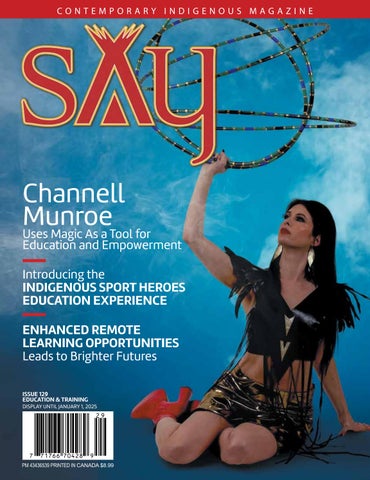
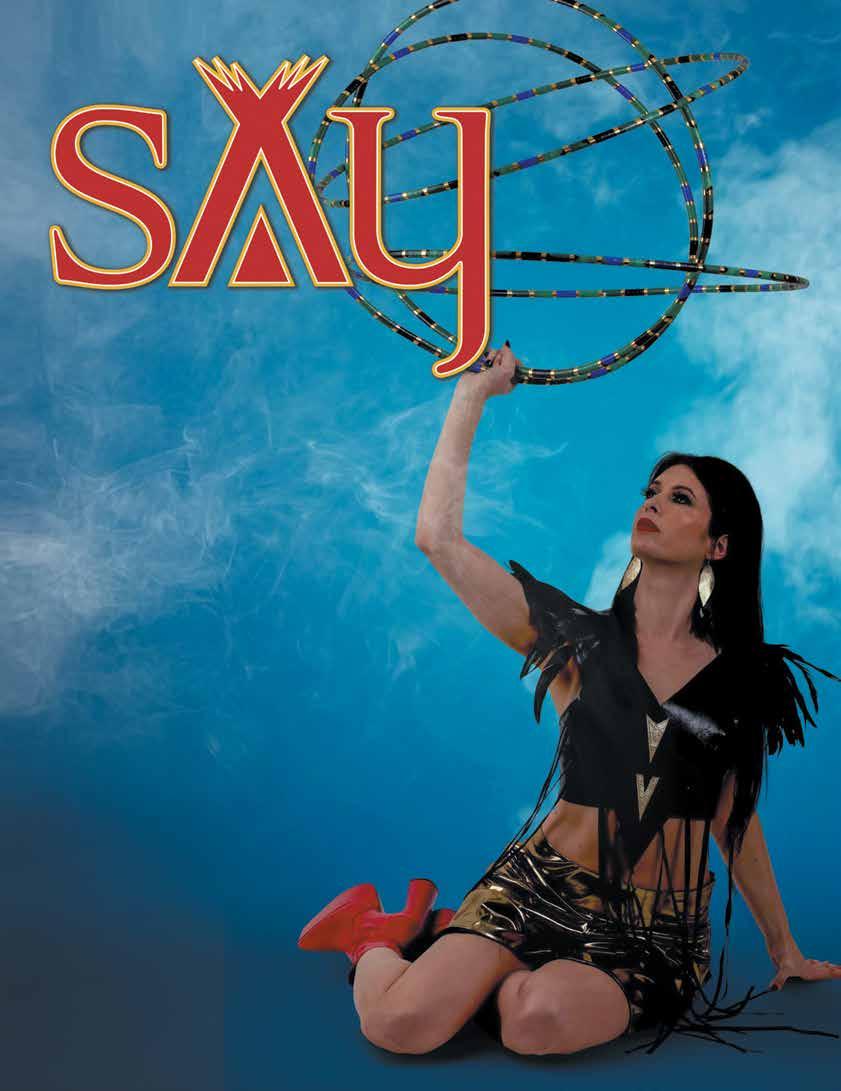
Channell Munroe
Uses Magic As a Tool for Education and Empowerment
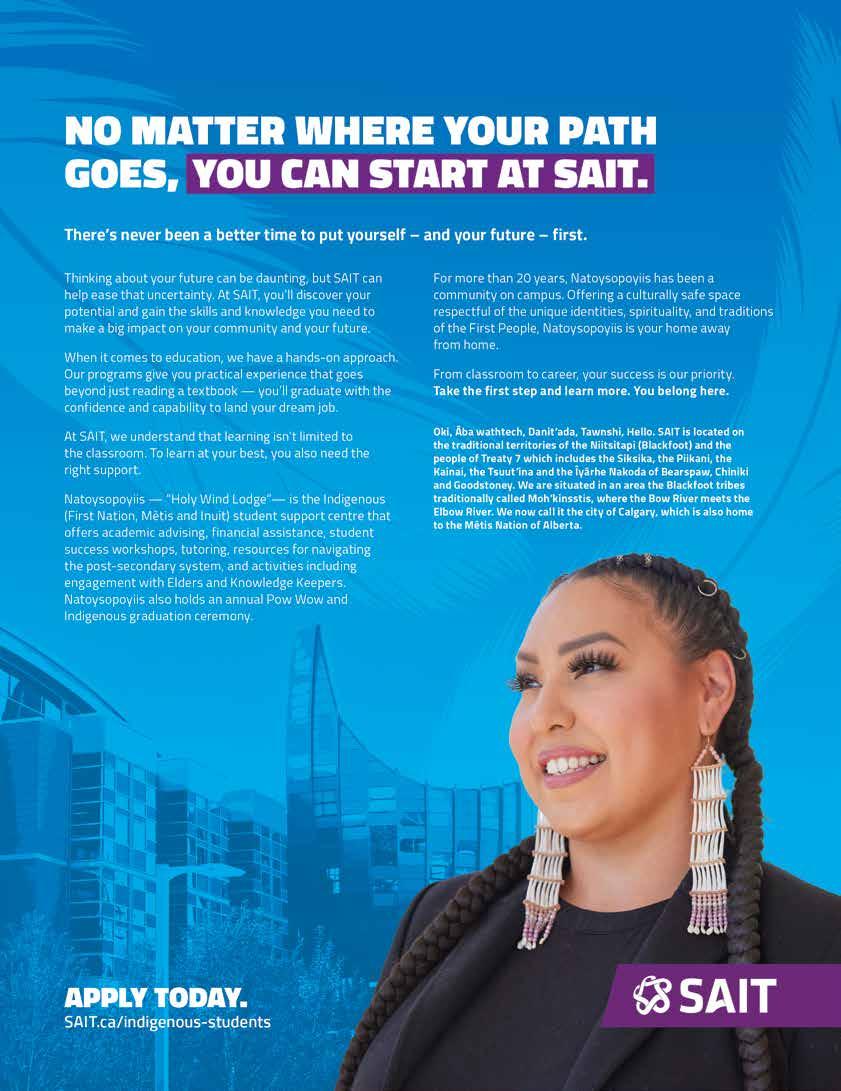
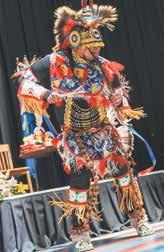
The Office of Indigenous Engagement and Natoysopoyiis, the student support centre, are integral to the intergenerational success of Indigenous students at the Southern Alberta Institute
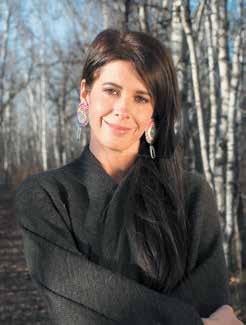
Drawing on her Métis and Cree heritage, magician Chanelle Munroe blends illusion, storytelling and cultural teachings to build selfesteem in youth and connect communities

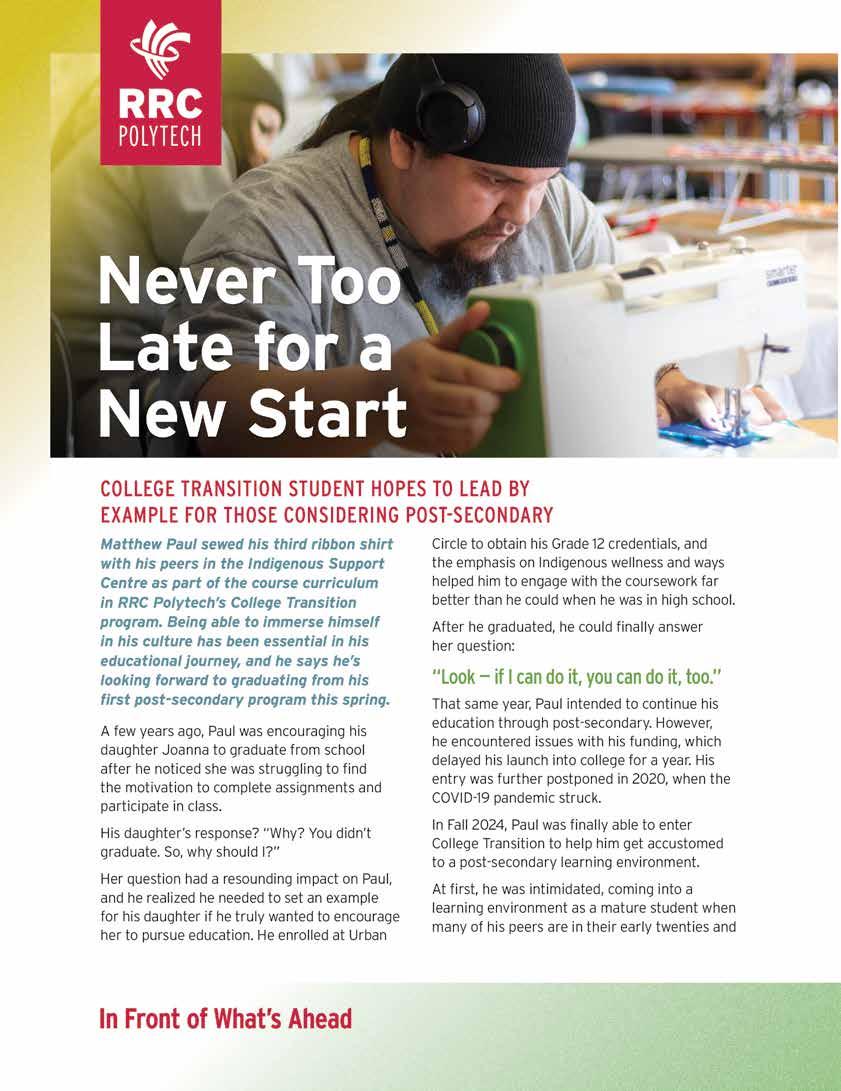
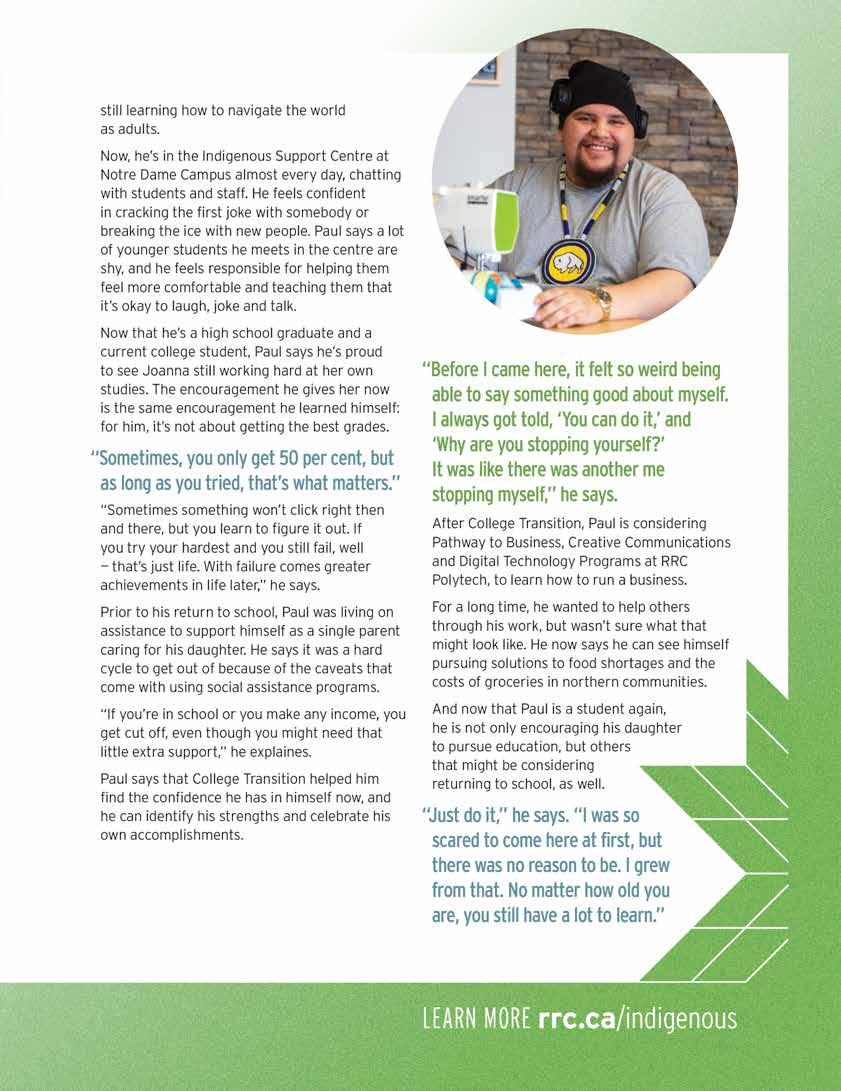
Matthew Paul, a college transition student at Red River College, hopes his journey will inspire others to consider post-secondary education
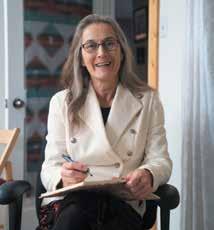
Edith Hutchins of British Columbia and Dorothy Monkman of Manitoba are women entrepreneurs whose chosen fields and businesses are dedicated to supporting families and fostering strong communities

Cover photo by Peter Kisil Wardrobe by Tracy Toulouse Custom Hoops by Shanley Spence
Dorothy Monkman
EDITOR’S MESSAGE
~ Danielle Vienneau, Editor-in-Chief

SAY MAGAZINE Volume 23, Issue 6
SAY Magazine is a bi-monthly publication that publishes six issues a year—one issue every eight weeks.
SAY Magazine is published by Spirit of Youth Enterprises Inc.
Mailing Address: Kildonan Place, RPO Box 43084 Winnipeg, MB Canada R2C 5G7
E: info@saymag.com saymag.com
Publishers: Dominick Blais and Kent Brown
Editor-in-Chief: Danielle Vienneau: editor@saymag.com
Editorial Team: Theresa Peters: theresa@saymag.com
Art Director: Orli Gelfat: orli.g.design@gmail.com
Sales Team: Dominick Blais: sales@saymag.com Aime Grenier: aime@saymag.com
Website and Social Media: Sphere Media Agency info@spheremediaagency.com
Submissions are welcome Articles, letters, queries, etc. should be sent by email to the editor at editor@saymag.com.
SAY Magazine assumes no responsibility for submitted material.
SAY Magazine assumes no responsibility for statements made by advertisers or in submitted material.
Graphics, photographs, editorial content and other printed material that are created by SAY Magazine are the property of Spirit of Youth Enterprises Inc. and may not be used without written permission from the publishers.
Printed in Canada
ISSN: 1707-3049 GST: 856627534RT0001

made possible [in part] by the Government of Canada
SAY Magazine acknowledges that we publish in Treaty One Territory, at the crossroads of the traditional lands of the Anishinaabe, Cree, Oji-Cree, Dakota and Dene Nations, and at the heart of the Métis Nation homeland.
As a diverse team of both Indigenous and ally collaborators, we strive to embrace, embody and live the truth that we are all Treaty people. All our relations!
Connect with us: This
facebook.com/saymagazine twitter.com/saymagazine instagram.com/say_magazine pinterest.ca/saymagazine linkedin.com/company/say-magazine


calendar of EVENTS 2024/25
OCT 28-30
2024 World Indigenous Business Forum
The WIBF creates ongoing partnerships, focusing on Indigenous economic development and encouraging information and knowledge exchange amongst Indigenous leaders worldwide. Albuquerque, New Mexico wibf.ca
NOV 1-30
Native American Heritage Month
A time to honour and celebrate the diverse and rich culture, history, and traditions of Indigenous Peoples in the United States. nativeamericanheritagemonth.gov
NOV 4-6
Tri-Academy Partnership on Indigenous Engagement: A Research Summit on Cultural Heritage in an Era of Reconciliation
The summit brings together leading scholars and community members from Canada and the Pacific to address Indigenous academics’ challenges and opportunities today. rsc-src.ca/en
NOV 8
National Indigenous Veterans Day
We honour our Indigenous Veterans, an estimated 12,000+ who have served in the Canadian Armed Forces since the First World War.
NOV 20-22
Indspire: National Gathering for Indigenous Education
Via a hybrid conference format, educators and partners can share their voices and work together to improve the educational outcomes of K-12 Indigenous students at this one-of-a-kind event. Winnipeg, Manitoba, Canada indspire.ca/events/national-gathering
NOV 22
2024 Driving While Indigenous Motivational Event & Gala
A motivational event celebrating the power and potential of Indigenous people by recognizing trailblazers, changemakers, and leaders of the Indigenous community who are driving generational healing and professional advancement in their fields. RBC Convention Centre Winnipeg, Manitoba, Canada drivingwhileindigenous.com/events
JAN 27-29
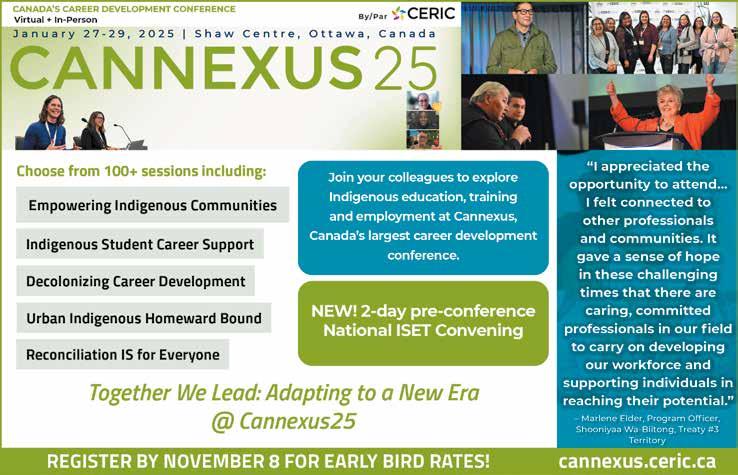
Cannexus25: National Career Development Conference
The 18th annual Cannexus Conference by CERIC is a bilingual hybrid conference focused on career and workforce development in Canada. The in-person portion is to be held at the Shaw Centre. Ottawa, Ontario, Canada cannexus.ceric.ca
FEB 25-27
International Indigenous Tourism Conference (IITC)
The world’s largest Indigenous tourism congress, IITC is a gathering of industry professionals, community leaders, entrepreneurs and partners dedicated to promoting and celebrating the vibrant world of Indigenous tourism. Montreal, Quebec, Canada indigenoustourismconference.com
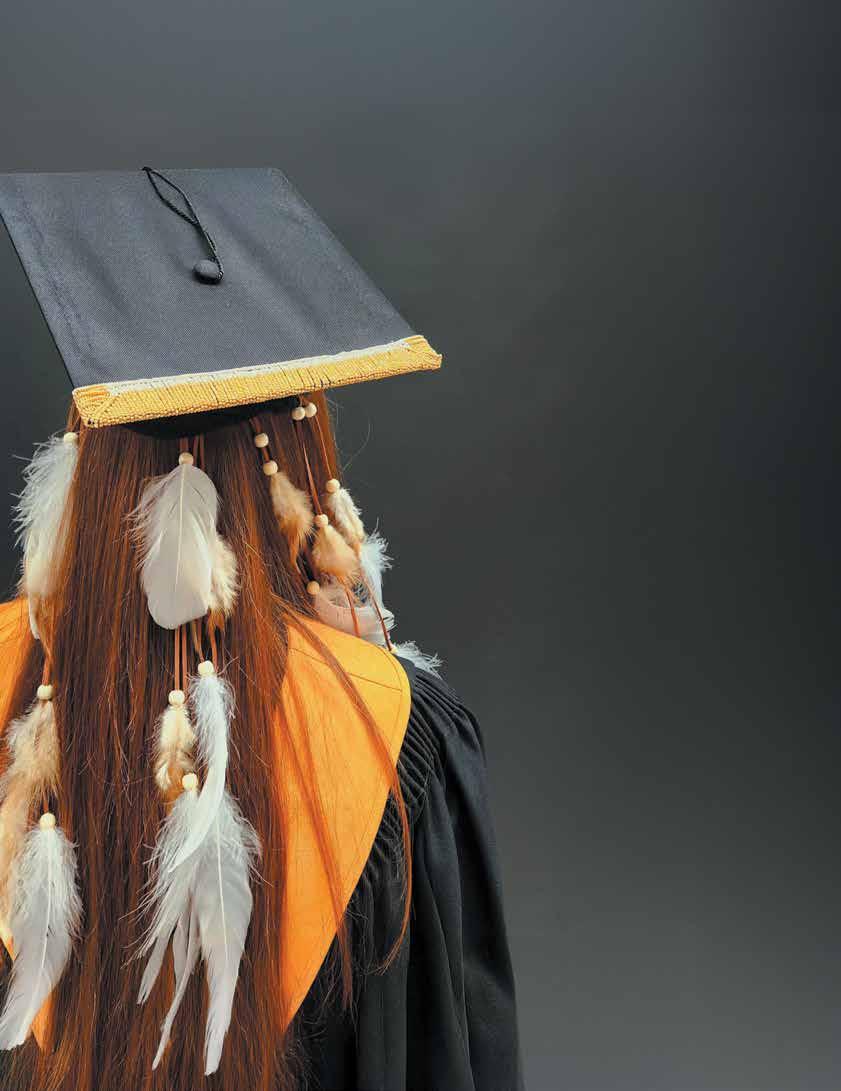
Fostering
student success indigenous
By Danielle Vienneau
For a century, the Southern Alberta Institute of Technology (SAIT) has evolved to meet the everchanging needs of the industry and the broader workforce, starting with returning First World War veterans. The institution now offers degrees, diplomas and certificates and is renowned for its industry-informed hands-on learning.
Now, SAIT is creating another legacy with the creation of the Office of Indigenous Engagement and renaming the Indigenous (First Nation, Métis and Inuit) student support centre, formerly Chinook Lodge, to align with Treaty 7 languages. With the development of ethics and history training in journalism programs and the inaugural tradition-centered celebrations of Indigenous graduates, the institution is working diligently on its path to reconciliation.
SAY Magazine recently had the pleasure of speaking with Ksikk inni na ki (White Buffalo Woman in Blackfoot), Jennifer Russell, about her role as the Director of Indigenous Engagement with SAIT and the support available to Indigenous students through Natoysopoyiis (nah-toy so po yees), “Holy Wind Lodge.” The Lodge, which has existed since 2001, offers academic advising and resources for navigating the post-secondary system, including engagement with Elders and Knowledge Keepers.
The creation of Russell’s role coincided with the opening of the Office of Indigenous Engagement in March of 2023. “The whole premise behind my role and the Office of Indigenous Engagement is to meet the commitment to education from the Truth Reconciliation Commission Calls to Action,” says Russell. “My department and role were one of the first steps in that journey.”
Russell brings with her a wealth of knowledge and skills. She is Cree, her dad is Blackfoot from the Siksika First Nation, and she is also a member of the Metis Nation of Alberta. Coincidentally, Russell was the first Indigenous recruiter at SAIT 13 years prior. “I worked out of Natoysopoyiis, formerly Chinook Lodge, as a recruiter
and then a student advisor,” she says. Before leaving SAIT for a career with Shell Canada, she worked as the coordinator of the Lodge. With all of her experience, it’s no wonder SAIT recruited Russell to lead them on the journey to reconciliation.
Natoysopoyiis is integral to the success of Indigenous students at SAIT— both the Lodge itself, with its open, welcoming spaces as well as the support available to students. “Natoysopoyiis was born way before Truth and Reconciliation,” explains Russell. “For more than two decades, Indigenous students have been able to practice our culture, which was outlawed at one point in our country, and been able to utilize the space. The structure itself is ventilated so that we can smudge, pray, and do ceremony in a safe way.”
In the two decades since Natoysopoyiis was created, there has been a significant increase in Indigenous student success at SAIT. “Thirteen years ago, we had under 100 Indigenous students; we now have
For more than two decades, Indigenous students have been able to practice our culture, which was outlawed at one point in our country, and been able to utilize the space. The structure itself is ventilated so that we can smudge, pray, and do ceremony in a safe way. ~ Jennifer Russell
more than 640,” says Russell. “And the beautiful challenge facing a lot of postsecondary institutions, including SAIT, is the growing rates of Indigenous students graduating high school and choosing to go to post-secondary at numbers we’ve never seen before.”
“As a mother of four and a grandmother of two, I believe it’s our duty as an institution to prepare to receive those students,” she continues. “My goal for those who choose SAIT, and in keeping with our Sacred Seven Teachings, is to make it a welcoming and safe space where they feel a sense of genuine belonging.” The dedicated team at SAIT is prioritizing doing more to indigenize the campus. “The more Indigenous students we welcome to SAIT, the more opportunities we’ll have for them to see themselves in the SAIT community,” says Russell.
Intergenerational Success
With surmounting high-school graduation rates, Russell hopes that SAIT will be able to report registration numbers of more than 1,000 Indigenous students in the next three to five years. “That is the ideal,” she says.
Russell explains the potential rise in post-secondary interest among many Indigenous youth nationwide. “When it comes to education, the change is due to walls coming down. Because of residential schools, there has been such a validated fear of sending our kids to school. Just that innate fear of that colonial institution in and of itself.”
Some studies suggest that youth who graduate from high school are more likely to graduate because their parents did. “We’re starting to see an intergenerational turnaround of the effects of residential school, where we now look at education and post-secondary education as the new buffalo,” says Russell. “It’s that domino effect or that trickle-down effect. When we see our family members be successful in post-secondary, we are more inclined to
follow a similar path.”
“The more we can change how we see education, away from a legacy of residential schools, the more we will see intergenerational success in education,” she explains. “I am the second generation in my family to graduate from postsecondary, and many are behind me.”
“We have to recognize the traumatic history—that’s real, and that’s the truth,” says Russell. “At the same time, we can look at the resiliency and the triumphs that our communities have had—that’s a form of intergenerational success.”
Natoysopoyiis:
Support for Indigenous Students
Between classes, many Indigenous students frequent Natoysopoyiis—a culturally safe space for students to gather with peers that is respectful of the unique identities, spirituality, and traditions of the First Peoples. From orientation to graduation, an all-Indigenous team is available to assist students in reaching their goals at SAIT. Support systems are in place to ensure every student has access to student advisors, counselling services, financial aid, and housing assistance. For a successful post-secondary journey, students also have ongoing access to cultural and spiritual advising, student success workshops, tutoring, and special events such as orientation, graduation, and pow wows.
SAIT works closely with local Treaty 7 community Knowledge Keepers to support learners throughout their program and after graduation. Russell credits much of the success of the Natoysopoyiis to a great effort from alumni and the development team. “They garner support from organizations and donors that see the value in supporting Indigenous students,” she says. Part of the funds donated to SAIT go towards an emergency fund for students called Kokum’s (meaning grandmother) Fund—a life-changing support for a student trying to balance life, work, and academics. “As an institution, we try to be flexible and as helpful as possible
because things like child care, transportation, housing, and more, really lend to the stability that a student needs to succeed,” explains Russell.
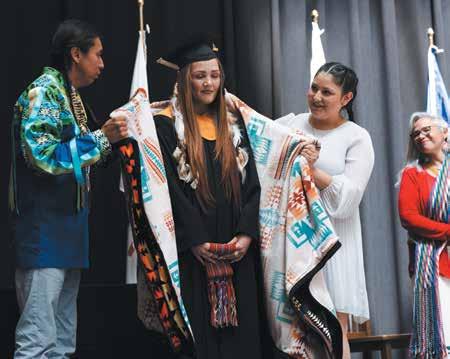
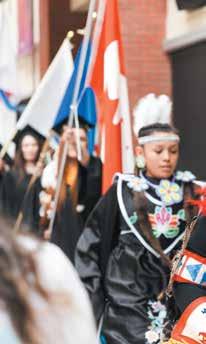
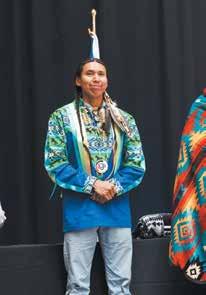
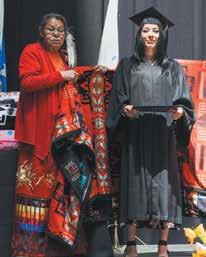
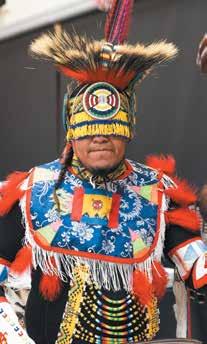
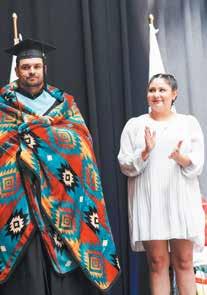
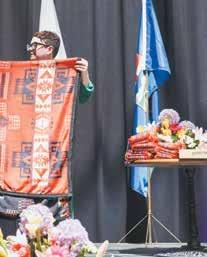
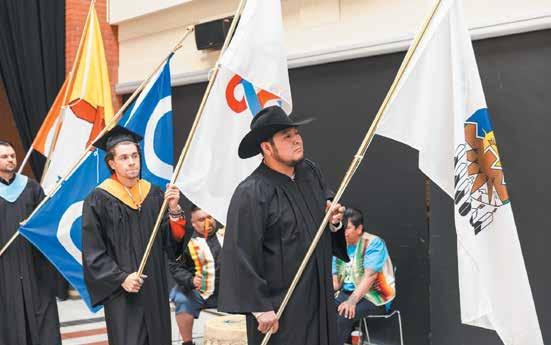
In June of 2024, over 90 Indigenous students graduated from SAIT programs. “We have a big, beautiful Indigenous graduation celebration to honour the achievements of those students,” explains Russell. Each year, SAIT hosts two Indigenous graduation celebrations, one in November and one in June, and the number of graduates continues to rise yearly.
The Future is Bright
As the development of the Truth and Reconciliation Strategy continues, Russell confirms that it is a process that takes time, requiring commitment and a level of engagement from the institution, students, and the community. “It’s going to take some time because we want to do it in the right way,” she
says. “This means it needs to be a collaboration of the SAIT community and the broader community, especially with the Elders that we’re so blessed and honoured to work with and who support SAIT and our Indigenous students.”
“Mindfully, we’re going to walk down this path toward reconciliation, and it’s going to be a journey to bring everybody along.” With ongoing momentum and dedicated faculty, there is a desire to change the culture to be welcoming and respectful of all cultures, encouraging students to bring their authentic selves.
“At Natoysopoyiis, we often talk about all my relations and what that means. We [the world] will get to a place one day where we all see each other as equal humans. The younger generation gets it; they will lead the way, and Natoysopoyiis and SAIT will support and grow with them.”
Danielle Vienneau, Editorin-Chief with SAY Magazine, believes in the power of sharing positive stories to inspire greatness in others. To submit your story, email editor@ saymag.com
Photos courtesy of SAIT
Honouring Indigenous Veterans
Sponsored by The Last Post Fund
The Indigenous Veterans Initiative (IVI), a subcomponent of the Last Post Fund Unmarked Grave Program, was launched in March 2019. Since then, the IVI has made significant strides in working with communities to locate Indigenous Veterans buried in unmarked graves.
Over the last five years, the IVI has received over 400 applications to place grave markers for Indigenous Veterans. To date, more than 250 military gravestones have been placed, with more to come. The IVI has also been instrumental in ensuring that Indigenous Veteran’s traditional names are inscribed on grave markers to honour and respect their cultural heritage.
The Last Post Fund, through IVI, hopes to continue to work with families and communities in the search for Indigenous Veteran graves deserving of a military gravestone. The map here showcases the stories and pictures of some of the grave markers placed by the IVI. In honour of National Indigenous Veterans Day, we commemorate four soldiers who fought with valour and distinction in World War I (WWI) and World War II (WWII) respectfully. We thank their families for sharing their stories with IVI and SAY Magazine.
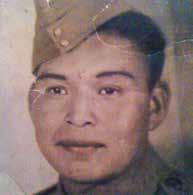
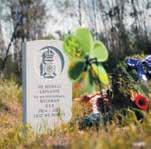
Name: Philip Louie
Nation: Ahousaht First Nation, British Columbia War Served: WWII
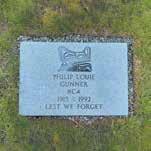
About his life: Louie was born August 21, 1915, to Thomas Joseph Louie of Ahousaht and Columbia Louie (Swan) of Ahousaht. He volunteered on April 16, 1942, to join the Royal Canadian Artillery, serving in the rank of Gunner until being discharged on April 23, 1946. He is buried in Victoria, British Columbia, where his children and grandchildren frequently visit him.
Photo credit: Ha Shilth Sa News
Photo credit (gravestone): Findagrave.com
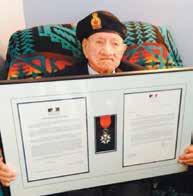
Name: Sir Michael LaPlante
Indigenous Name: Ka-pa-mikisekwew
Nation: Kawacatoose First Nation, Saskatchewan War Served: WWII
Awards: The Legion of Honour in 2016 from the French Government and the title of “Chevalier” (Knight), the highest French Order for military and civil merits. About his life: LaPlante joined the army very young and served with the Regina Rifle Regiment from 1943-1946. He was posted in England, France, Belgium, Netherlands, and Germany. He raised a family of nine children with his first wife, Pearl. Later, LaPlante and his second wife, Annie Favel, cared for and raised several foster children.
Photo courtesy of Gloria LaPlante

Note: Markers on map showcase where grave markers have been placed. Larger makers indicate where several markers have been placed within a community.
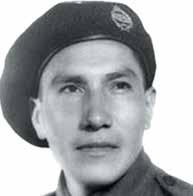
Name: Harold Iron Shield Crowchild
Indigenous Name: Didili Minis Gonii Nation: Tsuut'ina Nation, Alberta War Served: WWII Awards: 1939-1945 – Star, France/ Germany – Star and Defence medal, Canadian Volunteer Service Medal and Clasp, War Medal 1939-1945
About his life: Crowchild’s greatest gifts to his family were love, laughter, and honest, hard-working ethics. His gift to his people and our country was fighting in WWII with the headquarters of the 4th Canadian (Armoured) Division on active duty. He was a trooper in the United Kingdom, France, Holland, and Germany. Crowchild was passionate about being a cowboy and loved the rodeo. He rode and broke horses well into his 80s. Crowchild lived a long and humble life. He will be remembered as the warrior “Iron Shield” who helped save our country.
Photo credit: Chris Twoguns
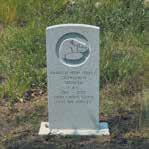
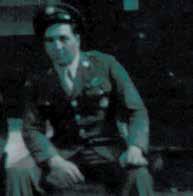
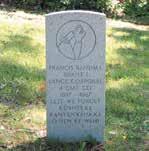
Name: Francis Randall Brant
Nation: Mohawks of the Bay of Quinte (Wolf Clan), Ontario War Served: WWI and WWII
About his life: Born on January 21, 1897, Brant was the son of David Peter Joe and Susan (Maracle) Brant. He volunteered for the 155th Overseas Battalion on February 8, 1916. His military personnel file indicates that he was a farmer before enlisting and had some previous military experience with the 49th Regiment. Brant served in Canada, England, and France from October 1916 to March 1919, discharged with the rank of Lance Corporal. Brant married Emmeline Barnhart in November 1922, and they had five children. Sadly, only 2 survived to adulthood. Brant died on June 10, 1967.
Photo courtesy of Cheryle Maracle

Do you know of a Veteran who is missing a grave marker?
The IVI has come across various Veterans buried under a wooden cross or with no marker at all. Once service is confirmed, these Veterans can receive a grave marker through the Last Post Fund’s Indigenous Veterans Initiative. IVI will cover the full cost of the grave marker and the installation.
For more information, contact the Indigenous Project Coordinator at info@lastpost.ca or 1-800-465-7113 ext. 222.

The Last Post Fund’s mission is to ensure that no Veteran is denied a dignified funeral and burial, as well as a military gravestone, due to insufficient funds at the time of death. Its primary mandate is to deliver the Veterans Affairs Canada Funeral and Burial Program, which provides funeral, burial, and grave marking benefits for eligible Canadian and Allied Veterans.
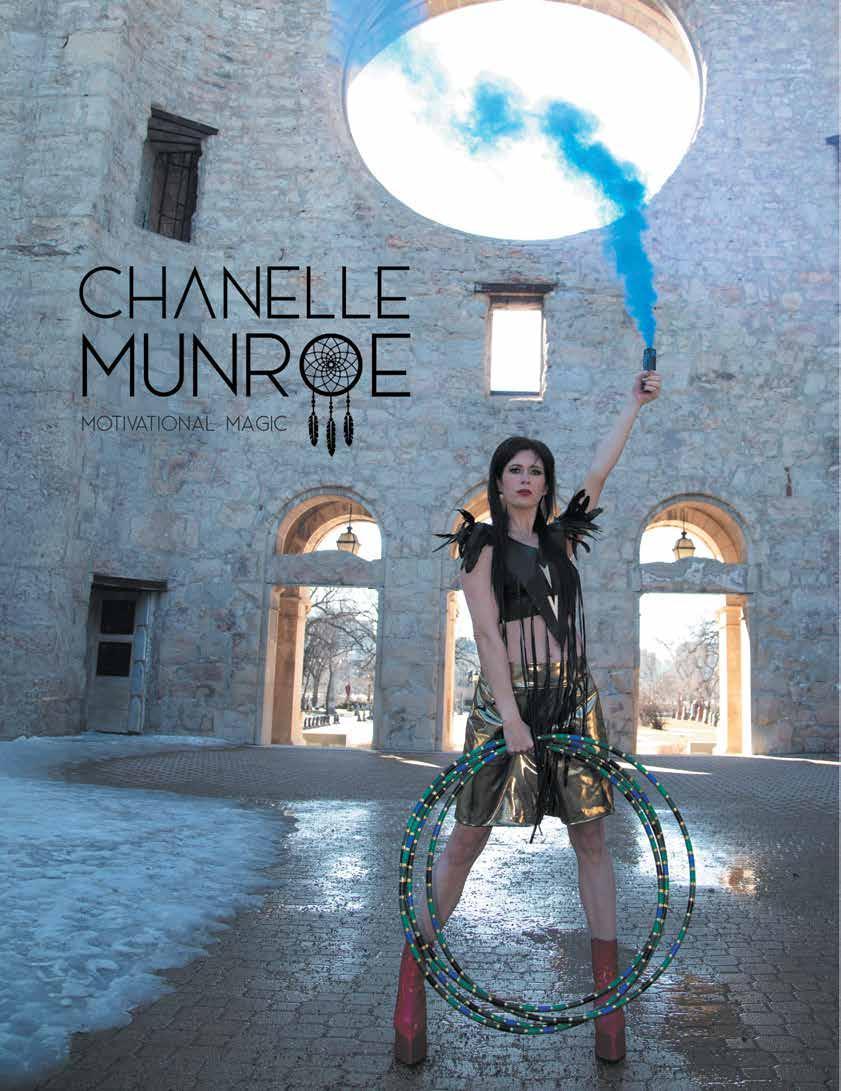
Photography by Peter Kisil Wardrobe by Tracy Toulouse
Custom Hoops by Shanley Spence

Empowering Indigenous Youth Through Magic
By Danielle Vienneau
Chanelle Munroe is the world’s first professional female Métis magician. Known as the “Mystical Trickster of Magic,” Munroe has become a sought-after entertainer and a powerful voice for Indigenous communities by using magic for education, empowerment, and social change. Hailing from Winnipeg, Manitoba, Munroe is a seasoned entertainer with more than just tricks up her sleeve. She is a traditional jingle dress dancer and is trained in hula-hooping, fire spinning, pole dancing, and singing, which she often incorporates into her thought-provoking performances.
Deeply rooted in her Métis and Cree heritage, Munroe’s performances blend illusion with storytelling, humour, and cultural teachings. For Munroe, magic is about more than entertainment—it’s a medium for building selfesteem, encouraging creativity, and connecting communities. She also uses her platform to promote equality, unity, and reconciliation. Her work in this area is particularly significant in the context of Canada’s ongoing efforts toward reconciliation with Indigenous Peoples.
Munroe’s work shows the power of magic to transcend entertainment and become a vehicle for meaningful social and cultural dialogue. Her performances celebrate her heritage in a way that invites audiences to engage with important issues in a new and innovative way. Through her unique blend of magic and cultural advocacy, Munroe significantly impacts the magic industry and the communities she serves.
Beyond her high-profile magic performances across North America, Munroe is passionately committed to working with Indigenous youth. She regularly
travels to remote Indigenous communities across Canada, offering workshops on vocal empowerment, art therapy, and her popular “Movement is Medicine Basketball Camp.” These workshops are not just about learning magic, they are about transformation. Munroe’s aim is to create safe spaces for youth to explore their individuality, address challenges such as bullying, and develop their creative potential. The impact of these workshops has been profound, resonating with schools, youth organizations, and communities, and inspiring hope for a brighter future.
Munroe was recently featured on the cover of Vanish Magazine, an international publication dedicated to the art of magic and the most-read and respected magazine for magicians. Her feature in Vanish Magazine highlights her groundbreaking role in magic and her commitment to Indigenous communities. SAY Magazine recently spoke with Munroe to learn more about her career and how she uses magic as a tool for healing and empowerment for Indigenous youth, all while complementing the educational curriculum. Keep reading to find out more.
Magic has this incredible ability to open minds and hearts. When youth begin to believe in the impossible, they start to believe in themselves. That’s the real magic.

SAY Magazine: How do your performances and workshops complement the educational curriculum in the communities you visit?
Munroe: Indigenous Peoples have a complicated history with the education system in Canada. My great aunties, uncles, and grandpa were put in Middle Church Residential School. It was there that they lost their Cree language.
Indigenous Peoples have many more talents beyond “book smarts” or academic smarts. When I perform in schools, the magic has this incredible way of opening up the mind to believe in anything, even the impossible! Once students feel that anything is possible, they can also start to believe in themselves, their gifts, and their talents. The magic show and magic camp workshop inherently transcend the classroom and the curriculum. It’s another step towards decolonizing the classroom. It helps students think outside the box and forge their own path in life.
SAY Magazine: How do you integrate educational elements into your magic workshops for Indigenous youth?
Munroe: I often teach magic workshops with my partner, Sean Watson, a magician who performed in Las Vegas for 12 years. At age 12, Sean struggled with school due to learning disabilities and ADHD. He was bullied until he found Mark Wilson’s “Book of Magic” in the library. Determined to learn magic, he overcame his reading challenges and even started impressing his peers with tricks. The bullying stopped, his confidence grew, and his speech impediment improved as he continued performing. By telling Sean’s story, we empower kids who are struggling in school so that they can overcome their learning difficulties. We show that everyone has a unique talent or gift. The
story demonstrates that it’s wrong to bully others. The educational elements that our magic camp provides ease the troubles of students struggling in school and give them the confidence to move forward in a new and positive way.
SAY Magazine: Please discuss the role of storytelling in your performances and how it enhances learning for your audiences.
Munroe: I weave cultural teachings into the magic tricks during the show. Kids learn more about their own culture and heritage in a way that is entertaining. Some students are carrying significant trauma, and it is hard for them to hold their attention span for a long time. I can keep the students’ attention because I’m entertaining! I’m storytelling while doing the magic tricks, so the information is received in a way that is easily digestible and fun for the student.
SAY Magazine: Please tell us about the Beyond Magic Camps you offer for youth.
Munroe: “Movement is Medicine, Basketball Camp” was developed out of my experience as a basketball player. I am Métis, Cree and Jewish. I was captain of the basketball team for Team Canada at the Jewish Olympics in Israel, where we won the gold medal, and I was named MVP of the tournament. I put incredible discipline into my basketball training to get that far. When I observe that students are athletically inclined, I teach them what it takes to be an Olympian and encourage them to set goals to compete at major games, like the North American Indigenous Games. Dedicating myself to sports kept me out of trouble, and I hope my camps do the same for others.
“Speak Your Truth - The Power of Your Voice” comes from my experience in the performing arts. When I was 16, I was a singer for a punk rock band. Represented by Universal Music, we had a music video on Much Loud and toured with Vans Warped Tour. That experience informs how I teach a music workshop for musically inclined students. It’s about learning to sing and using our VOICE for good.
Students learn how to say positive and kind things to one another. They also understand that we can damage our voice when we bully and cyberbully others. I address negative self-talk and demonstrate how to have a kind inner dialogue with your thoughts. We finish class with a song circle and then karaoke. The young people I work with tend to love karaoke, and even the shy students will get up and sing.
My last workshop is “First Nations Art Therapy,” which was developed by my mother. She taught at the McEwan Center in Saint Boniface Hospital in Winnipeg, Manitoba, for 36 years and received a Star Blanket and Eagle feathers for her excellence in Indigenous education. In this workshop, students observe different First Nations artwork from across Turtle Island, looking at Inuit art, Woodlands, Cree, Métis, Navajo, Mi’kmaq, and Haida art. They learn to identify what visually differentiates each tribe, and then they create their own piece of art that has the qualities and characteristics of their own tribe, which roots and grounds them in their own cultural identity.
SAY Magazine: What path would you suggest following after high school (post-secondary education options) for youth looking to follow in your footsteps?
Munroe: We all have our own moccasins to wear and our own path to follow. You have to be true to who you are and in touch with your intuition and guidance system to know what is best for YOU. I obtained a theatre degree from the University of Winnipeg. My university experience opened my mind to learning in a new way. It made me more worldly and knowledgeable in my thinking, and it led me to greater opportunities. I wouldn’t be nearly as good a magician without my theatre training.
SAY Magazine: Please tell our readers about the role of mentorship in creative careers such as yours. What is the best approach to find a mentor?
Munroe: Finding the right mentor is like finding your soulmate–they are like a diamond in the rough. I feel very lucky to have found my mentor (and fiancé), Sean Watson. He taught me magic and show business (emphasis on the BUSINESS).

More importantly, he taught me to believe in myself and get out of my own way. I wouldn’t have made it this far in my career without him pushing me past my fears, insecurities, and self-doubts, which are common emotions and blocks for creative types. My advice for finding a mentor would be to reach out to your role models and ask for help, support, and guidance. Have no shame in asking for help. I’ve had a lot of help along the way. I didn’t get here on my own. Most people you reach out to will be willing to help you; if they don’t, please don’t take it personally! Nothing is personal. No matter what happens, keep moving forward and reaching out! The right people will find you.
SAY Magazine: Was there a moment in your life that helped to shape how and/ or where you share your magic?
Munroe: I will share my origin story. I first visited a reservation when the cultural activity coordinator (and my friend), James Cooke from Manitou Piness-eek Consulting, brought me in. He took me to the Northern Store so I could get some snacks. I looked around the store, noticing how high the food prices were, and I started crying right there in the store. I asked him, “How does anyone afford to eat?” He looked at me, and said, “they don’t.” That’s when I decided to dedicate myself to working in the communities. Some magicians choose to work on cruise ships and eat from the king crab buffet every night, but it’s not for me. I’d rather be here with the people eatin’ moose meat and bannock.

Danielle Vienneau, Editorin-Chief with SAY Magazine, believes in the power of sharing positive stories to inspire greatness in others. To submit your story, email editor@ saymag.com.
EDITH HUTCHINS
PURE PLAY CHILD CARE – MATSQUI, BRITISH COLUMBIA
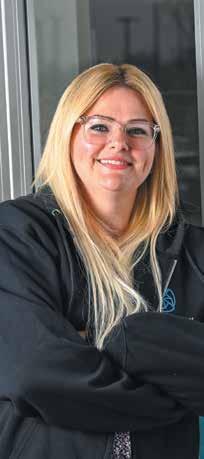
Edith Hutchins, who owns and operates Pure Play Childcare, nurtures a love for children by creating enriching environments where they can grow, combining her passion for early childhood education with dedication to building a thriving community.
The air is full of energy as a line of children head outside to play. This is the Shaughnessy branch of Pure Play Childcare, one of two childcare centers owned and operated by Edith Hutchins. Each center (Shaughnessy and Riverside) is over 6,000 square feet, with a large playground and five classrooms (three for babies and two for the three-to-five age range). Between the two centers, there are approximately 160 children enrolled.
Hutchins’ love of children started young as she babysat for family members. “My inspiration was my family and my love for children. I love being around children.” Before having a daycare, Hutchins tried several different types of work and eventually became a glass cutter and a glass temperature oven operator, making windows and shower doors. However, when she had her child, opening a home daycare to allow her to earn money while being home with her child seemed logical. “My husband and I decided that I’d go back to school. I returned for Early Childhood Education, which would allow me to open a business in our house. I could create a daycare in the basement and still have my children attend while I cared for other children. I love what I do and get paid for it.”
When they purchased the house, they considered the requirements for having a daycare in the home. While they had to do some construction, they were able to make it work. In addition, to help them meet the municipal requirements, they bought a Fraser Health book to guide them on licensing in-home multiage daycares.
After seven years of running a center out of her house, Hutchins felt it was time to expand as her children were older and they could better use the space in the house. In addition, she felt she was outgrowing the home business.

Sponsored by:

“I wanted to be around more people because when you work alone, it’s just me and the children. After seven years, I wanted a little more interaction with other people, and I wanted to grow what I love.”
Moving to a full center took time, as there were many more requirements to meet. It also meant finding a location, having playgrounds, parking, staff, etc., but with perseverance, Hutchins could meet the development challenges.
Hutchins shares the value of delegation and assistance. To save money, she did a lot of the work for the first Center, but for the second Center, she outsourced more of the work. “When we opened the second one (childcare center), we learned that we could spend a little bit more and have somebody else do it, which gave us more time.” This philosophy has been adopted in her management of the Center. “I do a good chunk of everything myself. I just hired a new manager to help me with my “end-of-enrollment,” parent tours, etc. And I hired a new bookkeeper to take over my receipts and payroll. It’s a little less on my plate and more on other people’s now.” For all three ventures, Hutchins appreciates the support she has received from the Tale’awtxw Aboriginal Capital Corporation.
Hutchins smiles as she talks about the benefits of her work.” I’m proud of being able to raise my family at home and enjoy that time until they, you know, turn to school. I’m still working long hours, but I get a lot of downtime with my family, and I’m able to do stuff with them. Another one (benefit) is seeing all these little ones that have started with us and have been with us for a year, seeing their growth and how happy the families are. I love it. It’s nice to see the children come in. They’re smiling; they’re happy.”
DOROTHY MONKMAN
Sponsored by:
HEAL YOUR SOUL THERAPEUTIC SERVICES – BROKENHEAD, MANITOBA
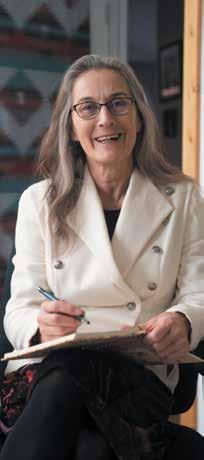
"The greatest pride for me is not so much what I do, but the results that come out of the assistance that people get."
~ Dorothy Monkman
In a world often fraught with challenges, Dorothy Monkman, a member of the Brokenhead Ojibway Nation, stands as a beacon of hope and transformation for families in need. With a background in marriage and family therapy, Monkman’s journey towards becoming a pillar of support for struggling families is as inspiring as it is impactful.
Heal Your Soul Therapeutic Services is a trauma-informed therapy she offers to individuals and families. She has created a reunification suite in her own home called Bangan Omaa, and this suite serves as a space for families with children in care who would like to be reunited. “It also supports families that are intact but are needing help.” Supporting both intact and separated families is important for Monkman, emphasizing her services’ holistic approach.
Through her personal experiences, Monkman’s own family’s struggles propelled her toward her calling. “Early on in my life, I could see that my family was struggling from the challenges that I and their father had as children. As my house got more and more empty as they left, I realized that I wanted to convert it into helping other families.” The heart behind Heal Your Soul Therapeutic Services is to help bring reunification to families stemming from Dorothy’s own familial experiences. “The greatest pride for me is not so much what I do, but the results that come out of the assistance that people get,” she states, highlighting her work’s profound impact on families in distress.
It is her children, grandchildren, and great-grandchildren who serve as her inspiration to continue her work. “I see

them flourishing and blossoming, and to me, that is my inspiration to continue doing my work.”
Choosing the path of entrepreneurship was a deliberate decision for Monkman, driven by her desire for flexibility and autonomy. She sought to set her hours, allowing for more time with her family while pursuing her passion. “I want to be my own boss and take the direction I need to do in my life right now.” Despite her challenges, believing in herself was her most significant hurdle. “Once I embraced my purpose, I was able to fulfill that purpose.”
Reflecting on this journey’s path, Monkman wouldn’t change any of her decisions. Starting her entrepreneurial journey earlier would have inhibited her ability to spend time with her own family; family togetherness is at the root of Dorothy’s passion.
At the onset of her entrepreneurial journey, the Southeast Community Futures Development Corporation supported Monkman through workshops and opportunities to speak with women outside her community. “Through them, I was able to access the Indigenous Women’s Entrepreneur Program (IWE) that they run, and I was able to expand my business.” The IWE program provided financial assistance and a network of like-minded women who uplifted and supported one another.
The biggest challenge for Monkman was leaving the security of a consistent paycheck, but she soon realized taking the leap into entrepreneurship was worth it. “I realized that there was more to life than that, and it was taking a risk and exploring the unknown. And that’s been fulfilling for me.”
Indigenous SPORT HEROES EDUCATION EXPERIENCE
By Danielle Vienneau
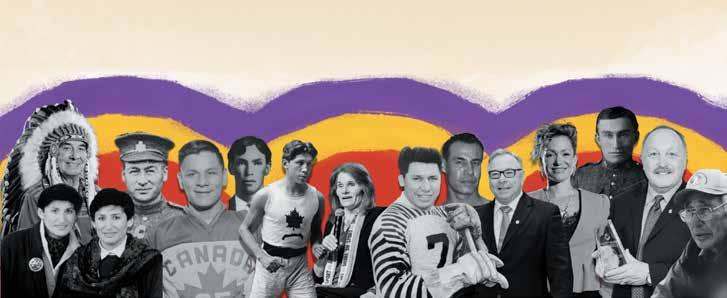
In consultation with Indigenous Hall of Famers and their families, Canada’s Sports Hall of Fame offers a unique educational experience through the lens of sport called the Indigenous Sport Heroes Education Experience Dedicated to supporting educators and sharing the country’s rich sporting heritage, Canada’s Sports Hall of Fame hopes this resource will give educators entry points into Indigenous education through the diverse world of sport from an Indigenous perspective.
Canada’s Sports Hall of Fame, like SAY Magazine, aims to share positive success stories and stories of truth and resilience. A registered charity in Canada with a nearly 70-year history, they represent all sports and all people across the nation—they are historic storytellers, educators, and community builders, driven by purpose to inspire the leaders of tomorrow through the invaluable lessons of sport. With education as their main pillar and as Canada’s only national museum of sport, Canada’s Sports Hall of Fame is dedicated to providing a platform to amplify and share Indigenous Hall of Famer stories.
The Indigenous Sport Heroes Education Experience is one of, if not the most important education initiative to date. It offers 12 ready-to-use lesson plans that complement digital interactivities and chapters to bring entry points to Indigenous ways of knowing and being into the classroom. Most notably, it supports Truth and Reconciliation through Calls to Action 62, 63, 66, 67, 68, and 87. The goal is to arm teachers with a vetted resource where they feel confident in bringing Indigenous perspectives into their classrooms, regardless of the subjects or grades they teach.
Origin Story
The resource was created to honour the feedback and insight from Indigenous sport leaders who attended a virtual summit hosted by Canada’s Sports Hall of Fame in November 2020. Since then, it has evolved into a seven-year changemaker initiative that will continue to thrive beyond its initial term, guided by collaboration and created by countless Indigenous, sport, museum, and historical partners. The stories, developed with the Hall of Famers or their families, gifted Canada’s Sports Hall of Fame the permission to share their stories, truths, and experiences.
Canada’s Sports Hall of Fame has a very important role to play in advancing Peace and Reconciliation and one of the ways is to tell the National story about Indigenous athletes in history. I am personally so grateful for all those that have been honoured knowing that it has not been easy for any of them to accomplish what they did for family and country. ~ Chief Wilton Littlechild
Photo credit: Canada’s Sports Hall of Fame
Digital Collection
The Digital Resource
Available in English and French, this resource offers a multi-modal learning experience for youth using interactive chapters designed to look like a book. There are chapters on the 15 Indigenous Hall of Famers, and two new chapters will be added in 2025. Several highlights include chapters on Indigenous Hall of Famers who have helped build Canada through sport, the creation of the Tom Longboat Award and recipients of this award, and various Indigenous Games. The interactive learning platform offers storytelling through video, written text, 360-degree views of artifacts, and audio learning activities.
The Indigenous Sport Heroes digital book is intended to assist teachers nationwide with lesson planning and as a springboard for their curriculum mapping in an Indigenous context. The Indigenous Sport Heroes Education Experience fills a gap in Indigenous education curricula by highlighting the remarkable contributions of Indigenous Peoples in Canada. Not only does it celebrate the excellence of these Hall of Famers, their contributions, successes, achievements, and communitybuilding efforts, but it also underscores a necessary dedication to acknowledging their truths, dedications, and experiences.
Lesson Plans
The resource offers entry points into bringing Indigenous ways of knowing, being, and doing into the classroom. There are 12 lesson plans containing K to 12 in-class learning activities to complement the digital book interactivities and expand on the chapters’ stories of truth and experience. The lesson plans help teachers integrate holistic teaching methods into their classrooms that recognize Indigenous histories, cultures, pedagogies, traditional languages, and traditional knowledge systems. They are interactive educational activities focused on the natural elements, land, air, water, and fire, and were developed as basic activities meant to inspire further learning, relationship
building, and deeper understanding specific to distinct First Nations, Métis, and Inuit Peoples.
The lessons offer brief introductions to broad themes related to Indigenous ways of knowing or the Hall of Famer stories. The educational interactivities support Indigenous language revitalization and offer a starting place to learn various Indigenous languages representing the Hall of Famers’ heritage.
Education Hub: Support for Teachers
To further support teachers nationwide, an Education Hub is easily accessible with quick links to the 12 lesson plans designed by Indigenous educator Crystal Clark. There are also interactivities, curriculum connections, various chapters, and the Educator Toolkit, filled with ready-touse resources. The toolkit, reviewed by 20 Indigenous and non-Indigenous educators nationwide, provides teachers with additional ways to use the resources with extension activities by subject, including math and science.
This multimedia education experience continues to be an incredible resource to educate Canadians about the impactful stories of the Indigenous Hall of Famers inducted into Canada’s first Hall of Fame. By sharing the truths and the lived experiences of Indigenous Hall of Famers, Canada's Sports Hall of Fame provides a platform of Indigenous role models for all youth to look up to.
In addition to the Indigenous Sport Heroes Education Experience, Canada’s Sports Hall of Fame has many other resources related to Indigenous education, which can be found on the Beyond the Win Education Platform. These include carefully curated live and pre-recorded virtual programs, such as Artefact Talks, Hall of Famers on Tour, Conversation Starters and more.
For more information and to access the Indigenous Sport Heroes Education Experience, visit indigenousheroes.ca.
I am VERY impressed by the Indigenous Sports Heroes Education Experience and the Educator Toolkit. As a Social Studies teacher, I am constantly looking for resources that celebrate Indigenous Peoples’ accomplishments in Canada. So many of my students are passionate about sports and I felt this was a great way to discuss diversity, inclusion, equity, Indigenous achievements, and history in a unique way. ~ Teacher, Kingstown School, Ontario
Danielle Vienneau, Editorin-Chief with SAY Magazine, believes in the power of sharing positive stories to inspire greatness in others. To submit your story, email editor@ saymag.com.
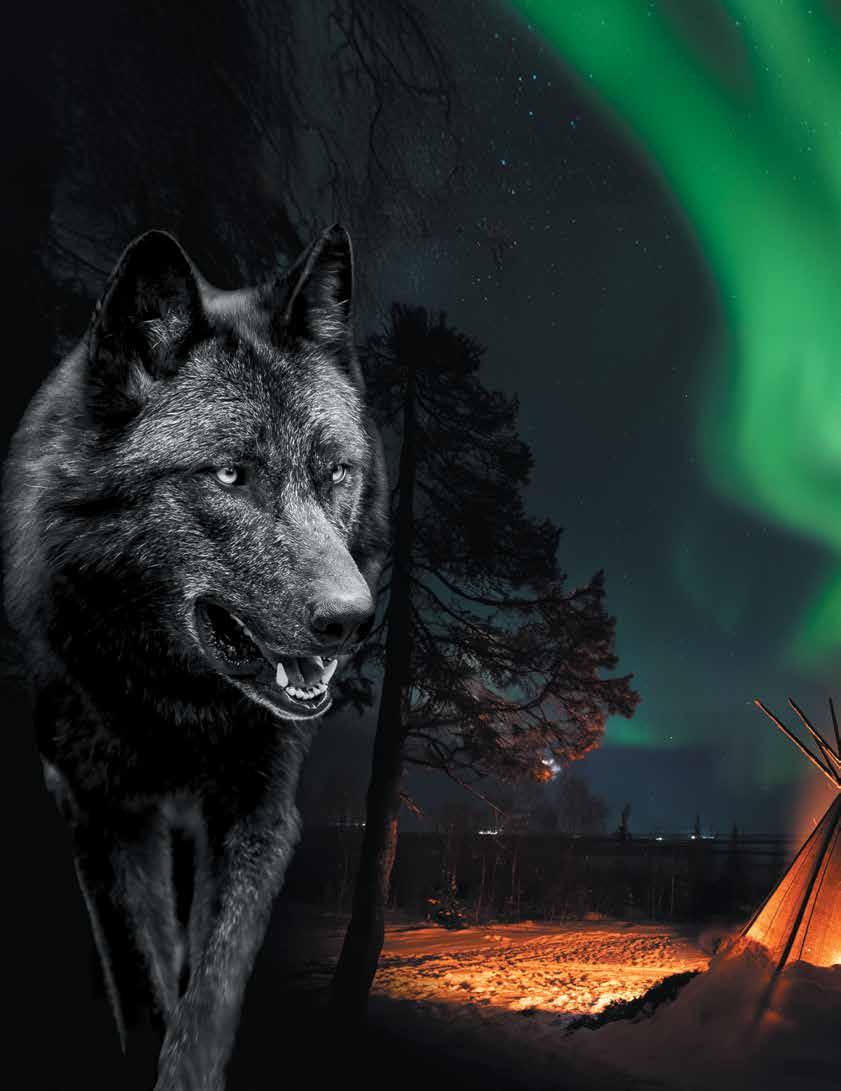
The Story of the Two Wolves
It is said that there are two wolves within each of us. A wise Cherokee Elder once taught his grandson about life and the battles we all face from within.
“There is a war going on inside of me,” he told the boy. “It is a terrible fight, and it is between two wolves. One is evil—he is anger, envy, jealousy, sorrow, regret, greed, arrogance, selfpity, guilt, resentment, inferiority, lies, false pride, superiority, and ego.”
He continued, “The other is good—he is joy, peace, love, hope, serenity, humility, kindness, benevolence, empathy, generosity, truth, compassion, and faith.
He paused, “The same war is raging within you— and within the heart of every man, woman and child.”
The grandson thought about it momentarily and then asked his grandfather, “Which wolf will win?”
The Elder simply replied, “The one you feed.”
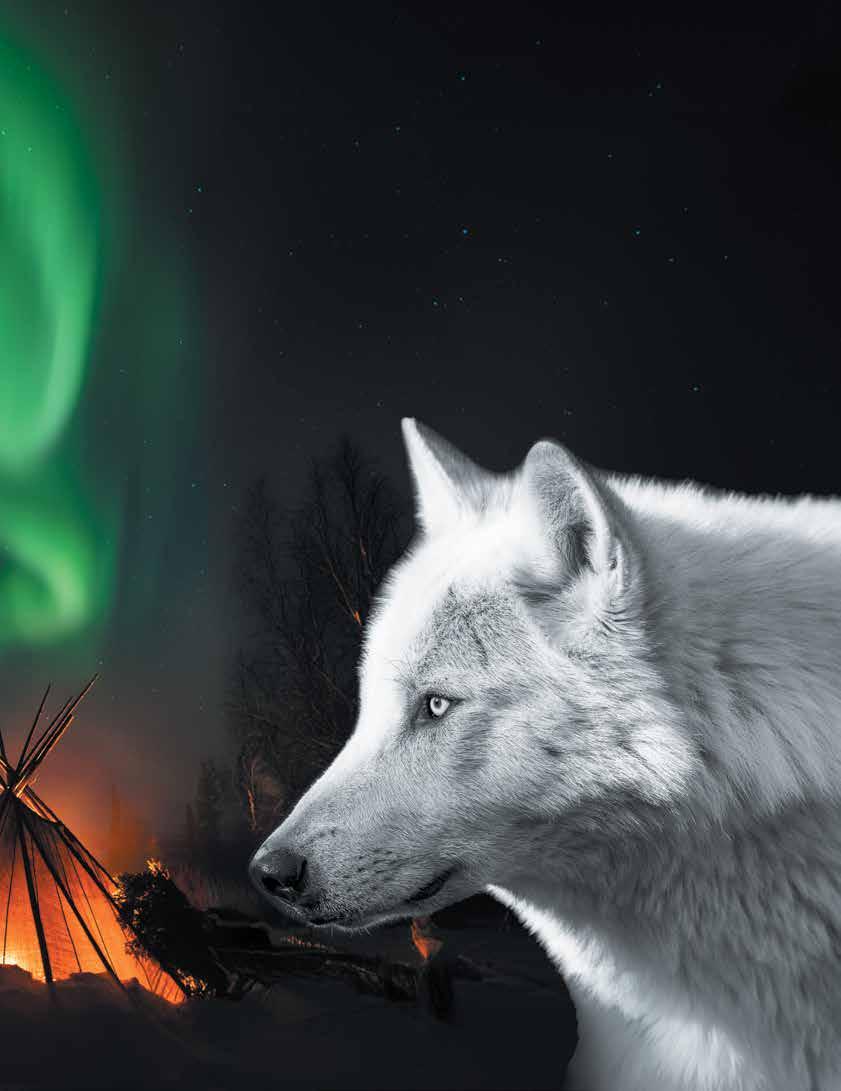
The Lesson
This teaching helps to teach that the emotions and traits we nurture within ourselves determine the kind of person we become. We can cultivate a peaceful, loving, and kind life by feeding the “good wolf”—focusing on positive thoughts and actions. Conversely, feeding the “evil wolf”— giving in to negative emotions—can lead to a life dominated by anger, resentment, and sorrow. This teaches the importance of self-awareness and our choices in shaping our character and destiny.
Igniting Futures and Empowering Remote Students
By the Connected North Team, Illustrations by Shaikara David
Canada’s remote and northern communities have long faced unique challenges in providing quality education to their students. However, a remarkable transformation is quietly underway, driven by innovative programs leveraging technology to connect, empower, and inspire young learners.

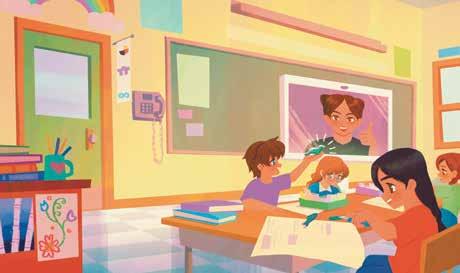
At the heart of this movement is the Connected North program, a non-profit initiative strengthening educational opportunities for over 33,000 students in nearly 200 remote schools. Through video conferencing technology, Connected North brings interactive learning experiences to these remote communities, bridging educational gaps and fostering a sense of empowerment, cultural respect, and innovative learning.
Complementing this effort is the Future Pathways: Fireside Chats program, which leverages the wisdom and experiences of Indigenous role models to provide invaluable guidance and motivation for young people. Together, these initiatives are not just bridging educational gaps; they are empowering students with the tools, inspiration, and cultural relevance needed to thrive.
Connected North: Bridging Gaps with Technology
Connected North utilizes two-way video technology to deliver interactive educational services to schools in remote regions. Through virtual guest speakers, field trips, and interschool, North-North collaborations, Connected North offers a wealth of engaging and innovative content that would otherwise be inaccessible to these isolated communities. The program’s approach goes beyond merely providing resources; it aims to enhance feelings of student empowerment and engagement. By incorporating virtual content that is both stimulating and relevant, Connected North helps students feel more connected to their education and their future possibilities.
A Commitment to Indigenous Perspectives
Central to Connected North’s success is its unwavering commitment to integrating Indigenous perspectives into its content and process. This commitment is reflected in the program’s development of culturally relevant content, where the cultures of First Nations, Inuit, and Métis students are respected and valued. The program is designed with flexibility, allowing students and educators to guide its implementation in a way that best serves each community’s unique needs, emphasizing relationships and language, and leveraging the knowledge of Elders in the classroom.
Incorporating Indigenous role models and content providers is a key aspect of this approach. By featuring these role models, Connected North not only provides students with valuable insights and inspiration but also ensures that the content is authentic and meaningful. This inclusivity fosters a sense of belonging and respect, crucial for students’ personal and academic growth.
Fireside Chats:
Inspiring Through Stories
Complementing the interactive services of Connected North is the Future Pathways: Fireside Chats program, which is crucial in guiding and inspiring youth. This resource features filmed discussion-based interviews with successful Indigenous professionals who share their experiences and knowledge with young people.
While Connected North delivers programming live in a classroom setting, Fireside Chats are designed to help students explore various career paths and gain insights into the personal and professional journeys of Indigenous role models. Through these intimate and recorded discussions, students are exposed to messages of hope, resilience, and perseverance.
The program highlights the support systems, choices, and challenges that have shaped the careers of these mentors, offering students a strengthsbased perspective that encourages them to navigate their own challenges with confidence.
These interviews live as classroom resources, complete with discussion guides and educator materials, ensuring students have ongoing access to motivational and educational content. These interviews highlight role models’ personal and professional achievements and the adversity they have overcome, offering a balanced perspective that encourages students to face their challenges
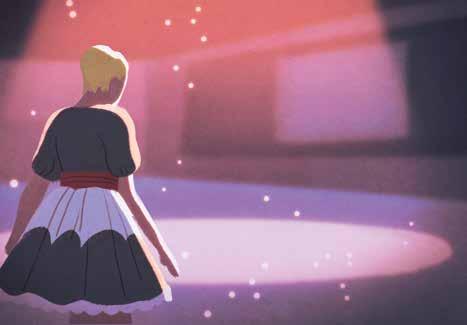
with confidence and determination. This dual approach ensures that the content reaches a wide audience while providing teachers with tools to facilitate meaningful conversations and reflections in the classroom.
Building a Network of Role Models
One of the standout features of Fireside Chats is its network of role models, who are integral to the program’s success. These individuals bring a wealth of knowledge and experience, enriching the educational experience for students with relatable Northern and Indigenous-focused themes. The commitment of these role models is seen in their willingness to build and strengthen relationships with K-12 students across the north by being available to deliver flexible and responsive interactive workshops.
The synergy between Connected North and Fireside Chats represents a powerful combination of technology and personal engagement to address educational disparities and foster empowerment in remote communities. As both programs continue to evolve, so does their impact on students’ lives, providing new opportunities for learning and personal development.
Growing up, I didn’t think I was smart enough to attend university. I had this misbelief that I wasn’t intelligent enough to achieve a postsecondary education, which was completely false. As I started to build confidence in myself, I realized it was an unfortunate way to think about myself. And I wanted to help anyone else that was going through that.
- Linsay Willier, Role Model
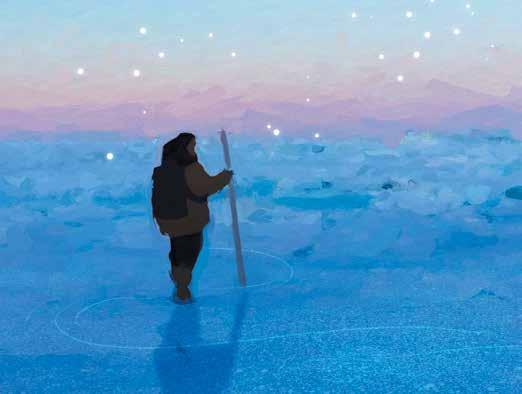
Focusing on inclusivity, cultural relevance, and innovative learning, Connected North and Fireside Chats set a new standard for educational programs in remote and Indigenous communities. By bridging gaps through technology and inspiring students with real-world stories and role models, these initiatives are transforming education and igniting futures with hope and possibility.
Connected North and Fireside Chats are lighting the way for a brighter, more connected future for students across Canada’s remote regions. For those interested in joining this
If someone told me that failing is okay and failing is actually part of the process of succeeding, then I think I would have been a little easier on myself.
~ Justin Sigluk Milton, Role Model
network, Connected North offers honorariums for interviews and completed sessions while extending access to a network of 600+ professionals, ongoing professional development sessions, and meaningful opportunities to connect with youth.
Becoming a Connected North Role Model: Why Join?
Connected North offers a unique opportunity for young professionals to become role models and share their expertise with students in remote communities. As a Content Provider, you can transform your passion into impactful learning experiences, regardless of your prior teaching experience.
Connected North welcomes experts from diverse fields—tour guides, authors, artists, scientists, and more— to lead engaging virtual sessions. Whether you can contribute once or regularly, your flexible commitment is valued. Each session ranges from 30 to 60 minutes, supported by Connected North’s team for technical and engagement assistance.
One of the most powerful aspects of teaching to students in the Connected North family is how the students come to regard their teachers and presenters as part of their extended learning family. The process of online education truly feels like a team effort, including the tech coordinators, teachers, content providers, and kids as one team with the same goal—to connect with each other! Every time I have a class pop up, it’s like having a conversation with old friends instead of me presenting a lecture to a school.
~ Cleveland Museum of Natural History
How It Works
Content Providers create session listings outlining their workshops, which teachers throughout the school year then access. Upon request, you’ll coordinate with Connected North to schedule a session with full technical support and customization options based on the students’ needs.
No previous experience is required. New providers receive training and ongoing support on best practices. Connected North ensures a seamless experience with automatic invoicing, direct deposit payments, and continued support.
Engage with remote communities, inspire future leaders, and develop your speaking and teaching skills. By becoming a Connected North role model, you’re not just sharing knowledge—you’re fostering hope and bridging cultural gaps, all while receiving honorariums and a supportive network.
For more information on Fireside Chats and to view interviews, blogs, and custom illustrations, visit firesidechats.ca. Prospective role models are encouraged to reach out to futurepathways@takingitglobal.org to explore opportunities for involvement.
Connected North provides live, interactive virtual learning experiences and access to educational resources for students and teachers in remote communities, supporting them where they live. For more information about Connected North, visit connectednorth.org.
Don’t be afraid. Take every opportunity that comes your way. Do not let fear get in the way of what you want to do. Persevere through it, you got it!
~ Courtney DawnAnaquod, Role Model
WeaversWisdomWeaversWisdomWeavers
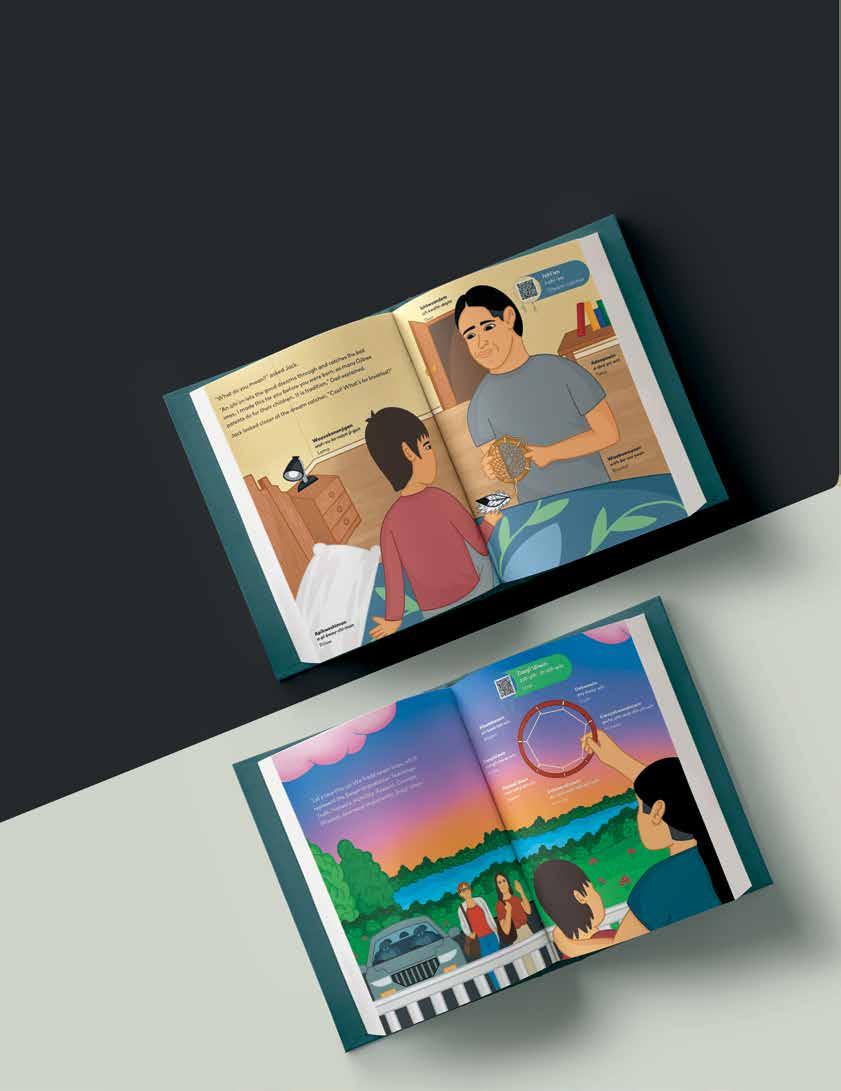
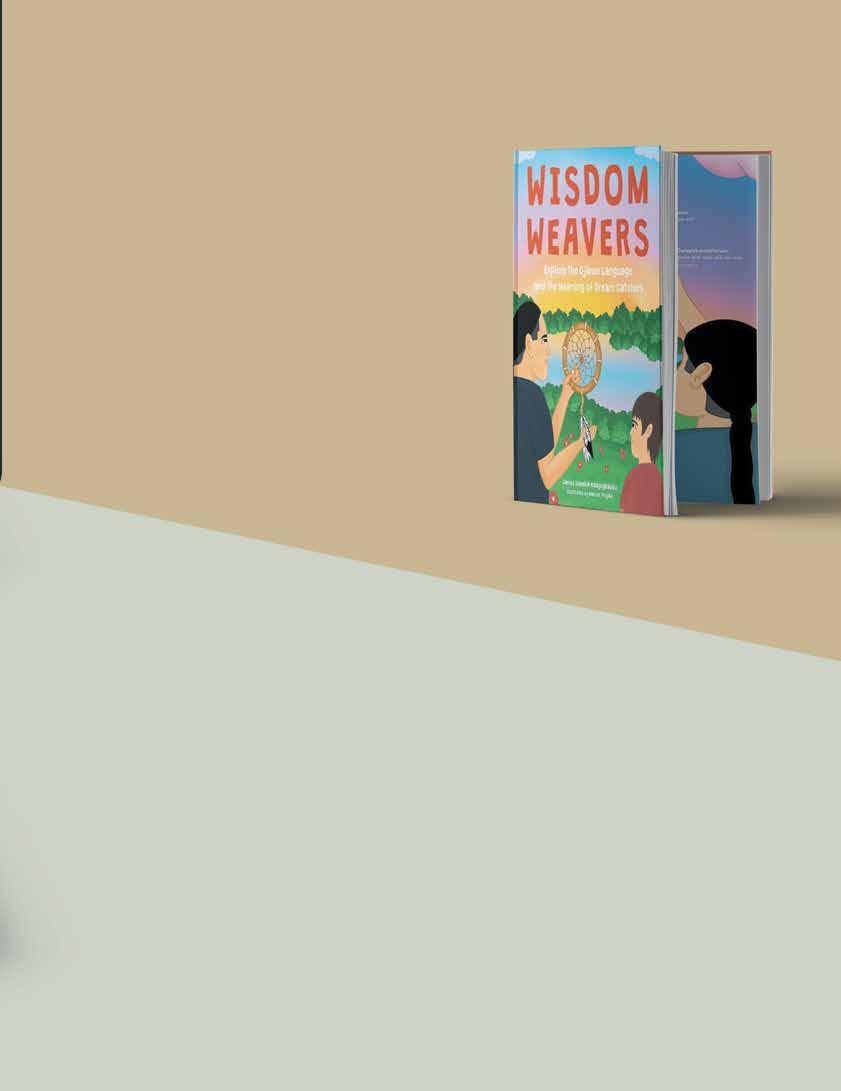
In September, Indigenous author James Vukelich Kaagegaabaw released his debut children’s book Wisdom Weavers: Explore the Ojibwe Language and the Meaning of Dream Catchers.
Wisdom Weavers
An Introduction to the Ojibwe Language
Wisdom Weavers introduces children to the Ojibwe language from an Indigenous perspective. International speaker, author, and creator of Ojibwe Word of the Day, James Vukelich Kaagegaabaw, presents a selection of words and phrases throughout the day while his son learns about the Ojibwe tradition of the dream catcher. Created with children ages 6 to 11 (beginner- to mid-level readers) in mind, Wisdom Weavers is an engaging and accessible way to discover the Ojibwe language and learn key phrases and words.
This inspiring story features a total of 73 words and phrases to learn in Ojibwe, introduced throughout the visually captivating and representative scenes showing an average day in an Ojibwe family from illustrator Marcus Trujillo, a tribal member with the Pueblo of Laguna in affiliation with the Village of Paraje. The book also features a brief history of the Ojibwe people and language and a culturally accurate how-to guide for making a dream catcher at home. Wisdom Weavers is a wonderful way to immerse young people in a vibrant traditional culture while helping to keep the Ojibwe language and customs alive.
About
the author: Descendent of Turtle
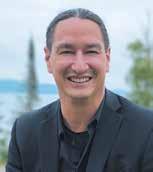
Mountain James Vukelich Kaagegaabaw is a renowned international speaker, author, educator, and social media personality who shared indigenous wisdom for a life well-lived. As the creator of Ojibwe Word of the Day, Kaagegaabaw is recognized as a leading voice on the interconnectedness of language and culture. His keen insights were developed through speaking with and recording Elders and native language speakers across North America as part of the Ojibwe Language Dictionary Project. Kaagegaabaw has facilitated community language tables for over twenty years, consulted with public and private organizations on language and cultural programs, and traveled internationally as a keynote speaker. In addition to publications, he has been featured on numerous podcasts, radio, and television programs. He is a passionate advocate for sharing how to live a life of mino-bimaadiziwin, the good life.
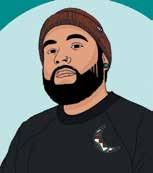
About the illustrator: Marcus Trujillo is an enrolled tribal member with the Pueblo of Laguna, one of 23 sovereign nations in New Mexico. Trujillo is a graphic designer and illustrator driven to give back to his community through visual art as a creative passion. He earned a bachelor’s degree from the University of New Mexico (UNM) and currently contributes his skill set to the Department of Education in Laguna Pueblo. Trujillo also contributes his talents to freelance and contract work for various Indigenous-led organizations, businesses, and individuals. Additionally, he centers kid-lit illustration as a main focus to reach children through picture books and language learning materials. This work is meaningful to Trujillo because he believes that the true visual representation of Indigenous communities can respectfully take place through culturally accurate understandings.

Have a story to share?
SAY Magazine welcomes submissions throughout the year as we strive to include diverse voices and contemporary Indigenous lifestyles in every issue. Your stories are integral to our mission to promote and celebrate Indigenous cultures and experiences.
• Place an ad
• Sponsor a story
• Submit your story for consideration
• Share an upcoming event
NEXT ISSUE SPORTS & ENTERTAINMENT
SAY Magazine’s next issue will celebrate Indigenous leaders and role models in sports, media, and entertainment. From the screen to the rink and everything in between, we look forward to celebrating those who promote diversity, equity, and inclusion in these fields.
Have a program that supports Indigenous engagement in sports or entertainment? We want to hear from you!
Deadline for bookings and submissions: Publication date: December 15, 2024 November 8, 2024
Criteria for submissions: • Up to 500 words • High resolution image(s) • 2-3 sentence biography
Contact Us: Advertising: sales@saymag.com • Submissions: editor@saymag.com
Pathways to Change:
Amplifying Across Canada Voices Indigenous
Addressing anti-racism has become a crucial focus across Canada in the journey towards true reconciliation and equity. Rebecca Chartrand, President and CEO of Indigenous Strategy Alliance, brings a deeply personal perspective to this work. “As an Indigenous woman, I now feel deeply anchored in my sense of self, place, and culture,” she says. But this journey has not been without its challenges, both for me and for my family.”

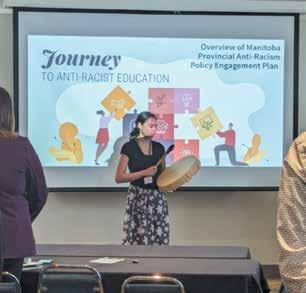
Chartrand’s workshops across Manitoba offer a unique blend of policy insight and personal storytelling. She often shares her son’s experiences of grappling with feelings of alienation and exclusion, which heightened his awareness of his skin colour. These struggles unfolded against the backdrop of the Black Lives Matter movement, the COVID-19 pandemic, and Canada’s ongoing Truth and Reconciliation process.
The Importance of Representation and Dialogue
“My son’s experiences in school opened my eyes to how conversations about race and inclusion can be both difficult and illuminating,” Chartrand explains. “Kids absorb what they hear at home, and this translates into their interactions on the playground and in the classroom. We must equip educators, students, and parents with the tools to have age-appropriate conversations about race, color, equity, inclusion, and wellbeing.”
The importance of representation cannot be overstated. Research
shows that when students see themselves reflected in their school environment—from the curriculum to the staff—their sense of belonging and academic outcomes improve significantly. A study by the National Education Association found that students who have teachers of the same race/ethnicity demonstrate two to three months of additional learning per year compared to their peers.
Resources and Initiatives in Manitoba
Manitoba has developed several valuable resources to support antiracism efforts. Mamàhtawisiwin: The Wonder We Are Born With, an Indigenous Education Policy Framework launched by Manitoba Education and Early Childhood Learning, stands out among these resources. This framework is designed to center Indigenous languages, cultures, and identities in the education system, providing a crucial foundation for antiracism work in schools.
The Manitoba Indigenous Cultural Education Centre offers a wealth of educational
Rebecca Chartrand
materials and programs. The Treaty Relations Commission of Manitoba provides essential resources on treaty education, while the Manitoba Curriculum Support Centre offers a range of anti-racism and Indigenous education materials for educators. These resources and initiatives, like the Indigenous Education Resource Centre at the University of Winnipeg, form a crucial support network for those working to combat racism and promote Indigenous empowerment.
Mamàhtawisiwin, which means “the wonder we are born with” in Cree, is particularly noteworthy for its holistic approach to Indigenous education. It emphasizes the importance of Indigenous ways of knowing, being, and doing in the classroom, helping to create more inclusive and representative learning environments. This resource aligns closely with the work of the Indigenous Strategy Alliance, supporting educators in implementing culturally responsive practices and fostering a deeper understanding of Indigenous perspectives among all students.
Anti-Racism Efforts Across Canada
Other provinces across Canada are also taking significant steps

forward. In British Columbia, the K-12 Anti-Racism Action Plan is being implemented to create safer, more inclusive schools. Ontario has introduced mandatory Indigenousfocused learning for high school students to increase understanding and combat stereotypes. In Nova Scotia, the Council on African Canadian Education is working to address the specific needs of African Nova Scotian learners. Quebec has launched a task force on the educational success of Indigenous students, while Alberta is revising its curriculum to include more Indigenous perspectives and history.
The Role of Indigenous Strategy Alliance
The Indigenous Strategy Alliance’s work extends beyond policy development. Its expertise in conducting engagement sessions, analyzing data, and developing targeted recommendations has positioned it as a leader in anti-racism and Indigenous empowerment. Organizations and institutions across Canada are increasingly seeking out Indigenousled consultations to inform their own policies and practices.
The path forward requires continued dedication, collaboration, and a commitment to amplifying Indigenous voices. It involves challenging deeply ingrained systems and attitudes while celebrating Indigenous communities’ resilience and contributions.
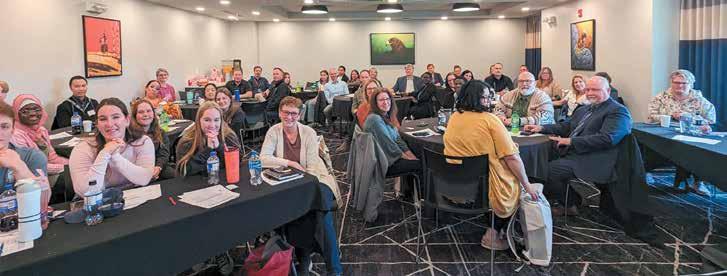
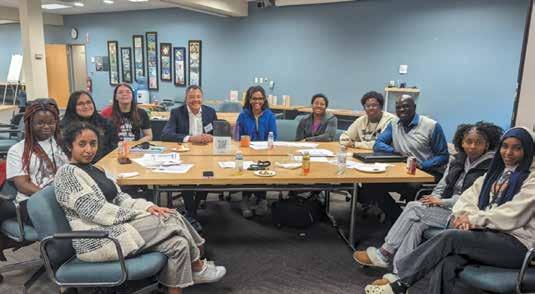
Provincial Anti-Racism Engagement Sessions Across Manitoba
Looking Towards the Future
As we look to the future, there are reasons for optimism. The development of Manitoba’s Anti-Racism Policy represents a significant step forward. “We’re seeing a growing recognition that reconciliation cannot be achieved without directly addressing racism and its impacts,” Chartrand notes. “The next step is ensuring these policies translate into real, measurable change in people’s lives.”
Indigenous Strategy Alliance is poised to play a crucial role in this next phase. Their data-driven, culturally informed
We’re looking forward to a future where every child, regardless of their background, feels valued, respected, and empowered in their educational journey.
~ Rebecca Chartrand
approach offers a blueprint for creating lasting change. As more organizations recognize the need for expert guidance in navigating these complex issues, the demand for their support grows.
Looking ahead, Chartrand is cautiously optimistic. “We’re anticipating more comprehensive data collection, increased Indigenous representation in decision-making roles, and a deeper integration of Indigenous perspectives in curricula across all subjects,” she says. “But most importantly, we’re looking forward to a future where every child, regardless of their background, feels valued, respected, and empowered in their educational journey.”
The path forward requires continued dedication, collaboration, and a commitment to amplifying Indigenous voices. It involves challenging deeply ingrained systems and attitudes while celebrating Indigenous communities’ resilience and contributions. Through personal stories, data-driven policies, and a commitment to genuine inclusion, leaders like Rebecca Chartrand and organizations like Indigenous Strategy Alliance illuminate a more equitable and empowering future for all Canadians.

Rebecca Chartrand, is an Anishinaabe First Nations woman from Treaty 4 territory in Manitoba and is the President and CEO of Indigenous Strategy Alliance. Her vision is to "Contribute to and Through an Empowered Indigenous Canada.” With over 25 years of experience in education, K-12 and post-secondary, and the arts, she continues advancing Indigenous achievement by bridging diverse communities using Reconciliation, Antiracism, Diversity, Equity, and Inclusion (DEI), and Indigenous and Multicultural Education Frameworks.
Indigenous Strategy Alliance (ISA) is an Indigenous-led and Indigenous-owned consulting company whose solutionsoriented management team collaborates to advance Indigenous excellence within corporate, government, and notfor-profit sectors in Manitoba and across Canada.
Provincial Anti-Racism Engagement Sessions Across Manitoba
Benefits and Challenges of AI in Education: A Resource for Teachers and Students
By D. Blais
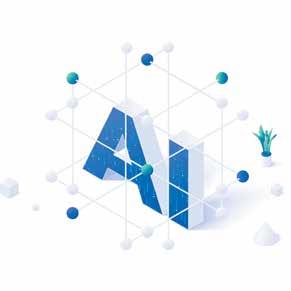
Artificial Intelligence (AI) is dramatically transforming education, especially at the high school and post-secondary levels. AI tools offer new opportunities for accelerating learning, streamlining outdated practices, and enhancing educational outcomes. However, they also raise concerns, particularly regarding academic integrity.

The big question for educators is:Should they fight AI usage or embrace it?
The SAY Magazine team wanted to learn more about AI related to learning. Here, we explore the benefits of AI in education, the tools available to students and teachers, and how to address some challenges, such as cheating.
1. How AI Accelerates Learning AI can significantly improve students’ learning, offering personalized and adaptive learning experiences. Here are two examples:
AI-Powered Tutoring Systems: AI tools such as ChatGPT-based tutors or Khan Academy’s AI help students learn by adapting to their needs. For example, these tools can assess a student’s weaknesses and provide real-time personalized exercises, explanations, and feedback. This is especially useful for subjects like math, science, or writing, where concepts can be difficult to grasp.
AI in Writing Assistance: Students working on essays or research papers can benefit from AI-based writing tools like Grammarly. These platforms provide real-time grammar and style suggestions, and they can help students organize their thoughts more effectively. While AI does not replace the writing process, it improves the quality of work and encourages better writing practices
2. Modernizing Outdated Practices with AI
AI has modernized several outdated educational practices, making learning and teaching more efficient:
Automated Grading: Tools like Turnitin not only detect plagiarism but also integrate AI writing detection. This ensures that educators can identify AIgenerated content with high accuracy (98 per cent certainty), allowing them to maintain academic integrity without disrupting their workflow. AI frees teachers from manual grading tasks, allowing them to focus on personalized instruction.
Lecture Transcription and NoteTaking: AI-powered tools like Otter.ai can transcribe lectures in real time, allowing students to revisit class discussions and focus more on engaging with the material rather than just taking notes. This significantly enhances learning by allowing students to better absorb the lecture content.
3. Fight AI or Embrace It?
As AI becomes more prevalent in education, teachers may wonder if they should fight or embrace it. The general consensus is that embracing AI is more practical and beneficial.
AI as a Teaching Aid: AI tools can support differentiated learning by providing customized pathways for students. Educators can leverage these tools to help
struggling students catch up while challenging advanced learners with more complex tasks. This is key for creating a more inclusive and adaptive classroom environment.
Teaching
AI Literacy: Instead of banning AI, educators should integrate it into the curriculum by teaching students how to use it responsibly. AI literacy will be a critical skill for future job markets, so schools should educate students on how to use AI to enhance learning, not replace it.
4. Controlling AI-Enabled Cheating
One of the biggest concerns surrounding AI in education is the potential for cheating. Tools like ChatGPT can be misused by students to generate essays or homework answers. However, there are robust methods available for controlling this problem.
AI Detection Tools: Platforms such as Turnitin and GPTZero are now equipped to detect AIgenerated text with impressive accuracy. Turnitin can identify AI-written content with a false positive rate of less than one per cent. At the same time, GPTZero uses algorithms to analyze language complexity and variations in sentence structure (burstiness), helping educators distinguish between human and AI-generated work. While GPTZero is more accessible for students, Turnitin is the standard in academic institutions.
Designing Assessments to Minimize Cheating
: Educators can minimize the potential for AI-assisted cheating by designing assignments that require personal reflection, creative problemsolving, or project-based learning. These assessments are harder for AI tools to complete accurately because they rely on unique, individual input from students.
Encouraging
Ethical AI Use: Instead of punishing students for using AI, educators should focus on teaching them how to use these tools ethically. AI can be a powerful assistant in learning if students are taught to use it for brainstorming, drafting, or improving their work, rather than having it do the work for them
Embrace AI, But Stay Vigilant
AI can be viewed as a game-changer in education, offering enormous benefits for students and teachers. Students can accelerate their learning through AI-powered tutors and writing assistants, while teachers can modernize their
teaching methods with AI-assisted grading and lecture transcription tools. However, the challenge of AI-enabled cheating cannot be ignored. To stay on top of things—as though teachers are not already busy enough—educators will likely have to employ effective AI detection tools and create assessments resistant to cheating.
With technology advancing rapidly, rather than fight AI, it may be time for us to embrace it as an essential tool for future learning, while ensuring students use it ethically and responsibly. By balancing innovation with academic integrity, AI can help create a more dynamic and personalized learning environment.
In researching the information provided in this article, SAY Magazine consulted several sources, including Ecampus News, All About AI, Turnitin, and GPTZero.
Big Sound From Small Town To
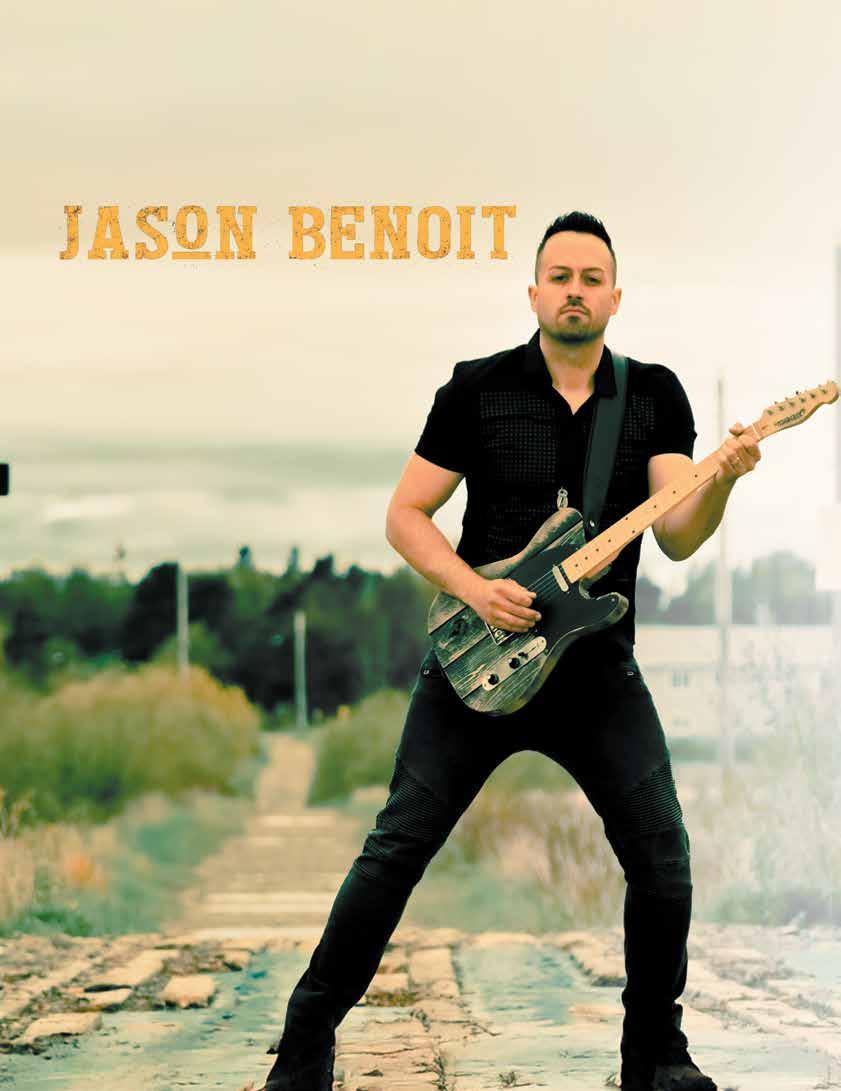
Indigenous singer/songwriter
Jason Benoit may be from a small town, but that has never held him back from making a big impact on the national country music scene. Benoit grew up on the rugged coast of Newfoundland and Labrador, Canada, in the small town of Fox Island River (population 200).

Thanks to his mother’s diverse taste in music, Benoit’s style is influenced by the sounds from his youth, including country greats such as Dwight Yoakam, Alan Jackson, and Joe Diffie, and modern folk/ Canadiana music, such as Blue Rodeo, The Rankin Family, Great Big Sea, Ashley MacIsaac, and Stan Rogers.
“Newfoundland also has its own ecosystem of great music that we have heard all our lives,” says Benoit, “So I had my fair share of incredible music to influence my career.”
After releasing his classic 90s country-sounding album Time Traveller in early 2023, he felt his inspiration was lacking and needed a new musical canvas to paint on for a while. But the grass is only sometimes greener on the other side. In pursuing a successful musical career, musicians who leave their hometowns to pursue their dreams of fame and stardom often sacrifice the comforts of home and family. Benoit packed up and moved to the musical hub of Nashville—where famous country stars are born, and dreams come true in the “Music City.” But it wasn’t long until Benoit was spinning his wheels in Nashville, “chasing fame and going seemingly nowhere,” he says. “Then, one day, I
woke up and decided the ‘Canadian Dream’ was what I should be chasing. I packed up and headed back to my wife and kids.”
Some musicians may have contemplated giving up after abandoning their journey in Music City.
Still, for this Indigenous Newfoundlander, it was the return to the North Atlantic rock that had him beaming all the way home. The result is “1000 Mile Grin,” the title of his steady, confident toetapping single from his latest EP The Deadwood.
Since his return home, it has been a productive year and a half for Benoit, the 2024 East Coast Music Association winner for Country Recording of the Year for the album Time Traveller. From Nashville to Newfoundland, it seems the experience from his travels has refreshed his sense of self and sound with a mix of Americana and folk, which can be heard throughout “1000 Mile Grin.”
A two-time winner of the MusicNL’s Indigenous Artist of the Year (2021, 2023) and the 2023 MusicNL Fans Choice Entertainer of the Year, Benoit has amassed a stream of critical success, including a Top 10 single (‘Gone Long Gone’), four Top 30 hits and over 13 million streams globally.
He’s also supported artists such as Tenille Townes, Old Dominion, Tim Hicks and The Washboard Union. He’s also spending some time on the other side of the microphone, hosting a weekly radio program called “That’s Country” from Corner Brook, Newfoundland.
Benoit has become a mainstay in the Canadian country music industry and a trailblazer for small-town Indigenous and independent artists in Canada —something he never takes for granted.

In pursuing a successful musical career, musicians who leave their hometowns to pursue their dreams of fame and stardom often sacrifice the comforts of home and family.

Edzi'u and
A Masterful Weaver of
Sound Emotion
By Eric Alper
Canadian artist Edzi’u’s Tunnel Vision EP is out now, led by the fantastic single “This Love.” The Vancouverbased Edzi’u, using whispers of new wave and influences of cultural storytelling, has released a fourtrack album conveying themes of love, heartbreak and grief. The artist entices listeners with her passionate lyricism, delicate vocals and 80s pop sound.
WWhitehorse-born Edzi’u is a Tahltan and Tlingit artist based in Vancouver, Canada, on the unceded territories of the Musqueam, Squamish and TsleilWaututh First Nations. Drawing inspiration from their roots and life experiences, Edzi’u’s newest album weaves a tapestry of deeply personal and universally resonant sound. The single “This Love” is a deeply romantic and poetic lead single, combining emotive lyrics over dark and haunting synth melodies. As they sing of a love that appears to awaken the strongest of emotions—desire and hate— Edzi’u delivers an honest, addicting and otherworldly musicality. Although expressed through lush vocals and lightas-a-feather composition, “This Love” successfully lights a fire within anybody who listens to it.
Tunnel Love also contains the near-flawless “Sugar” crafted from various synth-soaked influences and highbrow pop styles that recall icons like Stevie Nicks and Kate Bush alongside critically acclaimed performers such as Sharon Van Etten and Lucius. The other two tracks include “Not Enough,” a ballad infused with futuristic beats yet bearing an 80’s sensibility and “Ego Death,” which ignites hearts with pulsating electropop drenched in reverb drums, symbolizing liberation and rebirth.
Tunnel Vision is the follow-up to their 2023 full-length concept album, Potlatch in the Box. Edzi’u, whose music has been described as “inspired, innovative and immersive” by Tinnitist, made their international debut at
the Document Film Festival in Glasgow, Scotland, in 2019. The artist, who studied music theory and composition at Vancouver Community College, was a sound technician for the CBC and currently works as a journalist for the outlet’s Indigenous Pathways program.
With their new music, Edzi’u invites listeners into an auditory sanctuary where music serves as both refuge and revelation. In this sacred space, a reclamation of self is the most powerful act of all. Following their sophomore album, Edzi’u became an inimitable force in the Canadian music industry and unapologetically expressed her two-spirit indigiqueer identity. Thanks to the Tunnel Love EP, Edzi’u is a rising pop icon to keep on your radar.

Eric Alper is a Canadian music correspondent, blogger, radio host, and host of one of the top-rated SiriusXM shows, “ThatEricAlper.”
For the past 25+ years, Alper has been at the forefront of the Canadian entertainment industry, making the Public in Public Relations his business.

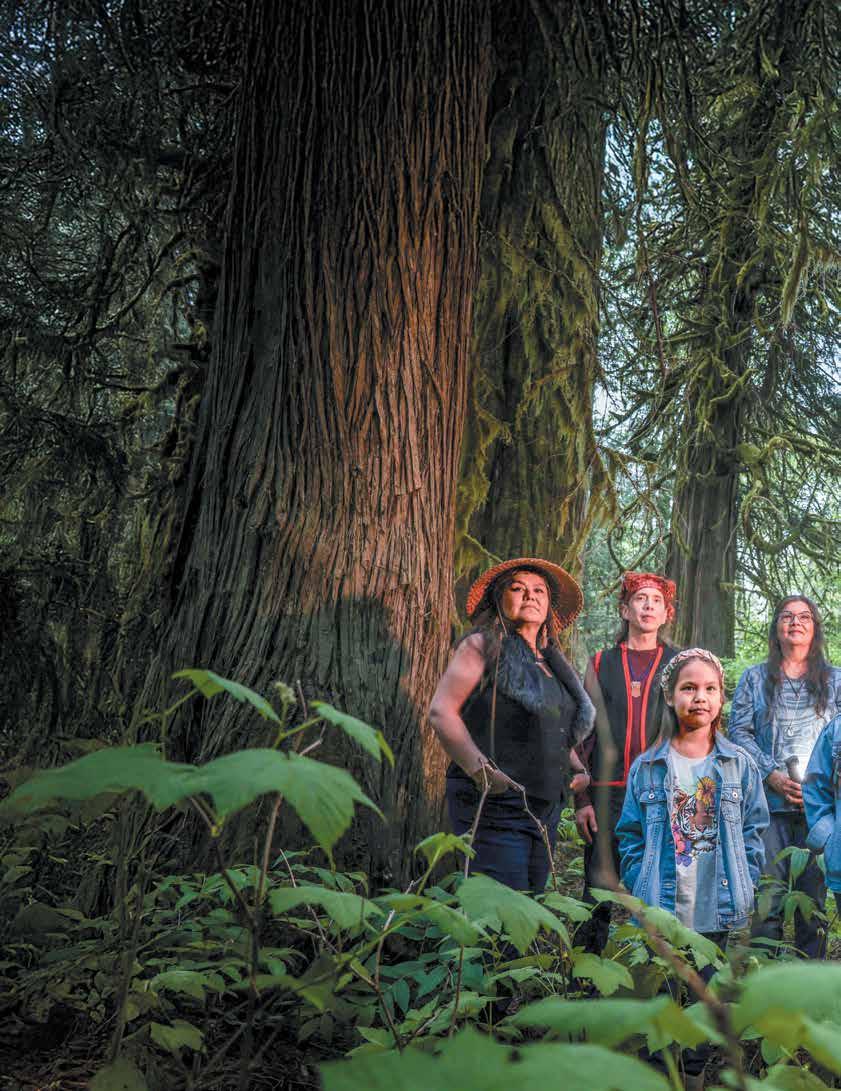
Nuxalk Radio Releases First-Ever Album
Revitalizing Nuxalk Language
In June, Nuxalk Radio released its debut album, Nusximta, featuring Nuxalkmc (Nuxalk people) ranging in age from eight to 67 years from the small remote coastal village of Bella Coola, Nuxalk, in British Columbia, Canada.
TThis first-ever 12-track album, produced by the Nuxalk Radio Records label, was created entirely in the Nuxalk language across various genres and was released to coincide with the celebration of Nuxalk Radio Station’s 10th anniversary.
The Nuxalk Radio Station operates out of the small remote village of Q’umk’uts’ in Bella Coola and has utilized various methods of teaching the Nuxalk language on-air, finding that singing in the language is one of the best ways to learn it.
The album is central to the radio station’s mission to help keep the endangered Nuxalk language alive. The station, founded in 2014, has been a crucial platform for preserving and promoting Nuxalk culture. According to research, it is believed that there are under 20 fluent Nuxalk speakers in Canada today. “This album was made for our people,” says Qwaxw, co-founder of Nuxalk Radio. “It was meant to inspire ourselves and others to create songs in the Nuxalk language. To show that it can be done.”
For ten years, the Nuxalk Radio Station has played Indigenous music in various languages from all over the world. Still, with little to no new music entirely in the Nuxalk language, the team at Nuxalk Radio decided it was time to do something about it. The release of Nusximtam is a significant milestone in the station’s efforts to revitalize the Nuxalk language and inspire others to do the same.
With captivating vocals, the album consists of ballads and upbeat tracks, each song as unique as the artists who lent their talents to creating a truly authentic experience. Each artist involved in creating the album had the freedom to create their songs in any genre. Tatala, one of Nuxalk’s radio hosts, and Snxakila Tallio, a fluent Nuxalk speaker, helped translate the artists’ songs from English to Nuxalk. The English translations of each song, however, are not widely available. This was done intentionally to ensure the focus remained on the Nuxalk lyrics, allowing listeners to learn the Nuxalk language first without the interference of English translations.
Nusximta Featured Artists
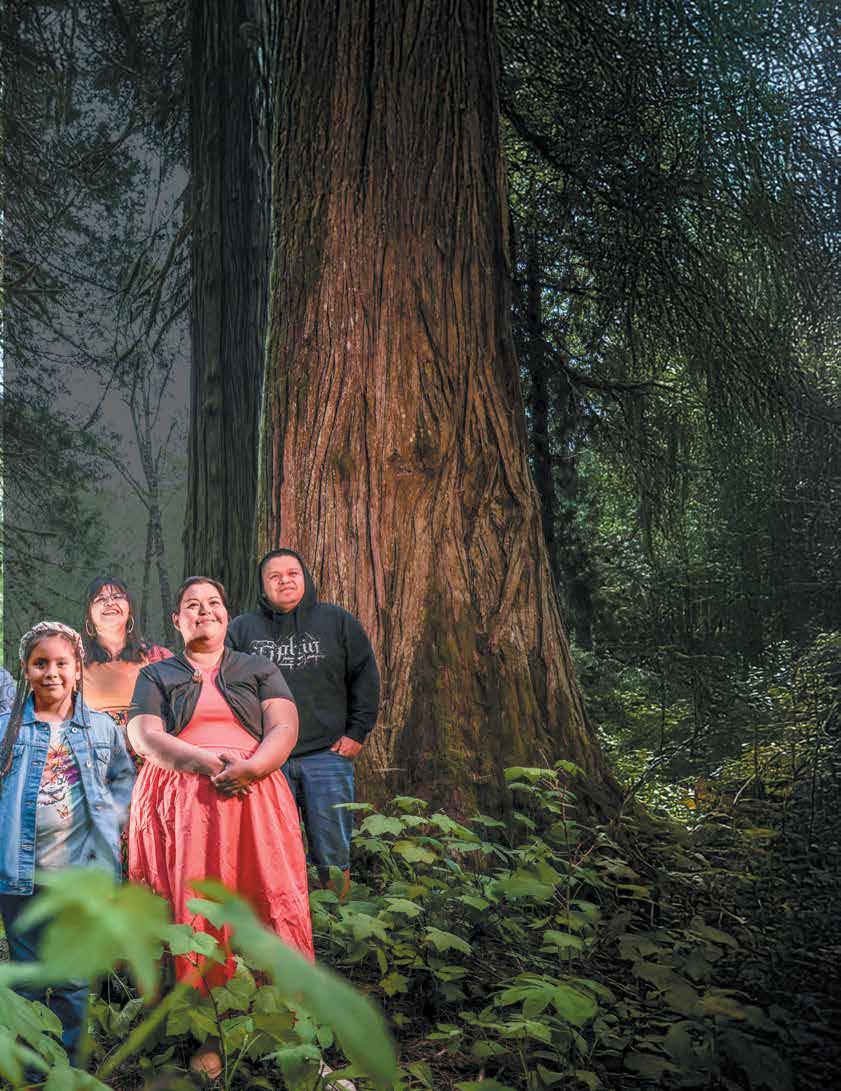
With deep meaning embedded in every song, the artists hope the album will be used in schools as part of the curriculum so that students can enjoy learning the language through the songs. The album shines a light on the path forward for the next generation, encouraging everyone to learn their language.
From Nuxalk Radio hosts to seasoned local rappers, land protectors, and musicians, Nusximta features a diverse range of artists. These include youth artists as well as Elders and various language champions and music prodigies on piano and wind instruments. Montréal music producer David Hodges also provided guidance and assistance in creating the album, and artist and multi-instrumentalist Milan André Boronell produced the album. Nuxalk Radio’s co-founder Slts’lani (Banchi Hanuse) executive produced the album and brought the vision to life. This diversity of talent and perspectives is a testament to the inclusivity and collaborative spirit of the Nuxalk community.
QWAXW
Qwaxw is a co-founder and technical manager of Nuxalk Radio Station. He is a past elected Chief Councilor for the Nuxalk Band Administration. He was raised as a commercial fisherman and is a Registered Professional Forester.
NUSKMATA (JACINDA MACK)
Nuskmata focuses on Indigenous land and water protection in her Nuxalk and Secwepemc homelands. Singer, songwriter, and language learner, she creates to follow the teachings, not the rules.
TATALA
Tatala is a Nuxalk Radio host and Nuxalk language coordinator for the Nuxalk Radio Station.
XIMXIMANA
Ximximana is co-host of the Nuxalk language-learning show It7Nuxalkmc, the Nuxalk Radio Station.
XIMANA NOLA MACK
Ximana Nola Mack (Carrier, Nuxalk) is a chef and caterer passionate about Ayurvedic cooking and traditional Nuxalk foods.
TS’IKWALHM and K’IPT Ts’ikwalhm and K’ipt are eight-year-old Nuxalk youth from Bella Coola. These inseparable besties take fiddle lessons but are saving those skills for the next album.
MUSIC INTERVIEWS
by LARRY K.
WILHPUN – DEBORAH NELSON
Wilhpun is a Nuxalk language champion inspired by her father, Lhmtimut – Samuel Nelson, a fluent Nuxalk speaking Elder who freely shared his extensive knowledge of his language until his passing at the age of 91. Wilhpun, a former director of the Wuikinuxv Kitasoo Nuxalk Tribal Council, was the first Indigenous woman in Canada to become a Journeyperson in Carpentry. Now retired, she continues to increase her language level and provide support where possible to keep the Nuxalk language alive in Nuxalkmc (Nuxalk people).
ROLLAH MACK
Hip Hop artist Rollah Mack, also known as Nuxalk Radio host Q’xta, has a decade of experience crafting his lyricism and performing on stages. He is an established force on the Indigenous music scene.
COASTYN HALL
Coastyn Hall is a 14-yearold Nuxalk, a classical and contemporary musician and composer. His main instruments are piano and violin. Hall’s musical influences are Franz Liszt with his Etudes and Liebestraums, Sergei Rachmaninoff with his concertos, Mozart with his sonatas and minuets, and John Williams with his film music. He is currently in the process of writing his third piano concerto and second Piano Sonata.

Album cover artwork: Anuximana Jade Hanuse | Photography: Slts’lani Banchi Hanuse
Haida Weaver Delores Churchill Shares the Stories of Her Life in New Book
From a Square to a Circle: Haida Basketry—Delores Churchill’s Memories of Learning to Weave combines memoir, cultural history, and teaching in one stunning, fullcolour volume that provides a detailed look inside one of the most iconic crafts from the Haida people.
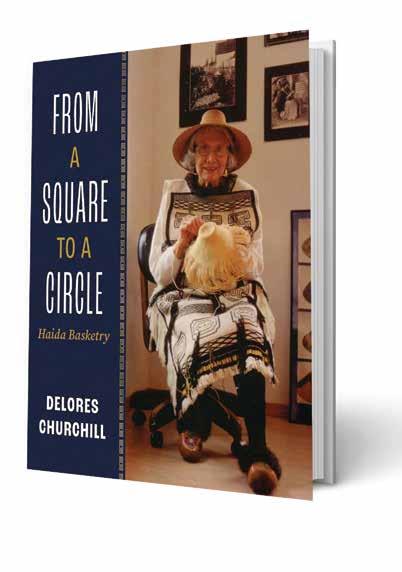
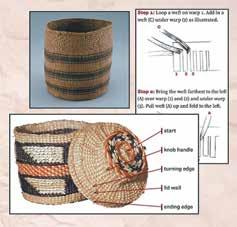
In From a Square to a Circle, author Ilskyalas, Delores Churchill, shares the stories of her life, her culture, and the importance of passing cultural knowledge from one generation to the next. Told with humility, humour and deep respect, this book is a testament to the values of her people, a technical guide to her masterful weaving skills, and a gift to the reader at every point along her journey.
Part memoir, part how-to guide, this book shines a light on Churchill’s weaving teachers, including her strong-minded mother, Selina (Ilst’ayaa), whose teachings she once resisted as a child. The Haida are connected to weaving through their history,
which goes back thousands of years ago, as shown through discoveries like the 4,000-yearold baskets at South Baranof.
After learning of the lengths the Canadian government had gone to stamp out her culture, Churchill devoted herself to researching, reviving, and preserving the iconic art form of Haida basketry, picking up the craft in earnest herself later in life.
Churchill has passed her skills on to hundreds of people, believing that “weaving belongs to all of us.” She wishes to share her knowledge of basketweaving so that beginners and skilled weavers can express their distinct selves, just as every coastal Indigenous weaving style is unique. The love for
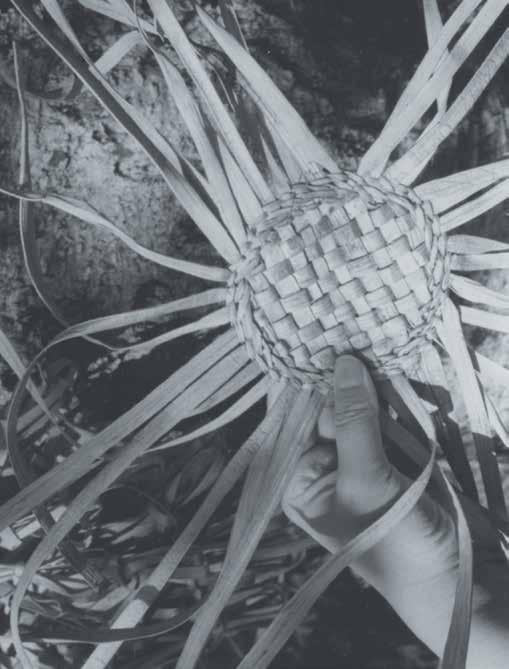
basketweaving displayed in Churchill’s writing will surely make readers yearn to try their hand at the craft.
From a Square to a Circle is a beautifully rendered guide for current and future weavers. It features archival photos from the Churchill family and includes detailed photographs and illustrations, techniques for harvesting traditional materials, and stories passed down from teacher to student. Churchill, now 92 years strong, lovingly recounts her time with
weavers crafting in many different traditions, discussing each unique form and who pioneered it in detail.
With permission, SAY Magazine is honoured to share an illustrated excerpt, the archival photos, and detailed step-by-step instructions on how to weave exceptional Haida basketry.
From a Square to a Circle is now available from Harbour Publishing.
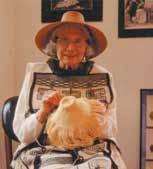
About the Author: Ilskyalas, Delores Churchill was born October 23, 1929, in Gutaawaas (Old Massett), Haida Gwaii, to Ilst’ayaa, Selina Harris Adams Peratrovich of the Gawaa Git’ans Gitanee Eagle Clan, and Skil Gyans, Alfred Adams, of the Kyanuusalii Raven Clan. Like her mother, she did not attend residential school. She grew up speaking the beautiful language of Xaad Kil (Haida) and following the Haida annual harvesting cycle. Her early experiences provided her with knowledge of Haida history and lifeways and gave her an understanding of the Haida relationship to the land, to others, and within the universe. Delores was profiled in the short documentary Tracing Roots (New Day Films, 2014). She lives in Ketchikan, Alaska.
Text and images courtesy of Harbour Publishing.
Academy
myaolcc.com
Brandon University
brandonu.ca
CERIC
cannexus.ceric.ca
Clarion West
clarionwest.org
Connected North
connectednorth.org
Indigenous Business Development Services
cfmanitoba.ca/services/indigenous-business-development-services
Manitoba Institute of Trades and Technology (MITT).......................................................................................................31 mitt.ca
Manitoba Liquor & Lotteries
casinosofwinnipeg.ca
Mazinaate Indigenous Language
mazinaate.com
National Aboriginal Capital Corporations Association (NACCA)
nacca.ca
Red River College
rrc.ca/indigenous
Scanning Pens
scanningpens.ca
Southern Alberta Institute of Technology (SAIT)
SAIT.ca/indigenous-students
The Last Post Fund
lastpostfund.ca/indigenous-veterans-initiative
University of Northern British Columbia (UNBC)
unbc.ca

uwinnipeg.ca