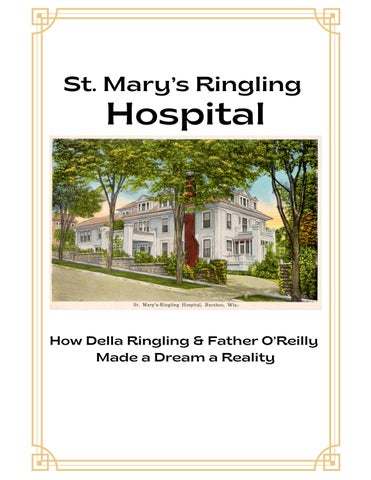
St. Mary’s Ringling Hospital
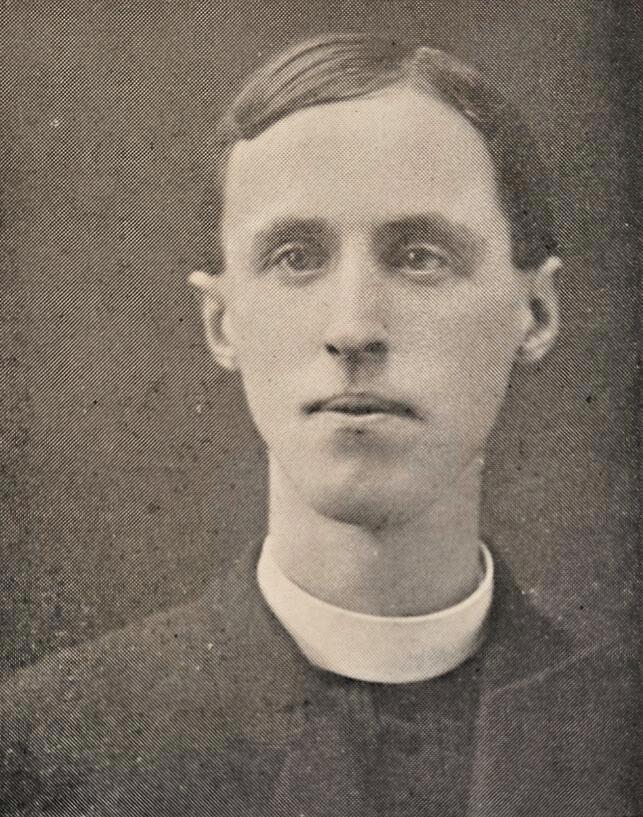
On November 9,1922 a banquet was held at St. Joseph’s Catholic School to dedicate Baraboo’s first public hospital At the banquet Father Edward O’Reilly remarked, “This should be a day of great joy for every citizen of Baraboo, for it marks one of the most important events in the history of the city – the dedication of the new hospital. My friends you cannot at present fully comprehend what this hospital is going to mean to Baraboo. It is only as time goes on and you behold the beneficent results that flow from such an institution, that you will be able to fully realize the stupendous magnitude of this generous gift. That this hospital is going to be a great success, goes without saying, for never yet in the many centuries of their experience have the sisters been known to fail. Where others tried and failed the sisters have been successful. What the sisters’ hospital has done in other places can be done in Baraboo, if we only stand behind it with our united support and cooperation.” Baraboo and the surrounding area did stand behind it and today one can reflect on the “beneficent results” of that new hospital – a lasting legacy and an enduring gift. The story, however, began many years before the banquet.

On a balmy night in June of 1911, Della Ringling stood near the prow of a boat strategically placed on the front lawn of her house. All was in order. The boat was festooned with flags and bunting. Scores of Japanese lanterns hung from every possible branch above the lawn where two tents were pitched, one labeled “Retreat” and the other “Cadets”. On the west side of the house, Mrs. Randall Peck stood ready to serve fruit punch under an enormous arch of Dorothy Perkins roses. Two mannequins stood on either side of the front entrance to the spacious home dressed in the full dress uniform of the Cadets of the Trinity Episcopal Church. Just inside, the Terbilcox Harp orchestra was stationed and ready to play. Entrance to the dining room was made over a gang plank and the room was deco and pennants. On the dining room Wisconsin. Favors in the shapes o miniature boats, trunks and travelin bags were laid out on the table.
Back outside, in the center of it all, Della greeted her guests and handed out small dance programs. Each was embossed with an American flag in full color with gilt highlights. A small pencil was attached to each so that guests could fill out their dance cards.
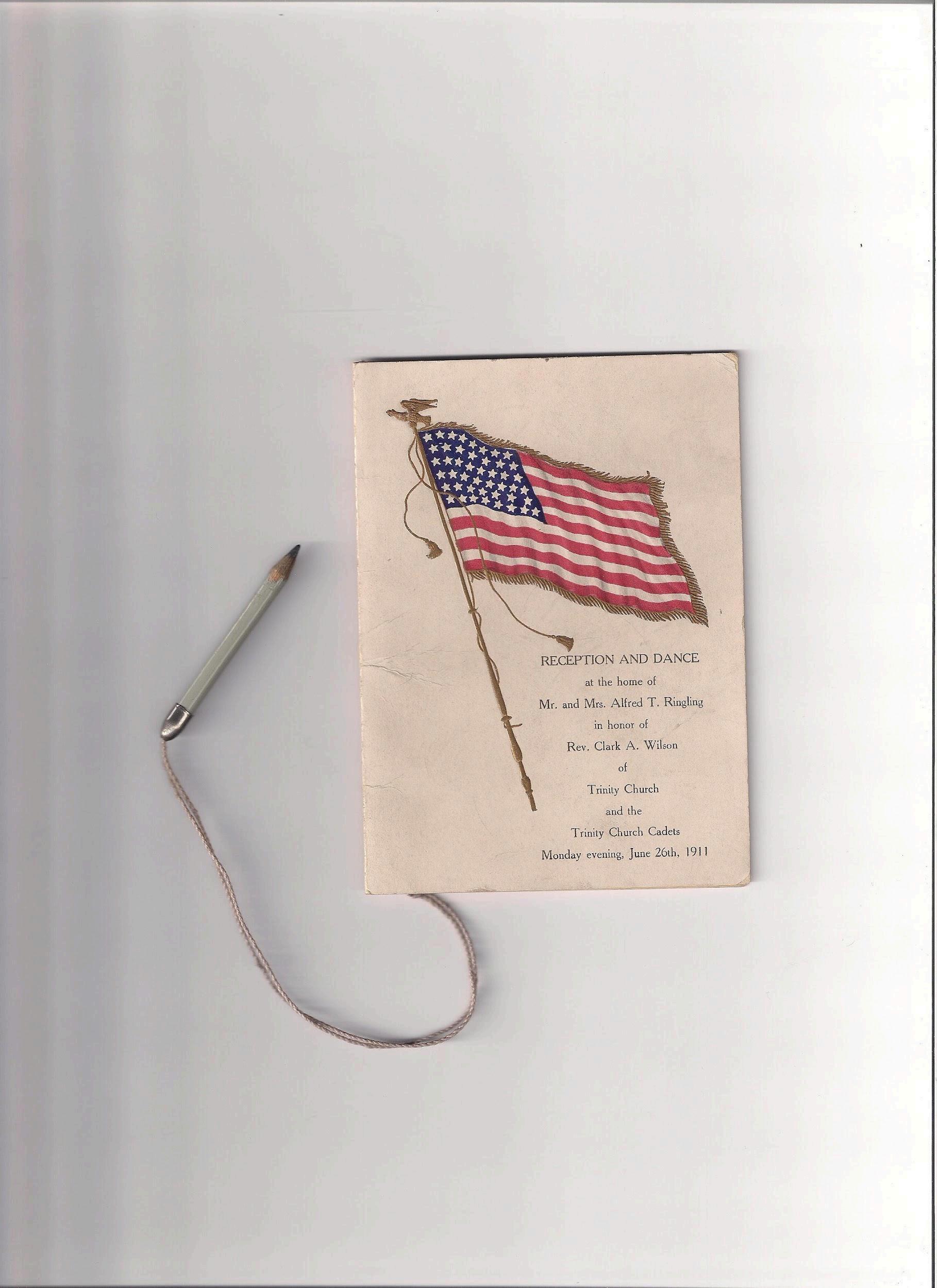
The reception and dance was held in honor of Reverend Clark Wilson of Trinity Episcopal Church as a “bon voyage” party to celebrate his imminent trip to Europe. The evening was also in honor of the 37 Trinity Episcopal Cadets who each brought a young lady. The cadets were dressed in white duck trousers, negligee shirts and large blue bow ties and their ladies in pretty party gowns. Dancing went until the early morning hours but not before a surprise show of fireworks was set off from across the street much to the delight of the invited guests.
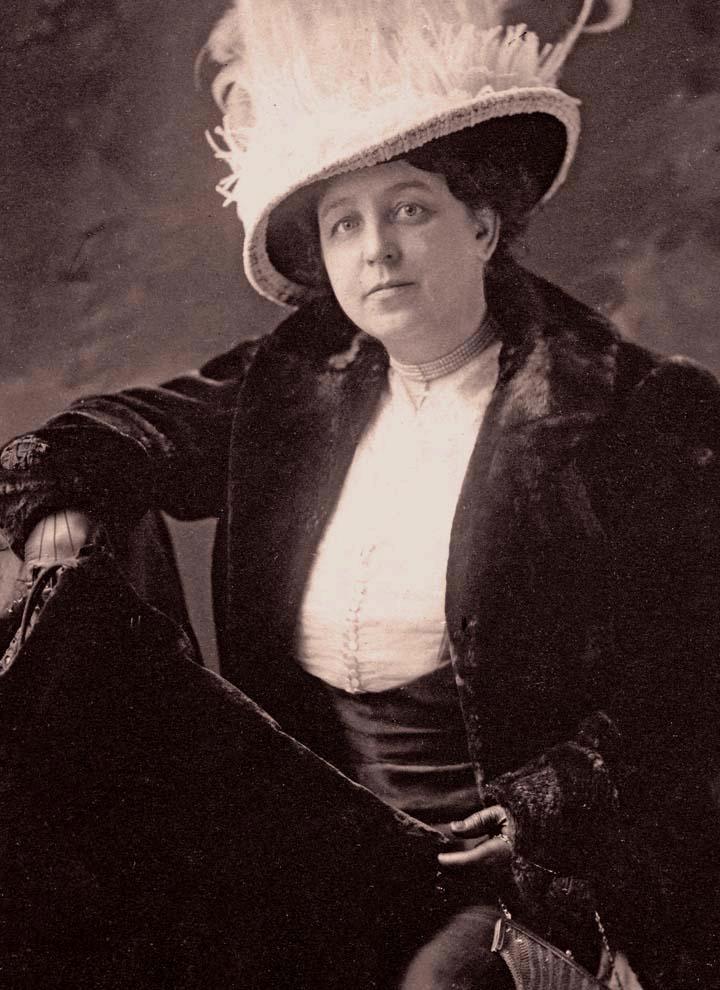
The event was the most memorable social occasion of 1911 in Baraboo. Della Ringling was pleased. She stood at the center of the social scene in Baraboo. Her spacious home was one of the largest in town, rivaled only by that of her brother-in-law Al. Ringling. She had come far. She had been born forty-two years earlier to William and Rebecca Andrews. Her father had immigrated to the United States from England as a young boy with his family. When he was about 19 he ran away from home to join the Union Army where he wound up with Company F of the Third Wisconsin Cavalry Regiment. Using the blacksmith skills he had learned from his father, he served as a farrier, an all-important job tending and shoeing the horses feet. After becoming ill during the war he was taken to a hospital in Lawrence, Kansas and while convalescing in a doctor’s home he was attended by a nurse that would soon become his wife. The young family bounced back and forth between Kansas and Wisconsin. It was while living in Garnett, Kansas in 1869 that William and Rebecca Andrews had their second child whom they named Adella May. The couple soon returned to Baraboo. While listed as blacksmith on the 1870 census, and in contemporary advertising, William Andrews decided later to become a doctor.
The 1880 Census finds the family living with a Dr. Richard Huson back in Lawrence. Dr. Huson was one of the pioneers of homeopathic medicine in western New York before moving to Kansas. Most likely through the family connections of Rebecca Andrews, William Andrews worked with Dr. Huson before returning to Baraboo to set up his own practice.
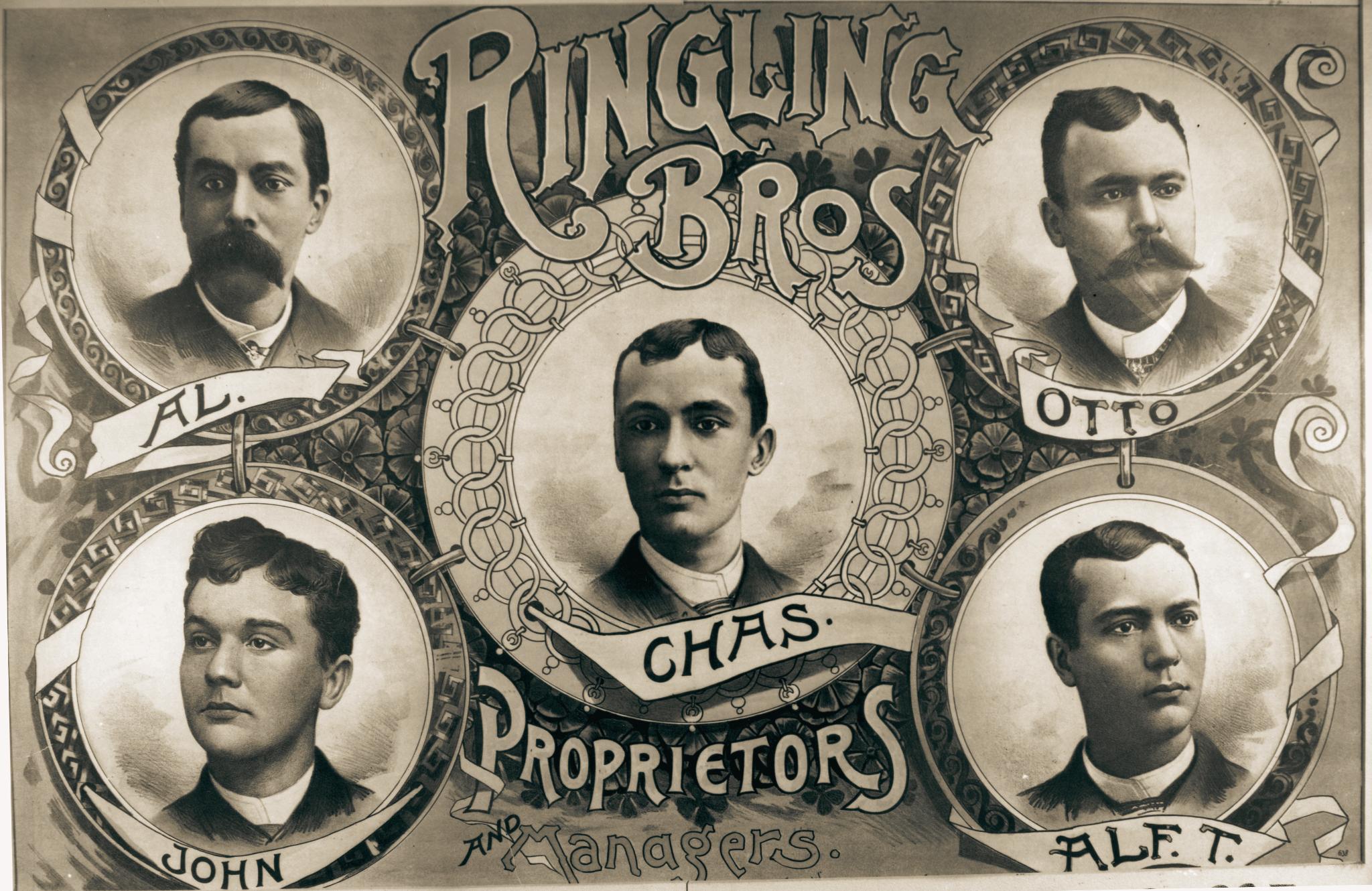
Just eight days before Adella Andrews fifteenth birthday in May of 1884, something extraordinary happened in Baraboo. Five brothers, the sons of a German immigrant, held their first circus performance on the vacant lot just north of the county jail. Al., Otto, Alf. T., Charles and John Ringling started what would grow into something that would exceed even their wildest dreams. Years later Alf. T.’s favorite remark regarding their success was “we had a little money, a lot of gall, and made good.” They did indeed “make good”, growing more and more as they returned to Baraboo each year to plan and build the next year’s show. For the first fifteen years of the circus, the brothers rented houses or hotel rooms in Baraboo for the few short months that they were here. Only Al. was married at the time the circus started. Charlie married next in 1889 and in 1890 Alf. T. Ringling and Miss Adella May Andrews were married. The ceremony took place in her parents’ house and was officiated by her aunt, the Reverend Mary G. Andrews. The event was a small affair
attended by only close relatives. After a wedding supper the newlyweds were off to Chicago on the night train.
Being on a train was something Della would experience a lot more of as she traveled with her husband and the circus. Fortunately 1890 was the first year that the Ringling Brothers switched to being a rail show. The overland horse-drawn wagon days were over. When Alf. T. and Della were married, the circus consisted of about 225 employees, 18 railroad cars and a big top that was 225 feet long. Along with the humans there were three elephants, three camels, a water buffalo, a zebra, several monkeys, several deer, two wolves, a boa constrictor, over 100 horses and ponies and for the first time a hippopotamus which was named “Pete”.
Each year as the circus returned to Baraboo Alf. T. and Della would rent quarters for the winter – a house perhaps or even rooms above a downtown meat market. A few years after they were married, Alf. T. and Della were expecting their first child. Little Ruth Ringling was born in 1893 but unfortunately died the same year. Tragedy struck again the following year when Roland Ringling died at just six months. In 1895 Della Ringling gave birth to their third child, Richard Theodore Ringling, who fortunately survived. By this time there were now several Ringling wives and even more Ringling grandchildren. Grandfather and Grandmother Ringling could see that their sons’ extraordinary ideas had indeed paid off.
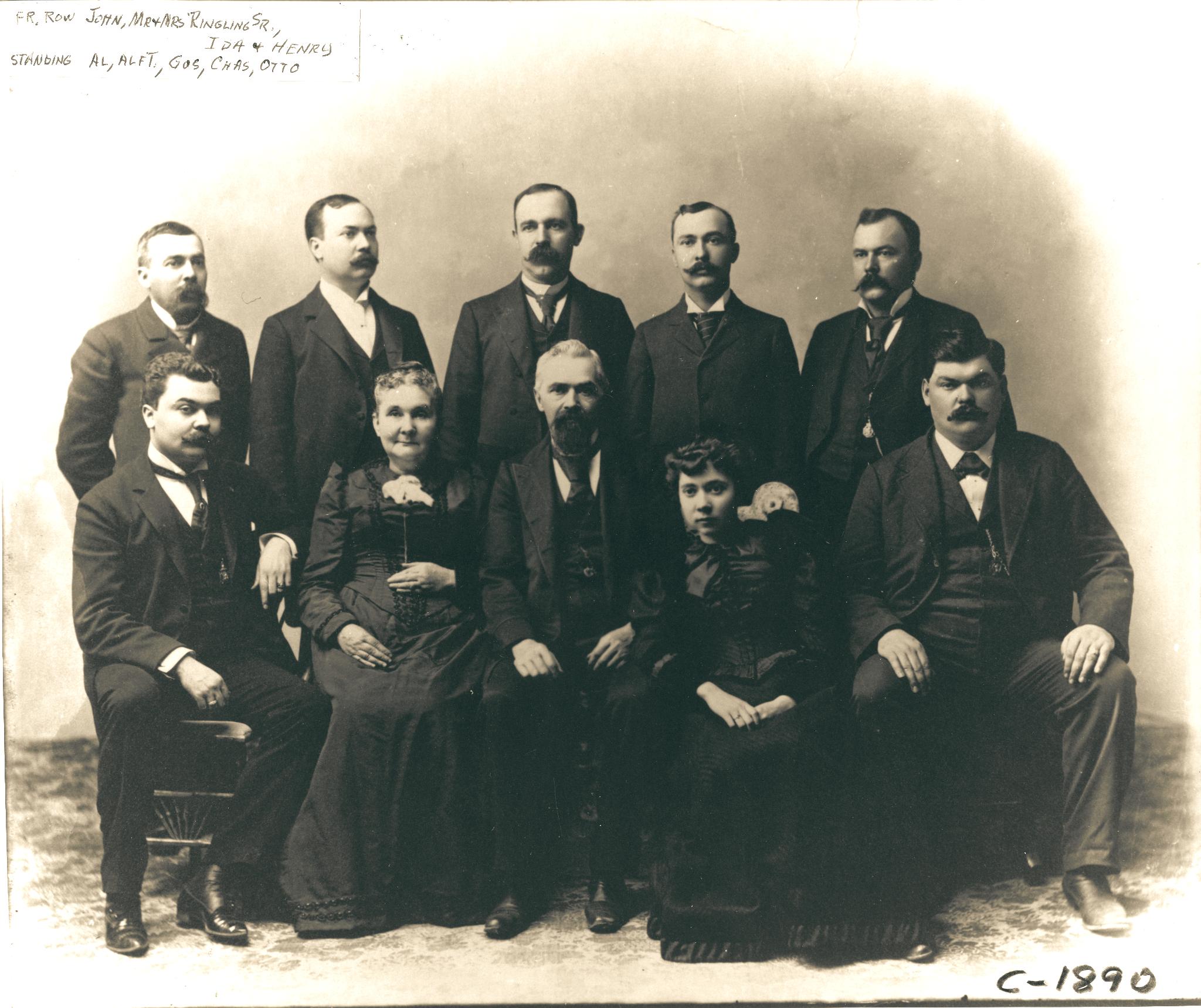
Around 1895 the Ringling family paused for a photograph. It is believed to be the last photograph of the entire family before Father Ringling died in 1898
It was after the death of their father that several of the Ringling Brothers decided to make more permanent roots in Baraboo. Though they returned to Baraboo every year, none of them had built a new house in town for themselves or their parents so despite their good fortunes, their father died in a rented house on Second Avenue.
Things changed i th i of 1899 when t announced tha Ringling boys h lots in town with of building hous Ringling purcha signed the cont modest Queen house that was of another hous before on Ash S
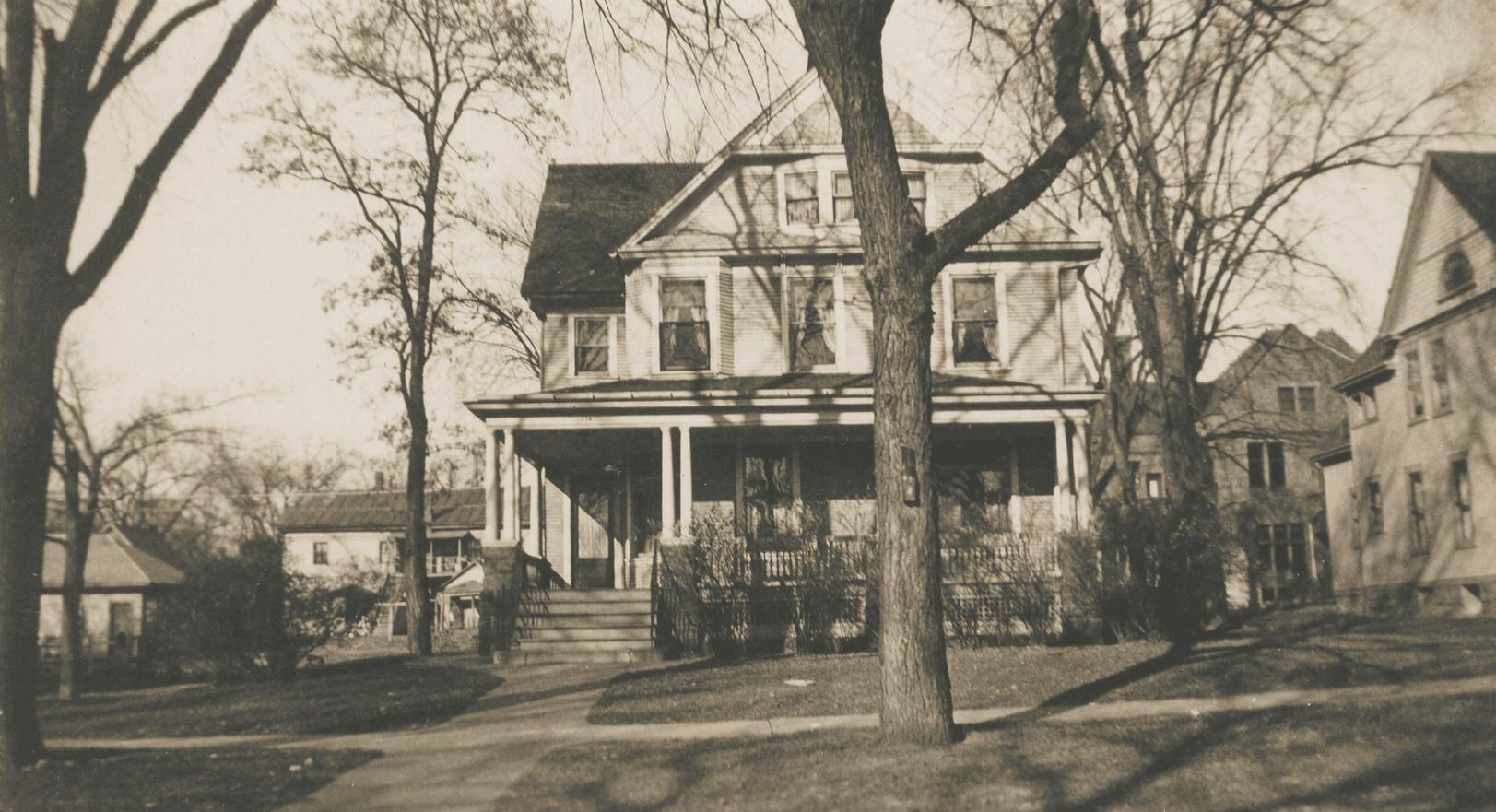
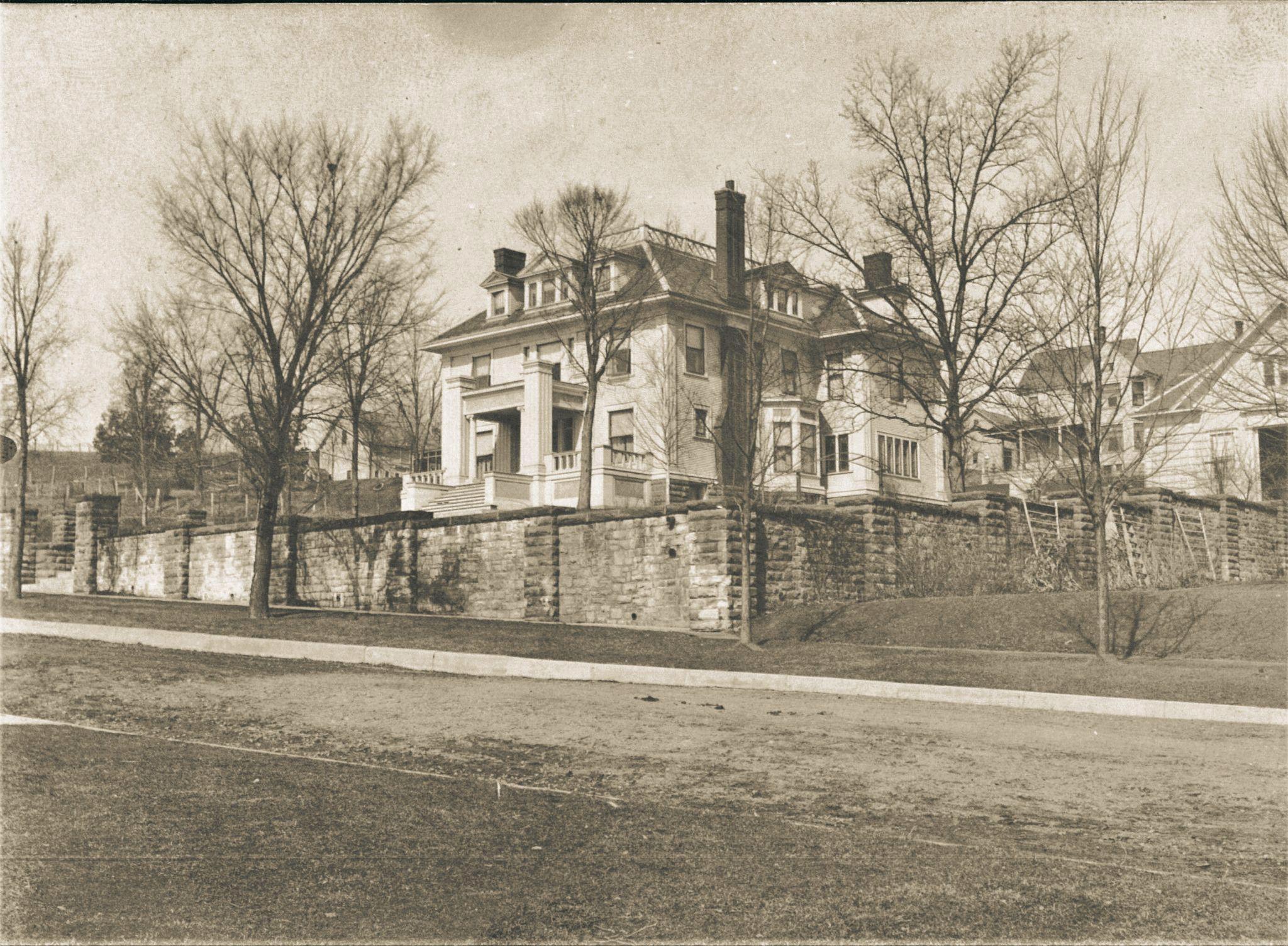
Alf. T. also started building in the summer of 1899. He had purchased two lots at the corner of Oak and Tenth streets. But unlike his older brother he was not going to start out small or modest. He desired a palatial and stylish residence and while the circus was in Minneapolis in July he closed a deal with the leading architect of the city, Fred Kees. Architect Kees was instructed to design a luxurious home "at once." The "at once" must have been heeded as ground was broken at the corner of Oak and Tenth streets only three weeks later. The plan called for a unique house based loosely in the Neoclassical style borrowing elements from Georgian, English and Italian style vocabularies. Although built of wood the house was nonetheless spacious being about 40 by 65 feet with rooms for entertaining and even a pipe organ. The interiors were lavishly decorated with mahogany trim work in many rooms. Bathrooms were outfitted with costly decorative tiles. The house took several months to complete and set back Alf. T. Ringling the princely sum of $6,500.
and enjoyed tea and three courses of refreshments to the soft strains of the pipe organ on the second floor. Each lady received a rose and a hand decorated heart with the initial “R” upon it. The tea party was co-hosted by Mrs. Al. Ringling and Mrs. Henry Ringling. The event probably played a significant part in encouraging Mrs. Al. Ringling to encourage Mr. Al. Ringling to build a bigger house than the one they had built just five years
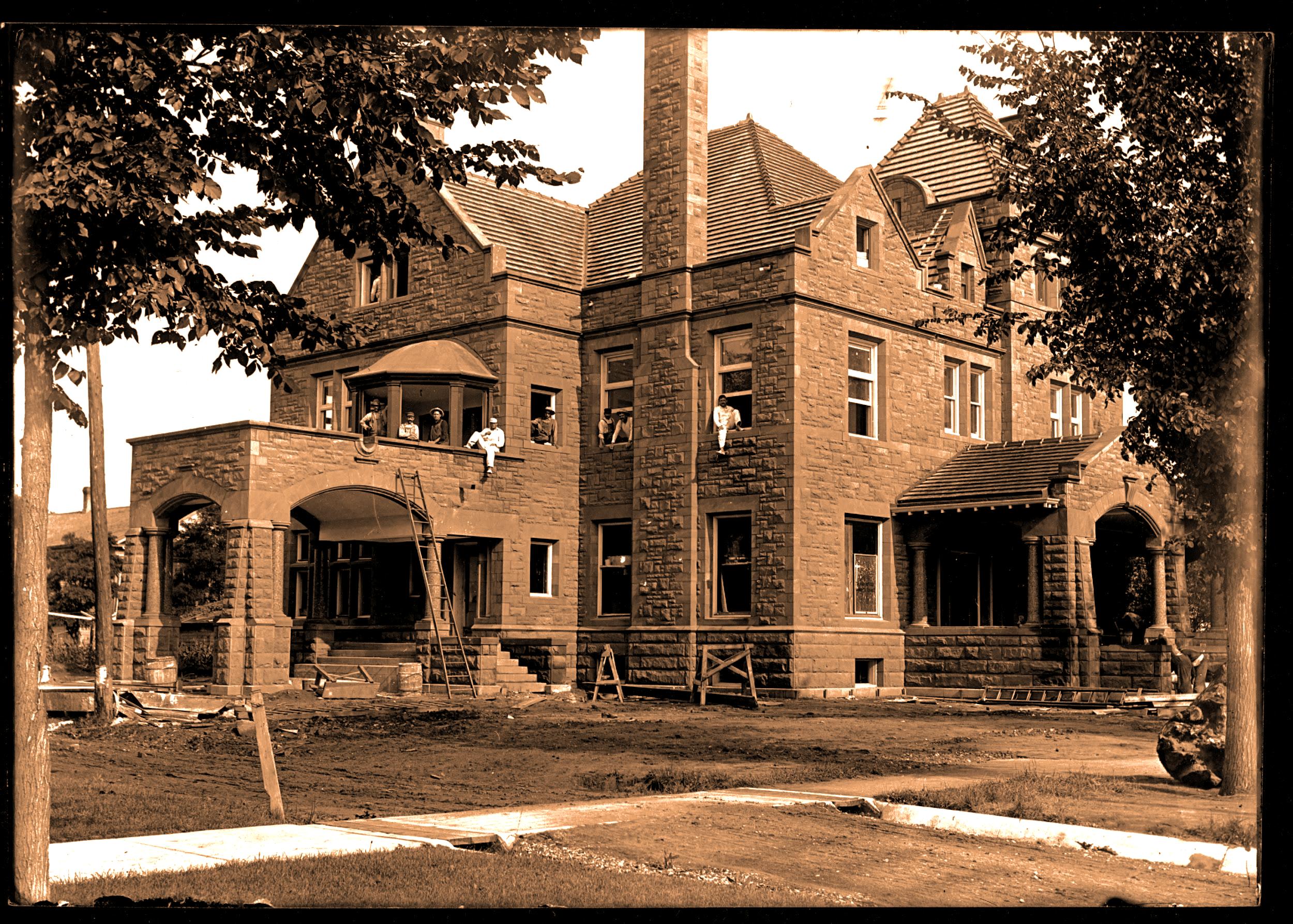
before. The following year the “old” Al. and Lou Ringling house was moved, more surrounding lots were acquired, and Al. engaged none other than Fred Kees to design an even bigger house than Alf. T. and Della’s. Construction on the Al. and Lou Ringling mansion took a year and a half and cost the kingly sum of $35,000. The architectural war, in Baraboo at least, was over with the completion of this monumental house.

Undaunted, Della Ringling continued to entertain lavishly at her house on the hill. As she grew closer and closer to Baraboo her relationship with Alf. T. grew further apart. Della did not wish to travel with the circus much and Alf. T. incessantly poured himself into his work. By 1911 when Della threw her house open in honor of the Reverend Wilson and the Trinity Episcopal Cadets, Alf. T. and Della were married in name only. By then it was widely known that Alf. T. was living out east and speaking with Della only on matters regarding their son, Richard. In 1913 things came to a head when Della sued for divorce on the grounds of desertion and cruel treatment. The divorce settlement gave Della the house and several other Baraboo properties and $305,000 in securities to be held in a trust. The income produced was to be given to Della as long as she lived.
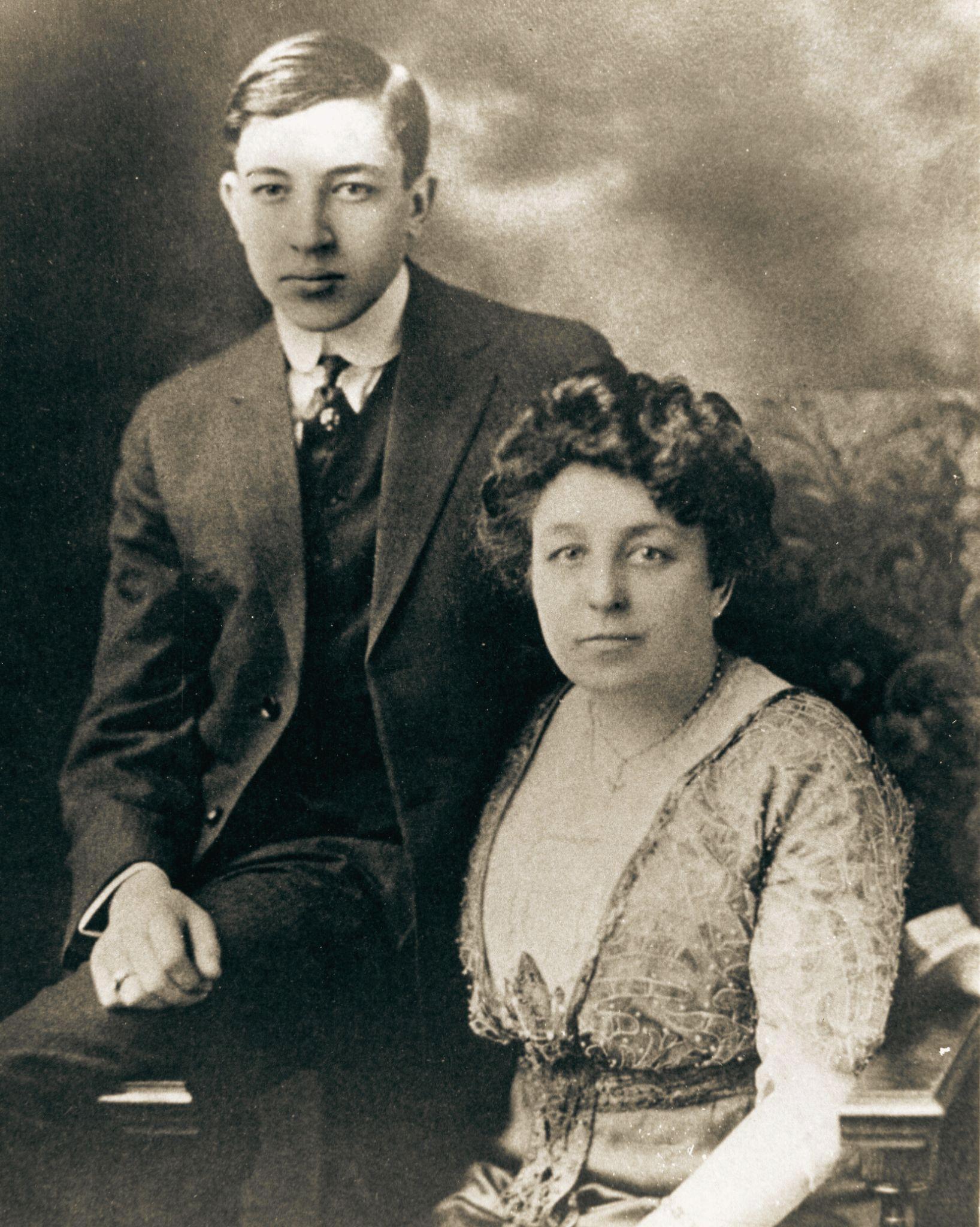
With the divorce over Della was now officially alone. Richard was 18 and traveling quite a bit. To give her life purpose and a new direction, Della adopted a little girl whom she called Marjorie Joan and poured into her all the love, affection and resources that this orphaned girl needed. It was also after the divorce that Della converted to Catholicism and became an ardent supporter of St. Joseph’s church and its work under its new pastor, Father E. C. O’Reilly.
Just a few months after Della’s lavish soiree in 1911, Father Edward O’Rei arrived in Baraboo to take over his n assignment at St. Joseph’s Catholic Church. Born in Ireland and trained i Montreal, O’Reilly was ordained in New York City in November of 1901. After serving several parishes in Wisconsin, O’Reilly came to Baraboo where he lived the rest of his life. Ev to this day the Baraboo area can stil feel the effects of Father O’Reilly’s hard work and perseverance. Just days after his arrival Father O’Reilly began work on a sorely needed new parochial school and within his first year the massive new building was a reality. O’Reilly also started a chapter of the St. Vincent de Paul Society which survives to this day and a convent was also built that first year.
Over the next decade as Father O’Reilly tended to his growing flock, Della tended to Marjorie. As Marjorie grew older, Della wished to broaden her daughter’s horizons and educational opportunities. Della knew this would mean leaving Baraboo and ultimately traveling abroad. In 1919 her former husband, Alf. T. Ringling, died on the large estate he had built for himself and his second wife near Oak Ridge, New Jersey. Ties to Baraboo were also loosening. Della’s brother-in-law, Al. Ringling, whom Della admired greatly, died in 1916 shortly after building a great new theatre for the city. Her big house in Baraboo now may have seemed to be more of a burden than a blessing. In the spring of 1922 it was time to move on. Della, with the blessing of her son,
Richard, started to divest herself of the house and its contents. The large pipe organ in the house was given to St. Joseph’s where it would serve for the next several decades. Some of the furniture in the house was shipped out to Montana where Richard now lived and the rest was put into storage. This left the question of what to do with the house. If Al. Ringling had left the legacy of a new theatre for the city, perhaps Della’s house could be given for a good cause. The next part of the story is best recounted by Father O’Reilly himself in his memoirs.
“Just three weeks before I was to sail for Ireland, Mrs. Alf. T. Ringling offered me her palatial home for a Sister’s hospital. The very possibility of having a sister’s hospital fills my heart with joy. For years I have been trying to get one, without any success. We have no suitable building to offer them, and besides, sisters are very scarce. But now, we have an ideal building which, without much expense, can be converted into an up-to-date hospital. Now that we have the building, the next and equally difficult problem is to find sisters.
I wrote to six different orders of Hospital Sisters. Five of them declined on account of the scarcity of sisters. The Sisters of St. Mary of St. Louis are the only ones who give us a faint ray of hope. They have agreed to come and look the situation over. I had Mayor Andro and all the doctors here to meet the sisters. Mayor Andro, speaking in his official capacity, promised the sisters that the building will be reconditioned, furnished and equipped in first class shape, and the keys turned over to them without one cent of debt. The doctors pledge the sisters their full cooperation and loyalty. But still, the sisters would not consent until they had given the matter more consideration.
While they were assembled in counsel, deliberating on this momentous question, I wrote Mother Concordia that our children were making a novena for the success of the project, and that if they failed to come to a favorable decision, it would be a terrible jolt to the faith of those youngsters. I am convinced that it was this that touched the kind heart of Mother Concordia and made them decide to take over the hospital.” The Sisters of St. Mary did accept the call and another piece of the hospital puzzle fell into place.
Della continued with the flurry of details needed to vacate the house. She left for good on June 17th as she dashed off a note to the Baraboo Fruit Store. The note read, “Gentlemen, I thank you sincerely for your kind services to me in the past and , in leaving this dear home, which, today I am doing. I ask you to be as kind and good to the Sisters of St. Mary as you have been to me. May God bless you always is my prayer. Sincerely Della M. Ringling The telephone number for the hospital remains: 333”
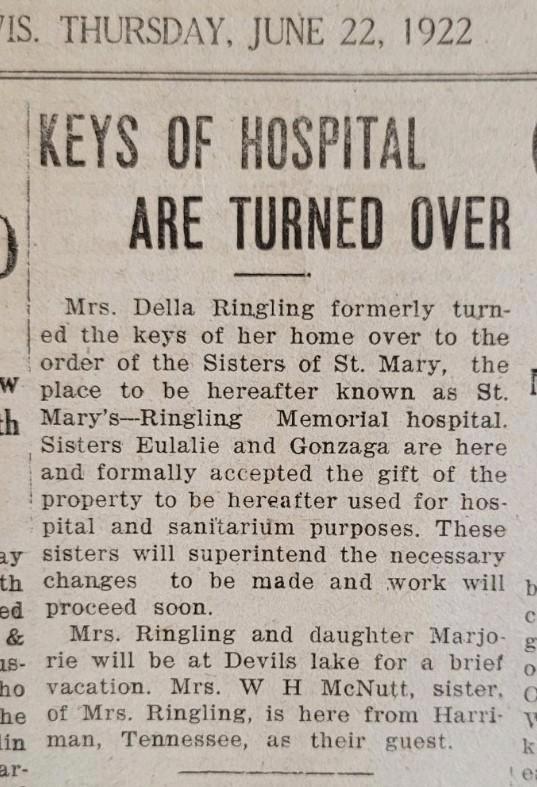
Within just a few days the first two sisters, Sister Mary Eulalia Steinkrueger and Sister Gonzaga Fister arrived in with a few large packing cases of supplies containing “dry goods, kitchen strainers, dustpans, tableware and a few cartons of oatmeal.”
The Ringling house was empty save for “two beds, a dresser, and a kitchen range.” The sisters got to work following in the footsteps of their founders to do the good work they were called to do.
The Sisters of St.Mary in St. Louis began in November of 1872 when Mother Odilia Berger and four sisters arrived in St. Louis from Bavaria to begin their work caring for the sick. Their first hospital was dedicated in St. Louis in 1877. Over the next forty years four more hospitals were added in Missouri, one in Illinois and in 1912 St. Mary’s Hospital in Madison was established. No doubt the proximity of the Madison hospital had some influence on the decision of the Sisters to expand to Baraboo. The cachet of the Ringling name might also have helped.
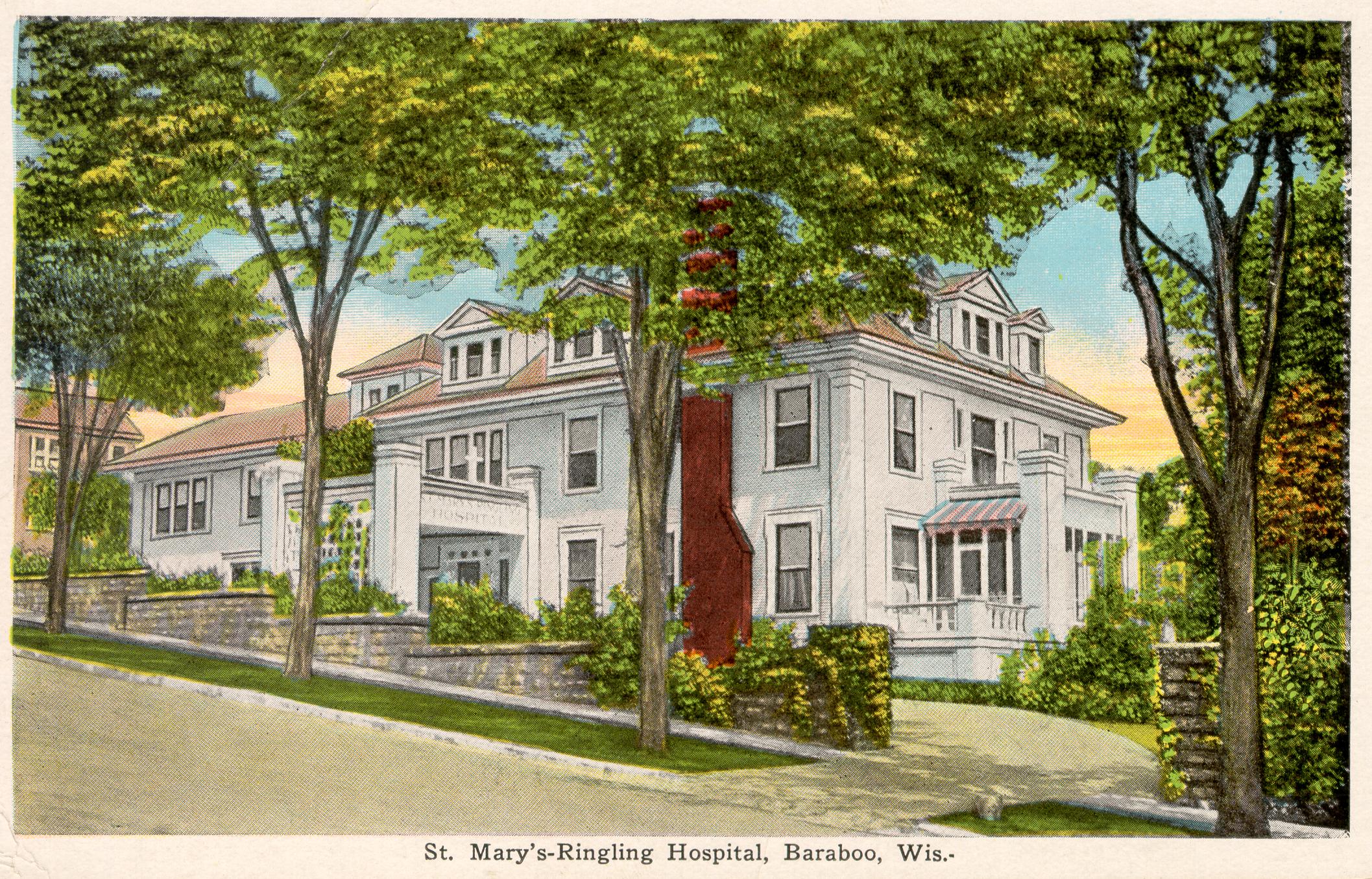
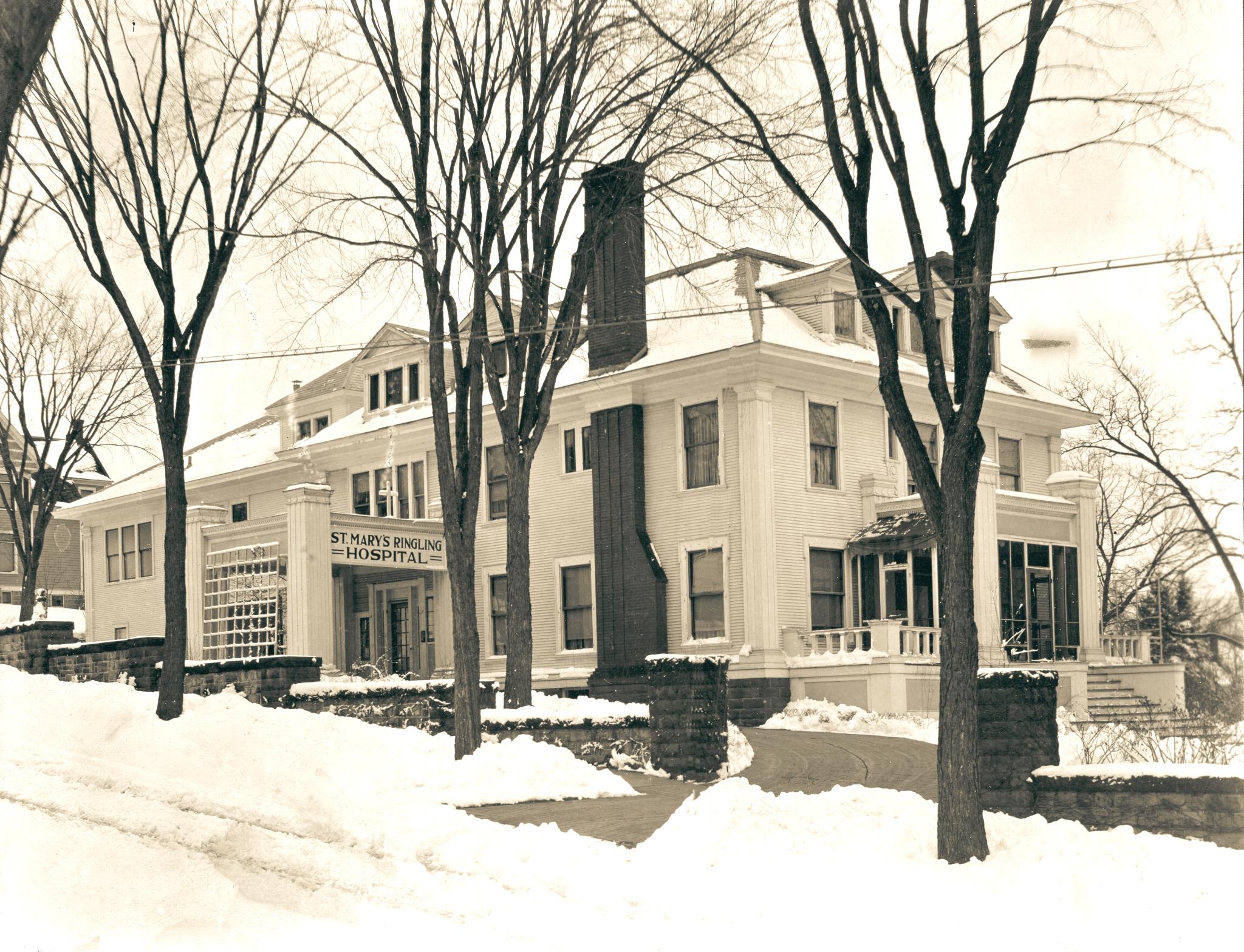
As the sisters worked to set up the hospital they knew it would be impossible without community support. Mayor Andro called together the leading citizens of Baraboo to appoint an executive committee to raise the funds needed for alterations and equipment. In two days over $18,000 was raised and renovations were begun. The generously proportioned rooms of the former home adapted well to patient rooms. As grand as the house was though, the rooms were not infinite. Space for surgery, x-ray, a delivery room and nursery were all problems that had to be overcome. Not to mention space for the sisters to live and for a chapel. The sizable barn on the property was remodeled for the nuns dormitory and chapel space.
An addition was built on the north end of the house which helped meet some of the need for more space. An elevator in the house, albeit one that was pulled up and down by a hand rope, was also a welcome convenience. The hospital opened with 25 beds and
much of its original interior finishes intact. The hardwood floors, beautiful woodwork, open staircases, leaded glass cupboard doors and tiled bathrooms remained unaltered for many years. The beautiful surroundings prompted Attorney Herman Grotophorst to note, “ Since we have the most beautiful playhouse and other pricey buildings it is no more than proper we have the most beautiful hospital ”
W
the community. The sole layman to help was Albert Hippler, who essentially came with the house as he was Della Ringling’s groundskeeper and handyman. To his former duties Hippler now added security guard and night watchman.
As of November 2, 1922 the hospital was open. Community leaders had supported it but would the public at large? Father O’Reilly wrote in his journal, ”Today the Sisters of St. Mary have
taken charge and opened our new hospital to the public. But like every other worthy enterprise, we still have many difficulties to encounter, many hardships to endure, and many obstacles to overcome before our efforts are crowned with success. Many are not acquainted with the splendid work the hospital sisters are doing throughout the world. Others, suffering from religious prejudice, have an antipathy for all sisters’ hospitals, and some feel that they must go to a large city hospital to get the best results. These are some of the conditions with which we are confronted, and while we know that everything will eventually come out all right, it is a terrible ordeal to have to pass through.”
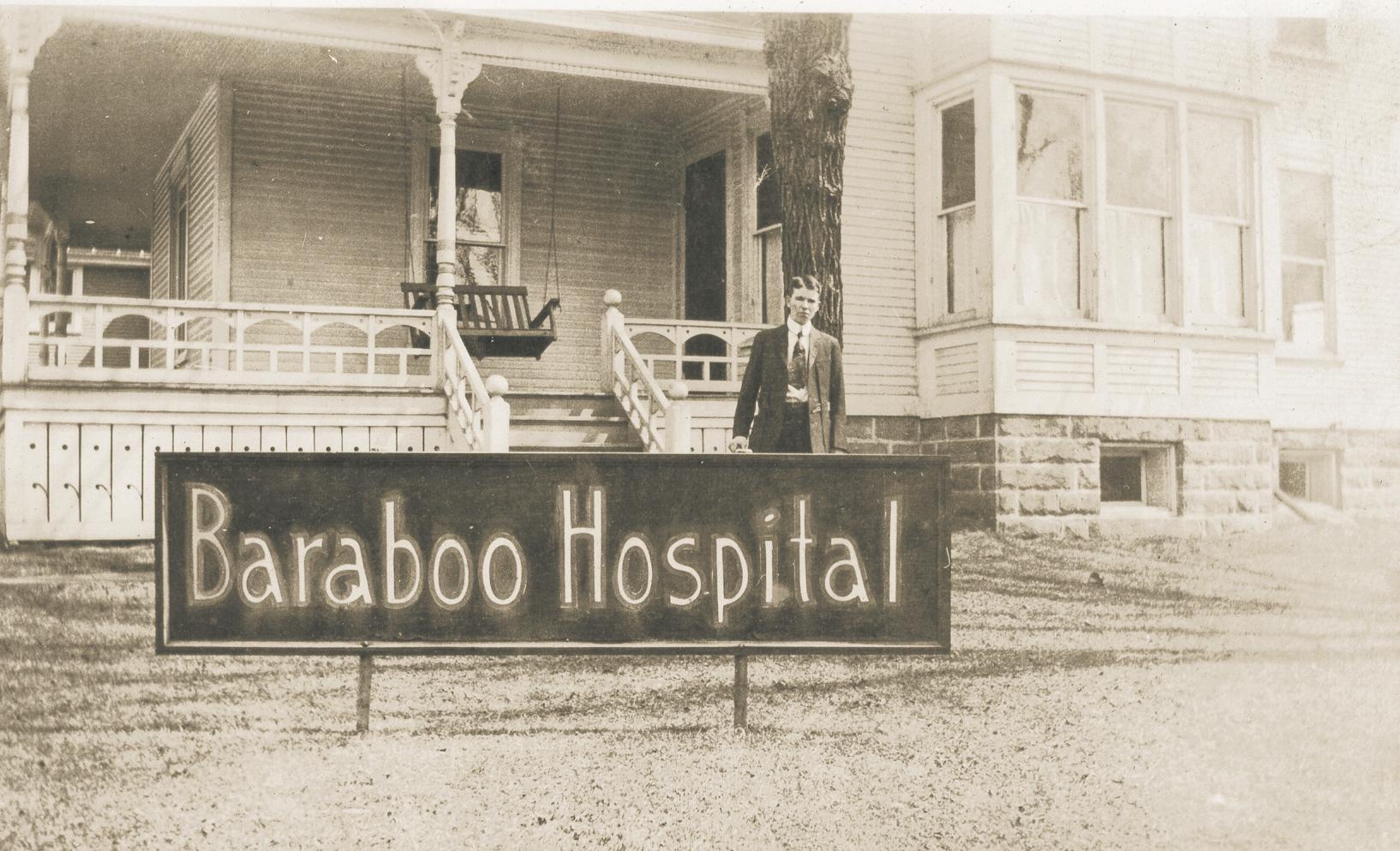
The community was used to the nuns who were teachers at St. Joseph school but the nuns at the hospital were somehow different. Acceptance came slowly. This was due in part to the general perception of the sisters but also to the general acceptance of going to a hospital at all. St. Mary’s Ringling was not the first hospital in Baraboo but rather the first to take a firm hold. In 1913 two small hospitals opened in Baraboo. A downtown hospital was opened by tors Powers and Fehr on d Street but several ths after it opened The aboo Republic stated aboo has had a hospital everal months but it has eceived the support that it should have even for the short time. Whether the people of Baraboo want a hospital for ornamental purposes or use seems to be the question.” Later that year, the Gem City General Hospital opened in a house on
Baraboo’s far east side. For several years, Doctors Farnsworth, Nuzum, Beech and Lusk ran the hospital but publicly stated that if a more general hospital institution came along they would gladly give their patronage. Perhaps the antipathy towards hospitals also stemmed from other questionable outfits like the Baraboo Health Institute, which opened in a downtown building offering “kindred healing methods, massage and electric light baths” as a cure for many diseases.
After half a year had passed at St. Mary’s Ringling Hospital, Father O’Reilly wrote, “It is now six months since our hospital opened and half the beds are unoccupied. But when the sisters get the confidence of the people, everything will be all right.”
At the one year anniversary things were better. “It is now one year since the hospital opened and every bed is occupied. Each day the people are getting more confidence in the sisters, and very few are now leaving town for hospital care.”
The addition of lay nurses in 1924 also helped the public accept the hospital and the sisters. Ada Getschman and Mary Fishneck were the first, each working a separate 12 hour shift.
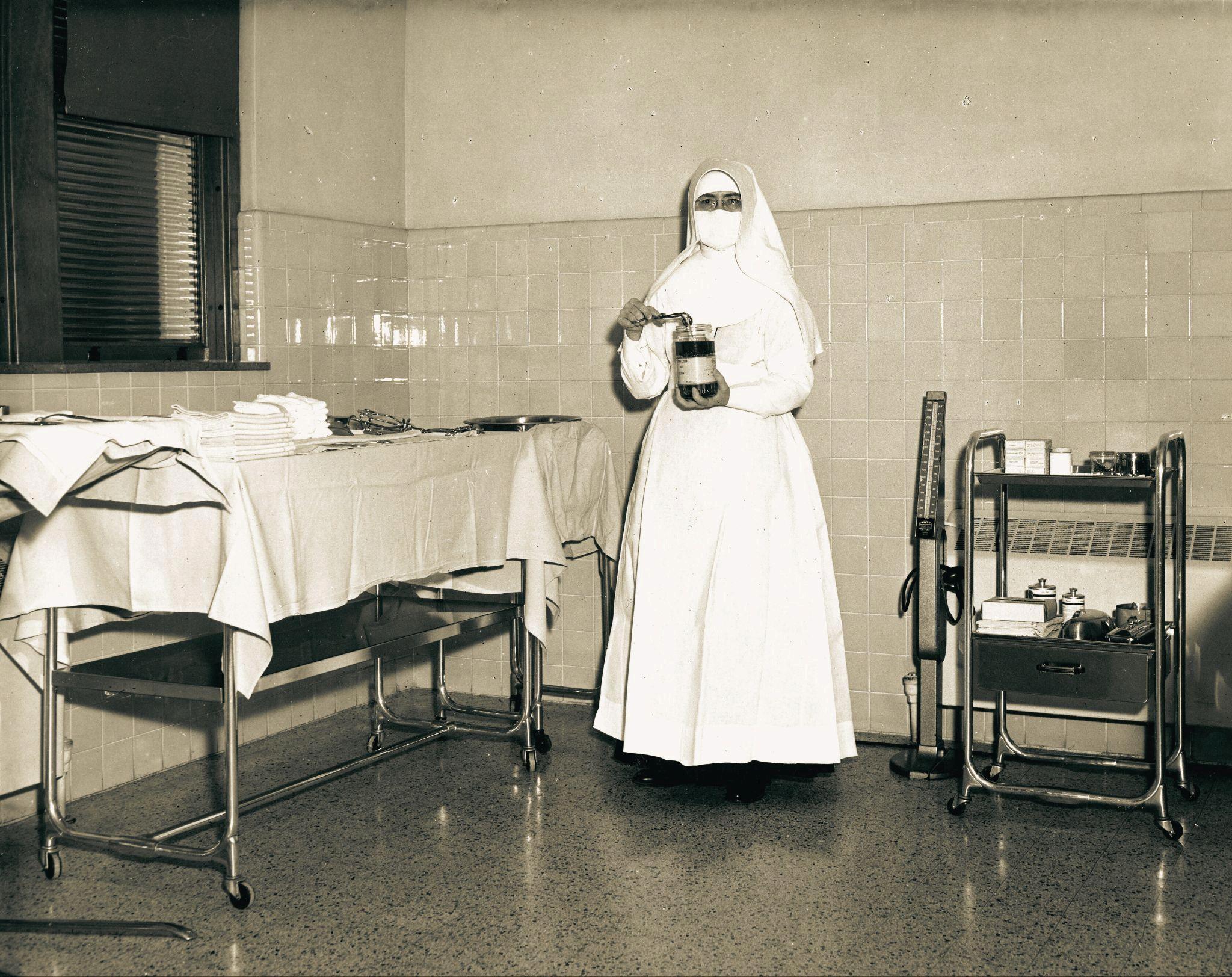
In 1925, the hospital was severely tested when a bus accident occurred at the Butterfield Bridge between Baraboo and Portage. At 10 pm on the night of July 3rd everyone was awakened as the news came in that a bus carrying about 30 passengers had overturned and landed in the Baraboo River. The hospital was already full so a furniture merchant was called for an emergency delivery of cots. As the injured arrived it was clear that it was going to be a long night and a long day. Broken bones were numerous and Sister Mary Ligori worked the x-ray machine for 20 hours straight.
Another incident that was also to be remembered happened several years later when two unknown men were seen leaving the hospital chapel service before the benediction. As Sister Mary Ligori asked them to stay for the benediction she noticed that one of them was carrying a rosary. Later in the day the nuns laughed about these two strangers at their Mass but the next day when the newspaper arrived they realized that the man with the rosary was John Dillinger.
As the hospital saw more use, its shortcomings became more and more amplified. One of the biggest was that there was no delivery room or nursery. Mothers often labored in the same room with another patient and newborns were placed in flannel-lined clothes baskets hung on homemade stands. The first baby born at the hospital was Virgil Klemm who arrived on April 14, 1923. The newborns were placed in the hallway during the day and put into the x-ray room at night. When a late night x-ray was needed all of the newborns had to be moved out. In the early days, the hospital also had only one wheel chair which had to be shared. The hand pulled elevator was so slow that one expectant mother gave birth
on the ride up to the second floor, and indeed the wheel chair was being used at the time - by someone else.
Nonetheless the hospital was a great success. Perhaps no one was happier or more satisfied than Della Ringling herself. After several years living in Washington D.C. and in France where Marjorie went to school, Della came home to her beloved Baraboo. She lived in a small house which was a part of her estate just north of the hospital. Though she was home her health deteriorated and on June 5, 1931, Della Ringling died at the age of 62 and was laid to rest in Walnut Hill Cemetery just a few blocks north of the hospital. An anonymous writer described her funeral, “It was an exquisite picture, the marble encircled plot filled with roses and tulip flowers, color flame. At one side the border of black robed nuns to whom she had given the keys to her home for the blessing of humanity; at the head of the gleaming bronze casket the line of trained men who had carried on the work of the institution she had founded. Grouped about were kindred and those to whom she had given friendship, companionship and sympathy. In the hush, the words of the ascetic priest, “Into Thy Hands oh Lord, I commend her spirit…She was dead. But this work her great heart and fine mind had planned would go indefinitely…Here in the old home, stately in the sunshine and shrubbery, kindness, skillful alleviation of pain, hope and cheer, courage and faith would be given through the years to come. Women in the throes of childbirth would bless her for this safe haven in their hour of travail. Men in agony would speak of her unselfish devotion to mankind. Children would be saved to lives of usefulness because of this provision for them.”
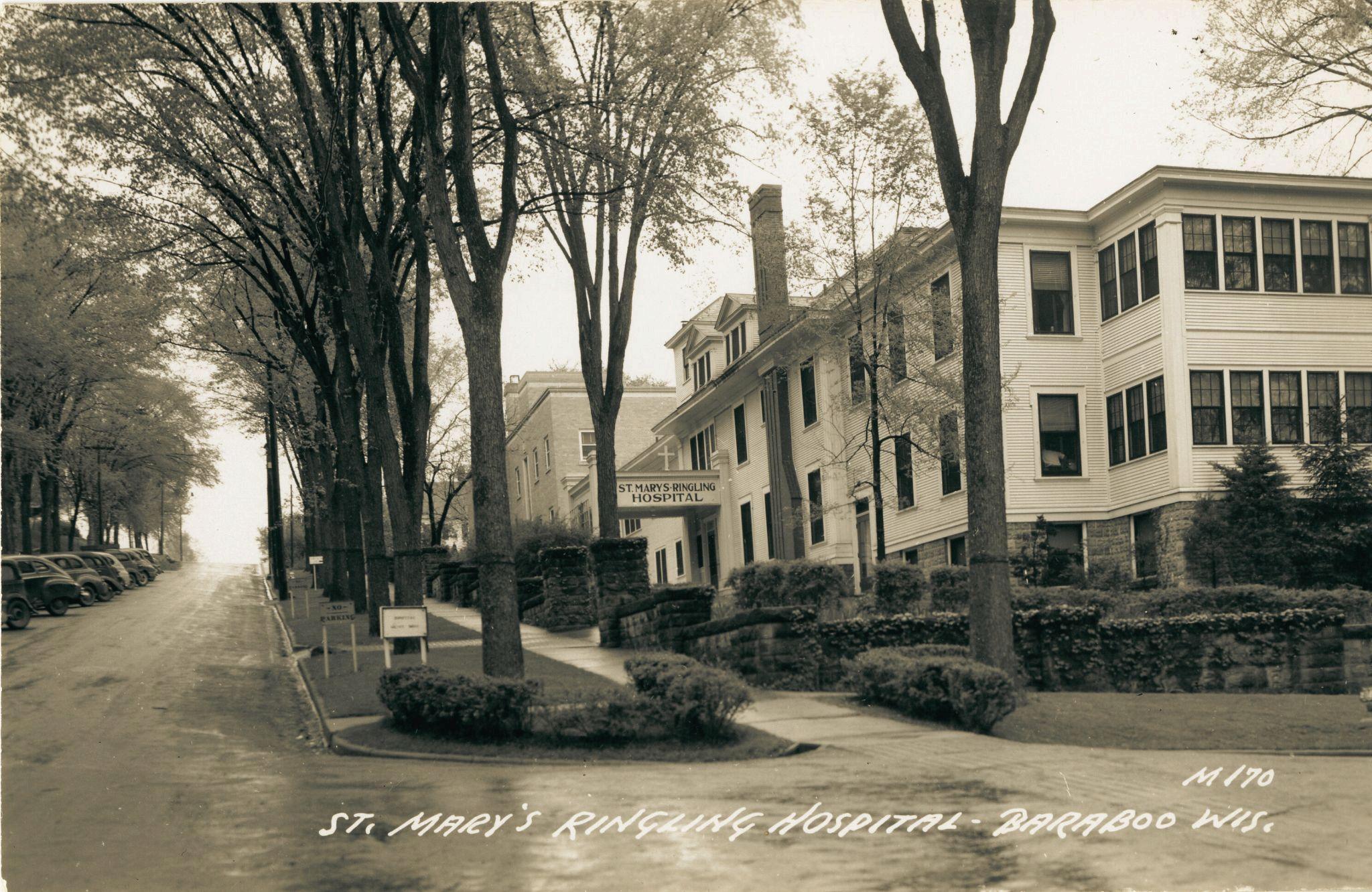
St. Mary’s Ringling Hospital did continue and thrive after the death of its benefactress. In 1936 an addition was added to the south end of the building replacing the original tenth street entrance. Nine more rooms were added to accommodate 17 patients. Each room was also equipped with built in oxygen supply, the first hospital in the state to have such a convenience.
At the center of it all were the sisters. Over 120 sisters served at St. Mary’s Ringling Hospital. They came from all backgrounds with names like McNamara, Hollerbach, O’Toole, Strassmann and Brown. They worked as nurses, dieticians, administrators, X-ray and laboratory technicians, accountants, and laundresses. They worked at all hours of the day and night whenever duty called.
By 1940 the population of Baraboo had reached 6,500 as war loomed in Europe and the Pacific. While the depression lingered on in Baraboo it was almost instantaneously erased when plans were announced to build a federal ammunition powder plant on the Sauk Prairie just south of Baraboo. The population of Baraboo saw a near 100 percent increase which put new pressures on every public facility, especially the hospital. A major addition was sorely needed but due to wartime constraints construction would not get under way on a new three story brick addition to the hospital until the end of the war.
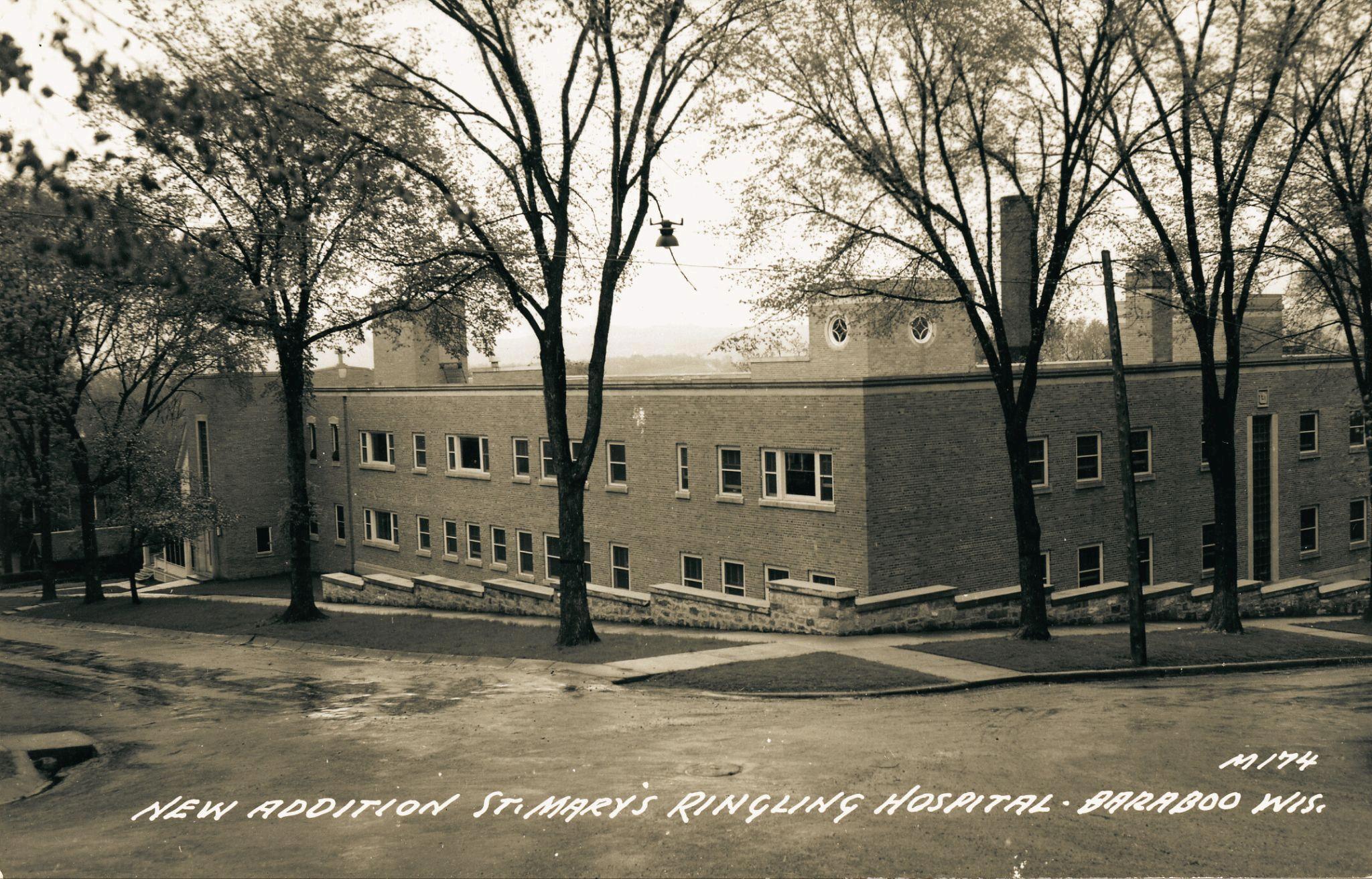
In the spring of 1946 the new addition was completed and provided much needed modern space for an emergency room, pharmacy, kitchen, delivery rooms, nursery, laboratory, x-ray department, two operating rooms and at last a proper convent and chapel allowing the nuns to move out of the former stable.
Thirty-two beds were also added taking the pressure off of the original portion of the hospital.
After the war, doctor veterans returned to the hospital along with army nurse veterans to work alongside the sisters. The post-war baby boom kept the maternity ward filled. In 1959 the State Board of Health advised the sisters that the original portion of the hospital, being of wooden construction, was no longer acceptable as a hospital. Although plans were drawn up to replace the original Ringling house with a new brick wing, the State Board recommended that a new hospital be built on a new site.
With the donation of property on 14th street by Frank and Fern Adamske construction began on what would be named St. Clare Hospital. In 1963 St. Clare’s opened and St. Mary’s Ringling closed, at least as a hospital. The facility opened as a skilled nursing facility known as St. Mary’s Ringling Manor and operated in this capacity from 1963 to 1973. In 1975 as other facilities were built, the manor closed and St. Mary’s Ringling once again reinvented itself as a convent for the retired Sisters of St. Mary thus prolonging the usefulness of Della’s gift. Eventually in 1977 the original Alf. T. and Della Ringling house was razed. What Della Ringling and Father O’Reilly started lives on today in the legacy of modern healthcare in Baraboo.