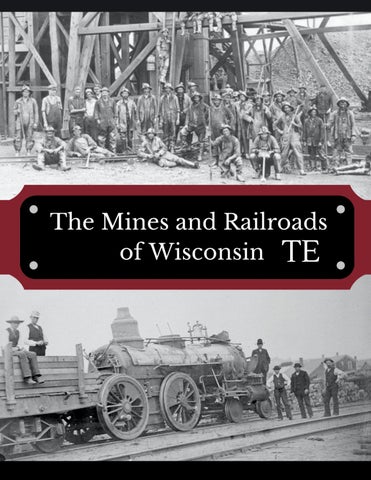
TE
History Journal
remnant
abated
smelting
crevices
ore
wealth seekers
driving question
turning point
Key Vocabulary
Teaching Strategies
Chapter 1: Connections
History Journal
Have students write five facts from the article and draw their own conclusion as to whether opening a copper mine was a good or bad decision.
Have students define turning points in their History Journals and provide an example.
What question did Barry have to consider before deciding to close his mine?
What questions might Barry have asked himself when he was offered $1,500 for his mine?
What do you think Barry was most curious about when he first found copper?
Why would individuals looking to build a saw mill decide to look for copper instead?
What is a point of view?
What sources can you use to learn more about the people and events that make up Wisconsin history?
Inquiry Based Learning
What might you ask to determine the credibility of a historical writing?
When thinking about historical fiction, what might you ask a storyteller?
Chapter 3: From Furs to Mines to Railroads
Have students share the questions they write in their journal. Emphasize that asking questions is necessary for all history detectives.
Have students identify at least three cause and effects found in the story of the Reedsburg Copper Mine.
Explain that this is an article written by a historian who has researched the topic and writes about it. He uses quotes in his article, which are primary sources of information.
Ask students what the point of view might be of a storekeeper in a small community who writes to his family in Ohio that a train depot will soon be built in his village.
Ask students how turning points are examples of cause and effect.
Teaching Strategies
Inquiry Based Learning
What question could you ask a historian about research techniques?
What question might you ask a curator?
Chapter 2: Turning Points in History
Have students discuss why curiosity is essential in learning about history and why sharing information and discussing conclusions with others helps to deepen their understanding and perspectives on what happened in the past.
Explain that historians write about their history discoveries in a Review the three main sources of historical information and how drawing on journal. primary sources is essential to what they share with others.
Turning points in history signal a major change for the people of a region. A driving question is a general question that sparks other more specific questions. The hope of getting rich in a short time was the dream of every miner. New endeavors include the element of risk and reward People move to new areas for new opportunities.
Big Ideas:
historian
secondary source
historian
curator
primary resources
natural resources
primary
Key Vocabulary
History is the story of connections between people and events. It is important to know how credible the information you are reading is. fact or fiction History is a series of discoveries that are driven by curiosity.
Big Ideas:
Mines and Railroads of Wisconsin_TE
1
Have students consider three reasons why French Canadian fur traders developed trade relationships with the Indigenous People.
cylinder
windlass
region
transformation
copper
iron ore
zinc
sourdough
Key Vocabulary
Inquiry Based Learning What does the image of the French fur traders make you curious about? Start your answer with "I wonder why."
Have students research the Treaty of 1804 and write a paragraph about it in their History Journal.
Have students make a list of all the turning points they identify in the text on page 14
Teaching Strategies
Chapter 4: Mining in Wisconsin
Inquiry Based Learning
Who had the most to gain from the 1804 treaty?
Have students consider why Wisconsin offered the potential for success and wealth for those looking to settle in the region.
Discuss the risk - reward balance lead miners had to manage.
Have students consider the changes brought about by 4000 people moving into a region within a short time. Discuss what they might need in terms of goods and shelter. Have students speculate on what Spoon Decorah shares with the interpreter. Discuss why an interview that is transcribed by another person is a secondary source instead of a primary source.
Have students summarize Spoon Decorah's interview in their History Journal.
Students should complete the Think Like a History Detective task.
Have students write one question for Spoon Decorah in their History Journal. Have students use a map to locate the places noted on the timeline.
Students should list the items found on the timeline throughout the chapter in their History Journal.
Have students make list of the ores mined in Wisconsin.
How do pulleys make lifting heavy loads easier?
What do you think it was like in an underground lead mine?
What might you ask a miner being lowered into a mine using a windlass?
What was the transformation that happened to the Winnebago and what caused it?
If you could have been the interpreter who interviewed Spoon Decorah, what is one question you would have asked him?
Make sure students list and define each key vocabulary word in their Discuss the role the mining of lead had with Wisconsin migration patterns and the possible Think of a question that could be asked from the following sentence: "By 1829 some 4000 men were trying their risks encountered by pioneers headed to lead mining regions. History Journal. luck at lead mining.
History Journal
How did fashion play a role in the beaver trade?
Have students answer the question posed by the diagram on page 14. Explain that What are two questions you could you ask about the French and Indian War? a reliable transportation system was needed to transport first lead and then iron ore to smelting furnaces. The answer was a system of railroads built across Wisconsin.
Have students use the turning points they identified to explain cause and effect. For example, discuss why British victory in the French and Indian War (cause) resulted in their dominance of the fur trade (effect).
Have students make a note about Have students consider the environmental impact of thousands of beaver killed for What question might you ask about the fur trade as it relates to the population of beaver in Wisconsin during the time when beaver hats were in great demand? the beaver trade in their History their fur over several decades. Journals.
Teaching Strategies
History Journal
Have student write important names and dates in their History Journal.
The possibility of getting rich quick brought many would-be miners to Wisconsin. Four types of ore were mined in Wisconsin: lead, iron, zinc, and copper. Transformations that result from turning points can occur fairly quickly. Treaties that ceded land to the United States were turning points. Reading what someone who experienced an event once said provides new insights. Turning points in history impact both individuals and the community. Advances in technology made mining for lead underground possible. Ingenuity provides the means to overcome challenges. History is told in a variety of ways that requires the reader to determine credibility.
Big Ideas:
extinction
cessation
galena
lead
fur trade
voyageur
Key Vocabulary
Indigenous People traded animal pelts for goods with French Canadian fur traders Beaver pelts became central to trade relations with Indians and a source of wealth for fur traders. Both the fur trade and abundance of lead resulted in several turning points. As one resource grew scarce, attention turned to an abundant resource.
Big Ideas:
Mines and Railroads of Wisconsin_TE
2
excerpt
badger
claim
Key Vocabulary
History Journal
Teaching Strategies Who were the "badgers"?
What three questions would you like to ask the miners?
Have students calculate the value of lead mined from the Discuss how the term "badgers" is used today when referring to people from Woodhouse claim. Wisconsin. Ask why the term has stood the test of time.
Ask students to make a list of ten words that describe the motivations and challenges behind lead mining. Students should explain why they chose the words and make changes to their word list as they critique their choices.
How did surface mining make the possibility of being a lead miner more of a reality?
How quickly did lead mining change the region?
Have students identify at least three examples of cause and effect explained in the Why were the early lead miners called badgers? text.
Have students use at least three words from the list to write a summary statement about Have students complete the History Detective task on page 31. lead mining.
Write a sentence in your History Journal that explains how lead was used to support farming in Wisconsin.
Have students complete the Think Help students unpack the motivations and reflections explained in this writing by P. Like a History Detective activity on Woodhouse. Why might a miner become a squatter? page 29.
If you were the photographer taking this photo, what would you be curious about?
Discuss how the photo of the surface mine helps us understand mining practices.
Have students speculate on what the miners might have written to family members Why was the discovery of galena in the Platteville region significant? living elsewhere about their jobs and their community.
Write one or two sentences that summarizes what P. Woodhouse explains.
Have students write a one paragraph summary of lead mining in their History Journal.
Make a list of 6 details you find in the image of the lead mine in your Discuss the process used to extract lead. Invite a student to draw a picture of what What question could you ask about the places that became ghost towns in the lead mining region? History Journal. John Shaw describes.
Write the answers to your three Have students identify tributaries, Lake Michigan, and the Mississippi River. and if questions in your History Journal. possible the location of mines.
Inquiry Based Learning
When looking at the photo on page 21, what is something you are curious about?
Discuss the photo with students. Help define the role of a curator, historian, and storyteller. Provide examples of historical fiction.
Chapter 5: Lead Mining
What do you think these lead miners would be saying if their words had been documented at the time the photo was taken?
Have students research the history of Yellow Thunder and Blue Wing. Information can found at https://saukcountyhistory.org/
Transformations that result from turning points can occur fairly quickly. Lead grew in importance with the use of firearms for hunting and for intertribal conflicts. Lead mining resulted in quick population growth as people moved to lead mining regions. Shullsburg and Platteville began as fur trading centers. Miners new to a region would seek out abandoned mines to see if they had better luck than past miners. Lead mining was intensely difficult that required ingenuity and grit. Continuing to mine in the face of financial ruin required industry and perseverance. For some, lead mining was highly profitable. By 1860 Wisconsin had become a leading producer of wheat. In the 1830s the possibilities for lead mining in Wisconsin seemed unlimited. For many years, farming and lead mining were integral to the region's economy. As Wisconsin gained statehood, and the population grew, interest in iron mining also grew.
Big Ideas:
How does the photo help us understand what it was like to be a lead miner?
Have students share their questions from their History Journal and consider and reflect on possible answers.
Have students complete the History Detective task.
Beside lowering and raising miners, how else would the windlass be helpful?
Discuss with students why this interview is such an important secondary source of information. Have them evaluate the facts shared given what they have learned about the impact of treaties and the ceding of land once held by Indigenous People in southwest Wisconsin.
Have students note details from the photo in their History Journal.
Mines and Railroads of Wisconsin_TE
3
What reasons does the author give for coming to Wisconsin?
Discuss the photo on page 31 with students. Have students look for details in the photo and generate at least 5 questions prompted by the photo.
charcoal
investors
abundance
bonanza
Key Vocabulary
Teaching Strategies
Compare and contrast what you know about the location of lead mines in Wisconsin with the location of iron mines shown on the map.
Inquiry Based Learning
Make a list of 6 details you find in the image of the Cahoon Mine in your History Journal.
How did the rush to find iron transform Sauk County? Discuss the cause and effect found in the question and their answers. Why do you think James Tower purchased such a large expanse of land.
What is one other question that could be asked from the information in this article? Write a summary statement explaining what iron mining meant Where would you find the answer? What question could you ask that will help you explore this contrast in locations. to the economy of Ironton.
Have student study the 1861 map of Ironton to find Tower Creek in Section. Write a statement about the Discuss other discoveries on the map. location of iron mines in Wisconsin in your History Journal.
History Journal
Chapter 6: Iron Mining in Wisconsin
What question comes to mind when thinking about those turning points?
What are five important turning points between 1800 and 1850 that framed Wisconsin transformations?
How had Wisconsin been transformed in a short fifty years from 1800 - 1850.
Why might a farmer not abandon farming for lead mining after finding lead on his land?
How was lead used as legal tender for farmers?
What was the transformation from lead mining to farming a turning point in Wisconsin's history?
In looking at the 1839 map of the Wisconsin lead region, what question comes to mind?
Why does Walter Pollock describe the Wisconsin lead region as a "mecca"?
Consider the change in technology needs with wheat farming versus lead mining. What question comes to mind?
What commodity grew in importance by 1860?
Why might some families stay in Wisconsin and turn to farming rather than leave for California to mine for gold?
List three questions the Woodhouse family may have asked themselves as they discovered "veins of mineral."
What does he mean by, "But hard luck could not always last: with perseverance and industry, we were bound to win"?
What struggles does he describe?
Pose three questions that your curiosity sparks to learn more about what it was like to be a "badger."
Discuss the information shared by Wolter Pollock in his newspaper article. Ask students to describe why and how some farmers still relied on lead mining.
The focus shifted from lead mining to iron mining in the mid 1800s. Iron mining in Sauk County began with a large land purchase by an iron master from New York. Lead mining resulted in quick population growth as people moved to lead mining regions. The rush to start iron mines began soon after iron ore was discovered in the North Freedom area. Red paint made from iron ore mined in Sauk County was used on train cars and barns. Water flowing into mines eventually caused the closing of iron mines in Sauk County. Charcoal production was an essential industry associated with iron mining. The Cahoon Mine was the last iron mine in Sauk County to close.
Big Ideas:
Mines and Railroads of Wisconsin_TE
4
Why was finding iron ore in Sauk County a turning point in Wisconsin history?
Complete the Think Like a History Coal Burning: A Forgotten Industry found at https://saukcountyhistory.org/coal-burningin-sauk-county. Detective task on page 38.
steam locomotive
bake a cake
Key Vocabulary
Teaching Strategies Have students compare the 1920 license plate with those of today. Ask them what they think the number may mean. Interested students may want to research how many cars were registered in Wisconsin in 1920.
History Journal
Have students write two changes they speculate might have resulted from the railroad coming to a community.
Inquiry Based Learning
Carefully look for details in the old photo of the train track and cars. What do you notice? What are you curious about?
Chapter 7: Building Communities
What is one detail of special interest you notice in the photo?
From studying the photo, can you determine who worked in the mine and who managed the mine?
What is a who question you could ask about charcoal production?
What is a how question you might ask to learn more about charcoal production? Where could you find the answer?
How essential was charcoal production to an iron mining region? Why?
What is a question the owners of the Douglas Iron Mine may have asked before deciding to close the mine?
What eventually closed the iron mines of Sauk County?
What do you think the miners in this photo may have shared about their mining experiences with the photographer?
What question could you ask to learn more about about why iron ore mined in Sauk County was used to make paint?
Why did the Chicago and North Western Railroad invest in iron ore mining in Sauk County?
Study the photo. Write a how question. Where can you find the answer?
Have student consider the relationship between people and the environment when an area is mined and then the mine is closed. What work becomes important for the environment after a mine closes? Who is responsible for that work? Study the photo. Write a how question. Where can you find the answer to your question?
The coming of the railroad resulted in turning points for communities across Wisconsin. Those who laid track across the county did so under very harsh and dangerous conditions. Laying track meant gaining a right of way across public or private property. Baraboo welcomed the railroad and with it envisioned the growth of businesses. People waited for several years in anticipation of the railroad coming to their community. The coming of the railroads held hope for a bright future for Baraboo and other communities. Much of what we know about history is due to people like William Canfield who kept detailed records at the time
Big Ideas:
How was timber used?
Explain the economic importance of charcoal production to an iron mining region. Have students access the article about coal burning on the Sauk County Historical Society website to learn more about how charcoal was produced. Discuss what they discover.
How was the ore moved from mine to smelter?
Discuss the cause and effect relationship between water and the difficulties found escribe why iron mines in Sauk County closed soon after opening in mining for iron ore in Sauk County. Discuss how mining can have a causal effect on the environment. in your History Journal.
Make a list of the companies that Discuss the photo. Note the date it was taken. Ask students why they think the had interests in iron ore mining in Chicago and Northwestern Railroad continued to paint their cars red long after the Sauk County from the information iron mines in Wisconsin closed. Why did James Tower begin building up the village of Ironton? found on the chapter timeline.
Mines and Railroads of Wisconsin_TE
5
What is the purpose of this advertisement?
How might these proposed lines benefit the Stevens Point community? Who might support this proposal?
What are three questions the Baraboo community may have posed when thinking about the coming of the railroad? Write these three questions in your History Journal.
What is the poet conveying to his readers? What words does he use to convey his enthusiasm.
How does he convey that many welcome the train?
Have students complete the Think Like a History Detective activity on Have selected students read the poem aloud with enthusiasm. page 44.
Analyze the phrases used by the poet to convey his enthusiasm.
Have selected students read the poem aloud with enthusiasm. Analyze the phrases used by the poet to convey his hopeful tone. Discuss the activities shown in the historic photos and talk about how these activities may have impacted Baraboo. A historical theme is belief that is supported from happenings in history. Discuss the economic, technological, historical, and social themes described in the video. Have students articulate three historical themes as they apply to the coming of the railroad to Wisconsin.
Have students write their favorite four lines from the poem.
Have students write their favorite four lines from the poem.
whirlwind
financial center
charter
prosperity
run 8
Key Vocabulary
Have students review the information provided on page 54 and identify cause and effect relationships.
Read about the Good Roads Movement at https://en.wikipedia. org/wiki/Good_Roads_Movement.
1) asking SCHS for an update on the restoration of the Baraboo Train Depot, and
Students should designate growth or decline next to each timeline event noted in their History Have students as a group construct a letter to the Sauk County Historical Society (SCHS) Journal.
Teaching Strategies
History Journal
Students should keep a list of the events noted on the chapter timeline in their History Journal.
Inquiry Based Learning
How did the State Aid Road Law benefit tourist communities?
Carefully look at the two images of the Baraboo Train Depot. What do you notice? What are you curious about? What questions might you ask to learn more?
Write these questions in your History Journal to be answered later in the chapter.
Chapter 8: Changing Times
Which phrases in the poem give a sense of hope to the community?
How does the poet let us know that the coming of the railroad to Baraboo was not without challenges?
What is the poet conveying to his readers?
How do the existing and proposed railways support trade along waterways?
What questions might you ask to learn more?
Write a sentence or two for this map that promotes the building of railways through Stevens Point in Explain that at the end of this chapter they will watch a video that describes the impact of the railroad on the Baraboo community and will have the chance to revisit their ideas the your History journal .
Remind students to list the events Discuss why so many residents of Baraboo welcomed the railroad. Ask students to noted on the chapter timeline in consider the potential changes they envisioned. their History Journal.
As automobiles came in to use, people started driving to other cities instead of taking the train. The change in use of train depots marks the decline of the railroad in Wisconsin. Transportation focus turned to ensuring farmers were able to get their products to market. The failure of railroad companies was especially difficult for farmers who had invested in them. The availability of timber was essential to the sustainability of the railroad. Railroads companies faced several challenges to remain profitable in order to keep the trains running. Over the years railroads experiencing financial problems merged with more financially stable railroads. Maps of rail lines provide important information for analyzing trends in history.
Big Ideas:
loan
mortgage
Mines and Railroads of Wisconsin_TE
6
What does the author explain about the relationship between railroads and regions rich in timber?
Have students complete the Think Discuss the cause and effect relationship of the purchase of shares in a company, and why Like a History Detective activity on the purchase of shares is beneficial when a company turns a profit, and how they can be highly detrimental if a company declares bankruptcy. page 52.
What does the information on the timeline explain about the decline of the railroad in Wisconsin?
Have students find details in each photo and develop a set of questions that could be used to 1) research, 2) used by a curator to archive the photo, or 3) write a story that combines history with fiction.
Teaching Strategies
Chapter 9: Crossbuck
What do you see in the photo? What are the people doing? What questions does the photo prompt about history? What connections are shown that explain the growth of the economy or community?
Inquiry Based Learning
In looking at the two maps, what are three questions you could ask to help learn more about changes in the railroad industry in Wisconsin between 1880 and 2021?
What new purpose does the old railroad bed of the Chicago and North Western serve?
In what way do railroads today continue to serve markets similar to those of the past?
As a group, have students make a list of key points they observe from studying the two maps. Then have students complete the History Detective task and share their At one time a railway was planned from La Valle to Richland Center. Why was it not built? conclusions.
What can be said about the miles of track currently in use in Wisconsin? Have students define the trends seen in the history of railroads in Wisconsin. As a class, Why did some farmers who had invested in railroads lose their farms? create a diagram showing the trends.
Remind students that the excerpt was written in 1937. Have students summarize the points the author made. Ask students to explain communities experienced a sense of loss when a line was abandoned.
Ask a student to read the excerpt aloud. As a class, create a list of points made by Who are the main railroad carriers? the author.
Have students complete the Think Like a History Detective activity on You may wish to invite a financial planner to speak to your class to explain how shares are bought and sold. What does the railroad rely on to sustain the industry? page 54.
What efforts might railroads have taken to avoid bankruptcy?
Have students note the amount of money Wisconsin farmers invested in Wisconsin railroads in Have students identify waterways and locations on the map. their History Journal.
Stories from the past are told in historic photos. Stories from the past explain connections between people, places, and events. In some way, we all have connections to stories from the past.
Big Ideas:
Why was the closing of a railway especially difficult for farmers?
Have students analyze the map and determine the possible strategy for the placement of railways.
Write a sentence in your History Journal that summarizes the two factors that influenced railroad development in Wisconsin.
Why were investors so important to railroad development?
What were five ways track abandonment might have impacted a community?
2) offering suggestions for how the building might be used.
Write a summary statement of the involvement of farmers in financing the railroad in your Information about the Baraboo Train Depot can be found at https://saukcountyhistory.org/ History Journal.
Write a summary paragraph in your History Journal.
Mines and Railroads of Wisconsin_TE
7
x
Standard SS.Inq1: Wisconsin students will construct meaningful questions that initiate an inquiry.
x
Standard SS.Inq4: Wisconsin students will communicate and critique conclusions.
x
x
x
x
x
x x
x
x
Standard SS.Geog5: Wisconsin students will evaluate the relationship between humans and the environment.
x
x
x
x
Standard SS.Geog4: Wisconsin students will evaluate the relationship between identity and place.
x
x
x
Standard SS.Geog2: Wisconsin students will analyze human movement and population patterns.
x
x
x
x
x
x
x
5
Chapter
Standard SS.Geog1: Wisconsin students will use geographic tools and ways of thinking to analyze the world.
Geography
x
x
x
x
x
x
x
x
x
x
x
4
x
x
x
x
x
x
x
3
Standard SS.Hist4: Wisconsin students will evaluate a variety of primary and secondary sources to interpret the historical context, intended audience, purpose, or author’s point of view (Historical Methodology).
x
Standard SS.Hist2: Wisconsin students will analyze, recognize, and evaluate patterns of continuity and change over time and contextualization of historical events.
x
x
x
x
2
Standard SS.Hist3: Wisconsin students will connect past events, people, and ideas to the present; use different perspectives to draw conclusions; and suggest current implications.
x
Standard SS.Hist1: Wisconsin students will use historical evidence for determining cause and effect.
History
Standard SS.Inq5: Wisconsin students will be civically engaged.
x
Standard SS.Inq3: Wisconsin students will develop claims using evidence to support reasoning.
Standard SS.Inq2: Wisconsin students will gather and evaluate sources.
Inquiry
1
Standard
The Mines and Railroads of Wisconsin Standards Alignment
x
x
x
x
x
x
x
x
x
x
6
x
x
x
x
x
x
x
x
x
x
x
7
x
x
x
x
x
x
x
x
x
x
x
8
x
x
x
x
x
x
x
x
x
9
steam locomotive mortgage loan
investors
charcoal
remnant
bake a cake
abated
historian
abundance
smelting
secondary source
bonanza
crevices
historian
Chapter 7
cylinder
ore
curator
Chapter 6
windlass
wealth seekers
primary resources
whirlwind
financial center
charter
prosperity
run 8
Chapter 8
extinction
cessation
galena
lead
fur trade
crossbuck
Chapter 9
region
transformation
copper
iron ore
zinc
sourdough
driving question
Chapter 4
natural resources
voyageur
turning point
primary
Chapter 3
Chapter 2
Chapter 1
Mines and Railroads Key Vocabulary
excerpt
badger
claim
Chapter 5
Name:
Date:
Chapter 1 Connections Answer each question with a complete sentence.
Where does the story of mines and railroads begin in Wisconsin?
What is a primary source?
How would you describe the work of a historian?
Why is the the diary of Jared Fox of interest to historians?
How you you describe the two year journey Jared Fox took?
Why do you think Jared Fox decided to return to "Delton"?
Sauk County Historical Society 2023
Name:
Date:
Chapter 2 Turning Points in History Answer each question with a complete sentence.
What is a turning point in history?
For some the story of mines and railroads was a boom to bust story. What do you think this means?
How do you think the coming of the railroad changed Wisconsin communities?
Why was Don Carlos Barry characterized as a wealth seeker?
Why do you think people were so quick to believe that copper had been discovered in Sauk County?
Why might the hope of owning a mine attract people to Wisconsin?
Sauk County Historical Society 2023
Name:
Date:
Chapter 3 From Furs to Mines to Railroads Answer each question with a complete sentence. Who was Jean Nicolet?
Why were the British interested in gaining control of the fur trade in North America?
What caused the severe decline in the beaver population in Wisconsin by 1850?
Why were beaver pelts often used to make men's hats?
How did the fur trade impact the growth of mining in Wisconsin?
Why were miners interested in finding galena?
Sauk County Historical Society 2023
Name:
Date:
Chapter 4 Mining in Wisconsin Answer each question with a complete sentence. Do you think mining for lead was easy? Why or why not?
Besides lead, what other metals were mined in Wisconsin during the 1800s?
How did mining transform, or change, Wisconsin?
Who was Spoon Decorah?
What do you think it was like being lowered into a mine?
How did early miners light their work areas?
Sauk County Historical Society 2023
Name:
Date:
Chapter 5 Lead Mining Answer each question with a complete sentence. Was it necessary to dig a mine to discover lead? Why or why not?
How did the community of Shullsburg get its start?
When was galena discovered in the Platteville area and what happened because of it?
What is surface mining?
Why were early miners called badgers?
Where did miners find zinc and why was this important?
Sauk County Historical Society 2023
Name:
Date:
Chapter 6 Iron Mining in Wisconsin Answer each question with a complete sentence. Where was iron first mined in Wisconsin?
Where and when did iron mining begin in Sauk County?
How did iron mining help to build communities in Wisconsin?
Why was the Chicago and North Western Railroad interested in the iron ore mined in Sauk County?
Why was water a major problem for iron miners?
Why was coal production an important part of iron ore mining?
Sauk County Historical Society 2023
Name:
Date:
Chapter 7 Building Communities Answer each question with a complete sentence. How did railroads help to build communities across Wisconsin?
What do you think it was like for people in communities such as Baraboo as they watched the first train arrive at the depot? Why?
Why might some people not want the railroad to come to their area?
Why might others enthusiastically welcome the coming of the railroad to their region?
Why do you think the author of the poem titled it "A Railroad at Last"?
Why does the author of the poem refer to the train as the iron horse?
Sauk County Historical Society 2023
Name:
Date:
Chapter 8 Changing Times Answer each question with a complete sentence. What type of transportation did trains replace?
What was the impact of the automobile on passenger travel?
The steam locomotive was called the iron horse. Why was the automobile called the horseless carriage?
Why might a railroad company decide not to repair railroad track after it had been damaged, such as the track damaged by the 1935 flood in Sauk County?
What are some creative uses of old depots or old train beds no longer used by the railroads?
What can be said about train travel today?
Sauk County Historical Society 2023
Name:
Date:
Chapter 9 The Crossbuck Answer each question with a complete sentence. What is a crossbuck?
Which picture do you like best? Why?
Which picture tells you the most about the railroad workers? Why?
What would be a good first sentence for a story about the railroad baseball team?
Write one sentence that summarizes the story of mines and railroads in Wisconsin.
Write one question that comes to mind when thinking about the history of mines and railroads in Wisconsin.
Sauk County Historical Society 2023
Chapter Quizzes Answer Key Have students take the quizzes individually or in pairs. (Optional) As an open book quiz: Have students write the page number where they found the correct answer. For questions that require higher level critical thinking, have students write the page number of where content was presented that helped them formulate their answer. Chapter 1
Chapter 4
Chapter 7
1. d
1. a
1. b
2. c
2. c
2. c
3. c
3. d
3. b
4. d
4. c
4. d
5. c
5. c
5. c
6. d
6. d
6. b
Chapter 2
Chapter 5
Chapter 8
1. d
1. d
1. a
2. d
2. d
2. b
3. b
3. d
3. a
4. c
4. a
4. c
5. c
5. c
5. d
6. b
6. b
6. a
Chapter 3
Chapter 6
1. a
1. b
2. a
2. c
3. c
3. a
4. a
4. a
5. b
5. d
6. b
6. d Sauk County Historical Society 2023
Chapter 1 Connections Quiz Directions: Read each question. Underline the correct answer. Be sure to read all possible answers before marking the correct answer. 1. Which industry was the start of the story of the mines and railroads in Wisconsin? a. fur industry b. paper industry c. fishing industry d. timber industry 2. Which is an example of a primary resource? a. story written by a storyteller b. article written by a historian c. photo taken at the time of an event d. map made from information found in a textbook 3. Which is a curator? a. person who write history stories b. person who reads about history c. person who catalogs artifacts d. person who teaches history 4. Which is a historian? a. person who catalogs artifacts b. person who mixes fact with fiction c. person who collects stories about people d. person who uses facts to write about historical events 5. What did Jared Fox hope to find in California? a. lead to mine b. a wealth of iron ore c. gold or a place to farm d. a lost family that had moved west 6. What do you need to be an effective History Detective? a. curiosity b. notebook for taking notes c. the ability to ask good questions d. all of the above Sauk County Historical Society 2023
Chapter 2 Turning Points in History Quiz Directions: Read each question. Underline the correct answer. Be sure to read all possible answers before marking the correct answer. 1. Which is an example of a turning point in history? a. treaty b. new law c. new community d. all of the above 2. What is a driving question? a. story written by a storyteller b. article written by a historian c. a helpful hint to get you someplace d. main question to think about when reading 3. Why did Barry file a claim in Section 1 in the Town of Reedsburg? a. He heard it was a nice place to settle. b. He thought he had found copper. c. He had nowhere else to go. d. He liked the nearby river. 4. How much copper did Barry haul to Mineral Point? a. one pound b. one barrel c. two tons d. two rocks 5. What can be said Barry's first load of copper? a. It was not worth much. b. It was put back into the ground. c. It brought a fair share of wealth to him. d. It was traded for a new cart and horse. 6. What happened to the copper mine? a. It is still active today. b. It closed after that first year. c. It was turned into an iron ore mine. d. It caused a lot of building at Copper Creek. Sauk County Historical Society 2023
Chapter 3 From Furs to Mines to Railroads Quiz Directions: Read each question. Underline the correct answer. Be sure to read all possible answers before marking the correct answer. 1. Who was Jean Nicolet? a. one of the first European fur traders in Wisconsin b. a Spanish fur trader who settled in Wisconsin c. a fur trader from Canada and France d. all of the above 2. Why were beaver pelts used for making hats? a. It was water resistant and molded easily. b. It was very popular among the English colonists. c. It lasted a long time so a new hat was not necessary. d. It was just the right color needed for military uniforms. 3. What can be said about the fur trade? a. It did not last for more than ten years. b. It made little difference in history. c. It impacted Indigenous Peoples. d. It helped the beaver population. 4. What did the 1804 Treaty of St. Louis include? a. gave all Sac and Meskwaki lands east of the Mississippi River to the federal government b. secured long term land rights in Wisconsin to the Sac and other Indian tribes c. was enthusiastically approved of by all Indian tribes in Wisconsin d. became famous for its fairness to Indigenous Peoples 5. Which is true about the many treaties signed by the federal government and various Indian tribes? a. They were highly fair and beneficial for the Indians. b. They often did not result in what was promised to the tribes. c. They transferred land in Wisconsin from the federal government to the Indians. d. They set aside land in Wisconsin so the different Indian tribes could mine for iron ore. 6. What happened to the beaver in Wisconsin as a result of the fur trade? a. The grew in population. b. The almost became extinct. c. They moved into areas in northern Wisconsin. d. They were able to thrive wherever there were rivers. Sauk County Historical Society 2023
Chapter 4 Mining in Wisconsin Quiz Directions: Read each question. Underline the correct answer. Be sure to read all possible answers before marking the correct answer. 1. Which describes zinc? a. called black jack and found in southwest Wisconsin b. mined in central Wisconsin and has red pigment c. is red in color and is a high conductor of heat d. is a gray mineral that contains lead 2. Which describes copper? a. called black jack and found in southwest Wisconsin b. mined in central Wisconsin and has red pigment c. is red in color and is a high conductor of heat d. is a gray mineral that contains lead 3. It what way did mining transform Wisconsin? a. resulted in the force removal of Indigenous Peoples from Wisconsin b. brought people from other states and from Europe to Wisconsin c. brought thousands of hopeful miners to Wisconsin d. all of the above 4. What is a windlass? a. a tool to measure wind speed b. a method used to tighten ropes c. a cylinder with ropes used to lower people into a mine d. a harness used on horses to carry ore to the outside of a mine 5. Why were candles placed on miner's hats or attached to the wall of a mine? a. to check air quality b. to check for wind in the mine c. to light the area where miners worked d. all of the above 6. What was true of the Captain Roberts mine and other iron ore mines in Sauk County? a. They also contained copper. b. They were first mined for lead. c. They are still being mined today. d. They filled with water and eventually closed. Sauk County Historical Society 2023
Chapter 5 Lead Mining Quiz Directions: Read each question. Underline the correct answer. Be sure to read all possible answers before marking the correct answer. 1. In which area of Wisconsin was lead mined? a. in northern Wisconsin b. very close to Canada c. close to Lake Michigan d. along the Mississippi River 2. What did lead mining encourage? a. the building of communities b. the movement of people to Wisconsin c. a change from fur trading to lead mining d. all of the above 3. Which area was once a thriving lead mining area? a. Shullsburg b. Platteville c. Prairie du Chien d. all of the above 4. What is surface mining? a. mining lead in plan view above the ground b. a method of mining using a windlass c. a way that required several miners d. mining far below ground 5. Why were miners called badgers? a. They wore clothes with stripes on them. b. They were quick and had sharp tools. c. They lived in dug out areas of hills. d. They preferred to live in tents. 6. What was found in some old lead mines? a. copper b. zinc c. iron ore d. gold Sauk County Historical Society 2023
Chapter 6 Iron Mining in Wisconsin Quiz Directions: Read each question. Underline the correct answer. Be sure to read all possible answers before marking the correct answer. 1. Where was iron first mined in Wisconsin? a. Platteville b. Iron Ridge c. Green Bay d. Baraboo 2. What was sold from the iron mine in Ironton? a. pieces of galena b. red pigment c. pig iron d. all of the above 3. Why was the Chicago and North Western Railroad interested in iron from the Douglas Mine? a. for its red pigment b. for its high quality of iron c. for its steel-building qualities d. for its hardness and heavy weight 4. Why was iron ore mining so costly? a. The mines constantly filled with water that needed to be pumped out. b. The miners needed to be moved from one mine to another quite often. c. The railroads charged each mine owner for track that went to Chicago. d. The owners of the mine had to high prices to farmers for their charcoal. 5. What did many farmers do with the timber on their land? a. used the seeds to replant treeless areas b. sold it to markets in New York c. mulched it to improve the soil d. turned it into charcoal 6. What do the photos of mines and miners tell us? a. Mining was dangerous work. b. Mining was very difficult work. c. Miners worked in harsh conditions. d. all of the above Sauk County Historical Society 2023
Chapter 7 Building Communities Quiz Directions: Read each question. Underline the correct answer. Be sure to read all possible answers before marking the correct answer. 1. How did railroads help to build communities in Wisconsin? a. People moved away from Wisconsin to work on the railroad. b. Railroads brought goods to growing communities. c. Communities across Wisconsin preferred mining. d. Railroads cost too much for people to use. 2. What name was given to the steam locomotive? a. horseless carriage b. bake a cake c. iron horse d. rails 3. Which statement is true? a. Everyone one wanted railroads to come to their community in the 1800s. b. Some farmers mortgaged their farms to invest in railroads. c. All railroads were highly successful and made money. d. Railroads were built to every community in the state. 4. Why did many people support the railroad coming to Baraboo in the late 1800s? a. Many people worked for the railroad. b. New businesses were started because of the railroad. c. Many new homes were built as more people moved to the city. d. all of the above 5. What does the title of the poem "A Railroad at Last" mean? a. The last train left the depot. b. A train has not moved for a long time. c. The first train has finally arrived in Baraboo. d. A train coming to Baraboo had to go back to Chicago. 6. What does the poem say about the effort to bring a train to Baraboo? a. It was easy. b. It took a lot of effort. c. It was done by people far away. d. It brought a lot of trouble to everyone. Sauk County Historical Society 2023
Chapter 8 Changing Times Quiz Directions: Read each question. Underline the correct answer. Be sure to read all possible answers before marking the correct answer. 1. Which two industries were first served by the railroads? a. mining and farming (wheat) b. charcoal and timber c. copper and corn d. wool and dairy 2. What was the purpose of the 1911 State Aid Road Law? a. to bring train tracks to mines b. to cover dirt roads with gravel c. to encourage automobile sales d. to encourage framers to use railroads 3. Which statement is true when thinking about the growth of the automobile industry? a. Less people used trains to get from one place to another. b. Communities where train depots closed grew much larger. c. Farmers who had invested in failed railroads made money. d. Railroads encouraged the reopening of iron ore and lead mines. 4. Why did the Cazenovia Southern Railroad stop service between La Valle and Cazenovia in 1935? a. A new road had been built for cars to use. b. The people in the area no longer wanted to ride the train. c. A flood caused damage to bridges and tracks and was too expensive to repair. d. The communities did not have enough businesses to support the train stopping there. 5. Why was the Baraboo train depot sold? a. lack of a need to stop at the depot b. less people using trains for travel c. more use of cars for traveling d. all of the above 6. How did some railroad companies survive the loss of money made with passenger service? a. The made money carrying freight such as timber. b. They build more train track across the state. c. They increased train service to small cities. d. They raised prices to attract customers. Sauk County Historical Society 2023
The following poem was written by C.H. Holford in 1876. In speaks to the "first comers," the miners in the years between 1776 and 1876 in Wisconsin and beyond
First Comers Decades passed on, the soldiers' dress-parade By none but brave and trader was surveyed. But not by these the waiting germs were sown Whence all these fair communities have grown. The first half of the century [1776] passed away And still this region fair is native wildness lay. But lo! the eager miners come, Equipped with pick and spade, And for the Empire at their backs The first broad highway's made. In steamboats panting o'er the lakes And struggling up the streams, In white-topped wagons o'er the land, Behind the slow ox0-teams. Lured by the glean of the dark-bright ore, The crowds come rushing in: From Pennsylvania's mines of coal And Cornwall's mines of tin: And rough Missouri's mines of lead. Their steps the gray wolf scare; The rattlesnake starts at their tread And seeks his rocky lair. Like an invading army swarm the solders of the Lead Brigade, The ocher-stain their uniform. Their arms the pick and spade. On many a wild and rock-ribbed hill,
Sauk County Historical Society 2023
In many a dark ravine, The miner's cabin, built of logs And chinked with earth , is seen. The streams which once like crystal ran Run think with muddy stain. For, toiling through the wash-dirt flumes. The ocher's hue they gain; And creaking 'neath the heavy tub, The windlass makes its rounds, And mottling many a hillside green, Rise up the yellow mounds, Beneath its volumed, sulphurous smoke the fiery furnace roars, And from the glowing, stony throat the molten metal pours. Hemmed in by thickly pitted hills, Springs up the busy mart, And through its stony valley streets Rolls the lead-burdened cart. by C.H. Holford 1876 Bloomington, Wisconsin
source: History of Grant County, Wisconsin by C.H. Holford, 1900, p14 https://play.google.com/books/reader? id=pgUrAQAAMAAJ&pg=GBS.PR2&printsec=frontcover
Sauk County Historical Society 2023
Student Projects
Learn about copper mining in Wisconsin. Where did it mostly occur? Is copper still be being mined? Create a map and a timeline showing the history of copper mining in Wisconsin. There was a strong push for frac sand mining beginning in the early 2000s, especially in northwest Wisconsin. What is frac sand? Why was there such an interest in mining it? What is the status of frac sand mining in Wisconsin today? Write an essay on frac sand mining. Prepare a PowerPoint presentation on the dangers miners faced in lead or zinc mines. Discover the connection between lead mining and the Civil War. Hint: focus on mines near Galena and Shullsburg. Report your findings in a short essay. How was charcoal produced in Wisconsin? What was its role in railroads? How did farmers help with the production of coal in Wisconsin? What was the environmental impact? Create a photo collage on charcoal production in Wisconsin. Be sure to cite the sources of your images. Choose a railroad. Research it. Draw a map of its route when the company was at its peak its most productive time. When did it start? What happened to the company? Create a timeline of the design change of engines from the Steam Horse constructed in 1813 through the Steam Locomotive to today's diesel-powered train engines. What is the status of railroads in Wisconsin today? What is the probability of a fast rail in Wisconsin's future? Who can you interview to get an update on the future of railways in Wisconsin? Describe how model trains help tell the story of the railroad. Find out the science behind the workings of a steam locomotive. How is steam made? What mechanical process uses steam to move the gears that move the train? Create a diagram of the process.
Sauk County Historical Society 2023
Resources
http://www.miningartifacts.org/Wisconsin-Mines.html https://www.chicagotribune.com/news/ct-xpm-2005-07-31-0507300146-story.html https://www.wisconsinhistory.org/turningpoints/tp-026/ https://www.wisconsinhistory.org/ https://saukcountyhistory.org/ https://mining.jamison.museum/ https://www.badgermineandmuseum.com/ https://grantcounty.org/tourism/historical-info-sites/ https://www.mindat.org/loc-12252.html https://www.mindat.org/loc-170254.html https://www.wisconsinhistory.org/Records/Article/CS399 https://tinyurl.com/ypcmzjxc https://www.midcontinent.org/about-us/local-history/ https://www.mprs.org/history/
Sauk County Historical Society 2023